Designing a Robust 10-Color Flow Cytometry Panel for Macrophage Polarization: A Comprehensive Guide for Immunology Researchers
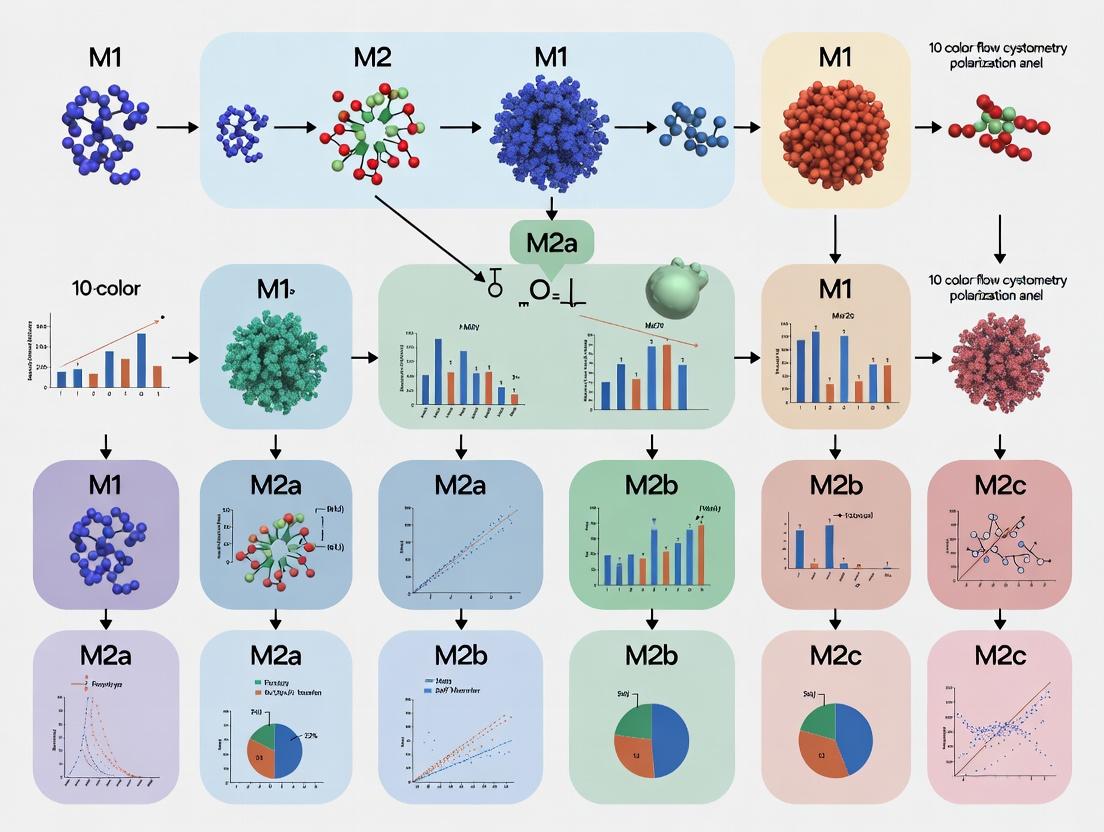
This guide provides a detailed framework for designing, validating, and applying a 10-color flow cytometry panel to comprehensively analyze macrophage polarization states (M1, M2, and beyond).
Designing a Robust 10-Color Flow Cytometry Panel for Macrophage Polarization: A Comprehensive Guide for Immunology Researchers
Abstract
This guide provides a detailed framework for designing, validating, and applying a 10-color flow cytometry panel to comprehensively analyze macrophage polarization states (M1, M2, and beyond). Aimed at researchers and drug development scientists, it covers the foundational biology of key markers, a step-by-step methodological approach for panel assembly and staining, practical troubleshooting and optimization strategies, and essential validation and comparative analysis techniques. The article synthesizes current best practices to enable accurate, reproducible profiling of macrophage heterogeneity in inflammation, cancer, and tissue repair contexts.
Understanding Macrophage Plasticity: Essential Markers and Rationale for a 10-Color Panel
Application Notes
Macrophage polarization represents a functional continuum between the classically activated (M1) and alternatively activated (M2) phenotypes. This plasticity is central to immune regulation, tissue homeostasis, and disease pathogenesis, making its precise measurement via 10-color flow cytometry a critical tool for therapeutic development.
Key Polarization States & Markers
A 10-color panel allows for the simultaneous detection of core and secondary markers, enabling the identification of intermediate and mixed phenotypes often found in vivo.
Table 1: Core Surface & Intracellular Markers for 10-Color Flow Cytometry Panel
| Polarization State | Key Inducing Signals | Core Markers (High Expression) | Secondary/Regulatory Markers |
|---|---|---|---|
| Classical M1 | IFN-γ, LPS, GM-CSF | CD80, CD86, HLA-DR, iNOS | IL-12, TNF-α, CXCL9/10 |
| Alternative M2 | IL-4, IL-13, IL-10 | CD206, CD163, CD209, Arg1 | IL-10, TGF-β, CCL17/22 |
| M2a (Wound Healing) | IL-4, IL-13 | CD206, CD209, TGM2 | CCL17, CCL18, CCL22 |
| M2b (Regulatory) | Immune Complexes, TLR/IL-1R ligands | CD86, CD206, IL-10 | TNF-α, IL-1β, CCL1 |
| M2c (Deactivation) | IL-10, Glucocorticoids | CD163, CD206, MerTK | TGF-β, CCL16, CCL18 |
Table 2: Recommended 10-Color Panel Configuration
| Fluorochrome | Target Marker | Purpose | Clone Example |
|---|---|---|---|
| FITC | CD80 | M1 Co-stimulation | 2D10 |
| PE | CD206 (MMR) | M2a/M2c Scavenger Receptor | 19.2 |
| PerCP-Cy5.5 | HLA-DR | MHC II (Activation) | L243 |
| PE-Cy7 | CD86 | M1/M2b Co-stimulation | IT2.2 |
| APC | CD163 | M2c Scavenger Receptor | GHI/61 |
| APC-Cy7 | CD11b | Pan-Macrophage Gate | ICRF44 |
| BV421 | CD40 | M1 Co-stimulation/Maturation | 5C3 |
| BV510 | CX3CR1 | Tissue-Resident/M2-like | 2A9-1 |
| BV605 | CD64 (FcγRI) | High-affinity IgG Receptor | 10.1 |
| BV786 | CD209 (DC-SIGN) | M2a Marker | 9E9A8 |
Note: Intracellular staining for iNOS (M1) and Arg1 (M2) requires fixation/permeabilization and a separate panel or subsequent staining.
Data Interpretation & Gating Strategy
The power of a 10-color panel lies in multidimensional analysis. Sequential gating is required:
- FSC-A/SSC-A: Identify cell population.
- FSC-H/FSC-A: Exclude doublets.
- CD11b+ (or tissue-specific marker like F4/80 for mice): Select macrophage lineage.
- Phenotype Identification: Use biaxial plots of key marker pairs (e.g., CD86 vs CD206, HLA-DR vs CD163) to identify distinct populations. Intermediate states appear as cells with medium expression of both M1 and M2 markers.
- Advanced Analysis: Employ dimensionality reduction (t-SNE, UMAP) or SPADE to visualize the continuous spectrum of activation from all 10 parameters.
Detailed Protocols
Protocol:In VitroPolarization of Human Monocyte-Derived Macrophages (MDMs) for Flow Cytometry
Objective: Generate M1, M2a, M2b, M2c, and untreated M0 macrophages from human monocytes for subsequent 10-color surface staining.
Materials:
- Source: Elutriated human monocytes or CD14+ monocytes isolated from PBMCs.
- Culture Medium: RPMI-1640 + 10% heat-inactivated FBS + 1% Penicillin-Streptomycin + 1% L-Glutamine.
- Differentiation/Polarization Cytokines:
- M0: 50 ng/mL human M-CSF (5-7 days).
- M1: 50 ng/mL M-CSF (5-7 days) → 20 ng/mL IFN-γ + 100 ng/mL LPS (24h).
- M2a: 50 ng/mL M-CSF (5-7 days) → 20 ng/mL IL-4 (24-48h).
- M2b: 50 ng/mL M-CSF (5-7 days) → 1 μg/mL Immune Complexes (e.g., IgG-opsonized particles) + 100 ng/mL LPS (24h).
- M2c: 50 ng/mL M-CSF (5-7 days) → 20 ng/mL IL-10 (24-48h).
Procedure:
- Seed monocytes at 0.5-1x10^6 cells/mL in appropriate tissue culture plates.
- Differentiate with M-CSF for 5-7 days, refreshing medium + M-CSF on day 3 or 4.
- On day 5-7, confirm adherence and macrophage morphology. Gently wash cells with warm PBS.
- Add fresh complete medium containing the specific polarizing stimuli as listed above.
- Incubate for 24-48 hours at 37°C, 5% CO2.
- Proceed to harvesting and staining (Protocol 2.2).
Protocol: 10-Color Surface Staining for Flow Cytometry Analysis
Objective: Stain polarized macrophages for simultaneous analysis of 10 surface markers.
Materials (The Scientist's Toolkit):
| Research Reagent Solution | Function & Critical Notes |
|---|---|
| Fluorochrome-conjugated Antibodies | See Table 2. Titrate each antibody for optimal signal-to-noise. Prepare a master antibody cocktail in staining buffer. |
| Cell Staining Buffer (PBS + 2% FBS + 0.09% NaN2) | Provides protein to block non-specific binding and preserves cell viability during staining. |
| Fc Receptor Blocking Solution (Human TruStain FcX) | Critical for human cells. Blocks non-specific antibody binding via Fcγ receptors, reducing background. |
| Viability Dye (e.g., Fixable Viability Stain 450/520) | Distinguishes live from dead cells. Must be used before fixation if staining is not immediately followed by fixation. |
| DPBS (without Ca2+/Mg2+) | Used for all washing steps to prevent cell clumping. |
| Cell Dissociation Solution (Enzyme-free) | To gently detach adherent macrophages without damaging surface epitopes. Scraping is not recommended. |
| Flow Cytometry Tubes with Cell Strainer Snap Caps | Ensures single-cell suspension is analyzed, preventing clogs in the instrument. |
| 4% Paraformaldehyde (PFA) Fixation Solution | Stabilizes the antibody staining for delayed acquisition. Use after final wash if not acquiring immediately. |
Procedure:
- Harvesting: Remove culture medium. Gently wash with warm PBS. Add pre-warmed, enzyme-free cell dissociation solution (e.g., Accutase). Incubate at 37°C for 5-10 min. Detach cells by gentle pipetting. Transfer to a conical tube, wash with 5mL of cold staining buffer, and centrifuge (300 x g, 5 min, 4°C).
- Count & Aliquot: Resuspend cell pellet in staining buffer, count, and aliquot 0.5-1x10^6 cells per staining tube. Centrifuge.
- Fc Block & Viability Stain: Resuspend cell pellet in 100 μL staining buffer containing Fc Block (1:50 dilution). Incubate for 10 min on ice. Add viability dye as per manufacturer's instructions. Incubate for 15-30 min on ice in the dark. Wash with 2mL staining buffer.
- Surface Staining: Thoroughly resuspend cell pellet in 100 μL of the pre-mixed antibody cocktail (all 10 antibodies titrated in staining buffer). Vortex gently. Incubate for 30 min in the dark at 4°C.
- Wash & Fix: Add 2mL of staining buffer, centrifuge. Repeat wash. Resuspend in 200-300 μL of staining buffer for immediate acquisition. OR for fixation, resuspend in 200 μL of 4% PFA, incubate 15 min in dark at 4°C, wash twice, and resuspend in staining buffer.
- Acquisition: Filter cells through a strainer cap into FACS tube. Acquire on a flow cytometer equipped with 3+ lasers capable of detecting all 10 fluorochromes. Collect at least 50,000 live, single-cell events per sample.
Signaling Pathway & Workflow Visualizations
Title: M1 Polarization Signaling Pathway
Title: M2 Polarization Signaling Pathways
Title: 10-Color Flow Cytometry Workflow for Macrophages
Application Notes
In the context of a 10-color flow cytometry panel for macrophage polarization research, the strategic selection of markers is critical for accurately delineating the complex and plastic phenotypes of macrophages. The core panel must capture pro-inflammatory (M1-like) and immunoregulatory/resolving (M2-like) states, while also accounting for activation status and functional potential.
Key Insights:
- CD80 and CD86 are co-stimulatory molecules upregulated on classically activated (M1) macrophages and are essential for T-cell activation. Their expression is induced by IFN-γ and TLR agonists (e.g., LPS). They serve as robust indicators of immunogenic potential.
- HLA-DR (MHC Class II) is crucial for antigen presentation. Its expression is high on M1 macrophages but can be variably modulated on M2 subsets, depending on the stimulus. It is a marker of macrophage activation and antigen-presenting capacity.
- CD206 (MRC1) and CD163 are hallmark scavenger receptors associated with alternative activation (M2). CD206 is induced by IL-4/IL-13, while CD163 is a hemoglobin scavenger receptor strongly upregulated by IL-10 and glucocorticoids. They are key for identifying anti-inflammatory and tissue-remodeling phenotypes.
- Beyond the Core: To capture heterogeneity, a 10-color panel allows for the inclusion of additional markers. CD64 (FcγRI) can serve as a pan-macrophage marker to aid in identification. CD274 (PD-L1) indicates immunoregulatory function. CD38 or iNOS (intracellular) are specific for M1, while CD200R or CD301 further refine M2 subsets. Transcription factors like STAT1 (pSTAT1) and STAT6 (pSTAT6) can be assessed intracellularly to report on active signaling pathways driving polarization.
Quantitative Expression Profiles: The table below summarizes typical median fluorescence intensity (MFI) shifts for key markers across polarized states derived from in vitro human monocyte-derived macrophage models.
| Marker | M0 (Resting) | M1 (IFN-γ + LPS) | M2a (IL-4/IL-13) | M2c (IL-10) | Primary Function |
|---|---|---|---|---|---|
| CD80 | Low | High (↑10-50x) | Low-Moderate | Low | Co-stimulation (T-cell activation) |
| CD86 | Moderate | High (↑5-20x) | Moderate | Moderate-High | Co-stimulation |
| HLA-DR | Moderate | Very High (↑5-15x) | Moderate (↓) | Low (↓) | Antigen Presentation |
| CD206 | Low | Very Low | Very High (↑20-100x) | Moderate | Scavenging, Endocytosis |
| CD163 | Low | Very Low (↓) | High | Very High (↑50-200x) | Hemoglobin Scavenging |
| CD274 (PD-L1) | Low | High (↑10-30x) | Variable | High | Immunoregulation |
Detailed Protocols
Protocol 1: 10-Color Flow Cytometry Panel for Human Macrophage Phenotyping
Research Reagent Solutions & Essential Materials:
| Item | Function |
|---|---|
| Ficoll-Paque PLUS | Density gradient medium for PBMC isolation from human blood. |
| Recombinant Human M-CSF | Differentiates monocytes into M0 macrophages over 5-7 days. |
| Polarizing Cytokines: IFN-γ, LPS, IL-4, IL-10 | Induce M1, M2a, and M2c polarization. |
| Cell Stimulation Cocktail (with protein transport inhibitors) | Contains PMA/Ionomycin/Brefeldin A for intracellular cytokine staining. |
| Fluorochrome-conjugated Antibodies | Pre-titrated antibodies for surface & intracellular targets. See panel design below. |
| Viability Dye (e.g., Zombie NIR) | Distinguishes live from dead cells. |
| Cytofix/Cytoperm Fixation/Permeabilization Kit | For fixing cells and permeabilizing membranes for intracellular staining. |
| Flow Cytometry Staining Buffer (PBS + 2% FBS) | Washing and antibody dilution buffer. |
Methodology:
- Macrophage Generation: Isate PBMCs from buffy coats. Adhere monocytes (2x10^6 cells/well in 6-well plate) in RPMI-1640 + 10% FBS + 50 ng/mL M-CSF for 6 days.
- Polarization: On day 6, polarize M0 macrophages for 48 hours:
- M1: 20 ng/mL IFN-γ + 100 ng/mL LPS
- M2a: 20 ng/mL IL-4
- M2c: 20 ng/mL IL-10
- Harvesting: Scrape cells gently in cold PBS + 2mM EDTA. Count and aliquot 0.5-1x10^6 cells per staining tube.
- Surface Staining:
- Wash cells with cold buffer.
- Incubate with Fc receptor blocking reagent (e.g., Human TruStain FcX) for 10 min on ice.
- Add pre-mixed surface antibody cocktail directly. Incubate for 30 min in the dark at 4°C.
- Wash twice with buffer.
- Fix cells with 4% PFA for 10 min at 4°C (skip if doing intracellular staining).
- Intracellular Staining (for iNOS, cytokines, phospho-STATs):
- After surface staining, fix and permeabilize cells using Cytofix/Cytoperm per manufacturer's instructions.
- Wash with 1x Perm/Wash buffer.
- Incubate with intracellular antibody cocktail in Perm/Wash buffer for 30-45 min at 4°C.
- Wash twice with Perm/Wash buffer, then resuspend in flow cytometry buffer for acquisition.
- Acquisition & Analysis: Acquire data on a 3-laser, 10-parameter capable flow cytometer. Use FSC-A/SSC-A to gate on cells, single-cell gate (FSC-H vs FSC-A), then live cell gate (viability dye negative). Analyze marker expression on the macrophage population.
Example 10-Color Panel Design:
- Viability: Zombie NIR (APC-Cy7)
- Pan-Macrophage: CD64 (BV785)
- M1 Markers: CD80 (FITC), HLA-DR (PerCP-Cy5.5), CD86 (PE)
- M2 Markers: CD206 (PE-Cy7), CD163 (APC)
- Regulatory Marker: CD274 (PD-L1) (BV421)
- Intracellular (M1): iNOS (PE-Dazzle594) or Intracellular (Signaling): pSTAT1 (Alexa Fluor 488)
Protocol 2: Intracellular Phospho-STAT Staining for Polarization Signaling
This protocol assesses active signaling pathways immediately upstream of polarization.
- Stimulation: After polarization, rest cells in serum-free medium for 4-6 hours. Stimulate with a pulse of the polarizing cytokine (e.g., 50 ng/mL IFN-γ for M1, 50 ng/mL IL-4 for M2a) for 15 minutes at 37°C. Include an unstimulated control.
- Fixation: Immediately add an equal volume of pre-warmed (37°C) 8% PFA directly to the well. Incubate for 10 min at 37°C to fix and stabilize phospho-epitopes.
- Permeabilization: Scrape cells, transfer to tubes, and pellet. Thoroughly resuspend cell pellet in 100% ice-cold methanol. Vortex and incubate at -20°C for at least 30 min (or overnight).
- Staining: Wash cells twice with ample flow cytometry buffer to rehydrate and remove methanol. Proceed with surface antibody staining (if needed, many surface markers tolerate methanol). Then, stain for intracellular targets (e.g., pSTAT1-AF488, pSTAT6-PE) in Perm/Wash buffer for 1 hour at RT.
- Acquisition: Acquire on flow cytometer within 24 hours.
Pathway and Workflow Diagrams
Title: Macrophage Polarization Pathways and Key Markers
Title: 10-Color Flow Cytometry Experimental Workflow
Title: Key STAT Signaling Pathways in Macrophage Polarization
In macrophage polarization research, the balance between pro-inflammatory (M1) and anti-inflammatory/resolving (M2) phenotypes is critical. This application note details a 10-color flow cytometry panel designed for the simultaneous detection of key surface markers and intracellular cytokines/functional enzymes—TNF-α, IL-10, iNOS, and Arginase-1—to precisely characterize macrophage subsets in complex samples. This protocol is framed within a thesis exploring advanced immunophenotyping for drug development in inflammatory diseases and cancer immunotherapy.
Panel Design and Spectra Table
The panel is designed for a 3-laser (Blue 488 nm, Red 640 nm, Violet 405 nm) flow cytometer with at least 10 fluorescence detectors.
| Target | Specificity | Fluorochrome | Laser (nm) | Emission Filter (nm) | Phenotype Context |
|---|---|---|---|---|---|
| CD11b | Myeloid/Macrophage | BV785 | 405 | 780/60 | Lineage/Gating |
| F4/80 | Mature Macrophage | PerCP-Cy5.5 | 488 | 695/40 | Lineage/Gating |
| CD86 | M1-like / Co-stimulation | PE-Cy7 | 488 | 785/60 | M1 Surface Marker |
| CD206 | M2-like (MMR) | APC | 640 | 670/30 | M2 Surface Marker |
| TNF-α | Pro-inflammatory Cytokine | FITC | 488 | 530/30 | M1 Functional Marker |
| IL-10 | Anti-inflammatory Cytokine | PE | 488 | 585/42 | M2 Functional Marker |
| iNOS | M1 Functional Enzyme | BV421 | 405 | 450/50 | M1 Functional Marker |
| Arginase-1 | M2 Functional Enzyme | Alexa Fluor 647 | 640 | 670/30 | M2 Functional Marker |
| Live/Dead | Viability | Zombie NIR | 640 | 780/60 | Viability |
| Nuclear Stain* | Transcription Factors | (Optional) | - | - | e.g., FOXP3, STATs |
*Note: For intra-nuclear targets, a separate fixation/permeabilization step is required.
Research Reagent Solutions Toolkit
| Reagent/Material | Function | Example Product/Catalog # |
|---|---|---|
| Cell Stimulation Cocktail | Induces cytokine production (TNF-α, IL-10) during culture. | PMA/Ionomycin + Brefeldin A |
| Protein Transport Inhibitor | Retains cytokines intracellularly for detection. | Monensin or Brefeldin A |
| Fixation/Permeabilization Buffer | Fixes cells and permeabilizes membranes for intracellular staining. | Foxp3/Transcription Factor Staining Buffer Set |
| Intracellular Staining Perm Buffer | Permeabilization buffer for cytoplasmic antigens (iNOS, Arginase-1). | Permeabilization Buffer (e.g., with saponin) |
| Fluorochrome-conjugated Antibodies | Primary detection reagents for flow cytometry. | See panel design table. |
| Fc Receptor Blocking Reagent | Reduces non-specific antibody binding. | Anti-CD16/32 or species-matched serum |
| Cell Culture Medium for Polarization | Supports macrophage differentiation and polarization. | RPMI-1640 + M-CSF (for differentiation) |
| Polarizing Cytokines | Induces M1 or M2 polarization. | M1: IFN-γ + LPS; M2: IL-4 + IL-13 |
| Flow Cytometry Compensation Beads | Single-color controls for compensation matrix setup. | Anti-Mouse/Rat Igκ Compensation Beads |
Detailed Experimental Protocols
Protocol 1: Macrophage Generation, Polarization, and Stimulation
Purpose: To generate bone marrow-derived macrophages (BMDMs) or polarize primary macrophages, and stimulate for cytokine/enzyme detection.
- Isolation & Differentiation: Flush bone marrow from murine femurs/tibias. Culture cells in complete medium supplemented with 20 ng/mL M-CSF for 7 days to derive macrophages.
- Polarization (Day 7):
- M1 Polarization: Treat with 20 ng/mL IFN-γ + 100 ng/mL LPS for 24 hours.
- M2 Polarization: Treat with 20 ng/mL IL-4 + 20 ng/mL IL-13 for 24-48 hours.
- Control: Maintain in M-CSF medium only.
- Intracellular Protein Induction: For TNF-α/IL-10 detection, add a protein transport inhibitor (e.g., 1x Brefeldin A) for the final 4-6 hours of polarization. Note: iNOS and Arginase-1 typically do not require this step.
Protocol 2: Sample Preparation and 10-Color Staining for Flow Cytometry
Purpose: To stain cells for surface and intracellular targets with minimal spectral overlap.
- Harvest & Wash: Gently dislodge adherent macrophages using cell scrapers. Wash cells in cold FACS Buffer (PBS + 2% FBS).
- Viability Staining: Resuspend cell pellet in PBS containing Zombie NIR fixable viability dye (1:1000). Incubate for 15 min at RT in the dark. Wash with FACS buffer.
- Fc Block: Resuspend cells in FACS buffer with anti-CD16/32 antibody (1:100). Incubate for 10 min on ice.
- Surface Staining: Add antibody cocktail for CD11b, F4/80, CD86, CD206 directly to the Fc block mixture. Incubate for 30 min on ice in the dark. Wash twice.
- Fixation and Permeabilization:
- Fixation: Fix cells using IC Fixation Buffer for 20 min at RT or overnight at 4°C. Wash.
- Permeabilization: For iNOS/Arginase-1 (cytoplasmic): Use permeability buffer with saponin for 15 min. For transcription factors (if added): Use transcription factor perm buffer.
- Intracellular Staining: Centrifuge and resuspend cell pellet in appropriate perm buffer containing antibodies against TNF-α, IL-10, iNOS, and Arginase-1. Incubate for 30-60 min at RT in the dark. Wash twice with perm buffer, then once with FACS buffer.
- Acquisition: Resuspend cells in FACS buffer and acquire data on a flow cytometer capable of 10-color detection. Use single-stained controls for compensation.
Protocol 3: Data Analysis Gating Strategy
- Doublet Exclusion: Use FSC-A vs. FSC-H to gate on single cells.
- Live Cell Selection: Gate on Zombie NIR-negative population.
- Macrophage Identification: Gate on CD11b+ F4/80+ cells.
- Phenotype Stratification: Display M1 (CD86) vs. M2 (CD206) surface markers on macrophages.
- Functional Characterization: Analyze the expression of TNF-α and iNOS within the M1-gated (or CD86+) population. Analyze IL-10 and Arginase-1 within the M2-gated (or CD206+) population. Use fluorescence minus one (FMO) controls to set positive gates.
Table 1: Expected Expression Profile of Target Markers in Polarized Macrophages
| Macrophage Phenotype | TNF-α | IL-10 | iNOS | Arginase-1 | CD86 | CD206 |
|---|---|---|---|---|---|---|
| M0 (Naive) | Low | Low/Mod | Very Low | Low | Low | Low/Mod |
| Classical M1 (IFN-γ+LPS) | High | Very Low | High | Very Low | High | Low |
| Alternative M2 (IL-4+IL-13) | Very Low | High | Very Low | High | Low | High |
Table 2: Typical Staining Index and Resolution for Key Intracellular Targets
| Intracellular Target | Recommended Fluorochrome | Approximate Staining Index (M1 vs. M2) | Critical Compensation Partner |
|---|---|---|---|
| TNF-α | FITC | >15 (M1 high, M2 low) | PE (Spillover into FITC) |
| IL-10 | PE | >10 (M2 high, M1 low) | FITC, PE-Cy7 |
| iNOS | BV421 | >20 (M1 high, M2 low) | Unstained control for autofluorescence |
| Arginase-1 | Alexa Fluor 647 | >12 (M2 high, M1 low) | APC (if used on surface) |
Signaling Pathways and Workflow Diagrams
Diagram 1: Macrophage Polarization Pathways & Key Outputs (76 chars)
Diagram 2: 10-Color Staining Workflow for Macrophages (71 chars)
Diagram 3: Flow Cytometry Gating Strategy for Macrophages (78 chars)
Application Notes
This application note details the development and validation of a 10-color flow cytometry panel designed to dissect the complexity of human macrophage polarization states. The panel enables the simultaneous identification of macrophage lineage, core polarization phenotypes (M1 and M2), and key transitional or mixed-state populations, which are critical for understanding disease mechanisms in fibrosis, cancer, and autoimmune disorders.
Table 1: 10-Color Panel Configuration for Human Macrophage Phenotyping
| Target | Fluorochrome | Clone | Biological Function & Rationale |
|---|---|---|---|
| Lineage & Viability | |||
| CD45 | BV785 | HI30 | Pan-hematopoietic marker for leukocyte gating. |
| CD14 | BUV395 | MφP9 | Monocyte/Macrophage lineage marker. |
| HLA-DR | BUV737 | G46-6 | Antigen presentation capability; activated macrophage marker. |
| Viability Dye | Zombie NIR | - | Exclusion of dead cells for data integrity. |
| Core M1 Markers | |||
| CD80 | BB700 | L307.4 | Co-stimulatory molecule; indicative of pro-inflammatory, classical activation. |
| CD86 | BV605 | FUN-1 | Co-stimulatory molecule; sustained M1 marker. |
| Core & Alternative M2 Markers | |||
| CD163 | PE-Cy7 | GHI/61 | Scavenger receptor; hallmark of M2-like, anti-inflammatory polarization. |
| CD206 (MMR) | APC | 15-2 | Mannose receptor; associated with alternative activation and tissue repair. |
| CD200R | PE | OX-108 | Immunoregulatory receptor; suppresses excessive inflammation, nuanced M2 subset. |
| Functional/Mixed-State Marker | |||
| CD64 (FcγRI) | BV510 | 10.1 | High-affinity IgG receptor. Elevated in both M1 and certain M2 contexts (e.g., M2a); indicates functional state. |
Table 2: Expected Phenotypic Signatures for Key Macrophage Populations
| Population | Phenotype (High Expression) | Functional Implication |
|---|---|---|
| Classical M1 | CD80+, CD86+, HLA-DR++ | Pro-inflammatory, microbicidal, anti-tumor. |
| Alternative M2a | CD206+, CD163+, CD200R+ | Tissue repair, fibrosis, pro-tumorigenic. |
| Regulatory M2b/c | CD163+, CD200R+, HLA-DRlow | Immunoregulation, resolution of inflammation. |
| Mixed/Transitional | Co-expression of CD80/86 and CD206/163 | Functionally plastic state, often found in vivo in disease microenvironments. |
| Activated (Non-polarized) | HLA-DR++, CD64+ | Recently differentiated or cytokine-exposed state. |
Protocols
Protocol 1: Sample Preparation and Staining for 10-Color Analysis
Materials (Research Reagent Solutions):
- Human PBMCs or Tissue-Derived Cells: Single-cell suspension.
- Fc Receptor Blocking Solution: Human TruStain FcX - to reduce non-specific antibody binding.
- Viability Dye: Zombie NIR Fixable Viability Kit - identifies dead cells.
- Staining Buffer: PBS + 2% FBS + 1mM EDTA.
- Fixation Buffer: 4% Paraformaldehyde (PFA) in PBS.
- 10-Color Antibody Cocktail: See Table 1 for configuration.
- Flow Cytometer: Equipped with 3+ lasers (405nm, 488nm, 640nm) and capable of detecting 10+ parameters (e.g., BD FACSymphony, Cytek Aurora).
Methodology:
- Cell Preparation: Generate a single-cell suspension. For tissues, use enzymatic digestion (e.g., collagenase IV/DNase I). Filter through a 70µm strainer.
- Viability Staining: Resuspend 1-2x10^6 cells in 1mL PBS. Add 100µL of Zombie NIR dye (1:1000 dilution in PBS). Incubate for 15 minutes at RT in the dark.
- Wash & Block: Add 2mL staining buffer, centrifuge (400xg, 5 min). Decant supernatant. Resuspend pellet in 100µL staining buffer containing Fc Block (5µL per test). Incubate for 10 minutes on ice.
- Surface Staining: Add the pre-titrated 10-color antibody cocktail directly to the tube (without washing). Mix gently. Incubate for 30 minutes on ice in the dark.
- Wash & Fix: Add 2mL staining buffer, centrifuge, decant. Repeat wash. Resuspend pellet in 300µL of fixation buffer. Incubate for 20 minutes at 4°C in the dark.
- Acquisition: Wash cells once in staining buffer, resuspend in 200-300µL for acquisition. Acquire data on a suitably configured flow cytometer within 24 hours.
Protocol 2: In Vitro Macrophage Polarization & Panel Validation
Materials:
- M-CSF/GM-CSF: For generating monocyte-derived macrophages (MDMs).
- Polarizing Cytokines: IFN-γ + LPS (for M1), IL-4 (for M2a), IL-10 (for M2c).
- Cell Culture Media: RPMI-1640 + 10% FBS.
Methodology:
- MDM Differentiation: Isolate CD14+ monocytes from PBMCs using magnetic beads. Culture 5x10^5 cells/mL with 50ng/mL M-CSF for 6 days to generate M0 macrophages.
- Polarization: On day 6, stimulate cells for 48 hours:
- M1: 20ng/mL IFN-γ + 100ng/mL LPS.
- M2a: 20ng/mL IL-4.
- M2c: 20ng/mL IL-10.
- M0 Control: Media only.
- Harvest & Analysis: Gently detach cells using enzyme-free dissociation buffer. Follow Protocol 1 for staining with the 10-color panel. Analyze to confirm expected signatures from Table 2.
Visualizations
Macrophage Polarization Pathways & Plasticity
10-Color Macrophage Panel Workflow
The Scientist's Toolkit: Key Research Reagent Solutions
| Item | Function in the Protocol |
|---|---|
| Zombie NIR Viability Dye | Fixable dye that permeates dead cells, allowing their exclusion during analysis for clean data. |
| Human TruStain FcX | Monoclonal antibody blocking solution that binds to Fc receptors, minimizing non-specific antibody binding. |
| Recombinant Human M-CSF | Differentiates isolated CD14+ monocytes into baseline (M0) macrophages over 6 days. |
| Polarizing Cytokine Cocktails (IFN-γ/LPS, IL-4, IL-10) | Used to drive M0 macrophages toward defined M1, M2a, and M2c phenotypes for panel validation. |
| Collagenase IV/DNase I | Enzyme combination for gentle dissociation of solid tissues to obtain single-cell suspensions. |
| Brilliant Violet 785 & BUV737 Conjugates | Bright fluorochromes paired with high-density markers (CD45, HLA-DR) for optimal primary population identification. |
| BD FACSymphony or Cytek Aurora | High-parameter flow cytometers capable of resolving 10+ colors with minimal spillover, essential for panel performance. |
Within the broader thesis on developing a standardized 10-color flow cytometry panel for macrophage polarization research, this protocol details the application of a panel designed to achieve three concurrent goals: 1) Identification of live, single, myeloid-derived cells, 2) Phenotyping of polarization states (M1, M2a, M2b, M2c), and 3) Functional Assessment of key effector molecules. This integrated approach maximizes data yield from limited primary cell samples, a critical need in translational immunology and drug development.
Application Notes: Panel Rationale and Quantitative Benchmarking
The 10-color panel was constructed by prioritizing high-signal, low-spread fluorochromes for low-abundance functional markers and ensuring logical compensation compatibility.
Table 1: 10-Color Panel Configuration for Macrophage Studies
| Specificity | Clone | Fluorochrome | Purpose (Category) | Target Expression |
|---|---|---|---|---|
| CD45 | HI30 | BV785 | Identification (Lineage) | All hematopoietic cells |
| CD11b | ICRF44 | BV650 | Identification (Myeloid) | Myeloid cells, monocytes, macrophages |
| CD14 | M5E2 | FITC | Identification (Subset) | Monocytes / M2-like subsets |
| HLA-DR | L243 | PerCP-Cy5.5 | Identification (Activation) | Antigen-presenting cells |
| CD80 | 2D10 | PE | Phenotyping (M1) | M1-polarized macrophages |
| CD206 | 15-2 | PE-Cy7 | Phenotyping (M2a) | M2a-polarized macrophages |
| CD163 | GHI/61 | APC | Phenotyping (M2c) | M2c-polarized macrophages |
| TNF-α | MAb11 | BV421 | Functional (Pro-inflammatory) | M1-associated cytokine |
| IL-10 | JES3-9D7 | PE-Dazzle594 | Functional (Anti-inflammatory) | M2-associated cytokine |
| Arginase-1 | Polyclonal | Alexa Fluor 700 | Functional (Metabolic) | M2-associated enzyme |
| Viability Dye | - | Zombie NIR | Identification (Viability) | Dead cell exclusion |
Table 2: Expected Median Fluorescence Intensity (MFI) Ranges for Key Markers in Polarized Human Macrophages (Data derived from primary human monocyte-derived macrophages, n=5 donors)
| Polarization Signal | Marker | Unstimulated (MFI Range) | M1 (LPS+IFN-γ) MFI Range | M2a (IL-4) MFI Range |
|---|---|---|---|---|
| M1 Phenotype | CD80 | 500 - 1,500 | 15,000 - 35,000 | 800 - 2,000 |
| M2a Phenotype | CD206 | 2,000 - 5,000 | 1,000 - 3,000 | 25,000 - 60,000 |
| M2c Phenotype | CD163 | 3,000 - 8,000 | 1,500 - 4,000 | 5,000 - 12,000 |
| M1 Function | TNF-α (Intracellular) | 200 - 600 | 8,000 - 20,000 | 300 - 900 |
| M2 Function | IL-10 (Intracellular) | 100 - 400 | 500 - 1,500 | 5,000 - 15,000 |
Detailed Experimental Protocols
Protocol 1: Macrophage Differentiation, Polarization, and Harvest
Materials: Human CD14+ monocytes (isolated or purchased), RPMI-1640+10% FBS, M-CSF (50 ng/mL), LPS (100 ng/mL), IFN-γ (20 ng/mL), IL-4 (20 ng/mL), IL-10 (20 ng/mL), cell dissociation buffer (enzyme-free).
- Differentiate monocytes in 6-well plates with M-CSF for 6 days to generate M0 macrophages.
- Polarize M0 macrophages for 48 hours: M1: LPS + IFN-γ; M2a: IL-4; M2c: IL-10; Control: Media only.
- For functional assessment, add protein transport inhibitor (e.g., Brefeldin A, 1X) for the final 5-6 hours of polarization.
- Harvest cells using gentle scraping with a cell lifter in cold PBS+2% FBS. Centrifuge at 400 x g for 5 min.
Protocol 2: Cell Surface Staining for Identification and Phenotyping
Materials: Staining buffer (PBS+2% FBS+0.1% NaN2), antibody master mix (Table 1), viability dye.
- Resuspend cell pellet in 100 µL of staining buffer containing viability dye (1:1000 dilution). Incubate for 15 min at RT in the dark.
- Wash with 2 mL staining buffer. Centrifuge at 400 x g for 5 min. Aspirate supernatant.
- Resuspend pellet in 100 µL of surface antibody cocktail. Incubate for 30 min at 4°C in the dark.
- Wash twice with 2 mL staining buffer. Proceed to fixation. If only surface staining is required, fix with 2% PFA for 20 min, then analyze.
Protocol 3: Intracellular Staining for Functional Assessment
Materials: Cytofix/Cytoperm buffer, Perm/Wash buffer (or equivalent), intracellular antibody cocktail.
- After surface staining, fix and permeabilize cells using 250 µL of Cytofix/Cytoperm buffer for 20 min at 4°C.
- Wash twice with 1 mL of Perm/Wash buffer. Centrifuge at 500 x g for 5 min.
- Resuspend cell pellet in 100 µL of Perm/Wash buffer containing anti-TNF-α, anti-IL-10, and anti-Arginase-1 antibodies.
- Incubate for 45 min at 4°C in the dark.
- Wash twice with Perm/Wash buffer, then once with staining buffer. Resuspend in 300 µL of staining buffer for acquisition.
Protocol 4: Flow Cytometry Acquisition and Gating Strategy
Instrument Setup: Configure a 3-laser (488nm, 561nm, 640nm) or equivalent flow cytometer. Apply daily QC and compensation using ultracomp beads or single-stained controls. Gating Hierarchy:
- Singlets: FSC-H vs FSC-A.
- Live Cells: Viability Dye (NIR) negative.
- Hematopoietic Cells: CD45+.
- Myeloid/Macrophages: CD11b+.
- Subset Analysis: CD14 vs HLA-DR to delineate populations.
- Phenotype/Function: Assess CD80, CD206, CD163, TNF-α, IL-10 on gated populations.
Visualization Diagrams
Title: Macrophage Polarization Pathways from M0 Precursor
Title: Integrated Staining and Analysis Workflow
The Scientist's Toolkit: Key Research Reagent Solutions
Table 3: Essential Materials for Macrophage Panel Execution
| Reagent / Material | Vendor Example (Catalog #) | Function in Protocol |
|---|---|---|
| Human CD14+ MicroBeads | Miltenyi Biotec (130-050-201) | Positive selection of primary monocytes from PBMCs. |
| Recombinant Human M-CSF | PeproTech (300-25) | Differentiation factor for generating M0 macrophages from monocytes. |
| Cell Stimulation Cocktail | Thermo Fisher (00-4970-93) | Contains PMA, ionomycin, Brefeldin A; positive control for cytokine staining. |
| Zombie NIR Fixable Viability Kit | BioLegend (423106) | Near-IR viability dye for dead cell exclusion; compatible with fixation. |
| Cytofix/Cytoperm Kit | BD Biosciences (554714) | Buffers for fixation and permeabilization prior to intracellular staining. |
| UltraComp eBeads | Thermo Fisher (01-2222-42) | Compensation beads for setting up multicolor flow cytometry panels. |
| Flow Cytometry Staining Buffer | Tonbo Biosciences (TNB-1210-L125) | Optimized buffer for surface staining, reduces background. |
| FlowJo Software | BD Biosciences (N/A) | Industry-standard software for flow cytometry data analysis and visualization. |
Step-by-Step Protocol: Building and Running Your 10-Color Macrophage Panel
Within the context of developing a robust 10-color flow cytometry panel to characterize macrophage polarization states (M1/M2) in drug development research, optimal fluorochrome selection is critical. This protocol details a systematic approach to balancing fluorochrome brightness, spillover spreading, and detector efficiency to ensure high-quality, reproducible multivariate data.
Application Notes: Key Principles for a 10-Color Macrophage Panel
- Antigen Density Matching: High-density markers (e.g., CD11b, CD68) are paired with dimmer fluorochromes, while low-expression or critical polarization markers (e.g., CD206, CD86, MHC-II) are assigned to bright fluorochromes.
- Spectral Overlap Management: Fluorochromes with significant emission overlap are not placed on antibodies targeting co-expressed antigens on macrophages (e.g., avoiding FITC and BV421 on CD80 and CD86).
- Laser and Detector Optimization: Configuration prioritizes the use of fluorochromes excited by the most stable, high-power lasers (typically the blue 488nm and red 637/640nm lasers) and detected on the most efficient PMT arrays.
Table 1: Recommended Fluorochrome Pairing for Common Macrophage Antigens
| Antigen | Expression Level | Recommended Fluorochrome | Alternative Fluorochrome | Laser (nm) |
|---|---|---|---|---|
| CD11b | Very High | BV510 | FITC | 405 |
| F4/80 | High | PerCP-Cy5.5 | PE-Cy5 | 488 |
| CD68 | High | BV605 | Alexa Fluor 700 | 405 |
| MHC-II | Medium/Modulated | APC | Brilliant Violet 785 | 640 |
| CD86 | Low/Inducible | Brilliant Violet 421 | PE | 405 |
| CD80 | Low/Inducible | PE | Brilliant Violet 421 | 488 |
| CD206 | Medium/Inducible | APC-Cy7 | PE-Cy7 | 640 |
| CD163 | Medium | Alexa Fluor 700 | BV650 | 640 |
| CD38 | Low/Inducible | FITC | BV510 | 488 |
| IL-10 | Low/Cytoplasmic | PE-Cy7 | APC-Cy7 | 488 |
Table 2: Spillover Spreading Matrix (SSM) for a Sample 10-Color Panel (Representative Values)
| Fluorochrome | BV421 | FITC | PE | PerCP-Cy5.5 | PE-Cy7 | BV605 | AF700 | APC | APC-Cy7 | BV785 |
|---|---|---|---|---|---|---|---|---|---|---|
| BV421 | - | 0.02 | 0.05 | 0.01 | 0.01 | 0.15 | 0.01 | 0.01 | 0.01 | 0.00 |
| FITC | 0.01 | - | 0.10 | 0.02 | 0.01 | 0.01 | 0.00 | 0.00 | 0.00 | 0.00 |
| PE | 0.03 | 0.25 | - | 0.02 | 0.45 | 0.03 | 0.01 | 0.02 | 0.01 | 0.00 |
| PerCP-Cy5.5 | 0.00 | 0.01 | 0.02 | - | 0.02 | 0.05 | 0.10 | 0.03 | 0.02 | 0.01 |
| PE-Cy7 | 0.01 | 0.01 | 0.04 | 0.01 | - | 0.02 | 0.02 | 0.01 | 0.15 | 0.02 |
| BV605 | 0.10 | 0.01 | 0.03 | 0.05 | 0.01 | - | 0.02 | 0.01 | 0.01 | 0.01 |
| AF700 | 0.00 | 0.00 | 0.01 | 0.08 | 0.01 | 0.02 | - | 0.25 | 0.02 | 0.03 |
| APC | 0.00 | 0.00 | 0.01 | 0.03 | 0.01 | 0.01 | 0.35 | - | 0.05 | 0.05 |
| APC-Cy7 | 0.00 | 0.00 | 0.01 | 0.02 | 0.12 | 0.01 | 0.03 | 0.06 | - | 0.30 |
| BV785 | 0.00 | 0.00 | 0.00 | 0.01 | 0.01 | 0.01 | 0.04 | 0.05 | 0.25 | - |
Note: Values are sample compensation coefficients. Actual values must be determined empirically.
Experimental Protocols
Protocol 1: Single Stain Control Preparation for Spillover Calculation
Purpose: To generate high-quality data for calculating a spillover matrix and setting compensation.
- Material: Wild-type or unstained cells, Brilliant Stain Buffer Plus, single-antibody conjugates for each fluorochrome in the panel.
- Procedure: a. Aliquot at least 5x10^5 cells per control tube (one tube per fluorochrome plus unstained). b. Pellet cells, resuspend in 100µL of FACS buffer (PBS + 2% FBS). c. Add the titrated volume of each antibody to its respective tube. Include one unstained/no antibody control. d. Incubate for 30 minutes at 4°C in the dark. e. Wash cells with 2mL of FACS buffer. Pellet at 300-400 x g for 5 minutes. Aspirate supernatant. f. Resuspend in 300-500µL of FACS buffer. Keep at 4°C and protected from light until acquisition. g. Acquire data on the flow cytometer, ensuring the positive population for each control is bright and clearly separated from the negative.
Protocol 2: Full 10-Color Panel Staining for Macrophage Polarization
Purpose: To stain murine bone marrow-derived macrophages (BMDMs) for surface polarization markers.
- Day -7 to Day 0: Differentiate BMDMs with M-CSF.
- Day 0: Polarize with LPS/IFN-γ (M1) or IL-4/IL-13 (M2) for 24-48 hours.
- Harvesting & Staining: a. Gently scrape and wash BMDMs in cold PBS. Count and aliquot 1x10^6 cells per staining tube. b. Pellet cells, resuspend in 100µL of FACS buffer with Fc Block (α-CD16/32) for 10 mins at 4°C. c. Prepare a master mix of all 10 titrated antibodies in Brilliant Stain Buffer Plus. d. Add 100µL of the antibody master mix to the cell pellet. Mix gently. e. Incubate for 30 minutes at 4°C in the dark. f. Wash twice with 2mL FACS buffer. g. Resuspend in 300µL of FACS buffer containing a viability dye (if not included in panel). Filter through a 35µm cell strainer cap. h. Acquire immediately on a flow cytometer configured for the 10 fluorochromes.
Protocol 3: Daily Cytometer Setup and Quality Control (QC)
Purpose: To ensure consistent detector efficiency and performance.
- Power-up: Start fluidics, lasers, and software. Allow lasers to stabilize for 10-15 minutes.
- Run QC Beads: Use standardized calibration beads (e.g., CS&T, Rainbow beads). Record laser delays, PMT voltages, and the mean/median fluorescence intensity (MFI) for each detector.
- Adjust Voltages: If MFI values deviate from established target channels, adjust PMT voltages to return MFI to target.
- Verify Spillover: Periodically run single-color controls or compensation beads to verify the current spillover matrix.
- Document: Record all QC data, including lot numbers of beads and any voltage changes.
Visualizations
Panel Design Logic
Spillover Causes False Positives
The Scientist's Toolkit: Research Reagent Solutions
Table 3: Essential Materials for High-Parameter Panel Development
| Item | Function & Rationale |
|---|---|
| Brilliant Stain Buffer Plus | Contains additives that quench free dyes and minimize fluorochrome-fluorochrome interactions, essential for polymer-based "Brilliant Violet" and "Brilliant Ultraviolet" dyes. |
| Anti-Mouse CD16/32 (Fc Block) | Blocks non-specific, Fc receptor-mediated antibody binding to macrophages, which express high levels of FcγRs, reducing background fluorescence. |
| Compensation Beads (Anti-Mouse Igκ) | Uniform polystyrene beads coated with antibodies that bind the constant region of most mouse antibodies. Provide a consistent, cell-free positive signal for setting compensation. |
| Viability Dye (e.g., Fixable Viability Stain) | Distinguishes live from dead cells. Dead cells bind antibodies non-specifically and must be excluded from analysis. |
| UltraComp eBeads / ArC Beads | Negative and single-positive beads for automated compensation calculation. Critical for verifying manual compensation matrices. |
| Laser Power Calibration Beads | Beads with stable, known fluorescence across a broad spectrum. Used for daily instrument QC to monitor laser power and detector efficiency (CV and MFI tracking). |
| M-CSF, LPS, IFN-γ, IL-4, IL-13 | Cytokines for the in vitro generation and polarization of Bone Marrow-Derived Macrophages (BMDMs) into M1 and M2 states, providing the biological material for panel validation. |
Within the context of developing a robust 10-color flow cytometry panel to assess macrophage polarization states (M1, M2a, M2b, M2c), consistent and high-quality cell preparation is paramount. This protocol details standardized methods for obtaining human and murine macrophages, their differentiation, and polarization, ensuring minimal phenotypic drift and optimal compatibility with subsequent multicolor immunophenotyping.
Key Reagent Solutions
Table 1: Essential Research Reagents and Materials
| Item | Function & Application |
|---|---|
| Ficoll-Paque PLUS | Density gradient medium for isolating PBMCs from human blood via centrifugation. |
| Recombinant Human/Murine M-CSF (CSF-1) | Cytokine required for differentiation of monocytes into M0 macrophages. |
| Recombinant IFN-γ & LPS | Canonical M1-polarizing stimuli. |
| Recombinant IL-4 & IL-13 | Canonical M2a-polarizing stimuli. |
| Recombinant IL-10 & TGF-β | Used for M2c polarization. |
| Immune Complexes (ICs) | Used with LPS for M2b polarization. |
| Cell Dissociation Enzyme (non-trypsin) | Gentle detachment of adherent macrophages (e.g., Accutase). |
| High-quality Flow Cytometry Abs | Validated clones for 10-color panel targeting CD80, CD86, CD206, CD163, MHC-II, etc. |
| Fc Receptor Blocking Solution | Critical for reducing nonspecific antibody binding during staining. |
Table 2: Standard Culture & Stimulation Parameters
| Parameter | Human Macrophages | Murine (Bone Marrow-Derived Macrophages, BMDMs) |
|---|---|---|
| Source | Peripheral Blood Mononuclear Cells (PBMCs) | Bone marrow cells from femurs/tibiae. |
| Differentiation | 6-7 days with 20-50 ng/mL M-CSF. | 6-7 days with 20-40 ng/mL M-CSF. |
| M1 Polarization | 20-100 ng/mL IFN-γ + 10-100 ng/mL LPS for 24-48h. | 20 ng/mL IFN-γ + 100 ng/mL LPS for 24h. |
| M2a Polarization | 20-40 ng/mL IL-4 + 20-40 ng/mL IL-13 for 48h. | 20 ng/mL IL-4 for 48h. |
| Cell Yield | ~1-3 x 10⁶ macrophages per 10 mL human blood. | ~5-10 x 10⁶ BMDMs per mouse. |
| Adherence | Strong; require enzyme-based detachment. | Strong; require scraping or enzyme-based detachment. |
Detailed Experimental Protocols
Protocol 4.1: Isolation and Culture of Human Monocyte-Derived Macrophages (hMDMs)
A. PBMC Isolation from Whole Blood
- Collect venous blood in heparin or EDTA tubes.
- Dilute blood 1:1 with sterile PBS.
- Carefully layer 25 mL diluted blood over 15 mL Ficoll-Paque in a 50 mL conical tube.
- Centrifuge at 400 × g for 30-35 minutes at 20°C with no brake.
- Aspirate the PBMC layer at the interface and transfer to a new tube.
- Wash PBMCs 3x with PBS/2% FBS (300 × g, 10 min).
B. Monocyte Isolation & Differentiation
- Resuspend PBMCs in complete RPMI (10% FBS, 1% Pen/Strep).
- Method A (Adherence): Seed cells at 5x10⁵ cells/cm². Incubate 2h at 37°C. Wash non-adherent cells away.
- Method B (CD14+ Selection): Use magnetic positive selection for higher purity (>95%).
- Add 50 ng/mL recombinant human M-CSF to culture medium.
- Culture for 6-7 days, replenishing M-CSF every 2-3 days.
- Resultant cells are "M0" (unpolarized) macrophages.
Protocol 4.2: Generation of Murine Bone Marrow-Derived Macrophages (BMDMs)
- Euthanize mouse, sterilize hind limbs.
- Dissect out femurs and tibiae. Flush marrow cavities with cold PBS using a 27G needle.
- Pass cell suspension through a 70 µm strainer. Centrifuge (300 × g, 5 min).
- Lyse RBCs using ACK buffer for 2 min. Wash with PBS.
- Resuspend cells in BMDM medium (RPMI, 10% FBS, 1% Pen/Strep, 20% L929-conditioned medium OR 40 ng/mL murine M-CSF).
- Seed at ~1x10⁶ cells/mL in non-tissue-culture-treated petri dishes (promotes detachment).
- Culture for 6-7 days at 37°C, 5% CO₂. Add fresh medium with M-CSF on day 3-4.
- On day 6-7, detach cells by gentle scraping or incubation on ice with cold PBS.
Protocol 4.3: Polarization Stimulation for 10-Color Flow Cytometry
- Seed M0 macrophages (human or murine) in appropriate plates for flow cytometry.
- Allow cells to adhere for 4-6 hours.
- Replace medium with polarization cocktails (see Table 2).
- M1: IFN-γ + LPS.
- M2a: IL-4 + IL-13 (human); IL-4 alone (murine).
- M2b (Optional): Immune Complexes + LPS.
- M2c: IL-10 + TGF-β.
- Control: Medium only (M0).
- Stimulate for 24 hours for optimal surface marker expression for flow cytometry.
- For Flow Cytometry: Detach cells gently using enzyme-free dissociation buffer or cell scrapers. Proceed to Fc block and antibody staining per your 10-color panel optimization.
Visualized Workflows and Pathways
Within the context of a 10-color flow cytometry panel for macrophage polarization research, an optimized staining strategy is critical for the simultaneous detection of surface markers, intracellular cytokines, and nuclear transcription factors. This protocol outlines a sequential staining approach that preserves epitope integrity and minimizes spectral overlap, enabling comprehensive phenotyping of M1 (pro-inflammatory) and M2 (anti-inflammatory) macrophage subsets. The order of staining is paramount due to the requirement for cell permeabilization at different stages.
Staining Order Protocol
The recommended sequence is: Live/Dead discrimination → Surface antigen staining → Intracellular cytokine staining → Nuclear transcription factor staining.
Detailed Step-by-Step Methodology
1. Cell Preparation and Viability Staining
- Harvest and wash cells in cold PBS + 1% BSA (Staining Buffer).
- Resuspend cell pellet in PBS. Add a fluorescent reactive viability dye (e.g., fixable viability dye eFluor 506) and incubate for 30 minutes at 4°C in the dark.
- Wash cells twice with abundant Staining Buffer.
2. Surface Antigen Staining
- Resuspend cells in Staining Buffer. Add Fc receptor blocking reagent (e.g., anti-CD16/32) and incubate for 10 minutes at 4°C.
- Add pre-titrated antibody cocktail against surface antigens without washing. Example panel includes: CD11b-FITC, F4/80-PerCP-Cy5.5, CD86-PE, CD206-APC, MHC II-PE-Cy7.
- Vortex gently and incubate for 30 minutes at 4°C in the dark.
- Wash twice with Staining Buffer. Fix cells with 1x Fixation Buffer (e.g., 4% PFA) for 20 minutes at room temperature (RT), protected from light.
- Wash once. Proceed immediately or store fixed cell pellet at 4°C overnight.
3. Intracellular Cytokine Staining
- Permeabilize cells by resuspending in 1x Permeabilization Buffer (e.g., 0.1% saponin or commercial buffer) for 15 minutes at RT.
- Centrifuge and discard supernatant. Add intracellular antibody cocktail prepared in Permeabilization Buffer. Example: TNF-α-BV421, IL-10-BV605.
- Incubate for 45-60 minutes at RT in the dark.
- Wash twice with Permeabilization Buffer, then once with Staining Buffer.
4. Nuclear Transcription Factor Staining
- For nuclear targets, a stronger permeabilization step is required. Resuspend cell pellet in 1x Nuclear Fixation/Permeabilization buffer (commercial kit, e.g., Foxp3/Transcription Factor Staining Buffer Set).
- Incubate for 30-60 minutes at 4°C in the dark.
- Wash twice with 1x Permeabilization Buffer from the same kit.
- Add nuclear transcription factor antibodies prepared in Permeabilization Buffer. Example: PU.1-AF700, IRF5-APC-eFluor780.
- Incubate for 45-60 minutes at 4°C in the dark.
- Wash twice with Permeabilization Buffer. Resuspend in Flow Cytometry Staining Buffer for acquisition on a 3-laser, 10-color-capable flow cytometer.
The fixation step post-surface staining is critical. It halts any further biological activity and locks in the surface antibody conjugates. However, some epitopes, especially for nuclear proteins, require specific fixation conditions. The data below summarizes critical parameters for the 10-color panel.
Table 1: 10-Color Macrophage Polarization Panel Design
| Target Specificity | Example Marker | Fluorochrome | Staining Step | Purpose in Polarization |
|---|---|---|---|---|
| Viability | - | eFluor 506 | 1 | Exclude dead cells |
| Pan-Macrophage | CD11b | FITC | 2 | Myeloid lineage identification |
| Pan-Macrophage | F4/80 | PerCP-Cy5.5 | 2 | Mature macrophage identification |
| M1 Marker | CD86 | PE | 2 | Co-stimulatory, pro-inflammatory |
| M2 Marker | CD206 | APC | 2 | Mannose receptor, anti-inflammatory |
| Antigen Presentation | MHC II | PE-Cy7 | 2 | Activation status |
| M1 Cytokine | TNF-α | BV421 | 3 | Pro-inflammatory cytokine |
| M2 Cytokine | IL-10 | BV605 | 3 | Anti-inflammatory cytokine |
| Nuclear TF | PU.1 | AF700 | 4 | Myeloid lineage regulator |
| Nuclear TF | IRF5 | APC-eFluor780 | 4 | Drives M1 polarization |
Table 2: Comparison of Permeabilization Buffers
| Buffer Type | Chemical Basis | Use Case | Impact on Epitopes | Example Brand |
|---|---|---|---|---|
| Mild | Saponin (0.1-1.0%) | Intracellular cytokines | Preserves most surface epitopes; reversible | In-house, Sigma |
| Strong | Methanol or Triton X-100 | Nuclear transcription factors | May destroy some surface & intracellular epitopes | eBioscience Foxp3 Kit |
| Commercial Kits | Proprietary surfactants | Specific for nuclear proteins | Optimized for TFs; may require prior fixation | BD PhosFlow, BioLegend |
Experimental Workflow Diagram
Title: Sequential Staining Workflow for 10-Color Panel
The Scientist's Toolkit: Key Reagent Solutions
| Item | Function & Rationale | Example (Supplier) |
|---|---|---|
| Fixable Viability Dye | Covalently binds amines in dead cells; allows post-fix viability assessment. Critical for data quality. | eFluor 506 (Invitrogen), Zombie NIR (BioLegend) |
| Fc Receptor Blocker | Binds to FcγRs, preventing non-specific antibody binding to macrophages, which express high FcγR levels. | Anti-mouse CD16/32 (BioXCell), Human FcR Blocking Reagent (Miltenyi) |
| Brilliant Polymer Dyes | High fluorescence intensity dyes with good stability. Ideal for co-expressed markers or low-abundance targets. | Brilliant Violet 421, Brilliant Ultra Violet 737 (BD) |
| Surface Stain Antibody Cocktail | Pre-mixed, pre-titrated antibodies for consistent surface phenotyping of macrophage subsets. | M1/M2 Macrophage Phenotyping Panel (BioLegend) |
| Mild Permeabilization Buffer | Creates pores in membrane using saponin, allowing access to cytokines without destroying surface epitopes. | Intracellular Staining Perm Wash Buffer (BioLegend) |
| Nuclear Fix/Perm Buffer Set | Specialized buffers for optimal fixation and permeabilization required for nuclear antigen access. | Foxp3 / Transcription Factor Staining Buffer Set (eBioscience) |
| Transcription Factor Antibodies | Validated antibodies for key nuclear targets that define macrophage lineage and polarization. | Anti-IRF5 (Clone D3B8W), Anti-PU.1 (Clone D7W9C) (Cell Signaling) |
| 10-Color Flow Cytometer | Instrument with minimum 3 lasers (405, 488, 640 nm) and appropriate filter sets to resolve all fluorochromes. | CytoFLEX S (Beckman), Attune NxT (Thermo Fisher) |
Signaling Pathways in Macrophage Polarization
Title: Core Signaling in M1 and M2 Macrophage Polarization
Protocol Validation Notes
When establishing this sequential stain, include the following controls:
- Unstained & Single Stain Controls: For compensation.
- Fluorescence Minus One (FMO) Controls: For all channels, especially critical for transcription factors.
- Isotype Controls: For intracellular and nuclear steps.
- Staining Order Control Experiments: Stain separate aliquots of cells with nuclear markers only (after fixation/perm) and compare MFI to the full sequential stain to check for epitope loss.
Thesis Context: This document details the application of a standardized 10-color flow cytometry panel to identify and characterize macrophage polarization states (M1, M2a, M2b, M2c) within complex cellular samples, forming part of a broader thesis on immune modulation in inflammatory disease models.
1. Introduction Accurate identification of macrophage subpopulations via flow cytometry requires a rigorous, hierarchical gating strategy to eliminate analytical artifacts. This protocol outlines the sequential steps from data acquisition to subpopulation quantification, ensuring that reported frequencies are derived from specific, live, single cells of interest.
2. Research Reagent Solutions Toolkit
| Reagent / Material | Function in Macrophage Polarization Panel |
|---|---|
| Fluorochrome-conjugated Anti-CD11b | Lineage marker for murine myeloid cells (e.g., Brilliant Violet 785). |
| Fluorochrome-conjugated Anti-F4/80 | Definitive marker for mature murine macrophages (e.g., PE/Dazzle 594). |
| Fluorochrome-conjugated Anti-CD86 | M1-polarization associated costimulatory molecule (e.g., APC). |
| Fluorochrome-conjugated Anti-CD206 (MMR) | M2a-polarization associated mannose receptor (e.g., PE-Cy7). |
| Fluorochrome-conjugated Anti-CD274 (PD-L1) | Immunoregulatory marker, associated with M2b/c phenotypes (e.g., PE). |
| Fluorochrome-conjugated Anti-MHC II (I-A/I-E) | Antigen presentation marker, often elevated in M1 (e.g., FITC). |
| Live/Dead Fixable Viability Dye (e.g., Zombie NIR) | Critical for excluding dead cells which cause nonspecific antibody binding. |
| Cell Stimulation Cocktail (PMA/Ionomycin/Brefeldin A) | Used in functional assays to induce cytokine production (e.g., for TNF-α/IL-10). |
| Foxp3/Transcription Factor Staining Buffer Set | For intracellular staining of markers like IRF5 (M1) or Arg1 (M2). |
| Counting Beads (e.g., AccuCheck) | For absolute cell count determination per sample volume. |
3. Experimental Protocol: Macrophage Harvest, Staining, and Acquisition
A. Sample Preparation (Peritoneal Lavage from Murine Model)
- Euthanize mouse according to approved IACUC protocol.
- Inject 10 mL of cold, sterile PBS (containing 2% FBS) into the peritoneal cavity.
- Gently massage abdomen and carefully aspirate the lavage fluid (~8-9 mL recovery expected).
- Centrifuge cells at 400 x g for 5 min at 4°C. Lyse red blood cells using ACK buffer for 2 min.
- Wash cells twice with FACS buffer (PBS + 2% FBS + 1 mM EDTA). Pass through a 70-μm cell strainer.
- Count cells using a hemocytometer or automated counter. Adjust concentration to 1-5 x 10^7 cells/mL.
B. Surface & Viability Staining
- Viability Stain: Resuspend cell pellet in 100 µL PBS. Add 1 µL of Live/Dead Fixable Viability Dye (pre-diluted per manufacturer's guide). Incubate for 20 min at 4°C in the dark. Wash with 2 mL FACS buffer.
- FC Receptor Block: Resuspend pellet in 100 µL FACS buffer with anti-CD16/32 antibody (1:100 dilution). Incubate for 10 min at 4°C.
- Surface Stain: Add pre-titrated antibody cocktail (against CD11b, F4/80, CD86, CD206, PD-L1, MHC II, etc.) directly without washing. Mix well. Incubate for 30 min at 4°C in the dark.
- Wash twice with 2 mL FACS buffer. Fix cells in 2% PFA for 15 min at 4°C if proceeding to acquisition. For intracellular staining, proceed to step C.
C. Intracellular Staining (for cytokines or transcription factors)
- After surface staining, fix and permeabilize cells using the Foxp3 buffer set per manufacturer's instructions.
- Stain with intracellular antibodies (e.g., anti-TNF-α, anti-IL-10, anti-IRF5) in 1X Permeabilization Buffer for 30 min at 4°C.
- Wash twice in Permeabilization Buffer, then resuspend in FACS buffer for acquisition.
D. Data Acquisition
- Acquire data on a flow cytometer equipped with at least 3 lasers (405nm, 488nm, 640nm) and capable of detecting 10 colors.
- Prior to acquisition, run compensation beads singly stained with each fluorochrome to create a compensation matrix.
- Use counting beads as per product protocol to determine absolute cell counts.
- Collect a minimum of 100,000 events in the live cell gate for robust subpopulation analysis.
4. Gating Hierarchy: Data Presentation
The following table summarizes the expected sequential gate yields and target populations in a typical murine peritoneal macrophage experiment.
Table 1: Expected Gating Hierarchy and Population Frequencies
| Gating Step | Parameter & Purpose | Typical Yield (from previous gate) | Target Population |
|---|---|---|---|
| Gate 1 | FSC-A vs. SSC-A: Remove debris. | 85-95% of all events | All nucleated cells |
| Gate 2 | FSC-H vs. FSC-W: Exclude doublets. | 95-99% of Gate 1 | Single cells |
| Gate 3 | Viability Dye- vs. FSC-A: Exclude dead cells. | 60-80% of Gate 2 | Live single cells |
| Gate 4 | CD11b+ vs. SSC-A: Identify myeloid cells. | 30-50% of Gate 3 | Myeloid lineage |
| Gate 5 | F4/80+ (High) vs. CD11b: Identify macrophages. | 50-70% of Gate 4 | Mature macrophages |
| Gate 6 | Sub-gating on Gate 5: CD86+ vs. CD206. | Variable (Model-dependent) | M1-like (CD86+ CD206-), M2a-like (CD206+ CD86-), Mixed/Other (Double Positive/Negative) |
5. Visualized Workflows and Pathways
This application note, framed within a thesis on a 10-color flow cytometry panel for macrophage polarization research, details the critical principles and protocols for standardized data acquisition and compensation control on modern flow cytometers. Ensuring consistent, high-quality data at the acquisition stage is paramount for the reliable delineation of macrophage subsets (e.g., M1, M2a, M2b, M2c) and activation states in complex drug discovery and research settings.
In multi-color flow cytometry, the integrity of experimental data is established during acquisition. Two foundational pillars are Standardized Instrument Settings and Accurate Fluorescence Compensation. This document provides a concrete protocol for acquiring data on a 10-color macrophage polarization panel, ensuring day-to-day and instrument-to-instrument reproducibility critical for longitudinal studies and multi-center trials.
Core Principles
Standardized Instrument Settings
- Daily QC with Tracking Beads: Ensures laser alignment, fluidics stability, and optical path integrity. Performance metrics (e.g., CV, MFI) must be logged against established baselines.
- Voltages (PMT): Applied voltages must be set to position unstained or negative cell populations consistently on-scale, typically within the first decade of the logarithmic scale (10^0-10^1), to allow for clear separation of dim-positive populations.
- Threshold: Set primarily on a scatter parameter (FSC or SSC) to exclude electronic noise and small debris while retaining all relevant cell events.
- Flow Rate: A low flow rate (e.g., <500 events/sec on a benchtop analyzer) is recommended for high-resolution analysis to minimize coincidence (doublet) events.
Compensation Controls
Compensation corrects for fluorescence spillover (spectral overlap) between detectors. Single-stained controls are mandatory for each fluorochrome in the panel. The ideal control is cells (or compensation beads) stained with the antibody conjugate identical to that used in the full panel.
Protocol: Pre-Acquisition Setup for a 10-Color Macrophage Panel
Materials & Reagents
Table 1: Research Reagent Solutions Toolkit
| Item | Function in Protocol |
|---|---|
| UltraComp eBeads or Similar | Capture compensation particles. Provide a stable, uniform, and antigen-negative substrate for single-antibody staining for compensation controls. |
| MAC Panel Positive/Negative Staining Cells | Primary cells or cell line (e.g., THP-1, human monocyte-derived macrophages) used for full-panel staining and FMO controls. |
| 10-color Macrophage Polarization Antibody Panel | Pre-optimized antibody-fluorochrome conjugates targeting markers (e.g., CD80-APC, CD206-BV421, CD163-PE, HLA-DR-PerCP-Cy5.5, etc.). |
| Cell Staining Buffer (with Protein) | Buffer for washing and resuspending cells; protein reduces non-specific antibody binding. |
| LIVE/DEAD Fixable Viability Dye | Impermeant dye (e.g., near-IR) to exclude dead cells, which exhibit high autofluorescence and non-specific antibody binding. |
| Instrument QC Beads (e.g., CS&T, Rainbow) | For daily performance tracking, laser delay calibration, and ensuring CVs/MFI are within acceptable ranges. |
| Sheath Fluid & Cleaning Solutions | Specified by instrument manufacturer for proper fluidics operation and decontamination. |
Protocol Part A: Daily Quality Control & Voltage Standardization
- Power Up & Prime: Start the cytometer and prime the fluidics system according to manufacturer instructions.
- Run QC Beads: Acquire the daily QC beads. Verify that the measured values (Median Fluorescence Intensity - MFI, Coefficient of Variation - CV) for each channel fall within the laboratory's established tolerance range (e.g., ± 10% of historical mean).
- Set Up Experiment in Software: Create a new experiment. Define all parameters (scatter and the 10 fluorescence channels) and a basic scatter gate.
- Establish Target Voltages Using Unstained Cells:
- Acquire a tube of unstained, viability dye-negative target macrophages (or representative cells).
- For each fluorescence detector, adjust the voltage so the median of the unstained population is positioned between 10^0 and 10^1 on the logarithmic scale.
- Record these voltages as the "Baseline Settings" for the panel.
Protocol Part B: Preparing and Acquiring Compensation Controls
- Prepare Single-Stained Controls:
- For each of the 10 fluorochromes in the panel, prepare one tube of compensation beads or cells.
- Stain each tube with only one of the antibody conjugates from the full panel, using the same staining protocol and antibody titer.
- Include a tube stained with the viability dye alone.
- Resuspend all controls in the same volume for acquisition.
- Acquire Single-Stained Controls:
- Using the "Baseline Settings" from Part A, acquire each single-stained control.
- For each control, collect sufficient events (e.g., 5,000-10,000) for the positive bead/cell population.
- Critical: The positive peak must be at least 10x brighter than the negative peak (on a linear scale) for robust compensation calculation.
- Software Compensation Matrix Calculation:
- Use the instrument software's compensation wizard.
- For each control, assign the correct fluorochrome and gate on the brightly stained population.
- The software will calculate a spillover matrix. Visually inspect the compensated plots to ensure negative and positive populations align across channels.
Protocol Part C: Acquiring Experimental Samples
- Apply Compensation: Apply the calculated compensation matrix to the experimental sample templates.
- Set Up Gating Hierarchy: Define the acquisition gate hierarchy (e.g., FSC-A/SSC-A > Singlets (FSC-H/FSC-W) > Live Cells > Macrophages (CD14+/CD11b+)).
- Acquire Samples:
- Run unstained and Fluorescence Minus One (FMO) controls first to set gates.
- Acquire fully stained experimental samples, maintaining a low event rate.
- Record a minimum of 50,000 events within the parent macrophage gate to ensure robust statistics for subpopulation analysis.
- Export Data: Save all files as FCS 3.1 format for downstream analysis.
Quantitative Data & Key Metrics
Table 2: Standardized PMT Voltage Ranges for a Representative 10-Color Panel
| Parameter | Fluorochrome | Target Detector | Typical Voltage Range (V)* |
|---|---|---|---|
| FITC | CD80 | 530/30 (BL1) | 450 - 550 |
| PE | CD163 | 585/42 (YL2) | 550 - 650 |
| PerCP-Cy5.5 | HLA-DR | 695/40 (RL1) | 500 - 600 |
| PE-Cy7 | CD64 | 780/60 (RL2) | 650 - 750 |
| APC | CD86 | 660/20 (Red1) | 550 - 650 |
| APC-Cy7 | CD11b | 780/60 (Red2) | 600 - 700 |
| BV421 | CD206 | 450/50 (V1) | 400 - 500 |
| BV510 | CD14 | 525/50 (V2) | 380 - 480 |
| BV605 | CCR7 | 610/20 (V3) | 420 - 520 |
| BV786 | CD38 | 780/60 (V4) | 450 - 550 |
| *NIR | LIVE/DEAD | 780/60 | 600 - 700 |
*Ranges are instrument-specific examples; actual voltages must be determined empirically using unstained cells.
Table 3: Daily QC Tolerance Limits (Example)
| QC Metric | Target Channel | Acceptable Tolerance |
|---|---|---|
| Laser Delay (µs) | All | As per manufacturer spec ± 0.1µs |
| MFI of Bead Peak | All | Historical mean ± 10% |
| CV of Bead Peak | All | ≤ Historical mean + 15% |
| Mean of Background | All | < 500 (on a 0-10^6 log scale) |
Visualization
Acquisition and Compensation Workflow
Title: Flow Data Acquisition and Compensation Workflow
Spillover and Compensation Logic
Title: Spillover Signal and Compensation Principle
Gating Hierarchy for Macrophage Acquisition
Title: Macrophage Data Acquisition Gating Strategy
Solving Common Challenges: Optimization and Troubleshooting for Reliable Data
Within the context of developing a robust 10-color flow cytometry panel for macrophage polarization research (e.g., distinguishing M1, M2a, M2b, M2c subsets), addressing background fluorescence is paramount. High background and non-specific staining compromise data resolution, obscure dim but biologically critical markers (e.g., PD-L1, scavenger receptors), and lead to misinterpretation of population subsets. Two cornerstone strategies to mitigate this are the effective use of Fc receptor blocking (Fc Block) and comprehensive antibody titration.
The Challenge in Macrophage Immunology
Macrophages express high levels of various Fc receptors (FcγRI/II/III/IV) capable of binding the Fc portion of conjugated antibodies, leading to profound non-specific staining. This is exacerbated in activation states and when using cells from inflamed tissues. Furthermore, suboptimal antibody concentrations increase signal-to-noise ratios.
Fc Receptor Blocking: Protocols and Application Notes
Research Reagent Solutions
| Reagent | Function in Macrophage Flow Cytometry |
|---|---|
| Purified anti-mouse CD16/32 (Clone 2.4G2 / 93) | Classic "Fc Block". Binds to mouse FcγRIIB and FcγRIII, preventing non-specific antibody binding. Essential for mouse cells. |
| Species-Specific Serum (e.g., Mouse, Rat, Human) | Provides a pool of immunoglobulin to saturate all FcR types. Can be more comprehensive than single antibody clones. |
| Purified Human FcR Binding Inhibitor (e.g., Polyclonal Human IgG) | Critical for human macrophage studies. Saturates FcγRI (CD64), FcγRII (CD32), and FcγRIII (CD16). |
| Fc Receptor Knockout / Blocking Reagents (New Generation) | Recombinant proteins (e.g., TruStain FcX) engineered for high-affinity, specific blocking of multiple FcR classes. |
| Live/Dead Fixable Viability Dyes | Critical for excluding dead cells, a major source of non-specific antibody uptake and high background. |
Detailed Protocol: Optimized Fc Block for 10-Color Macrophage Panels
Principle: Pre-incubate cells with blocking agents before staining with the conjugated antibody cocktail.
Materials:
- Single-cell suspension of macrophages (BMDM, peritoneal, tumor-associated, etc.).
- Fc Blocking reagent (see table above).
- Staining Buffer (PBS + 2% FBS + 1 mM EDTA).
- 96-well V-bottom or U-bottom plates.
Method:
- Cell Preparation: Harvest and wash cells twice in cold staining buffer. Count and assess viability (>90% recommended). Aliquot 0.5-1 x 10^6 cells per experimental tube/well.
- Viability Staining: If using a fixable viability dye, perform this step before Fc block, according to manufacturer instructions. Wash twice.
- Fc Block Application:
- Option A (Antibody-based Block): Resuspend cell pellet in 50-100 µL of staining buffer containing a saturating concentration of purified anti-CD16/32 antibody (e.g., 0.5-1 µg per 10^6 cells). Incubate on ice for 10-15 minutes.
- Option B (Serum-based Block): Resuspend cell pellet in 50-100 µL of staining buffer containing 5-10% (v/v) normal serum from the host species of the staining antibodies (e.g., rat serum for many rat anti-mouse antibodies). Incubate on ice for 15-20 minutes.
- Key Note: DO NOT WASH after this step.
- Direct Staining: Directly add the pre-titrated, multicolor antibody cocktail (in a volume of 50-100 µL) to the cells containing the blocking reagent. Vortex gently. Incubate in the dark, on ice, for 30 minutes.
- Wash & Fix: Wash cells 2-3 times with 150-200 µL staining buffer. Resuspend in fixation buffer (e.g., 1-4% PFA) if required, or in staining buffer for immediate acquisition.
Antibody Titration: Protocols and Quantitative Data
The Necessity of Titration
Every antibody clone, fluorophore conjugate, and cell type combination has an optimal concentration that maximizes the stain index (SI). Using vendor-recommended "one-size-fits-all" doses often leads to excessive background and wasted reagent.
Detailed Protocol: Serial Dilution Titration
Materials:
- Test cell sample (containing positive and negative populations for the target). For macrophage panels, use a mix of unstimulated (negative/low) and appropriately stimulated (positive) cells (e.g., LPS/IFN-γ for M1 markers).
- Antibody to be titrated.
- Staining buffer.
- Flow cytometer.
Method:
- Prepare a master cell suspension at 10-20 x 10^6 cells/mL.
- Aliquot equal volumes containing 0.5-1 x 10^6 cells into a series of tubes (e.g., 8 tubes).
- Prepare a series of two-fold serial dilutions of the antibody in staining buffer. A typical range spans from 4x the recommended dose to 1/16th of that dose.
- Perform Fc block (as above), then add the different antibody dilutions to the cell tubes. Include an unstained control and a fluorescence-minus-one (FMO) control for the channel.
- Stain, wash, and acquire data on the flow cytometer, ensuring all instrument settings (voltages) are held constant.
- Analysis: For each titration point, calculate the Stain Index (SI).
SI = (Median MFI Positive Population − Median MFI Negative Population) / (2 × SD of Negative Population MFI)- The optimal concentration is the one that yields the highest Stain Index, not the highest MFI.
Quantitative Titration Data Example: Anti-Mouse CD206 (M2 Marker)
Antibody: Rat anti-mouse CD206 (MMR) conjugated to PE, tested on IL-4-stimulated BMDMs.
| Antibody Dilution (Relative to Stock) | Final Conc. (µg/test) | Positive Median MFI | Negative Median MFI | SD of Negative | Stain Index |
|---|---|---|---|---|---|
| 1:2 (2x) | 0.5 | 185,250 | 8,450 | 950 | 93.1 |
| 1:4 (1x) | 0.25 | 150,000 | 3,120 | 420 | 174.9 |
| 1:8 (0.5x) | 0.125 | 98,750 | 1,880 | 210 | 230.7 |
| 1:16 (0.25x) | 0.0625 | 52,000 | 1,210 | 135 | 188.1 |
| 1:32 (0.125x) | 0.03125 | 25,400 | 950 | 110 | 111.4 |
Conclusion: The 1:8 dilution (0.5x standard dose) provides the optimal Stain Index for this antibody on this cell type.
Integrated Workflow for a 10-Color Macrophage Panel
Optimal Staining Workflow for Macrophage Panels
Fc-Mediated Non-Specific Binding Pathways
Mechanism of Fc Block Action
Key Takeaways for Macrophage Researchers
- Fc Block is Non-Negotiable: Always include a relevant, high-quality Fc blocking step for macrophage flow cytometry.
- Block Before Staining, Do Not Wash Out: The blocking agent must be present during the antibody incubation step.
- Titration is Required for Every Panel: The optimal antibody concentration is clone, conjugate, cell source, and activation-state dependent.
- Use Stain Index: Rely on the Stain Index, not MFI, to determine the optimal dilution during titration.
- Validate with FMO Controls: In complex 10-color panels, FMO controls are essential for accurate gating, especially for dim markers and on highly autofluorescent cells like macrophages.
Application Notes
Within the context of a 10-color panel for macrophage polarization research (e.g., M1, M2, and intermediate states), managing spectral overlap is critical for data accuracy. The panel typically includes markers for surface phenotype (e.g., CD80, CD206, CD163, MHC-II), signaling (e.g., phospho-STATs), and cytokines. The increasing density of fluorochromes in the blue (488 nm), yellow-green (561 nm), and red (633 nm) laser lines exacerbates spillover, requiring strategic compensation and panel design.
Key Principles:
- Spillover Spreading (S/S): This error, quantified as the coefficient of variation (CV) increase in a negative population due to signal from a bright neighboring fluorochrome, directly impacts resolution of dimly expressed markers (e.g., some cytokine receptors). A spillover spreading matrix (SSM) value > 3% is often problematic.
- Panel Re-Design Hierarchy: Prioritize assigning bright fluorochromes to dimly expressed antigens and dim fluorochromes to brightly expressed antigens. Physically separate fluorochromes with major spillover into different laser lines where possible.
- Effective Compensation: Requires single-stain controls with biological material (e.g., compensation beads plus Fc block for antibodies with high Fc receptor binding) that match the experimental sample's autofluorescence. Proper voltage scaling using stain index optimization is a prerequisite.
Table 1: Example 10-Color Macrophage Polarization Panel with Spillover Assessment
| Target Antigen | Macrophage Specificity | Recommended Fluorochrome | Relative Brightness | Key Spectral Overlap Concern (with >15% spillover) |
|---|---|---|---|---|
| CD80 | M1-associated | Brilliant Violet 605 | High | BV650, BV711 |
| CD206 | M2-associated | Brilliant Violet 711 | High | BV605, BV785 |
| CD163 | M2-associated | PE-Cy7 | High | PerCP-Cy5.5, APC-Cy7 |
| MHC-II (I-A/I-E) | Antigen Presentation | Brilliant Violet 421 | Medium-High | BV510, FITC |
| CD11b | Pan-myeloid | APC-Cy7 | High | PE-Cy7, Alexa Fluor 700 |
| F4/80 | Mature Macrophages | PerCP-Cy5.5 | Medium | PE-Cy7 |
| CD86 | Co-stimulation (M1) | PE | High | None major |
| pSTAT1 (Y701) | M1 signaling | Alexa Fluor 488 | Medium | FITC, BV510 |
| pSTAT6 (Y641) | M2 signaling | PE-CF594 | Medium | PE, BV605 |
| IL-10 Receptor | Immunoregulatory | Brilliant Violet 510 | Low-Medium | BV421, FITC |
Table 2: Spillover Spreading Matrix (SSM) Extract for Critical Channel Pairs Values represent median % spillover from column fluorochrome into row detector.
| Detector (D) / Spill (S) | BV605 (CD80) | BV711 (CD206) | PE-Cy7 (CD163) | APC-Cy7 (CD11b) |
|---|---|---|---|---|
| BV711 (D) | 18% | - | <1% | <1% |
| BV786 (D) | 25% | 22% | <1% | 2% |
| PE-Cy7 (D) | <1% | <1% | - | 35% |
| APC-Cy7 (D) | <1% | <1% | 32% | - |
Experimental Protocols
Protocol 1: Generation of Single-Stain Controls for Compensation
Objective: To create accurate compensation controls that mirror experimental conditions. Materials: Anti-mouse/anti-rat compensation beads, Fc Block (anti-CD16/32), each conjugated antibody from the panel, cell staining buffer (PBS + 2% FBS + 0.09% NaN3). Procedure:
- For each fluorochrome-conjugated antibody in the panel, prepare one tube with 50 µL of compensation beads.
- Add 1 µL of the relevant antibody to its tube. For tandem dyes (e.g., PE-Cy7, BV711), prepare two tubes to account for lot-to-lot variability.
- Add 1 µL of Fc Block to each tube to mimic non-specific binding conditions of the sample.
- Incubate for 15 minutes at room temperature (RT), protected from light.
- Wash by adding 2 mL of cell staining buffer, centrifuge at 500 x g for 5 minutes, and aspirate supernatant.
- Resuspend in 300 µL of cell staining buffer. Run on the flow cytometer using the same voltages and detector gains established for the experiment.
- Collect a minimum of 10,000 bead events.
Protocol 2: Stain Index Optimization for Voltage Setting
Objective: To set photomultiplier tube (PMT) voltages for optimal resolution prior to compensation. Materials: Unstained macrophages (e.g., BMDMs), a brightly expressed marker (e.g., CD11b-APC-Cy7), cell staining buffer. Procedure:
- Prepare two aliquots of ≥1x10^5 cells.
- Stain one aliquot with a pre-titrated amount of CD11b-APC-Cy7. Keep the second aliquot unstained.
- Resuspend both in 300 µL buffer.
- On the cytometer, set the APC-Cy7 detector voltage to a low starting point (e.g., 350V).
- Acquire the unstained sample and record the median fluorescence intensity (MFI).
- Acquire the stained sample. Record its MFI and the standard deviation (SD) of the unstained population.
- Calculate Stain Index (SI) = (MFIstained – MFIunstained) / (2 * SD_unstained).
- Increase the voltage in 20V increments, repeating steps 5-7. Plot SI vs. Voltage.
- Select the voltage at the beginning of the plateau phase of the SI curve. Repeat for all detectors.
Protocol 3: Panel Re-Design Verification by Residual Spillover Check
Objective: To validate a re-designed panel by measuring post-compensation residual spillover. Materials: Macrophages, original and re-designed antibody panels, flow cytometer. Procedure:
- Stain separate aliquots of macrophages with the original panel and the re-designed panel using standard staining protocols.
- Acquire all samples using the same instrument settings and apply electronic compensation calculated from single-stain controls.
- For each critical marker (especially dim ones), analyze the spread of the negative population in its primary channel.
- Quantify the CV of the negative population for both panels. A successful re-design should show a ≥15% reduction in the CV of the negative population for markers affected by high S/S in the original panel, without loss of positive signal.
Visualizations
Panel Optimization Workflow
Spectral Overlap & Re-Design Logic
The Scientist's Toolkit
Table 3: Essential Research Reagent Solutions
| Item | Function in Spectral Overlap Management |
|---|---|
| UltraComp eBeads / ArC Beads | Artificial particles for generating consistent single-stain controls. Essential for setting compensation, but must be combined with Fc block for antibodies prone to non-specific binding. |
| Fc Receptor Block (anti-CD16/32) | Reduces non-specific antibody binding to macrophage Fc receptors, improving signal-to-noise and ensuring compensation controls match sample staining. |
| Brilliant Stain Buffer (BSB) | A patented buffer that mitigates fluorescence quenching and interaction between certain polymer-based dyes (e.g., Brilliant Violet dyes), preserving signal intensity and stability. |
| Pre-Titrated Antibody Panels | Custom or commercially available panels where antibody-fluorochrome conjugates have been optimally titrated to provide maximum stain index, minimizing required concentration and spillover. |
| Compensation Calibration Beads | Beads with defined, stable fluorescence intensities used to regularly calibrate instrument compensation settings over time, ensuring longitudinal data consistency. |
| Viability Dye (e.g., Zombie NIR) | A near-infrared fixable viability dye. Placing it in a long-red laser channel minimizes spillover into critical phenotypic and functional marker channels. |
| Flow Cytometry Setup & Tracking Beads | Beads with multiple fluorescence intensities used to standardize PMT voltages daily, ensuring consistent performance as the basis for reproducible spillover compensation. |
This application note provides optimized protocols for intracellular staining, a critical step in a 10-color flow cytometry panel designed to characterize macrophage polarization states (M1, M2a, M2b, M2c). The accuracy of detecting intracellular cytokines (e.g., TNF-α, IL-10) and transcription factors (e.g., STAT1, STAT6) hinges on two pillars: effective cellular permeabilization and selection of validated antibody clones. Suboptimal conditions lead to poor signal-to-noise ratios, false negatives, and compromised data in drug development research.
Core Principles: Permeabilization and Antibody Selection
Permeabilization Buffer Chemistry
Permeabilization buffers solubilize the lipid bilayer to allow antibody access to intracellular targets. The choice between methanol and detergent-based buffers is target-dependent.
- Detergent-based Buffers (e.g., saponin, Triton X-100): Form pores in membranes, ideal for detecting secreted cytokines where structural epitopes are denatured by alcohols. They allow for simultaneous surface and intracellular staining.
- Alcohol-based Fixation/Permeabilization (e.g., methanol, ethanol): Precipitates proteins, permanently fixing cells and permeabilizing membranes. Superior for detecting transcription factors and nuclear antigens, but can destroy some conformational epitopes and preclude concurrent surface staining.
Antibody Clone Selection Criteria
Not all clones perform equally after fixation/permeabilization. Key selection factors include:
- Clone Validation for Intracellular Staining (IC): Clones validated for IC in published literature or manufacturer datasheets.
- Epitope Stability: Resistance to denaturation by fixatives.
- Brightness: Match fluorochrome brightness to antigen expression level (e.g., use bright fluorochromes like PE for low-abundance transcription factors).
- Specificity and Minimal Spillover: Critical for 10-color panels.
Research Reagent Solutions Toolkit
| Item | Function & Rationale |
|---|---|
| Foxp3 / Transcription Factor Staining Buffer Set | A standardized, commercially available kit optimized for nuclear antigen staining, providing consistent results for targets like STAT proteins. |
| BD Cytofix/Cytoperm | A detergent-based buffer system ideal for cytokine staining, preserving surface epitopes for concurrent staining. |
| eBioscience Intracellular Fixation Buffer | A ready-to-use PFA-based fixative for initial stabilization prior to permeabilization. |
| True-Nuclear Transcription Factor Buffer Set | Provides a separate fixation and permeabilization step, often yielding superior nuclear antigen signals. |
| Triton X-100 | A common lab-prepared detergent for permeabilization; concentration optimization (typically 0.1-0.5%) is critical. |
| Purified anti-mouse CD16/32 (Fc Block) | Essential for blocking non-specific antibody binding to Fc receptors on macrophages, reducing background. |
| Viability Dye (e.g., Zombie NIR) | Allows exclusion of dead cells, which exhibit high nonspecific staining, performed before fixation. |
| Compensation Beads (Anti-Rat/Hamster & Anti-Mouse Ig κ) | Critical for accurately calculating spectral overlap in a 10-color panel, used with the same antibody-fluorochrome conjugates as the experiment. |
Table 1: Permeabilization Buffer Comparison for Key Macrophage Targets
| Intracellular Target | Buffer Type (Commercial Kit) | Median Fluorescence Intensity (MFI) Ratio (Signal:Noise) | % of Positive Cells Identified | Key Consideration for Panel Design |
|---|---|---|---|---|
| TNF-α (Cytokine) | Detergent-based (BD Cytofix/Cytoperm) | 48:1 | 92% | Compatible with surface marker staining in same tube. |
| IL-10 (Cytokine) | Detergent-based (BD Cytofix/Cytoperm) | 32:1 | 88% | |
| phospho-STAT1 (M1) | Methanol-based (Foxp3 Buffer Set) | 65:1 | 95% | Requires post-fix surface stain. Methanol may affect some fluorochromes. |
| STAT6 (M2) | Methanol-based (True-Nuclear) | 72:1 | 96% | Superior for nuclear antigens. |
| iNOS (M1) | Mild Detergent (0.1% Triton X-100) | 28:1 | 85% | Epitope is sensitive to alcohol denaturation. |
Table 2: Antibody Clone Performance in Intracellular Staining
| Target | Recommended Clone (Species) | Alternative Clone | Fluorochrome Recommendations (for 10-color) | Notes |
|---|---|---|---|---|
| Mouse TNF-α | MP6-XT22 (Rat IgG1) | MAb11 | FITC, BV421 | MP6-XT22 shows superior retention of staining after permeabilization. |
| Mouse IL-10 | JES5-16E3 (Rat IgG2b) | N/A | PE, APC | Highly specific, minimal spillover into PE-Cy7 channel. |
| Mouse phospho-STAT1 | 4a (Mouse IgG2a) | 58D6 | BV605, PE-Cy7 | 4a clone is phosphorylation-specific. |
| Mouse STAT6 | D-6 (Mouse IgG2a) | N/A | PE, AF647 | Bright, clear nuclear staining pattern. |
| Human CD206 | 15-2 (Mouse IgG1) | 19.2 | BV711, APC-Cy7 | Works well post-permeabilization for M2a identification. |
Detailed Experimental Protocols
Protocol 1: Sequential Surface & Intracellular Cytokine Staining (Detergent-based)
Workflow: Cell Harvest → Viability Stain → Surface Stain → Fixation → Permeabilization → Intracellular Stain → Analysis.
Reagents: Complete culture medium, PBS, viability dye, surface antibody cocktail, BD Cytofix/Cytoperm kit, intracellular antibody cocktail.
Steps:
- Stimulation & Harvest: Stimulate cells (e.g., with LPS/IFN-γ for M1) in the presence of a protein transport inhibitor (e.g., Brefeldin A) for 4-6 hours. Harvest cells and wash with PBS+2% FBS.
- Viability Staining: Resuspend cell pellet in PBS containing a viability dye (1:1000). Incubate for 15-20 min at RT in the dark. Wash with PBS+2% FBS.
- Surface Staining: Resuspend cells in 100 µL of PBS+2% FBS containing pre-titrated surface antibody cocktail (e.g., CD11b, F4/80). Incubate 30 min at 4°C in the dark. Wash twice.
- Fixation & Permeabilization: Resuspend cells in 250 µL of BD Cytofix/Cytoperm solution. Incubate 20 min at 4°C in the dark. Wash with 1 mL of 1X BD Perm/Wash buffer.
- Intracellular Staining: Resuspend cell pellet in 100 µL of Perm/Wash buffer containing pre-titrated intracellular antibodies (e.g., TNF-α, IL-10). Incubate 30 min at 4°C in the dark.
- Wash & Analysis: Wash cells twice with Perm/Wash buffer, then resuspend in PBS+2% FBS for acquisition on a flow cytometer capable of 10-color detection.
Protocol 2: Transcription Factor/Nuclear Antigen Staining (Alcohol-based)
Workflow: Cell Harvest → Surface Stain → Fixation → Permeabilization (Methanol) → Intracellular/Nuclear Stain → Analysis.
Reagents: True-Nuclear Transcription Factor Buffer Set, methanol (-20°C).
Steps:
- Surface Staining: Perform viability and surface staining as in Protocol 1, Steps 1-3. Use the buffers provided in the True-Nuclear kit for washes after this step.
- Fixation: Resuspend cells in 1 mL of True-Nuclear 1X Fixation Buffer. Incubate 60 min at RT or overnight at 4°C in the dark.
- Wash: Wash cells with 2 mL of True-Nuclear 1X Permeabilization Buffer.
- Permeabilization: Critical Step. Resuspend cells in 1 mL of ice-cold 100% methanol. Add drop-wise while gently vortexing. Incubate at -20°C for 15 min.
- Wash & Stain: Wash cells twice with 2 mL of True-Nuclear 1X Permeabilization Buffer. Resuspend in 100 µL of the same buffer containing nuclear target antibodies (e.g., STAT6). Incubate 60 min at RT in the dark.
- Wash & Analysis: Wash twice with Permeabilization Buffer, resuspend in PBS+2% FBS, and acquire.
Diagrams
Diagram Title: Intracellular Staining Protocol Decision Workflow
Diagram Title: Macrophage Pathways and Detection Buffer Strategy
Dealing with Low Antigen Expression or Poor Signal-to-Noise Ratios
In macrophage polarization research using 10-color flow cytometry, distinguishing M1, M2a, M2b, and M2c subsets relies on precise detection of low-abundance surface markers and intracellular cytokines. Common challenges include weak expression of markers like CD206 (M2a), CD163 (M2c), or phosphorylated STAT proteins, which are often obscured by high autofluorescence and non-specific antibody binding. This application note details optimized protocols to enhance detection sensitivity and specificity.
Table 1: Impact of Optimization Strategies on Signal-to-Noise Ratio (SNR)
| Optimization Strategy | Target Marker Example | Typical Baseline SNR | Post-Optimization SNR Gain | Key Metric Improved |
|---|---|---|---|---|
| Conjugate/Titer Optimization | CD206 (MMR) | 3:1 | 8:1 (+167%) | Separation Index |
| Fc Receptor Blockade | CD163 | 2:1 | 7:1 (+250%) | Specific MFI |
| Protein Transport Inhibitors | IL-10 (M2c) | 4:1 | 15:1 (+275%) | Positive Population % |
| Polymer-based Detection | p-STAT1 (M1) | 5:1 | 20:1 (+300%) | Detection Sensitivity |
| Antigen Retrieval (IC) | TNF-α (M1) | N/A (undetectable) | 10:1 | Population Resolution |
Table 2: Recommended Fluorochrome Pairing for Low-Abundance Antigens
| Antigen Category | Example Marker | Recommended Fluorochrome | Alternative Fluorochrome | Reason for Choice |
|---|---|---|---|---|
| Very Low Density | CD200R | PE/Cyanine7 (high QY) | BV421 (bright) | High photon output |
| Intracellular | p-STAT6 | Alexa Fluor 647 | PE/Dazzle 594 | Superior IC stability |
| Surface Receptor | IL-4Rα (CD124) | Brilliant Violet 711 | APC/Fire 750 | Minimal spillover |
| Secreted/Cytoplasmic | IL-10 | PE (very bright) | Super Bright 600 | Max signal amplification |
Detailed Experimental Protocols
Protocol 1: Enhanced Staining for Low-Density Surface Antigens
Reagents: Cell staining buffer, Fc receptor blocking solution (human: Trustain FcX; mouse: anti-CD16/32), fluorochrome-conjugated antibodies, viability dye (e.g., Zombie NIR).
- Cell Preparation: Harvest and wash macrophages with cold PBS. Count and aliquot 1x10^6 cells per tube.
- Viability Staining: Resuspend cells in 1 mL PBS. Add 1 µL of viability dye, incubate for 15 min at RT in the dark. Wash with 2 mL cell staining buffer.
- Fc Receptor Blockade: Resuspend pellet in 100 µL buffer. Add 5 µL of Fc block. Incubate for 10 min on ice. Do not wash.
- Surface Staining: Add titrated antibody cocktail directly to the tube. Vortex gently. Incubate for 30 min in the dark at 4°C.
- Wash & Fix: Add 2 mL buffer, centrifuge at 500xg for 5 min. Aspirate supernatant. Fix cells in 1% PFA for 15 min at 4°C if not proceeding to intracellular staining. Store at 4°C in the dark until acquisition.
Protocol 2: Intracellular Staining with Signal Amplification
Reagents: Fixation/Permeabilization kit (e.g., Foxp3/Transcription Factor Staining Buffer Set), permeabilization buffer, target antibodies, protein transport inhibitor (e.g., Brefeldin A).
- Activation & Transport Inhibition: Treat cells with polarizing stimuli (e.g., LPS/IFN-γ for M1). Add Brefeldin A (1:1000 dilution) for the final 4-6 hours of culture.
- Surface Stain: Complete Protocol 1, Steps 1-4. Fix cells with 1% PFA for 15 min at 4°C.
- Permeabilization: Wash cells once in permeabilization buffer. Resuspend thoroughly in 1 mL of freshly prepared, ice-cold permeabilization buffer. Incubate for 30 min at 4°C in the dark.
- Intracellular Staining: Centrifuge at 600xg for 5 min. Aspirate. Add titrated intracellular antibody cocktail in 100 µL permeabilization buffer. Vortex. Incubate 45 min at RT in the dark.
- Wash & Resuspend: Add 2 mL permeabilization buffer, centrifuge. Aspirate. Resuspend in 300-500 µL cell staining buffer for acquisition.
Protocol 3: Antigen Retrieval for Phospho-Protein Staining
Reagents: Methanol (ice-cold, 100%), permeabilization buffer (e.g., Perm Buffer III), staining buffer.
- Surface Stain: Complete surface staining (Protocol 1). Wash twice with PBS.
- Methanol Fixation/Permeabilization: Gently vortex cell pellet. Add 1 mL of ice-cold 100% methanol drop-wise while vortexing slowly. Incubate for 15 min on ice.
- Rehydration & Wash: Add 2 mL of staining buffer to dilute methanol. Centrifuge at 600xg for 5 min. Aspirate.
- Wash: Repeat wash with 2 mL staining buffer.
- Intracellular Staining: Proceed with Protocol 2, Step 4, using staining buffer instead of commercial permeabilization buffer for the antibody dilution and wash.
The Scientist's Toolkit: Essential Reagents
Table 3: Research Reagent Solutions for Enhanced Detection
| Reagent Category | Specific Product/Type | Function in Assay |
|---|---|---|
| Fc Block | Human TruStain FcX, Mouse anti-CD16/32 | Reduces non-specific antibody binding via Fcγ receptors. |
| Viability Dye | Zombie NIR, Fixable Viability Dye eFluor 506 | Identifies dead cells for exclusion, reducing background. |
| Protein Transport Inhibitor | Brefeldin A, Monensin | Accumulates cytokines intracellularly for robust detection. |
| Fixation/Permeabilization Kit | Foxp3/TF Staining Buffer Set, IC Fixation Buffer | Preserves cell structure and allows antibody entry. |
| Signal-Amplifying Conjugates | PE/Cyanine7, Brilliant Violet 421, Polymer-based dyes | Increases fluorescence signal per antibody binding event. |
| Antigen Retrieval Agent | Methanol (for p-proteins), Perm Buffer III | Unmasks cryptic epitopes, especially phospho-epitopes. |
| Stabilization Buffer | Lyse/Fix Buffer (for p-proteins) | Rapidly stabilizes transient phosphorylation states. |
Visualization of Workflows and Pathways
Title: Workflow for Optimized 10-Color Macrophage Staining
Title: Key Signaling in Macrophage Polarization for Flow Detection
Title: Troubleshooting Logic for Poor Flow Cytometry Signals
Best Practices for Sample Viability and Preventing Activation Artifacts
In the context of a 10-color flow cytometry panel designed to characterize macrophage polarization (M1/M2) in inflammatory and tissue repair models, sample integrity is paramount. Pre-analytical variables can severely compromise data by reducing viability, altering surface marker expression (e.g., CD14, CD16, CD206, CD86), and inducing unintended activation states. This application note details protocols to ensure cellular fidelity from collection to analysis.
Key Threats to Sample Viability and Purity
Table 1: Common Pre-Analytical Artifacts and Their Impact on Macrophage Phenotyping
| Artifact Source | Primary Effect | Consequence for Polarization Panel |
|---|---|---|
| Delayed Processing | Increased apoptosis/necrosis; cytokine secretion. | Loss of population; altered FSC/SSC; skewed M1/M2 ratios. |
| Mechanical Stress | Cellular fragmentation; activation of stress pathways. | Increased debris; false-positive Annexin V; upregulation of CD86. |
| Temperature Fluctuations | Cold shock or metabolic activation. | Reduced viability; non-specific changes in marker intensity. |
| Anticoagulant Choice | Cell activation or inhibition (e.g., EDTA vs. Heparin). | Altered CD marker shedding or epitope availability. |
| Fixation Artifacts | Over-fixation or fixation post-stain. | Loss of epitope recognition; increased autofluorescence. |
Protocols for Optimal Sample Handling
Protocol 1: Rapid Isolation and Processing of Tissue-Resident Macrophages
Objective: Isolate viable, unactivated macrophages from murine liver or lung for ex vivo polarization analysis. Materials: Cold, calcium/magnesium-free PBS (with 0.5% BSA, 2mM EDTA); GentleMACS Dissociator; pre-chilled tubes; viability dye (e.g., Zombie NIR). Procedure:
- Immediately post-euthanasia, perfuse organ with 10mL cold PBS via heart.
- Harvest tissue into cold PBS+BSA+EDTA buffer. Keep on ice.
- Mechanically dissociate using GentleMACS (program
m_lung_01orm_liver_02) for <60 seconds. - Filter through a 70µm pre-wetted nylon mesh.
- Centrifuge at 400 x g for 5 min at 4°C.
- Resuspend in cold buffer and proceed to density gradient centrifugation (e.g., Percoll) if needed.
- Critical Step: Stain with viability dye in PBS for 20 min at 4°C (protected from light) before any surface staining to gate out dead cells.
Protocol 2: Whole Blood Handling for Monocyte-Derived Macrophage Studies
Objective: Prevent monocyte activation during blood draw and PBMC isolation for subsequent culture and polarization. Materials: Sodium Heparin tubes (not EDTA or citrate); pre-warmed Ficoll-Paque PLUS; room temperature (RT) PBS. Procedure:
- Draw blood directly into sodium heparin tubes. Invert gently 10x.
- Process within 2 hours of draw. Do not chill blood.
- Dilute blood 1:1 with RT PBS.
- Layer carefully over Ficoll-Paque PLUS (ratio 2:1 diluted blood:Ficoll).
- Centrifuge at 400 x g for 30-35 minutes at 21°C with brake OFF.
- Carefully collect the PBMC layer.
- Wash PBMCs twice with PBS+0.5%BSA at 250 x g for 8 min at 21°C.
- Resuspend in complete media. Rest cells for 1 hour at 37°C before proceeding to staining or culture.
Protocol 3: Surface Staining to Minimize Activation
Objective: Perform 10-color surface staining without inducing Fc receptor-mediated or stress-induced activation. Materials: Fc Receptor Block (e.g., TruStain FcX); Brilliant Stain Buffer; pre-titrated antibody cocktail in cold, sterile FACS buffer (PBS, 2% FBS, 1mM EDTA). Procedure:
- After viability stain, wash cells once.
- Resuspend cell pellet in FACS buffer with Fc block (1:100). Incubate for 10 min at 4°C.
- Do not wash. Add pre-mixed antibody cocktail in Brilliant Stain Buffer directly (e.g., 50µL total for 1e6 cells). Vortex antibody master mix gently before adding.
- Incubate for 30 minutes in the dark at 4°C.
- Wash twice with 2mL cold FACS buffer (300 x g, 5 min, 4°C).
- Resuspend in 200µL FACS buffer + 1% PFA if acquiring same day, or in commercial stabilization fixative for later acquisition. Note: PFA fixation post-staining is preferred over pre-stain/permeabilization for surface markers only.
Visualization of Workflows
Diagram 1: Critical Path for Macrophage Sample Integrity
Diagram 2: Signaling Pathways of Common Activation Artifacts
The Scientist's Toolkit: Essential Reagents & Materials
Table 2: Key Research Reagent Solutions for Viable Macrophage Flow Cytometry
| Reagent/Material | Function & Rationale | Example Product |
|---|---|---|
| Sodium Heparin Blood Tubes | Prevents coagulation with minimal monocyte activation compared to EDTA. | BD Vacutainer Sodium Heparin |
| Cold PBS + 0.5% BSA + 2mM EDTA | Wash/Buffer: BSA reduces nonspecific binding; EDTA inhibits clumping and metalloproteases. | Made in-lab, sterile filtered. |
| High-Quality Fc Receptor Block | Blocks non-specific antibody binding via FcγRs, critical for myeloid cells. | BioLegend TruStain FcX (anti-CD16/32) |
| Brilliant Stain Buffer | Quenches dye-dye interactions in polymer-based fluorophores (Brilliant Violet, UltraLEAF). | BD Horizon Brilliant Stain Buffer |
| Amine-Based Viability Dye | Distinguishes live/dead cells based on membrane integrity; must be used before fixation. | BioLegend Zombie Dyes, ThermoFisher LIVE/DEAD |
| Rapid, Gentle Dissociation Kit | Enzymatic mix for tissue-specific dissociation minimizing receptor cleavage. | Miltenyi GentleMACS Dissociator & Enzymes |
| Stabilization Fixative Buffer | Preserves stained samples for delayed acquisition without signal degradation. | ThermoFisher eBioscience IC Fixation Buffer |
Ensuring Rigor: Validation, Data Analysis, and Complementary Methodologies
Validation with Isotype and FMO (Fluorescence Minus One) Controls
Within the broader thesis focused on developing a robust 10-color flow cytometry panel for macrophage polarization research (e.g., M1 vs. M2 phenotypes), rigorous validation of antibody specificity and proper gating is paramount. The high dimensionality of the panel increases the risk of spectral overlap and spread error (SSE), making data interpretation susceptible to artifacts. Isotype and Fluorescence Minus One (FMO) controls are essential experimental tools to discriminate true positive staining from background and non-specific signal, thereby ensuring the accuracy of conclusions drawn about complex cell populations like tumor-associated macrophages or infection-responsive macrophages.
Core Concepts and Applications
Isotype Controls
- Purpose: To assess non-specific binding of antibodies via Fc receptors or other hydrophobic/ionic interactions. They control for the antibody conjugate, not the specificity of the primary antibody.
- Application: Best suited for setting negative boundaries for markers with clearly defined negative and positive populations (e.g., surface markers like CD80, CD206). They are less reliable for defining positive populations for cytokines or activation markers with continuous expression.
FMO Controls
- Purpose: To define the background fluorescence and spread of signal into a detector of interest due solely to the spectral overlap from all other fluorochromes in the panel. This is critical for accurately setting gates, especially for dim markers or markers with continuous expression patterns (e.g., TNF-α, IL-10).
- Application: Essential for determining positive/negative boundaries in multicolor panels (>4 colors). Each marker of interest requires its own FMO control.
Table 1: Comparative Utility of Isotype vs. FMO Controls in Macrophage Panels
| Parameter | Isotype Control | FMO Control | Recommendation for 10-Color Macrophage Panel |
|---|---|---|---|
| Primary Function | Measures non-specific antibody binding | Measures spectral spillover spread | Use both, but prioritize FMO for gate setting. |
| Interprets | Background from antibody-protein interaction | Background from optical spillover & autofluorescence | FMO is superior for complex panels. |
| Optimal Use Case | Surface markers with clear negative populations | Dim markers, continuous expression, complex panels | Use FMO for cytokines (IL-6, IL-12), activation markers (HLA-DR). |
| Limitations | Does not account for spillover; may over/underestimate background | Does not control for antibody specificity; requires more tubes | Resource-intensive; requires careful panel design. |
| Typical CV Range | 5-15% (higher if Fc blocking is omitted) | 2-8% (depends on spillover coefficients) | Aim for CV <10% in the negative population of the FMO. |
Table 2: Example FMO Configuration for a 10-Color Macrophage Panel
| Target Marker | Fluorochrome | Phenotype Context | Critical FMO Pairings (High Spillover Risk) |
|---|---|---|---|
| CD80 | BV421 | M1 | Include BV510 & V450 channels in FMO. |
| CD206 | PE | M2 | Include PE-Cy5, PE-Cy7, PerCP-Cy5.5 channels. |
| TNF-α | FITC | M1 (Intracellular) | Include PE, BV510 channels in FMO. |
| CD163 | APC | M2 | Include AF700, APC-Cy7 channels in FMO. |
| HLA-DR | BV605 | Activation | Include BV650, BV711 channels in FMO. |
Experimental Protocols
Protocol 4.1: Generation of FMO Controls
Objective: To create an FMO control for the marker of interest (e.g., CD206-PE) in a 10-color panel.
- Prepare Master Stain Mix: Create a complete antibody cocktail for your 10-color panel according to titrated volumes.
- Aliquot for FMO: For the CD206-PE FMO control, aliquot the master mix missing only the CD206-PE antibody. Replace its volume with an equal volume of staining buffer or a viability dye buffer to maintain constant conditions.
- Stain Cells: Add the FMO mix to the same number of cells (from the same source) as your fully stained panel. Process identically (surface/ intracellular staining, fixation).
- Acquisition: Acquire the FMO control sample on the flow cytometer using the identical instrument settings and voltages as the fully stained panel.
- Gating: In your analysis software, use the FMO control to set the positive gate for the CD206-PE parameter. The negative boundary is defined by the maximum spread observed in the FMO tube.
Protocol 4.2: Isotype Control Staining
Objective: To assess non-specific binding for a specific antibody-fluorochrome conjugate.
- Selection: Choose an isotype control antibody (same species, isotope, and fluorochrome conjugate as the primary antibody, e.g., mouse IgG1, κ-BV421 for a CD80-BV421 antibody).
- Staining: Stain a separate aliquot of cells with the isotype control antibody. Do not include the target antibody. Include all other antibodies/fluorochromes from the panel to account for any potential blocking effects.
- Concentration: Use the same concentration (μg/mL) or titered volume as the primary antibody.
- Analysis: Compare the fluorescence intensity of the isotype-stained cells to that of the fully stained cells. The isotype control should not show a distinct positive population.
Visualizations
Diagram 1: FMO Control Experimental Workflow (78 chars)
Diagram 2: How Controls Contribute to Accurate Gating (87 chars)
The Scientist's Toolkit: Research Reagent Solutions
Table 3: Essential Materials for Validation Controls
| Item | Function in Validation | Example Product / Note |
|---|---|---|
| Fluorochrome-Conjugated Isotype Controls | Matched to primary antibodies; control for non-specific Fc-mediated or ionic binding. | Mouse IgG1, κ-BV421; Rat IgG2a, λ-PE-Cy7. Must match host species, isotope, and conjugate. |
| Cell Staining Buffer | Diluent for antibodies and sample washing. Reduces non-specific binding. | PBS + 2% FBS + 0.09% Azide, or commercial staining buffers. |
| Fc Receptor Blocking Reagent | Critical for myeloid cells like macrophages. Reduces false positive isotype signal. | Anti-CD16/32 (Mouse), Human Fc Block, or serum from the host species. |
| Viability Dye | Distinguishes live/dead cells. Dead cells cause high non-specific binding. | Fixable Viability Dye eFluor 506 or Zombie NIR. Include in all controls. |
| Compensation Beads | Generate single-color controls for spectral spillover matrix calculation. | Anti-Mouse/Rat Ig κ/Negative beads. Essential for panel setup. |
| BRIGHT Cell Samples | Biological positive/negative controls. Verify staining and panel function. | Stimulated vs. resting BMDMs, THP-1 cells +/- differentiation. |
| Flow Cytometry Analysis Software | Required for complex FMO and isotype data analysis and gating. | FlowJo, FCS Express, Cytobank. Must support overlay and quadrant statistics. |
Within the context of developing a 10-color flow cytometry panel for the comprehensive analysis of macrophage polarization states (M1, M2a, M2b, M2c), validation against established gold-standard methods is imperative. This Application Note details the protocols and benchmarking data for quantitative PCR (qPCR) and Cytokine ELISA, which serve as critical orthogonal validation tools for the flow cytometry panel. These methods confirm phenotypic classifications at the transcriptional and secretory levels, ensuring the panel's accuracy and reliability in drug development research.
Research Reagent Solutions: Essential Materials
| Item | Function in Benchmarking |
|---|---|
| High-Capacity cDNA Reverse Transcription Kit | Converts purified RNA to stable cDNA for qPCR amplification. |
| TaqMan Gene Expression Assays (FAM-labeled) | Target-specific primers and probes for precise quantification of macrophage markers (e.g., NOS2, ARG1). |
| SYBR Green Master Mix | Cost-effective, dye-based chemistry for quantifying gene expression of validated targets. |
| Recombinant Cytokine Standards | Precisely quantified proteins for generating standard curves in ELISA. |
| Capture/Biotinylated Detection Antibody Pairs | Matched antibody sets for specific, sensitive sandwich ELISA of cytokines (e.g., TNF-α, IL-10). |
| Streptavidin-Horseradish Peroxidase (HRP) | Conjugate for enzymatic signal amplification in ELISA. |
| RNA Stabilization Reagent | Inactivates RNases immediately post-cell isolation to preserve transcript integrity. |
| Magnetic Cell Separation Beads (CD11b+) | For rapid, high-viability isolation of macrophages from complex co-cultures. |
Protocol 1: RNA Isolation & qPCR for Macrophage Polarization Markers
Cell Harvest → RNA Isolation & DNase Treatment → cDNA Synthesis → qPCR Setup & Run → Data Analysis (ΔΔCt method).
Detailed Methodology
- Cell Harvest & Lysis: After polarization stimulus (e.g., LPS/IFN-γ for M1, IL-4 for M2a), aspirate medium. Wash cells with cold PBS. Directly lyse cells in well using a guanidine-thiocyanate-based lysis buffer. Homogenize by pipetting. Store at -80°C or proceed.
- RNA Isolation: Purify total RNA using a silica-membrane spin column kit. Include an on-column DNase I digestion step (15 min) to eliminate genomic DNA contamination. Elute RNA in 30-50 µL RNase-free water.
- Quantification & Quality Control: Measure RNA concentration using a spectrophotometer. Accept samples with A260/A280 ratio of 1.8-2.0 and A260/A230 >2.0. Verify integrity via 1% agarose gel electrophoresis (sharp 18S/28S rRNA bands).
- cDNA Synthesis: Using a High-Capacity cDNA kit, assemble 20 µL reactions with: 1 µg total RNA, 10X RT Buffer, 25X dNTP Mix, 10X RT Random Primers, MultiScribe Reverse Transcriptase, RNase Inhibitor. Cycle: 25°C for 10 min, 37°C for 120 min, 85°C for 5 min. Dilute cDNA 1:5 with nuclease-free water.
- Quantitative PCR:
- TaqMan Assay: Prepare 20 µL reactions in triplicate: 10 µL TaqMan Fast Advanced Master Mix, 1 µL 20X TaqMan Gene Expression Assay (See Table 1 for targets), 4 µL nuclease-free water, 5 µL diluted cDNA.
- SYBR Green Assay: Prepare 20 µL reactions: 10 µL SYBR Green Master Mix, 0.5 µL each forward/reverse primer (10 µM), 4 µL water, 5 µL cDNA. Include a melt curve analysis post-run.
- Run Protocol: Stage 1: 50°C for 2 min; Stage 2: 95°C for 2 min; Stage 3 (40 cycles): 95°C for 3 sec, 60°C for 30 sec (data acquisition).
- Data Analysis: Calculate average Ct for replicates. Normalize target gene Ct to housekeeping gene(s) (e.g., HPRT1, GAPDH) to obtain ΔCt. Calculate ΔΔCt relative to control group (e.g., unstimulated macrophages). Express as fold change = 2^(-ΔΔCt).
Diagram 1: qPCR Workflow for Validation
Protocol 2: Cytokine Secretion Profiling by Sandwich ELISA
Cell Culture & Supernatant Collection → Coating → Blocking → Sample & Standard Incubation → Detection Antibody Incubation → Enzyme Conjugate Incubation → Substrate Development → Data Analysis.
Detailed Methodology
- Supernatant Collection: Plate and polarize macrophages as per flow cytometry protocol. At appropriate timepoint (e.g., 24h for TNF-α, 48h for IL-10), centrifuge culture plate at 300 x g for 5 min. Carefully aspirate supernatant without disturbing cell pellet. Aliquot and store at -80°C. Avoid repeated freeze-thaw cycles.
- ELISA Procedure:
- Coating: Dilute capture antibody in carbonate-bicarbonate coating buffer (pH 9.6). Add 100 µL/well to a 96-well microplate. Seal and incubate overnight at 4°C.
- Washing & Blocking: Aspirate coating solution. Wash plate 3x with 300 µL/well PBS-T (PBS + 0.05% Tween-20). Block with 300 µL/well of 1% BSA in PBS-T for 1 hour at room temperature (RT). Wash 3x.
- Sample & Standard Incubation: Prepare serial dilutions of recombinant cytokine standard in assay diluent. Load 100 µL of standards, diluted samples (in assay diluent), and blank (diluent alone) per well. Incubate for 2 hours at RT or overnight at 4°C. Wash 5x.
- Detection Antibody: Add 100 µL/well of biotinylated detection antibody (diluted in assay diluent). Incubate 1 hour at RT. Wash 5x.
- Enzyme Conjugate: Add 100 µL/well of Streptavidin-HRP (diluted per manufacturer). Incamp 45 min at RT in the dark. Wash 7x.
- Substrate Development: Add 100 µL/well of TMB Substrate Solution. Incubate in the dark for 15-30 min until standard curve shows clear gradient. Stop reaction with 50 µL/well 2N H2SO4. Read absorbance immediately at 450 nm, with 570 nm or 620 nm wavelength correction.
- Data Analysis: Generate a 4-parameter logistic (4PL) standard curve from the standard OD values. Interpolate sample concentrations from the curve. Multiply by any dilution factor. Report in pg/mL.
Diagram 2: Sandwich ELISA Workflow
Benchmarking Data: Correlation of 10-Color Flow Cytometry with qPCR & ELISA
Benchmarking was performed using human monocyte-derived macrophages polarized to M1 (LPS + IFN-γ) and M2a (IL-4) states.
Table 1: qPCR Gene Expression vs. Surface Marker MFI (Flow Cytometry)
| Polarization State | Target Gene (qPCR) | Fold Change (ΔΔCt) | Corresponding Surface Marker (Flow) | Mean Fluorescence Intensity (MFI) | Pearson Correlation (r) |
|---|---|---|---|---|---|
| M1 | NOS2 (iNOS) | 342.5 ± 45.2 | CD86 | 12540 ± 980 | 0.91 |
| M1 | IL1B | 55.7 ± 6.8 | CD64 | 8900 ± 750 | 0.87 |
| M2a | ARG1 | 210.3 ± 32.1 | CD206 | 21500 ± 2100 | 0.93 |
| M2a | MRC1 | 18.5 ± 2.3 | CD206 | 21500 ± 2100 | 0.96 |
| M2a | FIZZ1 | 105.6 ± 12.4 | CD200R | 5600 ± 620 | 0.85 |
Table 2: Cytokine Secretion (ELISA) vs. Intracellular Cytokine Staining (Flow Cytometry)
| Polarization State | Cytokine (Secreted, ELISA) | Concentration (pg/mL) | Intracellular Cytokine (Flow) | % Positive Cells | Correlation (r) |
|---|---|---|---|---|---|
| M1 | TNF-α | 1250 ± 210 | TNF-α | 78% ± 5% | 0.89 |
| M1 | IL-12p70 | 480 ± 65 | IL-12p70 | 65% ± 7% | 0.84 |
| M2a | CCL18 | 3200 ± 400 | CCL18 | 82% ± 6% | 0.94 |
| M2c | IL-10 | 850 ± 110 | IL-10 | 58% ± 8% | 0.82 |
Rigorous benchmarking using qPCR for gene expression and ELISA for cytokine secretion provides essential validation for the 10-color flow cytometry macrophage polarization panel. The high correlation coefficients (r > 0.82) demonstrated in the data confirm that the complex surface and intracellular marker profiles identified by flow cytometry accurately reflect the underlying transcriptional and functional biology of macrophage subsets. This integrated approach delivers a robust, multi-parametric validation framework critical for preclinical drug development research.
Introduction Within a thesis exploring a 10-color flow cytometry panel for macrophage polarization (M1/M2) research, high-dimensional single-cell data presents a significant analytical challenge. This document provides application notes and protocols for employing dimensionality reduction and clustering to identify and characterize novel cellular subsets and continuum states, moving beyond traditional biaxial gating.
Key Research Reagent Solutions
| Reagent/Tool | Function in Macrophage Panel Analysis |
|---|---|
| 10-color Flow Cytometry Panel | Simultaneously measures surface markers (e.g., CD80, CD206) and intracellular cytokines (e.g., TNF-α, IL-10) for deep immunophenotyping. |
| Cell Hashtag Oligonucleotides (HTOs) | Enables sample multiplexing, reducing batch effects and improving clustering accuracy. |
| Viability Dye (e.g., Zombie NIR) | Excludes dead cells to prevent non-specific antibody binding and analysis artifacts. |
| Fluorophore-Conjugated Antibodies | Antibodies specific to macrophage targets, selected with minimal spillover for high-parameter detection. |
| t-SNE/UMAP Algorithms | Non-linear dimensionality reduction tools for visualizing high-parameter data in 2D/3D. |
| Clustering Algorithms (e.g., PhenoGraph) | Graph-based methods to objectively identify cell populations in high-dimensional space. |
| Phorbol Myristate Acetate (PMA)/Ionomycin | Stimulation cocktail used in intracellular cytokine staining protocols. |
| Brefeldin A/Monensin | Protein transport inhibitors for intracellular cytokine accumulation during stimulation. |
Protocol 1: Pre-processing of 10-Color Flow Cytometry Data for Dimensionality Reduction
Objective: To prepare compensated and normalized single-cell event data for downstream analysis.
Procedure:
- Data Acquisition & Export: Acquire data on a 10-color-capable flow cytometer. Export all FCS files containing single-cell events for downstream analysis.
- Compensation: Apply a compensation matrix, generated using single-stained controls, to all experimental files to correct for spectral overlap.
- Concatenation & Normalization (for batch correction):
- If using HTOs for sample multiplexing, deconvolute samples using HTO counts.
- Alternatively, use batch correction algorithms (e.g., CytofDR) or align to a reference sample using landmark registration.
- Data Transformation: Apply an arcsinh (Inverse Hyperbolic Sine) transformation with a cofactor of 150-200 for all channels to stabilize variance and bring positive and negative populations onto a similar scale.
- Live, Single-Cell Gating: Gate on forward/side scatter and viability dye to select live, single cells. Export the transformed expression matrix (cells x markers) for analysis.
Table 1: Comparison of Dimensionality Reduction Methods for Flow Cytometry
| Feature | t-SNE (t-Distributed Stochastic Neighbor Embedding) | UMAP (Uniform Manifold Approximation and Projection) |
|---|---|---|
| Primary Goal | Visualization of local structures and clusters. | Visualization of both local and global structure. |
| Speed | Slower, especially for large datasets (>100k cells). | Significantly faster. |
| Global Structure Preservation | Poor; can tear apart related clusters. | Better; maintains more of the data's topological structure. |
| Parameter Sensitivity | High (perplexity, learning rate). Perplexity should be ~5-50% of dataset size. | Moderate (nneighbors, mindist). n_neighbors balances local/global view. |
| Reproducibility | Stochastic; requires random seed fixation. | More stable but still stochastic. |
| Typical Use in Flow | Exploratory visualization of high-dimensional clusters. | Preferred for large datasets and when relative distances between groups matter. |
Protocol 2: Dimensionality Reduction & Visualization with t-SNE and UMAP
Objective: To project the 10-dimensional single-cell data into 2D for visualization and initial cluster assessment.
Procedure:
- Input Data: Use the transformed expression matrix from Protocol 1.
- Parameter Selection & Run:
- t-SNE (using R
Rtsneor Pythonsklearn): Setperplexity=30(adjust based on dataset size),max_iter=1000,random_state=42for reproducibility. - UMAP (using
umap-learn): Setn_neighbors=30,min_dist=0.3,metric='euclidean',random_state=42.
- t-SNE (using R
- Visualization: Plot the resulting 2D coordinates, coloring cells by the expression level of key markers (e.g., CD80, CD206) to validate known biology.
- Interpretation: Identify dense regions in the plot as potential cell populations. Do not interpret cluster distances between separate embeddings (t-SNE vs. UMAP) quantitatively.
Protocol 3: High-Dimensional Population Clustering with PhenoGraph
Objective: To objectively identify distinct and consistent cell populations from the 10-parameter data.
Procedure:
- Algorithm Selection: Use the PhenoGraph algorithm (R
cytofkit2, Pythonphenograph), which builds a graph of cell-cell similarities and partitions it into communities. - Clustering Execution: Run PhenoGraph on the same transformed matrix used for UMAP/t-SNE. Use
k=30(number of nearest neighbors) as a starting parameter. - Result Integration: The algorithm returns a cluster label for each cell. Project these labels onto the UMAP/t-SNE plots to visualize the found clusters.
- Differential Marker Analysis: For each cluster, calculate the median expression of all 10 markers. Create a heatmap to identify the defining markers for each cluster (e.g., Cluster 5: CD80^hi, CD163^lo, TNF-α^hi → M1-like).
Table 2: Example Clustering Output from a Mixed M1/M2 Stimulation Experiment
| Cluster ID | % of Live Cells | Key Defining Markers (Median, arcsinh) | Putative Classification |
|---|---|---|---|
| C01 | 25.4 | CD80 (3.2), HLA-DR (4.1), TNF-α (3.8) | Classical M1 Macrophage |
| C02 | 18.7 | CD206 (4.5), CD163 (3.9), IL-10 (2.5) | Classical M2 Macrophage |
| C03 | 12.1 | CD80 (2.1), CD206 (2.8), IL-1β (1.9) | Hybrid/Intermediate State |
| C04 | 8.3 | CX3CR1 (3.5), CCR2 (2.8) | Monocyte-Derived Precursor |
| C05 | 35.5 | (All markers low) | Resting/Unpolarized |
Visualizations
DOT script for Figure 1: Dimensionality Reduction and Clustering Workflow.
DOT script for Figure 2: From Stimulus to High-Dim Data to Clusters.
Within a broader thesis investigating macrophage polarization states using a 10-color flow cytometry panel, this document provides essential application notes and protocols. It comparatively analyzes this targeted protein-level approach against the transcriptomic profiling of single-cell RNA sequencing (scRNA-seq), guiding researchers and drug development professionals in selecting and integrating these technologies.
Core Comparative Analysis
Table 1: Strengths and Limitations of 10-Color Flow Cytometry vs. scRNA-Seq
| Feature | 10-Color Flow Cytometry for Macrophage Polarization | Single-Cell RNA Sequencing (scRNA-seq) |
|---|---|---|
| Primary Output | Protein expression & phosphorylation (surface/intracellular). | Whole-transcriptome or targeted gene expression per cell. |
| Throughput | Very High (10,000 - 100,000+ cells/sec). | Moderate (1,000 - 10,000 cells per run). |
| Multiplexing Capacity | Moderate (10+ parameters simultaneously). | Very High (1,000s of genes simultaneously). |
| Sensitivity | High for abundant proteins; lower for rare transcripts. | High, can detect low-abundance transcripts. |
| Cell Viability | Requires viable, single-cell suspensions. | Compatible with fixed cells or nuclei. |
| Turnaround Time | Fast (sample to data in hours). | Slow (days to weeks for library prep & sequencing). |
| Cost Per Sample | Relatively Low. | High (reagents & sequencing). |
| Key Strength | Quantifies post-translational modifications, rapid phenotyping, live cell sorting. | Discovery-driven, unbiased profiling, novel state identification. |
| Key Limitation | Limited, predefined targets; antibody-dependent. | Transcripts may not correlate with functional protein; costly. |
Application Notes for Integrated Workflows
- Hypothesis-Driven vs. Discovery: The 10-color panel is optimal for validating specific polarization states (M1/M2). scRNA-seq is superior for discovering novel or intermediate states.
- Complementary Use: Employ scRNA-seq for initial exploratory atlasing of heterogeneous tumor-associated macrophages. Use findings to design a focused, high-throughput 10-color panel for patient screening.
- Validation Pipeline: Transcriptomic candidates (e.g., novel surface markers from scRNA-seq) require validation at the protein and functional level using flow cytometry panels.
Protocols
Protocol 1: 10-Color Flow Cytometry for Macrophage Polarization States
Objective: To simultaneously identify macrophage lineage and classify polarization states (M1-like, M2-like) from complex cellular mixtures.
Materials:
- Cells: Murine bone marrow-derived macrophages (BMDMs) or human monocyte-derived macrophages, polarized with LPS/IFN-γ (M1) or IL-4/IL-13 (M2).
- Staining Buffer: PBS with 2% FBS and 2mM EDTA.
- Fixation/Permeabilization Kit: (e.g., Foxp3/Transcription Factor Staining Buffer Set).
- Antibody Panel (Example):
- Lineage/ID: CD45 (BV510), CD11b (BV605), F4/80 (APC-Cy7).
- M1 Markers: CD80 (FITC), MHC-II (PE-Cy5), iNOS (PE).
- M2 Markers: CD206 (APC), CD163 (PE-Cy7), Arg1 (BV421).
- Viability Dye: Fixable Viability Dye eFluor 780.
- Isotype Controls: For each conjugate.
Procedure:
- Harvest & Wash: Harvest polarized macrophages, wash twice in cold staining buffer. Count and aliquot 1x10^6 cells per tube.
- Viability Staining: Resuspend cell pellet in 1 mL PBS containing viability dye (1:1000 dilution). Incubate 20 min at 4°C in the dark. Wash with 2 mL staining buffer.
- Surface Staining: Resuspend pellet in 100 µL staining buffer with pre-titrated surface antibody cocktail. Vortex gently. Incubate 30 min at 4°C in the dark. Wash twice.
- Fixation & Permeabilization: Fix and permeabilize cells using the commercial kit per manufacturer's instructions (e.g., 30 min fixation, then permeabilization buffer).
- Intracellular Staining: Resuspend cells in 100 µL permeabilization buffer with pre-titrated intracellular antibodies (anti-iNOS, anti-Arg1). Incubate 30 min at 4°C in the dark. Wash twice in permeabilization buffer, then once in staining buffer.
- Acquisition: Resuspend in 300 µL staining buffer. Acquire immediately on a flow cytometer equipped with 3+ lasers. Use compensation beads for spectral overlap correction.
- Gating Strategy: (1) Single cells (FSC-A vs. FSC-H), (2) Live cells (viability dye negative), (3) Macrophages (CD45+, CD11b+, F4/80+), (4) Subsetting based on M1/M2 marker expression.
Protocol 2: CITE-seq (Cellular Indexing of Transcriptomes and Epitopes by Sequencing) Integration
Objective: To perform correlative protein and transcriptome measurement at single-cell resolution, bridging the technologies.
Materials:
- TotalSeq-B Antibodies: Antibodies conjugated to oligonucleotide barcodes against core macrophage markers (e.g., CD11b, F4/80, CD206).
- scRNA-seq Kit: (e.g., 10x Genomics Chromium Next GEM Single Cell 5' Kit v2).
- Cell Strainers: 40 µm.
- Counting Method: Automated cell counter or hemocytometer.
Procedure:
- Antibody Staining: Harvest and wash cells. Stain with TotalSeq antibody cocktail in staining buffer for 30 min on ice. Wash thoroughly 3x with PBS + 0.04% BSA to remove unbound antibodies.
- Cell Preparation: Count and assess viability (>90%). Adjust concentration to target recovery (e.g., 1,000 cells/µL). Filter through a 40 µm strainer.
- Library Preparation: Follow the manufacturer’s protocol (10x Genomics) for the 5' gene expression library, which will co-encapsulate cells and antibody-derived tags (ADTs) into droplets.
- Sequencing: Pool libraries and sequence on an Illumina platform. Typical recommended sequencing depth: 20,000 reads/cell for gene expression, 5,000 reads/cell for ADTs.
- Analysis: Process data using Cell Ranger. Subsequent analysis in Seurat or similar: normalize ADT counts (e.g., with centered log-ratio), and co-analyze with gene expression clusters.
The Scientist's Toolkit
Table 2: Key Research Reagent Solutions
| Item | Function in Macrophage Polarization Research |
|---|---|
| Fluorochrome-Conjugated Antibodies | Enable multiplexed detection of surface/intracellular protein markers defining polarization states. |
| Cell Stimulation Cocktails | (e.g., PMA/Ionomycin, LPS/IFN-γ, IL-4/IL-13) Induce and control specific macrophage polarization in vitro. |
| Fixable Viability Dyes | Distinguish live from dead cells, critical for accurate analysis of sensitive primary macrophages. |
| Intracellular Staining Buffer Sets | Permit antibody access to cytoplasmic (e.g., cytokines) and nuclear (e.g., transcription factors) targets. |
| TotalSeq Antibodies | Oligo-tagged antibodies for CITE-seq, allowing parallel protein and RNA measurement at single-cell level. |
| Single-Cell 5' Gene Expression Kit | (e.g., 10x Genomics) Provides reagents for GEM generation, barcoding, and library prep for scRNA-seq. |
| Cell Sorting Media | Protein-rich, low-FBS buffers that maintain cell viability during FACS isolation of specific populations. |
Pathway & Workflow Visualizations
Title: Macrophage Polarization Signaling Pathways
Title: Complementary Multi-Omics Workflow
Title: Flow Cytometry Protocol & Gating Strategy
Introduction Within the context of developing a standardized 10-color flow cytometry panel for macrophage polarization research, these application notes demonstrate its utility in two critical, complex biological settings: solid tumor microenvironments (TME) and inflamed tissues in autoimmune disease. This panel enables the concurrent identification of macrophage subsets (M1-like, M2-like, and intermediate phenotypes) and their functional states, providing a multidimensional view of their role in disease progression and therapy response.
Application Note 1: Profiling Tumor-Associated Macrophages (TAMs) in Colorectal Cancer
Background TAMs are a major component of the TME and often exhibit an M2-like, pro-tumorigenic phenotype associated with immune suppression, angiogenesis, and metastasis. Profiling their heterogeneity is crucial for understanding patient prognosis and developing macrophage-targeted therapies.
Key Findings (Summarized from Recent Studies) Table 1: TAM Subset Correlation with Colorectal Cancer (CRC) Clinicopathology
| 10-Color Panel Marker (Example) | High Expression Correlates With | Reported Hazard Ratio (HR) / p-value | Biological Function Indicated |
|---|---|---|---|
| CD206 (MMR) | Advanced tumor stage, lymph node metastasis | HR for recurrence: 2.84 (p=0.003) | Scavenger receptor, M2-like activation |
| CD163 | Poor overall survival | HR: 1.92 (p=0.028) | Hemoglobin scavenger, anti-inflammatory |
| HLA-DR (MHC-II) | Improved survival, response to immunotherapy | p=0.012 (longer OS) | Antigen presentation, immunostimulatory |
| PD-L1 (CD274) | Immune evasion, advanced stage | p=0.007 | Inhibitory checkpoint, T-cell suppression |
| CD80 | Favorable prognosis | p<0.05 | Co-stimulation, pro-inflammatory |
Detailed Protocol: TAM Isolation and Staining from Murine CRC Tumors
- Tumor Dissociation: Resect tumors from a murine MC38 or CT26 CRC model. Mechanically mince and enzymatically digest with a cocktail of Collagenase IV (1 mg/mL), DNase I (20 µg/mL), and Hyaluronidase (0.5 mg/mL) in RPMI for 30-45 minutes at 37°C with agitation.
- Single-Cell Suspension: Pass digest through a 70-µm cell strainer. Lyse red blood cells using ACK buffer. Wash cells with cold PBS + 2% FBS (FACS buffer).
- Cell Surface Staining: Count viable cells. Aliquot 1-2 x 10^6 cells per staining tube. Block Fc receptors with anti-CD16/32 antibody (5 µg/mL) for 10 minutes on ice. Add the pre-optimized 10-color antibody cocktail. Incubate for 30 minutes in the dark at 4°C. Wash twice with FACS buffer.
- Viability & Fixation: Resuspend cells in viability dye (e.g., Zombie NIR) diluted in PBS for 15 minutes at 4°C. Wash. Fix cells with 1-2% paraformaldehyde (PFA) or a commercial fixative for 20 minutes at 4°C.
- Data Acquisition & Analysis: Acquire data on a flow cytometer equipped with at least 3 lasers (e.g., 488nm, 561nm, 637nm). Analyze data using sequential gating: single cells (FSC-A vs FSC-H) -> live cells (viability dye negative) -> CD45+ leukocytes -> CD11b+ F4/80+ macrophages -> polarization markers (see Table 2).
Application Note 2: Dissecting Macrophage Heterogeneity in Rheumatoid Arthritis Synovium
Background In rheumatoid arthritis (RA), synovial tissue is infiltrated by macrophages that drive inflammation and joint destruction. The balance between pro-inflammatory M1-like and regulatory M2-like subsets is dysregulated, making them prime therapeutic targets.
Key Findings (Summarized from Recent Studies) Table 2: Macrophage Subsets in RA Synovial Fluid vs. Peripheral Blood
| Cell Population (Gated on CD14+) | Frequency in RA Synovial Fluid (%) | Frequency in Matched Peripheral Blood (%) | p-value | Postulated Role |
|---|---|---|---|---|
| HLA-DRhi CD86+ (M1-like) | 45.2 ± 12.5 | 18.7 ± 6.3 | p<0.0001 | TNF-α/IL-1β production, osteoclastogenesis |
| CD163+ CD206+ (M2-like) | 25.8 ± 9.1 | 35.4 ± 8.9 | p=0.002 | Tissue repair, inflammation resolution |
| CD64+ MerTK+ (Efferocytic) | 15.5 ± 7.2 | 5.1 ± 2.8 | p<0.0001 | Phagocytosis of apoptotic cells |
| PD-L1+ (Immunosuppressive) | 32.4 ± 10.8 | 8.9 ± 3.4 | p<0.0001 | Limiting T-cell response in joint |
Detailed Protocol: Staining for Intracellular Cytokines in Activated Macrophages
- Cell Stimulation: Isolate human PBMCs or synovial fluid mononuclear cells. Adhere monocytes for 2 hours in serum-free media. Differentiate to macrophages with M-CSF (50 ng/mL) for 6 days.
- Polarization & Stimulation: Polarize macrophages with IFN-γ (20 ng/mL) + LPS (100 ng/mL) for M1, or IL-4 (20 ng/mL) for M2, for 24-48 hours. Add protein transport inhibitor (e.g., Brefeldin A) for the final 4-6 hours of culture.
- Cell Surface Staining: Harvest cells, wash, and perform surface staining as described in Protocol 1 (Steps 3-4) but omit fixation.
- Intracellular Staining: Permeabilize cells using a commercial intracellular fixation/permeabilization buffer (e.g., Foxp3/Transcription Factor Staining Buffer Set) for 30-60 minutes at 4°C. Wash with 1X permeabilization buffer. Stain with antibodies against intracellular targets (e.g., TNF-α, IL-10, iNOS) for 30 minutes at 4°C. Wash and resuspend in FACS buffer for acquisition.
The Scientist's Toolkit: Key Research Reagent Solutions
Table 3: Essential Reagents for Macrophage Profiling via 10-Color Flow
| Reagent Category | Specific Example | Function in Protocol |
|---|---|---|
| Dissociation Enzymes | Collagenase IV, DNase I, Liberase TM | Gentle tissue disaggregation to preserve cell surface epitopes. |
| Fc Receptor Blocker | Anti-mouse CD16/32, Human Fc Block (BD) | Prevents non-specific, Fc-mediated antibody binding. |
| Viability Dye | Zombie Dyes, Fixable Viability Stain (FVS) | Distinguishes live from dead cells, critical for accurate analysis. |
| Antibody Cocktail | Pre-configured 10-color mix (CD45, CD11b, F4/80, CD80, CD86, CD206, CD163, HLA-DR, PD-L1, MerTK) | Multiplexed detection of lineage and polarization markers. |
| Fixation/Permeabilization | Cytofix/Cytoperm (BD), Foxp3 Buffer Set (eBioscience) | Cell fixation and permeabilization for intracellular antigen staining. |
| Compensation Beads | UltraComp eBeads, Anti-Mouse Ig κ/Negative Control | Single-stain controls for accurate spectral overlap compensation. |
Visualization: Workflow and Signaling Pathways
Title: 10-Color Flow Cytometry Workflow for Tissue Macrophages
Title: Key Signaling Pathways Driving Macrophage Polarization
Conclusion
A well-designed 10-color flow cytometry panel is a powerful and accessible tool for dissecting the complex landscape of macrophage polarization. By integrating foundational knowledge of key markers with a robust methodological protocol, careful troubleshooting, and rigorous validation, researchers can generate high-dimensional, functionally relevant data. This approach provides a critical bridge between bulk assays and more complex single-cell omics, offering actionable insights into disease mechanisms and therapeutic responses. Future directions will involve integrating even more parameters to capture novel subsets, applying standardized panels across laboratories for comparative studies, and leveraging these panels to evaluate next-generation immunomodulatory drugs in preclinical and clinical development.