A Complete Guide to Quantifying NF-κB Nuclear Translocation Using ImageJ: From Fundamentals to Advanced Validation for Researchers
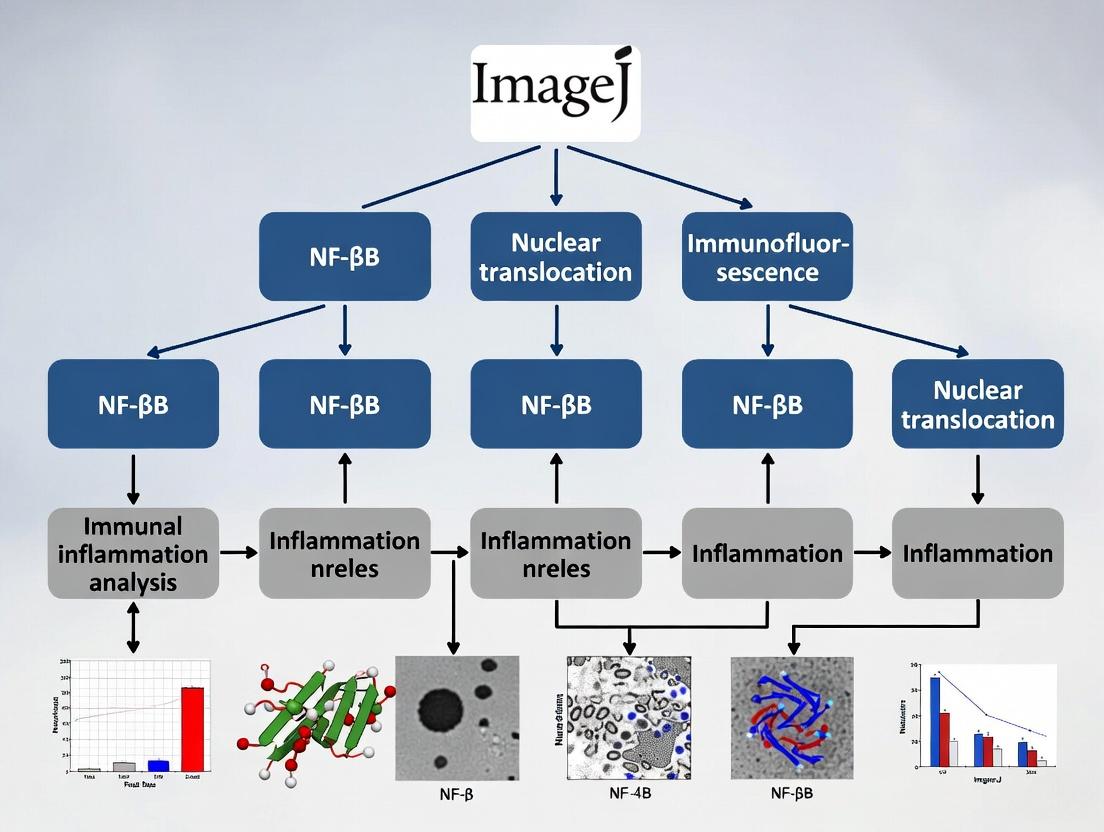
This comprehensive guide provides researchers, scientists, and drug development professionals with a complete workflow for analyzing NF-κB nuclear translocation via immunofluorescence using the open-source software ImageJ/Fiji.
A Complete Guide to Quantifying NF-κB Nuclear Translocation Using ImageJ: From Fundamentals to Advanced Validation for Researchers
Abstract
This comprehensive guide provides researchers, scientists, and drug development professionals with a complete workflow for analyzing NF-κB nuclear translocation via immunofluorescence using the open-source software ImageJ/Fiji. It addresses four key intents: establishing the biological and technical foundations of the assay, presenting a detailed step-by-step methodological pipeline from image acquisition to quantification, troubleshooting common issues and optimizing for accuracy, and finally, validating results through comparative analysis with other methods. The article integrates current best practices and tools to ensure reliable, reproducible quantification of this critical signaling event in inflammation, immunity, and cancer research.
NF-κB Signaling and Nuclear Translocation: Why Quantification Matters in Biomedical Research
Within the context of a thesis focused on ImageJ analysis of NF-κB nuclear translocation via immunofluorescence, understanding the molecular dynamics of the NF-κB signaling pathway is paramount. NF-κB is a family of inducible transcription factors (RelA/p65, c-Rel, RelB, p50, p52) that serve as central regulators of the immune response, inflammation, cell proliferation, and survival. In unstimulated cells, NF-κB dimers are sequestered in the cytoplasm by inhibitory proteins, IκBs. Upon activation by diverse stimuli (e.g., TNF-α, IL-1, LPS), the IκB kinase (IKK) complex phosphorylates IκB, targeting it for proteasomal degradation. This releases NF-κB, allowing its rapid nuclear translocation, DNA binding, and transactivation of target genes (e.g., cytokines, chemokines, adhesion molecules). Quantifying this nuclear translocation is a cornerstone assay for assessing pathway activity in research and drug screening.
Key Signaling Pathways & Experimental Targets
The canonical and non-canonical NF-κB pathways are primary therapeutic targets. The canonical pathway is rapidly activated by pro-inflammatory signals and is central to most immunofluorescence-based assays.
Table 1: Primary NF-κB Pathway Activators and Inhibitors in Experimental Research
| Agent | Type | Common Experimental Use | Primary Target/Effect |
|---|---|---|---|
| Tumor Necrosis Factor-alpha (TNF-α) | Cytokine | Positive control for canonical pathway activation. | Binds TNFR1, leading to IKK complex activation. |
| Lipopolysaccharide (LPS) | Pathogen-associated molecular pattern (PAMP) | Immune cell (e.g., macrophage) activation model. | Activates TLR4, initiating downstream signaling to IKK. |
| Interleukin-1 beta (IL-1β) | Cytokine | Model of sterile inflammation and innate immunity. | Binds IL-1R, activating signaling cascades converging on IKK. |
| Phorbol 12-myristate 13-acetate (PMA) | Pharmacological agent | General activator of immune cells, including PKC pathways. | Indirect activator, can stimulate NF-κB via multiple secondary messengers. |
| BAY 11-7082 | Small molecule inhibitor | Negative control/validation of pathway specificity. | Inhibits IκBα phosphorylation, blocking its degradation. |
| PS-1145 | Small molecule inhibitor | Tool compound for mechanistic studies. | Selective inhibitor of the IKK complex. |
| JSH-23 | Small molecule inhibitor | Nuclear translocation blockade control. | Selectively inhibits NF-κB nuclear translocation. |
| Dexamethasone | Steroidal anti-inflammatory drug | Therapeutic control in inflammation studies. | Indirectly suppresses NF-κB transcriptional activity via glucocorticoid receptor. |
Application Notes & Protocols
Protocol 3.1: Immunofluorescence Staining for NF-κB p65 Localization
Objective: To visualize and quantify the stimulus-induced nuclear translocation of the NF-κB p65 subunit. Cell Preparation: Seed cells (e.g., HeLa, THP-1, primary fibroblasts) on sterile, collagen-coated coverslips in a 24-well plate. Grow to 70-80% confluence. Stimulation: Treat cells with stimulus (e.g., 20 ng/mL TNF-α) for a time-course (e.g., 0, 5, 15, 30, 60 min). Include a negative control (media only) and an inhibitor control (e.g., pre-treat with 10 µM BAY 11-7082 for 1h before TNF-α). Fixation and Permeabilization: Aspirate media. Fix with 4% paraformaldehyde (PFA) in PBS for 15 min at RT. Wash 3x with PBS. Permeabilize with 0.2% Triton X-100 in PBS for 10 min. Wash 3x. Blocking and Staining: Block with 5% BSA / 1% normal goat serum in PBS for 1h at RT. Incubate with primary antibody (e.g., Rabbit anti-NF-κB p65, 1:500) in blocking buffer overnight at 4°C. Wash 3x. Incubate with secondary antibody (e.g., Alexa Fluor 488 Goat anti-Rabbit, 1:1000) and nuclear counterstain (e.g., DAPI, 1 µg/mL) in blocking buffer for 1h at RT in the dark. Mounting: Wash 3x. Mount coverslips onto slides using anti-fade mounting medium. Seal with nail polish. Store at 4°C in the dark. Image Acquisition: Acquire high-resolution, multi-channel images using a fluorescence or confocal microscope. Use consistent exposure settings across all samples.
Protocol 3.2: ImageJ/Fiji Analysis of Nuclear Translocation
Objective: To quantitatively analyze the ratio of nuclear to cytoplasmic NF-κB p65 fluorescence.
Image Preparation: Open image stack (DAPI and p65 channels) in Fiji. Split channels.
Nuclear Segmentation (DAPI channel): Convert to 8-bit. Apply Gaussian Blur (σ=2). Auto-threshold (e.g., MaxEntropy). Run Analyze Particles to create a Regions of Interest (ROI) Manager list of nuclei. Size and circularity limits should be applied for exclusion of debris.
Cytoplasmic Ring Definition: Select the nuclear ROI. Use Edit > Selection > Enlarge to expand the ROI by 5-10 pixels (cytoplasmic shell). Use Edit > Selection > Make Band to create a ring ROI representing the cytoplasm. Add to ROI Manager.
Fluorescence Intensity Measurement: Switch to the p65 channel image. With the ROIs selected in the ROI Manager, run Measure. Record the Mean Gray Value for each nucleus and its corresponding cytoplasmic ring.
Data Calculation & Output: For each cell, calculate the Nuclear-to-Cytoplasmic (N:C) Ratio: Mean Intensity (Nucleus) / Mean Intensity (Cytoplasm). Export data for statistical analysis (e.g., GraphPad Prism). Pool data from ≥3 independent experiments (n≥50 cells per condition).
Table 2: Example Quantitative Output from ImageJ Analysis of TNF-α Time Course
| Treatment Condition | Mean N:C Ratio (± SEM) | Statistical Significance (vs. Unstimulated) | Interpretation |
|---|---|---|---|
| Unstimulated (0 min) | 0.45 ± 0.03 | - | Baseline, cytoplasmic retention. |
| TNF-α, 15 min | 2.98 ± 0.21 | p < 0.0001 | Peak nuclear translocation. |
| TNF-α, 60 min | 1.20 ± 0.11 | p < 0.01 | Partial nuclear export/feedback. |
| BAY 11-7082 + TNF-α (15 min) | 0.52 ± 0.04 | p > 0.05 (ns) | Successful pathway inhibition. |
The Scientist's Toolkit: Research Reagent Solutions
| Reagent/Material | Supplier Examples | Function in NF-κB Translocation Assay |
|---|---|---|
| Anti-NF-κB p65 (phospho S529) Antibody | Abcam, Cell Signaling Tech | Detects activated, phosphorylation p65 subunit; can increase specificity. |
| ProLong Diamond Antifade Mountant with DAPI | Thermo Fisher Scientific | High-performance mounting medium that preserves fluorescence and provides nuclear counterstain. |
| Recombinant Human TNF-α Protein | PeproTech, R&D Systems | Gold-standard agonist for robust, reproducible canonical NF-κB activation. |
| IKK-16 Inhibitor | Tocris, Sigma-Aldrich | Potent, ATP-competitive IKK inhibitor for control experiments. |
| CellMask Deep Red Plasma Membrane Stain | Thermo Fisher Scientific | Optional stain for improved cytoplasmic region definition during ImageJ analysis. |
| High-Content Imaging Systems | PerkinElmer, Molecular Devices | Enables automated acquisition and analysis of translocation in 96/384-well plates for screening. |
| Fiji (ImageJ) Distribution with Bio-Formats & JACoP Plugins | Open Source | Essential, free software platform for image analysis and colocalization quantification. |
Signaling Pathway & Workflow Diagrams
Diagram Title: Canonical NF-κB Activation Pathway
Diagram Title: NF-κB Nuclear Translocation Assay Workflow
Nuclear translocation of transcription factors, such as NF-κB, is a critical event in cellular signaling, converting extracellular stimuli into specific gene expression programs. This process serves as a definitive functional readout for pathway activation in research and drug discovery. Within immunofluorescence (IF) research, quantifying the shift of protein fluorescence from the cytoplasm to the nucleus provides a powerful, single-cell measure of cellular response. This application note details the mechanisms, relevance to disease, and provides standardized protocols for imaging and analyzing NF-κB nuclear translocation using ImageJ, framed within a broader thesis on quantitative cellular imaging.
Mechanism and Disease Relevance
The canonical NF-κB pathway is a paradigm for regulated nuclear translocation. Inactive NF-κB (typically a p50-p65 heterodimer) is sequestered in the cytoplasm by IκBα. Pro-inflammatory stimuli (e.g., TNF-α, IL-1β) activate the IκB kinase (IKK) complex, leading to IκBα phosphorylation, ubiquitination, and proteasomal degradation. This exposes the nuclear localization signals (NLS) on NF-κB, allowing its rapid translocation via importins into the nucleus, where it drives expression of genes involved in inflammation, immunity, cell survival, and proliferation.
Dysregulated NF-κB nuclear translocation is a hallmark of numerous diseases:
- Chronic Inflammatory Diseases (RA, IBD): Constitutive nuclear localization perpetuates inflammation.
- Cancer: Promotes tumor cell survival, proliferation, angiogenesis, and metastasis.
- Autoimmune Diseases: Aberrant activation leads to self-directed immune responses.
- Neurodegeneration: Contributes to neuroinflammation in Alzheimer's and Parkinson's diseases.
Quantifying this translocation is thus essential for understanding disease mechanisms and screening therapeutic agents designed to inhibit or modulate the pathway.
Key Research Reagent Solutions
| Reagent/Solution | Function in NF-κB Translocation Assay |
|---|---|
| TNF-α (Tumor Necrosis Factor-alpha) | Gold-standard cytokine to stimulate canonical NF-κB pathway activation. |
| Bay 11-7082 (IKK Inhibitor) | Small molecule inhibitor of IκBα phosphorylation; used as a negative control. |
| Primary Antibody: anti-NF-κB p65 | Specifically labels the RelA/p65 subunit for immunofluorescence detection. |
| Secondary Antibody: Alexa Fluor 488-conjugated | Provides high-intensity, photostable green fluorescence for visualization. |
| DAPI (4',6-diamidino-2-phenylindole) | Nuclear counterstain; essential for defining the nuclear region for quantification. |
| Triton X-100 | Detergent for cell permeabilization, allowing antibody access to intracellular targets. |
| Paraformaldehyde (4%) | Fixative for preserving cellular architecture and protein localization at time of assay. |
| Mounting Medium (Antifade) | Preserves fluorescence and reduces photobleaching during microscopy. |
Table 1: Representative NF-κB Nuclear Translocation Data Following TNF-α Stimulation
| Condition | Time Post-Stimulation | Mean Nuclear/Cytoplasmic Ratio (p65) | % Cells with Positive Translocation* | SD |
|---|---|---|---|---|
| Unstimulated Control | 0 min | 0.75 | 5.2 | 0.12 |
| TNF-α (10 ng/mL) | 15 min | 2.45 | 92.5 | 0.31 |
| TNF-α (10 ng/mL) | 30 min | 3.10 | 98.1 | 0.28 |
| TNF-α (10 ng/mL) | 60 min | 2.20 | 85.7 | 0.35 |
| Pre-treatment: Bay 11-7082 (10 µM) + TNF-α | 30 min | 0.82 | 8.9 | 0.15 |
*Positive translocation defined as Nuclear/Cytoplasmic Ratio > 2.0.
Table 2: Impact of Pharmacological Inhibitors on NF-κB Nuclear Translocation
| Inhibitor Target | Compound | Concentration | Resultant N/C Ratio vs. TNF-α control | Inference |
|---|---|---|---|---|
| IKK | Bay 11-7082 | 10 µM | 26% | Strong inhibition of upstream signaling |
| Proteasome | MG-132 | 5 µM | 31% | Prevents IκBα degradation |
| Nuclear Export | Leptomycin B | 10 nM | 125%* | Enhances & prolongs nuclear retention |
*Ratio increased relative to TNF-α control at same time point due to blocked nuclear export.
Experimental Protocols
Protocol 1: Cell Stimulation and Immunofluorescence for NF-κB p65
Objective: To fix and label cells for NF-κB p65 localization at specific time points post-stimulation.
- Seed cells (e.g., HEK293, HeLa) on poly-L-lysine-coated coverslips in a 24-well plate. Culture until ~70% confluent.
- Stimulate: Replace medium with medium containing TNF-α (e.g., 10 ng/mL). For controls, use medium alone or pre-treat with inhibitor (e.g., Bay 11-7082, 10 µM, 1 hr) before adding TNF-α.
- Fix: At desired time points (e.g., 0, 15, 30, 60 min), aspirate medium and add 4% paraformaldehyde (PFA) in PBS for 15 min at room temperature (RT).
- Permeabilize: Wash 3x with PBS. Incubate with 0.1% Triton X-100 in PBS for 10 min at RT.
- Block: Incubate with blocking buffer (5% BSA in PBS) for 1 hour at RT.
- Primary Antibody: Incubate with anti-NF-κB p65 antibody (diluted in 1% BSA/PBS) overnight at 4°C.
- Secondary Antibody: Wash 3x with PBS. Incubate with Alexa Fluor 488-conjugated secondary antibody and DAPI (1:1000) in 1% BSA/PBS for 1 hour at RT in the dark.
- Mount: Wash 3x with PBS. Dip coverslip in distilled water and mount on slide using antifade mounting medium. Seal with nail polish.
Protocol 2: Image Acquisition for Quantification
Objective: To acquire consistent, high-quality images for subsequent analysis.
- Use an epifluorescence or confocal microscope with a 40x or 60x oil-immersion objective.
- Channel Settings: Acquire images in two channels:
- Channel 1 (Green): Alexa Fluor 488 (p65). Ex/Em ~495/519 nm.
- Channel 2 (Blue): DAPI. Ex/Em ~358/461 nm.
- Acquisition Parameters: Keep exposure time, gain, and laser/intensity power identical across all samples within an experiment. Avoid pixel saturation.
- Field Selection: Randomly acquire 10-20 fields per coverslip, ensuring adequate cell number (>50 cells per condition).
- Save Images in a lossless format (e.g., .tiff).
Protocol 3: ImageJ Analysis of Nuclear Translocation
Objective: To quantify the nuclear to cytoplasmic fluorescence ratio of NF-κB p65.
- Open Image: Open the DAPI and p65 image stacks in ImageJ (Fiji).
- Set Measurements: Go to
Analyze > Set Measurements. CheckArea,Mean gray value, andLimit to threshold. - Create Nuclear Mask:
- Select the DAPI image. Run
Process > Filters > Gaussian Blur(sigma=2). - Adjust threshold (
Image > Adjust > Threshold) to select nuclei. UseDefaultmethod. ClickApplyto create a binary mask. Process > Binary > Fill Holes.Process > Binary > Watershedto separate touching nuclei.Analyze > Analyze Particles. Set size (e.g., 50-Infinity). CheckAdd to Manager. This creates a Region of Interest (ROI) set for each nucleus.
- Select the DAPI image. Run
- Create Cytoplasmic Ring:
- With the nuclear ROIs selected, go to
Edit > Selection > Enlarge. Enlarge by 3-5 pixels to create a dilated ROI. Edit > Selection > Make Band. Set band width to 5-8 pixels. This creates a ring-shaped ROI representing the cytoplasm immediately surrounding each nucleus.
- With the nuclear ROIs selected, go to
- Measure Intensities:
- Select the p65 image. Go to
Analyze > Set Measurements. EnsureMean gray valueis checked. - With the nuclear ROIs active, run
Analyze > Measure. Record theMeanvalues for each nucleus. - With the cytoplasmic band ROIs active, run
Analyze > Measureagain.
- Select the p65 image. Go to
- Calculate Ratio: For each cell, calculate the Nuclear/Cytoplasmic (N/C) Ratio:
Mean Intensity (Nuclear) / Mean Intensity (Cytoplasmic Band). - Statistics: Pool ratios from all cells per condition (typically 100-200 cells). Calculate the mean N/C ratio and the percentage of cells with a ratio above a threshold (e.g., 2.0).
Pathway and Workflow Diagrams
Canonical NF-κB Activation Pathway
NF-κB Translocation Assay Workflow
ImageJ Analysis Logic for N/C Ratio
Immunofluorescence (IF) as the Gold Standard for Visualizing Subcellular Localization
Immunofluorescence (IF) is an indispensable technique for visualizing the subcellular localization of proteins, forming the cornerstone of spatial proteomics. Within the context of investigating NF-κB signaling dynamics, particularly the canonical pathway leading to nuclear translocation, IF provides the spatial resolution necessary to quantify the movement of transcription factors like the p65 subunit from the cytoplasm to the nucleus in response to stimuli such as TNF-α or IL-1β. This application note details protocols and analytical workflows for applying IF to NF-κB research, emphasizing subsequent quantitative analysis using ImageJ/FIJI.
Application Notes: Quantitative Analysis of NF-κB Nuclear Translocation via IF
The core readout for NF-κB activation is the shift in the spatial distribution of key subunits (e.g., p65, p50). Quantitative IF analysis moves beyond qualitative assessment to provide robust, statistically significant data on translocation kinetics and magnitude, essential for drug screening and mechanistic studies.
Key Quantitative Metrics:
- Nuclear-to-Cytoplasmic (N:C) Ratio: The most common metric, calculated from mean fluorescence intensity (MFI) within defined nuclear and cytoplasmic regions of interest (ROIs).
- Nuclear Fraction: The proportion of total cellular fluorescence intensity located within the nuclear compartment.
- Translocation Index: A metric that accounts for background and whole-cell intensity.
Table 1: Representative Quantitative Data from NF-κB p65 Translocation Assay (TNF-α Stimulation, 30 min)
| Cell Line | Stimulus | N (cells) | Mean N:C Ratio (±SEM) | p-value vs. Unstimulated | Assay Readout |
|---|---|---|---|---|---|
| HEK293 | None (Control) | 150 | 0.85 (±0.05) | — | Baseline |
| HEK293 | TNF-α (10 ng/mL) | 150 | 3.42 (±0.15) | < 0.0001 | Full Translocation |
| HEK293 | TNF-α + IκBα inhibitor | 150 | 1.20 (±0.08) | < 0.001 | Inhibition |
| RAW 264.7 | None (Control) | 120 | 1.10 (±0.07) | — | Baseline |
| RAW 264.7 | LPS (100 ng/mL) | 120 | 4.85 (±0.22) | < 0.0001 | Full Translocation |
Table 2: Key Advantages and Limitations of IF for Subcellular Localization
| Advantage | Rationale | Consideration for NF-κB Studies |
|---|---|---|
| High Spatial Resolution | Can resolve nucleus vs. cytoplasm, and some organelles. | Essential for accurate N:C ratio calculation. |
| Multiplexing Capability | Multiple proteins can be labeled with different fluorophores. | Allows co-staining for p65, nuclei (DAPI), and markers (e.g., IκBα). |
| Compatibility with Fixed Cells | Enables analysis of specific time points with precise fixation. | Permits kinetic studies by fixing cells at various times post-stimulus. |
| Quantitative Potential | Intensity values can be extracted and analyzed statistically. | Requires careful standardization of acquisition and analysis parameters. |
| Limitation | Mitigation Strategy | |
| Fixation Artifacts | Optimize fixation (e.g., 4% PFA, 15 min RT) and permeabilization. | Test different conditions to preserve epitopes and morphology. |
| Antibody Specificity | Use validated antibodies, include controls (KO, siRNA). | Critical to ensure signal is specific to p65/NF-κB. |
| Quantification Complexity | Use automated ImageJ macros or commercial software. | Implement batch processing for high-throughput analysis. |
| Dynamic Range | Avoid signal saturation during image acquisition. | Use consistent exposure times across experiments. |
Detailed Protocols
Protocol 1: Immunofluorescence Staining for NF-κB p65 in Adherent Cells
Objective: To visualize and quantify TNF-α-induced nuclear translocation of NF-κB p65.
Materials:
- Cells (e.g., HeLa, HEK293)
- Stimuli: Recombinant human TNF-α (10-50 ng/mL)
- Inhibitors (optional): e.g., BAY 11-7082 (IκBα phosphorylation inhibitor)
- Fixative: 4% Paraformaldehyde (PFA) in PBS
- Permeabilization/Blocking Buffer: 0.3% Triton X-100, 5% Normal Goat Serum in PBS
- Primary Antibody: Rabbit anti-NF-κB p65
- Secondary Antibody: Alexa Fluor 488-conjugated Goat Anti-Rabbit IgG
- Nuclear Counterstain: DAPI (300 nM)
- Mounting Medium: Antifade mounting medium
Methodology:
- Cell Culture & Stimulation: Seed cells on poly-L-lysine-coated coverslips in a 24-well plate. Grow to 70-80% confluence. Pre-treat with inhibitor (e.g., 1 hour) if required. Stimulate cells with TNF-α for the desired time (e.g., 0, 5, 15, 30, 60 min).
- Fixation: Aspirate medium. Rinse gently with warm PBS. Fix cells with 4% PFA for 15 minutes at room temperature (RT).
- Permeabilization and Blocking: Wash 3x with PBS. Permeabilize and block with 300 μL/well of Permeabilization/Blocking Buffer for 1 hour at RT.
- Primary Antibody Incubation: Prepare primary antibody (e.g., 1:500 dilution) in blocking buffer. Apply 100-150 μL per coverslip. Incubate overnight at 4°C in a humidified chamber.
- Secondary Antibody Incubation: Wash 3x with PBS (5 min each). Apply fluorophore-conjugated secondary antibody (1:1000 dilution) in blocking buffer. Incubate for 1 hour at RT in the dark.
- Counterstaining and Mounting: Wash 3x with PBS. Incubate with DAPI solution for 5 min. Wash 2x with PBS. Dip coverslip in dH₂O and mount onto a glass slide using antifade medium. Seal with nail polish.
- Image Acquisition: Acquire images using a fluorescence or confocal microscope with consistent settings (exposure time, gain) across all samples. Capture at least 10-20 fields of view per condition.
Protocol 2: ImageJ/FIJI Analysis for NF-κB Nuclear Translocation
Objective: To quantify the nuclear-to-cytoplasmic (N:C) ratio of NF-κB p65 fluorescence intensity.
Workflow:
- Open and Split Channels: Open image file. Use
Image > Color > Split Channels. - Set Measurements:
Analyze > Set Measurements. CheckMean gray valueandArea. - Define Nuclear ROI (DAPI channel): Threshold the DAPI channel (
Image > Adjust > Threshold, adjust, set to "Over/Under"). Use the Wand (tracing) tool to select nuclei. Add selections to the ROI Manager (Analyze > Tools > ROI Manager, click "Add"). - Create Cytoplasmic ROI (p65 channel): On the p65 channel, dilate the nuclear ROIs to create a ring representing the cytoplasm.
Edit > Selection > Enlarge(e.g., 5-10 pixels). Add to ROI Manager. Subtract the nuclear ROI from this enlarged ROI to create a pure cytoplasmic ring (Process > Image Calculator, subtract). - Measure Intensities: Select the p65 channel. In ROI Manager, select the nuclear ROIs and click "Measure". Record Mean Intensity. Repeat for the cytoplasmic ROIs.
- Calculate N:C Ratio: For each cell, divide the nuclear mean intensity by the cytoplasmic mean intensity. Average ratios per experimental condition.
Diagrams
NF-κB Canonical Signaling Pathway
IF Workflow for NF-κB Translocation
ImageJ Analysis Logic
The Scientist's Toolkit: Research Reagent Solutions
Table 3: Essential Materials for NF-κB Immunofluorescence Assays
| Item | Function in NF-κB IF | Example/Note |
|---|---|---|
| Validated Primary Antibody | Specifically binds NF-κB subunit (e.g., p65). Crucial for signal specificity. | Anti-NF-κB p65 (Rabbit mAb, D14E12). Validate using siRNA/KO controls. |
| Cross-Adsorbed Secondary Antibody | Binds primary antibody with high affinity, conjugated to a bright fluorophore. | Alexa Fluor 488 Goat Anti-Rabbit IgG (H+L). Minimizes non-specific binding. |
| Nuclear Counterstain | Labels DNA to define nuclear boundaries for segmentation and ratio calculation. | DAPI, Hoechst 33342. Use at consistent, low concentration. |
| Cell Fixative | Preserves cellular architecture and protein localization at the time of fixation. | 4% Paraformaldehyde (PFA). Freshly prepared or aliquoted from stable stocks. |
| Permeabilization Agent | Allows antibodies to access intracellular epitopes by disrupting the membrane. | 0.1-0.5% Triton X-100 or Saponin. Concentration optimization is key. |
| Blocking Serum | Reduces non-specific binding of antibodies to non-target sites. | Normal serum from the species of the secondary antibody (e.g., 5% NGS). |
| Antifade Mountant | Preserves fluorescence signal during storage and imaging by reducing photobleaching. | Commercial mounting media with DABCO or similar compounds. |
| Positive Control Stimulus | Induces robust NF-κB nuclear translocation to validate the assay. | Recombinant Human TNF-α (10-50 ng/mL, 30 min). |
| Pharmacologic Inhibitor | Blocks translocation, serving as a negative control for the assay. | BAY 11-7082 (IκBα phosphorylation inhibitor). |
| Image Analysis Software | Enables quantitative extraction of fluorescence intensity data from images. | ImageJ/FIJI (open-source) with macro automation for consistency. |
Why ImageJ/Fiji? Advantages of Open-Source Software for Quantitative Cell Biology
Within NF-κB nuclear translocation research, quantitative image analysis is essential for generating robust, statistically significant data. ImageJ and its distribution Fiji (Fiji is just ImageJ) represent a cornerstone open-source platform that empowers cell biologists to perform reproducible, quantitative analyses. This article details specific advantages and provides protocols relevant to immunofluorescence-based NF-κB studies.
Advantages of Open-Source Software in Quantitative Biology
- Transparency and Reproducibility: Every algorithm and plugin is open for inspection, allowing peers to verify methodology—a critical factor in preclinical drug development research.
- Customizability and Extensibility: Researchers can script (in macro, Groovy, Python, etc.) or develop plugins to tailor analyses to specific experimental setups, such as custom metrics for nuclear translocation.
- Cost-Effectiveness: Eliminates per-seat licensing fees, allowing unrestricted deployment across labs and fostering collaboration.
- Community-Driven Development: A vast ecosystem of plugins (e.g., Bio-Formats, ImageJ2) is maintained and updated by the scientific community, rapidly integrating new analytical techniques.
- Long-Term Data Accessibility: Prevents data obsolescence tied to proprietary software formats, ensuring long-term usability of valuable experimental datasets.
Application Notes: NF-κB Nuclear Translocation Analysis
A common quantitative measure in immunofluorescence is the Nuclear to Cytoplasmic (N:C) ratio of NF-κB subunit p65/RelA. Open-source tools in Fiji enable automated, unbiased measurement of this ratio across hundreds of cells.
Key Quantitative Metrics Table
| Metric | Formula (Typical) | Description | Relevance to NF-κB Signaling |
|---|---|---|---|
| Nuclear to Cytoplasmic (N:C) Ratio | Mean Intensity (Nuclear) / Mean Intensity (Cytoplasmic) |
Primary indicator of translocation. | A ratio >1 indicates nuclear accumulation post-stimulation (e.g., TNF-α). |
| Nuclear Fraction | Integrated Density (Nuclear) / [Integrated Density (Nuclear + Cytoplasmic)] |
Measures total protein amount in nucleus. | Useful for tracking complete cellular redistribution. |
| Difference in Mean Intensity | Mean Intensity (Nuclear) - Mean Intensity (Cytoplasmic) |
Simple difference metric. | Can highlight strong translocation events. |
| Translocation Coefficient | [N:C Ratio (Stimulated) - N:C Ratio (Unstimulated)] / N:C Ratio (Unstimulated) |
Normalized, fold-change metric. | Ideal for dose-response or inhibitor studies in drug development. |
Experimental Protocol: Quantifying NF-κB p65 Translocation using Fiji
Objective: To quantify TNF-α-induced NF-κB p65 nuclear translocation in HeLa cells via immunofluorescence and calculate N:C ratios.
Research Reagent Solutions & Materials
| Item | Function/Description |
|---|---|
| HeLa Cells | Model cell line for NF-κB pathway studies. |
| TNF-α (e.g., 10-20 ng/mL) | Pro-inflammatory cytokine; induces canonical NF-κB activation. |
| Anti-NF-κB p65 Primary Antibody | Immunofluorescence target. |
| Fluorophore-conjugated Secondary Antibody (e.g., Alexa Fluor 488) | For detection. |
| Nuclear Stain (DAPI or Hoechst) | For segmentation of nuclei. |
| Cell Culture & Fixation Reagents (PBS, Paraformaldehyde) | Standard cell processing. |
| Permeabilization Buffer (e.g., 0.1-0.5% Triton X-100) | Allows antibody access to nucleus. |
| Mounting Medium | For preserving slides. |
| Confocal or Epifluorescence Microscope | For image acquisition. |
| Fiji/ImageJ Software | Open-source platform for all image analysis steps. |
Methodology:
- Cell Stimulation & Imaging:
- Seed HeLa cells on coverslips. Treat with TNF-α (e.g., 20 ng/mL) for 0 (control) and 30 minutes.
- Fix, permeabilize, and immunostain for p65 and nuclei (DAPI). Acquire 20-30 images per condition using consistent microscope settings.
- Image Analysis Workflow in Fiji:
- Open Images: Use
Plugins > Bio-Formats > Bio-Formats Importerto open multi-channel images, preserving metadata. - Preprocessing: Apply background subtraction (
Process > Subtract Background). Split channels (Image > Color > Split Channels). - Nuclear Segmentation: On the DAPI channel, run
Plugins > MorphoLibJ > Binary Images > Label Imagesafter thresholding (Image > Adjust > Threshold) to create a mask of individual nuclei. - Cytoplasmic Region Definition: Dilate the nuclear mask (
Process > Binary > Dilate) by 5-10 pixels to create a ring representing the cytoplasmic region. UseProcess > Image Calculatorto subtract the original nuclear mask, leaving a cytoplasmic mask. - Measurement: Set measurements (
Analyze > Set Measurements) to includeMean Gray ValueandArea. Select the p65 channel. With the nuclear mask selected, runAnalyze > Analyze Particles. Record the mean intensity for each nucleus. - Assign Cytoplasmic Intensity: A custom macro or the "ROI Manager" can be used to measure the corresponding mean intensity in the cytoplasmic ring for each cell.
- Data Export: Calculate the N:C ratio for each cell. Export data to a spreadsheet for statistical analysis.
- Open Images: Use
Signaling Pathway and Workflow Diagrams
Title: Canonical NF-κB Activation Pathway by TNF-α
Title: Fiji Workflow for NF-κB N:C Ratio Analysis
Within the broader thesis on quantifying NF-κB activation via immunofluorescence, precise image analysis is paramount. The nuclear translocation of NF-κB subunits (e.g., p65) from the cytoplasm to the nucleus is a canonical indicator of pathway activation in response to stimuli like TNF-α or IL-1β. This application note details the core image analysis concepts—Region of Interest (ROI) definition, intensity measurement, and translocation ratio calculation—essential for generating robust, quantitative data from immunofluorescence images to assess drug efficacy or mechanistic signaling.
Defining Regions of Interest (ROIs)
ROIs are user-defined areas within an image from which pixel data is extracted. Accurate ROI definition is critical for measuring compartment-specific fluorescence intensity.
Protocol 1.1: Manual and Semi-Automated Nuclear/Cytoplasmic Delineation
Objective: To create precise nuclear and cytoplasmic ROIs for individual cells in a 2D immunofluorescence image (e.g., p65/DAPI staining).
Materials & Software:
- ImageJ/Fiji (latest version)
- Immunofluorescence image set (Channel 1: DAPI/Hoechst; Channel 2: NF-κB subunit, e.g., p65).
- High-resolution monitor.
Methodology:
- Image Preparation: Open your multi-channel image. Split channels (
Image > Color > Split Channels). The DAPI channel will be used for nuclear segmentation. - Nuclear ROI Definition (Semi-Automated):
- Select the DAPI channel image. Apply background subtraction (
Process > Subtract Background, rolling ball radius ~50 pixels). - Adjust threshold (
Image > Adjust > Threshold). Use an auto-thresholding method (e.g., "Huang" or "Li") to binarize the image, ensuring nuclei are accurately selected. Click "Apply". - Run
Analyze > Analyze Particles. Set size (e.g., 50-Infinity pixels) and circularity (e.g., 0.50-1.00) to exclude debris and aggregates. Check "Add to Manager". This populates the ROI Manager with nuclear ROIs.
- Select the DAPI channel image. Apply background subtraction (
- Cytoplasmic ROI Definition:
- In the ROI Manager, select each nuclear ROI. Create a cytoplasmic annulus by dilating the nuclear boundary.
- Use
Edit > Selection > Enlarge...to expand the ROI by a set number of pixels (e.g., 3-5 pixels). This creates a "ring" ROI. Add this new ROI to the Manager, labeling it as "Cytoplasm_[Cell ID]". - Alternatively: Use
Edit > Selection > Make Band...to create a band of a specific width from the nuclear perimeter outward.
Intensity Measurements
Once ROIs are defined, mean fluorescence intensity (MFI) is measured within each compartment.
Protocol 2.1: Extracting Compartment-Specific Intensity Values
Objective: To obtain the mean pixel intensity for the NF-κB signal (e.g., p65) within the nuclear and cytoplasmic ROIs for each cell.
Methodology:
- ROI Alignment: Select the NF-κB signal channel (e.g., Cy3/p65) as the active image.
- Configure Measurement Settings: Go to
Analyze > Set Measurements. Check "Mean gray value" and "Area". Ensure "Limit to threshold" is unchecked. - Measure:
- In the ROI Manager, ensure all nuclear and corresponding cytoplasmic ROIs are listed.
- Select the first nuclear ROI. With the NF-κB channel active, click "Measure" in the ROI Manager. Record or copy the "Mean" value.
- Select the corresponding cytoplasmic ROI and click "Measure". Repeat for all cell ROIs.
- Data Organization: Export results to a spreadsheet. Each row should represent one cell, with columns for: CellID, NuclearArea, NuclearMeanIntensity, CytoplasmicArea, CytoplasmicMean_Intensity.
Calculating Translocation Ratios
The translocation ratio is a normalized metric comparing nuclear to cytoplasmic NF-κB intensity, correcting for background and expression variability.
Protocol 3.1: Standard Nuclear-to-Cytoplasmic (N/C) Ratio
Objective: To calculate a standard N/C ratio for each cell, indicating the degree of NF-κB nuclear translocation.
Methodology & Formula:
- Background Subtraction: Measure the mean intensity of a cell-free region in the NF-κB channel (Background_Intensity).
- Calculate Corrected Intensities:
- Corrected Nuclear Intensity (Ncorr) = NuclearMeanIntensity - BackgroundIntensity
- Corrected Cytoplasmic Intensity (Ccorr) = CytoplasmicMeanIntensity - BackgroundIntensity
- Compute Ratio: N/C Ratio = Ncorr / Ccorr.
- A ratio ≈ 1 indicates even distribution.
- A ratio > 1 (often >>2 upon stimulation) indicates nuclear accumulation.
- A ratio < 1 indicates cytoplasmic retention.
Table 1: Representative Data from a TNF-α Time-Course Experiment
| Treatment (Time) | Cell Count (n) | Mean Nuclear Intensity (p65) ± SEM | Mean Cytoplasmic Intensity (p65) ± SEM | Mean N/C Ratio ± SEM | Significance (vs. Untreated) |
|---|---|---|---|---|---|
| Untreated (0 min) | 150 | 25.4 ± 2.1 | 85.7 ± 5.3 | 0.30 ± 0.02 | -- |
| TNF-α (15 min) | 145 | 152.8 ± 10.5 | 45.2 ± 3.8 | 3.45 ± 0.25 | p < 0.001 |
| TNF-α + Inhibitor (15 min) | 138 | 55.3 ± 4.7 | 70.1 ± 6.1 | 0.79 ± 0.06 | p < 0.01 |
Visualization of Workflow and Pathway
Diagram 1: NF-κB Translocation Analysis Workflow
Diagram 2: Simplified Canonical NF-κB Signaling Pathway
The Scientist's Toolkit: Key Research Reagent Solutions
Table 2: Essential Materials for NF-κB Translocation Assays
| Item | Function & Rationale |
|---|---|
| Primary Antibody (anti-NF-κB p65) | Specifically binds to the p65/RelA subunit of NF-κB for immunofluorescence detection. Validated for immunofluorescence (IF) is essential. |
| Nuclear Counterstain (DAPI or Hoechst 33342) | Fluorescent DNA dye for definitive nuclear segmentation and ROI creation. Allows for cytoplasm delineation. |
| Cell Fixative (e.g., 4% PFA) | Preserves cellular architecture and antigen location at the time of fixation, critical for translocation assays. |
| Permeabilization Agent (e.g., 0.1-0.5% Triton X-100) | Allows antibodies to access intracellular epitopes (NF-κB in cytoplasm/nucleus). |
| NF-κB Pathway Agonist (e.g., recombinant TNF-α) | Positive control stimulus to induce robust nuclear translocation in experiments. |
| IKK/NF-κB Inhibitor (e.g., BAY 11-7082, SC514) | Negative control/validation tool to block stimulus-induced translocation, confirming assay specificity. |
| Mounting Medium with Antifade | Preserves fluorescence signal during microscopy and storage. |
| Validated Cell Line (e.g., HeLa, HEK293, U2OS) | Cells with a well-characterized NF-κB response to ensure reproducible and interpretable results. |
Step-by-Step Protocol: From Image Acquisition to Quantification in ImageJ/Fiji
Sample Preparation and Imaging Best Practices for Consistent, High-Quality IF Data
This application note details protocols for generating consistent, high-quality immunofluorescence (IF) data, a cornerstone for quantitative analysis in ImageJ-based studies of NF-κB nuclear translocation. Variability in sample preparation and imaging is a major source of irreproducibility, directly impacting the reliability of translocation metrics such as nuclear-to-cytoplasmic ratio. The following standardized practices are designed to minimize technical noise, ensuring that observed phenotypic changes are biologically meaningful within drug discovery and basic research contexts.
Critical Reagent Solutions and Materials
| Reagent/Material | Function & Critical Consideration |
|---|---|
| Validated Primary Antibodies | Target specificity is paramount. Use antibodies with peer-reviewed validation for IF (e.g., anti-p65/RelA for NF-κB). Phospho-specific antibodies require careful fixation. |
| High-Fidelity Secondary Antibodies | Conjugated to photostable fluorophores (e.g., Alexa Fluor 488, 647). Use from the same host species to prevent cross-reactivity. Always include no-primary controls. |
| Permeabilization Buffer | Typically 0.1-0.5% Triton X-100 or saponin. Concentration and detergent type must be optimized for target antigen accessibility. |
| Blocking Solution | 1-5% BSA or serum from the secondary antibody host species. Reduces non-specific binding. |
| Antifade Mounting Medium | Must contain DAPI or other nuclear stain. ProLong Diamond or similar hard-setting media reduces quenching and preserves signal. |
| Coverslips (#1.5 High Tolerance) | Essential for high-resolution objectives. Thickness tolerance (170 µm ± 5 µm) is critical for spherical aberration correction. |
| Cell Culture Vessels | Black-walled, glass-bottom plates (e.g., µ-Slide) are ideal for minimizing background and optimizing high-NA oil immersion. |
| Validated Positive/Negative Control Reagents | e.g., TNF-α (10-20 ng/mL) to induce NF-κB nuclear translocation; IkB inhibitor (e.g., BAY 11-7082) for constitutive activation. |
Detailed Protocols
Protocol 1: Optimized Cell Fixation, Permeabilization, and Staining for NF-κB
This protocol is optimized for preserving subcellular localization of NF-κB subunits while maintaining epitope integrity.
- Seeding & Stimulation: Seed cells (e.g., HeLa, HEK293, or primary macrophages) onto poly-L-lysine-coated #1.5 coverslips in a 24-well plate. Culture to 60-80% confluency. Apply experimental treatments (e.g., cytokine, drug). Include a TNF-α (20 ng/mL, 20 min) positive control.
- Fixation: Aspirate media. Rinse once with pre-warmed (37°C) 1X PBS, pH 7.4. Fix with 4% formaldehyde (from paraformaldehyde) in PBS for 15 min at room temperature (RT). Note: Methanol fixation (-20°C, 10 min) is an alternative for some cytoplasmic antigens but can destroy structures.
- Permeabilization & Blocking: Rinse 3x with PBS. Permeabilize with 0.25% Triton X-100 in PBS for 10 min at RT. Rinse 3x with PBS. Block with 5% normal goat serum (NGS) + 1% BSA in PBS for 1 hour at RT.
- Primary Antibody Incubation: Prepare primary antibody (e.g., rabbit anti-p65) in blocking solution at the manufacturer-recommended dilution. Apply 100-200 µL to the coverslip. Incubate in a humidified chamber overnight at 4°C. Critical: For dual staining, ensure host species are different and validate individually.
- Secondary Antibody & Nuclear Stain: Rinse 5x with PBS over 30 min. Prepare fluorophore-conjugated secondary antibody (e.g., goat anti-rabbit Alexa Fluor 568) and DAPI (300 nM) in blocking solution, protected from light. Incubate for 1 hour at RT in the dark.
- Mounting: Rinse 5x with PBS over 30 min. Dip coverslip in distilled water to remove salts. Mount on a glass slide using 8 µL of ProLong Diamond Antifade Mountant. Cure for 24 hours at RT in the dark before imaging.
Protocol 2: Standardized Image Acquisition for Quantification
Consistent imaging parameters are non-negotiable for batch analysis.
- Microscope Setup: Use a confocal or high-content widefield microscope with a 40x or 60x oil-immersion objective (NA ≥ 1.3). Ensure the system is calibrated (pixel size, illumination intensity).
- Laser/Power Settings: Use the lowest laser power or exposure time that yields a clear signal-to-noise ratio (SNR > 20). Set this using the positive control (TNF-α stimulated) sample and do not change for the entire experiment.
- Detector Settings: Set gain/PMT voltage so that the brightest pixels in the positive control are just below saturation (e.g., at 4095 for a 12-bit camera). Set the offset/black level so that background areas have a mean intensity of ~100-150.
- Acquisition: Acquire images at a resolution of 1024 x 1024 or 2048 x 2048. Use a sequential scanning mode to avoid cross-talk between channels. Acquire Z-stacks with a step size of 0.3-0.5 µm if performing 3D analysis, otherwise capture a single optimal plane.
- Metadata & File Naming: Save images in an uncompressed, non-proprietary format (e.g., .tiff) with consistent, informative naming (e.g.,
Drug_Treatment_Replicate03_DAPI.tiff). All metadata (objective, zoom, pixel size, laser power, exposure) must be saved.
Quantitative Benchmarks for High-Quality IF Data
The following metrics, measurable in ImageJ, should be monitored per experiment to assess technical quality.
| Quality Metric | Ideal Value/Range | Measurement Method in ImageJ (Brief) |
|---|---|---|
| Background Intensity | < 5% of dynamic range | Measure mean intensity in a cell-free region. |
| Signal-to-Noise Ratio (SNR) | > 20 | (Mean signal intensity - Mean background) / SD of background. |
| Coefficient of Variation (CV) of Signal within Replicates | < 15% | Calculate the CV of the mean cellular intensity for technical replicates within the same treatment group. |
| Nuclear Localization Index (Control vs. Stimulated) | ≥ 2-fold change | Ratio of nuclear-to-cytoplasmic mean intensity in stimulated vs. unstimulated control cells. |
| Z-axis Resolution | ≤ 0.8 µm | Full width at half maximum (FWHM) of a sub-resolution bead imaged under same conditions. |
Visualizations
Diagram Title: IF Sample Preparation and Analysis Workflow
Diagram Title: NF-κB Activation and Nuclear Translocation Pathway
Application Note: Establishing a Robust ImageJ/Fiji Environment for NF-κB Nuclear Translocation Quantification
This protocol details the essential setup of ImageJ/Fiji for analyzing NF-κB nuclear translocation in immunofluorescence images, a core metric in inflammation and drug discovery research. A correctly configured environment ensures accurate, reproducible quantification of the fluorescence ratio between the nucleus and cytoplasm.
I. Core Installation & Plugin Setup
Step 1: Fiji Installation Download the latest OS-specific package of Fiji (Fiji Is Just ImageJ) from the official site (https://fiji.sc). Fiji is preferred as it comes pre-bundled with many essential plugins. Unpack the download; no formal installer is required.
Step 2: Updating & Managing Plugins Launch Fiji. Navigate to
Help > Update.... Click "Manage update sites". This is critical for accessing plugin repositories.- In the "Manage update sites" window, ensure the following sites are checked:
Bio-FormatsImageJ2Fiji
- Click "Apply changes". Fiji will download and install the latest versions.
- Restart Fiji.
- In the "Manage update sites" window, ensure the following sites are checked:
Step 3: Installing Essential Analysis Plugins via Update Sites Return to
Help > Update... > Manage update sites. Add the following sites if not listed:- BioVoxxel Toolbox: Contains advanced segmentation and morphology tools.
- IJPB Plugins: For the "Colour_Histogram" plugin, useful for intensity calibration checks. Click "Apply changes" and restart.
Step 4: Manual Plugin Installation (if required) Some specialized plugins may require manual installation.
- Download the
.jarfile for the plugin (e.g., from the ImageJ Wiki or developer's site). - In Fiji, select
Plugins > Install.... - Navigate to and select the downloaded
.jarfile. - Restart Fiji. The plugin will typically appear under
Pluginsmenu.
- Download the
II. Critical Plugin Configuration for NF-κB Analysis
- Bio-Formats Importer: This plugin is automatically installed via its update site. To use, open images via
File > Import > Bio-Formats. It preserves metadata and handles multi-channel, z-stack, and time-series data from all major microscope formats. - ROI (Region of Interest) Manager: Access via
Analyze > Tools > ROI Manager...orPlugins > ROI > ROI Manager. Keyboard shortcutCtrl+Shift+T(Cmd+Shift+T on Mac) is recommended for efficiency during manual segmentation.
III. Quantitative Comparison of Key Analysis Plugins/Methods
The choice of analysis method depends on throughput needs and signal clarity.
Table 1: Comparison of NF-κB Nuclear Translocation Analysis Methodologies in ImageJ/Fiji
| Method/Plugin | Primary Function | Throughput | Key Advantage | Best Suited For |
|---|---|---|---|---|
| Manual ROI & Measurement | User-defined nuclear/cytoplasmic ROIs, intensity ratio calculation. | Low | High accuracy, full user control, gold standard for validation. | Low-throughput studies, validation of automated methods, complex cell morphologies. |
| Colocalization Analysis (e.g., JaCoP) | Calculates statistical overlap (Pearson's, Mander's) between NF-κB and nuclear (DAPI/Hoechst) channels. | Medium | Statistical rigor, provides standard colocalization coefficients. | Cells with moderate expression, population-level correlation analysis. |
| Automated Segmentation Plugins (e.g., BioVoxxel, Trainable Weka Segmentation) | Uses intensity thresholds or machine learning to segment nuclei/cytoplasm automatically. | High | Dramatically increases analysis speed, reduces user bias. | High-content screens, large datasets with clear nuclear staining. |
| Custom Macros/Scripts | Automates entire workflow from image opening to ratio calculation and data export. | Very High | Complete reproducibility, hands-off batch processing. | Drug development screening, analysis of thousands of images. |
IV. Experimental Protocol: Manual NF-κB Nuclear Translocation Ratio Measurement
This protocol is the foundational method for quantifying translocation.
Materials:
- Immunofluorescence images (e.g., .nd2, .lsm, .czi, .tif) of cells stained for NF-κB (p65 subunit) and a nuclear marker (DAPI/Hoechst).
- Fiji with Bio-Formats and ROI Manager installed.
Procedure:
- Image Import: Open your image file using
File > Import > Bio-Formats. In the import options dialog, ensure "Split channels" and "Autoscale" are checked. Click "OK". - Channel Assignment: Identify and rename (
Image > Properties) the channels: e.g., "Channel 1 (DAPI)" and "Channel 2 (NF-κB p65)". - Nuclear Segmentation (DAPI Channel):
a. Select the DAPI channel image.
b. Apply background subtraction:
Process > Subtract Background...(set rolling ball radius ~50 pixels). c. Create a binary mask:Process > Binary > Make Binary. Adjust threshold if necessary (Image > Adjust > Threshold). d. Analyze particles to generate nuclear ROIs:Analyze > Analyze Particles.... Set size (e.g., 50-Infinity µm²) and circularity (e.g., 0.5-1.0). Check "Add to Manager" and "Record starts". Click "OK". ROIs are saved to the ROI Manager. - Intensity Measurement (NF-κB Channel): a. Select the NF-κB p65 channel image. b. Optional: Apply identical background subtraction as in Step 3b. c. In the ROI Manager, with all nuclear ROIs selected, click "Measure". This records the Mean Gray Value (Intensity_Nuc) for each nucleus.
- Cytoplasmic Intensity Measurement:
a. On the same NF-κB channel, with nuclear ROIs still selected, generate cytoplasmic rings: In ROI Manager, select
More >>(orEdit > Selection > Enlarge...) to expand each ROI by a set number of pixels (e.g., 3-5 pixels) to create a perinuclear cytoplasmic region. Alternatively, for a full cytoplasmic measurement: UseEdit > Selection > Make Inverseon a duplicate image containing only a single cell. b. Measure the intensity within these new cytoplasmic ROIs (Intensity_Cyto). - Data Calculation & Export:
a. Results tables can be exported (
File > Save As...) for analysis in external software (e.g., Excel, Prism, R). b. Calculate the Nuclear-to-Cytoplasmic (N:C) Ratio for each cell: N:C Ratio = (IntensityNuc) / (IntensityCyto). A ratio >1 indicates nuclear translocation.
V. Workflow & Pathway Diagrams
Title: ImageJ Workflow for NF-κB Translocation Analysis
Title: Canonical NF-κB Signaling Pathway
VI. The Scientist's Toolkit: Essential Research Reagent Solutions
Table 2: Key Reagents for NF-κB Immunofluorescence Studies
| Reagent/Material | Function in NF-κB Translocation Assay |
|---|---|
| TNF-α (Tumor Necrosis Factor-alpha) | Standard pro-inflammatory stimulus to induce rapid NF-κB nuclear translocation in most cell types (positive control). |
| LPS (Lipopolysaccharide) | TLR4 agonist used as a potent inflammatory stimulus, especially in immune cells like macrophages. |
| BMS-345541 or IKK-16 | Selective small-molecule inhibitors of the IKK complex. Used as negative controls to block stimulus-induced translocation. |
| Primary Antibody: Anti-NF-κB p65 | Rabbit or mouse monoclonal antibody specific to the RelA/p65 subunit for immunofluorescence detection. |
| Nuclear Counterstain: DAPI or Hoechst 33342 | DNA-binding dyes for precise segmentation of nuclei, a prerequisite for ratio calculation. |
| Fluorophore-conjugated Secondary Antibody (e.g., Alexa Fluor 488/568) | Conjugated to the species-specific primary antibody to generate the measurable fluorescence signal. |
| Mounting Medium with Anti-fade | Preserves fluorescence signal during microscopy and storage (e.g., ProLong Diamond). |
| Cell Line: HEK 293T or HeLa | Common, easily transfectable epithelial lines with robust NF-κB pathway responses. |
| Cell Line: RAW 264.7 (Murine Macrophages) | Immune cell model highly responsive to LPS stimulation. |
Application Notes
Effective image pre-processing is a critical prerequisite for accurate quantitative analysis of NF-κB nuclear translocation in immunofluorescence (IF) studies. Insufficient pre-processing introduces systematic error, confounding the measurement of the central metric—the ratio of nuclear to cytoplasmic NF-κB signal. This document outlines standardized protocols for three foundational steps: Background Subtraction, Channel Alignment, and Stack Handling, specifically within the context of high-content screening for drug development.
Background Subtraction: In IF imaging, background fluorescence arises from non-specific antibody binding, autofluorescence, and camera read noise. This additive noise artificially elevates intensity measurements, particularly in cytoplasmic regions with lower signal, leading to an underestimated nuclear/cytoplasmic (N/C) ratio. A rolling-ball algorithm is preferred over simple thresholding as it estimates a spatially varying background without compromising edge detail of nuclei.
Channel Alignment: Chromatic aberration in microscope optics causes spatial misalignment between fluorescence channels. For NF-κB translocation assays, misalignment between the NF-κB (e.g., p65) channel and the nuclear stain (e.g., DAPI) channel directly introduces error in the co-localization analysis. Sub-pixel alignment via landmark-based translation is essential for multi-channel images.
Stack Handling: For 3D image stacks (z-stacks), a maximum intensity projection (MIP) is standard to create a 2D analysis image. However, the choice of focus stacking algorithm can impact the apparent intensity and distribution of a diffuse signal like cytoplasmic NF-κB.
Quantitative Impact of Pre-processing: The following table summarizes the typical effect of each pre-processing step on key analysis metrics in a simulated NF-κB translocation experiment.
Table 1: Impact of Pre-processing Steps on NF-κB Translocation Metrics
| Pre-processing Step | Mean Nuclear Intensity | Mean Cytoplasmic Intensity | Calculated N/C Ratio | Coefficient of Variation (Inter-cell) |
|---|---|---|---|---|
| Raw Image | 4500 ± 320 | 1800 ± 280 | 2.50 ± 0.45 | 18.5% |
| After Background Subtraction | 4150 ± 310 | 1250 ± 210 | 3.32 ± 0.52 | 15.8% |
| After Channel Alignment | No significant change | No significant change | Improves measurement precision | Reduces alignment-derived variance by ~5% |
| After Optimal Z-Projection | 4180 ± 305 | 1270 ± 215 | 3.29 ± 0.49 | 15.2% |
Experimental Protocols
Protocol 1: Background Subtraction using Rolling-Ball Algorithm in ImageJ/Fiji
Objective: To remove uneven background fluorescence without eroding signal from biological structures.
- Open your multi-channel IF image (e.g., DAPI and p65).
- Split the channels:
Image > Color > Split Channels. - For each channel, apply the rolling-ball subtraction:
- Select the channel image.
Process > Subtract Background...- Set the Rolling Ball Radius to 50-100 pixels (for a 1024x1024 image). This should be larger than the largest object of interest (nuclei) but smaller than background variations.
- Check the option "Sliding Paraboloid" for a more aggressive subtraction on uneven backgrounds.
- Check "Light background" for standard IF images.
- Do not check "Create background" unless for validation.
- Click OK.
- Recombine channels if necessary:
Image > Color > Merge Channels....
Protocol 2: Channel Alignment using Landmark Translation in ImageJ/Fiji
Objective: To correct sub-pixel misalignment between the nuclear marker (DAPI) and the target protein (p65) channels.
- Perform Background Subtraction (Protocol 1) on both channels.
- Ensure images are 32-bit for accurate interpolation:
Image > Type > 32-bit. - Use the Linear Stack Alignment with SIFT (LSaS) plugin for automated, robust alignment.
Plugins > Registration > Linear Stack Alignment with SIFT- Add the DAPI channel as the reference stack and the p65 channel as the target stack.
- Set Transformation to "Translation".
- Set Interpolation to "Bilinear".
- Run the plugin. It will output an aligned version of the p65 channel.
- Manually verify alignment by toggling the overlay or creating a merge image and inspecting cell boundaries.
Protocol 3: Z-Stack Handling and Projection for NF-κB Analysis
Objective: To generate a representative 2D image from a 3D stack that faithfully represents NF-κB distribution.
- Open your 3D z-stack. Ensure it is a composite or hyperstack with channels arranged correctly.
- Split the channels.
- For the DAPI (nuclei) channel:
Image > Stacks > Z Project...- Choose Projection type: "Maximum Intensity". This best represents nuclear boundaries.
- For the NF-κB (p65) channel:
- The optimal projection may vary. For robust quantification of total cellular fluorescence, use "Sum Slices".
Image > Stacks > Z Project...> Projection type: "Sum Slices".- Note: If bleaching is a concern across slices, "Maximum Intensity" may be used, but it can bias toward the brightest slice.
- The resulting two projected images form the core pair for subsequent segmentation and N/C ratio calculation.
Pathway and Workflow Diagrams
Title: ImageJ NF-κB Analysis Pre-processing Workflow
Title: Simplified NF-κB Signaling Pathway in Translocation Assays
The Scientist's Toolkit
Table 2: Essential Research Reagents & Materials for NF-κB Immunofluorescence
| Item | Function & Rationale |
|---|---|
| Primary Antibody: anti-p65 (RelA) | Specifically labels the predominant NF-κB subunit involved in canonical pathway translocation. Mouse or rabbit monoclonal recommended for consistency. |
| Nuclear Counterstain: DAPI (4',6-diamidino-2-phenylindole) | High-affinity DNA stain for robust, high-contrast segmentation of nuclei. Essential for defining ROIs. |
| Cell Fixative: 4% Paraformaldehyde (PFA) | Provides optimal structural preservation and antigen accessibility for intracellular targets like p65. |
| Permeabilization Agent: 0.1-0.5% Triton X-100 | Non-ionic detergent that permeabilizes cell membranes post-fixation, allowing antibody access to the nucleus and cytoplasm. |
| Blocking Buffer: 5% BSA in PBS | Reduces non-specific antibody binding, a major source of background noise. BSA is preferred over serum for standardized assays. |
| Mounting Medium with Anti-fade | Preserves fluorescence signal during storage and imaging. Essential for preventing signal decay, especially in quantitative comparisons. |
| Positive Control: TNF-α (10-20 ng/mL) | Standard cytokine to induce robust NF-κB nuclear translocation, serving as a critical assay control. |
| Negative Control: IkBα Proteasome Inhibitor (e.g., MG-132) | Inhibits degradation of IκBα, blocking NF-κB translocation. Validates the specificity of the observed signal shift. |
In immunofluorescence (IF) research on NF-κB nuclear translocation, accurate segmentation of nuclei and cytoplasm is the critical first step for quantifying the ratio of nuclear to cytoplasmic NF-κB signal, a key metric of pathway activation. The choice of segmentation technique directly impacts data accuracy, throughput, and reproducibility. This Application Note details the principles, protocols, and practical considerations for manual, semi-automated, and automated segmentation within the ImageJ/Fiji ecosystem, contextualized for NF-κB research.
Segmentation Techniques: Principles and Applications
Manual Segmentation
- Principle: The researcher directly outlines regions of interest (ROIs) using ImageJ's built-in tools (e.g., Freehand, Polygon, Wand tools). This is considered the "gold standard" for accuracy in complex or low-contrast images.
- Best For: Small datasets, low cell density, heterogeneous cell morphology, or validation of automated methods.
- Limitations: Extremely time-consuming, subjective (inter-operator variability), and not scalable.
Semi-Automated Segmentation
- Principle: Software algorithms assist the user in defining boundaries. Common methods include thresholding followed by manual correction, or seed-point detection where the user clicks inside a cell and an algorithm (e.g., Watershed) propagates the region.
- Best For: Medium-sized datasets with moderate image quality. Offers a balance between accuracy and speed.
- Common Tools: ImageJ's "Threshold" tool, "Cell Counter" plugin, "Magnetic Lasso" logic via manual guiding.
Fully Automated Segmentation
- Principle: Algorithms process images without user intervention after initial parameter setting. Techniques range from classical image processing (e.g., Otsu thresholding, edge detection) to machine learning (ML) and deep learning (DL) models (e.g., StarDist, CellPose).
- Best For: High-throughput screening, large datasets, and standardized assays with consistent staining and morphology.
- Limitations: Requires initial optimization and validation; may fail on atypical images.
Quantitative Comparison of Segmentation Techniques
Table 1: Comparison of Segmentation Techniques for NF-κB IF Analysis
| Feature | Manual | Semi-Automated (Threshold + Watershed) | Automated (StarDist) |
|---|---|---|---|
| Throughput (cells/hour) | 20-50 | 200-500 | 5,000-50,000 |
| Inter-Operator Variability (Coefficient of Variation) | High (~15-25%) | Moderate (~10-15%) | Low (~2-5%)* |
| Required Expertise Level | Low | Medium | High (for setup) |
| Handles Clumped Nuclei | Excellent | Good (with careful watershed) | Excellent (DL-based) |
| Suitable for High-Content Screening | No | Limited | Yes |
| Typical Use Case | Thesis validation, pilot studies | Mid-size experiments, drug dose-response | Large-scale drug screening, phenotype analysis |
*After proper model training/validation.
Detailed Experimental Protocols
Protocol 1: Manual Segmentation and NF-κB Measurement in ImageJ
Application: Generating ground-truth data for thesis validation.
- Open Image: File > Open [YourIFImage.tif].
- Split Channels: Image > Color > Split Channels. Typically, DAPI (nuclei) is channel 1, NF-κB (e.g., p65) is channel 2, and a cytoplasmic marker (optional, e.g., Tubulin) is channel 3.
- Select DAPI Channel: Click on the DAPI image.
- Outline Nucleus: Select the Freehand selection tool. Carefully trace the border of a single nucleus. Go to Edit > Selection > Add to Manager. This adds the ROI to the ROI Manager (Analyze > Tools > ROI Manager).
- Define Cytoplasm: Switch to the cytoplasmic marker channel (or the NF-κB channel if no marker exists). Using the same starting point, trace the cytoplasmic boundary, ensuring it encompasses the nuclear ROI but excludes neighboring cells. Add to ROI Manager.
- Measure Intensities: In the ROI Manager, select the nuclear ROI. Go to the NF-κB channel image. Measure intensity (Analyze > Measure). Record Mean Gray Value. Repeat for the cytoplasmic ROI on the same cell.
- Calculate Ratio: For each cell: Nuclear/Cytoplasmic (N/C) Ratio = Mean Intensity (Nucleus) / Mean Intensity (Cytoplasm).
- Repeat: Move to next cell, repeat steps 4-7.
Protocol 2: Semi-Automated Nuclei Segmentation using Threshold & Watershed
Application: Processing a multi-well plate experiment for a thesis chapter.
- Preprocess DAPI Image: Open DAPI channel. Apply Gaussian Blur (Process > Filters > Gaussian Blur, sigma=1) to reduce noise.
- Auto-Threshold: Image > Adjust > Auto Threshold. Choose "MaxEntropy" or "Otsu" method. Click "Apply." This creates a binary mask.
- Separate Touching Nuclei: Process > Binary > Watershed. This divides clustered nuclei.
- Analyze Particles: Analyze > Analyze Particles. Set size (e.g., 100-Infinity pixels) and circularity (e.g., 0.3-1.0). Check Add to Manager and Record Starts. This sends all detected nuclear ROIs to the ROI Manager.
- Create Cytoplasmic ROIs: With nuclear ROIs selected, go to Edit > Selection > Specify. Enter an expansion value (e.g., 5-10 pixels) to dilate the nuclear ROI, creating a perinuclear/cytoplasmic region. Add these new ROIs to a second list in the Manager.
- Batch Measurement: Use a macro or the "Multi Measure" function in the ROI Manager to record mean intensities from the NF-κB channel for all ROIs.
Protocol 3: Automated Segmentation using StarDist Plugin in Fiji
Application: High-throughput analysis of drug treatment effects on NF-κB translocation.
- Install StarDist: Use Fiji's update site: Help > Update > Manage Update Sites. Check "StarDist" and "CSBDeep". Restart Fiji.
- Prepare Training Data (Optional but Recommended for Thesis): Manually annotate 20-50 representative nuclei across conditions using the Labkit plugin to create a custom model for your specific imaging conditions.
- Run StarDist on DAPI Images: Plugins > StarDist > StarDist 2D. Select the pretrained
Versatile (fluorescent nuclei)model or your custom model. Adjust probability and overlap thresholds if needed. Check Add ROIs to ROI Manager. Execute. - Post-Processing & Cytoplasm Definition: The plugin outputs nuclear ROIs. Use the built-in "Expand Labels" function in the ROI Manager or a macro to automatically generate concentric cytoplasmic ROIs.
- Batch Measurement: Utilize the ROI Manager's "Multi Measure" or write a simple macro to iterate through all images in a folder, segment nuclei, define cytoplasm, and export N/C ratio data to a spreadsheet.
Signaling Pathway & Workflow Visualization
NF-κB Pathway & Analysis Workflow
Segmentation Method Decision & Validation
The Scientist's Toolkit: Essential Reagents & Materials
Table 2: Key Research Reagents & Solutions for NF-κB Translocation IF Assays
| Item | Function in NF-κB Research | Example/Note |
|---|---|---|
| TNF-α (Recombinant) | Primary stimulus to activate the canonical NF-κB pathway in vitro. | Used at 10-100 ng/mL for 15-60 min. |
| Bay 11-7082 | Small molecule inhibitor of IκBα phosphorylation. | Negative control (blocks translocation). Used at 1-10 µM. |
| Anti-NF-κB p65 Antibody | Primary antibody for detecting the RelA subunit of NF-κB. | Must be validated for immunofluorescence (IF). |
| Fluorescent Secondary Antibody | Conjugated to Alexa Fluor 488, 555, or 647 for IF detection. | Choose a color distinct from DAPI. |
| DAPI (4',6-Diamidino-2-Phenylindole) | Nuclear counterstain; essential for segmentation. | Standard for defining the nuclear compartment. |
| Anti-α-Tubulin Antibody (Optional) | Cytoplasmic marker to aid in cytoplasmic segmentation. | Improves accuracy of cytoplasmic ROI definition. |
| Cell Culture Plates (Imaging-Optimized) | 96-well or 384-well plates with flat, clear bottoms for high-throughput imaging. | Enables automated acquisition for drug screening. |
| Mounting Medium (Antifade) | Preserves fluorescence and reduces photobleaching. | Critical for quantitative imaging. |
| ImageJ/Fiji Software | Open-source platform for all segmentation and analysis protocols. | Essential. Install plugins: StarDist, Bio-Formats. |
This application note provides detailed protocols for quantifying fluorescence intensity using ImageJ/Fiji, framed within the context of NF-κB nuclear translocation research. Accurate measurement is critical for assessing drug-induced modulation of inflammatory pathways, a key endpoint in pharmaceutical development.
Essential Concepts in NF-κB Translocation Quantification
NF-κB transcription factor localization shifts from the cytoplasm to the nucleus upon pathway activation (e.g., by TNF-α or IL-1β). Quantification involves measuring fluorescence intensity of immunolabeled NF-κB (e.g., p65 subunit) within defined nuclear and cytoplasmic regions of interest (ROIs).
Key Quantitative Metrics:
- Nuclear to Cytoplasmic Ratio (N/C Ratio): Primary indicator of translocation.
- Nuclear Intensity: Mean fluorescence within the nuclear mask.
- Cytoplasmic Intensity: Mean fluorescence in a perinuclear ring or whole-cell area minus nucleus.
- Translocation Coefficient: (Nuclear Intensity - Cytoplasmic Intensity) / (Nuclear Intensity + Cytoplasmic Intensity).
Research Reagent Solutions Toolkit
| Reagent / Material | Function in NF-κB Translocation Assay |
|---|---|
| Primary Antibody (anti-NF-κB p65) | Labels the target protein of interest for immunofluorescence detection. |
| Fluorophore-conjugated Secondary Antibody | Provides the detectable signal (e.g., Alexa Fluor 488, 555, or 647). |
| Nuclear Counterstain (DAPI or Hoechst) | Delineates nuclear boundaries for accurate ROI creation. |
| Cell Fixative (e.g., 4% PFA) | Preserves cellular architecture and protein localization. |
| Permeabilization Agent (e.g., 0.1% Triton X-100) | Allows antibody entry into the cell. |
| Induction Agent (e.g., TNF-α) | Positive control to stimulate NF-κB nuclear translocation. |
| Inhibitor Compound (e.g., BAY 11-7082) | Test article to block translocation, used in drug screening. |
| Mounting Medium with Antifade | Preserves fluorescence signal for imaging and analysis. |
Core Protocol: Measuring Intensity & Managing ROIs in ImageJ
Protocol 4.1: Initial Image Preparation and Calibration
- Open Image: Open your multi-channel fluorescence image (e.g., DAPI, NF-κB-p65).
- Split Channels:
Image > Color > Split Channels. Work on the grayscale images. - Set Scale: Using the line tool, draw a line of known length (e.g., from scale bar).
Analyze > Set Scale. EnterKnown Distance,Pixel Aspect Ratio (1.0), andUnit of Length. CheckGlobalto apply to all open images. - Duplicate Channel: Duplicate the NF-κB channel (
Image > Duplicate) for processing to create masks.
Protocol 4.2: Creating Nuclear ROIs from DAPI Channel
- Auto-Threshold: On the DAPI channel image, go to
Image > Adjust > Auto Threshold(e.g., Default method). - Create Mask:
Process > Binary > Convert to Mask. Nuclei appear white on black. - Analyze Particles:
Analyze > Analyze Particles. SetSize(e.g., 50-Infinity µm²) andCircularity(0.30-1.00) to filter single nuclei. CheckAdd to Manager. This sends all nuclear ROIs to the ROI Manager. - Rename ROI Set: In the ROI Manager, click
More >> Saveand save the ROIs as a.zipfile named "Nuclear_ROIs.zip".
Protocol 4.3: Creating Cytoplasmic ROIs
- Dilate Nuclei: On the binary mask from 4.2, apply
Process > Binary > Dilate3-5 times to expand the nuclear area. - Create Annular Ring:
Process > Binary > Options. SetIterationsto 5-8 andCountto 1. RunProcess > Binary > Outline. This creates a ring representing the cytoplasmic region immediately surrounding each nucleus. - Analyze Particles on Outline:
Analyze > Analyze Particleswith same size filter. CheckAdd to ManagerandInclude Holes. Save this set as "Cytoplasmic_ROIs.zip".
Protocol 4.4: Measuring Intensity with ROI Manager
- Load ROIs: In ROI Manager, click
More >> Openand select "Nuclear_ROIs.zip". ClickShow Allto visualize. - Select Measurement Parameters:
Analyze > Set Measurements. CheckMean gray value,Area,Integrated density, andDisplay label. - Measure Nuclear Intensity: With the NF-κB channel image active, ensure all nuclear ROIs are selected in the ROI Manager. Click
Measure. Results populate the Results table. - Load & Measure Cytoplasmic ROIs: Open "Cytoplasmic_ROIs.zip" in ROI Manager. Select all and click
Measureagain with the NF-κB channel active. - Export Data: Copy all data from the Results table into spreadsheet software for further calculation.
Protocol 4.5: Batch Processing Multiple Images
- Organize Images: Place all images in a single directory.
- Record Macro:
Plugins > Macros > Record. Perform steps 4.1-4.4 on one image, then stop recording. - Edit Macro for Batch: Add a directory selection and loop function to the macro code.
- Run Macro:
Process > Batch > Macroto run the analysis on all images automatically.
Data Analysis and Presentation
Table 1: Example Fluorescence Intensity Data from NF-κB Translocation Assay
| Condition (n=50 cells) | Mean Nuclear Intensity (a.u.) | Mean Cytoplasmic Intensity (a.u.) | N/C Ratio | Translocation Coefficient |
|---|---|---|---|---|
| Untreated Control | 45.2 ± 5.6 | 62.1 ± 7.8 | 0.73 ± 0.12 | -0.16 ± 0.08 |
| TNF-α (20 ng/mL, 30 min) | 158.7 ± 22.4 | 55.3 ± 9.2 | 2.87 ± 0.45* | 0.48 ± 0.06* |
| TNF-α + Inhibitor (10 µM) | 78.9 ± 11.3 | 59.8 ± 8.7 | 1.32 ± 0.21*† | 0.14 ± 0.05† |
Data presented as Mean ± SD. *p < 0.01 vs. Control; †p < 0.01 vs. TNF-α alone (one-way ANOVA).
Signaling Pathways and Workflow Diagrams
Title: Canonical NF-κB Activation Pathway
Title: ImageJ Workflow for NF-κB Translocation Assay
Within immunofluorescence research on NF-κB signaling, quantifying the movement of transcription factors from the cytoplasm to the nucleus is a critical endpoint. This Application Note details standardized formulas and protocols for calculating nuclear translocation indices using ImageJ/Fiji, providing robust, quantitative metrics for assessing pathway activation in response to stimuli or therapeutic intervention.
Standard Translocation Indices: Formulas and Interpretation
The following indices are derived from mean fluorescence intensity (MFI) measurements within segmented nuclear and cytoplasmic regions of interest (ROIs).
Table 1: Standard Nuclear Translocation Indices
| Index Name | Formula | Interpretation | Ideal Range for Active Translocation |
|---|---|---|---|
| Nuclear to Cytoplasmic Ratio (N/C Ratio) | Nuc MFI / Cyt MFI |
Measures relative enrichment in nucleus. | >1.5 - 2.0 (context-dependent) |
| Nuclear to Total Ratio (N/T Ratio) | Nuc MFI / (Nuc MFI + Cyt MFI) |
Represents the fraction of total cellular signal in the nucleus. | 0.6 - 0.8 |
| Nuclear-Cytoplasmic Difference (N-C Diff) | Nuc MFI - Cyt MFI |
Absolute difference in intensity. | Positive value, higher upon stimulation |
| Fractional Translocation Index (FTI) | (Nuc MFI - Cyt MFI) / (Nuc MFI + Cyt MFI) |
Normalized difference, scales from -1 to +1. | >0.3 - 0.7 |
Detailed Experimental Protocol: NF-κB Translocation Assay in Cultured Cells
Part 1: Cell Stimulation and Immunofluorescence
- Materials: HeLa or HEK293 cells, TNF-α (10-50 ng/mL) as stimulant, NF-κB p65 primary antibody, fluorescent secondary antibody (e.g., Alexa Fluor 488), DAPI, paraformaldehyde (4%), Triton X-100 (0.1-0.5%).
- Procedure:
- Seed cells on glass coverslips in a 24-well plate.
- At ~70% confluency, treat cells with TNF-α (or vehicle control) for 15-30 minutes.
- Aspirate medium, wash with PBS, and fix with 4% PFA for 15 min.
- Permeabilize with 0.3% Triton X-100 for 10 min.
- Block with 5% BSA for 1 hour.
- Incubate with anti-p65 primary antibody (1:500 in BSA) overnight at 4°C.
- Wash, then incubate with Alexa Fluor 488-conjugated secondary antibody (1:1000) and DAPI (1:5000) for 1 hour at RT.
- Mount on slides and image using a fluorescence microscope with 20x or 40x objective.
Part 2: Image Analysis Workflow in ImageJ/Fiji
- Software Required: Fiji with Bio-Formats and ROI Manager plugins.
- Protocol:
- Open and Split Channels: Open image file. Use
Image > Color > Split Channels. Designate the DAPI channel as the nuclear marker and the 488 nm channel as NF-κB p65. - Create Nuclear Mask: Go to the DAPI channel. Apply auto-threshold (e.g.,
Image > Adjust > Auto Threshold, method: Default). UseAnalyze > Analyze Particlesto generate and save nuclear ROIs to the ROI Manager. - Create Cytoplasmic ROIs: In the ROI Manager, select each nuclear ROI and use
Edit > Selection > Enlargeto expand the ROI by 2-3 pixels to create a ring-shaped cytoplasmic region. Add this new ROI to the manager. - Measure Intensities: Select the p65 (488 nm) channel. In the ROI Manager, select all nuclear and cytoplasmic ROIs. Run
Measureto record Mean Gray Value for each region. - Data Export and Calculation: Export results to a spreadsheet. Calculate indices using formulas from Table 1 for each cell.
- Open and Split Channels: Open image file. Use
Pathway and Workflow Visualization
NF-κB Activation Pathway & Assay Readout
ImageJ Workflow for Intensity Measurement
The Scientist's Toolkit: Key Research Reagent Solutions
Table 2: Essential Reagents and Materials for NF-κB Translocation Assays
| Item | Function & Rationale |
|---|---|
| TNF-α (Recombinant) | Gold-standard positive control agonist for canonical NF-κB pathway activation. |
| Bay 11-7082 or SC514 | Small molecule inhibitors of IκB phosphorylation; essential negative controls. |
| Anti-NF-κB p65 (Phospho S536) Antibody | Detects the activated form of p65; can increase specificity. |
| High-Affinity Alexa Fluor Conjugates (488, 555, 647) | Provide bright, photostable signal for accurate intensity quantification. |
| Prolong Diamond Antifade Mountant with DAPI | Preserves fluorescence, reduces bleaching, and includes nuclear counterstain. |
| ImageJ/Fiji with JACoP or BioVoxxel Plugins | Open-source software with plugins for advanced segmentation and colocalization. |
| Matlab or R with Custom Scripts | For batch processing of intensity data and statistical analysis of indices. |
High-throughput analysis of immunofluorescence (IF) images is a cornerstone of quantitative cell biology in drug development. Within research focused on NF-κB signaling—a critical pathway in inflammation, immunity, and cancer—quantifying the nuclear translocation of the transcription factor is a key metric. Manual analysis is prohibitive for large-scale screens evaluating compound libraries. This protocol details the implementation of automated batch processing in ImageJ/Fiji, enabling robust, unbiased quantification of NF-κB nuclear translocation across thousands of images.
Research Reagent Solutions Toolkit
The following table lists essential reagents and materials for generating datasets amenable to batch analysis in NF-κB immunofluorescence studies.
| Reagent/Material | Function in NF-κB Translocation Assay |
|---|---|
| Primary Antibody (e.g., anti-p65/RelA) | Specifically labels the NF-κB subunit of interest for visualization. |
| Fluorophore-conjugated Secondary Antibody | Generates the detectable fluorescent signal. |
| Nuclear Stain (e.g., DAPI, Hoechst) | Segments and identifies individual nuclei for ROI definition. |
| Cell Permeabilization Buffer (e.g., Triton X-100) | Allows antibodies to access intracellular NF-κB. |
| Fixative (e.g., 4% PFA) | Immobilizes cellular components, preserving localization. |
| NF-κB Pathway Agonist (e.g., TNF-α, IL-1β) | Positive control stimulus to induce robust nuclear translocation. |
| Inhibitor Compounds (e.g., BAY 11-7082) | Negative control/experimental drugs to block translocation. |
| Multi-well Plates (96/384-well) | High-throughput format for cell culture and treatment. |
| Automated Fluorescence Microscope | Acquires consistent, large-scale image datasets. |
Core ImageJ Macro for Batch NF-κB Analysis
This macro automates the key steps: splitting channels, thresholding nuclei, measuring nuclear intensity, measuring cytoplasmic intensity, and calculating a translocation ratio.
Batch Processor Protocol: Step-by-Step Workflow
Protocol: Automated Batch Analysis of NF-κB Translocation
I. Dataset Preparation & Organization
- Acquire Images: Using an automated microscope, image cells in two channels: Channel 1 (e.g., FITC/Green) for NF-κB (p65), Channel 2 (DAPI/Blue) for nuclei. Save images in a consistent, non-compressed format (e.g., .tif).
- Folder Structure: Place all raw images in a single input folder. Create a separate, empty output folder for results.
II. Configuring the ImageJ Batch Processor
- Open ImageJ/Fiji. Navigate to
Process > Batch > Macro.... - Input: Set the "Input" directory to your folder of raw images.
- Output: Set the "Output" directory. Choose a file format (e.g., .tif) if saving processed images, or "None" for analysis-only.
- Macro: Copy and paste the provided macro code into the text box.
- Virtual Stack: Check this option for very large datasets to conserve memory.
- Click
Process. The macro will run sequentially on all images in the input folder.
III. Results Interpretation
- The primary output is a CSV file (
NFkB_Batch_Results.csv) containing the filename, mean nuclear intensity, mean cytoplasmic intensity, and the nucleus/cytoplasm ratio for each image. - A ratio > 1 indicates nuclear accumulation. Compare ratios between treatment groups (e.g., stimulated vs. inhibited).
Quantitative Data Presentation
The following table summarizes typical results from a batch analysis of a 96-well plate experiment where cells were treated with TNF-α (stimulus) and an inhibitor compound.
| Treatment Group (n=24 wells/group) | Mean Nuclear Intensity (A.U.) | Mean Cytoplasmic Intensity (A.U.) | Mean N/C Ratio (±SD) | P-value vs. Control |
|---|---|---|---|---|
| Unstimulated Control | 45.2 | 85.6 | 0.53 (±0.08) | — |
| TNF-α (20 ng/mL) | 152.7 | 65.3 | 2.34 (±0.21) | < 0.0001 |
| TNF-α + Inhibitor A | 78.9 | 79.1 | 1.00 (±0.12) | < 0.0001 |
| Inhibitor A Alone | 42.1 | 83.5 | 0.50 (±0.07) | 0.12 |
Table 1: Batch processing results from a compound screen targeting TNF-α-induced NF-κB nuclear translocation. N/C Ratio = Nuclear/Cytoplasmic mean fluorescence intensity. Statistical analysis by one-way ANOVA with Dunnett's post-test.
Pathway & Workflow Visualizations
Diagram 1: Core NF-κB Signaling Pathway
Diagram 2: Batch Analysis Workflow
Solving Common Problems and Optimizing Your NF-κB Translocation Assay for Robustness
Within a broader thesis investigating NF-κB nuclear translocation using immunofluorescence (IF) and ImageJ analysis, consistent, high-quality image acquisition is paramount. Common issues like bleed-through (crosstalk), high background, and weak specific signal can invalidate quantitative results. These Application Notes provide a systematic framework for identifying, troubleshooting, and preventing these critical image quality problems, ensuring reliable data for downstream analysis of NF-κB localization.
Problem Diagnosis & Quantitative Benchmarks
Quantitative assessment is the first step in troubleshooting. The following table summarizes key metrics derived from ImageJ analysis for diagnosing common issues in a typical dual-channel NF-κB (e.g., p65) and nuclear stain (DAPI) experiment.
Table 1: Quantitative Diagnostic Metrics for Common IF Image Problems
| Problem | Primary Metric (ImageJ) | Typical Threshold Indicating Problem | Impact on NF-κB Analysis |
|---|---|---|---|
| Bleed-Through | Cross-channel correlation (Coloc 2/Colocality) | Pearson's R > 0.4 in single-stained control | Falsely elevates nuclear signal, corrupting translocation coefficient (nuclear/cytoplasmic ratio). |
| High Background | Background Mean Intensity (Measure) | > 15% of specific signal mean intensity in cell-free region. | Reduces signal-to-noise ratio (SNR), obscures low-level cytoplasmic NF-κB, biases thresholding. |
| Weak Signal | Specific Signal Mean Intensity (Measure, ROI on cells) | < 3x the mean background intensity. | Low SNR prevents accurate segmentation and quantification of nuclear vs. cytoplasmic compartments. |
| Non-Specific Binding | Signal in Secondary-Antibody-Only Control | Mean intensity > 10% of full-stain sample. | Contributes to high background and false positive nuclear signal. |
Detailed Experimental Protocols
Protocol 1: Acquisition and Validation of Single-Stained Controls for Bleed-Through Correction
Purpose: To generate images necessary for validating channel independence and creating a spectral bleed-through correction matrix.
- Prepare three slides: 1) NF-κB primary + corresponding secondary (Channel 1), 2) DAPI only (Channel 2), 3) Full-stained sample.
- Image the single-stained Control 1 using the Channel 1 acquisition settings (e.g., FITC/488 nm). Then, without changing the field of view, acquire an image using the Channel 2 settings (e.g., DAPI/405 nm). This captures any signal from the Channel 1 fluorophore leaking into Channel 2.
- Repeat Step 2 for the DAPI-only control (Control 2), imaging first with Channel 2 then Channel 1 settings.
- In ImageJ, use the
Process › Image Calculatorfunction to subtract background from all images. - Quantify bleed-through: Measure the mean intensity in the incorrect channel (e.g., FITC signal in the DAPI channel image). If it exceeds 2-3% of the intensity in the correct channel, software correction is required.
- For correction, use the
Plugins › Spectral Unmixing › Linear Unmixingplugin, inputting the single-stain control images to generate and apply a correction matrix to all experimental images.
Protocol 2: Systematic Reduction of High Background
Purpose: To identify and eliminate sources of non-specific fluorescence.
- Fixation & Permeabilization Check: Ensure fixation (4% PFA for 15 min) is followed by thorough washing (3x 5 min PBS). For permeabilization (0.1-0.5% Triton X-100 for 10 min), optimize concentration and time—excess increases background.
- Blocking Optimization: Incubate with blocking buffer (e.g., 5% normal serum from the secondary antibody host, 1% BSA in PBS) for 1 hour at room temperature. Increase to 5% BSA if background persists.
- Antibody Titration: Perform a checkerboard titration of primary and secondary antibodies on control cells. Use the highest dilution that yields strong specific signal with minimal background (See Table 2).
- Stringent Washes: Post-primary and post-secondary antibody incubations, wash slides 3 times for 10 minutes each with PBS containing 0.05% Tween-20 (PBST).
- Mounting & Curing: Use an anti-fade mounting medium (e.g., with PPD or DABCO). Seal edges with nail polish and allow to cure for 24 hours in the dark before imaging to reduce noise.
Protocol 3: Amplification of Weak Specific Signal
Purpose: To enhance the target signal without amplifying background.
- Antigen Retrieval: For fixed NF-κB epitopes, employ heat-induced epitope retrieval (HIER). Heat slides in 10 mM sodium citrate buffer (pH 6.0) at 95-100°C for 20 minutes, then cool for 30 minutes at room temperature.
- Signal Amplification: Use a tyramide signal amplification (TSA) kit. Follow standard IF protocol up to secondary antibody incubation, then incubate with fluorophore-conjugated tyramide (e.g., FITC-tyramide) diluted in amplification buffer for 5-10 minutes. Critical: Titrate tyramide concentration precisely to avoid over-amplification.
- Optimized Imaging: On the microscope, maximize the use of the camera's dynamic range without saturation. Use the
Analyze › Tools › Calibration Barplugin in ImageJ to confirm signal utilizes the full intensity range.
The Scientist's Toolkit
Table 2: Key Research Reagent Solutions for High-Quality NF-κB Immunofluorescence
| Reagent/Material | Function & Rationale | Example/Optimization Tip |
|---|---|---|
| Normal Serum (from secondary host) | Blocking agent. Reduces non-specific binding of secondary antibodies. | Use at 5% in blocking buffer. Must match the host species of the secondary antibody (e.g., use normal goat serum for anti-rabbit IgG made in goat). |
| Bovine Serum Albumin (BSA) | Inert protein blocker. Reduces non-specific adsorption to the sample. | Use at 1-5% in blocking and antibody dilution buffers. Fraction V, protease-free grade. |
| Triton X-100 or Tween-20 | Detergent for permeabilization (Triton) and washing (Tween). Allows antibody access to intracellular targets (NF-κB) and reduces background. | Titrate Triton (0.1-0.5%) to balance access with membrane integrity. Use 0.05% Tween-20 in wash buffers. |
| Sodium Citrate Buffer (pH 6.0) | Antigen retrieval solution. Reverses formaldehyde-induced cross-linking, exposing masked epitopes. | Critical for nuclear targets like NF-κB. 10 mM concentration, precise pH and heating time are key. |
| Tyramide Signal Amplification (TSA) Kit | Enzyme-mediated deposition of fluorophores. Amplifies weak signals >100-fold for low-abundance targets. | Ideal for detecting subtle changes in NF-κB translocation. Use with HRP-conjugated secondary antibodies. Strict titration is mandatory. |
| Anti-fade Mounting Medium | Preserves fluorescence by scavenging free radicals. Reduces photobleaching during imaging and storage. | Choose a medium compatible with your fluorophores (e.g., DAPI, FITC, TRITC). Hard-set varieties are preferable for z-stacking. |
Visualizing the Workflow and Pathway
Title: Systematic Troubleshooting Workflow for IF Image Quality
Title: Simplified NF-κB Activation Pathway for IF Analysis Context
In immunofluorescence research on NF-κB nuclear translocation, accurate segmentation of cell nuclei is a critical prerequisite. The accuracy of the subsequent measurement of NF-κB fluorescence intensity in the nuclear versus cytoplasmic compartments is directly dependent on the precision of nuclear delineation. Key challenges include separating overlapping nuclei in dense fields, correctly identifying nuclei with irregular or non-spherical shapes, and selecting robust thresholds that perform consistently across varying experimental conditions and image qualities. This application note details protocols to address these challenges within ImageJ/Fiji.
Research Reagent Solutions
The following table lists essential reagents and tools for NF-κB immunofluorescence and analysis:
| Item Name | Function / Explanation |
|---|---|
| Primary Antibody (e.g., anti-p65/RelA) | Specifically binds to the NF-κB subunit of interest for immunofluorescence detection. |
| Fluorophore-conjugated Secondary Antibody | Binds to the primary antibody, providing the detectable fluorescent signal. |
| Nuclear Stain (DAPI or Hoechst) | Labels DNA, enabling identification and segmentation of nuclei. Critical for creating binary masks. |
| Cell Permeabilization Buffer (e.g., Triton X-100) | Permeabilizes the cell membrane to allow antibodies to enter and access intracellular targets like NF-κB. |
| Mounting Medium with Antifade | Preserves fluorescence and reduces photobleaching during microscopy, maintaining signal integrity for analysis. |
| Positive Control Stimulus (e.g., TNF-α) | Induces robust NF-κB nuclear translocation, serving as a positive control for experimental validation. |
| ImageJ/Fiji Software with Key Plugins | Open-source platform for image analysis. Essential plugins include ImageJ 1.53t or later, CellProfiler, StarDist, and Bio-Formats. |
Table 1: Comparison of Nuclei Segmentation Methods for NF-κB Analysis
| Segmentation Method | Accuracy on Overlaps (F1 Score) | Accuracy on Irregular Shapes (F1 Score) | Sensitivity to Threshold | Processing Speed (cells/sec) | Best Use Case |
|---|---|---|---|---|---|
| Global Otsu Thresholding | 0.72 ± 0.08 | 0.65 ± 0.10 | Very High | ~150 | High-contrast, uniform images with well-separated nuclei. |
| Watershed on Distance Map | 0.85 ± 0.05 | 0.75 ± 0.07 | Moderate | ~100 | Moderately clustered nuclei with clear separations. |
| StarDist (HeLa model) | 0.92 ± 0.03 | 0.89 ± 0.04 | Low | ~50 | Optimal for dense fields and irregular shapes. Requires compatible training data. |
| CellPose (cyto2 model) | 0.90 ± 0.04 | 0.87 ± 0.05 | Low | ~30 | Versatile for various morphologies without retraining. |
Data synthesized from recent benchmarking studies (2023-2024). F1 score (0-1) is the harmonic mean of precision and recall. Speed tests were performed on a standard workstation CPU.
Experimental Protocols
Protocol 4.1: Image Acquisition for NF-κB Nuclear Translocation
- Cell Culture & Stimulation: Plate cells (e.g., HeLa, HEK293) on glass-bottom dishes. Treat with stimulus (e.g., 20 ng/mL TNF-α) for a time course (e.g., 0, 5, 15, 30, 60 min). Include unstimulated controls.
- Fixation & Permeabilization: Fix cells with 4% paraformaldehyde for 15 min at RT. Permeabilize with 0.2% Triton X-100 in PBS for 10 min.
- Immunostaining: Block with 5% BSA for 1 hour. Incubate with primary anti-NF-κB p65 antibody (1:500) overnight at 4°C. Wash 3x with PBS. Incubate with fluorophore-conjugated secondary antibody (e.g., Alexa Fluor 488, 1:1000) and DAPI (1 µg/mL) for 1 hour at RT in the dark.
- Imaging: Acquire images using a widefield or confocal microscope with a 20x or 40x objective. Capture the DAPI channel (ex ~358 nm, em ~461 nm) and the NF-κB channel (ex ~495 nm, em ~519 nm). Maintain consistent exposure times across all samples.
Protocol 4.2: Advanced Nuclei Segmentation in ImageJ/Fiji
A. Pre-processing (All Methods):
- Open the DAPI image stack in Fiji (
File > Open). - Split the channels (
Image > Color > Split Channels). - Apply Gaussian Blur (
Process > Filters > Gaussian Blur) with sigma = 1-2 pixels to reduce noise. - Perform background subtraction (
Process > Subtract Background, rolling ball radius = 50 pixels).
B. Segmentation via StarDist for Overlapping/Irregular Nuclei:
- Install StarDist via
Help > Update...and select the StarDist plugin. - Run
Plugins > StarDist > StarDist 2D. - Model Selection: Choose
Versatile (fluorescent nuclei)from the dropdown. For specialized cells, consider training a custom model. - Normalization: Check
Normalize imageto handle intensity variations. - Output Type: Select
ROI ManagerandLabel Image. Click OK. - The plugin will generate a label mask and add all detected nuclei to the ROI Manager. Visually verify separation of clumps.
C. Threshold Selection & Validation Protocol:
- For traditional thresholding, use
Image > Adjust > Auto Thresholdand test multiple algorithms (e.g., Triangle, Li). Record the selected value. - Validation: Manually create ground truth ROIs for 10-20 representative images. Compare with algorithm output using the F1 score calculator in the BioVoxxel Toolbox plugin.
- Consistency Check: Apply the chosen threshold/StarDist model to all images from the same experimental batch. Use
Analyze > Tools > Synchronize Windowsto visually inspect results across the dataset.
Protocol 4.3: Quantifying NF-κB Nuclear Translocation
- Load ROIs: Ensure your nuclear ROIs (from Protocol 4.2) are loaded in the ROI Manager.
- Measure Nuclear Intensity: With the NF-κB (green) channel active, select all ROIs in the ROI Manager. Run
Analyze > Measure. Record theMeangray value for each nucleus. - Create Cytoplasmic Rings: In the ROI Manager, select all ROIs. Run
More > Specify(from ROI Manager) to create an Enlarge function with a 3-5 pixel expansion. Then runMore > XOR. This creates ring-shaped ROIs representing the cytoplasm immediately surrounding each nucleus. - Measure Cytoplasmic Intensity: With the NF-κB channel still active, measure the new ring ROIs.
- Calculate Translocation Ratio: For each cell, compute: Nuclear Translocation Index (NTI) = Mean Nuclear Intensity / Mean Cytoplasmic Intensity. Export all results to a spreadsheet.
Visualization Diagrams
Title: NF-κB Analysis Workflow: From Image to NTI
Title: Simplified NF-κB Activation & Translocation Pathway
Within the broader thesis investigating small-molecule inhibitors of NF-κB signaling via immunofluorescence (IF), accurate quantification of nuclear translocation is paramount. This Application Note addresses two critical, often conflated, technical pitfalls that directly compromise data integrity in ImageJ-based analysis: channel misalignment and erroneous Region of Interest (ROI) assignment. These errors lead to incorrect calculation of the Nuclear to Cytoplasmic Ratio (N:C ratio), a key metric for NF-κB activation, resulting in false positives/negatives in drug efficacy assessments.
The following table summarizes simulated data from a typical NF-κB translocation experiment (e.g., TNF-α-stimulated cells) illustrating how these pitfalls skew results.
Table 1: Effect of Analytical Pitfalls on Calculated NF-κB N:C Ratio
| Analysis Condition | Mean Nuclear Intensity (NF-κB) | Mean Cytoplasmic Intensity (NF-κB) | Calculated N:C Ratio | Error vs. Gold Standard |
|---|---|---|---|---|
| A. Gold Standard (Correct Alignment & ROI) | 1550 ± 120 | 320 ± 45 | 4.84 | 0% |
| B. Channel Misalignment (1-pixel shift) | 1420 ± 135 | 410 ± 50 | 3.46 | -28.5% |
| C. Incorrect ROI (Cytosol incl. nucleus) | 1550 ± 120 | 580 ± 60 | 2.67 | -44.8% |
| D. Combined Pitfalls B & C | 1420 ± 135 | 610 ± 65 | 2.33 | -51.9% |
Data is representative of 60 cells per condition. Gold standard uses perfect channel registration and precise, perinuclear cytoplasmic ROIs.
Experimental Protocols for Validation & Correction
Protocol 3.1: Validating Channel Alignment (Pre-Analysis Mandatory Step)
Purpose: To detect and correct sub-pixel misalignment between the NF-κB (signal) and nuclear (DAPI/Hoechst) channels before quantification.
- Image Acquisition: Acquire a multichannel image stack of cells stained for NF-κB (e.g., p65 subunit) and a nuclear marker (DAPI). Ensure the point spread function is similar for both channels.
- Generate Alignment Landmarks: Open the image in ImageJ/Fiji. For the DAPI channel, run
Process > Binary > Make Binaryfollowed byProcess > Binary > Dilate(2-3 iterations) to create slightly enlarged nuclear masks. - Calculate Overlap: Use the
Colocalization Testplugin or run theImage Calculator(Process > Image Calculator) to multiply the binary nuclear mask with the NF-κB channel. Sum the intensity of the resulting image. - Iterative Correction: Manually shift the NF-κB channel using
Translate(Process > Transform > Translate) in X and Y (use 0.5-pixel increments if possible via interpolation). Re-calculate the overlap sum. The optimal shift maximizes the overlap sum. - Apply Correction: Once found, apply the definitive shift to the entire NF-κB channel stack using the
StackRegorTurboRegplugin for batch processing. Save the aligned stack as a new file.
Protocol 3.2: Robust Perinuclear Cytoplasmic ROI Definition
Purpose: To accurately define a cytoplasmic ROI that excludes the nucleus and cell periphery/neighboring cells.
- Nuclear Segmentation: On the aligned image, create a duplicate of the DAPI channel. Apply Gaussian blur (
Process > Filters > Gaussian Blur, sigma=1). Threshold usingImage > Adjust > Auto Threshold(method: Li). RunAnalyze > Analyze Particlesto generate nuclear ROIs. Add these to the ROI Manager. - Cytoplasmic Annulus Creation: With a nuclear ROI selected, use
Edit > Selection > Enlargeto expand the ROI by 5-10 pixels (calibrate based on cell size). This creates ROIA. Next,Edit > Selection > Make Inverseto select the entire image except ROIA. Then,Edit > Selection > Restore Selectionto revert to ROIA. Now,Edit > Selection > Make Inverseagain. The resulting selection is the entire area excluding ROIA. Add this to the ROI Manager as a "Cell Background" ROI (discard later). - Isolate Perinuclear Region: Duplicate the "Cell Background" ROI. With it active, navigate to
Edit > Selection > XOR. Click on the original nuclear ROI in the ROI Manager. This creates a perfect annulus around the nucleus. Add this final perinuclear cytoplasmic ROI to the manager. - Validation: Visually inspect several cells to ensure the cytoplasmic ROI is a continuous ring around the nucleus and does not include areas from adjacent cells.
Visualizing the Workflow and Pitfalls
Title: NF-κB Quantification Workflow with Pitfall Pathways
Title: NF-κB Pathway & Quantification Link in Drug Screening
The Scientist's Toolkit: Research Reagent Solutions
Table 2: Essential Materials for NF-κB Translocation IF Assays
| Item / Reagent | Function & Rationale |
|---|---|
| Validated Anti-p65 Antibody (e.g., Clone D14E12) | Primary antibody for specific detection of the RelA/p65 subunit of NF-κB. Validated for immunofluorescence (IF) to ensure signal specificity. |
| High-Fidelity Nuclear Stain (DAPI or Hoechst 33342) | Provides the essential landmark for nuclear segmentation. Hoechst is live-cell permeable for kinetic studies; DAPI offers robust, cost-effective fixation. |
| Mounting Medium with Anti-fade (e.g., ProLong Diamond) | Preserves fluorescence intensity over time and prevents photobleaching during microscopy, critical for quantitative comparison. |
| Positive Control Inducer (e.g., recombinant Human TNF-α) | Essential for generating a strong positive signal (high N:C ratio) to validate assay performance and antibody functionality in each experiment. |
| Negative Control Inhibitor (e.g., BAY 11-7082 or JSH-23) | Pharmacologic inhibitors of IKK (BAY 11) or nuclear import (JSH-23) provide expected low N:C ratio controls for method validation. |
| Fiji/ImageJ with Plugins: Bio-Formats, Coloc 2, ROI Profiler | Open-source platform with essential tools for reading proprietary image formats, alignment checks, and precise intensity profiling across ROIs. |
| Calibrated Micrometer Slide | Used to calibrate spatial measurements in ImageJ (pixels to µm), ensuring the cytoplasmic annulus width is consistent and biologically relevant. |
| Cell Line with Canonical Pathway (e.g., HeLa, TNF-α-sensitive) | A well-characterized cell line with a robust and reproducible NF-κB response to stimuli ensures the biological relevance of the quantification method. |
This Application Note provides detailed protocols for establishing and validating image analysis parameters within the context of an NF-κB nuclear translocation immunofluorescence research thesis. Robust, reproducible quantification is critical for high-content screening and pre-clinical drug development. The focus is on threshold optimization using positive and negative control samples to define objective criteria applicable across experimental batches.
Validating Analysis Thresholds: A Quantitative Framework
Threshold selection for nuclear/cytoplasmic segmentation and fluorescence intensity measurement is a primary source of variability. The following table summarizes a validation data set from a model experiment using TNF-α stimulation (positive control) and an IκBα inhibitor (negative control). Metrics were calculated using the ImageJ plugin, JACoP or BIOP tools for correlation and ImageJ/Fiji with ROI managers for intensity.
Table 1: Threshold Validation Data from Control Experiments
| Condition | Cell Count (n) | Mean Nuclear NF-κB Intensity (a.u.) | Mean Cytoplasmic NF-κB Intensity (a.u.) | N/C Ratio (Mean ± SD) | Pearson's Correlation (Nuclear vs. DAPI) |
|---|---|---|---|---|---|
| Unstimulated (Neg. Ctrl) | 150 | 5250 ± 320 | 11200 ± 950 | 0.47 ± 0.05 | 0.15 ± 0.08 |
| TNF-α 20min (Pos. Ctrl) | 150 | 18500 ± 2100 | 6500 ± 720 | 2.85 ± 0.31 | 0.82 ± 0.05 |
| TNF-α + IκBα Inhibitor | 145 | 6100 ± 580 | 10500 ± 1100 | 0.58 ± 0.07 | 0.21 ± 0.09 |
Core Experimental Protocols
Protocol 1: Cell Treatment and Immunofluorescence Staining
Objective: To generate consistent samples for threshold calibration. Reagents: HeLa or HEK293 cells, TNF-α (10-100 ng/mL), selective IκBα phosphorylation inhibitor (e.g., BAY 11-7082), paraformaldehyde (4%), Triton X-100 (0.3%), primary anti-NF-κB p65 antibody, Alexa Fluor-conjugated secondary antibody, DAPI.
- Seed cells on poly-L-lysine coated coverslips in 24-well plates. Grow to 60-70% confluence.
- Negative Control: Replace medium with fresh serum-free medium. Positive Control: Stimulate with TNF-α (e.g., 20 ng/mL) for 20 minutes. Inhibition Control: Pre-treat with inhibitor for 1h, then co-treat with TNF-α.
- Fix with 4% PFA for 15 min at RT. Permeabilize with 0.3% Triton X-100 for 10 min.
- Block with 3% BSA in PBS for 1h. Incubate with primary anti-p65 antibody (1:500 in 1% BSA/PBS) overnight at 4°C.
- Wash 3x with PBS. Incubate with Alexa Fluor 488/594 secondary antibody (1:1000) and DAPI (1 µg/mL) for 1h at RT in the dark.
- Mount on slides using anti-fade mounting medium. Seal and store at 4°C.
Protocol 2: Image Acquisition for Reproducibility
Objective: To acquire images with consistent parameters for batch analysis.
- Use a confocal or widefield fluorescence microscope with a consistent 40x or 60x oil objective.
- Set exposure times for each channel (DAPI, NF-κB) using the positive control sample to avoid saturation. Record and fix these times for all subsequent experiments.
- Acquire at least 10 non-overlapping fields per condition. Save images in a non-lossy format (e.g., .tif, .nd2).
Protocol 3: ImageJ/Fiji Analysis Workflow with Threshold Validation
Objective: To quantify nuclear translocation using validated, fixed thresholds.
- Open and Split Channels: Open image stack. Split channels (DAPI, NF-κB).
- Create Nuclear Mask:
- Duplicate DAPI channel. Apply Gaussian Blur (σ=1).
- Use Auto Threshold method on the positive control sample. Select "MaxEntropy" or "Li".
- Visually verify the mask captures all nuclei. Note the determined threshold value.
- Apply this fixed numeric threshold value to all subsequent images via
Image > Adjust > Threshold(set, don't apply). - Convert thresholded area to mask (
Process > Binary > Convert to Mask). - Analyze particles (size: 50-Infinity, circularity: 0.4-1.0). Add to ROI Manager.
- Create Cytoplasmic/Perinuclear Ring:
- Dilate the nuclear ROIs (
Edit > Selection > Enlarge) by 5-7 pixels to create a perinuclear ring. - Subtract the original nuclear ROI to generate a ring ROI. Add to ROI Manager.
- Dilate the nuclear ROIs (
- Measure Intensities:
- Select the NF-κB channel image.
- In ROI Manager, measure intensities for all nuclear and ring ROIs. Record "Mean Intensity".
- Calculate and Export: For each cell, compute Nuclear/Cytoplasmic (N/C) ratio. Export all data to a spreadsheet.
The Scientist's Toolkit: Research Reagent Solutions
Table 2: Essential Materials for NF-κB Translocation Assay
| Item | Function & Rationale |
|---|---|
| Anti-NF-κB p65 (D14E12) XP Rabbit mAb | Highly validated, specific primary antibody for immunofluorescence detection of the major RelA/p65 subunit. |
| Cell Stimulation Cocktail (e.g., TNF-α/PMA/Iono) | Provides a strong, reproducible positive control signal for threshold calibration. |
| IκBα Phosphorylation Inhibitor (BAY 11-7082) | Essential negative control for validating assay specificity by blocking translocation. |
| ProLong Diamond Antifade Mountant with DAPI | Preserves fluorescence signal over time and provides consistent nuclear counterstain. |
| Poly-L-Lysine Coated Coverslips | Ensures consistent cell adhesion and minimal field-to-field variation in cell density. |
| ImageJ/Fiji with JACoP & BIOP Plugins | Open-source, standardized platform for image analysis and colocalization metrics. |
Pathway & Workflow Visualizations
Title: NF-κB Signaling Pathway & Inhibitor Action
Title: Workflow for Reproducible NF-κB Image Analysis
Introduction In quantitative immunofluorescence (IF) analysis of NF-κB nuclear translocation using ImageJ, variability arises from two primary sources: well-to-well (technical replicates, staining differences, seeding density) and cell-to-cell (biological heterogeneity within a population). Effective data normalization is critical for producing robust, interpretable data suitable for drug development research. This protocol details strategies to isolate the biological signal of interest from these confounding variables.
Core Normalization Methodologies
1. Well-to-Well Normalization This corrects for inter-well technical variation. The most common approach uses invariant controls present in every well.
- Positive/Negative Control Normalization: Data is scaled relative to defined control conditions on the same plate.
- Background Subtraction: Non-specific background fluorescence is measured and subtracted.
- Total Cell Count Normalization: Metrics are divided by the total number of cells segmented per well, correcting for seeding density differences.
2. Cell-to-Cell Normalization This addresses heterogeneity within a single well to accurately measure population responses.
- Cytoplasmic Intensity Normalization: The standard method for NF-κB translocation. Nuclear intensity is normalized to the cytoplasmic intensity within the same cell, correcting for variations in total protein expression and staining efficiency.
- Z-Score Normalization: Identifies responding cells within a population by expressing each cell's measurement in standard deviations from the population mean.
- Threshold-Based Population Analysis: Classifies cells as "responders" or "non-responders" based on a defined cutoff (e.g., nuclear/cytoplasmic ratio > 1.5).
Quantitative Data Summary: Normalization Impact
Table 1: Effect of Normalization Strategies on Coefficient of Variation (CV%) in a Simulated NF-κB Translocation Assay (n=3 wells, 100 cells/well)
| Normalization Method | Well-to-Well CV% (Nuclear Intensity) | Cell-to-Cell CV% (Nuclear/Cytoplasmic Ratio) | Primary Function |
|---|---|---|---|
| Raw Intensity | 25.4% | 52.1% | Uncorrected baseline. |
| Well-Level: Background Subtract | 22.1% | 51.8% | Reduces technical plate noise. |
| Well-Level: Cell Count Normalize | 18.7% | 50.3% | Corrects for seeding density. |
| Cell-Level: Cytoplasmic Normalize | 17.5% | 22.3% | Corrects for protein expression variability. |
| Combined (All Methods) | 15.2% | 21.8% | Integrates correction for both levels. |
Table 2: Percentage of Cells Classified as "Responders" Under Different Normalization Schemes
| Stimulation Condition | No Normalization | Cytoplasmic Normalization Only | Full Combined Normalization |
|---|---|---|---|
| Vehicle Control | 8.5% | 2.1% | 1.8% |
| TNF-α (10 ng/mL) | 65.3% | 78.2% | 80.5% |
| IL-1β (10 ng/mL) | 58.7% | 72.9% | 74.1% |
Detailed Experimental Protocol: NF-κB Translocation Assay with Two-Tier Normalization
I. Cell Seeding, Stimulation, and Immunofluorescence
- Seed HEK293 or HeLa cells stably expressing p65-GFP or equivalent at 15,000 cells/well in a 96-well black-walled, clear-bottom plate. Include triplicate wells for: Unstimulated Control, TNF-α (10 ng/mL), IL-1β (10 ng/mL), and a Test Inhibitor + TNF-α.
- Incubate for 24h. Pre-treat with inhibitor for 1h, then stimulate with cytokines for 30 min.
- Fix with 4% PFA for 15 min, permeabilize with 0.2% Triton X-100, and block with 3% BSA.
- Stain with primary anti-p65 antibody (1:1000) for 2h, followed by Alexa Fluor 594 secondary (1:2000) and Hoechst 33342 (1 µg/mL) for nuclei. Wash thoroughly between steps.
II. Image Acquisition (High-Content or Automated Microscopy)
- Acquire 4-6 non-overlapping fields per well using a 20x objective.
- Capture three channels: Hoechst (Ex/Em ~350/460 nm), GFP/Alexa Fluor 488 (Ex/Em ~488/520 nm), and Alexa Fluor 594 (Ex/Em ~555/595 nm).
- Maintain identical exposure times, light intensity, and gain across all wells.
III. ImageJ/Fiji Analysis Workflow for Single-Cell Data Extraction
- Step 1: Pre-processing. Apply a mild Gaussian blur (sigma=1) to each channel. Subtract the rolling ball background (radius=50 pixels).
- Step 2: Nuclear Segmentation. Create a binary mask from the Hoechst channel using "Auto Threshold" (Default method). Run "Analyze Particles" to define ROIs (size: 50-Infinity). These are your nuclear ROIs (N).
- Step 3: Cytoplasmic Ring Definition. Dilate the nuclear mask by 5 pixels ("Dilate"). Subtract the original nuclear mask to create a cytoplasmic ring ROI (C).
- Step 4: Intensity Measurement. For the NF-κB (p65) channel, measure the mean intensity within the Nuclear (IN) and Cytoplasmic (IC) ROIs for each cell. Export to a spreadsheet.
- Step 5: Cell-Level Calculation. For each cell, compute the Nuclear to Cytoplasmic Ratio (NCR):
NCR = I_N / I_C.
IV. Two-Tier Normalization Protocol
- Well-Level (Technical) Normalization: Calculate the average cell count per well. For each well, compute a Cell Count Factor (CCF):
CCF = (Global Average Cell Count) / (Cell Count in Well X). Multiply every NCR value in that well by its CCF. - Cell-Level (Biological) Normalization (Optional Z-Score): Within each experimental condition (e.g., all TNF-α wells), calculate the mean and standard deviation (SD) of the CCF-corrected NCRs. For each cell, compute a Z-score:
Z = (Cell NCR - Condition Mean NCR) / Condition SD. Cells with Z > 2 can be classified as "high responders." - Final Response Metric: For each well, the final reported value is the Mean Normalized NCR of all cells after CCF correction.
Visualizations
NF-κB Translocation Analysis & Normalization Workflow
NF-κB Activation Signaling Pathway
The Scientist's Toolkit: Key Research Reagent Solutions
Table 3: Essential Materials for NF-κB Translocation Immunofluorescence Assays
| Item | Function & Rationale |
|---|---|
| Black-walled, Clear-bottom 96-well Plates | Minimizes optical cross-talk and well-to-well fluorescence bleed-through for high-content imaging. |
| Validated Anti-NF-κB p65 Antibody | Primary antibody with high specificity for p65 subunit; validation for IF is critical for signal-to-noise ratio. |
| Cell-Permeant Nuclear Stain (Hoechst 33342 or DAPI) | Enables robust, high-contrast nuclear segmentation, the foundation for all subsequent single-cell analysis. |
| High-Affinity Alexa Fluor-conjugated Secondary Antibodies | Provide bright, photostable signal. Using the same conjugate batch across an experiment reduces well-to-well variability. |
| Recombinant TNF-α & IL-1β Cytokines | Positive control agonists to induce robust, reproducible NF-κB translocation for assay validation and normalization controls. |
| IKK/NF-κB Pathway Inhibitors (e.g., BAY 11-7082) | Essential negative controls for verifying the specificity of the observed translocation signal. |
| Automated Liquid Handling System | Reduces well-to-well variability in cell seeding, reagent addition, and washing steps. |
| Fiji/ImageJ with Bio-Formats & CellProfiler Plugins | Open-source platform for reproducible image analysis and pipeline execution, central to implementing standardized protocols. |
Within the broader thesis investigating NF-κB nuclear translocation dynamics via automated ImageJ analysis, rigorous quality control (QC) is paramount. Automated scripts, while powerful, can generate erroneous data due to imaging artifacts, thresholding errors, or cell segmentation failures. This protocol provides a systematic framework for the visual inspection and verification of automated analysis results to ensure data integrity in immunofluorescence research, a critical step for researchers and drug development professionals validating compound efficacy.
The Scientist's Toolkit: Research Reagent Solutions
| Reagent / Material | Function in NF-κB Translocation Assay |
|---|---|
| Primary Antibody (e.g., anti-p65) | Specifically binds to the NF-κB p65 subunit for immunofluorescence detection. |
| Fluorophore-conjugated Secondary Antibody | Provides the detectable signal (e.g., Alexa Fluor 488, 594). |
| Nuclear Stain (DAPI or Hoechst) | Labels nuclear DNA, enabling segmentation of the nuclear compartment. |
| Cell Fixative (e.g., 4% PFA) | Preserves cellular architecture and antigen location at the time of fixation. |
| Permeabilization Agent (e.g., Triton X-100) | Allows antibodies to access intracellular antigens like NF-κB. |
| Mounting Medium (with anti-fade) | Preserves fluorescence and enables high-resolution microscopy. |
| Positive Control Stimulus (e.g., TNF-α) | Induces robust NF-κB nuclear translocation, providing a QC reference. |
| Negative Control (Unstimulated Cells) | Establishes baseline cytoplasmic localization. |
Protocol for Visual QC of Automated Analysis
Pre-Analysis Image QC
Objective: Assess raw image suitability before automated processing.
- Focus & Illumination: Manually scroll through the Z-stack (if applicable). Check for even illumination and absence of saturated pixels.
- Signal-to-Noise: Confirm specific, crisp staining for both NF-κB (channel 1) and nuclei (channel 2). Background should be low and uniform.
- Artifact Identification: Flag images with debris, excessive cell clumping, edge artifacts, or non-specific staining. Exclude these fields from analysis.
Post-Analysis Verification Workflow
Objective: Validate the output of an automated ImageJ/Fiji macro (e.g., using plugins like "JACoP" or custom scripts for correlation analysis).
Step 1: Overlay Automated Masks on Raw Images
- Method: Generate an overlay where the automated nuclear mask (from DAPI) and cytoplasmic/perinuclear ring mask are displayed as colored outlines (e.g., red and cyan) on top of the raw NF-κB channel image.
- Check For:
- Accurate nuclear segmentation. Masks should conform precisely to DAPI-stained nuclei.
- Appropriate cytoplasmic region definition.
- Exclusion of dead/dying cells or mitotic cells from analysis.
Step 2: Spot-Check Translocation Classification
- Method: For a random subset of cells (≥5% of total, minimum 50 cells per condition), manually verify the automated classification (e.g., "Nuclear," "Cytoplasmic," "Mixed").
- Criteria:
- Nuclear: Fluorescence intensity peak coincides with nuclear mask; minimal cytoplasmic signal.
- Cytoplasmic: Fluorescence excluded from nuclear mask, concentrated in cytoplasmic ring.
- Mixed: Significant signal in both compartments.
Step 3: Quantify Verification and Calculate Error Rate
- Method: Tally misclassified cells from Step 2. Generate a summary table.
Table 1: Example QC Verification Results for an NF-κB Assay
| Experimental Condition | Total Cells Analyzed | Cells Spot-Checked (n) | Misclassified Cells (n) | Automated QC Error Rate |
|---|---|---|---|---|
| Unstimulated Control | 1250 | 63 | 2 | 3.2% |
| TNF-α, 15 min | 1100 | 55 | 5 | 9.1%* |
| TNF-α + Inhibitor X | 980 | 49 | 3 | 6.1% |
| A higher error rate in high-translocation conditions often stems from overlapping nuclei or intense signal saturating both compartments. This necessitates algorithm refinement. |
Step 4: Flag and Document Systematic Errors
- Document common failure modes (e.g., "algorithm fails with confluent cells," "threshold too low for weak stimulus"). Use this to iteratively refine the automated script.
Key Signaling Pathway & Experimental Workflow
Diagram 1: NF-κB Pathway & QC Workflow
Detailed QC Experimental Protocol
Title: Protocol for Systematic Visual QC of NF-κB Nuclear Translocation Analysis.
I. Materials
- ImageJ/Fiji software with saved analysis macro/script.
- Raw immunofluorescence images (multi-channel .tif or .lsm files).
- Output data from automated analysis (e.g., ROI sets, intensity measurements, result tables).
- QC checklist (digital or physical).
II. Procedure
- Prepare Overlay Images:
- Open the raw image stack in ImageJ.
- Run the automated analysis script to generate the nuclear (NucMask) and cytoplasmic (CytMask) masks.
- Create a composite:
Image > Color > Merge Channels. Assign NF-κB signal to green, DAPI to blue. - Add the NucMask (as red) and CytMask (as cyan) to the composite using
Edit > Selection > Add to Manager. UseEdit > Drawto outline masks.
Perform Stratified Random Sampling:
- From the results table, stratify cells by their automated "Translocation Score" (e.g., Nucleus/Cytoplasm ratio).
- Randomly select 10-20 cells from each quartile of the score distribution. This ensures verification across all phenotype severities.
Manual Classification & Data Logging:
- For each sampled cell, visually inspect the overlay. Classify localization as Nuclear, Cytoplasmic, or Mixed based on the criteria in Section 3.2, Step 2.
- Record the Cell ID, Automated Classification, and your Manual Classification in a new table.
Calculate Metrics & Determine Pass/Fail:
- Calculate the % Agreement between automated and manual classification.
- Passing Threshold: ≥90% agreement for control conditions (Unstimulated, Strong Stimulus). ≥85% for experimental conditions.
- If the sample fails, identify the primary error source (see Table 2) and refine the analysis script accordingly before re-processing the entire dataset.
Table 2: Common Automated Analysis Failures and Remedies
| Failure Mode | Visual Signature | Potential Remedy |
|---|---|---|
| Under-segmentation | Multiple nuclei within one mask. | Increase watershed processing; adjust size/distance parameters in particle analysis. |
| Over-segmentation | One nucleus split into multiple masks. | Merge particles by size; smooth binary mask. |
| Incorrect Cytoplasmic Annulus | Ring does not align with cell body. | Adjust the annulus width (pixels) or method of dilation from the nuclear seed. |
| Threshold Error | Background labeled as signal or weak signal lost. | Use automated threshold methods (e.g., Li, Triangle) per condition; apply background subtraction. |
Validating ImageJ Data: Cross-Platform Comparison and Best Practices for Publication
Within a thesis investigating NF-κB nuclear translocation via immunofluorescence (IF), quantitative ImageJ analysis of subcellular localization provides spatial and temporal dynamics. However, biochemical validation is essential to confirm that observed fluorescence shifts correspond to authentic changes in protein levels within nuclear compartments. Correlating ImageJ-derived metrics from immunofluorescence with Western blot (WB) analysis of nuclear fractions strengthens experimental conclusions, bridging qualitative microscopy with quantitative biochemistry. This Application Note details protocols for this correlative approach, focusing on NF-κB research in drug discovery contexts.
Experimental Workflow & Protocols
Protocol 1: Immunofluorescence Staining for NF-κB and ImageJ Quantification
Aim: To quantify the nuclear-to-cytoplasmic ratio of NF-κB (e.g., p65 subunit) from confocal images. Detailed Method:
- Cell Culture & Stimulation: Plate cells (e.g., HeLa, HEK293) on poly-L-lysine-coated coverslips. Treat with stimulant (e.g., TNF-α, 10-20 ng/mL, 15-30 min) and/or drug candidate.
- Fixation & Permeabilization: Fix with 4% paraformaldehyde (15 min, RT). Permeabilize with 0.2% Triton X-100 (10 min).
- Immunostaining: Block with 5% BSA/1% goat serum (1 hr). Incubate with primary antibody against NF-κB p65 (1:200-1:500, overnight, 4°C). Wash with PBS. Incubate with Alexa Fluor-conjugated secondary antibody (1:500, 1 hr, dark). Counterstain nuclei with DAPI (5 min).
- Imaging: Acquire Z-stack or single-plane images using a confocal microscope with consistent settings across all samples.
- ImageJ Analysis (Nuclear/Cytoplasmic Ratio):
- Open image (DAPI and p65 channels).
- Create Nuclear Mask: Convert DAPI image to binary, apply "Watershed" to separate touching nuclei, use "Analyze Particles" to create ROI manager.
- Create Cytoplasmic Ring: Using the nuclear ROIs, run "Edit > Selection > Enlarge" (e.g., 5-pixel expansion) to create a larger ROI. Then, use "Image > Calculator" to subtract the nuclear mask from the enlarged ROI to generate a cytoplasmic ring ROI.
- Measure Intensity: Apply the nuclear and cytoplasmic ring ROIs to the p65 channel image. Record the mean fluorescence intensity (MFI) for each compartment for each cell.
- Calculate N/C Ratio: For each cell, compute:
N/C Ratio = MFI (Nuclear) / MFI (Cytoplasmic).
Protocol 2: Subcellular Fractionation and Western Blot Analysis
Aim: To biochemically isolate nuclear and cytoplasmic protein fractions and quantify NF-κB p65 distribution via WB. Detailed Method:
- Harvesting: Culture and treat cells in parallel with IF experiment. Wash with ice-cold PBS. Scrape cells into cold PBS, pellet (500 x g, 5 min).
- Cytoplasmic Extraction: Resuspend cell pellet in Hypotonic Buffer (10 mM HEPES pH 7.9, 1.5 mM MgCl₂, 10 mM KCl, 0.5 mM DTT, protease inhibitors) with 0.1% NP-40. Incubate on ice (10 min), vortex briefly. Centrifuge (3,000 x g, 10 min, 4°C). Collect supernatant as cytoplasmic fraction.
- Nuclear Extraction: Wash the pellet (nuclei) with Hypotonic Buffer. Resuspend in High-Salt Extraction Buffer (20 mM HEPES pH 7.9, 1.5 mM MgCl₂, 420 mM NaCl, 0.2 mM EDTA, 25% glycerol, protease inhibitors). Incubate on ice with vigorous shaking (30 min). Centrifuge (20,000 x g, 15 min, 4°C). Collect supernatant as nuclear fraction.
- Western Blot: Determine protein concentration (BCA assay). Load equal protein masses (e.g., 15-20 µg) for cytoplasmic and nuclear fractions on SDS-PAGE gels. Transfer to PVDF membrane. Block with 5% non-fat milk. Probe with primary antibodies: NF-κB p65 (1:1000), Lamin B1 or Histone H3 (nuclear loading control), GAPDH or α-Tubulin (cytoplasmic loading control). Use HRP-conjugated secondary antibodies and chemiluminescent detection.
- Densitometry Analysis: Quantify band intensity using ImageJ or other software. Normalize p65 band intensity in each fraction to its respective loading control. Calculate the relative nuclear abundance.
Data Correlation and Presentation
Quantitative data from ImageJ (IF) and densitometry (WB) should be tabulated and correlated statistically (e.g., Pearson correlation). A strong positive correlation between the ImageJ N/C ratio and the WB nuclear fraction normalized intensity supports the validity of both methods.
Table 1: Representative Correlation Data from an NF-κB p65 Translocation Experiment
| Treatment Group (n=3) | ImageJ Analysis: Mean N/C Ratio (p65) ± SD | Western Blot: Nuclear Fraction (p65/Lamin B1) ± SD |
|---|---|---|
| Control (Untreated) | 0.45 ± 0.08 | 0.22 ± 0.05 |
| TNF-α (20 ng/mL, 30 min) | 2.85 ± 0.31 | 1.85 ± 0.23 |
| TNF-α + Drug A (10 µM) | 1.20 ± 0.15 | 0.78 ± 0.11 |
Table 2: Key Research Reagent Solutions
| Item | Function in Experiment |
|---|---|
| Anti-NF-κB p65 Antibody | Primary antibody for specific detection of the NF-κB subunit in both IF and WB. |
| Alexa Fluor 488/568 Secondary Antibody | Fluorescent conjugate for visualizing primary antibody binding in IF microscopy. |
| DAPI (4',6-diamidino-2-phenylindole) | Nuclear counterstain for defining nuclear boundaries in IF images. |
| Lamin B1 or Histone H3 Antibody | Western blot loading control for the nuclear fraction, validating fractionation purity. |
| GAPDH or α-Tubulin Antibody | Western blot loading control for the cytoplasmic fraction. |
| Protease Inhibitor Cocktail | Added to all buffers to prevent protein degradation during fractionation. |
| NP-40 Detergent | Mild non-ionic detergent used for cell membrane permeabilization in cytoplasmic extraction. |
| Chemiluminescent HRP Substrate | Enzyme substrate for detecting HRP-conjugated antibodies on Western blots. |
Visualization Diagrams
Diagram 1: Experimental Correlative Workflow
Diagram 2: Simplified NF-κB Activation Pathway
Application Notes: Core Functional Comparison
This analysis, conducted within the context of NF-κB nuclear translocation research, evaluates ImageJ/Fiji against commercial High-Content Analysis (HCA) systems like PerkinElmer’s Opera/Columbus, Molecular Devices’ ImageXpress/MetaXpress, and Cytiva’s IN Carta.
Table 1: Strategic Platform Comparison for NF-κB Analysis
| Feature | ImageJ/Fiji | Commercial HCA Systems (e.g., Opera, ImageXpress) |
|---|---|---|
| Cost | Free, open-source. Plugins may be free. | High capital expenditure ($100K-$500K+) and ongoing licensing fees. |
| Automation & Throughput | Manual or scripted (macro, Java). Low to medium throughput; requires user intervention for multi-well plate handling. | Fully integrated, automated hardware and software. High-throughput, hands-off analysis of 96/384-well plates. |
| Hardware Integration | None. Acts as an offline analysis workstation for imported images. | Tightly integrated with motorized microscopes, autofocus, environmental chambers, and plate handlers. |
| Analysis Reproducibility | High, if well-documented macros/scripts are used. Prone to user variability in manual workflows. | Very high. Standardized, validated application protocols ensure consistency across users and time. |
| Ease of Use & Learning Curve | Steep. Requires significant expertise in image processing and scripting for complex assays. | User-friendly GUI with pre-configured analysis modules. Lower initial barrier for standardized assays. |
| Flexibility & Customization | Extremely high. Nearly unlimited customization via macros, plugins (e.g., Bio-Formats), and custom code. | Moderate to High. Custom analysis pipelines can be built, but are often constrained by the software's architecture. |
| Support & Maintenance | Community-driven forums (e.g., ImageJ Forum, GitHub). No formal SLA. | Dedicated technical support, training, and scheduled software updates. |
| Typified NF-κB Analysis Output | Nuclei/cytoplasmic segmentation via plugins (e.g., StarDist). Intensity ratio (Nuclear/Cytoplasmic) calculated per cell via custom macros. | Integrated segmentation and translocation algorithms. Outputs population statistics (mean N:C ratio, % cells with translocation) per well directly. |
Table 2: Quantitative Performance in a Simulated NF-κB Assay
| Metric | ImageJ/Fiji + Custom Script | Commercial HCA Software |
|---|---|---|
| Image Analysis Time (per 96-well plate) | ~45-60 min (offline processing) | ~10-15 min (integrated acquisition & analysis) |
| Cell Detection Accuracy (F1-Score) | 0.92 (with StarDist plugin) | 0.95 (with optimized pre-set) |
| Translocation Z'-Factor (Benchmark) | 0.4 - 0.6 (highly script-dependent) | 0.5 - 0.7 (consistent, validated protocol) |
| Key Advantage | Cost-zero, fully adaptable algorithm. | Speed, reproducibility, and direct statistical reporting. |
| Key Limitation | Manual workflow assembly; no integrated hardware. | High cost; "black box" algorithm constraints. |
Experimental Protocols
Protocol 1: NF-κB Nuclear Translocation Assay Using ImageJ/Fiji Objective: Quantify TNF-α-induced NF-κB (p65 subunit) nuclear translocation in HeLa cells. Reagents & Materials: See "The Scientist's Toolkit" below.
Workflow:
- Cell Culture & Stimulation: Seed HeLa cells in a 96-well imaging plate. The next day, stimulate with TNF-α (e.g., 10 ng/mL) or vehicle control for 20-30 minutes.
- Immunofluorescence Staining: a. Fix with 4% PFA for 15 min. Permeabilize with 0.1% Triton X-100 for 10 min. b. Block with 3% BSA for 1 hour. c. Incubate with primary anti-p65 antibody (1:500) overnight at 4°C. d. Incubate with Alexa Fluor 488-conjugated secondary antibody (1:1000) and Hoechst 33342 (1 µg/mL) for 1 hour at RT.
- Image Acquisition: Acquire 20x images (DAPI and FITC channels) using any fluorescence microscope. Export images as TIFF stacks.
- Image Analysis with Fiji:
a. Split Channels:
Image > Color > Split Channels. b. Nuclei Segmentation (DAPI channel): RunPlugins > StarDist > StarDist 2D. Use the 'Versatile (fluorescent nuclei)' model. This creates a label mask of nuclei (ROI Manager). c. Cytoplasm Definition: On the nuclei mask, runProcess > Binary > Dilate(e.g., 5-pixel radius) to create a perinuclear/cytoplasmic region. d. Subtract Nuclei: RunProcess > Image Calculator...to subtract the original nuclei mask from the dilated mask, creating a cytoplasmic ring mask. e. Intensity Measurement: On the FITC (p65) image, useAnalyze > Set Measurements...to select "Mean Gray Value". Select the nuclear ROIs and measure (Analyze > Measure). Repeat for the cytoplasmic ring ROIs. f. Data Calculation: Export results to CSV. Calculate the Nuclear-to-Cytoplasmic (N:C) ratio for each cell (MeanNuclearIntensity / MeanCytoplasmicIntensity).
Protocol 2: Equivalent Assay on a Commercial HCA System (e.g., ImageXpress) Objective: As above, using an integrated system.
- Cell Culture, Stimulation, Staining: Perform as in Protocol 1.
- Automated Acquisition: On the ImageXpress, load plate. Define acquisition sites per well. Use a 20x objective, and auto-focus. Acquire DAPI and FITC channels.
- Integrated Analysis in MetaXpress Software: a. Open the "Translocation" application module. b. Primary Channel (DAPI): Set threshold to identify nuclei. c. Secondary Channel (FITC): Set to define the cytoplasm based on a ring expansion (e.g., 5 pixels) from the nuclear boundary. d. Calculation: Select "Cytoplasm to Nucleus Translocation" as the measurement. The software automatically calculates the N:C intensity ratio for every cell. e. Output: Results are tabulated per well, providing population statistics (mean N:C ratio, cell count, % positive cells) directly exportable for graphing.
Visualizations
Title: NF-κB Activation Pathway Measured in Translocation Assays
Title: Comparative Workflow: ImageJ vs. HCA for NF-κB Assay
The Scientist's Toolkit: Key Research Reagents & Materials
Table 3: Essential Reagents for NF-κB Immunofluorescence Translocation Assay
| Item | Function & Specification | Example Product/Catalog # |
|---|---|---|
| Cell Line | Model system expressing NF-κB components. | HeLa (ATCC CCL-2) or HEK 293. |
| Inducer | Positive control to trigger NF-κB nuclear translocation. | Recombinant Human TNF-α (e.g., PeproTech 300-01A). |
| Inhibitor | Negative control to block translocation. | BAY 11-7082 (IKK inhibitor) or parthenolide. |
| Fixative | Preserve cellular architecture and antigen location. | 4% Paraformaldehyde (PFA) in PBS. |
| Permeabilization Agent | Allow antibody access to intracellular epitopes. | 0.1-0.5% Triton X-100 or Saponin. |
| Blocking Agent | Reduce nonspecific antibody binding. | 3-5% Bovine Serum Albumin (BSA) or normal serum. |
| Primary Antibody | Specifically bind target NF-κB subunit. | Anti-NF-κB p65 antibody [E379] (Abcam ab32536). |
| Secondary Antibody | Fluorescently label primary antibody. | Alexa Fluor 488 Goat Anti-Rabbit IgG (Invitrogen A-11008). |
| Nuclear Stain | Segment individual nuclei for quantification. | Hoechst 33342 (Invitrogen H3570) or DAPI. |
| Imaging Plate | Optimized for high-resolution microscopy. | µ-Slide 96 Well (ibidi 89626) or CellCarrier-96 (PerkinElmer). |
| Mounting Medium | Preserve fluorescence (if not imaging immediately). | ProLong Gold Antifade Mountant (Invitrogen P36930). |
Quantifying the nuclear translocation of transcription factors like NF-κB via immunofluorescence (IF) is a cornerstone assay in immunology, oncology, and drug discovery. Reliable statistical analysis and transparent data presentation are critical for validating findings, especially when screening compounds that modulate inflammatory pathways. This protocol details best practices for end-to-end analysis, from ImageJ-based quantification to final reporting.
Quantitative Metrics & Data Structuring
For NF-κB translocation, moving beyond representative images to robust, population-based metrics is essential. Data should be aggregated and reported as follows.
Table 1: Core Quantitative Metrics for NF-κB Translocation Analysis
| Metric | Formula (Typical) | Biological Interpretation | Ideal Reporting Format |
|---|---|---|---|
| Nuclear-to-Cytoplasmic Ratio (N/C) | Mean Nuclear Intensity / Mean Cytoplasmic Intensity | Direct measure of NF-κB accumulation in the nucleus. | Mean ± SEM of 50-100+ cells per condition. |
| Difference in Intensity | Mean Nuclear Intensity – Mean Cytoplasmic Intensity | Absolute signal shift, less sensitive to background. | Median with IQR for non-normal distributions. |
| Translocation Coefficient | (Nuc - Cyto) / (Nuc + Cyto) | Normalized score from -1 (cytoplasmic) to +1 (nuclear). | Box-and-whisker plots showing all data points. |
| % Cells with Positive Translocation | (Cells with N/C > Threshold / Total Cells) * 100 | Population response; useful for heterogeneous cultures. | Proportion with 95% confidence intervals. |
Table 2: Essential Statistical Tests for Comparative Experiments
| Experimental Goal | Recommended Statistical Test | Post-hoc Test (if ANOVA) | Data Presentation Requirement |
|---|---|---|---|
| Compare 2 groups (e.g., Ctrl vs. TNFα) | Unpaired two-tailed t-test (parametric) or Mann-Whitney U (non-parametric) | N/A | Report p-value, test used, and n (independent experiments). |
| Compare >2 groups (e.g., dose response) | One-way ANOVA (parametric) or Kruskal-Wallis (non-parametric) | Tukey’s or Dunn’s | Present summary table of all pairwise comparisons. |
| Assess time-course data | Two-way ANOVA (Factors: Time & Treatment) | Sidak’s | Graph line plots with error bars and significance markers. |
| Correlate translocation with outcome (e.g., cell death) | Pearson or Spearman correlation | N/A | Show scatter plot with correlation coefficient (r) and p-value. |
Experimental Protocols
Protocol 2.1: ImageJ/Fiji Analysis of NF-κB Translocation
Aim: To quantify NF-κB nuclear intensity from confocal or high-content microscopy images. Reagents/Materials: See "Scientist's Toolkit" below. Procedure:
- Image Preprocessing: Open image stack (DAPI, NF-κB p65, cytoplasmic marker). Apply Gaussian blur (σ=1) to NF-κB channel for noise reduction.
- Nuclear Segmentation: Convert DAPI channel to binary using "Make Binary" after auto-thresholding (e.g., Li method). Run "Analyze Particles" to generate ROIs. Exclude objects <50 px².
- Cytoplasmic Ring Definition: Dilate nuclear ROIs by 10-15 pixels using "Edit > Selection > Enlarge." Subtract the original nuclear ROI to create a concentric ring ROI representing the cytoplasm.
- Intensity Measurement: Apply the nuclear and cytoplasmic ROIs to the NF-κB channel. Measure "Mean Gray Value" for each region for every cell.
- Data Export & Calculation: Export results to a spreadsheet. Calculate N/C ratio, Difference, or Translocation Coefficient for each cell.
- Quality Control: Manually verify segmentation for 10% of images. Exclude cells where segmentation clearly failed (e.g., merged nuclei).
Protocol 2.2: Validating Translocation with a Pharmacological Inhibitor
Aim: To confirm specificity of the translocation signal using an IκB kinase (IKK) inhibitor. Procedure:
- Seed HeLa or HEK293 cells in a 96-well imaging plate.
- Pre-treat cells with IKK inhibitor BAY 11-7082 (10 µM) or vehicle (0.1% DMSO) for 1 hour.
- Stimulate with TNFα (10 ng/mL) for 30 minutes. Include unstimulated controls.
- Fix, permeabilize, and stain for NF-κB p65 and DAPI following standard IF protocols.
- Image using a high-content imager (≥20 fields/well). Analyze using Protocol 2.1.
- Statistical Analysis: Perform one-way ANOVA across four groups (Unstim, TNFα, Inhibitor, Inhibitor+TNFα), followed by Tukey's post-hoc test. The critical result is a significant reduction in N/C ratio for Inhibitor+TNFα vs. TNFα alone (p < 0.001).
Visualization of Pathways and Workflows
Title: Canonical NF-κB Activation Signaling Pathway
Title: NF-κB Translocation Analysis Workflow from Lab to Data
The Scientist's Toolkit: Research Reagent Solutions
Table 3: Essential Materials for NF-κB Translocation Assays
| Item | Function & Rationale | Example/Product Note |
|---|---|---|
| Anti-NF-κB p65 Antibody | Primary antibody for detecting the RelA subunit. Critical for specificity. | Use a well-validated monoclonal (e.g., Clone D14E12, Cell Signaling #8242). |
| DAPI (4',6-diamidino-2-phenylindole) | Nuclear counterstain for segmentation. Must have minimal bleed-through into FITC/TRITC channels. | Use at 300 nM; stock solution 5 mg/mL in water. |
| Cytoplasmic Marker (e.g., Phalloidin) | Optional stain to delineate cell boundaries for advanced cytoplasmic ROI definition. | Alexa Fluor 555 Phalloidin labels F-actin. |
| IKK Inhibitor (Control) | Pharmacologic negative control to confirm signal specificity. | BAY 11-7082 (10 µM) or SC-514 (20 µM). Validate dose in your system. |
| TNFα (Recombinant) | Positive control stimulant to induce maximal canonical pathway activation. | Use at 10-20 ng/mL for 15-30 min. |
| Mounting Medium (Antifade) | Preserves fluorescence and reduces photobleaching during imaging. | Use medium with DABCO or commercial antifade (e.g., ProLong Diamond). |
| High-Content Imaging Plates | Optically clear, cell-adherent plates for automated microscopy. | 96-well black-walled, clear-bottom plates (e.g., Corning #3603). |
| ImageJ/Fiji with Plugins | Free, open-source software for reproducible image analysis. | Install "Bio-Formats" and "Image Science" plugin suites for functionality. |
Within a thesis investigating NF-κB nuclear translocation using ImageJ analysis of immunofluorescence data, rigorous assay validation is paramount. Positive and negative controls are critical for confirming that the experimental system is responsive, the detection method is specific, and quantified changes in nuclear localization are biologically meaningful. This protocol details the use of Tumor Necrosis Factor-alpha (TNF-α) and an IκB kinase (IKK) inhibitor as canonical controls for validating an NF-κB translocation assay.
The Scientist's Toolkit: Research Reagent Solutions
| Reagent / Material | Function in Assay Validation |
|---|---|
| Recombinant Human TNF-α | A potent inflammatory cytokine that activates the canonical NF-κB pathway via IKK complex, serving as the primary positive control. |
| IKK Inhibitor (e.g., BAY 11-7082, SC-514) | Inhibits phosphorylation of IκBα, preventing its degradation and subsequent NF-κB nuclear translocation, serving as a negative/inhibition control. |
| Cell Line with Intact NF-κB Pathway (e.g., HeLa, HEK293, U2OS) | A model system with a well-characterized, functional NF-κB signaling response. |
| NF-κB p65 Subunit Antibody (Phospho- and Total) | Primary antibody for immunofluorescence detection; phospho-specific antibodies can indicate pathway activation. |
| DAPI (4',6-diamidino-2-phenylindole) | Nuclear counterstain essential for segmenting nuclei in ImageJ for quantitative translocation analysis. |
| Immunofluorescence Mounting Medium | Preserves fluorescence signal and photostability for microscopy. |
| Serum-Free Cell Culture Medium | Used during stimulations to avoid serum-induced confounding signaling. |
Core Validation Protocol
Part A: Experimental Setup for Control Treatments
Objective: To generate defined cellular states for assay validation. Materials: HeLa cells, complete DMEM, serum-free DMEM, recombinant human TNF-α (stock: 10 µg/mL in PBS+0.1% BSA), IKK inhibitor BAY 11-7082 (stock: 50 mM in DMSO), DMSO vehicle control.
Procedure:
- Cell Seeding: Seed HeLa cells at 50,000 cells/well in a 24-well plate containing sterile glass coverslips. Culture in complete DMEM for 24h to achieve ~70% confluency.
- Serum Starvation: Replace medium with serum-free DMEM for 2h to synchronize cells and reduce basal signaling.
- Pre-Inhibition (If applicable): For inhibitor negative control, pre-treat cells with 10 µM BAY 11-7082 (or vehicle control) in serum-free medium for 1h.
- Stimulation:
- Negative Control (Basal): Serum-free medium only.
- Positive Control (Stimulated): Serum-free medium containing 10 ng/mL TNF-α.
- Inhibition Control: Serum-free medium containing 10 ng/mL TNF-α + 10 µM BAY 11-7082.
- Incubation: Stimulate cells for 20 minutes (peak canonical NF-κB nuclear translocation for many cell lines).
- Fixation: Immediately aspirate medium and fix cells with 4% formaldehyde in PBS for 15 min at room temperature. Proceed to immunofluorescence staining for NF-κB p65.
Part B: Immunofluorescence Staining and Imaging
Objective: To visualize and capture NF-κB subcellular localization. Procedure:
- Permeabilization & Blocking: Permeabilize fixed cells with 0.2% Triton X-100 in PBS for 10 min. Block in 5% normal goat serum/1% BSA in PBS for 1h.
- Primary Antibody Incubation: Incubate with rabbit anti-NF-κB p65 antibody (1:500 in blocking buffer) overnight at 4°C.
- Secondary Antibody Incubation: Wash 3x with PBS. Incubate with Alexa Fluor 488-conjugated goat anti-rabbit IgG (1:1000) and DAPI (1 µg/mL) for 1h at RT in the dark.
- Mounting: Wash thoroughly. Mount coverslips onto slides using anti-fade mounting medium.
- Image Acquisition: Acquire high-resolution, multi-channel images using a fluorescence or confocal microscope with a 40x or 60x objective. Critical: Use identical exposure times, laser powers, and gain settings across all experimental conditions.
Part C: ImageJ Analysis Workflow for Quantification
Objective: To quantitatively measure the degree of NF-κB nuclear translocation. Procedure:
- Image Preparation: Open a multi-channel image stack in ImageJ (FIJI distribution). Split channels.
- Nuclear Segmentation: Using the DAPI channel, apply Gaussian blur (σ=2). Auto-threshold (e.g., Default or MaxEntropy). Create a binary mask (
Process > Binary > Fill Holes). Analyze Particles (size: 50-Infinity, circularity: 0.4-1.0) to generate a Region of Interest (ROI) manager list for all nuclei. - Cytoplasmic Ring Selection: Dilate the nuclear ROIs (
Edit > Selection > Enlarge...by 10 pixels). Create a second set of ROIs representing the perinuclear cytoplasm by subtracting the original nuclear ROI from the dilated ROI (Process > Image Calculator). - Intensity Measurement: Apply the nuclear and cytoplasmic ring ROIs to the NF-κB p65 (Alexa 488) channel. Measure the mean fluorescence intensity for each compartment (
Analyze > Measure). - Calculate Translocation Metric: Export data. Compute the Nuclear-to-Cytoplasmic (N:C) Ratio for each cell:
Mean Nuclear Intensity / Mean Cytoplasmic Ring Intensity.
Data Presentation: Expected Quantitative Outcomes
Table 1: Expected NF-κB p65 Nuclear-to-Cytoplasmic Ratios from Validation Controls
| Experimental Condition | Expected Biological State | Expected Mean N:C Ratio (±SD) | Interpretation for Validation |
|---|---|---|---|
| Serum-Free (Basal) | Unstimulated, pathway inactive. | Low (~0.5 - 1.2) | Establishes baseline. Validates assay specificity. |
| TNF-α (10 ng/mL, 20 min) | Pathway fully activated. | High (~2.5 - 5.0) | Positive control. Confirms system responsiveness and assay detection capability. |
| TNF-α + IKK Inhibitor (BAY 11-7082) | Pathway chemically inhibited. | Low (~0.6 - 1.5) | Inhibition control. Confirms signal specificity to the NF-κB pathway. |
| DMSO Vehicle Control | Solvent control, unstimulated. | Low (~0.5 - 1.2) | Confirms inhibitor solvent does not affect translocation. |
Note: Actual ratio ranges are cell line and imaging parameter dependent. The critical validation is the statistically significant difference (e.g., p < 0.001, ANOVA) between TNF-α and all other groups.
Pathway and Workflow Visualizations
Title: TNF-α and Inhibitor Control in NF-κB Signaling
Title: NF-κB Translocation Assay Validation Workflow
The systematic inclusion of TNF-α and IκB kinase inhibitor controls generates the necessary benchmark data to validate the entire ImageJ analysis pipeline for NF-κB nuclear translocation. A successful validation, evidenced by stark quantitative differences in N:C ratios between these control groups, establishes confidence that subsequent experimental results from novel conditions reflect true biological modulation of the pathway. This foundational step is essential for any thesis research employing quantitative immunofluorescence microscopy.
This application note details a systematic workflow for screening potential anti-inflammatory compounds by quantifying inhibitor-induced attenuation of Tumor Necrosis Factor-alpha (TNF-α)-stimulated NF-κB nuclear translocation. The methodology is a core analytical component of a thesis investigating high-content, single-cell image analysis using the open-source software ImageJ/Fiji. The assay utilizes immunofluorescence (IF) staining of the p65 subunit of NF-κB in a validated cellular model (e.g., HeLa, THP-1, or primary human umbilical vein endothelial cells). Quantification of the cytoplasmic-to-nuclear distribution shift of p65 provides a robust, quantitative measure of compound efficacy, enabling the identification of novel inhibitors of the canonical NF-κB signaling pathway.
Detailed Experimental Protocols
Cell Culture, Compound Treatment, and Stimulation
Objective: To treat cells with candidate anti-inflammatory compounds followed by a pro-inflammatory stimulus. Materials:
- Cell line (e.g., HeLa, catalogue #)
- Complete growth medium
- Candidate inhibitor compounds (e.g., BAY 11-7082 as a positive control)
- TNF-α (recombinant human)
- Dimethyl sulfoxide (DMSO)
- Tissue culture-treated 96-well black-walled, clear-bottom imaging plates
- Humidified CO2 incubator at 37°C
Procedure:
- Seed cells at an optimized density (e.g., 10,000 cells/well) in 100 µL complete medium and culture for 24 hours to achieve ~80% confluence.
- Prepare serial dilutions of candidate compounds in culture medium. Include a vehicle control (e.g., 0.1% DMSO) and a known NF-κB pathway inhibitor control (e.g., 10 µM BAY 11-7082).
- Aspirate medium from cells and add 100 µL of compound-containing or control medium. Pre-incubate cells for 1-2 hours.
- Stimulate cells by adding TNF-α directly to each well at a final, pre-optimized concentration (typically 10-20 ng/mL). For unstimulated controls, add an equal volume of medium without TNF-α. Return plate to incubator for 20-30 minutes (optimal time for peak nuclear translocation).
Immunofluorescence Staining for p65 NF-κB
Objective: To fix, permeabilize, and stain cells for NF-κB p65 and nuclei. Materials:
- Phosphate-buffered saline (PBS)
- 4% Paraformaldehyde (PFA) in PBS
- 0.1-0.5% Triton X-100 in PBS for permeabilization
- Blocking buffer (e.g., 5% Bovine Serum Albumin (BSA) in PBS)
- Primary antibody: Rabbit anti-NF-κB p65
- Secondary antibody: Donkey anti-Rabbit IgG conjugated to Alexa Fluor 488
- Nuclear counterstain: Hoechst 33342 or DAPI
- Plate washer or multichannel pipette
Procedure:
- Fixation: Aspirate medium and immediately add 100 µL of 4% PFA. Incubate for 15 minutes at room temperature (RT). Wash 3x with PBS.
- Permeabilization: Add 100 µL of 0.2% Triton X-100 solution for 10 minutes at RT. Wash 3x with PBS.
- Blocking: Add 150 µL of blocking buffer and incubate for 1 hour at RT or overnight at 4°C.
- Primary Antibody Incubation: Dilute anti-p65 antibody in blocking buffer (e.g., 1:500). Add 50-100 µL per well. Incubate for 2 hours at RT or overnight at 4°C. Wash 3x with PBS containing 0.05% Tween-20 (PBST).
- Secondary Antibody & Nuclear Stain Incubation: Prepare a solution containing the Alexa Fluor 488-conjugated secondary antibody (e.g., 1:1000) and Hoechst 33342 (e.g., 1 µg/mL) in blocking buffer. Add 50-100 µL per well. Incubate for 1 hour at RT in the dark. Wash 3x with PBST, then once with PBS.
- Storage: Add 100 µL PBS to each well. Seal plate and store at 4°C in the dark until imaging.
High-Content Image Acquisition
Objective: To acquire consistent, high-quality images for analysis. Materials:
- Automated inverted epifluorescence or confocal microscope (e.g., ImageXpress, Opera, or CellInsight)
- Objectives: 20x air or 40x oil (NA ≥0.75)
- Filter sets for DAPI/Hoechst (ex ~350-380 nm, em ~450-470 nm) and FITC/Alexa Fluor 488 (ex ~460-490 nm, em ~510-550 nm)
Procedure:
- Define plate type and well selection in acquisition software.
- For each well, acquire images from a minimum of 5 non-overlapping fields of view.
- Set exposure times for each channel using the most intense sample (typically TNF-α-stimulated, vehicle control) to avoid saturation. Use identical exposure settings across all wells in the experiment.
- Acquire images in two channels: Channel 1 (blue) for nuclei (Hoechst/DAPI) and Channel 2 (green) for NF-κB p65 (Alexa Fluor 488).
- Save images in a standardized, analysis-friendly format (e.g., .TIFF or .TIF series).
ImageJ/Fiji Analysis Workflow for Quantifying Nuclear Translocation
Objective: To measure the mean fluorescence intensity (MFI) of p65 in the nucleus and cytoplasm for each cell. Materials: ImageJ/Fiji with necessary plugins (Bio-Formats, JACoP, or proprietary plugins for translocation analysis).
Procedure:
- Open and Split Channels: Open image stack. Use Image > Color > Split Channels. You will have a "nuclei" stack and a "p65" stack.
- Create Nuclear Mask: On the nuclei stack, apply Gaussian Blur (Process > Filters > Gaussian Blur, sigma=2). Apply automatic thresholding (Image > Adjust > Auto Threshold, method: Default). Convert to binary mask (Process > Binary > Make Binary). Use Analyze > Analyze Particles to identify individual nuclei (size: 50-Infinity pixels, circularity: 0.4-1.0). Save the resulting ROI (Region of Interest) manager list.
- Create Cytoplasmic Ring Mask: On the binary nuclear mask, use Process > Binary > Dilate (2-3 iterations) to expand the mask slightly. This creates a "whole cell" mask. Use Process > Image Calculator to subtract the original nuclear mask from the dilated mask. The result is a ring-shaped cytoplasmic mask.
- Measure Intensities: Apply the nuclear ROIs to the p65 image stack (Analyze > Measure). Record the Mean Gray Value for each nucleus. Apply the cytoplasmic mask ROIs to the p65 stack and record the cytoplasmic Mean Gray Value.
- Calculate Translocation Metric: For each cell, calculate the Nuclear to Cytoplasmic Ratio (N:C Ratio) = Nuclear p65 MFI / Cytoplasmic p65 MFI.
- Batch Processing: Automate steps 1-5 using the ImageJ Macro language or a dedicated plugin (e.g., "Nuclear/Cytoplasmic Ratio" tool) to process all images from the screening plate.
- Data Export: Export results (Cell ID, Nuclear MFI, Cytoplasmic MFI, N:C Ratio) to a .CSV file for statistical analysis.
Data Presentation
Table 1: Representative Screening Data for Known and Candidate Anti-Inflammatory Compounds Data presented as mean N:C Ratio ± SEM from n=3 independent experiments, analyzing ≥300 cells per condition. IC50 values are calculated from dose-response curves.
| Compound/Treatment | Concentration | Mean N:C Ratio (± SEM) | % Inhibition vs. TNF-α Control | Calculated IC50 |
|---|---|---|---|---|
| Unstimulated Control | N/A | 0.65 ± 0.04 | N/A | N/A |
| TNF-α + Vehicle (DMSO) | 0.1% | 2.85 ± 0.12 | 0% | N/A |
| TNF-α + BAY 11-7082 (Control Inhibitor) | 10 µM | 0.92 ± 0.06 | 88.5% | 3.2 µM |
| TNF-α + Candidate A | 10 µM | 1.15 ± 0.08 | 77.3% | 5.8 µM |
| TNF-α + Candidate B | 10 µM | 2.40 ± 0.11 | 20.5% | >50 µM |
| TNF-α + Candidate C | 10 µM | 1.98 ± 0.09 | 39.5% | 25.4 µM |
Table 2: Key Quality Control Metrics for the Imaging Assay Metrics to validate assay robustness for screening (Z'-factor >0.5 is excellent for screening).
| Metric | Formula/Description | Value in Representative Run |
|---|---|---|
| Z'-factor | 1 - [3*(SDTNFα + SDInhibitor) / |MeanTNFα - MeanInhibitor|] | 0.72 |
| Signal-to-Noise Ratio (SNR) | (MeanTNFα - MeanUnstimulated) / SD_Unstimulated | 15.4 |
| Assay Window | MeanTNFα / MeanUnstimulated | 4.38 |
The Scientist's Toolkit: Key Research Reagent Solutions
| Item | Function in the Assay | Example Product/Source |
|---|---|---|
| Recombinant Human TNF-α | Pro-inflammatory cytokine used to activate the canonical NF-κB pathway, inducing p65 nuclear translocation. | PeproTech, R&D Systems |
| NF-κB Pathway Inhibitor (Positive Control) | Small molecule (e.g., BAY 11-7082, SC514, parthenolide) used to validate the assay by blocking TNF-α-induced translocation. | Cayman Chemical, Sigma-Aldrich |
| Anti-NF-κB p65 Antibody (Rabbit monoclonal) | High-specificity primary antibody for immunofluorescent detection of the target protein. | Cell Signaling Technology #8242 |
| Alexa Fluor 488-conjugated Secondary Antibody | Highly cross-adsorbed antibody for sensitive, low-background detection of primary antibody. | Invitrogen, Jackson ImmunoResearch |
| Hoechst 33342 | Cell-permeant, blue-fluorescent nuclear counterstain for identifying and segmenting individual nuclei. | Thermo Fisher Scientific |
| Cell-Line Specific Culture Medium | Optimized medium for maintaining relevant cellular physiology and receptor expression during the assay. | Gibco, ATCC-formulated |
| Black-Walled, Clear-Bottom 96-Well Plates | Plates designed to minimize cross-talk and light scattering for high-content fluorescence imaging. | Corning #3904, Greiner #655090 |
| Automated Microscope & Analysis Software | System for high-throughput, consistent image acquisition and integrated analysis (optional). | Molecular Devices ImageXpress, PerkinElmer Opera, Thermo Fisher CellInsight |
Visualizations
Diagram 1: Canonical NF-κB Pathway & Inhibitor Site.
Diagram 2: High-Content Screening Workflow for NF-κB Inhibitors.
Diagram 3: ImageJ Analysis Pipeline for N:C Ratio Calculation.
Within a thesis investigating NF-κB signaling dynamics via immunofluorescence (IF), a publication-ready quantitative analysis must withstand rigorous peer review. Common critiques include inadequate statistical power, unvalidated segmentation, poor normalization, and lack of transparency. This protocol details the steps to fortify your ImageJ-based NF-κB nuclear translocation assays against these concerns.
Application Notes: Key Metrics & Validation Tables
Table 1: Essential Quantitative Metrics for NF-κB Translocation Analysis
| Metric | Formula (ImageJ) | Biological Interpretation | Common Reviewer Concern |
|---|---|---|---|
| Nuclear to Cytoplasmic Ratio (NCR) | MeanNucIntensity / MeanCytoIntensity | Direct measure of transcription factor redistribution. | Background fluorescence skewing ratios. |
| Fraction Nuclear (FN) | IntegratedNucIntensity / (IntegratedNucIntensity + IntegratedCytoIntensity) | Proportion of total cellular target protein in the nucleus. | Cytoplasmic masking errors. |
| Corrected Total Cell Fluorescence (CTCF) | IntegratedIntensity – (Area * MeanBackground) | Absolute protein amount control per cell. | Uneven illumination affecting intensity. |
| Translocation Index (TI) | (MeanNuc – MeanCyto) / (MeanNuc + MeanCyto) | Scaled metric from -1 (cytoplasmic) to +1 (nuclear). | Lack of validation against a gold standard. |
Table 2: Required Control Experiments for Reviewer Assurance
| Control Group | Experimental Purpose | Expected Result (NF-κB pathway) | Data to Include |
|---|---|---|---|
| Unstimulated | Baseline translocation. | Low NCR (~0.5-1.0). | Raw images, scatter plots. |
| Stimulated (e.g., TNF-α) | Positive control for assay function. | High NCR (>2.0). | Dose-response curve. |
| Inhibited (e.g., BAY 11-7082 + TNF-α) | Specificity control. | Attenuated NCR vs. Stimulated. | Statistical comparison (p-value). |
| No Primary Antibody | Background/autofluorescence. | Negligible signal. | Image in main or supplementary. |
Experimental Protocols
Protocol 1: Robust Image Acquisition for Quantification
Objective: To acquire consistent, high-signal-to-noise IF images for analysis.
- Fixation & Staining: Fix cells (e.g., HeLa, HEK293) with 4% PFA for 15 min. Perform standard IF for NF-κB p65 (primary) and DAPI. Use a validated, high-affinity Alexa Fluor-conjugated secondary antibody (e.g., Alexa Fluor 488).
- Microscopy Settings: Use a 40x or 60x oil-immersion objective. Set exposure times to avoid saturation (check histogram). Maintain identical settings for all images in an experiment.
- Replicate Fields: Acquire ≥10 random fields per condition, with ≥30 cells per field.
- File Management: Save as 16-bit TIFFs. Do not modify contrast/levels pre-analysis.
Protocol 2: Validated ImageJ/Fiji Analysis Workflow for NCR
Objective: To segment nuclei and cytoplasm accurately for intensity measurement.
- Open & Split Channels: Open image. Use
Image > Color > Split Channels. Rename:DAPI,p65. - Nuclear Segmentation (DAPI channel):
- Apply Gaussian Blur (σ=1).
- Run
Process > Find Maxima.... Set noise tolerance to separate nuclei. Output asSegmented Particles. - Use
Analyze > Analyze Particles...to generate ROIs. Add to ROI Manager.
- Cytoplasmic Ring Creation (p65 channel):
- In ROI Manager, select all nuclear ROIs. Run
Edit > Selection > Enlarge...(e.g., 5 pixels). This creates a ring approximating the perinuclear cytoplasm. - Duplicate ROIs. Run
Edit > Selection > Enlarge...again (e.g., 10 more pixels). UseROI Manager > More > XORon the two sets to create a donut-shaped cytoplasmic ROI for each cell.
- In ROI Manager, select all nuclear ROIs. Run
- Intensity Measurement:
- Select the
p65channel. - In ROI Manager,
Measurefor all nuclear and cytoplasmic ROIs.
- Select the
- Data Export & Calculation:
- Export results. Calculate NCR, FN, or TI for each cell using Table 1 formulas in spreadsheet software.
Protocol 3: Normalization and Statistical Reporting
Objective: To present data that is comparable and statistically sound.
- Inter-Experiment Normalization: For each independent repeat, calculate the mean NCR of the stimulated positive control. Express all data within that repeat as a fold-change relative to this mean. This controls for day-to-day variability.
- Statistical Tests: Perform D'Agostino-Pearson normality test. If data is normal, use one-way ANOVA with Tukey's post-hoc test. If non-parametric, use Kruskal-Wallis with Dunn's test. Always state the test used, n (number of independent experiments), and total cell count.
- Data Presentation: Report data as mean ± SEM from ≥3 independent experiments. Provide individual data points on bar graphs.
Diagram: NF-κB Signaling & Analysis Workflow
Diagram Title: NF-κB Pathway & IF Quantification Workflow
The Scientist's Toolkit: Research Reagent Solutions
| Item | Function & Rationale |
|---|---|
| Validated NF-κB p65 Antibody (e.g., Cell Signaling #8242) | High-specificity primary antibody for low background and reproducible staining. Critical for signal quantification. |
| High-Efficiency Cell Line (e.g., HEK293T) | Easily transfectable and exhibits robust, inducible NF-κB translocation. Good for assay optimization. |
| TNF-α (Recombinant Human) | Standardized, potent agonist of the canonical NF-κB pathway. Essential for positive controls. |
| IKK/NF-κB Pathway Inhibitor (e.g., BAY 11-7082) | Pharmacological inhibitor to demonstrate assay specificity and generate inhibition controls. |
| ProLong Diamond Antifade Mountant with DAPI | Provides stable, fade-resistant mounting and consistent nuclear counterstain for segmentation. |
| Alexa Fluor 488-conjugated Secondary Antibody | High quantum yield and photostability fluorophore for bright, quantifiable signal. |
| ImageJ/Fiji with JACoP or NFR Analyzer Plugin | Free, powerful software enabling standardized intensity measurement and colocalization analysis. |
| Matched IgG Isotype Control | Critical antibody control to confirm signal specificity and set segmentation thresholds. |
Conclusion
Quantifying NF-κB nuclear translocation using ImageJ provides a powerful, accessible, and highly informative method for probing cellular signaling dynamics. By mastering the foundational biology, a rigorous methodological pipeline, proactive troubleshooting, and thorough validation, researchers can generate robust, publication-quality data. This approach is indispensable for fundamental research in immunology and oncology, as well as for applied drug discovery targeting the NF-κB pathway. Future directions include greater integration of machine learning for segmentation, compatibility with 3D and live-cell imaging datasets, and the development of standardized, shared macro tools to enhance reproducibility across the scientific community. Adopting this comprehensive workflow empowers researchers to move beyond qualitative descriptions to precise, quantitative insights into one of biology's most pivotal signaling events.