A Comprehensive Guide to HPLC Analysis of 8-OHdG in Tissue: Methods, Optimization, and Clinical Research Applications
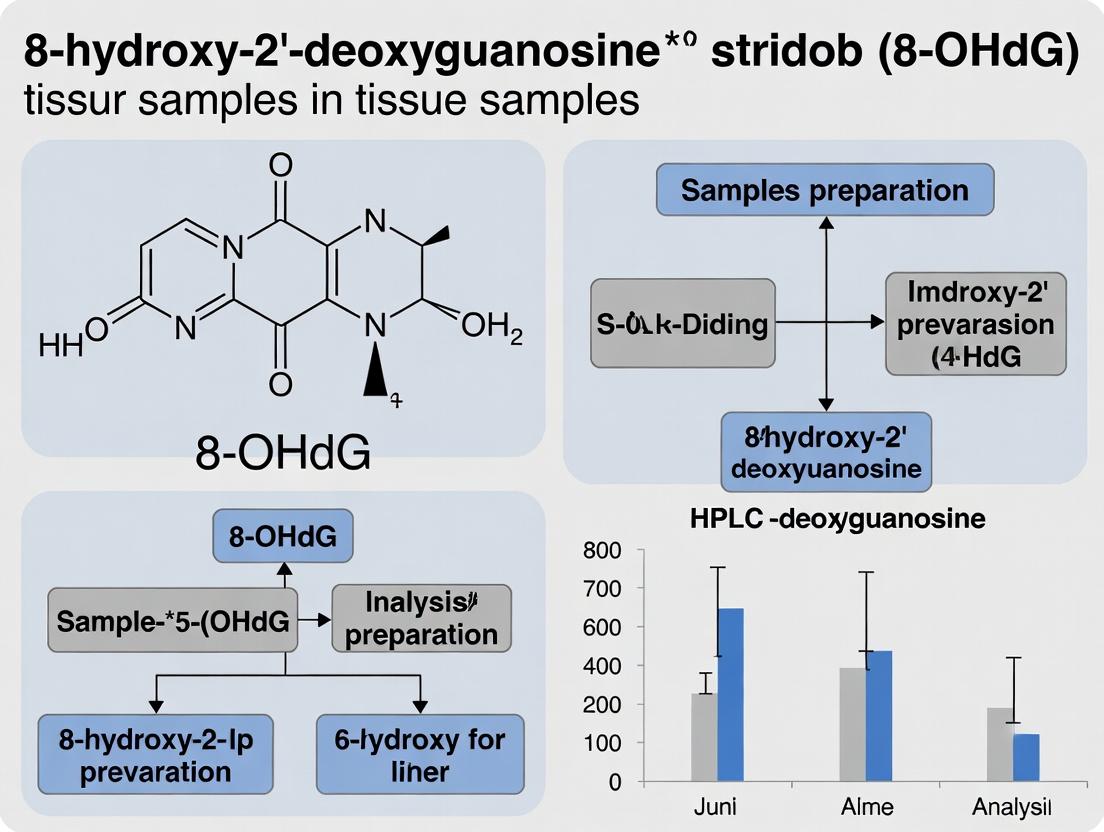
This article provides a detailed guide for researchers, scientists, and drug development professionals on High-Performance Liquid Chromatography (HPLC) analysis of 8-hydroxy-2'-deoxyguanosine (8-OHdG) in tissue samples.
A Comprehensive Guide to HPLC Analysis of 8-OHdG in Tissue: Methods, Optimization, and Clinical Research Applications
Abstract
This article provides a detailed guide for researchers, scientists, and drug development professionals on High-Performance Liquid Chromatography (HPLC) analysis of 8-hydroxy-2'-deoxyguanosine (8-OHdG) in tissue samples. We begin by establishing the foundational role of 8-OHdG as a critical biomarker of oxidative DNA damage, exploring its significance in aging, disease mechanisms, and therapeutic development. The core of the guide presents a step-by-step methodological workflow, from tissue procurement and sample preparation (homogenization, DNA extraction, and enzymatic hydrolysis) to HPLC-ECD/UV/MS system configuration and chromatography optimization. A dedicated troubleshooting section addresses common challenges such as poor peak resolution, low recovery, and analyte instability, offering practical solutions. Finally, we examine validation strategies against ELISA and LC-MS/MS, discuss comparative data interpretation across tissue types, and highlight translational applications in preclinical and clinical biomarker studies.
Understanding 8-OHdG: The Critical Biomarker of Oxidative Stress in Tissue Research
8-Hydroxy-2’-deoxyguanosine (8-OHdG) is a major product of oxidative damage to DNA. It is formed via the attack of reactive oxygen species (ROS) on the C8 position of deoxyguanosine, resulting in a mutagenic lesion. Its presence is a key biomarker for evaluating oxidative stress at the cellular level, linking to aging, carcinogenesis, and various pathologies including neurodegenerative, cardiovascular, and metabolic diseases. Within the context of HPLC analysis in tissue samples research, accurate quantification of 8-OHdG is critical for understanding the role of oxidative DNA damage in disease mechanisms and therapeutic interventions.
Structure and Formation Mechanism
Structure: 8-OHdG is a modified nucleoside where a hydroxyl group is added to the eighth carbon of the guanine base. This modification alters the tautomeric form of guanine, increasing the risk of mispairing with adenine instead of cytosine during replication, leading to a G→T transversion mutation.
Formation: The primary formation pathway involves hydroxyl radical (•OH) attack, a highly reactive oxygen species generated via Fenton reactions or ionizing radiation.
Diagram Title: 8-OHdG Formation via ROS and Fenton Reaction
Quantitative Data on 8-OHdG
Table 1: Reported Basal Levels of 8-OHdG in Various Tissue Types
| Tissue Type | Approximate Basal Level (8-OHdG/10⁶ dG) | Analytical Method | Key Note |
|---|---|---|---|
| Liver (Rat) | 1.5 - 4.0 | HPLC-ECD | Varies with age and species. |
| Brain (Mouse) | 0.8 - 2.5 | LC-MS/MS | Higher in mitochondrial DNA. |
| Kidney (Human) | 1.0 - 3.5 | HPLC-ECD | Sensitive to ischemic injury. |
| Plasma (Human) | 2.0 - 8.0 pg/µL | ELISA | Subject to inter-lab variability. |
| Urine (Human) | 1.5 - 5.0 ng/mg creatinine | LC-MS/MS | Integrated systemic oxidative stress marker. |
Table 2: Impact of Experimental Conditions on Tissue 8-OHdG Levels
| Inducing Condition | Model System | Fold Increase vs. Control | Reference Technique |
|---|---|---|---|
| Acute UV Radiation | Mouse Skin | 3.5 - 6.0 | HPLC-ECD |
| Chemical Carcinogen (e.g., CCl₄) | Rat Liver | 4.0 - 8.0 | LC-MS/MS |
| Ischemia-Reperfusion | Rat Heart | 5.0 - 10.0 | HPLC-ECD |
| Neurotoxin (MPTP) | Mouse Brain | 2.5 - 4.0 | LC-MS/MS |
Detailed Experimental Protocols for HPLC Analysis in Tissue
Protocol 1: Tissue Sample Preparation and DNA Extraction for 8-OHdG Quantification
Goal: Isolate pure, high-integrity DNA while minimizing artifactual oxidation.
Materials & Reagents:
- Tissue sample (50-100 mg wet weight)
- Liquid Nitrogen for snap-freezing
- Lysis Buffer (e.g., containing SDS, EDTA, Tris-HCl)
- RNase A and Proteinase K
- Phenol:Chloroform:Isoamyl Alcohol (25:24:1)
- Cold Ethanol (70% and 100%)
- Nuclease P1 (from Penicillium citrinum)
- Alkaline Phosphatase
- 0.22 µm Spin Filters
Procedure:
- Homogenization: Snap-freeze tissue in liquid N₂. Pulverize using a mortar and pestle. Homogenize the powder in ice-cold lysis buffer.
- Digestion: Incubate homogenate with RNase A (37°C, 30 min), followed by Proteinase K (50°C, 2 hrs).
- DNA Extraction: Add an equal volume of Phenol:Chloroform:Isoamyl Alcohol. Mix and centrifuge (12,000 x g, 15 min, 4°C). Transfer the aqueous phase.
- Precipitation: Add 2 volumes of cold 100% ethanol and 1/10 volume of sodium acetate. Incubate at -80°C for 1 hr. Centrifuge (15,000 x g, 20 min, 4°C). Wash pellet with 70% ethanol.
- DNA Hydrolysis: Redissolve DNA in buffer. Add Nuclease P1 (37°C, 1 hr) to digest to nucleotides. Adjust pH to ~8.0 with Tris-HCl. Add Alkaline Phosphatase (37°C, 1 hr) to form nucleosides.
- Filtration: Pass hydrolyzate through a 0.22 µm centrifugal filter. Store filtrate at -80°C until HPLC analysis.
Protocol 2: HPLC-ECD Analysis of 8-OHdG
Goal: Separate and quantify 8-OHdG in tissue DNA hydrolysates.
Chromatographic Conditions:
- Column: C18 reversed-phase column (e.g., 250 mm x 4.6 mm, 5 µm particle size).
- Mobile Phase: 50 mM Sodium Acetate buffer (pH 5.2) with 5-10% methanol. Isocratic elution.
- Flow Rate: 1.0 mL/min.
- Temperature: Ambient or 25°C.
- Detection: Electrochemical Detector (ECD). Working electrode: Glassy Carbon. Potential: +600 to +800 mV vs. Pd reference.
- Injection Volume: 20 µL.
Quantification:
- Calibration: Use authentic 8-OHdG standard (e.g., 0.5, 1, 5, 10, 25 ng/mL) to create a calibration curve.
- Calculation: The amount of 8-OHdG is normalized to the total deoxyguanosine (dG) content, measured concurrently by UV detection at 260 nm. Results are expressed as the number of 8-OHdG molecules per 10⁵ or 10⁶ dG.
Diagram Title: Workflow for Tissue 8-OHdG Analysis via HPLC-ECD
The Scientist's Toolkit: Key Research Reagent Solutions
Table 3: Essential Materials for 8-OHdG Research in Tissue Samples
| Item | Function / Purpose | Example / Specification |
|---|---|---|
| DNA Extraction Kit (Phenol-Free) | Minimizes artifactual oxidation during DNA isolation. Critical for accuracy. | Kits with metal chelators and antioxidants. |
| Nuclease P1 | Enzyme for digesting DNA to deoxynucleoside 5'-monophosphates. Essential for hydrolysis. | From Penicillium citrinum, molecular biology grade. |
| Alkaline Phosphatase | Converts nucleotides to nucleosides for proper HPLC separation. | Calf intestinal phosphatase (CIP). |
| Authentic 8-OHdG Standard | Calibration standard for absolute quantification. | High-purity (>98%), prepare fresh stock solutions. |
| HPLC-ECD System | Gold-standard setup for sensitive, selective detection of electroactive 8-OHdG. | System with Coulometric or Amperometric detector. |
| C18 Reversed-Phase Column | Chromatographic separation of 8-OHdG from other nucleosides and matrix. | 5 µm particle size, 250 mm length. |
| Antioxidant Cocktail | Added to homogenization buffers to prevent ex vivo oxidation. | EDTA, desferrioxamine, butylated hydroxytoluene. |
| Internal Standard (e.g., ¹⁵N₅-8-OHdG) | Corrects for sample loss during preparation; required for LC-MS/MS. | Stable isotope-labeled analog. |
Why Measure 8-OHdG? Linking Oxidative DNA Damage to Disease, Aging, and Toxicity
8-hydroxy-2’-deoxyguanosine (8-OHdG) is a predominant and stable biomarker of oxidative damage to DNA. Its quantification provides a direct molecular link between oxidative stress, genomic integrity, and pathological processes. Within the context of a broader thesis on HPLC analysis of 8-OHdG in tissue samples, this document outlines its significance as a critical analyte, details robust application protocols, and presents the supporting data and tools necessary for high-impact research in disease mechanisms, toxicology, and aging.
Quantitative data from recent studies underscore the elevation of 8-OHdG across various conditions.
Table 1: 8-OHdG Levels in Pathological States vs. Healthy Controls
| Biological Sample | Condition / Model | Mean 8-OHdG Level (Reported Units) | Healthy Control Level | Assay Method | Key Implication |
|---|---|---|---|---|---|
| Liver Tissue | Chemical-Induced Hepatotoxicity | 12.5 ± 3.2 ng/mg DNA | 3.8 ± 1.1 ng/mg DNA | HPLC-ECD | Direct link between toxin exposure & DNA damage. |
| Brain Tissue | Neurodegenerative (Alzheimer's) | 8.7 ± 2.5 / 10^5 dG | 2.1 ± 0.8 / 10^5 dG | LC-MS/MS | Correlates with disease progression & cognitive decline. |
| Urine | Type 2 Diabetes | 18.9 ± 5.1 ng/mg creatinine | 9.5 ± 2.8 ng/mg creatinine | ELISA | Systemic oxidative stress marker for metabolic disease. |
| Cardiac Tissue | Ischemia-Reperfusion Injury | 15.2 / 10^5 dG | 4.3 / 10^5 dG | HPLC-ECD | Reperfusion exacerbates oxidative DNA damage. |
| Lung Tissue | Particulate Matter Exposure | 22.4 ± 6.7 ng/mg DNA | 6.9 ± 2.4 ng/mg DNA | LC-MS/MS | Environmental toxin biomarker with dose-response. |
Table 2: 8-OHdG in Aging & Intervention Studies
| Study Model | Intervention / Comparison | 8-OHdG Outcome | Sample Type | Conclusion |
|---|---|---|---|---|
| Aged Rodent Tissue | Aged vs. Young | 2.5-4 fold increase | Liver, Kidney | Supports DNA damage accumulation theory of aging. |
| Caloric Restriction | Restricted vs. Ad Libitum | ~40% reduction | Muscle Tissue | Links reduced oxidative damage to longevity. |
| Antioxidant Supplement | Treated vs. Placebo | Significant decrease | Plasma, Urine | Validates intervention efficacy for reducing oxidative stress. |
Detailed Protocol: HPLC-ECD Analysis of 8-OHdG from Tissue Samples
This protocol is optimized for sensitivity and selectivity in complex tissue matrices.
1. Tissue Homogenization and DNA Extraction
- Reagents: Lysis Buffer (10 mM Tris-HCl, pH 8.0, 100 mM NaCl, 25 mM EDTA, 0.5% SDS), Proteinase K, RNase A, Phenol:Chloroform:Isoamyl Alcohol (25:24:1), Cold Ethanol (70% and 100%), Sodium Acetate (3M, pH 5.2).
- Procedure: Homogenize 20-50 mg of snap-frozen tissue in 1 mL lysis buffer. Add Proteinase K (200 µg/mL) and incubate at 55°C for 2 hours. Add RNase A (100 µg/mL) and incubate at 37°C for 30 min. Perform sequential phenol/chloroform extractions. Precipitate DNA with 0.1 volumes sodium acetate and 2.5 volumes cold ethanol. Wash pellet with 70% ethanol, air-dry, and resuspend in nuclease-free water. Quantify DNA by UV absorbance (A260/A280 ratio ~1.8).
2. DNA Hydrolysis to Nucleosides
- Reagents: Nuclease P1 (in 30 mM sodium acetate, pH 5.3), Alkaline Phosphatase (in 1M Tris-HCl, pH 8.0), Sodium Acetate Buffer (0.5M, pH 5.2).
- Procedure: For 20 µg of DNA, add 10 µL sodium acetate buffer and 5 µL nuclease P1 (2 U). Incubate at 37°C for 2 hours. Add 10 µL Tris buffer and 5 µL alkaline phosphatase (5 U). Incubate at 37°C for an additional 1 hour. Filter hydrolyzate through a 0.22 µm centrifugal filter prior to HPLC injection.
3. HPLC-ECD Analysis
- System: HPLC with Coulometric Electrochemical Detector.
- Column: C18 Reverse Phase Column (150 x 4.6 mm, 3 µm particle size).
- Mobile Phase: 50 mM Sodium Phosphate buffer, pH 5.0, containing 5% methanol. Isocratic elution at 1.0 mL/min.
- ECD Settings: Guard Cell: +400 mV; Electrode 1 (Screening): +150 mV; Electrode 2 (Quantifying): +300 mV.
- Injection Volume: 20-50 µL.
- Quantification: Use a calibration curve from authentic 8-OHdG standard (0.1-50 nM). Normalize results to total dG content (measured by UV at 260 nm from a parallel injection) and express as 8-OHdG per 10^5 deoxyguanosine.
Pathways and Workflow
Title: 8-OHdG Formation & Disease Link Pathway
Title: Tissue 8-OHdG HPLC-ECD Workflow
The Scientist's Toolkit: Research Reagent Solutions
Table 3: Essential Materials for 8-OHdG Analysis
| Item | Function & Critical Notes |
|---|---|
| Authentic 8-OHdG Standard | Gold standard for calibration curve generation. Essential for accurate quantification. Must be high-purity, store at ≤ -20°C. |
| Nuclease P1 & Alkaline Phosphatase | Enzyme cocktail for complete DNA digestion to deoxynucleosides without artifactual oxidation. Use sequencing-grade enzymes. |
| C18 Reverse Phase HPLC Column | Provides optimal separation of 8-OHdG from other nucleosides and matrix components. 3 µm particle size recommended. |
| Coulometric Electrochemical Detector (ECD) | Offers supreme sensitivity and selectivity for oxidizable compounds like 8-OHdG. Multi-electrode setup enhances specificity. |
| DNA Extraction Kit (Phenol-Chloroform) | For high-yield, high-purity DNA from complex tissues. Manual extraction minimizes artifactual oxidation vs. some column methods. |
| 0.22 µm PVDF Syringe Filters | For filtering DNA hydrolyzate before HPLC injection, protecting the column from particulate matter. |
| Antioxidant-containing Resuspension Buffer | For stabilizing DNA extracts (e.g., with deferoxamine). Prevents ex vivo oxidation during storage. |
| Stable Isotope-Labeled 8-OHdG Internal Standard (e.g., ¹⁵N₅-8-OHdG) | Critical for LC-MS/MS protocols. Corrects for recovery losses during sample preparation and matrix effects during ionization. |
The quantification of 8-hydroxy-2’-deoxyguanosine (8-OHdG) serves as a critical biomarker of oxidative DNA damage, pivotal in studies of aging, carcinogenesis, and drug toxicity. Within the broader thesis employing High-Performance Liquid Chromatography (HPLC) with electrochemical detection (ECD), the choice of biological matrix is paramount. While urine and serum offer non-invasive sampling, solid tissues—such as liver, kidney, brain, or tumor biopsies—provide spatially resolved, pathologically relevant data that more accurately reflects site-specific oxidative stress. This application note details the comparative advantages, inherent challenges, and optimized protocols for 8-OHdG analysis in solid tissues, contextualized as a core methodological chapter in an HPLC-focused thesis.
Advantages and Challenges: A Comparative Analysis
Table 1: Comparative Analysis of Matrices for 8-OHdG Analysis
| Parameter | Solid Tissue | Urine/Serum/Plasma |
|---|---|---|
| Biological Relevance | Direct measurement of DNA damage at the site of pathology; No dilution effects. | Systemic, pooled measure; Subject to dilution by body fluids and turnover. |
| Spatial Resolution | High (allows analysis of specific organs, lesions, or subcellular fractions). | None (global measurement). |
| Sample Collection | Invasive (biopsy, necropsy); Requires ethical approval and skilled dissection. | Non-invasive or minimally invasive; Easier serial sampling. |
| Pre-analytical Variability | High (affected by post-mortem interval, freeze-thaw cycles, homogenization efficiency). | Moderate (affected by time of day, diet, storage conditions). |
| Matrix Complexity | Very High (lipids, proteins, cellular debris). | Moderate to Low. |
| Analyte Concentration | Reflects actual tissue levels (typically pmol/mg DNA or g tissue). | Reflects excretion/clearance (pmol/mL or pmol/mg creatinine). |
| Primary Challenge | Complex, multi-step extraction; Risk of artifactual oxidation during processing. | Easier sample prep; Levels may not correlate with tissue-specific damage. |
| Thesis Application | Essential for mechanistic studies linking localized oxidative damage to histopathology. | Suitable for population screening or longitudinal monitoring. |
Key Experimental Protocols
Protocol 1: Tissue Harvesting and Homogenization for DNA Isolation (Critical Pre-Analytical Phase)
Objective: To obtain high-quality, oxidation-artifact-free tissue for DNA extraction. Materials: Liquid nitrogen, RNAlater or specialized DNA stabilization buffer, pre-cooled ceramic mortar and pestle, polytron homogenizer, 0.1 mM desferrioxamine (an iron chelator) in PBS. Procedure:
- Rapidly dissect target tissue (< 2 mins post-euthanasia/surgery) and immediately freeze in liquid nitrogen or submerge in DNA stabilization buffer at 4°C.
- For frozen tissue, pulverize under liquid nitrogen using a pre-cooled mortar and pestle to a fine powder.
- Transfer 20-50 mg of powder to a tube containing 1 mL of ice-cold homogenization buffer (with 0.1 mM desferrioxamine and 0.1% butylated hydroxytoluene (BHT) as antioxidants).
- Homogenize on ice using a polytron homogenizer (3 x 10-second bursts).
- Proceed immediately to DNA isolation or store homogenate at -80°C under argon gas.
Protocol 2: DNA Extraction and Enzymatic Digestion for HPLC-ECD
Objective: To isolate intact DNA and digest it to deoxyribonucleosides for 8-OHdG analysis. Materials: DNeasy Blood & Tissue Kit (Qiagen) or similar, Nuclease P1 (from Penicillium citrinum), Alkaline Phosphatase (from E. coli), Sodium Acetate buffer (pH 5.0), Tris-HCl buffer (pH 8.0), Amicon Ultra centrifugal filters (10 kDa MWCO). Procedure:
- Isolate DNA from tissue homogenate using a commercial kit (e.g., DNeasy). Include recommended RNase A treatment. Elute DNA in nuclease-free water.
- Quantify DNA concentration via UV spectrophotometry (A260/A280 ratio ~1.8).
- Digest 50 µg of DNA with 5 units of Nuclease P1 in 20 µL of 20 mM sodium acetate buffer (pH 5.0) at 37°C for 2 hours.
- Adjust pH by adding 20 µL of 1M Tris-HCl buffer (pH 8.0).
- Add 10 units of Alkaline Phosphatase and incubate at 37°C for an additional 1 hour.
- Terminate digestion by filtering through a 10 kDa centrifugal filter at 4°C to remove enzymes. The filtrate contains deoxyribonucleosides, including 8-OHdG and 2’-deoxyguanosine (2-dG).
- Analyze immediately by HPLC-ECD or store at -80°C.
Protocol 3: HPLC-ECD Analysis with Internal Standard
Objective: To separate and quantify 8-OHdG relative to 2-dG. HPLC Conditions:
- Column: C18 reverse-phase column (e.g., 250 x 4.6 mm, 5 µm).
- Mobile Phase: 50 mM Sodium Phosphate buffer (pH 4.7), 5-10% Methanol. Isocratic elution.
- Flow Rate: 1.0 mL/min.
- Temperature: 25°C.
- Injection Volume: 20 µL.
- ECD Conditions: Coulometric electrochemical detector; Guard cell: +400 mV; Electrode 1: +150 mV (screening); Electrode 2: +300 mV (analytical for 8-OHdG).
- UV Detector: 254 nm for 2-dG quantification. Quantification:
- Spike digested samples with a known amount of an internal standard (e.g., 8-hydroxy-2’-deoxyadenosine, 8-OHdA) prior to injection to monitor recovery.
- Quantify 8-OHdG by comparing its peak area to a calibration curve of authentic standard (0.1-50 nM).
- Quantify 2-dG from its UV peak area using a separate calibration curve.
- Express results as the number of 8-OHdG molecules per 10^5 or 10^6 2-dG molecules, normalizing for DNA input.
Visualized Workflows and Relationships
Title: 8-OHdG Analysis in Tissue: Core Workflow & Critical Controls
Title: Thesis Framework: Matrix Choice Drives Method & Conclusion
The Scientist's Toolkit: Research Reagent Solutions
Table 2: Essential Materials for 8-OHdG Analysis in Tissue
| Item/Category | Specific Product/Example | Function & Rationale |
|---|---|---|
| Antioxidant & Chelator Additives | Desferrioxamine (DFO), Butylated Hydroxytoluene (BHT) | Added to all buffers during tissue processing to chelate Fe²⁺/Cu⁺ ions and scavenge ROS, preventing artifactual oxidation of DNA during homogenization. |
| DNA Stabilization Buffer | RNAlater Stabilization Solution or DNA/RNA Shield | Preserves nucleic acid integrity immediately upon tissue collection, inhibiting nuclease and oxidative activity during sample transport/storage. |
| DNA Isolation Kit | DNeasy Blood & Tissue Kit (Qiagen), GenElute Mammalian Genomic DNA Kit (Sigma) | Provides reliable, spin-column-based purification of high-molecular-weight DNA with minimal contamination by proteins or RNA (with RNase step). |
| Digestion Enzymes | Nuclease P1 (from P. citrinum), Alkaline Phosphatase (Calf Intestine or E. coli) | Sequential enzymatic digestion of DNA to deoxyribonucleosides. Nuclease P1 cleaves to 5'-monophosphates; AP dephosphorylates to nucleosides for HPLC. |
| Chromatography Column | Supelco Discovery HS C18, Waters XBridge Shield RP18 | Reverse-phase columns providing optimal separation of 8-OHdG from 2-dG and other nucleosides under acidic, low-organic mobile phase conditions for ECD. |
| Electrochemical Detector | CoulArray or Coulochem III (ESA/Thermo) | Coulometric multi-electrode systems offer superior sensitivity and selectivity for 8-OHdG. Guard cell oxidizes contaminants, analytical cell quantifies target. |
| Internal Standard | 8-Hydroxy-2’-deoxyadenosine (8-OHdA) or ¹⁵N₅-8-OHdG (isotope-labeled) | Spiked into sample post-digestion to monitor and correct for analyte loss during filtration and injection, improving quantitative accuracy. |
| Centrifugal Filter | Amicon Ultra 0.5 mL 10K (Merck) | Removes digestion enzymes post-reaction to prevent column fouling and stop enzymatic activity prior to HPLC analysis. |
Within the broader context of developing robust methods for the HPLC analysis of 8-hydroxy-2'-deoxyguanosine (8-OHdG) in tissue samples—a critical biomarker of oxidative DNA damage—the choice of analytical platform is paramount. While immunoassays (ELISA) offer high throughput and sensitivity, their application in complex biological matrices like tissue homogenates is compromised by cross-reactivity and matrix interference. This document details why High-Performance Liquid Chromatography with electrochemical detection (HPLC-ECD) remains the gold standard for specific quantification, providing application notes and protocols for the precise measurement of 8-OHdG in tissue.
Advantages of HPLC-ECD Over Immunoassays: Quantitative Comparison
The following table summarizes key performance metrics, highlighting the superior specificity of HPLC for complex matrices.
Table 1: Comparative Analysis of HPLC-ECD vs. Immunoassay for 8-OHdG Quantification in Tissue
| Parameter | HPLC with Electrochemical Detection | Competitive Immunoassay (ELISA) |
|---|---|---|
| Specificity | Exceptional. Co-eluting compounds resolved chromatographically. | Moderate to Poor. High risk of cross-reactivity with analogues. |
| Matrix Tolerance | High. Effective cleanup via solid-phase extraction (SPE). | Low. Matrix components cause interference, requiring sample dilution. |
| Sample Throughput | Low to Moderate (~10-20 samples/day). | High (96+ samples in 3-4 hours). |
| Limit of Detection (LOD) | Typically 0.1-0.5 pg on-column. | Typically 0.1-0.5 ng/mL in sample. |
| Quantitative Dynamic Range | Linear over 2-3 orders of magnitude. | Narrow, often sigmoidal curve. |
| Sample Preparation | Multi-step (Homogenization, Hydrolysis, SPE). | Simplified (Homogenization, often no hydrolysis). |
| Cost per Sample | Higher (solvents, columns, maintenance). | Lower (commercial kit costs). |
| Primary Advantage | Definitive identification and quantification. | High-throughput screening. |
| Primary Disadvantage | Lower throughput, higher technical skill required. | Uncertain specificity, potential for over/under-estimation. |
Detailed Protocol: HPLC-ECD Analysis of 8-OHdG in Rodent Liver Tissue
I. Sample Preparation & Hydrolysis
- Homogenization: Weigh ~50 mg of frozen liver tissue. Add 1.0 mL of ice-cold homogenization buffer (20 mM sodium phosphate, 140 mM KCl, pH 7.4). Homogenize on ice using a mechanical homogenizer (e.g., Polytron) at 15,000 rpm for 30 seconds.
- DNA Isolation: Isolve genomic DNA from the homogenate using a commercial kit based on spin-column technology (e.g., QIAamp DNA Mini Kit). Follow manufacturer's instructions. Elute DNA in 100 µL of 10 mM Tris-HCl, pH 8.5.
- DNA Quantification & Hydrolysis: Quantify DNA concentration by UV absorbance at 260 nm. Aliquot 10 µg of DNA into a microcentrifuge tube. Add 10 µL of nuclease P1 (2 units/µL in 30 mM sodium acetate, pH 5.3) and incubate at 37°C for 2 hours. Then, add 10 µL of alkaline phosphatase (1 unit/µL in 1M Tris-HCl, pH 8.0) and incubate at 37°C for an additional 1 hour. Terminate the reaction by adding 5 µL of 0.5M HClO₄ and place on ice for 15 minutes.
- Solid-Phase Extraction (SPE): Centrifuge the hydrolysate at 12,000 x g for 10 minutes at 4°C. Load the supernatant onto a pre-conditioned (with methanol then water) reverse-phase C18 SPE cartridge. Wash with 3 mL of 5% methanol. Elute 8-OHdG with 2 mL of 20% methanol. Dry the eluate under a gentle stream of nitrogen and reconstitute in 100 µL of the HPLC mobile phase.
II. HPLC-ECD Instrumental Analysis
- HPLC System: Utilize an HPLC system with a binary or quaternary pump, autosampler (maintained at 4°C), and a temperature-controlled column compartment.
- Column: C18 reversed-phase analytical column (e.g., 150 mm x 4.6 mm, 5 µm particle size). Guard column recommended.
- Mobile Phase: 50 mM sodium phosphate buffer, pH 5.5, containing 5% (v/v) methanol. Filter (0.22 µm) and degas thoroughly before use.
- Detection: Electrochemical detector with a glassy carbon working electrode. Optimal applied potential: +600 mV vs. Ag/AgCl reference electrode.
- Chromatographic Conditions:
- Flow Rate: 1.0 mL/min
- Column Temperature: 25°C
- Injection Volume: 20 µL
- Run Time: 20 minutes (8-OHdG typically elutes at ~12-14 min).
- Quantification: Generate a 5-point external calibration curve using authentic 8-OHdG standard (0.5, 1, 5, 10, 50 ng/mL). Express results as the number of 8-OHdG molecules per 10⁶ deoxyguanosine (dG) bases. dG is quantified by UV detection at 254 nm from the same chromatographic run.
Visualization of Workflow and Analytical Challenge
Workflow & Specificity Advantage of HPLC
The Scientist's Toolkit: Key Reagent Solutions
Table 2: Essential Materials for HPLC Analysis of 8-OHdG in Tissue
| Item / Reagent | Function / Purpose |
|---|---|
| Nuclease P1 | Enzymatically hydrolyzes DNA to deoxyribonucleosides, critical for releasing 8-OHdG from the DNA backbone. |
| Alkaline Phosphatase | Removes 3'-phosphate groups from nucleoside monophosphates produced by Nuclease P1, yielding free nucleosides. |
| C18 SPE Cartridges | Purifies the DNA hydrolysate, removing salts, proteins, and other polar impurities that can interfere with HPLC. |
| Authentic 8-OHdG Standard | Serves as the primary reference standard for method calibration, validation, and peak identification. |
| C18 HPLC Column | Provides the stationary phase for the chromatographic separation of 8-OHdG from dG and other nucleosides/impurities. |
| Electrochemical Detector | Enables highly sensitive and selective detection of the electroactive 8-OHdG molecule at low applied potentials. |
| DNA Isolation Kit | Provides a reliable, standardized method for obtaining high-purity genomic DNA from complex tissue homogenates. |
| Sodium Phosphate Buffer (pH 5.5) | Forms the primary aqueous component of the HPLC mobile phase, optimized for separation and ECD compatibility. |
Step-by-Step Protocol: From Tissue Collection to HPLC Data Acquisition for 8-OHdG
Within high-performance liquid chromatography (HPLC) analysis of 8-hydroxy-2'-deoxyguanosine (8-OHdG) in tissue samples, the primary challenge is preventing artifactual oxidation of guanine bases during the pre-analytical phase. Artifactual generation of 8-OHdG can lead to overestimation of oxidative stress, invalidating research findings in fields from toxicology to drug development. This application note details evidence-based protocols to ensure sample integrity from procurement to analysis.
Quantitative Data on Artifact Formation Under Suboptimal Conditions
The following tables summarize key quantitative findings on factors contributing to artifactual 8-OHdG generation.
Table 1: Impact of Ischemic Time and Temperature on 8-OHdG Levels in Rodent Liver Tissue
| Ischemic Time (min) | Storage Temperature | Mean 8-OHdG/10⁶ dG (Measured by HPLC-ECD) | Increase vs. Baseline |
|---|---|---|---|
| 0 (Baseline) | Immediate Freeze | 3.2 ± 0.4 | - |
| 15 | Room Temp (22°C) | 8.7 ± 1.1 | 172% |
| 30 | Room Temp (22°C) | 15.9 ± 2.3 | 397% |
| 15 | 4°C | 5.1 ± 0.6 | 59% |
| 30 | 4°C | 7.3 ± 0.9 | 128% |
Table 2: Efficacy of Various Preservation Solutions in Inhibiting Artifactual Oxidation (Cardiac Tissue)
| Preservation Solution/Additive | Key Components | Relative 8-OHdG Level vs. Saline Control (HPLC-MS/MS) |
|---|---|---|
| Phosphate-Buffered Saline | PBS only | 100% (Control) |
| Chelator-Based Solution | PBS, 0.1 mM DTPA, 0.1 mM BHT | 42% |
| RNA/DNA later | Proprietary ammonium sulfate-based | 38% |
| Snap-Freeze in LN₂ (No Medium) | N/A | 28% |
Table 3: Long-Term Storage Stability of 8-OHdG in Tissue Homogenates
| Storage Format | Temperature | Duration | % Recovery of Initial 8-OHdG (HPLC-ECD) |
|---|---|---|---|
| Intact Tissue Block | -80°C | 1 month | 98.5 ± 2.1 |
| Intact Tissue Block | -80°C | 12 months | 95.2 ± 3.4 |
| Tissue Homogenate | -80°C | 1 month | 92.1 ± 4.7 |
| Tissue Homogenate | -20°C | 1 month | 85.3 ± 6.2 |
| Homogenate with DTPA/BHT | -80°C | 12 months | 97.8 ± 2.5 |
Detailed Experimental Protocols
Protocol 1: Rapid, Minimally-Ischemic Tissue Procurement for 8-OHdG Analysis
Objective: To excise and stabilize tissue with minimal artifactual oxidative damage. Materials: Pre-chilled dissection tools (two sets), liquid nitrogen, insulated container, pre-labeled cryovials, tissue preservation solution (see Reagent Toolkit), timer.
- Pre-anesthesia: Anesthetize animal according to approved IACUC protocol.
- Rapid Euthanasia & Exposure: Perform euthanasia via a method that preserves tissue perfusion (e.g., focused beam irradiation). Immediately expose the target organ cavity.
- Excision: Using pre-chilled tools, rapidly excise the tissue of interest. Start timer upon cessation of blood flow.
- Initial Stabilization: Within 30 seconds, subdivide tissue into sub-samples (if needed) using the second set of clean, chilled tools.
- Pathway A (Snap-Freeze): Place a sub-sample (≤ 100 mg) directly into a cryovial and submerge it in liquid nitrogen for 30 seconds. Transfer to -80°C.
- Pathway B (Preservation Solution): Immerse a second sub-sample in 10 volumes (w/v) of ice-cold, nitrogen-sparged chelator-based preservation solution. Hold on ice for <5 minutes before processing for homogenization or snap-freezing.
- Documentation: Record the exact ischemic time (time from blood flow cessation to stabilization) for each sample.
Protocol 2: Tissue Homogenization Under Anoxic Conditions for HPLC Analysis
Objective: To prepare tissue lysates for DNA extraction without introducing oxidation. Materials: Anaerobic chamber (or glove bag purged with N₂/Ar), pre-chilled ceramic or glass homogenizers, anoxic homogenization buffer (50 mM phosphate buffer, pH 7.4, 0.1 mM diethylenetriaminepentaacetic acid (DTPA), 0.1 mM butylated hydroxytoluene (BHT)), liquid nitrogen, mortar and pestle.
- Preparation: Place all tools, buffers, and frozen tissue samples inside the anaerobic chamber. Allow purging for at least 30 minutes to achieve <1% O₂.
- Tissue Pulverization: While inside the chamber, transfer a snap-frozen tissue sample to a mortar pre-cooled with liquid nitrogen. Pulverize it to a fine powder using a pestle.
- Homogenization: Weigh ~20 mg of powdered tissue into a pre-chilled homogenizer. Add 200 μL of ice-cold, anoxic homogenization buffer.
- Process: Homogenize with 10-15 strokes on ice until a smooth lysate is achieved.
- Aliquoting: Immediately aliquot the homogenate into pre-chilled, labeled microtubes inside the chamber.
- Storage: Rapidly cap tubes, remove from chamber, and flash-freeze aliquots in liquid nitrogen. Store at -80°C. Avoid repeated freeze-thaw cycles.
Protocol 3: DNA Extraction with Antioxidant Protection for 8-OHdG Quantification
Objective: To isolate high-integrity DNA while suppressing Fenton chemistry during extraction. Materials: Commercial DNA extraction kit (e.g., DNeasy Blood & Tissue Kit, Qiagen), modified with 0.1 mM DTPA in all aqueous buffers, 20 mg/mL proteinase K, 100% ethanol, sterile tubes, water bath.
- Buffer Modification: Add DTPA from a 100 mM stock to the kit's Buffer AL, Buffer AW1, and Buffer AW2 to a final concentration of 0.1 mM. Sparge with nitrogen gas for 5 minutes.
- Lysis: Thaw homogenate (from Protocol 2) on ice. Transfer 20 μL to a sterile tube. Add 180 μL of Buffer ATL, 20 μL proteinase K, and 4 μL of 100 mM DTPA stock. Mix by vortexing.
- Incubate: Incubate at 56°C for 60 minutes in a water bath. Vortex briefly every 15 minutes.
- Precipitate: Add 200 μL of Buffer AL and 200 μL of 100% ethanol. Mix thoroughly by vortexing for 15 seconds.
- Column Purification: Follow the manufacturer's protocol for column binding, washing (with modified DTPA-containing buffers), and elution.
- DNA Assessment: Quantify DNA by UV absorbance (A260/A280 ratio ~1.8). Aliquot purified DNA and store at -80°C until enzymatic digestion for HPLC analysis.
Visualizations
Title: Tissue Procurement Workflow to Minimize Artifacts
Title: Artifact Formation Pathway and Inhibition Points
The Scientist's Toolkit: Key Research Reagent Solutions
Table 4: Essential Materials for Preventing Artifactual Oxidation in 8-OHdG Research
| Item | Function & Rationale | Example/Composition |
|---|---|---|
| Metal Chelators | Bind free transition metal ions (Fe²⁺, Cu⁺) that catalyze Fenton reactions, the primary source of artifactual •OH generation. | 0.1-1.0 mM DTPA (Diethylenetriaminepentaacetic acid) or deferoxamine in buffers. |
| Radical Scavengers/Antioxidants | Directly quench reactive oxygen species (ROS) before they can attack DNA. | 0.1-0.5 mM BHT (Butylated hydroxytoluene), 1-10 mM sodium ascorbate (use with caution as pro-oxidant in some conditions). |
| Anoxic Homogenization Buffer | Provides a protective chemical environment during the disruptive homogenization step. | 50 mM phosphate buffer (pH 7.4), 0.1 mM DTPA, 0.1 mM BHT, sparged with N₂/Ar gas. |
| RNA/DNA Stabilization Solutions | Commercial solutions designed to inhibit RNase/DNase and often contain undisclosed antioxidants and metal chelators. | RNAlater or similar proprietary ammonium sulfate-based solutions. |
| Anaerobic Chamber/Glove Bag | Creates a low-oxygen (<1% O₂) environment for processing steps, eliminating ambient oxygen. | Chamber purged with 95% N₂ / 5% H₂ mix or argon. |
| Cryogenic Preservation Vials | Ensure leak-proof storage at -80°C to prevent sublimation and temperature fluctuation. | Internally-threaded, O-ring sealed cryovials. |
| Pre-Chilled Ceramic Homogenizers | Efficiently homogenize tissue while minimizing heating and metal contamination from mechanical rotors. | Mortar and pestle style, cooled in liquid nitrogen. |
This Application Note details a standardized protocol for the preparation of tissue samples for the quantification of 8-hydroxy-2'-deoxyguanosine (8-OHdG), a critical biomarker of oxidative DNA damage. The protocol is framed within a broader thesis utilizing High-Performance Liquid Chromatography (HPLC) with electrochemical detection (ECD) for precise 8-OHdG analysis. Reproducible sample preparation, as described herein, is paramount for accurate assessment of oxidative stress in pharmacological and toxicological studies.
The Scientist's Toolkit: Essential Research Reagents & Materials
| Item | Function / Role in Workflow |
|---|---|
| Lysis Buffer (e.g., with SDS & Proteinase K) | Disrupts tissue architecture and cell membranes, inactivates nucleases, and digests proteins to liberate DNA. |
| RNAse A | Degrades RNA to prevent contamination of the DNA sample, ensuring hydrolysis targets only DNA. |
| Nuclease P1 (from Penicillium citrinum) | Enzymatically hydrolyzes DNA to 5'-deoxyribonucleotides. Critical first step in nucleoside preparation. |
| Alkaline Phosphatase (e.g., from E. coli) | Converts 5'-deoxyribonucleotides into free deoxyribonucleosides, including 8-OHdG, suitable for HPLC analysis. |
| 8-OHdG Internal Standard (e.g., 15N5-8-OHdG) | Stable isotope-labeled analog used for quantification to correct for analyte loss during preparation and instrument variability. |
| Solid-Phase Extraction (SPE) Cartridges (C18 or mixed-mode) | Purifies and concentrates the hydrolyzed nucleoside mixture, removing salts, enzymes, and other interfering contaminants prior to HPLC. |
| DNA Quantification Kit (e.g., PicoGreen) | Accurately measures double-stranded DNA concentration post-extraction to normalize 8-OHdG levels to DNA content. |
| Antioxidant Solution (e.g., Desferroxamine/Butylated Hydroxytoluene) | Added during homogenization to prevent ex-vivo/artifactual oxidation of DNA during the preparation process. |
Experimental Protocols
Protocol 1: Tissue Homogenization & DNA Extraction with Artifact Prevention
Principle: To isolate high-quality, high-molecular-weight DNA from tissue while minimizing artifactual oxidation. Procedure:
- Weigh 20-50 mg of fresh or snap-frozen tissue.
- Immediately place tissue in 1 mL of chilled lysis buffer (e.g., 10 mM Tris-HCl, 100 mM NaCl, 25 mM EDTA, 0.5% SDS, pH 8.0) containing 0.1 mM desferroxamine.
- Homogenize on ice using a mechanical rotor-stator homogenizer (3 x 10-second bursts).
- Add Proteinase K to a final concentration of 100 µg/mL and RNAse A to 20 µg/mL. Incubate at 55°C for 2 hours with gentle agitation.
- Perform traditional phenol-chloroform-isoamyl alcohol (25:24:1) extraction, followed by DNA precipitation with cold absolute ethanol and 0.3 M sodium acetate (pH 5.2).
- Wash the DNA pellet twice with 70% ethanol, air-dry briefly, and redissolve in 100 µL of nuclease-free 10 mM Tris-HCl (pH 7.0).
- Quantify DNA concentration and purity using a fluorometric assay (e.g., PicoGreen) and check integrity via agarose gel electrophoresis.
Protocol 2: Enzymatic Hydrolysis of DNA to Deoxyribonucleosides
Principle: To completely digest purified DNA into its constituent deoxyribonucleosides without chemically modifying base adducts. Procedure:
- Aliquot 20 µg of extracted DNA into a nuclease-free microcentrifuge tube.
- Add 5 µL of 1 M sodium acetate buffer (pH 5.0) and 10 µL of 30 mM zinc chloride (cofactor for nuclease P1). Adjust final volume to 45 µL with nuclease-free water.
- Add 5 µL (10 U) of nuclease P1. Vortex gently and centrifuge briefly.
- Incubate at 37°C for 2 hours.
- Adjust pH to ~8.0 by adding 10 µL of 1 M Tris-HCl buffer (pH 8.0).
- Add 5 µL (5 U) of alkaline phosphatase. Vortex gently.
- Incubate at 37°C for 1 hour.
- Terminate the reaction by adding 5 µL of 0.5 M hydrochloric acid or by immediate purification via SPE.
Protocol 3: Solid-Phase Extraction (SPE) Clean-up of Hydrolysate
Principle: To purify the nucleoside hydrolysate, removing enzymatic proteins, salts, and other impurities. Procedure:
- Condition a C18 SPE cartridge with 3 mL of methanol, followed by 3 mL of nuclease-free water.
- Dilute the entire enzymatic hydrolysate (~70 µL) with 1 mL of 0.1% formic acid in water. Load onto the conditioned cartridge.
- Wash with 3 mL of 0.1% formic acid in water, followed by 3 mL of 5% methanol in water.
- Elute nucleosides (including 8-OHdG) with 2 mL of 20% methanol in water.
- Evaporate the eluate to dryness under a gentle stream of nitrogen or using a centrifugal vacuum concentrator.
- Reconstitute the dried residue in 100 µL of the HPLC mobile phase (e.g., 50 mM sodium phosphate buffer, pH 3.0, with low % methanol). Vortex thoroughly and centrifuge at 12,000 x g for 5 min before HPLC injection.
Table 1: Typical Yield and Quality Metrics for DNA from Various Murine Tissues (n=6 per group)
| Tissue Type | Average DNA Yield (µg per 50 mg tissue) | A260/A280 Ratio | Average Fragment Size (bp) |
|---|---|---|---|
| Liver | 185 ± 22 | 1.82 ± 0.03 | >20,000 |
| Kidney | 162 ± 18 | 1.80 ± 0.05 | >15,000 |
| Brain | 98 ± 15 | 1.78 ± 0.06 | >10,000 |
| Lung | 120 ± 20 | 1.81 ± 0.04 | >12,000 |
Table 2: Recovery Rates and Precision for 8-OHdG Through the Sample Preparation Workflow
| Step Spiked With Internal Standard | Mean Recovery (%) | Intra-day RSD (%) (n=5) | Inter-day RSD (%) (n=3 days) |
|---|---|---|---|
| Post-DNA Extraction | 95.2 | 3.1 | 5.8 |
| Post-Enzymatic Hydrolysis | 91.7 | 4.5 | 6.9 |
| Post-SPE Clean-up | 88.4 | 2.8 | 4.2 |
| Overall Process | ~75.5 | <5.0 | <7.5 |
Visualization of Workflows
Title: Complete 8-OHdG Sample Preparation Workflow for HPLC
Title: Two-Step Enzymatic Hydrolysis to Nucleosides
Within a thesis investigating oxidative stress via the analysis of 8-hydroxy-2'-deoxyguanosine (8-OHdG) in tissue samples, selecting the appropriate HPLC detector is a critical methodological decision. The choice directly dictates the sensitivity, specificity, and overall feasibility of quantifying this key biomarker of DNA damage. This application note compares Electrochemical Detection (ECD), Ultraviolet (UV) Detection, and Mass Spectrometry (MS) Detection, providing protocols and data to guide researchers and drug development professionals in system selection.
The following table summarizes the key performance metrics for ECD, UV, and MS detectors in the context of 8-OHdG analysis.
Table 1: Detector Performance for HPLC Analysis of 8-OHdG
| Parameter | Electrochemical (ECD) | UV/Photodiode Array (PDA) | Mass Spectrometry (MS/MS) |
|---|---|---|---|
| Detection Principle | Oxidation/Reduction | UV Absorption (~245 nm) | Mass-to-Charge Ratio |
| Limit of Detection | 1-5 fmol on-column | 50-100 fmol on-column | 0.1-0.5 fmol on-column |
| Specificity | High (for oxidizable analytes) | Low (co-eluting interferences) | Very High (structural confirmation) |
| Matrix Tolerance | Low (requires clean extracts) | Moderate | High (with MRM) |
| Operational Cost | Low | Low | High |
| Ease of Use | Moderate (electrode maintenance) | High | Moderate to High |
| Best For | High sensitivity, targeted, cost-effective studies | Quick screening, high-purity samples | Ultimate sensitivity/specificity, complex matrices |
Detailed Experimental Protocols
Protocol 1: HPLC-ECD for 8-OHdG in Tissue Homogenates
This protocol is optimized for high sensitivity in rodent liver or brain tissue.
A. Reagents and Materials (The Scientist's Toolkit) Table 2: Key Research Reagent Solutions for HPLC-ECD
| Item | Function & Specification |
|---|---|
| 8-OHdG Standard | Primary calibration standard (≥98% purity). Prepare stock in 10% aqueous methanol. |
| 2'-Deoxyguanosine (dG) Standard | Internal Standard for normalization. |
| Enzymatic Digestion Mix | Contains nuclease P1 and alkaline phosphatase for DNA hydrolysis. |
| Solid-Phase Extraction (SPE) Cartridges | C18 or mixed-mode sorbents for sample clean-up. |
| HPLC Mobile Phase | 50 mM Sodium phosphate, pH 5.5, with 5-10% methanol. Must be degassed and filtered (0.22 µm). |
| ECS Electrode Cleaning Kit | Contains alumina slurry for periodic polishing of glassy carbon working electrode. |
B. Procedure
- Tissue Homogenization & DNA Extraction: Homogenize 20-50 mg tissue in lysis buffer. Isolate genomic DNA using a phenol-chloroform or commercial kit. Determine DNA concentration via UV absorbance (A260).
- Enzymatic Hydrolysis: Digest 50 µg DNA with 5 units of nuclease P1 (37°C, 2h, pH 5.5), followed by 10 units of alkaline phosphatase (37°C, 1h, pH 7.4) to release nucleosides.
- Sample Clean-up (SPE): Apply digest to pre-conditioned SPE cartridge. Wash with water and elute 8-OHdG and dG with 20% methanol/water. Dry eluent under vacuum and reconstitute in 50 µL mobile phase.
- HPLC-ECD Analysis:
- Column: C18 reversed-phase (150 x 4.6 mm, 3 µm).
- Mobile Phase: 50 mM sodium phosphate, pH 5.5 / Methanol (95:5, v/v), isocratic.
- Flow Rate: 1.0 mL/min.
- ECD Settings: Glassy carbon working electrode, +600 mV vs. Pd reference. Temperature: 25°C.
- Injection Volume: 20 µL.
- Quantification: Use external calibration curves (1-500 pg/injection) with dG as an internal standard. Calculate 8-OHdG/10^5 dG ratio.
Protocol 2: LC-MS/MS for Ultimate Specificity in Complex Tissue Lysates
This protocol is designed for complex matrices requiring maximum certainty in identification.
A. Reagents and Materials (The Scientist's Toolkit) Table 3: Key Research Reagent Solutions for LC-MS/MS
| Item | Function & Specification |
|---|---|
| Stable Isotope-Labeled IS | [¹⁵N₅]-8-OHdG is the ideal internal standard for compensation of matrix effects and recovery losses. |
| MS-Compatible Buffers | Ammonium acetate or formate for mobile phase; avoid non-volatile salts. |
| SPE Cartridges | Mixed-mode (ion-exchange + C18) for superior clean-up. |
| LC-MS Grade Solvents | Ultra-pure methanol, acetonitrile, and water. |
B. Procedure
- Internal Standard Addition & Digestion: Spike tissue digest with [¹⁵N₅]-8-OHdG (e.g., 50 fmol) prior to enzymatic hydrolysis (steps as in Protocol 1).
- Enhanced Clean-up: Use mixed-mode SPE (Oasis MCX or similar). Condition, load, wash with 2% formic acid/water, and elute with methanol/ammonium hydroxide.
- LC-MS/MS Analysis:
- Column: C18 (100 x 2.1 mm, 1.8 µm).
- Mobile Phase: A) 0.1% Formic acid in water; B) 0.1% Formic acid in methanol. Gradient: 2% B to 30% B over 10 min.
- Flow Rate: 0.25 mL/min.
- MS Settings: ESI Positive mode. MRM transitions: 8-OHdG m/z 284→168 (quantifier), 284→140 (qualifier); [¹⁵N₅]-8-OHdG m/z 289→173.
- Quantification: Plot ratio of 8-OHdG peak area to [¹⁵N₅]-8-OHdG peak area against calibration curve.
Visualized Workflows and Decision Pathways
Diagram Title: Detector Selection Workflow for 8-OHdG Analysis
Diagram Title: 8-OHdG Formation & Detection Pathway
Application Notes: HPLC Analysis of 8-OHdG in Tissue Samples
The accurate quantification of 8-hydroxy-2'-deoxyguanosine (8-OHdG) in tissue samples via HPLC is critical for assessing oxidative DNA damage in various disease models, including cancer, neurodegeneration, and aging. The core analytical challenge lies in separating this minor modified nucleoside from a complex biological matrix containing numerous interfering compounds. The following application notes detail the optimized chromatographic conditions established within our broader thesis research.
Column Selection for Optimal 8-OHdG Separation
The choice of column is paramount for achieving baseline resolution of 8-OHdG from endogenous deoxyguanosine (dG) and other matrix components. Based on current literature and our systematic evaluation, reversed-phase C18 columns are the standard. However, column dimensions, particle size, and endcapping significantly influence selectivity and sensitivity.
Table 1: Evaluated HPLC Columns for 8-OHdG Analysis
| Column Brand & Model | Stationary Phase | Dimensions (mm) | Particle Size (µm) | Pore Size (Å) | Key Finding for 8-OHdG |
|---|---|---|---|---|---|
| Waters XBridge Shield RP18 | C18 with embedded polar groups | 150 x 4.6 | 5 | 130 | Excellent peak shape, superior retention of polar analytes. |
| Agilent ZORBAX Eclipse Plus C18 | Densely bonded, double endcapped C18 | 150 x 4.6 | 5 | 80 | Good resolution, slightly lower retention for 8-OHdG vs. dG. |
| Phenomenex Luna C18(2) | High purity silica, double endcapped C18 | 250 x 4.6 | 5 | 100 | Long run times but best resolution in complex tissue extracts. |
| Thermo Scientific Hypersil GOLD | Ultra-low metal content, trifunctional C18 | 150 x 4.6 | 3 | 175 | Higher efficiency and faster runs; requires UHPLC-capable system. |
Protocol 1.1: Column Screening Experiment
- Sample Prep: Inject a standard mixture containing 8-OHdG (10 ng/mL) and dG (100 ng/mL) in 0.1% formic acid.
- Mobile Phase: Use an isocratic method with 10 mM ammonium acetate (pH 5.0) : methanol (97:3, v/v) at a flow rate of 1.0 mL/min.
- Detection: UV detection at 245 nm (for dG) and 290 nm (for 8-OHdG). Electrochemical detection (ECD) is optimal for 8-OHdG.
- Evaluation: Calculate resolution (Rs) between 8-OHdG and dG, peak asymmetry factor, and theoretical plates (N). Select the column offering Rs > 1.5 and the highest signal-to-noise ratio for 8-OHdG with ECD.
Mobile Phase Optimization
The mobile phase composition dictates selectivity, efficiency, and compatibility with detection systems. A buffered aqueous component with a small percentage of organic modifier is typical. Optimization focuses on pH, buffer type/concentration, and organic modifier selection.
Table 2: Optimized Mobile Phase Compositions
| Parameter | Option A (UV/FLD) | Option B (ECD Preferred) | Function |
|---|---|---|---|
| Aqueous Buffer | 50 mM Potassium Phosphate, pH 5.5 | 10 mM Sodium Acetate, pH 5.2 | Controls ionization, improves peak shape, prevents column damage. |
| Organic Modifier | Methanol (8%) | Acetonitrile (3-5%) | Elution strength control. Methanol offers different selectivity. |
| Additive | None | 5-10 µM EDTA | Chelates metals that can cause on-column degradation of 8-OHdG. |
| Gradient? | Isocratic | Isocratic or shallow gradient (3-7% B over 15 min) | Isocratic for speed; gradient for cleaning complex samples. |
Protocol 2.1: Mobile Phase pH Scouting
- Buffer Preparation: Prepare 50 mM ammonium formate buffers at pH 3.5, 4.5, 5.5, and 6.5. Filter through 0.22 µm membrane.
- Method: Mix buffer with 5% methanol. Use the selected column from Protocol 1.1 at 1.0 mL/min, isocratic.
- Analysis: Inject the standard mix. Plot the retention factor (k) of 8-OHdG and dG versus pH. Select the pH that maximizes the difference in k values (Δk).
Run Parameter Optimization
Precise control of instrument parameters ensures reproducibility and maximizes detection sensitivity, especially for trace-level 8-OHdG.
Table 3: Finalized Run Parameters for 8-OHdG Quantification
| Parameter | Optimal Setting | Rationale |
|---|---|---|
| Column Temperature | 25 °C (± 0.5 °C) | Ensures retention time stability. Higher temps can reduce backpressure but may affect resolution. |
| Flow Rate | 0.8 - 1.0 mL/min (for 4.6 mm ID) | Balances analysis time, resolution, and column backpressure. |
| Injection Volume | 20 - 50 µL (with a loop) | Maximizes sensitivity while avoiding volume-overload peak distortion. |
| Detection (ECD) | Oxidative Mode: +350 mV | Optimal working potential for 8-OHdG oxidation; confirmed by hydrodynamic voltammogram. |
| Run Time | 15-20 minutes (including wash & re-equilibration) | Allows elution of 8-OHdG (~7-9 min), dG (~10-12 min), and late-eluting matrix interferences. |
Protocol 3.1: Electrochemical Detector Conditioning and Calibration
- Conditioning: Flush the electrochemical cell with mobile phase at 1.0 mL/min for 1 hour before first use. Apply the operating potential (+350 mV).
- Hydrodynamic Voltammogram: Inject 8-OHdG standard (50 ng/mL) while varying the applied potential from +200 mV to +500 mV in 50 mV increments. Plot peak response vs. potential. Select the potential on the upper plateau of the curve.
- Calibration Curve: Prepare 8-OHdG standards in the range of 0.1 - 50 ng/mL. Inject in triplicate. Plot peak area vs. concentration. A linear response with R² > 0.995 is required.
Visualizations
HPLC-ECD Workflow for Tissue 8-OHdG
Decision Logic for HPLC Column Selection
The Scientist's Toolkit: Research Reagent Solutions
Table 4: Essential Materials for 8-OHdG HPLC Analysis
| Item | Example Product/Catalog # | Function in Protocol |
|---|---|---|
| DNA Extraction Kit | DNeasy Blood & Tissue Kit (Qiagen) | Isolates high-quality, protein-free DNA from homogenized tissue samples. |
| Enzymes for Hydrolysis | Nuclease P1 (from Penicillium citrinum), Alkaline Phosphatase (Calf Intestinal) | Enzymatically hydrolyzes DNA to deoxyribonucleosides, including 8-OHdG. |
| 8-OHdG Standard | 8-Hydroxy-2'-deoxyguanosine (Sigma-Aldrich, H5653) | Primary standard for method calibration and quality control. |
| HPLC Column | Waters XBridge Shield RP18, 5 µm, 4.6 x 150 mm | Provides optimal retention and resolution for polar nucleosides. |
| Electrochemical Detector | Coulochem III with 5011A Analytical Cell (Thermo Scientific) | Provides highly sensitive and selective detection of oxidizable 8-OHdG. |
| Mobile Phase Filters | 0.22 µm Nylon Membrane Filters (e.g., Millipore) | Removes particulates to protect HPLC column and detector cell. |
| SPE Cartridges for Cleanup | Oasis HLB (Waters) or Strata-X (Phenomenex) | Optional solid-phase extraction for purifying hydrolysates from fatty tissues. |
| EDTA, Molecular Biology Grade | Ethylenediaminetetraacetic acid, Disodium Salt | Added to mobile phase to chelate metals and prevent artifactual oxidation. |
Within the broader thesis on HPLC analysis of 8-hydroxy-2'-deoxyguanosine (8-OHdG) in tissue samples, this application note details its critical role in preclinical drug development. 8-OHdG, a predominant biomarker of oxidative DNA damage, serves as a sensitive indicator for assessing a drug candidate's ability to mitigate oxidative stress (efficacy) or, conversely, its potential to induce genomic instability (toxicology). Accurate quantification via HPLC, particularly coupled with electrochemical or mass spectrometric detection, provides the specificity and sensitivity required for robust preclinical data.
Table 1: Utilization of 8-OHdG Data in Preclinical Studies
| Study Type | Primary Objective | Typical Sample Matrix | Key 8-OHdG Outcome Measure | Representative Finding (Range) |
|---|---|---|---|---|
| Efficacy (e.g., Neuroprotectants) | Assess reduction of disease-related oxidative damage | Brain tissue (cortex, hippocampus) | % reduction vs. disease model control | 25-60% decrease in treated groups |
| Efficacy (e.g., Hepatoprotectants) | Evaluate mitigation of drug- or toxin-induced injury | Liver tissue | 8-OHdG/10⁶ dG ratio vs. injury model | Ratio reduction from 15-40 to 5-15 8-OHdG/10⁶ dG |
| Toxicology (General Screening) | Identify compound-induced genotoxicity | Liver, kidney, target organ tissue | Fold increase vs. vehicle control | >2-fold increase often flagged for concern |
| Toxicology (Mechanistic) | Elucidate pathway of oxidative insult | Mitochondria-enriched fractions | Mitochondrial vs. nuclear 8-OHdG ratio | Ratio >1 suggests primary mitochondrial insult |
| ADME/PK-PD | Link pharmacokinetics to pharmacodynamic antioxidant effect | Plasma/Serum & Target Tissue | Correlation between drug [Cmax] and 8-OHdG reduction | R² value >0.7 indicates strong PK-PD relationship |
Table 2: HPLC-ECD vs. HPLC-MS/MS for 8-OHdG in Tissue
| Parameter | HPLC with Electrochemical Detection (ECD) | HPLC with Tandem Mass Spectrometry (MS/MS) |
|---|---|---|
| Sensitivity (LOQ) | ~0.5-1.0 fmol on-column | ~0.1-0.2 fmol on-column |
| Selectivity | High, requires excellent chromatography | Very High, based on mass transitions |
| Sample Throughput | Moderate (15-25 min run time) | Higher (5-10 min run time) |
| Key Advantage | Cost-effective, high sensitivity for this specific analyte | Superior specificity, multiplexing with other biomarkers |
| Primary Challenge | Electrode fouling, requires meticulous maintenance | Higher instrument cost, more complex method development |
Detailed Experimental Protocols
Protocol 1: Tissue Sample Preparation and DNA Hydrolysis for 8-OHdG Analysis
This protocol is optimized for rodent liver/brain tissue (50-100 mg).
Materials: See "The Scientist's Toolkit" below.
Procedure:
- Homogenization: Homogenize frozen tissue in 1 mL of ice-cold homogenization buffer (20 mM Tris-HCl, 0.25 M sucrose, 1 mM EDTA, pH 7.4) using a Potter-Elvehjem homogenizer. Keep samples on ice.
- Nuclear DNA Isolation: Digest homogenate with RNase A (100 µg/mL, 37°C, 60 min), followed by Proteinase K (200 µg/mL, 50°C, 120 min). Extract DNA using a phenol:chloroform:isoamyl alcohol (25:24:1) mixture. Precipitate DNA with cold ethanol and sodium acetate. Wash pellet with 70% ethanol.
- DNA Quantification & Purity Check: Resuspend DNA in TE buffer. Determine concentration by UV absorbance (A260). Ensure A260/A280 ratio is 1.8-2.0.
- Enzymatic Hydrolysis: Aliquot 20 µg of DNA. Add 10 µL of nuclease P1 (in 20 mM sodium acetate, pH 5.3) and incubate at 37°C for 60 min. Then, add 10 µL of alkaline phosphatase (in 1M Tris-HCl, pH 8.0) and incubate at 37°C for a further 60 min.
- Sample Clean-up: Filter hydrolyzate through a 10 kDa molecular weight cutoff ultrafilter by centrifugation (14,000 x g, 30 min, 4°C). Collect filtrate. Aliquot and store at -80°C until HPLC analysis.
Protocol 2: HPLC-ECD Analysis of 8-OHdG
Chromatographic Conditions:
- Column: C18 reversed-phase column (e.g., 150 x 4.6 mm, 3 µm particle size).
- Mobile Phase: 50 mM sodium phosphate buffer (pH 3.5) containing 5-10% methanol. Isocratic or shallow gradient elution.
- Flow Rate: 0.8-1.0 mL/min.
- Temperature: 25°C.
- ECD Settings: Coulometric detector; Guard cell: +750 mV; Electrode 1 (screening): +150 mV; Electrode 2 (quantifying): +350 mV.
Analysis:
- Inject 20-50 µL of filtered sample hydrolyzate.
- Identify 8-OHdG by retention time matching with a pure standard.
- Quantify using a 5-point external calibration curve (range: 0.5-100 ng/mL).
- Normalize tissue 8-OHdG levels to the total dG content (measured via UV at 260 nm from parallel injection or separate analysis) and express as the number of 8-OHdG molecules per 10⁶ dG.
Signaling Pathways and Workflow Diagrams
Diagram 1: 8-OHdG in Drug Efficacy via NRF2 Pathway (100 chars)
Diagram 2: Workflow for Tissue 8-OHdG Analysis by HPLC (80 chars)
The Scientist's Toolkit
Table 3: Essential Research Reagent Solutions for 8-OHdG Analysis
| Item / Reagent | Function / Purpose | Key Consideration |
|---|---|---|
| Potter-Elvehjem Homogenizer | Mechanical disruption of tissue for uniform homogenate. | Glass-on-glass or Teflon pestle; pre-chill to prevent artifact oxidation. |
| Nuclease P1 | Enzyme for hydrolyzing DNA to deoxyribonucleosides. | Must be from Penicillium citrinum; specific for single-stranded DNA/RNA. |
| Alkaline Phosphatase (E. coli C75) | Removes 3'-phosphate groups from nucleotides produced by Nuclease P1. | Essential for complete conversion to nucleosides for proper HPLC separation. |
| Phenol:Chloroform:IAA (25:24:1) | Organic extraction to remove proteins and lipids from DNA. | Use molecular biology grade; always work in a fume hood. |
| C18 HPLC Column | Stationary phase for separating 8-OHdG from other nucleosides (especially dG). | 3µm particle size recommended for optimal resolution and sensitivity. |
| Coulometric Electrochemical Detector | Highly sensitive and selective detection of oxidizable 8-OHdG. | Requires precise potential optimization and rigorous maintenance. |
| Authentic 8-OHdG Standard | Critical for method calibration, validation, and peak identification. | Source from reputable supplier; prepare fresh stock solutions in antioxidant buffer (e.g., with DTPA). |
| Ultrafiltration Unit (10 kDa MWCO) | Removes hydrolytic enzymes and large contaminants prior to HPLC injection. | Prevents column fouling and detector contamination. |
| Antioxidant Buffers (e.g., with DTPA) | Chelates metal ions to prevent ex vivo oxidation of DNA during processing. | Crucial for obtaining biologically accurate, artifact-free 8-OHdG levels. |
Solving Common Problems: A Troubleshooting Guide for Reliable 8-OHdG HPLC Analysis
Within the context of HPLC analysis of 8-hydroxy-2'-deoxyguanosine (8-OHdG) in tissue samples, maintaining optimal chromatographic performance is critical for generating reliable, reproducible data. This application note details practical protocols for column maintenance and buffer preparation to address common issues of poor peak shape and resolution, which can directly impact the quantification of this key oxidative stress biomarker in complex biological matrices.
The Scientist's Toolkit: Essential Materials for 8-OHdG HPLC Analysis
| Item | Function in Analysis |
|---|---|
| C18 Reverse-Phase Column | The stationary phase for separating 8-OHdG from other nucleosides and matrix components; typically 150-250 mm length, 4.6 mm ID, 3-5 µm particle size. |
| In-line Degasser | Removes dissolved gases from mobile phases to prevent baseline noise and drift caused by bubble formation in the detector. |
| 0.45 µm Nylon Filter | For filtering all aqueous buffers and samples to prevent particulate column frit blockage. |
| HPLC-Grade Water | Ultra-pure, low-UV-absorbance water for preparing mobile phases to minimize baseline artifacts. |
| Ammonium Acetate Buffer | A volatile buffer salt (commonly 10-50 mM, pH 4.5-5.5) ideal for ESI-MS compatibility and providing consistent ionization for electrochemical or MS detection of 8-OHdG. |
| Methanol (HPLC Grade) | Organic modifier used in the mobile phase for gradient elution of 8-OHdG. |
| Column Cleaning Solvent | High-purity solvents (e.g., acetonitrile, isopropanol, 20% methanol) for removing hydrophobic and ionic contaminants from the column. |
| Guard Column | A short, disposable column with similar packing to protect the main analytical column from irreversible contamination. |
Key Protocols for Optimal Performance
Protocol 1: Preparation of Ammonium Acetate Mobile Phase (pH 5.0)
This protocol is optimized for the separation of 8-OHdG from 2'-deoxyguanosine (dG) and other tissue-derived interferents.
Materials:
- Ammonium acetate (HPLC grade)
- HPLC-grade water
- Acetic acid (HPLC grade)
- pH meter, calibrated
- 0.45 µm nylon membrane filter
- Vacuum filtration apparatus
Method:
- Weigh 0.385 g of ammonium acetate and transfer to a 1 L volumetric flask.
- Add approximately 900 mL of HPLC-grade water and stir until completely dissolved.
- Adjust the pH to 5.0 ± 0.1 using dropwise addition of glacial acetic acid (~0.5 mL typically required).
- Bring to final volume of 1 L with HPLC-grade water.
- Filter the entire volume through a 0.45 µm nylon membrane under vacuum.
- Degas the mobile phase via sonication for 15 minutes or using an in-line degasser during operation.
- Prepare the organic modifier (e.g., methanol) separately and mix online via the HPLC pump’s proportioning valve for gradient elution.
Protocol 2: Systematic Column Cleaning and Regeneration
Perform this protocol when a 15-20% increase in backpressure or a 10% loss in theoretical plates is observed.
Materials:
- HPLC system with column thermostat
- Cleaning solvents: Water, methanol, isopropanol, 20% v/v methanol in water.
- Collection vessel for waste
Method:
- Equilibration: Disconnect the column from the detector. Flush with 20 column volumes (CV) of 20% methanol at 0.5 mL/min.
- Reverse Flush: If permitted by column hardware, reverse the column flow direction.
- Strong Solvent Wash: Flush with 30 CV of isopropanol at 0.3 mL/min.
- Intermediate Wash: Flush with 30 CV of methanol at 0.5 mL/min.
- Final Equilibration: Flush with 40 CV of the starting mobile phase (e.g., 5% methanol in 10 mM ammonium acetate, pH 5.0) at the working flow rate.
- Reconnect to the detector and re-equilibrate.
Table 1: Effect of Mobile Phase Filtration on Baseline and Peak Parameters
| Condition | Baseline Noise (mV) | Retention Time RSD (%) for 8-OHdG (n=6) | Peak Asymmetry Factor (As) |
|---|---|---|---|
| Unfiltered Buffer | 0.105 | 2.8 | 1.42 |
| 0.45 µm Filtered | 0.025 | 0.6 | 1.08 |
Table 2: Column Performance Metrics Before and After Cleaning
| Parameter | Before Cleaning | After Protocol 2 |
|---|---|---|
| System Backpressure (psi) | 2850 | 2480 |
| Theoretical Plates for 8-OHdG | 12,500 | 14,800 |
| Resolution (8-OHdG / dG) | 1.5 | 1.9 |
| 8-OHdG Peak Tailing | 1.35 | 1.05 |
Visualizing the Workflow and Cause-Effect Relationships
Title: HPLC Troubleshooting Workflow for 8-OHdG Analysis
Title: Causes and Effects of Poor HPLC Performance
Thesis Context: This work supports a broader thesis focused on the precise quantification of 8-hydroxy-2'-deoxyguanosine (8-OHdG), a critical biomarker of oxidative DNA damage, in complex tissue matrices using HPLC with electrochemical detection (HPLC-ECD). The sensitivity and accuracy of this analysis are fundamentally dependent on the efficiency of sample preparation, specifically the hydrolysis of DNA to nucleosides and the subsequent clean-up/enrichment via Solid-Phase Extraction (SPE).
Optimized Hydrolysis Protocol for DNA Digestion
Efficient and complete hydrolysis of tissue-derived DNA to free nucleosides is paramount to avoid underestimation of 8-OHdG levels.
Detailed Protocol: Enzymatic Hydrolysis of DNA
Objective: To digest DNA into its constituent deoxyribonucleosides without inducing artifactual oxidation. Materials:
- Purified DNA from tissue samples (100 µg recommended).
- Nuclease P1 (from Penicillium citrinum).
- Alkaline Phosphatase (from bovine intestinal mucosa).
- Sodium Acetate Buffer (20 mM, pH 5.0).
- Tris-HCl Buffer (100 mM, pH 7.5).
- Magnesium Chloride (MgCl₂, 10 mM).
- Ultra-pure water (HPLC grade).
Procedure:
- DNA Preparation: Resuspend 100 µg of purified DNA in 100 µL of 20 mM sodium acetate buffer (pH 5.0) in a low-adhesion microcentrifuge tube.
- Primary Digestion: Add 2 units of Nuclease P1 (in 10 µL). Vortex gently.
- Incubation 1: Incubate at 37°C for 2 hours in a thermal mixer.
- Buffer Adjustment: Add 20 µL of 100 mM Tris-HCl buffer (pH 7.5) and 10 µL of 10 mM MgCl₂ to adjust pH for optimal alkaline phosphatase activity.
- Secondary Digestion: Add 5 units of Alkaline Phosphatase (in 10 µL). Vortex gently.
- Incubation 2: Incubate at 37°C for an additional 1 hour.
- Termination: Filter the digestate through a 0.22 µm PVDF centrifugal filter at 10,000 x g for 5 minutes.
- Storage: The filtrate (hydrolysate) can be analyzed immediately or stored at -80°C for up to one week.
Optimized SPE Protocol for Clean-up and Enrichment
SPE is critical for removing interfering compounds, reducing matrix effects, and pre-concentrating 8-OHdG prior to HPLC injection.
Detailed Protocol: Mixed-Mode Anion-Exchange (MAX) SPE
Objective: To selectively isolate and concentrate 8-OHdG from a complex enzymatic hydrolysate. Materials:
- Oasis MAX (Mixed-mode Anion-Exchange) Cartridge (60 mg, 3 mL).
- Conditioning Solution: Methanol (HPLC grade).
- Equilibration Solution: Ultra-pure water.
- Wash Solution 1: 5% Ammonium Hydroxide in water (v/v).
- Wash Solution 2: Methanol.
- Elution Solution: 2% Formic Acid in Methanol (v/v).
- Sample Diluent: 20 mM Phosphate Buffer (pH 7.0).
Procedure:
- Conditioning: Load 3 mL of methanol onto the cartridge. Allow it to drip by gravity.
- Equilibration: Load 3 mL of water. Do not let the sorbent bed dry out.
- Sample Loading: Dilute the DNA hydrolysate 1:1 with 20 mM phosphate buffer (pH 7.0) to ensure neutral pH. Load the entire sample onto the cartridge at a flow rate of ~1 mL/min.
- Washing: Wash sequentially with:
- 3 mL of 5% NH₄OH (removes neutral/polar impurities and salts).
- 3 mL of methanol (removes non-polar interferences).
- Dry the cartridge under full vacuum for 5 minutes to remove residual methanol.
- Elution: Elute 8-OHdG with 2 x 1 mL of 2% formic acid in methanol into a clean collection tube. The acidic methanol neutralizes the anion-exchange sites and releases the analyte.
- Evaporation & Reconstitution: Evaporate the eluate to complete dryness under a gentle stream of nitrogen at 30°C. Reconstitute the dried residue in 100 µL of the HPLC mobile phase initial conditions (e.g., 50 mM sodium acetate buffer, pH 5.2). Vortex thoroughly for 1 minute and centrifuge prior to HPLC injection.
Table 1: Recovery and Sensitivity Metrics for SPE Sorbents
| SPE Sorbent Type | Mechanism | Avg. 8-OHdG Recovery (%) | LOQ (fmol on-column) | Key Interference Removal |
|---|---|---|---|---|
| Oasis MAX | Anion-exchange + RP | 92 ± 4 | 15 | Excellent for acids, nucleotides, salts |
| Oasis HLB | Hydrophilic-Lipophilic Balance | 78 ± 7 | 25 | Good general clean-up |
| C18 (Silica) | Reverse-Phase | 65 ± 10 | 50 | Poor for polar matrix components |
Table 2: Hydrolysis Method Comparison
| Hydrolysis Method | Conditions | 8-OHdG Yield (pmol/µg DNA) | Artifact Oxidation Risk | Throughput |
|---|---|---|---|---|
| Enzymatic (Nuclease P1+AP) | 37°C, 3 hrs | 0.21 ± 0.03 | Low | Medium |
| Acidic (HCl) | 70°C, 30 min | 0.15 ± 0.05 | High (can overestimate) | High |
The Scientist's Toolkit: Key Research Reagent Solutions
Table 3: Essential Materials for 8-OHdG Analysis in Tissue
| Item | Function & Importance |
|---|---|
| Nuclease P1 | Endonuclease that digests DNA to 5'-mononucleotides; critical first hydrolysis step. |
| Alkaline Phosphatase | Converts 5'-mononucleotides to free deoxyribonucleosides (including 8-OHdG). |
| Oasis MAX SPE Cartridges | Provides selective retention of acidic 8-OHdG via ionic interaction, enabling superior clean-up from neutral nucleosides (e.g., dG). |
| HPLC-ECD System | Gold standard for detection: Coulometric array offers superior selectivity and sensitivity for electroactive 8-OHdG. |
| DNA Isolation Kit (Column-based) | Ensures high-quality, protein/RNA-free DNA from tissues, minimizing artifacts during hydrolysis. |
| Stable Isotope Internal Standard (e.g., ¹⁵N₅-8-OHdG) | Essential for correcting for losses during sample preparation and matrix effects during analysis. |
Process Visualization
Title: 8-OHdG Analysis: Hydrolysis and SPE Workflow
Title: SPE Retention Mechanism for 8-OHdG
Within the broader thesis on HPLC analysis of 8-oxo-7,8-dihydro-2'-deoxyguanosine (8-OHdG) in tissue samples, the paramount challenge is the prevention of artifactual oxidation during sample preparation. 8-OHdG is a sensitive biomarker of oxidative stress, but its quantification is notoriously susceptible to ex vivo generation if samples are not processed with stringent precautions. This application note details evidence-based protocols and reagent solutions to suppress artifactual 8-OHdG generation, ensuring analytical fidelity in research and drug development.
Artifactual 8-OHdG can be introduced via three primary mechanisms during tissue processing: 1) metal-catalyzed oxidation (e.g., Fe²⁺, Cu⁺), 2) autoxidation of cellular components during homogenization, and 3) photo-oxidation. The table below summarizes key factors influencing artifactual generation.
Table 1: Factors Influencing Artifactual 8-OHdG Generation
| Factor | Impact on Artifact | Typical Increase Without Precautions |
|---|---|---|
| Homogenization Method (Mechanical) | High shear stress exposes DNA to O₂ | 2- to 5-fold |
| Presence of Transition Metals (Fe, Cu) | Catalyze Fenton-like reactions | 3- to 10-fold |
| Alkaline Conditions (pH > 8) | Promotes deprotonation & oxidation | 2- to 4-fold |
| Exposure to Ambient Light | Photo-oxidation of guanine | 1.5- to 3-fold |
| Sample Temperature (>4°C) | Increases kinetic rate of oxidation | 2- to 6-fold |
Research Reagent Solutions: The Scientist's Toolkit
Table 2: Essential Reagents for Preventing Artifactual 8-OHdG
| Reagent | Category | Function & Rationale |
|---|---|---|
| Desferrioxamine (DFO) | Chelator | High-affinity iron(III) chelator; prevents Fe-catalyzed hydroxyl radical formation. |
| Diethylenetriaminepentaacetic acid (DTPA) | Chelator | Broad-spectrum chelator for transition metals; used in homogenization buffers. |
| Butylated Hydroxytoluene (BHT) | Antioxidant | Lipid-soluble phenolic antioxidant; prevents peroxidation in membrane-rich samples. |
| Sodium Azide (NaN₃) | Enzyme Inhibitor | Inhibits peroxidase and catalase activity that can generate reactive species. |
| 2,2,6,6-Tetramethylpiperidine (TEMP) | Spin Trap | Traps free radicals, providing direct evidence of radical generation during processing. |
| Nuclease P1 | Enzyme | Specific enzyme for DNA digestion; preferable to non-specific methods causing heat/ROS. |
| Dimethyl Sulfoxide (DMSO) | Radical Scavenger | Hydroxyl radical scavenger; added to lysis buffers at 1-5% (v/v). |
| Argon/Nitrogen Gas | Inert Atmosphere | For degassing buffers and creating an inert atmosphere during critical steps. |
Detailed Experimental Protocols
Protocol 1: Optimized Tissue Homogenization for DNA Extraction
Objective: To isolate DNA from tissue (e.g., liver, lung) while minimizing ex vivo oxidation. Materials: Liquid N₂, pre-chilled mortar & pestle, DTPA (0.1 mM), DFO (0.1 mM), BHT (0.1 mM), Sodium Azide (0.1%), DNA extraction kit (phenol-free recommended). Procedure:
- Snap-freeze & Powdering: Immediately freeze tissue in liquid N₂. Under continuous liquid N₂ cooling, pulverize tissue to a fine powder using a pre-chilled mortar and pestle.
- Homogenization Buffer: Prepare buffer on ice: 10 mM Tris-HCl (pH 7.4), containing 0.1 mM DTPA, 0.1 mM DFO, 0.1 mM BHT, and 0.1% sodium azide. Sparge with argon for 10 min.
- Homogenization: Transfer tissue powder to cold buffer (1:10 w/v). Homogenize with a motor-driven Teflon-glass homogenizer (10 strokes) on ice. Avoid sonication or bead-beating.
- DNA Extraction: Add proteinase K. Incubate at 37°C for 1 hour. Proceed with a phenol/chloroform extraction using antioxidants: add 1% (v/v) DMSO to the phenol phase. Precipitate DNA with cold ethanol.
- DNA Handling: Re-dissolve DNA in Chelex-100-treated water containing 0.1 mM DTPA. Store at -80°C under argon.
Protocol 2: Enzymatic DNA Digestion for HPLC Analysis
Objective: To digest DNA to nucleosides without introducing oxidation during hydrolysis. Materials: Nuclease P1 (from Penicillium citrinum), Alkaline Phosphatase, Sodium Acetate buffer (pH 5.3), DTPA, Argon gas. Procedure:
- Buffer Preparation: Prepare 20 mM sodium acetate buffer (pH 5.3). Add DTPA to a final concentration of 0.1 mM. Degas by bubbling argon for 15 min.
- DNA Digestion: To 20 µg of DNA in 100 µL, add 10 µL of sodium acetate buffer, 2 µL (5 U) of nuclease P1, and 0.1 mM DTPA (final). Flush tube with argon, cap, and incubate at 37°C for 2 hours.
- Dephosphorylation: Add 10 µL of 1M Tris-HCl (pH 7.4) and 2 µL (5 U) of alkaline phosphatase. Flush with argon, incubate at 37°C for 1 hour.
- Sample Clarification: Centrifuge at 12,000 x g for 10 min at 4°C. Filter the supernatant through a 0.22 µm PVDF syringe filter. Inject immediately into HPLC or store at -80°C under argon for <24h.
Data Presentation: Efficacy of Protective Reagents
Table 3: Impact of Antioxidants/Chelators on Measured 8-OHdG/10⁶ dG
| Experimental Condition | Mean 8-OHdG/10⁶ dG (± SD) | % Reduction vs. Control |
|---|---|---|
| Control (No Additives) | 12.5 ± 3.2 | -- |
| + 0.1 mM DTPA | 5.8 ± 1.1* | 53.6% |
| + 0.1 mM DFO | 4.9 ± 0.9* | 60.8% |
| + 0.1 mM BHT | 8.1 ± 1.5* | 35.2% |
| + DTPA+DFO+BHT | 2.1 ± 0.4* | 83.2% |
| + Argon Atmosphere | 3.5 ± 0.7* | 72.0% |
| "Gold Standard" (All Protections) | 1.8 ± 0.3* | 85.6% |
*Statistically significant vs. Control (p < 0.01, n=6). "Gold Standard" = DTPA, DFO, BHT, NaN₃, Argon, and phenol-free extraction.
Visualization of Pathways and Workflows
Title: Artifact Generation and Prevention Pathway for 8-OHdG Analysis
Title: Optimized Workflow for 8-OHdG Analysis from Tissue
Troubleshooting Baseline Noise and Detector Instability in Electrochemical Detection (ECD).
Within the context of high-performance liquid chromatography (HPLC) analysis of 8-hydroxy-2’-deoxyguanosine (8-OHdG) in tissue samples, achieving a stable, low-noise baseline from the electrochemical detector (ECD) is paramount. 8-OHdG is a critical biomarker of oxidative stress, often present at trace levels against a complex biological matrix. Detector instability and excessive baseline noise directly compromise sensitivity, reproducibility, and accurate quantification, potentially invalidating research findings central to a thesis on oxidative DNA damage. These Application Notes detail systematic troubleshooting protocols and optimized methodologies to diagnose and rectify common ECD issues.
The table below summarizes primary culprits, diagnostic observations, and corrective actions.
Table 1: Troubleshooting Guide for ECD Baseline Issues
| Source Category | Specific Issue | Diagnostic Symptoms | Corrective Protocol |
|---|---|---|---|
| Mobile Phase & Degassing | Incomplete degassing (O₂). | Cyclic noise, rising baseline, large negative dips. | Sparge with high-purity He for 20 min pre-use, maintain 40-50 psi He pressure during run. Use in-line degasser. |
| Contaminated solvent/water. | High-frequency noise, erratic peaks. | Use HPLC-MS grade solvents. Employ fresh 18.2 MΩ⋅cm water. Filter all eluents through 0.2 µm membrane. | |
| Electrochemical Cell | Dirty or contaminated electrode. | Gradual baseline rise, loss of response, noisy signal. | Polish working electrode per manufacturer protocol (e.g., 0.05 µm alumina slurry). Electrochemically clean via cyclic voltammetry. |
| Incorrect electrode potential. | High background current (noise) or low sensitivity. | Perform hydrodynamic voltammogram (HDV) for analyte. Set potential on plateau, slightly below oxidation peak. | |
| Unstable reference electrode. | Drifting baseline, non-reproducible retention times. | Check reference electrode fill solution; replenish if low. Ensure proper ceramic frit condition. | |
| System & Environment | Temperature fluctuations. | Slow baseline drift correlating with lab temperature. | Thermostat column and detector cell. Use column oven. Isolate system from drafts/A/C vents. |
| Electrical ground loops. | 50/60 Hz sinusoidal noise pattern. | Ensure all system components share a single, proper earth ground. Use high-quality surge protector/UPS. | |
| Pump pulsations. | Regular, pulse-frequency noise spikes. | Incorporate pulse damper. Ensure pump seals and check valves are functional. |
Experimental Protocols
Protocol 1: Performing a Hydrodynamic Voltammogram (HDV) for 8-OHdG
Purpose: To empirically determine the optimal working electrode potential for 8-OHdG detection, balancing signal-to-noise ratio (S/N) and stability. Materials: HPLC-ECD system, 8-OHdG standard (e.g., 10 ng/mL in mobile phase), mobile phase (typically 50 mM phosphate buffer, pH 4.7, with 5-10% methanol). Procedure:
- Establish isocratic HPLC conditions for 8-OHdG separation (e.g., C18 column, 1.0 mL/min flow rate).
- Set ECD in amperometric mode. Start at a low potential (e.g., +300 mV vs. Pd reference).
- Inject 8-OHdG standard. Record peak height and baseline noise (over a 1-min window) at the analyte's retention time.
- Increment the working electrode potential by +20 or +50 mV. Allow 10-15 min for stabilization.
- Repeat steps 3-4 across a relevant range (e.g., +300 mV to +800 mV).
- Data Analysis: Calculate S/N (Peak Height / Baseline Noise) at each potential. Plot Peak Response and S/N vs. Applied Potential. The optimal potential is on the response plateau where S/N is maximized, often between +500 to +650 mV for 8-OHdG.
Protocol 2: Electrode Cleaning and Polishing
Purpose: To restore detector performance by removing adsorbed contaminants from the working electrode surface. Materials: Polishing kit (microfiber pad, alumina slurry: 1.0, 0.3, and 0.05 µm), sonicator, lint-free wipes, deionized water. Procedure (for glassy carbon electrode):
- Disassemble: Safely remove the working electrode from the flow cell following the manufacturer's guide.
- Wet Polish: Place a few drops of 0.05 µm alumina slurry on the polishing pad. Gently polish the electrode surface using a figure-8 pattern for 60 seconds. Avoid excessive pressure.
- Rinse: Rinse electrode thoroughly with copious amounts of deionized water to remove all alumina particles.
- Sonication: Place the electrode in a beaker of HPLC-grade water or methanol. Sonicate for 5 minutes.
- Reassemble & Equilibrate: Reinstall the electrode, restart the mobile phase flow, and re-apply the operating potential. Allow 1-2 hours for the baseline to stabilize.
Visualizations
Title: Systematic Troubleshooting Workflow for HPLC-ECD
Title: Hydrodynamic Voltammogram Optimization Protocol
The Scientist's Toolkit: Research Reagent Solutions for HPLC-ECD of 8-OHdG
Table 2: Essential Materials for Reliable 8-OHdG Analysis by HPLC-ECD
| Item | Function & Criticality | Example/Notes |
|---|---|---|
| HPLC-MS Grade Water | Minimizes conductive impurities that cause high background noise. | 18.2 MΩ·cm resistivity, TOC < 5 ppb. Store in inert container. |
| High-Purity Buffering Salts | Provides stable pH for analyte ionization and electrode reaction. | Sodium phosphate, monobasic, ≥99.999% trace metals basis. |
| Deoxygenation System | Removes dissolved O₂, a major source of background current and noise. | Helium sparging kit (≥99.999% He) with in-line gas diffuser and regulator. |
| 8-OHdG Calibration Standard | Essential for method calibration, HDV, and troubleshooting validation. | Certified reference material (CRM) from reputable supplier. Prepare fresh daily. |
| Electrode Polishing Kit | Maintains a reproducible, active electrode surface for consistent response. | Alumina slurries (1.0, 0.3, 0.05 µm) and specialized polishing pads. |
| In-Line Mobile Phase Filter | Removes particulate matter that can clog frits or foul the electrode. | 0.2 µm stainless steel or PEEK filter installed post-degasser/pre-pump. |
| Pulse Damper | Attenuates pump pressure fluctuations transmitted to the ECD cell. | Bourdon-type or membrane-type damper specific to HPLC system. |
Within the broader thesis on HPLC analysis of 8-hydroxy-2'-deoxyguanosine (8-OHdG) in tissue samples, reproducibility is the cornerstone of reliable data. Quantifying this key biomarker of oxidative DNA damage is fraught with challenges, including artifactual oxidation during sample preparation, matrix effects, and instrumental variability. This application note details a consolidated protocol integrating rigorous System Suitability Tests (SSTs) and the implementation of a deuterated internal standard (8-OHdG-d3) to control for these variables, ensuring data integrity and cross-study comparability.
The Scientist's Toolkit: Essential Research Reagent Solutions
| Item | Function / Rationale |
|---|---|
| 8-OHdG-d3 (Deuterated IS) | Structural analog of 8-OHdG; corrects for losses during sample prep, matrix effects, and instrument variability. |
| Stable Isotope-labeled Internal Standards | For LC-MS/MS, these are the gold standard for quantification, correcting for ionization suppression/enhancement. |
| Antioxidants in Lysis Buffer | Butylated hydroxytoluene (BHT), desferroxamine; prevent artifactual oxidation of dG during tissue homogenization. |
| Enzymatic Digestion Cocktail | Nuclease P1, Alkaline Phosphatase; hydrolyzes DNA to deoxynucleosides for 8-OHdG analysis. |
| SPE Cartridges (e.g., Oasis HLB) | Solid-Phase Extraction; purifies and concentrates 8-OHdG from complex tissue digests, removing interfering contaminants. |
| HPLC/MS-grade Solvents | Minimize baseline noise and contaminant peaks in sensitive electrochemical (ECD) or MS detection. |
| Certified Reference Standards | High-purity 8-OHdG for accurate calibration curve construction. |
Core Protocol: Sample Preparation with Internal Standard
Objective: To extract and quantify 8-OHdG from tissue DNA while correcting for procedural losses using 8-OHdG-d3.
Tissue Homogenization & DNA Extraction:
- Homogenize 20-50 mg of frozen tissue in 1 mL of ice-cold lysis buffer (e.g., 20 mM Tris-HCl, pH 8.0, containing 0.1 mM desferroxamine and 0.1% BHT).
- Isolate genomic DNA using a validated kit (e.g., phenol-chloroform or silica-column based). Determine DNA concentration via spectrophotometry.
DNA Hydrolysis with IS Addition:
- Aliquot 10 µg of DNA into a nuclease-free tube.
- Spike with Internal Standard: Add a known amount (e.g., 50 fmol) of 8-OHdG-d3.
- Add 20 µL of sodium acetate buffer (10 mM, pH 5.1) and 2 µL of nuclease P1 (5 U/µL). Incubate at 37°C for 2 hours.
- Add 10 µL of Tris-HCl buffer (1 M, pH 8.0) and 2 µL of alkaline phosphatase (1 U/µL). Incubate at 37°C for 1 hour.
- Terminate the reaction by filtering through a 10 kDa molecular weight cut-off centrifugal filter (0.5 mL, 14,000 x g, 30 min). The filtrate contains deoxynucleosides.
Sample Purification (SPE):
- Condition an Oasis HLB cartridge (1 cc, 30 mg) with 1 mL methanol, followed by 1 mL water.
- Load the filtered hydrolysate.
- Wash with 1 mL of 5% methanol in water.
- Elute 8-OHdG and 8-OHdG-d3 with 0.5 mL of 30% methanol in water.
- Dry the eluent under vacuum and reconstitute in 50 µL of mobile phase A for LC analysis.
System Suitability Test (SST) Protocol
Objective: To verify HPLC-ECD/MS system performance prior to each analytical batch.
Preparation of SST Solution: Prepare a solution containing:
- 8-OHdG (e.g., 50 nM)
- 8-OHdG-d3 (e.g., 50 nM)
- 2'-deoxyguanosine (dG) (e.g., 500 nM) in mobile phase A.
Chromatographic Conditions (Example):
- Column: C18 reversed-phase (e.g., 2.1 x 150 mm, 3.5 µm).
- Mobile Phase A: 10 mM ammonium acetate in water.
- Mobile Phase B: Methanol.
- Gradient: 0-10 min, 2% to 20% B; 10-12 min, 20% to 95% B.
- Flow Rate: 0.2 mL/min.
- Detection: MS/MS (ESI+, MRM transitions: 8-OHdG: 284>168; 8-OHdG-d3: 287>171; dG: 268>152) or HPLC-ECD.
SST Criteria & Acceptance Limits: Inject the SST solution 5-6 times consecutively. System is suitable if the following criteria are met (see Table 1).
Data Presentation: Quantitative SST Benchmarks
Table 1: System Suitability Test (SST) Acceptance Criteria for 8-OHdG Analysis
| SST Parameter | Target Analytics | Acceptance Criterion | Rationale |
|---|---|---|---|
| Retention Time (RT) Precision | 8-OHdG, 8-OHdG-d3, dG | %RSD < 1.0% | Verifies chromatographic stability. |
| Peak Area Precision | 8-OHdG-d3 | %RSD < 5.0% | Verifies injection precision and detector stability. |
| Theoretical Plates (N) | dG peak | N > 5000 | Measures column efficiency and peak shape. |
| Tailing Factor (Tf) | 8-OHdG, 8-OHdG-d3 | Tf < 1.5 | Indicates proper column condition and absence of active sites. |
| Signal-to-Noise (S/N) | 8-OHdG (at LOQ level) | S/N > 10 | Confirms detection sensitivity is adequate. |
| Resolution (Rs) | Between 8-OHdG and dG | Rs > 1.5 | Ensures complete separation of analyte from major interferent. |
Table 2: Impact of Internal Standard on Data Reproducibility
| Performance Metric | Without Internal Standard | With 8-OHdG-d3 Standardization |
|---|---|---|
| Inter-day Precision (%RSD, n=6) | 12.5% - 18.7% | 4.2% - 6.8% |
| Absolute Recovery from Tissue Matrix | Highly variable (45-85%) | Corrected to ~98% (by ratio) |
| Impact of Matrix Ionization Suppression | Uncorrected; significant bias | Corrected; bias minimized |
| Confidence in Low-Abundance Samples | Low | High |
Experimental Workflow Visualization
Diagram 1: Workflow for 8-OHdG analysis with SST and IS.
Internal Standard Correction Logic
Diagram 2: How the internal standard corrects for analytical variability.
Ensuring Accuracy and Translational Relevance: Validation, Comparison, and Data Interpretation
Within the broader thesis investigating oxidative stress biomarkers in tissue samples, the accurate quantification of 8-hydroxy-2'-deoxyguanosine (8-OHdG) is paramount. This DNA lesion serves as a critical biomarker for oxidative damage, with implications in aging, carcinogenesis, and neurodegeneration. High-Performance Liquid Chromatography (HPLC), often coupled with electrochemical (EC) or ultraviolet (UV) detection, is a cornerstone technique for this analysis. This document outlines the essential method validation parameters—linearity, limits of detection (LOD) and quantification (LOQ), precision, and accuracy—required to ensure the reliability, reproducibility, and regulatory compliance of 8-OHdG HPLC assays in tissue research.
Linearity and Range
Linearity determines the assay's ability to produce results directly proportional to the analyte concentration within a given range.
Protocol: Prepare a minimum of six calibration standard solutions of 8-OHdG and the internal standard (e.g., 8-OHdG-d3) across the expected concentration range (e.g., 0.5–50 ng/mL). Analyze each standard in triplicate. Plot the peak area ratio (8-OHdG / internal standard) against the nominal concentration. Perform linear regression analysis. The correlation coefficient (r) should be ≥0.99.
Table 1: Typical Linearity Data for 8-OHdG HPLC-ECD Assay
| Parameter | Target / Typical Result |
|---|---|
| Concentration Range | 0.5 – 50 ng/mL |
| Correlation Coefficient (r) | ≥ 0.998 |
| Slope (Mean ± SD) | 0.1025 ± 0.003 |
| Y-Intercept | Not significantly different from zero (p>0.05) |
| Residuals | Within ± 15% |
Diagram Title: Workflow for Establishing Assay Linearity
Limits of Detection (LOD) and Quantification (LOQ)
LOD is the lowest detectable concentration, while LOQ is the lowest concentration that can be quantified with acceptable precision and accuracy.
Protocol:
- Signal-to-Noise (S/N) Method: Inject a series of low-concentration standards. LOD is the concentration yielding S/N ≥ 3. LOQ is the concentration yielding S/N ≥ 10.
- Standard Deviation of Response/Slope Method: Measure the standard deviation (SD) of the response (y-intercept) of the calibration curve. LOD = (3.3 * SD)/Slope. LOQ = (10 * SD)/Slope.
Table 2: Typical LOD and LOQ for 8-OHdG HPLC Methods
| Detection Method | Typical LOD (fmol/inj) | Typical LOQ (fmol/inj) | Corresponding Concentration* |
|---|---|---|---|
| Electrochemical (ECD) | 5 – 20 fmol | 15 – 50 fmol | ~0.1 – 0.5 ng/mL |
| Mass Spectrometry (MS/MS) | 0.1 – 2 fmol | 0.5 – 5 fmol | ~0.01 – 0.1 ng/mL |
| UV/Photodiode Array | 100 – 500 fmol | 300 – 1000 fmol | ~2 – 10 ng/mL |
Assuming a 20-50 µL injection volume.
Precision
Precision measures the closeness of agreement between a series of measurements, expressed as repeatability (intra-day) and intermediate precision (inter-day).
Protocol:
- Repeatability: Analyze six replicates of quality control (QC) samples at low, medium, and high concentrations within the calibration range on the same day with the same instrument and analyst. Calculate the relative standard deviation (%RSD).
- Intermediate Precision: Repeat the repeatability experiment over three different days, with different analysts or instruments if applicable. Calculate the overall %RSD.
Acceptance Criteria: For biological matrices, %RSD should generally be < 15% (20% at LOQ).
Table 3: Precision Data from a Representative Tissue Homogenate Study
| QC Level (ng/mL) | Intra-day Precision (%RSD, n=6) | Inter-day Precision (%RSD, n=18 over 3 days) |
|---|---|---|
| Low (1.5) | 4.8% | 7.2% |
| Medium (15) | 3.1% | 5.5% |
| High (40) | 2.7% | 4.9% |
Diagram Title: Precision Assessment Workflow
Accuracy
Accuracy (or trueness) reflects the closeness of agreement between the measured value and an accepted reference value, typically assessed through recovery studies.
Protocol:
- Spiked Recovery in Matrix: Spike known amounts of 8-OHdG standard into a tissue homogenate sample with a known low endogenous level (or use surrogate matrix) at three QC levels (low, medium, high).
- Sample Processing: Process the spiked samples alongside non-spiked samples and calibration standards using the validated extraction protocol (e.g., solid-phase extraction, enzymatic digestion).
- Calculation: Calculate the percent recovery:
[(Found concentration - Endogenous concentration) / Spiked concentration] * 100.
Acceptance Criteria: Mean recovery should be within 85–115% (80–120% at LOQ).
Table 4: Accuracy (Recovery) Data for Tissue Homogenate
| Spiked Concentration (ng/mL) | Mean Measured Concentration (ng/mL, n=5) | Endogenous (ng/mL) | Mean Recovery (%) | %RSD of Recovery |
|---|---|---|---|---|
| 1.5 | 2.9 | 1.5 | 93.3 | 6.1 |
| 15.0 | 16.2 | 1.5 | 98.0 | 4.5 |
| 40.0 | 41.8 | 1.5 | 100.8 | 3.8 |
The Scientist's Toolkit: Research Reagent Solutions
Table 5: Essential Materials for 8-OHdG HPLC Assay Validation
| Item | Function & Importance in Validation |
|---|---|
| Authentic 8-OHdG Standard | Primary reference material for preparing calibration standards and spiking QC samples. Purity must be certified. |
| Stable Isotope-Labeled Internal Standard (e.g., 8-OHdG-d3) | Corrects for analyte loss during sample preparation and instrument variability. Critical for accuracy/precision. |
| Enzymes (Nuclease P1, Alkaline Phosphatase) | For digesting DNA from tissue samples to release nucleosides, including 8-OHdG, for analysis. |
| Solid-Phase Extraction (SPE) Cartridges (e.g., C18, Mixed-Mode) | Purifies tissue digestates, removes interfering compounds, and pre-concentrates 8-OHdG to improve sensitivity (LOD/LOQ). |
| HPLC-Grade Solvents & Buffers | Essential for mobile phase preparation and sample reconstitution. Low UV absorbance and electrochemical background noise are mandatory. |
| Certified DNA from Reference Tissue | Used as a control material for assessing the overall accuracy of the entire workflow (digestion, extraction, analysis). |
| Quality Control (QC) Pooled Tissue Homogenate | A characterized in-house pool of sample matrix used to run alongside study samples for long-term precision/accuracy monitoring. |
Diagram Title: Core Validation Parameter Relationships
This application note provides a comparative analysis of High-Performance Liquid Chromatography with Electrochemical Detection (HPLC-ECD) and Liquid Chromatography-Tandem Mass Spectrometry (LC-MS/MS) for the quantification of 8-hydroxy-2’-deoxyguanosine (8-OHdG) in tissue samples. 8-OHdG is a critical biomarker of oxidative DNA damage, and its accurate measurement is central to research in aging, cancer, neurodegenerative diseases, and toxicology. The analysis is framed within a thesis investigating oxidative stress in rodent hepatic tissue, comparing the two platforms on the core parameters of sensitivity, analytical throughput, and operational cost. Detailed protocols for tissue homogenization, nucleic acid hydrolysis, solid-phase extraction (SPE), and instrumental analysis are provided to empower researchers in making informed methodological choices.
Within the broader thesis on HPLC analysis of 8-OHdG in tissue, the selection of detection technology is paramount. HPLC-ECD has been the historical gold standard due to the electroactive nature of 8-OHdG. However, advances in LC-MS/MS offer potentially superior specificity and multiplexing capability. This document contrasts the two methodologies, providing data-driven insights for researchers and drug development professionals engaged in biomarker quantification.
Table 1: Instrument Performance Comparison for 8-OHdG in Tissue Homogenate
| Parameter | HPLC-ECD | LC-MS/MS (Triple Quadrupole) |
|---|---|---|
| Limit of Detection (LOD) | 5-20 fmol on-column | 0.5-2 fmol on-column |
| Limit of Quantification (LOQ) | 20-50 fmol on-column | 2-5 fmol on-column |
| Linear Dynamic Range | 2-3 orders of magnitude (e.g., 50 fmol – 50 pmol) | 4-5 orders of magnitude (e.g., 2 fmol – 200 pmol) |
| Analysis Time per Sample | 15-25 minutes | 5-12 minutes (with fast LC gradients) |
| Specificity | High (Chromatographic + Electrode Potential) | Very High (Chromatographic + Mass/Charge + Fragmentation) |
| Multiplexing Capability | Limited (co-eluting electroactive compounds can interfere) | Excellent (can monitor multiple biomarkers/isotopologs simultaneously) |
Table 2: Operational Cost & Practical Considerations
| Consideration | HPLC-ECD | LC-MS/MS |
|---|---|---|
| Capital Instrument Cost | $$ (Moderate) | $$$$ (High) |
| Maintenance & Service Cost | $ (Low) | $$$ (High) |
| Consumables Cost per Sample | $ (Low; columns, buffers) | $$ (Moderate; columns, MS capillaries, high-purity solvents) |
| Technical Expertise Required | Moderate | High |
| Sample Preparation Demands | High (requires extensive cleanup for complex matrices) | Moderate (specificity of MS/MS can tolerate some impurities) |
| Throughput (Samples/Week) | 40-60 | 80-120 |
Detailed Experimental Protocols
Protocol 1: Tissue Sample Preparation for 8-OHdG Analysis
This protocol is common prior to HPLC-ECD or LC-MS/MS analysis.
I. Tissue Homogenization and DNA Extraction
- Weigh 20-50 mg of snap-frozen tissue.
- Homogenize in 1 mL of ice-cold homogenization buffer (20 mM Tris-HCl, 0.25 M sucrose, 1 mM EDTA, pH 7.4) using a Potter-Elvehjem tissue grinder or a bead-based homogenizer.
- Isolate genomic DNA using a validated commercial kit (e.g., DNeasy Blood & Tissue Kit, Qiagen). Include RNase A treatment.
- Quantify DNA concentration by UV absorbance (A260/A280 ratio >1.8).
II. DNA Hydrolysis to Nucleosides
- Aliquot 10 µg of DNA into a nuclease-free microcentrifuge tube.
- Add 10 µL of nuclease P1 (in 20 mM sodium acetate, pH 5.0) and incubate at 37°C for 1 hour.
- Add 10 µL of alkaline phosphatase (in 1M Tris-HCl, pH 8.0) and incubate at 37°C for an additional 1 hour.
- Terminate the reaction by filtering through a 10 kDa molecular weight cut-off (MWCO) centrifugal filter at 12,000 x g for 20 min. The filtrate contains the free nucleosides, including 8-OHdG.
III. Solid-Phase Extraction (SPE) Cleanup
- Condition an Oasis HLB or a C18 SPE cartridge with 1 mL methanol, followed by 1 mL water.
- Load the filtered hydrolysate onto the cartridge.
- Wash with 1 mL of 5% methanol in water.
- Elute 8-OHdG with 0.5 mL of 30% methanol in water.
- Evaporate the eluent to dryness under a gentle stream of nitrogen and reconstitute in 50 µL of the initial mobile phase for LC analysis.
Protocol 2: HPLC-ECD Analysis of 8-OHdG
Instrument: HPLC system with a quaternary pump, autosampler, column oven, and an 8-channel coulometric electrochemical detector (e.g., Thermo Scientific/Dionex or ESA). Column: C18 reverse-phase column (150 x 4.6 mm, 3 µm particle size). Mobile Phase: 50 mM Sodium acetate, 5% methanol, pH 5.0 (adjusted with acetic acid). Isocratic elution. Flow Rate: 1.0 mL/min. Temperature: 30°C. ECD Settings: Guard cell: +400 mV; Channel 1 (screening): +150 mV; Channel 2 (quantifying): +300 mV. Oxidation mode. Injection Volume: 20-50 µL. Quantification: Use external calibration curves of authentic 8-OHdG standard (0.1-100 nM). Peak identification is based on retention time matching and electrochemical response ratio across two channels.
Protocol 3: LC-MS/MS Analysis of 8-OHdG
Instrument: LC system coupled to a triple quadrupole mass spectrometer with an electrospray ionization (ESI) source. Column: C18 reverse-phase column (100 x 2.1 mm, 1.7 µm particle size). Mobile Phase: A: 0.1% Formic acid in water; B: 0.1% Formic acid in acetonitrile. Gradient: 0-2 min: 2% B; 2-6 min: 2% to 15% B; 6-7 min: 15% to 90% B; 7-9 min: hold at 90% B; 9-10 min: re-equilibrate at 2% B. Flow Rate: 0.3 mL/min. Temperature: 40°C. ESI Settings: Positive ion mode. Source temperature: 150°C. Desolvation temperature: 500°C. Capillary voltage: 0.8 kV. MRM Transitions: Quantifier: m/z 284 > 168 (collision energy: 15 eV). Qualifier: m/z 284 > 140 (collision energy: 25 eV). Use stable isotope-labeled 8-OHdG-¹⁵N₅ as internal standard (IS) (m/z 289 > 173). Quantification: Ratio the area of the 8-OHdG quantifier peak to the IS peak and plot against concentration using a linear regression curve (weighted 1/x²).
Diagrams
Title: 8-OHdG Analysis Workflow: Tissue to Data
Title: HPLC-ECD vs LC-MS/MS Detection Principle
The Scientist's Toolkit: Research Reagent Solutions
Table 3: Essential Materials for 8-OHdG Tissue Analysis
| Item | Function | Example (Supplier) |
|---|---|---|
| DNA Isolation Kit | Purifies high-quality, protein/RNA-free genomic DNA from tissue lysates. Critical for accurate 8-OHdG measurement. | DNeasy Blood & Tissue Kit (Qiagen) |
| Nuclease P1 | Enzyme that hydrolyzes DNA to 5'-mononucleotides. Essential step in freeing 8-OHdG from the DNA strand. | From Penicillium citrinum (Sigma-Aldrich) |
| Alkaline Phosphatase | Converts 5'-mononucleotides to nucleosides (e.g., dG to 2'-deoxyguanosine, 8-OHdG to 8-OHdG). | Calf Intestinal Alkaline Phosphatase (CIAP) |
| Authentic 8-OHdG Standard | Unlabeled analytical standard for creating calibration curves in both HPLC-ECD and LC-MS/MS. | 8-Hydroxy-2'-deoxyguanosine (Cayman Chemical) |
| Stable Isotope-Labeled Internal Standard (IS) | ¹⁵N₅- or ¹³C-labeled 8-OHdG. Corrects for losses during sample prep and matrix effects in LC-MS/MS. Essential for highest accuracy. | 8-OHdG-¹⁵N₅ (Cambridge Isotope Labs) |
| SPE Cartridges | For sample cleanup prior to LC. Removes salts and interfering compounds, protecting the analytical column. | Oasis HLB (Waters) |
| HPLC-Grade Solvents & Buffers | Essential for reproducible chromatography and to prevent ECD baseline noise or MS source contamination. | LC-MS Grade Water, Acetonitrile, Methanol |
| Reverse-Phase LC Column | The core separation component. UHPLC columns (sub-2µm) are preferred for LC-MS/MS for speed and resolution. | Acquity UPLC BEH C18 (Waters), Kinetex C18 (Phenomenex) |
This application note is framed within a doctoral thesis investigating oxidative stress biomarkers, specifically focusing on the high-performance liquid chromatography (HPLC) analysis of 8-hydroxy-2’-deoxyguanosine (8-OHdG) in tissue samples. 8-OHdG is a critical biomarker of oxidative DNA damage. While HPLC with electrochemical detection (HPLC-ECD) is considered the "gold standard" for its quantitative accuracy, techniques like Immunohistochemistry (IHC) and Enzyme-Linked Immunosorbent Assay (ELISA) are widely used for spatial localization and high-throughput screening, respectively. This document details protocols and analyzes the strengths and discrepancies encountered when correlating data from these orthogonal methods.
Table 1: Comparative Analysis of HPLC-ECD, IHC, and ELISA for 8-OHdG Detection
| Parameter | HPLC-ECD | Immunohistochemistry (IHC) | ELISA |
|---|---|---|---|
| Primary Output | Absolute quantification (ng 8-OHdG/mg DNA or g tissue) | Semi-quantitative, spatial localization within tissue architecture | Relative quantification (concentration vs. standard curve) |
| Sensitivity | High (fmol levels) | Moderate (dependent on antibody and amplification) | Moderate-High (pg/mL range) |
| Specificity | High (Chromatographic separation + electrochemical signature) | Moderate (Subject to antibody cross-reactivity) | Moderate (Subject to antibody cross-reactivity and matrix effects) |
| Throughput | Low-Medium | Low | High |
| Sample Requirement | Homogenized tissue (loss of spatial data) | Tissue sections (preserves morphology) | Tissue homogenate or biological fluids |
| Key Strength | Gold-standard quantification, high specificity. | Cellular and subcellular localization, pathological context. | High throughput, applicable to large sample sets. |
| Key Limitation | Destructive, no spatial information, complex sample prep. | Semi-quantitative, subjective scoring, antigen retrieval variability. | Relative values, potential for cross-reactivity, reports "immunoreactive" 8-OHdG. |
Table 2: Example Correlation Data from a Model Study (Rat Liver, Oxidative Stress Model)
| Sample Group (n=6) | HPLC-ECD (ng 8-OHdG/mg DNA) | ELISA (ng/mL homogenate) | IHC Score (H-Score, 0-300) | Observed Correlation |
|---|---|---|---|---|
| Control | 1.2 ± 0.3 | 0.8 ± 0.2 | 45 ± 15 | HPLC vs. ELISA: R²=0.89 |
| Low-Dose Toxin | 3.8 ± 0.9 | 2.5 ± 0.6 | 120 ± 25 | HPLC vs. IHC: R²=0.75 |
| High-Dose Toxin | 9.5 ± 1.5 | 5.1 ± 1.1 | 245 ± 30 | ELISA vs. IHC: R²=0.65 |
Note: Discrepancies in absolute magnitude (e.g., HPLC vs. ELISA ratio) are common due to differences in what is measured (specific adduct vs. immunoreactive species) and matrix effects.
Experimental Protocols
Protocol 1: HPLC-ECD for 8-OHdG from Tissue (Core Thesis Method)
- Objective: To extract, purify, and quantify absolute levels of 8-OHdG from tissue homogenates.
- Key Steps:
- Homogenization: Homogenize 20-50 mg tissue in 1 mL of ice-cold buffer containing a metal chelator (e.g., 0.1 M EDTA) to prevent artifactual oxidation.
- DNA Extraction: Use a commercial kit (e.g., DNeasy Blood & Tissue Kit) to isolate high-purity genomic DNA. Determine DNA concentration spectrophotometrically.
- DNA Hydrolysis: Digest 50 µg DNA with nuclease P1 (in sodium acetate buffer, pH 5.3, 37°C, 1 hr) followed by alkaline phosphatase (in Tris buffer, pH 7.4, 37°C, 1 hr) to release free nucleosides.
- Sample Cleanup: Use a solid-phase extraction (SPE) cartridge (C18 or mixed-mode) to desalt and concentrate hydrolysate. Elute with methanol/water.
- HPLC-ECD Analysis:
- Column: C18 reverse-phase column (e.g., 250 x 4.6 mm, 5 µm).
- Mobile Phase: 50 mM sodium acetate buffer (pH 5.2) with 8-10% methanol, isocratic or shallow gradient.
- Flow Rate: 1.0 mL/min.
- Detection: Electrochemical detector with guard cell (+350 mV) and analytical cell (Channel 1: +150 mV for dG; Channel 2: +300 mV for 8-OHdG).
- Quantification: Use a calibration curve from authentic 8-OHdG and 2’-deoxyguanosine (dG) standards. Express results as ng 8-OHdG/mg dG or per mg DNA.
Protocol 2: Immunohistochemistry (IHC) for 8-OHdG on Adjacent Tissue Sections
- Objective: To visualize the spatial distribution of 8-OHdG in formalin-fixed, paraffin-embedded (FFPE) tissue sections.
- Key Steps:
- Sectioning & Deparaffinization: Cut 4-5 µm sections from the same tissue block used for HPLC. Deparaffinize in xylene and rehydrate through graded ethanol to water.
- Antigen Retrieval: Perform heat-induced epitope retrieval (HIER) in 10 mM sodium citrate buffer (pH 6.0) at 95-100°C for 20 minutes. Cool for 30 mins.
- Endogenous Peroxidase Blocking: Incubate with 3% H₂O₂ in methanol for 15 minutes to quench peroxidase activity.
- Blocking & Primary Antibody: Block with 5% normal serum for 1 hour. Incubate with monoclonal anti-8-OHdG primary antibody (e.g., clone N45.1) diluted in blocking buffer overnight at 4°C.
- Detection: Use a standard polymer-based HRP detection system (e.g., EnVision+). Apply secondary antibody polymer for 30-60 minutes, then visualize with DAB chromogen for 5-10 minutes. Counterstain with hematoxylin.
- Semi-Quantification: Score staining intensity (0-3) and percentage of positive nuclei. Calculate an H-Score [H-Score = Σ (pi × i)], where pi is the percentage of cells at intensity i.
Protocol 3: ELISA for 8-OHdG from Tissue Homogenates
- Objective: To relatively quantify 8-OHdG levels in tissue homogenates in a high-throughput format.
- Key Steps:
- Sample Preparation: Prepare a separate tissue homogenate (10% w/v) in PBS with antioxidants/chelators. Centrifuge at 10,000 x g for 15 min at 4°C. Use supernatant for DNA extraction (see Protocol 1, steps 2-4) or directly assay if using a kit designed for hydrolyzed samples.
- DNA Hydrolysis: Follow the same enzymatic hydrolysis as in HPLC Protocol 1, Step 3.
- Assay Procedure: Use a competitive or sandwich 8-OHdG ELISA kit.
- Add standards, controls, and hydrolyzed samples to antibody-coated wells.
- Add detector (primary antibody or conjugate) and incubate per kit instructions (typically 1-2 hrs).
- Wash plates thoroughly.
- Add enzyme substrate (TMB) and incubate for color development. Stop with acid.
- Quantification: Read absorbance at 450 nm. Generate a standard curve and interpolate sample concentrations. Normalize to total DNA input.
Visualization of Workflow and Relationship
Title: Experimental Workflow for Multi-Method 8-OHdG Analysis
Title: Logical Relationships: Strengths vs. Discrepancies
The Scientist's Toolkit: Key Research Reagent Solutions
Table 3: Essential Materials for 8-OHdG Analysis by HPLC, IHC, and ELISA
| Item | Function / Role | Example/Note |
|---|---|---|
| Anti-8-OHdG Monoclonal Antibody (Clone N45.1) | Primary antibody for IHC and some ELISA kits. Recognizes the 8-OHdG adduct in DNA. | Critical for specificity; requires careful validation and controlled antigen retrieval. |
| DNA Extraction Kit with RNAse & Proteinase K | Isolates pure, high-molecular-weight DNA from tissue, minimizing contaminants for HPLC analysis. | Essential for accurate HPLC-ECD quantification. |
| Nuclease P1 & Alkaline Phosphatase | Enzymes for hydrolyzing DNA to free deoxynucleosides for HPLC and ELISA. | Must be of high purity to avoid introducing artifacts. |
| Authentic 8-OHdG & 2'-dG Standards | Calibration standards for absolute quantification in HPLC. | Required for generating a standard curve; defines detection limit and linear range. |
| C18 Reverse-Phase HPLC Column | Chromatographically separates 8-OHdG from dG and other nucleosides/isomers. | Column choice and mobile phase are critical for resolution and run time. |
| Competitive 8-OHdG ELISA Kit | Provides all necessary reagents for high-throughput, relative quantification of 8-OHdG. | Ideal for screening large sample sets; results are "immunoreactive 8-OHdG." |
| Polymer-HRP IHC Detection System | Amplifies signal from primary antibody binding for visualization with DAB. | Increases sensitivity and reduces background vs. traditional avidin-biotin systems. |
| Sodium Citrate Buffer (pH 6.0) | Solution for heat-induced epitope retrieval (HIER) in IHC. | Unmasks the 8-OHdG epitope in FFPE tissue; pH and heating time are crucial. |
Within the broader thesis on HPLC analysis of 8-oxo-7,8-dihydro-2'-deoxyguanosine (8-OHdG) in tissue samples, a critical step is the selection of an appropriate normalization strategy. 8-OHdG is a major product of DNA damage caused by reactive oxygen species. Reporting its concentration without normalization can lead to misleading interpretations, as differences may stem from variations in DNA yield, tissue cellularity, or sample processing rather than true oxidative stress. This application note details the primary normalization strategies, providing protocols and data presentation guidelines to ensure accurate, comparable results in research and drug development.
Core Normalization Strategies: Rationale and Application
The choice of normalization method depends on the research question, sample type, and analytical workflow.
1. Normalization to Parent Nucleoside (8-OHdG/10^5 dG or 8-OHdG/dG) This is the gold standard for expressing oxidative DNA damage. It directly relates the lesion to the total pool of its precursor molecule (2'-deoxyguanosine, dG), canceling out variations in DNA amount and purity.
- Application: Best for homogenous tissue samples where the primary outcome is the intrinsic level of DNA oxidation.
- Limitation: Requires simultaneous quantification of dG from the same DNA hydrolysate.
2. Normalization to DNA Weight (e.g., pg 8-OHdG/µg DNA) This method expresses the lesion amount relative to the total DNA mass isolated.
- Application: Useful for comparing damage across samples where DNA content is a reliable proxy for cell number, such as in cultured cells or relatively homogeneous tissues.
- Limitation: Sensitive to variations in DNA extraction efficiency and contamination with RNA or protein. Does not account for differences in base composition.
3. Normalization to Tissue Weight (e.g., pg 8-OHdG/mg tissue) The simplest method, it relates the absolute amount of 8-OHdG to the wet or dry weight of the original tissue sample.
- Application: Often used in preliminary studies or when DNA extraction is not feasible. Can be relevant for toxicological studies assessing total tissue burden.
- Limitation: Highly sensitive to tissue heterogeneity, water content, connective tissue mass, and necrotic areas, making it the least reliable for cellular DNA damage assessment.
Table 1: Illustrative Data from a Hypothetical Rodent Liver Study Comparing Normalization Methods (n=5 per group).
| Sample Group | Tissue Weight (mg) | DNA Yield (µg) | dG (pmol/µg DNA) | 8-OHdG (pg) | 8-OHdG / 10⁵ dG | 8-OHdG / µg DNA | 8-OHdG / mg tissue |
|---|---|---|---|---|---|---|---|
| Control | 100.2 ± 5.1 | 1120 ± 85 | 1.12 ± 0.08 | 85.5 ± 6.2 | 1.52 ± 0.11 | 76.3 ± 5.5 | 0.85 ± 0.06 |
| Treated (Drug A) | 92.8 ± 7.3 | 1050 ± 110 | 1.15 ± 0.07 | 125.8 ± 9.7 | 2.01 ± 0.15* | 119.8 ± 9.2* | 1.36 ± 0.10* |
| % Change vs Control | -7.4% | -6.3% | +2.7% | +47.1% | +32.2% | +57.0% | +60.0% |
Note: Data presented as mean ± SD. *p < 0.05 vs. Control. This table demonstrates how the perceived effect size of the treatment varies significantly depending on the chosen normalization strategy.
Experimental Protocols
Protocol 1: Comprehensive HPLC-ECD Analysis for 8-OHdG/dG Ratio
This protocol is central to the thesis, detailing the simultaneous measurement of 8-OHdG and dG from tissue DNA hydrolysates.
I. DNA Isolation and Hydrolysis
- Homogenize 20-50 mg of fresh/frozen tissue in 1 mL of ice-cold DNA extraction buffer (e.g., containing EDTA, Tris-HCl, SDS).
- Digest proteins with RNase-free Proteinase K (200 µg/mL) at 55°C for 2 hours.
- Perform sequential extraction with phenol, phenol:chloroform:isoamyl alcohol (25:24:1), and chloroform.
- Precipitate DNA with cold ethanol and sodium acetate. Wash with 70% ethanol.
- Dissolve DNA pellet in nuclease-free water. Quantify DNA concentration and purity (A260/A280 ratio of ~1.8).
- Hydrolyze DNA: Aliquot 50 µg of DNA. Add 20 µL of nuclease P1 (in sodium acetate buffer, pH 5.3). Incubate at 37°C for 1 hour.
- Add 20 µL of alkaline phosphatase (in Tris-HCl buffer, pH 8.0). Incubate at 37°C for 1 additional hour.
- Filter the hydrolysate through a 0.22 µm centrifugal filter prior to HPLC injection.
II. HPLC-ECD Conditions for Simultaneous 8-OHdG & dG Analysis
- Column: C18 reversed-phase column (e.g., 4.6 x 250 mm, 5 µm particle size).
- Mobile Phase: 50 mM sodium phosphate buffer (pH 5.0) containing 5-10% methanol. Filter and degas.
- Flow Rate: 1.0 mL/min.
- Injection Volume: 20-50 µL.
- Detection:
- Electrochemical Detector (ECD): For 8-OHdG. Set potential to +300-350 mV vs. Pd reference. Optimal sensitivity is achieved by conditioning the electrode.
- UV Detector: For dG. Set wavelength to 254 nm, connected in series after the ECD.
- Calibration: Run external standards of authentic 8-OHdG and dG over a relevant concentration range (e.g., 0.1-100 ng/mL for 8-OHdG). Calculate the response factors.
III. Calculation
8-OHdG/10⁵ dG = [(8-OHdG (pmol)) / (dG (pmol))] x 10⁵- Concentrations are derived from standard curve peak areas.
Protocol 2: Normalization to DNA or Tissue Weight
For DNA Weight:
- Precisely record the mass of the tissue piece used.
- Isolate DNA as in Protocol 1, Step I.1-5.
- Accurately determine the total DNA yield (in µg) using a fluorometric assay (preferred over UV absorbance for purity).
- Analyze an aliquot of the hydrolysate for 8-OHdG only (ECD detection).
- Calculate:
(Total 8-OHdG (pg)) / (Total DNA yield (µg)).
For Tissue Weight:
- Precisely weigh the tissue sample (wet weight in mg).
- Homogenize the entire sample in a known volume of buffer.
- Either extract DNA and hydrolyze a known fraction (correcting for volumes), or perform a direct enzymatic digestion of a tissue homogenate aliquot (less specific).
- Quantify 8-OHdG via HPLC-ECD.
- Calculate:
(Total 8-OHdG (pg)) / (Tissue weight (mg)).
Visualizations
Diagram 1: Decision tree for 8-OHdG normalization method selection.
Diagram 2: Complete workflow for 8-OHdG/dG ratio analysis by HPLC.
The Scientist's Toolkit
Table 2: Key Research Reagent Solutions for HPLC Analysis of 8-OHdG.
| Item | Function in Protocol | Key Consideration |
|---|---|---|
| Nuclease P1 | Enzyme that hydrolyzes DNA to 5'-mononucleotides. Essential for releasing 8-OHdG from the DNA backbone. | Must be from Penicillium citrinum; confirm activity on single-stranded DNA. |
| Alkaline Phosphatase | Converts 5'-mononucleotides to nucleosides (dG and 8-OHdG) for HPLC separation. | Use from bovine intestinal mucosa; ensure it is free of phosphatase inhibitors. |
| DNA Extraction Buffer (with EDTA) | Lyses tissue and chelates metal ions (Mg²⁺, Ca²⁺) to inhibit DNases during isolation. | Freshly prepare; maintain pH ~8.0. EDTA is critical to prevent artifactual oxidation. |
| Phenol:Chloroform:IAA | Organic mixture for protein removal and purification of DNA after Proteinase K digestion. | Use molecular biology grade, equilibrated to neutral pH. Handle in fume hood. |
| C18 HPLC Column | Stationary phase for reversed-phase separation of 8-OHdG, dG, and other nucleosides. | Dedicate a column to this assay. Use guard column to protect from matrix effects. |
| Sodium Phosphate Buffer (pH 5.0) | HPLC mobile phase. Low pH ensures good separation and stability of analytes. | Filter through 0.22 µm membrane and degas thoroughly to protect ECD cell. |
| 8-OHdG & dG Standards | Critical for creating calibration curves to convert HPLC peak area to concentration. | Use high-purity certified standards. Prepare fresh serial dilutions from stock. |
| Ethanol (70% & 100%) | For DNA precipitation (100%) and washing (70%) to remove salts and contaminants. | Use ice-cold, high-grade ethanol. Washing removes excess salt that can harm HPLC. |
Application Notes
8-hydroxy-2'-deoxyguanosine (8-OHdG) is a critical biomarker of oxidative DNA damage. Its accurate quantification across diverse tissue types and disease models is paramount for research in aging, neurodegeneration, cancer, and metabolic disorders. This document, framed within a broader thesis on HPLC analysis of 8-OHdG, provides application notes and standardized protocols for benchmarking and interpreting 8-OHdG data, addressing the challenges of variable baselines and matrix effects.
Key Considerations for Benchmarking:
- Tissue-Specific Baselines: Normal 8-OHdG levels vary intrinsically between tissues due to differences in metabolic rate, antioxidant capacity, and cell turnover.
- Disease Model Dynamics: Interpretation requires correlation with disease stage, severity, and the specific oxidative stress mechanisms involved (e.g., mitochondrial dysfunction vs. inflammatory burst).
- Normalization: Data must be normalized appropriately, typically to tissue weight or total DNA content, with the method clearly reported.
- Pre-analytical Vigilance: Strict control over sample collection, homogenization, and storage is required to prevent artefactual oxidation.
Table 1: Representative 8-OHdG Baselines in Rodent Tissues (HPLC-ECD)
| Tissue Type | Healthy Control Level (Mean ± SD) | Typical Normalization | Primary Oxidative Stress Source |
|---|---|---|---|
| Liver | 1.8 ± 0.4 8-OHdG/10⁶ dG | per 10⁶ deoxyguanosines | Metabolic ROS, Xenobiotic metabolism |
| Brain (Cortex) | 0.9 ± 0.2 8-OHdG/10⁶ dG | per 10⁶ deoxyguanosines | Mitochondrial respiration, Neurotransmission |
| Kidney | 2.1 ± 0.5 8-OHdG/10⁶ dG | per 10⁶ deoxyguanosines | Filtration, Electrolyte transport |
| Skeletal Muscle | 0.6 ± 0.2 8-OHdG/10⁶ dG | per mg tissue wet weight | Exercise-induced ROS |
| Plasma/Serum | 2.5 ± 0.8 ng/mL | per mL volume | Systemic oxidative burden |
Table 2: 8-OHdG Elevation in Common Rodent Disease Models
| Disease Model | Tissue Analyzed | Fold-Change vs. Control (Range) | Associated Pathologic Process |
|---|---|---|---|
| Alzheimer's (APP/PS1) | Brain (Hippocampus) | 1.8 – 3.2 | Amyloid-β induced mitochondrial dysfunction |
| Hepatic Ischemia-Reperfusion | Liver | 4.0 – 8.0 | Inflammatory burst, hypoxia-reoxygenation |
| Type 2 Diabetes (db/db) | Kidney | 2.5 – 4.0 | Advanced glycation end-products (AGEs) |
| Parkinson's (MPTP) | Brain (Substantia Nigra) | 2.5 – 5.0 | Complex I inhibition, Dopamine oxidation |
| Chemotherapy (Doxorubicin) | Heart | 3.0 – 6.0 | Redox-cycling of anthracycline |
Experimental Protocols
Protocol 1: Tissue Sample Preparation for DNA Extraction and 8-OHdG Analysis
Objective: To isolate DNA from tissue samples while minimizing artificial oxidation during processing. Materials: See "The Scientist's Toolkit" below.
Procedure:
- Homogenization: Weigh 20-50 mg of flash-frozen tissue. Homogenize on ice in 1 mL of Lysis Buffer containing 10 mM deferoxamine (DFO) using a motorized homogenizer (20 seconds, medium speed).
- DNA Extraction: Transfer homogenate to a microcentrifuge tube. Add Proteinase K (final conc. 100 µg/mL) and RNase A (final conc. 20 µg/mL). Incubate at 55°C for 2 hours.
- Purification: Perform a standard phenol/chloroform/isoamyl alcohol (25:24:1) extraction, followed by precipitation with cold ethanol and 0.1 M sodium acetate. Critical Step: Include 10 mM DFO in all aqueous solutions.
- DNA Quantification & Hydrolysis: Redissolve DNA pellet in 200 µL of nuclease-free water with DFO. Quantify DNA concentration via UV spectrophotometry (A260/A280 ~1.8). Hydrolyze 20 µg of DNA with 5 U of nuclease P1 in 20 µL of 20 mM sodium acetate buffer (pH 5.0) at 37°C for 1 hour, followed by incubation with 2 U of alkaline phosphatase in 100 mM Tris-HCl (pH 7.4) at 37°C for 1 hour.
- Filtration: Centrifuge the hydrolysate at 12,000 x g for 10 minutes. Filter through a 0.22 µm PVDF centrifugal filter. The filtrate is ready for HPLC analysis or storage at -80°C.
Protocol 2: HPLC-ECD Analysis of 8-OHdG
Objective: To quantify 8-OHdG in DNA hydrolysates using High-Performance Liquid Chromatography with Electrochemical Detection. Materials: HPLC system, electrochemical detector, C18 reverse-phase column (e.g., 150 x 4.6 mm, 3 µm), mobile phase components.
Procedure:
- Chromatographic Conditions:
- Column: C18, 150 x 4.6 mm, 3 µm particle size.
- Mobile Phase: 50 mM Sodium acetate, 5% methanol, pH 5.2. Filter (0.22 µm) and degas.
- Flow Rate: 0.8 mL/min. Isocratic elution.
- Column Temperature: 25°C.
- Injection Volume: 20 µL.
- Electrochemical Detection (ECD) Conditions:
- Detector: Coulometric, dual electrode in series.
- Guard Cell: +400 mV (upstream of injector).
- Electrode 1 (Oxidation): +150 mV. Used for primary detection.
- Electrode 2 (Reduction): -300 mV. Used for cleaning and selectivity.
- Calibration: Prepare a fresh calibration curve daily using pure 8-OHdG standard (0.5, 1, 5, 10, 20 ng/mL) in the hydrolysis buffer. Plot peak area vs. concentration.
- Analysis & Quantification: Inject samples. Identify 8-OHdG by retention time (typically 8-12 minutes) matching the standard. Quantify by integrating the peak area and interpolating from the standard curve. Normalize results to the total dG content measured from the UV chromatogram (retention time ~5-6 min) or from parallel UV quantification of DNA.
Pathway & Workflow Visualizations
Oxidative DNA Damage & 8-OHdG Biomarker Pathway
Workflow for Tissue 8-OHdG Analysis by HPLC-ECD
The Scientist's Toolkit: Key Reagent Solutions
Table 3: Essential Materials for Reliable 8-OHdG Analysis
| Item | Function & Critical Notes |
|---|---|
| Deferoxamine (DFO) Mesylate | Function: Potent iron chelator. Note: Crucial for preventing Fenton reaction-mediated artefactual oxidation during tissue homogenization and DNA processing. Add to all buffers (10-50 mM). |
| Nuclease P1 (from Penicillium citrinum) | Function: Hydrolyzes DNA to deoxyribonucleosides. Note: Preferred over other nucleases for its high activity and specificity at acidic pH, which helps stabilize 8-OHdG. |
| Alkaline Phosphatase (Calf Intestinal) | Function: Removes 3'-phosphate groups from nucleosides after Nuclease P1 digestion, yielding free 8-OHdG. |
| 8-OHdG Standard (High-Purity) | Function: Primary standard for calibration curve. Note: Must be of highest purity (>95%), stored at -80°C in aliquots, and used to prepare fresh working solutions daily. |
| C18 Reverse-Phase HPLC Column | Function: Chromatographic separation. Note: Use a dedicated column for 8-OHdG analysis. A column with 3 µm particle size offers optimal resolution for complex tissue hydrolysates. |
| Coulometric Electrochemical Detector | Function: Highly sensitive and selective detection of 8-OHdG. Note: The dual-electrode series setup (oxidation + reduction) significantly enhances signal-to-noise ratio and specificity. |
| Antioxidant Lysis/Homogenization Buffer | Function: To preserve native oxidative state. Note: Standard PBS or Tris buffers are insufficient. Must include DFO (10-50 mM) and optionally butylated hydroxytoluene (BHT, 0.1%). |
Conclusion
The accurate quantification of 8-OHdG in tissue via HPLC remains an indispensable tool for elucidating the role of oxidative DNA damage in pathophysiology and therapeutic intervention. This guide has synthesized the journey from foundational principles through a robust, optimized methodology, essential troubleshooting, and rigorous validation. The key takeaway is that reliable data depends on meticulous attention to every step, from preventing artifactual oxidation during tissue handling to implementing proper chromatographic controls and normalization. As the field advances, the integration of HPLC-8-OHdG data with other omics platforms and its application in longitudinal clinical biomarker studies will deepen our understanding of disease progression and treatment responses. Future directions include the development of high-throughput automated workflows and standardized protocols to facilitate multi-center studies, ultimately strengthening the translational bridge from bench-side oxidative stress research to bedside clinical applications in oncology, neurodegeneration, and metabolic diseases.