Acute Phase Proteins as Biomarkers: A Comparative Analysis of Performance Across Diseases and Modalities
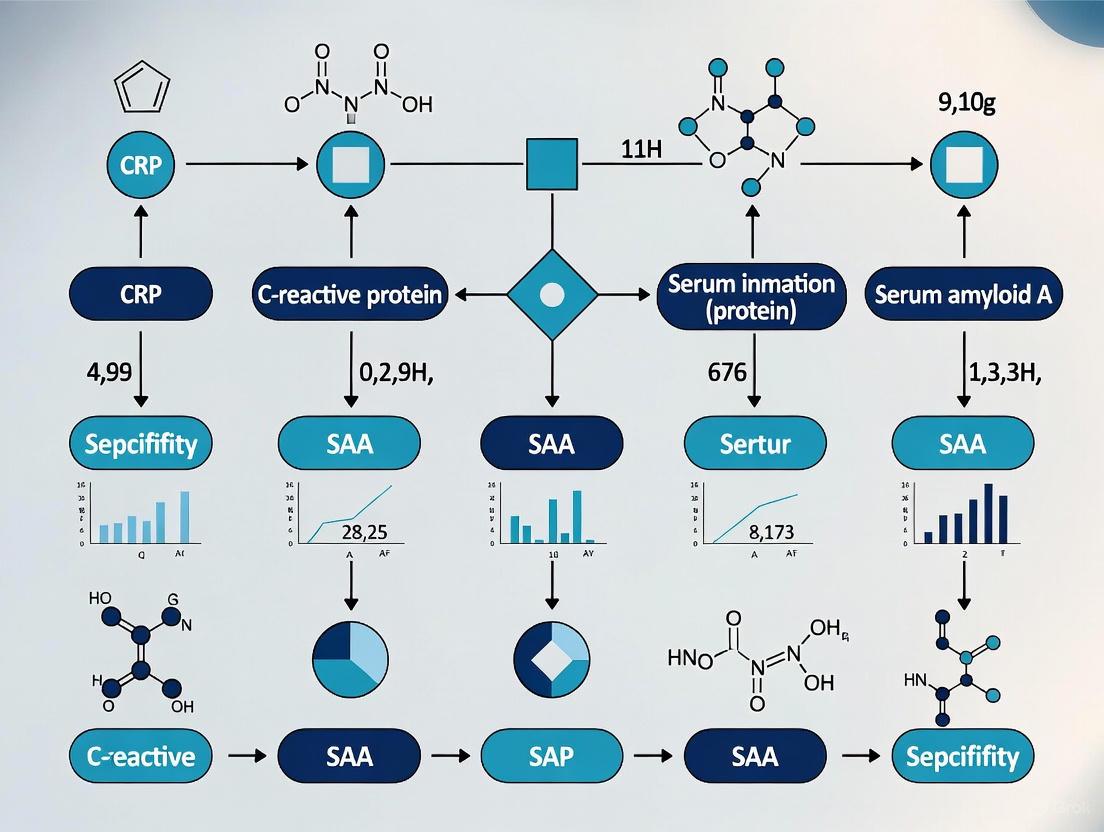
This article provides a comprehensive comparative analysis of the performance of various acute phase proteins (APPs) as biomarkers in clinical and preclinical settings.
Acute Phase Proteins as Biomarkers: A Comparative Analysis of Performance Across Diseases and Modalities
Abstract
This article provides a comprehensive comparative analysis of the performance of various acute phase proteins (APPs) as biomarkers in clinical and preclinical settings. Targeting researchers, scientists, and drug development professionals, it explores the foundational biology of APPs, assesses methodological approaches for their measurement, and examines their application across diverse conditions including infectious diseases, oncology, and chronic inflammatory disorders. The content synthesizes recent evidence on the diagnostic, prognostic, and therapeutic monitoring capabilities of individual APPs and APP panels, addressing key challenges in translational application and offering insights for optimizing their use in biomedical research and clinical practice.
The Biology of Acute Phase Proteins: From Hepatic Synthesis to Clinical Signals
Acute phase proteins (APPs) are a group of blood proteins that undergo significant concentration changes as part of the innate immune system's early defense mechanism. This systemic reaction, known as the acute phase response, is triggered by various stimuli including infection, trauma, inflammation, and tissue injury [1]. These proteins serve as crucial biochemical markers for assessing health status, with applications spanning human medicine, veterinary science, and biomedical research. APPs are classified as either positive or negative responders based on whether their plasma concentrations increase or decrease during inflammatory states [1]. This classification provides valuable insights into the nature and severity of immunological stress, making APPs powerful tools for disease monitoring, prognosis, and therapeutic response assessment.
The acute phase response dramatically alters the hepatic synthesis of plasma proteins, creating distinct patterns that clinicians and researchers can use to assess inflammatory status.
Positive Acute Phase Proteins
Positive APPs demonstrate increased concentrations during inflammation, primarily due to upregulated synthesis by hepatocytes stimulated by pro-inflammatory cytokines [1]. These proteins play diverse roles in host defense, including opsonizing microorganisms, activating complement, scavenging cellular remnants and free radicals, and neutralizing proteolytic enzymes [1]. The magnitude and kinetics of increase vary among different positive APPs, with some showing rapid, marked increases (such as C-reactive protein and serum amyloid A) while others exhibit more moderate elevations.
Negative Acute Phase Proteins
Conversely, negative APPs experience decreased plasma concentrations during the acute phase response [1]. This reduction stems from downregulated hepatic synthesis rather than increased consumption or loss. These proteins often function as transport proteins for essential nutrients and hormones in healthy states. Their decline during inflammation may help redirect metabolic resources toward protective mechanisms and host defense processes.
Table 1: Classification and Characteristics of Major Acute Phase Proteins
| Protein Name | Response Type | Major Functions | Significance in Inflammation |
|---|---|---|---|
| C-reactive Protein (CRP) | Positive | Pattern recognition, complement activation | Rapid, dramatic increase; correlates with inflammation severity |
| Serum Amyloid A (SAA) | Positive | Lipid metabolism, immune cell recruitment | Major APP; precursor to amyloid A in chronic inflammation |
| Haptoglobin | Positive | Binds free hemoglobin, antioxidant | Prevents iron loss and oxidative damage |
| Fibrinogen | Positive | Coagulation, wound healing | Contributes to elevated ESR during inflammation |
| α₂-Macroglobulin | Positive | Protease inhibition, cytokine binding | Broad-spectrum protease inhibitor |
| Albumin | Negative | Osmotic regulation, transport | Decreased synthesis; contributes to edema formation |
| Transferrin | Negative | Iron transport | Reduction limits iron availability to pathogens |
| Transthyretin | Negative | Thyroid hormone transport | Sensitive nutritional status indicator |
| Retinol-binding Protein | Negative | Vitamin A transport | Rapid responder to nutritional deficits |
APP Profiles in Infectious and Inflammatory Diseases: Comparative Experimental Data
Recent clinical investigations have demonstrated how specific APP profiles reflect distinct inflammatory milieus across various disease contexts, offering insights for biomarker applications.
HIV and Latent Tuberculosis Co-infection
A 2025 prospective study examining HIV-positive individuals with and without latent tuberculosis infection (LTBI) revealed distinct APP patterns that illuminate the inflammatory burden of co-infection [2] [3]. Researchers measured plasma levels of multiple APPs at baseline and following six months of isoniazid preventive therapy (IPT) to assess both disease-specific inflammation and treatment response.
The investigation found significantly elevated levels of specific positive APPs in HIV-positive individuals with LTBI compared to those without LTBI, highlighting the added inflammatory burden of latent TB infection in immunocompromised hosts [2] [3]. Following antituberculosis prophylaxis, significant reductions in these inflammatory markers were observed in both groups, demonstrating the utility of APPs for monitoring therapeutic efficacy [2] [3].
Table 2: Acute Phase Protein Levels in HIV Patients With and Without Latent Tuberculosis
| Acute Phase Protein | HIV+ LTBI+ (Baseline) | HIV+ LTBI- (Baseline) | Statistical Significance (p-value) | Response to IPT Therapy |
|---|---|---|---|---|
| Alpha-2-Macroglobulin (A2M) | Significantly elevated | Lower baseline levels | p = 0.005 | Significant reduction |
| C-reactive Protein (CRP) | Significantly elevated | Lower baseline levels | p < 0.001 | Significant reduction |
| Serum Amyloid P (SAP) | Significantly elevated | Lower baseline levels | p = 0.0006 | Significant reduction |
| Ferritin | Significantly elevated | Lower baseline levels | p < 0.001 | Significant reduction |
| Hepcidin | Significantly elevated | Lower baseline levels | p = 0.001 | Significant reduction |
| S100A9 | Significantly elevated | Lower baseline levels | p = 0.001 | Significant reduction |
| Haptoglobin | No significant difference | No significant difference | Not significant | Variable response |
| sTFR | No significant difference | No significant difference | Not significant | Variable response |
| Apotransferrin | No significant difference | No significant difference | Not significant | Variable response |
| S100A8 | No significant difference | No significant difference | Not significant | Variable response |
Rheumatoid Arthritis Proteomics
A comprehensive longitudinal cohort study published in Nature Communications (2025) profiled the plasma proteome in rheumatoid arthritis (RA) patients, at-risk individuals, and healthy controls [4]. This research identified distinct proteomic signatures across various disease stages, with specific APPs showing strong correlation with disease activity scores (DAS28-CRP) [4]. The study further demonstrated that different conventional synthetic disease-modifying antirheumatic drug (csDMARD) combinations modulated distinct inflammatory pathways, with methotrexate plus leflunomide primarily affecting proinflammatory pathways, while methotrexate plus hydroxychloroquine impacted energy metabolism pathways [4].
Key Methodologies for APP Analysis
Standardized experimental protocols are essential for generating comparable, high-quality APP data across studies. The following sections detail common methodologies used in APP research.
Sample Collection and Processing
In the HIV-LTBI study, blood samples were collected in sodium heparin tubes and transported to the laboratory within two hours of collection [2] [3]. Plasma was separated by centrifugation and stored at -80°C until analysis to preserve protein integrity [2] [3]. All HIV-positive participants had been on antiretroviral therapy for more than two years, and latent TB infection was diagnosed using QuantiFERON-TB Gold Plus testing with an IFN-γ cutoff of >0.35 IU/mL [2] [3]. Similar processing protocols were employed in the rheumatoid arthritis study, with tandem mass tag-based proteomics analysis performed on plasma samples [4].
APP Quantification Methods
Multiplex Immunoassays
The HIV-LTBI investigation utilized the Milliplex MAP Human CVD Panel Acute Phase magnetic bead panel to simultaneously quantify alpha-2-macroglobulin, C-reactive protein, serum amyloid P, and haptoglobin [2] [3]. This multiplex approach enables efficient measurement of multiple analytes from small volume samples, with specific detection limits as follows: A2M (0.49 ng/mL), CRP (0.05 ng/mL), haptoglobin (0.06 ng/mL), and SAP (0.06 ng/mL) [2] [3].
ELISA Techniques
Enzyme-linked immunosorbent assays (ELISA) provide sensitive quantification of individual APPs. The HIV-LTBI study employed DuoSet ELISA kits for ferritin, S100A8, and S100A9 measurement, with detection limits of 93.8 pg/mL, 31.3 pg/mL, and 31.3 pg/mL respectively [2] [3]. Soluble transferrin receptor was measured using a quantitative ELISA kit from Bio Vendor, while apotransferrin and hepcidin levels were determined using quantitative ELISA kits from Cloud Clone Corp. [2] [3].
Protein Electrophoresis
Protein electrophoresis separates serum proteins into fractions (albumin, α1-globulins, α2-globulins, β-globulins, and γ-globulins) based on charge and size, providing a broader view of APP changes [5]. This technique is particularly valuable for detecting polyclonal gammopathy associated with chronic inflammation and immune stimulation [5]. In murine studies, electrophoresis has demonstrated significant increases in γ-globulins during viral infections, reflecting humoral immune activation [5].
Data Analysis Approaches
Statistical analyses typically employ non-parametric tests for APP data due to frequently non-normal distributions. The HIV-LTBI study used Mann-Whitney U-tests for between-group comparisons and Wilcoxon signed-rank tests for pre-post treatment comparisons [2] [3]. Geometric means are often preferred for measuring central tendency in APP concentrations [2] [3]. More complex proteomic studies utilize machine learning approaches; the RA study developed prediction models with receiver operating characteristic scores of 0.88 for methotrexate + leflunomide response and 0.82 for methotrexate + hydroxychloroquine response [4].
Cytokine Signaling in Acute Phase Protein Regulation
The hepatic acute phase response is primarily mediated by pro-inflammatory cytokines released at sites of inflammation that travel through the bloodstream to activate hepatocytes.
Figure 1: Cytokine Signaling in Acute Phase Protein Regulation. Pro-inflammatory cytokines orchestrate the hepatic acute phase response, stimulating increased production of positive APPs while suppressing synthesis of negative APPs.
The acute phase response begins when inflammatory stimuli activate immune cells such as macrophages and monocytes, triggering the release of pro-inflammatory cytokines including tumor necrosis factor-alpha (TNF-α) and interleukin-1 beta (IL-1β) [1]. These cytokines, particularly IL-6, serve as key mediators that activate hepatocyte receptors, initiating signaling cascades that dramatically alter hepatic protein synthesis patterns [1]. TNF-α and IL-1β also contribute to clinical manifestations of inflammation including fever, anorexia, and muscle catabolism, while IL-6 is recognized as the primary hepatocyte-stimulating factor responsible for inducing the synthesis of most positive APPs [1].
Experimental Workflow for APP Biomarker Studies
Robust APP biomarker investigation requires systematic approaches from study design through data interpretation.
Figure 2: Experimental Workflow for APP Studies. A systematic approach to APP biomarker research ensures reproducible and clinically relevant results.
The experimental workflow begins with careful study population definition, including appropriate inclusion/exclusion criteria and ethical considerations [2] [4] [3]. Sample collection and processing must follow standardized protocols to maintain sample integrity, with particular attention to time-to-processing and storage conditions [2] [3]. APP quantification method selection depends on research objectives, with multiplex immunoassays offering efficiency for targeted analysis while proteomic approaches provide discovery potential [2] [4]. Data analysis incorporates appropriate statistical methods for non-normally distributed data, with machine learning approaches increasingly applied for biomarker pattern recognition and prediction model development [4].
Research Reagent Solutions for APP Investigation
Selecting appropriate reagents and platforms is crucial for generating reliable, reproducible APP data.
Table 3: Essential Research Reagents and Platforms for APP Analysis
| Reagent/Platform | Specific Example | Application | Key Features |
|---|---|---|---|
| Multiplex Immunoassay Panels | Milliplex MAP Human CVD Panel Acute Phase | Simultaneous quantification of multiple APPs | Magnetic bead-based; detects A2M, CRP, SAP, haptoglobin |
| ELISA Kits | DuoSet ELISA (R&D Systems) | Individual APP quantification | High sensitivity; specific for ferritin, S100A8/A9 |
| ELISA Kits | Quantitative ELISA (Cloud Clone Corp.) | Specialized APP measurement | Detects apotransferrin, hepcidin |
| ELISA Kits | Quantitative ELISA (Bio Vendor) | Transferrin receptor analysis | Measures soluble transferrin receptor |
| Protein Electrophoresis | Paragon SPEP-II Gel System | Protein fractionation | Separates albumin, α1, α2, β, γ globulins |
| Latent TB Diagnosis | QuantiFERON TB Gold Plus | Infection status determination | Measures IFN-γ response to TB antigens |
| Proteomic Analysis | Tandem Mass Tag (TMT) Proteomics | Large-scale protein profiling | Identifies 2,000+ plasma proteins |
| Statistical Analysis | GraphPad PRISM | Statistical analysis | Non-parametric tests, geometric means |
Acute phase proteins represent a sophisticated biological measurement system that provides valuable insights into inflammatory status across diverse clinical and research contexts. The distinct patterns of positive and negative APPs serve as sensitive indicators of immunological stress, with specific profiles correlating with particular disease states, including HIV-TB co-infection and rheumatoid arthritis. Contemporary research methodologies, from multiplex immunoassays to proteomic analyses, continue to expand our understanding of APP dynamics, while standardized experimental protocols ensure data quality and reproducibility. As biomarker science advances, integrating APP profiles with other omics technologies promises enhanced diagnostic precision and therapeutic monitoring capabilities, solidifying the role of acute phase proteins as essential components in both clinical medicine and biomedical research.
The pro-inflammatory cytokines IL-6, IL-1, and TNF-α are central commanders of the immune response, yet they possess distinct biological functions, kinetics, and clinical utilities as biomarkers. The following table provides a high-level comparison of these critical regulators based on current research.
| Feature | IL-6 | TNF-α | IL-1 (IL-1β) |
|---|---|---|---|
| Core Source Cells | Macrophages, T cells, B cells, fibroblasts, endothelial cells [6] | Macrophages, T cells [6] | Macrophages, monocytes, lymphocytes [6] |
| Primary Functions | B-cell differentiation, acute phase protein induction, fever, hematopoiesis [6] | Phagocyte activation, endothelial activation, cachexia, septic shock [6] | Pyrogenic, pro-inflammatory, proliferation and differentiation of immune cells [6] |
| Key Signaling Pathways | JAK/STAT, Ras-MAPK [6] | NF-κB, MAPK [7] | NF-κB, MAPK [7] |
| Representative Clinical Utility | Prognostic marker for mortality in malnutrition and diabetic foot infection; predicts diminished response to nutritional therapy [8] [9] | Marker of infection severity in diabetic foot; elevated in peri-implant diseases [9] [10] | Differentiates peri-implant mucositis and peri-implantitis from healthy sites [10] |
| Performance Insight | Superior to CRP and TNF-α for predicting 30-day mortality in medical inpatients; combined use with TNF-α and IFN-γ enhances prognostic power in diabetic foot infection [8] [9] | Highly elevated in infection; strong prognostic value when combined with other cytokines [9] | Significantly higher in peri-implant diseases compared to healthy implant sites [10] |
Disease-Specific Performance and Experimental Data
The comparative value of IL-6, IL-1, and TNF-α becomes evident when examining their performance across different pathological states, from chronic metabolic conditions to acute infections.
Malnutrition and Hospital Mortality
A 2025 secondary analysis of the EFFORT trial investigated how inflammation modulates the effect of nutritional therapy in 996 medical inpatients at risk of malnutrition. The study directly compared the prognostic power of IL-6, TNF-α, and CRP [8].
Key Quantitative Findings:
- IL-6: Patients with high levels (>11.2 pg/mL) had a more than 3-fold increase in 30-day all-cause mortality (adjusted HR 3.5, 95% CI 1.95–6.28, p < 0.001). These patients also showed a diminished mortality benefit from nutritional intervention (HR 0.82 for high IL-6 vs. 0.32 for low IL-6) [8].
- TNF-α: Was not significantly associated with 30-day mortality in this cohort [8].
- CRP: While also not independently associated with mortality, patients with levels >100 mg/dL showed a trend toward a reduced benefit from nutritional support [8].
Conclusion: In a medical inpatient setting, IL-6 was a more robust prognostic marker for mortality and a predictor of nutritional therapy response than either TNF-α or CRP [8].
Diabetic Foot Infection (DFI) Severity and Prognosis
A 2025 study of 144 patients with diabetic foot evaluated the relationship of TNF-α, IL-6, and IFN-γ with infection severity and prognosis [9].
Key Quantitative Findings (Severity Assessment): The following table shows the serum levels of these cytokines based on infection presence and severity.
| Patient Group | TNF-α (ng/L) | IL-6 (ng/L) | IFN-γ (ng/L) |
|---|---|---|---|
| Non-Infection Group (n=74) | 23.78 ± 7.87 | 36.75 ± 6.89 | 5.75 ± 1.98 |
| Infection Group (n=70) | 36.76 ± 6.05 | 58.53 ± 7.22 | 8.33 ± 2.82 |
| Significance (P value) | <0.01 | <0.01 | <0.01 |
All three cytokines were significantly elevated in the infection group and showed a step-wise increase from mild to severe infections. Most importantly, combined detection of all three biomarkers significantly improved the accuracy for assessing DFI severity (AUC = 0.855) compared to any single marker alone (TNF-α AUC=0.811; IL-6 AUC=0.793; IFN-γ AUC=0.764) [9].
Prognostic Value: Serum levels of all three cytokines were significantly higher in patients with a poor prognosis (unhealed wounds, amputation, or death). The combined prediction model for poor prognosis achieved an AUC of 0.926, again outperforming individual markers [9].
Oral and Peri-Implant Diseases
A systematic review and meta-analysis compared the levels of IL-1β, IL-6, and TNF-α in peri-implant crevicular fluid (PICF) to distinguish between healthy implants (H), peri-implant mucositis (MU), and peri-implantitis (PI) [10].
Key Quantitative Findings (PICF Levels):
- IL-1β: Levels were significantly higher in both MU and PI sites compared to healthy sites. The standardized mean difference (SMD) for PI vs. H was 2.21 (95% CI 1.32–3.11, p<0.001) [10].
- IL-6: Also significantly elevated in MU and PI vs. H (SMD for PI vs. H = 1.72, 95% CI 0.56–2.87, p=0.004). Furthermore, IL-6 was the only biomarker significantly higher in PI than in MU sites (SMD=1.46, 95% CI 0.36–2.55, p=0.009), suggesting a role in monitoring disease progression [10].
- TNF-α: Showed highly significant elevation in diseased sites (SMD for PI vs. H = 3.78, 95% CI 1.67–5.89, p<0.001) [10].
In post-odontectomy inflammation, a rapid review found that salivary levels of IL-1, IL-6, and TNF-α all increase due to tissue manipulation during the procedure, contributing to post-operative swelling [11].
Detailed Experimental Protocols from Cited Studies
To facilitate replication and critical evaluation, here are the detailed methodologies from key studies cited in this guide.
- Study Design: Secondary analysis of a pragmatic, multicenter, randomized controlled trial.
- Patient Population: 996 medical inpatients at risk of malnutrition (NRS 2002 score ≥3).
- Blood Sample Handling: Collected at study inclusion, immediately processed, and frozen at -80°C for later analysis.
- Cytokine Analysis (IL-6 & TNF-α):
- Measurement Period: Analyzed from June 2023 to July 2024.
- Technology: Plasma levels measured using a self-assembled Meso Scale Discovery (MSD) Multi-Spot Assay System.
- Specific Assays: U-PLEX Human IL-6 Assay and U-PLEX Human TNF-α Assay.
- Sample Preparation: Plasma samples were diluted 1:1.
- Blinding: Laboratory personnel were blinded to randomization allocation.
- CRP Analysis: Levels were obtained from the hospitals' routine laboratory analysis.
- Statistical Analysis: Performed with STATA 17.0. Cox regression models were used for mortality analysis, and outliers were excluded using the z-score method (mean ± 3 SD).
- Study Design: Observational study enrolling 144 patients with diabetic foot.
- Patient Groups: Categorized into infection (n=70) and non-infection (n=74) groups, with further stratification by infection severity (mild, moderate, severe).
- Blood Sample Handling: Venous blood (3 mL) was drawn in the early morning under fasting conditions. Samples were centrifuged at 3,000 r/min for 5 minutes, and the supernatant was stored at -80°C.
- Cytokine Analysis (TNF-α, IL-6, IFN-γ):
- Technology: Sandwich ELISA.
- Kit Source: Invitrogen, Carlsbad, California, USA.
- Assay Performance: Intra- and inter-assay coefficients of variation (CV) were <10%.
- Statistical Analysis: Performed with SPSS 23.0. ROC curve analysis compared the predictive value of biomarkers, with a Bonferroni-corrected significance threshold of P<0.0167 for multiple comparisons.
- Study Design: Prospective analysis at ART clinics.
- Patient Population: 101 HIV-positive individuals screened for latent TB infection (LTBI) using QuantiFERON-TB Gold Plus. Groups: HIV+ with LTBI (n=30) and HIV+ without LTBI (n=71).
- Analysis Panel: Measured plasma levels of alpha-2-macroglobulin (A2M), CRP, serum amyloid P (SAP), haptoglobin, ferritin, and others.
- Multiplex Assay:
- Technology: Milliplex MAP Human CVD Panel Acute Phase magnetic bead panel.
- Manufacturer: Millipore, Darmstadt, Germany.
- Platform: Multiplex platform following manufacturer's instructions.
- Other Assays: Ferritin, sTFR, apotransferrin, hepcidin, S100A8, and S100A9 levels were determined using quantitative ELISA kits from R&D Systems, Bio Vendor, and Cloud Clone Corp.
Signaling Pathways and Experimental Workflows
The following diagrams, generated using Graphviz, illustrate the core signaling pathways of these cytokines and a generalized experimental workflow for biomarker analysis.
Simplified Pro-Inflammatory Cytokine Signaling Cascade
Generalized Workflow for Biomarker Quantification
The Scientist's Toolkit: Essential Research Reagents
This table details key reagents and their functions as utilized in the experimental protocols cited in this guide.
| Reagent / Assay Solution | Primary Function in Research | Example Use Case |
|---|---|---|
| U-PLEX Assay Kits (Meso Scale Discovery) | Multiplex electrochemiluminescent detection of cytokines (e.g., IL-6, TNF-α) from a single small sample volume. | Quantifying IL-6 and TNF-α in the EFFORT malnutrition trial biobank samples [8]. |
| Milliplex MAP Magnetic Bead Panels (Millipore) | Multiplex quantification of protein biomarkers using magnetic beads and flow-based detection. | Profiling a broad panel of acute-phase proteins (CRP, A2M, SAP, etc.) in HIV/Latent TB study [2] [3]. |
| Quantitative ELISA Kits (e.g., R&D Systems, Cloud Clone) | Sensitive and specific colorimetric quantification of a single analyte using enzyme-linked immunosorbent assay. | Measuring ferritin, hepcidin, and other targets in the HIV/TB study; quantifying TNF-α, IL-6, IFN-γ in the diabetic foot study [2] [9]. |
| Anti-porcine CRP Monoclonal Antibody | Specific capture and detection antibody for developing immunoassays in animal models. | Development and validation of a lateral flow assay for measuring CRP in porcine saliva [12]. |
| Gold Nanoparticles (GNPs) | Label for lateral flow immunoassays, providing a visual signal upon binding to the target analyte. | Conjugation with antibodies to create the detection reagent in the porcine CRP lateral flow device [12]. |
The acute phase response is a complex systemic reaction to disturbances in homeostasis caused by infection, inflammation, trauma, or other tissue injury. Acute phase proteins (APPs), synthesized primarily by hepatocytes, are blood proteins that function as key quantitative biomarkers of this innate immune response [13]. These proteins change their serum concentrations by more than 25% in response to pro-inflammatory cytokines released during the disease process, making them highly sensitive indicators for diagnosing, prognosticating, and monitoring therapeutic responses [13]. In clinical and veterinary medicine, APPs have gained prominence as objective measures for assessing underlying inflammatory conditions when clinical signs are ambiguous.
APPs are classified based on the magnitude of their concentration increase during inflammation. Major APPs demonstrate dramatic increases of 100-1000-fold from low baseline concentrations (<1 μg/L) in healthy animals, peaking at 24-48 hours and declining rapidly during recovery [13]. Moderate responders typically increase 5-10-fold, peak after 2-3 days, and decrease more slowly, while minor APPs gradually increase by only 50-100% above resting levels [13]. This classification provides a framework for understanding the dynamic response patterns of different APPs across various species and pathological conditions, enabling researchers to select the most appropriate biomarkers for specific investigative contexts.
Comparative Dynamics of Major and Minor Acute Phase Proteins
Quantitative Response Characteristics
Table 1: Classification and Response Characteristics of Acute Phase Proteins
| APP Category | Magnitude of Increase | Time to Peak | Dynamic Range | Examples |
|---|---|---|---|---|
| Major APPs | 100-1000-fold | 24-48 hours | High | C-reactive protein (dogs), Haptoglobin (cattle), Serum Amyloid A (cattle) |
| Moderate APPs | 5-10-fold | 2-3 days | Medium | Fibrinogen, Ceruloplasmin |
| Minor APPs | 50-100% | Variable | Low | Transferrin, Albumin (negative APP) |
The differential response patterns of major and minor APPs provide valuable insights for both research and clinical applications. Major APPs, with their low baseline concentrations and rapid, dramatic increase following inflammatory stimuli, serve as excellent early indicators of pathological processes [13]. Their wide dynamic range enables sensitive monitoring of disease progression and treatment efficacy. In contrast, minor APPs, with their more modest response profiles, are better suited for assessing chronic or low-grade inflammatory states where major APP concentrations may have normalized despite ongoing pathology.
Species-Specific Variations in APP Responses
Table 2: Species-Specific Major Acute Phase Proteins
| Species | Major APPs | Moderate/Minor APPs | Key Diagnostic Applications |
|---|---|---|---|
| Canine | C-reactive protein (CRP), Serum Amyloid A (SAA) | Haptoglobin, α1-acid glycoprotein | Steroid-responsive meningitis-arteritis, bacterial infections (babesiosis, leptospirosis) |
| Feline | α1-acid glycoprotein (AGP) | Serum Amyloid A (SAA), Haptoglobin | Feline infectious peritonitis, neoplasia (lymphoma) |
| Bovine | Haptoglobin (Hp), Serum Amyloid A (SAA) | Fibrinogen, Ceruloplasmin | Mastitis, enteritis, pneumonia, endometritis |
The table highlights considerable species variation in APP pathophysiology, necessitating species-specific biomarker selection for research and diagnostic purposes [13]. For instance, while C-reactive protein (CRP) serves as a major APP in dogs and humans, it demonstrates different response characteristics in other species. In canine medicine, CRP increases rapidly from <1 mg/L to >100 mg/L in various infectious diseases including babesiosis, leishmaniosis, leptospirosis, parvovirus infection and E. coli endotoxaemia [13]. Similarly, haptoglobin represents a major APP in ruminants, with serum concentrations in cattle rising from <20 mg/L in healthy states to >2 g/L within two days of infection [13].
Experimental Protocols for APP Assessment
Standardized Methodology for APP Quantification
Protocol Title: Simultaneous Quantification of Major and Minor Acute Phase Proteins in Serum Samples
Principle: This protocol describes a standardized approach for measuring concentrations of major and minor APPs in serum samples using species-specific immunoassays, enabling comprehensive assessment of the acute phase response in research settings.
Materials and Reagents:
- Species-specific antibodies against target APPs (e.g., anti-CRP for canines, anti-haptoglobin for bovines)
- Reference standards for quantification (species-specific purified APPs)
- Coating buffers (carbonate-bicarbonate buffer, pH 9.6)
- Washing buffers (phosphate-buffered saline with Tween-20, PBS-T)
- Blocking solution (1% bovine serum albumin in PBS)
- Detection system (enzyme-conjugated secondary antibodies, chromogenic substrates)
- Sample diluent (PBS with stabilizing agents)
Procedure:
- Coating: Dilute capture antibodies in coating buffer and add to microtiter plate wells (100 μL/well). Incubate overnight at 4°C.
- Washing: Wash plates three times with washing buffer using an automated plate washer.
- Blocking: Add blocking solution (200 μL/well) and incubate for 2 hours at room temperature.
- Standard Preparation: Prepare serial dilutions of reference standards to generate a standard curve (typically 6-8 points).
- Sample Preparation: Dilute serum samples appropriately in sample diluent (optimal dilution factors must be predetermined for each species and APP).
- Incubation: Add standards and samples to designated wells (100 μL/well) and incubate for 2 hours at room temperature.
- Washing: Repeat washing step as in #2.
- Detection: Add species-specific detection antibodies conjugated to detection enzyme (100 μL/well) and incubate for 1 hour at room temperature.
- Washing: Repeat washing step as in #2.
- Substrate Addition: Add enzyme substrate solution (100 μL/well) and incubate for 15-30 minutes in the dark.
- Signal Measurement: Measure absorbance at appropriate wavelength using a microplate reader.
- Data Analysis: Calculate APP concentrations from standard curves using appropriate curve-fitting software.
Quality Control:
- Include internal quality control samples with known APP concentrations in each assay run
- Establish assay performance characteristics (precision, accuracy, limit of detection, limit of quantification)
- Ensure species-specific validation of assays due to significant interspecies variations in APP responses
Temporal Response Profiling Protocol
Protocol Title: Kinetic Analysis of APP Response Dynamics
Principle: This protocol enables researchers to characterize the temporal response patterns of major and minor APPs following an inflammatory stimulus, providing critical data on response magnitude and kinetics.
Procedure:
- Baseline Sampling: Collect pre-inflammation blood samples to establish baseline APP concentrations.
- Inflammatory Stimulus: Administer standardized inflammatory stimulus (e.g., LPS challenge) or monitor natural disease onset.
- Serial Sampling: Collect blood samples at predetermined intervals (e.g., 6, 12, 24, 48, 72, 96 hours post-stimulus).
- Sample Processing: Separate serum or plasma within 2 hours of collection and store at -80°C until analysis.
- APP Quantification: Measure concentrations of target major and minor APPs using standardized immunoassays.
- Data Analysis: Calculate fold-increase from baseline, time to peak concentration, and elimination kinetics for each APP.
Signaling Pathways Regulating APP Expression
The inflammatory signaling cascade that regulates APP synthesis involves complex pathways that ultimately activate transcription factors responsible for modulating gene expression of APPs in hepatocytes. The pathway begins with tissue damage or infection, which triggers immune cells to release pro-inflammatory cytokines, particularly IL-1, IL-6, and TNF-α [14]. These cytokines activate the AP-1 (Activator Protein-1) transcription factor through two major mitogen-activated protein kinase (MAPK) subfamilies: the stress-activated protein kinases (SAPKs/JNKs) and the p38 MAPKs [14].
The AP-1 transcription factor consists of bZIP proteins (typically c-Jun, JunD, along with members of the Fos and ATF families) that form homo- or heterodimers through leucine zipper interactions [14]. Upon activation, AP-1 binds to specific DNA sequences called TPA response elements (TRE) in the promoter regions of APP genes, initiating their transcription [14]. The redox regulation of AP-1 and other transcription factors like NF-κB is facilitated by APE1/Ref-1, which enhances their DNA-binding activity [15]. This coordinated signaling network results in the dramatic upregulation of APP synthesis, with differential effects on major versus minor APPs based on promoter specificity and regulatory mechanisms.
Figure 1: Inflammatory Signaling Pathway Regulating APP Synthesis
The Scientist's Toolkit: Essential Research Reagents
Table 3: Essential Research Reagents for APP Investigation
| Reagent Category | Specific Examples | Research Application | Technical Considerations |
|---|---|---|---|
| Species-Specific Antibodies | Anti-CRP (canine), Anti-haptoglobin (bovine), Anti-SAA | APP quantification via ELISA, Western blot | Critical to verify species reactivity; cross-reactivity varies |
| Cytokine Standards | Recombinant IL-1, IL-6, TNF-α | In vitro stimulation of APP production | Species-specificity important for physiological relevance |
| Reference Materials | Purified APPs for standardization | Assay calibration, quality control | Essential for quantitative accuracy; source and purity critical |
| Signal Transduction Inhibitors | JNK inhibitors (SP600125), p38 inhibitors (SB203580) | Pathway analysis in cell culture models | Use specific concentrations to avoid off-target effects |
| Molecular Biology Reagents | TRE reporter constructs, AP-1 expression vectors | Mechanistic studies of APP gene regulation | Requires hepatocyte culture systems for physiological relevance |
| Acute Phase Stimulants | Lipopolysaccharide (LPS), turpentine | In vivo models of inflammation | Dose-dependent effects; species sensitivity varies |
The research reagents listed in Table 3 represent essential tools for investigating the complex regulation and expression dynamics of acute phase proteins. Species-specific antibodies are particularly critical due to the significant interspecies differences in APP responses [13]. For instance, antibodies against canine CRP will not necessarily cross-react with bovine CRP, necessitating careful reagent selection based on research model. Similarly, the use of species-matched cytokine standards ensures physiological relevance when studying the induction of APP synthesis in in vitro systems.
The APE1/Ref-1 protein represents an important regulatory component in the APP signaling cascade, as it functions as a redox-dependent regulator of transcription factors including AP-1 and NF-κB [15]. This multifunctional enzyme not only participates in DNA repair but also enhances the DNA-binding activity of key transcription factors through reduction of critical cysteine residues, thereby influencing the expression of inflammatory mediators including APPs [15]. Inhibitors targeting APE1's redox function, such as E3330, have emerged as valuable research tools for dissecting the contribution of redox regulation to APP gene expression.
Comparative Data Analysis and Research Applications
The differential response patterns of major and minor APPs provide researchers with complementary information about the timing, severity, and phase of inflammatory processes. Major APPs, with their rapid induction kinetics and wide dynamic range, serve as sensitive markers for detecting early inflammation and monitoring therapeutic interventions [13]. Their rapid decline during recovery also makes them valuable for assessing treatment efficacy. In contrast, minor APPs, with their more modest response profiles, may provide information about sustained or chronic inflammatory states.
In bovine medicine, the major APP haptoglobin has demonstrated particular utility in diagnosing mastitis, enteritis, peritonitis, pneumonia, endocarditis, and endometritis [13]. The mammary-associated serum amyloid A3 (SAA3) isoform shows promise as a specific biomarker for mastitis, as it is produced directly by the inflamed mammary gland [13]. Similarly, in feline medicine, α1-acid glycoprotein (AGP) serves as a valuable diagnostic marker for feline infectious peritonitis, with elevated levels observed in both serum and peritoneal fluid [13].
The strategic combination of major and minor APP measurements enables more nuanced interpretation of inflammatory status in research models. The simultaneous quantification of a major APP (e.g., CRP in canines) and a minor APP (e.g., albumin) provides information about both the acute inflammatory response and the chronic inflammatory state, respectively. This multi-marker approach enhances the discriminative power of inflammatory assessment in both basic research and clinical trial settings.
The acute phase response (APR) is a complex systemic reaction to infections, tissue injury, trauma, or immunological disorders that represents the innate immune system's first line of defense [1]. Central to this response are acute phase proteins (APPs), a group of plasma proteins predominantly synthesized by hepatocytes under the regulation of pro-inflammatory cytokines, particularly interleukin-6 (IL-6) [16] [1]. These proteins undergo significant concentration changes—increases for positive APPs and decreases for negative APPs—during inflammatory stress [16] [17]. While traditionally viewed as systemic actors produced by the liver, emerging evidence indicates that APPs can also be produced locally at sites of inflammation by various cell types, representing an ancient, coordinated cellular stress response system [18].
APPs execute diverse immunomodulatory functions, with opsonization, protease inhibition, and microbial trapping representing three fundamental mechanisms that contribute to host defense. These proteins act as a functional bridge between innate and adaptive immunity, facilitating pathogen clearance, minimizing tissue damage, and promoting tissue repair [19]. This review provides a comparative analysis of the core effector functions of major acute phase proteins, with emphasis on their relative performance in pathogen containment and elimination, supported by experimental data and methodological approaches relevant for research and drug development applications.
Comparative Analysis of Major Acute Phase Protein Functions
Table 1: Core Functions of Major Acute Phase Proteins
| Acute Phase Protein | Opsonization Activity | Protease Inhibition | Microbial Trapping | Key Functions & Mechanisms |
|---|---|---|---|---|
| C-reactive Protein (CRP) | Strong: Binds to microbial phosphocholine and nuclear components; activates complement via classical pathway; facilitates phagocytosis [16] [20] | Not reported | Indirect via complement activation | Recognizes PAMPs and DAMPs; acts as bridging molecule; promotes elimination of microbes and cellular debris [16] [17] |
| Serum Amyloid A (SAA) | Moderate: Opsonizing properties; chemotactic activity [21] [17] | Not reported | Not specifically reported | Contributes to host defense during infectious diseases; exact mechanisms under investigation [21] |
| Haptoglobin | Limited | Not primary function | Yes: Binds free hemoglobin; exhibits direct antibacterial activity [16] [21] | Antioxidant activity; eliminates hemoglobin; immunomodulatory effects; prevents microbial iron acquisition [16] [21] |
| Fibrinogen | Moderate | Not primary function | Yes: Forms fibrin clots that physically trap microorganisms [22] | Key role in coagulation system; provides matrix for thrombus formation; interacts with inflammatory pathways [22] |
| Complement Factors (C3, C4) | Strong: C3b fragment acts as powerful opsonin; coats microbial surfaces [20] [19] | Not primary function | Not primary function | Central to complement cascade; generates membrane attack complex; produces anaphylatoxins (C3a, C5a) that enhance inflammation [20] [19] |
| α1-Antitrypsin (AAT) | Not reported | Strong: Major inhibitor of neutrophil elastase and proteinase 3 [17] [23] | Not reported | Serpin superfamily member; protects tissues from proteolytic enzymes; possesses anti-inflammatory properties beyond protease inhibition [23] |
| α2-Macroglobulin | Not reported | Broad-spectrum: Traps and inhibits various proteases including thrombin, plasmin, kallikrein [16] [22] | Not reported | Functions as a "molecular cage"; exhibits increase of about 100-fold during APR; remover of plasma enzymes [22] |
| Ceruloplasmin | Not reported | Not primary function | Not specifically reported | Antioxidant activity through copper ion binding; multicopper oxidase function [21] |
Table 2: Magnitude of Response and Key Regulatory Features
| Acute Phase Protein | Fold Increase in APR | Major Inducing Cytokines | Kinetic Profile | Species Variability |
|---|---|---|---|---|
| C-reactive Protein (CRP) | Up to 1000-fold in humans, dogs; minor responder in cattle, cats [16] [17] | IL-6 [16] | Rapid increase, peaks at 24-48h [17] | Major APP in humans, dogs; minor in rodents, cattle [16] [17] |
| Serum Amyloid A (SAA) | Up to 1000-fold [17] | IL-1, IL-6 [1] | Rapid increase, similar to CRP [17] | Major APP in multiple species including cattle [17] |
| Haptoglobin | 2-10-fold in pigs; up to 100-fold in sheep [17] | IL-6-like cytokines [1] | Moderate response speed [17] | Major APP in cattle, sheep; moderate response in dogs [17] |
| Fibrinogen | 1.5-4.0-fold [22] | Inflammatory cytokines [22] | Moderate increase during APR [22] | Consistent APP across multiple species [22] |
| Complement C3 | Significant but variable | IL-6 [16] | Early response component | Consistent APP across multiple species [16] |
| α1-Antitrypsin (AAT) | Moderate increase [17] | IL-6, glucocorticoids [17] | Sustained response | APP in multiple species [17] |
| α2-Macroglobulin | ~100-fold in rats [16] | IL-6-like cytokines [16] | Major APP in rats | Species-specific: major APP in rats, minor in humans [16] |
| Ceruloplasmin | Moderate (minor APP) [17] | Inflammatory cytokines | Moderate response speed | Minor APP in pigs, cattle [17] |
Opsonization: Facilitating Pathogen Recognition and Clearance
Molecular Mechanisms of APP-mediated Opsonization
Opsonization represents a critical immune mechanism whereby molecules coat pathogens to enhance their phagocytosis by immune cells. Among acute phase proteins, C-reactive protein (CRP) stands out as a particularly efficient opsonin with a well-characterized mechanism. CRP facilitates phagocytosis by acting as a bridging molecule that recognizes phosphocholine residues in bacterial cell membranes while simultaneously binding to IgG Fc receptors on phagocytic cells [16]. This dual recognition strategy effectively tags microorganisms for elimination by professional phagocytes. Experimental studies demonstrate that CRP additionally activates the classical complement pathway by binding to C1q, leading to the deposition of C3b fragments on target surfaces—a secondary opsonization mechanism that further enhances pathogen clearance [20].
The complement system represents another potent opsonization machinery, with C3b serving as a pivotal opsonin. Upon activation through classical, lectin, or alternative pathways, the C3 convertase enzymes cleave C3 into C3a and C3b fragments. The C3b fragment subsequently covalently binds to microbial surfaces, where it functions as a powerful opsonin by engaging complement receptors (particularly CR1) on phagocytic cells [20] [19]. This system amplifies its own activation through a positive feedback loop wherein surface-bound C3b contributes to forming additional C3 convertase enzymes, exponentially increasing opsonin deposition on target surfaces [20].
Comparative Performance in Experimental Models
In bacterial infection models, the opsonizing functions of APPs demonstrate significant protective effects. In tilapia models challenged with Aeromonas hydrophila, significant increases in complement C3 levels correlated with enhanced pathogen clearance [24]. Similarly, in murine models of E. coli infection, CRP recognition of pathogen-associated molecular patterns (PAMPs) and damage-associated molecular patterns (DAMPs) facilitated bacterial elimination through complement activation and phagocyte recruitment [20] [21]. These experimental observations support the functional conservation of APP-mediated opsonization across species and highlight their non-redundant roles in antibacterial defense.
Protease Inhibition: Regulating Enzymatic Activity in Inflammation
Key Protease Inhibitors and Their Targets
Protease inhibition represents a crucial APP function that limits tissue damage during inflammatory responses by neutralizing enzymes released from activated leukocytes and damaged tissues. α1-Antitrypsin (AAT), a member of the serpin superfamily, serves as the primary inhibitor of neutrophil elastase and proteinase 3—potent proteases capable of degrading extracellular matrix components [17] [23]. Beyond its canonical protease inhibition function, AAT demonstrates significant anti-inflammatory properties, including regulation of IL-1β secretion through mechanisms that may involve the availability of free Cys232 in AAT protein and activation of unconventional nicotinic acetylcholine receptors [23].
α2-Macroglobulin employs a distinct "molecular cage" mechanism to inhibit a broad spectrum of proteases. This APP entrap proteases through a bait region mechanism, subsequently inducing conformational changes that physically shield the enzyme from its substrates while simultaneously facilitating its clearance via receptor-mediated endocytosis [16] [22]. This unique mechanism allows α2-macroglobulin to inhibit proteases of various catalytic classes, making it a particularly versatile anti-protease system during inflammatory responses.
Other significant protease inhibitors among APPs include α1-antichymotrypsin and C1-inhibitor, which regulate chymotrypsin-like proteases and complement/clotting system proteases, respectively [16]. The coordinated action of these inhibitors prevents excessive tissue damage, modulates inflammatory mediator activation, and maintains tissue homeostasis during infection and injury.
Experimental Assessment of Protease Inhibition
Methodologies for evaluating APP protease inhibition typically involve in vitro enzyme activity assays using specific chromogenic or fluorogenic substrates. For example, neutrophil elastase inhibition by AAT can be quantified by measuring the residual enzyme activity following incubation with AAT-containing samples [23]. The association rate constants (k{ass}) between inhibitors and their target proteases provide a quantitative measure of inhibitory efficiency, with optimal inhibitors exhibiting k{ass} values >10^6 M^{-1}s^{-1}.
In animal models of inflammation, the functional significance of protease inhibition is evident in the exacerbated tissue damage observed in AAT-deficient states and the protective effects of AAT administration [23]. Similarly, the significant upregulation of α2-macroglobulin (approximately 100-fold during APR in rats) underscores its importance in controlling proteolytic activity during severe inflammatory challenges [16].
Microbial Trapping: Physical Containment Strategies
Diverse Mechanisms of Pathogen Entrapment
Microbial trapping represents a physically distinct defense strategy wherein APPs contribute to the formation of structural barriers that limit pathogen dissemination. Fibrinogen, a key coagulation protein that increases during APR, plays a central role in this process by polymerizing into fibrin matrices that physically ensnare microorganisms [22]. This trapping mechanism not only restricts pathogen mobility but also concentrates immune effectors at the site of infection, enhancing local microbial killing.
Haptoglobin contributes to microbial trapping through an indirect mechanism involving nutrient deprivation. By binding free hemoglobin with high affinity, haptoglobin prevents oxidative damage mediated by hemoglobin iron and simultaneously sequesters this essential nutrient from pathogens, thereby inhibiting bacterial growth [16] [21]. This "nutritional immunity" approach represents a sophisticated trapping strategy that limits microbial access to iron, an element essential for bacterial proliferation and virulence factor expression.
Experimental Evidence and Methodologies
In tilapia models infected with Aeromonas hydrophila, the significant increase in haptoglobin and fibrinogen levels correlated with reduced bacterial dissemination, supporting their role in microbial containment [24]. Experimental methodologies to assess microbial trapping include in vitro bacterial growth assays in the presence of APPs, visualization of pathogen entrapment within fibrin clots using microscopy techniques, and animal infection models comparing wild-type and APP-deficient hosts.
For haptoglobin, functional activity can be quantified by measuring hemoglobin-binding capacity through spectrophotometric methods or ELISA-based approaches [21] [24]. The antibacterial efficacy of haptoglobin has been demonstrated in E. coli infection models, where haptoglobin administration reduced bacterial proliferation, particularly in contexts of hemoglobin release [21].
Experimental Protocols for APP Functional Analysis
Protocol 1: Opsonization and Phagocytosis Assay
Objective: To quantify the opsonizing capacity of APPs using an in vitro phagocytosis assay.
Materials:
- Fluorescently-labeled bacteria (e.g., FITC-labeled E. coli)
- Purified APP (CRP, complement C3, or APP-containing serum)
- Phagocytic cells (murine macrophages or human PMBC-derived macrophages)
- Flow cytometer or fluorescence microscope
- Cell culture medium and supplements
Procedure:
- Opsonization: Incubate fluorescent bacteria with serial dilutions of purified APP or test serum in PBS for 30 minutes at 37°C.
- Phagocytosis: Add opsonized bacteria to phagocytic cells at a multiplicity of infection (MOI) of 10:1 and centrifuge briefly (500 × g, 5 minutes) to synchronize infection.
- Internalization: Incubate cells with bacteria for 45 minutes at 37°C under 5% CO₂.
- Quenching: Add trypan blue (0.2% in PBS) to quench extracellular fluorescence without permeabilizing cells.
- Analysis: Measure bacterial uptake by flow cytometry or fluorescence microscopy. Calculate phagocytic index as (percentage of fluorescent cells) × (mean fluorescence intensity)/100.
Data Interpretation: Higher phagocytic indices indicate superior opsonizing capacity. CRP typically demonstrates concentration-dependent opsonization with maximal effects at 10-50 μg/mL in human systems [16] [20].
Protocol 2: Protease Inhibition Kinetics
Objective: To determine the association rate constant (k_{ass}) between APPs and their target proteases.
Materials:
- Target protease (neutrophil elastase for AAT; thrombin for α2-macroglobulin)
- Chromogenic or fluorogenic substrate specific for the protease
- Purified APP inhibitor
- Microplate reader with kinetic capability
- Assay buffer (optimized for protease activity)
Procedure:
- Prepare inhibitor dilutions in assay buffer.
- Pre-incubate fixed concentration of protease with varying concentrations of inhibitor for different time intervals (0-60 minutes) at 25°C.
- Initiate reaction by adding substrate at a concentration equal to Km.
- Monitor substrate hydrolysis continuously for 10 minutes by measuring absorbance or fluorescence.
- Determine residual enzyme activity from the linear portion of the progress curves.
Data Analysis: Plot residual activity versus pre-incubation time for each inhibitor concentration. Fit data to the equation for slow-binding inhibition to determine k{ass}. AAT typically exhibits k{ass} > 10^7 M^{-1}s^{-1} for neutrophil elastase, indicating highly efficient inhibition [23].
Research Reagent Solutions Toolkit
Table 3: Essential Research Reagents for APP Functional Studies
| Reagent Category | Specific Examples | Research Applications | Key Features & Considerations |
|---|---|---|---|
| Purified APPs | Human CRP, SAP, AAT, Fibrinogen, α2-Macroglobulin | In vitro functional assays; standardization; calibration | Recombinant forms minimize contamination; ensure proper folding and post-translational modifications |
| APP-specific Antibodies | Monoclonal anti-CRP, anti-SAA, anti-Haptoglobin | Immunoassays (ELISA, Western blot); immunohistochemistry; immunoprecipitation | Verify species reactivity; check applications validation; consider clonal specificity for distinct epitopes |
| Protease Substrates | Chromogenic (p-nitroanilide), fluorogenic (AMC, AFC) substrates for elastase, thrombin, plasmin | Protease inhibition assays; enzyme kinetics | Select substrates with high specificity and sensitivity; optimize concentration around Km values |
| Complement Reagents | C1q-depleted serum, cobra venom factor, complement-specific antibodies | Complement activation studies; opsonization assays | Use appropriate species-matched components; consider pathway-specific inhibitors |
| Cell-based Systems | Human/murine macrophage cell lines (THP-1, RAW264.7); primary neutrophils | Phagocytosis assays; cytokine response studies | Differentiate THP-1 cells with PMA for macrophage phenotype; use primary cells for more physiological responses |
| Animal Models | Transgenic mice (APP knockouts, human APP knock-ins); zebrafish; tilapia | In vivo functional validation; therapeutic testing | Consider species-specific APP differences; tilapia model validated for infectious aerocystitis [24] |
| Cytokine Induction Kits | LPS, turpentine, poly(I:C) | APR induction in vivo; hepatocyte stimulation in vitro | LPS induces strong systemic APR; turpentine model useful for sterile inflammation |
Signaling Pathways and Functional Relationships
Figure 1: APR Signaling and APP Functional Classification
The comparative analysis of acute phase proteins reveals a sophisticated division of labor within the innate immune system, with specialized proteins executing complementary functions that collectively enhance host defense. Opsonization is predominantly mediated by CRP and complement factors, which tag pathogens for phagocytic clearance. Protease inhibition is primarily executed by AAT and α2-macroglobulin, which protect tissues from enzymatic damage. Microbial trapping involves fibrinogen and haptoglobin, which create physical and nutritional barriers against pathogen dissemination.
From a research perspective, the distinct functional profiles of APPs present both opportunities and challenges. While their conserved functions across species support the translational relevance of animal models, significant species-specific variations in APP responses necessitate careful model selection [16] [17]. The differential kinetics and magnitude of APP responses further complicate their application as biomarkers, with major APPs like CRP and SAA offering sensitivity for detecting inflammatory onset, while moderate APPs like haptoglobin and fibrinogen may provide better assessment of sustained inflammation [17].
For drug development professionals, understanding these core APP functions enables more targeted therapeutic strategies. Augmenting specific APP functions (e.g., AAT replacement therapy) represents a validated approach, while inhibiting detrimental APP activities in chronic inflammatory diseases remains an emerging opportunity. The development of APP mimetics that recapitulate specific effector functions offers promising avenues for novel anti-infective and immunomodulatory therapies. As research continues to elucidate the complex interactions between APPs and immune pathways, these ancient defense proteins will likely yield new diagnostic and therapeutic applications for managing infectious and inflammatory diseases.
The acute phase response (APR) is a complex systemic reaction to insults such as inflammation, infection, tissue injury, or physiological disruption [25] [26]. This response encompasses the increased or decreased synthesis of acute phase proteins (APPs), which are primarily produced by the liver and play crucial roles in innate immunity, homeostasis restoration, and defense mechanism initiation [25] [26]. Measuring APPs provides valuable biomarkers for inflammatory states in both clinical medicine and preclinical research [27] [25].
A significant challenge in biomedical research lies in the species-specific variations in APP responses, which can profoundly impact the translational validity of preclinical findings to human clinical applications [27] [28]. This review objectively compares these species-specific variations, provides supporting experimental data, and discusses the implications for the translational value of APP biomarkers in drug development.
Acute Phase Proteins: Classification and Function
Classification of Acute Phase Proteins
Acute phase reactants are classified based on changes in their serum concentrations during inflammation, mediated primarily by pro-inflammatory cytokines including Interleukin-6 (IL-6), IL-1, and tumor necrosis factor-alpha (TNF-α) [25] [26].
Table 1: Classification of Acute Phase Proteins
| Category | Direction of Change | Representative Proteins | Key Characteristics |
|---|---|---|---|
| Positive APPs | Increase during inflammation | C-reactive protein (CRP), Serum Amyloid A (SAA), Fibrinogen, Haptoglobin, Ceruloplasmin | Varying magnitude of increase (from 50% to 1000-fold); Different response kinetics [25] [28] |
| Negative APPs | Decrease during inflammation | Albumin, Transferrin, Transthyretin (prealbumin) | Reduction enables conservation of amino acids for positive APP synthesis [25] [28] |
Positive APPs are further categorized by the magnitude of their response:
- Major APPs: Increase >100-1000-fold (e.g., SAA)
- Moderate APPs: Increase 5-10 fold (e.g., Haptoglobin)
- Minor APPs: Increase 50-100% (e.g., Ceruloplasmin) [28]
Biological Functions of Key Acute Phase Proteins
APPs serve diverse biological functions in the innate immune response, as detailed in the table below.
Table 2: Biological Functions of Major Acute Phase Proteins
| Acute Phase Protein | Primary Biological Functions | Mechanisms of Action |
|---|---|---|
| C-reactive Protein (CRP) | Complement activation, opsonization, phagocytosis promotion [25] [28] | Binds to bacterial phospholipids; activates classical complement pathway; promotes phagocytosis by macrophages [25] [26] |
| Serum Amyloid A (SAA) | Chemotaxis, immunomodulation, lipid transport [25] [28] | Recruits immune cells to inflammation sites; induces cytokine production; involved in cholesterol transport [28] [26] |
| Haptoglobin | Hemoglobin binding, antioxidant, antimicrobial [25] [28] | Binds free hemoglobin preventing iron-dependent oxidative damage; limits iron availability for bacterial growth [25] [28] |
| Fibrinogen | Coagulation, tissue repair [25] | Promotes endothelial repair; correlates with erythrocyte sedimentation rate (ESR) [25] |
| Ceruloplasmin | Copper transport, antioxidant [28] | Functions as multicopper oxidase; scavenges free radicals; reduces neutrophil adhesion to endothelium [28] [26] |
Species-Specific Variations in Acute Phase Proteins
Major and Moderate Acute Phase Proteins Across Species
The designation of major, moderate, and minor APPs varies significantly across species, which has critical implications for selecting appropriate biomarkers in preclinical studies [28].
Table 3: Species-Specific Variations in Major and Moderate Acute Phase Proteins
| Species | Major Acute Phase Proteins | Moderate Acute Phase Proteins |
|---|---|---|
| Human | C-reactive Protein (CRP), Serum Amyloid A (SAA) [25] | Haptoglobin, Fibrinogen, Ceruloplasmin [25] |
| Dog | CRP, SAA [28] | Haptoglobin, Alpha-1-acid glycoprotein (AGP), Ceruloplasmin [28] |
| Cat | SAA [28] | AGP, Haptoglobin [28] |
| Mouse | SAA [28] | Haptoglobin, AGP [28] |
| Rat | Alpha-2-macroglobulin [28] | Haptoglobin, AGP [28] |
| Pig | CRP, Pig-MAP [28] | Haptoglobin, Ceruloplasmin [28] |
| Horse | SAA [28] | Haptoglobin [28] |
| Cow | Haptoglobin, SAA [28] | AGP [28] |
Implications of Species-Specific APP Responses
The response time, type, and duration of major acute phase proteins vary significantly between species, creating challenges for translational research [27]. For instance, CRP is a major APP in humans and dogs but not in rodents, where SAA and alpha-2-macroglobulin show more prominent responses [28]. These differences can affect the predictive value of preclinical toxicity studies, particularly for biologics and small molecules intended as antitumor or anti-inflammatory agents [27].
Understanding these species-specific patterns is essential for appropriate biomarker selection in preclinical studies and for interpreting their relevance to human responses. This is particularly important in detecting severe adverse pro-inflammatory systemic reactions such as systemic inflammatory response syndrome (SIRS) during early clinical development [27].
Signaling Pathways and Regulation of Acute Phase Proteins
The synthesis of APPs is primarily regulated through cytokine-mediated signaling pathways. The diagram below illustrates the core signaling cascade leading to APP production.
Cytokine Signaling and APP Regulation
As illustrated in the diagram, the acute phase response begins with inflammatory stimuli that activate immune cells such as macrophages and monocytes [25]. These activated cells release pro-inflammatory cytokines, primarily IL-6, IL-1, and TNF-α, which serve as key mediators of the APR [25] [26]. These cytokines then act on hepatocytes, initiating intracellular signaling through several pathways:
- JAK-STAT Pathway: Primarily activated by IL-6, leading to transcription of APP genes [26]
- NF-κB Pathway: Activated by IL-1 and TNF-α, enhancing expression of various APPs [25]
- MAPK Pathway: Contributes to the regulation of APP production [26]
This signaling cascade ultimately increases the production of positive APPs and decreases the production of negative APPs, manifesting the systemic acute phase response [25].
Methodologies for Acute Phase Protein Analysis
Analytical Techniques for APP Measurement
Various methodologies are employed for quantifying APPs in both clinical and research settings, each with specific advantages and limitations.
Table 4: Analytical Methods for Acute Phase Protein Measurement
| Analytical Method | Principle | Applications | Considerations |
|---|---|---|---|
| Immunoturbidimetry/ Nephelometry | Measurement of light scatter or absorption by antigen-antibody complexes | Automated quantification of CRP, haptoglobin, AGP in clinical laboratories [28] | High-throughput; requires specific antibodies; potential interference from hemolysis [28] |
| ELISA (Enzyme-Linked Immunosorbent Assay) | Solid-phase immunoassay using enzyme-labeled antibodies | Species-specific APP kits (e.g., canine CRP, feline AGP) [28] | High sensitivity and specificity; can be adapted for various species [28] |
| Serum Protein Electrophoresis | Separation of serum proteins by electrical charge | Detection of broad acute phase response through α-globulin increases [28] | Limited sensitivity for low-abundance APPs; indirect measure [28] |
| Radial Immunodiffusion | Diffusion in antibody-containing gel forming precipitin rings | Quantification of specific APPs (e.g., AGP) in various species [28] | Semi-quantitative; time-consuming; species-specific antisera required [28] |
| Mass Spectrometry | Detection and quantification based on mass-to-charge ratio | Proteomic profiling; identification of novel APP patterns [4] | High precision; identifies multiple proteins simultaneously; technically complex [4] |
Pre-Analytical Considerations for APP Measurement
Accurate APP measurement requires careful attention to pre-analytical factors:
- Sample Handling: CRP is stable at -10°C for 3 months, while haptoglobin requires storage at -70°C for long-term preservation [28]
- Anticoagulant Interference: Citrate significantly lowers CRP levels; heparin increases ceruloplasmin and haptoglobin concentrations [28]
- Species-Specific Considerations: Canine haptoglobin concentrations are significantly higher than in other species, requiring sample dilution when using assays developed for other species [28]
- Drug Interferences: Steroid administration induces haptoglobin production, potentially confounding results [28]
Research Reagent Solutions for APP Studies
This section provides key research tools and reagents essential for investigating acute phase proteins in translational research settings.
Table 5: Essential Research Reagents for Acute Phase Protein Studies
| Reagent/Category | Specific Examples | Research Applications | Functional Role |
|---|---|---|---|
| Species-Specific Immunoassays | Canine CRP ELISA, Feline AGP ELISA, Porcine CRP assays [28] | Quantification of species-specific major APPs in preclinical studies | Enable accurate measurement of relevant biomarkers in different model organisms [28] |
| Antibodies | Anti-CRP monoclonal antibodies, Anti-SAA antibodies, Anti-haptoglobin antibodies [28] [26] | Immunoassays, immunohistochemistry, Western blotting | Detection and quantification of specific APPs; validation of assay specificity [28] |
| Cytokines & Recombinant Proteins | Recombinant IL-6, IL-1β, TNF-α [26] | In vitro stimulation of hepatocyte APP production; pathway analysis | Experimental induction of acute phase response; mechanistic studies [26] |
| Reference Materials | Certified reference materials for ceruloplasmin, CRP calibrators [28] | Assay standardization and calibration | Ensure accuracy and comparability of results across laboratories and studies [28] |
| Proteomic Analysis Kits | Tandem Mass Tag (TMT) kits, Protein purification kits [4] | Multiplexed APP profiling; discovery of novel biomarkers | Comprehensive analysis of APP patterns; identification of biomarker signatures [4] |
Implications for Preclinical to Clinical Translation
Challenges in Translational Research
The species-specific variations in APP responses present significant challenges for translational research, particularly in pharmaceutical development:
- Differential Response Patterns: Varying major APPs across species complicates extrapolation of toxicological findings from animal models to humans [27]
- Timing of Response: Differences in APP response kinetics may affect the diagnostic window for detecting adverse events in preclinical studies [27]
- Biomarker Sensitivity and Specificity: An APP that is a major responder in humans but minor in common animal models may be overlooked in preclinical safety assessment [27] [28]
Strategic Approaches for Improved Translation
To enhance the translational value of APP biomarkers in drug development:
- Multi-Species APP Panels: Implement species-appropriate APP panels that include major, moderate, and negative APPs relevant to the model organism [28]
- Cross-Species Assay Validation: Ensure analytical methods are properly validated for each species under investigation [28]
- Temporal Monitoring: Establish baseline APP levels and monitor dynamic changes throughout studies to account for response kinetics [27]
- Integrated Biomarker Approaches: Combine APP measurements with other inflammatory markers (e.g., cytokine levels, clinical pathology) to enhance predictive value [27] [4]
Recent advances in proteomic technologies enable more comprehensive APP profiling, facilitating the identification of conserved and species-specific APP patterns that may improve translational predictions [4].
Acute phase proteins represent valuable biomarkers for inflammatory responses in both preclinical and clinical settings. However, their species-specific variations necessitate careful consideration in study design and interpretation. The divergent major APPs across species, differing response magnitudes, and varying kinetics directly impact the translational validity of preclinical findings.
Understanding these species-specific patterns and employing appropriate methodological approaches are essential for optimizing the predictive value of APP biomarkers in drug development. By implementing species-relevant APP panels, validating assays across species, and integrating APP data with other biomarker platforms, researchers can enhance the translation of preclinical findings to clinical applications, ultimately improving drug safety and efficacy assessment.
Measuring and Applying APPs: Techniques and Disease-Specific Implementations
The accurate quantification of acute phase proteins (APPs) is fundamental to research in inflammation, infection, and chronic disease. These proteins, including C-reactive protein (CRP) and Serum Amyloid A (SAA), serve as critical biomarkers, and their precise measurement directly impacts the validity of research findings. The choice of analytical platform involves a careful balance of sensitivity, multiplexing capability, throughput, and cost. This guide objectively compares three cornerstone technologies—ELISA, Multiplex Immunoassays, and Nephelometry—by synthesizing current experimental data to inform researchers and drug development professionals selecting the optimal platform for APP research.
Enzyme-Linked Immunosorbent Assay (ELISA)
ELISA is a foundational biochemical assay that detects antigen-antibody interactions using enzyme-labelled conjugates and substrates that generate a measurable color change [29]. The principle involves immobilizing an antigen or antibody to a solid plastic surface (the "sorbent"). A specific enzyme-linked antibody is then added, which binds to the target. Finally, a substrate is introduced, and the enzyme converts it into a colored product. The intensity of this color, measured spectrophotometrically, is proportional to the concentration of the target molecule in the sample [29]. Common protocols include direct, indirect, and competitive ELISA, each with specific applications for detecting antibodies or antigens [29].
Multiplex Immunoassays
Multiplex immunoassays represent a significant advancement, enabling the simultaneous quantification of multiple analytes from a single, small-volume sample. This is achieved through two primary formats: planar array assays (e.g., Meso Scale Discovery or MSD), where different capture antibodies are spotted at defined positions on a two-dimensional array, and microbead assays (e.g., Bio-Plex), where capture antibodies are conjugated to distinct populations of fluorescent-coded microbeads [30]. These platforms are particularly powerful for profiling complex protein networks in biomarker research.
Nephelometry and Immunoturbidimetry
Nephelometry and immunoturbidimetry are homogeneous immunoassays, meaning they do not require separation steps. Both methods rely on the formation of antigen-antibody complexes that scatter or absorb light. Nephelometry measures the intensity of light scattered by the immune complexes in solution, while immunoturbidimetry measures the reduction in light transmission (turbidity) caused by these complexes [31] [32]. These assays are often enhanced using latex particles to increase sensitivity and are favored for their rapidity and simplicity, making them suitable for clinical diagnostics and high-throughput applications [32].
Comparative Performance Analysis
The following tables summarize key performance characteristics and comparative data for the three platforms, synthesized from recent studies.
Table 1: Key Characteristics of Immunoassay Platforms
| Feature | ELISA | Multiplex Immunoassays | Nephelometry/Immunoturbidimetry |
|---|---|---|---|
| Principle | Heterogeneous; colorimetric detection of enzyme-substrate reaction on solid phase [29] | Heterogeneous; electrochemical or fluorescent detection on planar or bead-based arrays [30] | Homogeneous; measures light scatter or absorption by antigen-antibody complexes in solution [31] [32] |
| Multiplexing Capacity | Single-plex | High (dozens to hundreds of analytes) [33] | Typically low-plex (a few analytes) |
| Throughput | Moderate | High | High |
| Sample Volume | Moderate (e.g., 50-100 µL) | Small (e.g., 10 µL) [33] | Small (e.g., 3-10 µL) [32] |
| Assay Time | Longer (several hours) [32] | Variable | Rapid (minutes) [32] |
| Sensitivity | High | Very High (e.g., attomolar for NULISA) [33] | Moderate to High [32] |
| Data Output | Relative or absolute concentration | Relative or absolute concentration (platform-dependent) [33] | Absolute concentration [33] |
Table 2: Experimental Comparison of Platform Performance from Recent Studies
| Comparison Context | Key Findings | Reference |
|---|---|---|
| MSD vs. NULISA vs. Olink (in skin tape strips) | MSD showed highest detectability (70% of proteins), followed by NULISA (30%) and Olink (16.7%). Four proteins (CXCL8, VEGFA, IL18, CCL2) were detected by all three with good correlation (ICC 0.5-0.86). MSD provided absolute concentrations. | [33] |
| MSD vs. Bio-Plex vs. Other Multiplex Platforms | MSD and Bio-Plex demonstrated the best performance for serum biomarker analysis. MSD had the widest linear signal output range (105–106), while Bio-Plex range was 103–104. | [30] |
| ELISA vs. Nephelometry for SAA (in COVID-19 patients) | A significant difference was found between median SAA values (p=0.015). While correlation was significant (r=0.603), Bland-Altman analysis showed a bias of 56.6 mg/L, indicating methods should not be used interchangeably. | [34] |
| Nephelometry vs. Immunoturbidimetry for IgG | Immunoturbidimetry demonstrated better correlation between the sum of IgG subclasses and total IgG. Results between the two methods are compromised and require careful interpretation. | [31] |
Experimental Protocols for Key Methodologies
Indirect ELISA Protocol for Antibody Detection
This protocol is adapted from standard laboratory practices and is commonly used to detect antibodies in biological fluids [29] [35].
- Coating: A 96-well microplate is coated with a known, pure or semi-pure antigen in a coating buffer and incubated overnight at 4°C.
- Washing: The plate is washed with a phosphate-buffered saline (PBS) solution containing a detergent (e.g., Tween 20) to remove unbound antigen.
- Blocking: The plate is incubated with a blocking buffer (e.g., BSA or non-fat dry milk) to cover any unsaturated binding sites on the plastic surface.
- Sample Incubation: The test sample (e.g., serum, plasma) containing the primary antibody is added to the wells and incubated. A standard curve using known antibody concentrations must be included.
- Washing: The plate is washed again to remove unbound antibodies.
- Conjugate Incubation: An enzyme-labelled secondary antibody (conjugate) specific to the primary antibody (e.g., anti-human IgG) is added and incubated.
- Washing: A final wash step removes unbound conjugate.
- Substrate Addition: A substrate solution specific to the enzyme (e.g., TMB for Horseradish Peroxidase) is added. Enzyme-conjugated antibodies convert the substrate to a colored product.
- Stop Solution: The reaction is stopped after a defined period using an acidic solution (e.g., H2SO4 or HCl).
- Reading & Analysis: The optical density (OD) of each well is read at a specific wavelength (e.g., 450 nm for TMB) using a spectrophotometer. The OD of the unknown samples is compared to the standard curve to determine concentration [35]. Samples should be run in duplicate or triplicate, with a coefficient of variation (CV) of ≤ 20% considered acceptable [35].
Protocol for a Quantitative Nephelometric Immunoagglutination Assay
This protocol outlines a micro-volume, latex-enhanced nephelometric assay, as described for CRP detection [32].
- Reagent Preparation: Carboxylated latex particles (~100 nm diameter) are covalently coupled with anti-CRP polyclonal antibodies to form the latex reagent.
- Sample Preparation: Sample (e.g., serum) is diluted ~230 times in a dilution buffer containing ~2% polyethylene glycol (PEG) to enhance the immunoaggregation rate.
- Reaction Mixing: The diluted sample is mixed with the latex reagent at a 10:1 ratio.
- Incubation and Measurement: A small volume (e.g., 3-20 µL) of the final mixture is injected into a glass capillary tube placed in the nephelometric system.
- Data Acquisition: A laser beam (e.g., 670 nm) passes through the sample. The light scattered by the aggregations is collected by a lens and detected by a photodiode. The signal is recorded in real-time over several minutes.
- Analysis: The rate of signal increase or the final signal intensity is plotted against a calibration curve of known CRP concentrations to determine the unknown sample concentration [32].
Signaling Pathways and Workflow Visualization
Inflammatory Signaling and Acute Phase Protein Production
The following diagram illustrates the core signaling pathway that leads to the production of acute phase proteins, the targets of the assays discussed.
Figure 1: Pathway of Acute Phase Protein Production
Comparative Experimental Workflow
This workflow visualizes the key procedural differences between ELISA, Multiplex, and Nephelometry assays.
Figure 2: Comparative Workflow of Immunoassay Platforms
The Scientist's Toolkit: Key Research Reagent Solutions
Table 3: Essential Reagents and Materials for Immunoassay Setup
| Item | Function | Example Specifications |
|---|---|---|
| Solid Phase Matrix | Provides surface for immobilization of capture antibodies or antigens. | 96-well microplates (polystyrene, polyvinyl) [29] |
| Capture & Detection Antibodies | Ensure specific binding to the target analyte(s). | High-affinity, well-characterized monoclonal or polyclonal antibodies [29] |
| Enzyme Conjugates | Catalyze signal generation in ELISA and some multiplex assays. | Horseradish Peroxidase (HRP) or Alkaline Phosphatase (AP) conjugated to antibodies [29] |
| Chromogenic/ Chemiluminescent Substrates | React with enzyme to produce measurable signal. | TMB (Tetramethylbenzidine) for HRP; BCIP/NBT for AP [29] |
| Latex Particles | Enhance light scatter signal in nephelometric assays. | Carboxylated polystyrene beads (~100 nm diameter) [32] |
| Calibrators & Controls | Generate standard curve for quantification and monitor assay performance. | Lyophilized or liquid preparations of known analyte concentration [35] |
| Assay Buffers | Maintain optimal pH and ionic strength; reduce non-specific binding. | Coating, Wash, Blocking, and Dilution buffers (e.g., PBS with Tween) [29] [33] |
The selection of an analytical platform for acute phase protein research is a critical decision that depends heavily on the project's specific goals. ELISA remains a robust, sensitive, and widely understood method for quantifying a single analyte with high precision. Multiplex Immunoassays, such as MSD and NULISA, offer an unparalleled advantage for discovery-phase research and pathway analysis by allowing simultaneous measurement of dozens to hundreds of biomarkers from a single, small-volume sample, though platform choice significantly impacts detectability. Nephelometry provides a rapid, cost-effective, and quantitative solution suitable for high-throughput analysis of a limited number of markers, particularly in clinical validation settings. As the data demonstrates, results from these different platforms are not always directly interchangeable [34] [31]. Therefore, the choice of platform should be guided by the required multiplexing depth, sensitivity, throughput, and the need for absolute quantification, all within the context of a rigorously designed experimental workflow.
Acute Phase Proteins (APPs) are a group of plasma proteins whose concentrations significantly change in response to systemic inflammation triggered by infection, inflammation, or trauma [2]. This evolutionary conserved acute phase response, primarily orchestrated by pro-inflammatory cytokines, prompts the liver to alter the production levels of these proteins, making them sensitive biomarkers for detecting and monitoring infectious diseases [3]. In the complex landscape of infectious diseases, particularly HIV/TB co-infection and bacterial infections, APPs provide crucial clinical insights that extend beyond mere diagnosis to encompass treatment response monitoring and prognostic assessment [2] [3]. The comparative analysis of different APPs reveals varying diagnostic and prognostic utilities across different infectious disease contexts, providing researchers and clinicians with a powerful toolkit for improving patient management strategies.
The syndemic relationship between HIV and Tuberculosis represents a particularly challenging clinical scenario where APP monitoring shows significant promise. HIV-infected individuals have a 26-fold increased risk of reactivating latent TB infection (LTBI), with reactivation rates as high as 5-15% annually among HIV-positive individuals [2]. This dangerous synergy complicates diagnosis and treatment outcomes, creating an urgent need for reliable biomarkers that can detect co-infection early and monitor therapeutic efficacy [3]. Beyond HIV/TB, APPs also serve as valuable indicators in various bacterial infections, offering insights into disease severity, host immune response, and treatment effectiveness. This review provides a comprehensive comparative analysis of APP performance across these infectious disease contexts, supported by experimental data and detailed methodologies to guide researchers and drug development professionals.
APP Biomarkers in HIV/TB Co-infection: A Comparative Analysis
Signature APPs in HIV/Latent TB Co-infection
The inflammatory interplay between HIV and latent tuberculosis infection creates a distinct APP profile that differentiates co-infected individuals from those with HIV alone. A 2025 prospective study investigating APPs as biomarkers of inflammation in HIV patients with latent tuberculosis provided compelling evidence for several significantly elevated proteins in co-infected individuals [2] [3]. The study, which enrolled 101 HIV-positive participants (30 with LTBI and 71 without LTBI) at anti-retroviral therapy (ART) centers, revealed a characteristic inflammatory signature through comprehensive APP profiling.
Table 1: Significantly Elevated Acute Phase Proteins in HIV-Positive Patients with Latent TB vs. HIV-Positive Controls
| Acute Phase Protein | Biological Function | Significance Level (p-value) | Performance as Biomarker |
|---|---|---|---|
| Alpha-2-Macroglobulin (A2M) | Protease inhibitor, immune response modulation | p=0.0005 | Elevated in co-infection |
| C-Reactive Protein (CRP) | Classic inflammation marker, activates complement system | p<0.0001 | Highly significant elevation |
| Serum Amyloid P (SAP) | Pentraxin family, innate immunity | p=0.0006 | Distinguished co-infection status |
| Ferritin | Iron storage protein, inflammatory response | p<0.0001 | Strong inflammatory indicator |
| Hepcidin | Iron homeostasis regulation | p=0.0001 | Elevated in co-infection |
| S100A9 (Calprotectin) | Damage-associated molecular pattern, antimicrobial activity | p=0.0001 | Significant differentiation |
The experimental protocol for this study involved collecting blood samples in sodium heparin tubes, with plasma separated and stored at -80°C until analysis [3]. Researchers employed a multiplex platform using the Milliplex MAP Human CVD Panel Acute Phase magnetic bead panel to measure A2M, CRP, SAP, and haptoglobin levels. Additional proteins including ferritin, soluble transferrin receptor (sTFR), apotransferrin, hepcidin, and S100A8/A9 were assessed using DuoSet ELISA kits and quantitative ELISA kits from Cloud Clone Corp [3]. Latent TB infection was diagnosed using QuantiFERON TB Gold in-tube (QGIT) tests with IFN-γ >0.35 IU/ml as the cutoff, ensuring accurate participant stratification [3].
Monitoring Treatment Response Through APPs
A particularly valuable application of APPs in HIV/TB co-infection lies in monitoring response to preventive therapy. The same prospective study evaluated APP levels before and after a six-month course of isoniazid (INH) prophylaxis, with 71 participants completing follow-up [2] [3]. The results demonstrated significant reductions in the elevated APPs (A2M, CRP, SAP, ferritin, hepcidin, and S100A9) following successful INH treatment in both HIV+LTB+ and HIV+LTB- groups, suggesting these biomarkers can effectively track reduction in inflammation following preventive therapy [2]. This finding positions APPs as potential tools for monitoring therapeutic efficacy in high-risk populations, addressing a critical need in clinical management of HIV/TB co-infection.
The statistical analysis employed in this research utilized geometric means for measuring central tendency, with Mann-Whitney U-tests for between-group comparisons and Wilcoxon signed-rank tests for pre- and post-treatment comparisons [3]. Data analysis was performed using GraphPad PRISM version 10, while Spearman's correlation and heatmap visualizations were created using the "Complex Heatmap" package in "RStudio 2023.06.1+524" [3]. This rigorous methodological approach ensures the reliability of the findings and provides a template for future studies in this field.
Comparative APP Performance in Bacterial Infection Diagnosis
Proteomic Profiles for Distinguishing HIV-TB Co-infection
Beyond the traditional APPs, advanced proteomic approaches have identified additional protein biomarkers that effectively differentiate HIV-TB co-infected individuals from those with HIV alone. A 2020 study focused on discovering plasma biomarkers for tuberculosis in HIV-infected patients utilized data-independent acquisition (DIA)-mass spectrometry-based proteomics to analyze plasma samples from 200 Chinese HIV-positive patients (100 HIV-TB and 100 HIV-nonTB) [36]. This research revealed 13 upregulated and 33 downregulated proteins in the HIV-TB group compared to HIV-nonTB controls.
The experimental protocol involved collecting blood specimens in EDTA tubes, followed by centrifugation and plasma separation with storage at -80°C [36]. For proteomic analysis, 50 samples from each group were processed using SDT lysis buffer for protein extraction, followed by quantification with a Bradford protein assay kit. Proteins were digested using trypsin, and the resulting peptides were desalted using C18 Cartridge before mass spectrometric analysis [36]. The DIA-mass spectrometry analysis was performed on an Agilent 1260 Infinity II HPLC system, generating a spectral library that identified 13 upregulated and 33 downregulated proteins in the HIV-TB group [36].
Table 2: Diagnostic Protein Panel for HIV-TB Co-infection Identification
| Protein Biomarker | Full Name | Biological Function | Diagnostic Performance |
|---|---|---|---|
| AMACR | α-methylacyl-CoA racemase | Branched-chain fatty acid metabolism | ROC AUC: 0.99 (proteomics), 0.89 (ELISA) |
| LDHB | L-lactate dehydrogenase B chain | Glycolytic enzyme, cellular metabolism | Component of diagnostic model |
| RAP1B | Ras-related protein Rap-1b | GTP-binding protein, cell signaling | Component of diagnostic model |
| Combined Model | AMACR, LDHB, RAP1B | Multi-protein biomarker panel | Sensitivity: 92%, Specificity: 100% (proteomics); Sensitivity: 76%, Specificity: 92% (ELISA) |
The diagnostic model developed from these findings, which combined AMACR, LDHB, and RAP1B, demonstrated exceptional performance with the receiver operation characteristic curve showing areas under the curve of 0.99 when tested with proteomics data (92% sensitivity, 100% specificity) and 0.89 with ELISA data (76% sensitivity, 92% specificity) [36]. This highlights the powerful diagnostic potential of protein biomarkers, whether traditional APPs or newly identified proteomic signatures, in managing complex co-infections like HIV/TB.
Artificial Intelligence in APP Research and Infection Diagnostics
The integration of artificial intelligence (AI) and machine learning (ML) represents a revolutionary advancement in the analysis of APPs and other biomarkers for infectious disease diagnosis and monitoring. A 2025 comparative study on TB incidence and HIV-TB coinfection demonstrated the remarkable potential of machine learning algorithms in predicting TB incidence and co-infection patterns using data from the 2023 World Health Organization Global TB burden database [37]. The study evaluated the estimated rate for all types of tuberculosis per 100,000 people and the estimated rate of HIV-positive tuberculosis incidence per 100,000 people using various ML models.
The Extreme Gradient Boosting (XGB) model achieved exceptional performance for TB incidence prediction with 99.7% accuracy, 99.80% precision, 99.6% recall, a 99.7% F1 score, and a 99.7% ROC-AUC score [37]. For HIV-positive TB incidence prediction, the Gradient Boosting (GB) model demonstrated outstanding performance with 98.58% accuracy, 98.32% precision, 98.73% recall, a 98.53% F1 score, and a 98.58% ROC-AUC score [37]. These models utilized Explainable AI (XAI) approaches, particularly Shapley Additive Explanations and Local Interpretable Model-agnostic Explanations, to make the AI decisions interpretable for healthcare professionals by identifying key contributing features such as population demographics, case notification rates, and mortality data [37].
Further supporting these findings, a 2024 comparative analysis of classical and machine learning methods for forecasting TB/HIV co-infection confirmed that deep learning models, particularly Bidirectional LSTM and CNN-LSTM, significantly outperformed classical statistical methods in predicting co-infection trends [38]. This demonstrates the growing superiority of AI approaches in handling the complex, non-linear dynamics of infectious disease biomarkers and progression patterns.
Figure 1: Integrated Workflow for APP Biomarker Research Combining Traditional and AI Methods
The Scientist's Toolkit: Essential Research Reagents and Materials
Successful APP research in infectious diseases requires specific reagents and materials optimized for protein quantification and analysis. The following table summarizes key solutions and their applications based on methodologies from the cited studies:
Table 3: Essential Research Reagents for APP and Biomarker Studies
| Research Reagent / Solution | Manufacturer / Source | Primary Application | Experimental Function |
|---|---|---|---|
| Milliplex MAP Human CVD Panel Acute Phase Magnetic Bead Panel 3 | Millipore, Darmstadt, Germany | Multiplex APP quantification | Simultaneous measurement of A2M, CRP, SAP, haptoglobin |
| DuoSet ELISA Kits | R&D Systems, Minneapolis, USA | Specific protein quantification | Measuring ferritin, S100A8, S100A9 levels |
| Quantitative ELISA Kits | Cloud Clone Corp., Katy, Texas, USA | Specialized protein assays | Apotransferrin and hepcidin quantification |
| QuantiFERON TB Gold Plus | Qiagen | Latent TB diagnosis | IFN-γ release assay for LTBI stratification |
| SDT Lysis Buffer (4% SDS, 100mM Tris-HCl, pH 7.6) | Standard laboratory preparation | Protein extraction | Efficient plasma protein extraction for proteomics |
| C18 Cartridge | Thermo Fisher Scientific, USA | Peptide desalting | Sample cleanup before mass spectrometry |
| Trypsin | Promega, Madison, WI, USA | Protein digestion | Enzymatic cleavage for bottom-up proteomics |
The selection of appropriate research reagents is critical for generating reliable, reproducible data in APP research. The multiplex bead-based immunoassays enable researchers to quantify multiple APPs simultaneously from limited sample volumes, preserving precious clinical specimens while generating comprehensive data [3]. The combination of traditional ELISA methods with advanced mass spectrometry-based proteomics creates a powerful orthogonal approach for both targeted APP quantification and discovery of novel biomarkers [36] [3]. Furthermore, proper sample collection materials like sodium heparin tubes for plasma separation and storage at -80°C ensure protein stability until analysis [3].
The comparative analysis of Acute Phase Proteins in monitoring HIV/TB co-infection and bacterial infections reveals a hierarchy of biomarker utility across different clinical contexts. For HIV/Latent TB co-infection, the signature APP profile comprising A2M, CRP, SAP, ferritin, hepcidin, and S100A9 provides a robust inflammatory signature that not only distinguishes co-infected individuals but also tracks response to preventive therapy [2] [3]. The diagnostic performance of these APPs is complemented by proteomic discoveries like the AMACR/LDHB/RAP1B panel, which demonstrates exceptional discriminatory power for identifying HIV-TB co-infection [36].
The integration of artificial intelligence and machine learning with APP research represents the most significant advancement in this field, with models achieving unprecedented accuracy exceeding 99% in some cases for predicting TB incidence and HIV-TB coinfection patterns [37]. The application of Explainable AI techniques further enhances the clinical utility of these models by making their decision-making processes transparent to researchers and healthcare professionals [37]. As proteomic technologies continue to evolve and AI algorithms become more sophisticated, the precision of APPs as biomarkers for infectious disease monitoring will undoubtedly improve, enabling more personalized therapeutic approaches and better patient outcomes in these challenging co-infection scenarios.
Future research directions should focus on validating these APP signatures in diverse populations across different geographical regions, establishing standardized cutoff values for clinical implementation, and further exploring the synergistic potential of combining traditional APP analysis with machine learning approaches for optimal diagnostic and prognostic performance in infectious disease management.
The stratification and prognostication of cancer have evolved significantly with the incorporation of biomarker research. Among these, acute phase proteins (APPs) and other circulating protein biomarkers have emerged as critical tools for understanding tumor behavior and predicting patient outcomes. These biomarkers provide a window into the systemic inflammatory response and immune status of the host, both of which are increasingly recognized as hallmarks of cancer progression. This review provides a comparative analysis of the prognostic utility of these biomarkers in two major malignancies: lung cancer and prostate cancer. We focus specifically on their application in risk stratification, survival prediction, and therapy monitoring, synthesizing quantitative data from recent clinical studies to guide researchers and drug development professionals in this rapidly advancing field.
Prognostic Biomarkers in Lung Cancer
Hematologic Inflammatory Ratios in Early-Stage NSCLC
Systemic inflammation markers derived from routine complete blood counts (CBC) offer a cost-effective and accessible approach to prognostication in lung cancer. A recent large-scale, multicenter study investigated the prognostic value of four key ratios in 2,159 patients with stage I-IIA non-small cell lung cancer (NSCLC) who underwent surgical resection [39].
Table 1: Prognostic Value of Hematologic Inflammatory Ratios in Early-Stage NSCLC (n=2,159) [39]*
| Biomarker | Calculation Formula | Overall Survival (OS) by Group (Months) | p-value (OS) | Disease-Free Survival (DFS) by Group (Months) | p-value (DFS) | Association with Post-Op Outcomes |
|---|---|---|---|---|---|---|
| Neutrophil-to-Lymphocyte Ratio (NLR) | Neutrophils / Lymphocytes | High: 102.7 vs Low: 109.4 | 0.040 | Not Significant | - | - |
| Lymphocyte-to-Monocyte Ratio (LMR) | Lymphocytes / Monocytes | Low: 101.0 vs High: 110.3 | <0.001 | Low: 100.2 vs High: 108.6 | 0.020 | Higher complication rate (33.8% vs 29.4%, p=0.028) |
| Platelet-to-Lymphocyte Ratio (PLR) | Platelets / Lymphocytes | High: 104.1 vs Low: 110.1 | 0.017 | High: 102.5 vs Low: 108.7 | 0.021 | Higher complication rate (38.1% vs 33.1%, p=0.016) |
| Pan-Immune Inflammation Value (PIV) | (Neutrophils × Platelets × Monocytes) / Lymphocytes | Not Significant | - | High: 101.2 vs Low: 109.8 | 0.003 | Longer hospital stay (8.6 vs 8.2 days, p<0.001) |
The study demonstrated that these easily calculable ratios provide significant prognostic information, with low LMR and high PLR showing the most consistent associations with worse OS, DFS, and higher postoperative complication rates [39]. It is noteworthy, however, that in a multivariate analysis, none of these markers retained independent prognostic significance, suggesting they should be used as part of a broader assessment rather than as standalone determinants [39].
Experimental Protocol for Hematologic Ratios
The methodology for obtaining these biomarkers is standardized and reproducible [39]:
- Blood Sample Collection: Venous blood samples are collected from patients preoperatively (within 15 days before surgery) into EDTA tubes to prevent coagulation.
- Sample Analysis: Absolute neutrophil, platelet, lymphocyte, and monocyte counts are determined using automated hematology analyzers (e.g., Sysmex XN-3000, Mindray BC-6800, or Beckman Coulter UniCel DxH 800).
- Calculation: The respective ratios (NLR, LMR, PLR, PIV) are calculated manually using the absolute counts obtained from the CBC analysis.
- Statistical Analysis: Patients are typically stratified into high and low groups based on established or dataset-derived cut-off values. Survival analysis is then performed using Kaplan-Meier curves with log-rank tests, and Cox regression models are used for multivariate analysis.
Acute Phase Proteins in Immunotherapy Response
Beyond hematologic ratios, classic acute phase proteins have shown promise in predicting outcomes for lung cancer patients receiving immunotherapy. A study of 139 NSCLC patients undergoing anti-PD-1/PD-L1 therapy measured nine APPs to assess their predictive value for progression-free survival (PFS) [40].
Table 2: Predictive Value of Acute Phase Proteins in NSCLC Immunotherapy (n=139) [40]*
| Acute Phase Protein | Association with Progression-Free Survival (PFS) | Key Findings |
|---|---|---|
| Haptoglobin (HP) | Significant Independent Predictor | Higher pre-therapeutic levels predicted worse PFS. |
| Ceruloplasmin (CP) | Significant Independent Predictor | Higher pre-therapeutic levels predicted worse PFS. |
| C-reactive Protein (CRP) | Not an independent predictor in multivariate analysis | - |
| Serum Amyloid A (SAA) | Not an independent predictor in multivariate analysis | - |
| Albumin (ALB) | Not an independent predictor in multivariate analysis | - |
| Alpha-1 acid glycoprotein (AGP) | Not an independent predictor in multivariate analysis | - |
| Alpha1-antitrypsin (AAT) | Not an independent predictor in multivariate analysis | - |
| Alpha2-macroglobulin (A2M) | Not an independent predictor in multivariate analysis | - |
| Alpha1-antichymotrypsin (ACT) | Not an independent predictor in multivariate analysis | - |
The study concluded that a combined panel of HP and CP could stratify patients into subgroups with differing outcomes, proposing this panel as a putative biomarker for assessing immunotherapy success in NSCLC [40].
Dynamic Monitoring of C-Reactive Protein
The dynamic change of inflammatory markers during treatment, rather than just baseline values, is gaining traction as a more accurate prognostic tool. A real-world study of 35 extensive-stage small cell lung cancer (ES-SCLC) patients receiving first-line adebrelimab (a PD-L1 inhibitor) based immunotherapy focused on the early changes of ten systemic inflammation markers [41].
The key finding was that a reduction in CRP levels after 2 months of therapy (trend ratio <1) was significantly associated with improved overall survival. Patients achieving CRP reduction had a median OS of 16.2 months, compared to 8.1 months for those without reduction (HR=3.492, 95% CI: 1.239–9.847, P=0.011) [41]. Notably, among all markers analyzed (including NLR, PLR, LMR, and composite indices), only CRP dynamics showed a significant association with survival, highlighting its unique utility in this context [41].
Diagram 1: CRP dynamics predict survival in ES-SCLC.
Prognostic Biomarkers in Prostate Cancer
Emerging Circulating Protein Biomarkers
While PSA remains the cornerstone for prostate cancer (PCa) diagnosis and monitoring, its limitations in specificity are well-documented. This has spurred research into novel peripheral blood protein biomarkers to improve risk stratification. The following table summarizes several promising candidates.
Table 3: Emerging Peripheral Blood Protein Biomarkers in Prostate Cancer [42]
| Biomarker | Full Name | Proposed Prognostic/Predictive Value | Key Findings / Mechanism |
|---|---|---|---|
| PTX3 | Pentraxin-3 | Predictive of PCa development | Serum levels higher in PCa vs. inflammation/BPH. Not associated with systemic CRP. AUC not provided, but cut-off of 3.25 ng/ml showed 89.3% sensitivity, 88.5% specificity. |
| sBTLA | Soluble B- and T-lymphocyte Attenuator | Predictive of aggressiveness | High levels associated with aggressive PCa risk (OR=2.7). Impedes antitumor immunity by inhibiting T-cell activation. |
| sTIM-3 | Soluble T-cell Immunoglobulin and Mucin domain-3 | Predictive of aggressiveness | High levels associated with aggressive PCa risk. |
| MD2 | Myeloid Differentiation Factor-2 | Predictive of metastasis | Serum levels associated with metastasis risk. Identified via genomic analysis. |
| PTN | Pleiotrophin | Predictive of metastasis | Serum levels increased in high-risk groups (CPG5). Secreted growth factor associated with tumor growth/metastasis. |
| SPON2 | Spondin 2 | Diagnostic (PSA <4 ng/ml) | Superior diagnostic efficacy to total PSA in low-PSA patients (AUC=0.921 vs 0.537). |
| GOLM1 | Golgi Membrane Protein 1 | Diagnostic (PSA "gray zone") | Effectively distinguishes PCa from BPH in PSA 4-10 ng/ml range (Sensitivity: 0.774, Specificity: 0.713). |
| FLNA | Filamin A | Diagnostic (PSA "gray zone") | Reliably distinguishes PCa from BPH in patients with PSA in the 4-10 ng/ml range. |
These biomarkers reflect diverse biological processes, from innate immunity (PTX3) and T-cell inhibition (sBTLA, sTIM-3) to cellular structure and metastasis (FLNA, PTN). Their emergence underscores a shift towards a multi-analyte approach for precise prostate cancer management [42].
Proliferation and Cellular Biomarkers: TK1 and FORα
Moving beyond proteins involved primarily in inflammation, biomarkers directly related to cellular proliferation offer another prognostic avenue. A 2025 cross-sectional study compared serum levels of Thymidine Kinase 1 (TK1) and Folate Receptor alpha (FORα) in 45 prostate cancer patients and 45 healthy controls [43].
Table 4: Diagnostic Performance of TK1 and FORα in Prostate Cancer [43]
| Biomarker | Level in PCa Patients vs Controls | p-value | Optimal Cut-off | Sensitivity | Specificity | AUC |
|---|---|---|---|---|---|---|
| TK1 | 28.11 pg/ml vs 15.66 pg/ml | <0.001 | >22.1 pg/ml | 91.11% | 88.89% | 0.973 |
| FORα | 1686.4 pg/ml vs 437.2 pg/ml | <0.001 | >918.16 pg/ml | 73.33% | 88.89% | 0.770 |
| Total PSA | Not specified | <0.001 | Not specified | Not specified | Not specified | 0.966 |
| PSA + TK1 | - | - | - | 95.56% | 97.78% | 0.996 |
TK1, an enzyme involved in DNA synthesis, showed particularly strong performance. It correlated significantly with higher Gleason score, higher WHO grade, and the presence of metastasis (p<0.001 for each), establishing it as a potent biomarker for both diagnosis and prognostication of disease severity [43]. The combination of TK1 with PSA improved diagnostic accuracy beyond either marker alone.
Experimental Protocol for TK1 and FORα Detection via ELISA
The study employed a standardized ELISA protocol for biomarker quantification [43]:
- Patient Selection: Newly diagnosed, treatment-naive PCa patients and age-matched healthy controls are enrolled.
- Sample Collection: Peripheral venous blood (5 ml) is drawn and allowed to clot at room temperature for 15 minutes.
- Sample Preparation: The clotted blood is centrifuged at 3000×g for 5 minutes to separate the serum, which is then aliquoted and stored at -20°C until assay.
- ELISA Procedure:
- Commercially available Human TK1 and FORα ELISA kits are used (e.g., ELKBiotech).
- Standards and patient serum samples are added to the antibody-coated wells in duplicate.
- Following incubation and washing steps, a detection antibody is added.
- A substrate solution is added to develop color, which is stopped, and the optical density is read using a microplate reader.
- Data Analysis: Analyte concentrations are determined by interpolating from the standard curve. Statistical analysis (Mann-Whitney U test, ROC analysis, Spearman's correlation) is then performed to compare groups and assess diagnostic and prognostic value.
Comparative Analysis and Research Toolkit
The Scientist's Toolkit: Key Research Reagent Solutions
The following table details essential materials and reagents used in the featured studies for investigating protein biomarkers in lung and prostate cancer.
Table 5: Key Research Reagent Solutions for Biomarker Investigation
| Reagent / Material | Function / Application | Example from Search Results |
|---|---|---|
| EDTA Blood Collection Tubes | Prevents coagulation for accurate complete blood count (CBC) and hematologic ratio analysis. | Used for pre-operative NLR, LMR, PLR, PIV calculation [39]. |
| Automated Hematology Analyzers | Provides absolute counts of neutrophils, lymphocytes, platelets, and monocytes for ratio calculation. | Sysmex XN-3000, Mindray BC-6800, Beckman Coulter UniCel DxH 800 [39]. |
| Commercial ELISA Kits | Quantifies specific protein biomarkers (e.g., TK1, FORα) in serum/plasma using antibody-based detection. | Human TK1 and FORα ELISA kits (ELKBiotech) [43]. |
| Nephelometry Analyzers | Measures concentrations of various acute phase proteins in serum with high sensitivity. | IMMAGE 800 Protein Chemistry Analyzer (Beckman Coulter) for APP measurement [40]. |
| RNA Extraction Kits & qPCR Reagents | Isolates and quantifies RNA from urine samples for gene expression-based biomarker tests. | Used in development of novel urine test for TTC3, H4C5, EPCAM [44]. |
Integrated Signaling Pathways of Biomarker Biology
The biomarkers discussed herein operate within interconnected biological pathways that drive cancer progression. The following diagram synthesizes these relationships, illustrating how acute phase response and cellular proliferation pathways converge to influence tumor growth and immune evasion.
Diagram 2: Integrated pathways of cancer biomarkers.
This comparative guide underscores the significant prognostic value of acute phase proteins and related biomarkers in both lung and prostate cancer. In lung cancer, hematologic ratios (NLR, LMR, PLR) and specific acute phase proteins (HP, CP), particularly when monitored dynamically like CRP, provide robust, accessible data for predicting survival and postoperative outcomes. In prostate cancer, the landscape is evolving beyond PSA with promising emerging biomarkers like TK1 for proliferation and sBTLA for immune status, indicating a future of multi-parametric biomarker panels.
The collective evidence suggests that while the specific biomarkers of interest differ between these cancers, the overarching theme is the critical importance of the host systemic environment—encompassing inflammation, immune status, and nutritional state—in shaping cancer prognosis. For researchers and drug developers, this implies that integrating these readily available or newly discovered circulating biomarkers into clinical trial designs and patient stratification strategies could enhance the precision of therapeutic interventions and improve patient outcomes. The future of oncological prognostication lies not in a single magic bullet but in the intelligent integration of multiple biomarkers that reflect the complex, dynamic interplay between the tumor and its host.
Chronic low-grade inflammation is a central pathological feature in a diverse range of conditions, including Type 2 Diabetes Mellitus (T2DM) and autoimmune disorders such as Rheumatoid Arthritis (RA). This subclinical inflammatory state is characterized by sustained elevations in specific signaling proteins and acute-phase reactants that can be quantified in circulation. Biomarkers including C-Reactive Protein (CRP), interleukins (IL-6, IL-10), tumor necrosis factor-alpha (TNF-α), and novel proteomic signatures provide critical windows into disease activity, progression, and treatment response. For researchers and drug development professionals, understanding the comparative performance of these biomarkers across conditions is essential for developing targeted diagnostic tools and therapeutic interventions. This guide provides a structured comparison of inflammatory biomarkers in T2DM and autoimmune conditions, supported by experimental data and methodological protocols to inform research design and biomarker selection.
Comparative Biomarker Profiles Across Conditions
Established Inflammatory Biomarkers in Type 2 Diabetes
In T2DM, chronic inflammation manifests through a characteristic pattern of elevated pro-inflammatory markers and reduced anti-inflammatory mediators. A comprehensive 2022 study of 480 T2DM cases and 540 healthy controls of Kashmiri ethnicity revealed significant alterations in key inflammatory parameters. As shown in Table 1, serum levels of CRP, TNF-α, and IL-6 were markedly elevated in T2DM patients compared to controls, while the anti-inflammatory cytokine IL-10 was significantly reduced [45].
Table 1: Inflammatory Biomarker Profiles in Type 2 Diabetes
| Biomarker | T2DM Patients | Healthy Controls | P-value | Measurement Method |
|---|---|---|---|---|
| CRP (mg/dl) | 4.2 ± 0.9 | 1.4 ± 0.6 | <0.0001 | Spectrophotometry |
| TNF-α (pg/ml) | 34.5 ± 8.8 | 12.7 ± 3.4 | <0.0001 | Chemiluminescent immunoassay |
| IL-6 (pg/ml) | 19.2 ± 7.2 | 3.1 ± 1.4 | <0.0001 | Chemiluminescent immunoassay |
| IL-10 (pg/ml) | 4.35 ± 1.2 | 9.6 ± 1.2 | <0.0001 | Chemiluminescent immunoassay |
This study further demonstrated important clinical correlations: CRP levels showed significant association with insulin resistance, obesity, and dyslipidemia; elevated TNF-α was strongly associated with female gender, poor glycemic control, and strong family history of diabetes; and reduced IL-10 levels were particularly notable in T2DM patients with sedentary lifestyle, low educational attainment, and rural background [45].
Additional research has confirmed that oxidative stress and inflammatory pathways are intimately connected in diabetes pathogenesis. A 2025 study investigating both type 1 and type 2 diabetes found significantly elevated inflammatory markers including IL-6, CRP, and TNF-α in diabetic patients compared to healthy controls, with these markers closely associated with disease duration and complications [46]. The study highlighted TNF-α as a particularly promising biomarker for tracking disease progression and predicting diabetic complications and insulin resistance.
Emerging Proteomic Biomarkers in Autoimmune Conditions
In autoimmune diseases like rheumatoid arthritis, plasma proteomics has revealed complex biomarker signatures that evolve with disease progression. A landmark 2025 longitudinal cohort study investigated plasma proteome fluctuations across various RA stages, analyzing 278 RA patients, 60 at-risk individuals, and 99 healthy controls [4]. The research identified distinct proteomic signatures that differentiate healthy individuals, at-risk subjects, and established RA patients, with protein level alterations closely correlating with disease activity scores (DAS28-CRP).
Table 2: Comparative Biomarker Performance in Chronic Diseases
| Biomarker | T2DM Profile | Autoimmune (RA) Profile | Research Applications |
|---|---|---|---|
| CRP | Moderately elevated (2-5x normal) | Highly elevated (5-20x normal) | Disease activity monitoring |
| IL-6 | Consistently elevated | Dramatically elevated, correlates with joint damage | Therapeutic target evaluation |
| TNF-α | Elevated, associates with insulin resistance | Significantly elevated, primary therapeutic target | Treatment response monitoring |
| IL-10 | Reduced in T2DM | Variable (elevated in some subsets) | Anti-inflammatory response assessment |
| Proteomic Panels | α2-macroglobulin, inflammatory cytokines | Neutrophil degranulation markers, complement proteins | Early detection, subtyping, drug development |
The RA proteomic analysis revealed upregulated pathways including neutrophil degranulation, cellular stress responses, and acute-phase responses, with more intense immune activation in ACPA-positive RA patients. Notably, the study identified that different conventional synthetic disease-modifying antirheumatic drug (csDMARD) combinations modulated distinct biological pathways: methotrexate plus leflunomide targeted proinflammatory pathways, while methotrexate plus hydroxychloroquine affected energy metabolism [4]. This highlights how biomarker signatures can provide insights into treatment mechanisms and response prediction.
Machine learning models trained on these proteomic signatures achieved impressive predictive performance for treatment response, with average receiver operating characteristic scores of 0.88 for methotrexate + leflunomide and 0.82 for methotrexate + hydroxychloroquine in testing sets [4]. This demonstrates the potential of multidimensional biomarker panels to guide personalized treatment approaches in autoimmune conditions.
Novel Biomarkers and Autoimmune Aspects of T2DM
Emerging research has identified novel biomarker candidates with diagnostic potential for T2DM. A 2025 study identified α2-macroglobulin (α2-MG) as a significantly upregulated protein in obese individuals and those with T2DM. ELISA verification showed higher α2-MG levels in obesity (2.746±0.391 g/L) and T2DM with obesity (3.261±0.400 g/L) groups compared to controls (1.376±0.229 g/L) [47]. The area under the curve (AUC) for predicting obesity and T2DM with α2-MG was 0.873 and 0.601 respectively, suggesting its utility as a complementary biomarker, particularly in obese populations [47].
The inflammatory basis of T2DM shares features with classical autoimmune disorders. A 2019 systematic review highlighted that approximately 9.7% of T2DM patients show positivity for autoantibodies typically associated with type 1 diabetes, primarily GAD autoantibodies [48]. This suggests an autoimmune component in a significant T2D subpopulation, designated as Latent Autoimmune Diabetes of Adults (LADA), which displays mixed features of both type 1 and type 2 diabetes [48].
The gut microbiome has also emerged as a factor influencing inflammatory responses in diabetes. A 2025 study comparing gut microbiome composition in type 1 and type 2 diabetes found significantly elevated inflammatory markers (hs-CRP, IL-1β, TNF-α, IL-6, IFN-γ) in both diabetic groups compared to controls, with IL-6 and TNF-α particularly elevated in T2DM patients [49]. This suggests connections between microbial dysbiosis and systemic inflammation in diabetes pathogenesis.
Experimental Methodologies for Biomarker Analysis
Standardized Protocols for Inflammatory Biomarker Quantification
Sample Collection and Processing Consistent pre-analytical procedures are crucial for reliable biomarker measurement. For inflammatory biomarker studies, blood samples should be collected after an overnight fast of 10-12 hours using appropriate collection tubes. For serum separation, samples are typically collected in clot activator vials and centrifuged at 4000 rpm for 2 minutes, with aliquoted serum stored at -20°C until analysis [45]. For plasma proteomics, blood can be collected in EDTA-containing vials to prevent coagulation, with plasma separated by centrifugation at 1300 g for 10 minutes at room temperature before storage at -80°C [49].
Quantitative Biochemical Analysis Established inflammatory biomarkers including CRP, TNF-α, IL-6, and IL-10 can be quantified using various platforms. Automated clinical chemistry analyzers (e.g., ARCHITECT-C-4000) utilizing spectrophotometric methods with commercial kits provide high-throughput analysis for biomarkers like CRP [45]. For cytokine measurements, enzyme-linked immunosorbent assays (ELISA) offer sensitive quantification with specific antibody pairs, while chemiluminescent micro particle immunoassays (CMIA) on automated immunoassay systems (e.g., ARCHITECT i2000) provide excellent precision for insulin and cytokine measurements [45] [49].
Proteomic Profiling Workflows Advanced proteomic studies utilize tandem mass tag (TMT)-based proteomics for comprehensive protein quantification. This typically involves protein extraction, digestion, TMT labeling, fractionation by liquid chromatography, and analysis by tandem mass spectrometry [4]. Quality control measures should include correlation analysis of replicate samples and reference samples to ensure data quality, with normalization to account for potential batch effects [4].
Quality Control and Statistical Considerations
Robust biomarker studies incorporate multiple quality control measures. For proteomic analyses, this includes correlation analysis of quality control samples, common reference samples, and replicate samples to verify data quality [4]. Statistical power calculations should guide sample size determination, with studies typically requiring several hundred participants to detect effect sizes of 0.40 at type 1 error of 5% and power of 80% [45]. Appropriate multiple testing corrections (e.g., false discovery rate) must be applied in high-dimensional proteomic studies to minimize false positive findings [4] [50].
Research Reagent Solutions Toolkit
Table 3: Essential Research Reagents for Inflammatory Biomarker Studies
| Reagent Category | Specific Products | Research Applications | Key Features |
|---|---|---|---|
| Immunoassay Kits | ELISA kits (Abnova, Roche), CMIA kits (Abbott) | Quantifying cytokines, acute-phase proteins | High specificity, standardized protocols |
| Proteomic Reagents | Tandem Mass Tag (TMT) kits, trypsin digestion kits | Multiplexed protein quantification | High multiplexing capacity, precision |
| Sample Collection | BD Vacutainer serum tubes, EDTA plasma tubes | Standardized blood collection | Preserves analyte stability |
| Automated Platforms | ARCHITECT series (Abbott), Olink platforms | High-throughput biomarker analysis | Excellent reproducibility, clinical grade |
| Mass Spectrometry | ESI-Q-TOF-LC/MS systems, SomaScan platforms | Discovery proteomics, biomarker validation | Comprehensive protein coverage |
Signaling Pathways in Inflammation
The inflammatory response in both T2DM and autoimmune conditions involves complex, interconnected signaling pathways that represent potential therapeutic targets.
In T2DM, chronic nutrient excess and metabolic stress trigger inflammatory signaling through multiple pathways, including NF-κB activation, leading to increased production of proinflammatory cytokines such as TNF-α and IL-6 [45] [51]. These cytokines induce insulin resistance through phosphorylation of insulin receptor substrate proteins and contribute to pancreatic β-cell dysfunction [51]. TNF-α and IL-6 also enhance oxidative stress through stimulation of NF-κB or NADPH oxidase, creating a vicious cycle of metabolic dysfunction and inflammation [45].
In autoimmune conditions like RA, dysregulated immune responses drive chronic inflammation through innate and adaptive immune activation. The production of autoantibodies (e.g., ACPA in RA) and immune complex formation trigger complement activation and Fc receptor signaling, amplifying inflammatory cascades [4]. Neutrophil degranulation, complement activation, and acute phase responses contribute to tissue damage and clinical symptoms [4]. Recent proteomic studies have also identified upregulated ROBO receptor signaling (inhibiting osteogenic differentiation) and axon guidance pathways in RA development [4].
The comparative analysis of inflammatory biomarkers in T2DM and autoimmune conditions reveals both shared and distinct pathological pathways. While both conditions feature elevated proinflammatory mediators like CRP, IL-6, and TNF-α, the magnitude, temporal patterns, and associated protein signatures differ substantially. T2DM is characterized by moderate, persistent inflammation strongly associated with metabolic parameters, while autoimmune conditions exhibit more dramatic inflammatory bursts correlating with disease activity and specific immune pathways.
These findings have important implications for drug development and clinical practice. First, they support the stratification of patients based on inflammatory profiles for targeted therapy. Second, they highlight the potential of multi-biomarker panels rather than single biomarkers for precise disease monitoring. Third, they suggest novel therapeutic targets within the inflammatory cascades common to both metabolic and autoimmune conditions.
For researchers, the methodologies and experimental protocols outlined provide a framework for rigorous biomarker investigation. As proteomic technologies continue to advance and become more accessible, our understanding of inflammatory networks in chronic disease will deepen, enabling more personalized approaches to diagnosis, treatment, and prevention of both T2DM and autoimmune disorders.
The remarkable success of immunotherapy, particularly immune checkpoint inhibitors (ICIs), has fundamentally reshaped oncology treatment paradigms. However, a significant challenge persists: these groundbreaking therapies benefit only a specific subset of patients, and their effectiveness remains unpredictable across different cancer types and individuals. This variability underscores the critical need for robust biomarkers to predict treatment response and monitor patients effectively. The field is rapidly evolving beyond traditional, single-analyte biomarkers toward a new generation of multi-omics and digitally-driven approaches.
While established biomarkers like PD-L1 expression, tumor mutational burden (TMB), and microsatellite instability (MSI) provide a foundational framework, they often lack the sensitivity and specificity required for precise patient stratification [52] [53]. Emerging applications now leverage artificial intelligence (AI) to integrate complex data from genomics, imaging, and digital devices, offering a more holistic view of the tumor and its microenvironment [54] [55]. Furthermore, novel biomarkers focusing on systemic immune health, such as thymic function, are coming to the fore, complementing traditional tumor-centric markers [56]. This guide provides a comparative analysis of these emerging technologies and their performance in predicting and monitoring immunotherapy response.
Comparative Performance of Emerging Biomarker Technologies
The following tables summarize the performance characteristics, advantages, and limitations of key emerging biomarker classes for immunotherapy.
Table 1: Comparative Analysis of Emerging Biomarker Modalities for Predicting Immunotherapy Response
| Biomarker Modality | Example/Technology | Reported Performance | Key Advantages | Major Limitations |
|---|---|---|---|---|
| AI-Digital Pathology | AI model on whole-slide images (AtezoTRIBE trial) [54] | Identified 70% patients as "biomarker-high"; showed superior PFS (p=0.036) and OS (p=0.024) with atezolizumab [54] | Seamless integration into workflow; captures tumor microenvironment (TME) complexity | "Black box" interpretation; requires validation |
| AI-Radiomics | ARTIMES AI model (NERO trial) [54] | Pre-treatment volume prognostic for OS (p=0.01); longer PFS with niraparib in high ITH (HR 0.19) [54] | Non-invasive; uses standard CT scans; provides structural and functional data | Standardization challenges; data volume management |
| Liquid Biopsy (ctDNA) | ctDNA for TMB/MSI [52] [53] | Correlation of CSF-derived TMB with tumor TMB [53]; high detection in CSF (92.3%) [53] | Minimally invasive; enables real-time monitoring; captures heterogeneity | Lower sensitivity for early disease; analytical sensitivity |
| Multi-omics + ML | Dynamic deep attention ML model [55] | Higher accuracy than unimodal models; handles missing data [55] | Comprehensive profile; models complex biomarker interactions | Complex data integration; computational intensity |
| Thymic Health | AI analysis of chest CT scans [56] | Higher health linked to 35% lower progression risk (HR 0.65) and 44% lower death risk (HR 0.56) in NSCLC [56] | Assesses host immune capacity; uses existing scans | Prospective validation pending; not tumor-specific |
Table 2: Comparative Analysis of Biomarkers for Immunotherapy Monitoring
| Biomarker | Technology/Method | Application in Monitoring | Key Findings |
|---|---|---|---|
| Circulating exosomal PD-L1 | Blood-based vesicle analysis [53] | Stratifying ICI responders/non-responders | Level changes during ICI therapy correlate with response [53] |
| ctDNA Dynamics | Serial liquid biopsies [52] [57] | Early detection of relapse; tracking clonal evolution | Allows for real-time assessment of tumor burden [52] |
| Digital Biomarkers | Wearables, ePRO, smart devices [57] | Continuous tracking of patient-reported outcomes & physiology | Detects subtle functional/behavioral changes (e.g., "chemo brain") [57] |
| TCR Clonotyping | scRNA-seq and TCR sequencing [53] | Assessing T-cell repertoire changes post-therapy | Post-ICI TCR clonal expansion associated with response in melanoma BM [53] |
| CSF Cytokines | CSF liquid biopsy (e.g., LAMP3) [53] | Monitoring intracranial response in CNS metastases | LAMP3 correlated with response to ICI in NSCLC with BM [53] |
Experimental Protocols for Key Emerging Applications
Protocol 1: Developing an AI-Based Biomarker from Digital Pathology Slides
This protocol is based on the translational analysis of the AtezoTRIBE trial in metastatic colorectal cancer [54].
- Objective: To train a convolutional neural network (CNN) model to predict clinical benefit from atezolizumab based on whole-slide histopathology images.
- Materials: Formalin-fixed paraffin-embedded (FFPE) tumor tissue sections, whole-slide scanner, high-performance computing unit with GPU acceleration.
- Methodology:
- Slide Preparation and Digitization: Standard H&E-stained tumor sections are scanned at high magnification (e.g., 40x) to create whole-slide image (WSI) files.
- Patch-Based Processing: Each WSI is partitioned into smaller, manageable tiles (e.g., 256x256 pixels).
- Model Training and Validation:
- A CNN architecture (e.g., ResNet) is trained using tiles from a cohort of patients with known treatment outcomes (e.g., from the AtezoTRIBE study).
- The model learns to associate visual patterns in the tumor microenvironment with progression-free survival (PFS) and overall survival (OS).
- The model output is a continuous "biomarker-high" score, which is then validated in an independent cohort (e.g., the AVETRIC trial).
- Outcome Measurement: The model stratifies patients into "biomarker-high" and "biomarker-low" groups. The primary endpoint is the difference in PFS and OS between these groups when treated with the immunotherapy combination.
Protocol 2: Multi-omics Integration with Machine Learning for Response Prediction
This protocol outlines the methodology for integrating multiple data types, as described in computational studies [55].
- Objective: To build a ML model that integrates multi-omics data to predict response to ICIs with higher accuracy than single-omics models.
- Materials: Matched tumor samples providing DNA and RNA, next-generation sequencing (NGS) platforms, clinical outcome data.
- Methodology:
- Data Acquisition and Preprocessing:
- Genomics: Perform whole-exome or panel sequencing to derive TMB, MSI, and specific mutations (e.g., KRAS).
- Transcriptomics: Conduct RNA sequencing to quantify gene expression, immune cell infiltration scores, and pathway activities.
- Clinical Data: Collect patient demographics, tumor stage, and prior treatments.
- Feature Selection: Use algorithms like LASSO or Support Vector Machine-Recursive Feature Elimination (SVM-RFE) to identify the most predictive features from the high-dimensional datasets.
- Model Building and Integration: Employ a multimodal deep learning framework (e.g., a dynamic deep attention-based model) that can process each data type simultaneously, learn cross-modal relationships, and handle missing data.
- Validation: Test the model's performance in an independent patient cohort, measuring accuracy, AUC (Area Under the Curve), and other statistical metrics.
- Data Acquisition and Preprocessing:
- Outcome Measurement: The model outputs a probability of response to ICI. Performance is benchmarked against models using single data types (e.g., TMB alone) and traditional biomarkers like PD-L1.
Protocol 3: Assessing Thymic Health as a Novel Biomarker from CT Scans
This protocol is derived from the international study presented at ESMO 2025 [56].
- Objective: To non-invasively assess thymic health from routine chest CT scans and correlate it with immunotherapy outcomes.
- Materials: Archival or prospective chest CT scans from patients treated with ICIs, a pre-trained deep learning model for image analysis, access to T-cell receptor sequencing data for validation (optional).
- Methodology:
- Image Selection and Preprocessing: Identify the thymic region in non-contrast chest CT scans. Standardize image parameters to reduce noise.
- AI-Based Thymic Assessment: Process the images using a specialized deep learning framework that analyzes thymic size, shape, and radiographic structure (e.g., fat-to-tissue ratio) to generate a quantitative "thymic health score."
- Correlation with Clinical Outcomes: Statistically analyze the association between the thymic health score and patient outcomes, such as PFS and OS, using Cox proportional-hazards models.
- Biological Validation (Sub-study): In a subset of patients, perform T-cell receptor (TCR) sequencing on peripheral blood. Correlate thymic health scores with metrics of T-cell function and repertoire diversity, such as the presence of naive T-cells and TCR clonality.
- Outcome Measurement: Hazard ratios for PFS and OS comparing patients with high versus low thymic health scores. Correlation coefficients between thymic scores and T-cell metrics.
Visualization of Signaling Pathways and Workflows
Immunotherapy Biomarker Discovery Workflow
The following diagram illustrates the integrated multi-omics and AI-driven workflow for discovering and validating novel immunotherapy biomarkers, synthesizing approaches from the cited research [52] [54] [55].
(Caption: Integrated workflow for AI-driven biomarker discovery, combining multi-omics data, digital pathology, and clinical information.)
Host and Tumor-Derived Biomarkers in Immunotherapy
This diagram outlines the logical relationship between different classes of biomarkers, highlighting the emerging focus on host immunity alongside traditional tumor-centric markers [53] [56].
(Caption: Relationship between tumor-derived and host immune system biomarkers in predicting response to immunotherapy.)
The Scientist's Toolkit: Essential Research Reagents and Solutions
Table 3: Key Research Reagent Solutions for Immunotherapy Biomarker Studies
| Reagent / Solution | Primary Function | Specific Application Example |
|---|---|---|
| Next-Generation Sequencing (NGS) Panels | Comprehensive profiling of tumor genomics | Detecting TMB, MSI, and specific driver mutations (e.g., KRAS) from tumor DNA [52] [53]. |
| Multiplex Immunofluorescence (mIF) Panels | Spatial analysis of the tumor immune microenvironment | Simultaneously quantifying PD-L1 expression and various immune cell subsets (CD8+ T-cells, T-regs, macrophages) on a single tissue section [52]. |
| ctDNA Extraction Kits | Isolation of cell-free DNA from liquid biopsies | Enabling liquid biopsy-based monitoring of TMB and minimal residual disease from plasma or CSF [52] [53]. |
| Single-Cell RNA Sequencing Kits | Profiling gene expression at single-cell resolution | Characterizing the tumor immune microenvironment and T-cell clonality at an unprecedented resolution [53] [55]. |
| Anti-PD-L1 Antibodies (for IHC) | Standardized detection of PD-L1 protein expression | Determining PD-L1 status via tumor proportion score (TPS) for patient eligibility in ICI trials [53]. |
| TCR Sequencing Kits | Profiling the T-cell receptor repertoire | Tracking antigen-specific T-cell clones in blood and tumor before and during immunotherapy [53] [56]. |
Navigating Challenges: Specificity, Standardization, and Interpretation
The acute phase protein (APP) response is a foundational, innate immune reaction to disturbances in physiological homeostasis, serving as a robust early indicator of disease states ranging from infection and trauma to malignancy [25]. This response, characterized by substantial changes in the serum concentrations of specific proteins, primarily synthesized by the liver, is initiated within 6-12 hours of disease onset [58]. However, a significant diagnostic limitation persists: while the APP response is highly sensitive to inflammatory stimuli, it often lacks the specificity required to distinguish the underlying etiology, such as differentiating a bacterial infection from a viral one, non-infectious inflammation, or a developing cancer [59] [60]. This ambiguity presents a critical challenge for researchers and clinicians in drug development and clinical decision-making.
Systemic inflammation, marked by elevated levels of positive APPs like C-reactive protein (CRP) and Serum Amyloid A (SAA), is a hallmark of numerous conditions. For instance, in pulmonary tuberculosis (PTB), systemic inflammation is a characteristic feature, and in cancer, the acute phase response is intricately linked to the development of cachexia, a debilitating metabolic syndrome [61] [60]. The central thesis of this comparative performance analysis is that while individual APPs are valuable biomarkers of inflammation, their combined and contextual use—leveraging their distinct kinetic profiles and magnitudes of response across different diseases—can mitigate specificity limitations. This guide objectively compares the performance of various APPs, supported by experimental data, to provide researchers and drug development professionals with evidence-based strategies for etiological differentiation.
Comparative Performance Data of Key Acute Phase Proteins
The diagnostic and prognostic utility of APPs is maximized when they are used in combinations that capitalize on their complementary responses. The tables below synthesize experimental data from human and veterinary studies, highlighting the performance of individual and combined APPs across different disease contexts.
Table 1: Key Positive and Negative Acute Phase Proteins and Their Functions
| Acute Phase Protein | Type | Primary Function | Direction of Change |
|---|---|---|---|
| C-Reactive Protein (CRP) | Positive | Opsonin; activates complement [25] | Increases up to 1000-fold [25] |
| Serum Amyloid A (SAA) | Positive | Inhibits fever, platelet activation; influences HDL transport [25] | Increases [25] |
| Haptoglobin (Hp) | Positive | Binds free hemoglobin; antioxidant & antimicrobial [25] | Increases [25] |
| Alpha-2-Macroglobulin (A2M) | Positive | Protease inhibitor [61] | Increases [61] |
| Major Acute Phase Protein (MAP) | Positive | Pig-specific APP; function analogous to other major APPs [58] | Increases [58] |
| Albumin | Negative | Maintains osmotic pressure; nutrient transport [25] | Decreases [25] |
| Transthyretin | Negative | Transport protein [58] | Decreases [58] |
| Apolipoprotein A1 (ApoA1) | Negative | Lipid metabolism [58] | Decreases [58] |
Table 2: Performance of Individual APPs in Predicting Tuberculosis Treatment Failure
| Biomarker | Baseline Level in Failure (GM) | Baseline Level in Cure (GM) | AUC | Sensitivity | Specificity | Optimal Cut-off |
|---|---|---|---|---|---|---|
| C-Reactive Protein (CRP) | 18.34 ng/mL [61] | 2.00 ng/mL [61] | 0.92 [61] | 94% [61] | 86% [61] | 7.8 ng/mL [61] |
| Alpha-2-Macroglobulin (A2M) | 1866 ng/mL [61] | 23.4 ng/mL [61] | 1.00 [61] | 100% [61] | 100% [61] | 90.0 ng/mL [61] |
| Haptoglobin (Hp) | 91.2 ng/mL [61] | 72.9 ng/mL [61] | 0.75 [61] | 66% [61] | 71% [61] | 92.0 ng/mL [61] |
| Serum Amyloid P (SAP) | 1.02 ng/mL [61] | 0.22 ng/mL [61] | 0.97 [61] | 94% [61] | 88% [61] | 0.63 ng/mL [61] |
Table 3: Performance of APP Combinations for Disease Detection in Porcine Models Data derived from a study of over 400 samples from six different experimental challenge groups [58].
| APP Combination | Sensitivity for General Disease Detection | Key Advantage |
|---|---|---|
| CRP, ApoA1, PigMAP [58] | Highest detection probability [58] | Covers different phases of infection/inflammation [58] |
| CRP, ApoA1, Hp [58] | Closely followed the best combination [58] | Utilizes one positive and one negative APP with Hp [58] |
| CRP, PigMAP [58] | High sensitivity for a two-protein panel [58] | Balances rapid (CRP) and sustained (MAP) responses [58] |
| ApoA1, PigMAP [58] | High sensitivity for a two-protein panel [58] | Combines a negative and a positive APP [58] |
Experimental Protocols for APP Profiling
To ensure the reproducibility and reliability of the comparative data presented, this section details the standard methodologies employed in the cited studies.
Protocol 1: Multiplex Immunoassay for Human APPs
This protocol was used to identify APP signatures predictive of tuberculosis treatment failure [61].
- Sample Collection: Peripheral blood is collected in heparinized tubes from participants pre-treatment (baseline). Plasma is separated via centrifugation and stored at -80°C until analysis.
- APP Quantification: Plasma levels of APPs (A2M, CRP, Haptoglobin, SAP) are measured using a commercial multiplex immunoassay (e.g., Milliplex MAP Human CVD Panel Acute Phase magnetic bead panel). The assay is performed on a multiplex platform (e.g., Luminex) according to the manufacturer's instructions.
- Data Analysis: Geometric means (GM) of APP concentrations are calculated. Differences between groups (e.g., treatment failure vs. cure) are analyzed using non-parametric tests like the Mann-Whitney test. Receiver Operator Characteristics (ROC) curve analysis is performed to determine the discriminatory power (AUC, sensitivity, specificity) of individual APPs. Combined ROC analysis (using software like CombiROC) and Classification and Regression Trees (CART) models are used to identify optimal multi-marker signatures and their clinical cut-offs.
Protocol 2: Multi-APP Analysis in Porcine Disease Models
This protocol established optimal APP combinations for general disease detection in veterinary and comparative medicine [58].
- Study Design & Serum Panel: Serum samples are obtained from well-controlled experimental infection studies, covering pre-infection, during infection, and post-infection time points. The panel should include diverse challenges (e.g., bacterial, viral, parasitic, aseptic inflammation).
- Immunochemical Analyses: A panel of seven APPs (four positive: CRP, Hp, pigMAP, SAA; three negative: albumin, transthyretin, apoA1) is analyzed in all serum samples. Analyses are performed in specialized laboratories using the best available immunochemical assays (e.g., turbidimetry, nephelometry, or ELISA).
- Statistical Treatment & Combination Selection: A multi-step statistical procedure is applied. This includes defining disease-specific cut-off values for a "positive" APP reaction and calculating detection probabilities for single APPs and for all possible APP combinations. The combinations that are most sensitive for detecting any of the infections/inflammation across the wide disease progression are selected by strictly objective criteria.
Visualizing Biomarker Selection and Application
The following diagrams, generated using Graphviz, illustrate the logical workflow for biomarker selection and the relationship between different inflammatory conditions and the APP response.
APP Biomarker Selection Logic
Inflammatory Etiology and APP Response
The Scientist's Toolkit: Essential Research Reagents and Materials
Successful research into APPs requires a suite of reliable reagents and analytical platforms. The following table details key materials used in the featured experiments.
Table 4: Key Research Reagent Solutions for APP Biomarker Studies
| Item Name | Function / Application | Example from Research |
|---|---|---|
| Milliplex MAP Human CVD Panel | Multiplex immunoassay for simultaneous quantification of multiple human APPs (A2M, CRP, Hp, SAP) from a single plasma sample [61] | Used to identify the CRP/A2M/SAP signature for TB treatment failure prediction [61] |
| Luminex Multiplex Platform | Analytical instrument platform that uses magnetic beads for high-throughput, multiplexed protein quantification [61] | Platform for running the Milliplex MAP assay [61] |
| Species-Specific APP ELISAs | Immunoassays (e.g., for porcine CRP, Hp, pigMAP) for quantifying APPs in veterinary or comparative studies [58] | Used for the immunochemical analysis of seven APPs in the porcine serum panel [58] |
| Heparin Blood Collection Tubes | Tubes containing anticoagulant for plasma collection and subsequent APP analysis [61] | Standard for plasma collection in human clinical studies [61] |
| CombiROC Web Application | A freely available online tool for computing and selecting optimal biomarker combinations via ROC curve analysis [61] | Used for the combined ROC analysis to derive the 3-marker APP signature [61] |
The accurate measurement of biomarkers is fundamental to biomedical research and clinical diagnostics. Assay performance—defined by sensitivity, standardization, and reproducibility—directly impacts the reliability of data used for disease diagnosis, drug development, and treatment monitoring. Variations in these technical parameters can significantly influence the interpretation of a biomarker's clinical utility, potentially leading to false conclusions in research studies or misapplication in therapeutic contexts. This guide objectively compares the performance characteristics of major assay technologies, supported by experimental data, to provide researchers with a framework for selecting appropriate analytical platforms based on their specific application requirements.
Comparative Performance of Assay Technologies
Different assay platforms offer varying strengths and limitations in sensitivity, dynamic range, and reproducibility. The table below summarizes key performance metrics for major technologies based on published comparative studies.
Table 1: Performance Comparison of Major Assay Technologies
| Assay Technology | Typical Sensitivity Range | Reproducibility (CV%) | Key Advantages | Major Limitations |
|---|---|---|---|---|
| Immuno-PCR (iPCR) | 10^-22 – 10^-18 mol/L [62] | Data not fully reported in search results | Ultra-high sensitivity, 100-10,000x more sensitive than ELISA [62] | Complex operation, requires specialized expertise [62] |
| Digital ELISA/Simoa | 10^-18 – 10^-15 mol/L [62] | Intra-assay: <10% (ideal) [63] | Single-molecule detection, high sensitivity | Requires dedicated instrumentation [62] |
| Chemiluminescence Immunoassay (CLIA) | 0.1-1 pg/mL [62] | Intra-assay: 1.6-6.4%, Inter-assay: 3.8-7.1% [64] | Wide dynamic range, high throughput | Equipment cost, potential plate-to-plate variability [64] |
| Conventional ELISA | 1-10 pg/mL [62] | Intra-assay: <10% (acceptable), Inter-assay: <15% (acceptable) [63] | Well-established, cost-effective, widely accessible | Limited sensitivity for low-abundance biomarkers [62] |
| Temperature-Responsive Liposome-LISA | 0.97 aM (27.6 ag/mL for PSA) [65] | Data not fully reported in search results | Extreme sensitivity, rapid detection (1 minute) [65] | Emerging technology, limited validation data [65] |
Key Performance Metrics Interpretation
- Sensitivity: The lowest concentration of an analyte that can be reliably distinguished from zero; particularly crucial for detecting low-abundance biomarkers in early disease stages [62] [65]
- Coefficient of Variation (CV%): A measure of precision calculated as (standard deviation/mean) × 100; lower values indicate better reproducibility [63]
- Intra-assay CV: Measures precision within the same assay plate or run; should ideally be <10% [63]
- Inter-assay CV: Measures precision between different plates or runs; should ideally be <15% [63]
Experimental Protocols and Methodologies
Immuno-PCR (iPCR) Methodology
iPCR combines immunological specificity with PCR amplification for exceptional sensitivity. The core technical process includes [62]:
- Probe Construction: Antibody-DNA conjugates are prepared using streptavidin-biotin bridging or chemical coupling methods
- Antigen Recognition: The antibody portion of the probe specifically binds to the target antigen
- Signal Amplification: The DNA portion is amplified by PCR (conventional, real-time, or digital) with fluorescence or electrophoresis detection
- Quantification: Target concentration is determined based on standard curves
A recent application demonstrated iPCR's capability to detect prostate-specific antigen (PSA) at concentrations as low as 10 fg/mL, significantly surpassing conventional ELISA's detection limits [62].
Calculating Assay Reproducibility
The coefficient of variation (CV%) is standard for assessing assay precision. The following protocol outlines its calculation [63]:
- Sample Preparation: Run replicates of control samples with known concentrations across multiple plates
- Data Collection: For intra-assay CV, run duplicates for all samples and calculate the mean and standard deviation for each pair
- CV Calculation: For each duplicate, calculate %CV = (standard deviation/duplicate mean) × 100
- Averaging: The intra-assay CV is reported as the average of individual CVs across all duplicates
- Inter-assay Calculation: For inter-assay CV, calculate the mean of control samples on each plate, then determine the standard deviation and mean of these plate means, and finally compute %CV
Poor intra-assay CVs (>10%) often indicate technical issues such as pipetting errors, while high inter-assay CVs suggest plate-to-plate variability or reagent inconsistencies [63].
Comparative ELISA Validation Protocol
A standardized approach for comparing ELISA performance includes [66] [67]:
- Sample Selection: Use well-characterized clinical samples (e.g., 101 sera from multiple species in SARS-CoV-2 studies)
- Parallel Testing: Assay identical samples across different platforms (e.g., in-house ELISA, commercial CLIA, rapid tests)
- Reference Method: Compare results against a reference method (e.g., pseudovirus neutralization test for SARS-CoV-2)
- Statistical Analysis: Calculate positive percent agreement (PPA), negative percent agreement (NPA), overall concordance, and Cohen's kappa (κ) for agreement beyond chance
- Precision Assessment: Determine intra- and inter-assay CV% across multiple runs
One study following this protocol found substantial agreement (κ = 0.61) between in-house ELISA and Elecsys CLIA, demonstrating the utility of properly validated in-house assays [67].
Standardization Challenges and Solutions
Preanalytical Variables
Standardization begins with sample collection and processing. Key considerations include [68]:
- Sample Collection: Implement standardized protocols for blood collection tubes, processing methods, and time-to-processing
- Storage Conditions: Establish consistent freezing temperatures (-20°C or -70°C) and limit freeze-thaw cycles
- Matrix Effects: Account for differences between serum, plasma, and other biological fluids that can affect assay performance
Multiplex Assay Considerations
Multiplex platforms present unique standardization challenges. A systematic evaluation of the Searchlight multiplex cytokine platform revealed [64]:
- Plate Spotting Irregularities: Inconsistent antibody deposition during manufacturing created "halos" and "comets" affecting signal reliability
- Inefficient Recovery: Suboptimal recovery of spiked recombinant proteins compared to singleplex assays
- High Inter-assay Variability: Unacceptably high CV% ranges (16.7-119.3) between plates, despite acceptable intra-assay variability (9.1-13.7 CV%)
These findings highlight the importance of rigorous validation before implementing multiplex assays in clinical research [64].
Harmonization Approaches
For biomarker data comparability across studies and sites, several harmonization methods are employed [69]:
- Prospective Harmonization: Standardizing data collection protocols before study initiation
- Computational Harmonization: Using statistical methods to adjust for technical variability in existing datasets
- Reference Materials: Implementing common standards and controls across laboratories
In neuroimaging, specialized techniques remove scanner-specific effects while preserving biological information, enabling pooling of data from multiple sites [69].
Detection Limits and Data Analysis
The traditional approach to limit of detection (LOD) determination focuses primarily on avoiding false positives by measuring blank samples to establish a threshold (typically mean of blanks + 3× standard deviation). However, this method has limitations for epidemiological studies [70]:
- False Dichotomy: Creating an artificial distinction between "detected" and "not detected" values when measurement error exists across all concentration levels
- Information Loss: Discarding potentially valuable data points below the established LOD
- Simplified Error Assumption: Assuming error applies only to low values rather than across the measurement range
A more nuanced approach involves [70]:
- Requesting all observed data (including below-threshold values) from laboratories
- Assessing whether error distribution is consistent across the biomarker's concentration range
- Applying appropriate statistical methods (e.g., maximum likelihood estimation, Tobit regression) based on the error characteristics
Visualization of Assay Selection Considerations
Figure 1: Assay selection is a multi-parameter decision process. For ultra-high sensitivity requirements, iPCR offers the lowest detection limits but requires specialized expertise. For moderate sensitivity needs, throughput and budget considerations typically guide the choice between CLIA and conventional ELISA [62] [65].
The Scientist's Toolkit: Essential Research Reagents and Materials
Table 2: Key Research Reagent Solutions for Immunoassay Development
| Reagent/Material | Function | Technical Considerations |
|---|---|---|
| Capture Antibodies | Bind target antigen in solid phase | Specificity, affinity, and immobilization method critically impact assay performance [64] |
| Detection Antibodies | Generate measurable signal | Conjugation quality (enzyme, biotin, DNA) affects sensitivity and background [62] |
| Signal Amplification Systems | Enhance detection sensitivity | Includes enzymatic reactions, PCR amplification, liposome encapsulation [62] [65] |
| Reference Standards | Calibrate assay measurements | Purity, stability, and matrix matching essential for accurate quantification [70] |
| Blocking Buffers | Reduce non-specific binding | Composition (BSA, milk, proprietary blends) optimized for specific assay conditions [67] |
| Plate Washers | Remove unbound reagents | Consistency in washing critical for reproducibility; manual vs. automated systems [63] |
| Detection Instruments | Measure output signal | Includes plate readers, CCD imagers, PCR systems; calibration affects data quality [64] |
Assay sensitivity, standardization, and reproducibility are interdependent parameters that collectively determine the reliability of biomarker data. Technology selection should be guided by the specific application requirements: iPCR for ultra-sensitive detection of low-abundance biomarkers, CLIA for high-throughput applications with moderate sensitivity needs, and conventional ELISA for cost-effective analysis where sensitivity requirements are less stringent. Regardless of the platform chosen, rigorous validation using standardized protocols, careful attention to preanalytical variables, and appropriate statistical handling of data below detection limits are essential for generating high-quality, reproducible results that advance biomarker research and development.
Acute phase proteins (APPs) are a class of blood proteins whose concentrations change significantly in response to systemic inflammation, infection, or tissue injury. These proteins, synthesized primarily in the liver, serve as crucial mediators of the innate immune response and have become invaluable biomarkers in clinical practice and drug development. Commonly measured APPs include C-reactive protein (CRP), pentraxin-3 (PTX-3), ferritin, fibrinogen, haptoglobin, and ceruloplasmin, each with distinct functions ranging from pathogen recognition to iron metabolism and tissue repair.
The comparative performance of different APPs as biomarkers represents a critical area of investigation, particularly because their expression patterns, kinetics, and clinical utilities vary substantially. While some APPs like CRP demonstrate excellent sensitivity to general inflammatory states, others such as PTX-3 may provide more specific information about tissue-level inflammation and endothelial activation. Understanding these differences is essential for selecting appropriate biomarkers for specific clinical and research applications.
This review systematically examines how key confounding factors—specifically age, genetics, comorbidities, and nutritional status—influence the production, interpretation, and clinical utility of major acute phase proteins. By synthesizing current evidence from experimental and clinical studies, we provide a framework for researchers and drug development professionals to account for these confounders in biomarker selection and application.
Impact of Age on Acute Phase Protein Dynamics
Aging induces profound changes in immune function that significantly alter acute phase protein production and dynamics. Immunosenescence (the gradual deterioration of the immune system associated with aging) and "inflammaging" (a chronic low-grade inflammatory state in older adults) fundamentally reshape APP responses [71].
Age-Related Alterations in APP Production and Function
The aging process affects both the baseline levels and induction kinetics of various APPs. Research demonstrates that older adults exhibit elevated baseline levels of certain inflammatory markers, including CRP, which contributes to the proinflammatory state associated with aging [71]. This chronic low-grade inflammation increases risk for nearly all noncommunicable diseases including cardiovascular disease, neurodegeneration, and cancer [71].
Age also impacts the dynamic response of APPs to immune challenges. For instance, older individuals show exaggerated and prolonged CRP responses following inflammatory stimuli compared to younger counterparts. This dysregulated response reflects fundamental changes in immune regulation and cytokine signaling that occur with advancing age [71].
Clinical Implications of Age-Related APP Changes
The clinical implications of age-related changes in APP dynamics are substantial. Elevated baseline inflammation and altered APP kinetics in older adults contribute to their increased susceptibility to infectious diseases and poorer vaccine responses [71]. During the COVID-19 pandemic, for example, over 80% of deaths occurred in persons ≥60 years of age, with elevated levels of inflammaging-associated proinflammatory cytokines such as IL-6 observed in the elderly and associated with worse outcomes [71].
Age-related changes in APP dynamics also complicate the interpretation of these biomarkers in clinical and research settings. The same APP concentration may carry different prognostic implications depending on patient age, necessitating age-adjusted reference ranges for accurate interpretation [71].
Table 1: Impact of Aging on Major Acute Phase Proteins
| Acute Phase Protein | Impact of Aging | Clinical Consequences | Research Considerations |
|---|---|---|---|
| C-reactive Protein (CRP) | Elevated baseline levels; exaggerated response to stimuli | Reduced specificity for acute inflammation; prognostic value for age-related diseases | Require age-stratified reference ranges; distinguish chronic low-grade from acute inflammation |
| Pentraxin-3 (PTX-3) | Potential prolonged elevation post-infection | May indicate persistent tissue damage/immune activation in elderly | Consider as tissue-level inflammaging marker; genetic variants may influence levels [72] |
| Fibrinogen | Age-related increases in baseline levels | Contributes to prothrombotic state; associated with cardiovascular risk | Account for coagulation comorbidities in interpretation |
| Ferritin | Complex interaction with anemia of chronic disease | Reduced utility for iron status assessment in elderly | Differentiate from true iron deficiency |
Genetic Determinants of Acute Phase Protein Expression
Genetic factors significantly influence the production, regulation, and functionality of acute phase proteins, creating substantial interindividual variability in inflammatory responses. Understanding these genetic determinants is crucial for interpreting APP measurements in both clinical practice and research settings.
Genetic Regulation of APP Production
Single nucleotide polymorphisms (SNPs) in the promoter and coding regions of APP genes can markedly affect their expression levels and functional properties. A compelling example comes from PTX-3 genetics, where the rs971145291 SNP in the promoter region significantly influences protein levels. Genetic analyses of COVID-19 patients revealed a significantly higher frequency (p<0.0001) of the homozygous wildtype genotype of this PTX-3 SNP in severe (15 out of 36) versus mild (1 out of 38) COVID-19 patients [72]. Structural equation modeling demonstrated that the association of this PTX-3 genotype and disease severity was mediated by elevated PTX-3 levels [72].
Similar genetic influences have been documented for other APPs. CRP gene polymorphisms can affect both baseline concentrations and response dynamics, while fibrinogen gene cluster variants influence circulating fibrinogen levels and potentially thrombosis risk [72].
Functional Consequences of APP Genetic Variants
Beyond affecting protein levels, genetic variations can alter the functional properties of APPs. For instance, certain CRP polymorphisms may affect the protein's ability to activate complement or bind to phosphocholine on pathogens, potentially modifying host defense capabilities [73]. These functional differences can translate into varied susceptibility to infection, autoimmune conditions, and other inflammatory disorders.
The impact of genetic variation extends to therapeutic responses. For example, individuals with certain APP genotypes may respond differently to anti-inflammatory therapies or vaccines, highlighting the potential for pharmacogenomic approaches to personalized medicine [72].
Table 2: Genetic Influences on Major Acute Phase Proteins
| Acute Phase Protein | Key Genetic Variants | Functional Impact | Clinical/Research Implications |
|---|---|---|---|
| Pentraxin-3 (PTX-3) | rs971145291 (promoter SNP) | Higher PTX-3 levels; prolonged elevation post-COVID-19 | Identify patients at risk for severe outcomes; persistent inflammation marker [72] |
| C-reactive Protein (CRP) | Multiple CRP gene SNPs | Altered baseline levels and response magnitude | Contributes to interindividual variation in inflammatory responses |
| Fibrinogen | Fibrinogen gene cluster polymorphisms | Influences circulating fibrinogen levels | Impacts thrombosis risk assessment; complicates fibrinogen as pure inflammatory marker |
| Serum Amyloid A (SAA) | SAA1 and SAA2 polymorphisms | Affects SAA protein expression and stability | May influence amyloidosis risk; modifies SAA kinetics in acute phase response |
Comorbidities and Their Influence on APP Interpretation
Comorbid conditions significantly confound the interpretation of acute phase proteins by creating persistent inflammatory states that alter baseline levels and response patterns. Understanding these interactions is essential for accurate biomarker application in both clinical and research contexts.
Inflammatory Comorbidities
Chronic inflammatory conditions such as rheumatoid arthritis (RA), systemic lupus erythematosus, and other autoimmune diseases profoundly impact APP levels. Proteomic analyses of RA patients reveal distinct plasma protein signatures characterized by upregulated neutrophil degranulation, cellular stress responses, and acute-phase responses [4]. These alterations create an elevated inflammatory baseline that reduces the dynamic range for detecting new inflammatory insults.
Research demonstrates that different RA subtypes exhibit unique APP profiles. ACPA-positive RA patients show stronger inflammatory responses with more intense immune and acute-phase responses compared to ACPA-negative patients, even after adjusting for disease activity scores [4]. This suggests that specific comorbidities may generate characteristic APP fingerprints that could potentially be used for diagnostic and monitoring purposes.
Metabolic and Cardiovascular Comorbidities
Obesity, metabolic syndrome, and cardiovascular diseases also significantly influence APP dynamics. Adipose tissue functions as an active endocrine organ, producing proinflammatory cytokines that stimulate hepatic APP production. This creates a chronic low-grade inflammatory state characterized by elevated CRP, fibrinogen, and other APPs [74].
The UK Biobank study demonstrated complex relationships between comorbidities and post-COVID conditions, with elevated CRP, triglyceride, HbA1c, cystatin C, urate, and alanine aminotransferase associated with Long COVID risk [74]. Chronic kidney disease (CKD) and COPD were also significantly associated with higher risk of Long COVID [74], highlighting how pre-existing organ dysfunction modifies APP patterns and inflammatory responses.
Table 3: Impact of Comorbidities on Acute Phase Protein Interpretation
| Comorbidity Category | Specific Conditions | Effect on APPs | Interpretation Considerations |
|---|---|---|---|
| Autoimmune Disorders | Rheumatoid Arthritis, SLE | Chronically elevated CRP, SAA, fibrinogen; distinct proteomic signatures [4] | Establish disease-specific baselines; monitor specific APP patterns rather than absolute values |
| Metabolic Conditions | Obesity, Metabolic Syndrome, Diabetes | Elevated baseline CRP, ferritin; reduced albumin [74] [75] | APP levels may reflect metabolic inflammation rather than acute pathology |
| Cardiopulmonary Diseases | COPD, Cardiovascular Disease | Increased fibrinogen, CRP; potential PTX-3 elevation in severe disease | Differentiate chronic low-grade elevation from acute exacerbations |
| Chronic Kidney Disease | CKD stages 3-5 | Altered clearance of APPs; elevated CRP, fibrinogen [74] | Consider reduced renal elimination; adjust reference ranges for CKD stage |
Nutritional Status as a Confounding Factor
The complex interplay between nutrition and inflammation presents significant challenges for interpreting acute phase proteins, particularly because these two physiological processes bidirectionally influence each other.
Albumin as a Negative Acute Phase Reactant
Serum albumin has traditionally been regarded as a nutritional marker, but emerging evidence positions it more accurately as a negative acute phase reactant. Large prospective cohort studies demonstrate that albumin dynamics during hospitalization are more strongly associated with inflammatory status than nutritional intake [75]. Among 2,959 patients, 64.0% experienced decreased albumin during hospitalization, which significantly impacted clinical outcomes including prolonged length of stay, increased costs, and higher complication rates [75].
The association between albumin decline and inflammation was particularly striking. Independent predictors of albumin reduction included advanced age, surgical status, higher baseline inflammatory markers, and exacerbation of inflammatory status during hospitalization [75]. These findings fundamentally challenge the traditional view of albumin as a pure nutritional marker and emphasize its role as an integrated indicator of inflammatory and nutritional status.
Impact of Inflammation on Nutritional Biomarkers
The inflammatory state significantly confounds traditional nutritional assessment. Research demonstrates that high inflammation, as indicated by elevated IL-6 or CRP levels, diminishes the effectiveness of nutritional therapy. In a secondary analysis of the EFFORT trial, patients with high inflammation showed reduced mortality benefit from individualized nutritional support compared to those with lower inflammation [76].
This phenomenon, sometimes termed "resistance to anabolic stimuli," reflects the complex metabolic reprogramming that occurs during inflammation. Proinflammatory cytokines promote catabolism, muscle proteolysis, and anorexia, while simultaneously impairing the response to nutritional support [76]. Consequently, APP levels provide crucial context for interpreting nutritional markers and predicting interventional outcomes.
Table 4: Relationship Between Acute Phase Proteins and Nutritional Status
| Biomarker | Traditional Nutritional Interpretation | Inflammatory Confounding | Integrated Interpretation Approach |
|---|---|---|---|
| Serum Albumin | Marker of protein-energy status | Negative acute phase reactant; declines with inflammation independent of nutrition [75] | Interpret alongside CRP, WBC; dynamic changes predict outcomes better than single values |
| CRP | Not typically used in nutritional assessment | Primary positive APP; elevated levels predict reduced nutritional therapy efficacy [76] | Use to stratify patients for nutritional support; levels >100 mg/L associate with diminished intervention response [76] |
| Prealbumin (Transthyretin) | Short-term protein status marker | Negative acute phase reactant; reduced by inflammation | Limited utility in inflammatory states without concurrent APP measurement |
| Ferritin | Iron storage marker | Positive APP; elevated in inflammation independent of iron stores | Requires CRP correction for iron status assessment in inflammatory conditions |
Experimental Protocols for Assessing APP Confounders
Standardized methodologies are essential for investigating confounding factors in acute phase protein research. Below, we detail key experimental approaches drawn from recent studies.
Protocol for Assessing Genetic Influences on APPs
The genetic analysis of PTX-3 in COVID-19 convalescents provides a robust template for investigating genetic influences on APPs [72]:
Sample Collection and Processing:
- Collect EDTA-anticoagulated blood samples from well-characterized patient cohorts
- Process samples to isolate plasma and cellular components
- Store plasma aliquots at -80°C for batch analysis
- Extract genomic DNA from cellular components for genetic analyses
Genetic Analysis:
- Perform genotyping of target SNPs (e.g., PTX-3 rs971145291) using validated methods
- Confirm genotype frequencies comply with Hardy-Weinberg equilibrium
- Employ structural equation modeling to test mediation effects between genotype, APP levels, and clinical outcomes
Protein Quantification:
- Measure APP concentrations using validated ELISA kits according to manufacturer protocols
- Include appropriate controls and standards in each assay batch
- Perform all measurements in duplicate or triplicate to ensure reproducibility
Protocol for Evaluating Age and Comorbidity Effects
Longitudinal cohort studies provide the optimal design for evaluating age and comorbidity effects on APPs [4] [74]:
Cohort Establishment:
- Recruit participants across relevant age strata with careful documentation of comorbidities
- Collect comprehensive baseline data including demographics, clinical history, and medication use
- Obtain biological samples at baseline and predetermined follow-up intervals
- Implement standardized data collection protocols across multiple sites when necessary
Proteomic Analysis:
- Perform tandem mass tag (TMT)-based proteomic analysis of plasma samples
- Utilize quality control samples and reference standards to ensure data quality
- Identify proteins quantified in >50% of samples for subsequent statistical analysis
- Employ correlation analysis and hierarchical clustering to identify patterns
Statistical Approaches:
- Use multivariable regression models to adjust for potential confounders
- Implement machine learning approaches (e.g., LASSO regularization) for variable selection
- Assess non-linear relationships using natural cubic spline curves
- Employ receiver operating characteristic (ROC) analysis to identify predictive cutoffs
Research Reagent Solutions for APP Studies
Table 5: Essential Research Reagents for Acute Phase Protein Investigations
| Reagent Category | Specific Examples | Research Application | Technical Considerations |
|---|---|---|---|
| ELISA Kits | Human CRP, PTX-3, fibrinogen, ferritin ELISA | Quantitative APP measurement in biological fluids | Verify detection limits; check cross-reactivity with related proteins; validate against gold standards |
| Genetic Analysis Reagents | DNA extraction kits, SNP genotyping assays, RT-PCR reagents | Genetic polymorphism analysis | Ensure high call rates for genotyping; include positive controls; verify assay specificity |
| Proteomic Analysis | Tandem Mass Tag (TMT) kits, LC-MS/MS reagents, protein standards | High-throughput APP profiling | Implement rigorous quality control; normalize across batches; use reference standards |
| Cell Culture Models | Primary hepatocytes, hepatic cell lines (HepG2), stimulation cytokines (IL-6, IL-1β, TNF-α) | In vitro APP production studies | Standardize stimulation protocols; measure multiple time points; include relevant inhibitors |
| Animal Models | Genetic mouse models, inflammation induction models (LPS, turpentine) | In vivo APP regulation studies | Consider species-specific APP differences; control for background inflammation; standardize induction methods |
Integrated Analysis and Visual Synthesis
The relationship between confounding factors and acute phase protein performance involves complex interactions that can be visualized through pathway diagrams. The following Dot language scripts define these relationships for scientific visualization.
Confounding Factor Pathways in APP Interpretation
Experimental Workflow for APP Confounder Analysis
The performance of acute phase proteins as biomarkers is significantly influenced by age, genetics, comorbidities, and nutritional status. These confounding factors create substantial variability in both baseline APP levels and dynamic responses to inflammatory stimuli. Aging induces a proinflammatory state that elevates baseline APP concentrations and alters response kinetics. Genetic polymorphisms affect APP production and regulation, creating substantial interindividual variation. Comorbidities establish distinct inflammatory baselines that reduce the dynamic range for detecting new inflammatory events. Nutritional status interacts bidirectionally with inflammation, complicating the interpretation of traditional nutritional biomarkers like albumin.
For researchers and drug development professionals, these confounding factors necessitate sophisticated approaches to APP application. Experimental designs must account for these variables through appropriate stratification, statistical adjustment, and interpretation frameworks. The integration of multiple biomarkers, rather than reliance on single APPs, provides more robust insights into inflammatory states. Furthermore, understanding these confounders enables the development of personalized reference ranges and interpretation guidelines that enhance the clinical utility of APPs across diverse patient populations.
Future research should focus on developing integrated algorithms that simultaneously consider multiple confounding factors to improve the precision of APP interpretation. Additionally, expanding our understanding of how these factors influence APP performance in specific disease states and therapeutic contexts will further enhance their value in both clinical practice and drug development.
The field of biomarker research is undergoing a fundamental transformation, moving from reliance on single biomarkers toward integrated multi-marker panels. This paradigm shift recognizes that complex diseases involve multifaceted pathophysiological processes that cannot be adequately captured by individual biomarkers. Strategic combinations of biomarkers provide a more comprehensive view of disease states, enabling enhanced predictive power for diagnosis, prognosis, and treatment response assessment across diverse medical specialties including infectious diseases, oncology, and autoimmune disorders.
The fundamental premise underlying multi-marker panels is that combining biomarkers from distinct biological pathways can create a synergistic effect, where the predictive power of the combination exceeds that of any individual component. This approach is particularly valuable for understanding complex conditions like HIV-TB co-infection, cancer immunotherapy response, and rheumatoid arthritis progression, where multiple physiological systems are involved simultaneously. As we explore throughout this guide, the strategic selection of complementary biomarkers, advanced analytical platforms, and sophisticated data integration methods are collectively driving improvements in clinical prediction accuracy that are reshaping personalized medicine.
Comparative Performance of Biomarker Panels Across Disease States
Acute Phase Protein Panels in Infectious Disease
Table 1: Performance of Acute Phase Proteins in HIV/Latent Tuberculosis Co-infection
| Biomarker | Baseline Level in HIV+LTBI+ vs HIV+LTBI- | Statistical Significance (p-value) | Response to INH Prophylaxis | Potential Clinical Utility |
|---|---|---|---|---|
| Alpha-2-macroglobulin (A2M) | Significantly elevated | 0.005 | Significant reduction | Differentiating latent TB status in HIV patients |
| C-reactive protein (CRP) | Significantly elevated | <0.001 | Significant reduction | Monitoring inflammatory burden |
| Serum amyloid P (SAP) | Significantly elevated | 0.0006 | Significant reduction | Tracking treatment response |
| Ferritin | Significantly elevated | <0.001 | Significant reduction | Indicative of inflammatory anemia |
| Hepcidin | Significantly elevated | 0.001 | Significant reduction | Iron metabolism dysregulation |
| S100A9 | Significantly elevated | 0.001 | Significant reduction | Innate immune activation marker |
A recent prospective study investigating acute phase proteins (APPs) as biomarkers of inflammation in HIV patients with latent tuberculosis demonstrates the power of multi-parameter assessment [2] [3]. The research measured plasma levels of ten different APPs in HIV-positive individuals with and without latent TB infection (LTBI) before and after isoniazid preventive treatment. At baseline, six specific APPs—alpha-2-macroglobulin (A2M), C-reactive protein (CRP), serum amyloid P (SAP), ferritin, hepcidin, and S100A9—showed statistically significant elevations in HIV-positive patients with LTBI compared to those without LTBI [2]. Following six months of isoniazid prophylaxis, significant reductions in these markers were observed in both groups, suggesting a reduction in inflammation and underscoring the utility of these APPs for monitoring treatment response [3].
The study illustrates several advantages of multi-marker panels in infectious disease: the panel could differentiate inflammatory states in patients with similar clinical presentations; multiple biomarkers provided redundant confirmation of inflammatory status, reducing the risk of false assessments; and the coordinated response of the biomarker panel to preventive treatment demonstrated utility for monitoring therapeutic efficacy [2]. The findings align with the established role of acute phase proteins as sensitive biomarkers of infection and inflammation across veterinary and human medicine [77] [13] [78].
Multi-Marker Strategies in Oncology
Table 2: Predictive Performance of Single vs Combined Biomarkers in NSCLC Immunotherapy
| Biomarker Approach | Area Under Curve (AUC) | Sensitivity | Specificity | Clinical Utility |
|---|---|---|---|---|
| PD-L1 expression alone | 0.622 | Not reported | Not reported | Limited predictive value |
| Tumor Mutational Burden (TMB) alone | 0.679 | Not reported | Not reported | Moderate prediction |
| Gene Expression Profiling (GEP) Enrichment Score alone | 0.794 | Not reported | Not reported | Good predictive value |
| TMB + GEP Combination | 0.837 | Not reported | Not reported | Superior predictive power |
| PD-L1 + TMB Combination | 0.777 | Not reported | Not reported | Moderate improvement |
| PD-L1 + GEP Combination | 0.763 | Not reported | Not reported | Moderate improvement |
| Three-marker panel (PD-L1 + TMB + GEP) | 0.832 | Not reported | Not reported | Excellent prediction |
Research in non-small cell lung cancer (NSCLC) provides compelling evidence for the enhanced predictive power of multi-marker panels in oncology [79]. A retrospective cohort study investigated the ability of tumor mutational burden (TMB) and gene expression profiling (GEP) to predict response to immune checkpoint inhibitors, both individually and in combination. The findings demonstrated that while both TMB and enrichment scores (ES) from GEP showed significant differences between patients with durable clinical benefit (DCB) and no durable benefit (NDB), their combination produced superior predictive power [79].
Notably, the enrichment score was the best single biomarker for predicting durable clinical benefit (AUC 0.794), followed by TMB (AUC 0.679) and PD-L1 expression (AUC 0.622) [79]. However, the combination of TMB and ES showed the highest predictive power (AUC 0.837) among all combinations, even slightly outperforming the three-marker combination including PD-L1 (AUC 0.832) [79]. This demonstrates the principle of strategic biomarker combination, where complementary markers capturing different biological aspects of tumor-immune interaction (tumor immunogenicity and immune cell infiltration) provide synergistic predictive value without necessarily requiring additional markers.
Proteomic Panels in Autoimmune Disease
Longitudinal cohort studies in rheumatoid arthritis (RA) have uncovered distinct plasma proteome signatures across various disease stages and subtypes [4]. Researchers investigated the plasma proteome in 278 RA patients, alongside 60 at-risk individuals and 99 healthy controls, identifying protein level alterations that correlated with disease activity, particularly at DAS28-CRP thresholds of 3.1, 3.8 and 5.0 [4]. The study revealed that different drug combinations modulated distinct biological pathways: the combination of methotrexate (MTX) and leflunomide (LEF) modulated proinflammatory pathways, whereas MTX plus hydroxychloroquine (HCQ) impacted energy metabolism [4].
Machine-learning models trained on these proteomic signatures achieved impressive predictive performance, with average receiver operating characteristic (ROC) scores of 0.88 for MTX+LEF response and 0.82 for MTX+HCQ response in testing sets [4]. The efficiency of these models was further validated in independent cohorts using enzyme-linked immunosorbent assay data, supporting the development of protein-based tools for predicting treatment responses in RA [4]. This approach demonstrates how multi-marker panels can not only track disease activity but also predict response to specific therapeutic strategies, enabling more personalized treatment approaches.
Experimental Methodologies for Multi-Marker Panel Development
Technology Platforms for Biomarker Analysis
Table 3: Analytical Platforms for Multi-Marker Panel Assessment
| Platform | Principle | Multiplexing Capacity | Sample Volume | Key Applications |
|---|---|---|---|---|
| Multiplex Immunoassay (e.g., Milliplex) | Antibody-based magnetic bead panel | Moderate (10-50 analytes) | Moderate (25-50 μL) | Acute phase protein quantification [2] |
| Enzyme-Linked Immunosorbent Assay (ELISA) | Single-analyte immunoassay | Low (single analyte) | High (50-100 μL per analyte) | Target-specific protein measurement [2] |
| Tandem Mass Tag (TMT) Proteomics | Mass spectrometry with isobaric labeling | High (1000+ proteins) | Low (varies) | Discovery proteomics in RA [4] |
| NUcleic acid Linked Immuno-Sandwich Assay (NULISA) | Antibody-based with sequencing readout | High (100+ analytes) | Low (15 μL) | CNS biomarker panel [80] |
| NanoString nCounter PanCancer IO360 | Gene expression profiling | High (770 genes) | Moderate (varies) | Immune response profiling in NSCLC [79] |
| Targeted Sequencing (e.g., for TMB) | Hybridization capture-based NGS | Moderate (hundreds of genes) | Moderate (varies) | Tumor mutational burden calculation [79] |
The development of robust multi-marker panels requires sophisticated experimental methodologies capable of precisely quantifying multiple analytes simultaneously. The HIV/LTBI study utilized a combination of multiplex and quantikine assays to measure plasma levels of ten different acute phase proteins [2] [3]. Specifically, levels of A2M, CRP, SAP, and haptoglobin were measured using the Milliplex MAP Human CVD Panel Acute Phase magnetic bead panel on a multiplex platform, while ferritin, sTFR, apotransferrin, hepcidin, S100A8, and S100A9 were assessed using various DuoSet ELISA and quantitative ELISA kits [2]. This combined approach allowed for comprehensive profiling of the acute phase response while maintaining analytical precision.
In the NSCLC immunotherapy study, researchers employed a multi-platform approach including targeted next-generation sequencing for TMB assessment, NanoString nCounter analysis with the PanCancer IO360 panel for gene expression profiling, and immunohistochemistry for PD-L1 protein expression [79]. Tumor mutational burden was calculated from a 377-gene custom panel, defined as the number of nonsynonymous and in-frame shift mutations per megabase [79]. Gene expression was determined using NanoString nCounter analysis for the PanCancer IO360 panel covering 770 genes, with single-sample gene set enrichment analysis (ssGSEA) used to calculate separate enrichment scores for each sample and gene set [79].
Statistical Analysis and Validation Approaches
Robust statistical analysis is crucial for validating the enhanced predictive power of multi-marker panels. The HIV/LTBI study used non-parametric tests including the Mann-Whitney U-test for between-group comparisons and Wilcoxon signed-rank test for pre- and post-treatment comparisons, with geometric means used to measure central tendency [2] [3]. Data analysis was performed using GraphPad PRISM version 10, with Spearman's correlation and heatmap visualization conducted in R Studio using the "Complex Heatmap" package [2].
The NSCLC study utilized receiver operating characteristic (ROC) curves and the resultant area under the curve (AUC) to measure the association between different assay modalities and their ability to predict response to PD-1 blockade [79]. For survival analysis, Kaplan-Meier curves were used to estimate time-to-event outcome parameters, with multiple groups compared using the log-rank test [79]. Statistical significance was set at p < 0.05 for all tests, and analyses were performed using R v3.6.3. and SPSS ver. 21 [79].
The rheumatoid arthritis study employed machine-learning approaches to develop predictive models of treatment response, with models trained on proteomic signatures achieving ROC scores of 0.88 for MTX+LEF response and 0.82 for MTX+HCQ response in testing sets [4]. These models were subsequently validated in independent cohorts using ELISA data, demonstrating the translational potential of proteomic signatures [4].
Visualizing Experimental Workflows and Biological Pathways
Acute Phase Protein Signaling Pathway
Acute Phase Protein Induction Pathway
Multi-Marker Panel Development Workflow
Biomarker Panel Development Workflow
Essential Research Reagent Solutions
Table 4: Key Research Reagents for Multi-Marker Panel Development
| Reagent/Kit | Manufacturer | Specific Application | Key Features |
|---|---|---|---|
| Milliplex MAP Human CVD Panel Acute Phase | Millipore (Darmstadt, Germany) | Simultaneous measurement of A2M, CRP, SAP, haptoglobin | Magnetic bead-based multiplex panel, detects A2M from 0.49 ng/mL [2] |
| DuoSet ELISA Kits | R&D Systems (Minneapolis, USA) | Quantification of ferritin, S100A8, S100A9 | High specificity, detects ferritin from 93.8 pg/mL [2] |
| Quantitative ELISA Kits | Cloud Clone Corp. (Katy, Texas, USA) | Measurement of apotransferrin, hepcidin | Detects apotransferrin from 0.312 pg/mL, hepcidin from 62.5 pg/mL [2] |
| QuantiFERON TB Gold Plus | Qiagen | Diagnosis of latent TB infection | IFN-γ release assay, cutoff >0.35 IU/ml for LTBI diagnosis [2] |
| PanCancer IO360 Panel | NanoString Technologies (Seattle, WA) | Gene expression profiling for immune response | 770 genes covering tumor-TME-immune interface [79] |
| Custom Targeted Sequencing Panel | Agilent (Santa Clara, CA) | Tumor mutational burden calculation | 377 genes covering exons, hotspot regions, rearranged regions [79] |
| Tandem Mass Tag (TMT) Reagents | Thermo Fisher Scientific | Multiplexed proteomic analysis | Enables simultaneous quantification of thousands of proteins [4] |
The field of multi-marker panels is rapidly evolving, driven by technological advancements and increasingly sophisticated analytical approaches. Several key trends are shaping the future of this field. Artificial intelligence and machine learning are playing an expanding role in biomarker analysis, enabling more sophisticated predictive models that can forecast disease progression and treatment responses based on complex biomarker profiles [81]. Multi-omics approaches are gaining momentum, with researchers increasingly leveraging integrated data from genomics, proteomics, metabolomics, and transcriptomics to achieve a holistic understanding of disease mechanisms [81]. Liquid biopsy technologies are advancing rapidly, with improvements in sensitivity and specificity making them more reliable for early disease detection and monitoring, while their applications expand beyond oncology into infectious diseases and autoimmune disorders [81].
Regulatory frameworks are adapting to accommodate these advancements, with streamlined approval processes for biomarkers validated through large-scale studies and real-world evidence [81]. Standardization initiatives among industry stakeholders, academia, and regulatory bodies are promoting established protocols for biomarker validation, enhancing reproducibility and reliability across studies [81]. There is also increasing emphasis on patient-centric approaches, with biomarker analysis playing a key role in enhancing patient engagement and outcomes through improved education, incorporation of patient-reported outcomes, and engagement of diverse populations [81].
In conclusion, the strategic combination of biomarkers into integrated panels represents a powerful approach for enhancing predictive power in clinical research and practice. The comparative data presented in this guide demonstrates that multi-marker panels consistently outperform individual biomarkers across diverse disease areas, including infectious diseases, oncology, and autoimmune disorders. As technology continues to advance and our understanding of disease biology deepens, multi-marker panels will play an increasingly central role in enabling precision medicine, ultimately leading to improved patient outcomes through more accurate diagnosis, prognosis, and treatment selection.
Acute phase proteins (APPs) are blood proteins that serve as highly sensitive quantitative biomarkers of the innate immune system's systemic response to infection, inflammation, or trauma [13]. By definition, these proteins change their serum concentrations by more than 25% in response to pro-inflammatory cytokines released during disease processes [13]. The magnitude and rapidity of APP concentration changes play a crucial role in establishing host defense through eliminating pathogens, activating the complement system, neutralizing enzymes, scavenging free radicals, and modulating immune response [82]. These characteristics make APPs valuable tools for disease diagnosis, prognosis, and monitoring response to therapy across different patient populations.
A critical challenge in biomarker research lies in contextualizing results across diverse physiological systems and disease states. The APP response demonstrates significant species-specific variations, where particular APPs demonstrate 'major,' 'moderate,' or 'minor' responses depending on the organism [13]. Furthermore, expression patterns may vary among individuals due to genetic, nutritional, age, or other health-associated factors [82]. This review establishes interpretation frameworks for cross-populational analysis of key APPs, comparing their performance patterns and contextual relevance through structured experimental data and visualization methodologies.
Comparative Performance of Major Acute Phase Proteins
Concentration Patterns and Diagnostic Utility
Table 1: Response Patterns of Major Acute Phase Proteins Across Pathological Conditions
| Acute Phase Protein | Response Direction | Magnitude of Change | Primary Biological Functions | Key Associated Conditions |
|---|---|---|---|---|
| C-reactive Protein (CRP) | Increased | 100-1000-fold increase (major responder) | Facilitates phagocytosis, removes necrotic debris [21] | Bacterial infections (E. coli, S. aureus), COVID-19, autoimmune diseases [21] [83] |
| Serum Amyloid A (SAA) | Increased | 100-1000-fold increase (major responder) | Chemotaxis, anti-inflammatory activity [21] | COVID-19, Staphylococcus aureus infections, Mycoplasma pneumoniae [21] |
| Haptoglobin | Increased | Up to 100-fold increase (major responder in ruminants) | Antioxidant activity, eliminates free hemoglobin, antibacterial activity [21] [13] | Bovine mastitis, Mannheimia haemolytica infections, COVID-19 [21] [13] |
| Procalcitonin | Increased | Varies by condition | Precursor to calcitonin, exact immune function unclear | COVID-19 severity, bacterial infections, prognostic mortality indicator [83] |
| Adiponectin | Decreased | Negative APP | Anti-inflammatory, antiapoptotic, energy metabolism [21] | E. coli infection, metabolic syndrome, Alzheimer-like pathologies [21] |
| Transferrin | Decreased | Negative APP | Iron transport | COVID-19 severity, prognostic mortality indicator [83] |
Table 2: Species-Specific Variations in Major Acute Phase Responders
| Species | Major APPs | Moderate APPs | Minor APPs |
|---|---|---|---|
| Human | C-reactive Protein, Serum Amyloid A | Haptoglobin, Fibrinogen | Ceruloplasmin |
| Canine | C-reactive Protein | Haptoglobin, Serum Amyloid A | Ceruloplasmin |
| Feline | Serum Amyloid A, α1-acid glycoprotein | Haptoglobin | C-reactive Protein |
| Bovine | Haptoglobin, Serum Amyloid A | Fibrinogen | C-reactive Protein |
The diagnostic utility of APPs varies significantly depending on the patient population and pathological context. In canine medicine, CRP proves particularly valuable, with serum concentration rapidly increasing from <1 mg/L to >100 mg/L in various infectious diseases including E. coli endotoxemia, babesiosis, leishmaniosis, leptospirosis, and parvovirus infection [13]. Conversely, in feline medicine, α1-acid glycoprotein (AGP) serves as a recognized biomarker for feline infectious peritonitis, while Serum Amyloid A (SAA) concentration has demonstrated utility in detecting inflammatory conditions in cats [13]. Ruminants present a different pattern entirely, with haptoglobin emerging as a major APP that can increase from <20 mg/L in healthy cattle to >2 g/L within 2 days of infection [13].
Disease-Specific APP Signatures
Table 3: Acute Phase Protein Patterns in Specific Disease Contexts
| Disease Context | Most Responsive APPs | Performance Characteristics | Population Considerations |
|---|---|---|---|
| E. coli Infection | CRP, Haptoglobin, Serum Amyloid A, Pentraxin 3 [21] | Adiponectin decreases, others increase [21] | Pattern can differentiate diarrhea caused by E. coli from other pathogens [21] |
| COVID-19 | CRP, Procalcitonin, Ferritin, Fibrinogen [83] | Transferrin decreases (negative APP) [83] | Procalcitonin and transferrin show prognostic value for mortality [83] |
| Rheumatoid Arthritis | CRP, various immunoglobulins | Distinct proteome signatures in at-risk individuals [4] | Plasma proteome fluctuations visible before clinical onset [4] |
| Canine Pyometra | CRP, Haptoglobin, Serum Amyloid A | Effective for monitoring early post-ovariohysterectomy complications [13] | Species-specific response patterns |
Recent research into COVID-19 has revealed distinctive APP patterns that correlate with disease severity and outcomes. Studies show that concentrations of CRP, ferritin, and procalcitonin significantly increase in critical COVID-19 conditions compared to moderate cases, while transferrin demonstrates a negative acute phase response with significantly lower concentrations in severe disease states [83]. Notably, only procalcitonin and transferrin differed significantly between surviving and non-surviving COVID-19 patients, suggesting their particular value as prognostic biomarkers in this specific disease context [83].
Experimental Protocols for APP Analysis
Standardized Laboratory Methodologies
The quantification of acute phase proteins relies on established immunoassay and proteomic technologies. Common platforms include Cobas 6000 analyzers for standard APPs, ACL TOP 300 CTS analyzers for coagulometric tests, and COBAS e-411 systems for specialized markers like procalcitonin and interleukin-6 [83]. For comprehensive proteomic analysis, tandem mass tag (TMT)-based proteomics provides high-quality data capable of identifying thousands of plasma proteins simultaneously [4].
Experimental protocols must account for the dynamic nature of APP responses. Longitudinal sampling designs are particularly valuable, with studies typically collecting initial samples at patient admission followed by subsequent sampling after specified intervals (e.g., 9 days on average) to monitor response dynamics and treatment effectiveness [83]. This approach captures both the acute phase response and resolution patterns, providing more clinically relevant data than single timepoint measurements.
Data Processing and Computational Frameworks
Advanced computational tools have emerged to support the analysis of complex APP data. MarVis (Marker Visualization) represents one such tool, implementing one-dimensional self-organizing maps (1D-SOMs) for clustering and visualization of intensity-based profiles from metabolomic experiments [84]. The tool processes comma-separated value (CSV) files containing intensity measurements for all conditions and replicas, with default aggregation of repeated measurements using mean or median values, followed by normalization using Euclidean or "city block" norms or z-score transformation [84].
Machine learning approaches are increasingly applied to proteomic biomarker discovery, though responsible implementation requires careful attention to methodological rigor. Rather than pursuing algorithmic novelty, effective models emphasize rigorous study design, appropriate validation strategies, and transparent, reproducible modeling practices [85]. Simplicity, interpretability, and domain awareness often outperform hype-driven complexity in typical clinical proteomics datasets [85].
Visualization and Data Interpretation Frameworks
Color Sequencing for Accessible Scientific Communication
Effective visualization of APP data requires careful consideration of color palettes to ensure accessibility and interpretability. Color sequences—ordered sets of colors used for categorical plotting—should enforce minimum perceptual distance between colors, including for individuals with color-vision deficiencies [86]. Optimal color selection incorporates both technical accessibility metrics and aesthetic preference data gathered through surveys and machine learning models [86].
Recommended approaches utilize HSL (hue, saturation, lightness) color space specifications, with harmony rules including monochromatic (tints and shades of a single color), analogous (adjacent colors on the color wheel), and complementary (opposite colors on the color wheel) palettes [87]. These principles ensure that visualizations remain interpretable across diverse audiences and publication formats, including grayscale printing.
Computational Workflows for Biomarker Pattern Analysis
The Scientist's Toolkit: Essential Research Reagents and Platforms
Table 4: Essential Research Reagents and Platforms for APP Biomarker Studies
| Category | Specific Tools/Reagents | Function | Application Context |
|---|---|---|---|
| Analytical Platforms | Cobas 6000 analyzer, ACL TOP 300 CTS analyzer, COBAS e-411 systems [83] | Quantification of standard APPs, coagulometric tests, specialized markers | Clinical laboratory settings, high-throughput analysis |
| Proteomic Technologies | Tandem Mass Tag (TMT)-based proteomics, Mass Spectrometry platforms [4] | Comprehensive plasma proteome analysis, simultaneous quantification of thousands of proteins | Biomarker discovery, pathway analysis, large cohort studies |
| Computational Tools | MarVis (Marker Visualization) [84] | Clustering and visualization of intensity-based profiles using 1D-SOMs | Metabolomic data analysis, pattern recognition in intensity profiles |
| Molecular Assays | SARS-CoV-2 Triplex PCR kit, Panbio COVID-19 Ag rapid test [83] | Pathogen detection and confirmation, disease diagnosis | Infectious disease research, patient stratification |
| Cytokine Analysis | Interleukin-6 (IL-6) assays | Cytokine storm diagnosis, inflammatory response monitoring | Severe infection monitoring, COVID-19 research [83] |
| Accessibility Tools | Color-vision deficiency simulations, perceptual distance calculators [86] | Ensure data visualization accessibility for all researchers | Scientific communication, publication preparation |
The comparative analysis of acute phase proteins as biomarkers reveals both consistent patterns and important population-specific variations that must be considered in interpretation frameworks. CRP maintains its position as a highly sensitive general inflammatory marker across multiple species and conditions, while proteins like haptoglobin and α1-acid glycoprotein demonstrate more specialized diagnostic value in specific contexts. The emergence of proteomic technologies and machine learning approaches enables more sophisticated multi-APP profiling that captures disease-specific signatures beyond what single biomarkers can provide.
Future directions in APP biomarker research should prioritize standardized reporting of experimental protocols, validation of cross-populational reference ranges, and development of accessible visualization tools that maintain interpretability across diverse audiences. By establishing robust interpretation frameworks that account for species, individual, and disease-specific variations, researchers can more effectively translate APP biomarkers into clinically valuable tools for diagnosis, prognosis, and therapeutic monitoring across patient populations.
Head-to-Head Evaluation: Performance Metrics Across Protein Classes and Conditions
C-reactive protein (CRP) and Serum Amyloid A (SAA) are two major acute-phase proteins widely utilized as biomarkers of systemic inflammation. While both are synthesized by the liver in response to inflammatory cytokines and exhibit elevated concentrations during infection, tissue injury, and chronic inflammatory diseases, their kinetic profiles, sensitivity, and biological roles present critical distinctions that influence their application in research and clinical practice. Understanding the comparative dynamics of these biomarkers is essential for optimizing their use in diagnostic protocols, therapeutic monitoring, and drug development. This guide provides a systematic comparison of CRP and SAA, synthesizing current experimental data to elucidate their respective performance characteristics in acute inflammatory responses.
Kinetic Profiles and Sensitivity
The diagnostic utility of CRP and SAA is fundamentally shaped by their distinct kinetic profiles in the bloodstream following an inflammatory stimulus.
SAA demonstrates a more rapid response, with concentrations increasing within 4-6 hours post-inflammatory stimulus, peaking earlier, and exhibiting a shorter plasma half-life. SAA levels can increase over 1000-fold from baseline, highlighting its extreme sensitivity. [88] [89] In contrast, CRP has a slower onset, with levels typically beginning to rise within 6-8 hours, peaking at 48-72 hours, and possessing a longer half-life of approximately 19 hours. [90] [89] The more transient nature of SAA makes it particularly valuable for monitoring acute, dynamic changes in inflammatory activity.
Table 1: Comparative Kinetic Profiles of CRP and SAA
| Characteristic | CRP | SAA |
|---|---|---|
| Response Onset | 6-8 hours [89] | 4-6 hours [89] |
| Peak Concentration | 48-72 hours [89] | Earlier than CRP [89] |
| Plasma Half-Life | ~19 hours [89] | Shorter than CRP [89] |
| Fold Increase | Up to 1000-fold [88] | Over 1000-fold [88] |
| Key Regulatory Cytokine | IL-6 [90] [89] | IL-6 [89] |
Diagnostic Performance in Pathogen Differentiation
The ability to distinguish between bacterial and viral etiologies is a crucial diagnostic challenge. A 2025 study on pediatric community-acquired pneumonia (CAP) provided robust experimental data comparing the diagnostic efficacy of CRP and SAA.
Experimental Protocol
- Study Population: 206 hospitalized children with confirmed CAP (132 viral pneumonia, 74 bacterial pneumonia). [91]
- Methodology: Blood samples were collected within 24 hours of admission. CRP and SAA levels were measured using a BC-7500CRP analyzer (Shenzhen Mindray Corporation). Respiratory pathogens were confirmed via nasopharyngeal swabs, sputum cultures, and blood cultures. [91]
- Statistical Analysis: Receiver operating characteristic (ROC) curves were plotted to evaluate the effectiveness of SAA, CRP, and their combination in differentiating viral from bacterial CAP. Multivariate regression analysis was applied to identify independent predictors. [91]
Key Findings and Comparative Data
The study found that both CRP and SAA levels were significantly higher in the bacterial CAP group compared to the viral CAP group (CRP: 27.6 vs. 3 mg/L; SAA: 190.1 vs. 13.5 mg/L). [91]
Table 2: Diagnostic Performance of SAA and CRP in Pediatric Pneumonia
| Biomarker | Optimal Cut-off | Sensitivity | Specificity | Area Under Curve (AUC) |
|---|---|---|---|---|
| SAA | 86.55 mg/L | 86.9% | 73.0% | 0.85 [91] |
| CRP | 19.65 mg/L | 94.6% | 63.5% | 0.84 [91] |
| SAA + CRP + Clinical Symptoms | - | 22.7-31.3% | 93.2-97.3% | - [91] |
CRP demonstrated a higher sensitivity, correctly identifying 94.6% of bacterial pneumonia cases, while SAA showed superior specificity (73.0%). The combination of both biomarkers with clinical symptoms dramatically increased specificity to over 93%, albeit with a significant trade-off in sensitivity. Multivariate analysis confirmed CRP as an independent predictor of bacterial pneumonia. [91]
Analytical Methods and Research Reagents
Accurate measurement of CRP and SAA relies on robust immunoassay platforms. Key analytical instruments and reagents used in contemporary studies include:
Table 3: Essential Research Reagent Solutions
| Item | Function/Description | Example Vendor/Model |
|---|---|---|
| Immunoassay Analyzer | Quantifies CRP and SAA levels in serum/plasma | BC-7500CRP Analyzer (Shenzhen Mindray) [91] |
| High-Sensitivity CRP Assay | Precisely measures low-grade inflammation for cardiovascular risk assessment | Siemens RCRP Flex Reagent Cartridge [90] |
| Chemiluminescence SAA Test | Provides precise SAA measurement with high correlation between systems | Snibe Maglumi 800 (vs. Siemens BN ProSpec) [92] |
| Multiplex Assay Platform | Simultaneously measures multiple inflammatory markers (CRP, SAA, cytokines) | Meso Scale Discovery (MSD) Multiplex Assay [93] |
Recent advancements include reliable point-of-care CRP testing, such as the ProciseDx CRP Assay, which delivers quantitative results in under 5 minutes. [90] A 2025 study validated a new chemiluminescence test for SAA on the Maglumi 800 platform, demonstrating excellent linearity (correlation coefficient = 0.9998) and strong agreement with established Siemens tests (correlation coefficient = 0.974). [92]
Biological Functions and Signaling Pathways
Despite both being acute-phase reactants, CRP and SAA engage in distinct biological functions and signaling pathways.
CRP functions in innate immunity by recognizing and binding to phosphocholine on microbial surfaces and damaged cells, thereby promoting opsonization and activation of the classical complement pathway. [90] It exists in two isoforms: pentameric CRP (pCRP, anti-inflammatory) and monomeric CRP (mCRP, pro-inflammatory), which exerts pro-inflammatory effects including platelet activation and leukocyte recruitment. [90]
SAA proteins are involved in immune cell recruitment, lipid metabolism, and modulation of high-density lipoprotein (HDL) composition and function. [88] [89] SAA can augment NF-κB signaling, driving the production of pro-inflammatory cytokines such as IL-6 and TNFα. [88] This amplification of inflammatory signaling is a key mechanism by which SAA contributes to both sterile and infectious inflammation.
The diagram below illustrates the core inflammatory signaling pathway and the roles of CRP and SAA.
Applications in Disease Monitoring and Research
The differential characteristics of CRP and SAA inform their specific applications across various research and clinical contexts.
Infection Differentiation: As demonstrated in pediatric pneumonia, the combination of CRP and SAA enhances diagnostic specificity for bacterial infections. [91] SAA's rapid rise and fall can be particularly useful for monitoring treatment response and detecting new infections in vulnerable populations, such as neonatal sepsis. [88]
Chronic Inflammatory Diseases: In autoimmune conditions like rheumatoid arthritis (RA), both biomarkers are elevated. However, SAA shows a stronger correlation with disease activity in some studies, and specific SAA gene variants are linked to disease susceptibility and treatment response, highlighting its role in precision medicine. [93] [88] The CRP-to-Albumin Ratio (CAR) has also emerged as a promising inflammatory biomarker for predicting RA presence. [94]
Cardiovascular Risk Stratification: High-sensitivity CRP (hsCRP) is well-established for cardiovascular risk assessment, with levels <1 mg/L, 1-3 mg/L, and >3 mg/L indicating low, moderate, and high risk, respectively. [90] [95] While SAA is also associated with cardiovascular risk, studies such as the LURIC study suggest that IL-6 may hold superior predictive power, and the association of combined hsCRP and SAA elevation with mortality weakens after adjustment for IL-6. [89]
CRP and SAA are complementary yet distinct biomarkers of the acute-phase response. SAA exhibits superior sensitivity and faster kinetics, making it ideal for detecting early inflammation and monitoring dynamic changes. CRP, with its slower kinetics and stability, provides robust prognostic information in chronic diseases and cardiovascular risk assessment. The combination of both biomarkers significantly enhances diagnostic specificity for bacterial infections. The choice between them, or the decision to use both, should be guided by the specific clinical or research question, whether it involves early infection detection, monitoring disease activity in chronic inflammation, or stratifying long-term cardiovascular risk. Future research integrating these biomarkers with other inflammatory mediators like IL-6 promises to further refine personalized diagnostic and therapeutic approaches.
Acute phase proteins (APPs) are circulating biomarkers of inflammation whose plasma concentrations change significantly in response to infection, inflammation, or trauma. Haptoglobin (Hp) and Ceruloplasmin (CP) are two essential APPs with distinct biological functions. Haptoglobin, a hemoglobin-binding glycoprotein, plays crucial roles in anti-inflammatory and antioxidant processes [96] [97]. Ceruloplasmin, the principal copper-carrying protein in blood, functions as a multicopper oxidase with important roles in iron homeostasis and antioxidant defense [98]. Both proteins have emerged as promising biomarkers in oncology and metabolic medicine, though their prognostic performance varies significantly across disease contexts. This review systematically compares the prognostic capabilities of haptoglobin and ceruloplasmin across various cancers and metabolic diseases, providing researchers with experimental data and methodological frameworks for their application in biomarker development and clinical research.
Structural and Functional Comparison
Molecular Characteristics and Biological Roles
Haptoglobin is a tetrameric glycoprotein composed of two light α-chains and two heavy β-chains linked by disulfide bonds. The HP gene located on chromosome 16 exhibits significant polymorphism, with three major phenotypes (Hp1-1, Hp2-1, and Hp2-2) resulting from allelic variations in the α-chain [96] [97]. These structural differences impact Hp's functional properties, with the Hp2-2 phenotype associated with poorer antioxidant capability and increased risk for diabetic complications and vascular diseases [97]. Hp's primary function involves binding free hemoglobin with high affinity, forming stable complexes that are cleared via CD163 receptors on macrophages, thereby protecting tissues from hemoglobin-induced oxidative damage [96] [97].
Ceruloplasmin is a blue copper-containing glycoprotein synthesized primarily in the liver, consisting of a single polypeptide chain of 1046 amino acids with six copper atoms incorporated into its structure [98]. The human CP gene spans 65 kb on chromosome 8 and contains 20 exons [98]. CP functions as a ferroxidase, converting toxic ferrous iron to less-toxic ferric iron for transport by transferrin, thus playing a crucial role in iron metabolism. Additionally, CP exhibits antioxidant activity by preventing free radical formation through the oxidation of various substrates, including biogenic amines [98].
Table 1: Fundamental Characteristics of Haptoglobin and Ceruloplasmin
| Characteristic | Haptoglobin | Ceruloplasmin |
|---|---|---|
| Gene Location | Chromosome 16 | Chromosome 8 |
| Protein Structure | Tetramer (α₂β₂) | Single polypeptide chain |
| Molecular Weight | ~45 kDa (precursor) | ~132 kDa |
| Primary Function | Hemoglobin binding & clearance | Iron oxidation & copper transport |
| Polymorphisms | Three major phenotypes (Hp1-1, Hp2-1, Hp2-2) | Limited polymorphism |
| Tissue Expression | Liver, lung, adipose tissue | Liver, adipose tissue, macrophages |
Key Signaling Pathways
The biological functions of haptoglobin and ceruloplasmin are mediated through distinct yet occasionally overlapping signaling pathways. The following diagram illustrates the major pathways associated with each protein:
Figure 1: Major signaling pathways of haptoglobin and ceruloplasmin. Haptoglobin (yellow) primarily functions through hemoglobin binding and CD163 receptor-mediated pathways, leading to anti-inflammatory and antioxidant effects. Ceruloplasmin (blue) operates mainly through iron oxidation and free radical scavenging pathways, contributing to iron homeostasis and antioxidant defense.
Prognostic Performance in Cancer
Haptoglobin in Cancer Prognosis
Haptoglobin demonstrates variable prognostic performance across different cancer types, with particularly strong evidence in non-small cell lung cancer (NSCLC) and hepatocellular carcinoma (HCC). In NSCLC, serum haptoglobin levels are significantly elevated compared to healthy controls (1.985 ± 1.039 mg/mL vs. 0.922 ± 0.495 mg/mL, P < 0.0001) [99]. Higher levels correlate with advanced TNM stage, lymph node metastasis, and distant metastasis. The optimal cutoff value of 1.495 mg/mL provides a sensitivity of 63.9% and specificity of 88.1% for discriminating NSCLC from controls (AUC=0.809) [99]. Critically, elevated serum haptoglobin independently predicts poorer overall survival, with higher levels associated with significantly shorter median survival (12.0 weeks vs. 26.0 weeks, P < 0.01) [99].
In hepatocellular carcinoma, tissue haptoglobin expression shows an opposite pattern, with lower expression in tumor tissues compared to adjacent non-tumorous tissues [100]. This reduced expression correlates with poorer tumor differentiation and decreased five-year overall survival rates, suggesting tissue haptoglobin may function as a tumor suppressor in HCC contexts [100]. The discordance between serum and tissue haptoglobin levels underscores the complexity of its biological role in different cancer types.
In colorectal cancer, the precursor form of haptoglobin (prohaptoglobin) shows significant prognostic value. Elevated serum prohaptoglobin levels associate with higher recurrence rates and reduced survival [101]. Experimental models demonstrate that prohaptoglobin overexpression in CRC cells induces epithelial-mesenchymal transition (EMT)-like changes and promotes cell migration, suggesting a direct role in cancer progression [101].
Ceruloplasmin in Cancer Prognosis
Ceruloplasmin demonstrates distinctive prognostic patterns across cancer types. In bile duct cancer, CP expression correlates with advanced T stage and perineural invasion, suggesting utility as a marker of disease aggressiveness [102]. Strong immunohistochemical expression of ceruloplasmin dominates in tumors with advanced T stage and perineural invasion, indicating its potential as a prognostic indicator in this malignancy [102].
In breast cancer, ceruloplasmin displays a more complex relationship with patient outcomes. Analyses of TCGA data reveal that CP mRNA and protein expression are significantly decreased in breast cancer tissues compared to normal tissues [103]. Paradoxically, patients with high ceruloplasmin expression exhibit shorter survival times than those with low expression, suggesting that despite overall lower expression in tumor tissues, residual higher expression may indicate more aggressive disease [103]. Ceruloplasmin expression also significantly correlates with immune cell infiltration in breast cancer, particularly with specific macrophage and dendritic cell populations, indicating a potential role in modulating the tumor microenvironment [103].
Table 2: Prognostic Performance of Haptoglobin and Ceruloplasmin in Various Cancers
| Cancer Type | Biomarker | Expression Pattern | Prognostic Value | Key Statistical Findings |
|---|---|---|---|---|
| NSCLC | Serum Hp | Elevated in patients | Negative prognostic marker | AUC: 0.809; Median survival: 12.0 vs 26.0 weeks (high vs low) [99] |
| HCC | Tissue Hp | Reduced in tumor tissue | Positive prognostic marker | Lower expression correlates with poor differentiation and survival [100] |
| Colorectal | proHp | Elevated in serum | Negative prognostic marker | High levels associate with increased recurrence and reduced survival [101] |
| Bile Duct | Tissue CP | Elevated in advanced cancer | Negative prognostic marker | Correlates with advanced T stage and perineural invasion [102] |
| Breast | Tissue CP | Reduced in tumor tissue | Negative prognostic marker | High expression in tumors correlates with shorter survival [103] |
Prognostic Performance in Metabolic Diseases
Haptoglobin in Metabolic Disorders
Haptoglobin demonstrates significant utility in metabolic disease prognosis, particularly through its polymorphic variations. The Hp2-2 phenotype strongly associates with diabetic complications, including cardiovascular disease and nephropathy [97]. This genotype appears to be a major factor in increased coronary artery stenosis among patients with diabetes, obesity, and smoking history [97]. The mechanism likely involves the Hp2-2 phenotype's inferior antioxidant capability compared to Hp1-1, resulting in reduced protection against hemoglobin-driven oxidative stress in the vascular compartment.
In nonalcoholic fatty liver disease (NAFLD), the Hp2-2 genotype frequency is significantly higher in patients compared to healthy controls [97]. NAFLD patients with the Hp2-2 genotype exhibit higher BMI, total cholesterol, liver enzyme levels, ferritin, and controlled attenuation parameter values than those with non-Hp2-2 genotypes, indicating more severe metabolic disturbances [97]. Additionally, serum haptoglobin serves as a potential biomarker for simple obesity, with expression changes observed after therapeutic interventions [97].
Ceruloplasmin in Metabolic Disorders
Ceruloplasmin plays multifaceted roles in metabolic diseases, particularly through its connections to iron metabolism and oxidative stress. In diabetes, obesity, and hyperlipidemia, ceruloplasmin levels frequently elevate and correlate with disease severity [98]. These elevated levels may represent both a response to increased systemic inflammation and a compensatory mechanism to counteract oxidative stress in metabolic tissues.
CP demonstrates complex relationships with specific metabolic parameters. In obesity, adipose tissue directly contributes to circulating CP levels, with cultured adipose tissue from obese individuals secreting higher CP levels [98]. This suggests CP may function as a novel adipokine participating in the inflammatory milieu of obesity. The ferroxidase activity of ceruloplasmin also positions it as a crucial regulator of iron metabolism in metabolic disorders, with dysfunctional CP activity potentially contributing to the iron dysregulation observed in conditions like metabolic syndrome and type 2 diabetes [98].
Table 3: Prognostic Performance in Metabolic Diseases
| Disease Context | Biomarker | Association | Clinical Significance |
|---|---|---|---|
| Diabetes Complications | Hp2-2 phenotype | Strong association | Increased risk of vascular complications and coronary stenosis [97] |
| NAFLD | Hp2-2 phenotype | Higher frequency in patients | Correlates with more severe metabolic parameters [97] |
| Obesity | Serum Hp | Altered expression | Potential biomarker for simple obesity and treatment response [97] |
| Diabetes/Obesity | Serum CP | Elevated levels | Marker of inflammation and oxidative stress; potential therapeutic target [98] |
| Hyperlipidemia | Serum CP | Elevated levels | Correlates with disease severity and inflammation [98] |
Experimental Methodologies and Research Tools
Key Experimental Protocols
Immunoturbidimetry for Serum Haptoglobin Quantification: The immunoturbidimetry method provides a reliable approach for quantifying serum haptoglobin levels in clinical research. The protocol typically involves: (1) Sample collection and processing: Obtain serum samples and store at -80°C until analysis; (2) Reaction setup: Mix serum samples with anti-human haptoglobin antiserum to form antigen-antibody complexes; (3) Measurement: Quantify turbidity development photometrically at 340 nm; (4) Calibration: Use standardized haptoglobin solutions to create a calibration curve; (5) Calculation: Determine haptoglobin concentrations in unknown samples from the standard curve [99]. This method demonstrated excellent performance in NSCLC research, discriminating patients from controls with 63.9% sensitivity and 88.1% specificity at the 1.495 mg/mL cutoff [99].
Tissue Microarray and Immunohistochemistry for Protein Localization: Tissue microarray (TMA) technology enables high-throughput analysis of protein expression across multiple tissue specimens. The standard workflow includes: (1) Tissue core array construction: Extract cylindrical tissue cores (0.6-2.0 mm diameter) from donor paraffin blocks and array into recipient blocks; (2) Sectioning: Cut thin sections (4-5 μm) from TMA blocks; (3) Immunohistochemistry: Perform antigen retrieval, block endogenous peroxidase, incubate with primary antibodies against target proteins (Hp or CP), apply detection systems, and counterstain; (4) Scoring: Evaluate staining intensity (0-3+) and percentage of positive cells; (5) Statistical analysis: Correlate expression patterns with clinicopathological parameters [102] [100]. This approach successfully revealed the prognostic significance of tissue haptoglobin in HCC and ceruloplasmin in bile duct cancer.
The Scientist's Toolkit: Essential Research Reagents
Table 4: Key Research Reagents for Haptoglobin and Ceruloplasmin Studies
| Reagent/Category | Specific Examples | Research Applications | Function |
|---|---|---|---|
| Antibodies | Anti-Haptoglobin mAb 10-7G [101], Anti-Ceruloplasmin (various clones) | IHC, Western blot, ELISA | Detection and quantification of target proteins |
| Detection Kits | Milliplex MAP Human CVD Panel Acute Phase [2], DuoSet ELISA [2] | Multiplex assays, protein quantification | Simultaneous measurement of multiple APPs |
| Cell Lines | HEK293T (for proHp expression) [101], Cancer cell lines with Hp/CP modulation | Functional studies, overexpression | Investigation of protein functions and pathways |
| Gene Expression Tools | RNA-seq data from TCGA [100] [103], QuantiFERON-TB Gold (LTBI diagnosis) [2] | Transcriptomic analysis, patient stratification | Correlation of gene expression with clinical outcomes |
Comparative Analysis and Research Implications
Integrated Comparison of Prognostic Utility
The prognostic performance of haptoglobin and ceruloplasmin varies substantially across disease contexts, reflecting their distinct biological functions. Haptoglobin demonstrates more consistent prognostic value in cancers, particularly through serum measurements in NSCLC and tissue expression in HCC [99] [100]. Its polymorphic nature adds another layer of complexity, with the Hp2-2 phenotype showing particularly strong associations with metabolic disease complications [97]. The divergent prognostic implications of serum versus tissue haptoglobin in different cancers highlight the importance of contextual interpretation in biomarker research.
Ceruloplasmin exhibits more variable cancer associations, with tissue expression showing inverse patterns in different malignancies (e.g., decreased in breast cancer but elevated in bile duct cancer) [102] [103]. In metabolic diseases, ceruloplasmin primarily serves as an indicator of inflammatory status and oxidative stress, with elevated levels generally correlating with disease severity across multiple conditions [98].
The following diagram illustrates the decision-making process for selecting and interpreting these biomarkers in research contexts:
Figure 2: Decision framework for biomarker selection and interpretation in research. The appropriate choice between haptoglobin and ceruloplasmin depends on disease context, sample type, and specific research questions, followed by appropriate methodological selection and contextual interpretation.
Research Gaps and Future Directions
Despite substantial progress, significant research gaps remain. For haptoglobin, the mechanistic basis for its divergent roles in different cancers (serum vs. tissue, promoting vs. protective effects) requires further elucidation [99] [100]. The potential therapeutic implications of modulating haptoglobin expression or function represent a promising research direction. For ceruloplasmin, the paradoxical relationship between decreased tissue expression yet poor prognosis with residual high expression in certain cancers warrants deeper investigation [103]. The precise mechanisms linking ceruloplasmin to immune cell infiltration in breast cancer also merit further exploration as potential immunomodulatory targets.
From a methodological perspective, standardized assays for specific haptoglobin isoforms, particularly prohaptoglobin and fucosylated variants, would enhance reproducibility across studies [101]. Similarly, developing more specific ceruloplasmin activity assays beyond simple protein quantification could provide deeper functional insights. Large-scale prospective studies validating the prognostic cutoffs for both biomarkers across diverse populations would strengthen their clinical translation.
Haptoglobin and ceruloplasmin offer complementary yet distinct prognostic information across cancer and metabolic diseases. Haptoglobin demonstrates particularly strong prognostic performance in NSCLC and HCC, with additional significant utility in diabetic complications through its polymorphic variants. Ceruloplasmin provides valuable prognostic insights in breast cancer, bile duct cancer, and various metabolic disorders, often reflecting underlying inflammatory states and oxidative stress. The optimal application of these biomarkers in research contexts requires careful consideration of disease type, sample availability, and specific research questions. Future studies elucidating the precise mechanisms underlying their context-dependent roles and developing standardized detection methodologies will further enhance their research utility and potential clinical applications.
The landscape of diagnostic medicine is being reshaped by the discovery and characterization of novel acute phase proteins with specialized functions in inflammation and disease pathogenesis. Among these emerging biomarkers, S100 proteins, hepcidin, and serum amyloid P component represent particularly promising candidates due to their diverse biological activities and clinical applications. These proteins transcend traditional diagnostic roles, functioning as active regulators of immune responses, metabolic pathways, and inflammatory cascades. Their measurement provides clinicians and researchers with critical insights into disease mechanisms, offering potential for improved diagnosis, prognosis, and therapeutic monitoring across a spectrum of conditions including sepsis, neurodegenerative disorders, and chronic inflammatory diseases. This review provides a comprehensive comparison of these three biomarker classes, synthesizing current research on their biological functions, analytical measurement, and clinical performance to guide researchers and drug development professionals in their translational applications.
Comparative Analysis of Biomarker Characteristics and Functions
Table 1: Fundamental Characteristics of Novel Acute Phase Protein Biomarkers
| Characteristic | S100 Proteins | Hepcidin | Serum Amyloid P Component |
|---|---|---|---|
| Structural Features | Low-molecular-weight (10-12 kDa) Ca²⁺-binding proteins with EF-hand motifs [104] [105] | 25-amino acid peptide hormone with disulfide bonds [106] [107] | Pentameric structure, member of pentraxin family [108] |
| Primary Cellular Sources | Mainly myeloid cells (neutrophils, monocytes); also astrocytes, keratinocytes [109] [105] | Predominantly hepatocytes [106] [107] | Hepatocytes [108] |
| Key Regulatory Stimuli | Proinflammatory cytokines (IL-1, IL-6, TNF-α), damage-associated molecular patterns [109] | Iron stores, inflammation (IL-6), hypoxia [106] | Inflammatory cytokines, tissue damage [108] |
| Primary Biological Functions | Intracellular: Ca²⁺ signaling, cytoskeletal organization. Extracellular: DAMP molecules, inflammation amplification [104] [109] | Master regulator of iron homeostasis; inhibits iron export via ferroportin degradation [106] | Innate immunity: opsonization, complement activation, chromatin clearance [108] |
| Principal Receptor Interactions | RAGE, TLR4 [104] [109] | Ferroportin [106] | Fcγ receptors, complement components [108] |
Table 2: Diagnostic Performance Across Clinical Conditions
| Clinical Condition | S100 Proteins | Hepcidin | Serum Amyloid P Component |
|---|---|---|---|
| Sepsis/Infection | S100A8/A9 and S100A12 show elevated levels in sepsis; calprotectin (S100A8/A9) distinguishes bacterial from viral infections [105] | Significantly higher in septic vs. non-septic ICU patients (p<0.05); predicts 180-day mortality [107] | Limited direct data for sepsis diagnosis; general inflammatory marker [108] |
| Neurodegenerative Diseases | S100B elevated in Alzheimer's disease, traumatic brain injury; S100A8/A9 associated with amyloid plaques [104] [110] | Limited direct association; potential role in anemia of chronic disease accompanying neurodegeneration [106] | Binds amyloid fibrils; involved in Alzheimer's disease pathology [108] |
| Autoimmune/Inflammatory Conditions | Calprotectin (S100A8/A9) strongly associated with rheumatoid arthritis, inflammatory bowel disease [105] | Elevated in anemia of chronic disease; helps distinguish from iron deficiency anemia [106] | Regulatory role in autoimmune conditions including fibrosis [108] |
| Iron Metabolism Disorders | Limited direct role | Central pathogenetic role in iron-refractory iron deficiency anemia (IRIDA); diagnostic utility [106] | No established role |
| Analytical Considerations | ELISA-based methods; fecal calprotectin well standardized [105] | Mass spectrometry provides gold standard; ELISA methods available [107] | Immunoassays available; research use primarily [108] |
Experimental Protocols for Biomarker Analysis
Hepcidin Quantification by Mass Spectrometry
The precise measurement of hepcidin requires sophisticated analytical approaches due to its small size and structural characteristics. The protocol implemented in clinical research settings involves sample preparation through solid-phase extraction followed by quantitative analysis using liquid chromatography tandem mass spectrometry (LC-MS/MS) [107]. Specifically, serum samples are diluted with internal standard solution followed by extraction using C18 solid-phase extraction cartridges. The eluate is then evaporated to dryness and reconstituted in mobile phase for LC-MS/MS analysis using a Q-Trap 6500 mass spectrometer operating in positive electrospray ionization mode. Multiple reaction monitoring (MRM) transitions are used for hepcidin-25 (m/z 558.5→621.4) and the internal standard. The assay demonstrates a linear range of 1.5-150 nmol/L with inter-assay coefficients of variation <10% across the analytical range. This method provides the specificity required to distinguish hepcidin-25 from other isoforms (hepcidin-20 and -22) which may have different biological activities [107].
S100 Protein Measurement via ELISA Platforms
The quantification of S100 proteins, particularly the heterodimeric calprotectin (S100A8/A9), predominantly employs enzyme-linked immunosorbent assay (ELISA) methodology [105]. For serum S100 analysis, samples are typically diluted 1:100-1:500 in assay buffer to bring concentrations within the standard curve range. Commercial ELISA kits utilize capture antibodies specific for epitopes exposed on the S100A8/S100A9 complex, with detection antibodies conjugated to horseradish peroxidase or similar enzymes for chemiluminescent or colorimetric detection. The assay procedure involves incubation of samples and standards in antibody-coated plates for 2-3 hours, followed by washing and addition of detection antibody for an additional incubation period. After further washing, substrate solution is added and the reaction stopped after 15-30 minutes for measurement. For fecal calprotectin, samples must first be homogenized in extraction buffer and centrifuged to obtain clear supernatant for analysis. These assays typically demonstrate sensitivity in the low ng/mL range with inter-assay precision of <15% CV [105].
Experimental Workflow for Biomarker Comparison Studies
The following diagram illustrates a standardized experimental approach for comparative biomarker evaluation, synthesizing methodologies from cited studies:
Diagram 1: Experimental workflow for comparative biomarker evaluation, integrating methodologies from clinical studies on S100 proteins, hepcidin, and serum amyloid P component.
Molecular Mechanisms and Signaling Pathways
Hepcidin in Iron Homeostasis and Inflammation
Hepcidin functions as the principal regulator of systemic iron metabolism through its interaction with the iron exporter ferroportin. During inflammatory states, particularly sepsis, hepcidin expression is markedly upregulated by interleukin-6 (IL-6) through the JAK-STAT signaling pathway [106] [107]. The following diagram illustrates the central role of hepcidin in iron regulation and its pathophysiological implications:
Diagram 2: Hepcidin regulation in inflammation and iron homeostasis, showing its role in anemia of chronic disease and utility as a sepsis biomarker.
S100 Proteins as Damage-Associated Molecular Patterns (DAMPs)
S100 proteins exemplify the concept of DAMPs, serving as critical mediators of sterile inflammation when released from activated or damaged cells. The molecular mechanisms through which S100 proteins propagate inflammatory responses involve specific receptor interactions and downstream signaling cascades:
Diagram 3: S100 protein signaling mechanisms through pattern recognition receptors, illustrating their role in propagating inflammatory responses in various disease states.
The Scientist's Toolkit: Essential Research Reagents and Materials
Table 3: Key Research Reagent Solutions for Biomarker Investigation
| Reagent Category | Specific Examples | Research Applications | Technical Considerations |
|---|---|---|---|
| Immunoassay Kits | Commercial S100A8/A9 (calprotectin) ELISAs [105]; Equine-specific TNFα ELISA [111] | Quantification in biological fluids; disease monitoring | Species-specific validation required; consider sample matrix effects |
| Mass Spectrometry Standards | Synthetic hepcidin-25 isotopically labeled internal standards [107] | Absolute quantification of hepcidin; method standardization | Critical for assay precision and accuracy; expensive to synthesize |
| Recombinant Proteins | Recombinant human S100A8, S100A9, S100A12 [110] | Interaction studies; assay calibration; functional experiments | Require proper folding and post-translational modifications |
| Specific Antibodies | Anti-S100A8, anti-S100A9 monoclonal antibodies; anti-hepcidin antibodies [110] [105] | Immunoassays; immunohistochemistry; Western blotting | Variable cross-reactivity between family members; epitope mapping essential |
| Cell-Based Assay Systems | Primary human PBMC models; neutrophil isolation kits [82] | Inflammation studies; cytokine release assays | Donor variability; challenging standardization |
| Specialized Buffers | Calcium-containing buffers for S100 protein studies [110] | Maintaining protein structure and function | Divalent cation concentration critical for proper folding |
The comparative analysis of S100 proteins, hepcidin, and serum amyloid P component reveals distinct yet complementary profiles as clinical biomarkers. S100 proteins, particularly the calprotectin complex, offer exceptional utility in localized inflammation assessment with established applications in gastrointestinal and autoimmune disorders. Hepcidin emerges as a specialized indicator of systemic inflammation with particular value in critical care settings for sepsis discrimination and prognosis stratification. Serum amyloid P component maintains more generalized acute phase reactant characteristics with emerging roles in amyloid-associated disorders. For researchers and drug development professionals, these biomarkers present compelling opportunities for diagnostic innovation, with S100 proteins showing particular promise for targeted therapeutic interventions. Future directions will likely focus on multiplexed biomarker panels that leverage the unique strengths of each protein class, potentially combining the tissue-specific information provided by S100 proteins with the systemic inflammation intelligence offered by hepcidin and serum amyloid P component.
Validation frameworks are fundamental to oncologic research and drug development, providing the standardized methods needed to objectively assess therapeutic efficacy and patient outcomes. The comparative performance of different biomarkers is typically evaluated within a structured paradigm that integrates three core components: standardized imaging response criteria, robust survival analysis techniques, and sophisticated multivariate modeling approaches. This integrated framework enables researchers to distinguish effectively between treatments and identify biomarkers with genuine clinical utility.
The Response Evaluation Criteria in Solid Tumors (RECIST) serves as the cornerstone for imaging-based tumor assessment in clinical trials, providing a standardized methodology for quantifying treatment-induced changes in tumor burden [112] [113]. Survival analysis techniques then translate these categorical responses into time-to-event endpoints that can be statistically analyzed to determine clinical benefit [114] [113]. Multivariate modeling further enhances this framework by isolating the individual contribution of specific biomarkers while accounting for other prognostic factors [114] [115]. Together, these methodologies form a rigorous validation toolkit that supports regulatory decision-making and advances precision oncology.
RECIST Criteria: Standardizing Tumor Response Assessment
Evolution and Key Principles
RECIST has evolved through several iterations to address the changing landscape of oncology therapeutics. The World Health Organization (WHO) established the first standardized approach in 1979, utilizing bidimensional measurements (the product of the longest diameter and its perpendicular) to assess tumor response [112] [116]. The original RECIST version 1.0, published in 2000, simplified this approach to unidimensional measurements, recognizing that the longest diameter alone provided sufficient information for reliable assessment [112] [116]. RECIST 1.1, introduced in 2009, further refined these guidelines based on analysis of a database of over 6,500 patients and 18,000 lesions [116].
Table 1: Key Definitions in RECIST 1.1
| Term | Definition | Measurement Specifications |
|---|---|---|
| Measurable Lesion | Lesion suitable for accurate repeated measurements | ≥10 mm in longest diameter for CT (slice thickness ≤5 mm); lymph nodes must have short axis ≥15 mm [112] [113] |
| Target Lesions | Selected measurable lesions representing overall tumor burden | Maximum of 5 total lesions (2 per organ) representing all involved organs [112] [116] |
| Non-Target Lesions | All other lesions not classified as target lesions | Includes small lesions (<10 mm), bone lesions, leptomeningeal disease [112] |
| Sum of Diameters (SOD) | Sum of longest diameters of all target lesions | Serves as surrogate for "overall tumor burden" [116] |
Response Categories and Thresholds
RECIST 1.1 classifies tumor response into four primary categories based on specific thresholds designed to account for measurement variability while detecting biologically meaningful change [116]. A partial response (PR) requires at least a 30% decrease in the sum of diameters (SOD) of target lesions compared to baseline, while progressive disease (PD) is defined as at least a 20% increase in SOD compared to the nadir (smallest sum recorded), along with an absolute increase of at least 5 mm [112] [116]. These thresholds were established through extensive simulation studies to ensure they represent true biological change rather than measurement error.
Table 2: RECIST 1.1 Response Categories
| Response Category | Target Lesions | Non-Target Lesions | New Lesions |
|---|---|---|---|
| Complete Response (CR) | Disappearance of all | Disappearance of all | None |
| Partial Response (PR) | ≥30% decrease in SOD | No progression | None |
| Stable Disease (SD) | Neither PR nor PD criteria met | No progression | None |
| Progressive Disease (PD) | ≥20% increase in SOD (and ≥5mm absolute increase) OR | Unequivocal progression OR | Appearance of new lesions |
The relationship between unidimensional measurements (as used in RECIST) and volumetric changes is important for understanding the biological significance of these thresholds. A 30% decrease in the longest diameter corresponds approximately to a 65% reduction in volume, assuming spherical lesions, while a 20% increase in diameter corresponds to a 73% volume increase [116].
Limitations and Specialized Adaptations
While RECIST 1.1 remains the gold standard for solid tumor response assessment, it has recognized limitations in certain contexts. For molecularly targeted therapies and immunotherapies that may cause tumor necrosis without immediate shrinkage, RECIST may underestimate clinical benefit [112]. Additionally, specific tumor types present unique assessment challenges that have prompted the development of specialized criteria:
- Hepatocellular Carcinoma: Modified RECIST (mRECIST) incorporates assessment of tumor viability based on arterial enhancement on dynamic imaging [112]
- Malignant Pleural Mesothelioma: Modified RECIST measures tumor thickness perpendicular to chest wall or mediastinum at three separate levels [112]
- Neuro-Oncology: Response Assessment in Neuro-Oncology (RANO) criteria address challenges of measuring irregular glioblastoma margins and incorporate non-enhancing tumor assessment [112]
- Lymphoma: Lugano classification incorporates FDG-PET using the five-point Deauville scale for metabolic response assessment [112]
Survival Analysis: From Tumor Response to Clinical Outcomes
Fundamental Concepts and Endpoints
Survival analysis comprises statistical methods for analyzing the time until an event occurs, with particular adaptations for handling censored data where the event has not occurred for all subjects by the study's end [114]. In oncology, these methods translate imaging assessments into clinically meaningful endpoints that can be statistically analyzed.
Table 3: Key Survival Endpoints in Oncology Trials
| Endpoint | Definition | Advantages | Limitations |
|---|---|---|---|
| Overall Survival (OS) | Time from randomization until death from any cause | Most reliable, unambiguous endpoint; precisely measured [113] | Requires large sample size; long follow-up; confounded by subsequent therapies [113] |
| Progression-Free Survival (PFS) | Time from randomization until objective tumor progression or death [113] | Not affected by subsequent therapies; shorter follow-up needed; smaller sample size [113] | Requires blinded independent review; progression not always precisely determined [113] |
| Time to Progression (TTP) | Time from randomization until objective tumor progression (excludes deaths) | Focuses specifically on treatment effect on tumor [113] | Misses effect on mortality; requires independent review [113] |
| Objective Response Rate (ORR) | Proportion of patients with tumor shrinkage of predefined amount [113] | Direct measure of drug activity; assessed earlier; not confounded by crossover [113] | Does not capture duration of response; not comprehensive efficacy assessment [113] |
The Cox Proportional Hazards Model
The Cox proportional hazards (PH) model is the most commonly used multivariate approach for analysing survival time data in medical research [114]. This semiparametric regression model describes the relation between the event incidence (hazard function) and a set of covariates. Mathematically, the Cox model is written as:
h(t) = h₀(t) × exp(b₁x₁ + b₂x₂ + ... + bₚxₚ)
where h(t) is the hazard at time t, h₀(t) is the baseline hazard, x₁...xₚ are covariates, and b₁...bₚ are regression coefficients [114]. The key assumption of the PH model is that the hazard ratios between any two groups remain constant over time, meaning the hazard curves should be proportional and cannot cross [114].
The quantities exp(bᵢ) are called hazard ratios (HR). A HR greater than one indicates that as the value of the covariate increases, the event hazard increases and thus length of survival decreases [114]. In practical terms, the Cox model allows researchers to estimate the effect size of various prognostic factors while adjusting for other variables. For example, in an ovarian cancer study, higher FIGO stage (HR=2.08), higher grade (HR=2.42 for grade 3 vs. grade 1), presence of ascites, and increased age all independently impaired survival [114].
Experimental Design Considerations
Proper survival analysis requires careful attention to study design and statistical assumptions. The power of a survival analysis is related to the number of events rather than the number of participants, with simulation studies suggesting at least 10 events need to be observed for each covariate considered to avoid biased regression coefficients [115]. For studies aiming to identify prognostic factors rather than test a specific hypothesis, covariate selection should be guided by clinical knowledge in addition to statistical significance to ensure biological plausibility [115].
Multivariate Modeling: Isolating Biomarker Contributions
Model Building Strategies
Multivariate modeling serves the crucial function of determining whether a biomarker provides prognostic information independent of established clinical factors. The process of selecting which covariates to include in a multivariate model depends substantially on the study aims [115]. When a single primary factor is under investigation (e.g., in a randomized controlled trial), other covariates are included primarily to ensure proper adjustment for potential confounding. When exploring multiple factors of potential relevance, the goal shifts to building a predictive model that balances comprehensiveness with parsimony [115].
Common approaches to covariate selection include:
- Clinical relevance: Including factors with established biological importance regardless of statistical significance
- Stepwise selection: Automated approaches based solely on statistical criteria
- Hybrid approaches: Combining clinical knowledge with statistical guidance
For ovarian cancer survival prediction, a multivariate Cox model incorporating FIGO stage, histology, grade, ascites, and patient age demonstrated that all factors provided independent prognostic information, with advanced stage (HR=2.08), higher grade (HR=2.42 for grade 3 vs. grade 1), presence of ascites, and increased age all associated with poorer survival [114] [115].
Incorporating Longitudinal Biomarker Data
Traditional survival analysis often treats biomarker measurements as fixed baseline values, but incorporating longitudinal data can significantly enhance predictive accuracy. A study of cardiovascular event prediction in young adults demonstrated that longitudinal information from 35 variables collected over 15 years improved subsequent long-term (17-year) risk prediction by up to 8.3% in C-index compared to using only baseline data (0.78 vs. 0.72) [117].
Several methodological approaches exist for handling longitudinal biomarker data in survival analysis:
- Summary statistics: Incorporating average values, slopes, or area-under-the-curve measurements
- Joint modeling: Simultaneously modeling both longitudinal and survival processes
- Time-dependent covariates: Treating biomarker values as changing over time in the Cox model
- Machine learning approaches: Using random survival forests or deep learning methods capable of processing time-series data [117]
Multimodal Integration for Enhanced Prediction
Integrating diverse data types often yields superior predictive performance compared to single-modality approaches. In metastatic melanoma patients treated with immune checkpoint inhibitors, a multivariate model combining imaging biomarkers (tumor burden change), serum biomarkers (S-100B), and lesion appearance achieved a C-index of 0.83 for overall survival prediction, outperforming iRECIST criteria alone (C-index=0.68) [118]. Similarly, in gastroenteropancreatic neuroendocrine tumors (GEP-NET), integrated models incorporating imaging parameters (Krenning score), pathological factors (Ki-67 index), and laboratory values (CgA, NSE) provided better progression-free survival prediction than any single modality [119].
Table 4: Multivariate Modeling Approaches in Oncology
| Model Type | Key Features | Typical Applications | Software Implementation |
|---|---|---|---|
| Cox Proportional Hazards | Semiparametric; HR interpretation; PH assumption [114] | Most common approach for clinical studies with time-to-event outcomes [114] | R: coxph(); Python: lifelines.CoxPHFitter; SAS: PROC PHREG |
| Accelerated Failure Time | Parametric; direct effect on survival time; more intuitive interpretation [115] | When PH assumption violated; specific distributional knowledge | R: flexsurvreg(); SAS: PROC LIFEREG |
| Random Survival Forest | Machine learning; handles complex interactions; no PH assumption [117] | High-dimensional data; complex relationships; predictive accuracy priority [117] | R: randomForestSRC; Python: scikit-survival |
| Joint Models | Simultaneously models longitudinal and survival processes [117] | When longitudinal biomarker trajectories predict events [117] | R: JM, joineR; SAS: PROC NLMIXED |
Integrated Validation Framework: A Case Study Approach
Exemplary Experimental Protocol
The integration of RECIST, survival analysis, and multivariate modeling can be illustrated through a structured experimental protocol for biomarker validation:
Study Design: Prospective or retrospective cohort study with predefined endpoints Patient Population: Clearly defined inclusion/exclusion criteria; adequate sample size (≥10 events per covariate) [115] Biomarker Measurement: Standardized protocols for assay performance; blinded assessment Imaging Protocol: Baseline and serial imaging per RECIST 1.1 guidelines [116] [113] Data Collection: Clinical variables, biomarker measurements, RECIST assessments, survival follow-up Statistical Analysis Plan: Predefined primary and secondary analyses; covariate selection strategy; validation approach
Research Reagent Solutions
Table 5: Essential Research Materials for Validation Studies
| Category | Specific Examples | Research Function |
|---|---|---|
| Imaging Platforms | CT scanners (≥64 detector rows); PET/CT systems; 1.5T or 3T MRI | Anatomic and functional tumor assessment per RECIST 1.1 and specialty criteria [112] [118] |
| Image Analysis Software | Commercial DICOM viewers; 3D segmentation tools; radiomics platforms | Tumor measurement and characterization; quantitative feature extraction [118] |
| Biomarker Assays | Immunoassays (ELISA); PCR platforms; sequencing systems | Quantitative measurement of circulating, tissue, or molecular biomarkers [118] [119] |
| Statistical Software | R, Python, SAS, STATA | Survival analysis and multivariate modeling; data visualization and reporting [114] [117] [118] |
| Data Management Systems | Electronic data capture (EDC); clinical trial management systems | Secure data storage; regulatory compliance; audit trails |
Comparative Performance Assessment
Quantitative Performance Metrics
The predictive performance of different modeling approaches can be quantitatively compared using several statistical metrics:
- Concordance Index (C-index): Measures the model's ability to correctly rank order survival times (value of 0.5 indicates random prediction, 1.0 indicates perfect prediction) [117] [118]
- Time-dependent AUC: Area under the receiver operating characteristic curve at specific time points [117]
- Akaike Information Criterion (AIC): Balances model fit against complexity, with lower values indicating better trade-off [119]
- Calibration: Agreement between predicted and observed event rates
In a direct comparison of modeling approaches for cardiovascular event prediction, models incorporating longitudinal data achieved C-index values of 0.78, compared to 0.72 for baseline-only models and 0.75 for last-observation models [117]. Similarly, in metastatic melanoma, the integrated model combining imaging and serum biomarkers achieved a C-index of 0.83, substantially outperforming single-modality approaches [118].
Methodological Trade-offs
Each component of the validation framework presents specific methodological trade-offs:
RECIST vs. Alternative Response Criteria
- RECIST advantages: Standardization across trials; regulatory acceptance; extensive validation [116] [113]
- RECIST limitations: May not capture biological effects of targeted therapies; suboptimal for certain tumor types [112]
- Specialized criteria advantages: Tumor-specific optimization; incorporation of functional imaging [112]
- Specialized criteria limitations: Less standardization; smaller validation base
Traditional Survival Analysis vs. Machine Learning Approaches
- Cox model advantages: Interpretable coefficients; established methodology; clinical familiarity [114]
- Cox model limitations: Proportional hazards assumption; limited capacity for complex interactions [117]
- Machine learning advantages: Handles high-dimensional data; detects complex patterns; no distributional assumptions [117] [120]
- Machine learning limitations: Black box nature; requires larger sample sizes; risk of overfitting [117]
The integrated framework of RECIST criteria, survival analysis, and multivariate modeling provides a robust methodology for biomarker validation in oncology research. RECIST standardizes the initial assessment of treatment effect at the lesion level, survival analysis translates these assessments into clinically relevant time-to-event endpoints, and multivariate modeling isolates the specific contribution of biomarkers while accounting for other prognostic factors.
The comparative performance of different biomarkers is optimally evaluated using this comprehensive approach, with quantitative metrics such as the C-index providing objective measures of predictive utility. As demonstrated across multiple cancer types, integrated models combining imaging, molecular, and clinical data typically outperform single-modality approaches, highlighting the importance of multimodal assessment in biomarker development.
This validation framework continues to evolve with advancements in imaging technology, statistical methodology, and our understanding of cancer biology. Future directions include standardized radiomic feature extraction, machine learning approaches for complex data integration, and adaptive trial designs that incorporate biomarker validation into therapeutic development. Through rigorous application of these methodologies, researchers can advance the field of precision oncology by identifying biomarkers with genuine clinical utility for patient stratification and treatment selection.
The successful translation of biomarkers from preclinical discovery to clinical application represents a critical pathway for advancing precision medicine, yet it remains a formidable challenge. Translational biomarkers are biological measurements that effectively bridge insights from laboratory models to human patients, guiding diagnostic, prognostic, and therapeutic decisions across the drug development pipeline. The field of acute phase proteins (APPs) exemplifies both the potential and pitfalls of this translation, as these evolutionarily conserved inflammatory mediators offer windows into disease states across species but demonstrate significant contextual variations in their interpretation and utility. Despite remarkable advances in biomarker discovery, a troubling chasm persists between preclinical promise and clinical utility, with less than 1% of published biomarkers ultimately entering routine clinical practice [121].
This comparison guide objectively evaluates the translational performance of major acute phase proteins across disease contexts, research methodologies, and technological platforms. By synthesizing current experimental data and validation frameworks, we provide researchers, scientists, and drug development professionals with a structured assessment of APP biomarker capabilities, limitations, and implementation requirements to inform more effective translational strategies.
Acute Phase Proteins as Translational Biomarkers: A Comparative Performance Analysis
Key Acute Phase Proteins and Their Clinical Translation Potential
Table 1: Performance Characteristics of Major Acute Phase Protein Biomarkers
| Biomarker | Sensitivity Range | Specificity Range | AUC Values | FDA/EMA Status | Key Translational Applications | Notable Limitations |
|---|---|---|---|---|---|---|
| C-reactive Protein (CRP) | 70-90% [122] | 50-70% [122] | 0.70-0.85 [122] | Approved [122] | Sepsis screening, cardiovascular risk assessment, inflammatory monitoring [122] [89] | Low specificity; elevations in multiple conditions [122] |
| Procalcitonin (PCT) | 75-85% [122] | 70-85% [122] | 0.75-0.90 [122] | Approved [122] | Early bacterial infection identification, antibiotic stewardship [122] | Increases in non-infectious conditions (trauma, surgery) [122] |
| Heparin-Binding Protein (HBP) | 80-90% [122] | 75-85% [122] | 0.80-0.95 [122] | Clinical transformation [122] | Septic shock prediction, organ failure forecasting [122] | Not yet fully approved; clinical validation ongoing |
| Serum Amyloid A (SAA) | 65-75% [122] | 60-70% [122] | ~0.75 [122] | Research phase [122] | Mortality prediction in sepsis, treatment monitoring in Crohn's disease [122] [123] | Limited standardized assays; fluctuating levels [89] |
| Interleukin-6 (IL-6) | 80-90% [122] | 65-75% [122] | 0.75-0.88 [122] | Approved [122] | Core inflammatory driver, therapeutic target, early inflammation marker [122] [89] | Upstream regulator with complex kinetics; multiple sources |
Multi-Biomarker Panels: Enhancing Translational Performance
Individual biomarkers rarely capture the complexity of disease pathophysiology, leading to increased emphasis on multi-biomarker strategies for improved translational performance. Research demonstrates that combining biomarkers with complementary pathways significantly enhances diagnostic and prognostic accuracy across conditions:
- In sepsis, combining HBP with PCT and CRP improves prediction of organ dysfunction and septic shock compared to any single biomarker [122].
- In cardiovascular disease, simultaneous elevation of hsCRP, SAA, and IL-6 identifies a high-risk phenotype with greater cardiometabolic burden and increased mortality [89].
- In Crohn's disease, combinations of AGP, SAA, LBP, IFN-γ, IL-6 and IL-22 superiorly discriminate endoscopic remitters from non-responders compared to single biomarkers [123].
The Ludwigshafen Risk and Cardiovascular Health (LURIC) study demonstrated that IL-6 alone demonstrated the highest predictive power (AUC: 0.638) and improved risk discrimination when included in multi-marker models, suggesting it may reflect upstream inflammatory activity [89].
Experimental Protocols for Biomarker Validation
Cross-Species Biomarker Translation Workflow
The following diagram illustrates the key stages in translating biomarkers from preclinical models to clinical application:
Diagram 1: Biomarker Translation Workflow - This workflow highlights the critical pathway from initial discovery through human-relevant modeling to clinical qualification and regulatory approval.
Detailed Methodologies for Key Biomarker Assays
Mesoscale Discovery Platform for Multiplexed APP Measurement
Protocol for Simultaneous Quantification of Multiple Acute Phase Proteins and Cytokines [123]
- Platform: Mesoscale Discovery (MSD) Platform, an electrochemiluminescence-based, 96-well-format solid-phase multiplex assay
- Sample Requirements: Serum collected in sterile conditions, stored at -80°C until analysis
- Biomarker Panels: Customized panels for specific pathways:
- U-PLEX Biomarker Group 1 (human) assay: IL-21, IL-22, IL-23
- U-PLEX Metabolic Group 1 (human) assay in 8-plex format: IFN-γ, IL-1β, IL-2, IL-6, IL-12p70, IL-17A, TNF-α, VEGF-A
- U-PLEX Metabolic Group 1 in 2-plex format: IL-12/23p40, SDF-1
- R-PLEX Human AGP assay: Alpha-1-acid glycoprotein
- R-PLEX Human LBP assay: Lipopolysaccharide-binding protein
- V-PLEX Human SAA kit: Serum amyloid A
- Procedure:
- Prepare serum samples with appropriate dilution (typically 1:2 to 1:4)
- Add samples to pre-coated 96-well plates
- Incubate with shaking for 2 hours at room temperature
- Wash plates 3× with PBS-Tween buffer
- Add detection antibodies and incubate for 2 hours with shaking
- Wash plates 3× with PBS-Tween buffer
- Read on MESO QuickPlex SQ120 instrument
- Interpolate concentrations from four-parameter logistic (4PL) standard curve
- Data Analysis: MSD DISCOVERY WORKBENCH 4.0 software with quality control metrics
- Performance Characteristics: Lower limits of quantification (LLOQ) vary by analyte; values below LLOQ reported as LLOQ/2
Lateral Flow Immunoassay for Point-of-Care CRP Detection
Protocol for Development of Gold Nanoparticle-Based LFIA for Porcine Saliva CRP [12]
- Platform: Lateral-flow immunoassay (LFIA) with gold nanoparticle (GNP) detection
- Sample Type: Porcine saliva collected with non-invasive swabs
- Reagent Preparation:
- Synthesize GNPs by adding 1 mL of 1% w/v sodium citrate to 0.01% of boiling tetrachloroauric acid under vigorous stirring
- Determine optimal antibody concentration via salt-induced aggregation assay (40 µg/mL of GNP, OD 10 found optimal)
- Conjugate monoclonal anti-porcine CRP antibody to GNPs by mixing 20 μg antibody with 1 mL of 20 mM borate buffer (pH 8.0) with 10 mL GNPs
- Incubate 30 minutes at 37°C, then add 1 mL of 1% w/v BSA to passivate uncoated GNP surfaces
- Assay Assembly:
- Spot anti-porcine CRP mAb onto nitrocellulose membrane as capture line
- Apply GNP conjugates to conjugate pad
- Assemble sample pad, conjugate pad, nitrocellulose membrane, and absorbent pad on plastic backing
- Testing Procedure:
- Dilute saliva samples 1:5 with assay buffer
- Apply 100 μL to sample pad
- Allow capillary flow for 20 minutes
- Interpret results by visual inspection or portable reader
- Validation: Compare with validated quantitative methods (TR-IFMA, alphaLISA); demonstrates linear relationship with reference methods
The APP Signaling Pathway in Inflammation and Infection
The complex interplay of acute phase proteins during inflammatory responses involves multiple organ systems and signaling cascades as illustrated below:
Diagram 2: APP Signaling Pathway - This diagram illustrates the cascade from inflammatory stimulus through cytokine production to hepatic acute phase protein release and their subsequent biological effects.
The Scientist's Toolkit: Essential Research Reagent Solutions
Table 2: Key Research Reagents and Platforms for APP Biomarker Studies
| Reagent/Platform | Primary Function | Application Examples | Performance Characteristics |
|---|---|---|---|
| Mesoscale Discovery (MSD) Platform | Multiplexed quantification of proteins via electrochemiluminescence | Simultaneous measurement of 16+ serum proteins (cytokines, APPs) in Crohn's disease studies [123] | High sensitivity, broad dynamic range, reduced sample volume requirements |
| Lateral Flow Immunoassay (LFIA) | Point-of-care detection of specific biomarkers | CRP measurement in porcine saliva for farm animal health monitoring [12] | Rapid results (20 min), field-deployable, semi-quantitative capability |
| Tandem Mass Tag (TMT) Proteomics | High-throughput plasma proteome analysis | Identification of 996+ plasma proteins across RA disease stages [4] | Comprehensive profiling, pathway analysis capability, high precision |
| Monoclonal Antibody (mAb) Panels | Specific biomarker detection and quantification | Anti-porcine CRP mAb for LFIA development; various cytokine mAbs for MSD panels [12] | High specificity, reproducible results, custom development possible |
| Gold Nanoparticles (GNPs) | Signal generation in lateral flow assays | Conjugation with anti-CRP mAb for visual detection in saliva tests [12] | Stable conjugation, intense color signal, well-characterized chemistry |
| Patient-Derived Xenografts (PDX) & Organoids | Human-relevant disease modeling | KRAS biomarker validation in PDX models; organoids for therapeutic response prediction [121] | Improved clinical predictability, preservation of tumor microenvironment |
Overcoming Translational Challenges in Biomarker Development
Addressing the Preclinical-Clinical Divide
The translation of biomarkers from discovery to clinical application faces several significant hurdles that contribute to the high attrition rate:
- Model Limitations: Traditional animal models, including syngeneic mouse models, often fail to accurately reflect human clinical disease, resulting in treatment responses that poorly predict clinical outcomes [121].
- Validation Inconsistencies: The biomarker validation process lacks standardized methodology, characterized by numerous exploratory studies using dissimilar strategies that are seldom validated across cohorts [121].
- Disease Heterogeneity: Human populations exhibit significant genetic diversity, comorbidities, and disease stages that cannot be fully replicated in controlled preclinical conditions [121].
Advanced Strategies for Improved Translation
Human-Relevant Model Systems
Advanced platforms like patient-derived organoids, patient-derived xenografts (PDX), and 3D co-culture systems better simulate the host-tumor ecosystem and forecast real-life responses. These systems retain characteristic biomarker expression more effectively than conventional models and have played key roles in validating prominent biomarkers including HER2, BRAF, and KRAS mutations [121].
Multi-Omics Integration
Rather than focusing on single targets, multi-omics approaches integrate genomics, transcriptomics, and proteomics to identify context-specific, clinically actionable biomarkers. The depth of information obtained enables identification of potential biomarkers for early detection, prognosis, and treatment response, ultimately contributing to more effective clinical decision-making [121] [4].
Longitudinal and Functional Validation
Moving beyond single timepoint measurements, longitudinal sampling captures dynamic biomarker changes that may indicate disease development or recurrence before symptoms appear. Complementing this approach, functional assays provide evidence of biological relevance beyond mere correlation, strengthening the case for real-world utility [121].
AI-Driven Biomarker Analysis
Artificial intelligence is transforming biomarker discovery by identifying patterns in large datasets that cannot be found using traditional means. AI models can integrate multi-modal data to reveal new relationships between biomarkers and disease pathways, exceeding human observational capacity and improving reproducibility [124].
The successful translation of acute phase protein biomarkers from preclinical findings to clinical applications requires a multifaceted approach that acknowledges both the conserved biology and context-specific variations across disease states and species. The comparative performance data presented in this guide demonstrates that while individual APPs provide valuable insights, their true translational potential is maximized in multi-marker panels that capture the complexity of disease pathophysiology.
Future advancements in translational biomarkers will increasingly depend on the integration of human-relevant models, multi-omics technologies, longitudinal monitoring, and AI-driven analysis. These approaches, combined with robust validation frameworks and cross-species awareness, will accelerate the development of reliable biomarker signatures that effectively bridge the gap between laboratory discovery and clinical implementation, ultimately enabling more precise diagnosis, prognosis, and therapeutic monitoring across the spectrum of human disease.
Conclusion
The comparative analysis of acute phase proteins reveals their substantial potential as clinically valuable biomarkers across a spectrum of diseases, though their application requires careful consideration of context and limitations. Key takeaways include the superior prognostic capabilities of specific APPs like haptoglobin and ceruloplasmin in oncology, the utility of multi-protein panels for enhanced diagnostic accuracy, and the critical importance of understanding species-specific variations for successful translational research. Future directions should focus on standardizing measurement protocols, validating multi-APP panels in large prospective cohorts, exploring rapid testing modalities for clinical point-of-care use, and investigating the direct pathogenic roles of APPs in disease progression. For biomedical researchers and drug development professionals, strategic implementation of APP biomarkers offers promising avenues for improving disease detection, monitoring therapeutic efficacy, and advancing personalized medicine approaches.
References
- 1. Acute phase reaction and acute phase proteins - PMC [https://pmc.ncbi.nlm.nih.gov/articles/PMC1390650/]
- 2. Acute-phase proteins as biomarkers of inflammation in HIV ... [https://www.frontiersin.org/journals/immunology/articles/10.3389/fimmu.2025.1551775/full]
- 3. Acute-phase proteins as biomarkers of inflammation in HIV ... [https://pmc.ncbi.nlm.nih.gov/articles/PMC12075211/]
- 4. A longitudinal cohort study uncovers plasma protein ... [https://www.nature.com/articles/s41467-025-62032-1]
- 5. Quantitation of Acute Phase Proteins and Protein ... - PMC - NIH [https://pmc.ncbi.nlm.nih.gov/articles/PMC2930324/]
- 6. Pro-Inflammatory Cytokines Overview | Thermo Fisher Scientific - SG [https://www.thermofisher.com/sg/en/home/life-science/cell-analysis/cell-analysis-learning-center/immunology-at-work/proinflammatory-cytokines-overview.html]
- 7. The role of cytokine activation in the development of... [https://inlibrary.uz/index.php/ijms/article/view/126486]
- 8. Comparison of the inflammatory biomarkers IL- 6, TNF-α, and ... [https://journal-inflammation.biomedcentral.com/articles/10.1186/s12950-025-00442-0]
- 9. The prognostic and diagnostic significance of inflammatory ... [https://pmc.ncbi.nlm.nih.gov/articles/PMC12267273/]
- 10. Use of IL - 1 β, IL - 6 , TNF - α , and MMP-8 biomarkers to distinguish... [https://pubmed.ncbi.nlm.nih.gov/30508312/]
- 11. The Role of Inflammatory Biomarkers ( IL - 1 , IL - 6 , TNF - α , and... [https://www.dovepress.com/the-role-of-inflammatory-biomarkers-il-1-il-6-tnf--and-alpha-amylase-i-peer-reviewed-fulltext-article-JIR]
- 12. Towards the Measurement of Acute-Phase Proteins in ... [https://www.mdpi.com/2227-9040/13/2/44]
- 13. Review Acute phase proteins: Biomarkers of infection and ... [https://www.sciencedirect.com/science/article/abs/pii/S1090023310001176]
- 14. Activation of the AP-1 Transcription Factor by Inflammatory ... [https://pmc.ncbi.nlm.nih.gov/articles/PMC6174675/]
- 15. APE1/Ref-1 Role in Inflammation and Immune Response - PMC [https://pmc.ncbi.nlm.nih.gov/articles/PMC8918667/]
- 16. Acute Phase Protein - an overview [https://www.sciencedirect.com/topics/biochemistry-genetics-and-molecular-biology/acute-phase-protein]
- 17. Acute-phase proteins: As diagnostic tool - PubMed Central - NIH [https://pmc.ncbi.nlm.nih.gov/articles/PMC3053509/]
- 18. A New Role of Acute Phase Proteins: Local Production Is ... [https://www.mdpi.com/1422-0067/23/6/2972]
- 19. Complement and its role in innate and adaptive immune ... [https://www.nature.com/articles/cr2009139]
- 20. The complement system - Autoimmunity - NCBI Bookshelf - NIH [https://www.ncbi.nlm.nih.gov/books/NBK459482/]
- 21. Acute phase proteins patterns as biomarkers in bacterial ... [https://pmc.ncbi.nlm.nih.gov/articles/PMC11560262/]
- 22. Hemostatic Soluble Plasma Proteins During Acute-Phase ... [https://www.intechopen.com/chapters/21449]
- 23. Editorial: Acute phase proteins as biomarkers and ... [https://pmc.ncbi.nlm.nih.gov/articles/PMC9932952/]
- 24. Acute-phase proteins during inflammatory reaction by ... [https://www.nature.com/articles/s41598-019-41312-z]
- 25. Physiology, Acute Phase Reactants - StatPearls - NCBI - NIH [https://www.ncbi.nlm.nih.gov/books/NBK519570/]
- 26. Acute Phase Proteins [https://www.creativebiomart.net/research-area-acute-phase-proteins-654.htm]
- 27. A comparative analysis of acute-phase proteins as ... [https://pubmed.ncbi.nlm.nih.gov/19171926/]
- 28. Acute phase proteins [https://eclinpath.com/chemistry/proteins/acute-phase-proteins/]
- 29. An overview of ELISA: a review and update on best laboratory ... [https://pmc.ncbi.nlm.nih.gov/articles/PMC11808753/]
- 30. Comparison of Multiplex Immunoassay Platforms - PMC [https://pmc.ncbi.nlm.nih.gov/articles/PMC2905867/]
- 31. Analytical performance on IgG subclasses [https://pubmed.ncbi.nlm.nih.gov/38997101/]
- 32. A Low-Cost Micro-Volume Nephelometric System for ... [https://www.mdpi.com/1424-8220/19/20/4359]
- 33. Comparison of three multiplex immunoassays for ... [https://www.nature.com/articles/s41598-025-23579-7]
- 34. Comparison of the ELISA method with the nephelometric ... [https://pubmed.ncbi.nlm.nih.gov/36448677/]
- 35. How to Read and Analyze ELISA Data [https://www.rndsystems.com/resources/how-to-analyze-elisa-data]
- 36. Discovery of Potential Plasma Biomarkers for Tuberculosis in ... [https://pmc.ncbi.nlm.nih.gov/articles/PMC7187936/]
- 37. A comparative study on TB incidence and HIVTB coinfection ... [https://pmc.ncbi.nlm.nih.gov/articles/PMC12012007/]
- 38. A comparative analysis of classical and machine learning ... [https://www.nature.com/articles/s41598-024-69580-4]
- 39. Prognostic value of systemic inflammation markers in early ... [https://www.nature.com/articles/s41598-025-08683-y]
- 40. Acute Phase Proteins as Early Predictors for ... [https://pmc.ncbi.nlm.nih.gov/articles/PMC8841510/]
- 41. Early C-reactive protein reduction predicts survival in real ... [https://www.frontiersin.org/journals/oncology/articles/10.3389/fonc.2025.1709336/full]
- 42. Clinical value of emerging peripheral blood protein ... [https://pmc.ncbi.nlm.nih.gov/articles/PMC12587114/]
- 43. Evaluation of thymidine kinase 1 and folate receptor alpha ... [https://www.nature.com/articles/s41598-025-15375-0]
- 44. Johns Hopkins Investigators Create New Urine-based Test ... [https://www.hopkinsmedicine.org/news/newsroom/news-releases/2025/09/johns-hopkins-investigators-create-new-urine-based-test-to-id-prostate-cancers]
- 45. Inter-relationship of Pro- and Anti- inflammatory Biomarkers ... [https://pmc.ncbi.nlm.nih.gov/articles/PMC9641208/]
- 46. Oxidative stress markers and inflammation in type 1 and 2 ... [https://pmc.ncbi.nlm.nih.gov/articles/PMC12223297/]
- 47. Identification of α2-macroglobulin as a biomarker for type 2 ... [https://www.frontiersin.org/journals/endocrinology/articles/10.3389/fendo.2025.1534490/full]
- 48. Type 2 Diabetes: How Much of an Autoimmune Disease? [https://www.frontiersin.org/journals/endocrinology/articles/10.3389/fendo.2019.00451/full]
- 49. The Comparison of the Gut Microbiome Composition ... [https://pmc.ncbi.nlm.nih.gov/articles/PMC12171999/]
- 50. Identification and validation of plasma protein biomarkers ... [https://www.frontiersin.org/journals/immunology/articles/10.3389/fimmu.2025.1659811/full]
- 51. Potential Molecular Biomarkers for Predicting and ... [https://www.mdpi.com/1420-3049/30/22/4448]
- 52. Cancer Biomarkers: Reflection on Recent Progress, Emerging ... [https://pmc.ncbi.nlm.nih.gov/articles/PMC12468363/]
- 53. Biomarkers of immunotherapy response in neuro-oncology [https://pmc.ncbi.nlm.nih.gov/articles/PMC12418594/]
- 54. New AI-based biomarkers offer insight into treatment ... [https://dailyreporter.esmo.org/esmo-congress-2025/ai-digital-oncology/new-artificial-intelligence-based-biomarkers-offer-early-insight-into-treatment-response]
- 55. Informing immunotherapy with multi-omics driven machine ... [https://www.nature.com/articles/s41746-024-01043-6]
- 56. ESMO 2025: Thymic health linked to immunotherapy ... [https://ecancer.org/en/news/27140-esmo-2025-thymic-health-linked-to-immunotherapy-response]
- 57. Unlocking the Power of Digital Biomarkers in Clinical Trials [https://acrpnet.org/2025/08/19/unlocking-the-power-of-digital-biomarkers-in-clinical-trials]
- 58. Optimal combinations of acute phase proteins for detecting ... [https://pmc.ncbi.nlm.nih.gov/articles/PMC3072945/]
- 59. Selected comparative aspects and unexpected findings in ... [https://pubmed.ncbi.nlm.nih.gov/40925089/]
- 60. The impact of inflammation and acute phase activation in ... [https://pmc.ncbi.nlm.nih.gov/articles/PMC10644737/]
- 61. Acute Phase Proteins Are Baseline Predictors of ... [https://www.frontiersin.org/journals/immunology/articles/10.3389/fimmu.2021.731878/full]
- 62. Immuno-PCR: A high-sensitivity approach for biomarker ... [https://www.sciencedirect.com/science/article/abs/pii/S0009898125001688]
- 63. Calculating Inter- and Intra-Assay Coefficients of Variability [https://salimetrics.com/calculating-inter-and-intra-assay-coefficients-of-variability/]
- 64. Accuracy and Reproducibility of a Multiplex Immunoassay ... [https://pmc.ncbi.nlm.nih.gov/articles/PMC3108329/]
- 65. A rapid and highly sensitive biomarker detection platform ... [https://www.nature.com/articles/s41598-020-75011-x]
- 66. Comparison of Three Commercial ELISA Kits for Detection of ... [https://pmc.ncbi.nlm.nih.gov/articles/PMC12116064/]
- 67. Comparative evaluation of in-house ELISA and two ... [https://www.nature.com/articles/s41598-025-97050-y]
- 68. Standard Operating Procedures (SOPs) for non-invasive ... [https://pubmed.ncbi.nlm.nih.gov/36931614/]
- 69. Standardization and Methodology for Multimodal Biomarkers [https://www.ncbi.nlm.nih.gov/books/NBK596791/]
- 70. Assays with lower detection limits: implications for ... [https://pmc.ncbi.nlm.nih.gov/articles/PMC2723785/]
- 71. Immunological biomarkers of aging - PMC - PubMed Central [https://pmc.ncbi.nlm.nih.gov/articles/PMC12123219/]
- 72. Severe COVID-19 induces prolonged elevation of the ... [https://pmc.ncbi.nlm.nih.gov/articles/PMC12520919/]
- 73. Influence of Acute Phase Proteins on Neutrophil Function In ... [https://pmc.ncbi.nlm.nih.gov/articles/PMC12535726/]
- 74. Sociodemographic factors, biomarkers and comorbidities ... [https://www.nature.com/articles/s41467-025-62354-0]
- 75. Dynamic association of serum albumin changes with ... [https://eurjmedres.biomedcentral.com/articles/10.1186/s40001-025-02925-5]
- 76. 6, TNF-α, and CRP to predict the effect of nutritional therapy ... [https://pmc.ncbi.nlm.nih.gov/articles/PMC12023447/]
- 77. Acute phase proteins: Biomarkers of infection and ... [https://pubmed.ncbi.nlm.nih.gov/20621712/]
- 78. A brief, highly selective history of acute phase proteins as ... [https://pmc.ncbi.nlm.nih.gov/articles/PMC8139218/]
- 79. Comparison of the Predictive Power of a Combination ... [https://pmc.ncbi.nlm.nih.gov/articles/PMC9016300/]
- 80. Benchmarking of a multi-biomarker low-volume panel for ... [https://pmc.ncbi.nlm.nih.gov/articles/PMC11213109/]
- 81. Challenges and Future Trends in Biomarker Analysis for ... [https://blog.crownbio.com/challenges-and-future-trends-in-biomarker-analysis-for-clinical-research-whats-ahead-in-2025]
- 82. Editorial: Acute phase proteins as biomarkers and ... [https://www.frontiersin.org/journals/pharmacology/articles/10.3389/fphar.2023.1145990/full]
- 83. Acute-phase proteins as indicators of disease severity and ... [https://www.nature.com/articles/s41598-024-71325-2]
- 84. MarVis: a tool for clustering and visualization of metabolic ... [https://bmcbioinformatics.biomedcentral.com/articles/10.1186/1471-2105-10-92]
- 85. A 2025 perspective on the role of machine learning for ... [https://pubmed.ncbi.nlm.nih.gov/40772544/]
- 86. Accessible Color Sequences for Data Visualization [https://arxiv.org/html/2107.02270v3]
- 87. Considering best practices in color palettes for molecular ... [https://pmc.ncbi.nlm.nih.gov/articles/PMC9377702/]
- 88. Balancing inflammation: the specific roles of serum amyloid A ... [https://pmc.ncbi.nlm.nih.gov/articles/PMC11885894/]
- 89. Comparing Inflammatory Biomarkers in Cardiovascular ... [https://www.mdpi.com/1422-0067/26/15/7335]
- 90. C-Reactive Protein: Clinical Relevance and Interpretation - NCBI [https://www.ncbi.nlm.nih.gov/books/NBK441843/]
- 91. C-reactive protein and serum amyloid A ... [https://pmc.ncbi.nlm.nih.gov/articles/PMC12128512/]
- 92. Evaluation of the performance of a new serum Amyloid ... [https://www.sciencedirect.com/science/article/pii/S3050474025000394]
- 93. Investigation of serum biomarkers in rheumatoid and ... [https://pmc.ncbi.nlm.nih.gov/articles/PMC12243258/]
- 94. The C-reactive protein-to-albumin ratio as a diagnostic ... [https://www.frontiersin.org/journals/medicine/articles/10.3389/fmed.2025.1624527/full]
- 95. C-reactive protein test [https://www.mayoclinic.org/tests-procedures/c-reactive-protein-test/about/pac-20385228]
- 96. Haptoglobin as a Biomarker - PMC - PubMed Central [https://pmc.ncbi.nlm.nih.gov/articles/PMC8365284/]
- 97. Progress on haptoglobin and metabolic diseases - PMC [https://pmc.ncbi.nlm.nih.gov/articles/PMC7958475/]
- 98. Molecular Functions of Ceruloplasmin in Metabolic Disease ... [https://pmc.ncbi.nlm.nih.gov/articles/PMC8901420/]
- 99. High serum haptoglobin level is associated with tumor ... [https://pmc.ncbi.nlm.nih.gov/articles/PMC5173094/]
- 100. Haptoglobin expression correlates with tumor differentiation ... [https://journals.plos.org/plosone/article?id=10.1371/journal.pone.0171269]
- 101. Prohaptoglobin is a possible prognostic biomarker for ... [https://www.sciencedirect.com/science/article/abs/pii/S0006291X2300760X]
- 102. Ceruloplasmin as a prognostic marker in patients with bile ... [https://pmc.ncbi.nlm.nih.gov/articles/PMC5438709/]
- 103. Ceruloplasmin correlates with immune infiltration and ... [https://www.aging-us.com/article/203427]
- 104. Relationship of S100 Proteins with Neuroinflammation [https://www.mdpi.com/2218-273X/15/8/1125]
- 105. S-100 Proteins: Basics and Applications as Biomarkers in ... [https://pmc.ncbi.nlm.nih.gov/articles/PMC10295460/]
- 106. Hepcidin as a Potential Biomarker for the Diagnosis of ... [https://pmc.ncbi.nlm.nih.gov/articles/PMC9634449/]
- 107. Hepcidin discriminates sepsis from other critical illness at ... [https://www.nature.com/articles/s41598-022-18826-0]
- 108. Serum amyloid P component: Structure, biological activity ... [https://www.sciencedirect.com/science/article/pii/S0161589024001007]
- 109. S100 Proteins As an Important Regulator of Macrophage ... [https://www.frontiersin.org/journals/immunology/articles/10.3389/fimmu.2017.01908/full]
- 110. Binding of Pro-Inflammatory Proteins S100A8 or S100A9 to ... [https://pmc.ncbi.nlm.nih.gov/articles/PMC11939996/]
- 111. Diagnostic performance of specific oxidative stress ... [https://pmc.ncbi.nlm.nih.gov/articles/PMC12360160/]
- 112. Imaging biomarkers for evaluating tumor response: RECIST ... [https://biomarkerres.biomedcentral.com/articles/10.1186/s40364-021-00306-8]
- 113. A Primer on RECIST 1.1 for Oncologic Imaging in Clinical ... [https://pmc.ncbi.nlm.nih.gov/articles/PMC8183261/]
- 114. Survival Analysis Part II: Multivariate data ... [https://pmc.ncbi.nlm.nih.gov/articles/PMC2394368/]
- 115. Survival Analysis Part III: Multivariate data ... [https://pmc.ncbi.nlm.nih.gov/articles/PMC2376927/]
- 116. Twenty Years On: RECIST as a Biomarker of Response in ... [https://pmc.ncbi.nlm.nih.gov/articles/PMC8784734/]
- 117. Multivariate longitudinal data for survival analysis of ... [https://bmcmedresmethodol.biomedcentral.com/articles/10.1186/s12874-023-01845-4]
- 118. Improved Survival Prediction by Combining Radiological ... [https://pmc.ncbi.nlm.nih.gov/articles/PMC9047776/]
- 119. Association of integrated biomarkers and progression-free ... [https://pmc.ncbi.nlm.nih.gov/articles/PMC12160013/]
- 120. Multi-omics prognostic marker discovery and survival ... [https://www.nature.com/articles/s41598-025-20572-y]
- 121. Bridging the Gap: Translating Preclinical Biomarkers to ... [https://blog.crownbio.com/bridging-the-gap-translating-preclinical-biomarkers-to-clinical-success]
- 122. Recent advances in biomarkers for detection and diagnosis of ... [https://pmc.ncbi.nlm.nih.gov/articles/PMC12595651/]
- 123. Evaluation of serum cytokines and acute phase proteins as ... [https://pmc.ncbi.nlm.nih.gov/articles/PMC10467236/]
- 124. AI and the future of biomarker analysis in early R&D [https://www.drugtargetreview.com/article/190428/ai-and-the-future-of-biomarker-analysis-in-early-rd/]