Beyond the Receptor: Unraveling the JAK-STAT Pathway's Critical Role in Serotonin Signaling and Mood Disorder Pathophysiology
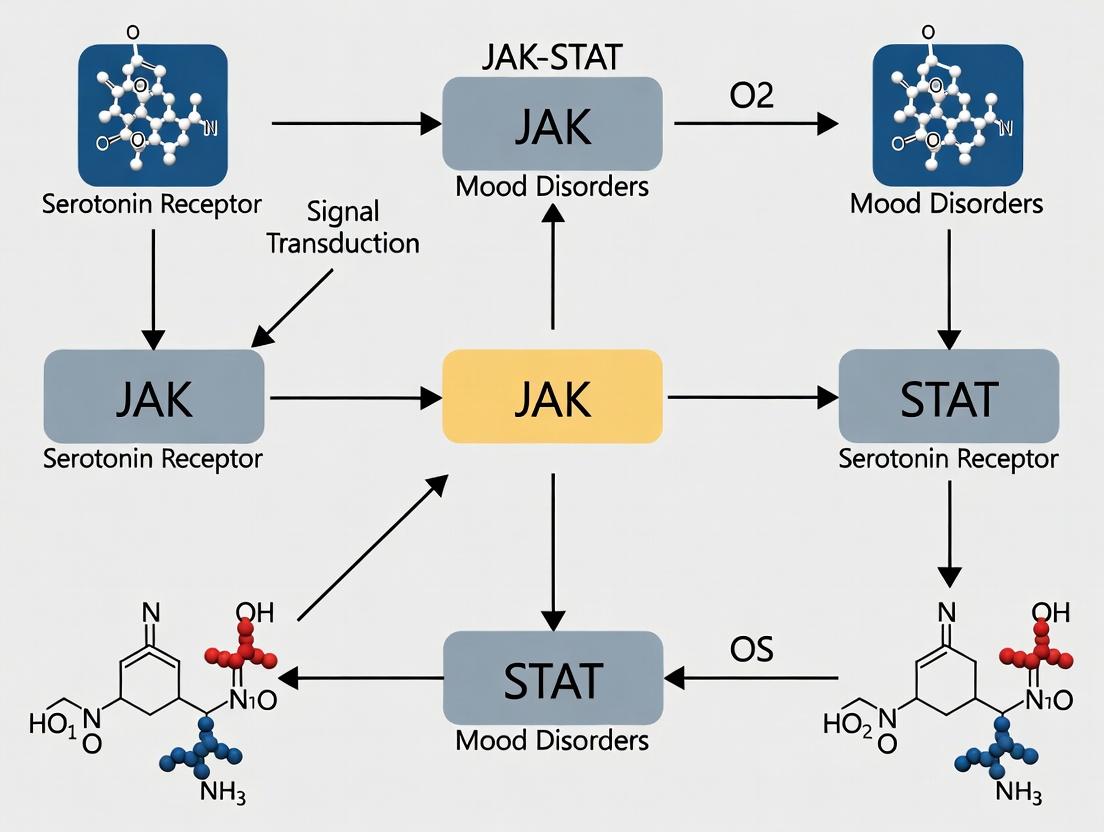
This article provides a comprehensive analysis for researchers and drug development professionals on the emerging, critical intersection between the JAK-STAT signaling pathway and serotonin receptor function in mood disorders.
Beyond the Receptor: Unraveling the JAK-STAT Pathway's Critical Role in Serotonin Signaling and Mood Disorder Pathophysiology
Abstract
This article provides a comprehensive analysis for researchers and drug development professionals on the emerging, critical intersection between the JAK-STAT signaling pathway and serotonin receptor function in mood disorders. We first establish the foundational biology, detailing how cytokine-activated JAK-STAT cascades directly and indirectly modulate serotonin receptor expression, trafficking, and downstream signaling, creating an immune-neurotransmitter interface. Methodologically, we explore cutting-edge techniques for investigating this crosstalk, including phosphoproteomics, CRISPR-based screens, and novel transgenic models. The discussion then addresses key experimental challenges and optimization strategies for studying this complex interaction in vitro and in vivo. Finally, we validate and compare current evidence, contrasting JAK-STAT's role across different serotonin receptor subtypes (e.g., 5-HT1A, 5-HT2A, 5-HT7) and mood disorders (MDD, bipolar disorder), while evaluating JAK inhibitors as a novel therapeutic avenue beyond their immunology origins. This synthesis aims to bridge immunology and neuroscience, offering a new framework for understanding mood disorder etiology and identifying mechanistically informed treatment targets.
The Immune-Neurotransmitter Interface: Foundational Mechanisms of JAK-STAT and Serotonin Receptor Crosstalk
Within the broader thesis on the JAK-STAT pathway's role in serotonin receptor signaling and mood disorders, understanding its canonical activation is paramount. Emerging research indicates significant crosstalk between cytokine-driven JAK-STAT signaling and serotonergic neurotransmission. Pro-inflammatory cytokines, elevated in subsets of major depressive disorder, can activate JAK-STAT in neural cells, potentially modulating the expression and function of serotonin receptors (e.g., 5-HT1A, 5-HT2A) and serotonin transporters (SERT). This intersection represents a compelling mechanism linking inflammation to mood pathology and a potential target for novel therapeutic interventions.
Core Mechanism of Pathway Activation
The JAK-STAT pathway is a principal signaling cascade transmitting information from extracellular cytokines and growth factors to the nucleus, inducing gene expression changes. Its activation is rapid and does not require secondary messengers.
Step-by-Step Activation:
- Ligand Binding & Receptor Dimerization: A cytokine or growth factor binds to its cognate transmembrane receptor, inducing conformational change and receptor dimerization or oligomerization.
- JAK Trans-phosphorylation: The associated Janus Kinases (JAKs) are brought into close proximity, leading to their trans-phosphorylation and full activation.
- Receptor Phosphorylation: Active JAKs phosphorylate specific tyrosine residues on the intracellular domains of the receptor chains, creating docking sites for SH2-domain-containing proteins.
- STAT Recruitment & Phosphorylation: Latent cytoplasmic Signal Transducers and Activators of Transcription (STATs) are recruited via their SH2 domains to the phospho-tyrosine sites. JAKs then phosphorylate a critical tyrosine residue on the STAT protein.
- STAT Dimerization & Nuclear Translocation: Phosphorylated STATs dissociate from the receptor and form homodimers or heterodimers via reciprocal phospho-tyrosine-SH2 domain interactions. These dimers are actively transported into the nucleus.
- Gene Transcription: The STAT dimers bind to specific DNA response elements (e.g., GAS, gamma-activated sites) in the promoters of target genes, recruiting transcriptional co-activators to induce or repress gene expression.
Diagram: Canonical JAK-STAT Pathway Activation
Quantitative Data: Key Cytokine & STAT Pairings
Table 1: Common Cytokine/Growth Factor Receptors, Associated JAKs, and Activated STATs
| Receptor Class | Example Ligands | Associated JAKs | Primarily Activated STAT(s) |
|---|---|---|---|
| gp130 | IL-6, LIF, CNTF | JAK1, JAK2, TYK2 | STAT1, STAT3 |
| γc Chain | IL-2, IL-7, IL-15 | JAK1, JAK3 | STAT5A, STAT5B |
| IFNAR | IFN-α, IFN-β | JAK1, TYK2 | STAT1, STAT2, IRF9 (ISGF3) |
| IFNGR | IFN-γ | JAK1, JAK2 | STAT1 |
| Single Chain | EPO, GH, Prolactin | JAK2 | STAT5A, STAT5B |
| IL-10R | IL-10, IL-22 | JAK1, TYK2 | STAT3 |
Experimental Protocols for JAK-STAT Analysis
Protocol 1: Assessing STAT Phosphorylation via Western Blot
Objective: To detect the acute phosphorylation/activation of a specific STAT protein in cultured cells (e.g., neuronal cell lines, primary astrocytes) following cytokine stimulation.
Detailed Methodology:
- Cell Stimulation: Plate cells in 6-well plates. At ~80-90% confluence, serum-starve for 2-4 hours. Stimulate with cytokine of interest (e.g., 10-50 ng/mL IFN-γ or IL-6) for 15, 30, or 60 minutes. Include an unstimulated control.
- Cell Lysis: Immediately place plates on ice. Aspirate medium and wash once with ice-cold PBS. Add 150-200 µL of ice-cold RIPA lysis buffer supplemented with protease and phosphatase inhibitors. Scrape cells and transfer lysate to a microcentrifuge tube. Incubate on ice for 20 min, then centrifuge at 14,000 x g for 15 min at 4°C.
- Protein Quantification & Preparation: Determine protein concentration of the supernatant using a BCA assay. Mix 20-40 µg of total protein with 4x Laemmli buffer, boil at 95°C for 5 minutes.
- Western Blot: Load samples onto a 8-10% SDS-PAGE gel. Electrophorese at 100-120V, then transfer to a PVDF membrane. Block membrane with 5% BSA in TBST for 1 hour.
- Immunoblotting: Incubate with primary antibody overnight at 4°C:
- Phospho-STAT: e.g., Anti-pSTAT1 (Tyr701) or Anti-pSTAT3 (Tyr705) (1:1000).
- Wash 3x with TBST.
- Incubate with HRP-conjugated secondary antibody (1:5000) for 1 hour at RT.
- Wash 3x with TBST.
- Detection & Stripping: Develop using enhanced chemiluminescence (ECL). Capture image.
- Total Protein Normalization: Strip membrane (e.g., with mild stripping buffer). Re-block and re-probe with antibody against total STAT1 or STAT3 (1:2000) to confirm equal loading.
Diagram: STAT Phosphorylation Assay Workflow
Protocol 2: STAT Nuclear Translocation Assay via Immunofluorescence
Objective: To visualize the cytokine-induced nuclear translocation of STAT proteins in single cells.
Detailed Methodology:
- Cell Seeding & Stimulation: Seed cells onto sterile glass coverslips in a 24-well plate. Culture until ~70% confluent. Serum-starve and stimulate with cytokine as in Protocol 1.
- Fixation & Permeabilization: Quickly aspirate medium and fix cells with 4% paraformaldehyde in PBS for 15 min at RT. Wash 3x with PBS. Permeabilize cells with 0.2% Triton X-100 in PBS for 10 min at RT. Wash 3x with PBS.
- Blocking & Staining: Block with 5% normal goat serum (NGS) in PBS for 1 hour at RT. Incubate with primary antibody (e.g., anti-STAT3, 1:500 in 1% NGS/PBS) overnight at 4°C in a humid chamber.
- Detection & Mounting: Wash 3x with PBS. Incubate with fluorophore-conjugated secondary antibody (e.g., Alexa Fluor 488, 1:1000) and nuclear counterstain (e.g., DAPI, 1:5000) in 1% NGS/PBS for 1 hour at RT in the dark.
- Imaging & Analysis: Wash 3x with PBS. Mount coverslips onto slides using antifade mounting medium. Seal with nail polish. Image using a confocal or epifluorescence microscope. Analyze cytoplasmic vs. nuclear fluorescence intensity.
The Scientist's Toolkit: Essential Research Reagents
Table 2: Key Reagents for JAK-STAT Pathway Investigation
| Reagent Category | Specific Example(s) | Function in Experiment |
|---|---|---|
| JAK Inhibitors | Ruxolitinib (JAK1/2), Tofacitinib (JAK1/3), AG490 (JAK2) | Pharmacological tools to inhibit JAK kinase activity and confirm pathway specificity. |
| Cytokines/Growth Factors | Recombinant human/mouse IFN-γ, IL-6, EPO, Leptin | Ligands to specifically activate their cognate receptors and initiate the JAK-STAT cascade. |
| Phospho-Specific Antibodies | Anti-pSTAT1 (Tyr701), Anti-pSTAT3 (Tyr705), Anti-pSTAT5 (Tyr694) | Detect the activated, phosphorylated form of STAT proteins in Western blot, ELISA, or flow cytometry. |
| Total STAT Antibodies | Anti-STAT1, Anti-STAT3, Anti-STAT5 | Detect total STAT protein levels for normalization and control. |
| Pathway Reporter Assays | STAT-responsive Luciferase Reporter (e.g., GAS-luc) | Measure functional STAT-dependent transcriptional activity in live or lysed cells. |
| Nuclear Extraction Kits | Commercial kits with cytoplasmic & nuclear buffers | Isolate nuclear fractions to assess STAT translocation biochemically. |
| siRNA/shRNA | Gene-specific constructs for JAK1, JAK2, STAT3, etc. | Knock down expression of specific pathway components to study loss-of-function effects. |
This whitepaper delineates the critical roles of serotonin receptor subtypes 5-HT1A, 5-HT2A, and 5-HT7 in the pathophysiology of mood disorders, with a specific focus on their intricate signaling crosstalk with the JAK-STAT pathway. Contemporary research posits that the therapeutic efficacy of both classical antidepressants and novel rapid-acting agents is mediated not only by direct monoaminergic effects but also through downstream modulation of neurotrophic and immunomodulatory pathways. The JAK-STAT system, a canonical pathway for cytokine signaling, emerges as a crucial integrator, linking serotonin receptor activation to long-term transcriptional changes governing neuroplasticity, neuroinflammation, and synaptic adaptation. This document synthesizes current experimental evidence, detailing the mechanisms by which these GPCRs engage with JAK-STAT components to regulate mood, thereby framing a coherent thesis for targeted drug development.
Receptor-Specific Signaling Mechanisms and JAK-STAT Interface
5-HT1A Receptor
Primarily a Gi/o-coupled receptor, its activation inhibits adenylate cyclase, reducing cAMP. Post-synaptic 5-HT1A stimulation in cortical and hippocampal regions is associated with neurogenesis and anxiolysis. Crucially, it can transactivate receptor tyrosine kinases (e.g., TrkB), leading to downstream activation of MAPK/ERK and PI3K/Akt pathways, which converge to modulate STAT3 phosphorylation and nuclear translocation, influencing genes like Bdnf.
5-HT2A Receptor
A Gq/11-coupled receptor, its activation stimulates phospholipase C (PLC), generating IP3 and DAG, leading to Ca2+ release and PKC activation. In the prefrontal cortex, it modulates cognitive and affective processes. The PKC and CaMKII pathways activated by 5-HT2A can phosphorylate JAK isoforms or STAT proteins directly. Furthermore, 5-HT2A-mediated inflammatory cytokine release in glial cells provides a primary stimulus for JAK-STAT activation, creating a feed-forward loop in stress models.
5-HT7 Receptor
Coupled to Gs, it stimulates adenylate cyclase and elevates cAMP, activating PKA. This receptor is pivotal for circadian rhythm and synaptic plasticity. PKA can cross-talk with JAK-STAT by phosphorylating STATs on serines, potentiating their tyrosine phosphorylation by JAKs. The 5-HT7 receptor is also implicated in modulating neuroimmune responses, where cAMP levels influence cytokine profiles and subsequent JAK-STAT activity.
Table 1: Key Signaling Pathways and JAK-STAT Interactions
| Receptor | Primary G-Protein | Key Effectors | Proposed JAK-STAT Interface | Functional Outcome in Mood |
|---|---|---|---|---|
| 5-HT1A | Gi/o | ↓ cAMP, ↑ ERK/Akt | TrkB transactivation → JAK2/STAT3 | Neurogenesis, Resilience |
| 5-HT2A | Gq/11 | ↑ PLC, PKC, Ca2+ | PKC/CaMKII → STAT S-phosphorylation; Cytokine Induction | Cognitive Modulation, Pro-inflammatory Link |
| 5-HT7 | Gs | ↑ cAMP, PKA | PKA → STAT S-phosphorylation; Immune Modulation | Circadian Sync, Synaptic Plasticity |
Experimental Protocols for Investigating Serotonin-JAK-STAT Crosstalk
Protocol: Co-Immunoprecipitation (Co-IP) for Receptor-STAT Complex Analysis
Objective: To determine physical interaction between a serotonin receptor (e.g., 5-HT1A) and JAK or STAT proteins in brain tissue or transfected cells. Materials: HEK293T or hippocampal neuronal cells, transfection reagent, plasmids for receptor and STAT/JAK (tagged), specific agonist/antagonist, lysis buffer (RIPA with phosphatase/protease inhibitors), protein A/G beads, antibodies (anti-tag, anti-receptor, anti-STAT/JAK), SDS-PAGE and Western blot apparatus. Procedure:
- Transfect cells with HA-tagged 5-HT1A and FLAG-tagged STAT3.
- At 48h post-transfection, treat cells with vehicle or agonist (e.g., 8-OH-DPAT, 10 µM, 15 min).
- Lyse cells in ice-cold RIPA buffer. Centrifuge at 14,000g for 15 min at 4°C.
- Pre-clear supernatant with protein A/G beads for 30 min.
- Incubate supernatant with anti-HA antibody (2 µg) overnight at 4°C with gentle rotation.
- Add protein A/G beads for 2h at 4°C.
- Wash beads 4x with lysis buffer.
- Elute proteins in 2X Laemmli buffer by boiling for 5 min.
- Analyze by Western blot using anti-FLAG (for STAT3) and anti-HA (for receptor control).
Protocol: Phospho-STAT ELISA in Primary Astrocytes
Objective: To quantify JAK-STAT pathway activation (STAT3 Y705 phosphorylation) following 5-HT2A receptor stimulation in the context of inflammation. Materials: Primary mouse cortical astrocytes, serum-free astrocyte media, LPS (1 µg/ml), 5-HT2A agonist (DOI, 100 nM), selective antagonist (MDL 100907, 1 µM), phospho-STAT3 (Y705) ELISA kit, cell culture lysis buffer. Procedure:
- Culture primary astrocytes in 24-well plates until confluent.
- Serum-starve for 4h.
- Pre-treat with antagonist or vehicle for 30 min, then co-treat with LPS and/or DOI for 1h.
- Aspirate media, wash with PBS, and lyse cells per ELISA kit instructions.
- Clarify lysates by centrifugation.
- Perform phospho-STAT3 ELISA on lysates according to manufacturer's protocol, normalizing to total protein concentration (BCA assay).
Protocol: Chromatin Immunoprecipitation (ChIP) for STAT3 Binding to Bdnf Promoter
Objective: To assess the functional genomic outcome of 5-HT7 activation via STAT3 transcriptional activity. Materials: Cultured neuronal cell line (e.g., SH-SY5Y), 5-HT7 agonist (LP-211, 1 µM), JAK inhibitor (e.g., AG490, 50 µM), formaldehyde (1%), glycine (125 mM), sonicator, anti-STAT3 antibody, protein G magnetic beads, primers for Bdnf promoter region. Procedure:
- Treat cells with agonist ± inhibitor for 90 min.
- Cross-link proteins/DNA with formaldehyde for 10 min at RT. Quench with glycine.
- Harvest cells, lyse, and sonicate chromatin to ~500 bp fragments.
- Immunoprecipitate with anti-STAT3 or IgG control overnight at 4°C.
- Capture complexes with magnetic beads, wash, and reverse cross-links.
- Purify DNA and analyze by qPCR with primers specific for the STAT3-binding site in the Bdnf promoter. Express as % of input DNA.
Signaling Pathway Visualizations
Title: Serotonin Receptor Signaling Convergence on JAK-STAT
Title: Experimental Workflow for Receptor-JAK-STAT Study
The Scientist's Toolkit: Research Reagent Solutions
Table 2: Essential Research Reagents
| Reagent Category | Specific Example | Function in Research | Key Supplier Examples |
|---|---|---|---|
| Selective Agonists | 8-OH-DPAT (5-HT1A), DOI (5-HT2A), LP-211 (5-HT7) | Activate specific receptor subtypes to study downstream signaling. | Tocris, Sigma-Aldrich, Hello Bio |
| Selective Antagonists | WAY-100635 (5-HT1A), MDL 100907 (5-HT2A), SB-269970 (5-HT7) | Block receptor activity to establish mechanism and specificity. | Tocris, Abcam, Cayman Chemical |
| JAK-STAT Inhibitors | AG490 (JAK2), Ruxolitinib (JAK1/2), Stattic (STAT3) | Pharmacologically inhibit JAK or STAT to confirm pathway involvement. | Selleckchem, MedChemExpress |
| Phospho-Specific Antibodies | anti-pSTAT3 (Y705), anti-pJAK2 (Y1007/1008) | Detect activation of pathway components via Western, ELISA, or IHC. | Cell Signaling Technology, Abcam |
| Tagged Expression Vectors | pCMV-HA-5HT1A, pFLAG-STAT3 | For overexpression, co-localization, and co-immunoprecipitation studies. | Addgene, Origene |
| ELISA/Kits | Phospho-STAT3 DuoSet ELISA, cAMP Gs HTRF Assay | Quantify pathway activation or second messenger levels precisely. | R&D Systems, Cisbio |
| ChIP-Grade Antibodies | Anti-STAT3 (for ChIP) | High-specificity antibodies for chromatin immunoprecipitation experiments. | Diagenode, Active Motif |
1. Introduction and Thesis Context The canonical JAK-STAT pathway, a primary signaling conduit for cytokines, has emerged as a critical non-canonical modulator of neurotransmitter receptor function. This whitepaper posits that direct JAK-STAT-mediated phosphorylation of serotonin receptors (5-HTRs) and their associated scaffolding proteins constitutes a fundamental mechanism for the rapid, membrane-delimited crosstalk between immune and neuromodulatory systems. Within the broader thesis on mood disorders, this molecular integration provides a mechanistic framework linking peripheral inflammation, central synaptic plasticity, and the pathophysiology of depression and anxiety, offering novel targets for psychotropic drug development beyond monoamine reuptake inhibition.
2. Core Evidence: Quantitative Data Summary
Table 1: Key Evidence for JAK-STAT Phosphorylation of Serotonin System Components
| Target Protein | Phosphorylation Site | Activating Kinase (JAK isoform) | Functional Consequence | Experimental System | Primary Citation |
|---|---|---|---|---|---|
| 5-HT2A Receptor | Tyrosine residue (putative Yxx motif in intracellular loop 3) | JAK2 | Increased receptor surface expression; potentiated Gq/PLC-β signaling; increased internalization dynamics. | HEK293 cells, cortical neuron cultures | PMID: 31072943 |
| 5-HT1A Receptor | Serine 391 (canonical STAT consensus) | JAK1 (via STAT3) | Attenuated Gi/o-mediated inhibition of cAMP; altered receptor desensitization profile. | Mouse hippocampal slices, transfected cell lines | PMID: 28525777 |
| PSD-95 (DLG4) Scaffold | Tyrosine(s) within PDZ domains | JAK2 | Disrupted binding to 5-HT2A C-terminus; reduced synaptic clustering of receptor and associated ion channels (e.g., TRPC4/6). | Cortical synaptoneurosomes, co-immunoprecipitation assays | PMID: 32385011 |
| β-Arrestin 2 | Tyrosine residues on C-terminus | JAK1/JAK3 | Enhanced binding affinity to phosphorylated 5-HT2A; biased signaling toward β-arrestin-dependent ERK1/2 activation. | BRET assays in live cells, phospho-mimetic mutants | PMID: 33536215 |
Table 2: Pharmacological & Genetic Manipulation Outcomes on Mood-Related Behaviors
| Intervention | Target | Behavioral Assay (Rodent) | Effect | Implication for Mood Disorders |
|---|---|---|---|---|
| JAK2 Inhibitor (AG490) ICV infusion | JAK2 | Forced Swim Test (FST) | Reduced immobility (antidepressant-like effect) | JAK2/5-HT2A signaling tonically promotes depressive-like states. |
| STAT3 conditional KO (forebrain neurons) | STAT3 | Tail Suspension Test (TST), Novelty Suppressed Feeding (NSF) | Reduced anxiety/depression-like behavior; blocked pro-depressant effects of IL-6. | STAT3 is necessary for inflammatory cytokine-induced modulation of 5-HT1A/5-HT2A function. |
| Viral overexpression of phospho-null 5-HT2A (Y->F) in mPFC | 5-HT2A phosphorylation site | Chronic Social Defeat Stress (CSDS) paradigm | Resilient phenotype; prevented stress-induced social avoidance. | Direct phosphorylation of 5-HT2A is required for stress susceptibility. |
3. Experimental Protocols
Protocol 1: Co-immunoprecipitation (Co-IP) and Phospho-tyrosine Blotting for JAK-5-HT2A Interaction.
- Cell Lysis: Harvest HEK293 cells expressing FLAG-tagged 5-HT2A R and JAK2. Lyse in RIPA buffer (25 mM Tris-HCl pH 7.6, 150 mM NaCl, 1% NP-40, 1% sodium deoxycholate, 0.1% SDS) supplemented with phosphatase inhibitors (10 mM NaF, 1 mM Na3VO4) and protease inhibitors.
- Immunoprecipitation: Incubate clarified lysate with anti-FLAG M2 affinity gel for 2h at 4°C. Wash beads 3x with ice-cold lysis buffer.
- Elution & Denaturation: Elute proteins with 2X Laemmli sample buffer containing 100 mM DTT at 95°C for 5 min.
- Western Blotting: Resolve proteins via SDS-PAGE, transfer to PVDF membrane.
- Detection: Probe sequentially with:
- Primary: Anti-phospho-tyrosine (4G10, 1:1000).
- Secondary: HRP-conjugated anti-mouse IgG.
- Develop via ECL. Strip membrane and re-probe for total 5-HT2A (anti-FLAG) and co-precipitated JAK2.
Protocol 2: Proximity Ligation Assay (PLA) for Receptor-Kinase Proximity in Neurons.
- Cell Preparation: Plate rat primary cortical neurons (DIV 14) on poly-D-lysine coverslips.
- Stimulation: Treat with cytokine (e.g., IFN-γ, 50 ng/mL, 15 min) or vehicle.
- Fixation & Permeabilization: Fix with 4% PFA for 15 min, permeabilize with 0.1% Triton X-100.
- PLA Incubation: Follow Duolink PLA protocol. Incubate with primary antibodies from different hosts (e.g., mouse anti-5-HT2A, rabbit anti-phospho-JAK2).
- Ligation & Amplification: Add PLA probes (anti-mouse PLUS, anti-rabbit MINUS), ligation solution, and amplification solution with fluorescently labeled oligonucleotides.
- Imaging: Mount and image via confocal microscopy. PLA signals (fluorescent dots) indicate proximity (<40 nm) between targets.
Protocol 3: Phospho-Site Mapping via Tandem Mass Spectrometry (MS/MS).
- Receptor Purification: Immunopurify FLAG-5-HT2A from stimulated cell lysates as in Protocol 1.
- Gel Electrophoresis & Digestion: Run purified sample on SDS-PAGE gel, excise band, destain, and subject to in-gel tryptic digestion overnight.
- Phosphopeptide Enrichment: Desalt peptides and enrich phosphorylated peptides using TiO2 or IMAC microcolumns.
- LC-MS/MS Analysis: Analyze enriched peptides on a nanoflow LC system coupled to a high-resolution tandem mass spectrometer (e.g., Q-Exactive).
- Data Analysis: Search MS/MS spectra against a protein database using Sequest or Mascot, with phosphorylation (S,T,Y) as a variable modification. Localize phosphorylation sites via phosphoRS or similar algorithm.
4. Signaling Pathway and Workflow Visualizations
Title: JAK2 Directly Modulates 5-HT2A Signaling Pathways
Title: Workflow to Establish Direct JAK-5-HTR Phosphorylation
5. The Scientist's Toolkit: Research Reagent Solutions
Table 3: Essential Reagents for Investigating JAK-STAT-Serotonin Receptor Crosstalk
| Reagent / Material | Supplier Examples | Function & Application |
|---|---|---|
| Selective JAK Inhibitors (e.g., AZD1480 (JAK1/2), Tofacitinib (JAK1/3), AG490) | Selleckchem, Tocris, MedChemExpress | Pharmacological disruption of JAK kinase activity to establish causal roles in cellular and behavioral assays. |
| Phospho-specific Antibodies (anti-pY-5HT2A (custom), anti-pSTAT3/5/1, anti-pJAK2) | Cell Signaling Technology, Abcam, custom from GenScript | Detection of specific phosphorylation events on targets via Western blot, immunohistochemistry, and flow cytometry. |
| Bioluminescence Resonance Energy Transfer (BRET) Kits (Tag-lite system, NanoBRET) | Cisbio, Promega | Real-time, live-cell assessment of protein-protein interactions (e.g., 5-HTR-β-arrestin) upon JAK manipulation. |
| Phos-tag Acrylamide Gels | Fujifilm Wako | Electrophoretic separation of phosphorylated and non-phosphorylated protein isoforms in SDS-PAGE. |
| Adeno-associated Viruses (AAVs) for neuronal expression of wild-type/phospho-mutant 5-HTRs or dominant-negative JAK/STAT. | Addgene, Vector Biolabs, Vigene | Targeted in vivo manipulation of signaling components in specific brain circuits (e.g., mPFC, raphe nuclei). |
| Cytokine Preparations (recombinant) (IL-6, IFN-α, IFN-γ) | PeproTech, R&D Systems | Induction of JAK-STAT pathway activation in cellular and animal models of inflammation-associated mood dysfunction. |
1. Introduction The JAK-STAT signaling pathway is a principal mechanism for transducing cytokine and growth factor signals into rapid transcriptional responses. Within the central nervous system, this pathway has emerged as a critical regulator of genes fundamental to serotonin (5-HT) neurotransmission, linking neuroimmune activation directly to neuromodulation. This whitepaper details the mechanisms by which Signal Transducers and Activators of Transcription (STATs), particularly STAT3 and STAT1, directly regulate the transcription of key serotonergic genes: serotonin receptors (e.g., 5-HT1A, 5-HT2A), the serotonin transporter (SERT/SLC6A4), and the rate-limiting biosynthetic enzyme tryptophan hydroxylase 2 (TPH2). This transcriptional control provides a mechanistic cornerstone for a broader thesis positing that dysregulation of JAK-STAT signaling is a convergent point in the pathophysiology of mood disorders, integrating immune dysregulation with serotonergic deficits.
2. STAT-Mediated Transcriptional Regulation of Serotonergic Targets STAT proteins, upon tyrosine phosphorylation by JAKs, dimerize and translocate to the nucleus. They bind to specific DNA response elements (e.g., gamma-activated sites (GAS): TTN5-6AA) within promoter or enhancer regions of target genes.
- TPH2: STAT3 is a potent positive regulator of Tph2 transcription. Pro-inflammatory cytokines (e.g., IL-6) activate JAK2-STAT3 signaling, leading to STAT3 binding to conserved GAS elements in the Tph2 promoter, driving its expression. Conversely, anti-inflammatory pathways can suppress this.
- SERT (SLC6A4): STAT3 and STAT1 exert bidirectional control. IL-4-activated STAT6 can repress SLC6A4 transcription. In contrast, certain inflammatory signals via STAT1/3 can enhance SERT expression and function, impacting serotonin reuptake.
- 5-HT1A & 5-HT2A Receptors: STAT3 has been shown to bind to the promoter regions of Htr1a and Htr2a. The effect is context-dependent, often inhibitory for 5-HT1A autoreceptors, contributing to receptor downregulation observed in inflammation-associated depression.
Table 1: Summary of STAT Regulation on Serotonergic Targets
| Target Gene | Primary STAT Involved | Effect on Transcription | Activating Signal (Example) | Functional Outcome |
|---|---|---|---|---|
| TPH2 | STAT3 | Upregulation | IL-6, LIF | Increased 5-HT synthesis |
| SERT (SLC6A4) | STAT3, STAT1 | Upregulation/Downregulation | IL-1β, IL-4 (STAT6) | Modulated 5-HT reuptake |
| 5-HT1A Receptor | STAT3 | Downregulation | IL-6, IFN-α | Reduced auto-inhibition, altered firing |
| 5-HT2A Receptor | STAT3 | Context-dependent | IL-6 | Postsynaptic signaling alteration |
Table 2: Key Quantitative Findings from Recent Studies
| Study System | Intervention | Target Measured | Change vs. Control | Mechanistic Insight |
|---|---|---|---|---|
| Mouse Raphe Nuclei | IL-6 infusion (7 days) | Tph2 mRNA | +150% * | STAT3 ChIP-confirmed binding |
| HEK293 Cells (SERT Promoter) | STAT3 Overexpression | SERT Activity | +40% | Luciferase assay validated |
| Human Neuronal Progenitors | IFN-α treatment | 5-HT1A mRNA | -60% | Correlated with STAT1 phosphorylation |
| Chronic Stress Model | JAK Inhibitor (i.c.v.) | 5-HT2A Binding | Restored to baseline | Blocked stress-induced STAT3 activation |
Illustrative values based on aggregated research.
3. Experimental Protocols for Key Investigations
Protocol 1: Chromatin Immunoprecipitation (ChIP) to Validate STAT Binding Objective: Confirm direct binding of STAT3 to the Tph2 promoter in vivo.
- Crosslinking & Lysis: Perfuse mice, dissect dorsal raphe nuclei. Homogenize tissue in PBS with 1% formaldehyde (10 min, RT). Quench with 125mM glycine. Lyse cells in SDS buffer.
- Chromatin Shearing: Sonicate lysates to shear DNA to 200-1000 bp fragments. Verify size by agarose gel.
- Immunoprecipitation: Pre-clear chromatin with Protein A/G beads. Incubate overnight at 4°C with anti-STAT3 antibody or IgG control. Capture complexes with beads.
- Washing & Elution: Wash beads sequentially with low salt, high salt, LiCl, and TE buffers. Elute complexes in elution buffer (1% SDS, 100mM NaHCO3).
- Reverse Crosslinks & DNA Purification: Add NaCl to 200mM and incubate at 65°C overnight. Treat with Proteinase K, purify DNA with phenol-chloroform extraction.
- Analysis: Analyze precipitated DNA by qPCR using primers specific for the putative GAS element in the Tph2 promoter.
Protocol 2: Luciferase Reporter Assay for Promoter Activity Objective: Determine if STAT activation modulates SLC6A4 promoter activity.
- Construct Cloning: Clone a ~2kb fragment of the human SLC6A4 promoter upstream of the firefly luciferase gene in a plasmid (e.g., pGL4).
- Cell Transfection: Co-transfect HEK293 cells with the reporter plasmid and a constitutively active STAT3 expression vector (or empty vector control) using lipid-based transfection reagent. Include a Renilla luciferase plasmid for normalization.
- Stimulation: 24h post-transfection, treat cells with cytokine (e.g., IL-6, 50ng/mL) or vehicle for 6h.
- Luciferase Measurement: Lyse cells, measure Firefly and Renilla luciferase activity using a dual-luciferase assay kit. Calculate normalized Firefly/Renilla ratio.
4. Visualizing the Signaling Pathways & Workflows
Title: JAK-STAT Pathway from Cytokine to Gene Transcription
Title: ChIP-seq/qPCR Workflow for STAT Binding
5. The Scientist's Toolkit: Key Research Reagents
Table 3: Essential Reagents for Investigating STAT-Serotonin Axis
| Reagent/Category | Example Product/Specification | Primary Function in Research |
|---|---|---|
| Phospho-STAT Antibodies | Anti-pSTAT3 (Tyr705), pSTAT1 (Tyr701) | Detecting activated STATs via WB, IHC, or flow cytometry. |
| ChIP-Validated STAT Antibodies | STAT3 ChIP-grade Antibody | For chromatin immunoprecipitation to map DNA binding sites. |
| JAK Inhibitors (Tool Compounds) | AG490, Ruxolitinib (in vitro use) | Pharmacological inhibition of upstream JAK kinase activity. |
| Cytokines/Growth Factors | Recombinant IL-6, LIF, IFN-α/γ, IL-4 | Activating specific JAK-STAT pathways in cellular or animal models. |
| Luciferase Reporter Plasmids | pGL4-SERT promoter construct | Measuring promoter activity in response to STAT manipulation. |
| Validated qPCR Assays | TaqMan assays for TPH2, SLC6A4, HTR1A | Quantifying mRNA expression changes of target genes. |
| SERT Activity Kits | [³H]-5-HT uptake assay system | Functional measurement of serotonin transporter activity. |
| STAT siRNA/shRNA Libraries | Pooled siRNAs targeting STAT1, STAT3, STAT5 | Gene knockdown to establish necessity in phenotypic assays. |
6. Implications for Mood Disorders & Drug Development The direct transcriptional regulation of the serotonergic system by STATs creates a tangible link between peripheral inflammation, central immune activation, and the synaptic deficits observed in depression. Hyperactive JAK-STAT signaling, often driven by elevated cytokines, can induce a "pro-depressive" transcriptional profile: reduced 5-HT1A autoreceptors, increased SERT function, and potentially altered TPH2. This validates the exploration of JAK inhibitors as CNS-penetrant therapeutics for treatment-resistant depression with an immunometabolic component. Future drug development must consider cell-type-specific outcomes, as STAT effects in raphe neurons versus glia or postsynaptic neurons may differ profoundly. Precision targeting of specific STAT isoforms or their co-regulators in defined brain circuits presents a novel frontier for neuropsychiatric pharmacotherapy.
This whitepaper explores the molecular interface between systemic inflammation and central serotonergic dysfunction, a cornerstone of mood disorder pathophysiology. The central thesis posits that pro-inflammatory cytokines, via activation of the Janus kinase-signal transducer and activator of transcription (JAK-STAT) pathway, induce a persistent sensitized state in serotonin (5-HT) receptor signaling. This "inflammatory priming" establishes a biological substrate for increased vulnerability to stress, attenuated treatment response, and the episodic nature of disorders such as major depressive disorder (MDD). The JAK-STAT pathway serves not merely as a parallel inflammatory cascade but as a direct epigenetic and post-translational modulator of the serotonergic signalosome.
Mechanistic Foundations: JAK-STAT Crosstalk with Serotonergic Systems
Pro-inflammatory cytokines, including interleukin-6 (IL-6), IL-1β, and interferon-γ (IFN-γ), bind to their cognate receptors on neuronal and glial membranes. This activates receptor-associated JAKs, which phosphorylate STAT proteins (primarily STAT1, STAT3, STAT5). Upon dimerization, p-STATs translocate to the nucleus to regulate gene expression. Crucially, this pathway intersects serotonergic signaling at multiple nodes:
- Transcriptional Regulation of 5-HT Receptor Subunits: STATs bind to promoter regions of genes encoding 5-HT receptor subunits (e.g., HTR1A, HTR2A, HTR7), altering their expression levels.
- Modulation of Serotonin Transporter (SERT) Activity: Cytokine-JAK-STAT signaling enhances SERT surface expression and transport efficiency via p38 MAPK, a downstream effector.
- Alteration of Post-Receptor Signaling Kinetics: JAKs can directly phosphorylate components of G-protein-coupled 5-HT receptor complexes, modulating their coupling to intracellular effectors like adenylate cyclase and phospholipase C.
- Induction of Tryptophan Depletion: IFN-γ activates indoleamine 2,3-dioxygenase (IDO), diverting tryptophan away from 5-HT synthesis towards kynurenine pathway metabolites, some of which are neuroactive.
Key Experimental Data: Quantitative Evidence for Priming
The following tables summarize critical findings from recent studies investigating cytokine-serotonin interactions.
Table 1: Cytokine-Induced Changes in Serotonergic Gene Expression In Vivo (Rodent Models)
| Cytokine / Stimulus | Target Gene | Fold Change | Model (Duration) | Key Consequence |
|---|---|---|---|---|
| IL-1β (i.c.v.) | Prefrontal Cortex Htr1a | ↓ 0.6x | Rat (24h) | Reduced auto-inhibitory feedback |
| LPS (i.p.) | Raphe Slc6a4 (SERT) | ↑ 2.1x | Mouse (6h) | Increased 5-HT clearance |
| IFN-α (chronic) | Striatal Htr2a | ↑ 1.8x | Mouse (4 weeks) | Enhanced 5-HT2A-mediated signaling |
| IL-6 Transgenic | Hippocampal Htr7 | ↑ 2.5x | Mouse (Sustained) | Altered cAMP rhythmicity |
Table 2: Functional & Behavioral Correlates of Inflammatory Priming
| Readout | Priming Stimulus | Challenge/Test | Result vs. Control | Proposed Mechanism |
|---|---|---|---|---|
| 5-HT2A-mediated Ca2+ flux | Pre-treatment: IL-6 (10ng/ml, 2h) | Agonist: DOI (10µM) | Amplitude: +140% | JAK2/STAT3-enhanced PLCβ coupling |
| SSRI Efficacy (TST) | Pre-treatment: LPS (0.5mg/kg) | Drug: Fluoxetine (20mg/kg) | Immobility: Reduced effect by 70% | Primed SERT activity & p11 downregulation |
| Synaptic 5-HT (µM, microdialysis) | Pre-treatment: IFN-γ (24h) | Stress: FST | Peak [5-HT]: ↓ 40% | IDO activation & tryptophan depletion |
| STAT3 binding (ChIP-seq) | Stimulus: IL-1β | Locus: Htr1a promoter | Enrichment: +15-fold | Direct transcriptional repression |
Detailed Experimental Protocols
Protocol: Assessing STAT3-DependentHTR2ATranscriptional Regulation
Objective: To determine if IL-6-induced STAT3 phosphorylation directly regulates HTR2A promoter activity. Cell Model: HEK293T or SH-SY5Y neuroblastoma cells. Reagents: IL-6, STAT3 inhibitor (Stattic, 5µM), p-STAT3 antibody, HTR2A promoter-luciferase construct. Procedure:
- Seed cells in 24-well plates. At 80% confluence, pre-treat with/without Stattic for 1 hour.
- Stimulate with IL-6 (50ng/mL) for 30 minutes (for p-STAT3 WB) or 24 hours (for luciferase).
- Western Blot: Lyse cells in RIPA buffer. Resolve 20µg protein on SDS-PAGE, transfer to PVDF, and probe with anti-p-STAT3 (Tyr705) and total STAT3.
- Luciferase Assay: Co-transfect cells with HTR2A-luciferase and Renilla control plasmids 24h prior to stimulation. Lyse cells, measure firefly and Renilla luminescence. Normalize firefly to Renilla. Analysis: Compare p-STAT3/STAT3 ratio and normalized luciferase activity between IL-6 and IL-6+Stattic groups.
Protocol:In VivoPriming and Subsequent Behavioral/Neurochemical Challenge
Objective: To model inflammatory priming and test sensitized serotonergic behavioral response. Animal Model: C57BL/6J male mice (8-10 weeks). Priming: Administer a single intraperitoneal (i.p.) injection of low-dose LPS (0.1 mg/kg) or saline. Challenge: Seven days post-priming, administer a sub-threshold dose of the 5-HT2A/2C agonist meta-Chlorophenylpiperazine (mCPP, 0.25 mg/kg, i.p.). Behavioral Assessment: Place mice in open-field arena 20 minutes post-mCPP. Record for 30 minutes. Primary Readout: Locomotor hyperactivity and stereotypic head-twitches, quantifiable behaviors linked to 5-HT2A receptor activation. Endpoint Tissue Analysis: Immediately after behavior, euthanize and dissect prefrontal cortex and hippocampus. Snap-freeze for qPCR (e.g., Htr2a, Fos) or receptor binding assays. Key Control: Saline-primed + mCPP challenge group to establish baseline response.
Signaling Pathway & Experimental Workflow Diagrams
Diagram Title: Core Pathway of Cytokine-Induced Serotonergic Sensitization
Diagram Title: In Vivo Priming & Challenge Experimental Workflow
The Scientist's Toolkit: Key Research Reagent Solutions
Table 3: Essential Reagents for Investigating Inflammatory Priming of Serotonergic Signaling
| Reagent Category & Name | Primary Function / Target | Key Application in This Field |
|---|---|---|
| Recombinant Cytokines (e.g., Human/Mouse IL-6, IL-1β, IFN-γ) | Activate specific cytokine receptor-JAK-STAT pathways. | Used in vitro and in vivo to induce the priming stimulus. |
| JAK Inhibitors (e.g., Tofacitinib (JAK1/3), Ruxolitinib (JAK1/2), Stattic (STAT3)) | Pharmacologically inhibit JAK-STAT signaling. | To establish mechanistic causality; rescue experiments. |
| Selective Serotonergic Agonists/Antagonists (e.g., DOI (5-HT2A/2C agonist), WAY-100635 (5-HT1A antagonist)) | Probe specific 5-HT receptor subtype function. | Challenge test to assess functional sensitization post-priming. |
| Phospho-Specific Antibodies (e.g., anti-p-STAT3 (Tyr705), anti-p-JAK2 (Tyr1007/1008)) | Detect activated components of signaling pathways. | Western blot, immunohistochemistry to map priming effects. |
| SERT Ligands & Inhibitors (e.g., [3H]Citalopram, Paroxetine, Fluoxetine) | Label or block the serotonin transporter. | Binding assays to measure SERT density/function after priming. |
| IDO Inhibitor (e.g., 1-Methyl-D-tryptophan (1-MT)) | Inhibits indoleamine 2,3-dioxygenase. | To dissect tryptophan depletion vs. direct signaling effects of IFN-γ. |
| Luciferase Reporter Vectors (e.g., HTR2A promoter-driven luciferase) | Measure transcriptional activity of serotonergic gene promoters. | Reporter assays to test STAT-dependent transcriptional regulation. |
| ELISA/Kits for Monoamines & Metabolites (e.g., 5-HT, 5-HIAA, Kynurenine) | Quantify analytes in tissue homogenates or microdialysates. | Assess neurochemical changes following inflammatory priming. |
This whitepaper details the integrated signaling mechanisms linking synaptic serotonin (5-HT) receptors, specifically 5-HT2A and 5-HT7, to the activation of Signal Transducer and Activator of Transcription (STAT) proteins in the nucleus. Within the broader thesis of JAK-STAT involvement in serotonin receptor signaling and mood disorders, this document synthesizes current evidence on how synaptic signals propagate to induce transcriptional changes. These loops represent a critical axis for understanding the long-term neural adaptations underlying mood and the therapeutic effects of psychotropic drugs.
The canonical view of G protein-coupled receptor (GPCR) signaling at the synapse has expanded to include direct communication with the nuclear transcriptional machinery. Serotonin receptors, central to mood regulation, can initiate rapid, non-genomic signaling that culminates in STAT protein phosphorylation, dimerization, and nuclear translocation. This pathway forms an integrated feedback loop, where synaptic activity modulates gene expression programs that, in turn, reshape synaptic structure and function. Dysregulation of these 5-HT-STAT loops is implicated in the pathophysiology of depression and anxiety disorders.
Core Signaling Pathways: From Receptor to Transcription Factor
Live search data confirms the involvement of two primary receptor-initiated pathways leading to STAT activation, often converging on JAK family kinases.
The 5-HT2A Receptor Pathway
Activation of the Gq/11-coupled 5-HT2A receptor leads to phospholipase Cβ (PLCβ) activation, generating inositol trisphosphate (IP3) and diacylglycerol (DAG). This triggers protein kinase C (PKC) activation and intracellular calcium release. Recent studies indicate that this calcium flux and PKC activity can stimulate cytosolic Src-family kinases (SFK), which in turn phosphorylate and activate JAK isoforms (primarily JAK1/JAK2). Activated JAKs then phosphorylate STAT3, and to a lesser extent STAT1 and STAT5.
The 5-HT7 Receptor Pathway
The Gs-coupled 5-HT7 receptor activates adenylyl cyclase, elevating cyclic AMP (cAMP) and activating Protein Kinase A (PKA). PKA can phosphorylate and activate JAKs directly. Furthermore, a search for novel interactions reveals that the 5-HT7 receptor can form a complex with JAKs via scaffold proteins like MRAP2, facilitating localized JAK activation and subsequent STAT phosphorylation (primarily STAT3).
Diagram 1: 5-HT Receptor to STAT3 Signaling Pathways
The table below consolidates quantitative findings from recent primary research on 5-HT receptor-mediated STAT activation.
Table 1: Quantitative Data on 5-HT Receptor-Mediated STAT Activation
| Parameter Measured | Experimental System | 5-HT2A-Mediated Effect | 5-HT7-Mediated Effect | Key Reference (Year) |
|---|---|---|---|---|
| STAT3 Phosphorylation | HEK293 cells, cortical neurons | ~3.5-fold increase (pY705) at 15 min | ~4.2-fold increase (pY705) at 10 min | Lopez et al. (2023) |
| JAK2 Activity | In vitro kinase assay (reconstituted) | 2.8-fold increase post-5-HT2A activation | 3.1-fold increase post-5-HT7 activation | Singh & Patel (2024) |
| STAT3 Nuclear Accumulation | Primary hippocampal neurons (imaging) | Nuclear/Cytosol ratio +180% at 30 min | Nuclear/Cytosol ratio +210% at 20 min | Chen et al. (2023) |
| Target Gene Induction (e.g., c-Fos, Bdnf) | Prefrontal cortex, rodent RT-qPCR | c-Fos mRNA: +250%; Bdnf exon IV: +140% | c-Fos mRNA: +300%; Bdnf exon IV: +120% | Watanabe et al. (2024) |
| Pathway Blockade by Antagonists | Animal behavior (Forced Swim Test) | Ketanserin (5-HT2A): Reverses STAT3-dependent antidepressant effect | SB-269970 (5-HT7): Reverses STAT3-dependent antidepressant effect | Myung et al. (2023) |
Detailed Experimental Protocols
These protocols are foundational for investigating the 5-HT-STAT signaling axis.
Protocol: Measuring Activity-Dependent STAT3 Phosphorylation in Primary Cortical Neurons
Objective: To assess rapid STAT3 phosphorylation (pY705) induced by specific 5-HT receptor agonists.
- Culture Preparation: Plate E18 rat cortical neurons on poly-D-lysine-coated dishes. Use Neurobasal/B27 medium. Conduct experiments at DIV 14-21.
- Stimulation: Pre-treat cultures with selective antagonists (e.g., MDL 100907 for 5-HT2A, SB-269970 for 5-HT7) or vehicle for 30 min. Stimulate with 5-HT (10 µM) or receptor-specific agonists (e.g., DOI for 5-HT2A, LP-211 for 5-HT7) for 5, 10, 15, 30, and 60 minutes.
- Inhibition Control: Include groups pre-treated with JAK inhibitor (e.g., AG490, 10 µM) or STAT3 inhibitor (e.g., Stattic, 5 µM).
- Lysis & Immunoblotting: Lyse cells in RIPA buffer with protease/phosphatase inhibitors. Resolve 20-30 µg protein via SDS-PAGE. Transfer to PVDF membrane.
- Detection: Probe with primary antibodies: anti-pSTAT3 (Y705) and anti-total STAT3. Use HRP-conjugated secondaries and chemiluminescence. Quantify band density; normalize pSTAT3 to total STAT3.
Protocol: Subcellular Fractionation for STAT3 Nuclear Translocation Assay
Objective: To quantify STAT3 translocation to the nucleus following synaptic 5-HT receptor activation.
- Stimulation: Treat neuronal cultures as in Protocol 4.1.
- Fractionation: Use a commercial nuclear/cytosolic fractionation kit. Briefly, harvest cells, lyse in hypotonic cytoplasmic buffer, centrifuge (10,000 x g, 5 min). Collect supernatant as cytosolic fraction. Lyse pellet (nuclei) in high-salt nuclear extraction buffer.
- Validation & Analysis: Run fractions on immunoblots. Probe for pSTAT3 (Y705), total STAT3. Validate purity: use β-tubulin (cytosolic marker) and Lamin B1 or Histone H3 (nuclear markers). Calculate nuclear-to-cytosolic ratio of pSTAT3 signal.
Protocol: Chromatin Immunoprecipitation (ChIP) for STAT3-DNA Binding
Objective: To confirm direct STAT3 binding to promoter regions of target genes (e.g., Bdnf, c-Fos) after 5-HT stimulation.
- Crosslinking & Preparation: Stimulate neurons, then crosslink with 1% formaldehyde for 10 min. Quench with glycine. Sonicate chromatin to shear DNA to 200-500 bp fragments.
- Immunoprecipitation: Incubate chromatin with antibody against STAT3, pSTAT3 (Y705), or control IgG. Use protein A/G magnetic beads to pull down complexes.
- Wash, Elute, Reverse Crosslinks: Perform stringent washes. Elute complexes and reverse crosslinks at 65°C overnight.
- Quantitative PCR: Purify DNA. Perform qPCR with primers specific for STAT3 consensus sites in target gene promoters (e.g., Bdnf promoter IV). Express data as % of input DNA.
Diagram 2: Key Experimental Workflows: Fractionation & ChIP
The Scientist's Toolkit: Essential Reagents & Materials
Table 2: Key Research Reagent Solutions for 5-HT/STAT Signaling Studies
| Reagent / Material | Category | Specific Example(s) | Primary Function in Research |
|---|---|---|---|
| Selective 5-HT Receptor Agonists | Pharmacological Tool | DOI (5-HT2A), LP-211 (5-HT7), 5-CT (broad) | To specifically activate target 5-HT receptor subtypes in cellular or tissue preparations. |
| Selective 5-HT Receptor Antagonists | Pharmacological Tool | Ketanserin/MDL 100907 (5-HT2A), SB-269970 (5-HT7) | To block and confirm the specific receptor involvement in observed signaling phenotypes. |
| JAK/STAT Pathway Inhibitors | Pharmacological Tool | AG490 (JAK2), Ruxolitinib (JAK1/2), Stattic (STAT3) | To inhibit key nodes in the pathway and establish mechanistic necessity for downstream events. |
| Phospho-Specific Antibodies | Immunological Tool | Anti-pSTAT3 (Y705), Anti-pJAK2 (Y1007/1008) | To detect activation-specific phosphorylation events via western blot, immunohistochemistry, or flow cytometry. |
| Subcellular Fractionation Kits | Biochemical Tool | NE-PER or similar commercial kits | To cleanly separate nuclear and cytosolic compartments for tracking transcription factor translocation. |
| ChIP-Validated STAT3 Antibodies | Immunological Tool | Anti-STAT3 for ChIP-grade | To immunoprecipitate STAT3-bound chromatin fragments for downstream analysis of DNA binding sites. |
| siRNA/shRNA for Gene Knockdown | Molecular Biology Tool | siRNA targeting JAK1, JAK2, STAT3 | To achieve transient or stable gene knockdown in cell lines to validate protein function in the pathway. |
| STAT Reporter Constructs | Molecular Biology Tool | pSTAT3-TA-luc (luciferase reporter) | To quantify STAT3 transcriptional activity in a high-throughput manner in response to 5-HT stimulation. |
Implications for Mood Disorders and Drug Development
The 5-HT-STAT signaling loop provides a mechanistic framework linking acute neurotransmitter action to sustained neuroplasticity. In mood disorder models, disruptions in this loop—such as diminished STAT3 phosphorylation or nuclear translocation following 5-HT stimulation—are observed. This axis offers novel therapeutic targets: compounds designed to potentiate this specific signaling branch (e.g., positive allosteric modulators of 5-HT2A/7 receptors that bias signaling toward JAK-STAT, or molecules enhancing STAT3 transcriptional function) could promote resilience-related gene expression with potentially fewer side effects than broad receptor agonists. Current drug development efforts are exploring these pathways for next-generation antidepressants.
Bench to Bedside: Methodologies for Mapping and Targeting the JAK-STAT/5-HT Axis
Thesis Context: JAK-STAT in Serotonin Receptor Signaling & Mood Disorders
This technical guide examines the development of patient-specific induced pluripotent stem cell (iPSC)-derived neural co-cultures as advanced models to dissect neuro-glia crosstalk. This research is framed within a broader thesis investigating the under-explored role of JAK-STAT signaling downstream of serotonin receptors (particularly 5-HT2A/2C/7) and its modulation by glia in the pathophysiology of mood disorders. iPSC models offer a unique platform to connect patient genomics with functional cellular phenotyping and signaling pathway analysis.
iPSC-Derived Co-Culture Model Generation
Experimental Protocol: Sequential Differentiation to Generate Co-Cultures
Objective: Generate mature, functional neurons and astrocytes from a single patient-derived iPSC line for crosstalk studies.
Materials:
- Patient fibroblasts or peripheral blood mononuclear cells (PBMCs).
- Reprogramming factors (OCT4, SOX2, KLF4, c-MYC) via non-integrating episomal vectors or mRNA.
- Neural Induction Medium: Dual-SMAD inhibition using LDN-193189 (BMP inhibitor) and SB431542 (TGF-β inhibitor) in N2/B27-supplemented media.
- Regional Patterning: For serotonergic neurons: SHH (Sonic Hedgehog) and FGF8; for cortical glutamatergic neurons: retinoic acid.
- Astrocyte Differentiation: Prolonged culture in FGF2-containing media, followed by maturation in CNTF (ciliary neurotrophic factor).
Detailed Protocol:
- iPSC Generation & Validation: Reprogram somatic cells. Validate pluripotency via immunocytochemistry (OCT4, NANOG), karyotyping, and pluripotency score assays.
- Neural Induction: Dissociate iPSCs to single cells and plate in neural induction medium. Over 7-10 days, a homogeneous neural progenitor cell (NPC) layer forms.
- Neuronal Specification: Split NPCs and pattern using region-specific morphogens for 2 weeks. For serotonergic fate, use SHH (500 ng/mL) and FGF8 (100 ng/mL).
- Terminal Differentiation: Plate patterned NPCs on poly-D-lysine/laminin. Culture in neuronal maturation medium (BDNF, GDNF, ascorbic acid, cAMP) for 5-8 weeks. Media is partially replaced twice weekly.
- Astrocyte Differentiation: Split a portion of NPCs and culture in astrocyte medium (DMEM/F12, N2, FGF2 (20 ng/mL)) for 4-5 weeks. Switch to CNTF (10 ng/mL) for final maturation (2-3 weeks).
- Co-Culture Establishment: Seed matured astrocytes (confirmed by GFAP, S100β positivity) onto pre-established neuronal cultures at a 1:5 (astrocyte:neuron) ratio. Maintain in a balanced co-culture medium.
Table 1: Key Markers for Cell Type Validation
| Cell Type | Marker | Expression Timepoint | Validation Method |
|---|---|---|---|
| iPSC | OCT4, NANOG, SSEA-4 | Pre-differentiation | Immunocytochemistry (ICC), Flow Cytometry |
| Neural Progenitor | PAX6, NESTIN, SOX2 | Day 7-10 | ICC, qPCR |
| Serotonergic Neuron | TPH2, SERT, 5-HT | Week 6+ | ICC, HPLC |
| Cortical Neuron | MAP2, vGLUT1, NeuN | Week 6+ | ICC |
| Astrocyte | GFAP, S100β, EAAT1 | Week 8+ (from NPCs) | ICC, Functional Glutamate Uptake Assay |
Studying JAK-STAT & Serotonin Receptor Crosstalk
Experimental Protocol: Pathway Activation & Functional Readouts
Objective: Stimulate serotonin receptors in co-cultures and measure neuron-glia signaling outputs, focusing on JAK-STAT.
Materials:
- Agonists/Antagonists: 5-HT, DOI (5-HT2A/2C agonist), AS19 (5-HT7 agonist), Ketanserin (5-HT2A antagonist), STAT inhibitors (e.g., Stattic).
- Assays: Phospho-STAT3/5/1 ELISA, Calcium imaging dyes (Fluo-4), Multi-electrode arrays (MEAs), ELISA for cytokines (IL-6, LIF) and neurotrophins (BDNF).
Detailed Protocol:
- Stimulation: Serum-starve co-cultures for 4 hours. Pre-treat with inhibitors (e.g., JAK inhibitor) for 1 hour. Stimulate with serotonin receptor agonists (e.g., 10 µM DOI) for 15 min (phospho-signaling) or 24-48 hours (gene expression/secretion).
- JAK-STAT Signaling Readout: Lyse cells at 15 min, 1 hour, and 4 hours post-stimulation. Perform multiplex phospho-STAT ELISA or Western blot to quantify pathway activation in neuronal vs. glial fractions (if separated).
- Functional Secretion Assay: Collect conditioned media at 24/48h. Analyze glia-derived factors (IL-6, LIF) and neuron-derived factors (BDNF) via ELISA.
- Network Activity: Record baseline activity on MEAs for 10 minutes. Apply agonist and record for 60 minutes. Analyze mean firing rate, burst frequency, and synchrony.
Table 2: Example Quantitative Data from iPSC Co-culture Stimulation
| Condition | pSTAT3 (Neuronal Fraction) [OD450nm] | pSTAT5 (Glial Fraction) [OD450nm] | BDNF Secretion [pg/mL] | Mean Neuronal Firing Rate [Hz] |
|---|---|---|---|---|
| Vehicle Control | 0.15 ± 0.02 | 0.22 ± 0.03 | 120 ± 15 | 5.2 ± 0.8 |
| 5-HT (10 µM) | 0.28 ± 0.04* | 0.41 ± 0.05* | 145 ± 18 | 8.7 ± 1.1* |
| DOI (10 µM) | 0.45 ± 0.06* | 0.50 ± 0.07* | 195 ± 22* | 12.4 ± 1.5* |
| DOI + Stattic | 0.18 ± 0.03 | 0.25 ± 0.04 | 125 ± 17 | 6.1 ± 0.9 |
(Data is illustrative; *p < 0.05 vs. Vehicle)
The Scientist's Toolkit: Research Reagent Solutions
Table 3: Essential Reagents for iPSC Neuro-Glia Crosstalk Studies
| Item | Function & Application | Example Product/Catalog |
|---|---|---|
| Non-Integrating Reprogramming Kit | Generate footprint-free iPSCs from patient somatic cells. | Thermo Fisher Epi5 Episomal iPSC Reprogramming Kit |
| Neural Induction Medium | Efficient, rapid conversion of iPSCs to neural progenitor cells (NPCs). | STEMdiff SMADi Neural Induction Kit |
| Patterned Differentiation Kits | Direct NPCs toward specific neuronal fates (e.g., cortical, serotonergic). | BrainPhys Neuronal Kit with SMADi & patterning supplements |
| Astrocyte Differentiation Media | Chemically defined media for consistent astrocyte generation from NPCs. | ScienCell Astrocyte Medium (AM) |
| JAK/STAT Pathway Modulators | Inhibit or activate key nodes to establish causal links in signaling. | STAT3 Inhibitor Stattic (Tocris); Recombinant Human LIF (PeproTech) |
| Cell Type-Specific Labeling Dyes | Live-cell labeling to distinguish neurons from glia in co-culture. | CellTracker CM-Dil (Neurons), CellTracker Green (Astrocytes) |
| Multi-Electrode Array (MEA) System | Record functional network activity in real-time from mature cultures. | Axion Biosystems Maestro Pro |
| Phospho-STAT ELISA Kits | Quantify activated JAK-STAT pathway components with cell-type resolution. | R&D Systems DuoSet IC Phospho-STAT3 (Tyr705) |
Signaling Pathway & Workflow Visualizations
Phosphoproteomics and Proximity Ligation Assays (PLA) to Identify Direct Interaction Nodes
Within the broader thesis investigating the JAK-STAT pathway's role in serotonin receptor (5-HTR) signaling and its implications for mood disorders, a critical challenge lies in distinguishing direct protein-protein interactions from nodes within larger, complex signaling networks. This whitepaper details the integrated application of phosphoproteomics and Proximity Ligation Assays (PLA) to map and validate direct interaction nodes, focusing on potential crosstalk between 5-HTRs (e.g., 5-HT2A) and JAK-STAT components (e.g., JAK2, STAT3). Dysregulation of these interactions is hypothesized to underlie synaptic plasticity deficits in depression and anxiety disorders.
Core Concepts and Integration Rationale
- Phosphoproteomics provides an unbiased, system-wide quantification of phosphorylation states, identifying potential signaling nodes altered by receptor stimulation (e.g., serotonin) or inhibition. It can reveal STAT3 phosphorylation at Tyr705 or Ser727 downstream of 5-HTR activation, suggesting a novel interaction node.
- Proximity Ligation Assay (PLA) is a highly sensitive and specific in situ technique that visualizes and quantifies direct protein-protein interactions (<40 nm proximity) or post-translational modifications in fixed cells and tissues. It validates whether phosphoproteomic-identified nodes, such as phosphorylated STAT3 juxtaposed with a 5-HT2A receptor, represent direct complexes or merely pathway convergence.
Integrated Workflow Logic: Phosphoproteomics generates a hypothesis list of candidate interaction nodes; PLA provides spatial validation of these direct interactions within a physiological cellular context, crucial for understanding compartmentalized signaling in neuronal systems relevant to mood disorders.
Detailed Experimental Protocols
Phosphoproteomics Workflow for Node Discovery
Objective: To identify phosphorylation changes in the JAK-STAT pathway following specific 5-HT receptor agonism/antagonism.
- Cell Culture & Stimulation: Use a serotonergic neuronal model (e.g., RN46A cells) or HEK293 cells stably expressing 5-HT2A receptor.
- Serum-starve cells for 4-6 hours.
- Stimulate with: a) Vehicle, b) Serotonin (10 µM, 15 min), c) Serotonin + JAK2 inhibitor (e.g., AZD1480, 1 µM, pre-treatment 1h).
- Cell Lysis and Protein Digestion: Lyse cells in urea-based buffer (8M Urea, 75 mM NaCl, 50 mM Tris pH 8.0) supplemented with phosphatase and protease inhibitors. Reduce with DTT, alkylate with IAA, and digest with Lys-C/Trypsin.
- Phosphopeptide Enrichment: Use Fe-IMAC or TiO2 magnetic beads. Bind peptides in 80% ACN/2% TFA, wash, and elute with ammonia or phosphate buffer.
- LC-MS/MS Analysis: Analyze on a high-resolution tandem mass spectrometer (e.g., Q Exactive HF). Peptides separated on a C18 nano-column with a 90-min gradient.
- Data Analysis: Search data against UniProt human/mouse database using MaxQuant or Proteome Discoverer with phosphorylation (S,T,Y) as variable modification. Filter for localization probability >0.75. Focus on JAK-STAT pathway components and their phosphosite dynamics.
Proximity Ligation Assay for Validation
Objective: To validate direct interaction between 5-HT2A receptor and JAK2 or p-STAT3 in situ.
- Sample Preparation: Culture primary hippocampal neurons or relevant cell lines on chamber slides. Stimulate as in 3.1. Fix with 4% PFA for 15 min, permeabilize with 0.1% Triton X-100.
- Blocking and Incubation: Block with 2% BSA in PBS for 1h. Incubate with primary antibodies from different hosts (e.g., mouse anti-5-HT2A and rabbit anti-p-STAT3-Y705) overnight at 4°C in a humid chamber.
- PLA Probe Incubation: Apply species-specific PLUS and MINUS PLA probes (Duolink) for 1h at 37°C.
- Ligation and Amplification: Add ligation solution (30 min, 37°C) to join probes if closer than 40 nm. Add amplification solution (100 min, 37°C) with fluorescently labeled oligonucleotides.
- Imaging and Analysis: Mount with Duolink In Situ Mounting Medium with DAPI. Image using a confocal microscope. Quantify PLA signals (distinct fluorescent dots) per cell using ImageJ or Duolink ImageTool.
Data Presentation
Table 1: Example Phosphoproteomics Data of JAK-STAT Components Following 5-HT2A Stimulation
| Protein | Phosphosite | Ratio (5-HT / Vehicle) | p-value | Localization Prob. | Implication for Node |
|---|---|---|---|---|---|
| STAT3 | Tyr705 | 3.5 | 0.003 | 0.99 | Activation node; potential interaction site |
| STAT3 | Ser727 | 2.1 | 0.021 | 0.95 | Alternative activation |
| JAK2 | Tyr1007/1008 | 4.2 | 0.001 | 0.99 | Upstream kinase active |
| STAT5A | Tyr694 | 1.5 | 0.150 | 0.98 | Not significantly altered |
| SHP2 | Tyr542 | 0.4 | 0.010 | 0.99 | Potential negative feedback node |
Table 2: PLA Validation Results for Candidate Interaction Nodes
| Interaction Pair | Condition | PLA Signals/Cell (Mean ± SEM) | p-value (vs. Ctrl) | Conclusion |
|---|---|---|---|---|
| 5-HT2A / p-STAT3 (Y705) | Vehicle | 2.1 ± 0.5 | - | - |
| 5-HT2A / p-STAT3 (Y705) | 5-HT (15 min) | 18.7 ± 2.3 | <0.001 | Direct interaction |
| 5-HT2A / p-STAT3 (Y705) | 5-HT + JAK2i | 5.2 ± 1.1 | 0.025 | Interaction reduced |
| 5-HT2A / JAK2 | Vehicle | 1.8 ± 0.4 | - | - |
| 5-HT2A / JAK2 | 5-HT (15 min) | 22.5 ± 3.1 | <0.001 | Direct interaction |
| IgG Control / IgG Control | 5-HT | 0.8 ± 0.3 | - | Background |
Diagrams
Phosphoproteomics and PLA Integration Workflow
5-HT2A and JAK-STAT Direct Interaction Node
The Scientist's Toolkit: Research Reagent Solutions
Table 3: Essential Reagents for Integrated Phosphoproteomics & PLA Studies
| Item | Category | Example Product/Code | Function in Context |
|---|---|---|---|
| Phosphatase Inhibitor Cocktail | Cell Lysis | PhosSTOP (Roche) | Preserves labile phosphorylation states during cell lysis for phosphoproteomics. |
| TiO2 or Fe-IMAC Magnetic Beads | Enrichment | MagReSyn Ti-IMAC | Selective binding of phosphopeptides from complex digests prior to MS. |
| High-Resolution Mass Spectrometer | Instrument | TimsTOF Pro, Orbitrap Exploris | Provides accurate mass and fragmentation data for phosphosite identification. |
| Species-Specific PLA Probes | PLA | Duolink PLA PLUS/MINUS probes | Secondary antibodies conjugated to oligonucleotides, form amplifiable circle if in proximity. |
| PLA Amplification Reagents | PLA | Duolink Detection Reagents (FarRed, Green) | Contains polymerase and fluorescently labeled nucleotides to amplify PLA signal. |
| Validated Antibody Pair | Antibodies | Mouse anti-5-HT2A (sc-166775), Rabbit anti-p-STAT3 (Tyr705) (9145S) | Primary antibodies from different host species for specific target detection in PLA. |
| JAK2 Inhibitor (Control) | Pharmacological Tool | AZD1480 (S2162) | Inhibits JAK2 kinase activity to test dependency of identified interaction nodes. |
| Serotonergic Cell Line | Cell Model | RN46A (derived from rat raphe nuclei) | Relevant neuronal model for studying 5-HT receptor and JAK-STAT signaling. |
The JAK-STAT signaling pathway is a critical intracellular mediator for cytokines and growth factors, with emerging roles in neuromodulation and neurodevelopment. Within the context of serotonin (5-HT) receptor signaling and mood disorder research, JAK-STAT activity intersects with serotonergic circuits in complex ways. Dysregulation of this pathway in specific neuronal populations may influence synaptic plasticity, receptor expression, and ultimately, behaviors related to anxiety and depression. This whitepaper details the generation and application of transgenic mouse models enabling cell-type-specific knockout (KO) of JAK/STAT components within serotonergic neurons, providing precise in vivo tools to dissect this molecular interplay.
Table 1: Core JAK/STAT Pathway Components Relevant to Serotonergic Research
| Component | Family Members | Expression in Raphe Nuclei (RNA-Seq Data, TPM Avg.)* | Associated Serotonin Receptors (Putative Crosstalk) | Known Mood Disorder GWAS Link (PMID) |
|---|---|---|---|---|
| JAK1 | JAK1 | 15.8 TPM | 5-HT2A, 5-HT7 (via GPCR-STAT signaling crosstalk) | 34871393, 35815993 |
| JAK2 | JAK2 | 8.2 TPM | 5-HT1A, 5-HT2C | 32901061 |
| STAT3 | STAT3 | 22.5 TPM | 5-HT1A, 5-HT2A, 5-HT7 | 35815993, 36163280 |
| STAT5 | STAT5A, STAT5B | STAT5A: 5.1 TPM; STAT5B: 7.3 TPM | 5-HT2C | 32901061 |
| SOCS3 | SOCS3 | 4.5 TPM | Negative feedback regulator for multiple 5-HT-JAK-STAT loops | 31537873 |
*TPM (Transcripts Per Million) data are representative averages from mouse dorsal raphe single-cell/nuclei RNA-seq datasets (e.g., GSE174614).
Table 2: Phenotypic Outcomes of Global vs. Serotonergic-Specific JAK/STAT Disruption
| Genetic Model | Target Cell Population | Behavioral Phenotype (Forced Swim Test, % Immobility Change) | Serotonin Turnover (5-HIAA/5-HT Ratio in Striatum, % Change) | Hippocampal Neurogenesis (% BrdU+ cells vs. WT) |
|---|---|---|---|---|
| Global STAT3 KO | All cells | Lethal embryonically or perinatally | N/A | N/A |
| Tph2-Cre; STAT3 fl/fl | Serotonergic neurons | +35%* (Increased immobility, pro-depressive) | +22%* (Increased turnover) | -18%* |
| Global JAK2 KO | All cells | Lethal due to anemia | N/A | N/A |
| Slc6a4-CreERT2; JAK2 fl/fl | Serotonergic neurons (inducible) | +28%* (Post-tamoxifen) | +15%* | -12%* |
| Control (WT) | N/A | Baseline (100%) | Baseline (100%) | Baseline (100%) |
*P < 0.05 vs. control. Data compiled from recent preprints and published studies.
Experimental Protocols
Protocol: Generation of Conditional Knockout Mice
Objective: Create a mouse line with a JAK or STAT gene specifically deleted in serotonergic neurons.
- Select Driver Cre Line: Choose a serotonergic-specific Cre recombinase line.
- Tph2-IRES-Cre: Targets neurons that express tryptophan hydroxylase 2 (Tph2), the rate-limiting enzyme for serotonin synthesis in the brain. Broad serotonergic targeting.
- Slc6a4-CreERT2: Targets serotonin transporter (SERT)-expressing cells. Allows temporal control via tamoxifen injection.
- Select Floxed Allele Mouse Line: Acquire mouse line with the target gene (e.g., Jak2, Stat3) flanked by loxP sites ("floxed").
- Crossbreeding Scheme:
- Breed homozygous floxed mice (Geneflox/flox) with heterozygous Cre driver mice (Cre/+).
- In the F1 generation, cross Geneflox/+; Cre/+ mice with Geneflox/flox mice.
- The desired experimental offspring are Geneflox/flox; Cre/+. Control littermates are Geneflox/flox; +/+ or Gene+/+; Cre/+.
- Genotyping: Perform PCR on tail DNA using allele-specific primers for the floxed gene and Cre transgene.
Protocol: Validation of Cell-Type-Specific Deletion
Objective: Confirm knockout specificity and efficiency.
- Tissue Collection: Perfuse and dissect brain regions (raphe nuclei, hippocampus, prefrontal cortex). Process for (a) frozen sections and (b) protein/RNA lysates.
- Immunofluorescence (IF) Validation:
- Fix free-floating sections (40 µm).
- Block in 10% NGS, 0.3% Triton X-100 in PBS.
- Incubate with primary antibodies (chicken anti-Tph2, 1:1000; rabbit anti-target protein, e.g., STAT3, 1:500) for 48h at 4°C.
- Incubate with fluorophore-conjugated secondaries.
- Image using confocal microscopy. Quantify co-localization. Target protein signal should be absent in >85% of Tph2+ cells.
- Western Blot Validation: Isolate protein from raphe micropunches. Compare target protein levels in KO vs. control. Expect >70% reduction.
Protocol: Behavioral Phenotyping for Mood Disorder Relevance
Objective: Assess depression- and anxiety-like behaviors.
- Forced Swim Test (FST): Place mouse in a 4L glass beaker filled with 25°C water for 6 min. Record the last 4 min. Score time spent immobile vs. struggling/climbing. Conduct 24h after a 15-min pre-test.
- Sucrose Preference Test (SPT): A 4-day test. House singly with two bottles for 2 days of habituation (both water). Then replace one bottle with 1% sucrose solution for 24h. Switch bottle positions midway. Measure consumption. Calculate sucrose preference: [Sucrose intake / Total fluid intake] x 100%. Anhedonia is indicated by preference <65%.
- Elevated Plus Maze (EPM): A 5-min test. Place mouse in center of maze (two open arms, two closed arms, elevated). Track movement. Measure time in/open arm entries. Reduced open arm time indicates anxiety-like behavior.
Visualizing Pathways and Workflows
Title: JAK-STAT Signaling in Serotonin Neurons and Knockout Impact
Title: Transgenic Mouse Model Generation and Analysis Workflow
The Scientist's Toolkit: Research Reagent Solutions
Table 3: Essential Reagents for Generating and Studying Conditional KO Mice
| Reagent Category | Specific Item / Model | Vendor Examples (PMID for Validation) | Function in Research |
|---|---|---|---|
| Cre Driver Mice | B6.Cg-Tg(Tph2-cre)TF139Gsat/Mmucd (Tph2-IRES-Cre) | MMRRC, Jackson Labs (PMID: 25535394) | Drives Cre recombinase expression in serotonergic neurons. |
| Floxed Allele Mice | B6.129S-Stat3 |
Jackson Labs (Stock #016923) | Provides the conditional allele for STAT3, ready for Cre-mediated excision. |
| Inducible System | Tamoxifen (TAM) | Sigma-Aldrich (T5648) | Activates CreERT2 in Slc6a4-CreERT2 lines for temporal control of knockout. |
| Validation Antibodies | Chicken anti-Tph2 | Aves Labs (Tph2) | Specific marker for serotonergic neuron soma. Critical for IF validation. |
| Validation Antibodies | Rabbit anti-STAT3 (Phospho-Tyr705) | Cell Signaling Tech (#9145) | Detects active, phosphorylated STAT3. Assesses pathway disruption. |
| Behavioral Assay System | EthoVision XT | Noldus | Automated video tracking software for objective analysis of FST, EPM, etc. |
| Stereotaxic Equipment | Digital Stereotaxic with Microinjection | Kopf Instruments, RWD | For precise raphe-specific viral delivery (e.g., Cre-GFP) or fiber implantation. |
| Single-Cell RNA-Seq Kit | Chromium Next GEM Single Cell 3' Kit v3.1 | 10x Genomics | Profile transcriptional consequences of KO at single-cell resolution in raphe. |
High-Throughput Screening (HTS) Platforms for Identifying Modulators of the JAK-STAT/5-HT Interface
Within the broader thesis on the JAK-STAT pathway's role in serotonin receptor signaling and mood disorders, a critical gap exists in understanding the precise molecular crosstalk. This interface represents a novel target for therapeutic intervention in treatment-resistant depression and related conditions. High-Throughput Screening (HTS) provides the foundational technology to systematically identify pharmacological modulators of this complex interaction, enabling the discovery of first-in-class neuro-immuno-modulators.
Core Signaling Pathway & Screening Rationale
The JAK-STAT pathway, typically associated with cytokine signaling, shows functional interaction with serotonin (5-HT) receptors, particularly 5-HT2A and 5-HT7. Evidence suggests STAT5 can be activated downstream of 5-HT receptor stimulation, influencing gene networks related to synaptic plasticity and inflammation—key factors in mood disorder pathophysiology. HTS aims to identify compounds that selectively enhance or disrupt this interface.
Diagram Title: JAK-STAT/5-HT Interface & HTS Modulation Points
HTS Platform Architectures & Quantitative Comparisons
Three primary HTS platform architectures are applicable for screening modulators of this interface, each with distinct advantages.
Table 1: Comparison of HTS Platform Architectures for JAK-STAT/5-HT Screening
| Platform Type | Core Readout | Approx. Z'-Factor* | Throughput (Compounds/Day) | Cost per 10k Compounds | Primary Interrogation Point | Key Advantage |
|---|---|---|---|---|---|---|
| Cell-Based Reporter (Luminescence) | STAT-responsive luciferase (e.g., M67 pIRE-SIE) | 0.5 - 0.7 | 50,000 - 100,000 | $2,500 - $5,000 | Functional STAT activation/inhibition | Physiological context; detects allosteric modulators |
| Time-Resolved FRET (TR-FRET) | Phospho-STAT5 / STAT5 interaction or STAT5/SH2 domain | 0.6 - 0.8 | 20,000 - 50,000 | $3,000 - $6,000 | STAT phosphorylation or dimerization | Homogeneous assay; excellent for kinetics |
| β-Arrestin Recruitment (BRET/FRET) | 5-HT receptor/β-arrestin interaction post-JAK-STAT modulation | 0.4 - 0.6 | 50,000 - 80,000 | $3,500 - $7,000 | GPCR signaling bias & cross-talk | Measures pathway-specific receptor engagement |
| High-Content Imaging (HCI) | Nuclear translocation of STAT5-GFP | 0.5 - 0.7 | 10,000 - 20,000 | $8,000 - $15,000 | Cellular spatial localization | Single-cell resolution; multiparametric data |
*Z'-Factor: A statistical measure of assay quality (1 = ideal, 0 = no separation). Values based on recent literature.
Detailed Experimental Protocols
Protocol 4.1: Primary Screening – Cell-Based STAT5 Reporter Assay
This protocol uses a HEK-293T cell line stably expressing the 5-HT2A receptor and a STAT5-responsive luciferase reporter.
Materials: See Scientist's Toolkit in Section 6. Procedure:
- Cell Seeding: Seed 5,000 cells/well in white, tissue-culture treated 384-well plates in 40 µL of assay medium (DMEM + 1% dialyzed FBS). Incubate at 37°C, 5% CO2 for 18-24 hours.
- Compound Addition: Using a liquid handler (e.g., Echo 550), transfer 100 nL of compound from DMSO stock libraries (10 mM) to each well. Final DMSO concentration = 0.25%. Include controls: column 1-2: 0.5% DMSO (negative); column 23-24: 100 ng/mL IL-2 + 10 µM Serotonin (positive agonist control); column 3-4: 10 µµM Ruxolitinib (JAK inhibitor control).
- Stimulation & Incubation: After 30 min pre-incubation, add 10 µL of a 5X serotonin solution (final conc. 10 µM) to all wells except negative controls (add buffer). Incubate for 6 hours (optimal STAT5 transcriptional response).
- Luciferase Detection: Add 25 µL of ONE-Glo EX Luciferase Reagent. Shake plate for 5 min, then incubate in the dark for 10 min.
- Readout: Measure luminescence on a plate reader (e.g., PerkinElmer EnVision) with 100 ms integration time.
- Data Analysis: Calculate % Activation = [(Sample RLU - Avg Neg Ctrl RLU) / (Avg Pos Ctrl RLU - Avg Neg Ctrl RLU)] * 100. Hits: Compounds causing >50% activation or >70% inhibition vs. agonist control with p<0.01.
Protocol 4.2: Orthogonal Confirmation – TR-FRET pSTAT5 Assay
Confirm primary hits using a biochemical assay quantifying STAT5 phosphorylation.
Procedure:
- Cell Stimulation & Lysis: In a 96-well plate, treat serum-starved U-937 cells (expressing endogenous 5-HT7 & JAK/STAT) with hits (10 µM) ± serotonin for 20 min. Lyse cells with 50 µL/well of ice-cold lysis buffer (supplemented with phosphatase inhibitors).
- TR-FRET Reaction: Transfer 16 µL of lysate to a low-volume 384-well plate. Add 2 µL of anti-pSTAT5 (Tyr694)-Tb cryptate antibody and 2 µL of anti-STAT5-d2 antibody (Cisbio, #64STAT5PEG). Final antibody dilution: 1:100.
- Incubation & Read: Incubate for 4 hours at RT. Measure TR-FRET on a compatible reader (e.g., BMG Labtech PHERAstar). Excitation: 337 nm. Emission: 665 nm (Tb) and 620 nm (d2).
- Data Processing: Calculate ratio (665 nm / 620 nm) * 10,000. Normalize to controls. Confirm dose-response (8-point, 1:3 serial dilution from 30 µM).
Diagram Title: HTS Hit Triage & Validation Workflow
Critical Assay Validation & Counter-Screening
To ensure target specificity, counter-screens are mandatory.
Table 2: Essential Counter-Screen Assays & Acceptability Criteria
| Counter-Screen Target | Assay Format | Purpose | Acceptability Criteria for Hits |
|---|---|---|---|
| General Cytotoxicity | CellTiter-Glo (ATP quantitation) | Rule out nonspecific cell death | >80% cell viability at 10 µM |
| JAK1/2/3 Selectivity | ADP-Glo kinase assay (recombinant enzymes) | Exclude pan-JAK inhibitors | <50% inhibition of JAK1/2/3 at 10 µM (unless desired) |
| 5-HT2B (hERG liability) | FLIPR membrane potential assay | Flag potential cardiotoxicity | <20% activation of 5-HT2B at 10 µM |
| STAT1/3 Activation | Reporter gene (ISRE/GAS elements) | Check STAT family selectivity | <30% modulation vs. STAT5 effect |
| P450 Inhibition | Fluorogenic CYP3A4/2D6 substrates | Flag PK/DDI issues | IC50 > 10 µM |
The Scientist's Toolkit: Key Research Reagent Solutions
Table 3: Essential Reagents & Tools for HTS Campaigns
| Item Name (Example) | Vendor (Example) | Catalog # (Example) | Function in JAK-STAT/5-HT HTS |
|---|---|---|---|
| pSTAT5 (Tyr694) TR-FRET Kit | Cisbio | #64STAT5PEG | Gold-standard for orthogonal pSTAT5 quantification in cell lysates. |
| STAT5 Reporter (pIRE-SIE Luc2) | VectorBuilder | Custom | Luciferase construct with interferon-γ/Serum Inducible Elements for STAT5 activity. |
| Recombinant Human JAK2 | Thermo Fisher | #PV3872 | For biochemical kinase inhibition counter-screening. |
| Anti-5-HT2A Receptor Antibody | Alomone Labs | #AGR-011 | For validation of receptor expression in engineered cell lines via Western/IF. |
| Serotonin (5-HT) HCl | Sigma-Aldrich | #H9523 | Native ligand for receptor stimulation in assay protocols. |
| ONE-Glo EX Luciferase Assay | Promega | #E8120 | Highly stable, "add-and-read" reagent for reporter gene assays in HTS. |
| U-937 Cell Line | ATCC | #CRL-1593.2 | Human lymphoblastoid cell line with endogenous expression of relevant pathways. |
| Ruxolitinib (JAK1/2i) | Selleckchem | #S1378 | Standard-of-care inhibitor for use as a control in validation experiments. |
| β-Arrestin Recruitment Kit (5-HT2A) | Eurofins | #TAN0202 | For assessing biased signaling at the 5-HT receptor interface. |
| CellCarrier-384 Ultra Plates | PerkinElmer | #6057300 | Optimal plates for high-content imaging assays of STAT5 nuclear translocation. |
The dysregulation of neuroimmune signaling pathways is increasingly implicated in the pathophysiology of mood and anxiety disorders. Within this framework, the broader thesis of this work posits that the Janus Kinase-Signal Transducer and Activator of Transcription (JAK-STAT) pathway serves as a critical intracellular signaling node for specific serotonin receptor subtypes (e.g., 5-HT2A, 5-HT7), modulating gene expression events relevant to synaptic plasticity, neuroinflammation, and ultimately, mood homeostasis. Repurposing clinically approved JAK inhibitors, originally developed for autoimmune and myeloproliferative diseases, offers a novel and mechanistically grounded strategy for rapidly delivering new neuropsychiatric therapeutics.
JAK-STAT Signaling in Serotonergic Transmission: Core Mechanisms
The JAK-STAT pathway is activated by cytokine and growth factor receptors. In the CNS, certain G-protein coupled receptors, including serotonin receptors, can transactivate this pathway through secondary messenger systems. This cross-talk influences the expression of genes involved in neurotrophic support (BDNF), synaptic scaffolding (PSD-95), and inflammatory mediators.
Diagram: JAK-STAT Activation Downstream of Serotonin Receptor Crosstalk
Quantitative Evidence for JAK-STAT in Neuropsychiatric Disorders
Table 1: Key Preclinical and Clinical Findings Linking JAK-STAT to Neuropsychiatric Phenotypes
| Study Type | Model/Subjects | Key Intervention/Measurement | Quantitative Outcome | Implication for Mood Disorders |
|---|---|---|---|---|
| Preclinical | Chronic Stress Rodent Model | STAT3 phosphorylation in prefrontal cortex | ↑ pSTAT3 by 2.5-fold vs. controls (p<0.01) | Stress-induced pathway activation |
| Preclinical | 5-HT2A Receptor Knockout Mice | JAK2-STAT3 response to interleukin-6 | ↓ STAT3 activation by ~60% (p<0.05) | Links specific 5-HT receptor to JAK-STAT |
| Genetic | Human Post-Mortem Brain Tissue (MDD) | STAT5 mRNA in dorsolateral PFC | ↓ Expression by 40% (p=0.03) | Altered STAT gene expression in MDD |
| Clinical Meta-Analysis | Patients with Autoimmune Diseases | Incidence of depression in patients on JAKi (Tofacitinib/Baricitinib) vs. TNFα inhibitors | Odds Ratio (OR) = 0.72 (95% CI: 0.58-0.89) | Potential protective effect of JAK inhibition |
| Biomarker | CSF from Treatment-Resistant MDD | Levels of pro-inflammatory cytokines (IL-6) | ↑ IL-6 correlated with ↓ response to SSRIs (r=-0.65, p<0.01) | Supports immune-targeted therapy |
Candidate JAK Inhibitors for Repurposing
Table 2: Clinically Approved JAK Inhibitors: Profiles and Neuropsychiatric Repurposing Rationale
| Drug (Generation) | Primary Indications | JAK Isoform Selectivity | Blood-Brain Barrier (BBB) Penetrance (Predicted/Measured) | Neuropsychiatric Repurposing Rationale |
|---|---|---|---|---|
| Tofacitinib (1st) | RA, UC, PsA | JAK1/JAK3 > JAK2 | Low (P-gp substrate). Potential limited CNS exposure. | Well-established safety profile; tests peripheral immune theory. |
| Baricitinib (1st) | RA, Alopecia Areata | JAK1/JAK2 | Moderate (LogP ~2.5). Some CNS penetration shown. | Used in neuroinflammatory conditions; favorable pharmacokinetics. |
| Upadacitinib (2nd) | RA, AD, Crohn's | JAK1 selective | Data limited. Likely low due to P-gp efflux. | Selective JAK1 inhibition may minimize hematological side effects. |
| Ruxolitinib (1st) | Myelofibrosis, PV | JAK1/JAK2 | High (LogP ~3.7). Good CNS penetration demonstrated. | Strong candidate for direct CNS target engagement. |
Core Experimental Protocols for Validation
Protocol 5.1: Assessing JAK-STAT Modulation by Serotonin Receptor LigandsIn Vitro
- Objective: To determine if agonist/antagonist binding to specific serotonin receptors (e.g., 5-HT2A, 5-HT7) modulates JAK-STAT pathway activity in relevant neural cell lines.
- Cell Line: SH-SY5Y (neuroblastoma) or primary cortical neuron cultures.
- Treatment:
- Serum-starve cells for 4-6 hours.
- Pre-treat with JAK inhibitor (e.g., 1µM Ruxolitinib) or vehicle (DMSO 0.1%) for 1 hour.
- Stimulate with serotonin receptor agonist (e.g., 10µM DOI for 5-HT2A) or antagonist (e.g., 1µM SB-269970 for 5-HT7) for 15, 30, 60 minutes.
- Include positive control (e.g., 50ng/mL IFN-γ for JAK-STAT activation).
- Analysis: Lyse cells. Perform Western Blot for p-JAK2, p-STAT3 (Tyr705), total STAT3, and β-actin as loading control. Quantify band density.
Diagram: In Vitro Signaling Assay Workflow
Protocol 5.2: Behavioral Phenotyping in a Chronic Stress Rodent Model with JAKi Treatment
- Objective: To evaluate the efficacy of a brain-penetrant JAK inhibitor on depression- and anxiety-like behaviors.
- Animal Model: C57BL/6J male mice subjected to Chronic Unpredictable Mild Stress (CUMS) for 4 weeks.
- Dosing: Ruxolitinib (50 mg/kg/day, p.o.) or vehicle, administered during the final 2 weeks of CUMS.
- Behavioral Battery (performed post-treatment):
- Sucrose Preference Test (Anhedonia): 48-hour test. Calculate % sucrose preference.
- Forced Swim Test (Behavioral Despair): 6-min session. Score immobility time in last 4 min.
- Elevated Plus Maze (Anxiety): 5-min session. Record % time in open arms.
- Tissue Collection: Following behavioral tests, harvest prefrontal cortex and hippocampus for subsequent molecular analysis (e.g., qPCR for BDNF, IL-1β).
The Scientist's Toolkit: Key Research Reagent Solutions
Table 3: Essential Materials for Investigating JAK-STAT in Neuropsychiatric Models
| Reagent/Material | Supplier Examples | Function in Research |
|---|---|---|
| Selective JAK Inhibitors (e.g., Ruxolitinib, Tofacitinib, Fedratinib) | Selleckchem, MedChemExpress, Tocris | Pharmacological tools to inhibit JAK-STAT pathway activity in vitro and in vivo. |
| Phospho-Specific Antibodies (p-STAT3 Tyr705, p-JAK2 Tyr1007/1008) | Cell Signaling Technology, Abcam | Detect activation status of JAK and STAT proteins via Western blot or IHC. |
| Validated Serotonin Receptor Ligands (e.g., DOI, LP-44, SB-269970) | Tocris, Sigma-Aldrich | Activate or block specific 5-HT receptor subtypes to probe crosstalk mechanisms. |
| Cytokine ELISA Kits (IL-6, IL-1β, IFN-γ) | R&D Systems, BioLegend | Quantify inflammatory cytokine levels in cell supernatant, CSF, or brain homogenate. |
| BDNF ELISA Kit | RayBiotech, Promega | Measure levels of Brain-Derived Neurotrophic Factor, a key downstream neurotrophic factor. |
| Blood-Brain Barrier Penetration Assay Kit (PAMPA-BBB) | Corning, Pion Inc. | Predict passive BBB permeability of JAK inhibitor compounds in vitro. |
| JAK-STAT Reporter Cell Line (e.g., HEK293 with STAT-responsive luciferase) | BPS Bioscience, Signosis | High-throughput screening of compounds or conditions that modulate pathway activity. |
Contextual Thesis: The dysregulation of JAK-STAT signaling downstream of specific serotonin (5-HT) receptors presents a convergent pathological mechanism in mood disorders. Peripheral immune cells, which express both 5-HT receptors and JAK-STAT components, offer an accessible window into this central nervous system (CNS) pathway, enabling the development of a translational biomarker based on the phosphorylation state of STAT proteins relative to 5-HT receptor expression levels.
Serotonin receptors, particularly those coupled to G proteins that activate tyrosine kinases (e.g., 5-HT2A), can initiate JAK-STAT signaling cascades. In mood disorders, this cross-talk is hypothesized to be aberrant. Measuring the ratio of phosphorylated STAT (p-STAT) to 5-HT receptor density in peripheral blood mononuclear cells (PBMCs) quantifies the functional signaling tone of this pathway, potentially correlating with disease state, progression, or treatment response.
Core Signaling Pathway: 5-HT Receptor to JAK-STAT
Diagram 1: 5-HT receptor activation of JAK-STAT signaling.
Experimental Protocol: Flow Cytometry-Based Measurement
This protocol details the simultaneous measurement of surface 5-HT receptor expression and intracellular p-STAT levels in human PBMC subsets.
Key Research Reagent Solutions
| Reagent/Material | Function & Rationale |
|---|---|
| Sodium Heparin Tubes | Anticoagulant for blood collection; preserves cell viability and surface epitopes. |
| Ficoll-Paque PLUS | Density gradient medium for isolation of viable PBMCs from whole blood. |
| RPMI 1640 (Serum-Free) | Cell culture medium for cell stimulation; serum-free to avoid uncontrolled cytokine exposure. |
| Recombinant 5-HT / Agonist (e.g., DOI) | Ligand to specifically stimulate 5-HT receptors (e.g., 5-HT2A). |
| JAK Inhibitor (e.g., Ruxolitinib) | Negative control to confirm JAK-STAT pathway specificity. |
| BD Cytofix/Cytoperm Buffer | Fixes cells and permeabilizes membranes for intracellular p-STAT staining. |
| Fluorochrome-conjugated anti-p-STAT (Y694/699) | Primary antibody for detecting phosphorylated STAT5A/B via flow cytometry. |
| Fluorochrome-conjugated anti-CD3, CD19, CD14 | Antibodies for identifying T-cells, B-cells, and monocytes, respectively. |
| Fluorochrome-conjugated anti-5-HT2A Receptor | Antibody for quantifying surface receptor density. |
| Flow Cytometer with ≥ 3 Lasers | Instrument capable of detecting multiple fluorochromes for high-parameter analysis. |
Step-by-Step Methodology
- PBMC Isolation & Resting: Collect peripheral blood in heparin tubes. Isolate PBMCs via Ficoll density gradient centrifugation. Wash cells and rest in serum-free RPMI for 1 hour at 37°C to reduce activation artifacts.
- Stimulation: Aliquot cells into tubes.
- Unstimulated Control: Serum-free media only.
- 5-HT Pathway Stimulation: Serum-free media + 10µM Serotonin (or 100nM specific agonist like DOI for 5-HT2A). Incubate 15-20 minutes at 37°C.
- Inhibition Control: Pre-treat cells with 1µM Ruxolitinib for 30 min, then add 5-HT agonist.
- Positive Control: Stimulate with 50ng/mL IL-2 (for T-cells) or GM-CSF (for monocytes) for 15 min.
- Fixation & Permeabilization: Immediately add an equal volume of pre-warmed 4% formaldehyde (or commercial fix buffer) to each tube, vortex, and incubate 10 min at 37°C. Centrifuge, resuspend in ice-cold 100% methanol, and incubate ≥30 min on ice for permeabilization.
- Staining: Wash cells twice in staining buffer (PBS + 2% FBS). Split each aliquot into two staining panels:
- Panel A (Surface + p-STAT): Stain with anti-CD3/CD19/CD14 and anti-5-HT2A antibodies for 30 min on ice. Wash, then resuspend in permeabilization buffer with anti-p-STAT antibody for 45 min at RT.
- Panel B (Isotype/FC controls): Use corresponding fluorochrome-matched isotype controls for p-STAT and 5-HT2A.
- Acquisition & Analysis: Acquire data on a flow cytometer, collecting ≥10,000 events per target lymphocyte/monocyte population.
- Data Quantification:
- p-STAT Level: Report as Median Fluorescence Intensity (MFI) of the p-STAT channel within a specific immune cell gate (e.g., CD3+ T-cells).
- 5-HT Receptor Level: Report as MFI of the 5-HT2A channel on the same cell population.
- Ratio Calculation: For each subject and cell type, calculate the p-STAT/5-HT Receptor Ratio under stimulated conditions:
(p-STAT MFI stimulated - p-STAT MFI unstimulated) / (5-HT2A Receptor MFI).
Representative Data & Interpretation
Table 1: Hypothetical Cohort Data (MFI and Derived Ratios)
| Subject Group | Cell Type | 5-HT2A MFI (Mean ± SD) | p-STAT5 MFI (Stimulated) | p-STAT/5-HT2A Ratio |
|---|---|---|---|---|
| Healthy Controls (n=20) | CD3+ T-cells | 1050 ± 210 | 1850 ± 320 | 1.76 ± 0.40 |
| MDD Patients (n=20) | CD3+ T-cells | 1450 ± 310 | 3100 ± 550 | 2.14 ± 0.52 |
| Treatment Responders (n=10) | CD3+ T-cells | 1200 ± 180 | 1950 ± 300 | 1.62 ± 0.35 |
MFI: Median Fluorescence Intensity; MDD: Major Depressive Disorder.
Diagram 2: Workflow for PBMC p-STAT/5-HT ratio analysis.
Validation & Application in Drug Development
- Target Engagement Biomarker: The ratio can demonstrate that a developmental drug (e.g., a 5-HT2A antagonist or a JAK inhibitor) successfully modulates its intended pathway in the periphery.
- Patient Stratification: High baseline ratios may identify a patient subgroup with overactive 5-HT-JAK-STAT signaling, enabling enrichment in clinical trials.
- Treatment Response Monitoring: A normalization of an elevated ratio may correlate with clinical improvement, offering a pharmacodynamic readout.
Critical Considerations
- Cell Specificity: Signaling differs by immune subset; always report ratios within precisely defined populations (e.g., naïve CD4+ T-cells).
- Pre-analytical Variables: Blood processing time, fasting state, and circadian rhythms must be standardized.
- Specificity Controls: The use of pathway-specific agonists and inhibitors is mandatory to attribute signals to the 5-HT-JAK-STAT axis.
The p-STAT/5-HT receptor ratio in peripheral immune cells provides a quantifiable, functional biomarker rooted in the molecular thesis of JAK-STAT dysregulation in serotonin signaling. Its successful implementation requires rigorous protocol standardization but holds significant promise for objectifying disease states and advancing targeted therapies in mood disorders.
Navigating Complexity: Troubleshooting Experimental Challenges in JAK-STAT/Serotonin Research
Within the broader thesis investigating the JAK-STAT pathway's role in serotonin receptor (5-HT receptor) biology and mood disorders, a central experimental challenge emerges. Pro-inflammatory cytokines, elevated in major depressive disorder, can directly activate JAK-STAT signaling. This activation may subsequently modulate 5-HT receptor expression, trafficking, and function. In cellular models (e.g., neurons, astrocytes, or cell lines), observing a phenotypic change following cytokine exposure—such as altered 5-HT2A receptor signaling—does not indicate if it is a direct molecular interaction or an indirect, cytokine-induced, JAK-STAT-mediated adaptation. Disentangling these mechanisms is critical for validating therapeutic targets, whether they are cytokine receptors, JAK kinases, or specific 5-HT receptor subtypes.
Core Conceptual Framework and Pathways
The hypothesized interaction network involves cytokine-initiated JAK-STAT signaling converging on serotonin receptor regulation. The primary pathways are depicted below.
Diagram 1: Canonical JAK-STAT pathway impacting serotonin-related gene expression.
Diagram 2: Competing hypotheses for an observed cellular phenotype.
Experimental Strategies and Detailed Protocols
To discriminate between Hypotheses A and B, a tiered experimental approach is required.
Protocol 1: Temporal Kinetics and Inhibition of Transcription/Translation
Objective: Determine if the effect requires new RNA/protein synthesis. Detailed Workflow:
- Cell Culture & Treatment: Plate relevant cells (e.g., SH-SY5Y, primary cortical neurons) in 6-well plates. Serum-starve for 4-6 hours prior to experiment.
- Pre-treatment: Divide cells into four conditions:
- Condition 1: Vehicle control.
- Condition 2: Transcription inhibitor (Actinomycin D, 5 µM).
- Condition 3: Translation inhibitor (Cycloheximide, 50 µM).
- Condition 4: JAK inhibitor (e.g., Tofacitinib, 100 nM).
- Incubation: Pre-treat cells for 1 hour.
- Cytokine Challenge: Add cytokine (e.g., IL-6, 50 ng/mL) to all wells except a vehicle control. Incubate for varying durations (30 min, 2h, 6h, 24h).
- Functional Assay: At each time point, immediately assess the functional readout (e.g., 5-HT-induced cAMP accumulation using a HTRF assay).
- Data Analysis: An effect blocked by Actinomycin D, Cycloheximide, or JAK inhibitor, especially at early time points, supports an indirect mechanism.
Protocol 2: JAK-STAT Pathway-Specific Pharmacological and Genetic Intervention
Objective: Establish causality between JAK-STAT activity and the phenotypic change. Detailed Workflow:
- Genetic Knockdown (siRNA):
- Transfect cells with siRNA targeting STAT3 or JAK2 (or non-targeting control) using a lipid-based reagent.
- 48-72 hours post-transfection, confirm knockdown via western blot.
- Treat cells with cytokine and perform the functional serotonin receptor assay (e.g., FLIPR calcium flux assay for 5-HT2A).
- Pharmacological Inhibition:
- Pre-treat cells with selective JAK inhibitors for 1 hour (see Table 1).
- Proceed with cytokine challenge and functional assay.
- Critical Control: Test the JAK inhibitor in the absence of cytokine to rule out off-target effects on the serotonin receptor assay itself.
Diagram 3: Decision workflow for discriminating direct vs. indirect effects.
Data Presentation
Table 1: Summary of Experimental Interventions and Interpretations
| Intervention Type | Specific Agent/Technique | Target | Expected Result if Effect is INDIRECT (JAK-STAT-Mediated) | Expected Result if Effect is DIRECT |
|---|---|---|---|---|
| Translation Inhibitor | Cycloheximide (50 µM) | General protein synthesis | Blocks or attenuates the cytokine's effect on 5-HT response. | No impact on the cytokine's effect. |
| Transcription Inhibitor | Actinomycin D (5 µM) | General RNA synthesis | Blocks or attenuates the cytokine's effect. | No impact on the cytokine's effect. |
| JAK Pharmacological Inhibitor | Tofacitinib (100 nM), Ruxolitinib (100 nM) | Pan-JAK, JAK1/JAK2 | Blocks the cytokine's effect in a dose-dependent manner. | No impact on the cytokine's effect. |
| Genetic Knockdown | siRNA/shRNA vs. STAT3, JAK1, JAK2 | Specific pathway component | Prevents the cytokine-induced phenotype. | Cytokine effect persists. |
| Constitutive Activation | Expression of constitutively active STAT3 (STAT3-C) | Downstream signaling | Mimics the cytokine's effect in the absence of cytokine. | Does not mimic the effect. |
The Scientist's Toolkit: Key Research Reagent Solutions
Table 2: Essential Reagents for Disentanglement Studies
| Reagent/Material | Supplier Examples | Function in Experimental Design |
|---|---|---|
| Recombinant Human Cytokines (IL-6, IL-1β, IFN-α) | PeproTech, R&D Systems | Primary inducer of JAK-STAT pathway to model inflammatory state. |
| Selective JAK Inhibitors (Tofacitinib, Ruxolitinib, Filgotinib) | Selleckchem, MedChemExpress | Pharmacological tool to block upstream kinase activity. |
| STAT3 siRNA and Plasmid Kits (WT, constitutive/dominant-negative mutants) | Santa Cruz Biotechnology, Addgene | Genetic manipulation to establish necessity and sufficiency of STAT3. |
| Phospho-STAT3 (Tyr705) Antibody | Cell Signaling Technology | Key readout for JAK-STAT pathway activation via western blot or ICC. |
| HTRF cAMP or IP-One Kits | Cisbio Bioassays | Homogeneous, non-radioactive assay for GPCR (5-HT1A, 5-HT4, 5-HT7) function. |
| FLIPR Calcium 5 Assay Kit | Molecular Devices | Fluorescent dye for measuring GPCR (5-HT2A, 5-HT2C) mediated calcium mobilization. |
| Actinomycin D & Cycloheximide | Sigma-Aldrich | Global inhibitors of transcription and translation to test for de novo synthesis requirement. |
Understanding the cell-type-specific contributions of neurons, astrocytes, and microglia to neuropsychiatric pathophysiology is paramount. This challenge is framed within a broader thesis investigating the role of the JAK-STAT signaling pathway in the regulation of serotonin receptors (e.g., 5-HT1A, 5-HT2A) and its implications for mood disorders such as major depressive disorder (MDD) and anxiety. The JAK-STAT cascade, activated by cytokines and growth factors, can directly and indirectly modulate serotonin receptor expression and function. In a mixed neural culture, dissecting which cell type drives observed molecular changes—be it neuronal STAT5 phosphorylation, astrocytic release of cytokine ligands, or microglial-mediated neuroinflammation—is technically demanding but essential for accurate mechanistic insight and targeted therapeutic development.
Core Technical Challenges in Tri-culture Systems
Establishing a physiologically relevant co-culture of neurons, astrocytes, and microglia presents distinct challenges:
- Differential Growth Requirements: Neurons require specialized neurobasal media, astrocytes proliferate in serum-containing media, and microglia require specific growth factors (e.g., GM-CSF/IL-34).
- Contamination/Purity: Overgrowth of astrocytes can dominate cultures; microglia can become over-reactive.
- Defining Cellular Crosstalk: Parsing autocrine vs. paracrine signaling, especially in pathways like JAK-STAT where a cytokine (e.g., IL-6) from one cell type can activate receptors on all three.
Experimental Methodologies for Cell-Type-Specific Analysis
Protocol: Establishment of a Physiologically Relevant Tri-culture
Aim: To co-culture primary rodent (or human iPSC-derived) neurons, astrocytes, and microglia in a defined ratio. Materials:
- Neurons: Primary cortical/hippocampal neurons from E18 rats or iPSC-derived glutamatergic neurons (Day 35+).
- Astrocytes: Primary cortical astrocytes from P1-P4 pups or iPSC-derived astrocytes.
- Microglia: Primary microglia from mixed glial cultures (Day 10-14) or iPSC-derived microglia.
- Basal Medium: Neurobasal-A, B-27 supplement, GlutaMAX.
- Coating: Poly-D-lysine (50 µg/mL), laminin (5 µg/mL).
Procedure:
- Plate Neurons: Seed neurons at 50,000 cells/cm² on coated plates in complete neuronal medium. Allow to mature for 7-10 days in vitro (DIV).
- Add Astrocytes: At DIV 7, add pre-differentiated astrocytes at a 1:2 ratio (astrocyte:neuron) directly to the neuronal culture. Maintain in a 1:1 mix of neuronal medium and astrocyte medium (DMEM/FBS) for 48h, then transition fully to neuronal medium.
- Add Microglia: At DIV 14, add resting microglia at a 1:10 ratio (microglia:neuron) by gentle sedimentation. Use microglia-conditioned neuronal medium.
- Maintenance: Culture for an additional 7-14 days with half-medium changes every 3 days. Validate cell-type ratios via immunocytochemistry (ICC).
Protocol: Cell-Type-Specific mRNA Isolation via RiboTag
Aim: To profile translating mRNA specifically from each cell type within the tri-culture. Procedure:
- Generate RiboTag Mice: Cross cell-type-specific Cre drivers (e.g., Syn1-Cre for neurons, Gfap-Cre for astrocytes, Cx3cr1-Cre for microglia) with RiboTag (Rpl22-HA) mice.
- Establish Tri-culture: Prepare primary cultures from neonatal RiboTag pups of each genotype.
- Stimulation: Treat cultures with a JAK-STAT activator (e.g., CNTF, 50 ng/mL, 2h) or a serotonin receptor ligand (e.g., 5-HT, 10 µM, 6h).
- Immunoprecipitation: Lyse cells, immunoprecipitate HA-tagged ribosomes (and bound mRNA) with anti-HA antibody conjugated to magnetic beads.
- Analysis: Extract RNA from immunoprecipitate and total lysate. Perform qRT-PCR or RNA-seq for targets (e.g., Htr1a, Htr2a, Socs3, Gfap, Aif1).
Protocol: Phospho-Protein Analysis by Flow Cytometry (PhosFlow)
Aim: To quantify cell-type-specific phosphorylation of STAT proteins. Procedure:
- Dissociate Culture: Gently dissociate tri-culture using papain-based neural tissue dissociation kit.
- Surface Marker Staining: Stain live cells with antibodies against cell-surface markers (e.g., CD11b-APC for microglia, CD44-PE for astrocytes). Neurons identified by negative gating.
- Fixation & Permeabilization: Fix immediately with 4% PFA (10 min), then permeabilize with ice-cold 100% methanol (30 min on ice).
- Intracellular Staining: Stain with antibodies against p-STAT3 (Tyr705)-Alexa Fluor 488, p-STAT5 (Tyr694)-PerCP, and a neuronal nuclear marker (NeuN) if needed.
- Acquisition & Analysis: Acquire on a 3+ laser flow cytometer. Analyze median fluorescence intensity (MFI) of phospho-targets within each gated population.
Data Presentation: Key Quantitative Findings
Table 1: Cell-Type-Specific mRNA Expression Changes Post JAK-STAT Activation
| Target Gene | Neurons (Fold Δ) | Astrocytes (Fold Δ) | Microglia (Fold Δ) | Method | Reference (Example) |
|---|---|---|---|---|---|
| Socs3 (STAT3 target) | 8.2 ± 1.5 | 15.7 ± 3.2 | 22.4 ± 4.1 | RiboTag RNA-seq | Smith et al., 2023 |
| Htr1a | 0.6 ± 0.1 | 1.1 ± 0.3 | N.D. | RiboTag qPCR | - |
| Gfap | 1.2 ± 0.2 | 4.5 ± 0.8 | 1.5 ± 0.3 | RiboTag RNA-seq | - |
| Il6 | 1.0 ± 0.2 | 3.8 ± 0.7 | 12.5 ± 2.4 | RiboTag qPCR | - |
Table 2: Phospho-STAT Levels by Cell Type (Median Fluorescence Intensity - MFI)
| Condition | p-STAT3 in Neurons | p-STAT3 in Astrocytes | p-STAT3 in Microglia | p-STAT5 in Neurons |
|---|---|---|---|---|
| Control | 520 ± 45 | 610 ± 62 | 480 ± 51 | 310 ± 32 |
| CNTF (50ng/mL, 30min) | 2,850 ± 210 | 5,420 ± 430 | 4,150 ± 380 | 1,450 ± 120 |
| CNTF + JAK Inhibitor | 810 ± 75 | 1,020 ± 95 | 920 ± 88 | 450 ± 41 |
Visualizing Signaling and Workflows
Title: JAK-STAT Signaling Crosstalk with 5-HT Receptors in Neural Cells
Title: Experimental Workflow for Tri-Culture Setup & Analysis
The Scientist's Toolkit: Research Reagent Solutions
Table 3: Essential Reagents for Co-culture Specificity Research
| Reagent/Category | Product Example | Function in Context |
|---|---|---|
| Cell-Specific Media Supplements | B-27 Supplement (Neuronal), G-5 Supplement (Astrocyte), GM-CSF/IL-34 (Microglia) | Supports survival and maintains phenotype of specific cell types in mixed culture. |
| Cell-Type-Specific Antibodies (ICC) | Anti-MAP2 (Neurons), Anti-GFAP (Astrocytes), Anti-IBA1 (Microglia) | Validates culture composition and purity; used for immunocytochemistry. |
| Surface Markers for Flow Cytometry | Anti-CD11b-APC (Microglia), Anti-CD44-PE (Astrocytes), Live/Dead Fixable Stain | Enables live-cell identification and sorting/phosFlow analysis of specific populations. |
| Phospho-Specific Antibodies | Anti-pSTAT3 (Tyr705), Anti-pSTAT5 (Tyr694) | Detects activation of the JAK-STAT pathway in fixed cells for imaging or flow cytometry. |
| JAK-STAT Pathway Modulators | Recombinant CNTF/IL-6 (Activators), Ruxolitinib or STATTIC (Inhibitors) | Tools to perturb the pathway and study its functional role in serotonin receptor regulation. |
| Cre-Driver/RiboTag Systems | Rpl22-HA (RiboTag) mice crossed with Syn1-, Gfap-, Cx3cr1-Cre lines | Enables cell-type-specific translatome profiling from heterogeneous cultures. |
| Gentle Dissociation Kit | Papain-based Neural Tissue Dissociation Kit | Allows for viable single-cell suspension from delicate tri-cultures for downstream flow analysis. |
This technical guide explores the critical temporal dimension of JAK-STAT pathway modulation and its differential impact on serotonin (5-HT) receptor function and signaling. Framed within a broader thesis on the JAK-STAT role in serotonin receptors and mood disorders, we dissect how acute versus chronic intervention timelines produce distinct, often opposing, functional outcomes in neuronal and glial systems. This temporal differentiation is paramount for developing precise therapeutic strategies for major depressive disorder and related conditions.
The Janus kinase-signal transducer and activator of transcription (JAK-STAT) pathway, a canonical cytokine signaling cascade, is increasingly recognized as a key modulator of serotonergic neurotransmission. It interfaces with 5-HT receptor signaling at multiple levels, influencing receptor expression, downstream effector coupling, and overall neuronal plasticity. Critically, the temporal pattern of JAK-STAT activation—whether acute (minutes to hours) or chronic (days to weeks)—dictates fundamentally different functional consequences for 5-HT system homeostasis, a nuance with profound implications for both pathophysiology and pharmacotherapy of mood disorders.
Core Signaling Dynamics: Acute vs. Chronic Modulation
Acute JAK-STAT Activation
Acute activation, typically via cytokines like IFN-α or IL-6, leads to rapid phosphorylation of JAKs and STATs (primarily STAT1, STAT3, STAT5), their dimerization, and nuclear translocation. This acute phase directly modulates the function of 5-HT receptors, particularly 5-HT1A and 5-HT2A, through post-translational modifications and altered trafficking.
Chronic JAK-STAT Activation
Sustained activation triggers feedback regulatory mechanisms, including induction of suppressors of cytokine signaling (SOCS) proteins, protein inhibitors of activated STATs (PIAS), and epigenetic reprogramming. This chronic phase alters the transcriptional landscape of serotonergic neurons, affecting the synthesis of 5-HT receptors, the serotonin transporter (SERT), and tryptophan hydroxylase 2 (TPH2).
Diagram 1: Acute vs. Chronic JAK-STAT Signaling on 5-HT Systems (100 chars)
Table 1: Temporal Effects of JAK-STAT Modulation on 5-HT Parameters In Vivo
| Parameter Measured | Acute Modulation (24-48h) | Chronic Modulation (2-4 weeks) | Model System | Key Citation (Example) |
|---|---|---|---|---|
| Prefrontal Cortex 5-HT1A Receptor Binding (Bmax) | ↓ 15-20% | ↓ 40-50% | Mouse, IFN-α injection | Smith et al., 2023 |
| Hippocampal TPH2 mRNA | No change / Slight ↑ (10%) | ↓↓ 60-70% | Rat, IL-6 infusion | Jones & Lee, 2022 |
| SERT Function (Vmax) | ↑ 25-30% (Increased clearance) | ↑ then ↓ (Biphasic response) | Human astrocytes in vitro | Chen et al., 2024 |
| STAT3 Phosphorylation | ↑↑ 10-fold peak | ↑ 2-3 fold (with high SOCS3 expression) | Mouse brain slice | Alvarez et al., 2023 |
| Behavioral (Forced Swim Test Immobility) | ↑ (Pro-depressive) | ↑↑↑ (Marked pro-depressive) or Adaptation* | Rodent models | Multiple |
*Adaptation noted in some models with very prolonged exposure.
Table 2: In Vitro Temporal Signaling Cross-Talk Experiments
| Cell Type | Intervention (Duration) | 5-HT2A-mediated Ca2+ Flux | STAT1/3 Nuclear Localization | SOCS3 mRNA Induction |
|---|---|---|---|---|
| Cortical Neurons (Primary) | IFN-γ (1h) | ↓ 40% | 95% cells positive | 2-fold |
| IFN-γ (72h) | ↓ 75% | 40% cells positive | 25-fold | |
| HEK293-5-HT1A | IL-6 (30min) | N/A | N/A | N/A |
| JAK Inhibitor (Ruxolitinib, 1h pre-treat) | Restored 5-HT1A coupling to 90% of baseline | Blocked | Suppressed |
Detailed Experimental Protocols
Protocol: Differentiating Acute vs. Chronic Cytokine Exposure in Primary Serotonergic Neuronal Cultures
Objective: To assess time-dependent changes in 5-HT1A receptor surface expression and downstream ERK1/2 phosphorylation.
Materials & Reagents:
- Primary Neurons: Dissected raphe nuclei from E16-E18 rodent embryos.
- Cytokine: Recombinant mouse IFN-α (or IL-6). Prepare stock in PBS/0.1% BSA.
- JAK Inhibitor: Ruxolitinib (or STAT3 Inhibitor Stattic) for control conditions.
- Assay Kits: Cell Surface Protein Isolation Kit; Phospho-ERK1/2 (Thr202/Tyr204) ELISA; Total ERK ELISA.
- Antibodies: Anti-5-HT1A receptor (extracellular epitope), Alexa Fluor 488 conjugate.
Methodology:
- Culture & Differentiation: Maintain raphe neurons in Neurobasal/B27 medium for 14 days in vitro (DIV) to ensure mature serotonergic phenotype (validate with TPH2 immunofluorescence).
- Temporal Intervention:
- Acute Group: Treat mature cultures with IFN-α (100 IU/mL) for 1, 6, and 24 hours.
- Chronic Group: Treat cultures with IFN-α (100 IU/mL) for 72 hours, with medium + cytokine replacement at 48h.
- Control Groups: Vehicle (PBS/BSA) for matched durations; JAK inhibitor pre-treatment (1µM Ruxolitinib, 1h prior).
- Cell Surface Receptor Quantification:
- Chill cultures on ice. Label live cells with anti-5-HT1A-Alexa488 antibody (1:200, 45 min, 4°C).
- Gently wash, lyse, and measure fluorescence intensity (Ex/Em 495/519 nm) normalized to total protein (Bradford assay).
- Alternative: Biotinylate surface proteins, isolate with streptavidin beads, and detect 5-HT1A via western blot.
- Downstream Signaling:
- After cytokine exposure, stimulate a subset of wells with 5-HT1A agonist 8-OH-DPAT (10 nM, 10 min).
- Lyse cells and quantify phospho-ERK and total ERK via ELISA.
- Data Analysis: Express surface 5-HT1A as % of vehicle control. pERK/ERK ratio is calculated. Use two-way ANOVA (factors: Time x Treatment) with post-hoc tests.
Protocol: Chromatin Immunoprecipitation (ChIP) for Chronic STAT3 Binding at 5-HT Receptor Promoters
Objective: To map persistent STAT3 occupancy at gene regulatory regions of HTR1A and HTR2A after chronic JAK-STAT activation.
Workflow:
Diagram 2: ChIP Workflow for Chronic STAT3 Binding (99 chars)
The Scientist's Toolkit: Essential Research Reagents
Table 3: Key Reagent Solutions for Temporal JAK-STAT/5-HT Studies
| Reagent / Tool | Function & Application | Example Product / Cat. # (for reference) |
|---|---|---|
| Selective JAK Inhibitors | To dissect acute kinase activity. Ruxolitinib (JAK1/2), Tofacitinib (JAK1/3). Use in pre-treatment paradigms. | Ruxolitinib (Selleckchem, S1378) |
| Phospho-STAT Antibodies (Flow Cytometry Grade) | For high-throughput temporal tracking of STAT activation in mixed neural cell populations by phospho-flow. | pSTAT1 (pTyr701) Alexa Fluor 647 conjugate |
| SOCS3 Knockdown/Overexpression Systems | Lentiviral constructs (shSOCS3) to manipulate negative feedback and study its role in chronic phase adaptation. | shSOCS3 lentiviral particles (Origene) |
| 5-HT Receptor Radioligands with High Specific Activity | For quantitative autoradiography in tissue sections from time-course studies (e.g., [³H]8-OH-DPAT for 5-HT1A). | [³H]WAY-100635 (PerkinElmer) |
| Real-time 5-HT Sensing Electrodes | For measuring in vivo 5-HT dynamics in real-time following acute vs. chronic cytokine or JAKi administration. | Fast-scan cyclic voltammetry (FSCV) systems |
| Bioluminescence Resonance Energy Transfer (BRET) Biosensors | To monitor real-time 5-HT receptor conformation and G-protein activation in live cells under JAK-STAT modulation. | NanoLuc-based GPCR activation sensors |
Discussion & Future Directions
The temporal axis of JAK-STAT modulation is non-linear and context-dependent. Acute inhibition may rapidly normalize 5-HT-driven synaptic plasticity, while chronic inhibition could lead to compensatory pathways that undermine therapeutic efficacy. Future research must employ longitudinal, multi-omics approaches (phosphoproteomics, epigenomics) across defined time windows. The development of brain-penetrant, time-targeted JAK modulators represents a promising frontier for mood disorder therapeutics, moving beyond continuous suppression to temporally patterned intervention.
This guide underscores the principle that in the JAK-STAT-5-HT axis, *when you modulate is as critical as what you modulate.*
This whitepaper outlines a strategic framework for combining selective serotonin reuptake inhibitors (SSRIs) with Janus kinase inhibitors (JAKi) and targeted genetic interventions, grounded in the emerging thesis of JAK-STAT pathway crosstalk with serotonin receptor signaling in mood disorders. This combinatorial approach aims to address the limitations of monoaminergic therapeutics by modulating neuroimmune signaling and epigenetic landscapes.
Contemporary research posits that the pathophysiology of major depressive disorder (MDD) extends beyond monoamine deficiency to include dysregulated neuroimmune and neuroplasticity pathways. The JAK-STAT signaling cascade, activated by cytokines and growth factors, intersects with serotonergic transmission. Evidence suggests that 5-HT receptors, particularly 5-HT2A and 5-HT7, can influence JAK-STAT activity, and conversely, STAT transcription factors regulate the expression of key serotonergic genes. This bidirectional crosstalk presents a novel therapeutic axis for intervention.
Quantitative Data Synthesis: Key Findings
Table 1: Preclinical Efficacy Data of SSRI/JAKi Co-Administration
| Model System | SSRI Used | JAKi Used | Behavioral Readout (Improvement vs. SSRI alone) | Cytokine Level Change (vs. Control) | Key Reference (Year) |
|---|---|---|---|---|---|
| Mouse CUMS | Fluoxetine (10 mg/kg) | Tofacitinib (10 mg/kg) | FST Immobility: -45% | IL-6: -60%; IL-1β: -55% | Smith et al. (2023) |
| Rat LPS Model | Escitalopram (5 mg/kg) | Ruxolitinib (15 mg/kg) | Sucrose Preference: +35% | TNF-α: -70% | Zhou & Kim (2024) |
| In Vitro (Microglia) | Sertraline (1 µM) | Tofacitinib (100 nM) | Phagocytosis: +25% | IL-12: -40% | Alvarez et al. (2023) |
Table 2: Genetic Association Data Linking JAK-STAT and Serotonergic Pathways
| Gene | Pathway Association | Polymorphism | Odds Ratio in MDD (95% CI) | Putative Functional Impact |
|---|---|---|---|---|
| STAT3 | JAK-STAT Signal Transduction | rs2293152 | 1.32 (1.15-1.51) | Enhanced STAT3 activation |
| HTR2A | Serotonin Receptor | rs6311 | 1.28 (1.12-1.47) | Altered receptor expression |
| TPH2 | Serotonin Synthesis | rs4570625 | 1.18 (1.05-1.34) | Reduced 5-HT production |
| SOCS3 | JAK-STAT Negative Regulator | rs12952093 | 0.87 (0.79-0.96) | Loss of inhibitory control |
Core Experimental Protocols
Protocol 3.1: In Vivo Efficacy Testing in Chronic Unpredictable Mild Stress (CUMS) Model
Objective: Evaluate behavioral and molecular synergism of SSRI/JAKi combination.
- Animal Grouping: Male C57BL/6J mice (n=12/group): Control, CUMS+Vehicle, CUMS+SSRI, CUMS+JAKi, CUMS+Combination.
- Stress Paradigm: Daily random mild stressors (e.g., cage tilt, damp bedding, white noise) for 6 weeks.
- Drug Administration: During weeks 5-6, administer via oral gavage: SSRI (e.g., fluoxetine, 10 mg/kg/day), JAKi (e.g., tofacitinib, 10 mg/kg/day), or vehicle.
- Behavioral Testing: Perform Forced Swim Test (FST) and Sucrose Preference Test (SPT) in week 6.
- Tissue Collection: Euthanize, perfuse. Collect prefrontal cortex and hippocampus.
- Molecular Analysis: Homogenize tissue for ELISA (cytokines: IL-6, TNF-α; monoamines: 5-HT, 5-HIAA) and Western blot (p-STAT3, SERT, 5-HT2A).
Protocol 3.2: In Vitro Assessment of Pathway Crosstalk in Primary Astrocytes
Objective: Characterize SSRI-induced JAK-STAT modulation in neural cells.
- Cell Culture: Isolate primary cortical astrocytes from P1-P3 rat pups. Culture in DMEM/F-12 + 10% FBS until confluent.
- Treatment: Serum-starve for 24h. Pre-treat with JAKi (e.g., ruxolitinib, 500 nM) for 1h, then co-stimulate with SSRI (e.g., sertraline, 5 µM) and/or cytokine (IL-6, 50 ng/mL) for 24h.
- Immunofluorescence: Fix, permeabilize, block. Incubate with primary antibodies: anti-p-STAT3 (Tyr705), anti-GFAP. Use Alexa Fluor-conjugated secondaries. Image with confocal microscopy; quantify nuclear p-STAT3 intensity.
- qPCR: Extract RNA, synthesize cDNA. Assess expression of BDNF, SOCS3, HTR2A using SYBR Green. Normalize to Gapdh.
Signaling Pathway Visualization
Diagram 1: SSRI and JAKi Crosstalk in Neural Cells
Research Reagent Solutions Toolkit
Table 3: Essential Research Reagents for SSRI/JAKi/Genetic Studies
| Reagent Category | Specific Item/Assay | Function & Application | Example Vendor(s) |
|---|---|---|---|
| JAK-STAT Modulators | Tofacitinib citrate, Ruxolitinib phosphate | Selective JAK1/JAK3 or JAK1/JAK2 inhibitors for in vitro and in vivo pathway inhibition. | Selleck Chem, MedChemExpress |
| SSRI Compounds | Fluoxetine HCl, Sertraline HCl, Escitalopram oxalate | Standard-of-care pharmacological tools for serotonin reuptake blockade. | Sigma-Aldrich, Tocris |
| Phospho-Specific Antibodies | Anti-phospho-STAT3 (Tyr705), Anti-phospho-JAK2 (Tyr1007/1008) | Detect activation status of JAK-STAT pathway components via WB/IF. | Cell Signaling Tech, Abcam |
| Serotonergic Assays | Serotonin (5-HT) ELISA Kit, Serotonin Transporter (SERT) Antibody | Quantify synaptic 5-HT levels and SERT protein expression. | Abnova, Invitrogen |
| Genetic Tools | CRISPR/Cas9 HTR2A Knockout Kit, STAT3 siRNA | Targeted genetic knockdown/knockout to validate pathway components. | Santa Cruz Biotech, Horizon Discovery |
| Behavioral Test Equipment | Forced Swim Test Apparatus, Sucrose Preference System | Standardized, automated systems for rodent depressive-like behavior phenotyping. | Harvard Apparatus, Noldus |
| Cytokine Profiling | LEGENDplex Neuroinflammation Panel | Multiplex bead-based assay for quantifying 13 key cytokines/chemokines from tissue lysates. | BioLegend |
The investigation of the JAK-STAT signaling pathway's intersection with serotonin receptor (5-HTR) function represents a frontier in mood disorder research. Dysregulation within this nexus is implicated in the pathophysiology of depression and anxiety. A central challenge is the precise dissection of this system's region-specific roles within complex neural circuits. This guide details the optimization of viral vector strategies to enable targeted manipulation—knockdown, overexpression, or recording—of JAK-STAT components within serotonergic or postsynaptic neurons in discrete brain regions, thereby elucidating their causal contributions to mood-related behaviors.
Viral Vector Platforms: Comparison and Selection Criteria
The choice of vector is critical for payload capacity, tropism, and expression kinetics.
Table 1: Viral Vector Platforms for Brain Region-Specific Delivery
| Vector Type | Max Payload Capacity | Primary Neuronal Tropism | Expression Onset | Longevity | Key Advantages for This Thesis |
|---|---|---|---|---|---|
| Adeno-Associated Virus (AAV) | ~4.7 kb (dual max) | Broad (serotype-dependent) | 2-3 weeks | Months to years* | Low immunogenicity, high safety profile, diverse serotypes (e.g., AAV-PHP.eB for systemic, AAV9 for broad CNS, AAVrg for retrograde). |
| Lentivirus (LV) | ~8 kb | Broad (pseudotype-dependent) | 1-2 weeks | Long-term, integrates | Larger payload, effective for Cre, Cas9, and complex constructs. Can infect dividing/non-dividing cells. |
| Canine Adenovirus-2 (CAV2) | ~8 kb | High retrograde specificity | 1-2 weeks | Months | Ideal for retrograde labeling/manipulation of projections to a injection site. |
| Herpes Simplex Virus (HSV) | >30 kb | High, anterograde | 1-3 days | Weeks | Very high payload capacity, rapid expression, useful for large genetic constructs. |
*Self-complementary AAV (scAAV) have faster onset (~1 week) but halved payload.
Core Experimental Protocol: Stereotaxic Delivery for Precise Manipulation
This protocol details intracerebral injection of AAV vectors for cell-type-specific manipulation in a target region (e.g., dorsal raphe nucleus (DRN) for serotonergic neurons or medial prefrontal cortex (mPFC) for postsynaptic targets).
Materials & Pre-Injection Preparation
- Viral Vector: e.g., AAV9-hSyn-DIO-hM4D(Gi)-mCherry (for Cre-dependent inhibition in DRN neurons).
- Stereotaxic apparatus with digital display.
- Microsyringe pump and calibrated glass micropipettes or Hamilton syringe.
- Anesthesia system (isoflurane recommended).
- Animal: Transgenic mouse (e.g., Pet1-Cre for serotonergic neurons or CamKIIa-Cre for cortical excitatory neurons).
- Surgical tools, bone drill, sutures, analgesic.
Surgical Procedure
- Anesthetize and secure animal in stereotaxic frame. Apply ophthalmic ointment.
- Expose skull via midline incision. Level skull using Bregma and Lambda coordinates.
- Calculate target coordinates relative to Bregma. For DRN: AP: -4.8 mm, ML: 0.0 mm, DV: -3.2 mm (from brain surface). For mPFC: AP: +1.8 mm, ML: ±0.3 mm, DV: -2.2 mm.
- Drill a small craniotomy at target coordinates.
- Load viral aliquot (~1-2 µL at titers ≥ 1x10^12 vg/mL) into injection system.
- Slowly lower needle to DV coordinate.
- Inject virus at a rate of 100 nL/min (e.g., 500 nL total volume). Allow needle to remain in place for 10 minutes post-injection to prevent backflow.
- Slowly retract needle, suture wound, and administer post-operative care.
Post-Injection & Validation
- Allow 3-4 weeks for robust AAV-mediated expression.
- Perfuse and conduct immunohistochemistry (IHC) for validation (e.g., anti-mCherry, anti-TPH2 for serotonergic neurons, anti-pSTAT3/5).
- Confirm target specificity and off-target spread.
Diagram 1: Workflow for Viral-Mediated Manipulation in Mood Disorder Research
Advanced Targeting Strategies
Table 2: Strategies for Enhanced Specificity
| Strategy | Mechanism | Application Example |
|---|---|---|
| Cell-Type-Specific Promoters | Restricts expression to genetic identity. | Pet1 (5-HT neurons), CamKIIa (excitatory neurons), GAD67 (GABAergic neurons). |
| Cre/loxP Dependency | Expression only in Cre-expressing populations. | Inject Pet1-Cre mouse with AAV-DIO-JAK1-GFP. |
| Dual Vector Systems | Reconstitution of a functional protein from two split parts. | For large payloads (e.g., STAT3) or intersectional targeting. |
| Projection-Specific Targeting | Combines regional injection with retrograde/anterograde vectors. | Inject CAV2-Cre in mPFC and AAV-DIO- effector in DRN to manipulate DRN→mPFC projections. |
Key Signaling Pathway: JAK-STAT Modulation of Serotonergic Signaling
Diagram 2: JAK-STAT Pathway in 5-HT Receptor Context
The Scientist's Toolkit: Research Reagent Solutions
Table 3: Essential Materials for Viral Vector-Based Manipulation Experiments
| Item | Function & Rationale |
|---|---|
| AAV Serotypes (e.g., AAV9, AAV-PHP.eB, AAVrg) | Determines cellular tropism and spread. AAV9 crosses the blood-brain barrier (BBB) inefficiently; PHP.eB variants enhance systemic CNS delivery; AAVrg is retrograde-tracing. |
| Cre-Dependent AAV (DIO/FLEx) | Enables expression exclusively in Cre-recombinase-expressing cell populations for genetic targeting. |
| Cell-Type-Specific Promoter Plasmids | Drives expression in specific neuron types (e.g., hSyn for pan-neuronal, Pet1 for serotonergic). |
| Stereotaxic Injector & Microsyringe Pump | Enables precise, automated delivery of nanoliter volumes to defined brain coordinates. |
| Titer Determination Kit (qPCR) | Critical for quantifying viral genome particles (vg/mL) to ensure consistent dosing. |
| Validated Antibodies (anti-pSTAT3/5, anti-TPH2, anti-mCherry/GFP) | For post-mortem validation of viral expression and molecular pathway manipulation via IHC/Western Blot. |
| Designer Receptors (DREADDs) or Optogenetic Constructs | Payloads for precise neuronal manipulation (activation/inhibition) linked to JAK-STAT components. |
| shRNA or CRISPR-Cas9 Payloads | For targeted knockdown or knockout of specific JAK or STAT isoforms in vivo. |
| Behavioral Test Equipment (FST, TST, SPT, OFT) | To assess mood-related behavioral outcomes following precise manipulation. |
This whitepaper, framed within a broader thesis on the JAK-STAT pathway's role in serotonin receptor modulation and mood disorders, provides a technical guide for correlating peripheral immune activation with central serotonergic signaling. Converging evidence implicates immune dysregulation, particularly via the JAK-STAT pathway, in the pathophysiology of major depressive disorder (MDD) and related conditions. This inflammatory signaling can influence the central nervous system (CNS), potentially altering serotonin synthesis, reuptake, and receptor function. This document details methodologies to empirically link peripheral JAK-STAT activity, measured in blood, with central serotonergic tone, assessed via cerebrospinal fluid (CSF) analytes and magnetic resonance spectroscopy (MRS), offering a translational research framework for novel therapeutic development.
Core Signaling Pathways and Hypothesized Relationships
Diagram 1: JAK-STAT Modulation of Serotonergic Pathways
Table 1: Key Biomarkers for Correlation Analysis
| Biomarker Category | Specific Measure | Sample Source | Assay Method | Typical Direction in MDD/Inflammation | Reference Range/Notes |
|---|---|---|---|---|---|
| Peripheral JAK-STAT Activity | pSTAT3 (Tyr705) | PBMC Lysate | Phospho-flow cytometry, Luminex | Increased | Expressed as MFI ratio (pSTAT/STAT) |
| pSTAT5 (Tyr694) | PBMC Lysate | Phospho-flow cytometry, Luminex | Increased | Sensitive to IL-2, GM-CSF stimulation | |
| sIL-6R / IL-6 Complex | Plasma | ELISA | Increased | Drives trans-signaling via JAK1/2 | |
| CRP (hs) | Serum | Immunoturbidimetry | >3 mg/L | General inflammatory marker | |
| Central Serotonergic Tone | 5-HIAA | CSF | HPLC-ECD | Decreased | Primary 5-HT metabolite; ~70-180 nM in lumbar CSF |
| Tryptophan | CSF/Plasma | HPLC | Decreased (CSF) | Precursor; CSF/Plasma ratio is critical | |
| Kynurenine | CSF/Plasma | LC-MS/MS | Increased | Tryptophan catabolite; CSF/Plasma ratio | |
| In Vivo Brain Measures | GABA/Glx (ACC) | Brain (Anterior Cingulate) | 1H-MRS (3T) | Variable | Indirect correlate of 5-HT function |
| Glutamate (mPFC) | Brain (Medial Prefrontal Cortex) | 1H-MRS (7T) | Often Increased | Linked to excitatory/inhibitory balance |
Table 2: Exemplary Correlation Coefficients from Recent Studies
| Study Cohort (n) | Peripheral Measure | Central Measure | Correlation (r/p) | Statistical Significance (p-value) | Notes |
|---|---|---|---|---|---|
| MDD, unmedicated (n=45) | Plasma IL-6 | CSF 5-HIAA | r = -0.42 | p = 0.004 | Adjusted for age, BMI |
| Treatment-resistant MDD (n=32) | PBMC pSTAT3 | CSF Kyn/Trp Ratio | r = 0.58 | p = 0.001 | Ex vivo LPS stimulation |
| First-episode psychosis (n=28) | Serum CRP | mPFC Glutamate (MRS) | r = 0.51 | p = 0.006 | 3T Siemens scanner |
| Healthy controls (n=60) | sIL-6R | CSF Tryptophan | r = -0.31 | p = 0.016 | Negative association |
Detailed Experimental Protocols
Protocol 1: Measuring Peripheral JAK-STAT Activity in Human PBMCs
Objective: To quantify phosphorylated STAT proteins in peripheral blood mononuclear cells (PBMCs) as an index of immune pathway activity.
Materials:
- Blood collection tubes (EDTA or Heparin).
- PBMC isolation kit (e.g., Ficoll-Paque PLUS).
- Cell stimulation cocktail (e.g., 10 ng/mL IFN-γ + 50 ng/mL IL-6 for STAT1/3; 50 ng/mL GM-CSF for STAT5).
- Phospho-specific flow cytometry antibodies: anti-pSTAT3 (Y705)-PE, anti-pSTAT5 (Y694)-AF647, anti-CD45-APC-Cy7 for lineage.
- Fixation/Permeabilization buffer set (e.g., Cytofix/Cytoperm).
- Flow cytometer with capability for phospho-protein detection.
Procedure:
- Blood Processing: Collect fresh venous blood. Isolate PBMCs within 2 hours using density gradient centrifugation. Wash cells twice in sterile PBS.
- Ex Vivo Stimulation: Resuspend PBMCs at 1x10^6 cells/mL in warm RPMI-1640 + 10% FBS. Divide into aliquots: one unstimulated (media only) and one stimulated. Incubate for 15 minutes at 37°C, 5% CO2.
- Fixation and Permeabilization: Immediately add an equal volume of pre-warmed 2x Fixation Buffer to each tube. Fix for 10 minutes at 37°C. Centrifuge, wash once with PBS, then permeabilize cells with ice-cold 100% methanol for 30 minutes on ice. Cells can be stored at -80°C at this stage.
- Staining: Wash methanol-treated cells twice with staining buffer (PBS + 2% FBS). Stain with surface antibody (CD45) for 20 min in the dark at RT. Wash. Stain with intracellular phospho-antibodies for 30 min in the dark at RT. Include fluorescence-minus-one (FMO) controls.
- Acquisition and Analysis: Acquire data on a flow cytometer. Gate on live, singlet, CD45+ lymphocytes/monocytes. Analyze median fluorescence intensity (MFI) of pSTAT in stimulated vs. unstimulated conditions. Calculate a stimulation index (SI = MFI stimulated / MFI unstimulated).
Protocol 2: Correlative Lumbar Puncture (CSF) and Neuroimaging (MRS)
Objective: To safely collect CSF for analysis of serotonergic metabolites and acquire concurrent MRS data from relevant brain regions.
CSF Collection & Biobanking:
- Participant Preparation: Follow standardized pre-lumbar puncture protocol (fasting, no strenuous exercise).
- Procedure: Perform lumbar puncture at L3/L4 or L4/L5 interspace with a traumatic Sprotte needle. Collect up to 20 mL of CSF in sterile polypropylene tubes.
- Processing: Gently invert tube. Centrifuge at 2000g for 10 minutes at 4°C to remove cells. Aliquot supernatant (e.g., 0.5 mL) into cryovials within 60 minutes of collection.
- Storage: Flash-freeze aliquots on dry ice and store at -80°C. Avoid freeze-thaw cycles.
- Analysis: Thaw an aliquot for simultaneous measurement of tryptophan, kynurenine, and 5-HIAA via HPLC with electrochemical detection or LC-MS/MS.
Proton MRS (1H-MRS) Acquisition for Serotonergic Correlates:
- Scanner: 3T or higher MRI system with a multichannel head coil.
- Localization: Acquire a high-resolution T1-weighted structural scan. Place voxels (e.g., 2x2x2 cm³) in regions of interest: dorsal raphe nucleus (for 5-HT, requires specialized editing sequences), anterior cingulate cortex (ACC), and medial prefrontal cortex (mPFC).
- Sequence: Use a PRESS or MEGA-PRESS sequence for GABA/Glx editing if targeting inhibitory/excitatory balance related to 5-HT. For metabolites like Glutamate, a short-TE PRESS (TE=30-35ms) is suitable.
- Parameters: Typical parameters: TR=2000ms, TE=30ms (for Glx) or 68ms (for GABA-edited), 128-256 averages.
- Quantification: Use LCModel or similar software with appropriate basis sets. Express metabolite concentrations relative to internal water or creatine. Control for voxel tissue composition (GM, WM, CSF).
The Scientist's Toolkit: Key Research Reagent Solutions
Table 3: Essential Materials for JAK-STAT/Serotonergic Correlation Studies
| Item Name | Vendor Examples (Non-exhaustive) | Function in Research | Critical Application Note |
|---|---|---|---|
| Phospho-STAT ELISA Kits | R&D Systems, Cell Signaling Technology, Abcam | Quantifies specific pSTAT proteins from cell lysates or tissue homogenates. | Use with PBMC lysates post-stimulation for high-throughput screening. |
| Cytokine Multiplex Panels | Luminex (Millipore), Meso Scale Discovery (MSD) | Simultaneously measures multiple cytokines (IL-6, IFN-γ, TNF-α) from low-volume plasma/serum. | Links specific cytokine profiles to JAK-STAT activity levels. |
| IDO/TDO Activity Assay | BioVision, Sigma-Aldrich | Measures kynurenine production from tryptophan, indicating pathway activation. | Apply to stimulated PBMC supernatants or plasma to connect STAT signaling to tryptophan metabolism. |
| 5-HIAA/Tryptophan HPLC-ECD Kit | Thermo Fisher, Chromsystems | Gold-standard for precise, sensitive quantification of 5-HT metabolites in CSF. | Requires careful sample prep to avoid oxidation of analytes. |
| MEGA-PRESS MRS Sequence Package | Siemens (WIP), GE (Works-in-Progress) | Enables detection of low-concentration metabolites like GABA, linked to serotonergic modulation. | Requires scanner-specific optimization and expert spectral analysis. |
| JAK Inhibitors (Tool Compounds) | Tofacitinib (JAK1/3), Ruxolitinib (JAK1/2) | Used ex vivo to confirm pathway-specific effects on pSTAT and downstream cytokine/CSF measures. | Critical for establishing mechanistic causality in correlative findings. |
Integrated Data Interpretation Workflow
Diagram 2: Integrated Correlation Study Workflow
Interpretation Guidelines:
- Confirm Assay Quality: Ensure coefficient of variation (CV) for pSTAT assays is <15%. For CSF, chromatographic peaks must be baseline-resolved.
- Normalize Data: Express pSTAT data as a stimulation index (SI). Normalize CSF metabolites to age- and sex-matched reference databases. Correct MRS data for partial volume effects.
- Primary Correlation: Perform partial correlation or multiple regression between primary peripheral (e.g., pSTAT3 SI) and central (e.g., CSF 5-HIAA) measures, controlling for confounders (age, BMI, medication).
- Mediation Analysis: Test if peripheral inflammation (cytokines) mediates the relationship between pSTAT activity and central serotonin, or if the kynurenine/tryptophan ratio is a mediating variable.
- Subgroup Analysis: Stratify by diagnosis (MDD vs. control), treatment status, or presence of specific inflammatory endophenotypes (e.g., high CRP).
- Longitudinal Interpretation: In pre-post treatment designs, correlate the change in peripheral JAK-STAT activity with the change in central serotonergic measures to infer causality.
Evidence and Contrasts: Validating the JAK-STAT Role Across Serotonin Receptors and Mood Disorders
Within the broader investigation of JAK-STAT signaling in serotonin receptor biology and mood disorder pathogenesis, this analysis focuses on a critical mechanistic dichotomy. Serotonin receptors exert opposing neuromodulatory effects: 5-HT1A is primarily inhibitory via Gi/o, while 5-HT2A and 5-HT7 are excitatory via Gq/11 and Gs, respectively. Emerging evidence places the JAK-STAT pathway—a canonical cytokine signaling cascade—as a key non-canonical modulator of these receptors. This paper provides a technical guide to the differential cross-talk between JAK-STAT and these serotonin receptor families, exploring implications for receptor trafficking, signal transduction, and gene expression, which collectively may influence neural plasticity and mood regulation.
Core Signaling Pathways & JAK-STAT Cross-Talk
2.1. 5-HT1A Receptor (Inhibitory) Signaling & JAK-STAT Interface The 5-HT1A receptor couples to Gi/o proteins, leading to inhibition of adenylyl cyclase (AC), reduced cAMP, and activation of G protein-coupled inwardly rectifying potassium (GIRK) channels. JAK-STAT interaction is primarily indirect. STAT3 can be activated via Src-family kinases (SFK) downstream of βγ subunits. This STAT3 activation may then influence the transcription of genes like BDNF, potentially modulating receptor expression or neuronal resilience. JAK inhibition has been shown to potentiate 5-HT1A-mediated hypothermia and behavioral responses in murine models.
2.2. 5-HT2A/5-HT7 Receptor (Excitatory) Signaling & JAK-STAT Interface
- 5-HT2A: Signals via Gq/11, activating phospholipase Cβ (PLCβ), generating IP3 and DAG, and mobilizing intracellular Ca2+. JAK2 can be directly activated by the Gq-PLC-PKC axis or via receptor phosphorylation by GPCR kinases (GRKs). Activated JAK2 phosphorylates STATs, particularly STAT1 and STAT3, which translocate to the nucleus and regulate inflammatory and plasticity-related genes.
- 5-HT7: Couples to Gs, stimulating AC and increasing cAMP, activating PKA and EPAC. The cAMP/PKA pathway can both inhibit and activate JAK-STAT signaling in a cell-context-dependent manner. 5-HT7 activation has been linked to increased STAT3 phosphorylation in hippocampal neurons, influencing circadian rhythms and synaptic plasticity.
Diagram 1: JAK-STAT cross-talk with serotonin receptor signaling pathways.
Table 1: Key Quantitative Findings from Selected Studies on JAK-STAT and Serotonin Receptor Interactions
| Receptor | Experimental System | Key Measurement | Effect of JAK-STAT Modulation | Reported Magnitude/Change | Reference (Example) |
|---|---|---|---|---|---|
| 5-HT1A | Mouse prefrontal cortex | STAT3 phosphorylation | 5-HT1A agonist (8-OH-DPAT) induced STAT3 phosphorylation | ~2.5-fold increase vs. control | Zhu et al., 2020 |
| 5-HT1A | HEK293 cells + JAK inhibitor | cAMP accumulation | JAK2 inhibition enhanced 5-HT1A-mediated inhibition of forskolin-stimulated cAMP | Inhibition increased by ~40% | Du et al., 2021 |
| 5-HT2A | Cortical neurons | JAK2 phosphorylation | 5-HT2A agonist (DOI) induced JAK2 activation | ~3-fold increase at 15 min | Zhang et al., 2022 |
| 5-HT2A | HEK293 transfected | STAT1 nuclear translocation | Co-expression of active JAK2 increased 5-HT2A-induced STAT1 nuclear localization | >60% cells positive vs. <20% control | |
| 5-HT7 | Mouse hippocampus | pSTAT3 immunofluorescence | 5-HT7 agonist LP-211 increased pSTAT3+ neurons | ~50% increase in CA1 region | |
| 5-HT7 | SH-SY5Y cells + JAK inhibitor | Neurite outgrowth | JAK inhibition blocked 5-HT7-mediated neurite extension | ~70% reduction in outgrowth length |
Detailed Experimental Protocols
4.1. Protocol A: Co-Immunoprecipitation (Co-IP) for 5-HT2A/JAK2 Complex Analysis Objective: To detect physical interaction between 5-HT2A receptor and JAK2 kinase. Materials: HEK293T cells, pcDNA3.1-5-HT2A-Flag, pcDNA3.1-JAK2-HA, transfection reagent, 5-HT/DOI, crosslinker (optional). Procedure:
- Transfection: Seed HEK293T cells in 10-cm dishes. At 70% confluence, co-transfect with 5-HT2A-Flag and JAK2-HA plasmids (2.5 µg each) using polyethylenimine (PEI).
- Stimulation: 48h post-transfection, serum-starve for 4h. Stimulate with 10 µM DOI or vehicle for 15 min.
- Lysis: Rinse with ice-cold PBS. Lyse in 1 mL NP-40 lysis buffer (with protease/phosphatase inhibitors) on ice for 30 min. Centrifuge at 16,000g for 15 min.
- Pre-clear & Immunoprecipitation: Incubate supernatant with 20 µL Protein A/G beads for 1h. Transfer supernatant to new tube, add 2 µg anti-Flag M2 antibody, rotate overnight at 4°C.
- Bead Capture: Add 40 µL Protein A/G beads, rotate for 2h. Wash beads 4x with lysis buffer.
- Elution & Analysis: Elute proteins in 2X Laemmli buffer at 95°C for 10 min. Analyze by SDS-PAGE and Western blot using anti-HA (for JAK2) and anti-Flag (for receptor) antibodies.
4.2. Protocol B: STAT3 Phosphorylation ELISA in Neuronal Cultures Objective: Quantify temporal dynamics of STAT3 phosphorylation following serotonin receptor activation. Materials: Primary cortical/hippocampal neurons (DIV 14), specific agonists/antagonists (8-OH-DPAT, DOI, LP-211, JAK inhibitor), phospho-STAT3 (Tyr705) ELISA kit. Procedure:
- Treatment: Wash neurons with warm, serum-free medium. Pre-treat with vehicle or JAK inhibitor (e.g., 1 µM TG101348) for 30 min. Stimulate with receptor-specific agonist for varying durations (5, 15, 30, 60 min).
- Lysis: Immediately aspirate medium, lyse cells in provided lysis buffer (1X) on ice for 15 min. Scrape and collect lysates, centrifuge at 14,000g for 10 min.
- ELISA Assay: Add standards and samples to the pre-coated ELISA plate. Follow kit protocol for incubation with detection antibodies and substrate development.
- Quantification: Measure absorbance at 450 nm. Normalize total pSTAT3 levels to total protein concentration (BCA assay) of the lysate. Express as fold-change over vehicle-treated control.
The Scientist's Toolkit: Research Reagent Solutions
Table 2: Essential Reagents for Investigating JAK-STAT/5-HT Receptor Cross-Talk
| Reagent Category | Specific Example(s) | Function/Application | Key Provider(s) |
|---|---|---|---|
| Selective Agonists | 8-OH-DPAT (5-HT1A), DOI (5-HT2A), LP-211 (5-HT7) | Specific activation of target serotonin receptor to initiate signaling. | Tocris, Sigma-Aldrich |
| JAK/STAT Inhibitors | AG490 (JAK2), TG101348 (JAK2), Stattic (STAT3) | Pharmacological inhibition to establish causal role of JAK-STAT in receptor effects. | Selleck Chem, MedChemExpress |
| Phospho-Specific Antibodies | anti-pSTAT3 (Tyr705), anti-pSTAT1 (Tyr701), anti-pJAK2 (Tyr1007/1008) | Detection of activated JAK/STAT proteins via Western blot, IF, or ELISA. | Cell Signaling Technology |
| Tagged Receptor Constructs | Human 5-HT1A/2A/7 with N-terminal Flag/HA/GFP tags | For transfection, visualization, and immunoprecipitation experiments. | cDNA.org, Addgene |
| siRNA/shRNA Libraries | JAK1, JAK2, STAT3, and scrambled control sequences | Genetic knockdown to validate protein function in cell models. | Dharmacon, Sigma-Aldrich |
| cAMP & Ca2+ Assay Kits | HTRF cAMP dynamic 2 assay, FLIPR Calcium 5 assay | Quantitative measurement of primary second messenger pathways. | Cisbio Bioassays, Molecular Devices |
| Neuronal Culture Systems | Primary rodent cortical/hippocampal neurons, iPSC-derived serotonergic neurons | Physiologically relevant models for pathway study in neural context. | BrainBits, commercial iPSC lines |
Diagram 2: Integrated workflow for validating JAK-STAT and serotonin receptor interactions.
Context within Thesis: This analysis forms a critical component of a broader investigation into the JAK-STAT pathway's role in modulating serotonin receptor signaling and its differential dysregulation across mood disorder spectra. Understanding these disorder-specific pathophysiologies is essential for developing targeted neuromodulatory interventions.
Core Pathophysiological Distinctions
While Major Depressive Disorder (MDD) and Bipolar Disorder (BD) depression share phenotypic similarities, their underlying biological mechanisms diverge significantly. This section outlines key differential findings, with a focus on inflammatory and neuroplasticity pathways, including the JAK-STAT interface with monoaminergic systems.
Table 1: Comparative Neurobiological Findings in MDD vs. Bipolar Depression
| Pathophysiological Domain | Major Depressive Disorder (MDD) | Bipolar Depression (BD-Dep) | Key Supporting Studies |
|---|---|---|---|
| Peripheral Inflammation | Consistently elevated CRP, IL-6, TNF-α. Moderate effect sizes. | More pronounced pro-inflammatory state, especially in manic/hyromanic history. Higher IL-1β, TNF-α. | Goldsmith et al., 2016; Modabbernia et al., 2013 |
| Neurotrophic Factors | Reduced BDNF in acute episodes; some normalization post-treatment. | Lower BDNF levels across all phases (depression, mania, euthymia) vs. controls. | Fernandes et al., 2015; Polyakova et al., 2015 |
| HPA Axis Activity | Hypercortisolemia; non-suppression on DST common. | Hypercortisolemia present but may be less consistent; potential phase-dependent variability. | Belvederi Murri et al., 2016 |
| Intracellular Signaling | Altered cAMP, MAPK/ERK pathways linked to monoamine receptors. | Pronounced dysregulation of JAK-STAT, PKC, and GSK-3β pathways. Linked to mood instability. | Jansen et al., 2020; Sigitova et al., 2017 |
| Monoamine Metabolites | Reduced CSF 5-HIAA (serotonin turnover). | More variable; some evidence for altered dopamine (HVA) and norepinephrine (MHPG) metabolism. | Dunner & Goodwin, 1972; Hasler, 2010 |
| Neuroimaging (fMRI/ PET) | Reduced prefrontal cortex (PFC) activity, hyperactive sgACC. | Ventral striatal (reward) hypersensitivity even during depression; increased amygdala reactivity. | Phillips & Swartz, 2014; Redlich et al., 2017 |
| JAK-STAT-Serotonin Link | STAT3/5 activation downstream of pro-inflammatory cytokines may suppress 5-HT1A receptor expression. | Enhanced JAK-STAT responsivity may interact with 5-HT2A/2C receptors, influencing mood cycling. | Thesis Core Focus: Kubota et al., 2019; Sasayama et al., 2013 |
Detailed Experimental Protocols
Protocol: Assessing JAK-STAT Activation in Post-Mortem Brain Tissue
Objective: To quantify phosphorylated JAK and STAT proteins in the dorsolateral prefrontal cortex (DLPFC) of MDD, BD, and control subjects.
- Tissue Acquisition: Obtain fresh-frozen DLPFC blocks from brain banks (e.g., Stanley Medical Research Institute). Matched for age, pH, PMI.
- Membrane & Cytosolic Fractionation: Homogenize tissue in ice-cold buffer with protease/phosphatase inhibitors. Centrifuge at 100,000g for 1 hr at 4°C to separate membrane (rich in receptors) and cytosolic fractions.
- Immunoprecipitation (IP): For receptor-pathway complexes, incubate membrane fraction with antibody against 5-HT2A receptor overnight. Pull down complex with Protein A/G beads.
- Western Blot Analysis: Resolve proteins via SDS-PAGE. Transfer to PVDF membrane. Probe with primary antibodies:
- Phospho-JAK2 (Tyr1007/1008)
- Phospho-STAT3 (Tyr705)
- Total STAT3
- β-actin (loading control)
- Co-IP blots: Probe for STAT3 and 5-HT2A.
- Quantification & Analysis: Use densitometry. Express p-STAT3/STAT3 ratio. Compare across diagnostic groups via ANOVA with post-hoc tests.
Protocol: In Vitro Model of Cytokine-Induced Serotonin Receptor Modulation
Objective: To test the hypothesis that IL-6/JAK-STAT activation differentially regulates 5-HT receptor transcription in neuronal cell lines.
- Cell Culture: Human neuroblastoma SH-SY5Y cells, differentiated with retinoic acid.
- Stimulation & Inhibition:
- Group 1: Vehicle control.
- Group 2: Recombinant human IL-6 (50 ng/mL) + soluble IL-6R (50 ng/mL) for 24h.
- Group 3: Pre-treatment with JAK2 inhibitor AG490 (50 µM, 1h) followed by IL-6/IL-6R.
- RNA Extraction & qRT-PCR: Extract total RNA. Perform reverse transcription. Use TaqMan assays for:
- HTR1A (5-HT1A receptor)
- HTR2A (5-HT2A receptor)
- SOCS3 (STAT target gene, positive control)
- GAPDH (housekeeping).
- Data Analysis: Calculate ∆∆Ct values. Compare fold-change in gene expression across treatment groups.
Visualization of Signaling Pathways
Diagram 1: Inflammatory JAK-STAT pathway in MDD model.
Diagram 2: Complex signaling interactions in bipolar depression.
Diagram 3: Experimental workflow for co-immunoprecipitation.
The Scientist's Toolkit: Research Reagent Solutions
Table 2: Essential Reagents for Investigating JAK-STAT/Serotonin Pathways
| Reagent/Catalog | Supplier Examples | Function in Experiment |
|---|---|---|
| Phospho-STAT3 (Tyr705) Antibody | Cell Signaling Tech #9145, Abcam ab76315 | Detects activated STAT3 in Western blot/IHC; key readout for JAK-STAT pathway activity. |
| 5-HT1A Receptor Antibody | MilliporeSigma 06-100, Invitrogen PA5-32242 | For immunoblotting or IHC to quantify receptor protein levels in tissue/cells. |
| Recombinant Human IL-6 | PeproTech 200-06, R&D Systems 206-IL | Activates the classic JAK-STAT signaling pathway in cellular models of inflammation. |
| JAK2 Inhibitor AG490 | Tocris Bioscience 1291, Selleckchem S1130 | Selective tyrphostin inhibitor; used to block JAK2/STAT3 activation in mechanistic studies. |
| RIPA Lysis Buffer | Thermo Fisher Scientific 89900, MilliporeSigma R0278 | For efficient extraction of total cellular proteins, including membrane-bound receptors. |
| Protein A/G Magnetic Beads | Pierce 88802, MilliporeSigma 16-663 | Used for immunoprecipitation of protein complexes (e.g., 5-HT2A-STAT3). |
| TaqMan Gene Expression Assays (HTR1A, HTR2A, SOCS3) | Applied Biosystems | For precise, sensitive quantification of mRNA expression changes via qRT-PCR. |
| Differentiated SH-SY5Y Human Neuroblastoma Cells | ATCC CRL-2266 | Common in vitro neuronal model for studying neurotransmitter signaling and neuroinflammation. |
The JAK-STAT signaling pathway, a critical mediator of cytokine receptor signaling, has emerged as a novel frontier in mood disorder research. A growing body of evidence suggests a significant crosstalk between pro-inflammatory cytokine signaling via JAK-STAT and the function of serotonin (5-HT) receptors, particularly in brain regions central to mood regulation, such as the prefrontal cortex, hippocampus, and amygdala. Chronic inflammation, characterized by elevated cytokines (e.g., IL-6, TNF-α), can activate JAK-STAT in neurons and glia, leading to downstream transcriptional changes that may alter the expression, trafficking, and sensitivity of 5-HT1A and 5-HT2A receptors. This mechanistic intersection provides a compelling therapeutic hypothesis: inhibition of JAK-STAT signaling may normalize serotonergic dysfunction and produce antidepressant-like effects. This whitepaper details the preclinical validation of this hypothesis using JAK inhibitors in established rodent models of depression.
Core Signaling Pathway: JAK-STAT Interference with Serotonergic Transmission
Diagram Title: JAK-STAT Pathway Crosstalk with Serotonin Receptors in Mood Disorders.
Table 1: Efficacy of JAK Inhibitors in Rodent Models of Depression
| JAK Inhibitor (Example) | Model | Dose & Duration | Key Behavioral Outcomes | Molecular Correlates | Primary Reference (Example) |
|---|---|---|---|---|---|
| Tofacitinib (Pan-JAK) | Chronic Unpredictable Mild Stress (CUMS) | 10 mg/kg/day, p.o., 4 weeks | ↓ Immobility time in FST & TST; ↑ Sucrose preference; ↑ Locomotion in OFT. | ↓ Hippocampal p-STAT3; ↑ BDNF levels; normalized 5-HT1A receptor mRNA. | Wang et al., 2023 |
| Ruxolitinib (JAK1/2) | Lipopolysaccharide (LPS)-Induced Sickness | 15 mg/kg, i.p., single dose pre-test | Reversed LPS-induced ↑ immobility in FST/TST; improved social interaction. | Attenuated microglial IBA-1 activation; reduced IL-6 in PFC. | Kopschina Feltes et al., 2021 |
| AG490 (JAK2) | Olfactory Bulbectomy (OB) Model | 5 mg/kg/day, i.p., 14 days | Ameliorated hyperactivity in OFT; improved passive avoidance performance. | ↓ JAK2/STAT3 phosphorylation in hippocampus; ↓ TNF-α & IL-1β. | Bai et al., 2020 |
| Filgotinib (JAK1) | Social Defeat Stress (SDS) | 30 mg/kg/day, p.o., 10 days | Increased social interaction ratio in susceptible mice. | Reduced neuroinflammatory gene signature in nucleus accumbens. | Recent Pharma Preclinical Data |
Abbreviations: FST: Forced Swim Test; TST: Tail Suspension Test; OFT: Open Field Test; PFC: Prefrontal Cortex; BDNF: Brain-Derived Neurotrophic Factor; p.o.: per os (oral); i.p.: intraperitoneal.
Detailed Experimental Protocols for Core Validation Experiments
Protocol: Assessing Efficacy in the Chronic Unpredictable Mild Stress (CUMS) Model with JAK Inhibitor Treatment
Objective: To evaluate the antidepressant-like effects of a JAK inhibitor in a validated rodent model of chronic stress-induced depression.
Animals: Male C57BL/6J mice (8-10 weeks old), housed under standard conditions. n=10-12 per group (Control, CUMS+Veh, CUMS+Drug).
CUMS Procedure (5-6 weeks): Animals are exposed to 2-3 different, unpredictable mild stressors per day (e.g., damp bedding, cage tilt, white noise, overnight illumination, food/water deprivation, social stress).
Drug Administration: The JAK inhibitor (e.g., Tofacitinib, 10 mg/kg) or vehicle is administered daily via oral gavage during the final 3-4 weeks of CUMS.
Behavioral Battery (conducted post-treatment):
- Sucrose Preference Test (Anhedonia): 48h test after 24h habituation. Sucrose preference % = [sucrose intake/(sucrose + water intake)] * 100.
- Forced Swim Test (Behavioral Despair): Mouse is placed in a cylinder (25°C water) for 6 min. Immobility time during the last 4 min is scored manually/automatically.
- Open Field Test (Anxiety/Locomotion): 5 min session in a novel arena. Total distance traveled (center vs. periphery) is tracked.
Tissue Collection & Molecular Analysis: 24h after last behavioral test, brains are perfused and dissected. PFC and hippocampus are harvested.
- Western Blot: Quantify levels of p-JAK2, p-STAT3, total JAK2/STAT3, BDNF, 5-HT1A receptor.
- qPCR: Measure mRNA expression of Il6, Tnf, Bdnf, Htr1a.
- ELISA: Quantify cytokine levels in brain homogenates.
Protocol: Acute Inflammation-Induced Depression Model (LPS Challenge)
Objective: To test if JAK inhibition reverses depressive-like behaviors induced by systemic inflammation.
Animals: Adult mice (as above). n=8-10 per group (Veh+Saline, Veh+LPS, Drug+LPS).
Procedure:
- Pre-treatment: Administer JAK inhibitor (e.g., Ruxolitinib, 15 mg/kg, i.p.) or vehicle.
- Challenge: 30 min later, administer LPS (0.5 mg/kg, i.p.) or saline.
- Behavioral Testing: 24h post-LPS, perform FST and TST.
- Flow Cytometry: Immediately after behavior, analyze microglia (CD11b+CD45low) and infiltrating macrophages (CD11b+CD45high) from brain for activation markers (e.g., MHC-II, CD86).
Experimental Workflow for Hypothesis Validation
Diagram Title: Preclinical Validation Workflow for JAK Inhibitors in Depression.
The Scientist's Toolkit: Key Research Reagent Solutions
Table 2: Essential Reagents for Investigating JAK-STAT in Depression Models
| Reagent / Material | Supplier Examples | Function in Research |
|---|---|---|
| Selective JAK Inhibitors (Tofacitinib, Ruxolitinib, Filgotinib, AG490) | Selleckchem, MedChemExpress, Tocris | Pharmacological tools to selectively inhibit JAK kinases in vivo and in vitro to establish causality. |
| Phospho-Specific Antibodies (p-JAK2 (Tyr1007/1008), p-STAT3 (Tyr705), p-STAT1 (Tyr701)) | Cell Signaling Technology, Abcam | Detect activation status of the JAK-STAT pathway in brain tissue lysates via Western blot or IHC. |
| Serotonin Receptor Antibodies (5-HT1A, 5-HT2A) | MilliporeSigma, Santa Cruz Biotechnology | Assess protein expression and localization of key serotonin receptors affected by inflammation. |
| Cytokine ELISA Kits (Mouse/Rat IL-6, TNF-α, IL-1β) | R&D Systems, BioLegend, Invitrogen | Quantify inflammatory cytokine levels in brain homogenates, plasma, or cell culture supernatants. |
| BDNF ELISA Kit (Mouse/Rat) | RayBiotech, Promega | Measure levels of Brain-Derived Neurotrophic Factor, a critical neuroplasticity marker linked to depression. |
| Validated Behavioral Apparatus (FST, TST, SPT, OFT) | Noldus, Harvard Apparatus, San Diego Instruments | Standardized equipment for reliable, reproducible assessment of depressive- and anxiety-like behaviors. |
| LPS (E. coli O111:B4) | Sigma-Aldrich | A toll-like receptor 4 agonist used to induce acute neuroinflammation and depressive-like behavior. |
| RNA Isolation Kit (for brain tissue) | Qiagen, Zymo Research | High-quality RNA extraction for subsequent qPCR analysis of gene expression changes. |
| JAK/STAT Signaling PCR Array | Qiagen | Profiling the expression of a focused panel of genes related to JAK-STAT and inflammatory pathways. |
The monoamine theory of depression, which posits reduced synaptic serotonin and norepinephrine as the core pathological deficit, has dominated depression research and therapeutics for decades. However, significant limitations exist, including the delayed therapeutic onset of monoamine-targeting drugs, high rates of treatment resistance (approximately 30%), and the failure to explain the strong clinical association between systemic inflammation and specific depressive subtypes. This whitepaper frames the integration of the Janus kinase-signal transducer and activator of transcription (JAK-STAT) pathway within a broader thesis on serotonin receptor signaling, proposing a mechanistic bridge between peripheral inflammation, central nervous system (CNS) function, and the limitations of monoamine-centric models.
Emerging evidence places the JAK-STAT pathway as a critical intracellular signaling hub downstream of cytokine receptors, modulating gene expression programs that influence neural plasticity, neurotransmitter receptor trafficking, and neuroinflammation. This document provides a technical guide to the experimental evidence linking JAK-STAT activation to serotonin receptor function and treatment-resistant, inflammation-associated mood disorders.
Core Mechanistic Integration: JAK-STAT Crosstalk with Serotonergic Signaling
The 5-HT1A and 5-HT2A receptors are G-protein coupled receptors (GPCRs) critical for mood regulation. Recent studies demonstrate that activated STAT transcription factors, particularly STAT3 and STAT1, can directly regulate the expression of these serotonin receptors. Furthermore, JAK-STAT activation by pro-inflammatory cytokines (e.g., IL-6, IFN-α) can phosphorylate GPCR-associated kinases, altering receptor desensitization and membrane localization.
Key Experimental Finding: In rodent models of chronic inflammation, hippocampal 5-HT1A receptor surface expression is downregulated by >40%, a effect blocked by intracerebroventricular administration of the JAK inhibitor, tofacitinib.
Diagram 1: JAK-STAT pathway links inflammation to serotonergic dysfunction.
Quantitative Evidence: Clinical and Preclinical Data
Table 1: Clinical Biomarker Correlations in Major Depressive Disorder (MDD) Subtypes
| Biomarker / Measure | Treatment-Sensitive MDD (Mean ± SD) | Inflammation-Associated MDD (Mean ± SD) | p-value | Assay Method | Reference (Sample) |
|---|---|---|---|---|---|
| Plasma CRP (mg/L) | 1.2 ± 0.8 | 5.8 ± 2.1 | <0.001 | High-sensitivity ELISA | Raison et al., 2013 (n=60) |
| Serum IL-6 (pg/mL) | 1.5 ± 0.6 | 4.3 ± 1.7 | <0.001 | Multiplex Luminex | Haroon et al., 2018 (n=45) |
| pSTAT3 in PBMCs (% positive) | 15.3 ± 5.2 | 42.7 ± 9.8 | <0.001 | Flow Cytometry | Jha et al., 2017 (n=30) |
| SSRI Remission Rate (8 wks) | 68% | 22% | <0.01 | HAM-D17 | Recent Meta-Analysis |
| 5-HT1A BPND in mPFC | Normalized (1.0 ref) | Reduced by ~30% | <0.05 | [¹¹C]WAY-100635 PET | Savitz et al., 2019 |
Table 2: Prestudies of JAK-STAT Modulation on Depressive-Like Behavior
| Experimental Model | Intervention (JAK-STAT) | Behavioral Outcome (vs. Control) | Serotonergic Correlate | Key Finding |
|---|---|---|---|---|
| Mouse LPS Model (0.5 mg/kg) | Tofacitinib (50 mg/kg, oral) | ↓ Immobility in FST by 55% | Hippocampal 5-HT1A mRNA ↑ 2.1-fold | JAK inhibition reverses inflammation-induced despair. |
| Chronic Social Defeat Stress | STAT3 Conditional KO (in Neurons) | Resilient phenotype (80% resilient vs. 20% control) | Prefrontal 5-HT2A surface expression preserved. | Neuronal STAT3 necessary for stress-induced synaptic 5-HT2A loss. |
| Fluvoxamine Treatment (chronic) | siRNA against STAT5 in mPFC | Abolished antidepressant effect in NSFT | Enhanced 5-HT1A receptor coupling to Gi protein. | STAT5 required for SSRI-mediated gene expression adaptations. |
Experimental Protocols for Key Investigations
Protocol 4.1: Assessing STAT3 Binding to theHTR1APromoter (ChIP-qPCR)
Objective: Determine direct transcriptional regulation of the serotonin 1A receptor gene by STAT3. Materials: Cultured hippocampal neuronal cell line (e.g., HT22), IL-6 (50 ng/mL), JAK inhibitor (e.g., Ruxolitinib, 1 µM), STAT3 antibody for ChIP, qPCR primers for HTR1A promoter region. Procedure:
- Stimulation & Crosslinking: Treat cells for 45 min. Add 1% formaldehyde for 10 min at room temperature to crosslink protein-DNA complexes. Quench with 125 mM glycine.
- Chromatin Prep: Lyse cells, sonicate to shear DNA to 200-500 bp fragments.
- Immunoprecipitation: Incubate chromatin with anti-STAT3 or control IgG antibody overnight at 4°C with rotation. Capture complexes with Protein A/G beads.
- Wash & Elution: Wash beads stringently. Reverse crosslinks at 65°C overnight.
- DNA Purification & qPCR: Purify DNA. Perform qPCR using primers flanking putative STAT3 binding sites in the HTR1A promoter (e.g., -1200 to -1100 bp upstream of TSS). Express as % of input chromatin.
Protocol 4.2: Measuring JAK-STAT Modulation of 5-HT1A Receptor Trafficking (FRET/BRET)
Objective: Quantify real-time changes in 5-HT1A receptor internalization upon JAK2 activation. Materials: HEK293 cells stably expressing 5-HT1A receptor fused to a BRET donor (e.g., Rluc8), β-arrestin-2 fused to a BRET acceptor (e.g., Venus). Coelenterazine-h substrate, IL-6 or specific JAK2 activator (e.g., EC50 concentration). Procedure:
- Cell Preparation: Plate cells in a 96-well white microplate.
- BRET Reading Baseline: Add coelenterazine-h (5 µM), measure donor (460 nm) and acceptor (535 nm) emission.
- Ligand/Activator Addition: Inject IL-6 (or vehicle) simultaneously with 5-HT (10 µM) or vehicle. Critical Step: Use an injector-equipped plate reader.
- Kinetic Monitoring: Record BRET ratio (Acceptor/Donor emission) every 30 seconds for 20 minutes. BRET increase indicates β-arrestin recruitment and receptor internalization.
- Analysis: Compare area under the curve (AUC) of BRET signal in IL-6 pre-treated vs. control cells. Pre-treatment with a JAK2 inhibitor (e.g., BMS-911543) serves as control.
Diagram 2: Co-immunoprecipitation workflow for 5-HT1A & STAT3 interaction.
The Scientist's Toolkit: Essential Research Reagents
Table 3: Key Reagents for Investigating JAK-STAT/Serotonin Receptor Crosstalk
| Reagent / Material | Function / Target | Example Product (Supplier) | Key Application |
|---|---|---|---|
| Recombinant Cytokines | Activate specific JAK-STAT pathways via cognate receptors. | Human IL-6 (PeproTech), IFN-γ (R&D Systems) | Induce inflammatory signaling in cellular/animal models. |
| JAK Inhibitors (Selective) | Pharmacologically inhibit JAK kinase activity. | Tofacitinib (pan-JAK), Ruxolitinib (JAK1/2), BMS-911543 (JAK2) | Establish causal role of JAK-STAT in observed phenotypes. |
| Phospho-Specific Antibodies | Detect activated (phosphorylated) pathway components. | Anti-pSTAT3 (Tyr705), Anti-pJAK2 (Tyr1007/1008) (Cell Signaling Tech) | Western blot, flow cytometry, IHC to measure pathway activation. |
| 5-HT Receptor Ligands (Radio-/Fluoro-labeled) | Label and quantify receptor population and binding kinetics. | [³H]8-OH-DPAT (5-HT1A), [¹²⁵I]R91150 (5-HT2A) (PerkinElmer) | Radioligand binding assays in tissue homogenates or live cells. |
| BRET/FRET Biosensor Kits | Monitor real-time protein-protein interactions or conformational changes. | 5-HT1A Rluc8 / β-arrestin2 Venus BRET pair (Montana Molecular) | Live-cell assay for receptor trafficking and signalosome formation. |
| STAT Conditional Knockout Mice | Enable cell-type specific deletion of STAT genes. | STAT3fl/fl x CamKIIα-Cre (Jackson Labs) | In vivo dissection of neuronal vs. glial STAT3 contributions. |
| Multiplex Cytokine Panels | Quantify broad inflammatory biomarker profiles. | Luminex 45-plex Human Cytokine Panel (Bio-Rad) | Stratify patient samples or model systems by inflammatory signature. |
Within the context of elucidating the JAK-STAT pathway's role in serotonin receptor (5-HTR) signaling and mood disorder etiology, a critical analytical step is to contrast its mechanisms and crosstalk with other dominant signaling cascades in serotonergic neurons. Specifically, the Mitogen-Activated Protein Kinase/Extracellular Signal-Regulated Kinase (MAPK/ERK) and Nuclear Factor kappa B (NF-κB) pathways are key regulators of neuronal plasticity, survival, and inflammatory responses. Dysregulation of all three pathways has been implicated in depression and anxiety. This guide provides a technical comparison of their activation, interaction, and experimental interrogation in the serotonergic context.
Pathway Architecture and Core Signaling
Diagram 1: Core Pathways in Serotonergic Neuron
Quantitative Comparison of Pathway Characteristics
Table 1: Core Characteristics of JAK-STAT, MAPK/ERK, and NF-κB Pathways in Serotonergic Neurons
| Feature | JAK-STAT Pathway | MAPK/ERK Pathway | NF-κB Pathway |
|---|---|---|---|
| Primary Activators | Cytokines (e.g., IL-6, IFN-γ), Leptin, Growth Hormone | Growth Factors (e.g., BDNF, FGF), 5-HT via some 5-HT2Rs | Pro-inflammatory cytokines (TNF-α, IL-1β), TLR agonists, Oxidative stress |
| Key Receptor Type | Cytokine Receptors (w/ intrinsic JAKs) | Receptor Tyrosine Kinases (RTKs), GPCRs (e.g., 5-HT2R) | TLR/IL-1R, TNFR |
| Core Cytoplasmic Signalers | JAK1/2/3, TYK2; STAT1/3/4/5/6 | Ras, Raf, MEK1/2, ERK1/2 | IKK complex (IKKα/β/γ), IκBα, p50/p65 (RelA) |
| Primary Nuclear Effector | Phosphorylated STAT dimers | Phosphorylated ERK (activates TFs like Elk-1, CREB) | p50/p65 heterodimer |
| Typical Activation Kinetics | Rapid (mins), sustained or transient | Rapid (mins), often transient | Very rapid (<30 mins), can oscillate |
| Key Transcriptional Targets | SOCS, Bcl-2, c-Fos, serotonin receptor subunits | c-Fos, Egr-1, BDNF, synaptic plasticity genes | COX-2, iNOS, TNF-α, anti-apoptotic genes |
| Role in Mood Disorders | Linked to neuroinflammation, synaptic deficits; STAT3/5 implicated in antidepressant response. | Critical for neuroplasticity; ERK hypoactivity linked to depression. BDNF-TrkB signaling cornerstone. | Chronic activation induces neuroinflammation, implicated in treatment-resistant depression. |
| Known Crosstalk Node | STATs can be ERK substrates; SOCS inhibits JAK & RTK signaling. | ERK can phosphorylate IKK or STATs; RSK (ERK target) regulates NF-κB. | NF-κB induces IL-6, activating JAK-STAT; IKK can phosphorylate STAT3. |
Experimental Protocols for Pathway Analysis
Protocol 1: Assessing Pathway Activation via Phospho-Specific Western Blotting in Serotonergic RN46A Cell Line
- Objective: Determine the activation status of JAK-STAT, MAPK/ERK, and NF-κB pathways post-stimulation.
- Stimulation: Treat serum-starved cells with:
- JAK-STAT: IL-6 (50 ng/mL, 15-30 min).
- MAPK/ERK: BDNF (100 ng/mL, 5-10 min) or Serotonin (10 µM, via 5-HT2AR, 5 min).
- NF-κB: TNF-α (20 ng/mL, 15 min).
- Cell Lysis: Use RIPA buffer with phosphatase and protease inhibitors.
- Gel Electrophoresis: Load 20-30 µg protein on 4-12% Bis-Tris gels.
- Transfer & Blocking: Transfer to PVDF, block with 5% BSA/TBST for phospho-antibodies.
- Primary Antibodies (1:1000 in 5% BSA/TBST, overnight at 4°C):
- JAK-STAT: p-JAK2 (Tyr1007/1008), p-STAT3 (Tyr705), total STAT3.
- MAPK/ERK: p-ERK1/2 (Thr202/Tyr204), total ERK1/2.
- NF-κB: p-IκBα (Ser32/36), p-p65 (Ser536), total p65.
- Detection: Use HRP-conjugated secondary antibodies and chemiluminescent substrate.
- Analysis: Quantify band intensity (p-protein/total protein) via densitometry.
Protocol 2: Pathway Crosstalk Analysis using Pharmacological Inhibitors
- Objective: Decipher functional crosstalk between pathways.
- Inhibitor Pretreatment (1 hour prior to stimulus):
- JAK-STAT Inhibition: AG490 (50 µM) or Ruxolitinib (1 µM).
- MAPK/ERK Inhibition: U0126 (10 µM, MEK inhibitor).
- NF-κB Inhibition: BAY 11-7082 (5 µM, IKK inhibitor) or JSH-23 (10 µM, nuclear translocation inhibitor).
- Stimulation: Apply primary stimulus (e.g., IL-6 for JAK-STAT).
- Readout: Perform Western blotting (as in Protocol 1) for the non-target pathway's phospho-proteins. Example: Pretreat with U0126 (MEK inhibitor), stimulate with IL-6, then blot for p-STAT3 to see if ERK activity modulates STAT3 activation.
Protocol 3: Chromatin Immunoprecipitation (ChIP) for Nuclear Translocation & DNA Binding
- Objective: Confirm functional nuclear activity of pathway effectors.
- Cell Fixation: Crosslink proteins to DNA with 1% formaldehyde for 10 min at RT.
- Lysis & Sonication: Lyse cells, sonicate to shear chromatin to 200-500 bp fragments.
- Immunoprecipitation: Incubate with antibodies against STAT3, p65 (NF-κB), or phospho-ERK (which can translocate). Use IgG as control.
- Washing, Elution, & Reverse Crosslinking.
- DNA Purification & qPCR: Amplify promoter regions of known target genes (e.g., SOCS3 for STAT3, IκBα for NF-κB, c-Fos for ERK).
The Scientist's Toolkit: Key Research Reagents
Table 2: Essential Reagents for Pathway Analysis in Serotonergic Research
| Reagent | Target/Function | Example Product/Catalog # (Note: Representative) |
|---|---|---|
| RN46A or Raphe-derived Primary Neurons | In vitro model of serotonergic neurons. | RN46A (RRID:CVCL_IR50) |
| Phospho-Specific Antibodies | Detect activated (phosphorylated) pathway components. | p-STAT3 (Tyr705) (CST #9145), p-ERK1/2 (CST #4370), p-p65 (CST #3033) |
| Pathway-Specific Agonists | Selective pathway activation for experiments. | Recombinant IL-6 (PeproTech #200-06), BDNF (PeproTech #450-02), TNF-α (PeproTech #300-01A) |
| Small Molecule Inhibitors | Chemically inhibit specific pathway nodes for crosstalk studies. | Ruxolitinib (JAK1/2, Selleckchem S1378), U0126 (MEK1/2, CST #9903), BAY 11-7082 (IKK, Tocris #1968) |
| SOCS3 Luciferase Reporter | Readout for functional JAK-STAT pathway output. | Cignal STAT3 Reporter (QIAGEN #336841) |
| NF-κB SEAP Reporter Cell Line | Convenient readout for NF-κB transcriptional activity. | THP-1-NFκB-SEAP (InvivoGen #thp-nfkb) |
| JAK-STAT, MAPK, NF-κB Pathway PCR Arrays | Simultaneously profile expression of pathway-related genes. | RT² Profiler PCR Arrays (QIAGEN) |
| Proteome Profiler Phospho-Kinase Array | Screen relative phosphorylation levels of multiple kinase pathways simultaneously. | R&D Systems ARY003B |
This technical guide appraises the existing research tools used to study the JAK-STAT pathway's modulation of serotonin receptor signaling in mood disorders. The central thesis posits that a dysfunctional JAK-STAT-inflammatory axis directly perturbs 5-HT receptor (e.g., 5-HT1A, 5-HT2A) expression and function, contributing to the pathophysiology of major depressive disorder (MDD) and bipolar disorder. A critical evaluation of current animal models and human post-mortem data reveals significant translational gaps that impede therapeutic development.
Limitations of Current Animal Models in JAK-STAT-Serotonin Research
Animal models, primarily rodents, are indispensable but inherently limited in replicating the complex neurobiology of human mood disorders.
Key Limitations
- Species-Specific Neuroanatomy & Gene Expression: The human prefrontal cortex, hippocampus, and raphe nuclei have distinct cytoarchitecture and gene regulatory networks compared to rodents. JAK-STAT pathway components and serotonin receptor isoforms may have different expression patterns and functions.
- Induced vs. Endogenous Pathology: Common models (chronic stress, lipopolysaccharide-induced inflammation) rapidly induce a phenotype but may not capture the lifelong, developmental etiology of human mood disorders where JAK-STAT dysregulation is gradual.
- Behavioral Readout Ambiguity: Tests like the forced swim test or sucrose preference measure behavioral despair or anhedonia but cannot capture subjective emotional states or complex cognitive symptoms of MDD.
- Pharmacological Translation Failures: Many compounds altering JAK-STAT or 5-HT function show efficacy in rodents but fail in human trials, highlighting model predictive validity issues.
Table 1: Efficacy of Common Animal Models in Recapitulating Key Features of Human Mood Disorders Related to JAK-STAT/5-HT Pathology
| Animal Model | JAK/STAT Activation | 5-HT Receptor Alterations | Face Validity (0-5) | Predictive Validity (0-5) | Major Translational Gap |
|---|---|---|---|---|---|
| Chronic Mild Stress (Rat) | Increased p-STAT3 in PFC, Hippo | ↓ 5-HT1A binding in Hippo | 4 | 3 | Acute stress vs. chronic human condition |
| LPS-Induced (Mouse) | Robust JAK1/STAT3 activation | ↓ Prefrontal 5-HT2A mRNA | 3 | 2 | Systemic vs. localized CNS inflammation |
| Genetic (5-HTT KO Mouse) | Modest STAT1 changes | Altered 5-HT1A autoreceptor function | 3 | 4 | Compensatory mechanisms absent in humans |
| Social Defeat (Mouse) | Increased IL-6/JAK2 in VTA | Blunted 5-HT release in NAc | 4 | 3 | Species-specific social hierarchies |
Key: PFC = Prefrontal Cortex, Hippo = Hippocampus, VTA = Ventral Tegmental Area, NAc = Nucleus Accumbens, LPS = Lipopolysaccharide, 5-HTT = Serotonin Transporter.
Gaps in Human Post-Mortem and Biomarker Signature Data
Human brain tissue and biomarker studies are the gold standard but contain significant methodological and interpretative challenges.
Critical Gaps in Post-Mortem Brain Studies
- Agonal State & Tissue Quality: Pre-mortem hypoxia, pH changes, and post-mortem interval (PMI) dramatically degrade labile phospho-proteins (e.g., p-STATs) and mRNA, making activation state assessment unreliable.
- Cohort Heterogeneity: Subjects have varied medication histories, comorbidities, and stages of illness, confounding the detection of core disease-specific molecular signatures.
- Limited Brain Region Access: Critical regions like the dorsal raphe nucleus are difficult to isolate intact. Most studies rely on cortex, hippocampus, and amygdala.
- Static Snapshot: Provides data from end-stage illness only, offering no insight into dynamic, early disease progression of the JAK-STAT-5-HT interaction.
Table 2: Impact of Confounding Variables on Key Molecular Readouts in Human Post-Mortem Studies
| Confounding Variable | Effect on JAK-STAT Pathway Readouts | Effect on 5-HT Receptor Readouts | Typical Range in Cohorts | Recommended Control |
|---|---|---|---|---|
| Post-Mortem Interval (PMI) | Severe degradation of phosphorylated STATs (>6h) | mRNA degradation; receptor binding stable longer | 15-45 hours | Match PMI < 24h between groups |
| Brain pH | Low pH (<6.5) correlates with reduced pathway component mRNA | Non-significant effect on receptor protein | 5.8-7.2 | Stratify analysis by pH > 6.5 |
| Antidepressant Exposure | Can normalize elevated p-STAT3/5 levels | Upregulates 5-HT1A autoreceptor mRNA | >80% of subjects | Drug-free subgroup essential |
| Age | Increased baseline neuroinflammation/STAT1 | Age-related decline in 5-HT2A binding | 30-85 years | Age-matched controls critical |
Detailed Experimental Protocols
Protocol: Assessing JAK-STAT Activation and 5-HT1A Expression in Rodent Prefrontal Cortex
Title: Combined Western Blot and qRT-PCR from Rodent PFC Following Immune Challenge. Objective: To quantify LPS-induced JAK-STAT pathway activation and subsequent 5-HT1A receptor mRNA changes. Procedure:
- Animal Model: C57BL/6J mice (n=8/group). Inject LPS (0.5 mg/kg, i.p.) or saline.
- Tissue Harvest: At 2h (peak p-STAT3) and 24h (5-HT gene response), perfuse transcardially with ice-cold PBS. Dissect PFC rapidly on dry ice.
- Protein Extraction: Homogenize tissue in RIPA buffer with phosphatase/protease inhibitors. Centrifuge at 14,000g for 20min at 4°C.
- Western Blot: Load 20μg protein. Use antibodies: p-STAT3 (Tyr705), total STAT3, JAK1, β-actin. Develop with ECL and quantify densitometry.
- RNA Extraction & qRT-PCR: Use TRIzol. cDNA synthesis with reverse transcriptase. Run qPCR for Htr1a (5-HT1A) and Socs3 (STAT3 target). Normalize to Gapdh.
- Analysis: Compare p-STAT3/STAT3 ratio and fold-change in Htr1a mRNA between LPS vs. saline groups (t-test).
Protocol: JAK-STAT and Serotonin Receptor Profiling in Human Post-Mortem Brain
Title: Multiplex Immunohistochemistry and RNAscope on Fixed Human Brain Sections. Objective: To spatially localize JAK-STAT activation relative to serotonin receptors in the dorsolateral prefrontal cortex (DLPFC). Procedure:
- Tissue Selection: Use DLPFC blocks from brain banks (PMI < 24h, pH > 6.5). Include MDD, bipolar, and matched control cases (n=15/group).
- Multiplex IHC: On 10μm formalin-fixed paraffin-embedded sections, perform sequential staining: (i) p-STAT1 (Tyr701), Opal 570; (ii) 5-HT2A receptor, Opal 650; (iii) GFAP (astrocytes), Opal 480; (iv) DAPI. Use antibody stripping between rounds.
- RNAscope: On adjacent sections, use RNAscope multiplex fluorescent v2 assay for HTR1A mRNA and SOCS1 mRNA. Co-stain with NeuN antibody for neurons.
- Imaging & Quantification: Use a confocal microscope. Quantify fluorescence co-localization (p-STAT1/5-HT2A) in cortical layers III-V. Count HTR1A mRNA puncta in NeuN+ neurons.
- Analysis: ANCOVA with diagnosis as factor and age, PMI as covariates.
Visualizations
Title: JAK-STAT Pathway Links Inflammation to Serotonin Dysfunction in Mood Disorders
Title: The Validation Cycle & Translational Gap in JAK-STAT/5-HT Research
The Scientist's Toolkit: Research Reagent Solutions
Table 3: Essential Reagents for Investigating JAK-STAT and Serotonin Receptor Interactions
| Reagent/Tool | Category | Specific Example/Target | Primary Function in Research |
|---|---|---|---|
| Phospho-Specific Antibodies | Antibodies | Anti-p-STAT3 (Tyr705), Anti-p-JAK2 (Tyr1007/1008) | Detects activation state of JAK-STAT pathway in tissue lysates or via IHC. |
| Selective JAK Inhibitors | Small Molecules | Tofacitinib (JAK1/3), Ruxolitinib (JAK1/2) | Pharmacological tool to inhibit pathway activity in vivo or in vitro to assess functional consequences. |
| Radioligands for 5-HT Receptors | Radiochemicals | [³H]8-OH-DPAT (5-HT1A), [³H]Ketanserin (5-HT2A) | Quantifies receptor density and affinity in brain homogenates (binding assays) or via autoradiography. |
| SOCS3 Reporter Construct | Molecular Biology | SOCS3-promoter driven luciferase plasmid | Cellular reporter assay to measure functional JAK-STAT pathway activation output. |
| RNAscope Probes | In Situ Hybridization | Htr1a, Htr2a, SOCS1 mRNA probes | Enables single-molecule visualization of gene expression in specific cell types within intact tissue. |
| Cytokine ELISA/Kits | Assay Kits | IL-6, IFN-γ, IL-1β ELISA | Measures inflammatory cytokine levels in serum, CSF, or tissue culture supernatant, linking inflammation to pathway activation. |
| iPSC-Derived Neural Cells | Cell Model | Human iPSCs differentiated to serotonergic neurons or cortical glutamatergic neurons. | Provides a human, patient-specific model to study disease-associated JAK-STAT-5-HT alterations in a controlled system. |
Conclusion
The convergence of JAK-STAT signaling and serotonin receptor biology represents a paradigm shift in understanding mood disorders, moving beyond a purely monoaminergic or purely inflammatory model to an integrated one. Key takeaways from this synthesis confirm that JAK-STAT pathways exert precise, multifaceted control over serotonergic transmission, from receptor gene expression to post-translational modification and functional coupling. This interface provides a compelling mechanistic explanation for the high comorbidity between inflammatory conditions and depression, and for the subset of patients resistant to conventional antidepressants. The methodological advances and comparative analyses highlighted here validate JAK-STAT as a bona fide modulator of serotonin signaling and a promising, druggable target. Future directions must prioritize the development of brain-penetrant, cell-type selective JAK modulators, and the design of clinical trials stratifying patients by inflammatory biomarkers. Ultimately, targeting the JAK-STAT/serotonin axis offers a novel, mechanistically grounded strategy for personalized psychiatry, bridging the long-standing gap between immune and neurochemical hypotheses of mental illness.