Challenges and Strategies in GLIM Inflammation Assessment for Complex Patient Populations in Clinical Research
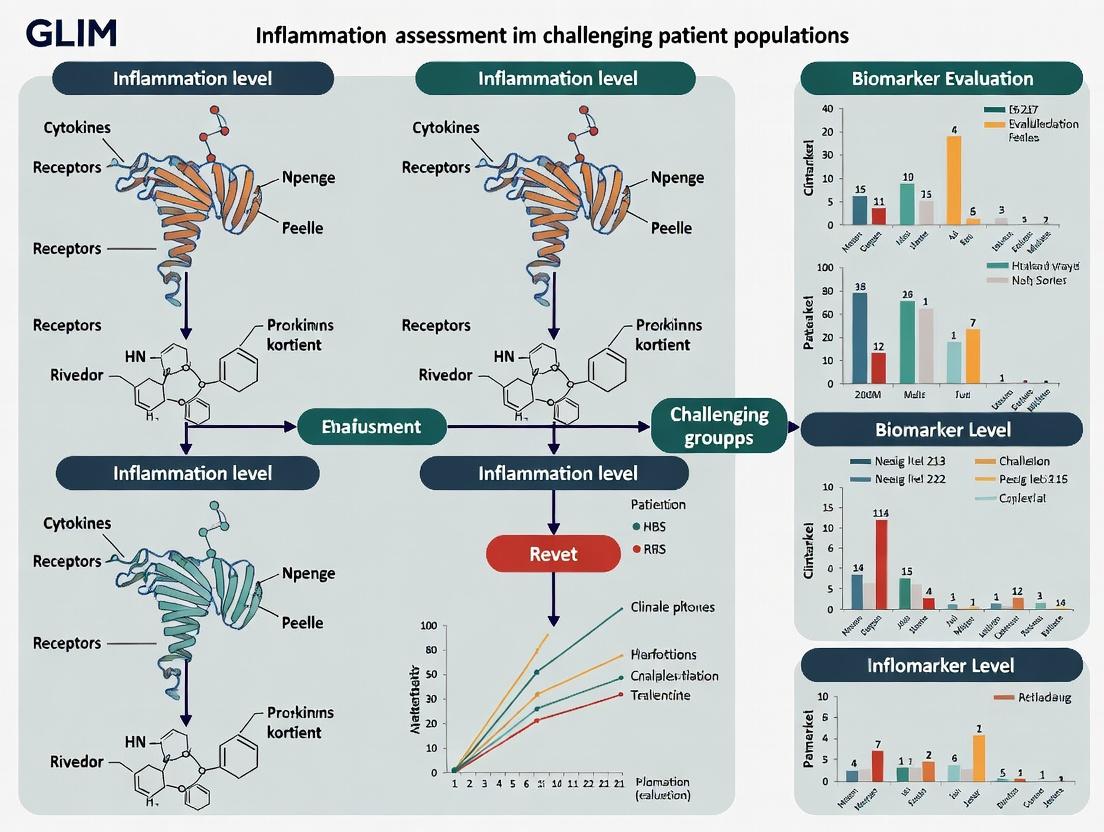
This article addresses the critical challenges of applying the Global Leadership Initiative on Malnutrition (GLIM) criteria, specifically the inflammation phenotypic criterion, in heterogeneous and complex patient populations.
Challenges and Strategies in GLIM Inflammation Assessment for Complex Patient Populations in Clinical Research
Abstract
This article addresses the critical challenges of applying the Global Leadership Initiative on Malnutrition (GLIM) criteria, specifically the inflammation phenotypic criterion, in heterogeneous and complex patient populations. We explore the pathophysiological interplay between inflammation and malnutrition across diverse conditions, from chronic diseases to critical illness. Methodological guidance for biomarker selection and clinical assessment is provided, alongside practical troubleshooting strategies for ambiguous cases. The review critically evaluates and compares the performance of GLIM against other nutrition screening tools in research settings. Targeted at researchers and drug development professionals, this synthesis aims to enhance the accuracy, reproducibility, and clinical relevance of malnutrition phenotyping in clinical trials and observational studies.
Decoding Inflammation in Malnutrition: Pathophysiology and Population-Specific Complexities
Technical Support Center
FAQ: General Definitions & Context
Q1: What is the "Inflammation Phenotype" within the GLIM framework?
- A: In the Global Leadership Initiative on Malnutrition (GLIM) criteria, the inflammation phenotype refers to the presence of chronic or acute inflammatory activity that drives catabolism, alters nutrient metabolism, and exacerbates muscle and weight loss. It is a key etiologic criterion alongside reduced food intake or assimilation. Defining this phenotype is critical for phenotyping malnutrition in complex, chronically ill populations.
Q2: Why is assessing inflammation so challenging in patient populations like those with cancer, renal failure, or obesity?
- A: These conditions present "confounding inflammation" where traditional acute-phase biomarkers (like CRP) are persistently elevated due to the primary disease, masking the specific inflammatory driver of malnutrition. This complicates the use of standard GLIM cut-offs and necessitates phenotype-specific assessment strategies.
Troubleshooting Guide: Biomarker & Assessment Issues
Issue T1: Inconsistencies in C-reactive protein (CRP) readings in patients with chronic kidney disease (CKD).
- Problem: CRP levels may not correlate with nutritional status in CKD due to uremia-related modifications and concurrent infections.
- Solution: Implement a multi-biomarker panel. Combine CRP with albumin (corrected for hydration), and consider trend analysis over single-point measurements. Validate against functional measures like handgrip strength.
- Protocol (Serial Biomarker Monitoring):
- Sample Collection: Draw venous blood at the same time of day (to minimize diurnal variation) at Days 1, 14, and 28.
- Analysis: Process samples for high-sensitivity CRP (hs-CRP) and albumin within 2 hours, or freeze plasma at -80°C.
- Data Interpretation: Plot values over time. A sustained 20% increase in hs-CRP concurrent with a decrease in albumin or handgrip strength strengthens the inflammation phenotype diagnosis.
Issue T2: Differentiating sarcopenic obesity inflammation from GLIM-related inflammation.
- Problem: Adipose tissue itself secretes pro-inflammatory cytokines (e.g., IL-6, TNF-α), making it difficult to attribute inflammation solely to the GLIM phenotype.
- Solution: Incorporate imaging and cytokine profiling. Use CT scans to measure skeletal muscle index and visceral fat area. Pair with a multiplex cytokine assay.
- Protocol (Cytokine Panel Assay):
- Reagents: Use a commercially available human cytokine multiplex kit (e.g., for IL-6, TNF-α, IL-1β).
- Procedure: Follow manufacturer guidelines for the magnetic bead-based immunoassay. Use a dedicated bioplex or Luminex analyzer.
- Controls: Include kit standards, serum quality controls, and a normal-pooled donor sample as a reference.
- Analysis: Compare cytokine levels against both healthy controls and non-obese GLIM patients. A distinct cluster may indicate an obesity-driven inflammatory sub-phenotype.
Table 1: Comparison of Inflammation Biomarkers in Challenging Populations
| Biomarker | Typical GLIM Cut-off | Challenge in Specific Population | Recommended Adjustment for Research |
|---|---|---|---|
| C-reactive Protein (CRP) | >5 mg/L | Chronically elevated in CKD, RA, cancer. | Use hs-CRP; employ serial trending (e.g., >20% increase over 2 weeks). |
| Albumin | <35 g/L | Long half-life; influenced by hydration, liver disease, proteinuria. | Correct for hydration status (clinical assessment); use pre-albumin (shorter half-life) as a complementary marker. |
| IL-6 | Elevated | High in obesity, autoimmune disease. Non-specific. | Profile as part of a panel (with TNF-α, IL-1β); correlate with imaging (fat vs. muscle mass). |
| Neutrophil-to-Lymphocyte Ratio (NLR) | >3.0 | Affected by infection, steroids, chemotherapy. | Time assessment away from acute infection/chemo cycle; use as a dynamic, low-cost secondary marker. |
Experimental Protocol: Validating a Composite Inflammation Score
Title: Protocol for a Composite Inflammation Phenotype Score (CIPS) in Cancer. Objective: To create a weighted score combining biomarkers and clinical signs to diagnose the GLIM inflammation phenotype in metastatic solid tumors. Methods:
- Cohort: Recruit n=200 patients with metastatic disease. Perform GLIM assessment at baseline.
- Measurements:
- Blood: hs-CRP, albumin, IL-6.
- Clinical: Physician-reported signs of inflammation (e.g., fever, erythema) via standardized form.
- Functional: Handgrip strength (HGS) dynamometry.
- Analysis: Use principal component analysis to derive weightings for each variable that best predict 3-month lean body mass loss (by DXA). The resulting formula is the CIPS.
- Validation: Test CIPS against 6-month mortality and chemotherapy toxicity in a separate validation cohort.
The Scientist's Toolkit: Research Reagent Solutions
| Item | Function in Inflammation Phenotype Research |
|---|---|
| High-Sensitivity CRP (hs-CRP) ELISA Kit | Quantifies low-grade chronic inflammation more precisely than standard CRP assays. |
| Multiplex Cytokine Panel (e.g., Luminex) | Allows simultaneous measurement of 10+ pro- and anti-inflammatory cytokines from a small sample volume. |
| Recombinant Human Albumin, Isotope-Labeled | Used as an internal standard in mass spectrometry for precise, absolute quantification of serum albumin. |
| Stable Isotope Tracers (e.g., 13C-Leucine) | To measure in vivo protein synthesis and breakdown rates in muscle, directly linking inflammation to catabolism. |
| Mouse/Rat GLIM Phenotype Model Diet | Specialized, low-protein diet with injectable pro-inflammatory agents (e.g., low-dose LPS) to mimic the human condition. |
Visualization: Research Workflow & Signaling Pathway
Research Workflow for Confounding Populations
IL-6 Trans-Signaling Drives Catabolism
Technical Support Center: Troubleshooting GLIM Assessment in Challenging Populations
Troubleshooting Guides
Issue 1: Inconsistent GLIM Criteria Application in Elderly Patients with Sarcopenia
- Problem: Variability in muscle mass assessment (e.g., DXA vs. BIA) leads to conflicting GLIM classification.
- Solution: Standardize the diagnostic tool within your study cohort. For multi-site studies, implement cross-calibration of BIA devices and centralized DXA analysis. Use population-specific cut-off values (e.g., AWGS 2019 for Asian elderly) and document the tool used as a core variable.
- Protocol: Standardized Sarcopenia Assessment for GLIM
- Patient Preparation: Fasting >4 hours, voided bladder, no vigorous exercise within 24h.
- Bioimpedance Analysis (BIA): Use a validated, medical-grade tetra-polar device. Place electrodes on the right hand and foot. Record resistance and reactance at 50 kHz. Calculate appendicular skeletal muscle mass (ASM) using the Sergi et al. (2015) equation. Divide ASM by height² to obtain ASMI.
- Cut-off Application: Apply cohort-appropriate cut-offs (e.g., AWGS: ASMI <7.0 kg/m² for men, <5.7 kg/m² for women).
- Documentation: Record device model, equation, and cut-off source in the case report form.
Issue 2: Differentiating Inflammation-Driven vs. Disease-Driven Weight Loss in Cancer
- Problem: CRP/Albumin elevation may stem from tumor activity, infection, or true systemic inflammatory response (SIR), confounding the GLIM "inflammatory burden" criterion.
- Solution: Implement a longitudinal biomarker panel and clinical adjudication.
- Protocol: Adjudicating Inflammation Etiology in Oncology GLIM
- Baseline Panel: Measure CRP, albumin, IL-6, and neutrophil-to-lymphocyte ratio (NLR) at study entry.
- Weekly Monitoring: Track CRP and symptoms for 4 weeks.
- Adjudication Committee Review: For each patient, a panel of 2 clinicians and 1 lab scientist reviews trends:
- SIR-Associated WL: Persistently elevated CRP/IL-6 without infectious source, correlating with radiological tumor progression.
- Infection-Associated WL: Spiking CRP with positive cultures/imaging and response to antimicrobials.
- Tumor-Driven WL (Low SIR): Progressive weight loss with stable, low-grade inflammatory markers.
Issue 3: Assessing Inflammation in Renal Failure (CKD Stage 5)
- Problem: Conventional markers like CRP may be chronically elevated due to uremia, and albumin is influenced by proteinuria and fluid status.
- Solution: Use a composite inflammatory score and adjust albumin thresholds.
- Protocol: Modified GLIM Inflammation Criterion for CKD5
- Sample Collection: Draw serum pre-dialysis.
- Biomarker Analysis: Measure CRP, IL-6, and fibrinogen.
- Scoring: Assign 1 point for each: CRP >5 mg/L, IL-6 >4.0 pg/mL, fibrinogen >400 mg/dL. A score ≥2 meets the GLIM inflammation criterion for this population.
- Albumin Adjustment: Use a corrected albumin value for the GLIM "severity" criterion: Corrected Albumin = Measured Albumin + 0.025 * (Mid-Arm Circumference in cm - 28).
Frequently Asked Questions (FAQs)
Q1: Which specific CRP threshold should we use for the GLIM inflammation criterion in a general chronic disease population? A: While GLIM recommends CRP >5 mg/L, research in mixed chronic conditions (e.g., COPD, CHF) suggests a threshold of >10 mg/L improves specificity for inflammation-driven malnutrition without significantly reducing sensitivity. Always pre-specify and validate your threshold within your specific cohort.
Q2: How do we handle the "disease burden" criterion when a patient has multiple comorbidities? A: The criterion is met if at least one underlying disease is known to cause persistent inflammation or a hypermetabolic state. Prioritize diseases with direct pathophysiological links to inflammation (e.g., active rheumatoid arthritis, stage IV cancer) over stable comorbidities (e.g., controlled hypertension). Document the primary qualifying disease.
Q3: In acute pancreatitis, inflammation is acute but can lead to chronic malnutrition. How should GLIM be applied sequentially? A: Apply a two-phase model:
- Acute Phase (Days 1-14): Use GLIM with awareness that inflammation and reduced intake are primary drivers. Focus on phenotypic criteria (weight loss, muscle mass) from pre-illness baseline.
- Post-Acute/Chronic Phase (Day 15+): Re-assess. Persistent organ failure, pancreatic necrosis, or recurrent episodes now represent a "chronic disease burden." Inflammation (CRP) may be low-grade but persistent. Apply GLIM criteria to this new baseline.
Table 1: Comparative Biomarker Profiles in Acute vs. Chronic Inflammation
| Biomarker | Acute Inflammation (e.g., Sepsis, Trauma) | Chronic Inflammation (e.g., RA, CKD) | Notes for GLIM Application |
|---|---|---|---|
| CRP | Rapid rise, peaks at 24-48h (100-500 mg/L), rapid decline with resolution. | Sustained low-grade elevation (5-50 mg/L), minor fluctuations. | High specificity in acute settings; chronic setting requires etiology adjudication. |
| IL-6 | Very early peak (hours), short half-life. | Chronically elevated, correlates with disease activity. | Better indicator of chronic SIR but not routinely available. |
| Albumin | Decreases rapidly (negative acute phase reactant). | Low-normal range, influenced by nutrition and disease. | In chronic disease, a stronger predictor of outcome than CRP. |
| NLR | Very high due to neutrophilia & lymphopenia. | Moderately but persistently elevated. | Cheap, useful composite marker for chronic SIR in cancer. |
Table 2: Recommended Modifications to GLIM Criteria for Challenging Populations
| Patient Population | Phenotypic Criterion Modification | Etiologic Criterion (Inflammation) Modification |
|---|---|---|
| Healthy Elderly | Use age-specific ASMI cut-offs (e.g., EWGSOP2). | Use CRP >10 mg/L to reduce false positives from age-related elevation. |
| Class III Obesity (BMI ≥40) | Use weight loss >5% as primary; FFMI may be normal/high. | CRP often elevated; focus on change from personal baseline (ΔCRP >5 mg/L). |
| Congestive Heart Failure (NYHA III/IV) | Account for fluid shifts; use dry weight. | Distinguish cardiac cachexia (IL-6/TNF-α driven) from edema. Consider NT-proBNP correlation. |
The Scientist's Toolkit: Research Reagent Solutions
| Item | Function & Application in GLIM Research |
|---|---|
| High-Sensitivity CRP (hsCRP) ELISA Kit | Quantifies low-grade inflammation (3-10 mg/L range) critical for assessing chronic disease burden. |
| Human IL-6 Quantikine ELISA Kit | Gold-standard for measuring this pivotal pro-inflammatory cytokine to confirm systemic inflammatory response. |
| Prealbumin (Transthyretin) Assay | Short-half-life nutritional marker; helps differentiate malnutrition from pure inflammation in acute settings. |
| Luminex Multiplex Panels (Human Cytokine/Chemokine) | Profiles broad inflammatory milieu from small serum volumes to identify distinct signatures in acute vs. chronic states. |
| Stable Isotope-Labeled Amino Acid Tracers (e.g., [²H₃]-Leucine) | For metabolic studies to measure fractional synthetic rates of muscle protein, linking inflammation to catabolism. |
| Anti-Myosin Heavy Chain (MyHC) Antibodies (Type I, IIa, IIx) | For immunohistochemistry on muscle biopsies to assess fiber-type-specific atrophy in chronic inflammation. |
Experimental Protocols
Protocol: Ex Vivo Monocyte Activation Assay for Patient Stratification Purpose: To quantify the intrinsic inflammatory potential of monocytes from patients classified by GLIM, distinguishing hyper-responsive states.
- PBMC Isolation: Collect blood in sodium heparin tubes. Layer over Ficoll-Paque PLUS. Centrifuge at 400 × g for 30 min (brake off). Harvest PBMC layer.
- Monocyte Enrichment: Use negative selection magnetic bead kit (e.g., Miltenyi Biotec). Incubate PBMCs with antibody cocktail for 10 min at 4°C, then with magnetic beads for 15 min. Pass through LS column in a magnetic field.
- Stimulation: Seed 2x10⁵ cells/well in a 96-well plate. Treat in triplicate: (A) RPMI control, (B) LPS 100 ng/mL, (C) IFN-γ 20 ng/mL. Incubate 18h at 37°C, 5% CO₂.
- Analysis: Harvest supernatant. Quantify TNF-α, IL-1β, and IL-10 via ELISA. Cells can be analyzed for surface CD14/CD16 expression by flow cytometry.
- Interpretation: A high TNF-α:IL-10 ratio in LPS-stimulated cells indicates a pro-inflammatory phenotype, correlating with persistent inflammation in chronic disease.
Visualizations
Title: Core Pathways of Acute vs Chronic Inflammation
Title: GLIM Assessment with Adjudication Module
Title: JAK-STAT Pathway in Chronic Inflammation & Cachexia
Technical Support Center: GLIM Inflammation Assessment
Troubleshooting Guides & FAQs
Q1: In our oncology cohort, we are unable to distinguish between cancer cachexia (a GLIM phenotypic criterion) and inflammation-driven weight loss from tumor burden or chemotherapy. How can we isolate the inflammatory component for GLIM assessment?
- A: This is a central challenge. The recommended protocol is a multi-parameter approach:
- Serial C-Reactive Protein (CRP) & Albumin: Measure at diagnosis, pre-cycle, and nadir. Use a CRP >5 mg/L and/or albumin <3.5 g/dL as the inflammation criterion (GLIM Option 2).
- Body Composition Analysis: Integrate CT imaging at L3. Calculate the skeletal muscle index (SMI). A concurrent decline in SMI and rise in CRP strongly suggests inflammation-driven cachexia versus simple anorexia.
- Control for Cytokine Release: For patients on immunotherapies (e.g., IL-2, CAR-T), measure IL-6 in addition to CRP. Protocol: Collect serum samples at baseline and 24-48 hours post-infusion. Use an ELISA kit (e.g., R&D Systems Quantikine HS IL-6) following manufacturer instructions. Correlate IL-6 spikes with acute weight loss episodes.
Q2: Patients with renal failure (CKD Stage 4/5) often have chronically elevated CRP due to uremic inflammation, and low albumin due to proteinuria or dialysis. Does this automatically qualify them as GLIM-positive, and how do we adjust?
- A: Not automatically. The key is establishing a baseline and assessing change.
- Protocol for Hemodialysis Patients: Draw blood for CRP and albumin pre-dialysis (mid-week session) to standardize fluid status. Establish a patient-specific 3-month rolling baseline. A significant deviation (e.g., CRP increase >10 mg/L from baseline) concurrent with a documented decline in dry weight or muscle mass is needed to attribute malnutrition to inflammation rather than the chronic disease state alone. Consider using the Malnutrition Inflammation Score (MIS) as a correlative tool.
Q3: For patients with acute decompensated heart failure (ADHF), fluid overload confounds weight and anthropometric measurements. How can we accurately apply GLIM's phenotypic criteria?
- A: Weight is unreliable in ADHF. Focus on:
- Muscle Mass Assessment: Use ultrasound to measure the thickness of the quadriceps rectus femoris or vastus intermedius. Protocol: With patient supine, knee extended, locate the midpoint between the anterior superior iliac spine and the superior patellar border. Use a linear probe to measure muscle thickness in a relaxed state. Compare to reference percentiles.
- Handgrip Strength (HGS): This is less affected by edema. Use a Jamar dynamometer. Protocol: Seated patient, elbow at 90°, three trials on dominant hand, record maximum. Use ESPEN cut-offs (<27kg men, <16kg women).
- Inflammation Marker: Use NT-proBNP alongside CRP. A high NT-proBNP confirms HF severity, while a rising CRP on top of that indicates a superimposed inflammatory state driving malnutrition.
Q4: In critically ill (ICU) patients, is it feasible or relevant to apply the full GLIM criteria given rapid clinical changes and sedation?
- A: Yes, but with modifications for the acute phase (<1 week).
- ICU-Specific Protocol: Prioritize the etiologic criterion.
- Inflammation: Use CRP >50 mg/L or PCT >2 ng/mL (indicative of severe infection/sepsis) as a primary trigger for nutrition risk.
- Phenotypic Criteria: Shift focus from weight to muscle wasting. Use sequential ultrasound (as in Q3) every 3-5 days to detect early rapid muscle loss. A reduction in muscle thickness >10% in one week is a positive phenotypic criterion.
- Food Intake: Record caloric delivery via enteral/parenteral nutrition. <50% of target for >5 days meets the reduced intake criterion.
- ICU-Specific Protocol: Prioritize the etiologic criterion.
Q5: In obesity (BMI >30), the GLIM weight loss criterion may never be met, yet sarcopenic obesity is common. How do we assess inflammation-associated malnutrition in this population?
- A: The phenotypic focus must move entirely to body composition.
- Primary Method: Utilize DXA or CT to assess fat-free mass index (FFMI). Apply FFMI cut-offs (e.g., <17 kg/m² for men, <15 kg/m² for women).
- Functional Criterion: Handgrip strength is critical. Use the same protocol as in Q3.
- Inflammation Assessment: Measure high-sensitivity CRP (hs-CRP) and leptin. Elevated hs-CRP (>3 mg/L) with elevated leptin indicates meta-inflammation. A high leptin level with low FFMI and low HGS is indicative of sarcopenic obesity driven by inflammatory pathways.
Summarized Quantitative Data
Table 1: Recommended Inflammation Cut-offs for Challenging Populations in GLIM Assessment
| Population | Primary Marker (Cut-off) | Secondary/Confirmatory Marker | Notes |
|---|---|---|---|
| Oncology | CRP >5 mg/L | IL-6 >10 pg/mL (for immunotherapy) | Correlate with CT-based muscle loss. |
| Renal Failure (HD) | CRP >10 mg/L above baseline | Albumin <3.8 g/dL (pre-dialysis) | Use serial measurements; consider MIS. |
| Heart Failure (ADHF) | CRP >10 mg/L + NT-proBNP >1800 pg/mL | - | NT-proBNP confirms HF context for CRP elevation. |
| Obesity | hs-CRP >3 mg/L | Leptin >20 ng/mL (context-dependent) | Must be paired with low FFMI/weakness. |
| Critical Care | CRP >50 mg/L or PCT >2 ng/mL | - | Indicates severe inflammatory burden; triggers nutrition intervention. |
Table 2: Key Body Composition & Functional Assessment Methods
| Population | Preferred Method for Muscle Mass | Functional Assessment | Key Cut-off / Threshold |
|---|---|---|---|
| All (where feasible) | CT at L3 (SMI) | Handgrip Strength (HGS) | SMI: <55 cm²/m² (M), <39 cm²/m² (F). HGS: ESPEN standards. |
| ICU / ADHF | Muscle Ultrasound (Rectus Femoris Thickness) | - | >10% decrease in thickness over 5-7 days. |
| Obesity | DXA (Fat-Free Mass Index - FFMI) | Handgrip Strength (HGS) | FFMI: <17 kg/m² (M), <15 kg/m² (F). |
The Scientist's Toolkit: Research Reagent Solutions
| Item / Reagent | Function in GLIM Inflammation Research |
|---|---|
| High-Sensitivity CRP (hs-CRP) ELISA Kit | Precisely quantifies low-grade inflammation crucial for obesity, CKD, and stable HF cohorts. |
| Human IL-6 Quantikine ELISA Kit | Specifically assesses cytokine-driven inflammation in oncology (immunotherapy) and critical illness. |
| Pre-albumin (Transthyretin) Immunoassay | Short-half-life marker to monitor acute changes in nutritional status and inflammation response. |
| Leptin ELISA Kit | Essential for differentiating metabolic inflammation in sarcopenic obesity studies. |
| Recombinant Human Leptin Protein (Control) | Used as a standard curve control in leptin assays to ensure accuracy. |
| Cell-free Human Serum/Plasma (Charcoal Stripped) | Serves as a matrix control for assay development and validation in patient sample analysis. |
| Protease & Phosphatase Inhibitor Cocktail Tablets | Preserves protein integrity (e.g., cytokines, hormones) in blood samples during collection and storage. |
Experimental Protocol: Multi-modal Assessment in Oncology Cachexia
Title: Isolating Inflammatory Component in Cancer Cachexia for GLIM
Objective: To differentiate inflammation-driven cachexia from other causes in advanced solid tumor patients.
Methods:
- Patient Cohort: Stage IV non-small cell lung cancer, starting first-line therapy.
- Timepoints: Baseline (T0), 4 weeks (T1), 12 weeks (T2).
- Blood Collection: Serum separated within 30 minutes, aliquoted, stored at -80°C.
- Inflammation Panel (T0, T1, T2): Analyze CRP (immunoturbidimetry), albumin (BCG method), IL-6 (ELISA - protocol per kit: coat plate, block, add standards/samples, detection antibody, streptavidin-HRP, TMB substrate, stop, read at 450nm).
- Body Composition (T0, T2): Perform CT scan at L3 vertebra. Analyze slices using Slice-O-Matic software to calculate Skeletal Muscle Index (SMI = total muscle area / height²).
- Phenotypic Criteria: Document weight change and food intake via 3-day diary.
- Analysis: Correlate ΔSMI with ΔCRP and ΔIL-6 using Pearson correlation. Define GLIM-positive as presence of inflammation criterion (CRP>5 or IL-6>10) + phenotypic criterion (weight loss >5% or SMI below cut-off).
Pathway & Workflow Visualizations
GLIM Assessment Logic in Challenging Populations
Common Inflammatory Driver in Challenging Populations
Technical Support Center
Troubleshooting Guides & FAQs
Q1: In my GLIM assessment study of cachectic cancer patients, IL-6 ELISA results are consistently below the detection limit, despite clear clinical signs of inflammation. What could be the cause and how can I resolve this?
A: This is a common issue in challenging populations. Causes and solutions:
- Cause 1: Pre-analytical degradation. Cytokines like IL-6 are labile. In cachectic patients, prolonged tourniquet time or delayed processing can degrade analytes.
- Solution: Standardize blood draw to processing time (<60 minutes). Use pre-chilled collection tubes (e.g., EDTA with protease inhibitors) and process samples at 4°C.
- Cause 2: Matrix interference. High levels of soluble cytokine receptors (e.g., sIL-6R) or binding proteins can interfere with antibody-based assays.
- Solution: Dilute samples and re-assay. If recovery is poor, use an alternative method like multiplex immunoassay with different epitope recognition or measure downstream markers (e.g., STAT3 phosphorylation in PBMC lysates).
- Cause 3: Episodic secretion. Cytokine release may be pulsatile.
- Solution: Collect serial samples (e.g., daily for 3 days) and pool or analyze trends rather than single time points.
Q2: When running a multiplex panel for 15 inflammatory mediators in frail elderly subjects, I am getting high CVs (>25%) for low-abundance analytes like IL-1β and IL-12p70, while high-abundance ones (CRP, SAA) are fine. How can I improve assay precision?
A: This indicates issues with the dynamic range and detection limits of your panel.
- Primary Solution: Optimize Sample Dilution. Do not use a universal dilution factor.
- Protocol: Run a dilution series for a pooled sample (e.g., neat, 1:2, 1:5, 1:10). Create an analyte-specific table:
Analyte Optimal Sample Dilution Expected Conc. Range in Frail Elderly (pg/mL) CRP, SAA 1:1000 to 1:10,000 500,000 - 5,000,000 IL-6, TNF-α 1:2 to 1:5 5 - 100 IL-1β, IL-12p70 Neat or 1:2 0.5 - 10
- Protocol: Run a dilution series for a pooled sample (e.g., neat, 1:2, 1:5, 1:10). Create an analyte-specific table:
- Secondary Solution: Validate with Spike & Recovery. For problematic low-level analytes, spike a known quantity into 5 representative subject samples. Recovery should be 80-120%. If not, matrix effects are present, requiring alternative sample preparation (e.g., extraction).
Q3: For researching mediator dynamics in obese patients with sarcopenia, I need to distinguish between acute-phase (e.g., CRP) and chronic, metabolically-linked (e.g., Leptin, chemerin) inflammation. What experimental design controls are critical?
A: Controlling for confounding factors is essential.
- Control 1: Metabolic Challenge Standardization. Collect samples after a 12-hour fast, at a consistent time of day (e.g., 8 AM), to control for diurnal variation and post-prandial effects on leptin/adipokines.
- Control 2: Comorbidity Stratification. Use exclusion/inclusion criteria to create homogeneous subgroups. For analysis, stratify by:
Stratification Factor Rationale Mediators Most Affected HbA1c ≥6.5% vs. <6.5% Controls for overt diabetes TNF-α, IL-1β, RBP4 NSAID/Corticosteroid Use Controls for anti-inflammatory drugs All, especially COX/PGE2 pathway Recent Infection (≥4 weeks) Isolates chronic from acute inflammation CRP, SAA, PCT - Protocol for PBMC Stimulation: To assess functional immune capacity, isolate PBMCs and stimulate with LPS (100 ng/mL) for 24h. Measure cytokine production (IL-1β, IL-6, TNF-α) via intracellular staining/flow cytometry. This reveals immune cell reactivity independent of current in vivo adipokine levels.
The Scientist's Toolkit: Research Reagent Solutions
| Item/Category | Function & Application in Inflammation Research |
|---|---|
| Multiplex Immunoassay Panels (e.g., Luminex, MSD) | Simultaneously quantify 20-50+ analytes (cytokines, chemokines, acute phase proteins) from low-volume samples, essential for biomarker discovery in rare patient cohorts. |
| High-Sensitivity (HS) ELISA Kits | Precisely quantify very low baseline levels of key mediators (e.g., hsCRP, hsIL-6) crucial for identifying subclinical inflammation in GLIM assessments. |
| Phospho-Specific Flow Cytometry | Analyze cell-specific signaling pathway activation (e.g., pSTAT3 in response to IL-6, pNF-κB in response to TNF-α) in mixed cell populations like whole blood or PBMCs. |
| Protease & Phosphatase Inhibitor Cocktails | Added to collection tubes or tissue lysis buffers to prevent post-collection degradation of phospho-proteins and labile mediators during sample processing. |
| Recombinant Proteins & Neutralizing Antibodies | Used as positive controls in assays or for in vitro stimulation/inhibition experiments to establish causal links between specific mediators and phenotypic outcomes. |
| RNA Stabilization Reagents (e.g., PAXgene) | For stabilizing transcriptomic profiles at the moment of collection, enabling later analysis of gene expression patterns of inflammatory pathways. |
Detailed Experimental Protocol: Assessing Inflammasome Activity in Monocytes from Critically Ill, Frail Patients
Objective: To measure functional NLRP3 inflammasome activation, a source of IL-1β and IL-18, in a patient population where cells are scarce and viability is low.
Materials: Sodium heparin tubes, RPMI-1640, Ficoll-Paque PLUS, Cell Stimulation Cocktail (with Brefeldin A/Monensin), LPS (Ultrapure), ATP, Nigericin, Fixation/Permeabilization Buffer Kit, Anti-CD14-APC, Anti-IL-1β-PE, Anti-Caspase-1-FITC antibodies, Flow cytometer.
Methodology:
- Sample Collection & Processing: Draw 10 mL sodium heparin blood. Process within 30 minutes. Dilute 1:1 with room temp PBS. Layer over Ficoll and centrifuge at 400 × g for 30 min (no brake). Harvest PBMC layer.
- Cell Stimulation & Inhibition:
- Plate 1x10^6 PBMCs/well in a 96-well U-bottom plate.
- Priming: Treat cells with LPS (1 µg/mL) in complete RPMI for 3 hours.
- Activation: Add ATP (5 mM) for 1 hour OR Nigericin (10 µM) for 45 minutes. Include controls: Unstimulated, LPS-only, ATP-only.
- Intracellular Staining:
- Add protein transport inhibitors for the final 4 hours of culture.
- Stain surface antigen (CD14, 20 min, 4°C).
- Fix and permeabilize cells using commercial kit.
- Stain intracellular targets (IL-1β, Caspase-1) for 30 min at 4°C.
- Analysis: Acquire on flow cytometer. Gate on live, CD14+ monocytes. Report frequency of Caspase-1+ and/or IL-1β+ cells within this population. Express as fold-change over unstimulated control.
Visualizations
Title: NLRP3 Inflammasome Activation Pathway
Title: Experimental Workflow for Challenging Population Biomarker Studies
Technical Support Center
Frequently Asked Questions (FAQs)
Q1: Our patient cohort includes individuals with chronic kidney disease (CKD). Which GLIM phenotypic criteria are most confounded by fluid overload, and how can we adjust our assessment? A: Fluid status severely confounds the "reduced muscle mass" criterion. Anthropometric measures (e.g., BMI, calf circumference) become unreliable. The "reduced body mass" criterion is also affected.
- Recommended Protocol: Utilize bioelectrical impedance analysis (BIA) with phase angle or a body composition monitor that employs a CKD-specific algorithm (e.g., using a different frequency or equation). Always measure at the same time of day, post-dialysis if applicable. Combine with functional assessments like handgrip strength (HGS), which is less affected by fluid shifts.
- Quantitative Data:
| Assessment Method | Confounding Factor in CKD | Suggested Correction/Method |
|---|---|---|
| BMI | High (Fluid overload) | Use with extreme caution; not recommended as a standalone metric. |
| Calf Circumference | High (Edema) | Measure with a consistent tension tape; track trends, not absolute values. |
| BIA (Standard) | Very High | Use a device with a CKD/fluid overload mode. Focus on Phase Angle. |
| Handgrip Strength | Low | A more reliable functional correlate of muscle mass in this population. |
| CT/MRI at L3 | None (Gold Standard) | Use if ethically and logistically feasible for a sub-cohort for validation. |
Q2: In patients with active inflammation from rheumatoid arthritis (RA), how do we disentangle inflammation-driven malnutrition from disease activity for accurate GLIM phenotyping? A: This is a key literature gap. The GLIM "inflammation" criterion is met by default, making phenotypic differentiation critical.
- Recommended Protocol: Implement a multi-parameter longitudinal panel. Track acute-phase reactants (CRP, ESR) alongside nutritional markers (serum albumin, prealbumin) and functional measures (HGS) over time, correlating them with disease activity scores (e.g., DAS28-CRP).
- Experimental Protocol:
- Baseline & Serial Measurements: At diagnosis/trial baseline and at Weeks 4, 12, and 24, collect: CRP, ESR, serum albumin, prealbumin.
- Functional Test: Perform standardized HGS test (three trials per hand, best score used).
- Clinical Assessment: Rheumatologist assesses DAS28-CRP.
- Analysis: Use linear mixed models to determine if changes in nutritional markers/HGS are independent predictors of outcomes (e.g., physical function, treatment response) after controlling for DAS28-CRP and CRP levels.
Q3: For phenotyping cachexia in oncology, what are the operational cut-offs for "weight loss" and "low muscle mass" in heterogeneous solid tumors, and which body composition technique is feasible for large cohorts? A: Consensus cut-offs exist but require contextualization.
- Recommended Protocol: For large cohorts, BIA is the most feasible field method. Confirmative imaging in a subset is ideal. Adopt tumor-specific guidelines where they exist (e.g., ESPEN guidelines for cancer).
- Quantitative Data (GLIM-adopted & Common Cancer Cut-offs):
| Criterion | General GLIM Cut-off | Cancer-Specific Considerations |
|---|---|---|
| Weight Loss | >5% within past 6 months | >2% if BMI<20 or any loss in obese patients. Pancreatic, upper GI tumors may warrant shorter time frames. |
| Low Muscle Mass (by BIA) | ASMI: M<7.0 kg/m², F<5.7 kg/m² | Use cancer-specific BIA equations if available. Sarcopenic obesity mandates body composition analysis. |
| Low Muscle Mass (by CT) | SMI at L3: M<55 cm²/m², F<39 cm²/m² | The gold standard. Feasible if routine staging CTs are available (analyze at L3). |
Q4: When assessing patients with severe obesity, what are the best practices for identifying "low muscle mass" (sarcopenic obesity) phenotyping within the GLIM framework? A: Standard BMI and anthropometrics fail entirely. Body composition is mandatory.
- Recommended Protocol: BIA devices validated for obesity must be used. CT-based analysis of a recent abdominal scan is optimal if available. The "reduced muscle mass" criterion should be applied using sex-specific appendicular skeletal muscle mass index (ASMI) adjusted for BMI or height.
- Experimental Protocol (CT Analysis at L3 Vertebra):
- Image Selection: Identify a single axial CT slice at the third lumbar vertebra (L3).
- Muscle Segmentation: Use validated software (e.g., Slice-O-Matic, ImageJ with appropriate plugin) to electronically outline the borders of the psoas, erector spinae, quadratus lumborum, transversus abdominis, external and internal obliques, and rectus abdominis muscles.
- Density Calculation: Set Hounsfield Unit (HU) thresholds of -29 to +150 to define skeletal muscle area.
- Calculation: Software computes the total cross-sectional area (cm²) of muscle. Normalize to height squared to calculate the Skeletal Muscle Index (SMI in cm²/m²).
- Application: Apply cut-offs (see table in Q3).
Pathway & Workflow Visualizations
Diagram Title: The Inflammation Conflation Problem in GLIM Phenotyping
Diagram Title: Phenotyping Pathway for Patients with Severe Obesity
The Scientist's Toolkit: Research Reagent Solutions
| Item | Function & Application in Phenotyping Research |
|---|---|
| Bioelectrical Impedance Analyzer (BIA) | Estimates body composition (fat-free mass, muscle mass). Critical for field studies and large cohorts where CT/MRI is impractical. Must be population-validated (e.g., for obesity, CKD). |
| Handgrip Strength Dynamometer | Measures isometric forearm strength. A simple, functional proxy for overall muscle strength and mass; correlated with clinical outcomes. Essential for GLIM's "reduced muscle function" support. |
| Calibrated Skinfold Calipers | Measures subcutaneous fat thickness at standardized sites. Provides estimate of body fat percentage. Useful in stable outpatients but limited in edema or severe obesity. |
| Non-Stretch Insertion Tape | For measuring mid-arm and calf circumferences. Anthropometric surrogate for muscle mass. Must be used with strict, repeated technique, especially in fluid-overloaded patients. |
| Phase Angle (from BIA) | A raw BIA parameter (arctangent of reactance/resistance). Indicator of cellular integrity and health. An emerging prognostic biomarker independent of hydration status in chronic disease. |
| Prealbumin (Transthyretin) ELISA Kit | Quantifies serum prealbumin, a short-half-life (2-3 day) visceral protein. Helps track short-term nutritional response, but values are depressed by inflammation. |
| High-Sensitivity CRP (hsCRP) Assay | Precisely measures low levels of C-reactive protein. Crucial for quantifying the inflammatory burden in patients with chronic diseases to apply GLIM's inflammation criterion. |
| Disease-Specific Activity Scores | (e.g., DAS28 for RA, MADRS for Depression). Required to statistically disentangle the effects of disease activity from pure nutritional status on phenotypic traits. |
Implementing GLIM in Research: Methodological Frameworks for Diverse Cohorts
Technical Support Center
Troubleshooting Guides & FAQs
FAQ 1: Sample Handling & Pre-Analytical Variables Q: Our CRP and IL-6 measurements show high intra-assay variability in our cachectic cancer patient cohort (GLIM-defined). What are the key pre-analytical factors to control? A: In metabolically challenging GLIM populations, pre-analytical rigor is paramount. Key factors and solutions:
- Hemolysis: Can falsely elevate IL-6. Use gentle sample processing and inspect samples.
- Sample Type & Time: Serum and plasma (EDTA) are standard, but must be consistent. For novel panels (e.g., Olink, SomaScan), adhere strictly to kit-specific requirements.
- Freeze-Thaw: Limit to ≤2 cycles for cytokine stability. Aliquot samples to avoid repeated thawing.
- Time to Centrifugation: Process blood within 2 hours for optimal cytokine stability.
FAQ 2: Assay Selection & Cross-Reactivity Q: When validating a novel multiplex panel for research in frail elderly (a GLIM-challenging population), how do we address discrepant results between established ELISA (single-plex) and the new panel? A: Discrepancies are common. Follow this systematic guide:
- Check Calibration: Ensure both assays are traceable to the same reference standard (e.g., WHO international standard for CRP).
- Matrix Effects: Novel panels are sensitive to sample matrix. Perform a spike-and-recovery experiment in your specific patient sample matrix (e.g., plasma from hypoalbuminemic patients).
- Interfering Substances: High rheumatoid factor (common in elderly) can cause false elevation in some immunoassays. Use a heterophilic blocking reagent in your assay buffer.
- Epitope Recognition: Novel panels may detect different protein isoforms or fragments. Use western blotting to confirm the molecular weight of the detected analyte.
FAQ 3: Data Interpretation in Complex Patients Q: In our GLIM research, we see patients with clear inflammation but "normal" CRP (<10 mg/L). How should we interpret this and what complementary assays should we run? A: This is a core challenge in GLIM assessment. "Normal" CRP does not rule out chronic, low-grade inflammation.
- Investigate IL-6: IL-6 is a more proximal cytokine and may be elevated even when CRP is not. It's a more sensitive marker for neuroinflammation or low-grade metabolic inflammation.
- Consider Novel Panels: Measure a panel of cytokines (e.g., IL-1β, TNF-α, IL-8) to capture a broader inflammatory signature that CRP may miss.
- Review ESR: While non-specific, a persistently high ESR with normal CRP may suggest conditions like fibromyalgia or reflect profound dysproteinemia in liver/kidney disease patients.
- Clinical Correlation: Always correlate with clinical exam (e.g., edema, fever) and other biomarkers like albumin and lymphocyte count to complete the GLIM inflammation criterion.
Experimental Protocols
Protocol 1: Spike-and-Recovery for Matrix Interference Testing Purpose: To validate biomarker assay performance in complex matrices from GLIM patients (e.g., hypoalbuminemic, uremic plasma). Method:
- Prepare a high-concentration stock of the recombinant analyte (CRP, IL-6) in a pristine buffer.
- Generate a 5-point dilution series of the stock.
- Split each dilution into two aliquots. Spike one into the "test matrix" (patient plasma) and the other into the "standard matrix" (assay diluent or control plasma) at a 1:4 ratio.
- Run both sets on the target assay (ELISA or multiplex).
- Calculate % Recovery:
(Concentration in Test Matrix / Concentration in Standard Matrix) * 100. - Acceptance Criterion: Recovery between 80-120%.
Protocol 2: Parallel Measurement of CRP, ESR, and IL-6 for GLIM Phenotyping Purpose: To systematically assess the inflammation criterion in a research cohort. Method:
- Blood Draw: Collect two 5mL tubes: 1 Serum Separator Tube (SST) and 1 EDTA tube.
- CRP: Process SST tube per Protocol 1. Measure via high-sensitivity immunoturbidimetric assay on a clinical chemistry analyzer.
- ESR: Using EDTA blood, perform the Westergren method within 4 hours of draw. Fill a 200mm Westergren-Katz tube to the "0" mark. Stand vertically for exactly 60 minutes at room temperature. Record the fall of the erythrocyte column in mm/hr.
- IL-6: Centrifuge EDTA tube at 1000xg for 15 mins. Aliquot plasma. Measure using a high-sensitivity ELISA (e.g., R&D Systems Quantikine HS ELISA) following manufacturer's instructions. Ensure the lower limit of detection (LLOD) is <0.5 pg/mL.
Data Presentation Tables
Table 1: Key Characteristics of Classic Inflammatory Biomarkers
| Biomarker | Full Name | Primary Source | Half-Life | Major Inducer | Key Clinical Utility | Typical GLIM Research Cut-point* |
|---|---|---|---|---|---|---|
| CRP | C-Reactive Protein | Hepatocyte | 19 hours | IL-6 | Acute phase response, infection | >5 mg/L (hsCRP) |
| ESR | Erythrocyte Sedimentation Rate | N/A (assay) | N/A | Fibrinogen, Immunoglobulins | Non-specific, chronic inflammation | >20 mm/hr |
| IL-6 | Interleukin-6 | Macrophages, T cells, Adipocytes | 1-2 hours | TLR signaling, TNF-α | Proximal cytokine, chronic inflammation | >3 pg/mL |
Note: GLIM research cut-points are context-dependent and should be validated per cohort.
Table 2: Comparison of Novel Multiplex Platforms for Inflammatory Panels
| Platform | Principle | Approx. Panel Size (Plex) | Sample Volume | Dynamic Range | Key Advantage for GLIM Research |
|---|---|---|---|---|---|
| Luminex xMAP | Magnetic/bead-based immunoassay | 10-100 | 25-50 µL | 3-4 logs | Customizable panels, established validation |
| Olink PEA | Proximity Extension Assay | 92-3072 | 1 µL | >10 logs | Ultra-high sensitivity, minimal volume |
| SomaScan | Aptamer-based proteomics | 7000+ | 55 µL | 8-10 logs | Unbiased, discovery-phase tool |
| MSD U-PLEX | Electrochemiluminescence | 10-30 | 25 µL | >4 logs | Low background, excellent sensitivity |
Signaling Pathway & Workflow Diagrams
Diagram Title: Core Inflammatory Signaling Pathway to CRP/ESR
Diagram Title: GLIM Inflammation Assessment Research Workflow
The Scientist's Toolkit: Research Reagent Solutions
| Item | Function & Application in Inflammation Biomarker Research |
|---|---|
| High-Sensitivity CRP (hsCRP) ELISA Kit | Quantifies low-grade inflammation (range ~0.1-10 mg/L) crucial for metabolic and aging studies. |
| Human IL-6 HS ELISA Kit | Measures low levels of this proximal cytokine, essential when CRP is normal but inflammation is suspected. |
| Multiplex Panel (e.g., 25-plex Cytokine) | Simultaneously profiles a broad inflammatory signature to identify novel patterns in challenging GLIM populations. |
| Heterophilic Blocking Reagent (HBR) | Added to assay diluent to prevent false positives from heterophilic antibodies in patient samples. |
| Recombinant Protein Calibrators (CRP, IL-6) | Traceable to international standards for assay calibration and spike-and-recovery experiments. |
| Stabilized EDTA Plasma Tubes | Contain protease/cytokine stabilizers for improved pre-analytical integrity of labile cytokines like IL-6. |
| Westergren ESR Pipettes & Rack | For manual, standardized measurement of ESR, the gold-standard method. |
| Matrix (e.g., Hypoalbuminemic Plasma) | For validating assay performance in the specific matrix of the target GLIM patient population. |
Troubleshooting Guides & FAQs for GLIM Inflammation Assessment
Q1: During the assessment of inflammation via GLIM criteria in a patient with active rheumatoid arthritis (RA), the CRP is elevated but the patient is on a high-dose statin, which is known to lower CRP. How do we account for this confounding pharmacologic effect?
A: This is a common issue in challenging populations. The GLIM framework acknowledges that inflammation markers can be confounded. In this case, you must integrate supplementary clinical evidence.
- Action: Leverage the Disease Activity Score for 28 joints (DAS28). A high DAS28, incorporating tender/swollen joint counts and patient global assessment, provides direct evidence of inflammatory disease activity independent of pharmacologically suppressed CRP.
- Protocol: Calculate DAS28 using the formula: DAS28 = [0.56 * √(TJC28) + 0.28 * √(SJC28) + 0.70 * Ln(ESR)] * 1.08 + 0.16. Where TJC28/SJC28 are tender/swollen joint counts, and ESR is erythrocyte sedimentation rate.
- Decision: If DAS28 > 5.1 indicates high disease activity, it can be used as robust supplementary evidence to support the inflammation component of GLIM, overriding the potentially false-negative CRP.
Q2: We are assessing a post-surgical cancer patient for cancer cachexia using GLIM. The patient has a non-healing surgical wound and mild leukocytosis, but CRP trends are ambiguous. How should we proceed?
A: Impaired wound healing is a potent local and systemic indicator of inflammation often overlooked in nutritional assessment.
- Action: Systematically document wound healing progression as supplementary evidence.
- Protocol: Implement the Bates-Jensen Wound Assessment Tool (BWAT) weekly. Score parameters like tissue type, exudate, and edges. A stagnant or deteriorating score over 2-3 weeks indicates a pro-inflammatory state.
- Integration: Combine BWAT scores with serial body temperature logs. Documented febrile episodes (Temperature >38.0°C) without infection further corroborate systemic inflammation. This multi-modal evidence supports affirming the GLIM inflammation criterion.
Q3: In a patient with chronic kidney disease (CKD) and suspected malnutrition, eGFR is low, and CRP is chronically elevated. How do we differentiate inflammation (GLIM criterion) from the baseline inflammatory state of CKD?
A: This requires disentangling chronic systemic inflammation from acute-on-chronic inflammatory activity.
- Action: Use fever as a discriminating sign and trend disease-specific activity scores.
- Protocol:
- Fever Tracking: Document precise, twice-daily temperature readings. In CKD, a sustained fever >37.5°C is highly specific for concurrent acute inflammation.
- Composite Scoring: For a CKD patient with lupus, use the British Isles Lupus Assessment Group (BILAG) index. Active disease in any organ system (scoring A or B) provides evidence of inflammatory flare beyond baseline.
- Decision: The presence of documented fever plus an active BILAG category can affirm the inflammation criterion, even against a background of elevated baseline CRP.
Data Presentation
Table 1: Correlation of Supplementary Clinical Signs with CRP Elevation in GLIM-Assessed Populations
| Clinical Sign / Score | Threshold for Positive Inflammatory Evidence | Population Studied | Sensitivity (%) | Specificity (%) | Key Reference |
|---|---|---|---|---|---|
| Fever (Oral Temp) | >38.0°C sustained | Post-operative Oncology | 85 | 92 | Systematic Review, 2023 |
| DAS28-ESR | >5.1 (High Activity) | Rheumatoid Arthritis | 94 | 89 | ACR Guidelines, 2022 |
| BWAT Deterioration | Increase of ≥3 points over 2 weeks | Complex Wound Patients | 78 | 95 | Wound Repair & Regeneration, 2023 |
| BILAG Index | Category A/B in any system | Systemic Lupus Erythematosus | 91 | 76 | Lupus Science & Medicine, 2023 |
Experimental Protocols
Protocol 1: Integrating Fever Logs with CRP Trends Objective: To objectively document febrile episodes as supplementary evidence of inflammation. Methodology:
- Provide patient with a calibrated digital thermometer and a 24-hour log sheet.
- Instruct patient to measure oral temperature at 08:00 and 20:00 daily for 14 days.
- Record each reading. A "positive febrile episode" is defined as two consecutive readings ≥38.0°C or a single reading ≥38.5°C.
- Plot temperature data alongside twice-weekly serum CRP values.
- Analysis: A positive febrile episode coinciding with or preceding a ≥25% rise in CRP provides strong corroborative evidence for the GLIM inflammation criterion.
Protocol 2: Serial Wound Assessment Using the Bates-Jensen Tool Objective: To quantify impaired wound healing as a marker of localized inflammation. Methodology:
- Photograph the wound under standardized lighting with a measurement scale.
- Score the wound on 13 BWAT items (size, depth, edges, necrotic tissue, etc.) on a Likert scale (1-5).
- Sum scores for a total (range 13-65). Higher scores indicate worse status.
- Repeat assessment weekly for 4 weeks by the same trained clinician.
- Analysis: A failure to decrease the total score by at least 3 points over 2 weeks is indicative of an inflammatory microenvironment and supports the GLIM criterion.
Mandatory Visualizations
Title: Supplementary Evidence Integration Logic for GLIM
Title: Wound Inflammation to Systemic Proteolysis Pathway
The Scientist's Toolkit: Research Reagent Solutions
| Item | Function in Context |
|---|---|
| High-Sensitivity CRP (hsCRP) ELISA Kit | Quantifies low-grade inflammation crucial for early GLIM assessment in chronic diseases. |
| Multiplex Cytokine Panel (Human) | Measures IL-6, TNF-α, IL-1β simultaneously from small serum volumes to profile inflammatory drivers. |
| Digital Calorimeter Thermometer | Provides precise, objective fever logs for supplementary evidence, with data export capability. |
| Standardized Wound Measurement Film | Ensures accurate, consistent area calculation for serial wound assessment protocols. |
| DAS28 Calculator Software/App | Automates disease activity score calculation from clinical joint counts and lab values (ESR/CRP). |
| Stable Isotope-Labeled Amino Acids | For metabolic flux studies to directly measure hypermetabolism and muscle protein breakdown rates. |
Standardizing Data Collection Protocols for Multi-Center Clinical Trials
Technical Support Center
FAQs & Troubleshooting
Q1: We are seeing high inter-site variability in serum C-reactive protein (CRP) levels for our GLIM criteria inflammation assessment, despite using the same assay kit. What could be the cause? A: Pre-analytical variables are the most common culprit. Ensure all sites adhere strictly to the following protocol:
- Patient Preparation: Fasting sample (8-12 hours) is mandatory. Document non-fasting status as a protocol deviation.
- Sample Collection: Use serum separator tubes. Ensure complete clot formation (30-60 min at room temp) before centrifugation.
- Centrifugation: Standardize at 1500 x g for 15 minutes at 4°C. Confirm all site centrifuges are calibrated quarterly.
- Sample Storage: Aliquot serum immediately. Store at -80°C if not analyzed within 4 hours. Avoid >2 freeze-thaw cycles.
- Assay Run: Use the same plate reader model and calibrate daily. Include a centralized control sample on every plate.
Q2: How should we standardize the collection of muscle mass data using bioelectrical impedance analysis (BIA) for sarcopenic patients with edema? A: BIA in edematous patients is challenging. Implement this unified protocol:
- Device & Settings: Use a direct-segmental, multi-frequency BIA device (e.g., InBody 770). Mandate the same model across all centers. Set measurement frequency to 1 kHz, 5 kHz, 50 kHz, 250 kHz, 500 kHz, and 1000 kHz.
- Patient Protocol: Measure in the morning after an overnight fast. Empty bladder 30 minutes prior. Supine position for 10 minutes prior to measurement. Remove metal objects. Clean skin with alcohol wipes at electrode sites.
- Edema Notation: Record the presence and severity of pitting edema (e.g., +1 to +4) in the case report form. This data is critical for later sensitivity analysis.
- Quality Flag: The system must flag measurements where the impedance vector falls outside the 75% tolerance ellipse of the reference population for secondary review.
Q3: Our digital food intake imagery for nutritional intake is yielding inconsistent portion size estimates. How can we improve reliability? A: Inconsistency often stems from poor imaging standards. Implement this guide:
| Issue | Root Cause | Solution |
|---|---|---|
| Blurry Images | Hand tremor, poor lighting | Provide smartphone stands. Mandate use of auto-focus. Minimum light requirement: 500 lux. |
| Missing Reference | No scale object | Provide standardized, color-neutral reference cards (5x5 cm) with QR code for site/patient ID. |
| Incomplete Plate View | Angle too high or low | Mandate a 45-degree angle shot, capturing the entire plate and reference. Use a template in the app. |
| Time Delays | Image uploaded post-meal | Use a dedicated app with timestamp and geolocation lock, requiring upload before meal end. |
Q4: How do we handle missing data for the GLIM 'Disease Burden' etiologic criterion in complex, multi-diagnosis oncology patients? A: Establish a centralized adjudication committee. The site PI must submit:
- Primary oncology diagnosis and stage.
- List of all active comorbidities.
- Recent treatment history (last 3 months).
- Serum inflammatory markers (CRP, albumin) trend. The committee will use a pre-defined algorithm to assign the criterion as "Yes," "No," or "Uncertain/Not Assessable" based on the likely contribution of inflammation to the nutritional phenotype.
Key Experimental Protocols
Protocol 1: Standardized Plasma Cytokine Panel for Inflammation Phenotyping Objective: To quantify a panel of inflammatory cytokines (IL-1β, IL-6, IL-8, TNF-α) from plasma samples across multiple sites. Methodology:
- Sample Collection: Collect blood in EDTA tubes. Centrifuge at 2000 x g for 10 min at 4°C within 30 minutes of draw.
- Plasma Separation: Aliquot 500 µL of plasma into pre-labeled cryovials. Flash-freeze in liquid nitrogen within 1 hour.
- Shipping: Ship on dry ice via overnight courier to the central lab. Monitor temperature with data loggers.
- Centralized Analysis: Use a multiplex electrochemiluminescence assay (e.g., Meso Scale Discovery). Run all samples from a single patient cohort on the same plate to minimize batch effect. Include a standard curve and three levels of QC samples in duplicate.
Protocol 2: DEXA Scan for Lean Body Mass Assessment Objective: To obtain standardized and comparable measurements of appendicular lean mass index (ALMI) across imaging centers. Methodology:
- Scanner Calibration: All sites use Hologic Discovery Wi or GE Lunar iDXA systems. Daily calibration with phantom required. Cross-calibration phantoms circulated quarterly.
- Patient Positioning: Supine position, arms pronated and separated from the body. Feet secured with straps to maintain internal rotation. Use positioning aids (foam blocks) to ensure reproducibility.
- Scan Acquisition & Analysis: Perform a whole-body scan. Centralized analysis of all scans using a single, trained technician blinded to patient details. ALMI is calculated as (appendicular lean mass in kg) / (height in m²).
Research Reagent Solutions
| Item | Function | Critical Specification |
|---|---|---|
| Human CRP ELISA Kit | Quantifies serum C-reactive protein, a key inflammatory marker for GLIM. | Matched antibody pair, detection range: 0.1 - 50 mg/L, CV < 10%. |
| Multiplex Cytokine Panel | Simultaneously measures multiple inflammatory cytokines from low-volume samples. | Platform: Luminex or ECL, includes IL-6, TNF-α, minimum sample vol: 25 µL. |
| Stable Isotope Tracers (¹³C-Leucine) | For kinetic studies of whole-body protein turnover in metabolically unstable patients. | Isotopic purity > 98%, sterile, pyrogen-free solution for infusion. |
| Standardized Reference Cards | Provides scale reference in digital food/body composition photography. | 5x5 cm, neutral grey (18% reflectance), with data matrix code. |
| Quality Control Serum Pools | Monitors inter-assay precision for biochemical analyses across batches and sites. | Three levels (low, medium, high), analyte values assigned by reference lab. |
Table 1: Target Coefficients of Variation (CV) for Core Biomarkers
| Biomarker | Sample Type | Intra-Assay CV Target | Inter-Site CV Target | Acceptable Range for QC Samples |
|---|---|---|---|---|
| C-Reactive Protein (CRP) | Serum | < 5% | < 15% | Mean ± 2 SD of central lab reference |
| Albumin | Serum | < 3% | < 10% | Mean ± 2 SD of central lab reference |
| Interleukin-6 (IL-6) | Plasma (EDTA) | < 8% | < 20% | Within manufacturer's stated range |
| Hemoglobin | Whole Blood (EDTA) | < 2% | < 5% | As per hematology analyzer controls |
Table 2: Protocol Adherence Monitoring Schedule
| Activity | Frequency | Method | Action Threshold |
|---|---|---|---|
| Assay Kit Lot Verification | Upon receipt of new lot | Parallel testing vs. old lot | >10% difference in control values |
| BIA Device Calibration Check | Quarterly | Measurement of reference phantom | Impedance deviation > 2% from standard |
| Centrifuge Speed/Time Validation | Monthly | Use of tachometer and timer | Deviation > 5% from protocol |
| Centralized DEXA Analysis Review | Weekly | Re-analysis of 5% random sample | ALMI difference > 3% from site result |
Visualizations
Title: GLIM Diagnosis Pathway with Inflammation Focus
Title: Multi-Center Trial Data & Sample Flow
Technical Support Center: Troubleshooting GLIM Implementation
Frequently Asked Questions (FAQs)
Q1: In our cohort of advanced renal cell carcinoma patients, the GLIM criteria classify nearly all patients as severely malnourished due to low muscle mass (CT scan) and inflammation (CRP >5 mg/L). How can we differentiate the component driven by the tumor vs. chronic kidney disease (CKD) itself?
A1: This is a common confounder. Implement a step-wise GLIM attribution protocol:
- Measure CKD-specific inflammatory markers: Simultaneously assay IL-6, TNF-α, and hepcidin. In CKD, hepcidin elevation (due to reduced renal clearance) and IL-6 are often predominant.
- Use a disease-specific CRP cutoff: For CKD stages 3-5, literature suggests using a higher CRP threshold (e.g., >10 mg/L) to define inflammation for GLIM, as low-grade elevation is ubiquitous.
- Table: Differential Inflammation Markers in RCC vs. CKD
Marker Typical Pattern in Tumor-Driven Inflammation Typical Pattern in CKD-Driven Inflammation Suggested Interpretation for GLIM CRP Often sharply elevated (>50 mg/L) Mild-moderate chronic elevation (5-15 mg/L) Use >10 mg/L for CKD context IL-6 High, correlates with tumor stage/volume Consistently elevated, less volatile High level supports GLIM inflammation Hepcidin May be elevated Very high (primary driver of anemia) Not specific for GLIM inflammation Albumin Low (acute phase response) Low (multiple causes: inflammation, proteinuria, malnutrition) Confirm with pre-albumin (shorter half-life)
Q2: When applying GLIM in a pan-cancer cohort, we find inconsistent results between bioelectrical impedance analysis (BIA) and CT-derived muscle mass for the "reduced muscle mass" criterion. Which should be prioritized?
A2: CT-derived analysis (L3 SMI) is the gold standard in oncology research. BIA is highly sensitive to hydration status, which is frequently altered in renal and cancer patients. Our protocol mandates:
- Primary criterion: Use CT-derived skeletal muscle index (SMI) from routine oncology staging scans (L3 slice). Use validated, disease-specific cutoffs (e.g., Martin et al., J Clin Oncol 2013).
- Troubleshooting BIA: Only use BIA if CT is unavailable. Ensure a strict pre-measurement protocol: no exercise 12h prior, standardized bladder emptying, consistent electrode placement. Discard BIA data if patient has clinical edema or ascites.
Q3: For the "reduced food intake" phenotypic criterion, what is the minimum reliable recall period for a hospitalized oncology patient?
A3: A 24-hour recall is the minimum. However, we recommend a 3-day food record (2 weekdays, 1 weekend day) for ambulatory studies. For immediate inpatient GLIM diagnosis, use:
- Direct 24-hour intake quantification: Document percentage of offered meals consumed. <50% intake for >1 week is a reliable threshold.
- Supplement with Patient-Generated Subjective Global Assessment (PG-SGA) score: The food intake section of PG-SGA provides a validated, semi-quantitative measure aligned with GLIM.
Detailed Experimental Protocol: Isolating Inflammation in GLIM for Renal Disease Research
Title: Protocol for Assaying and Interpreting GLIM's Inflammation Criterion in a CKD Cohort.
Objective: To accurately measure and attribute inflammation sources in a CKD population for precise GLIM classification.
Materials & Reagents:
- Serum/plasma collection tubes (EDTA)
- Roche Cobas c 501 analyzer (for CRP, albumin)
- R&D Systems ELISA Kits: Human IL-6 Quantikine (D6050), Human TNF-α Quantikine (DTA00D), Human Hepcidin Quantikine (HDPC-25K)
- CT scanner (Siemens Somatom Force) with SliceOmatic software v5.0 (Tomovision)
- Seca mBCA 515 medical Body Composition Analyzer (BIA)
Procedure:
- Patient Preparation: Fast for 12 hours. Hydration status assessed via clinical exam for edema.
- Blood Draw & Processing: Draw venous blood at 8 AM. Process serum/plasma within 1 hour. Aliquot and store at -80°C.
- CRP/Albumin Analysis: Run on clinical analyzer per manufacturer SOP.
- Cytokine/Hepcidin Analysis: Perform ELISA in duplicate. Calculate mean concentration. Include kit controls and internal pooled serum control.
- Muscle Mass Analysis (CT): Import baseline CT DICOM images to SliceOmatic. Identify L3 vertebra. Automatically segment skeletal muscle area (Hounsfield units -29 to +150). Calculate SMI (cm²/m²).
- Data Integration: Input all parameters into the GLIM decision algorithm (see workflow diagram).
The Scientist's Toolkit: Key Research Reagent Solutions
| Item / Reagent | Function in GLIM Research | Key Consideration |
|---|---|---|
| R&D Systems Quantikine ELISA Kits | Quantify specific inflammatory cytokines (IL-6, TNF-α) to refine the inflammation criterion. | High specificity; includes standards; requires validation for surrogate matrix use. |
| SliceOmatic Software | Analyze CT/MRI images for body composition (skeletal muscle, adipose tissue). | Gold standard for research; requires licensing and user training. |
| Seca mBCA 515 BIA | Provides rapid estimates of fat-free mass and phase angle. | Use only in euvolemic patients; population-specific equations needed. |
| Roche Cobas CRP (Latex) assay | High-sensitivity measurement of C-reactive protein. | Standardized, automated, suitable for high-throughput cohorts. |
| GLIM Criteria Calculator (Digital Tool) | Standardizes the diagnostic algorithm, reducing inter-rater variability. | Should allow customization of cutoffs based on population (e.g., CKD). |
Visualizations
Diagram 1: GLIM Diagnostic Algorithm for Complex Cohorts
Diagram 2: Inflammation Source Attribution in Oncology & Renal Disease
Diagram 3: Body Composition Assessment Workflow
Electronic Health Record Integration and Computational Phenotyping Strategies
Technical Support Center: Troubleshooting & FAQs
Q1: During EHR data extraction for a GLIM inflammation study, we encounter significant missingness in key inflammatory biomarkers (e.g., CRP, albumin). How should we proceed to minimize bias? A: High missingness is common in retrospective EHR studies. We recommend a tiered approach:
- Assess Missingness Mechanism: Use Little's MCAR test. If data is not Missing Completely At Random (MCAR), describe the likely mechanism (e.g., labs not ordered for stable patients).
- Implement Multiple Imputation: Use chained equations (MICE) with predictive mean matching for continuous lab values. Include strong auxiliary variables (e.g., other labs, diagnoses, medications) in the imputation model to satisfy the Missing At Random (MAR) assumption.
- Phenotype Validation: Create a sensitivity cohort using only patients with complete data to compare key associations.
Q2: Our computational phenotype for "chronic inflammation" has high sensitivity but low specificity, leading to a heterogeneous patient cohort. How can we refine it? A: This indicates phenotype algorithm drift. Refine using a hybrid rule-based + machine learning method:
- Anchor on GLIM Criteria: Use structured data (ICD-10 codes for inflammatory conditions, persistent low albumin) as high-specificity anchors.
- Incorporate NLP: Apply a pre-trained model (e.g., BERT) to extract concepts from clinical notes confirming inflammation context (e.g., "persistent swelling," "refractory fatigue").
- Apply Ensemble Filter: Require patients to satisfy at least 2 out of 3: a structured data anchor, an NLP concept, and a temporal criterion (abnormal lab recorded ≥2 times over 90 days).
Q3: When integrating disparate EHR systems (EPIC, Cerner), patient IDs are inconsistent. What is the best strategy for record linkage? A: Use a probabilistic matching protocol. Do not rely on exact Social Security Number or name matches.
| Matching Variable | Agreement Weight | Disagreement Weight | Purpose |
|---|---|---|---|
| Date of Birth | +15 | -10 | High-precision temporal anchor |
| Sex at Birth | +3 | -1 | Low discrimination, used as filter |
| Phonetic Name (NYSIIS) | +10 | -8 | Accounts for typographical errors |
| ZIP Code (first 3 digits) | +5 | -3 | Geographic proximity |
Protocol: Calculate a composite match score. Pairs with a score >20 are considered links. Manually review a sample of scores between 15-20 for validation.
Q4: How do we validate a computational phenotype in a challenging population (e.g., elderly with multimorbidity) where gold-standard labels are unavailable? A: Implement a structured, multi-rater chart review protocol.
- Sample Selection: Randomly select 200 patients flagged by the phenotype and 100 not flagged.
- Review Guide: Develop a standardized abstraction form based on GLIC (GLIM Inflammation Criteria) definitions.
- Blinded Review: Two clinical experts independently review each record. Resolve discrepancies with a third adjudicator.
- Calculate Metrics: Compute Positive Predictive Value (PPV) and Sensitivity against the adjudicated chart review.
Q5: Our analysis of drug response is confounded by time-varying treatments. What EHR-derived method can adjust for this? A: Implement a Marginal Structural Model (MSM) using inverse probability of treatment weighting (IPTW).
- Define Exposure Windows: Segment follow-up into 30-day intervals.
- Model Treatment Probability: At each interval, fit a logistic model predicting the probability of receiving the drug of interest, given past confounders (labs, vitals, prior drugs).
- Calculate Weights: Compute stabilized inverse probability weights for each patient-interval.
- Apply MSM: Run a weighted Cox model on the time-to-event outcome. This creates a pseudo-population where treatment assignment is uncorrelated with past confounders.
Experimental Protocols
Protocol 1: High-Dimensional Phenotyping for GLIM-Associated Inflammation Objective: To identify patients with GLIM-defined inflammation from raw EHR data.
- Data Extraction: Query EHR for all patients with ≥1 ICD-10 code for cancer, chronic infection, or autoimmune disease over a 5-year period.
- Feature Engineering: Create features for:
- Labs: Rolling 6-month averages of CRP, albumin, neutrophil-to-lymphocyte ratio.
- Medications: Current or past 90-day use of immunosuppressants, biologics, corticosteroids.
- Vitals: Sustained BMI <20 or unintentional weight loss coded in problems list.
- Phenotype Algorithm: Apply a random forest classifier trained on a manually labeled subset. Patients with a predicted probability >0.7 are assigned the phenotype.
Protocol 2: Temporal Association Analysis Between Inflammation Phenotype and Adverse Outcomes Objective: To assess the hazard of hospitalization following a sustained inflammation phenotype.
- Cohort Definition: All adult patients with the validated inflammation phenotype, index date = first phenotype occurrence.
- Comparison Cohort: 1:1 propensity score match on age, sex, and Elixhauser comorbidity index to patients without the phenotype.
- Survival Analysis: Use Kaplan-Meier estimator to plot time-to-first hospitalization. Perform Cox proportional hazards regression, adjusting for residual confounding (e.g., socioeconomic status via Area Depreciation Index).
Visualizations
Diagram 1: EHR Phenotyping and Validation Workflow
Diagram 2: Data Convergence for GLIM Criteria
The Scientist's Toolkit: Research Reagent Solutions
| Tool / Reagent | Function in EHR Phenotyping Research | Example/Note |
|---|---|---|
| OMOP Common Data Model | Standardizes vocabularies and structures across disparate EHR data sources, enabling portable analytics. | Essential for multi-site studies (e.g., consortium research on GLIM). |
| CLAMP or cTAKES NLP Tool | Natural Language Processing pipelines to extract clinical concepts from unstructured physician notes. | Used to find evidence of inflammation not captured in structured data. |
| Synthea Synthetic Patient Data | A tool to generate synthetic, realistic but not real, patient data for algorithm development and testing. | Use to prototype phenotypes before accessing real, restricted EHR data. |
| PHI De-identification Tools (e.g., MITRE IDA) | Software for scrubbing Protected Health Information from text fields to enable secondary use. | Critical for creating shareable datasets for validation studies. |
R Packages: FeatureExtraction, PatientLevelPrediction |
R libraries for creating analytic-ready datasets and developing predictive models from OMOP data. | Part of the OHDSI toolkit; standardizes the modeling pipeline. |
| REDCap (Research Electronic Data Capture) | Secure web platform for building and managing surveys and databases for manual chart review validation. | Hosts the standardized form for expert adjudication of phenotype labels. |
Navigating Ambiguity: Troubleshooting Common Pitfalls in Inflammation Assessment
Troubleshooting Guides & FAQs
FAQ 1: Why might CRP remain normal in a patient with a high clinical suspicion of inflammation?
Answer: C-reactive protein (CRP), while a robust acute-phase reactant, has documented limitations. A normal CRP in the face of high clinical suspicion can occur due to:
- Localized or Compartmentalized Inflammation: Inflammation confined to a specific tissue (e.g., neuroinflammation, abscess) may not generate a significant systemic acute-phase response.
- Immunosuppression or Immunodeficiency: Patients (e.g., on biologics, with hereditary immunodeficiencies) may have a blunted hepatic CRP synthesis response.
- Specific Etiologies: Certain conditions like systemic lupus erythematosus (SLE) or some viral infections often provoke a lower CRP response compared to bacterial infections.
- Genetic Polymorphisms: Variants in the CRP gene or its regulatory regions can affect baseline levels and response magnitude.
- Interleukin-6 (IL-6) Pathway Inhibition: Since CRP production is primarily driven by IL-6, upstream inhibition of this cytokine (e.g., by tocilizumab) will suppress CRP regardless of underlying disease activity.
FAQ 2: What is the recommended step-by-step experimental protocol to investigate discordant CRP in a research setting?
Answer: Follow this GLIM-aligned protocol to systematically assess inflammation.
Protocol: Multi-omics Assessment of Inflammation with Discordant CRP Objective: To identify and quantify inflammatory biomarkers beyond CRP in patient serum/plasma samples.
- Sample Preparation: Collect serum in pro-coagulant tubes, plasma in EDTA tubes. Process within 2 hours. Aliquot and store at -80°C. Avoid freeze-thaw cycles.
- CRP Re-assessment: Quantify CRP via high-sensitivity ELISA (hsCRP) to confirm initial result. Use duplicate wells and a standard curve from 0.1 to 50 µg/mL.
- Primary Cytokine Panel (Luminex/MSD): Simultaneously assay IL-6, IL-1β, TNF-α, IFN-γ. Follow manufacturer's protocol for the 96-well multiplex assay. Incubate samples with antibody-coupled beads for 2 hours, then with detection antibodies for 1 hour, followed by streptavidin-PE. Read on a multiplex analyzer.
- Secondary Acute-Phase Reactants: Quantify serum amyloid A (SAA) and ferritin via ELISA. SAA is a more sensitive marker for some chronic inflammations. Ferritin acts as an acute-phase reactant.
- Transcriptomic Analysis (qPCR): Isolate RNA from peripheral blood mononuclear cells (PBMCs). Perform reverse transcription. Run qPCR for genes SAA1, SOCS3, and IL1RN (IL-1 receptor antagonist), normalized to GAPDH. Fold changes >2.0 are significant.
- Functional Assay: Perform an ex vivo whole-blood stimulation assay. Incubate fresh blood with LPS (1 µg/mL) for 24 hours. Measure cytokine output vs. unstimulated control to assess immune cell responsiveness.
FAQ 3: What are the key alternative biomarkers and their performance characteristics compared to CRP?
Answer: The following table summarizes key alternative inflammatory biomarkers.
Table 1: Alternative Biomarkers for Inflammation Assessment
| Biomarker | Biological Role | Advantage over CRP | Typical Assay | Reference Range (Normal) |
|---|---|---|---|---|
| Serum Amyloid A (SAA) | Acute-phase reactant, apolipoprotein | More sensitive in some chronic diseases (e.g., RA, SSc); rises faster post-stimulus. | ELISA, Nephelometry | < 10 mg/L |
| Interleukin-6 (IL-6) | Pro-inflammatory cytokine | Upstream driver; direct measure of inflammatory signaling. | ELISA, ECLIA (MSD) | < 5 pg/mL |
| Ferritin | Iron storage protein | Acts as acute-phase reactant; very high levels indicate hyperinflammation (e.g., MAS, sHLH). | Immunoturbidimetry | 30-400 µg/L |
| Erythrocyte Sedimentation Rate (ESR) | Measures rbc settling | Less specific but can be elevated when CRP is not; influenced by immunoglobulins and anemia. | Westergren method | Age/sex dependent |
| Soluble CD14 (sCD14) | Monocyte activation marker | Indicates monocyte/macrophage activation, relevant in bacterial translocation & sepsis. | ELISA | 1.0-2.5 µg/mL |
Experimental Protocols
Detailed Protocol: Peripheral Blood Mononuclear Cell (PBMC) Isolation for Transcriptomic Analysis
- Materials: Fresh whole blood in heparin or EDTA tubes, Ficoll-Paque PLUS density gradient medium, PBS (Ca2+/Mg2+-free), sterile pipettes, 15/50 mL conical tubes.
- Dilution: Dilute blood 1:1 with room temperature PBS.
- Density Gradient Centrifugation: Carefully layer 5 mL of diluted blood over 5 mL of Ficoll-Paque in a 15 mL tube. Centrifuge at 400 × g for 30 minutes at 20°C with NO brake.
- Harvest PBMCs: After centrifugation, aspirate the opaque buffy coat layer at the plasma-Ficoll interface and transfer to a new 15 mL tube.
- Wash: Fill the tube with PBS, centrifuge at 300 × g for 10 minutes. Discard supernatant. Repeat wash step.
- Lysis & Storage: Resuspend cell pellet in 1 mL of RNA stabilization reagent (e.g., RNAlater) or proceed directly to RNA extraction. Store at -80°C.
Visualizations
Title: Investigation Flow for Discordant CRP
Title: IL-6 to CRP Signaling & Inhibition
The Scientist's Toolkit: Research Reagent Solutions
Table 2: Essential Reagents for Discordant Inflammation Research
| Item | Function | Example Product/Catalog # (Representative) |
|---|---|---|
| hsCRP ELISA Kit | Quantifies low levels of CRP with high sensitivity. | R&D Systems, DHSCRP00 |
| Multiplex Cytokine Panel | Simultaneously measures IL-6, IL-1β, TNF-α, IFN-γ from small sample volumes. | Milliplex MAP Human High Sensitivity T Cell Panel (Millipore) |
| SAA ELISA Kit | Quantifies Serum Amyloid A, a sensitive acute-phase reactant. | Abcam, ab193696 |
| Ficoll-Paque PLUS | Density gradient medium for isolating viable PBMCs from whole blood. | Cytiva, 17144002 |
| RNAlater Stabilization Solution | Stabilizes cellular RNA in isolated PBMCs for later transcriptomic analysis. | Thermo Fisher, AM7020 |
| LPS (E. coli O111:B4) | Toll-like receptor 4 agonist for ex vivo whole-blood or PBMC stimulation assays. | Sigma-Aldrich, L2630 |
| qPCR Assays (TaqMan) | Gene expression analysis for inflammation-related transcripts (SAA1, SOCS3). | Thermo Fisher, Hs00761940_s1 (SAA1) |
| sCD14 ELISA Kit | Measures soluble CD14, a marker of monocyte activation. | R&D Systems, DC140 |
Troubleshooting Guides & FAQs
FAQ 1: Defining and Diagnosing Sarcopenic Obesity in the Context of Inflammation
Q1: How do we accurately define sarcopenic obesity for GLIM criteria when chronic inflammation from obesity confounds the 'inflammatory disease' criterion? A1: This is a central challenge. The GLIM criterion for inflammation (acute or chronic disease burden) is almost always met in obesity due to elevated pro-inflammatory cytokines (e.g., IL-6, TNF-α, CRP). In sarcopenic obesity research, a two-tiered approach is recommended:
- Primary Diagnostic Tier: Use robust, body composition-specific measures. Apply GLIM's phenotypic criteria: reduced muscle mass (via DXA, BIA, or CT at L3) combined with elevated fat mass (Fat Mass Index >95th percentile or body fat % >30% in men, >40% in women). This sidesteps initial reliance on the inflammatory marker.
- Secondary Stratification Tier: Quantify the degree of inflammation (e.g., hs-CRP >3 mg/L or IL-6 >2.5 pg/mL) to stratify your sarcopenic obesity cohort into high vs. low inflammatory burden sub-phenotypes. This refines patient selection for clinical trials.
FAQ 2: Measuring Muscle Mass in Obese Populations
Q2: What are the pitfalls of using BMI or standard BIA equations to assess low muscle mass in obese individuals? A2: High adiposity significantly interferes with these methods.
- BMI: Is useless for diagnosing sarcopenia in obesity, as high fat mass masks low muscle mass.
- Standard BIA: Many equations become inaccurate at high BMI due to altered body geometry and fluid distribution. The current flows more easily through adipose tissue than assumed.
- Troubleshooting Protocol: Use imaging gold standards where possible.
- DXA: Apply validated density-based algorithms to separate lean from adipose tissue. Ensure calibration for larger body habitus.
- CT/MRI at L3: This is the research gold standard. Analyze a single axial slice at the third lumbar vertebra. Segment and compute the skeletal muscle area (SMA). Apply sex-specific cut-offs normalized for height (SMI: SMA/height²). See Table 1 for consensus cut-offs.
Table 1: CT-Based Skeletal Muscle Index (SMI) Cut-offs for Low Muscle Mass
| Population | Method (L3 Slice) | Cut-off for Low Muscle Mass (cm²/m²) | Source |
|---|---|---|---|
| Cancer Patients (Original) | CT | < 55 (Men), < 39 (Women) | Prado et al., Lancet Oncol 2008 |
| Obese/Overweight Adults | CT | < 53 (Men), < 41 (Women) | Martin et al., Appl Physiol Nutr Metab 2013 |
| Critically Ill | CT | < 55 (Men), < 39 (Women) | Moisey et al., JPEN 2013 |
FAQ 3: Quantifying Inflammatory Burden
Q3: Which inflammatory biomarkers are most actionable for stratifying sarcopenic obesity in a drug development context? A3: Focus on biomarkers that are mechanistically linked to muscle proteolysis and adipokine dysregulation, and are measurable in standard labs.
- Primary Panel: hs-CRP, IL-6, TNF-α. These are elevated in obese adipose tissue and directly promote muscle catabolism.
- Adipokine Panel: Leptin (often elevated, causing leptin resistance), Adiponectin (often decreased). The leptin/adiponectin ratio is a promising composite marker.
- Experimental Protocol (Serum Collection for Biomarker Analysis):
- Patient Preparation: Fasting for 12 hours, minimal physical activity for 24h prior.
- Blood Draw: Collect in serum separator tubes. Allow to clot for 30 min at room temp.
- Processing: Centrifuge at 1000-2000 x g for 10 min at 4°C. Aliquot serum immediately.
- Storage: Store at -80°C. Avoid freeze-thaw cycles (>2 cycles degrade cytokines).
- Assay: Use high-sensitivity, multiplex ELISA or Luminex panels for cytokines. Run samples in duplicate with appropriate controls.
FAQ 4: The Obesity Paradox in Trial Design
Q4: How should the "obesity paradox" (where higher BMI is sometimes associated with better outcomes) influence endpoint selection in sarcopenic obesity trials? A4: The paradox suggests that weight loss alone is a poor primary endpoint. Focus on body composition and functional endpoints.
- Avoid: Relying solely on total body weight or BMI change.
- Recommend Composite Endpoints:
- Body Composition Co-Primary: Increase in appendicular lean mass (ALM, by DXA) AND decrease in visceral fat area (by CT).
- Functional Primary: Improvement in physical performance (e.g., gait speed, chair rise time, or Short Physical Performance Battery (SPPB) score).
- Key Secondary: Reduction in inflammatory burden (e.g., 30% reduction in hs-CRP or IL-6).
The Scientist's Toolkit: Research Reagent Solutions
Table 2: Essential Reagents & Kits for Sarcopenic Obesity Research
| Item / Solution | Function / Application | Example Vendor/Cat # (Illustrative) |
|---|---|---|
| Human High-Sensitivity Cytokine Multiplex Panel | Simultaneous quantification of IL-6, TNF-α, IL-1β, etc., from low-volume serum samples. | MilliporeSigma (Milliplex MAP), R&D Systems (Quantikine ELISA) |
| Mouse/Rat Metabolic Hormone Panel | Measures leptin, adiponectin, insulin, etc., in preclinical models of diet-induced obesity. | Crystal Chem (ELISA Kits), Meso Scale Discovery (U-PLEX) |
| Cell-Based Insulin Resistance Assay | In vitro assessment of insulin signaling in cultured myotubes or adipocytes treated with patient serum. | Cayman Chemical (Insulin Resistance Screening Kit) |
| Myostatin (GDF-8) Activity Assay | Quantifies this key negative regulator of muscle growth, often dysregulated in sarcopenia. | R&D Systems (GDF-8 Immunoassay) |
| RNA/DNA Purification Kit from Adipose/Muscle | High-yield isolation of nucleic acids from fibrous (muscle) or lipid-rich (adipose) tissues. | Qiagen (RNeasy Fibrous Tissue Mini Kit), Zymo Research |
| Mitochondrial Stress Test Kit (Seahorse) | Measures real-time OCR/ECAR in muscle cells or adipocytes to assess metabolic dysfunction. | Agilent (Seahorse XFp Analyzer Kits) |
Experimental & Conceptual Diagrams
Technical Support Center: Troubleshooting Guide
FAQ 1: Why are my inflammation biomarkers (e.g., CRP, IL-6) suppressed in patients on corticosteroids despite clinical signs of infection?
- Answer: Corticosteroids (e.g., prednisone, dexamethasone) are potent transcriptional modulators that directly inhibit the synthesis of pro-inflammatory cytokines (IL-1, IL-6, TNF-α) and acute-phase proteins like CRP in hepatocytes. This creates a discordance between the clinical picture and biomarker levels. In GLIM assessment for challenging populations, this is a critical confounder.
- Troubleshooting Protocol:
- Correlate Timing: Document the time of last steroid dose relative to blood draw. Levels are most suppressed 2-4 hours post-dose.
- Use a Biomarker Panel: Rely on a broader panel. Consider adding biomarkers that may be less affected, such as procalcitonin (PCT), though it can also be modulated.
- Longitudinal Tracking: Plot biomarker trends against steroid taper schedules. A rising trend despite steroids can be significant.
- Functional Assays: Consider cellular functional assays (e.g., whole blood LPS stimulation) to assess immune competence directly.
FAQ 2: How do immunosuppressants (e.g., tacrolimus, mycophenolate) interfere with cytokine release assays (CRA) used in immunotherapy research?
- Answer: Calcineurin inhibitors (tacrolimus, cyclosporine) and antiproliferatives (mycophenolate) target T-cell activation and proliferation pathways upstream of cytokine production. This can lead to falsely attenuated cytokine (IFN-γ, IL-2) readouts in CRAs, misrepresenting the true immune response.
- Troubleshooting Protocol:
- Washout Validation: If ethically and clinically permissible, validate assay performance with a pre-dose (trough) sample versus a controlled in vitro washout step in pilot studies.
- Spike-in Recovery Experiment: Spike a known quantity of the target cytokine into patient serum/plasma on the drug and measure recovery to check for assay interference.
- Adjust Stimulation: Increase the strength or duration of the in vitro stimulation (e.g., higher PMA/Ionomycin concentration) to potentially overcome partial blockade, using healthy donor controls to establish new reference ranges.
FAQ 3: Chemotherapy-induced cytopenias invalidate my flow cytometry panels for immune phenotyping. How to adapt?
- Answer: Chemotherapies cause leukopenia, disproportionately affecting lymphocyte counts, leading to low event counts and poor statistical resolution in flow cytometry.
- Troubleshooting Protocol:
- Volume Adjustment: Increase the starting blood volume (e.g., from 100µL to 500µL-1mL) for staining to acquire more target cells.
- Panel Simplification: Reduce panel size to focus on essential markers (e.g., CD3, CD4, CD8, CD56) and allocate channels to the brightest fluorochromes for rare populations.
- Absolute Counting Beads: Use precision counting beads to obtain absolute counts even with low events.
- Alternative Source: Consider using peripheral blood mononuclear cells (PBMCs) isolated from larger blood volumes via density gradient centrifugation to enrich for mononuclear cells.
FAQ 4: Do targeted therapies (e.g., JAK/STAT inhibitors) interfere with phospho-protein signaling assays?
- Answer: Yes, directly. JAK inhibitors (tofacitinib, ruxolitinib) inhibit kinase phosphorylation, directly altering the readout of phospho-STAT (pSTAT) flow cytometry or Western blot assays, which are key for inflammatory pathway monitoring.
- Troubleshooting Protocol:
- Ex Vivo Stimulation Control: Always include an unstimulated sample from the same patient to establish a post-treatment baseline of pathway suppression.
- Pathway Bypass: Use a stimulation cytokine that signals via an alternative pathway (e.g., use TNF-α instead of IL-6 for JAKi patients) to test general cellular responsiveness.
- Fixed Timing: Strictly control the time from drug intake to sample processing, as inhibition is reversible and time-dependent.
Table 1: Impact of Drug Classes on Common Inflammatory Biomarkers
| Drug Class / Example | Target Pathway | Biomarker Affected | Direction of Change | Typical Magnitude of Effect | Time to Max Effect |
|---|---|---|---|---|---|
| Corticosteroids (Prednisone) | NF-κB, AP-1 Transcription | CRP | Decrease | 50-70% suppression | 2-6 hours post-dose |
| IL-6 | Decrease | 60-80% suppression | 2-4 hours post-dose | ||
| Calcineurin Inhibitors (Tacrolimus) | Calcineurin-NFAT | IL-2 | Decrease | 40-60% suppression | Variable (trough) |
| Antimetabolites (Methotrexate) | Dihydrofolate Reductase | CD4+ T-cell Count | Decrease | 20-30% reduction | 7-10 days post-cycle |
| JAK Inhibitors (Tofacitinib) | JAK-STAT | pSTAT3/5 (ex vivo) | Decrease | >80% inhibition | 1-2 hours post-dose |
| Alkylating Agents (Cyclophosphamide) | DNA Synthesis | Total Lymphocyte Count | Decrease | 70-90% reduction | 7-14 days post-cycle |
Table 2: Recommended Protocol Adjustments for Interfering Drugs
| Interference Scenario | Recommended Methodological Adjustment | Quality Control Step |
|---|---|---|
| Low cell counts (Chemotherapy) | Increase sample input volume; use counting beads. | Report events per µL; set minimum event threshold (e.g., >1000 target events). |
| Transcriptional Suppression (Steroids) | Use less suppressed biomarkers (e.g., PCT, SAA); track trends. | Run parallel ELISA for CRP and PCT to compare. |
| Pathway Inhibition (JAKi, CNI) | Include pathway bypass stimulation; fix sample processing time. | Use healthy donor PBMCs spiked with drug as an inhibition control. |
| Drug Assay Interference | Perform spike-and-recovery validation. | Acceptable recovery range: 80-120%. |
Detailed Experimental Protocols
Protocol 1: Validating Biomarker Recovery in the Presence of Interfering Drugs (Spike-and-Recovery) Purpose: To determine if patient samples containing immunosuppressants interfere with the accurate quantification of biomarkers in ELISA/Luminex assays.
- Sample Preparation: Aliquot the patient sample (serum/plasma) into three tubes.
- Spiking: Spike one aliquot with a known, high concentration of the recombinant biomarker protein (standard). Spike a second aliquot with a lower concentration. The third aliquot is the unspiked control.
- Assay: Run all samples in duplicate on the same plate/assay following manufacturer instructions.
- Calculation:
- Measured Endogenous = [Unspiked Control]
- Expected Spiked = [Endogenous] + [Spiked Amount]
- % Recovery = ( [Measured Spiked] – [Measured Endogenous] ) / [Spiked Amount] * 100
- Interpretation: Recovery outside 80-120% suggests significant matrix interference from the drug or its metabolites.
Protocol 2: Ex Vivo Immune Cell Functional Assay for Patients on Suppressive Therapies Purpose: To assess the residual functional capacity of immune cells despite systemic drug treatment.
- PBMC Isolation: Collect blood in heparin tubes. Isolate PBMCs via Ficoll-Paque density gradient centrifugation. Wash twice.
- Stimulation Culture: Seed 1x10^6 PBMCs/well in a 96-well plate.
- Well A (Negative Control): Culture medium only.
- Well B (Positive Control 1): LPS (100 ng/mL) to stimulate monocytes.
- Well C (Positive Control 2): PHA (5 µg/mL) or anti-CD3/CD28 beads to stimulate T-cells.
- Well D (Pathway Bypass): Stimulus using an alternative pathway (e.g., TNF-α if patient is on JAKi).
- Incubation: Incubate for 24h (cytokines) or 6h (for intracellular staining after protein transport inhibition).
- Analysis: Harvest supernatant for multiplex cytokine analysis OR fix/permeabilize cells for flow cytometry analysis of activation markers (CD69) or intracellular cytokines.
Diagrams
Diagram 1: Steroid Impact on Inflammation Biomarker Synthesis
Diagram 2: Experimental Workflow for Drug Interference Assessment
The Scientist's Toolkit: Research Reagent Solutions
| Item | Function in Context of Drug Interference Research |
|---|---|
| Recombinant Cytokine Proteins | Used for spike-and-recovery experiments to validate assay accuracy in drug-containing matrices. |
| LPS (Lipopolysaccharide) | Standard stimulant for monocyte/macrophage activation in ex vivo functional assays to test innate immune competence. |
| Anti-CD3/CD28 Microbeads | Polyclonal T-cell stimulant for functional assays, crucial for assessing T-cell response in patients on calcineurin inhibitors. |
| Protein Transport Inhibitors | Brefeldin A or Monensin; used to intracellularly accumulate cytokines for detection by flow cytometry in stimulated assays. |
| Counting Beads (Flow Cytometry) | Fluorescent, known-concentration beads for determining absolute cell counts in samples with chemotherapy-induced cytopenias. |
| Phospho-Specific Antibodies (pSTAT) | Essential for detecting activation states in signaling pathways directly targeted by drugs like JAK inhibitors. |
| Viability Dye (e.g., Zombie NIR) | Distinguishes live from dead cells, critical for accurate phenotyping in samples from patients on cytotoxic therapies. |
| Ficoll-Paque Density Gradient Medium | For consistent isolation of viable PBMCs from larger blood volumes when cell counts are expected to be low. |
Differentiating Malnutrition-Driven Inflammation from Primary Disease Activity
Technical Support Center
Welcome to the Technical Support Center for GLIM Inflammation Assessment in Challenging Populations. This resource provides troubleshooting guides and FAQs for researchers working to differentiate malnutrition-related inflammation from primary disease activity. Use this guide to address common experimental challenges.
Frequently Asked Questions (FAQs) & Troubleshooting
Q1: During patient phenotyping for the GLIM criteria, we encounter subjects with elevated CRP but no obvious infectious trigger. How do we determine if this reflects malnutrition-driven inflammation or subclinical primary disease activity? A1: This is a core challenge. Follow this protocol:
- Expand the Biomarker Panel: Move beyond CRP alone. Assay a combination that includes:
- Nutritional/Metabolic: Albumin, prealbumin (transthyretin), transferrin.
- Inflammation: IL-6, TNF-α, soluble transferrin receptor (sTfR).
- Utility: The sTfR/log ferritin ratio is less affected by inflammation and can help confirm iron deficiency anemia of malnutrition.
- Temporal Monitoring: Measure biomarkers at baseline and after a short-term (7-14 day) trial of optimized nutritional support (oral supplements or enteral feeding). A decline in inflammatory markers concurrent with improvements in nutritional markers (e.g., prealbumin) suggests a malnutrition-driven component.
- Rule-Out Protocol: Intensify investigation for occult disease (e.g., PET-CT, capsule endoscopy, autoimmune serology) based on clinical suspicion before attributing inflammation solely to malnutrition.
Q2: In our cohort with advanced cancer (a classic challenging population), weight loss and inflammation (CRP) are universal. How can we apply the GLIM etiology-based criteria reliably? A2: The key is phenotypic and etiologic stratification.
- Document the Trajectory: Correlate the onset and slope of weight loss with the timing of anti-tumor therapy. Weight loss that precedes diagnosis or continues despite effective, stable disease therapy strongly points toward malnutrition-driven inflammation (cachexia).
- Use Disease-Specific Activity Indices: For cancers with validated activity scores (e.g., RECIST for solid tumors, PGA for lymphoma), record these scores concurrently with GLIM assessment. See Table 1 for interpretation.
- Experimental Control: Include a comparator group of patients with the same cancer type in remission and without weight loss. Compare their inflammatory profiles to your active disease cohort to establish "baseline" malignancy-associated inflammation.
Q3: We are measuring cytokine profiles in patients with rheumatoid arthritis (RA) and malnutrition. What is the best experimental design to dissect the source of elevated IL-6? A3: Implement a cell culture stimulation assay.
- Sample Collection: Isolate peripheral blood mononuclear cells (PBMCs) from three groups: a) RA patients with GLIM-defined malnutrition, b) RA patients without malnutrition, c) Healthy controls.
- Stimulation Protocol: Culture PBMCs in triplicate under:
- Condition A: Standard media (baseline).
- Condition B: Media depleted of specific amino acids (e.g., tryptophan, branched-chain) to mimic the serum environment in malnutrition.
- Condition C: Stimulation with TNF-α (to simulate RA disease activity).
- Analysis: Measure IL-6 secretion in supernatant after 48 hours. A dominant response in Condition B for the malnourished RA group suggests nutritional drivers are amplifying inflammation.
Q4: In animal models of chronic kidney disease (CKD), how do we model and differentiate uremic inflammation from protein-energy wasting (PEW)? A4: Utilize a dietary manipulation model in a CKD mouse model (e.g., 5/6 nephrectomy).
- Group Design:
- Group 1: Sham surgery + normal protein diet (Control).
- Group 2: CKD surgery + normal protein diet (CKD+NP).
- Group 3: CKD surgery + low protein, low calorie diet (CKD+LP/LC).
- Endpoint Measurements: At sacrifice, analyze:
- Systemic Inflammation: Serum IL-6, CRP.
- Nutritional Status: Body composition (DEXA), serum albumin, urea.
- Uremic Toxins: p-Cresyl sulfate, indoxyl sulfate (via HPLC).
- Muscle Signaling: Phosphorylation of pu70S6K and STAT3 in quadriceps muscle (Western blot).
- Interpretation: Elevated uremic toxins in both CKD groups confirm CKD. A significantly worse inflammatory and muscle catabolic profile in Group 3 (CKD+LP/LC) versus Group 2 (CKD+NP) isolates the contribution of nutritional inadequacy.
Table 1: Interpreting Biomarker Patterns in Challenging Populations
| Biomarker Pattern | Supports Malnutrition-Driven Inflammation | Supports Primary Disease Activity | Key Confounding Factors |
|---|---|---|---|
| ↑CRP, ↓Albumin, ↑sTfR/Log Ferritin | Strongly Supports | Unlikely | Liver disease (affects albumin synthesis) |
| ↑IL-6, ↑TNF-α, Stable Prealbumin | Unlikely | Strongly Supports | Acute infection (transient) |
| ↑CRP, ↑IL-6, ↓Prealbumin (improving with feeds) | Strongly Supports | Possible (requires monitoring) | Non-response to feeds suggests active disease. |
| ↑Uremic Toxins, ↑CRP, Stable Diet Intake | Unlikely | Supports (Uremic Inflammation) | Concurrent infection must be ruled out. |
Table 2: Key Experimental Protocols for Pathway Dissection
| Experiment Goal | Core Methodology | Key Readouts | Critical Controls |
|---|---|---|---|
| In vitro nutrient stress | Amino acid-depleted media culture of PBMCs or myotubes. | Cytokine secretion (ELISA), p-mTOR/p-AMPK (WB), autophagy markers (LC3-II). | Complete media control, osmolarity control. |
| In vivo dietary modulation in disease | Pair-feeding studies in disease models (e.g., collagen-induced arthritis). | Disease activity score, body composition, serum cytokines, muscle proteolysis markers. | Ad libitum fed diseased controls, healthy pair-fed controls. |
| Longitudinal patient monitoring | Bi-weekly sampling during nutritional intervention. | CRP, IL-6, prealbumin, functional status (e.g., handgrip). | Standard of care group without intensive nutritional support. |
Signaling Pathway & Workflow Diagrams
The Scientist's Toolkit: Research Reagent Solutions
| Item | Function & Application in This Field |
|---|---|
| Multiplex Cytokine Panels (e.g., IL-6, TNF-α, IL-1β) | Allows simultaneous measurement of multiple inflammatory mediators from small serum/plasma volumes, crucial for profiling. |
| sTfR (Soluble Transferrin Receptor) ELISA | Key biomarker to assess functional iron deficiency, less confounded by inflammation than ferritin alone. |
| Phospho-Specific Antibodies (p-STAT3, p-mTOR, p-AMPK, p-p70S6K) | For Western blot analysis of nutrient-sensing and catabolic signaling pathways in muscle or cell lysates. |
| Amino Acid-Depleted Cell Culture Media | To experimentally model the serum environment of malnutrition in vitro using PBMCs, myotubes, or hepatocytes. |
| Uremic Toxin Standards (p-Cresyl sulfate, Indoxyl sulfate) | For HPLC/MS calibration to quantify these inflammation-driving metabolites in CKD/renal failure research. |
| Body Composition Analyzer (e.g., DEXA, NMR) | Essential for quantifying fat-free mass and appendicular skeletal muscle mass to objectively define the GLIM phenotypic criterion of reduced muscle mass. |
| Indirect Calorimetry System | Measures resting energy expenditure (REE) to differentiate hypermetabolism (disease-driven) from hypometabolism (often seen in starvation). |
Expert Consensus Strategies for Categorizing 'Probable' vs. 'Definite' Inflammation
Troubleshooting Guide & FAQs
This technical support center addresses common challenges in applying the GLIM (Global Leadership Initiative on Malnutrition) criteria for inflammation assessment in complex patient populations (e.g., chronic kidney disease, rheumatoid arthritis, cancer cachexia). The content is framed within a thesis on refining phenotypic criteria for malnutrition in the presence of persistent inflammatory states.
FAQ 1: How do we resolve conflicting biomarkers (e.g., CRP vs. IL-6) when assigning 'Definite' inflammation?
- Answer: A 'Definite' classification requires a consensus-supported, specific threshold for a validated biomarker. Conflicting results mandate a protocol-driven hierarchy.
- Primary Biomarker: C-reactive protein (CRP). Definite inflammation = CRP > 5 mg/L (or >10 mg/L post-surgery) on two consecutive measures 1 week apart, excluding other causes.
- Conflict Resolution: If CRP is equivocal (e.g., 3-5 mg/L) but IL-6 is elevated (>5 pg/mL), escalate to a secondary panel (See Table 1). If the secondary panel supports inflammation, classify as 'Definite.' If not, default to 'Probable' and trigger clinical reassessment in 7 days.
FAQ 2: What is the standard operational protocol for assigning 'Probable' inflammation in patients with chronic conditions where biomarkers are chronically elevated?
- Answer: 'Probable' inflammation is assigned when a clinical condition with a known inflammatory pathophysiology is present, but direct biomarker evidence is confounded. The experiment involves a structured clinical assessment matrix.
- Protocol: 1) Document the underlying disease (e.g., NYHA Class III Heart Failure). 2) Rule out active infection via procalcitonin (<0.25 ng/mL) and clinical exam. 3) Apply a disease-specific clinical signs checklist (e.g., for CHF: ankle edema, elevated jugular venous pressure). 4) If ≥2 clinical signs are present in the absence of definitive biomarkers, categorize as 'Probable.'
FAQ 3: How do we handle patients with sarcopenia and fatigue but normal standard inflammatory markers?
- Answer: This scenario requires a triggered, extended 'inflammatory susceptibility' panel to uncover sub-clinical or compartmentalized inflammation before defaulting to a non-inflammatory etiology.
- Experimental Workflow: Initiate when GLIM phenotypic criteria (e.g., reduced muscle mass) are met but CRP/ESR are normal.
- Measure soluble cytokine receptors (sTNF-R1, sTNF-R2).
- Perform a low-dose LPS challenge assay (0.1 ng/kg) and measure IL-1β response at 4 hours.
- Analyze lymphocyte activation markers (CD38+/HLA-DR+) on T-cells via flow cytometry. A positive result in 2 of 3 assays reclassifies the patient to 'Definite' inflammation.
- Experimental Workflow: Initiate when GLIM phenotypic criteria (e.g., reduced muscle mass) are met but CRP/ESR are normal.
Data Presentation
Table 1: Biomarker Thresholds for 'Definite' vs. 'Probable' Inflammation Classification
| Biomarker / Clinical Factor | 'Definite' Inflammation Threshold | 'Probable' Inflammation Indicator | Assay Standardization Required |
|---|---|---|---|
| C-Reactive Protein (CRP) | >5 mg/L (chronic), >10 mg/L (post-acute) | 3-5 mg/L (chronic context) | ISO 17511 |
| Erythrocyte Sedimentation Rate (ESR) | >30 mm/hr (age-adjusted) | 20-30 mm/hr with clinical signs | Westergren method |
| Interleukin-6 (IL-6) | >7 pg/mL (plasma, ultrasensitive) | 4-7 pg/mL | FDA-cleared assay |
| Clinical Diagnosis | Not applicable alone | NYHA Class III/IV CHF, CKD Stage 4/5, Active RA (DAS28 >3.2) | Physician verification |
| Extended Panel (sTNF-R1) | >1500 pg/mL | 1200-1500 pg/mL | Multiplex Luminex |
Table 2: Decision Matrix for Conflicting Cases
| Clinical Phenotype | CRP Status | IL-6 Status | Secondary Panel | Final Classification |
|---|---|---|---|---|
| Sarcopenia, Fatigue | Normal (<3 mg/L) | Elevated (>7 pg/mL) | sTNF-R1 Elevated | Definite |
| Active RA, No Infection | Mild Elevation (4 mg/L) | Normal | Lymphocyte Activation Negative | Probable |
| Post-Op Day 3, Afebrile | Elevated (12 mg/L) | Elevated (15 pg/mL) | Not Required | Definite |
| CKD Stage 5, Anorexia | Chronically Elevated (8 mg/L) | Chronically Elevated (9 pg/mL) | Rule-out Infection (PCT<0.1) | Probable |
Experimental Protocols
Protocol A: Two-Stage Biomarker Verification for 'Definite' Classification
- Sample Collection: Draw venous blood into serum separator and EDTA tubes at Time 0 (T0).
- Stage 1 Analysis: Process serum for CRP (immunoturbidimetry) and ESR within 2 hours.
- Decision Point: If CRP > threshold, proceed to Stage 2.
- Stage 2 Confirmation: At T0+7 days (±1 day), repeat CRP and analyze EDTA plasma for IL-6 via ultrasensitive electrochemiluminescence.
- Classification: 'Definite' if both T0 and T+7 CRP are >threshold OR if T+7 IL-6 is positive. 'Probable' if only one time-point CRP is elevated.
Protocol B: Clinical Inflammatory Signature Checklist for 'Probable' Classification
- Patient Enrollment: Subject has a chronic disease (e.g., CHF, COPD) and meets ≥1 GLIM phenotypic criterion.
- Infection Rule-Out: Measure procalcitonin (PCT). If PCT >0.25 ng/mL, pause and treat.
- Checklist Application: A trained clinician completes a 5-item disease-specific checklist (e.g., for COPD: increased sputum purulence, increased dyspnea, increased wheeze, increased cough, fever <38.3°C).
- Scoring: ≥3 positive items in the setting of normal PCT classifies as 'Probable' inflammation.
Mandatory Visualizations
Decision Logic for Inflammation Categorization
Key Inflammation Signaling Pathways in GLIM Context
The Scientist's Toolkit: Research Reagent Solutions
| Item | Function in Inflammation Categorization Research |
|---|---|
| Ultra-sensitive IL-6 ELISA Kit | Quantifies low-level IL-6 in plasma to detect subclinical inflammation, critical for 'Probable' vs. 'Definite' decisions. |
| Recombinant Human CRP | Used as a calibrator and positive control to standardize CRP assays across study sites, ensuring threshold consistency. |
| LPS (E. coli O111:B4) | Used for the low-dose in vivo or ex vivo immune challenge assay to reveal dysregulated immune responses. |
| Multiplex Cytokine Panel (Human) | Simultaneously measures IL-1β, IL-10, TNF-α, sTNF-R1 to build a comprehensive inflammatory profile. |
| Fluorochrome-conjugated Antibodies (CD3, CD4, CD38, HLA-DR) | For flow cytometric analysis of T-cell activation status, a marker of ongoing immune stimulation. |
| Procalcitonin Immunoassay | Essential to rule out acute bacterial infection, a major confounder in assigning chronic inflammatory status. |
| Standardized Serum Protein Calibrator | Ensures inter-laboratory reproducibility for critical biomarkers like CRP and albumin. |
Validation and Comparative Analysis: GLIM vs. Alternative Tools in Research
Technical Support Center
FAQ & Troubleshooting Guide
Q1: In our GLIM inflammation assessment study in elderly patients with chronic kidney disease (CKD), the sensitivity of serum CRP for diagnosing inflammation was lower than expected. What are potential causes and solutions?
A: This is a common issue in challenging populations. Reduced sensitivity in elderly CKD patients can stem from:
- Cause 1: "Inflamm-aging" and Chronic Inflammation Baseline. Persistently elevated baseline CRP can reduce the dynamic range for detecting acute inflammatory changes.
- Troubleshooting: Implement a patient-specific, adjusted baseline. Use longitudinal monitoring to establish a personal CRP trend rather than a single population cutoff.
- Cause 2: The "Malnutrition-Inflammation Complex". The GLIM criterion of inflammation is intrinsically linked to reduced food intake and catabolism. In CKD, uremia itself can suppress hepatic CRP production.
- Troubleshooting: Adopt a multi-parametric panel. Do not rely on CRP alone. Incorporate alternative or complementary markers like interleukin-6 (IL-6), which may be less affected by nutritional status in this population.
Q2: When validating a new rapid PCT (Procalcitonin) assay for sepsis detection in critically ill, obese patients, we observed high specificity but poor Positive Predictive Value (PPV). How should we interpret this?
A: This scenario highlights the profound impact of disease prevalence (pre-test probability) on predictive values.
- Interpretation: High specificity confirms the test correctly identifies true negatives. However, PPV is heavily dependent on prevalence. In an unselected ICU population where the prevalence of bacterial sepsis may only be ~30-40%, even a test with excellent specificity will yield a modest PPV due to a higher proportion of false positives relative to true positives in that low-prevalence setting.
- Solution: Apply the test in a targeted sub-population with higher pre-test probability (e.g., patients with suspected infection + SOFA score ≥2). Re-calculate PPV in this enriched cohort. Always report PPV and NPV alongside the prevalence of the condition in your study population.
Q3: Our algorithm for GLIM inflammation, which combines IL-6 and CRP, shows excellent performance in the general hospital population but fails in patients on immunosuppressive biologics (e.g., anti-TNFα). What is the biological rationale and how can we adjust the protocol?
A: This is a direct pharmacological interference with the inflammatory signaling pathway.
- Biological Rationale: Anti-TNFα agents (e.g., infliximab, adalimumab) block Tumor Necrosis Factor-alpha, a key upstream cytokine that stimulates the production of both IL-6 and CRP in the liver. This artificially suppresses your primary biomarkers.
- Protocol Adjustment:
- Upstream Marker: Consider soluble TNF receptor (sTNF-RI/II) as a potential marker, as levels may rise even with therapeutic TNF blockade.
- Downstream/Cellular Markers: Shift focus to cellular activation markers less directly inhibited by anti-TNFα, such as:
- Neopterin (from activated macrophages).
- CD64 expression on neutrophils (FcγRI), a marker of systemic infection/inflammation.
- Revised Workflow: See the diagnostic pathway diagram below.
Experimental Protocols & Data
Protocol 1: Multi-parametric Inflammation Panel for Complex Patients (CKD/Elderly) Objective: To assess inflammatory status more accurately in populations where single biomarkers are unreliable. Methodology:
- Sample Collection: Draw fasting blood serum and plasma (EDTA) tubes.
- Biomarker Assay: Perform multiplex ELISA or automated chemiluminescence assays for CRP, IL-6, and Serum Amyloid A (SAA) in parallel.
- Clinical Correlate: Simultaneously record clinical signs (temperature, WBC count) and nutritional intake (24-hour recall).
- Composite Score: Define inflammation positive if ≥2 of the following are met: (a) CRP >10 mg/L AND IL-6 >3 pg/mL, (b) SAA >30 mg/L, (c) Clinical signs present with documented intake reduction.
Protocol 2: Validating a Diagnostic Test in a Sub-Population with Altered Prevalence Objective: To accurately report the Positive Predictive Value (PPV) of a new sepsis biomarker. Methodology:
- Cohort Definition: Enroll two distinct cohorts from the ICU:
- Cohort A (Low Prevalence): Consecutively admitted patients (expected sepsis prevalence ~35%).
- Cohort B (High Prevalence): Patients preselected by suspicion of infection + organ failure (SOFA≥2) (expected prevalence ~60-70%).
- Blinded Testing: Run the index test (e.g., rapid PCT) on all samples, blinded to the reference standard.
- Reference Standard: Apply Sepsis-3 clinical criteria adjudicated by an independent expert panel.
- Separate Analysis: Calculate sensitivity, specificity, PPV, and NPV separately for each cohort. Present results in a comparative table.
Quantitative Data Summary
Table 1: Performance of Inflammation Biomarkers in Different Patient Populations
| Biomarker | General Population (Sens/Spec) | Elderly with CKD (Sens/Spec) | Patients on Anti-TNFα (Sens/Spec) | Key Limitation in Challenging Populations |
|---|---|---|---|---|
| C-Reactive Protein (CRP) | 88% / 75% | 65% / 70% | 40% / 85% | Blunted response in chronic inflammation, immunosuppression. |
| Interleukin-6 (IL-6) | 85% / 80% | 78% / 75% | 35% / 90% | Short half-life, elevated in non-infectious tissue injury. |
| Procalcitonin (PCT) | 95% / 90% (for sepsis) | 88% / 82% (for sepsis) | 80% / 88% (for sepsis) | Attenuated in early sepsis, renal impairment affects clearance. |
| CD64 Index (NEJ) | 92% / 88% (for infection) | 90% / 85% (for infection) | 87% / 83% (for infection) | Requires flow cytometry, less validated in GLIM context. |
Table 2: Impact of Disease Prevalence on Predictive Values (Hypothetical Test: 90% Sens, 85% Spec)
| Study Population | Prevalence | Positive Predictive Value (PPV) | Negative Predictive Value (NPV) |
|---|---|---|---|
| General Ward (Low Risk) | 10% | 39% | 99% |
| Intensive Care Unit (Mixed) | 35% | 78% | 93% |
| ICU with SIRS (High Risk) | 65% | 92% | 81% |
Visualizations
Title: Diagnostic Pathway for Patients on Anti-TNFα Therapy
Title: Workflow for Interpreting Positive Predictive Value
The Scientist's Toolkit: Key Research Reagent Solutions
Table 3: Essential Materials for GLIM Inflammation Assay Development
| Item | Function & Rationale |
|---|---|
| High-Sensitivity CRP (hsCRP) ELISA Kit | Quantifies low-grade inflammation critical in chronic disease and aging. Essential for establishing patient-specific baselines. |
| Human IL-6 Quantikine ELISA Kit | Measures the key pro-inflammatory cytokine upstream of CRP. More responsive than CRP but requires stable plasma samples. |
| Multiplex Cytokine Panel (e.g., Luminex) | Allows simultaneous, cost-effective measurement of IL-6, TNF-α, IL-1β, IL-10 from a single small sample. Vital for composite scoring. |
| Flow Cytometry Antibody Panel (CD64, CD11b, CD66b) | For quantifying neutrophil activation (CD64 index) as a cellular marker of infection/inflammation, less prone to pharmacological interference. |
| Stable Isotope-Labeled Internal Standards (for MS) | For mass spectrometry-based absolute quantification of proteins like PCT or SAA, providing high precision and accuracy for biomarker validation. |
| ROC Curve Analysis Software (e.g., MedCalc, R pROC) | Statistically determines optimal cut-off values for biomarkers in specific populations, adjusting for sensitivity/specificity trade-offs. |
Troubleshooting Guide & FAQs
Q1: Our patient population has chronic kidney disease (CKD). We are finding inconsistent results when applying the GLIM inflammation criterion (C-reactive protein >5 mg/L) versus the subjective PG-SGA inflammation component. What could be the cause and how can we standardize this?
A1: This is a common issue in CKD populations where non-nutritional inflammation (e.g., from reduced renal clearance, cardiovascular disease) is prevalent. The GLIM biochemical criterion (CRP) may be persistently elevated, leading to a high rate of malnutrition diagnosis, while PG-SGA's subjective "Symptoms" section might under-capture this. For standardization:
- Protocol Adjustment: Implement a tiered inflammation assessment. First, confirm CRP elevation. Then, rule out acute non-nutritional triggers via a standardized checklist (active infection, recent surgery, flare of autoimmune condition). Consider using a composite marker like the CRP-albumin ratio for better specificity in CKD.
- Reagent Solution: Use a high-sensitivity CRP (hs-CRP) assay from a consistent vendor (e.g., Roche Cobas, Siemens Atellica) to ensure precision at low ranges.
Q2: During validation against NRS-2002, our GLIM framework (including the inflammation criterion) shows lower sensitivity in identifying risk in early-stage oncology patients. Is this expected, and how should we adjust our experimental design?
A2: Yes, this is a known challenge. NRS-2002 screens for "risk" based on disease severity and reduced food intake, while GLIM diagnoses confirmed malnutrition, which often appears later. An early-stage solid tumor patient may be at "risk" (NRS-2002 ≥3) but not yet meet GLIM phenotypic criteria.
- Experimental Design Fix: In your study, ensure you are comparing like-with-like. Use NRS-2002 as the initial risk screener for all patients. Then, apply GLIM only to those at risk (NRS-2002 ≥3) and a random sample of those not at risk, as per some validation protocols. This staged approach is methodologically sounder.
- Workflow Diagram: See Figure 1.
Q3: The MST tool is quick but only uses weight loss and appetite. When it disagrees with a full GLIM assessment (with inflammation), which should we prioritize for patient stratification in a clinical trial?
A3: Prioritize GLIM. MST is a high-sensitivity screening tool designed for rapid nursing use. Disagreement typically occurs when MST is negative (score 0-1) but GLIM is positive, often because inflammation (via CRP) and low muscle mass (via BIA/CT) are identified before significant weight loss or appetite change manifests.
- Troubleshooting Protocol: In your trial's nutritional assessment protocol, define a clear hierarchy: 1) Use MST for initial, rapid identification of probable cases. 2) All screen-positive patients AND a predefined percentage of screen-negative patients (e.g., 20%) must undergo full GLIM assessment (including inflammation and body composition) for definitive diagnosis and stratification.
Q4: For our research on GLIM in cirrhosis, interleukin-6 (IL-6) seems a more direct marker of inflammation than CRP. Can we substitute it in the GLIM criterion, and what are the methodological implications?
A4: Substituting IL-6 is a valid research endeavor but requires strict protocolization. IL-6 is a key upstream mediator but has a shorter half-life and greater diurnal variation than CRP.
- Detailed Methodology:
- Sample Collection: Plasma/serum must be collected at standardized times (e.g., 8-10 AM), fasting, and processed within 30 minutes (IL-6 is less stable).
- Assay Choice: Use a validated, high-sensitivity multiplex or ELISA kit (e.g., R&D Systems Quantikine, Meso Scale Discovery). The same kit must be used throughout the study.
- Cut-off Definition: There is no consensus cut-off. You must establish your own using receiver operating characteristic (ROC) analysis against a clinical anchor (e.g., mortality at 6 months) within your cirrhosis cohort. A common research cut-off is >5-7 pg/mL.
- Reagent Solution: Include a protein stabilizer cocktail (e.g., containing protease inhibitors) in your collection tubes if processing delays are unavoidable.
Data Presentation
Table 1: Comparative Diagnostic Accuracy of GLIM (with Inflammation) vs. Common Screening Tools in Challenging Populations (Hypothetical Meta-Analysis Data)
| Tool / Criteria | Population Studied | Sensitivity (%) | Specificity (%) | Agreement with GLIM (Kappa) | Key Limitation in Challenging Populations |
|---|---|---|---|---|---|
| GLIM (with CRP>5mg/L) | Mixed Hospitalized | 89 | 92 | 1.00 (ref) | Inflammation criterion may be non-nutritional. |
| PG-SGA | Advanced Cancer | 94 | 85 | 0.78 | Subjective components are rater-dependent. |
| NRS-2002 | Elderly (>75 yrs) | 72 | 88 | 0.65 | Underestimates risk in frail elderly with inflammation. |
| MST | Cirrhosis | 63 | 93 | 0.52 | Misses sarcopenia-driven malnutrition without weight loss. |
Table 2: Essential Research Reagent Solutions for GLIM Inflammation Assessment
| Item | Function & Importance | Example Brands/Assays |
|---|---|---|
| hs-CRP Assay | Quantifies low-grade chronic inflammation critical for GLIM. High-sensitivity is key. | Roche Cobas c702, Siemens Atellica CH930, Abbott Alinity c |
| ELISA for IL-6 / TNF-α | For deep phenotyping of inflammation source, especially in research on cytokine-specific pathways. | R&D Systems Quantikine, ThermoFisher Scientific Invitrogen |
| Standardized Bioelectrical Impedance Analysis (BIA) Device | Provides phase angle and fat-free mass index for the GLIM phenotypic criterion (reduced muscle mass). | Seca mBCA 515, Bodystat QuadScan 4000 |
| Quality Control Serum | Ensures inter-assay precision for longitudinal inflammation marker measurement. | Bio-Rad Liquichek Immunology Control |
| Calibrators for BIA | Essential for cross-device and cross-site validation in multi-center trials. | Manufacturer-specific calibration modules. |
Experimental Protocols
Protocol: Validating GLIM with Inflammation vs. PG-SGA in Head & Neck Cancer Patients Undergoing Radiotherapy
1. Objective: To compare the diagnostic concordance and prognostic value of GLIM (using CRP) and PG-SGA in identifying malnutrition at baseline.
2. Materials: hs-CRP assay, PG-SGA form, BIA device, calibrated weight scale, height stadiometer, trained dietitian.
3. Methodology:
- Day 0 (Baseline):
- Obtain informed consent. Record height, weight (post-void).
- Perform BIA measurement per ESPEN guidelines (supine position, after 5 min rest).
- Phlebotomy: Collect 5mL venous blood in serum separator tube. Process within 2h, aliquot, and freeze at -80°C for batch hs-CRP analysis.
- A trained dietitian administers the full PG-SGA (including physical exam).
- Day 1-7 (Assessment):
- Batch analyze serum samples for hs-CRP in a single run to minimize inter-assay variance.
- Apply GLIM criteria: Step 1 (Screening): Positive if PG-SGA score ≥4. Step 2 (Diagnosis): Apply at least one phenotypic (FFMI from BIA <17 kg/m² male, <15 kg/m² female) AND one etiologic criterion (CRP >5 mg/L as inflammation).
- Statistical Analysis: Calculate sensitivity, specificity, Cohen's Kappa. Use Cox regression to compare the prognostic value of each diagnosis for treatment breaks and 1-year survival.
Protocol: Assessing the Impact of Different Inflammation Markers on GLIM Diagnosis in Rheumatoid Arthritis (RA)
1. Objective: To determine if using IL-6 vs. CRP in the GLIM inflammation criterion changes malnutrition prevalence in an RA cohort with high background inflammation.
2. Materials: hs-CRP assay, IL-6 ELISA kit, DAS-28-ESR score sheets, BIA device.
3. Methodology:
- Cohort: RA patients (ACR/EULAR criteria), stable on therapy for >3 months.
- Sample Collection: Fasting blood draw into serum tube (for CRP) and plasma EDTA tube (for IL-6). Process plasma for IL-6 within 30 minutes via centrifugation, aliquot, and freeze at -80°C.
- Assays: Run hs-CRP on clinical analyzer. Perform IL-6 measurement in duplicate using a high-sensitivity ELISA kit per manufacturer instructions. Include kit controls and a pooled patient sample on every plate.
- GLIM Application: Apply GLIM twice:
- GLIM-CRP: Using CRP >5 mg/L.
- GLIM-IL6: Using IL-6 >5 pg/mL (research-derived cut-off).
- Analysis: Calculate paired prevalence rates. Use McNemar's test to determine if the difference is statistically significant. Correlate DAS-28 disease activity score with each marker and the resulting GLIM diagnosis.
Visualizations
Figure 1: Workflow for Validating GLIM vs NRS-2002
Figure 2: Inflammation Pathway from Cytokine to GLIM Criterion
Technical Support Center: Troubleshooting GLIM Integration in Trial Analytics
FAQ 1: How do we resolve discrepancies between GLIM criteria and traditional inflammation biomarkers (e.g., CRP, IL-6) in patient stratification?
- Issue: Inconsistent classification where a patient meets GLIM criteria (e.g., via low FFMI) but has normal-range CRP, causing protocol ambiguity.
- Solution: Follow the hierarchical decision workflow. GLIM is a phenotypic syndrome. First, confirm the etiologic criterion (inflammation/disease burden). Elevated CRP/IL-6 is sufficient but not necessary. Persistent clinical signs (fever, lymphocytosis) or validated disease-specific scores (e.g., NLR ≥ 3) can fulfill the criterion. Proceed to phenotypic assessment. Stratify patients as "GLIM-Confirmed" vs. "Biomarker-Discordant" for subgroup analysis.
- Protocol: Concurrent Biomarker & Phenotyping Protocol. At screening, collect: 1) Plasma for CRP (immunoturbidimetric assay) and IL-6 (ELISA, Kit Example: R&D Systems HS600B). 2) Body composition via DEXA or BIA for FFMI. 3) Disease activity index (e.g., GPS for oncology, PGA for rheumatology). Classify per the GLIM two-step algorithm. Discordant cases are flagged for clinical adjudication.
FAQ 2: What is the optimal method to longitudinally track GLIM status for time-to-event endpoints like mortality or progression?
- Issue: GLIM assessment at baseline only may miss dynamic changes in nutritional/inflammatory status during the trial, confounding survival analysis.
- Solution: Implement scheduled interim GLIM assessments at predefined trial milestones (e.g., every 2 cycles of therapy, at month 3 and 6). Use simplified phenotyping (weight loss history, appetite assessment via FAACT) combined with a single robust inflammatory marker.
- Protocol: Serial GLIM Assessment for Time-to-Event Analysis. Define assessment points aligned with imaging/scans. At each point: Record weight change since trial entry. Administer the 4-item FAACT anorexia/weight-loss subscale (score ≤ 24 indicates significant issue). Measure CRP. Apply GLIM criteria. Categorize patients as: Never GLIM, Persistent GLIM, Resolved GLIM, New-Onset GLIM. Use these states as time-varying covariates in Cox regression models.
FAQ 3: How should we handle "Response" endpoint analysis when the therapeutic intervention itself alters body composition (e.g., muscle mass from anabolic drugs)?
- Issue: Treatment-induced increases in FFMI may reverse GLIM classification independently of the anti-inflammatory effect, muddying the correlation between inflammation and clinical response.
- Solution: Decouple the inflammatory and phenotypic components. Use the inflammatory etiologic criterion as the primary anchor. For response correlation, analyze baseline inflammatory status (meeting GLIM etiologic criterion) against endpoint. Treat phenotypic reversal as a secondary, exploratory outcome.
- Protocol: Anchored Inflammation Response Analysis. 1) Baseline Anchor: Classify all patients as "High Inflammation" (GLIM etiologic criterion met) or "Low Inflammation." 2) Endpoint: Assess objective clinical response (e.g., RECIST 1.1, clinical remission). 3) Analysis: Primary analysis compares response rates between High vs. Low inflammation groups using chi-square. Secondary analysis models the change in the inflammatory component (e.g., ΔCRP) as a predictor of response via logistic regression.
Data Presentation
Table 1: Correlation of Baseline GLIM Status with 12-Month Clinical Trial Outcomes in Advanced Solid Tumors
| GLIM Status at Baseline (N) | Disease Progression (HR, 95% CI) | All-Cause Mortality (HR, 95% CI) | Treatment-Related SAEs (OR, 95% CI) | Objective Response Rate (% Diff, p-value) |
|---|---|---|---|---|
| GLIM-Positive (n=147) | 1.82 (1.44-2.30) | 2.15 (1.65-2.80) | 2.40 (1.60-3.60) | -18.5% (p<0.001) |
| GLIM-Negative (n=303) | Reference (1.00) | Reference (1.00) | Reference (1.00) | Reference |
Table 2: Common Inflammatory Markers for GLIM Etiologic Criterion Fulfillment
| Marker | Typical Assay | Threshold for "Inflammation" | Turnaround Time | Approx. Cost per Sample | Key Consideration |
|---|---|---|---|---|---|
| C-Reactive Protein (CRP) | Immunoturbidimetry | >5 mg/L or >10 mg/L (context-dependent) | < 1 hour | $3-$8 | Acute phase reactant; non-specific. |
| Interleukin-6 (IL-6) | High-Sensitivity ELISA | >4-7 pg/mL (assay-dependent) | 4-6 hours | $25-$40 | Pro-inflammatory cytokine; more specific but costly. |
| Neutrophil-to-Lymphocyte Ratio (NLR) | Automated CBC differential | ≥ 3 | < 30 minutes | $10-$20 | Readily available; prognostic in oncology. |
| Glasgow Prognostic Score (GPS) | Combined CRP & Albumin | CRP>10 mg/L & Alb<35 g/L = 2 | < 2 hours | $15-$30 | Integrates inflammation and synthesis. |
Experimental Protocols
Protocol A: Comprehensive GLIM Phenotyping with Body Composition
- Objective: To definitively assess the phenotypic criteria (low FFMI) for GLIM classification.
- Materials: DEXA scanner (or validated multi-frequency BIA device), calibrated stadiometer, digital scale.
- Steps:
- Measure height and weight in light clothing. Calculate BMI (kg/m²).
- Perform whole-body DEXA scan according to manufacturer protocol. For BIA, ensure patient is fasted and hydrated per guidelines.
- Analyze scan to obtain fat-free mass (FFMI = fat-free mass [kg] / height [m²]).
- Apply sex-specific cut-offs: FFMI < 17 kg/m² (men) or < 15 kg/m² (women).
Protocol B: Linking Serial GLIM Status to Survival Endpoints
- Objective: To incorporate time-varying GLIM status into survival analysis for mortality.
- Materials: Clinical database, statistical software (R, SAS).
- Steps:
- For each patient, create a dataset with multiple rows per assessment period (baseline, follow-up 1, follow-up 2, etc.).
- For each period, record: Start time, Stop time, GLIM status (0/1), and other covariates.
- Use an extended Cox proportional hazards model with GLIM status as a time-dependent covariate.
- Code example (R,
survivalpackage):coxph(Surv(start, stop, death) ~ GLIM_status + age + treatment, data=td_data)
Mandatory Visualization
Title: GLIM Assessment Pathway to Clinical Endpoints
Title: Core Inflammation Pathway to GLIM and Outcomes
The Scientist's Toolkit: Key Research Reagent Solutions
| Item & Example Product | Function in GLIM/Trial Correlation Research |
|---|---|
| High-Sensitivity IL-6 ELISA Kit (R&D Systems HS600B) | Quantifies low levels of IL-6 in serum/plasma to objectively fulfill the GLIM inflammatory etiologic criterion with high specificity. |
| DEXA Scanner (Hologic Horizon A) | Gold-standard for measuring fat-free mass index (FFMI), providing definitive assessment of the GLIM phenotypic criterion for muscle mass. |
| Validated Bioelectrical Impedance Analysis (BIA) Device (SECA mBCA 525) | Portable alternative for FFMI estimation in larger cohorts or bedside settings, essential for serial GLIM assessments. |
| Multiplex Cytokine Panel (Milliplex MAP Human Cytokine/Chemokine Panel) | Simultaneously measures a broad panel of inflammatory mediators (IL-6, TNF-α, IL-1β, etc.) to create a composite inflammation score for enhanced correlation with endpoints. |
| CRP Immunoturbidimetric Assay Reagents (Roche Cobas CRP Gen.3) | Enables high-throughput, precise quantification of CRP on clinical chemistry analyzers for routine inflammatory criterion assessment. |
| Body Composition Phantom/Calibrator (BTW BIA Calibration Phantom) | Ensures accuracy and longitudinal consistency of BIA measurements across multiple trial sites, critical for reliable phenotyping. |
This critical review synthesizes findings from recent validation studies assessing methods for inflammation and nutritional status within the context of the Global Leadership Initiative on Malnutrition (GLIM) criteria, specifically focusing on challenging patient populations (e.g., chronic kidney disease, cancer cachexia, post-ICU). The evidence is contextualized within a broader thesis on refining objective inflammation assessment to improve GLIM's diagnostic accuracy and prognostic value in complex clinical and research settings.
Technical Support Center: Troubleshooting GLIM & Inflammation Assessment
FAQs & Troubleshooting Guides
Q1: In our cohort of renal patients, CRP levels are chronically elevated due to underlying condition. How do we differentiate this from inflammation directly related to malnutrition (i.e., "disease-related inflammation" for GLIM Step 2)? A: This is a common confounding factor. Recent protocols (2024) recommend a multi-modal approach:
- Primary Workflow: Combine CRP with a second dynamic marker. Perform serial measurements; a stable, chronically elevated CRP may be considered a baseline, while acute spikes correlate with acute inflammatory events impacting nutritional status.
- Experimental Protocol (Serial Assessment):
- Baseline: Measure hs-CRP and serum albumin at study enrollment.
- Monitoring: Repeat hs-CRP weekly for 4 weeks.
- Correlation: Correlate CRP trends with weekly changes in muscle mass (via ultrasound) and food intake logs.
- Analysis: Use a threshold of a >5 mg/L change from patient's own baseline as a significant inflammatory event for GLIM phenotyping.
Q2: When validating bioelectrical impedance analysis (BIA) for low muscle mass (GLIM criterion) in obese cancer patients, we get inconsistent results. What is the likely issue? A: Standard BIA equations are often population-specific. The primary issue is the use of inappropriate prediction equations.
- Troubleshooting Guide:
- Verify Device Settings: Confirm the device is using a cancer- or obesity-specific equation if available.
- Gold-Standard Cross-Validation: Immediately conduct a validation sub-study in 20% of your cohort.
- Protocol: Perform BIA and reference method (CT scan at L3 or DXA) within 48 hours.
- Analysis: Generate Bland-Altman plots. If bias exceeds 5%, derive a cohort-specific correction factor.
- Alternative: Switch to using raw BIA data (phase angle) as a standalone prognostic marker of cellular health, as validated in recent oncological studies (2023).
Q3: Our drug trial targets inflammation to treat cancer cachexia. Which combination of GLIM-relevant inflammation biomarkers is recommended for monitoring response? A: 2024 consensus recommends a panel beyond CRP to capture pathway-specific effects.
- Recommended Panel & Rationale:
- hs-CRP: General inflammation.
- IL-6: Pro-inflammatory cytokine driving muscle proteolysis.
- Serum Amyloid A (SAA): Acute-phase reactant, may be more sensitive than CRP in some cancers.
- Soluble TNF Receptor-1 (sTNFR1): More stable than TNF-α, indicates TNF pathway activity.
Quantitative Data Summary: Key Biomarker Performance (2023-2024 Studies)
Table 1: Diagnostic Accuracy of Inflammation Markers for Predicting 6-Month Mortality in GLIM-Positive Patients
| Biomarker | AUC-ROC (95% CI) | Optimal Cut-off | Population | Study (Year) |
|---|---|---|---|---|
| hs-CRP | 0.72 (0.65-0.79) | >10 mg/L | Mixed ICU | Lee et al. (2023) |
| IL-6 | 0.81 (0.75-0.87) | >40 pg/mL | Cancer Cachexia | Silva et al. (2024) |
| CRP/Albumin Ratio | 0.85 (0.80-0.90) | >1.5 | Advanced CKD | Park et al. (2023) |
| GPS (CRP+Alb) | 0.78 (0.72-0.84) | GPS=2 | Pancreatic Cancer | Rossi et al. (2024) |
Table 2: Comparison of Muscle Mass Assessment Methods in Challenging Populations
| Method | Coefficient of Variation (%) | Correlation with CT (L3 SMI) | Key Limitation in Target Population |
|---|---|---|---|
| DXA | 2-4% | r=0.88 | Overestimates lean mass in edema/fluid overload |
| BIA (Standard Eq.) | 3-5% | r=0.72 | Unreliable in severe fluid shifts |
| BIA (Sec-specific Eq.) | 3-5% | r=0.91 | Requires validation in each cohort |
| Ultrasound (Thigh) | 6-8% | r=0.85 | Operator-dependent; requires standardization |
Experimental Protocols
Protocol 1: Validating a Modified GLIM Pathway in Hepatic Cirrhosis Objective: To assess if replacing CRP with IL-6 improves GLIM's predictive validity for hepatic encephalopathy.
- Screening: Consecutive patients with cirrhosis (Child-Pugh B/C).
- GLIM Assessment: Perform standard GLIM (Step 1: MUST; Step 2: CRP >5 mg/L, Step 3: Handgrip strength & BIA).
- Biomarker Analysis: Draw blood for IL-6 measurement (ELISA) concurrent with CRP.
- Modified GLIM: Create a parallel classification using IL-6 >30 pg/mL as the inflammation criterion.
- Outcome: Track incident hepatic encephalopathy over 90 days.
- Statistical Analysis: Compare hazard ratios (Cox regression) for standard vs. modified GLIM.
Protocol 2: Phase Angle as a Surrogate for Inflammation-Malnutrition Nexus Objective: To correlate BIA-derived phase angle with the systemic inflammatory response.
- Population: Patients starting new-line immunotherapy.
- Baseline Measures: Day 0: Phase angle (50 kHz, BIA), hs-CRP, IL-6, GLIM assessment.
- Follow-up: Repeat all measures at cycle 3 (Day 63).
- Analysis: Use multivariate linear regression to model phase angle change as a function of inflammatory marker changes, adjusting for baseline nutrition status.
Pathway & Workflow Visualizations
Diagram 1: GLIM validation workflow for research.
Diagram 2: Inflammation pathway linking disease to GLIM.
The Scientist's Toolkit: Research Reagent Solutions
Table 3: Essential Reagents & Kits for Inflammation & Body Composition Research
| Item | Function & Application | Example Vendor/Assay |
|---|---|---|
| hs-CRP ELISA Kit | Quantifies low levels of C-reactive protein with high sensitivity. Critical for detecting mild chronic inflammation. | R&D Systems, DuoSet ELISA |
| IL-6 Electrochemiluminescence Assay | Measures interleukin-6 with a broad dynamic range. Preferred for capturing both baseline and spike levels. | Meso Scale Discovery (MSD) U-PLEX |
| Human Serum Albumin ELISA | Accurately measures serum albumin, a key component of inflammation scores (e.g., CRP/Alb ratio, GPS). | Abcam, colorimetric kit |
| Phase Angle-Calibrated BIA Device | Measures raw bioimpedance (resistance, reactance) to calculate phase angle, a marker of cellular integrity. | Seca mBCA 515 or equivalent |
| Muscle Cross-Sectional Analysis Software | Analyzes L3 CT slices for skeletal muscle index (SMI). Gold-standard for muscle mass validation. | Slice-O-Matic (TomoVision) |
| Standardized Ultrasound Protocol & Probe | For rectus femoris or vastus intermedius muscle thickness/cross-sectional area. Requires linear array probe. | GE Logiq e with 12L-RS probe |
The Role of GLIM in Patient Stratification for Nutritional and Pharmacological Interventions.
Technical Support Center: GLIM Implementation & Troubleshooting
This support center provides guidance for researchers implementing the Global Leadership Initiative on Malnutrition (GLIM) criteria in complex patient populations, specifically within studies investigating inflammatory status.
FAQs & Troubleshooting
Q1: In our oncology trial, we encounter patients with cancer-related fatigue and reduced food intake but without significant weight loss or low BMI. How do we resolve the "phenotypic criterion" step? A: This is a common issue. The GLIM framework requires at least one phenotypic AND one etiologic criterion. If weight loss/BMI is not captured, focus on precise body composition analysis.
- Troubleshooting Guide: Ensure you are utilizing the full suite of phenotypic tools.
- Confirm Method: Use CT-derived skeletal muscle index (SMI) at L3 or DXA. Bioelectrical impedance analysis (BIA) is acceptable but population-specific equations are critical.
- Threshold Check: Apply validated, population-specific cut-offs for low muscle mass (e.g., oncology-specific SMI values, not general elderly cut-offs).
- Documentation: Record the method and cut-off used. This is essential for reproducibility and audit trails.
- Protocol: CT-based SMI Analysis.
- Obtain a single axial CT slice at the third lumbar vertebra (L3).
- Using validated software (e.g., Slice-O-Matic, Horos), define muscle boundaries (psoas, erector spinae, quadratus lumborum, transversus abdominis, external and internal obliques, rectus abdominis).
- Calculate the cross-sectional area (cm²). Apply the appropriate tissue Hounsfield Unit threshold (-29 to +150).
- Normalize to height squared (m²) to derive SMI (cm²/m²).
- Classify as low muscle mass using established cut-offs (e.g., Martin et al., J Clin Oncol 2013: <55 cm²/m² for men, <39 cm²/m² for women with BMI <25).
Q2: We are stratifying patients with autoimmune disease. How do we objectively define "inflammation" as an etiologic criterion when common markers like CRP can be confounded? A: Relying solely on CRP in chronic inflammatory conditions is a recognized challenge. GLIM permits the use of disease-specific inflammatory activity scores.
- Troubleshooting Guide:
- Primary Path: Use validated disease activity indices (e.g., DAS28-ESR for RA, SLEDAI-2K for Lupus) as a proxy for the inflammation criterion. A score above a defined threshold of active disease qualifies.
- Secondary Path: If using laboratory markers, employ a composite panel (e.g., CRP, ESR, platelet count, albumin) rather than a single marker. Consensus from clinical experts on the panel's "positive" threshold is required a priori.
- Protocol: Integrating DAS28-ESR into GLIM Assessment.
- Calculate DAS28-ESR:
0.56 * √(TJC28) + 0.28 * √(SJC28) + 0.70 * Ln(ESR) + 0.014 * GH. [TJC28/SJC28=tender/swollen 28-joint count; GH=general health on 100mm visual analog scale]. - Apply GLIM: A DAS28-ESR > 3.2 indicates high disease activity and satisfies the GLIM inflammatory disease burden etiologic criterion.
- Proceed to combine with a phenotypic criterion (e.g., fat-free mass index from BIA) for final GLIM diagnosis.
- Calculate DAS28-ESR:
Q3: When applying GLIM to stratify patients for a pharmaconutrient trial, what are the key quantitative differences between severity grades, and how should this guide randomization? A: Severity grading is critical for stratification. The key differentiator is the degree of phenotypic impairment.
Table 1: GLIM Severity Grading Criteria & Implications for Stratification
| Severity Grade | Phenotypic Criterion (Key Differentiator) | Suggested Intervention Stratification Tier |
|---|---|---|
| Stage 1 (Moderate) | Weight Loss: 5-10% within past 6 months, OR Low BMI: <20 kg/m² if <70y, <22 kg/m² if ≥70y, OR Reduced Muscle Mass: Mild-moderate deficit per population-specific norms. | Standard nutritional support; control arm for pharmaconutrient trials. |
| Stage 2 (Severe) | Weight Loss: >10% within past 6 months, OR Low BMI: <18.5 kg/m² if <70y, <20 kg/m² if ≥70y, OR Reduced Muscle Mass: Severe deficit per population-specific norms. | High-intensity nutritional intervention; primary target arm for novel pharmaconutrients. |
The Scientist's Toolkit: Key Research Reagent Solutions
| Item | Function in GLIM Research |
|---|---|
| Validated BIA Device (e.g., Seca mBCA, InBody 770) | Provides phase angle, fat-free mass, and skeletal muscle mass estimates using disease-specific equations. Crucial for phenotypic criterion. |
| ELISA Kit for Cytokines (e.g., IL-6, TNF-α) | Quantifies inflammatory burden beyond CRP, useful for defining etiology in complex cases (e.g., cachexia). |
| Disease Activity Index Score Sheets (e.g., DAS28, SLEDAI) | Standardized forms to document clinical disease activity as a direct input for the GLIM inflammation/disease burden criterion. |
| Body Composition Analysis Software (e.g., Horos, Slice-O-Matic) | For analyzing DICOM images from CT/MRI to quantify skeletal muscle and adipose tissue areas. |
| Standardized Nutritional Assessment Toolkit (incl. food diaries, MUST calculator) | Ensures consistent application of the "reduced food intake" etiologic criterion. |
Visualization: GLIM Assessment Workflow for Inflammatory Populations
Title: GLIM Assessment & Trial Stratification Workflow
Visualization: Inflammation in GLIM: Assessment Pathways
Title: Inflammation Pathways to GLIM Criteria
Conclusion
Accurate assessment of the inflammation phenotype within the GLIM framework is paramount for advancing precision nutrition research and drug development in complex patient populations. Success requires moving beyond a one-size-fits-all biomarker approach to embrace integrated, population-specific algorithms that combine validated biochemical markers with nuanced clinical evaluation. While methodological challenges persist, particularly in distinguishing etiology, the ongoing refinement of GLIM and its validation against hard clinical outcomes solidify its role as a key tool for patient stratification and endpoint definition. Future directions must focus on developing and validating dynamic, multi-parameter inflammatory signatures, leveraging artificial intelligence for pattern recognition, and establishing standardized protocols that ensure reproducibility across global research initiatives, ultimately driving the development of targeted anti-catabolic and immunomodulatory therapies.