ChIP-seq Master Guide: In Vivo Transcription Factor Binding Profiling for Research & Drug Discovery
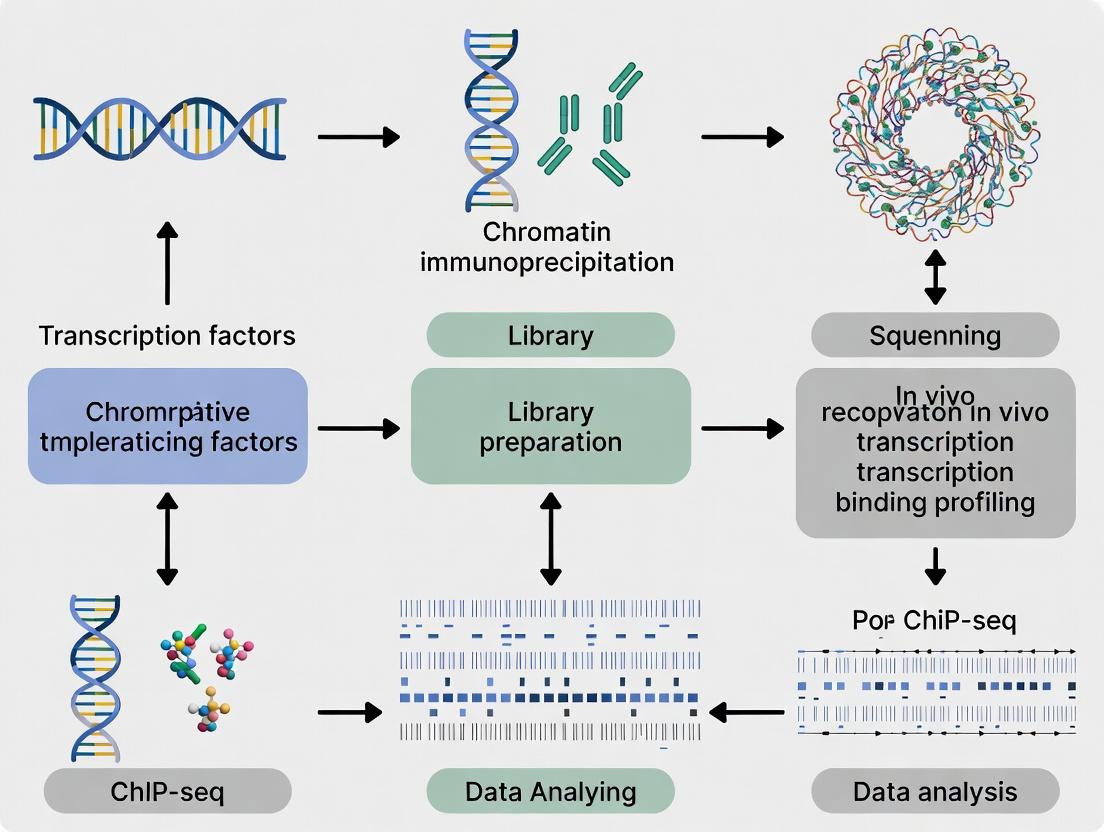
This comprehensive guide provides researchers, scientists, and drug development professionals with a detailed roadmap for Chromatin Immunoprecipitation followed by sequencing (ChIP-seq) to profile in vivo transcription factor (TF) binding.
ChIP-seq Master Guide: In Vivo Transcription Factor Binding Profiling for Research & Drug Discovery
Abstract
This comprehensive guide provides researchers, scientists, and drug development professionals with a detailed roadmap for Chromatin Immunoprecipitation followed by sequencing (ChIP-seq) to profile in vivo transcription factor (TF) binding. We cover foundational principles, from the biological significance of TF binding to experimental design. The guide delivers a step-by-step methodological workflow, including crosslinking, immunoprecipitation, library prep, and data analysis. We address common pitfalls with troubleshooting and optimization strategies for low-abundance TFs and noisy backgrounds. Finally, we explore validation techniques, comparative analysis with methods like CUT&RUN/Tag, and advanced integrative multi-omics approaches. This article equips you to generate robust, reproducible TF binding maps crucial for understanding gene regulation and identifying novel therapeutic targets.
Understanding Transcription Factor Binding: Why In Vivo ChIP-seq is Indispensable for Genomic Research
Within the broader thesis on ChIP-seq for in vivo transcription factor (TF) binding profiling research, defining the precise genomic locations of TF binding sites is a fundamental objective. This work bridges the Central Dogma (DNA → RNA → Protein) with functional genomics, linking static sequence information to dynamic regulatory output. The following application notes contextualize key concepts and quantitative benchmarks.
The Central Dogma and Regulatory Layer
Gene regulation introduces a critical regulatory layer atop the Central Dogma. Transcription factors, as DNA-binding proteins, control the transcription (DNA to RNA) step, thereby influencing the entire downstream flow of biological information. In vivo profiling via ChIP-seq moves beyond in silico prediction, capturing TF occupancy within its native chromatin context.
Quantitative Landscape of Human Transcription Factors
Recent genome-wide studies and database aggregations provide a quantitative framework for the scale of the regulatory problem.
Table 1: Quantitative Overview of Human Transcription Factors and Binding Sites
| Metric | Approximate Count | Source / Note |
|---|---|---|
| Protein-coding genes in human genome | ~20,000 | Ensembl/GENCODE |
| Transcription Factors (TFs) | ~1,600 | Human TFome curation; DNA-binding domain-containing proteins |
| Typical TF binding motif length | 6-12 base pairs | Sequence-specific recognition helix |
| Putative genomic TF binding sites (motif matches) | Millions | In silico prediction; vastly exceeds functional sites |
| Empirical, in vivo TF binding sites (per ChIP-seq experiment) | 10,000 - 100,000 | Varies by TF, cell type, and assay sensitivity |
| Typical peak width (ChIP-seq) | 200-500 bp | Broader than motif due to sonication & antibody resolution |
Sources: Integrated from recent reviews in *Nature Reviews Genetics and data from the ENCODE Project Consortium (2023 update).*
Key Challenges in DefiningIn VivoBinding Sites
- Signal vs. Noise: Distinguishing specific binding from non-specific background DNA.
- Dynamic Range: Binding affinity varies greatly; high-affinity sites are easier to detect.
- Chromatin Accessibility: TFs primarily bind to accessible chromatin regions (nucleosome-depleted).
- Co-factor Dependence: Many TFs bind DNA cooperatively with other TFs.
Core Protocols for ChIP-seq in TF Binding Profiling
The following protocol outlines the standard method for generating genome-wide maps of TF occupancy.
Protocol 1: Standard Chromatin Immunoprecipitation followed by Sequencing (ChIP-seq) for a Transcription Factor
Objective: To identify genome-wide binding sites of a specific transcription factor in cultured mammalian cells.
I. Cell Fixation & Chromatin Preparation
- Crosslinking: Grow ~10^7 cells per ChIP. Add 1% formaldehyde directly to culture medium. Incubate 10 min at room temperature with gentle agitation.
- Quenching: Add glycine to 125 mM final concentration. Incubate 5 min.
- Cell Lysis: Wash cells twice with cold PBS. Scrape and pellet cells. Resuspend in Cell Lysis Buffer (10 mM Tris-HCl pH 8.0, 10 mM NaCl, 0.2% NP-40) with protease inhibitors. Incubate 15 min on ice. Pellet nuclei.
- Nuclear Lysis & Sonication: Resuspend nuclei in Sonication Lysis Buffer (50 mM Tris-HCl pH 8.0, 10 mM EDTA, 1% SDS). Sonicate chromatin to an average fragment size of 200-500 bp using a focused ultrasonicator (e.g., Covaris). Critical: Optimize sonication for each cell type.
- Chromatin Clarification: Centrifuge lysate at 20,000 x g for 10 min at 4°C. Collect supernatant. Dilute 10-fold in ChIP Dilution Buffer (16.7 mM Tris-HCl pH 8.0, 167 mM NaCl, 1.2 mM EDTA, 1.1% Triton X-100, 0.01% SDS).
II. Immunoprecipitation
- Pre-clearing: Add 50 µl of protein A/G magnetic beads (pre-blocked with BSA and sheared salmon sperm DNA) to diluted chromatin. Rotate for 1 hr at 4°C. Discard beads.
- Antibody Incubation: Take an aliquot as "Input" control (2%). Add specific anti-TF antibody (2-5 µg per IP) to the main chromatin. Rotate overnight at 4°C.
- Negative Control: Perform parallel IP with species-matched IgG.
- Bead Capture: Add 50 µl blocked protein A/G magnetic beads. Rotate for 2 hrs at 4°C.
- Washing: Wash beads sequentially with:
- Low Salt Wash Buffer (20 mM Tris-HCl pH 8.0, 150 mM NaCl, 2 mM EDTA, 1% Triton X-100, 0.1% SDS)
- High Salt Wash Buffer (20 mM Tris-HCl pH 8.0, 500 mM NaCl, 2 mM EDTA, 1% Triton X-100, 0.1% SDS)
- LiCl Wash Buffer (10 mM Tris-HCl pH 8.0, 250 mM LiCl, 1 mM EDTA, 1% NP-40, 1% sodium deoxycholate)
- TE Buffer (10 mM Tris-HCl pH 8.0, 1 mM EDTA). Perform all washes on ice for 5 min each.
III. Elution & Decrosslinking
- Elution: Elute chromatin twice with Elution Buffer (100 mM NaHCO3, 1% SDS), 15 min each at 65°C with agitation.
- Decrosslinking: Combine eluates and input control. Add NaCl to 200 mM final. Incubate overnight at 65°C to reverse crosslinks.
- Digestion: Add RNase A (30 min at 37°C) then Proteinase K (2 hrs at 55°C).
IV. DNA Purification & Library Preparation
- Purification: Purify DNA using silica membrane-based columns (e.g., QIAquick PCR Purification Kit). Elute in 30 µl EB buffer.
- Library Construction: Use a compatible next-generation sequencing library kit (e.g., NEBNext Ultra II DNA Library Prep). Perform end repair, A-tailing, adapter ligation, and size selection (150-300 bp insert).
- Amplification: Amplify library with 12-18 PCR cycles using indexed primers.
- Sequencing: Pool libraries and sequence on an Illumina platform (≥ 20 million non-duplicate reads per sample recommended).
V. Data Analysis (Key Steps)
- Alignment: Align reads to reference genome (e.g., hg38) using BWA or Bowtie2.
- Peak Calling: Identify significant enrichment regions ("peaks") using MACS3 or SEACR, comparing ChIP sample versus Input or IgG control.
- Motif Analysis: Extract sequences from peak summits (±50 bp) and analyze for enriched sequence motifs using HOMER or MEME-ChIP.
Visualizations
Diagram 1: TF binding regulates the Central Dogma (760px max)
Diagram 2: ChIP-seq workflow for TF binding site mapping (760px max)
The Scientist's Toolkit: Key Research Reagent Solutions
Table 2: Essential Materials for ChIP-seq in TF Profiling
| Item | Function & Rationale | Example/Note |
|---|---|---|
| Formaldehyde (1%) | Reversible protein-DNA crosslinker. Preserves in vivo protein-DNA interactions for subsequent purification. | High purity, molecular biology grade. |
| TF-specific Validated Antibody | Primary antibody for immunoprecipitation. Most critical reagent; defines specificity. | Use ChIP-validated or ChIP-seq-grade antibodies (e.g., from Abcam, Cell Signaling, Diagenode). |
| Protein A/G Magnetic Beads | Solid-phase support for antibody capture. Enables efficient washing and reduced background. | Streptavidin beads for biotinylated antibody protocols. |
| Sonication Device | Shears crosslinked chromatin to 200-500 bp fragments for resolution of binding sites. | Focused ultrasonicator (Covaris) or Bioruptor. |
| Silica-based DNA Purification Columns | Purify decrosslinked ChIP DNA post-elution. Removes proteins, salts, and contaminants. | QIAquick (Qiagen), DNA Clean & Concentrator (Zymo). |
| NGS Library Prep Kit | Converts ChIP DNA fragments into a sequencing-ready library by adding adapters and barcodes. | NEBNext Ultra II, KAPA HyperPrep. |
| Control Antibodies | For negative control IPs to assess background noise. | Species-matched Normal IgG (Rabbit, Mouse). |
| Input DNA (2% Saved Chromatin) | Control for chromatin accessibility and sequencing bias. Essential for accurate peak calling. | Decrosslinked and purified alongside IP samples. |
| Bioinformatics Software | Align sequences, call peaks, and identify motifs. | Bowtie2/BWA (alignment), MACS3 (peak calling), HOMER (motif discovery). |
The accurate determination of transcription factor (TF) binding sites is fundamental to understanding gene regulation. While in vitro binding assays like SELEX and protein binding microarrays (PBMs) provide high-throughput binding motif data, they often fail to predict in vivo occupancy accurately. Chromatin Immunoprecipitation followed by sequencing (ChIP-seq) remains the gold standard for in vivo profiling, revealing binding events within the native chromatin context. This application note underscores the necessity of context-specific profiling, detailing protocols that bridge in vitro and in vivo data to achieve a more complete biological understanding, a critical consideration for drug development targeting transcriptional pathways.
Comparative Analysis of Binding Profiling Methods
Table 1: Key Differences Between In Vitro and In Vivo Binding Assays
| Feature | In Vitro (e.g., SELEX, PBM) | In Vivo (ChIP-seq) |
|---|---|---|
| Cellular Context | Purified DNA & protein; No chromatin | Intact nucleus with native chromatin |
| Identifies | Intrinsic DNA binding specificity & motif | Functional binding sites in physiological context |
| Throughput | Very High (10^4-10^6 sequences) | Moderate (genome-wide) |
| Key Limitation | Misses chromatin effects (accessibility, nucleosomes) & co-factors | Requires high-quality antibodies; signal may be indirect |
| Primary Output | Consensus binding motif | Genome-wide binding map (peaks) |
| Quantitative Data Yield | Relative affinity (Kd) for synthetic sequences | Peak count, read density, differential binding statistics |
Table 2: Representative Quantitative Discrepancies: NF-κB p65 Binding
| Genomic Region | In Vitro PBM Predicted Affinity | In Vivo ChIP-seq Signal (Reads per Peak) | Chromatin Accessibility (ATAC-seq Signal) |
|---|---|---|---|
| High-Affinity Site in Open Chromatin | 0.95 (Normalized) | 1250 | 480 |
| High-Affinity Site in Closed Chromatin | 0.92 | 45 | 22 |
| Medium-Affinity Site in Open Chromatin | 0.67 | 620 | 510 |
| Low-Affinity Site in Open Chromatin | 0.31 | 105 | 465 |
Note: Hypothetical data based on published trends. Illustrates how chromatin accessibility can override intrinsic affinity in vivo.
Detailed Protocols
Protocol 1: IntegratedIn VitrotoIn VivoValidation Workflow
A. In Vitro HT-SELEX for Motif Determination
- Library Preparation: Synthesize a random oligonucleotide library (e.g., 20-40 bp variable region flanked by constant primers).
- Binding Reaction: Incubate purified, tagged TF with the DNA library in binding buffer (e.g., 10 mM Tris-HCl pH 7.5, 50 mM KCl, 1 mM DTT, 0.05% NP-40, 10% glycerol, 0.1 mg/mL BSA) for 30 min at 4°C.
- Capture & Washing: Use tag-specific magnetic beads to capture TF-DNA complexes. Wash 3x with binding buffer.
- Elution & PCR: Elute bound DNA, amplify by PCR. This constitutes one selection round.
- High-Throughput Sequencing: After 4-8 rounds of selection, sequence the enriched pool. Analyze with tools like MEME-ChIP or HOMER to derive a position weight matrix (PWM).
B. In Vivo ChIP-seq for Context-Specific Profiling
- Crosslinking & Harvesting: Treat cells (1x10^7) with 1% formaldehyde for 10 min at room temperature. Quench with 125 mM glycine.
- Cell Lysis & Sonication: Lyse cells in SDS lysis buffer. Sonicate chromatin to 200-500 bp fragments. (Validate fragment size on agarose gel).
- Immunoprecipitation: Pre-clear lysate with protein A/G beads. Incubate overnight at 4°C with 2-5 µg of validated, high-specificity anti-TF antibody. Include an isotype control IgG.
- Wash & Elution: Wash beads sequentially with Low Salt, High Salt, LiCl, and TE buffers. Elute complexes with elution buffer (1% SDS, 0.1M NaHCO3).
- Reverse Crosslinks & Purification: Incubate eluates at 65°C overnight with 200 mM NaCl. Treat with RNase A and Proteinase K. Purify DNA with silica spin columns.
- Library Prep & Sequencing: Prepare sequencing library using a commercial kit (e.g., NEB Next Ultra II). Sequence on an Illumina platform (≥ 20 million reads per sample).
C. Integrative Bioinformatic Analysis
- Peak Calling: Process ChIP-seq reads (alignment, filtering, peak calling) using a pipeline (e.g., Bowtie2 for alignment, MACS3 for peak calling).
- Motif Enrichment & Comparison: Use HOMER (
findMotifsGenome.pl) or MEME-ChIP to search for enriched motifs within ChIP-seq peaks. Compare the top in vivo motif to the in vitro SELEX-derived PWM. - Contextual Data Integration: Overlap binding peaks with independent assays for chromatin state (e.g., ATAC-seq peaks for accessibility, H3K27ac ChIP-seq for active enhancers) using BEDTools.
Protocol 2:In SituCompetitive ChIP-seq for Direct Binding Measurement
This protocol helps distinguish direct from indirect binding by spiking in a competitor.
- Prepare biotinylated double-stranded DNA oligonucleotides containing either a high-affinity motif (competitor) or a scrambled sequence (control).
- Perform standard ChIP-seq (as in Protocol 1B) but add 1-10 pmol of spike-in oligonucleotide to the sonicated chromatin before the IP step.
- Proceed with IP, washes, and library preparation.
- Quantification: Calculate the percentage reduction in reads at genuine binding sites in the competitor sample vs. control. A significant drop confirms direct, DNA-sequence-driven binding at those loci.
Visualizations
In Vitro vs. In Vivo Binding Determination Workflow
Key Factors Influencing In Vivo TF Binding
The Scientist's Toolkit: Research Reagent Solutions
Table 3: Essential Reagents and Kits for Context-Specific Binding Profiling
| Item | Function & Application | Key Consideration |
|---|---|---|
| High-Specificity ChIP-Validated Antibodies | Immunoprecipitation of the target TF in its native, crosslinked state. | Validate for ChIP-seq; high non-specific binding leads to background noise. |
| Magnetic Protein A/G Beads | Efficient capture of antibody-TF-chromatin complexes. | Superior recovery and lower background vs. agarose beads. |
| Crosslinking Reagents (Formaldehyde, DSG) | Preserve transient protein-DNA interactions in vivo. | Optimization of crosslinking time/concentration is critical for signal. |
| Chromatin Shearing Instrument (Covaris, Bioruptor) | Fragment chromatin to optimal size (200-500 bp). | Consistent shearing is vital for resolution and IP efficiency. |
| Commercial ChIP-seq Library Prep Kit (e.g., NEB Next Ultra II) | Prepare sequencing libraries from low-input, fragmented ChIP DNA. | Select kits with robust adaptor ligation and PCR steps for low DNA input. |
| Spike-in Control DNA/Chromatin (e.g., from D. melanogaster, S. pombe*) | Normalize for technical variation between ChIP-seq samples. | Enables quantitative comparison between conditions/cell types. |
| Assay for Transposase-Accessible Chromatin (ATAC-seq) Kit | Profile open chromatin regions in parallel to ChIP-seq. | Provides essential contextual filter for interpreting binding data. |
| Validated SELEX/Oligo Pool Library | Determine intrinsic DNA-binding motif of purified TF. | Required for comparing intrinsic vs. in vivo sequence preference. |
Chromatin Immunoprecipitation followed by sequencing (ChIP-seq) is the cornerstone technique for mapping in vivo protein-DNA interactions on a genome-wide scale. Within the context of a thesis on transcription factor (TF) binding profiling, ChIP-seq provides an unparalleled view of the cis-regulatory landscape, enabling the identification of promoter and enhancer regions critical for gene regulation. This application note details the core principles and protocols, integrating current best practices for robust and reproducible research and drug target discovery.
Core Principles & Workflow
The ChIP-seq workflow hinges on three sequential pillars: Crosslinking to capture transient interactions, Immunoprecipitation to enrich for specific protein-DNA complexes, and high-throughput Sequencing to map binding sites.
Diagram 1: ChIP-seq Core Workflow
Detailed Protocols
Crosslinking & Chromatin Preparation (For Cultured Cells)
Objective: Capture TF-DNA interactions and generate soluble chromatin fragments of 200–500 bp.
- Crosslinking: Treat ~1x10^7 cells with 1% formaldehyde (final concentration) for 10 minutes at room temperature with gentle agitation.
- Quenching: Add glycine to a final concentration of 0.125 M and incubate for 5 minutes.
- Cell Lysis: Wash cells twice with cold PBS. Resuspend pellet in 1 mL Cell Lysis Buffer (10 mM Tris-HCl pH 8.0, 10 mM NaCl, 0.2% NP-40) with protease inhibitors. Incubate on ice for 15 min, then pellet nuclei.
- Nuclear Lysis & Shearing: Resuspend nuclei in 1 mL Sonication Lysis Buffer (50 mM Tris-HCl pH 8.0, 10 mM EDTA, 1% SDS). Sonicate using a focused ultrasonicator (e.g., Covaris). Critical: Optimize cycles, duty factor, and power for desired fragment size.
- Pre-clearing & Assessment: Centrifuge sheared chromatin at 20,000 x g for 10 min at 4°C. Transfer supernatant. Analyze 50 µL on a 1.5% agarose gel to verify fragment size. Dilute supernatant 1:10 in ChIP Dilution Buffer (16.7 mM Tris-HCl pH 8.0, 167 mM NaCl, 1.2 mM EDTA, 1.1% Triton X-100).
Immunoprecipitation (IP) and DNA Recovery
Objective: Specifically enrich for chromatin fragments bound by the target transcription factor.
- Antibody-Bead Preparation: For each IP, incubate 1–5 µg of validated, ChIP-grade antibody with 50 µL of pre-washed Protein A/G magnetic beads in 500 µL Dilution Buffer for 2 hours at 4°C on a rotator.
- Chromatin-Bead Incubation: Add 1 mL of diluted, pre-cleared chromatin to the antibody-bead complex. Incubate overnight at 4°C with rotation.
- Washing: Using a magnetic rack, perform sequential 5-minute washes on ice with:
- 1 mL Low Salt Wash Buffer (20 mM Tris-HCl pH 8.0, 150 mM NaCl, 2 mM EDTA, 1% Triton X-100, 0.1% SDS)
- 1 mL High Salt Wash Buffer (20 mM Tris-HCl pH 8.0, 500 mM NaCl, 2 mM EDTA, 1% Triton X-100, 0.1% SDS)
- 1 mL LiCl Wash Buffer (10 mM Tris-HCl pH 8.0, 250 mM LiCl, 1 mM EDTA, 1% NP-40, 1% Na-deoxycholate)
- 2 x 1 mL TE Buffer (10 mM Tris-HCl pH 8.0, 1 mM EDTA)
- Elution & Reversal: Elute chromatin from beads in 200 µL Fresh Elution Buffer (100 mM NaHCO₃, 1% SDS). Add NaCl to a final concentration of 200 mM and reverse crosslinks at 65°C overnight.
- DNA Purification: Treat sample with RNase A and Proteinase K. Purify DNA using silica-membrane columns or SPRI beads. Elute in 30 µL TE buffer.
Library Preparation & Sequencing
Objective: Generate a sequencing library from immunoprecipitated DNA.
- End Repair & A-tailing: Use a commercial library prep kit (e.g., NEBNext). Repair fragment ends and add a single 'A' nucleotide.
- Adapter Ligation: Ligate indexed sequencing adapters.
- Size Selection & PCR Enrichment: Perform dual-sided SPRI bead cleanup to select fragments ~250–350 bp. Amplify with 12–15 PCR cycles.
- Quality Control & Sequencing: Assess library quality (Bioanalyzer/Fragment Analyzer) and quantify via qPCR. Sequence on an Illumina platform (minimum 20 million non-duplicate reads for TFs).
Key Data Metrics & Quality Control
Successful ChIP-seq experiments require stringent QC. Key metrics are summarized below.
Table 1: Essential ChIP-seq QC Metrics and Benchmarks
| QC Metric | Measurement Method | Optimal Benchmark (Transcription Factor) | Purpose |
|---|---|---|---|
| Fragment Size | Gel Electrophoresis / Bioanalyzer | 200–500 bp (post-sonication) | Optimal library complexity and mapping. |
| Library Concentration | qPCR (e.g., Kapa Library Quant) | > 2 nM | Ensures sufficient material for sequencing. |
| Sequencing Depth | Alignment Stats (e.g., SAMtools) | 20–50 million non-duplicate reads | Statistical power for peak calling. |
| FRiP Score | Peak Calling (e.g., MACS2) | > 1% (TF), > 5–30% (Histone) | Fraction of reads in peaks; indicates signal-to-noise. |
| Cross-correlation (NSC/ RSC) | SPP or phantompeakqualtools | NSC > 1.05, RSC > 0.8 | Assesses signal-to-noise and fragment length shift. |
The Scientist's Toolkit: Research Reagent Solutions
Table 2: Essential Materials for ChIP-seq
| Item | Function | Example/Note |
|---|---|---|
| ChIP-Grade Antibody | Specifically binds target protein for immunoprecipitation. | Validate via knockout/knockdown cell line or peptide blocking. |
| Protein A/G Magnetic Beads | Capture antibody-antigen complex for easy washing. | Superior recovery and lower background vs. agarose beads. |
| Formaldehyde (37%) | Reversible protein-DNA crosslinker. | Use fresh; crosslinking time is cell/target dependent. |
| Protease Inhibitor Cocktail | Prevents degradation of proteins/chromatin during prep. | Add fresh to all lysis and wash buffers. |
| Focus-Ultrasonicator | Shears chromatin to optimal fragment size. | Covaris or Bioruptor systems provide consistent shear profiles. |
| Silica-Membrane Columns/SPRI Beads | Purify DNA after crosslink reversal. | Critical for removing contaminants prior to library prep. |
| Indexed Adapter Kit | Prepares DNA fragments for sequencing. | NEBNext Ultra II, Illumina TruSeq. Ensure low-input compatibility. |
Data Analysis Pathway
Post-sequencing data flows through a standardized bioinformatics pipeline to generate binding profiles.
Diagram 2: ChIP-seq Data Analysis Pipeline
Within the broader thesis of using Chromatin Immunoprecipitation followed by sequencing (ChIP-seq) for in vivo transcription factor (TF) binding profiling, this application note details how this pivotal technology addresses fundamental biological questions. TF ChIP-seq maps the precise genomic locations where a TF binds, providing a snapshot of its regulatory landscape. This data is indispensable for identifying active enhancers and promoters, deciphering regulatory networks, and understanding gene expression control in development, disease, and drug response.
Key Biological Questions and Insights
TF ChIP-seq data analysis directly answers several core questions about gene regulation.
1. Where does a transcription factor bind in the genome? This primary output identifies thousands of binding sites (peaks), revealing the TF's direct genomic targets and potential regulatory influence.
2. Is the TF binding at promoters, enhancers, or other regulatory elements? By integrating ChIP-seq peaks with chromatin state data (e.g., H3K4me3 for promoters, H3K27ac for active enhancers), the functional class of the bound element is determined.
3. What genes are likely regulated by the TF? Peaks are associated with nearby or looping-connected genes, generating a list of candidate target genes for functional validation.
4. What DNA sequence motif does the TF recognize? De novo motif discovery within the peak sequences identifies the TF's binding motif, which can reveal co-binding partners or novel binding specificities.
5. How do TFs collaborate to form regulatory networks? Integrating ChIP-seq data for multiple TFs uncovers co-binding events, hierarchical relationships, and combinatorial logic governing gene expression programs.
Table 1: Typical TF ChIP-seq Output Metrics and Interpretations
| Metric | Typical Range/Value | Biological Interpretation |
|---|---|---|
| Number of Peaks | 1,000 - 50,000 | Indicates scope of the TF's regulatory footprint. |
| Peak Width (bp) | 200 - 1000 | Reflects binding mode and complex size. |
| % Peaks in Promoters | 10% - 40% | Suggests direct transcriptional initiation role. |
| % Peaks in Enhancers | 30% - 70% | Implicates role in long-range gene regulation. |
| Top De Novo Motif E-value | <1e-50 | Confidence that the discovered motif is genuine. |
| Motif Occurrence in Peaks | 20% - 80% | Fraction of peaks with canonical motif; lower % may indicate co-binding or indirect recruitment. |
Table 2: Integration with Epigenetic Marks for Element Classification
| Regulatory Element | Defining Chromatin Marks | Typical TF ChIP-seq Peak Association |
|---|---|---|
| Active Promoter | H3K4me3, H3K27ac | TF binding near TSS suggests direct regulation of transcription initiation. |
| Active Enhancer | H3K27ac, H3K4me1, low H3K4me3 | TF binding defines the activator at the enhancer. |
| Poised Enhancer | H3K4me1, H3K27me3 | TF binding may poise enhancer for future activation. |
| Insulator | CTCF binding | TF binding at these sites may modulate chromatin looping. |
Detailed Protocols
Protocol 1: Standard TF ChIP-seq Workflow
Objective: To generate a genome-wide map of in vivo binding sites for a transcription factor of interest.
Materials:
- Crosslinked cells or tissue.
- Specific, validated antibody against the target TF.
- Protein A/G magnetic beads.
- Cell lysis and sonication buffers.
- DNA purification kit.
- Library preparation kit for Illumina sequencing.
- Qubit fluorometer and Bioanalyzer/TapeStation.
Procedure:
- Crosslinking: Fix cells with 1% formaldehyde for 8-10 minutes at room temperature. Quench with glycine.
- Cell Lysis: Lyse cells in SDS buffer, then pellet nuclei.
- Chromatin Shearing: Sonicate chromatin to an average fragment size of 200-500 bp. Verify size distribution by gel electrophoresis.
- Immunoprecipitation: Pre-clear chromatin. Incubate with TF-specific antibody overnight at 4°C. Add beads and incubate. Wash beads sequentially with Low Salt, High Salt, LiCl, and TE buffers.
- Elution & Reverse Crosslinking: Elute complexes, add NaCl, and reverse crosslinks at 65°C overnight.
- DNA Purification: Treat with RNase A and Proteinase K. Purify DNA using spin columns.
- Library Preparation & Sequencing: Prepare sequencing libraries from ChIP and Input DNA following kit protocol. Perform quality control. Sequence on an Illumina platform (≥20 million reads/sample recommended).
Protocol 2: Identifying Enhancers vs. Promoters from TF ChIP-seq Data
Objective: To classify TF binding sites as associated with enhancers or promoters.
Materials:
- TF ChIP-seq peak file (BED format).
- Reference genome annotation (GTF file).
- Public or in-house ChIP-seq datasets for H3K4me3 and H3K27ac.
- Software: BEDTools, R/Bioconductor (ChIPseeker, GenomicRanges).
Procedure:
- Define Promoter Regions: Using the genome annotation, create a BED file of regions ±2.5 kb from transcription start sites (TSS).
- Annotate TF Peaks to Genomic Features: Use ChIPseeker or BEDTools to overlap TF peaks with promoter regions.
- Integrate Histone Mark Data: Overlap TF peaks with H3K4me3 (promoter mark) and H3K27ac (active enhancer/promoter mark) peaks.
- Classification:
- Promoter-associated TF peak: Overlaps a promoter region and H3K4me3 peak.
- Enhancer-associated TF peak: Does NOT overlap a promoter/H3K4me3 region but DOES overlap an H3K27ac peak.
- Other/Unknown: Peaks not fitting above criteria (e.g., poised or repressive elements).
Protocol 3: Constructing a Core Regulatory Network
Objective: To infer a simple regulatory network from TF ChIP-seq data for multiple factors in a system.
Materials:
- ChIP-seq peak files for 3-5 key TFs.
- Motif database (e.g., JASPAR, CIS-BP).
- Expression data (RNA-seq) for the same cellular context.
- Software: HOMER, Cytoscape.
Procedure:
- Find Co-bound Genomic Regions: Use BEDTools to find genomic intervals bound by multiple TFs (e.g., intersections of peak calls).
- Identify Target Genes: Assign each co-bound region to the nearest active gene (using RNA-seq to filter for expressed genes).
- Perform Motif Analysis: On the co-bound regions, use HOMER
findMotifsGenome.plto identify enriched motifs of other TFs. - Network Inference:
- Nodes: Represent TFs and their target genes.
- Edges (TF -> Gene): Drawn if the TF binds near the gene.
- Edges (TF1 -> TF2): Drawn if TF1's binding site is enriched for the DNA motif of TF2, suggesting hierarchical regulation.
- Visualization: Import node and edge tables into Cytoscape to visualize the regulatory network.
Diagrams
TF ChIP-seq Experimental Workflow
Logic for Classifying TF Binding Sites
Inferred Core Transcriptional Regulatory Network
The Scientist's Toolkit
Table 3: Essential Research Reagent Solutions for TF ChIP-seq
| Item | Function & Importance | Example/Note |
|---|---|---|
| High-Quality TF Antibody | Specifically immunoprecipitates the target TF. Critical for success. Must be validated for ChIP. | Rabbit monoclonal antibodies are preferred for specificity. Check vendor ChIP-seq validation data. |
| Magnetic Protein A/G Beads | Efficient capture of antibody-TF-chromatin complexes. Reduce background vs. agarose beads. | Dynabeads or similar. Choose based on antibody host species. |
| Sonication Device | Shears crosslinked chromatin to optimal fragment size (200-500 bp). | Covaris focused ultrasonicator (consistent) or Bioruptor (batch). |
| DNA Library Prep Kit | Prepares sequencing libraries from low-input, sheared ChIP DNA. | Kits from Illumina, NEB, or Takara Bio with built-in size selection. |
| Validated Control Antibodies | Positive (e.g., H3K27ac) and negative (e.g., IgG) controls for assay optimization. | Essential for troubleshooting and validating experimental output. |
| ChIP-seq Grade Cells/Tissue | Biologically relevant material with expected expression of the target TF. | Primary cells, cultured cell lines, or snap-frozen tissue. |
| Cell Lysis & Wash Buffers | Lyse cells, wash beads to minimize non-specific background. | Low Salt, High Salt, LiCl, and TE buffer recipes are standard. |
| DNA Purification Kit | Clean and concentrate low-abundance ChIP DNA after reverse crosslinking. | Columns or SPRI bead-based purification. |
Application Notes: Foundational Pillars for Robust ChIP-seq
Successful in vivo transcription factor (TF) binding profiling via Chromatin Immunoprecipitation followed by sequencing (ChIP-seq) hinges on rigorous pre-experimental planning. Failure to address these core considerations is a primary source of irreproducible results, wasted resources, and erroneous biological conclusions.
Antibody Validation is the single most critical factor. An invalid antibody will generate data that is uninterpretable, regardless of subsequent technical perfection. The challenge is that a commercial antibody’s performance in Western blot or immunofluorescence does not guarantee its suitability for ChIP, where it must recognize the native, chromatin-bound TF epitope.
Cell Type Selection must be biologically relevant to the research question. The TF’s binding landscape is exquisitely sensitive to cellular state, differentiation stage, and environmental cues. Using an inappropriate cell model yields a binding profile that may be physiologically irrelevant.
Biological Replicates are non-negotiable for distinguishing consistent binding events from stochastic noise. They account for biological variability inherent in living systems and are essential for any meaningful statistical analysis.
The following table summarizes quantitative benchmarks for these pillars, derived from current community standards (ENCODE, modENCODE) and recent literature.
Table 1: Quantitative Benchards for Pre-Experimental ChIP-seq Design
| Consideration | Key Metric | Minimum Recommended Standard | Optimal Goal | Primary Purpose |
|---|---|---|---|---|
| Antibody Validation | Signal-to-Noise Ratio (SNR) | ≥ 5 (by qPCR at positive control locus) | ≥ 10 | Specificity confirmation |
| Fold-Enrichment (ChIP-qPCR) | ≥ 10-fold over IgG | ≥ 50-fold | Efficacy assessment | |
| Knockout/Knockdown Validation | ≥ 70% loss of signal in target-depleted cells | ≥ 90% loss | Specificity gold standard | |
| Biological Replicates | Number of Replicates | 2 for discovery, 3 for differential binding | 3+ | Statistical power, reproducibility |
| Replicate Concordance (IDR*) | IDR < 0.05 for high-confidence peaks | IDR < 0.01 | Assessing technical/biological variance | |
| Cell Input Material | Cell Number per IP | 0.5 - 1 million for adherent lines; 1-5 million for primary | Scaled by TF abundance | Ensure sufficient chromatin complexity |
| Cross-linked Chromatin Mass | 5 - 10 µg per IP | 10 - 25 µg | Consistent immunoprecipitation efficiency |
*Irreproducible Discovery Rate
Detailed Protocols
Protocol 1: Orthogonal Antibody Validation for ChIP-seq
This protocol outlines a multi-step validation strategy beyond vendor datasheets.
A. Pre-Validation: In Silico and Immunoblot Analysis
- Epitope Mapping: Retrieve the immunogen sequence from the vendor. Confirm it maps to a unique, accessible region of the target TF using protein structure databases (e.g., AlphaFold DB).
- Specificity Check (Western Blot):
- Prepare whole-cell extracts from relevant cell lines, including a genetic knockout (KO) or siRNA-mediated knockdown (KD) of the target TF.
- Perform SDS-PAGE and western blotting with the ChIP antibody.
- Acceptance Criterion: A single band at the correct molecular weight in wild-type cells that is abolished or dramatically reduced in KO/KD lysates.
B. Functional Validation: ChIP-qPCR
- Cell Cross-linking & Sonication: Perform standard cross-linking (1% formaldehyde, 10 min) and sonication to shear chromatin to 200-500 bp fragments.
- Immunoprecipitation: Split sheared chromatin into three aliquots:
- Test IP: Target TF antibody.
- Positive Control IP: Antibody for a well-characterized factor (e.g., H3K27ac for active enhancers).
- Negative Control IP: Species-matched normal IgG.
- qPCR Analysis: Design primers for:
- Known Positive Locus: A genomic site confirmed to bind the TF (from literature).
- Known Negative Locus: A gene desert or inactive region.
- "Bait" Locus: A site of specific interest to your study.
- Calculation: Calculate % Input and Fold-Enrichment (FE) over IgG for each locus.
- Acceptance Criterion: Strong enrichment (FE ≥10) at the positive locus, minimal signal (FE ~1) at the negative locus.
C. Gold-Standard Validation: Genetic Depletion
- Generate isogenic cell pairs (WT vs. CRISPR KO or shRNA KD) for the target TF.
- Perform parallel ChIP-qPCR experiments on both lines using the same antibody.
- Acceptance Criterion: ≥70% reduction in ChIP signal at positive control loci in the depleted cells versus the WT.
Protocol 2: Defining and Processing Biological Replicates
A. Definition and Planning
- Biological Replicate: Cells or tissues harvested from independent growth passages, animal individuals, or patient samples. They capture biological variance.
- Technical Replicate: Multiple libraries made from the same immunoprecipitated DNA. They assess technical noise. For ChIP-seq, biological replicates are paramount.
- Minimum Design: Plan for n=3 independent biological replicates. This allows for the potential loss of one replicate while retaining n=2 for analysis and provides basic degrees of freedom for statistics.
B. Experimental Execution to Minimize Batch Effects
- Parallel Processing: Culture or harvest all replicate samples independently but in parallel.
- Reagent Batches: Use the same batches of antibodies, buffers, and enzymes for all replicates.
- Cross-linking & Sonication: Perform on the same day under identical conditions. Document sonicator settings and time precisely.
- Randomized IP: Process IPs for all replicates in a randomized order across days to avoid systematic bias.
- Library Preparation & Sequencing: Prepare libraries simultaneously using a multiplexed kit. Pool libraries in equimolar ratios and sequence all replicates on the same flow cell lane to minimize sequencing batch effects.
Visualizations
ChIP-seq Pre-Experimental Decision Workflow
Biological Replicates Converge on High-Confidence Results
The Scientist's Toolkit: Research Reagent Solutions
Table 2: Essential Reagents for Pre-Experimental ChIP-seq Validation
| Reagent / Solution | Function in Pre-Experimental Phase | Key Consideration |
|---|---|---|
| Validated Antibody for Target TF | Specifically immunoprecipitates the native, chromatin-bound transcription factor. | Must be validated for ChIP application. Check www.encodeproject.org for antibodies used in published datasets. |
| Isogenic Control Cell Lines | Paired wild-type and CRISPR knockout lines for the target TF. | Provides the gold-standard negative control for antibody specificity testing. |
| Positive Control PCR Primers | Amplify a genomic region with known, strong binding for the TF. | Essential for calculating Fold-Enrichment during antibody validation. |
| Negative Control PCR Primers | Amplify a region confirmed to lack TF binding (e.g., inactive gene desert). | Establishes baseline noise level for the ChIP assay. |
| Normal Species-Matched IgG | Non-specific immunoglobulin from the same host species as the primary antibody. | Serves as the critical negative control IP for assessing background signal. |
| Cross-linking Reagent (Formaldehyde) | Reversibly fixes protein-DNA interactions in living cells. | Concentration and time must be optimized for each TF-cell type pair. |
| Chromatin Shearing System | Sonication device (e.g., focused ultrasonicator) to fragment cross-linked chromatin. | Must produce consistent fragment sizes (200-500 bp); optimization is required. |
| ChIP-seq Grade Protein A/G Beads | Magnetic or agarose beads that bind antibody-Fc regions. | Choice depends on antibody species/isotype. Magnetic beads facilitate high-throughput processing. |
| Cell Type-Specific Culture Media | Maintains the physiological state and identity of the chosen cell model. | Essential for ensuring the TF's binding profile is biologically relevant. |
ChIP-seq Protocol Deep Dive: A Step-by-Step Workflow from Cells to Sequencing Data
In the context of ChIP-seq for in vivo transcription factor (TF) binding profiling, the initial phase of cell preparation and crosslinking is critically determinative. This stage must achieve a delicate equilibrium: preserving transient, low-affinity protein-DNA interactions through crosslinking while maintaining sufficient epitope accessibility for subsequent immunoprecipitation. Insufficient crosslinking leads to signal loss, whereas excessive crosslinking creates epitope masking and chromatin fragmentation challenges, compromising data resolution and specificity.
Quantitative Data on Crosslinking Agents & Conditions
Table 1: Comparative Analysis of Common Crosslinkers for TF ChIP-seq
| Crosslinker | Primary Target(s) | Recommended Concentration | Incubation Time | Key Advantage for TFs | Key Limitation |
|---|---|---|---|---|---|
| Formaldehyde (FA) | Protein-DNA, Protein-Protein (short-range) | 0.5% - 1.0% | 5 - 15 min (RT) | Rapid penetration; reversible | Suboptimal for indirect/distant TF-DNA interactions |
| DSG (Disuccinimidyl glutarate) + FA | Protein-Protein (primary), then Protein-DNA | 2 mM DSG + 1% FA | 45 min DSG (4°C) then 15 min FA (RT) | Stabilizes TF-cofactor complexes; enhances indirect binding signals | Complex two-step protocol; potential over-fixation |
| EGS (Ethylene glycol bis(succinimidyl succinate)) + FA | Protein-Protein (longer spacers) | 1.5 - 3 mM EGS + 1% FA | 30-45 min EGS (RT) then 15 min FA (RT) | Captures larger protein complexes; useful for TFs with large interactomes | Lower solubility; requires DMSO dissolution |
| DTBP (Dimethyl 3,3'-dithiobispropionimidate) | Protein-Protein (cleavable) | 5 mM | 2 hours (RT) | Cleavable with reducing agents; can improve accessibility | Less efficient for direct DNA-binding proteins alone |
Table 2: Impact of Fixation Conditions on ChIP-seq Outcome Metrics
| Condition | Crosslinking Density (Adducts/kb)* | % Epitope Recovery Post-Sonication | Peak Call Number (vs. Optimal) | Background (Non-specific reads) |
|---|---|---|---|---|
| 0.5% FA, 5 min | 2-4 | 85-95% | Optimal (Reference) | Low |
| 1% FA, 10 min | 8-12 | 70-85% | +5% | Moderate |
| 1% FA, 20 min | 15-25 | 50-70% | -15% | High |
| DSG+FA Sequential | 20-30 (Protein-Proximal) | 60-80% | +10-20% (for complex-dependent TFs) | Moderate |
| Model system estimates. *Highly antibody-dependent. |
Detailed Protocols
Protocol 3.1: Standard Formaldehyde Crosslinking for Adherent Cells
Application: General TF binding profiling where direct DNA contact is proximal. Reagents: 37% Formaldehyde (methanol-free), 2.5M Glycine (in PBS), 1X PBS (ice-cold). Procedure:
- Grow cells to 70-80% confluency.
- Add 1/10 volume of freshly prepared 11% formaldehyde solution (diluted from 37% stock in culture medium) directly to culture dish to achieve a final concentration of 1%.
- Incubate at room temperature (RT) for exactly 10 minutes with gentle rocking.
- Quench crosslinking by adding 1/20 volume of 2.5M glycine (final ~125mM). Rock for 5 minutes at RT.
- Aspirate medium. Wash cells twice with 10 ml ice-cold PBS.
- Scrape cells in 2 ml PBS with protease inhibitors. Pellet at 800xg, 4°C, 5 min.
- Flash-freeze pellet in liquid N₂ or proceed immediately to lysis.
Protocol 3.2: Sequential DSG + Formaldehyde Crosslinking for TF Complexes
Application: For TFs that bind DNA via complexes or co-factors (e.g., pioneer factors, nuclear receptors). Reagents: DSG (Thermo Fisher, #20593), prepared fresh in DMSO; Formaldehyde; Glycine; PBS. Procedure:
- Harvest cells by gentle dissociation (no trypsin for adherent cells; use EDTA).
- Wash cells once in PBS. Resuspend in PBS at ~1x10⁷ cells/ml.
- Add DSG from fresh 50mM stock in DMSO to a final 2mM. Incubate for 45 minutes at 4°C with rotation.
- Pellet cells (800xg, 5 min, 4°C). Wash once with 10 ml PBS.
- Resuspend in PBS. Add formaldehyde to 1% final. Incubate 15 minutes at RT with rotation.
- Quench with 125mM glycine final, 5 min RT.
- Pellet, wash twice with cold PBS. Proceed to lysis or freeze at -80°C.
Protocol 3.3: Chromatin Shearing Optimization Post-Crosslinking
Critical Step: Epitope accessibility is heavily influenced by chromatin fragmentation size. Materials: Covaris S220 or Bioruptor Pico; 130µl microTUBEs; LB1-3 Lysis Buffers (Diagenode). Procedure:
- Lyse crosslinked pellet in 1 ml LB1 buffer (with inhibitors) for 10 min on ice. Pellet nuclei.
- Resuspend in 1 ml LB2 buffer. Incubate 5 min on ice. Pellet.
- Resuspend nuclei in 0.5 ml LB3 buffer. Transfer to sonication vessel.
- Covaris Settings for 200-500 bp fragments: Peak Incident Power: 140W; Duty Factor: 5%; Cycles/Burst: 200; Time: 10-15 min (adjust per cell type).
- Centrifuge sheared chromatin at 20,000xg, 10 min, 4°C. Transfer supernatant.
- Verify Fragment Size: Run 50µl on a 1.5% agarose gel (post-reverse crosslinking). Aim for a smear centered at ~300 bp.
Diagrams
Title: Crosslinking Balance Decision Tree for TF ChIP-seq
Title: Phase 1 Experimental Workflow
The Scientist's Toolkit: Research Reagent Solutions
Table 3: Essential Materials for Cell Preparation & Crosslinking
| Item | Function & Rationale | Example Product/Provider |
|---|---|---|
| Methanol-Free Formaldehyde (37%) | Primary crosslinker; avoids methanol-induced protein denaturation that can mask epitopes. | Thermo Fisher, #28906 |
| DSG (Disuccinimidyl glutarate) | Homobifunctional NHS-ester crosslinker; stabilizes protein-protein interactions prior to FA fixation. | Thermo Fisher, #20593 |
| Protease Inhibitor Cocktail (PIC) | Prevents proteolytic degradation of TFs and complexes during harvest and lysis. | Roche, cOmplete EDTA-free |
| Glycine (2.5M Stock) | Quenches unreacted formaldehyde, stopping crosslinking to prevent over-fixation. | Sigma-Aldrich, G7126 |
| PBS (Phosphate Buffered Saline), Ice-Cold | Maintains isotonicity during washes; cold temperature slows cellular processes. | Gibco, #10010023 |
| Diagenode LB1/LB2/LB3 Buffers | Optimized lysis buffers for chromatin preparation; ensure clean nuclear isolation. | Diagenode, #C01010021 |
| Covaris microTUBES | AFA fiber-based tubes for consistent chromatin shearing with Covaris sonicator. | Covaris, #520045 |
| Bioruptor Pico Sonication System | Alternative water bath sonicator for consistent shearing with multiple samples. | Diagenode, #B01060001 |
| Agarose (Molecular Biology Grade) | For quality control gel electrophoresis of sheared chromatin fragment size. | Bio-Rad, #1613100 |
| RNase A | Removes RNA that can co-pellet with chromatin and affect shearing efficiency. | Qiagen, #19101 |
Within a comprehensive thesis on in vivo transcription factor (TF) binding profiling via ChIP-seq, chromatin shearing represents the critical bridge between biological fixation and molecular analysis. The goal is to generate unbiased, optimally sized chromatin fragments that balance yield, specificity, and resolution. Ideal shearing liberates protein-bound DNA segments while minimizing over- or under-sonication, which can artifactually alter binding profiles or reduce signal-to-noise ratios. This phase directly influences peak calling accuracy, background levels, and the ability to discern closely spaced binding events.
Quantitative Parameters for Sonication Optimization
Table 1: Key Variables in Sonication Optimization
| Variable | Typical Range | Impact on Fragment Size | Optimization Goal |
|---|---|---|---|
| Peak Incident Power | 50-400 W (Covaris) | Higher power decreases size. | Find minimum power for target size to limit heat. |
| Duty Cycle | 5-20% | Higher % cycle decreases size, increases heat. | Balance efficiency with sample cooling. |
| Cycles per Burst | 200-1000 | More cycles per burst decrease size. | Tune for efficient energy transfer. |
| Treatment Time | 1-30 minutes | Longer time decreases size. | Primary tuning parameter; monitor progression. |
| Sample Volume | 50-500 µL | Smaller volumes can shear more efficiently. | Keep constant across experiments. |
| Cell Count | 0.5-10 million | Higher density can require more energy. | Standardize input for reproducibility. |
| Temperature | 2-6°C (maintained) | Increased temp causes DNA denaturation/over-shearing. | Actively cool in a water bath or chiller. |
| Buffer Ionic Strength | Low to Moderate (e.g., SDS <0.1%) | High salt buffers shear more efficiently. | Use validated ChIP-compatible buffers. |
Table 2: Target Fragment Size Distributions by Application
| Application | Ideal Size Range (bp) | Rationale |
|---|---|---|
| Transcription Factor ChIP-seq | 150-300 bp | High resolution for precise binding site mapping. |
| Histone Mark ChIP-seq | 200-500 bp | Broader enrichment regions accommodate nucleosome spacing. |
| Native ChIP (nChIP) | 300-700 bp | Larger fragments due to absence of crosslinking. |
| ATAC-seq | < 1000 bp (multi-nucleosomal) | Not sonication-based, but illustrates size contrast. |
Detailed Experimental Protocol: Chromatin Shearing via Focused Ultrasonication
A. Pre-Sonication Preparation
- Crosslinked Cell Pellet: Use 1-5 million fixed cells per ChIP. Wash pellet twice with cold 1X PBS.
- Lysis: Resuspend pellet in 1 mL of cold Lysis Buffer 1 (50 mM HEPES-KOH pH 7.5, 140 mM NaCl, 1 mM EDTA, 10% Glycerol, 0.5% NP-40, 0.25% Triton X-100) + protease inhibitors. Rotate 10 min at 4°C.
- Nuclei Isolation: Pellet nuclei (1350 RCF, 5 min, 4°C). Discard supernatant. Resuspend in 1 mL of cold Lysis Buffer 2 (10 mM Tris-HCl pH 8.0, 200 mM NaCl, 1 mM EDTA, 0.5 mM EGTA) + protease inhibitors. Rotate 10 min at 4°C.
- Wash & Resuspension: Pellet nuclei (1350 RCF, 5 min, 4°C). Discard supernatant. Resuspend nuclei in 100-300 µL of cold Shearing Buffer (0.1% SDS, 10 mM EDTA, 50 mM Tris-HCl pH 8.1) + protease inhibitors. Transfer to a microTUBE or appropriate sonicator tube.
B. Sonication Optimization Run
- Baseline Setup: Using a focused ultrasonicator (e.g., Covaris S220), set the water bath to 4-6°C. Degas for 20 min.
- Initial Test Parameters: For 130 µL sample in a microTUBE, use: Peak Incident Power = 105 W, Duty Cycle = 5.0%, Cycles per Burst = 200, Time = 45 seconds.
- Time-Course Experiment: Subject identical aliquots to cumulative sonication times (e.g., 45s, 90s, 135s, 180s). After each interval, remove a 10 µL aliquot for analysis.
- Post-Sonication: Reverse crosslinks in aliquots (65°C overnight with 200 mM NaCl). Treat with RNase A and Proteinase K. Purify DNA via spin columns.
- Analysis: Assess fragment size distribution using a high-sensitivity Bioanalyzer or TapeStation. Plot the distribution to identify the time point yielding the maximal peak within the 150-300 bp range.
C. Scalable Shearing Protocol Based on optimization, a standardized protocol for 1 million crosslinked HeLa cells in 130 µL is:
- Instrument: Covaris S220
- Peak Incident Power: 105 W
- Duty Factor: 5.0%
- Cycles per Burst: 200
- Treatment Time: 120 seconds (cumulative, can be 2 x 60s with pause for cooling)
- Temperature: 4-6°C
D. Post-Shearing Processing
- Add 1/10 volume of 10% Triton X-100 to the sheared lysate to quench SDS.
- Pellet debris at 20,000 RCF for 10 min at 4°C.
- Transfer supernatant (sheared chromatin) to a new tube. Use immediately for immunoprecipitation or store at -80°C.
Visualization of Workflow and Decision Logic
Title: Chromatin Shearing Optimization Workflow
Title: Impact of Shearing Efficiency on ChIP-seq Outcomes
The Scientist's Toolkit: Key Research Reagent Solutions
Table 3: Essential Materials for Chromatin Shearing
| Item | Function & Rationale | Example Product/Brand |
|---|---|---|
| Focused Ultrasonicator | Delivers consistent, controlled acoustic energy for reproducible shear profiles. Water bath cooling minimizes heat. | Covaris S220, E220 Evolution |
| MicroTUBEs | Specific tubes with precise geometry for optimal energy coupling and minimal sample loss in focused sonicators. | Covaris microTUBE, AFA Fiber Screw-Cap |
| Protease Inhibitor Cocktail | Prevents degradation of transcription factors and histone epitopes during lysis and shearing. | EDTA-free PIC (e.g., Roche cOmplete) |
| ChIP-Compatible Lysis/SDS Buffers | Buffers designed to isolate nuclei and prepare chromatin while maintaining compatibility with downstream IP. | Cell Signaling Technology ChIP Buffers, Diagenode Shearing Buffer |
| High-Sensitivity DNA Analysis Kit | For precise quantification of fragment size distribution pre-IP. Essential for QC. | Agilent High Sensitivity DNA Kit, Bioanalyzer/TapeStation |
| Magnetic Rack & Beads | For efficient post-shearing debris removal if performing pre-clearing before IP. | SPRI beads, Dynabeads |
| Thermal Cooler/Circulating Chiller | Actively maintains water bath at 4-6°C during sonication to prevent overheating. | Scientific industry-grade chillers |
| RNase A & Proteinase K | For DNA purification and analysis of test aliquots during optimization time courses. | Molecular biology grade enzymes |
This application note details the critical Phase 3 of a Chromatin Immunoprecipitation followed by sequencing (ChIP-seq) workflow, focusing on the immunoprecipitation (IP) step. The specificity and yield of this phase are paramount for successful in vivo transcription factor (TF) binding profiling, directly impacting downstream sequencing data quality and biological interpretation. Optimal selection of magnetic beads, blocking agents, and wash stringency minimizes non-specific background while maximizing true target antigen recovery.
Research Reagent Solutions Toolkit
| Reagent/Material | Function in ChIP-seq IP |
|---|---|
| Protein A/G Magnetic Beads | Solid-phase support for antibody-antigen complex capture. Protein A/G chimeric beads offer broad species/isotype compatibility. |
| Bovine Serum Albumin (BSA) | A common blocking agent used at 0.1-0.5% in buffers to reduce non-specific binding to beads. |
| Salmon Sperm DNA | Nucleic acid blocking agent used (0.1-0.2 mg/mL) to prevent non-specific binding of sheared chromatin to beads/tube walls. |
| Protease Inhibitor Cocktail (PIC) | Essential additive to all buffers post-sonication to prevent degradation of transcription factors and histone epitopes. |
| Phosphatase Inhibitors | Often included in PIC for TFs whose binding/activity is phosphorylation-dependent. |
| Primary Antibody (ChIP-grade) | High-specificity antibody targeting the transcription factor or histone modification of interest. |
| Low Salt Wash Buffer (e.g., 150 mM NaCl) | Initial wash to remove weakly bound, non-specific complexes while preserving specific interactions. |
| High Salt Wash Buffer (e.g., 500 mM NaCl) | Stringent wash to disrupt ionic protein-DNA/protein-protein interactions, reducing background. |
| LiCl Wash Buffer | Detergent-based wash (often contains 0.25 M LiCl) to remove non-specific aggregates and residual contaminants. |
| TE Buffer (pH 8.0) | Final low-ionic-strength wash to prepare complexes for elution and remove salts/detergents. |
Choosing Beads: A Quantitative Comparison
The choice of bead is foundational. Magnetic beads coated with recombinant Protein A, Protein G, or a Protein A/G chimera are standard. The selection depends primarily on the species and subclass of the immunoprecipitating antibody.
Table 1: Magnetic Bead Selection Guide Based on Antibody Properties
| Bead Type | Ideal for Antibody Species/Subclass | Binding Capacity (Typical µg IgG/mg beads) | Non-specific Binding Profile | Recommended for ChIP-seq? |
|---|---|---|---|---|
| Protein A | Rabbit polyclonal, Human IgG1, IgG2, IgG4; Mouse IgG2a, IgG2b, IgG3 | 25-50 µg/mg | Low | Excellent for common rabbit antibodies. |
| Protein G | Mouse IgG1, Rat IgG; Human IgG3; Goat, Sheep polyclonals | 20-40 µg/mg | Low | Superior for mouse IgG1 antibodies. |
| Protein A/G | Broad spectrum: Combines affinities of both A & G. | 20-35 µg/mg | Moderate | Most recommended for screening or uncertain isotypes. |
| Species-Specific IgG (e.g., anti-Mouse) | Highly specific for a single species (e.g., Mouse). | 10-25 µg/mg | Very Low | Ideal for direct IP without host species contamination. |
Data synthesized from manufacturer specifications (Dynabeads, SureBeads) and peer-reviewed protocols (2023-2024).
Protocol 3.1: Bead Preparation and Pre-clearing
- Wash: Resuspend the appropriate volume of Protein A/G magnetic beads (typically 20-50 µL per IP) in 1 mL of cold ChIP IP Buffer (1x PBS, 0.1% BSA).
- Separate: Place tube on a magnetic rack for 1 minute. Discard supernatant.
- Repeat: Perform wash step twice.
- Block (Optional but Recommended): Resuspend washed beads in 1 mL of IP Buffer containing 0.5 mg/mL BSA and 0.2 mg/mL Salmon Sperm DNA. Rotate for 1 hour at 4°C.
- Pre-clear Chromatin: Add the blocked, washed beads to the diluted, sonicated chromatin sample. Rotate for 1 hour at 4°C.
- Separate: Magnetize and carefully transfer the supernatant (pre-cleared chromatin) to a new tube. Discard beads. This step removes chromatin that binds non-specifically to the beads.
Blocking Agents to Minimize Background
Blocking agents are crucial to saturate non-specific binding sites on beads and plasticware.
Table 2: Efficacy of Common Blocking Agents in ChIP-seq IP
| Blocking Agent | Typical Concentration | Primary Target of Blocking | Impact on Background DNA | Notes |
|---|---|---|---|---|
| BSA | 0.1% - 0.5% (w/v) | Hydrophobic sites on beads/plastic. | Reduces by ~30-50% | Inert, cost-effective. May co-precipitate if impure. |
| Salmon Sperm DNA | 0.1 - 0.2 mg/mL | Nucleic acid-binding sites. | Reduces by ~60-80% | Critical for TF ChIP-seq. Must be sheared or ultra-pure. |
| BSA + SSDNA Combination | 0.1% + 0.1 mg/mL | Both protein and DNA sites. | Reduces by ~70-90% | Gold standard for high-specificity applications. |
| Milk Powder | 2-5% (w/v) | General proteinaceous block. | Reduces by ~20-40% | Not recommended; contains endogenous biomolecules. |
| Chromatin Shearing Buffer | N/A | Mimics sample matrix. | Reduces by ~10-30% | Useful as a buffer component for equilibration. |
Quantitative impact estimates derived from comparative studies measuring non-precipitated "background" DNA in no-antibody controls.
Optimizing Wash Stringency
A sequential wash series of increasing stringency removes non-specifically bound chromatin without dissociating the antibody-target complex.
Protocol 3.2: Standardized Stringency Wash Series for TF ChIP-seq All buffers must be ice-cold and contain fresh protease inhibitors.
- Low Salt Wash: Add 1 mL of Buffer A (20 mM Tris-HCl pH 8.0, 150 mM NaCl, 2 mM EDTA, 1% Triton X-100, 0.1% SDS) to bead-antibody-chromatin complexes. Rotate for 5 minutes at 4°C. Magnetize and discard supernatant.
- High Salt Wash: Add 1 mL of Buffer B (20 mM Tris-HCl pH 8.0, 500 mM NaCl, 2 mM EDTA, 1% Triton X-100, 0.1% SDS). Rotate for 5 minutes at 4°C. Magnetize and discard supernatant.
- LiCl Wash: Add 1 mL of Buffer C (10 mM Tris-HCl pH 8.0, 0.25 M LiCl, 1 mM EDTA, 1% NP-40, 1% Sodium Deoxycholate). Rotate for 5 minutes at 4°C. Magnetize and discard supernatant.
- TE Final Wash: Add 1 mL of Buffer D (1x TE Buffer: 10 mM Tris-HCl pH 8.0, 1 mM EDTA). Rotate for 2 minutes at 4°C. Magnetize and discard supernatant. Repeat once.
- Proceed to Elution: After final wash, keep tubes magnetized and remove all residual wash buffer with a low-volume pipette.
Table 3: Wash Buffer Stringency and Purpose
| Wash Step | Key Component | Purpose & Mechanism | Recommended for Labile TFs? |
|---|---|---|---|
| Low Salt (Buffer A) | 150 mM NaCl | Removes contaminants bound by weak ionic interactions. | Yes, always included. |
| High Salt (Buffer B) | 500 mM NaCl | Disrupts moderate-strength non-specific ionic and hydrophobic interactions. | Use with caution; may elute weak binders. |
| LiCl (Buffer C) | 0.25 M LiCl, Deoxycholate | Removes aggregated proteins and lipid-associated contaminants. | Generally safe, detergent-based. |
| TE (Buffer D) | Low Ionic Strength | Removes detergents and salts to prepare for clean elution. | Yes, essential final step. |
Integrated Workflow Diagram
Title: ChIP-seq Phase 3: Immunoprecipitation Core Workflow
Decision Pathway for IP Stringency
Title: Decision Pathway for IP Wash Stringency Optimization
Within a ChIP-seq thesis focused on in vivo transcription factor (TF) binding profiling, the library preparation and sequencing phase is critical for converting immunoprecipitated DNA fragments into a format compatible with high-throughput sequencing. This step directly influences data quality, specificity, and the statistical power to identify bona fide binding sites. Optimal adapter design, controlled amplification, and appropriate sequencing depth are non-negotiable for robust conclusions in drug development research, where understanding TF binding landscapes can reveal therapeutic targets and mechanisms.
Adapter Design and Ligation
Adapters are short, double-stranded oligonucleotides ligated to the ends of ChIP-enriched DNA. They contain sequences required for library amplification, flow-cell binding, and indexing.
Key Functions:
- Platform-Specific Sequences: Primer binding sites for amplification and flow-cell attachment sequences (e.g., P5/P7 for Illumina).
- Unique Dual Indexes (UDIs): 8-basepair (bp) indices incorporated on both ends of the fragment, enabling sample multiplexing and robust demultiplexing, minimizing index hopping errors.
- Molecular Barcodes (Optional): Short unique molecular identifiers (UMIs) can be incorporated to correct for PCR duplication bias and improve quantitative accuracy.
Protocol: Adapter Ligation (Using Commercial Kits) Materials: Purified ChIP DNA, commercially available library preparation kit (e.g., Illumina DNA Prep, KAPA HyperPrep), size-selected magnetic beads, thermocycler.
- End Repair & A-Tailing: Convert ChIP DNA fragments (typically with 3´ or 5´ overhangs) into blunt-ended, 5´-phosphorylated fragments with a single 3´-dA overhang.
- Combine ChIP DNA, end repair & A-tailing buffer, and enzyme mix.
- Incubate at 20°C for 30 min, then 65°C for 30 min.
- Adapter Ligation: Ligate adapters with a complementary 3´-dT overhang to the A-tailed fragments.
- Add ligation buffer, enzyme, and appropriate adapter index mix directly to the A-tailed product.
- Incubate at 20°C for 15 min.
- Cleanup: Purify the ligated product using magnetic beads to remove excess adapters and reaction components. Elute in buffer or nuclease-free water.
Research Reagent Solutions: Adapter Ligation
| Reagent/Kit | Function in ChIP-seq Library Prep |
|---|---|
| Illumina DNA Prep Kit | Integrated workflow for end prep, ligation, and cleanup. Includes validated, platform-optimized adapters. |
| IDT for Illumina UDI Adapters | Pre-defined, uniquely dual-indexed adapters that minimize index hopping and cross-talk between multiplexed samples. |
| KAPA HyperPrep Kit | High-performance kit for low-input ChIP DNA, offering robust ligation efficiency. |
| SpeedBead Magnetic Beads | Used for size selection and cleanup, allowing for precise removal of adapter dimers and selection of desired fragment sizes. |
Library Amplification & Size Selection
Limited-cycle PCR enriches for adapter-ligated fragments and adds full-length adapter sequences required for cluster generation.
Critical Considerations:
- Cycle Number: Use the minimum number of PCR cycles necessary (typically 8-14) to avoid over-amplification, which skews library complexity and increases duplicate rates.
- PCR Enzymes: Use high-fidelity, proofreading polymerases designed for robust amplification of GC-rich or challenging sequences.
- Size Selection: Isolate fragments in the target size range (e.g., 200-500 bp, inclusive of adapters) to ensure uniform fragment size on the flow cell and improve data quality. This step removes primer dimers and very large fragments.
Protocol: Library Amplification & Size Selection Materials: Adapter-ligated DNA, high-fidelity PCR master mix, PCR primers, magnetic beads, bioanalyzer/tapestation.
- Amplification:
- Prepare PCR mix: purified ligation product, PCR primer mix, high-fidelity PCR master mix.
- Amplify: 98°C for 45 sec; [98°C for 15 sec, 60°C for 30 sec, 72°C for 30 sec] x N cycles; 72°C for 1 min. (N determined by input DNA).
- Double-Sided Size Selection (using Magnetic Beads):
- Remove Large Fragments: Add a calculated volume of bead suspension to the PCR product to achieve a supernatant containing fragments below a desired upper cutoff (e.g., ~500 bp). Discard beads.
- Recover Target Fragments: Add a second, larger volume of beads to the supernatant to bind the target fragments. Wash, elute.
- Quality Control: Assess library concentration (via qPCR) and size distribution (via Bioanalyzer/TapeStation).
ChIP-seq Library Preparation Workflow
Sequencing Depth & Configuration Recommendations
Adequate sequencing depth is paramount for statistical power in peak calling, especially for TFs with diffuse or weak binding sites. Configuration (read length, single vs. paired-end) also impacts mapping accuracy.
Quantitative Guidelines: The required depth depends on the genome size, TF binding characteristics, and analysis goals. Current recommendations are summarized below:
Table 1: Recommended Sequencing Depth for ChIP-seq Experiments
| Transcription Factor Type | Recommended Minimum Depth (Mapped Reads) | Rationale & Application Context |
|---|---|---|
| Pioneer / High-Availability TFs (e.g., FoxA1) | 20 - 40 million | Broad, numerous binding regions require greater depth for saturation and accurate peak shape. |
| Standard Sequence-Specific TFs (e.g., NF-κB, ERα) | 15 - 25 million | Sufficient for robust identification of focal binding sites in mammalian genomes. |
| Low-Abundance or Signal-Weak TFs | 40 - 60+ million | Necessary to distinguish true binding events from background noise; critical for clinical/drug discovery samples. |
| Histone Modifications (Broad marks) (e.g., H3K27me3) | 40 - 60 million | Enriched over large genomic domains; high depth improves signal-to-noise and region definition. |
| Histone Modifications (Sharp marks) (e.g., H3K4me3) | 15 - 25 million | Focal enrichment at promoters; moderate depth is often sufficient. |
Sequencing Configuration:
- Read Length: 50-75 bp single-end (SE) is often sufficient for TF ChIP-seq, as binding sites are localized. Paired-end (PE) 75-150 bp is recommended for:
- Improved mapping accuracy in repetitive regions.
- Better detection of fragment size distribution (informs nucleosome positioning analyses).
- Complex genomes.
- Multiplexing: Use unique dual indexes to pool multiple libraries in one lane. Ensure balanced representation to achieve target depth per sample.
Factors Determining ChIP-seq Read Depth
The Scientist's Toolkit: Essential Research Reagents
Table 2: Key Reagents for ChIP-seq Library Preparation & Sequencing
| Item | Function & Importance |
|---|---|
| High-Sensitivity DNA Assay (e.g., Qubit, Picogreen) | Accurate quantification of low-concentration ChIP DNA and final libraries, critical for input normalization and pooling. |
| High-Fidelity PCR Master Mix (e.g., KAPA HiFi, NEB Next Ultra II) | Minimizes amplification bias and errors during library PCR, preserving sequence diversity. |
| Size-Selective Magnetic Beads (e.g., AMPure XP, SPRIselect) | Enables reproducible double-sided size selection to remove primer dimers and select optimal insert sizes. |
| Library Quantification Kit (qPCR-based, e.g., KAPA Library Quant) | Precisely quantifies "amplifiable" library concentration for accurate flow-cell loading, preventing under/over-clustering. |
| High-Output Sequencing Kit (e.g., Illumina NovaSeq 6000 S4) | Provides the massive depth required for challenging TFs or multiplexed projects, reducing per-sample cost. |
| Unique Dual Index (UDI) Kits | Essential for multiplexing dozens of samples with minimal index misassignment, a standard for large-scale studies. |
Rigorous execution of the library preparation and sequencing phase is foundational for generating publication- and drug discovery-grade ChIP-seq data. The strategic selection of adapters with UDIs, meticulous optimization of amplification cycles, precise size selection, and adherence to depth recommendations tailored to the TF under investigation are all critical. By following these detailed protocols and leveraging the recommended toolkit, researchers can ensure their data has the complexity, specificity, and statistical power required for definitive in vivo transcription factor binding profiling.
Within a comprehensive thesis on in vivo transcription factor (TF) binding profiling via ChIP-seq, Phase 5 represents the critical computational transition from raw sequence alignments to interpretable biological events. This phase involves the identification of genomic regions significantly enriched with aligned reads (peaks) using specialized algorithms. The choice of algorithm and rigorous assessment of data quality are paramount, as they directly impact downstream analyses such as motif discovery, target gene annotation, and the eventual understanding of TF-driven regulatory networks in health, disease, and drug response.
Core Peak Calling Algorithms: Principles and Comparison
Peak callers distinguish true binding sites from background noise by modeling the expected distribution of reads across the genome.
MACS2 (Model-based Analysis of ChIP-Seq 2): Employs a dynamic Poisson distribution to model the background, accounting for local biases. It shifts reads based on expected fragment length to improve spatial resolution and calculates a False Discovery Rate (FDR) for each peak.
HOMER (Hypergeometric Optimization of Motif EnRichment): Uses a Poisson model against local background regions, filtered by a fixed fold-enrichment threshold. It is integrated within a larger suite for motif discovery and annotation, making it a popular all-in-one tool for TF ChIP-seq.
| Feature | MACS2 | HOMER (findPeaks) |
|---|---|---|
| Core Statistical Model | Dynamic Poisson, local lambda | Poisson vs. local background |
| Read Shifting | Yes (to estimate fragment d) | Optional |
| Background Model | Local genomic regions + control (if provided) | Local or global genomic regions |
| Primary Output | Narrow peaks (TF) & broad regions (histones) | Defined peaks (style varies) |
| Key Strength | High sensitivity/resolution, robust FDR control | Integrated with motif and annotation tools |
| Typical Use Case | Standardized, high-throughput TF peak calling | TF analysis with immediate motif discovery |
Quality Metrics: Normalized Strand Cross-Correlation (NSC & RSC)
These metrics, developed by the ENCODE consortium, assess the quality of a TF ChIP-seq experiment based on the signal-to-noise ratio calculated from the strand cross-correlation.
- Fragment Length (Phantom Peak): The shift value (bp) at the highest cross-correlation coefficient, representing the average length of sequenced fragments.
- Read Length (Read Peak): The cross-correlation at 0 shift.
- Normalized Strand Coefficient (NSC):
max(CCF) / min(CCF). Higher values indicate more signal relative to background. NSC ≥ 1.05 is minimal; ≥1.5 is good. - Relative Strand Correlation (RSC):
(max(CCF) - min(CCF)) / (phantomPeak(CCF) - min(CCF)). Corrects for low-quality libraries. RSC ≥ 0.8 is minimal; ≥1.0 is good.
Table: Interpretation of NSC and RSC Metrics
| Metric | Poor Quality | Moderate Quality | High Quality |
|---|---|---|---|
| NSC | < 1.05 | 1.05 - 1.5 | > 1.5 |
| RSC | < 0.8 | 0.8 - 1.0 | > 1.0 |
Experimental Protocols
Protocol 4.1: Peak Calling with MACS2 for TF ChIP-seq
Objective: Identify statistically significant transcription factor binding sites from aligned BAM files.
- Installation:
pip install macs2 Basic Command (without control):
With Control/IgG Input:
Output Files:
*_peaks.narrowPeak(BED format with peaks),*_summits.bed(precise summit locations),*_treat_pileup.bdg(signal track).
Protocol 4.2: Peak Calling with HOMER for TF ChIP-seq
Objective: Identify peaks and prepare for immediate motif discovery.
- Installation: Follow instructions at http://homer.ucsd.edu/homer/
Basic Peak Calling:
(HOMER requires creating "tag directories" from BAM files first using
makeTagDirectory).With Specific Output and Region Size:
Output: A detailed text file containing peak locations, scores, and nearby gene annotations.
Protocol 4.3: Calculating NSC and RSC Metrics withphantompeakqualtools
Objective: Compute objective quality metrics for a ChIP-seq BAM file.
- Acquire Tool: Download from https://github.com/kundajelab/phantompeakqualtools.
Run Cross-Correlation:
Interpret Output: Open
quality_metrics.txt. The columns report estimated fragment length, NSC, and RSC.
Visualization of Workflows and Relationships
ChIP-seq Primary Analysis Workflow
Strand Cross-Correlation for NSC & RSC
The Scientist's Toolkit: Research Reagent Solutions
Table: Essential Resources for ChIP-seq Primary Data Analysis
| Resource / Tool | Category | Function in Analysis |
|---|---|---|
| MACS2 Software | Peak Calling Algorithm | Identifies statistically significant enriched regions from aligned sequencing data. |
| HOMER Suite | Peak Calling & Motif Discovery | Provides an integrated environment for peak calling, motif finding, and genomic annotation. |
| phantompeakqualtools | Quality Metric Script | Calculates NSC and RSC to objectively assess ChIP-seq library quality and signal strength. |
| UCSC Genome Browser | Visualization Platform | Enables immediate visual inspection of called peaks against genomic annotations and raw signal tracks. |
| BEDTools | Genomic Arithmetic Suite | Used to manipulate peak files (intersect, merge, coverage) and compare with other genomic datasets. |
| Species-Specific Genome Assembly (e.g., GRCh38, mm10) | Reference Data | Essential for accurate read alignment and subsequent genomic coordinate-based analysis. |
| Control/Input DNA Library | Experimental Reagent | Critical for identifying non-specific background signal during peak calling (e.g., with MACS2 -c). |
| High-Quality Sequencing Library Prep Kit | Wet-Lab Reagent | Ensures high complexity and minimal PCR duplicates, which directly improves NSC/RSC metrics and peak quality. |
Solving Common ChIP-seq Challenges: Optimization Strategies for Low-Input and Problematic TFs
A high background, or low signal-to-noise ratio (SNR), is a critical issue in ChIP-seq experiments for in vivo transcription factor (TF) binding profiling. It obscures true binding events, leading to false negatives, reduced peak calling accuracy, and compromised biological interpretation. This application note, framed within a thesis on robust TF binding site discovery, details systematic diagnostic procedures and experimental fixes to mitigate high background, thereby enhancing data fidelity for researchers and drug development professionals.
High background in ChIP-seq manifests as excessive non-specific reads, diffuse genomic coverage, and poor peak enrichment. The primary sources are categorized below. Quantitative metrics from recent literature (2023-2024) are summarized in Table 1.
Table 1: Quantitative Metrics for Common ChIP-seq Background Sources
| Background Source | Typical Metric Indicating Issue | Acceptable Range | Problematic Range |
|---|---|---|---|
| Antibody Quality (Non-specific) | % of reads in blacklist regions | < 2% | > 5% |
| DNA Fragmentation Size | Average fragment length (bp) | 150-300 bp | < 120 or > 500 bp |
| Cross-linking Efficiency | % of reads in promoter regions (for non-promoter TFs) | < 30% | > 50% |
| Immunoprecipitation Stringency | Non-reproducible Discovery Rate (NRR) | < 0.3 | > 0.5 |
| PCR Duplication Rate | % of duplicate reads | < 20% | > 50% |
| Sequencing Depth in Open Chromatin | FRiP (Fraction of Reads in Peaks) | > 1% for TFs | < 0.5% |
Diagnostic Protocol 1: Post-Sequencing QC Analysis
Objective: Determine the likely source of background from sequenced library metrics. Procedure:
- Align reads to the reference genome using a sensitive aligner (e.g., Bowtie2, BWA).
- Calculate QC metrics using tools like
phantompeakqualtools(SPOT score) andChIPQCin R.- Command for SPOT score:
Rscript run_spp.R -c=<ChIP.bam> -i=<Input.bam> -savp -out=<metrics.txt>
- Command for SPOT score:
- Assess FRiP and genomic distribution using
plotFingerprintfrom deepTools.- Command:
plotFingerprint -b sample1.bam sample2.bam -plot fingerprint.png
- Command:
- Compare read distribution in ENCODE blacklist regions (DAC/Kundaje hg38 blacklist) and promoter regions.
- Evaluate fragment size distribution from the aligned BAM file. Interpretation: Low SPOT score (<0.5) suggests poor signal; high blacklist reads indicate antibody or chromatin quality issues; abnormal fragment size points to sonication or size selection problems.
Experimental Fixes and Optimized Protocols
Based on the diagnostic outcome, implement the following corrective protocols.
Protocol 2: Optimization of Cross-linking and Sonication
Objective: Achieve ideal chromatin fragmentation (200-500 bp fragments) to reduce non-specific background. Materials: Formaldehyde (1%), Glycine (125 mM), Cell Lysis Buffer, MNase or Covaris sonicator. Procedure:
- Cross-link cells with 1% formaldehyde for 8-10 minutes at room temperature. Quench with 125 mM glycine.
- Wash cells twice with cold PBS.
- Lyse cells in appropriate lysis buffer (e.g., 50 mM HEPES pH 7.5, 140 mM NaCl, 1 mM EDTA, 10% Glycerol, 0.5% NP-40, 0.25% Triton X-100).
- Isolate nuclei by centrifugation.
- Fragment chromatin:
- Soniciation (for high background from over-fixation): Use a Covaris sonicator for 4-8 minutes (peak incident power 105, duty cycle 5%, 200 cycles/burst). Keep samples at 4°C.
- MNase digestion (for cleaner profiles): Digest nuclei with 0.5-2 U MNase per 10^6 cells at 37°C for 5-15 minutes. Stop with 10 mM EDTA.
- Verify fragment size by purifying DNA (2 µl of sample) and running on a 2% agarose gel. Target smear: 150-300 bp.
Protocol 3: High-Stringency Immunoprecipitation and Wash
Objective: Maximize specific antibody binding and minimize non-specific DNA pull-down. Materials: Validated ChIP-grade antibody, Protein A/G magnetic beads, High-Salt Wash Buffer (500 mM NaCl), LiCl Wash Buffer. Procedure:
- Pre-clear sheared chromatin with 20 µl Protein A/G beads for 1 hour at 4°C.
- Incubate supernatant with antibody (typically 1-5 µg) overnight at 4°C with rotation.
- Add 30 µl beads and incubate for 2 hours.
- Wash beads sequentially on a magnetic rack (5 minutes per wash, at 4°C):
- Wash 1: Low Salt Wash Buffer (150 mM NaCl) – 1x
- Wash 2: High Salt Wash Buffer (500 mM NaCl) – 1x
- Wash 3: LiCl Wash Buffer (250 mM LiCl) – 1x
- Wash 4: TE Buffer (10 mM Tris-HCl, 1 mM EDTA, pH 8.0) – 2x
- Elute in 100 µl Elution Buffer (1% SDS, 100 mM NaHCO3) at 65°C for 15 minutes with shaking.
Protocol 4: Library Preparation with Duplication Control
Objective: Generate sequencing libraries while minimizing PCR amplification bias and duplicates. Materials: NEBNext Ultra II DNA Library Prep Kit, AMPure XP beads, PCR primers with unique dual indexes (UDIs). Procedure:
- Reverse cross-links of eluted DNA/Protein complex at 65°C overnight.
- Purify DNA using phenol-chloroform extraction or SPRI beads.
- Prepare library following kit instructions, but modify PCR:
- Use ½ the recommended polymerase volume to reduce over-amplification.
- Determine cycle number by qPCR pilot: Set up a 15 µl reaction with 1/10th of repaired/ligated DNA and SYBR Green. Run 5 cycles, then check Cq. Total cycles = Cq + 2 (typically 8-12 cycles).
- Use UDIs to accurately identify and remove PCR duplicates bioinformatically.
- Size-select for 200-400 bp fragments using double-sided SPRI bead cleanup (0.55x and 1.5x ratios).
The Scientist's Toolkit: Research Reagent Solutions
Table 2: Essential Materials for Low-Background ChIP-seq
| Item | Function & Rationale | Example Product/Catalog |
|---|---|---|
| Validated ChIP-grade Antibody | Ensures high specificity for target TF, reducing non-specific background. | Cell Signaling Technology, Diagenode, Abcam (with ChIP-seq validation data). |
| Protein A/G Magnetic Beads | Efficient capture of antibody complexes; low non-specific DNA binding. | Thermo Fisher Scientific Dynabeads. |
| MNase (Micrococcal Nuclease) | Provides precise, enzyme-based chromatin fragmentation, often cleaner than sonication. | NEB M0247S. |
| Covaris Sonicator | Provides consistent, tunable acoustic shearing to avoid over-fixation artifacts. | Covaris M220 Focused-ultrasonicator. |
| Unique Dual Index (UDI) Kits | Enables accurate multiplexing and duplicate removal, preventing index-swapping artifacts. | IDT for Illumina UDI sets, Illumina Nextera UD Indexes. |
| High-Fidelity PCR Master Mix | Minimizes PCR errors and bias during library amplification. | NEB Next Ultra II Q5 Master Mix. |
| SPRI (Solid Phase Reversible Immobilization) Beads | For reproducible size selection and cleanup, removing adapter dimers and large fragments. | Beckman Coulter AMPure XP. |
| ChIP-seq Validated Control Antibody | Positive (e.g., H3K4me3) and negative (e.g., IgG) controls essential for experiment QC. | Millipore Sigma Histone Antibodies. |
Visualizing the Diagnostic and Optimization Workflow
Diagram Title: Diagnostic and Corrective Workflow for High ChIP-seq Background
Persistent high background in TF ChIP-seq is addressable through a systematic, metrics-driven approach. Initial diagnostics using standardized QC measures (Table 1) must inform targeted experimental optimization, primarily focusing on chromatin preparation and immunoprecipitation stringency. Employing the protocols and reagents outlined here will significantly improve SNR, yielding cleaner, more reliable binding profiles essential for downstream analysis in transcription research and drug discovery.
Within the broader thesis of using ChIP-seq for in vivo transcription factor (TF) binding profiling, a significant technical frontier is the reliable detection of TFs that are present in low cellular abundance or that engage DNA with rapid, transient kinetics. These TFs often drive critical developmental and signaling-responsive gene programs but are systematically underrepresented in standard ChIP-seq datasets due to signal-to-noise limitations. This application note details advanced protocols and reagent solutions designed to overcome these challenges.
Table 1: Performance Metrics of Enhanced ChIP-seq Methods for Challenging TFs
| Method | Key Principle | Typical Sensitivity Gain (vs. Standard) | Ideal for TF Type | Key Limitation |
|---|---|---|---|---|
| Ultrasensitive ChIP-seq (e.g., TIP-seq) | Carrier chromatin addition & meticulous noise reduction | 10-50x | Extremely low-abundance (<1,000 copies/cell) | Requires high-purity, specific antibody |
| CUT&RUN / CUT&Tag | In situ cleavage & tagmentation; no crosslinking | 100-1000x (background reduction) | Low-abundance, transiently binding | Requires permeabilization; may miss some in vivo conformations |
| ChIP-Exo/ChIP-Nexus | Exonuclease trimming to precise footprint | ~5x (precision, not pure yield) | Transient binding (defines exact binding site) | Complex protocol; lower overall DNA yield |
| Multi-omics Integration (e.g., ATAC + ChIP) | Prior chromatin accessibility filtering | 2-10x (signal enrichment) | Context-specific, condition-specific binding | Indirect; computational inference required |
Detailed Experimental Protocols
Protocol A: Ultrasensitive Carrier ChIP-seq for Low-Abundance TFs
Principle: Addition of inert, non-homologous chromatin (e.g., Drosophila) during immunoprecipitation reduces non-specific antibody and bead loss, dramatically improving yield for rare targets.
- Cell Fixation & Lysis: Crosslink 5-10 million cells with 1% formaldehyde for 10 min. Quench with glycine. Lyse cells in LB1 (50 mM HEPES-KOH pH 7.5, 140 mM NaCl, 1 mM EDTA, 10% Glycerol, 0.5% NP-40, 0.25% Triton X-100).
- Chromatin Preparation & Carrier Addition: Isolate nuclei, sonicate chromatin to 200-500 bp fragments in RIPA buffer. Critical Step: Add 0.5 µg of purified Drosophila S2 cell chromatin per µg of experimental chromatin.
- Immunoprecipitation: Incubate chromatin-carrier mix with 1-5 µg of high-specificity TF antibody overnight at 4°C with rotation. Add protein A/G magnetic beads for 2 hours.
- Washes & Elution: Wash beads sequentially with: Low Salt Wash Buffer, High Salt Wash Buffer, LiCl Wash Buffer, and TE Buffer. Elute DNA in Elution Buffer (1% SDS, 0.1M NaHCO3).
- Library Prep & Sequencing: Reverse crosslinks, purify DNA. Use a low-input library kit (e.g., ThruPLEX) for amplification. Sequence on a high-output platform (≥ 40 million reads).
Protocol B: CUT&Tag for Transiently Binding TFs
Principle: Protein A-Tn5 fusion (pA-Tn5) is tethered in situ via an antibody to the TF, delivering tagmentation activity directly to the binding site, minimizing background.
- Permeabilization: Bind 100,000 live cells to Concanavalin A-coated magnetic beads. Permeabilize in Dig-wash buffer (0.05% Digitonin, PBS, protease inhibitors).
- Primary & Secondary Antibody Incubation: Incubate with primary antibody against target TF (1:50) overnight at 4°C. Wash, then apply species-specific secondary antibody (1:100) for 1 hour at RT.
- pA-Tn5 Binding: Wash, then incubate with pre-assembled pA-Tn5 adapter complex (diluted in Dig-wash buffer) for 1 hour at RT.
- Tagmentation: Induce tagmentation by adding MgCl₂ to a final concentration of 10 mM. Incubate at 37°C for 1 hour. Stop with SDS+EDTA.
- DNA Extraction & PCR: Release and extract DNA. Amplify with barcoded primers for 12-15 cycles. Purify and sequence.
Mandatory Visualization
Diagram Title: Strategies to Overcome Low-Abundance & Transient TF Challenges
Diagram Title: Protocol Decision Workflow for Challenging TFs
The Scientist's Toolkit: Essential Research Reagent Solutions
Table 2: Key Reagents for Profiling Challenging Transcription Factors
| Item | Function & Rationale |
|---|---|
| High-Specificity, Low-Cross-Reactivity Antibodies | Validated for ChIP (preferably monoclonal). Critical for pulling down rare targets from complex lysates. |
| Protein A/G Magnetic Beads | Uniform size and binding capacity improve reproducibility and reduce non-specific background. |
| Carrier Chromatin (e.g., from D. melanogaster S2 cells) | Inert chromatin reduces non-specific losses, boosting IP efficiency for low-abundance targets. |
| pA-Tn5 Fusion Protein (for CUT&Tag) | Engineered protein that combines antibody binding and tagmentation for in situ profiling with minimal background. |
| Meganuclease or Exonuclease (for ChIP-Exo) | Trims non-crosslinked DNA ends to a precise protein-binding footprint, resolving transient interactions. |
| Ultra-Low Input DNA Library Prep Kit | Enzymatic and chemical formulations optimized for picogram DNA inputs from low-yield IPs. |
| Chromatin Accessibility Data (e.g., ATAC-seq) | Pre-existing/open chromatin maps guide analysis and validate TF binding calls in relevant cell types. |
| Spike-in Control Chromatin/DNA | Exogenous reference (e.g., S. cerevisiae) normalizes for technical variation, enabling quantitative comparisons. |
Within Chromatin Immunoprecipitation followed by sequencing (ChIP-seq) for in vivo transcription factor (TF) binding profiling, the antibody is a critical determinant of success. Challenges in antibody specificity and titer directly impact data validity and reproducibility, driving the adoption of engineered tag-based systems as powerful alternatives.
Antibody-Specific Challenges in ChIP-seq
Specificity
A primary challenge is non-specific binding or cross-reactivity. Polyclonal antibodies may recognize epitopes on unrelated proteins, while even monoclonal antibodies can exhibit off-target binding under the stringent yet complex conditions of a ChIP assay.
Table 1: Common Antibody Specificity Issues in TF ChIP-seq
| Issue | Potential Consequence | Validation Method |
|---|---|---|
| Cross-reactivity with related TF family members | False positive peaks, misassigned binding sites | Knockout/Knockdown control; motif analysis |
| Recognition of post-translationally modified forms | Incomplete profiling of TF occupancy | Use of modification-specific antibodies; mass spec |
| Non-specific chromatin binding | High background, poor signal-to-noise | IgG control; use of blocking reagents (e.g., sonicated salmon sperm DNA) |
| Lot-to-lot variability | Irreproducible results between experiments | Compare new lot with established positive control samples |
Titer
The optimal antibody concentration (titer) is a balance between sufficient signal and minimal background. Excess antibody increases off-target binding, while insufficient antibody fails to recover meaningful signal.
Table 2: Quantitative Impact of Antibody Titer on ChIP-seq Metrics
| Antibody Amount (µg) | % Input Recovery | Peaks Called | Signal-to-Noise Ratio | PCR Duplication Rate |
|---|---|---|---|---|
| 0.5 (Low) | 0.05% | 1,250 | 4.1 | 65% |
| 1.0 (Optimal) | 0.18% | 8,740 | 12.5 | 28% |
| 5.0 (High) | 0.22% | 11,500 | 8.3 | 18% |
| 10.0 (Excess) | 0.25% | 14,200 | 5.7 | 12% |
Data representative of a typical TF ChIP-seq experiment using 1x10^6 cells. Optimal titer must be determined empirically.
Protocol: Empirical Determination of Antibody Titer for ChIP-seq
Objective: To identify the optimal antibody concentration for a specific transcription factor ChIP-seq experiment.
Materials:
- Crosslinked chromatin from 1x10^7 cells (divided into 5 aliquots for 2x10^6 cells each).
- Candidate antibody (e.g., anti-TFXYZ).
- Protein A/G magnetic beads.
- ChIP-seq kit components (lysis, wash, and elution buffers).
- qPCR primers for a known positive binding site and a negative genomic region.
Procedure:
- Chromatin Preparation: Shear crosslinked chromatin to 200-500 bp fragments via sonication. Centrifuge to remove debris.
- Pre-clearing: Incubate each chromatin aliquot with 20 µL protein A/G beads for 1 hour at 4°C. Pellet beads and collect supernatant.
- Immunoprecipitation: Aliquot pre-cleared chromatin into five tubes. Add antibody at different masses: 0.5 µg, 1.0 µg, 2.0 µg, 5.0 µg, and a no-antibody control.
- Incubation: Rotate overnight at 4°C.
- Bead Capture: Add 30 µL protein A/G beads to each tube. Incubate for 2 hours at 4°C.
- Washing: Wash beads sequentially with: Low Salt Wash Buffer (1x), High Salt Wash Buffer (1x), LiCl Wash Buffer (1x), and TE Buffer (2x).
- Elution: Elute chromatin from beads twice with 100 µL freshly prepared Elution Buffer (1% SDS, 0.1M NaHCO3) at 65°C for 15 minutes with shaking.
- Reverse Crosslinking: Combine eluates (200 µL total). Add 8 µL 5M NaCl and reverse crosslink overnight at 65°C.
- DNA Purification: Treat with RNase A and Proteinase K. Purify DNA using a spin column or phenol-chloroform extraction.
- qPCR Analysis: Quantify recovered DNA by qPCR at a positive control locus and a negative control locus.
- Titer Calculation: The optimal titer is the concentration yielding the highest Fold Enrichment (Positive Ct / Negative Ct) without a disproportionate increase in background signal (negative locus recovery). This is typically the point just before the enrichment curve plateaus.
Tag-Based Alternative Approaches
To circumvent antibody issues, researchers engineer cells to express TFs fused to affinity tags or enzymes that facilitate highly specific capture.
Common Tagging Systems
Table 3: Comparison of Tag-Based Systems for TF Profiling
| System | Tag Size | Capture Method | Key Advantage | Consideration |
|---|---|---|---|---|
| FLAG/HA (Epitope Tags) | ~1 kDa (8-10 aa) | Anti-FLAG/HA antibody | Small tag, minimal functional disruption. | Still reliant on an antibody. |
| BioTinylation (BioID, AviTag) | ~1.2 kDa (AviTag: 15 aa) | Streptavidin beads (irreversible) | Exceptionally strong binding (Kd ~10^-15 M), stringent washes. | Requires exogenous biotin and birA enzyme. |
| ENZYME BASED: | ||||
| CUT&Tag | Protein A/G-Tn5 fusion | Protein A/G-Tn5 binds antibody, tethering tagmentation to target. | Performs tagmentation on-bound, low background, low cell input. | Requires permeabilization; indirect. |
| CUT&RUN | Protein A/G-MNase fusion | Protein A/G-MNase binds antibody, cleaves surrounding DNA. | Soluble assay, very low background, high resolution. | Requires permeabilization; indirect. |
| dCas9-APEX2 | ~140 kDa (dCas9-APEX2 fusion) | Proximity biotinylation by APEX2, streptavidin capture. | Can be targeted to specific loci via gRNA. | Large fusion, potential for overexpression artifacts. |
Protocol: CUT&Tag for Transcription Factor Profiling
Objective: To perform CUT&Tag using a protein A-Tn5 fusion construct for targeted tagmentation of DNA bound by a tagged transcription factor.
Materials:
- Adherent or suspension cells (50,000 - 100,000 cells per reaction).
- Concanavalin A-coated magnetic beads.
- Digitonin-based Permeabilization Buffer.
- Primary antibody against the tag (e.g., anti-FLAG).
- Protein A-Tn5 fusion protein pre-loaded with sequencing adapters (commercial kits available).
- Wash Buffer (20 mM HEPES pH 7.5, 150 mM NaCl, 0.5 mM Spermidine, 0.01% Digitonin).
- Tagmentation Buffer (10 mM MgCl2 in Wash Buffer).
- STOP Buffer (10 mM EDTA, 0.1% SDS, 0.05 mg/mL Proteinase K).
- DNA purification beads (SPRI).
Procedure:
- Cell-Bead Binding: Harvest cells, wash, and resuspend in Wash Buffer. Bind cells to activated Concanavalin A beads.
- Permeabilization: Incubate bead-bound cells in Digitonin Permeabilization Buffer for 10 minutes on ice. Wash twice with Wash Buffer.
- Primary Antibody Incubation: Resuspend cells in Antibody Buffer (Wash Buffer + 2 mM EDTA + 0.1% BSA). Add primary antibody (1:50-1:100 dilution). Incubate overnight at 4°C with rotation.
- Wash: Wash 3x with Wash Buffer to remove unbound antibody.
- Protein A-Tn5 Binding: Dilute Protein A-Tn5 adapter complex in Wash Buffer + 0.1% BSA. Incubate with cells for 1 hour at room temperature with rotation.
- Wash: Wash 3x with Wash Buffer to remove unbound Protein A-Tn5.
- Tagmentation: Resuspend cells in Tagmentation Buffer. Incubate at 37°C for 1 hour.
- Reaction Stop: Add STOP Buffer and incubate at 55°C for 30-60 minutes to digest proteins and release DNA.
- DNA Purification & PCR: Purify tagmented DNA using SPRI beads. Amplify with indexed primers for 12-15 cycles. Purify final library with SPRI beads for sequencing.
Visualizations
Title: Antibody vs Tag-Based TF Capture Workflow
Title: CUT&Tag Experimental Protocol Steps
The Scientist's Toolkit: Research Reagent Solutions
Table 4: Essential Reagents for Advanced TF Binding Profiling
| Reagent / Material | Function / Purpose | Example Product / Note |
|---|---|---|
| High-Specificity Antibodies (Validated for ChIP) | Immunoprecipitation of native or epitope-tagged TFs. Critical for ChIP-seq, CUT&RUN. | CST, Abcam, Diagenode "ChIP-grade" antibodies. Validate with knockout controls. |
| Protein A/G Magnetic Beads | Capture of antibody-antigen complexes. Faster and cleaner than agarose beads. | ThermoFisher Dynabeads, Millipore Sepharose. Choose based on antibody species/isotype. |
| UltraPure Formaldehyde (37%) | Reversible crosslinking of proteins to DNA, preserving in vivo interactions. | ThermoFisher, Sigma. Quench with glycine. |
| Covaris/Sonication System | Shearing chromatin to 200-500 bp fragments for ChIP-seq. Reproducible acoustic shearing is preferred. | Covaris S2/S220, Bioruptor (diagenode). |
| Protein A-Tn5 Fusion (CUT&Tag) | Key enzyme for in situ tagmentation. Binds primary antibody and inserts sequencing adapters. | EpiCypher pA-Tn5, Takara Bio ThruPLEX Tag-seq. |
| Streptavidin Magnetic Beads | High-affinity capture of biotinylated proteins/DNA in BioID, AviTag, or APEX-based methods. | Pierce Streptavidin Magnetic Beads. Withstand stringent washes. |
| Concanavalin A Beads | Binds glycoproteins on cell surface, immobilizing cells for CUT&Tag/CUT&RUN workflows. | EpiCypher ConA Beads, homemade preparation. |
| Digitonin | Plant-derived detergent for gentle permeabilization of cell membranes in CUT&Tag/CUT&RUN. | Sigma, used at 0.01-0.05% in buffers. |
| SPRI (Solid Phase Reversible Immobilization) Beads | Size-selective purification and cleanup of DNA libraries (post-tagmentation or post-PCR). | Beckman Coulter AMPure XP, homemade SPRI. |
| Dual-Indexed PCR Primers | Addition of unique barcodes during library amplification for multiplexed sequencing. | Illumina TruSeq, IDT for Illumina. |
Optimizing Crosslinking Conditions for Different TFs and Complexes
Within the broader thesis on ChIP-seq for in vivo transcription factor binding profiling, the critical initial step is the faithful preservation of protein-DNA interactions via crosslinking. The efficacy of chromatin immunoprecipitation (ChIP) is fundamentally dependent on this fixation. However, transcription factors (TFs) and complexes exhibit vast heterogeneity in their DNA-binding kinetics, complex stability, and chromatin context. A one-size-fits-all crosslinking approach leads to suboptimal yields, high background, or loss of transient interactions. This application note provides a strategic framework and detailed protocols for empirically determining optimal crosslinking conditions for diverse TFs and complexes, thereby enhancing the resolution and biological relevance of subsequent ChIP-seq data.
Core Principles of Crosslinking Optimization
Crosslinking for ChIP primarily uses formaldehyde (FA), which creates reversible methylol adducts and protein-protein/protein-DNA crosslinks (~2 Å range). Key variables are:
- Formaldehyde Concentration: Typically 0.5% to 3%. Higher concentrations may improve capture of weak binders but increase epitope masking and chromatin fragmentation difficulty.
- Duration of Fixation: From 2 to 30 minutes at room temperature. Prolonged fixation can reduce antigen accessibility.
- Use of Dual Crosslinkers: For TFs that interact with DNA indirectly (e.g., via co-factors) or for stabilizing large complexes, a protein-protein crosslinker like Di(N-succinimidyl) glutarate (DSG) can be used prior to FA fixation.
- Temperature: Fixation is commonly performed at room temperature. For capturing very dynamic interactions, shorter times or lower temperatures (e.g., on ice) may be tested.
Table 1: Initial Crosslinking Conditions for Different TF Classes
| TF / Complex Class | Binding Characteristics | Recommended Initial Condition | Rationale & Expected Outcome |
|---|---|---|---|
| Sequence-Specific, Stable Binders (e.g., NF-κB, CTCF) | High-affinity, long residence time. | 1% FA, 10 min, RT. | Standard condition; provides strong signal-to-noise for abundant, stable interactions. |
| Pioneer Factors (e.g., FOXA1, OCT4) | Binds closed chromatin, lower residence time. | 1% FA, 5-8 min, RT. | Shorter fixation aims to capture initial binding event before chromatin remodeling. |
| Transient or Rapidly Cycling Binders (e.g., p53, some nuclear receptors) | Low residence time, dynamic. | 2% FA, 2-5 min, RT or on ice. | Higher FA concentration and shorter time/ colder temp aim to "trap" transient interactions. |
| Large Multi-Subunit Complexes (e.g., Cohesin, Mediator) | Protein-protein interactions stabilize DNA binding. | 2mM DSG (10 min, RT) followed by 1% FA (10 min, RT). | DSG stabilizes intra-complex protein contacts before FA crosslinks to DNA. |
| Histone Modifications | Covalent, static mark on histone tails. | 1% FA, 10 min, RT. | Standard condition is typically sufficient. Optimization often focuses on sonication. |
Detailed Experimental Protocols
Protocol 1: Single Crosslink (Formaldehyde) Titration
Objective: To determine the optimal formaldehyde concentration and fixation time for a given TF. Materials: Cell culture, 37% formaldehyde solution, 2.5M glycine (quench), PBS (ice-cold), cell scraper. Procedure:
- Plate cells to achieve ~80% confluency at time of fixation.
- Prepare FA working solutions (0.5%, 1%, 1.5%, 2%) in serum-free media or PBS. Pre-warm to culture temperature.
- For each condition, aspirate culture media and add the appropriate FA solution directly to the dish.
- Incubate at room temperature with gentle rocking for a fixed time (e.g., 5 min).
- (Optional Time Course): For a selected concentration (e.g., 1%), repeat fixation for different durations (2, 5, 10, 15 min).
- Quench by adding 1/20 volume of 2.5M glycine (final ~125mM). Incubate 5 min at RT.
- Aspirate solution, wash cells twice with ice-cold PBS.
- Scrape cells in PBS, pellet (500 x g, 5 min, 4°C). Flash-freeze pellet or proceed to lysis.
- Process all samples identically through sonication, ChIP, and qPCR analysis at a known positive binding site and a negative control region.
Protocol 2: Dual Crosslinking with DSG and Formaldehyde
Objective: To enhance crosslinking of large complexes or indirect DNA binders. Materials: DSG (Thermo Fisher, #20593), DMSO, FA, glycine, PBS. Procedure:
- Prepare 50mM DSG stock in DMSO. Dilute in PBS to a 2mM working solution.
- Aspirate cell culture media. Wash cells once with PBS.
- Add the 2mM DSG solution to cover cells. Incubate for 10 minutes at room temperature.
- Aspirate DSG. Wash twice with PBS.
- Proceed with standard FA fixation (e.g., 1% FA, 10 min) as in Protocol 1, starting from step 3.
- Quench, wash, and harvest cells as before. Note: DSG crosslinking may require optimization of sonication conditions and a longer initial lysis step.
Protocol 3: Assessment of Crosslinking Efficiency
Objective: To evaluate the success of optimization via qPCR and QC metrics. Procedure:
- After ChIP, perform qPCR for all crosslinking conditions.
- Calculate Fold Enrichment (FE): (ChIP signal / Input signal) for target site / (ChIP signal / Input signal) for negative control site.
- Calculate Signal-to-Noise Ratio (S/N): (ChIP signal at target - ChIP signal at neg control) / ChIP signal at neg control.
- The optimal condition maximizes both FE and S/N. Additionally, analyze sheared chromatin fragment size (aim for 200-500 bp) via bioanalyzer to ensure over-fixation has not impeded sonication.
Visualizations
Title: Crosslinking Optimization Decision Workflow
Title: ChIP-seq Workflow with Optimization Checkpoints
The Scientist's Toolkit: Research Reagent Solutions
Table 2: Essential Materials for Crosslinking Optimization
| Item | Function & Rationale | Example Supplier/Cat. # |
|---|---|---|
| 37% Formaldehyde, Methanol-free | Primary crosslinker. Methanol-free grade prevents inhibition of downstream enzymatic steps. | Thermo Fisher, #28906 |
| Di(N-succinimidyl) glutarate (DSG) | Homobifunctional amine-reactive crosslinker for protein-protein stabilization prior to FA fixation. | Thermo Fisher, #20593 |
| Protease Inhibitor Cocktail (PIC) | Prevents protein degradation during cell lysis and chromatin preparation after crosslinking. | Roche, #11873580001 |
| Glycine (2.5M Stock) | Quenches formaldehyde fixation by reacting with excess FA, stopping the crosslinking reaction. | Sigma-Aldrich, #G7126 |
| Validated ChIP-grade Antibody | Antibody specificity is paramount. Must be validated for ChIP application for the target TF. | Cell Signaling Tech, Abcam, etc. |
| Magnetic Protein A/G Beads | For efficient immunoprecipitation of antibody-bound complexes. Reduce non-specific binding. | MilliporeSigma, #16-663 / #16-661 |
| Sonicator with Microtip | For consistent chromatin shearing to 200-500 bp. Critical for resolution and IP efficiency. | Covaris, Diagenode Bioruptor |
| qPCR Assays for Positive/Negative Genomic Loci | Essential for quantitative assessment of crosslinking and IP efficiency before scaling to seq. | Custom-designed or commercial. |
| High Sensitivity DNA Kit (Bioanalyzer) | Quality control of sheared chromatin fragment size distribution post-sonication. | Agilent, #5067-4626 |
Addressing High PCR Duplication Rates and Low-Complexity Libraries
In ChIP-seq experiments for in vivo transcription factor (TF) binding profiling, data quality is paramount. Two pervasive technical artifacts that compromise data integrity and inflate sequencing costs are high PCR duplication rates and the generation of low-complexity libraries. High PCR duplication rates, often exceeding 50-60%, indicate an over-amplification of a limited set of original DNA fragments, leading to skewed representations of protein-DNA interactions and reduced effective sequencing depth. Low-complexity libraries arise from an insufficient number of unique DNA fragments entering the sequencing pipeline, often stemming from low-input ChIP material or suboptimal library preparation. Within the context of a thesis focused on robust TF binding site discovery, addressing these issues is critical for generating reproducible, high-confidence binding profiles essential for downstream mechanistic insights and drug target validation.
Table 1: Common Causes and Estimated Impact on Sequencing Metrics
| Factor | Associated Artifact | Typical Impact on Duplicate Rate | Impact on Library Complexity |
|---|---|---|---|
| Low Input Material (<10 ng) | High PCR Duplication, Low Complexity | Increase of 40-80% | Severe Reduction |
| Excessive PCR Cycles (>18 cycles) | High PCR Duplication, Sequence Bias | Increase of 30-70% | Moderate Reduction |
| Inefficient Size Selection | Low Complexity, Adapter Dimer Carryover | Increase of 10-30% | Moderate Reduction |
| Over-Sonication/Fragment Size | High PCR Duplication | Increase of 20-40% | Minor Reduction |
| Suboptimal Bead-Based Cleanup | Loss of Unique Fragments, Low Complexity | Increase of 15-35% | Severe Reduction |
Table 2: Recommended Benchmarks for TF ChIP-seq QC
| Metric | Optimal Range | Warning Zone | Critical Zone |
|---|---|---|---|
| Post-Alignment PCR Duplication Rate | < 20% | 20% - 40% | > 40% |
| Library Complexity (Non-Redundant Fraction) | > 0.8 | 0.5 - 0.8 | < 0.5 |
| Estimated Library Complexity (M unique reads) | > 10 M | 4 M - 10 M | < 4 M |
| Fraction of Reads in Peaks (FRiP) - TF | > 1% | 0.5% - 1% | < 0.5% |
Experimental Protocols
Protocol 3.1: Low-Input ChIP-DNA Library Preparation with Dual-Size Selection
This protocol minimizes PCR amplification bias and maximizes library complexity for inputs ranging from 100 pg to 10 ng.
Materials: Purified ChIP-DNA, High-Fidelity DNA Polymerase Master Mix, Purified PCR Primers, Double-Sided Size Selection Beads (e.g., SPRI), Low-EDTA TE Buffer, Qubit dsDNA HS Assay Kit.
Procedure:
- End Repair and A-Tailing: Perform using a commercial kit per manufacturer’s instructions. Scale reaction volumes down by 50% for inputs below 2 ng.
- Adapter Ligation: Use a 5-10x molar excess of uniquely dual-indexed adapters. Incubate at 20°C for 15-30 minutes. Stop with EDTA.
- Dual-Sided SPRI Size Selection: a. Lower Cut: Add a bead-to-sample ratio of 0.5x to bind large fragments (>700 bp). Discard beads. b. To the supernatant, add beads to a final ratio of 0.8x to bind the desired fragment range (150-400 bp for TF ChIP). Elute in TE Buffer.
- Limited-Cycle PCR: a. Set up 1-4 parallel PCR reactions to mitigate jackpot effects. Use 6-12 cycles. b. PCR Program: 98°C for 30s; [98°C for 10s, 60°C for 30s, 72°C for 30s] x N cycles; 72°C for 5 min.
- Pool PCR reactions and perform a final 0.9x SPRI clean-up. Quantify by Qubit and profile by Bioanalyzer/TapeStation.
Protocol 3.2: Post-Sequencing Bioinformatic Deduplication & Complexity Assessment
This analytical protocol identifies and removes PCR duplicates to generate accurate, complexity-aware metrics.
Software: picard-tools (v2.27+), SAMtools, preseq.
Procedure:
- Alignment: Align reads using a memory-efficient aligner (e.g., bowtie2) with
--very-sensitivesettings. Filter for uniquely mapped, properly paired reads. - Mark Duplicates:
java -jar picard.jar MarkDuplicates \ I=input.bam \ O=marked_duplicates.bam \ M=marked_dup_metrics.txt \ REMOVE_SEQUENCING_DUPLICATES=true \ ASSUME_SORT_ORDER=coordinate - Generate Complexity Curves:
preseq lc_extrap -B -P -o complexity_curve.txt marked_duplicates.bam - Calculate Key Metrics: From
marked_dup_metrics.txt, extract thePERCENT_DUPLICATION. Usepreseqoutput to estimate the library complexity at a given sequencing depth.
Visualizations
Title: Low-Input ChIP-seq Library Prep Workflow
Title: Root Causes of High Duplication & Low Complexity
The Scientist's Toolkit
Table 3: Research Reagent Solutions for Optimized TF ChIP-seq
| Item | Function in Addressing Duplication/Complexity |
|---|---|
| Unique Dual Index (UDI) Adapters | Enables precise bioinformatic identification and removal of reads from index hopping, reducing artifactual duplicates. |
| High-Fidelity / Low-Bias Polymerase | Reduces PCR-induced sequence errors and amplification bias during library enrichment, preserving complexity. |
| Double-Sided SPRI Beads | Allows precise size selection to remove adapter dimers (lower cut) and large fragments (upper cut), enriching for ideal insert sizes and improving library complexity. |
| Low-EDTA TE Buffer | Optimized for bead-based cleanups; EDTA can inhibit enzymatic reactions in downstream steps if carried over. |
| Qubit dsDNA HS Assay Kit | Provides accurate quantification of low-concentration library DNA, critical for calculating exact adapter ligation ratios and preventing over-cycling. |
| Digital PCR (dPCR) Systems | Allows absolute quantification of adapter-ligated library molecules prior to PCR, enabling precise determination of the optimal number of amplification cycles. |
| Molecular Biology-Grade Ethanol (80%) | Essential for consistent bead binding and washing during SPRI cleanups, ensuring reproducible yield and fragment selection. |
Within the framework of ChIP-seq for in vivo transcription factor (TF) binding site profiling, the implementation of rigorous controls is non-negotiable for data integrity. Controls correct for technical artifacts, ascertain assay specificity, and validate successful execution. This document details application notes and protocols for three foundational controls: Input DNA, IgG, and Positive Control Factors.
Input DNA Control
Purpose: Serves as a background reference for sequencing. It controls for genomic regions with inherent biases, such as open chromatin, high DNA accessibility, sequence-specific shearing efficiency, and mapping artifacts. It is essential for accurate peak calling.
Protocol: Input DNA Preparation
- Sample Aliquot: After crosslinking and cell lysis, reserve an aliquot of sonicated chromatin equivalent to 10% of the volume used per ChIP reaction.
- Reverse Crosslinking: Add NaCl to a final concentration of 200 mM and RNase A (10 µg/mL). Incubate at 65°C for 4-6 hours or overnight.
- Protein Digestion: Add Proteinase K (20 µg/mL) and incubate at 55°C for 2 hours.
- DNA Purification: Purify DNA using a silica-membrane-based PCR purification kit. Elute in 10-50 µL of nuclease-free water or TE buffer.
- Quantification: Measure DNA concentration using a fluorometric assay (e.g., Qubit).
Data Application: Used as the control track in peak-calling algorithms (e.g., MACS2).
IgG Isotype Control
Purpose: Assesses non-specific antibody binding and background noise. It identifies regions enriched due to interactions with Protein A/G beads or Fc receptors, rather than specific antigen-antibody binding.
Protocol: IgG Control ChIP
- Chromatin Preparation: Use the same batch of prepared, sonicated chromatin as for the specific TF ChIP.
- Immunoprecipitation: Substitute the specific TF antibody with a species-matched, non-immune IgG (e.g., rabbit IgG for a rabbit TF antibody). Use an equivalent mass (typically 1-5 µg).
- Parallel Processing: Perform all subsequent steps—incubation with beads, washes, elution, and reverse crosslinking—in parallel and under identical conditions to the specific ChIP.
- Library Preparation: Process the purified DNA alongside specific ChIP and Input samples for sequencing.
Data Application: Post-sequencing, peaks called in the specific TF sample that are also present in the IgG control (with similar or greater enrichment) should be considered artifacts and discarded.
Positive Control Factors
Purpose: Validates the entire ChIP-seq workflow from crosslinking to library preparation. It confirms that the experiment was technically successful.
Common Positive Controls:
- Histone Modifications: H3K4me3 (active promoters) or H3K27ac (active enhancers). These yield strong, consistent signals.
- RNA Polymerase II (Pol II): Binds broadly to active transcription start sites.
- Well-Characterized Transcription Factor: A TF with known, stable binding sites in the cell type under investigation.
Protocol: Concurrent Positive Control ChIP
- Antibody Selection: Select a validated antibody for a positive control factor (e.g., anti-H3K4me3).
- Separate Reaction: Set up a dedicated ChIP reaction using the same chromatin stock as the experimental TF ChIP.
- Standard ChIP Protocol: Follow the same optimized ChIP-seq protocol.
- Quality Assessment: Before deep sequencing, analyze the positive control DNA by qPCR at known target loci versus a negative control locus to confirm enrichment.
Table 1: Core Control Functions in TF ChIP-seq
| Control Type | Primary Function | Key Metric | Interpretation of Failure |
|---|---|---|---|
| Input DNA | Models technical & genomic background | Even genome-wide coverage | Inaccurate peak calling; false positives/negatives. |
| IgG | Measures non-specific antibody binding | Low, random peak calls | Inability to distinguish specific from non-specific enrichment. |
| Positive Control | Validates experimental protocol | High enrichment at known sites (≥10-fold by qPCR) | Technical flaw in crosslinking, shearing, IP, or washing. |
Table 2: Recommended Sequencing Depths for Controls
| Sample Type | Minimum Recommended Reads (Mammalian Genome) | Rationale |
|---|---|---|
| Specific TF ChIP | 20-40 million* | Sufficient depth to call rare/weak binding events. |
| Input DNA | Matched or greater depth than TF ChIP | Ensures statistically robust background modeling. |
| IgG Control | 20-40 million | Adequate sampling to identify non-specific background peaks. |
| Positive Control | 10-20 million | Lower depth often sufficient due to strong, localized enrichment. |
*Dependent on TF abundance and binding profile.
The Scientist's Toolkit
Table 3: Essential Research Reagent Solutions for ChIP-seq Controls
| Reagent / Material | Function & Importance |
|---|---|
| Validated ChIP-grade Antibody (Positive Control) | Target-specific antibody with proven performance in ChIP assays (e.g., H3K4me3). Critical for workflow validation. |
| Species-Matched Normal IgG | Isotype control for the experimental antibody. Must be from the same host species. Essential for defining non-specific background. |
| Magnetic Protein A/G Beads | Uniform beads for consistent antibody and chromatin complex pulldown. Reduce background vs. agarose beads. |
| PCR Purification Kit | For efficient purification of Input DNA after reverse crosslinking. |
| Cell Line with Known Binding Sites | Control cell line with well-mapped binding sites for the positive control factor (e.g., K562 for H3K4me3). Provides reference loci for qPCR validation. |
| qPCR Primers for Positive & Negative Genomic Loci | Validated primers to quantify enrichment pre-sequencing. Positive locus confirms IP success; negative locus confirms specificity. |
Experimental Workflow & Decision Logic
ChIP-seq Control Implementation Workflow
Post-Sequencing Control Data Integration Logic
Beyond Peak Calling: Validating, Interpreting, and Integrating TF Binding Data
In the context of a ChIP-seq thesis for profiling in vivo transcription factor (TF) binding, validating primary sequencing data is essential. ChIP-seq identifies putative binding sites genome-wide, but these candidates require orthogonal validation to confirm specificity, affinity, and functional relevance. This article details three core validation techniques: quantitative PCR (qPCR) for site-specific enrichment confirmation, Electrophoretic Mobility Shift Assay (EMSA) for in vitro binding affinity assessment, and CRISPR-based functional assays for in vivo consequence determination.
Quantitative PCR (qPCR) Validation of ChIP-seq Peaks
Application Note: qPCR is the standard first-pass validation for ChIP-seq experiments. It measures the enrichment of specific genomic regions in the immunoprecipitated DNA compared to input control. It confirms that the peaks identified by sequencing represent true, robust binding events.
Protocol: Site-Specific ChIP-qPCR
- Primer Design: Design primers (18-22 bp, Tm ~60°C, amplicon 70-150 bp) flanking the summit of 3-5 high-confidence ChIP-seq peaks. Include primers for a known positive control region (e.g., a validated binding site) and a negative control region (e.g., gene desert or non-bound promoter).
- Template Preparation: Use the same purified ChIP DNA and Input DNA from the ChIP-seq experiment. Dilute to a consistent concentration (e.g., 0.1-1 ng/µL).
- qPCR Reaction Setup: Perform reactions in triplicate.
- SYBR Green Master Mix: 10 µL
- Forward Primer (10 µM): 0.5 µL
- Reverse Primer (10 µM): 0.5 µL
- DNA Template (ChIP or Input): 2 µL
- Nuclease-free H₂O: to 20 µL
- qPCR Cycle Conditions:
- Stage 1: 95°C for 3 min (polymerase activation)
- Stage 2 (40 cycles): 95°C for 15 sec, 60°C for 30 sec (annealing/extension, with fluorescence acquisition)
- Melt Curve: 65°C to 95°C, increment 0.5°C/5 sec
- Data Analysis: Calculate the percent input for each region: % Input = 2^(Ct[Input] - Ct[ChIP]) * 100. Alternatively, use the fold enrichment method relative to the negative control site.
Table 1: Example qPCR Validation Data for a Hypothetical TF "X"
| Genomic Region | Peak Score | Ct (ChIP) | Ct (Input) | % Input | Fold Enrichment (vs. Neg Ctrl) |
|---|---|---|---|---|---|
| Positive Ctrl | N/A | 24.1 | 27.5 | 11.3% | 45.2 |
| Peak 1 | 125 | 25.8 | 29.0 | 4.9% | 19.6 |
| Peak 2 | 98 | 26.5 | 29.4 | 3.4% | 13.6 |
| Negative Ctrl | N/A | 30.2 | 28.9 | 0.25% | 1.0 |
Research Reagent Solutions for ChIP-qPCR
| Item | Function |
|---|---|
| SYBR Green Master Mix | Contains DNA polymerase, dNTPs, buffer, and fluorescent dye for real-time PCR quantification. |
| ChIP-Validated Primers | Specific oligonucleotides targeting confirmed bound (positive) and unbound (negative) genomic regions. |
| ChIP-Grade Antibody | High-specificity antibody for the target TF or histone modification, validated for chromatin immunoprecipitation. |
| Protein A/G Magnetic Beads | Beads for efficient antibody-chromatin complex capture and washing. |
| Cell Fixation Solution (e.g., 1% Formaldehyde) | Crosslinks proteins to DNA to preserve in vivo interactions during cell lysis and shearing. |
Electrophoretic Mobility Shift Assay (EMSA)
Application Note: EMSA (or gel shift) tests the direct, sequence-specific DNA-binding capacity of a TF in vitro. It confirms that the TF identified in ChIP-seq physically interacts with the predicted DNA motif within a peak region.
Protocol: EMSA for TF Binding Validation
- Protein Extract: Prepare nuclear extract from cells expressing the TF of interest or use purified recombinant TF protein.
- Probe Preparation: Design biotin- or fluorescence-end-labeled oligonucleotides spanning the predicted motif (25-35 bp) from a ChIP-seq peak. Anneal complementary strands. Include a mutant probe with key motif residues altered as a control.
- Binding Reaction: Incubate for 20-30 min at room temperature.
- Protein Extract/Recombinant TF: 2-10 µg / 50-200 ng
- Labeled Probe (20 fmol/µL): 1 µL
- Poly(dI·dC) (1 µg/µL): 1 µL (non-specific competitor)
- EMSA/Gel Shift Binding Buffer (10X): 2 µL
- Nuclease-free H₂O: to 20 µL
- For competition: Add 100-200-fold molar excess of unlabeled wild-type or mutant probe.
- For supershift: Add 1-2 µg of specific antibody to the TF.
- Electrophoresis: Load samples onto a pre-run 6% non-denaturing polyacrylamide gel in 0.5X TBE buffer. Run at 100V for 60-90 min at 4°C.
- Detection: If using biotinylated probes, transfer to a nylon membrane, UV crosslink, and detect with streptavidin-HRP and chemiluminescence. For fluorescent probes, scan gel directly.
Table 2: EMSA Conditions and Interpretation
| Condition | Expected Result | Interpretation |
|---|---|---|
| Probe Only | Single band (free probe) | Baseline migration. |
| Probe + TF | Shifted band (protein-DNA complex) | Confirms direct binding. |
| Probe + TF + Unlabeled WT Probe | Reduced or absent shifted band | Confirms sequence-specific competition. |
| Probe + TF + Unlabeled Mutant Probe | Shifted band persists | Confirms specificity for wild-type sequence. |
| Probe + TF + α-TF Antibody | "Supershifted" band (slower migration) | Confirms TF identity in complex. |
Research Reagent Solutions for EMSA
| Item | Function |
|---|---|
| Biotin 3' End DNA Labeling Kit | Enzymatically labels synthesized oligonucleotides with biotin for sensitive chemiluminescent detection. |
| Chemiluminescent Nucleic Acid Detection Module | Contains streptavidin-HRP and stable luminol-based substrates for blot imaging. |
| Non-Denaturing Polyacrylamide Gel Kit | Pre-mixed acrylamide/bis solution, buffers, and catalysts for preparing EMSA gels. |
| Recombinant TF Protein | Purified, active transcription factor for controlled in vitro binding studies. |
| EMSA Supershift Antibody | Antibody that recognizes the TF and causes a further mobility shift, confirming its presence. |
CRISPR-based Functional Assays
Application Note: CRISPR tools enable functional validation of ChIP-seq peaks by directly perturbing the DNA sequence in situ. This tests whether a specific TF binding site is necessary for gene regulation and cellular phenotype.
Protocol: CRISPRi/a for cis-Regulatory Element Validation
- sgRNA Design: Design 2-3 sgRNAs targeting the core motif or flanking sequence of the ChIP-seq peak. Use a non-targeting sgRNA as control. For CRISPR interference (CRISPRi) or activation (CRISPRa), design sgRNAs for dCas9-KRAB or dCas9-VPR fusion proteins, respectively.
- Delivery: Clone sgRNAs into a lentiviral vector expressing the sgRNA and a selection marker (e.g., puromycin). Produce lentivirus.
- Cell Engineering: Transduce a cell line stably expressing dCas9-KRAB (for repression) or dCas9-VPR (for activation) with the sgRNA lentivirus. Select with puromycin (1-2 µg/mL) for 5-7 days.
- Phenotypic Analysis:
- qRT-PCR: Measure expression changes of the putative target gene(s) nearest to the perturbed peak.
- Reporter Assay: Clone the wild-type or mutant peak sequence into a minimal promoter-driven luciferase vector. Co-transfect with the respective sgRNA and dCas9-effector plasmid.
- Functional Readout: Assay relevant cell phenotypes (e.g., proliferation, differentiation, drug response) following peak perturbation.
Table 3: Outcomes from CRISPR-based Functional Validation
| Assay Type | Target Site Function | Expected Molecular Outcome | Expected Phenotypic Outcome |
|---|---|---|---|
| CRISPRi (dCas9-KRAB) | Enhancer | Reduced target gene expression | Loss-of-function phenotype |
| CRISPRi (dCas9-KRAB) | Silencer | Increased target gene expression | Gain-of-function phenotype |
| CRISPRa (dCas9-VPR) | Enhancer | Increased target gene expression | Gain-of-function phenotype |
| CRISPRa (dCas9-VPR) | Silencer | Reduced target gene expression | Loss-of-function phenotype |
| CRISPR Knockout (Cas9) | Essential Binding Site | Disruption of TF binding & gene regulation | Phenotype matching TF knockout |
Research Reagent Solutions for CRISPR Assays
| Item | Function |
|---|---|
| dCas9-KRAB Lentiviral Vector | Expresses nuclease-dead Cas9 fused to the KRAB repression domain for CRISPRi. |
| dCas9-VPR Lentiviral Vector | Expresses dCas9 fused to the VPR activation domain (VP64, p65, Rta) for CRISPRa. |
| Lentiviral sgRNA Expression Vector | Backbone for cloning and expressing target-specific sgRNAs with a selection marker. |
| Lentiviral Packaging Mix | Plasmids or systems for producing high-titer, replication-incompetent lentivirus. |
| NGS-based sgRNA Validation Kit | Reagents for amplifying and sequencing the integrated sgRNA region to assess library representation or clonal identity. |
Diagrams
ChIP-seq Validation Workflow: From Discovery to Confirmation
EMSA Protocol: Key Steps and Detection Outcomes
CRISPRi and CRISPRa for Functional Validation of TF Binding Sites
This analysis, framed within a broader thesis on ChIP-seq for in vivo transcription factor (TF) binding profiling, evaluates the evolution of epigenomic mapping technologies. While ChIP-seq established the gold standard for in vivo TF and histone mark analysis, its limitations in resolution, input requirements, and protocol complexity have spurred innovation. This document provides a comparative application guide to ChIP-seq and its successors—CUT&RUN, CUT&Tag, and DAP-seq—focusing on protocol details, quantitative performance, and reagent solutions for researchers and drug development professionals.
Quantitative Technique Comparison
Table 1: Core Characteristics and Performance Metrics
| Feature | Chromatin Immunoprecipitation Sequencing (ChIP-seq) | Cleavage Under Targets & Release Using Nuclease (CUT&RUN) | Cleavage Under Targets & Tagmentation (CUT&Tag) | DNA Affinity Purification Sequencing (DAP-seq) |
|---|---|---|---|---|
| Primary Application | In vivo profiling of TF binding & histone modifications. | In vivo profiling of TF binding & histone modifications. | In vivo profiling of TF binding & histone modifications. | In vitro profiling of TF DNA-binding specificity. |
| Principle | Crosslinking, fragmentation, antibody-based IP. | In situ antibody-guided micrococcal nuclease cleavage. | In situ antibody-guided protein A-Tn5 transposase fusion. | In vitro TF expression & affinity purification on genomic DNA. |
| Starting Material | 0.1-10 million cells (high). | 10,000 - 500,000 cells (low). | 1,000 - 100,000 cells (very low). | Purified genomic DNA; in vitro expressed TF. |
| Crosslinking | Required for TFs (formaldehyde). | Not required (native conditions). | Not required (native conditions). | Not applicable (in vitro). |
| Hands-on Time | 2-4 days (long). | ~1 day (short). | ~1 day (short). | 2-3 days. |
| Sequencing Depth | 20-50 million reads (TF), 10-20M (histones). | 1-10 million reads (very low). | 1-5 million reads (very low). | Variable, depends on library complexity. |
| Signal-to-Noise | Moderate; high background. | Very High; low background. | Very High; low background. | High; no cellular background. |
| Resolution | 100-300 bp (limited by sonication). | Single-nucleotide (enzyme cleavage site). | Single-nucleotide (tagmentation insertion site). | High (defines binding motif). |
| Key Limitation | High background, large input, crosslinking artifacts. | Requires permeabilization; lower complexity libraries. | Optimization for new TFs may be needed. | Lacks native chromatin context; in vitro only. |
Table 2: Protocol Comparison and Output Data
| Protocol Stage | ChIP-seq | CUT&RUN | CUT&Tag | DAP-seq |
|---|---|---|---|---|
| Cell Preparation | Crosslink cells, lyse, sonicate chromatin. | Permeabilize cells/nuclei, bind antibody. | Permeabilize cells/nuclei, bind antibody. | Extract genomic DNA, shear mechanically/enzymatically. |
| Target Capture | Immunoprecipitate with bead-coupled antibody. | Add protein A/G-MNase fusion; calcium activation. | Add protein A-Tn5 fusion loaded with adapters; magnesium activation. | Incubate in vitro expressed TF-HIS/FLAG with DNA. |
| Library Prep | Reverse crosslinks, purify DNA, end-repair, adaptor ligation. | Release fragments (EDTA), extract DNA, minimal PCR. | Tagmented DNA released (SDS), direct PCR amplification. | Capture TF-DNA complexes on beads, wash, elute DNA, adaptor ligation/PCR. |
| Typical Yield | ~10-50 ng DNA. | ~0.1-5 ng DNA. | Directly from PCR amplification. | Variable, depends on TF binding affinity. |
| Primary Output | Genome-wide peaks of enrichment. | Precise, high-resolution binding sites. | Precise, high-resolution binding sites. | De novo TF binding motifs and potential sites. |
Detailed Experimental Protocols
Protocol 1: Standard ChIP-seq for Transcription Factors
- Cell Fixation & Lysis: Harvest 1-10 million cells. Crosslink with 1% formaldehyde for 10 min at RT. Quench with 125 mM glycine. Pellet cells, wash with PBS. Resuspend in SDS Lysis Buffer (1% SDS, 10 mM EDTA, 50 mM Tris-HCl pH 8.1) with protease inhibitors, incubate on ice 10 min.
- Chromatin Shearing: Sonicate lysate to shear DNA to 200-500 bp fragments. Centrifuge to pellet debris.
- Immunoprecipitation: Dilute chromatin 10-fold in ChIP Dilution Buffer. Pre-clear with protein A/G beads for 1h at 4°C. Incubate supernatant with 1-10 µg target-specific antibody overnight at 4°C. Add beads, incubate 2h. Wash sequentially: Low Salt Wash Buffer, High Salt Wash Buffer, LiCl Wash Buffer, TE Buffer.
- Elution & Decrosslinking: Elute complexes twice in Elution Buffer (1% SDS, 0.1M NaHCO3). Add NaCl to 200 mM and reverse crosslinks at 65°C overnight.
- DNA Purification: Treat with RNase A and Proteinase K. Purify DNA using phenol-chloroform extraction or spin columns.
- Library Construction: Use standard NGS library prep kit (end-repair, A-tailing, adaptor ligation, size selection, PCR amplification).
Protocol 2: CUT&Tag for Low-Input TF Profiling
- Cell Binding & Permeabilization: Bind 100,000 cells to Concanavalin A-coated magnetic beads in Wash Buffer (20 mM HEPES pH 7.5, 150 mM NaCl, 0.5 mM Spermidine, protease inhibitors). Permeabilize with digitonin (0.05% in Wash Buffer).
- Antibody Incubation: Incubate with primary antibody in Antibody Buffer (Wash Buffer + 2 mM EDTA, 0.1% BSA) for 2h at RT. Wash. Incubate with secondary antibody (if needed) in same buffer for 30 min.
- pA-Tn5 Binding: Wash. Incubate with pre-assembled Protein A-Tn5 transposase complex (loaded with sequencing adapters) in Digitonin Buffer for 1h at RT.
- Tagmentation: Wash to remove unbound pA-Tn5. Resuspend in Tagmentation Buffer (Digitonin Buffer with 10 mM MgCl2). Incubate at 37°C for 1h.
- DNA Extraction & Amplification: Stop reaction with SDS (0.2% final), Proteinase K (10 µg), and EDTA (5.5 mM). Incubate at 50°C for 1h. Extract DNA with SPRI beads. Amplify directly with universal i5 and i7 primers for 12-15 PCR cycles. Purify with SPRI beads.
Protocol 3: DAP-seq for In Vitro TF Binding Specificity
- TF Expression: Clone TF coding sequence into a vector with C-terminal HIS/FLAG tag. Express TF using in vitro transcription/translation system (e.g., wheat germ extract).
- Genomic DNA Preparation: Extract high-molecular-weight genomic DNA from tissue of interest. Fragment to ~200 bp via sonication or enzymatic digestion.
- DNA Adapter Ligation: Repair ends, A-tail, and ligate Illumina-compatible adapters to sheared DNA. Do not amplify.
- Affinity Purification: Incubate adapter-ligated genomic DNA with expressed TF-HIS/FLAG in Binding Buffer. Capture complexes on anti-FLAG or Ni-NTA magnetic beads. Wash stringently.
- Elution & PCR: Elute bound DNA with competition (3x FLAG peptide) or chelation (EDTA). Amplify eluted DNA with index primers for 12-18 cycles. Purify and sequence.
Visualizations
Title: Experimental Workflow Comparison of Four Profiling Techniques
Title: Decision Tree for Selecting a TF Binding Profiling Method
The Scientist's Toolkit: Research Reagent Solutions
Table 3: Essential Materials and Reagents
| Item | Function in Experiment | Example/Catalog Considerations |
|---|---|---|
| Magnetic Beads (Protein A/G) | Immunoprecipitation of antibody-target complexes in ChIP-seq. | Dynabeads Protein A/G, Sera-Mag beads. |
| Concanavalin A Beads | Binds to cell surface glycoproteins to immobilize permeabilized cells for CUT&RUN/Tag. | pre-activated ConA beads (e.g., from CUTANA kits). |
| pA-Tn5 Fusion Protein/Complex | Core enzyme for CUT&Tag. Protein A binds antibody, Tn5 performs tagmentation. | Commercially assembled complexes (e.g., CUTANA pA-Tn5, homemade). |
| Protein A/G-Micrococcal Nuclease (pA/G-MNase) | Core enzyme for CUT&RUN. Protein A/G binds antibody, MNase performs targeted cleavage. | Available from commercial kits or purified from expressed constructs. |
| High-Specificity Primary Antibodies | Binds target epitope (TF or histone mark). Critical for all in vivo methods (ChIP, CUT&RUN, CUT&Tag). | Validate for application (ChIP-seq grade, CUT&RUN tested). |
| Digitonin | Mild detergent for cell/nuclear membrane permeabilization in CUT&RUN/Tag. | High-purity stock solution titrated for optimal permeabilization. |
| In Vitro Transcription/Translation Kit | Produces functional, tagged TF for DAP-seq. | Wheat Germ Extract or Reticulocyte Lysate systems. |
| Tagmented DNA Library Prep Kit | For ChIP-seq and DAP-seq library construction from purified DNA. | Illumina DNA Prep, NEBNext Ultra II DNA. |
| SPRI (Solid Phase Reversible Immobilization) Beads | Size selection and purification of DNA fragments in all protocols. | AMPure XP beads or equivalent. |
| Next-Generation Sequencing Kits | Final library sequencing. Choice depends on platform (Illumina, NovaSeq, NextSeq). | Illumina sequencing reagents (e.g., MiSeq v3). |
Application Notes
Integrative multi-omics analysis, centered on Transcription Factor (TF) ChIP-seq, is a cornerstone for understanding gene regulatory networks in disease and development. By correlating in vivo TF binding profiles with complementary functional genomic assays, researchers can move from static binding maps to dynamic, mechanistic models of regulation. This approach is critical for validating TF function, identifying direct vs. indirect target genes, and contextualizing binding within the 3D genome architecture to prioritize drug targets.
Key Integrative Correlations:
- ChIP-seq + RNA-seq: Distinguishes functional binding events. Bound regions associated with differentially expressed genes (DEGs) are likely direct regulatory targets. Upregulated DEGs near binding suggest activator function; downregulated DEGs suggest repressor function.
- ChIP-seq + ATAC-seq: Validates the role of a TF in modulating chromatin accessibility. Co-localization of TF peaks with regions of altered accessibility (e.g., opening upon TF activation) indicates pioneering or chromatin-remodeling activity.
- ChIP-seq + Hi-C: Places TF binding within the 3D interactome. Binding sites located in anchored chromatin loops or at loop anchors are positioned to directly regulate connected genes, even over long genomic distances.
Table 1: Quantitative Metrics for Multi-Omics Integration Analysis
| Integration Pair | Primary Analytical Goal | Key Quantitative Metrics | Typical Threshold/Value |
|---|---|---|---|
| ChIP-seq & RNA-seq | Identify Direct Regulatory Targets | % of DEGs with a TF peak in promoter/enhancer | 15-40% (context-dependent) |
| Enrichment p-value (Hypergeometric test) | < 0.01 | ||
| Average expression fold-change of genes with vs. without proximal peak | Variable by TF | ||
| ChIP-seq & ATAC-seq | Assess Chromatin Remodeling Impact | % of TF peaks in differentially accessible regions (DARs) | 20-60% |
| Correlation (Pearson's r) of peak intensity vs. accessibility change | -0.5 to 0.8 | ||
| Motif enrichment p-value in overlapping peaks/DARs | < 1e-10 | ||
| ChIP-seq & Hi-C | Contextualize Binding in 3D Genome | % of TF peaks located at Hi-C loop anchors | 10-30% |
| % of loops where a TF peak contacts a DEG promoter | 5-25% | ||
| Significant interaction frequency at peak loci (normalized count) | > 95th percentile |
Detailed Protocols
Protocol 1: Integrated Analysis of ChIP-seq and RNA-seq Data Goal: To identify genes directly regulated by the TF of interest.
- Data Processing:
- ChIP-seq: Align reads (Bowtie2). Call peaks (MACS2, q-value < 0.05). Annotate peaks to nearest gene TSS (HOMER or ChIPseeker).
- RNA-seq: Align reads (STAR). Quantify gene expression (featureCounts). Perform differential expression analysis (DESeq2, edgeR; adj. p-value < 0.05, |log2FC| > 1).
- Integration & Analysis:
- Overlap the list of DEGs with genes associated with ChIP-seq peaks.
- Perform statistical enrichment (Hypergeometric test) to determine if the overlap is significant.
- Categorize peaks based on associated gene expression (up, down, unchanged).
- Perform motif analysis on peaks linked to upregulated vs. downregulated genes to identify co-factor motifs.
Protocol 2: Correlative Analysis of ChIP-seq and ATAC-seq Goal: To determine the TF's role in shaping chromatin accessibility.
- Data Processing:
- ATAC-seq: Align reads (Bowtie2). Remove mitochondrial reads. Call peaks (MACS2). Identify Differentially Accessible Regions (DARs) between conditions (DESeq2 on peak counts).
- Integration & Analysis:
- Perform genomic intersection of TF ChIP-seq peaks with ATAC-seq DARs (BEDTools).
- Calculate the proportion of TF peaks overlapping DARs.
- Plot aggregate signal profiles (e.g., with
deepTools) of ATAC-seq signal centered on TF binding sites. - Compute correlation between ChIP-seq peak score (e.g., -log10qvalue) and ATAC-seq accessibility change (log2FC) at overlapping regions.
Protocol 3: Contextualizing TF Binding with Hi-C Data Goal: To link TF binding sites to target genes via 3D chromatin contacts.
- Data Processing:
- Hi-C: Process raw data (HiC-Pro, Juicer). Call chromatin loops (Fit-Hi-C, HiCCUPS).
- Integration & Analysis:
- Map all TF ChIP-seq peaks to the genomic bins of the Hi-C contact matrix.
- Identify peaks that fall within called loop anchors or significant interaction bins.
- For each such peak, extract all genomic regions with significant contact frequency (e.g., top 1% of interactions).
- Annotate these interacting regions for gene content. Overlap these genes with RNA-seq DEGs to establish candidate direct target genes mediated by 3D contact.
Visualization
Title: Multi-Omics Integration Workflow for TF Analysis
Title: Logical Relationship in TF Regulatory Activity
The Scientist's Toolkit
Table 2: Key Research Reagent Solutions for Integrative Multi-Omics
| Reagent / Material | Function in Multi-Omics Workflow |
|---|---|
| High-Affinity ChIP-Grade Antibody | Specific immunoprecipitation of the target TF or chromatin mark for ChIP-seq. Critical for signal-to-noise ratio. |
| Tagged Cell Line (e.g., dCas9-FLAG, GFP-TF) | Enables endogenous tagging or overexpression of a TF, allowing for standardized immunoprecipitation without reliance on native antibodies. |
| Tn5 Transposase (Tagmented) | Engineered transposase for simultaneous fragmentation and adapter tagging of DNA in ATAC-seq and related assays (e.g., ChIPmentation). |
| Crosslinking Agent (e.g., DSG + Formaldehyde) | Dual crosslinking (protein-protein + protein-DNA) preserves weak or indirect TF interactions for ChIP-seq and captures 3D contacts for Hi-C. |
| Chromatin Shearing Reagents (Covaris/Sonication) | Consistent, high-powered shearing of crosslinked chromatin to appropriate fragment sizes (200-700 bp) for ChIP-seq and Hi-C library prep. |
| Size Selection Beads (SPRI) | Magnetic beads for precise size selection of DNA libraries post-amplification, crucial for removing adapter dimers and selecting optimal insert sizes for all sequencing assays. |
| Multiplexed Sequencing Indices | Unique dual indices (UDIs) for pooling libraries from different assays (ChIP-, ATAC-, RNA-seq) from the same biological sample, reducing batch effects. |
| Bioinformatics Pipeline Suites | Integrated software packages (e.g., nf-core/chipseq, nf-core/atacseq, HiC-Pro, Cooler) for standardized, reproducible processing of raw data into analyzable formats. |
Within the broader thesis on ChIP-seq for in vivo transcription factor (TF) binding profiling, a critical challenge is distinguishing direct DNA binding from indirect recruitment via protein-protein interactions. Motif discovery and enrichment analysis are fundamental computational steps to address this. Direct binding is characterized by the presence of a specific, high-affinity DNA sequence motif in the ChIP-seq peak region, while indirect binding peaks often lack the canonical motif or contain motifs for collaborating TFs. This application note details protocols and analytical frameworks for making this distinction, which is essential for accurate transcriptional network modeling and identifying direct drug targets.
Key Concepts and Data Analysis
Table 1: Comparative Analysis of Direct vs. Indirect TF Binding Signatures
| Feature | Direct Binding | Indirect Binding |
|---|---|---|
| Primary Evidence | Canonical TF motif significantly enriched de novo from peak sequences. | Absence or weak enrichment of canonical motif; presence of motifs for other TFs. |
| Peak Profile | Sharp, narrow peaks centered on the motif. | Broader, more diffuse peaks. |
| Motif Location | Motif centrally located within the peak summit. | Motif, if present, is not centrally enriched. |
| Validation Method | In vitro binding assays (EMSA, SELEX); CRISPR-induced motif disruption. | Co-immunoprecipitation (Co-IP) of partner TFs; lack of in vitro DNA binding. |
| Example TFs | Pioneer factors (e.g., OCT4), sequence-specific TFs (e.g., p53). | Co-activators with no DNA-binding domain (e.g., p300), parts of complexes. |
Table 2: Common Motif Discovery & Enrichment Tools
| Tool | Primary Function | Key Output | Utility for Direct/Indirect Inference |
|---|---|---|---|
| MEME-ChIP | De novo motif discovery & enrichment in peak sets. | Discovered motifs, E-values, positional distributions. | Identifies central vs. peripheral motif enrichment. |
| HOMER | De novo discovery & known motif enrichment. | Motif files, log odds of enrichment, genomic annotation. | Compares enrichment of known target TF motif vs. others. |
| RSAT | De novo discovery with matrix clustering. | Position Weight Matrices (PWMs), enrichment p-values. | Clusters motifs to identify primary binding partners. |
| AME | Known motif enrichment analysis against background. | Adjusted p-value (FDR), enrichment odds ratio. | Quantifies significance of specific motif presence. |
Experimental Protocols
Protocol 1: Integrated Computational Workflow for Motif Analysis
Objective: To identify enriched DNA motifs in a ChIP-seq peak set and assess evidence for direct binding.
- Input Preparation: Convert peak coordinates (BED/FASTA) to sequences using
bedtools getfastawith the reference genome. - De Novo Motif Discovery: Run MEME-ChIP (
meme-chip -dna -db <motif_db> -meme-nmotifs 5 -centrimo-local -oc output_dir input.fasta). Use the-centrimooption for central enrichment analysis. - Known Motif Enrichment: Use HOMER (
findMotifsGenome.pl peaks.bed genome output_dir -size 200 -mask). Analyze theknownResults.txtfile for the target TF's motif rank and enrichment p-value. - Motif Location Analysis: Use the CentriMo output from MEME-ChIP or
annotatePeaks.plin HOMER. Direct binding is supported by a sharp peak of motif density centered at the peak summit. - Comparative Analysis: Run the same motif analysis on peaks from a co-factor (e.g., p300). Overlap peaks and compare motif content; direct TF peaks should retain motif enrichment when subsetted for co-factor overlap, while indirect regions may not.
Protocol 2: Experimental Validation of Direct Binding
Objective: To biochemically validate direct DNA binding predicted by motif analysis.
- Electrophoretic Mobility Shift Assay (EMSA): a. Design biotin-labeled oligonucleotides containing the predicted motif and a mutated version. b. Incubate purified recombinant TF protein (e.g., 50-200 ng) with 20 fmol of labeled probe in binding buffer (10 mM Tris, 50 mM KCl, 1 mM DTT, 2.5% glycerol, 50 ng/µL poly(dI:dC)) for 20-30 minutes at room temperature. c. Run the complex on a non-denaturing 6% polyacrylamide gel in 0.5X TBE at 100V for 60-90 minutes. d. Transfer to a nylon membrane, crosslink, and detect using a chemiluminescent nucleic acid detection kit. Specific binding is confirmed by a shifted band absent in the mutant probe and depleted by excess unlabeled wild-type competitor.
- CRISPR-Mediated Motif Disruption: For in vivo validation, use CRISPR-Cas9 to introduce mutations into the endogenous motif locus. Repeat ChIP-seq or perform a functional assay (e.g., qPCR of target gene expression) to confirm loss of TF binding and function.
Pathway and Workflow Visualizations
Title: Computational workflow for direct vs. indirect binding analysis.
Title: Models of direct and indirect TF recruitment to DNA.
The Scientist's Toolkit
Table 3: Essential Research Reagent Solutions
| Item | Function & Application |
|---|---|
| MEME Suite (v5.5.0+) | Integrated toolkit for de novo motif discovery (MEME), enrichment (AME), and localization (CentriMo). Critical for initial computational evidence. |
| HOMER (Hypergeometric Optimization of Motif EnRichment) | Software for de novo and known motif finding, coupled with peak annotation. Standard for ChIP-seq analysis pipeline. |
| Biotinylated Oligonucleotides | Probes for EMSA validation. Biotin label allows sensitive chemiluminescent detection of protein-DNA complexes. |
| Recombinant TF Protein | Purified, active protein for in vitro binding assays (EMSA, SELEX). Essential for proving direct DNA-binding capability. |
| Poly(dI:dC) | Non-specific competitor DNA used in EMSA buffer to reduce non-specific protein-nucleic acid interactions. |
| Chemiluminescent Nucleic Acid Detection Kit | For detecting biotin-labeled probes in EMSA. Provides high sensitivity and signal-to-noise ratio. |
| CRISPR-Cas9 Knock-in/Knockout Reagents | For genomic editing of putative motif sites in vivo to definitively test their necessity for TF binding. |
| Anti-FLAG / Anti-HA Magnetic Beads | For Co-IP validation of protein-protein interactions in suspected indirect binding scenarios. |
Chromatin immunoprecipitation followed by sequencing (ChIP-seq) is a cornerstone technique for profiling in vivo transcription factor (TF) binding and histone modification landscapes. The primary output—peaks of enriched sequencing reads—represents potential protein-DNA interaction sites. However, the fundamental challenge lies in moving from these binding site catalogs to mechanistic understanding: Which peaks are functional? Which genes do they regulate? And what biological pathways are consequently affected? This application note provides a contemporary framework and detailed protocols for this critical transition, enabling researchers to derive biological insights and therapeutic hypotheses from ChIP-seq data.
From Raw Peaks to Candidate Target Genes
The assignment of distal binding sites (enhancers) to their target genes is non-trivial. The following table summarizes current computational and experimental strategies, along with their key considerations.
Table 1: Strategies for Linking Peaks to Target Genes
| Method Category | Specific Approach/Tool | Principle | Key Considerations & Best Use Case |
|---|---|---|---|
| Proximity-based | Nearest gene (default in many peak callers) | Assigns a peak to the closest transcription start site (TSS). | Simple but error-prone; many enhancers skip the nearest gene. Use for initial, conservative annotation. |
| Chromatin Interaction-based | Hi-C, ChIA-PET, PLAC-seq data integration (e.g., using tools like peakC or FitHiChIP) |
Uses genome-wide 3D chromatin contact data to link enhancers to promoters via physical looping. | Most biologically grounded method. Requires pre-existing or parallel generation of chromatin interaction data for your cell type. |
| Correlation-based | Correlation of chromatin signal (e.g., H3K27ac) or TF binding with gene expression (e.g., GREAT tool) |
Links regulatory regions to genes whose expression patterns correlate across conditions. | Infers functional relationships without needing 3D data. Can generate false positives from co-regulated but non-connected genes. |
| Machine Learning-based | Regulatory potential models (e.g., JEME, ELMER) |
Trains models on features like distance, conservation, chromatin openness to predict target genes. | Powerful for integrating multiple data types. Performance depends heavily on training data quality. |
Title: Computational workflows to link ChIP-seq peaks to target genes.
Experimental Validation of Peak-to-Gene Connections
Computational predictions require experimental validation. The following protocol details a CRISPR-based perturbation assay to test the function of a candidate enhancer.
Protocol 3.1: CRISPR/dCas9-Mediated Enhancer Interference (CRISPRi) for Validation
Objective: To functionally validate the role of a specific ChIP-seq peak (enhancer) in regulating a candidate target gene.
Principle: A catalytically dead Cas9 (dCas9) fused to a transcriptional repressor domain (e.g., KRAB) is guided by a specific sgRNA to a distal peak. Effective repression of the putative target gene's expression confirms a functional enhancer-gene link.
Materials: See "The Scientist's Toolkit" (Section 6).
Procedure:
- sgRNA Design: Design 2-3 sgRNAs targeting the core of the ChIP-seq peak (e.g., within the peak summit ± 100 bp). Include a non-targeting control sgRNA.
- Vector Construction: Clone sgRNA sequences into your chosen CRISPRi delivery vector (e.g., lentiGuide-Puro).
- Cell Line Preparation: Ensure your target cell line expresses dCas9-KRAB. This may require generating a stable line via lentiviral transduction with a construct like pLV hU6-sgRNA hUbC-dCas9-KRAB-T2a-Puro.
- Transduction: Co-transduce or sequentially transduce dCas9-KRAB cells with the sgRNA lentivirus. Include the non-targeting control.
- Selection: Apply appropriate antibiotics (e.g., Puromycin) to select for successfully transduced cells.
- Validation (48-72 hrs post-selection):
- qPCR: Harvest RNA and perform cDNA synthesis. Measure expression levels of the candidate target gene and a control unrelated gene using SYBR Green qPCR. Normalize to housekeeping genes (e.g., GAPDH, ACTB).
- Analysis: Calculate fold-change (2^-ΔΔCt) relative to the non-targeting sgRNA control. Significant knockdown (>50%) supports a functional link.
Title: CRISPRi workflow for validating peak-to-gene connections.
Pathway and Network Analysis of Target Genes
Once a high-confidence set of target genes is established, pathway analysis places them into a biological context.
Table 2: Common Pathway Analysis Tools and Databases
| Tool/Database | Type | Key Features | Output |
|---|---|---|---|
| g:Profiler | Overrepresentation Analysis (ORA) | Fast, integrates multiple databases (GO, KEGG, Reactome), includes regulatory motifs. | Ranked list of enriched terms with p-values. |
| GSEA | Gene Set Enrichment Analysis | Uses ranked gene list, does not require arbitrary cutoff, detects subtle shifts. | Enrichment Score (ES), Normalized ES, FDR. |
| STRING | Protein-Protein Interaction (PPI) Network | Builds functional association networks, integrates experimental and predicted data. | Interactive PPI network, enrichment scores. |
| Cytoscape | Network Visualization & Analysis | Platform for visualizing networks from STRING etc., advanced topology analysis. | Customizable network graphs. |
Protocol 4.1: Overrepresentation Analysis using g:Profiler
Objective: To identify biological pathways, processes, and molecular functions significantly overrepresented in a list of target genes.
Procedure:
- Prepare Gene List: Compile a list of official gene symbols (e.g., MYC, TP53) for your high-confidence target genes.
- Background List: Define a background list, typically all genes expressed in your cell type or all genes from the genome assembly used.
- Web Tool Access: Navigate to https://biit.cs.ut.ee/gprofiler/.
- Input & Parameters:
- Paste your gene list.
- Select organism.
- Under "Options," set statistical correction to "g:SCS threshold" (recommended).
- Select data sources: Gene Ontology (GO:MF, BP, CC), KEGG, Reactome, WikiPathways.
- Set significance threshold (e.g., FDR < 0.05).
- Run & Interpret: Execute the analysis. Review the table of significant terms. Focus on terms with strong statistical support and biological relevance to your experiment. Use the provided visualizations (manhattan plot, network).
Title: Pathway and network analysis workflow from target gene list.
Integrating with Drug Discovery
For drug development professionals, mapping TF targets to druggable pathways is crucial. A key application is identifying dependencies and potential drug repurposing opportunities.
Table 3: Linking TF Target Pathways to Drug Development Resources
| Analysis Step | Resource/Tool | Purpose in Drug Development |
|---|---|---|
| Identify Druggable Targets | DGIdb (Drug-Gene Interaction Database) | Catalogues known and potential drug-gene interactions from multiple sources. |
| Find Related Compounds | LINCS L1000 Database | Connects gene expression signatures (like from TF knockout) to compounds that induce inverse signatures. |
| Pathway Druggability | CanSAR | Integrates structural, pharmacological, and disease data to assess target druggability. |
| Clinical Relevance | DepMap (Cancer Dependency Map) | Identifies if target genes are essential for survival in specific cancer cell lines. |
The Scientist's Toolkit
Table 4: Essential Research Reagents & Materials
| Item | Function & Application | Example/Notes |
|---|---|---|
| Specific ChIP-Validated Antibody | Immunoprecipitation of the target protein or histone mark for ChIP-seq. | Critical for success. Use validated antibodies (e.g., from CST, Abcam, Diagenode). |
| Chromatin Shearing Reagents | Fragment chromatin to optimal size (200-600 bp). | Covaris ultrasonicator or focused ultrasonicator (gold standard) or enzymatic shearing kits (simpler). |
| High-Fidelity PCR & NGS Library Prep Kit | Amplify and prepare ChIP DNA for sequencing. | Kits from NEB, Illumina, or Takara. Include size selection steps. |
| dCas9-KRAB Expression System | Stable transcriptional repression for CRISPRi validation. | Plasmids: pLV hU6-sgRNA hUbC-dCas9-KRAB. Available from Addgene. |
| Lentiviral Packaging Mix | Production of lentivirus for CRISPRi delivery. | 2nd/3rd generation systems (psPAX2, pMD2.G) for biosafety. |
| qPCR Master Mix with SYBR Green | Quantify gene expression changes during validation. | Use a robust, sensitive mix (e.g., from Applied Biosystems, Bio-Rad). |
| Pathway Analysis Software | Perform ORA, GSEA, network analysis. | g:Profiler (web), GSEA (desktop), Cytoscape (desktop). |
Utilizing Public Repositories (ENCODE, CistromeDB) and Benchmarks
Within the broader thesis on ChIP-seq for in vivo transcription factor (TF) binding profiling, a critical component is the strategic use of public data repositories and benchmarks. These resources accelerate hypothesis generation, provide essential negative/positive controls, and establish performance standards for novel experimental designs. This document details protocols and application notes for leveraging the Encyclopedia of DNA Elements (ENCODE) and CistromeDB, central to modern TF binding research and drug target discovery.
Public repositories curate processed and raw ChIP-seq data, but their scope, quality controls, and metadata differ. The table below summarizes key quantitative metrics for researchers.
Table 1: Core Feature Comparison of ENCODE and CistromeDB (as of 2024)
| Feature | ENCODE | CistromeDB |
|---|---|---|
| Primary Focus | Comprehensive functional genomics across human/mouse. | Integrative Cistromic (ChIP-seq/DNase-seq/ATAC-seq) data, strong TF focus. |
| Total Datasets (Approx.) | > 20,000 (ChIP-seq) | > 150,000 (all assay types) |
| Species Covered | Human, Mouse, D. melanogaster, C. elegans | Human, Mouse, Rat, D. melanogaster, C. elegans, Yeast |
| Key Quality Metric | Uniform processing pipeline; tiered data quality (1-3). | Data Quality Score (DQS), derived from irreproducible discovery rate (IDR) and SPOT score. |
| Standardized Outputs | Peaks, signal p-value bigWigs, fold-change over control bigWigs. | Uniformly processed peaks, signal tracks, and TF binding predictions. |
| Benchmark Utility | Gold-standard cell lines/tissues for assay validation. | DQS allows direct cross-dataset quality comparison; Cistrome Toolkit for analysis. |
Table 2: Benchmarking Metrics for ChIP-seq Data Quality Assessment
| Metric | Ideal Range | Interpretation & Protocol Source |
|---|---|---|
| NSC (Normalized Strand Cross-correlation) | > 1.05 (TF), > 1.1 (Histone) | Measures signal-to-noise. Below range indicates poor enrichment. |
| RSC (Relative Strand Cross-correlation) | > 0.8 (TF), > 1.0 (Histone) | Adjusts NSC for background. Below 0.8 suggests failed experiment. |
| FRiP (Fraction of Reads in Peaks) | > 1% (TF), > 10% (Histone) | Measures enrichment efficiency. Calculated from aligned reads vs. called peaks. |
| Peak Count | Context-dependent | Compared to repository benchmarks for same TF/cell type. |
| IDR (Irreproducible Discovery Rate) | < 0.05 (for high-confidence replicates) | Assesses reproducibility between replicates. |
Title: Public Data Processing and Benchmarking Workflow (82 chars)
Application Notes & Detailed Protocols
Protocol 3.1: Retrieving and Validating Benchmark Datasets for a Target TF
Objective: Acquire high-quality, reproducible ChIP-seq data for a TF (e.g., ESR1 in MCF-7 cells) to serve as a positive control or co-binding reference.
- ENCODE Query:
- Access the ENC Portal.
- Use advanced search:
assay_title:"ChIP-seq" AND target.label:"ESR1" AND biosample_ontology.term_name:"MCF-7". - Filter for
"files"with"output type"="optimal idr thresholded peaks"and"assembly"="GRCh38". - Download the peak file (BED format) and the fold-change over control bigWig file for visualization.
- CistromeDB Cross-Validation:
- Access the Cistrome Data Browser.
- Search for
"ESR1"and filter by"Cell line"="MCF-7". - Sort results by Data Quality Score (DQS). Prioritize datasets with DQS > 1.5 and high SPOT score (indicating strong signal).
- Download the uniformly processed peak file.
- Benchmarking & Integration:
- Use BEDTools (
intersect) to compare peak calls from ENCODE and CistromeDB. High overlap (e.g., >70%) validates the consensus binding profile. - Calculate NSC/RSC for your own ESR1 ChIP-seq data using
phantompeakqualtoolsand compare to the repository-reported metrics for the same cell line.
- Use BEDTools (
Protocol 3.2: Utilizing Public Data for Differential Binding Analysis in Drug Treatment Studies
Objective: Identify changes in TF binding (e.g., NF-κB) upon cytokine vs. drug inhibitor treatment.
- Control Data Sourcing:
- From ENCODE/CistromeDB, retrieve NF-κB (p65) ChIP-seq data from your cell line of interest under basal or cytokine-stimulated (e.g., TNFα) conditions.
- Experimental Design & Analysis:
- Perform your own NF-κB ChIP-seq after treatment with a novel inhibitor (Condition A) and cytokine stimulation (Condition B).
- Call peaks for both conditions using MACS2.
- Use the public cytokine-stimulated dataset as a technical/gold-standard reference to ensure your Condition B replicates known biology.
- Perform differential binding analysis (e.g., with
diffBindR package), using the public data to inform background/nonspecific binding models. - Validate inhibitor-specific lost peaks by checking for enrichment of the NF-κB motif and overlap with accessible chromatin regions (ATAC-seq) from public repositories.
Title: Differential Binding Analysis with Public Data (75 chars)
The Scientist's Toolkit: Research Reagent Solutions
Table 3: Essential Materials for ChIP-seq and Data Analysis Protocols
| Item | Function & Application Note |
|---|---|
| Anti-transcription Factor Antibody (Validated) | Critical for specific immunoprecipitation. Always cross-check target and catalog number against successful experiments in CistromeDB. |
| Magnetic Protein A/G Beads | For efficient antibody-antigen complex pulldown. Ensure compatibility with species and antibody isotype. |
| Cell Line or Tissue with Repository Data | Use cell lines (e.g., K562, MCF-7, HepG2) with extensive public ChIP-seq data to enable direct benchmarking. |
| High-Fidelity PCR Kit (Library Prep) | For accurate amplification of low-input ChIP DNA libraries. Essential for maintaining complexity. |
| Crosslinking Reagent (e.g., formaldehyde) | Standard for in vivo fixation. Optimization of concentration/time is cell-type specific; protocols available on ENCODE. |
| ChIP-seq Quality Control (QC) Software (e.g., phantompeakqualtools) | Computes NSC/RSC metrics essential for benchmarking against repository standards. |
| Genomic Analysis Toolsuite (BEDTools, SAMtools) | For manipulating and comparing peak files from public and private data. |
| Cistrome Toolkit | A suite of tools specifically designed for analyzing and integrating data from CistromeDB, including the cistrome_meta pipeline. |
Conclusion
ChIP-seq remains the gold standard for generating genome-wide, in vivo maps of transcription factor occupancy, providing an irreplaceable view of the regulatory landscape. Mastering this technique requires a solid grasp of its foundational principles, a meticulous and optimized experimental workflow, proactive troubleshooting, and rigorous validation through complementary methods. As the field evolves, integrating ChIP-seq data with other omics layers (epigenomics, transcriptomics, 3D genomics) is unlocking systems-level understanding of gene regulation networks. For drug discovery, accurately profiling TF binding in disease-relevant cell types can reveal novel master regulators, dysregulated pathways, and potential therapeutic targets, especially for transcription factors themselves. Future directions include the adoption of low-input and single-cell ChIP-seq methods, improved computational tools for causal inference, and the application of these integrated frameworks to patient samples, ultimately bridging foundational research to clinical insights in cancer, immunology, and developmental disorders.