Damage-Associated Molecular Patterns (DAMPs): Unraveling Their Dual Role in Sterile Inflammation and Therapeutic Potential
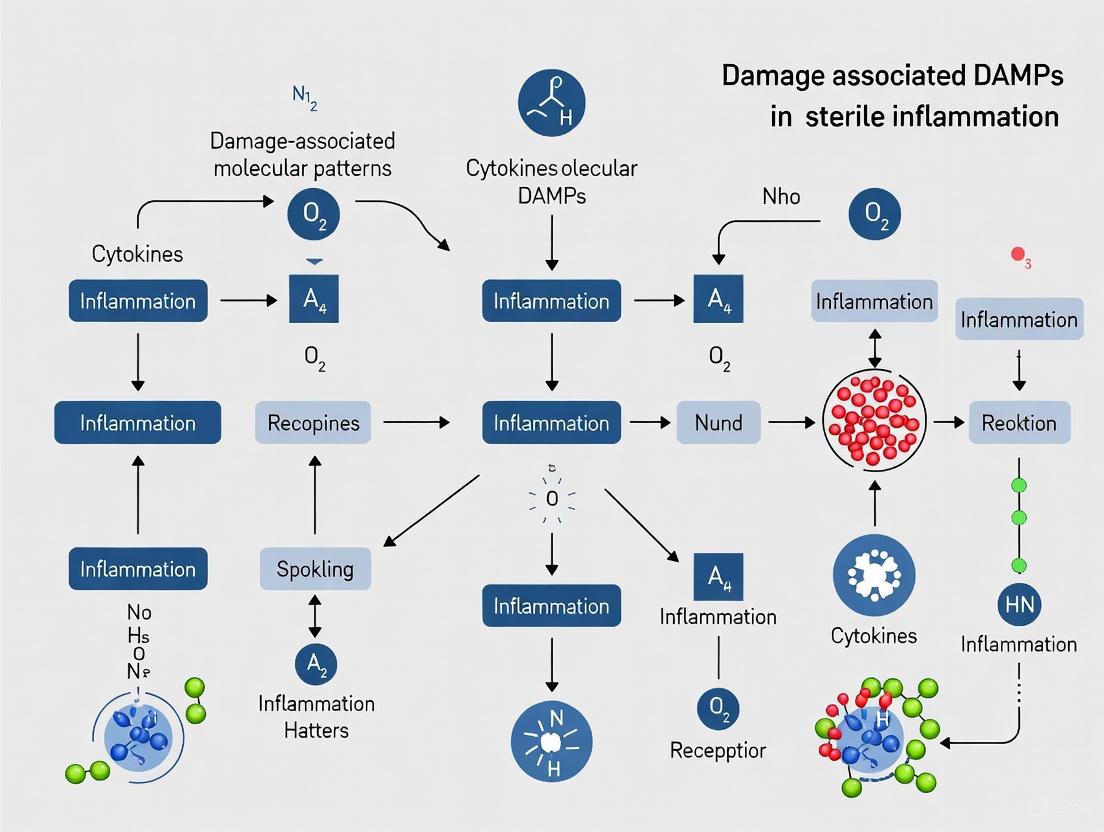
This article provides a comprehensive overview of damage-associated molecular patterns (DAMPs) and their critical role in driving sterile inflammation, a non-infectious immune response to tissue injury.
Damage-Associated Molecular Patterns (DAMPs): Unraveling Their Dual Role in Sterile Inflammation and Therapeutic Potential
Abstract
This article provides a comprehensive overview of damage-associated molecular patterns (DAMPs) and their critical role in driving sterile inflammation, a non-infectious immune response to tissue injury. Aimed at researchers, scientists, and drug development professionals, it explores the molecular mechanisms of DAMP release and recognition, their pathogenic role in chronic and acute diseases, and their emerging potential as diagnostic biomarkers and therapeutic targets. The scope spans from foundational concepts and methodological approaches for studying DAMPs to the challenges of therapeutic intervention and comparative analyses across disease models, synthesizing current research to guide future innovation in immunology and clinical medicine.
The Alarm Within: Defining DAMPs and the Initiation of Sterile Inflammation
The conceptual evolution of damage-associated molecular patterns (DAMPs) represents one of the most significant paradigm shifts in modern immunology. This transition moved the field beyond the classical self/non-self discrimination model toward a more nuanced understanding of immune activation based on endogenous danger signals released under conditions of cellular stress and tissue injury. The "Danger Model," first proposed by Polly Matzinger in 1994, fundamentally challenged the prevailing notion that the immune system primarily exists to distinguish self from foreign invaders [1]. Instead, Matzinger contended that the fundamental impetus for immune activation is not solely the discrimination between self and non-self, but rather the detection of danger signals, encompassing not only bacterial toxins and viruses but also rapidly proliferating tumor cells and non-programmed (necrotic) cell death [2] [1]. This theoretical framework provided a novel explanatory mechanism for sterile inflammation and laid the groundwork for Walter Land's formal introduction of the term "damage-associated molecular patterns" in 2003 to differentiate endogenous danger signals from traditional pathogen-derived signals [2].
This whitepaper traces the conceptual evolution of DAMPs from theoretical construct to established biological phenomenon, examining their classification, molecular mechanisms, and central role in sterile inflammatory diseases. We further explore cutting-edge research on their functions in trained immunity and their emerging potential as therapeutic targets, providing researchers and drug development professionals with a comprehensive technical resource in this rapidly advancing field.
Historical Foundation: From Self/Non-Self to the Danger Model
The Theoretical Predecessors
The self–non-self theory dominated immunology for over six decades, with its roots in the work of Burnet and Fenner in the 1940s-1950s [1]. According to this classical paradigm, an immune response is triggered against all foreign ("nonself") entities, whereas no immune response is triggered against the organism's own constituents ("self") [1]. This framework provided the fundamental principle for understanding adaptive immunity and immunological tolerance.
Charles Janeway's introduction of the pattern recognition theory in 1989 marked a crucial evolutionary step in immunological thinking. Janeway demonstrated that the immune system identifies pathogen-associated molecular patterns (PAMPs) via germline-encoded pattern-recognition receptors (PRRs), thus triggering anti-infective defense mechanisms [2]. This concept established the molecular foundation for understanding innate immune recognition and its role in initiating adaptive responses. However, it still fundamentally referenced the exogenous nature of rejected entities as the triggering factor for immune activation.
The Danger Theory: A Radical Reformulation
Polly Matzinger's danger theory, formally proposed in 1994, represented a more radical departure from existing models [1]. The theory explicitly critiqued how immunologists had been trained within the self–non-self framework and argued that this perspective was fundamentally flawed for explaining many immunological phenomena [1].
The core principle of the danger theory holds that immune responses are triggered by "danger signals" or "alarm signals" released by the body's own cells undergoing stress, damage, or abnormal death [1] [3]. According to this model, self constituents can trigger an immune response if they are dangerous (e.g., cellular stress, some autografts), and non-self constituents can be tolerated if they are not dangerous (e.g., the fetus or commensal bacteria) [1]. Matzinger asserted that "the 'foreignness' of a pathogen is not the important feature that triggers a response, and 'self-ness' is no guarantee of tolerance" [1].
Table 1: Comparison of Major Immune Recognition Theories
| Theory | Proponent | Proposed | Trigger for Immune Response | Key Recognition Molecules |
|---|---|---|---|---|
| Self/Non-self Theory | Burnet & Fenner | 1949-1959 | Genetic foreignness ("nonself") | T-cell and B-cell receptors |
| Infectious Non-self Theory | Janeway | 1989 | Pathogen-associated molecular patterns (PAMPs) | Pattern recognition receptors (PRRs) |
| Danger Theory | Matzinger | 1994 | Endogenous danger signals from damaged/stressed cells | PRRs recognizing DAMPs |
The initial reception to the danger theory was mixed, with both enthusiasm and skepticism [1]. Critics questioned the definition of "danger" as potentially anthropomorphic or teleological and noted conceptual predecessors in the work of Metchnikoff and Ehrlich, who had emphasized the importance of inflammation and damage in immunity [1]. However, the theory stimulated crucial debate and experimental investigation that would ultimately lead to the molecular characterization of DAMPs.
Molecular Identity and Classification of DAMPs
Defining Characteristics and Conversion Mechanisms
Damage-associated molecular patterns are endogenous danger signal molecules released by damaged, stressed, or dead cells that bind to pattern recognition receptors (PRRs), activating immune responses and inflammatory signaling pathways [2]. Under physiological homeostasis, host endogenous molecules typically maintain an immunologically quiescent state. The conversion to immunostimulatory DAMPs occurs through several distinct mechanisms:
- Relocation from intracellular to extracellular compartments: The most prevalent transformation occurs when intracellular molecules enter the extracellular realm as a result of the disruption of physical barriers [2]. For example, nuclear protein HMGB1 transforms into a DAMP when released from necrotic cells [2] [4].
- Concentration-dependent activation: Certain DAMPs demonstrate concentration-dependent pro-inflammatory functions, rendering concentration imbalance another crucial mechanism for DAMP transformation [2]. During metabolic disorders, the accumulation of fatty acids activates the NLRP3 inflammasome via the PERK/eIF2α pathway [2].
- Alterations in chemical or physical properties: Molecular degradation, misfolding, or post-translational modifications can convert endogenous molecules into pro-inflammatory ones [2]. The degradation products of high-molecular-weight hyaluronic acid activate TLR2/4 and CD44, thereby promoting inflammation in obesity and rheumatoid arthritis [2].
Comprehensive DAMP Classification
DAMPs can be classified into several categories based on their molecular characteristics, biological functions, and cellular origins. The table below provides a comprehensive categorization of major DAMPs and their corresponding receptors.
Table 2: Major DAMP Categories, Specific Examples, and Their Recognition Receptors
| DAMP Category | Specific Examples | Cellular Origin | Recognition Receptors |
|---|---|---|---|
| Protein-based DAMPs | HMGB1, HSP70, HSP90, S100 proteins, IL-1α, IL-33 | Nucleus, Cytoplasm, Extracellular Matrix | TLR2, TLR4, RAGE, CD91, IL-1R |
| Nucleic Acid-based DAMPs | Cell-free DNA, mtDNA, RNA, Uric acid crystals | Nucleus, Mitochondria | TLR7, TLR9, cGAS-STING, NLRP3 |
| Mitochondrial DAMPs | mtDNA, Cytochrome C, TFAM, N-formyl peptides | Mitochondria | TLR9, cGAS-STING, NLRP3, FPR1 |
| Metabolite DAMPs | ATP, Uric acid, Cholesterol crystals, Hyaluronan fragments | Cytoplasm, Extracellular Matrix | P2X7, NLRP3, TLR2, TLR4, CD44 |
| Plasma Protein DAMPs | Fibrinogen, Serum amyloid A, Gc-globulin | Plasma | TLR2, TLR4 |
This classification system highlights the diverse molecular nature of DAMPs and their origins from virtually all cellular compartments. Notably, many DAMPs serve dual functions, playing essential roles in cellular homeostasis under physiological conditions while adopting pro-inflammatory roles when released or modified during tissue damage [2] [5].
DAMP Release Mechanisms and Signaling Pathways
Mechanisms of DAMP Release
The release mechanisms of DAMPs can be generally classified into two categories: passive release mainly caused by cell death and active release from living cells [2].
Table 3: DAMP Release Mechanisms Across Different Cell Death Modalities
| Cell Death Modality | Key Molecular Mediators | DAMP Examples Released | Pore Size/ Membrane Features |
|---|---|---|---|
| Necrosis | RIPK1/RIPK3, MLKL phosphorylation | HMGB1, ATP, exRNA, cfDNA, histones, HSPs [2] | 4 nm cation channels via MLKL [2] |
| Pyroptosis | Inflammasomes, Caspase-1/4/5/11, Gasdermin D | IL-1β, IL-18 (early); HMGB1, ATP, cfDNA (late) [2] | 10-18 nm non-selective pores via GSDMD [2] |
| Apoptosis | Caspase cascade, Cytochrome c, Apoptosome | Generally low DAMP release (immunologically silent) | Maintained membrane integrity, apoptotic bodies |
| Ferroptosis | Lipid peroxidation, Glutathione depletion | Not fully characterized but includes lipid mediators | Plasma membrane rupture [2] |
Diagram 1: DAMP Release and Immune Activation Pathway
DAMP-Sensing Receptors and Signaling Networks
DAMPs are detected primarily by pattern recognition receptors (PRRs), which include several families of immune recognition molecules [6] [4]:
- Toll-like receptors (TLRs): Type I transmembrane glycoproteins located at the cell surface (TLR1, 2, 4, 5, 6) or in intracellular membranes (TLR3, 7, 8, 9) that recognize various DAMPs [4].
- NOD-like receptors (NLRs): Cytoplasmic PRRs that include NODs and NLRPs; NLRP3 stimulation by DAMPs activates caspase-1 and induces IL-1β and IL-18 release through inflammasome formation [4].
- RIG-I-like receptors (RLRs): Detect viral RNA and self RNA in the cytoplasm; their signaling cross-talks with TLR or inflammasome pathways [4].
- C-type lectin receptors (CLRs): Expressed by dendritic cells and promote NF-κB activation by modulating TLR signaling [4].
- Receptor for Advanced Glycation Endproducts (RAGE): Interacts with multiple DAMPs including HMGB1 and S100 proteins, mediating inflammation, oxidative stress, and apoptosis [4].
Diagram 2: DAMP Signaling Pathways and Immune Activation
Key signaling pathways activated by DAMP-PRR interactions include:
- NF-κB pathway: Activated through MyD88-dependent (TLRs) or NOD-mediated signaling, leading to pro-inflammatory gene expression [2] [6].
- Inflammasome activation: Particularly the NLRP3 inflammasome, which processes pro-IL-1β and pro-IL-18 into their active forms [2] [6].
- cGAS-STING pathway: Activated by cytosolic DNA, including self-DNA and mtDNA, leading to type I interferon production [2] [6].
- MAPK pathway: Contributing to AP-1 activation and inflammatory gene expression [6].
Experimental Approaches: Methodologies for DAMP Research
Key Research Protocols
Investigating DAMPs requires specialized methodologies to detect, quantify, and functionally characterize these endogenous danger signals. Below are essential experimental protocols used in DAMP research.
Protocol 1: Isolation and Quantification of Cell-Free DAMPs from Biological Fluids
Purpose: To detect and quantify DAMPs (e.g., HMGB1, cell-free DNA, ATP) in plasma, serum, or other biological fluids from sterile inflammatory conditions.
Reagents and Equipment:
- EDTA-containing blood collection tubes (prevent coagulation)
- Protease inhibitor cocktail
- Centrifuge capable of 16,000 × g
- Commercial HMGB1 ELISA kit
- Quant-iT PicoGreen dsDNA Assay Kit (for cell-free DNA quantification)
- Luciferase-based ATP assay kit
- Phosphate-buffered saline (PBS)
- 0.22 μm filters
Procedure:
- Collect blood samples in EDTA tubes and process within 30 minutes of collection.
- Centrifuge at 1,600 × g for 10 minutes at 4°C to separate plasma.
- Transfer supernatant to fresh tubes and centrifuge at 16,000 × g for 10 minutes to remove platelets.
- Aliquot plasma and store at -80°C until analysis.
- For HMGB1 measurement: Use commercial ELISA following manufacturer's protocol.
- For cell-free DNA quantification: Dilute plasma 1:10 in PBS, add PicoGreen reagent, measure fluorescence (excitation 480 nm, emission 520 nm).
- For extracellular ATP: Use luciferase-based assay following manufacturer's protocol.
Technical Notes: Avoid repeated freeze-thaw cycles. For DNA measurements, include DNase treatment controls to confirm specificity.
Protocol 2: In Vitro DAMP Release from Stressed or Dying Cells
Purpose: To induce and measure DAMP release from cultured cells undergoing various forms of cell death.
Reagents and Equipment:
- Appropriate cell culture medium
- Cell death inducers: H₂O₂ (oxidative stress), staurosporine (apoptosis), nigericin (pyroptosis), RSL3 (ferroptosis)
- Lactate dehydrogenase (LDH) assay kit (cytotoxicity measurement)
- ATP assay kit
- ELISA for specific DAMPs (HMGB1, S100 proteins)
- Western blot equipment
- Antibodies for specific DAMPs
Procedure:
- Culture cells in appropriate conditions until 70-80% confluency.
- Treat with cell death inducers at optimized concentrations.
- Collect culture supernatants at various time points (e.g., 0, 2, 6, 12, 24 hours).
- Centrifuge supernatants at 500 × g for 5 minutes to remove cells.
- Analyze supernatants for LDH release (cytotoxicity control).
- Quantify specific DAMPs in supernatants using ELISA or Western blot.
- Correlate DAMP release with cell death modality using specific inhibitors.
Technical Notes: Include viability controls. Characterize cell death modality using specific inhibitors and morphological assessment.
Protocol 3: Assessment of DAMP-Induced Immune Cell Activation
Purpose: To evaluate the immunostimulatory capacity of DAMPs on innate immune cells.
Reagents and Equipment:
- Primary human or murine immune cells (monocytes, macrophages, neutrophils)
- RPMI-1640 medium with 1% FBS
- Recombinant DAMPs (HMGB1, S100 proteins, ATP) or patient-derived samples
- LPS (positive control)
- ELISA kits for TNF-α, IL-6, IL-1β
- Flow cytometer with appropriate antibodies
- NF-κB reporter cell lines
Procedure:
- Isolate primary immune cells using density gradient centrifugation.
- Seed cells in 96-well plates (1×10⁵ cells/well for monocytes).
- Treat with purified DAMPs at various concentrations or patient-derived plasma/serum.
- Incubate for 6-24 hours (depending on readout).
- Collect supernatants for cytokine measurement by ELISA.
- Analyze cell surface activation markers (CD86, HLA-DR) by flow cytometry.
- For signaling studies, use NF-κB reporter cells or perform Western blot for phosphorylated signaling molecules.
Technical Notes: Include appropriate controls for endotoxin contamination. Use specific PRR inhibitors to confirm receptor involvement.
Essential Research Reagents and Tools
Table 4: Key Research Reagent Solutions for DAMP Investigation
| Reagent Category | Specific Examples | Research Application | Commercial Sources |
|---|---|---|---|
| Recombinant DAMPs | HMGB1, S100 proteins, HSP70, HSP90 | Positive controls for immune activation assays | R&D Systems, Sigma-Aldrich, Abcam |
| DAMP Neutralizing Antibodies | Anti-HMGB1, Anti-S100A8/A9, Anti-IL-1α | Functional blocking studies | BioLegend, Santa Cruz Biotechnology |
| PRR Inhibitors | TAK-242 (TLR4 inhibitor), MCC950 (NLRP3 inhibitor), C-176 (STING inhibitor) | Pathway-specific inhibition studies | MedChemExpress, Sigma-Aldrich |
| ELISA Kits | HMGB1, S100 proteins, HSPs, Histones | DAMP quantification in biological samples | Tecan, R&D Systems, Cell Signaling |
| Cell Death Inducers | Staurosporine (apoptosis), Nigericin (pyroptosis), RSL3 (ferroptosis) | Inducing DAMP release in vitro | Cayman Chemical, Sigma-Aldrich |
| Cytokine Detection Arrays | Multiplex cytokine panels | Assessing inflammatory responses to DAMPs | Bio-Rad, Luminex, Meso Scale Discovery |
DAMPs in Sterile Inflammatory Diseases: Pathological Mechanisms
Research has demonstrated that DAMPs play pivotal roles in various sterile inflammatory diseases, making them promising therapeutic targets [2]. The pathological role of DAMPs spans multiple disease contexts:
Cardiovascular Diseases
In cardiovascular pathologies, DAMPs have a critical role in linking stress-causing cardiovascular risk factors to inflammatory phenotypes seen in vascular disease [7]. Key mechanisms include:
- Atherosclerosis: Cholesterol crystals and oxidized LDL function as DAMPs that activate the NLRP3 inflammasome, promoting IL-1β production and plaque formation [2] [7]. HMGB1 released from damaged endothelial cells amplifies inflammation through TLR4 and RAGE signaling [7].
- Ischemia-Reperfusion Injury: Following myocardial infarction, necrotic cardiomyocytes release mitochondrial DAMPs (mtDNA, formyl peptides) that activate neutrophil and monocyte recruitment through TLR9 and formyl peptide receptors, exacerbating tissue damage [7] [6].
- Aneurysm and Hypertension: Extracellular matrix fragments (hyaluronan, biglycan) released during vascular remodeling act as DAMPs that sustain chronic inflammation through TLR2 and TLR4 activation [7].
Autoimmune and Rheumatic Diseases
DAMPs contribute significantly to the pathogenesis of autoimmune diseases by breaking self-tolerance and sustaining chronic inflammation:
- Rheumatoid Arthritis: S100A8/A9 proteins are upregulated in synovial tissue, synovial fluid, and serum of RA patients [4]. HMGB1 expression is increased in serum and synovial fluid, where it stimulates production of proinflammatory cytokines like TNF and IL-1 [4]. Neutralization of HMGB1 protects cartilage from degradation and prevents bone destruction in experimental models [4].
- Systemic Lupus Erythematosus: HMGB1 expression is enhanced in SLE patients and correlates with disease activity index [4]. Oxidized mitochondrial DNA found in blood neutrophils of SLE patients stimulates IFN production by activating plasmacytoid DCs [4]. Neutrophil extracellular traps (NETs) enriched in oxidized mtDNA induce inflammatory responses [4].
Neurodegenerative Diseases
Chronic sterile inflammation driven by DAMPs contributes to the progression of neurodegenerative conditions:
- Alzheimer's Disease: Amyloid-β peptides function as DAMPs that activate the NLRP3 inflammasome in microglia, driving chronic neuroinflammation [6] [4]. HMGB1 released from damaged neurons amplifies inflammatory responses through RAGE and TLR signaling [6].
- Parkinson's Disease: α-synuclein aggregates act as DAMPs that activate microglial NLRP3 inflammasomes, sustaining neuroinflammatory environments that accelerate neurodegeneration [4].
Novel Frontiers: DAMPs in Trained Immunity and Therapeutic Targeting
DAMPs as Inducers of Trained Immunity
Recent research has revealed that DAMPs can induce trained immunity - a long-term functional reprogramming of innate immune cells following exposure to exogenous or endogenous stimuli, mediated by epigenetic and metabolic changes [8]. This phenomenon represents a paradigm shift in understanding innate immune memory:
- Mechanisms of DAMP-induced trained immunity: Sterile inflammatory molecules such as oxLDL induce epigenetic changes through metabolic reprogramming [8]. This involves alterations in histone modifications (H3K4me3, H3K27ac) at promoters of genes associated with trained immunity and a shift from oxidative phosphorylation to aerobic glycolysis [8].
- Central trained immunity: DAMPs can cause durable reprogramming of hematopoietic stem and progenitor cells (HSPCs), leading to increased output of trained myeloid cells [8]. For instance, β-glucan-induced trained immunity in HSCs has been linked to IL-1β and GM-CSF signaling pathways [8].
- Pathological implications: While trained immunity evolved as a beneficial mechanism for nonspecific protection against infections, DAMP-induced trained immunity may contribute to maladaptive outcomes including autoimmune diseases, allergies, and chronic inflammation through amplified immune responses [8].
Therapeutic Targeting of DAMP Pathways
Current DAMP/PRR-targeted therapeutic strategies encompass multiple approaches [2]:
- Cell death pathway modulation: Reducing DAMP release by regulating specific cell death modalities (e.g., ferroptosis inhibitors, necroptosis blockers).
- Monoclonal antibody interventions: Neutralizing DAMP activity using monoclonal antibodies (e.g., anti-HMGB1, anti-S100 antibodies).
- Signaling pathway inhibition: Developing small-molecule inhibitors to block downstream signaling pathways (e.g., NLRP3 inhibitors, STING antagonists).
- Enzymatic degradation or gene silencing technologies: Employing DNases to degrade cell-free DNA or using siRNA approaches for precise intervention.
While showing promise in inflammatory and cancer disease models, these approaches face clinical translation challenges including DAMP molecular heterogeneity, inefficient drug delivery systems, and the complexity of multi-target synergistic mechanisms [2]. Potential solutions involving nanoparticle delivery systems, AI-driven personalized treatment optimization, and gene editing technologies are under investigation [2].
The conceptual evolution from the Danger Model to our current understanding of DAMPs has fundamentally transformed immunology, providing crucial insights into the mechanisms of sterile inflammation and opening new therapeutic avenues. Future research directions will likely focus on:
- Understanding the molecular specificity of different DAMP forms (redox states, proteolytic fragments, complex formations) and their distinct immunological activities.
- Developing advanced delivery systems for DAMP-targeted therapies, including nanoparticles and tissue-specific targeting approaches.
- Exploring DAMP biomarkers for disease prognosis, stratification, and therapeutic monitoring across various inflammatory conditions.
- Investigating DAMP-mediated communication between different cell types and tissues in systemic inflammatory responses.
- Harnessing computational and AI approaches to model DAMP signaling networks and predict therapeutic intervention points.
As research continues to unravel the complexities of DAMP biology, the initial theoretical framework proposed by Matzinger continues to provide a fertile conceptual ground for understanding immune responses beyond infectious challenges, ultimately offering new perspectives on the fundamental organization of the immune system and its interaction with damaged self.
Damage-associated molecular patterns (DAMPs), also known as alarmins, are endogenous molecules released from damaged, stressed, or dying cells that activate pattern recognition receptors (PRRs) to initiate and perpetuate immune responses in the absence of infection [9] [2]. This sterile inflammatory response represents a crucial mechanism underlying numerous pathological conditions, including myocardial infarction, atherosclerosis, autoimmune diseases, and cancer [9] [2]. The conceptual framework of DAMPs emerged from Polly Matzinger's "Danger Theory," which proposed that the immune system responds primarily to danger signals rather than solely discriminating between self and non-self [2]. DAMPs are typically sequestered intracellularly or within the extracellular matrix (ECM) under physiological conditions, becoming active only upon exposure through cellular stress, injury, or death [9] [2]. These molecules exhibit remarkable structural heterogeneity, ranging from small molecules like ATP to large proteins and even entire organelles [9]. Upon release, DAMPs engage various PRRs, including Toll-like receptors (TLRs), NOD-like receptors (NLRs), RIG-I-like receptors, and the receptor for advanced glycation end products (RAGE), triggering signaling cascades that lead to inflammatory gene expression [9] [10] [11]. This catalog provides a comprehensive overview of key DAMPs, their signaling mechanisms, experimental methodologies, and their emerging roles in sterile inflammation and disease pathogenesis.
Classification and Molecular Characteristics of Major DAMPs
Protein-Based DAMPs
HMGB1 (High-Mobility Group Box 1 Protein)
HMGB1 is a 215 amino acid (30 kDa) non-histone chromosomal protein composed of two DNA-binding HMG-box domains (A and B boxes) and a negatively charged C-terminal acidic tail [11]. Under homeostatic conditions, HMGB1 resides primarily in the nucleus, where it maintains chromatin structure and facilitates DNA replication, repair, and gene transcription [11]. Its translocation to the cytoplasm and subsequent release occur through both passive mechanisms (necrosis) and active secretion from immune cells (macrophages, monocytes) in response to inflammatory stimuli [11] [12]. The bioactivity of extracellular HMGB1 depends critically on post-translational modifications, particularly the redox states of its three cysteine residues (C23, C45, C106) [11] [12]. The disulfide form (C23-C45 disulfide bond with reduced C106) exhibits proinflammatory activity, while fully reduced HMGB1 acts as a chemoattractant, and terminally oxidized HMGB1 induces tolerance [12]. HMGB1 signals through multiple receptors including TLR2, TLR4, TLR9, and RAGE, activating downstream pathways like NF-κB and MAPK to promote cytokine production and inflammation [11] [12].
S100 Proteins
The S100 protein family constitutes a large subgroup of low-molecular-weight (9-14 kDa) calcium-binding proteins characterized by structural homology but functional diversity [10]. These proteins contain two helix-loop-helix EF-hand motifs that bind transition metals (Ca²⁺, Zn²⁺, Cu²⁺) and facilitate homo- and heterodimer formation [10]. In humans, 24 S100 isoforms are encoded in the epidermal differentiation complex on chromosome locus 1q21, with additional members located on other chromosomes [10]. S100 proteins function both intracellularly, regulating transcription, cytoskeletal dynamics, and cell differentiation, and extracellularly, acting as cytokines that engage receptors including RAGE, TLR4, and proteoglycans [10]. Notable DAMP members include S100A8/A9 (MRP8/14), which functions as an endogenous TLR4 agonist and plays crucial roles in oxidative stress response and inflammation, and S100B, which activates RAGE and TLR4 to induce proinflammatory signaling [10] [12]. These proteins undergo extensive post-translational modifications including nitrosylation, phosphorylation, and oxidation that regulate their functional activities [10].
Heat Shock Proteins (HSPs)
Heat shock proteins constitute a conserved family of molecular chaperones that facilitate protein folding and protect against cellular stress [9]. While intracellular HSPs maintain proteostasis, extracellular HSPs including HSP70, HSP90, and gp96 function as DAMPs by engaging TLR2 and TLR4 to activate innate immunity [9] [12]. Their release occurs primarily through passive leakage from necrotic cells or active secretion via non-classical pathways [9].
Table 1: Characteristics of Major Protein-Based DAMPs
| DAMP | Molecular Weight | Structural Features | Cellular Origin | Primary Release Mechanisms |
|---|---|---|---|---|
| HMGB1 | 30 kDa | Two HMG-box domains, acidic tail | Nearly all nucleated cells | Passive necrosis, active secretion from immune cells |
| S100A8/A9 | 10-14 kDa (monomers) | EF-hand motifs, forms heterodimers | Myeloid cells, epithelial cells | Active secretion, neutrophil extracellular traps |
| HSP70 | 70 kDa | Substrate-binding domain, ATPase domain | All cells | Necrosis, stress-induced secretion |
| IL-1α | 31 kDa precursor | β-trefoil fold | Epithelial cells, macrophages | Necrosis, activation-induced processing |
| IL-33 | 31 kDa precursor | Chromatin-binding domain, β-trefoil fold | Endothelial cells, epithelial cells | Necrosis, mechanical stress |
Nucleic Acid-Based DAMPs
Cell-free DNA (cfDNA), particularly mitochondrial DNA (mtDNA), represents a potent class of nucleic acid-based DAMPs. mtDNA shares bacterial-like features including unmethylated CpG motifs that activate TLR9, and formylated peptides that engage formyl peptide receptors [9] [2]. mtDNA release occurs during various cell death modalities including necrosis, pyroptosis, and ferroptosis [2], and can activate the cGAS-STING pathway to induce type I interferon responses [2]. mtDNA has been implicated in transfusion-related acute lung injury and contributes to the pathogenesis of autoimmune and inflammatory diseases [9].
Mitochondrial DAMPs
Beyond mtDNA, mitochondria release additional DAMPs including ATP, formylated peptides, and the entire organelle itself during necroptosis [9]. Mitochondrial transcription factor A (Tfam) can be released into the extracellular space and recognized by microglia to induce proinflammatory responses [9]. The unique evolutionary origin of mitochondria as endosymbiotic bacteria explains the potent immunostimulatory capacity of mitochondrial components.
Extracellular Matrix-Derived DAMPs
The ECM serves as a reservoir for sequestered DAMPs that become bioactive upon proteolytic release during tissue injury [9]. Key ECM-derived DAMPs include:
- Proteoglycans: Biglycan and decorin, small leucine-rich proteoglycans released by MMP cleavage, act as endogenous TLR2/4 ligands [9]. Biglycan additionally promotes NLRP3 inflammasome activation and IL-1β maturation [9].
- Glycosaminoglycans: Low molecular weight hyaluronan fragments generated by hyaluronidase cleavage stimulate TLR2/4 and NLRP3 to promote angiogenesis and cancer metastasis [9].
- Glycoproteins: MMP-cleaved fibronectin extra domain A, fibrinogen, and tenascin C function as TLR4-activating DAMPs [9].
Table 2: Non-Protein DAMPs and Their Receptors
| DAMP Category | Specific Molecules | Chemical Nature | Receptors | Key Functional Outcomes |
|---|---|---|---|---|
| Nucleic Acids | mtDNA, cfDNA, exRNA | Unmethylated CpG DNA, RNA species | TLR9, TLR7/8, cGAS-STING | Type I interferon production, NF-κB activation |
| Metabolites | ATP, Uric acid | Purine nucleotides, crystals | P2X7, NLRP3 | Inflammasome activation, IL-1β release |
| ECM Fragments | LMW hyaluronan, heparan sulfate | Glycosaminoglycans | TLR2, TLR4, CD44 | Angiogenesis, metastasis, leukocyte recruitment |
| Mitochondrial | Formylated peptides, ATP, cardiolipin | N-formyl methionine peptides | FPR1, P2X7, TLR4 | Neutrophil chemotaxis, inflammasome activation |
| Crystals | Cholesterol crystals, monosodium urate | Crystalline structures | NLRP3 | Gout, atherosclerosis inflammation |
DAMP Signaling Pathways and Receptor Interactions
DAMPs activate complex signaling networks through engagement of multiple PRRs, with the specific outcome determined by the cellular context, receptor combination, and cross-talk between signaling pathways.
TLR-Dependent Signaling
TLR2 and TLR4 serve as primary receptors for numerous DAMPs including HMGB1, S100 proteins, and ECM-derived fragments [9] [10] [11]. DAMP binding induces TLR dimerization and recruitment of adaptor molecules (MyD88, TRIF, TRAM, Mal), initiating downstream signaling cascades [9]. The MyD88-dependent pathway typically activates NF-κB and MAPK signaling, leading to proinflammatory cytokine production (TNF-α, IL-1β, IL-6), while the TRIF-dependent pathway induces type I interferon responses [9]. Accessory molecules including CD14, CD36, and MD2 significantly influence DAMP recognition and signaling specificity [9]. For instance, CD14 demonstrates preferential binding for DAMPs over PAMPs [9].
RAGE Signaling
RAGE serves as a multi-ligand receptor for HMGB1, S100 proteins, and other DAMPs [10] [11]. Unlike TLRs, RAGE signaling amplifies cellular activation through sustained NF-κB activation and positive feedback loops that increase RAGE expression itself [11]. RAGE engagement promotes cell migration, proliferation, and inflammatory responses, playing particularly important roles in cancer progression and diabetic complications [11].
Inflammasome Activation
Multiple DAMPs including biglycan, LMW hyaluronan, and ATP activate the NLRP3 inflammasome, leading to caspase-1 activation and maturation of IL-1β and IL-18 [9]. This process often requires priming signals (e.g., NF-κB activation) and activation signals (e.g., potassium efflux, reactive oxygen species) [9] [2]. Additionally, DAMPs like HMGB1 can be released through GSDMD pores formed during pyroptosis, creating positive feedback loops that amplify inflammation [2].
The following diagram illustrates the major signaling pathways activated by key DAMPs:
Release Mechanisms and Molecular Transformation
DAMPs transition from physiological to pathological molecules through specific release mechanisms and molecular transformations that determine their immunogenicity.
Passive Release Mechanisms
Passive DAMP release occurs primarily through cell death pathways:
- Necrosis: Characterized by cellular swelling, plasma membrane rupture, and release of intracellular contents including HMGB1, ATP, histones, and HSPs [2]. Regulated necrotic pathways (necroptosis) involve RIPK1/RIPK3 activation and MLKL pore formation [2].
- Pyroptosis: A caspase-dependent programmed cell death where gasdermin pore formation enables selective release of IL-1β, IL-18, and subsequently larger DAMPs like HMGB1 and ATP [2].
- Apoptosis: Traditionally considered non-inflammatory due to preserved membrane integrity and efficient DAMP clearance; however, oxidized HMGB1 can be released from late-stage apoptotic cells and induce tolerance [11] [12].
- Ferroptosis: An iron-dependent cell death characterized by lipid peroxide accumulation and membrane rupture, releasing DAMPs that promote inflammation [2].
Active Release Mechanisms
Viable cells actively secrete DAMPs through multiple pathways:
- Vesicular Secretion: HMGB1 and S100 proteins are released via non-classical secretory pathways involving secretory lysosomes and autophagic vesicles [11] [12].
- Gasdermin Pores: During pyroptosis, GSDMD pores enable active IL-1β secretion before eventual membrane rupture [2].
- Exocytosis: ATP and other small molecule DAMPs are released through exocytotic mechanisms in response to cellular stress [9].
Molecular Transformation Pathways
Endogenous molecules acquire DAMP function through several transformation mechanisms:
- Compartmentalization Change: Molecules normally sequestered intracellularly (HMGB1, mtDNA) or in the ECM (biglycan, hyaluronan) gain immune activity when released into extracellular spaces [9] [2].
- Concentration Imbalance: Upregulation of proteoglycans or accumulation of metabolic products like fatty acids can reach threshold concentrations that activate PRRs [2].
- Post-Translational Modification: Oxidation, acetylation, phosphorylation, and proteolytic processing dramatically alter DAMP activity [11] [12]. For example, HMGB1 acetylation promotes cytoplasmic translocation, while cysteine oxidation states determine its receptor specificity and inflammatory activity [11] [12].
- Molecular Degradation: High-molecular-weight hyaluronic acid is anti-inflammatory, but its low-molecular-weight degradation products activate TLR2/4 and CD44 [2].
- Aggregation/Crystallization: Monosodium urate and cholesterol crystals activate the NLRP3 inflammasome through physical disruption of lysosomes [2].
The following diagram illustrates the primary release mechanisms for key DAMPs:
Experimental Protocols for DAMP Research
DAMP Release and Detection
Protocol 1: HMGB1 Release Assay from Macrophages
- Cell Preparation: Culture primary murine bone marrow-derived macrophages or RAW264.7 cells in DMEM with 10% FBS.
- Stimulation: Treat cells with LPS (100 ng/mL) for 6-8 hours to induce HMGB1 translocation, followed by ATP (5 mM) for 30 minutes to trigger secretion.
- Collection: Collect culture supernatants and centrifuge at 10,000 × g for 10 minutes to remove cells and debris.
- Detection: Analyze HMGB1 levels by western blotting (non-reducing conditions to preserve redox states) or ELISA using specific anti-HMGB1 antibodies.
- Redox State Determination: Use reverse-phase HPLC or mass spectrometry to characterize cysteine modifications in secreted HMGB1 [11] [12].
Protocol 2: mtDNA Isolation and Quantification
- Mitochondrial Isolation: Homogenize tissues or cells in mitochondrial isolation buffer (250 mM sucrose, 10 mM HEPES, 1 mM EGTA, pH 7.4) and centrifuge at 800 × g to remove nuclei. Collect supernatant and centrifuge at 10,000 × g to pellet mitochondria.
- DNA Extraction: Treat mitochondrial pellets with DNase I to remove contaminating nuclear DNA, then isolate mtDNA using phenol-chloroform extraction or commercial kits.
- Quantification: Measure mtDNA levels by quantitative PCR targeting mitochondrial genes (e.g., ND1, CYTB) normalized to nuclear genes (e.g., β-globin) [9] [2].
- Functional Assays: Stimulate macrophages or dendritic cells with isolated mtDNA and measure cytokine production (IL-6, TNF-α, type I interferons) to confirm DAMP activity [9].
DAMP-Receptor Interaction Studies
Protocol 3: TLR4 Binding Assay
- Surface Plasmon Resonance (SPR): Immobilize recombinant TLR4/MD2 complex on CMS sensor chips. Flow purified DAMPs (HMGB1, S100A8/A9) at various concentrations (0.1-10 μM) in HBS-EP buffer.
- Data Analysis: Calculate kinetic parameters (KD, kon, k_off) using BIAEvaluation software. Include LPS as a positive control and BSA as a negative control [9] [11].
- Cell-Based Validation: Use TLR4-deficient macrophages or TLR4 inhibitors (TAK-242) to confirm specificity of DAMP-induced signaling [9] [11].
Protocol 4: RAGE Signaling Assay
- Transfection: Co-transfect HEK293T cells with RAGE expression vector and NF-κB luciferase reporter.
- Stimulation: Treat cells with recombinant HMGB1 or S100 proteins (1-10 μg/mL) for 6-8 hours.
- Measurement: Lyse cells and measure luciferase activity. Include RAGE-blocking antibodies or soluble RAGE as specificity controls [10] [11].
In Vivo DAMP Models
Protocol 5: Sterile Inflammation Model
- Liver Damage Model: Inject mice with acetaminophen (300 mg/kg, i.p.) to induce sterile hepatocyte necrosis.
- Sample Collection: Collect serum at various time points (0-24 hours) post-injection.
- DAMP Measurement: Quantify circulating DAMPs (HMGB1, mtDNA, S100 proteins) by ELISA and PCR.
- Inhibition Studies: Adminstrate DAMP-specific neutralizing antibodies (anti-HMGB1, anti-S100) or receptor antagonists to confirm pathological roles [2] [11].
The Scientist's Toolkit: Research Reagent Solutions
Table 3: Essential Research Reagents for DAMP Studies
| Reagent Category | Specific Examples | Key Applications | Commercial Sources |
|---|---|---|---|
| Recombinant DAMPs | Human HMGB1 (disulfide form), S100A8/A9 heterodimer, Biglycan core protein | Receptor binding studies, cell stimulation experiments, standardization of assays | R&D Systems, Sigma-Aldrich, Abcam |
| Neutralizing Antibodies | Anti-HMGB1 mAb, Anti-S100A8/A9, Anti-RAGE, Anti-TLR4 | Functional blocking experiments, immunohistochemistry, Western blot | BioLegend, Cell Signaling Technology, Santa Cruz Biotechnology |
| Receptor Inhibitors | TAK-242 (TLR4 inhibitor), FPS-ZM1 (RAGE antagonist), AZD9056 (P2X7 antagonist) | Pathway specificity studies, therapeutic candidate screening | MedChemExpress, Tocris, Selleckchem |
| Detection Assays | HMGB1 ELISA kit, S100A8/A9 ELISA, Cell-free DNA extraction kit, mtDNA qPCR kit | Quantification of DAMP levels in biological fluids, cell culture supernatants | MyBioSource, Thermo Fisher Scientific, Qiagen |
| Animal Models | HMGB1-floxed mice, S100A9 knockout mice, TLR4-deficient mice | In vivo functional studies, genetic requirement experiments | Jackson Laboratory, Taconic Biosciences |
| Signal Transduction Reagents | Phospho-NF-κB p65 antibodies, Active caspase-1 detection kits, NLRP3 inhibitors | Downstream signaling analysis, inflammasome activation studies | Cell Signaling Technology, Invitrogen, Cayman Chemical |
Emerging Concepts: Trained Immunity Induced by DAMPs
Beyond acute inflammation, DAMPs can induce long-term functional reprogramming of innate immune cells termed "trained immunity" [8] [13]. This phenomenon involves epigenetic and metabolic alterations that enhance responses to subsequent challenges, contributing to chronic inflammatory diseases [8]. Key mechanisms include:
- Epigenetic Reprogramming: DAMP exposure induces persistent histone modifications (H3K4me3, H3K27ac) at promoters of inflammatory genes, maintaining them in a transcriptionally primed state [8].
- Metabolic Rewiring: DAMPs promote a shift from oxidative phosphorylation to aerobic glycolysis via the mTOR-HIF-1α pathway, with accumulated metabolites like fumarate and mevalonate further reinforcing epigenetic changes [8].
- Central Trained Immunity: Certain DAMPs (oxLDL, uremic toxins) reprogram hematopoietic stem and progenitor cells in the bone marrow, leading to sustained production of primed myeloid cells that perpetuate inflammation [8].
This DAMP-induced trained immunity represents a mechanistic link between tissue injury and the development of chronic inflammatory diseases including atherosclerosis, autoimmune disorders, and metabolic diseases [8]. Therapeutic strategies targeting these pathways offer promising approaches for managing sterile inflammatory conditions.
Damage-associated molecular patterns (DAMPs) are endogenous molecules with critical physiological functions inside cells that transform into potent immune activators upon exposure to the extracellular environment during cellular stress or damage [5] [14]. These molecules remain immunologically silent during homeostasis but initiate and amplify sterile inflammation—immune activation without infection—when released from their compartments through specific mechanisms [5] [15]. Understanding the precise cellular origins and release pathways of DAMPs provides fundamental insights for developing targeted therapies for inflammatory diseases, cancer, cardiovascular disorders, and autoimmune conditions [2] [16].
DAMPs encompass a diverse array of molecules including nucleic acids, proteins, metabolites, ions, and glycans [5]. Their transformation into danger signals occurs through three primary mechanisms: (1) relocation from intracellular to extracellular spaces, (2) achievement of critical concentration thresholds, or (3) alterations in their physical or chemical properties [2]. The specific compartment from which a DAMP originates directly influences its release mechanism, receptor engagement, and subsequent inflammatory signaling pathways [2] [16].
Cellular Compartments and DAMP Classification
DAMPs are classified based on their subcellular origins, which determine their release mechanisms and functional roles in sterile inflammation. The table below summarizes major DAMPs according to their cellular compartments.
Table 1: Comprehensive Classification of DAMPs by Cellular Compartment
| Cellular Compartment | Representative DAMPs | Primary Functions/Characteristics |
|---|---|---|
| Nucleus | HMGB1, Histones (H3, H4), DNA | HMGB1: DNA chaperone; Histones: chromatin components; DNA: genetic material [2] [16] [14] |
| Cytoplasm | ATP, HSPs, S100 proteins, eNAMPT | ATP: energy currency; HSPs: molecular chaperones; S100: calcium-binding [2] [16] [17] |
| Mitochondria | mtDNA, TFAM, Formyl peptides | mtDNA: circular DNA; TFAM: mitochondrial transcription factor [2] |
| Endoplasmic Reticulum | Calreticulin, BiP/Grp78 | Calcium storage, protein folding chaperones [18] [19] |
| Extracellular Matrix | Hyaluronan fragments, Fibronectin fragments, Tenascin-C | Structural components released upon tissue damage [20] |
| Plasma Membrane & Granules | Phosphatidylserine, Annexin A1, Granule proteins | Membrane phospholipids, associated proteins [18] |
This compartmentalization is functionally significant because it determines not only how DAMPs are released but also which pattern recognition receptors (PRRs) they engage, such as Toll-like receptors (TLRs), NOD-like receptors (NLRs), RAGE, and others [5] [2] [20]. The same DAMP can exhibit different functions based on its redox state or molecular conformation. For instance, HMGB1 exists in three redox states—fully reduced, disulfide, and sulfonyl—each with distinct receptor affinities and biological activities [14].
Mechanisms of DAMP Release
DAMP release mechanisms are broadly categorized as passive or active processes, depending on whether they occur through unregulated cellular disintegration or controlled molecular pathways.
Passive Release Mechanisms
Passive release primarily occurs during traumatic cell death processes where cellular membrane integrity is compromised.
Table 2: Passive DAMP Release Mechanisms and Associated DAMPs
| Release Mechanism | Process Characteristics | Representative DAMPs Released |
|---|---|---|
| Necrosis | Unregulated cell death with plasma membrane rupture | HMGB1, ATP, cell-free DNA, histones, HSPs [2] [14] |
| Late-stage Pyroptosis | GSDMD pore formation leading to eventual membrane rupture | HMGB1, ATP, IL-1β, IL-18 [2] |
| Ferroptosis | Iron-dependent lipid peroxidation with membrane rupture | Unknown DAMPs but likely similar to necrosis [2] |
Active Release Mechanisms
Active DAMP release involves regulated processes where molecules are transported through specific pathways without immediate cell death.
Table 3: Active DAMP Release Mechanisms and Associated DAMPs
| Release Mechanism | Process Characteristics | Representative DAMPs Released |
|---|---|---|
| Early-stage Pyroptosis | Gasdermin D pore formation (10-18 nm diameter) | IL-1β, IL-18 (early); HMGB1, ATP (late) [2] |
| Active Secretion | Vesicular transport or leaderless secretion pathways | HMGB1 (hyperacetylated), eCIRP, eNAMPT [2] [16] [14] |
| Extracellular Trap Formation (ETosis) | DNA-histone meshwork release by neutrophils/macrophages | Histones, DNA, granular proteins [16] |
| Channel-Mediated Release | Through connexin, pannexin channels, or P2X7 receptors | ATP, UTP, NAD+ [16] [14] |
The following diagram illustrates the major DAMP release pathways from different cellular compartments:
Specialized Release Pathways
Certain DAMPs require specialized processes for their extracellular release. Chromatin-associated molecular patterns (CAMPs), including HMGB1, histones, and eCIRP, must first translocate from the nucleus to the cytoplasm before extracellular release, often requiring post-translational modifications such as acetylation, methylation, or phosphorylation [16]. Mitochondrial DAMPs (mtDNA, TFAM, formyl peptides) represent special cases as they originate from organelles with bacterial ancestry and can activate unique receptors like TLR9 and formyl peptide receptors [2].
The release of specific DAMPs is often associated with particular cell death modalities. For example, pyroptosis involves gasdermin family protein-mediated pore formation, initially allowing selective release of cytokines followed by larger DAMPs [2]. Apoptosis, characterized by caspase activation and membrane blebbing, typically maintains membrane integrity but can release DAMPs if clearance is delayed [2]. Ferroptosis, driven by lipid peroxidation, results in membrane rupture and DAMP release similar to necrosis [2].
Experimental Approaches for Studying DAMP Release
In Vitro Models of Cellular Stress and Death
Establishing robust in vitro systems is fundamental for investigating specific DAMP release mechanisms. Researchers typically employ cell culture models subjected to precisely controlled insults:
- Chemical Inducers: ATP (5 mM) for P2X7 receptor activation, nigericin (10-20 µM) for NLRP3 inflammasome activation, or staurosporine (1 µM) for apoptosis induction [2]. For ferroptosis induction, erastin (10 µM) or RSL3 (1 µM) are employed to inhibit system Xc- or GPX4, respectively [2].
- Physical Stressors: Hypoxia/reoxygenation cycles to mimic ischemia-reperfusion injury, typically using 1% O₂ for 2-24 hours followed by reoxygenation [15] [16]. Heat stress (42-45°C) for heat shock protein studies [16].
- Metabolic Stress: Nutrient deprivation, high glucose conditions (25 mM), or free fatty acid treatment (200-500 µM palmitate) to model metabolic disease-associated DAMP release [2] [8].
DAMP Detection and Quantification Methods
Accurate measurement of released DAMPs requires specialized techniques:
- ELISA: For protein DAMPs (HMGB1, HSPs, S100 proteins) in supernatants. Commercial kits available for HMGB1 (e.g., Shinogi ELISA detecting different redox forms) [14].
- Luminescence/Fluorescence Assays: ATP quantification via luciferase-based assays; cell-impermeable DNA-binding dyes (SYTOX Green, propidium iodide) for real-time membrane integrity assessment [2] [16].
- Western Blot: Detection of specific DAMPs and their post-translational modifications in supernatants and cell lysates [16] [14].
- qPCR/Sequencing: For mitochondrial vs. nuclear DNA discrimination in cell-free DNA samples using specific primers or sequencing approaches [2] [16].
- Mass Spectrometry: Identification of modified DAMPs, lipid peroxidation products in ferroptosis, and metabolic profiling [2] [8].
Live-Cell Imaging and Tracking
Advanced microscopy techniques enable real-time visualization of DAMP release:
- Confocal Microscopy: For HMGB1-GFP translocation studies from nucleus to cytoplasm and extracellular space [14].
- Time-lapse Imaging: With membrane integrity dyes and calcium indicators to correlate DAMP release with specific cell death stages [2].
- FRET-based Sensors: For caspase activity, calcium flux, or ATP release kinetics [2].
Table 4: Essential Research Reagents for DAMP Release Studies
| Reagent Category | Specific Examples | Research Applications |
|---|---|---|
| Cell Death Inducers | Nigericin (NLRP3 activator), Staurosporine (apoptosis), Erastin (ferroptosis), Imiquimod (TLR7/8 agonist) | Induction of specific cell death pathways for DAMP release studies [2] |
| DAMP Detection Reagents | Anti-HMGB1 antibodies, ATP luciferase assay kits, SYTOX Green, CellTox Green, Annexin V/PI | Quantification and detection of specific DAMPs and cell death parameters [2] [16] [14] |
| Signaling Inhibitors | Necrostatin-1 (necrosis), VX-765 (caspase-1), Disulfiram (GSDMD), Liproxstatin-1 (ferroptosis) | Pathway-specific inhibition to establish mechanism of release [2] [16] |
| Receptor Antagonists | TLR4 inhibitors (TAK-242), RAGE antagonists (FPS-ZM1), P2X7 receptor antagonists (A-438079) | Blocking DAMP recognition to establish functional significance [16] [14] |
Technical Challenges and Methodological Considerations
Studying DAMP release presents several technical challenges that require careful experimental design:
- Contamination Control: Rigorous exclusion of microbial contamination (LPS, etc.) is essential for sterile inflammation studies, using polymyxin B treatment or certified endotoxin-free reagents [15].
- Redox State Management: For redox-sensitive DAMPs like HMGB1, maintaining physiological redox conditions during sample processing is critical [14].
- Temporal Dynamics: DAMP release is often biphasic; frequent sampling is necessary to capture early (active) versus late (passive) release phases [2] [16].
- Standardization: Quantification and normalization approaches vary between laboratories, complicating cross-study comparisons [2].
The following diagram illustrates an integrated experimental workflow for studying DAMP release mechanisms:
The cellular compartments and release mechanisms of DAMPs represent fundamental determinants of sterile inflammation initiation and progression. The precise origin of a DAMP dictates its release pathway, receptor engagement, and functional consequences in tissue homeostasis and disease. Future research directions should focus on several key areas:
First, greater emphasis on the temporal dynamics of DAMP release is needed, as the sequence and timing of multiple DAMP appearances likely create specific inflammatory signatures that determine physiological versus pathological outcomes [2] [16]. Second, technical advances in real-time tracking of DAMPs in live cells and animals will provide more comprehensive understanding of their spatiotemporal regulation [2]. Third, the development of more specific inhibitors targeting distinct release pathways (e.g., gasdermin pore formation, active secretion mechanisms) would provide both research tools and therapeutic candidates [2] [16].
Understanding DAMP origins and release mechanisms continues to provide critical insights for therapeutic innovation across a spectrum of inflammatory diseases, cancer immunotherapy, and tissue repair processes [2] [16] [19]. As our knowledge of these processes expands, so too does our ability to strategically modulate DAMP activity for clinical benefit.
Damage-associated molecular patterns (DAMPs) are endogenous molecules released from damaged or stressed cells that initiate and propagate sterile inflammation through activation of pattern recognition receptors (PRRs). This technical guide provides a comprehensive analysis of PRR families, their specific DAMP recognition mechanisms, downstream signaling pathways, and associated experimental methodologies. Within the broader context of sterile inflammation research, we examine how the DAMP-PRR axis transitions from a protective homeostatic mechanism to a pathogenic driver of chronic diseases. This whitepaper synthesizes current knowledge for researchers and drug development professionals, integrating structured data visualization, standardized experimental protocols, and emerging therapeutic strategies targeting this critical signaling nexus.
Sterile inflammation, characterized by immune activation in the absence of pathogenic microorganisms, represents a fundamental process in trauma, ischemia-reperfusion injury, autoimmune diseases, and chronic metabolic disorders. The conceptual foundation of this field was established by Polly Matzinger's "Danger Theory," which proposed that the immune system responds primarily to danger signals, including those originating from endogenous sources [21] [2]. This paradigm shift led to the characterization of damage-associated molecular patterns (DAMPs) as endogenous molecules that undergo changes in localization, concentration, or molecular structure under conditions of cellular stress, damage, or death [2] [5].
DAMPs are typically intracellular molecules with defined physiological functions that, when released into the extracellular space or modified, acquire immunostimulatory properties [16]. They are recognized by pattern recognition receptors (PRRs), which are germline-encoded receptors of the innate immune system that were initially characterized for their role in detecting pathogen-associated molecular patterns (PAMPs) [21] [22]. The interplay between DAMPs and PRRs creates a complex signaling network that initiates inflammatory responses, recruits immune cells, and attempts to restore tissue homeostasis [2] [5]. However, persistent DAMP release or defective resolution of DAMP-mediated signaling can lead to chronic inflammation, contributing to the pathogenesis of conditions including atherosclerosis, cancer, neurodegenerative diseases, and autoimmune disorders [2] [7].
Classification and Molecular Profiles of PRRs and DAMPs
Pattern Recognition Receptors (PRRs): Structural Families and Localization
PRRs are classified into several major families based on protein domain homology, structural characteristics, and subcellular localization. These families work in concert to provide comprehensive immune surveillance against both exogenous and endogenous threats [21] [22].
Table 1: Major Pattern Recognition Receptor (PRR) Families
| PRR Family | Subcellular Localization | Prototypical Members | Structural Domains | Adaptor Molecules |
|---|---|---|---|---|
| Toll-like Receptors (TLRs) | Plasma Membrane, Endosomal Membranes | TLR1-10 (Human), TLR1-9, 11-13 (Mouse) | LRR extracellular domain, TIR intracellular domain | MyD88, TRIF, TIRAP, TRAM |
| NOD-like Receptors (NLRs) | Cytosolic | NLRP3, NOD1, NOD2 | NBD, LRR, CARD or PYD domains | ASC, Caspase-1 (Inflammasome) |
| RIG-I-like Receptors (RLRs) | Cytosolic | RIG-I, MDA5, LGP2 | DExD/H RNA helicase, CARD domains | MAVS/IPS-1 |
| C-type Lectin Receptors (CLRs) | Plasma Membrane | Dectin-1, Dectin-2, MINCLE | Carbohydrate Recognition Domain (CRD) | Syk, CARD9 |
| AIM2-like Receptors (ALRs) | Cytosolic | AIM2, IFI16 | HIN200 DNA-binding domain, PYD | ASC, Caspase-1 (Inflammasome) |
| DNA Sensors | Cytosolic, Nuclear | cGAS, STING | - | STING, TBK1, IRF3 |
Damage-Associated Molecular Patterns (DAMPs): Categories and Origins
DAMPs encompass a structurally diverse array of endogenous molecules that can be categorized based on molecular characteristics, cellular origin, and release mechanisms [2] [16]. Understanding this classification is essential for deciphering their roles in specific pathological contexts.
Table 2: Major Damage-Associated Molecular Pattern (DAMP) Categories
| DAMP Category | Prototypical Examples | Cellular Origin | Sensing PRRs |
|---|---|---|---|
| Protein-based DAMPs | HMGB1, HSPs, Histones, eCIRP, IL-33, S100 proteins | Nucleus, Cytosol, Extracellular Matrix | TLR2, TLR4, TLR9, RAGE, TREM-1 |
| Nucleic Acid-based DAMPs | Cell-free DNA (cfDNA), mtDNA, exRNA | Nucleus, Mitochondria | TLR9, TLR3, TLR7/8, cGAS-STING, RIG-I, AIM2 |
| Mitochondria-derived DAMPs | mtDNA, TFAM, N-formyl peptides | Mitochondria | TLR9, cGAS-STING, FPR1 |
| Metabolite & Ion DAMPs | ATP, Uric Acid Crystals, K+ Efflux | Cytosol, Lysosomes | P2X7, NLRP3 Inflammasome |
| Extracellular Matrix-derived DAMPs | Hyaluronic Acid Fragments, Biglycan | Extracellular Matrix | TLR2, TLR4, CD44, NLRP3 |
The transformation of homeostatic molecules into DAMPs occurs through several distinct mechanisms: (1) Relocation: Intracellular molecules (e.g., HMGB1, histones) are passively released during necrosis or actively secreted during cellular stress into the extracellular space [2] [16]; (2) Concentration Imbalance: Molecules that are non-inflammatory at physiological concentrations (e.g., ATP, uric acid) become pro-inflammatory when their levels significantly increase [2]; (3) Post-translational Modifications: Biochemical alterations such as oxidation, citrullination, or proteolytic cleavage can confer DAMP activity [2]; and (4) Crystallization: The physical transition to crystalline structures (e.g., cholesterol crystals, monosodium urate) enables them to activate inflammasomes [2] [8].
PRR Recognition Mechanisms and Downstream Signaling Pathways
Toll-like Receptors (TLRs)
TLRs are transmembrane receptors that detect DAMPs at the cell surface or within endosomal compartments. They are type I transmembrane glycoproteins characterized by an extracellular leucine-rich repeat (LRR) domain responsible for ligand binding and an intracellular Toll/IL-1 receptor (TIR) domain that initiates downstream signaling [21] [22]. The LRR domain forms a horseshoe-shaped structure with a conserved "LxxLxLxxN" motif that mediates specific DAMP recognition [21].
Specific TLR-DAMP interactions include:
- TLR4: Recognizes HMGB1, eCIRP, HSPs, and fragments of extracellular matrix components [16]. TLR4 forms a complex with MD-2 to recognize these diverse DAMPs.
- TLR2/TLR1/TLR6 Heterodimers: Sense various proteinaceous DAMPs and modified lipoproteins [23].
- Endosomal TLRs (TLR3, TLR7/8, TLR9): Detect nucleic acid-based DAMPs including self-RNA (TLR7/8) and mitochondrial or nuclear DNA (TLR9) that access endolysosomal compartments [21] [22].
TLR signaling proceeds primarily through two pathways: (1) The MyD88-dependent pathway utilized by all TLRs except TLR3, leading to NF-κB and MAPK activation and pro-inflammatory cytokine production; and (2) The TRIF-dependent pathway utilized by TLR3 and TLR4, which induces type I interferons via IRF3 activation [21] [22].
Figure 1: TLR Signaling Pathways in DAMP Recognition. TLR engagement by DAMPs triggers either MyD88-dependent or TRIF-dependent signaling cascades, leading to distinct transcriptional outputs.
Cytosolic PRRs: NLRs, RLRs, and DNA Sensors
NLRs and Inflammasome Activation
Nucleotide-binding oligomerization domain (NOD)-like receptors (NLRs) are cytosolic PRRs that sense a variety of DAMPs, particularly those indicating cellular stress or damage. Notable members include:
- NOD1/NOD2: Recognize bacterial peptidoglycan fragments but also respond to endogenous DAMPs under specific conditions.
- NLRP3: Forms a multi-protein complex called the inflammasome in response to diverse DAMPs including ATP, uric acid crystals, cholesterol crystals, and mitochondrial dysfunction [2] [7].
The NLRP3 inflammasome assembly requires two signals: Priming (Signal 1) through NF-κB activation upregulates NLRP3 and pro-IL-1β expression, and Activation (Signal 2) through DAMP sensing induces inflammasome assembly, caspase-1 activation, and subsequent maturation of IL-1β and IL-18 [2]. Gasdermin D cleavage by caspase-1 also induces pyroptosis, a lytic programmed cell death that further amplifies DAMP release [2].
Nucleic Acid-Sensing Pathways
Cytosolic nucleic acid sensors provide critical surveillance for misplaced self-DNA and RNA:
- cGAS-STING Pathway: Cyclic GMP-AMP synthase (cGAS) detects cytosolic double-stranded DNA (including mitochondrial DNA) and synthesizes 2'3'-cGAMP, which activates STING. This leads to TBK1 phosphorylation and IRF3 activation, inducing type I interferon responses [2] [7].
- RIG-I-like Receptors (RLRs): RIG-I and MDA5 detect cytosolic RNA species, engaging MAVS on mitochondrial membranes to activate NF-κB and IRF3 pathways [23] [22].
- AIM2-like Receptors (ALRs): AIM2 forms inflammasomes in response to cytosolic double-stranded DNA, leading to caspase-1 activation and IL-1β/IL-18 maturation [21] [22].
Figure 2: Cytosolic DAMP Sensing Pathways. Cytosolic PRRs activate inflammasome formation or interferon responses depending on the nature of the DAMP.
C-type Lectin Receptors (CLRs) and Other PRRs
CLRs are transmembrane receptors that primarily recognize carbohydrate structures but also respond to specific DAMPs, particularly those released from the extracellular matrix or damaged cells. Dectin-1, for example, can sense specific self-glycans exposed during tissue damage [21] [23]. CLR signaling typically involves the Syk/CARD9 pathway, leading to NF-κB activation and production of pro-inflammatory cytokines and chemokines.
The Receptor for Advanced Glycation End Products (RAGE) is another important PRR that recognizes multiple DAMPs including HMGB1, S100 proteins, and advanced glycation end products [2] [5]. RAGE activation engages diverse signaling pathways such as NF-κB, MAPK, and PI3K, contributing to chronic inflammation in conditions like diabetes, atherosclerosis, and neurodegenerative diseases.
Experimental Methodologies for DAMP-PRR Research
Standardized Protocols for DAMP-PRR Interaction Studies
Protocol 1: Assessment of DAMP Release from Stressed Cells
Purpose: To quantify and characterize DAMP release under controlled conditions of cellular stress. Materials:
- Primary cells or relevant cell lines
- Stress inducers: H₂O₂ (oxidative stress), Nigericin (ATP analogue), CCCP (mitochondrial stress), LPS (priming agent)
- DAMP-specific ELISA kits (HMGB1, ATP, histones)
- Cell viability assay kit (e.g., LDH release, MTT)
- Western blot equipment and DAMP-specific antibodies
- qPCR system for DAMP gene expression analysis
Procedure:
- Cell Culture and Priming: Culture cells in appropriate conditions. For NLRP3 inflammasome studies, prime cells with 100 ng/mL LPS for 3-4 hours.
- Stress Induction: Apply stress stimuli at optimized concentrations:
- 0.5-1 mM H₂O₂ for 2-6 hours (oxidative stress)
- 10 μM Nigericin for 30-60 minutes (NLRP3 activation)
- 20 μM CCCP for 4-8 hours (mitochondrial stress)
- Sample Collection: Collect supernatant and cell lysates at multiple time points.
- DAMP Quantification:
- Measure extracellular ATP using luciferase-based assay
- Quantify HMGB1, histones, or specific DAMPs by ELISA
- Analyze DAMP localization by immunofluorescence or cell fractionation
- Cell Death Assessment: Measure LDH release to correlate DAMP release with cytotoxicity.
- Gene Expression Analysis: Extract RNA and perform qPCR for DAMP genes (e.g., HMGB1, IL-33) and PRR genes.
Troubleshooting: Include appropriate controls for passive release (freeze-thaw lysates) and validate specificity with inhibitors or neutralizing antibodies.
Protocol 2: PRR Signaling Pathway Activation Assay
Purpose: To characterize downstream signaling events following DAMP-PRR engagement. Materials:
- Reporter cell lines (NF-κB-luc, IRF-luc, or ISG-luc)
- Recombinant DAMPs (e.g., HMGB1, eCIRP, S100 proteins)
- PRR-specific inhibitors (TAK-242 for TLR4, MCC950 for NLRP3, C-176 for STING)
- Phospho-specific antibodies for Western blot (p-NF-κB, p-IRF3, p-TBK1)
- Cytokine multiplex assay or ELISA for IL-1β, IL-6, TNF-α, IFN-β
Procedure:
- Cell Stimulation: Treat reporter cells with recombinant DAMPs (1-10 μg/mL) or DAMP-containing conditioned media for varying durations (15 min - 24 hours).
- Pathway Inhibition: Pre-treat cells with PRR-specific inhibitors for 1-2 hours before DAMP stimulation to confirm pathway specificity.
- Luciferase Reporter Assay: Lyse cells and measure luciferase activity to quantify pathway activation.
- Western Blot Analysis: Detect phosphorylation of key signaling molecules (NF-κB, IRF3, TBK1) at early time points (15-60 min).
- Cytokine Profiling: Collect supernatants at 6-24 hours and measure cytokine production.
- Gene Expression Analysis: Perform qPCR for interferon-stimulated genes (ISGs) and pro-inflammatory cytokines.
Validation: Use genetic approaches (siRNA, CRISPR) to knock down specific PRRs and confirm their necessity for DAMP signaling.
Protocol 3: Inflammasome Activation Assay
Purpose: To assess NLRP3 inflammasome activation by crystalline DAMPs and particulate matter. Materials:
- THP-1 cells (human monocytic line) or primary human macrophages
- Monocyte differentiation agents (PMA)
- Uric acid crystals, cholesterol crystals, or alum
- Caspase-1 FLICA assay kit
- IL-1β and IL-18 ELISA kits
- Anti-ASC antibody for immunofluorescence
Procedure:
- Macrophage Differentiation: Differentiate THP-1 cells with 100 nM PMA for 48 hours or isolate primary human macrophages.
- Priming and Activation:
- Prime cells with 100 ng/mL LPS for 3 hours
- Stimulate with crystalline DAMPs (250 μg/mL uric acid, 100 μg/mL cholesterol) for 6 hours
- Caspase-1 Activity: Perform FLICA assay according to manufacturer's protocol and analyze by flow cytometry.
- Cytokine Measurement: Quantify mature IL-1β and IL-18 in supernatants by ELISA.
- ASC Speck Formation: Fix cells and stain with anti-ASC antibody to visualize inflammasome assembly by confocal microscopy.
- Western Blot: Analyze pro-IL-1β cleavage and caspase-1 activation in cell lysates.
Research Reagent Solutions for DAMP-PRR Investigations
Table 3: Essential Research Reagents for DAMP-PRR Studies
| Reagent Category | Specific Examples | Application/Function | Key Suppliers |
|---|---|---|---|
| Recombinant DAMPs | HMGB1, eCIRP, S100 proteins, Histones, IL-33 | Positive controls for PRR activation assays; standardization of stimulation experiments | R&D Systems, Sigma-Aldrich, Abcam |
| PRR Agonists | Pam3CSK4 (TLR2), Poly(I:C) (TLR3), LPS (TLR4), Imiquimod (TLR7) | Positive controls for receptor-specific signaling pathways; validation of experimental systems | InvivoGen, Tocris, Sigma-Aldrich |
| PRR Antagonists | TAK-242 (TLR4), MCC950 (NLRP3), C-176 (STING), ODN TTAGGG (TLR9) | Pathway inhibition studies; confirmation of receptor specificity in DAMP recognition | MedChemExpress, Cayman Chemical, Tocris |
| DAMP Detection Kits | HMGB1 ELISA, Cell Death Detection, ATP Assay, cfDNA Isolation | Quantification of DAMP release in experimental models and clinical samples | Cayman Chemical, Abcam, Thermo Fisher |
| Signaling Antibodies | Phospho-NF-κB, Phospho-IRF3, Cleaved Caspase-1, ASC | Western blot, immunofluorescence for pathway activation analysis | Cell Signaling Technology, Santa Cruz Biotechnology |
| Reporter Systems | NF-κB-luc, ISRE-luc, IRF-luc, NLRP3 biosensors | Real-time monitoring of pathway activation in live cells | Promega, Addgene, commercial kits |
Therapeutic Implications and Concluding Perspectives
The DAMP-PRR axis represents a promising therapeutic target for numerous inflammatory diseases. Current strategies under investigation include:
DAMP Neutralization: Monoclonal antibodies against specific DAMPs (e.g., anti-HMGB1, anti-eCIRP) [16], decoy receptors (e.g., soluble RAGE), and scavenging molecules (e.g., DNase I for cfDNA) [2] [16].
PRR-Targeted Inhibitors: Small molecule antagonists for specific PRRs including TLR4 (TAK-242), NLRP3 (MCC950), and STING (C-176) [2] [7].
Signaling Pathway Modulation: Inhibitors targeting key signaling nodes in PRR pathways (NF-κB, MAPK, TBK1) [2].
Gene Silencing Approaches: siRNA and antisense oligonucleotides to reduce expression of specific DAMPs or PRRs [2].
Despite promising preclinical results, clinical translation faces challenges including DAMP heterogeneity, functional redundancy in PRR signaling, and the risk of immunosuppression [2] [16]. Emerging solutions include nanoparticle-based delivery systems for targeted intervention, AI-driven personalized treatment optimization, and combination therapies that simultaneously target multiple points in the DAMP-PRR signaling network [2].
In conclusion, the precise characterization of PRRs responsible for DAMP recognition provides critical insights into the mechanisms of sterile inflammation while revealing novel therapeutic opportunities. The integrated experimental approaches outlined in this technical guide provide a framework for advancing both basic research and drug development in this rapidly evolving field. As our understanding of context-dependent DAMP-PRR interactions deepens, so too will our ability to develop targeted interventions that specifically modulate these pathways in human disease.
Sterile inflammation is a critical immune response to non-infectious tissue injury, orchestrated by damage-associated molecular patterns (DAMPs) that activate sophisticated signaling networks. This technical review examines the interconnected downstream signaling pathways of inflammasome activation and NF-κB in sterile inflammation. We provide a comprehensive analysis of the molecular mechanisms through which DAMPs initiate these pathways, detail the experimental methodologies for their investigation, and present key reagent solutions for researchers. Understanding these signaling cascades is paramount for developing targeted therapies for inflammatory diseases where dysregulated sterile inflammation contributes to pathogenesis, including cardiometabolic diseases, neurodegenerative conditions, and autoimmune disorders [24] [16].
Sterile inflammation occurs in response to endogenous danger signals released from damaged or stressed cells in the absence of pathogenic organisms. This inflammatory process is mediated by damage-associated molecular patterns (DAMPs), which are endogenous molecules with normal physiological functions inside cells but pro-inflammatory properties when released extracellularly following cellular injury [16]. DAMPs include a diverse array of molecules such as proteins (e.g., HMGB1, eCIRP, HSPs), nucleic acids (e.g., mitochondrial DNA, extracellular RNA), metabolites (e.g., ATP, uric acid crystals), and other cellular components [25] [26] [16].
These molecules are recognized by pattern recognition receptors (PRRs) on immune and non-immune cells, initiating signaling cascades that lead to the production of inflammatory mediators and the recruitment of immune cells to sites of tissue damage [16] [27]. While this response is essential for tissue repair and regeneration, excessive or prolonged DAMP signaling can lead to chronic inflammation, tissue destruction, and the development of various inflammatory diseases [24] [16]. The downstream signaling events triggered by DAMP-PRR interactions primarily converge on two key pathways: NF-κB activation and inflammasome assembly, which form the focus of this technical guide.
Table 1: Major DAMPs in Sterile Inflammation and Their Characteristics
| DAMP Category | Examples | Cellular Origin | Primary Receptors |
|---|---|---|---|
| Nuclear Proteins | HMGB1, Histones | Nucleus | TLR2, TLR4, TLR9, RAGE |
| RNA-binding Proteins | eCIRP | Nucleus/Cytoplasm | TLR4, TREM-1 |
| Metabolic Molecules | ATP, Uric Acid | Cytoplasm | P2X7, NLRP3 |
| Heat Shock Proteins | HSP70, HSP90 | Cytoplasm | TLR2, TLR4 |
| Mitochondrial Components | mtDNA, TFAM | Mitochondria | TLR9, NLRP3 |
| Extracellular Matrix | Hyaluronan fragments | ECM | TLR2, TLR4, CD44 |
Molecular Mechanisms of Downstream Signaling
NF-κB Signaling Pathways
The NF-κB family of transcription factors serves as a master regulator of inflammation, controlling the expression of genes encoding proinflammatory cytokines, chemokines, and adhesion molecules. NF-κB activation occurs through two principal pathways: the canonical and non-canonical routes, both of which can be initiated by DAMPs in sterile inflammation [28] [29].
The canonical NF-κB pathway is rapidly activated by a wide range of DAMPs through various PRRs, including TLRs and IL-1 receptors. Upon DAMP recognition, receptor-proximal signaling events lead to the activation of the IKK complex (composed of IKKα, IKKβ, and NEMO/IKKγ). The activated IKK complex then phosphorylates IκBα, targeting it for ubiquitination and proteasomal degradation. This process liberates NF-κB dimers (typically p50/RelA), allowing their translocation to the nucleus where they bind to κB sites and transcribe target genes involved in inflammation and cell survival [28]. This pathway drives the expression of proinflammatory cytokines (e.g., TNF-α, IL-1, IL-6), chemokines, adhesion molecules, and enzymes such as inducible nitric oxide synthase (iNOS) and cyclooxygenase-2 (COX-2) [28].
The non-canonical NF-κB pathway is activated by a more restricted set of receptors, including CD40, BAFF-R, lymphotoxin-β receptor (LTβR), and RANK. This pathway involves the activation of NF-κB-inducing kinase (NIK), which phosphorylates and activates IKKα. Activated IKKα then phosphorylates p100, the NF-κB2 precursor, leading to its processing into mature p52 and the nuclear translocation of p52/RelB heterodimers. This pathway regulates specialized processes such as lymphoid organ development, B-cell survival, and adaptive immune responses [28] [29]. In sterile inflammation, cross-talk between the canonical and non-canonical pathways amplifies and fine-tunes the inflammatory response to tissue damage.
Inflammasome Activation Pathways
Inflammasomes are cytosolic multiprotein complexes that serve as critical platforms for the activation of inflammatory caspases, primarily caspase-1. They are composed of a sensor protein (typically a PRR), the adaptor protein ASC, and pro-caspase-1 [30] [31]. Inflammasome activation leads to the maturation and secretion of proinflammatory cytokines IL-1β and IL-18, and induction of pyroptosis, an inflammatory form of programmed cell death [30] [31] [32].
The NLRP3 inflammasome is the most extensively studied in sterile inflammation and can be activated by diverse DAMPs, including extracellular ATP, uric acid crystals, oxidized mitochondrial DNA, and amyloid-β [30] [24] [32]. NLRP3 activation requires a two-step process: priming and activation. The priming signal (often through TLR-NF-κB signaling) upregulates NLRP3 and pro-IL-1β expression. The activation signal then triggers NLRP3 oligomerization, which recruits ASC and pro-caspase-1 to form the inflammasome complex [30] [32]. Activated caspase-1 cleaves pro-IL-1β and pro-IL-18 into their mature forms and also cleaves gasdermin D (GSDMD), whose N-terminal domain forms plasma membrane pores that facilitate cytokine release and pyroptosis [30] [31].
Non-canonical inflammasomes, activated by caspase-4, -5 (in humans) or caspase-11 (in mice), directly sense intracellular DAMPs such as oxPALPs and promote pyroptosis independently of canonical inflammasome sensors [30] [31]. Other inflammasomes, including AIM2, NLRP1, and NLRC4, also contribute to sterile inflammation by responding to specific DAMPs like cytosolic DNA or cellular stress signals [31].
Integrated Signaling Network
The NF-κB and inflammasome pathways are intricately interconnected, creating an amplified inflammatory response to sterile injury. NF-κB activation provides the priming signal for NLRP3 inflammasome activation by upregulating NLRP3 and pro-IL-1β expression [30] [32]. Conversely, inflammasome-derived IL-1β can further activate NF-κB in an autocrine and paracrine manner, creating a positive feedback loop that sustains inflammation [28]. Additionally, gasdermin D pores formed during pyroptosis can facilitate the release of DAMPs and additional inflammatory mediators, further amplifying the sterile inflammatory response [30] [31].
This integrated signaling network is finely regulated at multiple levels to prevent excessive inflammation. Negative regulators include TRIM proteins that inhibit NF-κB signaling, and autophagy mechanisms that clear inflammasome components [31] [29]. Dysregulation of these control mechanisms contributes to the pathogenesis of chronic inflammatory diseases, making the components of these pathways attractive therapeutic targets.
Diagram 1: Integrated NF-κB and Inflammasome Signaling in Sterile Inflammation. This diagram illustrates the sequential and parallel activation of NF-κB and inflammasome pathways by DAMPs, highlighting the priming function of NF-κB for NLRP3 inflammasome activation and their convergence on inflammatory responses.
Experimental Approaches and Methodologies
Assessing NF-κB Activation
NF-κB Reporter Assays: A standard method for monitoring NF-κB activation involves transfection of cells with reporter constructs containing NF-κB response elements driving luciferase expression. Cells are stimulated with DAMPs (e.g., 100 ng/mL HMGB1 or 5 mM ATP) for 4-6 hours, followed by luciferase activity measurement. Normalization to co-transfected control vectors (e.g., Renilla luciferase) accounts for transfection efficiency [28].
Electrophoretic Mobility Shift Assay (EMSA): This technique detects NF-κB DNA binding activity. Nuclear extracts are incubated with ³²P-end-labeled double-stranded oligonucleotides containing the κB consensus sequence (5'-GGGACTTTCC-3'). Protein-DNA complexes are resolved on non-denaturing polyacrylamide gels and visualized by autoradiography. Specificity is confirmed by competition with unlabeled oligonucleotides or supershift assays with NF-κB subunit-specific antibodies [28].
Immunofluorescence for NF-κB Localization: Cells cultured on glass coverslips are stimulated with DAMPs, fixed with 4% paraformaldehyde, permeabilized with 0.1% Triton X-100, and stained with antibodies against NF-κB subunits (e.g., p65). Nuclear translocation is quantified by calculating the nuclear-to-cytoplasmic fluorescence intensity ratio using confocal microscopy. A minimum of 200 cells per condition should be analyzed for statistical significance [28].
Monitoring Inflammasome Activation
Caspase-1 Activity Assay: Caspase-1 activation is measured using fluorogenic substrates (e.g., YVAD-AFC). Cell lysates from DAMP-stimulated cells are incubated with substrate, and fluorescence (excitation 400 nm, emission 505 nm) is measured over time. Specific caspase-1 inhibitors (e.g., Ac-YVAD-CMK) confirm specificity. Activity is expressed as pmol AFC released/min/mg protein [30] [31].
IL-1β and IL-18 Secretion Measurement: Mature IL-1β and IL-18 in cell culture supernatants are quantified by ELISA following manufacturer protocols. Cells are primed with 100 ng/mL LPS for 3 hours, then stimulated with DAMPs (e.g., 5 mM ATP for 30 minutes or 250 μg/mL MSU crystals for 6 hours). Sample values are interpolated from standard curves [30] [31].
Pyroptosis Assessment: Pyroptosis is quantified by measuring lactate dehydrogenase (LDH) release using colorimetric assays. Cells are treated with DAMPs, and culture supernatants are incubated with LDH substrate solution. Absorbance at 490 nm is measured, and percentage cytotoxicity is calculated as (experimental LDH release - spontaneous release)/(maximum release - spontaneous release) × 100. Alternatively, propidium iodide uptake by flow cytometry or gasdermin D cleavage by immunoblotting provide additional confirmation [30] [31].
Table 2: Key Methodologies for Studying NF-κB and Inflammasome Signaling
| Technique | Target Process | Key Reagents | Output Measurements | Typical Assay Duration |
|---|---|---|---|---|
| Reporter Gene Assay | NF-κB Transcriptional Activity | NF-κB-luciferase construct, Luciferin | Luminescence intensity | 24-48 hours |
| Electrophoretic Mobility Shift Assay | NF-κB DNA Binding | ³²P-labeled κB probe, Nuclear extracts | Band shift intensity | 6-8 hours |
| Immunofluorescence Microscopy | NF-κB Nuclear Translocation | p65 antibody, Fluorescent secondary | Nuclear:cytoplasmic ratio | 1-2 days |
| Caspase-1 Activity Assay | Inflammasome Activation | YVAD-AFC substrate | Fluorescence (RFU) | 2-4 hours |
| ELISA | IL-1β/IL-18 Maturation | IL-1β/IL-18 ELISA kits | Concentration (pg/mL) | 4-6 hours |
| LDH Release Assay | Pyroptosis | LDH substrate solution | Absorbance at 490 nm | 1-2 hours |
| Immunoblotting | Protein Cleavage/Expression | Specific antibodies (pro-caspase-1, GSDMD) | Band intensity/density | 1-2 days |
Advanced Techniques
CRISPR/Cas9 Gene Editing: Generation of knockout cell lines for specific inflammasome components (NLRP3, ASC, caspase-1) or NF-κB pathway members (IKKβ, NEMO) enables definitive determination of protein functions. Guide RNAs targeting human NLRP3 (5'-ACUCCUGCUCAUCGGCUUC-3') or murine Nlrp3 (5'-GUGGACUGGUUCCUGAAGAA-3') have proven effective [31].
Live-Cell Imaging: Real-time monitoring of ASC speck formation using ASC-mCherry fusion proteins or caspase-1 activity with FLICA probes allows kinetic analysis of inflammasome assembly. Cells are imaged every 2-5 minutes following DAMP stimulation using spinning disk confocal microscopy [31].
Biochemical Analysis of Inflammasome Complexes: Immunoprecipitation of ASC or NLRP3 under cross-linked conditions preserves weak protein interactions. Complexes are analyzed by mass spectrometry or immunoblotting for associated proteins to define inflammasome composition under different DAMP stimulations [31].
Research Reagent Solutions
Table 3: Essential Research Reagents for Studying Inflammasome and NF-κB Signaling
| Reagent Category | Specific Examples | Research Application | Key Suppliers |
|---|---|---|---|
| NF-κB Inhibitors | BAY 11-7082, JSH-23, SC514, IKK-16 | Inhibit IκB phosphorylation, NF-κB nuclear translocation, or IKK activity | Sigma-Aldrich, Cayman Chemical, Tocris |
| NLRP3 Inhibitors | MCC950, CY-09, Oridonin, Glyburide | Specifically block NLRP3 inflammasome assembly and activation | MedChemExpress, Sigma-Aldrich |
| Caspase Inhibitors | VX-765, Z-YVAD-FMK, Ac-YVAD-CMK | Inhibit caspase-1 activity and IL-1β/IL-18 processing | R&D Systems, AdooQ BioScience |
| DAMP Reagents | Recombinant HMGB1, ATP, MSU crystals, Nigericin | Experimental induction of sterile inflammation | Sigma-Aldrich, R&D Systems, InvivoGen |
| Antibodies for NF-κB | Phospho-p65 (Ser536), p65, IκBα, Phospho-IκBα (Ser32) | Detection of NF-κB activation by immunoblotting, immunofluorescence | Cell Signaling Technology, Abcam |
| Antibodies for Inflammasome | NLRP3, ASC/TMS1, Caspase-1 (p20), GSDMD | Detection of inflammasome components and activation | Adipogen, Cell Signaling Technology |
| Cytokine ELISA Kits | Human/Mouse IL-1β, IL-18, TNF-α | Quantification of mature cytokine production | R&D Systems, BioLegend, Thermo Fisher |
| Reporter Systems | NF-κB luciferase reporter, IL-1β promoter reporter | Monitoring transcriptional activity | Promega, Addgene |
Pathophysiological Implications and Therapeutic Targeting
Dysregulated NF-κB and inflammasome signaling contributes significantly to the pathogenesis of numerous sterile inflammatory diseases. In cardiometabolic diseases such as atherosclerosis, obesity, and diabetes, DAMPs released from damaged tissues activate NLRP3 inflammasome and NF-κB pathways, promoting chronic inflammation that drives disease progression [24] [32]. In neurodegenerative disorders including Alzheimer's disease, DAMPs such as amyloid-β and mitochondrial DNA activate inflammasome signaling, exacerbating neuroinflammation and neuronal damage [25] [32]. Autoimmune diseases like rheumatoid arthritis and systemic lupus erythematosus also feature aberrant DAMP signaling that sustains pathogenic inflammation [25] [28].
Therapeutic strategies targeting these pathways are under active investigation. NLRP3 inhibitors such as MCC950 and CY-09 show promise in preclinical models of sterile inflammatory diseases by specifically blocking inflammasome assembly [30] [24]. Anti-IL-1 therapies including anakinra (IL-1 receptor antagonist) and canakinumab (anti-IL-1β monoclonal antibody) are already approved for certain inflammatory conditions and may have broader applications [30]. NF-κB pathway inhibitors face greater challenges due to the pathway's essential physiological functions, but context-specific inhibition strategies are being explored [28] [29]. Emerging approaches include DAMP-neutralizing strategies such as monoclonal antibodies against specific DAMPs (e.g., HMGB1), decoy receptors, and scavenging molecules that sequester DAMPs before they can engage their receptors [16] [27].
The interconnected nature of these signaling pathways presents both challenges and opportunities for therapeutic intervention. Combination approaches that simultaneously target multiple aspects of the DAMP-NF-κB-inflammasome axis may provide enhanced efficacy while minimizing compensatory mechanisms that limit single-target therapies. Furthermore, biomarker-guided strategies that account for individual variations in pathway activation may enable personalized approaches to treating sterile inflammatory diseases [30] [16].
The downstream signaling pathways of inflammasome activation and NF-κB represent critical mechanisms through which DAMPs orchestrate sterile inflammatory responses. Their intricate interconnection creates a robust system for detecting tissue damage and initiating repair processes, but also presents multiple points where dysregulation can drive chronic inflammation and disease. Continued investigation of these pathways using the experimental approaches and reagents outlined in this technical guide will expand our understanding of sterile inflammation and enable the development of novel therapeutic strategies for numerous inflammatory conditions. The integration of advanced techniques including single-cell analysis, real-time imaging, and structural biology will further elucidate the spatiotemporal regulation of these signaling networks and their context-dependent functions in health and disease.
From Bench to Bedside: Methodologies for DAMP Detection and Clinical Translation
Damage-associated molecular patterns (DAMPs) are endogenous molecules released from cells undergoing damage, stress, or non-physiological cell death. These molecules, which include nucleic acids, proteins, ions, glycans, and metabolites, play a critical role in initiating and sustaining sterile inflammation in the absence of pathogen-derived signals [5] [18]. Under homeostatic conditions, these endogenous molecules do not trigger immune responses. However, when cellular damage or stress induces changes in their distribution, physical properties, or concentration, they become potent immune activators that can be sensed by innate immune receptors [5].
The detection and quantification of DAMPs in human fluids have become essential components of biomarker discovery for inflammatory diseases. As key mediators in conditions such as cardiovascular diseases, neurodegenerative disorders, cancer, and ischemia-reperfusion injury, accurate measurement of DAMPs provides crucial insights into disease mechanisms and potential therapeutic interventions [18] [33]. This technical guide outlines current methodologies for detecting and quantifying these critical molecules in human biofluids, with emphasis on standardized protocols and analytical approaches relevant to researchers and drug development professionals.
Classification and Significance of DAMPs
DAMPs encompass a diverse array of molecules with varying cellular origins and functions. They can be broadly categorized based on their molecular characteristics and source materials.
Table 1: Major DAMP Categories and Their Characteristics
| DAMP Category | Examples | Cellular Origin | Sensing Receptors |
|---|---|---|---|
| Nucleic Acids | mtDNA, nuclear DNA, RNA | Nucleus, Mitochondria | TLR9, AIM2, RIG-I, MDA5 [18] |
| Proteins | HMGB1, HSPs, S100 proteins | Cytoplasm, Nucleus | TLRs, RAGE [18] |
| Extracellular Matrix Components | Hyaluronan fragments, Heparan sulfate | ECM | TLR2, TLR4 [18] |
| Ions & Metabolites | Uric acid crystals, ATP | Cytoplasm | NLRP3, P2X7 [18] |
| Lipids | Oxidized phospholipids | Cell membranes | TLRs, Scavenger receptors [18] |
Mitochondrial DNA (mtDNA) represents a particularly significant DAMP due to its bacterial ancestry and containing immunostimulatory hypomethylated cytosine-phosphate-guanine (CpG) motifs [34]. When released into circulation under conditions of necrosis or tissue damage, mtDNA drives inflammation toward a pro-inflammatory state through activation of pattern recognition receptors including TLR9, NLRP3-inflammasome, and cyclic GMP-AMP synthase stimulator of interferon gene [34]. Recent evidence indicates that mtDNA also activates the complement system, providing a novel mechanism for its inflammatory effects [34].
Detection Methodologies for DAMPs
Nucleic Acid DAMPs
Mitochondrial DNA Isolation and Quantification
Protocol: mtDNA Extraction from Human Tissue
Tissue Acquisition and Preparation: Obtain placental tissues (or target tissue) under sterile conditions immediately after collection. Wash tissue twice with ice-cold sterile phosphate-buffered saline (PBS) [34].
Homogenization: Cut frozen tissue into approximately 200 mg pieces and homogenize for 5 seconds at 3000 rpm in pre-chilled isolation buffer using a GentleMACS Dissociator or equivalent system [34].
Centrifugation: Perform initial centrifugation at 700×g for 20 minutes at 4°C to separate mitochondria from nuclei, connective tissue fibers, and whole cells [34].
Mitochondrial Washing: Conduct multiple washing steps (including two additional washes with buffer C after the 3000×g centrifugation) to minimize nuclear DNA carry-over [34].
DNA Extraction and Purification:
- Resuspend mitochondrial pellet in 600 µl TE-Tween buffer
- Perform enzymatic digestion of proteins using proteinase K and RNase
- Extract DNA using phenol-chloroform-isoamyl (PCI) method
- Pool aliquots from multiple donors if required [34]
Quantitative Real-Time PCR (qPCR) for mtDNA Quantification
Standard Preparation:
- Use human nicotinamide adenine dinucleotide dehydrogenase 1 (ND1) cDNA clone for mtDNA standard curve
- Apply heat-linearization step (15 min at 95°C) to supercoiled ND1 plasmid to prevent copy number overestimation
- Use human genomic DNA encoding for GAPDH for nuclear DNA (nDNA) standard curve [34]
Reaction Setup:
- 2 µl DNA template
- 1 µl gene-specific primers (ND1 for mtDNA or GAPDH for nDNA)
- 10 µl TaqMan PCR Master Mix
- 7 µl nuclease-free water
- Perform reactions in duplicate [34]
qPCR Conditions:
- Denaturation: 2 min at 50°C and 2 min at 95°C
- Amplification: 40 cycles of 95°C for 1 sec and 60°C for 20 sec
- Use StepOnePlus Real-Time PCR system or equivalent [34]
Data Analysis:
- Generate standard curves from 10-fold serial dilutions of ND1 and GAPDH
- Calculate copy numbers using DNA copy number calculator
- Express results as copies/µl to reflect ligand availability [34]
Table 2: Comparison of DAMP Detection Technologies
| Methodology | Detection Principle | Sensitivity | Throughput | Key Applications |
|---|---|---|---|---|
| qPCR | Target amplification with fluorescent detection | High (copy number) | Medium | mtDNA, nDNA quantification [34] |
| ELISA | Antibody-based capture and detection | Medium-High | High | Protein DAMPs (HMGB1, S100), complement activation products [34] |
| Western Blot | Protein separation and antibody detection | Medium | Low | Protein characterization, modification states |
| Mass Spectrometry | Mass-to-charge ratio analysis | High | Variable | Novel DAMP discovery, lipidomics, metabolomics |
Protein DAMPs and Complement Activation Assays
Enzyme-Linked Immunosorbent Assay (ELISA) for Complement Activation Products
Sample Collection:
- Collect blood into sterile polypropylene tubes containing 50 µg/ml lepirudin
- Obtain plasma by centrifugation at 3000×g for 15 minutes at 4°C [34]
Incubation Conditions:
- Dilute aliquoted whole blood and plasma 1:4 in PBS
- Incubate with increasing concentrations of DAMPs (mtDNA, nDNA)
- Use 37°C shaking water bath for up to 1 hour
- Terminate reactions with 10 mM EDTA [34]
Complement Activation Markers:
- C3bc: Marker of C3 activation
- C3bBbP: Indicator of alternative pathway activation
- Soluble C5b-9 (sC5b-9): Terminal complement complex formation [34]
Standardized ELISA Protocols:
- Use in-house developed or commercial ELISA kits
- Follow manufacturer protocols for specific complement products
- Include appropriate controls and standard curves [34]
Experimental Workflows and Signaling Pathways
The following diagram illustrates the core experimental workflow for mitochondrial DNA isolation and analysis, as applied in recent research:
The molecular signaling pathways through which DAMPs exert their effects involve multiple receptor systems and downstream inflammatory cascades:
Research Reagent Solutions
Table 3: Essential Research Reagents for DAMP Detection
| Reagent/Category | Specific Examples | Function/Application | Example Sources |
|---|---|---|---|
| DNA Isolation Kits | Mitochondria Isolation Kit for Tissue, QIAamp DNAeasy Blood & Tissue Kit | Mitochondrial separation, DNA purification from blood/tissue | Thermo Fisher Scientific, Qiagen [34] |
| qPCR Reagents | TaqMan PCR Master Mix, gene-specific primers (ND1, GAPDH) | Target amplification and detection | Thermo Fisher Scientific [34] |
| ELISA Kits | C3bc, C3bBbP, sC5b-9 assays | Complement activation measurement | In-house developed or commercial [34] |
| Blood Collection | Lepirudin-anticoagulated tubes | Complement-preserving blood collection | Nalgene NUNC, Pharmion [34] |
| Cell Culture | Proteinase K, RNase, phenol-chloroform-isoamyl | DNA purification components | Various suppliers [34] |
Technical Considerations and Data Interpretation
Pre-analytical Variables
Sample Quality and Handling:
- Process placental tissues immediately after cesarean section
- Store tissues at -80°C until use
- Use lepirudin instead of heparin for complement studies to avoid interference
- Minimize freeze-thaw cycles for DNA and protein stability [34]
Contamination Control:
- Include PBS-only control samples during DNA extraction
- Perform additional washing steps to minimize nDNA carry-over in mtDNA preparations
- Use sterile techniques throughout processing [34]
Data Normalization and Statistical Analysis
Complement Activation Data:
- Normalize complement values by subtracting control (PBS) values to minimize inter-plate variation
- Use generalized linear mixed model analysis to compare complement activation over time between DNA and PBS conditions [34]
Clinical Correlations:
- Correlate mtDNA levels with complement activation markers (C3bc, sC5b-9)
- Stratify patients based on complement activation categories and clinical outcomes
- Adjust for potential confounders in clinical analyses [34]
The detection and quantification of DAMPs in human fluids represent a critical methodology for understanding sterile inflammatory processes in human disease. The protocols outlined herein, particularly for mtDNA isolation and complement activation assessment, provide robust frameworks for biomarker discovery and validation. As research in this field advances, standardization of these methodologies across laboratories will be essential for developing reliable diagnostic and prognostic tools for clinical applications. The integration of DAMP measurements with other inflammatory biomarkers and clinical parameters offers promising avenues for precision medicine approaches in inflammatory diseases, particularly in conditions such as ischemic stroke and cardiac arrest where sterile inflammation significantly influences outcomes.
Within the paradigm of sterile inflammation research, Damage-Associated Molecular Patterns (DAMPs) have emerged as crucial mediators and biomarkers of the immune response to non-infectious tissue injury. These endogenous molecules, released from damaged or stressed cells, are recognized by Pattern Recognition Receptors (PRRs) on immune cells, initiating and propagating inflammatory signaling pathways [35] [36]. While this inflammatory response is fundamentally protective, aimed at tissue repair and restoration of homeostasis, its dysregulation is a key driver of pathology in a wide range of conditions, including trauma, sepsis, and chronic inflammatory diseases [35] [37].
The quantification of DAMP levels presents a significant opportunity for improving patient care. By correlating specific DAMP concentrations with disease severity, progression, and outcomes, researchers and clinicians can move beyond traditional diagnostic criteria to develop more precise prognostic indicators. This is particularly valuable in complex clinical scenarios such as distinguishing between sterile systemic inflammatory response syndrome (SIRS) after trauma and subsequent sepsis, or predicting the risk of multiple organ failure (MOF) [37] [38]. This whitepaper synthesizes current evidence on the prognostic value of key DAMPs, detailing the experimental methodologies for their study and exploring their potential as targets for therapeutic intervention.
DAMPs: From Release to Signaling
Origins and Release Mechanisms
DAMPs are typically intracellular or extracellular matrix molecules that assume new, pro-inflammatory functions upon exposure to the extracellular environment. This exposure occurs through two primary mechanisms:
- Passive Release: This occurs as a consequence of necrotic cell death or severe plasma membrane disruption due to trauma, ischemia, or toxicity. The process is unregulated and results in the rapid spillage of cellular contents, including histones, HMGB1, and ATP [2] [36].
- Active Release: Viable, but stressed, cells can actively secrete DAMPs through specialized pathways. For instance, HMGB1 is translocated from the nucleus to the cytoplasm and then released via lysosomal-mediated exocytosis [39] [36]. Similarly, IL-1α and IL-33 are actively secreted cytokines that also function as DAMPs [35]. Regulated cell death processes like pyroptosis, mediated by gasdermin D pore formation, also facilitate the controlled release of DAMPs such as IL-1β [2].
Key DAMP Families and Their Receptors
A diverse array of molecules can function as DAMPs. The table below categorizes well-characterized DAMPs, their origins, and their primary signaling receptors.
Table 1: Key Damage-Associated Molecular Patterns (DAMPs) and Their Receptors
| Cellular Origin | Major DAMPs | Primary Receptors |
|---|---|---|
| Nuclear | HMGB1, Histones, IL-1α, DNA | TLR2, TLR4, TLR9, RAGE, AIM2, IL-1R [35] [39] |
| Cytosolic | S100 Proteins, HSPs, ATP, Uric Acid | TLR2, TLR4, RAGE, CD91, P2X7, NLRP3 [35] |
| Extracellular Matrix | Biglycan, Hyaluronan, Tenascin-C | TLR2, TLR4, CD44, NLRP3 [35] |
| Mitochondrial | mtDNA, Formyl Peptides, TFAM | TLR9, FPR1, RAGE [35] |
| Granules | Cathelicidin (LL37), Defensins | P2X7, FPR2, TLR4 [35] |
DAMP-Activated Signaling Pathways
Upon release, DAMPs bind to their cognate PRRs, initiating complex intracellular signaling cascades that drive inflammation. The following diagram illustrates the major signaling pathways activated by DAMPs and their key downstream effects.
Figure 1: Core Signaling Pathways Activated by DAMPs. DAMP binding to PRRs triggers major pro-inflammatory pathways including NF-κB-mediated cytokine production, NLRP3 inflammasome activation, and the cGAS-STING pathway for type I interferon responses.
DAMPs as Quantitative Prognostic Biomarkers
The serum or plasma levels of specific DAMPs have been consistently correlated with disease severity and clinical outcomes across multiple pathologies. Their quantitative measurement offers a powerful tool for patient stratification and prognosis.
Prognostic Correlations in Trauma and Sepsis
Trauma and sepsis represent two clinical arenas where DAMP quantification has significant prognostic utility. The following table summarizes key findings correlating DAMP levels with patient outcomes.
Table 2: Prognostic Value of DAMPs in Trauma and Sepsis
| DAMP | Clinical Context | Correlation with Severity & Outcomes | Proposed Clinical Utility |
|---|---|---|---|
| HMGB1 | Sepsis, Polytrauma, Septic AKI | Elevated levels correlate with organ dysfunction and increased mortality [39] [37] [40]. | Late-phase prognostic marker; potential for guiding extended anti-inflammatory therapy. |
| eCIRP | Sepsis, Trauma | Increased serum levels correspond with disease severity and organ injury [39] [41]. | Emerging biomarker for stratification in systemic inflammatory conditions. |
| Cell-Free DNA (cfDNA) & Histones | Sepsis, Trauma | High levels associated with endothelial damage, MOF, and increased mortality [39] [37]. | Marker of the extent of cellular damage and NETosis; predictor of MOF risk. |
| S100 Proteins (A8/A9) | Trauma, RA | In polytrauma, levels peak around day 4, indicating a secondary wave of inflammation [37]. | Indicator of persistent or escalating sterile inflammation post-initial resuscitation. |
Differentiating Sterile SIRS from Sepsis
A critical diagnostic and prognostic challenge in traumatized patients is distinguishing between sterile SIRS and early sepsis. DAMPs and other molecular signatures are key to this differentiation. A 2025 metabolomics study identified specific metabolites that distinguish these two states, highlighting the potential of multi-analyte profiling [38]. The experimental workflow and key biomarkers from this study are summarized below.
Figure 2: Experimental Workflow for Identifying Metabolite Biomarkers Differentiating Post-Trauma Sepsis from Sterile SIRS. PLS-DA: Partial Least-Squares Discriminant Analysis [38].
The study identified five metabolites with significant discriminatory power (VIP > 1.0, p < 0.05), offering a potential diagnostic tool for early intervention in septic trauma patients [38].
Prognostic Role in Specific Organ Injury
The prognostic significance of DAMPs extends to organ-specific pathologies.
- Acute Kidney Injury (AKI): In septic AKI, DAMPs like HMGB1 and histones are released following tubular necrosis. They perpetuate shock and hypoperfusion via Toll-like Receptors, and their levels correlate with the severity of renal dysfunction and impede recovery [40]. Efferocytosis, the clearance of apoptotic debris, is crucial for kidney repair, and its failure is associated with fibrosis and chronic kidney disease, highlighting the dual role of DAMPs in injury and repair [40].
- Neurodegenerative Diseases: DAMPs like HMGB1 and S100 proteins are implicated in chronic neuroinflammation in Alzheimer's and Parkinson's diseases, where their sustained release contributes to disease progression [35].
Experimental Protocols for DAMP Research
This section outlines standard methodologies used in clinical and preclinical studies to investigate the role of DAMPs.
Preclinical Murine Model of Sepsis (Cecal Ligation and Puncture)
The Cecal Ligation and Puncture (CLP) model is a gold standard for studying polymicrobial sepsis and DAMP biology [39] [40].
- Anesthesia: Induce anesthesia in mice using inhaled isoflurane.
- Laparotomy: Perform a midline laparotomy under aseptic conditions to expose the cecum.
- Ligation: Ligate a defined portion (e.g., 50-75%) of the cecum distal to the ileocecal valve without causing bowel obstruction.
- Puncture: Through-and-through puncture of the ligated cecum with a needle (e.g., 21-gauge). A single puncture creates a mid-grade sepsis; two punctures create a severe sepsis model.
- Fecal Extrusion: Gently extrude a small amount of feces from the puncture site to ensure intra-abdominal contamination.
- Closure: Return the cecum to the abdominal cavity and close the peritoneum and skin in layers.
- Resuscitation: Administer subcutaneous or intraperitoneal saline (e.g., 1 mL) for fluid resuscitation and administer analgesics (e.g., buprenorphine) post-operatively.
- Monitoring & Sampling: Monitor mice continuously. Blood and tissue samples (e.g., kidney, lung, liver) are collected at predetermined endpoints for DAMP measurement (e.g., ELISA for HMGB1, histones) and analysis of organ injury.
Clinical Metabolomic Workflow for Biomarker Discovery
The protocol below, derived from a recent clinical study, details the process for identifying metabolic biomarkers to differentiate sepsis from sterile inflammation [38].
Patient Stratification and Ethical Approval:
- Obtain approval from the institutional ethics committee.
- Recruit trauma patient cohorts and healthy controls. Stratify trauma patients based on the development of SIRS and subsequent sepsis according to international consensus definitions (e.g., Sepsis-3).
- Collect and store plasma samples within a strict time window (e.g., within 24 hours of trauma).
Sample Preparation and Metabolomic Analysis:
- Deproteinize plasma samples using cold methanol or acetonitrile.
- Analyze the samples using high-resolution mass spectrometry (LC-MS/MS or GC-MS) in conjunction with untargeted metabolomic platforms.
Data Processing and Statistical Analysis:
- Process raw data for peak picking, alignment, and annotation using software platforms (e.g., XCMS, MetaboAnalyst).
- Perform multivariate statistical analysis, specifically Partial Least-Squares Discriminant Analysis (PLS-DA), to visualize group separation and identify metabolites contributing most to the variance.
- Calculate Variable Importance in Projection (VIP) scores to rank metabolites. Select differential metabolites with a VIP score > 1.0 and a p-value < 0.05 (from univariate tests like t-tests).
Biomarker Validation:
- Validate the discriminatory power of identified metabolites using receiver operating characteristic (ROC) curve analysis to calculate the area under the curve (AUC).
The Scientist's Toolkit: Key Research Reagents
A robust DAMP research program relies on a suite of specialized reagents and tools. The following table details essential solutions for investigating DAMP biology.
Table 3: Essential Research Reagent Solutions for DAMP Investigation
| Research Reagent / Tool | Function & Application | Key Examples & Notes |
|---|---|---|
| Anti-DAMP Antibodies | Neutralization, Immunoassay, Immunohistochemistry | Anti-HMGB1, anti-histone, anti-eCIRP monoclonal antibodies; used for therapeutic neutralization in vivo and detection assays [39] [41]. |
| PRR Agonists/Antagonists | Modulating DAMP-sensing pathways | TLR4 antagonists (TAK-242), RAGE antagonists, P2X7 receptor blockers, NLRP3 inflammasome inhibitors (MCC950) [35] [39]. |
| Enzymatic Degraders | Clearing specific DAMPs in vivo | DNAse I (degrades NETs), apyrase (hydrolyzes extracellular ATP) [39] [41]. |
| Cell Death Modulators | Investigating DAMP release mechanisms | Necroptosis inhibitors (Necrostatin-1), pyroptosis inhibitors (disulfiram), ferroptosis inducers (erastin) and inhibitors (ferrostatin-1) [2]. |
| Metabolomics Kits/Platforms | Global metabolite profiling for biomarker discovery | Commercial kits for untargeted metabolomics from plasma/serum; used with LC-MS/MS systems [38]. |
| Genetically Modified Models | Defining in vivo roles of specific DAMPs/PRRs | TLR knockout mice, RAGE knockout mice, PAD4-deficient mice (impaired NET formation) [39] [41]. |
The strategic targeting of the DAMP-PRR axis represents a promising frontier for modulating dysregulated inflammation. Current investigative therapeutic strategies include:
- Direct DAMP Neutralization: Using monoclonal antibodies or soluble receptors to bind and neutralize extracellular DAMPs like HMGB1 and histones [39] [37].
- Receptor Blockade: Employing small-molecule inhibitors to block the PRRs (e.g., TLR4, RAGE, P2X7) that sense DAMPs, thereby interrupting the initial inflammatory signal [35] [5].
- Enhanced DAMP Clearance: Utilizing enzymatic approaches, such as DNAse I to dismantle neutrophil extracellular traps (NETs), to reduce the burden of noxious DAMP components [39] [41].
- Modulation of Cell Death Pathways: Developing agents that shift the mode of cell death from highly inflammatory forms (e.g., necrosis, pyroptosis) toward more immunologically silent ones (e.g., apoptosis) to minimize DAMP release [2].
In conclusion, DAMPs have firmly established their role as critical mediators of sterile inflammation and powerful prognostic indicators in trauma, sepsis, and other inflammatory diseases. The quantitative correlation of their levels with disease outcomes provides a refined tool for patient risk stratification and early intervention. Future research, leveraging advanced metabolomic and proteomic profiling, will further elucidate the complex DAMP networks and accelerate the development of targeted therapeutics, ultimately improving outcomes for patients facing life-threatening inflammatory conditions.
Sterile inflammation is a non-infectious immune response triggered by endogenous danger signals released from damaged or dying cells, known as damage-associated molecular patterns (DAMPs) [42]. These molecules, which include high mobility group box 1 (HMGB1), adenosine triphosphate (ATP), mitochondrial DNA (mtDNA), and extracellular RNAs (eRNAs), activate innate immune receptors such as Toll-like receptors (TLRs), NOD-like receptors, and the cGAS-STING pathway [42] [8]. This activation initiates inflammatory signaling cascades, cytokine production, and immune cell recruitment, driving the pathogenesis of chronic inflammatory diseases including metabolic dysfunction-associated steatohepatitis (MASH), atherosclerosis, chronic kidney disease, and rheumatic conditions [43] [42]. The emerging concept of "trained immunity" – a long-term functional reprogramming of innate immune cells mediated by epigenetic and metabolic changes – has been identified as a key mechanism through which DAMPs and lifestyle-associated molecular patterns (LAMPs) contribute to the persistence and progression of chronic inflammatory diseases [43] [8]. This whitepaper provides a comprehensive technical guide to established and emerging experimental approaches for modeling sterile inflammation in both in vitro and in vivo settings, with a specific focus on DAMP-mediated pathways and their implications for therapeutic development.
Key DAMPs and Their Signaling Pathways in Sterile Inflammation
Table 1: Major Damage-Associated Molecular Patterns (DAMPs) in Sterile Inflammation
| DAMP Class | Specific DAMPs | Cellular Origin | PRRs Engaged | Key Downstream Effects |
|---|---|---|---|---|
| Nuclear Proteins | HMGB1 | Necrotic hepatocytes, immune cells | TLR2, TLR4, TLR9, RAGE | NF-κB activation; production of TNF-α, IL-6, IL-1β [42] |
| Metabolites | ATP | Dying cells, pyroptotic cells | P2X7 purinergic receptor | NLRP3 inflammasome activation; secretion of IL-1β and IL-18 [42] |
| Nucleic Acids | mtDNA, eRNA | Damaged mitochondria, stressed hepatocytes | TLR9, cGAS-STING, TLR3 | Type I interferons; NF-κB-mediated cytokine production [42] |
| LAMPs | oxLDL, cholesterol crystals | Lifestyle-related factors | TLRs, NLRP3 | Trained immunity; chronic inflammation in atherosclerosis [43] [8] |
Experimental Readouts and Validation
When modeling DAMP-induced sterile inflammation, researchers should monitor specific molecular and cellular endpoints. Key transcriptional responses include increased expression of pro-inflammatory cytokines (TNF-α, IL-6, IL-1β, IL-18) and activation of transcription factors (NF-κB, IRF3) [42]. At the cellular level, important observations include immune cell recruitment (monocytes, neutrophils), hematopoietic stem cell reprogramming in central trained immunity, and histone modifications (H3K4me3, H3K27ac) in trained immunity paradigms [43] [8]. Metabolic shifts toward aerobic glycolysis, regulated by the mTOR-HIF-1α pathway, provide additional validation of trained immunity induction [43] [8].
In Vitro Modeling Approaches
Primary Cell Culture Systems
Hepatocyte Culture Models: Primary hepatocytes isolated from mouse or human liver tissue serve as foundational in vitro systems for studying lipotoxicity-induced DAMP release. These cells can be treated with toxic lipid species such as saturated free fatty acids (e.g., palmitate at 0.5-1.0 mM) to simulate metabolic dysfunction-associated steatotic liver disease (MASLD) conditions [42]. Following 24-48 hours of exposure, culture supernatants can be analyzed for DAMP release including HMGB1, ATP, and eRNAs.
Immune Cell Co-culture Systems: More complex systems involve co-culturing primary hepatocytes with innate immune cells such as Kupffer cells (liver-resident macrophages), monocyte-derived macrophages, or hepatic stellate cells. These co-culture models, typically established in Transwell systems or direct contact setups, enable investigation of cell-cell communication and DAMP-mediated immune activation [42]. Parameters to monitor include cytokine production, immune cell activation markers, and migratory behavior.
Protocol 3.1: Establishing a Hepatocyte-Kupffer Cell Co-culture for DAMP Studies
- Isolate primary hepatocytes and Kupffer cells from mouse liver via collagenase perfusion and differential centrifugation.
- Seed hepatocytes (1×10^6 cells/well in 6-well plates) in Williams E Medium supplemented with 10% FBS, 100 nM dexamethasone, and 1% penicillin-streptomycin.
- After 4 hours, add Kupffer cells (2×10^5 cells/well) in Transwell inserts (0.4 μm pore size).
- Treat with palmitate (0.75 mM) or vehicle control for 24 hours.
- Collect supernatants for DAMP analysis (HMGB1 ELISA, ATP luminescence, RNA extraction).
- Analyze cells for inflammatory markers via qPCR (Tnf, Il6, Ccl2) and western blot (phospho-NF-κB, NLRP3).
Trained Immunity Assays
Monocyte/Macrophage Training Models: Human primary monocytes or macrophage cell lines (e.g., THP-1) can be trained using various DAMPs and LAMPs. Common inducters include oxidized LDL (10-20 μg/mL for 24 hours), β-glucan (1-5 μg/mL for 24 hours), or Western diet component analogs [43] [8]. Following initial exposure, cells are rested in complete medium for 5-6 days before secondary stimulation with a heterologous challenge (e.g., LPS at 10 ng/mL for 24 hours).
Protocol 3.2: Assessing Trained Immunity in Human Monocytes
- Isolate human primary monocytes from PBMCs using CD14+ magnetic selection.
- Seed monocytes in 24-well plates (5×10^5 cells/well) in RPMI 1640 with 10% human AB serum.
- Treat with training inducer (oxLDL at 20 μg/mL) or culture medium for 24 hours.
- Wash cells and maintain in complete medium for 5 days with medium refreshment on day 3.
- Restimulate with LPS (10 ng/mL) for 24 hours.
- Collect supernatants for enhanced cytokine production measurement (ELISA for TNF-α, IL-6, IL-1β).
- Analyze cells for epigenetic marks (H3K4me3 ChIP-qPCR at promotors of TNF and IL6) and metabolic shifts (extracellular acidification rate to measure glycolysis).
Table 2: In Vitro Models for DAMP-Induced Sterile Inflammation
| Experimental System | Key Stimuli/Interventions | Primary Readouts | Applications |
|---|---|---|---|
| Primary Hepatocyte Culture | Palmitate (0.5-1.0 mM), conditioned media | DAMP release (HMGB1, ATP, eRNA), cell viability, caspase activation [42] | Lipotoxicity mechanisms, initial DAMP screening |
| Hepatocyte-Immune Cell Co-culture | Direct/indirect contact, DAMPs, neutralizing antibodies | Cytokine secretion, immune cell migration, gene expression profiling [42] | Cell-cell communication, immune activation |
| Trained Immunity Model | β-glucan, oxLDL, Western diet components, uremic toxins | Enhanced cytokine production, histone modifications, metabolic profiling [43] [8] | Chronic inflammatory disease mechanisms, drug screening |
| PRR Signaling Reporter Systems | TLR agonists, DAMP-rich supernatants, pathway inhibitors | Luciferase activity, NF-κB/IRF translocation, cytokine mRNA [42] | Pathway specificity, receptor-ligand identification |
Molecular Pathway Analysis
Receptor Engagement Studies: Specific PRR activation can be assessed using reporter cell lines (HEK-Blue TLRs) transfected with specific pattern recognition receptors. DAMP-containing supernatants from stressed cells are applied to these reporter systems, with receptor activation measured via secreted embryonic alkaline phosphatase (SEAP) production or luciferase activity under NF-κB or IRF-responsive promoters [42]. Knockdown approaches (siRNA, CRISPR-Cas9) validate receptor involvement.
Epigenetic Analysis: Trained immunity mechanisms require assessment of epigenetic modifications. Chromatin immunoprecipitation (ChIP) assays using antibodies against H3K4me3, H3K27ac, or other histone modifications can be performed on trained cells, followed by qPCR at promoters of genes encoding inflammatory cytokines [43]. Additionally, ATAC-seq can reveal changes in chromatin accessibility genome-wide.
In Vivo Modeling Approaches
Murine Models of MASH/MASLD
Diet-Induced Models: Feeding mice a Western-type diet (high fat, high fructose, high cholesterol) for 24-52 weeks recapitulates the full spectrum of human MASLD progression, from simple steatosis to steatohepatitis with fibrosis [42]. The AMLN diet or methionine-choline deficient (MCD) diet provides alternative approaches, with the latter accelerating disease progression but lacking the metabolic context of human MASLD.
Chemical Induction Models: Administration of carbon tetrachloride (CCl4) via intraperitoneal injection (0.5-1.0 μL/g body weight, twice weekly for 6-8 weeks) induces hepatocyte damage and DAMP release, resulting in liver inflammation and fibrosis [42]. This model is particularly useful for studying sterile inflammation mechanisms in isolation from metabolic dysfunction.
Protocol 4.1: Western Diet-Induced MASH Model for Sterile Inflammation Studies
- Utilize 8-week-old C57BL/6J male mice (n=10-15/group).
- Feed experimental group Western diet (40% fat, 20% fructose, 2% cholesterol) for 32 weeks; control group receives standard chow.
- Monitor body weight, glucose tolerance (monthly OGTT), and serum ALT/AST (bi-monthly).
- Administer therapeutic compounds or neutralizing antibodies via appropriate routes (oral, i.p., i.v.) during weeks 24-32 for intervention studies.
- At endpoint, collect serum for DAMP quantification (HMGB1 ELISA, mtDNA qPCR, eRNA analysis).
- Harvest liver tissue for: histology (H&E, Sirius Red), immunohistochemistry (F4/80 for macrophages, α-SMA for stellate cell activation), RNA extraction (qPCR for inflammatory genes), and protein analysis (western blot for signaling pathways).
- Isolate primary hepatocytes and immune cells for ex vivo stimulation assays.
Genetic Models and Intervention Studies
Genetic Manipulation Approaches: Transgenic mice with cell-specific knockout of DAMP receptors (e.g., TLR4, P2X7, STING) or DAMP molecules enable mechanistic studies of sterile inflammation pathways [42]. Myeloid-specific cre systems (LysM-cre) and hepatocyte-specific models (Alb-cre) help elucidate cell-type-specific functions.
Therapeutic Intervention Studies: Emerging therapeutic strategies targeting DAMP pathways can be evaluated in established models. These include RNase1 administration to degrade pro-inflammatory eRNAs, HMGB1 neutralizing antibodies, STING inhibitors, and compounds targeting trained immunity pathways such as mTOR inhibitors or metabolic modulators [43] [42].
Protocol 4.2: Evaluating RNase1 Therapy in MASH Model
- Establish MASH in mice using Western diet feeding for 24 weeks.
- Randomize animals into treatment (RNase1, 1 mg/kg, i.p., 3×/week) and control (PBS) groups (n=12/group).
- Continue treatment and Western diet for additional 8 weeks.
- Monitor serum transaminases and systemic inflammation (cytokine array) at weeks 24, 28, and 32.
- Assess liver histology for inflammatory foci and fibrosis scoring.
- Quantify hepatic eRNA levels and inflammatory gene expression.
- Evaluate trained immunity parameters in bone marrow-derived macrophages.
Table 3: In Vivo Models for Studying DAMP-Mediated Sterile Inflammation
| Model System | Induction Method | Key DAMP Pathways Activated | Clinical Relevance |
|---|---|---|---|
| Western Diet Model | Long-term high-fat, high-fructose, high-cholesterol feeding | HMGB1, eRNA, cholesterol crystals, trained immunity [42] [8] | Human MASH progression, obesity-related inflammation |
| CCl4-Induced Fibrosis | Repeated intraperitoneal injections | ATP, HMGB1, mtDNA [42] | Acute liver injury, fibrogenesis mechanisms |
| Trained Immunity Models | β-glucan priming, Western diet, DAMPs | Central trained immunity (HSPC reprogramming) [43] [8] | Chronic inflammatory diseases, atherosclerosis |
| Genetic Knockout Models | Cell-specific PRR or DAMP deletion | Pathway-specific DAMP signaling [42] | Mechanistic studies, target validation |
The Scientist's Toolkit: Essential Research Reagents
Table 4: Research Reagent Solutions for Sterile Inflammation Studies
| Reagent Category | Specific Examples | Research Application | Key Functions |
|---|---|---|---|
| DAMP Neutralizing Reagents | Anti-HMGB1 antibodies, recombinant RNase1, P2X7 antagonists [42] | Pathway inhibition, therapeutic validation | Block specific DAMP-receptor interactions, degrade pro-inflammatory DAMPs |
| PRR Signaling Tools | TLR agonists/antagonists, STING inhibitors, cGAS inhibitors [42] | Mechanistic studies, pathway analysis | Activate or inhibit specific pattern recognition receptors |
| Trained Immunity Modulators | mTOR inhibitors (rapamycin), HIF-1α inhibitors, metabolic modulators [43] [8] | Epigenetic and metabolic reprogramming studies | Target key pathways in trained immunity establishment |
| Cytokine Analysis | Multiplex cytokine arrays, ELISA kits, ELISpot kits | Inflammatory response quantification | Measure cytokine production at protein level |
| Epigenetic Analysis Kits | ChIP kits for H3K4me3/H3K27ac, ATAC-seq kits, DNA methylation arrays | Trained immunity mechanism studies | Analyze histone modifications, chromatin accessibility |
| Metabolic Probes | Seahorse XF Glycolysis Stress Test kits, 2-NBDG glucose uptake probes | Immunometabolic profiling | Assess metabolic shifts in trained immunity |
Technical Diagrams of Key Signaling Pathways
Figure 1: DAMP Signaling Pathways in Sterile Inflammation
Figure 2: In Vitro Workflow for DAMP Studies
Figure 3: Trained Immunity Mechanisms in Sterile Inflammation
Damage-associated molecular patterns (DAMPs) are endogenous molecules released from damaged, stressed, or dead cells that activate innate immune responses by binding to pattern recognition receptors (PRRs) [35]. While this process is crucial for initiating tissue repair, uncontrolled or persistent DAMP-mediated signaling propagates pathological inflammation in a wide range of diseases, including autoimmune disorders, cardiovascular diseases, neurodegenerative conditions, and cancer [44] [35] [16]. The therapeutic targeting of DAMPs and their receptors represents a promising frontier in managing sterile inflammatory conditions. This technical guide provides an in-depth analysis of current strategies aimed at neutralizing DAMPs or blocking their receptors, framed within the context of modern sterile inflammation research. We summarize cutting-edge approaches, from monoclonal antibodies and decoy receptors to small molecule inhibitors and gene silencing technologies, providing a comprehensive resource for researchers and drug development professionals working in this rapidly advancing field.
DAMP Signaling Pathways and Therapeutic Intervention Points
DAMPs encompass a diverse array of molecules, including nuclear DNA, mitochondrial components, heat shock proteins, S100 proteins, and metabolites like ATP and uric acid [35] [36] [45]. These molecules are typically sequestered intracellularly under physiological conditions but are released into the extracellular space through various mechanisms, including passive release during necrosis/necroptosis and active secretion via exocytosis or specialized export pathways [45]. Once extracellular, DAMPs bind to PRRs such as Toll-like receptors (TLRs), NOD-like receptors (NLRs), RIG-I-like receptors (RLRs), C-type lectin receptors (CLRs), and the receptor for advanced glycation end products (RAGE) [44] [35]. This interaction triggers downstream signaling cascades, including NF-κB, MAPK, inflammasome, and cGAS-STING pathways, leading to the production of proinflammatory cytokines and chemokines that drive disease pathogenesis [44] [46].
The visualization below outlines the core DAMP signaling axis and key therapeutic intervention points:
Strategic Approaches to DAMP Inhibition
Direct DAMP Neutralization Strategies
Direct neutralization of DAMPs represents the most straightforward therapeutic approach, aiming to intercept these molecules before they can engage their cognate receptors.
Monoclonal Antibodies: Monoclonal antibodies (mAbs) offer high specificity for individual DAMPs. Neutralizing mAbs have been developed against various DAMPs, including HMGB1, histones, S100 proteins, and eCIRP [44] [16]. For instance, anti-HMGB1 mAbs have shown efficacy in experimental models of sepsis and ischemia/reperfusion injury by blocking HMGB1's interaction with TLR4 and RAGE [16]. Similarly, anti-histone antibodies can mitigate the cytotoxic effects of extracellular histones in trauma and sepsis models [16].
Decoy Receptors and Scavengers: Soluble versions of DAMP receptors can function as decoys, binding DAMPs in the extracellular space and preventing their interaction with cell surface receptors [44] [16]. This approach has been explored for RAGE (sRAGE) and TLR4 (sTLR4). Scavenging molecules, such as DNAse for cell-free DNA and adenosine deaminase for ATP, enzymatically degrade specific DAMPs, reducing their bioavailability and proinflammatory potential [44].
Receptor-Targeted Blockade Strategies
Blocking the interaction between DAMPs and their receptors represents another key therapeutic strategy with significant clinical potential.
Small Molecule Receptor Antagonists: Small molecule inhibitors targeting PRR binding sites or allosteric sites can effectively block DAMP recognition [44] [46]. These compounds offer advantages in terms of tissue penetration, oral bioavailability, and manufacturing compared to biologic approaches. For example, TAK-242 (resatorvid) is a small molecule inhibitor of TLR4 signaling that has been investigated in clinical trials for sepsis and COVID-19 [16].
Antisense Oligonucleotides and RNA Interference: Gene silencing technologies, including antisense oligonucleotides (ASOs) and small interfering RNAs (siRNAs), can downregulate the expression of specific PRRs [44] [46]. This approach provides exceptional specificity and potentially durable effects. For instance, siRNA targeting RAGE has shown promise in preclinical models of diabetic complications and neurodegenerative diseases [44].
Modulation of DAMP Release and Signaling
Beyond direct neutralization and receptor blockade, strategies targeting DAMP release mechanisms and downstream signaling pathways offer additional therapeutic opportunities.
Cell Death Pathway Modulation: Since DAMPs are often released during specific forms of cell death, inhibitors of necroptosis (e.g., necrostatin-1 targeting RIPK1), pyroptosis (e.g., disulfiram targeting GSDMD), and ferroptosis (e.g., ferrostatin-1) can reduce DAMP release [46] [45]. The selection of inhibitor depends on the predominant cell death pathway in the specific pathology.
Signaling Pathway Inhibitors: Small molecules targeting key signaling nodes downstream of PRR activation can broadly attenuate DAMP-induced inflammation [44] [46]. These include inhibitors of NF-κB activation (e.g., IKK inhibitors), MAPK pathway inhibitors, and NLRP3 inflammasome inhibitors (e.g., MCC950, CY-09) [44] [46].
Table 1: Strategic Approaches to DAMP Inhibition
| Therapeutic Strategy | Mechanism of Action | Representative Targets | Development Stage |
|---|---|---|---|
| Monoclonal Antibodies | High-affinity neutralization of specific DAMPs | HMGB1, Histones, eCIRP, S100 proteins | Preclinical to Phase II trials |
| Decoy Receptors | Sequestration of DAMPs through soluble receptor domains | RAGE, TLR4 | Preclinical and early clinical development |
| Small Molecule Inhibitors | Competitive or allosteric blockade of PRR binding sites | TLR4, NLRP3, RAGE | Preclinical to Phase III trials |
| Enzymatic Scavengers | Catalytic degradation of DAMPs | DNAse (cfDNA), CD39/CD73 (ATP) | Approved (some forms) and clinical development |
| Gene Silencing | Downregulation of PRR expression through RNA interference | RAGE, TLR4, NLRP3 | Preclinical development |
| Cell Death Inhibitors | Inhibition of specific cell death pathways to reduce DAMP release | RIPK1 (necroptosis), GSDMD (pyroptosis) | Preclinical to early clinical development |
Experimental Protocols for Evaluating DAMP-Targeted Therapies
In Vitro Assessment of DAMP-Receptor Interactions
Surface Plasmon Resonance (SPR) for Binding Affinity Measurements: SPR is invaluable for characterizing the interaction between DAMPs and their receptors, as well as for evaluating inhibitory compounds. The experimental workflow involves immobilizing the PRR of interest on a sensor chip, followed by injection of the DAMP alone or in combination with potential inhibitors. Quantitative parameters including association rate (ka), dissociation rate (kd), and equilibrium dissociation constant (KD) can be precisely determined. This method is particularly useful for screening monoclonal antibodies and small molecule inhibitors during early drug development [44] [46].
Cell-Based Reporter Assays for Signaling Inhibition: Reporter cell lines (e.g., HEK293 cells stably expressing specific PRRs and a NF-κB- or IRF-driven luciferase reporter) provide a robust system for evaluating the functional efficacy of DAMP inhibitors. Cells are stimulated with recombinant DAMPs or DAMP-containing conditioned medium from injured cells in the presence or absence of test compounds. Luciferase activity is measured after 6-24 hours, with inhibition of signal transduction quantified relative to DAMP-stimulated controls. This approach allows medium-throughput screening of compound libraries and mechanistic studies of signaling pathway interference [44].
In Vivo Models for Therapeutic Efficacy
Sterile Inflammation and Ischemia/Reperfusion Models: Murine models of hepatic, renal, or myocardial ischemia/reperfusion (I/R) injury are widely used to evaluate DAMP-targeted therapies in sterile inflammation contexts [16] [45]. The experimental protocol typically involves temporary vessel occlusion (30-60 minutes) followed by reperfusion. Test compounds are administered before ischemia or at reperfusion. Primary endpoints include histopathological assessment of tissue injury, measurement of serum inflammatory markers (IL-6, TNF-α, HMGB1), and functional parameters (e.g., serum creatinine for kidney, ejection fraction for heart). These models directly assess the ability of therapies to mitigate DAMP-driven tissue damage.
Sepsis Models: Polymicrobial sepsis induced by cecal ligation and puncture (CLP) or endotoxemia models with LPS administration are employed to evaluate DAMP inhibition in infectious settings [16] [45]. The CLP procedure involves ligating a portion of the cecum followed by puncture with a needle to release intestinal contents into the peritoneum. Test compounds are typically administered after injury to better mimic clinical scenarios. Survival is the primary endpoint, supplemented by measurements of bacterial load, cytokine levels, and organ injury markers. These models are particularly relevant for therapies targeting DAMPs like HMGB1 and histones that are prominently elevated in sepsis.
The following diagram illustrates a comprehensive experimental workflow for evaluating DAMP-targeted therapies:
Analytical Methods for DAMP Detection and Quantification
Accurate measurement of DAMP levels is crucial for both preclinical studies and clinical monitoring. Enzyme-Linked Immunosorbent Assay (ELISA) remains the gold standard for quantifying specific protein DAMPs (e.g., HMGB1, S100 proteins, histones) in biological fluids [35] [45]. For nucleic acid DAMPs, quantitative PCR is used for mitochondrial DNA, while fluorometric assays and gel electrophoresis can characterize cell-free DNA size and concentration, providing insights into the cell death mechanisms involved [45]. Western blotting is employed to detect specific DAMPs and their post-translational modifications, which can significantly alter their inflammatory properties (e.g., hyperacetylated HMGB1 released during pyroptosis) [45].
The Scientist's Toolkit: Essential Research Reagents
Table 2: Key Research Reagent Solutions for DAMP Studies
| Reagent Category | Specific Examples | Research Applications | Technical Notes |
|---|---|---|---|
| Recombinant DAMPs | HMGB1, S100 proteins, ATP, histones | In vitro stimulation assays, binding studies, control for inhibition experiments | Verify endotoxin-free preparations; consider post-translational modifications |
| Neutralizing Antibodies | Anti-HMGB1 mAbs, anti-histone mAbs, anti-eCIRP mAbs | Functional blockade in cellular assays and animal models | Validate specificity and neutralizing efficacy; use isotype controls |
| Receptor Antagonists | TAK-242 (TLR4), MCC950 (NLRP3), FPS-ZM1 (RAGE) | Pathway inhibition studies, target validation | Optimize concentration using reporter assays; assess cytotoxicity |
| Animal Models | Ischemia/reperfusion, cecal ligation and puncture, sterile tissue injury | In vivo efficacy testing, pharmacokinetic/pharmacodynamic studies | Standardize injury severity; include sham-operated controls |
| Detection Assays | HMGB1 ELISA, cell-free DNA quantification kits, ATP bioluminescence assays | DAMP measurement in biological samples, patient stratification | Establish sample collection protocols to avoid ex vivo release |
| Signaling Reporters | NF-κB luciferase reporters, AP-1 GFP reporters | Pathway activation screening, inhibitor dose-response | Use stable cell lines for consistency; include pathway-specific controls |
| Cell Death Inhibitors | Necrostatin-1 (necroptosis), disulfiram (pyroptosis), Z-VAD (apoptosis) | Mechanism studies on DAMP release pathways | Validate inhibition of target cell death pathway; use combination approaches |
Challenges and Future Directions
Despite promising preclinical results, several challenges impede the clinical translation of DAMP-targeted therapies. The redundancy of DAMP-PRR interactions means that blocking a single pathway may be insufficient to control inflammation, necessitating combination approaches or broad-spectrum inhibitors [44] [46]. The context-dependent functions of DAMPs, which can play beneficial roles in tissue repair alongside their inflammatory functions, creates potential risks for impairing physiological responses to injury [47]. The timing of intervention is crucial, as early DAMP release may be protective while persistent release becomes pathological [47].
Future directions include the development of personalized approaches based on individual DAMP profiles, the creation of novel delivery systems such as nanoparticles for targeted delivery of DAMP inhibitors, and the application of artificial intelligence to identify optimal intervention strategies and patient populations most likely to benefit from DAMP-targeted therapies [44] [46]. The emerging concept of a "homeostatic window" of DAMP and SAMP (suppressing/inhibiting DAMPs) concentrations provides a framework for developing safer, more precise therapeutic interventions that modulate rather than completely abolish DAMP activity [47].
As research in this field advances, the strategic targeting of DAMPs and their receptors holds significant promise for transforming the management of sterile inflammatory diseases, potentially offering new treatment options for conditions that currently have limited therapeutic alternatives.
Damage-associated molecular patterns (DAMPs) are endogenous molecules released by stressed, damaged, or dying cells that activate innate immunity and shape adaptive immune responses. This whitepaper examines the dual application of DAMP biology in advancing vaccine adjuvant design and cancer immunotherapy. Within sterile inflammation research, DAMPs function as critical danger signals that bridge tissue injury to immune activation through pattern recognition receptors (PRRs). We detail mechanistic insights into DAMP-PRR signaling networks, explore therapeutic harnessing of these pathways to enhance vaccine immunogenicity and reverse tumor immunosuppression, and present quantitative analyses of current research landscapes. The document provides standardized experimental workflows and a curated research toolkit to facilitate translational development of DAMP-targeting immunotherapies, framing future directions for leveraging DAMP biology in precision medicine.
Damage-associated molecular patterns (DAMPs) are endogenous molecules with defined intracellular functions that acquire immunostimulatory properties upon release into the extracellular space during cellular stress, damage, or death [2] [48]. First conceptualized by Walter Land in 2003, DAMPs expanded the "danger theory" proposed by Polly Matzinger, establishing that immune activation stems not solely from pathogen recognition but from sensing endogenous danger signals [2]. Under physiological conditions, DAMPs remain sequestered within cellular compartments, but pathological stimuli such as ischemia, trauma, or chemical stress trigger their passive release through membrane rupture or active secretion via vesicular transport pathways [2] [48].
The foundational role of DAMPs in sterile inflammation—inflammatory responses occurring without pathogenic infection—centers on their binding to pattern recognition receptors (PRRs) including Toll-like receptors (TLRs), RAGE, NLRs, and cGAS-STING [2] [7] [48]. This interaction initiates signaling cascades (NF-κB, MAPK, inflammasome activation) that drive transcriptional programs for proinflammatory cytokine and chemokine production, ultimately recruiting immune cells and amplifying inflammatory responses [2]. Beyond propagating inflammation, DAMPs critically influence the transition from innate to adaptive immunity by promoting antigen-presenting cell (APC) maturation and modulating T-cell polarization, positioning them as pivotal regulators of immunological tone in tissue homeostasis and disease [49] [50].
Molecular Mechanisms and Classification of DAMPs
DAMP Release Mechanisms and Molecular Transformation
DAMPs transition from physiological to pathological mediators through specific release mechanisms and molecular transformations that expose their immunostimulatory properties:
- Passive Release: Necrotic cell death resulting from severe chemical or physical stimuli causes plasma membrane rupture, allowing intracellular components like HMGB1, ATP, histones, and cell-free DNA to leak into extracellular space [2] [48]. Regulated necrotic processes including necroptosis (mediated by RIPK1/RIPK3/MLKL pathways) and pyroptosis (executed by gasdermin pore formation) also facilitate controlled DAMP release [2].
- Active Secretion: Viable cells under stress can actively secrete DAMPs through vesicular transport pathways. HMGB1, for instance, undergoes post-translational modifications (acetylation, oxidation, phosphorylation) that promote its translocation from nucleus to cytoplasm and subsequent release via exosomal and lysosomal exocytosis [2] [48].
- Molecular Transformation: Endogenous molecules can acquire DAMP function through several conversion pathways: (1) translocation from intracellular to extracellular compartments; (2) reaching critical concentration thresholds (e.g., potassium ion efflux, fatty acid accumulation); and (3) alterations in chemical or physical properties through degradation, misfolding, or post-translational modifications [2].
DAMP Classification and Signaling Pathways
DAMPs are categorized based on molecular characteristics and biological functions, with major classes engaging distinct PRR signaling networks:
Table 1: Major DAMP Categories and Their Receptor Signaling Pathways
| DAMP Category | Representative Members | Primary Receptors | Key Signaling Pathways | Cellular Sources |
|---|---|---|---|---|
| Protein-Based | HMGB1, Histones, Heat Shock Proteins, S100A8/A9 | TLR2/4/9, RAGE, NLRP3 | NF-κB, MAPK, Inflammasome | Necrotic cells, Immune cells |
| Nucleic Acid-Based | mtDNA, cfDNA, exRNA | TLR9, cGAS-STING | IRF3/7, NF-κB | Mitochondria, Nucleus |
| Mitochondrial-Derived | mtDNA, ATP, TFAM | TLR9, P2X7R, NLRP3 | cGAS-STING, Inflammasome | Damaged mitochondria |
| Metabolic | Uric acid crystals, Cholesterol crystals | NLRP3 | Inflammasome (Caspase-1 activation) | Damaged cells |
The immunostimulatory potency of DAMPs depends on their redox state and structural context. For example, the oxidized form of HMGB1 exhibits potent proinflammatory activity by binding TLR2/TLR4, while its reduced form does not [48]. Similarly, high-mobility-weight hyaluronic acid degradation products activate TLR2/4 and CD44, promoting inflammatory processes in obesity and rheumatoid arthritis [2].
Diagram 1: DAMP-Mediated Immune Activation Pathway. DAMPs released during cell damage engage PRRs, triggering signaling cascades that activate transcription factors and inflammasome assembly, ultimately driving inflammatory cytokine production, APC maturation, and immune cell recruitment.
DAMPs in Vaccine Adjuvant Development
Mechanisms of Action in Adjuvanticity
Vaccine adjuvants enhance and modulate immunogenicity through two primary mechanisms: delivery systems that facilitate antigen presentation and immunostimulants that directly activate immune cells [49] [50]. DAMPs function primarily as immunostimulants by mimicking natural danger signals that promote antigen-presenting cell (APC) maturation and activation:
- APC Activation: DAMP-PRR interactions on dendritic cells and macrophages induce maturation markers, upregulate co-stimulatory molecules (CD40, CD80, CD86), and enhance antigen processing and presentation via MHC molecules [49]. This provides both antigen presentation signals (Signal 1) and co-stimulatory signals (Signal 2) necessary for naive T-cell activation [49].
- Cytokine Polarization: Specific DAMP-PRR engagements direct T-helper cell polarization through distinctive cytokine profiles. Aluminum adjuvants induce DAMPs that promote Th2 responses characterized by IL-4, IL-5, IgG1, and IgE, while other DAMP types can drive Th1 or CTL responses critical for intracellular pathogens [50].
- Inflammasome Activation: Particulate adjuvants like aluminum salts activate the NLRP3 inflammasome, prompting caspase-1-mediated production of IL-1β and IL-18, which regulate immune responses and enhance antibody production [50].
DAMP-Inspired Adjuvant Platforms
Contemporary adjuvant development strategically incorporates DAMP principles through several approaches:
- Direct DAMP Utilization: Endogenous DAMPs like HMGB1 or synthetic DAMP analogs are investigated as pure immunostimulants, though clinical translation requires careful dosing to avoid excessive inflammation [49].
- DAMP-Inducing Formulations: Aluminum salts (Al(OH)₃, AlPO₄) indirectly elicit endogenous DAMP release at injection sites, activating innate immunity through subsequent PRR engagement [50]. The formation of alum-antigen complexes triggers lysosomal disruption, cathepsin B release, and NLRP3 inflammasome activation [50].
- Combination Adjuvant Systems: Advanced platforms combine DAMP-inducing delivery systems with PRR agonists. AS04, for instance, pairs aluminum salts with MPL (a TLR4 agonist), creating synergistic effects that enhance antibody responses and Th1 polarization while maintaining acceptable safety profiles [51] [49].
Table 2: DAMP-Related Mechanisms in Licensed Vaccine Adjuvants
| Adjuvant | Composition | DAMP-Related Mechanisms | Vaccine Applications |
|---|---|---|---|
| Aluminum Salts | Al(OH)₃, AlPO₄ | Induces endogenous DAMP release; Activates NLRP3 inflammasome | DTaP, HPV, Hepatitis |
| AS04 | MPL + Aluminum Salt | TLR4 agonism combined with DAMP induction; Enhanced CD8+ T cell responses | HPV (Cervarix), HBV (Fendrix) |
| AS01 | MPL + QS-21 + Liposome | TLR4 activation promotes DAMP-like signaling; Synergistic innate activation | Zoster (Shingrix), Malaria (Mosquirix) |
| MF59 | Oil-in-water emulsion | Promotes local cell stress and DAMP release; Enhances antigen uptake | Influenza (Fluad) |
Nanoparticle Platforms for DAMP Delivery
Nanoparticle systems represent promising vehicles for spatial and temporal control of DAMP signaling in vaccines:
- Biomimetic Properties: NPs sized 10-150 nm mimic viral structures, enhancing APC uptake and lymph node trafficking [52]. Surface engineering allows targeting specific APC subsets and PRRs [52].
- Co-delivery Capabilities: NP platforms enable co-packaging of antigens with DAMP analogs or inducers, ensuring synchronized delivery to same APC compartments [52]. Lipid nanoparticles (LNPs) in COVID-19 mRNA vaccines demonstrate this principle, protecting payloads and enhancing immunogenicity through built-in adjuvant activity [52].
- Controlled Release: Degradable polymeric NPs (e.g., PLGA, chitosan) provide sustained DAMP signal exposure, potentially reducing doses while maintaining efficacy and improving safety profiles [49] [52].
DAMPs in Cancer Immunotherapy
Dual Roles in Tumor Immunobiology
DAMPs exhibit context-dependent functions in cancer, presenting both therapeutic opportunities and challenges:
- Immunostimulatory DAMPs (sDAMPs): When released in spatiotemporally appropriate contexts, certain DAMPs can initiate immunogenic cell death (ICD), activating dendritic cells and priming tumor-specific T-cells [53]. This process involves coordinated emission of ATP, HMGB1, and calreticulin that promote antigen cross-presentation and CTL activation [53].
- Immunosuppressive DAMPs (iDAMPs): In established tumors, chronic DAMP release contributes to immunosuppressive networks. Hypoxia-induced DAMPs like prostaglandin E2 (PGE2) expand myeloid-derived suppressor cells (MDSCs) and regulatory T-cells (Tregs), creating barriers to effective antitumor immunity [53]. This dichotomy necessitates precise therapeutic targeting of specific DAMP pathways.
Therapeutic Strategies for DAMP Modulation
Innovative approaches are emerging to harness favorable DAMP signaling while suppressing detrimental aspects:
- iDAMP Inhibition: Targeting immunosuppressive DAMPs like PGE2 through COX-2 inhibitors or PGE2 receptor antagonists reverses MDSC-mediated suppression and enhances checkpoint inhibitor efficacy [53]. Nanoparticle co-delivery of HIF-1α inhibitors (YC-1) with chemotherapy (doxorubicin) simultaneously suppresses PGE2 production and promotes immunogenic cell death [53].
- sDAMP Enhancement: Conventional therapies (radiotherapy, chemotherapy) are being optimized to maximize immunogenic DAMP release. Dose scheduling modifications can shift cell death from non-immunogenic apoptosis to immunogenic necrosis or pyroptosis, enhancing antitumor immunity [2] [53].
- DAMP-Based Combinations: Strategic pairing of DAMP-inducing therapies with immune checkpoint blockers (anti-PD-1, anti-CTLA-4) overcomes adaptive resistance in "cold" tumors by creating inflammatory milieus conducive to T-cell infiltration and function [54] [55].
Table 3: DAMP-Targeting Approaches in Cancer Immunotherapy
| Therapeutic Strategy | Molecular Targets | Mechanistic Basis | Development Stage |
|---|---|---|---|
| iDAMP Neutralization | PGE2, HMGB1, ATP | Block immunosuppressive signaling; Reduce Treg/MDSC expansion | Preclinical/Clinical trials |
| sDAMP Induction | CRT, ATP, HMGB1 | Promote immunogenic cell death; Enhance DC cross-priming | Preclinical/Clinical trials |
| PRR Agonists | TLRs, STING, RAGE | Amplify DAMP-mediated immune activation; Reverse T-cell exhaustion | Clinical trials |
| DAMP Release Modulation | HIF-1α, COX-2/PGE2 | Reprogram hypoxic TME; Shift iDAMP/sDAMP balance | Preclinical |
Diagram 2: Strategic DAMP Modulation in Cancer Therapy. Nanoparticle-mediated co-delivery of HIF-1α inhibitors and chemotherapeutics suppresses immunosuppressive DAMPs (iDAMPs) while promoting immunogenic cell death and stimulatory DAMP (sDAMP) release, resulting in enhanced antitumor immunity.
Experimental Protocols and Research Toolkit
Standardized Methodologies for DAMP Research
Robust experimental workflows are essential for evaluating DAMP biology in therapeutic contexts:
Protocol 1: In Vitro DAMP Release and Immune Activation Assay
- Cell Stress Induction: Treat primary cells or cell lines with standardized damage stimuli (e.g., 1μM staurosporine for apoptosis, 500μM H₂O₂ for oxidative stress, or chemotherapeutics at IC₅₀ concentrations) for 4-24 hours [2] [48].
- DAMP Quantification: Collect supernatants and measure specific DAMPs via ELISA (HMGB1, ATP), Western blot (histones, S100 proteins), or fluorometric assays (cell-free DNA) [48].
- Immune Readouts: Apply conditioned media to human dendritic cells or macrophages and assess activation markers (CD80, CD86, HLA-DR) by flow cytometry, and cytokine production (IL-1β, IL-6, TNF-α, IL-12) via multiplex ELISA after 24-48 hours [49] [50].
Protocol 2: In Vivo DAMP Adjuvant Efficacy Evaluation
- Vaccination Model: Immunize C57BL/6 or BALB/c mice (n=8-10/group) with test antigen (10-50μg) combined with DAMP-based adjuvant or control formulations via subcutaneous or intramuscular routes [50].
- Humoral Immunity: Collect serum at days 0, 14, 28, and 42 post-immunization. Quantify antigen-specific antibody titers (total IgG, IgG1, IgG2a/c) by ELISA to assess Th1/Th2 polarization [50].
- Cellular Immunity: Isolate splenocytes at endpoint and restimulate with antigen for 48-72 hours. Measure T-cell responses via IFN-γ/IL-4/IL-17 ELISpot, intracellular cytokine staining, or cytotoxic T-lymphocyte (CTL) assays using target cells [49] [50].
Protocol 3: Tumor Immunotherapy Efficacy Assessment
- Therapeutic Models: Implant syngeneic tumor cells (e.g., 4T1, B16, CT26) or use genetically-engineered mouse models. Initiate treatment when tumors reach 50-100mm³ [53].
- DAMP Modulation: Administer DAMP-targeting therapies (nanoparticles, small molecules, antibodies) via intraperitoneal, intravenous, or intratumoral routes. Monitor tumor growth, survival, and metastasis [53].
- Immune Monitoring: Analyze tumor immune infiltrates by flow cytometry (CD8⁺/CD4⁺ T cells, Tregs, MDSCs, macrophages), cytokine profiles, and immunohistochemistry for immune cell markers and DAMP expression [53] [55].
Research Reagent Solutions
Table 4: Essential Research Tools for DAMP Investigation
| Reagent Category | Specific Examples | Research Applications | Commercial Sources |
|---|---|---|---|
| DAMP Detection | Anti-HMGB1 Ab, ATP Assay Kit, Histone ELISA | Quantify DAMP release in vitro and in vivo | Sigma-Aldrich, R&D Systems, Cayman Chemical |
| PRR Inhibitors | TAK-242 (TLR4), MCC950 (NLRP3), C-176 (STING) | Pathway blockade studies; Mechanism validation | MedChemExpress, Selleckchem |
| Recombinant DAMPs | rhHMGB1, rS100A8/A9, purified histones | Direct DAMP stimulation assays | BioLegend, R&D Systems |
| Cell Death Inducers | Staurosporine, H₂O₂, Chemotherapeutics | Standardized DAMP release models | Tocris, Sigma-Aldrich |
| Nanoparticle Systems | PLGA NPs, Liposomes, Chitosan NPs | DAMP delivery and targeting studies | Creative Biolabs, Sigma-Aldrich |
| Animal Models | C57BL/6, BALB/c mice; Syngeneic tumor models | In vivo efficacy and safety evaluation | Jackson Laboratory, Charles River |
The strategic harnessing of DAMP biology represents a frontier in immunotherapeutic development, with several emerging trends shaping future research:
- Precision Targeting: Next-generation approaches aim for cell-specific DAMP modulation through antibody-drug conjugates or targeted nanoparticles that limit off-tissue effects while maximizing therapeutic benefits [53] [52].
- Combination Paradigms: Rational pairing of DAMP-based therapies with established modalities (checkpoint inhibitors, chemotherapy, radiotherapy) will likely yield synergistic effects, particularly in treatment-resistant malignancies [54] [55].
- Spatiotemporal Control: Advanced delivery systems enabling sequential or condition-dependent DAMP release will better mimic physiological immune activation patterns, potentially enhancing efficacy while reducing toxicity [53] [52].
- Biomarker-Driven Applications: Identification of DAMP and PRR expression signatures may guide patient stratification for DAMP-targeting therapies, personalizing interventions based on individual sterile inflammation profiles [2] [48].
In conclusion, DAMPs occupy a critical interface between tissue damage and immune regulation, offering versatile therapeutic applications in both vaccine adjuvant design and cancer immunotherapy. As research continues to unravel the complexity of DAMP-PRR signaling networks and their contextual outcomes, the translational potential of targeting these pathways will expand. The experimental frameworks and research tools presented herein provide a foundation for advancing this promising field toward clinical application, with the ultimate goal of harnessing endogenous danger signals to direct immune responses against infectious diseases and malignancies.
Navigating Complexity: Challenges in Modulating DAMP-Mediated Immunity
Friend or Foe? The Dual Role of DAMPs in Tissue Repair vs. Pathological Inflammation
The immune system's ability to distinguish between harmful and benign signals is fundamental to maintaining tissue homeostasis. For decades, the "self versus non-self" paradigm dominated immunology, suggesting that immune responses were primarily triggered by foreign pathogens. However, the "Danger Theory" proposed by Polly Matzinger in 1994 fundamentally reshaped this understanding by arguing that the immune system responds to danger signals, including those originating from endogenous molecules released during cellular stress or tissue damage [2] [56]. This theoretical framework paved the way for the formal identification of damage-associated molecular patterns (DAMPs) by Walter Land in 2003, establishing these endogenous molecules as critical mediators of sterile inflammation—inflammatory responses occurring in the absence of pathogens [2] [57].
DAMPs are normally sequestered intracellular molecules with vital physiological functions. However, when released into the extracellular space through cellular damage or stress, they acquire immunostimulatory properties by engaging pattern recognition receptors (PRRs) on immune and non-immune cells [56] [16]. This interaction triggers innate immune responses that can either promote tissue repair and restoration of homeostasis or drive pathological inflammation, depending on the context, duration, and magnitude of activation. This review examines the dual nature of DAMPs in sterile inflammation, exploring their beneficial roles in tissue regeneration alongside their detrimental contributions to chronic inflammatory diseases, and discusses emerging therapeutic strategies targeting DAMP pathways.
DAMP Classification, Release Mechanisms, and Recognition
Molecular Classification of DAMPs
DAMPs encompass a diverse array of endogenous molecules that can be categorized based on their molecular characteristics, cellular origin, and biological functions. The table below summarizes the major DAMP categories, their representative members, and their cognate receptors.
Table 1: Major DAMP Categories and Their Recognition Receptors
| Category | Cellular Origin | Representative DAMPs | Primary Receptors |
|---|---|---|---|
| Protein-based DAMPs | Nucleus | HMGB1, Histones, IL-1α, IL-33 | TLR2/4/9, RAGE, IL-1R, ST2 [2] [35] |
| Cytosol | HSPs, S100 proteins, ATP | TLR2/4, CD91, P2X7, P2Y2 [35] [56] | |
| Nucleic Acid-based DAMPs | Nucleus/Mitochondria | Genomic DNA, mtDNA, RNA | TLR9, TLR3/7/8, RIG-I, MDA5, cGAS [2] [35] |
| Metabolite DAMPs | Cytosol | Uric acid, ATP | NLRP3, P2X7 [35] [56] |
| Extracellular Matrix-derived DAMPs | ECM | Biglycan, Decorin, LMW Hyaluronan | TLR2/4, NLRP3, CD44 [2] [35] |
Release Mechanisms and Molecular Transformation
The transition of endogenous molecules from their physiological to immunostimulatory states occurs through specific release mechanisms and molecular transformations:
- Passive Release: This occurs primarily through necrotic cell death or other forms of regulated necrosis where plasma membrane integrity is compromised. This unregulated release allows intracellular constituents like HMGB1, histones, ATP, and cell-free DNA to spill into the extracellular milieu [2] [57].
- Active Secretion: Living cells undergoing stress can actively secrete DAMPs through specialized pathways. For instance, HMGB1 undergoes post-translational modifications (e.g., acetylation) that facilitate its translocation from the nucleus to the cytoplasm and subsequent secretion [56] [16]. Similarly, ATP can be released via vesicular exocytosis or through connexin and pannexin hemichannels [56].
- Molecular Transformation: Some DAMPs acquire their immunostimulatory capacity through biochemical modifications. For example, high-molecular-weight hyaluronic acid is degraded to low-molecular-weight fragments during tissue injury that gain TLR4 agonist activity [2]. Similarly, oxidation or other redox modifications can alter the receptor specificity and bioactivity of DAMPs like HMGB1 [56].
Receptor Engagement and Signaling Pathways
Upon release, DAMPs engage multiple families of PRRs, initiating complex signaling cascades that drive inflammatory responses:
- Toll-like Receptors (TLRs): Cell surface (TLR2, TLR4) and endosomal (TLR3, TLR9) TLRs recognize diverse DAMPs including HMGB1, S100 proteins, and nucleic acids, triggering NF-κB and MAPK signaling pathways that promote proinflammatory cytokine production [2] [35].
- NOD-like Receptors (NLRs): Cytosolic NLRs, particularly NLRP3, form inflammasome complexes in response to DAMPs like ATP, uric acid crystals, and mitochondrial ROS. This leads to caspase-1 activation and subsequent maturation of IL-1β and IL-18 [2] [58].
- RIG-I-like Receptors (RLRs): Cytosolic RIG-I and MDA5 sense viral and self-RNA, activating interferon regulatory factors and inducing type I interferon responses [35].
- Receptor for Advanced Glycation Endproducts (RAGE): RAGE functions as a multiligand receptor for HMGB1, S100 proteins, and mitochondrial transcription factor A, activating NF-κB and MAPK pathways that drive inflammation, oxidative stress, and cell migration [35] [56].
- C-type Lectin Receptors (CLRs): Receptors like Mincle recognize DAMP molecules such as SAP130, modulating inflammatory responses and immune cell functions [35].
The diagram below illustrates the core signaling pathways activated by DAMP-PRR interactions:
Figure 1: Core Signaling Pathways Activated by DAMP-PRR Interactions. DAMPs binding to PRRs initiate downstream signaling through adaptor proteins like MyD88 and TRIF, leading to activation of transcription factors (NF-κB, MAPK, IRF3/7) that drive proinflammatory cytokine and type I interferon production. NLRP3 inflammasome activation results in caspase-1-dependent processing of IL-1β and IL-18 [2] [35].
The "Friend": DAMPs in Tissue Repair and Regeneration
Beyond their well-characterized role as alarmins, certain DAMPs play crucial roles in coordinating tissue repair and regeneration following injury. This beneficial function represents the "friend" aspect of these molecules and highlights their physiological importance in restoration of homeostasis.
HMGB1 in Tissue Regeneration
High Mobility Group Box 1 protein exemplifies the functional duality of DAMPs. While it acts as a potent proinflammatory signal when released extracellularly during early tissue damage, it subsequently contributes to tissue repair through multiple mechanisms:
- Stem Cell Migration and Proliferation: HMGB1 promotes the migration and proliferation of various stem cell populations, including mesenchymal stem cells, facilitating tissue regeneration [56].
- Angiogenesis: Through its interaction with RAGE, HMGB1 stimulates endothelial cell proliferation and migration, promoting the formation of new blood vessels essential for tissue revascularization and repair [56] [16].
- Redox-Dependent Signaling: The bioactivity of HMGB1 is regulated by its redox state. The disulfide isoform of HMGB1 exhibits proinflammatory activity through TLR4, while the fully reduced form promotes tissue repair through RAGE, and the oxidized form is inactive [56].
ATP in Wound Healing
Adenosine triphosphate, while initially proinflammatory when released in large quantities, undergoes enzymatic conversion to adenosine, which exerts potent tissue-protective and repair-promoting effects:
- Cell Migration and Proliferation: ATP and its metabolite adenosine promote the migration and proliferation of epithelial and endothelial cells, crucial processes for wound closure and tissue barrier restoration [56].
- Angiogenic Programming: ATP signaling through P2Y2 receptors induces pro-angiogenic mediators that support new blood vessel formation in damaged tissues [56].
- Resolution Phase Modulation: The conversion of ATP to adenosine represents a metabolic switch that helps transition the immune response from inflammation to resolution and repair [56].
Heat Shock Proteins in Tissue Repair
Heat shock proteins, particularly HSP70 and HSP90, contribute to tissue repair through both intracellular chaperone functions and extracellular signaling activities:
- Debris Clearance: Extracellular HSPs facilitate the clearance of cellular debris through opsonization, preparing the tissue environment for regeneration [56].
- Cell Migration and Matrix Production: HSPs promote cell migration and collagen synthesis in skin wound healing models, accelerating tissue repair processes [56].
The beneficial effects of DAMPs in tissue repair are context-dependent, influenced by factors including their concentration, temporal expression patterns, redox states, and the specific tissue microenvironment. When properly regulated, DAMP-mediated signaling helps orchestrate a coordinated repair program that restores tissue structure and function.
The "Foe": DAMPs in Pathological Inflammation and Disease
When DAMP release becomes dysregulated, excessive, or chronic, these same molecules transition from repair-promoting factors to drivers of pathological inflammation and tissue destruction. This "foe" aspect of DAMPs underlies their involvement in numerous sterile inflammatory diseases.
Trauma and Systemic Inflammation
In severe trauma and polytrauma, massive tissue damage leads to abundant DAMP release, triggering a cascade of events that can progress to organ failure:
- Systemic Inflammatory Response Syndrome (SIRS): DAMPs like HMGB1, histones, and cell-free DNA released after trauma activate innate immune cells throughout the body, leading to uncontrolled systemic inflammation characterized by elevated proinflammatory cytokines (TNF, IL-1β, IL-6) [57].
- Multiple Organ Failure (MOF): The sustained inflammatory state driven by persistent DAMP signaling can cause collateral tissue damage, endothelial dysfunction, and ultimately organ failure [57].
- Compensatory Anti-inflammatory Response Syndrome (CARS): Following the initial hyperinflammatory phase, a counter-regulatory immunosuppressive state often develops, increasing susceptibility to secondary infections [57].
Table 2: DAMPs in Human Diseases and Potential Clinical Applications
| Disease Category | Key Involved DAMPs | Pathological Role | Potential Biomarker/Therapeutic Target |
|---|---|---|---|
| Trauma/Polytrauma | HMGB1, Histones, cfDNA, ATP | Drive SIRS and MOF [57] | Severity assessment, prognosis [57] |
| Rheumatoid Arthritis | S100A8/A9, HMGB1, HSPs, Biglycan | Chronic synovial inflammation, joint destruction [35] [58] | Disease activity monitoring, therapeutic targeting [58] |
| Cardiovascular Diseases | HMGB1, mtDNA, HSPs, Biglycan | Atherosclerosis progression, myocardial I/R injury [2] | Prognostic biomarkers [2] |
| Neurodegenerative Diseases | Aβ, HMGB1, S100 proteins, mtDNA | Neuroinflammation, neuronal death [35] | Early diagnosis, disease monitoring [35] |
| Cancer | HMGB1, ATP, Calreticulin, eCIRP | Tumor progression, metastasis, immunosuppression [2] [59] | Prognostic models, immunogenic cell death induction [59] |
Autoimmune and Chronic Inflammatory Diseases
In chronic inflammatory conditions, DAMPs contribute to persistent immune activation and tissue damage:
- Rheumatoid Arthritis (RA): Multiple DAMPs are upregulated in RA synovium, including S100A8/A9 proteins, HMGB1, and biglycan. These molecules activate synovial fibroblasts and infiltrating immune cells, perpetuating inflammation and driving joint destruction through enzymatic degradation of cartilage and bone [35] [58].
- Atherosclerosis: DAMPs such as HMGB1, HSPs, and extracellular matrix fragments contribute to atherosclerotic plaque development and progression by promoting endothelial activation, leukocyte recruitment, and NLRP3 inflammasome activation in response to cholesterol crystals [2] [8].
- Neurodegenerative Diseases: In conditions like Alzheimer's and Parkinson's diseases, DAMPs including Aβ, HMGB1, and S100 proteins activate microglia and astrocytes, driving chronic neuroinflammation that exacerbates neuronal damage [35].
The Role of Trained Immunity
Recent research has revealed a novel mechanism through which DAMPs contribute to chronic inflammation: the induction of trained immunity. This concept refers to the long-term functional reprogramming of innate immune cells following exposure to certain stimuli, leading to enhanced responses upon subsequent challenges [8]. DAMPs such as oxLDL, heme, and uremic toxins can induce epigenetic and metabolic changes in myeloid cells and their bone marrow progenitors, resulting in a hyperresponsive state that perpetuates inflammation in conditions like atherosclerosis, chronic kidney disease, and rheumatic diseases [8]. This mechanism provides an explanation for the persistence of sterile inflammation even after the initial insult has resolved.
Experimental Approaches and Research Methodologies
Studying the dual roles of DAMPs requires sophisticated experimental approaches that can dissect their complex functions in different pathological contexts. The following section outlines key methodologies employed in DAMP research.
In Vitro DAMP Release and Signaling Assays
- Cell Death Induction Models: To study passive DAMP release, researchers induce specific cell death modalities in cultured cells. Necrosis is induced by freeze-thaw cycles, chemical agents, or physical disruption. Regulated cell death forms like pyroptosis (induced by nigericin or other NLRP3 activators), apoptosis (induced by staurosporine or other agents), and ferroptosis (induced by erastin or RSL3) are used to characterize DAMP release patterns from dying cells [2].
- Active Secretion Models: Cellular stress conditions (hypoxia, nutrient deprivation, oxidative stress) or specific agonists (LPS for HMGB1 secretion) are applied to living cells to study active DAMP release mechanisms [56] [16].
- Receptor Signaling Assays: PRR activation by purified DAMPs is assessed using reporter cell lines (e.g., NF-κB or IRF reporter systems), measurement of downstream phosphorylation events (Western blotting), and cytokine production (ELISA) [2] [35].
In Vivo Disease Models
- Sterile Injury Models: Tissue-specific damage models (hepatic ischemia-reperfusion, myocardial infarction, traumatic brain injury) in wild-type and genetically modified mice allow researchers to study DAMP kinetics, source cells, and functional contributions to tissue damage and repair [2] [57].
- Chronic Inflammation Models: Autoimmune models (collagen-induced arthritis, experimental autoimmune encephalomyelitis) and metabolic disease models (atherosclerosis-prone mice) help elucidate how DAMPs drive and perpetuate chronic inflammatory processes [35] [58].
- Therapeutic Intervention Studies: DAMP-targeting approaches (neutralizing antibodies, decoy receptors, small molecule inhibitors) are tested in these models to evaluate their therapeutic potential and understand DAMP pathophysiological roles [2] [16].
The experimental workflow for comprehensive DAMP analysis typically follows the pathway illustrated below:
Figure 2: Experimental Workflow for DAMP Research. Comprehensive analysis of DAMP functions involves complementary in vitro and in vivo approaches, progressing from initial stimulus application to therapeutic testing [2] [16] [57].
The Scientist's Toolkit: Key Research Reagents
Table 3: Essential Research Tools for DAMP Investigation
| Research Tool Category | Specific Examples | Research Applications |
|---|---|---|
| Recombinant DAMPs | Recombinant HMGB1, HSPs, S100 proteins | Studying receptor activation, signaling pathways, and cellular responses [56] |
| Neutralizing Antibodies | Anti-HMGB1, anti-histone, anti-eCIRP antibodies | Blocking DAMP activity in vitro and in vivo [16] |
| Receptor Antagonists | TLR4 inhibitors (TAK-242), RAGE antagonists, P2X7 receptor blockers | Investigating specific receptor contributions [2] [16] |
| Cell Death Inducers | Staurosporine (apoptosis), Nigericin (pyroptosis), Erastin (ferroptosis) | Studying DAMP release patterns from different cell death modalities [2] |
| Transgenic Models | TLR knockout mice, RAGE-deficient mice, cell-specific conditional knockouts | Determining DAMP receptor functions in physiological contexts [2] [56] |
| Detection Assays | HMGB1 ELISA, cell-free DNA quantification kits, ATP luminescence assays | Measuring DAMP levels in biological samples [59] [57] |
Therapeutic Targeting of DAMPs: Current Strategies and Future Directions
The dual role of DAMPs in tissue repair and pathological inflammation presents both challenges and opportunities for therapeutic intervention. Current strategies aim to selectively inhibit the detrimental effects of DAMPs while preserving their beneficial functions.
Direct DAMP-Targeting Approaches
- Monoclonal Antibodies: Neutralizing antibodies against specific DAMPs such as HMGB1, histones, and eCIRP have shown efficacy in preclinical models of sepsis, trauma, and ischemia-reperfusion injury by blocking DAMP-receptor interactions [16].
- Decoy Receptors: Soluble forms of DAMP receptors (e.g., soluble RAGE) can act as molecular sinks, sequestering DAMPs and preventing their engagement with cell surface receptors [16].
- Scavenging Molecules: Synthetic polymers and nanoparticles designed to bind and neutralize circulating DAMPs (particularly cell-free DNA and histones) are under development for conditions involving extensive cellular damage [16].
Signaling Pathway Inhibition
- Small Molecule Inhibitors: Compounds targeting key signaling molecules downstream of DAMP receptors (NF-κB pathway inhibitors, MAPK inhibitors, NLRP3 inflammasome inhibitors) offer broader approaches to dampen DAMP-mediated inflammation [2] [58].
- NLRP3 Inflammasome Inhibitors: Specific NLRP3 inhibitors like dapansutrile and DFV890 have shown promise in clinical trials for gout and osteoarthritis, and are being investigated for rheumatoid arthritis and other sterile inflammatory conditions [58].
Intervention at the Source
- Cell Death Pathway Modulation: Regulating the mode and extent of cell death can limit excessive DAMP release. Inhibitors of necroptosis (necrostatin-1) and pyroptosis are being explored to reduce tissue damage and DAMP emission in acute injuries [2].
- Gene Silencing Technologies: RNA interference and antisense oligonucleotides targeting DAMPs or their receptors offer potential for selective inhibition of specific components of the DAMP signaling network [2].
Table 4: Emerging DAMP-Targeted Therapeutic Approaches
| Therapeutic Strategy | Mechanism of Action | Development Stage | Key Challenges |
|---|---|---|---|
| DAMP-neutralizing antibodies | Block DAMP-receptor interaction | Preclinical/early clinical [16] | Target selection, timing of administration |
| Soluble decoy receptors | Sequester circulating DAMPs | Preclinical [16] | Pharmacokinetics, production costs |
| NLRP3 inflammasome inhibitors | Block IL-1β/IL-18 maturation | Clinical trials (gout, OA) [58] | Patient stratification, safety in chronic use |
| Signaling pathway inhibitors | Inhibit downstream inflammatory signaling | Clinical development [2] | Specificity, immunosuppression risk |
| Nanoparticle-based scavengers | Bind and neutralize multiple DAMPs | Preclinical [2] | Optimization of binding capacity, safety |
Despite promising preclinical results, DAMP-targeted therapies face significant challenges in clinical translation. These include the molecular heterogeneity of DAMPs, redundancy in DAMP-receptor interactions, the need for precise timing of intervention, and the risk of compromising physiological repair functions. Future directions include the development of nanoparticle-based delivery systems for targeted DAMP inhibition, AI-driven personalized treatment optimization, and combination therapies that address multiple aspects of the DAMP response simultaneously [2].
Damage-associated molecular patterns embody the fundamental duality of the immune system—they are essential sentinels for tissue damage and architects of repair, yet when dysregulated, they become drivers of chronic inflammation and tissue destruction. The distinction between their "friend" and "foe" roles depends on contextual factors including the magnitude and duration of release, the tissue microenvironment, the specific repertoire of receptors engaged, and the resolution capacity of the host. Understanding these contextual determinants is crucial for developing targeted therapies that can selectively inhibit the pathological aspects of DAMP signaling while preserving their beneficial functions in tissue repair and regeneration. As research continues to unravel the complexities of DAMP biology, particularly in the realms of trained immunity and tissue-specific responses, new opportunities will emerge for manipulating these ancient danger signals to improve outcomes in a wide range of inflammatory diseases.
Following major trauma, the host mounts a complex and systemic immune response, characterized by two concurrent and opposing syndromes: the Systemic Inflammatory Response Syndrome (SIRS) and the Compensatory Anti-Inflammatory Response Syndrome (CARS) [60] [61]. This biphasic model has evolved, and it is now understood that hyper-resolving processes often occur simultaneously with hyperinflammation [62]. The primary instigators of this response are Damage-Associated Molecular Patterns (DAMPs), which are endogenous molecules released from damaged or necrotic tissue after sterile traumatic injury [60] [61] [62]. These molecules, which include proteins, lipids, and nucleic acids, are detected by pathogen recognition receptors (PRRs) on immune cells, triggering a cascade of inflammatory and immunosuppressive pathways [61]. The delicate and often dysregulated balance between the pro-inflammatory SIRS and the immunosuppressive CARS is a major determinant of clinical outcomes, influencing the risk of multiple organ dysfunction syndrome (MODS), nosocomial infections, and mortality [60] [63] [61].
Molecular Initiators: The Role of DAMPs in Sterile Inflammation
In the setting of trauma, DAMPs are passively released from damaged cells or actively secreted by immune cells [61]. They act as endogenous danger signals, alerting the innate immune system to underlying tissue injury, even in the absence of infection [5] [62]. The table below summarizes key DAMPs and their origins.
Table 1: Key Damage-Associated Molecular Patterns (DAMPs) in Trauma
| DAMP Category | Example Molecules | Cellular Origin |
|---|---|---|
| Nuclear | HMGB-1, Histones, Cell-free nuclear DNA (nDNA) | Nucleus [61] [62] |
| Mitochondrial | Mitochondrial DNA (mtDNA), Formyl peptides | Mitochondria [61] [62] |
| Cytosolic | Heat Shock Protein 70 (HSP-70), S100A proteins, ATP | Cytoplasm [61] [62] |
DAMPs initiate SIRS by binding to receptors such as Toll-like receptors (TLRs) on innate immune cells, leading to the production of pro-inflammatory cytokines (e.g., TNF, IL-1β, IL-6) and the activation of neutrophils and monocytes [60] [61]. However, emerging evidence indicates that the same DAMPs are also potent inducers of CARS, directly contributing to a state of systemic immunosuppression [61]. They can inhibit neutrophil antimicrobial activities, induce a state of "endotoxin tolerance" in monocytes and macrophages, and promote the expansion of regulatory T cells and myeloid-derived suppressor cells (MDSCs) [61]. This dual role underscores their central position in the post-trauma immune disequilibrium.
Quantitative Immune Profiling: SIRS, CARS, and Clinical Outcomes
Clinical studies have sought to correlate immune responses with injury severity and patient prognosis. The Injury Severity Score (ISS) is a traditional anatomical scoring system, but its correlation with functional recovery can be inconsistent [63]. Recent research has turned to dynamic immune profiling to better predict outcomes.
A 2023 prospective study of 53 trauma patients admitted to the ICU performed detailed flow cytometric analysis of immune cells and cytokines at multiple time points after admission [63]. Patients were grouped by both ISS and length of ICU stay (≤10 days vs. >10 days) to evaluate the association between immune dynamics and prognosis [63]. The study found that the duration of ICU stay, but not ISS, closely correlated with functional status (Activities of Daily Living, ADL) at discharge [63]. The key immune findings are summarized below.
Table 2: Dynamic Immune Parameters Associated with Prolonged ICU Stay in Trauma Patients [63]
| Immune Parameter | Dynamic Change in Patients with Long ICU Stay (>10 days) | Timeline Post-Admission |
|---|---|---|
| Natural Killer (NK) Cells | Immediate increase, followed by persistent lymphopenia | Lymphopenia persisted for 48 hours [63] |
| CD8+ T Cells | Immediate activation, followed by exhaustion (high PD-1 expression) | Observed over 72 hours [63] |
| CD4+ T Cells | Suppression with a shift to an anti-inflammatory Th2 phenotype | Observed over 72 hours [63] |
| Correlation with ISS | Dynamics of immune responses were inconsistent when patients were grouped by ISS alone | N/A [63] |
This data demonstrates that specific and prolonged alterations in the innate and adaptive immune systems are strongly associated with poorer recovery. The immediate inflammatory surge (SIRS) is rapidly counterbalanced by a suppressive phase (CARS), marked by lymphocyte exhaustion and a Th2 shift, which predisposes patients to secondary complications [63] [61].
Experimental Protocols for Investigating Post-Trauma Immunity
To study the complex interplay of SIRS and CARS, researchers employ a combination of in vitro, ex vivo, and clinical longitudinal approaches. Below are detailed methodologies for key experiments.
Clinical Longitudinal Immune Monitoring
This protocol is designed to track the evolution of immune responses in trauma patients over time [63].
- Patient Population: Enroll adults admitted to the Trauma ICU following major trauma. Exclude patients with chronic immune diseases, substance abuse, or those transferred from other hospitals [63].
- Sample Collection: Collect whole blood samples into heparin-containing tubes at specific time points: admission, and then 6, 12, 24, 48, and 72 hours after admission [63].
- Peripheral Blood Mononuclear Cell (PBMC) Isolation: Isolate PBMCs from whole blood using standard density gradient centrifugation (e.g., Ficoll-Paque) [63].
- Immune Cell Phenotyping by Flow Cytometry:
- Stain fresh PBMCs with fluorescently-labeled antibodies against surface markers (e.g., CD3, CD4, CD8, CD56, PD-1) and intracellular cytokines (e.g., IFN-γ, IL-4) [63].
- For intracellular cytokine staining, stimulate PBMCs with phorbol-12-myristate 13-acetate (PMA), ionomycin, and brefeldin A for 3 hours before fixation and permeabilization [63].
- Analyze samples using a flow cytometer to quantify lymphocyte subsets, NK cells, activation markers, and cytokine profiles [63].
- Data Correlation: Correlate flow cytometry data with clinical scores (ISS, SOFA) and outcomes (ICU length of stay, ADL at discharge) [63].
Ex Vivo Assessment of DAMP-Mediated Immunosuppression
This protocol tests the direct functional impact of patient-derived plasma or purified DAMPs on immune cells from healthy donors [61].
- Source of DAMPs: Use plasma or serum obtained from trauma patients at various time points post-injury. Alternatively, use solutions of recombinant or purified DAMPs (e.g., HMGB1, mtDNA, histones) [61].
- Immune Cell Isolation: Isolate neutrophils, monocytes, or PBMCs from the blood of healthy volunteers.
- Co-Culture Assay:
- Culture healthy immune cells with trauma patient plasma, serum, or specific DAMP solutions for a defined period (e.g., 6-24 hours).
- Include control cultures with plasma from healthy volunteers or culture medium alone.
- Functional Challenge:
- After the initial culture, stimulate the cells with a secondary inflammatory agonist, such as bacterial endotoxin (LPS) or a chemokine.
- Measure the subsequent production of pro-inflammatory cytokines (e.g., TNF-α, IL-6) or antimicrobial functions (e.g., phagocytosis, oxidative burst).
- Outcome Measurement: A significant reduction in the response to the secondary challenge in DAMP-exposed cells indicates the induction of a tolerant or immunosuppressed state, modeling CARS [61].
Visualizing the SIRS-CARS Interplay and DAMP Signaling
The following diagrams, created using DOT language, illustrate the core concepts and pathways discussed.
Diagram 1: The SIRS and CARS Interplay. This diagram illustrates how trauma-induced DAMPs simultaneously drive both the pro-inflammatory SIRS and immunosuppressive CARS responses, leading to distinct clinical complications. The dashed arrow indicates the counter-regulatory relationship.
Diagram 2: DAMP and SAMP Signaling in Immune Cell Reprogramming. This diagram shows the molecular mechanisms within an innate immune cell, where an initial DAMP signal triggers both inflammation and the production of Suppressing/Inhibiting inducible DAMPs (SAMPs), which promote a lasting immunosuppressive state.
The Scientist's Toolkit: Essential Research Reagents
Research into SIRS and CARS relies on a specific toolkit of reagents and assays to dissect the immune response. The following table details key solutions for investigating DAMP-driven pathology.
Table 3: Research Reagent Solutions for Investigating SIRS and CARS
| Research Reagent / Assay | Function and Application in Trauma Research |
|---|---|
| Recombinant DAMPs (HMGB1, HSP70, S100 proteins) | Used for in vitro and in vivo studies to directly stimulate immune cells and model the initial post-injury alarm phase [61] [62]. |
| Fluorescently-labeled Antibodies for Flow Cytometry (e.g., anti-CD3/CD4/CD8/CD56, anti-PD-1, anti-HLA-DR, anti-IFN-γ/IL-4) | Essential for immunophenotyping: tracking lymphocyte subsets, NK cells, exhaustion markers (PD-1), and functional polarization (Th1/Th2) in patient blood samples [63]. |
| ELISA/Multiplex Assay Kits (for Cytokines: TNF-α, IL-1β, IL-6, IL-10, IL-4) | Quantify concentrations of pro- and anti-inflammatory cytokines in patient plasma or cell culture supernatants to map the SIRS/CARS balance [63] [61]. |
| Pathogen Recognition Receptor (PRR) Antagonists (e.g., TLR4 inhibitors) | Investigate the specific contribution of DAMP-sensing pathways; used to block DAMP effects in vitro or in animal models to assess functional outcomes [61]. |
| DAMP Scavenging Agents (e.g., synthetic polymers, monoclonal antibodies) | Experimental therapeutic approach; used to neutralize circulating DAMPs ex vivo (in patient plasma) or in vivo to attenuate the inflammatory and immunosuppressive cascade [61]. |
The interplay between SIRS and CARS in trauma is a dynamic and precarious balancing act, orchestrated by DAMPs. The initial DAMP-fueled inflammatory fire (SIRS) is inextricably linked to a subsequent state of immunosuppression (CARS) that compromises host defense [61] [62]. The failure to restore immune homeostasis leads to poor outcomes. Current research is therefore moving beyond simple anti-inflammatory strategies and towards "resolutive" therapies that aim to modulate the immune system without completely suppressing it [61]. Promising approaches include the use of DAMP-scavenging polymers or antibodies to neutralize the initial trigger, and antagonists of DAMP receptors to block their downstream effects [61]. A deeper understanding of the specific DAMP patterns and the mechanisms of SAMPs will be crucial for developing targeted, effective interventions that can tip the balance back toward recovery and restore immune competence in critically ill patients.
In the field of sterile inflammation research, damage-associated molecular patterns (DAMPs) have emerged as central players in initiating and coordinating immune responses to tissue injury in the absence of infection. Originally conceptualized under the "danger theory" proposed by Matzinger and later coined by Land in 2003, DAMPs are endogenous molecules released from damaged, stressed, or dying cells that activate pattern recognition receptors (PRRs) on innate immune cells [62] [2] [64]. While DAMP inhibition represents a promising therapeutic strategy for curbing pathological inflammation in conditions like trauma, autoimmune diseases, and ischemia-reperfusion injury, this approach carries a significant risk of unintended immunosuppression. This technical guide examines the delicate balance required in DAMP-targeted therapies, highlighting how these molecules not only drive inflammation but also play critical roles in tissue repair, resolution processes, and the maintenance of immune homeostasis.
The fundamental challenge lies in the dual nature of DAMP biology. As research has revealed, DAMPs function as a double-edged sword: they initiate detrimental hyperinflammation when dysregulated, yet simultaneously orchestrate essential reparative and regulatory pathways [18] [65]. This paradox is particularly evident in conditions like polytrauma, where an initial DAMP-driven systemic inflammatory response syndrome (SIRS) is frequently followed by a compensatory anti-inflammatory response syndrome (CARS) that can predispose patients to lethal infections [62]. Understanding this complex biology is essential for developing targeted therapies that mitigate pathological inflammation without compromising the beneficial functions of DAMPs in tissue repair and immune regulation.
DAMP Biology and Signaling Pathways in Sterile Inflammation
DAMP Classification and Origins
DAMPs encompass a diverse array of endogenous molecules that can be systematically categorized based on their origin and molecular characteristics. Under physiological conditions, these molecules perform essential cellular functions, but upon exposure to the extracellular environment through cell death or active secretion, they acquire immunostimulatory properties [2] [64].
Table 1: Major DAMP Categories and Their Representative Members
| Category | Origin | Representative DAMPs | Primary Release Mechanisms |
|---|---|---|---|
| Protein-based DAMPs | Intracellular compartments | HMGB1, HSPs, S100 proteins, IL-1α, IL-33 | Passive release from necrotic cells; active secretion during stress |
| Nucleic Acid-based DAMPs | Nuclear and mitochondrial genomes | Cell-free DNA, mtDNA, RNA species | Membrane rupture during necrosis; extrusion via vesicles |
| Mitochondrial DAMPs | Mitochondria | mtDNA, TFAM, formyl peptides | Mitochondrial membrane permeabilization; organelle dysfunction |
| Extracellular Matrix-derived DAMPs | ECM components | Hyaluronan fragments, fibronectin, biglycan | Enzymatic degradation during tissue damage |
| Metabolite DAMPs | Cytosolic metabolism | ATP, uric acid, reactive oxygen species | Altered metabolic fluxes; channel-mediated export |
The transformation of endogenous molecules into DAMPs occurs through several distinct mechanisms. The most prevalent involves the disruption of physical barriers, allowing intracellular molecules to passively leak into the extracellular space during necrotic cell death or to be actively secreted by stressed cells [2]. Additionally, certain DAMPs exhibit concentration-dependent pro-inflammatory functions, where molecules that are benign at physiological concentrations become pathogenic when accumulated beyond a specific threshold [2]. Furthermore, alterations in the chemical or physical properties of endogenous molecules—through processes like degradation, misfolding, or post-translational modifications—can convert them into pro-inflammatory entities [2].
DAMP Sensing and Signaling Pathways
The immune system detects DAMPs through an array of pattern recognition receptors (PRRs) expressed on both professional immune cells and somatic cells. The specific PRR engagement and subsequent signaling pathways activated depend on both the DAMP class and the cellular context.
Table 2: Major PRR Families and Their DAMP Ligands
| PRR Family | Representative Receptors | Exemplary DAMP Ligands | Key Signaling Pathways Activated |
|---|---|---|---|
| Toll-like Receptors (TLRs) | TLR2, TLR4, TLR9 | HMGB1, HSPs, S100 proteins, nucleic acids | MyD88/TRIF-dependent NF-κB, MAPK, IRF3 |
| NOD-like Receptors (NLRs) | NLRP3, NOD1, NOD2 | ATP, uric acid, crystalline structures | Inflammasome formation, caspase-1 activation, IL-1β/IL-18 maturation |
| RIG-I-like Receptors (RLRs) | RIG-I, MDA5 | Cytosolic RNA | MAVS/IPS-1-dependent type I interferon production |
| C-type Lectin Receptors (CLRs) | Mincle, Dectin-1 | SAP130, F-actin | SYK-RAF1 NF-κB activation |
| Scavenger Receptors | RAGE, CD36 | HMGB1, S100 proteins, AGEs | Oxidative stress, pro-inflammatory gene expression |
| Cytosolic DNA Sensors | cGAS, AIM2 | Self-DNA, mtDNA | STING-dependent type I interferons, inflammasome activation |
The following diagram illustrates the major signaling pathways activated upon DAMP recognition by their cognate receptors:
Figure 1: DAMP signaling pathways and immune outcomes. DAMPs engage various PRRs, initiating distinct signaling cascades that culminate in diverse immune responses including pro-inflammatory cytokine production, type I interferon responses, and programmed cell death.
The biological outcomes of DAMP signaling are profoundly context-dependent, influenced by factors such as the specific DAMP combinations present, their concentrations and temporal patterns of release, and the cellular and tissue microenvironment in which signaling occurs [18]. This complexity underscores the challenge of predicting the net effect of DAMP inhibition, as blocking a single DAMP-PRR interaction may disrupt carefully balanced immune responses.
The Beneficial Roles of DAMPs: Beyond Inflammation
Tissue Repair and Regenerative Functions
Contrary to their historical characterization solely as instigators of inflammation, DAMPs play indispensable roles in initiating and coordinating tissue repair processes. Following sterile injury, DAMPs function as orchestrators of repair by recruiting stem cells and progenitor cells to sites of damage, promoting angiogenesis, and stimulating extracellular matrix remodeling [65]. For instance, HMGB1, when released in specific redox states, can promote tissue regeneration by enhancing cellular proliferation and migration [18]. Similarly, extracellular ATP, despite its well-characterized role in NLRP3 inflammasome activation, is sequentially metabolized to adenosine, which then engages receptors that suppress inflammation and promote wound healing [18].
The macrophage polarization paradigm illustrates how DAMPs contribute to the resolution phase of inflammation. Tissue-resident macrophages sense DAMPs alongside resolution-associated molecular patterns (RAMPs) and specialized pro-resolving mediators (SPMs) through an array of receptors, prompting their differentiation from a pro-inflammatory (M1-like) to a pro-resolution (M2-like) phenotype [18]. This transition represents a critical tipping point in inflammatory responses, determining whether inflammation resolves appropriately or becomes chronic and pathological.
Homeostatic and Immunoregulatory Functions
Emerging research reveals that DAMPs participate in maintaining immunological homeostasis under non-pathological conditions. Basal DAMP signaling contributes to tissue homeostasis by regulating normal turnover of cellular constituents and maintaining physiological barrier functions [65]. Additionally, certain DAMPs play crucial roles in shaping adaptive immune responses. For example, DAMP-activated dendritic cells undergo maturation and subsequently prime T-cell responses, a process essential for generating immunity against tumor antigens and for the maintenance of immunological memory [64].
The concept of suppressing/inhibitory DAMPs (SAMPs) further expands the functional repertoire of damage-associated molecules [62]. These molecules, which may include specific isoforms of well-characterized DAMPs like HMGB1, emerge during later phases of the inflammatory response and serve to counterbalance the initial pro-inflammatory signals, thereby facilitating the return to homeostasis.
Immunosuppressive Risks of DAMP Inhibition: Mechanisms and Evidence
Compromised Antimicrobial Immunity
The evolutionary conservation between DAMP and PAMP sensing receptors creates a fundamental challenge for targeted DAMP inhibition. TLR4, for instance, recognizes both endogenous HMGB1 and bacterial lipopolysaccharide (LPS) [62] [35]. Therapeutic agents designed to block DAMP-TLR interactions may consequently impair pathogen recognition, increasing susceptibility to infections. This risk is particularly concerning in clinical contexts where patients are already immunocompromised, such as following severe trauma or during postoperative recovery [62].
Evidence from preclinical models demonstrates that genetic ablation of specific DAMP signaling components can result in increased vulnerability to bacterial and fungal infections [65]. Similarly, clinical trials of TLR antagonists have raised concerns about their potential to cause generalized immunosuppression, mirroring the effects observed with non-specific TCR signaling inhibitors like Tacrolimus [65].
Impaired Tissue Repair and Regeneration
DAMP inhibition strategies may inadvertently disrupt the sequential processes of tissue repair that depend on precisely coordinated DAMP signaling. The macrophage transition from inflammatory to reparative phenotypes represents a particularly vulnerable target, as this differentiation is guided by dynamic changes in DAMP profiles and their interactions with complementary resolution signals [18].
Experimental evidence indicates that blockade of specific DAMPs or their receptors can result in delayed wound healing, reduced tissue regeneration capacity, and failure to resolve inflammation appropriately [65]. In transplantation settings, where ischemic injury is inevitable, the absence of reparative DAMP signaling has been associated with poor graft outcomes and increased fibrosis [65].
Disruption of Immune Homeostasis
The risk of DAMP inhibition extends to the disruption of basal immunological tone and the maintenance of self-tolerance. Under homeostatic conditions, low-level DAMP signaling appears to contribute to immune surveillance functions, particularly in the context of nascent transformed cells [66]. Excessive DAMP blockade might therefore compromise cancer immunosurveillance, potentially allowing uncontrolled cellular proliferation.
Furthermore, certain DAMP pathways participate in the peripheral tolerance mechanisms that prevent autoimmunity. For instance, DAMP-mediated activation of regulatory dendritic cells can promote the expansion of T-regulatory cells (Tregs) that suppress autoreactive lymphocytes [65]. Inhibition of these pathways could potentially disrupt this delicate balance, creating permissive conditions for autoimmune reactions.
Strategic Approaches for Selective DAMP Modulation
Spatiotemporal Targeting Strategies
Rather than systemic DAMP inhibition, emerging approaches focus on context-specific modulation that preserves beneficial functions while mitigating pathological signaling. Temporal targeting aims to intervene only during the initial hyperinflammatory phase following injury, thereby avoiding disruption of later reparative processes that depend on DAMP signaling [65]. Spatial targeting strategies seek to restrict inhibitory activity to specific tissues or microenvironments where damage is most severe, using delivery systems such as nanoparticles functionalized with tissue-specific targeting moieties [2].
The development of conditionally active biologics represents another promising approach. These agents are designed to inhibit DAMP signaling only under specific pathological conditions, such as excessively high DAMP concentrations or in the presence of co-factors that are unique to the inflammatory microenvironment [2].
Pathway-Specific and Isoform-Selective Interventions
Advancing beyond broad DAMP or PRR blockade, next-generation strategies focus on disrupting specific downstream signaling nodes that mediate predominantly pathological outcomes while sparing beneficial pathways. The following diagram illustrates potential targeting strategies within the DAMP signaling network:
Figure 2: Strategic approaches for selective DAMP modulation. Therapeutic interventions can target multiple steps in DAMP-mediated signaling, with the goal of selectively inhibiting pathological outcomes while preserving beneficial functions.
Another promising approach involves targeting specific DAMP isoforms or post-translationally modified forms that drive pathology while sparing homeostatic variants. For example, different redox states of HMGB1 exhibit distinct receptor affinities and biological activities, suggesting that selective inhibition of pathological isoforms may be feasible [18]. Similarly, proteolytically processed forms of certain DAMPs may display enhanced pro-inflammatory activity compared to their full-length counterparts, providing another avenue for selective targeting.
The Scientist's Toolkit: Research Reagent Solutions
Table 3: Essential Research Reagents for DAMP Investigation
| Reagent Category | Specific Examples | Research Applications | Key Considerations |
|---|---|---|---|
| DAMP Neutralization Reagents | Anti-HMGB1 mAbs, S100A8/A9 neutralizing antibodies, recombinant HSP inhibitors | Functional assessment of specific DAMPs; therapeutic potential evaluation | Check species cross-reactivity; validate neutralizing capacity |
| PRR Antagonists | TLR4 antagonists (TAK-242, NI-0101), TLR2 antagonists (OPN-305), NLRP3 inhibitors (MCC950) | Pathway dissection; target validation | Assess selectivity across PRR family; evaluate on-target effects |
| Signaling Inhibitors | MyD88 inhibitors (TJ-M2010-5), IKK inhibitors, NF-κB pathway modulators | Downstream pathway analysis; combination strategy development | Consider pathway redundancy; potential compensatory mechanisms |
| Cell Death Modulators | Necroptosis inhibitors (Nec-1s), pyroptosis inhibitors (disulfiram), ferroptosis inhibitors (liproxstatin-1) | DAMP source control; cell death pathway characterization | Assess specificity for death pathway; timing of intervention |
| Genetic Tools | CRISPR/Cas9 for PRR knockout, siRNA for DAMP knockdown, transgenic reporter mice | Mechanistic studies; target validation in complex systems | Consider compensatory upregulation; cell-type specific effects |
Experimental Protocols for Evaluating Immunosuppressive Risks
Comprehensive Assessment of Immunosuppression in DAMP-Targeted Studies
To thoroughly evaluate the immunosuppressive risks of DAMP modulation, researchers should implement a multi-layered assessment strategy:
Protocol 1: Infection Challenge Model
- Objective: Determine whether DAMP inhibition increases susceptibility to opportunistic pathogens
- Methods: Administer candidate DAMP inhibitor prior to or concurrent with challenge with clinically relevant pathogens (e.g., Pseudomonas aeruginosa, Candida albicans)
- Key Parameters: Bacterial/fungal burden quantification at 24h, 48h, 72h; inflammatory cytokine profiling; immune cell recruitment analysis; survival monitoring
- Controls: Include vehicle-treated and immunocompromised positive control groups
Protocol 2: Tissue Repair and Resolution Assessment
- Objective: Evaluate impact of DAMP inhibition on wound healing and inflammation resolution
- Methods: Employ established tissue repair models (excisional wound healing, ischemic preconditioning) with DAMP inhibitor administration
- Key Parameters: Histological assessment of re-epithelialization and granulation tissue formation; flow cytometric analysis of macrophage polarization (M1:M2 ratio); quantification of pro-resolving mediators
- Timeline: Monitor both early (1-3 days) and late (7-14 days) phase responses
Protocol 3: Adaptive Immunity Profiling
- Objective: Assess effects on T-cell priming and memory formation
- Methods: Utilize antigen-specific T-cell transfer models with concurrent DAMP inhibition during immunization
- Key Parameters: T-cell proliferation (CFSE dilution); cytokine production capability; memory cell formation; T-regulatory cell expansion
- Applications: Particularly relevant for DAMP targets involved in dendritic cell maturation and antigen presentation
Advanced Methodologies for Mechanism Elucidation
Cutting-edge approaches can provide deeper insights into the mechanisms underlying immunosuppressive risks:
Single-cell RNA sequencing of immune populations from treated animals reveals subtle shifts in cellular differentiation states and activation profiles that might precede overt immunosuppression [18]. Spatial transcriptomics applied to tissue sections from repair models identifies localized disruptions in regenerative programs following DAMP inhibition. Metabolomic profiling of serum and tissue samples detects alterations in immunomodulatory metabolites that might contribute to compromised immunity.
The development of DAMP-targeted therapies requires navigating the complex duality of these molecules in sterile inflammation. While excessive DAMP signaling undoubtedly contributes to pathological inflammation in conditions ranging from trauma to autoimmune diseases, overzealous inhibition risks compromising essential immune functions, tissue repair processes, and homeostatic mechanisms. The future of this therapeutic arena lies in precision targeting approaches that consider the spatiotemporal context of DAMP release, the specific isoforms and modifications that drive pathology, and the downstream signaling nodes that mediate predominantly detrimental outcomes.
As research continues to unravel the sophisticated biology of DAMPs, including the emerging concepts of SAMPs and resolution-promoting functions, new opportunities will emerge for interventions that selectively disrupt pathological inflammation while preserving the beneficial dimensions of the sterile immune response. Success in this endeavor will require continued mechanistic investigation using the sophisticated tools and methodologies outlined in this guide, with careful attention to both efficacy and potential immunosuppressive liabilities.
The traditional classification of inflammation into sterile (driven by endogenous damage-associated molecular patterns, or DAMPs) and infectious (driven by pathogen-associated molecular patterns, or PAMPs) represents an oversimplification of in vivo pathophysiology. A growing body of evidence reveals that complex interactions between DAMPs and PAMPs are fundamental to the pathogenesis and progression of numerous diseases. This synergistic crosstalk can amplify immune responses, drive chronic inflammation, and exacerbate tissue damage, creating a self-perpetuating cycle of injury. This review delineates the molecular mechanisms underlying DAMP-PAMP synergy, highlighting their convergence on shared pattern recognition receptors (PRRs) and signaling pathways. We further explore the pathological consequences of these interactions in specific disease contexts, including sepsis, autoimmune disorders, and cancer. Finally, we discuss emerging therapeutic strategies designed to disrupt this deleterious crosstalk, offering a novel framework for intervention in complex inflammatory diseases.
The innate immune system employs a limited set of pattern recognition receptors (PRRs) to detect both invading pathogens and internal damage, forming the first line of host defense [22]. For decades, the triggers of innate immunity were categorically separated: Pathogen-associated molecular patterns (PAMPs) are conserved molecular structures derived from microorganisms, while damage-associated molecular patterns (DAMPs) are endogenous molecules released from stressed, damaged, or dying host cells [67] [36]. PAMPs are typically considered "non-self" signals, alerting the organism to an ongoing infection. In contrast, DAMPs function as "alarmins," signaling sterile tissue injury resulting from trauma, ischemia, or toxic damage [16].
However, this clear distinction becomes blurred in many complex human diseases. Most real-world pathologies involve a combination of infectious agents and underlying tissue damage. In these contexts, the immune system is exposed to both PAMPs and DAMPs simultaneously, leading to synergistic interactions that profoundly shape the disease course. The concurrent presence of DAMPs and PAMPs can lead to an exaggerated inflammatory response, a failure to resolve inflammation, and the subsequent transition from acute to chronic disease states [68]. This review moves beyond the concept of sterility to explore the intricate crosstalk between DAMPs and PAMPs, providing a mechanistic understanding of their collaborative role in driving complex diseases.
Molecular Mechanisms of DAMP and PAMP Synergy
DAMPs and PAMPs converge at the level of PRRs, initiating signaling cascades that can potentiate each other through shared and interconnected pathways. The synergistic effect is not merely additive; it is often multiplicative, leading to a hyperinflammatory state.
Shared Receptors and Signaling Pathways
The innate immune system uses a common set of receptors to sense both types of danger signals. Major PRR families include Toll-like receptors (TLRs), NOD-like receptors (NLRs), RIG-I-like receptors (RLRs), and C-type lectin receptors (CLRs) [22] [35]. For instance, TLR4 is famously activated by the bacterial PAMP lipopolysaccharide (LPS) but is also robustly activated by endogenous DAMPs like HMGB1 and eCIRP [16] [68]. Similarly, TLR9 recognizes unmethylated CpG DNA from bacteria and viruses, as well as self-DNA (a DAMP) released from necrotic cells [35] [36].
Table 1: Major PRRs and Their DAMP and PAMP Ligands
| PRR Family | Example Receptors | Example PAMP Ligands | Example DAMP Ligands |
|---|---|---|---|
| Toll-like Receptors (TLRs) | TLR4, TLR2, TLR9 | LPS (Gram-negative bacteria), Lipoteichoic Acid (Gram-positive bacteria) [69] | HMGB1, eCIRP, HSPs, Cell-free DNA [16] [35] |
| NOD-like Receptors (NLRs) | NLRP3 | Bacterial Peptidoglycan [70] | ATP, Uric Acid Crystals, mtROS [35] |
| RIG-I-like Receptors (RLRs) | RIG-I, MDA5 | Viral dsRNA, 5'triphosphate RNA [22] | Self-RNA (in certain contexts) [35] |
| C-type Lectin Receptors (CLRs) | Dectin-1, Mincle | Fungal β-glucans [69] | SAP130 (from dead cells) [35] |
When a PAMP and a DAMP co-engage the same or different PRRs on the same cell, they can synergistically amplify downstream signaling. This convergence often occurs at the level of key transcription factors like NF-κB and AP-1, leading to dramatically enhanced production of pro-inflammatory cytokines (e.g., TNF-α, IL-1β, IL-6) and type I interferons [2] [22]. Furthermore, both DAMPs and PAMPs can activate the inflammasome complex, particularly the NLRP3 inflammasome, leading to the cleavage and release of active IL-1β and IL-18, which are potent drivers of inflammation [35].
Induction of Trained Immunity
A key mechanism of long-term synergy is the induction of trained immunity—a functional reprogramming of innate immune cells that leads to a heightened response to subsequent stimuli. While initially described for PAMPs, recent evidence shows that DAMPs and lifestyle-associated molecular patterns (LAMPs) can also induce this epigenetic and metabolic reprogramming in monocytes and macrophages [8]. After an initial exposure to a DAMP like oxidized LDL or heme, innate immune cells return to a baseline state but remain hyperresponsive to a secondary challenge, which could be a PAMP. This mechanism provides a plausible explanation for the non-resolving inflammation seen in chronic diseases like atherosclerosis, where initial DAMP release primes the immune system for an exaggerated response to a subsequent minor infection [8].
NETosis as a Collaborative Platform
Neutrophil extracellular traps (NETs) are web-like structures of DNA, histones, and antimicrobial proteins released by neutrophils to ensnare and kill pathogens—a process called NETosis. Both PAMPs (e.g., LPS, fungal hyphae) and DAMPs (e.g., HMGB1, histones, mtDNA) are potent inducers of NETosis [68]. NETs themselves are a significant source of DAMPs, including cell-free DNA, histones, and HMGB1, creating a positive feedback loop. In autoimmune diseases like systemic lupus erythematosus (SLE) and rheumatoid arthritis (RA), the simultaneous presence of PAMPs and DAMPs leads to aberrant NETosis. This releases a cocktail of self-antigens, which can break immune tolerance and drive autoantibody production, thereby linking infection to autoimmune flare-ups [68].
Pathological Consequences in Disease States
The interplay between DAMPs and PAMPs is not a theoretical concept but a central driver of pathology in a wide array of complex diseases.
Sepsis
Sepsis is a paradigmatic example of DAMP-PAMP synergy. The initial infectious insult releases PAMPs (e.g., LPS), triggering a systemic inflammatory response that causes widespread cellular damage. This damage, in turn, releases a flood of DAMPs, including HMGB1, histones, ATP, and eCIRP [16]. These DAMPs perpetuate and amplify the "cytokine storm" even after the primary infection has been controlled, leading to organ failure and death. In this context, DAMPs act as the bridge between the initial infectious insult and the subsequent self-perpetuating sterile inflammation that characterizes severe sepsis and septic shock [68] [16].
Autoimmune Diseases
In rheumatoid arthritis (RA), local joint tissue damage releases DAMPs like HMGB1, S100 proteins, and hyaluronan fragments. These molecules promote synovial inflammation and tissue remodeling. Concurrently, evidence suggests that bacterial (e.g., Porphyromonas gingivalis) or viral infections can introduce PAMPs into the joint environment. The combined signaling through shared PRRs leads to a more severe and chronic form of arthritis than either signal alone would produce, driving the production of autoantibodies and destructive pannus formation [35] [68].
Cardiovascular Diseases
Atherosclerosis is now recognized as a chronic inflammatory disease of the vasculature. DAMPs like oxidized LDL (a LAMP), cholesterol crystals, and HMGB1 are central to its pathogenesis [8] [35]. These endogenous signals can induce trained immunity, priming myeloid cells for a heightened response. Subsequent exposure to bacterial PAMPs from common infections (e.g., Chlamydia pneumoniae) can then trigger an exaggerated inflammatory response within the atherosclerotic plaque, promoting its instability and increasing the risk of rupture and thrombosis [8].
Table 2: Examples of DAMP-PAMP Interactions in Human Diseases
| Disease | Key Involved DAMPs | Key Involved PAMPs | Result of Interaction |
|---|---|---|---|
| Sepsis | HMGB1, Histones, eCIRP [16] | LPS, Bacterial Lipoproteins [68] | Hypercytokinemia, Organ Failure, Coagulopathy |
| Rheumatoid Arthritis | HMGB1, S100 proteins, Hyaluronan Fragments [35] | Bacterial Peptidoglycan, Viral RNA [68] | Chronic Synovitis, Autoantigen Exposure, Joint Destruction |
| Atherosclerosis | oxLDL, Cholesterol Crystals, HMGB1 [8] [35] | Bacterial LPS, C. pneumoniae components [8] | Plaque Instability, Enhanced Inflammation, Thrombosis |
| Autoimmune Lupus | Self-DNA, Self-RNA, LL37 [68] | Viral DNA/RNA (e.g., from EBV) [68] | Loss of Tolerance, Type I Interferon Production, Autoantibodies |
Experimental Approaches for Studying DAMP-PAMP Interactions
Dissecting the synergistic effects of DAMPs and PAMPs requires carefully controlled experimental models that can isolate their individual and combined contributions.
In Vitro Modeling of Synergistic Activation
Primary Cell Culture: Isolate primary innate immune cells, such as human peripheral blood mononuclear cells (PBMCs) or bone marrow-derived macrophages from mice. Stimulation Protocol: Cells are stimulated in vitro with: 1. Vehicle control. 2. A purified DAMP (e.g., recombinant HMGB1 at 50-100 ng/mL). 3. A purified PAMP (e.g., ultrapure LPS at 10-100 ng/mL). 4. A combination of the DAMP and PAMP at the same concentrations. Readout and Analysis: - Cytokine Production: Quantify pro-inflammatory cytokines (TNF-α, IL-6, IL-1β) in the supernatant by ELISA or multiplex immunoassay 6-24 hours post-stimulation. Synergy is indicated if the combined response significantly exceeds the sum of the individual responses. - Signaling Pathway Analysis: Analyze pathway activation (NF-κB, MAPK, IRF3) via western blot for phosphoproteins or using reporter cell lines at earlier time points (30 min - 2 hours). - Transcriptomics: Perform RNA-seq to profile global gene expression changes, identifying unique pathways activated by the combination.
In Vivo Models of Coexposure
Utilize murine models of sterile injury (e.g., hepatic ischemia-reperfusion) followed by a low-dose bacterial challenge (e.g., cecal slurry or systemic LPS). Compared to either insult alone, the co-exposure model typically results in significantly higher mortality, elevated serum cytokine levels, and more severe histopathological organ damage, directly demonstrating the in vivo synergy between tissue damage (DAMP-driven) and infection (PAMP-driven) [68].
The Scientist's Toolkit: Key Research Reagent Solutions
The following table details essential reagents for investigating DAMP and PAMP biology.
Table 3: Research Reagent Solutions for DAMP/PAMP Studies
| Reagent / Tool | Function/Description | Example Application |
|---|---|---|
| Ultrapure PAMPs (e.g., LPS, Pam3CSK4, Poly(I:C)) | Highly purified, well-characterized ligands for specific PRRs (TLR4, TLR2/1, TLR3). | Specific activation of defined PRR pathways in vitro and in vivo. |
| Recombinant DAMPs (e.g., HMGB1, S100A8/A9, eCIRP) | Purified endogenous proteins produced in E.coli or mammalian systems. | Studying DAMP-specific receptor engagement and signaling. |
| PRR-Specific Agonists/Antagonists (e.g., TAK-242 (TLR4 inhibitor), ODN-2395 (TLR9 antagonist)) | Small molecules or oligonucleotides that selectively inhibit or activate specific PRRs. | Determining the contribution of a specific receptor to a combined DAMP/PAMP response. |
| ELISA/Multiplex Assay Kits | Antibody-based kits for quantifying cytokines (TNF-α, IL-6, IL-1β) and DAMPs (HMGB1, Histones) in biological fluids. | Measuring inflammatory outputs and DAMP release in experimental models. |
| Phospho-Specific Antibodies (e.g., anti-pNF-κB p65, anti-p-p38 MAPK) | Antibodies for detecting activated (phosphorylated) signaling proteins via western blot or flow cytometry. | Interrogating early signaling events downstream of PRR activation. |
Visualization of Signaling Pathways and Experimental Workflows
Synergistic Inflammatory Signaling Pathway
Experimental Workflow for Synergy Analysis
The paradigm of mutually exclusive sterile or infectious inflammation is obsolete. The interplay between DAMPs and PAMPs is a critical determinant of disease severity, progression, and chronicity across a wide pathological spectrum. Their synergy on shared receptors and signaling pathways creates a feed-forward loop of inflammation that is difficult to resolve. Understanding these mechanisms opens up new avenues for therapeutic intervention. Strategies in development include monoclonal antibodies to neutralize specific DAMPs like HMGB1 or eCIRP, small molecule inhibitors to block key PRRs (e.g., TLR4) or downstream kinases, and scavenging molecules to clear cell-free DNA and histones [2] [16]. Furthermore, disrupting the induction of maladaptive trained immunity represents a novel frontier for treating chronic inflammatory diseases. Future research must focus on mapping the precise molecular interactions in specific disease contexts to develop targeted therapies that can break the cycle of DAMP-PAMP driven inflammation without compromising essential host defense.
Systemic overspill describes the phenomenon where localized sterile inflammation escalates into a destructive systemic response, leading to widespread hyperinflammation and often culminating in multi-organ failure. This process is primarily driven by damage-associated molecular patterns (DAMPs)—endogenous molecules released from damaged or stressed cells that activate innate immune responses through pattern recognition receptors (PRRs). This technical guide examines the molecular mechanisms of DAMP-mediated systemic inflammation, details current therapeutic strategies targeting this axis, and provides methodologies for preclinical research. Understanding these pathways is critical for developing interventions to control hyperinflammatory states and improve outcomes in critical illnesses including trauma, sepsis, and ischemia-reperfusion injury.
The concept of "sterile inflammation"— inflammation occurring in the absence of pathogens—has revolutionized our understanding of hyperinflammatory states. Damage-associated molecular patterns (DAMPs) are endogenous nuclear, mitochondrial, or cytosolic molecules with physiological intracellular functions that transform into potent immune activators when released into the extracellular space during cellular stress or death [71]. When tissue damage is extensive, as in severe trauma, massive DAMP release can overwhelm local containment mechanisms, resulting in "systemic overspill" where inflammation propagates throughout the organism [71].
This systemic dissemination activates immune cells in distant organs via PRRs including Toll-like receptors (TLRs), RAGE, and NLRs, triggering cytokine storms and amplifying tissue injury [2] [16]. The resulting hyperinflammation damages vascular endothelium, disrupts tissue barriers, and initiates cell death programs that further release DAMPs, creating a feed-forward cycle of inflammation and injury [16]. Understanding this DAMP-driven cascade is essential for developing targeted therapies to control hyperinflammation and prevent its progression to organ failure.
Mechanisms of DAMP Release and Recognition
DAMP Release Pathways
DAMPs enter the extracellular space through both passive and active release mechanisms, often determined by the mode of cell death [2] [16]:
Passive Release: Occurs primarily during cellular necrosis where plasma membrane rupture allows intracellular contents to spill into the extracellular environment. This unregulated process releases large quantities of DAMPs including HMGB1, ATP, cell-free DNA (cfDNA), and histones [2] [71].
Active Release: Regulated processes including:
- Pyroptosis: Caspase-dependent programmed cell death where Gasdermin family proteins form plasma membrane pores (10-18 nm diameter), facilitating selective release of IL-1β, IL-18, and later-stage release of HMGB1 and ATP [2].
- Apoptosis: Generally immunologically silent due to preserved membrane integrity and rapid clearance of apoptotic bodies, though dysregulated clearance can secondary necrosis and DAMP release [2].
- Extracellular Trap Formation (ETosis): Active expulsion of chromatin filaments decorated with antimicrobial proteins by neutrophils and macrophages [16].
- Secretory Pathways: Active secretion of DAMPs like HMGB1 and eCIRP from stressed but viable immune and non-immune cells [16].
DAMP Recognition and Signaling
Released DAMPs activate innate immunity through multiple PRR families:
- Toll-like Receptors (TLRs): Cell surface and endosomal receptors; TLR4 recognizes eCIRP, HMGB1, and histones; TLR9 recognizes cell-free DNA [16] [71].
- Receptor for Advanced Glycation End Products (RAGE): Multi-ligand receptor for HMGB1, S100 proteins, and mitochondrial DAMPs [16].
- NOD-like Receptors (NLRs): Cytosolic receptors that form inflammasome complexes, activating caspase-1 and processing pro-IL-1β and pro-IL-18 [2].
- C-type Lectin Receptors (CLRs): Recognize glycoprotein DAMPs [2].
- DNA Sensors (cGAS-STING): Cytosolic DNA sensing pathway that activates type I interferon responses [2].
PRR activation triggers downstream signaling cascades (NF-κB, MAPK, inflammasome formation) that drive production of proinflammatory cytokines and chemokines, amplifying the inflammatory response [2].
Figure 1: DAMP Release, Recognition, and Inflammatory Signaling Pathways. Cellular damage triggers DAMP release through multiple mechanisms. Extracellular DAMPs activate PRR-mediated signaling cascades that drive proinflammatory cytokine production, potentially leading to systemic inflammation and organ failure.
Key DAMPs in Systemic Inflammation and Organ Failure
Chromatin-Associated Molecular Patterns (CAMPs)
| DAMP | Cellular Origin | Release Mechanisms | Receptors | Role in Systemic Inflammation |
|---|---|---|---|---|
| HMGB1 | Nucleus | Passive leakage, active secretion | TLR4, RAGE, TLR9 | Correlates with injury severity, MODS, mortality; redox-dependent functions [16] [71] |
| Histones | Nucleus | Necrosis, NETosis | TLR4, TLR9 | Direct cytotoxic effects on endothelial cells; correlate with organ failure [16] |
| Cell-free DNA | Nucleus, mitochondria | Necrosis, NETosis, apoptosis | TLR9, cGAS-STING | Plasma levels correlate with trauma severity, ALI, MODS [16] [71] |
| eCIRP | Nucleus | Active secretion, passive release | TLR4, TREM-1 | Promotes inflammation in shock, sepsis, I/R injury [16] |
Cytoplasmic and Metabolic DAMPs
| DAMP | Cellular Origin | Release Mechanisms | Receptors | Role in Systemic Inflammation |
|---|---|---|---|---|
| ATP | Cytoplasm | Passive release, pannexin channels | P2X7, P2Y | Early inflammation signal; activates NLRP3 inflammasome [2] [16] |
| Mitochondrial DNA | Mitochondria | Necrosis, mitochondrial damage | TLR9, cGAS-STING | Potent IFN response inducer; elevated in trauma, ALI [2] [71] |
| HSPs | Cytoplasm | Necrosis | TLR4 | Elevated after trauma; higher levels associated with better survival [71] |
| S100 Proteins | Cytoplasm | Phagocytosis, cell damage | RAGE, TLR4 | MRP8/14 elevated after trauma/BI; correlates with poor outcomes [71] |
HMGB1 exemplifies the complexity of DAMP biology in systemic inflammation. After severe trauma, HMGB1 plasma concentrations peak within 6 hours and remain elevated for at least 24 hours, with levels correlating with injury severity scores, systemic inflammatory response syndrome (SIRS), multiple organ dysfunction syndrome (MODS), and mortality [71]. HMGB1's function is redox-sensitive, with different redox forms exhibiting either chemotactic or proinflammatory activities [71].
Mitochondrial DAMPs are particularly significant as they share evolutionary origins with bacteria, making them potent activators of innate immunity. mtDNA contains unmethylated CpG motifs similar to bacterial DNA and can activate both TLR9 and the cGAS-STING pathway, triggering type I interferon responses [2] [71]. In trauma patients, mtDNA levels correlate with the development of acute lung injury and MODS [71].
Therapeutic Strategies Targeting DAMPs
Anti-DAMP Interventions
| Therapeutic Approach | Specific Examples | Mechanism of Action | Development Stage |
|---|---|---|---|
| Monoclonal Antibodies | Anti-HMGB1, anti-eCIRP, anti-histone | Direct DAMP neutralization | Preclinical models [2] [16] |
| Receptor Antagonists | TLR4 antagonists, RAGE inhibitors | Block DAMP-PRR interaction | Preclinical and early clinical trials [2] |
| Decoy Receptors | Soluble RAGE, TLR4 fragments | Bind DAMPs, prevent receptor activation | Preclinical models [16] |
| Signaling Inhibitors | NF-κB inhibitors, NLRP3 inhibitors | Block intracellular signaling | Some in clinical trials for inflammatory diseases [2] |
| DAMP Scavengers | DNAse, anti-thrombins, activated protein C | Clear or degrade circulating DAMPs | Preclinical and limited clinical use [16] |
| Cell Death Modulators | Necrostatins, caspase inhibitors | Reduce DAMP release by regulating cell death | Preclinical development [2] |
Current therapeutic strategies focus on multiple points in the DAMP-PRR axis:
- Source Control: Modulating cell death pathways to reduce DAMP release, such as using necrostatins to inhibit RIPK1/RIPK3-mediated necroptosis or caspase inhibitors to limit pyroptosis [2].
- Neutralization: Monoclonal antibodies and decoy receptors that directly bind DAMPs in circulation, preventing their interaction with PRRs [2] [16].
- Receptor Blockade: Small molecule inhibitors and antibodies targeting PRRs (TLR4, RAGE) or co-receptors (TREM-1) [2] [16].
- Signaling Interruption: Inhibitors of key signaling molecules in DAMP-activated pathways (NF-κB, MAPK, inflammasome components) [2].
- Clearance Enhancement: Enzymatic degradation of DAMPs, such as DNAse for cell-free DNA or anti-thrombins for histones [16].
Challenges in DAMP-Targeted Therapeutics
Despite promising preclinical results, DAMP-targeted therapies face significant clinical translation challenges:
- Molecular Heterogeneity: The diverse nature of DAMPs and their redundant receptor usage complicates targeted inhibition [2].
- Therapeutic Timing: The appropriate therapeutic window for intervention is critical, as early DAMP release may have beneficial tissue repair functions [72].
- Context-Dependent Functions: DAMPs like HMGB1 have dual functions—promoting inflammation or tissue repair depending on redox state and microenvironment [71] [72].
- Homeostatic Considerations: Complete DAMP inhibition may impair physiological tissue repair; maintaining a "homeostatic DAMP:SAMP ratio" may be essential [72].
Novel approaches including nanoparticle-based delivery systems, gene editing technologies, and AI-driven personalized treatment optimization are being explored to overcome these challenges [2].
Experimental Models and Methodologies
In Vivo Models of DAMP-Mediated Systemic Inflammation
Trauma/Hemorrhagic Shock Model:
- Procedure: Male C57BL/6 mice (8-12 weeks) undergo femoral artery catheterization followed by controlled hemorrhage (mean arterial pressure 35 ± 5 mmHg for 60-90 minutes). Resuscitation is performed with lactated Ringer's solution or shed blood [71].
- Measurements: Plasma DAMPs (HMGB1, cfDNA, histones) quantified at 2-6 hours post-resuscitation; organ injury assessed via histology (lung, liver, kidney) and serum biomarkers (ALT, creatinine); inflammatory cytokines (TNF-α, IL-6, IL-1β) measured by ELISA [16] [71].
- Intervention Testing: Anti-DAMP antibodies (e.g., anti-HMGB1) administered intravenously during resuscitation; survival monitored for 7-14 days [16].
Cecal Ligation and Puncture (CLP) Sepsis Model:
- Procedure: C57BL/6 mice undergo ligation of the cecum distal to the ileocecal valve followed by single or double through-and-through puncture with 21-25G needles [16].
- DAMP Measurements: Serial blood sampling for eCIRP, HMGB1, mtDNA; tissue collection for immunohistochemistry and RNA analysis [16].
- Therapeutic Testing: DAMP inhibitors (e.g., eCIRP inhibitors) administered at various timepoints post-CLP; organ function assessed by serum biomarkers and histology [16].
Ischemia-Reperfusion (I/R) Injury Models:
- Myocardial I/R: Temporary coronary artery occlusion (30-45 minutes) followed by reperfusion; assessment of infarct size, cardiac function, and inflammation [16].
- Hepatic I/R: Portal triad occlusion (60-90 minutes) followed by reperfusion; measurement of transaminases, liver histology, and systemic inflammation [16].
- Renal I/R: Bilateral renal pedicle clamping (30-45 minutes); assessment of serum creatinine, BUN, and kidney injury markers [16].
In Vitro Assays for DAMP Mechanisms
Immune Cell Activation Assays:
- Protocol: Human PBMCs or specific immune cell subsets stimulated with recombinant DAMPs (HMGB1: 10-100 ng/mL; eCIRP: 1-10 μg/mL; histones: 10-50 μg/mL) for 6-24 hours [16].
- Readouts: Cytokine production (ELISA, Luminex), surface activation markers (flow cytometry), gene expression (RNA-seq, qPCR), signaling pathway activation (Western blot, phospho-flow) [16].
Endothelial Barrier Function Assays:
- Protocol: Human umbilical vein endothelial cells (HUVECs) grown to confluence on transwell inserts, treated with DAMPs with/without inhibitors [16] [71].
- Measurements: Transendothelial electrical resistance (TEER) over time; dextran-FITC flux; immunostaining for junctional proteins (VE-cadherin, ZO-1) [71].
PRR Signaling Pathway Analysis:
- Reporter Assays: HEK293 cells transfected with TLR4/MD2/CD14 plus NF-κB or IRF reporter constructs; stimulation with DAMPs with/without neutralizing agents [16].
- Inflammasome Activation: THP-1 macrophages primed with LPS then stimulated with DAMPs (ATP, mtDNA); caspase-1 activity and IL-1β secretion measured [2].
Figure 2: Experimental Workflow for Assessing DAMP-Targeted Therapies. Preclinical evaluation of anti-DAMP strategies utilizes established disease models with comprehensive endpoint analysis to assess efficacy and mechanisms of action.
The Scientist's Toolkit: Research Reagent Solutions
| Category | Specific Reagents | Applications | Considerations |
|---|---|---|---|
| Recombinant DAMPs | HMGB1 (various redox forms), eCIRP, S100 proteins, histones, ATP | In vitro stimulation, receptor binding studies, assay standards | Redox state critical for HMGB1 activity; endotoxin-free preparation essential [16] |
| Neutralizing Antibodies | Anti-HMGB1 mAb, anti-eCIRP mAb, anti-histone mAb, isotype controls | In vitro neutralization, in vivo therapeutic studies, immunohistochemistry | Verify specificity and neutralizing capacity; consider timing of administration [16] |
| Receptor Inhibitors | TLR4 antagonists (TAK-242), RAGE inhibitors (FPS-ZM1), NLRP3 inhibitors (MCC950) | Pathway inhibition studies, target validation | Potential off-target effects; use multiple inhibitors for confirmation [2] [16] |
| Detection Assays | HMGB1 ELISA, cell-free DNA kits (fluorometric), ATP bioluminescence | DAMP quantification in biological samples, kinetics studies | Standardize sample processing; consider interference factors in plasma/serum [16] [71] |
| Animal Models | Trauma/hemorrhage equipment, CLP surgery instruments, I/R models | Preclinical efficacy testing, mechanism studies | Strain-specific responses; standardization of injury severity critical [16] [71] |
| Cell Culture Systems | Primary immune cells, endothelial cells, epithelial cells, reporter lines | Mechanism studies, signaling pathway analysis | Primary cells preferred over lines for physiological relevance [16] |
DAMP-mediated systemic overspill represents a fundamental mechanism driving the progression from localized tissue damage to life-threatening systemic hyperinflammation and organ failure. The intricate interplay between diverse DAMPs, their multiple receptors, and downstream signaling cascades creates a complex inflammatory network that challenges therapeutic intervention. Future directions include developing combination therapies targeting multiple points in the DAMP-PRR axis, personalized approaches based on individual DAMP profiles, and novel delivery systems to enhance therapeutic efficacy. As research continues to unravel the complexities of DAMP biology, targeting this axis holds significant promise for controlling hyperinflammation and improving outcomes in critical illnesses.
DAMPs Across Disease Landscapes: Validation and Comparative Pathogenesis
Within the broader context of damage-associated molecular pattern (DAMP) research, this whitepaper examines the pivotal roles of High Mobility Group Box 1 (HMGB1) and mitochondrial DNA (mtDNA) in mediating systemic inflammatory response syndrome (SIRS) following trauma and sterile injury. These endogenous molecules function as critical alarm signals that activate innate immunity in the absence of infection, driving pathological inflammation through distinct yet interconnected pathways. We provide a comprehensive analysis of their molecular mechanisms, release pathways, receptor interactions, and experimental evidence supporting their therapeutic targeting. Structured quantitative data, detailed methodologies, signaling pathway visualizations, and essential research reagents are presented to facilitate further investigation and drug development by researchers and pharmaceutical professionals.
Sterile inflammation occurs in response to trauma, ischemia, and chemical injury without microbial infection, presenting a significant clinical challenge in conditions such as organ transplantation, myocardial infarction, and traumatic injury. The "Danger Theory" proposed by Polly Matzinger revolutionized our understanding by suggesting that immune activation stems from recognition of danger signals rather than solely non-self patterns [2]. Damage-associated molecular patterns (DAMPs) are endogenous molecules released from damaged or stressed cells that activate innate immunity by binding to pattern recognition receptors (PRRs) [5] [2]. This establishes a connection between infection-induced and sterile inflammation through shared signaling pathways.
Systemic Inflammatory Response Syndrome (SIRS) represents a dysregulated host response to either infectious or sterile insults, characterized by widespread inflammation that can progress to organ failure and death. Research into DAMPs has identified key mediators that propagate SIRS, offering promising therapeutic targets. Among these, HMGB1 and mtDNA have emerged as particularly significant due to their abundance, conservation, and potent inflammatory properties [73] [74]. This whitepaper examines their specific roles within the expanding field of DAMP biology, focusing on mechanistic insights and research methodologies relevant to drug development.
HMGB1: A Prototypical DAMP in Sterile Inflammation
Molecular Structure and Homeostatic Functions
HMGB1 is a highly conserved, ubiquitously expressed non-histone nuclear protein. Its molecular structure consists of:
- Two DNA-binding domains (HMG box A and B) that facilitate chromosomal interactions
- A C-terminal acidic tail rich in aspartic and glutamic acid residues
- Nuclear localization signals (NLS1 and NLS2) that regulate its subcellular trafficking
- Three redox-sensitive cysteine residues (C23, C45, C106) that determine its extracellular functions [73] [75]
In homeostatic conditions, HMGB1 resides primarily in the nucleus, where it serves as a DNA chaperone that stabilizes nucleosome formation, facilitates DNA bending, and regulates transcription [76] [75]. Its structural conservation across species (100% homology between mice and rats, 99% between rodents and humans) underscores its fundamental biological importance [75].
Release Mechanisms and Redox-Dependent Functions
HMGB1 transitions from a nuclear protein to an extracellular DAMP through two primary mechanisms:
Table 1: HMGB1 Release Mechanisms and Characteristics
| Release Mechanism | Triggers | Kinetics | Key Molecular Pathways |
|---|---|---|---|
| Passive Release | Necrotic cell death, severe cellular damage, viral infection | Nearly instantaneous | Membrane rupture due to loss of cellular integrity [73] [76] |
| Active Secretion | PAMPs (LPS, dsRNA), cytokines (TNF, IFN-γ), DAMPs (ATP) | 8-12 hours post-stimulation | Acetylation of NLS sequences, inflammasome activation (caspase-1/Nalp3), PKR phosphorylation [73] [5] |
The extracellular functions of HMGB1 are critically determined by the redox states of its cysteine residues:
- Fully reduced HMGB1 (all-thiol) forms complexes with CXCL12, promoting leukocyte chemotaxis through CXCR4 [77]
- Disulfide HMGB1 (C23-C45 bond) exhibits cytokine-inducing activity through TLR4 activation [75]
- Fully oxidized HMGB1 loses both chemokine and cytokine activities [73]
This redox-dependent functionality allows HMGB1 to orchestrate sequential inflammatory responses, with the fully reduced form typically appearing first after injury [77].
Receptor Interactions and Downstream Signaling
Extracellular HMGB1 activates multiple receptors depending on its redox state and binding partners:
Table 2: HMGB1 Receptors and Downstream Effects
| Receptor | HMGB1 Form | Cell Types Affected | Primary Outcomes |
|---|---|---|---|
| RAGE | Fully reduced | Monocytes, neutrophils, endothelial cells | Cytoskeletal reorganization, cell migration, NF-κB activation [77] |
| TLR4 | Disulfide form | Macrophages, dendritic cells | Proinflammatory cytokine production (TNF, IL-1, IL-6) [73] [76] |
| CXCR4 | Fully reduced complexed with CXCL12 | Leukocytes, progenitor cells | Enhanced chemotaxis, cell recruitment to sites of injury [77] |
| TLR9 | DNA-bound HMGB1 | Plasmacytoid dendritic cells | Type I interferon production, increased cytokine response to CpG-DNA [73] |
The diversity of HMGB1 receptors enables this single DAMP to coordinate multiple aspects of the sterile inflammatory response, from initial leukocyte recruitment to sustained cytokine production.
Figure 1: HMGB1 Release Pathways and Redox-Dependent Functions. This diagram illustrates the passive and active release mechanisms of HMGB1 following trauma or sterile injury, and how its redox state determines inflammatory functions.
Mitochondrial DNA as a Critical DAMP
Mitochondrial Origin and Molecular Characteristics
Mitochondria share evolutionary ancestry with α-proteobacteria, explaining why mitochondrial components contain molecular patterns that closely resemble bacterial PAMPs [74]. Mitochondrial DNA possesses several unique properties that contribute to its potency as a DAMP:
- High copy number (hundreds to thousands per cell)
- Unmethylated CpG motifs similar to bacterial DNA
- Enhanced susceptibility to oxidative damage
- Circular structure characteristic of prokaryotic DNA [78] [74]
mtDNA is packaged into nucleoids by the transcription factor TFAM, which provides some protection against oxidative damage. However, under conditions of cellular stress, this protection can be overwhelmed, leading to mtDNA release and recognition by innate immune receptors [74].
Release Mechanisms and Immune Recognition
mtDNA can be liberated from mitochondria through multiple pathways:
- Mitochondrial permeability transition pores (mPTP) formation during apoptosis
- Bax/Bak-mediated outer membrane permeabilization
- Mitochondrial-derived vesicles in response to oxidative stress
- Passive release during necrotic cell death [78] [74]
Once in the cytosol or extracellular space, mtDNA activates several pattern recognition receptors:
Table 3: mtDNA-Sensing Receptors and Inflammatory Pathways
| Receptor/Sensor | Location | Signaling Pathway | Inflammatory Output |
|---|---|---|---|
| TLR9 | Endolysosomal compartment | MyD88/NF-κB | Proinflammatory cytokines (TNF, IL-6), adhesion molecules [74] |
| NLRP3 Inflammasome | Cytosolic | Caspase-1 activation | Maturation and secretion of IL-1β and IL-18 [78] |
| AIM2 Inflammasome | Cytosolic | Caspase-1 activation | IL-1β and IL-18 processing [74] |
| cGAS-STING | Cytosolic | IRF3 activation | Type I interferon production [78] [74] |
The activation of these diverse signaling pathways by mtDNA creates a potent inflammatory cascade that significantly contributes to SIRS progression following sterile injury.
Evidence from Disease Models
Research across multiple experimental systems has established the pathogenic significance of mtDNA release:
- Trauma/hemorrhagic shock: Elevated plasma mtDNA levels correlate with inflammation and organ injury [78]
- Myocardial infarction: mtDNA release contributes to sterile inflammation and tissue damage [74]
- Acetaminophen-induced liver injury: TLR9 deficiency protects against inflammation, implicating mtDNA in pathogenesis [78]
- Bacillus anthracis infection: Activated protein C treatment reduces plasma mtDNA and improves survival [78]
These findings across diverse conditions highlight the fundamental role of mtDNA as a DAMP that transcends specific disease etiologies.
Figure 2: mtDNA-Mediated Inflammatory Signaling Pathways. This diagram illustrates how mtDNA released after cellular stress activates multiple intracellular and extracellular receptors to drive inflammatory responses.
Experimental Evidence and Research Methodologies
Quantitative Data from Preclinical and Clinical Studies
Research across experimental models and human patients has established compelling evidence for HMGB1 and mtDNA as key mediators of SIRS:
Table 4: Experimental Evidence for HMGB1 and mtDNA in Inflammatory Disease Models
| Experimental Model | DAMP Measured | Key Findings | Therapeutic Intervention |
|---|---|---|---|
| Murine Cecal Ligation and Puncture (CLP) | HMGB1 | Serum levels significantly elevated at 24hr; Anti-HMGB1 pAbs improved survival and clinical scores [79] | Ovine anti-HMGB1 polyclonal antibodies (8hr post-CLP) |
| Lethal Endotoxemia | HMGB1 | Prophylactic anti-HMGB1 pAbs conferred >70% survival advantage vs. controls [79] | Anti-HMGB1 pAbs (1hr pre- or post-LPS) |
| Human Septic Shock | HMGB1 | Non-survivors exhibited 3-fold higher HMGB1 levels (24-48hr); Elevated HMGB1 correlated with APACHE II scores [79] | Observational study |
| Acetaminophen-Induced Liver Injury | mtDNA | TLR9 deficiency protected against inflammation and lung injury [78] | Genetic intervention |
| Trauma/Hemorrhagic Shock | mtDNA | Elevated plasma mtDNA associated with neutrophil activation and inflammatory responses [78] | Animal model |
| Bacillus anthracis Infection | mtDNA | Activated protein C reduced plasma mtDNA and improved survival [78] | Activated protein C treatment |
Detailed Experimental Protocols
HMGB1 Neutralization in Murine Sepsis Models
Objective: Evaluate efficacy of anti-HMGB1 antibodies in experimental sepsis.
Materials:
- Male C57BL/6 mice (8-12 weeks)
- Ovine anti-HMGB1 polyclonal antibodies
- LPS (E. coli 0111:B4) for endotoxemia model
- Surgical instruments for CLP procedure
Endotoxemia Protocol:
- Administer anti-HMGB1 pAbs (10 mg/kg) or control pAbs intravenously 1 hour before or after LPS injection (10 mg/kg)
- Monitor clinical scores every 6 hours based on activity, fur appearance, and respiratory effort
- Record survival times over 72-96 hours
- Collect plasma samples at serial timepoints for cytokine analysis
CLP Sepsis Protocol:
- Anesthetize mice and perform midline laparotomy
- Ligate 50% of cecum and puncture twice with 21-gauge needle
- Administer anti-HMGB1 pAbs (10 mg/kg) or controls 8 hours post-surgery
- Administer subcutaneous fluids for resuscitation
- Assess clinical scores and weight loss daily
- Collect serum at 24-hour intervals for HMGB1 and cytokine measurement [79]
Mitochondrial DAMP Analysis in Trauma Models
Objective: Quantify mtDNA release and inflammatory responses following traumatic injury.
Materials:
- Rat or murine trauma/hemorrhagic shock model
- DNA extraction kits
- TLR9-deficient mice
- qPCR equipment and primers for mitochondrial genes (e.g., ND1, ND6, CYTB)
- ELISA kits for cytokine detection (IL-6, TNF, IL-1β)
Protocol:
- Induce trauma/hemorrhagic shock via controlled bleeding or tissue crush injury
- Collect plasma/serum at predetermined timepoints (1, 3, 6, 24 hours)
- Extract cell-free DNA using commercial kits
- Perform quantitative PCR with mitochondrial-specific primers
- Normalize mtDNA levels to nuclear DNA or use absolute quantification with standard curves
- Correlate mtDNA levels with inflammatory markers and organ injury scores
- Utilize TLR9-deficient animals to establish mechanistic role [78]
The Scientist's Toolkit: Essential Research Reagents
Table 5: Key Research Reagents for Investigating HMGB1 and mtDNA in Sterile Inflammation
| Reagent Category | Specific Examples | Research Applications | Key Functions |
|---|---|---|---|
| Neutralizing Antibodies | Ovine anti-HMGB1 pAbs, monoclonal anti-HMGB1 | In vivo neutralization, immunohistochemistry | Block extracellular HMGB1 activity, detect tissue localization [79] |
| Receptor Antagonists | TLR4 inhibitors (TAK-242), CXCR4 antagonists (AMD3100), RAGE blockers | Mechanism studies, therapeutic screening | Define receptor-specific contributions to DAMP signaling [77] |
| Genetic Models | TLR9-/- mice, RAGE-/- mice, HMGB1 conditional knockouts | Causal relationship establishment | Determine necessity of specific pathways in sterile inflammation [78] |
| Detection Assays | HMGB1 ELISA, mtDNA qPCR, multiplex cytokine panels | Biomarker quantification, patient stratification | Measure DAMP levels and correlate with clinical outcomes [79] |
| Cell Death Inducers | Recombinant HMGB1, purified mtDNA, mitochondrial fractions | In vitro stimulation studies | Activate DAMP signaling pathways in cultured cells [78] |
| Oxidation Modulators | N-acetylcysteine, ethyl pyruvate, H2O2 | Redox state manipulation | Investigate redox-dependent functions of HMGB1 [75] |
Concluding Perspectives
HMGB1 and mtDNA represent paradigm-shifting discoveries in sterile inflammation research, establishing that the host's own molecules can initiate and propagate inflammatory responses indistinguishable from pathogen-induced reactions. Their sequential release patterns, receptor diversity, and synergistic activities create a robust danger signaling network that drives SIRS following trauma and tissue injury.
The expanding toolkit for investigating these DAMPs—including neutralizing antibodies, genetic models, and sensitive detection assays—provides powerful approaches for both mechanistic studies and therapeutic development. Current evidence supports the continued investigation of HMGB1 and mtDNA as biomarkers for patient stratification and targets for immunomodulatory therapies. Future research directions should focus on the temporal dynamics of DAMP release, interactions between different DAMPs, and tissue-specific responses to these mediators. As our understanding of these key molecules deepens, they offer promising avenues for clinical intervention in sterile inflammatory conditions that currently lack targeted therapies.
Within the framework of sterile inflammation research, damage-associated molecular patterns (DAMPs) have emerged as crucial endogenous molecules that activate the innate immune system in the absence of infection. These molecules, released from damaged or dying cells upon cellular stress or tissue injury, function as endogenous danger signals that induce potent inflammatory responses by engaging pattern recognition receptors (PRRs) [35]. Under physiological conditions, sterile inflammation facilitates tissue repair and restoration of homeostasis. However, when improperly regulated, this process can drive the development of various autoimmune diseases [35] [80]. The pathogenic role of DAMPs is particularly evident in complex autoimmune disorders such as rheumatoid arthritis (RA) and systemic lupus erythematosus (SLE), where persistent release and recognition of endogenous danger signals create self-perpetuating cycles of inflammation and tissue damage [35] [81]. This whitepaper examines the molecular mechanisms through which DAMPs contribute to RA and SLE pathogenesis, explores experimental approaches for their investigation, and discusses emerging therapeutic strategies that target DAMP-mediated pathways.
Molecular Foundations of DAMPs and Their Receptors
Diversity and Origins of DAMPs
DAMPs encompass a heterogeneous group of endogenous molecules that can originate from multiple cellular compartments, including the extracellular matrix, cytoplasm, nucleus, mitochondria, and other organelles [35]. These molecules exist in a homeostatic state under normal conditions but undergo changes in distribution, physical or chemical properties, or concentration upon cellular damage or stress, thereby acquiring their immune-stimulatory capabilities [5].
Table 1: Major DAMPs and Their Pattern Recognition Receptors
| Cellular Origin | Major DAMPs | Receptors |
|---|---|---|
| Extracellular Matrix | Biglycan, Decorin, Versican, LMW hyaluronan, Heparan sulfate, Fibronectin (EDA domain), Fibrinogen, Tenascin C | TLR2, TLR4, TLR6, NLRP3, CD14 |
| Intracellular - Cytosol | S100 proteins, Heat shock proteins, ATP, Uric acid, F-actin, Cyclophilin A, Aβ | TLR2, TLR4, RAGE, CD91, P2X7, P2Y2, DNGR-1, CD147 |
| Intracellular - Nuclear | HMGB1, Histones, HMGN1, IL-1α, IL-33, SAP130, DNA, RNA | TLR2, TLR4, TLR9, RAGE, ST2, Mincle, AIM2, TLR3, TLR7, TLR8 |
| Mitochondria | mtDNA, TFAM, Formyl peptide, mROS | TLR9, RAGE, FPR1, NLRP3 |
| Endoplasmic Reticulum | Calreticulin | CD91 |
| Granule | Defensins, Cathelicidin (LL37), EDN, Granulysin | TLR4, P2X7, FPR2, TLR2, TLR4 |
| Plasma Membrane | Syndecans, Glypicans | TLR4 |
The transformation of homeostatic molecules into DAMPs represents a critical conversion event in initiating immune responses. For instance, high-mobility group box 1 (HMGB1), normally located in the cell nucleus where it functions in gene expression, becomes a potent inflammatory mediator when released to the extracellular space, where it activates the NF-κB pathway by binding to TLR2, TLR4, TLR9, and RAGE [35]. Similarly, S100 proteins, calcium-binding proteins that manage calcium storage and shuffling under healthy conditions, act as DAMPs by interacting with TLR2, TLR4, and RAGE after release from phagocytes [35]. Heat shock proteins (HSPs), which normally function as molecular chaperones, can induce inflammation through TLR2, TLR4, and CD91 when released extracellularly as cellular necrosis products [35].
Pattern Recognition Receptors for DAMPs
The innate immune system utilizes multiple families of PRRs to detect DAMPs, each characterized by distinct cellular localization, ligand specificity, and signaling pathways.
Table 2: Major Pattern Recognition Receptor Families and Their DAMP Ligands
| PRR Family | Major Members | DAMP Ligands |
|---|---|---|
| TLRs | TLR1–9 | HMGB1, HSPs, S100 proteins, Histones, DNA, RNA, mtDNA, Syndecans, Glypicans, Biglycan, Decorin, Versican, LMW hyaluronan, Heparan sulfate, Fibrinogen, Tenascin C |
| NLRs | NOD1, NOD2, NLRP family | Uric acid, Aβ, mROS, Histones, Biglycan, LMW hyaluronan |
| RLRs | RIG-I, MDA5, LGP2 | RNA |
| CLRs | DEC-205, MMR, Dectin-1, Dectin-2, Mincle, DC-SIGN, DNGR-1 | SAP130, F-actin |
| CDSs | AIM2-like receptor | DNA |
| Scavenger Receptors | CD36, CD44, CD68, CD91, CXCL16, RAGE | HMGB1, HSPs, S100 proteins, Calreticulin, Versican |
| FPRs | FPR1, FPR2, FPR3 | Formyl peptide, Cathelicidin (LL37) |
Toll-like receptors (TLRs) represent the best-characterized PRR family, consisting of type I transmembrane glycoproteins located either at the cell surface (TLR1, 2, 4, 5, 6, and 10) or in intracellular membranes (TLR3, 7, 8, and 9) [35]. TLRs induce proinflammatory cytokines and type I interferons through myeloid differentiation factor 88 (MyD88)-dependent or toll/interferon response factor (TRIF)-dependent signaling pathways [35]. Intracellular PRRs include NOD-like receptors (NLRs), which encompass NODs, NLRPs, and the IPAF subfamily [35]. Notably, NLRP3 stimulation by DAMPs such as extracellular ATP, hyaluronan, and uric acid activates caspase-1 and induces IL-1β and IL-18 release through inflammasome formation [35]. Other important PRR families include RIG-like receptors (RLRs) for RNA detection, C-type lectin receptors (CLRs), various cytosolic DNA sensors, and scavenger receptors such as RAGE that interacts with DAMPs including HMGB1 and S100 proteins [35].
DAMPs in Rheumatoid Arthritis
Pathogenic Mechanisms and Key DAMP Molecules
Rheumatoid arthritis is characterized by chronic inflammation of the synovial membrane, leading to pain, swelling, stiffness of joints, and eventual joint destruction [35]. DAMPs contribute significantly to RA pathogenesis by perpetuating inflammatory responses and tissue damage. The calcium-binding proteins S100A8, S100A9, and S100A12 are markedly upregulated in the synovial tissue, synovial fluid, and serum of RA patients [35] [82]. These proteins are rapidly secreted by activated monocytes or neutrophils, which are abundant in inflamed synovial tissue, and function as potent DAMPs that enhance inflammatory responses [82]. HMGB1, a nuclear protein that can be passively released by necrotic cells or actively secreted by activated cells, is also increased in the serum and synovial fluid of RA patients [35] [82]. HMGB1 activates multiple pro-inflammatory pathways through its interactions with TLR2, TLR4, and RAGE, contributing to synovitis and joint destruction [35]. Additional DAMPs implicated in RA include HSPs, which facilitate crosstalk between innate and adaptive immunity, uric acid crystals, and altered matrix proteins that further drive the inflammatory cascade [82].
Intracellular Signaling Pathways
The recognition of DAMPs by their respective PRRs initiates intricate intracellular signaling cascades that culminate in the production of proinflammatory mediators central to RA pathology. The diagram below illustrates key signaling pathways activated by DAMP-PRR interactions in rheumatoid arthritis:
Upon ligand binding, cell surface TLRs (particularly TLR2 and TLR4) and RAGE initiate signaling primarily through the MyD88 adaptor protein, leading to activation of the transcription factor NF-κB [35]. This results in the transcriptional upregulation of various proinflammatory cytokines, chemokines, and adhesion molecules that recruit and activate additional immune cells to the synovium. Simultaneously, certain DAMPs including extracellular ATP and uric acid crystals activate the NLRP3 inflammasome, leading to caspase-1 activation and subsequent processing and secretion of mature IL-1β and IL-18 [35]. These cytokines play pivotal roles in driving the chronic inflammatory state characteristic of RA. Multiple positive feedback loops between DAMPs and their overlapping receptors create self-sustaining inflammatory circuits that may explain the chronicity of RA and the observation that infections and nonspecific stress factors can trigger disease flares [82].
DAMPs in Systemic Lupus Erythematosus
Distinct DAMP-Mediated Pathogenesis
Systemic lupus erythematosus represents another autoimmune condition where DAMPs play a central pathogenic role, particularly through the loss of tolerance to nuclear-derived DAMPs. SLE is characterized clinically by fatigue, rash, joint pains, and potentially life-threatening organ damage, especially to the kidneys in the form of lupus nephritis [83]. Immunologically, SLE is marked by the production of autoantibodies against nucleic acids and their binding proteins, including anti-double stranded DNA and anti-Smith antibodies [83]. These antibodies form immune complexes with their nuclear-derived antigens that deposit in tissues and activate innate immune cells, causing injury and scarring [83]. A central basis of lupus is the loss of tolerance for nuclear DAMPs released from dying and dead cells that are not effectively cleared after infection or sterile inflammation [83]. The progression of disease occurs as endocytosed immune complexes containing nucleic acids engage TLR7 (sensing single-stranded RNA) and TLR9 (sensing CpG DNA) in dendritic cells, causing NF-κB translocation and pro-inflammatory transcription initiation, alongside proliferation of autoantibody-producing B cells [83].
Cell-Free DNA and Other DAMPs in SLE
Cell-free DNA (cfDNA) represents a particularly important DAMP in SLE pathogenesis, serving as both an autoantigen and an innate immune activator. DNA is considered "the central autoantigen in SLE," with antibodies to double-stranded DNA being diagnostic for the disease [83]. The cfDNA in the blood that triggers and modulates immune responses in SLE patients originates primarily from three cell death pathways: apoptosis, necrosis, and NETosis (the process of neutrophil extracellular trap formation) [83]. Impaired clearance of apoptotic cells, secondary necrosis, and increased NETosis leads to elevated DAMP levels that amplify autoimmunity and inflammation [83]. Mitochondrial DNA deserves special attention as it is particularly inflammatory due to its high content of unmethylated CpG motifs, similar to bacterial DNA [83]. Characterization of circulating cfDNA in SLE patients has revealed that those with higher cfDNA concentration, more fragmentation, and certain characteristic fragment lengths exhibit worse glomerular filtration rates and more severe lupus nephritis compared to SLE patients with cfDNA profiles similar to healthy individuals [83]. Beyond DNA DAMPs, other molecules including RNA and intracellular proteins contribute to SLE inflammation upon release from damaged cells [83].
Experimental Approaches for DAMP Research
Methodologies for DAMP Investigation
The study of DAMPs in autoimmune diseases employs a range of experimental approaches designed to identify DAMP sources, quantify expression, elucidate signaling pathways, and evaluate functional consequences. The following experimental workflow outlines a comprehensive approach for investigating DAMPs in autoimmune contexts:
For DAMP measurement in patient samples, enzyme-linked immunosorbent assays (ELISAs) are routinely used to quantify specific DAMPs such as HMGB1, S100 proteins, and cell-free DNA in serum, synovial fluid, and tissue extracts [35] [83]. Western blotting provides complementary information about protein size and modifications, while quantitative PCR measures gene expression changes of DAMP molecules and their receptors in affected tissues [35]. To establish receptor engagement, co-immunoprecipitation experiments can demonstrate physical interaction between DAMPs and their putative receptors, while receptor blocking antibodies help confirm functional relationships [35] [83]. Signaling pathway analysis often employs phospho-specific antibodies to detect activation of key signaling intermediates, while gene knockdown approaches (siRNA, CRISPR-Cas9) establish necessity of specific pathway components [35]. Finally, functional assays measure downstream consequences of DAMP exposure, including cytokine production, cell migration, and expression of adhesion molecules [35].
Research Reagent Solutions
Table 3: Essential Research Reagents for DAMP Investigation
| Reagent Category | Specific Examples | Research Application |
|---|---|---|
| Anti-DAMP Antibodies | Anti-HMGB1, Anti-S100A8/A9, Anti-Histones, Anti-HSPs | Detection and quantification of DAMPs in tissues and biological fluids through ELISA, Western blot, immunohistochemistry |
| PRR-Specific Reagents | TLR4 antagonists, RAGE blocking antibodies, NLRP3 inhibitors (MCC950), Anti-TLR9 oligonucleotides | Functional blockade of specific PRRs to establish their role in DAMP recognition and signaling |
| Cytokine Detection Kits | IL-1β, IL-6, IL-18, TNF-α ELISA kits, Multiplex cytokine arrays | Measurement of inflammatory mediators downstream of DAMP signaling |
| Cell Death Inducers | H2O2, Staurosporine, Nigericin, ATP | Induction of regulated cell death mechanisms to study DAMP release |
| Signal Transduction Assays | Phospho-NF-κB antibodies, Active caspase-1 detection kits, NF-κB reporter cell lines | Analysis of intracellular signaling pathways activated by DAMP-PRR engagement |
| Animal Models | Collagen-induced arthritis (CIA), MRL/lpr mice, NZB/W F1 mice, DSS-induced colitis | In vivo investigation of DAMP contributions to disease pathogenesis and therapeutic interventions |
The selection of appropriate research reagents is critical for rigorous DAMP investigation. Anti-DAMP antibodies enable researchers to detect and quantify danger signals in patient samples and experimental systems [35]. PRR-specific reagents, including receptor antagonists and blocking antibodies, allow researchers to dissect the contributions of individual recognition receptors to DAMP-induced inflammation [35] [83]. Cytokine detection kits facilitate measurement of inflammatory mediators that serve as functional readouts of DAMP activity [35]. Cell death inducers help model sterile injury in controlled settings to study DAMP release mechanisms [83]. Signal transduction assays provide insight into the intracellular molecular events that translate DAMP recognition into inflammatory responses [35]. Finally, well-characterized animal models of autoimmunity enable in vivo investigation of DAMP contributions to disease pathogenesis and evaluation of potential therapeutic interventions [84].
Quantitative DAMP Profiles in Autoimmune Diseases
The pathogenic contributions of specific DAMPs in rheumatoid arthritis and systemic lupus erythematosus are reflected in their expression patterns in patient samples, as summarized in the table below.
Table 4: DAMP Expression Profiles in Rheumatoid Arthritis and Systemic Lupus Erythematosus
| DAMP | Expression in RA | Biological Samples | Expression in SLE | Biological Samples | Primary Receptors |
|---|---|---|---|---|---|
| S100 proteins (A8/A9/A12) | Significantly upregulated | Synovial tissue, Synovial fluid, Serum [35] | Not specified | Not specified | TLR2, TLR4, RAGE [35] |
| HMGB1 | Increased | Serum, Synovial fluid [35] | Implicated in pathogenesis | Not specified [81] | TLR2, TLR4, TLR9, RAGE [35] |
| Cell-free DNA | Not specified | Not specified | Increased, with characteristic fragmentation patterns | Serum [83] | TLR9, AIM2 [35] [83] |
| Mitochondrial DNA | Not specified | Not specified | Increased, particularly inflammatory due to unmethylated CpG motifs | Serum [83] | TLR9 [83] |
| Histones | Not specified | Not specified | Increased, released through NETosis | Serum [83] | TLR2, TLR4 [35] |
| Uric acid | Implicated in inflammation | Synovial fluid [82] | Not specified | Not specified | NLRP3 [35] |
The quantitative assessment of DAMP expression in patient samples provides important insights into disease mechanisms and potential biomarker applications. In rheumatoid arthritis, S100 proteins (particularly S100A8, S100A9, and S100A12) show marked upregulation in synovial tissue, synovial fluid, and serum, correlating with disease activity [35]. Similarly, HMGB1 is significantly elevated in the serum and synovial fluid of RA patients [35]. In systemic lupus erythematosus, cell-free DNA demonstrates not only increased concentration but also characteristic fragmentation patterns that associate with disease severity, particularly in lupus nephritis [83]. Mitochondrial DNA represents a particularly inflammatory DAMP in SLE due to its resemblance to bacterial DNA with unmethylated CpG motifs [83]. Histones released through NETosis contribute to the generation of autoantigens and sustain inflammatory responses in SLE [83]. Understanding these distinct DAMP profiles enhances our comprehension of disease-specific mechanisms and highlights potential targets for therapeutic intervention.
Emerging Therapeutic Implications and Approaches
The central role of DAMPs in driving pathogenic inflammation in autoimmune diseases has stimulated the development of therapeutic strategies aimed at neutralizing DAMPs or disrupting their recognition by PRRs. Several innovative approaches have shown promise in preclinical models and early clinical trials. Nucleic acid scavengers represent a novel therapeutic class designed to neutralize circulating nucleic acid DAMPs, particularly relevant for SLE treatment [83]. These compounds work by binding to cell-free DNA and RNA, preventing their recognition by endosomal TLRs (TLR7/8/9) and subsequent activation of immune cells [83]. Similarly, HMGB1-specific antibodies and antagonists are under investigation to block this multifunctional DAMP's interactions with its various receptors [35]. Receptor-targeted approaches include the development of TLR antagonists, particularly for TLR4, TLR7, and TLR9, as well as RAGE inhibitors that would disrupt signaling by multiple DAMPs including HMGB1 and S100 proteins [35] [83]. For NLRP3 inflammasome activation by DAMPs such as ATP and uric acid, specific inhibitors like MCC950 have shown efficacy in preclinical models of autoimmune disease [35]. Additionally, strategies to enhance DAMP clearance, such as promoting the efficient removal of apoptotic cells and neutrophil extracellular traps, may reduce the burden of immunogenic self-antigens in SLE [83].
The therapeutic targeting of DAMP-mediated pathways offers potential advantages but also presents unique challenges. While conventional immunosuppressive therapies broadly dampen immune responses, DAMP-targeted approaches may allow for more specific intervention in pathogenic pathways without completely compromising host defense [83]. However, an important consideration is that many PRRs recognize both DAMPs and PAMPs, creating potential vulnerability to infections with therapeutic blockade [80]. Future therapeutic development will need to carefully balance the inhibition of maladaptive sterile inflammation with preservation of anti-microbial immunity. The ongoing characterization of DAMP profiles in different autoimmune diseases and patient subsets will hopefully enable more personalized approaches to immunomodulation in the future.
Damage-associated molecular patterns serve as critical mediators of sterile inflammation in autoimmune diseases, particularly in rheumatoid arthritis and systemic lupus erythematosus. Through their interactions with pattern recognition receptors, DAMPs including S100 proteins, HMGB1, cell-free DNA, and uric acid crystals initiate and perpetuate self-directed immune responses that characterize these conditions. The distinct DAMP profiles and signaling pathways in RA and SLE reflect disease-specific mechanisms while sharing common principles of sterile inflammation. Ongoing research continues to elucidate the complex networks of DAMP release, recognition, and signaling, providing insights with diagnostic, prognostic, and therapeutic implications. As our understanding of DAMP biology advances, so too does the potential for targeted interventions that disrupt these pathogenic circuits while preserving protective immunity. The integration of DAMP-focused approaches with existing therapeutic strategies holds promise for improved management of autoimmune diseases grounded in the fundamental principles of sterile inflammation biology.
Damage-associated molecular patterns (DAMPs) are endogenous danger molecules released from damaged, stressed, or dying cells that activate the innate immune system by interacting with pattern recognition receptors (PRRs) [25] [35]. Under physiological conditions, these molecules perform essential intracellular functions, but when released into the extracellular space during cellular stress or tissue injury, they initiate and perpetuate sterile inflammation—a chronic inflammatory state not caused by infectious agents [2] [7]. The persistent activation of innate immune pathways by DAMPs establishes a pro-inflammatory milieu that drives the pathogenesis of numerous chronic conditions, including atherosclerosis and neurodegenerative diseases [25] [35] [85]. This review examines the molecular mechanisms through which specific DAMPs contribute to these seemingly disparate conditions, highlighting shared pathways and context-specific manifestations within a broader framework of sterile inflammation research.
DAMP Classification and Recognition Mechanisms
Structural and Functional Categories of DAMPs
DAMPs can be classified into distinct categories based on their molecular characteristics and biological functions [2]. Table 1 summarizes the major DAMP categories, their representative members, and their cognate receptors.
Table 1: Major DAMP Categories and Their Recognition Receptors
| Category | Representative DAMPs | Primary Receptors | Cellular Origin |
|---|---|---|---|
| Protein-based DAMPs | HMGB1, S100 proteins, HSPs, F-actin | TLR2/4, RAGE, CD91, DNGR-1 | Nucleus, Cytosol, Extracellular Matrix |
| Nucleic Acid-based DAMPs | Genomic DNA, mtDNA, RNA | TLR9, TLR3/7/8, cGAS-STING, AIM2, RIG-I/MDA5 | Nucleus, Mitochondria |
| Mitochondria-derived DAMPs | mtDNA, TFAM, Formyl peptides | TLR9, RAGE, FPR1 | Mitochondria |
| Metabolite DAMPs | ATP, Uric acid, ROS | P2X7, NLRP3, NLRP3 | Cytosol |
| Plasma-derived DAMPs | Fibrinogen, Serum amyloid A | TLR4 | Plasma |
Pattern Recognition Receptors and Signaling Pathways
DAMP-mediated immune activation occurs through engagement of PRRs expressed on innate immune cells and tissue-resident cells [35]. The major PRR families include:
- Toll-like receptors (TLRs): Transmembrane receptors located at cell surfaces (TLR1, 2, 4, 5, 6) or intracellular membranes (TLR3, 7, 8, 9) that recognize diverse DAMPs including HMGB1, HSPs, S100 proteins, and nucleic acids [35].
- NOD-like receptors (NLRs): Cytoplasmic receptors such as NLRP3 that form inflammasome complexes in response to DAMPs like ATP, uric acid, and crystalline structures, leading to caspase-1 activation and IL-1β/IL-18 maturation [35].
- RIG-I-like receptors (RLRs): Cytosolic sensors that recognize viral and self-RNA [35].
- C-type lectin receptors (CLRs): Receptors such as Mincle that recognize SAP130 [35].
- Scavenger receptors: Including RAGE (receptor for advanced glycation end products) that interacts with HMGB1, S100 proteins, and AGEs [35].
- Cytosolic DNA sensors: Including cGAS-STING that detects cytoplasmic DNA and initiates type I interferon responses [2] [7].
Table 2: Major PRR Families and Their DAMP Ligands
| PRR Family | Major Members | DAMP Ligands | Signaling Pathways |
|---|---|---|---|
| TLRs | TLR2, TLR4, TLR9 | HMGB1, HSPs, S100 proteins, histones, DNA, RNA, mtDNA, hyaluronan | MyD88-dependent, TRIF-dependent |
| NLRs | NLRP3, NOD1, NOD2 | Uric acid, ATP, mROS, Aβ, crystalline structures | Inflammasome formation, NF-κB activation |
| RLRs | RIG-I, MDA5 | RNA | MAVS/IPS-1, IRF3/7 activation |
| CLRs | Mincle, Dectin-1 | SAP130, F-actin | SYK-RAF1 signaling |
| Scavenger Receptors | RAGE, CD36 | HMGB1, S100 proteins, Aβ, HSPs | NF-κB, MAPK, oxidative stress |
| Cytosolic DNA Sensors | cGAS-STING, AIM2 | DNA, mtDNA | Type I interferon production, inflammasome activation |
Molecular Mechanisms of DAMP Signaling in Atherosclerosis
In atherosclerosis, DAMPs originate from multiple sources within the vascular wall [7]. Endothelial cell dysfunction triggered by risk factors such as hypertension, hyperlipidemia, and oxidative stress leads to the release of intracellular DAMPs including HMGB1, HSPs, and S100 proteins [35]. Necrotic cells within developing plaques passively release nuclear and mitochondrial DAMPs, while activated vascular smooth muscle cells and infiltrating immune cells actively secrete DAMPs through specialized mechanisms [2]. Crystalline structures such as cholesterol crystals act as inducible DAMPs (iDAMPs) by triggering physical disruption of cellular membranes and lysosomal compartments [2] [7].
The transformation of endogenous molecules into DAMPs occurs through several mechanisms [2]:
- Physical relocation: Intracellular molecules entering extracellular space due to loss of membrane integrity
- Concentration-dependent activation: Upregulation of molecules like proteoglycans under stress conditions
- Post-translational modifications: Molecular degradation, misfolding, or modification creating neoepitopes
- Alteration of physical properties: Structural changes in molecules like crystallization
Key DAMP-Receptor Axes in Atherogenesis
HMGB1-RAGE/TLR4 Axis
High Mobility Group Box 1 (HMGB1), a nuclear DNA-binding protein released during cellular activation and necrosis, promotes atherosclerosis through multiple mechanisms [35]. Extracellular HMGB1 engages RAGE and TLR4 on endothelial cells, macrophages, and vascular smooth muscle cells, activating NF-κB and MAPK signaling pathways [35]. This leads to increased expression of adhesion molecules (VCAM-1, ICAM-1), chemokines (MCP-1), and pro-inflammatory cytokines (IL-6, TNF-α, IL-1β) that drive monocyte recruitment and foam cell formation [35] [7].
S100-TLR4/RAGE Axis
S100 proteins (S100A8/A9/A12) are calcium-binding proteins released by activated phagocytes in atherosclerotic lesions [35]. They signal through TLR4 and RAGE to enhance endothelial activation, leukocyte recruitment, and cytokine production [35]. Clinical studies demonstrate elevated S100 levels in patients with atherosclerosis, correlating with disease severity and cardiovascular risk [35].
Nucleic Acid-Mediated Pathways
Mitochondrial DNA (mtDNA) and genomic DNA released from necrotic cells in advanced plaques activate intracellular sensors including TLR9 and the cGAS-STING pathway [2] [7]. cGAS-STING activation triggers type I interferon responses that exacerbate vascular inflammation and plaque instability [7]. Oxidized mitochondrial DNA has been identified as a particularly potent DAMP in atherosclerosis [2].
NLRP3 Inflammasome Activation
Multiple DAMPs contribute to NLRP3 inflammasome activation in atherosclerosis [35] [7]. Cholesterol crystals, a hallmark of atherosclerotic lesions, activate the NLRP3 inflammasome in macrophages through lysosomal destabilization and cathepsin B release [2]. Similarly, extracellular ATP released from damaged cells activates NLRP3 via P2X7 purinergic receptors, leading to IL-1β and IL-18 maturation [35]. These cytokines drive local and systemic inflammation that promotes plaque progression and complication.
Diagram: DAMP Signaling Networks in Atherosclerosis. Multiple DAMPs activate overlapping receptor systems on vascular and immune cells, converging on pro-inflammatory signaling pathways that drive atherosclerotic plaque development and complication.
DAMP-Mediated Trained Immunity in Atherosclerosis
Emerging evidence indicates that DAMPs and lifestyle-associated molecular patterns (LAMPs) such as oxidized LDL can induce trained immunity - a long-term functional reprogramming of innate immune cells mediated by epigenetic and metabolic changes [8]. Brief exposure to atherogenic DAMPs/LAMPs triggers epigenetic modifications in hematopoietic stem and progenitor cells (HSPCs) and peripheral myeloid cells, leading to enhanced inflammatory responses upon subsequent stimulation [8]. This mechanism explains the persistent low-grade inflammation in atherosclerosis even after risk factor modification and contributes to the chronicity of the disease [8] [86].
Central trained immunity involves the durable reprogramming of HSPCs in the bone marrow, while peripheral trained immunity affects tissue-resident macrophages and circulating monocytes [8]. Key mechanisms include:
- Epigenetic reprogramming: Accumulation of activating histone marks (H3K4me3, H3K27ac) at promoters and enhancers of inflammatory genes
- Metabolic rewiring: Shift toward aerobic glycolysis via the mTOR-HIF-1α pathway, accumulation of TCA cycle intermediates (fumarate, mevalonate)
- Transcriptional changes: Enhanced expression of cytokine and chemokine genes
DAMP Pathways in Neurodegenerative Diseases
Neuroinflammatory Basis of Neurodegeneration
Neurodegenerative diseases, including Alzheimer's disease (AD) and Parkinson's disease (PD), are characterized by chronic neuroinflammation that contributes to disease pathogenesis [85]. While inflammation was initially considered a secondary consequence of protein aggregation, emerging evidence indicates that neuroinflammation may precede and drive pathological protein deposition in susceptible individuals [85]. DAMPs released from stressed or damaged neurons and glial cells play a crucial role in initiating and sustaining this inflammatory cascade [25] [85].
Alzheimer's Disease: DAMP Amplification of Amyloid and Tau Pathology
In AD, multiple DAMPs contribute to disease progression through engagement of PRRs on microglia, astrocytes, and neurons [85]. Table 3 summarizes key DAMP pathways in AD and their cellular effects.
Table 3: Key DAMP Pathways in Alzheimer's Disease
| DAMP | Source | Receptors | Cellular Effects | Relationship to Pathology |
|---|---|---|---|---|
| Aβ oligomers/plaques | Neuronal processing of APP | TLR2, TLR4, TLR6, CD36, RAGE, NLRP1, NLRP3 | Microglial activation, cytokine production, synaptic toxicity | Acts as DAMP; promotes tau pathology |
| Hyperphosphorylated Tau | Neuronal cytosol | TLR4 | Microglial and macrophage activation | Promotes NFT formation; exacerbates inflammation |
| HMGB1 | Necrotic neurons, activated microglia | TLR2, TLR4, TLR9, RAGE | Enhances Aβ-induced inflammation, impairs Aβ clearance | Correlates with cognitive decline |
| mtDNA | Damaged mitochondria | TLR9, cGAS-STING | Type I interferon response, microglial activation | Early event in AD pathogenesis |
| S100 proteins | Activated astrocytes | RAGE, TLR4 | Pro-inflammatory cytokine production, neuronal dysfunction | Elevated in AD brain and CSF |
The amyloid-beta (Aβ) peptide, a core component of AD pathology, functions as a DAMP by engaging multiple PRRs including TLR2, TLR4, TLR6, CD36, and RAGE [85]. This interaction activates microglia and promotes the production of pro-inflammatory cytokines that contribute to neuronal damage [85]. Furthermore, Aβ can activate the NLRP3 inflammasome in microglia, leading to IL-1β maturation and secretion [35]. Interestingly, chronic DAMP signaling impairs the ability of microglia to clear Aβ deposits, creating a vicious cycle where protein aggregation and inflammation mutually reinforce each other [85].
Hyperphosphorylated tau, the main component of neurofibrillary tangles (NFTs), also exhibits DAMP-like properties [85]. Recent evidence indicates that tau can disrupt membrane bilayers and activate human macrophages through TLR4, providing a mechanism by which tau pathology contributes to neuroinflammation [85]. Additionally, neurons burdened with soluble amyloid oligomers exhibit a unique inflammatory profile that may precede insoluble plaque and tangle formation, suggesting that intraneuronal DAMP generation is a very early event in AD pathogenesis [85].
Parkinson's Disease: α-Synuclein as a Central DAMP
In PD, the primary pathological feature is the accumulation of aggregated α-synuclein in Lewy bodies [85]. Similar to Aβ in AD, α-synuclein functions as a DAMP that activates microglia through TLR2 and TLR4, triggering neuroinflammatory responses that contribute to dopaminergic neuron degeneration [85]. Additionally, mitochondrial dysfunction in PD leads to the release of mitochondrial DAMPs including mtDNA and cardiolipin, which further amplify neuroinflammation through TLR9 and other PRRs [85].
The relationship between α-synuclein aggregation and neuroinflammation appears bidirectional: aggregated α-synuclein activates microglia, while inflammatory mediators released by activated microglia promote further α-synuclein aggregation and spreading [85]. This self-reinforcing cycle contributes to the progressive nature of PD.
Diagram: Vicious Cycle of DAMP-Mediated Neuroinflammation in Neurodegeneration. Initial pathological triggers lead to DAMP release, which activates PRR signaling in glial cells, resulting in pro-inflammatory responses that further exacerbate the initial pathology, creating a self-reinforcing cycle of neurodegeneration.
Experimental Methodologies for DAMP Research
In Vitro Models for DAMP Signaling
Primary Cell Culture Systems
- Murine bone marrow-derived macrophages (BMDMs): Isolated from C57BL/6 mice (or relevant disease models), differentiated with M-CSF (20 ng/mL) for 7 days, stimulated with purified DAMPs (e.g., HMGB1: 100-500 ng/mL; S100A8/A9: 1-10 μg/mL) for 4-24 hours [2] [35]
- Human monocyte-derived macrophages: Isolated from peripheral blood mononuclear cells (PBMCs) via CD14+ selection, differentiated with GM-CSF (10 ng/mL) or M-CSF (50 ng/mL) for 5-7 days [8]
- Primary microglial cultures: Isolated from postnatal day 1-3 rodent brains, maintained in DMEM/F12 with 10% FBS and M-CSF (5 ng/mL), used between days 10-14 of culture [85]
- Endothelial cell permeability assays: Human umbilical vein endothelial cells (HUVECs) or brain microvascular endothelial cells cultured on Transwell inserts (0.4 μm pore), treated with DAMPs, measuring flux of FITC-dextran (40 kDa) [35] [7]
DAMP Stimulation and Signaling Analysis
- Receptor inhibition studies: Pre-treatment with specific antagonists (TLR4: TAK-242, 1 μM; RAGE: FPS-ZM1, 500 nM; NLRP3: MCC950, 10 μM) for 1 hour prior to DAMP stimulation [35] [85]
- Gene expression analysis: RNA extraction after 4-6 hours of DAMP stimulation, qRT-PCR for inflammatory markers (IL-6, TNF-α, IL-1β, MCP-1)
- Protein secretion measurement: ELISA of cell culture supernatants after 24 hours for cytokine quantification
- Western blot analysis: Cell lysates collected after 15-60 minutes for phosphorylation status of signaling intermediates (NF-κB p65, MAPKs, STAT3)
In Vivo Disease Models
Atherosclerosis Models
- ApoE⁻/⁻ or LDLR⁻/⁻ mice: Fed high-fat diet (21% fat, 0.15% cholesterol) for 12-16 weeks, intraperitoneal injection of DAMPs (e.g., HMGB1: 10 μg/mouse, 3x/week) or DAMP inhibitors (e.g., glycyrrhizin for HMGB1 inhibition: 10 mg/kg/day) [7]
- Evaluation methods: Histological analysis of aortic root sections for plaque area (Oil Red O staining), macrophage content (CD68 immunohistochemistry), cytokine measurements in serum and tissue homogenates
Neurodegeneration Models
- Transgenic AD models: APP/PS1 or 5xFAD mice, intracerebroventricular injection of DAMPs (e.g., HMGB1: 1 μg in 2 μL) or DAMP inhibitors, behavioral assessment (Morris water maze, Y-maze) [85]
- PD models: MPTP or 6-OHDA lesion models, intranigral injection of pre-formed fibrils of α-synuclein (2 μg/μL), assessment of dopaminergic neuron loss (tyrosine hydroxylase immunohistochemistry), microglial activation (Iba1 staining) [85]
Advanced Techniques for Trained Immunity Studies
- Epigenetic profiling: Chromatin immunoprecipitation (ChIP) for H3K4me3, H3K27ac at inflammatory gene promoters, ATAC-seq for chromatin accessibility [8] [86]
- Metabolic analysis: Seahorse XF Analyzer for mitochondrial respiration and glycolytic function, LC-MS for metabolite quantification [8]
- Hematopoietic progenitor studies: Lineage⁻Sca-1⁺c-Kit⁺ (LSK) cell isolation from bone marrow, in vitro differentiation assays, transplantation into lethally irradiated recipients [8] [86]
The Scientist's Toolkit: Research Reagent Solutions
Table 4: Essential Research Reagents for DAMP Investigation
| Category | Specific Reagents | Application | Key Experimental Considerations |
|---|---|---|---|
| Recombinant DAMPs | HMGB1 (≥95% purity, LPS-free), S100A8/A9 heterodimer, HSP70, HSP90 | In vitro and in vivo stimulation | Verify endotoxin levels (<0.1 EU/μg), use carrier-free proteins for receptor studies |
| DAMP Neutralizing Antibodies | Anti-HMGB1 monoclonal (clone 3E8), Anti-S100A9 (clone 2B10), Anti-HSP60 (clone LK1) | Functional blocking studies | Validate specificity by Western blot, determine neutralizing concentration by dose-response |
| PRR Antagonists | TAK-242 (TLR4), CU-CPT22 (TLR1/2), ODN TTAGGG (TLR9 antagonist), FPS-ZM1 (RAGE), MCC950 (NLRP3) | Pathway inhibition studies | Optimize concentration and pre-treatment time for specific cell types; verify specificity with knockout controls |
| Cell Culture Models | Primary murine BMDMs, Human monocyte-derived macrophages, Immortalized microglial lines (BV2, HMC3), Primary neurons | Mechanistic studies | Use primary cells for physiological relevance; include appropriate polarization controls for macrophages |
| Animal Models | ApoE⁻/⁻ mice, LDLR⁻/⁻ mice, APP/PS1 mice, α-synuclein pre-formed fibril models | Disease pathogenesis studies | Monitor disease progression with appropriate biomarkers; include sex-matched controls |
| Detection Antibodies | Phospho-NF-κB p65 (Ser536), Phospho-p38 MAPK, Cleaved caspase-1, Iba1 (microglia), GFAP (astrocytes) | Signaling and immunohistochemistry | Validate species cross-reactivity; optimize staining conditions for tissue-specific applications |
| Cytokine Assays | LEGENDplex inflammation panels, ELISA kits for IL-1β, IL-6, TNF-α, IL-18 | Inflammatory response quantification | Use same sample type for standard curve; include sufficient replicates for statistical power |
Therapeutic Targeting of DAMP Pathways
Current Therapeutic Strategies
Several strategies targeting DAMP pathways are under investigation for the treatment of atherosclerosis and neurodegenerative diseases [2] [7] [85]:
- DAMP neutralization: Monoclonal antibodies against specific DAMPs (e.g., anti-HMGB1), recombinant soluble receptors (e.g., sRAGE), DAMP scavengers (e.g., glycyrrhizin for HMGB1) [2]
- Receptor antagonism: Small molecule inhibitors of PRRs (e.g., TAK-242 for TLR4, MCC950 for NLRP3) [2] [7]
- Signaling pathway inhibition: Kinase inhibitors targeting downstream signaling molecules (e.g., IKK inhibitors for NF-κB pathway) [2]
- Cell death pathway modulation: Inhibitors of specific regulated cell death pathways (e.g., necroptosis, pyroptosis) to reduce DAMP release [2] [87]
- Epigenetic modulation: Inhibitors of histone-modifying enzymes to reverse maladaptive trained immunity [8] [86]
Challenges and Future Directions
Despite promising preclinical results, several challenges remain in therapeutic targeting of DAMP pathways [2]:
- Redundancy: Multiple DAMPs can activate overlapping receptor systems, limiting efficacy of single-target approaches
- Timing: Intervention may need to occur early in disease pathogenesis for maximal benefit
- Specificity: Complete blockade of DAMP signaling may impair physiological tissue repair functions
- Delivery: Particularly challenging for neurodegenerative diseases due to the blood-brain barrier
Future research directions include [2] [8] [85]:
- Development of multi-target approaches or combination therapies
- Biomarker identification for patient stratification and treatment timing
- Advanced delivery systems (nanoparticles, cell-based delivery) for targeted intervention
- Personalized approaches based on individual DAMP/PRR profiles
- Modulation of trained immunity through epigenetic reprogramming
Concluding Perspectives
DAMPs serve as critical mediators connecting diverse pathological insults to chronic inflammatory responses in both atherosclerosis and neurodegenerative diseases. Despite differences in affected tissues and clinical manifestations, shared molecular mechanisms underlie DAMP-mediated sterile inflammation in these conditions. The concept of trained immunity provides a framework for understanding the persistence and progression of chronic inflammation even after initial insults have been removed. Targeting DAMP pathways offers promising therapeutic opportunities, though significant challenges remain in translating preclinical findings to clinical applications. A deeper understanding of the temporal dynamics, contextual determinants, and individual variations in DAMP responses will be essential for developing effective therapies for these chronic debilitating conditions.
Damage-associated molecular patterns (DAMPs) are endogenous molecules released from damaged, stressed, or dying cells that activate pattern recognition receptors (PRRs) to initiate sterile inflammation. This review provides a comprehensive analysis of how different DAMP categories—including protein-based, nucleic acid-based, and mitochondria-derived molecules—engage distinct PRR families and downstream signaling pathways. We systematically compare receptor usage across DAMP classes, detail the experimental methodologies for studying these interactions, and visualize the complex signaling networks involved. Understanding the specificity of DAMP-PRR interactions provides critical insights for developing targeted therapies for sterile inflammatory diseases, including cancer, cardiovascular disorders, and chronic inflammatory conditions.
Damage-associated molecular patterns (DAMPs) are endogenous danger signal molecules released by damaged, stressed, or dead cells that bind to pattern recognition receptors (PRRs), activating immune responses and inflammatory signaling pathways [2]. First conceptualized by Walter Land in 2003 to differentiate endogenous danger signals from traditional pathogen-derived signals (PAMPs), DAMPs represent a critical component of sterile inflammation—inflammatory responses occurring in the absence of pathogens [2]. Under physiological homeostasis, these endogenous molecules maintain an immunologically quiescent state, but pathological stimuli such as infection, trauma, or cellular stress trigger their transformation into DAMPs through multiple mechanisms including changes in localization, concentration, or physical-chemical properties [2] [5].
DAMPs can be classified into three major categories based on molecular characteristics and biological functions [2]. Protein-based DAMPs include High Mobility Group Box 1 (HMGB1), heat shock proteins (HSPs), S100 proteins, and histones. Nucleic acid-based DAMPs encompass cell-free DNA (cfDNA), mitochondrial DNA (mtDNA), and RNA species. Mitochondria-derived DAMPs include not only mtDNA but also ATP, cardiolipin, and other mitochondrial components [2] [88]. Additionally, certain DAMPs demonstrate concentration-dependent pro-inflammatory functions, where concentration imbalance serves as another crucial mechanism for DAMP transformation [2].
The release mechanisms of DAMPs can be generally classified into two categories: passive release mainly caused by cell death (including necrosis, pyroptosis, apoptosis, and ferroptosis) and active release from living cells through exocytosis or other secretory pathways [2]. Once released into the extracellular space, DAMPs initiate a cascade of downstream stress-response mechanisms by binding to evolutionarily conserved PRRs on immune and tissue cells [2].
Pattern Recognition Receptors (PRRs) for DAMP Sensing
The innate immune system employs several families of pattern recognition receptors to detect DAMPs and initiate immune responses. The major PRR families involved in DAMP recognition include:
Toll-like Receptors (TLRs)
TLRs are transmembrane receptors located on cell surfaces or within endosomal compartments that recognize diverse DAMPs. TLR2, TLR4, and TLR9 are particularly important for DAMP sensing, with TLR4 serving as the primary receptor for HMGB1 and S100 proteins, while TLR9 recognizes DNA-based DAMPs [89] [88].
NOD-like Receptors (NLRs)
NLRs are cytosolic receptors that form large multiprotein complexes called inflammasomes in response to DAMP recognition. The NLRP3 inflammasome is the most characterized and can be activated by various DAMPs including ATP, uric acid crystals, and mitochondrial ROS [2] [90].
RAGE (Receptor for Advanced Glycation End Products)
RAGE serves as a multi-ligand receptor for several proteinaceous DAMPs including HMGB1, S100 proteins, and advanced glycation end products. RAGE signaling typically activates pro-inflammatory pathways including NF-κB and MAPK signaling [2] [89].
Cytosolic DNA and RNA Sensors
These include receptors such as cGAS (cyclic GMP-AMP synthase), which detects cytosolic DNA and activates the STING (stimulator of interferon genes) pathway, and RIG-I-like receptors that recognize RNA species [2].
Table 1: Major Pattern Recognition Receptor Families and Their DAMP Ligands
| PRR Family | Key Members | Cellular Localization | Exemplary DAMP Ligands |
|---|---|---|---|
| Toll-like Receptors (TLRs) | TLR2, TLR4, TLR9 | Plasma membrane, Endosomes | HMGB1 (TLR2/4), S100 proteins (TLR4), mtDNA (TLR9) |
| NOD-like Receptors (NLRs) | NLRP3 | Cytosol | ATP, mtROS, Crystals (uric acid, cholesterol) |
| RAGE | Full-length RAGE, Soluble RAGE | Plasma membrane | HMGB1, S100 proteins, AGEs |
| Cytosolic DNA Sensors | cGAS | Cytosol | mtDNA, cfDNA |
| C-type Lectin Receptors (CLRs) | MINCLE, Dectin-1 | Plasma membrane | SAP130 (MINCLE) |
Comparative Analysis of DAMP-Receptor Interactions
Protein-Based DAMPs and Their Receptor Usage
Protein-based DAMPs represent the most diverse category of damage-associated molecular patterns, with distinct receptor usage patterns based on their molecular characteristics:
HMGB1 exemplifies the complexity of DAMP-receptor interactions, as it can signal through multiple receptors depending on its redox state and molecular context. Fully reduced HMGB1 binds to RAGE, promoting chemotaxis and cellular migration, while disulfide HMGB1 (in a partially oxidized state) activates TLR4 to induce cytokine production [89] [88]. HMGB1 can also form complexes with other molecules such as IL-1β or DNA, which then activate additional receptors including TLR2 and TLR9 [88]. The functional versatility of HMGB1 underscores the importance of molecular context in determining receptor usage and downstream signaling outcomes.
S100 Proteins, including S100A8, S100A9, and S100B, primarily signal through TLR4 and RAGE [89]. These EF-hand calcium-binding proteins function as DAMPs when released into the extracellular space during cellular damage, where they promote inflammation and neutrophil recruitment. S100 proteins are particularly relevant in cancer contexts, where elevated levels correlate with poor prognosis and metastatic potential [89].
Histones, while normally functioning in nuclear chromatin organization, act as DAMPs when released during cellular damage or NETosis (neutrophil extracellular trap formation). Extracellular histones activate TLR2 and TLR4, as well as TLR9 when complexed with DNA, leading to robust pro-inflammatory responses and contributing to endothelial injury in conditions such as sepsis [89] [88].
Heat Shock Proteins (HSPs), including HSP70 and HSP90, can be released from dying tumor cells and function as DAMPs that activate immune responses primarily through TLR4 [89]. The serum concentration of HSPs is elevated in cancer patients, and they contribute to both anti-tumor immunity and chronic inflammation in the tumor microenvironment [89].
Nucleic Acid-Based DAMPs and Their Receptor Usage
Nucleic acid-based DAMPs engage a distinct set of PRRs, primarily localized to intracellular compartments:
Mitochondrial DNA (mtDNA) contains unmethylated CpG motifs similar to bacterial DNA and is recognized by multiple PRRs. mtDNA activates TLR9 within endosomes, and when present in the cytosol, it engages the cGAS-STING pathway [2] [88]. cGAS catalyzes the synthesis of cyclic GMP-AMP (cGAMP), which then binds to STING, leading to IRF3 activation and type I interferon production. This pathway is crucial for anti-viral responses but also contributes to sterile inflammation when activated by self-DNA.
Cell-free DNA (cfDNA) released from necrotic cells similarly activates TLR9 and the cGAS-STING pathway [2]. In cancer, cfDNA from tumor cells can promote chronic inflammation and modulate the tumor microenvironment. The recent grouping of mtDNA, cfDNA, and histones into chromatin-associated molecular patterns (CAMPs) highlights their functional relationships in sterile inflammation [88].
RNA species from damaged cells can serve as DAMPs through activation of RIG-I-like receptors (RLRs) including RIG-I and MDA5 [2]. These cytosolic helicases detect abnormal RNA structures or localization and initiate type I interferon responses through mitochondrial antiviral-signaling protein (MAVS).
Mitochondria-Derived DAMPs and Their Receptor Usage
Beyond mtDNA, mitochondria release additional DAMPs that engage specific PRRs:
ATP released during cellular damage acts as a DAMP through activation of P2X7 purinergic receptors, leading to NLRP3 inflammasome assembly and IL-1β/IL-18 processing [2] [88]. The P2X7 receptor is particularly important for sterile inflammation, as it senses extracellular ATP released from damaged cells.
Mitochondrial ROS (mtROS) contributes to NLRP3 inflammasome activation through promoting deubiquitylation of NLRP3 [90]. mtROS generation is a key event in various forms of cellular stress and represents an important link between mitochondrial dysfunction and inflammation.
Cardiolipin, a mitochondrial membrane phospholipid, can translocate to the outer mitochondrial membrane during damage and activate the NLRP3 inflammasome [2].
Table 2: Comprehensive DAMP-Receptor Interaction Profile
| DAMP Category | Specific DAMP | Primary Receptors | Alternative Receptors | Key Signaling Pathways |
|---|---|---|---|---|
| Protein-based | HMGB1 | TLR2/TLR4, RAGE | TREM-1, CD24 | NF-κB, MAPK |
| S100 Proteins | TLR4, RAGE | NF-κB | ||
| Histones | TLR2/TLR4 | TLR9 (with DNA) | NF-κB, Inflammasome | |
| HSPs | TLR4 | NF-κB | ||
| Nucleic acid-based | mtDNA | TLR9, cGAS | cGAS-STING, IRF3 | |
| cfDNA | TLR9, cGAS | cGAS-STING, NF-κB | ||
| RNA species | RIG-I, MDA5 | MAVS, IRF3 | ||
| Mitochondria-derived | ATP | P2X7 | NLRP3 Inflammasome | |
| mtROS | NLRP3 | NLRP3 Inflammasome | ||
| Cardiolipin | NLRP3 | NLRP3 Inflammasome |
Signaling Pathways Activated by DAMP-PRR Interactions
The engagement of PRRs by DAMPs triggers complex intracellular signaling networks that determine the inflammatory response. The diagram below illustrates the major signaling pathways activated by different DAMP-PRR interactions:
Figure 1: DAMP-PRR Signaling Pathway Network. This diagram illustrates the major signaling pathways activated by different categories of DAMPs through their engagement of specific pattern recognition receptors.
NF-κB and MAPK Signaling Pathways
The transcription factor NF-κB serves as a master regulator of inflammation and is activated by multiple DAMP-PRR interactions [2]. TLR engagement by DAMPs such as HMGB1, S100 proteins, or histones typically proceeds through the adaptor protein MyD88, leading to IκB kinase (IKK) activation, IκB degradation, and nuclear translocation of NF-κB [89]. Similarly, RAGE activation by proteinaceous DAMPs triggers NF-κB signaling through multiple mechanisms including increased reactive oxygen species production. Parallel to NF-κB activation, many DAMP-PRR interactions also activate MAPK pathways (ERK, JNK, p38), further amplifying inflammatory gene expression [2].
Inflammasome Activation
The NLRP3 inflammasome represents a critical signaling platform that converts various DAMPs into active IL-1β and IL-18 secretion [2] [90]. DAMPs such as ATP (via P2X7), mitochondrial ROS, and crystalline structures (urate, cholesterol) promote NLRP3 inflammasome assembly, leading to caspase-1 activation [90]. Active caspase-1 then cleaves pro-IL-1β and pro-IL-18 into their mature forms and cleaves gasdermin D to form plasma membrane pores for cytokine secretion [2]. This pathway is particularly important in sterile inflammatory diseases such as gout, atherosclerosis, and contrast-induced acute kidney injury [90].
cGAS-STING Pathway
The cGAS-STING pathway has emerged as a crucial signaling axis for DNA-based DAMPs [2]. When cytosolic DNA (including mtDNA and cfDNA) is detected by cGAS, this enzyme catalyzes the synthesis of cyclic GMP-AMP (cGAMP), which then binds to and activates STING on the endoplasmic reticulum membrane. Activated STING traffics to the Golgi apparatus and recruits TBK1 kinase, which phosphorylates IRF3 leading to type I interferon production [2]. This pathway creates a strong inflammatory milieu and has been implicated in various autoimmune diseases and cancer.
Interplay Between Signaling Pathways
These signaling pathways do not operate in isolation but exhibit significant crosstalk. For example, NF-κB activation provides the initial signal for NLRP3 and pro-IL-1β transcription, which is required for subsequent inflammasome activation [2]. Similarly, STING activation can lead to both IRF3 and NF-κB signaling, creating a synergistic inflammatory response. The specific combination and temporal sequence of these signaling events ultimately determine the qualitative and quantitative nature of the inflammatory response to DAMPs.
Experimental Protocols for Studying DAMP-PRR Interactions
In Vitro DAMP Stimulation and Signaling Analysis
Cell Culture and DAMP Treatment:
- Culture appropriate cell types (e.g., primary macrophages, dendritic cells, or specific cell lines such as RAW264.7 or THP-1) in complete medium.
- Differentiate THP-1 monocytes into macrophages using 100 nM phorbol 12-myristate 13-acetate (PMMA) for 48 hours.
- Stimulate cells with purified DAMPs at various concentrations (e.g., 1-100 μg/mL for HMGB1, 10-100 μM for ATP, 0.1-10 μg/mL for mtDNA) for different time points (0-24 hours).
- Include controls for endotoxin contamination using polymyxin B (5-10 μg/mL) or test DAMP preparations using Limulus Amebocyte Lysate assay.
Downstream Signaling Analysis:
- For NF-κB and MAPK pathway activation: Harvest cells at early time points (15-120 minutes) and analyze phospho-protein levels by western blotting (phospho-IκBα, phospho-p65, phospho-p38, phospho-JNK, phospho-ERK).
- For inflammasome activation: Pre-treat cells with LPS (100 ng/mL, 3 hours) to prime NLRP3 expression, then stimulate with DAMP ATP (5 mM, 30-60 minutes). Measure caspase-1 activation by western blot or FLICA assay, and quantify IL-1β secretion by ELISA.
- For cGAS-STING pathway: Transfert cells with interferon-stimulated response element (ISRE) luciferase reporter plasmid, stimulate with DNA DAMPs (1-5 μg/mL), and measure luciferase activity after 6-24 hours.
Receptor Binding Studies
Surface Plasmon Resonance (SPR):
- Immobilize purified PRR extracellular domains (e.g., TLR4/MD2 complex, RAGE) on CMS sensor chips using amine coupling.
- Inject serial dilutions of DAMPs (0.1-100 μM) in HBS-EP buffer at 30 μL/min flow rate.
- Monitor association (60-180 seconds) and dissociation (120-300 seconds) phases.
- Analyze sensorgrams using global fitting to 1:1 Langmuir binding model to determine kinetic parameters (ka, kd, KD).
Co-immunoprecipitation and Pull-down Assays:
- Transfect HEK293T cells with expression vectors for PRRs and DAMP proteins.
- Lyse cells in mild detergent buffer (1% Triton X-100, 20 mM Tris-HCl pH 7.5, 150 mM NaCl) with protease inhibitors.
- Incubate lysates with anti-FLAG M2 affinity gel or anti-HA agarose for 2-4 hours at 4°C.
- Wash beads extensively, elute proteins with 2× SDS sample buffer, and analyze by western blotting.
Genetic Approaches for Receptor Validation
RNA Interference:
- Design and validate siRNA sequences targeting specific PRRs (e.g., TLR4, RAGE, cGAS).
- Transfect cells with 20-50 nM siRNA using appropriate transfection reagents (Lipofectamine RNAiMAX).
- After 48-72 hours, analyze knockdown efficiency by qRT-PCR or western blot.
- Stimulate knockdown cells with DAMPs and measure downstream responses compared to control siRNA.
CRISPR/Cas9 Gene Editing:
- Design guide RNAs targeting essential domains of PRR genes.
- Transfect cells with CRISPR/Cas9 plasmids or ribonucleoprotein complexes.
- Isolate single-cell clones by limiting dilution and validate knockout by sequencing and western blot.
- Use knockout cells to establish specific receptor requirements for DAMP responses.
The Scientist's Toolkit: Key Research Reagents
Table 3: Essential Research Reagents for Studying DAMP-PRR Interactions
| Reagent Category | Specific Examples | Application | Key Considerations |
|---|---|---|---|
| Recombinant DAMPs | HMGB1 (≥95% purity), S100 proteins, Histones | In vitro stimulation | Verify endotoxin levels; check proper folding/activity |
| PRR Expression Plasmids | Human TLR4/MD2/CD14, RAGE, STING | Overexpression studies | Include empty vector controls; confirm surface expression |
| PRR Inhibitors | TAK-242 (TLR4), FPS-ZM1 (RAGE), H-151 (STING) | Pathway inhibition | Titrate concentration; verify specificity |
| Signaling Antibodies | Phospho-NF-κB p65, Phospho-p38, Cleaved Caspase-1 | Western blot, Flow cytometry | Validate specificity; optimize dilution |
| Cytokine ELISA Kits | IL-1β, IL-6, TNF-α, IFN-β | Secreted protein measurement | Use appropriate standard curve; check sample dilution |
| Reporter Systems | NF-κB luciferase, ISRE-luciferase | Pathway activation | Normalize to transfection efficiency |
| Genetic Tools | PRR-specific siRNA, CRISPR/Cas9 kits | Loss-of-function studies | Include multiple targeting sequences; confirm knockdown |
Discussion and Future Perspectives
The comparative analysis of DAMP receptor usage reveals both specificity and redundancy in how the immune system detects endogenous danger signals. While certain DAMPs show preference for specific PRRs (e.g., mtDNA for TLR9 and cGAS), many proteinaceous DAMPs like HMGB1 engage multiple receptors, creating a complex signaling network [2] [89] [88]. This redundancy may ensure robust danger detection while allowing for contextual modulation of immune responses based on the combination and concentration of DAMPs present.
The emerging concept of trained immunity induced by DAMPs adds another layer of complexity to DAMP-PRR interactions [8]. Sterile inflammatory stimuli, including DAMPs and lifestyle-associated molecular patterns (LAMPs), can induce long-term functional reprogramming of innate immune cells through epigenetic and metabolic changes, creating a memory-like response that enhances reactions to subsequent challenges [8]. This mechanism, while protective against reinfection, may contribute to chronic inflammatory diseases when maladapted. Central trained immunity, involving durable reprogramming of hematopoietic stem and progenitor cells, represents a particularly important mechanism for the persistence of sterile inflammation [8].
Future research directions should focus on several key areas. First, understanding the structural basis of DAMP-PRR interactions at atomic resolution will enable more specific therapeutic targeting. Second, elucidating the temporal and spatial dynamics of DAMP release and recognition in vivo remains challenging but essential. Third, the development of specific inhibitors targeting particular DAMP-PRR axes holds promise for treating sterile inflammatory diseases while minimizing immunosuppression [2]. Finally, exploring the interactions between different DAMPs and their potential synergistic or antagonistic effects on PRR activation may reveal new regulatory mechanisms.
Therapeutic strategies targeting DAMP-PRR interactions are currently in development, including monoclonal antibodies to neutralize DAMPs, small-molecule inhibitors to block signaling pathways, and enzymatic approaches to degrade DAMPs [2]. However, these approaches face challenges in clinical translation, including DAMP molecular heterogeneity, inefficient drug delivery systems, and the complexity of multi-target synergistic mechanisms [2]. Potential solutions involving nanoparticle delivery systems, AI-driven personalized treatment optimization, and gene editing technologies may help overcome these hurdles [2].
In conclusion, the specific receptor usage patterns of different DAMPs create a sophisticated danger detection system that tailors immune responses to the nature and context of tissue damage. Understanding these patterns at molecular, cellular, and organismal levels will continue to provide insights into sterile inflammatory diseases and reveal new therapeutic opportunities.
Sterile inflammation is a fundamental immune response triggered by endogenous molecules in the absence of pathogens. This response is orchestrated by Damage-Associated Molecular Patterns (DAMPs)—endogenous molecules that, under homeostatic conditions, perform vital intracellular functions but, when released or exposed to the extracellular space following cellular stress or damage, activate the innate immune system [5]. The release of DAMPs is a hallmark of numerous conditions, including metabolic diseases, neurodegeneration, and cancer [91] [92] [93].
A critical, yet historically underexplored, aspect of DAMP biology is their mechanism of trafficking and delivery. Rather than being passively released, a significant repertoire of DAMPs is actively packaged, transported, and released via Extracellular Vesicles (EVs) [91] [94]. EVs are a heterogeneous group of membrane-limited vesicles secreted by virtually all cell types, functioning as key messengers in intercellular communication [95]. The packaging of DAMPs into EVs—which include exosomes, microvesicles, and apoptotic bodies—provides a structured mechanism for their spatial and temporal presentation to the immune system, profoundly influencing the ensuing inflammatory response [91] [96] [93]. This whitepaper delineates the role of EVs in DAMP trafficking and signaling, framing this emerging concept within the broader context of sterile inflammation research for therapeutic intervention.
EV Subtypes and DAMP Cargoes
The classification of EVs is primarily based on their biogenesis, size, and molecular markers, which also influences the types of DAMPs they carry.
Table 1: Major Extracellular Vesicle Subtypes and Their DAMP Cargoes
| EV Subtype | Biogenesis Origin | Size Range | Key Markers | Documented DAMP Cargoes |
|---|---|---|---|---|
| Exosomes | Endosomal system; inward budding of Multivesicular Bodies (MVBs) [95] [93] | 50 – 150 nm [95] | CD63, TSG101, ALIX [95] [93] | HMGB1 [91], exRNAs [92], miRNAs [97] |
| Microvesicles (Ectosomes) | Outward budding and shedding of the plasma membrane [95] | 100 – 1000 nm [91] | ARF6, select integrins [95] | HMGB1 [91], ATP [94] |
| Apoptotic Bodies | Cell membrane blebbing during apoptosis [95] [96] | 1 – 5 μm [96] | Phosphatidylserine, cleaved caspase 3 [96] | HMGB1, histones, genomic DNA [96] [94] |
The diversity of DAMP cargo is extensive. Well-characterized DAMPs found within EVs include:
- High Mobility Group Box 1 (HMGB1): This nuclear protein is found in exosomes and microvesicles derived from cancer, chronic lymphocytic leukemia, and glioblastoma cells [91]. EV-associated HMGB1 can differentiate monocytes into pro-tumorigenic macrophages [91].
- Nucleic Acids: Extracellular RNAs (eRNAs), including miRNAs, can be potent DAMPs [92]. In Metabolic dysfunction-associated steatohepatitis (MASH), eRNAs engage Toll-like receptor 3 (TLR3) to amplify sterile inflammation [92]. Similarly, mitochondrial DNA (mtDNA) can be packaged into EVs and activate pathways like cGAS-STING [92].
- ATP: Released in exosomes and microparticles from apoptotic cells, where it can act as a DAMP [94].
Mechanisms of DAMP Packaging and EV-Mediated Signaling
Biogenesis and Cargo Sorting
The packaging of DAMP cargo into EVs is a regulated process. For exosomes, the Endosomal Sorting Complex Required for Transport (ESCRT) machinery is a key mechanism. ESCRT-0 recognizes and sequesters ubiquitinated cargo, with subsequent complexes (ESCRT-I, -II, and -III) driving membrane invagination and scission of intraluminal vesicles (ILVs) inside Multivesicular Bodies (MVBs) [95] [93]. ESCRT-independent pathways involving lipids like ceramide also contribute [95]. The fusion of MVBs with the plasma membrane, a process regulated by Rab GTPases (e.g., Rab27a), releases ILVs as exosomes into the extracellular space [97] [95].
Signaling and Immune Activation
Once released, EV-associated DAMPs can activate recipient cells via multiple pattern recognition receptors (PRRs). The diagram below illustrates the key signaling pathways triggered by EV-borne DAMPs in a recipient immune cell.
Figure 1: Signaling Pathways Activated by EV-Associated DAMPs. DAMPs transported by EVs, such as HMGB1, eRNA, and mtDNA, engage specific pattern recognition receptors (e.g., TLR4, TLR3, TLR9) and the cGAS-STING pathway in recipient immune cells. This triggers downstream signaling cascades leading to the production of pro-inflammatory cytokines and type I interferons [91] [92] [94].
Experimental Models and Methodologies
Investigating the functional role of EVs in DAMP trafficking requires a combination of specialized techniques for EV manipulation, DAMP detection, and functional assays. The following workflow outlines a typical experiment exploring EV-DAMP biology.
Figure 2: Experimental Workflow for EV-DAMP Research. A generalized protocol for investigating DAMP trafficking via EVs involves isolation of EVs, perturbation of EV secretion pathways, quantification of associated DAMPs, and assessment of their functional impact on recipient cells.
Detailed Experimental Protocols
Protocol: Isolating Apoptotic Bodies (ApoBDs) to Study DAMP Release
This protocol is adapted from research investigating NINJ1-mediated release of HMGB1 from ApoBDs [96].
- Induction of Apoptosis: Treat immortalized Bone Marrow-Derived Macrophages (iBMDMs) with a BH3 mimetic cocktail (e.g., 2 μM ABT-737 and 10 μM S63845) for 4 hours to induce apoptosis.
- Collection of Supernatant: Collect the cell culture supernatant.
- Differential Centrifugation:
- Centrifuge at 300 × g for 10 minutes to pellet intact cells and large debris.
- Transfer the supernatant to a new tube and centrifuge at 2,000 × g for 20 minutes to pellet ApoBDs.
- Wash the ApoBD pellet in PBS and repeat the 2,000 × g centrifugation step.
- Characterization: Resuspend the ApoBD pellet. Validate by:
- Confocal Microscopy: Stain for phosphatidylserine exposure (Annexin V) and apoptotic markers (cleaved caspase-3).
- Immunoblotting: Probe for specific markers like cleaved caspase-3 and its substrate Pannexin 1.
Protocol: Blocking EV Secretion to Assess Thermogenic Function
This protocol is based on a study defining the role of exosome trafficking in adipocyte thermogenesis [97].
- Genetic Knockdown: Use CRISPR/Cas9 or siRNA to knock down the small GTPase Rab27a, a key regulator of exosome secretion, in human or mouse adipocyte models.
- Thermogenic Activation: Stimulate the Rab27a-deficient adipocytes and wild-type controls with a β3-adrenergic receptor agonist (e.g., CL 316,243) or expose mice to cold (4°C).
- Functional Assessment:
- EV Analysis: Iserve and quantify exosomes from cell culture medium or plasma.
- Energy Expenditure: Measure whole-body energy expenditure in mice using indirect calorimetry.
- Gene Expression: Analyze expression of thermogenic genes (e.g., Ucp1) in adipose tissue.
The Scientist's Toolkit: Key Research Reagents
Table 2: Essential Reagents for EV-DAMP Research
| Reagent / Tool | Function / Target | Specific Example & Application |
|---|---|---|
| CRISPR/Cas9 Gene Editing | Targeted knockout of genes regulating EV biogenesis/secretion. | Rab27a KO: To block exosome release and study its functional impact on adipocyte thermogenesis [97]. NINJ1 KO: To inhibit plasma membrane rupture and stabilize ApoBDs, preventing DAMP release [96]. |
| BH3 Mimetics | Chemical inducers of intrinsic apoptosis. | ABT-737 & S63845 Cocktail: Used to induce apoptosis in iBMDMs for the subsequent isolation of ApoBDs and study of associated DAMPs like HMGB1 [96]. |
| DAMP-Sensing Receptor Inhibitors | Pharmacological blockade of downstream DAMP signaling pathways. | TLR4 antagonists (e.g., TAK-242), STING inhibitors: Used to validate the specific contribution of EV-derived DAMPs (e.g., HMGB1, mtDNA) to inflammatory signaling [92]. |
| Recombinant RNase1 | Enzyme that degrades extracellular RNAs (eRNAs). | Therapeutic Degradation of eRNAs: Used to break the self-reinforcing loop of TLR3-mediated sterile inflammation in Metabolic dysfunction-associated steatohepatitis (MASH) models [92]. |
| BS3 Crosslinker | Chemical crosslinking agent that stabilizes protein complexes. | Detection of NINJ1 Oligomerization: Used to crosslink and stabilize NINJ1 oligomers on ApoBDs for analysis via SDS-PAGE and immunoblotting [96]. |
The functional consequences of EV-mediated DAMP trafficking can be quantified through various metrics, as demonstrated in recent studies.
Table 3: Quantitative Effects of EV-DAMP Manipulation in Experimental Models
| Experimental Model | Intervention / Observation | Key Quantitative Outcome | Citation |
|---|---|---|---|
| Rab27a-deficient Mice | Response to cold exposure or β3-adrenergic stimulation. | Reduced energy expenditure compared to wild-type controls. | [97] |
| NINJ1-/- iBMDMs | Isolation of ApoBDs and assessment of membrane integrity. | ~50% reduction in PMR (measured by FITC-dextran exclusion) in NINJ1-/- ApoBDs vs. control. | [96] |
| MASH Liver Models | Presence of extracellular RNA (eRNA) and TLR3 engagement. | Increased inflammatory cytokine production (TNF-α, IL-6); effect attenuated by RNase1 treatment. | [92] |
| Cancer Cell-Derived EVs | EVs loaded with HMGB1. | Induced differentiation of monocytes into pro-tumorigenic PD1+ TAMs. | [91] |
The role of Extracellular Vesicles as dedicated transporters of DAMPs represents a paradigm shift in our understanding of sterile inflammation. This process adds a layer of specificity to DAMP presentation, influencing immune activation's magnitude, context, and duration. The emerging therapeutic strategies are as nuanced as the biology itself, moving beyond mere DAMP neutralization to target their packaging and release.
Key future directions include the development of highly specific EV biogenesis inhibitors, the engineering of EVs as targeted delivery vehicles for DAMP-inhibiting drugs (e.g., RNase1 [92]), and the exploitation of EV-associated DAMPs as biomarkers for disease progression and treatment response. As the molecular mechanisms of EV biogenesis and DAMP sorting become clearer, so too will the opportunities to develop a new class of precision medicines that modulate the fundamental drivers of sterile inflammation across a wide spectrum of human diseases.
Conclusion
DAMPs are central conductors of the sterile inflammatory response, with their release and recognition initiating complex pathways that can either restore homeostasis or drive pathology. The key takeaway is their inherent duality: they are essential for tissue repair but can provoke harmful chronic inflammation and immunosuppression if dysregulated. Future research must focus on resolving this paradox by developing context-specific strategies that selectively inhibit pathogenic DAMP signaling while preserving their reparative functions. Promising directions include the further exploration of SAMPs (Suppressing/Inhibiting Inducible DAMPs) to promote resolution, the refinement of DAMP-scavenging technologies, and the validation of DAMP panels as robust diagnostic and prognostic tools in clinical trials. For biomedical and clinical research, mastering the language of DAMPs opens a new frontier for therapeutic intervention in a wide spectrum of sterile inflammatory diseases, from trauma and neurodegeneration to autoimmunity and cancer.
References
- 1. The danger theory: 20 years later - PMC - PubMed Central [https://pmc.ncbi.nlm.nih.gov/articles/PMC3443751/]
- 2. Damage-associated molecular patterns (DAMPs) in diseases [https://pmc.ncbi.nlm.nih.gov/articles/PMC12394712/]
- 3. Editorial: DAMPs Across the Tree of Life [https://www.frontiersin.org/journals/immunology/articles/10.3389/fimmu.2021.844315/full]
- 4. Damage-Associated Molecular Patterns in Inflammatory ... [https://immunenetwork.org/DOIx.php?id=10.4110/in.2018.18.e27]
- 5. DAMPs and DAMP-sensing receptors in inflammation and ... [https://www.sciencedirect.com/science/article/pii/S1074761324000980]
- 6. DAMP signaling networks: from receptors to diverse ... [https://www.sciencedirect.com/science/article/pii/S2090123225005776]
- 7. Damage-associated molecular patterns (DAMPs) in ... [https://www.sciencedirect.com/science/article/pii/S0021925825020915]
- 8. Trained immunity induced by DAMPs and LAMPs in ... [https://www.nature.com/articles/s12276-025-01542-w]
- 9. The Diverse Nature of Damage-associated Molecular Patterns [https://pmc.ncbi.nlm.nih.gov/articles/PMC4271212/]
- 10. Multifunctional Role of S100 Protein Family in the Immune ... [https://pmc.ncbi.nlm.nih.gov/articles/PMC9332480/]
- 11. Emerging roles for HMGB1 protein in immunity, inflammation ... [https://pmc.ncbi.nlm.nih.gov/articles/PMC4918250/]
- 12. HMGB1, IL-1α, IL-33 and S100 proteins: dual-function alarmins [https://pmc.ncbi.nlm.nih.gov/articles/PMC5214941/]
- 13. Trained immunity induced by DAMPs and LAMPs in ... [https://pubmed.ncbi.nlm.nih.gov/41028520/]
- 14. Frontiers | DAMPs from Cell Death to New Life [https://www.frontiersin.org/journals/immunology/articles/10.3389/fimmu.2015.00422/full]
- 15. Mechanisms of Sterile Inflammation - PMC - PubMed Central [https://pmc.ncbi.nlm.nih.gov/articles/PMC3837241/]
- 16. Anti-DAMP therapies for acute inflammation [https://www.frontiersin.org/journals/immunology/articles/10.3389/fimmu.2025.1579954/full]
- 17. DAMPs, PAMPs, and LAMPs in Immunity and Sterile ... [https://pubmed.ncbi.nlm.nih.gov/31675482/]
- 18. Damage-mediated macrophage polarization in sterile ... [https://www.frontiersin.org/journals/immunology/articles/10.3389/fimmu.2023.1169560/full]
- 19. DAMPs in the immunogenicity of cell death [https://pubmed.ncbi.nlm.nih.gov/41106375/]
- 20. The Damage-Associated Molecular Patterns (DAMPs) as ... [https://www.frontiersin.org/journals/medicine/articles/10.3389/fmed.2020.607186/full]
- 21. Pattern recognition receptors: function, regulation and ... [https://www.nature.com/articles/s41392-025-02264-1]
- 22. Pattern recognition receptors in health and diseases [https://www.nature.com/articles/s41392-021-00687-0]
- 23. Exploring the Role of Pattern Recognition Receptors as ... [https://pmc.ncbi.nlm.nih.gov/articles/PMC12093340/]
- 24. Sterile inflammation and the NLRP3 inflammasome in ... [https://www.sciencedirect.com/science/article/pii/S2319417023000616]
- 25. - Damage in Associated Diseases Molecular Patterns Inflammatory [https://pubmed.ncbi.nlm.nih.gov/30181915/]
- 26. Danger- Associated ( Molecular ): the Derivatives... Patterns DAMPs [https://link.springer.com/article/10.1007/s11882-018-0817-3]
- 27. (PDF) The immune suppressive properties of damage ... associated [https://www.academia.edu/128573430/The_immune_suppressive_properties_of_damage_associated_molecular_patterns_in_the_setting_of_sterile_traumatic_injury]
- 28. NF-κB in inflammation and cancer [https://www.nature.com/articles/s41423-025-01310-w]
- 29. Editorial: Non-canonical NF-κB signaling in immune ... [https://www.frontiersin.org/journals/immunology/articles/10.3389/fimmu.2023.1252939/full]
- 30. Inflammasomes and Signaling Pathways: Key Mechanisms in ... [https://pmc.ncbi.nlm.nih.gov/articles/PMC12191029/]
- 31. Molecular mechanisms and regulation of inflammasome ... [https://www.nature.com/articles/s41423-025-01354-y]
- 32. molecular mechanisms via inflammasome signaling - PMC [https://pmc.ncbi.nlm.nih.gov/articles/PMC12362934/]
- 33. Inflammatory biomarkers offer new insights for precision ... [https://www.news-medical.net/news/20251120/Inflammatory-biomarkers-offer-new-insights-for-precision-medicine-in-ischemic-stroke.aspx]
- 34. Extracellular mitochondrial DNA activates complement and ... [https://www.nature.com/articles/s41598-025-24705-1]
- 35. - Damage in Inflammatory Diseases... Associated Molecular Patterns [https://pmc.ncbi.nlm.nih.gov/articles/PMC6117512/]
- 36. - Damage - Wikipedia associated molecular pattern [https://en.wikipedia.org/wiki/Damage-associated_molecular_pattern]
- 37. Translational and Clinical Significance of DAMPs, PAMPs ... [https://pmc.ncbi.nlm.nih.gov/articles/PMC9491702/]
- 38. Identifying biomarkers distinguishing sepsis after trauma ... [https://www.nature.com/articles/s41598-025-94701-y]
- 39. DAMPs and NETs in Sepsis - PMC [https://pmc.ncbi.nlm.nih.gov/articles/PMC6831555/]
- 40. Role of Damage-Associated Molecular Patterns in Septic ... [https://www.frontiersin.org/journals/immunology/articles/10.3389/fimmu.2021.606622/full]
- 41. DAMPs and NETs in Sepsis [https://www.frontiersin.org/journals/immunology/articles/10.3389/fimmu.2019.02536/full]
- 42. emerging role of extracellular RNA and therapeutic strategies [https://www.nature.com/articles/s44324-025-00083-0]
- 43. Trained immunity induced by DAMPs and LAMPs in chronic ... [https://pmc.ncbi.nlm.nih.gov/articles/PMC12586657/]
- 44. Damage-associated molecular patterns (DAMPs) in diseases [https://pubmed.ncbi.nlm.nih.gov/40877572/]
- 45. Release mechanisms of major DAMPs - PMC - PubMed Central [https://pmc.ncbi.nlm.nih.gov/articles/PMC8016797/]
- 46. Damage-associated molecular patterns (DAMPs) in diseases [https://link.springer.com/article/10.1186/s43556-025-00305-3]
- 47. Use of DAMPs and SAMPs as Therapeutic Targets or ... [https://pmc.ncbi.nlm.nih.gov/articles/PMC7127836/]
- 48. Research progress on damage-associated molecular ... [https://www.frontiersin.org/journals/immunology/articles/10.3389/fimmu.2025.1590822/full]
- 49. Vaccine adjuvants: mechanisms and platforms [https://www.nature.com/articles/s41392-023-01557-7]
- 50. The recent advances in vaccine adjuvants [https://www.frontiersin.org/journals/immunology/articles/10.3389/fimmu.2025.1557415/full]
- 51. Advances in vaccine adjuvant development and future ... [https://pmc.ncbi.nlm.nih.gov/articles/PMC12180328/]
- 52. Current Progress in the Science of Novel Adjuvant Nano ... [https://www.mdpi.com/2076-0817/13/6/441]
- 53. Reversing hypoxia-induced immune evasion in tumors to ... [https://www.sciencedirect.com/science/article/abs/pii/S0168365925003657]
- 54. Advances and challenges in cancer immunotherapy [https://pmc.ncbi.nlm.nih.gov/articles/PMC12202542/]
- 55. Harnessing innate immune pathways for therapeutic ... [https://www.nature.com/articles/s41392-024-01765-9]
- 56. DAMPs from Cell Death to New Life - PMC - PubMed Central [https://pmc.ncbi.nlm.nih.gov/articles/PMC4539554/]
- 57. Damage-associated molecular patterns in trauma [https://link.springer.com/article/10.1007/s00068-019-01235-w]
- 58. Promising Molecular Therapeutic Targets for Drug ... [https://www.mdpi.com/2077-0383/14/16/5827]
- 59. Development of a prognostic prediction model based on ... [https://www.nature.com/articles/s41598-025-10592-z]
- 60. Systemic Inflammatory Response Syndrome - StatPearls - NCBI [https://www.ncbi.nlm.nih.gov/books/NBK547669/]
- 61. The immune suppressive properties of damage associated ... [https://www.frontiersin.org/journals/immunology/articles/10.3389/fimmu.2023.1239683/full]
- 62. Damage-associated molecular patterns in trauma - PMC [https://pmc.ncbi.nlm.nih.gov/articles/PMC7427761/]
- 63. Dynamics of immune responses are inconsistent when ... [https://www.nature.com/articles/s41598-023-27969-7]
- 64. The Role of Damage-Associated Molecular Patterns in Human ... [https://pmc.ncbi.nlm.nih.gov/articles/PMC4318613/]
- 65. Untangling Local Pro-Inflammatory, Reparative, and ... [https://www.frontiersin.org/journals/immunology/articles/10.3389/fimmu.2021.611910/full]
- 66. IMMUNOSUPPRESSIVE STRATEGIES THAT ARE ... [https://pmc.ncbi.nlm.nih.gov/articles/PMC2895922/]
- 67. PAMPs and DAMPs: signal 0s that spur autophagy and immunity [https://pubmed.ncbi.nlm.nih.gov/22889221/]
- 68. Mechanistic insights into PAMP and DAMP driven ... [https://www.sciencedirect.com/science/article/abs/pii/S1567576925011397]
- 69. Pathogen-associated molecular pattern [https://en.wikipedia.org/wiki/Pathogen-associated_molecular_pattern]
- 70. Pathogen Associated Molecular Pattern - an overview [https://www.sciencedirect.com/topics/medicine-and-dentistry/pathogen-associated-molecular-pattern]
- 71. Trauma-Induced Damage-Associated Molecular Patterns ... [https://www.frontiersin.org/journals/immunology/articles/10.3389/fimmu.2018.01330/full]
- 72. Use of DAMPs and SAMPs as Therapeutic Targets or ... [https://pubmed.ncbi.nlm.nih.gov/32248387/]
- 73. Targeting HMGB1 in the treatment of sepsis - PMC [https://pmc.ncbi.nlm.nih.gov/articles/PMC3945414/]
- 74. Mitochondrial Damage-Associated Molecular Patterns [https://www.frontiersin.org/journals/immunology/articles/10.3389/fimmu.2018.00832/full]
- 75. The mechanism of HMGB1 secretion and release [https://www.nature.com/articles/s12276-022-00736-w]
- 76. HMGB1 Is a Therapeutic Target for Sterile Inflammation and ... [https://pmc.ncbi.nlm.nih.gov/articles/PMC4536551/]
- 77. HMGB1 and leukocyte migration during trauma and sterile ... [https://www.sciencedirect.com/science/article/abs/pii/S0161589012004518]
- 78. The Roles of Mitochondrial Damage-Associated Molecular ... [https://pmc.ncbi.nlm.nih.gov/articles/PMC4685486/]
- 79. Therapeutic targeting of HMGB1 during experimental ... [https://www.nature.com/articles/s41598-017-06205-z]
- 80. 大健康研究院系统总结危险信号感应与无菌性炎症研究进展 [https://www.ihm.ac.cn/?c=24&m=695]
- 81. Damage-associated molecular patterns and their role as ... [https://pubmed.ncbi.nlm.nih.gov/28961019/]
- 82. Mechanisms of disease: a 'DAMP' view of inflammatory ... [https://pubmed.ncbi.nlm.nih.gov/17599072/]
- 83. Targeting DAMPs with Nucleic Acid Scavengers to Treat Lupus [https://pmc.ncbi.nlm.nih.gov/articles/PMC9167234/]
- 84. A Review of the Anti-Inflammatory Effects of Rosmarinic ... [https://www.frontiersin.org/journals/pharmacology/articles/10.3389/fphar.2020.00153/full]
- 85. Role of neuroinflammation in neurodegeneration ... [https://www.nature.com/articles/s41392-023-01486-5]
- 86. Trained immunity: induction of an inflammatory memory in ... [https://www.nature.com/articles/s41422-025-01171-y]
- 87. Regulated cell death and DAMPs as biomarkers ... [https://www.frontiersin.org/journals/transplantation/articles/10.3389/frtra.2025.1575703/full]
- 88. PAMPs and DAMPs in Sepsis: A Review of Their Molecular ... [https://www.mdpi.com/1422-0067/25/2/962]
- 89. Interactions between tumor-derived proteins and Toll-like ... [https://pmc.ncbi.nlm.nih.gov/articles/PMC8080774/]
- 90. PINK1-parkin pathway of mitophagy protects against ... [https://pmc.ncbi.nlm.nih.gov/articles/PMC6597739/]
- 91. Extracellular Vesicles and DAMPs in Cancer: A Mini-Review [https://pmc.ncbi.nlm.nih.gov/articles/PMC8554306/]
- 92. Sterile inflammation in MASH: emerging role of extracellular ... [https://pmc.ncbi.nlm.nih.gov/articles/PMC12501067/]
- 93. Extracellular Vesicles and Damage-Associated Molecular ... [https://www.frontiersin.org/journals/immunology/articles/10.3389/fimmu.2020.601740/full]
- 94. Release mechanisms of major DAMPs | Apoptosis [https://link.springer.com/article/10.1007/s10495-021-01663-3]
- 95. Biogenesis, Membrane Trafficking, Functions, and Next ... [https://pmc.ncbi.nlm.nih.gov/articles/PMC8140893/]
- 96. NINJ1 oligomerises on large apoptotic cell-derived ... [https://www.frontiersin.org/journals/immunology/articles/10.3389/fimmu.2025.1599809/full]
- 97. Exosome Trafficking Is a Key Regulator of Adipocyte ... [https://pubmed.ncbi.nlm.nih.gov/40766540/]