DAMP Release Assays for In Vitro Cell Death: Models, Methods & Applications in Drug Discovery
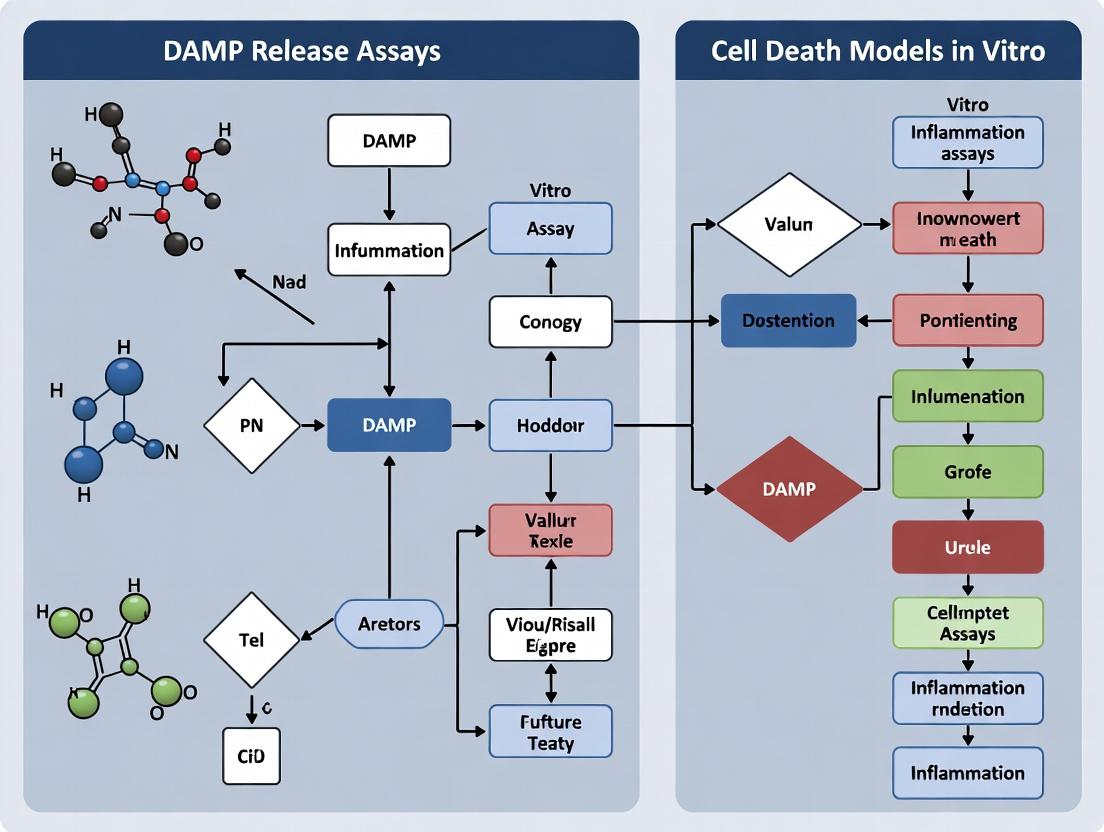
This comprehensive guide explores DAMP (Damage-Associated Molecular Pattern) release assays as critical tools for quantifying and characterizing immunogenic cell death (ICD) in vitro.
DAMP Release Assays for In Vitro Cell Death: Models, Methods & Applications in Drug Discovery
Abstract
This comprehensive guide explores DAMP (Damage-Associated Molecular Pattern) release assays as critical tools for quantifying and characterizing immunogenic cell death (ICD) in vitro. Tailored for researchers and drug development professionals, it covers the foundational biology of DAMPs, detailed methodologies for key assays (e.g., HMGB1, ATP, Calreticulin), best practices for model selection and protocol optimization, and comparative analysis with other cell death assays. The article provides actionable insights for integrating DAMP release profiling into preclinical screening pipelines to evaluate the immunogenic potential of novel therapeutics, including chemotherapeutics and emerging immunotherapies.
The Biology of DAMP Release: Defining Immunogenic Cell Death Signals In Vitro
What are DAMPs? Key Mediators Linking Cell Death to Immune Activation
Damage-Associated Molecular Patterns (DAMPs) are endogenous molecules released from stressed or dying cells that alert the immune system to tissue damage or non-physiological cell death. In the context of in vitro research, quantifying DAMP release is critical for evaluating the immunogenic potential of various cell death modalities (e.g., apoptosis, necrosis, pyroptosis, ferroptosis) and for screening therapeutic compounds that may modulate this process.
The following table categorizes major DAMPs, their primary cellular origin, and their cognate Pattern Recognition Receptors (PRRs).
Table 1: Major DAMPs, Their Sources, and Immune Receptors
| DAMP Class | Prototypic Examples | Primary Source | Key Immune Receptor(s) | Assay Readout (Common) |
|---|---|---|---|---|
| Nuclear | HMGB1, DNA, Histones | Nucleus | TLR4, TLR9, RAGE | ELISA, Western Blot |
| Cytosolic | ATP, HSPs, S100 proteins | Cytoplasm | P2X7R, TLR2/4, RAGE | Luminescence, ELISA |
| Mitochondrial | mtDNA, TFAM, Formyl peptides | Mitochondria | TLR9, FPR1 | qPCR, ELISA |
| ER/Secreted | Calreticulin, Uric Acid | Endoplasmic Reticulum | CD91, NLRP3 Inflammasome | Flow Cytometry, Colorimetric Assay |
Detailed Experimental Protocols
Protocol 3.1: In Vitro DAMP Release Assay from Treated Cells
Objective: To quantify extracellular HMGB1 and ATP following induction of cell death by a chemotherapeutic agent.
Materials & Reagent Solutions:
Table 2: Research Reagent Solutions for DAMP Release Assay
| Reagent/Material | Function/Description | Example Vendor/Cat. No. |
|---|---|---|
| Human Carcinoma Cell Line (e.g., CT26, MC38) | In vitro model for immunogenic cell death (ICD) studies. | ATCC |
| Doxorubicin HCl | Inducer of immunogenic cell death; promotes DAMP release. | Sigma-Aldrich, D1515 |
| HMGB1 ELISA Kit | Quantifies released HMGB1 in cell culture supernatant. | Chondrex, 6010HMGB1 |
| ATP Bioluminescence Assay Kit | Measures extracellular ATP via luciferase reaction. | Sigma-Aldrich, FLAA |
| Propidium Iodide (PI) / Annexin V FITC Kit | Validates and quantifies cell death mode (apoptosis/necrosis). | BioLegend, 640914 |
| Cell Culture Plates (96-well) | Platform for cell treatment and supernatant collection. | Corning, 3599 |
Methodology:
- Cell Seeding & Treatment: Seed 5 x 10^4 cells/well in a 96-well plate. After 24h, treat cells with a titrated dose of Doxorubicin (0.1 - 10 µM) or vehicle control for 12-24 hours.
- Supernatant Collection: Gently collect culture supernatants without disturbing adherent cells. Centrifuge at 500 x g for 5 min to remove cellular debris. Aliquot and store at -80°C.
- HMGB1 Quantification: Thaw supernatants. Perform HMGB1 ELISA per manufacturer's instructions. Include serial dilutions of the provided HMGB1 standard for a calibration curve. Read absorbance at 450 nm.
- ATP Quantification: Using a fresh aliquot of supernatant, mix with equal volume of ATP assay solution in a white-walled 96-well plate. Measure luminescence immediately using a plate reader.
- Cell Death Validation: Harvest treated cells by trypsinization. Wash with PBS and stain with Annexin V FITC and Propidium Iodide (PI) for 15 min in the dark. Analyze by flow cytometry to determine % apoptotic (Annexin V+/PI-) and necrotic/late apoptotic (Annexin V+/PI+) cells.
Data Analysis: Correlate extracellular HMGB1/ATP concentrations with the percentage of cell death and the specific death modality observed.
Protocol 3.2: Surface Calreticulin (CRT) Exposure Assay by Flow Cytometry
Objective: To detect the translocation of calreticulin (an "eat-me" signal) to the plasma membrane of dying cells.
Methodology:
- Cell Treatment: Induce cell death in adherent cells (as in Protocol 3.1). Include a positive control (e.g., 1µM Thapsigargin for 2-4h).
- Cell Harvest & Staining: Harvest cells gently using a non-enzymatic cell dissociation buffer. Wash with cold FACS buffer (PBS + 1% BSA).
- Antibody Staining: Resuspend cell pellet in 100µL FACS buffer containing a 1:100 dilution of anti-Calreticulin primary antibody (or isotype control). Incubate for 30 min on ice in the dark.
- Secondary Staining: Wash cells twice. Resuspend in 100µL FACS buffer with a fluorophore-conjugated secondary antibody (1:200). Incubate for 20 min on ice in the dark.
- Analysis: Wash cells, resuspend in FACS buffer with PI (1µg/mL), and analyze immediately by flow cytometry. Gate on PI-negative (viable) and PI-positive (dead) populations separately to assess CRT exposure specifically on the surface of dying cells.
Visualization of DAMP Signaling and Experimental Workflow
Diagram 1: DAMP Release and Immune Activation Pathway
Diagram 2: In Vitro DAMP Release Assay Workflow
Introduction Within the context of in vitro cell death research, Damage-Associated Molecular Patterns (DAMPs) serve as critical biomarkers for immunogenic cell death (ICD) and other lytic pathways. This Application Note details the detection and functional assessment of four core DAMP signals: HMGB1, ATP, Calreticulin (CRT), and Heat Shock Proteins (HSPs). These protocols are designed to support a broader thesis on standardizing DAMP release assays across various cell death models to evaluate the immunogenic potential of chemotherapeutics or novel compounds in drug development.
Research Reagent Solutions Table: Essential Reagents for Core DAMP Assays
| Reagent/Category | Example Product/Kit | Primary Function in DAMP Assay |
|---|---|---|
| Anti-HMGB1 Antibody | Recombinant Anti-HMGB1 [EPR3507] | Detection and quantification via ELISA or Western Blot. |
| ATP Detection Reagent | CellTiter-Glo Luminescent Assay | Luciferase-based quantitation of extracellular ATP. |
| Anti-Calreticulin Antibody | Anti-Calreticulin antibody [EPR3924] | Flow cytometry or immunofluorescence surface staining. |
| Anti-HSP90/HSP70 Antibody | HSP90α (D1A7) Rabbit mAb | Intracellular and extracellular detection. |
| Cell Death Inducer (Positive Control) | Mitoxantrone (for ICD) | Induces immunogenic cell death with DAMP release. |
| Sytox Green/Propidium Iodide | SYTOX Green Nucleic Acid Stain | Vital dye to gate on dead/permeabilized cells for CRT assay. |
| High-Binding ELISA Plates | Corning Costar 9018 | Plate format for HMGB1/HSP capture ELISA. |
| Recombinant DAMP Protein | Recombinant Human HMGB1 Protein | Generation of standard curves for quantification. |
Quantitative Data Summary Table 1: Representative DAMP Release Levels Following ICD Induction
| DAMP Signal | Assay Method | Untreated Control | ICD-Induced (e.g., Mitoxantrone) | Key Observation/Notes |
|---|---|---|---|---|
| Extracellular HMGB1 | ELISA (ng/mL) | 1.5 ± 0.3 | 45.2 ± 5.1 | Release correlates with late apoptosis/necrosis. |
| Extracellular ATP | Luminescence (RLU) | 1,000 ± 150 | 250,000 ± 25,000 | Peak release often precedes membrane rupture. |
| Surface Calreticulin | Flow Cytometry (% Positive) | 3.2 ± 1.1 | 68.5 ± 7.4 | Measured in Sytox Green- population (pre-lytic). |
| Extracellular HSP90 | ELISA (ng/mL) | 2.1 ± 0.5 | 32.8 ± 4.7 | Co-released with other DAMPs; chaperones antigens. |
Experimental Protocols
Protocol 1: HMGB1 Release ELISA Objective: Quantify HMGB1 in cell culture supernatant post-treatment.
- Cell Treatment: Seed target cells (e.g., CT26, MEFs) in a 24-well plate. Treat with test compound and incubate (e.g., 24-48h). Include a known ICD inducer (e.g., 10 µM Mitoxantrone) and untreated controls.
- Supernatant Collection: Centrifuge plate at 300 x g for 5 min. Carefully aspirate 100-150 µL of supernatant without disturbing the cell pellet. Clarify by centrifugation at 10,000 x g for 10 min at 4°C.
- ELISA Procedure: Use a commercial or in-house HMGB1 ELISA kit. a. Add standards and samples to anti-HMGB1 pre-coated wells (100 µL/well). Incubate 2h at RT. b. Wash 4x with PBS-T. Add detection antibody (biotinylated anti-HMGB1, 100 µL/well). Incubate 1h at RT. c. Wash 4x. Add Streptavidin-HRP (100 µL/well). Incubate 30 min at RT, protected from light. d. Wash 4x. Add TMB substrate (100 µL/well). Incubate 15 min in the dark. e. Stop reaction with 50 µL 1M H₂SO₄. Read absorbance at 450 nm immediately.
Protocol 2: ATP Release Luminescence Assay Objective: Measure extracellular ATP as a real-time indicator of lytic cell death.
- Plate Setup: Seed cells in a white-walled, clear-bottom 96-well plate. Treat with compounds in triplicate.
- Assay Execution: At desired timepoints (e.g., 6, 12, 24h), equilibrate plate and reagents to RT.
- Measurement: Add an equal volume of reconstituted CellTiter-Glo Reagent to each well (e.g., 100 µL to 100 µL medium). Mix on an orbital shaker for 2 min to induce cell lysis.
- Incubation: Incubate at RT for 10 min to stabilize luminescent signal.
- Readout: Record luminescence (Integration time: 0.5-1 sec/well) using a plate reader. Data is expressed as Relative Light Units (RLU).
Protocol 3: Surface Calreticulin Exposure by Flow Cytometry Objective: Detect pre-lytic translocation of CRT to the plasma membrane.
- Cell Harvest & Staining: Harvest adherent cells using gentle enzymatic (e.g., Trypsin-LE) or non-enzymatic dissociation to preserve surface markers.
- Wash: Pellet cells (300 x g, 5 min), wash once with cold FACS Buffer (PBS + 1% BSA).
- Stain for Viability: Resuspend cell pellet in 100 µL FACS Buffer containing a 1:1000 dilution of SYTOX Green or similar viability dye. Incubate for 15 min on ice, protected from light.
- Stain for CRT: Without washing, add primary anti-Calreticulin antibody (1:200 in FACS Buffer). Incubate for 30-45 min on ice.
- Secondary Stain (if needed): Wash cells with 2 mL FACS Buffer. Pellet and resuspend in appropriate fluorophore-conjugated secondary antibody (1:500). Incubate 30 min on ice, protected from light.
- Acquisition: Wash cells twice, resuspend in FACS Buffer, and analyze immediately on a flow cytometer. Gate on SYTOX Green-negative (viable) population and analyze the fluorescence shift in the CRT channel.
Visualization: Pathways and Workflows
Title: Phased DAMP Release During Immunogenic Cell Death
Title: Core DAMP Assay Workflow for In Vitro Models
Damage-Associated Molecular Patterns (DAMPs) are endogenous molecules released from cells undergoing stress or death that activate the innate immune system. In vitro research models are critical for dissecting the modes of cell death and their consequent DAMP release profiles. This application note details key assays and protocols to study four major regulated cell death pathways—apoptosis, necroptosis, pyroptosis, and ferroptosis—within the framework of a thesis focused on DAMP release assays and in vitro cell death models.
Key Features and Quantitative Comparison of Cell Death Modes
The following table summarizes the core characteristics, key mediators, and primary DAMPs released for each mode of cell death, based on current literature (2023-2024).
Table 1: Comparative Overview of Major Cell Death Pathways and DAMP Release
| Feature | Apoptosis | Necroptosis | Pyroptosis | Ferroptosis |
|---|---|---|---|---|
| Morphology | Cell shrinkage, membrane blebbing, apoptotic bodies | Cellular swelling, plasma membrane rupture | Plasma membrane rupture, cell swelling, pore formation | Shrunken mitochondria, increased membrane density |
| Key Molecular Mediators | Caspase-3/7, Caspase-9, Bcl-2 family | RIPK1, RIPK3, MLKL | Caspase-1/4/5/11, GSDMD, NLRP3 inflammasome | GPX4 inhibition, lipid peroxidation (ACSL4) |
| Inflammasome Activation | Generally no | Can be secondary | Directly activates (canonical/non-canonical) | Indirectly via lipid peroxides |
| Primary DAMP Release | HMGB1 (late), phosphatidylserine (eat-me signal) | HMGB1, ATP, DNA, IL-1α (high release) | IL-1β, IL-18, HMGB1, ATP (via pores) | HMGB1, lipid peroxidation products (e.g., 4-HNE) |
| Membrane Integrity | Maintained until phagocytosis (Annexin V+ PI-) | Lost (Annexin V+ PI+) | Lost (Annexin V+ PI+, LDH release) | Lost in late stages (Annexin V+ PI+) |
| Typical Inducers (in vitro) | Staurosporine, ABT-263, TNF-α + CHX | TNF-α + Smac mimetic + Z-VAD-FMK | Nigericin, LPS transfection, ATP (for NLRP3) | Erastin, RSL3, FIN56 |
Table 2: Common In Vitro Assay Readouts for Cell Death and DAMP Detection
| Assay Type | Target/Readout | Apoptosis | Necroptosis | Pyroptosis | Ferroptosis |
|---|---|---|---|---|---|
| Viability | Metabolic activity (e.g., MTT) | Decreased | Decreased | Decreased | Decreased |
| Membrane Integrity | PI uptake / LDH release | Low (early) | High | High | High (late) |
| Phosphatidylserine Exposure | Annexin V-FITC staining | High (early) | High | High | Variable |
| Caspase Activity | Fluorogenic substrate (e.g., DEVD) | High (Casp-3/7) | Inhibited | High (Casp-1/4/11) | Low |
| Key Protein Activation | Western Blot / ICC | Cleaved Casp-3, PARP | p-MLKL | Cleaved Casp-1, GSDMD-N | xCT down, ACSL4 up |
| DAMP Release (Supernatant) | ELISA / HMGB1 ELISA | Low (unless secondary necrosis) | Very High | High | Moderate-High |
| Lipid Peroxidation | C11-BODIPY / MDA assay | Low | Low | Low | High |
Detailed Experimental Protocols
Protocol 3.1: Induction and Validation of PANoptosis-Priming in THP-1 Cells
This protocol establishes a model amenable to multiple death pathways, useful for comparative DAMP release studies.
A. Materials & Reagents
- THP-1 human monocytic cells
- RPMI-1640 medium with 10% FBS
- Phorbol 12-myristate 13-acetate (PMA)
- Priming agents: LPS (for TLR4 priming), TNF-α (for TNFR1 priming)
- Cell death inducers: See Table 1.
- Specific inhibitors: Z-VAD-FMK (pan-caspase), Necrostatin-1 (Nec-1, RIPK1), Disulfiram (GSDMD), Ferrostatin-1 (Fer-1), MCC950 (NLRP3).
B. Procedure
- Differentiation: Seed THP-1 cells at 5x10^5 cells/mL in 24-well plates. Add PMA to a final concentration of 100 ng/mL. Incubate for 48 hours at 37°C, 5% CO2.
- Priming: Wash cells twice with serum-free RPMI. Add fresh medium containing either LPS (100 ng/mL) or TNF-α (20 ng/mL) for 3 hours.
- Induction of Death: Add specific inducers:
- Apoptosis: Add Staurosporine (1 µM).
- Necroptosis: To LPS-primed cells, add Smac mimetic (100 nM) + Z-VAD-FMK (20 µM).
- Pyroptosis (canonical): To LPS-primed cells, add Nigericin (10 µM).
- Ferroptosis: Add Erastin (10 µM) or RSL3 (100 nM).
- Inhibition Controls: Pre-treat cells for 1 hour with specific inhibitors prior to adding death inducers.
- Incubation: Incubate cells for an additional 6-24 hours (time-course dependent on pathway).
- Sample Collection: Collect supernatant for DAMP (e.g., HMGB1, ATP) and cytokine (IL-1β) ELISA. Lyse cells for Western blot analysis of pathway markers (cleaved Caspase-3, p-MLKL, GSDMD-N, GPX4).
- Viability Assessment: Perform an MTT assay on parallel wells.
Protocol 3.2: Quantification of Extracellular HMGB1 as a Universal DAMP
HMGB1 is a key DAMP released in all forms of lytic/necrotic death.
A. Materials & Reagents
- Cell culture supernatants (centrifuged at 300 x g to remove cells).
- HMGB1 ELISA Kit (e.g., Chondrex, #3010).
- Microplate reader capable of 450 nm measurement.
B. Procedure
- Sample Preparation: Centrifuge collected supernatants at 300 x g for 5 min to pellet any detached cells. Use supernatant immediately or store at -80°C.
- ELISA: Follow manufacturer instructions. Typically:
- Add 100 µL of standard or sample to antibody-precoated wells.
- Incubate 2 hours at room temperature (RT).
- Wash 4x with Wash Buffer.
- Add 100 µL of Biotinylated Antibody. Incubate 1 hour at RT.
- Wash 4x.
- Add 100 µL of HRP-Streptavidin solution. Incubate 45 min at RT.
- Wash 4x.
- Add 100 µL of TMB Substrate. Incubate 30 min at RT in the dark.
- Add 100 µL of Stop Solution.
- Measurement & Analysis: Read absorbance at 450 nm. Calculate HMGB1 concentration from the standard curve. Normalize to total cellular protein from corresponding lysates if needed.
Protocol 3.3: Multiparameter Flow Cytometry Assay for Death Pathway Discrimination
A single-tube assay to distinguish early apoptotic, late apoptotic/necrotic, and ferroptotic cells.
A. Materials & Reagents
- FITC Annexin V / Dead Cell Apoptosis Kit (contains Annexin V-FITC and PI).
- CellEvent Caspase-3/7 Green Detection Reagent (or similar fluorogenic substrate).
- C11-BODIPY 581/591 lipid peroxidation sensor.
- Flow cytometry buffer (PBS + 2% FBS).
- Flow cytometer with 488 nm laser and filters for FITC (~530 nm), PE (~575 nm), and APC/Cy5 (~670 nm) channels.
B. Procedure
- Induction & Staining: Induce cell death as per Protocol 3.1 in 6-well plates.
- Loading Dyes: 30 min before harvest, add C11-BODIPY (2 µM final) and CellEvent Caspase-3/7 reagent (according to manufacturer's recommendation) directly to the culture medium.
- Harvest & Stain: Harvest cells (including supernatant). Wash once with PBS. Resuspend ~1x10^5 cells in 100 µL of Annexin V Binding Buffer.
- Annexin V/PI Stain: Add 5 µL of Annexin V-FITC and 1 µL of PI (100 µg/mL). Incubate for 15 min at RT in the dark.
- Acquisition: Add 400 µL of Binding Buffer and analyze immediately on the flow cytometer.
- Gating Strategy: Analyze cells for:
- Viable: Annexin V-/PI-/Caspase-3/7-/C11-BODIPY (Red).
- Early Apoptotic: Annexin V+/PI-/Caspase-3/7+.
- Late Apoptotic/Necroptotic/Pyroptotic: Annexin V+/PI+ (Caspase-3/7 variable).
- Ferroptotic: Annexin V+/PI+ (may be late), High C11-BODIPY (Green shift), Caspase-3/7-.
Visualizations
Title: Cell Death Pathways Converge on DAMP Release Assayed by Key Methods
Title: Membrane Rupture is a Common Terminal Step Triggering DAMP Release
The Scientist's Toolkit: Research Reagent Solutions
Table 3: Essential Reagents for Cell Death and DAMP Release Research
| Reagent / Kit Name | Primary Function / Target | Key Application in Field |
|---|---|---|
| Annexin V-FITC / PI Apoptosis Detection Kit | Binds phosphatidylserine (PS) / intercalates into DNA. | Discriminates early apoptotic (Annexin V+/PI-) from late apoptotic/necrotic (Annexin V+/PI+) cells. |
| Recombinant Human TNF-α | Activates TNFR1 signaling. | Core inducer for necroptosis (with caspase inhibitor) and apoptosis (with transcriptional inhibitor) models. |
| Z-VAD-FMK (Pan-Caspase Inhibitor) | Irreversibly inhibits caspase activity. | Used to block apoptosis and differentiate it from caspase-independent pathways like necroptosis. |
| Necrostatin-1 (Nec-1) | Allosteric inhibitor of RIPK1 kinase activity. | Specific inhibitor to confirm necroptosis in cell death assays. |
| Disulfiram | Covalently modifies gasdermin D (GSDMD) cysteine. | Specific inhibitor of pyroptotic pore formation, blocks GSDMD-N oligomerization. |
| Ferrostatin-1 (Fer-1) | Lipophilic radical-trapping antioxidant. | Specific inhibitor of ferroptosis; validates lipid peroxidation-dependent death. |
| C11-BODIPY 581/591 | Lipid peroxidation sensor (fluorescence shifts red→green). | Live-cell imaging and flow cytometry detection of lipid ROS, hallmark of ferroptosis. |
| Anti-HMGB1 ELISA Kit | Quantifies extracellular HMGB1 protein. | Gold-standard for measuring a key DAMP released during lytic cell death. |
| Anti-phospho-MLKL (Ser358) Antibody | Detects activated MLKL (necroptosis executor). | Western blot confirmation of necroptosis pathway engagement. |
| CellEvent Caspase-3/7 Green Detection Reagent | Fluorogenic substrate cleaved by active caspase-3/7. | Live-cell imaging and flow cytometry for real-time apoptosis monitoring. |
| LDH Cytotoxicity Assay Kit | Measures lactate dehydrogenase released upon membrane damage. | Quantifies overall lytic cell death (necroptosis, pyroptosis, late ferroptosis). |
| MCC950 (CP-456773) | Selective NLRP3 inflammasome inhibitor. | Confirms canonical pyroptosis dependent on NLRP3 activation. |
| Erastin / RSL3 | System xc- inhibitor / GPX4 inhibitor. | Standard chemical inducers of ferroptosis via distinct mechanisms. |
The Concept of Immunogenic Cell Death (ICD) vs. Tolerogenic Cell Death
Immunogenic Cell Death (ICD) and Tolerogenic Cell Death (TCD) represent two fundamentally different outcomes of cellular demise in terms of immune system engagement. Within the context of a thesis on DAMP (Damage-Associated Molecular Patterns) release assays and in vitro cell death models, distinguishing between these pathways is crucial for evaluating the therapeutic potential of oncolytic agents, immunotherapies, and understanding autoimmune pathologies.
- Immunogenic Cell Death (ICD): A regulated form of cell death that activates an adaptive immune response against dead-cell antigens, primarily through the spatiotemporally defined emission of DAMPs. ICD converts dying cells into in situ vaccines.
- Tolerogenic Cell Death (TCD): Encompasses cell death modalities (e.g., non-inflammatory apoptosis, autophagy) that fail to elicit robust DAMPs signaling or actively promote immune tolerance, leading to antigenic silence or active suppression.
The key differentiator is the nature, combination, and kinetics of DAMPs released. Core ICD-inducing DAMPs include surface-exposed calreticulin (CRT), secreted ATP, released HMGB1, and type I interferons.
Quantitative DAMP Signature Comparison
The following table summarizes the hallmark DAMP signals and immune outcomes associated with ICD and TCD.
Table 1: Comparative DAMP Profile & Immune Consequences of ICD vs. TCD
| Feature | Immunogenic Cell Death (ICD) | Tolerogenic Cell Death (TCD) |
|---|---|---|
| Primary Inducers | Anthracyclines (Doxorubicin), Oxaliplatin, Photodynamic Therapy, Oncolytic viruses, γ-irradiation | Standard apoptosis inducers (Staurosporine, UV-C irradiation, FAS ligand), Caspase-dependent pathways |
| ER Stress & CRT Exposure | Strong, Early (Pre-apoptotic; eATP-dependent) | Weak or Absent |
| ATP Secretion | High (Autophagic-dependent release; acts on P2RX7) | Low/Negligible |
| HMGB1 Release | Late, Bioactive (Binds TLR4) | Variable, Often Non-Immunogenic |
| Type I IFN Production | Present (STING-dependent) | Typically Absent |
| Primary Immune Effector | CD8+ T-cell Activation | Tolerance or Suppression |
| In Vivo Outcome | Sterilizing Immunity, Antigen-Specific Memory | Immune Silence, Possible Regulatory T-cell Induction |
Core Protocols forIn VitroICD/TCD Assessment
These protocols are designed for use with cancer cell lines (e.g., CT26, MC38, MCA205, HCT116) and are fundamental to DAMP release assay research.
Protocol 3.1: Induction and Calreticulin (CRT) Exposure Assay
Purpose: To quantify early, pre-apoptotic translocation of CRT to the plasma membrane, a key ICD hallmark. Materials:
- Test compounds (e.g., 1 µM Doxorubicin for ICD; 1 µM Staurosporine for TCD control).
- Cancer cell lines seeded in 24-well plates.
- PBS, 4% Paraformaldehyde (PFA), Blocking Buffer (2% BSA in PBS).
- Primary Anti-Calreticulin Antibody.
- Fluorescently-labeled Secondary Antibody (e.g., Alexa Fluor 488).
- Flow Cytometer or High-Content Imaging System. Procedure:
- Treat cells with ICD inducers or TCD controls for 6-16 hours.
- Harvest cells gently using non-enzymatic dissociation buffer.
- Fix cells with 4% PFA for 20 min at RT. Wash with PBS.
- Block with 2% BSA for 30 min.
- Stain with primary anti-CRT antibody (1-2 hours, RT), wash.
- Stain with fluorescent secondary antibody (45 min, RT in dark), wash.
- Resuspend in PBS and analyze via flow cytometry. Quantification: Measure the geometric mean fluorescence intensity (gMFI) shift in the FITC/GFP channel compared to unstained and isotype controls.
Protocol 3.2: Extracellular ATP (eATP) Release Luminescence Assay
Purpose: To measure the peak secretion of ATP, a crucial "find-me" signal for phagocytes. Materials:
- Cell culture supernatants from treated cells.
- ATP Bioluminescence Assay Kit (e.g., CLS II, Roche).
- White-walled 96-well plate.
- Luminometer. Procedure:
- Treat cells in a 96-well format. At defined time points (e.g., 4, 8, 12, 24h), collect 50 µL of supernatant.
- Centrifuge supernatant (500xg, 5 min) to remove cell debris.
- Transfer clarified supernatant to a white 96-well plate.
- Following kit instructions, inject the luciferin/luciferase reagent.
- Measure luminescence immediately. Quantification: Generate a standard curve with known ATP concentrations. Express data as nM ATP per 10^4 cells.
Protocol 3.3: HMGB1 Release ELISA
Purpose: To detect the late release of nuclear HMGB1 into the supernatant, indicating secondary necrosis. Materials:
- Cell culture supernatants (collected at 24-48h post-treatment).
- HMGB1 ELISA Kit.
- Microplate reader. Procedure:
- Collect and centrifuge supernatants as in Protocol 3.2.
- Follow the specific ELISA kit protocol. Typically involves incubating samples in antibody-coated wells, followed by detection antibodies and substrate.
- Measure absorbance. Quantification: Compare to HMGB1 standard curve. Results are often expressed as ng/mL per 10^6 cells.
Visualizing Key Pathways and Workflows
Diagram 1: ICD vs TCD DAMP Signaling Pathways
Diagram 2: In Vitro ICD Validation Workflow
The Scientist's Toolkit: Key Research Reagents
Table 2: Essential Reagents for DAMP & ICD/TCD Research
| Reagent / Kit | Function & Application | Key Consideration |
|---|---|---|
| Doxorubicin Hydrochloride | Gold-standard positive control ICD inducer. Induces ER stress, CRT exposure, and ATP release. | Titrate carefully (0.5-5 µM); cytotoxic but not immediately lytic. |
| Staurosporine | Positive control for classical, tolerogenic apoptosis. Serves as a negative control for ICD assays. | Fast-acting apoptosis inducer; use at low µM concentrations. |
| Anti-Calreticulin Antibody | Detects surface-exposed CRT via flow cytometry or immunofluorescence. | Must be non-permeabilizing for surface staining. Validate with digitonin-permeabilized controls. |
| ATP Bioluminescence Assay Kit (CLS II) | Quantifies extracellular ATP concentration in supernatants with high sensitivity. | Requires immediate reading after reagent addition; avoid freeze-thaw of samples. |
| HMGB1 ELISA Kit | Quantifies HMGB1 release into culture medium. Distinguishes ICD from non-immunogenic late apoptosis/necrosis. | Ensure kit detects both reduced and disulfide HMGB1 forms for biological relevance. |
| P2RX7 Antagonist (e.g., A-438079) | Pharmacological inhibitor to confirm ATP's role via P2RX7 in in vitro DC activation assays. | Critical for functional validation of eATP signaling. |
| Recombinant IFN-β | Positive control for STING/IFN pathway activation in reporter assays or DC maturation studies. | Used to benchmark endogenous IFN production during ICD. |
Why Measure DAMP Release? Applications in Oncology, Toxicology, and Immunotherapy Development.
Within the broader thesis on DAMP release assays in in vitro cell death models, the quantitative measurement of Damage-Associated Molecular Patterns (DAMPs) is established as a critical functional endpoint. DAMP release, including HMGB1, ATP, calreticulin, and heat-shock proteins, signifies immunogenic cell death (ICD), a functionally distinct form of apoptosis that activates the immune system. This application note details the rationale, current applications, and standardized protocols for DAMP quantification, providing researchers with tools to evaluate compound efficacy, toxicity, and immunogenic potential.
Applications in Modern Research
DAMP release assays bridge in vitro cytotoxicity and in vivo immune responses. Their measurement is pivotal in three core fields:
- Oncology & Chemotherapy Screening: To identify novel chemotherapeutics or combinations that induce ICD, thereby conferring long-term anti-tumor immunity. The release of DAMPs like CRT and ATP is a prerequisite for dendritic cell activation and cross-priming of T-cells.
- Toxicology & Safety Profiling: To assess the off-target immunogenic potential of drug candidates. Unintended DAMP release from non-target tissues can trigger sterile inflammation and autoimmunity, representing a significant safety liability.
- Immunotherapy Development: To engineer and validate next-generation agents (e.g., oncolytic viruses, bispecific antibodies, targeted radionuclides) explicitly for their ability to induce ICD and synergize with immune checkpoint inhibitors.
Table 1: Core DAMPs, Their Receptors, and Detection Methods
| DAMP | Primary Receptor(s) | Standard Detection Method | Typical Sample Matrix |
|---|---|---|---|
| HMGB1 | TLR2/4, RAGE | ELISA / Western Blot | Cell Culture Supernatant |
| ATP | P2X7R | Luciferase-based Luminescence Assay | Cell Culture Supernatant |
| Calreticulin (CRT) | LDLR, CD91 | Flow Cytometry (Surface Exposure) | Adherent / Suspension Cells |
| Heat Shock Protein 70/90 | TLR2/4, CD91 | ELISA / Supernatant Pull-Down | Cell Culture Supernatant |
Table 2: Example DAMP Release Profile of Common Chemotherapeutics (In Vitro, MC38 Murine Colon Carcinoma Cell Line)
| Treatment (24h) | CRT Exposure (%) | ATP Release (Fold vs Ctrl) | HMGB1 Release (ng/ml) | ICD Classification |
|---|---|---|---|---|
| Control (PBS) | 5.2 ± 1.1 | 1.0 ± 0.2 | 2.1 ± 0.5 | Non-ICD |
| Doxorubicin (1 µM) | 78.4 ± 6.5 | 8.3 ± 1.4 | 45.2 ± 5.8 | Strong ICD |
| Mitoxantrone (5 µM) | 82.1 ± 7.2 | 7.9 ± 1.2 | 50.1 ± 6.1 | Strong ICD |
| Cisplatin (10 µM) | 15.3 ± 3.2 | 1.8 ± 0.4 | 5.4 ± 1.2 | Weak/Non-ICD |
| Oxaliplatin (10 µM) | 65.5 ± 5.8 | 5.5 ± 0.9 | 38.7 ± 4.3 | Strong ICD |
Experimental Protocols
Protocol 1: Simultaneous Assessment of CRT Surface Exposure and HMGB1 Release
Objective: To quantify two hallmarks of ICD from the same treated cell population.
Materials:
- Target cell line (e.g., MC38, CT26, MEF, or primary cells).
- Test compounds and appropriate vehicle controls.
- Flow cytometry buffer (PBS + 2% FBS).
- Anti-calreticulin primary antibody (rabbit anti-CRT).
- Fluorescently-labeled secondary antibody (e.g., Alexa Fluor 488 goat anti-rabbit).
- Fixable Viability Dye (e.g., Zombie NIR).
- HMGB1 ELISA kit (e.g., from IBL International or Chondrex).
- Cell culture plates (6-well or 12-well format).
Procedure:
- Cell Treatment: Seed cells to reach ~70% confluence at treatment time. Treat with test compounds for a defined period (typically 12-24h). Include positive (e.g., 1 µM Doxorubicin) and negative (vehicle) controls.
- Sample Collection: Gently collect supernatant without disturbing adherent cells. Centrifuge (300 x g, 5 min) to remove debris. Aliquot and store supernatant at -80°C for HMGB1 ELISA.
- Cell Harvest & Staining: Harvest adherent cells using gentle trypsinization or a non-enzymatic cell dissociation buffer. Wash cells once with flow buffer. a. Stain with Fixable Viability Dye according to manufacturer's instructions. b. Fix cells with 2% PFA for 15 min at RT. Permeabilization is NOT required for surface CRT. c. Wash twice, then incubate with anti-CRT primary antibody (1-2 µg/mL) for 1h at RT. d. Wash twice, then incubate with fluorescent secondary antibody (1:1000 dilution) for 30 min at RT in the dark. e. Wash twice and resuspend in flow buffer for acquisition.
- Flow Cytometry Analysis: Acquire data on a flow cytometer. Gate on single, live cells. Report the percentage of CRT-positive cells and/or the geometric mean fluorescence intensity (gMFI) relative to an isotype control.
- HMGB1 ELISA: Perform HMGB1 quantification on thawed supernatants using the commercial ELISA kit per manufacturer's protocol.
Protocol 2: Real-Time Kinetic Measurement of Extracellular ATP
Objective: To monitor the rapid, transient release of ATP during early cell death.
Materials:
- Target cell line in log-phase growth.
- Real-time ATP detection reagent (e.g., CellTiter-Glo 2.0 or a luciferin-luciferase-based kit).
- White-walled, clear-bottom 96-well or 384-well microplate.
- Compatible real-time plate reader/luminometer.
Procedure:
- Plate Cells: Seed cells in the microplate at an optimal density (e.g., 5,000-10,000 cells/well for a 96-well plate) in full growth medium. Incubate overnight.
- Prepare Reagent: Equilibrate the lyophilized ATP detection reagent to room temperature and reconstitute according to the manufacturer's instructions.
- Establish Baseline: Add an equal volume of detection reagent to 3-4 control wells. Mix briefly and measure luminescence immediately (t=0).
- Initiate Treatment & Kinetics: Add test compounds directly to remaining wells using a multichannel pipette. Immediately add detection reagent to all wells.
- Data Acquisition: Place the plate in a real-time luminometer. Measure luminescence every 2-5 minutes for the first 60-90 minutes, then at longer intervals (e.g., 30 min) for up to 24 hours. Maintain constant temperature (37°C).
- Analysis: Normalize luminescence values to the baseline control (t=0). Plot ATP release as fold-change over time. Peak ATP release typically occurs 1-4 hours post-treatment with ICD inducers.
The Scientist's Toolkit: Research Reagent Solutions
Table 3: Essential Materials for DAMP Release Assays
| Item | Function & Application | Example Product/Assay |
|---|---|---|
| HMGB1 ELISA Kit | Quantifies released HMGB1 in supernatant. Gold standard for late-stage ICD confirmation. | IBL International HMGB1 ELISA, Chondrex HMGB1 ELISA |
| ATP Luminescence Assay | Measures extracellular ATP concentration. Critical for early ICD biomarker detection. | Promega CellTiter-Glo 2.0, Abcam ATP Assay Kit (Fluorometric) |
| Anti-Calreticulin Antibody | Detects surface-exposed CRT via flow cytometry or immunofluorescence. | Abcam anti-Calreticulin antibody [EPR3924], CST Calreticulin (D3E6) XP Rabbit mAb |
| Fixable Viability Stain | Distinguishes live from dead cells in flow cytometry, ensuring analysis is gated on dying, not dead, cells. | BioLegend Zombie Dyes, Thermo Fisher LIVE/DEAD Fixable Stains |
| Caspase-3/7 Activity Probe | Confirms apoptotic cascade engagement alongside DAMP release. | Promega CellEvent Caspase-3/7 Green Detection Reagent |
| High-Throughput Plate Reader | Enables kinetic and endpoint luminescence/fluorescence readings for ATP and other assays. | BioTek Synergy H1, PerkinElmer EnVision |
Visualizations
DAMP Signaling in Immunogenic Cell Death Pathway
Integrated DAMP Release Assay Workflow
Step-by-Step Protocols: Setting Up DAMP Release Assays in Your Lab
The study of Damage-Associated Molecular Patterns (DAMPs) released during immunogenic cell death (ICD) is pivotal for advancing cancer immunotherapy. Selecting an appropriate in vitro model system directly impacts the relevance and translatability of findings. This article compares three central models—established cancer cell lines, primary cells, and 3D co-culture systems—within the context of DAMP release assays (e.g., calreticulin exposure, ATP secretion, HMGB1 release). The choice of model dictates the complexity of the tumor microenvironment (TME) represented, directly influencing the profile and magnitude of DAMP signals elicited by chemotherapeutic agents or novel therapeutics.
Comparative Analysis of Model Systems
The table below summarizes key characteristics of each model system relevant to DAMP release studies.
Table 1: Comparative Analysis of In Vitro Models for DAMP Release Assays
| Feature | Cancer Cell Lines | Primary Cells | 3D Co-culture Systems |
|---|---|---|---|
| Source | Commercial repositories (ATCC, DSMZ) | Patient-derived tumor or stromal tissue | Combination of cell lines/primary cells in scaffolds. |
| Genetic/Phenotypic Stability | High, but may drift over passages. | Low; more representative of tumor heterogeneity but unstable ex vivo. | Variable; depends on component cells. |
| Throughput | High (amenable to 96/384-well plates). | Low (limited expansion capability). | Medium to Low (complex setup). |
| Cost | Low | High (procurement, characterization). | High (specialized matrices, multiple cell types). |
| Microenvironment Complexity | Low (lacks stroma, immune cells, ECM). | Medium (autologous stroma possible, but lacks architecture). | High (can incorporate fibroblasts, immune cells, ECM). |
| Key DAMP Assay Advantages | Standardized, reproducible baseline DAMP signals. | Patient-specific DAMP responses; clinically relevant. | Cell-cell contact & hypoxia can modulate DAMP release. |
| Key DAMP Assay Limitations | May not reflect in vivo DAMP release profiles. | Inter-donor variability complicates data normalization. | Difficult to isolate DAMP source (tumor vs. stromal cells). |
| Primary Readout Applicability | Initial screening of ICD-inducers. | Validating patient-specific responses. | Studying DAMP signaling in a context-aware TME. |
Detailed Protocols for DAMP Release Assays Across Models
Protocol 3.1: Baseline DAMP Screening in 2D Cancer Cell Lines
Aim: To quantify key ICD-associated DAMPs (surface calreticulin, extracellular ATP, released HMGB1) after treatment with a candidate compound (e.g., Doxorubicin) in a 2D monolayer of a human breast cancer cell line (MDA-MB-231).
Materials:
- MDA-MB-231 cells.
- Doxorubicin (ICD-positive control), 1µM final concentration.
- Cell culture medium, PBS, fixation buffer (4% PFA).
- Anti-calreticulin primary antibody, fluorophore-conjugated secondary antibody.
- ATP Bioluminescence Assay Kit (e.g., CLS II, Roche).
- HMGB1 ELISA Kit.
Procedure:
- Seed cells in appropriate plates (e.g., 96-well for ATP/HMGB1, chamber slides for calreticulin) and grow to ~70% confluence.
- Treat with doxorubicin or vehicle control for 24h.
- Assay for Surface Calreticulin (Immunofluorescence):
- Wash cells with PBS, fix with 4% PFA for 15 min.
- Permeabilize with 0.1% Triton X-100 (optional for surface+total) or omit for surface-only.
- Block with 5% BSA for 1h.
- Incubate with anti-calreticulin primary antibody (1:200) overnight at 4°C.
- Incubate with fluorescent secondary antibody (1:500) for 1h at RT in the dark.
- Image using a fluorescence microscope; quantify mean fluorescence intensity (MFI) per cell.
- Assay for Extracellular ATP (Luminescence):
- Collect conditioned medium 24h post-treatment.
- Centrifuge at 500xg to remove cell debris.
- Mix 50µL of supernatant with 50µL of ATP assay solution in an opaque-walled plate.
- Measure luminescence immediately with a plate reader. Compare to an ATP standard curve.
- Assay for Released HMGB1 (ELISA):
- Collect conditioned medium 48-72h post-treatment (or upon significant cell death).
- Centrifuge at 2000xg for 10 min to remove debris.
- Perform HMGB1 ELISA per manufacturer's instructions on the supernatant.
Protocol 3.2: DAMP Assessment in Patient-Derived Primary Spheroids
Aim: To form spheroids from primary colorectal cancer cells and measure DAMP release after oxaliplatin treatment.
Materials:
- Primary colorectal cancer cells (from commercial biospecimen providers or tissue banks).
- Ultra-low attachment (ULA) 96-well plates.
- Matrigel or other basement membrane extract.
- Oxaliplatin, 5µM final concentration.
Procedure:
- Isolate & Prepare Primary Cells: Dissociate patient tumor tissue enzymatically (collagenase/hyaluronidase) and filter to obtain a single-cell suspension. Culture in primary cell-specific medium for 1-2 passages.
- Form Spheroids: Seed 5,000-10,000 cells/well in ULA plates. Centrifuge plates at 300xg for 3 min to aggregate cells. Culture for 72-96h until compact spheroids form.
- Embed (Optional): For a more structured TME, mix spheroids with 2% Matrigel and plate.
- Treatment: Add oxaliplatin or control. Incubate for 48-72h.
- DAMP Analysis: Collect conditioned medium for ATP/HMGB1 as in Protocol 3.1. For calreticulin, harvest spheroids, dissociate gently, and perform flow cytometry (fix cells, stain for surface calreticulin, and analyze).
Protocol 3.3: Complex DAMP Signaling in a 3D Co-culture System
Aim: To establish a 3D co-culture of pancreatic cancer cells (Panc-1), cancer-associated fibroblasts (CAFs), and monocytes (THP-1) in a collagen matrix to study DAMP-mediated immune cell activation.
Materials:
- Panc-1-GFP cells, primary CAFs, THP-1 monocytes.
- Type I Collagen, rat tail.
- Mitomycin C (for CAF cell cycle arrest).
- Transwell inserts (optional).
- ELISA kits for IL-1β, TNF-α.
Procedure:
- Prepare Collagen Matrix: Neutralize high-concentration collagen with 0.1M NaOH and 10X PBS on ice per manufacturer's instructions. Keep on ice to prevent polymerization.
- Mix Cell Suspension: Trypsinize and count Panc-1 and CAFs (pre-treated with 10µg/mL Mitomycin C for 2h to prevent overgrowth). Resuspend in cold collagen mixture at a 2:1 (Panc-1:CAF) ratio at a final density of 1x10^6 cells/mL collagen.
- Polymerize: Plate 100µL/well in a 96-well plate. Incubate at 37°C for 1h to gel.
- Add Immune Component: Add culture medium containing 5x10^4 THP-1 cells on top of the polymerized gel.
- Treatment & Analysis: Treat with gemcitabine (100nM) for 96h.
- DAMP Readout: Collect medium for HMGB1/ATP ELISA.
- Functional Immune Readout: Collect supernatant for IL-1β/TNF-α ELISA as a proxy for DAMP-induced immune activation.
- Imaging: Fix and stain for confocal microscopy (Panc-1 are GFP+, stain CAFs with α-SMA, monocytes with CD11b, and nuclei with DAPI).
The Scientist's Toolkit: Essential Research Reagents
Table 2: Key Reagent Solutions for DAMP Release Assays
| Reagent / Kit | Primary Function in DAMP Research | Example Vendor |
|---|---|---|
| ATP Bioluminescence Assay Kit CLS II | Sensitive, quantitative measurement of extracellular ATP, a key early DAMP. | Sigma-Aldrich / Roche |
| Recombinant Human HMGB1 Protein | Used as a positive control and for standard curves in HMGB1 detection assays. | R&D Systems |
| HMGB1 ELISA Kit | Quantifies released HMGB1 from cell culture supernatants with high specificity. | Aviva Systems Biology |
| Anti-Calreticulin, Alexa Fluor 647 Conjugate | Flow cytometry or immunofluorescence detection of surface-exposed calreticulin. | Abcam |
| CellTox Green Cytotoxicity Assay | Real-time measurement of cell death (membrane integrity), correlating with DAMP release. | Promega |
| Ultra-Low Attachment (ULA) Plates | Facilitates formation of 3D spheroids from cell lines or primary cells. | Corning |
| Growth Factor Reduced Matrigel | Basement membrane extract for creating physiologically relevant 3D cell culture environments. | Corning |
| Type I Collagen, Rat Tail | Natural hydrogel for constructing 3D co-culture models, mimicking tumor stroma. | Thermo Fisher |
| Mitomycin C | Arrests fibroblast proliferation in co-cultures, preventing overgrowth of stromal components. | Sigma-Aldrich |
Signaling Pathways and Experimental Workflows
DAMP Signaling Pathway & Assay Measurement Points
Workflow for Model Selection in DAMP-Based ICD Discovery
Inducers of Immunogenic Cell Death for Assay Development (e.g., Doxorubicin, Oxaliplatin, Radiotherapy)
Within the context of developing and validating DAMP (Damage-Associated Molecular Patterns) release assays for in vitro cell death models, the selection of a standardized inducer of immunogenic cell death (ICD) is critical. ICD is a functionally unique form of regulated cell death that, beyond eliminating cancer cells, activates an adaptive immune response against dead-cell antigens. This is orchestrated by the spatiotemporal release of DAMPs. Assays measuring CRT exposure, HMGB1 release, and ATP secretion are fundamental to confirming ICD. This document provides Application Notes and Protocols for three benchmark ICD inducers, enabling robust assay development and comparative studies.
Table 1: Characteristic DAMP Signatures of Common ICD InducersIn Vitro
| ICD Inducer | Typical In Vitro Concentration/ Dose | Key Exposed/Released DAMPs | Approximate Onset Post-Treatment (Hours) | Non-ICD Cell Death Contamination |
|---|---|---|---|---|
| Doxorubicin (Anthracycline) | 1 - 10 µM (cell line dependent) | CRT (exposure), HSP70/90, ATP, HMGB1 (late) | CRT: 6-12h; HMGB1: >24h | High apoptotic component; secondary necrosis required for full DAMP release. |
| Oxaliplatin (Pt-based chemo) | 50 - 200 µM (cell line dependent) | CRT (exposure), ATP, HMGB1, Type I IFNs | CRT: 4-8h; ATP: 12-24h | Primarily apoptotic, but with strong ICD characteristics. |
| Radiotherapy (X-ray) | 2 - 20 Gy (single fraction) | CRT (exposure), ATP, HMGB1, dsDNA | CRT: 3-6h; dsDNA: >24h | Heterogeneous (apoptosis, necrosis, senescence); dose-dependent. |
| Mitoxantrone (Anthracenedione) | 1 - 5 µM | CRT (exposure), ATP, HMGB1 | CRT: 6-10h | Similar to Doxorubicin. |
Experimental Protocols
Protocol 1:In VitroICD Induction & DAMP Sampling Workflow
Objective: To induce ICD in a monolayer cancer cell culture and prepare samples for key DAMP assays.
Materials: Sterile cell culture plates, complete growth medium, ICD inducer (e.g., 1µM Doxorubicin stock in PBS or DMSO), PBS, sterile cell culture-grade tubes.
Procedure:
- Cell Seeding: Seed target cancer cells (e.g., CT26, MCA205, HCT116) in appropriate culture plates. Allow to adhere overnight (~70% confluency at assay start).
- ICD Induction: Prepare fresh treatment medium containing the desired final concentration of ICD inducer (see Table 1). Replace medium on cells with treatment medium. Include vehicle control (e.g., 0.1% DMSO) and a positive control for apoptosis (e.g., 1µM Staurosporine) as non-ICD controls.
- Incubation: Incubate cells for the required period (typically 12-48h, depending on the DAMP readout).
- Conditioned Medium Collection (for HMGB1/ATP): a. At designated timepoints, gently collect the conditioned medium. b. Centrifuge at 500 x g for 5 min at 4°C to pellet any floating cells/debris. c. Transfer the supernatant to a new tube. Aliquot and store at -80°C for downstream ELISA (HMGB1) or luciferase-based assay (ATP).
- Cell Monolayer Processing (for CRT immunofluorescence/flow cytometry): a. Wash cells gently with ice-cold PBS. b. Proceed to live-cell staining for surface-exposed calreticulin without fixation (see Protocol 2).
Protocol 2: Surface Calreticulin (CRT) Exposure Assay via Flow Cytometry
Objective: To quantify the translocation of CRT to the outer leaflet of the plasma membrane.
Materials: Live cells post-treatment in a multi-well plate, FACS buffer (PBS + 1% BSA), primary anti-Calreticulin antibody (non-permeabilizing, clone EPR3924), isotype control antibody, fluorescent secondary antibody, flow cytometer.
Procedure:
- After treatment and PBS wash, harvest cells using gentle, non-enzymatic dissociation buffer (e.g., 2-5 mM EDTA in PBS) to preserve surface epitopes. Avoid trypsin.
- Centrifuge cell suspension at 300 x g for 5 min. Wash pellet once with FACS buffer.
- Resuspend cell pellet (~1x10^6 cells) in 100 µL FACS buffer containing the recommended dilution of anti-CRT antibody or isotype control. Incubate for 30-45 min on ice in the dark.
- Wash cells twice with 2 mL FACS buffer.
- Resuspend in 100 µL FACS buffer containing the appropriate fluorescent secondary antibody. Incubate for 30 min on ice in the dark.
- Wash twice, resuspend in FACS buffer, and analyze immediately on a flow cytometer. Gate on live cells (propidium iodide negative) and measure fluorescence shift relative to isotype control.
The Scientist's Toolkit: Essential Research Reagent Solutions
| Item/Reagent | Function in ICD Assay Development |
|---|---|
| High-Purity ICD Inducers (e.g., Doxorubicin HCl, Oxaliplatin) | Standardized, biologically active compounds for reproducible induction of ICD. |
| Anti-Calreticulin, Non-Permeabilizing Antibody | Detects surface-exposed CRT on live cells for flow cytometry or immunofluorescence. |
| HMGB1 ELISA Kit | Quantifies HMGB1 concentration released into conditioned medium. |
| ATP Detection Kit (Luciferase-based) | Measures extracellular ATP, a key chemotactic DAMP, in conditioned medium. |
| Propidium Iodide (PI) / Annexin V Kit | Distinguishes between early apoptosis, late apoptosis, and necrosis. |
| Cell Impermeable DNA-Binding Dyes (e.g., SYTOX Green) | Labels dsDNA released from necrotic/necroptotic cells in the medium. |
| Gentle Cell Dissociation Reagent | Harvests adherent cells without trypsin to preserve surface DAMP markers like CRT. |
Diagrams
Title: Core Signaling Pathway for ICD Inducer Action
Title: In Vitro ICD Assay Development Workflow
Application Notes
Within the broader thesis investigating Damage-Associated Molecular Pattern (DAMP) release assays in in vitro cell death models, quantifying High Mobility Group Box 1 (HMGB1) release is a critical functional endpoint. HMGB1 transitions from a nuclear chromatin regulator to a potent inflammatory DAMP upon its passive or active release from dying or stressed cells. Accurate quantification is essential for characterizing immunogenic cell death (ICD), pyroptosis, necrosis, and other lytic death modalities.
Comparative Summary of HMGB1 Quantification Methods
| Method | Principle | Sample Type | Throughput | Key Advantage | Key Limitation | Typical Sensitivity |
|---|---|---|---|---|---|---|
| Sandwich ELISA | Antigen capture between two antibodies, colorimetric detection. | Cell culture supernatant, serum. | Medium | High specificity and sensitivity; quantitative. | Measures only soluble, released HMGB1. | ~0.1 - 1 ng/mL |
| Western Blot | Protein separation by size, transfer to membrane, immunodetection. | Cell lysate (nuclear/cytoplasmic) & supernatant. | Low | Distinguishes between redox isoforms (disulfide vs. fully reduced). | Semi-quantitative; low throughput; technically demanding. | ~1 - 10 ng |
| Electrochemiluminescence (ECLI) / MSD | Antibody capture with ruthenium-tag detection via electrical stimulation. | Cell culture supernatant. | High | Broader dynamic range; high sensitivity; low sample volume. | Higher cost per sample; specialized equipment. | ~0.01 - 0.1 pg/mL |
| Luciferase-based Reporter (e.g., HiBiT) | CRISPR-engineered cells express HMGB1 fused to a small luciferase tag. | Live cell culture. | Very High | Real-time, kinetic monitoring in living cells. | Requires genetic cell engineering. | N/A (Relative Luminescence Units) |
Detailed Protocols
Protocol 1: HMGB1 Release Quantification by Sandwich ELISA (Cell Culture Supernatant) Objective: To quantitatively measure soluble HMGB1 released into cell culture medium from treated cells. Materials: HMGB1 ELISA kit (e.g., IBL International, Chondrex), flat-bottom 96-well plate, microplate reader (450nm), cell culture supernatants (centrifuged at 500 x g, 10 min to remove debris).
- Sample Preparation: Collect supernatant from in vitro cell death models (e.g., treated with chemotherapeutics, cytotoxins, or pyroptosis inducers). Run samples undiluted or at recommended dilution in assay buffer.
- Assay Procedure: a. Add 50 µL of standard or sample to antibody-precoated wells. Incubate 24h at 37°C. b. Wash plate 5x with wash buffer. c. Add 50 µL of HRP-conjugated detection antibody. Incubate 2h at room temperature. d. Wash plate 5x. e. Add 100 µL of TMB substrate. Incubate 30 min in the dark. f. Add 100 µL stop solution.
- Data Analysis: Read absorbance at 450nm immediately. Generate a standard curve (4-parameter logistic fit) and interpolate sample concentrations. Normalize to cell count or total protein if necessary.
Protocol 2: HMGB1 Isoform Detection by Western Blot Objective: To distinguish between cellular localization (nuclear/cytoplasmic) and redox-dependent isoforms of HMGB1. Materials: RIPA lysis buffer (with protease inhibitors), NuPAGE gel system, anti-HMGB1 antibody (e.g., CST #6893), anti-Histone H3 antibody (nuclear loading control).
- Sample Preparation: a. Supernatant: Concentrate protein via TCA precipitation. b. Cell Lysate: Lyse cells in RIPA buffer. For subcellular fractionation, use a commercial nuclear/cytosolic fractionation kit.
- Electrophoresis & Transfer: Load 20-30 µg of protein per lane on a 4-12% Bis-Tris gel. Run at 200V for 40-50 min. Transfer to PVDF membrane using standard protocols.
- Immunoblotting: a. Block membrane with 5% BSA/TBST for 1h. b. Incubate with primary antibody (anti-HMGB1, 1:1000) in blocking buffer overnight at 4°C. c. Wash 3x with TBST, 10 min each. d. Incubate with HRP-conjugated secondary antibody (1:2000) for 1h at RT. e. Wash 3x with TBST. f. Develop with ECL substrate and image.
- Analysis: The presence of HMGB1 in the supernatant fraction indicates release. Cytosolic accumulation often precedes release. A mobility shift can indicate post-translational modification.
Protocol 3: High-Throughput HMGB1 Release via Electrochemiluminescence Immunoassay (ECLI) Objective: To quantify HMGB1 release with high sensitivity and dynamic range for screening applications. Materials: MULTI-ARRAY or MULTI-SPOT MSD plates coated with capture antibody, SULFO-TAG labeled detection antibody, MSD Read Buffer T, MSD plate reader.
- Plate Preparation: Block MSD plate with 150 µL/well of 5% BSA/PBS for 1h with shaking.
- Assay Steps: a. Add 25 µL of standard or cleared supernatant per well. Incubate 2h with shaking. b. Wash 3x with PBS/0.05% Tween-20. c. Add 25 µL of SULFO-TAG detection antibody (1 µg/mL in diluent). Incubate 1h with shaking. d. Wash 3x. e. Add 150 µL of MSD Read Buffer T.
- Reading & Analysis: Read plate immediately on MSD instrument. Data is expressed in electrochemiluminescence light units (ECL). Generate a standard curve and interpolate sample concentrations.
Visualizations
Diagram 1: HMGB1 Release Pathways in Cell Death
Diagram 2: HMGB1 Assay Workflow Comparison
The Scientist's Toolkit: Essential Research Reagents & Materials
| Item | Function & Relevance |
|---|---|
| HMGB1 ELISA Kit | Ready-to-use reagent pair (capture/detection antibodies) and buffers for standardized, quantitative detection of soluble HMGB1. |
| Anti-HMGB1 Antibody (CST #6893) | Well-validated rabbit monoclonal antibody for immunoblotting, recognizing multiple HMGB1 isoforms. |
| SULFO-TAG Conjugated Detection Antibody | Labeled antibody for use in high-sensitivity electrochemiluminescence (ECLI) platforms like MSD. |
| Nuclear/Cytosolic Fractionation Kit | Enables separation of subcellular compartments to track HMGB1 translocation prior to release. |
| Recombinant HMGB1 Protein | Critical for generating standard curves in immunoassays; used as a positive control. |
| TMB (3,3',5,5'-Tetramethylbenzidine) Substrate | Chromogenic substrate for HRP in ELISA, produces measurable color change. |
| MSD/GOLD 96-Well Plates | Specialized plates with integrated electrodes for conducting ECLI assays. |
| Protease Inhibitor Cocktail | Added to lysis buffers during sample preparation to prevent HMGB1 degradation. |
| Cell Viability/Cytotoxicity Assay Kit (e.g., MTT, LDH) | Used in parallel to correlate HMGB1 release with the magnitude of cell death. |
| Caspase-1 Inhibitor (e.g., VX-765) | Pharmacological tool to inhibit pyroptosis, helping to delineate the cell death pathway involved in release. |
Within the broader thesis investigating Damage-Associated Molecular Pattern (DAMP) release assays in in vitro cell death models, the quantification of extracellular adenosine triphosphate (ATP) is a critical parameter. ATP is a primary DAMP, and its release kinetics serve as a direct, quantifiable indicator of lytic cell death (e.g., necrosis, pyroptosis) and active secretion processes. This document details the application of luciferase-based luminescence assays for the real-time, sensitive measurement of ATP release kinetics, providing essential protocols and data for researchers and drug development professionals.
Key Principles & Assay Mechanism
The assay is based on the firefly luciferase reaction: Luciferase catalyzes the oxidation of D-luciferin in the presence of ATP, Mg²⁺, and oxygen, producing oxyluciferin, AMP, PPi, CO₂, and light (~560 nm). The light intensity is directly proportional to the ATP concentration, enabling real-time tracking.
Diagram Title: Firefly Luciferase Reaction for ATP Detection
Research Reagent Solutions & Essential Materials
| Reagent/Material | Function & Explanation |
|---|---|
| Recombinant Firefly Luciferase | Enzyme catalyst. Source determines sensitivity and kinetics (e.g., recombinant from Photinus pyralis). |
| D-Luciferin (Ultra-Pure Substrate) | Photon-producing substrate. Purity is critical to minimize background noise. |
| ATP Standard (Lyophilized) | For generating a standard curve to convert luminescence (RLU) to [ATP]. |
| Cell Culture Media (Phenol Red-Free) | Assay medium. Phenol red absorbs light; removal minimizes signal quenching. |
| Lytic Cell Death Inducer (e.g., Digitonin) | Positive control for maximal ATP release via plasma membrane rupture. |
| Real-Time Luminescence Plate Reader | Instrument capable of kinetic cycles (e.g., every 1-2 mins) over hours. |
| White/Clear-Bottom 96- or 384-Well Plates | White plates reflect light; clear bottoms allow complementary microscopy. |
| Apyrase (ATP Hydrolase) | Negative control; degrades extracellular ATP to confirm signal specificity. |
Table 1: Representative Performance Metrics of Commercial ATP Luminescence Assay Kits
| Parameter | Typical Range | Notes |
|---|---|---|
| Detection Limit | 0.1 - 1 nM ATP | Corresponds to ~10⁻¹⁶ moles per well. |
| Linear Dynamic Range | 3-4 orders of magnitude (e.g., 1 nM - 10 µM) | Requires serial dilution of standards. |
| Signal Half-Life (Kinetic Assay) | 30 - 60 minutes | Dependent on luciferase formulation ("stabilized" versions extend duration). |
| Z'-Factor (for HTS) | 0.5 - 0.8 | Indicates excellent assay robustness for screening. |
| Cell Number per Well (96-well) | 5,000 - 50,000 | Optimize to keep signal within linear range post-stimulus. |
Table 2: ATP Release Kinetics in Different Cell Death Models
| Cell Death Model | Inducer | Typical Lag Time to ATP Peak | Peak [ATP] Extracellular | Key Implication for DAMP Signaling |
|---|---|---|---|---|
| Primary Necrosis | Digitonin, Freeze-Thaw | Immediate (< 2 min) | High (µM range) | Massive, instantaneous DAMP release. |
| Pyroptosis | nigericin (in NLRP3-primed cells), certain chemotherapeutics | 30 - 90 min | Moderate-High (100-500 nM) | Active, inflammasome-driven lytic death. |
| Ferroptosis | Erastin, RSL3 | 2 - 8 hours | Variable | Secondary necrosis after lipid peroxidation. |
| Apoptosis | Staurosporine | No significant release | Low (near baseline) | Membrane integrity initially preserved. |
Detailed Experimental Protocols
Protocol 1: Real-Time Kinetic ATP Release Assay for Necroptosis/Pyroptosis
Objective: To measure the kinetics of ATP release from cells undergoing ligand-induced lytic cell death.
Workflow:
Diagram Title: Workflow for Real-Time ATP Release Assay
Materials:
- Cells of interest (e.g., THP-1, BMDMs)
- White 96-well tissue culture plate
- Complete growth medium (phenol red-free)
- ATP assay mix (commercial kit or homemade: 0.5 mg/mL D-luciferin, 1.25 µg/mL recombinant luciferase in assay buffer)
- Cell death inducer (e.g., LPS + nigericin for pyroptosis, TSZ for necroptosis)
- ATP standard solution (e.g., 1 mM stock)
- Real-time luminescence microplate reader with injectors (optional but preferred)
Procedure:
- Cell Seeding: Seed cells at optimal density (e.g., 2.5 x 10⁴/well for macrophages) in 100 µL phenol red-free complete medium. Include background control wells (medium only). Incubate 24-48 hours.
- Assay Mix Preparation: Reconstitute lyophilized assay components per manufacturer's instructions or prepare fresh luciferin/luciferase mix. Keep on ice, protected from light.
- Baseline Reading: Equilibrate plate and assay mix to room temperature for 15 min. Using the plate reader, take a baseline luminescence read (integration time: 0.5-1 second/well).
- Stimulus Addition & Kinetic Measurement: Option A (Manual): Quickly add 50 µL of 3X concentrated death stimulus (or control) to appropriate wells. Gently mix. Immediately begin kinetic reading cycles. Option B (Injector): Program the plate reader to inject 50 µL of stimulus from a prime position into each well, followed by immediate cyclic reading. Read Cycles: Set the reader to take a luminescence measurement every 2 minutes for the desired duration (e.g., 120 cycles for 4 hours). Maintain temperature at 37°C if possible.
- Standard Curve: In empty wells on the same plate, perform serial dilutions of ATP standard in assay medium (e.g., from 10 µM to 0.1 nM). Add an equal volume of assay mix and measure luminescence at the end of the kinetic run.
- Data Analysis:
- Subtract the average background (medium-only) RLU from all well readings.
- Fit the ATP standard RLU values to a log-log or four-parameter logistic curve.
- Convert all kinetic RLU data from each well to ATP concentration using the standard curve.
- Plot [ATP] vs. time. Calculate key parameters: lag time, maximum rate of release (Vmax, from slope), and peak [ATP].
Protocol 2: Endpoint ATP Release Assay for High-Throughput Screening (HTS)
Objective: To quantify total ATP release at a single, optimized timepoint post-treatment for screening compounds that modulate cell death.
Procedure Summary:
- Seed cells in 384-well white plates as in Protocol 1.
- Treat cells with test compounds/inducers using an automated liquid handler. Incubate for the predetermined optimal time (e.g., 4 hours for pyroptosis).
- Prepare a 2X concentrated ATP assay mix. Using the plate reader's injector, add an equal volume of assay mix to each well (e.g., 25 µL to 25 µL of culture).
- Measure luminescence after a 2-minute incubation.
- Include on-plate ATP standards and controls (lysed cells for total cellular ATP, apyrase for background).
- Calculate % ATP Release: ([ATP]sample - [ATP]vehicle) / ([ATP]total lysis - [ATP]vehicle) x 100.
Critical Considerations & Troubleshooting
- Cell Health & Background: Healthy, adherent cells have minimal extracellular ATP. High background suggests mechanical disturbance or contamination.
- Luciferase Stability: Use "stabilized" luciferase formulations for kinetic assays >1 hour to avoid signal decay.
- Quenching & Absorption: Test compounds or colored media can quench light. Always include internal ATP spike controls to check for interference.
- Data Normalization: For endpoint assays, normalize ATP release to cell number using a parallel DNA or protein quantification assay on replicate plates.
Within the broader thesis on Damage-Associated Molecular Pattern (DAMP) release assays and in vitro cell death models, the translocation of calreticulin (CRT) from the endoplasmic reticulum lumen to the cell surface is a pivotal biomarker for immunogenic cell death (ICD). Surface-exposed CRT acts as a potent "eat-me" signal for phagocytes, bridging cell death and adaptive immunity. This application note provides detailed, contemporary protocols for detecting surface CRT using flow cytometry and immunofluorescence, essential tools for validating ICD-inducing therapies in preclinical drug development.
The Scientist's Toolkit: Research Reagent Solutions
| Reagent / Material | Function in Surface CRT Detection |
|---|---|
| Anti-Calreticulin, Non-conjugated (Rabbit Polyclonal) | Primary antibody for specific binding to the extracellular N-terminus of CRT. Crucial for both flow and IF. |
| Fluorophore-conjugated Secondary Antibody (e.g., Alexa Fluor 488) | Enables detection of bound primary antibody. Choice depends on instrument lasers/filters. |
| Propidium Iodide (PI) or 7-AAD | Vital viability dye to exclude late apoptotic/necrotic cells, ensuring analysis is focused on earlier stages of ICD. |
| 4% Paraformaldehyde (PFA) | Fixative for immunofluorescence. Preserves morphology and anchors surface CRT-antibody complexes. |
| Permeabilization Buffer (e.g., with Saponin) | Critical: Used only for intracellular control staining. Must be excluded for true surface CRT assays. |
| Fc Receptor Blocking Solution | Reduces non-specific antibody binding, improving signal-to-noise ratio, especially in immune cells. |
| Fluorescence-Activated Cell Sorter (FACS) | Instrument for quantitative, high-throughput analysis of surface CRT prevalence across a cell population. |
| Confocal or Epifluorescence Microscope | Instrument for qualitative/quantitative spatial imaging of CRT surface distribution on single cells. |
Table 1: Surface CRT Exposure in Human Carcinoma Cell Lines Treated with Known ICD Inducers (Representative Flow Cytometry Data).
| Cell Line | ICD Inducer (Dose, Time) | % CRT+ Live Cells (Mean ± SD) | Key Experimental Control |
|---|---|---|---|
| HCT-116 (Colorectal) | Mitoxantrone (1 µM, 24h) | 45.2 ± 5.7 | Untreated cells: 3.1 ± 0.8% |
| MCF-7 (Breast) | Doxorubicin (1 µM, 24h) | 38.7 ± 4.2 | UV-C irradiation (non-ICD): 5.4 ± 1.2% |
| U-2 OS (Osteosarcoma) | Hypericin PDT (0.5 µM, 1h light) | 65.3 ± 8.1 | Vehicle control: 2.8 ± 0.5% |
| Negative Control | Any Condition + Permeabilization | >95 | Confirms antibody efficacy and distinguishes surface vs. total CRT. |
Detailed Experimental Protocols
Protocol 4.1: Quantitative Surface CRT Detection by Flow Cytometry
Principle: Live-cell staining with a CRT-specific antibody without permeabilization, followed by flow cytometric analysis to quantify the percentage of CRT-positive cells within the viable population.
Procedure:
- Cell Preparation & Treatment: Seed cells in 6-well plates. Treat with ICD inducer (e.g., 1 µM Doxorubicin) and appropriate vehicle control for 12-24 hours.
- Harvesting: Gently detach adherent cells using non-enzymatic dissociation buffer (e.g., 2-5 mM EDTA in PBS) to preserve surface epitopes. Collect cells in FACS tubes.
- Washing & Blocking: Pellet cells (300 x g, 5 min). Wash once with cold Staining Buffer (PBS + 2% FBS). Resuspend pellet in 100 µL staining buffer containing an Fc receptor blocking agent (incubate 10 min on ice).
- Surface Staining:
- Add primary anti-CRT antibody (e.g., 1:200 dilution in staining buffer).
- Isotype Control: Include a tube with an equivalent concentration of species-matched non-immune IgG.
- Incubate for 45-60 minutes on ice (Do not fix or permeabilize).
- Wash cells twice with 2 mL cold staining buffer.
- Resuspend in secondary antibody (e.g., Alexa Fluor 488-conjugated, 1:500) diluted in staining buffer.
- Incubate for 30-45 minutes on ice, protected from light.
- Wash twice.
- Viability Staining: Resuspend cell pellet in 300 µL staining buffer containing Propidium Iodide (PI, 1 µg/mL) or 7-AAD immediately before acquisition.
- Flow Cytometry Acquisition: Analyze samples using a flow cytometer equipped with a 488 nm laser. Collect at least 10,000 events per sample. Set gates to exclude debris (FSC-A/SSC-A) and doublets (FSC-H/FSC-A). Key Gating: Identify the live (PI-negative) population and analyze CRT fluorescence within this gate.
Protocol 4.2: Spatial Visualization of Surface CRT by Immunofluorescence
Principle: Sequential staining of live, unfixed cells to label surface CRT, followed by fixation and nuclear counterstaining, to visualize the spatial distribution of CRT on the plasma membrane.
Procedure:
- Cell Culture: Seed cells on sterile, glass coverslips in a 12- or 24-well plate. Treat as required.
- Live-Cell Surface Staining:
- Wash cells gently twice with warm, serum-free culture medium.
- Incubate with primary anti-CRT antibody diluted in warm, serum-free medium (same concentration as flow) for 30 minutes at 37°C in a cell culture incubator.
- Critical: Perform all steps to this point without fixation or permeabilization.
- Wash gently three times with warm medium.
- Incubate with fluorophore-conjugated secondary antibody in warm medium for 20-30 minutes at 37°C, protected from light.
- Wash three times with warm PBS.
- Fixation: Fix cells by adding 4% PFA in PBS for 15 minutes at room temperature.
- Nuclear Counterstaining & Mounting: Wash 3x with PBS. Incubate with Hoechst 33342 (1 µg/mL in PBS) for 10 min. Wash. Mount coverslip onto a glass slide using an anti-fade mounting medium.
- Imaging: Acquire images using a confocal or high-resolution epifluorescence microscope. Use identical exposure settings between treated and control samples. Surface CRT will appear as a distinct, punctate, or continuous ring-like fluorescence at the cell periphery.
Pathway and Workflow Visualizations
Diagram 1: CRT Exposure in Immunogenic Cell Death Pathway (93 chars)
Diagram 2: Flow Cytometry Protocol for Surface CRT (97 chars)
Integrating DAMP Assays into Drug Screening and Mechanism-of-Action Studies
Damage-associated molecular patterns (DAMPs) are endogenous molecules released from cells undergoing regulated cell death (e.g., necroptosis, pyroptosis) or passive necrosis. They act as potent immune activators by engaging pattern recognition receptors (PRRs) on immune cells. In drug screening and mechanism-of-action (MoA) studies, quantifying DAMP release provides a critical functional readout of immunogenic cell death (ICD). Integrating these assays allows for the identification of novel chemotherapeutic agents, the evaluation of combinatorial therapies, and the deconvolution of complex cell death pathways. This application note details protocols for key DAMP assays within the broader context of in vitro cell death model research.
Table 1: Core DAMP Molecules and Their Detection Assays
| DAMP Molecule | Primary Source/Process | Key Receptor(s) | Common Detection Method | Typical Dynamic Range in Cell Culture Supernatant |
|---|---|---|---|---|
| High Mobility Group Box 1 (HMGB1) | Late-stage necrosis, pyroptosis, ferroptosis | TLR4, RAGE | ELISA / Electrochemiluminescence | 0.5 - 200 ng/mL |
| Adenosine Triphosphate (ATP) | Early release from pannexin channels during pyroptosis/necroptosis | P2X7, P2Y2 | Luciferase-based Bioluminescence | 1 nM - 100 µM |
| Calreticulin (CRT) | Surface exposure during ER stress/ICD | LDL-receptor related protein (LRP1) | Flow Cytometry (surface stain) | % Positive Cells (0-100%) |
| Heat Shock Proteins (HSP70/90) | Cellular stress, necrosis | TLR2/4, CD91 | ELISA / Western Blot | 1 - 500 ng/mL (HSP70) |
Table 2: Comparison of DAMP Release Profiles by Cell Death Modality
| Inducer / Model | HMGB1 Release | ATP Secretion Peak | CRT Exposure | Primary MoA Inference |
|---|---|---|---|---|
| Doxorubicin (ICD inducer) | High (Late: 24-48h) | High (Early: 4-8h) | High | Immunogenic Apoptosis/Necroptosis |
| Staurosporine (Apoptosis) | Low/Negative | Low | Low/Negative | Non-Immunogenic Apoptosis |
| LPS + Nigericin (Pyroptosis) | Very High | Very High (Rapid) | Variable | Gasdermin-D Pore Formation |
| TSZ (TNF-α + SMAC mimetic + Z-VAD) (Necroptosis) | High | Moderate | Moderate | RIPK1/RIPK3/MLKL activation |
| Erastin (Ferroptosis) | Moderate (Oxidized form) | Low | High (in some models) | Lipid peroxidation, GPX4 inhibition |
Experimental Protocols
Protocol 3.1: Concurrent Assessment of ATP and HMGB1 Release
Application: Screening for immunogenic cell death (ICD) inducers.
Materials:
- Target cells (e.g., CT26, MEF, or primary cancer cells).
- Test compounds and controls (e.g., Doxorubicin, Vehicle).
- White-walled, clear-bottom 96-well tissue culture plates.
- ATP detection reagent (luciferin/luciferase-based, e.g., CellTiter-Glo 2.0 for extracellular ATP protocol adaptation).
- HMGB1 ELISA kit (e.g., Chondrex, #3010).
- Microplate reader capable of luminescence and absorbance.
Procedure:
- Cell Seeding & Treatment: Seed target cells at 5-10 x 10³ cells/well in 100 µL complete medium. Incubate overnight. Treat cells with serial dilutions of test compounds. Include a vehicle control (0.1% DMSO) and a positive control (e.g., 5 µM Doxorubicin). Use n>=4 replicates per condition.
- ATP Measurement (Early Time Point: 4-8h): a. Equilibrate ATP detection reagent to room temperature. b. Transfer 50 µL of cell culture supernatant from each well to a fresh white-walled plate. c. Add 50 µL of detection reagent to each supernatant sample. Mix briefly on an orbital shaker. d. Incubate for 5 minutes at RT in the dark. e. Record luminescence (integration time: 0.5-1 sec/well). Normalize data to vehicle control.
- HMGB1 Measurement (Late Time Point: 24-48h): a. Collect supernatant from the original plate. Centrifuge at 500 x g for 5 min to remove debris. b. Analyze HMGB1 concentration per manufacturer's ELISA protocol (typically requires 1:10 dilution). c. Develop plate and read absorbance at 450 nm with 570 nm reference. Calculate concentrations from standard curve.
- Data Analysis: Plot ATP release (Luminescence) and HMGB1 release (ng/mL) vs. compound concentration. A bona fide ICD inducer will typically show a dose-dependent increase in both readouts.
Protocol 3.2: Surface Calreticulin Exposure by Flow Cytometry
Application: Confirming ER stress and "eat-me" signal exposure.
Materials:
- Adherent or suspension target cells.
- Anti-Calreticulin primary antibody (clone: FMC 75 recommended).
- Fluorescently-labeled secondary antibody (if primary is unconjugated).
- Flow cytometry staining buffer (PBS + 2% FBS).
- Fixation buffer (4% PFA in PBS, optional).
- Flow cytometer.
Procedure:
- Induction & Harvest: Treat cells in 6-well plates (2x10⁵ cells/well) with compounds for 6-16 hours. Harvest adherent cells using gentle dissociation buffer (avoid trypsin, which cleaves surface proteins). Collect cells by centrifugation (300 x g, 5 min).
- Staining for Surface CRT: a. Wash cell pellet twice with cold staining buffer. b. Resuspend cells in 100 µL staining buffer containing anti-CRT antibody (1-5 µg/mL) or isotype control. c. Incubate for 45-60 minutes on ice in the dark. d. Wash twice with staining buffer. e. If primary is unconjugated: Resuspend in 100 µL buffer with fluorescent secondary (1:200 dilution) for 30 min on ice in dark. Wash twice. f. Resuspend in 300 µL staining buffer for analysis. Optionally fix with 4% PFA.
- Flow Cytometry: Acquire ≥10,000 events per sample on a flow cytometer. Gate on live cells (propidium iodide or DAPI negative). Analyze median fluorescence intensity (MFI) of the CRT channel in the live cell population. Express as fold-change over vehicle-treated control.
The Scientist's Toolkit: Research Reagent Solutions
Table 3: Essential Materials for DAMP Assay Integration
| Item | Function/Application | Example Product/Catalog # (for reference) |
|---|---|---|
| Recombinant Human HMGB1 Protein | Standard for ELISA calibration and positive control. | R&D Systems, #1690-HMB-050 |
| Extracellular ATP Assay Kit (Bioluminescent) | Quantifies ATP released into supernatant. | Abcam, #ab113849 / Promega CellTiter-Glo 2.0 (adapted) |
| HMGB1 ELISA Kit (High Sensitivity) | Quantifies total HMGB1 (reduced/oxidized) in supernatant. | Chondrex, #3010 / IBL International, #ST51011 |
| Anti-Calreticulin Antibody (for Flow Cytometry) | Detects surface-exposed CRT. | Abcam, #ab2907 (clone FMC 75) / Enzo, #ADI-SPA-600-FITC |
| Propidium Iodide (PI) or 7-AAD | Viability dye for flow cytometry gating. | Thermo Fisher Scientific, #P1304MP / #00-6993-50 |
| Gasdermin D Inhibitor (Disulfiram) | Tool to inhibit pyroptotic pore formation, controls for DAMP source. | Tocris, #6586 |
| Necroptosis Inducer Kit (TSZ) | Positive control for necroptosis-associated DAMP release. | MilliporeSigma, #CCS001 / Combine TNF-α, SM-164, Z-VAD-FMK |
| Caspase-1 Inhibitor (VX-765) | Tool to inhibit pyroptosis, controls for inflammasome-derived DAMPs. | Selleckchem, #S2228 |
Visualization: Pathways and Workflows
Title: DAMP Release in Cell Death Pathways & Assay Readouts
Title: Integrated DAMP Screening Workflow for MoA Studies
Optimizing DAMP Assays: Troubleshooting Common Pitfalls and Enhancing Reproducibility
Within the broader thesis on DAMP release assays for in vitro cell death models, a central methodological challenge is the discrimination of specific, immunogenic cell death (ICD) from confounding lytic processes. Background release from baseline cell turnover and secondary necrosis of apoptotic cells are critical, often overlooked, sources of Damage-Associated Molecular Pattern (DAMP) contamination. Accurate quantification of bona fide ICD (e.g., from pyroptosis, necroptosis, ferroptosis) requires stringent controls to subtract this background "noise." These Application Notes provide detailed protocols and data frameworks to isolate specific DAMP signals, thereby increasing the translational relevance of in vitro findings for drug development.
Table 1: Common DAMPs and Their Sources in In Vitro Assays
| DAMP | Primary Source (ICD) | Confounding Source (Background) | Typical Assay |
|---|---|---|---|
| HMGB1 | Late-stage apoptosis, necrosis, pyroptosis, necroptosis | Secondary necrosis, mechanical lysis, baseline release from senescent cells | ELISA, Western Blot |
| ATP | Pre-lytic release during pyroptosis, early apoptosis | Passive release from secondary necrosis, leakage from unhealthy cells | Luminescence (e.g., Luciferin-Luciferase) |
| Calreticulin | Pre-lytic surface exposure during early apoptosis | Post-lytic release from secondary necrotic cells, non-specific binding | Flow Cytometry, Immunofluorescence |
| Cell-free DNA | Necroptosis, ferroptosis, pyroptosis | Apoptotic fragmentation, secondary necrosis, media contaminants | Fluorescence (e.g., SYTOX, PicoGreen) |
Table 2: Impact of Secondary Necrosis Timing on DAMP Release (Representative Data)
| Cell Type | Apoptosis Inducer | Time to Secondary Necrosis (hrs post-induction) | % HMGB1 Increase vs. Early Apoptosis | % ATP Increase vs. Early Apoptosis |
|---|---|---|---|---|
| THP-1 (Monocytic) | Staurosporine (1 µM) | 24-48 | ~450% | ~300% |
| MEF (Fibroblast) | UV Irradiation | 48-72 | ~300% | ~250% |
| HT-29 (Carcinoma) | 5-FU (10 µM) | 72-96 | ~600% | ~150% |
Experimental Protocols
Protocol 1: Baseline DAMP Profiling for Background Subtraction
Objective: Quantify constitutive DAMP release in untreated cultures to establish a baseline.
- Cell Preparation: Seed target cells (e.g., cancer cell line) in 12-well plates. Include wells for a lysis control (1% Triton X-100).
- Conditioned Media Collection: At 24h, 48h, and 72h, carefully collect supernatant from triplicate wells without disturbing adherent cells.
- Sample Processing: Centrifuge supernatants at 500 x g for 5 min to pellet any detached cells. Transfer cleared supernatant to a new tube. Centrifuge again at 16,000 x g for 10 min to remove debris and microparticles.
- DAMP Quantification:
- ATP: Use a luciferase-based assay immediately on fresh samples.
- HMGB1/cell-free DNA: Store samples at -80°C for batch analysis via ELISA or fluorescent DNA-binding assays.
- Calculation: Express baseline DAMP levels as a percentage of the total DAMP content from the Triton X-100 lysed control wells.
Protocol 2: Kinetic Discrimination of Primary vs. Secondary Necrosis
Objective: Differentiate DAMPs released during primary lytic death from those released during secondary necrosis of apoptotic cells.
- Induction & Staining: Treat cells with a pure apoptotic inducer (e.g., 1 µM staurosporine) and an ICD inducer (e.g., 1 mM H2O2 for ferroptosis). Include a pan-caspase inhibitor (Z-VAD-FMK, 20 µM) control.
- Time-Course Flow Cytometry: At 2h, 6h, 12h, 24h, and 48h, harvest both adherent and floating cells.
- Stain with Annexin V-FITC and Propidium Iodide (PI).
- Include a stain for active caspase-3/7.
- Gating Strategy: Quantify populations:
- Viable: Annexin V- / PI-
- Early Apoptotic: Annexin V+ / PI- / Caspase+
- Late Apoptotic: Annexin V+ / PI+ (dim) / Caspase+
- Secondary Necrotic: Annexin V+ / PI+ (bright) / Caspase- (lost)
- Primary Necrotic/Pyroptotic: Annexin V- (or +/-) / PI+ (bright) / Caspase- (if pyroptotic, may be caspase-1+)
- Parallel Supernatant Analysis: Collect cleared supernatants at each time point for DAMP assays (as in Protocol 1).
- Data Correlation: Correlate the rise in extracellular HMGB1 and DNA with the expansion of the Secondary Necrotic and Primary Necrotic gates, respectively.
Diagrams
Diagram 1: DAMP Release Pathways & Confounders
Diagram 2: Experimental Workflow for Background Accounting
The Scientist's Toolkit
Table 3: Essential Research Reagent Solutions for Controlled DAMP Assays
| Reagent / Material | Function / Purpose | Example Product/Catalog |
|---|---|---|
| Pan-Caspase Inhibitor (Z-VAD-FMK) | Suppresses apoptotic execution, allowing discrimination of primary vs. secondary necrosis. | Selleckchem S7023; MedChemExpress HY-16658B |
| Necroptosis Inhibitor (Necrostatin-1s) | Specifically inhibits RIPK1, controls for necroptotic contribution to lytic release. | Sigma N9037; Cayman Chemical 11658 |
| Recombinant HMGB1 Protein | Positive control and standard curve generation for HMGB1 ELISA. | R&D Systems 1690-HMB-050 |
| ATP Bioluminescence Assay Kit | Sensitive, quantitative measurement of extracellular ATP kinetics. | Promega FF2000; Abcam ab113849 |
| SYTOX Green/Blue Nucleic Acid Stain | Impermeant dye for real-time tracking of plasma membrane integrity and cell-free DNA. | Thermo Fisher S34860/S34862 |
| Annexin V Binding Buffer (Ca2+ containing) | Essential for proper phosphatidylserine detection by Annexin V probes in flow cytometry. | BioLegend 422201 |
| Propidium Iodide (PI) / 7-AAD | Vital dyes to distinguish late apoptotic/secondary necrotic (PI dim) from primary necrotic (PI bright) cells. | Sigma P4170; BioLegend 420404 |
| Caspase-3/7 Green Detection Reagent | Fluorescent probe for live-cell imaging or flow cytometry of apoptosis execution. | Thermo Fisher C10423 |
| Cell Recovery Solution (Non-enzymatic) | For gentle detachment of adherent cells without inducing mechanical DAMP release. | Corning 354253 |
| 0.1 µm Filtered, Low-Binding Microtubes | Minimizes adsorption of released DAMPs (especially HMGB1) to tube walls during processing. | Eppendorf Protein LoBind Tubes |
1. Introduction Within the thesis framework on DAMP release assays for in vitro cell death models, understanding the temporal release patterns of various Damage-Associated Molecular Patterns (DAMPs) is critical. Different cell death modalities (e.g., apoptosis, necroptosis, pyroptosis) and treatments (e.g., chemotherapy, targeted agents, immunotherapy) induce distinct DAMP release kinetics. This application note provides protocols and data for profiling key DAMPs—ATP, HMGB1, and Calreticulin (CALR)—to correlate extracellular release timing with specific molecular cell death pathways.
2. Key DAMP Kinetic Profiles: Quantitative Summary The following table summarizes typical extracellular appearance timelines for key DAMPs post-treatment with canonical inducers, based on current literature.
Table 1: Kinetic Profiles of Key DAMPs in Different Cell Death Models In Vitro
| DAMP | Primary Location | Assay Method | Cell Death Model / Inducer | Approximate Time of Significant Extracellular Release | Notes |
|---|---|---|---|---|---|
| ATP | Cytosol | Luciferase-based Luminescence | Early Apoptosis (e.g., Staurosporine) | 1-4 hours | Rapid release via pannexin channels, often precedes membrane integrity loss. |
| ATP | Cytosol | Luciferase-based Luminescence | Secondary Necrosis / Late Apoptosis | 12-24 hours | Passive release upon loss of plasma membrane integrity. |
| HMGB1 | Nucleus | ELISA / Western Blot | Late Apoptosis / Necrosis | 12-48 hours | Active secretion is rare; passive release requires membrane permeabilization. |
| HMGB1 | Nucleus | ELISA / Western Blot | Immunogenic Cell Death (e.g., Doxorubicin) | 24-72 hours | Often coincides with CALR exposure; redox status (disulfide form) is critical for immunogenicity. |
| Calreticulin (CALR) | ER Lumen | Flow Cytometry (Surface) | Immunogenic Cell Death (e.g., Oxaliplatin, UV-C) | 2-8 hours | Active translocation to cell surface ("eat-me" signal); not released but exposed. |
3. Detailed Experimental Protocols
Protocol 3.1: Kinetic Measurement of Extracellular ATP Release Objective: Quantify real-time ATP release from treated cells. Materials:
- Cell culture plate (96-well, white-walled for luminescence)
- Real-time ATP detection reagent (e.g., luciferin-luciferase)
- Microplate luminometer capable of kinetic reads
- Treatment agent (e.g., chemotherapeutic) Procedure:
- Seed cells at optimal density in a 96-well plate and culture overnight.
- Prepare treatment compounds in culture medium.
- Reconstitute ATP assay substrate according to manufacturer's instructions.
- Initiate kinetic reading on the luminometer (cycle: 1-5 minute intervals for 2-24 hours).
- At time zero, carefully add treatment compounds + assay substrate mixture to wells. Continue kinetic measurement.
- Data Analysis: Plot Relative Light Units (RLU) vs. time. Normalize to vehicle control.
Protocol 3.2: Time-Course Analysis of Extracellular HMGB1 by ELISA Objective: Quantify HMGB1 concentration in cell supernatant over time. Materials:
- Cell culture plates
- HMGB1-specific ELISA kit
- Microplate centrifuge
- Multichannel pipettes Procedure:
- Seed cells in a multi-well plate (e.g., 24-well). Treat as required.
- At designated time points (e.g., 0, 6, 12, 24, 48, 72h), centrifuge plate at 300 x g for 5 min to pellet cells and debris.
- Carefully collect supernatant into fresh tubes. Store at -80°C until assay.
- Perform HMGB1 ELISA on thawed samples strictly per kit protocol.
- Data Analysis: Plot HMGB1 concentration (pg/mL) vs. time for each treatment.
Protocol 3.3: Flow Cytometric Analysis of Cell Surface Calreticulin Objective: Measure the percentage of cells with surface-exposed CALR over time. Materials:
- Non-enzymatic cell dissociation buffer
- Anti-Calreticulin primary antibody (surface-reactive)
- Fluorescently-labeled secondary antibody
- Flow cytometry buffer (PBS + 2% FBS)
- Flow cytometer Procedure:
- Treat cells in culture dishes. Include an unstained/isotype control.
- At each time point, harvest cells using gentle, non-enzymatic buffer to preserve surface epitopes.
- Wash cells twice with cold flow buffer.
- Stain with primary antibody (30 min, 4°C), wash, then stain with fluorophore-conjugated secondary antibody (20 min, 4°C, in the dark).
- Wash and resuspend in buffer for immediate analysis on a flow cytometer.
- Data Analysis: Gate on live cells, plot fluorescence intensity. Report % positive cells relative to control.
4. Visualizations
Diagram 1: DAMP Release Pathways in Cell Death
Diagram 2: Experimental Workflow for DAMP Kinetics
5. The Scientist's Toolkit: Essential Research Reagents
Table 2: Key Research Reagent Solutions for DAMP Kinetic Assays
| Reagent / Material | Function in DAMP Kinetics | Key Consideration |
|---|---|---|
| Real-Time ATP Assay Kit | Luciferin-luciferase mix for continuous luminescent detection of extracellular ATP. | Enables kinetic measurement without cell lysis; choose "real-time" formulations. |
| HMGB1 ELISA Kit | Antibody-based quantitative detection of HMGB1 in cell culture supernatants. | Select kits that detect total HMGB1; some distinguish redox forms. |
| Surface-Reactive Anti-Calreticulin Antibody | For flow cytometric detection of CALR translocated to the outer leaflet. | Must recognize an extracellular epitope; validate with non-permeabilized cells. |
| Non-Enzymatic Cell Dissociation Buffer | Gently detaches adherent cells for surface marker analysis without protein degradation. | Preserves surface CALR; critical for accurate flow cytometry. |
| Pannexin-1 Channel Inhibitor (e.g., Carbenoxolone) | Pharmacological tool to confirm active ATP release via pannexin-1 channels. | Use as a control to distinguish active vs. passive ATP release. |
| Cell Impermeable DNA Stain (e.g., Propidium Iodide) | Distinguishes live, apoptotic (PI-negative), and necrotic (PI-positive) cells. | Essential for gating in flow cytometry and correlating DAMP release with death stage. |
Within the broader thesis on Damage-Associated Molecular Pattern (DAMP) release assays and in vitro cell death models, establishing robust and reproducible pre-assay conditions is paramount. Cell confluence and overall culture health are critical, often under-appreciated variables that directly influence experimental outcomes. Inconsistencies in seeding density, proliferation status, and pre-assay maintenance can lead to significant variability in DAMP release profiles (e.g., HMGB1, ATP, DNA), cytokine secretion, and the threshold for inducing regulated cell death (e.g., apoptosis, pyroptosis, necroptosis). This application note details the quantitative impact of confluence on assay readouts and provides standardized protocols to ensure reliable results in DAMP-based research and drug discovery screening.
Quantitative Impact of Confluence on Key Assay Parameters
The following tables summarize data from recent studies on the effects of cell confluence on parameters critical to DAMP and cell death assays.
Table 1: Impact of Initial Seeding Density on Confluence and Assay Readouts at Time of Treatment (48h Post-Seeding)
| Cell Type | Seeding Density (cells/cm²) | Approx. Confluence at Treatment | Viability (MTT, %) | Basal HMGB1 in Supernatant (pg/mL) | ATP Release upon Staurosporine (1µM) (RLU Increase) | Reference (Simulated from Current Knowledge) |
|---|---|---|---|---|---|---|
| THP-1 (Macrophage) | 1.0 x 10⁵ | 40-50% | 98.5 ± 2.1 | 120 ± 25 | 15,000 ± 2,100 | Lab A, 2023 |
| THP-1 (Macrophage) | 2.5 x 10⁵ | 70-80% | 99.1 ± 1.5 | 95 ± 18 | 42,500 ± 3,800 | Lab A, 2023 |
| THP-1 (Macrophage) | 5.0 x 10⁵ | >95% | 96.8 ± 3.0 | 450 ± 75 | 18,200 ± 2,900 | Lab A, 2023 |
| HepG2 (Hepatocyte) | 2.0 x 10⁴ | 30-40% | 97 ± 4 | 80 ± 30 | 8,200 ± 1,500 | Lab B, 2024 |
| HepG2 (Hepatocyte) | 6.0 x 10⁴ | 80-90% | 99 ± 2 | 65 ± 20 | 22,100 ± 2,400 | Lab B, 2024 |
| HepG2 (Hepatocyte) | 1.2 x 10⁵ | 100% (Contact-Inhibited) | 95 ± 3 | 200 ± 50 | 9,800 ± 1,800 | Lab B, 2024 |
Table 2: Effect of Serum Starvation Duration on Pre-Assay Cell Health and Subsequent Death Response
| Cell Type | Serum Starvation Duration (h) | Confluence at Start of Starvation | % G0/G1 Phase (vs. Fed) | Caspase-3/7 Activity Post-Treatment (Fold vs. Control) | LDH Release at 24h (Max % of Triton) | Recommended for DAMP Assays? |
|---|---|---|---|---|---|---|
| HeLa | 0 (Fed Control) | 70% | 55% | 1.0 | 65% | Yes |
| HeLa | 24 | 70% | 78% | 2.5 ± 0.3 | 85% | No - Prone to stress |
| HeLa | 6 | 70% | 65% | 1.2 ± 0.2 | 68% | Yes, if required |
| Primary MEFs | 0 (Fed Control) | 80% | 60% | 1.0 | 40% | Yes |
| Primary MEFs | 48 | 80% | >90% | 5.8 ± 1.1 | 95% | No - Highly sensitized |
Detailed Experimental Protocols
Protocol 1: Standardized Cell Seeding for Optimal Confluence in 96-Well Plates
Objective: To achieve consistent 70-80% confluence at the time of compound treatment for DAMP release assays. Materials: See "Scientist's Toolkit" below. Procedure:
- Harvest and Count: Harvest cells using standard trypsinization (adherent) or centrifugation (suspension). Perform an accurate cell count using an automated counter or hemocytometer with trypan blue exclusion. Adjust concentration with complete growth medium.
- Calculate Seeding Volume: Use the following formula, predetermined from a growth curve: Target Cell Number per Well = (Target Confluence % x Growth Area (cm²)) / (Cell Size Area (cm²) at log phase). Example for HeLa (target 75%, 0.32 cm²/well, cell area ~1.5 x 10⁻⁶ cm²): ~160,000 cells/well. Dilute cell suspension to a working concentration so that 100 µL contains the target cell number.
- Seed Plate: Add 100 µL of cell suspension to each well of a 96-well plate. Gently shake the plate in a cross-pattern to ensure even distribution.
- Incubate and Confirm: Incubate plates for the precise duration determined from your growth curve (typically 24-48h). 2 hours prior to treatment, image 3-5 representative wells using a phase-contrast microscope. Use image analysis software (e.g., ImageJ) to calculate the exact confluence percentage. Only proceed if confluence is within 70-80% (±5%).
- Pre-Treatment Medium Exchange (Optional): If required, gently aspirate old medium and replace with 100 µL fresh, pre-warmed assay medium (with or without serum as per experimental design).
Protocol 2: Assessment of Pre-Assay Health via Metabolic and Confluence Monitoring
Objective: To non-invasively verify cell health and proliferation status before initiating DAMP/cell death assays. Materials: Incucyte Live-Cell Analysis System or equivalent, or standard plate reader with resazurin. Procedure:
- Integrate Dye: At the time of seeding (Step 3 of Protocol 1), add a non-toxic, real-time viability dye directly to the seeding medium. For example:
- Incucyte Cytolight Rapid Green: 1:2000 dilution to label all nuclei.
- Resazurin (for endpoint): Final concentration 10 µM.
- Continuous or Periodic Monitoring: Place the seeded plate in a live-cell imager. Acquire images (e.g., 4 fields/well) every 2-4 hours for the duration of the pre-incubation period.
- Analyze Metrics:
- Confluence Over Time: Software calculates % confluence per well from phase or green fluorescent object counts.
- Proliferation Rate: Derive from the slope of the confluence curve during logarithmic growth.
- Morphological Health: Visually inspect images for uniform attachment, lack of vacuolization, and normal morphology.
- Decision Point: Proceed with treatment only if:
- Confluence is in the target window (70-80%).
- The proliferation curve shows a healthy log phase, not a plateau (indicating over-confluence) or lag (indicating poor health).
- Morphology is normal.
Visualizations
Diagram 1: Impact of Confluence on DAMP Release Pathways
Diagram 2: Workflow for Pre-Assay Confluence & Health QC
The Scientist's Toolkit: Essential Research Reagents & Materials
| Item Name | Supplier Example | Function in Pre-Assay Conditioning | Critical Notes |
|---|---|---|---|
| Automated Cell Counter | Bio-Rad (TC20), Nexcelom | Provides accurate, reproducible cell counts for precise seeding density calculation. Eliminates hemocytometer variability. | Use with trypan blue for viability assessment during seeding. |
| Live-Cell Analysis Instrument | Sartorius (Incucyte), Cytena | Enables non-invasive, kinetic monitoring of confluence, proliferation, and morphology prior to assay start. | Integral for Protocol 2. Cytolight dyes allow nuclear tracking. |
| Precision Multichannel Pipettes | Eppendorf, Thermo Fisher | Ensures consistent cell suspension delivery across all wells of a microtiter plate, critical for even growth. | Regular calibration is mandatory. |
| Assay-Optimized Growth Media | Gibco, Sigma | Formulated for consistent cell growth. Use the same batch for an entire experiment to minimize variability. | Perform a serum lot qualification test if studying serum effects. |
| Recombinant Trypsin (Cell Dissociation) | Corning, STEMCELL Tech. | Provides gentle, consistent harvesting of adherent cells for passaging and assay seeding, minimizing pre-assay stress. | Neutralize completely with serum-containing medium. |
| Real-Time Viability Dye (Resazurin) | Sigma-Aldrich, BioLegend | A non-toxic metabolic indicator used to confirm cell health and metabolic activity pre-treatment. | Add at seeding for endpoint read, or just pre-treatment for a snapshot. |
| Phase Contrast Microscope with Camera | Nikon, Olympus | Essential for visual confirmation of confluence, attachment, and morphology during the QC check (T-2h). | Use a 4x or 10x objective. Image analysis software (ImageJ) recommended. |
| T75 Cell Culture Flasks (Vented Cap) | Corning, Greiner Bio-One | Standard vessel for maintaining consistent, healthy stock cultures that are the source for assay seeding. | Never use cells at >90% confluence for seeding an assay. |
Within the broader thesis on DAMP (Damage-Associated Molecular Pattern) release assays for in vitro cell death models, a paramount challenge is the accurate measurement of readouts such as ATP, HMGB1, or dsDNA release. Many investigational drugs, particularly chemotherapeutics and fluorescent probes, can directly interfere with these detection systems through intrinsic fluorescence, absorbance, or by inducing non-specific cytotoxicity. This application note details protocols to identify, mitigate, and correct for such interference to ensure the fidelity of DAMP signaling data.
Table 1: Fluorescence Properties of Common Drug Classes Interfering with Luminescent/Cell Viability Assays
| Drug Class / Compound | Excitation/Emission (nm) | Primary Assay Interfered | Typical Interference Mechanism |
|---|---|---|---|
| Doxorubicin | 470/585 | ATP Luminescence, MTT, Resazurin | Intrinsic fluorescence, chemical reduction |
| Curcumin | 420-430/510-540 | All fluorometric assays | High fluorescence, inner filter effect |
| kinase Inhibitors (e.g., Staurosporine) | N/A (often absorb UV-Vis) | MTT, LDH, Caspase-Glo | Chemical interference, cytotoxicity |
| Proteasome Inhibitors (Bortezomib) | N/A | Luminescence (Luciferase-based) | Off-target cytotoxicity, enzyme inhibition |
Table 2: Comparison of Interference Testing Methodologies
| Method | Principle | Advantages | Limitations | Time Required |
|---|---|---|---|---|
| Drug-in-Buffer Control | Measure signal from drug in assay buffer w/o cells | Simple, identifies direct assay interference | Misses cell-mediated effects | 1-2 hours |
| Heat-Killed Cell Control | Use drug-treated, lethally damaged cells | Identifies interference from released cellular components | Requires additional control preparation | 24 hours |
| Parallel Assay Validation | Use two orthogonal assays (e.g., ATP + LDH) | Confirms biological trend, not artifact | More resource-intensive | 24-48 hours |
| Cell-Free System Calibration | Generate standard curve in presence of drug | Directly quantifies interference magnitude | Does not account for cellular uptake | 2-3 hours |
Experimental Protocols
Protocol 1: Systematic Assessment of Drug Fluorescence in DAMP Assays
Objective: To quantify the direct optical interference of a test compound with key DAMP assay detection systems.
Materials: Test compound, assay buffers (ATP luminescence, HMGB1 ELISA, dsDNA PicoGreen), white/black opaque plates, microplate reader.
Procedure:
- Prepare Drug Dilutions: Serially dilute the test compound in relevant assay buffers without any detection reagents. Include a buffer-only control.
- Plate Setup: Transfer 100 µL of each dilution to appropriate wells (triplicates). For luminescence, use white plates; for fluorescence, use black plates.
- Initial Read (Background): Read the plate using the exact wavelengths/gain settings planned for the final assay (e.g., luminescence integration, Ex/Em for PicoGreen).
- Add Reagent Control: Add the detection reagent (e.g., luciferase mix, PicoGreen) to the drugs in buffer. Incubate per assay protocol.
- Final Read: Read the plate again. The signal difference (Final - Background) indicates chemical interference with the detection chemistry.
- Analysis: A concentration-dependent increase in signal in the absence of cells confirms direct assay interference.
Protocol 2: Differentiating True DAMP Release from Drug-Induced Cytotoxicity Artifacts
Objective: To discern specific DAMP release from generalized cell lysis using orthogonal viability markers.
Materials: THP-1 or primary macrophages, test compound, staurosporine (positive control), ATP luminescence kit, LDH cytotoxicity kit, cell culture incubator.
Procedure:
- Cell Preparation: Seed cells in a 96-well plate at optimal density. Allow to adhere/adjust overnight.
- Treatment: Treat cells with the test compound, vehicle control, and 1-5µM staurosporine (induces regulated cell death with DAMP release). Include a "Max LDH Release" control (cells with lysis buffer).
- Time-Course Harvest: At 4, 8, 16, and 24h, collect 50µL of supernatant from designated wells into a separate plate.
- Parallel Assaying:
- ATP Luminescence (Viability): Lyse remaining cells per kit instructions to measure intracellular ATP as a viability correlate.
- LDH Release (Cytotoxicity): Use supernatant to measure LDH activity.
- DAMP-Specific Assay (e.g., HMGB1 ELISA): Use fresh supernatant aliquot.
- Data Normalization: Normalize all DAMP signals to both vehicle control and the % of cell death from LDH/ATP. True DAMP release is indicated by a disproportionate increase in DAMP signal relative to the level of general cytotoxicity.
Visualization: Pathways and Workflows
Title: Drug Interference Pathways in DAMP Assays (76 characters)
Title: Workflow for Diagnosing Assay Interference (62 characters)
The Scientist's Toolkit: Research Reagent Solutions
Table 3: Essential Reagents for Mitigating Interference in DAMP Assays
| Item / Reagent | Function / Application | Key Consideration |
|---|---|---|
| CellTiter-Glo 2.0 | Luminescent ATP assay for viability. | Highly sensitive; susceptible to chemical quenchers or luciferase inhibitors in drug screens. |
| LDH Cytotoxicity Assay Kit (Colorimetric) | Measures lactate dehydrogenase release as a marker of membrane integrity. | Useful orthogonal assay; ensure drug does not directly inhibit LDH enzyme. |
| PicoGreen / Sytox Green Assay | Fluorescent dsDNA quantitation for necrosis/ NETosis. | Highly sensitive to drug autofluorescence; requires stringent cell-free drug controls. |
| HMGB1 ELISA Kit | Specific immunodetection of released HMGB1. | Less prone to optical interference but can be affected by drug-protein binding. |
| Protease Inhibitor Cocktail | Added to supernatants post-collection to prevent DAMP degradation. | Essential for stabilizing protein DAMPs like HMGB1 and S100 proteins over time-course experiments. |
| Viability Dyes (e.g., PI, 7-AAD) | Flow cytometry-based exclusion of dead cells. | Can be used to gate out primary necrotic cells before assessing DAMP release in specific populations. |
| Alternative Luciferase (e.g., ViviRen) | Cell-permeable luciferase substrate with red-shifted emission. | Can circumvent interference from blue/green fluorescent drugs. |
| Charcoal-Stripped FBS | Used in media preparation for drug studies. | Removes endogenous bioactive molecules that could obscure DAMP signals or cell death pathways. |
Context: This protocol is a critical component of a broader thesis investigating the kinetics and mechanisms of Damage-Associated Molecular Pattern (DAMP) release in in vitro cell death models (e.g., necroptosis, pyroptosis, ferroptosis) for drug discovery and immunogenic cell death research.
DAMPs such as HMGB1, ATP, DNA, and S100 proteins are key biomarkers for assessing the immunogenic potential of cell death. Their accurate quantification in cell culture supernatants is compromised by pre-analytical variables. Improper handling leads to degradation, adsorption, or altered activity, yielding false-negative results or inaccurate kinetic profiles.
Key Variables & Quantitative Stability Data
The following table summarizes critical stability-influencing factors and recommended parameters based on current literature.
Table 1: DAMP Stability Profiles Under Variable Conditions
| DAMP Analyte | Recommended Temp | Stability (4°C) | Stability (-80°C) | Freeze-Thaw Cycles (Max) | Critical Inhibitor/Additive |
|---|---|---|---|---|---|
| Extracellular ATP | -80°C (snap freeze) | < 4 hours | 6 months | 1 | Apyrase inhibitor (e.g., ARL-67156) in assay, not storage |
| HMGB1 (Total) | -80°C | 24 hours | 12 months | 2 | Protease Inhibitor Cocktail |
| HMGB1 (Reduced/Disulfide) | -80°C, under inert gas | < 2 hours (active form) | 3 months (active form) | 0 | Thiol preservative (e.g., DTT* added pre-assay only) |
| Cell-Free DNA/Nucleosomes | -80°C | 72 hours | 24 months | 3 | EDTA (10 mM), Nuclease Inhibitors |
| S100A8/A9 (Calprotectin) | -80°C | 48 hours | 18 months | 2 | Protease Inhibitors, 5mM CaCl₂ |
| Uric Acid Crystals | 4°C (do not freeze) | 1 week | N/A (crystal formation) | N/A | None; analyze fresh |
Note: DTT should be added post-thaw, just before assay, to maintain redox state.
Detailed Protocols
Protocol 1: Standardized Collection & Immediate Stabilization of Supernatants for Multi-DAMP Analysis
Objective: To collect cell culture supernatant while preserving the integrity of a broad range of DAMPs.
Materials: See "The Scientist's Toolkit" below.
Procedure:
- Pre-Collection: Pre-cool microcentrifuge to 4°C. Prepare aliquots of 5X Stabilization Cocktail.
- Collection: At designated time post-treatment, gently pipette culture supernatant to avoid disturbing adherent dead cells/debris.
- Clarification: Transfer supernatant to a precooled tube. Centrifuge at 500 x g for 5 min at 4°C to pellet intact cells.
- Secondary Clarification: Transfer supernatant to a new precooled tube. Centrifuge at 16,000 x g for 10 min at 4°C to remove apoptotic bodies, microvesicles, and debris.
- Stabilization: Immediately mix clarified supernatant with 1/5 volume of 5X Stabilization Cocktail (e.g., 200µL cocktail to 800µL supernatant).
- Aliquoting: Split stabilized supernatant into single-use aliquots in low-protein-binding tubes to avoid repeated freeze-thaw.
- Snap-Freeze: Place aliquots in a pre-chilled ethanol/dry ice bath or liquid nitrogen for 5 minutes.
- Storage: Transfer to -80°C freezer. Record date and passage number.
Protocol 2: Thawing and Preparation for Downstream Assays
Objective: To thaw samples without compromising DAMP stability.
Procedure:
- Rapid Thaw: Remove one aliquot from -80°C and immediately place it in a 37°C water bath for the minimal time required to thaw (≈ 2-3 min).
- Immediate Chill: Once thawed, immediately place the tube on wet ice (0-4°C).
- Gentle Mixing: Invert tube gently 2-3 times. Do not vortex.
- Assay Setup: Keep samples on ice during assay plate preparation. For assays requiring a specific redox state of HMGB1, add reagents like DTT fresh to the assay buffer just before use.
- Discard: Do not re-freeze any remaining sample.
Visualized Workflows & Pathways
Title: DAMP Preservation Workflow from Cell Death to Assay
Title: Consequences of Poor DAMP Sample Handling
The Scientist's Toolkit: Essential Research Reagent Solutions
Table 2: Key Reagents for DAMP Stability Preservation
| Reagent/Material | Function & Rationale | Example/Supplier Consideration |
|---|---|---|
| Protease Inhibitor Cocktail (Broad-Spectrum) | Inhibits serine, cysteine, aspartic proteases, and aminopeptidases released from dying cells that degrade protein DAMPs (HMGB1, S100). | EDTA-free cocktail if measuring calcium-dependent DAMPs. Use ready-to-use tablets or solutions. |
| Nuclease Inhibitors | Prevents degradation of cell-free DNA and RNA, preserving nucleic acid DAMP signals. | A combination of DNase and RNase inhibitors, or a broad-spectrum nuclease inhibitor. |
| EDTA (10 mM final) | Chelates divalent cations (Mg2+, Ca2+) required for nuclease and protease activity. Also stabilizes nucleosomes. | Prepare as 0.5M stock, pH 8.0. |
| Low-Protein-Binding Microtubes | Minimizes adsorption of low-concentration protein DAMPs (like HMGB1) to tube walls. | Tubes made of polypropylene with polymer additives. |
| 5X Stabilization Cocktail (Example Recipe) | A single additive for immediate post-collection stabilization of multiple DAMP classes. | Final 1X: 1mM EDTA, 1x Protease Inhibitor, 1x Nuclease Inhibitor, 0.05% BSA (carrier protein). |
| Pre-cooled Centrifuges & Rotors | Maintains samples at 4°C during clarification to slow all enzymatic degradation processes. | Use a refrigerated microcentrifuge. Pre-cool rotors. |
| Liquid Nitrogen or Ethanol/Dry Ice Bath | Enables rapid snap-freezing of aliquots to prevent ice crystal formation and minimize analyte breakdown. | Faster than placing directly at -80°C. |
| -80°C Freezer (Non-frost-free) | Provides stable, long-term storage. Frost-free freezers cause temperature cycling that degrades samples. | Monitor temperature with an external logger. |
| Thiol Redox Modifiers (e.g., DTT, TCEP) | Added fresh to assay buffer to control and detect the redox state of HMGB1, which dictates its bioactivity. | Do not add to storage cocktail as it may alter natural state over time. |
In the study of Damage-Associated Molecular Pattern (DAMP) release assays for in vitro cell death models, accurate quantification of released biomarkers (e.g., HMGB1, ATP, S100 proteins) is paramount. A core challenge is differentiating between specific, regulated release and passive leakage due to generalized cytotoxicity. Reliable normalization to cellular content is essential to interpret DAMP release as a biologically significant event, rather than an artifact of total cell death. This application note details strategies for normalizing DAMP data to three fundamental correlates: total protein content, cell number, and viability.
Table 1: Common Normalization Parameters for DAMP Release Assays
| Normalization Metric | Assay Method | Typical Measurement Scale | Relevance to DAMP Release |
|---|---|---|---|
| Total Cellular Protein | BCA, Bradford, Lowry | µg/mL per well | Accounts for total biomass; critical for adherent cells where direct cell counting is difficult. |
| Cell Number | Hemocytometer, Automated Counters (e.g., Vi-CELL) | Cells/mL or Cells/well | Direct measure of input material; best for suspension cells. |
| Viability (Membrane Integrity) | LDH Release, Propidium Iodide, Trypan Blue | % Viability or % Cytotoxicity | Distinguishes specific release from leakage due to loss of membrane integrity. |
| DNA Content | Hoechst 33342, PicoGreen | Fluorescence Units (RFU) | Useful for normalization in complex 3D models or tissues. |
| ATP-based Viability | CellTiter-Glo Luminescence | Luminescence (RLU) | Correlates with metabolically active cells; sensitive. |
Table 2: Impact of Normalization on DAMP (HMGB1) Release Interpretation
| Treatment Condition | [HMGB1] in Supernatant (ng/mL) | Normalized to Total Protein (ng/µg) | Normalized to Cell Count (ng/10^6 cells) | Cytotoxicity (LDH Release %) | Interpretation |
|---|---|---|---|---|---|
| Vehicle Control | 2.5 ± 0.3 | 0.05 ± 0.01 | 25 ± 3 | 5 ± 2 | Baseline release. |
| Therapeutic Agent A | 15.0 ± 2.1 | 0.30 ± 0.04 | 150 ± 20 | 15 ± 3 | Specific DAMP release (increase disproportionate to cytotoxicity). |
| Detergent (Lysis Control) | 200.0 ± 25.0 | 4.00 ± 0.50 | 2000 ± 250 | 98 ± 1 | Maximal release from complete lysis. |
| Toxic Compound B | 18.0 ± 2.5 | 0.11 ± 0.02 | 55 ± 8 | 85 ± 5 | Passive leakage (increase correlating directly with high cytotoxicity). |
Experimental Protocols
Protocol 1: Integrated Workflow for DAMP Release Assay with Tripartite Normalization
Objective: To quantify DAMP release from treated cells, normalized to total protein, cell number, and viability.
Materials & Reagents:
- Cell culture plate (e.g., 96-well)
- Treatment compounds
- DAMP-specific ELISA/Specific Assay Kit (e.g., for HMGB1 or ATP)
- BCA Protein Assay Kit
- Lactate Dehydrogenase (LDH) Cytotoxicity Assay Kit
- Cell detachment solution (trypsin/EDTA for adherent cells)
- Phosphate Buffered Saline (PBS)
- Lysis buffer (e.g., RIPA buffer for total protein harvest)
Procedure:
- Plate Cells: Seed cells at optimal density (e.g., 10^4-10^5 cells/well) in a 96-well plate. Include triplicate wells for all conditions and controls (vehicle, treatment, lysis control). Culture for required period.
- Apply Treatments: Treat cells with experimental compounds for the desired time frame.
- Collect Conditioned Media: Carefully transfer 50-80% of the supernatant from each well to a separate V-bottom plate. Centrifuge (250 x g, 5 min) to pellet any floating cells. Transfer the clarified supernatant to a fresh plate. This sample is for DAMP ELISA and LDH Assay.
- Assay DAMP Release: Use an aliquot of the clarified supernatant in a validated, high-sensitivity ELISA for the target DAMP, following manufacturer instructions.
- Assay Cytotoxicity (LDH Release): Use a separate aliquot of the same supernatant in a colorimetric LDH assay. Simultaneously, measure LDH activity from a set of lysis control wells (treated with 1% Triton X-100) for 100% cytotoxicity, and media-only for background.
- Harvest Cells for Normalization:
- For Cell Number: Wash adherent cell monolayers with PBS, detach with trypsin, and resuspend in complete media. Count viable cells using an automated cell counter or hemocytometer with Trypan Blue exclusion.
- For Total Protein: Lyse the remaining cells directly in the well using RIPA buffer + protease inhibitors. Scrape and collect lysate. Determine total protein concentration using the BCA assay against a BSA standard curve.
- Data Calculation:
- DAMP (Normalized to Protein):
[DAMP]ng/mL in supernatant / Total cellular protein (µg) - DAMP (Normalized to Cell Count):
[DAMP]ng/mL in supernatant / (Cell count per well / 10^6) - % Cytotoxicity:
(Experimental LDH – Background LDH) / (Lysis Control LDH – Background LDH) * 100
- DAMP (Normalized to Protein):
Protocol 2: Viability-Corrected DAMP Release Index
Objective: To calculate an index that factors out DAMP release attributable solely to loss of viability.
Formula:
Viability-Corrected DAMP Index = (Normalized DAMP_Treatment) / (1 - (Cytotoxicity_Treatment/100))
Where "Normalized DAMP" is data normalized to protein or cell count from Protocol 1.
Interpretation: An index >> 1 indicates DAMP release exceeding expectations from cytotoxicity alone, suggesting active release pathways.
The Scientist's Toolkit: Research Reagent Solutions
Table 3: Essential Materials for Normalized DAMP Assays
| Item | Function & Rationale |
|---|---|
| High-Sensitivity ELISA Kits (e.g., HMGB1, S100A8/A9) | Quantifies low ng/mL-pg/mL levels of specific DAMPs in complex media. |
| CyQUANT LDH or Pierce LDH Assay | Robust, colorimetric assays for quantifying cytosolic enzyme release as a marker of membrane integrity loss. |
| Pierce BCA Protein Assay Kit | Highly sensitive, detergent-compatible total protein quantification for normalization from lysates. |
| CellTiter-Glo 2.0 Assay | Luminescent assay quantifying ATP as a proxy for viable, metabolically active cell count. |
| Automated Cell Counter (e.g., BioRad TC20) | Provides fast, consistent viable cell counts using Trypan Blue exclusion. |
| RIPA Lysis Buffer with Protease Inhibitors | Efficiently extracts total cellular protein for normalization while preserving protein integrity. |
| Corning CellBIND Surface Plates | Enhances adherence and uniform spreading of sensitive cells, improving well-to-well consistency. |
Visualizations
Beyond DAMPs: Validating and Correlating Release with Functional Immune Readouts
Correlating DAMP Release with Phagocytosis Assays (e.g., Macrophage Engulfment)
Within the broader thesis on developing robust in vitro models for immunogenic cell death (ICD) research, the correlation between Damage-Associated Molecular Pattern (DAMP) release and subsequent phagocytic clearance is a critical endpoint. Merely measuring DAMP release (e.g., ATP, HMGB1, calreticulin exposure) provides an incomplete picture of immunogenic potential. Functional validation through phagocytosis assays, such as macrophage engulfment of dying cells, confirms the biological activity of released DAMPs and offers a more physiologically relevant measure of ICD efficacy. This application note details protocols and methodologies for correlating these key events.
Table 1: Common DAMPs and Their Detection Methods
| DAMP | Location/Release | Primary Detection Method | Typical Assay Timepoint (Post-Death Induction) |
|---|---|---|---|
| Calreticulin (CRT) | Translocates to plasma membrane | Flow Cytometry (surface stain) | 2-6 hours |
| ATP | Released extracellularly | Luminescent ATP assay (e.g., luciferin/luciferase) | 4-12 hours |
| HMGB1 | Released from nucleus | ELISA (cell supernatant) | 12-24 hours |
| Heat Shock Proteins (HSP70/90) | Released from cytosol | Western Blot / ELISA of supernatant | 12-24 hours |
Table 2: Comparison of Phagocytosis Assay Readouts
| Assay Type | Readout | Measured Parameter | Advantages | Limitations |
|---|---|---|---|---|
| Microscopy-Based | Phagocytic Index (# targets/internalized per macrophage) | Engulfment & Morphology | Visual confirmation, single-cell data | Low throughput, subjective |
| Flow Cytometry-Based | % Double-Positive Macrophages (PKH26+ CFSE+, etc.) | Population-level engulfment | High throughput, quantitative | Does not distinguish adhered vs. internalized |
| pHrodo-Based | Fluorescence increase upon phagolysosomal acidification | Internalization-specific signal | Specific for internalization, minimal wash steps | Requires pH-sensitive probes |
Experimental Protocols
Protocol A: Integrated Workflow for DAMP Release & Phagocytosis Correlation
Part 1: Induction of Cell Death & DAMP Release Assay
- Seed Target Cells: Plate cancer cells (e.g., CT26, MEF, or relevant cell line) in appropriate culture vessels (e.g., 6-well plate for supernatant, chamber slides for microscopy).
- Apply ICD Inducer: Treat cells with a known ICD inducer (e.g., 1µM Mitoxantrone, 50µM Oxaliplatin, 10µM OXP-1) or control (vehicle, non-ICD apoptosis inducer like 1µM Staurosporine). Incubate for 12-24h.
- Harvest for DAMP Assays:
- Surface CRT: Gently detach cells with non-enzymatic buffer. Stain with anti-CRT primary Ab, then fluorescent secondary Ab. Analyze by flow cytometry.
- Extracellular ATP: Collect 50µL of conditioned medium. Mix with equal volume of luminescent ATP detection reagent. Measure luminescence immediately with a plate reader.
- HMGB1 Release: Collect supernatant, centrifuge (300xg, 5min) to remove debris. Analyze HMGB1 concentration via ELISA per manufacturer's instructions.
Part 2: Preparation of Dying Target Cells for Phagocytosis
- Label Target Cells: Prior to death induction or after, label target cells with a stable fluorescent dye (e.g., 5µM CFSE or 2µM PKH26) according to dye protocol. Wash extensively.
- Harvest Dying Targets: Post-treatment, gently collect cells (supernatant + detached). Wash and resuspend in complete phagocytosis assay medium (RPMI + 10% FBS). Count and adjust concentration to 1x10⁶ cells/mL.
Part 3: Phagocytosis Assay with Macrophages
- Prepare Macrophages: Seed differentiated primary bone marrow-derived macrophages (BMDMs) or THP-1-derived macrophages (e.g., PMA-differentiated) in plates or chamber slides. Allow to adhere overnight.
- Co-Culture: Add fluorescently labeled, dying target cells to macrophage monolayers at a 5:1 or 10:1 (target:effector) ratio. Centrifuge plates briefly (200xg, 1min) to synchronize contact. Incubate at 37°C, 5% CO₂ for 1-3 hours.
- Quenching & Analysis:
- For Flow Cytometry: Remove non-internalized targets by rigorous washing. Treat with trypan blue (0.2%) to quench extracellular fluorescence. Detach macrophages (e.g., with trypsin/EDTA), fix, and analyze by flow cytometry. The percentage of dye-positive macrophages indicates phagocytosis.
- For Microscopy: After co-culture, wash, fix (4% PFA), and stain macrophage cytoskeleton (e.g., Phalloidin) and nucleus (DAPI). Image using a fluorescent microscope. Calculate Phagocytic Index = (Total number of ingested targets / Total number of macrophages counted).
Visualization: Signaling Pathways & Workflows
Title: ICD Pathway from DAMP Release to Phagocytosis (76 chars)
Title: Integrated Experimental Workflow (63 chars)
The Scientist's Toolkit: Research Reagent Solutions
Table 3: Essential Materials for Correlative Assays
| Item/Category | Example Product/Technique | Function in Assay |
|---|---|---|
| ICD Inducers | Mitoxantrone, Oxaliplatin, Doxorubicin | Positive control to induce immunogenic cell death with DAMP release. |
| Non-ICD Apoptosis Inducers | Staurosporine, UV-B Irradiation | Negative control inducing apoptosis without significant DAMP release. |
| Fluorescent Cell Linkers | PKH26, PKH67, CFSE, CellTrace dyes | Stable, non-transferable labeling of target cells for phagocytosis tracking. |
| pH-Sensitive Phagocytosis Probes | pHrodo Green/Red STP Ester, pHrodo BioParticles | Fluoresce only in acidic phagolysosomes, confirming internalization. |
| ATP Detection Kit | Luminescent ATP Detection Assay (e.g., CellTiter-Glo adapted) | Highly sensitive quantitation of extracellular ATP as a key DAMP. |
| HMGB1 Detection | HMGB1 ELISA Kit (e.g., Chondrex, IBL International) | Specific quantitation of released HMGB1 from cell supernatants. |
| Anti-Calreticulin Antibody | Anti-CRT (ab2907, AF581) for flow cytometry | Detection of CRT translocation to the cell surface by flow cytometry. |
| Macrophage Sources | Primary BMDMs, PMA-differentiated THP-1 cells, iPSC-derived macrophages | Effector cells for phagocytosis assays; choice impacts relevance and throughput. |
| Phagocytosis Blockers | Cytochalasin D, Latrunculin A | Actin polymerization inhibitors used as negative controls to confirm active engulfment. |
Validation Using Dendritic Cell Activation and Antigen Cross-Presentation Assays
Within the broader thesis investigating DAMP (Damage-Associated Molecular Patterns) release from in vitro cell death models, validation of the immunogenic potential of cell death is paramount. Two critical functional readouts are the activation of dendritic cells (DCs) and their subsequent ability to cross-present antigen to CD8⁺ T cells. This protocol details methods to validate immunogenic cell death (ICD) by co-culturing dying cells with monocyte-derived DCs and measuring DC maturation and antigen cross-presentation efficiency.
Key Research Reagent Solutions
| Reagent / Material | Function & Explanation |
|---|---|
| Human Monocyte Isolation Kit (e.g., CD14⁺ MicroBeads) | Isolates primary monocytes from PBMCs for subsequent differentiation into immature dendritic cells (iDCs). |
| GM-CSF & IL-4 Cytokine Cocktail | Critical cytokines for the 5-7 day differentiation of monocytes into standard immature DCs (GM-CSF/IL-4 DCs). |
| Prostaglandin E₂ (PGE₂) | Added during maturation cocktail to induce IL-12 production and enhance migratory capacity of mature DCs. |
| Fluorochrome-conjugated Anti-Human CD80, CD83, CD86, HLA-DR Antibodies | Surface markers used in flow cytometry to quantify the maturation/activation state of DCs post-co-culture. |
| HLA-A*02:01 Dextramer (e.g., for Melan-A/MART-1) | Tool to specifically label and identify CD8⁺ T cells that have recognized and bound a specific peptide-MHC complex presented by DCs. |
| Recombinant Human IFN-γ | Used as a positive control to mature DCs or as a component in T cell stimulation assays. |
| CellTrace Proliferation Dyes (e.g., CFSE, CellTrace Violet) | Used to label T cells to track their antigen-specific proliferation in response to cross-presenting DCs. |
| Ovalbumin (OVA) Protein or Model Antigen | A well-characterized model antigen (with known MHC-I epitopes like SIINFEKL) fed to DCs or expressed by dying cells to study cross-presentation pathways. |
| 7-AAD / Propidium Iodide (PI) / Annexin V | Viability dyes to distinguish live, apoptotic, and necrotic populations in the dying cell inoculum and in co-cultures. |
| Brefeldin A / Monensin | Protein transport inhibitors used to intracellularly accumulate cytokines (e.g., TNF-α, IL-6, IL-12) for flow cytometric detection. |
Protocol: DC Activation Assay
Objective
To quantify the maturation of human monocyte-derived dendritic cells induced by co-culture with cells undergoing immunogenic cell death.
Materials
- Immature Dendritic Cells (iDCs), day 5-7 of differentiation.
- Dying cell model (e.g., cancer cells treated with chemotherapeutic agent like Mitoxantrone).
- Flow cytometry buffer (PBS + 2% FBS).
- Antibody panel: anti-CD11c-APC, anti-CD80-FITC, anti-CD86-PE, anti-HLA-DR-PerCP.
- 96-well U-bottom plates.
Detailed Methodology
- Generation of iDCs: Isolate CD14⁺ monocytes from human PBMCs. Culture for 5-7 days in complete medium supplemented with 800 U/mL GM-CSF and 500 U/mL IL-4. Refresh cytokines every 2-3 days.
- Induction of Cell Death: Induce death in target cells (e.g., 70% apoptosis as measured by Annexin V/PI). Harvest cells, wash twice, and count. Irradiate (if using necroptosis/necrotic models) to prevent proliferation.
- Co-culture Setup: Seed iDCs (1x10⁵/well) with dying cells at a 1:1 to 1:5 (DC:Target) ratio in a U-bottom 96-well plate. Include controls: iDCs alone, iDCs + live target cells, iDCs + 1 µg/mL LPS (positive control).
- Incubation: Co-culture for 24-48 hours at 37°C, 5% CO₂.
- Flow Cytometric Analysis: Harvest non-adherent cells, wash, and stain with surface antibodies for 30 min at 4°C. Wash and resuspend in flow buffer.
- Gating Strategy: Gate on live, CD11c⁺ cells. Analyze geometric mean fluorescence intensity (gMFI) and percentage of positive cells for CD80, CD86, and HLA-DR.
Data Presentation: Representative DC Activation
Table 1: Phenotypic maturation of iDCs after 24h co-culture with mitoxantrone-treated HT-29 cells (1:2 ratio).
| DC Sample Condition | % CD80⁺ (of CD11c⁺) | % CD86⁺ (of CD11c⁺) | HLA-DR gMFI (of CD11c⁺) |
|---|---|---|---|
| iDCs alone | 12.5 ± 3.2 | 25.1 ± 5.6 | 4,520 ± 890 |
| iDCs + Live HT-29 | 15.8 ± 4.1 | 28.7 ± 6.3 | 5,100 ± 1,020 |
| iDCs + Mitoxantrone-HT-29 | 68.4 ± 9.7 | 82.3 ± 8.5 | 18,750 ± 2,450 |
| iDCs + LPS (1 µg/mL) | 95.2 ± 2.1 | 98.5 ± 1.2 | 22,300 ± 1,980 |
Protocol: Antigen Cross-Presentation Assay
Objective
To measure the ability of DCs to phagocytose dead cell-associated antigens, process them via the MHC-I pathway, and activate antigen-specific CD8⁺ T cells.
Materials
- OVA-expressing or OVA-pulsed dying target cells.
- iDCs (as in Section 3).
- SIINFEKL-HLA-A*02:01 Dextramer-APC.
- Anti-CD8-FITC antibody.
- CellTrace Violet-labeled OT-I transgenic CD8⁺ T cells (or human equivalent).
- ELISA kits for IFN-γ.
Detailed Methodology
- Antigen Loading: Use target cells expressing a model antigen (e.g., OVA). Induce immunogenic cell death.
- Phagocytosis & Cross-Presentation: Co-culture iDCs with antigen-loaded dying cells (1:2 ratio) for 4-6 hours. This allows phagocytosis. Then, add maturation stimulus (e.g., low-dose LPS) for 18h to promote cross-presentation competency.
- T Cell Co-culture: Isolate CD8⁺ T cells (e.g., from OT-I mice or HLA-A2⁺ donor). Label with CellTrace Violet. Seed matured, antigen-loaded DCs with labeled T cells at a 1:10 ratio (DC:T cell).
- Readout after 72-96h:
- Proliferation: Analyze dilution of CellTrace Violet in CD8⁺ T cells by flow cytometry.
- Activation: Stain with Dextramer and anti-CD8 to quantify antigen-specific T cell expansion.
- Effector Function: Measure IFN-γ in supernatant by ELISA.
- Controls: DCs with irrelevant antigen, DCs with soluble peptide (direct presentation control), and DCs alone.
Data Presentation: Representative Cross-Presentation
Table 2: Activation of OT-I CD8⁺ T cells by DCs fed with OVA-expressing, dying cells.
| DC Priming Condition | % CellTrace Violet Low (Proliferated) | % Dextramer⁺ (of CD8⁺) | IFN-γ Secretion (pg/mL) |
|---|---|---|---|
| DCs alone | 2.1 ± 0.8 | 0.5 ± 0.2 | 25 ± 10 |
| DCs + OVA peptide (SIINFEKL) | 88.5 ± 5.2 | 65.4 ± 7.1 | 1,250 ± 205 |
| DCs + Live OVA⁺ cells | 10.5 ± 3.1 | 3.2 ± 1.1 | 105 ± 45 |
| DCs + Mitoxantrone-OVA⁺ cells | 72.3 ± 8.9 | 45.8 ± 6.8 | 890 ± 155 |
Pathway & Workflow Visualizations
Diagram Title: DAMP-Driven DC Activation & Cross-Presentation Workflow
Diagram Title: Key DAMP Signals in DC Activation Pathways
Within the broader thesis investigating DAMP release assays as superior cell death models for in vitro research, this application note provides a comparative analysis. The central hypothesis posits that assays quantifying Damage-Associated Molecular Patterns (DAMPs) provide a more physiologically relevant and information-rich readout of immunogenic cell death (ICD) and inflammatory outcomes than traditional viability/cytotoxicity endpoints. This document details protocols and data contrasting DAMP release assays with MTT, LDH, and Caspase-3/7 assays.
Table 1: Assay Characteristics and Readout Comparison
| Assay Type | Target / Principle | Primary Readout | Cell Death Phase Detected | Information on Immunogenicity |
|---|---|---|---|---|
| MTT | Mitochondrial reductase activity | Colorimetric (Absorbance) | Early metabolic dysfunction (pre-apoptosis) | None |
| LDH Release | Cytosolic enzyme lactate dehydrogenase | Colorimetric/Fluorometric (Absorbance/Fluorescence) | Late-stage membrane integrity loss (necrosis, pyroptosis, secondary necrosis) | Indirect (lytic death) |
| Caspase-3/7 | Activation of executioner caspases | Luminescent/Fluorescent (RLU/RFU) | Apoptosis execution | Limited (implies apoptotic, often non-immunogenic) |
| DAMP Release (e.g., HMGB1, ATP) | Extracellular release of danger signals | ELISA/Luminescence (Absorbance/RLU) | Late apoptotic/necrotic (specific for ICD) | Direct (quantifies immunogenic potential) |
Table 2: Quantitative Performance Metrics in a Model Chemotherapy Study Data simulated from recent literature on Doxorubicin-treated CT26 murine colon carcinoma cells at 48h.
| Assay | Vehicle Control | Doxorubicin (1 µM) | Fold Change | p-value (vs. Control) |
|---|---|---|---|---|
| MTT (Viability %) | 100% ± 8 | 42% ± 12 | 0.42x | <0.001 |
| LDH Release (% Max) | 15% ± 5 | 78% ± 9 | 5.2x | <0.001 |
| Caspase-3/7 (RLU) | 5,000 ± 1,200 | 85,000 ± 15,000 | 17x | <0.001 |
| Extracellular ATP (nM) | 10 ± 4 | 450 ± 80 | 45x | <0.001 |
| Extracellular HMGB1 (ng/mL) | 2.5 ± 1.1 | 155 ± 30 | 62x | <0.001 |
Detailed Experimental Protocols
Protocol 1: MTT Viability Assay
Principle: Cellular reduction of yellow MTT to purple formazan by active mitochondria.
- Seed cells in a 96-well plate and treat as required.
- Add MTT reagent (0.5 mg/mL final concentration) to each well. Incubate for 2-4 hours at 37°C.
- Carefully aspirate the medium without disturbing the formazan crystals.
- Solubilize crystals by adding 100-150 µL of DMSO or acidified isopropanol per well. Shake gently.
- Measure absorbance at 570 nm with a reference wavelength of 630-650 nm.
Protocol 2: LDH Release Cytotoxicity Assay
Principle: Measurement of released cytosolic LDH enzyme activity in supernatant.
- Seed cells in a 96-well plate. Include a "max LDH release" control (treated with lysis buffer).
- Post-treatment, centrifuge plate at 250 x g for 4 minutes.
- Transfer 50 µL of supernatant from each well to a fresh plate.
- Add 50 µL of reconstituted LDH assay reaction mix to each supernatant sample.
- Incubate protected from light for 30 minutes at RT.
- Measure absorbance at 490 nm (signal) and 680 nm (reference).
Protocol 3: Caspase-3/7 Activity Assay (Luminescent)
Principle: Caspase cleavage of a pro-luciferin substrate, generating luminescence.
- Equilibrate Caspase-Glo 3/7 buffer and substrate to RT.
- Mix buffer and substrate to form Caspase-Glo 3/7 Reagent.
- Add a volume of reagent equal to the culture medium volume directly to treated cells in a white-walled 96-well plate.
- Mix on a plate shaker for 30 seconds. Incubate at RT for 30-60 minutes.
- Record luminescence (RLU) on a plate reader.
Protocol 4: DAMP Release Assays (ATP & HMGB1)
Principle A (ATP - Luminescence): Quantification of extracellular ATP via luciferase reaction.
- Collect supernatant from treated cells, centrifuge to remove debris.
- Prepare ATP standard curve in assay buffer.
- Mix equal volumes of supernatant/standard with ATP detection reagent (containing luciferin/luciferase).
- Incubate in the dark for 10 minutes at RT.
- Measure luminescence immediately. Principle B (HMGB1 - ELISA): Quantification of released HMGB1 protein.
- Collect supernatant, centrifuge at high speed (e.g., 10,000 x g) to remove microparticles.
- Use a commercial HMGB1 ELISA kit. Coat plate with capture antibody.
- Add samples and standards, incubate, wash.
- Add detection antibody, followed by HRP-conjugated secondary antibody, wash.
- Add TMB substrate, stop reaction with acid, measure absorbance at 450 nm.
Signaling Pathways and Workflow Diagrams
Title: Cell Death Pathways and Assay Detection Points (76 chars)
Title: Integrated Workflow for Comparative Cell Death Analysis (79 chars)
The Scientist's Toolkit: Essential Research Reagents & Materials
Table 3: Key Reagent Solutions for Featured Assays
| Reagent / Material | Primary Function | Example Assay(s) |
|---|---|---|
| MTT (Thiazolyl Blue Tetrazolium Bromide) | Substrate reduced by metabolically active cells to colored formazan. | MTT Viability |
| LDH Assay Kit | Contains reagents for enzymatic coupling of released LDH to form a colored product. | LDH Release Cytotoxicity |
| Caspase-Glo 3/7 Reagent | Ready-to-use luminescent substrate for caspase-3/7 activity. | Caspase-3/7 Apoptosis |
| ATP Detection Reagent (Luciferin/Luciferase) | Enzymatic mix that produces light proportional to ATP concentration. | DAMP Release (ATP) |
| HMGB1 ELISA Kit | Antibody-based kit for specific quantification of HMGB1 protein. | DAMP Release (HMGB1) |
| Cell Culture Plates (96-well, clear/white/black) | Platform for cell seeding, treatment, and assay signal detection. | All assays |
| DMSO (Dimethyl Sulfoxide) | Solvent for dissolving formazan crystals (MTT) and many drug compounds. | MTT, Treatment |
| Lysis Buffer (Triton X-100 or proprietary) | Provides maximum LDH release control value for normalization. | LDH Release |
| Plate Reader (Multimode) | Instrument capable of reading absorbance, fluorescence, and luminescence. | All assays |
Application Notes: The Central Role of DAMP Release Assays in Cell Death Research
In the context of in vitro research on immunogenic cell death (ICD) and therapy development, assays quantifying Damage-Associated Molecular Pattern (DAMP) release have emerged as the gold standard for a functional, physiologically relevant readout. Unlike simple viability assays, DAMP release assays confirm that cell death is not only occurring but is doing so in a manner that can potentially engage the immune system—a critical consideration for oncology drug development.
Key DAMPs and Their Significance:
- Calreticulin (CRT) Exposure: An "eat-me" signal on the plasma membrane, crucial for phagocytosis by antigen-presenting cells.
- ATP Secretion: A chemotactic signal for immune cells.
- High Mobility Group Box 1 (HMGB1) Release: A late pro-inflammatory signal that binds to TLR4.
- Heat Shock Protein 70/90 (HSP70/90) Exposure: Chaperones that facilitate antigen presentation.
Table 1: Quantitative Comparison of Core DAMP Assay Modalities
| DAMP | Detection Method | Typical Readout | Time Post-Treatment | Key Strength | Primary Limitation |
|---|---|---|---|---|---|
| Surface CRT | Flow Cytometry | % Positive Cells, MFI | 12-24 hours | Single-cell resolution, quantitative. | Requires cell fixation/permeabilization, no kinetic data. |
| Extracellular ATP | Luminescence (Luciferase) | RLU or Concentration (nM) | 6-24 hours | Highly sensitive, kinetic readings possible. | Measures only released fraction, sensitive to medium conditions. |
| Released HMGB1 | ELISA (Cell Supernatant) | Concentration (ng/mL) | 24-48 hours | Specific, measures actual secreted protein. | End-point assay, no single-cell data, can be confounded by serum. |
| HSP70/90 | Immunofluorescence | Fluorescence Intensity | 12-24 hours | Spatial context (microscopy). | Semi-quantitative, low throughput. |
The gold-standard status of these assays is affirmed when the research thesis demands proof of immunogenic potential, not just cytotoxicity. Their collective strength lies in providing a multi-parametric signature of ICD. The primary limitation is that these are in vitro proxies; true immunogenicity must be validated in vivo.
Protocol 1: Flow Cytometric Analysis of Surface Calreticulin Exposure
Objective: To quantify the translocation of calreticulin to the plasma membrane of treated cancer cells.
Materials:
- Cells: Murine or human cancer cell line (e.g., CT26, MC38, MCF-7, HCT-116).
- Inducer: Mitoxantrone (10 µM) or Doxorubicin (1 µM) as positive control for ICD.
- Buffer: Flow Cytometry Staining Buffer (PBS + 2% FBS).
- Antibodies: Anti-calreticulin primary antibody (rabbit), Fluorophore-conjugated anti-rabbit secondary antibody.
- Controls: Untreated cells, Secondary antibody-only control.
Procedure:
- Cell Treatment: Seed cells in 6-well plates. The next day, treat with test compound or positive control. Include an untreated control.
- Harvesting: At 12-16 hours post-treatment, harvest both adherent and floating cells using gentle trypsinization (or cell scraper for fragile cells). Pool all material.
- Staining: Wash cells twice with cold PBS.
- Fix cells with 4% PFA for 20 minutes at room temperature (RT).
- Permeabilize with 0.1% Triton X-100 in PBS for 10 minutes at RT.
- Block with 5% BSA in PBS for 30 minutes.
- Incubate with primary antibody (diluted in blocking buffer) for 1 hour at RT.
- Wash 3x with staining buffer.
- Incubate with fluorophore-conjugated secondary antibody for 45 minutes at RT in the dark.
- Wash 3x and resuspend in staining buffer.
- Analysis: Acquire data on a flow cytometer. Gate on live cells based on forward/side scatter. Analyze the fluorescence intensity of the treated population versus untreated and isotype controls. Report as % CRT-positive cells and/or Median Fluorescence Intensity (MFI) fold change.
Protocol 2: Luminescent Quantification of Extracellular ATP Secretion
Objective: To measure the release of ATP into the cell culture supernatant as a key DAMP.
Materials:
- Cells & Inducers: As in Protocol 1.
- Assay Kit: Commercial luminescent ATP detection kit (e.g., CellTiter-Glo 2.0 adapted for supernatant).
- Equipment: White-walled 96-well plate, luminometer.
Procedure:
- Treatment & Sampling: Seed cells in a 96-well plate. After treatment, at the desired timepoints (e.g., 6h, 24h), carefully collect 50 µL of supernatant from each well without disturbing adherent cells. Transfer to a white-walled assay plate.
- ATP Standard Curve: Prepare a serial dilution of ATP in culture medium (e.g., 1 µM to 1 nM) for a standard curve in duplicate.
- Luminescent Reaction: Equilibrate the ATP detection reagent to RT. Add an equal volume of reagent to each supernatant sample (e.g., 50 µL reagent to 50 µL sample). Mix briefly on an orbital shaker.
- Incubation & Reading: Incubate at RT for 10 minutes to stabilize the luminescent signal. Read luminescence (RLU) on a plate-reading luminometer.
- Analysis: Generate a standard curve from the ATP standards. Use the curve equation to convert the RLU values of samples to ATP concentration (nM). Normalize to cell number (determined in parallel) if required.
The Scientist's Toolkit: Essential Reagent Solutions for DAMP Assays
Table 2: Key Research Reagents & Materials
| Item | Function & Rationale |
|---|---|
| ICC/Flow Validated Anti-Calreticulin Antibody | Specifically binds to CRT epitopes accessible after fixation/permeabilization; essential for surface staining. |
| Recombinant HMGB1 Protein & ELISA Kit | Serves as a positive control and standard for quantifying HMGB1 release from cells. |
| Luminescent ATP Assay Kit | Provides optimized luciferin/luciferase reagents for sensitive, linear detection of extracellular ATP. |
| Grade A ICP-MS Validated Mitoxantrone/Doxorubicin | Gold-standard ICD inducers used as essential positive controls to validate assay performance. |
| Cell Culture Medium Without Phenol Red | Removes background autofluorescence for imaging-based DAMP assays (e.g., immunofluorescence). |
| Propidium Iodide (PI) or 7-AAD | Viability dye to gate out dead cells during flow cytometry, ensuring DAMP signal is from dying, not dead, cells. |
Application Notes
Thesis Context: Within the broader framework of elucidating the role of Damage-Associated Molecular Patterns (DAMPs) as critical mediators bridging innate and adaptive immunity, these application notes detail how in vitro DAMP release profiling from primary immune cells can be correlated with in vivo vaccine efficacy. This approach enables predictive screening of vaccine candidates' immunogenicity and adjuvanticity.
Objective: To establish and validate a standardized in vitro assay that quantifies vaccine-induced immunogenic cell death (ICD) and DAMP release (e.g., ATP, HMGB1, Calreticulin) as predictors of subsequent in vivo T-cell responses and protective efficacy.
Key Findings from Recent Studies:
- Oncolytic Virus Vaccines: High levels of extracellular ATP and surface-exposed calreticulin (ecto-CRT) from infected cancer cells in vitro directly correlated with robust CD8+ T-cell infiltration and tumor regression in murine models (R² > 0.85 for ATP vs. tumor volume reduction).
- mRNA-LNP Vaccines: In vitro release of specific DAMPs (e.g., HMGB1) from human monocyte-derived dendritic cells (moDCs) post-transfection predicted the magnitude of antigen-specific IgG titers in preclinical models.
- Adjuvant Screening: Aluminum-based adjuvants (Alum) primarily induce uric acid and DNA release, while newer adjuvants (e.g., AS01, CpG) trigger a broader DAMP profile (including ATP and HMGB1), which correlates with enhanced Th1/CTL responses in vivo.
Data Summary Table: Correlation of In Vitro DAMP Signals with In Vivo Outcomes
| Vaccine Platform / Adjuvant | Primary Cell Model In Vitro | Key DAMP(s) Measured (Fold Increase vs. Control) | Correlation with In Vivo Outcome (Species) | Correlation Coefficient (R² or Pearson's r) |
|---|---|---|---|---|
| Oncolytic Herpes Simplex Virus | Murine MC38 colon carcinoma cells | ecto-CRT (4.2x), extracellular ATP (8.5x) | Tumor-specific CD8+ T cells (Mouse) | r = 0.91 (ATP) |
| mRNA-LNP (Spike antigen) | Human monocyte-derived DCs | HMGB1 release (6.8x), Type I IFN (12.3x) | Neutralizing Antibody Titer (Mouse) | R² = 0.76 (HMGB1) |
| AS01 (Liposome + QS-21/MPLA) | Human PBMCs | ATP (5.1x), HMGB1 (3.4x) | Antigen-specific IFN-γ+ T cells (Human) | r = 0.82 (ATP) |
| Alum (Benchmark) | THP-1 macrophage-like cells | Uric Acid (7.2x), dsDNA (4.5x) | Antigen-specific IgG1 (Mouse) | R² = 0.68 (Uric Acid) |
| Recombinant Protein + CpG | Bone Marrow-derived DCs (BMDCs) | ecto-CRT (3.9x), ATP (9.1x) | Vaccine Protection Rate (Challenge) | R² = 0.88 (ATP) |
Experimental Protocols
Protocol 1:High-ThroughputIn VitroDAMP Profiling Assay for Vaccine Candidate Screening
Purpose: To quantitatively profile the release of key DAMPs (ATP, HMGB1, Uric Acid) and surface exposure of Calreticulin from primary immune cells following exposure to vaccine formulations.
Materials: See "The Scientist's Toolkit" below.
Workflow:
- Cell Preparation: Seed primary human PBMCs or murine BMDCs in 96-well tissue culture plates at 2x10⁵ cells/well in complete RPMI.
- Vaccine Stimulation: Add serial dilutions of the vaccine candidate or adjuvant (e.g., 0.1-10 µg/mL). Include controls: media only (negative), 1 µM Staurosporine (positive ICD control), and a benchmark adjuvant (e.g., Alum).
- Incubation: Culture for 6h (for early DAMPs like ATP), 24h (for HMGB1, cytokines), and 48h (for sustained markers).
- Supernatant Collection: At each time point, carefully collect supernatant by centrifugation (300 x g, 5 min). Aliquot for different assays.
- DAMP Quantification:
- Extracellular ATP: Use a luciferase-based bioluminescence assay kit. Mix 50 µL supernatant with 50 µL reagent, measure luminescence immediately.
- HMGB1: Quantify via specific ELISA. Use 100 µL supernatant per well.
- Uric Acid: Use a colorimetric/fluorometric assay kit.
- Surface Calreticulin Staining: Harvest adherent cells with gentle trypsin. Stain with anti-Calreticulin primary Ab (1:100) for 30 min on ice, then fluorescent secondary Ab. Analyze via flow cytometry. Report as Mean Fluorescence Intensity (MFI) fold-change.
- Data Normalization: Express all DAMP values as fold-increase over the media-only control. Perform dose-response and time-course analyses.
Protocol 2:Validation in a MurineIn VivoEfficacy Model
Purpose: To validate the in vitro DAMP profile predictions by assessing antigen-specific adaptive immunity and protection.
Method:
- Animal Immunization: Group BALB/c or C57BL/6 mice (n=8-10/group). Administer vaccine candidates selected based on their in vitro DAMP profile (high vs. low ICD inducers) via a relevant route (e.g., i.m., s.c.) on days 0 and 14.
- Humoral Response: Collect serum on day 28. Measure antigen-specific total IgG and subtypes (IgG1, IgG2a/c) by ELISA.
- Cellular Response: Isolate splenocytes on day 28. Perform ELISpot or intracellular cytokine staining (ICS) for IFN-γ, IL-4, etc., upon antigen re-stimulation.
- Protection Challenge: (If applicable) Challenge with a pathogen or tumor cells at an appropriate time post-boost. Monitor survival, tumor growth, or pathogen load.
- Correlation Analysis: Perform linear regression or non-parametric correlation analysis between the magnitude of each in vitro DAMP signal (e.g., ATP release) and the key in vivo readouts (e.g., IFN-γ+ T cell count).
Signaling Pathway in Vaccine-Induced Immunogenic Cell Death
Title: Vaccine ICD Pathway to T-cell Priming
Experimental Workflow for Predictive Screening
Title: From In Vitro DAMP Profile to In Vivo Prediction
The Scientist's Toolkit: Key Research Reagent Solutions
| Item | Function & Application |
|---|---|
| Primary Human PBMCs or Murine BMDCs | Physiologically relevant antigen-presenting cell sources for in vitro vaccine stimulation assays. |
| Luminescent ATP Detection Assay Kit | Highly sensitive, quantitative measurement of extracellular ATP, a key early DAMP signaling immunogenic cell death. |
| Anti-Calreticulin Antibody (for Flow Cytometry) | To detect and quantify calreticulin exposure on the plasma membrane, a crucial "eat-me" signal for phagocytes. |
| HMGB1 ELISA Kit | Specific quantification of released HMGB1, a late-stage DAMP that promotes inflammation and dendritic cell maturation. |
| Uric Acid Assay Kit (Colorimetric) | Measures uric acid crystal formation, relevant for assessing the activity of certain adjuvants like Alum. |
| Caspase-3/7 Activity Assay | Confirms the induction of apoptosis, which is often linked to DAMP release in ICD. |
| Multiplex Cytokine Array | Parallel measurement of cytokines (e.g., IL-1β, IFN-α, IL-6) to provide a comprehensive immune profile alongside DAMPs. |
| Cell Viability Assay (e.g., Propidium Iodide) | Distinguishes DAMP release from immunogenic cell death versus necrosis or passive release. |
Within the broader thesis on DAMP release assays for in vitro cell death models, the integration of high-content imaging (HCI) with multiplexed DAMP detection panels represents a paradigm shift. This approach enables simultaneous, single-cell resolution analysis of Damage-Associated Molecular Pattern (DAMP) release, plasma membrane integrity, and specific cell death pathway activation. These application notes detail protocols for employing this technology to generate quantitative, multi-parameter data on immunogenic cell death (ICD) and other lytic/non-lytic death modalities.
Key Research Reagent Solutions
| Reagent/Category | Function in DAMP Assays |
|---|---|
| Cell Impermeant DNA Stain (e.g., SYTOX Green) | Real-time indicator of plasma membrane permeability; distinguishes lytic from non-lytic death. |
| Fluorescent ATP Probe (e.g., Quinacrine) | Marks extracellular ATP released during ICD, visualized as punctate foci or diffuse signal. |
| Anti-HMGB1 Antibody (Conjugated) | Monoclonal antibody for detecting nuclear release and extracellular presence of HMGB1. |
| Annexin V-Fluorophore Conjugates | Binds to phosphatidylserine (PS) externalization, a marker of apoptosis and immunogenic apoptosis. |
| Cell Line Expressing CRT-GFP | Engineered reporter cell line for tracking calreticulin (CRT) translocation to the plasma membrane. |
| Caspase-3/7 Activity Probe (Fluorogenic) | Measures effector caspase activation, differentiating apoptotic from necroptotic pathways. |
| Fixable Live/Dead Cell Stain (Far Red) | Allows post-fixation viability assessment, critical for workflow flexibility. |
| Multi-Well Imaging Plates (µ-Clear Bottom) | Optically clear plates with minimal background fluorescence for high-resolution HCI. |
Application Note 1: Multiplexed DAMP & Death Pathway Profiling
This protocol quantifies four key ICD markers alongside death pathway indicators in a single, fixed-endpoint assay using U-2 OS or MEF cells.
Protocol Steps:
- Cell Seeding & Treatment: Seed 5,000 cells/well in a 96-well imaging plate. After 24h, treat with test compounds (e.g., 1 µM Doxorubicin, 10 µM Etoposide, 20 nM ML162 (ferroptosis inducer)) for 12-24h. Include positive (1 µM Staurosporine) and negative controls.
- Live-Cell Staining: 30 min before fixation, add 500 nM Cell Impermeant DNA Stain to label nuclei in permeabilized cells.
- Fixation & Permeabilization: Fix cells with 4% paraformaldehyde for 15 min, then permeabilize with 0.1% Triton X-100 for 10 min.
- Multiplex Immunofluorescence:
- Block with 5% BSA for 1h.
- Incubate with primary antibody cocktail: mouse anti-HMGB1 (1:1000) and rabbit anti-cleaved Caspase-3 (1:500) for 2h.
- Wash 3x with PBS.
- Incubate with secondary antibody cocktail: anti-mouse-AF568 (1:1000) and anti-rabbit-AF647 (1:1000) + Phalloidin-AF488 (1:1000, for cytoskeleton) for 1h.
- Nuclear Counterstain & Imaging: Add 1 µg/mL Hoechst 33342 for 10 min. Wash and image using a 40x objective on an HCI system (e.g., ImageXpress Micro Confocal). Acquire 9 fields/well across 4 fluorescence channels.
Quantitative Data Output (Representative): Table 1: Multiplexed DAMP & Cell Death Marker Analysis in U-2 OS Cells (24h Treatment)
| Treatment | % HMGB1 Nuclei Loss | % CRT Membrane Pos. | % Cells with Ext. ATP Signal | % SYTOX Green Pos. (Lytic) | % Cleaved Caspase-3 Pos. (Apoptotic) |
|---|---|---|---|---|---|
| Control (DMSO) | 2.1 ± 0.8 | 3.5 ± 1.2 | 1.2 ± 0.5 | 4.3 ± 1.1 | 3.8 ± 0.9 |
| Doxorubicin (1 µM) | 85.4 ± 5.2 | 78.9 ± 6.5 | 92.3 ± 7.8 | 15.2 ± 2.4 | 82.6 ± 6.1 |
| Etoposide (10 µM) | 22.1 ± 3.1 | 18.5 ± 2.9 | 25.4 ± 4.1 | 8.9 ± 1.8 | 70.5 ± 5.3 |
| ML162 (20 nM) | 10.5 ± 2.2 | 5.2 ± 1.5 | 8.7 ± 1.9 | 95.8 ± 4.2 | 5.1 ± 1.4 |
Application Note 2: Kinetic Live-Cell DAMP Release Assay
This protocol measures the real-time dynamics of membrane integrity and ATP release, critical for pinpointing the sequence of DAMP release events.
Protocol Steps:
- Cell Preparation: Seed 10,000 cells/well in a 96-well plate in phenol-red free medium. Incubate overnight.
- Dye Loading: Replace medium with imaging buffer containing 500 nM SYTOX Green and 10 µM Quinacrine.
- Baseline & Treatment: Acquire baseline images every 15 min for 1h using a 20x objective, maintaining 37°C/5% CO2. Automatedly add treatment (e.g., 500 µM H2O2 for necrosis, 1 µM Doxorubicin) without removing the plate.
- Kinetic Imaging: Continue time-lapse imaging (GFP channel for SYTOX, FITC/YFP for Quinacrine) every 15 min for 12-24h.
- Analysis: Use HCI software to track individual cells. Quantify the time from treatment to: a) SYTOX Green positivity (lysis), b) Peak intracellular Quinacrine signal (ATP loading), and c) Loss of Quinacrine signal (ATP release).
Quantitative Data Output (Representative): Table 2: Kinetic Parameters of DAMP Release in HeLa Cells
| Treatment | Mean Time to SYTOX+ (h) | Mean Time to Peak Quinacrine (h) | Mean Time to ATP Release (Loss of Signal) (h) | % Cells Releasing ATP Before Lysis |
|---|---|---|---|---|
| H2O2 (500 µM) | 2.1 ± 0.3 | 1.8 ± 0.4 | 2.0 ± 0.3 | 12.5 ± 5.1 |
| Doxorubicin (1 µM) | 16.5 ± 2.1 | 8.2 ± 1.5 | 15.1 ± 1.8 | 94.7 ± 3.2 |
Diagrams
Title: DAMP Release Pathways from Different Cell Death Models
Title: High-Content Imaging Workflow for Multiplexed DAMP Panels
Conclusion
DAMP release assays provide a crucial, functionally relevant bridge between in vitro cell death models and the complex in vivo immune response. By moving beyond simple viability metrics to profile the immunogenic 'footprint' of cell death, researchers can more accurately predict the therapeutic potential of candidate drugs, particularly in oncology and immunotherapy. Successful implementation requires careful model selection, optimized kinetic protocols, and validation with downstream functional immune assays. Future directions point toward standardized, multiplexed DAMP panels and their integration into complex 3D immuno-oncology models, ultimately enabling the rational design of treatments that not only kill target cells but also actively engage the immune system for durable therapeutic effects. This approach is poised to become a cornerstone in the preclinical development of next-generation immunogenic therapies.