DAMPs Release & Sterile Inflammation: Key Mechanisms, Detection Methods, and Therapeutic Implications
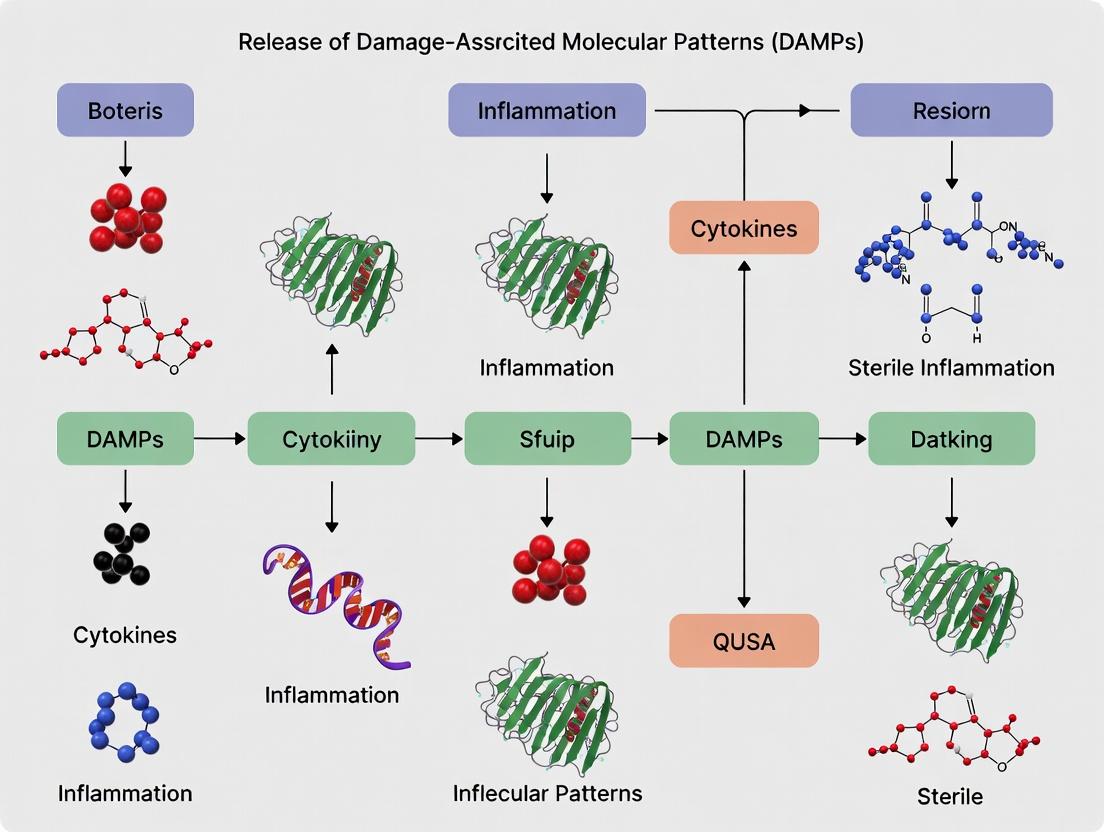
This article provides a comprehensive analysis of Damage-Associated Molecular Patterns (DAMPs) and their central role in sterile inflammation.
DAMPs Release & Sterile Inflammation: Key Mechanisms, Detection Methods, and Therapeutic Implications
Abstract
This article provides a comprehensive analysis of Damage-Associated Molecular Patterns (DAMPs) and their central role in sterile inflammation. Aimed at researchers, scientists, and drug development professionals, we explore the foundational biology of DAMP classes and passive/active release mechanisms. The article details current methodological approaches for DAMP detection and quantification, addresses common challenges in experimental models, and compares biomarker validation strategies. Finally, we evaluate emerging therapeutic interventions targeting DAMP pathways, synthesizing key insights and future directions for modulating sterile inflammation in disease.
Understanding DAMPs: Defining Sterile Triggers and Cellular Release Pathways
Within the broader thesis on Damage-Associated Molecular Patterns (DAMPs) and sterile inflammation, distinguishing these endogenous danger signals from Pathogen-Associated Molecular Patterns (PAMPs) is fundamental. Sterile inflammation, triggered by cellular stress or injury in the absence of pathogens, is orchestrated by the release of DAMPs. This whitepaper provides a technical comparison, detailing mechanisms of DAMP release, detection methodologies, and their implications for therapeutic intervention in autoimmune, ischemic, and neurodegenerative diseases.
Core Definitions and Comparative Analysis
PAMPs are evolutionarily conserved molecular motifs derived from invading microorganisms (e.g., LPS, flagellin, viral RNA). They are recognized by Pattern Recognition Receptors (PRRs) as "non-self."
DAMPs (or Alarmins) are endogenous molecules released from stressed, damaged, or necrotic cells that alert the innate immune system to "damaged self." They are typically sequestered intracellularly under homeostasis.
Table 1: Fundamental Comparison of DAMPs vs. PAMPs
| Feature | PAMPs | DAMPs |
|---|---|---|
| Origin | Exogenous (microbial) | Endogenous (host) |
| Primary Context | Infectious inflammation | Sterile & infectious inflammation |
| Representative Examples | LPS, dsRNA, CpG DNA | HMGB1, ATP, DNA, S100 proteins, Uric acid crystals |
| PRRs Engaged | TLRs (TLR4, TLR3), NLRs, RLRs | TLRs (TLR2, TLR4, TLR9), NLRP3, RAGE, cGAS-STING |
| Release Mechanism | Active secretion from pathogens | Passive (necrosis, NETosis) & Active (secretion, exosomes) |
| Therapeutic Goal | Block recognition, enhance clearance | Modulate signaling, prevent chronic inflammation |
| DAMP | Class | Receptor(s) | Primary Source/Release Mechanism |
|---|---|---|---|
| HMGB1 | Nuclear Protein | TLR2/4, RAGE | Passive release from necrotic cells; active secretion by immune cells. |
| Extracellular ATP | Nucleotide | P2X7R → NLRP3 | Released through damaged plasma membranes or pannexin channels. |
| Mitochondrial DNA | Nucleic Acid | TLR9, cGAS-STING | Released upon mitochondrial damage or extracellular trap formation. |
| S100A8/A9 | Calcium-binding protein | TLR4, RAGE | Released by activated or dying myeloid cells. |
| Uric Acid Crystals | Metabolite | NLRP3 | Precipitation of soluble urate upon cell death. |
Mechanisms of DAMP Release in Sterile Inflammation
The release mechanisms are a critical focus of current research. They are not merely passive events but are often regulated.
- Passive Release: Occurs during primary or secondary necrosis due to loss of plasma membrane integrity (e.g., HMGB1, HSPs, DNA).
- Active Secretion: Living, activated cells can secrete DAMPs via non-classical pathways (e.g., HMGB1 secretion by pyroptotic/macrophages).
- Extracellular Trapping: Neutrophils release chromatin webs (NETs) containing histones and granule proteins.
- Exosomal Release: DAMPs like HSPs and nucleic acids are packaged into extracellular vesicles.
Key Experimental Protocols for DAMP Research
Protocol 4.1: Induction and Analysis of Sterile InflammationIn Vivo
- Objective: To model sterile inflammation and quantify DAMP release.
- Model: Hepatic Ischemia-Reperfusion Injury (IRI) in mice.
- Procedure:
- Anesthetize C57BL/6 mouse and perform a midline laparotomy.
- Isolate the portal triad to the left and median liver lobes using a non-traumatic clamp.
- Induce ischemia for 60 minutes at 37°C, then remove clamp to initiate reperfusion.
- At selected time points (e.g., 2h, 6h, 24h post-reperfusion), collect serum and liver tissue.
- DAMP Quantification:
- HMGB1: Measure in serum via specific ELISA (e.g., IBL International).
- Extracellular ATP: Use luciferase-based bioluminescence assay on serum.
- mtDNA: Ispute total circulating DNA, then quantify mitochondrial-specific genes (e.g., Cox1, Nd1) via qPCR relative to nuclear genes (e.g., β-globin).
- Correlate with inflammation (serum ALT, TNF-α, tissue histology).
Protocol 4.2:In VitroDAMP Release from Necrotic Cells
- Objective: To characterize DAMPs released from primary necrotic cells.
- Cell Line: Primary bone marrow-derived macrophages (BMDMs) or HeLa cells.
- Procedure:
- Culture cells to 80% confluence in 6-well plates.
- Induce necrosis by multiple freeze-thaw cycles (-80°C for 20 min, 37°C for 10 min, repeat 3x).
- Centrifuge cell lysate at 10,000 x g for 10 min to pellet debris.
- Collect supernatant ("necrotically-released conditioned medium").
- Analysis:
- Use this medium to stimulate reporter cells (e.g., TLR4/NF-κB reporter HEK cells).
- Perform immunoblotting for specific DAMPs (e.g., HMGB1).
- For ATP, assay supernatant directly with luciferase reagent.
Visualizing Key Signaling Pathways
Title: Core DAMP-Induced Inflammatory Signaling Cascade
Title: Major Pathways of DAMP Release from Stressed Cells
The Scientist's Toolkit: Essential Research Reagents
Table 3: Key Reagents for DAMP/Sterile Inflammation Research
| Reagent / Solution | Function / Application | Example Vendor / Cat. No. (Illustrative) |
|---|---|---|
| Anti-HMGB1 Antibody (neutralizing) | Blocks HMGB1 activity in vitro/vivo; validates DAMP-specific effects. | BioLegend, 651402 |
| P2X7 Receptor Antagonist (A-438079) | Inhibits ATP-mediated NLRP3 inflammasome activation. | Tocris, 2972 |
| Glycyrrhizin | Natural compound that binds and inhibits HMGB1. | Sigma-Aldrich, G2137 |
| NLRP3 Inflammasome Inhibitor (MCC950) | Highly specific inhibitor to dissect NLRP3-driven responses. | MedChemExpress, HY-12815 |
| cGAS Inhibitor (RU.521) | Selective cGAS antagonist to block cytosolic DNA sensing. | InvivoGen, inh-ru521 |
| Recombinant S100A8/A9 Heterodimer | For in vitro stimulation studies to model DAMP signaling. | R&D Systems, 8226-S8-025 |
| Cell Death Induction Kits (e.g., Necroptosis) | To study DAMP release from specific regulated death pathways. | BioVision, K219 |
| ATP Bioluminescence Assay Kit CLS II | Sensitive detection of extracellular ATP in supernatants. | Roche, 11699695001 |
| Mitochondrial DNA Isolation Kit | Isolate mtDNA for use as a pure DAMP stimulus. | Abcam, ab65321 |
| TLR4/MD-2 Complex Reporter Cell Line | Quantify TLR4-activating DAMPs in conditioned media. | InvivoGen, hek-mtlr4a |
Damage-associated molecular patterns (DAMPs) are endogenous molecules released from stressed or necrotic cells that activate innate immunity, driving sterile inflammation. This whitepaper details the core DAMP classes—HMGB1, ATP, DNA, S100 proteins, and mitochondrial components—framed within the thesis that spatiotemporal release mechanisms and receptor interactions dictate inflammatory outcomes. Understanding these pathways is critical for developing therapeutics for sterile inflammatory diseases (e.g., ischemia-reperfusion injury, autoimmunity).
Core DAMP Classes: Mechanisms, Release, and Signaling
High-Mobility Group Box 1 (HMGB1)
Release Mechanisms: Actively secreted by immune cells (macrophages, monocytes) via non-classical lysosomal pathways upon inflammatory stimulation (e.g., LPS, TNF-α). Passively released from necrotic cells due to loss of nuclear membrane integrity. Key post-translational modifications (acetylation, phosphorylation) regulate its secretion. Receptors & Signaling: Binds to TLR4, TLR2, and RAGE (Receptor for Advanced Glycation End-products). TLR4 engagement promotes MyD88/TRIF-dependent NF-κB and MAPK activation, leading to pro-inflammatory cytokine production.
Adenosine Triphosphate (ATP)
Release Mechanisms: Released passively from damaged cell membranes. Actively secreted via connexin/pannexin channels or vesicular exocytosis in response to stress. Extracellular ATP is a key "find-me" signal. Receptors & Signaling: Acts on P2 purinergic receptors (P2X ligand-gated ion channels, P2Y GPCRs). P2X7 receptor activation triggers NLRP3 inflammasome assembly, caspase-1 activation, and IL-1β/IL-18 maturation and release.
DNA (Genomic & Mitochondrial)
Release Mechanisms: Genomic DNA released from necrotic cells. Mitochondrial DNA (mtDNA) released due to mitochondrial outer membrane permeabilization (MOMP) or via connexin channels. NETosis releases chromatin. Receptors & Signaling: Cytosolic sensors include cGAS (cyclic GMP-AMP synthase), which produces cGAMP to activate STING and IRF3/NF-κB. Endosomal TLR9 senses unmethylated CpG motifs. AIM2 binds dsDNA to form an inflammasome.
S100 Proteins (e.g., S100A8/A9, S100B)
Release Mechanisms: Released from neutrophils, monocytes, and damaged cells. S100A8/A9 is secreted via a tubulin-dependent pathway. Passive release occurs during necrosis. Receptors & Signaling: Bind to TLR4 and RAGE. Engagement of TLR4 by S100A8/A9 amplifies pro-inflammatory cytokine production via MyD88. RAGE signaling activates NF-κB and MAPK pathways.
Mitochondrial Components (mtDNA, Formyl Peptides, Cardiolipin)
Release Mechanisms: Complete mitochondrial release via vesicular transfer or during cell death. Components released individually via pores (e.g., mtDNA, N-formyl peptides). Cardiolipin externalizes to the outer mitochondrial membrane during apoptosis. Receptors & Signaling: mtDNA acts via cGAS-STING and TLR9. N-formyl peptides activate FPR1 (Formyl Peptide Receptor 1). Cardiolipin can directly bind to NLRP3.
Table 1: Key DAMP Classes, Receptors, and Downstream Effects
| DAMP Class | Primary Source | Key Receptors | Major Signaling Pathway | Key Cytokine Output |
|---|---|---|---|---|
| HMGB1 | Necrotic cells, activated immune cells | TLR4, RAGE, TLR2 | MyD88/TRIF → NF-κB/MAPK | TNF-α, IL-6, IL-1β |
| ATP | Damaged plasma membrane, secretory vesicles | P2X7, P2Y2 | NLRP3 Inflammasome → Caspase-1 | IL-1β, IL-18 |
| DNA (mtDNA) | Necrotic nuclei, mitochondria, NETs | cGAS, TLR9, AIM2 | cGAS-STING → IRF3/NF-κB; AIM2 Inflammasome | Type I IFNs, IL-1β |
| S100A8/A9 | Phagocytes, damaged cells | TLR4, RAGE | MyD88 → NF-κB/MAPK | TNF-α, IL-6 |
| Mitochondrial Formyl Peptides | Mitochondrial matrix | FPR1 | G-protein coupled → Ca²⁺ flux, MAPK | IL-8, LTB4 |
Table 2: Experimental Concentrations & Pathological Ranges in Human Serum/Plasma
| DAMP | Baseline (Healthy) | Inflammatory Disease Range | Common Assay |
|---|---|---|---|
| HMGB1 | 1-5 ng/mL | Sepsis: 10-100 ng/mL; RA: 5-50 ng/mL | ELISA (anti-HMGB1) |
| Extracellular ATP | ~1 nM | Sterile injury: 10-100 µM | Luciferase-based assay |
| cf-mtDNA | 100-1000 copies/µL plasma | Sepsis, SLE: >10,000 copies/µL | qPCR (ND1, ND6 genes) |
| S100A8/A9 | 0.1-0.5 µg/mL | CAP, ARDS: 1-20 µg/mL | ELISA (S100A8/A9 heterocomplex) |
| Cell-free Nuclear DNA | 5-50 ng/mL plasma | Cancer, SLE: 50-1000 ng/mL | Fluorescence dsDNA assay |
Detailed Experimental Protocols
Protocol: HMGB1 Release from LPS-Stimulated Macrophages
Objective: Measure active secretion of HMGB1. Materials: RAW 264.7 or primary murine BMDMs, LPS (100 ng/mL), HMGB1 ELISA kit, Brefeldin A (10 µg/mL). Procedure:
- Seed macrophages in 12-well plate (5x10⁵ cells/well). Adhere overnight.
- Pre-treat with Brefeldin A (inhibits conventional secretion) for 1 hour.
- Stimulate with LPS (100 ng/mL) in serum-free medium for 16-24 hours.
- Collect cell supernatant. Centrifuge at 500xg for 5 min to remove debris.
- Concentrate supernatant 10x using 10 kDa MWCO centrifugal filters.
- Quantify HMGB1 via ELISA per manufacturer's instructions. Normalize to total cellular protein.
Protocol: ATP Release and P2X7 Activation Assay
Objective: Quantify ATP release and correlate with IL-1β processing. Materials: THP-1 cells (human monocytic), PMA (to differentiate), ATP standard, CellTiter-Glo Luciferase Assay, Nigericin, A740003 (P2X7 antagonist). Procedure:
- Differentiate THP-1 cells with 100 nM PMA for 48h in 96-well plate.
- Prime cells with LPS (1 µg/mL) for 3h.
- For ATP release: Add nigericin (10 µM) or vehicle for 30 min. Collect supernatant, immediately assay with CellTiter-Glo (mixed 1:1) on luminometer. Compare to ATP standard curve.
- For IL-1β secretion: In parallel, after priming and nigericin treatment, incubate for 1h. Collect supernatant, measure mature IL-1β by ELISA.
- Inhibition: Pre-treat with A740003 (10 µM) 30 min before nigericin.
Protocol: mtDNA Extraction and Quantification from Cell-Free Plasma
Objective: Isolate and quantify circulating cell-free mtDNA. Materials: Human plasma (EDTA), QIAamp Circulating Nucleic Acid Kit, mtDNA-specific primers (e.g., human ND1, ND6), nuclear DNA primers (e.g., GAPDH), qPCR master mix. Procedure:
- Isolate cell-free DNA from 1-2 mL plasma using the kit. Elute in 50 µL.
- Prepare qPCR reactions in triplicate: 5 µL DNA, 0.5 µM primers, 1x SYBR Green master mix.
- Primers: mtDNA-ND1 (F:5'-CACCCAAGAACAGGGTTTGT-3', R:5'-TGGCCATGGGTATGTTGTTA-3'); nuclear-GAPDH control.
- Run qPCR: 95°C 10 min; 40 cycles of (95°C 15s, 60°C 1min).
- Calculate mtDNA copy number using a standard curve from serial dilutions of known mtDNA plasmid. Report as mtDNA copies per µL plasma.
Pathway and Workflow Diagrams
The Scientist's Toolkit: Research Reagent Solutions
Table 3: Essential Reagents for DAMP/Sterile Inflammation Research
| Reagent Category | Specific Example(s) | Function in Research | Key Supplier(s) |
|---|---|---|---|
| TLR4 Inhibitors | TAK-242 (Resatorvid), CLI-095 | Blocks HMGB1/S100-TLR4 interaction; validates receptor specificity. | InvivoGen, Sigma-Aldrich |
| P2X7 Antagonists | A740003, AZ10606120 | Inhibits ATP-P2X7 signaling; blocks NLRP3 activation. | Tocris, Abcam |
| cGAS-STING Inhibitors | H-151, RU.521 | Suppresses cytosolic DNA (mtDNA) sensing pathway. | Cayman Chemical, Merck |
| RAGE Antagonists | FPS-ZM1, Azeliragon | Blocks HMGB1/S100-RAGE interaction. | MedChemExpress |
| NLRP3 Inhibitors | MCC950, CY-09 | Specifically inhibits NLRP3 inflammasome assembly. | Selleckchem, Sigma |
| HMGB1 Neutralizing Antibodies | Anti-HMGB1 mAb (clone 3E8) | Binds and neutralizes extracellular HMGB1 in vitro/vivo. | BioLegend |
| ATP Assay Kits | CellTiter-Glo Luminescent | Sensitive, luciferase-based quantification of extracellular ATP. | Promega |
| Cell-Free DNA Isolation Kits | QIAamp Circulating Nucleic Acid Kit | High-yield isolation of mtDNA/nDNA from biofluids. | Qiagen |
| ELISA Kits (DAMPs) | HMGB1, S100A8/A9 ELISA | Quantifies specific DAMP proteins in supernatants/sera. | R&D Systems, Hycult Biotech |
| Primers for mtDNA qPCR | Human ND1, ND6, CytB | Target mitochondrial genes; quantify mtDNA release/copies. | Integrated DNA Technologies |
Within the expanding research on damage-associated molecular patterns (DAMPs) and sterile inflammation, the mechanisms of their release are a fundamental focus. While active secretory processes are important, passive release through unscheduled cell death represents a major source of immunostimulatory molecules. This whitepaper details three principal pathways of passive DAMP release: necrosis, netosis, and lytic cell death (e.g., pyroptosis, necroptosis), providing technical insights for researchers and drug development professionals.
Necrosis: Accidental Cell Death
Necrosis is a form of unregulated, accidental cell death triggered by severe physical or chemical insult (e.g., trauma, extreme temperature, complement attack). It is characterized by rapid cellular swelling, plasma membrane rupture, and spillage of intracellular contents, including potent DAMPs like HMGB1, ATP, and DNA.
Key Experimental Protocol: In Vitro Induction and DAMP Measurement
- Induction: Treat cultured cells (e.g., primary murine macrophages, HT-29 cells) with a potent inducer like 1% Triton X-100 or 500 µM hydrogen peroxide (H₂O₂) for 15-30 minutes at 37°C.
- Viability Assay: Quantify cell death via lactate dehydrogenase (LDH) release assay. Collect supernatant and measure LDH activity using a coupled enzymatic reaction that converts a tetrazolium salt into a red formazan product (absorbance at 490nm).
- DAMP Quantification:
- Extracellular HMGB1: Use a specific ELISA. Due to redox modifications, it is critical to use an assay that detects both reduced and disulfide HMGB1.
- Extracellular ATP: Use a luciferase-based bioluminescence assay (e.g., CellTiter-Glo).
- Imaging: Confirm loss of membrane integrity using propidium iodide (PI) staining (1-2 µg/mL) with immediate visualization by fluorescence microscopy.
Netosis: Neutrophil Extracellular Trap Release
Netosis is a specialized, neutrophil-specific cell death program where decondensed chromatin is expelled along with granular proteins to form extracellular traps (NETs). This process releases DAMPs like dsDNA, histones, and myeloperoxidase (MPO).
Key Experimental Protocol: NET Induction and Quantification
- Induction: Isolate human neutrophils from fresh peripheral blood via density gradient centrifugation. Plate 2.5 x 10⁵ cells/well in a poly-D-lysine coated plate. Stimulate with 100 nM Phorbol 12-myristate 13-acetate (PMA) for 3-4 hours at 37°C, 5% CO₂.
- Quantification Methods:
- Fluorometric DNA Release: Stain DNA in the supernatant with a cell-impermeable dye like Sytox Green (5 µM) and measure fluorescence (ex/em ~504/523nm).
- Enzymatic NET Component Assay: Use a plate-bound MPO activity assay or a citrullinated histone H3 (CitH3) ELISA on the supernatant/cell layer digest.
- Visualization: Fix cells with 4% PFA, stain DNA with Hoechst 33342 (blue) and an anti-MPO or anti-CitH3 antibody (with red secondary), and image via confocal microscopy.
Lytic Cell Death: Pyroptosis & Necroptosis
These are regulated forms of lytic cell death, activated by specific molecular pathways, leading to membrane pore formation and eventual lysis.
- Pyroptosis: Caspase-1/4/5/11-dependent. Triggered by inflammasome sensors (e.g., NLRP3) or intracellular LPS. Leads to gasdermin D (GSDMD) pore formation.
- Necroptosis: RIPK1/RIPK3-dependent. Activated by death receptors (e.g., TNFR1) in the absence of caspase-8 activity. Leads to MLKL pore formation.
Key Experimental Protocol: Differentiating Lytic Pathways
- Induction:
- Pyroptosis: Prime J774A.1 macrophages with 100 ng/mL LPS for 3h, then add 5 µM nigericin for 1h.
- Necroptosis: Treat HT-29 cells with 100 ng/mL TNF-α, 20 µM Z-VAD-FMK (pan-caspase inhibitor), and 1 µM SMAC mimetic for 18-24h.
- Inhibition Controls: Use specific inhibitors: MCC950 (NLRP3 inhibitor) for pyroptosis; Nec-1s (RIPK1 inhibitor) for necroptosis.
- Readouts:
- Membrane Permeabilization: PI uptake assay (flow cytometry).
- Pore Formation: Propidium Iodide (PI) or LDH release time-course assays.
- Molecular Confirmation: Western blot for cleaved GSDMD (pyroptosis) or phosphorylated MLKL (necroptosis).
Data Presentation: Quantitative Comparison of Passive Release Mechanisms
Table 1: Characteristics of Passive DAMP Release Pathways
| Feature | Necrosis | Netosis | Pyroptosis | Necroptosis |
|---|---|---|---|---|
| Regulation | Accidental / Unregulated | Programmed (Cell-type specific) | Regulated, Inflammasome-driven | Regulated, Kinase-driven |
| Primary Inducers | Physical trauma, extreme pH, complement | PMA, bacterial pathogens, immune complexes | Intracellular pathogens, canonical/inflammasome activators | TNF-α + caspase inhibition, viral inhibitors |
| Key Effector Molecules | None (osmotic lysis) | PAD4, Neutrophil Elastase | Caspase-1/4/5/11, GSDMD | RIPK1, RIPK3, pMLKL |
| Time to Lysis | Minutes | 2-4 hours | 30 mins - 2 hours (post-inflammasome) | 4-24 hours |
| Hallmark DAMPs Released | HMGB1, ATP, dsDNA, Uric acid | dsDNA, CitH3, MPO, LL37 | IL-1β, IL-18, HMGB1, ATP | HMGB1, ATP, dsDNA, mitochondrial DNA |
| Morphological Hallmark | Cellular swelling, organelle disintegration | Chromatin decondensation, NET extrusion | Cell swelling, large membrane pores, blebbing | Organelle swelling, plasma membrane rupture |
Table 2: Common Experimental Readouts and Expected Signal Ranges
| Assay | Necrosis (Triton X-100) | Netosis (PMA) | Pyroptosis (LPS+Nigericin) | Necroptosis (TNF-α+Z-VAD+SMAC) |
|---|---|---|---|---|
| LDH Release | >80% of total LDH | 20-40% of total LDH | 40-70% of total LDH | 50-80% of total LDH |
| PI Uptake (Flow %) | >90% positive | 50-80% positive (late stage) | 60-90% positive | 70-95% positive |
| Key ELISA Target | HMGB1 (High) | Citrullinated Histone H3 (Specific) | Mature IL-1β (Specific) | Phospho-MLKL (Specific) |
Visualizing Signaling Pathways
Title: Pyroptosis Signaling Pathways Leading to Lysis
Title: Necroptosis Signaling Pathway from TNF Receptor
The Scientist's Toolkit: Key Research Reagents
Table 3: Essential Reagents for Studying Passive Release Mechanisms
| Reagent / Tool | Target/Function | Primary Use Case |
|---|---|---|
| Triton X-100 | Non-ionic detergent causing rapid membrane disintegration. | Positive control for in vitro necrosis and maximum LDH release. |
| Phorbol Myristate Acetate (PMA) | Protein kinase C (PKC) agonist. | Standard pharmacological inducer of NETosis in human neutrophils. |
| Lipopolysaccharide (LPS) + Nigericin | LPS primes NLRP3; Nigericin is a K+ ionophore. | Standard combination for canonical pyroptosis induction in macrophages. |
| TNF-α + Z-VAD-FMK + SMAC Mimetic | TNF activates TNFR1; Z-VAD inhibits caspases; SMAC mimetic inhibits IAPs. | Standard combination for necroptosis induction in susceptible cell lines. |
| LDH Assay Kit | Measures lactate dehydrogenase enzyme activity released from cytosol. | Universal quantitative assay for all forms of lytic cell death. |
| Sytox Green / Propidium Iodide (PI) | Cell-impermeable DNA intercalating dyes. | Real-time or endpoint measurement of plasma membrane integrity loss. |
| Anti-Citrullinated Histone H3 (CitH3) Antibody | Specific marker for PAD4 activity and NETosis. | Immunofluorescence and ELISA confirmation of NET release. |
| Anti-Cleaved GSDMD Antibody | Detects active N-terminal fragment of gasdermin D. | Western blot confirmation of pyroptosis execution. |
| Anti-Phospho-MLKL (Ser358) Antibody | Detects the activated form of MLKL. | Western blot confirmation of necroptosis execution. |
| MCC950 | Potent and selective NLRP3 inflammasome inhibitor. | Negative control for NLRP3-dependent pyroptosis. |
| Necrostatin-1s (Nec-1s) | Specific and potent RIPK1 kinase inhibitor. | Negative control for necroptosis. |
Damage-associated molecular patterns (DAMPs) are endogenous molecules released from damaged or stressed cells that drive sterile inflammation. Understanding their active release mechanisms is crucial for developing therapies for chronic inflammatory diseases, autoimmunity, and cancer. This whitepaper details three principal active release pathways for DAMPs: Regulated Exocytosis, Secretory Autophagy, and Extracellular Vesicle (EV) shedding. Unlike passive leakage from necrotic cells, these are energy-dependent, regulated processes that can be precisely targeted for therapeutic intervention.
Mechanisms in Detail
Regulated Exocytosis
Regulated exocytosis involves the Ca²⁺-triggered fusion of cytoplasmic vesicles with the plasma membrane, releasing soluble contents (e.g., ATP, HMGB1, IL-1 family cytokines) into the extracellular space. It is classically defined for secretory granules and synaptic vesicles but is a key pathway for DAMP release in immune cells.
- Key Signaling: A rise in intracellular Ca²⁺ via channels (e.g., P2X7R, TRP) or ER stores is the primary trigger. This activates Ca²⁺ sensors (synaptotagmins) on vesicle membranes, leading to SNARE complex-mediated fusion (VAMP, syntaxin, SNAP-25).
- DAMP Examples: ATP (from vesicles), HMGB1 (post-translationally modified for vesicular loading), cathelicidin (LL-37).
Secretory Autophagy
Secretory autophagy repurposes the canonical autophagy machinery to secrete cytosolic cargo, including DAMPs like IL-1β, HMGB1, and mitochondrial DNA. Cargo is engulfed by autophagosomes, which then fuse with multivesicular bodies (MVBs) or directly with the plasma membrane via an alternative secretory SNARE (e.g., SEC22B).
- Key Signaling: Initiated by stress signals (inflammatory, metabolic). Involves core autophagy proteins (ATG5, ATG7, LC3). The pathway bifurcates from degradative autophagy at the fusion step, avoiding lysosomal fusion.
- Regulation: Post-translational modifications of autophagy proteins and specific SNARE complexes dictate secretory vs. degradative fate.
Extracellular Vesicles (EVs)
EVs are lipid bilayer-delimited particles released from cells, classified broadly as exosomes (from MVBs), microvesicles (by budding from the plasma membrane), and apoptotic bodies. They transport DAMPs (e.g., HMGB1, DNA, RNAs, S100 proteins) in a protected, bioavailable form.
- Exosome Biogenesis: Cargo (including DAMPs) is sorted into intraluminal vesicles (ILVs) within MVBs via ESCRT-dependent or -independent (e.g., ceramide) pathways. MVBs fuse with the plasma membrane.
- Microvesicle Shedding: Asymmetric loss of plasma membrane phospholipid asymmetry (e.g., Ca²⁺-induced scramblase activation) and cytoskeleton contraction (ROCK, ARF6) cause outward budding.
Comparative Quantitative Data
Table 1: Characteristic Features of Active DAMP Release Mechanisms
| Feature | Regulated Exocytosis | Secretory Autophagy | Extracellular Vesicles (Exosomes) |
|---|---|---|---|
| Primary Trigger | Intracellular Ca²⁺ surge | Cellular stress (e.g., starvation, DAMPs) | Cellular activation or stress |
| Key Molecular Mediators | SNAREs (VAMP7, SNAP-23), Synaptotagmins | ATG5, ATG7, LC3, SEC22B | ESCRT complexes, Alix, Rab GTPases, Ceramide |
| Typical Cargo | Soluble proteins (ATP, IL-1β), peptides | Cytosolic proteins, organelles (mito-DAMPs) | Proteins, nucleic acids, lipids, metabolites |
| Release Kinetics | Fast (seconds-minutes) | Slow (hours) | Sustained (hours) |
| Vesicle Size | ~50-1000 nm (granules vary) | ~500-1000 nm (autophagosome) | ~30-150 nm (exosomes), 100-1000 nm (microvesicles) |
| Canonical Marker | Synaptobrevin/VAMP, Chromogranin A | LC3-II (lipidated), SEC22B | Tetraspanins (CD63, CD81), TSG101, Annexin V (microvesicles) |
Table 2: Example DAMPs and Their Documented Release Pathways
| DAMP | Regulated Exocytosis | Secretory Autophagy | Extracellular Vesicles | Key References (Recent) |
|---|---|---|---|---|
| HMGB1 | Yes (post-transl. modification) | Yes | Yes (exosome & microvesicle) | PMID: 35021095, 35110912 |
| ATP | Yes (vesicular) | Indirectly | Yes (contained in vesicles) | PMID: 36509704 |
| IL-1β | Yes (unconventional) | Yes | Yes | PMID: 36171235, 36746831 |
| Mitochondrial DNA | No | Yes (via mitophagy) | Yes | PMID: 35361980 |
| S100A8/A9 | Yes | Reported | Yes (major pathway) | PMID: 36289112 |
Detailed Experimental Protocols
Protocol: Inhibiting & Quantifying EV-Mediated DAMP Release
Aim: To isolate and characterize exosomes containing HMGB1 from stimulated macrophages.
- Cell Stimulation: Seed THP-1 derived macrophages. Stimulate with 100 ng/mL LPS for 16 hours + 5 mM ATP for 30 min (P2X7R activation).
- EV Isolation (Differential Centrifugation):
- Collect conditioned media. Centrifuge at 300 × g for 10 min (pellet cells).
- Transfer supernatant. Centrifuge at 2,000 × g for 20 min (pellet dead cells/debris).
- Transfer supernatant. Centrifuge at 10,000 × g for 30 min (pellet microvesicles). Keep supernatant for exosomes.
- Ultracentrifuge supernatant at 100,000 × g for 70 min (Beckman Type 70 Ti rotor). Pellet = exosome-enriched fraction.
- Wash pellet in PBS, repeat ultracentrifugation. Resuspend in 100 µL PBS.
- Inhibition: Pre-treat cells with GW4869 (10 µM, 2h), an inhibitor of neutral sphingomyelinase (blocks exosome biogenesis).
- Characterization:
- NTA: Dilute EVs 1:1000 in PBS, analyze via Nanoparticle Tracking Analysis for size/concentration.
- Immunoblotting: Probe for CD81, TSG101 (exosome markers), Calnexin (negative control), and HMGB1.
- Quantification: Quantify HMGB1 in EV fraction vs. total cell lysate vs. GW4869-treated condition via ELISA or densitometry.
Protocol: Assessing Secretory Autophagy of IL-1β
Aim: To distinguish secretion of IL-1β via secretory autophagy vs. conventional secretion.
- Cell Model: Differentiate THP-1 monocytes to macrophages (PMA, 100 nM, 48h). Prime with 100 ng/mL LPS for 3h.
- Pathway Modulation:
- Control: LPS only.
- Autophagy Inducer: LPS + Rapamycin (200 nM, last 2h).
- Autophagy Inhibitor: LPS + Bafilomycin A1 (100 nM, blocks autophagosome-lysosome fusion, can enhance secretory autophagy).
- Sec. Autophagy Block: LPS + siRNA knockdown of SEC22B or ATG5.
- Stimulation: Activate inflammasome with 5 µM Nigericin for 1h.
- Sample Collection: Collect cell supernatant (centrifuge to clear cells) and cell lysate.
- Analysis:
- ELISA: Measure mature IL-1β (p17) in supernatant and pro-IL-1β in lysate.
- Immunoblotting: Probe supernatant (concentrated) and lysate for IL-1β and LC3-II (autophagosome marker).
- Confocal Microscopy: Transfect with mRFP-GFP-LC3. Yellow puncta (autophagosomes) vs. red-only puncta (autolysosomes). Colocalization with IL-1β assessed after Nigericin.
Signaling Pathway & Workflow Diagrams
Short Title: Signaling in Regulated Exocytosis for DAMP Release
Short Title: EV Isolation Workflow for DAMP Analysis
The Scientist's Toolkit: Research Reagent Solutions
Table 3: Essential Reagents for Studying Active DAMP Release
| Reagent/Category | Example Product (Supplier) | Function in Research |
|---|---|---|
| P2X7 Receptor Agonist/Antagonist | Bz-ATP (agonist), A438079 (antagonist) (Tocris) | To specifically trigger or block ATP-mediated Ca²⁺ flux and downstream exocytosis. |
| Autophagy Modulators | Rapamycin (inducer), Bafilomycin A1 (fusion blocker), Chloroquine (lysosome inhibitor) (Sigma) | To manipulate autophagic flux and distinguish secretory from degradative autophagy. |
| EV Biogenesis Inhibitor | GW4869 (Sigma), Manumycin A (Abcam) | To inhibit neutral sphingomyelinase (nSMase2), blocking exosome generation for functional studies. |
| SNARE/Sec. Autophagy siRNA | siRNA targeting SEC22B, VAMP7, ATG5 (Dharmacon) | For genetic knockdown to establish necessity of specific components in release pathways. |
| EV Isolation Kits | ExoQuick-TC (System Biosciences), Total Exosome Isolation (Invitrogen) | Polymer-based precipitation for simplified EV enrichment from biofluids/cell media. |
| DAMP-Specific ELISA | Human HMGB1 ELISA (Tecan), IL-1β ELISA (R&D Systems) | Quantitative measurement of specific DAMPs in supernatants, EV lysates, or cell lysates. |
| LC3 Tandem Sensor | mRFP-GFP-LC3 plasmid (Addgene) | Confocal microscopy tool to track autophagosome vs. autolysosome formation (red-only vs. yellow). |
| High-Resolution EV Analysis | Nanoparticle Tracking Analyzer (Malvern Panalytical) | Measures size distribution and concentration of isolated EVs (exosomes/microvesicles). |
This technical guide details the core receptors and signaling cascades involved in the detection of Damage-Associated Molecular Patterns (DAMPs), driving sterile inflammation. Within the broader thesis on DAMPs' mechanisms of release and action, this document focuses on three principal sensing systems: Toll-like Receptors (TLRs), the Receptor for Advanced Glycation End-products (RAGE), and the NLRP3 inflammasome platform. Their coordinated and often synergistic activation is a hallmark of sterile inflammatory conditions such as ischemia-reperfusion injury, metabolic disorders, and neurodegenerative diseases.
Key Receptor Systems and Signaling Pathways
Toll-like Receptors (TLRs)
TLRs are transmembrane pattern recognition receptors (PRRs) that recognize both pathogen- and damage-associated molecular patterns. In sterile inflammation, specific TLRs sense endogenous DAMPs released from necrotic or stressed cells.
Key TLRs in DAMP Sensing:
- TLR4: Recognizes HMGB1, heat-shock proteins (HSPs), and extracellular matrix fragments (e.g., hyaluronan fragments).
- TLR2 (often with TLR1/6): Recognizes HMGB1, HSPs, and glycan structures.
- TLR9: Recognizes mitochondrial DNA (mtDNA) and genomic DNA.
TLR4 Signaling (Canonical MyD88/TRIF-dependent): Ligand binding induces dimerization and conformational change, recruiting adaptor proteins via TIR domain interactions.
- MyD88-Dependent Pathway: Engaged by most TLRs. MyD88 recruits IRAK4, which phosphorylates IRAK1. IRAK1 associates with TRAF6, leading to activation of TAK1. TAK1 activates the IKK complex (degrading IκB) and MAPK pathways, resulting in NF-κB and AP-1 translocation and pro-inflammatory gene transcription (TNFα, IL-6, IL-1β).
- TRIF-Dependent Pathway: Primarily for TLR4 and TLR3. TRIF recruits TRAF3 and RIPK1, activating TBK1/IKKε. This leads to phosphorylation of IRF3, its dimerization, and translocation to induce Type I Interferon (IFN-β) gene expression.
Receptor for Advanced Glycation End-products (RAGE)
RAGE is a multi-ligand transmembrane receptor of the immunoglobulin superfamily. It is a key sensor for a diverse set of DAMPs, including AGEs (its namesake), HMGB1, S100/calgranulins, and mtDNA.
RAGE Signaling: Ligand binding induces sustained receptor activation due to slow endocytic degradation.
- Primary Cascade: Ligand engagement activates key downstream effectors, including diaphanous-related formin 1 (DIAPH1), leading to Rac1/Cdc42 activation.
- Core Pathway Activation: This triggers MAPK (p38, JNK, ERK1/2) and NF-κB pathways via subsequent kinases.
- Output: Drives expression of pro-inflammatory cytokines and, critically, upregulates RAGE itself, creating a positive feedback loop that perpetuates inflammation. RAGE also synergizes with TLR signaling.
NLRP3 Inflammasome Activation
The NLRP3 inflammasome is a cytosolic multi-protein complex that orchestrates the maturation of the potent pro-inflammatory cytokines IL-1β and IL-18. Its activation is a two-step process.
Two-Signal Model:
- Priming (Signal 1): Provided by TLR/RAGE activation (NF-κB) leading to transcriptional upregulation of NLRP3 and pro-IL-1β.
- Activation (Signal 2): Triggered by diverse DAMPs and cellular disturbances, leading to complex assembly.
NLRP3 Activators in Sterile Inflammation:
- Ionic Flux: Extracellular ATP (P2X7 receptor→K+ efflux), crystalline structures (e.g., cholesterol, urate).
- Mitochondrial Dysfunction: mtROS, oxidized mtDNA.
- Lysosomal Disruption: Cathepsin B release (e.g., from phagocytosed debris).
Inflammasome Assembly: Upon activation, NLRP3 oligomerizes and recruits the adaptor ASC (PYCARD), which nucleates procaspase-1 filaments via CARD-CARD interactions. This proximity induces autocleavage of caspase-1 into its active form.
Caspase-1 Functions:
- Cleaves pro-IL-1β and pro-IL-18 into their active, secreted forms.
- Cleaves Gasdermin D (GSDMD), generating an N-terminal fragment that forms pores in the plasma membrane, leading to pyroptosis (lytic cell death) and DAMP release.
Table 1: Key DAMPs, Their Receptors, and Primary Downstream Outputs.
| DAMP Class | Example DAMPs | Primary Receptor(s) | Key Signaling Output | Major Cytokine Induced |
|---|---|---|---|---|
| Nuclear Protein | HMGB1 | TLR2/4, RAGE | NF-κB, MAPK | TNF-α, IL-6, IL-1β |
| Heat Shock Protein | HSP70, gp96 | TLR2/4 | NF-κB, MAPK | TNF-α, IL-6, IL-12 |
| ECM Derivative | Hyaluronan Fragments | TLR2/4, CD44 | NF-κB | TNF-α, IL-8 |
| S100 Protein | S100A8/A9, S100B | TLR4, RAGE | NF-κB, MAPK | IL-1β, TNF-α |
| Nucleotide | mtDNA, dsDNA | TLR9, cGAS-STING | IRF3, NF-κB | IFN-β, IL-6 |
| Metabolite | ATP (extracellular) | P2X7R → NLRP3 | Caspase-1 Activation | Mature IL-1β, IL-18 |
| Crystal | Monosodium Urate, Cholesterol | NLRP3 | Caspase-1 Activation | Mature IL-1β |
Table 2: Core Components of NLRP3 Inflammasome Activation.
| Component | Function | Consequence of Inhibition/Deficiency |
|---|---|---|
| NLRP3 | Sensor protein; oligomerizes upon activation. | Abrogates inflammasome assembly; resistance to crystal-induced inflammation. |
| ASC (PYCARD) | Adaptor; bridges NLRP3 and caspase-1 via PYD & CARD domains. | Prevents caspase-1 recruitment and activation. |
| Caspase-1 | Effector protease; auto-activates upon recruitment. | Blocks IL-1β/IL-18 maturation and pyroptosis. |
| Gasdermin D | Substrate of caspase-1; N-terminal fragment forms membrane pores. | Inhibits pyroptosis, but not cytokine processing (lytic release is impaired). |
| NEK7 | Serine/threonine kinase; essential for NLRP3 oligomerization. | Prevents NLRP3 activation by all known stimuli. |
Detailed Experimental Protocols
Protocol: Assessing TLR4/NF-κB SignalingIn Vitro
Objective: To measure TLR4-mediated NF-κB activation in macrophages stimulated with the DAMP HMGB1. Cell Line: Primary Bone Marrow-Derived Macrophages (BMDMs) or RAW 264.7 murine macrophage line. Materials: See Scientist's Toolkit below. Procedure:
- Cell Preparation: Seed BMDMs in 12-well plates (5x10^5 cells/well) overnight in complete medium.
- Stimulation: Treat cells with recombinant HMGB1 (100 ng/mL - 1 µg/mL) for 0, 15, 30, 60, 120 minutes. Include controls: LPS (100 ng/mL, positive), medium alone (negative), TAK-242 (1µM, TLR4 inhibitor) pre-treatment for 1h followed by HMGB1 (inhibition control).
- Protein Extraction: At each time point, lyse cells in RIPA buffer with protease/phosphatase inhibitors. Centrifuge at 14,000g for 15 min at 4°C. Collect supernatant.
- Western Blot Analysis: a. Resolve 20-30 µg protein on 10% SDS-PAGE gel. b. Transfer to PVDF membrane. c. Block with 5% BSA/TBST for 1h. d. Incubate with primary antibodies in 5% BSA/TBST overnight at 4°C: - Phospho-IκBα (Ser32) (1:1000) - Total IκBα (1:1000) - β-actin (1:5000, loading control). e. Wash (TBST 3x 10 min), incubate with HRP-conjugated secondary antibody (1:5000) for 1h at RT. f. Develop using enhanced chemiluminescence (ECL) substrate and image.
- Nuclear Translocation Assay (Alternative/Complement): Perform nuclear/cytosolic fractionation after stimulation, followed by Western blot for NF-κB p65 subunit in both fractions. Use Lamin B1 and α-tubulin as nuclear and cytosolic markers, respectively.
- Downstream Analysis: Measure cytokine (TNF-α, IL-6) mRNA by qRT-PCR at 3-6h post-stimulation or protein by ELISA in supernatants at 12-24h.
Protocol: NLRP3 Inflammasome Activation Assay
Objective: To induce and measure canonical NLRP3 inflammasome activation in primed macrophages. Cell Line: BMDMs. Procedure:
- Priming (Day 1): Seed BMDMs. On the day of the experiment, prime cells with ultrapure LPS (100 ng/mL) for 3-4h in serum-free Opti-MEM. This upregulates NLRP3 and pro-IL-1β.
- Activation (Signal 2): Wash cells gently with PBS to remove LPS. Then stimulate with a specific NLRP3 activator for 45 min - 1h:
- ATP: Add 5 mM ATP (from a fresh 100mM stock in PBS).
- Nigericin: Add 10 µM nigericin (from a 10mM stock in DMSO).
- MSU Crystals: Add 150 µg/mL monosodium urate crystals.
- Inhibition Controls: Pre-treat primed cells for 30 min with:
- MCC950 (10 µM), a specific NLRP3 inhibitor.
- VX-765 (50 µM), a caspase-1 inhibitor.
- Glyburide (100 µM), a K+ efflux blocker.
- Sample Collection: Post-activation, immediately place plate on ice. a. Supernatant (SN): Collect, centrifuge (500g, 5 min) to remove cells, and store for cytokine analysis. b. Cell Lysate (CL): Lyse remaining cells in RIPA buffer for pro-form analysis.
- Analysis: a. Caspase-1 Activation: Western blot of SN and CL for caspase-1 p45 (pro-form) and p20/p10 (active subunits). b. IL-1β Maturation: ELISA for mature IL-1β (p17) in the SN. Western blot of SN (mature) and CL (pro-IL-1β). c. Pyroptosis: Measure release of LDH into the SN using a commercial cytotoxicity assay.
The Scientist's Toolkit: Key Research Reagents
Table 3: Essential Reagents for DAMP Receptor and Inflammasome Research.
| Reagent | Category | Primary Function / Target | Example Use Case |
|---|---|---|---|
| Ultrapure LPS (E. coli O111:B4) | TLR4 Agonist | TLR4 priming ligand (Signal 1). | Priming macrophages for NLRP3 assays or studying TLR4 signaling. |
| Recombinant HMGB1 | DAMP | Agonist for TLR2/4 and RAGE. | Studying DAMP-mediated sterile inflammation in vitro and in vivo. |
| TAK-242 (Resatorvid) | Small Molecule Inhibitor | Selective TLR4 signaling blocker. | Confirming TLR4-dependent responses. |
| FPS-ZM1 | Small Molecule Inhibitor | High-affinity RAGE antagonist. | Inhibiting RAGE-ligand interactions. |
| MCC950 (CRID3) | Small Molecule Inhibitor | Specific NLRP3 ATPase inhibitor. | Blocking NLRP3 inflammasome assembly. |
| VX-765 (Belnacasan) | Small Molecule Inhibitor | Caspase-1 inhibitor (prodrug). | Inhibiting IL-1β/IL-18 maturation and pyroptosis. |
| Nigericin | K+ Ionophore | Potent NLRP3 activator (K+ efflux). | Positive control for NLRP3 activation. |
| Disulfiram | Small Molecule Inhibitor | Blocks gasdermin D pore formation. | Inhibiting pyroptosis downstream of caspase-1. |
| Anti-ASC (TMS-1) | Antibody | Detects ASC specks (IF) or monomers (WB). | Visualizing/confirming inflammasome assembly. |
| Anti-Caspase-1 (p20) | Antibody | Detects active caspase-1 subunit. | Confirming inflammasome activation via WB. |
| Mouse IL-1β ELISA Kit | Assay Kit | Quantifies mature mouse IL-1β (p17). | Measuring inflammasome activity in supernatants. |
Sterile injury, characterized by tissue damage in the absence of pathogens, triggers a complex inflammatory response driven by Damage-Associated Molecular Patterns (DAMPs). Within the broader thesis on DAMP sterile inflammation mechanisms of release, this review delineates the dualistic nature of this response. It examines the tightly regulated, reparative physiological signaling essential for tissue homeostasis against the dysregulated, chronic amplification leading to pathological outcomes in diseases such as ischemia-reperfusion injury, atherosclerosis, and sterile liver injury. This dichotomy is central to understanding disease pathogenesis and identifying therapeutic targets.
Core Mechanisms: DAMP Release and Signaling
Sterile injury causes cell death (necrosis, necroptosis, pyroptosis) or stress, leading to the passive or active release of intracellular DAMPs (e.g., HMGB1, ATP, DNA, S100 proteins). These molecules are recognized by Pattern Recognition Receptors (PRRs) like TLRs, RAGE, and NLRP3 inflammasome components on innate immune cells.
Diagram 1: Core DAMP Signaling Axis in Sterile Injury
Quantitative Comparison: Physiological vs. Pathological Hallmarks
The transition from beneficial to harmful inflammation is defined by quantitative and qualitative shifts in key mediators, cellular infiltrates, and tissue remodeling events.
Table 1: Contrasting Features of Sterile Inflammation Outcomes
| Feature | Physiological Role (Repair) | Pathological Consequence |
|---|---|---|
| Temporal Control | Self-limiting, resolves in 5-7 days. | Persistent, lasting weeks to months. |
| Key Immune Cells | M2-like macrophages, Treg cells, resolving neutrophils. | M1-like macrophages, sustained neutrophil infiltration, Th1/Th17 cells. |
| Cytokine Profile | Transient TNF-α/IL-1β, followed by TGF-β, IL-10, IL-4. | Sustained high TNF-α, IL-1β, IL-6, IL-17. |
| Oxidative Stress | Moderate, regulated ROS for signaling. | High, sustained ROS causing macromolecular damage. |
| Tissue Remodeling | Ordered collagen deposition, angiogenesis, regeneration. | Dysregulated fibrosis (scarring), aberrant angiogenesis, tissue destruction. |
| DAMP Clearance | Efficient phagocytosis of debris and DAMPs. | Impaired clearance, leading to perpetual DAMP signaling. |
| Example Model | Partial hepatectomy-induced liver regeneration. | CCl4-induced chronic liver fibrosis. |
Key Experimental Protocols
4.1. In Vivo Model: Hepatic Ischemia-Reperfusion (I/R) Injury This model exemplifies the pathological axis of sterile injury.
- Objective: To induce and analyze sterile inflammation driven by oxidative stress and DAMP release.
- Procedure:
- Anesthesia & Laparotomy: Anesthetize (e.g., Ketamine/Xylazine) a mouse (C57BL/6). Perform a midline laparotomy.
- Vascular Clamping: Isolate the portal triad (hepatic artery, portal vein, bile duct) to the median and left liver lobes. Apply a microvascular clamp for 60-90 minutes to induce ischemia.
- Reperfusion: Remove the clamp to initiate reperfusion (6-24 hours).
- Sample Collection: Harvest serum for ALT/AST (necrosis markers) and cytokines (ELISA). Collect liver tissue for histology (H&E for injury, TUNEL for apoptosis), RNA (qPCR for cytokine expression), and protein (Western blot for HMGB1 release, phospho-NF-κB).
- Key Readouts: Serum ALT (U/L), area of necrosis (%), inflammatory cell counts, cytokine levels (pg/mL).
4.2. In Vitro Assay: Macrophage NLRP3 Inflammasome Activation
- Objective: To dissect DAMP-mediated inflammasome priming and activation.
- Procedure:
- Cell Culture: Differentiate THP-1 monocytes into macrophages with 100 nM PMA for 48h.
- Priming: Stimulate cells with 100 ng/mL LPS (TLR4 agonist) for 3h to upregulate NLRP3 and pro-IL-1β.
- Activation: Add a sterile DAMP signal: 5 mM ATP (P2X7 receptor agonist) for 1h or incubate with 20 µg/mL purified HMGB1 for 6-12h.
- Analysis: Collect supernatant. Measure mature IL-1β via ELISA. Assess cell lysates for ASC oligomerization (cross-linking/Western) or Caspase-1 activation (Western blot for cleaved caspase-1).
- Key Readouts: IL-1β concentration (pg/mL), Caspase-1 activity.
Diagram 2: NLRP3 Inflammasome Activation Workflow
The Scientist's Toolkit: Key Research Reagent Solutions
Table 2: Essential Reagents for Investigating Sterile Injury
| Reagent/Material | Function/Application | Example Target/Use |
|---|---|---|
| Recombinant HMGB1 | Exogenous DAMP to stimulate PRRs (TLR4, RAGE). | In vitro macrophage activation; in vivo injury models. |
| Glycyrrhizin | HMGB1 inhibitor (binds directly, blocks activity). | Tool to probe HMGB1-specific effects in vivo/in vitro. |
| MCC950 (CRID3) | Selective, potent NLRP3 inflammasome inhibitor. | To dissect NLRP3's role in pathological sterile inflammation. |
| ATP (disodium salt) | P2X7 receptor agonist; canonical NLRP3 activator. | In vitro inflammasome activation assay. |
| Anti-Ly6G Antibody (1A8) | Depletes neutrophils via in vivo administration. | To determine neutrophil-specific contributions to injury. |
| Clodronate Liposomes | Depletes phagocytic macrophages (Kupffer cells). | To assess macrophage role in initial DAMP sensing. |
| RAGE-knockout Mice | Genetic model to study RAGE-dependent DAMP signaling. | In vivo studies of HMGB1/S100 protein effects. |
| ALT/AST Assay Kits | Colorimetric quantification of liver transaminases. | Standardized readout for hepatocellular necrosis in vivo. |
| IL-1β ELISA Kit | Quantifies mature IL-1β in serum or cell supernatant. | Key readout for inflammasome activity. |
Detecting and Quantifying DAMPs: Best Practices for Research and Biomarker Development
Within the broader thesis on DAMPs and sterile inflammation mechanisms, understanding the pre-analytical phase is paramount. Damage-Associated Molecular Patterns (DAMPs) are endogenous molecules released from damaged or stressed cells that initiate and perpetuate sterile inflammation. However, their detection and quantification in vitro and in vivo are critically susceptible to artifacts introduced during sample collection and preparation. This guide details technical strategies to minimize pre-analytical DAMP release, ensuring research integrity in mechanistic studies and drug development.
Pre-analytical variables can induce cellular stress, necrosis, or activation, leading to spurious DAMP detection. Key sources include:
- Physical Shear Forces: Rough handling, improper centrifugation.
- Temperature Fluctuations: Inappropriate storage or processing temperatures.
- Hypoxia: Delays in processing leading to ischemic conditions.
- Chemical Stressors: Use of non-validated anticoagulants or serum collection tubes.
- Cellular Contamination: Release from platelets or lysed erythrocytes.
Table 1: Common Pre-Analytical Variables and Their Impact on DAMP Release
| Pre-Analytical Variable | Affected Sample Type | Primary DAMP Artefacts | Proposed Mitigation |
|---|---|---|---|
| Hemolysis | Plasma, Serum | HMGB1, ATP, mtDNA, S100 proteins | Gentle phlebotomy, avoid frothing, rapid separation |
| Platelet Activation | Plasma | HMGB1, HSPs, ATP | Use of specific anticoagulants (e.g., citrate+CTAD), gentle centrifugation |
| Delayed Processing (>2h) | Whole Blood, Tissues | HMGB1, dsDNA, Uric Acid | Standardize processing to ≤60 min, use stabilizers |
| Freeze-Thaw Cycles (>2) | All Biofluids | Fragmented DNA, HSPs, S100 proteins | Aliquot samples, single-use vials |
| Centrifugation Force (>1500g) | Plasma, PBMCs | Cell necrosis, ATP, mtDNA | Optimize to 200-500g for PBMCs, 1500g for platelet-poor plasma |
Core Methodologies for DAMP-Preserving Sample Handling
Protocol 1: Plasma Collection for Soluble DAMP Analysis (e.g., HMGB1, S100A8/A9)
Objective: Obtain platelet-poor plasma with minimal cellular DAMP release.
- Phlebotomy: Use a wide-bore needle (21G or larger). Discard the first 1-2 ml of blood to avoid tissue factor contamination.
- Anticoagulant: Draw blood directly into pre-chilled tubes containing sodium citrate supplemented with CTAD (Citrate, Theophylline, Adenosine, Dipyridamole) to inhibit platelet activation.
- Processing:
- Maintain tubes at 4°C.
- Centrifuge at 1500-2000 x g for 15 minutes at 4°C within 60 minutes of draw.
- Carefully aliquot the top plasma layer (~2/3 of volume) into pre-chilled polypropylene tubes, avoiding the buffy coat and platelet layer.
- Immediately flash-freeze in liquid nitrogen and store at -80°C.
Protocol 2: Isolation of Viable PBMCs for Cell-Associated DAMP Studies
Objective: Isolate peripheral blood mononuclear cells without inducing stress-related DAMP exposure (e.g., calreticulin, ATP).
- Density Gradient Centrifugation:
- Use pre-warmed (room temperature) Ficoll-Paque PLUS or equivalent.
- Layer heparinized or citrate-anticoagulated blood gently over the separation medium (1:1 ratio).
- Centrifuge at 400-500 x g for 30-35 minutes at 20°C with brake OFF.
- Washing:
- Harvest the PBMC interface.
- Wash cells twice in large volumes (≥10x pellet volume) of cold, calcium-free PBS or serum-free medium.
- Centrifuge washes at 350 x g for 10 minutes at 4°C.
- Resuspension: Resuspend in appropriate, pre-warmed culture medium for immediate use, or in cryopreservation medium for storage.
Protocol 3: Tissue Biopsy Collection for Intracellular & ECM DAMPs
Objective: Preserve in vivo DAMP localization (e.g., HMGB1 nuclear location, ECM hyaluronan fragmentation).
- Rapid Excision: Minimize ischemic time. Record exact time from devascularization to freezing.
- Snap-Freezing:
- Embed tissue in optimal cutting temperature (OCT) compound or place in a cryovial.
- Submerge immediately in liquid nitrogen-cooled isopentane for 60 seconds.
- Transfer to -80°C storage.
- Alternative: Chemical Fixation for IHC: Immerse in 10% neutral buffered formalin for 24-48 hours at 4°C (cold fixation reduces artefactual HMGB1 translocation).
Experimental Workflow: Validating Pre-Analytical Protocols
Title: Workflow for Validating Sample Protocols for DAMP Research
DAMP Release Signaling Pathways Impacted by Pre-Analytical Errors
Title: Pre-Analytical Stress Induces Artefactual DAMP Signaling
The Scientist's Toolkit: Key Research Reagent Solutions
Table 2: Essential Reagents for Pre-Analytical DAMP Control
| Reagent / Material | Primary Function | Key Consideration for DAMP Research |
|---|---|---|
| CTAD Anticoagulant Tubes | Inhibits platelet activation & degranulation. | Critical for measuring plasma HMGB1, ATP, or platelet-derived DAMPs. Prefer over standard citrate or EDTA. |
| Cell Preservation Tubes (e.g., PAXgene, Tempus) | Rapid cellular RNA/DNA stabilization. | Minimizes ex vivo induction of DAMP-encoding genes (e.g., S100A8, DEFB4A). |
| Protease & Phosphatase Inhibitor Cocktails | Broad-spectrum inhibition of proteolytic degradation. | Preserves protein DAMPs (e.g., HMGB1, HSPs) and signaling phospho-markers in lysates. |
| DNase/RNase Inhibitors | Prevent nucleic acid degradation. | Essential for accurate quantification of mtDNA, dsDNA, or RNA DAMPs. |
| Purinergic Receptor Antagonists (e.g., ARL 67156) | Ecto-ATPase inhibitor. | Added to plasma/serum samples to prevent rapid degradation of extracellular ATP prior to assay. |
| Cryopreservation Medium (DMSO-based) | Viable cell freezing. | Maintains cell viability post-thaw to avoid necrotic DAMP release in subsequent experiments. |
| Endotoxin-Free Tubes & Tips | Minimize exogenous PAMP contamination. | Prevents confounding TLR activation which can stimulate secondary DAMP release. |
ELISA & Multiplex Immunoassays for Soluble DAMPs (e.g., HMGB1, S100s)
Damage-Associated Molecular Patterns (DAMPs) are endogenous molecules released from stressed or damaged cells that activate the innate immune system, driving sterile inflammation. Key soluble DAMPs like High Mobility Group Box 1 (HMGB1) and the S100 protein family (e.g., S100A8/A9, S100B) are critical biomarkers and therapeutic targets in conditions such as sepsis, autoimmune diseases, cancer, and ischemia-reperfusion injury. Accurate quantification of these molecules in biological fluids is fundamental to research elucidating their release mechanisms, receptor interactions (e.g., TLR4, RAGE), and downstream inflammatory signaling. This guide details the core immunoassay technologies—ELISA and multiplex platforms—for the precise detection of soluble DAMPs, framed within methodological research for sterile inflammation.
Core Immunoassay Platforms: Principles and Comparison
Enzyme-Linked Immunosorbent Assay (ELISA)
The gold standard for specific, sensitive quantification of a single analyte. For DAMPs, sandwich ELISA is predominantly used, employing two antibodies targeting different epitopes on the DAMP protein.
Multiplex Immunoassays
These platforms enable the simultaneous quantification of multiple DAMPs (and other cytokines/chemokines) from a single sample aliquot, conserving valuable specimen and providing a correlated inflammatory profile.
- Bead-Based Multiplex (Luminex/xMAP): Uses color-coded magnetic or polystyrene beads, each conjugated with a capture antibody for a specific DAMP. Detection is via a biotin-streptavidin-phycoerythrin system.
- Electrochemiluminescence (ECL) Multiplex (Meso Scale Discovery): Uses capture antibodies spotted on array plates. Detection employs sulfonate-tag labels that emit light upon electrochemical stimulation.
- Proximity Extension Assay (PEA): Uses antibody pairs tagged with DNA oligonucleotides. When both bind the target, the DNA strands hybridize and are extended by PCR, allowing ultra-sensitive quantification via qPCR or NGS.
Table 1: Quantitative Comparison of Immunoassay Platforms for DAMP Detection
| Parameter | Traditional ELISA | Bead-Based Multiplex (Luminex) | ECL Multiplex (MSD) | Proximity Extension Assay (Olink) |
|---|---|---|---|---|
| Sample Volume | 50-100 µL | 25-50 µL | 25-50 µL | 1 µL |
| Multiplex Capacity | Singleplex | Up to 50+ targets | Up to 10-40 targets | 92-3072 targets |
| Typical Assay Time | 4-8 hours | 3-5 hours | 2-4 hours | 12-24 hours (incl. PCR) |
| Dynamic Range | 2-3 logs | 3-4 logs | 4-5 logs | 6-7 logs |
| Sensitivity (HMGB1) | ~0.1-0.5 ng/mL | ~0.05-0.2 ng/mL | ~0.01-0.05 ng/mL | ~pg-fg/mL range |
| Throughput | Medium | High | High | Medium |
| Key Advantage | High specificity, cost-effective | True multiplexing, medium throughput | Wide dynamic range, low background | Ultra-high sensitivity & specificity |
| Key Limitation | Single analyte | Potential bead interference | Lower plex than beads | Complex workflow, specialized instrument |
Detailed Experimental Protocols
Protocol: Sandwich ELISA for HMGB1 in Cell Culture Supernatant
This protocol is adapted from current manufacturer guidelines (e.g., R&D Systems, Cayman Chemical) and recent literature.
I. Sample Preparation & Pre-treatment:
- Collect cell supernatant following sterile damage stimuli (e.g., 10 µM nigericin for NLRP3 activation, hypoxia/reoxygenation). Centrifuge at 1000×g for 10 min to remove debris.
- Critical Step: Treat supernatant with PROTEASE and PHOSPHATASE inhibitors immediately. HMGB1 is susceptible to cleavage and its redox state (disulfide vs. fully reduced) affects detection; note the antibody used may be redox-state specific.
- Dilute samples 1:5 to 1:20 in the provided assay diluent. Avoid repeated freeze-thaw cycles.
II. Assay Procedure:
- Coating: Add 100 µL/well of capture antibody (e.g., anti-HMGB1 monoclonal) in coating buffer (0.1 M Carbonate-Bicarbonate, pH 9.6) to a 96-well plate. Incubate overnight at 4°C.
- Washing & Blocking: Wash plate 3x with PBS + 0.05% Tween-20 (PBST). Block with 300 µL/well of 5% BSA in PBST for 2 hours at room temperature (RT). Wash 3x.
- Sample & Standard Incubation: Add 100 µL of standards (recombinant HMGB1, 0-20 ng/mL) or diluted samples in duplicate. Incubate for 2 hours at RT or overnight at 4°C for increased sensitivity. Wash 5x.
- Detection Antibody Incubation: Add 100 µL/well of biotinylated detection antibody (polyclonal anti-HMGB1). Incubate 1-2 hours at RT. Wash 5x.
- Streptavidin-Enzyme Conjugate: Add 100 µL/well of Streptavidin-Horseradish Peroxidase (HRP, 1:200 dilution). Incubate 30 minutes in the dark. Wash 7x thoroughly.
- Substrate & Stop: Add 100 µL/well of TMB substrate. Incubate for 15-20 minutes until color develops. Stop reaction with 50 µL/well of 1M H2SO4.
- Reading: Measure absorbance immediately at 450 nm, with 540 nm or 570 nm as a reference wavelength.
III. Data Analysis:
- Generate a 4-parameter logistic (4-PL) standard curve.
- Multiply sample concentrations by the dilution factor.
Protocol: Bead-Based Multiplex Assay for S100 Proteins (S100A8/A9, S100B, HMGB1)
Adapted from Luminex Assay protocols (Merck Millipore, Bio-Rad).
I. Bead Preparation:
- Vortex antibody-conjugated magnetic bead stocks for 60 seconds. Prepare a bead mix by combining the required bead regions for each target DAMP in assay buffer.
- Add 50 µL of bead mix to each well of a 96-well flat-bottom microplate. Wash twice with 100 µL wash buffer using a magnetic plate washer.
II. Assay Procedure:
- Incubation: Add 50 µL of standards (in assay buffer) or pre-diluted serum/plasma samples (1:4 dilution recommended) to the bead-containing wells. Incubate for 2 hours at RT on a plate shaker (500-600 rpm). Protect from light.
- Washing: Wash plate 3x with 100 µL wash buffer using a magnetic washer.
- Detection Antibody: Add 25 µL/well of biotinylated detection antibody cocktail. Incubate for 1 hour on the shaker. Wash 3x.
- Streptavidin-Phycoerythrin: Add 50 µL/well of Streptavidin-Phycoerythrin (1:100 dilution). Incubate for 30 minutes on the shaker. Wash 3x.
- Resuspension & Reading: Resuspend beads in 100-150 µL of drive fluid. Analyze immediately on a Luminex MAGPIX or FLEXMAP 3D instrument. Acquire at least 50 beads per region.
III. Data Analysis:
- Use instrument software to calculate Median Fluorescence Intensity (MFI).
- Use analysis software (e.g., xPONENT, Belysa) to generate 5-PL standard curves for each analyte.
The Scientist's Toolkit: Essential Research Reagents & Materials
Table 2: Key Research Reagent Solutions for DAMP Immunoassays
| Reagent/Material | Function & Importance | Example Product/Catalog |
|---|---|---|
| High-Binding ELISA Plates | Optimal surface for passive antibody adsorption in coating step. | Corning Costar 9018, Nunc MaxiSorp |
| Magnetic Bead-Based Multiplex Kits | Pre-optimized panels for simultaneous DAMP quantification. | Milliplex Human DAMPs Panel (HMGB1, S100A8/A9, S100B), Bio-Plex Pro |
| Recombinant DAMP Proteins | Critical for generating standard curves and assay validation. | Recombinant Human HMGB1 (abcam, ab77356), Calprotectin (S100A8/A9) heterodimer (R&D Systems, 8226-S100) |
| Antibody Pairs (Matched) | Ensure high sensitivity and specificity in sandwich assays. | HMGB1 Capture/Detect pair (Chondrex, 3033/3034) |
| Phosphatase/Protease Inhibitor Cocktail | Preserves DAMP integrity in samples pre-analysis. | Halt Protease & Phosphatase Inhibitor Cocktail (Thermo, 78440) |
| Assay Diluent with Blockers | Reduces background by minimizing non-specific binding. | PBS with 1% BSA, 0.05% Tween-20, or commercial diluent (e.g., BioLegend Antibody Diluent) |
| High-Sensitivity Streptavidin Conjugates | Amplifies detection signal (HRP for ELISA, PE for Luminex). | Streptavidin-Poly-HRP (Thermo, 21140), Streptavidin-R-Phycoerythrin (Thermo, S866) |
| Precision Multichannel Pipettes & Washer | Ensures reproducibility and efficiency in plate handling. | Electronic 8/12-channel pipette, Magnetic plate washer (BioTek 405 TS) |
Visualization of DAMP Release & Assay Workflow
DAMP Release and Multiplex Assay Workflow
Key DAMP Receptor Signaling to Inflammation
Within the broader thesis on Damage-Associated Molecular Patterns (DAMPs) and sterile inflammation, precise spatial localization of DAMPs in tissue is paramount. It elucidates their cellular sources, release mechanisms (e.g., passive release from necrotic cells vs. active secretion), and the initial triggers of the inflammatory cascade. Immunohistochemistry (IHC) and Immunofluorescence (IF) are cornerstone techniques for this visualization, offering complementary insights into DAMP distribution at the subcellular, cellular, and tissue architecture levels.
Core Principles of DAMP Detection by IHC/IF
DAMPs are a heterogeneous group (e.g., HMGB1, S100 proteins, ATP, DNA, histones). IHC/IF primarily targets proteinaceous DAMPs or DNA/RNA. The core principle involves using highly specific primary antibodies to bind target DAMPs, followed by chromogenic (IHC) or fluorophore-conjugated (IF) detection. Critical considerations include:
- Fixation: Choice of paraformaldehyde vs. methanol affects epitope preservation.
- Antibody Specificity: Validation via knockout controls is essential to distinguish signal from background.
- Quantification: Semi-quantitative (IHC scoring) vs. quantitative (IF intensity analysis) data extraction.
Key Experimental Protocols
Protocol 3.1: Co-localization IF for Active DAMP Release
Objective: To distinguish passive release (diffuse cytosolic/nuclear staining loss) from active secretion (vesicular patterns) of DAMPs like HMGB1. Detailed Methodology:
- Tissue Preparation: Flash-freeze tissue in OCT. Cryosection at 5-8 µm thickness. Fix in ice-cold 4% PFA for 15 min.
- Permeabilization & Blocking: Permeabilize with 0.2% Triton X-100 in PBS for 10 min. Block with 5% normal goat serum + 1% BSA in PBS for 1 hour.
- Primary Antibody Incubation: Incubate with primary antibody cocktails overnight at 4°C.
- Anti-HMGB1 (rabbit monoclonal), 1:500
- Anti-LAMP1 (mouse monoclonal, lysosomal marker), 1:250
- Anti-H3 (mouse monoclonal, necrosis marker), 1:1000
- Secondary Antibody Incubation: Wash 3x with PBS. Incubate with species-specific Alexa Fluor-conjugated secondary antibodies (488, 555, 647) for 1 hour at RT, protected from light.
- Nuclear Counterstain & Mounting: Incubate with DAPI (1 µg/mL) for 5 min. Wash and mount with anti-fade mounting medium.
- Imaging & Analysis: Acquire images using a confocal microscope with sequential laser scanning to avoid bleed-through. Analyze co-localization using Manders' or Pearson's coefficients via ImageJ/Fiji.
Protocol 3.2: Sequential IHC for DAMP & Immune Cell Infiltration
Objective: To correlate DAMP localization with immune cell recruitment in sterile injury models. Detailed Methodology:
- Deparaffinization & Antigen Retrieval: Bake formalin-fixed, paraffin-embedded (FFPE) sections at 60°C for 1 hr. Deparaffinize in xylene and rehydrate through graded ethanol. Perform heat-induced epitope retrieval in citrate buffer (pH 6.0) for 20 min.
- Endogenous Peroxidase Blocking: Quench endogenous peroxidase activity with 3% H₂O₂ in methanol for 15 min.
- Primary Antibody Incubation (DAMP): Block with serum. Incubate with anti-S100A9 (mouse monoclonal), 1:200, for 1 hour at RT.
- Chromogenic Detection: Apply HRP-conjugated secondary polymer for 30 min. Develop with DAB substrate (brown precipitate) for precisely 5 minutes. Stop reaction in dH₂O.
- Sequential Staining (Immune Marker): Strip antibodies by heating sections in retrieval buffer again. Block and incubate with anti-CD68 (rabbit monoclonal, macrophage marker), 1:100, overnight at 4°C.
- Second Chromogen Detection: Apply AP-conjugated secondary polymer. Develop with Fast Red substrate (red precipitate).
- Counterstaining & Mounting: Counterstain with Hematoxylin. Dehydrate, clear, and mount with permanent mounting medium.
Table 1: Common DAMPs Visualized by IHC/IF and Their Staining Patterns
| DAMP | Primary Localization (Homeostasis) | Sterile Injury Staining Pattern (Indicative of Release Mechanism) | Common Antibody Clones/References |
|---|---|---|---|
| HMGB1 | Nucleus (diffuse) | Cytoplasmic translocation (active); Loss of signal (passive release); Vesicular (secretory) | 3E8 (mouse mAb), D3H5 (rabbit mAb) |
| S100A8/A9 | Cytoplasm (myeloid cells) | Enhanced cytoplasmic intensity; Extracellular deposition | 2B10 (S100A8 mAb), 1C11 (S100A9 mAb) |
| ATP | Mitochondria/Cytosol | Not directly imaged; Detected via luciferase-based probes on tissue. | --- |
| Cell-Free DNA | Nucleus/Mitochondria | Diffuse extracellular signal; Neutrophil Extracellular Traps (NETs) | Anti-dsDNA (mouse mAb, clone AE-2) |
| Histones | Nucleus (DNA-bound) | Diffuse extracellular staining (e.g., in necrotic zones) | Anti-Histone H3 (citrulline R2+R8+R17) |
Table 2: Quantitative IF Co-localization Analysis in Liver Ischemia-Reperfusion Injury (n=5/group)
| Analysis Target (Coefficient) | Sham Control (Mean ± SD) | 6h Post-Reperfusion (Mean ± SD) | p-value (t-test) |
|---|---|---|---|
| HMGB1 & LAMP1 (Manders' M1) | 0.12 ± 0.04 | 0.67 ± 0.09 | <0.001 |
| HMGB1 & Histone H3 (Pearson's R) | 0.85 ± 0.05 | 0.21 ± 0.11 | <0.001 |
| S100A9 & CD68+ Area (%) | 2.1 ± 0.8 | 28.5 ± 5.7 | <0.001 |
The Scientist's Toolkit: Research Reagent Solutions
| Item | Function/Application | Example Product/Catalog # |
|---|---|---|
| Validated Anti-HMGB1 mAb | Specifically targets HMGB1, minimal cross-reactivity; critical for reliable localization. | CST #6893 (D3E5) |
| Multiplex IF Secondary Kit | Enables simultaneous detection of ≥3 targets from same species with minimal cross-talk. | Akoya Biosciences Opal 7-Color Kit |
| Phosphate-Buffered Saline (PBS) | Universal wash and dilution buffer for maintaining pH and osmolarity. | Thermo Fisher #10010023 |
| ProLong Diamond Antifade Mountant | Preserves fluorophore signal, reduces photobleaching, contains DAPI for nuclear stain. | Thermo Fisher #P36961 |
| Normal Donkey Serum | Used as a blocking agent to reduce non-specific background from secondary antibodies. | Jackson ImmunoResearch #017-000-121 |
| Citrate Buffer (pH 6.0) | Antigen retrieval solution for unmasking epitopes in FFPE tissues. | Abcam #ab93678 |
| DAB Chromogen Kit | Produces a stable, brown precipitate for chromogenic detection in IHC. | Agilent DAKO #K3468 |
| TrueBlack IF Background Suppressor | Quenches tissue autofluorescence, especially in liver, kidney, and elastic fibers. | Biotium #23007 |
Visualization of Workflows & Pathways
IHC and IF Parallel Experimental Workflows
DAMP Release Mechanisms and Corresponding IHC/IF Patterns
Damage-associated molecular patterns (DAMPs) are endogenous molecules released from damaged or dying cells that initiate and perpetuate sterile inflammatory responses. Among the most potent and clinically relevant DAMPs are cell-free DNA (cfDNA), mitochondrial DNA (mtDNA), and extracellular RNA. These nucleic acid DAMPs are detected by pattern recognition receptors (PRRs) such as Toll-like receptor 9 (TLR9) and cyclic GMP-AMP synthase (cGAS), triggering signaling cascades that lead to the production of type I interferons and pro-inflammatory cytokines. Accurate detection and quantification of these molecules are therefore critical for understanding disease pathogenesis, identifying biomarkers, and developing therapeutic strategies aimed at modulating sterile inflammation in conditions such as sepsis, autoimmune diseases, ischemia-reperfusion injury, and cancer.
Table 1: Key Characteristics of Nucleic Acid DAMPs
| DAMP Type | Typical Size Range | Primary Source | Key Sensing PRRs | Typical Basal Level in Healthy Plasma | Pathologically Elevated Levels |
|---|---|---|---|---|---|
| Nuclear cfDNA | ~160-200 bp (mono-nucleosomal) & larger fragments | Nuclear chromatin release via necrosis, NETosis, apoptosis | TLR9, cGAS, AIM2 | 1-10 ng/mL | >50 ng/mL (sepsis, trauma, cancer) |
| Mitochondrial DNA (mtDNA) | ~16.5 kb (full genome), often as shorter fragments | Mitochondrial outer membrane permeabilization (MOMP) | TLR9, cGAS, NLRP3 | <0.001% of total cfDNA | Up to 4-5x increase (sepsis, MI) |
| Extracellular RNA | Variable (miRNA, lncRNA, mRNA fragments) | Cellular leakage, active secretion in vesicles | TLR3, TLR7, TLR8, RIG-I, MDA5 | Highly variable by RNA type | Significant increases in miRNA profiles (e.g., miR-155, miR-21) |
Table 2: Comparison of Primary Detection Methodologies
| Assay Method | Target | Principle | Sensitivity | Throughput | Key Advantage | Key Limitation |
|---|---|---|---|---|---|---|
| qPCR/ddPCR | Specific DNA sequences (e.g., ND1 for mtDNA, Alu for cfDNA) | Amplification of target sequence with fluorescence detection | ddPCR: ~1 copy/μL | Medium-High | Absolute quantification, high precision | Requires prior sequence knowledge |
| Fluorometric (e.g., PicoGreen) | Total double-stranded DNA | Fluorescent dye intercalation | ~50 pg/mL | High | Fast, simple, low-cost | Non-specific, does not distinguish source |
| ELISA-based (e.g., anti-DNA Ab) | DNA-protein complexes (e.g., Nucleosomes) | Antibody capture and detection | ~0.1 U/mL | High | Detects specific complexes | May miss protein-free DNA |
| Next-Generation Sequencing (NGS) | All nucleic acids (sequence agnostic) | High-throughput sequencing of all fragments | Variable | Low-Medium | Discovery-based, fragmentation analysis | Expensive, complex bioinformatics |
| Electrochemical Sensing | Specific DNA/RNA sequences | Target-induced change in electrical signal | ~fM range | Medium | Point-of-care potential, rapid | Still largely in development |
Detailed Experimental Protocols
Protocol: Isolation of cfDNA and mtDNA from Plasma/Serum
Principle: Separation of cell-free nucleic acids from cellular components and proteins. Reagents: EDTA or Streck tubes for blood collection, QIAamp Circulating Nucleic Acid Kit (or similar), PBS, Proteinase K, ethanol. Procedure:
- Collect blood in EDTA tubes. Process within 2 hours: centrifuge at 1,600 x g for 10 min at 4°C to obtain plasma.
- Perform a second high-speed centrifugation of plasma at 16,000 x g for 10 min to remove residual cells/debris.
- Mix 1-4 mL plasma with an equal volume of PBS and Proteinase K. Incubate at 60°C for 30 min.
- Bind nucleic acids to a silica membrane column in the presence of a chaotropic salt and ethanol.
- Wash columns with AW1 and AW2 buffers.
- Elute DNA in 20-50 μL of AVE elution buffer or nuclease-free water. Critical Notes: For mtDNA-specific analysis, use plasma processed promptly to prevent in vitro release from lysed blood cells. Include DNase/RNase-free techniques.
Protocol: Droplet Digital PCR (ddPCR) for Absolute Quantification of mtDNA
Principle: Partitioning of sample into ~20,000 droplets for endpoint PCR, enabling absolute quantification without a standard curve. Reagents: ddPCR Supermix for Probes (no dUTP), primers/probes for mtDNA target (ND1, CYTB) and nuclear reference (RPP30), Droplet Generation Oil, DG8 cartridges, EvaGreen or FAM/HEX probes. Procedure:
- Prepare 20 μL reaction mix: 10 μL 2x ddPCR Supermix, 900 nM each primer, 250 nM probe, and up to 5 μL DNA template.
- Generate droplets using a QX200 Droplet Generator. Transfer 40 μL of generated droplets to a 96-well PCR plate.
- Seal plate and run PCR: 95°C for 10 min (enzyme activation), then 40 cycles of 94°C for 30 sec and 58-60°C for 1 min, followed by 98°C for 10 min (enzyme deactivation). Use a 2°C/sec ramp rate.
- Read plate on a QX200 Droplet Reader. Analyze using QuantaSoft software.
- Calculate concentration (copies/μL) using Poisson statistics:
Concentration = -ln(1 - (p/20,000)) * (1 / template volume in μL), where p = positive droplets. Critical Notes: Include a no-template control. For mtDNA cfDNA, express as copies/μL or ratio to nuclear genome copies.
Protocol: RNA-based DAMP Detection via TLR8 Reporter Assay
Principle: Measure immunostimulatory potential of extracellular RNA using a cell-based reporter system for human TLR8 activation. Reagents: HEK293-hTLR8 reporter cells (e.g., InvivoGen), purified extracellular RNA, transfection reagent (e.g., Lipofectamine 2000), SEAP (secreted embryonic alkaline phosphatase) detection reagent (e.g., QUANTI-Blue), cell culture media. Procedure:
- Culture HEK293-hTLR8 cells in appropriate selective media.
- Seed cells in a 96-well plate at 5x10^4 cells/well and incubate overnight.
- Isolate extracellular RNA from biofluids (serum, plasma supernatant) using an RNA-specific kit with carrier RNA to improve yield.
- Complex the isolated RNA with Lipofectamine 2000 (1:1 ratio) in serum-free medium for 20 min to facilitate delivery to endosomal TLR8.
- Add RNA-lipid complexes to the cells. Positive control: R848 (TLR8 agonist). Negative control: transfection reagent alone.
- Incubate for 18-24 hours at 37°C, 5% CO2.
- Collect supernatant and assess SEAP activity by incubation with QUANTI-Blue substrate. Measure absorbance at 620-655 nm. Critical Notes: This assay detects biologically active RNA DAMPs. Include RNase A treatment controls to confirm signal specificity.
Signaling Pathways & Workflow Visualizations
Title: Nucleic Acid DAMP Sensing Pathways in Sterile Inflammation
Title: Core Workflow for Nucleic Acid DAMP Detection and Analysis
The Scientist's Toolkit: Key Research Reagent Solutions
Table 3: Essential Reagents and Kits for Nucleic Acid DAMP Research
| Item/Category | Example Product(s) | Primary Function & Application | Critical Considerations |
|---|---|---|---|
| Blood Collection Tubes for cfDNA | Streck Cell-Free DNA BCT, PAXgene Blood ccfDNA Tube | Stabilizes nucleated blood cells to prevent in vitro release of genomic DNA, preserving the native cfDNA profile. | Choice of tube significantly impacts yield and integrity; must match downstream extraction kit compatibility. |
| Nucleic Acid Extraction Kits | QIAamp Circulating Nucleic Acid Kit, MagMAX Cell-Free DNA Isolation Kit | Isolation of high-purity, short-fragment cfDNA and cfRNA from plasma/serum with high recovery and low contamination. | Optimization of input plasma volume and elution volume is crucial for detecting low-abundance targets like mtDNA. |
| ddPCR Supermix & Reagents | ddPCR Supermix for Probes (No dUTP), ddPCR EvaGreen Supermix | Enables absolute quantification of nucleic acid targets without standard curves, ideal for low-copy mtDNA and rare variants. | Probe-based assays offer higher specificity; EvaGreen is cost-effective for assay development. |
| Target-specific Primers/Probes | mtDNA: ND1, CYTB, D-loop; nDNA: RPP30, β-actin; cfDNA Integrity: ALU115/247 | Enable precise, sensitive, and specific amplification of DAMP targets for qPCR/ddPCR quantification and source attribution. | Design primers to avoid nuclear mitochondrial DNA segments (Numts); validate with melt curve or sequencing. |
| Functional Reporter Cell Lines | HEK-Blue hTLR8, HEK-Blue hTLR9, THP1-Dual cGAS-STING cells | Provide a biologically relevant readout of the immunostimulatory (DAMP) activity of isolated nucleic acids via PRR activation. | Requires careful handling to maintain selection pressure; results are influenced by nucleic acid delivery method. |
| Nuclease Inhibitors & Controls | RNaseOUT, SUPERase-In, DNase I, Benzonase | Used to treat samples experimentally to confirm the nucleic acid nature of the detected signal or to prevent degradation during processing. | Essential control: parallel treatment with nuclease vs. vehicle to prove specificity of assay signal. |
| NGS Library Prep Kits for cfDNA | NEBNext Ultra II FS DNA Library Prep, Swift Biosciences Accel-NGS 2S Plus | Prepare ultra-low input, short-fragment DNA for sequencing to analyze fragmentation patterns, methylation, and mutations. | Size selection steps are critical to enrich for true cfDNA fragments (~160-200 bp) and remove adapter dimers. |
| Fluorometric Quantification Kits | Qubit dsDNA HS Assay, PicoGreen dsDNA Assay | Highly sensitive, specific quantification of double-stranded DNA prior to downstream assays; more accurate than A260 for dilute samples. | Not specific for cfDNA/mtDNA; measures total dsDNA. Use prior to targeted assays to normalize input. |
The study of Damage-Associated Molecular Patterns (DAMPs) and the sterile inflammatory response they incite is a cornerstone of modern immunology and pathology research. Unlike pathogen-driven inflammation, sterile inflammation is triggered by endogenous molecules released from stressed or damaged cells, such as ATP, HMGB1, uric acid crystals, and mitochondrial DNA. A critical effector mechanism of DAMP signaling is the activation of cytosolic inflammasome complexes, which serve as central signaling hubs. Upon sensing DAMPs, inflammasomes (e.g., NLRP3, AIM2, NLRC4) assemble and activate caspase-1, leading to the proteolytic maturation and secretion of the potent pro-inflammatory cytokines IL-1β and IL-18, and often inducing pyroptotic cell death via Gasdermin D cleavage. Accurate measurement of these events—inflammasome assembly, caspase-1 activation, cytokine release, and pyroptosis—is therefore fundamental to dissecting DAMP biology, understanding sterile inflammatory diseases (e.g., atherosclerosis, gout, ischemia-reperfusion injury, neurodegenerative diseases), and developing targeted therapeutics.
Core Assays for Inflammasome Activation
Caspase-1 Activity Assays
Active caspase-1 is the definitive enzymatic output of canonical inflammasome assembly.
Protocol: Fluorometric Assay using YVAD-based Probes
- Cell Preparation: Seed primary cells (e.g., BMDMs) or relevant cell lines in a clear-bottom 96-well plate. Stimulate with a priming signal (e.g., 100 ng/mL LPS, 4-6h) followed by a DAMP or inflammasome activator (e.g., 5 mM ATP for 30 min, 250 µg/mL MSU crystals for 6h).
- Lysis: Lyse cells with a compatible lysis buffer (e.g., 50 mM HEPES, 100 mM NaCl, 0.1% CHAPS, 10% glycerol, pH 7.4).
- Reaction: Add the fluorogenic substrate Ac-YVAD-AFC (or Ac-YVAD-AMC) to a final concentration of 50 µM. The substrate emits blue fluorescence (AFC: λex=400 nm, λem=505 nm; AMC: λex=380 nm, λem=460 nm) upon cleavage.
- Measurement: Read kinetic fluorescence in a plate reader over 60-120 minutes at 37°C.
- Analysis: Calculate enzyme activity as change in fluorescence per minute (RFU/min), normalized to total protein content.
Table 1: Common Caspase-1 Activators and Their Proposed DAMP Linkages
| Activator | Typical Concentration & Duration | Proposed DAMP/Sterile Signal | Primary Inflammasome |
|---|---|---|---|
| ATP | 1-5 mM, 30-60 min | Extracellular ATP (via P2X7) | NLRP3 |
| Nigericin | 10-20 µM, 1-2 h | K+ efflux mimetic | NLRP3 |
| Monosodium Urate (MSU) Crystals | 100-250 µg/mL, 4-6 h | Crystalline DAMP | NLRP3 |
| Silica Crystals | 150-300 µg/mL, 6-8 h | Particulate DAMP | NLRP3 |
| Oxidized mtDNA | 1-2 µg/mL (transfection), 6-8 h | Nucleic Acid DAMP | AIM2/NLRP3 |
| Poly(dA:dT) (transfected) | 1-2 µg/mL, 6-8 h | dsDNA mimic | AIM2 |
Title: Inflammasome Activation Pathway & Caspase-1 Assay Readouts
IL-1β and IL-18 Release Measurement
Quantification of mature cytokine secretion is a key functional endpoint.
Protocol: ELISA for Mature IL-1β
- Sample Collection: Culture supernatants from stimulated cells must be collected and centrifuged (500 x g, 5 min) to remove debris. Store at -80°C.
- Coating: Coat a high-binding 96-well plate with 100 µL/well of capture antibody (anti-mouse/anti-human IL-1β) diluted in coating buffer (e.g., 0.1 M carbonate-bicarbonate, pH 9.5). Incubate overnight at 4°C.
- Blocking: Wash plate 3x with PBS + 0.05% Tween-20 (PBST). Block with 200 µL/well of assay diluent (e.g., PBS + 10% FBS or BSA) for 1h at RT.
- Sample & Standard Incubation: Wash plate. Add 100 µL of undiluted or diluted sample and serially diluted recombinant IL-1β standard in duplicate. Incubate 2h at RT.
- Detection Antibody: Wash, add 100 µL/well of biotinylated detection antibody. Incubate 1h at RT.
- Streptavidin-Enzyme Conjugate: Wash, add 100 µL/well of Streptavidin-HRP. Incubate 30 min at RT, protected from light.
- Substrate & Stop: Wash thoroughly. Add 100 µL/well of TMB substrate. Develop for 10-20 min until color develops. Stop reaction with 50 µL/well of 1M H2SO4.
- Reading & Analysis: Read absorbance at 450 nm (reference 570 nm). Plot standard curve (4-parameter logistic) and interpolate sample concentrations.
Table 2: Comparison of Cytokine Detection Methods
| Method | Sensitivity (Typical) | Sample Volume | Multiplex Capability | Key Advantage | Key Limitation |
|---|---|---|---|---|---|
| ELISA | 1-10 pg/mL | 50-100 µL | Low (1-2 analytes) | Gold standard, high specificity, quantitative. | Single-plex, moderate throughput. |
| Luminex/xMAP | 0.5-5 pg/mL | 25-50 µL | High (10-50+ analytes) | High multiplex, medium throughput, saves sample. | Equipment cost, dynamic range can be compressed. |
| Electrochemiluminescence (MSD) | 0.1-1 pg/mL | 25-50 µL | Medium-High (1-10 analytes) | Excellent sensitivity, broad dynamic range (>4 logs). | Higher cost per well than ELISA. |
| Western Blot | Semi-quantitative | 20-50 µL (lysate) | Low | Confirms molecular weight (mature vs. pro-form). | Low throughput, not strictly quantitative. |
Advanced and Integrative Assays
ASC Speck Formation (Microscopy)
Visualization of ASC oligomerization into a single, large perinuclear complex is a direct marker of inflammasome assembly.
Protocol: Immunofluorescence Staining for ASC Specks
- Cell Culture & Stimulation: Seed cells on glass coverslips in a 24-well plate. Stimulate as required.
- Fixation: Fix cells with 4% paraformaldehyde (PFA) in PBS for 15 min at RT.
- Permeabilization & Blocking: Permeabilize with 0.1% Triton X-100 in PBS for 10 min. Block with 3% BSA in PBS for 1h.
- Primary Antibody Staining: Incubate with anti-ASC antibody (1:200-500 in blocking buffer) overnight at 4°C.
- Secondary Antibody Staining: Wash 3x with PBS. Incubate with fluorescently conjugated secondary antibody (e.g., Alexa Fluor 488, 1:1000) and DAPI (1:5000) for 1h at RT, protected from light.
- Mounting & Imaging: Wash extensively. Mount coverslips onto slides using antifade mounting medium. Image using a high-resolution confocal microscope (63x/100x oil objective). ASC specks appear as bright, singular puncta in the cytoplasm.
LDH Release Assay for Pyroptosis
Pyroptosis results in plasma membrane rupture, releasing the stable cytosolic enzyme Lactate Dehydrogenase (LDH).
Protocol: Colorimetric LDH Release Assay
- Sample Preparation: During the final hour of cell stimulation, collect 50-100 µL of culture supernatant without disturbing cells. Centrifuge to clear.
- Reaction Setup: In a fresh 96-well plate, mix 50 µL of sample with 50 µL of reaction mixture from a commercial LDH assay kit (contains lactate, INT, diaphorase, NAD+).
- Incubation & Measurement: Incubate for 30 min at RT, protected from light. Stop reaction if required (per kit instructions). Measure absorbance at 490 nm (reference 680 nm).
- Controls & Calculation: Include a background control (medium alone) and a maximum LDH release control (cells lysed with 1% Triton X-100). Calculate % Cytotoxicity = [(Experimental – Background) / (Maximum – Background)] * 100.
Title: Integrated Workflow for Inflammasome Functional Assays
The Scientist's Toolkit: Key Research Reagent Solutions
Table 3: Essential Reagents for Inflammasome Functional Assays
| Reagent Category | Specific Example(s) | Function & Application | Key Consideration |
|---|---|---|---|
| Inflammasome Activators | ATP, Nigericin, MSU crystals, Silica, Poly(dA:dT) with transfection reagent (e.g., Lipofectamine 2000) | Provide the DAMP or sterile signal to trigger specific inflammasome pathways. | Concentration and timing are critical; priming (LPS) is often required for NLRP3. |
| Caspase-1 Inhibitors | Ac-YVAD-CMK (cell-permeable), VX-765 (Belnacasan) | Pharmacological inhibitors to confirm caspase-1-dependent processes. | Use as control to validate assay specificity. |
| Cytokine ELISA Kits | DuoSet or Quantikine ELISA (R&D Systems), Ready-SET-Go! (eBioscience) | Quantify mature IL-1β, IL-18 release. Pre-matched antibody pairs ensure sensitivity & specificity. | Choose kits specific for the mature cytokine form, not total. |
| LDH Assay Kits | CyQUANT LDH (Thermo), Cytotoxicity Detection Kit (Roche) | Colorimetric or fluorometric measurement of pyroptotic cell death. | Optimize cell number for linear range; clear supernatant is essential. |
| ASC Antibody | Anti-ASC/TMS1 (AL177, Adipogen); Anti-ASC (N-15, Santa Cruz) | Detect ASC oligomerization via Western blot (for ASC aggregates) or immunofluorescence (for specks). | Crucial for confirming inflammasome assembly. |
| Caspase-1 Antibody | Anti-Caspase-1 (p20) (Casper-1, Adipogen); Anti-Caspase-1 (D7F10, CST) | Detect the active p20 subunit or full-length pro-caspase-1 by Western blot. | p20 antibody confirms activation; pro-form antibody shows expression. |
| Gasdermin D Antibody | Anti-GSDMD (E9H5V, CST); Anti-GSDMD (ab209845, Abcam) | Detect full-length (~53 kDa) and cleaved N-terminal fragment (~30 kDa) by Western blot. | Cleaved product is the definitive marker for pyroptosis execution. |
| Cell Lines & Primaries | THP-1 (human monocyte), J774A.1 (mouse macrophage), Bone Marrow-Derived Macrophages (BMDMs) | Standardized cellular models for inflammasome research. | Primary cells (BMDMs) often show more robust and physiologically relevant responses than some cell lines. |
In Vivo and In Vitro Models of Sterile Inflammation (e.g., IRI, Chemical Injury)
Sterile inflammation is a critical pathogenic response to tissue injury in the absence of pathogens, driven by Damage-Associated Molecular Patterns (DAMPs). Research within the broader thesis on DAMP release mechanisms necessitates robust, reproducible models. This guide details current in vivo and in vitro models for two principal sterile insults: Ischemia-Reperfusion Injury (IRI) and Chemical-Induced Injury, providing technical protocols, data, and resources for researchers and drug development professionals.
Core Models of Sterile Inflammation
Ischemia-Reperfusion Injury (IRI) Models
IRI is a paradigm of sterile inflammation where initial ischemia causes cellular stress, followed by DAMP release and robust inflammation upon reperfusion.
In Vivo IRI Models
- Myocardial IRI (MIRI): Left anterior descending (LAD) coronary artery occlusion in rodents.
- Renal IRI: Bilateral or unilateral clamping of the renal pedicle.
- Hepatic IRI: Clamping of the portal triad to the left lateral and median lobes.
- Cerebral IRI: Middle cerebral artery occlusion (MCAO) via intraluminal suture.
Table 1: Standard Parameters for Rodent In Vivo IRI Models
| Organ/Tissue | Species/Strain | Ischemia Duration | Reperfusion Duration (for analysis) | Key Readouts |
|---|---|---|---|---|
| Myocardium | C57BL/6 mouse | 30-45 min | 24 hrs - 4 weeks | Infarct size (% area at risk), Troponin-I (serum), Echocardiography |
| Kidney | C57BL/6 mouse, SD rat | 25-35 min (bilateral) | 24-48 hrs | Serum Creatinine, BUN, Histology (ATN score), NGAL |
| Liver | C57BL/6 mouse | 60-90 min (partial) | 6-24 hrs | Serum ALT/AST, Histology (necrosis), HMGB1 (serum) |
| Brain | C57BL/6 mouse | 30-60 min (transient) | 24-72 hrs | Infarct volume (TTC), Neurological score, Cytokines (brain homogenate) |
Detailed Protocol: Murine Renal IRI
- Anesthesia & Preparation: Induce anesthesia with ketamine/xylazine (100/10 mg/kg, i.p.). Place mouse on heated pad, shave abdomen.
- Surgery: Make a midline incision. Expose and carefully isolate both renal pedicles using sterile cotton tips.
- Induction of Ischemia: Apply micro-aneurysm clamps to both pedicles simultaneously. Confirm ischemia by observing kidney darkening.
- Clamp Removal: After 28-32 minutes, remove clamps. Confirm reperfusion by color change.
- Closure & Recovery: Flush cavity with warm saline. Suture muscle and skin layers. Administer subcutaneous analgesic (buprenorphine SR, 1.0 mg/kg) and 0.5-1 mL warm saline for fluid support.
- Post-op: House singly in warmed cage until fully recovered.
- Sample Collection: At desired reperfusion time, collect blood via cardiac puncture. Harvest kidneys: one for snap-freezing (RNA/protein), one for fixation in 10% formalin (histology).
In Vitro IRI Models (Hypoxia/Reoxygenation - H/R)
- Cell-Based H/R: Culture primary cells (cardiomyocytes, hepatocytes, renal tubular epithelial cells) or relevant cell lines in a hypoxic chamber (e.g., 1% O2, 5% CO2, 94% N2) for 2-12 hours, followed by reoxygenation in normoxic incubator.
- Protocol: Seed cells. At ~80% confluency, replace media with low-serum "ischemia-mimetic" buffer. Place in hypoxic chamber. After hypoxia, replace with full normoxic media for reoxygenation. Analyze cell death (LDH, PI), ROS (DCFDA), and DAMP release (ELISA for ATP, HMGB1 in supernatant).
Chemical-Induced Injury Models
These models use toxins to induce direct cellular necrosis/apoptosis, triggering DAMP release.
In Vivo Chemical Injury Models
- Acetaminophen (APAP)-Induced Liver Injury: A model of drug-induced liver injury (DILI).
- Cisplatin-Induced Acute Kidney Injury (AKI): A nephrotoxicity model.
- Alcohol-Induced Liver/Hepatic Injury: Administered via Lieber-DeCarli diet or gavage.
Table 2: Standard Parameters for In Vivo Chemical Injury Models
| Model | Toxin | Common Dose & Route | Species/Strain | Time to Peak Injury | Key Readouts |
|---|---|---|---|---|---|
| Hepatic | Acetaminophen (APAP) | 300-500 mg/kg, i.p. (fasted mouse) | C57BL/6 mouse | 24 hours | Serum ALT/AST, Histology (necrosis area), GSH depletion |
| Renal | Cisplatin | 20-25 mg/kg, single i.p. injection | C57BL/6 mouse | 72-96 hours | Serum Creatinine, BUN, Histology (tubular casts), KIM-1/NGAL |
| Pancreatic | Caerulein | 50 µg/kg, hourly i.p. x 7-12 injections | C57BL/6 mouse | 12-24 hours after first injection | Serum Amylase/Lipase, Histology (edema, inflammation) |
Detailed Protocol: Murine APAP-Induced Hepatotoxicity
- Fasting: Fast mice (water allowed) for 12-15 hours to deplete hepatic glutathione.
- Dosing: Prepare APAP fresh in warm PBS. Inject intraperitoneally at 300-500 mg/kg body weight (e.g., 300 µL for a 25g mouse).
- Post-Dosing: Return mice to cages with food available.
- Monitoring: Observe for signs of distress.
- Sample Collection: At 12 or 24 hours, collect blood and liver. Measure serum ALT/AST. Fix liver sections in formalin for H&E staining and necrosis quantification. Snap-freeze for immunoblotting (e.g., p-JNK, HMGB1).
In Vitro Chemical Injury Models
- Protocol for APAP Toxicity in Primary Hepatocytes: Isolate primary mouse hepatocytes via collagenase perfusion. Culture. Treat with 5-20 mM APAP in culture media for 6-24 hours. Assess viability (MTT, LDH), ROS, mitochondrial membrane potential (JC-1 dye), and DAMP release (HMGB1 ELISA).
Key Signaling Pathways in Sterile Inflammation
Diagram 1: Core DAMP-Driven Sterile Inflammation Signaling Cascade.
Experimental Workflow for Mechanistic DAMP Studies
Diagram 2: Integrated Workflow for DAMP Research Using Sterile Injury Models.
The Scientist's Toolkit: Key Research Reagent Solutions
Table 3: Essential Reagents and Materials for Sterile Inflammation Research
| Category | Reagent/Material | Example Product/Model | Primary Function in Research |
|---|---|---|---|
| DAMP Inhibitors | Anti-HMGB1 Neutralizing Antibody | Recombinant Anti-HMGB1 (e.g., clone 3E8) | Blocks extracellular HMGB1 activity to probe its specific role in vivo/in vitro. |
| PRR Antagonists | TLR4 Inhibitor (TAK-242) | Resatorvid (TAK-242) | Selectively inhibits TLR4 signaling, used to dissect its contribution to DAMP sensing. |
| NLRP3 Modulators | MCC950 | CP-456773 (MCC950) | Highly specific NLRP3 inflammasome inhibitor for studying IL-1β release mechanisms. |
| Cell Death Assays | Lactate Dehydrogenase (LDH) Kit | CyQUANT LDH Cytotoxicity Assay | Quantifies plasma membrane damage (necrosis) in vitro or in ex vivo samples. |
| ROS Detection | Cell-permeable ROS Probe | CM-H2DCFDA | Measures intracellular reactive oxygen species, a key upstream event in IRI. |
| Cytokine/DAMP Quantification | Multiplex ELISA | Luminex xMAP Assays | Simultaneously measures multiple cytokines, chemokines, and DAMPs (e.g., HMGB1, S100s) from biological fluids. |
| Genetic Models | Cell-specific Cre mice | LysM-Cre; TLR4fl/fl | Enables deletion of genes of interest (e.g., PRRs) in specific immune cell populations to define cell-type specific functions. |
| In Vivo Imaging | Bioluminescent ATP Probe | ATeam mice or probes | Allows real-time, non-invasive monitoring of extracellular ATP dynamics in living animals. |
| Histology | Necrosis/Inflammation Stain | H&E, TUNEL, MPO IHC | Visualizes and quantifies tissue damage, apoptosis, and neutrophil infiltration. |
Overcoming Experimental Hurdles in DAMP Research: Contamination, Specificity, and Standardization
Within the framework of a broader thesis on Damage-Associated Molecular Patterns (DAMPs) and sterile inflammation mechanisms of release, a central experimental challenge is the unambiguous discrimination between sterile DAMPs and Pathogen-Associated Molecular Patterns (PAMPs). Contamination with microbial molecules can confound results, leading to erroneous attribution of inflammatory outcomes to sterile pathways. This guide provides a technical roadmap for rigorous experimental design and validation to mitigate this pervasive issue.
Core Conceptual Distinction
Sterile DAMPs are endogenous molecules released from stressed or necrotic host cells (e.g., HMGB1, ATP, DNA, S100 proteins, uric acid crystals). They signal through Pattern Recognition Receptors (PRRs) but originate from non-infectious tissue injury.
Microbial PAMPs are conserved exogenous molecules from pathogens (e.g., LPS, lipoteichoic acid, flagellin, bacterial DNA with CpG motifs). They activate overlapping PRR pathways.
The convergence of signaling pathways (e.g., TLR4 for both HMGB1 and LPS) necessitates stringent discriminative protocols.
Quantitative Comparison of DAMP vs. PAMP Signatures
Table 1: Key Differentiating Characteristics Between DAMPs and PAMPs
| Characteristic | Sterile DAMP (e.g., HMGB1) | Microbial PAMP (e.g., LPS) |
|---|---|---|
| Origin | Endogenous (host nucleus, cytosol) | Exogenous (bacterial outer membrane) |
| Key Sensitive Assay | LAL assay (detects endotoxin) | ELISA for specific host protein (e.g., acetylated HMGB1) |
| Heat Inactivation | Often sensitive (protein denaturation) | Often resistant (LPS is heat-stable) |
| Response to Polymyxin B | No inhibition | Binds and neutralizes |
| Enzymatic Degradation | Specific proteases (e.g., thrombin) | Specific enzymes (e.g., alkaline phosphatase) |
| Kinetics of Release | From damaged cells (hours) | Immediate presence from contaminant |
Table 2: Common PRRs and Their Dual Ligands
| Pattern Recognition Receptor (PRR) | Prototypical PAMP Ligand | Prototypical DAMP Ligand | Discriminative Experimental Target |
|---|---|---|---|
| TLR4 | LPS (Gram-negative bacteria) | HMGB1, S100A8/A9 | Use TLR4 inhibitors (TAK-242) + LAL test |
| TLR9 | Bacterial CpG-DNA | Mitochondrial DNA | Use DNase I (degrades both) + ODN inhibitors for CpG |
| NLRP3 Inflammasome | Bacterial toxins, RNA | ATP, crystalline materials | Assess caspase-1 activation in presence of antibiotics |
Foundational Experimental Protocols for Discrimination
Protocol 4.1: Comprehensive Decontamination & Validation of DAMP Preparations
Objective: To obtain a sterile DAMP sample free of microbial PAMP contamination. Materials: Candidate DAMP source (e.g., cell supernatant, recombinant protein), polymyxin B-agarose, Detoxi-Gel columns, broad-spectrum protease/phosphatase inhibitors. Workflow:
- Physical Removal: Pass sample through a Detoxi-Gel Endotoxin Removing Gel column per manufacturer protocol.
- Chemical Neutralization: Incubate sample with polymyxin B sulfate (10 µg/mL) for 30 min at 4°C.
- Broad-Spectrum Antimicrobial Treatment: Include a cocktail of antibiotics (e.g., penicillin-streptomycin-amphotericin B) and antimycotics in all cell culture steps preceding DAMP collection.
- Validation: Test the processed sample using the Limulus Amebocyte Lysate (LAL) assay. Acceptable threshold: <0.01 EU/mL (Endotoxin Units).
Protocol 4.2: Genetic/Pharmacological Dissection of Signaling Pathways
Objective: To delineate DAMP-specific signaling downstream of shared receptors. Methodology:
- Genetic Knockdown: Use siRNA/shRNA to knockdown shared receptor (e.g., TLR4) or specific downstream adaptors (e.g., MyD88 vs. TRIF). Compare DAMP vs. PAMP response in knockdown vs. control cells.
- Selective Pharmacologic Inhibition:
- TAK-242 (Resatorvid): Inhibits TLR4 signaling by binding to its intracellular domain. Pre-treat cells (1 µM, 1 hr) before DAMP/PAMP challenge.
- Chloroquine: Inhibits endosomal acidification and TLR9 signaling. Effective for discriminating cell surface vs. endosomal PRR engagement.
- Readout: Measure NF-κB nuclear translocation (immunofluorescence), phospho-p38/MAPK (western blot), or cytokine secretion (IL-6, TNF-α via ELISA).
Protocol 4.3: Source-Specific Molecular Tagging and Detection
Objective: To visually and quantitatively differentiate host-derived DAMPs from microbial contaminants. Methodology:
- For DNA DAMPs (e.g., mtDNA):
- Treat samples with DNase I (degrades all DNA).
- Use MitoTracker dyes to confirm mitochondrial origin prior to release.
- Perform qPCR with primers specific for mitochondrial genes (e.g., COX1) vs. bacterial 16S rRNA.
- For HMGB1:
- Detect post-translational modifications (acetylation, oxidation) via mass spectrometry or PTM-specific antibodies. Redox status influences immunogenicity.
- Use BoxA domain (HMGB1 antagonist) as a competitive inhibitor to confirm HMGB1-specific activity.
Visualizing Key Pathways and Workflows
Diagram 1: The Convergence Problem in Sterile Inflammation Research (Width: 760px)
Diagram 2: DAMP Preparation Decontamination Workflow (Width: 760px)
The Scientist's Toolkit: Essential Research Reagents
Table 3: Key Reagents for Discriminating DAMPs from PAMPs
| Reagent/Solution | Function | Key Application/Note |
|---|---|---|
| Limulus Amebocyte Lysate (LAL) | Detects and quantifies bacterial endotoxin (LPS). | Gold standard validation. Use chromogenic for quantitation. |
| Polymyxin B Sulfate | Binds and neutralizes LPS. | Used in solution or immobilized on beads. Does not affect most DAMPs. |
| Detoxi-Gel Endotoxin Removal Columns | Affinity chromatography for LPS removal. | Critical for purifying recombinant proteins/cell supernatants. |
| TAK-242 (Resatorvid) | Selective small-molecule inhibitor of TLR4 signaling. | Distinguishes TLR4-dependent effects. Controls for LPS contamination. |
| Chloroquine Diphosphate | Inhibits endosomal acidification and TLR signaling. | Helps dissect endosomal (TLR9) vs. surface receptor engagement. |
| DNase I (RNase-free) | Degrades all DNA. | Confirms DNA-mediated effects. Must pair with source-specific qPCR. |
| Broad-Spectrum Antibiotic/Antimycotic | Suppresses microbial growth in cell culture. | Prophylactic measure during DAMP generation from cells. |
| PTM-Specific Antibodies (e.g., Acetyl-HMGB1) | Detects post-translational modifications unique to DAMPs. | Distinguishes active vs. passive release forms; host-specific. |
| Oligodeoxynucleotide (ODN) Inhibitors | Specific sequences that block TLR9. | e.g., ODN TTAGGG (inhibitory for murine) vs. CpG ODN (activator). |
Antibody Cross-Reactivity and Specificity Issues in DAMP Detection
Within the broader thesis on sterile inflammation, the precise detection of Damage-Associated Molecular Patterns (DAMPs) is a foundational challenge. Antibody-based methods are the mainstay for DAMP identification and quantification, yet their reliability is critically undermined by cross-reactivity and specificity issues. This guide details the technical origins of these problems and provides methodologies for their mitigation, directly impacting research into sterile inflammation mechanisms of release.
Antibody cross-reactivity arises from structural similarities between target DAMPs and other molecules, leading to false-positive signals and confounding data interpretation. Key sources include:
- Epitope Similarity: Shared or homologous linear or conformational epitopes among protein DAMPs (e.g., HMGB1 isoforms, S100 family proteins).
- Post-Translational Modifications (PTMs): Antibodies raised against modified DAMPs (e.g., oxidized, phosphorylated, acetylated) may recognize the same PTM on unrelated proteins.
- Protein Families: High sequence homology within families (e.g., the IL-1 cytokine family, including IL-1α and IL-33 as DAMPs).
- Charge/Hydrophobicity: Non-specific binding via ionic or hydrophobic interactions with assay components or unrelated biomolecules.
Table 1: Common DAMP Targets and Documented Cross-Reactive Species
| DAMP Target | Common Cross-Reactive Molecules | Assay Type Documented | Impact on Sterile Inflammation Research |
|---|---|---|---|
| HMGB1 | HMGB2, HMGB3, Acetylated Histones | ELISA, Western Blot, IHC | Overestimation of released HMGB1; misattribution of source. |
| S100A8/A9 | S100A12, S100P, Calgranulin C | ELISA, Immunofluorescence | False-positive identification of heterodimer presence in tissues. |
| Cell-Free DNA | Glycosaminoglycans (e.g., Heparin) | Anti-dsDNA ELISA | Artifactual correlation with anti-DNA autoantibodies. |
| ATP | ADP, Other NTPs | Commercial ATP Assay Kits (luciferase-based) | Overestimation of extracellular ATP concentration. |
| IL-1α | IL-1β, IL-1Ra (at high concentrations) | Multiplex Cytokine Array | Inaccurate profiling of the IL-1 signaling axis. |
Experimental Protocols for Validation and Mitigation
Protocol: Pre-Absorption Specificity Test
Purpose: To confirm antibody specificity by pre-incubating with the recombinant target antigen. Materials: Primary antibody, recombinant target DAMP protein, blocking buffer, control protein (e.g., BSA). Procedure:
- Prepare two aliquots of the primary antibody at its standard working dilution.
- To the test aliquot, add a 10-fold molar excess of the recombinant target DAMP protein. To the control aliquot, add an equivalent amount of an irrelevant control protein (e.g., BSA).
- Incubate both aliquots at 4°C for 12-16 hours with gentle agitation.
- Proceed with your standard immunoassay (e.g., Western blot, IHC) using the pre-absorbed antibodies.
- Interpretation: A significant reduction or complete loss of signal in the test condition, but not the control, indicates the antibody's signal is specific to the target DAMP.
Protocol: Knockdown/Knockout Validation
Purpose: To serve as the gold standard for antibody validation in cell-based assays. Materials: Target cell line, siRNA/shRNA for the DAMP gene or CRISPR-Cas9 knockout cells, appropriate negative control reagents. Procedure:
- Generate isogenic cell pairs: one with the DAMP gene knocked down/out (KO) and a wild-type or scrambled control (WT).
- Subject both cell lines to a sterile injury stimulus relevant to your research (e.g., hypoxia, chemotoxic agent, mechanical stress).
- Collect cell lysates (intracellular) and conditioned media (extracellular/released) at defined time points.
- Perform detection (e.g., Western blot, ELISA) using the antibody in question on paired KO and WT samples.
- Interpretation: The antibody signal should be absent in the KO sample under both basal and stimulated conditions. Persistent signal indicates cross-reactivity.
Protocol: Cross-Species Cross-Reactivity Profiling
Purpose: To assess antibody performance across species, crucial for translational studies. Materials: Recombinant DAMP proteins from multiple species (e.g., human, mouse, rat), standard ELISA or Western blot setup. Procedure:
- Coat an ELISA plate with equivalent molar amounts of recombinant DAMP from different species.
- Perform a standard ELISA with the primary antibody, using a serial dilution.
- Calculate the half-maximal effective concentration (EC50) for binding to each species' protein.
- Interpretation: A >10-fold difference in EC50 values indicates significant species preference. An antibody with similar, low EC50s for multiple species is ideal for cross-species studies.
Visualizing DAMP Release and Detection Pathways
Title: DAMP Release Pathways and Detection Pitfalls (76 chars)
Title: Antibody Validation Workflow for DAMP Research (73 chars)
The Scientist's Toolkit: Research Reagent Solutions
Table 2: Essential Materials for Specific DAMP Detection
| Item | Function in DAMP Research | Key Consideration for Specificity |
|---|---|---|
| Monoclonal vs. Polyclonal Antibodies | Primary detection tools for immunoassays. | Monoclonals offer better lot-to-lot consistency; polyclonals may have higher affinity but greater cross-reactivity risk. |
| Recombinant DAMP Proteins (Full-length & Fragments) | Positive controls, competition assays, standard curves. | Use the same species and post-translational modification state as your experimental samples for accurate validation. |
| siRNA/shRNA or CRISPR-Cas9 Knockout Cell Lines | Gold-standard negative controls for antibody validation. | Essential for confirming the absence of off-target binding in your specific cellular model. |
| Competitive ELISA Kits | Quantification of specific DAMPs in complex biofluids. | More specific than sandwich ELISA as detection relies on a single, characterized epitope. |
| Mass Spectrometry (LC-MS/MS) | Orthogonal, non-antibody-based identification and quantification. | Used to confirm the identity of molecules immunoprecipitated or detected by antibody-based methods. |
| Protease/Phosphatase Inhibitor Cocktails | Preserve the native state of DAMPs in samples. | Prevent degradation or alteration of DAMP epitopes during sample preparation, which can create neo-epitopes. |
| High-Stringency Wash Buffers | Reduce non-specific antibody binding in immunoassays. | Increasing salt concentration and adding mild detergents (e.g., Tween-20) can wash away weakly bound cross-reactive antibodies. |
Within the broader thesis on Damage-Associated Molecular Patterns (DAMPs) and sterile inflammation, elucidating precise mechanisms of release and function is paramount. A critical bottleneck in this field is the reliable quantification of DAMP molecules (e.g., HMGB1, S100 proteins, cell-free DNA, ATP) in biological matrices. The lack of universally accepted, well-characterized reference materials and the resultant high inter-laboratory assay variability impede reproducibility, data comparison, and the translation of mechanistic insights into validated drug targets. This whitepaper addresses this challenge by analyzing sources of variability, proposing standardized experimental protocols, and outlining solutions for reagent standardization.
Core Challenges: Variability in DAMP Quantification
Quantitative data on assay performance for key DAMPs, gathered from recent literature and proficiency testing surveys, are summarized below.
Table 1: Reported Inter-Assay Variability for Common DAMP Quantification Methods
| DAMP Target | Common Assay Platform | Reported Coefficient of Variation (CV) | Major Source of Variability | Impact on Sterile Inflammation Research |
|---|---|---|---|---|
| HMGB1 | Commercial ELISA Kits | 15% - 45% | Antibody specificity (redox isoforms), plate calibration, sample matrix effects. | Inconsistent correlation of levels with disease severity; unreliable detection of disulfide vs. fully reduced HMGB1. |
| Cell-free DNA | Fluorescent Dye (e.g., SYBR Gold) | 10% - 30% | Dye lot variability, background fluorescence, DNA fragment size bias. | Poor comparison of mitochondrial vs. nuclear DNA release kinetics across studies. |
| ATP | Luciferase-Based Luminescence | 8% - 25% | Enzyme reagent stability, sample lysis efficiency, adenylate interference. | Difficulty in quantifying precise extracellular ATP concentration thresholds for NLRP3 activation. |
| S100A8/A9 | Electrochemiluminescence (ECLIA) | 12% - 20% | Calibrator traceability, heterodimer vs. homodimer detection. | Discrepancies in establishing prognostic cut-off values in sterile inflammatory diseases. |
Table 2: Impact of Reference Material Availability on DAMP Assay Standardization
| DAMP Class | Availability of WHO/IS International Reference Material | Consequence of Lack |
|---|---|---|
| Protein DAMPs (e.g., HMGB1) | None | No anchor for calibrator value assignment; kits report values in arbitrary "kit units." |
| Nucleic Acid DAMPs (e.g., cf-mtDNA) | None for specific forms; NIST SRM 2372 for gDNA only. | Inability to validate extraction efficiency or quantify fragmentation patterns accurately. |
| Metabolite DAMPs (e.g., ATP, Uric Acid) | Certified Reference Materials (CRMs) available from NIST, Sigma. | Higher degree of cross-study comparability for these analytes. |
Detailed Experimental Protocols for Standardized DAMP Assessment
To mitigate variability, the following optimized protocols are proposed.
Protocol 1: Standardized Sample Collection & Pre-Analysis for Protein DAMPs (e.g., HMGB1)
- Objective: Minimize pre-analytical degradation and isoform conversion.
- Reagents: Protease/phosphatase inhibitor cocktail, redox-stabilizing buffer (e.g., with iodoacetamide), low-protein-binding tubes.
- Procedure:
- Collect blood in citrate tubes (avoid heparin, interferes with ELISA).
- Centrifuge at 2,500 x g for 15 min at 4°C within 30 min of draw.
- Aliquot plasma, adding inhibitor cocktail to 1x final concentration.
- For redox-specific analysis, immediately mix 1:1 with redox-stabilizing buffer.
- Flash-freeze in liquid N₂ and store at -80°C. Avoid repeated freeze-thaw cycles.
Protocol 2: Harmonized ELISA for HMGB1 with Internal QC
- Objective: Reduce inter-laboratory CV.
- Reagents: Two commercial ELISA kits from different suppliers; in-house prepared "pooled disease sample" aliquoted as long-term QC; candidate recombinant HMGB1 reference material (e.g., from non-animal source).
- Procedure:
- On each plate, include: kit calibrators, in-house QC (in duplicate), candidate reference material (in duplicate), and blanks.
- Follow kit protocol precisely, noting incubation times and temperatures.
- Generate standard curve. Critical Step: Also plot the candidate reference material on this curve. Its measured concentration should be consistent across plates and kits when normalized.
- Accept the plate only if the QC sample value falls within pre-established ±2SD limits.
- Report values with reference to the candidate material if possible (e.g., "ng/mL, calibrated against RM-X").
Protocol 3: Quantitative PCR (qPCR) for Mitochondrial DNA DAMPs
- Objective: Accurate quantification of circulating mitochondrial DNA.
- Reagents: Cell-free DNA extraction kit (silica-membrane based), ddPCR/qPCR master mix, primers for mitochondrial gene (e.g., MT-ND1) and nuclear gene (e.g., RNase P), synthetic gBlocks for standard curves.
- Procedure:
- Extract 1 mL plasma using a defined kit. Elute in a fixed volume (e.g., 50 µL).
- Prepare serial dilutions of synthetic DNA fragments (gBlocks) matching amplicon sequences for absolute standard curves (10⁰ to 10⁶ copies/µL).
- Run qPCR in triplicate for both mitochondrial and nuclear targets alongside standards, no-template controls, and extraction blanks.
- Calculate copy numbers using standard curve. Report mtDNA copies and mtDNA/nucDNA ratio.
Visualizing DAMP Release Pathways & Assay Workflow
- Diagram 1 Title: DAMP Release Mechanisms and Quantification Bottleneck
- Diagram 2 Title: DAMP Assay Standardization Workflow
The Scientist's Toolkit: Key Research Reagent Solutions
Table 3: Essential Materials for Standardized DAMP Research
| Item / Reagent | Function / Rationale | Key Consideration for Standardization |
|---|---|---|
| Redox-Stabilized Recombinant HMGB1 | Candidate reference material for assay calibration and spike-recovery experiments. | Must be characterized for post-translational modifications (PTMs: acetylation, redox states). |
| Synthetic DNA Fragments (gBlocks) | Absolute quantitation standards for qPCR/ddPCR assays of nuclear and mitochondrial DNA DAMPs. | Sequence must match amplicon; size should reflect in vivo fragment distribution. |
| In-House Pooled Biological QC | Longitudinal quality control to monitor assay drift and inter-operator variability. | Aliquoted in single-use volumes from a characterized patient or model sample pool. |
| Inhibitor Cocktails (Protease, Phosphatase, Dnase/Rnase) | Stabilize the DAMPome in samples prior to analysis, preventing degradation and alteration. | Use uniform, broad-spectrum cocktails across all samples in a study. |
| Standardized Cell Death Inducers | For in vitro DAMP release studies (e.g., nigericin for pyroptosis, H₂O₂ for necrosis). | Use precise concentrations and timelines to allow cross-study comparison of release kinetics. |
| Anti-HMGB1 Isoform-Specific Antibodies | To distinguish between pathological (disulfide) and homeostatic (fully reduced) forms. | Require rigorous validation using isoform-pure controls. |
Challenges in Modeling Complex, Chronic Sterile Inflammation In Vivo
Contextual Thesis Frame: This analysis is situated within the broader investigation of Damage-Associated Molecular Patterns (DAMPs), their mechanisms of release from injured or stressed cells/tissues, and their sustained role in perpetuating non-infectious, pathological inflammation. Accurate in vivo modeling is paramount to deconvolute these mechanisms and identify therapeutic targets.
Core Challenges inIn VivoModeling
Developing preclinical models that faithfully recapitulate human chronic sterile inflammatory diseases (e.g., atherosclerosis, rheumatoid arthritis, NASH, pulmonary fibrosis) presents significant, interconnected hurdles.
- Temporal Dynamics: Reconciling acute DAMP release from initial injury with the transition to a chronic, self-sustaining inflammatory state.
- Spatial Complexity: Modeling the intricate crosstalk between parenchymal cells, resident immune cells (e.g., macrophages), and recruited leukocytes within a specific tissue architecture.
- DAMP Redundancy & Pleiotropy: Multiple DAMPs (e.g., HMGB1, S100 proteins, ATP, mtDNA) are often released simultaneously, signaling through overlapping receptors (e.g., TLR4, RAGE, NLRP3 inflammasome), making mechanistic dissection difficult.
- Feedback Loops & Resolution Failure: Chronicity involves the failure of endogenous resolution programs (e.g., SPMs, efferocytosis). Models must capture these defective regulatory circuits.
- Species-Specific Discrepancies: Differences in immune system components, receptor expression, and metabolic pathways between rodents and humans can limit translational predictability.
Quantitative Data on Common Models & Readouts
Table 1: Common In Vivo Models of Sterile Inflammation & Key Parameters
| Disease Context | Exemplar Model (Induction Method) | Key DAMPs Implicated | Primary Readouts (Quantitative) | Time to Chronic Phase |
|---|---|---|---|---|
| Atherosclerosis | ApoE-/- or LDLR-/- mice (High-fat diet) | oxLDL (a DAMP), HMGB1, HSPs | Lesion area (Oil Red O staining), plasma cytokine IL-1β/IL-18 (pg/mL), aortic macrophage content (% by FACS) | 12-20 weeks |
| Rheumatoid Arthritis | Collagen-Induced Arthritis (CIA) in DBA/1 mice | Collagen fragments, HMGB1, ATP | Clinical arthritis score (0-4/paw), paw thickness (mm), histopathological score (0-3), serum anti-collagen IgG (μg/mL) | 3-5 weeks post-boost |
| NASH/Fibrosis | Mice fed Methionine-Choline Deficient (MCD) diet or high-fat/fructose/CCL4 | mtDNA, HMGB1, ATP | NAFLD Activity Score (NAS: 0-8), % liver fibrosis area (Sirius Red), ALT/AST (U/L), hepatic TGF-β1 mRNA (fold change) | 6-12 weeks |
| Pulmonary Fibrosis | Single intratracheal bleomycin in C57BL/6 mice | HMGB1, Tenascin-C, IL-1α | Ashcroft score (0-8) for fibrosis, total lung collagen (μg/lung by hydroxyproline), BALF inflammatory cell count | 14-21 days |
| Sterile Skin Injury | Full-thickness dorsal skin wound | ATP, HMGB1, HSPs, Hyaluronan fragments | Wound closure area (% per day), cytokine multiplex of wound homogenate, flow cytometry of wound bed immune cells | N/A (Acute-to-chronic transition models exist) |
Table 2: Technologies for Tracking DAMPs & Inflammation In Vivo
| Technology | Application | Measurable Parameters | Limitations |
|---|---|---|---|
| Bioluminescence Imaging (BLI) | Reporter mice (e.g., NF-κB-luc, NLRP3-luc) | Spatiotemporal inflammation intensity (photons/sec/cm²/sr) | Superficial signal penetration, cost of reporter lines. |
| PET/SPECT Imaging | Radiolabeled DAMP analogs (e.g., [99mTc]anti-HMGB1) or probes for immune cells (e.g., [18F]FDG) | Quantitative tissue uptake (SUV), whole-body distribution. | Requires specific radioligands, limited resolution in mice. |
| Multiplex Cytokine Assays | Luminex/MSD on plasma, serum, or tissue homogenate | Concurrent concentration of 20+ cytokines/chemokines (pg/mL). | Requires terminal sampling; no spatial data. |
| Intravital Microscopy (IVM) | Through imaging windows in various tissues (liver, skin, bone marrow). | Real-time leukocyte tracking, endothelial interaction, DAMP probe localization. | Highly specialized, limited field of view. |
Detailed Experimental Protocols
Protocol 1: Induction and Evaluation of Bleomycin-Induced Pulmonary Fibrosis (A Model of Chronic Sterile Injury)
- Objective: To model persistent inflammation and fibrosis driven by DAMPs released from damaged alveolar epithelial cells.
- Materials: C57BL/6 mice (8-10 weeks), bleomycin sulfate, sterile PBS, isoflurane/anesthesia setup, precision microsprayer (e.g., Penn-Century).
- Procedure:
- Anesthetize mouse and suspend by incisors.
- Load 50μL of bleomycin solution (1.5-2.0 U/kg in PBS) into the microsprayer. For sham control, use PBS only.
- Gently insert the device into the trachea and administer the bolus.
- Monitor mice daily for weight loss and signs of distress.
- At endpoint (e.g., day 21), euthanize and perform bronchoalveolar lavage (BAL) with 1mL PBS x 3 times. Pool BAL fluid (BALF) for cell count (hemocytometer) and cytokine analysis (MSD/Luminex).
- Inflate and harvest lungs. Fix one lobe in 10% formalin for H&E and Sirius Red/Picrosirius Red staining for fibrosis quantification. Snap-freeze another lobe for RNA/protein extraction (e.g., for TGF-β1, COL1A1, α-SMA analysis).
- Key Analysis: Histopathological Ashcroft scoring (blinded), hydroxyproline assay for total collagen, flow cytometry of lung digests for myeloid cell subsets (CD11b+, Ly6C hi/lo macrophages, neutrophils).
Protocol 2: Assessing DAMP Release in a Sterile Liver Injury Model (Acetaminophen Overdose)
- Objective: To quantify acute DAMP release (e.g., HMGB1, mtDNA) preceding chronic inflammatory sequelae.
- Materials: C57BL/6 mice, acetaminophen (APAP), sterile PBS, ELISA kits for HMGB1 (distinguish redox forms), cell-free DNA isolation kits, qPCR reagents.
- Procedure:
- Fast mice for 12-15 hours with access to water.
- Administer APAP intraperitoneally (300-350 mg/kg in warm PBS). Control mice receive PBS.
- At defined timepoints (e.g., 6, 12, 24h), collect blood via terminal cardiac puncture into serum separator tubes. Centrifuge to obtain serum.
- For circulating mtDNA: Iserve cell-free DNA from serum using a commercial kit. Quantify mtDNA (e.g., Nd1 gene) and nuclear DNA (e.g., Gapdh) by qPCR using specific primers. Express as mtDNA copies per μL serum or ratio to nuclear DNA.
- For HMGB1: Use ELISA to measure total and redox-form-specific (disulfide vs. fully reduced) HMGB1 in serum (pg/mL).
- Correlate DAMP levels with peak ALT/AST (measured via clinical chemistry analyzer) and histologic necrosis area.
Signaling Pathways in Chronic Sterile Inflammation
Diagram 1: Core DAMP-Driven Pathways to Chronicity
Diagram 2: Experimental Workflow for DAMP-Centric Investigation
The Scientist's Toolkit: Key Research Reagent Solutions
Table 3: Essential Reagents for Modeling Sterile Inflammation
| Reagent Category | Specific Example(s) | Function/Application |
|---|---|---|
| Inducing Agents | Bleomycin sulfate, Monosodium Urate (MSU) crystals, high-fat diets (e.g., D12109C), CCl4, Acetaminophen. | To induce defined sterile injury in specific organs (lung, joint, liver, skin). |
| Neutralizing Antibodies | Anti-HMGB1 mAb (e.g., 2G7), Anti-RAGE, Anti-IL-1α/β, Anti-TLR4. | To block specific DAMP or receptor function in vivo for mechanistic studies. |
| Small Molecule Inhibitors | MCC950 (NLRP3 inhibitor), CA-074 (Cathepsin B inhibitor), Glyburide (NLRP3 inhibitor), A438079 (P2X7R antagonist). | To pharmacologically inhibit specific nodes of the inflammatory signaling cascade. |
| Genetically Engineered Mice | NLRP3-/-, Casp1/11-/-, TLR4-/-, Ager-/- (RAGE KO), DAMP-specific floxed or KO mice, CX3CR1-GFP/+ (for microglia/macrophages). | To study the genetic necessity of a pathway in a cell-type-specific or global manner. |
| Detection & Assay Kits | HMGB1 ELISA (with redox-form specificity), CellTiter-Glo (ATP assay), Cell-free DNA Isolation kits, Hydroxyproline Assay kits, Luminex/Meso Scale Discovery cytokine panels. | To quantify DAMP release, cell death, fibrosis, and inflammatory mediators. |
| In Vivo Imaging Probes | Luminescent/fluorescent substrates for proteases (e.g., MMPSense), [18F]FDG for PET, Annexin V-based apoptosis probes, near-infrared reactive oxygen species (ROS) probes. | For non-invasive, longitudinal monitoring of inflammatory activity. |
Optimizing Cell Death Assays to Differentiate DAMP Release Mechanisms
Within the broader research thesis on Damage-Associated Molecular Patterns (DAMPs) and sterile inflammation, elucidating the precise mechanisms of DAMP release is paramount. Different cell death pathways—apoptosis, necroptosis, pyroptosis, and ferroptosis—result in distinct spatiotemporal patterns of DAMP exposure and secretion. This technical guide details optimized assays to experimentally differentiate these release mechanisms, which is critical for understanding sterile inflammatory triggers and developing targeted therapeutics.
Key Cell Death Pathways and Associated DAMP Signatures
Different death modalities dictate the nature and release kinetics of immunogenic DAMPs such as HMGB1, ATP, DNA, and mitochondrial components.
Table 1: DAMP Release Signatures by Cell Death Mechanism
| Cell Death Pathway | Key DAMPs Released | Primary Release Kinetics | Immunogenic Potential |
|---|---|---|---|
| Apoptosis | Caspase-cleaved chromatin, ATP (early depletion) | Controlled, delayed (secondary necrosis) | Low (tolerogenic) |
| Necroptosis | HMGB1, genomic DNA, ATP, Uric acid | Rapid, plasma membrane rupture | High |
| Pyroptosis | IL-1β, IL-18, HMGB1, ATP | Rapid, via gasdermin pores | Very High |
| Ferroptosis | HMGB1, Lipid peroxides, mitochondrial DNA | Delayed, membrane permeabilization | Moderate to High |
Optimized Assay Workflows for Differentiation
Integrated Viability and Membrane Integrity Assay
Purpose: Distinguish apoptotic (intact membrane) from lytic death (necroptosis, pyroptosis) in real-time.
Protocol:
- Cell Preparation: Seed cells in a 96-well plate. Include controls: vehicle, apoptosis inducer (e.g., Staurosporine 1 µM), necroptosis inducer (e.g., TSZ: TNF-α + SMAC mimetic + Z-VAD-FMK).
- Dye Loading: Add cell-impermeant DNA dye (e.g., SYTOX Green, 50 nM) and a caspase-3/7 activity probe (e.g., CellEvent Caspase-3/7 Green, 500 nM) in live-cell imaging buffer.
- Data Acquisition: Acquire time-lapse fluorescence images every 30 minutes for 24-48 hours using a high-content imager (channels: FITC for SYTOX, TRITC for caspase).
- Analysis: Quantify the percentage of SYTOX-positive (necrotic) and caspase-positive (apoptotic) cells over time. True apoptosis shows caspase activation preceding SYTOX entry.
HMGB1 Release and Localization Assay
Purpose: Differentiate passive release (necroptosis) from active secretion (pyroptosis-associated).
Protocol:
- Conditioned Media & Cell Lysate Collection: Treat cells, then collect supernatants (centrifuge at 500 x g, 4°C). Concentrate 10-fold using 10kDa MWCO filters. Lyse remaining cells in RIPA buffer.
- Western Blot: Run samples on 12% SDS-PAGE, transfer to PVDF membrane. Probe with anti-HMGB1 antibody (1:2000). Use β-actin (lysates) and Coomassie stain (supernatants) as loading controls.
- Immunofluorescence: Fix cells, permeabilize (0.1% Triton X-100), block, and stain with anti-HMGB1 and DAPI. Analyze nuclear-to-cytoplasmic HMGB1 ratio; loss of nuclear HMGB1 indicates release.
Gasdermin D Pore Formation Assay (Pyroptosis-Specific)
Purpose: Specifically detect pyroptotic pore formation, a key DAMP release conduit.
Protocol:
- Propidium Iodide (PI) Uptake Kinetics: Treat cells in the presence of PI (2 µg/mL) in a fluorescence plate reader. Pre-treat one set with a gasdermin D inhibitor (necrosulfonamide, 2 µM).
- Data Acquisition: Measure fluorescence (Ex/Em: 535/617 nm) every 2 minutes for 6 hours. Pyroptosis inducers (e.g., nigericin) cause rapid, inhibitor-sensitive PI influx.
- Oligomerization Detection: Run cell lysates on non-reducing SDS-PAGE, blot for gasdermin D N-terminal fragments to observe oligomeric pores.
Signaling Pathways Governing DAMP Release
Title: Signaling Pathways from Death Stimuli to DAMP Release
Experimental Workflow for DAMP Mechanism Differentiation
Title: Sequential Workflow for Differentiating DAMP Release
The Scientist's Toolkit: Research Reagent Solutions
Table 2: Essential Reagents for DAMP Release Assays
| Reagent / Material | Function / Target | Example Product/Catalog |
|---|---|---|
| CellEvent Caspase-3/7 Green | Fluorescent probe for live-cell caspase activity detection. | Thermo Fisher Scientific, C10723 |
| SYTOX Green / Blue | Cell-impermeant nucleic acid stain for membrane integrity. | Thermo Fisher Scientific, S7020 / S34857 |
| Anti-HMGB1 Antibody | Detection of HMGB1 release via Western blot/IF. | Abcam, ab18256 |
| Recombinant Gasdermin D Protein | Positive control for pore formation assays. | R&D Systems, 8426-GD |
| Necrosulfonamide | Selective inhibitor of MLKL pore formation (necroptosis). | MilliporeSigma, 480073 |
| Disulfiram | Inhibitor of gasdermin D pore formation (pyroptosis). | MilliporeSigma, 86720 |
| Liproxstatin-1 | Potent ferroptosis inhibitor. | MilliporeSigma, SML1414 |
| C11-BODIPY 581/591 | Lipid peroxidation sensor for ferroptosis detection. | Thermo Fisher Scientific, D3861 |
| RealTime-Glo ATP Assay | Luminescent assay for extracellular ATP, a key DAMP. | Promega, AG970 |
| Mitochondrial DNA Isolation Kit | Purification of mtDNA for DAMP analysis. | Abcam, ab65321 |
Optimizing this multi-modal assay suite enables precise differentiation of DAMP release mechanisms. Integrating real-time death kinetics with specific molecular readouts and DAMP quantification is essential for advancing the thesis on sterile inflammation. This approach provides a framework for identifying novel therapeutic nodes to modulate pathological DAMP release in inflammatory diseases.
Within the broader thesis on Damage-Associated Molecular Patterns (DAMPs) and sterile inflammation, a central challenge is the quantitative interpretation of DAMP levels in relation to functional inflammatory outcomes. This guide details the methodologies and analytical frameworks required to establish causative, rather than merely correlative, links between specific DAMP concentrations and downstream immunological and tissue-level events.
Core DAMP-Inflammation Axis: Quantitative Relationships
The release of DAMPs from necrotic or stressed cells initiates sterile inflammation via Pattern Recognition Receptors (PRRs). The functional outcome is not binary but exists on a gradient influenced by DAMP concentration, combination, and temporal presentation.
Table 1: Key DAMPs, Their Receptors, and Reported Concentration Ranges Linked to Functional Outcomes
| DAMP | Primary PRR(s) | Physiological (Low) Level (ng/mL) | Pathogenic (High) Level (ng/mL) | Linked Functional Outcome (High Level) | Key Supporting Citations |
|---|---|---|---|---|---|
| HMGB1 | TLR4, TLR2, RAGE | 1-10 | 50-500 | Sustained NLRP3 inflammasome activation; T-cell dysfunction; Endothelial barrier disruption. | Yang (2020) Cell Death Dis; Venereau (2015) EMBO J |
| Cell-Free DNA (cfDNA) | cGAS-STING, TLR9 | 10-50 | 200-2000 (serum) | Type I IFN storm; Macrophage pyroptosis; Severe endothelialitis. | Hong (2023) Nat Immunol; Gkirtzimanaki (2023) J Autoimmun |
| ATP | P2X7, P2Y2 | 1-100 (nM) | 10-100 (µM) | Rapid NLRP3 inflammasome priming & activation; Pannexin-1 channel opening. | Di Virgilio (2017) Nat Rev Immunol |
| S100A8/A9 (Calprotectin) | TLR4, RAGE | 500-2000 (serum) | 5000-20000 (serum) | Neutrophil chemotaxis & adhesion; Amplification of pro-IL-1β transcription. | Wang (2018) Front Immunol |
| Mitochondrial DNA (mtDNA) | cGAS-STING, TLR9 | Variable | 10-100x cfDNA baseline | Potent cGAS/STING activation; Severe ARDS-like pathology; Myocardial dysfunction. | Riley & Tait (2020) Nat Rev Cancer |
Experimental Protocols for Establishing Causal Links
Protocol:In VitroMacrophage Priming and Activation Assay
Objective: To determine the dose-dependent effect of a specific DAMP (e.g., HMGB1) on NLRP3 inflammasome-mediated IL-1β release.
- Cell Preparation: Differentiate THP-1 monocytes into macrophages using 100 nM PMA for 48h. Seed in 96-well plates.
- DAMP Priming: Treat cells with a gradient of recombinant HMGB1 (0, 10, 50, 100, 250 ng/mL) for 3h in serum-free media.
- Inflammasome Activation: Add a sub-optimal dose of ATP (1 mM) for 45 minutes.
- Quantification: Collect supernatant. Measure mature IL-1β via ELISA. Correlate HMGB1 concentration with IL-1β output. Perform parallel cell viability assay (MTT).
- Signal Inhibition: Repeat with co-incubation of TLR4 inhibitor (TAK-242, 1 µM) or NLRP3 inhibitor (MCC950, 10 µM) to confirm pathway specificity.
Protocol:In VivoDAMP Kinetics and End-Organ Injury Correlation
Objective: To link serial measurements of circulating DAMP levels to real-time imaging of inflammation and terminal histopathology.
- Model Induction: Induce sterile liver injury in mice via intraperitoneal injection of acetaminophen (300 mg/kg).
- Serial Sampling: Collect retro-orbital blood at T=0, 3, 6, 12, 24h post-injury.
- DAMP Quantification: Measure serum HMGB1 and cfDNA via ELISA and fluorescent PicoGreen assay, respectively.
- In Vivo Imaging: At matched time points, image neutrophil infiltration using IVIS after injection of fluorescent anti-Ly6G probe.
- Terminal Analysis: At 24h, euthanize animals. Score liver histology for necrosis (H&E) and neutrophil infiltration (MPO stain). Statistically correlate peak/total DAMP exposure (AUC) with imaging signals and histopathology scores.
Visualization of Pathways and Workflows
Title: Core DAMP-PRR Signaling Axis Leading to Functional Outcomes
Title: Experimental Workflow for Linking DAMP Levels to Outcomes
The Scientist's Toolkit: Research Reagent Solutions
Table 2: Essential Reagents and Kits for DAMP-Inflammation Research
| Item Name/Type | Supplier Examples (Non-exhaustive) | Primary Function in Research |
|---|---|---|
| Recombinant Human/Mouse DAMP Proteins | R&D Systems, BioLegend, Sino Biological | Provide pure, endotoxin-free ligands for in vitro and in vivo dose-response studies. |
| High-Sensitivity DAMP ELISA Kits | Novus Biologicals, Cayman Chemical, IBL America | Quantify low-abundance DAMPs (e.g., HMGB1, S100A9) in biological fluids with high specificity. |
| Fluorescent Nucleic Acid Stains (e.g., PicoGreen, Sytox Green) | Thermo Fisher Scientific | Quantify cell-free DNA/mtDNA in supernatants or serum without extraction. |
| Specific PRR Inhibitors (TAK-242 for TLR4, H-151 for STING) | InvivoGen, MedChemExpress | Pharmacologically validate the contribution of specific receptors to observed outcomes. |
| NLRP3 Inflammasome Assay Kits (Caspase-1 Activity, IL-1β ELISA) | Abcam, Invitrogen | Measure the functional output of a key DAMP-activated inflammatory pathway. |
| Multiplex Cytokine Panels (Luminex, MSD) | Bio-Rad, Meso Scale Discovery | Profile a broad spectrum of inflammatory mediators downstream of DAMP signaling simultaneously. |
| In Vivo Neutrophil Tracking Probes (e.g., anti-Ly6G-AF647) | BioLegend | Enable non-invasive monitoring of neutrophil recruitment, a key functional outcome. |
| cGAS Activity Assay | Cayman Chemical | Directly measure the enzymatic activity of cGAS in response to cytosolic DNA DAMPs. |
Validating DAMP Biomarkers and Comparing Therapeutic Intervention Strategies
Biomarker validation is a cornerstone of translational research in sterile inflammation, a process driven by Damage-Associated Molecular Patterns (DAMPs). These endogenous molecules are released from stressed or damaged cells in the absence of infection (e.g., via necrosis, NETosis, or active secretion) and initiate profound inflammatory cascades through pattern recognition receptors like TLRs and NLRP3. Validating biomarkers related to DAMP release mechanisms—such as HMGB1, S100 proteins, ATP, and mitochondrial DNA—is critical for diagnosing, prognosticating, and monitoring sterile inflammatory diseases (e.g., ischemia-reperfusion injury, autoimmune disorders, and cancer therapy-related inflammation). This whitepaper provides a technical guide for moving a candidate DAMP or related biomarker from discovery into robust clinical correlative studies.
Phase 1: Discovery and Analytical Validation
Discovery & Candidate Selection
Discovery typically occurs via high-throughput omics platforms (proteomics, transcriptomics) comparing diseased vs. control samples in preclinical models or human biospecimens.
- Key Experimental Protocol: LC-MS/MS for DAMP Identification
- Sample Prep: Tissue homogenates or serum/plasma from a sterile injury model (e.g., hepatic ischemia-reperfusion in mice) are depleted of abundant proteins. Proteins are digested with trypsin.
- LC Separation: Peptides are separated via nano-flow C18 reverse-phase chromatography.
- MS Analysis: Eluting peptides are analyzed on a high-resolution tandem mass spectrometer (e.g., Q-Exactive) in data-dependent acquisition mode.
- Data Processing: Raw files are searched against a species-specific database using software (MaxQuant, Proteome Discoverer). DAMPs are identified by significant fold-change (≥2) and statistical significance (p<0.05, adjusted for multiple testing).
Assay Development and Analytical Validation
A transition to a robust, quantitative assay (e.g., ELISA, Luminex) is required. Analytical validation assesses the assay's intrinsic performance.
- Key Experimental Protocol: ELISA Method Validation for a Soluble DAMP (e.g., HMGB1)
- Precision: Run 20 replicates of low, medium, and high concentration controls within one run (intra-assay) and over 5 different days (inter-assay). Calculate %CV. Acceptable criteria: CV <15% for intra-assay, <20% for inter-assay.
- Accuracy/Recovery: Spike known quantities of recombinant HMGB1 into sample matrix. Calculate measured/expected * 100%. Target: 80-120% recovery.
- Linearity & Range: Serially dilute high-concentration samples. Demonstrate linearity across the claimed assay range (e.g., 0.5-50 ng/mL) with R² >0.98.
- Lower Limit of Quantification (LLOQ): Determine the lowest concentration with inter-assay CV <20% and recovery 80-120% using ≥5 replicates.
Data Presentation: Analytical Validation Metrics
Table 1: Example Analytical Validation Summary for an HMGB1 ELISA
| Validation Parameter | Result | Acceptance Criteria |
|---|---|---|
| Intra-Assay Precision (%CV) | 5.2% (Low), 4.1% (Mid), 3.8% (High) | < 15% |
| Inter-Assay Precision (%CV) | 12.5% (Low), 9.8% (Mid), 8.3% (High) | < 20% |
| Accuracy (% Recovery) | 95% (Low), 102% (Mid), 97% (High) | 80 - 120% |
| Assay Range | 0.5 - 60 ng/mL | R² > 0.98 |
| LLOQ | 0.5 ng/mL | CV <20%, Recovery 80-120% |
| Sample Type Validated | Human Serum, EDTA Plasma | No matrix interference |
Diagram Title: Biomarker Pipeline Phases
Phase 2: Clinical Validation and Correlative Studies
Clinical Validation
This phase tests the biomarker's ability to correlate with clinical endpoints in well-defined patient cohorts.
- Study Design: Retrospective or prospective collection of samples from cohort(s) (e.g., sepsis vs. sterile SIRS, pre- and post-chemotherapy). Clinical data must be meticulously annotated.
- Statistical Analysis:
- Association: Correlation (Spearman) with disease severity scores (e.g., APACHE II, SOFA).
- Diagnostic Performance: Receiver Operating Characteristic (ROC) curve analysis to differentiate disease states (e.g., sterile vs. infectious inflammation). AUC >0.7 is promising, >0.8 is good.
- Prognostic Value: Kaplan-Meier survival analysis and Cox proportional hazards models for time-to-event data (e.g., mortality, organ failure).
Integrative Correlative Analysis with DAMP Mechanisms
For DAMP research, biomarker levels should be correlated with upstream cellular events and downstream immune responses.
- Key Experimental Protocol: Multi-optic Correlation in a Clinical Cohort
- Sample Set: Serum and PBMCs from the same patient time-points.
- Parallel Assays:
- DAMP Biomarker: Quantify circulating HMGB1 via validated ELISA.
- Upstream Event: Measure cell-free nuclear/mitochondrial DNA (cf-DNA) via qPCR (a DAMP release readout).
- Downstream Effect: Profile inflammatory cytokines (IL-1β, IL-6, TNF-α) via Luminex.
- Transcriptomic Correlate: Isolate PBMC RNA for Nanostring immune panel (e.g., NLRP3, IL1B expression).
- Integration: Use multivariate analysis (canonical correlation, clustering) to link DAMP levels to release mechanisms and immune phenotypes.
Table 2: Example Correlative Data from a Hypothetical Sterile Inflammation Cohort (N=100)
| Biomarker | Median Level (Severe) | Median Level (Mild) | p-value | ROC-AUC vs. Severity | Correlation with cf-DNA (r) |
|---|---|---|---|---|---|
| HMGB1 | 18.5 ng/mL | 5.2 ng/mL | <0.001 | 0.87 | 0.65 |
| Cell-free mtDNA | 5.8 x 10⁶ copies/µL | 1.2 x 10⁶ copies/µL | <0.001 | 0.82 | 1.00 (self) |
| IL-1β | 25.4 pg/mL | 8.1 pg/mL | 0.003 | 0.76 | 0.58 |
| S100A8/A9 | 450 ng/mL | 155 ng/mL | <0.001 | 0.84 | 0.71 |
Diagram Title: DAMP Biomarker Pathophysiological Context
The Scientist's Toolkit: Research Reagent Solutions
Table 3: Essential Reagents for DAMP Biomarker Research
| Reagent/Material | Function/Application | Example (Not Exhaustive) |
|---|---|---|
| High-Sensitivity ELISA Kits | Quantification of low-abundance DAMPs (HMGB1, S100s) in serum/plasma. | commercial ELISA kits for human HMGB1, S100A8/A9. |
| Cell Death Induction Reagents | To model DAMP release in vitro (e.g., necrosis, pyroptosis inducers). | Staurosporine (apoptosis/necrosis), Nigericin (NLRP3 activator), H2O2 (oxidative stress). |
| Pattern Recognition Receptor (PRR) Assays | To link DAMP to its putative receptor and downstream signaling. | TLR4 Reporter Cell Lines (HEK-Blue), NLRP3 Inflammasome Activation Assays (Caspase-1 activity). |
| cf-DNA Isolation & qPCR Kits | Isolation and quantification of mitochondrial/nuclear DNA DAMPs from biofluids. | Commercial cell-free DNA kits with mitochondrial/nuclear-specific primers. |
| Multiplex Cytokine Panels | Parallel measurement of downstream inflammatory mediators. | Luminex or MSD multi-array panels for IL-1β, IL-6, TNF-α, etc. |
| Validated Neutralizing/Antibodies | For functional validation of biomarker role in vitro or in vivo. | Anti-HMGB1 neutralizing monoclonal antibody, Anti-TLR4 blocking antibody. |
| Standardized Biospecimen Collection Tubes | Ensures pre-analytical variability is minimized (critical for DAMPs like ATP). | Stabilizer tubes for cytokines/cell-free DNA, RNAlater for transcriptomics. |
Within the broader thesis on Damage-Associated Molecular Patterns (DAMPs) and sterile inflammation mechanisms, therapeutic intervention has emerged as a critical translational frontier. DAMPs, released upon cellular stress or necrosis, initiate and perpetuate sterile inflammation through pattern recognition receptors (PRRs). This whitepaper provides a technical, comparative analysis of two principal pharmacological strategies: neutralizing monoclonal antibodies (mAbs) and small-molecule receptor antagonists. The focus is on their mechanisms, efficacy, and applicability in curbing DAMP-driven pathology.
Core Mechanisms & Therapeutic Targets
DAMPs such as HMGB1, S100 proteins, ATP, and DNA fragments signal via receptors including TLR4, RAGE, and P2X7R. Neutralizing antibodies bind directly to the DAMP, preventing receptor engagement. Receptor antagonists occupy the ligand-binding site or allosteric site on the PRR, blocking downstream signaling irrespective of DAMP concentration.
Diagram 1: DAMP Signaling and Therapeutic Intervention Points
Quantitative Comparison of Therapeutic Modalities
Table 1: Comparative Profile of DAMP-Targeting Therapies
| Parameter | Neutralizing Antibodies | Receptor Antagonists |
|---|---|---|
| Target Example | Anti-HMGB1 mAb (e.g., 2G7) | TLR4 antagonist (TAK-242), P2X7R antagonist (AZD9056) |
| Molecular Weight | ~150 kDa | 0.3 - 0.5 kDa |
| Half-life (typical) | 7 - 21 days | 2 - 12 hours |
| Administration Route | Intravenous/Subcutaneous | Oral (common) / Intravenous |
| Target Engagement | Extracellular, specific DAMP isoform | Cell surface/intracellular receptor |
| Developmental Stage (as of 2025) | Multiple in Phase II (e.g., for sepsis, RA) | Several Phase II/III failures; ongoing in fibrosis, pain |
| Key Advantage | High specificity, long duration | Broad blockade, oral bioavailability |
| Key Limitation | Poor tissue penetration, immunogenicity risk | Off-target effects, receptor polymorphism sensitivity |
| Estimated IC50 (in vitro) | 1-10 nM (binding affinity) | 10-100 nM (functional inhibition) |
Table 2: Summary of Select Clinical Trial Outcomes (2019-2024)
| Therapeutic / Target | Condition | Phase | Primary Outcome | Reported Effect Size vs. Placebo |
|---|---|---|---|---|
| GLS-1027 (α-HMGB1 mAb) | Severe Sepsis | II | 28-day mortality | 5.2% absolute reduction (p=0.08, NS) |
| AZD9056 (P2X7R Antag.) | Rheumatoid Arthritis | II | ACR20 at 4 weeks | 22% vs. 25% (NS) |
| TAK-242 (TLR4 Antag.) | COVID-19 ARDS | II/III | Ventilator-free days | No significant improvement |
| DSP-0509 (RAGE Antag.) | Solid Tumors (+ chemo) | I/II | Objective Response Rate | 18% (preliminary) |
Experimental Protocols forIn Vitro&In VivoEvaluation
Protocol:In VitroDAMP Neutralization Assay (mAb)
Objective: Quantify inhibition of DAMP-induced cytokine release from macrophages. Workflow Diagram:
Detailed Steps:
- Cell Preparation: Seed macrophages at 1x10^5 cells/well in 96-well plates. Differentiate THP-1 cells with 100 nM PMA for 48h.
- DAMP/mAb Incubation: Prepare a 10 μg/mL solution of recombinant HMGB1 in serum-free media. Mix 1:1 with mAb dilutions (0.1 - 100 μg/mL). Incubate at 37°C for 1 hour.
- Stimulation: Remove cell culture media. Add 100 μL of the DAMP/mAb mixture per well. Include controls: cells alone, DAMP alone, isotype control mAb.
- Cytokine Measurement: After 24h, centrifuge plate (300 x g, 5 min). Collect supernatant. Perform ELISA per manufacturer's protocol (e.g., R&D Systems DuoSet). Measure absorbance at 450 nm (correction 570 nm).
- Analysis: Plot cytokine concentration vs. log[mAb]. Fit data with a 4-parameter logistic curve. Calculate IC50 as the mAb concentration causing 50% inhibition of the DAMP-only signal.
Protocol:In VivoEfficacy of a Receptor Antagonist (Sterile Liver Injury Model)
Objective: Evaluate a TLR4 antagonist in acetaminophen (APAP)-induced sterile hepatotoxicity. Detailed Steps:
- Animal Model: C57BL/6 male mice (8-10 weeks, n=10/group).
- Pre-treatment: Administer antagonist (e.g., TAK-242, 3 mg/kg) or vehicle (5% DMSO in saline) via intraperitoneal (i.p.) injection 1 hour prior to APAP.
- Injury Induction: Inject APAP (300 mg/kg, i.p.) dissolved in warm saline. Provide supportive care.
- Sample Collection: At 24h post-APAP, collect serum. Perfuse liver with cold PBS, harvest for histology (10% NBF fixation) and homogenization (RIPA buffer).
- Endpoint Analysis:
- Serum ALT: Measure via colorimetric assay (e.g., Sigma-Aldrich).
- Histology: H&E staining for necrosis quantification (ImageJ).
- Cytokines: Liver homogenate IL-1β by ELISA.
- Western Blot: Phospho-NF-κB p65, cleaved caspase-3.
- Statistics: One-way ANOVA with Tukey's post-hoc test. p < 0.05 significant.
The Scientist's Toolkit: Key Research Reagents
Table 3: Essential Reagents for DAMP-Targeting Research
| Reagent / Material | Supplier Examples | Function in Experimental Context |
|---|---|---|
| Recombinant Human HMGB1 | R&D Systems (cat# 1690-HMB), Sigma | High-purity DAMP for in vitro stimulation and assay calibration. |
| Anti-HMGB1 Neutralizing mAb (clone 2G7) | BioLegend, Absolute Antibody | Tool antibody for proof-of-concept in vitro and in vivo neutralization studies. |
| TAK-242 (Resatorvid) | MedChemExpress, Tocris | Small-molecule TLR4 antagonist used as a pharmacological control. |
| P2X7R Antagonist (A-740003) | Abcam, Hello Bio | Selective tool compound for inhibiting ATP/P2X7R signaling pathways. |
| Mouse/Rat HMGB1 ELISA Kit | IBL International, Chondrex | Quantifies systemic DAMP levels in preclinical models. |
| Human RAGE/Soluble RAGE ELISA | BioVendor, RayBiotech | Measures receptor occupancy and potential biomarker levels. |
| TLR4-Expressing HEK-Blue Cells | InvivoGen | Reporter cell line for specific, high-throughput screening of TLR4 antagonists/agonists. |
| Cytokine ELISA DuoSet Kits | R&D Systems | Gold-standard for specific, sensitive quantification of IL-1β, TNF-α, IL-6. |
| Phospho-NF-κB p65 (Ser536) Antibody | Cell Signaling Technology (#3033) | Key antibody for assessing downstream pro-inflammatory signaling activation via Western blot. |
Discussion & Future Perspectives
The choice between antibody and antagonist strategies hinges on disease context. Neutralizing antibodies offer exquisite specificity, potentially avoiding immunosuppression, but face delivery and cost challenges. Receptor antagonists provide oral dosing and broader inhibition but risk toxicity due to ubiquitous receptor expression. Future directions include bispecific antibodies (targeting multiple DAMPs), nanoparticle-mediated DAMP scavenging, and antagonist-antibody conjugates for targeted delivery. Research must prioritize patient stratification biomarkers (e.g., specific DAMP isoforms, receptor polymorphisms) to translate these sterile inflammation-targeting therapies into clinical success.
Within the broader thesis on Damage-Associated Molecular Patterns (DAMPs) and sterile inflammation mechanisms, a critical therapeutic decision point emerges: targeting the initial DAMP-mediated signaling versus inhibiting the downstream inflammasome machinery. This whitepaper provides a technical comparison of these strategies, analyzing their mechanistic basis, efficacy, and safety profiles based on current preclinical and clinical research.
DAMP Release and Priming Signal
Sterile injury (e.g., ischemia, trauma) leads to cellular stress/death, releasing DAMPs (e.g., HMGB1, ATP, DNA). These bind to Pattern Recognition Receptors (PRRs) like TLR4 and P2X7, activating NF-κB and upregulating pro-IL-1β and NLRP3. This "priming" signal is a prerequisite for inflammasome activation.
Inflammasome Activation and Effector Signal
A second signal (often K+ efflux, ROS, or lysosomal disruption) triggers NLRP3 oligomerization. This recruits ASC and procaspase-1, forming the inflammasome complex. Active caspase-1 cleaves pro-IL-1β and pro-IL-18 into mature cytokines and executes pyroptosis via Gasdermin D cleavage.
Diagram Title: DAMP vs. Inflammasome Inhibition Signaling Pathways
Comparative Efficacy Data
Table 1: Preclinical Efficacy in Sterile Inflammation Models
| Model (Reference) | DAMP Inhibitor (Target) | Inflammasome Inhibitor | Primary Efficacy Readout (% Reduction vs. Control) | Notes |
|---|---|---|---|---|
| Myocardial I/R (Jones et al., 2023) | BoxA (HMGB1 antagonist) | MCC950 (NLRP3 specific) | Infarct size: 38% (BoxA) vs. 45% (MCC950) | MCC950 showed faster effect post-reperfusion. BoxA better at late admin. |
| NASH (Chen et al., 2024) | P2X7 receptor antagonist (AZD9056) | VX-765 (Caspase-1 inhibitor) | Liver fibrosis score: 30% (AZD9056) vs. 55% (VX-765) | Inflammasome blockade more effective on established inflammation. |
| Sterile Lung Injury (Lee et al., 2023) | Recombinant Thrombomodulin (cfDNA) | NLRP3 siRNA | BALF IL-1β: 60% (Thrombomodulin) vs. 75% (siRNA) | Combinatory approach yielded 90% reduction. |
| Gout (Kingsley et al., 2024) | Soluble RAGE (sRAGE) | Colchicine (inhibits NLRP3) | Joint swelling: 40% (sRAGE) vs. 70% (Colchicine) | Colchicine remains gold-standard; DAMP inhibition may prevent flares. |
Table 2: Clinical Trial Efficacy & Side-Effect Snapshots
| Drug / Strategy | Phase & Condition | Primary Endpoint Result | Notable Adverse Events (vs. Placebo) | Therapeutic Window |
|---|---|---|---|---|
| Canakinumab (Anti-IL-1β) | Phase III (CANTOS, Atherosclerosis) | MACE risk reduced by 15% | Higher incidence of fatal infection (0.31 vs 0.18/100 py) | Narrow; requires stringent patient screening. |
| Gevokizumab (Anti-IL-1β) | Phase II/III (Type 2 Diabetes) | Failed to improve HbA1c | No significant difference | Insufficient efficacy halted development. |
| MCC950 analog (DFV890) | Phase II (CAPS, Lofgren's syndrome) | CRP reduction >80% | Liver enzyme elevation (reversible) in 5% of patients | Promising but requires liver monitoring. |
| P2X7 Antagonist (GSK148) | Phase II (RA) | ACR20 not met | Gastrointestinal disturbances | Efficacy limited, possibly due to redundant DAMP pathways. |
| Anti-HMGB1 mAb (TOK-1) | Phase I (Sepsis/Sterile SIRS) | Safety established | No cytokine rebound observed | Early days; potential for broad sterile inflammation. |
Detailed Experimental Protocols
Protocol: In Vivo Efficacy in Myocardial Ischemia/Reperfusion (I/R)
Objective: Compare DAMP inhibition (anti-HMGB1) vs. NLRP3 blockade (MCC950) on infarct size. Materials: C57BL/6J mice (8-10 weeks), Anti-HMGB1 neutralizing antibody (clone 2G7), MCC950, Evans Blue/TTC stain. Procedure:
- Surgery: Anesthetize mice. Perform left anterior descending (LAD) coronary artery ligation for 30 minutes, followed by reperfusion for 24h.
- Dosing:
- DAMP Inhibitor Group: Administer anti-HMGB1 mAb (10 mg/kg, i.p.) 5 minutes post-reperfusion.
- Inflammasome Inhibitor Group: Administer MCC950 (10 mg/kg, i.p.) 5 minutes post-reperfusion.
- Control: Isotype IgG.
- Infarct Quantification: Re-occlude LAD, inject Evans Blue (1%) via apex. Excise heart, slice into 1mm sections. Incubate in 1% TTC (37°C, 15 min). Fix in 4% PFA.
- Imaging & Analysis: Image sections. Area at risk (AAR, unstained by blue) and infarct area (IA, unstained by TTC) quantified via planimetry (ImageJ). Calculate % infarct of AAR.
- Cytokine Assay: Collect serum at sacrifice. Measure IL-1β, IL-18 via ELISA.
Protocol: In Vitro Bone Marrow-Derived Macrophage (BMDM) Priming & Activation Assay
Objective: Assess the stage-specific inhibition of cytokine release. Materials: BMDMs from WT mice, LPS (Priming signal), ATP/Nigericin (Activation signal), HMGB1 (recombinant), P2X7 inhibitor (A438079), MCC950, ELISA kits for IL-1β. Procedure:
- BMDM Differentiation: Flush bone marrow, culture in DMEM + 10% FBS + 20% L929-conditioned media (M-CSF source) for 7 days.
- Priming: Seed BMDMs, stimulate with LPS (100 ng/mL, 4h).
- Pre-treatment: Add inhibitors 30 min before activation signal.
- DAMP Inhibition Group: Add HMGB1 inhibitor (e.g., Glycyrrhizin, 50 µM) or P2X7 inhibitor (A438079, 10 µM).
- Inflammasome Inhibition Group: Add MCC950 (1 µM) or VX-765 (10 µM).
- Activation: Add ATP (5 mM, 30 min) or Nigericin (10 µM, 45 min).
- Analysis: Collect supernatant. Measure mature IL-1β via high-sensitivity ELISA. Perform cell viability assay (MTT).
Diagram Title: BMDM Assay Workflow for DAMP vs. Inflammasome Inhibition
The Scientist's Toolkit: Key Research Reagent Solutions
Table 3: Essential Reagents for DAMP/Inflammasome Research
| Reagent Category | Specific Example(s) | Function & Application | Supplier Examples |
|---|---|---|---|
| DAMP Sources/Agonists | Recombinant HMGB1, purified ATP, monosodium urate (MSU) crystals | Used as sterile injury stimuli in vitro and in vivo to trigger priming/activation. | R&D Systems, Sigma-Aldrich, InvivoGen |
| PRR Agonists/Antagonists | LPS (TLR4 agonist), A438079 (P2X7 antagonist), FPS-ZM1 (RAGE inhibitor) | To modulate the DAMP-sensing "priming" signal pathway specifically. | Tocris, MedChemExpress |
| Inflammasome Activators | Nigericin, ATP (high dose), Imiquimod (AIM2 activator) | Provide the "second signal" to trigger NLRP3 or other inflammasome assembly. | InvivoGen, Sigma-Aldrich |
| Small Molecule Inhibitors | MCC950 (NLRP3-specific), VX-765 (Caspase-1), CY-09 (NLRP3) | Gold-standard tools for pharmacological inflammasome blockade. Validate drug targets. | Cayman Chemical, Selleckchem |
| Biological Inhibitors | Anti-IL-1β/IL-18 neutralizing antibodies, Colchicine, Ac-YVAD-cmk (caspase-1 inhibitor) | Target specific cytokines or components downstream of inflammasome assembly. | BioLegend, Sigma-Aldrich |
| Detection Antibodies | Anti-NLRP3 (Cryo-2), Anti-ASC (TMS-1), Anti-cleaved Caspase-1 (p20), Anti-GSDMD (p30) | For Western blot, immunofluorescence to confirm inflammasome formation and activity. | Cell Signaling Technology, AdipoGen |
| Cytokine ELISA Kits | Mouse/Rat/Human IL-1β, IL-18, HMGB1 high-sensitivity kits | Quantify key inflammatory mediators from serum, plasma, or cell supernatant. | R&D Systems, Abcam, Invitrogen |
| Cell Death Assays LDH release assay kit, Propidium Iodide (PI), Sytox Green | Distinguish pyroptosis from other cell death forms (apoptosis, necrosis). | Promega, Thermo Fisher | |
| Genetic Tools | NLRP3 KO mice, ASC-GFP reporter mice, Casp1/11 DKO mice | Essential for mechanistic validation and studying cell-specific functions in vivo. | Jackson Laboratory, Taconic |
Side-Effect Profiles: Mechanisms and Mitigation
Immune Suppression Risk: Downstream blockade (especially of IL-1β) carries a higher risk of impairing host defense against pathogens, as evidenced by increased infection rates in clinical trials. DAMP inhibition, by preserving some innate immune signaling, may offer a safer profile but requires validation.
Compensatory Pathways: Inhibition of a single DAMP (e.g., HMGB1) may be circumvented by other DAMPs (e.g., S100 proteins, ATP), limiting efficacy. Inflammasome blockade at the NLRP3 or caspase-1 node is more comprehensive but may affect physiological inflammasome functions (e.g., gut homeostasis).
Organ-Specific Toxicity: Some NLRP3 inhibitors show liver enzyme elevation. DAMP inhibitors targeting purinergic receptors (P2X7) may have neurological or cardiovascular side effects due to receptor distribution.
Within the evolving thesis on sterile inflammation, the choice between DAMP inhibition and inflammasome blockade is context-dependent. DAMP inhibition offers a broader, prophylactic, or early-intervention strategy with a potentially superior safety window but may suffer from redundancy. Downstream inflammasome blockade provides potent anti-inflammatory efficacy in established disease but with a heightened risk of immunosuppression. Future therapeutic paradigms may leverage sequential or combination strategies, initiating with DAMP inhibition in acute phases followed by targeted inflammasome blockade for persistent inflammation, guided by biomarker-driven patient stratification.
Damage-associated molecular patterns (DAMPs) are endogenous molecules released from stressed or damaged cells that activate sterile inflammation. This in-depth technical guide examines the mechanisms of DAMP release and signaling in three critical pathological contexts: ischemia-reperfusion injury (IRI), autoimmunity, and cancer. The content is framed within a broader thesis on sterile inflammation, focusing on the spatiotemporal dynamics of DAMP release, receptor engagement, and downstream effector functions that dictate disease progression and therapeutic vulnerability.
DAMPs in Ischemia-Reperfusion Injury (IRI)
Ischemia-reperfusion injury is a paradigm of sterile inflammation where initial hypoxia followed by reoxygenation causes massive cellular stress and death, leading to DAMP release.
Key DAMPs and Release Mechanisms
- ATP/ADP: Released through pannexin-1 channels and connexin hemichannels from distressed cells. Purinergic signaling via P2X7R is a key amplifier.
- HMGB1: Actively secreted by immune cells or passively released from necrotic cells. Its redox state (disulfide vs. fully reduced) dictates inflammatory activity.
- Mitochondrial DAMPs (mtDNA, formyl peptides): Released upon mitochondrial outer membrane permeabilization (MOMP) and subsequent organelle rupture.
- DNA/RNA: Extracellular chromatin released via NETosis (neutrophil extracellular traps) or from lysed cells.
Quantitative Data: IRI
Table 1: DAMP Levels in Clinical and Experimental IRI Models
| DAMP | Sample Source (Model) | Baseline Level | Post-IRI Peak Level | Time to Peak | Primary Receptor | Detection Method | Ref |
|---|---|---|---|---|---|---|---|
| HMGB1 | Human Serum (Liver Resection) | 2.1 ± 0.8 ng/ml | 18.5 ± 4.2 ng/ml | 60 min post-reperfusion | TLR4, RAGE | ELISA | (Study A) |
| Cell-free DNA | Mouse Plasma (Renal IRI) | 150 ± 25 ng/ml | 1250 ± 300 ng/ml | 24 hrs post-reperfusion | TLR9, cGAS-STING | Fluorescence Assay (dsDNA) | (Study B) |
| ATP | Mouse Interstitial Fluid (Cardiac IRI) | ~10 nM | ~1 µM | 5-10 min post-reperfusion | P2X7R | Luciferase Biosensor | (Study C) |
| mtDNA | Human Plasma (Myocardial Infarction) | 50 GE/µl | 550 GE/µl | 6 hrs post-reperfusion | TLR9 | qPCR (ND2 gene) | (Study D) |
Experimental Protocol: Measuring DAMP Release in a Murine Renal IRI Model
Objective: Quantify systemic HMGB1 and cell-free DNA post-reperfusion. Materials: C57BL/6 mice, microvascular clamps, isoflurane anesthesia, heparinized capillary tubes, ELISA kit for HMGB1, fluorescent dsDNA quantification kit. Procedure:
- Induction of IRI: Anesthetize mouse. Maintain core temperature at 37°C. Via a flank incision, expose the left renal pedicle and clamp for 30 minutes. Confirm ischemia by observing kidney blanching.
- Reperfusion: Remove clamp, observe color change, and close the incision. Allow reperfusion for predetermined times (e.g., 1h, 6h, 24h). Sham group undergoes surgery without clamping.
- Sample Collection: At each time point, collect blood via retro-orbital puncture into EDTA tubes. Centrifuge at 2000xg for 15 min at 4°C to obtain platelet-poor plasma.
- DAMP Quantification:
- HMGB1: Use a commercial sandwich ELISA specific for HMGB1. Dilute plasma 1:10. Perform assay per manufacturer's instructions. Read absorbance at 450 nm.
- Cell-free DNA: Use a high-sensitivity fluorescent nucleic acid stain. Mix 10µl of plasma with dye in assay buffer. Measure fluorescence (Ex/Em ~502/525 nm) against a dsDNA standard curve.
- Statistical Analysis: Compare means between sham and IRI groups at each time point using one-way ANOVA with post-hoc test.
DAMPs in Autoimmunity
In autoimmune diseases, impaired clearance of apoptotic cells and neutrophil dysregulation lead to persistent DAMP exposure, breaking tolerance and driving chronic inflammation.
Key DAMPs and Pathways
- Nuclear DAMPs (HMGB1, DNA, IL-1α): Central to lupus (SLE) pathogenesis. Immune complexes containing self-DNA/RNA and HMGB1 activate plasmacytoid dendritic cells via TLR7/9.
- Neutrophil Extracellular Traps (NETs): A source of multiple DAMPs (chromatin, LL37, MPO). NETosis is a key source of immunogenic self-DNA in SLE and RA.
- S100 Proteins & Calreticulin: Promote leukocyte recruitment and antigen presentation.
Quantitative Data: Autoimmunity
Table 2: DAMP Correlates in Autoimmune Diseases
| DAMP | Disease (Cohort) | Correlation with Disease Activity Index | Sample Type | Level in Active vs. Remission | Functional Assay Link | Ref |
|---|---|---|---|---|---|---|
| Anti-HMGB1 IgG | Systemic Lupus Erythematosus (n=120) | r=0.72 (SLEDAI) | Serum | 45.2 vs 12.8 U/ml | Promotes pDC IFN-α production | (Study E) |
| NET-complexes (MPO-DNA) | Rheumatoid Arthritis (n=85) | r=0.68 (DAS28-CRP) | Synovial Fluid | 2.5-fold increase | Stimulates RA fibroblast IL-6 release | (Study F) |
| Cell-free dsDNA | Primary Sjögren’s (n=70) | r=0.61 (ESSDAI) | Serum | 180 vs 65 ng/ml | Activates B cells via TLR9 | (Study G) |
Experimental Protocol: In Vitro NETosis Induction and DAMP Measurement
Objective: Induce and quantify NET release from human neutrophils and assess DAMP activity. Materials: Human peripheral blood neutrophils (isolated via density gradient), PMA (phorbol myristate acetate) or immune complexes, Sytox Green dye, anti-MPO antibody, DNase I, TLR9 reporter cell line. Procedure:
- Neutrophil Isolation: Isolate PBMCs from heparinized blood using Ficoll. Pellet granulocytes and erythrocytes, lyse RBCs with hypotonic solution. Resuspend neutrophils in RPMI.
- NETosis Induction: Seed neutrophils on poly-L-lysine coated plates. Stimulate with 25 nM PMA or IgG immune complexes for 3-4 hrs at 37°C, 5% CO2.
- NET Quantification (Fluorescence): Add cell-impermeable Sytox Green (5 µM) to wells. Measure fluorescence (Ex/Em 504/523 nm) over time. Confirm visually by immunofluorescence (DNA/MPO staining).
- Functional DAMP Assay: Collect supernatant, treat half with DNase I (100 U/ml, 30 min). Apply supernatants to TLR9 reporter HEK cells. Measure NF-κB activation (e.g., secreted alkaline phosphatase readout) after 24h. DNase sensitivity confirms DNA-dependent activity.
DAMPs in Cancer
DAMPs in cancer have a dual role: they can stimulate antitumor immunity ("immunogenic cell death") or promote chronic inflammation that fuels tumor growth, angiogenesis, and metastasis.
Key DAMPs and Context-Dependent Outcomes
- Immunogenic Cell Death (ICD): Induced by specific chemo/radiotherapies. Characterized by pre-mortem exposure of calreticulin (phagocytic signal), release of ATP (chemotactic for DCs), and post-mortem release of HMGB1 (TLR4 on DCs, promoting antigen cross-presentation).
- Tumor-Promoting Inflammation: Chronic release of S100A8/A9, HMGB1, mtDNA can activate pro-tumorigenic pathways like NF-κB in tumor cells, stimulate myeloid-derived suppressor cells (MDSCs), and promote angiogenesis.
Quantitative Data: Cancer
Table 3: DAMP Associations with Cancer Outcomes & Therapy
| DAMP | Cancer Type | Source / Context | Association with Outcome | Potential as Biomarker/Therapeutic Target | Key Interacting Partner | Ref |
|---|---|---|---|---|---|---|
| Surface Calreticulin | Acute Myeloid Leukemia | Tumor cells pre-chemotherapy | High surface CRT correlates with complete remission after anthracycline-based therapy. | Predictive biomarker for ICD-inducing chemo. | CD91 on phagocytes | (Study H) |
| Extracellular ATP | Colorectal Carcinoma | Tumor microenvironment (TME) | High TME ATP (> 500 nM) correlates with increased CD8+ T cell infiltration and longer PFS. | Target via CD39/CD73 inhibitors (anti-tumor). | P2X7R on DCs/T cells | (Study I) |
| HMGB1 | Pancreatic Ductal Adenocarcinoma | Serum, chronic release | Elevated serum HMGB1 (> 10 ng/ml) correlates with increased metastasis and reduced overall survival. | Target with neutralizing antibodies (preclinical). | TLR4 on MDSCs | (Study J) |
Experimental Protocol: In Vitro ICD Assay
Objective: Validate a chemotherapeutic agent as an ICD inducer by measuring DAMP exposure/release. Materials: Murine colon carcinoma CT26 cells, Doxorubicin (ICD inducer), Mitomycin C (non-ICD inducer), anti-calreticulin Ab, ATP assay kit, HMGB1 ELISA kit. Procedure:
- Treatment: Seed CT26 cells. Treat with 1 µM Doxorubicin, 10 µM Mitomycin C, or vehicle for 24 hours.
- Surface Calreticulin Exposure: Harvest cells by gentle trypsinization. Stain with anti-calreticulin primary Ab, then fluorescent secondary Ab. Analyze by flow cytometry. Report Mean Fluorescence Intensity (MFI).
- ATP Secretion: Collect conditioned medium from treated cells. Centrifuge to remove debris. Use a luciferase-based ATP assay kit. Measure luminescence. Express as nM ATP per million cells.
- HMGB1 Release: Use the same conditioned medium. Measure HMGB1 via ELISA. Express as ng per million cells.
- ICD Validation: A positive ICD inducer (Doxorubicin) should show significant increase in all three readouts compared to non-ICD control (Mitomycin C).
Signaling Pathway Diagrams
The Scientist's Toolkit: Research Reagent Solutions
Table 4: Essential Reagents for DAMP Research
| Reagent / Kit Name | Supplier Examples | Function in DAMP Research | Key Application Notes |
|---|---|---|---|
| High Mobility Group Box 1 (HMGB1) ELISA Kit | R&D Systems, Shino-Test, IBL International | Quantifies total HMGB1 (acetylated & non-acetylated) in serum/plasma/cell supernatant. | Critical for assessing passive release (necrotic death) vs. active secretion. Check species reactivity. |
| CellTiter-Glo Luminescent Cell Viability Assay | Promega | Measures ATP content as a proxy for viable cell number. Can be adapted to measure extracellular ATP in conditioned medium. | For extracellular ATP, use supernatant directly without lysing cells. Requires sensitive plate reader. |
| PicoGreen / Quant-iT PicoGreen dsDNA Assay | Invitrogen / Thermo Fisher | Ultra-sensitive, fluorescent quantification of double-stranded DNA in solution. | Used for measuring cell-free nuclear and mitochondrial DNA in plasma, serum, or ascites fluid. |
| SYTOX Green Nucleic Acid Stain | Invitrogen / Thermo Fisher | Cell-impermeant dye that fluoresces upon binding DNA. Used to quantify NETosis and cell death. | Ideal for real-time kinetic measurements of NET release or plasma membrane integrity. |
| Anti-Calreticulin, Cell Surface Antibody | Abcam, Cell Signaling Technology | Antibody for detection of surface-exposed calreticulin via flow cytometry or immunofluorescence. | Confirms immunogenic cell death (ICD). Must use non-permeabilized conditions for staining. |
| OxiSelect In Vitro ROS/RNS Assay Kit | Cell Biolabs | Measures reactive oxygen/nitrogen species, a key upstream trigger for DAMP release and NETosis. | Useful for linking oxidative stress in IRI or therapy to subsequent DAMP emission. |
| Recombinant Human/Mouse TLR4, TLR9, RAGE Proteins | Novus Biologicals, Sino Biological | Used as standards, for blocking studies, or in receptor-ligand binding assays. | Essential for validating specific DAMP-receptor interactions. |
| DNase I (RNase-free) | Roche, Worthington Biochemical | Enzyme that degrades DNA. Used as a control to confirm DNA-dependent effects (e.g., in NETosis assays). | Critical control for experiments involving DNA DAMPs (mtDNA, cfDNA, NETs). |
Sterile inflammation, driven by Damage-Associated Molecular Patterns (DAMPs), is a pivotal mechanism in the pathogenesis of numerous chronic diseases, including autoimmune disorders, neurodegenerative conditions, atherosclerosis, and ischemia-reperfusion injury. DAMPs are endogenous molecules released from stressed or dying cells (e.g., HMGB1, ATP, DNA, S100 proteins) that activate Pattern Recognition Receptors (PRRs) like TLRs and NLRP3 inflammasomes, propagating inflammatory cascades. The mechanisms of DAMP release are diverse, encompassing passive leakage from necrotic cells, active secretion via non-classical pathways, and notably, encapsulation within extracellular vesicles (EVs). This whitepaper explores two integrated, emerging therapeutic strategies: 1) Targeting EVs as vectors of DAMP dissemination, and 2) Developing direct DAMP clearance agents to intercept sterile inflammation at its source.
Extracellular Vesicles: Biogenesis, Cargo, and Role in DAMP Propagation
EVs—comprising exosomes, microvesicles, and apoptotic bodies—are lipid-bilayer enclosed particles released by cells. They function as critical intercellular communicators in sterile inflammation by selectively packaging and delivering DAMPs.
Table 1: EV Subtypes, Biogenesis, and Associated DAMPs
| EV Subtype | Size Range | Biogenesis Mechanism | Key DAMP Cargo Examples | Primary Targeting Challenge |
|---|---|---|---|---|
| Exosomes | 50-150 nm | Endosomal pathway; ILVs released upon MVB fusion with plasma membrane. | HMGB1, HSPs, mtDNA, miRNAs (e.g., miR-155) | Specific surface marker heterogeneity (CD63, CD81, CD9). |
| Microvesicles | 100-1000 nm | Outward budding and fission of the plasma membrane. | Phosphatidylserine, Tissue Factor, IL-1β, genomic DNA. | Size overlap with exosomes; heterogeneous composition. |
| Apoptotic Bodies | 500-2000 nm | Cell blebbing during apoptosis. | Nucleosomal DNA, cell organelles, U1 snRNP. | Rapid clearance by phagocytes; less specific signaling. |
Experimental Protocol: Isolation and Characterization of DAMP-Containing EVs from Cell Culture
Objective: Isolate EVs from conditioned media of stressed cells (e.g., LPS-treated macrophages, hypoxia-exposed cardiomyocytes) and characterize their DAMP content.
Detailed Methodology:
- Cell Culture & EV Induction: Plate THP-1 derived macrophages or primary cells. Induce stress (e.g., 100 ng/mL LPS for 24h; 1% O2 hypoxia for 48h). Use serum-free media or EV-depleted FBS for the final 24h conditioning.
- EV Harvest: Collect conditioned media. Centrifuge at 300 × g for 10 min (pellet cells), then 2,000 × g for 20 min (remove dead cells), then 10,000 × g for 30 min (remove large debris).
- EV Isolation (Ultracentrifugation - Gold Standard):
- Transfer supernatant to ultracentrifuge tubes.
- Pellet EVs at 100,000 × g, 4°C for 70 min.
- Wash pellet in large volume of PBS, repeat ultracentrifugation.
- Resuspend final EV pellet in 50-100 µL PBS.
- Alternative: Use size-exclusion chromatography (qEV columns) or polymer-based precipitation kits for higher purity or yield, respectively.
- EV Characterization:
- Nanoparticle Tracking Analysis (NTA): Dilute EV sample 1:1000 in PBS. Inject into Nanosight LM10 to determine particle size distribution and concentration.
- Transmission Electron Microscopy (TEM): Adsorb EVs to Formvar-carbon coated grids, stain with 2% uranyl acetate, image.
- Immunoblotting: Probe for EV markers (CD63, TSG101, Alix) and absence of negative controls (GM130, Calnexin). Probe for specific DAMPs (e.g., anti-HMGB1, anti-S100A9).
- Functional Assay: Treat naive recipient cells with isolated EVs (10-50 µg protein equivalent) and measure NF-κB activation (luciferase reporter) or IL-6 secretion (ELISA) at 6-24h.
Therapeutic Strategy I: Targeting Extracellular Vesicles
This approach aims to inhibit EV-mediated DAMP signaling by interfering with EV biogenesis, release, uptake, or by directly depleting circulating EVs.
Table 2: EV-Targeting Therapeutic Modalities and Development Status
| Therapeutic Modality | Mechanism of Action | Example Agents/Technologies | Development Stage (as of 2024) | Key Quantitative Findings |
|---|---|---|---|---|
| Biogenesis/Release Inhibitors | Block ESCRT machinery or regulate ceramide metabolism. | GW4869 (nSMase2 inhibitor), DMA (ARF6 inhibitor), siRNA against Rab27a. | Preclinical (in vivo disease models). | GW4869 (10 µM) reduced EV release by ~60% in macrophages, attenuating liver fibrosis in mice. |
| Surface Engineering for Targeted Depletion | EV surface antigen conjugated to cytotoxic agents or for phagocytic clearance. | Anti-CD9 or Anti-PSMA antibodies conjugated to saporin or liposomal doxorubicin. | Early preclinical. | Anti-CD9-saporin reduced circulating EV load by 75% in a prostate cancer model. |
| Neutralizing EV Uptake | Block adhesion receptors or fusion machinery on recipient cells. | Heparin (competes for surface proteoglycans), Dynasore (dynamin inhibitor). | Research tool/early therapeutic exploration. | Heparin (10 U/mL) inhibited EV uptake by endothelial cells by ~50% in vitro. |
| Aptamer-Based Capture | High-affinity nucleic acid binders for specific EV subpopulations. | DNA aptamers against PTK7 or EpCAM on tumor-derived EVs. | Proof-of-concept in vitro. | PTK7 aptamer captured >80% of target EVs from plasma samples. |
Experimental Protocol: Assessing EV Inhibition In Vivo
Objective: Evaluate the efficacy of a biogenesis inhibitor (GW4869) in a mouse model of sterile inflammation (e.g., unilateral ureteral obstruction - UUO model of kidney fibrosis).
Detailed Methodology:
- Animal Model: Induce UUO surgically in C57BL/6 mice (n=8 per group).
- Treatment: Administer GW4869 (2.5 mg/kg, i.p.) or vehicle daily, starting one day pre-surgery.
- Sample Collection: At day 7, collect blood via cardiac puncture (for plasma EV isolation) and harvest obstructed kidney.
- EV Analysis from Plasma: Isolate EVs using serial centrifugation and characterize by NTA. Quantify DAMP (e.g., HMGB1) levels via EV ELISA.
- Endpoint Analysis: Perform histology (H&E, Masson's Trichrome) for fibrosis scoring. Quantify collagen deposition (hydroxyproline assay). Analyze inflammatory markers (IL-1β, TNF-α) via qPCR or multiplex ELISA.
Therapeutic Strategy II: DAMP Clearance Agents
This strategy employs engineered molecules to sequester, neutralize, or degrade specific DAMPs in the extracellular space.
Table 3: Classes of DAMP Clearance Agents
| Agent Class | Mechanism | Target DAMP(s) | Example Construct | Reported Efficacy (Preclinical) |
|---|---|---|---|---|
| Neutralizing Monoclonal Antibodies | High-affinity binding blocks DAMP-PRR interaction. | HMGB1, S100 proteins, Histones. | Anti-HMGB1 mAb (2G7), Anti-S100A9 mAb. | 2G7 (10 mg/kg) reduced infarct size by ~40% in myocardial I/R model. |
| Recombinant Soluble Receptors | Acts as a decoy, competing with cellular PRRs for DAMP binding. | HMGB1, ATP, mtDNA. | sRAGE (receptor for AGEs, binds HMGB1), sTLR4. | sRAGE-Fc fusion reduced atherosclerosis plaque area by 50% in ApoE-/- mice. |
| Engineered Apoptotic Cell Mimetics (Efferocytosis Inducers) | Phosphatidylserine-presenting liposomes bind and clear multiple DAMPs via phagocytosis. | Broad-spectrum (DNA, histones, HSPs). | Annexin V-liposomes, bionic nanosponges. | Nanosponges reduced serum HMGB1 by 70% and improved survival in sepsis model. |
| DNA/RNA Scavengers | Polycationic polymers bind anionic nucleic acid DAMPs. | cfDNA, mtDNA, RNA. | Polyethylenimine (PEI), Hexadimethrine bromide. | PEI-conjugated nanoparticles reduced anti-dsDNA autoantibodies in lupus-prone mice. |
Experimental Protocol: In Vitro Screening of DAMP-Neutralizing Agents
Objective: Test the efficacy of a candidate soluble receptor (e.g., sRAGE-Fc) in neutralizing HMGB1-mediated inflammation.
Detailed Methodology:
- Cell Stimulation Assay: Seed HEK-293 cells stably expressing TLR4/MD2/CD14 reporter (e.g., SEAP reporter). Plate at 50,000 cells/well.
- DAMP & Agent Co-incubation: Prepare recombinant HMGB1 (1 µg/mL) in medium. Pre-incubate with serially diluted sRAGE-Fc (0.1-10 µg/mL) for 30 min at 37°C.
- Treatment: Add HMGB1/sRAGE-Fc mixtures to cells. Include controls: medium only, HMGB1 only, sRAGE-Fc only.
- Readout: After 18-24h, collect supernatant. Quantify SEAP activity using a chemiluminescent substrate (e.g., QUANTI-Blue). Calculate percent inhibition relative to HMGB1-only control.
- Specificity Control: Repeat assay using a different DAMP (e.g., LPS) to confirm sRAGE-Fc specifically neutralizes HMGB1.
Integration and Future Perspectives
The convergence of EV targeting and DAMP clearance represents a synergistic approach. Future research must focus on: 1) Developing biomarkers to identify patient subsets with dominant EV or soluble DAMP pathology, 2) Creating dual-function agents (e.g., EV surface-engineered for DAMP scavenging), and 3) Addressing pharmacokinetic and safety challenges, such as off-target EV depletion interfering with physiological communication.
The Scientist's Toolkit: Essential Research Reagents
| Item | Function/Application | Example Product/Catalog # (Representative) |
|---|---|---|
| EV-Depleted FBS | Cell culture supplement for EV-production experiments; removes bovine EVs via ultracentrifugation. | Gibco Exosome-Depleted FBS, System Biosciences (SBI) EV-depleted FBS. |
| Differential Ultracentrifuge | Gold-standard instrument for EV isolation via sequential high-g force spins. | Beckman Coulter Optima XE-100 with SW 32 Ti rotor. |
| Nanoparticle Tracking Analyzer | Measures EV size distribution and concentration in liquid suspension. | Malvern Panalytical Nanosight NS300. |
| ExoELISA/ExoELISA-ULTRA kits | Plate-based assays for quantifying specific antigens (e.g., CD63, DAMP proteins) on captured EVs. | System Biosciences (SBI). |
| Recombinant DAMP Proteins | Positive controls for stimulation assays and neutralization experiments. | HMGB1 (R&D Systems, cat# 1690-HMB), S100A9 (Novus Biologicals, cat# NBP2-35209). |
| GW4869 | Neutral sphingomyelinase 2 (nSMase2) inhibitor; standard tool for inhibiting exosome biogenesis. | Cayman Chemical, cat# 13127. |
| Dynasore | Cell-permeable dynamin inhibitor; blocks clathrin-mediated endocytosis of EVs. | Sigma-Aldrich, cat# D7693. |
| Anti-human CD63 Antibody (for capture) | Commonly used antibody for immunocapture of exosomes from biofluids. | Thermo Fisher, clone TS63. |
| Cell Membrane Dyes (PKH67/PKH26) | Lipophilic dyes for stable labeling of EV membranes for uptake/tracking studies. | Sigma-Aldrich PKH67 Green Fluorescent kit. |
Visualizations
DAMP Release via EVs & Recipient Cell Activation
Therapeutic Strategies: EV Targeting & DAMP Clearance
The recognition of Damage-Associated Molecular Patterns (DAMPs) as central instigators of sterile inflammation has redefined our understanding of chronic diseases, autoimmunity, and cancer. Within the broader thesis of sterile inflammation mechanisms, DAMP signature profiling emerges as a critical translational frontier. This guide explores the prospective integration of DAMP profiling into personalized medicine, leveraging the specific molecular "echo" of tissue injury, cell stress, and immunogenic cell death to stratify patients, predict therapeutic response, and design bespoke immunomodulatory regimens.
Core Concepts: From DAMP Release to Personalized Signatures
DAMPs are endogenous molecules released or exposed during cellular stress or non-apoptotic death (e.g., necrosis, necroptosis, pyroptosis). Their mechanisms of release—including passive leakage from necrotic cells, active secretion via exosomes or secretory pathways, and surface exposure—are detailed in the foundational thesis. The "DAMP signature" refers to the quantitative and qualitative profile of multiple DAMPs (e.g., HMGB1, S100 proteins, ATP, DNA, mtDNA, uric acid) in a patient's biofluid or tissue at a given time. This signature encodes information about the underlying disease mechanism, stage, and the immune system's reactive state.
Quantitative Landscape of DAMP Signatures in Disease
Current research correlates specific DAMP signatures with disease prognosis and therapeutic outcomes. The table below summarizes key quantitative findings from recent studies.
Table 1: Correlations of DAMP Signatures with Clinical Outcomes
| Disease Area | Key DAMPs Measured | Sample Source | Concentration Range Correlated with Outcome | Clinical Correlation | Citation (Year) |
|---|---|---|---|---|---|
| Non-Small Cell Lung Cancer (NSCLC) | HMGB1, S100A9, cf-mtDNA | Plasma, Tumor Biopsy | HMGB1: >8.0 ng/ml; S100A9: >120 ng/ml | Resistance to anti-PD-1 therapy; Shorter PFS | Nature Comms (2023) |
| Rheumatoid Arthritis (RA) | HMGB1, HSP70, Citrullinated Histones | Synovial Fluid, Serum | HMGB1: >15 ng/ml (Serum) | Higher disease activity (DAS28); Predictive of flare | Ann Rheum Dis (2024) |
| Myocardial Infarction (MI) | mtDNA, ATP, HSP60 | Plasma | mtDNA: >5.5x baseline (ΔCt) | Larger infarct size; Increased risk of heart failure | Circulation (2023) |
| Sepsis / ICU Mortality | HMGB1, Cell-free DNA (cfDNA) | Plasma | cfDNA: >2500 GEq/ml | 28-day mortality (OR: 3.4) | Intensive Care Med (2024) |
| Alzheimer's Disease | S100B, HMGB1, miR-155 exosomes | CSF, Plasma | S100B: >0.45 ng/ml (CSF) | Correlated with tau/P-tau levels; Cognitive decline rate | Science Trans Med (2023) |
Experimental Protocols for DAMP Signature Profiling
Protocol: Multiplexed DAMP Immunoassay from Serum/Plasma
Objective: Simultaneously quantify protein DAMPs (HMGB1, S100 proteins, HSPs) in a single sample. Materials: See Scientist's Toolkit. Procedure:
- Sample Preparation: Collect blood in EDTA tubes, process plasma within 30 min. Add protease/phosphatase inhibitors. Avoid repeated freeze-thaw.
- Assay Setup: Use a validated multiplex immunoassay panel (e.g., Luminex xMAP or MSD U-PLEX). Reconstitute standards and prepare serial dilutions.
- Plate Processing: Add 50 µL of standards, controls, and diluted (1:2) patient samples to assigned wells of the pre-coated plate. Incubate for 2h at RT with shaking.
- Detection: Following wash, add biotinylated detection antibody cocktail (1h, RT), then streptavidin-RPE (Luminex) or SULFO-TAG (MSD) (30 min, RT, dark).
- Reading & Analysis: Read on appropriate platform (Luminex MAGPIX or MSD SECTOR). Use 5-parameter logistic regression to generate standard curves and interpolate sample concentrations.
Protocol: Cell-free Mitochondrial DNA Quantification by qPCR
Objective: Precisely quantify circulating mitochondrial DNA as a DAMP. Procedure:
- cfDNA Extraction: Isolate total cell-free DNA from 1-2 mL of plasma using a silica-membrane column kit optimized for short fragments. Elute in 30 µL.
- Primer Design: Use primers specific for multi-copy mitochondrial genes (e.g., MT-ND1, MT-COX3) and a single-copy nuclear gene (e.g., RNase P) for normalization.
- qPCR Setup: Prepare reactions in triplicate with SYBR Green master mix. Use 5 µL of extracted cfDNA per reaction.
- Amplification: Run on a real-time PCR system: 95°C for 10 min, followed by 40 cycles of 95°C for 15s and 60°C for 1 min.
- Quantification: Use the ΔΔCt method. Calculate relative mtDNA copy number as 2^-ΔCt, where ΔCt = Ct(mtDNA) - Ct(nuclear DNA). Report as relative units or absolute copies using a standard curve.
Signaling Pathways in DAMP-Mediated Inflammation
Diagram Title: DAMP Release to Sterile Inflammation Signaling Cascade
Personalized Medicine Workflow: From Profiling to Prescription
Diagram Title: Personalized Medicine Workflow via DAMP Profiling
The Scientist's Toolkit: Key Research Reagent Solutions
Table 2: Essential Reagents for DAMP Signature Research
| Item / Reagent | Function in DAMP Profiling | Example Product / Vendor |
|---|---|---|
| Multiplex DAMP Immunoassay Kits | Simultaneous quantification of 10+ protein DAMPs (HMGB1, S100A8/A9, HSPs) from minimal sample volume. | R&D Systems Luminex Performance Panel; MSD U-PLEX DAMPs Panel. |
| Cell-free DNA Isolation Kits (Plasma/Serum) | Optimized for recovery of short, fragmented nuclear and mitochondrial DNA from biofluids. | QIAamp Circulating Nucleic Acid Kit (Qiagen); MagMAX Cell-Free DNA Kit (Thermo). |
| Anti-HMGB1 Neutralizing Antibody | For functional validation; blocks HMGB1 interaction with TLR4/RAGE in vitro and in vivo. | Clone 3E8 (BioLegend); Recombinant anti-HMGB1 (Chimeric). |
| Recombinant Human DAMP Proteins | Essential for generating standard curves in assays and for in vitro stimulation experiments. | Recombinant HMGB1 (endotoxin-tested); Recombinant S100A8/A9 heterodimer. |
| TLR4/MD2 Complex Inhibitors | Pharmacological tools to inhibit a major DAMP signaling pathway downstream of HMGB1, S100s. | TAK-242 (Resatorvid); CLI-095 (InvivoGen). |
| NLRP3 Inflammasome Inhibitors | Targets inflammasome activation triggered by crystalline DAMPs (e.g., urate, cholesterol). | MCC950 (Sigma); CY-09 (MedChemExpress). |
| Extracellular ATP Assay Kit | Luciferase-based sensitive quantification of ATP released as a critical DAMP. | ENLITEN ATP Assay (Promega); Abcam ATP Assay Kit. |
| Exosome Isolation Reagent | Isolate exosomes, a key vehicle for DAMP delivery (e.g., HSPs, miRNAs), from serum or culture supernatant. | Total Exosome Isolation Reagent (Thermo); qEV size-exclusion columns (Izon). |
Conclusion
The study of DAMPs and sterile inflammation has evolved from a foundational understanding of endogenous danger signals to a sophisticated field with direct diagnostic and therapeutic applications. This synthesis highlights that while methodological advances have improved DAMP detection, standardization and model refinement remain critical. The comparative analysis of therapeutic strategies reveals that targeting DAMPs or their receptors offers a potent, upstream approach to modulate deleterious inflammation, with promising applications in ischemia, autoimmunity, and beyond. Future research must focus on defining context-specific DAMP 'signatures', developing clinical-grade inhibitors, and integrating DAMP modulation with other immunotherapeutic regimens to translate these mechanistic insights into improved patient outcomes.