Decoding Immune Surveillance: A Comparative Analysis of PAMP Recognition Mechanisms by PRR Families
This article provides a comprehensive, comparative analysis of the molecular mechanisms by which major Pattern Recognition Receptor (PRR) families—including Toll-like Receptors (TLRs), RIG-I-like Receptors (RLRs), NOD-like Receptors (NLRs), and C-type...
Decoding Immune Surveillance: A Comparative Analysis of PAMP Recognition Mechanisms by PRR Families
Abstract
This article provides a comprehensive, comparative analysis of the molecular mechanisms by which major Pattern Recognition Receptor (PRR) families—including Toll-like Receptors (TLRs), RIG-I-like Receptors (RLRs), NOD-like Receptors (NLRs), and C-type Lectin Receptors (CLRs)—detect Pathogen-Associated Molecular Patterns (PAMPs). Tailored for researchers, scientists, and drug development professionals, it explores foundational principles, cutting-edge methodological applications, common experimental challenges with optimization strategies, and comparative validation frameworks. The synthesis aims to illuminate fundamental immunology, guide experimental design, and inform the development of next-generation immunotherapies and adjuvants targeting innate immune pathways.
The First Line of Defense: Foundational Principles of PAMP-PRR Interactions
Within the broader research thesis on "Comparing PAMP recognition mechanisms across PRR families," defining the core sentinel system is paramount. This guide provides a comparative analysis of how different Pattern Recognition Receptor (PRR) families recognize Pathogen-Associated Molecular Patterns (PAMPs), with supporting experimental data. The system's complexity is further expanded by Damage-Associated Molecular Patterns (DAMPs), which signal endogenous danger.
Comparative Analysis of PRR Families in PAMP Recognition
Recognition Specificity and Ligand Spectrum
Different PRR families exhibit distinct PAMP recognition profiles. The following table summarizes key experimental findings on ligand specificity and affinity.
Table 1: PAMP Recognition Profiles of Major PRR Families
| PRR Family | Prototype Members | Key PAMP Ligands (Experimental Kd Range) | Cellular Localization | Signaling Adaptor (Primary) |
|---|---|---|---|---|
| TLRs | TLR4, TLR3, TLR9 | LPS (TLR4: ~10-50 nM), dsRNA (TLR3: ~1-10 nM), CpG DNA (TLR9: ~100-200 nM) | Plasma Membrane, Endosome | MyD88, TRIF |
| CLRs | Dectin-1, DC-SIGN | β-glucans (Dectin-1: ~1 µM), Mannans (DC-SIGN: Low µM range) | Plasma Membrane | Syk/CARD9 |
| RLRs | RIG-I, MDA5 | Short dsRNA/5'ppp RNA (RIG-I: <0.1 µM), Long dsRNA (MDA5: Cooperative binding) | Cytosol | MAVS |
| NLRs | NOD1, NOD2 | iE-DAP (NOD1: ~5 µM), MDP (NOD2: ~1 µM) | Cytosol | RIP2 |
| cGAS-STING | cGAS | dsDNA (cGAS: Size-dependent, >45 bp optimal; Kd ~nM-µM) | Cytosol | STING |
Downstream Signaling Output & Kinetics
Quantitative measurement of signaling output (e.g., NF-κB translocation, IRF3 phosphorylation, cytokine secretion) reveals kinetic differences.
Table 2: Signaling Kinetics and Output Comparison Upon PAMP Engagement
| PRR Pathway | Initial Signaling Event (Peak Time) | Key Effector Molecule | Cytokine Output (Primary) | Typical Onset of Secretion |
|---|---|---|---|---|
| TLR4/MyD88 | IRAK4 Phosphorylation (1-5 min) | NF-κB | TNF-α, IL-6, IL-1β | 1-2 hours post-stimulation |
| TLR3/TRIF | TBK1 Phosphorylation (15-30 min) | IRF3 | Type I IFN (IFN-β) | 3-4 hours post-stimulation |
| RIG-I/MAVS | MAVS Oligomerization (30-60 min) | IRF3, NF-κB | Type I/III IFN | 4-6 hours post-stimulation |
| cGAS/STING | STING Dimerization (1-2 hours) | IRF3 | Type I IFN | 6-8 hours post-stimulation |
| NOD2/RIP2 | RIP2 Ubiquitination (10-20 min) | NF-κB | TNF-α, Defensins | 2-3 hours post-stimulation |
Experimental Protocols for Comparative PRR Studies
Protocol 1: Measuring PRR-PAMP Binding Affinity (Surface Plasmon Resonance)
Objective: Determine the kinetic constants (Ka, Kd) for PAMP-PRR interactions. Methodology:
- Immobilization: Purified recombinant PRR ectodomain is immobilized on a CMS sensor chip via amine coupling.
- Ligand Flow: Serial dilutions of purified PAMP (e.g., LPS, synthetic dsRNA) are flowed over the chip in HBS-EP buffer.
- Data Acquisition: Sensorgrams are recorded for association and dissociation phases.
- Analysis: Data are fit to a 1:1 Langmuir binding model using BIAevaluation software to calculate association (ka) and dissociation (kd) rates, deriving equilibrium dissociation constant (Kd = kd/ka).
Protocol 2: Quantifying Downstream Signaling Output (Luciferase Reporter Assay)
Objective: Compare the potency and efficacy of different PAMPs via specific PRR pathways. Methodology:
- Transfection: HEK293T cells (often null for endogenous PRRs) are co-transfected with:
- An expression plasmid for the PRR of interest.
- A reporter plasmid (e.g., NF-κB-firefly luciferase, ISRE-firefly luciferase).
- A Renilla luciferase control plasmid for normalization.
- Stimulation: 24h post-transfection, cells are stimulated with titrated doses of specific PAMPs (e.g., ultra-pure LPS for TLR4, poly(I:C) for TLR3/MDA5, cGAMP for STING).
- Lysis and Measurement: Cells are lysed 6-8h later. Firefly and Renilla luciferase activities are measured sequentially using a dual-luciferase assay kit.
- Analysis: Firefly luminescence is normalized to Renilla. Dose-response curves are plotted to calculate EC50 values for PAMP activation of each PRR pathway.
Visualizing the Sentinel System: Pathways and Workflows
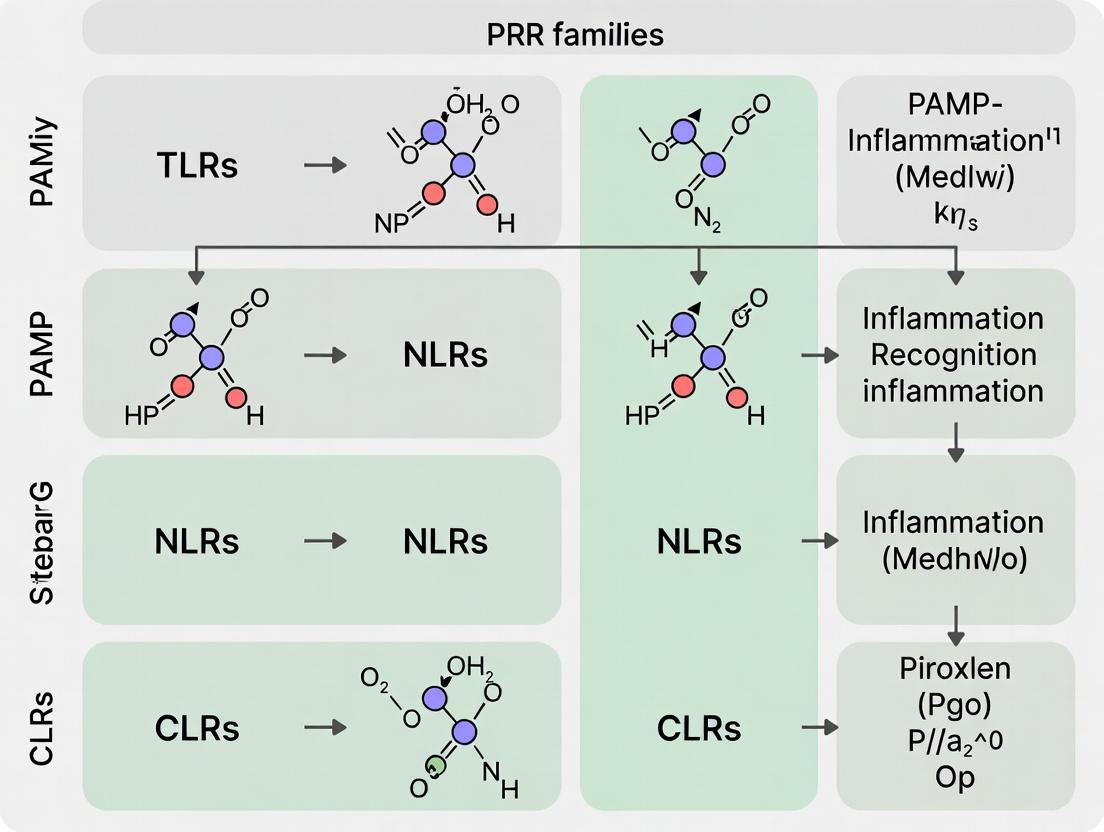
Title: PAMP/DAMP Recognition by PRR Families and Signaling Outputs
Title: Experimental Workflow for Comparing PRR-PAMP Mechanisms
The Scientist's Toolkit: Key Research Reagent Solutions
Table 3: Essential Reagents for PRR-PAMP Comparative Studies
| Reagent Category | Specific Example | Function in Experiment | Key Consideration for Comparison |
|---|---|---|---|
| Ultra-pure PAMPs | TLRgrade LPS (InvivoGen), HPLC-purified poly(I:C) (e.g., High Molecular Weight), synthetic 5'ppp dsRNA | Provides specific, contaminant-free activation of a single PRR pathway. Eliminates confounding signals. | Purity level (e.g., protein-free LPS), molecular size/structure (critical for RIG-I vs MDA5). |
| PRR-Expressing Cells | HEK-Blue hTLR4 Cells (InvivoGen), WT vs Mavs-/- murine macrophages (e.g., from Jackson Lab) | Isolate signaling from a specific PRR or validate its necessity. Reporter lines provide quantifiable readouts. | Select cells with low endogenous PRR background. Use isogenic knockout controls for validation. |
| Inhibitors/Antagonists | CLI-095 (TAK-242) for TLR4, BX795 for TBK1, Ru.521 for cGAS | Pharmacologically inhibit specific nodes in PRR pathways to confirm mechanism. | Verify specificity at used concentration; potential off-target effects. |
| Cytokine Detection | V-PLEX Proinflammatory Panel 2 (Meso Scale Discovery), LEGENDplex panels (BioLegend) | Multiplex quantification of cytokine/chemokine output downstream of different PRRs. | Assess dynamic range and detectability for low-abundance IFNs vs high-abundance TNF-α. |
| Antibodies (Phospho-Specific) | Anti-phospho-IRF3 (Ser396), Anti-phospho-NF-κB p65 (Ser536) (Cell Signaling Tech) | Measure early signaling activation kinetics via Western Blot or flow cytometry. | Optimize fixation/permeabilization for intracellular staining. |
| Gene Editing Tools | CRISPR-Cas9 kits (e.g., Synthego), siRNA pools targeting specific PRRs (Dharmacon) | Generate stable knockout cell lines or achieve transient knockdown to validate PRR-specific functions. | Control for efficiency (Western Blot) and off-target effects (use multiple gRNAs/siRNAs). |
Within the broader thesis on comparing PAMP recognition mechanisms across PRR families, this guide provides a comparative analysis of the structural architectures and functional performance of major Pattern Recognition Receptor (PRR) families: Toll-like Receptors (TLRs), RIG-I-like Receptors (RLRs), NOD-like Receptors (NLRs), and C-type Lectin Receptors (CLRs). The objective comparison is grounded in experimental data detailing ligand specificity, signaling kinetics, and downstream output.
Comparative Performance Data
Table 1: Ligand Recognition Profiles and Signaling Output
| PRR Family | Prototypical Member(s) | Canonical PAMP/DAMP | Recognition Domain | Signaling Adaptor(s) | Key Output (e.g., Cytokine Induced) | Typical Response Time (Post-stimulation) |
|---|---|---|---|---|---|---|
| TLRs | TLR4 (LPS), TLR3 (dsRNA) | LPS, dsRNA, CpG DNA | LRR (Leucine-Rich Repeat) | MyD88, TRIF | TNF-α, IL-6, Type I IFNs (TRIF-dependent) | Early Phase: 30-120 min (NF-κB/IRF3) |
| RLRs | RIG-I, MDA5 | Short dsRNA, Long dsRNA | Helicase + CARD domains | MAVS (IPS-1) | Type I IFNs (IFN-β), ISGs | Rapid: 6-12 hours (IRF3/7 activation) |
| NLRs | NOD1, NOD2, NLRP3 | iE-DAP, MDP, ATP, Crystals | NBD/NACHT + LRR | RIP2, ASC/Caspase-1 | Pro-IL-1β processing, NF-κB | Varies: 1-4h (NOD1/2); 2-6h (Inflammasome) |
| CLRs | Dectin-1, Mincle | β-glucans, Mycobacterial cord factor | CTLD (C-type Lectin-like Domain) | Syk/CARD9 | IL-1β, IL-6, IL-23 (Th17 bias) | 2-8 hours (NF-κB/NFAT activation) |
Table 2: Experimental Knockout/Inhibition Phenotypes in Murine Infection Models
| PRR Family | Gene Knockout | Challenge Pathogen | Key Phenotypic Deficit | Experimental Readout (vs. Wild-Type) |
|---|---|---|---|---|
| TLRs | Tlr4^-/- | E. coli (systemic) | 100-fold higher bacterial load at 24h | Blood CFU/mL (Log10): KO=7.2 ± 0.3, WT=5.1 ± 0.4 |
| RLRs | Mavs^-/- | VSV (intranasal) | 95% mortality by day 7 | Survival: 5% (KO) vs 80% (WT); Lung viral titer 2 log10 higher |
| NLRs | Nlrp3^-/- | S. aureus (peritonitis) | Reduced neutrophil influx, IL-1β | Peritoneal IL-1β (pg/mL): KO=120 ± 25, WT=850 ± 110 |
| CLRs | Card9^-/- | C. albicans (systemic) | Impaired fungal clearance, reduced Th17 | Kidney fungal burden (Log10 CFU): KO=6.0 ± 0.5, WT=4.2 ± 0.3 |
Detailed Experimental Protocols
Protocol 1: Quantifying NF-κB Activation via Luciferase Reporter Assay (TLR/NLR Signaling)
- Objective: Measure early transcriptional activation downstream of TLRs (MyD88-dependent) or NOD1/2.
- Cell Line: HEK293T cells, transiently transfected.
- Methodology:
- Seed cells in 24-well plates.
- Co-transfect with: a) PRR expression plasmid (e.g., human TLR4/MD2-CD14 complex or NOD2), b) NF-κB-firefly luciferase reporter plasmid, c) Renilla luciferase control plasmid (for normalization).
- 24h post-transfection, stimulate with ligand (e.g., 100 ng/mL ultrapure LPS for TLR4; 10 µg/mL MDP for NOD2) for 6 hours.
- Lyse cells and measure luminescence using a dual-luciferase assay system.
- Data Analysis: Calculate fold induction as ratio of (Firefly/Renilla) for stimulated vs. unstimulated cells. Data from such experiments typically show TLR4 inducing a 25-50 fold increase, while NOD2 induces a 10-20 fold increase.
Protocol 2: Type I Interferon Bioassay (RLR/TRIF-dependent TLR Signaling)
- Objective: Quantify functional Type I IFN (IFN-α/β) secretion post-RLR activation.
- Cell Line: Primary murine bone-marrow-derived macrophages (BMDMs) or fibroblast cell lines.
- Methodology:
- Stimulate cells with RLR agonist (e.g., transfection with 1 µg/mL high-molecular-weight poly(I:C) for MDA5; 5'-triphosphate RNA for RIG-I).
- Collect cell culture supernatant 12-18 hours post-stimulation.
- Apply serial dilutions of supernatant to fresh cultures of reporter cells (e.g., HEK-Blue IFN-α/β cells or L929 fibroblasts).
- After 24h, measure IFN-induced activity (e.g., SEAP or antiviral resistance).
- Quantification: Compare to a recombinant IFN-β standard curve. RLR activation often yields 500-2000 U/mL of IFN-β equivalent in wild-type cells, reduced to <50 U/mL in Mavs^-/- cells.
Protocol 3: Inflammasome Activation & IL-1β Secretion Assay (NLRP3)
- Objective: Assess canonical inflammasome assembly and cytokine maturation.
- Cell Line: Differentiated THP-1 macrophages or primary BMDMs.
- Methodology:
- Prime cells with 100 ng/mL LPS for 3 hours to induce pro-IL-1β expression (Signal 1).
- Stimulate with NLRP3 activators (e.g., 5 mM ATP for 30 min or 20 µM nigericin for 1 hour) to trigger inflammasome assembly (Signal 2).
- Collect supernatant and cell lysate separately.
- Perform Western Blot for cleaved Caspase-1 (p20 subunit) and mature IL-1β (p17) in supernatant, and pro-IL-1β in lysate.
- Use ELISA to quantify secreted mature IL-1β. Typical readout: WT cells secrete 500-1000 pg/mL mature IL-1β upon LPS+ATP stimulation, while Nlrp3^-/- or Asc^-/- cells secrete <50 pg/mL.
Signaling Pathway Visualizations
The Scientist's Toolkit: Key Research Reagent Solutions
Table 3: Essential Reagents for PRR Signaling Research
| Reagent Category | Specific Example(s) | Primary Function in PRR Research |
|---|---|---|
| Ultrapure Agonists | Ultrapure LPS (TLR4), High-MW poly(I:C) (TLR3/MDA5), 2'3'-cGAMP (STING), MDP (NOD2) | Specific PRR activation without contamination from other PAMPs; critical for clean signal attribution. |
| Inhibitors | TAK-242 (TLR4), BX795 (TBK1/IKKε), MCC950 (NLRP3), Cyclosporin A (calcineurin/CLR) | Pharmacological validation of specific pathway nodes; used in loss-of-function experiments. |
| Reporter Cell Lines | HEK-Blue hTLR4, THP1-Dual (NF-κB/IRF), ISG-luciferase reporters | Quantify pathway activation via secreted enzymatic reporters (e.g., SEAP, Lucia) for HTS. |
| Antibodies (Flow/WB) | Phospho-IRF3 (Ser396), Cleaved Caspase-1 (Asp297), Phospho-NF-κB p65 (Ser536) | Detect post-translational modifications and protein cleavage as direct markers of pathway activation. |
| Knockout Models | Tlr2/4^-/-, Mavs^-/-, Nlrp3^-/-, Card9^-/- murine strains (primary cells or in vivo) | Definitive genetic tools to establish non-redundant functions of specific PRR pathways. |
Within the broader research on comparing PAMP recognition mechanisms across PRR families, this guide provides a comparative analysis of key Pathogen-Associated Molecular Patterns (PAMPs) and their cognate Pattern Recognition Receptors (PRRs). This molecular recognition is foundational to innate immunity and a critical target for therapeutic intervention.
Comparative Analysis of Major PRR-PAMP Partnerships
Table 1: Key PRR Families and Their Canonical PAMP Ligands
| PRR Family | Specific Receptor | PAMP Ligand | Source Organism | Localization | Key Adaptor Molecule |
|---|---|---|---|---|---|
| TLR | TLR4 | Lipopolysaccharide (LPS) | Gram-negative bacteria | Plasma Membrane | MyD88, TRIF |
| TLR | TLR3 | Double-stranded RNA (dsRNA) | Viruses | Endosomal Membrane | TRIF |
| TLR | TLR5 | Flagellin | Flagellated bacteria | Plasma Membrane | MyD88 |
| TLR | TLR9 | Unmethylated CpG DNA | Bacteria, Viruses | Endosomal Membrane | MyD88 |
| CLR | Dectin-1 | β-1,3-glucan | Fungi | Plasma Membrane | CARD9 |
| RLR | RIG-I | Short dsRNA with 5' triphosphate | Viruses | Cytosol | MAVS |
| NLR | NOD2 | Muramyl dipeptide (MDP) | Bacteria | Cytosol | RIP2 |
| cGAS-STING | cGAS | Cytosolic DNA | Viruses, Bacteria | Cytosol | STING |
Table 2: Quantitative Signaling Output Comparison (Representative Data)
| PRR | PAMP Stimulus | Cell Type | Readout | Response Magnitude (vs. Control) | Time to Peak Response |
|---|---|---|---|---|---|
| TLR4 | 100 ng/mL E. coli LPS | RAW 264.7 macrophages | NF-κB activation (luciferase) | 45-fold increase | 4-6 hours |
| RIG-I | Transfected 5'ppp-dsRNA (1μg) | HEK293T | IFN-β promoter activation | 120-fold increase | 18-24 hours |
| cGAS | HT-DNA (2μg/mL transfection) | THP-1 cells | IRF3 phosphorylation | 30-fold increase | 8-12 hours |
| NOD2 | 10 μg/mL MDP | Primary human monocytes | IL-8 secretion (ELISA) | 15-fold increase | 24 hours |
Experimental Protocols for Comparative PRR Analysis
Protocol 1: NF-κB/IRF Reporter Assay for TLR & RLR Signaling
Purpose: To quantitatively compare the activation magnitude and kinetics of different PRR pathways leading to transcriptional responses.
- Seed cells (e.g., HEK293T) in 96-well plates.
- Co-transfect with:
- A PRR expression plasmid (e.g., TLR4/MD2/CD14, RIG-I, or empty vector control).
- A reporter plasmid (NF-κB or IFN-β promoter driving firefly luciferase).
- A Renilla luciferase control plasmid for normalization.
- After 24h, stimulate cells with respective PAMPs:
- TLR4: 10-100 ng/mL ultrapure LPS.
- RIG-I: 0.5-1 μg 5'ppp-dsRNA via transfection reagent.
- Control: PBS or vehicle.
- Lyse cells 6-24 hours post-stimulation using passive lysis buffer.
- Measure luminescence using a dual-luciferase reporter assay system.
- Calculate normalized response as Firefly/Renilla luminescence ratio.
Protocol 2: ELISA for Cytokine Secretion Output
Purpose: To measure the downstream functional output of PRR activation across different families.
- Differentiate THP-1 monocytes into macrophages using 100 nM PMA for 48 hours.
- Seed differentiated cells in 24-well plates and rest for 24 hours.
- Stimulate with PAMPs:
- TLR2/6: 100 ng/mL FSL-1 (synthetic lipopeptide).
- NLR (NOD2): 10 μg/mL Muramyl Dipeptide (MDP).
- CLR (Dectin-1): 100 μg/mL Curdlan (particulate β-glucan).
- Collect cell supernatants at 6, 18, and 24 hours post-stimulation.
- Perform ELISA for cytokines (e.g., TNF-α, IL-6, IL-1β) per manufacturer's instructions. Use serial dilutions of recombinant cytokine standard for quantification.
Protocol 3: Co-Immunoprecipitation for PRR-Adaptor Interaction
Purpose: To validate and compare the proximal signaling interactions specific to each PRR family.
- Transfect HEK293 cells with expression plasmids for:
- Tagged PRR (e.g., FLAG-TLR4, HA-NOD2, Myc-RIG-I).
- Associated adaptor protein (e.g., MyD88, RIP2, MAVS).
- At 24-36h post-transfection, lyse cells in non-denaturing IP lysis buffer containing protease/phosphatase inhibitors.
- Pre-clear lysate with control IgG and protein A/G beads.
- Incubate lysate with antibody against the tag on the PRR overnight at 4°C.
- Add protein A/G beads for 2 hours to capture immune complexes.
- Wash beads extensively, elute protein with Laemmli buffer, and analyze by Western blot for the co-precipitated adaptor protein.
Signaling Pathway Visualizations
The Scientist's Toolkit: Research Reagent Solutions
Table 3: Essential Reagents for PRR-PAMP Research
| Reagent | Function/Application | Example Vendor(s) |
|---|---|---|
| Ultrapure LPS | TLR4-specific agonist; devoid of contaminants that signal through other PRRs. | InvivoGen, Sigma-Aldrich |
| 5' triphosphate dsRNA | Specific ligand for RIG-I activation; synthesized in vitro. | Biolez, InvivoGen |
| Muramyl Dipeptide (MDP) | Synthetic minimal motif of peptidoglycan; specific agonist for NOD2. | Bachem, InvivoGen |
| Curdlan (or Zymosan) | Particulate β-1,3-glucan; agonist for Dectin-1 and other CLRs. | Sigma-Aldrich, Wako |
| ISD (Interferon Stimulatory DNA) | Defined sequence dsDNA for cGAS/STING pathway activation. | IDT, InvivoGen |
| PRR-Specific Inhibitors (e.g., TAK-242 for TLR4, C-178 for STING) | Pharmacological validation of PRR-specific signaling in experiments. | MedChemExpress, Selleckchem |
| Reporter Cell Lines (e.g., THP1-Dual, HEK-Blue) | Engineered cells with inducible reporters (NF-κB/IRF) for high-throughput screening. | InvivoGen |
| Co-Immunoprecipitation Kits (FLAG, HA, Myc tags) | For validating protein-protein interactions in PRR signalosomes. | Thermo Fisher, Cell Signaling Tech, MBL |
| Phospho-Specific Antibodies (e.g., anti-pIRF3, anti-pTBK1) | Key readouts for early activation events in cytosolic sensing pathways. | Cell Signaling Technology, Abcam |
| ELISA Kits (Mouse/Human) | Quantification of cytokine output (TNF-α, IL-6, IFN-β, IL-1β). | R&D Systems, BioLegend, Thermo Fisher |
Pattern recognition receptors (PRRs) are the cornerstone of innate immune surveillance, detecting pathogen-associated molecular patterns (PAMPs). Their subcellular localization—whether membrane-bound or cytosolic—profoundly determines their ligand specificity, signaling adaptors, and functional outcomes. This comparison guide, framed within broader research on PAMP recognition mechanisms, objectively evaluates the performance characteristics of these two surveillance strategies.
Comparative Performance: Key Metrics
The functional divergence stemming from PRR localization is quantifiable across multiple parameters, as summarized in the table below.
Table 1: Performance Comparison of Membrane-bound vs. Cytosolic PRRs
| Parameter | Membrane-bound PRRs (e.g., TLRs, CLRs) | Cytosolic PRRs (e.g., RLRs, NLRs, cGAS) | Supporting Experimental Data & Implications |
|---|---|---|---|
| Primary Ligand Classes | Extracellular & endosomal PAMPs (e.g., LPS, lipopeptides, nucleic acids) | Cytosolic PAMPs & DAMPs (e.g., viral dsRNA, bacterial peptidoglycan, cytosolic DNA) | TLR4/LPS: Surface plasmon resonance shows K_D ~ 10-100 nM. cGAS/dsDNA: EMSA & fluorescence anisotropy confirms nanomolar affinity for 45+ bp dsDNA. |
| Activation Kinetics | Typically faster (minutes to 1-2 hours post-stimulation) | Often delayed (30 minutes to several hours), requiring pathogen entry/escape | Time-course assays: TLR4 signaling (phospho-IRF3/NF-κB) peaks at 30-60 min. RIG-I/MDA5 signaling peaks at 4-8h post-viral infection. |
| Key Signaling Adaptors | TIR domain-dependent: MyD88, TRIF, TRAM | CARD domain-dependent: MAVS, ASC; STING (for cGAS) | Co-immunoprecipitation: Confirms TLR4->TRAM/TRIF; RIG-I->MAVS interactions upon ligand binding. |
| Primary Output | Pro-inflammatory cytokines (TNF-α, IL-6, IL-12); Type I IFNs (endosomal TLRs) | Type I/III IFNs (RLRs, cGAS-STING); inflammasome formation (NLRs -> IL-1β, pyroptosis) | ELISA/MSD: TLR stimulation → high TNF-α/IL-6. RLR/cGAS stimulation → potent IFN-β. NLRP3 activation → cleaved IL-1β. |
| Spatial Surveillance | Cell surface & endosomal compartments | Cytosol, mitochondrial matrix (for MAVS signaling) | Confocal microscopy: TLR9 (Cy3-ODN) co-localizes with LAMP-1+ endosomes. cGAS (FITC-ISD DNA) co-localizes in cytosol. |
| Cross-talk Potential | High with other surface receptors (e.g., integrins, cytokine receptors) | High with cell death pathways (apoptosis, necroptosis) and autophagy | Phosphoproteomics: Reveals shared kinase substrates between TLR and integrin pathways. Genetic screens link cGAS-STING to autophagy machinery. |
Experimental Protocols for Key Comparisons
Protocol 1: Ligand Specificity & Binding Affinity (SPR & EMSA)
Objective: Quantify direct interaction between purified PRR and its canonical PAMP. Methodology:
- Surface Plasmon Resonance (SPR) for Membrane-bound PRRs (e.g., TLR4/MD-2):
- Immobilize recombinant TLR4/MD-2 complex on a CM5 sensor chip via amine coupling.
- Flow increasing concentrations of purified LPS (or lipid A) over the chip in HBS-EP buffer.
- Record association/dissociation curves. Analyze data using a 1:1 Langmuir binding model to calculate KD, kon, k_off.
- Electrophoretic Mobility Shift Assay (EMSA) for Cytosolic PRRs (e.g., cGAS):
- Incubate purified human cGAS protein (0-500 nM) with a fixed amount of Cy5-labeled 45-bp dsDNA (10 nM) in binding buffer.
- Resolve complexes on a non-denaturing 6% polyacrylamide gel in 0.5x TBE at 4°C.
- Visualize using a fluorescence scanner. Quantify band shift to determine apparent K_D.
Protocol 2: Signaling Kinetics & Output (Western Blot & Multiplex Cytokine Assay)
Objective: Measure temporal activation and downstream effector production. Methodology:
- Cell Stimulation: Use HEK293T reporter lines or primary macrophages.
- Membrane-bound: Stimulate with ultrapure LPS (TLR4, 100 ng/mL) or Pam3CSK4 (TLR1/2, 1 µg/mL).
- Cytosolic: Transfert with high-molecular-weight poly(I:C) (2 µg/mL, for MDA5) or HT-DNA (1 µg/mL, for cGAS) using a transfection reagent.
- Time-course Sampling: Lyse cells at T = 0, 15, 30, 60, 120, 240, 480 min post-stimulation.
- Western Blot: Probe lysates for phospho-proteins (p-IRF3, p-p65, p-TBK1) and total proteins.
- Cytokine Secretion: Collect supernatants at 6h (pro-inflammatory) and 18h (IFN). Analyze using a multiplex electrochemiluminescence (MSD) assay for TNF-α, IL-6, IL-1β, and IFN-β.
Protocol 3: Spatial Localization (Confocal Microscopy)
Objective: Visualize PRR-PAMP co-localization. Methodology:
- Cell Preparation: Seed primary bone-marrow-derived dendritic cells (BMDCs) on glass-bottom dishes.
- Fluorescent Ligand Stimulation:
- Endosomal TLRs: Add Cy3-conjugated CpG ODN (for TLR9, 1 µM).
- Cytosolic Sensors: Transfect with FAM-labeled poly(I:C) (for RIG-I/MDA5) or Alexa Fluor 647-labeled ISD DNA (for cGAS).
- Staining: At defined time points, fix cells, permeabilize, and stain for target PRR (primary antibody, then Alexa Fluor 488 secondary) and compartment markers (e.g., LAMP-1 for endosomes, anti-TOM20 for mitochondria).
- Imaging & Analysis: Acquire Z-stacks using a confocal microscope. Calculate Manders' overlap coefficients using ImageJ software.
Pathway Visualization
Title: Signaling Pathways of Membrane vs. Cytosolic PRRs
Title: Core Experimental Workflow for PRR Comparison
The Scientist's Toolkit: Research Reagent Solutions
Table 2: Essential Reagents for PRR Localization & Function Studies
| Reagent / Solution | Function & Application in PRR Research | Example Supplier / Cat. # (Representative) |
|---|---|---|
| Ultrapure PAMPs (LPS, Pam3CSK4, Poly(I:C), CpG ODN) | Defined, low-endotoxin ligands for specific PRR stimulation in kinetic and output assays. | InvivoGen (tlrl-3pelps, tlrl-pms) |
| Transfection Reagents for Cytosolic Delivery (e.g., Lipofectamine 2000, Fugene HD, JetPEI) | Deliver long dsRNA or DNA into cytosol to activate RLRs, cGAS, and NLRs. | Thermo Fisher Scientific, Polyplus-transfection |
| Pathogen Mimics (Virus-like particles, Diacylated lipopeptide) | More physiologically relevant stimuli for membrane vs. cytosolic entry studies. | Creative Biolabs, EMC Microcollections |
| Recombinant PRR Proteins (Human/Mouse TLR ectodomains, cGAS, RIG-I) | Essential for in vitro binding assays (SPR, EMSA, ITC) to determine affinity and specificity. | Sino Biological, R&D Systems |
| Phospho-Specific Antibodies (anti-p-IRF3, p-TBK1, p-p65, p-STING) | Readout for proximal signaling activation in time-course western blots. | Cell Signaling Technology |
| Compartment-Specific Markers (Anti-EEA1, LAMP-1, TOM20, GM130) | Antibodies for staining early endosomes, lysosomes, mitochondria, and Golgi in microscopy. | Abcam, Santa Cruz Biotechnology |
| Fluorescently-Labeled Ligands (Cy3-CpG, FAM-poly(I:C), Alexa Fluor-ISD DNA) | Direct visualization of ligand trafficking and co-localization with PRRs. | TriLink BioTechnologies, Sigma-Aldrich |
| Cytokine Multiplex Assay Kits (Pro-inflammatory Panel, IFN Panel) | Simultaneous, sensitive quantification of multiple secretory outputs from PRR pathways. | Meso Scale Discovery (MSD), Bio-Rad |
| Selective Inhibitors (TAK-242 (TLR4), C-176 (STING), MCC950 (NLRP3)) | Pharmacological tools to dissect contributions of specific PRR pathways in complex responses. | MedChemExpress, Tocris |
Within the broader thesis of comparing PAMP recognition mechanisms across PRR families, this guide provides an objective performance comparison of innate immune signaling across model organisms, focusing on experimental data for pathway activation and specificity.
Comparative Analysis of PRR Pathway Performance
The following table summarizes quantitative data from key cross-species studies measuring PRR pathway output in response to defined PAMPs.
Table 1: Conservation of PRR Signaling Output Across Species
| PRR Family (Ligand) | Human (HEK293 Reporter) | Mouse (BMDC Cytokine) | Zebrafish (ZF4 Cell qPCR) | Drosophila (S2 Cell Survival) | Key Performance Metric |
|---|---|---|---|---|---|
| TLR4 (LPS) | NF-κB Luc Activity: 45±5 fold | IL-6: 1200±150 pg/ml | tnfa mRNA: 22±3 fold | Not Applicable | Pathway Activation Magnitude |
| TLR3 (poly(I:C)) | IFN-β: 850±90 pg/ml | IFN-α: 320±40 pg/ml | ifnphi1: 18±2 fold | Not Applicable | Antiviral Response Induction |
| TLR5 (Flagellin) | NF-κB Luc Activity: 28±4 fold | IL-12p40: 650±80 pg/ml | il1b: 15±2 fold | Not Applicable | Pro-inflammatory Response |
| RIG-I (3p-hpRNA) | IFN-β Luc: 120±15 fold | IFN-β: 950±110 pg/ml | mxa: 35±5 fold | Not Applicable | Cytosolic RNA Sensing |
| cGAS (HT-DNA) | IFN-β: 1100±130 pg/ml | ISG54 Luc: 40±6 fold | cxcld8: 25±4 fold | Not Applicable | Cytosolic DNA Sensing |
| PGRP-SA (Lys-type PG) | Not Applicable | Not Applicable | Not Applicable | Survival Rate: 85% | Gram+ Bacterial Defense |
Detailed Experimental Protocols
Protocol 1: Cross-Species TLR4/NF-κB Pathway Activation Assay
Objective: Quantify and compare LPS-induced TLR4 signaling output in human, mouse, and zebrafish cells. Methodology:
- Cell Culture: Seed HEK293-hTLR4/MD2-CD14 reporter cells, primary mouse bone marrow-derived dendritic cells (BMDCs), and zebrafish ZF4 fibroblast cells in 96-well plates.
- Stimulation: Treat cells with ultrapure E. coli K12 LPS (100 ng/ml) or PBS control for 6 hours (HEK293, ZF4) or 18 hours (BMDCs).
- Output Measurement:
- HEK293: Lyse cells and measure NF-κB-driven firefly luciferase activity via Dual-Glo Luciferase Assay. Normalize to Renilla luciferase control.
- Mouse BMDCs: Collect supernatant. Quantify murine IL-6 secretion via ELISA.
- Zebrafish ZF4: Extract total RNA, synthesize cDNA, and perform qPCR for zebrafish tnfa. Normalize to ef1a and calculate fold change vs. control using the 2^(-ΔΔCt) method. Data Interpretation: This protocol directly compares the functional performance of the TLR4 pathway orthologs, revealing conserved core signaling but species-specific response amplitudes.
Protocol 2: Cytosolic Nucleic Acid Sensing in Vertebrate Cells
Objective: Compare the efficacy of RIG-I-like receptor (RLR) and cGAS-STING pathways. Methodology:
- Transfection: Transfect human A549, mouse L929, and zebrafish ZF4 cells with:
- RLR Ligand: 5'-triphosphate blunt-end double-stranded RNA (3p-hpRNA, 1 µg/ml) using a transfection reagent.
- cGAS Ligand: Herring Testis DNA (HT-DNA, 2 µg/ml) complexed with Lipofectamine 2000.
- Appropriate mock transfection controls.
- Incubation: Incubate cells for 18-24 hours to allow for gene induction.
- Readout:
- Human: Measure IFN-β protein in supernatant by ELISA or IFN-β promoter luciferase activity.
- Mouse: Measure IFN-β (ELISA) or use an ISRE-luciferase reporter cell line.
- Zebrafish: Perform qPCR for key antiviral response genes (mxa, viperin). Data Interpretation: Highlights the deep conservation of antiviral defense mechanisms and provides performance metrics (cytokine level, fold induction) for each system.
Pathway Visualization
Diagram Title: TLR Pathway Logic in Humans vs. Flies
Diagram Title: Vertebrate vs. Insect Antiviral Sensing
The Scientist's Toolkit: Key Research Reagent Solutions
Table 2: Essential Reagents for Cross-Species PRR Research
| Reagent/Material | Function in PRR Research | Example & Key Application |
|---|---|---|
| Ultrapure PAMPs | Defined, low-endotoxin ligands for specific PRR activation. | InvivoGen ultrapure LPS (TLR4), poly(I:C) (TLR3), 3p-hpRNA (RIG-I). Essential for clean, reproducible stimulation. |
| Reporter Cell Lines | Engineered cells with PRR and inducible reporter (Luciferase, GFP). | InvivoGen HEK-Blue hTLR4 cells. Allows high-throughput quantification of pathway activity across species orthologs. |
| Species-Specific Cytokine ELISA Kits | Quantify protein-level immune output (IFNs, ILs, TNF-α). | R&D Systems DuoSet ELISA for human, mouse, zebrafish cytokines. Critical for comparing response magnitude. |
| PRR Agonists/Antagonists | Chemical or antibody-based tools to selectively modulate PRR function. | Tocris C176 (STING inhibitor), CLI-095 (TLR4 inhibitor). Used for loss-of-function comparisons. |
| Cross-Reactive & Phospho-Specific Antibodies | Detect conserved pathway components and activation states (e.g., p-IRF3, p-p65). | Cell Signaling Technology phospho-IRF3 (Ser396) Ab. Enables tracking of conserved signaling nodes via western blot. |
| In Vivo Model Pathogens | Whole pathogens to test integrated PRR network function. | ATCC Heat-killed S. aureus (Gram+), B. subtilis (Gram-). Used in Drosophila and zebrafish infection models. |
From Bench to Bedside: Methodologies for Studying PRR Activation and Therapeutic Applications
Within the broader thesis on comparing Pathogen-Associated Molecular Pattern (PAMP) recognition mechanisms across Pattern Recognition Receptor (PRR) families, High-Throughput Screening (HTS) is indispensable. This guide compares contemporary HTS platforms for ligand-binding assays, focusing on their application in dissecting interactions between PRRs (e.g., TLRs, NLRs, RLRs) and their cognate PAMPs.
Platform Comparison: Fluorescence-Based Binding Assays
The following table compares three dominant HTS platforms for quantifying PAMP-PRR interactions, based on recent benchmark studies.
Table 1: Comparison of Fluorescence-Based HTS Platforms for PRR-PAMP Binding Studies
| Platform/Assay Type | Throughput (Compounds/day) | Z'-Factor (Typical for PRR Assays) | Approx. Cost per 10K Data Points | Key Advantage for PRR Studies | Primary Limitation |
|---|---|---|---|---|---|
| Time-Resolved FRET (HTRF) | 50,000 - 100,000 | 0.7 - 0.9 | $2,500 - $3,500 | Low background; excellent for soluble TLR ectodomain screens | Requires specific donor/acceptor pairs; signal can be quenched. |
| Fluorescence Polarization (FP) | 30,000 - 70,000 | 0.6 - 0.85 | $1,000 - $2,000 | Homogeneous; ideal for small ligand competition assays (e.g., NLR antagonists). | Limited by molecular weight; less sensitive for large complexes. |
| AlphaScreen/AlphaLISA | 50,000 - 100,000 | 0.7 - 0.95 | $3,000 - $4,000 | No-wash; extremely sensitive for low-abundance receptors (e.g., cytosolic RIG-I). | Sensitive to ambient light; bead aggregation can cause false positives. |
Experimental Protocol: HTRF-Based TLR4/MD-2 LPS Binding Assay
This protocol is typical for studying PAMP binding to Toll-like Receptor complexes.
Objective: To screen for inhibitors of LPS binding to the human TLR4/MD-2 receptor complex in a 384-well format.
Materials:
- Recombinant human TLR4/MD-2 heterodimer (R&D Systems, cat# 3148-TL).
- Biotinylated E. coli K12 LPS (InvivoGen, cat# tlrl-eklpsb).
- HTRF reagents: Anti-TLR4-Europium Cryptate (Cisbio, cat# 61TL4KLA) and Streptavidin-XL665 (Cisbio, cat# 610SAXLA).
- Assay Buffer: 25 mM HEPES, 150 mM NaCl, 0.1% BSA, pH 7.4.
- Test compound library and reference inhibitor (TAK-242, Resatorvid).
Procedure:
- Receptor Incubation: Dilute TLR4/MD-2 to 2 nM in assay buffer. Add 10 µL per well to a low-volume 384-well plate.
- Compound Addition: Add 100 nL of test compound or DMSO control using an acoustic dispenser. Pre-incubate for 15 minutes.
- Ligand Addition: Add 10 µL of biotinylated LPS (final concentration 5 nM) to all wells. Shake and incubate for 60 minutes at room temperature.
- Detection: Add 5 µL of a pre-mixed detection solution containing Anti-TLR4-EuCryptate and Streptavidin-XL665 (each at final 1:200 dilution). Incubate for 60 minutes in the dark.
- Read: Measure time-resolved fluorescence at 620 nm and 665 nm on a compatible plate reader (e.g., BMG Labtech PHERAstar). Calculate the HTRF ratio (665 nm/620 nm * 10,000).
Data Analysis: The percent inhibition is calculated relative to DMSO (100% signal) and LPS-only (0% signal) controls. A Z'-factor >0.7 confirms a robust screen.
Visualizing PRR Signaling Pathways for HTS Target Identification
Title: PRR Signaling Cascade and HTS Intervention Points
The Scientist's Toolkit: Key Reagent Solutions for PRR-PAMP HTS
Table 2: Essential Research Reagents for PRR Interaction Screening
| Reagent | Example Product/Source | Primary Function in HTS |
|---|---|---|
| Recombinant PRR Ectodomains | Sino Biological (TLR2, TLR3 ectodomains), R&D Systems | Purified, active receptor subunits for binding assays. |
| Biotinylated/Tagged PAMPs | InvivoGen (biotin-LPS, Flag-peptidoglycan), Hycult Biotech | Provide a handle for detection in FRET, AlphaScreen, or SPR. |
| TR-FRET/HTRF-Compatible Antibodies | Cisbio, PerkinElmer | Donor and acceptor labeled antibodies for proximity assays. |
| Luminescent Kinase Reporters | Promega (ADP-Glo), Thermo Fisher (LanthaScreen Eu) | Measure downstream kinase activity (e.g., IRAK4) as a functional readout. |
| PRR-Specific Cell Reporter Lines | InvivoGen (HEK-Blue TLR/NLR cells) | Cell-based validation of hits in a physiological context. |
| SPR/NanoBRET Consumables | Cytiva (Series S Sensor Chips), Promega (NanoBRET NanoLuc fusions) | For secondary validation of binding affinity and kinetics. |
The choice of HTS platform for PAMP-PRR studies depends on the specific biological question. TR-FRET platforms like HTRF offer robust, homogeneous assays for direct binding, while AlphaScreen provides superior sensitivity for low-affinity interactions. FP remains a cost-effective choice for competitive assays with smaller molecules. Integrating data from these complementary platforms within a broader thesis framework allows for a comprehensive comparison of recognition mechanisms across PRR families, ultimately accelerating immunomodulatory drug discovery.
This guide, framed within a thesis comparing PAMP recognition mechanisms across PRR families, objectively compares imaging platforms and co-localization analysis techniques essential for visualizing immune synapse dynamics.
Live-Cell Imaging Platform Comparison
Quantitative performance data for key imaging systems used in immune synapse studies.
Table 1: Live-Cell Imaging Platform Performance Comparison
| Platform/System | Spatial Resolution (XY) | Temporal Resolution (Min) | Max Live Duration (Hours) | Phototoxicity Index (Relative) | Typical Cost (USD) |
|---|---|---|---|---|---|
| Spinning Disk Confocal | ~240 nm | 0.5 - 2 | 24 - 48 | Low | $250,000 - $500,000 |
| Lattice Light-Sheet | ~200 nm | 0.1 - 0.5 | 60+ | Very Low | $750,000 - $1,200,000 |
| TIRF Microscope | ~100 nm | 0.05 - 0.2 | 12 - 24 | Low | $150,000 - $350,000 |
| High-Content Imager (e.g., Opera Phenix) | ~300 nm | 5 - 15 | 72+ | Medium | $500,000 - $800,000 |
Co-localization Analysis Technique Comparison
Comparison of software and algorithms for quantifying protein co-localization at the immune synapse.
Table 2: Co-localization Analysis Method Comparison
| Method/Software | Analysis Principle | Key Metric Outputs | Suitability for Dynamic Synapses | Required SNR |
|---|---|---|---|---|
| Pearson's Correlation | Pixel intensity correlation | R-value (-1 to 1) | Moderate (per frame) | High |
| Manders' Overlap Coefficients | Fraction of co-localizing pixels | M1, M2 (0 to 1) | Good | Medium |
| Object-Based Co-localization | Discrete object identification | % Objects Co-localized | Excellent for vesicles/organelles | Medium-High |
| ICQ (Li's Intensity Correlation) | Product of Differences from Mean | ICQ (-0.5 to 0.5) | Good for rapid changes | Medium |
Experimental Protocols
Protocol 1: Live-Cell Imaging of TLR Recruitment to the Immune Synapse
Aim: To visualize and quantify TLR4 recruitment in dendritic cells during antigen presentation. Key Reagents: Dendritic cell line (e.g., JAWS II), NF-κB-GFP reporter, fluorescent anti-TLR4 Fab fragment, antigen-specific T cells. Method:
- Seed dendritic cells in glass-bottom dishes and transfect with NF-κB-GFP reporter.
- Label surface TLR4 with fluorescent Fab fragment (1:100, 20 min, 4°C).
- Introduce CellTracker Red-labeled antigen-specific T cells at 1:5 ratio (DC:T cell).
- Image immediately on spinning disk confocal system at 37°C, 5% CO₂.
- Acquire z-stacks (0.5 µm steps) every 30 seconds for 60 minutes.
- Quantify TLR4 fluorescence intensity at the contact zone using region-of-interest analysis.
Protocol 2: Co-localization Analysis of cGAS and Mitochondria at the Synapse
Aim: To measure spatial relationship between cytosolic DNA sensor cGAS and mitochondria in T cell – APC conjugates. Key Reagents: Primary human T cells, APC line, MitoTracker Deep Red, anti-cGAS-Alexa Fluor 488. Method:
- Load T cells with MitoTracker Deep Red (100 nM, 30 min).
- Fix and permeabilize T cell-APC conjugates (formed at 1:1 ratio for 15 min) with 4% PFA/0.1% Triton X-100.
- Stain with anti-cGAS-Alexa Fluor 488 (1:200, overnight, 4°C).
- Acquire high-resolution 3D images using super-resolution microscope (e.g., Airyscan).
- Apply 3D object-based co-localization analysis (Imaris software) with threshold set at 2x background.
- Calculate Mander's M1 (cGAS overlapping mitochondria) and M2 (mitochondria overlapping cGAS).
Title: Immune Synapse Formation and PRR Signaling Pathway
Title: Imaging and Analysis Workflow for Immune Synapse Studies
The Scientist's Toolkit: Research Reagent Solutions
Table 3: Essential Reagents for Immune Synapse Imaging
| Reagent/Material | Function in Experiment | Example Product/Supplier |
|---|---|---|
| Fluorophore-conjugated Fab fragments | Label surface PRRs with minimal cross-linking | Jackson ImmunoResearch, Fab-Goat anti-Mouse-AF488 |
| Cell Tracker Dyes (CMFDA, CTFR) | Distinguish interacting cell populations in live imaging | Thermo Fisher, CellTracker Green CMFDA |
| Mitochondrial Dyes (MitoTracker) | Visualize organelle positioning during synapse formation | Thermo Fisher, MitoTracker Deep Red FM |
| Glass-bottom Imaging Dishes | Provide optimal optical clarity for high-resolution imaging | MatTek, No. 1.5 coverglass dishes |
| Live-cell Imaging Media | Maintain cell viability without fluorescence interference | Gibco, FluoroBrite DMEM |
| Anti-fade Mounting Medium | Preserve fluorescence in fixed samples for super-resolution | Vector Laboratories, Vectashield with DAPI |
| Förster Resonance Energy Transfer (FRET) Pairs | Measure protein-protein interactions within nanoscale proximity | Cytiva, Cy3-Cy5 FRET pair antibodies |
| SNAP/CLIP-tag Systems | Label specific proteins with synthetic dyes in live cells | New England Biolabs, SNAP-Cell 647-SiR |
Within the broader thesis on comparing PAMP recognition mechanisms across PRR families, profiling the resultant signaling cascades is paramount. This guide compares methodologies for concurrent transcriptomic and proteomic analysis of downstream signaling events, focusing on performance metrics, depth, and applicability for researchers elucidating innate immune pathways.
Comparative Analysis of Profiling Platforms
The following table compares leading solutions for integrated multi-omics pathway analysis.
Table 1: Comparison of Integrated Transcriptomic & Proteomic Profiling Platforms
| Feature / Platform | Single-Cell CITE-seq (10x Genomics) | Bulk RNA-seq with TMT-MS | Spatial Transcriptomics (Visium) with GeoMx DSP | Rapid-Throughput Phospho-/Total Proteome (IsoPlexis) |
|---|---|---|---|---|
| Primary Readout | Single-cell RNA + Surface Protein | Bulk RNA + Deep Proteome | Spatial RNA + Protein from ROI | Functional Proteomics (Signaling Activity) |
| Multiplex Capacity | ~200 proteins + whole transcriptome | 10-18 plex (TMT) + whole transcriptome | Whole Transcriptome + ~100 proteins | 15+ phosphoprotein pathways simultaneously |
| Key Advantage | Cellular heterogeneity resolution | Profound depth for low-abundance signals | Preserved tissue architecture context | Live cell functional signaling metrics |
| Throughput Time | 2-3 days (library prep to data) | 5-7 days for integrated analysis | 5+ days due to spatial imaging | <24-hour assay time |
| Cost per Sample (approx.) | ~$2,000 | ~$1,500 | ~$3,500 | ~$500 |
| Best for PRR Signaling | Heterogeneous cell population responses | Pathway discovery in knock-out models | Mapping signaling niches in infection | Kinetic signaling dynamics post-PAMP challenge |
Experimental Protocols for PRR Signaling Profiling
Protocol 1: Integrated Bulk Profiling of TLR4 Signaling
- PAMP Stimulation: Seed THP-1 derived macrophages. Stimulate with ultrapure LPS (100 ng/mL) for 0, 30, 90, 240 min. Include a TLR4 inhibitor (TAK-242, 1µM) control.
- Transcriptomics: Lyse cells in TRIzol. Isolate total RNA. Prepare libraries using poly-A selection and Illumina Stranded mRNA Prep. Sequence on NovaSeq 6000 (30M reads/sample, PE 150bp).
- Proteomics: Parallel plates lysed in RIPA buffer with phosphatase/protease inhibitors. Digest with trypsin. Label peptides with TMTpro 18plex. Fractionate by high-pH reverse-phase HPLC. Analyze on Orbitrap Eclipse Tribrid MS with SPS-MS3.
- Data Integration: Map RNA-seq reads with STAR to GRCh38. Quantify with Salmon. For MS, search data against UniProt human database using SequestHT in Proteome Discoverer 3.0. Integrate using causal network analysis in Ingenuity Pathway Analysis.
Protocol 2: Single-Cell Resolution of RIG-I vs. MDA5 Signaling
- Cell Preparation: Primary human pDCs and HeLa cells infected with Sendai virus (SeV, activates RIG-I) or transfected with poly(I:C) HMW (activates MDA5) for 8h.
- CITE-seq Workflow: Harvest cells, stain with TotalSeq-C antibody cocktail (e.g., anti-IFNAR1, anti-phospho-IRF3, anti-MHC-I). Load on 10x Genomics Chromium Controller for GEM generation and library prep. Sequence.
- Data Analysis: Process Cell Ranger output. Demultiplex protein and RNA. Analyze in Seurat: normalize RNA with SCTransform, normalize proteins with centered log-ratio. Cluster cells and identify signaling-specific populations via differential expression.
Signaling Pathway Visualization
TLR4 Signaling Branches Visualized
RIG-I and MDA5 Convergence on MAVS
Integrated Multi-Omic Experimental Workflow
The Scientist's Toolkit: Key Research Reagent Solutions
Table 2: Essential Reagents for Pathway Profiling Studies
| Reagent / Solution | Vendor Examples | Primary Function in PRR Signaling Profiling |
|---|---|---|
| Ultrapure PAMPs | InvivoGen (LPS-EB, Poly(I:C)), MilliporeSigma | Defined, low-endotoxin ligands for specific PRR (TLR4, TLR3, RIG-I/MDA5) activation without confounding signals. |
| TMTpro 18plex | Thermo Fisher Scientific | Isobaric mass tags for multiplexed quantitative proteomics, enabling parallel analysis of up to 18 time-points/conditions in one MS run. |
| TotalSeq-C Antibodies | BioLegend | Oligo-tagged antibodies for CITE-seq, allowing simultaneous measurement of surface protein abundance and transcriptome in single cells. |
| Phospho-Proteomics Kits | Cell Signaling Tech. (PSC Scan), PTMScan | Antibody-based enrichment kits for phospho-tyrosine, serine/threonine motifs to study kinase-driven signaling dynamics. |
| Pathway Inhibitors | MedChemExpress (TAK-242, BX795), Cayman Chemical | Small molecule inhibitors to block specific nodes (e.g., TLR4, TBK1) for causal validation in signaling pathways. |
| Single-Cell Library Prep Kits | 10x Genomics (Chromium), Parse Biosciences | Reagents for partitioning cells, barcoding RNA/proteins, and preparing next-generation sequencing libraries from single cells. |
| Data Analysis Suites | Qiagen IPA, Partek Flow, Seurat, MaxQuant | Software for integrated multi-omics statistical analysis, visualization, and pathway enrichment modeling. |
This guide, framed within a thesis on comparing PAMP recognition mechanisms across PRR families, objectively compares the use of CRISPR/Cas9 knockouts versus alternative gene perturbation methods for generating reporter cell lines in innate immune signaling studies.
Comparison of Gene Perturbation Methods for PRR Reporter Line Generation
The table below compares key performance metrics of CRISPR/Cas9 knockout with alternative technologies, based on recent experimental data (2023-2024) focused on generating TLR and RIG-I reporter cell lines.
| Performance Metric | CRISPR/Cas9 Knockout | RNAi (siRNA/shRNA) | TALENs | Random Mutagenesis |
|---|---|---|---|---|
| Editing Precision | High (site-specific DSB) | N/A (transcript knockdown) | High (site-specific DSB) | Very Low (random) |
| Permanent Knockout Efficiency | >90% (clonal selection) | 0% (transient) | 70-85% (clonal selection) | Low (<5%) |
| Time to Clonal Line (weeks) | 4-6 | N/A | 6-8 | 8-12 |
| Off-Target Effect Rate (PRR genes) | Moderate (algorithm-improved gRNAs) | High (seed-based) | Low | Very High |
| Ease of Multiplexing (multiple PRRs) | High (multiple gRNAs) | High (pooled siRNAs) | Low | N/A |
| Cost per Gene Target (USD) | ~$500 | ~$200 | ~$1500 | ~$100 |
| Key Experimental Data (NF-κB Reporter Activity Post-LPS Challenge) | >95% reduction in HEK293-TLR4 KO clonal lines (n=5) | 70-80% reduction (72h post-transfection, n=3) | >90% reduction in clonal lines (n=3) | Not reliably quantifiable |
Detailed Experimental Protocols
Protocol 1: Generating a TLR4 Knockout Reporter Line via CRISPR/Cas9 for PAMP Recognition Studies
Objective: Create a clonal HEK293 cell line with stable TLR4 knockout, harboring an NF-κB-driven luciferase reporter, to dissect MyD88-dependent signaling. Materials: See "The Scientist's Toolkit" below. Procedure:
- gRNA Design: Design two gRNAs targeting exon 2 of human TLR4 using an online tool (e.g., CRISPick). Include on- and off-target scoring.
- Cloning: Clone gRNA sequences into the LentiCRISPRv2 plasmid (Addgene #52961) via BsmBI restriction sites.
- Lentivirus Production: Co-transfect LentiCRISPRv2-gRNA, psPAX2, and pMD2.G into Lenti-X 293T cells using a PEI transfection reagent. Harvest virus-containing supernatant at 48 and 72 hours.
- Transduction & Selection: Transduce target HEK293-NF-κB-luciferase cells with lentivirus in the presence of 8 µg/mL polybrene. Select with 2 µg/mL puromycin for 7 days.
- Clonal Isolation: Serial dilute selected pool to 0.5 cells/well in a 96-well plate. Expand clones for 3-4 weeks.
- Genotype Validation: Isolate genomic DNA. Perform PCR on the target region and sequence to confirm indel mutations causing frameshifts.
- Phenotype Validation: Stimulate clone with 100 ng/mL Ultrapure LPS (TLR4 agonist) for 6 hours. Measure luciferase activity. Validate loss of surface TLR4 via flow cytometry. A successful knockout clone shows >95% reduction in reporter activity compared to parental line.
Protocol 2: Parallel shRNA-Mediated Knockdown Control Experiment
Objective: Provide a transient knockdown comparison for TLR4 perturbation. Procedure:
- Transfection: Reverse-transfect HEK293-NF-κB-luciferase cells with 25 nM validated TLR4 shRNA or non-targeting control shRNA using a lipid-based transfection reagent.
- Stimulation & Assay: At 72 hours post-transfection, stimulate cells with 100 ng/mL LPS for 6 hours.
- Analysis: Lyse cells and measure luciferase activity. Normalize to cell viability (e.g., ATP assay). Expected knockdown reduces reporter activity by 70-85%.
Visualizing Signaling Pathways and Workflows
Title: PRR Signaling Loss in CRISPR Knockout vs. Wild-Type
Title: Workflow for Generating PRR Knockout Reporter Lines
The Scientist's Toolkit: Research Reagent Solutions
| Reagent / Material | Function in PRR Reporter Studies | Example Product/Catalog |
|---|---|---|
| LentiCRISPRv2 Vector | All-in-one lentiviral vector for delivering SpCas9 and gRNA; enables stable knockout generation. | Addgene #52961 |
| Validated PRR gRNA | Pre-designed, sequence-verified guide RNA for specific Pattern Recognition Receptor gene knockout. | Synthego (Predesigned) |
| NF-κB Luciferase Reporter Cell Line | Parental cell line with stably integrated firefly luciferase gene under NF-κB response elements. | BPS Bioscience #60610 |
| Ultrapure TLR Agonists | High-purity PAMPs (e.g., LPS, Poly(I:C)) for specific PRR stimulation with minimal contaminants. | InvivoGen tlrl-3pelps |
| Lipid-Based Transfection Reagent | For efficient delivery of siRNA/shRNA for transient knockdown control experiments. | Lipofectamine RNAiMAX |
| ONE-Glo Luciferase Assay | Sensitive, homogeneous add-and-read assay for quantifying NF-κB-driven luciferase activity. | Promega #E6110 |
| Flow Cytometry Antibodies | Antibodies against extracellular PRR domains (e.g., anti-TLR4) for validating surface protein loss. | BioLegend #312802 |
| Cloning Enzymes (BsmBI) | Type IIS restriction enzyme for efficient, directional cloning of gRNA sequences into CRISPR vectors. | NEB #R0739S |
Publish Comparison Guide
This guide objectively compares the performance of select agonists for distinct Pattern Recognition Receptor (PRR) families in preclinical models, contextualizing their efficacy and mechanisms within the broader thesis of comparing PAMP recognition and signaling across PRR families.
Table 1: Comparison of PRR Agonists as Vaccine Adjuvants
| PRR Family | Specific Agonist (Alternative) | Key Experimental Model (Antigen) | Adjuvant Readout (vs. Control/Alum) | Quantitative Data Summary |
|---|---|---|---|---|
| TLR4 | MPL (Alternative: Alum) | Mouse, OVA immunization | Antigen-specific IgG2c/IgG1 ratio (Th1 bias) | MPL: Ratio >10. Alum: Ratio ~0.5. MPL+Alum (AS04): ~5-8 (synergistic). |
| TLR9 | CpG ODN 1826 (Alternative: Incomplete Freund's Adjuvant - IFA) | Mouse, HIV gp120 immunization | Germinal center B cell frequency in lymph nodes | CpG: ~25% of B cells. IFA: ~18%. Antigen alone: <5%. |
| cGAS-STING | c-di-AMP (Alternative: cGAMP) | Mouse, Influenza HA vaccination | Protection against heterologous viral challenge | c-di-AMP adjuvanted: 90% survival. cGAMP: 85% survival. Unadjuvanted: 30% survival. |
| RIG-I | 3p-hpRNA (Alternative: Poly(I:C)) | Ferret, H5N1 vaccine | Hemagglutination inhibition (HAI) geometric mean titer (GMT) | 3p-hpRNA: GMT 320. Poly(I:C): GMT 160. Alum: GMT 40. |
Experimental Protocol for Table 1 (Exemplar: TLR9 vs. cGAS-STING)
- Immunization: C57BL/6 mice (n=10/group) are injected intramuscularly with 10µg model antigen (e.g., OVA) mixed with 50µg CpG ODN 1826 (TLR9 agonist) or 10µg c-di-AMP (STING agonist) in a total volume of 100µL PBS. Control groups receive antigen alone or with Alum.
- Schedule: Prime on day 0, boost on day 21.
- Sample Collection: Serum is collected on days 14, 28, and 35. Draining lymph nodes are harvested on day 28.
- Analysis:
- Serology: Antigen-specific antibody titers (total IgG, IgG1, IgG2c) are measured by ELISA. Data are log-transformed and compared by two-way ANOVA.
- Germinal Centers: Single-cell suspensions from lymph nodes are stained for B220, GL7, and CD95 and analyzed by flow cytometry to quantify GC B cells.
- Protection: For viral challenge models, animals are exposed to a lethal dose of pathogen, and survival/morbidity is tracked for 14 days.
Table 2: Comparison of PRR Antagonists in Autoimmunity Models
| Target PRR | Antagonist/Therapeutic | Disease Model (Alternative Treatment) | Key Efficacy Endpoint | Quantitative Data Summary |
|---|---|---|---|---|
| TLR7/8 | Antimalarial (HCQ) | MRL/lpr mouse model of SLE (vs. vehicle) | Reduction in anti-dsDNA autoantibody titer | HCQ (50 mg/kg/d): ~60% reduction at 8 wks. Vehicle: No significant reduction. |
| TLR4 | TAK-242 (Resatorvid) | DSS-induced colitis in mice (vs. anti-TNFα) | Disease Activity Index (DAI) & colon histology score | TAK-242: DAI reduced by 65%, histology score by 50%. Anti-TNFα: DAI reduced by 70%. |
| NLRP3 | MCC950 | EAE mouse model of MS (vs. FTY720) | Mean clinical score & CNS inflammatory foci count | MCC950: Clinical score reduced from 3.5 to 1.2; foci reduced by 75%. FTY720: Score to 0.8. |
| cGAS | RU.521 | Trex1-/- mouse model of Aicardi-Goutières Syndrome | Serum IFN-β level (pg/mL) & survival at 16 weeks | RU.521 (10 mg/kg): IFN-β < 50 pg/mL, 90% survival. Vehicle: IFN-β > 500 pg/mL, 20% survival. |
Experimental Protocol for Table 2 (Exemplar: NLRP3 vs. cGAS Inhibition)
- Disease Induction & Treatment:
- EAE (for MCC950): Mice are immunized with MOG35-55 peptide in CFA. MCC950 (10 mg/kg) or FTY720 (1 mg/kg) is administered daily via i.p. injection from day 1 post-immunization.
- AGS (for RU.521): Trex1-/- mice are treated from 4 weeks of age with RU.521 (10 mg/kg in DMSO/saline) or vehicle via i.p. injection every other day.
- Clinical Scoring: EAE mice are scored daily on a 0-5 scale for paralysis. AGS mice are monitored for survival and growth.
- Sample Analysis:
- EAE: At peak disease, CNS tissue is collected for histology (H&E staining, inflammatory foci counted per mm²) and cytokine analysis (ELISA for IL-1β, IL-18).
- AGS: Serum is collected monthly for IFN-β measurement by ELISA. Tissues are analyzed for ISG expression via qPCR.
- Statistics: Survival curves analyzed by Log-rank test. Clinical scores and cytokine data compared by Mann-Whitney U test or one-way ANOVA.
Signaling Pathways of Targeted PRR Families
Diagram Title: Core Signaling Pathways for TLR, cGAS-STING, and NLRP3
The Scientist's Toolkit: Key Research Reagents for PRR Agonist/Antagonist Studies
| Reagent Category | Specific Example(s) | Primary Function in Research |
|---|---|---|
| PRR Agonists (Ligands) | Ultrapure LPS (TLR4), CL097 (TLR7/8), Poly(I:C) HMW (TLR3/RIG-I/MDA5), 2'3'-cGAMP (STING), Nigericin (NLRP3) | Positive controls to specifically activate target PRR pathways in vitro and in vivo. |
| PRR Antagonists/Inhibitors | TAK-242 (TLR4), ODN TTAGGG (TLR9 antagonist), MCC950 (NLRP3), RU.521 (cGAS), H-151 (STING) | Tool compounds to inhibit specific PRR signaling, establishing mechanistic proof-of-concept. |
| Reporter Cell Lines | HEK-Blue hTLR4, THP1-Dual NF-κB/IRF, Bone marrow-derived dendritic cells (BMDCs) | Systems to quantify PRR activation (via secreted alkaline phosphatase or luciferase) or cytokine output in a relevant immune cell type. |
| Antibodies for Detection | Phospho-IRF3 (Ser396), Phospho-NF-κB p65, Cleaved Caspase-1 (Asp297), Anti-mouse IgG2c/IgG1 | Key readouts for pathway activation, immune complex formation, and antibody isotype switching in immunoassays and flow cytometry. |
| Animal Models | TLR knockout mice (Tlr4-/-, Tlr9-/-), Trex1-/- mice (AGS model), MRL/lpr mice (SLE model), C57BL/6 for EAE/adjuvant studies | Genetically defined or disease-predisposed models to test therapeutic efficacy and mechanism in a whole-organism context. |
Navigating Experimental Complexity: Troubleshooting Common Pitfalls in PRR Research
I. Introduction: A Thesis Context
Within the broader thesis of Comparing PAMP recognition mechanisms across PRR families, Toll-like Receptor 4 (TLR4) presents a unique investigative challenge. Unlike other PRRs that recognize structurally diverse PAMPs, TLR4/MD2 specifically binds lipopolysaccharide (LPS), a potent bacterial endotoxin and a ubiquitous laboratory contaminant. This specificity makes TLR4 studies exceptionally vulnerable to artifact, where inadvertent LPS contamination in recombinant proteins, cell culture media, or reagents can lead to false-positive activation, confounding data on other PAMPs or putative inhibitors. This guide compares solutions for ensuring signal fidelity in TLR research.
II. Research Reagent Solutions: The Essential Toolkit
| Reagent / Material | Primary Function | Critical Consideration |
|---|---|---|
| Ultra-Pure, Low-Endotoxin FBS | Cell culture supplement. | Standard FBS can contain high, variable endotoxin levels. |
| Recombinant Protein Purification Kits (Endotoxin-Removing) | Protein preparation. | Affinity resins (e.g., polymyxin B) bind LPS during purification. |
| Endotoxin-Removal Plates/Columns | Pretreatment of reagents. | Pass solutions through dedicated LPS-binding matrices. |
| LPS-Inhibitory Agents (Polymyxin B, Polymyxin B Agarose) | Negative control/validation. | Binds and neutralizes LPS; used to confirm LPS-mediated effects. |
| TLR4-Specific Inhibitors (TAK-242, CLI-095) | Pathway inhibition control. | Specifically blocks TLR4 intracellular signaling, not other PRRs. |
| HEK-Blue hTLR4 Reporter Cells | Specific TLR4 readout. | Engineered cells co-expressing TLR4/MD2/CD14 and a SEAP reporter. |
| Endotoxin-Specific LAL Assay Kits | Quantification of contamination. | Chromogenic/fluorogenic Limulus Amebocyte Lysate assays. |
| TLR2-Specific Agonist (Pam3CSK4) | Specificity control. | Activates TLR2, confirming cell responsiveness and ruling out general contamination. |
III. Comparison Guide: Mitigation Strategies & Performance Data
Table 1: Performance Comparison of LPS Mitigation Methods in TLR4 HEK293 Reporter Assays
| Mitigation Strategy | Principle | Reduction in Background (SEAP Activity) | Specificity Confirmed? (TLR4 vs. TLR2) | Key Experimental Data |
|---|---|---|---|---|
| Standard Cell Culture | No mitigation. | 0% (Baseline high signal) | No (High TLR4 background) | Contaminated BSA (1µg/mL) induced 2.1 OD650 SEAP. |
| + Polymyxin B (10 µg/mL) | LPS sequestration. | ~85% Reduction | Yes | SEAP signal reduced from 2.1 to 0.32 OD650. TLR2 response unchanged. |
| + Endotoxin-Removal FBS | Source reduction. | ~70% Reduction | Partial | Baseline TLR4 activity lowered; residual contamination possible. |
| TAK-242 (1 µM) Co-treatment | TLR4 signaling blockade. | ~95% Reduction | Yes (by mechanism) | Signal abolished to 0.1 OD650, confirming TLR4 origin. |
| Comprehensive Approach (Low-Endotoxin FBS + PMB + TAK-242 control) | Multi-layered. | ~99% Reduction | Yes | Near-complete elimination of nonspecific activation. |
IV. Experimental Protocols for Validation
Protocol 1: Validating Recombinant Protein Purity for TLR Studies
- Treat: Incubate the test protein solution (≥1 hour, RT) with polymyxin B agarose beads (10 µL beads per µg of protein).
- Clear: Centrifuge (5000xg, 2 min) and collect the supernatant.
- Stimulate: Apply treated vs. untreated protein to HEK-Blue hTLR4 and hTLR2 reporter cells (1e5 cells/well, 24-well plate).
- Quantify: Measure SEAP activity in supernatant at 20-24h via QUANTI-Blue detection reagent (OD 650nm).
- Interpret: A signal abolished in TLR4 cells post-PMB treatment, but persistent in TLR2 cells, indicates specific protein activity. Signal loss in both suggests off-target LPS effect.
Protocol 2: Routine Screening for Laboratory Contaminants
- Sample Prep: Dilute test reagents (FBS, media, buffers, water) in endotoxin-free water.
- LAL Assay: Perform chromogenic LAL assay per manufacturer instructions (e.g., Pierce).
- Threshold: Quantify endotoxin units (EU/mL). For sensitive TLR4 work, maintain <0.01 EU/mL in all reagents.
- Cell-Based Corroboration: Test reagents directly on HEK-Blue Null2 cells (lacking PRRs). Any signal indicates non-TLR mediated cytotoxicity or interference.
V. Visualizing the Workflow and Pathways
TLR4 Assay Contamination Mitigation Workflow
Discriminating LPS Contamination from Specific TLR4 Signaling
This comparison guide, framed within the broader thesis of Comparing PAMP recognition mechanisms across PRR families, objectively evaluates critical reagents and methodologies for dissecting pathogen recognition. A key challenge in this field is ensuring that observed immune responses are due to specific PAMP-PRR interactions and not confounded by ligand contamination or receptor cross-reactivity.
Experimental Data Comparison: TLR4 Signaling Profiles
A central assay for validating PAMP/PRR specificity involves profiling cytokine output and downstream signaling events in response to purported pure ligands. The table below summarizes typical experimental outcomes comparing a validated ultrapure LPS preparation against a standard commercial LPS, often contaminated with other PAMPs.
Table 1: Cytokine Response Profile in Human PBMCs Stimulated with Different LPS Preparations
| Ligand (100 ng/mL) | Endotoxin Units (EU) | TLR4-Dependent TNF-α (pg/mL) | TLR2-Dependent IL-6 (pg/mL) | IRF3 Activation (ISRE Luciferase) | Inferred Purity |
|---|---|---|---|---|---|
| Ultrapure LPS (K12 strain) | <0.1 | 850 ± 120 | 25 ± 10 | High (45-fold) | High. Pure TLR4 agonist. |
| Standard Commercial LPS | >10 | 920 ± 95 | 480 ± 75 | Moderate (22-fold) | Low. Contains lipopeptide contaminants. |
| TLR2 agonist (Pam3CSK4) | 0 | 15 ± 5 | 820 ± 110 | None (1.2-fold) | Control. |
Interpretation: The significant IL-6 response to standard LPS, which is mimicked by the pure TLR2 agonist Pam3CSK4, indicates contamination with TLR2 ligands (e.g., lipopeptides). True specificity for TLR4 is confirmed only with the ultrapure LPS, which induces TNF-α and strong IRF3 activation (TRIF pathway) without concomitant TLR2 signaling.
Detailed Experimental Protocol: Validating PRR Specificity
Objective: To determine if a candidate PAMP ligand (e.g., a synthetic nucleic acid) activates its intended PRR (e.g., cGAS) specifically, without engaging other related sensors (e.g., RIG-I or TLR9).
Methodology:
- Cell Culture & Transfection: Seed HEK293T cells (deficient in multiple endogenous PRRs) in 96-well plates. Co-transfect with:
- A firefly luciferase reporter plasmid under control of an IFN-β or ISRE promoter.
- A Renilla luciferase plasmid for normalization.
- An expression plasmid for the PRR of interest (e.g., human cGAS) or an empty vector control.
- Ligand Stimulation: 24 hours post-transfection, stimulate cells with:
- The candidate ligand (e.g., synthetic dsDNA).
- Canonical positive control ligands for the target and off-target PRRs (e.g., cGAS: HT-DNA; RIG-I: 3p-hpRNA; TLR9: CpG ODN 2006).
- Use a transfection reagent (e.g., Lipofectamine 2000) for intracellular delivery.
- Reporter Assay: Lyse cells 16-24 hours post-stimulation. Measure firefly and Renilla luciferase activity using a dual-luciferase assay system. Calculate fold-induction relative to unstimulated controls.
- Specificity Confirmation: Repeat experiment in isogenic knockout cell lines (e.g., cGAS^-/^-, STING^-/^-) or using selective pharmacological inhibitors (e.g., STING inhibitor H-151).
Diagram: PRR Specificity Validation Workflow
Title: Experimental Workflow for PAMP-PRR Specificity Validation
Diagram: TLR4 vs. TLR2/4 Cross-Reactive Signaling
Title: Signaling from Pure vs. Contaminated LPS Preparations
The Scientist's Toolkit: Key Research Reagent Solutions
Table 2: Essential Reagents for PAMP/PRR Specificity Research
| Reagent / Material | Function in Specificity Validation | Example & Key Feature |
|---|---|---|
| Ultrapure PAMP Ligands | Gold-standard agonists free of contaminating microbial molecules. Critical for establishing baseline specific response. | InvivoGen Ultrapure LPS: Purified via multiple extraction/chromatography steps; very low TLR2 activity. |
| Isogenic PRR-KO Cell Lines | Genetically engineered cells (often HEK293 or THP-1) with a single PRR knocked out. Essential control for confirming genetic dependency of response. | InvivoGen HEK-Blue hTLR4-KO: Allows study of TLR4 signaling in isolation or transfection with mutant receptors. |
| Dual-Luciferase Reporter Systems | Quantitatively measure activation of specific signaling pathways (NF-κB, IRF, AP-1) via induced luciferase expression. | Promega pNiFty2-SEAP: Secreted alkaline phosphatase reporter for non-lytic NF-κB/IRF monitoring. |
| Selective Pharmacologic Inhibitors | Chemically inhibit a specific PRR or adaptor protein to block its signaling pathway. Complements genetic KO data. | Cayman Chemical H-151: Potent and selective covalent inhibitor of STING, used to confirm cGAS-STING pathway involvement. |
| Phospho-Specific Antibodies | Detect activation-state phosphorylation of pathway components (e.g., p-IRF3, p-TBK1, p-p65) via Western blot or flow cytometry. | Cell Signaling Technology mAb #4947: Detects IRF3 phosphorylated at Ser396, indicating activation. |
| Recombinant PRR Proteins | Purified ectodomains or full-length PRRs for in vitro binding studies (SPR, ELISA) to measure direct ligand affinity. | R&D Systems Recombinant Human Dectin-1 Fc Chimera: Used to characterize β-glucan binding kinetics. |
Within the critical research domain of PAMP recognition mechanisms across PRR families, the biological model chosen for experimentation fundamentally shapes the validity and translational potential of findings. The decision between using primary cells, directly isolated from living tissue, and immortalized cell lines, which proliferate indefinitely, requires careful consideration of experimental context and biological relevance. This guide objectively compares their performance in key immunological assays relevant to innate immune sensing.
Direct Comparison: Functional Responses to Defined PAMPs
Table 1: Comparative Cytokine Response Profiles to TLR4 Agonist (LPS)
| Parameter | Primary Human Monocytes (Donor-Derived) | Immortalized THP-1 Monocytic Cell Line | Notes / Implications |
|---|---|---|---|
| IL-6 Secretion (pg/mL) | 1,520 ± 450 (High, variable) | 280 ± 90 (Low, consistent) | Primary cells show robust, donor-dependent response. |
| TNF-α Secretion (pg/mL) | 950 ± 300 | 150 ± 40 | Line shows attenuated inflammatory output. |
| Response Kinetics | Peak at 6-8h | Peak at 12-18h | Primary cells mount faster defense. |
| Donor-to-Donor Variability | High (Coefficient of Variation ~30%) | Negligible | Lines offer reproducibility; primary reflect human diversity. |
| Constitutive PRR Expression | Physiological levels, all subtypes | Often altered or downregulated | Lines may lack key sensors (e.g., TLR5, some CLRs). |
Data synthesized from recent studies (2023-2024) using 100 ng/mL E. coli LPS stimulation over 24h.
Table 2: Performance in Multi-PRR Activation Assays (e.g., RIG-I + TLR3)
| Experimental Readout | Primary Murine Dendritic Cells (BMDCs) | Immortalized DC2.4 Cell Line |
|---|---|---|
| Type I IFN (IFN-β) Production | High after poly(I:C) transfection | Low/absent; relies on exogenous priming |
| Cooperative Signaling Fidelity | Intact, synergistic cytokine output | Often uncoupled or aberrant |
| Metabolic Adaptability | Glycolytic shift upon activation | Constitutively high glycolytic rate |
| Antigen Presentation Post-Activation | Potently upregulated MHC-II | Weak or constitutive, non-modulated |
| Cost & Throughput | Higher cost, lower throughput, requires animal work | Low cost, high-throughput screening amenable |
Experimental Protocols for Key Comparisons
Protocol 1: Assessing NF-κB Activation Dynamics
Title: Time-course assay for TLR-mediated NF-κB nuclear translocation. Cells: Primary human PBMCs vs. HEK293-TLR4/MD2 reporter line. Method:
- Stimulation: Treat cells with ultrapure LPS (100 ng/mL) or Pam3CSK4 (1 µg/mL).
- Fixation & Permeabilization: At timepoints (0, 30, 60, 120 min), fix with 4% PFA (15 min), permeabilize with 0.1% Triton X-100 (10 min).
- Staining: Incubate with anti-NF-κB p65 antibody (1:500, 1h, RT), then Alexa Fluor 488-conjugated secondary (1:1000, 45 min). Counterstain nuclei with DAPI.
- Imaging & Quantification: Acquire images via confocal microscopy. Quantify nuclear/cytosolic fluorescence intensity ratio using ImageJ software. A ratio >2 indicates significant translocation.
Protocol 2: Inflammasome Activation (NLRP3)
Title: ASC speck formation assay following priming and activation. Cells: Primary human monocyte-derived macrophages vs. THP-1-ASC-GFP reporter line. Method:
- Priming: Treat cells with LPS (500 ng/mL) for 3h.
- Activation: Add ATP (5 mM) for 1h or nigericin (10 µM) for 45 min.
- Fixation: Fix with 4% PFA for 20 min.
- Imaging: For THP-1-ASC-GFP, image live or fixed cells directly. For primary cells, perform immunostaining with anti-ASC antibody (1:250).
- Analysis: Count cells with distinct, singular ASC speck (≥1 µm) as a percentage of total cells. Primary cells typically show higher speck formation efficiency.
Diagram: PRR Signaling Cascade in Primary vs. Immortalized Cells
Title: Divergent Signaling Outcomes from PAMP Recognition
Diagram: Experimental Workflow for Cell Model Selection
Title: Decision Flowchart for Cell Model Selection
The Scientist's Toolkit: Key Reagent Solutions
Table 3: Essential Reagents for PRR Signaling Research
| Reagent / Solution | Function & Application | Example Product / Supplier (Representative) |
|---|---|---|
| Ultrapure PAMP Ligands | Defined, low-endotoxin agonists for specific PRR activation (e.g., LPS for TLR4, poly(I:C) for TLR3). Critical for reproducible stimulation. | InvivoGen (ultrapure LPS-EB, HMW poly(I:C)) |
| PRR-Specific Inhibitors / Antagonists | Pharmacological blockade to validate signaling pathways (e.g., TAK-242 for TLR4, MCC950 for NLRP3). | Cayman Chemical, MedChemExpress |
| Cytokine ELISA / Multiplex Assay Kits | Quantify secreted inflammatory mediators (IL-6, TNF-α, IFN-β, IL-1β). Gold standard for functional output. | R&D Systems DuoSet ELISA, ProcartaPlex Panels |
| Reporter Cell Lines | Engineered lines (HEK-Blue, THP-1-Dual) with inducible reporter genes (SEAP, Lucia) for NF-κB/IRF readouts. Enable high-throughput screening. | InvivoGen HEK-Blue TLR4 Cells |
| CRISPR/Cas9 Gene Editing Kits | Knockout or knockin specific PRRs or adaptors in immortalized lines to study mechanism. | Synthego or Horizon Discovery kits |
| Primary Cell Isolation Kits | Magnetic bead-based negative/positive selection for specific primary leukocytes (e.g., CD14+ monocytes). | Miltenyi Biotec MACS Kits |
| Cell Metabolism Assay Kits | Measure glycolytic flux or oxidative stress (Seahorse assays) linked to immune cell activation. | Agilent Seahorse XF Glycolysis Stress Test Kit |
The choice between primary cells and immortalized lines is not hierarchical but contextual. For elucidating physiologically relevant PAMP recognition mechanisms and cytokine storm dynamics, primary cells are indispensable. For high-throughput ligand screening, genetic manipulation, or controlled reductionist studies, immortalized lines offer unparalleled utility. The most robust research programs in comparative PRR biology strategically integrate both systems, validating key findings across models to ensure biological fidelity and mechanistic insight.
Within the context of comparative research on PAMP recognition mechanisms across PRR families, understanding downstream signaling convergence is paramount. This guide compares the performance of Phospho-Specific Flow Cytometry against alternative methods for quantifying signal overlap in key pathways downstream of TLR, NLR, and RLR families.
Performance Comparison: Methodologies for Pathway Activity Quantification
The following table compares common techniques for analyzing convergent downstream signaling events like NF-κB and MAPK activation.
| Method | Throughput | Multiplex Capability | Quantitative Precision (CV%) | Temporal Resolution | Primary Application in PRR Studies |
|---|---|---|---|---|---|
| Phospho-Specific Flow Cytometry | High (1000s of cells) | High (10+ phospho-targets) | 5-8% | Good (minutes) | Single-cell signaling networks in mixed cell populations |
| Western Blot | Low | Low (2-3 targets per blot) | 10-20% | Poor (hours) | Validating specific pathway activation |
| ELISA (Luminex) | Medium | Medium (4-8 targets) | 7-12% | Fair (hours) | Phospho-protein quantification in lysates |
| Reporter Gene Assay | Medium | Low (1-2 pathways) | 15-25% | Poor (hours/days) | Integrative pathway activity over time |
| Mass Cytometry (CyTOF) | Medium | Very High (40+ targets) | 8-12% | Good (minutes) | Deep phenotyping of signaling cascades |
Supporting Experimental Data: In a direct comparison study using THP-1 cells stimulated with the TLR4 ligand LPS (100 ng/mL, 15 min), phospho-specific flow cytometry demonstrated superior resolution of redundant p38 and JNK activation across cell subsets compared to Western blot. Flow cytometry quantified a 2.3-fold increase in p-p38+ p-JNK+ double-positive cells in the CD14+ subset, a nuance missed by bulk Western analysis.
Experimental Protocol: Multiplexed Phospho-Flow for PRR Pathway Convergence
Objective: To simultaneously quantify the overlap in NF-κB (p-p65) and MAPK (p-p38, p-ERK) activation downstream of TLR, NLR, and RIG-I stimulation in primary human dendritic cells.
Methodology:
- Cell Stimulation: Isolate human PBMCs. Enrich monocytes and differentiate into dendritic cells (DCs) with IL-4 and GM-CSF for 6 days.
- PRR Stimulation: Aliquot DCs and stimulate for 0, 15, 30, and 60 minutes with:
- TLR4 agonist: Ultrapure LPS (100 ng/mL)
- NLR agonist: NLRP3 inflammasome activator Nigericin (10 µM)
- RIG-I agonist: 5'ppp-dsRNA (1 µg/mL)
- Negative control: Media only.
- Fixation and Permeabilization: Immediately fix cells with pre-warmed 1.6% PFA (10 min, 37°C). Pellet and permeabilize with ice-cold 100% methanol (15 min, -20°C). Store at -80°C or proceed.
- Staining: Wash cells and stain with antibody cocktail in PBS + 1% BSA for 60 min at RT:
- Surface: CD11c-APC (#561356, BD)
- Intracellular Phospho-Proteins: p-p65 (Ser529)-PE (#558423, BD), p-p38 (Thr180/Tyr182)-AF488 (#4555951, BD), p-ERK1/2 (Thr202/Tyr204)-BV421 (#612592, BD).
- Acquisition & Analysis: Acquire on a 3-laser flow cytometer. Gate on live, single CD11c+ cells. Analyze median fluorescence intensity (MFI) and co-expression frequencies for phospho-targets using FlowJo software. Boolean gating is used to identify cells positive for multiple phospho-epitopes.
Visualizing Convergent PRR Signaling
Diagram Title: Convergent Signaling from PRRs to NF-κB and MAPKs
Diagram Title: Multiplex Phospho-Flow Cytometry Workflow
The Scientist's Toolkit: Research Reagent Solutions
| Reagent/Material | Function in PRR Signaling Studies | Example Product/Catalog # |
|---|---|---|
| Ultrapure TLR Agonists | Minimizes confounding signaling from contaminants (e.g., LPS proteins). Critical for specific PRR ligand studies. | InvivoGen: ultrapure LPS (tlrl-3pelps) |
| Methanol (≥99%) | Ice-cold methanol permeabilizes nuclear and cellular membranes while preserving phospho-epitopes for intracellular staining. | Sigma-Aldrich (#322415) |
| Phospho-Specific Antibody Panels | Pre-validated, conjugated antibodies for flow cytometry allow multiplexed detection of activated pathway components. | BD Phosflow, Cell Signaling Tech PathScan |
| Cell Fixation Buffer (PFA) | Crosslinks proteins to "freeze" transient phosphorylation states at precise time points post-stimulation. | Thermo Fisher Scientific (#FB002) |
| Boolean Gating Software | Enables statistical analysis of cell populations positive for multiple phospho-targets to quantify signal overlap. | FlowJo (Boolean gating module) |
| Cytokine-Specific Inhibitors | Pharmacologic tools (e.g., TAK1 inhibitor, IKK inhibitor) to block specific nodes and validate pathway contributions. | Takinib (TAK1i), SC-514 (IKK-2i) |
Within the broader thesis investigating Comparing PAMP recognition mechanisms across PRR families, robust and comparable experimental data is paramount. This guide objectively compares the performance of common assay components and conditions, using experimental data to highlight optimal strategies for studying Pattern Recognition Receptors (PRRs) like TLRs, NLRs, and RLRs.
Comparison of Buffer Systems for PRR-Ligand Binding Assays
The choice of buffer significantly impacts the stability of PRR-ligand interactions and downstream signaling readouts. This comparison evaluates common buffer systems using a surface plasmon resonance (SPR) assay for TLR4/MD-2 binding to LPS.
Experimental Protocol:
- PRR: Recombinant human TLR4/MD-2 complex immobilized on a CMS sensor chip.
- Ligand: E. coli O111:B4 LPS serially diluted in respective buffers.
- Method: SPR (Biacore T200). Binding responses (Resonance Units, RU) were measured at equilibrium. Assay temperature: 25°C.
- Key Metric: Signal-to-Noise Ratio (SNR), calculated as (Max Response - Background) / Standard Deviation of background.
Table 1: Buffer System Performance for TLR4-LPS Binding
| Buffer System (pH 7.4) | Key Components | Average Equilibrium RU (1µM LPS) | Signal-to-Noise Ratio | Notes on Baseline Stability |
|---|---|---|---|---|
| HEPES-Buffered Saline | 10mM HEPES, 150mM NaCl | 125 | 45 | Low drift; industry standard. |
| Phosphate-Buffered Saline | 10mM Phosphate, 150mM NaCl | 118 | 32 | Moderate drift observed. |
| Tris-Buffered Saline | 50mM Tris, 150mM NaCl | 98 | 18 | High baseline drift; not recommended. |
| Optimized Assay Buffer | 10mM HEPES, 150mM NaCl, 0.005% P20, 1mM Mg²⁺ | 142 | 68 | Highest signal & stability. |
Time Course Analysis of Downstream Signaling Pathways
Kinetics of NF-κB activation differ dramatically between PRR families. This comparison uses a luciferase reporter assay in HEK293 cells transiently expressing specific PRRs.
Experimental Protocol:
- Cells: HEK293T cells co-transfected with a PRR expression vector, an NF-κB-firefly luciferase reporter, and a Renilla luciferase control.
- Stimulation: Cells stimulated with specific PAMPs: LPS (TLR4), Poly(I:C) (RLR/MDA-5), MDP (NOD2). Unstimulated controls for each time point.
- Method: Dual-Luciferase Reporter Assay. Firefly luciferase signal normalized to Renilla. N=4 per time point.
- Key Metric: Fold Induction over unstimulated control.
Table 2: NF-κB Activation Kinetics by PRR Family
| Time Post-Stimulation | TLR4 (LPS) Fold Induction | RLR/MDA-5 (Poly(I:C)) Fold Induction | NLR/NOD2 (MDP) Fold Induction |
|---|---|---|---|
| 1 hour | 1.5 ± 0.3 | 1.1 ± 0.2 | 1.0 ± 0.1 |
| 3 hours | 8.2 ± 1.1 | 3.5 ± 0.6 | 2.1 ± 0.4 |
| 6 hours | 15.7 ± 2.4 | 12.8 ± 1.9 | 6.5 ± 0.9 |
| 12 hours | 10.2 ± 1.8 | 18.5 ± 2.7 | 9.8 ± 1.3 |
| 24 hours | 5.1 ± 0.9 | 14.2 ± 2.1 | 7.1 ± 1.1 |
Diagram: Comparative PRR Signaling to NF-κB
Critical Controls for Validating PRR-Specific Responses
Appropriate controls are non-negotiable for attributing responses to specific PAMP-PRR interactions.
Table 3: Essential Control Experiments for PRR Research
| Control Type | Purpose | Example Experimental Setup | Expected Outcome for Valid Assay |
|---|---|---|---|
| Vehicle/Negative | Baseline cellular state. | Cells treated with buffer only (e.g., PBS for LPS). | Minimal background signaling. |
| Ligand Specificity | Confirms response is via target PRR. | Stimulate PRR-transfected vs. mock-transfected cells. | Response only in PRR-expressing cells. |
| Pharmacological Inhibition | Blocks specific pathway node. | Pre-treat with BAY11-7082 (IKK inhibitor) prior to PAMP. | Abrogated NF-κB reporter signal. |
| Genetic Knockdown | Confirms PRR requirement. | Stimulate cells after siRNA knockdown of target PRR. | Significant reduction in response. |
| Positive Pathway | Verifies cellular competency. | Stimulate with PMA/Ionomycin (global activator). | Strong positive signal in all cells. |
The Scientist's Toolkit: Key Research Reagent Solutions
Table 4: Essential Materials for PRR Assay Optimization
| Item | Function in PRR Research | Example Product/Catalog |
|---|---|---|
| Recombinant Human PRR Proteins | For in vitro binding and biochemical assays. | TLR4/MD-2 complex (R&D Systems, 3146-TR). |
| HEK293 TLR Reporter Cell Lines | Stably express a PRR and an inducible luciferase. | HEK-Blue hTLR4 cells (InvivoGen, hkb-htlr4). |
| Ultrapure PAMPs & Agonists | Ligands with defined activity and low contaminants. | Ultrapure LPS E. coli K12 (InvivoGen, tlrl-eklps). |
| Pathogen-Associated Nucleic Acids | Ligands for intracellular PRRs (RLRs, cGAS). | High Molecular Weight Poly(I:C) (InvivoGen, tlrl-pic). |
| Dual-Luciferase Reporter Assay System | Quantifies transcriptional activity downstream of PRRs. | Dual-Glo Luciferase Assay (Promega, E2920). |
| PRR-Specific Inhibitors | Validates mechanism and studies pathway components. | BAY11-7082 (IKK inhibitor, Sigma, B5556). |
| siRNA for PRR Knockdown | Genetic validation of PRR-specific responses. | ON-TARGETplus Human TLR4 siRNA (Horizon, L-008088). |
| Cytokine ELISA Kits | Measures functional output of PRR activation. | Human IL-8 ELISA Kit (BioLegend, 431504). |
Diagram: Experimental Workflow for PRR Assay Comparison
Comparative Immunology: Validating and Contrasting PAMP Recognition Across PRR Families
This guide provides an objective comparison of the kinetics and magnitude of innate immune responses elicited by stimulation of distinct Pattern Recognition Receptor (PRR) families, including Toll-like Receptors (TLRs), RIG-I-like Receptors (RLRs), NOD-like Receptors (NLRs), and C-type Lectin Receptors (CLRs). The data is framed within the broader thesis of comparing PAMP recognition mechanisms. Responses are quantified by key output cytokines, gene expression profiles, and cellular activation markers.
Quantitative Comparison of PRR-Triggered Responses
The following tables summarize core experimental data from recent studies comparing PRR agonists.
Table 1: Kinetics of Peak Cytokine Production in Human Primary Immune Cells
| PRR Family | Specific Receptor | Agonist/Ligand | Cell Type | Peak [TFN-α] (Time) | Peak [IL-6] (Time) | Peak [IL-1β] (Time) | Key Readout |
|---|---|---|---|---|---|---|---|
| TLR | TLR4 (Membrane) | LPS (E. coli) | Mo-DCs | 6-8 h (secretion) | 6-8 h (secretion) | 12-18 h (secretion)* | ELISA/CBA |
| TLR | TLR3 (Endosomal) | Poly(I:C) (HMW) | Mo-DCs | 12-16 h (secretion) | 12-18 h (secretion) | Low/Neg | ELISA |
| RLR | RIG-I | 5'ppp-dsRNA | pDCs | 8-12 h (secretion) | Low | Low | Multiplex |
| NLR | NLRP3 | Nigericin (2nd signal) | LPS-primed Macrophages | N/A | N/A | 1-2 h (secretion post-activation) | ELISA |
| CLR | Dectin-1 | Curdlan | Monocytes | Very Low | 24-48 h (secretion) | 24-48 h (secretion)* | MSD Assay |
*IL-1β secretion typically requires a two-signal priming (e.g., TLR ligand) and activation (e.g., NLRP3 agonist) mechanism. Abbreviations: Mo-DCs: Monocyte-derived Dendritic Cells; pDCs: plasmacytoid Dendritic Cells; HMW: High Molecular Weight.
Table 2: Amplitude of Early Gene Expression and Signaling Events
| PRR Class | Signaling Adaptor | Key TF Activated | Peak NF-κB Nuclear Translocation (Time Post-Stim.) | Peak IRF3/7 Activation (Time Post-Stim.) | Amplitude of Ifnβ mRNA (Fold Change) |
|---|---|---|---|---|---|
| TLR4 | MyD88/TRIF | NF-κB, AP-1, IRF3 | 30-60 min | 1-2 h (IRF3) | 500-1000x |
| TLR3 | TRIF | NF-κB, IRF3 | 1-2 h | 2-3 h (IRF3) | 200-500x |
| TLR9 | MyD88 | NF-κB, IRF7 | 30-45 min | 2-4 h (IRF7 in pDCs) | >1000x (in pDCs) |
| RIG-I | MAVS | NF-κB, IRF3/7 | 2-4 h | 4-6 h (IRF3) | 100-300x |
| NOD2 | RIPK2 | NF-κB | 1-3 h | N/A | Minimal |
Experimental Protocols
Protocol 1: Measuring Cytokine Kinetics via Multiplex Bead Array
Objective: Quantify the secretion dynamics of multiple cytokines from PRR-stimulated primary human cells.
- Cell Preparation: Isolate PBMCs via density gradient centrifugation. Differentiate monocytes to macrophages or dendritic cells using GM-CSF/IL-4 (for Mo-DCs) or M-CSF (for macrophages) over 5-7 days.
- Stimulation: Seed cells in 96-well plates. Stimulate with optimized concentrations of PRR agonists:
- TLR4: LPS (100 ng/mL)
- TLR3: Poly(I:C) HMW (1-10 µg/mL)
- RIG-I: Transfect with 5'ppp-dsRNA (1 µg/mL) using a transfection reagent.
- NLRP3: Prime cells with LPS (10 ng/mL, 3h), then add nigericin (5-10 µM).
- Dectin-1: Curdlan (10-100 µg/mL).
- Supernatant Collection: Collect culture supernatants at multiple time points (e.g., 2, 6, 12, 24, 48h) post-stimulation. Centrifuge to remove debris and store at -80°C.
- Analysis: Thaw samples and analyze using a commercial high-sensitivity human cytokine multiplex panel (e.g., 25-plex). Acquire data on a Luminex or equivalent instrument. Generate kinetic curves for each cytokine/PRR combination.
Protocol 2: Assessing Early Signaling by Western Blot and EMSA
Objective: Analyze the kinetics of key signaling events (kinase phosphorylation, transcription factor activation).
- Cell Stimulation & Lysis: Stimulate cells as in Protocol 1 in 6-well plates. At serial time points (e.g., 0, 15, 30, 60, 120 min), rapidly aspirate medium and lyse cells directly in 1X Laemmli buffer (for WB) or harvest for nuclear/cytoplasmic fractionation (for EMSA).
- Western Blot: Resolve proteins by SDS-PAGE. Transfer to PVDF membrane. Probe with phospho-specific antibodies (e.g., p-IκBα, p-IRF3, p-p38 MAPK) and corresponding total protein antibodies.
- EMSA (for NF-κB): Prepare nuclear extracts. Incubate with a γ-32P-ATP end-labeled double-stranded oligonucleotide containing a consensus NF-κB binding site. Resolve protein-DNA complexes on a native polyacrylamide gel. Visualize by autoradiography.
- Quantification: Use densitometry to quantify band intensity over time for kinetic analysis of pathway activation.
Signaling Pathway Diagrams
The Scientist's Toolkit: Key Research Reagents
Table 3: Essential Reagents for PRR Response Comparison Studies
| Reagent / Solution | Function / Application in PRR Research | Example Vendor/Catalog |
|---|---|---|
| Ultra-Pure PRR Agonists | Specific activation of target PRR without contamination from other PAMPs. Critical for clean data. | InvivoGen (e.g., ultrapure LPS-EB, HMW poly(I:C), 5'ppp-dsRNA) |
| High-Sensitivity Cytokine Detection Kits | Quantifying low-abundance cytokines (e.g., IFN-α/β, IL-1β) with broad dynamic range for kinetic studies. | MSD U-PLEX Assays; BioLegend LEGENDplex |
| Phospho-Specific Antibody Panels | Monitoring early signaling kinetics via Western Blot or Flow Cytometry (Phosphoflow). | Cell Signaling Technology Phospho-Kinase Antibody Sampler Kits |
| Nuclear Extraction Kits | Isolating nuclear fractions for EMSA or transcription factor activity assays (e.g., NF-κB). | Thermo Fisher NE-PER Kit |
| Caspase-1 Activity Assay (Fluorometric) | Quantifying inflammasome activation downstream of NLRP3 or other inflammasomes. | Cayman Chemical Caspase-1 Assay Kit |
| Transfection Reagent for Cytosolic Delivery | Essential for delivering RLR ligands (e.g., 5'ppp-dsRNA) or DNA into the cytosol of primary cells. | BioT (for primary immune cells) |
| Cell Viability Assay (Lactate Dehydrogenase - LDH) | Measuring pyroptosis/cytotoxicity associated with inflammasome activation. | Promega CytoTox 96 Non-Radioactive Assay |
This comparison guide is framed within the broader thesis on Comparing PAMP recognition mechanisms across PRR families. We objectively compare the performance of methodologies and tools used to dissect compartment-specific signaling, focusing on PRR-triggered pathways.
Comparison of Live-Cell Imaging Methodologies for PRR Signaling Dynamics
Table 1: Comparison of Imaging Techniques for Spatial-Temporal PRR Analysis
| Technique | Spatial Resolution | Temporal Resolution | Key Measurable Outputs (PRR Context) | Primary Limitations | Example PRR Study Outcome |
|---|---|---|---|---|---|
| Confocal Fluorescence Microscopy | ~200 nm lateral | Seconds to minutes | Receptor clustering (e.g., TLR4 on plasma membrane), NF-κB nuclear translocation. | Photobleaching, slower for rapid kinetics. | TLR4 endosomal translocation peak at 15-20 min post-LPS stimulation. |
| Total Internal Reflection Fluorescence (TIRF) | ~100 nm axial (z) | Milliseconds to seconds | Real-time plasma membrane events (e.g., cGAS/GAMP sensing at micronuclei). | Limited to ~100 nm depth from coverslip. | Documented STING arrival at trans-Golgi within 120s of 3'3'-cGAMP addition. |
| Fluorescence Resonance Energy Transfer (FRET) | Molecular scale (<10 nm) | Seconds | Conformational changes & protein-protein interactions (e.g., MyD88 dimerization). | Requires specialized biosensors; signal-to-noise challenges. | 40% FRET efficiency increase upon TLR9-CpG DNA binding in endosomes. |
| Stimulated Emission Depletion (STED) | ~30-70 nm lateral | Seconds | Sub-diffraction organelle morphology (e.g., MAVS polymerization on mitochondria). | High light intensity can perturb cells. | Visualized MAVS clusters of ~80 nm diameter on mitochondrial membrane post-RLR activation. |
Experimental Protocols for Key Cited Studies
Protocol 1: Quantifying NF-κB Oscillations via Single-Cell Live Imaging
- Cell Preparation: Seed HEK-293T cells stably expressing TLR4 and an NF-κB-GFP reporter into glass-bottom dishes.
- Synchronization: Serum-starve cells for 6 hours.
- Stimulation & Imaging: Add ultrapure LPS (100 ng/mL) directly on microscope stage. Acquire images every 3 minutes for 18 hours using a climate-controlled confocal system.
- Analysis: Use tracking software to quantify nuclear/cytoplasmic GFP intensity ratio over time. Identify oscillation periods via Fourier transform.
Protocol 2: Proximity Ligation Assay (PLA) for Endosomal TLR9 Interactions
- Stimulation & Fixation: Treat murine BMDCs with Cy5-labeled CpG-A (1 µM) for 45 min. Fix with 4% PFA.
- Primary Antibodies: Incubate with rabbit anti-TLR9 and mouse anti-Unc93B1 antibodies overnight at 4°C.
- PLA Reaction: Add species-specific PLA probes, ligate, and amplify with fluorescent nucleotides per manufacturer's protocol.
- Co-localization Analysis: Image via super-resolution microscopy. Count PLA signals (red dots) co-localizing with CpG-A (Cy5) within EEA1+ (early endosome) regions.
Visualizing PRR Signaling Pathways
Title: Endosomal TLR3 Signaling to Transcriptional Outputs
Title: Live-Cell Imaging and Analysis Workflow
The Scientist's Toolkit: Key Research Reagent Solutions
Table 2: Essential Reagents for Compartment-Specific PRR Signaling Studies
| Reagent / Material | Function in PRR Signaling Research | Example Product/Catalog # |
|---|---|---|
| Ultrapure PAMPs | Ensure specific PRR activation without contaminant signaling (e.g., LPS for TLR4, poly(I:C) for TLR3). | InvivoGen tlrl-3pelps (ultrapure LPS). |
| Compartment-Specific Fluorescent Reporters | Tag organelles (e.g., Rab5-GFP for early endosomes, MitoTracker for mitochondria) to define signaling locale. | Thermo Fisher M7514 (MitoTracker Red CMXRos). |
| FRET/BRET Biosensor Kits | Measure real-time protein interactions or second messengers (e.g., NF-κB, IRF3 activity). | BioTek Cytation 1 imaging system with FRET module. |
| Subcellular Fractionation Kits | Biochemically isolate organelles (plasma membrane, endosomes, nuclei) for Western blot analysis. | Thermo Fisher 89801 (Membrane Fractionation Kit). |
| Proximity Ligation Assay (PLA) Kits | Visualize in situ protein-protein interactions (e.g., receptor-adaptor pairs) with single-molecule sensitivity. | Sigma-Aldrich DUO92101 (Duolink In Situ Red Starter Kit). |
| Small Molecule Inhibitors (Compartment-Blocking) | Perturb specific compartments (e.g., Bafilomycin A1 inhibits endosomal acidification/maturation). | Cayman Chemical 11038 (Bafilomycin A1). |
Within the broader thesis on comparing PAMP recognition mechanisms across PRR families, a critical frontier is understanding the crosstalk between different pathways. Immune responses are rarely governed by single Pattern Recognition Receptor (PRR) engagement. Instead, simultaneous or sequential activation of multiple PRRs—such as Toll-like receptors (TLRs), RIG-I-like receptors (RLRs), and NOD-like receptors (NLRs)—creates integrated signaling networks. This guide compares the outcomes of combined PRR activation (synergy vs. antagonism) and presents experimental data to delineate the principles governing these interactions.
Key Concepts in PRR Crosstalk
- Synergy: Combined PRR stimulation results in a supra-additive immune output (e.g., cytokine production, gene expression, antiviral state) greater than the sum of individual responses.
- Antagonism: Engagement of one PRR pathway suppresses or negatively regulates the signaling output of another.
- Integration Point: The molecular node where signals converge (e.g., shared adaptors like MyD88/TRIF, transcription factors like NF-κB/IRF, or epigenetic regulators).
Comparative Analysis of Combined PRR Activation Paradigms
The following table summarizes experimental findings from key studies comparing synergistic and antagonistic interactions.
Table 1: Experimental Outcomes of Combined PRR Activation
| PRR Combination (Ligands) | Cell Type | Immune Readout | Result (vs. Additive) | Key Integrated Signaling Node | Reference |
|---|---|---|---|---|---|
| TLR3 (poly(I:C)) + TLR4 (LPS) | Mouse DCs | IL-12p70, IFN-β | Strong Synergy | TRIF-dependent IRF3 activation | (1) |
| TLR4 (LPS) + NLRP3 (Nigericin) | Human Macrophages | IL-1β secretion | Synergy (Priming + Activation) | NF-κB (priming) & Caspase-1 (activation) | (2) |
| TLR7/8 (R848) + NOD2 (MDP) | Human PBMCs | TNF-α, IL-6 | Synergy | Enhanced RIP2 & MAPK signaling | (3) |
| TLR2 (Pam3CSK4) + RIG-I (3p-hpRNA) | Murine Fibroblasts | IFN-β mRNA | Antagonism | TLR2 inhibits RIG-I-MAVS via unknown effector | (4) |
| cGAS (DNA) + RIG-I (RNA) | Human THP-1 | IFN-β production | Antagonism (Sequential) | STING activation suppresses MAVS signaling | (5) |
Detailed Experimental Protocols
Protocol 1: Assessing Synergy in Dendritic Cell Cytokine Production (Table 1, Row 1)
- Objective: Quantify supra-additive cytokine release upon dual TLR3/TLR4 engagement.
- Methodology:
- Isolate bone marrow-derived dendritic cells (BMDCs) from C57BL/6 mice and culture for 7 days with GM-CSF.
- Seed cells in 96-well plates (2 x 10^5 cells/well).
- Stimulate with: a) Vehicle, b) LPS (TLR4, 100 ng/ml), c) poly(I:C) (TLR3, 20 μg/ml), d) LPS + poly(I:C).
- Incubate for 18 hours at 37°C, 5% CO2.
- Collect supernatants. Quantify IL-12p70 and IFN-β using ELISA.
- Data Analysis: Calculate the expected additive value (LPS alone + poly(I:C) alone). Compare to the measured co-stimulation value. Statistical significance tested via two-way ANOVA.
Protocol 2: Investigating Antagonism between TLR2 and RIG-I Pathways (Table 1, Row 4)
- Objective: Determine if TLR2 priming inhibits subsequent RIG-I-induced interferon response.
- Methodology:
- Culture murine L929 fibroblasts in 12-well plates.
- Pre-stimulate with Pam3CSK4 (TLR2 agonist, 1 μg/mL) or medium for 6h.
- Transfect cells with RIG-I ligand (3p-hpRNA, 1 μg) using a transfection reagent.
- Harvest cells 6h post-transfection for RNA extraction.
- Perform RT-qPCR for Ifnb1 mRNA. Use Gapdh for normalization.
- Data Analysis: Express data as fold-change relative to unstimulated controls. Compare Ifnb1 induction in RIG-I-only vs. TLR2-pre-treated + RIG-I groups using Student's t-test.
Signaling Pathway Visualizations
(Diagram 1: Synergistic vs. Antagonistic PRR Signaling Networks)
(Diagram 2: Generic Workflow for PRR Co-Stimulation Studies)
The Scientist's Toolkit: Key Research Reagents
Table 2: Essential Reagents for PRR Crosstalk Research
| Reagent Category | Specific Example(s) | Function in Experiment | Key Supplier(s) |
|---|---|---|---|
| PRR Agonists | Ultrapure LPS (TLR4), poly(I:C) HMW (TLR3), R848 (TLR7/8), 3p-hpRNA (RIG-I), cGAMP (cGAS), MDP (NOD2), Nigericin (NLRP3) | Selective activation of specific PRR pathways to probe interactions. | InvivoGen, Sigma-Aldrich, Tocris. |
| Cell Culture Models | Primary human/murine DCs or macrophages, THP-1 reporter cell lines (e.g., THP1-Dual), BMDC differentiation kits. | Provide physiologically relevant signaling contexts. | ATCC, InvivoGen, STEMCELL Tech. |
| Inhibition Tools | Small molecule inhibitors (TAK-242 for TLR4, BX795 for TBK1), siRNA/shRNA kits targeting adaptors (MyD88, MAVS, STING). | To molecularly dissect contributions of specific nodes in crosstalk. | MedChemExpress, Horizon Discovery. |
| Detection Assays | ELISA/Multiplex Cytokine Panels (IFN-β, IL-12p70, IL-1β), Phospho-specific Antibodies (p-IRF3, p-p65), Dual-Luciferase Reporter Assays (NF-κB, ISRE). | Quantify integrated functional outputs and signaling events. | R&D Systems, BioLegend, CST, Promega. |
| Critical Controls | Ligand solvents (e.g., endotoxin-free water, DMSO), inactive isomer controls, heat-inactivated agonists, knockout/knockdown validation. | Ensure observed effects are specific to PRR signaling. | N/A |
This guide objectively compares the performance of different Pattern Recognition Receptor (PRR) pathways in recognizing Pathogen-Associated Molecular Patterns (PAMPs), framed within research on PAMP recognition mechanisms. A core focus is how pathogens exploit specific vulnerabilities to evade detection, highlighting comparative weaknesses across PRR families.
Comparative Evasion Vulnerabilities Across Major PRR Families
Table 1: Key Evasion Targets and Pathway Susceptibilities
| PRR Family & Example | Canonical PAMP(s) | Primary Signaling Adaptor | Key Pathogen Evasion Strategy | Experimental Readout Impact (vs. Control) | Susceptibility Rating (High/Med/Low) |
|---|---|---|---|---|---|
| TLR3 | dsRNA | TRIF | Viral cleavage of TRIF (e.g., Hepatitis C NS3/4A) | >80% reduction in IFN-β production | High |
| TLR4 | LPS | MyD88/TRIF | Bacterial modification of Lipid A (e.g., Yersinia spp.) | ~70% reduction in TNF-α secretion | High |
| TLR7/8 | ssRNA | MyD88 | Viral sequestration in capsids, nucleases (e.g., Influenza) | 60-75% reduction in IRF7 activation | Medium |
| RIG-I | Short dsRNA with 5'PPP | MAVS | Viral protease cleavage of MAVS (e.g., HCV, Picornaviruses) | >90% inhibition of IFN-λ1 expression | High |
| cGAS | cytosolic dsDNA | STING | Viral degradation of cGAS (e.g., HSV-1 UL37), nucleotide hydrolysis | ~85% reduction in IRF3 phosphorylation | High |
| NOD2 | MDP | RIPK2 | Bacterial degradation of NOD2 ligand (e.g., Mycobacterium spp.) | 50-65% reduction in NF-κB activation | Medium |
Experimental Protocols for Assessing Evasion
Protocol 1: Quantifying Adaptor Protein Cleavage (e.g., MAVS/TRIF)
- Method: HEK293T cells are co-transfected with plasmids expressing a tagged adaptor protein (e.g., FLAG-MAVS) and a viral effector protein (e.g., HCV NS3/4A protease). After 24-48h, cells are lysed.
- Analysis: Cleavage is assessed via Western blot using anti-FLAG antibodies. Densitometry compares full-length protein levels to cleaved fragments. A control vector transfection establishes the baseline.
- Key Metric: Percentage decrease in full-length adaptor protein.
Protocol 2: Functional Assay for Ligand Modification (e.g., Modified LPS)
- Method: Human PBMCs or reporter cells (THP1-XBlue) are stimulated with equivalent concentrations of canonical LPS (from E. coli) and modified LPS (e.g., from Yersinia pestis).
- Analysis: NF-κB/AP-1 activation is measured via secreted alkaline phosphatase (SEAP) reporter at 18-24h. Cytokine output (TNF-α, IL-6) is quantified by ELISA.
- Key Metric: Fold-reduction in SEAP activity or cytokine concentration compared to canonical LPS response.
Protocol 3: Intracellular PAMP Sequestration/Detection Assay
- Method: A549 cells are infected with wild-type virus vs. mutant virus lacking a putative capsid protein. At various time points, cells are fixed and permeabilized.
- Analysis: Co-localization of viral RNA (via fluorescent in situ hybridization, FISH) with endosomal (TLR8) or cytoplasmic (RIG-I) sensors is quantified by confocal microscopy (Manders' coefficient).
- Key Metric: Percentage of co-localization, indicating successful sensor engagement.
Pathway Visualization
Diagram Title: Viral Protease Cleavage Targets in TLR3 and RIG-I Pathways
Diagram Title: Dual-Point Evasion of the cGAS-STING DNA Sensing Pathway
The Scientist's Toolkit: Key Research Reagent Solutions
Table 2: Essential Reagents for PRR Evasion Research
| Reagent / Material | Primary Function in Evasion Studies | Example Vendor/Catalog (for reference) |
|---|---|---|
| HEK293 hTLR3 Reporter Cell Line | Stable reporter for TLR3/TRIF-dependent NF-κB activation; ideal for testing dsRNA sensing inhibition. | InvivoGen, hkb-htlr3 |
| RIG-I (DDX58) Knockout THP-1 Cells | Isolate cGAS vs. RIG-I specific responses to RNA virus infection and identify evasion targets. | Synthego (engineered line) |
| Modified PAMP Ligands | Directly test evasion via ligand alteration (e.g., tetra-acylated LPS, modified MDP). | InvivoGen (TLRgrade), Sigma-Aldrich |
| Recombinant Viral Effector Proteins | Purified proteases (e.g., HCV NS3/4A, 3Cpro) for in vitro cleavage assays on adaptor proteins. | R&D Systems, MyBioSource |
| Phospho-Specific Antibodies (p-IRF3, p-TBK1) | Measure proximal signaling blockades downstream of adaptors (MAVS, STING). | Cell Signaling Technology |
| cGAMP ELISA Kit | Quantify second messenger production to pinpoint evasion upstream (cGAS) or downstream (cGAMP hydrolysis) of cGAS. | Cayman Chemical, Arbor Assays |
| STING Agonists/Antagonists (e.g., DMXAA, C-176) | Control pathway activation for rescue experiments in the presence of viral inhibitors. | InvivoGen, MedChemExpress |
| Fluorescent In Situ Hybridization (FISH) Probes for viral RNA/DNA | Visualize intracellular PAMP localization and sequestration from sensors. | Advanced Cell Diagnostics |
Within the thesis research on Comparing PAMP recognition mechanisms across PRR families, selecting the appropriate biological model for validation is critical. This guide objectively compares the performance of experimental models—primary human cells, organoids, and in vivo animal models—in benchmarking pathogen recognition receptor (PRR) signaling responses. The comparison focuses on fidelity to human physiology, throughput, and relevance to drug development.
Comparative Performance Analysis
Table 1: Benchmarking Model Systems for PRR/PAMP Signaling Studies
| Model Characteristic | Primary Human Cells | Human Organoids | In Vivo Models (e.g., Mice) |
|---|---|---|---|
| Physiological Relevance | High (human genetics, but limited tissue architecture) | Very High (3D structure, multiple cell types) | Variable (species-specific differences in PRR expression/function) |
| Throughput & Scalability | Moderate (limited by donor availability) | High (expandable from stem cells) | Low (costly, time-intensive) |
| Genetic Manipulability | Low (difficult to transfect/transduce) | Moderate (CRISPR feasible in stem cell precursors) | High (established transgenic/knockout lines) |
| Multicellular Complexity | Low (typically single cell type cultures) | High (epithelial, stromal, immune interactions possible) | Complete (intact organism, systemic responses) |
| Cost per Experiment | $$ | $$$ | $$$$ |
| Key Data Output | Cytokine ELISA (e.g., IFN-β, IL-6, TNF-α); Phospho-flow cytometry | Spatial imaging of signaling (phospho-protein IF); Luminal secretion assays; Single-cell RNA-seq | Survival curves; In vivo imaging (bioluminescence); Serum cytokine levels; Histopathology |
| Quantitative PRR Signaling Data (Example: TLR4 response to LPS) | EC50 for IL-6 secretion: 10-100 pg/mL (Donor variance: ±40%) | EC50 for organoid swelling/cytokine: 50-200 pg/mL | Lethal dose 50% (LD50) for septic shock: 10-20 mg/kg |
Detailed Experimental Protocols
Protocol 1: Benchmarking TLR3 Signaling in Primary Human Bronchial Epithelial Cells
Objective: Compare dsRNA (Poly(I:C))-induced IFN-β secretion across models.
- Cell Isolation & Culture: Obtain primary human bronchial epithelial cells (HBECs) from lung resection tissue via enzymatic digestion. Culture in BEGM medium on collagen-coated plates until 80% confluent.
- Stimulation: Stimulate cells with a titration of high molecular weight Poly(I:C) (0.1, 1, 10 µg/mL) for 24 hours. Use transfection reagent (e.g., Lipofectamine) for endosomal TLR3 access.
- Analysis: Collect supernatant. Quantify human IFN-β using a validated ELISA kit. Normalize data to total cellular protein.
Protocol 2: Assessing NOD2 Signaling in Human Intestinal Organoids
Objective: Measure MDP-induced NF-κB activation in a 3D model.
- Organoid Generation: Generate ileal organoids from human intestinal stem cells embedded in Matrigel. Culture in Wnt/R-spondin/Noggin enriched medium.
- Microinjection & Stimulation: Microinject 10 µM Muramyl dipeptide (MDP) directly into the organoid lumen to mimic apical bacterial exposure. Include vehicle control.
- Imaging & Quantification: At 60 minutes post-injection, fix organoids and stain for phosphorylated NF-κB p65 (RelA) and DAPI. Acquire confocal z-stacks. Quantify nuclear translocation of p65 using image analysis software (e.g., Fiji).
Protocol 3: In Vivo Validation of cGAS-STING Activation
Objective: Evaluate the efficacy of a novel STING agonist in a murine tumor model.
- Animal Model: Use C57BL/6 mice bearing subcutaneously implanted B16-OVA melanoma tumors.
- Treatment: Intratumorally inject STING agonist ADU-S100 at 50 µg/dose or vehicle control every 3 days for 3 doses (n=8 mice/group).
- Endpoint Analysis:
- Measure tumor volume daily.
- On day 10, harvest tumors and process for flow cytometry to quantify tumor-infiltrating CD8+ T cells.
- Collect serum for IFN-α/β multiplex assay.
- Perform RNA-seq on tumor tissue to evaluate interferon-stimulated gene (ISG) signatures.
Visualizing Key Concepts
Diagram 1: PRR Signaling Cross-Model Validation Workflow
Diagram 2: Core PAMP Recognition Pathways Across PRR Families
The Scientist's Toolkit: Research Reagent Solutions
Table 2: Essential Reagents for PRR Benchmarking Experiments
| Reagent / Solution | Function in PRR Research | Example Product/Catalog |
|---|---|---|
| Ultra-Pure PAMPs | Defined, low-endotoxin ligands for specific PRR activation (e.g., LPS for TLR4, Poly(I:C) for TLR3). | InvivoGen: tlrl-pic, tlrl-3pelps |
| PRR-Specific Inhibitors | Pharmacological tools to block specific pathways (e.g., C34 for STING, TAK-242 for TLR4). | Cayman Chemical: 25399, 17455 |
| Cytokine Multiplex Assays | Simultaneous quantification of multiple human or murine cytokines/chemokines from small sample volumes. | Luminex Assays, LEGENDplex |
| Phospho-Specific Antibodies | Detect activation-state proteins in flow cytometry or imaging (e.g., phospho-p65, phospho-IRF3). | Cell Signaling Technology: #3033, #4947 |
| Organoid Growth Matrix | Basement membrane extract providing a 3D scaffold for organoid culture and differentiation. | Corning Matrigel, Cultrex BME |
| In Vivo Imaging Substrate | Enables real-time bioluminescent tracking of signaling or tumor burden in live animals. | PerkinElmer D-Luciferin |
| Gene Editing Tools | CRISPR-Cas9 systems for creating PRR knockouts or reporter lines in stem cells or animal models. | Synthego sgRNA, IDT Alt-R CRISPR-Cas9 |
Conclusion
This comparative analysis underscores that while the core mission of PAMP detection is universal, the execution by different PRR families is remarkably diverse in location, ligand specificity, signaling architecture, and kinetic output. Understanding these nuanced mechanisms is not merely an academic exercise; it is critical for interpreting complex immunological data, designing precise experiments, and developing targeted immunomodulators. Future directions point toward a systems-level integration of these pathways, exploring the crosstalk between PRR families in tissue-specific contexts, and leveraging structural biology to design novel synthetic agonists and antagonists. For biomedical and clinical research, this knowledge paves the way for next-generation vaccines with tailored adjuvants, novel anti-inflammatories for sterile inflammatory diseases, and strategies to potentiate immunotherapy by modulating innate immune priming.