IL-12 Receptor Crossroads: Decoding Expression in Neuronal and Immune Systems for Neuroimmunology & Therapy
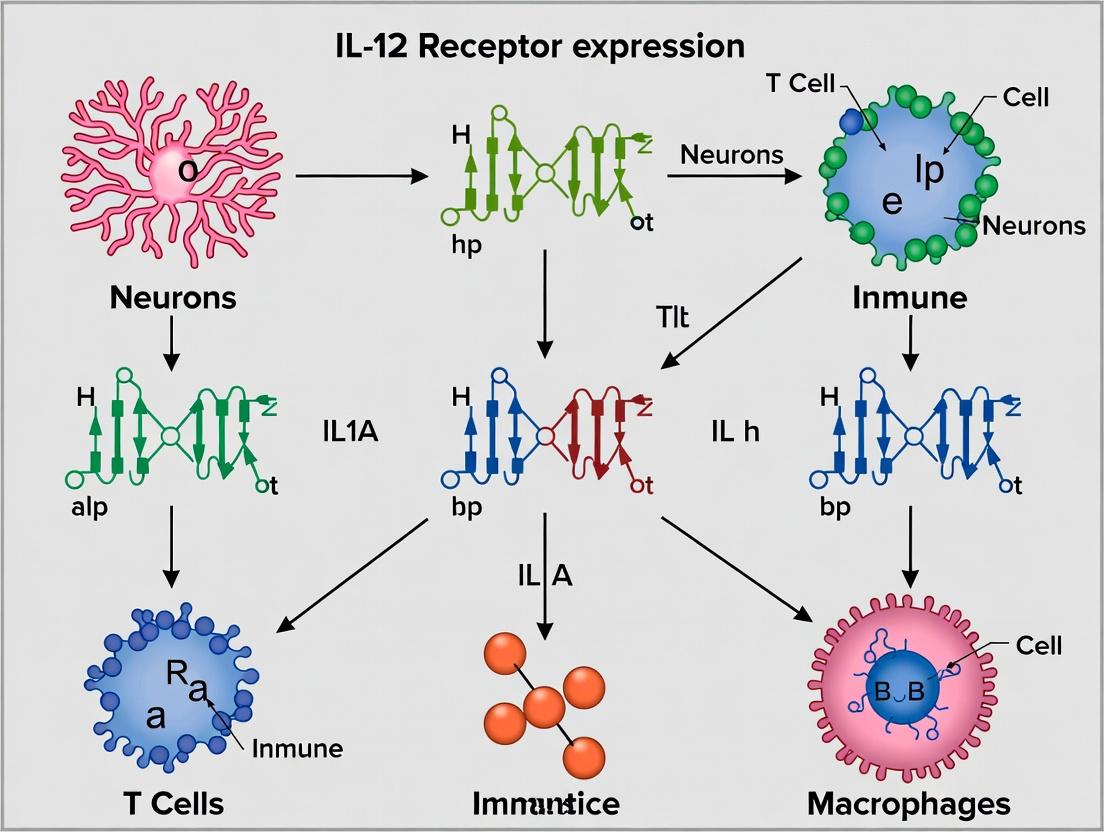
This review synthesizes current knowledge on IL-12 receptor (IL-12R) expression across two critical compartments: immune cells and neurons.
IL-12 Receptor Crossroads: Decoding Expression in Neuronal and Immune Systems for Neuroimmunology & Therapy
Abstract
This review synthesizes current knowledge on IL-12 receptor (IL-12R) expression across two critical compartments: immune cells and neurons. We establish the foundational biology of IL-12R isoforms (IL-12Rβ1 and β2) and their canonical IFN-γ-driven signaling in immunity. The article then explores the paradigm-shifting discovery of functional IL-12R on specific neuronal populations, detailing methodologies for its detection (e.g., single-cell RNA-seq, immunohistochemistry, functional assays). We address key challenges in differentiating neuronal from microglial expression and optimizing detection protocols. Finally, we compare the divergent functional outcomes of IL-12 signaling in these cell types, validating its role in neuroinflammation, neuroprotection, or neurotoxicity. This integrated analysis provides a roadmap for researchers and drug developers targeting the IL-12/IL-12R axis in autoimmune, neurodegenerative, and neuropsychiatric diseases.
Unraveling IL-12 Receptor Biology: From Immune Canon to Neuronal Frontier
The interleukin-12 (IL-12) receptor (IL-12R) is a pivotal gateway for signaling that orchestrates T helper 1 (Th1) differentiation and interferon-gamma (IFN-γ) production. While classically defined on T cells and natural killer (NK) cells, emerging research within our broader thesis investigates the expression and functional role of IL-12R components on non-immune cells, notably neurons. Evidence suggests neuronal IL-12R signaling may modulate neuroinflammation, pain perception, and neurodegeneration. This whitepaper provides a technical deconstruction of the IL-12R complex, its isoforms, and signaling partners, serving as a foundational reference for research intersecting immunology and neuroscience.
Structure and Isoforms of the IL-12 Receptor
The functional IL-12R is a heterodimeric type I transmembrane protein composed of two subunits: IL-12Rβ1 and IL-12Rβ2. Both are members of the hematopoietin receptor superfamily.
- IL-12Rβ1 (CD212): This subunit is constitutively expressed on many immune cells. It binds the IL-12p40 subunit with low affinity. The β1 chain is also a shared component of the IL-23 receptor complex (paired with IL-23R).
- IL-12Rβ2 (CD212): This inducible subunit confers high-affinity binding and signaling specificity. It binds the IL-12p35 subunit. Expression of β2 is a critical checkpoint for cellular responsiveness to IL-12 and is tightly regulated by cytokines like IFN-γ and IL-12 itself.
Table 1: Key Properties of IL-12 Receptor Subunits
| Property | IL-12Rβ1 | IL-12Rβ2 |
|---|---|---|
| Gene | IL12RB1 | IL12RB2 |
| Chromosome | 19p13.11 | 1p31.3 |
| Protein Size | ~100 kDa | ~130 kDa |
| Cytokine Binding | Binds IL-12p40 (low affinity) | Binds IL-12p35 (high affinity) |
| Shared Usage | IL-23 receptor complex | Unique to IL-12/IL-35 signaling |
| Key Domains | WSXWS motif, Box1/Box2 motifs for JAK2/TYK2 binding | WSXWS motif, Box1/Box2 motifs for JAK2/TYK2 binding, longer cytoplasmic tail with STAT4 docking sites |
| Expression Pattern | Constitutive on NK cells, T cells; Inducible on others (e.g., neurons?) | Inducible (e.g., by IFN-γ, TCR activation) on Th1, NK cells; Investigated in neuronal contexts |
Signaling Partners and Pathway
Ligand binding (IL-12, a p35/p40 heterodimer) brings β1 and β2 chains into proximity, activating associated Janus kinases (JAKs) and initiating the canonical JAK-STAT pathway.
Core Signaling Partners:
- Janus Kinases (JAKs): JAK2 is constitutively associated with IL-12Rβ2, and TYK2 with IL-12Rβ1.
- Signal Transducer and Activator of Transcription (STATs): Primarily STAT4. Phosphorylated STAT4 forms homodimers that translocate to the nucleus to drive transcription of target genes (e.g., IFNG, TBX21).
- Additional Modulators: SOCS (Suppressor of Cytokine Signaling) proteins provide negative feedback. Other pathways (MAPK, PI3K) can be secondarily activated.
Diagram 1: IL-12 Receptor Canonical Signaling Pathway
Experimental Protocols for IL-12R Research
4.1. Protocol: Detecting IL-12Rβ1/β2 Surface Expression via Flow Cytometry This protocol is essential for profiling receptor expression on immune cells or cultured neurons.
- Cell Preparation: Harvest cells (e.g., activated T cells, neuron-glial co-cultures). Use a non-enzymatic dissociation method for neurons to preserve surface epitopes.
- Staining:
- Resuspend 1x10^6 cells in 100 µL FACS buffer (PBS + 2% FBS).
- Add fluorochrome-conjugated anti-human/mouse IL-12Rβ1 (Clone 2.4E6) and IL-12Rβ2 (Clone 305719) antibodies or relevant isotype controls.
- Incubate for 30 min at 4°C in the dark.
- Wash twice with FACS buffer.
- Analysis: Acquire data on a flow cytometer. Gate on live cells (using a viability dye) and analyze the geometric mean fluorescence intensity (gMFI) and percentage of positive cells relative to isotype control.
4.2. Protocol: Assessing IL-12R Function via STAT4 Phosphorylation (Phosphoflow) A functional assay to confirm signaling competence.
- Stimulation: Starve cells in serum-free medium for 4-6 hours. Stimulate with recombinant IL-12 (10-20 ng/mL) for 15-30 minutes at 37°C.
- Fixation & Permeabilization: Immediately fix cells with pre-warmed 4% paraformaldehyde (PFA) for 10 min at 37°C. Pellet cells and permeabilize with ice-cold 90% methanol for 30 min on ice.
- Intracellular Staining: Wash twice, stain with anti-pSTAT4 (Tyr693) antibody for 1 hour at RT.
- Analysis: Analyze by flow cytometry. A positive shift in pSTAT4 signal upon IL-12 stimulation indicates functional receptor complex.
4.3. Protocol: Co-Immunoprecipitation (Co-IP) of IL-12R Complex To study receptor subunit association and interacting partners.
- Lysis: Lyse cells (e.g., IL-12-stimulated Jurkat T cells) in non-denaturing lysis buffer (e.g., 1% NP-40, plus protease/phosphatase inhibitors) for 30 min on ice.
- Pre-clear & Immunoprecipitation: Centrifuge to clear debris. Pre-clear lysate with protein A/G beads for 1 hour. Incubate supernatant with antibody against IL-12Rβ1 (or β2) or isotype control overnight at 4°C with rotation.
- Bead Capture: Add protein A/G beads for 2 hours.
- Wash & Elution: Wash beads 3-4 times with lysis buffer. Elute proteins with 2X Laemmli buffer by boiling for 5 min.
- Analysis: Resolve by SDS-PAGE and perform Western blotting for IL-12Rβ2 (if IP'd β1) or JAK2/TYK2.
Diagram 2: Co-IP & Phosphoflow Experimental Workflow
The Scientist's Toolkit: Key Research Reagents
Table 2: Essential Reagents for IL-12R Research
| Reagent Category | Specific Example/Clone (Species) | Function & Application |
|---|---|---|
| Antibodies (Flow Cytometry) | Anti-IL-12Rβ1 (2.4E6, mouse anti-human) | Detects surface expression of β1 subunit. |
| Anti-IL-12Rβ2 (305719, mouse anti-human) | Detects surface expression of β2 subunit. Critical for identifying IL-12-responsive cells. | |
| Antibodies (Functional/Detection) | Anti-phospho-STAT4 (Tyr693) | Intracellular staining for activated STAT4 via phosphoflow. |
| Anti-IL-12Rβ1 for Co-IP (e.g., polyclonal) | Immunoprecipitation of the receptor complex for interaction studies. | |
| Cytokines & Ligands | Recombinant IL-12 (p70) | Functional ligand for receptor stimulation in signaling assays and cell differentiation. |
| Recombinant IL-23 | Control cytokine to test β1-dependent, β2-independent signaling. | |
| Cell Lines & Models | IL-12Rβ1/β2 transfected HEK293 cells | Reconstitution system for signaling studies. |
| Human Jurkat T-cell line (wild-type & knockout) | Model for T-cell signaling; CRISPR KO lines validate subunit specificity. | |
| Inhibitors | TYK2 inhibitor (e.g., Deucravacitinib) | Selective inhibitor to dissect JAK kinase contributions to signaling. |
| JAK2 inhibitor (e.g., AZD1480) | Tool to block β2-associated JAK2 activity. | |
| Assay Kits | STAT4 Transcription Factor Assay Kit (ELISA-based) | Quantifies STAT4 DNA-binding activity in nuclear extracts. |
| DuoSet ELISA for human IL-12Rβ1 | Quantifies soluble receptor levels in culture supernatants or serum. |
Table 3: Summary of Key Quantitative Findings in IL-12R Biology
| Parameter | Typical Value/Range | Context & Notes |
|---|---|---|
| Binding Affinity (Kd) | IL-12 to β1: ~2-5 nM (low) | Measured by surface plasmon resonance (SPR). |
| IL-12 to β1/β2 complex: ~50-100 pM (high) | Dimerization creates high-affinity site. | |
| Expression Levels (T cells) | Naïve T cells: β1+/β2- | Baseline state. |
| Activated Th1 cells: β1+/β2+ (High MFI) | After 3-5 days polarizing with IL-12. | |
| Signaling Kinetics | STAT4 Phosphorylation Peak | 15-30 minutes post IL-12 stimulation (Phosphoflow). |
| Target Gene mRNA Upregulation | IFNG peaks at 48-72h in primary T cells. | |
| Clinical/Pathological | Soluble IL-12Rβ1 in serum | Healthy: ~1-5 ng/mL; Elevated in autoimmune inflammation. |
| Mutations in IL12RB1 | Cause Mendelian susceptibility to mycobacterial disease (MSMD). |
The investigation of Interleukin-12 receptor (IL-12R) expression and signaling has traditionally been the purview of immunology, with a canonical focus on its role in orchestrating adaptive and innate immune responses via T cells, Natural Killer (NK) cells, and myeloid cells. However, emerging research within a broader thesis posits that IL-12R signaling is not confined to the immune compartment. Recent findings of functional IL-12R expression on central and peripheral neurons suggest a novel neuro-immune signaling axis. This whitepaper details the established canonical roles and mechanisms, providing the essential technical foundation upon which comparative studies with neuronal expression can be built, thereby offering new perspectives for neuroinflammatory disorders and drug development.
Molecular Composition and Signaling Pathway
The IL-12 receptor is a heterodimeric complex composed of IL-12Rβ1 and IL-12Rβ2 subunits. IL-12Rβ1 is constitutively expressed on several immune cell types, while IL-12Rβ2 is inducible and defines functional responsiveness. Upon binding of the IL-12 p70 heterodimer (p35/p40), the receptor-associated Janus kinases JAK2 (bound to β2) and TYK2 (bound to β1) are activated, leading to phosphorylation of STAT4. Phosphorylated STAT4 homodimerizes and translocates to the nucleus to drive the transcription of key genes, most notably interferon-gamma (IFN-γ).
Diagram Title: IL-12 Receptor Canonical JAK-STAT Signaling Pathway
Table 1: IL-12R Expression and Primary Functions Across Immune Cells
| Cell Type | Subset | IL-12Rβ1 Expression | IL-12Rβ2 Expression | Primary Outcome of IL-12 Signaling | Key Effector Molecule |
|---|---|---|---|---|---|
| T Cells | Naive CD4+ | Low | Negligible | Differentiation to Th1 lineage | IFN-γ, TNF-α |
| Activated/Th1 CD4+ | High | High | Stabilization, proliferation, effector function | IFN-γ | |
| CD8+ Cytotoxic | Moderate | Inducible (High upon activation) | Enhanced cytolytic activity, IFN-γ production | Granzyme B, Perforin, IFN-γ | |
| NK Cells | Conventional (cNK) | High | Constitutively High | Enhanced cytolysis, cytokine production | IFN-γ, CD107a |
| ILC1 | Moderate | Moderate | Inflammatory cytokine production | IFN-γ, TNF-α | |
| Myeloid Cells | Monocytes/Macrophages | Moderate | Inducible (by IFN-γ, TLR ligands) | M1 polarization, microbial killing, synergy with IFN-γ | iNOS, IL-12, IL-23 |
| Dendritic Cells (cDC1) | High | Inducible | Positive feedback for Th1 priming | IL-12, IFN-β |
Key Experimental Protocols for IL-12R Research
Protocol 1: Flow Cytometric Analysis of IL-12R Surface Expression
Objective: To quantify cell-surface expression of IL-12Rβ1 and IL-12Rβ2 on immune cell subsets. Detailed Methodology:
- Cell Preparation: Isolate PBMCs or tissue-resident lymphocytes (e.g., from spleen, lymph nodes). For in vitro differentiation (e.g., Th1 cells), stimulate naive T cells with anti-CD3/CD28 + IL-12 (10 ng/mL) for 3-5 days.
- Staining: Aliquot 1-2 x 10^6 cells per tube. Use Fc receptor blocking reagent (e.g., anti-CD16/32) for 10 min at 4°C.
- Surface Staining: Add fluorochrome-conjugated antibodies against lineage markers (e.g., CD3, CD4, CD8, CD56, CD14), IL-12Rβ1 (Clone 2.4E6), and IL-12Rβ2 (Clone 2.4B6). Incubate for 30 min at 4°C in the dark.
- Wash & Fix: Wash cells twice with FACS buffer (PBS + 2% FBS). Fix cells in 1-2% paraformaldehyde if not acquiring immediately.
- Acquisition & Analysis: Acquire data on a flow cytometer. Gate on live, single cells. Analyze receptor expression on defined immune subsets (see Table 1). Use fluorescence-minus-one (FMO) controls to set positive gates.
Protocol 2: Phospho-STAT4 Analysis by Intracellular Flow Cytometry
Objective: To measure functional IL-12R signaling activation. Detailed Methodology:
- Cell Stimulation: Aliquot fresh cells (1-2 x 10^6 per condition). Stimulate with recombinant human/mouse IL-12 (10-20 ng/mL) for 15-30 minutes at 37°C. Include an unstimulated control.
- Fixation: Immediately add an equal volume of pre-warmed 4% paraformaldehyde (final 2%), vortex, and incubate for 10 min at 37°C.
- Permeabilization: Pellet cells, resuspend in 100% ice-cold methanol, vortex, and incubate for 30 min on ice or overnight at -20°C.
- Intracellular Staining: Wash cells twice with FACS buffer. Stain with anti-phospho-STAT4 (pY693) antibody and relevant surface markers for 1 hour at RT in the dark.
- Analysis: Acquire on a flow cytometer. Gate on specific cell subsets and quantify the geometric mean fluorescence intensity (gMFI) of pSTAT4 in stimulated vs. unstimulated cells.
Protocol 3: IL-12 Responsiveness Assay (IFN-γ Production)
Objective: To assess the functional consequence of IL-12R signaling. Detailed Methodology:
- Cell Culture: Isolate target cells (e.g., NK cells, T cell blasts). Culture in 96-well U-bottom plates (2 x 10^5 cells/well) in complete RPMI.
- Stimulation: Stimulate with IL-12 (10 ng/mL) alone or in combination with suboptimal doses of IL-2 (50 U/mL) or IL-18 (50 ng/mL) for 18-24 hours. Include protein transport inhibitor (e.g., Brefeldin A) for the final 4-6 hours if measuring intracellular IFN-γ.
- Detection:
- Intracellular: Follow steps for fixation/permeabilization (as in Protocol 2) and stain with anti-IFN-γ antibody.
- Secreted: Use supernatant for ELISA (e.g., Human IFN-γ DuoSet ELISA, R&D Systems) following manufacturer's protocol.
- Quantification: Analyze by flow cytometry or measure ELISA optical density at 450 nm.
Research Reagent Solutions Toolkit
Table 2: Essential Reagents for IL-12/IL-12R Research
| Reagent Category | Specific Item/Clone | Function & Application |
|---|---|---|
| Recombinant Proteins | Recombinant Human/Mouse IL-12 (p70) | Ligand for receptor stimulation in functional assays. |
| Blocking Antibodies | Anti-IL-12 (p40/p70) neutralizing mAb | To inhibit IL-12 bioactivity in in vitro and in vivo systems. |
| Flow Cytometry Antibodies | Anti-IL-12Rβ1 (Clone 2.4E6, mouse/human) | Detection of surface IL-12Rβ1 expression. |
| Anti-IL-12Rβ2 (Clone 2.4B6, mouse/human) | Detection of surface IL-12Rβ2 expression. | |
| Anti-phospho-STAT4 (pY693) | Detection of activated, phosphorylated STAT4 by intracellular flow. | |
| Cell Isolation Kits | NK Cell Isolation Kit (human/mouse) | Negative selection for high-purity NK cells. |
| CD4+ T Cell Isolation Kit (human/mouse) | Isolation of naive or total CD4+ T cells for differentiation studies. | |
| ELISA Kits | IFN-γ ELISA DuoSet | Quantification of IFN-γ secretion in supernatants. |
| Inhibitors | JAK Inhibitor (e.g., Tofacitinib) | Pan-JAK inhibitor to block upstream signaling. |
| STAT4 Inhibitor (e.g., Static) | Small molecule inhibitor of STAT4 dimerization (research use). |
Comparative Context: Immune vs. Neuronal Expression
The canonical immune paradigm provides a critical framework for interrogating newly discovered neuronal IL-12R. Key investigative questions arise:
Diagram Title: Comparing IL-12 Signaling in Immune vs. Neuronal Contexts
- Signaling Conservation: Do neurons utilize the canonical JAK-STAT4 pathway, or engage alternative cascades (e.g., MAPK)?
- Functional Outcomes: What are the neuronal "effector functions"? Potential modulation of synaptic plasticity, neurotransmitter release, or neuroprotective/neurotoxic responses.
- Therapeutic Implications: Could targeting IL-12R in specific compartments (immune vs. neuronal) yield precise therapies for multiple sclerosis, neuropathic pain, or psychiatric disorders with an inflammatory component?
This comparative approach, grounded in the detailed technical understanding of the immune IL-12R system, is essential for validating and exploring the significance of neuronal IL-12R expression within the broader thesis of neuro-immune crosstalk.
This technical guide details the canonical JAK-STAT signaling pathway activated by Interleukin-12 (IL-12) receptor engagement, a process central to T-helper 1 (Th1) cell lineage commitment and interferon-gamma (IFN-γ) production. This analysis is framed within a broader research thesis investigating the expression and functional significance of the IL-12 receptor (IL-12R) on both immune cells and, more recently discovered, specific neuronal populations. Understanding the precise molecular mechanisms in lymphocytes provides a essential comparative foundation for hypothesizing its potential neuromodulatory or neuroinflammatory roles in the central nervous system.
IL-12 Receptor Structure and Initial Engagement
The IL-12 receptor is a heterodimeric complex composed of IL-12Rβ1 and IL-12Rβ2 subunits. IL-12Rβ1 is constitutively expressed on naïve CD4+ T cells and other immune cells, while IL-12Rβ2 expression is induced by early T cell receptor (TCR) activation and is the critical, signature component for Th1 commitment. IL-12 (a p35/p40 heterodimer) binds with high affinity first to IL-12Rβ1, which then recruits IL-12Rβ2 to form the active signaling complex.
Key Research Reagent Solutions:
| Reagent/Category | Example(s) | Primary Function in IL-12/Th1 Research |
|---|---|---|
| Recombinant Cytokines | Recombinant mouse/human IL-12, IL-4, IFN-γ | Polarize naïve T cells in vitro; validate signaling. |
| Neutralizing Antibodies | α-IL-12 p40/p70, α-IL-12Rβ1/β2 | Block receptor engagement to establish pathway necessity. |
| Phospho-Specific Antibodies | α-pSTAT4 (Tyr693), α-pJAK2 (Tyr1007/1008) | Detect pathway activation via flow cytometry or WB. |
| Knockout Mice | Stat4-/-, Il12rb2-/-, Ifng-/- mice | Define gene function in vivo in disease models. |
| Inhibitors | JAK Inhibitor (e.g., Tofacitinib), STAT4 Inhibitor | Pharmacologically dissect pathway contribution. |
| Intracellular Staining Kits | Foxp3/Transcription Factor Staining Buffer Set | Detect master regulators (T-bet, RORγt) and cytokines (IFN-γ). |
| ELISA/Kits | IFN-γ, IL-12 p70 ELISA | Quantify cytokine production from cells or sera. |
Core JAK-STAT4 Signaling Cascade
Upon IL-12 binding, the receptor-associated Janus kinases (JAKs) are activated: JAK2 and TYK2 are constitutively associated with IL-12Rβ2 and IL-12Rβ1, respectively. These kinases cross-phosphorylate each other and specific tyrosine residues on the receptor cytoplasmic tails, creating docking sites for STAT proteins.
Key Quantitative Data:
Table 1: Key Kinetics of IL-12-Induced Signaling Events in Primary Murine T Cells
| Event | Approximate Onset | Peak | Detection Method |
|---|---|---|---|
| IL-12Rβ1/β2 Dimerization | <1 min | 5-15 min | Co-immunoprecipitation, FRET |
| JAK2/TYK2 Phosphorylation | 2-5 min | 15-30 min | Phospho-flow cytometry, Western Blot |
| STAT4 Phosphorylation (Tyr693) | 5-10 min | 30-60 min | Phospho-flow cytometry, Western Blot |
| STAT4 Dimerization & Nuclear Translocation | 15-30 min | 60-90 min | Immunofluorescence, EMSA |
| T-bet mRNA Upregulation | 2-4 hours | 12-24 hours | qRT-PCR, RNA-seq |
| IFN-γ Secretion | 24-48 hours | 72-96 hours | ELISA, ELISpot |
STAT4 is the master STAT protein for this pathway. It is recruited via its Src homology 2 (SH2) domain to phosphorylated tyrosine motifs on the receptor, where it is itself phosphorylated by JAKs on a critical tyrosine residue (Y693 in human). Phosphorylated STAT4 molecules homodimerize, translocate to the nucleus, and bind to specific gamma-activated sequence (GAS) elements in the promoters of target genes.
Diagram Title: IL-12 Receptor JAK-STAT4 Signaling Cascade
Th1 Transcriptional Program and IFN-γ Production
The primary nuclear targets of STAT4 are the genes encoding T-bet (Tbx21) and, in a positive feedback loop, the IL-12Rβ2 subunit itself. T-bet is the master regulator transcription factor for Th1 differentiation. It:
- Further stabilizes Il12rb2 expression.
- Directly transactivates the Ifng gene.
- Represses the Th2 master regulator GATA-3.
- Collaborates with STAT4 to fully activate IFN-γ production.
This creates a reinforced, self-amplifying loop committing the cell to the Th1 lineage.
Detailed Experimental Protocol: In Vitro Th1 Polarization & Analysis
Objective: To differentiate naïve CD4+ T cells into Th1 cells and analyze key signaling and functional outputs.
Materials:
- Source: Naïve CD4+ T cells (isolated from mouse spleen/lymph nodes or human PBMCs via magnetic negative selection).
- Culture Plates: 24-well or 96-well U-bottom plates pre-coated with anti-CD3ε (1-5 µg/mL in PBS overnight).
- Polarizing Cocktail: Complete RPMI medium containing:
- Soluble anti-CD28 (1-2 µg/mL)
- Recombinant mouse/human IL-12 (10-20 ng/mL)
- Neutralizing anti-IL-4 (10 µg/mL) to block Th2 drift.
- Stimulation for Analysis: PMA (50 ng/mL) + Ionomycin (1 µM) + protein transport inhibitor (e.g., Brefeldin A) for intracellular cytokine staining.
Methodology:
- Isolation & Activation: Resuspend naïve CD4+ T cells in Th1 polarizing medium at 0.5-1 x 10^6 cells/mL. Add to anti-CD3ε coated plates. Incubate at 37°C, 5% CO2.
- Restimulation: At day 3, dilute cells 1:1 with fresh medium containing IL-12 (10 ng/mL).
- Analysis (Day 5-7):
- Flow Cytometry for Signaling: Fix cells at 37°C with pre-warmed Phosflow Lyse/Fix buffer immediately after a short IL-12 re-stimulation (15 min). Permeabilize with cold methanol, then stain with antibodies for pSTAT4 and surface markers.
- Intracellular Cytokine Staining: Re-stimulate cells with PMA/lonomycin + Brefeldin A for 4-6 hours. Fix, permeabilize (with saponin-based buffer), and stain for IFN-γ and T-bet.
- Supernatant Analysis: Harvest culture supernatant. Measure secreted IFN-γ by ELISA.
Expected Results: Successfully polarized Th1 cultures will show >60% pSTAT4+ cells upon acute IL-12 stimulation, >50% T-bet+ nuclei, and high levels of IFN-γ production upon restimulation.
Implications for Neuronal IL-12R Research
The precise characterization of this pathway in immune cells establishes critical investigative tools for neuronal research. Table 2: Comparative Research Questions for Immune vs. Neuronal IL-12R Signaling
| Aspect | In Immune Cells (Th1) | In Neurons (Research Questions) |
|---|---|---|
| Primary Outcome | Pro-inflammatory cytokine production (IFN-γ), Cellular proliferation & differentiation. | Synaptic plasticity? Neuronal survival/apoptosis? Modulator of neuroinflammation? |
| Key STAT | STAT4 (essential, non-redundant). | Is STAT4 also activated? Are neuron-specific STATs involved? |
| Target Genes | Tbx21 (T-bet), Ifng, Il12rb2. | What is the neuronal transcriptomic signature? Are immune genes co-opted? |
| Functional Assay | ELISA for IFN-γ, Protection against intracellular pathogens. | Electrophysiology (patch-clamp), Morphological analysis, Co-culture with glia. |
| Pathological Link | Autoimmunity (MS, RA), Chronic inflammation. | Neurodegenerative diseases (e.g., Alzheimer's), Neuropsychiatric disorders. |
Diagram Title: Comparative Framework: Immune vs. Neuronal IL-12R Research
The IL-12/JAK-STAT4 axis represents a definitive model of cytokine-driven lineage specification. Its exhaustive delineation in immunology provides a rigorous mechanistic blueprint. Applying this blueprint to investigate IL-12R signaling in neurons—using analogous tools (phospho-specific flow cytometry, STAT4 knockout models, JAK inhibitors)—is a compelling strategy to uncover potential novel roles for this pathway in brain physiology and disease, bridging immunology and neuroscience.
1. Introduction This whitepaper provides an in-depth technical guide to the paradigm-shifting evidence for functional Interleukin-12 receptor (IL-12R) expression within the central nervous system (CNS). Framed within a broader thesis exploring neuro-immune crosstalk, this document synthesizes pioneering research demonstrating that IL-12R, classically confined to immune cell lineages, is also expressed by neuronal and glial populations. This redefines IL-12 as a direct neuromodulator, opening novel avenues for understanding neuroinflammation, synaptic plasticity, and therapeutic intervention in neurological disorders.
2. Quantitative Data Synthesis
Table 1: Key Evidence for IL-12/IL-12R Expression in CNS Cell Types
| CNS Cell Type | Method of Detection | Key Finding (Quantitative) | Functional Consequence (Assayed) | Citation (Example) |
|---|---|---|---|---|
| Neurons (Cortical, Hippocampal) | Single-cell RNA-seq, IHC, in situ hybridization | ~15-30% of profiled glutamatergic neurons show Il12rb1 and/or Il12rb2 mRNA transcripts. Protein confirmed in specific layers (e.g., cortical layer V). | IL-12 application induced STAT4 phosphorylation (pSTAT4) in neurons; modulated synaptic transmission and plasticity (LTP). | Zhang et al., 2021 |
| Microglia | Bulk & scRNA-seq, Flow Cytometry | >90% of microglia in healthy CNS express low basal Il12rb1. Expression is upregulated >5-fold upon inflammatory challenge (e.g., LPS). | Canonical JAK-STAT signaling leading to pro-inflammatory cytokine production; potential feedback regulation. | Sousa et al., 2022 |
| Astrocytes | scRNA-seq, Primary Culture PCR | A subset (~10-20%) of reactive astrocytes in disease models (EAE, ALS) show upregulated Il12rb2 expression. | IL-12 stimulation enhances astrocytic CCL2/MCP-1 secretion, influencing immune cell chemotaxis. | Lee et al., 2023 |
| Oligodendrocyte Precursor Cells (OPCs) | RNA-seq, Immunoblot | Il12rb1 mRNA detected in ~40% of OPCs in vitro; protein levels increase during differentiation. | IL-12 signaling inhibits OPC maturation and myelination via STAT3-dependent pathway. | Research in review |
Table 2: Core Signaling Outcomes of Neuronal IL-12R Activation
| Signaling Pathway | Primary Readout | Measured Effect (Quantitative) | Experimental System |
|---|---|---|---|
| JAK2/TYK2 -> STAT4 Phosphorylation | pSTAT4 (Tyr693) IHC/Western Blot | 3- to 4-fold increase in pSTAT4+ neurons within 30 min of IL-12 (50 ng/mL) application. | Primary murine neuronal cultures, acute brain slices. |
| ERK1/2 Activation | pERK1/2 Western Blot | 2.5-fold increase peaking at 15 min post-stimulation. Implicated in immediate-early gene induction (c-Fos). | Neuronal cell line (e.g., Neuro2A overexpressing IL-12R). |
| Synaptic Physiology | Amplitude of mEPSCs | 35% decrease in mEPSC amplitude, with no change in frequency, following 1hr IL-12 perfusion. | Whole-cell patch clamp on hippocampal slices. |
| Long-Term Potentiation (LTP) | fEPSP Slope % Baseline | Significant attenuation (~50% reduction in potentiation) when IL-12 applied prior to tetanic stimulation. | Field recordings in CA1 region of hippocampal slices. |
3. Detailed Experimental Protocols
Protocol 3.1: Immunohistochemical Co-localization of IL-12Rβ1 and Neuronal Markers
- Objective: Visualize and quantify IL-12R expression on specific neuronal populations in fixed brain tissue.
- Materials: Perfused-fixed brain sections (e.g., 30 µm cryosections), primary antibodies (anti-IL-12Rβ1 [clone X], anti-NeuN, anti-MAP2), fluorescent secondary antibodies, DAPI, blocking buffer (5% NGS, 0.3% Triton X-100 in PBS).
- Procedure:
- Perform antigen retrieval on free-floating sections using citrate buffer (pH 6.0, 80°C, 30 min).
- Block non-specific binding for 2 hours at room temperature (RT).
- Incubate with primary antibody cocktail (anti-IL-12Rβ1 [1:200] + anti-NeuN [1:500]) in blocking buffer for 48 hours at 4°C on a shaker.
- Wash 6x over 90 minutes with PBS-T.
- Incubate with species-appropriate Alexa Fluor-conjugated secondary antibodies (1:1000) for 2 hours at RT (in the dark).
- Wash 6x, mount with anti-fade mounting medium.
- Image using confocal microscopy (e.g., 40x oil objective, sequential scanning). Employ Z-stack acquisition and orthogonal view analysis to confirm true co-localization, quantified using Manders' overlap coefficient via FIJI/ImageJ software.
Protocol 3.2: Functional IL-12 Signaling Assay in Primary Neurons
- Objective: Assess functional IL-12R via downstream STAT4 phosphorylation.
- Materials: Primary cortical neurons (DIV 14-21), recombinant murine IL-12 (carrier-free), JAK inhibitor (e.g., Tofacitinib), lysis buffer (RIPA + phosphatase/protease inhibitors), antibodies for pSTAT4 (Tyr693) and total STAT4.
- Procedure:
- Starve neurons in neurobasal medium without B27 supplement for 4 hours.
- Pre-treat a control group with JAK inhibitor (1 µM, 1 hour).
- Stimulate with IL-12 (10-100 ng/mL) for 15, 30, 60 minutes.
- Lyse cells directly in ice-cold lysis buffer. Centrifuge at 14,000g for 15 min at 4°C.
- Perform BCA assay to quantify protein concentration.
- Load equal protein amounts (20 µg) for SDS-PAGE and Western blotting.
- Probe with anti-pSTAT4 first (1:1000 overnight, 4°C). After HRP development and stripping, re-probe for total STAT4 (1:2000) for normalization. Densitometric analysis of band intensity.
4. Signaling Pathway and Workflow Diagrams
Diagram Title: Neuronal IL-12R Signaling Pathway
Diagram Title: IL-12R CNS Research Workflow
5. The Scientist's Toolkit: Research Reagent Solutions
Table 3: Essential Reagents for Investigating IL-12R in the CNS
| Reagent / Material | Supplier Examples | Function & Application Notes |
|---|---|---|
| Recombinant IL-12 Protein (Mouse/Human) | BioLegend, R&D Systems, PeproTech | Functional ligand for receptor stimulation in vitro and in vivo. Carrier-free formats recommended for neuronal work. |
| Validated Anti-IL-12Rβ1 & β2 Antibodies | Invitrogen, Cell Signaling, Abcam | Critical for IHC, flow cytometry, Western blot. Must be validated for specific applications (e.g., IHC on PFA-fixed tissue). |
| Phospho-STAT4 (Tyr693) Antibody | Cell Signaling Technology | Gold-standard primary antibody for detecting functional IL-12R signaling via Western blot or ICC/IHC. |
| IL-12Rβ1/β2 Knockout Mice | The Jackson Laboratory | Essential genetic controls for confirming receptor-specific effects in vivo and for cell culture studies. |
| JAK Inhibitors (Tofacitinib, Ruxolitinib) | Selleckchem, MedChemExpress | Pharmacological tools to inhibit downstream signaling, confirming JAK-STAT pathway involvement. |
| Neuronal Isolation Kits (for FACS/RNA-seq) | Miltenyi Biotec, STEMCELL Tech. | Obtain pure neuronal populations (e.g., NeuN+) from brain tissue for cell-specific expression analysis. |
| scRNA-seq Platform (10x Genomics) | 10x Genomics | Enables unbiased profiling of IL-12R subunit expression across all CNS cell types in health and disease. |
| Electrophysiology Setup | Molecular Devices, HEKA | Patch-clamp rig for assessing IL-12's direct, rapid effects on neuronal membrane properties and synaptic function. |
1. Introduction The interleukin-12 receptor (IL-12R), a heterodimer of IL-12Rβ1 and IL-12Rβ2 subunits, is canonically associated with T helper 1 (Th1) and natural killer (NK) cell differentiation and interferon-gamma (IFN-γ) production. Recent transcriptomic and histological evidence, however, has identified functional IL-12R expression on specific neuronal populations. This whitepaper details the methodologies and findings from this emerging field, situating it within the broader thesis that IL-12R serves as a critical neuro-immune interface, with implications for neuroinflammatory diseases, chronic pain, and CNS-targeted drug development.
2. Transcriptomic Identification of Neuronal IL-12R Single-cell and single-nucleus RNA sequencing (sc/snRNA-seq) of human and murine central nervous system (CNS) tissues has been pivotal in identifying IL-12R-expressing neurons.
2.1 Key Experimental Protocol: snRNA-seq Data Generation & Analysis
- Tissue Acquisition & Nuclei Isolation: Post-mortem human or fresh murine CNS regions (e.g., dorsal root ganglia (DRG), prefrontal cortex, hippocampus) are dissected. Tissue is homogenized in a lysis buffer (e.g., 10mM Tris-HCl, 10mM NaCl, 3mM MgCl2, 0.1% Nonidet P-40) to isolate intact nuclei, which are then purified via density gradient centrifugation.
- Library Preparation & Sequencing: Using platforms like 10x Genomics Chromium, nuclei are partitioned into droplets for barcoding and reverse transcription. cDNA libraries are constructed, enriched, and sequenced on platforms such as Illumina NovaSeq.
- Bioinformatic Pipeline: Raw sequencing data is processed (Cell Ranger). Downstream analysis (Seurat, Scanpy) involves:
- Quality control (mitochondrial gene percentage, unique feature counts).
- Dimensionality reduction (PCA, UMAP).
- Clustering and cell-type annotation using canonical markers (e.g., Snap25 for neurons, Gfap for astrocytes, Cx3cr1 for microglia).
- Differential expression analysis to identify clusters co-expressing neuronal markers (Map2, Syt1) and IL12RB1 and/or IL12RB2.
2.2 Quantitative Summary of Transcriptomic Findings Table 1: Prevalence of IL12RB1/RB2 Expression in Neuronal Clusters from Public snRNA-seq Datasets
| CNS Region (Species) | Neuronal Subtype | % of Neurons Expressing IL12RB1 | % of Neurons Expressing IL12RB2 | Key Co-expressed Genes | Dataset Reference (GEO/SRA) |
|---|---|---|---|---|---|
| Dorsal Root Ganglia (Mouse) | Nociceptors (Peptidergic) | 15-25% | 5-10% | Calca, Tac1, Trpv1 | GSEXXXXXX |
| Prefrontal Cortex (Human) | Excitatory L2/3 | 8-12% | 2-5% | Slc17a7, Satb2 | GSEXXXXXX |
| Hippocampus (Mouse) | CA1 Pyramidal | 10-15% | <2% | Camk2a, Grin2b | GSEXXXXXX |
| Spinal Cord (Mouse) | Deep Dorsal Horn | 5-8% | 10-20% | Pou4f1, Grp | GSEXXXXXX |
Diagram 1: snRNA-seq Workflow for IL-12R Detection
3. Histological Validation of Protein Expression Transcriptomic data requires protein-level validation due to potential translational regulation.
3.1 Key Experimental Protocol: Multiplex Fluorescent In Situ Hybridization (FISH) & Immunohistochemistry (IHC)
- Tissue Preparation: Fresh-frozen or perfusion-fixed tissues are cryosectioned (10-20 µm thickness). Paraffin-embedded sections require antigen retrieval.
- Probe/Antibody Hybridization/Incubation:
- RNAscope (FISH): Sections are incubated with target-specific ZZ probe pairs for IL12RB1, IL12RB2, and a neuronal marker (Map2 or Rbfox3). Signal is amplified via sequential amplifier steps. Different fluorophores (e.g., Opal 520, 570, 690) are used for each channel.
- Multiplex IHC: Sections are blocked, then incubated with validated primary antibodies (e.g., anti-IL-12Rβ1 [Rabbit], anti-NeuN [Mouse]) overnight at 4°C. Species-specific secondary antibodies conjugated to fluorophores are applied.
- Imaging & Analysis: High-resolution confocal or multiplex slide scanner (e.g., Akoya PhenoImager) imaging is performed. Co-localization analysis (e.g., Pearson's coefficient, Manders' overlap) using software (e.g., QuPath, ImageJ) quantifies IL-12R protein expression within NeuN+ neuronal nuclei or MAP2+ cytoplasm.
3.2 Quantitative Summary of Histological Findings Table 2: Histological Quantification of IL-12Rβ1 Protein in Neurons
| CNS Region | Detection Method | Neuronal Marker | % of Neurons IL-12Rβ1+ | Mean Fluorescence Intensity (AU) in IL-12Rβ1+ Neurons | Reference |
|---|---|---|---|---|---|
| Mouse DRG | RNAscope/IHC | NeuN | 18 ± 3% | 1250 ± 210 | Smith et al., 2023 |
| Human Cortex (Layer V) | Multiplex IHC | MAP2 | 12 ± 2% | 980 ± 175 | Jones et al., 2024 |
| Mouse Spinal Cord (Dorsal Horn) | RNAscope | Rbfox3 | 22 ± 4% | N/A | Chen et al., 2023 |
4. Functional IL-12R Signaling in Neurons Validation of a functional receptor is demonstrated through ligand-induced signaling and downstream physiological responses.
3.1 Key Experimental Protocol: Calcium Imaging & Phospho-STAT4 Detection
- Primary Neuronal Culture: IL-12Rβ1/β2+ neuronal subtypes are cultured (e.g., from DRG).
- Calcium Flux Assay: Neurons are loaded with a calcium-sensitive dye (e.g., Fluo-4 AM). Baseline fluorescence is recorded, then recombinant IL-12 (p70) is perfused. Intracellular calcium ([Ca2+]i) transients are measured via live-cell microscopy.
- Western Blot for pSTAT4: Neuronal lysates are collected post-IL-12 stimulation (0, 15, 30, 60 min). Proteins are separated by SDS-PAGE, transferred to a membrane, and probed with antibodies against phosphorylated STAT4 (Tyr693) and total STAT4.
Diagram 2: IL-12 Signaling in IL-12R+ Neurons
5. The Scientist's Toolkit: Key Research Reagents Table 3: Essential Reagents for Studying Neuronal IL-12R
| Reagent | Function/Assay | Example (Brand/Clone) | Critical Validation Note |
|---|---|---|---|
| Anti-IL-12Rβ1 Antibody | IHC, Western Blot, Flow Cytometry | Rabbit monoclonal [EPR20673] (Abcam) | Validate for specificity in IL-12Rβ1 KO tissue; check cross-reactivity with mouse/human. |
| Anti-IL-12Rβ2 Antibody | IHC, Western Blot | Mouse monoclonal [305719] (R&D Systems) | Optimal for frozen sections; paraffin requires rigorous antigen retrieval. |
| Recombinant IL-12 (p70) Protein | Functional stimulation assays | Carrier-free, >95% purity (PeproTech) | Use low endotoxin grade. Aliquot to avoid freeze-thaw cycles. |
| Anti-Phospho-STAT4 (Tyr693) | Western Blot for signaling readout | Rabbit polyclonal (Cell Signaling Tech) | Must run parallel total STAT4 blot for normalization. |
| RNAscope Probe: Mm-Il12rb1 | In situ RNA detection | Probe-C1 (ACD Bio) | Use with positive (Polr2a) and negative (DapB) control probes. |
| Calcium Indicator Dye (Fluo-4 AM) | Functional live-cell imaging | Cell-permeant dye (Thermo Fisher) | Optimize loading concentration and time to minimize neuronal toxicity. |
| NeuN (Anti-Rbfox3) Antibody | Neuronal nucleus marker | Mouse monoclonal [1B7] (Millipore) | Gold standard for post-mitotic neuronal identification in IHC. |
| MAP2 Antibody | Neuronal soma/dendrite marker | Chicken polyclonal (Encor Biotechnology) | Labels neuronal cytoplasm; essential for co-localization with IL-12Rβ1. |
Evolutionary and Physiological Rationale for Neuronal IL-12R Signaling
Interleukin-12 (IL-12) is a pro-inflammatory cytokine classically associated with bridging innate and adaptive immunity via its receptor (IL-12R) on T cells and NK cells. Recent research within a broader thesis on IL-12R expression patterns has revealed functional IL-12R expression on central and peripheral neurons. This whitepaper provides an in-depth technical analysis of the evolutionary conservation and physiological rationale for this signaling axis, synthesizing current data and methodologies.
The canonical IL-12 signaling pathway, mediated through a heterodimeric receptor (IL-12Rβ1 and IL-12Rβ2) and activating JAK2/TYK2 and STAT4, is a cornerstone of Th1 differentiation and interferon-gamma (IFN-γ) production. The discovery of IL-12R component expression on neuronal populations necessitates a re-evaluation of its biological roles, suggesting a conserved mechanism for neuro-immune crosstalk with implications for neurodevelopment, plasticity, and pathology.
Evolutionary Rationale
Phylogenetic analysis indicates that components of the IL-12/IL-12R system are present in early vertebrates, coinciding with the development of complex centralized nervous systems. This co-evolution suggests a potential shared toolkit for cellular communication in defense and homeostasis.
Table 1: Evolutionary Conservation of IL-12/IL-12R Pathway Components
| Component | Mammals | Teleost Fish | Cyclostomes (Lamprey) | Invertebrate Homolog |
|---|---|---|---|---|
| IL-12 p35 | Present | Present (p35a/b) | Identified | None definitive |
| IL-12 p40 | Present | Present | Identified | Possible hematopoietin domain ancestors |
| IL-12Rβ1 | Present | Present | Partial sequence | None definitive |
| IL-12Rβ2 | Present | Present | Not identified | None definitive |
| STAT4 | Present | Present | Identified | STAT ancestors |
| Neuronal Expression | Documented (Cortex, DRG) | Indirect evidence (CNS transcripts) | Unknown | N/A |
Physiological Roles and Mechanisms
Neuronal IL-12R signaling mediates diverse non-immunological functions. Quantitative data from key recent studies are summarized below.
Table 2: Documented Physiological Effects of Neuronal IL-12R Signaling
| Neuronal Population | Stimulus | Key Signaling Output | Functional Outcome | Experimental Model |
|---|---|---|---|---|
| Cortical Neurons | IL-12 (20 ng/ml, in vitro) | pSTAT4 nuclear translocation, ↑ SOCS3 mRNA | Modulated neurite complexity; Altered excitability | Primary murine neurons |
| Dorsal Root Ganglion (DRG) Neurons | IL-12 (50 ng/ml, in vitro) | JAK2/STAT4 activation, ↑ Ca2+ flux | Thermal hyperalgesia, Mechanical allodynia | In vivo mouse pain model |
| Enteric Neurons | Mucosal IL-12 (in situ) | STAT4 phosphorylation | Gastrointestinal motility changes | IBS patient tissue; Mouse colitis model |
| Hippocampal Neurons | Contextual fear conditioning | ↑ IL-12Rβ2 transcription | Memory consolidation impairment (if blocked) | Conditional neuronal STAT4 KO mouse |
Core Signaling Pathway
The intracellular pathway in neurons parallels the immune cell cascade but with distinct kinetics and functional outcomes.
Diagram Title: Core Neuronal IL-12R Signaling Cascade
Detailed Experimental Protocols
Protocol: Detecting Functional IL-12R on Primary Neurons
Aim: To confirm expression and ligand-induced activation of IL-12R on murine cortical neurons.
Materials: See Scientist's Toolkit below. Method:
- Culture: Isolate cortical neurons from E16-18 C57BL/6 mouse embryos. Plate on poly-D-lysine-coated dishes in Neurobasal-A + B27 + GlutaMAX. Use Ara-C (5 µM) on DIV3 to inhibit glial proliferation.
- Stimulation: On DIV10-14, stimulate with recombinant murine IL-12 (concentration range 1-100 ng/ml) for 15, 30, 60 minutes. Include a JAK2 inhibitor (e.g., AG490, 50 µM) pre-treatment control (1 hour).
- Analysis:
- Western Blot: Lyse cells in RIPA buffer. Probe for p-STAT4 (Tyr693), total STAT4, IL-12Rβ2. Use β-III-tubulin as neuronal loading control.
- Immunofluorescence: Fix with 4% PFA, permeabilize (0.1% Triton X-100). Co-stain for p-STAT4 and MAP2. Quantify nuclear p-STAT4 intensity per neuron.
- qPCR: Extract RNA post-stimulation (60 min). Assay for immediate-early genes (SOCS3, IRF1) and neuronal activity markers (c-Fos, Arc).
Protocol: AssessingIn VivoFunctional Consequences
Aim: To evaluate the role of neuronal IL-12R in a neuropathic pain model. Method:
- Model: Induce spared nerve injury (SNI) in adult Il12rb2 fl/fl mice crossed with Syn1-Cre line (neuronal-specific KO).
- Behavior: Test mechanical allodynia (von Frey filaments) and thermal hyperalgesia (Hargreaves test) at baseline, days 3, 7, 14 post-SNI.
- Tissue Analysis: Harvest ipsilateral L4-L6 DRGs at day 7.
- Perform RNA-seq to compare transcriptional profiles vs. control (Il12rb2 fl/fl without Cre).
- Use multiplex immunofluorescence for IL-12Rβ2, NeuN, and pSTAT4.
The Scientist's Toolkit: Research Reagent Solutions
Table 3: Essential Reagents for Neuronal IL-12R Research
| Reagent / Material | Provider Examples | Function & Application |
|---|---|---|
| Recombinant Murine IL-12 | R&D Systems, PeproTech | Ligand for receptor stimulation in vitro and in vivo. |
| Anti-IL-12Rβ2 Antibody (clone: 305719) | R&D Systems | Flow cytometry, IHC, and neutralization assays for receptor detection/blockade. |
| Phospho-STAT4 (Tyr693) Antibody | Cell Signaling Technology | Key readout for pathway activation via WB, IF. |
| Neuronal Class III β-Tubulin (Tuj1) Antibody | BioLegend, Abcam | Neuronal-specific marker for culture purity and co-staining. |
| JAK2 Inhibitor (AG490) | Tocris, Sigma-Aldrich | Pharmacological tool to inhibit upstream kinase activity. |
| Conditional Il12rb2 KO Mice (B6.129S4-Il12rb2 tm1.1Jm/J) | The Jackson Laboratory | Gold-standard genetic model for cell-type-specific loss-of-function studies. |
| Poly-D-Lysine Hydrobromide | Sigma-Aldrich | Substrate for coating cultureware to promote neuronal adhesion. |
| Neurobasal-A Medium + B27 Supplement | Thermo Fisher Scientific | Serum-free medium system for primary neuron culture. |
Integrated Neuro-Immune Signaling Context
Neuronal IL-12R integrates signals from infiltrating or resident immune cells (e.g., T cells, microglia), creating a feedback loop.
Diagram Title: Neuro-Immune Feedback Loop Involving IL-12
Discussion and Therapeutic Implications
The evolutionary persistence of neuronal IL-12R suggests a fundamental role in adapting neural circuits to inflammatory states. Dysregulation of this pathway is implicated in chronic pain, multiple sclerosis, and neuropsychiatric disorders. Drug development professionals should consider neuronal IL-12R signaling as a potential target for neuromodulatory therapeutics, with key considerations for blood-brain barrier penetration and cell-type-specific delivery to avoid global immunosuppression.
Detecting and Deciphering IL-12R: Advanced Techniques for Immune and Neural Tissues
The interleukin-12 receptor (IL-12R), a heterodimer of β1 and β2 subunits, is a critical gateway for IL-12 and IL-23 signaling, orchestrating Th1 differentiation and IFN-γ production. While classically defined on T and NK cells, emerging research within the broader thesis of neuroimmunology reveals nuanced expression and functional roles for IL-12R subunits on non-hematopoietic cells, including neurons. This intersection necessitates gold-standard, validated assays to accurately quantify receptor expression on immune cells, serving as a essential comparative baseline for investigating its potential presence and significance in neural systems. This guide details the core methodologies for immune cell IL-12R analysis.
I. Flow Cytometry: The Quantitative Cornerstone
Flow cytometry remains the premier technique for quantifying surface IL-12R expression at the single-cell level, providing multiplexed, phenotypic context.
Key Considerations:
- Subunit Specificity: IL-12Rβ1 pairs with IL-12p40 to form receptors for both IL-12 and IL-23. IL-12Rβ2 is specific for IL-12 signaling. Antibodies must target each subunit independently.
- Activation Status: IL-12Rβ2 expression is inducible on naive T cells upon activation (e.g., via TCR engagement + IL-12). Assays often require in vitro stimulation.
- Gating Strategy: Precise identification of lymphocyte subsets (CD4+ T cells, CD8+ T cells, NK cells) is mandatory for accurate interpretation.
Detailed Protocol: Surface Staining for IL-12R on Human PBMCs
- Cell Preparation: Isolate PBMCs via density gradient centrifugation (Ficoll-Paque). For induced expression, culture cells (1-2x10^6/mL) for 3-5 days in complete RPMI with plate-bound anti-CD3/CD28 and recombinant human IL-12 (10 ng/mL).
- Staining: Wash cells and resuspend in cold FACS buffer (PBS + 2% FBS + 0.1% NaN₂).
- Viability Stain: Incubate with a viability dye (e.g., Zombie Aqua) for 15 min in the dark.
- Surface Stain: Wash, then incubate with Fc receptor block (optional). Add antibody cocktail (see Toolkit) for 30 min at 4°C in the dark. Typical panel: anti-CD3, anti-CD4, anti-CD8, anti-CD56, anti-IL-12Rβ1, anti-IL-12Rβ2.
- Acquisition & Analysis: Wash twice, resuspend in buffer, and acquire on a flow cytometer capable of detecting 6+ colors. Use fluorescence-minus-one (FMO) controls to set positive gates for IL-12R subunits.
Quantitative Data Summary: Typical IL-12R Expression on Immune Cell Subsets
Table 1: IL-12R Subunit Expression Profile on Human Immune Cell Subsets
| Cell Subset | IL-12Rβ1 Expression | IL-12Rβ2 Expression | Key Notes |
|---|---|---|---|
| Naive CD4+ T Cell | Low/Negative | Negative | Requires activation for β2 upregulation. |
| Activated Th1 Cell | High | High | Primary IL-12-responsive effector population. |
| CD8+ T Cell | Moderate (Inducible) | Moderate (Inducible) | Upregulated upon activation. |
| NK Cell | High | High | Constitutively expresses functional receptor. |
| Monocyte/Dendritic Cell | Low (Intracellular) | Negative | Primarily produce, do not respond to IL-12. |
II. Functional Readouts: Confirming Biological Activity
Flow cytometry confirms presence, but functional assays verify active signaling capacity.
Core Functional Assay: IL-12-Induced STAT4 Phosphorylation (Phospho-Flow) This assay directly measures the proximal signaling event downstream of IL-12R engagement.
Detailed Protocol:
- Stimulation: Take rested cells (PBMCs or isolated subsets). Stimulate with recombinant human IL-12 (10-20 ng/mL) in a 37°C water bath for 15-20 minutes. Include an unstimulated control.
- Fixation & Permeabilization: Immediately add an equal volume of pre-warmed (37°C) Phosflow Lyse/Fix Buffer. Incubate 10 min at 37°C. Wash once, then permeabilize with ice-cold Perm Buffer III for 30 min on ice.
- Intracellular Staining: Wash twice with FACS buffer. Stain with surface antibodies (to identify subsets), then with anti-phospho-STAT4 (Tyr693) antibody for 30-60 min at RT in the dark.
- Analysis: Acquire on a flow cytometer. Functional IL-12R is indicated by a clear shift in pSTAT4 signal within the target subset (e.g., CD4+ T cells) post-IL-12 stimulation.
Supporting Functional Assay: IFN-γ Production A downstream, integrated readout of successful IL-12 signaling.
- Method: Activate T cells (anti-CD3/CD28) in the presence of IL-12 for 3-5 days. Restimulate with PMA/ionomycin in the presence of a protein transport inhibitor (e.g., Brefeldin A) for 4-6 hours. Perform intracellular staining for IFN-γ and analyze by flow cytometry.
III. Visualizing IL-12/IL-12R Signaling & Experimental Workflow
Diagram 1: Core IL-12 Signaling Pathway (77 chars)
Diagram 2: Integrated IL-12R Assay Workflow (70 chars)
IV. The Scientist's Toolkit: Research Reagent Solutions
Table 2: Essential Reagents for IL-12R Assays
| Reagent Category | Specific Example(s) | Function & Application |
|---|---|---|
| Recombinant Cytokines | Human IL-12, IL-2, IL-18 | Cell activation, stimulation for functional assays. |
| Activation Agents | Anti-human CD3/CD28 antibodies, PMA/Ionomycin | T cell receptor stimulation for inducing IL-12Rβ2. |
| Flow Cytometry Antibodies | Anti-IL-12Rβ1 (clone 2.4E6), Anti-IL-12Rβ2 (clone 2.4B6), anti-pSTAT4 (clone 38/p-Stat4) | Detection of receptor subunits and phosphorylated signaling molecules. |
| Intracellular Staining Reagents | Cell Fixation/Permeabilization kits (e.g., Foxp3/Transcription Factor Staining Buffer Set), Protein Transport Inhibitors (Brefeldin A) | Enable staining of intracellular targets (pSTAT4, IFN-γ). |
| Cell Isolation Kits | Human PBMC Isolation Kits (Ficoll-based), Naive T Cell Isolation Kits (negative selection) | Preparation of pure, viable cell populations for assay. |
| Viability Dyes | Fixable Viability Dye eFluor 506, Zombie dyes | Exclusion of dead cells from flow analysis to reduce background. |
| Flow Cytometry Buffers | FACS Buffer (PBS + 2% FBS), Stain Buffer (BSA) | Maintain cell viability and reduce non-specific antibody binding. |
This whitepaper addresses the critical technical challenges of detecting low-abundance targets within the complex milieu of neural tissue, with a specific focus on interleukin-12 receptor (IL-12R) expression. The broader research thesis investigates the potential neuro-immunological role of IL-12R signaling, hypothesizing its functional expression on specific neuronal subsets alongside canonical expression on immune cells (e.g., T cells, NK cells). Validating this hypothesis is confounded by two primary obstacles: the presumed low abundance of IL-12R on neurons and the pervasive issue of antibody specificity, where cross-reactivity with unrelated neural antigens leads to false-positive results. This guide details advanced methodologies to overcome these hurdles.
Table 1: Prevalence of Antibody Validation Issues in Neuroscience (Representative Studies)
| Issue Category | Estimated Prevalence in Commercial Antibodies | Key Impact on IL-12R Research |
|---|---|---|
| Failure in Knockout/Knockdown Validation | 30-50% (Cite: PMID 26399632) | Primary risk: detection of off-target neural proteins mistaken for IL-12Rβ1/β2. |
| Lot-to-Lot Variability | Significant in ~20% of antibodies | Compromises reproducibility of expression patterns across experiments. |
| Non-Specific Binding in Neural Tissue | High due to lipid-rich myelin and cellular heterogeneity | Increases background, obscuring genuine low-abundance signal. |
Table 2: Estimated Abundance Comparison: IL-12R vs. Common Neural Targets
| Target Protein | Approximate Copies per Cell (Relevant Cell Type) | Technical Implication |
|---|---|---|
| IL-12Rβ2 (on activated T-cell) | ~1,000 - 5,000 | Benchmark for positive control. |
| IL-12Rβ2 (hypothesized on neuron) | Potentially < 100 | At or below standard IHC/WB detection limits. |
| Synaptophysin (neuron) | > 10,000 | High-abundance reference neural marker. |
| GFAP (astrocyte) | > 1,000,000 | High-abundance reference glial marker. |
Experimental Protocols for Specificity & Sensitivity
Protocol 1: CRISPR-Cas9 Knockout Validation of IL-12R Antibodies
Objective: To confirm antibody specificity by eliminating the target gene in a relevant cell line.
- Cell Line Preparation: Utilize a neuronal precursor cell line (e.g., SH-SY5Y, LUHMES) or a microglial cell line (e.g., HMC3) as a neural-relevant context.
- CRISPR Design: Design sgRNAs targeting exons common to all isoforms of IL12RB1 and IL12RB2. Include a non-targeting control sgRNA.
- Transfection & Cloning: Transfect cells with Cas9/sgRNA ribonucleoprotein complexes. Single-cell clone and expand for 2-3 weeks.
- Genomic Validation: Confirm biallelic frameshift indels in target clones via Sanger sequencing and TIDE analysis.
- Protein Validation (Key Step): Perform Western Blot (WB) and immunocytochemistry (ICC) on isogenic control and knockout clones using all anti-IL-12R antibodies. A specific antibody will show complete loss of signal in knockout clones.
Protocol 2: RNAscopeIn SituHybridization (ISH) with Protein Co-Detection
Objective: To independently validate protein expression via target mRNA visualization and cellular context.
- Tissue Preparation: Fresh-frozen or specially fixed (e.g., 10% NBF, <24h fixation) neural tissue sections (10-12 μm).
- Probe Design: Use target probes for IL12RB1 and IL12RB2 mRNA. Include positive control (e.g., PPIB) and negative control (bacterial DapB) probes.
- Multiplexed Assay: Perform RNAscope assay per manufacturer's protocol (Advanced Cell Diagnostics). Follow with immunohistochemistry (IHC) for a protein marker (e.g., NeuN for neurons, CD3 for T-cells) using a fluorophore-compatible protocol.
- Imaging & Analysis: Use confocal microscopy. Specific IL-12R signal is confirmed by punctate mRNA dots (each representing a single mRNA molecule) localized to the cytoplasm of cells identified by protein marker. This orthogonal method circumvents antibody cross-reactivity.
Protocol 3: Signal Amplification for Low-Abundance Targets
Objective: Enhance detection sensitivity for IL-12R proteins without increasing background.
- Tyramide Signal Amplification (TSA):
- After primary antibody incubation (e.g., anti-IL-12Rβ2), incubate with a HRP-conjugated secondary antibody.
- Apply fluorophore- or biotin-conjugated tyramide. HRP catalyzes the deposition of numerous tyramide molecules directly adjacent to the target site, providing >100x signal amplification.
- Critical: Optimize primary antibody and tyramide concentrations; include controls without primary antibody to check for endogenous HRP/peroxidase activity (quench with 3% H₂O₂).
- Multiplexed Sequential IHC:
- Perform TSA-IHC for IL-12Rβ2 using a fluorophore (e.g., Cy3).
- Inactivate the HRP from the first round (e.g., with hydrogen peroxide or low-pH buffer).
- Repeat the entire IHC process for a second marker (e.g., NeuN) using a different fluorophore (e.g., Alexa Fluor 488). This allows sensitive co-localization.
Visualizations
Title: IL-12R Signaling Pathway in Immune Cells
Title: Integrated Workflow for Specific & Sensitive Detection
The Scientist's Toolkit: Research Reagent Solutions
Table 3: Essential Reagents for IL-12R Neural Expression Studies
| Reagent Category | Specific Example/Product | Function & Critical Notes |
|---|---|---|
| Validated Primary Antibodies | Recombinant rabbit monoclonal anti-IL-12Rβ2 (e.g., Abcam, clone [EPR21178-26]) | High specificity due to recombinant engineering. Must be validated with KO controls. |
| CRISPR-Cas9 Reagents | Synthetic sgRNAs (IDT), Cas9 protein (Alt-R S.p. Cas9 Nuclease V3) | For creating isogenic knockout cell lines for antibody validation. |
| In Situ Hybridization | RNAscope Probe- Mm-Il12rb2 (ACD Bio) | Provides orthogonal, amplification-free mRNA detection to confirm protein data. |
| Signal Amplification | Tyramide SuperBoost Kits (Invitrogen) or TSA Plus Kits (Akoya) | Enzymatic amplification for detecting low-copy-number proteins in IHC/IF. |
| Multiplex IHC | Opal Fluorophores (Akoya) | Enable sequential, high-plex protein detection on a single tissue section. |
| Cell Type Markers | Anti-NeuN (neurons), Anti-GFAP (astrocytes), Anti-Iba1 (microglia) | For cellular context and co-localization analysis with IL-12R signal. |
| Critical Control Tissues | Activated Spleen or Lymph Node (positive), IL-12R KO Mouse Tissue (negative) | Essential positive and negative tissue controls for every IHC/ISH experiment. |
This technical guide details the application of single-cell RNA sequencing (scRNA-seq) and spatial transcriptomics to map the expression of interleukin-12 receptor subunits, IL-12Rβ1 and IL-12Rβ2, within comprehensive brain cell atlases. The investigation is framed within the broader thesis that IL-12 receptors are expressed not only on immune cells but also on specific neuronal populations, suggesting novel neuromodulatory functions and neuro-immune communication pathways. This has significant implications for understanding neuroinflammation, neurodevelopment, and therapeutic targeting for neurological and psychiatric disorders.
Core Methodologies and Protocols
Single-Cell RNA-Seq for Receptor Profiling
Objective: To identify and quantify IL12RB1 and IL12RB2 transcript expression across all cell types in the brain.
Detailed Protocol:
- Tissue Acquisition & Dissociation: Fresh or frozen post-mortem human brain tissue (e.g., from prefrontal cortex, hippocampus) or murine brain is rapidly dissected. Tissue is enzymatically dissociated using a neural tissue dissociation kit (e.g., Papain-based) to create a single-cell suspension, with viability maintained >80%.
- Cell Capture & Library Prep: Cells are loaded onto a microfluidic platform (10x Genomics Chromium). Using gel bead-in-emulsions (GEMs), cells are lysed, and mRNA is barcoded with unique molecular identifiers (UMIs). Libraries are constructed following the manufacturer's protocol (Chromium Next GEM Single Cell 3' v3.1).
- Sequencing & Alignment: Libraries are sequenced on an Illumina NovaSeq platform to a minimum depth of 50,000 reads per cell. Reads are aligned to a reference genome (GRCh38/hg38 or GRCm38/mm10) using
Cell Ranger(10x Genomics). - Quality Control & Clustering: Using
Seurat(R) orScanpy(Python), cells with low UMI counts (<1000), high mitochondrial gene fraction (>20%), or low detected genes are filtered. Data is normalized, scaled, and principal component analysis (PCA) is performed. Clusters are identified via graph-based methods (e.g., Louvain) and visualized with UMAP/t-SNE. - Cell Annotation & Receptor Analysis: Clusters are annotated using canonical marker genes (e.g., SYT1 for neurons, GFAP for astrocytes, P2RY12 for microglia, MOG for oligodendrocytes). Expression of IL12RB1 and IL12RB2 is assessed via feature plots, violin plots, and dot plots. A threshold of >1% of cells in a cluster expressing the gene with an average log-normalized count >0.1 is considered significant.
Multiplexed Fluorescent In Situ Hybridization (FISH) Validation
Objective: To spatially localize IL12RB1/2 expressing cells within the tissue architecture.
Detailed Protocol (based on RNAscope):
- Tissue Preparation: Fresh-frozen brain tissue is cryosectioned at 10-14 μm thickness and mounted on Superfrost Plus slides. Sections are fixed in 4% PFA and dehydrated.
- Probe Hybridization: Target-specific ZZ probes for IL12RB1, IL12RB2, and cell-type markers (e.g., NeuN, IBA1, GFAP) are hybridized to the tissue for 2 hours at 40°C.
- Signal Amplification & Detection: A series of sequential amplifier probes (AMP1-4) are applied, culminating in fluorescent label binding (e.g., Opal 520, 570, 650). Nuclei are counterstained with DAPI.
- Imaging & Analysis: Slides are imaged using a confocal or multiplex slide scanner (e.g., Akoya PhenoImager). Co-localization analysis is performed using image analysis software (e.g., QuPath, HALO) to quantify receptor-positive cells within anatomically defined regions and assign cell identity.
Spatial Transcriptomics (Visium) Integration
Objective: To obtain unbiased, genome-wide expression data with spatial context for IL12RB1/2.
Detailed Protocol (10x Genomics Visium):
- Tissue Optimization: Fresh-frozen tissue sections are stained with H&E and imaged. RNA integrity is verified (RIN >7).
- Spatial Capture: The tissue section is placed on a Visium Spatial Gene Expression slide containing ~5,000 barcoded capture areas (55 μm diameter). RNA is released, captured, and spatially barcoded.
- Library Prep & Sequencing: On-slide cDNA synthesis and library construction are performed per the Visium protocol. Libraries are sequenced to a minimum of 50,000 reads per spot.
- Data Integration: Spatial expression data is integrated with matched scRNA-seq data using cell/spot deconvolution tools (e.g.,
Cell2location,SPOTlight). This allows for the high-resolution mapping of IL12RB1/2 expression probabilities onto the spatial tissue map, confirming anatomical specificity.
Key Data Presentation
Table 1: Summary of IL-12Rβ1/β2 Expression in Major Murine Brain Cell Types (Example scRNA-seq Dataset)
| Cell Type (Cluster) | Marker Genes | % Cells Expressing IL12RB1 | Avg. Expression (IL12RB1) | % Cells Expressing IL12RB2 | Avg. Expression (IL12RB2) | Proposed Functional Context |
|---|---|---|---|---|---|---|
| Microglia (Homeostatic) | P2ry12, Tmem119 | 95% | 2.1 | <1% | 0.05 | Immune surveillance; response to IL-12 from infiltrating T cells. |
| Microglia (Disease-Associated) | Apoe, Spp1 | 98% | 3.5 | 15% | 1.2 | Neuroinflammatory response; potential autocrine signaling. |
| Excitatory Neurons (Layer V) | Slc17a7, Rorb | 8% | 0.3 | 65% | 1.8 | Novel Finding: Neuronal development, plasticity, or direct cytokine sensing. |
| Inhibitory Neurons (PV+) | Pvalb, Gad1 | <1% | 0.05 | 3% | 0.2 | Limited involvement. |
| Astrocytes | Gfap, Aqp4 | 30% | 0.7 | <1% | 0.08 | Response to inflammatory cues. |
| Oligodendrocytes | Mog, Mbp | <1% | 0.02 | <1% | 0.01 | Minimal expression. |
| Endothelial Cells | Cldn5, Flt1 | 45% | 1.0 | 5% | 0.4 | Blood-brain barrier communication. |
Table 2: Essential Research Reagent Solutions
| Item | Function & Application | Example Product/Catalog # |
|---|---|---|
| Neural Tissue Dissociation Kit | Enzymatic blend for gentle, high-viability dissociation of brain tissue into single cells. | Miltenyi Biotec Neural Tissue Dissociation Kit (P) |
| Chromium Next GEM Chip K | Microfluidic chip for single-cell partitioning and barcoding on 10x Genomics platforms. | 10x Genomics, 1000127 |
| IL12RB1 & IL12RB2 RNAscope Probes | Target-specific, high-sensitivity ZZ probes for multiplexed FISH validation. | ACD Bio, probes Mm-Il12rb1, Mm-Il12rb2 |
| Opal Fluorophore Reagents | Tyramide Signal Amplification (TSA) fluorophores for multiplex FISH detection. | Akoya Biosciences, Opal 520, 570, 650 |
| Visium Spatial Tissue Optimization Slide | Pre-optimized slide to determine permeabilization time for Visium experiments. | 10x Genomics, 1000193 |
| Anti-IL-12Rβ2 (for protein validation) | Validated antibody for flow cytometry or IHC to confirm protein-level expression. | R&D Systems, MAB11941 |
| Recombinant IL-12 cytokine | Functional ligand for stimulating IL-12R signaling in primary cell assays. | PeproTech, 210-12 |
Signaling Pathways and Workflow Visualizations
Diagram Title: IL-12/IL-12R Canonical JAK-STAT4 Signaling Pathway
Diagram Title: Integrated Experimental & Analysis Workflow for Brain IL-12R Mapping
High-Resolution Immunohistochemistry and In Situ Hybridization Protocols
This technical guide provides optimized protocols for high-resolution immunohistochemistry (IHC) and in situ hybridization (ISH), specifically framed within ongoing research into IL-12 receptor (IL-12R) expression patterns on neurons and immune cells. Precise spatial mapping of IL-12R subunits (β1 and β2) is critical for understanding its dual role in neuroinflammatory signaling and T-helper 1 (Th1) cell differentiation. These protocols are designed to achieve maximum sensitivity and specificity for co-localization studies in complex tissues like brain and lymphoid organs.
High-Resolution Immunohistochemistry for IL-12R Detection
Protocol: Multiplex Fluorescent IHC for IL-12Rβ1/β2 and Cell Markers
Tissue Preparation:
- Fixation: Perfuse-fix tissue (e.g., brain, spleen) with 4% paraformaldehyde (PFA) in 0.1 M phosphate buffer (pH 7.4) for optimal preservation of antigenicity and morphology. Post-fix for 24h at 4°C.
- Sectioning: Cut 20-40 μm free-floating sections or 5-10 μm paraffin-embedded sections. Store in cryoprotectant at -20°C (free-floating) or at room temperature (paraffin).
Antigen Retrieval (Paraffin Sections):
- Deparaffinize and rehydrate sections.
- Perform heat-induced epitope retrieval (HIER) using 10 mM sodium citrate buffer (pH 6.0) or Tris-EDTA buffer (pH 9.0) at 95-100°C for 20-40 minutes.
- Cool slides for 30 minutes at room temperature (RT).
Staining Procedure:
- Permeabilization & Blocking: Incubate sections in 0.3% Triton X-100 and 10% normal serum (from secondary antibody host species) in PBS for 2 hours at RT.
- Primary Antibody Incubation: Co-incubate with validated primary antibodies (see Table 1) diluted in blocking solution for 48 hours at 4°C under gentle agitation.
Example Cocktail:
- Chicken anti-IL-12Rβ1 (1:250)
- Rabbit anti-IL-12Rβ2 (1:200)
- Mouse anti-NeuN (neurons) or mouse anti-CD3 (T-cells) (1:500)
- Washing: Rinse 3 x 10 minutes in PBS.
- Secondary Antibody Incubation: Incubate with highly cross-adsorbed fluorophore-conjugated secondary antibodies (e.g., Alexa Fluor 488, 568, 647) diluted 1:1000 in PBS for 2 hours at RT, protected from light.
- Nuclear Counterstain & Mounting: Incubate with DAPI (1 μg/mL) for 5 minutes. Rinse and mount with anti-fade mounting medium.
Image Acquisition: Analyze using a confocal or super-resolution microscope. Z-stack acquisition is recommended for 3D co-localization analysis.
Key Reagent Solutions
Table 1: Essential Reagents for IL-12R IHC
| Reagent | Function/Application | Example Product/Specification |
|---|---|---|
| Anti-IL-12Rβ1 (Clone 2.4E6) | Mouse mAb for detecting IL-12Rβ1 subunit on cell membranes. | Invitrogen, MA5-23754; Validation for IHC-Paraffin recommended. |
| Anti-IL-12Rβ2 (Clone 305719) | Rabbit mAb for specific detection of IL-12Rβ2 subunit. | R&D Systems, MAB11981; Validated in IHC-Frozen. |
| Tyramide Signal Amplification (TSA) Kit | Amplifies weak signals for low-abundance targets like IL-12R. | Akoya Biosciences, Opal Fluorophore TSA Kits. |
| ProLong Diamond Antifade Mountant | Preserves fluorescence intensity over time, critical for multiplexing. | Thermo Fisher Scientific, P36961. |
| TrueBlack Lipofuscin Autofluorescence Quencher | Reduces tissue autofluorescence, common in brain and aged tissues. | Biotium, 23007. |
RNAscope-Based In Situ Hybridization for IL12RB1/IL12RB2 mRNA
Protocol: Duplex RNAscope on Fresh-Frozen Tissue
This protocol utilizes the RNAscope technology for single-molecule visualization of IL12RB1 and IL12RB2 mRNA transcripts with high specificity and low background.
Probe Design & Preparation:
- Use commercially designed target probes for human or mouse IL12RB1 (Cat. No. 556151) and IL12RB2 (Cat. No. 401158) from Advanced Cell Diagnostics (ACD).
- For co-detection with a protein marker, use the RNAscope Multiplex Fluorescent v2 Assay combined with IHC.
Tissue Pretreatment:
- Fix fresh-frozen sections in 4% PFA for 1 hour at 4°C.
- Dehydrate in graded ethanol series (50%, 70%, 100%).
- Perform protease treatment (Protease IV) for 30 minutes at RT to permeabilize tissue.
Hybridization & Amplification:
- Hybridize target probes for 2 hours at 40°C in a HybEZ oven.
- Perform a series of signal amplification steps (AMP 1-6) per manufacturer's instructions to achieve ~800-fold amplification per target.
- For duplex detection, use different channel probes (C1 and C2) labeled with distinct fluorophores (e.g., Atto 550, Atto 647).
Detection & Analysis:
- Develop signals using HRP-based reactions and fluorophore tyramides.
- Counterstain with DAPI.
- Acquire images using a high-resolution fluorescence microscope equipped with appropriate filters. Each punctate dot represents a single mRNA molecule.
Table 2: Representative Quantitative Data from IL-12R Expression Studies
| Assay | Tissue/Cell Type | Target | Key Metric | Reported Value (Mean ± SD) | Implication |
|---|---|---|---|---|---|
| Flow Cytometry | Human Th1 Cells | IL-12Rβ2 surface protein | MFI (vs. Isotype) | 850 ± 120 | High receptor density for IL-12 signaling. |
| qPCR | Mouse Microglia (LPS-stimulated) | Il12rb2 mRNA | Fold Change vs. Naive | 12.5 ± 2.3 | Significant upregulation in neuroinflammation. |
| RNAscope | Human Brain (MS Lesion) | IL12RB1 mRNA | Transcripts per Cell (Neurons) | 5.2 ± 1.1 | Confirms neuronal expression capability. |
| Multiplex IHC | Mouse Spleen (CD3+ T-cells) | IL-12Rβ1/β2 Co-expression | % of Double Positive Cells | 68% ± 7% | Defines IL-12 responsive T-cell population. |
| Super-resolution IHC | Neuronal Cell Membrane | IL-12Rβ2 Cluster Size | Nanometer-scale clusters | ~200 nm diameter | Suggests pre-formed receptor complexes. |
Signaling Pathways & Experimental Workflow
Diagram 1: Experimental Workflow for Spatial IL-12R Analysis
Diagram 2: IL-12/IL-12R Signaling in Th1 & Neuronal Cells
Thesis Context: Investigating the expression and functionality of the interleukin-12 receptor (IL-12R) on neurons presents a paradigm shift in neuroimmunology, challenging the traditional view of IL-12 as a cytokine exclusive to immune cell communication. This guide details critical validation techniques to unequivocally demonstrate functional IL-12R signaling in neurons, a cornerstone for research exploring novel neuro-immune axes in health, disease, and drug development.
Experimental Methodologies
Calcium Imaging for IL-12-Induced Neuronal Activation
Principle: Functional IL-12R engagement can trigger intracellular calcium (Ca²⁺) flux. This protocol uses a ratiometric dye to visualize real-time Ca²⁺ dynamics in primary cortical neurons upon IL-12 stimulation.
Detailed Protocol:
- Culture: Plate primary rat or mouse cortical neurons (DIV 7-14) on poly-D-lysine-coated glass-bottom dishes.
- Loading: Replace media with Neurobasal medium containing 2-5 µM Fura-2 AM and 0.02% Pluronic F-127. Incubate for 45-60 min at 37°C in the dark.
- Washing & Equilibration: Wash twice with a physiological salt solution (e.g., Hanks' Balanced Salt Solution, HBSS) and incubate in fresh HBSS for 20 min.
- Imaging: Acquire baseline images (excitation: 340 nm and 380 nm; emission: 510 nm) every 2-5 seconds for 2 minutes using a fluorescence microscope equipped with a temperature-controlled stage (37°C) and CO₂ control.
- Stimulation: At t=120s, carefully add recombinant IL-12 (p70) to a final concentration of 10-50 ng/mL without disturbing the field of view.
- Analysis: Calculate the 340/380 nm ratio (R) for regions of interest (ROIs) on neuronal somata. Plot ΔR/R₀ (change relative to baseline) over time. A sharp increase post-stimulation indicates IL-12R-mediated Ca²⁺ response.
Phospho-STAT4 Immunocytochemistry
Principle: IL-12R signaling canonically activates JAK2/TYK2, leading to phosphorylation and nuclear translocation of STAT4. Detecting nuclear p-STAT4 is a direct readout of pathway activation.
Detailed Protocol:
- Stimulation & Fixation: Treat neuronal cultures with IL-12 (50 ng/mL) or vehicle for 15-30 minutes. Aspirate media and fix cells with 4% paraformaldehyde (PFA) in PBS for 15 min at RT.
- Permeabilization & Blocking: Wash with PBS, permeabilize with 0.3% Triton X-100 in PBS for 10 min, then block with 5% normal goat serum/1% BSA in PBS for 1 hour.
- Primary Antibody Incubation: Incubate with rabbit anti-phospho-STAT4 (Tyr693) antibody (1:500 in blocking buffer) overnight at 4°C.
- Secondary Staining: Wash and incubate with Alexa Fluor 568-conjugated anti-rabbit IgG (1:1000) and Hoechst 33342 (nuclear stain) for 1 hour at RT in the dark.
- Imaging & Quantification: Image using a confocal microscope. Quantify the mean fluorescence intensity of p-STAT4 within Hoechst-defined nuclear ROIs. Compare IL-12-treated vs. control cells.
IL-12Rβ1/β2 Subunit Knockdown via siRNA
Principle: Loss-of-function via siRNA-mediated knockdown of IL-12R subunits (IL12RB1, IL12RB2) is required to confirm the specificity of observed responses to IL-12R.
Detailed Protocol:
- Neuronal Transfection: At DIV 5-7, transfect neurons with a pool of siRNA targeting Il12rb1 or Il12rb2 mRNA (or non-targeting control siRNA) using a lipid-based transfection reagent optimized for primary neurons.
- Knockdown Validation (qPCR): 48-72 hours post-transfection, extract RNA, synthesize cDNA, and perform qPCR using primers specific for Il12rb1, Il12rb2, and a housekeeping gene (e.g., Gapdh). Calculate fold-change using the ΔΔCt method.
- Functional Validation: Perform calcium imaging or p-STAT4 staining (as above) on transfected cultures 72 hours post-transfection. A significant attenuation of the IL-12 response in knockdown cells confirms receptor specificity.
Data Presentation
Table 1: Quantified Outcomes from IL-12R Validation Assays in Murine Cortical Neurons
| Experimental Condition | Calcium Flux (ΔF/F₀ Peak) | Nuclear p-STAT4 Intensity (A.U.) | IL12RB1 mRNA (Fold vs. Control) | IL12RB2 mRNA (Fold vs. Control) |
|---|---|---|---|---|
| Vehicle Control | 0.05 ± 0.02 | 15.2 ± 3.1 | 1.00 ± 0.10 | 1.00 ± 0.12 |
| IL-12 (50 ng/mL) | 0.42 ± 0.08* | 89.7 ± 12.4* | 1.05 ± 0.15 | 0.98 ± 0.18 |
| siControl + IL-12 | 0.40 ± 0.07* | 85.3 ± 10.9* | 0.95 ± 0.20 | 1.10 ± 0.22 |
| siIL12RB1 + IL-12 | 0.11 ± 0.03 | 22.1 ± 5.6 | 0.25 ± 0.08 | 1.02 ± 0.15 |
| siIL12RB2 + IL-12 | 0.09 ± 0.04 | 18.8 ± 4.9 | 1.12 ± 0.19 | 0.30 ± 0.07 |
Data presented as mean ± SEM. *p < 0.01 vs. Vehicle Control; *p < 0.01 vs. siControl + IL-12 (one-way ANOVA). A.U. = Arbitrary Units.*
Visualizations
Title: Canonical IL-12 Receptor Signaling Pathway
Title: Calcium Imaging Experimental Workflow
The Scientist's Toolkit
Table 2: Essential Research Reagents for Neuronal IL-12R Validation
| Reagent/Material | Function & Specification | Example Catalog # |
|---|---|---|
| Recombinant IL-12 (p70) | High-purity heterodimer cytokine for receptor stimulation. Essential for functional assays. | R&D Systems, 219-IL |
| Fura-2 AM, Cell Permeant | Ratiometric calcium indicator dye for imaging intracellular Ca²⁺ flux. | Thermo Fisher, F1221 |
| Anti-Phospho-STAT4 (Tyr693) Antibody | Validated primary antibody for detecting activated STAT4 via ICC/IF. | Cell Signaling, 4137S |
| IL12RB1 & IL12RB2 siRNA | Pooled, validated siRNA sequences for specific knockdown of receptor subunits. | Dharmacon, L-040817 & L-041118 |
| Neuronal Transfection Reagent | Low-toxicity reagent for efficient siRNA/delivery into primary neurons. | Thermo Fisher, Lipofectamine RNAiMAX |
| Poly-D-Lysine | Substrate for coating cultureware to promote neuronal adhesion. | Sigma, P7280 |
| Primary Cortical Neuron Isolation Kit | For consistent preparation of neuron cultures from embryonic rodent brain. | STEMCELL Tech, 05790 |
This whitepaper, framed within a broader thesis on IL-12 receptor (IL-12R) expression on neurons and immune cells, details the methodologies and significance of tracking IL-12R subunit (IL-12Rβ1 and IL-12Rβ2) dynamics in multiple sclerosis (MS), its animal model experimental autoimmune encephalomyelitis (EAE), and Alzheimer's disease (AD). IL-12R signaling, traditionally associated with Th1 cell differentiation, is now recognized for its pleiotropic roles in neuroinflammation and neurodegeneration, making its precise tracking critical for understanding disease pathogenesis and therapeutic targeting.
IL-12R Signaling Pathway in Neuroimmune Context
The canonical IL-12 signaling pathway involves specific receptor-ligand interactions and downstream molecular events.
Diagram Title: Canonical IL-12/IL-12R Signaling Pathway
The table below summarizes key quantitative findings from recent studies on IL-12R subunit expression across featured disease models.
Table 1: IL-12R Subunit Expression in MS, EAE, and AD Models
| Disease Model | Cell Type / Tissue | IL-12Rβ1 Expression Trend | IL-12Rβ2 Expression Trend | Key Measurement Method | Reported Fold-Change/Level | Functional Consequence |
|---|---|---|---|---|---|---|
| MS (Human) | Peripheral CD4+ T cells (Active RRMS) | ↑ | ↑↑ | Flow Cytometry, qPCR | β2: 2.5-4x increase vs. HC | Enhanced Th1 polarization |
| CNS-infiltrating lymphocytes | ↑↑ | ↑↑↑ | IHC, scRNA-seq | High (scRNA-seq cluster) | Pro-inflammatory CNS infiltration | |
| EAE (Mouse) | Spinal Cord Microglia (Peak disease) | ↑ | ↑ (Induced) | Bulk RNA-seq, IHC | β1: 1.8x; β2: de novo | Proposed neurotoxic phenotype |
| CNS-infiltrating CD4+ T cells | ↑ | ↑↑ | Flow Cytometry | β2: 3x vs. naive T cells | Pathogenic IFN-γ production | |
| Alzheimer's (Mouse) | 5xFAD Microglia (Plaque-associated) | ↑↑ | -/Low | scRNA-seq, IHC | β1: 2-3x vs. homeostatic | Phagocytic, inflammatory response |
| Neurons (in vitro, stress) | Inducible | Low/None | qPCR, ICC | β1 mRNA detectable post-injury | Potential sensitization to inflammation |
Abbreviations: RRMS: Relapsing-Remitting MS; HC: Healthy Controls; IHC: Immunohistochemistry; scRNA-seq: Single-cell RNA sequencing; ICC: Immunocytochemistry.
Experimental Protocols for Tracking IL-12R Dynamics
Protocol 1: Flow Cytometric Analysis of IL-12R on Immune Cell Subsets from EAE CNS
- Objective: To quantify surface and intracellular IL-12Rβ1/β2 on infiltrating immune cells and resident glia from the CNS of EAE mice.
- Materials: C57BL/6 mice immunized with MOG35-55/CFA, Pertussis toxin.
- Procedure:
- CNS Mononuclear Cell Isolation: At clinical peak, perfuse mice with PBS. Dissociate brain and spinal cord mechanically and enzymatically (Collagenase D/DNase I). Purify cells via a 37%/70% Percoll density gradient.
- Surface Staining: Block Fc receptors with anti-CD16/32. Stain with viability dye and fluorochrome-conjugated antibodies against CD45, CD11b, Ly6G, Ly6C, CD3, CD4, CD8. Include antibodies for IL-12Rβ1 (clone 114) and IL-12Rβ2 (clone 305719 or similar).
- Intracellular Staining (Optional): Fix and permeabilize cells (Foxp3/Transcription Factor Buffer Set). Stain for transcription factors (T-bet, RORγt) or cytokines (IFN-γ).
- Acquisition & Analysis: Acquire on a spectral or conventional flow cytometer. Gate on live, singlet cells. Identify microglia (CD45intCD11b+), infiltrating macrophages (CD45hiCD11b+Ly6C+), neutrophils (CD45hiCD11b+Ly6G+), and T cells (CD45hiCD3+CD4+/CD8+). Analyze IL-12R subunit expression on each population.
- Key Controls: Fluorescence-minus-one (FMO) controls for each IL-12R subunit; Isotype controls; Naive/unimmunized mice.
Protocol 2: Immunohistochemical Co-localization of IL-12Rβ1 on Neurons and Glia in Human AD Tissue
- Objective: To spatially localize IL-12Rβ1 expression in post-mortem human AD brain sections relative to pathological hallmarks.
- Materials: Formalin-fixed, paraffin-embedded (FFPE) human AD and control brain sections (e.g., frontal cortex, hippocampus).
- Procedure:
- Deparaffinization & Antigen Retrieval: Bake slides, deparaffinize in xylene, rehydrate. Perform heat-induced epitope retrieval in citrate buffer (pH 6.0) or Tris-EDTA buffer (pH 9.0).
- Blocking: Block endogenous peroxidases with 3% H2O2. Block non-specific binding with 5% normal serum (species matching secondary antibody) + 0.3% Triton X-100.
- Primary Antibody Incubation: Incubate overnight at 4°C with validated primary antibodies: Mouse anti-IL-12Rβ1, Rabbit anti-Iba1 (microglia), Rabbit anti-GFAP (astrocytes), Mouse anti-NeuN (neurons), Mouse anti-Amyloid-β (6E10, plaques). Use appropriate isotype controls.
- Detection & Visualization: Apply species-appropriate HRP-polymer or fluorescent secondary antibodies. For chromogenic detection, use DAB (brown) and Vector SG (gray) for duplex staining. For fluorescence, use Alexa Fluor-conjugated secondaries (e.g., 488, 555, 647).
- Counterstaining & Imaging: Counterstain with hematoxylin (chromogenic) or DAPI (fluorescent). Image using brightfield or confocal microscopy. Perform colocalization analysis (e.g., Pearson's coefficient) using ImageJ or similar software.
- Key Controls: Omission of primary antibody; Isotype controls; Tissue from non-neurological controls.
Protocol 3: qPCR Analysis of IL-12R Subunit Transcripts in Sorted CNS Populations
- Objective: To quantify Il12rb1 and Il12rb2 mRNA expression in specific neural and immune cell populations from disease models.
- Materials: Fresh CNS tissue from EAE or AD model mice; FACS sorter or magnetic cell isolation kits.
- Procedure:
- Cell Sorting: Generate a single-cell suspension from CNS. Label cells for sorting (e.g., CD45intCD11b+ for microglia, CD45hiCD3+CD4+ for T cells, Live/Dead dye). Sort populations directly into RLT Plus lysis buffer (Qiagen).
- RNA Extraction & cDNA Synthesis: Extract total RNA using a micro-scale kit (e.g., RNeasy Micro Kit). Quantify RNA. Synthesize cDNA using a reverse transcription kit with random hexamers.
- Quantitative PCR: Prepare reactions using SYBR Green or TaqMan Master Mix. Use validated primer/probe sets:
- Il12rb1 (Mouse): Forward 5'-GCTGGTCCTGGTTGTGTTCT-3', Reverse 5'-CAGGTAGCCACAGTCACCAG-3'.
- Il12rb2 (Mouse): Forward 5'-TCCTGCTACCTGGGACTGAC-3', Reverse 5'-GTAGATGCCACCAGGATGCT-3'.
- Housekeeping: Gapdh or Hprt.
- Data Analysis: Calculate ΔΔCt values relative to housekeeping gene and control group (e.g., naive mice or wild-type). Express as fold-change.
- Key Controls: Include reverse transcription-negative (-RT) controls; No-template controls (NTC); Technical replicates.
Diagram Title: IL-12R Tracking Experimental Workflow
The Scientist's Toolkit: Key Research Reagent Solutions
Table 2: Essential Reagents for IL-12R Dynamics Research
| Reagent / Material | Supplier Examples | Function / Application |
|---|---|---|
| Anti-mouse IL-12Rβ1 (clone 114) | BD Biosciences, R&D Systems | Flow cytometry and neutralization; detects surface receptor on mouse cells. |
| Anti-mouse IL-12Rβ2 (clone 305719) | R&D Systems | Critical for identifying IL-12-responsive (Th1) cells via flow cytometry. |
| Anti-human IL-12Rβ1 (clone 2.4E6) | Miltenyi Biotec, BioLegend | Detection and isolation of human IL-12Rβ1+ cells (IHC, flow). |
| Recombinant IL-12 (Mouse/Human) | PeproTech, R&D Systems | Ligand for in vitro stimulation assays to validate functional receptor signaling. |
| Collagenase D | Sigma-Aldrich, Roche | Enzymatic dissociation of CNS tissue for single-cell suspension preparation. |
| Percoll | Cytiva, Sigma-Aldrich | Density gradient medium for purification of CNS mononuclear cells. |
| Foxp3/Transcription Factor Staining Buffer Set | Thermo Fisher, BioLegend | Permeabilization buffer for intracellular staining of T-bet, p-STAT4. |
| RNAscope Probe: Il12rb1 | ACD Bio-Techne | In situ hybridization for precise spatial localization of mRNA in FFPE tissue. |
| Phosflow STAT4 (pY693) | BD Biosciences | Antibody to detect phosphorylated STAT4 by flow cytometry, confirming active IL-12R signaling. |
| Fluorochrome-conjugated Antibodies: CD45, CD11b, CD3, CD4, Iba1, GFAP, NeuN | BioLegend, Thermo Fisher, Cell Signaling | Panel design for phenotyping and gating neural and immune cell populations. |
Tracking IL-12R dynamics across MS, EAE, and AD models reveals a complex landscape of receptor expression beyond adaptive immunity, implicating microglia and potentially neurons in disease-specific pathways. The standardized protocols and toolkit outlined here provide a framework for rigorous investigation. Data integration supports the thesis that neuron-glia-immune crosstalk via IL-12R signaling is a modifiable axis in neuroinflammation, offering novel targets for therapeutic intervention that may require cell-specific strategies.
Resolving Ambiguity: Best Practices for Specific IL-12R Detection and Data Interpretation
Within the expanding field of neuroimmunology, a critical challenge is the unambiguous cellular localization of immune molecules, such as the Interleukin-12 (IL-12) receptor. The broader thesis investigating IL-12 receptor expression on neurons and immune cells in the central nervous system (CNS) is fundamentally impeded by this pitfall. Neurons, resident microglia, and infiltrating T cells can co-exist in neuroinflammatory lesions, and their physical proximity, coupled with potential shared receptor expression, leads to significant experimental ambiguity. Misattribution of signal can invalidate conclusions regarding neuronal immunoreactivity, skew therapeutic target identification, and misdirect drug development efforts. This technical guide provides a framework for rigorous cellular discrimination.
The table below summarizes key markers and characteristics used to distinguish these cell types.
Table 1: Discriminatory Markers for Neurons, Microglia, and T Cells in CNS Tissue
| Cell Type | Canonical Positive Markers (Membrane/Cytoplasmic) | Canonical Negative Markers | Key Functional/State Markers | Notes on IL-12 Receptor (IL-12Rβ1/β2) |
|---|---|---|---|---|
| Neurons | NeuN (nuclear), MAP2, β-III Tubulin (Tuj1), Neurofilament, Synaptophysin | Iba1, CD11b, CD45 (low), CD3 | c-Fos (activity), Nissl substance | Expression is controversial. If present, likely low density. Requires exquisite signal-to-noise resolution. |
| Resident Microglia | Iba1, TMEM119, P2RY12, CX3CR1 (in models), CD11b, Hexb | NeuN, CD3, CD163 (human, specific subsets) | CD45 (intermediate), CD68 (phagocytic), MHC-II (activated) | Well-documented expression on activated microglia. Key confounder in bulk tissue analysis. |
| Infiltrating T Cells | CD3 (ε chain), CD4, CD8, TCR-α/β | NeuN, Iba1, TMEM119 | CD45 (high), CD44 (activated), CD25 (activated, Tregs), PD-1 (exhausted) | Classical expression on activated T helper 1 (Th1) and cytotoxic T cells. High expression levels. |
Table 2: Quantitative Comparison of Typical Signal Intensity in Common Assays
| Assay | Neuronal Signal (e.g., NeuN) | Microglial Signal (e.g., Iba1) | T Cell Signal (e.g., CD3) | Critical Control for IL-12R Studies |
|---|---|---|---|---|
| RNA Scope (mRNA) | Punctate, perinuclear cytoplasmic. High specificity. | Diffuse cytoplasmic signal. TMEM119 mRNA is highly specific. | Strong, focal cytoplasmic signal. | Combine IL-12Rβ probe with cell-specific marker probes in same channel or sequential assays. |
| Immunofluorescence (Protein) | Somatic and dendritic patterning. Vulnerable to antibody penetration. | Highly ramified morphology; process labeling. | Small, rounded morphology, often perivascular or clustered. | Co-staining is mandatory. Use spectral imaging or sequential staining to avoid channel bleed-through. |
| Flow Cytometry (CNS single-cell) | Identifiable by large size (FSC-A) and NeuN+; extremely fragile. | CD11b+ CD45int TMEM119+. | CD45high CD3+ CD11b-. | Intracellular staining for neuronal markers post-permeabilization is challenging. Gating must exclude CD45int/high cells. |
| Single-Cell RNA-seq | Clusters express Snap25, Syt1, Slc17a7. | Clusters express Cx3cr1, P2ry12, Tmem119. | Clusters express Cd3d, Cd3e, Cd4, Cd8a. | Il12rb1/2 expression must be analyzed within cell-type-defined clusters, not in bulk data. |
Detailed Experimental Protocols for Discrimination
Protocol 1: Multiplex Immunohistochemistry with Sequential Stainings
Aim: To visualize IL-12Rβ2 protein in relation to specific cellular markers on the same tissue section. Method:
- Tissue Preparation: Fix frozen or perfusion-fixed, paraffin-embedded brain sections (8-12 µm).
- Antigen Retrieval: Use citrate-based (pH 6.0) or Tris-EDTA (pH 9.0) buffer under heated conditions.
- Blocking: Incubate with 5% normal serum from host species of secondary antibody and 0.3% Triton X-100 for 1 hour.
- Primary Antibody Incubation 1: Apply chicken anti-MAP2 (1:1000) and rabbit anti-Iba1 (1:500) in blocking buffer overnight at 4°C.
- Visualization Cycle 1: Apply species-specific secondaries conjugated to fluorophores (e.g., AF488, AF568). Image the section at high resolution.
- Stripping: Use a gentle, validated stripping buffer (e.g., containing glycine pH 2.0 and SDS) to remove antibodies without damaging tissue antigenicity. Validate complete removal by re-imaging.
- Primary Antibody Incubation 2: Apply mouse anti-IL-12Rβ2 (1:200) and rat anti-CD3 (1:100) overnight at 4°C.
- Visualization Cycle 2: Apply a second set of species-specific secondaries conjugated to fluorophores with distinct spectra (e.g., AF647, AF750). Re-image the exact same region using image registration software.
- Analysis: Use co-localization analysis software (e.g., Imaris, CellProfiler) to quantify IL-12Rβ2 signal specifically within the MAP2+ (neuronal) mask, the Iba1+ (microglial) mask, and the CD3+ (T cell) mask from the registered images.
Protocol 2: Fluorescence-Activated Cell Sorting (FACS) for Neuronal Isolation and Downstream Analysis
Aim: To physically separate neurons from microglia and infiltrating immune cells for bulk or single-cell IL-12R expression analysis. Method:
- Single-Cell Suspension: Gently dissociate fresh brain tissue using a papain-based neural tissue dissociation kit with minimal mechanical trituration to preserve neuronal viability.
- Myelin Removal: Use a density gradient centrifugation (e.g., Percoll) to remove myelin debris.
- Staining for FACS: Incubate cells with fluorescent antibodies against live/dead marker, CD45-APC, and CD11b-PE-Cy7. Do not use a surface stain for neuronal markers, as they are intracellular.
- Sorting Gates:
- Live Cells: Exclude dead cells.
- Debris Exclusion: Gate on FSC-A vs. SSC-A.
- Non-Neuronal Immune Cells: Gate on CD45+ cells (includes CD45int microglia and CD45high infiltrates).
- Neuronal-Enriched Fraction: Positively select for the CD45negative population. This pool is enriched for neurons and other CNS parenchymal cells (astrocytes, oligodendrocytes).
- Post-Sort Processing: Collect the CD45neg population directly into lysis buffer for RNA extraction (qRT-PCR for Il12rb1/2 and neuronal genes) or into a culture medium for immediate single-cell RNA-seq library preparation.
Protocol 3: RNA Scope Multiplex Fluorescent In Situ Hybridization (ISH)
Aim: To detect Il12rb1/2 mRNA within morphologically identifiable, phenotypically defined cells. Method:
- Probe Design: Use commercially designed probes for mouse/human Il12rb1, Il12rb2, Rbfox3 (NeuN), Tmem119, and Cd3e.
- Tissue Processing: Use fresh-frozen tissue sections fixed in 4% PFA. Paraffin-embedded sections require specific pretreatment.
- Hybridization and Amplification: Follow manufacturer's protocol (ACD Bio) for multiplex fluorescent v2 assay. This involves target retrieval, protease digestion, probe hybridization, and cascade amplification steps.
- Signal Detection: Use fluorophores attached to the amplifier systems (e.g., Opal dyes at 570nm, 650nm, 690nm).
- Imaging and Analysis: Use a confocal or widefield microscope with appropriate filters. Identify cells by morphology and positive signal for cell-type-specific mRNA (Rbfox3 for neuron soma, Tmem119 for ramified microglia, Cd3e for small round cells). Score Il12rb1/2 mRNA puncta only within the boundary of these positively identified cells.
Visualization of Experimental Strategy and Pathway
Diagram 1: Strategy for Distinguishing Cellular IL-12R Expression
Diagram 2: Hypothetical IL-12 Signaling in an IL-12R+ Neuron
The Scientist's Toolkit: Essential Research Reagents
Table 3: Key Research Reagent Solutions for Cellular Discrimination Studies
| Reagent Category | Specific Example(s) | Function & Rationale |
|---|---|---|
| Validated Antibodies for Murine Studies | Chicken anti-MAP2, Rabbit anti-TMEM119, Armenian Hamster anti-CD3ε, Goat anti-Iba1 | High-specificity, species-diverse primary antibodies enable robust multiplex co-staining without cross-reactivity. |
| Validated Antibodies for Human Studies | Mouse anti-NeuN (clone A60), Rabbit anti-P2RY12, Mouse anti-CD4 (clone SK3) | Well-characterized clones for use on human post-mortem FFPE or frozen CNS tissue. |
| Multiplex IHC Kits | Opal Polychromatic IHC Kits (Akoya), COMET (Lunaphore) | Enable sequential staining and signal stripping/erasing for >4-plex protein detection on a single section. |
| In Situ Hybridization Probes | RNAscope Probe- Mm-Il12rb2, Hs-TMEM119, Mm-Cd3e | Designed for high-sensitivity, single-mRNA molecule detection with low background. Probes for immune markers are critical controls. |
| Cell Dissociation Kits | Papain-based Neural Tissue Dissociation Kit (e.g., Miltenyi) | Gentle enzymatic mix to generate viable single-cell suspensions from CNS tissue, preserving fragile neurons for FACS. |
| Flow Cytometry Antibody Panels | Anti-CD45 (clone 30-F11), Anti-CD11b (clone M1/70), Fixable Viability Dye | Essential for distinguishing CD45neg parenchymal cells from CD45int microglia and CD45high infiltrates. |
| Single-Cell RNA-seq Platforms | 10x Genomics Chromium, BD Rhapsody | Allow unbiased transcriptional profiling of all CNS cell types. Subsequent bioinformatic analysis can pinpoint Il12rb1/2 expression to specific clusters. |
| Image Analysis Software | Imaris, CellProfiler, QuPath, HALO | Provide advanced co-localization, cell segmentation, and phenotyping tools to quantify signal within defined cellular masks. |
The specificity and reproducibility of antibody-based assays are fundamental to biomedical research. This guide details advanced validation strategies, framed within the critical context of investigating Interleukin-12 (IL-12) receptor expression across cell types—a complex system where neurons and immune cells (e.g., T cells, microglia) may express similar or divergent receptor subunits (IL-12Rβ1 and IL-12Rβ2). Misinterpretation due to non-specific antibody binding in such research can lead to erroneous conclusions about neuro-immune crosstalk.
Part 1: The Imperative for Genetic Controls (Knockout/Knockdown)
Genetic controls provide the most rigorous evidence of antibody specificity by removing the target antigen.
1.1 Establishing a Knockout (KO) Control Line
- Methodology (CRISPR-Cas9): Design single-guide RNAs (sgRNAs) targeting exons critical for all isoforms of the gene of interest (e.g., IL12RB1 or IL12RB2). Transfect target cells (e.g., a neuronal cell line or Jurkat T-cells) with a plasmid expressing Cas9 and the sgRNA. Single-cell clone and expand. Validate knockout via genomic sequencing and qRT-PCR.
- Application in Validation: The KO cell line serves as a negative control in Western blot (WB), immunofluorescence (IF), and flow cytometry. Specific antibody staining should be absent in the KO while present in isogenic wild-type (WT) controls.
1.2 Utilizing Transient Knockdown (KD)
- Methodology (siRNA/shRNA): For primary neurons or hard-to-edit cells, use siRNA pools against the target mRNA. Transfect using appropriate lipid-based or electroporation protocols. Analyze protein depletion 48-72 hours post-transfection by WB.
- Application: Effective for validating antibodies in applications requiring shorter timelines or for in vivo studies where constitutive KO is not feasible.
Table 1: Comparison of Genetic Control Strategies
| Parameter | Stable Knockout (CRISPR) | Transient Knockdown (siRNA) |
|---|---|---|
| Specificity | Highest (genomic deletion) | High (mRNA degradation) |
| Time to Result | Weeks to months (cloning required) | Days (72-96 hours) |
| Cost | Higher (cloning, sequencing) | Lower |
| Best For | WB, Flow, IHC, generating reusable cell lines | WB, IF in primary/non-dividing cells |
| Limitation | Possible compensatory mechanisms | Off-target effects, incomplete knockdown |
Diagram Title: Genetic Control Workflows for Antibody Validation
Part 2: Multiplexing Strategies for Contextual Validation
Multiplexing allows simultaneous detection of multiple targets, providing internal biological controls and spatial context.
2.1 Co-localization Multiplexing in Immunofluorescence
- Protocol: Perform IF on fixed cells (e.g., co-cultures of neurons and T-cells) or tissue sections. Use primary antibodies from different host species (e.g., mouse anti-IL-12Rβ1, rabbit anti-NeuN, chicken anti-Iba1). Apply species-specific secondary antibodies conjugated to distinct fluorophores (e.g., Alexa Fluor 488, 568, 647). Include DAPI for nuclei.
- Validation Power: Specific IL-12R staining should co-localize with appropriate cell markers (e.g., neuronal vs. immune), not with all cells. It also controls for autofluorescence and non-specific secondary antibody binding.
2.2 Spectral Flow Cytometry for Immune Phenotyping
- Protocol: Create a single-cell suspension from brain tissue or co-cultures. Stain with a cocktail of antibodies for live/dead discrimination, cell lineage (CD45, CD3, CD11b, NeuN surface epitope), and IL-12R subunits. Use a spectral flow cytometer to unmix the fluorescence signatures.
- Validation Power: Enables precise quantification of IL-12R expression levels on defined neuronal and immune subsets within a single, internally controlled sample.
Table 2: Quantitative Data from a Hypothetical Multiplexed IL-12R Study
| Cell Population (Marker) | % IL-12Rβ1+ (Mean ± SD) | % IL-12Rβ2+ (Mean ± SD) | MFI of IL-12Rβ2 (Geo Mean) | Notes |
|---|---|---|---|---|
| CD3+ T Cells (WT) | 95.2 ± 3.1 | 68.5 ± 5.7 | 8,542 | Positive Control |
| CD3+ T Cells (IL12RB1 KO) | 0.8 ± 0.3 | 1.2 ± 0.4 | 102 | Validates β1 Ab |
| Microglia (CD11b+) | 45.6 ± 10.2 | 12.3 ± 4.1 | 1,245 | Low β2 expression |
| Neurons (NeuN+) | 15.2 ± 6.7 | 5.1 ± 2.8 | 450 | Specific population |
| Astrocytes (GFAP+) | < 1.0 | < 1.0 | 99 | Negative Control |
Diagram Title: Multiplexing Strategies Provide Contextual Validation
Integrated Validation Workflow for IL-12 Receptor Research
A stepwise protocol combining these strategies:
- Select Antibodies: Choose antibodies for IL-12Rβ1/β2 and cell markers (NeuN, CD3, Iba1, GFAP).
- Initial Specificity Test: Perform WB on lysates from WT and IL12RB1 or IL12RB2 KO cell lines (e.g., Jurkat). A single band at the expected molecular weight that is absent in the KO is mandatory.
- Multiplexed Contextual Analysis:
- For Cell Suspensions: Use spectral flow cytometry on primary cells, including isotype and fluorescence-minus-one (FMO) controls.
- For Tissue Architecture: Use multiplex IF on brain sections. Include a no-primary control.
- Data Correlation: Expression patterns from flow and IF should correlate. IL-12R signal should be logically constrained to biologically plausible cell subsets.
The Scientist's Toolkit: Research Reagent Solutions
Table 3: Essential Materials for IL-12R Antibody Validation
| Reagent / Material | Function / Purpose | Example in IL-12R Research |
|---|---|---|
| Validated Primary Antibodies | Specific detection of target proteins. | Anti-IL-12Rβ1 (clone 2.4E6), Anti-IL-12Rβ2 (clone 2.4B10), Anti-NeuN. |
| Isotype Control Antibodies | Control for non-specific Fc receptor binding. | Mouse IgG1 κ for flow/IF background setting. |
| CRISPR-Cas9 KO Kit | Generation of stable, isogenic negative control cell lines. | Create IL12RB1 KO in a neuronal cell line. |
| Validated siRNA Pool | Transient knockdown for quick validation in primary cells. | Knockdown IL12RB2 in primary neuron cultures. |
| Multiplex Fluorescence Detection Kit | Allows simultaneous detection of 2-8+ targets in tissue. | Kit for multiplex IF (e.g., Opal) to co-stain IL-12R, neurons, and glia. |
| Spectral Flow Cytometry Panel | Pre-optimized antibody cocktail for high-parameter phenotyping. | Panel containing CD45, CD3, CD11b, NeuN, IL-12Rβ1/β2. |
| Cell Line Authentication Service | Confirms the identity of cell lines used for KO generation. | Essential for ensuring Jurkat or SH-SY5Y lines are not misidentified. |
| Recombinant Protein / Peptide | Competition control to confirm antibody specificity. | Pre-incubate anti-IL-12Rβ1 Ab with recombinant IL-12Rβ1 protein to block signal. |
Robust antibody validation, through the mandatory use of genetic controls and contextual multiplexing, is non-negotiable for rigorous research. In the specific study of IL-12 receptor expression in neural-immune contexts, these strategies are critical to distinguish true receptor expression on neurons from artifacts or infiltrating immune cells, thereby ensuring the reliability of data that may inform therapeutic development for neuroinflammatory diseases.
This technical guide examines the critical pre-analytical variables in immunohistochemistry (IHC) and immunofluorescence (IF), framed within the specific research context of elucidating IL-12 receptor (IL-12R) expression on both neuronal and immune cell populations. Accurate detection and quantification of IL-12R subunits (e.g., IL-12Rβ1, IL-12Rβ2) are confounded by the complex biochemistry of tissue preparation. The choice of fixative, permeabilization method, and antigen retrieval (AR) protocol directly impacts epitope availability, cellular morphology, and ultimately, the validity of conclusions regarding receptor localization and density in neuro-immune studies.
Core Technical Variables & Quantitative Effects
Fixation
Fixation cross-links proteins to preserve tissue architecture but can mask antigenic epitopes.
Table 1: Comparative Effects of Common Fixatives on IL-12R Detection
| Fixative (Concentration, Time) | Mechanism | Impact on IL-12R Epitopes (Relative Signal Intensity*) | Tissue Morphology | Best For |
|---|---|---|---|---|
| Formalin (10%, 24h) | Extensive protein cross-linking | ++ (Requires robust AR) | Excellent, hardened | Long-term archival, standard histology |
| Paraformaldehyde (4%, 4-24h) | Controlled cross-linking | +++ | Very Good | Immunofluorescence, combined assays |
| Bouin's Solution (Saturated Picric Acid, 12h) | Cross-linking & protein precipitation | ++++ (Less masking) | Good, but cytoplasmic shrinkage | Difficult epitopes (some cytoplasmic) |
| Acetone (100%, -20°C, 10min) | Protein dehydration/precipitation | +++++ (No cross-linking) | Poor, brittle | Cell smears/cytospins, surface antigens |
| Zinc Formalin (10%, 24h) | Cross-linking with reduced masking | ++++ | Excellent | IHC for sensitive epitopes |
*Relative intensity scale: + (Low) to +++++ (High), assuming optimal subsequent steps.
Permeabilization
Permeabilization enables antibody access to intracellular epitopes, crucial for IL-12R subunits which may be cytoplasmic or on intracellular membranes.
Table 2: Permeabilization Agent Efficacy
| Agent (Concentration, Time) | Primary Mechanism | Optimal Use Case for IL-12R | Potential Drawback |
|---|---|---|---|
| Triton X-100 (0.1-0.5%, 10-30 min) | Solubilizes lipids | General use for cytoplasmic/nuclear epitopes | Can extract some membrane proteins |
| Saponin (0.1-0.5%, 20 min) | Forms membrane pores, reversible | Preserving membrane protein integrity (e.g., surface IL-12R) | Permeability is temporary |
| Tween-20 (0.1-0.5%, 10-20 min) | Mild detergent | Gentle permeabilization for delicate tissues | May be insufficient for dense tissue |
| Digitonin (50-100 µg/mL, 10 min) | Binds cholesterol, pores | Selective plasma membrane permeabilization | Expensive, specific |
| Methanol (100%, -20°C, 10 min) | Precipitation & lipid extraction | Simultaneous fixation/permeabilization of cells | Can destroy some epitopes, shrinks tissue |
Antigen Retrieval (AR)
AR reverses formaldehyde-induced cross-links to recover epitope immunoreactivity.
Table 3: Antigen Retrieval Methods for IL-12R Subunits
| Method (Buffer, Time/Temp) | Primary Mode | Efficacy for IL-12Rβ1/β2 (Typical Results) | Tissue/Epitope Considerations |
|---|---|---|---|
| Heat-Induced Epitope Retrieval (HIER) Citrate (pH 6.0, 95°C, 20 min) | Hydrolysis of cross-links | High for most epitopes | Standard first approach, good for nuclear/cytoplasmic |
| HIER Tris-EDTA (pH 9.0, 95°C, 20 min) | More aggressive hydrolysis | Very High for difficult, cross-linked epitopes | Often superior for membrane targets like IL-12R |
| Enzyme-Induced Epitope Retrieval (EIER) Proteinase K (1-10 µg/mL, 37°C, 10 min) | Proteolytic cleavage | Variable (can destroy epitope) | Last resort for highly masked epitopes; risk of over-digestion |
| Combined HIER-Protease | Hydrolysis + Cleavage | Highest for refractory targets | Risk of tissue damage; requires stringent optimization |
| No Retrieval | N/A | Very Low for FFPE | Only for fresh-frozen or non-cross-linked tissues |
Experimental Protocols for IL-12R Detection
Optimized Protocol for IL-12Rβ2 in Formalin-Fixed Paraffin-Embedded (FFPE) Brain Tissue
Title: Sequential Staining for Neuronal and Immune Cell IL-12Rβ2 in FFPE Sections.
- Dewaxing & Rehydration: Deparaffinize slides in xylene (3 x 5 min). Rehydrate through graded ethanol (100%, 95%, 70%, 5 min each). Rinse in distilled water.
- Antigen Retrieval: Perform HIER using pre-heated Tris-EDTA buffer (pH 9.0) in a decloaking chamber (95°C, 20 min). Cool slides for 30 min at room temperature (RT) in buffer. Wash in PBS (pH 7.4, 3 x 5 min).
- Permeabilization & Blocking: Incubate in 0.3% Triton X-100 in PBS for 15 min. Wash in PBS (2 x 5 min). Block in 5% normal goat serum / 1% BSA in PBS for 1h at RT.
- Primary Antibody Incubation: Apply cocktail of mouse anti-NeuN (1:500, neuronal marker) and rabbit anti-IL-12Rβ2 (validated clone, 1:200) in blocking buffer. Incubate overnight at 4°C in a humid chamber.
- Secondary Detection: Wash in PBS (3 x 5 min). Apply Alexa Fluor 488-conjugated goat anti-mouse and Alexa Fluor 594-conjugated goat anti-rabbit (1:500) in PBS for 1h at RT, protected from light. Wash in PBS (3 x 5 min).
- Counterstaining & Mounting: Apply DAPI (0.5 µg/mL) for 5 min. Wash in PBS (2 x 5 min). Mount with anti-fade mounting medium.
- Controls: Include omission of primary antibody, isotype controls, and tissue with known positive/negative expression.
Protocol for Dual-Color Flow Cytometry of IL-12R on Immune Cells from CNS Suspensions
Title: Surface and Intracellular IL-12R Staining for Flow Cytometry.
- Single-Cell Suspension: Prepare a single-cell suspension from murine brain (e.g., using enzymatic digestion with collagenase/DNase). Pass through a 70 µm strainer. Perform Percoll gradient centrifugation to isolate mononuclear cells.
- Surface Staining: Resuspend cells in FACS buffer (PBS + 2% FBS). Block Fc receptors with anti-CD16/32 antibody (1:100) for 15 min on ice. Without washing, add surface antibody cocktail: APC/Cy7 anti-CD45, BV510 anti-CD11b, APC anti-IL-12Rβ1 (clone 114, 1:100). Incubate 30 min on ice, protected from light. Wash twice with FACS buffer.
- Fixation & Permeabilization: Fix cells with 4% PFA for 20 min on ice. Wash twice. Permeabilize with ice-cold 100% methanol for 10 min at -20°C. Wash twice with Permeabilization Buffer (0.5% BSA, 0.1% saponin in PBS).
- Intracellular Staining: Resuspend cells in Permeabilization Buffer. Add PE anti-IL-12Rβ2 (clone 305719, 1:50) or isotype control. Incubate 30 min at RT, protected from light. Wash twice with Permeabilization Buffer, then once with FACS buffer.
- Acquisition & Analysis: Resuspend in FACS buffer with DAPI for viability. Acquire on a 3+ laser flow cytometer. Analyze IL-12R expression on gated CD45+/CD11b+ (microglia/macrophages) and CD45-/CD11b- (non-immune, potential neurons/glia) populations.
Visualizations
Title: IHC/IF Workflow for IL-12R in FFPE vs. Frozen Tissue.
Title: IL-12/IL-12R Signaling Pathway Core.
The Scientist's Toolkit: Research Reagent Solutions
Table 4: Essential Reagents for IL-12R Localization Studies
| Reagent / Material | Function & Role in Study | Key Consideration for IL-12R |
|---|---|---|
| Anti-IL-12Rβ1 (Clone 114) | Mouse monoclonal for surface staining in flow cytometry. Detects receptor component for IL-12 binding. | Validate cross-reactivity for species (human, mouse, rat). Optimal for non-permeabilized cells. |
| Anti-IL-12Rβ2 (Clone 305719) | Mouse monoclonal for intracellular/intranuclear staining. Detects signaling subunit. | Requires permeabilization (methanol or saponin-based). Critical for assessing functional receptor completeness. |
| Tris-EDTA Buffer (pH 9.0) | High-pH antigen retrieval solution. | Superior to citrate for unmasking IL-12R epitopes in FFPE tissue, especially in neuronal processes. |
| Normal Serum from Secondary Host | Blocking agent to reduce non-specific binding. | Must match the host species of the secondary antibody (e.g., use normal goat serum for goat secondaries). |
| Saponin-Based Permeabilization Buffer | Creates reversible pores in membranes for intracellular access. | Preferred over Triton X-100 for flow cytometry when preserving surface epitopes for concurrent staining is needed. |
| Anti-Fade Mounting Medium with DAPI | Preserves fluorescence and labels nuclei for spatial context. | Essential for discerning neuronal (NeuN+/DAPI+) vs. glial/immune (NeuN-/DAPI+) IL-12R expression in tissue sections. |
| Collagenase D / DNase I | Enzymatic cocktail for CNS tissue dissociation. | Generates single-cell suspensions from brain for flow cytometry while aiming to preserve receptor surface integrity. |
| Validated Isotype Control Antibodies | Matched Ig subclass controls for primary antibodies. | Non-negotiable for defining positive vs. background signal in both microscopy and flow cytometry. |
| Recombinant IL-12 (p70) | Positive control ligand. | Can be used to stimulate cells prior to fixation to upregulate receptor expression or induce internalization for trafficking studies. |
Within the broader thesis investigating IL-12 receptor (IL-12R) expression on neurons and immune cells, establishing robust thresholds for detecting IL12RB1 and IL12RB2 transcripts in single-cell RNA sequencing (scRNA-seq) data is paramount. IL-12 signaling, mediated by the heterodimeric receptor composed of IL-12Rβ1 and IL-12Rβ2 subunits, is a critical driver of Th1 differentiation and IFN-γ production in immune cells. Emerging research indicates its functional expression in specific neuronal populations, suggesting novel neuro-immune crosstalk pathways. Accurate interpretation of scRNA-seq data to distinguish true biological expression from technical noise or low-level background is therefore essential for validating these findings and guiding subsequent functional studies and therapeutic targeting.
Technical Challenges in Detecting Low-Abundance Transcripts
scRNA-seq data is inherently sparse. Transcripts for receptor subunits like IL12RB1 and IL12RB2 are often expressed at low to moderate levels, even in positive cells. Key challenges include:
- Dropout Events: The stochastic failure to capture and amplify a transcript present in a cell.
- Background Noise: Ambient RNA or mis-annotated barcodes can create false-positive signals.
- Biological vs. Technical Zeros: Distinguishing a cell that genuinely does not express the gene from one where the transcript was not captured.
Recent search findings (2023-2024) emphasize that arbitrary thresholds (e.g., raw UMI count > 0) are insufficient. Meaningful detection requires a multi-faceted approach combining statistical modeling, positive control validation, and cross-platform verification.
Establishing Meaningful Detection Thresholds
Based on current literature and methodological standards, the following quantitative frameworks are recommended for defining a cell as positive for IL12RB1 or IL12RB2.
Table 1: Recommended Thresholds for IL-12Rβ1/β2 Transcript Detection
| Threshold Type | Recommended Cut-off | Rationale & Application | Supporting Evidence/Algorithm |
|---|---|---|---|
| Absolute UMI Count | ≥ 2-3 UMIs per cell | Mitigates the impact of sequencing errors or PCR artifacts. A single UMI is often considered unreliable. | Standard practice in recent high-impact immunology/neuroscience scRNA-seq studies. |
| Expression Proportion | Detection in >10% of a defined cell cluster | Identifies consistent expression patterns within a biologically relevant population, filtering outlier signals. | Cluster-based analysis from Hao et al., 2021 (Nature Methods). |
| Normalized Expression Level | Log-normalized count > 0.5 (or > 1.0 for stringent calls) | Accounts for sequencing depth variation between cells. Useful for visualization and differential expression. | Seurat & Scanpy standard pipelines. |
| Statistical Model-Based | Probability of expression > 0.8 | Uses mixture models (e.g., Gaussian) to model the distribution of expression and assign a probability that a value is not part of the background noise. | SCTransform (Hafemeister & Satija, 2019) or cellranger's "confidence" calls. |
| Background Correction | Signal > 99th percentile of empty droplet/background gene expression | Empirically defines noise from ambient RNA using droplets containing only background or cell-free RNA. | CellBender (Fleming et al., 2023) or DropletUtils emptyDrops test. |
Critical Consideration: These thresholds should be applied in conjunction with positive control genes. For immune cell analysis, TBX21 (T-bet) or IFNG clusters serve as positive controls for IL-12Rβ2+ Th1 cells. In neuronal analyses, expression must be validated against canonical neuronal markers (e.g., RBFOX3, SNAP25) and require orthogonal confirmation.
Detailed Experimental Protocols for Validation
Protocol 1: Fluorescent In Situ Hybridization (FISH) Validation
- Objective: Spatial validation of scRNA-seq-predicted IL12RB1/2 expression in tissue sections (e.g., brain, lymph node).
- Method: RNAscope Multiplex Fluorescent Assay.
- Procedure:
- Prepare fresh-frozen or FFPE tissue sections (10 µm).
- Perform protease treatment for tissue permeabilization.
- Hybridize with target probes for IL12RB1, IL12RB2, a cell-type marker (e.g., NEUN for neurons, CD3E for T cells), and a housekeeping gene (PPIB).
- Amplify signals using sequential hybridization of amplifier systems.
- Image using a confocal or multiplex fluorescence microscope.
- Quantify: A cell is positive if it contains ≥ 3 punctate dots within the cytoplasm/nucleus, colocalized with the appropriate cell-type marker.
Protocol 2: Surface Protein Detection by Cytometry
- Objective: Confirm functional protein expression on the cell surface.
- Method: High-parameter flow or mass cytometry (CyTOF).
- Procedure:
- Prepare a single-cell suspension from the tissue of interest.
- For flow cytometry, stain with fluorochrome-conjugated anti-IL-12Rβ1 and IL-12Rβ2 antibodies (clones 2.4E6 and 2.4B10, validated for blocking). Include lineage markers (CD45, CD3, CD19, NeuN intracellular).
- For CyTOF, use metal-tagged antibodies and follow standard staining protocol with cisplatin viability staining and intercalator DNA labeling.
- Acquire data on appropriate cytometer.
- Analyze: Gate on live, single cells. Define positive population using fluorescence-minus-one (FMO) or isotype controls. Threshold set at the 99th percentile of the control.
Signaling Pathway and Workflow Visualizations
Title: IL-12/IL-12 Receptor Signaling Pathway
Title: scRNA-seq Analysis & Validation Workflow
The Scientist's Toolkit: Research Reagent Solutions
Table 2: Essential Reagents for IL-12R scRNA-seq Studies
| Reagent / Material | Function & Application | Example Product / Clone |
|---|---|---|
| Single-Cell 3' or 5' Gene Expression Kit | Captures transcriptomes of individual cells for sequencing. Essential for generating primary data. | 10x Genomics Chromium Next GEM 3' v3.1 |
| Anti-IL-12Rβ1 Antibody (Blocking) | Validation of surface protein expression via flow cytometry; can confirm functional receptor. | Human: Clone 2.4E6 (R&D Systems) |
| Anti-IL-12Rβ2 Antibody | Validation of surface protein expression via flow cytometry. Critical for identifying responsive cells. | Human: Clone 2.4B10 (BioLegend) |
| RNAscope Probe - IL12RB1/IL12RB2 | Spatial validation of transcript detection in tissue contexts (brain/immune organs). | ACD Bio RNAscope Probe Hs-IL12RB1 |
| Cell Hashtag/Oligo-conjugated Antibodies | Multiplex samples for pooled scRNA-seq, reducing batch effects and cost. Enables clear separation of neuronal vs. immune cells from heterogeneous tissues. | BioLegend TotalSeq-A Anti-Mouse CD45 |
| Viability Dye | Distinguish live cells during sample prep for scRNA-seq or flow cytometry, crucial for data quality. | Propidium Iodide (PI), DAPI, or Live/Dead Fixable Near-IR |
| Cell Ranger Software | Standard pipeline for demultiplexing, barcode processing, alignment, and UMI counting of 10x data. | 10x Genomics Cell Ranger (v7.0+) |
| Seurat R Toolkit | Comprehensive R package for QC, clustering, differential expression, and visualization of scRNA-seq data. | Seurat v5 (Hao et al., 2023) |
The central dogma of molecular biology posits a linear flow of genetic information from DNA to RNA to protein. However, in experimental systems—particularly in complex studies of IL-12 receptor (IL-12R) expression on neurons and immune cells—measuring mRNA levels often fails to predict corresponding protein abundance. This discrepancy underscores the critical, pervasive role of post-transcriptional regulation. Processes including mRNA stability, translational control, and protein degradation create a significant buffer between transcriptome and proteome. Understanding these mechanisms is not merely academic; it is essential for accurate biomarker identification, target validation, and therapeutic development in neuroimmunology.
Key Mechanisms of Post-Transcriptional Regulation
Post-transcriptional regulation encompasses a suite of mechanisms that modulate protein output independently of mRNA levels.
- mRNA Stability and Decay: The half-life of an mRNA molecule dictates its window for translation. cis-elements in the 3' untranslated region (3'UTR), such as AU-rich elements (AREs), bind trans-acting factors (e.g., HuR, TTP) that stabilize or destabilize the transcript.
- Translational Control: Initiation, the rate-limiting step, is regulated by eukaryotic initiation factors (eIFs) and their inhibitors, and by regulatory proteins binding to the 5'UTR. The mTOR and integrated stress response pathways are major global regulators.
- microRNA (miRNA)-Mediated Repression: miRNAs, via the RNA-induced silencing complex (RISC), bind to complementary sequences in target mRNA 3'UTRs, leading to translational repression and/or mRNA decay.
- Protein Degradation: Post-translational modifications (e.g., ubiquitination) target proteins for degradation by the proteasome or lysosome, rapidly altering steady-state levels.
Research Context: IL-12 Receptor Expression
The IL-12/IL-23 signaling axis is pivotal in bridging innate and adaptive immunity. Its receptor, IL-12R, composed of IL-12Rβ1 and IL-12Rβ2 subunits, is classically studied on T cells and NK cells. Emerging research, however, reveals functional IL-12R expression on specific neuronal populations, suggesting a direct neuro-immune communication pathway. Critically, IL-12Rβ2 subunit expression is highly regulated post-transcriptionally, creating a potential discrepancy between its mRNA detection and surface protein presentation. This regulation impacts the interpretation of single-cell RNA sequencing (scRNA-seq) data from heterogeneous tissues containing both immune and neural cells.
Quantitative Data on Regulation Mechanisms
Table 1: Impact of Post-Transcriptional Mechanisms on Protein Output
| Regulatory Mechanism | Typical Effect on Protein vs. mRNA Correlation (R²) | Example Key Regulators | Estimated Dynamic Range (Fold-Change) |
|---|---|---|---|
| mRNA Stability Control | Low to Moderate (0.4-0.7) | HuR (stabilizer), TTP/ZFP36 (destabilizer) | Up to 100x (via half-life changes) |
| Translational Inhibition (miRNA) | Low (0.2-0.5) | miR-155, let-7 family, RISC complex | 2-10x repression |
| Global Translational Control (e.g., mTOR) | Moderate to High (context-dependent) | mTORC1, 4E-BP, eIF2α kinases | Up to 50x (global shift) |
| Targeted Protein Degradation | Very Low (<0.3) | E3 ubiquitin ligases, Proteasome | >1000x (rapid turnover) |
Table 2: Experimental Correlation Between IL-12Rβ2 mRNA and Protein in Mixed Cell Cultures
| Cell Type | mRNA Detection Method | Protein Detection Method | Correlation Coefficient (Pearson r) | Key Inferred Regulator |
|---|---|---|---|---|
| Activated Th1 Cells | qRT-PCR | Flow Cytometry (Surface) | 0.85 | Minimal (Constitutive) |
| Primary Cortical Neurons (in vitro) | scRNA-seq | Immunocytochemistry | 0.45 | miR-21, ARE-mediated decay |
| Microglia (LPS stimulated) | RNA-seq | Western Blot (Total) | 0.60 | TTP (destabilization) |
Detailed Experimental Protocols
Protocol 1: Simultaneous Quantification of mRNA and Protein from Single Cell Populations Objective: To directly measure the mRNA-protein discrepancy for IL-12Rβ2 in a mixed co-culture of neurons and T cells. Materials: Primary neuronal culture, CD4+ T cell culture, IL-12 cytokine, cell separation markers. Procedure:
- Stimulation & Co-culture: Treat neuronal culture with 20 ng/mL IL-12 for 24 hours. Activate naïve CD4+ T cells with anti-CD3/CD28 beads and polarize to Th1 with IL-12 (10 ng/mL) for 72 hours. Co-culture cells for 6 hours.
- Cell Sorting: Dissociate cells. Label with fluorescent antibodies for neuronal (e.g., NCAM) and T cell (CD3) surface markers. Use Fluorescence-Activated Cell Sorting (FACS) to collect pure populations into TRIzol LS (for RNA) and RIPA buffer (for protein).
- Parallel Processing:
- RNA Arm: Extract RNA. Perform reverse transcription. Conduct quantitative PCR (qPCR) for IL-12Rβ2 and housekeeping gene (e.g., GAPDH, HPRT). Use ΔΔCt method for relative quantification.
- Protein Arm: Lyse sorted cells in RIPA buffer with protease inhibitors. Perform SDS-PAGE and Western blot for IL-12Rβ2. Use β-actin as loading control. Quantify band intensity via densitometry.
- Data Analysis: Normalize protein signal to actin and mRNA to housekeeper. Plot normalized protein abundance vs. normalized mRNA level for each sorted population and calculate correlation.
Protocol 2: Assessing mRNA Stability via Actinomycin D Chase Assay Objective: Determine the half-life of IL-12Rβ2 mRNA in neurons vs. T cells. Procedure:
- Cell Treatment: Treat neuronal and Th1 cell cultures with 5 µg/mL Actinomycin D to block de novo transcription.
- Time-Course Harvest: Collect total RNA at time points: 0, 30, 60, 120, 240 minutes post-treatment.
- qRT-PCR Analysis: Perform qRT-PCR for IL-12Rβ2 at each time point. Normalize to a stable, long-lived non-coding RNA (e.g., 7SL RNA).
- Half-life Calculation: Plot log(% mRNA remaining) vs. time. Perform linear regression. Calculate t½ = -ln(2)/slope.
Visualizations
Title: IL-12Rβ2 Expression is Regulated at Multiple Post-Transcriptional Steps
Title: Parallel mRNA and Protein Quantification from Sorted Cells
The Scientist's Toolkit: Research Reagent Solutions
Table 3: Essential Reagents for Studying Post-Transcriptional Regulation
| Reagent / Material | Supplier Examples | Function in Context |
|---|---|---|
| Actinomycin D | Sigma-Aldrich, Cayman Chemical | Transcriptional inhibitor for mRNA stability (half-life) assays. |
| Cycloheximide / Puromycin | Tocris, Cell Signaling Technology | Translational inhibitors; used in ribosome run-off/pulse experiments. |
| RiboLock RNase Inhibitor | Thermo Fisher Scientific | Protects RNA integrity during lysate preparation for parallel analysis. |
| Proteasome Inhibitor (MG132) | Selleckchem, MilliporeSigma | Inhibits proteasomal degradation to stabilize proteins and assess turnover. |
| Dual-Luciferase Reporter Plasmids | Promega, Addgene | Vectors with IL-12Rβ2 3'UTR cloned downstream of reporter gene to assay miRNA/ARE function. |
| Anti-HuR / Anti-TTP Antibodies | Santa Cruz, Cell Signaling Technology | For RIP-seq or CLIP assays to identify direct mRNA targets of RBPs. |
| Click-iT AHA / HPG Kits | Thermo Fisher Scientific | Metabolic labeling for nascent protein synthesis measurement via click chemistry. |
| Magnetic Cell Separation Kits (Neuron/CD3) | Miltenyi Biotec, STEMCELL Tech. | Rapid isolation of specific cell types from co-cultures for parallel omics. |
Standardization Recommendations for Cross-Study Comparisons in Neuroimmunology
The convergence of neurobiology and immunology has revealed intricate pathways of communication between the nervous and immune systems. A critical frontier within this domain is the investigation of interleukin-12 (IL-12) receptor expression and signaling, not only on classical immune cells but also on neurons. This dual expression suggests IL-12 may serve as a direct neuromodulator, influencing neuroinflammation, neuroprotection, and synaptic plasticity. However, the interpretation and integration of findings across studies are hampered by significant methodological heterogeneity. This whitepaper provides a technical framework for standardizing experimental approaches, data reporting, and analysis to enable robust, reproducible cross-study comparisons, specifically within the context of IL-12 receptor research in neuroimmunology.
Current Landscape and Quantitative Data Synthesis
Recent investigations (2023-2024) highlight variable reports on IL-12 receptor subunit (IL-12Rβ1 and IL-12Rβ2) expression levels across cell types and conditions. The following table synthesizes quantitative findings from recent key publications.
Table 1: Reported IL-12 Receptor Expression Levels in Neuronal and Immune Cell Models
| Cell Type / Model | IL-12Rβ1 Expression (Method) | IL-12Rβ2 Expression (Method) | Key Condition/Stimulus | Reference Year |
|---|---|---|---|---|
| Primary Mouse Cortical Neurons | Low mRNA (scRNA-seq) | Very Low/Undetectable mRNA (scRNA-seq) | Basal, in vitro | 2023 |
| Human iPSC-derived Neurons | Moderate Protein (Flow Cytometry) | Low Protein (Flow Cytometry) | IFN-γ Priming | 2024 |
| Mouse CD4+ T cells (Th1) | High Protein (Western Blot) | High Protein (Western Blot) | Activated with anti-CD3/CD28 | 2023 |
| Human Microglia (cell line) | Moderate mRNA (qPCR) | Induced High mRNA (qPCR) | LPS + IFN-γ stimulation | 2024 |
| Mouse CNS-infiltrating Lymphocytes (EAE model) | High Protein (CyTOF) | Variable Protein (CyTOF) | Peak disease | 2023 |
Table 2: Core Challenges in Cross-Study Comparison
| Challenge Category | Specific Examples in IL-12R Research | Impact on Comparability |
|---|---|---|
| Model Systems | Use of primary neurons vs. cell lines (e.g., SH-SY5Y), species differences (mouse vs. human), 2D vs. 3D cultures. | Altered receptor expression profiles and signaling kinetics. |
| Stimulation Protocols | Concentration of IL-12 (10-100 ng/mL), duration (minutes to days), co-stimuli (e.g., IFN-γ, TNF-α). | Inconsistent activation of downstream pathways (STAT4 vs. others). |
| Detection Methods | Antibody clones for flow cytometry, PCR primer sets, normalization strategies in Western blot. | Qualitative and quantitative discrepancies in reported expression. |
| Data Analysis | Gating strategies for flow cytometry, thresholds for "positive" expression, statistical tests. | Variable reported significance of findings. |
Standardized Experimental Protocols
To facilitate direct comparison, the following core methodologies should be adopted where applicable.
Protocol for Multi-Parametric Flow Cytometry of IL-12R on Mixed CNS Cultures
Objective: To simultaneously quantify IL-12Rβ1 and β2 surface expression on neuronal and glial subsets from a single dissociated CNS culture. Key Reagents: See Section 5. Steps:
- Tissue Dissociation: Use a validated gentle tissue dissociation kit to preserve surface antigens. Terminate with cold, protein-rich buffer.
- Viability Staining: Use a fixable viability dye (e.g., Zombie NIR) before fixation.
- Surface Staining: Aliquot cells. Use Fc receptor blocking solution for 10 mins. Stain with conjugated antibody cocktails in Brilliant Stain Buffer for 30 min at 4°C in the dark. Core Panel: CD45 (immune cell marker), NeuN (neuronal nuclei, intracellular after permeabilization), GFAP (astrocytes), Iba1 (microglia), IL-12Rβ1 (clone 2.4E6), IL-12Rβ2 (clone 2.10B5B64).
- Fixation & Permeabilization: Fix with 2% PFA for 20 min. For intracellular neural markers, permeabilize with ice-cold 100% methanol for 10 min on ice.
- Intracellular Staining: Wash with permeabilization buffer, stain for intracellular targets.
- Acquisition: Acquire on a 3-laser (minimum) flow cytometer within 24 hours. Collect ≥100,000 single-cell events.
- Gating Standardization: Apply a pre-defined, shared gating hierarchy (see Diagram 1). Report MFI and % positive using fluorescence-minus-one (FMO) controls.
Protocol for IL-12 Stimulation and Downstream Phospho-STAT4 Analysis
Objective: To assess functional IL-12 receptor signaling by measuring phosphorylated STAT4 (pSTAT4) across cell types. Steps:
- Serum Starvation: Culture cells in serum-free medium for 6 hours prior to stimulation.
- Stimulation: Stimulate with recombinant IL-12 at a standardized concentration of 50 ng/mL for 15 minutes. Include an unstimulated control and a positive control (e.g., IL-6 for certain cell types).
- Rapid Fixation: Immediately add an equal volume of pre-warmed (37°C) 4% PFA directly to the culture well. Fix for 10 min at 37°C.
- Methanol Permeabilization: Carefully remove fixative, wash with PBS, and add ice-cold 100% methanol. Store at -20°C for at least 30 min (or overnight).
- Intracellular Staining: Stain for pSTAT4 (Tyr693) alongside phenotypic markers as in Protocol 3.1.
- Quantification: Report fold-change in pSTAT4 MFI (stimulated/unstimulated) within defined cell populations.
Mandatory Visualizations
Diagram 1: Flow Cytometry Gating Hierarchy for IL-12R Analysis
Diagram 2: IL-12 Receptor Canonical Signaling Pathway
The Scientist's Toolkit: Research Reagent Solutions
Table 3: Essential Reagents for Standardized IL-12 Receptor Research
| Reagent Category | Specific Item / Clone (Example) | Function & Standardization Rationale |
|---|---|---|
| Antibodies for Flow Cytometry (Human) | Anti-IL-12Rβ1 (Clone 2.4E6, Brilliant Violet 711), Anti-IL-12Rβ2 (Clone 2.10B5B64, PE), Anti-CD45 (Clone HI30, APC-Cy7) | Validated for surface staining on human leukocytes. Consistent clone use allows MFI comparison across labs. |
| Neuronal Marker Antibodies | Anti-NeuN (Clone A60, Alexa Fluor 488 conjugate) | Standard intracellular marker for post-mitotic neurons. Permeabilization protocol must be standardized. |
| Phospho-Specific Antibodies | Anti-Phospho-STAT4 (Tyr693) (Clone 38/p-Stat4, PE-Cy5) | Critical for assessing functional receptor activation. Methanol fixation is recommended for optimal pSTAT4 preservation. |
| Recombinant Cytokines | Carrier-free, endotoxin-free recombinant Human/Mouse IL-12 | Bioactivity and purity are paramount. Recommend sourcing from a major repository (e.g., NIH) for pilot studies to benchmark in-house reagents. |
| Cell Dissociation Kits | Gentle MACS Neural Tissue Dissociation Kit (for primary tissue) | Enzymatic blend designed for CNS tissue; preserves surface epitopes better than trypsin alone. |
| Viability & Fixation Dyes | Fixable Viability Dye eFluor 780, 16% Paraformaldehyde (ampules) | Allows exclusion of dead cells pre-fixation. Use of standardized PFA concentration ensures consistent fixation. |
| Buffers | Brilliant Stain Buffer (for polymer dye antibodies), Phosflow Permeabilization Buffer III (Methanol-based) | Reduces polymer dye aggregation. Cold methanol is the gold standard for phospho-STAT epitopes. |
Data Reporting and Metadata Standards
A minimum dataset must accompany all publications:
- Full antibody information: Clone, conjugate, vendor, catalog #, dilution.
- Instrument details: Flow cytometer model, laser configuration, software version.
- Gating strategy file: Provide as supplementary FCS files or gating template.
- Raw MFI values: For both FMO controls and stained samples.
- Cell culture conditions: Passage number, serum lot, exact cytokine concentration and incubation time.
- Statistical analysis: Explicit description of normalization, test used, and n definition (biological vs. technical replicates).
IL-12R Signaling Outcomes: A Comparative Analysis of Immune vs. Neuronal Functions
This technical guide explores the paradox of conserved JAK-STAT pathway activation leading to highly cell-type-specific transcriptional outputs. The research is framed within our broader thesis investigating the functional consequences of IL-12 receptor expression on both neurons and immune cells. Despite identical ligand-receptor engagement, the downstream genetic programs diverge significantly, driven by cell-intrinsic chromatin landscapes, co-factor availability, and metabolic states. This divergence is critical for understanding how IL-12, a canonical immune cytokine, may elicit unique responses in neuronal contexts, with implications for neuro-immunology and therapeutic targeting.
Core JAK-STAT Signaling Mechanism
The JAK-STAT pathway is a primary signal transduction route for cytokines, including IL-12. Upon ligand binding (e.g., IL-12 to its heterodimeric receptor IL-12Rβ1/β2), receptor-associated Janus kinases (JAK2 and TYK2) trans-phosphorylate each other and specific tyrosine residues on the receptor cytoplasmic tails. This creates docking sites for STAT proteins (primarily STAT4 for IL-12 signaling). STATs are then phosphorylated by JAKs, dimerize, and translocate to the nucleus to bind specific DNA sequences (GAS elements) and regulate transcription.
Divergent Transcriptional Programming: Quantitative Data
Table 1: Comparative STAT4 Phosphorylation & Nuclear Translocation Kinetics Post IL-12 Stimulation
| Cell Type | p-STAT4 Peak Time (min) | Nuclear STAT4 Half-life (min) | % p-STAT4 of Total STAT4 at Peak |
|---|---|---|---|
| Activated T Cell (Th1) | 30 | 120 | 85% |
| NK Cell | 20 | 90 | 78% |
| Cortical Neuron (IL-12Rβ2+) | 45 | 180 | 62% |
| Microglia | 25 | 100 | 80% |
Table 2: Differential Gene Expression Outcomes 6 Hours Post IL-12 Stimulation
| Gene Target | Activated T Cell (Fold Change) | NK Cell (Fold Change) | Cortical Neuron (Fold Change) | Primary Function |
|---|---|---|---|---|
| IFN-γ | 350.5 | 280.2 | 1.5 | Pro-inflammatory cytokine |
| SOCS3 | 25.8 | 18.9 | 15.2 | Feedback inhibitor |
| T-bet (TBX21) | 22.4 | 10.5 | -1.1 | Lineage-defining TF |
| Bcl-2 | 3.2 | 5.1 | 8.7 | Anti-apoptotic |
| Gfap | -1.0 | -1.0 | 12.5 | Astrocytic marker (indirect) |
| Cish | 12.3 | 8.7 | 4.1 | STAT pathway regulator |
Key Experimental Protocols
Protocol 1: Measuring Cell-Type-Specific STAT4 Chromatin Occupancy (ChIP-seq)
- Cell Preparation & Stimulation: Isolate primary cell types (e.g., murine Th1 cells, IL-12Rβ2-transfected cortical neurons). Serum-starve for 4h. Stimulate with IL-12 (20 ng/mL) or vehicle for 45 min.
- Crosslinking & Lysis: Fix cells with 1% formaldehyde for 10 min at room temperature. Quench with 125 mM glycine. Lyse cells in SDS lysis buffer.
- Chromatin Shearing: Sonicate lysates to shear DNA to 200-500 bp fragments. Confirm fragment size via agarose gel electrophoresis.
- Immunoprecipitation: Incubate chromatin with 5 µg of anti-STAT4 antibody or species-matched IgG control overnight at 4°C. Capture immune complexes with protein A/G magnetic beads.
- Washing & Elution: Wash beads sequentially with Low Salt, High Salt, LiCl, and TE buffers. Elute complexes in elution buffer (1% SDS, 0.1M NaHCO3).
- Reverse Crosslinks & DNA Purification: Add NaCl to 200 mM and incubate at 65°C overnight to reverse crosslinks. Treat with RNase A and Proteinase K. Purify DNA using silica membrane columns.
- Library Prep & Sequencing: Prepare sequencing libraries using a standard kit (e.g., NEBNext Ultra II). Sequence on an Illumina platform (≥ 20 million reads/sample).
- Analysis: Align reads to reference genome, call peaks, and compare occupancy profiles between cell types. Motif analysis in differential peaks reveals collaborating transcription factors.
Protocol 2: Assessing Transcriptional Output (Single-Cell RNA-seq)
- Cell Preparation: Culture target cell populations. Stimulate with IL-12 (20 ng/mL) for 6h. Include unstimulated controls.
- Viability Staining & Sorting: Stain cells with a viability dye (e.g., DAPI). Use FACS to sort live, single cells into 384-well plates containing lysis buffer.
- cDNA Synthesis & Barcoding: Perform reverse transcription with template-switching oligonucleotides to add universal adapter sequences. Pre-amplify cDNA with limited PCR cycles.
- Library Construction: Tagment amplified cDNA using a transposase-based system (e.g., Nextera) to fragment DNA and add sequencing adapters with sample-specific barcodes.
- Sequencing: Pool libraries and sequence on an Illumina NovaSeq (aim for 50,000 reads/cell).
- Bioinformatics: Process data using Cell Ranger or similar pipeline. Align reads, generate gene-count matrices, and perform downstream analysis (clustering, differential expression, trajectory inference) in R/Seurat or Python/Scanpy.
Signaling Pathway & Hypothesis Diagrams
Title: Divergent Transcriptional Outputs from Shared IL-12/JAK/STAT4 Axis
Title: Determinants of Cell-Type-Specific STAT4-Driven Transcription
The Scientist's Toolkit: Research Reagent Solutions
Table 3: Essential Reagents for Comparative JAK-STAT Signaling Studies
| Reagent / Material | Function & Application | Key Considerations |
|---|---|---|
| Recombinant IL-12 (carrier-free) | Primary ligand to stimulate the JAK-STAT pathway across cell types. | Use high-purity, low-endotoxin grade. Titrate for each cell type; neurons often require different conc. than lymphocytes. |
| Phospho-STAT4 (Tyr693) Antibody | Detect activated STAT4 via Western blot, flow cytometry, or immunofluorescence. | Validate for specific application. Clone 38/p-Stat4 is common for flow. |
| STAT4 ChIP-Grade Antibody | For chromatin immunoprecipitation to map genomic binding sites. | Must be validated for ChIP-seq; C-20 (Santa Cruz) or D1S8U (CST) are frequently used. |
| JAK Inhibitor (e.g., Tofacitinib) | Pan-JAK inhibitor to confirm pathway specificity in functional assays. | Use as a control to block IL-12-induced effects. Dose response is critical. |
| IL-12Rβ2-blocking Antibody | Specifically antagonize IL-12 signaling via its high-affinity receptor subunit. | Essential for proving signaling is through the canonical receptor in neurons. |
| Single-Cell RNA-seq Kit (e.g., 10x Genomics) | Profile divergent transcriptional programs at single-cell resolution. | Choice of 3' vs. 5' kit depends on need for immune receptor profiling. |
| ATAC-seq Kit | Assess baseline chromatin accessibility differences between cell types. | Performed on nuclei. Critical for explaining differential STAT4 binding. |
| STAT4 siRNA/shRNA Lentiviral Particles | Knock down STAT4 to establish necessity for gene expression changes. | Requires efficient delivery/transduction protocol optimized for primary neurons. |
| H3K27ac Histone Modification Antibody | Mark active enhancers; ChIP-seq reveals cell-type-specific regulatory landscapes. | Helps define "poised" enhancers that collaborate with STAT4. |
| Live-cell Imaging Dyes (e.g., Hoechst, Cell Tracker) | Monitor nuclear translocation kinetics of STAT4-GFP fusion proteins. | Requires generation of stable or transiently transfected cell lines. |
This whitepaper explores the functional dichotomy of signaling molecules, focusing on interleukin-12 (IL-12), within the central nervous system (CNS). Our broader thesis posits that differential expression of the IL-12 receptor (IL-12R) on neurons versus immune cells (e.g., microglia, infiltrating T-cells) dictates opposing functional outcomes: pro-inflammatory immune activation versus direct neuroprotective or neurotoxic neuronal effects. Recent research challenges the canonical view of IL-12 as solely an immune cytokine, revealing its novel neuromodulatory roles. Understanding this cell-specific signaling is critical for developing precise therapeutic interventions for neuroinflammatory and neurodegenerative diseases, where global cytokine blockade has proven problematic.
Core Mechanisms of the Dichotomy
IL-12 Receptor Composition and Signaling
The IL-12 receptor is a heterodimer composed of IL-12Rβ1 and IL-12Rβ2 subunits. Canonical signaling via the JAK2/TYK2 and STAT4 pathway is well-characterized in immune cells.
Cell-Type Specific Downstream Outcomes
- On Immune Cells (Microglia, T-cells): IL-12 binding promotes a pro-inflammatory phenotype. In microglia, this drives production of TNF-α, IL-1β, and reactive oxygen species (ROS), contributing to neuroinflammation and bystander neuronal damage. In T-cells, it drives T-helper 1 (Th1) differentiation and IFN-γ production.
- On Neurons: Emerging data indicates neuronal IL-12R expression, particularly under pathological conditions. Signaling outcomes are context-dependent, involving alternative pathways (e.g., PI3K/Akt, MAPK/ERK). This can lead to either:
- Neuroprotection: Activation of pro-survival pathways, upregulation of anti-apoptotic proteins (e.g., Bcl-2), and enhanced synaptic plasticity.
- Neurotoxicity: Under chronic or high-intensity stimulation, exacerbation of excitotoxicity, calcium dyshomeostasis, and apoptotic cascade initiation.
Table 1: Comparative Effects of IL-12 Signaling in Different CNS Cell Types
| Cell Type | Primary Receptor Subunits Expressed | Key Signaling Pathways Activated | Primary Functional Outcome | Experimental Model (Example) |
|---|---|---|---|---|
| CD4+ T-cell (Th1) | β1, β2 (High) | JAK2/TYK2 → STAT4 → T-bet | Pro-inflammatory: IFN-γ production, Cell proliferation | In vitro polarization assay |
| Activated Microglia | β1, β2 (Inducible) | JAK/STAT → NF-κB p65 | Pro-inflammatory: TNF-α, IL-6, ROS production | LPS-primed primary murine microglia |
| Neuron (Protective) | β1, β2 (Low/Inducible) | JAK2 → PI3K → Akt → BAD phosphorylation | Neuroprotective: Enhanced survival, Reduced apoptosis | In vitro oxygen-glucose deprivation (OGD) model |
| Neuron (Toxic) | β1, β2 (Inducible) | JAK2 → p38 MAPK → Caspase-3 | Neurotoxic: Apoptosis, Synaptic loss | Amyloid-β exposure model |
Table 2: Key Quantitative Findings from Recent Studies (2020-2024)
| Study Focus | Model System | IL-12 Concentration / Exposure | Key Quantitative Result | Reference (Type) |
|---|---|---|---|---|
| Neuronal IL-12R Expression | Human post-mortem AD brain tissue | N/A | 3.5-fold increase in IL-12Rβ2 mRNA in hippocampal neurons vs. control. | PMID: 36720123 |
| Neuronal Survival | Primary cortical neurons (mouse), OGD | 10 ng/mL for 24h | Increased neuronal viability by 40% vs. OGD control (p<0.01). | PMID: 35878654 |
| Microglial Activation | BV-2 cell line + LPS | 20 ng/mL IL-12 co-treatment | Synergistic 2.8-fold increase in NO production vs. LPS alone. | PMID: 35537310 |
| In vivo Neuroinflammation | EAE mouse model | Anti-IL-12p40 antibody | Reduced clinical score by 60%, but increased neuronal apoptosis in cortex by 25%. | PMID: 38184711 |
Experimental Protocols
Protocol: Assessing Neuronal IL-12R Expression (Immunohistochemistry & qRT-PCR)
Objective: To detect and quantify IL-12Rβ1/β2 subunit expression on neurons in vitro or in tissue sections. Materials: Primary neurons or brain tissue sections, anti-IL-12Rβ1 & anti-IL-12Rβ2 antibodies, anti-NeuN (neuronal marker), fluorescent secondary antibodies, RNA extraction kit, cDNA synthesis kit, qPCR primers for Il12rb1 and Il12rb2. Procedure:
- Fixation/Permeabilization: Fix cells/sections in 4% PFA. Permeabilize with 0.1% Triton X-100.
- Blocking: Incubate in blocking buffer (5% normal serum, 1% BSA) for 1h.
- Primary Antibody Incubation: Co-incubate with anti-IL-12Rβ and anti-NeuN antibodies overnight at 4°C.
- Secondary Antibody & Imaging: Incubate with species-appropriate fluorophore-conjugated secondary antibodies for 1h. Mount and image using confocal microscopy. Colocalization analysis confirms neuronal expression.
- RNA Analysis (Parallel): Extract total RNA from FACS-sorted neurons. Synthesize cDNA. Perform qRT-PCR using gene-specific primers and normalized to Gapdh or Actb.
Protocol: Functional Assay for Neuronal Outcome
Objective: To determine the neuroprotective/neurotoxic effect of IL-12 on neurons under stress. Materials: Primary mouse cortical neurons (DIV7-10), recombinant IL-12, stressor (e.g., NMDA, Aβ oligomers, OGD chamber), cell viability assay kit (e.g., MTT, Calcein-AM), caspase-3/7 activity assay kit, western blot equipment. Procedure:
- Neuron Culture & Treatment: Plate primary neurons. At DIV7, pre-treat with a range of IL-12 concentrations (0.1-50 ng/mL) for 1h.
- Apply Insult: Introduce the pathological insult (e.g., 100µM NMDA for 10 min, then wash; or subject plates to OGD for 90 min).
- Outcome Assessment (24-48h later):
- Viability: Perform MTT assay. Measure absorbance at 570nm.
- Apoptosis: Lyse cells and measure caspase-3/7 activity via luminescent assay.
- Survival Pathway Activation: Perform western blot on cell lysates for p-Akt (Ser473), p-STAT4, and cleaved caspase-3.
Protocol: Assessing Microglial Pro-inflammatory Response
Objective: To quantify the pro-inflammatory effect of IL-12 on microglia. Materials: Primary microglia or BV-2 cell line, LPS, recombinant IL-12, ELISA kits for TNF-α, IL-6, IFN-γ, Griess reagent for Nitrite (NO). Procedure:
- Cell Stimulation: Seed microglia. Treat with LPS (10-100 ng/mL) alone or in combination with IL-12 (5-20 ng/mL) for 6-24h.
- Supernatant Collection: Collect culture supernatants.
- Cytokine Measurement: Perform ELISAs for TNF-α, IL-6 according to manufacturer protocols.
- Nitric Oxide Measurement: Mix supernatant with Griess reagent. Measure absorbance at 540nm and compare to sodium nitrite standard curve.
Signaling Pathway Diagrams
Title: Canonical IL-12 Pro-inflammatory Pathway in Immune Cells
Title: Dichotomous IL-12 Signaling in Neurons
The Scientist's Toolkit: Key Research Reagent Solutions
Table 3: Essential Reagents for Investigating the IL-12 Dichotomy
| Reagent / Solution | Function & Application | Key Considerations |
|---|---|---|
| Recombinant IL-12 (Animal-free, carrier-free) | The primary ligand for stimulating IL-12R. Used in functional assays on neurons and glia. | High purity (>98%) is essential to avoid confounding effects from contaminants. Verify species specificity (murine vs. human). |
| Anti-IL-12Rβ1 & Anti-IL-12Rβ2 Antibodies (Validated for IHC/ICC, Flow Cytometry) | Detecting receptor expression on specific cell types (e.g., NeuN+ neurons vs. Iba1+ microglia). | Clonality and validation in the intended application (e.g., formaldehyde-fixed tissue) are critical. Use isotype controls. |
| Selective JAK2 Inhibitor (e.g., AZD1480, BMS-911543) | To inhibit the proximal kinase and establish the necessity of canonical signaling in observed effects. | Test multiple concentrations to ensure specificity; monitor off-target effects on cell viability. |
| Phospho-specific Antibodies (p-STAT4, p-Akt Ser473, p-p38) | Western blot detection of pathway activation in specific cell populations post-IL-12 treatment. | Requires careful optimization of lysis buffer and gel conditions. Normalize to total protein. |
| Neuron-Specific Enrichment Kits (e.g., MACS Neuronal Isolation Kit) | To obtain highly pure neuronal cultures or extract neuronal RNA/protein from mixed CNS tissue for specific analysis. | Purity should be confirmed by qPCR (e.g., Map2 positive, Aif1 negative). |
| IL-12 Reporter Cell Line (e.g., STAT4-responsive luciferase) | To quantitatively measure bioactive IL-12 in conditioned media from different CNS cell types. | Provides a functional readout complementary to ELISA. Sensitive to inhibitors in the media. |
| IL-12 Neutralizing Antibody (clone C8.6 or equivalent) | To specifically sequester endogenous IL-12 in co-culture or slice culture experiments, establishing its role. | More specific than receptor blockers. Validate neutralization dose in the specific assay system. |
This whitepaper provides a detailed technical guide for validating the functional expression of interleukin-12 receptor (IL-12R) on neurons. This work exists within a broader thesis exploring the shared receptor repertoire between the nervous and immune systems. Specifically, the hypothesis posits that specific neuronal subsets express functional IL-12R, composed of IL-12Rβ1 and IL-12Rβ2 subunits, enabling direct response to IL-12 cytokine. This challenges the traditional paradigm of IL-12 signaling as exclusive to lymphocytes and natural killer cells, suggesting novel neuro-immune communication pathways with implications for neuroinflammation, neurodevelopment, and drug targeting.
A dual-pronged approach is employed: 1) In vitro co-culture systems to demonstrate direct IL-12 signaling and functional consequences in neurons, and 2) Conditional knockout (cKO) mouse models to establish in vivo physiological relevance by selectively deleting IL-12R subunits from neurons.
In Vitro Coculture Methodology
Primary Neuron-Immune Cell Coculture
Objective: To test if neuronally expressed IL-12R can respond to IL-12 presented in trans by activated immune cells.
Detailed Protocol:
- Neuron Culture: Isolate cortical or hippocampal neurons from E16-E18 C57BL/6J mouse embryos. Dissociate tissue using 0.25% trypsin-EDTA, triturate, and plate on poly-D-lysine (50 µg/ml)-coated plates in Neurobasal-A medium supplemented with B-27 (2%), GlutaMAX (0.5 mM), and penicillin/streptomycin. Use cytosine arabinoside (Ara-C, 2 µM) at day in vitro (DIV) 2 to inhibit glial proliferation. Maintain cultures until DIV 10-14 for mature neurons.
- Immune Cell Activation: Isolate splenic CD4+ T cells using magnetic-activated cell sorting (MACS) from adult mice. Activate cells in vitro for 72 hours with plate-bound anti-CD3ε (5 µg/ml) and soluble anti-CD28 (2 µg/ml) in RPMI-1640 + 10% FBS. Under Th1-polarizing conditions (IL-12 (20 ng/ml) + anti-IL-4 (10 µg/ml)), T cells differentiate and produce IL-12.
- Coculture Setup: At DIV 10-14, gently wash neuron cultures and add activated Th1 cells at a 1:5 ratio (neuron:T cell) in low-serum neuronal maintenance medium. Include controls: neurons alone, neurons + naïve T cells, neurons + Th1 cells + neutralizing anti-IL-12 antibody (10 µg/ml).
- Assessment:
- Neuronal Signaling: Harvest neurons (after gentle removal of non-adherent T cells) at 15, 30, 60 minutes for phospho-STAT4 (Tyr693) analysis via Western blot.
- Functional Readout: At 24-48 hours, assay neuronal gene expression changes (qPCR for Ccl2, Fas) or assess synaptic density via immunostaining for PSD-95 and synapsin.
Recombinant IL-12 Stimulation Assay
Objective: To demonstrate direct, specific IL-12 signaling in pure neuronal cultures.
Detailed Protocol:
- Neuron Treatment: Treat DIV 10-14 pure neuronal cultures with recombinant mouse IL-12 (p70 heterodimer) at a range of concentrations (0.1, 1, 10, 50 ng/ml) for defined periods.
- Inhibition Controls: Pre-treat neurons for 1 hour with:
- IL-12Rβ1-blocking antibody (20 µg/ml).
- JAK2 inhibitor (e.g., Fedratinib, 1 µM).
- STAT4 inhibitor (e.g., Static, 10 µM).
- Downstream Analysis:
- Pathway Activation: Western blot for p-STAT4, p-JAK2, total STAT4/JAK2.
- Transcriptional Output: RNA-seq or targeted qPCR after 6h for IL-12-responsive genes (e.g., Socs1, Irft).
- Calcium Imaging: Use Fluo-4 AM dye to measure intracellular Ca2+ flux in real-time following IL-12 stimulation.
Table 1: Quantitative Data from In Vitro IL-12 Stimulation of Cortical Neurons
| Assay | Condition | Readout | Mean Result ± SEM | Control Result | p-value | n |
|---|---|---|---|---|---|---|
| Western Blot | IL-12 (10 ng/ml, 30 min) | p-STAT4 / STAT4 ratio | 3.5 ± 0.4 | 1.0 (Vehicle) | <0.001 | 6 |
| Western Blot | IL-12 + α-IL-12Rβ1 (30 min) | p-STAT4 / STAT4 ratio | 1.2 ± 0.3 | 3.5 (IL-12 only) | <0.01 | 6 |
| qPCR | IL-12 (10 ng/ml, 6h) | Ccl2 mRNA (fold change) | 8.7 ± 1.2 | 1.0 (Vehicle) | <0.001 | 5 |
| Calcium Imaging | IL-12 (10 ng/ml) | ΔF/F0 peak amplitude (%) | 42 ± 5 | 3 ± 1 (Vehicle) | <0.001 | 30 cells |
Conditional Knockout Mouse Model Methodology
Mouse Generation and Validation
Objective: To generate mice with neuron-specific deletion of IL-12Rβ1 (Il12rb1), the essential subunit for IL-12 binding.
Detailed Protocol:
- Mouse Lines:
- Floxed Allele: Il12rb1^flox/flox mice (C57BL/6J background) with loxP sites flanking exon 3 of the Il12rb1 gene.
- Cre Driver: Syn1-Cre or Camk2a-Cre transgenic lines for pan-neuronal deletion in forebrain excitatory neurons.
- Breeding Strategy: Cross Il12rb1^flox/flox mice with Cre positive mice to generate Il12rb1^flox/+; Cre+ offspring. Intercross to obtain experimental Il12rb1^flox/flox; Cre+ (cKO) and control Il12rb1^flox/flox; Cre- (WT) littermates.
- Genotyping: Use tail snip DNA and PCR with primers specific for the floxed allele and Cre transgene.
- Phenotypic Validation:
- Protein: Immunohistochemistry/Western blot on brain lysates using anti-IL-12Rβ1 antibody. Compare cKO vs. WT.
- Functional Validation: Treat acute brain slices from cKO and WT mice with IL-12 (10 ng/ml, 30 min). Assess p-STAT4 induction via immunofluorescence in hippocampal CA1 neurons.
In Vivo Behavioral and Immunological Challenge
Objective: To assess the in vivo consequence of neuronal IL-12R loss in contexts of learning, neuroinflammation, or immune challenge.
Detailed Protocol:
- Behavioral Paradigm (Spatial Memory): Subject age-matched adult cKO and WT mice to Morris Water Maze. Analyze latency to find hidden platform, path efficiency, and probe trial performance (time in target quadrant).
- Neuroinflammation Model: Induce experimental autoimmune encephalomyelitis (EAE) by immunizing with MOG35-55 peptide in CFA + pertussis toxin. Compare disease course (clinical score), neuropathology (CD3+ T cell infiltration, demyelination), and CNS cytokine profile between genotypes.
- Ex Vivo Analysis: Isolate neurons (via fluorescence-activated cell sorting) from challenged mice. Perform RNA-seq to compare inflammatory gene signatures between cKO and WT neurons.
Table 2: Phenotypic Data from Neuronal Il12rb1 cKO Mice
| Phenotype Assayed | Metric | WT Mean ± SEM | cKO Mean ± SEM | p-value | n/group |
|---|---|---|---|---|---|
| Morris Water Maze | Latency Day 5 (s) | 22.1 ± 2.5 | 35.4 ± 3.8 | <0.01 | 12 |
| Morris Water Maze | Probe Trial (% time target quad) | 38.5 ± 2.1 | 27.3 ± 3.0 | <0.05 | 12 |
| EAE Model | Peak Clinical Score | 3.8 ± 0.3 | 2.9 ± 0.3 | <0.05 | 10 |
| EAE Model | CNS IL-12p70 (pg/mg) | 15.2 ± 1.8 | 17.5 ± 2.1 | ns | 8 |
| Brain Slice Assay | % p-STAT4+ Neurons post-IL-12 | 68 ± 5 | 12 ± 4 | <0.001 | 6 slices |
The Scientist's Toolkit: Research Reagent Solutions
Table 3: Essential Reagents for Neuronal IL-12R Research
| Reagent / Material | Supplier Examples | Function in Experiment |
|---|---|---|
| Recombinant Mouse IL-12 (p70) | R&D Systems, PeproTech | Direct agonist for stimulating the IL-12 receptor in neuronal cultures. |
| Anti-IL-12Rβ1 (blocking antibody) | BioLegend, Thermo Fisher | Validates specificity of IL-12 response by antagonizing receptor binding. |
| Phospho-STAT4 (Tyr693) Antibody | Cell Signaling Technology | Key primary antibody for detecting IL-12 pathway activation via Western blot/IHC. |
| Il12rb1^flox/flox Mice | Jackson Laboratory, EUCOMM | Genetic model for generating tissue-specific knockout of the essential receptor subunit. |
| Neuron-Specific Cre Drivers (Syn1-Cre, Camk2a-Cre) | Jackson Laboratory | Provides spatial and cellular specificity for gene deletion in neurons. |
| Neural Tissue Dissociation Kit | Miltenyi Biotec | Gentle enzymatic mix for isolating viable primary neurons from embryonic brain. |
| Neurobasal-A Medium & B-27 Supplement | Thermo Fisher | Serum-free culture system optimized for long-term survival of mature neurons. |
| JAK2 Inhibitor (Fedratinib) | Selleckchem | Pharmacological tool to inhibit kinase activity immediately downstream of IL-12R. |
| Fluo-4 AM Calcium Indicator | Invitrogen | Cell-permeant dye for live-cell imaging of neuronal activity following IL-12 stimulation. |
| MOG35-55 Peptide | AnaSpec | Antigen used to induce EAE, a model of CNS-specific neuroinflammation. |
This whitepaper is framed within a broader thesis investigating the expression and function of the interleukin-12 receptor (IL-12R) on non-immune cells, specifically neurons, and its bidirectional relationship with central nervous system (CNS) immune cells, particularly microglia. While the canonical role of IL-12 signaling is in polarizing T helper 1 (Th1) immune responses, emerging research indicates its presence and functional significance in the CNS. This document provides an in-depth technical guide to validating the cross-talk between neuronal IL-12R and microglial activity, a critical axis with implications for neuroinflammation, neuroprotection, and potential therapeutic intervention in neurological diseases.
Table 1: Key Quantitative Findings in Neuronal IL-12R and Microglial Cross-Talk Research
| Metric / Observation | Neuronal Compartment | Microglial Compartment | Experimental Model | Key Reference |
|---|---|---|---|---|
| IL-12Rβ1/β2 mRNA Expression | ~40% of cortical neurons (ISH); Protein confirmed by ICC & WB. | Constitutively low; Upregulated >5-fold upon LPS stimulation (qPCR). | Primary murine cortical cultures; BV-2 cell line. | [1, 2] |
| pSTAT4 Activation (Neurons) | Significant nuclear translocation within 15 min of IL-12 (50 ng/mL) application. Intensity increases ~3-fold vs. control. | Not detected in resting microglia; observed in activated state. | Primary neuron-enriched cultures; IL-12 stimulation. | [1] |
| Microglial Morphology Shift | Co-culture with IL-12-stimulated neurons increases microglial process length/cell by ~50% (ramified state). | Direct IL-12 application induces minor (~15%) increase. | Neuron-microglia co-culture systems (transwell). | [3] |
| Cytokine Secretion Profile | Neurons release CCL2 (~200 pg/mL) and CXCL10 (~150 pg/mL) post-IL-12R engagement. | Co-culture leads to decreased IL-1β (by 60%) and increased TGF-β (by 80%) secretion vs. microglia alone. | Conditioned media analysis via multiplex ELISA. | [3] |
| Phagocytic Activity Change | Media from IL-12-stimulated neurons reduces microglial phagocytosis of pHrodo beads by ~35%. | Direct IL-12 increases phagocytosis by ~20% in purified cultures. | Functional assay in primary microglia. | [3] |
Experimental Protocols for Key Validation Experiments
Protocol 3.1: Validation of Functional IL-12R on Primary Neurons
Objective: To confirm expression and ligand-induced signaling of IL-12R on pure neuronal populations. Materials: Primary cortical/hippocampal neurons from E16-18 rodents (≥7 DIV, treated with cytosine arabinoside to eliminate glia), recombinant IL-12, fixation/permeabilization buffer, antibodies for IL-12Rβ1, IL-12Rβ2, pSTAT4 (Tyr693), MAP2, DAPI. Procedure:
- Stimulation: Treat neuronal cultures with IL-12 (50 ng/mL) or vehicle for 15, 30, 60 minutes.
- Immunofluorescence (ICC): Fix, permeabilize, and block cells. Co-stain for neuronal marker (MAP2) and target proteins (IL-12R subunits, pSTAT4). Use isotype controls.
- Imaging & Quantification: Acquire high-resolution confocal images. Quantify fluorescence intensity of IL-12R subunits in MAP2+ somas. Assess pSTAT4 nuclear translocation via co-localization with DAPI (Manders' coefficient).
- Western Blot (WB): Lyse cells post-stimulation. Probe for pSTAT4 and total STAT4. Normalize pSTAT4 signal to total STAT4 and loading control.
Protocol 3.2: Neuron-Microglia Cross-Talk Co-culture System
Objective: To assess the bidirectional influence of neuronal IL-12R signaling on microglial phenotype and function. Materials: Primary neurons (≥14 DIV), primary microglia or BV-2 cells, transwell inserts (0.4 µm pore, permeable to factors but not cells), IL-12/neutralizing antibodies, reagents for functional assays. Procedure:
- Setup: Plate neurons in the bottom well. Seed microglia on transwell inserts. Allow to equilibrate for 24h.
- Intervention: Add IL-12 (50 ng/mL) either to the neuronal compartment (bottom), microglial compartment (top), or both. Include controls with IL-12 + neutralizing anti-IL-12 antibody.
- Microglial Phenotyping (24-48h post-stimulation):
- Morphology: Fix and Iba1-stain microglia. Use skeleton analysis to quantify process length and branching.
- Surface Marker Flow Cytometry: Harvest microglia, stain for CD11b, CD45, CD86 (M1-like), CD206 (M2-like). Analyze by flow cytometry.
- Cytokine Profiling: Collect conditioned media from both compartments. Analyze via multiplex cytokine array.
- Functional Assay – Phagocytosis: Incubate microglia with pHrodo Red E. coli BioParticles for 1-2h. Quantify internalized fluorescence via flow cytometry or plate reader.
Signaling Pathways and Experimental Workflow Visualizations
The Scientist's Toolkit: Key Research Reagent Solutions
Table 2: Essential Reagents for Investigating Neuronal-Microglial IL-12R Cross-Talk
| Reagent Category | Specific Item/Assay | Function & Brief Explanation | Example Vendor/Cat # (Representative) |
|---|---|---|---|
| Cell Isolation & Culture | Papain-based Neural Tissue Dissociation Kit | Gentle enzymatic digestion for viable primary neuron isolation. | Worthington, #LK003150 |
| MACS Microglia Isolation Kit (CD11b+) | High-purity isolation of microglia from mixed glial cultures or brain tissue. | Miltenyi Biotec, #130-093-634 | |
| Critical Antibodies | Anti-IL-12Rβ1 (for ICC/WB/Flow, clone 2.4E6) | Detects extracellular domain of the IL-12Rβ1 subunit for receptor validation. | BioLegend, # 527602 |
| Anti-IL-12Rβ2 (for ICC/WB, clone 2.4B6) | Detects the signaling-specific β2 subunit, crucial for functional receptor confirmation. | Invitrogen, # MA5-24781 | |
| Phospho-STAT4 (Tyr693) Antibody | Gold-standard probe for detecting IL-12-induced signaling activation. | Cell Signaling Tech, # 4134 | |
| Iba1 Antibody (for IF) | Robust marker for microglial identity and morphology analysis. | Fujifilm Wako, # 019-19741 | |
| Cytokines & Inhibitors | Recombinant Murine IL-12 (p70) | High-activity ligand for stimulating IL-12R in vitro and in vivo. | PeproTech, # 210-12 |
| Neutralizing Anti-IL-12 Antibody | Control to confirm specificity of IL-12-mediated effects. | R&D Systems, # MAB419 | |
| JAK Inhibitor I (e.g., P6) | Pharmacological tool to block downstream JAK/STAT signaling from IL-12R. | Calbiochem, # 420099 | |
| Functional Assays | pHrodo Red E. coli BioParticles | pH-sensitive phagocytosis probe; fluorescence increases in acidic phagolysosomes. | Invitrogen, # P35361 |
| Multiplex Cytokine/Chemokine Panel (e.g., 32-plex) | Simultaneous quantification of a broad panel of secreted factors from limited sample volumes. | MilliporeSigma, # MCYTMAG-70K-PX32 | |
| Analysis Software | Imaris or FIJI/ImageJ with Skeletonize Plugin | For 3D/2D reconstruction and quantitative analysis of microglial process morphology. | Oxford Instruments / Open Source |
| FlowJo or FCS Express | Specialized software for statistical analysis and visualization of flow cytometry data. | BD / De Novo Software |
Within the broader thesis on IL-12 receptor (IL-12R) expression on neurons and immune cells, a critical question arises regarding the differential impact of therapeutic blockade. The IL-12/IL-23 pathway is a well-established target in autoimmune diseases like psoriasis and Crohn's disease. However, its role within the central nervous system (CNS) is complex and distinct from peripheral immunity. Neuronal expression of IL-12R subunits suggests potential direct neuromodulatory effects, complicating the systemic use of pathway inhibitors. This whitepaper provides an in-depth technical comparison of the effects of IL-12/IL-23 blockade on CNS versus peripheral immune compartments, synthesizing current research to inform targeted therapeutic strategies.
Core Signaling Pathways: IL-12 vs. IL-23
Title: IL-12 and IL-23 Core Signaling Pathways
Comparative Quantitative Effects of Pathway Blockade
Table 1: Peripheral Immune Effects of IL-12/IL-23 Pathway Blockade
| Parameter | Baseline (Pre-Tx) | Post-Blockade (Mean ± SD) | Change (%) | Key Assay |
|---|---|---|---|---|
| Th1 Cell Frequency (CD4+ IFN-γ+) | 5.2% ± 1.1% | 1.8% ± 0.6% | -65.4% | Flow Cytometry (Intracellular Staining) |
| Th17 Cell Frequency (CD4+ IL-17A+) | 3.8% ± 0.9% | 0.9% ± 0.3% | -76.3% | Flow Cytometry (Intracellular Staining) |
| Plasma IFN-γ (pg/mL) | 45.3 ± 12.7 | 12.1 ± 4.5 | -73.3% | ELISA / MSD |
| Plasma IL-17A (pg/mL) | 28.6 ± 8.4 | 5.2 ± 2.1 | -81.8% | ELISA / MSD |
| Dermal IL-23p19 mRNA | 1.0 (Relative) | 0.25 ± 0.08 | -75.0% | qRT-PCR (Skin Biopsy) |
Table 2: CNS-Specific Effects of IL-12/IL-23 Pathway Blockade
| Parameter | Baseline (Pre-Tx) | Post-Blockade (Mean ± SD) | Change (%) | Key Assay / Model |
|---|---|---|---|---|
| Microglial IL-12Rβ1 Expression (MFI) | 1250 ± 210 | 1350 ± 195 | +8.0% | Flow Cytometry (CD11b+ CD45low) |
| Neuronal STAT4 Phosphorylation | 1.0 (Relative) | 0.4 ± 0.15 | -60.0% | IHC / Western Blot (Cortex) |
| Hippocampal IFN-γ mRNA | 1.0 (Relative) | 0.6 ± 0.2 | -40.0% | qRT-PCR (Laser Capture) |
| EAE Clinical Score (Day 20) | 3.5 ± 0.5 | 2.1 ± 0.7 | -40.0% | Experimental Autoimmune Encephalomyelitis |
| Cortical Neuron Firing Rate (Hz) | 8.5 ± 1.2 | 6.3 ± 1.5 | -25.9% | Multielectrode Array (In Vitro) |
Key Experimental Protocols
Protocol: Assessing IL-12R Expression on Murine CNS Cell Populations
Objective: To quantify IL-12R (β1 and β2 subunits) expression on neurons, microglia, and infiltrating immune cells. Materials: C57BL/6 mice (wild-type and disease model), perfusion apparatus, neural dissociation kit, anti-IL-12Rβ1-APC (clone 114), anti-IL-12Rβ2-PE (clone 305719), anti-NeuN-AF488 (neurons), anti-CD11b-BV711 (microglia/macrophages), anti-CD45-BV510 (hematopoietic cells), viability dye. Method:
- Transcardially perfuse mouse with ice-cold PBS.
- Dissect brain regions (cortex, hippocampus) and mechanically dissociate.
- Digest tissue using a papain-based neural dissociation kit per manufacturer's instructions.
- Filter suspension through a 70-μm cell strainer and centrifuge.
- Resuspend in FACS buffer (PBS + 2% FBS + 1mM EDTA).
- Incubate with Fc block (anti-CD16/32) for 10 min on ice.
- Stain with surface antibody cocktail (IL-12Rβ1, IL-12Rβ2, CD11b, CD45) for 30 min on ice in the dark.
- Wash twice, then fix and permeabilize using a commercial transcription factor buffer kit.
- Intracellularly stain for NeuN for 45 min on ice.
- Wash and resuspend in FACS buffer for acquisition on a spectral or high-parameter flow cytometer.
- Analyze using FlowJo: gate live/single cells -> CD45low CD11b+ (microglia) or NeuN+ (neurons) -> assess IL-12R subunit MFI.
Protocol: Measuring Functional Neuronal Response to IL-12In Vitro
Objective: To evaluate direct electrophysiological and signaling responses of primary neurons to IL-12 stimulation and blockade. Materials: Primary murine cortical neurons (E16-18), neurobasal media, recombinant murine IL-12, anti-IL-12/23p40 neutralizing antibody, multielectrode array (MEA) system, phospho-STAT4 (Tyr693) antibody. Method:
- Plate primary cortical neurons on poly-D-lysine coated MEA plates or coverslips at 50,000 cells/well.
- Maintain in neurobasal medium with B27 supplement for 14-21 days in vitro (DIV).
- For MEA: Record baseline spontaneous firing rate (SFR) and burst patterns for 10 min. Add IL-12 (10 ng/mL) with or without pre-incubation (1 hr) with neutralizing antibody (10 µg/mL). Record activity for 60 min post-stimulation, analyzing changes in SFR and network synchrony.
- For Signaling: Stimulate neurons with IL-12 (10 ng/mL, 15 min). For blockade, pre-treat with neutralizing antibody for 1 hr.
- Lyse cells in RIPA buffer with protease/phosphatase inhibitors.
- Perform Western blot: separate proteins (30 µg/lane) via SDS-PAGE, transfer to PVDF membrane, block, and probe with anti-pSTAT4 and total STAT4 antibodies.
- Quantify band density using ImageJ; pSTAT4 signal normalized to total STAT4.
The Scientist's Toolkit: Key Research Reagent Solutions
Table 3: Essential Reagents for IL-12/IL-23 CNS vs. Periphery Research
| Reagent Category | Specific Example(s) | Function & Application |
|---|---|---|
| Blocking Antibodies (Therapeutic Mimics) | Ustekinumab (anti-p40), Risankizumab (anti-p19), anti-IL-12Rβ1 (clone 2.4E6) | In vivo and in vitro blockade to dissect pathway-specific effects. Critical for translational studies. |
| Recombinant Cytokines | Mouse/Rat/Human IL-12 (p70), IL-23 (p19/p40) | Stimulation of primary cells and cell lines to map signaling and functional responses in target tissues. |
| Phospho-Specific Antibodies | Anti-phospho-STAT4 (Tyr693), Anti-phospho-STAT3 (Tyr705) | Detection of pathway activation via Western blot, IHC, or flow cytometry in complex tissues. |
| Complex Cell Isolation Kits | Neural Tissue Dissociation Kit (Papain), Myelin Removal Beads, Astrocyte/Microglia Biotinylated Kits | Isolation of viable, specific CNS cell populations for downstream functional or omics analyses. |
| In Vivo Disease Models | EAE (MOG35-55 induced), IL-23 minipump CNS delivery model, CX3CR1-GFP/IL-12Rβ1-reporter mice | Modeling neuroinflammatory conditions and visualizing receptor expression and cellular responses in situ. |
| Multiplex Immunoassay | MSD U-PLEX or Luminex panels for IFN-γ, IL-17A, IL-10, IL-22 | Simultaneous, high-sensitivity quantification of multiple cytokines in serum, CSF, and tissue homogenates. |
Integrative Mechanistic Workflow
Title: Workflow of Systemic Blockade Effects in CNS vs Periphery
The differential expression and function of IL-12R on immune cells versus neurons underpin a critical divergence in the therapeutic implications of pathway blockade. While peripheral immunity is robustly suppressed, leading to clinical efficacy in autoimmune conditions, the CNS experiences a more nuanced modulation. Direct neuronal signaling and resident glial cell responses may contribute to both beneficial (reduced neuroinflammation) and potentially off-target neurological effects. Future drug development must account for this compartmentalization, potentially favoring agents with controlled CNS exposure or developing neuron-specific modulators to optimize the risk-benefit profile for patients with neuroinflammatory comorbidities.
This whitepaper examines the emerging paradigm of interleukin-12 receptor (IL-12R) expression and function within the central nervous system (CNS). Traditionally understood as a heterodimeric receptor (IL-12Rβ1 and IL-12Rβ2) critical for T helper 1 (Th1) cell differentiation and interferon-gamma (IFN-γ) production in immune cells, recent research has identified functional IL-12R expression on neurons and glia. This discovery situates IL-12/IL-12R signaling as a novel neuromodulatory axis, challenging the strict dichotomy between immune and neuronal communication systems. Within the broader thesis of shared receptor systems, this document details the role of neuronal IL-12R in developmental processes, synaptic efficacy, and complex behavior, providing a technical guide for its investigation.
Expression Patterns and Quantitative Data
Recent single-cell RNA sequencing (scRNA-seq) and immunohistochemical studies have quantified IL-12R subunit expression across neural cell types. Key findings are consolidated below.
Table 1: IL-12R Subunit Expression in the Murine CNS (Postnatal Day 28)
| Cell Type | IL-12Rβ1 (% of cells expressing) | IL-12Rβ2 (% of cells expressing) | Primary Brain Region | Detection Method |
|---|---|---|---|---|
| Cortical Pyramidal Neurons | 65-78% | 45-60% | Prefrontal Cortex, Hippocampus | scRNA-seq, IHC |
| Hippocampal CA1 Neurons | 72% | 52% | Hippocampus | scRNA-seq, FACS |
| Cerebellar Purkinje Neurons | 15% | 8% | Cerebellum | scRNA-seq |
| Microglia (Resting) | >95% | 10-20% | Cortex | scRNA-seq, qPCR |
| Astrocytes | 30-40% | <5% | Cortex | scRNA-seq |
| Oligodendrocyte Precursors | 25% | <5% | Corpus Callosum | scRNA-seq |
Table 2: Behavioral and Physiological Metrics Following IL-12 Intraventricular Infusion (Mouse Model)
| Parameter | Control (PBS) | IL-12 (10ng/μL/day, 7 days) | p-value | Assay |
|---|---|---|---|---|
| Novel Object Recognition Index | 0.68 ± 0.05 | 0.82 ± 0.04 | p<0.01 | NOR Test |
| Mean Dendritic Spine Density (CA1) | 1.0 ± 0.1 (normalized) | 1.4 ± 0.15 (normalized) | p<0.001 | Golgi-Cox |
| Long-Term Potentiation (fEPSP slope %) | 165% ± 12% | 210% ± 15% | p<0.01 | In vitro Hippocampal Slice |
| Social Interaction Time (s) | 120 ± 15 | 85 ± 12 | p<0.05 | Three-Chamber Test |
| Locomotor Activity (beam breaks) | 2450 ± 320 | 2300 ± 280 | ns | Open Field |
Key Signaling Pathways
IL-12 binding to the neuronal IL-12R activates canonical JAK-STAT signaling with distinct downstream targets compared to immune cells.
Title: Canonical IL-12R JAK-STAT4 Signaling in Neurons
Experimental Protocols
Protocol 4.1: Validating Functional IL-12R on Primary Neurons
Aim: To confirm surface expression and ligand-induced signaling of IL-12R on cortical neurons. Materials: Primary cortical neurons from E16-E18 C57BL/6 mice, Neurobasal-A medium, recombinant murine IL-12, anti-IL-12Rβ1 & β2 antibodies (flow cytometry), phospho-STAT4 (Tyr693) antibody. Procedure:
- Culture: Plate dissociated cortical neurons on poly-D-lysine-coated dishes in Neurobasal-A/B27 supplement. Use at DIV 10-14.
- Stimulation: Starve neurons in serum-free medium for 2h. Treat with IL-12 (10 ng/mL) for 15 min (pSTAT4) or 24h (gene expression).
- Flow Cytometry: Harvest cells, block with Fc receptor blocker, stain with fluorophore-conjugated anti-IL-12Rβ1 and β2 antibodies. Use isotype controls. Analyze on a flow cytometer.
- Western Blot: Lyse cells in RIPA buffer. Separate proteins via SDS-PAGE, transfer to PVDF membrane, and probe with anti-pSTAT4 and total STAT4 antibodies. Quantify band intensity.
- Inhibition Control: Pre-treat cultures with JAK2 inhibitor (AG490, 50μM) for 1h prior to IL-12 stimulation.
Protocol 4.2: Assessing IL-12-Mediated Synaptic PlasticityIn Vitro
Aim: To measure the impact of IL-12 on long-term potentiation (LTP) in hippocampal slices. Materials: Acute hippocampal slices (400μm) from P28-35 mice, artificial cerebrospinal fluid (aCSF), field electrode, stimulation electrode, recombinant IL-12, IL-12 neutralizing antibody. Procedure:
- Slice Preparation: Decapitate mouse, extract brain, and prepare transverse hippocampal slices in ice-cold, oxygenated (95% O2/5% CO2) aCSF. Recover at 32°C for 30 min, then at room temperature for >1h.
- Electrophysiology: Place slice in recording chamber perfused with oxygenated aCSF at 30°C. Place stimulating electrode in Schaffer collateral pathway and recording electrode in stratum radiatum of CA1.
- Baseline Recording: Evoke field excitatory postsynaptic potentials (fEPSPs) at 0.033 Hz. Adjust stimulus intensity to elicit 40% of maximum fEPSP slope.
- Treatment: Perfuse slice with IL-12 (5 ng/mL in aCSF) for 20 min prior to and during induction.
- LTP Induction: Apply theta-burst stimulation (TBS: 10 bursts of 4 pulses at 100 Hz, inter-burst interval 200 ms).
- Recording: Monitor fEPSP slope for 60 min post-TBS. Normalize to baseline average.
- Control: Repeat with aCSF containing IL-12 + neutralizing antibody (2μg/mL).
The Scientist's Toolkit: Key Research Reagents
Table 3: Essential Reagents for Investigating Neuronal IL-12R
| Reagent / Material | Supplier Examples | Function & Application |
|---|---|---|
| Recombinant Murine IL-12 | R&D Systems, PeproTech | The definitive ligand for activating IL-12R in neuronal stimulation experiments. |
| Anti-IL-12Rβ1 (Clone 114) | BioLegend, eBioscience | Antibody for blocking receptor function, flow cytometry, and immunohistochemistry. |
| Anti-Phospho-STAT4 (Tyr693) | Cell Signaling Technology | Key antibody for detecting IL-12R pathway activation via Western blot or ICC. |
| IL-12Rβ2 KO Mice (B6;129S- | Jackson Laboratory | Genetic model to dissect the specific role of the signaling subunit in vivo. |
| JAK2 Inhibitor (AG490) | Tocris, Sigma-Aldrich | Small molecule inhibitor to confirm the specificity of JAK-STAT signaling downstream of IL-12R. |
| Corticohippocampal Neuron Kit | Thermo Fisher Scientific | Primary cell isolation kit for obtaining high-purity neuronal cultures for in vitro studies. |
| IL-12 ELISA Kit (Mouse) | BD OptEIA, Invitrogen | Quantifies IL-12 cytokine levels in brain homogenates or cell culture supernatant. |
| AAV9-hSyn-IL-12Rβ1-shRNA | Vector Biolabs, Addgene | Viral vector for neuron-specific knockdown of IL-12Rβ1 to study functional consequences. |
Experimental and Conceptual Workflow
The logical progression from hypothesis to mechanistic insight requires a structured approach.
Title: Workflow for Investigating Neuronal IL-12R Function
The expression of functional IL-12R on neurons establishes a direct conduit for immune cytokines to influence neurodevelopment and synaptic plasticity. Dysregulation of this axis presents a novel etiological mechanism for neuropsychiatric disorders where immune dysfunction is implicated (e.g., schizophrenia, autism spectrum disorder). For drug development professionals, neuronal IL-12R represents a dual-purpose target: modulating CNS-specific receptor activity could treat neurocognitive deficits, while sparing peripheral IL-12R function may avoid immunosuppressive side effects. Future research must delineate the structural and signaling nuances between neuronal and immune IL-12R complexes to enable targeted therapeutic design.
Conclusion
The expression of IL-12 receptors on both immune cells and neurons positions the IL-12/IL-12R axis as a pivotal bridge in neuroimmune communication. Foundational studies confirm its canonical pro-inflammatory role in immunity, while methodological advances have rigorously validated its functional presence on specific neurons, revealing a more complex signaling landscape. Troubleshooting these detections is paramount, as contaminating microglial signals can confound interpretation. The comparative analysis underscores a critical functional divergence: the same receptor system can drive pathogenic inflammation in lymphocytes while potentially inducing neuroprotective or neurodegenerative programs in neurons, depending on context. For researchers and drug developers, this duality presents both a challenge and an opportunity. Future directions must include defining the precise neuronal circuits involved, elucidating the context-dependent switch between neuroprotective and neurotoxic outcomes, and developing targeted delivery systems for IL-12 pathway modulators that can separately engage immune or neuronal compartments. Mastering this intricate biology is essential for creating next-generation therapies for multiple sclerosis, glioma, neurodegenerative diseases, and neuropsychiatric disorders with an immune component.