JAK-STAT Signaling: The Master Regulator of Cytokine Storm and Systemic Inflammation
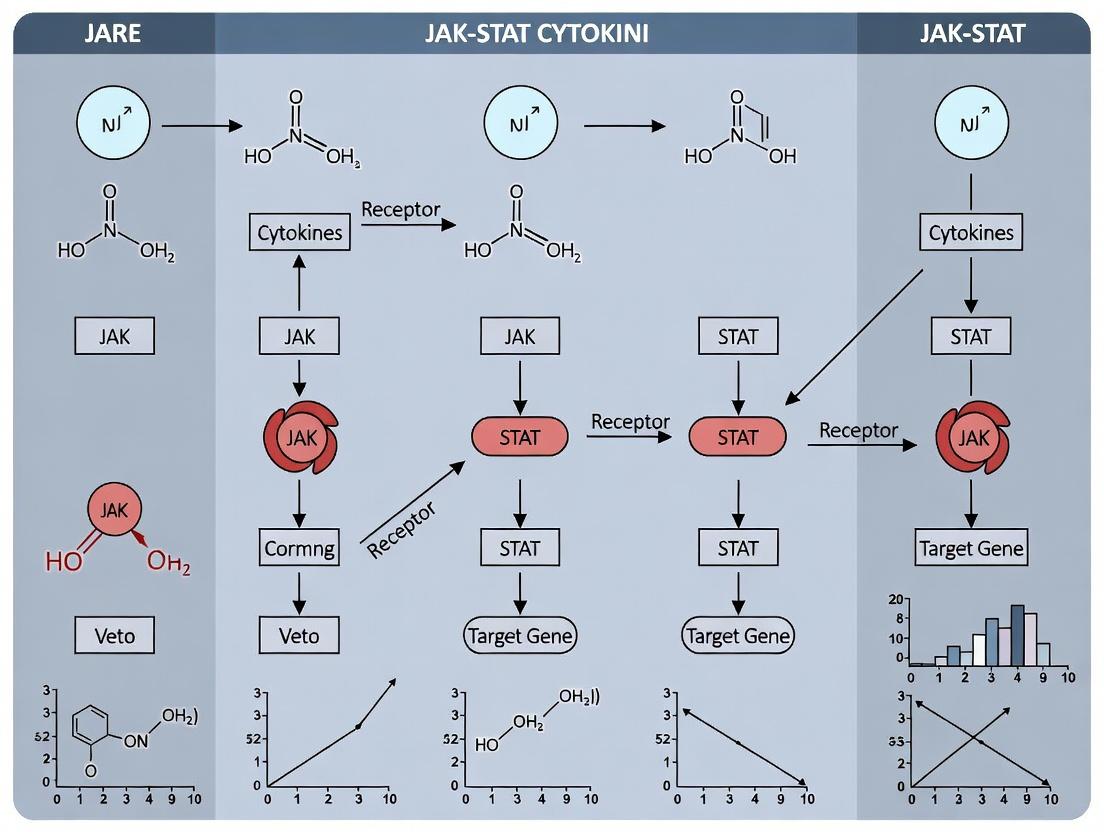
This comprehensive review explores the central role of the JAK-STAT signaling pathway in mediating cytokine storm and systemic inflammation.
JAK-STAT Signaling: The Master Regulator of Cytokine Storm and Systemic Inflammation
Abstract
This comprehensive review explores the central role of the JAK-STAT signaling pathway in mediating cytokine storm and systemic inflammation. We detail the foundational molecular biology of pathway activation by cytokines like interferons, IL-6, and others. The article provides a methodological guide for researchers, covering in vitro assays, in vivo models, and biomarker analysis for studying JAK-STAT in inflammatory pathologies. We address common experimental challenges and optimization strategies for pathway interrogation. Furthermore, we critically evaluate current and emerging JAK/STAT-targeted therapeutics, comparing their mechanisms, clinical efficacies, and limitations in conditions such as severe COVID-19, sepsis, and autoimmune diseases. This resource is designed for biomedical researchers and drug development professionals seeking to understand and therapeutically modulate this critical inflammatory axis.
Decoding the JAK-STAT Pathway: Molecular Mechanisms of Cytokine Storm Initiation
The JAK-STAT pathway is a principal signaling cascade for cytokines and growth factors, crucial for immune response, hematopoiesis, and inflammation. Within the context of cytokine storm research—a pathological feature of severe infections, autoimmunity, and immunotherapies—delineating canonical from non-canonical signaling is vital. Dysregulation of both pathways contributes to the hyperinflammatory state, making them prime therapeutic targets.
Core Architecture: Canonical Signaling
The canonical pathway is the prototypical, linear signaling module.
- Ligand Binding: A cytokine (e.g., IFN-γ, IL-6) binds to its cognate transmembrane receptor, inducing dimerization or conformational change.
- JAK Activation: Receptor-associated Janus kinases (JAK1, JAK2, JAK3, TYK2) trans-phosphorylate each other, achieving full activation.
- Receptor Phosphorylation: Active JAKs phosphorylate tyrosine residues on the receptor cytoplasmic tails, creating docking sites.
- STAT Recruitment & Phosphorylation: Cytosolic STAT monomers (STAT1, STAT2, STAT3, STAT4, STAT5a/b, STAT6) bind via their Src homology 2 (SH2) domains, are phosphorylated by JAKs on a conserved C-terminal tyrosine.
- Dimerization & Nuclear Translocation: Phosphorylated STATs dissociate, form homo- or heterodimers via reciprocal SH2-pTyr interactions, and translocate to the nucleus.
- Gene Transcription: STAT dimers bind specific DNA response elements (e.g., GAS, ISRE) to regulate target gene transcription (e.g., SOCS, inflammatory mediators).
Table 1: Core Components of Canonical JAK-STAT Signaling
| Component Class | Key Members (Examples) | Primary Role in Canonical Pathway |
|---|---|---|
| Cytokines/Ligands | IFN-γ, IL-6 family, IL-2 family, IL-4, IL-12 | Initiate signaling via receptor binding. |
| Receptors | IFNGR, gp130 family, Common γ-chain family | Provide platform for JAK activation and STAT docking. |
| Janus Kinases | JAK1, JAK2, JAK3, TYK2 | Phosphorylate receptor tails and STAT proteins. |
| STAT Proteins | STAT1, STAT3, STAT5, STAT6 | Signal transducers and transcription factors. |
| Negative Regulators | SOCS1/3, PIAS1/3, SHP1/2, USP | Feedback inhibition via JAK/STAT inhibition/degradation. |
Key Architecture: Non-Canonical Signaling
Non-canonical signaling encompasses JAK-STAT functions independent of cytokine-induced tyrosine phosphorylation and nuclear gene regulation.
- Unphosphorylated STAT (U-STAT) Signaling: U-STATs, accumulating from sustained canonical signaling, can regulate gene expression via distinct mechanisms and chromatin binding, contributing to chronic inflammation.
- Mitochondrial STAT Functions: STAT3 (and STAT5) localize to mitochondria, influencing electron transport chain activity and reactive oxygen species (ROS) production—key in inflammatory cell metabolism.
- Kinase-Independent Transcriptional Roles: STATs can be co-opted by other transcription factors (e.g., NF-κB) without JAK phosphorylation, amplifying inflammatory gene expression.
- Non-Genomic Cytoplasmic Roles: STATs interact with other signaling modules (e.g., MAPK, PI3K) to modulate cellular functions rapidly.
Table 2: Paradigms of Non-Canonical JAK-STAT Signaling
| Paradigm | Key STAT Involved | Proposed Mechanism | Relevance to Inflammation |
|---|---|---|---|
| U-STAT Signaling | STAT1, STAT3, STAT5 | Chromatin binding, gene regulation distinct from p-STAT dimers. | Sustains inflammatory and apoptotic gene programs in cytokine storm. |
| Mitochondrial STAT | STAT3, STAT5 | Modulates ETC complexes, ROS production, and mitochondrial permeability. | Regulates immunometabolism and cell survival during hyperinflammation. |
| Kinase-Independent | STAT2, STAT3 | Acts as cofactor for NF-κB, IRFs upon viral or TLR stimulation. | Synergistic inflammatory cytokine production. |
| Cytoplasmic Scaffold | STAT3, STAT5 | Interacts with PI3K, FAK, mTOR complexes. | Modulates cell migration, survival, and metabolic adaptation. |
Key Experimental Methodologies
Detecting Canonical Pathway Activation (Phospho-STAT Analysis)
Purpose: Measure cytokine-induced STAT tyrosine phosphorylation. Protocol:
- Cell Stimulation & Lysis: Serum-starve cells (e.g., PBMCs, cell lines) for 4-6h. Stimulate with cytokine (e.g., 50 ng/mL IFN-γ, 20 ng/mL IL-6) for 15-30 min. Lyse in RIPA buffer with phosphatase/protease inhibitors.
- Immunoblotting (Western Blot): Resolve 20-40 µg protein by SDS-PAGE. Transfer to PVDF membrane. Block with 5% BSA/TBST.
- Detection: Probe with primary antibodies: anti-pSTAT1 (Tyr701) or anti-pSTAT3 (Tyr705) overnight at 4°C. Use HRP-conjugated secondary antibody and chemiluminescence. Re-probe for total STAT as loading control. Key Controls: Unstimulated cells; JAK inhibitor pre-treatment (e.g., 1 µM Ruxolitinib, 30 min pre-incubation).
Assessing STAT Nuclear Translocation (Immunofluorescence)
Purpose: Visualize canonical activation endpoint. Protocol:
- Cell Culture & Stimulation: Seed cells on glass coverslips. Stimulate as in 3.1. Fix with 4% PFA for 15 min, permeabilize with 0.1% Triton X-100.
- Staining: Block with 5% normal serum. Incubate with anti-STAT3 antibody (1:200) overnight. Use fluorophore-conjugated secondary (e.g., Alexa Fluor 488).
- Imaging: Counterstain nuclei with DAPI. Visualize via confocal microscopy. Quantify nuclear/cytoplasmic fluorescence intensity ratio.
Investigating Non-Canonical Mitochondrial STAT3
Purpose: Analyze mitochondrial STAT3 localization and function. Protocol:
- Mitochondrial Isolation: Use differential centrifugation. Homogenize cells in isotonic buffer (e.g., 250 mM sucrose, 10 mM HEPES). Centrifuge at 600 x g to remove nuclei/debris. Pellet mitochondria at 10,000 x g. Validate purity by immunoblotting for markers (VDAC1 for mitochondria, GAPDH for cytosol, Lamin B1 for nucleus).
- Mitochondrial STAT3 Detection: Immunoblot mitochondrial fractions for STAT3 (N-terminus specific antibody recommended).
- Functional Assay (ROS): Load cells with MitoSOX Red (5 µM), a mitochondrial superoxide indicator. Stimulate and analyze by flow cytometry or fluorescence microscopy.
Pathway Visualization
Diagram 1: Canonical JAK-STAT signaling cascade.
Diagram 2: Major non-canonical JAK-STAT signaling modes.
The Scientist's Toolkit: Research Reagent Solutions
Table 3: Essential Reagents for JAK-STAT Research
| Reagent Category | Specific Example(s) | Function & Application |
|---|---|---|
| JAK Inhibitors | Ruxolitinib (JAK1/2), Tofacitinib (JAK1/3), STATTIC (STAT3 inhibitor) | Pharmacological inhibition to probe pathway necessity in cytokine responses. |
| Phospho-Specific Antibodies | Anti-pSTAT1 (Tyr701), Anti-pSTAT3 (Tyr705), Anti-pSTAT5 (Tyr694) | Detection of canonical pathway activation via flow cytometry, WB, IF. |
| Cytokines & Agonists | Recombinant human IFN-γ, IL-6 (+ soluble IL-6R), IL-2, IL-4, Oncostatin M | Pathway stimulation for experimental activation. |
| siRNA/shRNA Libraries | SMARTpools targeting JAK1, JAK2, STAT3, STAT5, SOCS3 | Genetic knockdown to assess protein function in inflammation models. |
| SOCS Mimetics/Peptides | SOCS1-derived kinase inhibitory region (KIR) peptide | Disrupt JAK-STAT interaction for mechanistic studies. |
| Live-Cell Imaging Dyes | MitoTracker Deep Red, MitoSOX Red, Cell-permeant STAT fluorescent fusions | Visualize mitochondrial localization, ROS, and STAT dynamics. |
| Chromatin IP Kits | ChIP-grade antibodies for STATs, NF-κB p65, Histone modifications | Analyze STAT DNA binding and transcriptional cofactor roles. |
| Mitochondrial Isolation Kits | Commercial kits based on differential centrifugation or density gradients | Isolate pure mitochondrial fractions for non-canonical studies. |
Within the context of cytokine storm and systemic inflammation research, the dysregulated release of pro-inflammatory cytokines and the consequent hyperactivation of downstream signaling pathways represent a critical pathological nexus. This whitepaper provides an in-depth technical examination of how three key storm-associated cytokines—Interleukin-6 (IL-6), Interferon-gamma (IFN-γ), and Interleukin-2 (IL-2)—engage and activate the Janus kinase–signal transducer and activator of transcription (JAK-STAT) pathway. Understanding the precise molecular mechanisms of this engagement is fundamental to developing targeted therapeutic strategies aimed at quenching the storm while preserving essential immune function.
Cytokine-Specific Receptor Engagement and JAK Activation
Each cytokine initiates signaling through distinct, high-affinity receptor complexes, which are pre-associated with specific JAK kinase family members.
IL-6 Signaling Initiation
IL-6 signals via a hexameric receptor complex. It first binds to the membrane-bound IL-6Rα (CD126), forming the IL-6/IL-6Rα complex. This complex then homodimerizes with two subunits of the signal-transducing glycoprotein 130 (gp130). JAK1, JAK2, and TYK2 are constitutively associated with the intracellular domains of gp130.
IFN-γ Signaling Initiation
IFN-γ induces the dimerization of its cognate receptor, composed of two IFNGR1 and two IFNGR2 subunits. JAK1 is pre-bound to IFNGR1, while JAK2 is associated with IFNGR2. Ligand-induced receptor dimerization brings the associated JAKs into proximity for trans-phosphorylation.
IL-2 Signaling Initiation
IL-2 binds to a heterotrimeric receptor composed of the α (CD25), β (CD122), and γc (CD132) chains. The γc chain is shared with other cytokines (e.g., IL-4, IL-7). JAK1 is associated with IL-2Rβ, and JAK3 is uniquely associated with the γc chain. High-affinity binding requires the trimeric complex, leading to JAK1/JAK3 activation.
JAK-STAT Pathway Activation Cascade
Following cytokine-induced receptor oligomerization, a conserved phosphorylation cascade ensues.
- JAK Trans-phosphorylation: The brought-in-close-proximity JAKs phosphorylate each other on tyrosine residues within their activation loops, achieving full kinase activity.
- Receptor Phosphorylation: Activated JAKs phosphorylate specific tyrosine residues on the intracellular tails of the receptor subunits, creating docking sites for STAT proteins via their Src homology 2 (SH2) domains.
- STAT Recruitment and Phosphorylation: Specific STATs are recruited:
- IL-6: Primarily STAT3, and to a lesser extent, STAT1.
- IFN-γ: Exclusively STAT1.
- IL-2: STAT5 (STAT5A and STAT5B). The docked STATs are phosphorylated by JAKs on a conserved C-terminal tyrosine residue.
- STAT Dimerization and Nuclear Translocation: Phosphorylated STATs dissociate from the receptor, forming homo- or heterodimers (via reciprocal phospho-tyrosine-SH2 domain interactions). These dimers are actively transported into the nucleus.
- Gene Transcription: Nuclear STAT dimers bind to specific promoter sequences (e.g., GAS elements for STAT1/3/5) to regulate the transcription of target genes involved in inflammation, proliferation, and immune cell recruitment.
Table 1: Core Signaling Components and Primary Outcomes
| Cytokine | Receptor Complex | JAKs Engaged | Primary STAT(s) Activated | Key Target Genes (Examples) | Pathogenic Role in Storm |
|---|---|---|---|---|---|
| IL-6 | IL-6Rα + gp130 (homodimer) | JAK1, JAK2, TYK2 | STAT3 > STAT1 | SOCS3, BCL2, CRP, SAA1 | Fever, acute phase response, T/B cell activation, CRP elevation. |
| IFN-γ | IFNGR1/IFNGR2 (heterotetramer) | JAK1, JAK2 | STAT1 (homodimer) | IRF1, CXCL10, CIITA, iNOS | Macrophage activation, antigen presentation, potentiation of other cytokines. |
| IL-2 | CD25(α) + CD122(β) + γc | JAK1, JAK3 | STAT5 (homodimer) | IL2RA, MYC, BCL2, PRF1 | T cell (especially Treg) proliferation and survival, immune cell cytotoxicity. |
Table 2: Representative Experimental Readouts & Assays
| Assay Type | Measured Parameter | IL-6 Study Typical Result | IFN-γ Study Typical Result | IL-2 Study Typical Result |
|---|---|---|---|---|
| Phospho-STAT Flow Cytometry | % pSTAT+ immune cells ex vivo | Monocytes: 60-80% pSTAT3+ | Monocytes: 70-90% pSTAT1+ | T cells: 40-70% pSTAT5+ |
| Western Blot (Cell Lysate) | pSTAT/tSTAT band intensity ratio | pSTAT3/tSTAT3: 5-10 fold increase | pSTAT1/tSTAT1: 8-15 fold increase | pSTAT5/tSTAT5: 3-8 fold increase |
| ELISA (Nuclear Extract) | Active STAT dimer (DNA-binding) | STAT3 activity: 7-12 fold increase | STAT1 activity: 10-20 fold increase | STAT5 activity: 5-9 fold increase |
| qPCR (Target Genes) | mRNA fold-change | SOCS3: 50-100x; BCL2: 5-10x | CXCL10: 200-500x; IRF1: 50-100x | IL2RA: 20-50x; MYC: 5-15x |
Detailed Experimental Protocols
Protocol 1: Assessing JAK-STAT Activation by Phospho-Specific Flow Cytometry
This protocol allows single-cell analysis of STAT phosphorylation in mixed immune cell populations.
- Stimulation: Dilute human PBMCs or murine splenocytes to 2x10^6 cells/mL in complete RPMI. Aliquot 100µL/tube. Stimulate with recombinant cytokine (IL-6: 50ng/mL; IFN-γ: 20ng/mL; IL-2: 100 IU/mL) for 15 minutes at 37°C. Include an unstimulated control.
- Fixation: Immediately add 100µL of pre-warmed (37°C) 4% paraformaldehyde (PFA), vortex gently, and incubate for 10 minutes at 37°C.
- Permeabilization: Pellet cells, wash once with PBS. Resuspend pellet in 1mL of ice-cold 90% methanol, vortex, and incubate at -20°C for at least 30 minutes (cells can be stored for weeks).
- Staining: Wash cells twice with FACS buffer (PBS + 2% FBS). Block Fc receptors with human/mouse Fc block for 10 min. Stain with surface antibody cocktail (e.g., CD3, CD4, CD8, CD14, CD19) for 20 min at RT. Wash.
- Intracellular pSTAT Staining: Resuspend cells in FACS buffer containing phospho-specific antibodies (e.g., anti-pSTAT1 (Y701), pSTAT3 (Y705), pSTAT5 (Y694)) for 30 minutes at RT in the dark. Wash twice.
- Acquisition & Analysis: Acquire on a flow cytometer. Gate on live single cells, then on specific immune subsets. Analyze the Median Fluorescence Intensity (MFI) or percentage of pSTAT+ cells within each subset.
Protocol 2: Co-Immunoprecipitation (Co-IP) of Activated Cytokine Receptor Complex
This protocol validates cytokine-induced JAK-receptor association and phosphorylation.
- Cell Stimulation & Lysis: Culture cytokine-responsive cells (e.g., HepG2 for IL-6, U937 for IFN-γ, CTLL-2 for IL-2). Serum-starve for 4-6 hours. Stimulate with relevant cytokine for 10 minutes. Lyse cells in 1 mL of ice-cold Nonidet P-40 (NP-40) lysis buffer (with 1mM Na3VO4 and protease inhibitors).
- Pre-clearance: Centrifuge lysate at 13,000xg for 15 min. Transfer supernatant to a new tube, add 20µL of protein A/G beads, and rotate for 30 min at 4°C. Pellet beads and keep supernatant.
- Immunoprecipitation: Incubate pre-cleared lysate with 2-4 µg of antibody against the target receptor subunit (e.g., anti-gp130, anti-IFNGR1, anti-IL-2Rβ) overnight at 4°C with rotation.
- Bead Capture: Add 40µL of protein A/G beads and rotate for 2 hours. Pellet beads and wash 4 times with lysis buffer.
- Elution & Analysis: Elute proteins by boiling beads in 2X Laemmli sample buffer for 5 min. Analyze by SDS-PAGE and Western blot. Probe for the immunoprecipitated receptor, associated JAKs (e.g., JAK1), and phospho-tyrosine (4G10) to confirm activation.
Signaling Pathway Visualizations
Title: IL-6 Induced JAK-STAT3 Signaling Pathway
Title: IFN-γ Induced JAK-STAT1 Signaling Pathway
Title: IL-2 Induced JAK1/JAK3-STAT5 Signaling Pathway
Title: Phospho-STAT Flow Cytometry Experimental Workflow
The Scientist's Toolkit: Key Research Reagent Solutions
Table 3: Essential Reagents for JAK-STAT Storm Research
| Reagent Category | Specific Item / Assay | Function & Application | Example Vendor(s) |
|---|---|---|---|
| Recombinant Cytokines | Human/Murine IL-6, IFN-γ, IL-2 (carrier-free) | Induce specific JAK-STAT pathway activation in in vitro and ex vivo models. | PeproTech, R&D Systems, BioLegend |
| Phospho-Specific Antibodies | Anti-pSTAT1 (Y701), pSTAT3 (Y705), pSTAT5 (Y694) | Detect activated STATs via flow cytometry, Western blot, or IHC. | Cell Signaling Technology, BD Biosciences |
| JAK/STAT Inhibitors | Tofacitinib (JAK1/3i), Ruxolitinib (JAK1/2i), STAT3-specific inhibitors (e.g., Stattic) | Mechanistic probing and validation of pathway dependency in storm models. | Selleckchem, MedChemExpress |
| ELISA/Multiplex Kits | Phospho-STAT (DNA-binding) ELISA; Cytokine Multiplex Panels | Quantify active STAT dimers; measure cytokine storm profiles in sera/supernatants. | TransAM (Active Motif), LEGENDplex (BioLegend) |
| Cell Lines & Primary Cells | HepG2, U937, CTLL-2; Human PBMCs, Mouse Splenocytes | Provide consistent in vitro systems or primary immune cell contexts for experiments. | ATCC, STEMCELL Technologies |
| Reporter Assays | Luciferase constructs with GAS or ISRE promoters | Quantify functional STAT-driven transcriptional activity. | Qiagen, Promega |
| siRNA/shRNA/CRISPR | Gene knockdown/knockout kits for JAK1, JAK2, JAK3, STAT1, STAT3, STAT5 | Establish genetic proof for role of specific pathway components. | Horizon Discovery, Santa Cruz Biotechnology |
The engagement of the JAK-STAT pathway by IL-6, IFN-γ, and IL-2 represents a convergent yet distinct mechanism driving the cytokine storm pathology. Each cytokine utilizes a tailored receptor-JAK-STAT axis to propagate potent inflammatory and proliferative signals. The experimental frameworks and tools outlined here provide a roadmap for dissecting these pathways. As research advances, the precise elucidation of these signaling cascades—particularly their cross-talk and negative regulation—remains paramount for developing the next generation of selective immunomodulators aimed at quelling the storm without causing broad immunosuppression.
This whitepaper examines the core transcriptional programs downstream of hyperactivated STATs during a cytokine storm, providing a technical guide for their investigation within the broader JAK-STAT signaling research thesis.
Core STAT Isoforms & Their Target Genes in Hyperinflammation
During systemic inflammation, canonical (IL-6, IFNγ) and non-canonical (IL-1β, TNFα-primed) signaling converge on STAT1, STAT3, and STAT5 hyperactivation. Their coordinated transcriptional output drives feed-forward inflammatory loops.
Table 1: Key STAT Isoforms, Target Genes, and Functional Outcomes in Hyperinflammation
| STAT Isoform | Primary Cytokine Activators | Prototypical Target Genes | Cellular & Systemic Outcomes |
|---|---|---|---|
| STAT1 | IFN-γ, IFN-α/β, IL-6 (in combination) | IRF1, SOCS1, CXCL9, CXCL10, NOS2 | M1 macrophage polarization, Th1 cell differentiation, enhanced antigen presentation, tissue immunopathology. |
| STAT3 | IL-6, IL-10, IL-21, G-CSF | SOCS3, BCL2, BIRC5, MYC, PIM1, IL6, IL17 | Acute phase protein synthesis, Th17 differentiation, epithelial/mesenchymal survival, pyroptosis resistance, cytokine amplification. |
| STAT5 | GM-CSF, IL-2, IL-7, TPO | PIM1, BCL2, CIS (CISH), Cyclin D1 | Myeloid cell proliferation & survival, T cell survival, synergism with STAT3-driven programs. |
| STAT3:STAT1 Heterodimers | IL-6, IL-27 | Unique gene set distinct from homodimers (GBP1, CXCL11) | Fine-tuning of inflammatory response, balancing pro-inflammatory and regulatory signals. |
Key Methodologies for Profiling STAT-Driven Transcriptomes
Protocol 2.1: Chromatin Immunoprecipitation Sequencing (ChIP-seq) for STAT Binding
- Objective: Map genome-wide STAT occupancy with high resolution.
- Procedure:
- Cell Stimulation & Fixation: Treat primary immune cells (e.g., monocytes) with a cytokine storm cocktail (e.g., IL-6 + IFNγ) for 15-45 minutes. Cross-link with 1% formaldehyde for 10 min.
- Chromatin Preparation: Lyse cells, sonicate chromatin to ~200-500 bp fragments.
- Immunoprecipitation: Incubate with antibody-coated magnetic beads (anti-STAT1, anti-STAT3, or IgG control). Use 2-5 µg of specific antibody per sample.
- Wash & Elution: Wash stringently, reverse cross-links, and purify DNA.
- Sequencing & Analysis: Prepare libraries for NGS. Align reads, call peaks with tools (MACS2), and annotate to nearest gene or active enhancer (H3K27ac ChIP).
- Critical Controls: Isotype control IP, input DNA, cells treated with JAK inhibitor (e.g., Ruxolitinib) to demonstrate signal specificity.
Protocol 2.2: Single-Cell RNA Sequencing (scRNA-seq) of Inflammatory Lesions
- Objective: Deconvolve cell-type-specific STAT target gene expression in complex tissues.
- Procedure:
- Tissue Dissociation & Viability: Isolate tissue (e.g., lung from ARDS model), create single-cell suspension. Maintain >90% viability.
- Library Preparation: Use droplet-based (10x Genomics) or plate-based (Smart-seq2) platforms. Include hashtag antibodies for sample multiplexing.
- Bioinformatic Analysis: Process with Cell Ranger. Cluster cells (Seurat, Scanpy). Perform differential expression analysis to identify STAT signature genes per cluster. Infer upstream regulator activity (e.g., using DoRothEA).
- Key Validation: Correlate scRNA-seq findings with phospho-STAT flow cytometry on matched cell populations.
Signaling & Transcriptional Network Visualization
Diagram 1: Core JAK-STAT Signaling in Hyperinflammation
Diagram 2: STAT Target Discovery Workflow
The Scientist's Toolkit: Key Research Reagents
Table 2: Essential Reagents for Investigating STAT-Driven Transcriptional Programs
| Reagent Category | Specific Example | Function & Application |
|---|---|---|
| JAK/STAT Inhibitors | Ruxolitinib (JAK1/2 inhibitor), Tofacitinib (JAK1/3 inhibitor), Stattic (STAT3 inhibitor) | Pharmacological inhibition to establish causal role of signaling in gene expression and cellular phenotypes. |
| Phospho-Specific Antibodies | Anti-pSTAT1 (Tyr701), Anti-pSTAT3 (Tyr705), Anti-pSTAT5 (Tyr694) | Flow cytometry, Western blot, and immunofluorescence to assess pathway activation status. |
| ChIP-Grade Antibodies | Anti-STAT1 (for ChIP), Anti-STAT3 (for ChIP), Normal Rabbit IgG | Chromatin immunoprecipitation to map genomic binding sites of STAT proteins. |
| Cytokine Cocktails | Recombinant human/mouse IL-6, IFNγ, TNFα, GM-CSF | In vitro stimulation of primary cells to model hyperinflammatory signaling. |
| scRNA-seq Kits | 10x Genomics Chromium Next GEM Single Cell 3' Kit | High-throughput profiling of STAT target gene expression at single-cell resolution. |
| CRISPR Tools | STAT1/STAT3/STAT5 KO cell lines, dCas9-KRAB/VP64 for epigenetic editing | Functional validation of specific STAT isoforms or target gene regulatory elements. |
Crosstalk with NF-κB, NLRP3 Inflammasome, and Other Inflammatory Pathways
Thesis Context: This analysis is framed within a broader investigation into JAK-STAT signaling dysregulation as a central driver of cytokine storm syndromes. Understanding the intricate crosstalk between JAK-STAT and other key inflammatory pathways, namely NF-κB and the NLRP3 inflammasome, is critical for identifying convergent therapeutic nodes in systemic inflammation.
In the context of cytokine storm, hyperactivation of the JAK-STAT pathway serves as a primary signal amplifier for cytokine production. This output does not occur in isolation. It is fundamentally modulated by bidirectional crosstalk with two other master regulators of inflammation: the NF-κB pathway (a primary transcriptional inducer of pro-IL-1β, TNFα, IL-6, and NLRP3 components) and the NLRP3 inflammasome (the caspase-1-activating platform responsible for the proteolytic maturation of IL-1β and IL-18). This triad forms a core signaling network that perpetuates feed-forward loops of inflammation, making their interactions a high-priority target for research and therapeutic intervention.
Table 1: Documented Molecular Interactions Between JAK-STAT, NF-κB, and NLRP3 Pathways
| Interacting Molecule / Event | Pathway A | Pathway B | Effect of Crosstalk | Experimental Evidence (Common Readouts) |
|---|---|---|---|---|
| STAT3 phosphorylation & activity | JAK-STAT | NF-κB | STAT3 can transcriptionally upregulate NF-κB subunits (p65) and IκBα, creating complex feedback. Enhanced IL-6/JAK/STAT signaling potentiates NF-κB-driven gene expression. | p-STAT3 (Y705) WB, p65 nuclear translocation (IF/IF), NF-κB luciferase reporter assay, qPCR of Nfkb1, Nfkb2, Il6. |
| TNFα & IL-1β signaling | NF-κB / Inflammasome | JAK-STAT | TNFα can activate JAK1 via TNFR1. IL-1β signaling activates IRAK4, which can phosphorylate JAK1. Both lead to STAT activation. | p-JAK1, p-STAT3 WB after TNFα/IL-1β stimulation; JAK1 kinase assay with IRAK4. |
| NLRP3 & ASC expression | NF-κB | NLRP3 Inflammasome | Canonical NF-κB activation transcriptionally upregulates Nlrp3 and Il1b genes, providing the "priming" signal for inflammasome activation. | qPCR/WB for NLRP3, pro-IL-1β; NLRP3 promoter luciferase assay. |
| Reactive Oxygen Species (ROS) | Secondary Messenger | All Three Pathways | Mitochondrial ROS (mtROS) is a common activator of NLRP3 inflammasome assembly and can also enhance IKK and JAK kinase activities. | mtROS detection (MitoSOX), inflammasome activation (caspase-1 cleavage, IL-1β ELISA), inhibition with NAC. |
| SOCS1 & SOCS3 Proteins | JAK-STAT | NF-κB / Inflammasome | SOCS1 directly inhibits IRAK1 and IKKε in the NF-κB pathway. SOCS3 can suppress JAK/STAT-derived priming of NLRP3. | SOCS overexpression/knockdown models; measurement of IL-1β secretion and NF-κB activity. |
| Caspase-8 Activity | Inflammasome / Cell Death | NF-κB / JAK-STAT | Active caspase-8 can cleave and inactivate RIPK1, shutting off NF-κB. It also cleaves pro-IL-1β. Can be influenced by STAT-mediated FLIP expression. | Detection of cleaved caspase-8 (WB), RIPK1 cleavage assay, viability assays. |
Detailed Experimental Protocols for Studying Crosstalk
Protocol 1: Co-assessment of NLRP3 Priming (NF-κB) and Activation in Macrophages
Aim: To dissect the two-signal requirement for mature IL-1β secretion and its modulation by JAK-STAT activity. Cell Model: Primary Bone Marrow-Derived Macrophages (BMDMs) or THP-1 human monocytes. Key Reagents: LPS (TLR4 agonist, Signal 1), ATP or Nigericin (NLRP3 activator, Signal 2), JAK inhibitor (e.g., Tofacitinib), NF-κB inhibitor (e.g., BAY 11-7082). Procedure:
- Priming: Seed cells and differentiate (if using THP-1, use PMA). Pre-treat with pharmacological inhibitors (JAKi, NF-κB inhibitor) or vehicle control for 1 hour.
- Signal 1: Stimulate cells with LPS (e.g., 100 ng/mL) for 3-4 hours. This engages NF-κB to upregulate Nlrp3 and Il1b gene expression.
- Signal 2: Add ATP (5 mM for 30 min) or Nigericin (10 µM for 45 min) to activate the NLRP3 inflammasome complex.
- Sample Collection: Collect cell culture supernatants for secreted protein analysis. Lyse cells for mRNA or protein analysis.
- Analysis:
- mRNA Level (Priming Readout): qPCR for Nlrp3 and pro-Il1b from cell lysates after Signal 1 but before Signal 2.
- Protein Level (Activation Readout): Perform Western Blot on supernatants (concentrated) and lysates for:
- Cleaved Caspase-1 (p20 subunit)
- Mature IL-1β (p17 fragment)
- Pro-IL-1β (p31, in lysates)
- Functional Readout: ELISA for mature IL-1β in supernatants.
Protocol 2: Investigating STAT3's Role in NF-κB Transcriptional Activation
Aim: To determine if JAK-STAT pathway activation influences NF-κB-driven gene transcription independently of cytokine feedback. Cell Model: HEK293T cells or relevant immune cell line (e.g., RAW 264.7). Key Reagents: NF-κB luciferase reporter plasmid, Renilla luciferase control plasmid, STAT3 expression plasmid (constitutively active, e.g., STAT3-C), IL-6 cytokine, JAK inhibitor. Procedure:
- Transfection: Co-transfect cells with the NF-κB firefly luciferase reporter and a Renilla luciferase normalization plasmid. Include experimental groups transfected with the STAT3-C plasmid or empty vector control.
- Stimulation & Inhibition: 24h post-transfection, pre-treat cells with JAK inhibitor or DMSO for 1 hour. Then stimulate groups with IL-6 (20-50 ng/mL) or TNFα (positive control for NF-κB, 10 ng/mL) for 6-8 hours.
- Luciferase Assay: Lyse cells and measure firefly and Renilla luciferase activity using a dual-luciferase assay system.
- Data Calculation: Normalize firefly luciferase readings to Renilla luciferase readings for each sample. Express data as fold-change relative to unstimulated, empty vector control.
- Validation: Parallel wells should be processed for Western Blot to confirm STAT3 phosphorylation and nuclear p65 levels.
Pathway & Workflow Visualizations
Diagram 1: Core inflammatory pathway crosstalk network.
Diagram 2: Experimental workflow for NLRP3 two-signal assay.
The Scientist's Toolkit: Research Reagent Solutions
Table 2: Essential Reagents for Investigating Inflammatory Pathway Crosstalk
| Reagent Category | Specific Example(s) | Function in Experiment | Key Application |
|---|---|---|---|
| Pathway Agonists | Lipopolysaccharide (LPS), Recombinant IL-6, TNFα, ATP, Nigericin, Monosodium Urate (MSU) Crystals | Activate specific upstream receptors (TLR4, cytokine receptors, P2X7) to initiate the NF-κB priming signal (Signal 1) or the NLRP3 activation signal (Signal 2). | Inducing pathway-specific responses in cellular models. |
| Pharmacological Inhibitors | Tofacitinib (JAKi), BAY 11-7082 (IKK/NF-κB inhibitor), MCC950 (NLRP3 inhibitor), Z-VAD-FMK (pan-caspase inhibitor) | Chemically disrupt specific nodes (kinases, complexes) to establish causal relationships in crosstalk and measure pathway dependency. | Functional dissection of pathway contributions to readouts like gene expression or cytokine secretion. |
| Cytokine Detection | ELISA Kits for IL-1β (mature), IL-18, IL-6, TNFα; Luminex Multiplex Panels | Quantify secreted inflammatory mediators, the ultimate functional output of pathway crosstalk. Distinguishes pro- vs. mature forms is crucial. | Measuring inflammasome activity (IL-1β) and inflammatory state. |
| Antibodies (Western/IF) | Phospho-STAT3 (Tyr705), Phospho-p65 (Ser536), Cleaved Caspase-1 (Asp297), NLRP3, ASC | Detect protein expression, post-translational modifications (activation), complex formation, and subcellular localization. | Confirming pathway activation states and protein-level interactions. |
| Reporter Systems | NF-κB Luciferase Reporter Plasmid, STAT-responsive Reporter (e.g., APRE-luc) | Provide a sensitive, quantitative readout of transcriptional activity driven by a specific pathway, minimizing indirect effects. | Directly measuring transcriptional crosstalk (e.g., STAT3 on NF-κB promoter). |
| Genetic Tools | siRNA/shRNA (NLRP3, STAT3, MyD88), CRISPR-Cas9 KO cells, Lentiviral Overexpression Constructs | Enable stable, genetic perturbation of specific pathway components to study long-term or specific molecular interactions. | Validating findings from pharmacological inhibition and exploring mechanisms. |
| ROS Detection | MitoSOX Red, DCFH-DA, N-acetylcysteine (NAC) antioxidant | Measure and manipulate reactive oxygen species, a critical secondary messenger linking multiple inflammatory pathways. | Investigating the role of ROS in NLRP3 activation and NF-κB/JAK signaling. |
Genetic and Epigenetic Regulation of JAK-STAT Signaling in Immune Cells
1. Introduction The JAK-STAT pathway is the principal signaling mechanism for a vast array of cytokines and growth factors, dictating immune cell development, differentiation, and inflammatory responses. Dysregulation of this pathway is a hallmark of cytokine release syndrome (CRS) and systemic inflammatory pathologies. This whitepaper details the genetic and epigenetic mechanisms fine-tuning JAK-STAT signaling, providing a technical framework for research aimed at mitigating cytokine storm.
2. Genetic Regulation: Variants & Mutations Genetic alterations directly influence JAK-STAT pathway sensitivity and output, contributing to interindividual variability in inflammatory disease susceptibility and severity.
Table 1: Key Genetic Variants/Mutations in JAK-STAT Components
| Gene | Variant/Mutation | Functional Consequence | Associated Immunopathology |
|---|---|---|---|
| JAK1 | Gain-of-function (GOF) mutations (e.g., A634D) | Constitutive kinase activation, hyper-STAT phosphorylation | Severe autoimmune disorders, leukemia |
| JAK2 | V617F mutation | Constitutive activation independent of cytokine binding | Myeloproliferative neoplasms, driving inflammatory states |
| STAT1 | GOF mutations (e.g., N574D) | Enhanced phosphorylation/dimerization, prolonged nuclear retention | Chronic mucocutaneous candidiasis with autoimmunity |
| STAT3 | GOF mutations; Loss-of-function (LOF) mutations | GOF: Enhanced Th17 differentiation; LOF: Hyper-IgE syndrome | GOF: Autoimmunity; LOF: Immunodeficiency |
| SOCS3 | Promoter polymorphisms (e.g., -4874 A>G) | Reduced SOCS3 expression, diminished feedback inhibition | Increased severity in rheumatoid arthritis, CRS |
| TYK2 | Partial LOF polymorphisms (e.g., P1104A) | Impaired IFN-α/β/IL-12 signaling, altered immune homeostasis | Protection against autoimmunity (e.g., MS, lupus) |
3. Epigenetic Regulation: Dynamic Layer of Control Epigenetic modifications reversibly modulate gene expression without altering DNA sequence, offering rapid adaptation to cytokine milieus.
- DNA Methylation: Hypermethylation of cytokine receptor or STAT gene promoters typically silences expression. Hypomethylation of SOCS genes can enhance feedback inhibition.
- Histone Modifications: Cytokine stimulation induces activating marks (H3K4me3, H3K27ac) at STAT target genes (e.g., SOCS, BCL2). Repressive complexes (NuRD, PRC2) can quench signaling.
- Non-coding RNAs: miRNAs (e.g., miR-19a, miR-155) target SOCS, PIAS, and STAT mRNAs for degradation, potentiating signaling. Long non-coding RNAs (e.g., Lnc-EGFR) scaffold epigenetic regulators to specific gene loci.
4. Experimental Methodologies
Protocol 4.1: Chromatin Immunoprecipitation Sequencing (ChIP-seq) for STAT Binding Purpose: To genome-wide map STAT transcription factor binding and associated histone modifications post-cytokine stimulation. Procedure:
- Crosslinking & Lysis: Treat 10^7 immune cells (e.g., primary T cells) with cytokine (e.g., IL-6, 50 ng/mL, 30 min). Fix with 1% formaldehyde for 10 min at 37°C. Quench with 125 mM glycine. Lyse cells.
- Chromatin Shearing: Sonicate lysate to fragment DNA to 200-500 bp. Verify fragment size by agarose gel electrophoresis.
- Immunoprecipitation: Incubate chromatin with 2-5 µg of specific antibody (e.g., anti-STAT3 phospho-Y705) or control IgG overnight at 4°C. Use protein A/G magnetic beads for capture.
- Washing & Elution: Wash beads sequentially with low salt, high salt, LiCl, and TE buffers. Elute complexes and reverse crosslinks at 65°C overnight.
- DNA Purification & Library Prep: Purify DNA using phenol-chloroform extraction. Prepare sequencing library (end repair, A-tailing, adapter ligation, PCR amplification).
- Data Analysis: Sequence and align reads to reference genome. Call peaks (e.g., using MACS2). Annotate peaks to nearest gene.
Protocol 4.2: Assay for Transposase-Accessible Chromatin Sequencing (ATAC-seq) Purpose: To profile dynamic changes in chromatin accessibility in JAK-STAT pathway genes upon activation. Procedure:
- Nuclei Isolation: Stimulate 5x10^4 live cells, wash in PBS. Lyse with cold lysis buffer (10 mM Tris-HCl, pH 7.4, 10 mM NaCl, 3 mM MgCl2, 0.1% IGEPAL CA-630). Pellet nuclei.
- Tagmentation: Resuspend nuclei in transposase reaction mix (Illumina Tagment DNA TDE1 Enzyme) for 30 min at 37°C. Purify DNA using a MinElute column.
- Library Amplification & Purification: Amplify tagmented DNA with 12-15 PCR cycles using barcoded primers. Clean up with SPRI beads.
- Sequencing & Analysis: Sequence on a high-throughput platform. Align reads, call accessible peaks, and perform differential accessibility analysis.
5. Visualization of Regulatory Networks
Diagram 1: Integration of Genetic & Epigenetic Regulation in JAK-STAT Signaling
Diagram 2: ChIP-seq Workflow for STAT Binding
6. The Scientist's Toolkit: Key Research Reagent Solutions
Table 2: Essential Reagents for Genetic/Epigenetic JAK-STAT Studies
| Reagent Category | Specific Example | Function & Application |
|---|---|---|
| Phospho-Specific Antibodies | Anti-STAT1 (pTyr701), Anti-STAT3 (pTyr705) | Detection of activated, phosphorylated STATs via WB, Flow, IHC. |
| ChIP-Validated Antibodies | Anti-STAT3 (ChIP Grade), Anti-H3K27ac | For chromatin immunoprecipitation assays to map protein-DNA interactions. |
| JAK/STAT Inhibitors | Tofacitinib (JAK1/3 inhibitor), Ruxolitinib (JAK1/2 inhibitor) | Pharmacological tools to inhibit pathway activity in functional assays. |
| Cytokines/Recombinant Proteins | Human IL-6, IFN-γ, IL-2 | Pathway agonists for cell stimulation experiments. |
| DNA Methyltransferase Inhibitors | 5-Azacytidine, RG108 | Demethylating agents to study the role of DNA methylation in gene silencing. |
| HDAC Inhibitors | Trichostatin A (TSA), Vorinostat (SAHA) | Increase histone acetylation to study its impact on target gene expression. |
| Next-Gen Sequencing Kits | Illumina DNA Prep, Nextera XT | Library preparation for ChIP-seq, ATAC-seq, and RNA-seq applications. |
| Genome Editing Tools | CRISPR/Cas9 systems, siRNA/shRNA against SOCS3, JAK2 | Knockout/knockdown of specific pathway components for functional studies. |
| Methylation Analysis Kits | EZ DNA Methylation-Gold Kit, Methylation-Specific PCR Kits | Bisulfite conversion and analysis of CpG island methylation status. |
7. Conclusion & Relevance to Cytokine Storm The interplay between genetic predisposition and epigenetic plasticity forms a critical regulatory circuit determining the amplitude and duration of JAK-STAT signaling. In the context of cytokine storm research, hypermorphic genetic variants coupled with inflammation-driven epigenetic reprogramming can create a feed-forward loop, dismantling negative feedback and locking immune cells into a hyperactive state. Therapeutic strategies targeting not only the kinases (JAKs) but also the upstream epigenetic machinery governing pathway sensitivity represent a promising frontier for controlling pathological inflammation.
Research Tools and Models: How to Study JAK-STAT in Systemic Inflammation
The JAK-STAT pathway is the principal signaling mechanism for a multitude of cytokines and growth factors. In the context of cytokine storm and systemic inflammation, aberrant activation of this pathway, particularly involving STAT1, STAT3, and STAT5, drives pathological gene expression programs leading to hyperinflammation, immune cell dysregulation, and tissue damage. Precise in vitro assessment of JAK-STAT activation dynamics is therefore critical for dissecting disease mechanisms and screening therapeutic interventions. This technical guide details three cornerstone methodologies: intracellular phospho-protein detection by flow cytometry, functional readouts via engineered reporter cell lines, and downstream transcriptomic analysis via gene expression profiling.
Phospho-STAT Flow Cytometry: Single-Cell Phosphoprotein Analysis
This method enables quantification of STAT phosphorylation at the single-cell level across heterogenous cell populations, crucial for understanding cell-type-specific responses in mixed cultures (e.g., PBMCs) during inflammatory stimulation.
Detailed Protocol:
- Cell Stimulation & Fixation: Isolate target cells (e.g., PBMCs, cell lines). Stimulate with cytokine of interest (e.g., IFN-γ, IL-6) for 15-30 minutes. Include unstimulated and inhibitor-treated controls. Immediately fix cells using pre-warmed 1.5%-2% formaldehyde or commercial fixation buffers for 10-15 min at 37°C.
- Permeabilization: Pellet cells, wash, and resuspend in ice-cold, 100% methanol. Incubate at -20°C for a minimum of 30 minutes. Cells can be stored in methanol at -80°C for weeks.
- Staining: Wash cells thoroughly to remove methanol. Incubate with fluorescently conjugated anti-phospho-STAT antibodies (e.g., pSTAT1-Y701, pSTAT3-Y705, pSTAT5-Y694) in staining buffer (PBS + 1% BSA) for 60 minutes at room temperature in the dark. Include isotype controls.
- Acquisition & Analysis: Analyze on a flow cytometer. Use the median fluorescence intensity (MFI) of the phospho-specific antibody channel within defined cell populations (gated by surface markers). Data is often presented as fold-change in MFI relative to unstimulated control or as a stimulation index.
Quantitative Data Summary: Table 1: Example Phospho-STAT Flow Cytometry Data from IL-6 Stimulation of Human PBMCs
| Cell Population | Unstimulated MFI (pSTAT3) | IL-6 Stimulated MFI (pSTAT3) | Fold Change | Inhibition by JAKi (1µM) % |
|---|---|---|---|---|
| CD14+ Monocytes | 520 | 12500 | 24.0 | 95% |
| CD4+ T Cells | 310 | 2800 | 9.0 | 92% |
| CD19+ B Cells | 295 | 4500 | 15.3 | 97% |
The Scientist's Toolkit: Research Reagent Solutions Table 2: Key Reagents for Phospho-STAT Flow Cytometry
| Reagent | Function | Example Vendor/Product |
|---|---|---|
| Phosflow-compatible Antibodies | Target-specific detection of phosphorylated STAT proteins. | BD Biosciences Phosflow, Cell Signaling Technology |
| Cytofix/Cytoperm Buffer | Standardized fixation/permeabilization solution for intracellular targets. | BD Biosciences |
| Methanol (Molecular Biology Grade) | Alternative permeabilization agent; allows long-term storage. | Sigma-Aldrich |
| Protein Transport Inhibitors (Brefeldin A/Monensin) | Optional: Inhibits cytokine secretion to enhance intracellular signal. | Thermo Fisher Scientific |
| Flow Cytometry Staining Buffer | Protein-based buffer to reduce non-specific antibody binding. | BioLegend |
Reporter Cell Lines: Functional Pathway Readout
Reporter cells provide a sensitive, high-throughput functional readout of JAK-STAT pathway activity, ideal for screening agonists/antagonists.
Detailed Protocol:
- Cell Line & Construct: Utilize cells (HEK293, HepG2) stably transfected with a plasmid containing STAT-responsive elements (e.g., ISRE, GAS) driving a reporter gene (Firefly luciferase, GFP). A constitutive promoter (e.g., CMV) driving a second reporter (Renilla luciferase) serves as normalization control.
- Assay Setup: Seed reporter cells in multi-well plates. After adherence, pre-treat with inhibitors or vehicle control for 30-60 minutes.
- Stimulation & Incubation: Stimulate with cytokine titrations or test compounds. Incubate for 4-24 hours (time-course dependent on signal amplification).
- Detection: For luciferase, lyse cells and add substrate. Measure luminescence on a plate reader. Calculate the ratio of Firefly (induced) to Renilla (constitutive) luminescence. For GFP, analyze by flow cytometry or fluorescence microscopy.
Quantitative Data Summary: Table 3: Sample Data from a STAT1/2 (ISRE) Reporter Assay Testing IFN-α Inhibition
| IFN-α (ng/mL) | No Inhibitor (Relative Light Units) | + JAK Inhibitor A (100 nM) | % Inhibition |
|---|---|---|---|
| 0 | 1.0 | 1.1 | N/A |
| 1 | 15.8 | 3.2 | 79.7% |
| 10 | 82.5 | 5.1 | 93.8% |
Gene Expression Profiling: Downstream Transcriptomic Output
Profiling mRNA expression changes provides a comprehensive view of the functional consequence of JAK-STAT activation, identifying key inflammatory mediators.
Detailed Protocol (RT-qPCR focused):
- Stimulation & Lysis: Stimulate cells as per flow protocol but for longer durations (2-6h). Lyse cells in TRIzol or similar RNA-stabilizing buffer.
- RNA Isolation: Purify total RNA using column-based kits. Assess concentration and integrity (RNA Integrity Number >8.5).
- Reverse Transcription: Synthesize cDNA using reverse transcriptase with random hexamers and/or oligo-dT primers.
- Quantitative PCR: Prepare reactions with gene-specific primers (e.g., SOCS1, IRF1, CXCL10), cDNA, and SYBR Green or TaqMan master mix. Run on a real-time PCR instrument.
- Analysis: Calculate ∆∆Ct values using housekeeping genes (e.g., GAPDH, ACTB) and control samples. Express as fold-change relative to unstimulated control.
Quantitative Data Summary: Table 4: Gene Expression Profiling of Key Inflammatory Targets Post-IFN-γ Stimulation
| Gene | Function | Fold Induction (IFN-γ, 6h) | Attenuation with STAT1i |
|---|---|---|---|
| SOCS1 | Feedback inhibitor | 45.2 | 90% |
| IRF1 | Transcriptional regulator | 32.5 | 85% |
| CXCL10 | Chemokine for T cells | 120.7 | 95% |
| PD-L1 | Immune checkpoint | 15.8 | 80% |
Mandatory Visualizations
Diagram 1: JAK-STAT Pathway in Cytokine Storm
Diagram 2: Integrated Experimental Workflow
This technical guide details established murine models for studying cytokine storm syndromes, framed within the critical role of JAK-STAT signaling in systemic inflammation. These models are indispensable for elucidating pathogenesis and evaluating therapeutic interventions, particularly JAK-STAT inhibitors, prior to clinical translation.
Murine Models of Sepsis
Sepsis models are foundational for studying dysregulated host response to infection.
Cecal Ligation and Puncture (CLP)
The gold-standard polymicrobial sepsis model. Detailed Protocol:
- Anesthetize 8-12 week-old C57BL/6 mice (or other desired strain) with isoflurane.
- Make a 1-1.5 cm midline laparotomy.
- Externally mobilize the cecum and ligate 50-75% of its length distal to the ileocecal valve with 4-0 silk suture.
- Puncture the ligated cecum once or twice with a 21-gauge needle, expressing a small amount of fecal material.
- Return the cecum to the peritoneal cavity and close the abdominal wall and skin in two layers.
- Administer 1 mL of pre-warmed, sterile saline subcutaneously for fluid resuscitation.
- Administer buprenorphine (0.05-0.1 mg/kg) for analgesia.
- Monitor mice every 6-12 hours for signs of morbidity (pilorection, lethargy, hunched posture).
Lipopolysaccharide (LPS) Challenge
A model of endotoxemia and systemic inflammatory response. Detailed Protocol:
- Weigh 8-12 week-old mice.
- Prepare LPS (E. coli O111:B4 or O55:B5) in sterile, pyrogen-free PBS.
- Inject LPS intraperitoneally at a dose of 5-20 mg/kg for a severe shock model, or 1-5 mg/kg for sublethal inflammation.
- Monitor body temperature and clinical score (0- healthy, 1- slightly ruffled, 2- ruffled, 3- ruffled+hunched, 4- hunched+inactive, 5- moribund) every 2-4 hours.
| Model | Key Inducers/Procedures | Primary Cytokines Elevated | Typical Mortality (%) | Key JAK-STAT Pathway Activated | Time to Peak Cytokine Storm (hrs) |
|---|---|---|---|---|---|
| CLP | Cecal ligation & puncture | TNF-α, IL-6, IL-1β, IL-10 | 50-80 (varies with ligation length/puncture size) | STAT3, STAT1 | 12-24 |
| High-dose LPS | Intraperitoneal LPS (10-20 mg/kg) | TNF-α, IL-6, IL-1β, IFN-γ | 60-100 | STAT1, STAT3, STAT5 | 2-6 |
| Low-dose LPS + D-GalN | LPS (1-5 µg/kg) + D-Galactosamine (400-800 mg/kg) | TNF-α, IL-6 | 80-100 (TNF-dependent) | STAT1 | 1.5-3 |
Murine Models of CAR-T Cell-Induced Cytokine Release Syndrome (CRS)
These models bridge immunotherapy and cytokine storm pathology, with direct JAK-STAT involvement.
Humanized Tumor-Bearing Mouse Model
Detailed Protocol:
- Tumor Engraftment: Inject 0.5-1 x 10^6 NALM-6 (B-ALL) or Raji (Burkitt's lymphoma) cells expressing a luciferase reporter intravenously into NSG or NOG mice.
- Tumor Monitoring: Confirm tumor engraftment via bioluminescent imaging (BLI) 5-7 days post-injection.
- CAR-T Cell Generation: Transduce human T-cells with a CD19-specific CAR (e.g., FMC63-28z) lentivirus. Expand in vitro with IL-2 (50-100 IU/mL).
- CAR-T Administration: Inject 3-5 x 10^6 viable CAR-T cells intravenously into tumor-bearing mice on day 7 post-tumor engraftment.
- CRS Monitoring: Weigh daily. Measure serum cytokines (IL-6, IFN-γ, GM-CSF) via multiplex assay at days 2, 5, and 7 post CAR-T infusion. Monitor for clinical signs (ruffled fur, lethargy, hunched posture). Assess for neurologic toxicity (CRES).
PBMC-Reconstituted Model
A rapid model focusing on human immune cell interactions. Detailed Protocol:
- Reconstitution: Irradiate NSG mice with 1-2 Gy. After 24 hours, inject 5-10 x 10^6 human PBMCs intraperitoneally.
- CAR-T Administration: 3 days later, inject 5-10 x 10^6 anti-CD19 CAR-T cells intravenously.
- Monitoring: Measure human cytokines (hIL-6, hIFN-γ) in serum daily from day 4 to day 10. Monitor for weight loss and graft-versus-host disease (GVHD) signs.
Murine Models of Viral-Induced Cytokine Storm
These models are critical for studying hyperinflammation in response to pathogens like influenza and SARS-CoV-2.
Influenza A Virus (IAV) Model
Detailed Protocol:
- Virus Preparation: Use mouse-adapted IAV (e.g., A/Puerto Rico/8/1934 H1N1 - PR8). Titer virus stocks by plaque assay on MDCK cells.
- Infection: Anesthetize mice with isoflurane. Inoculate intranasally with 50-100 plaque-forming units (PFU) of PR8 in 30 µL sterile PBS (15 µL per nostril) for a moderate model, or 1,000-5,000 PFU for a severe, lethal model.
- Monitoring: Weigh daily. Score clinical illness (0- healthy, 1- slight lethargy, 2- lethargy+ruffled fur, 3- severe lethargy+hunched, 4- moribund). Collect bronchoalveolar lavage fluid (BALF) and serum at days 3, 5, and 7 for cytokine analysis (IFN-α/β, IL-6, TNF-α, IL-1β). Measure lung viral titer by plaque assay.
SARS-CoV-2 Model using MA10 Strain
Detailed Protocol:
- Use human ACE2-transgenic mice (K18-hACE2) or mouse-adapted SARS-CoV-2 (strain MA10) in standard laboratory mice (e.g., BALB/c).
- Anesthetize mice and inoculate intranasally with 1 x 10^5 PFU of SARS-CoV-2 MA10 in 50 µL PBS.
- Monitor weight and clinical score twice daily. At predetermined endpoints, collect lung homogenate for viral load (qRT-PCR for E or N gene), and serum/BALF for cytokines (IL-6, CCL2, CXCL10, IFN-γ).
| Model | Inducer/Agent | Key Cytokines/Chemokines Elevated | Primary Immune Drivers | Key JAK-STAT Pathway | Typical Study Endpoint (Days) |
|---|---|---|---|---|---|
| CAR-T (B-ALL) | Human CD19-CAR-T cells in tumor-bearing NSG mice | hIL-6, hIFN-γ, hGM-CSF, MCP-1 | Human T cells, monocytes/macrophages | STAT1, STAT3 | 7-14 post CAR-T |
| IAV (PR8) | Influenza A virus (intranasal) | IFN-α/β, IL-6, TNF-α, CCL2 | Alveolar macrophages, neutrophils, T cells | STAT1, STAT2 (via IFN-I) | 7-10 |
| SARS-CoV-2 (MA10) | Mouse-adapted SARS-CoV-2 (intranasal) | IL-6, CCL2, CXCL10, IFN-λ | Monocyte-derived macrophages, T cells | STAT1, STAT2 | 5-7 |
The Scientist's Toolkit: Research Reagent Solutions
| Reagent/Material | Vendor Examples | Key Function in Cytokine Storm Models |
|---|---|---|
| Isoflurane | Baxter, Piramal | Inhalational anesthetic for survival surgical procedures (CLP) and intranasal inoculations. |
| LPS (E. coli O111:B4) | Sigma-Aldrich, InvivoGen | TLR4 agonist used to induce endotoxemia and systemic inflammation. |
| Recombinant Mouse IFN-γ | BioLegend, R&D Systems | Positive control for STAT1 phosphorylation and M1 macrophage polarization studies. |
| Phospho-STAT3 (Tyr705) Antibody | Cell Signaling Technology | For detecting activated STAT3 via western blot or IHC in tissue lysates. |
| Luminex/Multi-plex Cytokine Assay Mouse Panel | Bio-Rad, Thermo Fisher, Millipore | Simultaneous quantification of key cytokines (IL-6, TNF-α, IL-1β, IFN-γ, IL-10) from small serum volumes. |
| JAK Inhibitor (e.g., Ruxolitinib, Tofacitinib) | Selleckchem, MedChemExpress | Pharmacologic tool to inhibit JAK-STAT signaling in vivo for therapeutic validation studies. |
| CD19-CAR Lentiviral Construct | Addgene, custom synthesis | For generating human or mouse CAR-T cells targeting CD19+ tumors in CRS models. |
| Mouse-adapted Influenza A/PR8 Virus | ATCC, Charles River | Pathogenic virus stock for inducing viral pneumonia and associated cytokine storm. |
| PBS, Pyrogen-Free | Gibco, Corning | Vehicle for injections and dilutions to avoid unintended immune stimulation. |
| Bioluminescent Substrate (D-Luciferin) | PerkinElmer, GoldBio | For in vivo imaging of luciferase-expressing tumor cells or immune cells in CRS models. |
Signaling Pathways and Experimental Workflows
JAK-STAT Activation in Cytokine Storm Models
Murine Sepsis Model Therapeutic Testing Workflow
This technical guide details integrated methodologies for discovering and validating biomarkers within the JAK-STAT signaling pathway, crucial for understanding cytokine storm pathophysiology and systemic inflammatory response syndromes (SIRS). By quantifying phospho-STAT (pSTAT) proteins, Suppressors of Cytokine Signaling (SOCS), and multiplex cytokine profiles, researchers can stratify patients, monitor therapeutic efficacy, and identify novel drug targets.
The JAK-STAT pathway is the principal signaling mechanism for numerous cytokines and growth factors. In pathological conditions like cytokine release syndrome (CRS), sepsis, and severe COVID-19, uncontrolled cytokine production leads to hyperactivation of this pathway. Sustained STAT phosphorylation drives inflammatory gene expression, while SOCS proteins provide critical negative feedback. Disruption of this equilibrium is a hallmark of cytokine storm. Thus, simultaneous measurement of pathway components offers a powerful multi-parametric biomarker signature for disease severity, prognosis, and targeted intervention.
Core Biomarker Panels and Their Significance
Phosphorylated STAT (pSTAT) Proteins
pSTAT levels are a direct readout of JAK-STAT pathway activation. Different cytokines activate specific STAT isoforms, providing mechanistic insight.
Suppressors of Cytokine Signaling (SOCS) Proteins
SOCS1, SOCS3, and CIS are inducible negative regulators. Their expression patterns reflect prior pathway activation and the host's attempt at regulation.
Cytokine Profiles
Multiplex profiling of circulating cytokines (e.g., IL-6, IFN-α/γ, IL-10, GM-CSF) identifies upstream drivers and classifies inflammatory endotypes.
Table 1: Key Biomarker Panels in Cytokine Storm Research
| Biomarker Class | Specific Analytes | Biological Significance | Correlation with Clinical Severity |
|---|---|---|---|
| pSTAT Isoforms | pSTAT1, pSTAT3, pSTAT5 | Direct JAK-STAT pathway activity; pSTAT1: IFN/Th1; pSTAT3: IL-6/IL-21; pSTAT5: IL-2/IL-7 | High pSTAT3 in CRS & sepsis correlates with organ dysfunction. |
| SOCS Proteins | SOCS1, SOCS3, CIS | Negative feedback strength; SOCS3 dysregulation linked to sustained inflammation. | Low SOCS3 expression associated with poor outcome in sepsis. |
| Pro-inflammatory Cytokines | IL-6, IFN-γ, IL-1β, TNF-α | Drivers of storm; activate JAK-STAT, NF-κB. | Elevated IL-6 is a cardinal feature of severe CRS. |
| Regulatory Cytokines | IL-10, TGF-β | Anti-inflammatory, modulate response. | High IL-10:IL-6 ratio may indicate compensatory response. |
Detailed Experimental Protocols
Protocol: Phospho-STAT Flow Cytometry in PBMCs
This protocol quantifies pSTAT proteins at the single-cell level in peripheral blood mononuclear cells (PBMCs), allowing immune subset analysis.
Materials: Fresh whole blood or PBMCs, pre-warmed RPMI, specific cytokine stimulants (e.g., IL-6, IFN-α), fixation buffer (Cytofix), permeabilization buffer (Phosflow Perm III), anti-pSTAT antibodies (conjugated), flow cytometer.
Procedure:
- Stimulation: Aliquot 100µL whole blood or 1x10^6 PBMCs. Stimulate with cytokine (e.g., 50ng/mL IL-6 for 15 mins at 37°C). Include an unstimulated control.
- Fixation: Immediately add 1mL pre-warmed 1.5% formaldehyde-based fixative. Incubate 10 mins at 37°C. Critical: Fixation halts signaling.
- Permeabilization: Pellet cells, wash, and resuspend in 100% ice-cold methanol. Incubate ≥30 mins at -20°C.
- Staining: Wash twice, block with Fc receptor block. Stain with titrated anti-pSTAT-Alexa Fluor 647 and surface marker antibodies (e.g., CD3, CD14, CD19) for 30 mins at RT in the dark.
- Acquisition & Analysis: Acquire on a flow cytometer. Analyze median fluorescence intensity (MFI) of pSTAT within defined immune subsets.
Protocol: Quantitative PCR for SOCS mRNA Expression
Measures transcriptional induction of SOCS genes as a dynamic biomarker of pathway feedback.
Materials: RNA isolation kit (e.g., RNeasy), DNase I, cDNA synthesis kit, TaqMan or SYBR Green Master Mix, gene-specific primers/probes for SOCS1, SOCS3, CIS, and housekeeping genes (GAPDH, HPRT1).
Procedure:
- RNA Isolation: Isolate total RNA from PBMCs or tissue lysates. Include DNase I treatment.
- cDNA Synthesis: Use 100ng-1µg RNA in a reverse transcription reaction with random hexamers.
- qPCR Setup: Prepare reactions in triplicate. Use TaqMan assays for high specificity. Cycling conditions: 95°C for 10 mins, followed by 40 cycles of 95°C for 15s and 60°C for 1 min.
- Data Analysis: Calculate ΔΔCt values relative to housekeeping genes and a control sample (e.g., healthy donor). Express as fold change.
Protocol: Multiplex Cytokine Bead Array (Luminex)
Simultaneously quantifies a broad panel of cytokines from low-volume serum/plasma samples.
Materials: Multiplex cytokine kit (e.g., Bio-Plex Pro Human Cytokine Panel), filter plates, plate washer, Luminex analyzer, assay buffer.
Procedure:
- Plate Preparation: Add 50µL of standards, controls, and diluted samples to a filter plate.
- Bead Incubation: Add 50µL of antibody-conjugated magnetic beads. Seal, shake (850 rpm) for 2 hrs at RT in the dark.
- Washing: Wash beads 3x with wash buffer using a magnetic plate washer.
- Detection Antibody: Add 25µL biotinylated detection antibody. Incubate 1 hr with shaking.
- Streptavidin-PE: Wash, add 50µL Streptavidin-PE. Incubate 30 mins.
- Reading: Wash, resuspend in reading buffer. Analyze on Luminex. Generate standard curves for each analyte.
Visualization of Signaling and Workflow
JAK-STAT Pathway with SOCS Feedback Loop
Integrated Biomarker Discovery Workflow
The Scientist's Toolkit: Key Research Reagents
Table 2: Essential Reagents for JAK-STAT Biomarker Analysis
| Reagent Category | Specific Product/Example | Function & Application |
|---|---|---|
| Phospho-Specific Antibodies | Anti-pSTAT1 (Tyr701), pSTAT3 (Tyr705), pSTAT5 (Tyr694) - Alexa Fluor conjugates | Detection of activated STATs by flow cytometry or Western blot. Isoform-specific. |
| SOCS Detection Antibodies | Recombinant anti-SOCS1/SOCS3 antibodies (for WB/IHC) | Protein-level quantification of SOCS expression in cell lysates or tissue. |
| Multiplex Bead Kits | Bio-Plex Pro Human Cytokine 27-plex, LEGENDplex | Simultaneous quantification of a broad panel of cytokines/chemokines from small sample volumes. |
| JAK-STAT Modulators | Recombinant human cytokines (IL-6, IFN-γ); JAK inhibitors (Ruxolitinib, Tofacitinib) | For ex vivo stimulation assays (cytokines) or inhibition controls (JAKi) to validate pathway-specificity. |
| Cell Fixation/Permeabilization Kits | BD Phosflow Fixation/Perm Buffer Kit, Foxp3/Transcription Factor Staining Buffer Set | Essential for intracellular staining of pSTATs, preserving phospho-epitopes. |
| High-Sensitivity qPCR Assays | TaqMan Gene Expression Assays for SOCS1, SOCS3, CIS | Precise, specific quantification of low-abundance SOCS mRNA transcripts. |
High-Throughput Screening (HTS) for JAK-STAT Pathway Modulators and Inhibitors
1. Introduction: JAK-STAT in Cytokine Storm and Systemic Inflammation The Janus kinase-signal transducer and activator of transcription (JAK-STAT) pathway is the principal signaling cascade for numerous cytokines and interferons. In the context of a cytokine storm—a life-threatening systemic inflammatory syndrome seen in severe infections, autoimmunity, and immunotherapies—dysregulated JAK-STAT signaling is a central driver. Hyperactivation leads to excessive immune cell recruitment and tissue damage, making the pathway a critical therapeutic target. High-throughput screening (HTS) represents a powerful methodology to identify novel chemical and biological modulators of this pathway, accelerating the discovery of next-generation anti-inflammatory and immunomodulatory drugs.
2. Key Targets for HTS within the JAK-STAT Pathway The pathway offers multiple nodes for pharmacological intervention, each with distinct screening strategies.
Table 1: Primary JAK-STAT HTS Targets and Assay Modalities
| Target Node | Assay Type | Typical Readout | Therapeutic Rationale |
|---|---|---|---|
| JAK Kinase Activity | Biochemical Kinase | Luminescence (ATP depletion), TR-FRET (phospho-substrate) | Direct inhibition of catalytic activity; proven target (e.g., Tofacitinib). |
| STAT Phosphorylation | Cell-Based ELISA/HTFC | Fluorescence, Luminescence | Measures proximal pathway activation; identifies cell-permeable inhibitors. |
| STAT Dimerization | Protein-Protein Interaction | FRET, AlphaScreen/BetaScreen | Disrupts downstream signaling; potentially higher specificity. |
| STAT Nuclear Translocation | Cell-Based Imaging | High-Content Screening (HCS), fluorescent reporters | Functional readout of pathway completion; can detect activators/inhibitors. |
| Gene Reporter (e.g., SOCS) | Cell-Based Reporter | Luminescence (Luciferase), Fluorescence (GFP) | Measures transcriptional endpoint; adaptable for agonist/antagonist screens. |
3. Experimental Protocols for Key HTS Assays
Protocol 3.1: Biochemical JAK1 Kinase Assay (Adapted from ADP-Glo)
- Objective: Identify ATP-competitive inhibitors of JAK1 kinase domain.
- Materials: Recombinant human JAK1 (kinase domain), biotinylated peptide substrate (e.g., poly-Glu-Tyr), ATP, test compounds, ADP-Glo Reagent, Kinase Detection Reagent, white 384-well low-volume plates.
- Procedure:
- Dilute compounds in assay buffer (50 mM HEPES, pH 7.5, 10 mM MgCl2, 1 mM EGTA, 0.01% Brij-35).
- Dispense 2.5 µL of compound/control into plate. Include DMSO controls (0.1% final) and staurosporine control (100 µM).
- Add 5 µL of JAK1 enzyme/substrate mix (1 nM JAK1, 0.2 µg/µL substrate).
- Initiate reaction with 2.5 µL of ATP (final concentration 10 µM).
- Incubate at 25°C for 60 minutes.
- Add 10 µL of ADP-Glo Reagent to terminate reaction and consume residual ATP. Incubate 40 min.
- Add 20 µL of Kinase Detection Reagent to convert ADP to ATP and measure via luciferase reaction. Incubate 30 min.
- Read luminescence on a plate reader.
- Data Analysis: % Inhibition = [1 - (RLUcmpd - RLUno enzyme)/(RLUDMSO - RLUno enzyme)] * 100. Z'-factor should be >0.5.
Protocol 3.2: Cell-Based STAT3 Phosphorylation Assay (HT Flow Cytometry)
- Objective: Screen for modulators of STAT3 phosphorylation (Tyr705) in a physiologically relevant cellular context.
- Materials: THP-1 or HepG2 cells, IL-6/sIL-6R (stimulant), test compounds, fixation/permeabilization buffer, anti-pSTAT3 (Tyr705)-PE antibody, isotype control, 96/384-well U-bottom plates compatible with HTFC.
- Procedure:
- Seed cells at 50,000 cells/well in 50 µL serum-free media.
- Pre-treat with 0.1 µL compound for 60 min.
- Stimulate with IL-6/sIL-6R (final 50 ng/mL IL-6) for 20 min.
- Fix cells immediately with 20 µL of pre-warmed 16% paraformaldehyde (final 3.7%) for 20 min at RT.
- Permeabilize with 100% ice-cold methanol added gently to a final 90% v/v. Store at -20°C overnight or 1 hr.
- Wash 2x with PBS + 1% BSA. Resuspend in 20 µL staining buffer.
- Add anti-pSTAT3-PE antibody (1:50 dilution). Incubate 2 hrs at RT in dark.
- Wash, resuspend in PBS, and acquire on a high-throughput flow cytometer (e.g., iQue, Intellicyt).
- Data Analysis: Gating on live, single cells. Median fluorescence intensity (MFI) of PE channel is quantified. % Inhibition of pSTAT3 = [1 - (MFIcmpd - MFIunstim)/(MFIstim - MFIunstim)] * 100.
4. Visualization of Pathway and Workflow
5. The Scientist's Toolkit: Key Research Reagent Solutions
Table 2: Essential Reagents for JAK-STAT HTS
| Reagent/Category | Example Product/Source | Function in HTS |
|---|---|---|
| Recombinant JAK Kinases | JAK1, JAK2, JAK3, TYK2 (Carna, SignalChem) | Essential for biochemical kinase assays; define selectivity profiling. |
| Phospho-STAT Antibodies | Anti-pSTAT1 (Tyr701), pSTAT3 (Tyr705), pSTAT5 (Tyr694) (CST, BioLegend) | Critical for cell-based phospho-protein detection via ELISA, HTFC, or HCS. |
| Reporter Cell Lines | HEK-STAT-luciferase, THP1-SOCS-GFP (BPS Bioscience, InvivoGen) | Stable cell lines providing a sensitive, transcriptional readout for pathway activity. |
| HTS-Optimized Assay Kits | ADP-Glo Kinase, HTRF Kinase, AlphaLISA STAT (Promega, Cisbio, PerkinElmer) | Homogeneous, "mix-and-read" kits optimized for 384/1536-well plate formats. |
| Cytokine Stimulants | Recombinant IL-6, IFN-γ, IL-2 + soluble receptors (PeproTech, R&D Systems) | For consistent and potent pathway activation in cell-based assays. |
| Reference Inhibitors | Tofacitinib (JAK1/3), Ruxolitinib (JAK1/2), Stattic (STAT3) (SelleckChem) | Essential positive controls for inhibition; benchmark for hit potency. |
Spatial Transcriptomics and Single-Cell Analysis to Map JAK-STAT Activity in Inflamed Tissues
This technical guide details an integrated methodological pipeline combining spatially resolved transcriptomics with single-cell RNA sequencing (scRNA-seq) to map the spatiotemporal dynamics of JAK-STAT signaling within inflamed tissues. This approach is critical for deconvoluting the cellular heterogeneity and cytokine-driven communication networks that underlie cytokine storm pathologies and systemic inflammation. By linking spatial expression domains of ligands and receptors to single-cell signaling states, researchers can identify niche-specific drivers of pathological JAK-STAT activation.
The JAK-STAT pathway is the principal signaling mechanism for a multitude of cytokines and interferons. In conditions of cytokine storm—an uncontrolled release of pro-inflammatory cytokines—dysregulated JAK-STAT activation across diverse cell types in tissues drives immunopathology, organ damage, and poor clinical outcomes. Traditional bulk-tissue analysis obscures the critical cellular and spatial complexity of this response. This guide presents a framework to address this by mapping active JAK-STAT signaling at single-cell resolution within its native tissue architecture.
Core Experimental & Computational Workflow
Integrated Experimental Protocol
Phase 1: Tissue Preparation and Spatial Transcriptomics
- Tissue Acquisition & Preservation: Rapid collection of target inflamed tissue (e.g., lung, synovium, gut). Embed in optimal cutting temperature (OCT) compound and flash-freeze in liquid nitrogen-cooled isopentane. Store at -80°C.
- Cryosectioning: Section tissue at 5-10 µm thickness. Mount sequential sections on:
- Section A: Spatially barcoded oligonucleotide capture array (e.g., 10x Genomics Visium slide).
- Section B: Plain glass slide for H&E staining and pathology annotation.
- Sections C-F: For single-cell suspension preparation.
- Spatial Library Preparation (Section A):
- Fix sections with methanol (-20°C) for 30 min.
- Perform H&E staining in situ (protocol provided by spatial platform).
- Permeabilize tissue to allow mRNA migration to capture probes. Optimization of permeabilization time is critical for yield.
- Perform reverse transcription on-slide to create spatially barcoded cDNA.
- Harvest cDNA, amplify, and prepare libraries for Illumina sequencing.
Phase 2: Single-Cell Suspension and Sequencing
- Single-Cell Dissociation (Sections C-F):
- Use a gentle, enzymatic dissociation cocktail (e.g., Liberase TM + DNase I in RPMI) at 37°C for 15-20 min with agitation.
- Quench with cold FBS, filter through a 40-µm strainer, and wash.
- Perform RBC lysis if necessary. Count live cells via trypan blue exclusion.
- Cell Viability and Quality Control: Aim for >90% viability. Use a fluorescent viability dye if sorting is required.
- scRNA-seq Library Preparation:
- Load cells onto a microfluidic platform (e.g., 10x Genomics Chromium) to generate gel bead-in-emulsions (GEMs).
- Perform lysis, barcoded reverse transcription, and cDNA amplification per manufacturer protocol.
- Construct gene expression libraries. Optionally, prepare a feature selection library for surface proteins (CITE-seq) or CRISPR perturbations.
- Sequencing: Pool libraries and sequence on an Illumina NovaSeq. Target:
- Spatial: ~50,000 read pairs per spot.
- scRNA-seq: ~20,000-50,000 read pairs per cell.
Computational & Integrative Analysis Pipeline
- Preprocessing: Demultiplex sequencing data. Align reads to a reference genome (e.g., GRCh38) using STARsolo or Cell Ranger.
- scRNA-seq Analysis:
- Filter low-quality cells (high mitochondrial %, low gene counts).
- Normalize and scale data. Perform dimensionality reduction (PCA).
- Cluster cells (Louvain/Leiden) and annotate cell types using known marker genes.
- Infer JAK-STAT Activity: Calculate per-cell pathway activity scores (e.g., using AUCell, SCENIC, or PROGENy) based on known JAK-STAT target genes (e.g., SOCS1, SOCS3, IRF1, ISG15).
- Spatial Transcriptomics Analysis:
- Align H&E image with spot coordinates.
- Cluster spots based on expression profiles to identify tissue domains.
- Map expression of key cytokines (e.g., IFNG, IL6), receptors (IFNGR1, IL6ST), and activated STATs (STAT1, STAT3 target genes).
- Integration (Key Step):
- Use computational integration (e.g., Seurat's CCA, Harmony, or Tangram) to map single-cell clusters onto spatial spots, creating a predicted high-resolution spatial map of cell states.
- Correlate spatial cytokine expression domains with localized single-cell-inferred JAK-STAT activity to identify paracrine signaling niches.
Workflow: From Tissue to Signaling Niches
Quantitative Data from Recent Studies
Table 1: Representative scRNA-seq Metrics from Inflamed Tissue Studies
| Tissue / Condition | Cell Recovery | Median Genes/Cell | Key JAK-STAT-Active Clusters Identified | Reference (Year) |
|---|---|---|---|---|
| COVID-19 Lung | 5,000-20,000 cells | 1,500-3,000 | Inflammatory macrophages, CD8+ T cells, AT2 cells | (Nature, 2021) |
| Rheumatoid Arthritis Synovium | 10,000-30,000 cells | 2,000-4,000 | Fibroblast subsets (THY1+), lining macrophages | (Nature, 2020) |
| UC / Crohn's Gut | 8,000-25,000 cells | 1,800-3,500 | Inflammatory fibroblasts, plasma cells, effector T cells | (Cell, 2022) |
Table 2: Spatial Transcriptomics Platform Comparison for Inflammation Mapping
| Platform | Spot Size / Resolution | Genes Detected per Spot | Best For | Limitation for JAK-STAT Studies |
|---|---|---|---|---|
| 10x Visium | 55 µm (1-10 cells) | ~3,000-5,000 | Whole-transcriptome, discovery | Spot size > single cell; lower resolution |
| Nanostring GeoMx DSP | ROI-driven (5-50 cells) | ~1,800 (WTA) | Protein & RNA, hypothesis-driven | Pre-selection of regions of interest (ROI) required |
| MERFISH / seqFISH+ | Subcellular (~0.1 µm) | 100s-10,000s | Ultra-high-res, single-cell spatial | Targeted panels or complex protocol |
The Scientist's Toolkit: Key Research Reagents & Materials
Table 3: Essential Reagents for JAK-STAT Activity Mapping
| Item | Function / Purpose | Example Product / Assay |
|---|---|---|
| Gentle Tissue Dissociation Kit | Generate viable single-cell suspensions from fragile inflamed tissue. | Miltenyi Biotec GentleMACS; Worthington Liberase TM. |
| Viability Dye | Distinguish live cells for sorting and QC. | Zombie Aqua (BioLegend), 7-AAD. |
| Cell Hashtag Oligonucleotides | Multiplex samples, reducing batch effects and cost. | BioLegend TotalSeq-A antibodies. |
| Phospho-STAT Flow Cytometry Panel | Validate computational JAK-STAT activity at protein level. | pSTAT1 (Y701), pSTAT3 (Y705), pSTAT5 (Y694) antibodies. |
| Cytokine/Chemokine Multiplex Assay | Measure cytokine milieu from tissue homogenates. | Luminex xMAP; MSD U-PLEX. |
| Spatial Transcriptomics Slide | Capture location-barcoded mRNA from tissue sections. | 10x Genomics Visium Spatial Slide. |
| JAK/STAT Inhibitors (ex vivo) | Functional validation of pathway-specific signatures. | Tofacitinib (JAK1/3), Ruxolitinib (JAK1/2). |
| scRNA-seq Library Prep Kit | Generate barcoded sequencing libraries from single cells. | 10x Genomics Chromium Next GEM Single Cell 3' Kit. |
Core JAK-STAT Signaling Pathway
Advanced Applications & Validation
In Silico Validation: Cross-reference inferred activity with phospho-protein data from CITE-seq or from parallel flow cytometry on tissue digests. Functional Validation: Use the spatial map to laser-capture microdissect (LCM) specific niches for ex vivo organotypic culture and treatment with JAK inhibitors. Therapeutic Insight: Correlate specific cellular niches of high JAK-STAT activity with patient outcome data or response to JAK inhibitor therapy in clinical trials.
The integration of spatial transcriptomics and single-cell analysis provides an unprecedented view of JAK-STAT pathway dynamics in the complex microenvironment of inflamed tissues. This approach moves beyond bulk tissue averages to pinpoint the precise cellular circuits driving cytokine storm pathology. The resulting maps are essential for developing targeted therapeutic strategies that disrupt pathogenic signaling within specific cellular niches while preserving protective immunity.
Overcoming Research Hurdles: Pitfalls and Optimization in JAK-STAT Analysis
An in-depth technical guide framed within JAK-STAT signaling in cytokine storm and systemic inflammation research.
Within cytokine storm research, accurate assessment of JAK-STAT pathway activation via phospho-STAT (pSTAT) staining is critical for understanding disease mechanisms and evaluating therapeutic inhibitors. However, methodological artifacts and nonspecific pharmacologic agents can severely compromise data integrity, leading to erroneous conclusions about systemic inflammatory drivers. This guide details prevalent pitfalls and provides validated solutions.
Major Artifacts in pSTAT Flow Cytometry and Imaging
pSTAT detection, typically via intracellular flow cytometry or immunofluorescence, is highly susceptible to pre-analytical and analytical variables, especially in primary immune cells from inflamed tissues.
Table 1: Common pSTAT Staining Artifacts and Mitigation Strategies
| Artifact | Cause | Impact on Data | Recommended Mitigation |
|---|---|---|---|
| Rapid Dephosphorylation | Delayed fixation; endogenous phosphatase activity post-lysis. | Falsely low pSTAT signal, misrepresenting pathway activity. | Direct fixation in pre-warmed 1.5-2% PFA within 1-2 min of stimulation. Use phosphatase inhibitors (e.g., sodium orthovanadate) in permeabilization buffers. |
| Cytokine-Stimulated Apoptosis | Prolonged in vitro stimulation with high-dose cytokines (e.g., IL-6, IFN-γ). | Increased autofluorescence, nonspecific antibody binding, and false-positive shifts. | Titrate cytokine dose and duration (typically 5-30 min). Include viability dye (e.g., Zombie NIR) and caspase inhibitor (e.g., Z-VAD-FMK) for >30 min stim. |
| Nonspecific Antibody Binding | Over-fixation/permeabilization; inappropriate Fc receptor blocking. | High background in isotype controls, masking true signal. | Use validated phospho-specific clones (e.g., pSTAT1 (Tyr701) clone 58D6, pSTAT3 (Tyr705) clone D3A7). Include Fc block (anti-CD16/32) and titrate antibodies. |
| Signal Loss with Cell Freezing | Ice crystal formation disrupting epitopes or signaling complexes. | Inconsistent results between fresh and frozen PBMCs. | Use controlled-rate freezing in 90% FBS/10% DMSO. Post-thaw, rest cells 4-6h in complete media before stimulation. |
| Compensation & Spillover Artigens | High pSTAT-Alexa Fluor 488 signal bleeding into other detectors. | Inaccurate quantification in multicolor panels. | Use compensation beads conjugated with the specific pSTAT antibody; employ tandem fluorophores with careful spillover management. |
Detailed Protocol: Validated pSTAT Flow Cytometry for Human PBMCs
- Stimulation: Resuspend fresh PBMCs at 1-2x10^6 cells/mL in serum-free media. Aliquot 100µL/tube. Pre-warm cells at 37°C for 10 min. Add cytokine (e.g., 50ng/mL IFN-γ for pSTAT1, 10ng/mL IL-6 + 50ng/mL sIL-6R for pSTAT3) for exactly 15 minutes.
- Fixation: Immediately add 100µL of pre-warmed 4% PFA (final 2%), vortex gently. Incubate 10 min at 37°C.
- Permeabilization: Pellet cells, wash with PBS. Resuspend in 1mL of ice-cold 90% methanol (in dH2O) while vortexing. Store at -20°C for ≥30 min (or overnight).
- Staining: Pellet cells, wash twice with Flow Cytometry Staining Buffer (FCSB). Block with Human TruStain FcX (5min). Stain with surface antibodies (CD3, CD4, CD14, etc.) in FCSB for 20 min at RT. Wash. Stain with anti-pSTAT antibody in FCSB for 60 min at RT. Wash, resuspend in PBS, acquire on cytometer within 24h.
Diagram 1: pSTAT Flow Cytometry Workflow & Critical Control Points.
Specificity Issues with Pharmacologic JAK-STAT Inhibitors
Many widely used "selective" inhibitors exhibit significant off-target effects at common working concentrations, confounding research on cytokine storm signaling nodes.
Table 2: Selectivity Profiles of Common JAK-STAT Pathway Inhibitors
| Inhibitor (Example Catalog #) | Primary Target (IC50) | Key Off-Target Activities (IC50) | Impact on Cytokine Storm Research | Recommended Validation Experiment |
|---|---|---|---|---|
| AG490 (Tyrphostin B42) | JAK2 (≈10-50 µM) | EGFR (≈2 µM), other PTKs at >10 µM. | May block EGF/other RTK signals, not just JAK2-STAT. | Use RNAi knockdown of JAK2 vs. AG490 treatment; compare phospho-EGFR levels. |
| Stattic | STAT3 SH2 Domain (≈5-20 µM) | Induces reactive oxygen species (ROS); affects other STATs. | ROS can non-specifically alter multiple signaling pathways. | Include ROS scavenger (NAC) control; confirm loss of STAT3-DNA binding via EMSA. |
| Fludarabine | STAT1 Transcription (≈50 µM) | Inhibits DNA synthesis, cell cycle arrest (S phase). | Cytotoxic effects independent of STAT1 inhibition. | Measure cell viability (MTT) and cell cycle in parallel; use STAT1 siRNA as control. |
| Ruxolitinib (INCB018424) | JAK1/2 (≈3 nM/5 nM) | TYK2 (≈19 nM); modest JAK3 inhibition at high dose. | May not discern JAK1 vs. JAK2 vs. TYK2 contributions in complex cytokine milieux. | Pair with selective JAK1 (e.g., Upadacitinib) or JAK2 (e.g., Fedratinib) inhibitors. |
| Cryptotanshinone | STAT3 (≈5 µM) | Binds tubulin, disrupts microtubules. | Antiproliferative effects may be STAT3-independent. | Assess tubulin polymerization and mitotic arrest; use STAT3-DN overexpression control. |
Detailed Protocol: Validating Inhibitor Specificity in Cellular Assays
- Dose-Response & Viability: Plate cells (e.g., THP-1 or primary macrophages) in 96-well plates. Treat with inhibitor across a 4-log range (e.g., 1 nM to 100 µM) for 1h pre-stimulation. Stimulate with relevant cytokine (e.g., IFN-α for JAK-STAT) for 15 min. Perform parallel wells for CellTiter-Glo viability assay.
- Phospho-Proteomic Profiling: Lyse cells from above. Use multiplex bead-based immunoassay (e.g., Luminex with phospho-STAT panels) or Western blotting for intended target (pSTAT) and common off-targets (e.g., pERK, pAKT, pEGFR).
- Genetic Rescue: Transfect cells with inhibitor-resistant mutant of the target kinase (e.g., JAK2 with gatekeeper mutation). If inhibitor effect is lost, it confirms on-target activity.
- Data Analysis: Calculate IC50 for target phosphorylation and cell viability. Specific inhibitors should have a >10-fold window between pathway inhibition and cytotoxicity.
Diagram 2: JAK-STAT Pathway & Points of Inhibitor Specificity Challenge.
The Scientist's Toolkit: Essential Research Reagents
Table 3: Key Reagents for Robust pSTAT/Inhibitor Studies
| Item (Example) | Function & Rationale | Critical Application Notes |
|---|---|---|
| Phosflow Fix/Perm Buffers | Standardized, pre-optimized buffers for pSTAT preservation. | Reduces batch-to-batch variability. Use BD Cytofix followed by Perm Buffer III for STATs. |
| Validated pSTAT Antibodies | Clone-specific antibodies for flow/IF/WB. | For flow: Use Alexa Fluor 488 conjugates for brightest signal. Validate with cytokine dose-response. |
| Recombinant Human Cytokines | High-purity, carrier-free cytokines for stimulation. | Reconstitute per manufacturer to avoid loss of activity. Pre-mix with soluble receptors if needed (e.g., IL-6 + sIL-6R). |
| Selective JAK Inhibitors | Tool compounds with published selectivity profiles. | Source from reputable suppliers (e.g., Selleckchem, MedChemExpress). Verify solubility in DMSO and final media concentration. |
| Phosphatase Inhibitor Cocktails | Cocktails of vanadate, fluoride, pyrophosphate, etc. | Essential for lysis buffers in Western blotting. Less critical for immediate Phosflow fixation. |
| Viability Dyes (Fixable) | Amine-reactive dyes to exclude dead cells. | Must be used before permeabilization. Critical for pSTAT in apoptosis-prone cells (e.g., activated T cells). |
| Recombinant Fc Block (α-CD16/32) | Blocks nonspecific antibody binding via FcγRs. | Use at saturating concentration (1µg/10^6 cells) before any antibody staining. |
| Inhibitor-Resistant Kinase Constructs | Plasmid DNA for genetic rescue experiments. | Gold-standard for proving on-target inhibitor effect. Co-transfect with GFP marker for sorting. |
Optimizing Sample Preparation for Phospho-Protein Analysis from Primary Immune Cells
Within the study of JAK-STAT signaling in cytokine storm and systemic inflammation, the accurate analysis of phospho-proteins from primary immune cells is paramount. These post-translational modifications are rapid, transient, and key to understanding signal transduction dynamics that drive pathological inflammation. Suboptimal sample preparation leads to data reflecting artifact over biology. This guide details a rigorous, optimized protocol to preserve the native phospho-proteomic state during the critical pre-analytical phase.
Critical Challenges & Principles
Primary immune cells (e.g., PBMCs, neutrophils, T cells) present unique challenges: high phosphatase/kinase activity, rapid signaling responses (<1 min), and susceptibility to activation during processing. The core principles are: Instantaneous Kinase Inhibition, Rapid Stabilization, and Minimal Ex Vivo Manipulation.
Optimized Step-by-Step Protocol
Pre-Collection Setup: The "Hot Block" Method
- Materials: Heat block pre-warmed to 95–100°C, 1.5 mL microcentrifuge tubes containing 100 µL of 1X LDS sample buffer (with 2.5% β-mercaptoethanol added fresh).
- Protocol: Aliquot lysis buffer into tubes and place them open in the heat block to pre-warm for at least 10 minutes before cell collection. This ensures instantaneous denaturation upon contact.
Cell Stimulation & Immediate Lysis
- Protocol: Stimulate cells (e.g., with IFN-γ, IL-6, or other cytokines relevant to JAK-STAT storm pathways) in a small volume. At the precise timepoint, immediately pipet the entire cell suspension (50-100 µL) directly into the pre-heated lysis buffer. Vortex vigorously for 10 seconds.
- Key: The combination of extreme heat, detergent (LDS), and reducing agent instantly halts all enzymatic activity and solubilizes proteins.
Post-Lysis Processing
- Incubate the lysate in the heat block for an additional 5-10 minutes.
- Cool, then briefly sonicate to shear DNA and reduce viscosity.
- Centrifuge at 16,000 x g for 10 minutes at 4°C to pellet insoluble debris. Transfer supernatant to a new tube.
- Storage: Samples can be stored at -80°C or immediately used for downstream analysis (e.g., Western blot, phospho-flow cytometry).
Comparison of Lysis Method Efficacy
Table 1: Quantitative Comparison of Phospho-Protein Preservation Methods
| Method | Time to Lysis (avg.) | p-STAT1 Yield (Relative Units) | p-ERK1/2 Half-Life (Post-Stim) | Key Artifact Risks |
|---|---|---|---|---|
| "Hot Block" / Instant Boil | <10 seconds | 1.00 (reference) | >60 minutes | Minimal; potential protein aggregation. |
| Cold RIPA + Phosphatase Inh. | 60-90 seconds | 0.45 ± 0.15 | ~5 minutes | Incomplete inhibition, signal decay. |
| Methanol Fixation (for flow) | 15-30 seconds | 0.75 ± 0.10 | >30 minutes | Altered epitopes, requires validation. |
| Snap Freezing (no buffer) | 30-60 seconds | 0.25 ± 0.20 | <2 minutes | Major post-thaw degradation/activation. |
Data synthesized from current literature. p-STAT1 yield normalized to the "Hot Block" method.
The Scientist's Toolkit
Table 2: Essential Research Reagent Solutions for Phospho-Protein Analysis
| Item | Function & Rationale |
|---|---|
| PhosSTOP / Halt Phosphatase Inhibitor Cocktails | Broad-spectrum serine/threonine/tyrosine phosphatase inhibition. Essential in any non-instantaneous lysis buffer to slow signal decay. |
| Pre-warmed LDS or Laemmli Sample Buffer | Provides instant denaturation. The pre-warming step is critical to avoid any lag in temperature transfer. |
| Sodium Orthovanadate (Na3VO4) | A potent tyrosine phosphatase inhibitor. Must be activated (heated to pH 10) for full efficacy. |
| β-Glycerophosphate | Cell-permeable serine/threonine phosphatase inhibitor, can be added during stimulation. |
| Rapid Fixation Buffers (e.g., Lyse/Fix Buffer, 16% PFA) | For phospho-flow cytometry; rapidly crosslinks proteins to "freeze" phosphorylation states in whole cells. |
| Methanol (pre-chilled to -80°C) | Permeabilization agent for intracellular staining in flow cytometry; also denatures proteins to lock in state. |
| Protease Inhibitor Cocktail (EDTA-free) | Prevents protein degradation. EDTA-free is often recommended to avoid interfering with some metal-ion dependent processes. |
Integrating Workflow into JAK-STAT Cytokine Storm Research
The optimized protocol ensures that snapshot analyses of phospho-proteins (e.g., p-STAT1, p-STAT3, p-p38, p-NF-κB) reflect their true in situ activation during a simulated cytokine storm. For time-course experiments, multiple "hot block" stations are required to process each timepoint in parallel.
Key Pathway for Analysis
Title: JAK-STAT Activation in Cytokine Storm
Experimental Workflow
Title: Optimized Phospho-Protein Analysis Workflow
Pre-analytical variability is the dominant source of error in phospho-protein studies. For research dissecting JAK-STAT pathways in cytokine storm, employing the instantaneous, heat-denaturing "hot block" lysis method is superior to traditional cold lysis buffers. This optimized preparation, integrated with validated inhibitors and rapid processing workflows, provides the fidelity required to capture the true dynamics of signaling networks driving systemic inflammation, thereby yielding more reliable data for drug target validation and mechanistic studies.
Addressing Pathway Redundancy and Compensation in Genetic Knockout Models
Within the study of JAK-STAT signaling in cytokine storm and systemic inflammation, genetic knockout models are indispensable. However, the frequent observation of attenuated or null phenotypes, despite the known importance of a target, often points to pathway redundancy and compensatory mechanisms. This guide details the conceptual and technical approaches to dissect these complexities, moving from observation to mechanistic understanding.
Core Concepts: Redundancy vs. Compensation
- Pathway Redundancy: The existence of multiple genes or pathways that can perform the same function. Example: IFN-γ signaling can activate both STAT1 and, to a lesser extent, STAT3.
- Compensation: An adaptive response where the loss of one gene is offset by the increased expression or activity of another related molecule. Example: Knockout of Jak1 may lead to upregulated Jak2 expression or activity during development.
Table 1: Distinguishing Features
| Feature | Redundancy | Compensation |
|---|---|---|
| Temporal Nature | Preexisting, built-in | Induced post-perturbation |
| Genetic Basis | Often paralogs | Can be paralogs or unrelated genes |
| Typical Evidence | Double/multiple KO required for phenotype | Expression changes in KO (e.g., qPCR, proteomics) |
| Therapeutic Implication | Requires pan-inhibition | May lead to acquired resistance |
Experimental Strategies and Protocols
Initial Phenotypic Characterization
Protocol: Comprehensive Immune Cell Profiling in a Stat3 Myeloid-KO Model.
- Induction: Generate myeloid-specific Stat3 KO mice (Stat3fl/fl;LysM-Cre) and appropriate controls.
- Cytokine Storm Challenge: Administer LPS (10 mg/kg i.p.) or induce CLP (Cecal Ligation and Puncture).
- Time-course Analysis: Collect blood/spleen at 0, 6, 12, 24h.
- Multiparametric Flow Cytometry:
- Surface staining for immune subsets (CD45, CD11b, Ly6G, Ly6C, F4/80, CD3, CD19).
- Intracellular phospho-flow for pSTAT1 (Y701), pSTAT3 (Y705), pSTAT5 (Y694).
- Cytokine intracellular staining (TNF-α, IL-6, IL-10).
- Analysis: Compare phospho-signaling across cell types in KO vs. WT during inflammation.
Identifying Compensatory Actors
Protocol: RNA-Seq and Bioinformatic Analysis.
- Sample Prep: Isolate pure cell populations (e.g., macrophages) via FACS from naïve and challenged KO/WT mice (n=4-5/group).
- Sequencing: Standard Illumina library prep, 150bp paired-end, 30M reads/sample.
- Bioinformatic Pipeline:
- Alignment (STAR) to mm10 genome.
- Differential expression (DESeq2, edgeR). Filter: |log2FC| > 1, adj. p-val < 0.05.
- Pathway enrichment (GSEA, KEGG, Reactome).
- Upstream regulator analysis (Ingenuity IPA) to predict activated transcription factors.
- Validation: Confirm candidate gene (e.g., Stat1, Socs2) expression via qPCR and Western blot.
Validating Functional Redundancy
Protocol: Sequential or Combinatorial Genetic Knockout.
- Crossbreeding: Generate double-KO models (e.g., Stat1-/-;Stat3fl/fl;LysM-Cre).
- Phenotypic Comparison: Subject single and double KOs to an identical cytokine challenge.
- Endpoint Analysis: Measure survival, serum cytokines (Luminex), and target organ histopathology.
- Quantitative Scoring: Apply a standardized severity score (e.g., lung injury score) for comparison.
Table 2: Example Phenotype Severity in Sequential KO
| Genotype | Survival (%) at 72h | Serum IL-6 (pg/ml) | Lung Injury Score |
|---|---|---|---|
| WT | 100 | 850 ± 120 | 1.5 ± 0.3 |
| Stat1-/- | 90 | 1100 ± 200 | 2.0 ± 0.4 |
| Stat3M-KO | 60 | 4500 ± 800 | 3.8 ± 0.6 |
| Stat1-/-;Stat3M-KO | 10* | >10000* | 7.5 ± 1.0* |
Hypothetical data illustrating synergistic effect.
Visualization of Concepts and Workflows
Title: Deciphering Knockout Model Complexity
Title: JAK-STAT Redundancy & Compensation Network
The Scientist's Toolkit: Research Reagent Solutions
Table 3: Essential Reagents for Redundancy/Compensation Studies
| Item | Function & Rationale |
|---|---|
| Conditional KO Mice (e.g., Stat3fl/fl) | Enables cell-type specific deletion to study systemic vs. cell-autonomous effects and avoid embryonic lethality. |
| Inducible Cre Systems (Cre-ERT2) | Allows temporal control of gene deletion, distinguishing developmental compensation from acute responses. |
| Phospho-Specific Flow Cytometry Panels | Enables single-cell resolution of signaling dynamics across immune subsets in heterogeneous tissues (e.g., pSTAT1/3/5). |
| Multiplex Cytokine Assays (Luminex/MSD) | Quantifies broad cytokine profiles from small sample volumes to capture immune system-wide effects. |
| Selective JAK/STAT Inhibitors | Tools for pharmacological validation (e.g., JAK1/2 inhibitor Ruxolitinib, STAT3 inhibitor Stattic). |
| CRISPR/Cas9 Libraries (GeCKO) | For in vitro functional genomic screens in KO backgrounds to identify synthetic lethal/sick interactions. |
| SILAC/MS-Based Proteomics | Quantifies global protein expression changes, capturing post-transcriptional compensatory mechanisms. |
Standardizing Models of Cytokine Release Syndrome (CRS) for Reproducible JAK-STAT Study
Within the broader thesis on JAK-STAT signaling in cytokine storm and systemic inflammation research, a critical barrier persists: the lack of standardized, reproducible preclinical models for Cytokine Release Syndrome (CRS). This variability hampers the elucidation of precise JAK-STAT pathway dynamics and the development of targeted therapeutics. This guide outlines a framework for standardizing in vitro and in vivo CRS models to ensure reproducible, quantitative study of JAK-STAT signaling.
The Need for Standardization in CRS Modeling
CRS is a systemic inflammatory condition driven by excessive cytokine release, often triggered by immunotherapies or infections. The JAK-STAT pathway is the principal signaling mechanism for many of these cytokines. Discrepancies in model systems lead to inconsistent data on key parameters such as cytokine kinetics, STAT phosphorylation dynamics, and immune cell activation.
Table 1: Common CRS Models and Their Variability
| Model Type | Common Stimuli/Inducers | Key Readouts | Major Sources of Variability |
|---|---|---|---|
| PBMC-based In Vitro | Anti-CD3 (OKT3), LPS, SEB | Cytokines (IFN-γ, IL-6, TNF-α), pSTAT | Donor health, cell isolation method, media composition |
| Whole Blood In Vitro | Anti-CD3 (OKT3), LPS | Cytokines, Cell surface activation markers | Anticoagulant used, time-to-processing, donor variability |
| Mouse In Vivo (CAR-T) | Human CAR-T cells + target cells | Serum cytokines, clinical scoring, histopathology | Tumor burden, CAR-T dose, mouse strain, timing |
| Mouse In Vivo (LPS) | High-dose LPS | Serum cytokines, mortality, hypothermia | LPS source/serotype, route/dose, fasting state |
Standardized Experimental Protocols
Protocol 1: Standardized Human PBMC Assay for JAK-STAT Activation
Objective: To quantify CRS-like cytokine release and JAK-STAT phosphorylation in a controlled, donor-adjusted system.
Materials: See "The Scientist's Toolkit" below.
- PBMC Isolation & Plating: Isolate PBMCs from healthy donor blood via density gradient centrifugation (Ficoll-Paque). Count and viability-check using trypan blue. Plate cells in pre-warmed, serum-free assay medium at 1x10^6 cells/well in a 96-well plate. Pre-incubate for 1 hour at 37°C.
- Stimulation & Inhibition: Stimulate with standardized anti-CD3 (OKT3, 30 ng/mL) or LPS (10 ng/mL). For JAK-STAT inhibition, pre-treat cells with inhibitors (e.g., JAK1/2 inhibitor baricitinib, 100 nM) 30 minutes prior to stimulation. Include vehicle controls.
- Time-Course Harvesting: Harvest supernatants and cells at defined timepoints (e.g., 2h for pSTAT, 24h for cytokines).
- Analysis:
- Phospho-STAT Analysis: Fix cells immediately (1.6% PFA, 10 min), permeabilize (100% ice-cold methanol), and stain for intracellular pSTAT1 (Y701) and pSTAT3 (Y705) via flow cytometry.
- Cytokine Analysis: Quantify IFN-γ, IL-6, IL-2, TNF-α in supernatant using a validated multiplex Luminex assay.
Protocol 2: Standardized Murine CAR-T CRS Model
Objective: To induce reproducible, measurable CRS in vivo for studying systemic JAK-STAT signaling and therapeutic intervention.
Materials: See "The Scientist's Toolkit" below.
- Tumor Engraftment: Implant NALM6 (pre-B ALL) tumor cells (0.5x10^6) intravenously into female NSG mice on Day -7.
- CAR-T Cell Administration: On Day 0, inject anti-CD19 CAR-T cells (0.5x10^6) intravenously. Control groups receive vehicle or untransduced T cells.
- Clinical & Biochemical Monitoring: Weigh and clinically score mice daily (scale: 0-5). Serum collection via submandibular bleed at peak response (Day 5-7) for cytokine (murine IL-6, IFN-γ) analysis.
- Terminal Analysis: Euthanize at defined endpoint. Collect spleen, bone marrow, and blood for flow cytometry analysis of immune cell activation and human cytokine levels. Fix tissues for histopathology (H&E staining).
- JAK-STAT Assessment: Perform phospho-flow cytometry on splenocytes or analyze STAT phosphorylation in tissue lysates via Wes/SIMPLE Western.
Key Signaling Pathways and Experimental Workflow
Title: Core JAK-STAT Signaling in CRS
Title: Standardized CRS Model Workflow
The Scientist's Toolkit: Research Reagent Solutions
Table 2: Essential Reagents for Standardized CRS/JAK-STAT Studies
| Item | Function & Rationale | Example/Product Note |
|---|---|---|
| Ficoll-Paque Premium | Density gradient medium for high-viability, consistent PBMC isolation from human blood. Reduces donor-to-donor technical variability. | GE Healthcare, Cytiva |
| Anti-CD3 (OKT3) Antibody | Standardized T-cell receptor stimulus to induce reproducible, CRS-relevant cytokine release (IFN-γ, IL-2) in PBMC models. | Use GMP-grade, azide-free low-endotoxin. |
| Ultra-Pure LPS | Standardized Toll-like receptor 4 agonist for monocyte-driven, CRS-like inflammation. Purity critical for reproducibility. | E.coli O111:B4, InvivoGen |
| Phospho-STAT Specific Antibodies | For flow cytometry (e.g., pSTAT1-Y701, pSTAT3-Y705) and Western blot. Essential for quantifying JAK-STAT pathway activation. | Clone 4a, BD Biosciences; D3A7, Cell Signaling |
| Multiplex Cytokine Panel | Simultaneously quantify key CRS cytokines (IL-6, IFN-γ, TNF-α, IL-2, IL-10) from small sample volumes. Enables kinetic profiling. | Human/Mouse ProcartaPlex, Thermo Fisher |
| JAK-STAT Inhibitors | Pharmacologic tools to validate pathway causality (e.g., Baricitinib - JAK1/2, Tofacitinib - JAK1/3). Use at validated concentrations. | Selleckchem, MedChemExpress |
| NSG (NOD-scid-IL2Rγnull) Mice | Immunodeficient strain permitting engraftment of human immune cells (e.g., CAR-Ts) and tumors for human-relevant in vivo CRS. | The Jackson Laboratory |
| Recombinant Human Cytokines | For generating standard curves in assays and calibrating response thresholds across experiments. | PeproTech, R&D Systems |
Data Presentation Standards
Table 3: Quantitative Benchmarks for a Standardized PBMC CRS Model (Mean ± SEM)
| Stimulus (24h) | IFN-γ (pg/mL) | IL-6 (pg/mL) | TNF-α (pg/mL) | pSTAT3+ (% CD3+ Cells, 2h) |
|---|---|---|---|---|
| Unstimulated | 15 ± 5 | 10 ± 3 | 20 ± 5 | 2.5 ± 0.8 |
| anti-CD3 (30 ng/mL) | 4500 ± 500 | 1200 ± 150 | 850 ± 90 | 68.2 ± 5.1 |
| LPS (10 ng/mL) | 50 ± 10 | 3500 ± 400 | 2200 ± 250 | 45.5 ± 4.3 |
| anti-CD3 + JAKi | 600 ± 80* | 300 ± 40* | 200 ± 30* | 12.1 ± 2.3* |
*Indicates significant reduction (p<0.01) vs. anti-CD3 alone.
Adoption of these standardized protocols, reagents, and data reporting frameworks is essential for generating reproducible, mechanistically insightful data on JAK-STAT signaling in CRS. This rigor will accelerate the translation of fundamental pathway knowledge into effective therapeutics for cytokine storm pathologies.
The JAK-STAT signaling pathway is a central mediator of cytokine signaling, playing a critical role in the dysregulated immune response characteristic of a cytokine storm. In systemic inflammation research, inferring causal relationships from correlative data—such as increased STAT phosphorylation coinciding with elevated inflammatory markers—is a persistent challenge. This guide outlines rigorous methodologies to distinguish true causal drivers of pathway activity from mere associations, thereby strengthening therapeutic target validation in drug development.
Core Principles: Correlation vs. Causation in Pathway Analysis
Correlation in pathway studies often manifests as coordinated changes in measured variables (e.g., phosphorylated STAT levels and IL-6 concentration). Causation requires demonstrating that manipulating one variable (e.g., JAK inhibition) directly and predictably alters the other (e.g., STAT activity and downstream gene expression), independent of confounding factors.
Table 1: Common Correlative Associations in Cytokine Storm Research
| Measured Variable A | Measured Variable B | Reported Correlation (r/p-value) | Study Context |
|---|---|---|---|
| p-STAT3 (Tyr705) Level | Serum IL-6 Concentration | r=0.72, p<0.001 | COVID-19 ARDS cohort (2023) |
| JAK1 Gene Expression | IFN-γ Score | r=0.65, p=0.003 | Sepsis transcriptomics meta-analysis |
| STAT1 Phosphorylation | MCP-1 Chemokine Level | r=0.58, p<0.01 | CRS model in vitro |
| SOCS3 Protein Abundance | Duration of Fever | r=-0.81, p<0.001 | Systemic juvenile idiopathic arthritis |
Table 2: Causal Evidence from Intervention Studies
| Intervention | Outcome on Pathway | Effect Size vs. Control | Causal Conclusion Supported? |
|---|---|---|---|
| JAK1/2 Inhibitor (Baricitinib) | Reduction in p-STAT1/3 | 85% decrease (p<0.001) | Yes, for inhibitor effect |
| STAT3 siRNA Knockdown | Decreased IL-17A Production | 70% reduction (p=0.002) | Yes, for STAT3 role |
| Constitutive JAK2 Expression | Sustained Inflammatory Gene Signature | 4.5-fold increase (p<0.001) | Yes, for sufficiency |
| IL-6 Receptor Blockade | Reduced STAT3 Nuclear Translocation | 90% reduction (p<0.001) | Yes, for upstream ligand role |
Experimental Protocols for Establishing Causality
Protocol: Genetic Perturbation Followed by Multiplex Phosphoprotein Analysis
Aim: To test if JAK2 is causal for STAT5 activation in a specific cell type.
- Cell Line: Human myeloid cell line (e.g., THP-1).
- Perturbation: Transfect with CRISPR/Cas9 constructs for JAK2 knockout (KO) vs. non-targeting guide (NTG) control.
- Stimulation: At 72h post-transfection, stimulate cells with GM-CSF (50 ng/mL, 15 min).
- Lysis & Analysis: Lyse cells and analyze via multiplex bead-based immunoassay (e.g., Luminex) for p-STAT5 (Y694), total STAT5, p-JAK2 (Y1007/1008), and relevant phospho-ERK as a pathway control.
- Normalization: Normalize p-STAT5 levels to total STAT5 per sample. Compare fold-change in KO vs. NTG cells.
- Validation: Confirm KO via western blot for JAK2 protein.
Protocol: Pharmacological Inhibition with Temporal Kinetics
Aim: To establish if observed p-STAT3: cytokine correlation is causally linked.
- Primary Cells: Human peripheral blood mononuclear cells (PBMCs) from healthy donors.
- Pre-inhibition: Pre-treat cells with a selective JAK inhibitor (e.g., Tofacitinib, 100 nM) or vehicle for 1 hour.
- Stimulation: Stimulate with IL-6 (50 ng/mL) + soluble IL-6R (50 ng/mL) for time points: 0, 15, 30, 60, 120 min.
- Dual Measurement: At each time point, split sample for:
- Intracellular Staining & Flow Cytometry: Fix/permeabilize cells, stain for p-STAT3 (Y705). Analyze mean fluorescence intensity (MFI).
- Supernatant Analysis: Use ELISA to measure secreted MCP-1/CCL2.
- Analysis: Plot kinetic curves of p-STAT3 MFI vs. MCP-1 concentration for inhibitor and vehicle groups. A rightward/downward shift in the curve with inhibition supports causality.
The Scientist's Toolkit: Research Reagent Solutions
Table 3: Essential Reagents for Causality Testing in JAK-STAT Research
| Reagent/Material | Function & Application | Example Product/Catalog |
|---|---|---|
| Phospho-Specific Flow Cytometry Antibodies | Multiplexed, single-cell measurement of phospho-STAT proteins in heterogeneous populations. | p-STAT1 (pY701), p-STAT3 (pY705), p-STAT5 (pY694) antibody panels. |
| Selective Small Molecule JAK Inhibitors | Pharmacological perturbation to test necessity of kinase activity. | Tofacitinib (JAK1/3), Baricitinib (JAK1/2), Ruxolitinib (JAK1/2). |
| CRISPR/Cas9 Knockout Kits | Genetic knockout of pathway components (JAKs, STATs, SOCS) to establish necessity. | Lentiviral CRISPR constructs for JAK/STAT genes. |
| Cytokine Multiplex Bead Assays | Simultaneous quantification of multiple upstream cytokines and downstream chemokines. | 25-plex Human Cytokine/Chemokine Panel. |
| STAT Reporter Cell Lines | Stable luciferase constructs under STAT-responsive promoters for direct functional readout. | HEK293-STAT3 RE-luciferase reporter cell line. |
| Proximity Ligation Assay (PLA) Kits | Detect in situ protein-protein interactions (e.g., STAT dimerization) or phosphorylation. | Duolink PLA for STAT1-STAT3 heterodimers. |
Visualizing Relationships and Workflows
Title: Logic Flow for Establishing Causality
Title: Core JAK-STAT Signaling Pathway
Title: Pharmacological Kinetics Experimental Workflow
Bench to Bedside: Validating JAK-STAT as a Therapeutic Target in Inflammatory Disease
Within the broader study of cytokine storm syndromes, dysregulated JAK-STAT signaling represents a central node driving systemic inflammation, organ damage, and poor outcomes. This whitepaper validates a core thesis: that quantitative measurement of JAK-STAT pathway activity is not merely a mechanistic biomarker but a clinically actionable stratifier of disease severity in hyperinflammatory states, specifically COVID-19 and sepsis. The convergence of evidence from transcriptomics, phosphoproteomics, and functional assays positions JAK-STAT activity as a unifying diagnostic and therapeutic target across these etiologically distinct yet pathophysiologically aligned conditions.
The correlation between JAK-STAT activity and clinical severity is demonstrated through multiple orthogonal measurements. The following tables synthesize quantitative findings from recent studies.
Table 1: Transcriptomic Signatures of JAK-STAT Activity in Patient Cohorts
| Biomarker / Signature | Patient Cohort (Severe vs. Mild/Control) | Measurement Method | Fold-Change / Score | Correlation with Clinical Parameter (p-value) |
|---|---|---|---|---|
| STAT1/STAT2 Target Gene Score | COVID-19 ARDS | RNA-Seq, Nanostring | ≥2.5-fold increase | Correlated with SOFA score (r=0.72, p<0.001) |
| Interferon-Stimulated Gene (ISG) Score | Septic Shock | Microarray | 3.1-fold increase | Associated with 28-day mortality (AUC=0.84, p<0.01) |
| p-STAT3 Nuclear Localization | COVID-19 (Lung Tissue) | Immunohistochemistry | 4-fold increase in positive cells | Correlated with PaO2/FiO2 ratio (r=-0.68, p<0.005) |
| Plasma IL-6 Level | Sepsis & COVID-19 | ELISA | 50-500 pg/mL (Severe) vs. <10 pg/mL (Mild) | Predictive of ICU admission (HR=3.4, p<0.001) |
Table 2: Functional Validation in Preclinical and Ex Vivo Models
| Experimental Model | Intervention | Readout | Outcome vs. Control | Implication |
|---|---|---|---|---|
| Human PBMCs (COVID-19 patient) | JAK1/2 Inhibitor (Baricitinib) | p-STAT1/3 by Flow Cytometry | >80% reduction in phosphorylation | Confirms pathway hyperactivity is drug-sensitive |
| Mouse Sepsis (CLP model) | STAT3 Knockdown (Myeloid-specific) | Survival, Cytokine Storm | 60% survival vs. 20% (Control) | Validates STAT3 as a key driver of lethality |
| Lung Organoid (SARS-CoV-2 infected) | Anti-IFNAR2 Antibody | ISG Expression (qPCR) | 70% reduction in MX1, OAS1 | Establishes IFN-I/JAK-STAT axis as primary response |
Detailed Experimental Protocols
Protocol 1: Quantifying JAK-STAT Activity via Phosphoflow Cytometry in Patient PBMCs
- Objective: To measure STAT1 (Y701) and STAT3 (Y705) phosphorylation as a direct readout of pathway activity in immune cell subsets.
- Sample: Fresh or viably frozen peripheral blood mononuclear cells (PBMCs) from patients and healthy donors.
- Stimulation: Aliquot 1x10^6 cells. Include an unstimulated control and a positive control stimulated with IFN-α (10 ng/mL, 15 min) or IL-6 (50 ng/mL, 15 min).
- Fixation & Permeabilization: Fix immediately with pre-warmed 1.5% PFA (10 min, 37°C). Permeabilize with ice-cold 90% methanol (30 min, -20°C). Wash with FACS buffer.
- Staining: Incubate with antibody cocktail (30 min, RT, dark): anti-CD14-PacBlue, anti-CD3-APC/Cy7, anti-pSTAT1(Y701)-PE, anti-pSTAT3(Y705)-AlexaFluor647. Include isotype controls.
- Acquisition & Analysis: Acquire on a 3-laser+ flow cytometer. Gate on live, single cells. Analyze median fluorescence intensity (MFI) of p-STATs in monocyte (CD14+) and T cell (CD3+) populations. Express as fold-change over healthy donor MFI.
Protocol 2: JAK-STAT Transcriptional Signature Scoring from Bulk RNA-Seq Data
- Objective: To derive a quantitative, sample-level score representing JAK-STAT pathway activation.
- Input Data: Processed RNA-Seq count matrix (e.g., from STAR/featureCounts pipeline).
- Gene Set: Curated JAK-STAT signature gene list (e.g., STAT1, IRF9, MX1, OAS1, SOCS3, CCL2).
- Normalization: Convert counts to Transcripts Per Million (TPM) for cross-sample comparison.
- Scoring Method: Use Single Sample Gene Set Enrichment Analysis (ssGSEA). For each sample, rank all genes by expression. Calculate an enrichment score (ES) reflecting overrepresentation of the signature gene set at the top of the ranked list.
- Output: A continuous ssGSEA score per sample. Validate by correlating scores with clinical severity indices (e.g., SOFA, APACHE II) using Spearman's rank correlation.
Visualizing the Signaling Axis and Experimental Workflow
Title: JAK-STAT Pathway in Cytokine Storm-Driven Severity
Title: Workflow for Clinical Validation of JAK-STAT Activity
The Scientist's Toolkit: Research Reagent Solutions
| Reagent / Material | Vendor Examples | Function in JAK-STAT Severity Research |
|---|---|---|
| Phospho-Specific Flow Antibodies | BD Biosciences, Cell Signaling Tech | Direct detection of activated p-STAT1/3/5/6 in immune cell subsets for functional immunophenotyping. |
| Luminex/LEGENDplex Cytokine Panels | BioLegend, R&D Systems | Multiplex quantification of JAK-STAT-activating cytokines (IL-6, IFN-α/β/γ, IL-12p70, etc.) from patient plasma. |
| JAK Inhibitors (e.g., Baricitinib, Ruxolitinib) | Selleckchem, MedChemExpress | Pharmacological tools for ex vivo patient sample treatment to confirm pathway dependency and drug sensitivity. |
| SOCS3, p-STAT3 IHC Antibodies | Abcam, Thermo Fisher | Spatial analysis of pathway activation in formalin-fixed tissue sections (e.g., lung, liver). |
| PANOSTAT (JAK/STAT Inhibitor Set) | Cayman Chemical | Targeted library for high-throughput screening to identify novel modulators of pathogenic signaling. |
| RNA Stabilization Reagents (e.g., PAXgene) | PreAnalytiX, Qiagen | Preservation of transcriptomic signatures from whole blood for accurate ISG score calculation. |
| Recombinant Human Cytokines (IL-6, IFNs) | PeproTech, R&D Systems | Positive control stimuli for standardizing phospho-STAT induction assays in PBMCs or cell lines. |
Within the broader thesis context of JAK-STAT signaling in cytokine storm and systemic inflammation research, this analysis provides a critical evaluation of currently approved Janus Kinase inhibitors (JAKinibs). These agents represent a cornerstone therapeutic strategy for modulating pathological cytokine signaling implicated in a range of autoimmune, inflammatory, and myeloproliferative disorders. This whitepaper details their molecular selectivity, clinical efficacy metrics, and distinct safety profiles, providing a technical guide for research and development professionals.
The JAK-STAT Pathway in Cytokine Storm
A central mediator of cytokine signaling, the JAK-STAT pathway is activated when extracellular cytokines bind to their cognate type I or II receptors, inducing receptor dimerization and bringing associated JAKs into proximity for trans-phosphorylation and activation. Activated JAKs then phosphorylate receptor cytoplasmic tails, creating docking sites for STAT proteins. Upon recruitment and phosphorylation by JAKs, STATs dimerize, translocate to the nucleus, and drive transcription of target genes involved in inflammation and immune cell proliferation. In a cytokine storm, excessive activation of this pathway, often via multiple cytokines (e.g., IL-6, IFNs, IL-2 family), leads to unchecked systemic inflammation and tissue damage.
Methodology for Comparative Analysis
The following protocols outline the key experimental approaches used to generate the comparative data presented in subsequent sections.
In Vitro Kinase Selectivity Profiling (KINOMEscan)
Objective: To quantitatively determine the binding affinity and selectivity of a JAKinib across a panel of human kinases. Protocol:
- Reagent Preparation: Express and purify active kinase domains of JAK1, JAK2, JAK3, TYK2, and other relevant kinases. Prepare test JAKinibs in a 10-point, 3-fold serial dilution in DMSO.
- Competitive Binding Assay: Immobilize kinase targets on solid supports. Incubate each kinase with a proprietary, immobilized ATP-competitive ligand and the test compound. The JAKinib competes with the immobilized ligand for the kinase's active site.
- Detection & Quantification: Use quantitative PCR of DNA tags linked to the ligand to measure the amount of kinase bound to the immobilized ligand. The signal is inversely proportional to compound binding.
- Data Analysis: Calculate the percentage of control (POC) binding for each compound concentration. Determine the dissociation constant (Kd) or the concentration at which 50% of the ligand is displaced (DC50). Generate selectivity scores (S-score) by comparing Kd values across the kinome.
Cellular Phospho-STAT Inhibition Assay
Objective: To measure the functional inhibition of cytokine-induced STAT phosphorylation in relevant cell lines. Protocol:
- Cell Culture & Treatment: Culture human hematopoietic TF-1 cells (for JAK2/STAT5) or human peripheral blood mononuclear cells (PBMCs) (for JAK1/STAT3). Seed cells in 96-well plates. Pre-treat cells with serially diluted JAKinibs (e.g., 0.1 nM – 10 µM) for 1 hour.
- Cytokine Stimulation: Stimulate cells with a relevant cytokine (e.g., EPO for JAK2/STAT5 in TF-1 cells; IL-6 for JAK1/STAT3 in PBMCs) for 15-30 minutes.
- Cell Lysis & Detection: Lyse cells and quantify levels of phosphorylated STAT (pSTAT) and total STAT using a validated ELISA or multiplex Luminex-based assay.
- Analysis: Calculate the concentration of inhibitor that reduces pSTAT levels by 50% (IC50) relative to cytokine-stimulated, vehicle-treated controls. Normalize to total STAT protein.
Clinical Efficacy Meta-Analysis Framework
Objective: To systematically compare efficacy outcomes across pivotal Phase 3 clinical trials. Protocol:
- Study Identification: Conduct a systematic literature and clinical trial registry (ClinicalTrials.gov) search for all pivotal, randomized, double-blind, placebo-controlled Phase 3 trials for each approved JAKinib in its approved indications (RA, PsA, AD, AA, GVHD, MPN).
- Data Extraction: Extract primary endpoint data at the primary timepoint (e.g., ACR20/50/70 at 12-16 weeks for RA, EASI-75 at 16 weeks for AD, HiSCR at 12 weeks for HS). Extract responder rates, mean change from baseline, and odds ratios (OR) with 95% confidence intervals (CI).
- Statistical Synthesis: For direct comparison within a single indication (e.g., RA), perform a network meta-analysis using a frequentist or Bayesian framework with placebo as a common comparator. Rank treatments using surface under the cumulative ranking curve (SUCRA) probabilities.
- Safety Data Extraction: Systematically extract incidence rates (per 100 patient-years) for major adverse events: major adverse cardiovascular events (MACE), venous thromboembolism (VTE), serious infections, and malignancy.
Comparative Selectivity Profiles
The table below summarizes the in vitro kinase selectivity profiles of approved JAKinibs, based on KINOMEscan and cellular assay data. Selectivity is defined by the half-maximal inhibitory concentration (IC50) or dissociation constant (Kd) for each JAK isoform.
Table 1: In Vitro Selectivity Profiles of Approved JAKinibs (IC50/Kd, nM)
| JAKinib (Brand) | Primary Target(s) | JAK1 IC50 (nM) | JAK2 IC50 (nM) | JAK3 IC50 (nM) | TYK2 IC50 (nM) | Selectivity Notes | Key Cytokine Pathways Inhibited |
|---|---|---|---|---|---|---|---|
| Tofacitinib (Xeljanz) | JAK3 > JAK1 > JAK2 | 112 | 20 | 1 | 340 | Pan-JAK inhibitor; JAK3 preferential via in vitro kinetics. | IL-2, IL-4, IL-7, IL-9, IL-15, IL-21 (γc family); IL-6, IFN. |
| Baricitinib (Olumiant) | JAK1 ≥ JAK2 | 5.9 | 5.7 | >400 | 53 | JAK1/JAK2 selective. | IL-6, OSM, IFN-α/β, IL-12/23 (JAK1/TYK2); EPO, GM-CSF (JAK2). |
| Upadacitinib (Rinvoq) | JAK1 | 43 | 200 | 1300 | 4700 | ~74-fold functional selectivity for JAK1 over JAK2. | IL-6, IL-23, IFN, IL-13 (JAK1-dependent). |
| Filgotinib (Jyseleca) | JAK1 | 10 | 28 | 810 | 116 | ~30-fold selectivity for JAK1 over JAK2. | IL-6, IL-23, IFN (JAK1-dependent). |
| Ruxolitinib (Jakafi) | JAK1 ≥ JAK2 | 3.3 | 2.8 | >400 | 19 | JAK1/JAK2 inhibitor. | IFN, IL-6 (JAK1); EPO, GM-CSF (JAK2). |
| Fedratinib (Inrebic) | JAK2 | >1000 | 3 | >1000 | >1000 | Highly selective for JAK2. | EPO, GM-CSF, IL-3 (JAK2-dependent). |
| Peficitinib (Smyraf) | JAK3 ≥ JAK1 | 3.9 | 5.0 | 0.71 | 17 | Pan-JAK; moderate JAK3 preference. | γc cytokines, IL-6, IFN. |
| Abrocitinib (Cibinqo) | JAK1 | 29.1 | 803 | >10,000 | 1250 | High JAK1 selectivity. | IL-4, IL-13, IL-31, TSLP (JAK1-dependent). |
| Deucravacitinib (Sotyktu) | TYK2 | >10,000 | >10,000 | >10,000 | 0.2-2.3 | Allosteric inhibitor; highly selective for TYK2 pseudokinase domain. | IL-12, IL-23, IFN-α/β, Type I IFN (TYK2-dependent). |
Data compiled from publicly available kinase profiling studies, prescribing information, and peer-reviewed publications (2021-2024). Values are approximate and may vary between assay systems.
Comparative Efficacy Data
Efficacy outcomes are summarized from pivotal Phase 3 trials across key indications. The data underscores the clinical translation of JAK selectivity.
Table 2: Clinical Efficacy of JAKinibs in Select Indications (Pivotal Phase 3 Trials)
| JAKinib & Indication (Trial Name) | Primary Endpoint | Dose (mg) | Placebo Response Rate (%) | Active Drug Response Rate (%) | Odds Ratio (95% CI) | NNT (95% CI) |
|---|---|---|---|---|---|---|
| Rheumatoid Arthritis (Inadequate Response to MTX) | ||||||
| Baricitinib (RA-BEAM) | ACR20 (Week 12) | 4 OD | 27% | 70% | 6.4 (4.8, 8.6) | 3 (2, 3) |
| Upadacitinib (SELECT-COMPARE) | ACR20 (Week 12) | 15 OD | 36% | 71% | 4.6 (3.5, 6.1) | 3 (2, 4) |
| Atopic Dermatitis (Moderate-to-Severe) | ||||||
| Abrocitinib (JADE COMPARE) | EASI-75 (Week 12) | 200 OD | 9% | 70% | 25.9 (16.5, 40.6) | 2 (2, 2) |
| Upadacitinib (Heads Up) | EASI-75 (Week 16) | 30 OD | 11% | 81% | 34.1 (18.9, 61.3) | 2 (1, 2) |
| Alopecia Areata (Severe) | ||||||
| Baricitinib (BRAVE-AA2) | SALT ≤20 (Week 36) | 4 OD | 6% | 39% | 10.5 (5.8, 19.2) | 4 (3, 5) |
| Myelofibrosis (Symptomatic) | ||||||
| Ruxolitinib (COMFORT-I) | SVR ≥35% (Week 24) | Variable | 0% | 42% | N/A | 3 (2, 4) |
| Fedratinib (JAKARTA) | SVR ≥35% (Week 24) | 400 OD | 1% | 37% | 59.0 (12.2, 285.3) | 3 (2, 4) |
ACR20: American College of Rheumatology 20% improvement; EASI-75: 75% improvement in Eczema Area and Severity Index; SALT: Severity of Alopecia Tool; SVR: Spleen Volume Reduction; NNT: Number Needed to Treat; OD: Once Daily.
Comparative Safety and Risk Management
The safety profiles of JAKinibs are influenced by their selectivity, with class-wide and drug-specific risks identified through post-marketing surveillance and long-term extension studies. Key risks include infections, thrombosis, and malignancy, which are outlined in the FDA's class-wide boxed warning for JAKinibs in inflammatory conditions.
Table 3: Comparative Safety Profiles and Risk Management
| Adverse Event (AE) Class | Relative Risk Trend & Key Associations | Highest Risk Population | Recommended Mitigation Strategy for Researchers/Clinicians |
|---|---|---|---|
| Serious Infections (Herpes Zoster, Pneumonia, TB) | Class effect. Higher with pan-JAK (Tofacitinib) vs. selective JAK1 inhibitors. | Age >65, COPD, DM, prior serious infection, concomitant corticosteroids. | Pre-treatment screening for TB/viral hepatitis. Consider HZ vaccination. Monitor for signs of infection. |
| Major Adverse Cardiovascular Events (MACE) | Increased risk vs. TNF inhibitors in RA patients with CV risk factors (OR~1.3). Risk may correlate with JAK2 inhibition. | Patients with established CV disease or multiple CV risk factors. | Avoid in high CV risk patients unless no alternatives. Assess baseline CV risk. Counsel on symptoms. |
| Venous Thromboembolism (VTE) | Increased risk vs. TNF inhibitors (HR~1.5-2.0). Observed in RA and PsA. Mechanism potentially linked to JAK2 inhibition affecting platelet/endothelial function. | Patients with prior VTE, thrombophilia, immobility, active cancer. | Use with caution in patients with VTE risk factors. Consider alternative in high-risk patients. |
| Malignancy (Excl. NMSC) | Increased rate vs. TNF inhibitors (lymphoma, lung cancer). Risk appears dose-dependent. | Current or past heavy smokers, history of malignancy. | Avoid in patients with known active malignancy. Consider risks/benefits in patients with prior cancer. |
| Laboratory Abnormalities | Anemia/Neutropenia: Associated with JAK2 inhibition (Ruxolitinib, Fedratinib). Lipid Elevation: Class effect (↑ LDL, HDL, triglycerides). | Myelofibrosis patients (cytopenias). All patients (lipids). | Monitor CBC regularly (esp. with JAK2 inhibitors). Assess lipids 4-12 weeks after initiation. |
The Scientist's Toolkit: Key Research Reagent Solutions
This table details essential materials and reagents for conducting JAK-STAT pathway and JAKinib research.
Table 4: Essential Research Reagents for JAK-STAT/JAKinib Studies
| Reagent Category | Specific Item/Assay | Function & Research Application | Example Vendor(s) |
|---|---|---|---|
| Cellular Assay Systems | TF-1 Erythroleukemia Cell Line | Dependent on GM-CSF/JAK2-STAT5; ideal for testing JAK2-selective inhibitors. | ATCC, DSMZ |
| Human PBMCs or CD4+ T Cells | Primary cells for studying JAK1/3-dependent cytokine responses (IL-2, IL-6) in a physiological context. | STEMCELL Tech, Blood Donors | |
| Detection Antibodies | Phospho-Specific STAT Antibodies (pSTAT1, pSTAT3, pSTAT5) | Essential for Western blot, flow cytometry, or ELISA to measure pathway inhibition by JAKinibs. | Cell Signaling Tech, Abcam |
| Total STAT & JAK Antibodies | Loading controls and for quantifying expression levels. | Cell Signaling Tech, Santa Cruz | |
| Activity/Selectivity Profiling | Recombinant Active JAK/TYK2 Kinase Domains | For in vitro kinase assays to determine IC50 and initial selectivity. | Carna Biosciences, SignalChem |
| KINOMEscan / Eurofins Pan-Kinase Panel | Industry-standard service for unbiased, quantitative assessment of compound selectivity across hundreds of kinases. | Eurofins Discovery | |
| Cytokines & Stimuli | Recombinant Human Cytokines (IL-6, IFN-γ, IL-2, GM-CSF, EPO) | To selectively activate specific JAK-STAT pathways for inhibition studies. | PeproTech, R&D Systems |
| Specialized Assay Kits | Luminex Multiplex Phospho-STAT Assay | Allows simultaneous quantification of multiple pSTAT proteins from a single cell lysate sample. | MilliporeSigma, Bio-Rad |
| JAK2 V617F Mutant Genotyping Assay | Critical for myeloproliferative neoplasm research and drug screening. | Qiagen, EntroGen | |
| Positive Control Inhibitors | Potent, Selective Reference JAKinibs (e.g., Tofacitinib, Ruxolitinib) | Essential controls for validating experimental setups and assay sensitivity. | Selleck Chem, MedChemExpress |
1. Introduction and Thesis Context Within a broader thesis on JAK-STAT signaling in cytokine storm pathology, this whitepaper provides a technical comparison of two principal therapeutic strategies: direct, intracellular JAK-STAT inhibition and extracellular, cytokine-targeted IL-6 receptor blockade. Cytokine storm syndrome (CSS) is characterized by excessive immune activation, with IL-6 playing a central role via the JAK-STAT pathway. The strategic divergence lies in inhibiting a broad signaling node (JAK-STAT) versus a specific cytokine receptor (IL-6R).
2. Mechanistic and Pharmacologic Comparison
Table 1: Core Mechanism of Action & Pharmacokinetics
| Parameter | JAK-STAT Inhibition (e.g., Baricitinib, Ruxolitinib) | IL-6R Blockade (Tocilizumab) |
|---|---|---|
| Target | Intracellular Janus Kinases (JAK1, JAK2, JAK3, TYK2) | Extracellular IL-6 Receptor (membrane-bound & soluble) |
| Primary Mechanism | Competitive inhibition of ATP-binding site, preventing STAT phosphorylation and nuclear translocation. | Monoclonal antibody binding to IL-6R, inhibiting IL-6-mediated cis and trans signaling. |
| Impacted Cytokines | Broad: IL-6, IL-2, IL-4, IL-7, IL-9, IL-10, IL-12, IL-15, IL-21, IFNs, GM-CSF. | Selective: IL-6 exclusively. |
| Administration | Oral (small molecule). | Intravenous or Subcutaneous (biologic). |
| Half-life | ~3 hrs (Ruxolitinib), ~12 hrs (Baricitinib). | ~6-11 days (dose-dependent). |
Table 2: Clinical Efficacy & Safety Profile (Key Indications)
| Parameter | JAK-STAT Inhibition | IL-6R Blockade |
|---|---|---|
| Key Supporting Trials | COV-BARRIER (NCT04421027), ACTT-2. | RECOVERY, REMAP-CAP, COVACTA. |
| Mortality Benefit (COVID-19 CSS) | HR 0.57 (95% CI 0.41-0.78) for Baricitinib + remdesivir vs. remdesivir (ACTT-2). | RR 0.86 (95% CI 0.77-0.96) for Tocilizumab vs. usual care (RECOVERY). |
| Time to Clinical Improvement | Median 8 days vs 12 days for placebo in severe COVID-19 (COV-BARRIER). | Median 19 days vs >28 days for placebo in severe COVID-19 (COVACTA). |
| Key Adverse Events | Increased infection risk, thrombotic events, lipid elevation, hematologic toxicity (JAK2). | Elevated liver enzymes, neutropenia, increased infection risk, gastrointestinal perforation. |
3. Key Experimental Protocols for In Vitro and Ex Vivo Analysis
Protocol 1: Assessment of STAT Phosphorylation (Phospho-flow Cytometry)
- Objective: Quantify the inhibitory potency of JAK inhibitors versus IL-6R blockers on pathway activation.
- Methodology:
- Cell Preparation: Isolate human peripheral blood mononuclear cells (PBMCs) from healthy donors or patient whole blood using Ficoll density gradient centrifugation.
- Pre-treatment: Aliquot cells and pre-incubate with serial dilutions of JAK inhibitor (e.g., Baricitinib) or Tocilizumab for 1 hour at 37°C, 5% CO₂.
- Stimulation: Stimulate cells with recombinant human IL-6 (50 ng/mL) + soluble IL-6R (for trans signaling) for 15 minutes. Include unstimulated and stimulated/untreated controls.
- Fixation & Permeabilization: Immediately fix cells with pre-warmed 4% paraformaldehyde (10 min), then permeabilize with ice-cold 90% methanol (30 min on ice).
- Staining: Stain cells with fluorescently conjugated antibodies against CD14, CD3, pSTAT3 (Y705), and pSTAT1 (Y701). Include viability dye.
- Acquisition & Analysis: Acquire data on a spectral flow cytometer. Gate on monocytes (CD14+) and T cells (CD3+). Analyze median fluorescence intensity (MFI) of pSTAT3 and pSTAT1.
Protocol 2: Ex Vivo Cytokine Release Assay from Patient Serum
- Objective: Evaluate the functional impact of therapies on the cytokine-producing capacity of immune cells.
- Methodology:
- Serum Collection: Collect serial serum samples from CSS patients pre- and post-treatment with JAKi or Tocilizumab.
- PBMC Culture: Isolate PBMCs from a healthy donor. Seed cells in a 96-well plate.
- Serum Exposure: Culture PBMCs with 10% patient serum (pre- or post-treatment) for 24 hours. Include controls with healthy donor serum.
- Stimulation (Optional): Co-stimulate with LPS (100 ng/mL) to model secondary challenge.
- Supernatant Harvest: Centrifuge plate and collect supernatant.
- Multiplex Analysis: Quantify cytokine levels (IL-6, IL-1β, TNF-α, IFN-γ, IL-10) using a Luminex or MSD multiplex assay.
4. Signaling Pathway Visualization
Title: IL-6 Signaling & Therapeutic Inhibition Points
5. The Scientist's Toolkit: Key Research Reagent Solutions
Table 3: Essential Reagents for JAK-STAT/IL-6 Research in CSS
| Reagent Category | Specific Example(s) | Function in Experimentation |
|---|---|---|
| Recombinant Cytokines & Proteins | Human IL-6, soluble IL-6R, IFN-γ, GM-CSF. | For in vitro stimulation of immune cells to model pathway activation. |
| Phospho-Specific Antibodies | Anti-pSTAT1 (Y701), anti-pSTAT3 (Y705), anti-pSTAT5 (Y694). | Critical for detecting activation of the JAK-STAT pathway via western blot or flow cytometry. |
| JAK Inhibitors (Selective) | Baricitinib (JAK1/JAK2), Tofacitinib (JAK1/JAK3), Ruxolitinib (JAK1/JAK2). | Small molecule tools for dissecting pathway dependence and validating drug mechanisms. |
| IL-6/IL-6R Blocking Reagents | Tocilizumab (anti-IL-6R), Sarilumab (anti-IL-6R), anti-IL-6 antibodies. | Biologics to specifically inhibit IL-6 signaling for comparison studies. |
| Multiplex Cytokine Panels | Luminex or MSD panels for IL-6, IL-1β, TNF-α, IL-10, IFN-γ, etc. | High-throughput quantification of cytokine profiles from cell supernatants or patient serum. |
| Cell Isolation Kits | PBMC isolation kits (Ficoll-based or density gradient tubes), CD14+ monocyte isolation kits. | To obtain primary human immune cell populations for ex vivo functional assays. |
| Pathway Reporter Assays | STAT3 or STAT5 luciferase reporter cell lines (e.g., HEK293 or HepG2 derived). | For high-throughput screening of inhibitor potency or serum bioactivity. |
Within the context of systemic inflammation and cytokine storm syndromes—such as those observed in severe COVID-19, sepsis, and CAR-T cell therapy—the JAK-STAT signaling pathway serves as a central conduit for pro-inflammatory cytokine signaling. Hyperactivation of specific STAT proteins, notably STAT3, STAT1, and STAT5, drives the pathological expression of interferon-stimulated genes (ISGs) and acute-phase reactants, leading to a self-perpetuating cycle of immune dysregulation. Traditional JAK inhibitors (jakinibs) offer broad immunosuppression but are hampered by mechanistic toxicity due to blockade of multiple cytokine pathways. This has propelled the development of next-generation, STAT-targeted therapeutics with enhanced specificity.
Core Therapeutic Modalities: Mechanisms and Comparative Analysis
STAT-Specific Direct Inhibitors
These small molecules competitively bind the SH2 domain, preventing STAT dimerization and subsequent DNA binding.
Table 1: Representative STAT-Specific Direct Inhibitors in Development
| Compound/Target | Phase (as of 2024) | IC50 / Kd (nM) | Primary Indication Focus | Key Limitation |
|---|---|---|---|---|
| STAT3: OPB-31121 | Phase I/II | ~30-50 nM (Luciferase assay) | Lymphoma, Solid Tumors | Poor pharmacokinetics, off-target effects |
| STAT3: C188-9 (TTI-101) | Phase I | ~70-100 nM (EMSA) | Fibrosis, NSCLC | Solubility challenges |
| STAT1: Fludarabine | Approved (repurposed) | ~500 nM (Apoptosis assay) | CLL, GvHD | General cytotoxicity |
| STAT5: AC-4-130 | Preclinical | ~150 nM (Flow cytometry pSTAT5) | AML, ALL | Specificity within STAT family requires validation |
Proteolysis Targeting Chimeras (PROTACs) & Degraders
These heterobifunctional molecules recruit an E3 ubiquitin ligase to the target STAT protein, inducing its ubiquitination and proteasomal degradation. This offers advantages over inhibition, including sustained effect after drug clearance and targeting of non-catalytic scaffolding functions.
Table 2: Representative STAT-Targeted Degraders
| Degrader Name | Target | E3 Ligase Ligand | DC50 (Degradation) | Dmax (%) | Key Advantage |
|---|---|---|---|---|---|
| SD-36 | STAT3 | CRBN | ~10 nM (24h, MV4-11 cells) | >95% | Oral bioavailability, in vivo efficacy in AML models |
| STAT5 PROTAC (Example: based on AC-4-130) | STAT5 | VHL | ~100-200 nM (72h) | ~90% | Potency in Jak2V617F mutant cell lines |
| SJF-0628 | STAT3 | CRBN | ~3 nM (48h) | >90% | Optimized linker, high potency |
Allosteric Modulators
These compounds bind outside the canonical SH2 domain, inducing conformational changes that inhibit function via non-competitive mechanisms, offering potential for greater selectivity.
Table 3: Emerging Allosteric Approaches
| Approach/Compound | Proposed Allosteric Site | Mechanism | Development Stage |
|---|---|---|---|
| Statin-based compounds (e.g., S31-201 analogs) | Dimerization interface | Disrupts STAT3:STAT3 dimer formation | Preclinical |
| Phosphatase Recruitment | N/A | Recruit SHP2/TC-PTP to dephosphorylate STAT | Proof-of-concept |
| DNA-binding disruptors | DNA-binding domain | Prevent binding to GAS elements | Early discovery |
Experimental Protocols for Key Assays
Protocol: Electrophoretic Mobility Shift Assay (EMSA) for STAT-DNA Binding Inhibition
Purpose: To evaluate the efficacy of direct inhibitors in preventing STAT dimer binding to its cognate DNA sequence. Procedure:
- Cell Stimulation & Lysate Preparation: Stimulate serum-starved cells (e.g., HEK293, HepG2) with relevant cytokine (e.g., IL-6 for STAT3, IFN-γ for STAT1) for 15-30 minutes in the presence/absence of inhibitor. Prepare nuclear extracts using a commercial kit (e.g., NE-PER).
- Probe Labeling: Anneal complementary single-stranded oligonucleotides containing a gamma-interferon activation site (GAS) consensus sequence (e.g., 5'-CATGTTATGCATATTCCTGTAAGTG-3'). Label with [γ-32P]ATP using T4 Polynucleotide Kinase. Purify using a microspin G-25 column.
- Binding Reaction: Incubate 5-10 µg of nuclear extract with 1 µg of poly(dI-dC) in binding buffer (10 mM HEPES, 50 mM KCl, 0.5 mM EDTA, 1 mM DTT, 10% glycerol, pH 7.9) for 10 min on ice. Add labeled probe (~50,000 cpm) and incubate 20 min at room temperature.
- Gel Electrophoresis & Analysis: Load samples onto a pre-run 6% non-denaturing polyacrylamide gel in 0.5x TBE buffer. Run at 100V for 2-3 hours at 4°C. Dry gel and expose to a phosphorimager screen. Quantify band intensity shift.
Protocol: Cellular Thermal Shift Assay (CETSA) for Target Engagement
Purpose: To confirm direct binding of a compound to its STAT target in intact cells. Procedure:
- Drug Treatment: Treat cells (e.g., 1x10^6 cells/mL) with compound or DMSO control for a predetermined time (e.g., 3-6h).
- Heat Denaturation: Aliquot cell suspensions, heat at a gradient of temperatures (e.g., 37°C to 65°C in 3°C increments) for 3 min in a thermal cycler.
- Cell Lysis & Soluble Protein Extraction: Snap-freeze aliquots in liquid nitrogen, thaw, and lyse with NP-40 based buffer. Centrifuge at 20,000 x g for 20 min at 4°C to separate soluble protein.
- Immunoblotting: Analyze soluble fractions by SDS-PAGE and immunoblot for the target STAT protein. A rightward shift in the protein's thermal stability curve (higher melting temperature, Tm) indicates ligand binding and stabilization.
Protocol: Degradation Kinetics Assessment (Western Blot)
Purpose: To measure the efficiency (DC50, Dmax) and kinetics of STAT-targeting PROTACs. Procedure:
- PROTAC Titration: Seed cells in 6-well plates. The next day, treat with a dose range of PROTAC (e.g., 1 nM to 10 µM) for a set duration (e.g., 24h). Include controls: DMSO, proteasome inhibitor (MG-132, 10 µM), and matching "hook" ligand for the E3 ligase.
- Cell Lysis & Quantification: Lyse cells in RIPA buffer with protease/phosphatase inhibitors. Quantify total protein using a BCA assay.
- Western Blot: Load equal protein amounts (20-30 µg) on SDS-PAGE gels, transfer to PVDF membranes, and blot for target STAT. Use β-actin or GAPDH as loading control.
- Quantification: Use densitometry software (e.g., ImageJ) to quantify band intensity. Normalize STAT levels to loading control. Plot % remaining STAT vs. log[PROTAC] to calculate DC50 and Dmax.
Visualization of Pathways and Strategies
Diagram Title: JAK-STAT Pathway in Cytokine Storm and Targeted Inhibition Strategies
Diagram Title: PROTAC-Mediated STAT Protein Degradation Mechanism
The Scientist's Toolkit: Key Research Reagent Solutions
Table 4: Essential Reagents for STAT-Targeted Drug Discovery Research
| Reagent Category | Specific Example(s) | Function / Application | Key Provider(s) |
|---|---|---|---|
| Phospho-STAT Antibodies | p-STAT3 (Tyr705), p-STAT1 (Tyr701), p-STAT5 (Tyr694) | Detecting activation status via Western Blot, Flow Cytometry, IHC | Cell Signaling Technology, Abcam |
| Recombinant Cytokines | Human IL-6, IFN-γ, IL-2, OSM | Stimulating specific JAK-STAT pathways in cellular assays | PeproTech, R&D Systems |
| Nuclear Extract Kits | NE-PER Nuclear & Cytoplasmic Extraction Kit | Isolating nuclear fractions for EMSA or transcription factor analysis | Thermo Fisher Scientific |
| GAS Consensus Oligonucleotides | Biotin- or 32P-labeled dsDNA probes (e.g., hSIE, GRR) | For EMSA to measure STAT-DNA binding activity | IDT, Sigma-Aldrich |
| Cell Lines with Hyperactive STAT | HEL (STAT3/5), U3A (STAT1-null + reconstituted), Ba/F3-Jak2V617F | Screening and mechanistic studies in relevant genetic backgrounds | ATCC, DSMZ |
| PROTAC Control Molecules | MZ1 (BRD4 degrader), dSTAT3 (inactive/negative control PROTAC) | Controls for PROTAC-specific effects vs. off-target degradation | Tocris, Cayman Chemical |
| E3 Ligase Ligands/Inhibitors | Lenalidomide (CRBN), VH298 (VHL), MLN4924 (NAE) | Tools to modulate or validate E3 ligase involvement in degradation | Selleckchem, MedChemExpress |
| CETSA-Compatible Antibodies | Validated monoclonal STAT antibodies for immunoblotting | Essential for reliable detection in thermal shift assays | Abcam, CST |
| Luciferase Reporter Plasmids | pSTAT3-TA-Luc, pISRE-Luc (for STAT1/2) | High-throughput screening of inhibitors in cellular context | Promega, Addgene |
The JAK-STAT signaling pathway is the principal transduction mechanism for over 50 cytokines, interferons, and growth factors. During a systemic inflammatory crisis, such as a cytokine release syndrome (CRS) or macrophage activation syndrome (MAS), dysregulated upstream cytokine signaling (e.g., IL-6, IFN-γ, GM-CSF) leads to hyperactivation of JAK kinases (JAK1, JAK2, JAK3, TYK2). This results in the phosphorylation, dimerization, and nuclear translocation of STAT proteins (notably STAT1, STAT3, STAT5), driving the transcription of pro-inflammatory genes and creating a pathogenic positive feedback loop. Targeted inhibition of this axis represents a rational therapeutic strategy to abrogate inflammation at its signaling core.
Clinical Trial Landscape: Quantitative Outcomes
Table 1: Key Phase 3 Trials of JAK Inhibitors in Systemic Inflammatory Crises
| Trial Name / Identifier | Drug (Target) | Condition & Population | Primary Endpoint | Result (vs. Placebo/SoC) | Key Safety Signals |
|---|---|---|---|---|---|
| COV-BARRIER (NCT04421027) | Baricitinib (JAK1/2) | Hospitalized COVID-19 adults | 28-day mortality or invasive ventilation | 28.4% vs. 22.8% (HR 0.85; p=0.03) | Increased infections, VTE events |
| REACH-3 (NCT03112603) | Ruxolitinib (JAK1/2) | Steroid-refractory acute GVHD | Day 28 Overall Response Rate (ORR) | 62% vs. 39% (OR 2.6; p<0.001) | Cytopenias, infections |
| NOVEL (NCT03077425) | Tofacitinib (JAK1/3) | COVID-19 pneumonia (earlier trial) | 14-day clinical status | No significant difference | Higher rate of serious infections |
| MIRROR (NCT NCT05472025) | Ritlecitinib (JAK3/TEC) | Alopecia areata (with inflammatory components) | Scalp hair regrowth (SALT score) | 65% achieved ≤20 score vs. 22% (p<0.001) | Generally well-tolerated |
Table 2: Analysis of Trial Failures and Subgroup Successes
| Drug | Failed Indication (Trial) | Hypothesized Reason for Failure | Successful Subgroup Identified |
|---|---|---|---|
| Tofacitinib | Severe COVID-19 (NOVEL) | Late intervention, broad immunosuppression; patient population too heterogeneous | Potential benefit in patients with high baseline IL-6 levels (post-hoc analysis) |
| Fedratinib | Autoimmune hepatitis (Phase 2) | Lack of efficacy signal; off-target toxicity (neurological) | N/A - trial halted |
| Baricitinib | Hospitalized COVID-19 without oxygen (COV-BARRIER Part A) | Low baseline inflammation; risk/benefit unfavorable | Patients on high-flow oxygen or NIV (significant mortality benefit) |
Core Experimental Protocols for JAK-STAT Research in Inflammation
Protocol 1: Assessing STAT Phosphorylation in PBMCs During Cytokine Storm
- Objective: Quantify dynamic JAK-STAT pathway activation in patient peripheral blood mononuclear cells (PBMCs).
- Methodology:
- Sample Collection: Collect whole blood in sodium heparin tubes from patients at defined inflammatory stages (e.g., pre-treatment, peak CRP, post-treatment).
- PBMC Isolation: Using density gradient centrifugation (Ficoll-Paque PLUS).
- Stimulation/Inhibition: Aliquot cells. Stimulate with recombinant human IL-6 (50 ng/mL) or IFN-γ (20 ng/mL) for 15 minutes. For inhibition, pre-treat with JAKi (e.g., 100 nM ruxolitinib) for 1 hour.
- Fixation & Permeabilization: Use commercial phospho-flow cytometry fixation/permeabilization buffers.
- Staining: Stain with fluorochrome-conjugated antibodies: anti-CD14 (APC), anti-CD3 (PerCP-Cy5.5), anti-pSTAT3 (Y705) (PE), anti-pSTAT1 (Y701) (Alexa Fluor 488). Include isotype controls.
- Acquisition & Analysis: Acquire on a 3-laser+ flow cytometer. Gate on lymphocyte and monocyte populations. Report Median Fluorescence Intensity (MFI) of pSTATs.
Protocol 2: In Vivo Efficacy of JAK Inhibition in a Murine Cytokine Storm Model (LPS-induced)
- Objective: Evaluate the therapeutic effect of a JAK inhibitor on survival and inflammatory biomarkers.
- Methodology:
- Model Induction: Administer a lethal dose of E. coli LPS (15-20 mg/kg, i.p.) to C57BL/6 mice (n=10/group).
- Treatment: Administer candidate JAKi (e.g., 50 mg/kg baricitinib, oral gavage) or vehicle at 1-hour post-LPS challenge.
- Monitoring: Record survival every 6 hours for 96 hours. In a separate cohort, euthanize at 6h for serum/tissue collection.
- Biomarker Analysis: Measure serum cytokines (IL-6, TNF-α, IFN-γ) via multiplex Luminex assay. Quantify liver and lung tissue damage (H&E staining, MPO activity).
- Statistical Analysis: Survival analysis by Log-rank test. Cytokine comparisons by ANOVA with Tukey's post-test.
Signaling Pathway and Experimental Workflow Visualizations
Diagram 1: JAK-STAT pathway in cytokine storm.
Diagram 2: In vivo JAKi efficacy workflow.
The Scientist's Toolkit: Key Research Reagent Solutions
Table 3: Essential Reagents for JAK-STAT Pathway Analysis in Inflammation
| Reagent Category | Specific Item/Assay | Function & Application in Research |
|---|---|---|
| JAK Inhibitors (Tool Compounds) | Ruxolitinib (JAK1/2i), Tofacitinib (JAK1/3i), Baricitinib (JAK1/2i), STATIC (STAT3 inhibitor) | Used in vitro and in vivo to establish pathway-specific causality and therapeutic potential. |
| Phospho-Specific Antibodies | Anti-pSTAT1 (Y701), Anti-pSTAT3 (Y705), Anti-pSTAT5 (Y694) | Detection of activated STAT proteins by Western Blot, Flow Cytometry (phospho-flow), or IHC. Critical for pharmacodynamic studies. |
| Cytokine Detection | Multiplex Luminex Panels (e.g., Human Cytokine 30-plex), ELISA for IL-6, IFN-γ, GM-CSF | Quantification of upstream drivers and downstream inflammatory products in serum, plasma, or culture supernatant. |
| Cell-Based Reporter Assays | STAT-responsive luciferase constructs (e.g., 4x M67 SIE Luc for STAT3) | High-throughput screening for JAK/STAT pathway activity and inhibitor potency. |
| Primary Cell Systems | Human PBMCs from healthy or patient donors, Primary human CD4+ T cells | Ex vivo stimulation models to test JAKi effects on relevant human immune cell populations. |
| Animal Models | LPS-induced endotoxemia, CAR-T cell-induced CRS (NSG mice), IFN-α-driven models | Preclinical in vivo systems to model specific inflammatory crises and test JAKi efficacy. |
The clinical trial data underscore that the success of JAK-targeted therapy in inflammatory crises is highly context-dependent. Success is most evident when: 1) Intervention is timed to the hyperinflammatory phase, 2) The dominant pathophysiology involves JAK-STAT-dependent cytokines (e.g., IL-6 in COVID-19, IFN-γ in GVHD), and 3) Patient risk factors (e.g., thrombosis, infection) are managed. Failures often arise from late intervention, inappropriate patient selection, or toxicity overriding benefit.
Future research must focus on precision immunomodulation: using biomarkers (e.g., high pSTAT signature, specific cytokine profiles) to identify patients most likely to benefit. Next-generation selective JAK inhibitors (e.g., JAK1-specific, TYK2 inhibitors) and combinatorial approaches (e.g., JAKi with anti-cytokine biologics) aim to enhance efficacy while mitigating safety concerns, offering a refined toolkit for managing the cytokine storm.
Conclusion
The JAK-STAT pathway is unequivocally established as a central signaling node and a master regulator of cytokine storm and systemic inflammation. Foundational research has elucidated its complex activation dynamics and transcriptional programs that drive immune dysregulation. Methodological advances now enable precise interrogation of the pathway in diverse experimental and clinical contexts, though researchers must navigate technical challenges to obtain reliable data. Crucially, clinical validation through the success of JAK inhibitors in various inflammatory diseases confirms its therapeutic relevance. However, the comparative analysis reveals a nuanced landscape where pan-JAK inhibition carries significant safety concerns, driving the future of the field toward more selective STAT-targeted therapies, tissue-specific delivery, and refined patient stratification. Future directions must focus on understanding the long-term immunomodulatory effects of JAK-STAT blockade, developing biomarkers for predicting therapeutic response, and exploring combination therapies to maximize efficacy while minimizing toxicity. Ultimately, continued dissection of this pathway promises more precise and effective interventions for life-threatening hyperinflammatory syndromes.