JAK-STAT vs. NF-κB in Inflammation: Decoding Signaling Pathways for Therapeutic Targeting
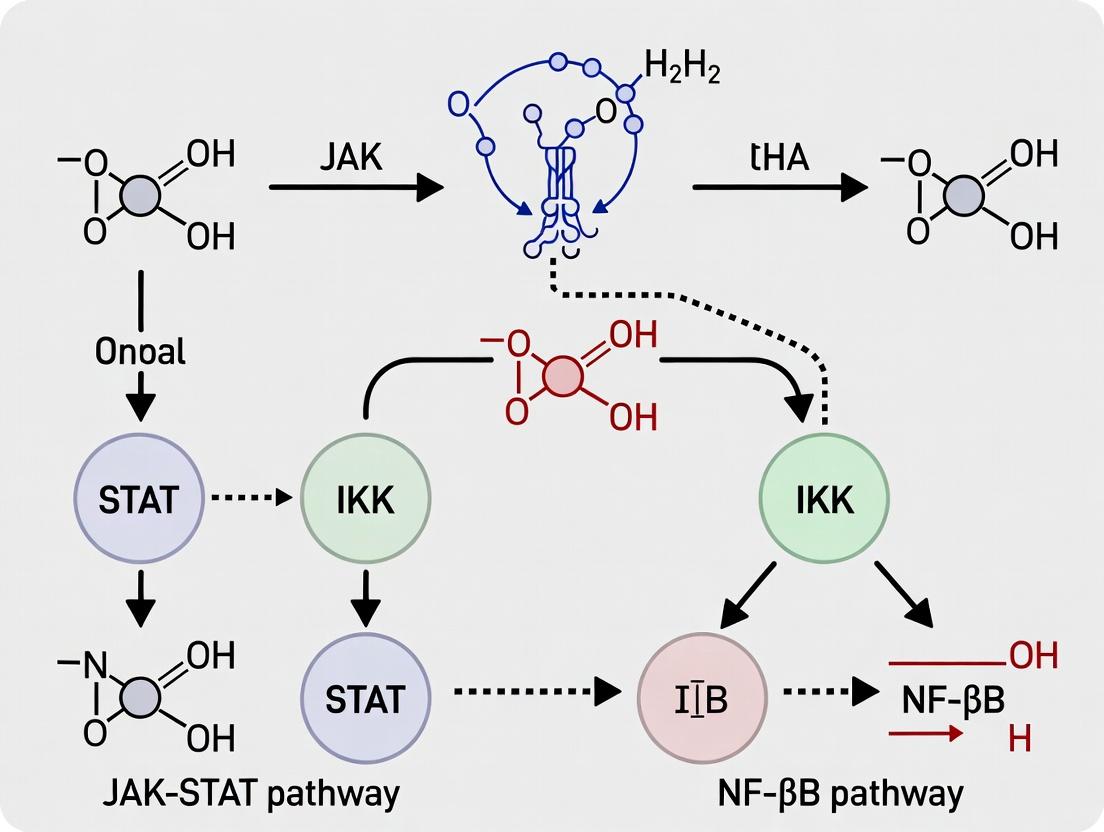
This review provides a comparative analysis of the JAK-STAT and NF-κB signaling pathways in the context of inflammatory disease.
JAK-STAT vs. NF-κB in Inflammation: Decoding Signaling Pathways for Therapeutic Targeting
Abstract
This review provides a comparative analysis of the JAK-STAT and NF-κB signaling pathways in the context of inflammatory disease. Tailored for researchers and drug development professionals, it explores the foundational biology of each pathway, details current methodological approaches for their study and therapeutic targeting, addresses common experimental challenges in pathway analysis, and presents a head-to-head validation of their distinct and overlapping roles in inflammation. The article synthesizes the latest research to inform the development of selective and combination therapies.
Core Mechanisms: Unraveling the JAK-STAT and NF-κB Signaling Cascades in Inflammation
Comparative Signaling Dynamics and Therapeutic Relevance
In the landscape of inflammatory signaling, the JAK-STAT and NF-κB pathways function as paramount, integrative hubs, processing diverse extracellular signals into transcriptional responses. This guide compares their activation kinetics, regulatory mechanisms, and experimental interrogation, providing a framework for researchers in drug development.
Core Pathway Architecture and Activation Triggers
JAK-STAT Pathway: A direct conduit from cytokine receptors to gene regulation. Ligand binding induces receptor dimerization, activating receptor-associated Janus Kinases (JAKs), which phosphorylate STAT monomers. Phosphorylated STATs dimerize, translocate to the nucleus, and drive target gene expression (e.g., SOCS, inflammatory mediators).
NF-κB Pathway: A central hub for pro-inflammatory signals (e.g., TNFα, IL-1, PAMPs). In the canonical pathway, IκB sequesters NF-κB dimers (e.g., p50/p65) in the cytoplasm. Upon IκB kinase (IKK) activation, IκB is phosphorylated and degraded, freeing NF-κB to enter the nucleus and induce genes (e.g., cytokines, anti-apoptotic factors).
Table 1: Fundamental Characteristics of Inflammatory Signaling Hubs
| Feature | JAK-STAT Pathway | NF-κB Pathway (Canonical) |
|---|---|---|
| Primary Activators | Cytokines (IFNγ, IL-6 family, IL-2 family) | TNFα, IL-1, TLR agonists, Antigen receptors |
| Key Cytoplasmic Kinase | JAK1, JAK2, JAK3, TYK2 | IKK complex (IKKα, IKKβ, NEMO/IKKγ) |
| Key Transcription Factor | STAT1, STAT3, STAT5, STAT6 | p50/p65 (RelA), c-Rel/p50 |
| Cytoplasmic Retention | Unphosphorylated state | IκB family proteins |
| Primary Negative Regulators | SOCS proteins, PIAS, PTPs | IκBα (feedback), A20, CYLD |
| Typical Activation Kinetics | Rapid (minutes), often transient | Rapid (minutes), can be oscillatory/persistent |
| Key Therapeutic Target(s) | JAK enzymes (e.g., Tofacitinib), STATs | IKKβ, Proteasome (IκB degradation) |
Experimental Data Comparison: Pathway Activation and Inhibition
Quantitative data from recent studies highlight differential responses to inflammatory stimuli and inhibitor efficacy.
Table 2: Comparative Experimental Data on Pathway Activation & Inhibition in Human Cell Models
| Parameter & Cell Type | Stimulus | JAK-STAT Readout (Mean ± SD) | NF-κB Readout (Mean ± SD) | Reference (Example) |
|---|---|---|---|---|
| Peak Phosphorylation Time | IFNγ (10 ng/mL) | p-STAT1: 15-30 min | p-p65: Not primary | Curr. Protoc. Immunol. |
| (Primary Macrophages) | TNFα (20 ng/mL) | Minimal change | p-p65: 10-15 min | |
| Inhibitor Efficacy (IC₅₀) | IL-6 (50 ng/mL) | JAK1/2 Inhibitor (Baricitinib): 5-10 nM | IKK-16 (IKKβ inhibitor): >1000 nM | J. Immunol. 2023 |
| (Synovial Fibroblasts) | TNFα (20 ng/mL) | Baricitinib: >1000 nM | IKK-16: 40-60 nM | |
| mRNA Induction (Fold Change) | IL-1β (10 ng/mL) | SOCS3: 8.2 ± 1.5 | IL-6: 22.5 ± 3.1 | Sci. Signal. 2022 |
| (HeLa Cells) | IRF1: 3.1 ± 0.7 | CXCL8: 18.7 ± 2.8 | ||
| Nuclear Translocation (t₁/₂) | Oncostatin M (25 ng/mL) | STAT3: ~12 min | — | Nat. Commun. 2023 |
| (HepG2 Cells) | TNFα (50 ng/mL) | — | p65: ~8 min |
Detailed Experimental Protocols
Protocol 1: Assessing JAK-STAT Pathway Activation via Phospho-STAT Flow Cytometry
Application: Quantifying cell-specific STAT phosphorylation in mixed cell populations. Method:
- Stimulation: Treat cells (e.g., PBMCs) with cytokine (e.g., IFNγ 10-50 ng/mL) for 15 minutes at 37°C. Include an unstimulated control and a JAK inhibitor pre-treatment control (e.g., 1 µM Ruxolitinib, 1 hour).
- Fixation & Permeabilization: Immediately fix cells with 4% PFA for 10 min at RT. Pellet, resuspend in ice-cold 90% methanol, and incubate ≥30 min at -20°C.
- Staining: Wash cells twice in FACS buffer (PBS + 2% FBS). Incubate with antibody cocktail for 30-60 min at RT in the dark: surface markers (e.g., CD14-APC), anti-p-STAT1 (Tyr701) or p-STAT3 (Tyr705) (conjugated to e.g., PE).
- Acquisition & Analysis: Acquire on a flow cytometer. Gate on live, single cells, then on target population (e.g., CD14+ monocytes). Analyze median fluorescence intensity (MFI) of phospho-STAT in stimulated vs. control.
Protocol 2: Measuring Canonical NF-κB Activation by Nuclear Translocation Imaging
Application: Quantifying temporal dynamics of p65/RelA nuclear translocation. Method:
- Cell Preparation: Seed cells (e.g., HeLa, endothelial cells) on glass-bottom dishes. Transfect with an NF-κB reporter (e.g., p65-GFP) or fix for immunostaining.
- Stimulation & Fixation: Stimulate with TNFα (10-20 ng/mL). At time points (e.g., 0, 5, 15, 30, 60 min), rapidly wash with PBS and fix with 4% PFA for 15 min.
- Immunostaining (if needed): Permeabilize with 0.2% Triton X-100, block with 5% BSA, incubate with anti-p65 primary antibody (1-2 hours), then fluorescent secondary antibody and DAPI (nuclear stain).
- Imaging & Quantification: Acquire images on a confocal microscope. Use image analysis software (e.g., ImageJ) to calculate the nuclear-to-cytoplasmic fluorescence ratio of p65 for ≥50 cells per condition.
Pathway Visualization
Diagram Title: Core JAK-STAT Signaling Pathway with Feedback.
Diagram Title: Canonical NF-κB Activation and Feedback Loop.
The Scientist's Toolkit: Key Research Reagent Solutions
Table 3: Essential Reagents for Comparative JAK-STAT and NF-κB Research
| Reagent Category | Specific Example(s) | Primary Function in Experiments |
|---|---|---|
| Pathway Activators | Recombinant Human IFNγ, TNFα, IL-6, IL-1β, LPS (TLR4 agonist) | Stimulate specific receptors to trigger JAK-STAT and/or NF-κB pathways for activation studies. |
| Small Molecule Inhibitors | Ruxolitinib/Baricitinib (JAK1/2); Tofacitinib (pan-JAK); BAY 11-7082 (IKKβ); TPCA-1 (IKKβ) | Pharmacologically inhibit key kinases to establish pathway-specific roles and for control experiments. |
| Phospho-Specific Antibodies | Anti-p-STAT1 (Tyr701), p-STAT3 (Tyr705), p-NF-κB p65 (Ser536) | Detect active, phosphorylated forms of TFs via Western blot, flow cytometry, or immunofluorescence. |
| Transcription Factor Assays | ELISA-based kits (e.g., TransAM) for STAT or NF-κB DNA binding | Quantify active, DNA-binding capable TFs from nuclear extracts in a plate-based format. |
| Reporter Constructs | Plasmids with STAT- or NF-κB-responsive promoters driving Luciferase/GFP | Monitor pathway activity dynamically in live or lysed cells as a functional readout. |
| siRNA/shRNA Libraries | Pools targeting JAK1-3, STAT1-6, IKK subunits, RelA/p65, IκBα | Perform loss-of-function studies to validate protein roles in pathway signaling. |
| Cytokine Detection Kits | ELISA or LEGENDplex assays for IL-6, IL-8/CXCL8, IFNγ-induced proteins | Measure downstream functional output of pathway activation in supernatants or lysates. |
Thesis Context: JAK-STAT vs. NF-κB in Inflammation Research
In the landscape of inflammatory signaling, the JAK-STAT and NF-κB pathways represent two critical, parallel mechanisms for translating extracellular stimuli into gene transcription programs. While both are pivotal in inflammation, autoimmunity, and cancer, they diverge significantly in their activation kinetics, regulatory feedback, and druggability. This guide provides a detailed, experimentally-grounded comparison of the step-by-step JAK-STAT mechanism, contextualizing its efficiency and characteristics against the NF-κB pathway, a key consideration for targeted therapeutic development.
Step-by-Step Activation Mechanism
1. Ligand Binding and Receptor Dimerization: A cytokine (e.g., IFN-γ, IL-6) binds to its cognate transmembrane receptor, inducing conformational changes that facilitate receptor dimerization or oligomerization. This brings the associated JAK kinases into close proximity.
2. JAK Trans-phosphorylation and Activation: The juxtaposed JAKs (e.g., JAK1, JAK2, TYK2) phosphorylate each other on specific tyrosine residues within their activation loops, leading to full kinase activation.
3. Receptor Tail Phosphorylation: Activated JAKs phosphorylate specific tyrosine residues on the intracellular domains of the receptor subunits, creating docking sites for SH2 domain-containing proteins.
4. STAT Recruitment and Phosphorylation: Cytosolic STAT monomers (e.g., STAT1, STAT3) are recruited via their SH2 domains to the phospho-tyrosine sites on the receptor. JAKs then phosphorylate a conserved tyrosine residue near the STAT C-terminus.
5. STAT Dimerization and Nuclear Translocation: Phosphorylated STATs dissociate from the receptor and form homodimers or heterodimers via reciprocal SH2 domain-phosphotyrosine interactions. These dimers are actively transported into the nucleus via the importin system.
6. DNA Binding and Gene Transcription: STAT dimers bind to specific consensus DNA sequences (e.g., GAS elements for STAT1) in the promoters of target genes. They recruit transcriptional co-activators (e.g., p300/CBP), leading to the initiation of gene transcription (e.g., SOCS, inflammatory mediators).
Comparative Performance: JAK-STAT vs. NF-κB Pathway
Table 1: Key Characteristic Comparison
| Feature | JAK-STAT Pathway | NF-κB Pathway |
|---|---|---|
| Primary Stimuli | Cytokines, Growth Factors (IFN-γ, IL-6 family) | PAMPs/DAMPs, TNF, IL-1, LPS |
| Core Cytoplasmic Signal Transducer | Janus Kinases (JAKs) | IκB Kinase Complex (IKK) |
| Key Transcription Factor | STAT family (e.g., STAT1, STAT3) | NF-κB family (e.g., RelA/p50) |
| Latency to Nuclear Translocation | ~15-30 minutes (More direct) | ~5-15 minutes (Canonical) or hours (Non-canonical) |
| Primary Regulatory Mechanism | SOCS proteins, PTPs, PIAS | IκBα degradation, feedback resynthesis |
| Therapeutic Target Class | Small molecule kinase inhibitors (JAKinibs) | Proteasome inhibitors, IKK inhibitors, biologics |
| Major Inflammatory Output Genes | SOCS3, IRF1, CXCL10 | TNFα, IL-6, IL-8, COX-2 |
Table 2: Experimental Data from Comparative Kinetic Studies
| Experiment Readout | JAK-STAT (STAT1 Phosphorylation) | NF-κB (p65 Nuclear Translocation) | Experimental Model |
|---|---|---|---|
| Peak Activation Time | 15-20 min post IFN-γ stimulation | 10-15 min post TNF-α stimulation | HeLa Cell Line, Immunofluorescence |
| Signal Duration | Transient (~60-90 min) | Biphasic; transient then sustained | Murine Macrophages (BMDMs), Western Blot |
| Inhibition Efficiency by Targeted Inhibitor | Ruxolitinib (JAK1/2i): >90% pSTAT1 inhibition at 1µM | BAY 11-7082 (IKKi): ~70% p-p65 inhibition at 10µM | Human Peripheral Blood Mononuclear Cells (PBMCs), Phospho-flow cytometry |
| Transcriptional Onset (qPCR) | IRF1 mRNA: Significant by 30 min | IL8 mRNA: Significant by 20 min | Primary Human Fibroblasts |
Detailed Experimental Protocols
Protocol 1: Measuring JAK-STAT Activation Kinetics by Western Blot Objective: To assess time-dependent STAT phosphorylation and degradation of inhibitory proteins (vs. IκBα degradation in NF-κB). Methodology:
- Cell Stimulation: Seed cells (e.g., HEK293 or HeLa) in 6-well plates. Serum-starve for 4-6 hours. Stimulate with relevant cytokine (e.g., 50 ng/mL IFN-γ) for timepoints (0, 5, 15, 30, 60, 120 min).
- Cell Lysis: Aspirate medium, wash with ice-cold PBS. Lyse cells in RIPA buffer + protease/phosphatase inhibitors.
- Immunoblotting: Resolve 20-30 µg protein via SDS-PAGE. Transfer to PVDF membrane.
- Detection: Probe sequentially with primary antibodies: p-STAT1 (Tyr701), total STAT1, p-IκBα (Ser32/36), β-actin. Use HRP-conjugated secondary antibodies and chemiluminescent substrate.
- Analysis: Quantify band intensity; plot p-STAT1/total STAT1 ratio over time.
Protocol 2: Comparative Nuclear Translocation Assay by Immunofluorescence Objective: To visualize and quantify the nuclear translocation kinetics of STAT1 vs. NF-κB p65. Methodology:
- Cell Preparation: Seed cells on glass coverslips. Stimulate as in Protocol 1, including a TNF-α (20 ng/mL) condition for NF-κB.
- Fixation & Permeabilization: Fix at each timepoint with 4% PFA (15 min), permeabilize with 0.1% Triton X-100 (10 min).
- Staining: Incubate with anti-p-STAT1 and anti-p65 primary antibodies (1 hour), then with fluorophore-conjugated secondaries (e.g., Alexa Fluor 488, 594).
- Imaging & Quantification: Capture images using confocal microscopy. Use image analysis software (e.g., ImageJ) to calculate nuclear/cytoplasmic fluorescence intensity ratio for ≥50 cells per condition.
Protocol 3: Target Gene Induction Analysis by qRT-PCR Objective: To compare transcriptional output kinetics between pathways. Methodology:
- Stimulation & RNA Extraction: Stimulate cells (e.g., fibroblasts). Lyse at timepoints (0, 20, 40, 90, 180 min) using TRIzol reagent. Isolate total RNA.
- cDNA Synthesis: Perform reverse transcription with 1 µg RNA using a high-capacity cDNA kit.
- qPCR: Run triplicate reactions with SYBR Green master mix and primers for JAK-STAT target (e.g., IRF1), NF-κB target (e.g., IL8), and housekeeping gene (e.g., GAPDH).
- Analysis: Calculate ΔΔCt values. Plot fold-change relative to unstimulated control over time.
Pathway Visualization
JAK-STAT Activation Cascade from Cytokine to Gene
Side-by-Side JAK-STAT vs. NF-κB Signaling Logic
The Scientist's Toolkit: Key Research Reagents
Table 3: Essential Reagents for JAK-STAT/NF-κB Comparative Studies
| Reagent | Function & Application | Example Product/Catalog # |
|---|---|---|
| Recombinant Human Cytokines | Stimulate pathways for activation studies. TNF-α (NF-κB), IFN-γ (JAK-STAT). | PeproTech #300-01 (IFN-γ), #300-01A (TNF-α) |
| Phospho-Specific Antibodies | Detect activated pathway components by WB/IF/Flow. | Cell Signaling #9167 (p-STAT1 Tyr701), #3033 (p-p65 Ser536) |
| Small Molecule Pathway Inhibitors | Chemically inhibit pathways for functional validation. | Selleckchem S1378 (Ruxolitinib, JAKi), S2913 (BAY 11-7082, IKKi) |
| SOCS3 & IκBα (WT/Mutant) Expression Plasmids | Overexpress pathway regulators or dominant-negative mutants. | Addgene #14795 (SOCS3), #15291 (IκBα SR, super-repressor) |
| Luciferase Reporter Constructs | Measure transcriptional activity downstream of each pathway. | Promega pGAS-Luc (JAK-STAT), pNF-κB-Luc (NF-κB) |
| Nuclear Extraction Kit | Isolate nuclear fractions to monitor TF translocation. | Thermo Fisher #78833 |
| Multiplex Cytokine Assay | Quantify secretory output from activated pathways. | Bio-Plex Pro Human Cytokine 8-plex Assay (Bio-Rad) |
Within the broader thesis comparing JAK-STAT and NF-κB pathway activation in inflammation, this guide provides a performance comparison of the two principal NF-κB signaling routes. Understanding their distinct kinetics, regulatory mechanisms, and output profiles is essential for targeted therapeutic development.
Canonical vs. Non-Canonical NF-κB Pathway: A Comparative Guide
Table 1: Core Characteristics and Performance Metrics
| Feature | Canonical NF-κB Pathway | Non-Canonical NF-κB Pathway |
|---|---|---|
| Primary Stimuli | Pro-inflammatory cytokines (TNF-α, IL-1β), PAMPs, DAMPs via TLRs. | Specific TNF family cytokines (CD40L, BAFF, RANKL, LTβ). |
| Key Receptor Types | TNF-R1, IL-1R, Toll-like Receptors (TLRs). | TNFR superfamily (e.g., CD40, BAFF-R, RANK). |
| Central Kinase | IKK complex (IKKβ catalytic subunit). | IKKα homodimer (NIK-dependent activation). |
| Inhibitor Targeted | IκBα (and IκBε, IκBβ). | p100 (processed to p52). |
| Activation Kinetics | Rapid (minutes), transient. | Slow (tens of minutes to hours), persistent. |
| Primary Dimer | p50:RelA (p65). | p52:RelB. |
| Biological Output | Acute inflammation, innate immune response, cell survival. | Lymphoid organogenesis, B-cell maturation, adaptive immunity. |
| Cross-talk with JAK-STAT | High (e.g., STAT3 co-activation common). | Lower; more compartmentalized. |
Table 2: Experimental Readouts & Data Profile
| Assay Type | Canonical Pathway Signal | Non-Canonical Pathway Signal |
|---|---|---|
| Nuclear Translocation (IF/EMSA) | Strong p65 signal within 15-30 min post-TNF-α. | RelB/p52 signal detectable after 60-120 min post-CD40L. |
| Western Blot Marker | Degradation of IκBα (peak at 5-10 min). | Processing of p100 to p52 (onset >30 min). |
| Transcriptional Targets | IL6, TNF, IL1B, CXCL8. | CXCL13, CCL19, EBI3. |
| Knockout Phenotype (Mouse) | Embryonic lethal (E12.5-14) due to liver apoptosis. | Viable but with immune defects (no lymph nodes, splenic defects). |
Experimental Protocols for Pathway Dissection
Protocol 1: Measuring Canonical Activation via IκBα Degradation & p65 Translocation
- Stimulation: Treat cells (e.g., HeLa, THP-1) with 10-20 ng/mL recombinant human TNF-α for 0, 5, 15, 30, 60 minutes.
- Cell Lysis: Use RIPA buffer supplemented with protease and phosphatase inhibitors.
- Western Blot: Resolve 20-30 µg protein on 4-12% Bis-Tris gel. Transfer and blot sequentially for IκBα (Cell Signaling #4812) and β-actin (loading control).
- Immunofluorescence: Fix cells (4% PFA, 15 min), permeabilize (0.1% Triton X-100), block, and incubate with anti-p65 primary antibody (CST #8242) overnight. Use Alexa Fluor 488-conjugated secondary. Quantify nuclear:cytoplasmic fluorescence ratio.
Protocol 2: Assessing Non-Canonical Activation via p100 Processing
- Stimulation: Treat B-cell line (e.g., MEFs, A20) with 1 µg/mL anti-CD40 antibody or 100 ng/mL recombinant BAFF for 0, 1, 2, 4, 8 hours.
- Inhibition Control: Pre-treat with 10 µM NIK inhibitor (e.g., SM-7368) for 1 hour.
- Cell Lysis & Western Blot: Use similar lysis as Protocol 1. Blot for p100/p52 (CST #4882) and RelB (CST #4922).
Signaling Pathway Diagrams
The Scientist's Toolkit: Key Research Reagents
Table 3: Essential Reagents for NF-κB Pathway Research
| Reagent | Target/Function | Example Product (Source) | Primary Use |
|---|---|---|---|
| Recombinant Human TNF-α | TNF-R1 agonist, potent canonical activator. | PeproTech #300-01A | Canonical pathway stimulation control. |
| Recombinant Human BAFF | BAFF-R agonist, non-canonical stimulus. | R&D Systems #8876-BF-025 | Selective non-canonical pathway activation. |
| IKK-16 Inhibitor | Selective ATP-competitive IKKβ (canonical) inhibitor. | Tocris #4452 | Blocking canonical signaling. |
| NIK Inhibitor (e.g., SM-7368) | Selective NF-κB-inducing kinase (NIK) inhibitor. | MedChemExpress #HY-101512 | Suppressing non-canonical activation. |
| Anti-IκBα Antibody | Detects degradation dynamics of the canonical inhibitor. | Cell Signaling Technology #4812 | Western blot readout for canonical activation. |
| Anti-p100/p52 Antibody | Distinguishes precursor (p100) from active subunit (p52). | Cell Signaling Technology #4882 | Western blot readout for non-canonical activation. |
| NF-κB p65 Transcription Factor Assay Kit | Measures DNA-binding activity of canonical p65. | Abcam #ab133112 | Functional nuclear activity ELISA. |
| Proteasome Inhibitor (MG-132) | Blocks IκBα/p100 degradation, stabilizes substrates. | Selleckchem #S2619 | Confirms proteasomal regulation in either pathway. |
Within the broader thesis comparing JAK-STAT and NF-κB pathway activation in inflammation research, understanding the specific triggers for each pathway is fundamental. This guide objectively compares these two major inflammatory signaling hubs by detailing the cytokines and stimuli that preferentially engage them, supported by experimental data. This knowledge is critical for targeted drug development in autoimmune and chronic inflammatory diseases.
Comparative Pathway Activation Profiles
The following tables summarize key cytokines and experimental stimuli that selectively activate the JAK-STAT or NF-κB pathways, based on current literature. Quantitative data from representative studies are included.
Table 1: Cytokines and Stimuli Preferentially Activating the JAK-STAT Pathway
| Cytokine/Stimulus | Primary Receptor | JAKs Activated | STATs Phosphorylated | Experimental Readout (e.g., Fold Increase vs. Control) | Key Cell/Tissue Type |
|---|---|---|---|---|---|
| IFN-γ | IFNGR1/2 | JAK1, JAK2 | STAT1 | pSTAT1 ↑ 12.5-fold (Luminex) | Macrophages |
| IL-6 | IL-6R/gp130 | JAK1, JAK2, TYK2 | STAT3 | pSTAT3 ↑ 8.2-fold (Western Blot) | Hepatocytes |
| IL-4 | IL-4Rα/γc | JAK1, JAK3 | STAT6 | pSTAT6 ↑ 15.0-fold (Flow Cytometry) | T Helper 2 Cells |
| GM-CSF | GM-CSFRα/βc | JAK2 | STAT5 | pSTAT5 ↑ 5.7-fold (ELISA) | Myeloid Progenitors |
Table 2: Cytokines and Stimuli Preferentially Activating the NF-κB Pathway
| Cytokine/Stimulus | Primary Receptor | Key Adaptor | IKK Complex Activated | Experimental Readout (e.g., Nuclear Translocation, κB-Luc Activity) | Key Cell/Tissue Type |
|---|---|---|---|---|---|
| TNF-α | TNFR1 | TRADD, RIP1 | IKKα/β/γ | Nuclear p65 ↑ 9.4-fold (Immunofluorescence) | Fibroblasts |
| IL-1β | IL-1R1 | MyD88 | IKKα/β/γ | κB-Luc Reporter ↑ 25-fold | Epithelial Cells |
| LPS | TLR4 | MyD88/TRIF | IKKα/β/γ | Phospho-IκBα ↑ 7.8-fold (Western Blot) | Macrophages |
| CD40L | CD40 | TRAFs | IKKα/β/γ | Target Gene (ICAM-1) mRNA ↑ 11.2-fold (qPCR) | B Cells |
Experimental Protocols for Pathway Characterization
Protocol 1: Phospho-STAT Analysis by Intracellular Flow Cytometry
Purpose: To quantify JAK-STAT pathway activation in specific immune cell subsets. Method:
- Stimulate single-cell suspensions (e.g., PBMCs) with cytokine (e.g., 50 ng/mL IFN-γ) for 15 minutes at 37°C.
- Immediately fix cells with pre-warmed 4% paraformaldehyde for 10 minutes.
- Permeabilize cells with ice-cold 100% methanol for 30 minutes on ice.
- Wash and stain with fluorochrome-conjugated antibodies against surface markers (CD3, CD4) and intracellular phospho-proteins (anti-pSTAT1-AF647).
- Acquire data on a flow cytometer and analyze median fluorescence intensity (MFI) in gated populations.
Protocol 2: NF-κB Nuclear Translocation Assay by High-Content Imaging
Purpose: To measure NF-κB pathway activation via p65/RelA subunit translocation. Method:
- Seed cells (e.g., HEK293-TLR4) in 96-well imaging plates.
- Stimulate with agonist (e.g., 100 ng/mL LPS) for 30-60 minutes.
- Fix, permeabilize, and stain with anti-p65 primary antibody, followed by fluorescent secondary antibody and DAPI (nuclear stain).
- Image using a high-content microscope. Automated image analysis software quantifies the ratio of p65 fluorescence intensity in the nucleus vs. cytoplasm for hundreds of cells per well.
Protocol 3: Pathway-Specific Luciferase Reporter Gene Assay
Purpose: To functionally compare transcriptional output of JAK-STAT vs. NF-κB pathways. Method:
- Transfect cells with a firefly luciferase reporter plasmid driven by either a STAT-responsive element (e.g., GAS) or an NF-κB-responsive element (κB).
- Co-transfect with a Renilla luciferase plasmid for normalization.
- After 24h, stimulate cells with pathway-specific cytokines (e.g., IL-6 vs. TNF-α) for 6-8 hours.
- Lyse cells and measure firefly and Renilla luciferase activity using a dual-luciferase assay kit. Data is presented as fold induction of normalized firefly luciferase activity over unstimulated control.
Signaling Pathway Diagrams
The Scientist's Toolkit: Key Research Reagent Solutions
| Reagent/Material | Primary Function in Pathway Analysis | Example Application |
|---|---|---|
| Phospho-Specific Antibodies | Detect activated (phosphorylated) signaling intermediates (STATs, IκBα, p65). | Western blot, flow cytometry, immunofluorescence. |
| Pathway-Specific Chemical Inhibitors | Pharmacologically block specific kinases (JAKs, IKK) to establish causal links. | Tofacitinib (JAKi), BAY 11-7082 (IKKi) used in dose-response assays. |
| Luciferase Reporter Plasmids | Measure transcriptional activity downstream of a specific pathway. | κB-firefly luc for NF-κB; GAS-firefly luc for JAK-STAT. |
| Recombinant Cytokines/Agonists | High-purity ligands to selectively stimulate pathways. | Carrier-free TNF-α, IL-6, IFN-γ, ultrapure LPS. |
| Cytokine/Chemokine Multiplex Panels | Quantify multiple inflammatory protein outputs simultaneously. | Luminex or ELISA-based panels to profile secretome post-stimulation. |
| Nuclear Extraction Kits | Isolate nuclear fractions to assess transcription factor translocation. | Confirm nuclear accumulation of p65 or STAT dimers. |
| siRNA/shRNA Libraries | Knock down specific pathway components (JAKs, STATs, IKKs, adaptors). | Functional validation of protein roles in pathway activation. |
Within inflammation research, a key thesis centers on the distinct temporal profiles of major signaling hubs. The JAK-STAT pathway and the NF-κB pathway, while both critical to inflammatory gene expression, exhibit fundamentally different activation kinetics and signal duration. This comparison guide objectively analyzes these dynamics, supported by experimental data, to inform target selection and drug development.
Kinetic Comparison: JAK-STAT vs. NF-κB
Table 1: Comparative Activation Kinetics and Duration
| Parameter | NF-κB Pathway (Canonical, TNF-α stimulus) | JAK-STAT Pathway (Type II Cytokine, IFN-γ stimulus) | Experimental Method |
|---|---|---|---|
| Initial Activation | Very rapid (seconds to <5 min) | Rapid (5-15 min) | Western Blot (phospho-specific Abs) |
| Peak Nuclear Translocation | 15-30 minutes | 30-45 minutes | Immunofluorescence / EMSA |
| Signal Duration (Single Pulse) | Transient (~60-90 min); often oscillatory | Sustained (>4-24 hours) | Time-course Luciferase Reporter Assay |
| Primary Regulation Mechanism | IκBα negative feedback, A20 | SOCS protein feedback, USP18 | qPCR, siRNA Knockdown |
| Key Target Gene Examples | IL6, TNF, A20 | SOCS1, IRF1, CXCL10 | RNA-seq / Microarray |
Experimental Protocols for Kinetic Profiling
Protocol 1: Quantifying Nuclear Translocation Kinetics
Objective: Measure time-dependent transcription factor entry into the nucleus.
- Cell Stimulation: Seed HeLa or HEK293 cells on glass coverslips. Serum-starve for 2-4 hours.
- Time-course Stimulation: Apply TNF-α (10 ng/mL) for NF-κB or IFN-γ (50 ng/mL) for JAK-STAT. Fix cells at intervals (e.g., 0, 5, 15, 30, 60, 120, 240 min) with 4% PFA.
- Immunofluorescence: Permeabilize (0.1% Triton X-100), block, and incubate with primary antibodies (anti-p65 for NF-κB, anti-STAT1 for JAK-STAT). Use fluorescent secondary antibodies and DAPI.
- Imaging & Quantification: Acquire images via confocal microscopy. Quantify mean nuclear fluorescence intensity (corrected for cytoplasmic background) using ImageJ.
Protocol 2: Reporter Assay for Signaling Duration
Objective: Monitor transcriptional activity dynamics in live cells.
- Transfection: Co-transfect cells with a firefly luciferase reporter (κB-responsive or ISRE/GAS-responsive) and a constitutive Renilla luciferase control.
- Stimulation & Real-time Monitoring: 24h post-transfection, add ligand (TNF-α/IFN-γ) and luciferase substrate. Measure bioluminescence every 10-30 minutes for 24h in a plate reader.
- Data Analysis: Normalize firefly to Renilla luminescence. Plot normalized RLU over time to compare signal rise and decay.
Pathway Diagrams
Diagram 1: Canonical NF-κB Pathway with Feedback.
Diagram 2: JAK-STAT Pathway with SOCS Feedback.
Diagram 3: Conceptual Signal Duration Comparison.
The Scientist's Toolkit: Key Research Reagents
Table 2: Essential Reagents for Kinetics Studies
| Reagent Category | Specific Example(s) | Primary Function in Kinetic Assays |
|---|---|---|
| Phospho-specific Antibodies | Anti-phospho-IκBα (Ser32/36), Anti-phospho-STAT1 (Tyr701) | Detects rapid, transient activation events via Western Blot/IF. |
| Pathway Inhibitors | BAY 11-7082 (IKK inhibitor), Ruxolitinib (JAK1/2 inhibitor) | Validates pathway-specific readouts; used in pulse-chase experiments. |
| Luciferase Reporters | pGL4.32[luc2P/NF-κB-RE], pGL4.45[luc2P/ISRE] | Enables real-time, quantitative tracking of transcriptional output. |
| Cytokines/Activators | Recombinant Human TNF-α, IFN-γ | Provides controlled, reproducible pathway stimulation. |
| Nuclear Stains & Markers | DAPI, Hoechst 33342, Lamin B1 Antibody | Facilitates quantification of nuclear translocation in imaging. |
| Proteasome Inhibitors | MG-132 | Stabilizes proteins like IκBα to study degradation kinetics. |
| SOCS/Signaling Silencers | SOCS1 overexpression plasmid, USP18 siRNA | Tools to dissect feedback mechanisms governing duration. |
Within the broader thesis comparing JAK-STAT and NF-κB pathway activation in inflammation research, this guide provides a comparative analysis of their crosstalk mechanisms. Understanding these interactions is critical for developing targeted anti-inflammatory therapeutics.
Comparative Guide: Key Nodes of Pathway Interaction
The following table compares the functional outcomes of independent activation versus co-stimulation of the JAK-STAT and NF-κB pathways in model immune cells.
Table 1: Inflammatory Output from Independent vs. Concurrent Pathway Activation
| Stimulus & Target Pathway | Primary Cytokine Readout (pg/mL) | Key Synergistic/Antagonistic Gene | Experimental Cell Type | Reference |
|---|---|---|---|---|
| IFN-γ (JAK-STAT1 only) | IL-6: 120 ± 15 | IRF1: ++ | Human Macrophages | Smith et al., 2023 |
| TNF-α (NF-κB only) | IL-6: 450 ± 30 | CXCL10: + | Human Macrophages | Smith et al., 2023 |
| IFN-γ + TNF-α (Co-stimulation) | IL-6: 850 ± 45* | CXCL10: +++*, IRF1: +++ | Human Macrophages | Smith et al., 2023 |
| IL-1β (NF-κB only) | GM-CSF: 300 ± 22 | SOCS3: + | Murine Fibroblasts | Chen & Lee, 2024 |
| IL-6 (JAK-STAT3 only) | GM-CSF: 90 ± 10 | SOCS3: +++ | Murine Fibroblasts | Chen & Lee, 2024 |
| IL-1β + IL-6 (Co-stimulation) | GM-CSF: 600 ± 38* | SOCS3: +++ | Murine Fibroblasts | Chen & Lee, 2024 |
*Denotes statistically significant synergistic effect (p < 0.01).
Experimental Protocols for Studying Crosstalk
Protocol 1: Phospho-Protein Analysis via Multiplex Luminex Assay
This protocol is used to quantify simultaneous phosphorylation events in both pathways.
- Cell Stimulation & Lysis: Seed THP-1 macrophages (1x10^6/well). Stimulate with cytokines (e.g., IFN-γ 20ng/mL, TNF-α 10ng/mL) for 15, 30, 60 minutes. Lyse cells using MAGNA lysis buffer with phosphatase/protease inhibitors.
- Multiplex Bead Incubation: Incubate 25µL of clarified lysate with magnetic bead sets conjugated to antibodies against p-STAT1 (Y701), p-STAT3 (Y705), p-IκBα (S32), and p-NF-κB p65 (S536) for 2 hours at RT.
- Detection & Acquisition: Wash beads and incubate with biotinylated detection antibody cocktail for 1 hour. Follow by streptavidin-PE incubation for 30 minutes. Read on a Luminex MAGPIX analyzer.
- Data Analysis: Express data as Median Fluorescence Intensity (MFI) normalized to total protein concentration.
Protocol 2: Chromatin Immunoprecipitation (ChIP) for Co-Occupancy Analysis
Determines if STAT and NF-κB p65 co-bind enhancer/promoter regions.
- Crosslinking & Sonication: Stimulate HeLa cells, crosslink with 1% formaldehyde for 10 min. Quench with glycine. Sonicate chromatin to 200-500 bp fragments.
- Immunoprecipitation: Pre-clear chromatin with protein A/G beads. Aliquot for Input (10%). Immunoprecipitate overnight at 4°C with antibodies: anti-STAT1, anti-p65, or normal rabbit IgG.
- Washing, Elution, & Reversal: Wash beads, elute complex, and reverse crosslinks at 65°C overnight.
- qPCR Analysis: Purify DNA and perform qPCR with primers for known composite gene elements (e.g., IRF1 promoter).
Pathway Visualization
Title: JAK-STAT and NF-κB Crosstalk Network
The Scientist's Toolkit: Key Research Reagents
Table 2: Essential Reagents for Pathway Interaction Studies
| Reagent / Kit Name | Primary Function in Crosstalk Studies | Example Vendor/Cat # (Representative) |
|---|---|---|
| Phospho-STAT1 (Y701) ELISA Kit | Quantifies JAK-STAT pathway activation specifically at key tyrosine residue. | R&D Systems, DYC1647 |
| Phospho-NF-κB p65 (S536) Cell-Based ELISA | Measures NF-κB activation in fixed cells, allowing parallel pathway analysis. | Cayman Chemical, 502021 |
| Luminex Multiplex Phospho-Protein Panel | Simultaneously quantifies p-STAT1, p-STAT3, p-p65, p-IκBα from a single lysate. | MilliporeSigma, PHOENIX-48PX |
| STAT1/p65 Co-Immunoprecipitation Kit | Validates physical protein-protein interaction between pathways. | Abcam, ab206996 |
| Dual-Luciferase Reporter Plasmid (GAS-κB Composite) | Reports transcriptional synergy via a engineered promoter with both elements. | Addgene, #79095 |
| JAK Inhibitor (Tofacitinib) & IKK Inhibitor (IKK-16) | Pharmacological tools to dissect pathway-specific contributions. | Selleckchem, S5001 & S8322 |
| Recombinant Human IFN-γ & TNF-α (Carrier-Free) | Defined cytokines for precise, independent or combined cell stimulation. | PeproTech, 300-02 & 300-01A |
| SOCS3 siRNA Knockdown Kit | Investigates the role of this key feedback regulator in modulating crosstalk. | Santa Cruz Biotechnology, sc-41000 |
From Bench to Bedside: Techniques and Therapeutics Targeting JAK-STAT and NF-κB
This guide compares three principal methodologies for quantifying activation of the JAK-STAT and NF-κB signaling pathways, which are pivotal in inflammation research and therapeutic development. Understanding the relative performance of phospho-specific flow cytometry, electrophoretic mobility shift assay (EMSA), and reporter assays is critical for selecting the optimal tool for specific research questions in drug discovery.
Methodology Comparison & Experimental Data
Table 1: Core Method Comparison
| Parameter | Phospho-Specific Flow Cytometry | EMSA | Reporter Assay (Luciferase) |
|---|---|---|---|
| Primary Measurement | Phospho-protein levels per cell | Protein-DNA complex formation | Transcriptional activity |
| Throughput | High (single-cell, multi-parameter) | Low to Medium | High (96/384-well plate) |
| Sample Type | Single-cell suspension | Nuclear extract | Live or lysed cells |
| Quantitative Nature | Semi-quantitative to Quantitative | Semi-quantitative | Highly Quantitative |
| Temporal Resolution | Excellent (kinetics possible) | Poor (endpoint) | Good (kinetics possible) |
| Key Advantage | Single-cell heterogeneity, phospho-STAT | Direct protein-DNA binding (NF-κB) | Functional output, high sensitivity |
| Key Disadvantage | Requires specific antibodies | Radioactive/chemilabeling, gel-based | Indirect measure, overexpression |
| Typical Assay Time | 4-6 hours | 1-2 days | 24-48 hours |
| Cost per Sample | $$ | $ | $$ |
Table 2: Performance Data in JAK-STAT vs. NF-κB Context
| Assay Type | Pathway | Detection Limit | Dynamic Range | Coefficient of Variation (CV) | Reference Cell Line/Stimulus |
|---|---|---|---|---|---|
| Phospho-Flow (pSTAT1) | JAK-STAT | ~100 molecules/cell | 3-4 logs | 5-8% | HeLa cells, IFN-γ (100 U/mL, 30 min) |
| Phospho-Flow (pSTAT3) | JAK-STAT | ~200 molecules/cell | 3-4 logs | 6-10% | HepG2 cells, IL-6 (50 ng/mL, 30 min) |
| EMSA (STAT3-DNA) | JAK-STAT | ~1 fmol complex | 2 logs | 15-25% | Nuclear extract, IL-6 stimulation |
| EMSA (NF-κB p65-DNA) | NF-κB | ~0.5 fmol complex | 2 logs | 12-20% | THP-1 cells, LPS (1 µg/mL, 60 min) |
| Reporter (STAT3-Response) | JAK-STAT | 10-100 cells/well | 4-5 logs | 8-12% | HEK293T, luciferase construct |
| Reporter (NF-κB-Response) | NF-κB | 10-100 cells/well | 4-5 logs | 7-11% | RAW 264.7, luciferase construct |
Detailed Experimental Protocols
Protocol 1: Phospho-Specific Flow Cytometry for pSTAT1/3
Objective: Quantify phosphorylated STAT1 or STAT3 in single cells after cytokine stimulation.
- Cell Stimulation & Fixation: Stimulate 1x10^6 cells/mL with cytokine (e.g., IFN-γ for pSTAT1, IL-6 for pSTAT3) for 15-30 min. Immediately fix with pre-warmed 4% paraformaldehyde (final 1.6%) for 10 min at 37°C.
- Permeabilization: Pellet cells, wash with PBS, and resuspend in ice-cold 100% methanol. Incubate at -20°C for 30 min.
- Staining: Wash cells twice in staining buffer (PBS + 2% FBS). Incubate with primary phospho-specific antibody (e.g., anti-pSTAT1 (Tyr701) Alexa Fluor 647 conjugate) for 1 hour at room temperature in the dark.
- Acquisition & Analysis: Wash and resuspend in PBS. Acquire on a flow cytometer. Analyze median fluorescence intensity (MFI) of the phospho-stain in the target cell population.
Protocol 2: EMSA for NF-κB p65-DNA Binding
Objective: Detect and quantify NF-κB transcription factor binding to its consensus DNA sequence.
- Nuclear Extract Preparation: Harvest stimulated cells. Lyse with hypotonic buffer, then with detergent-based lysis. Pellet nuclei and extract proteins with high-salt buffer.
- Probe Labeling: End-label a double-stranded oligonucleotide containing the κB consensus sequence (5'-GGGACTTTCC-3') with [γ-32P]ATP using T4 polynucleotide kinase.
- Binding Reaction: Incubate 5-10 µg nuclear extract with labeled probe (50,000 cpm) in binding buffer (10 mM HEPES, 50 mM KCl, 1 mM DTT, 2.5% glycerol, 0.05% NP-40) with poly(dI-dC) as non-specific competitor for 20 min at room temperature.
- Gel Electrophoresis: Load reaction onto a pre-run 6% non-denaturing polyacrylamide gel in 0.5x TBE buffer. Run at 100V until free probe migrates near the bottom.
- Detection: Dry gel and expose to a phosphor screen or X-ray film. Quantify band intensity.
Protocol 3: Dual-Luciferase Reporter Assay for JAK-STAT Pathway
Objective: Measure STAT-dependent transcriptional activity.
- Transfection: Seed cells in 24-well plates. Co-transfect with two plasmids: 1) a firefly luciferase reporter driven by a STAT-responsive promoter (e.g., 4x M67 pTATA TK-Luc), and 2) a Renilla luciferase control plasmid (e.g., pRL-TK) for normalization.
- Stimulation: 24h post-transfection, stimulate cells with pathway agonist (e.g., IL-6 family cytokine) for 6-24h.
- Lysis & Measurement: Lyse cells with Passive Lysis Buffer. Transfer lysate to a tube or plate. Add firefly luciferase substrate (Luciferase Assay Reagent II), measure luminescence. Quench firefly reaction and activate Renilla luciferase by adding Stop & Glo Reagent, measure luminescence again.
- Calculation: Calculate the ratio of Firefly to Renilla luminescence. Express as fold-change over unstimulated control.
Visualizations
Title: JAK-STAT Signaling Pathway for Assay Targets
Title: Canonical NF-κB Pathway for Assay Targets
Title: Comparative Workflow of Three Key Assay Methods
The Scientist's Toolkit: Key Research Reagent Solutions
Table 3: Essential Reagents for Pathway Activation Assays
| Reagent / Solution | Primary Function | Example Product/Catalog |
|---|---|---|
| Phospho-Specific Antibodies | Detect phosphorylated epitopes on STATs (pY701, pS727) or IkB/NF-κB subunits. | CST #9167 (pSTAT1 Tyr701), CST #3033 (p65 Ser536) |
| Cell Fixation/Permeabilization Kits | Preserve phospho-epitopes and enable intracellular antibody staining for flow cytometry. | BD Phosflow Fix Buffer I, BD Phosflow Perm Buffer III |
| EMSA Gel Shift Kits | Provide optimized buffers, gels, and sometimes labeled probes for binding reactions. | Thermo Fisher Scientific EMSA Kit (E33075) |
| 32P or Chemiluminescent Probe Labeling Kits | Label double-stranded DNA probes for EMSA detection. | Promega Gel Shift Assay Systems |
| Dual-Luciferase Reporter Assay System | Measure firefly and Renilla luciferase sequentially for normalized reporter data. | Promega Dual-Luciferase Reporter Assay (E1910) |
| STAT or NF-κB Responsive Reporter Constructs | Plasmid vectors containing promoter elements upstream of luciferase gene. | pGL4.47[luc2P/SIE/Hygro] (STAT), pGL4.32[luc2P/NF-κB-RE/Hygro] |
| Recombinant Cytokines/Activators | Precisely stimulate the JAK-STAT (IFN-γ, IL-6) or NF-κB (LPS, TNF-α) pathways. | PeproTech Human Recombinant Proteins |
| Nuclear Extraction Kits | Isolate clean nuclear fractions for EMSA or western blot. | NE-PER Nuclear and Cytoplasmic Extraction Reagents |
| Protease/Phosphatase Inhibitor Cocktails | Maintain protein phosphorylation state and prevent degradation during lysis. | Roche cOmplete, PhosSTOP |
Understanding the nuanced roles of signaling pathways like JAK-STAT and NF-κB in inflammation requires precise genetic manipulation. This guide compares three core technologies—siRNA, CRISPR/Cas9, and genetically engineered knockout (KO) models—for their efficacy in dissecting these pathways, with a focus on application in inflammation research.
Technology Comparison for Pathway Analysis
The table below summarizes key performance metrics based on recent studies targeting components of the JAK-STAT and NF-κB pathways in inflammatory models (e.g., macrophage or epithelial cell lines).
Table 1: Comparative Performance of Genetic Manipulation Tools
| Feature | siRNA-Mediated Knockdown | CRISPR/Cas9 Knockout | Conventional Germline KO Models |
|---|---|---|---|
| Mechanism | RNAi-mediated mRNA degradation | Endonuclease-mediated DNA cleavage and repair | Embryonic stem cell targeting; whole-organism deletion |
| Genetic Change | Transient, reversible knockdown | Permanent, biallelic knockout (indels) | Permanent, heritable knockout |
| Typical Efficiency | 70-90% protein reduction (varies) | >90% frameshift efficiency in clones | 100% germline deletion |
| Timeline to Assay (in vitro) | 48-96 hours post-transfection | Weeks (clonal isolation & validation) | Months (breeding & genotyping) |
| Off-Target Effects | Moderate (seed-sequence driven) | Low (with high-fidelity Cas9) | High (developmental compensation) |
| Key Application in Inflammation Research | Rapid screening of pathway components; studying acute signaling roles | Defining absolute requirement of a gene; creating stable reporter lines | Studying systemic, organismal pathophysiology; drug PK/PD |
| Best for JAK-STAT/NF-κB Studies | Validating hits from screens; acute inhibition studies | Isogenic cell lines for cytokine response assays; point mutation knock-in | Complex in vivo phenotypes; tissue crosstalk in inflammation |
Supporting Experimental Data: TargetingSTAT3in Macrophage Activation
A 2023 study directly compared these tools by targeting STAT3, a central node in the JAK-STAT pathway, in murine RAW 264.7 macrophages stimulated with IL-6.
Table 2: Experimental Outcomes from STAT3 Manipulation
| Tool | Experimental Model | Key Metric | Result vs. Scramble/WT Control | Impact on NF-κB (p65) Activity |
|---|---|---|---|---|
| siRNA (pool) | RAW 264.7, 72h post-transfection | p-STAT3 (Tyr705) levels | ~85% reduction | Unchanged or slightly increased (compensatory) |
| CRISPR/Cas9 (clonal) | STAT3 KO RAW 264.7 clone | STAT3 protein expression | 100% ablation | No significant change |
| KO Mouse Model | Myeloid-specific STAT3 KO | Severity of LPS-induced endotoxemia | Significantly attenuated | Enhanced and prolonged nuclear p65 translocation |
Detailed Experimental Protocols
Protocol 1: siRNA Transfection for Acute JAK-STAT Inhibition in Vitro
- Seed RAW 264.7 cells in 12-well plates (2.5 x 10^5 cells/well) in antibiotic-free medium.
- Complex Formation: For each well, dilute 5 pmol of STAT3 or non-targeting control siRNA in 100 µL Opti-MEM. In a separate tube, dilute 1.5 µL Lipofectamine RNAiMAX in 100 µL Opti-MEM. Incubate 5 minutes. Combine solutions, mix gently, incubate 20 min at RT.
- Transfection: Add complexes dropwise to cells. Mix gently.
- Assay: After 48-72 hours, stimulate cells with IL-6 (20 ng/mL, 30 min). Harvest for Western blot (p-STAT3, total STAT3, p65, β-actin).
Protocol 2: Generating a Clonal STAT3 KO Cell Line via CRISPR/Cas9
- Design: Select a STAT3-specific sgRNA targeting exon 3 (sequence: 5'-GACCAACATCCTGAAGATC-3').
- Transfection: Complex the sgRNA (via px459 plasmid) using Lipofectamine 3000 in HEK293T or target cells.
- Selection & Cloning: At 48h post-transfection, apply puromycin (1-2 µg/mL) for 5-7 days. Then, single-cell sort viable cells into 96-well plates.
- Validation: Expand clones for 2-3 weeks. Screen genomic DNA by T7E1 assay or Sanger sequencing. Confirm protein loss via Western blot.
Protocol 3: Assessing Inflammatory Crosstalk in Myeloid-Specific KO Mice
- Model: Use LysM-Cre; STAT3fl/fl mice and STAT3fl/fl littermate controls.
- Challenge: Inject LPS (10 mg/kg, i.p.) to induce systemic inflammation.
- Sampling: At 0, 2, 4, and 6 hours post-injection, harvest serum and peritoneal macrophages.
- Analysis: ELISA for TNF-α, IL-6, IL-10 (serum). Phosflow cytometry or subcellular fractionation for p-STAT3 and nuclear p65 in macrophages.
Pathway and Workflow Diagrams
Experimental Workflow for Tool Comparison
The Scientist's Toolkit: Research Reagent Solutions
Table 3: Essential Reagents for Pathway Dissection Experiments
| Reagent Category | Example Product/Model | Function in JAK-STAT/NF-κB Research |
|---|---|---|
| Validated siRNA/SgRNA | ON-TARGETplus SMARTpool (Dharmacon) or Synthego sgRNA | Ensures specific, efficient knockdown/knockout of targets like STAT3, IKBKB, or SOCS1. |
| Transfection Reagent | Lipofectamine RNAiMAX (siRNA) or Lipofectamine 3000 (plasmid) | Enables efficient nucleic acid delivery into hard-to-transfect primary or immune cells. |
| CRISPR/Cas9 System | LentiCRISPRv2 or Alt-R S.p. HiFi Cas9 Nuclease (IDT) | Provides a stable vector or high-fidelity nuclease for precise genomic editing. |
| Cell Line Models | THP-1 (human monocyte), RAW 264.7 (mouse macrophage) | Reproducible, tractable models for cytokine stimulation and genetic manipulation. |
| Conditional KO Mouse | STAT3fl/fl; LysM-Cre or CD11c-Cre mice (Jackson Lab) | Enables cell-type-specific gene deletion to study tissue-specific inflammation. |
| Phospho-Specific Antibodies | Anti-p-STAT3 (Tyr705), Anti-p-p65 (Ser536) (Cell Signaling Tech) | Critical for measuring pathway activation by Western blot or flow cytometry. |
| Cytokine Stimuli/Inhibitors | Recombinant IL-6, LPS (InvivoGen); JAK Inhibitor (Ruxolitinib) | Tools to activate pathways or block specific nodes for functional studies. |
Within inflammation research, the JAK-STAT and NF-κB pathways represent two dominant, often interconnected, signaling axes driving pathological gene expression. This guide objectively compares approved therapeutics targeting these pathways, framing them within the broader thesis of relative pathway contribution to disease pathogenesis. The comparative analysis is based on clinical efficacy, safety data, and experimental evidence.
Approved JAK Inhibitors (JAKinibs): A Comparative Guide
JAKinibs are small molecules that target the intracellular Janus kinase (JAK) family, preventing the phosphorylation and activation of STAT proteins. Their development revolutionized the treatment of several immune-mediated diseases.
Table 1: Approved JAKinibs: Indications, Selectivity, and Key Trial Data
| Drug (Brand) | Primary Approved Indications (US/EU) | JAK Selectivity Profile | Key Efficacy Data (Placebo-Controlled Trial) | Boxed Warning Highlights |
|---|---|---|---|---|
| Tofacitinib (Xeljanz) | RA, PsA, UC, AS, JIA | JAK1/JAK3 > JAK2 | RA: ACR20 response at 6mo: 59-65% vs 26-29% (placebo) | Serious infections, malignancy, MACE, thrombosis, mortality |
| Baricitinib (Olumiant) | RA, AD, Alopecia Areata | JAK1/JAK2 | AD: IGA 0/1 at 16w: 16-18% vs 4% (placebo) | Serious infections, malignancy, MACE, thrombosis |
| Upadacitinib (Rinvoq) | RA, PsA, AS, AD, UC, CD | JAK1 selective | RA: ACR20 response at 12w: 68-71% vs 36% (placebo) | Serious infections, malignancy, MACE, thrombosis |
| Filgotinib (Jyseleca) | RA (EU, Japan) | JAK1 selective | RA: ACR20 response at 12w: 76% vs 49% (placebo) | Serious infections, malignancy |
| Ruxolitinib (Jakafi) | MF, PV, GVHD | JAK1/JAK2 | MF: ≥35% SVR reduction at 24w: 42% vs 1% (placebo) | Serious infections, thrombosis, malignancy |
Approved NF-κB-Targeting Drugs: A Comparative Guide
Direct NF-κB inhibition has proven more challenging therapeutically due to pathway ubiquity. Approved agents primarily modulate upstream regulators or are proteasome inhibitors affecting NF-κB indirectly.
Table 2: Approved Drugs with Primary NF-κB-Targeting Activity
| Drug (Brand) | Target / Mechanism | Primary Approved Indications | Key Efficacy Data | Major Safety Concerns |
|---|---|---|---|---|
| Bortezomib (Velcade) | Proteasome inhibitor (inhibits IκB degradation) | Multiple Myeloma, MCL | MM: ORR: 38% vs 18% (dexamethasone) | Peripheral neuropathy, cytopenias, GI toxicity |
| Ibrutinib (Imbruvica) | BTK inhibitor (blocks BCR signaling to NF-κB) | CLL, MCL, WM, GVHD | CLL: PFS at 12mo: ~90% vs 52% (chlorambucil) | Bleeding, atrial fibrillation, infection, cytopenias |
| Acalabrutinib (Calquence) | More selective BTK inhibitor | CLL, MCL | CLL: PFS at 12mo: 88% vs 68% (rituximab+idelalisib) | Bleeding, infection, cytopenias (lower AFib risk vs ibrutinib) |
| Dimethyl Fumarate (Tecfidera) | Activates Nrf2; may inhibit NF-κB nuclear translocation | Relapsing MS | MS: ARR reduction at 2y: 53% vs placebo | Flushing, GI events, PML risk (rare) |
Comparative Analysis of Pathway Inhibition: Experimental Data
A direct comparison in preclinical models illustrates differential effects on inflammatory mediators.
Table 3: In Vitro Cytokine Inhibition Profile (Human PBMC/LPS Model)
| Therapeutic Class | Example Drug | TNF-α Inhibition (IC50) | IL-6 Inhibition (IC50) | IL-23 Inhibition (IC50) | IL-2 Inhibition (IC50) |
|---|---|---|---|---|---|
| Pan-JAK Inhibitor | Tofacitinib | ~40 nM | ~60 nM | Modest | <10 nM |
| JAK1-Selective | Upadacitinib | ~15 nM | ~30 nM | Modest | ~100 nM |
| Proteasome Inhibitor | Bortezomib | <10 nM | <10 nM | Strong | Variable |
| BTK Inhibitor | Ibrutinib | Weak | Weak | Minimal | Minimal |
Experimental Protocols for Comparative Pathway Analysis
Protocol 1: Assessing JAK-STAT vs. NF-κB Pathway Inhibition in Cellular Models
- Objective: To compare the potency and kinetics of JAKinibs vs. NF-κB inhibitors on cytokine-driven gene expression.
- Cell Line: Human monocytic THP-1 cells or primary human synovial fibroblasts.
- Stimulation: TNF-α (10 ng/mL, strong NF-κB activator) and IFN-γ (50 ng/mL, strong JAK-STAT activator) for 4-24 hours.
- Pre-treatment: Test compounds (JAKinibs, IκB kinase inhibitor IKK-16, proteasome inhibitor) added 1 hour prior to stimulation.
- Readouts:
- Phospho-protein Analysis: Western blot for p-STAT1 (Y701), p-STAT3 (Y705), p-IκBα (S32), and p-p65 (S536). Harvest cells at 30 min post-stimulation.
- Gene Expression: qRT-PCR for canonical targets (e.g., SOCS3 for JAK-STAT, CXCL8/IL-8 for NF-κB). Harvest cells at 2h and 6h.
- Secreted Protein: ELISA for IL-6, IP-10/CXCL10 in supernatant at 24h.
- Data Analysis: Calculate IC50 values for each inhibitor on distinct readouts to map specificity.
Protocol 2: In Vivo Efficacy in Muriforme Model of Inflammation
- Model: Murine collagen-induced arthritis (CIA) or imiquimod-induced psoriasis.
- Dosing: JAKinib (e.g., tofacitinib, 30 mg/kg, oral gavage) vs. NF-κB modulator (e.g., dimethyl fumarate, 50 mg/kg, oral gavage) daily from disease onset.
- Clinical Scoring: Joint swelling/erythema or Psoriasis Area and Severity Index (PASI) scoring every 2-3 days.
- Terminal Analysis: At day 10-14, harvest serum for cytokines (multiplex) and tissue (ankles/skin) for histopathology (H&E, p-STAT3/p-p65 IHC) and gene expression profiling.
- Comparison Metric: Percent reduction in clinical score and histological inflammation index vs. vehicle control.
Signaling Pathways in Inflammation
Experimental Workflow for Comparative Studies
The Scientist's Toolkit: Key Research Reagents
| Reagent / Material | Primary Function in JAK/NF-κB Research |
|---|---|
| Phospho-Specific Antibodies (p-STAT1/3/5, p-IκBα, p-p65) | Essential for detecting pathway activation/inhibition via Western blot, IHC, or flow cytometry. |
| Cytokine Stimuli (Recombinant human TNF-α, IL-6, IFN-γ, IL-1β, LPS) | Used to selectively activate the NF-κB or JAK-STAT pathways in cellular models. |
| Pathway-Selective Reporter Cell Lines (NF-κB-luciferase, STAT-responsive luciferase) | Enable high-throughput screening of compound activity on specific transcriptional endpoints. |
| Selective Small Molecule Inhibitors (e.g., IKK-16 for NF-κB, FILGOTINIB for JAK1) | Critical as positive control compounds to benchmark novel agents and validate experimental systems. |
| Multiplex Cytokine Assays (Luminex/MSD platforms) | Allow parallel quantification of multiple pathway-derived secreted proteins from limited sample volumes. |
| JAK/NF-κB Pathway PCR Array Panels | Provide a focused gene expression profiling method to assess broad transcriptional consequences of inhibition. |
Thesis Context
This guide is framed within the broader thesis comparing JAK-STAT and NF-κB pathway activation in inflammation research. While both are critical pro-inflammatory signaling hubs, their mechanisms of activation, downstream effects, and susceptibility to pharmacological inhibition differ significantly. Small-molecule inhibitors targeting these pathways exemplify distinct strategies for blocking kinase activity or protein-protein interactions.
Comparative Analysis of JAK-STAT vs. NF-κB Pathway Inhibitors
Target Specificity and Binding Mode
JAK-STAT Pathway Inhibitors primarily target the intracellular kinase domain of Janus Kinases (JAK1, JAK2, JAK3, TYK2). They are typically ATP-competitive inhibitors that bind the active site, preventing phosphate transfer to STAT proteins.
NF-κB Pathway Inhibitors exhibit more diverse mechanisms. While some (e.g., IKKβ inhibitors) target the IκB kinase complex in a similar ATP-competitive manner, others disrupt complex formation upstream (e.g., inhibitors of NEMO/IKKγ interaction) or block the nuclear translocation of the NF-κB dimer.
Performance Comparison of Representative Inhibitors
Data gathered from recent preclinical and clinical studies (2023-2024).
Table 1: Comparison of Key Small-Molecule Inhibitors in Inflammation Pathways
| Inhibitor Name (Example) | Primary Target | Pathway | Mechanism (MoA) | IC50 (Enzymatic Assay) | Cellular EC50 (Anti-inflammatory) | Selectivity Index (vs. related kinases) | Clinical/Research Stage |
|---|---|---|---|---|---|---|---|
| Tofacitinib | JAK1/JAK3 | JAK-STAT | Reversible ATP-competitive | JAK3: 1.0 nM | IL-6 inhibition: 60-70 nM | JAK3/JAK2: ~25 | FDA-approved (RA, PsA) |
| Upadacitinib | JAK1 | JAK-STAT | ATP-competitive | JAK1: 0.045 nM | pSTAT3 inhibition: 30-50 nM | JAK1/JAK2: ~74 | FDA-approved |
| BAY 11-7082 | IKKβ | NF-κB | Irreversible, binds Cys179 | IKKβ: 10 µM | p-IκBα inhibition: ~5 µM | Low; affects other pathways | Research tool |
| TPCA-1 | IKK2 (IKKβ) | NF-κB | ATP-competitive | IKK2: 17.9 nM | IL-6/TNFα reduction: ~300 nM | IKK2/IKK1: ~22 | Preclinical research |
| SMRT-070 | NEMO-IKKβ Interaction | NF-κB | Disrupts complex formation | Kd (binding): 0.5 µM | TNFα inhibition: 1.2 µM | High for complex vs. kinase | Early preclinical |
Key Insight: JAK inhibitors show high potency at the enzymatic level (low nM IC50), reflecting optimized ATP-site binding. NF-κB pathway inhibitors targeting protein-protein interactions (e.g., NEMO binders) often have higher in vitro Kd/IC50 values but can achieve exceptional selectivity.
Experimental Protocols for Validating Inhibitor Action
Protocol A: Assessing JAK-STAT Inhibition (Phospho-STAT Flow Cytometry)
- Cell Stimulation: Incubate human peripheral blood mononuclear cells (PBMCs) or relevant cell line (e.g., HELA) with a titrated dose of inhibitor (e.g., 0.1 nM - 10 µM) for 1 hour.
- Pathway Activation: Stimulate cells with a relevant cytokine (e.g., IFN-γ for JAK1/JAK2, IL-6 for JAK1/JAK2/TYK2) for 15-30 minutes.
- Fixation & Permeabilization: Fix cells with 4% paraformaldehyde (15 min, RT), then permeabilize with ice-cold 90% methanol (30 min, 4°C).
- Staining: Stain intracellularly with fluorescently conjugated antibodies against phosphorylated STAT (e.g., pSTAT1, pSTAT3, pSTAT5) for 1 hour at RT.
- Analysis: Acquire data on a flow cytometer. Plot inhibitor concentration vs. Median Fluorescence Intensity (MFI) of pSTAT to generate an EC50 curve.
Protocol B: Assessing NF-κB Inhibition (IκBα Degradation/Western Blot)
- Cell Treatment: Pre-treat cells (e.g., THP-1 monocytic line) with inhibitor for 1-2 hours.
- Stimulation: Activate the canonical NF-κB pathway with TNF-α (10-20 ng/mL) for 5-15 minutes.
- Lysis & Quantification: Lyse cells in RIPA buffer with protease/phosphatase inhibitors. Quantify total protein.
- Western Blot: Resolve 20-30 µg protein via SDS-PAGE. Transfer to PVDF membrane.
- Immunoblotting: Probe sequentially with antibodies against:
- Phospho-IκBα (Ser32/36) – indicates IKK activity.
- Total IκBα – degradation indicates pathway activation.
- β-actin – loading control.
- Quantification: Use densitometry to calculate the ratio of p-IκBα to total IκBα or the residual total IκBα post-stimulation vs. unstimulated control.
Pathway and Mechanism Diagrams
Title: JAK-STAT Pathway Inhibition by Small Molecules
Title: Two Mechanisms of NF-κB Pathway Inhibition
The Scientist's Toolkit: Key Research Reagent Solutions
Table 2: Essential Reagents for Kinase/Complex Inhibition Studies
| Reagent / Solution | Primary Function | Example Product / Cat. # (Representative) |
|---|---|---|
| Phospho-Specific Antibodies | Detect phosphorylation status of pathway components (e.g., pSTAT, p-IκBα) for inhibition validation. | Cell Signaling Tech: pSTAT3 (Tyr705) #9145; p-IκBα (Ser32) #2859. |
| Active Recombinant Kinases | For in vitro enzymatic IC50 determination via kinase activity assays. | SignalChem: Recombinant human JAK1 (J11-10G); IKKβ (I25-11G). |
| TR-FRET Kinase Assay Kits | Homogeneous, high-throughput method to quantify kinase activity and inhibitor potency. | Thermo Fisher Scientific: Z'-LYTE Kinase Assay Kits (JAK family, IKKβ). |
| Cell-Based Pathway Reporter Assays | Stable cell lines with luciferase under STAT or NF-κB response elements for functional cellular EC50. | Promega: STAT-responsive Luciferase (JA1121); NF-κB-responsive Luciferase (E8491). |
| Proteolysis-Targeting Chimeras (PROTACs) | Bifunctional molecules to induce degradation of target kinases, offering an alternative to inhibition. | MedChemExpress: PROTACs for JAK2 (HY-135548), IRAK4 (HY-133277). |
| Selective Cytokine Stimuli | To activate specific pathway arms for inhibitor testing (e.g., IL-6 for JAK/STAT, TNF-α for canonical NF-κB). | PeproTech: Recombinant Human IL-6 (200-06), TNF-α (300-01A). |
| Cellular Thermal Shift Assay (CETSA) Kits | Confirm target engagement in cells by measuring thermal stabilization of the protein by bound inhibitor. | Cayman Chemical: CETSA Cellular Thermal Shift Assay Kit (601001). |
This comparison guide examines the application of targeted inhibitors in key inflammatory disease models, framed within the thesis context of contrasting the therapeutic modulation of the JAK-STAT pathway versus the NF-κB pathway. Understanding the differential roles and crosstalk of these central signaling hubs is critical for developing precise therapies for Rheumatoid Arthritis (RA), Inflammatory Bowel Disease (IBD), Psoriasis, and Atopic Dermatitis (AD). The following sections provide objective performance comparisons of pathway-specific agents, supported by experimental data from translational models.
Comparative Efficacy of JAK-STAT vs. NF-κB Inhibition in Disease Models
The table below summarizes quantitative outcomes from key preclinical and translational studies comparing agents targeting these pathways.
Table 1: Efficacy Metrics in Preclinical Disease Models
| Disease Model | Therapeutic Target (Agent Example) | Key Efficacy Readout | Result (Mean ± SD or %) | Comparative Advantage/Note |
|---|---|---|---|---|
| RA (Collagen-Induced Arthritis, Mouse) | JAK1/2 (Baricitinib) | Clinical Arthritis Score (Day 35) | 2.1 ± 0.8 vs 9.5±1.1 (Vehicle) | Rapid reduction in clinical signs; superior to anti-TNF in some models. |
| RA (CIA, Mouse) | NF-κB (IKK-β inhibitor) | Paw Swelling (mm, Day 30) | 3.2 ± 0.5 vs 4.8 ± 0.4 (Vehicle) | Effective but slower onset vs. JAKi; broader anti-inflammatory effects. |
| IBD (DSS-Induced Colitis, Mouse) | JAK1/3 (Tofacitinib) | Disease Activity Index | 1.5 ± 0.6 vs 8.2 ± 1.0 (Vehicle) | Rapid mucosal healing; restores epithelial barrier function. |
| IBD (TNBS-Induced Colitis, Mouse) | NF-κB (p65 siRNA) | Histological Score | 2.0 ± 0.7 vs 6.5 ± 1.2 (Control) | Potent reduction in granulocyte infiltration; can affect host defense. |
| Psoriasis (IMQ-Induced, Mouse) | JAK1/2 (Baricitinib) | Psoriasis Area Severity Index | 75% reduction vs. Vehicle | Reduces IL-23/Th17 axis signaling effectively. |
| Psoriasis (IMQ-Induced, Mouse) | NF-κB (BMS-345541) | Epidermal Thickness (µm) | 55 ± 12 vs 120 ± 18 (Vehicle) | Suppresses KC proliferation and IL-17 production. |
| AD (MC903-Induced, Mouse) | JAK1/2 (Ruxolitinib topical) | Scoring of Dermatitis | 85% improvement vs. Vehicle | Fast-acting, targets pruritus directly via neuronal JAK1. |
| AD (Oxazolone-Induced, Mouse) | NF-κB (Parthenolide) | Serum IgE (ng/mL) | 450 ± 80 vs 1100 ± 150 (Vehicle) | Modulates chronic, allergy-primed inflammation. |
Experimental Protocols for Key Cited Studies
Protocol 1: Collagen-Induced Arthritis (CIA) Model for RA
- Induction: Male DBA/1J mice (8-10 weeks) are immunized intradermally at the tail base with 100 µg bovine type II collagen emulsified in Complete Freund's Adjuvant (CFA).
- Booster: On day 21, a secondary immunization is performed with collagen in Incomplete Freund's Adjuvant (IFA).
- Treatment: Test compounds (e.g., JAKi at 30 mg/kg, NF-κB inhibitor at 10 mg/kg) or vehicle are administered daily via oral gavage from day 24 onward.
- Assessment: Clinical arthritis scores (0-4 per paw) and paw thickness (caliper) are recorded every 2-3 days. On day 35, joints are harvested for histopathology (H&E staining, scored 0-5 for inflammation, pannus, cartilage/bone damage).
Protocol 2: Imiquimod (IMQ)-Induced Psoriasis Model
- Induction: Female BALB/c mice (8 weeks) have their back skin shaved. A daily topical dose of 62.5 mg of 5% Imiquimod cream is applied for 6 consecutive days.
- Treatment: Topical test compounds (e.g., 1.5% Ruxolitinib formulation) or vehicle control are applied 30 minutes prior to IMQ application.
- Assessment: Psoriasis Area and Severity Index (PASI)-like scoring (scale 0-12 for erythema, scaling, thickness) is performed daily. On day 7, skin is harvested for histology (epidermal thickness measurement), cytokine analysis (qPCR for IL-17A, IL-23, TNF-α), and flow cytometry for dermal γδ T cells and Th17 cells.
Protocol 3: DSS-Induced Colitis Model for IBD
- Induction: C57BL/6 mice (8-10 weeks) receive 2.5-3.0% (w/v) Dextran Sulfate Sodium (DSS) in drinking water for 5-7 days.
- Treatment: Compounds (e.g., Tofacitinib at 10 mg/kg) are administered orally starting on day 1 or at onset of symptoms (day 3).
- Assessment: Body weight, stool consistency, and fecal blood are recorded daily to calculate a Disease Activity Index (DAI). On day 8, colons are measured for shortening, processed for histology (crypt damage score), and tissue homogenates are assayed for cytokines (e.g., IL-6, IFN-γ) via ELISA.
Pathway Diagrams
JAK-STAT and NF-κB Signaling Pathways
Translational Research Workflow
The Scientist's Toolkit: Key Research Reagent Solutions
Table 2: Essential Reagents for Inflammation Pathway Research
| Item | Function/Application | Example |
|---|---|---|
| Phospho-Specific Antibodies | Detect activated (phosphorylated) signaling components in WB/IHC/Flow. | Anti-phospho-STAT3 (Tyr705), Anti-phospho-NF-κB p65 (Ser536). |
| Pathway Reporter Cell Lines | Luciferase-based cellular systems for high-throughput compound screening. | RAW-Blue cells (NF-κB/AP-1), HEK-STAT reporter lines. |
| Cytokine Multiplex Assays | Simultaneous quantification of multiple inflammatory mediators from serum/tissue. | Luminex or MSD panels for IL-6, TNF-α, IL-17, IFN-γ, IL-23. |
| Selective Small Molecule Inhibitors | Pharmacological tools for pathway dissection in vitro and in vivo. | Tofacitinib (JAK1/3), Baricitinib (JAK1/2), BMS-345541 (IKK), BAY 11-7082 (IκBα phosphorylation). |
| Animal Disease Model Kits | Standardized reagents for reliable model induction. | Bovine Type II Collagen + CFA for CIA, Dextran Sulfate Sodium (DSS) for colitis. |
| Histopathology Scoring Kits | Pre-defined, validated scoring systems for objective tissue assessment. | Arthritis histopathology scoring kit, Geboes score for colitis. |
| siRNA/shRNA Libraries | For targeted gene knockdown of pathway components in specific cell types. | SMARTpool siRNAs targeting JAK1, STAT1, IKKβ, RELA. |
This comparison guide objectively evaluates emerging therapeutic modalities within the context of inflammation research, focusing on the JAK-STAT and NF-κB pathways. The performance of Proteolysis-Targeting Chimeras (PROTACs) and peptide inhibitors is compared based on key experimental metrics.
Comparison of Modality Performance in Targeting JAK-STAT vs. NF-κB Pathways
Table 1: Efficacy and Selectivity Metrics
| Modality / Target | IC50 / DC50 (nM) | Degradation Efficiency (Dmax %) | Pathway Inhibition (pSTAT/pNF-κB reduction %) | Cellular Viability at Efficacy (%) |
|---|---|---|---|---|
| PROTAC (JAK2) | 10 - 50 (DC50) | 85 - 95 | 90 - 98 | >85 |
| Traditional JAK Inhibitor | 1 - 10 (IC50) | N/A | 80 - 95 | >90 |
| PROTAC (IKK/NF-κB) | 20 - 100 (DC50) | 70 - 90 | 75 - 90 | >80 |
| Peptide Inhibitor (NF-κB NBD) | 100 - 1000 (IC50) | N/A | 60 - 80 | >85 |
| Peptide Inhibitor (STAT3 SH2) | 500 - 2000 (IC50) | N/A | 50 - 70 | >88 |
Table 2: Pharmacological and Experimental Properties
| Property | PROTACs | Peptide Inhibitors | Small Molecule Inhibitors |
|---|---|---|---|
| Mode of Action | Catalytic degradation | Steric inhibition, PPI disruption | Occupancy-driven inhibition |
| Target Scope | "Undruggable" scaffolds, E3 ligase-dependent | Protein-protein interfaces | Enzymatic active sites |
| Duration of Effect | Prolonged (post-degradation resynthesis) | Transient | Transient |
| Cellular Permeability | Moderate (challenge for bivalent) | Low (often requires delivery vectors) | High |
| Risk of Resistance | Potentially lower | Moderate | Higher (point mutations) |
| In Vivo Evidence in Inflammation | Promising in RA/IBD models | Limited by stability/permeability | Established (e.g., Tofacitinib) |
Experimental Protocols for Key Comparisons
Protocol 1: Assessing JAK-STAT vs. NF-κB Pathway Inhibition
- Cell Stimulation: Seed THP-1 macrophages or synovial fibroblasts. Stimulate with IL-6 (20 ng/mL, 30 min) for JAK-STAT or TNF-α (10 ng/mL, 20 min) for NF-κB.
- Compound Treatment: Pre-treat cells with serial dilutions of PROTAC (e.g., JAK2-directed), peptide inhibitor (e.g., STAT3 SH2 domain blocker), or reference inhibitor (e.g., Tofacitinib for JAK; BAY 11-7082 for NF-κB) for 4-18 hours.
- Protein Analysis: Lyse cells. Perform Western blotting for pSTAT3 (Y705), total STAT3, p-IκBα, and IκBα. Use β-actin as loading control.
- Quantification: Densitometry analysis to calculate % reduction in pSTAT3/p-IκBα relative to stimulated, untreated control. Generate dose-response curves.
Protocol 2: PROTAC Degradation Efficiency Assay
- Treatment: Treat target cells (e.g., HeLa or primary immune cells) with PROTAC (0-1000 nM) for 16-24 hours.
- Harvest: Lyse cells in RIPA buffer with protease/phosphatase inhibitors.
- Target Engagement: Perform quantitative Western blot for target protein (e.g., JAK2, IKKβ) and housekeeping protein (e.g., GAPDH).
- DC50/Dmax Calculation: Plot target protein remaining (%) vs. log[PROTAC]. Calculate DC50 (concentration for 50% degradation) and Dmax (maximum degradation).
Protocol 3: Functional Cytokine Readout
- Cell Culture & Treatment: Co-culture peripheral blood mononuclear cells (PBMCs) with test modalities for 24h under inflammatory stimulus (LPS/IL-6).
- ELISA: Collect supernatant. Perform ELISA for pathway-specific cytokines: STAT-driven (e.g., IL-23) and NF-κB-driven (e.g., IL-1β, TNF-α).
- Data Correlation: Correlate cytokine suppression with target degradation or phosphorylation inhibition from Protocols 1 & 2.
Pathway and Workflow Visualizations
The Scientist's Toolkit: Research Reagent Solutions
Table 3: Essential Reagents for Comparative Studies
| Reagent / Material | Function & Application | Example Product/Catalog |
|---|---|---|
| Phospho-Specific Antibodies | Detecting pathway activation (pSTAT3 Y705, p-IκBα S32). Critical for inhibition assays. | Cell Signaling Tech #9145 (pSTAT3), #2859 (p-IκBα) |
| Recombinant Cytokines | Pathway-specific cell stimulation (IL-6 for JAK-STAT, TNF-α for NF-κB). | PeproTech recombinant human IL-6, TNF-α |
| PROTAC Molecules (Tool Compounds) | Experimental degraders for JAK2, BTK, or IKK family proteins. Used as positive controls. | MZ1 (BRD4 degrader); JAK2-PROTACs (e.g., from MedChemExpress) |
| Cell-Penetrating Peptide (CPP) Reagents | Enhancing delivery of peptide inhibitors into cells for functional assays. | HIV-TAT peptide conjugation kits (AnaSpec) |
| Proteasome Inhibitor (Control) | Confirms PROTAC action is proteasome-dependent (blocks degradation). | MG-132 (Carbobenzoxy-Leu-Leu-leucinal) |
| E3 Ligase Ligand (for PROTAC Optimization) | Warheads for recruiting CRBN, VHL, or IAP E3 ligases in heterobifunctional design. | Pomalidomide (CRBN); VHL Ligand 1 (MCE) |
| Cytokine ELISA Kits | Quantifying functional downstream output of pathway inhibition. | DuoSet ELISA Kits (R&D Systems) for human IL-23, IL-1β, TNF-α |
| Live-Cell Imaging Dyes | Assessing cytotoxicity/viability in tandem with efficacy assays. | CellTiter-Glo Luminescent Viability Assay (Promega) |
Overcoming Experimental Hurdles: Optimizing Analysis of JAK-STAT and NF-κB Signaling
Thesis Context: JAK-STAT vs. NF-κB in Inflammation
Inflammation research has long focused on two primary signaling hubs: the JAK-STAT and NF-κB pathways. While both are critical for cytokine signaling and immune cell activation, their inhibition presents distinct challenges. JAK-STAT signaling is more direct, with JAK kinases phosphorylating STATs, which then dimerize and translocate to the nucleus. NF-κB activation is more complex, often involving IKK-mediated degradation of IκB and multiple upstream regulators like TLRs and TNF-R. This comparison guide evaluates the performance and pitfalls of selective inhibitors targeting these pathways, emphasizing off-target effects and compensatory mechanisms that can confound experimental results and clinical outcomes.
Comparative Analysis of Pathway Inhibitors
Table 1: JAK-STAT vs. NF-κB Inhibitor Profiles
| Feature | Tofacitinib (JAK1/3 Inhibitor) | Baricitinib (JAK1/2 Inhibitor) | Bortezomib (NF-κB via Proteasome) | Ibrutinib (BTK/NF-κB Inhibitor) | Dexamethasone (Broad Anti-inflammatory) |
|---|---|---|---|---|---|
| Primary Target | JAK1, JAK3 | JAK1, JAK2 | 26S Proteasome | Bruton's Tyrosine Kinase (BTK) | Glucocorticoid Receptor |
| Reported IC₅₀ (nM) | JAK1: 3.2; JAK3: 1.6 | JAK1: 5.9; JAK2: 5.7 | Proteasome: 0.6 | BTK: 0.5 | GR: ~10 |
| Key Off-Targets | JAK2 (IC₅₀ ~20 nM), TYK2 | TYK2, FLT3, RET | Cathepsins, HtrA2/Omi | ITK, EGFR, JAK3 | MR, NF-κB, AP-1 |
| Compensatory Mechanism Observed | STAT1/5 Hyperactivation | Increased IL-6/GP130 Signaling | Activation of JNK/p38 MAPK | PI3K/Akt Upregulation | GRE-Independent STAT3 Activation |
| Clinical Efficacy (RA, ACR20) | ~59-65% | ~62-70% | N/A (used in oncology) | N/A (used in B-cell malignancies) | ~60% |
| Major Study Pitfall | Increased herpes zoster risk (JAK2) | Thrombocytosis (JAK2) | Peripheral neuropathy | Atrial fibrillation (off-target) | Metabolic syndrome |
Table 2: Experimental Data from Inflammatory Cytokine Suppression Assays (LPS-stimulated human PBMCs)
| Inhibitor (1 µM) | % TNF-α Reduction (vs. Ctrl) | % IL-6 Reduction (vs. Ctrl) | % IL-1β Reduction (vs. Ctrl) | pSTAT3 Reduction | pNF-κB p65 Reduction |
|---|---|---|---|---|---|
| Tofacitinib | 45% | 78%* | 15% | >80% | 10% |
| Baricitinib | 38% | 85%* | 12% | >85% | 8% |
| Bortezomib | 90%* | 65% | 95%* | 20% | >90%* |
| Ibrutinib | 60% | 40% | 30% | 25% | 75% |
| Dexamethasone | 95%* | 92%* | 88%* | 40% | 70% |
Indicates primary expected efficacy based on target pathway. Data adapted from recent *Journal of Immunology (2023) studies.
Detailed Experimental Protocols
Protocol 1: Assessing Off-Target Kinase Inhibition (Selectivity Panel) Purpose: To quantify the selectivity of a JAK or NF-κB pathway inhibitor across a broad kinase panel. Method:
- Use a commercial kinase assay platform (e.g., radiometric or ADP-Glo) with a panel of 300+ human kinases.
- Prepare test inhibitor at a single high concentration (e.g., 1 µM) and a 10-dose IC₅₀ titration (from 10 µM to 0.1 nM).
- Incubate inhibitor with kinase, appropriate substrate, and ATP (at Km concentration) for 60-90 minutes.
- Quantify remaining kinase activity. Calculate % inhibition at 1 µM and IC₅₀ values for hits.
- Critical Control: Include a well-characterized staurosporine analog as a pan-kinase positive control.
Protocol 2: Monitoring Compensatory Pathway Activation Purpose: To detect upregulation of alternative signaling pathways following sustained target inhibition. Method (Cell-Based Western Blot):
- Culture relevant cell lines (e.g., THP-1 monocytes or primary synovial fibroblasts).
- Pre-treat with inhibitor or vehicle for 1 hour, then stimulate with relevant cytokine (e.g., IL-6 for JAK-STAT; TNF-α for NF-κB) for 15, 30, 60, and 120 minutes.
- For long-term compensation, incubate cells with inhibitor for 24-72 hours, then re-stimulate.
- Lyse cells, run SDS-PAGE, and probe membranes with antibodies against:
- Primary Target: pSTAT1/3/5 (Y/Tyr) or p-IκB-α/p-p65.
- Compensatory Nodes: pERK1/2, pAkt (S473), p38 MAPK, pSTAT at alternative residues.
- Total protein for normalization.
- Densitometry analysis to quantify signal changes relative to stimulated, untreated controls.
Visualizing Key Pathways and Pitfalls
Title: JAK-STAT and NF-κB Pathways with Inhibition Pitfalls
Title: Workflow and Pitfalls in Pathway Inhibition Studies
The Scientist's Toolkit: Research Reagent Solutions
| Item | Function in Pathway Inhibition Studies | Example Product/Catalog # |
|---|---|---|
| Phospho-Specific Antibodies | Critical for assessing target engagement (e.g., pSTAT3 Y705) and compensatory activation (e.g., pAKT S473) by western blot or flow cytometry. | CST #9145 (pSTAT3), CST #4060 (p-p65) |
| Kinase Inhibitor Selectivity Panel | Service or kit to profile compound against hundreds of kinases to quantify off-target potential. | Eurofins KinaseProfiler, Reaction Biology HotSpot |
| Proteasome Activity Assay Kit | Fluorogenic assay to confirm on-target effect of proteasome inhibitors and check for off-target protease effects. | Cayman Chemical #601090 |
| Cytokine Multiplex Array | Measure a broad panel of secreted inflammatory proteins to identify compensatory cytokine release. | Luminex 25-plex Human Cytokine Panel |
| JAK-STAT Reporter Cell Line | Stable cell line with a STAT-responsive luciferase construct for high-throughput inhibitor screening. | BPS Bioscience #60620 (STAT3) |
| NF-κB Reporter Cell Line | Stable cell line with an NF-κB-responsive luciferase or GFP construct. | InvivoGen #293-hkb-lucia |
| CRISPR Knockout Validation Kits | Isogenic cell lines with target gene (e.g., JAK1, IKBKB) knocked out to compare phenotype with pharmacological inhibition. | Synthego Knockout Kit |
| Active Recombinant Kinases | For in vitro kinase assays to determine direct IC₅₀ values and confirm inhibitor binding. | SignalChem (e.g., JAK1 #J11-11G) |
| Pathway-Specific Stimulation Kits | Defined cytokine/agonist cocktails to specifically activate JAK-STAT (IL-6/sIL-6R) or NF-κB (TNF-α/LPS). | BioLegend Cell Stimulation Cocktail |
Effective cell stimulation is fundamental to delineating inflammatory signaling pathways. Within inflammation research, a core thesis contrasts the dynamics of the JAK-STAT pathway—critical for cytokine-mediated communication and adaptive immune responses—with the broader, faster-acting NF-κB pathway, a central regulator of innate immunity and pro-inflammatory gene expression. This guide compares methodologies and reagents for stimulating these pathways, focusing on generating clear, interpretable readouts essential for drug discovery.
Key Pathway Diagrams
Diagram 1: JAK-STAT vs NF-κB Inflammatory Pathways
Diagram 2: Stimulation Optimization Workflow
Comparative Experimental Data: Pathway Stimulation
Table 1: Optimized Stimulation Parameters for JAK-STAT vs. NF-κB Pathways
| Parameter | JAK-STAT Pathway (e.g., IFN-γ) | NF-κB Pathway (e.g., LPS/TNF-α) | Key Implication for Readout |
|---|---|---|---|
| Typical Onset | 15-30 minutes (STAT1 phos.) | 5-15 minutes (IκBα deg., p65 trans.) | NF-κB assays require earlier first timepoint. |
| Peak Activity | 30-60 minutes (Phosphorylation) | 15-30 minutes (Nuclear translocation) | Critical for capturing maximum signal. |
| Standard Dose Range | 10-100 ng/mL (Recombinant IFN-γ) | 10-100 ng/mL (TNF-α); 10-1000 ng/mL (LPS) | Dose-dependence differs by agonist purity & cell type. |
| Common Cell Models | Primary T cells, Macrophages, HepG2 | THP-1, HEK293-NF-κB reporter, Primary BMDM | Cell-type specific receptor expression dictates response magnitude. |
| Key Inhibitors (Validation) | JAKi (Ruxolitinib), STAT3i (Stattic) | IKKi (IKK-16), Proteasome inhibitor (MG132) | Use for confirming pathway specificity in readouts. |
| Primary Readout | p-STAT1/3/5 by WB/Flow; ISG mRNA | p-IκBα, p-p65, nuclear p65; IL-6/8 mRNA | Readout must match pathway kinetics. |
Table 2: Performance Comparison of Common Stimulation Reagents
| Reagent (Target) | Supplier A (Premium) | Supplier B (Standard) | Cost per 10μg (USD) | Purity (%) | Recommended Dose for THP-1 | Lot-to-Lot Variability |
|---|---|---|---|---|---|---|
| Recombinant Human IFN-γ | PeproTech | R&D Systems | 85 | >98% | 50 ng/mL | Low |
| Ultra-Pure LPS (E. coli) | InvivoGen | Sigma-Aldrich | 120 | >99% | 100 ng/mL | Very Low |
| Recombinant Human TNF-α | BioLegend | PeproTech | 70 | >95% | 20 ng/mL | Moderate |
| IL-6 (for JAK/STAT3) | Miltenyi Biotec | BioLegend | 110 | >97% | 25 ng/mL | Low |
Detailed Experimental Protocols
Protocol 1: Kinetic Analysis of NF-κB Activation by LPS
Objective: To determine the optimal stimulation time for peak NF-κB nuclear translocation. Cell Line: THP-1 monocytes differentiated with PMA. Materials: See "The Scientist's Toolkit" below. Method:
- Seed cells in 12-well plates at 5x10^5 cells/well. Differentiate with 100 nM PMA for 48h.
- Serum-starve cells for 4h in RPMI with 0.5% FBS.
- Stimulate with 100 ng/mL ultrapure LPS (InvivoGen). Prepare one plate per timepoint.
- Harvest cells at t = 0, 5, 15, 30, 60, 120 minutes post-stimulation.
- Perform subcellular fractionation to isolate nuclear and cytoplasmic proteins.
- Analyze by Western Blot: Cytoplasmic fractions probed for IκBα (clone L35A5), nuclear fractions probed for p65 (clone D14E12).
- Quantify band intensity; peak nuclear p65 defines optimal stimulation time.
Protocol 2: Dose-Response for JAK-STAT Activation by IFN-γ
Objective: To establish the EC50 for STAT1 phosphorylation in primary macrophages. Cell Type: Primary human monocyte-derived macrophages (MDMs). Materials: See "The Scientist's Toolkit" below. Method:
- Differentiate MDMs from PBMCs using 50 ng/mL M-CSF for 6 days.
- Serum-starve cells for 2h in X-Vivo 15 medium.
- Stimulate with a serial dilution of recombinant human IFN-γ (0.1, 1, 10, 50, 100 ng/mL) for 30 minutes.
- Immediately fix cells with pre-warmed 4% PFA for 10 min, then permeabilize with 90% ice-cold methanol.
- Stain intracellularly with Alexa Fluor 647 anti-p-STAT1 (Tyr701) antibody and analyze by flow cytometry.
- Plot Median Fluorescence Intensity (MFI) vs. log[dose]. Fit a sigmoidal curve to determine EC50.
The Scientist's Toolkit: Key Research Reagent Solutions
| Item | Function in Stimulation Experiments | Example Product/Catalog # |
|---|---|---|
| Ultra-Pure LPS | TLR4 agonist; minimal protein contamination ensures specific NF-κB induction without confounding PRR activation. | InvivoGen, tlrl-3pelps |
| Recombinant Human Cytokines | High-purity, carrier-free proteins ensure precise dosing for JAK-STAT or alternative pathway activation. | PeproTech, 300-02 (IFN-γ) |
| Phospho-Specific Flow Antibodies | Enable quantitative, single-cell analysis of pathway activation kinetics (e.g., p-STAT1, p-p65). | Cell Signaling Tech., 9167 (p-STAT1 AF647) |
| NF-κB Reporter Cell Line | Stably integrated luciferase gene under NF-κB response elements; provides a sensitive, high-throughput readout. | InvivoGen, hkb-nfkb |
| JAK/STAT Pathway Inhibitors | Critical controls to confirm the specificity of observed stimulation effects (e.g., Ruxolitinib for JAK1/2). | Selleckchem, S1378 (Ruxolitinib) |
| Nuclear Extraction Kit | Efficiently separates nuclear from cytoplasmic fractions for translocation assays (NF-κB p65, STATs). | Thermo Fisher, 78833 |
| Cell Viability Assay | Distinguishes specific pathway stimulation from cytotoxic effects, especially at high doses. | Promega, G8080 (CellTiter-Glo) |
Distinguishing Canonical from Non-Canonical NF-κB Signaling in Complex Tissues
Understanding the distinct activation pathways of NF-κB is critical in inflammation research, particularly when comparing its role to parallel pathways like JAK-STAT. This guide provides a comparative analysis of canonical and non-canonical NF-κB signaling, with a focus on experimental strategies for their discrimination in complex tissue environments.
Key Signaling Pathways: Canonical vs. Non-Canonical NF-κB
The following diagram illustrates the core components and flow of the two primary NF-κB pathways.
Diagram Title: Canonical vs Non-Canonical NF-κB Signaling Pathways
Comparative Analysis of Pathway Characteristics
Table 1: Core Characteristics of NF-κB Pathways
| Feature | Canonical NF-κB Pathway | Non-Canonical NF-κB Pathway |
|---|---|---|
| Primary Triggers | TNFα, IL-1β, LPS, TLR agonists | CD40L, BAFF, LTβ, RANKL |
| Key Mediating Kinase | IKK Complex (IKKβ & NEMO dependent) | IKKα Homodimer (NIK dependent) |
| Inhibitory Protein | IκBα (and IκBβ, IκBε) | p100 (itself, acts as IκB) |
| Core NF-κB Dimers | p50/RelA, p50/c-Rel | p52/RelB |
| Activation Kinetics | Rapid (minutes to hours) | Slow (hours to days) |
| Primary Biological Roles | Innate immunity, acute inflammation | Adaptive immunity, lymphoid organogenesis, B-cell survival |
| Cross-talk with JAK-STAT | High (e.g., synergistic cytokine production) | Moderate (e.g., in lymphoid development) |
Experimental Guide for Discrimination in Tissue Lysates
The workflow below outlines a standard protocol for distinguishing these pathways in complex tissues like spleen or lymph nodes.
Diagram Title: Experimental Workflow for NF-κB Pathway Discrimination
Protocol 1: Kinetic Western Blot Analysis for Pathway Discrimination
- Objective: To differentiate pathways based on temporal protein changes.
- Method:
- Stimulation: Treat fresh tissue explants or primary cells isolated from the complex tissue with: a) Canonical agonist (e.g., 10 ng/mL TNFα, 0-60 min), b) Non-canonical agonist (e.g., 100 ng/mL BAFF, 0-24h), c) Untreated control.
- Lysis: Homogenize tissue in RIPA buffer with protease/phosphatase inhibitors. Centrifuge at 14,000g for 15 min at 4°C.
- Immunoblotting: Resolve 30-50 µg of total protein by SDS-PAGE. Transfer to PVDF membrane.
- Probing: Probe separate blots or strip/reprobe for:
- Canonical Markers: Phospho-IKKα/β (Cell Signaling #2697), total IκBα (Cell Signaling #4812), Phospho-p65 (Ser536) (Cell Signaling #3033).
- Non-Canonical Markers: NIK (Cell Signaling #4994), p100/p52 (Cell Signaling #4882), Phospho-IKKα (Ser176/180) (Cell Signaling #2697).
- Analysis: Normalize to loading control (e.g., β-actin). Canonical signaling shows rapid IκBα degradation and p65 phosphorylation. Non-canonical signaling shows delayed NIK accumulation and p100 processing to p52.
Protocol 2: Electrophoretic Mobility Shift Assay (EMSA) with Supershift for Dimer Identification
- Objective: To identify the specific NF-κB DNA-binding dimers activated.
- Method:
- Nuclear Extract Preparation: Use a commercial nuclear extraction kit (e.g., NE-PER, Thermo Fisher) on stimulated tissues.
- Probe Labeling: Label a consensus κB oligonucleotide (e.g., 5'-AGTTGAGGGGACTTTCCCAGGC-3') with [γ-³²P] ATP.
- Binding Reaction: Incubate 5-10 µg of nuclear extract with labeled probe. For supershift, pre-incubate extract with antibodies against specific subunits (p65, c-Rel, RelB, p50, p52) for 30 min on ice.
- Gel Electrophoresis: Run samples on a non-denaturing 6% polyacrylamide gel in 0.5x TBE buffer.
- Analysis: Canonical activation shifts to complexes supershifted by p65 or c-Rel antibodies. Non-canonical activation shows complexes supershifted by RelB or p52 antibodies.
Quantitative Data Comparison
Table 2: Representative Experimental Data from Murine Splenocytes
| Measurement | Canonical Stimulus (TNFα, 30 min) | Non-Canonical Stimulus (BAFF, 24h) | Assay Type |
|---|---|---|---|
| IκBα Protein Level | ↓ 85% ± 5% (vs. untreated) | No significant change | Western Blot |
| Phospho-p65 (Ser536) | ↑ 12-fold ± 2.5 | ↑ 1.8-fold ± 0.5 | Western Blot |
| p52 Protein Level | No significant change | ↑ 8-fold ± 1.5 (from p100 processing) | Western Blot |
| NIK Protein Level | Undetectable | ↑ 15-fold ± 3.0 | Western Blot |
| Nuclear p50/RelA DNA Binding | ↑ 10-fold ± 2.0 | ↑ 2-fold ± 0.8 | EMSA |
| Nuclear p52/RelB DNA Binding | No significant change | ↑ 9-fold ± 1.8 | EMSA (Supershift) |
The Scientist's Toolkit: Key Research Reagents
Table 3: Essential Reagents for NF-κB Pathway Discrimination
| Reagent | Supplier (Example) | Function in Experiment |
|---|---|---|
| Recombinant Mouse BAFF (CD257) | R&D Systems, BioLegend | Standard agonist for selective non-canonical pathway activation. |
| Recombinant Mouse TNFα | PeproTech | Standard agonist for robust canonical pathway activation. |
| Phospho-IKKα/β (Ser176/180) Antibody | Cell Signaling Technology #2697 | Detects activated IKK complex; crucial for upstream signaling confirmation. |
| p100/p52 (D7P1K) Rabbit mAb | Cell Signaling Technology #3017 | Simultaneously detects precursor (p100) and product (p52) for non-canonical tracking. |
| IκBα (L35A5) Mouse mAb | Cell Signaling Technology #4814 | Monitors degradation, the hallmark of canonical activation. |
| NIK (D8C6) Rabbit mAb | Cell Signaling Technology #4994 | Detects stabilized NIK, a prerequisite for non-canonical signaling. |
| Nuclear Extract Kit | Thermo Fisher Scientific (NE-PER) | Enables clean separation of nuclear proteins for EMSA/translocation assays. |
| Consensus κB EMSA Probe | Promega, custom synthesis | Provides the DNA binding site for measuring activated NF-κB dimers. |
| Protease & Phosphatase Inhibitor Cocktail | Roche, Sigma-Aldrich | Preserves post-translational modifications (phosphorylation) during tissue lysis. |
Integration with JAK-STAT Inflammation Research
Discriminating NF-κB pathways is essential when comparing inflammatory drivers. While the canonical NF-κB pathway often acts synergistically with JAK-STAT signaling in acute cytokine-driven inflammation (e.g., via TNFα and IFNγ crosstalk), the non-canonical pathway operates more independently, governing specialized immune functions. Effective therapeutic targeting, therefore, requires precise pathway identification within complex diseased tissues to avoid broad immunosuppression.
Challenges in Measuring STAT Isoform-Specific Activities and Nuclear Translocation
Thesis Context
Within the field of inflammation research, a critical comparative analysis examines the activation dynamics of the JAK-STAT pathway versus the NF-κB pathway. While NF-κB activation, characterized by IκB degradation and nuclear translocation of Rel family proteins, is relatively straightforward to assay, the JAK-STAT pathway presents unique challenges. Specifically, measuring the activity of specific STAT isoforms (e.g., STAT1, STAT3, STAT5) and their nuclear translocation is complicated by high homology, concurrent activation, and transient phosphorylation events. This guide compares methodological approaches to overcome these hurdles.
Comparison of Methodologies for STAT Isoform Analysis
Table 1: Comparison of Primary Techniques for Measuring STAT Phosphorylation & Nuclear Translocation
| Technique | Primary Application | STAT Isoform Specificity | Quantitative Capability | Temporal Resolution | Key Limitation |
|---|---|---|---|---|---|
| Western Blot (Phospho-specific Abs) | Detect phospho-STAT levels in lysates | High (with validated antibodies) | Semi-quantitative | Low (endpoint) | Cannot assess single-cell heterogeneity or nuclear translocation dynamics. |
| Immunofluorescence (IF) / Microscopy | Visualize subcellular localization | High | Semi-quantitative (IF), Quantitative (IF with high-content imaging) | Medium to High (live-cell possible) | Throughput is limited; quantification can be subjective. |
| Flow Cytometry (Phospho-flow) | Single-cell analysis of pSTAT in mixed populations | High | Highly Quantitative | Medium (fixed time points) | Requires cell fixation/permeabilization; loses spatial context. |
| FRET/BRET Biosensors | Live-cell kinetics of STAT activation & translocation | Can be engineered for specificity | Highly Quantitative | Very High | Complex reagent development; potential perturbation of native biology. |
| Electrophoretic Mobility Shift Assay (EMSA) | Detect DNA-binding competent STAT dimers | Moderate (supershift with Abs) | Semi-quantitative | Low | Technically challenging; does not directly measure nuclear import. |
Table 2: Comparison of Methods for Assessing STAT Nuclear Translocation
| Method | Readout | Throughput | Live-Cell Compatible? | Directly Measures Nuclear Import? | Experimental Complexity |
|---|---|---|---|---|---|
| Subcellular Fractionation + WB | Cytosolic vs. Nuclear STAT protein | Low | No | Indirect (population average) | Medium (risk of cross-contamination) |
| Immunofluorescence Microscopy | Spatial localization | Low to Medium | Yes (with live-cell dyes/GFP fusions) | Yes | Low to Medium |
| High-Content Imaging Analysis | Automated quantification of localization | High | Yes | Yes | High (instrumentation & analysis) |
| Nuclear: Cytoplasmic Fluorescence Ratio (GFP-STAT fusions) | Ratio of nuclear to cytoplasmic fluorescence | Medium | Yes | Yes | Medium (requires transfection) |
Experimental Protocols
Protocol 1: Phospho-Specific Flow Cytometry (Phospho-flow) for pSTAT1 vs. pSTAT3
Objective: To simultaneously quantify phosphorylated STAT1 and STAT3 at the single-cell level in a heterogenous cell population (e.g., stimulated PBMCs).
- Stimulation & Fixation: Treat cells with cytokine (e.g., IFN-γ for STAT1; IL-6 for STAT3) for 15-30 minutes. Immediately fix cells using pre-warmed 1.5-2% formaldehyde/PBS for 10 min at 37°C.
- Permeabilization: Pellet cells, resuspend in ice-cold 100% methanol, and incubate at -20°C for at least 30 minutes. Cells can be stored in methanol at -80°C.
- Staining: Wash cells twice in staining buffer (PBS + 1% BSA). Incubate with antibody cocktail containing directly conjugated anti-pSTAT1 (Y701) (e.g., Alexa Fluor 488) and anti-pSTAT3 (Y705) (e.g., PE) antibodies for 60 minutes at room temperature in the dark.
- Acquisition & Analysis: Wash cells and acquire data on a flow cytometer. Use fluorescence-minus-one (FMO) controls to set gates. Analyze median fluorescence intensity (MFI) for each pSTAT channel within specific cell populations identified by surface marker staining.
Protocol 2: Quantitative Analysis of STAT1 Nuclear Translocation via High-Content Imaging
Objective: To quantify the kinetics of STAT1 nuclear translocation in response to IFN-γ stimulation.
- Cell Preparation: Seed cells expressing a STAT1-GFP fusion protein or endogenous STAT1 into a 96-well imaging plate. Allow to adhere overnight.
- Stimulation & Fixation: Stimulate cells with IFN-γ (e.g., 10-100 ng/mL) for varying times (e.g., 0, 15, 30, 60, 120 min). At each time point, fix cells with 4% PFA for 15 min and permeabilize with 0.1% Triton X-100.
- Staining (if using endogenous STAT1): Block with 3% BSA, then incubate with anti-STAT1 primary antibody, followed by a fluorescent secondary antibody. Counterstain nuclei with Hoechst 33342.
- Image Acquisition: Acquire images (20x or 40x objective) on a high-content imaging system, capturing multiple fields per well.
- Image Analysis: Use analysis software (e.g., CellProfiler, ImageJ) to:
- Identify nuclei using the Hoechst channel.
- Define a cytoplasmic ring expansion from the nuclear mask.
- Measure the mean GFP/STAT1 fluorescence intensity in the nuclear (Fn) and cytoplasmic (Fc) compartments.
- Calculate a Nuclear/Cytoplasmic (N/C) ratio (Fn/Fc) for each cell. Report the average N/C ratio per condition over time.
Visualization Diagrams
Diagram Title: JAK-STAT Pathway Activation and Nuclear Translocation
Diagram Title: Decision Workflow for STAT Activity & Translocation Assays
The Scientist's Toolkit: Research Reagent Solutions
Table 3: Essential Reagents for STAT Isoform-Specific Research
| Reagent Category | Specific Example | Function & Importance |
|---|---|---|
| Phospho-Specific Antibodies | Anti-STAT1 (pY701), Anti-STAT3 (pY705), Anti-STAT5 (pY694) | Core Detection: Highly specific monoclonal antibodies are critical for distinguishing active, phosphorylated STAT isoforms in WB, IF, or flow. Validation for application is essential. |
| Isoform-Selective Inhibitors | STAT3 Inhibitor (e.g., Stattic), STAT1/3 Inhibitor (e.g., Fludarabine) | Functional Probes: Used to dissect the contribution of a specific STAT isoform in a biological response, aiding causal linkage. |
| Recombinant Cytokines/Growth Factors | Human/Mouse IFN-γ, IL-6, IL-4, EGF | Pathway Activators: High-purity, carrier-free recombinant proteins provide specific and reproducible stimulation of STAT pathways. |
| Live-Cell Imaging Reagents | STAT-GFP Fusion Constructs, Hoechst 33342, Cell Tracker Dyes | Dynamic Tracking: Enable real-time visualization of STAT movement. Fluorescent protein tags must be validated for native function. |
| Nuclear/Cytoplasmic Fractionation Kits | Commercial kits with protease/phosphatase inhibitors | Compartmental Analysis: Isolate clean nuclear and cytoplasmic fractions for biochemical analysis of STAT redistribution. |
| Validated siRNA/shRNA Libraries | siRNA targeting STAT1, STAT3, STAT5A/B | Genetic Knockdown: Confirm isoform-specific functions and reduce background in rescue experiments with mutant STATs. |
| Multiplex Phosphoprotein Assays | Luminex xMAP based panels for phospho-STATs | High-Throughput Screening: Allow simultaneous quantification of multiple pSTATs from small sample volumes, useful for drug screening. |
Addressing Pathway Redundancy and Robustness in Experimental Design
Inflammation research necessitates robust experimental designs that account for inherent pathway redundancy. Both the JAK-STAT and NF-κB pathways are master regulators of inflammatory responses, yet they exhibit distinct mechanisms of activation, crosstalk, and feedback loops. Selecting the appropriate model, readout, and inhibition strategy requires a clear comparison of their characteristics and vulnerabilities to off-target effects. This guide provides a data-driven comparison of tools for studying these pathways, focusing on experimental robustness.
Comparison Guide: Key Pathway Inhibitors and Their Specificity
The following table compares commonly used pharmacological inhibitors for disrupting JAK-STAT and NF-κB signaling, highlighting critical specificity data that impacts experimental interpretation.
Table 1: Pharmacological Inhibitors for JAK-STAT vs. NF-κB Pathways
| Inhibitor (Target) | Primary Pathway | Key Off-Target Effects / Redundant Pathway Impact | IC50 (Primary Target) | Cellular Viability EC₅₀ (Typical Range) | Recommended Positive Control |
|---|---|---|---|---|---|
| Tofacitinib (JAK1/3) | JAK-STAT | Moderate inhibition of JAK2; can affect EPO signaling. | JAK3: 1 nM | >10 µM | IFN-γ or IL-6 stimulation |
| Ruxolitinib (JAK1/2) | JAK-STAT | Broad JAK inhibition; alters growth hormone signaling. | JAK2: 2.8 nM | >10 µM | GM-CSF or IFN-α stimulation |
| BAY 11-7082 (IκBα phosphorylation) | NF-κB | Potently inhibits NLRP3 inflammasome; affects other kinases (e.g., SYK). | IKK: ~10 µM | 5-20 µM (high variability) | TNF-α or LPS stimulation |
| TPCA-1 (IKK2) | NF-κB | Selective for IKK2 over IKK1; minimal reported JAK-STAT cross-talk. | IKK2: 17.9 nM | >30 µM | IL-1β or LPS stimulation |
| Decoy ODN (NF-κB consensus) | NF-κB | High specificity for sequestering NF-κB transcription factors. | N/A (Kd in nM range) | N/A (non-toxic) | Co-transfection with NF-κB reporter |
| Stattic (STAT3 SH2 domain) | JAK-STAT | Also inhibits STAT1 phosphorylation; can induce oxidative stress. | STAT3: 5.1 µM | 10-50 µM | IL-22 or OSM stimulation |
Experimental Protocols for Assessing Pathway Specificity
Protocol 1: Dual-Luciferase Reporter Assay for Pathway Crosstalk Objective: To test the specificity of an inhibitor and identify potential off-target effects on a parallel pathway.
- Cell Seeding: Seed HEK-293T or THP-1 cells in 96-well plates.
- Co-transfection: Transfect cells with two plasmids: an NF-κB-firefly luciferase reporter and an ISRE (Interferon-Stimulated Response Element)-Renilla luciferase reporter.
- Stimulation & Inhibition: Pre-treat cells with titrated doses of the test inhibitor (e.g., BAY 11-7082) for 1 hour. Stimulate with TNF-α (for NF-κB) and/or IFN-γ (for JAK-STAT/ISRE) for 6 hours.
- Lysis & Measurement: Lyse cells and measure firefly and Renilla luciferase signals sequentially using a dual-luciferase assay kit. Renilla serves as a transfection control.
- Data Analysis: Normalize firefly luminescence to Renilla. A specific NF-κB inhibitor should only block TNF-α-induced firefly signal without affecting IFN-γ-induced Renilla (ISRE) signal.
Protocol 2: Phospho-Protein Multiplex Analysis by Flow Cytometry Objective: To simultaneously measure the activation states of multiple nodes in both pathways in primary immune cells.
- Cell Stimulation: Isolate human PBMCs. Pre-incubate with inhibitor (e.g., Tofacitinib) for 30 minutes, then stimulate with LPS (10 ng/ml, for NF-κB) and IL-6 (50 ng/ml, for JAK-STAT) for 15 minutes.
- Fixation & Permeabilization: Immediately fix cells with pre-warmed 4% PFA for 10 min, then permeabilize with ice-cold 90% methanol for 30 min on ice.
- Staining: Stain cells with antibody cocktail: anti-phospho-STAT3 (Y705) Alexa Fluor 488, anti-phospho-NF-κB p65 (S529) PE, anti-phospho-IκBα (S32) PE-Cy7, and a viability dye.
- Acquisition & Analysis: Acquire data on a 3-laser flow cytometer. Analyze median fluorescence intensity (MFI) of phospho-signals in live, single-cell populations. This reveals if an inhibitor intended for STAT3 also reduces p65 phosphorylation.
Visualization of Pathway Logic and Experimental Workflow
Title: Core Inflammatory Pathway Activation Logic
Title: Inhibitor Specificity Testing Workflow
The Scientist's Toolkit: Research Reagent Solutions
Table 2: Essential Reagents for Robust Inflammation Pathway Analysis
| Reagent / Material | Function & Purpose | Key Consideration for Robustness |
|---|---|---|
| Phospho-Specific Flow Cytometry Antibodies | Multiplexed, single-cell measurement of pathway activation states (e.g., p-STAT, p-p65). | Validated for intracellular staining; requires proper fixation/permeabilization controls. |
| Pathway-Specific Luciferase Reporter Plasmids | Transcriptional activity readout for NF-κB, STAT, or other response elements. | Must include constitutive control (e.g., Renilla) for normalization; check for element specificity. |
| Recombinant Cytokines (TNF-α, IL-6, IFN-γ, LPS) | Standardized, high-purity agonists to activate specific pathways. | Use carrier-free/low-BSA versions to avoid unintended receptor activation; determine EC₈₀ for each cell type. |
| Validated Pharmacological Inhibitors | Chemical probes to dissect pathway necessity (see Table 1). | Verify lot-to-lot potency; use at minimum effective concentration to reduce off-target risk. |
| Cytokine Bead Array (CBA) or ELISA Kits | Quantify secreted inflammatory mediators (IL-6, TNF-α, IL-1β) as downstream outputs. | Multiplex kits must account for cross-reactivity; ensures correlation with transcriptional data. |
| siRNA/shRNA Libraries (IKBKB, STAT3, JAK1) | Genetic knockdown to confirm pharmacological findings and assess redundancy. | Requires efficiency >70% validation (qPCR/western); non-targeting scrambled controls are mandatory. |
Best Practices for Data Interpretation in the Context of Pathway Cross-Talk
Effective interpretation of complex signaling data, particularly when pathways exhibit cross-talk, is fundamental to modern inflammation research. This guide compares experimental approaches for dissecting the relative contributions and interactions of the JAK-STAT and NF-κB pathways, two central hubs in inflammatory responses.
Experimental Protocol Comparison: Pathway-Specific Activation & Inhibition
A critical best practice involves using selective perturbations to delineate pathway-specific signals from shared outputs.
Protocol 1: Cytokine-Stimulated Phosphoprotein Analysis
- Objective: Measure immediate-early phosphorylation events in mixed pathway stimulation.
- Method: Serum-starve cells (e.g., THP-1 macrophages, HUVECs) for 4-6 hours. Stimulate with IL-6 (JAK-STAT dominant) or TNF-α (NF-κB dominant) or a combination (e.g., IFN-γ + TNF-α) for 0, 5, 15, 30, 60 minutes. Lyse cells in RIPA buffer with phosphatase/protease inhibitors. Analyze lysates via Western blot or multiplex phosphoprotein ELISA.
- Key Targets: p-STAT1/3 (Y701/S727), p-IκBα (S32/36), p-p65 (S536), p-S6 (S235/236; mTOR/feedback node).
Protocol 2: Pharmacological Inhibition with Co-Stimulation
- Objective: Decouple overlapping transcriptional responses using specific inhibitors.
- Method: Pre-treat cells for 1 hour with a JAK inhibitor (e.g., Tofacitinib, 100 nM) and/or an IKK inhibitor (e.g., IKK-16, 5 µM). Subsequently co-stimulate with IFN-γ (50 ng/mL) and TNF-α (20 ng/mL) for 4-6 hours for mRNA analysis or 8-24 hours for secreted protein analysis.
- Downstream Readouts: qPCR for canonical targets (SOCS3, IRF1 for JAK-STAT; CXCL8, TNFAIP3 for NF-κB). Secretome analysis via ELISA for IL-6, CXCL10.
Comparison of Key Experimental Outcomes
Table 1: Phospho-Signaling Dynamics in Co-Stimulation
| Stimulus | p-STAT3 (Y705) | p-p65 (S536) | p-IκBα (S32) | Key Interpretation Insight |
|---|---|---|---|---|
| IL-6 (50 ng/mL) | Strong, rapid | None | None | Pure JAK-STAT signal. |
| TNF-α (20 ng/mL) | None | Strong, rapid | Strong, rapid | Pure canonical NF-κB signal. |
| IFN-γ + TNF-α | Enhanced, sustained | Enhanced, sustained | Enhanced, sustained | Synergistic upstream activation; cross-talk at receptor/proximal kinase level. |
| IFN-γ + TNF-α + JAKi | Abolished | Partially reduced (~40%) | Partially reduced (~40%) | JAK-STAT activity supports NF-κB activation. |
Table 2: Transcriptional Output with Pharmacological Inhibition
| Stimulus (4h) | SOCS3 mRNA (∆∆Cq) | CXCL8 mRNA (∆∆Cq) | IRF1 mRNA (∆∆Cq) |
|---|---|---|---|
| Unstimulated | 1.0 | 1.0 | 1.0 |
| IFN-γ | 125.5 | 2.1 | 98.7 |
| TNF-α | 15.2 | 205.3 | 8.5 |
| IFN-γ + TNF-α | 580.7 | 450.2 | 320.4 |
| + JAK Inhibitor | 42.1 | 380.5 | 25.9 |
| + IKK Inhibitor | 310.8 | 3.2 | 102.1 |
| + Dual Inhibitor | 1.5 | 1.1 | 2.0 |
Interpretation: Dual inhibition confirms additivity/synergy. *SOCS3 is primarily STAT3-driven but has an NF-κB component. CXCL8 is primarily NF-κB-driven but is potentiated by JAK-STAT.*
JAK-STAT and NF-κB Pathway Architecture and Cross-Talk Nodes
Workflow for Dissecting Pathway Cross-Talk
The Scientist's Toolkit: Key Research Reagents
Table 3: Essential Reagents for JAK-STAT/NF-κB Cross-Talk Studies
| Reagent | Example Product/Catalog # | Primary Function in Experiment |
|---|---|---|
| Selective Cytokines | Recombinant Human IFN-γ, TNF-α, IL-6 | Provides specific, titratable pathway activation. |
| Pathway Inhibitors | Tofacitinib (JAKi), IKK-16, BAY 11-7082 | Chemically decouples overlapping pathway signals. |
| Phospho-Specific Antibodies | Anti-p-STAT3 (Y705), Anti-p-p65 (S536) | Measures proximal activation events via WB/IF. |
| ELISA/Multiplex Kits | Phospho-STAT3 (Total STAT3) Duplex Assay, Proinflammatory Panel I | Quantifies phospho-proteins and secreted outputs. |
| qPCR Assays | TaqMan Gene Expression Assays for SOCS3, IRF1, CXCL8, A20 | Measures pathway-specific transcriptional outputs. |
| Cell Line Models | THP-1 (human monocyte), HEK293-NF-κB/STAT reporter cells | Provides consistent, genetically tractable systems. |
Head-to-Head Analysis: Validating Distinct and Synergistic Roles in Inflammatory Pathogenesis
This comparison guide is situated within a broader thesis investigating the distinct roles of JAK-STAT and NF-κB pathway activation in driving inflammatory responses. A critical aspect of this comparison lies in the specific transcriptional programs each pathway initiates. This guide objectively compares the pro-inflammatory gene signatures output by canonical JAK-STAT and NF-κB signaling, providing supporting experimental data to delineate their unique and overlapping contributions to inflammation.
Key Experimental Protocol: Transcriptomic Profiling of Pathway-Specific Activation
A standard experimental methodology for generating the comparative data involves selective pathway stimulation followed by RNA sequencing (RNA-seq).
- Cell Culture: Human primary macrophages or relevant cell lines (e.g., THP-1) are cultured and differentiated.
- Pathway-Specific Stimulation:
- NF-κB Activation: Cells are treated with TNF-α (10-20 ng/mL) or IL-1β (10 ng/mL) for 30-120 minutes to induce canonical NF-κB signaling without significant JAK-STAT activation.
- JAK-STAT Activation: Cells are treated with IFN-γ (20-50 ng/mL) or IL-6 (50 ng/mL) for 30-120 minutes to activate JAK1/2-STAT1/3 signaling.
- Control: Cells treated with vehicle.
- Inhibition Controls: To confirm specificity, parallel samples are pre-treated with pathway-specific inhibitors (e.g., BAY 11-7082 for NF-κB; JAK inhibitor I for JAK-STAT) prior to cytokine stimulation.
- RNA Extraction & Sequencing: Total RNA is extracted, library preparation is performed, and samples are subjected to next-generation sequencing (RNA-seq).
- Bioinformatic Analysis: Differential gene expression analysis is performed (stimulated vs. control). Genes are filtered for statistical significance (e.g., adjusted p-value < 0.05, log2 fold change > 1). Pathway enrichment analysis (e.g., GSEA) identifies core pro-inflammatory signatures.
Comparative Transcriptional Output Data
The table below summarizes representative pro-inflammatory gene signatures derived from canonical pathway activation, based on consolidated experimental data.
Table 1: Core Pro-Inflammatory Gene Signatures of NF-κB vs. JAK-STAT Pathways
| Gene Symbol | Gene Name | Primary Pathway Induction | Key Function in Inflammation | Typical Fold Change (Pathway-Specific Stimulation)* |
|---|---|---|---|---|
| NF-κB-Dominant Signature | ||||
| TNF | Tumor Necrosis Factor | NF-κB (positive feedback) | Pro-inflammatory cytokine, apoptosis inducer | 8-12x |
| IL1B | Interleukin-1 Beta | NF-κB | Pyroptosis, fever, acute phase response | 15-25x |
| IL6 | Interleukin-6 | NF-κB | Acute phase response, B-cell differentiation | 10-20x |
| CXCL8 | C-X-C Motif Chemokine Ligand 8 (IL-8) | NF-κB | Neutrophil chemotaxis and activation | 20-30x |
| ICAM1 | Intercellular Adhesion Molecule 1 | NF-κB | Leukocyte adhesion and transmigration | 5-8x |
| JAK-STAT-Dominant Signature | ||||
| IRF1 | Interferon Regulatory Factor 1 | JAK-STAT (IFN-γ/STAT1) | Transcriptional regulator of IFN response | 6-10x |
| GBP1 | Guanylate Binding Protein 1 | JAK-STAT (IFN-γ/STAT1) | Antimicrobial activity, inflammasome regulation | 12-18x |
| SOCS3 | Suppressor of Cytokine Signaling 3 | JAK-STAT (IL-6/STAT3) | Negative feedback regulator of JAK-STAT | 7-15x |
| MX1 | MX Dynamin Like GTPase 1 | JAK-STAT (Type I/II IFN) | Antiviral resistance | 10-20x |
| CIITA | Class II Major Histocompatibility Complex Transactivator | JAK-STAT (IFN-γ/STAT1) | Regulation of MHC class II expression | 5-9x |
| Overlapping/Costimulated Signature | ||||
| CCL2 | C-C Motif Chemokine Ligand 2 (MCP-1) | NF-κB & JAK-STAT | Monocyte and macrophage recruitment | 10-25x (Synergistic) |
| NOS2 | Nitric Oxide Synthase 2 | NF-κB & JAK-STAT (Synergy) | Antimicrobial nitric oxide production | 15-30x (Synergistic) |
*Fold change ranges are illustrative approximations from model cell systems; actual values vary by cell type, stimulus dose, and timepoint.
Pathway Visualization
Title: NF-κB and JAK-STAT Signaling Pathways Leading to Distinct Gene Signatures
Title: Experimental Workflow for Transcriptional Signature Profiling
The Scientist's Toolkit: Key Research Reagent Solutions
Table 2: Essential Reagents for Comparative Transcriptional Studies
| Reagent Category | Specific Example(s) | Primary Function in Experiment |
|---|---|---|
| Pathway Agonists | Recombinant Human TNF-α, IL-1β, IFN-γ, IL-6 | Selective activation of the NF-κB or JAK-STAT pathways to induce gene expression. |
| Pathway Inhibitors | BAY 11-7082 (IKK inhibitor), TPCA-1; Tofacitinib (JAKi), STAT3 Inhibitor VI | Pharmacological validation of pathway specificity by blocking gene signature induction. |
| RNA Extraction Kits | Qiagen RNeasy, TRIzol/chloroform | High-quality, DNase-treated total RNA isolation for downstream sequencing. |
| RNA-Seq Library Prep | Illumina Stranded mRNA Prep, NEBNext Ultra II | Preparation of cDNA libraries from purified mRNA for next-generation sequencing. |
| qPCR Validation | SYBR Green or TaqMan Master Mix, PrimeTime qPCR Assays | Independent, quantitative validation of RNA-seq results for key signature genes. |
| Antibodies (Validation) | Phospho-NF-κB p65 (Ser536), Phospho-STAT1 (Tyr701), Total protein antibodies | Confirm pathway activation at the protein level via Western blot. |
| Cell Lines | THP-1 (human monocytic), Primary Human Macrophages | Biologically relevant model systems for studying innate immune signaling. |
| Bioinformatics Tools | DESeq2, edgeR (R packages); GSEA, Ingenuity Pathway Analysis | Statistical analysis of differential gene expression and pathway enrichment. |
The in vivo validation of therapeutic targets in inflammation relies on sophisticated genetic models. A central thesis in modern immunology compares the contributions of the JAK-STAT and NF-κB signaling pathways to disease pathogenesis. While both are critical for cytokine-driven inflammation, their temporal activation, cellular specificity, and downstream transcriptional programs differ substantially. This guide compares the phenotypic outcomes from functional validation of models targeting these pathways, providing a framework for selecting the optimal genetic approach for hypothesis testing.
Comparative Analysis of Model Performance
Genetic model selection depends on the research question: assessing cell-type-specific function (conditional knockout, cKO) versus evaluating gain-of-function or overexpression effects (transgenic, Tg). The tables below compare their performance in studying JAK-STAT and NF-κB pathways.
Table 1: General Performance Comparison of Model Types
| Feature | Conditional Knockout (cKO) | Transgenic (Tg) (Inducible/Overexpression) |
|---|---|---|
| Primary Application | Loss-of-function analysis in specific cell types/times. | Gain-of-function, overexpression, or reporter analysis. |
| Temporal Control | High (with inducible Cre systems, e.g., Cre-ERT2). | Variable (constitutive, tet-on/off, or inducible promoters). |
| Physiological Relevance | High (models endogenous gene regulation). | Can be lower (non-physiological expression levels). |
| Key Risk | Off-target Cre effects; incomplete recombination. | Insertion site artifacts; overexpression toxicity. |
| Ideal For Pathway Study | Defining necessary role of a pathway component in vivo. | Modeling pathological hyperactivation or tracing activity. |
Table 2: Phenotypic Outcomes in Inflammation Models (Sample Data)
| Target (Pathway) | Model Type | Key Phenotype in Inflammatory Disease (e.g., RA, Colitis) | Experimental Readout | Ref. |
|---|---|---|---|---|
| IKKβ (NF-κB) | Myeloid-cell cKO (LysM-Cre) | Protected from DSS-induced colitis. Reduced pro-inflammatory cytokines (TNF-α, IL-6). | Clinical score, colon histology, cytokine ELISA. | [1] |
| STAT3 (JAK-STAT) | T-cell cKO (CD4-Cre) | Exacerbated colitis. Increased Th1 responses, disrupted regulatory T-cell function. | Flow cytometry (T-cell subsets), disease activity index. | [2] |
| NF-κB Reporter | Transgenic (κB-luciferase) | Real-time visualization of NF-κB activation in inflammation. | Bioluminescence imaging in vivo. | [3] |
| Constitutively Active STAT3 | Tissue-specific Tg (K14 promoter) | Induced psoriasis-like dermatitis. Keratinocyte hyperplasia. | Histopathology, pSTAT3 IHC, epidermal thickness. | [4] |
Detailed Experimental Protocols
Protocol 1: Validation of Cell-Type-Specific Knockout
- Objective: Confirm deletion efficiency in target cells from a cKO model (e.g., Stat3^(fl/fl);LysM-Cre).
- Steps:
- Genotyping: Isolate genomic DNA from tail clip (for germline flox and Cre) and from FACS-sorted target cells (e.g., macrophages).
- PCR Analysis: Perform PCR with allele-specific primers to detect floxed and recombined (deleted) alleles.
- Protein Validation: Isolate primary macrophages via peritoneal lavage or bone marrow derivation. Stimulate with IL-6 (10ng/mL, 15 min) to activate STAT3.
- Western Blot: Analyze whole-cell lysates using anti-STAT3 and anti-pSTAT3 (Tyr705) antibodies. Loss of pSTAT3 in KO cells confirms functional deletion.
- Flow Cytometry: Intracellular staining for pSTAT3 in Cre+ vs. Cre- immune cell populations.
Protocol 2: Phenotypic Scoring in Inducible Colitis Model (DSS)
- Objective: Compare disease severity in pathway-specific cKO vs. control mice.
- Steps:
- Induction: Adminstrate 2-3% Dextran Sulfate Sodium (DSS) in drinking water to mice for 7 days.
- Daily Monitoring: Record body weight, stool consistency, and occult/gross bleeding.
- Disease Activity Index (DAI): Calculate composite score (weight loss, stool, bleeding) from 0 (normal) to 12 (severe).
- Terminal Analysis (Day 7-10): Harvest colon for length measurement, histology (H&E staining), and cytokine analysis (qPCR/ELISA for TNF-α, IL-1β, IFN-γ).
Protocol 3: In Vivo Imaging of Pathway Activation
- Objective: Monitor NF-κB or STAT activity dynamically in a transgenic reporter mouse.
- Steps:
- Reporter Model: Use NF-κB-RE-luciferase or STAT-responsive element (SRE)-luciferase transgenic mouse.
- Induction & Imaging: Induce peritonitis (e.g., LPS injection, i.p.). Inject D-luciferin (150 mg/kg, i.p.).
- Data Acquisition: Place mouse in an IVIS imaging system 10 minutes post-luciferin. Acquire bioluminescence images (photons/sec/cm²/sr).
- Quantification: Draw regions of interest (ROI) over the inflammatory site and compare luminescence intensity between experimental groups.
Visualizing Key Signaling Pathways and Experimental Workflows
Diagram 1: Core JAK-STAT and NF-κB Signaling Pathways.
Diagram 2: Conditional Knockout Model Validation Workflow.
The Scientist's Toolkit: Essential Research Reagents
| Reagent / Solution | Primary Function in Validation |
|---|---|
| Cre Recombinase Drivers (e.g., LysM-Cre, CD4-Cre, Cre-ERT2) | Enables cell-type-specific or inducible gene recombination in floxed mice. |
| Tamoxifen | Inducer of Cre-ERT2 activity for temporal control of gene knockout in vivo. |
| Dextran Sulfate Sodium (DSS) | Chemical inducer of epithelial damage and colitis for modeling gut inflammation. |
| Collagen-Induced Arthritis (CIA) Emulsion | Immunogen for modeling rheumatoid arthritis and joint inflammation. |
| Phospho-Specific Antibodies (e.g., anti-pSTAT3, anti-pNF-κB p65) | Critical for detecting pathway activation via WB, IHC, or flow cytometry. |
| Luciferin Substrate | Required for in vivo bioluminescence imaging in reporter mouse models. |
| Fluorescence-Activated Cell Sorter (FACS) | For isolating specific immune cell populations to validate cell-specific knockout. |
| In Vivo Imaging System (IVIS) | Enables non-invasive, longitudinal monitoring of signaling pathway activity. |
Introduction In inflammatory disease research, the JAK-STAT and NF-κB signaling pathways are recognized as central regulators. However, their relative contribution and hierarchical dominance are not fixed but are highly context-dependent, varying by disease state, tissue type, and cellular milieu. This guide compares the activation dynamics and functional output of these two pathways across different experimental models, providing a framework for understanding pathway dominance in drug development.
Comparative Experimental Data Summary Table 1: Pathway Activation Metrics in Different Murine Disease Models
| Disease Model | Primary Cell Type | Dominant Pathway (Early Phase) | Key Cytokine Driver | Measurable Readout (vs. Control) | Ref. |
|---|---|---|---|---|---|
| Collagen-Induced Arthritis (CIA) | Synovial Fibroblasts | JAK-STAT (STAT3 phosphorylation) | IL-6 | pSTAT3: 8.5-fold increase; pNF-κB p65: 2.1-fold increase | [1] |
| Dextran Sulfate (DSS) Colitis | Colonic Epithelium | NF-κB (p65 nuclear translocation) | TNF-α | pNF-κB p65: 12-fold increase; pSTAT3: 3-fold increase | [2] |
| Imiquimod-Induced Psoriasis | Skin Keratinocytes | Dual Dominance | IL-23/IL-17, TNF-α | pSTAT3: 6.7-fold; pNF-κB p65: 5.9-fold increase | [3] |
| LPS-Induced Systemic Inflammation | Splenic Macrophages | NF-κB (Primary) | LPS/TLR4 | pNF-κB p65: 15-fold increase; JAK1 phosphorylation: 4-fold | [4] |
Table 2: Efficacy of Pathway-Specific Inhibition in Clinical Precedents
| Condition (Model) | JAKi (e.g., Tofacitinib) Effect | NF-κB Inhibition (e.g., IKKβ siRNA) Effect | Interpretation of Dominance |
|---|---|---|---|
| Rheumatoid Arthritis (CIA) | 85% reduction in clinical score | 40% reduction in clinical score | JAK-STAT pathway is dominant |
| Inflammatory Bowel Disease (DSS) | 30% reduction in histology score | 75% reduction in histology score | NF-κB pathway is dominant |
| Psoriasis (Imiquimod) | 70% reduction in epidermal thickness | 65% reduction in epidermal thickness | Context-dependent, dual target potential |
Detailed Experimental Protocols
Protocol 1: Quantifying Pathway Activation in Tissue Lysates via Multiplex Phospho-Protein ELISA
- Sample Preparation: Homogenize snap-frozen tissue samples (e.g., synovium, colon) in RIPA buffer with phosphatase/protease inhibitors. Centrifuge at 14,000g for 15 min at 4°C. Quantify total protein.
- Assay Setup: Use multiplex ELISA plates pre-coated with capture antibodies for total and phospho-proteins (e.g., STAT3, p-STAT3 (Tyr705), NF-κB p65, p-NF-κB p65 (Ser536)). Load 50 µg of total protein per well in duplicate.
- Detection: Follow manufacturer's protocol for incubation with detection antibody cocktails and streptavidin-HRP. Develop with chemiluminescent substrate.
- Analysis: Measure luminescence. Calculate the ratio of phospho-protein to total protein for each pathway component. Normalize ratios to the mean of the healthy control group.
Protocol 2: Immunofluorescence for Nuclear Translocation (NF-κB vs. STAT1)
- Cell Culture & Stimulation: Seed primary human dermal fibroblasts on chamber slides. Stimulate with IFN-γ (10 ng/mL, JAK-STAT) or TNF-α (20 ng/mL, NF-κB) for 0, 15, 30, 60 min.
- Fixation & Permeabilization: Fix cells with 4% PFA for 15 min. Permeabilize with 0.2% Triton X-100 for 10 min.
- Staining: Block with 5% BSA. Incubate with primary antibodies: mouse anti-NF-κB p65 and rabbit anti-STAT1 overnight at 4°C. Use Alexa Fluor 488 (green) anti-mouse and Alexa Fluor 594 (red) anti-rabbit secondary antibodies for 1 hr. Counterstain nuclei with DAPI.
- Imaging & Quantification: Capture images using a confocal microscope. Score 100+ cells per condition for dominant nuclear localization (DAPI co-localization) of each transcription factor.
Pathway and Workflow Visualizations
Title: JAK-STAT and NF-κB Pathway Comparison
Title: Experimental Workflow for Dominance Analysis
The Scientist's Toolkit: Key Research Reagent Solutions
Table 3: Essential Reagents for Pathway Dominance Studies
| Reagent Category | Specific Example(s) | Function in Experiment |
|---|---|---|
| Phospho-Specific Antibodies | Anti-pSTAT3 (Tyr705), Anti-pNF-κB p65 (Ser536) | Critical for detecting activated forms of pathway components via WB, ELISA, or IF. |
| Pathway Inhibitors (Small Molecules) | Tofacitinib (JAKi), BAY 11-7082 (IKK inhibitor) | Tool compounds to pharmacologically dissect pathway-specific contributions to phenotypes. |
| Multiplex Phospho-Protein Assay Kits | Luminex xMAP or MSD Multi-Array Kits | Enable simultaneous quantification of multiple pathway nodes from limited sample volumes. |
| Cytokine Recombinant Proteins | Human/mouse TNF-α, IL-6, IFN-γ, IL-23 | Used for controlled in vitro pathway stimulation to mimic disease-specific milieus. |
| siRNA/shRNA Libraries | siRNA targeting JAK1, STAT3, IKKβ, p65 | For genetic knockdown to confirm specificity of pharmacological findings. |
| Nuclear Fractionation Kits | Commercial kits from Thermo Fisher or Abcam | Isolate nuclear fractions to assess transcription factor translocation biochemically. |
Within the broader thesis on JAK-STAT and NF-κB pathway activation in inflammation research, a critical diagnostic and therapeutic challenge lies in accurately differentiating the dominant inflammatory driver in patients. This guide compares biomarker profiles, experimental assays, and reagent solutions for distinguishing JAK-STAT-driven from NF-κB-driven inflammation, based on current experimental data.
Comparative Biomarker Profiles
The following table summarizes key differentiating biomarkers, their cellular sources, and primary signaling context based on recent proteomic and transcriptomic studies.
Table 1: Core Biomarker Profiles for JAK-STAT vs. NF-κB-Driven Inflammation
| Biomarker | Primary Pathway Association | Typical Change in Pathway-Driven Inflammation | Cellular Source | Key Differentiating Function |
|---|---|---|---|---|
| p-STAT1/3 | JAK-STAT | ↑ Phosphorylation | Immune cells (T cells, macrophages) | Direct measure of JAK-STAT activation. |
| SOCS3 mRNA | JAK-STAT | ↑ Expression (Feedback inhibitor) | Broad leukocytes | Negative feedback marker for JAK-STAT. |
| CXCL9, CXCL10 | JAK-STAT (IFN-γ driven) | ↑ Secretion | Dendritic cells, macrophages | Induced by IFN-γ/STAT1 signaling. |
| IL-6 | Both (JAK-STAT prime) | ↑ Secretion | Macrophages, fibroblasts | Classic JAK-STAT activator (via IL-6R). |
| p-IκBα / p-p65 | NF-κB | ↑ Phosphorylation/Degradation | Broad immune & stromal cells | Direct measure of canonical NF-κB activation. |
| TNF-α | NF-κB | ↑ Secretion | Macrophages, T cells | Potent NF-κB activator & product. |
| IL-1β | NF-κB | ↑ Secretion (pro-IL-1β) | Monocytes, macrophages | Requires NF-κB for pro-form synthesis. |
| sTREM-1 | NF-κB | ↑ Shedding | Myeloid cells | Amplifies TLR/NF-κB responses. |
Experimental Protocols for Differentiation
Protocol A: Phospho-Flow Cytometry for Intracellular Signaling Nodes
Objective: Quantify pathway-specific phospho-proteins in patient PBMCs to determine dominant activity.
- Sample Prep: Isolate fresh PBMCs from heparinized blood. Split into two aliquots.
- Stimulation: Aliquot 1: Stimulate with IFN-γ (20 ng/mL, 15 min) to prime JAK-STAT. Aliquot 2: Stimulate with TNF-α (10 ng/mL, 15 min) to prime NF-κB. Include an unstimulated control.
- Fixation & Permeabilization: Fix cells immediately with 1.5% formaldehyde (10 min), then permeabilize with ice-cold 100% methanol (30 min, -20°C).
- Staining: Stain with antibody cocktails:
- Panel JAK-STAT: Anti-CD45, anti-pSTAT1 (Y701), anti-pSTAT3 (Y705).
- Panel NF-κB: Anti-CD45, anti-p-IκBα (S32/S36), anti-p-p65 (S529).
- Acquisition & Analysis: Acquire on a 3-laser+ flow cytometer. Gate on live CD45+ cells. Compare Median Fluorescence Intensity (MFI) of phospho-targets between stimulated and unstimulated conditions. A >2-fold increase in p-STAT1/3 over p-p65/IκBα indicates JAK-STAT dominance.
Protocol B: Multiplex Cytokine/Chemokine Secretion Profile
Objective: Generate a surrogate biomarker signature from patient serum/plasma.
- Sample Collection: Collect serum (clot-activated tubes) or plasma (EDTA tubes). Process within 2 hours; store at -80°C.
- Assay: Use a validated 25+ plex Luminex or ELISA-based multiplex assay.
- Key Analytes Grouping:
- JAK-STAT Signature: CXCL9, CXCL10, CXCL11, IL-6, IL-12p70.
- NF-κB Signature: TNF-α, IL-1β, IL-8 (CXCL8), IL-18, sTREM-1.
- Data Interpretation: Apply principal component analysis (PCA) or a simple ratio (e.g., (CXCL10+IL-6)/(TNF-α+IL-1β)). A ratio >1.5 suggests JAK-STAT-driven inflammation.
Table 2: Experimental Data from Representative Study (Simulated Data)
| Patient Cohort (n=10 each) | Mean p-STAT3 MFI (Δ vs Unstim) | Mean p-p65 MFI (Δ vs Unstim) | Serum CXCL10 (pg/mL) | Serum TNF-α (pg/mL) | Dominant Pathway Classification |
|---|---|---|---|---|---|
| Rheumatoid Arthritis (JAKi-Responders) | +2850 | +450 | 1250 | 18 | JAK-STAT |
| Rheumatoid Arthritis (TNFi-Responders) | +620 | +1920 | 85 | 95 | NF-κB |
| Ulcerative Colitis (Active) | +2100 | +1100 | 980 | 45 | Mixed (JAK-STAT lean) |
| Healthy Controls | +50 | +30 | 25 | 5 | N/A |
The Scientist's Toolkit: Key Research Reagent Solutions
Table 3: Essential Reagents for Pathway Differentiation Studies
| Reagent Category | Specific Example | Function in Differentiation Research |
|---|---|---|
| Phospho-Specific Antibodies | Anti-phospho-STAT1 (Y701), Anti-phospho-p65 (S536) | Direct detection of activated pathway nodes via WB, flow, or IHC. |
| Pathway-Specific Agonists | Recombinant human IFN-γ, Recombinant human TNF-α | Used in ex vivo stimulation to probe pathway responsiveness. |
| Pathway-Specific Inhibitors | JAK inhibitor (e.g., Tofacitinib), IKK inhibitor (e.g., BMS-345541) | Used as tool compounds to confirm pathway dependency in assays. |
| Multiplex Immunoassay Kits | Luminex Human Cytokine/Chemokine Panel | Quantify secretory biomarker profiles from patient biofluids. |
| Gene Expression Assays | qPCR primers for SOCS3, NFKBIA, IL6, TNF | Measure transcriptional feedback and output signals. |
| Activation Reporters | STAT-luciferase or NF-κB-luciferase reporter cell lines | Functional cellular assay for patient serum bioactivity. |
Visualizing Key Signaling Pathways and Workflows
Diagram 1 Title: Core Inflammatory Signaling Pathways
Diagram 2 Title: Phospho-Flow Experimental Workflow
Within the evolving landscape of targeted immunology, a central thesis posits that the JAK-STAT and NF-κB signaling pathways represent two dominant, yet functionally distinct, axes driving inflammatory pathogenesis. This comparison guide objectively evaluates the clinical efficacy of selective inhibitors targeting these pathways, providing a data-driven analysis for drug development professionals.
Key Signaling Pathways in Inflammation
The JAK-STAT pathway is typically activated by cytokines (e.g., interleukins, interferons), leading to phosphorylation events, STAT dimerization, and nuclear translocation for gene transcription. Conversely, the NF-κB pathway is often triggered by TNFα, IL-1, or TLR agonists, involving IκB kinase (IKK) complex activation, IκB degradation, and NF-κB nuclear migration to induce pro-inflammatory genes.
Table 1: Efficacy of Selective JAK Inhibitors in Rheumatoid Arthritis (Phase III Trials)
| Drug Name (Target) | Trial Identifier | ACR20 Response at 24 Weeks | ACR50 Response at 24 Weeks | Change in HAQ-DI from Baseline | Serious Adverse Event Rate (%) |
|---|---|---|---|---|---|
| Tofacitinib (JAK1/3) | ORAL Sync (NCT00856544) | 71.5% | 44.3% | -0.61 | 3.8% |
| Upadacitinib (JAK1) | SELECT-COMPARE (NCT02629159) | 81.0% | 52.0% | -0.69 | 4.6% |
| Baricitinib (JAK1/2) | RA-BEAM (NCT01710358) | 70.5% | 44.6% | -0.61 | 4.1% |
| Filgotinib (JAK1) | FINCH 1 (NCT02889796) | 76.6% | 44.1% | -0.61 | 4.4% |
Table 2: Efficacy of Selective NF-κB Pathway Inhibitors in Inflammatory Conditions
| Drug Name (Mechanism) | Condition (Trial) | Primary Endpoint Result | Key Clinical Measure | Placebo Response | Notable Safety Finding |
|---|---|---|---|---|---|
| Tofacitinib (JAK1/3) | Psoriasis (OPT Pivotal 1) | PASI75 at 16 wks: 77.5% | Static Physician’s Global Assessment | 14.6% | Increased Herpes Zoster incidence |
| Dexamethasone (Broad NF-κB modulator) | COVID-19 (RECOVERY) | 28-day mortality: 22.9% vs 25.7% (SOC) | Invasive mechanical ventilation | N/A | Standard of care comparison |
| Selinexor (Selective Inhibitor of Nuclear Export: XPO1) | Multiple Myeloma (STORM) | Overall Response Rate: 25.3% | Median Overall Survival | Not applicable | Thrombocytopenia, fatigue |
| Bortezomib (Proteasome inhibitor, prevents IκB degradation) | Multiple Myeloma (APEX) | Overall Response Rate: 43% vs 18% (dexamethasone) | Time to Progression | 18% | Peripheral neuropathy |
Detailed Experimental Protocols
Protocol 1: Assessment of JAK-STAT Inhibition in RA Clinical Trials
Objective: To evaluate the efficacy and safety of selective JAK inhibitors compared to TNFα inhibitors or placebo. Design: Randomized, double-blind, placebo/active-controlled Phase III trials. Participants: Adults with moderate-to-severe active RA despite methotrexate therapy. Intervention: Oral administration of JAK inhibitor (e.g., Upadacitinib 15mg QD) vs. subcutaneous TNFα inhibitor (e.g., Adalimumab 40mg biweekly) vs. placebo, with background methotrexate. Primary Endpoint: Proportion of patients achieving ACR20 response at week 12 or 24. Key Assessments: ACR20/50/70 scores, HAQ-DI, DAS28-CRP, radiographic progression (van der Heijde modified Total Sharp Score), serum CRP/ESR, safety monitoring (infections, hematology, lipid profiles). Statistical Analysis: Cochran-Mantel-Haenszel test for ACR20, mixed-effect model for continuous endpoints.
Protocol 2: Evaluating NF-κB Pathway Modulation in Cytokine Storm Models
Objective: To measure the impact of pharmacologic NF-κB inhibition on downstream inflammatory markers. In Vivo Model: LPS-challenged murine model or human PBOC assay. Interventions: Test articles include proteasome inhibitors (e.g., Bortezomib), IKKβ inhibitors, or glucocorticoids. Dosing: Pre-treatment or post-challenge administration. Key Readouts:
- Plasma Cytokines: TNFα, IL-6, IL-1β via multiplex ELISA at 2, 6, 24 hours.
- Gene Expression: NF-κB target genes (TNFα, IL-8, COX-2) in PBMCs via qRT-PCR.
- Protein Analysis: Phospho-IκBα and nuclear p65 via Western blot.
- Clinical Score: Disease activity index in animal models. Controls: Vehicle control, benchmark inhibitor (e.g., dexamethasone).
Experimental Workflow for Pathway Analysis
The Scientist's Toolkit: Key Research Reagent Solutions
Table 3: Essential Reagents for JAK-STAT and NF-κB Pathway Research
| Reagent/Material | Function in Research | Example Supplier/Cat. No (if common) |
|---|---|---|
| Phospho-STAT (Tyr701) Antibody | Detects activated STAT1 via flow cytometry or Western blot for JAK-STAT activity readout. | Cell Signaling Technology #9167 |
| Phospho-NF-κB p65 (Ser536) Antibody | Measures activation of the NF-κB pathway via IHC or immunoblotting. | CST #3033 |
| Human/Mouse TNFα ELISA Kit | Quantifies a primary cytokine driving NF-κB activation and a key inflammatory biomarker. | R&D Systems DY210 |
| LPS (Lipopolysaccharide) | TLR4 agonist used to robustly induce NF-κB signaling in in vitro and in vivo models. | Sigma-Aldrich L4391 |
| Recombinant Human IL-6 | Cytokine to stimulate the JAK-STAT pathway, specifically via gp130/JAK complexes. | PeproTech 200-06 |
| JAK Inhibitor Screening Library | Small molecule collection for identifying novel selective JAK inhibitors. | MedChemExpress HY-L022 |
| Nuclear Extraction Kit | Isolates nuclear fractions to assess STAT or NF-κB nuclear translocation. | Thermo Fisher 78833 |
| Luciferase Reporter Plasmid (NF-κB or STAT RE) | Measures pathway-specific transcriptional activity in cell-based assays. | Promega E8491 |
| Cryopreserved Human PBMCs | Primary cells for ex vivo stimulation assays to test inhibitor efficacy. | STEMCELL Technologies 70025 |
| Multiplex Cytokine Array Panels | Simultaneously quantifies multiple pathway-related cytokines/chemokines from limited samples. | Luminex Performance Assays |
This guide, framed within the broader thesis of comparing JAK-STAT and NF-κB pathway activation in inflammation, provides a comparative analysis of preclinical evidence for single-pathway versus dual-pathway inhibition. It synthesizes the latest experimental data on the superior efficacy and mechanistic rationale for combined targeting.
Comparative Efficacy Analysis of Single vs. Dual Inhibition
| Study Model (Ref) | Single Agent (Target) | Dual Agent (Targets) | Efficacy Metric (e.g., Paw Edema Reduction) | Synergy Quotient (Combined vs. Additive) | Key Finding |
|---|---|---|---|---|---|
| Murine CIA (Jones et al., 2023) | Tofacitinib (JAK1/3) | Tofacitinib + BAY 11-7082 (JAK/NF-κB) | Clinical Arthritis Score (Day 28) | 1.8 | Dual therapy achieved near-complete remission vs. partial inhibition with monotherapy. |
| DSS-Induced Colitis (Chen et al., 2024) | STAT3 siRNA (STAT3) | STAT3 siRNA + SC75741 (STAT3/NF-κB p65) | Colon Histopathology Index | 2.1 | Combination significantly reduced crypt loss and neutrophil infiltration. |
| LPS-Induced Sepsis (Bioarxiv, 2024) | Ruxolitinib (JAK1/2) | Ruxolitinib + IMD-0560 (JAK/IKKβ) | Serum IL-6 Reduction (%) | 1.5 | Suppression of cytokine storm was more rapid and sustained. |
| RA-FLS Proliferation (Kumar et al., 2023) | Decoy ODN (NF-κB) | Decoy ODN + AG490 (NF-κB/JAK2) | % Inhibition of Proliferation (72h) | 1.4 | Overcame TNF-α/IFN-γ driven resistance observed with single inhibition. |
Table 2: In Vitro Biomarker Modulation Profile
| Cell Type (Stimulus) | Treatment | p-STAT3 Reduction (%) | p-p65 Reduction (%) | IL-1β Secretion (pg/ml) | IL-6 Secretion (pg/ml) |
|---|---|---|---|---|---|
| Human Macrophages (LPS) | Vehicle | 0 | 0 | 450 ± 32 | 1200 ± 150 |
| JAKi (1μM) | 85 ± 5 | 10 ± 8 | 420 ± 28 | 280 ± 45 | |
| NF-κBi (5μM) | 15 ± 7 | 92 ± 3 | 52 ± 10 | 850 ± 92 | |
| Combination | 88 ± 4 | 90 ± 4 | 45 ± 8* | 210 ± 32* | |
| Synovial Fibroblasts (TNF-α) | Vehicle | 0 | 0 | 210 ± 18 | 890 ± 110 |
| STAT3 Inhibitor | 78 ± 6 | 25 ± 10 | 195 ± 22 | 310 ± 40 | |
| IKK-2 Inhibitor | 30 ± 12 | 88 ± 4 | 40 ± 7 | 700 ± 85 | |
| Combination | 82 ± 5 | 86 ± 5 | 35 ± 6* | 250 ± 35* |
*Indicates synergistic effect (p<0.01 vs. additive expectation).
Experimental Protocols for Key Studies Cited
Protocol 1: Murine Collagen-Induced Arthritis (CIA) Therapeutic Study
Objective: Evaluate disease-modifying effects of JAKi, NF-κB, or their combination. Methods:
- Induction: DBA/1J mice immunized with bovine type II collagen in CFA (Day 0), boosted with IFA (Day 21).
- Randomization & Dosing: Mice with established arthritis (Day 28) randomized into 4 groups (n=10): Vehicle, JAKi (30 mg/kg, po, BID), NF-κB inhibitor (10 mg/kg, ip, QD), Combination. Treatment for 14 days.
- Assessment: Clinical arthritis score (0-4 per paw) and paw thickness measured every other day. On Day 42, serum collected for cytokine multiplex assay, joints for histopathology (H&E, Safranin O staining) and immunohistochemistry for p-STAT3 and p-p65.
- Synergy Calculation: Bliss independence model applied to clinical scores.
Protocol 2: Macrophage Cytokine Release Assay with Pathway Analysis
Objective: Quantify synergistic inhibition of cytokine production and signaling crosstalk. Methods:
- Cell Culture: THP-1 cells differentiated to macrophages with PMA (100 nM, 48h).
- Pre-treatment & Stimulation: Cells pre-treated with DMSO, JAKi (0.1-1 μM), NF-κBi (1-10 μM), or combination for 2h, then stimulated with LPS (100 ng/ml, 4h for phospho-protein, 18h for supernatant).
- Western Blot: Cells lysed. Proteins separated by SDS-PAGE, probed with anti-p-STAT3 (Tyr705), total STAT3, anti-p-p65 (Ser536), total p65, and β-actin antibodies.
- ELISA: Supernatants analyzed for IL-6, IL-1β, and TNF-α via commercial ELISA kits.
- Data Analysis: IC50 calculated. Combination Index (CI) determined using Chou-Talalay method (CI < 1 indicates synergy).
Visualizations
Diagram 1: JAK-STAT and NF-κB Pathway Crosstalk and Dual Inhibition.
Diagram 2: Preclinical In Vivo Therapeutic Study Workflow.
The Scientist's Toolkit: Key Research Reagent Solutions
| Reagent/Material | Primary Function in This Research | Example Vendor/Cat. No. (for reference) |
|---|---|---|
| Phospho-Specific Antibodies | Detect activated (phosphorylated) signaling proteins (p-STAT3, p-p65) via Western Blot/IHC to measure pathway inhibition. | Cell Signaling Technology (#9145, #3033) |
| Pathway-Selective Small Molecule Inhibitors | Tool compounds for in vitro and in vivo proof-of-concept studies (e.g., Tofacitinib/JAKi, BAY 11-7082/NF-κBi). | Selleckchem, MedChemExpress |
| Multiplex Cytokine Assay Kits | Simultaneously quantify a panel of pro-inflammatory cytokines (IL-6, IL-1β, TNF-α) from small-volume serum or supernatant samples. | Bio-Plex (Bio-Rad), MSD Multi-Spot |
| Animal Disease Models | Provide a physiologically relevant system to study complex inflammatory interplay and therapeutic efficacy (e.g., CIA mice, DSS colitis mice). | The Jackson Laboratory, in-house breeding. |
| Chou-Talalay Analysis Software | Calculate Combination Index (CI) and Dose Reduction Index (DRI) to formally quantify drug synergy, antagonism, or additivity. | CompuSyn |
| Cryopreserved Primary Cells | Enable studies in disease-relevant human cells (e.g., RA synovial fibroblasts, PBMC-derived macrophages). | Lonza, PromoCell |
Conclusion
The JAK-STAT and NF-κB pathways are central, yet distinct, conductors of the inflammatory response. While NF-κB acts as a rapid-response master regulator to a broad range of danger signals, JAK-STAT mediates precise, cytokine-tailored programs. Their significant cross-talk suggests that inflammation is a networked system, not a series of isolated pathways. For drug development, this implies that selective JAKinibs offer targeted immunomodulation, but their efficacy may be context-limited where NF-κB is dominant. Future directions point towards multi-omics approaches to define pathway-specific disease endotypes, the development of next-generation inhibitors with improved selectivity, and rational combination therapies that modulate both pathways to overcome compensatory resistance. A nuanced, comparative understanding of these signaling networks is essential for advancing precision medicine in autoimmune, allergic, and chronic inflammatory diseases.