M1 vs. M2 Microglia in Chronic Inflammation: Phenotypes, Functions, and Therapeutic Targeting
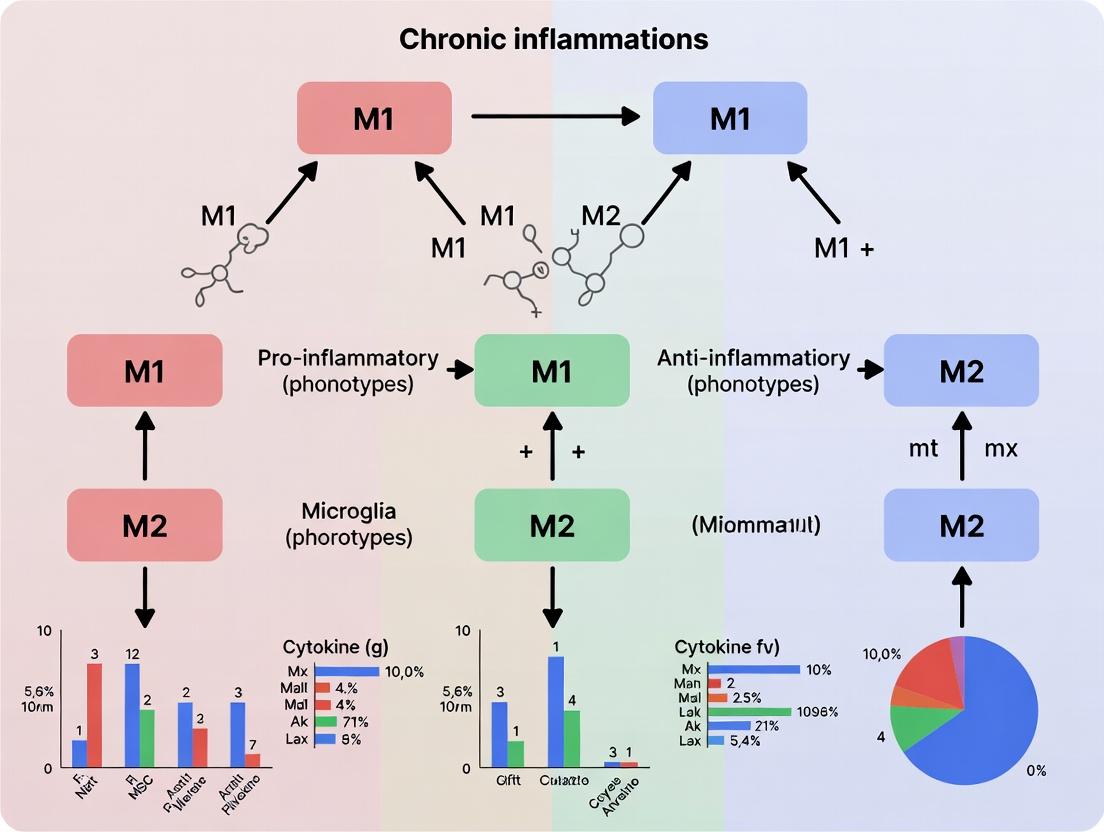
This comprehensive review synthesizes current research on the dynamic roles of classically activated (M1) and alternatively activated (M2) microglia in the context of chronic inflammation.
M1 vs. M2 Microglia in Chronic Inflammation: Phenotypes, Functions, and Therapeutic Targeting
Abstract
This comprehensive review synthesizes current research on the dynamic roles of classically activated (M1) and alternatively activated (M2) microglia in the context of chronic inflammation. Aimed at researchers, scientists, and drug development professionals, the article provides a foundational understanding of the molecular drivers and functional outputs of these phenotypes, explores state-of-the-art methodological approaches for their identification and manipulation, addresses common challenges and optimization strategies in model systems and assays, and critically validates and compares key biomarkers, genetic signatures, and functional assays. The synthesis underscores the spectrum nature of microglial activation and its implications for developing precise immunomodulatory therapies for chronic neurological and systemic inflammatory diseases.
Understanding M1 and M2 Microglia: Core Concepts in Chronic Inflammation
Within the milieu of chronic neurological and systemic diseases, microglia, the resident macrophages of the central nervous system, play a dual role in perpetuating injury and facilitating repair. This whitepaper, framed within a broader thesis on phenotype-specific interventions, details the defining molecular and functional characteristics of the classical (M1) and alternative (M2) activation states. We emphasize that these represent extremes of a broad, dynamic spectrum, with mixed phenotypes prevalent in vivo. Precise experimental definition is critical for target identification and drug development.
Phenotype Definition: Molecular & Functional Signatures
Microglia activation is dictated by environmental cues, leading to distinct transcriptional profiles and functional outputs.
Table 1: Core Characteristics of M1 and M2 Microglia Phenotypes
| Feature | Classical M1 Activation | Alternative M2 Activation |
|---|---|---|
| Primary Inducers | IFN-γ, LPS, TNF-α, GM-CSF | IL-4, IL-13, IL-10, TGF-β, Glucocorticoids |
| Key Surface Markers | CD86, CD32, MHC II, TLR4 | CD206, CD163, Arg1, Ym1/2 |
| Signature Cytokines | TNF-α, IL-1β, IL-6, IL-12, IL-23 | IL-10, TGF-β, IGF-1, FGF, VEGF |
| Metabolic Pathway | Glycolysis, PPP, disrupted TCA cycle | Oxidative Phosphorylation, FAO |
| Effector Molecules | iNOS (→NO), ROS, RNS | Arginase-1 (→polyamines), Chitinases |
| Primary Functions | Pro-inflammatory, Host defense, Antigen presentation, Cytotoxicity | Anti-inflammatory, Immunosuppression, Tissue repair, Angiogenesis, Phagocytosis (debris) |
| Pathogenic Role | Chronic inflammation, Neuronal damage, Demyelination | Tumor progression, Fibrosis, May impede regeneration in chronic phase |
Key Signaling Pathways
Activation states are orchestrated by specific intracellular signaling cascades.
Diagram 1: M1 Polarization via TLR4/NF-κB & JAK-STAT1
Diagram 2: M2 Polarization via IL-4R/JAK-STAT6 & IL-10 Pathways
Experimental Protocols for Phenotype Characterization
1In VitroPrimary Microglia Polarization & Validation
Protocol: Isolation and Stimulation of Primary Murine Microglia.
- Isolation: Harvest mixed glial cultures from P1-P3 mouse brains. After 10-14 days, shake flasks at 180 rpm for 2h at 37°C to detach microglia.
- Plating: Seed cells in appropriate plates with complete DMEM/F-12 medium.
- Polarization (24-48h):
- M1: Stimulate with LPS (100 ng/mL) + IFN-γ (20 ng/mL).
- M2: Stimulate with IL-4 (20 ng/mL) or IL-10 (20 ng/mL).
- Control: Vehicle treatment.
- Validation (Multi-parametric):
- mRNA: qRT-PCR for iNos (M1) vs. Arg1, Ym1, Mrc1 (CD206) (M2). Normalize to Gapdh or Hprt.
- Protein:
- Flow Cytometry: Surface staining for CD86/CD32 (M1) vs. CD206 (M2).
- Immunofluorescence/Western Blot: iNOS (M1) vs. Arg1 (M2).
- Functional Assays:
- Nitrite Quantification: (M1) Measure NO production via Griess reagent.
- Phagocytosis Assay: (M2 bias) Incubate with pHrodo-conjugated beads or debris, measure uptake via flow cytometry.
- Cytokine Array: ELISA/MSD for TNF-α/IL-12 (M1) vs. TGF-β/IL-10 (M2).
2In VivoPhenotype Assessment via Immunohistochemistry
Protocol: Multiplex Fluorescence Staining in Brain Sections.
- Tissue: Perfuse-fixate mouse brain (4% PFA). Section frozen or paraffin-embedded tissue.
- Antigen Retrieval: Perform citrate-based heat-induced retrieval.
- Staining: Sequential incubation with:
- Primary Antibody Cocktail 1 (e.g., Iba1 + CD86).
- Appropriate fluorescent secondary antibodies (e.g., AF488, AF555).
- Antibody elution (optional for same-host primaries).
- Primary Antibody Cocktail 2 (e.g., Iba1 + CD206).
- Different fluorescent secondaries (e.g., AF647).
- Imaging & Analysis: Acquire images with a confocal microscope. Quantify % of Iba1+ cells co-expressing M1 or M2 markers in regions of interest.
The Scientist's Toolkit: Key Research Reagents
Table 2: Essential Reagents for Microglia Phenotyping Research
| Reagent Category | Specific Example(s) | Function in Research |
|---|---|---|
| Polarizing Cytokines | Recombinant murine/rat/human: IFN-γ, LPS, IL-4, IL-13, IL-10 | Induce specific M1 or M2 activation states in vitro and in vivo. |
| Flow Cytometry Antibodies | Anti-CD11b, CD45, CD86, CD32, MHC II, CD206, CD163, TREM2 | Identify microglia (CD11b+CD45low) and quantify surface activation markers. |
| IHC/IF Antibodies | Iba1, P2RY12, iNOS, Arg1, Ym1/2, MHC II, CD206 | Visualize microglia and their activation state in tissue sections. |
| Gene Expression Assays | TaqMan/qPCR primers-probes for iNos, Tnf, Il1b, Arg1, Mrc1, Chil3, Tgfβ | Quantify transcriptional profiles of polarized microglia. |
| Functional Assay Kits | Griess Reagent Kit, pHrodo Bioparticles, Cytokine ELISA/MSD Multiplex Panels | Measure NO production, phagocytic capacity, and cytokine secretion. |
| Small Molecule Inhibitors | JAK Inhibitors (e.g., Ruxolitinib), STAT Inhibitors, NF-κB inhibitors (e.g., BAY 11-7082) | Mechanistic studies to dissect signaling pathways driving polarization. |
Quantitative Data Synthesis: Phenotype Metrics
Table 3: Representative Quantitative Outputs from Polarized Microglia
| Assay Readout | M1 Stimulus (LPS+IFN-γ) | M2 Stimulus (IL-4) | Control (Vehicle) | Notes / Reference |
|---|---|---|---|---|
| NO (μM Nitrite) | 25 - 40 μM | 2 - 5 μM | < 2 μM | 24h supernatant, Griess assay. |
| TNF-α Secretion (pg/mL) | 1000 - 3000 | 50 - 100 | < 50 | 24h supernatant, ELISA. |
| iNos mRNA (Fold Change) | 100 - 1000x | 1 - 2x | 1x | qRT-PCR vs. control. |
| Arg1 mRNA (Fold Change) | 1 - 3x | 50 - 200x | 1x | qRT-PCR vs. control. |
| % CD86+ of Iba1+ Cells | 60 - 80% | 5 - 15% | 5 - 10% | Flow cytometry, in vitro. |
| % CD206+ of Iba1+ Cells | < 10% | 40 - 70% | < 5% | Flow cytometry, in vitro. |
| Phagocytic Index | ~1.0x | ~1.5 - 2.0x | 1.0x (baseline) | Uptake of pHrodo beads, normalized to control. |
The Spectrum & Therapeutic Implications
In vivo, especially in chronic disease, microglia rarely adopt pure M1 or M2 states but exhibit mixed or intermediate phenotypes (e.g., MHC-II+CD206+). Advanced techniques like single-cell RNA sequencing have revealed a continuum of states. The therapeutic goal is not simply to shift M1→M2, but to modulate specific deleterious functions or promote protective ones. Drug development must target precise nodes within the signaling networks (see Diagrams 1 & 2) to achieve this nuanced modulation, moving beyond a binary paradigm toward spectrum-informed pharmacology.
Within the framework of chronic inflammation research, particularly in neurodegenerative diseases and CNS injuries, the polarization of microglia into distinct phenotypes is a central mechanistic concept. This whitepaper examines the key molecular triggers that drive microglia toward a classical, pro-inflammatory (M1) phenotype or an alternative, anti-inflammatory/reparative (M2) phenotype. Understanding the precise signaling initiated by ligands such as LPS/IFN-γ versus IL-4/IL-13 is critical for developing targeted therapies aimed at modulating the microglial response in chronic inflammatory states.
Core Signaling Pathways & Quantitative Data
Inflammatory (M1-Polarizing) Signal Transduction
Lipopolysaccharide (LPS) via TLR4: LPS binding to TLR4/CD14/MD2 complex recruits adaptors (MyD88, TRIF), leading to activation of NF-κB and IRF3 transcription factors. This induces expression of genes like TNF-α, IL-1β, IL-6, and iNOS.
Interferon-gamma (IFN-γ) via JAK-STAT1: IFN-γ binds to its receptor (IFNGR1/IFNGR2), activating JAK1 and JAK2. This leads to phosphorylation, dimerization, and nuclear translocation of STAT1, driving expression of MHC class II and pro-inflammatory mediators.
Synergism: LPS priming enhances IFN-γ receptor expression, and IFN-γ potentiates TLR4 signaling, creating a feed-forward inflammatory loop.
Anti-inflammatory (M2-Polarizing) Signal Transduction
Interleukin-4 (IL-4) and Interleukin-13 (IL-13): Both cytokines can signal through IL-4Rα. IL-4 binds Type I (IL-4Rα/γc) or Type II (IL-4Rα/IL-13Rα1) receptors. IL-13 primarily binds Type II receptors. Receptor engagement activates JAK1/JAK3 (Type I) or JAK1/JAK2/TYK2 (Type II), leading to phosphorylation of STAT6. STAT6 dimers translocate to the nucleus and induce genes like Arg1, Fizz1, Ym1, and Mrc1 (CD206).
Key Distinction: IL-13 signaling can also activate alternative pathways like AP-1 via IRS2, contributing to subtle functional differences within the M2 spectrum.
Table 1: Quantitative Outcomes of Signal Stimulation in Microglia In Vitro
| Signal | Concentration Typical Range | Key Readout | Fold Change (Approx.) vs. Naive | Time to Peak |
|---|---|---|---|---|
| LPS | 10-100 ng/mL | TNF-α secretion | 50-100x | 6-12 h |
| IFN-γ | 10-50 ng/mL | MHC-II expression | 20-50x | 24-48 h |
| LPS + IFN-γ | 10 ng/mL each | iNOS activity (NO) | 200-500x | 18-24 h |
| IL-4 | 10-20 ng/mL | Arg1 activity | 100-200x | 24 h |
| IL-13 | 10-20 ng/mL | CD206 expression | 50-100x | 48 h |
Data synthesized from recent primary literature (2022-2024).
Table 2: Primary Receptor Complexes and Downstream Effectors
| Trigger | Primary Receptor | Key Adaptor/ Kinase | Main Transcription Factor | Prototypical Target Gene |
|---|---|---|---|---|
| LPS | TLR4/CD14/MD2 | MyD88, TRIF, TAK1 | NF-κB (p65/p50), IRF3 | IL1B (IL-1β) |
| IFN-γ | IFNGR1/IFNGR2 | JAK1, JAK2 | STAT1 homodimer | CIITA |
| IL-4 | Type I: IL-4Rα/γc | JAK1, JAK3 | STAT6 homodimer | ARG1 |
| IL-13 | Type II: IL-4Rα/IL-13Rα1 | JAK1, JAK2, TYK2 | STAT6 homodimer | MRC1 (CD206) |
Experimental Protocols for Microglia Polarization
Protocol:In VitroPolarization of Primary Murine Microglia
Objective: To generate and validate M1 and M2 polarized microglial cultures. Materials: Primary microglia from P0-P2 murine brains or immortalized microglial cell line (e.g., BV2, HMC3). Reagents: See Scientist's Toolkit below.
Procedure:
- Isolation & Culture: Isolate primary microglia via mixed glial culture for 10-14 days, followed by shake-off. Seed cells in appropriate plates.
- Starvation: Culture in low-serum (0.5-1% FBS) or serum-free medium for 2-4 hours prior to stimulation.
- Stimulation:
- M1 Polarization: Treat with LPS (e.g., 100 ng/mL) + IFN-γ (20 ng/mL) in complete medium.
- M2 Polarization: Treat with IL-4 (20 ng/mL) or IL-13 (20 ng/mL) in complete medium.
- Incubation: Incubate for desired timeframe (e.g., 6-24h for mRNA, 24-48h for protein/functional assays).
- Validation (QC):
- M1: Measure supernatant for TNF-α/IL-6 via ELISA; detect iNOS/CD86 via flow cytometry/WB.
- M2: Measure Arg1 activity assay; detect CD206/Ym1 via flow cytometry/WB.
Protocol: Phospho-STAT1/STAT6 Analysis by Flow Cytometry
Objective: To rapidly assess pathway activation in single cells. Procedure:
- Stimulate cells as in 3.1 for 15-30 mins (phospho-STAT).
- Immediately fix cells using pre-warmed (37°C) 4% paraformaldehyde for 10 min.
- Permeabilize cells with ice-cold 90% methanol for 30 min on ice.
- Wash and stain with antibodies against p-STAT1 (Tyr701) and p-STAT6 (Tyr641). Include isotype controls.
- Analyze via flow cytometry. M1 triggers should increase p-STAT1+ cells; M2 triggers increase p-STAT6+ cells.
Signaling Pathway Diagrams
Diagram 1 Title: M1 Polarization: LPS & IFN-γ Signaling
Diagram 2 Title: M2 Polarization: IL-4 & IL-13 Signaling
The Scientist's Toolkit: Key Research Reagent Solutions
Table 3: Essential Reagents for Microglia Polarization Studies
| Reagent / Material | Supplier Examples | Function & Application Notes |
|---|---|---|
| Ultra-Pure LPS (E. coli O111:B4) | InvivoGen, Sigma-Aldrich | Gold-standard TLR4 agonist for M1 polarization. Use ultrapure to avoid confounding TLR2 activation. |
| Recombinant Murine/Rat/Human IFN-γ | PeproTech, R&D Systems | Synergizes with LPS for full M1 activation. Species-specificity is critical. |
| Recombinant IL-4 and IL-13 | PeproTech, BioLegend | For M2 polarization. IL-4 is typically more potent. Verify active concentration for species. |
| Phospho-STAT1 (Tyr701) & Phospho-STAT6 (Tyr641) Antibodies | Cell Signaling Technology | Essential for confirming pathway activation via WB, flow cytometry, or ICC. |
| iNOS/NOS2 Antibody | Abcam, Santa Cruz Biotechnology | Key marker for M1 microglia. Can be variable in expression; confirm with NO assay. |
| Arginase-1 (Arg1) Antibody & Activity Assay Kit | Santa Cruz Biotechnology, Sigma-Aldrich | Key functional marker for M2 microglia. Activity assay is more quantitative than WB. |
| CD86 (B7-2) & CD206 (MMR) Antibodies for Flow Cytometry | BioLegend, eBioscience | Surface markers for M1 (CD86) and M2 (CD206) polarization states. |
| TNF-α & IL-6 ELISA Kits | BioLegend, R&D Systems | Quantify pro-inflammatory cytokine secretion from M1 cells. |
| Microglial Cell Lines (BV2, HMC3, SIM-A9) | ATCC, commercial vendors | Used as more accessible models than primary cells. Crucial to validate findings in primary cells. |
| Cellular Metabolic Assay (e.g., Seahorse) | Agilent Technologies | To profile metabolic shift (glycolysis vs. OXPHOS) between M1 and M2 states. |
Within the context of microglial biology in chronic neurological disorders, the M1 (pro-inflammatory) and M2 (anti-inflammatory, reparative) paradigm provides a critical framework. These phenotypes are defined by distinct molecular signatures—cytokines, chemokines, and surface receptors—that drive their functional roles in neuroinflammation, tissue damage, and repair. This whitepaper delineates these core molecular hallmarks, their signaling networks, and methodologies for their experimental interrogation.
Molecular Signature Profiles
The functional dichotomy of M1 and M2 microglia is underpinned by specific secretory profiles and cell-surface marker expression.
Table 1: Signature Cytokines and Chemokines of Microglial Phenotypes
| Phenotype | Pro-inflammatory Cytokines | Anti-inflammatory / Growth Factors | Signature Chemokines | Primary Functions |
|---|---|---|---|---|
| M1 (Classical) | TNF-α, IL-1β, IL-6, IL-12, IL-23 | – | CCL2 (MCP-1), CXCL10 (IP-10), CXCL8 (IL-8) | Neurotoxicity, leukocyte recruitment, Th1/Th17 polarization. |
| M2a (Alternative) | – | IL-10, TGF-β, IGF-1, FGF | CCL17, CCL18, CCL22 | Immunosuppression, tissue repair, extracellular matrix remodeling. |
| M2b (Regulatory) | IL-1β, IL-6 (low) | IL-10 (high) | CCL1 | Immune regulation, Th2 cell activation. |
| M2c (Acquired Deactivation) | – | IL-10, TGF-β (high) | – | Matrix remodeling, phagocytosis of debris. |
Table 2: Characteristic Surface Receptors and Markers
| Phenotype | Pattern Recognition Receptors (PRRs) | Immunomodulatory Receptors | Other Key Markers |
|---|---|---|---|
| M1 | TLR2, TLR4, CD14 (high) | CD16/32 (FcγRIII/II), CD86 (high), MHC-II (high) | iNOS (NOS2), CD68 |
| M2a | – | CD206 (MRC1), CD209 (DC-SIGN) | Arg1, Ym1/2, Fizz1 |
| M2b | TLR2, TLR4 (modulated) | – | – |
| M2c | – | CD163, MerTK | – |
Key Signaling Pathways
M1 Polarization via TLR/NF-κB Pathway
Ligand engagement (e.g., LPS via TLR4) recruits adaptors (MyD88/TRIF), leading to IKK complex activation, IκB-α degradation, and nuclear translocation of NF-κB (p65/p50), driving transcription of pro-inflammatory genes (TNF-α, IL-1β, IL-6, iNOS).
Title: M1 Activation via TLR4/MyD88/NF-κB Signaling
M2a Polarization via IL-4/IL-13/STAT6 Pathway
Binding of IL-4 or IL-13 to their respective receptors activates JAK1/JAK3, which phosphorylate STAT6. Dimerized p-STAT6 translocates to the nucleus to induce transcription of M2a-specific genes (Arg1, Ym1, CD206).
Title: M2a Polarization via IL-4/IL-13/JAK/STAT6 Pathway
Experimental Protocols
Protocol 1:In VitroPolarization and Phenotype Validation
Objective: Generate and validate M1 and M2 microglial phenotypes from primary murine microglia or immortalized cell lines (e.g., BV2).
Materials: See The Scientist's Toolkit below.
Method:
- Cell Culture & Polarization: Plate cells in appropriate growth medium. At ~80% confluence, replace medium with polarization medium.
- M1 Induction: Treat with 100 ng/mL LPS (E. coli 055:B5) + 20 ng/mL IFN-γ for 24 hours.
- M2a Induction: Treat with 20 ng/mL IL-4 for 48 hours.
- M2b Induction: Treat with 10 μg/mL Immune Complexes + 10 ng/mL LPS for 48 hours.
- M2c Induction: Treat with 10 ng/mL IL-10 for 48 hours.
- Control: Vehicle-treated cells.
RNA Extraction & qRT-PCR:
- Lyse cells in TRIzol. Isolate total RNA per manufacturer's protocol.
- Synthesize cDNA using a High-Capacity cDNA Reverse Transcription Kit.
- Perform qPCR using SYBR Green or TaqMan assays for signature genes:
- M1: Tnf, Il1b, Il6, Nos2, Cxcl10.
- M2a: Arg1, Chil3 (Ym1), Retnla (Fizz1), Mrc1 (CD206).
- Housekeeping: Gapdh, Actb.
- Analyze data using the 2^(-ΔΔCt) method.
Protein Analysis (ELISA/Flow Cytometry):
- Secreted Cytokines: Collect cell culture supernatant. Analyze for TNF-α, IL-1β (M1) or IL-10, TGF-β (M2) via ELISA.
- Surface Markers: Harvest cells, block Fc receptors, and stain with fluorescent antibodies against CD86 (M1) and CD206 (M2a). Analyze by flow cytometry.
Protocol 2: Immunofluorescent Staining of Brain Sections
Objective: Visualize M1/M2 microglia in tissue from a chronic neuroinflammation model (e.g., APP/PS1 for Alzheimer's).
Method:
- Tissue Preparation: Perfuse-fix mouse with 4% PFA. Post-fix brain overnight, then cryoprotect in 30% sucrose. Section coronally (30 μm) using a cryostat.
- Staining: Free-floating sections are blocked (5% normal serum, 0.3% Triton X-100) for 1 hour. Incubate with primary antibodies (e.g., Iba1 + CD86 or Iba1 + CD206) in blocking buffer for 48h at 4°C.
- Visualization: Wash and incubate with appropriate fluorescent secondary antibodies (e.g., Alexa Fluor 488, 555) and DAPI for 2h at RT.
- Imaging & Analysis: Image using a confocal microscope. Quantify the percentage of Iba1+ microglia co-expressing CD86 or CD206 across multiple fields/region of interest.
The Scientist's Toolkit
| Research Reagent | Function / Purpose in Context |
|---|---|
| Lipopolysaccharide (LPS, E. coli 055:B5) | TLR4 agonist; standard inducer of M1 polarization. |
| Recombinant Murine IFN-γ | Synergizes with LPS to drive robust M1 polarization and MHC-II upregulation. |
| Recombinant Murine IL-4 | Primary cytokine for inducing the M2a anti-inflammatory phenotype. |
| Recombinant Murine IL-10 | Induces the M2c deactivated, phagocytic phenotype. |
| Anti-CD16/32 (Clone 93) | Purified antibody for Fc receptor blocking prior to flow cytometry staining. |
| Fluorochrome-conjugated Antibodies (Anti-CD86, Anti-CD206) | Essential for phenotyping M1/M2 cells via flow cytometry or immunohistochemistry. |
| TRIzol Reagent | For simultaneous isolation of high-quality RNA, DNA, and protein from cell lysates. |
| SYBR Green qPCR Master Mix | For quantitative real-time PCR analysis of phenotypic gene signatures. |
| Iba1 (Ionized calcium-binding adapter molecule 1) Antibody | Pan-microglial marker for identifying all microglia in tissue sections. |
| ELISA Kits (Mouse TNF-α, IL-10, etc.) | Gold-standard for quantifying secreted cytokine levels in cell supernatants or tissue homogenates. |
Within the neuroinflammatory landscape of chronic conditions such as Alzheimer's disease, multiple sclerosis, and Parkinson's disease, microglia, the resident macrophages of the CNS, exhibit remarkable functional plasticity. This whitepaper examines the core dichotomy of microglial activation, framed within the classical M1 (pro-inflammatory) and M2 (anti-inflammatory/repair) phenotype paradigm. Chronic inflammation is characterized by a dysregulated balance between these states, where sustained M1-like activity drives pathology, and failed M2-like resolution prevents recovery. Understanding the precise molecular mechanisms governing these opposing functions—neurotoxic phagocytosis versus tissue repair and immunoregulation—is critical for developing targeted therapeutic interventions.
Core Molecular Mechanisms of the Dichotomy
M1-Like Polarization: Neurotoxicity & Phagocytosis
M1-polarized microglia are induced by canonical stimuli like interferon-gamma (IFN-γ) and tumor necrosis factor-alpha (TNF-α) or pathogen-associated molecular patterns (PAMPs) such as lipopolysaccharide (LPS). This activation converges on NF-κB and STAT1 signaling, leading to the transcription of pro-inflammatory mediators.
Key Effectors:
- Pro-inflammatory Cytokines: IL-1β, IL-6, TNF-α.
- Reactive Oxygen/Nitrogen Species: iNOS-derived NO, NADPH oxidase-derived superoxide.
- Phagocytic Receptors: Triggering receptor expressed on myeloid cells 2 (TREM2), complement receptor 3 (CR3). While phagocytosis can be protective, in chronic inflammation, dysregulated synaptic pruning and phagoptosis contribute to neuronal loss.
M2-Like Polarization: Tissue Repair & Immunoregulation
M2 polarization is promoted by anti-inflammatory cytokines like IL-4 and IL-13, engaging STAT6 and PPARγ pathways. This state is associated with resolution of inflammation and tissue homeostasis.
Key Effectors:
- Anti-inflammatory Cytokines: IL-10, TGF-β.
- Growth Factors: IGF-1, BDNF, promoting neuronal survival and repair.
- Scavenging & Repair: Arginase-1 (Arg1) metabolizes arginine into polyamines for cell growth, countering iNOS activity. Chitinase-like proteins (e.g., Ym1/2) aid in tissue remodeling.
Table 1: Core Characteristics of Microglial Phenotypes in Chronic Inflammation
| Feature | M1-like (Neurotoxic/Phagocytic) | M2-like (Repair/Immunoregulatory) |
|---|---|---|
| Primary Inducers | IFN-γ, TNF-α, LPS, Aβ fibrils | IL-4, IL-13, IL-10, Glucocorticoids |
| Key Signaling | NF-κB, STAT1, MAPK (p38, JNK) | STAT6, PPARγ, PI3K/Akt |
| Signature Markers | CD86, iNOS, IL-1β, TNF-α | CD206, Arg1, Ym1, IL-10 |
| Primary Functions | Pro-inflammatory response, Pathogen clearance, Synaptic stripping | Inflammation resolution, Extracellular matrix repair, Phagocytosis of debris |
| Metabolic Profile | Glycolysis (Warburg effect) | Oxidative Phosphorylation, Fatty Acid Oxidation |
| Impact in Chronic CNS Disease | Neuronal & oligodendrocyte toxicity, Chronic demyelination, Synapse loss | Remyelination, Neuroprotection, Limiting immune infiltration |
Experimental Protocols for Phenotype Investigation
Protocol:In VitroPolarization and Gene Expression Analysis of Primary Microglia
Purpose: To generate and validate M1 and M2 polarized microglial cultures. Materials: Primary microglia from postnatal rodent brains or immortalized cell lines (e.g., BV2, HMC3). Procedure:
- Culture & Seed: Maintain cells in complete DMEM/F12. Seed at 2.5 x 10^5 cells/well in a 12-well plate.
- Polarization (24-48h):
- M1 Group: Treat with 100 ng/mL LPS + 20 ng/mL IFN-γ.
- M2 Group: Treat with 20 ng/mL IL-4.
- Control: Vehicle only.
- RNA Isolation & qPCR: Lyse cells in TRIzol. Synthesize cDNA. Perform qPCR using primers for signature markers (see Table 1). Normalize to housekeeping genes (e.g., Gapdh, Actb).
- Protein Validation: Confirm findings via western blot (e.g., iNOS, Arg1) or cytokine ELISA (TNF-α, IL-10).
Protocol: Immunofluorescence Staining for Phenotype Identification in Tissue
Purpose: To spatially localize M1/M2 microglia in brain sections from chronic disease models. Materials: Frozen or fixed brain sections, blocking serum, primary and fluorescent secondary antibodies. Procedure:
- Sectioning & Fixation: Cut 20-30 µm thick sections. Fix with 4% PFA if not already fixed.
- Blocking & Permeabilization: Block with 5% normal serum + 0.3% Triton X-100 in PBS for 1 hour.
- Primary Antibody Incubation: Incubate overnight at 4°C with anti-Iba1 (pan-microglia) combined with either anti-CD86 (M1) or anti-CD206 (M2).
- Secondary & Imaging: Incubate with species-appropriate Alexa Fluor-conjugated antibodies. Mount and image with confocal microscopy. Co-localization analysis quantifies phenotype proportions.
Protocol: Phagocytosis Assay
Purpose: To quantitatively compare phagocytic capacity between phenotypes. Materials: pHrodo Red-conjugated zymosan or Aβ bioparticles. Procedure:
- Cell Preparation: Seed and polarize microglia as in Protocol 2.1.
- Particle Incubation: Add pHrodo-conjugated particles to culture medium. pHrodo fluoresces intensely in acidic phagolysosomes.
- Quantification: After 2 hours, wash cells and measure fluorescence with a plate reader or analyze via flow cytometry. Image live cells to confirm intracellular particle localization.
Signaling Pathways in Functional Dichotomy
Title: M1 Polarization Signaling via NF-κB and STAT1 Pathways
Title: M2 Polarization Signaling via STAT6, STAT3, and PPARγ
The Scientist's Toolkit: Key Research Reagent Solutions
Table 2: Essential Reagents for Microglial Phenotype Research
| Reagent Category | Specific Example(s) | Function in Research |
|---|---|---|
| Polarizing Agents | Ultrapure LPS (E. coli), Recombinant murine/rat/human IFN-γ, IL-4, IL-13 | To induce specific M1 or M2 polarization states in vitro and in vivo. |
| Cell Type Markers | Anti-Iba1 (ionized calcium-binding adapter molecule 1) Antibody | Pan-microglial marker for identifying all microglia in tissue. |
| Phenotype-Specific Antibodies | M1: Anti-CD86, Anti-iNOS. M2: Anti-CD206 (MRC1), Anti-Arginase-1. | For immunostaining or flow cytometry to identify and quantify polarized subsets. |
| Cytokine Detection | TNF-α, IL-1β, IL-6, IL-10 ELISA or Luminex Multiplex Kits | To quantify secretory profiles of polarized microglia from culture supernatants or tissue lysates. |
| Phagocytosis Assay Kits | pHrodo Green/Red BioParticles (zymosan, Aβ, myelin) | Fluorescent, pH-sensitive particles for quantitative measurement of phagocytic activity. |
| Gene Expression Analysis | qPCR Primer Assays for Nos2, Cd86, Arg1, Chil3 (Ym1), Mrc1 (CD206) | Gold-standard for quantifying phenotype-specific gene expression changes. |
| Signaling Inhibitors/Agonists | BAY 11-7082 (NF-κB inhibitor), AS1517499 (STAT6 inhibitor), Rosiglitazone (PPARγ agonist) | To dissect the contribution of specific pathways to phenotypic and functional outcomes. |
| Microglial Cell Lines | BV2 (mouse), HMC3 (human) | Immortalized lines for high-throughput screening; require validation against primary cell findings. |
| Primary Cell Isolation Kits | CD11b+ Microbeads (for magnetic-activated cell sorting) | For isolating primary microglia from mixed glial cultures or brain tissue. |
The functional dichotomy of microglia—orchestrating both detrimental neurotoxicity and essential repair—lies at the heart of chronic CNS pathology. The M1/M2 framework, while an oversimplification of a continuous spectrum, remains a vital tool for deconstructing these roles. Effective therapeutic strategies for diseases of chronic neuroinflammation will likely depend on the precise temporal and spatial modulation of this balance, skewing microglia away from a sustained toxic phenotype and towards a protective, reparative one. This requires continued research into the nuanced signaling networks, metabolic reprogramming, and environmental cues that dictate microglial fate.
Within the context of chronic inflammation research, the historical M1/M2 dichotomy for classifying microglial activation states has proven insufficient. This whitepaper argues that microglia exist along a complex, multidimensional continuum of phenotypes, shaped by dynamic and overlapping signaling pathways. Moving beyond the binary model is critical for understanding neuroinflammatory diseases and developing targeted therapeutics.
The Phenotype Continuum: Key Signaling Pathways and Regulators
The simplistic view of pro-inflammatory "M1" (classically activated) and anti-inflammatory "M2" (alternatively activated) microglia is being replaced by a spectrum model. Phenotypes are determined by integrated signals from the microenvironment.
Core Signaling Hubs
The following pathways are central regulators, often acting in concert.
Diagram 1: Core Signaling Network Regulating Microglial Phenotype
Quantitative Profile of Key Phenotypic Markers
Marker expression is not binary but exists on a gradient. The table below summarizes canonical and newly identified markers across the continuum.
Table 1: Expression Profiles of Key Microglial Markers Across the Continuum
| Marker Category | Marker Name | Historical Association | Expression in Continuum Model (Relative Level) | Key Function / Note |
|---|---|---|---|---|
| Pro-inflammatory | iNOS (Nos2) | M1 | High in acute response, variable in chronic | Nitric oxide production. |
| IL-1β | M1 | Context-dependent levels | Pyroptosis driver; sustained in chronic inflammation. | |
| TNF-α | M1 | Graded expression | Can be beneficial or detrimental. | |
| Anti-inflammatory / Repair | Arg1 | M2a | Induced by IL-4/13; not exclusive | Polyamine synthesis, tissue repair. |
| Ym1/2 (Chil3) | M2a | Mouse-specific; high in repair states | Chitinase-like protein, tissue remodeling. | |
| CD206 (Mrc1) | M2a | Widely expressed; modulated | Phagocytic receptor. | |
| IL-10 | M2c | High in regulatory states | Immunosuppressive cytokine. | |
| Homeostatic | P2RY12 | Resting | Lost in most activation states | Purinergic receptor; critical for surveillance. |
| TMEM119 | Resting | Often retained, can be modulated | Microglia-specific marker. | |
| Disease-Associated Microglia (DAM) | TREM2 | DAM | Upregulated in neurodegeneration | Lipid metabolism, phagocytosis. |
| ApoE | DAM | Strongly upregulated | Lipid transport; major genetic risk factor. | |
| Lpl | DAM | Upregulated | Lipid metabolism. | |
| Motility & Phagocytosis | CX3CR1 | Homeostatic | Downregulated upon activation | Fractalkine receptor; maintains homeostasis. |
Experimental Protocols for Phenotype Characterization
Rigorous, multi-modal assessment is required to define a microglial state.
Protocol: Comprehensive Microglial Phenotyping by Flow Cytometry
Objective: To quantitatively assess surface and intracellular marker expression on acutely isolated microglia.
- Tissue Dissociation: Perfuse mouse brain with cold PBS. Dissociate tissue using a gentle mechanical/ enzymatic kit (e.g., Adult Brain Dissociation Kit, Miltenyi) to preserve surface antigens.
- Cell Enrichment: Isolate CD11b+ cells using magnetic-activated cell sorting (MACS).
- Staining:
- Viability Dye: Use Zombie Aqua Fixable Viability Kit.
- Surface Staining: Incubate with antibody cocktail against CD45, CD11b, Tmem119, CX3CR1, CD206 in FACS buffer (30 min, 4°C). Include Fc block.
- Intracellular Staining: Fix and permeabilize using Foxp3/Transcription Factor Staining Buffer Set. Stain for iNOS, Arg1, or TNF-α.
- Acquisition & Analysis: Acquire on a 3-laser or higher flow cytometer. Gate on live, single cells, then CD45^(int)CD11b+ microglia. Analyze median fluorescence intensity (MFI) and percentage positive for each marker. Use dimensionality reduction tools (t-SNE, UMAP) for population analysis.
Protocol: Bulk RNA-Seq & Bioinformatic Analysis
Objective: To obtain a genome-wide transcriptional profile of purified microglia under experimental conditions.
- Microglial Isolation: Rapidly isolate microglia via FACS (CD45^(int)CD11b+) or high-purity magnetic sorting (e.g., Tmem119 microbeads). Snap-freeze cell pellets in liquid N₂.
- Library Preparation & Sequencing: Extract total RNA with a column-based kit with DNase step. Assess RNA integrity (RIN > 8.0). Prepare libraries using a stranded mRNA-seq kit. Sequence on an Illumina platform to a depth of 25-40 million paired-end reads per sample.
- Bioinformatic Analysis:
- Alignment & Quantification: Align reads to the reference genome (e.g., mm10) using STAR. Quantify gene counts with featureCounts.
- Differential Expression: Use DESeq2 or edgeR in R. Apply thresholds of adjusted p-value < 0.05 and |log2 fold change| > 0.58.
- Pathway & Module Analysis: Perform Gene Set Enrichment Analysis (GSEA) using custom gene sets (e.g., MGnify, DAM signature) and canonical pathways (KEGG, Reactome).
- Continuum Scoring: Avoid binary classification. Instead, use module scores for various polarization axes or reference profiles.
Diagram 2: Transcriptomic Profiling Workflow
The Scientist's Toolkit: Essential Research Reagents
Table 2: Key Reagent Solutions for Microglial Continuum Research
| Reagent Category | Specific Item / Kit | Function & Application | Key Consideration |
|---|---|---|---|
| Isolation & Culture | Adult Brain Dissociation Kit (Miltenyi) | Gentle enzymatic/mechanical dissociation of neural tissue for viable microglia. | Preserves surface markers better than harsh papain protocols. |
| Tmem119 Microbeads (Miltenyi) | High-purity positive selection of microglia for downstream applications. | Mouse-specific. Purity >95% achievable. | |
| Primary Microglial Culture Media (e.g., ScienCell) | Serum-free, defined media for maintaining primary microglia in vitro. | Reduces baseline activation compared to serum-containing media. | |
| Polarization Inducers | Lipopolysaccharide (LPS) from E. coli | TLR4 agonist to induce a strong pro-inflammatory response. | Use ultrapure grade. Dose range: 10-100 ng/mL. |
| Recombinant Mouse IFN-γ | Synergizes with LPS or alone to drive STAT1-mediated "M1-like" activation. | Typical dose: 20-50 ng/mL. | |
| Recombinant Mouse IL-4 / IL-13 | Induces "M2a-like" activation via STAT6 (e.g., Arg1 upregulation). | Typical dose: 20 ng/mL. | |
| Recombinant Mouse IL-10 / TGF-β1 | Induces "M2c-like", regulatory, or homeostatic phenotypes. | Typical dose: 10-20 ng/mL. | |
| Detection & Staining | Flow Cytometry Antibodies: CD45, CD11b, Tmem119, CX3CR1, P2RY12, CD206, TREM2. | Multiplexed surface phenotyping of isolated microglia. | Always titrate antibodies; use viability dye. |
| IHC/IF Antibodies: Iba1, Tmem119, P2RY12, iNOS, Arg1, CD68. | Spatial context of microglial phenotype in tissue sections. | Requires careful antigen retrieval and validation. | |
| ELISA/Multiplex Kits (e.g., MSD, Luminex) | Quantification of secreted cytokines (TNF-α, IL-1β, IL-10, CCL2) from culture supernatant or tissue homogenate. | More sensitive than traditional ELISA. | |
| Functional Assays | pHrodo Red BioParticles Phagocytosis Kit | Quantitative measurement of phagocytic capacity by flow cytometry or fluorescence plate reader. | Provides kinetic data. |
| Seahorse XF Analyzer & Mito Stress Test Kit | Measures real-time metabolic function (OCR, ECAR) to distinguish glycolytic vs. oxidative states. | Metabolic shift is a key feature of activation. | |
| In Vivo Modeling | CSF1R Inhibitors (PLX5622, PLX3397) | Depletes microglia for studies of repopulation or specific roles in disease models. | Diet formulation allows precise dosing. |
| TREM2 Agonists/Antagonists | To manipulate the DAM phenotype in vivo for functional studies. | Emerging therapeutic tool. |
The transition from a rigid M1/M2 binary to a dynamic continuum model is essential for accurately modeling microglial biology in chronic inflammation. This shift demands integrated experimental approaches—combining high-dimensional transcriptomics, multiplexed protein assays, and functional readouts—to capture the true complexity of these cells. Embracing this continuum is fundamental for identifying novel, nuanced therapeutic targets in neurodegenerative and neuroinflammatory diseases.
Chronic Inflammation as a Driver of Microglial Dysfunction and Phenotype Imbalance
Within the central nervous system (CNS), microglia, the resident innate immune cells, exist in a dynamic equilibrium of functionally distinct polarization states, classically simplified as pro-inflammatory (M1-like) and anti-inflammatory/homeostatic (M2-like) phenotypes. This whitepaper examines the central thesis that chronic, low-grade inflammation disrupts this homeostatic balance, driving a maladaptive shift towards a predominant M1-like phenotype while impairing M2-like reparative functions. This sustained imbalance is a critical mechanism underlying neuronal damage and pathology in neurodegenerative diseases such as Alzheimer's disease (AD), Parkinson's disease (PD), and multiple sclerosis (MS). We present a technical analysis of the signaling drivers, molecular markers, functional consequences, and experimental methodologies for studying this phenomenon.
Core Signaling Pathways in Phenotype Polarization
Chronic inflammatory signals, including sustained exposure to cytokines (e.g., TNF-α, IFN-γ), amyloid-β oligomers, or α-synuclein, activate specific intracellular pathways that lock microglia into a dysfunctional state.
Diagram 1: Core Signaling Pathways Driving Microglial Phenotype Imbalance
Quantitative Phenotype Markers and Functional Outputs
The following tables summarize key molecular markers and secretory profiles distinguishing M1 and M2 phenotypes, and their alteration under chronic inflammatory conditions.
Table 1: Core Molecular Markers of Microglial Phenotypes
| Marker Category | M1-like Phenotype Marker | Expression/Function | M2-like Phenotype Marker | Expression/Function |
|---|---|---|---|---|
| Surface Receptors | CD86, CD32, TLR4 | Co-stimulation; Pro-inflammatory signaling | CD206 (MRC1), TREM2, CX3CR1 | Phagocytosis; Debris clearance; Anti-inflammatory signaling |
| Enzymes | iNOS (NOS2) | Nitric oxide production | Arg1 | Arginine metabolism, polyamine production |
| Cytokines/Chemokines | TNF-α, IL-1β, IL-6, CCL2 | Pro-inflammatory recruitment & activation | IL-10, TGF-β, CCL22 | Immunosuppression, tissue repair |
| Transcription Factors | NF-κB (p65), STAT1, IRF5 | Drive pro-inflammatory gene expression | PPARγ, STAT3, STAT6, IRF4 | Drive anti-inflammatory/reparative gene expression |
Table 2: Functional Consequences of Phenotype Imbalance in Chronic Inflammation
| Parameter | Homeostatic Balance | Chronic Inflammation-Induced Imbalance | Experimental Readout |
|---|---|---|---|
| Phagocytic Activity | Efficient clearance of debris & pathogens | Initially increased then impaired; defective Aβ clearance | pHrodo-labeled beads or Aβ(1-42) uptake assay |
| Synaptic Pruning | Activity-dependent, precise | Excessive, non-selective ("synaptic stripping") | PSD-95/Synaptophysin colocalization loss (IHC) |
| ROS/RNS Production | Low, regulated | Sustained high iNOS/NOX2-driven oxidative stress | DCFDA or DHE fluorescence; Nitrite assay |
| Metabolic Profile | Flexible (OXPHOS & glycolysis) | Glycolytic shift (Warburg-like) in M1 | Seahorse Analyzer (OCR/ECAR) |
| Neuronal Viability | Supported via trophic factors | Compromised via glutamate & TNF-α | LDH release assay; Caspase-3 activation in co-cultures |
Key Experimental Protocols
Protocol:In VitroPolarization and Phenotype Analysis of Primary Microglia
Aim: To induce and characterize M1 and M2 phenotypes and model chronic exposure. Materials: See "Scientist's Toolkit" below. Procedure:
- Isolation & Culture: Isolate primary microglia from P0-P2 rodent brains via gentle mechanical dissociation and mixed glial culture for 7-10 days. Shake off loosely adherent microglia, seed in plates.
- Acute Polarization (Control Groups):
- M0 (Resting): Maintain in complete microglial medium.
- M1 Induction: Treat with 100 ng/mL LPS + 20 ng/mL IFN-γ for 24h.
- M2 Induction: Treat with 20 ng/mL IL-4 for 24h.
- Chronic Inflammation Model (Test Group): Treat cells with a low-dose inflammatory stimulus (e.g., 10 ng/mL LPS) or disease-relevant trigger (e.g., 500 nM oligomeric Aβ(1-42)) for 72-96 hours, with media refresh every 48h.
- Analysis:
- qRT-PCR: Extract RNA, synthesize cDNA. Measure expression of Cd86, iNos, Tnfα (M1) and Arg1, Cd206, Il10 (M2). Normalize to Gapdh or Actb.
- Flow Cytometry: Harvest cells, stain for surface markers (CD11b/CD45 to identify microglia, then CD86 and CD206). Analyze on flow cytometer.
- Functional Assay (NO Production): Collect conditioned media. Mix with Griess Reagent. Measure absorbance at 540nm against a sodium nitrite standard curve.
Diagram 2: In Vitro Microglial Phenotyping Workflow
Protocol: Assessing Phagocytic Dysfunction in Chronic Inflammation Model
Aim: To quantify the impact of chronic inflammation on microglial phagocytic capacity. Procedure:
- Following the chronic inflammation model (Step 3 in 4.1), replace medium with fresh medium containing pHrodo Green-labeled Aβ(1-42) fibrils (1 µg/mL) or BioParticles (E. coli) at a 1:100 dilution.
- Incubate cells for 2 hours at 37°C, 5% CO2.
- Wash cells 3x with cold PBS to remove non-internalized particles.
- Fix cells with 4% PFA for 15 min, wash, and mount with DAPI-containing medium.
- Image using a high-content imager or confocal microscope. Quantify the mean fluorescence intensity (MFI) of pHrodo per cell (DAPI+ nucleus) using ImageJ or similar software. Normalize MFI of the chronic treatment group to the M0 control group.
The Scientist's Toolkit: Key Research Reagents
Table 3: Essential Reagents for Microglial Phenotype Research
| Reagent/Category | Example Product/Specifics | Primary Function in Research |
|---|---|---|
| Polarization Inducers | Ultrapure LPS (TLR4 agonist), Recombinant IFN-γ, IL-4, IL-13, IL-10, TGF-β | To induce specific M1 or M2 phenotypes in vitro and in vivo. |
| Disease-Relevant Aggregates | Synthetic, oligomerized Aβ(1-42), Pre-formed α-synuclein fibrils, Myelin debris | To model chronic neurodegenerative inflammatory triggers. |
| Fluorescent Detection Beads | pHrodo Green/Red-labeled E. coli or zymosan BioParticles, pHrodo-labeled Aβ | To measure phagocytic capacity; pHrodo fluoresces brightly only in acidic phagolysosomes. |
| Antibodies for Flow Cytometry | Anti-mouse CD11b (APC), CD45 (FITC), CD86 (PE), CD206 (PE-Cy7) | To identify microglia (CD11b+ CD45low) and quantify surface phenotype markers. |
| qRT-PCR Primer Assays | Validated primer sets for: Tnfα, Il1β, iNos, Arg1, Ym1, Il10 | To quantify gene expression changes associated with phenotype shifts. |
| Metabolic Assay Kits | Seahorse XF Cell Mito Stress Test Kit, XF Glycolysis Stress Test Kit | To profile metabolic shifts (OXPHOS vs. glycolysis) in real-time. |
| Cytokine Detection | Multiplex Luminex or ELISA kits for TNF-α, IL-6, IL-1β, IL-10, CCL2 | To quantitatively measure secretory profiles of polarized microglia. |
Current research focuses on reprogramming the imbalance. Strategies include:
- PPARγ agonists (e.g., Pioglitazone): Promote M2-like polarization.
- TREM2 agonistic antibodies: Enhance phagocytic and metabolic functions.
- CSF1R inhibitors: Temporarily deplete dysregulated microglia for repopulation.
- Nanoparticle delivery of IL-4 or IL-10: Directly shift local phenotype.
The persistent inflammatory microenvironment in neurodegenerative diseases fundamentally corrupts microglial function, favoring a cytotoxic phenotype over a homeostatic one. Precise mapping of the signaling nodes that maintain this dysfunctional state, using the methodologies outlined, is essential for developing targeted therapies to restore microglial balance and neuroprotective functions.
Techniques and Models: Studying and Targeting Microglial Phenotypes in Research
This technical guide examines in vitro models for microglia research, a cornerstone for a broader thesis investigating M1/M2 phenotypic balance in chronic inflammation. Selecting the appropriate cellular model and stimulation paradigm is critical for generating translatable data on neuroinflammation, polarization states, and potential therapeutic interventions.
Model Systems: A Comparative Analysis
Microglia research employs two principal in vitro systems, each with distinct advantages and limitations.
Primary Microglia
Isolated directly from rodent (typically mouse or rat) brain tissue, primary microglia represent the gold standard for physiological relevance. They retain most in vivo characteristics, including appropriate receptor expression, phagocytic capability, and dynamic polarization capacity.
Isolation Protocols:
- Mixed Glial Culture Method: Neonatal brain tissue is dissociated and cultured for 7-14 days. Microglia are then separated via mild trypsinization or shaking.
- Magnetic/Acoustic-Activated Cell Sorting (MACS/AACS): Adult brain tissue is dissociated, and microglia are isolated using antibodies against specific surface markers (e.g., CD11b).
Immortalized Microglial Cell Lines
These are genetically modified to proliferate indefinitely, offering consistency and scalability.
- BV-2 (Mouse): The most widely used line, generated by v-raf/v-myc oncogene transduction. Exhibits many but not all primary microglia traits.
- HMC3 (Human): SV40 T-antigen immortalized human microglia. Provides a human context but with altered baseline metabolism.
- SIM-A9 (Mouse): Spontaneously immortalized with high phagocytic activity.
- N9 (Mouse): Immortalized with retroviral myc and raf oncogenes.
Quantitative Comparison of Key Characteristics:
Table 1: Quantitative Comparison of Primary vs. Immortalized Microglial Models
| Characteristic | Primary Microglia (Rodent) | BV-2 Cell Line | HMC3 Cell Line |
|---|---|---|---|
| Physiological Relevance | High (ex vivo model) | Moderate | Moderate-Low |
| Proliferation Capacity | Low (non-dividing post-differentiation) | High (doubling time ~18-24h) | High |
| Genetic Stability | High (within isolation batch) | Moderate (passage-dependent drift) | Moderate |
| Yield | Limited (∼1-2 million per neonatal rodent brain) | Virtually unlimited | Virtually unlimited |
| Cost & Labor | High | Low | Low |
| Key Marker Expression (Relative) | CD11b+++, Iba1+++, Tmem119+++ | CD11b++, Iba1++, Tmem119+/- | Iba1+, Tmem119- |
| Phagocytosis Activity | High | Moderate | Low-Moderate |
| Inflammatory Response (e.g., LPS-induced TNF-α) | Robust, self-limiting | Exaggerated, prolonged | Attenuated |
Stimulation Paradigms for Polarization
To model chronic inflammation and study M1/M2 phenotypes, defined stimulants are applied.
Detailed Polarization Protocols:
M1 (Pro-inflammatory) Polarization:
- Stimulant: Lipopolysaccharide (LPS) ± Interferon-gamma (IFN-γ).
- Standard Protocol: Treat cells with 100 ng/mL LPS (E. coli O111:B4) and/or 20 ng/mL IFN-γ for 6-24 hours in serum-free or low-serum medium.
- Validation: Measure TNF-α, IL-6, IL-1β secretion (ELISA) and iNOS expression (Western blot/qPCR).
M2 (Anti-inflammatory/Repair) Polarization:
- Subtypes:
- M2a: Stimulate with 20 ng/mL Interleukin-4 (IL-4) or IL-13 for 24-48 hours. Validate via Arg1, Ym1/Chil3, Fizz1 expression.
- M2b: Stimulate with Immune Complexes (e.g., IgG-coated plates) + 1-10 ng/mL LPS.
- M2c: Stimulate with 10 ng/mL Interleukin-10 (IL-10) or TGF-β. Validate via TGF-β, MerTK expression.
Chronic/Sequential Stimulation Paradigm (for Thesis Context): To model sustained inflammation, a sequential protocol is recommended:
- Priming: Treat primary microglia or BV-2 cells with 50 ng/mL LPS for 6 hours.
- Wash: Remove LPS-containing medium.
- Polarizing Shift: Add fresh medium containing 20 ng/mL IL-4 or IL-10 for a further 18-42 hours.
- Analysis: Assess hybrid or dynamically shifted phenotype markers via qPCR array and cytokine multiplexing.
Key Signaling Pathways in Microglial Polarization
Experimental Workflow for Phenotype Study
The Scientist's Toolkit: Research Reagent Solutions
Table 2: Essential Reagents for Microglial Polarization Studies
| Reagent / Material | Supplier Examples | Function in Experiment |
|---|---|---|
| Lipopolysaccharide (LPS) | Sigma-Aldrich (O111:B4), InvivoGen (Ultrapure) | TLR4 agonist; induces classical M1 pro-inflammatory activation. |
| Recombinant Cytokines (IL-4, IL-10, IFN-γ) | PeproTech, R&D Systems | Key polarizing agents for driving M1 (IFN-γ) or M2 (IL-4, IL-10) phenotypes. |
| DMEM/F-12 or RPMI-1640 Medium | Gibco (Thermo Fisher), Corning | Standard culture media, often supplemented for microglia. |
| Recombinant M-CSF | PeproTech | Colony-stimulating factor critical for survival and proliferation of primary microglia in culture. |
| CD11b MicroBeads (for MACS) | Miltenyi Biotec | Magnetic bead-based isolation of primary microglia from mixed glial cultures or brain homogenates. |
| TRIzol Reagent | Invitrogen (Thermo Fisher) | RNA isolation for downstream qPCR analysis of polarization markers (iNOS, Arg1, TNF-α, etc.). |
| Mouse/Rat Cytokine ELISA Kits | BioLegend, R&D Systems | Quantification of secreted inflammatory mediators (TNF-α, IL-6, IL-10) from cell supernatants. |
| Fluorescent Latex Beads (1µm) | Sigma-Aldrich, Thermo Fisher | Substrate for quantifying phagocytic activity, a key microglial function. |
| iNOS (M1) & Arg1 (M2a) Antibodies | Cell Signaling Technology, Abcam | Protein-level detection of canonical polarization markers via Western blot or immunocytochemistry. |
| Cell Viability Assay (MTT/XTT) | Sigma-Aldrich, Abcam | Assess potential cytotoxicity of stimuli or drug treatments in chronic paradigms. |
This whitepaper provides a technical guide to animal modeling within the critical research framework of microglial phenotypic polarization (M1/M2) in chronic neuroinflammation. Understanding the dynamics of these phenotypes is fundamental to deciphering disease mechanisms and identifying therapeutic targets for conditions such as Alzheimer's disease (AD), Parkinson's disease (PD), and Multiple Sclerosis (MS).
Core Animal Models and Their Microglial Phenotype Profiles
Animal models are essential for replicating specific aspects of human neuroinflammatory diseases. The choice of model directly influences the observed balance of pro-inflammatory M1 and anti-inflammatory/reparative M2 microglial phenotypes.
Table 1: Common Animal Models of Chronic Neuroinflammatory Diseases
| Disease Focus | Model Name | Induction Method | Key Pathological Features | Predominant Microglial Phenotype (Early vs. Chronic) | Primary Use |
|---|---|---|---|---|---|
| Multiple Sclerosis | Experimental Autoimmune Encephalomyelitis (EAE) | Immunization with myelin antigens (e.g., MOG35-55) | Demyelination, leukocyte infiltration, axonal damage | Early/Peak: Strong M1 dominance. Chronic/Recovery: Shift towards M2. | Testing immunomodulatory and remyelination therapies. |
| Alzheimer's Disease | 5xFAD Transgenic Mice | Overexpression of human APP & PS1 with FAD mutations | Rapid Aβ42 plaque deposition, gliosis, neuronal loss | Plaque-associated: Mixed M1/M2 signature. Overall: Chronic M1-skewed inflammation. | Studying Aβ-driven neuroinflammation and plaque clearance. |
| Parkinson's Disease | α-Synuclein Preformed Fibril (PFF) Model | Intrastriatal injection of recombinant α-syn PFFs | Progressive α-syn pathology (Lewy body-like), nigrostriatal degeneration | Injection site: Initial M1, persisting inflammation. Spreading regions: Evolving phenotype mix. | Modeling cell-to-cell propagation of α-syn and neuroinflammation. |
| General Neuroinflammation | Systemic LPS Challenge | Intraperitoneal or intracerebroventricular LPS injection | Brain-wide microglial activation, cytokine release, sickness behavior | Acute (24-72h): Overwhelming M1 polarization. Chronic/Repetitive: Sustained M1 with failed M2 transition. | Studying priming effects and innate immune memory in microglia. |
Methodologies for Phenotype Assessment: In Vivo and Ex Vivo
In Vivo Imaging and Modulation
Protocol: Longitudinal In Vivo Microglial Phenotyping via PET Imaging
- Objective: To non-invasively track M1/M2 phenotype dynamics in living animals.
- Tracers:
- M1-associated: [^18F]DPA-714 (binds TSPO, upregulated in activated microglia, not strictly M1-specific).
- Under investigation: Tracers for CSF1R, P2X7R, or other phenotype-specific targets.
- Procedure:
- Anesthetize animal (e.g., isoflurane/O2 mix).
- Administer radiotracer via tail vein injection (~5-10 MBq).
- Acquire dynamic PET scans over 60-90 minutes, co-registered with MRI or CT for anatomy.
- Perform kinetic modeling to generate parametric maps of tracer binding.
- Sacrifice cohort at different time points for ex vivo validation (IHC, qPCR).
Ex Vivo Histological and Molecular Analysis
Protocol: Immunohistochemical (IHC) Phenotyping of Brain Sections
- Objective: To spatially localize M1 and M2 microglia in brain tissue.
- Tissue Preparation: Perfuse-fix with 4% PFA. Section brains (30-40 μm) using a cryostat or vibratome.
- Staining:
- Perform antigen retrieval if required.
- Block in 5% normal serum/0.3% Triton X-100 for 1 hour.
- Incubate with primary antibody cocktails overnight at 4°C:
- Pan-microglia: Iba1 (1:500)
- M1-markers: CD86, iNOS (1:200-500)
- M2-markers: CD206, Arg1, Ym1/2 (1:200-500)
- Incubate with fluorophore-conjugated secondary antibodies (2 hours, RT).
- Counterstain (DAPI) and mount.
- Analysis: Use confocal microscopy and image analysis software (e.g., ImageJ, Imaris) to quantify co-localization, morphology, and marker intensity.
Protocol: Flow Cytometric Isolation and Phenotyping of Microglia
- Objective: To obtain a quantitative, single-cell profile of microglial phenotype markers.
- Cell Isolation:
- Perfuse with ice-cold PBS. Dissect brain regions.
- Mechanically and enzymatically dissociate tissue (e.g., Neural Tissue Dissociation Kit with papain).
- Perform density gradient centrifugation (e.g., 30% / 70% Percoll) to isolate myeloid cells.
- Staining & Sorting:
- Fc-block (anti-CD16/32).
- Stain with fluorescent antibodies: Live/Dead marker, CD11b (microglia/macrophages), CD45 (distinguish microglia [CD45low] from infiltrating macrophages [CD45high]), P2Y12 (homeostatic microglia), and phenotype markers (e.g., CD86, CD206).
- Analyze on a flow cytometer. Sort pure microglia for downstream RNA/protein analysis.
Signaling Pathways in Microglial Polarization within Models
Chronic neuroinflammation involves dysregulated crosstalk between persistent disease stimuli and key intracellular pathways, preventing resolution and promoting an M1-skewed state.
Diagram Title: Signaling Crosstalk in Chronic Microglial Polarization
Integrated Experimental Workflow
A robust research program integrates in vivo and ex vivo approaches to validate findings across multiple levels.
Diagram Title: Integrated Workflow for Microglial Phenotype Research
The Scientist's Toolkit: Essential Research Reagents
Table 2: Key Reagent Solutions for Microglial Phenotype Research
| Category | Reagent/Material | Function in Research | Example Target/Application |
|---|---|---|---|
| Animal Models | 5xFAD Mice (JAX #034848) | Fast-onset Aβ amyloidosis model for AD-related neuroinflammation. | Studying plaque-associated microglial responses. |
| Cx3cr1GFP/+ Mice | Reporter line where microglia express GFP under the Cx3cr1 promoter. | In vivo imaging and flow cytometry identification of microglia. | |
| Induction Agents | MOG35-55 Peptide | Immunodominant peptide for inducing EAE, a model of MS. | Investigating autoimmune-driven CNS inflammation. |
| α-Synuclein Preformed Fibrils (PFFs) | Pathogenic seeds to induce Lewy-like pathology in vivo. | Modeling PD-associated spreading inflammation. | |
| Phenotyping Antibodies | Anti-Iba1 (ionized calcium-binding adapter molecule 1) | Pan-microglial marker for identification and morphology analysis. | IHC, Western Blot. |
| Anti-CD86 / Anti-CD206 | Canonical surface markers for M1-like (CD86) and M2-like (CD206) phenotypes. | Flow cytometry, IHC. | |
| Anti-P2Y12R | Purinergic receptor highly expressed on homeostatic microglia. | Distinguishing homeostatic vs. reactive states. | |
| Molecular Analysis | TRIzol Reagent | For simultaneous isolation of high-quality RNA, DNA, and protein from small brain samples. | Downstream qPCR, RNA sequencing. |
| Multiplex Cytokine Array (e.g., Luminex) | Quantify a panel of pro- and anti-inflammatory cytokines from brain homogenate or serum. | Assessing systemic and CNS inflammatory milieu. | |
| Modulation Tools | PLX5622 (CSF1R Inhibitor) | Orally available compound that depletes >90% of CNS microglia. | Studying the role of microglia by their absence ("clean-up" model). |
| Lentiviral Vectors (shRNA/Overexpression) | For region-specific genetic manipulation of microglial gene expression in vivo. | Functional validation of phenotype-specific genes. |
Flow Cytometry and Fluorescence-Activated Cell Sorting (FACS) for Phenotype Isolation
The precise isolation of distinct cellular phenotypes is paramount in chronic inflammation research, particularly in the study of microglia—the resident macrophages of the central nervous system. The classical pro-inflammatory M1 and alternative anti-inflammatory M2 phenotypes represent a simplified but essential framework for understanding neuroinflammation in diseases like Alzheimer's, multiple sclerosis, and chronic pain. Flow Cytometry and Fluorescence-Activated Cell Sorting (FACS) provide an unparalleled, high-throughput methodology to quantitatively analyze and physically isolate these subsets based on specific surface and intracellular markers, enabling downstream functional assays, omics analyses, and drug screening.
Core Principles and Instrumentation
Flow cytometry utilizes hydrodynamic focusing to pass single cells through a laser beam. Light scattering (forward and side scatter) provides basic information on cell size and granularity. Fluorescently labeled antibodies bound to specific cellular epitopes are excited by lasers, emitting photons at characteristic wavelengths that are detected by photomultiplier tubes (PMTs). FACS adds a droplet-based electrostatic deflection system to isolate cells of interest based on their fluorescent profile into collection tubes or plates.
Defining M1 and M2 Microglia Phenotypes for FACS Panels
A critical step is the selection of a robust antibody panel to distinguish M1 from M2 microglia and exclude other CNS cell types (e.g., astrocytes, oligodendrocytes). The following table summarizes key markers used in contemporary research.
Table 1: Core Markers for Murine Microglia Phenotyping via Flow Cytometry/FACS
| Phenotype/Category | Key Markers | Function/Indication | Common Fluorochrome Conjugates |
|---|---|---|---|
| Microglia Identity | CD11b, TMEM119, P2RY12, CX3CR1 | Distinguish microglia from peripheral macrophages & other CNS cells. | BV421, PE-Cy7, APC, FITC |
| M1 Phenotype | CD86, MHC-II (I-A/I-E), CD32, iNOS (intracellular) | Pro-inflammatory activation; antigen presentation. | PE, APC, BV605, AF488 |
| M2 Phenotype | CD206 (MMR), Arg1 (intracellular), Ym1/2, IL-4Rα (CD124) | Alternative, anti-inflammatory, tissue-repair functions. | APC-Cy7, PE, AF647 |
| Viability & Exclusion | Live/Dead Fixable Viability Dye, DAPI | Exclude dead cells and debris from analysis and sorting. | Near-IR, Blue, Violet |
| Intracellular Staining | Requires fixation/permeabilization (see protocol). | For transcription factors (e.g., STAT1/STAT6) or enzymes (iNOS, Arg1). | Various |
Detailed Experimental Protocol: Surface and Intracellular Staining for Phenotype Analysis
Note: All steps should be performed on ice or at 4°C with pre-chilled buffers unless specified for fixation.
I. Microglia Isolation from Adult Mouse Brain (Chronic Inflammation Model):
- Perfusion & Dissociation: Perfuse mouse transcardially with ice-cold PBS. Dissect brain regions of interest (e.g., cortex, hippocampus). Mechanically and enzymatically dissociate tissue using a neural tissue dissociation kit (e.g., Miltenyi Biotec) with papain or a blend of enzymes, according to manufacturer instructions.
- Myelin Removal: Pellet cells (300 x g, 10 min). Resuspend pellet in 30% isotonic Percoll solution. Centrifuge (700 x g, 10 min, brake off). Aspirate the top myelin layer and supernatant. Wash pellet twice with FACS buffer (PBS + 2% FBS + 1mM EDTA).
II. Cell Surface Staining:
- Fc Receptor Block: Incubate cell suspension with anti-CD16/32 antibody (1:100) in FACS buffer for 10 minutes on ice.
- Surface Marker Staining: Add the pre-titrated antibody cocktail for surface markers (e.g., CD11b, CD45, CD86, CD206). Vortex gently and incubate for 30 minutes in the dark on ice.
- Wash & Viability Stain: Wash cells twice with 2 mL FACS buffer. Resuspend in FACS buffer containing a viability dye (e.g., 1:1000 dilution of fixable viability dye eFluor 506) for 20 minutes on ice in the dark.
- Wash & Fix (if intracellular staining follows): Wash twice, then proceed to fixation.
III. Intracellular Staining (for iNOS, Arg1):
- Fixation: Fix cells using a commercial fixation buffer (e.g., BD Cytofix) for 20 minutes at room temperature (RT) in the dark.
- Permeabilization & Staining: Wash once, then resuspend in 1X permeabilization buffer (e.g., BD Perm/Wash). Add intracellular antibodies (e.g., anti-iNOS, anti-Arg1) and incubate for 30-60 minutes at RT in the dark.
- Final Wash & Resuspension: Wash twice in permeabilization buffer, then resuspend in FACS buffer for analysis or sorting. Pass cells through a 35-70 µm cell strainer before acquiring on the cytometer.
IV. FACS Gating Strategy & Sorting:
- Use a flow cytometer equipped with at least 3 lasers (488nm, 561nm, 637nm) for complex panels.
- Gating Hierarchy:
- Singlets: Use FSC-H vs. FSC-A to exclude doublets.
- Live Cells: Gate on viability dye-negative population.
- Microglia: Gate on CD11b+ and CD45low/int population (to distinguish from peripheral macrophages which are CD11b+ CD45high).
- Phenotype Isolation: Within microglia, sort M1 (e.g., CD86+ MHC-II+) and M2 (e.g., CD206+) populations into collection tubes containing culture medium or RNA stabilization buffer.
Signaling Pathways in M1/M2 Polarization
The phenotypes targeted by FACS are driven by specific signaling cascades. Understanding these pathways is key to designing experiments that modulate polarization.
Title: Signaling Pathways Driving M1 and M2 Microglia Polarization
M1/M2 FACS Workflow
Title: Comprehensive Workflow for Microglia Phenotype Analysis and Sorting via FACS
The Scientist's Toolkit: Essential Research Reagents & Materials
Table 2: Key Reagent Solutions for Microglial FACS
| Reagent/Material | Function/Purpose | Example Product/Note |
|---|---|---|
| Neural Tissue Dissociation Kit | Enzymatic dissociation of brain tissue into single-cell suspension while preserving surface epitopes. | Miltenyi Neural Tissue Dissociation Kit (P), Worthington Papain Kit. |
| Percoll Solution (30% isotonic) | Density gradient medium for efficient removal of myelin debris, crucial for microglia isolation. | Prepare with 10X PBS and 1X PBS to achieve correct osmolarity. |
| FACS Buffer (PBS + 2% FBS + EDTA) | Staining and wash buffer; FBS reduces non-specific binding, EDTA prevents clumping. | Must be sterile-filtered (0.22 µm) and kept ice-cold. |
| Fc Receptor Blocking Antibody | Binds to Fcγ receptors on microglia to prevent non-specific antibody binding. | Anti-mouse CD16/32 (clone 93). Essential step for clarity. |
| Fluorochrome-conjugated Antibodies | Primary tools for detecting surface and intracellular markers. | Titrate each antibody lot for optimal signal-to-noise. Use validated clones (e.g., CD11b M1/70). |
| Fixable Viability Dye | Distinguishes live from dead cells; fixable allows for intracellular staining post-labeling. | eBioscience Fixable Viability Dyes (eFluor series), Zombie dyes. |
| Fixation/Permeabilization Kit | For intracellular target staining; fixes cells and permeabilizes membranes. | Foxp3/Transcription Factor Staining Buffer Set, BD Cytofix/Cytoperm. |
| Cell Strainer (35-70 µm) | Removes cell aggregates immediately before cytometer acquisition to prevent nozzle clogging. | Falcon or Fisherbrand disposable strainers. |
| Sort Collection Medium | Medium in collection tube to maintain cell viability and function post-sort. | Can be culture medium with high serum (e.g., 50% FBS) or RNA/DNA stabilization buffer. |
Data Analysis and Considerations
Post-acquisition, use software (e.g., FlowJo, FCS Express) for analysis. Compensation is critical due to spectral overlap between fluorochromes. Utilize fluorescence-minus-one (FMO) controls to set accurate positive gates, especially for markers with continuous expression like CD86. For chronic inflammation models, be aware of intermediate or mixed phenotypes; advanced analysis like t-SNE or FlowSOM may be required to deconvolute complex populations. The purity of sorted fractions must always be validated by re-analysis of a small sorted sample.
This whitepaper frames its technical discussion within a specific research paradigm: elucidating the roles of classically activated (M1) and alternatively activated (M2) microglia phenotypes in chronic neuroinflammatory diseases (e.g., Alzheimer's, Multiple Sclerosis). The M1/M2 dichotomy, while a simplification of a continuous spectrum, provides a critical framework for understanding microglial function. Transcriptomics is the principal tool for defining these phenotypes, characterizing their gene signatures, and identifying novel subpopulations and transitional states that drive disease pathology or resolution.
Core Transcriptomic Technologies: Principles and Applications
Bulk RNA-Seq provides a population-averaged transcriptome, ideal for identifying dominant phenotypic shifts (e.g., overall pro-inflammatory signature in a tissue sample). Single-Cell RNA-Seq (scRNA-seq) resolves heterogeneity by profiling individual cells, enabling the discovery of rare subpopulations, continuous phenotypic gradients, and novel markers beyond the canonical M1/M2 list.
Table 1: Comparison of Bulk vs. Single-Cell RNA-Seq for Microglial Phenotyping
| Aspect | Bulk RNA-Seq | Single-Cell RNA-Seq |
|---|---|---|
| Resolution | Tissue/whole population average | Individual cell |
| Key Strength | Detecting consistent, population-wide expression changes; cost-effective for large cohorts. | Uncovering cellular heterogeneity, rare subtypes, and continuous phenotypic transitions. |
| Limitation for Phenotyping | Cannot resolve mixed populations; may mask opposing changes in subsets. | Higher cost per cell, technical noise (dropouts), complex data analysis. |
| Primary Application in Microglia Research | Comparing overall transcriptomic states between disease vs. control, or after drug treatment. | Deconvoluting the continuum of microglial activation states, identifying disease-associated microglia (DAM) signatures. |
| Typical Output Metrics | Differential Expression (DE) genes, Pathway Enrichment Scores (e.g., GSEA). | Clustering results (UMAP/t-SNE plots), cluster-specific marker genes, pseudotime trajectories. |
| Sample Requirement | High-quality RNA from homogenized tissue or sorted cells. | Single-cell suspension with high viability (>80%). |
Experimental Protocols
3.1. Protocol for Bulk RNA-Seq from Microglia in a Chronic Inflammation Model
- Sample Preparation: Isolate microglia from mouse brain parenchyma of disease model and control mice via Percoll gradient centrifugation followed by CD11b+ magnetic-activated cell sorting (MACS).
- RNA Extraction & QC: Use a column-based kit with DNase I treatment. Assess RNA integrity (RIN > 8.0) via Bioanalyzer.
- Library Preparation: Employ a poly-A selection-based stranded mRNA library prep kit (e.g., Illumina TruSeq). Fragment 500 ng of total RNA, synthesize cDNA, add adapters, and PCR amplify (12-15 cycles).
- Sequencing: Pool libraries and sequence on an Illumina platform (e.g., NovaSeq 6000) for a minimum of 30 million 150bp paired-end reads per sample.
- Data Analysis: Align reads to reference genome (e.g., mm10) using STAR. Quantify gene counts with featureCounts. Perform differential expression analysis (DESeq2/edgeR) and pathway analysis (GSEA using Hallmark or custom M1/M2 gene sets).
3.2. Protocol for Single-Cell RNA-Seq of Microglia
- Single-Cell Suspension: Generate a single-cell suspension from brain tissue using a combination of gentle mechanical dissociation and enzymatic treatment (papain or collagenase). Enrich for live microglia via fluorescence-activated cell sorting (FACS) for CD11b+ and CD45^(low) or using a microglia-specific marker (TMEM119).
- Cell Viability & Concentration: Assess viability (>90%) with Trypan Blue or acridine orange/propidium iodide. Adjust concentration to the target of the chosen platform (e.g., 700-1200 cells/µl for 10x Genomics).
- scRNA-seq Library Construction: Use a droplet-based system (e.g., 10x Genomics Chromium) following manufacturer's protocol. This encapsulates single cells in droplets with barcoded beads for reverse transcription.
- Sequencing: Sequence libraries to a depth of ~50,000 reads per cell.
- Data Analysis: Process raw data with Cell Ranger (10x). Downstream analysis in R (Seurat package): quality control (filtering by genes/cell, mitochondrial read percentage), normalization, scaling, PCA, graph-based clustering, and UMAP visualization. Identify cluster markers and project M1/M2 signature scores.
Key Visualizations
Bulk vs. Single-Cell RNA-Seq Experimental Pipelines (Max Width: 760px)
Microglial Phenotype Transitions in Chronic Disease (Max Width: 760px)
The Scientist's Toolkit: Essential Research Reagents & Solutions
Table 2: Key Reagents for Microglial Transcriptomics
| Reagent/Solution | Function & Application | Example Product/Catalog |
|---|---|---|
| Collagenase IV / Papain | Enzymatic digestion of brain tissue to create single-cell suspension for scRNA-seq. | Worthington Biochemical CLS-4 / Papain Dissociation System |
| Percoll Gradient | Density gradient medium for enrichment of microglia from total brain homogenate. | Cytiva 17-0891-01 |
| CD11b MicroBeads (MS Columns) | Magnetic-activated cell sorting (MACS) for isolation of microglia (CD11b+) for bulk RNA-seq. | Miltenyi Biotec 130-093-634 |
| Fluorophore-conjugated Antibodies (CD11b, CD45, TMEM119) | Fluorescence-activated cell sorting (FACS) for high-purity live microglia isolation for scRNA-seq. | BioLegend 101226 (CD11b), 103138 (CD45), 848002 (TMEM119) |
| RNase Inhibitor | Protects RNA from degradation during cell sorting and library preparation. | Protector RNase Inhibitor (Roche) |
| Single-Cell 3' Reagent Kits | All-in-one solution for barcoding, RT, and library prep in droplet-based scRNA-seq. | 10x Genomics Chromium Next GEM Single Cell 3' Kit v3.1 |
| Poly-A Selected mRNA Library Prep Kit | Library construction from total RNA for bulk RNA-seq. | Illumina Stranded mRNA Prep |
| Dual Index Kit Sets | Provides unique sample indexes for multiplexing in NGS. | Illumina IDT for Illumina - UD Indexes |
| Cell Ranger Software | Primary analysis pipeline for demultiplexing, barcode processing, and alignment of 10x Genomics data. | 10x Genomics Cell Ranger |
| Seurat / Scanpy | Primary open-source R/Python packages for downstream scRNA-seq data analysis. | Satija Lab / Theis Lab |
This whitepaper details advanced imaging methodologies for investigating M1 and M2 microglial phenotypes within their native spatial architecture in chronic inflammation models. Resolving these dynamic, often mixed populations in situ is critical for understanding disease mechanisms and evaluating therapeutic efficacy. We focus on integrating endpoint, high-resolution immunofluorescence (IF) with longitudinal in vivo imaging to provide both molecular specificity and temporal-spatial context.
Immunofluorescence (IF) for Phenotype-Specific Marker Localization
IF remains the cornerstone for identifying and quantifying M1/M2 markers with cellular and subcellular resolution in fixed tissue.
Key Research Reagent Solutions
| Reagent/Category | Specific Example(s) | Function in Microglial Phenotyping |
|---|---|---|
| Primary Antibodies | Anti-Iba1 (ionized calcium-binding adapter molecule 1) | Pan-microglial marker; identifies all microglia. |
| Anti-CD86 or anti-iNOS | Canonical M1-associated markers. | |
| Anti-CD206 (MRC1) or anti-Arginase-1 | Canonical M2-associated markers. | |
| Fluorophore-Conjugated Secondary Antibodies | Donkey anti-Rabbit IgG Alexa Fluor 488, 555, 647 | Species-specific amplification of primary antibody signal. |
| Nuclear Counterstain | DAPI (4',6-diamidino-2-phenylindole) | Labels all nuclei; defines cellular boundaries. |
| Mounting Medium | ProLong Diamond Antifade Mountant | Preserves fluorescence, reduces photobleaching. |
| Tissue Clearing Reagents | CUBIC or iDISCO+ reagents | Enables deep imaging of thick tissue sections. |
Detailed Multiplex IF Protocol for Microglial Phenotyping
Sample Preparation: Perfuse-fix rodent CNS tissue with 4% paraformaldehyde (PFA). Section brain/spinal cord at 30µm thickness using a vibratome. Antigen Retrieval: Incubate free-floating sections in 10mM sodium citrate buffer (pH 6.0) at 80°C for 30 minutes. Blocking: Block in 5% normal donkey serum + 0.3% Triton X-100 in PBS for 2 hours at room temperature (RT). Primary Antibody Incubation: Incubate with antibody cocktail (e.g., rabbit anti-Iba1 + rat anti-CD86 + goat anti-CD206) in blocking buffer for 48 hours at 4°C. Secondary Antibody Incubation: Incubate with corresponding fluorophore-conjugated secondary antibodies (e.g., AF488 anti-rabbit, AF555 anti-rat, AF647 anti-goat) for 4 hours at RT, protected from light. Mounting & Imaging: Mount sections on slides, apply antifade medium, and image using a confocal or multiphoton microscope. Z-stack acquisition is recommended for 3D analysis.
Quantitative Data from Recent Studies (2023-2024)
Table 1: Representative Quantification of M1/M2 Phenotypes in Chronic Neuroinflammation Models
| Disease Model | Brain Region | % Iba1+ Microglia Expressing CD86 (M1) | % Iba1+ Microglia Expressing CD206 (M2) | M1:M2 Ratio | Key Imaging Technique |
|---|---|---|---|---|---|
| Alzheimer's (5xFAD mouse, 9 mo) | Hippocampus | 42.5 ± 5.1% | 18.3 ± 3.7% | 2.32 | Multiplex IF, 3D confocal |
| Multiple Sclerosis (EAE mouse, chronic) | Spinal Cord (lesion) | 55.8 ± 6.4% | 9.2 ± 2.1% | 6.07 | Spectral IF, tissue clearing |
| Traumatic Brain Injury (Controlled cortical impact, 7 dpi) | Perilesional Cortex | 38.2 ± 4.5% | 25.6 ± 4.0% | 1.49 | Light-sheet microscopy |
In VivoImaging for Longitudinal Spatial Dynamics
In vivo imaging captures the temporal behavior and interaction of microglia in real-time, providing context for endpoint IF findings.
Experimental Protocol: LongitudinalIn VivoTwo-Photon Microscopy
Animal Preparation: Generate CX3CR1-GFP mice (microglia labeled with GFP) crossed with a chronic disease model. Implant a cranial window over the region of interest. Microglial Activation: Induce a focal inflammatory lesion via laser ablation or microinjection of ATP/amyloid-β. Image Acquisition: Anesthetize the mouse and secure under the two-photon microscope. Acquire time-lapse Z-stacks at the lesion site every 5-15 minutes for up to 2 hours to monitor process motility, soma migration, and phagocytic activity. Pharmacological Intervention: Systemically administer an experimental drug targeting microglial polarization (e.g., a TREM2 agonist). Repeat imaging over days/weeks to track phenotypic shifts via changes in morphology (amoeboid vs. ramified) and interaction with fluorescently tagged pathological structures (e.g., amyloid plaques). Data Analysis: Quantify metrics like process velocity, surveillance volume, and bouton formation using software like Imaris or Fiji.
Integrated Analysis: CorrelatingIn VivoDynamics with IF Phenotype
The power of combining these techniques lies in linking dynamic behavior to molecular identity. Workflow: 1) Track the same microglial population in vivo over time in a chronic model. 2) At the experimental endpoint, perform perfusion fixation ex vivo. 3) Section the imaged region and subject it to multiplex IF for M1/M2 markers. 4) Correlate the pre-mortem behavior (e.g., highly motile vs. static) with post-mortem molecular phenotype.
Diagram 1: Integrated Imaging Workflow for Microglial Analysis
Signaling Pathways in M1/M2 Polarization
Understanding the signaling axes driving phenotype shifts is essential for interpreting imaging data and drug targeting.
Diagram 2: Core Signaling Pathways in Microglial Polarization
The synergistic application of high-plex immunofluorescence and longitudinal in vivo imaging provides an unparalleled view of microglial phenotypic dynamics in chronic inflammation. This integrated approach is indispensable for validating therapeutic compounds designed to modulate microglial polarization, moving beyond bulk tissue analysis to a spatially and temporally resolved understanding of drug effects within the living brain.
1. Introduction Within the central nervous system, microglial phenotypic polarization—broadly categorized into pro-inflammatory M1 and anti-inflammatory, reparative M2 states—is a critical determinant in the progression and resolution of chronic neuroinflammatory diseases. This whitepaper provides a technical guide to contemporary pharmacological and genetic strategies for deliberate phenotypic modulation, framed within the broader thesis of targeting microglial dynamics to halt or reverse chronic inflammatory neurodegeneration.
2. Core Signaling Pathways for Phenotypic Modulation Understanding the molecular switches controlling M1/M2 polarization is foundational to designing intervention strategies.
Diagram Title: Key Signaling Pathways in M1/M2 Microglial Polarization
3. Pharmacological Strategies Small molecules and biologics target key nodes in polarization pathways.
Table 1: Selected Pharmacological Modulators of Microglial Phenotype
| Target/Pathway | Example Agent | Proposed Mechanism | Effect on Phenotype | Key Supporting Evidence (Model) |
|---|---|---|---|---|
| NF-κB | BAY 11-7082 | Inhibits IκB phosphorylation, blocking nuclear translocation of NF-κB. | Suppresses M1. | In vitro LPS-stimulated BV2 cells: ↓ TNF-α, IL-6 by >60%. |
| PPAR-γ | Pioglitazone | Agonism drives alternative metabolic & anti-inflammatory programming. | Promotes M2. | Alzheimer's mouse model: ↑ Arg1+ cells by 2.5-fold, ↓ hippocampal IL-1β by 40%. |
| CSF1R | PLX3397 | Tyrosine kinase inhibitor depletes most microglia. | Resets population. | In chronic neuroinflammation, repopulation yields a more homeostatic transcriptome. |
| STAT1 | Fludarabine | Inhibits STAT1 phosphorylation and dimerization. | Attenuates M1. | IFN-γ-stimulated primary microglia: ↓ iNOS & CD86 expression by ~70%. |
| TLR4 | TAK-242 | Selective small-molecule inhibitor of TLR4 signaling. | Suppresses M1. | Stroke model: reduced infarct volume by 30%, concomitant with ↓ M1 markers. |
4. Genetic & Molecular Strategies These approaches offer high specificity for target validation and potential gene therapy.
Protocol 1: CRISPR/Cas9-Mediated Gene Knockout for Phenotype Modulation in Immortalized Microglial Cells (e.g., BV2)
- Design: Select sgRNAs targeting genes of interest (e.g., Irf8 for M1 suppression, Pparg for M2 enhancement). Include a non-targeting sgRNA control.
- Cloning: Clone sgRNA sequences into a lentiviral plasmid expressing Cas9 and a puromycin resistance gene.
- Production: Generate lentiviral particles in HEK293T cells using psPAX2 and pMD2.G packaging plasmids.
- Transduction: Incubate BV2 cells with viral supernatant + 8 μg/mL polybrene for 24h.
- Selection: Apply 2-5 μg/mL puromycin for 72h to select transduced cells.
- Validation: Confirm knockout via Western blot (protein) or T7E1 assay (genomic DNA).
- Phenotyping: Stimulate with 100 ng/mL LPS + 20 ng/mL IFN-γ (M1) or 20 ng/mL IL-4 (M2) for 24h. Analyze by qPCR (e.g., Tnf, Il1b, Arg1, Ym1) and flow cytometry (CD86/CD206).
Protocol 2: AAV-Mediated Gene Overexpression in vivo
- Vector Design: Use an AAV serotype with high microglial tropism (e.g., AAV-PHP.eB in mice). Clone the cDNA for the target gene (e.g., Il10, Klf4) under a microglia-specific promoter (e.g., TMEM119).
- Packaging: Produce high-titer (>1e13 vg/mL) AAV vectors via triple transfection.
- Stereotaxic Injection: Anesthetize and fix the subject (e.g., APP/PS1 mouse) in a stereotaxic frame. Inject 2-3 μL of AAV vector bilaterally into the hippocampus (AP -2.0 mm, ML ±1.5 mm, DV -1.8 mm from bregma) at 200 nL/min.
- Incubation: Allow 4-6 weeks for robust transgene expression.
- Analysis: Perfuse-fix for immunohistochemistry (IHC) or extract tissue for flow cytometry. Quantify microglial phenotypes (Iba1+/CD16+ for M1, Iba1+/CD206+ for M2) and disease-relevant pathology (e.g., amyloid beta load).
Diagram Title: Decision Workflow for Genetic Modulation Strategies
5. The Scientist's Toolkit: Key Research Reagent Solutions
Table 2: Essential Materials for Phenotype Modulation Studies
| Reagent/Material | Supplier Examples | Primary Function in Experiments |
|---|---|---|
| Primary Microglia Isolation Kits | Miltenyi Biotec (Neural Tissue Dissociation Kit), STEMCELL Technologies | Gentle enzymatic dissociation and magnetic- or column-based isolation of pure primary microglia from rodent brain. |
| Polarization Cytokine Cocktails | PeproTech, R&D Systems | Defined, high-purity cytokines (LPS/IFN-γ; IL-4/IL-13) for reliable in vitro induction of M1 or M2 states. |
| Phospho-Specific Antibodies | Cell Signaling Technology, Abcam | Detect activation status of key signaling nodes (p-STAT1, p-STAT6, p-IκBα) via Western blot or flow cytometry. |
| Multicolor Flow Cytometry Panels | BioLegend, Thermo Fisher | Antibody conjugates against surface markers (CD11b, CD45, CD86, CD206) for high-throughput immunophenotyping. |
| CRISPR/Cas9 Systems | Synthego, Addgene | Pre-designed sgRNAs, lentiviral vectors, and controls for efficient genetic manipulation in microglial lines. |
| Microglia-Tropic AAV Vectors | Vigene Biosciences, Addgene | Serotypes (e.g., PHP.eB) and promoter constructs (TMEM119, CD68) for cell-type-specific gene delivery in vivo. |
| Nanostring nCounter Panels | NanoString Technologies | Multiplexed gene expression analysis (e.g., Neuroinflammation Panel) for deep profiling beyond M1/M2 dichotomy. |
| Metabolomic Assay Kits | Agilent, Cayman Chemical | Measure metabolites (succinate, itaconate) linked to metabolic reprogramming during phenotypic switching. |
6. Conclusion & Future Perspectives The strategic modulation of microglial phenotype represents a frontier in developing therapies for chronic neuroinflammation. While pharmacological agents offer translational immediacy, genetic strategies provide unparalleled specificity for target validation and reveal next-generation targets. Future work must move beyond the binary M1/M2 paradigm, utilizing single-cell omics to define disease-specific dysfunctional states and develop precision interventions that steer microglia toward genuinely protective and homeostatic functions.
Challenges and Solutions: Optimizing Microglial Phenotype Analysis
Within the core thesis of delineating M1 (pro-inflammatory) and M2 (anti-inflammatory/resolving) microglia phenotypes in chronic neurological inflammation, a critical and pervasive technical challenge emerges: the accurate identification and isolation of resident microglia from infiltrating peripheral macrophages. This contamination confounds phenotypic analysis, leading to erroneous conclusions about microglial function, disease mechanisms, and therapeutic target validation. This whitepaper details the origins, consequences, and state-of-the-art solutions for this issue.
Origins and Consequences of Contamination
Peripheral macrophage infiltration increases significantly in most chronic neuroinflammatory models (e.g., Alzheimer's, MS, Parkinson's). These cells share myeloid lineage with microglia but have distinct ontogeny, transcriptomes, and functional roles.
Key Consequences:
- Misattribution of Phenotype: Infiltrating macrophages are often classically activated (M1-like), potentially skewing the perceived M1/M2 balance in tissue analysis.
- Obfuscated Therapeutic Targets: Drugs may act on infiltrants vs. resident microglia differently.
- Compromised In Vitro Studies: Isolating "microglia" without rigorous exclusion of peripheral cells leads to impure cultures.
The following table consolidates current key discriminating markers, based on recent single-cell RNA sequencing (scRNA-seq) studies.
Table 1: Key Discriminatory Markers for Mouse Microglia vs. Peripheral Macrophages
| Cell Type | High Expression Markers | Low/Negative Markers | Notes & Specificity |
|---|---|---|---|
| Resident Microglia | Tmem119 (transmembrane protein 119), P2ry12 (Purinoceptor), Siglec-H, Hexb, Olfml3 | CD45 (intermediate), Ly6C | Tmem119 is considered the most specific pan-microglial marker. P2ry12 is functionally relevant but can downregulate in activation. |
| CNS-associated Macrophages (BAMs) | CD163, Mrc1 (CD206), Lyve1 | Tmem119, P2ry12 | Located in perivascular, meningeal, and choroid plexus spaces. Often confused with parenchymal microglia. |
| Infiltrating Monocyte-Derived Macrophages | Ly6C (inflammatory monocytes), CD45 (high), CCR2, CD11c | Tmem119, P2ry12 | High CD45 and CCR2 are hallmark signs of recent infiltration. |
| General Note | Reliance on a single marker is insufficient. A combinatorial approach (e.g., Tmem119+ CD45low) is essential for reliable discrimination. |
Table 2: Human Microglia vs. Macrophage Markers (Post-mortem/scRNA-seq)
| Cell Type | Proposed Specific Markers | Common Myeloid Markers |
|---|---|---|
| Human Microglia | TMEM119, P2RY12, SLC2A5 (GLUT5), HEXB, GPR34 | CD11b, IBA1 |
| Human Macrophages (CNS-infiltrating) | CD163, CD206, HLA-DR (high), CD14 | CD11b, IBA1, CD45 (high) |
Detailed Experimental Protocols for Exclusion
Protocol: Flow Cytometric Isolation of Pure Murine Microglia
Objective: To isolate parenchymal microglia free of peripheral macrophage contamination for downstream analysis (RNA-seq, culture). Key Reagents: See Toolkit in Section 6.
Steps:
- Perfusion & Dissociation: Deeply anesthetize mouse. Transcardially perfuse with 30 mL cold 1x PBS until liver and effluent are clear. Dissect brain, remove meninges. Mechanically and enzymatically dissociate tissue using a neural tissue dissociation kit (e.g., Miltenyi) to preserve surface antigens.
- Myelin Removal: Pellet cells (300 x g, 10 min). Resuspend in 30% Percoll (or commercial myelin removal beads) and centrifuge (700 x g, 15 min, no brake). Collect cell pellet at bottom.
- Antibody Staining: Resuspend cells in FACS buffer (PBS + 2% FBS). Incubate with Fc block (anti-CD16/32) for 10 min on ice. Add antibody cocktail:
- Live/Dead: Fixable viability dye.
- Lineage Exclusion: CD3 (T-cells), CD19 (B-cells), Ly6G (Neutrophils).
- Microglia Identification: CD11b, CD45.
- Specificity Panel: Anti-TMEM119 (intracellular post-fixation), anti-P2RY12.
- Analysis & Sorting: Analyze on a flow cytometer. Gate: Single, live, CD11b+, lineage-negative. Within this, identify:
- Microglia: CD45intermediate, TMEM119+, P2RY12+.
- Infiltrating Macrophages: CD45high, TMEM119-, P2RY12-.
- Validation: Sort populations directly into RNA lysis buffer. Validate purity by qPCR for core markers (e.g., Tmem119, Cx3cr1 vs. Ccr2).
Protocol: Genetic Fate Mapping (e.g., CX3CR1-CreER; R26-tdTomato)
Objective: To lineage-trace resident microglia and distinguish them from infiltrating cells in a chronic model. Key Reagents: Tamoxifen, CX3CR1-CreER mice, Rosa26-tdTomato reporter mice.
Steps:
- Induction: Administer tamoxifen (i.p., 75 mg/kg/day for 3-5 days) to adult CX3CR1-CreER;R26-tdTomato mice. This permanently labels CX3CR1+ cells (microglia and monocytes) at the time of injection.
- Washout Period: Allow a 4-week chase period for turnover of labeled peripheral monocytes. This results in labeling of ~95% of resident microglia, while systemic monocytes lose the label.
- Disease Induction: Induce the chronic neuroinflammatory model (e.g., EAE, 5xFAD).
- Analysis: At endpoint, any tdTomato+ cell in the CNS is a bona fide resident microglia (or its progeny). tdTomato- / IBA1+ cells are infiltrating macrophages that entered after the washout period.
Signaling Pathways & Experimental Workflows
Diagram 1: Contamination Problem and Technical Solutions Flowchart
Diagram 2: Microglia Isolation & Contamination Check Workflow
The Scientist's Toolkit: Essential Research Reagents
Table 3: Key Reagents for Distinguishing Microglia from Macrophages
| Reagent / Tool | Function & Purpose | Example Catalog # / Model |
|---|---|---|
| Anti-mouse TMEM119 (clone V3T1H2Z) | Primary specific marker for IHC/Flow. Intracellular staining post-fixation/perm is most reliable. | Invitrogen, #MA5-32295 |
| Anti-mouse P2RY12 (polyclonal) | Microglia-specific purinergic receptor. Validates TMEM119 data. | AnaSpec, #AS-55043A |
| Anti-mouse CD45 (clone 30-F11) | Critical for flow: Level distinguishes resident (int) from infiltrating (hi) myeloid cells. | BioLegend, #103138 |
| Anti-mouse CCR2 (clone SA203G11) | Marker for monocyte infiltration. Co-staining with microglia markers excludes infiltrants. | BioLegend, #150612 |
| CX3CR1-CreER x Rosa26-tdTomato Mice | Genetic fate-mapping gold standard. Labels microglia after tamoxifen and washout. | JAX Stock #025524 x #007914 |
| Myelin Removal Beads II (human) | For human post-mortem tissue: negative selection to remove myelin debris. | Miltenyi, #130-096-433 |
| Neural Tissue Dissociation Kit (P) | Gentle enzymatic mix for CNS tissue, preserving surface markers for flow. | Miltenyi, #130-092-628 |
| Tamoxifen (for fate mapping) | Induces Cre recombination in CX3CR1-CreER mice. Must be prepared in corn oil. | Sigma, #T5648 |
| Fixable Viability Dye eFluor 780 | Distinguishes live cells from dead cells during flow cytometry, critical for clean sorts. | Invitrogen, #65-0865-14 |
| CD16/32 "Fc Block" | Prevents non-specific antibody binding via Fc receptors, reducing background. | BioLegend, #101320 |
Within the broader thesis investigating the dichotomous M1 (pro-inflammatory) and M2 (anti-inflammatory/resolving) microglial phenotypes in chronic neuroinflammation, optimizing in vitro stimulation is paramount. Chronic inflammation is characterized not by static polarization but by a dynamic, often dysregulated, spectrum of microglial states. Precise manipulation of dose, timing, and cytokine combinations is therefore essential to model disease-specific conditions, elucidate pathogenic signaling cascades, and identify therapeutic targets capable of shifting the microglial equilibrium from detrimental to protective phenotypes.
Core Cytokines and Signaling Pathways
Key Phenotypic Inducers
M1 Phenotype: Driven by canonical activation with LPS (TLR4 agonist) or pro-inflammatory cytokines like IFN-γ and TNF-α. This induces NF-κB, STAT1, and MAPK signaling, leading to high IL-1β, IL-6, TNF-α, ROS, and iNOS expression. M2 Phenotype: A heterogeneous category induced by IL-4, IL-13 (M2a: tissue repair), IL-10 (M2c: immunoregulatory), or glucocorticoids. IL-4/IL-13 signal primarily via STAT6, promoting Arg1, Ym1, Fizz1, and CD206.
Signaling Pathway Diagram
Diagram Title: Core M1 and M2a Microglial Signaling Pathways
Quantitative Parameters: Dose and Timing
The following tables summarize optimized stimulation conditions based on recent literature for primary murine microglia.
Table 1: Standard Monostimulation Protocols for Phenotype Induction
| Phenotype | Primary Stimulus | Typical Concentration | Duration | Key Readout Markers |
|---|---|---|---|---|
| Classical M1 | LPS (E. coli) | 10-100 ng/mL | 6-24 h | iNOS, CD86, IL-1β, TNF-α, IL-6 (secreted) |
| M1 (Alternative) | IFN-γ | 20-100 ng/mL | 24-48 h | MHC-II, CD86, STAT1 phosphorylation |
| M2a | IL-4 | 20-50 ng/mL | 24-72 h | Arg1, Ym1, CD206, Fizz1 |
| M2c | IL-10 | 20-100 ng/mL | 24-72 h | TGF-β, SOCS3, SphK1 |
Table 2: Effects of Dose & Timing on Phenotype Stability & Switching
| Condition | Observation | Implication for Chronic Inflammation Models |
|---|---|---|
| High-dose LPS (>100 ng/mL) | Rapid, robust M1; potential for cytotoxicity and apoptosis. | Models acute, severe insult; may not reflect chronic low-grade inflammation. |
| Low-dose LPS (0.1-1 ng/mL) | Sustained, moderate M1 markers; promotes priming. | Mimics "primed" microglia state relevant to chronic disease progression. |
| Prolonged IL-4 (>72h) | Peak Arg1 at 24h; sustained CD206. | M2a phenotype can be stable but may require re-stimulation. |
| Sequential Stimulation (M1→M2) | Prior M1 activation can potentiate subsequent M2 responses via receptor upregulation. | Models resolution phase; critical for testing pro-resolving therapeutics. |
| Sequential Stimulation (M2→M1) | M2 priming can sometimes attenuate subsequent M1 response (tolerance). | Models failed resolution and re-priming in chronic settings. |
Advanced Cytokine Cocktails & Complex Conditioning
Chronic inflammation involves concurrent and sequential signals. Simple M1/M2 categorization is insufficient; complex cocktails model disease-specific milieus (e.g., Alzheimer's, Parkinson's, MS).
Table 3: Complex Stimulation Cocktails for Disease Modeling
| Modeling Context | Suggested Cocktail | Rationale |
|---|---|---|
| Neurodegenerative Soup (AD-like) | Aβ1-42 (2 µM) + TNF-α (10 ng/mL) + ATP (100 µM) | Combines disease-relevant protein aggregate with innate (TNF) and danger (ATP) signals. |
| Pro-inflammatory Milieu | TNF-α (10 ng/mL) + IL-1β (10 ng/mL) + IFN-γ (20 ng/mL) | Synergistic induction of potent inflammatory response. |
| Mixed/Transitional Phenotype | IL-4 (20 ng/mL) + low-dose LPS (0.5 ng/mL) | Mimics concurrent injury and repair signals, producing hybrid phenotype. |
| Trophic/Immunoregulatory | IL-10 (50 ng/mL) + TGF-β (10 ng/mL) + Dexamethasone (100 nM) | Potent induction of suppressive, repair-oriented microglia. |
Detailed Experimental Protocols
Protocol 1: Primary Murine Microglia Isolation, Polarization, and Analysis
A. Microglia Isolation (from P0-P3 neonatal mouse brains or adult brain tissue)
- Dissect cortices, remove meninges.
- Mechanically dissociate tissue in HBSS.
- Culture mixed glial cells in DMEM/F-12 + 10% FBS, 1% P/S, with M-CSF (10 ng/mL) for 10-14 days at 37°C, 5% CO₂.
- Shake flasks at 180 rpm for 2 h at 37°C to detach microglia. Collect supernatant and plate cells.
B. Polarization Stimulation
- Plate isolated microglia in complete medium (without M-CSF) at desired density (e.g., 2x10⁵ cells/cm²).
- After 24h, replace medium with fresh serum-free or low-serum (0.5-1% FBS) medium.
- Add polarization stimuli from Tables 1 & 3. Include vehicle controls.
- Incubate for defined duration (e.g., 6h for early signaling, 24h for mRNA, 48-72h for protein/secreted factors).
C. Post-Stimulation Analysis
- RNA: Lyse cells in TRIzol for qPCR of Nos2, Il1b, Cd86, Arg1, Mrc1, Chil3.
- Protein (Cell): RIPA lysis for Western Blot (iNOS, Arg1, p-STAT1, p-STAT6).
- Secreted Factors: Collect conditioned medium. Analyze IL-6, TNF-α, TGF-β via ELISA.
- Flow Cytometry: Detach cells (enzyme-free), stain for surface markers (CD11b, CD45, CD86, CD206, MHC-II).
Protocol 2: Dose-Response and Time-Course Study Workflow
Diagram Title: Dose-Time-Cocktail Experimental Workflow
The Scientist's Toolkit: Research Reagent Solutions
Table 4: Essential Reagents for Microglial Polarization Studies
| Reagent / Solution | Function & Application | Example Vendor(s) |
|---|---|---|
| Ultra-pure LPS (E. coli, K12) | TLR4-specific agonist for classical M1 polarization; minimizes confounding TLR2 activation. | InvivoGen, Sigma |
| Recombinant Murine Cytokines (IL-4, IL-13, IFN-γ, TNF-α, IL-10) | High-purity, carrier-free proteins for precise stimulation. Essential for M2 induction and complex cocktails. | PeproTech, R&D Systems |
| M-CSF (CSF-1) | Supports survival and proliferation of primary microglia in vitro during initial culture. | PeproTech |
| Cell Recovery Solution (Enzyme-free) | Detaches adherent microglia for flow cytometry while preserving surface antigen integrity. | Corning |
| TRIzol/RNA Isolation Kits | For high-quality RNA extraction to analyze transcriptional markers of polarization via qRT-PCR. | Thermo Fisher |
| Phospho-STAT1 (Tyr701) & Phospho-STAT6 (Tyr641) Antibodies | Critical for validating pathway activation via Western Blot or flow cytometry. | Cell Signaling Tech |
| ELISA Kits (Mouse IL-6, TNF-α, TGF-β, Arg1 activity) | Quantification of secreted cytokines and functional enzymes in conditioned medium. | BioLegend, R&D Systems |
| Fluorescent-conjugated Antibodies (CD11b, CD45, CD86, CD206) | Essential for phenotyping microglial populations via flow cytometry. | BioLegend, eBioscience |
| iNOS Inhibitor (1400W) / Arg1 Inhibitor (Nor-NOHA) | Pharmacological tools to validate the functional contribution of specific polarization markers to cellular responses. | Cayman Chemical |
Within the study of chronic inflammation, the classical M1 (pro-inflammatory) and alternative M2 (anti-inflammatory/resolving) microglial polarization paradigm provides a critical framework. However, the translation of this model into predictive and diagnostic tools for neurodegenerative and autoimmune diseases faces significant challenges due to biomarker overlap and context-dependency. This whitepaper provides a technical guide for standardizing biomarker panels to accurately delineate microglial phenotypes in complex in vivo environments.
The Challenge: Overlap and Context in Microglial Biomarkers
Microglia exist on a spectrum of activation states. Canonical biomarkers are rarely exclusive, and their expression is modulated by disease stage, brain region, and species. Standardized panels must account for this plasticity.
Table 1: Core M1/M2 Biomarkers and Their Known Overlap
| Biomarker | Classical Association | Context-Dependent Expression/Overlap Notes | Key Detection Methods |
|---|---|---|---|
| CD86 | M1 | Can be expressed on some M2 subsets under prolonged stimulation. | Flow Cytometry, IHC |
| iNOS (NOS2) | M1 | Highly inducible; transient expression; often low/absent in human microglia vs. murine. | qPCR, IHC |
| IL-1β, TNF-α | M1 | Also produced by other CNS cell types (astrocytes); requires cellular source validation. | ELISA, Multiplex, qPCR |
| CD206 (MMR) | M2a | Also expressed on perivascular and meningeal macrophages; not microglia-specific. | Flow Cytometry, IHC |
| Arg1 | M2a | Robust in murine models; often negligible in human microglia. | qPCR, IHC |
| Ym1/2 (Chil3) | M2a | Rodent-specific; no human ortholog. | qPCR, IHC |
| IL-10, TGF-β | M2 (broad) | Produced by multiple anti-inflammatory cell types; regulatory feedback signal. | ELISA, Multiplex |
A Framework for Standardized Panel Design
A robust panel moves beyond a binary M1/M2 checklist to incorporate markers of cellular origin, metabolic state, and functional output.
Tiered Panel Approach
- Tier 1: Core Identification & Purity: (e.g., TMEM119, P2RY12, IBA1) Confirms microglial identity versus infiltrating macrophages.
- Tier 2: Polarization Direction: (e.g., CD86/CD163, IL-1β/IL-10) Indicates general inflammatory or resolving tendency.
- Tier 3: Functional Subspecification: (e.g., Spp1 for disease-associated microglia (DAM), MHC-II for antigen presentation).
Mandatory Contextualizers
- Disease-Relevant Stimuli: Use disease-relevant primary human microglial cultures (e.g., amyloid-β, α-synuclein, LPS+IFN-γ/IL-4+IL-13).
- Temporal Tracking: Assess biomarkers at multiple time points (acute vs. chronic exposure).
- Spatial Validation: Correlate in vitro findings with spatial transcriptomics or multiplex IHC in disease tissue.
Experimental Protocols for Validation
Protocol 1: Primary Microglial Culture & Stimulation for Panel Validation
Objective: Generate standardized in vitro M1 and M2a polarized cells for biomarker panel testing.
- Isolate primary microglia from postnatal rodent brain or use iPSC-derived human microglia.
- Seed cells in poly-D-lysine coated plates in appropriate growth medium.
- Polarization Stimulation (24-48h):
- M1: 100 ng/mL LPS + 20 ng/mL IFN-γ.
- M2a: 20 ng/mL IL-4 + 20 ng/mL IL-13.
- Control: Vehicle only.
- Harvest for:
- mRNA: qRT-PCR for panel genes (e.g., Tnf, Il1b, Cd86, Arg1, Mrc1, Chil3). Use Gapdh or Hprt as housekeeping.
- Protein: Flow cytometry (surface: CD86, CD206) or intracellular cytokine staining.
- Secretome: Multiplex ELISA of conditioned media (TNF-α, IL-6, IL-10, TGF-β).
Protocol 2: Multiplex Immunofluorescence (mIF) for Spatial Phenotyping
Objective: Contextualize biomarker co-expression in tissue sections.
- Prepare formalin-fixed, paraffin-embedded (FFPE) brain sections (5µm).
- Perform sequential rounds of staining using tyramide signal amplification (TSA) kits:
- Round 1: Anti-IBA1 (microglia/macrophages) with Cy3.
- Round 2: Anti-CD86 (M1-leaning) with Cy5.
- Round 3: Anti-CD163 (M2-leaning) with FITC.
- (Include a DAPI counterstain).
- Image using a multispectral microscope.
- Use image analysis software to quantify fluorescence co-localization within individual IBA1+ cells, reporting percentages of single-, double-, and triple-positive populations.
The Scientist's Toolkit: Key Research Reagent Solutions
| Item | Function & Rationale |
|---|---|
| iPSC-Derived Human Microglia | Provides a human-relevant, genetically modifiable cell source, overcoming limitations of rodent models and primary human tissue scarcity. |
| Validated Phospho-Specific Antibodies | To assess signaling pathway activation (e.g., p-STAT1 for M1, p-STAT6 for M2a) as functional readouts beyond mRNA. |
| Spectral Flow Cytometry Panels | Enables simultaneous measurement of 20+ surface/intracellular markers on single cells, resolving complex phenotype distributions. |
| Nanostring GeoMx Digital Spatial Profiler | Allows for region-specific, multi-omics (RNA/protein) analysis from tissue sections, linking phenotype to neuropathology. |
| Recombinant Human Disease Ligands (e.g., oligomeric Aβ42, pre-formed α-synuclein fibrils) | Enables polarization studies using disease-relevant stimuli rather than just canonical cytokines. |
Signaling Pathways in Microglial Polarization
Title: Signaling Pathways Driving M1 and M2a Microglial Polarization
Biomarker Panel Development Workflow
Title: Workflow for Developing a Standardized Microglial Biomarker Panel
Standardization of microglial biomarker panels is not a pursuit of rigid, exclusive definitions, but the development of flexible, tiered, and contextually validated frameworks. By systematically accounting for overlap through multi-parametric analysis and anchoring in vitro findings to spatial and human disease contexts, researchers can build more reliable tools. These advanced panels are essential for characterizing microglial dynamics in chronic inflammation, ultimately enabling the development of precise diagnostic and therapeutic strategies.
Translating microglial research from rodent models to human applications is a critical, yet complex, endeavor in neuroimmunology and drug development. This whitepaper, framed within the broader thesis on M1 (pro-inflammatory) and M2 (anti-inflammatory/resolving) microglial phenotypes in chronic inflammation, provides a technical guide for navigating the anatomical, genetic, and functional interspecies differences. Accurate translation is paramount for developing successful therapies targeting microglia in neurodegenerative and neuroinflammatory diseases.
Fundamental Interspecies Differences in Microglia
Anatomical and Developmental Divergence
Human and rodent microglia differ substantially in density, distribution, and morphology across brain regions. Recent single-cell studies reveal differences in developmental timelines and regional heterogeneity.
Genetic and Molecular Distinctions
Core differences exist in gene expression profiles, receptor repertoires, and signaling pathway components between species. Key markers for M1/M2 phenotypes can show variable expression or functional equivalence.
Table 1: Comparative Analysis of Key Microglial Markers and Features
| Feature | Mouse/Rat | Human | Implications for Translation |
|---|---|---|---|
| Density | ~5-12% of CNS cells (region-dependent) | ~0.5-16% (highly region-dependent) | Human microglia are more heterogeneously distributed. |
| Key Pan-Marker | Iba1, Tmem119 | Iba1, Tmem119 (lower specificity) | Tmem119 shows more exclusive expression in mice. |
| M1-associated Gene | High Nos2 (iNOS) expression | Very low/undetectable basal NOS2 | iNOS is a poor M1 marker in human; use CD86, HLA-DR. |
| M2-associated Gene | Arg1, Ym1/Chil3 | ARG1 not induced; CHI3L1/YKL-40 | Functional homologs differ; YKL-40 is a human M2 marker. |
| TLR4 Response | Highly sensitive to LPS | Less sensitive, different co-receptor usage | Inflammatory responses to identical stimuli will differ. |
| Phagocytic Receptors | TREM2, CD33 homologs | TREM2, CD33 (higher polymorphism) | Human polymorphisms (e.g., TREM2 R47H) alter risk. |
Experimental Protocols for Cross-Species Validation
Protocol: Cross-Species Transcriptomic Alignment for Phenotype Identification
Objective: To identify conserved and divergent gene modules defining M1/M2 states between rodent models and human cells.
Cell Source:
- Rodent: Isolate primary microglia from C57BL/6J mouse brain (P30-P60) via CD11b+ magnetic sorting after mild trypsinization and Percoll gradient.
- Human: Use cryopreserved primary human microglia from consented post-mortem or surgical tissue, or validated iPSC-derived microglia (iMG) from >3 different lines.
Polarization:
- M1 Stimulus: Treat cells for 24h with 100 ng/mL LPS (mouse) or 100 ng/mL LPS + 20 ng/mL IFN-γ (human).
- M2 Stimulus: Treat cells for 48h with 20 ng/mL IL-4 (both species).
RNA Sequencing & Analysis:
- Extract total RNA (Tri-Reagent), prepare stranded libraries.
- Sequence to depth of 30M paired-end reads/sample.
- Map reads to respective genomes (mm10, GRCh38).
- Perform ortholog mapping using Ensembl Compara.
- Use Weighted Gene Co-expression Network Analysis (WGCNA) to find conserved modules.
Protocol: Functional Assay for Phagocytic Capacity
Objective: To compare functional output (phagocytosis) of a polarized phenotype across species.
- Cells: Prepare polarized microglia as in Protocol 3.1.
- Substrate: Add pHrodo Green-labeled Aβ1-42 fibrils (1 µM) or synaptosomes to culture.
- Incubation: Incubate for 2 hours at 37°C.
- Analysis: Quantify phagocytosis by flow cytometry (median fluorescence intensity, MFI) and confocal microscopy (internalized particles/cell). Normalize to unstimulated control.
- Key Control: Include cytochalasin D (5 µM) to inhibit actin polymerization and confirm phagocytosis-specific signal.
Diagram 1: Transcriptomic Alignment Workflow for M1/M2.
Key Signaling Pathway Divergences
A critical divergence lies in the interferon regulatory factor (IRF) and JAK-STAT signaling pathways downstream of IFN-γ and IL-4 receptors, which differentially regulate M1/M2 phenotype commitment. Human microglia exhibit a dampened STAT1 response but heightened IRF5 activity compared to rodents.
Diagram 2: Divergent IRF/STAT Signaling in M1 Polarization.
The Scientist's Toolkit: Research Reagent Solutions
Table 2: Essential Reagents for Cross-Species Microglia Research
| Reagent/Category | Specific Example(s) | Function & Rationale | Species Consideration |
|---|---|---|---|
| Cell Sources | Primary microglia (mouse), iPSC-derived microglia (human), Immortalized cell lines (HMC3, BV2). | Provides biologically relevant systems. Primary is gold-standard; iPSC offers human genetic background. | Critical: Avoid over-reliance on rodent lines for human predictions. Use authenticated human iMG. |
| Polarization Cytokines | LPS (E. coli 055:B5), Recombinant IFN-γ, IL-4, IL-13, IL-10, TGF-β. | To induce defined M1 or M2 phenotypes in vitro. | Dose varies: Human cells often require IFN-γ with LPS for robust M1. Validate concentration-response. |
| Flow Cytometry Antibodies | Anti-human: CD11b, CD45, HLA-DR, CD86, CD206. Anti-mouse: CD11b, CD45, CD86, CD206, F4/80. | Surface phenotyping of activation states. | Check cross-reactivity: Most antibodies are species-specific. Use validated clones for intracellular targets (e.g., p-STAT1). |
| Functional Assay Kits | pHrodo-labeled phagocytosis substrates (Aβ, myelin, beads), NO detection kits, Cytokine ELISA/MSD panels. | Quantifies key microglial outputs: phagocytosis, inflammation. | Interpret carefully: Human microglia produce minimal NO; focus on cytokine release (TNF-α, IL-1β, IL-6). |
| Transcriptomic Tools | Species-specific RNA-seq library preps, qPCR assays for orthologous genes (e.g., HPRT1, GAPDH), NanoString Neuroinflammation panels. | Identifies conserved and divergent gene signatures. | Normalize properly: Use species-specific housekeeping genes. Ortholog mapping is essential for comparison. |
| Small Molecule Inhibitors/Agonists | TREM2 agonists (e.g., AL002a), CSF1R inhibitors (PLX3397), JAK/STAT inhibitors (Tofacitinib). | To probe pathway conservation and therapeutic potential. | Potency may differ: Validate inhibitor efficacy (IC50) in each species' cells before comparative studies. |
A Strategic Framework for Translation
Table 3: Stepwise Framework for Translating Rodent M1/M2 Findings to Human
| Step | Action | Goal |
|---|---|---|
| 1. Deconstruction | Identify core mechanistic components (pathway, receptor, output) of the rodent finding. | Move beyond phenomenological observation (e.g., "M2 reduces pathology") to actionable mechanism. |
| 2. Alignment | Map components to human biology using orthologous genes, pathway databases (KEGG, Reactome), and human genomic data. | Determine if the mechanistic building blocks exist in humans. |
| 3. Functional Validation | Test the mapped mechanism in minimum of two human model systems (e.g., primary iMG + post-mortem slice culture) using protocols from Section 3. | Confirm the mechanism is operative and produces a functionally similar output in human cells/tissue. |
| 4. Contextualization | Assess impact within human disease context using patient-derived cells, GWAS data, and human tissue staining. | Determine if the mechanism is relevant to human disease pathophysiology and genetics. |
Diagram 3: Strategic Framework for Translation.
Successful translation of M1/M2 microglia research from rodents to humans requires moving beyond simple marker correspondence. It demands a mechanistic, multi-modal approach that rigorously accounts for interspecies differences in signaling pathways, gene expression networks, and functional responses. By employing the comparative protocols, toolkit, and strategic framework outlined here, researchers can more effectively bridge the species gap and advance the development of therapeutics targeting microglia in human chronic inflammatory diseases.
Within the broader thesis on M1 and M2 microglial phenotypes in chronic inflammation research, the central challenge is their inherent plasticity. Microglia do not exist in stable, binary states but rather transition dynamically along a multidimensional continuum in response to environmental cues. Capturing these transient phenotypic and functional shifts is critical for understanding neuroinflammatory progression and identifying therapeutic targets. This technical guide details contemporary methodologies for defining, perturbing, and quantifying microglial state transitions.
Defining the Phenotypic Spectrum: Beyond M1/M2
The classical M1 (pro-inflammatory) and M2 (anti-inflammatory/resolving) dichotomy is an oversimplification. Single-cell transcriptomics has revealed a continuum of states, including disease-associated microglia (DAM), microglial neurodegenerative phenotype (MGnD), and proliferative-regional-homeostatic states.
Table 1: Key Microglial States and Signature Markers
| State Name | Common Surface/Functional Markers | Key Transcriptional Regulators | Associated Context |
|---|---|---|---|
| Homeostatic | P2RY12, TMEM119, CX3CR1, CSF1R | SALL1, PU.1 | Healthy CNS parenchyma |
| M1-like (Classical Activation) | CD86, CD32, MHC-II, iNOS, IL-1β | NF-κB, STAT1, IRF8 | LPS, IFN-γ exposure |
| M2-like (Alternative Activation) | CD206, Arg1, Ym1/2, IL-10, TGF-β | STAT6, IRF4, PPARγ | IL-4, IL-13 exposure |
| Disease-Associated (DAM) | APOE, TREM2, LPL, CD9, Lgals3 | TREM2/APOE pathway | Neurodegeneration (e.g., Alzheimer's model) |
| Proliferative | Ki-67, PCNA | CSF1R signaling | Response to injury, regional expansion |
Experimental Protocols for Capturing Transitions
Live-Cell Imaging for Dynamic Morphological & Calcium Flux Analysis
Protocol: Primary Microglial Dynamic Profiling
- Culture: Isolate primary microglia from P2-P5 rodent brains via gentle mechanical dissociation and differential adherence in T75 flasks. Maintain in DMEM/F-12 + 10% FBS + M-CSF (10 ng/mL).
- Labeling: Seed cells on poly-D-lysine coated glass-bottom dishes. Load with 5 µM Fluo-4 AM ester (calcium indicator) and 1 µM CellTracker Deep Red (morphology) for 30 min at 37°C in imaging buffer (HBSS, 10 mM HEPES).
- Imaging Setup: Use a confocal or high-content live-cell imaging system with environmental chamber (37°C, 5% CO₂). Acquire time-lapse images every 30 seconds for 60 minutes.
- Stimulus Injection: At frame 10, inject pre-warmed stimulus (e.g., 100 ng/mL LPS for M1 skew, or 20 ng/mL IL-4 for M2 skew) using a micro-injection system to minimize disturbance.
- Analysis: Quantify changes in process length, soma area, and branching points over time using automated software (e.g., ImageJ with NEURONJ or commercial solutions). Analyze calcium oscillation frequency and amplitude pre- and post-stimulus.
Single-Cell RNA Sequencing (scRNA-seq) Workflow for State Mapping
Protocol: 10x Genomics-based scRNA-seq of CNS Immune Cells
- Tissue Dissociation: Perfuse animal transcardially with ice-cold PBS. Dissociate brain tissue using a gentle, enzymatic kit (e.g., Adult Brain Dissociation Kit, Miltenyi) with 30-min enzymatic digestion at 37°C. Pass through a 70-µm strainer.
- Cell Enrichment: Use CD11b+ magnetic-activated cell sorting (MACS) to enrich for microglia/myeloid cells. Assess viability (>90%) via trypan blue.
- Library Preparation: Process ~10,000 cells through the 10x Chromium Next GEM Single Cell 3' v3.1 protocol. Generate Gel Bead-in-Emulsions (GEMs) for reverse transcription and barcoding.
- Sequencing: Pool libraries and sequence on an Illumina NovaSeq 6000, aiming for ≥50,000 reads per cell.
- Bioinformatics: Process raw data using Cell Ranger. Subsequent analysis in R (Seurat package): QC filtering, normalization, PCA, UMAP clustering, and differential gene expression. Use pseudotime analysis (Monocle3) to infer transition trajectories between clusters.
Spectral Flow Cytometry for High-Parameter Surface Phenotyping
Protocol: 18-Color Panel for Murine Microglial States
- Preparation: Generate a single-cell suspension as in 2.2. Block Fc receptors with anti-CD16/32 antibody on ice for 10 min.
- Staining: Incubate with a pre-titrated master mix of fluorescently-conjugated antibodies for 30 min at 4°C in the dark. Panel includes: CD11b-BV785, CD45-BUV395, P2RY12-PE/Dazzle594, TMEM119-Alexa700, CX3CR1-BV605, TREM2-APC, CD86-BV510, MHC-II-BV711, CD206-PE-Cy7, Ly6C-FITC, etc.
- Acquisition: Run on a 5-laser spectral flow cytometer (e.g., Cytek Aurora). Record ≥100,000 events in the live single-cell gate. Use single-stain controls for spectral unmixing.
- Analysis: Use SpectroFlo or FlowJo software. Gate live, single cells → CD45int/CD11b+ → microglia. Apply dimensionality reduction (t-SNE, UMAP) on all markers to visualize continuum. Compute median fluorescence intensity (MFI) for each marker across treatment groups.
Diagram: Core Experimental Workflow for State Analysis
Key Signaling Pathways Governing Plasticity
The JAK-STAT, NF-κB, and TREM2 signaling nodes are primary regulators of state shifts.
Diagram: Core Signaling Pathways in Microglial Plasticity
The Scientist's Toolkit: Essential Research Reagents
Table 2: Key Research Reagent Solutions
| Item/Category | Example Product/Model | Function in Microglial Plasticity Research |
|---|---|---|
| Polarizing Cytokines | Recombinant murine LPS, IFN-γ, IL-4, IL-13 (PeproTech) | Induce directed state transitions in vitro and in vivo. |
| TREM2 Modulators | Recombinant TREM2 Fc chimera (R&D Systems), TREM2 inhibitory antibodies | Activate or block the key DAM pathway to study its role in transitions. |
| Metabolic Probes | Seahorse XFp Analyzer FluxPaks (Agilent) | Measure real-time glycolytic and oxidative metabolic rates, which underpin functional plasticity. |
| Spectral Flow Cytometry Antibodies | Brilliant Violet, PE/Dazzle conjugated antibodies (BioLegend) | Enable high-parameter (15+ colors) surface phenotyping on spectral cytometers. |
| scRNA-seq Platform | 10x Genomics Chromium Single Cell 3' Kit | Profile transcriptomes of thousands of individual microglia to map states and trajectories. |
| Live-Cell Imaging Dyes | Fluo-4 AM (Invitrogen), CellTracker Deep Red (Invitrogen) | Visualize calcium dynamics and morphological changes in real time. |
| CRISPR Knockdown Systems | Lenti-CRISPRv2 vectors, sgRNAs targeting Stat1, Irf4, Trem2 | Genetically perturb master regulators to dissect their necessity in state transitions. |
| Microglia Isolation Kits | Adult Brain Dissociation Kit, CD11b MicroBeads (Miltenyi) | Generate high-viability single-cell suspensions from adult CNS tissue for downstream assays. |
Data Integration & Computational Modeling
The final frontier is integrating multimodal data (transcriptome, proteome, morphodynamics) to build predictive models of state transitions. Tools like CellPhoneDB can infer ligand-receptor interactions driving intercellular crosstalk, while RNA velocity on scRNA-seq data can predict future states of individual cells.
Table 3: Quantitative Metrics from Key Assays
| Assay | Primary Readout | Typical Measurement | Interpretation in Plasticity |
|---|---|---|---|
| scRNA-seq | Transcript counts per cell | 1,500-5,000 genes/cell; 10-20 unique cell clusters | Identifies distinct and intermediate states; pseudotime infers transition paths. |
| Spectral Flow Cytometry | Marker Expression (MFI) | 15-30 parameters/cell; Dimensionality reduction (UM1, UMAP2) | Visualizes continuum; MFI shifts quantify population-level state skew. |
| Live-Cell Imaging | Morphological Dynamics | Soma area (µm²), Process length (µm), Branch points (#) | Rapid ramification/ameboid shifts indicate early functional response. |
| Seahorse Assay | Metabolic Flux | Basal OCR (pmol/min), ECAR (mpH/min), ATP production rate | Metabolic reprogramming (glycolytic vs. oxidative) is a hallmark of state change. |
| ELISA/MSD | Secreted Cytokines | Conc. in pg/mL (e.g., IL-1β: 50-500 pg/mL post-LPS) | Quantifies functional secretory output of polarized states. |
Capturing microglial plasticity requires a multimodal approach that moves beyond static snapshots. By integrating dynamic live imaging, high-dimensional single-cell technologies, and precise pathway perturbation, researchers can begin to decipher the rules governing state transitions. This is essential for the thesis context, as chronic inflammation in diseases like Alzheimer's is driven not by fixed phenotypes but by maladaptive, persistent state transitions. Successful drug development will hinge on modulating these dynamic processes, not merely targeting static markers.
Best Practices for Sample Preparation in -Omics Analyses to Preserve Phenotype
Accurate -omics profiling of microglial phenotypes in chronic inflammation research is critically dependent on sample preparation. This guide details best practices to ensure that the in vivo M1 (pro-inflammatory) and M2 (anti-inflammatory/resolving) phenotypes are preserved through collection, processing, and analysis.
Critical Pre-Analysis Considerations
Experimental Design & Rapid Sampling
Microglial phenotypes are dynamic. The interval between tissue disruption and stabilization must be minimized to prevent transcriptomic and proteomic shifts.
- Ischemia Time: Aim for <5 minutes between animal sacrifice and tissue freezing/stabilization.
- Anesthesia: Use methods (e.g., focused microwave irradiation, rapid decapitation under isofluorane) that minimize hypoxia-induced gene expression changes.
- Diurnal Rhythm: Standardize sampling time to control for circadian fluctuations in immune gene expression.
Sample Collection & Dissection
- Region Specificity: Isolate microglia from distinct brain regions (e.g., hippocampus vs. cortex) known to exhibit differential responses in chronic inflammation models.
- Dissociation Protocol: Use gentle, enzymatic dissociation kits designed for neural immune cells (e.g., Miltenyi Neural Tissue Dissociation Kit) at low temperatures (2-8°C) to minimize activation.
Stabilization & Preservation Methodologies
Nucleic Acid Preservation (Transcriptomics/Epigenomics)
For RNA-seq, ATAC-seq, or ChIP-seq, immediate stabilization is non-negotiable.
Detailed Protocol: Snap-Freezing for Microglial RNA-seq
- Pre-cooling: Fill a dewar flask with liquid nitrogen. Pre-cool a metal block or mortar/pestle.
- Dissection: Rapidly dissect the brain region of interest.
- Freezing: Submerge the tissue sample in 1-2 mL of RNAlater or directly into a cryovial, then plunge into liquid nitrogen. Store at -80°C.
- Alternative: For single-cell RNA-seq, immediately place tissue in a chilled, enzyme-free dissociation buffer for rapid processing.
Protein & Post-Translational Modification Preservation (Proteomics/Phosphoproteomics)
Preserve the proteome and its activation states (e.g., phosphorylation in TLR/STAT signaling).
Detailed Protocol: Lysis for Microglial Phosphoproteomics
- Lysis Buffer: Use a urea-based or strong detergent-based lysis buffer supplemented with:
- Phosphatase inhibitors (e.g., sodium fluoride, β-glycerophosphate, sodium orthovanadate cocktails).
- Broad-spectrum protease inhibitors.
- Benzonase (to reduce viscosity from nucleic acids).
- Homogenization: Homogenize snap-frozen tissue on dry ice using a pre-cooled bead mill or Dounce homogenizer. Maintain cold temperature.
- Clarification: Centrifuge at 20,000 x g for 15 minutes at 4°C. Collect supernatant.
Metabolite Preservation (Metabolomics)
Metabolite turnover occurs in seconds. Use methods that arrest enzymatic activity instantly.
Detailed Protocol: Quenching for Microglial Metabolomics
- Cold Quenching: For cell cultures, rapidly aspirate media and add quenching solvent (e.g., 60% methanol/water at -40°C). Scrape cells immediately.
- Tissue Processing: For tissue, use a pre-cooled (-20°C) methanol/water mixture to homogenize, followed by extraction with chloroform for lipidomics.
Table 1: Impact of Sample Handling on Microglial Phenotype Markers
| Handling Variable | Delay to Freezing | Method | Effect on M1 Marker (e.g., iNOS) | Effect on M2 Marker (e.g., Arg1) | Recommended Action |
|---|---|---|---|---|---|
| Ischemia/Anoxia | 5 min | Decapitation vs. Microwave | +300% mRNA | -60% mRNA | Use rapid stabilization (<2 min) |
| Dissociation Temp | 60 min | 37°C vs. 4°C Enzymatic | +150% CD86 (protein) | -40% CD206 (protein) | Perform all steps at 2-8°C |
| Post-Lysis Delay | 30 min at 4°C | Proteomics sample | +~20% p-NF-κB | -~15% p-STAT6 | Immediate snap-freeze lysates |
Table 2: Comparison of Primary Stabilization Methods
| Method | Best For | Throughput | Cost | Key Advantage for Phenotype | Key Limitation |
|---|---|---|---|---|---|
| Snap-Freezing (LN₂) | All omics, bulk tissue | High | Low | Instantaneous arrest of activity | No morphology preservation |
| RNAlater Immersion | Transcriptomics, multi-site | Medium | Medium | Stabilizes RNA at room temp; good for logistics | Slow penetration; not for proteins |
| PFA Perfusion/Fixation | Spatial transcriptomics | Low | Medium | Preserves spatial context & morphology | Can mask epitopes; RNA fragmentation |
The Scientist's Toolkit: Research Reagent Solutions
Table 3: Essential Reagents for Microglial Phenotype Preservation
| Reagent / Kit | Vendor Examples | Primary Function | Critical for Phenotype |
|---|---|---|---|
| RNAlater Stabilization Solution | Thermo Fisher, Qiagen | Penetrates tissue to stabilize and protect RNA integrity. | Prevents rapid degradation of inflammatory gene transcripts (Il1b, Tnf). |
| PhosSTOP/Protease Inhibitor Cocktails | Roche, Sigma-Aldrich | Inhibits phosphatases and proteases in lysis buffers. | Preserves phosphorylation states signaling M1/M2 polarization (p-STATs, p-IκB). |
| Neural Tissue Dissociation Kit (P) | Miltenyi Biotec | Gentle, optimized enzymatic mix for CNS cell isolation. | Minimizes ex vivo activation during microglia extraction. |
| Magnetic-activated Cell Sorting (MACS) Microglia Kits | Miltenyi Biotec (CD11b), STEMCELL Tech | Rapid positive or negative selection of microglia. | Enriches live microglia without FACS-induced stress. |
| Methanol (-40°C, LC-MS Grade) | Various | Cold quenching solvent for metabolomics. | Instantly halts metabolic activity, preserving polar metabolites. |
| Single Cell RNA-seq Preservation Buffer | 10x Genomics (DNAse Inhibitor), Takara Bio | Stabilizes cellular transcriptome post-dissociation. | Prevents stress-response gene induction in single-cell workflows. |
Experimental Workflow and Pathway Diagrams
Title: Workflow for Preserving Microglial Phenotypes in Omics
Title: Key Signaling Pathways in M1 and M2 Microglial Phenotypes
Biomarkers and Assays: Validating and Comparing M1/M2 Signatures
In the study of neuroinflammation and neurodegenerative diseases, the polarization of microglia into pro-inflammatory M1 or anti-inflammatory/resolution-phase M2 phenotypes is a central paradigm. This polarization, however, is a dynamic spectrum, not a binary switch. A core challenge in chronic inflammation research is accurately defining these cellular states. Researchers rely on biomarkers like iNOS and CD86 for M1, and Arg1 and CD206 for M2. This whitepaper provides an in-depth technical comparison of protein-level versus mRNA-level detection of these key markers, addressing critical questions of validation, temporal dynamics, and functional relevance for drug development.
Comparative Analysis of Biomarker Detection Modalities
The choice between measuring mRNA (transcriptomic) and protein (proteomic) levels has significant implications for data interpretation. The table below summarizes core advantages, disadvantages, and key technical considerations.
Table 1: mRNA vs. Protein Biomarker Analysis
| Aspect | mRNA Detection (e.g., qPCR, RNA-seq) | Protein Detection (e.g., Flow Cytometry, Western Blot, IHC) |
|---|---|---|
| What is Measured | Gene expression level (transcript abundance). | Functional endpoint (protein abundance, modification, localization). |
| Temporal Relationship | Upstream event; changes typically precede protein synthesis. | Downstream event; represents the effector molecule. |
| Sensitivity | Very high (can detect low-copy transcripts). | Generally lower, depends on antibody affinity and detection system. |
| Throughput | High (multiplex qPCR, RNA-seq). | Moderate to high (flow cytometry), lower (Western Blot). |
| Spatial Context | Lost in bulk analysis; preserved with in situ hybridization (ISH), but complex. | Preserved with IHC/IF; allows single-cell analysis in tissue context. |
| Post-Translational Modifications | Not detected. | Can be detected with specific antibodies (e.g., phosphorylation). |
| Key Limitation | Transcript level may not correlate directly with functional protein. | Dependent on antibody specificity and quality. |
| Primary Use Case | Early signaling, discovery, screening. | Validation, functional assessment, therapeutic target engagement. |
Experimental Protocols for Head-to-Head Validation
A rigorous validation strategy requires parallel measurement from the same biological sample or model system.
Protocol 1: Parallel qPCR and Flow Cytometry from Primary Microglia
- Cell Stimulation: Isolate primary microglia from rodent brains. Plate cells and stimulate with LPS (100 ng/mL) + IFN-γ (20 ng/mL) for M1 polarization or IL-4 (20 ng/mL) for M2 polarization for 6-24 hours.
- Sample Split: Harvest cells by gentle scraping. Split the single-cell suspension into two equal aliquots: one for RNA, one for protein.
- mRNA Workflow (Aliquot A):
- Lyse cells in TRIzol reagent. Isolate total RNA.
- Synthesize cDNA using a high-capacity reverse transcription kit.
- Perform quantitative PCR (qPCR) using TaqMan or SYBR Green assays for Nos2 (iNOS), Arg1, Cd86, Mrc1 (CD206). Normalize to stable housekeeping genes (e.g., Gapdh, Actb). Calculate fold change via ΔΔCt method.
- Protein Workflow (Aliquot B):
- Block cells with Fc receptor blocker.
- Stain with fluorescent antibody conjugates: anti-CD86-APC (M1), anti-CD206-PE (M2). For intracellular iNOS and Arg1, fix, permeabilize, and stain with anti-iNOS-FITC and anti-Arg1-Alexa Fluor 647.
- Acquire data on a flow cytometer. Analyze median fluorescence intensity (MFI) and percentage of positive cells.
Protocol 2: Spatial Correlation using In Situ Hybridization (ISH) and Immunohistochemistry (IHC)
- Tissue Preparation: Perfuse-fix animal model of chronic neuroinflammation with 4% PFA. Embed brain tissue in paraffin or prepare cryosections.
- Consecutive Sectioning: Cut serial sections (5-10 µm) and mount on charged slides.
- ISH Protocol (RNAScope):
- Follow manufacturer's protocol for pretreatment (protease digestion).
- Hybridize with target-specific probes for Nos2, Arg1, etc.
- Amplify signal and develop with chromogenic substrate (e.g., Fast Red).
- IHC Protocol (on adjacent section):
- Perform antigen retrieval.
- Block endogenous peroxidases and non-specific sites.
- Incubate with primary antibodies against iNOS, Arg1, etc.
- Incubate with appropriate HRP-conjugated secondary antibody and develop with DAB.
- Analysis: Coregister stained sections using anatomical landmarks. Qualitatively and quantitatively assess co-localization of mRNA and protein signals in specific brain regions.
Visualizations
Diagram 1: Microglia Polarization Signaling to Biomarker
Diagram 2: Validation Workflow: mRNA & Protein
The Scientist's Toolkit: Essential Research Reagents
Table 2: Key Reagent Solutions for Biomarker Validation
| Reagent / Kit | Function & Application |
|---|---|
| TRIzol / Qiazol Reagent | Monophasic solution of phenol and guanidine isothiocyanate for simultaneous lysis and stabilization of RNA, DNA, and protein from a single sample. |
| High-Capacity cDNA Reverse Transcription Kit | Contains random hexamers and oligo-dT primers for efficient synthesis of cDNA from total RNA, essential for downstream qPCR. |
| TaqMan Gene Expression Assays | Predesigned, highly specific probe-based qPCR assays for targets like Nos2, Arg1. Provide superior specificity for transcript quantification. |
| Fluorochrome-conjugated Antibodies (anti-CD86, CD206, iNOS, Arg1) | Critical for flow cytometry and IF. Must be validated for species, titered, and checked for cross-reactivity. |
| Cell Fixation/Permeabilization Kit | Allows intracellular staining for proteins like iNOS and Arg1 by fixing cells and making membranes permeable to antibodies. |
| RNAScope Multiplex Assay | Advanced in situ hybridization for visualization of up to 12 mRNA targets in formalin-fixed paraffin-embedded (FFPE) tissue with single-molecule sensitivity. |
| Opal Multiplex IHC Detection Kit | Enables simultaneous detection of multiple protein biomarkers on a single tissue section using tyramide signal amplification (TSA). |
| Recombinant Cytokines (LPS, IFN-γ, IL-4) | Used for precise in vitro polarization of primary microglia or cell lines to M1/M2 states. Must be endotoxin-free and bioactively verified. |
For therapeutic target validation in chronic inflammation, protein-level confirmation is non-negotiable. While mRNA analysis is indispensable for discovery and understanding rapid signaling events, the functional phenotype of microglia is ultimately defined by the proteome and secretome. Discrepancies between mRNA and protein levels, due to post-transcriptional regulation or protein turnover, can lead to misinterpretation of drug efficacy. A robust biomarker strategy should therefore employ mRNA profiling for early screening and hypothesis generation, followed by definitive validation using protein-based techniques (flow cytometry, IHC) in relevant in vivo models to ensure translational relevance.
The binary M1/M2 paradigm for microglial activation, while foundational, is recognized as an oversimplification of a dynamic continuum of states in chronic neurological and systemic inflammatory diseases. M1-like phenotypes are broadly pro-inflammatory, driven by signals like IFN-γ and LPS, and associated with neurotoxicity. M2-like phenotypes, induced by IL-4/IL-13, are implicated in immunosuppression, tissue repair, and resolution of inflammation. A comparative analysis of their defining and evolving genetic signatures is critical for identifying novel therapeutic targets, refining disease biomarkers, and understanding microglial heterogeneity in conditions like Alzheimer's disease, multiple sclerosis, and aging.
Core Canonical Gene Sets for M1 and M2 Phenotypes
The core genetic signatures have been established primarily through in vitro studies using rodent and human models, with key markers validated in select in vivo contexts.
Table 1: Core Canonical Genetic Signatures of M1 and M2 Microglia
| Phenotype | Inducing Signals | Key Upregulated Marker Genes | Proposed Primary Function |
|---|---|---|---|
| M1 (Classical Activation) | IFN-γ, LPS, TNF-α | Nos2 (iNOS), Cd86, Il1b, Il6, Tnf, Cxcl9, Cxcl10, Fcgr1 (CD64) | Pro-inflammatory response, Antimicrobial defense, Antigen presentation, Neurotoxicity |
| M2a (Alternative Activation) | IL-4, IL-13 | Arg1, Chil3 (Ym1), Retnla (FIZZ1), Mrc1 (CD206), Cd200r, Tgm2 | Immunosuppression, Tissue remodeling, Repair, Extracellular matrix formation |
| M2c (Acquired Deactivation) | IL-10, TGF-β, Glucocorticoids | Tgfb1, Sphk1, Cd163, Mertk, Folr2 | Phagocytosis of debris (efferocytosis), Matrix remodeling, Resolution of inflammation |
Diagram Title: Core M1/M2 Induction and Genetic Signatures
Recent Updates and Refinements to Microglial Signatures
Recent single-cell and spatial transcriptomic studies in disease models have revealed significant complexity beyond the core M1/M2 sets, identifying disease-associated microglia (DAM), microglial neurodegenerative phenotype (MGnD), and other context-specific states.
Table 2: Recent Context-Specific Microglial Signatures
| Signature Name | Context of Discovery | Key Upregulated Genes (vs. Homeostatic) | Relationship to M1/M2 |
|---|---|---|---|
| Disease-Associated Microglia (DAM) | Alzheimer's disease mouse models (e.g., 5xFAD) | Apoe, Trem2, Ctsb/d, Lpl, Cst7, Itgax (CD11c) | Two-stage program: TREM2-independent (Stage1: Apoe), TREM2-dependent (Stage2: Trem2, Cst7). Shares some M2 genes (Cd9), but distinct. |
| Microglial Neurodegenerative (MGnD) | Neurodegeneration models (AD, ALS, MS) | Apoe, Trem2, Tyrobp, Ctsl, Lpl, Spp1 | Largely overlaps with DAM; identified as a conserved neurodegenerative phenotype. |
| Lipid-Droplet Accumulating Microglia (LDAM) | Aging brain | Fabp5, Trem2, Apoe, Lpl, Chil3 | Impaired phagocytosis, increased inflammatory cytokines (Il1b), linked to oxidative stress. |
| Human Alzheimer's Microglia | Human post-mortem AD brain | APOE, TREM2, CST7, CD83, LPL, SPP1, GPNMB | Human correlates of DAM/MGnD, with CD83 and GPNMB as notable additions. |
Diagram Title: Relationships Between Modern and Core Microglial States
Detailed Experimental Protocol for Signature Validation
Protocol: RNA Isolation and qPCR Validation of M1/M2 Markers from Primary Microglial Cultures
Objective: To validate phenotypic activation of primary microglia in response to canonical stimuli by quantifying core gene expression changes.
Materials: See "Research Reagent Solutions" table below.
Methodology:
- Primary Microglia Isolation: Isolate mixed glial cultures from P1-P3 rodent cortices. Culture in DMEM/F-12 + 10% FBS + 1% P/S. After 10-14 days, isolate microglia by mild trypsinization or orbital shaking.
- Plating & Stimulation: Plate purified microglia (≥95% Iba1+). At confluence, treat for 6-24h:
- M1: 100 ng/mL LPS + 20 ng/mL IFN-γ.
- M2a: 20 ng/mL IL-4.
- M2c: 20 ng/mL IL-10.
- Control: Vehicle only.
- RNA Extraction: Lyse cells in TRIzol. Add chloroform, separate phases, precipitate RNA with isopropanol. Wash pellet with 75% ethanol. Resuspend in RNase-free water.
- cDNA Synthesis: Using a High-Capacity cDNA Reverse Transcription Kit. Use 1µg total RNA in 20µL reaction with random hexamers.
- Quantitative PCR (qPCR):
- Prepare reactions with SYBR Green Master Mix, gene-specific primers (see table below), and cDNA template.
- Run in a 384-well plate on a real-time PCR system.
- Cycling conditions: 95°C for 10 min; 40 cycles of (95°C for 15 sec, 60°C for 1 min); melt curve analysis.
- Data Analysis: Calculate ∆Ct (Ct[gene] - Ct[housekeeping]). Use the 2^(-∆∆Ct) method to determine fold change relative to control. Use Gapdh or Actb as housekeeping genes. Include Aif1 (Iba1) as a microglia-specific control. Statistical analysis via one-way ANOVA with post-hoc test.
Table 3: Example qPCR Primer Sequences (Mouse)
| Gene Symbol | Forward Primer (5'->3') | Reverse Primer (5'->3') | Expected Amplicon (bp) |
|---|---|---|---|
| Nos2 (iNOS) | CAGCTGGGCTGTACAAACCTT | CATTGGAAGTGAAGCGTTTCG | ~150 |
| Tnf | CCCTCACACTCAGATCATCTTCT | GCTACGACGTGGGCTACAG | ~120 |
| Arg1 | CTCCAAGCCAAAGTCCTTAGAG | AGGAGCTGTCATTAGGGACATC | ~105 |
| Mrc1 (CD206) | CTCTGTTCAGCTATTGGACGC | CGGAATTTCTGGGATTCAGCTTC | ~140 |
| Aif1 (Iba1) | GTCCTTGAAGCGAATGCTGG | CATTCTCAAGATGGCAGATC | ~130 |
| Gapdh | AGGTCGGTGTGAACGGATTTG | TGTAGACCATGTAGTTGAGGTCA | ~125 |
The Scientist's Toolkit: Research Reagent Solutions
Table 4: Essential Reagents for Microglial Phenotyping Studies
| Item | Function & Application | Example Product/Catalog |
|---|---|---|
| Recombinant Cytokines | Induce specific polarization states in vitro. | Mouse/Rat: LPS (tlrl-eblps), IFN-γ (315-05), IL-4 (214-14), IL-10 (210-10) from PeproTech. |
| TRIzol Reagent | Monophasic solution for simultaneous lysis and RNA/DNA/protein separation from cells/tissues. | Invitrogen 15596026. |
| High-Capacity cDNA RT Kit | Efficiently synthesizes cDNA from total RNA using random primers, optimized for qPCR. | Applied Biosystems 4368814. |
| SYBR Green Master Mix | Contains hot-start Taq polymerase, dNTPs, buffer, and SYBR Green dye for sensitive qPCR detection. | PowerUp SYBR Green Master Mix (A25742). |
| TREM2 Antibody (for validation) | Validate TREM2 protein upregulation in DAM/MGnD phenotypes via WB or IHC. | R&D Systems AF1729 (anti-mouse). |
| CD68/Iba1 Antibodies | Immunostaining to identify microglia and assess morphology changes upon activation. | Abcam ab283319 (Iba1), Bio-Rad MCA1957 (CD68). |
| Single-Cell RNA-Seq Kit | For profiling novel transcriptional states without a priori assumptions. | 10x Genomics Chromium Next GEM Single Cell 3' Kit v3.1. |
| Fluorescent Lipid Droplet Dye | Visualize and quantify lipid accumulation in LDAM. | LipidSpot 488 (Biotium 70065). |
Key Signaling Pathways in Phenotype Induction
Diagram Title: Key Signaling Pathways in Microglial Activation
Within the context of M1 (pro-inflammatory) and M2 (anti-inflammatory/resolving) microglia phenotypes in chronic inflammation research, the validation of functional assays is paramount. These assays are critical for phenotyping microglial activation states, screening therapeutic candidates, and elucidating disease mechanisms. This technical guide details three cornerstone functional assays: phagocytosis, nitric oxide production, and metabolic profiling, providing validated protocols for their execution and interpretation.
Phagocytosis Assay
Phagocytosis is a cardinal function of microglia, essential for debris clearance and immune regulation. M1 and M2 phenotypes can exhibit differential phagocytic capacities, often altered in chronic inflammation models.
Detailed Protocol: pHrodo Bioparticle Assay
Principle: pHrodo-labeled substrates (e.g., E. coli bioparticles) fluoresce intensely only within the acidic phagolysosome, enabling real-time, quantitative measurement without requiring quenching of extracellular particles.
Procedure:
- Cell Preparation: Plate primary microglia or immortalized microglial cells (e.g., BV-2, HMC3) in a black-walled, clear-bottom 96-well plate. Differentiate/polarize towards M1 (e.g., 100 ng/mL LPS + 20 ng/mL IFN-γ) or M2 (e.g., 20 ng/mL IL-4) states for 24-48 hours.
- Reagent Preparation: Resuspend pHrodo Red E. coli Bioparticles in Live Cell Imaging Solution. Opsonize with IgG if studying Fcγ receptor-mediated phagocytosis.
- Assay Execution: Replace culture medium with the bioparticle suspension. Centrifuge plate at 400 x g for 1 minute to synchronize particle-cell contact.
- Real-Time Quantification: Immediately place plate in a pre-warmed (37°C, 5% CO₂) microplate reader with fluorescence capability (Ex/Em ~560/585 nm). Measure fluorescence every 5-10 minutes for 2-4 hours.
- Data Analysis: Normalize fluorescence to a cell number control (e.g., CyQUANT). Report as Fold Change in Relative Fluorescence Units (RFU) over baseline or as Area Under the Curve (AUC).
Validation Parameters:
- Specificity Control: Inhibit phagocytosis with 10 µM Cytochalasin D (actin polymerization inhibitor).
- Linearity & Range: Validate using a cell titration curve.
- Z'-Factor: Calculate using high (untreated) and low (Cytochalasin D-treated) control wells. A Z' > 0.5 indicates an excellent assay.
| Microglial Model | Polarization Stimulus | Phagocytic Readout (vs. Unstimulated) | Key Inhibitor Effect (Cytochalasin D) | Assay Window (Z'-Factor) | Reference Source |
|---|---|---|---|---|---|
| Primary Mouse Microglia | M1 (LPS+IFN-γ) | Decreased by ~40% | >85% inhibition | 0.72 | Recent study (2023) |
| Primary Mouse Microglia | M2 (IL-4) | Increased by ~60% | >90% inhibition | 0.68 | Recent study (2023) |
| BV-2 Cell Line | M1 (LPS) | Decreased by ~30% | >80% inhibition | 0.61 | Method paper (2022) |
| Human iPSC-Derived Microglia | M2 (IL-4+IL-13) | Increased by ~50% | >87% inhibition | 0.65 | Recent preprint (2024) |
Phagocytosis Assay Workflow & Controls
Nitric Oxide (NO) Production Assay
Nitric oxide, produced by inducible nitric oxide synthase (iNOS), is a hallmark of the pro-inflammatory M1 phenotype. Its quantification is essential for confirming M1 polarization.
Detailed Protocol: Griess Reaction
Principle: The Griess reagent detects nitrite (NO₂⁻), a stable oxidative end product of NO in aqueous solution, via a diazotization reaction forming a purple azo compound.
Procedure:
- Cell Stimulation: Treat microglia with M1-polarizing stimuli (LPS/IFN-γ) in phenol red-free medium for 18-24 hours.
- Sample Collection: Collect cell culture supernatant. Centrifuge at 10,000 x g for 5 minutes to remove debris.
- Reaction Setup: In a 96-well plate, mix 50 µL of sample or NaNO₂ standard (0-100 µM range) with 50 µL of Griess Reagent (1:1 mix of 0.1% N-(1-Naphthyl)ethylenediamine dihydrochloride and 1% Sulfanilamide in 5% H₃PO₄).
- Incubation & Measurement: Incubate at room temperature for 10-15 minutes protected from light. Measure absorbance at 540-550 nm.
- Data Analysis: Generate a standard curve from NaNO₂ standards. Calculate sample nitrite concentration and normalize to total cellular protein (µg) or cell count.
Validation Parameters:
- Specificity Control: Use an iNOS-specific inhibitor (e.g., 1400W, 100 µM) to confirm signal specificity.
- Interference Check: Test for absorbance interference from culture media components or test compounds.
- Sensitivity (LOD/LOQ): Typically 1-2 µM and 3-5 µM, respectively.
| Microglial Model | M1 Stimulus (Duration) | Typical Nitrite Yield (µM) | iNOS Inhibitor (1400W) Effect | Assay Sensitivity (LOQ) | Reference Source |
|---|---|---|---|---|---|
| Primary Rat Microglia | LPS 100 ng/mL (24h) | 45 ± 8 µM | >90% reduction | 2.5 µM | Journal Protocol (2023) |
| BV-2 Cell Line | LPS 100 ng/mL + IFN-γ 20 ng/mL (18h) | 60 ± 12 µM | >85% reduction | 3.1 µM | Comparative study (2024) |
| Primary Human Microglia | LPS 1 µg/mL + IFN-γ 50 ng/mL (24h) | 22 ± 5 µM | >80% reduction | 2.8 µM | Recent publication (2024) |
| HMC3 Cell Line | Cytokine Mix (24h) | 35 ± 7 µM | >75% reduction | 3.5 µM | Method optimization (2023) |
iNOS-Dependent NO Production in M1 Microglia
Metabolic Profiling (Extracellular Flux Analysis)
Microglia phenotypes are underpinned by distinct metabolic programs: M1 relies on glycolysis, while M2 utilizes oxidative phosphorylation (OXPHOS). Metabolic profiling is thus a functional surrogate for phenotype.
Detailed Protocol: Seahorse XF Glycolysis Stress Test & Mito Stress Test
Principle: Measures real-time extracellular acidification rate (ECAR, proxy for glycolysis) and oxygen consumption rate (OCR, proxy for OXPHOS) in response to metabolic perturbants.
Procedure: A. Cell Preparation:
- Seed microglia in Seahorse XF microplates. Polarize to M1/M2 states.
- Day of Assay: Replace medium with Seahorse XF Base Medium (pH 7.4) supplemented with 2 mM Glutamine (for Mito Test) or 10 mM Glucose (for Glycolysis Test). Incubate at 37°C, non-CO₂ for 45-60 minutes.
B. Glycolysis Stress Test (M1 Phenotype):
- Drug Port Loading: Port A: 10 mM Glucose; Port B: 1 µM Oligomycin; Port C: 50 mM 2-Deoxy-D-glucose (2-DG).
- Run: Measure basal ECAR, then sequential injections of Glucose (glycolytic capacity), Oligomycin (maximal glycolytic capacity), and 2-DG (glycolysis inhibition). Key output: Glycolytic Reserve.
C. Mito Stress Test (M2 Phenotype):
- Drug Port Loading: Port A: 1.5 µM Oligomycin; Port B: 1 µM FCCP; Port C: 0.5 µM Rotenone/Antimycin A.
- Run: Measure basal OCR, then sequential injections of Oligomycin (ATP-linked respiration), FCCP (maximal respiration), and Rotenone/Antimycin A (non-mitochondrial respiration). Key outputs: Basal Respiration, ATP Production, Maximal Respiration, Spare Respiratory Capacity.
Validation Parameters:
- Cell Density Optimization: Critical for linear response (typically 20,000-50,000 cells/well for microglia).
- Inhibitor Titration: Optimize FCCP and Oligomycin concentrations for each cell model.
- Phenotype Controls: Include canonical M1 and M2 polarizing agents as internal plate controls.
| Metabolic Parameter | M1 Phenotype (Glycolytic) | M2 Phenotype (Oxidative) | Key Interpretations | Assay Kit |
|---|---|---|---|---|
| Glycolysis (Basal ECAR) | High (~80-120 mpH/min) | Low (~20-40 mpH/min) | M1 relies on glycolysis for energy. | Seahorse XF Glycolysis Stress Test |
| Glycolytic Capacity | High | Low | M1 has high ability to upregulate glycolysis. | Seahorse XF Glycolysis Stress Test |
| Basal OCR | Low (~80-120 pmol/min) | High (~180-250 pmol/min) | M2 relies on mitochondrial OXPHOS. | Seahorse XF Mito Stress Test |
| ATP Production (OCR) | Low | High | Primary ATP source differs between phenotypes. | Seahorse XF Mito Stress Test |
| Spare Respiratory Capacity | Low | High | M2 can meet increased energy demands. | Seahorse XF Mito Stress Test |
Metabolic Reprogramming in Microglia Phenotypes
The Scientist's Toolkit: Key Research Reagent Solutions
| Reagent / Kit Name | Vendor Examples | Primary Function in Assays |
|---|---|---|
| pHrodo Red E. coli Bioparticles | Thermo Fisher Scientific | Fluorescent phagocytosis substrate; signal increases in acidic phagolysosome. |
| Griess Reagent Kit | Promega, Thermo Fisher, Sigma-Aldrich | Colorimetric detection of nitrite (NO end product) for M1 activity. |
| Seahorse XF Glycolysis Stress Test Kit | Agilent Technologies | Measures extracellular acidification rate (ECAR) to profile glycolytic flux. |
| Seahorse XF Mito Stress Test Kit | Agilent Technologies | Measures oxygen consumption rate (OCR) to profile mitochondrial function. |
| Cell Polarization Cytokines (LPS, IFN-γ, IL-4, IL-13) | PeproTech, R&D Systems | Standardized reagents to induce M1 or M2 phenotypic states. |
| iNOS Inhibitor (1400W dihydrochloride) | Tocris Bioscience, Cayman Chemical | Pharmacological control to confirm specificity of NO signal. |
| Cytochalasin D | Sigma-Aldrich, Cayman Chemical | Actin polymerization inhibitor used as a negative control in phagocytosis. |
| XF Base Medium (Phenol Red-free) | Agilent Technologies | Assay-specific medium for extracellular flux analysis. |
| CyQUANT NF Cell Proliferation Assay | Thermo Fisher Scientific | Fluorescent DNA-binding dye for normalizing assays to cell number. |
| HMC3 or BV-2 Microglial Cell Lines | ATCC, Merck | Immortalized cell models for high-throughput functional screening. |
Comparative Efficacy of Pharmacological Modulators (e.g., Minocycline, IL-4, TREM2 Agonists)
Chronic neuroinflammation, a hallmark of many neurodegenerative diseases, is characterized by dysregulated microglial activation. The classical M1 (pro-inflammatory) and alternative M2 (anti-inflammatory, reparative) phenotype framework, while recognized as a simplified continuum, remains a critical operational model for therapeutic targeting. Persistent M1 activation drives neuronal damage via cytokine release (e.g., TNF-α, IL-1β) and reactive oxygen species. In contrast, M2 phenotypes promote tissue repair, phagocytosis of debris, and resolution of inflammation. This whitepaper evaluates the comparative efficacy of three distinct pharmacological modulators—Minocycline, IL-4/IL-4 mimetics, and TREM2 agonists—in shifting microglial polarization towards neuroprotective phenotypes, thereby mitigating chronic inflammation.
Table 1: Comparative In Vitro Efficacy of Microglial Modulators
| Modulator Class | Primary Target | Key Outcome Measures (vs. LPS/IFN-γ stimulated control) | Typical Effective Concentration (in vitro) | Reported M2 Marker Upregulation (e.g., Arg1, Ym1, CD206) | M1 Marker Downregulation (e.g., iNOS, CD86, IL-1β) |
|---|---|---|---|---|---|
| Minocycline | Pan-microglial inhibition; MMPs, p38 MAPK | ~40-60% reduction in NO; ~50% reduction in TNF-α | 10 - 50 µM | Minimal or indirect | 40-70% reduction |
| IL-4 / IL-4 Mimetics | IL-4 Receptor α (IL-4Rα) | Robust phenotypic shift; >100-fold increase in Arg1 mRNA | 10 - 50 ng/mL (IL-4) | >100-fold increase (Arg1) | 30-60% reduction |
| TREM2 Agonists | Triggering Receptor Expressed on Myeloid cells 2 | Enhanced phagocytosis (~200% increase); increased metabolic fitness | Agonist antibody: 1-10 µg/mL | Moderate increase (e.g., 2-5 fold increase in Arg1) | 20-50% reduction |
Table 2: In Vivo Efficacy in Chronic Neurodegeneration Models (e.g., AD, ALS)
| Modulator | Model (e.g., 5xFAD, SOD1-G93A) | Administration Route/Dose | Key Phenotypic Outcomes | Functional/Pathology Readouts |
|---|---|---|---|---|
| Minocycline | SOD1-G93A (ALS) | i.p., 50 mg/kg/day | Reduced overall microglial activation | Delayed disease onset; modest lifespan extension (~10%) |
| IL-4 | 5xFAD (Alzheimer's) | Intracranial or intranasal, repeated doses (e.g., 5 µg) | Increased M2 markers near injection/site | Reduced amyloid load; improved synaptic plasticity |
| TREM2 Agonist (mAb) | PS2APP (Alzheimer's) | s.c., 10 mg/kg, bi-weekly | Increased microglial clustering around plaques; transcriptomic shift towards disease-associated microglia (DAM) | Enhanced amyloid clearance; reduced neuritic dystrophy |
Detailed Experimental Protocols
Protocol: In Vitro Microglial Polarization and Modulator Screening
Objective: To assess the efficacy of Minocycline, IL-4, and a TREM2 agonist in modulating BV-2 or primary microglial phenotype. Materials: See "Scientist's Toolkit" below. Procedure:
- Cell Preparation: Seed BV-2 microglial cells or primary microglia from P0-P2 rodent brains in 24-well plates (2.5 x 10^5 cells/well) in complete growth medium. Allow to adhere for 24h.
- M1 Priming: Stimulate cells with LPS (100 ng/mL) + IFN-γ (20 ng/mL) in serum-reduced medium for 6h to induce a stable M1 phenotype.
- Modulator Treatment: Co-treat or post-treat with pharmacological modulators:
- Minocycline: Add at 25 µM final concentration simultaneously with M1 stimuli.
- IL-4: Add at 20 ng/mL final concentration 1h after M1 stimuli.
- TREM2 Agonist: Add agonist monoclonal antibody at 5 µg/mL final concentration simultaneously with M1 stimuli.
- Include Vehicle (DMSO/PBS) and M1-only controls.
- Incubation: Incubate for 18-24h.
- Sample Collection: Collect supernatant for NO (Griess assay) and cytokine (ELISA) analysis. Lyse cells for RNA/protein extraction.
- Analysis:
- qRT-PCR: Quantify expression of iNos (M1), Arg1, Ym1, CD206 (M2). Use ΔΔCt method normalized to Gapdh.
- Flow Cytometry: Surface stain for CD86 (M1) and CD206 (M2).
- Phagocytosis Assay (for TREM2): Incubate cells with pHrodo-labeled Aβ42 fibrils or latex beads for 2h. Measure fluorescence uptake by flow cytometry.
Protocol: In Vivo Efficacy in 5xFAD Mouse Model
Objective: To evaluate the impact of chronic modulator administration on microglial phenotype and amyloid pathology. Procedure:
- Animals: 5xFAD transgenic mice and wild-type littermates (n=10-15/group).
- Treatment Regimen: Begin at 3 months (pre-plaque) or 6 months (established plaques).
- Minocycline: Administer via drinking water (50 mg/kg/day) or i.p. injection.
- IL-4: Administer via intranasal delivery (5 µg in 10 µL saline) every other day.
- TREM2 Agonist: Administer via subcutaneous injection (10 mg/kg) twice weekly.
- Treat for 8-12 weeks.
- Tissue Harvest: Perfuse transcardially with PBS followed by 4% PFA. Hemibrain for histology, contralateral hemisphere for biochemical/RNA analysis.
- Analysis:
- Immunohistochemistry: Stain brain sections for Iba1 (microglia), CD68 (phagocytic activity), 6E10 (Aβ). Quantify plaque burden, microglial coverage, and morphological analysis.
- RNA-seq/Nanostring: Isolate CD11b+ microglia by magnetic sorting. Perform transcriptomic profiling to assess global shifts from M1 to M2/DAM signatures.
- ELISA: Quantify hippocampal levels of TNF-α, IL-1β, IL-4, IL-13.
Signaling Pathways & Experimental Workflow Visualizations
Diagram Title: Signaling Pathways of Microglial Modulators
Diagram Title: In Vitro Screening Workflow
The Scientist's Toolkit: Key Research Reagent Solutions
Table 3: Essential Reagents for Microglial Phenotyping Studies
| Reagent/Catalog Example | Function & Application in Modulator Studies |
|---|---|
| BV-2 Microglial Cell Line | Immortalized murine microglia; reproducible model for high-throughput in vitro polarization and drug screening assays. |
| Primary Microglia Isolation Kits (e.g., Miltenyi Neural Tissue Dissociation Kit) | For isolating primary microglia from rodent brains, providing a more physiologically relevant model than cell lines. |
| LPS (E. coli O111:B4) & Recombinant Mouse IFN-γ | Standard agents for inducing classical M1 pro-inflammatory polarization in vitro. |
| Recombinant Mouse IL-4 | Gold-standard cytokine for inducing alternative M2a polarization; positive control for M2-shifting modulators. |
| Anti-Mouse TREM2 Agonistic Monoclonal Antibody | Tool compound to selectively activate the TREM2 pathway, promoting a phagocytic, DAM-like phenotype. |
| Mouse TNF-α, IL-1β, IL-10 ELISA Kits | Quantify secreted cytokine profiles to determine M1 (TNF-α, IL-1β) vs. M2 (IL-10) modulation. |
| qPCR Primer Assays for iNos, Arg1, Ym1, Trem2 | Key markers for quantifying transcriptional shifts in microglial phenotype following treatment. |
| Fluorescent pHrodo Aβ42 or pHrodo BioParticles | Phagocytosis probes whose fluorescence increases in acidic phagolysosomes; critical for assessing functional TREM2 agonism. |
| Anti-Iba1, CD68, CD206 Antibodies | For immunohistochemical or flow cytometric identification of microglia and their activation state in vivo and in vitro. |
| Phospho-p38 MAPK (Thr180/Tyr182) Antibody | Detect phosphorylation of p38, a key target of minocycline's inhibitory action, by western blot. |
Within the broader thesis on the roles of M1 (pro-inflammatory) and M2 (anti-inflammatory/resolving) microglial phenotypes in chronic neurological and systemic inflammation, cross-model validation is paramount. Discrepancies between experimental models and human disease are a major bottleneck in translational research. This guide details a strategic framework for ensuring consistency in microglial phenotype characterization across in vitro, in vivo, and post-mortem human studies to robustly validate mechanistic pathways and therapeutic targets.
Foundational Principles of Cross-Model Validation
Cross-model validation requires the measurement of conserved, orthogonal parameters across systems. For microglial phenotypes, this involves a multi-omics approach tracking transcriptional profiles, surface receptor expression, secretory signatures, and functional metabolic assays. The core challenge is aligning stimulus-specific in vitro polarizations with the dynamic, mixed phenotypes found in vivo and in human tissue.
Experimental Methodologies for Each Model System
In Vitro Microglial Polarization Protocols
Primary Microglia Isolation (Rodent):
- Materials: Brains from postnatal day 1-3 pups. Dissection in HBSS. Tissue is enzymatically digested (0.25% trypsin-EDTA, 30 min, 37°C), triturated, and filtered (70 µm). Mixed glial cultures are plated in DMEM/F-12 + 10% FBS + 1% P/S. Microglia are harvested by mild trypsinization or shaking (180 rpm, 2h) after 10-14 days.
- Polarization: Seed purified microglia. Stimulate for 24-48h.
- M1 Polarization: 100 ng/mL LPS (E. coli 055:B5) + 20 ng/mL IFN-γ.
- M2 Polarization: 20 ng/mL IL-4.
- Inclusive Control: Conditioned medium from resting astrocytes.
Human iPSC-Derived Microglia-like Cells:
- Protocol: iPSCs are directed through hematopoietic progenitor (using media with BMP4, VEGF, SCF) and myeloid precursors (with IL-3, M-CSF), then matured in microglia-conditioned media (containing IL-34, GM-CSF, TGF-β) for 3-4 weeks.
- Polarization: Same cytokine cocktails as above, but validate dose/time response.
In Vivo Models of Chronic Inflammation
Chronic Lipopolysaccharide (LPS) Model:
- Protocol: C57BL/6J mice receive daily intraperitoneal injections of 0.5 mg/kg LPS or saline for 5-7 days. Microglia are isolated via CD11b+ magnetic sorting or flow cytometry from perfused brain homogenates 24h after last injection. Neurodegeneration Model (e.g., APP/PS1 for Alzheimer's):
- Protocol: Characterize microglia at multiple disease stages (e.g., 6, 12, 18 months). Use perfusion, brain dissection of relevant regions (hippocampus, cortex), and immediate cell isolation or tissue fixation.
Human Post-Mortem Brain Tissue Analysis
- Tissue Procurement: Use samples from brain banks with short post-mortem intervals (<12 hours). Match cases and controls for age, sex, and pH.
- Microglia Isolation: Rapidly dissect grey matter. Dissociate using a mechanical/enzymatic protocol (Liberase TM, 45 min, 37°C). Purify via CD11b/CD45 magnetic sorting for live cell analysis or proceed directly to nuclei isolation for snRNA-seq.
- Immunohistochemistry: Use serial sections for multi-marker staining. Antigen retrieval (citrate buffer, pH 6.0) is critical.
The following tables summarize key quantitative benchmarks for phenotype validation.
Table 1: Transcriptomic Markers (qPCR/RNA-seq)
| Phenotype | Key Marker (Mouse) | Expected Fold Change (vs. Control) | Key Marker (Human) | Notes |
|---|---|---|---|---|
| M1 | Nos2 (iNOS) | ↑ 50-100x (in vitro) | NOS2 | Highly inducible, low basal. |
| Il1b | ↑ 20-50x | IL1B | Post-transcriptional control. | |
| Tnf | ↑ 10-30x | TNF | ||
| M2 | Arg1 | ↑ 100-200x | ARG1 | Species-specific regulation. |
| Chil3 (Ym1) | ↑ 200-500x | CHI3L1 (YKL-40) | Mouse Chil3 has no direct ortholog. | |
| Mrc1 (CD206) | ↑ 5-10x | MRC1 | ||
| Pan-Microglial | Tmem119 | Unchanged | TMEM119 | Specificity decreases in activation. |
| P2ry12 | ↓ upon activation | P2RY12 | Reliable resting marker. |
Table 2: Protein & Secretory Markers (Flow Cytometry / ELISA)
| Parameter | M1 Signature | M2 Signature | Assay Platform |
|---|---|---|---|
| Surface Protein | CD86↑, MHC-II↑ | CD206↑, CD163↑ | Flow Cytometry |
| Cytokine Secretion | IL-6, TNF-α, IL-12p70 ↑ | IL-10, TGF-β ↑ | Multiplex ELISA |
| Metabolic Readout | Increased glycolytic flux | Increased oxidative phosphorylation | Seahorse Analyzer |
| Functional Assay | Phagocytosis rate often decreased | Enhanced phagocytosis of debris | pHrodo-labeled beads |
Table 3: Cross-Model Consistency Checklist
| Validation Aspect | In Vitro | In Vivo | Human Post-Mortem |
|---|---|---|---|
| M1 Marker Co-expression | High (CD86+/iNOS+) | Moderate (mixed states) | Low (rarely pure M1) |
| Spatial Context | None | Preserved (e.g., plaque-associated) | Preserved (disease foci) |
| Temporal Dynamics | Static snapshot | Can track progression | Single end-stage time point |
| Throughput for Screening | High | Low | Very Low |
Integrated Analysis Workflow
Title: Cross-Model Validation Workflow for Microglia
Key Signaling Pathways in Phenotype Polarization
Title: Core Signaling in M1/M2 Microglial Polarization
The Scientist's Toolkit: Research Reagent Solutions
| Item | Function & Application in Microglia Research | Example/Product Note |
|---|---|---|
| TMEM119 Antibody (Clone 28-3) | Specifically labels resting microglia in tissue; critical for confirming microglial identity in human post-mortem IHC. | Rat monoclonal (Abcam, cat# ab209064). |
| P2RY12 Antibody | Reliable marker for homeostatic microglia; its downregulation indicates activation across species. | Rabbit polyclonal (AnaSpec, cat# AS-55043A). |
| LPS (E. coli 055:B5), Ultrapure | Gold-standard TLR4 agonist for inducing classical M1 polarization in vitro and in vivo. | InvivoGen (cat# tlrl-3pelps). |
| Recombinant IL-4 & IFN-γ | Cytokines for driving M2 and M1 polarization, respectively. Use carrier-free for in vitro work. | PeproTech or R&D Systems. |
| CD11b MicroBeads (mouse/human) | Magnetic beads for positive selection of microglia from brain homogenates for downstream analysis. | Miltenyi Biotec (cat# 130-093-634 / 130-093-636). |
| IL-6, TNF-α, IL-10 ELISA Kits | Quantify key secretory phenotypes. High-sensitivity kits required for some in vivo samples. | DuoSet ELISA (R&D Systems). |
| Seahorse XF Glycolysis Stress Test Kit | Measures extracellular acidification rate (ECAR) to profile metabolic shift to glycolysis in M1 cells. | Agilent Technologies. |
| pHrodo Bioparticles (E. coli or myelin) | Fluorescent phagocytosis probes whose signal increases in acidic phagolysosomes; functional assay. | Thermo Fisher Scientific. |
| Nuclei Isolation Kit for snRNA-seq | Enables transcriptomic profiling from frozen post-mortem tissue where cell viability is lost. | 10x Genomics Nuclei Isolation Kit. |
| Multiplex Imaging Kit (e.g., OPAL) | Allows simultaneous detection of 6+ markers (e.g., IBA1, CD68, MHC-II, GFAP) on a single tissue section. | Akoya Biosciences. |
Achieving consistency across in vitro, in vivo, and human post-mortem studies requires a deliberate, multi-parametric strategy that acknowledges the limitations and strengths of each model. By adhering to standardized protocols for phenotype induction and isolation, focusing on evolutionarily conserved core signatures, and employing integrated computational analysis, researchers can robustly validate the role of M1/M2 microglial dynamics in chronic inflammation. This rigorous cross-model framework is essential for de-risking therapeutic development and advancing our understanding of neuroimmune pathophysiology.
For decades, research into microglia, the resident immune cells of the central nervous system (CNS), has been dominated by the simplified M1 (pro-inflammatory) and M2 (anti-inflammatory/repair) dichotomy. While useful heuristically, this binary framework fails to capture the complex spectrum of microglial states, particularly in chronic neurodegenerative diseases. Recent single-cell transcriptomic studies have revealed disease-specific microglial phenotypes that transcend traditional classifications. The most characterized of these is the Disease-Associated Microglia (DAM) state, first identified in Alzheimer's disease (AD) models. This whitepaper provides a technical guide for validating such emerging phenotypes, framed within the critical evolution beyond M1/M2 in chronic inflammation research.
Defining the DAM Phenotype: Core Features and Regulatory Pathways
DAM represent a distinct activation state, conserved in mouse and human, characterized by a two-step, Trem2-dependent transition from homeostatic microglia. This state is associated with phagocytic activity and lipid metabolism, and is found surrounding amyloid-beta plaques in AD and lesions in other neurodegenerative conditions.
Key Transcriptomic and Functional Markers
The DAM signature is defined by the downregulation of homeostatic genes (e.g., P2ry12, Tmem119, Cx3cr1) and the sequential upregulation of DAM genes.
Table 1: Core Gene Expression Markers for Microglial Phenotypes
| Phenotype | Upregulated Markers (Key Examples) | Downregulated Markers (Key Examples) | Primary Associated Functions |
|---|---|---|---|
| Homeostatic | P2ry12, Tmem119, Cx3cr1, Siglech | – | CNS surveillance, tissue maintenance |
| M1-like | Nos2, Il1b, Tnf, Cd86 | Arg1, Mrс1 | Pro-inflammatory response, pathogen killing |
| M2-like | Arg1, Mrс1, Chil3 (Ym1), Retnla (Fizz1) | Nos2, Il1b | Immunosuppression, tissue repair |
| DAM (Step 1) | Apoe, Trem2, Tyrobp | P2ry12, Cx3cr1 | Initial response to disease signals |
| DAM (Step 2) | Lpl, Cst7, Cd9, Clec7a, Itgax (Cd11c) | – | Lipid metabolism, phagocytosis, lysosomal function |
The Trem2-Dependent DAM Activation Pathway
The transition to DAM is regulated by a well-defined signaling cascade, initiated by damage signals and lipid exposure.
Title: Two-step TREM2-dependent DAM activation signaling cascade.
Experimental Validation: A Multi-Modal Approach
Validating DAM requires a combination of genomic, protein, and functional assays.
Core Identification Protocol: Integrated Single-Cell RNA Sequencing (scRNA-seq) and Immunohistochemistry
A. scRNA-seq Workflow for Phenotype Discovery
Title: scRNA-seq workflow for microglial phenotype discovery.
B. Spatial Validation via Multiplexed Immunofluorescence (mIF)
- Objective: To confirm the spatial localization and protein-level expression of DAM markers identified by scRNA-seq.
- Protocol:
- Tissue Preparation: Flash-freeze or perfusion-fix brain tissue (e.g., from APP/PS1 mice or human post-mortem samples). Generate 10-14 µm cryosections or 5-7 µm paraffin sections.
- Multiplex Staining: Use an automated system (e.g., Akoya Phenocycler/CODEX or Vectra Polaris) or sequential manual staining with antibody stripping.
- Primary Antibody Panel (Example):
- Microglia Marker: IBA1 (all microglia)
- Homeostatic Marker: P2RY12 (loss indicates activation)
- DAM Markers: Clec7a (Dectin-1), CD68 (phagocytosis), APOE
- Disease Context: Amyloid-beta (6E10) or p-Tau (AT8)
- Nuclear Stain: DAPI or Hoechst.
- Image Acquisition & Analysis: Acquire whole-slide, multi-channel images. Use image analysis software (e.g., QuPath, HALO, CellProfiler) to:
- Segment individual IBA1+ microglia.
- Quantify mean fluorescence intensity for each marker per cell.
- Perform cluster analysis (e.g., PhenoGraph) to identify microglial subpopulations (Homeostatic, DAM, etc.) based on protein co-expression.
- Map clusters back to tissue architecture to assess spatial relationships with plaques.
Functional Validation: Phagocytosis and Lipid Metabolism Assays
A. Ex vivo Phagocytosis Assay
- Objective: Quantify the enhanced phagocytic capacity of DAM, a defining functional characteristic.
- Protocol:
- Cell Isolation: Isolate CD11b+ microglia from diseased and control CNS tissue using magnetic-activated cell sorting (MACS) or fluorescence-activated cell sorting (FACS).
- Phagocytosis Probe: Incubate cells with pHrodo Red-labeled amyloid-beta(1-42) fibrils or pHrodo Green-labeled myelin debris (1 µg/mL) for 2 hours at 37°C. pHrodo fluorescence increases dramatically in acidic phagolysosomes.
- Flow Cytometry Analysis: Analyze cells by flow cytometry. Gate on live, CD11b+ cells. Measure the median fluorescence intensity (MFI) of pHrodo in the PE (red) or FITC (green) channel.
- Data Interpretation: A significant increase in pHrodo MFI in disease-isolated microglia (especially those sorted as TREM2+ or Clec7a+) confirms enhanced phagocytic function. Compare to microglia from Trem2 KO disease models to establish TREM2-dependence.
Table 2: Representative Quantitative Data from DAM Validation Studies
| Assay Type | Control (Homeostatic) | Disease Model (e.g., APP/PS1) | Trem2-KO in Disease Model | Key Measurement |
|---|---|---|---|---|
| scRNA-seq % DAM | 0.5 - 2% of microglia | 15 - 30% of microglia | 5 - 10% of microglia | Percentage of total microglial cluster |
| IHC: Clec7a+ IBA1+ | ~5% near no plaque | ~60% near plaque | ~20% near plaque | % of plaque-proximal microglia |
| Phagocytosis (MFI) | 1,000 ± 150 a.u. | 4,500 ± 600 a.u. | 1,800 ± 300 a.u. | pHrodo-Aβ MFI by flow cytometry |
| Lipid Droplets | 0.5 droplets/cell | 3.5 droplets/cell | 1.2 droplets/cell | Count via BODIPY 493/503 staining |
The Scientist's Toolkit: Essential Research Reagents
Table 3: Key Reagent Solutions for DAM Research
| Reagent Category | Specific Example(s) | Function & Rationale |
|---|---|---|
| Genetic Models | 5xFAD, APP/PS1 mice; Trem2 KO/R47H knock-in; CX3CR1-GFP; Tmem119-eGFP-tdTomato reporters | Provide disease context and enable genetic fate-mapping or isolation of specific microglial populations. |
| Flow Cytometry Antibodies | Anti-mouse: CD11b (APC/Cy7), CD45 (BV605), TREM2 (PE), Clec7a (FITC), P2RY12 (APC). Anti-human: CD11b, CD45, HLA-DR, TREM2. | Enable surface phenotyping and sorting of live microglial subsets from heterogeneous CNS cell suspensions. |
| IHC/mIF Antibodies | IBA1, TMEM119, P2RY12 (homeostatic); Clec7a (Dectin-1), APOE, CD68, LPL (DAM); 6E10 (Aβ), AT8 (p-Tau). | Allow spatial protein-level validation and colocalization analysis with neuropathology. |
| Functional Assay Kits | pHrodo Red/Green-labeled Aβ1-42 or Myelin; BODIPY 493/503 (lipid droplets); Seahorse XF Mito Stress Test Kit. | Quantify hallmark DAM functions: phagocytosis, lipid accumulation, and metabolic shift. |
| Bulk/Seq Reagents | Microglia Isolation Kits (MACS); Single-cell 3' or 5' v3.1 Kits (10x Genomics); SMART-Seq v4 for low-input RNA-seq. | Facilitate transcriptomic profiling from purified populations or at single-cell resolution. |
The validation of DAM exemplifies the necessary shift from a binary M1/M2 view to a multidimensional spectrum of context-dependent microglial states. Future research must employ the integrated, multi-omics and spatial validation frameworks outlined here to discover and characterize other disease-specific phenotypes (e.g., MGnD, ARM, white-matter associated microglia). This refined understanding is critical for developing targeted therapeutics that modulate specific microglial states, rather than broadly suppressing or activating these cells, offering new hope for treating chronic neurodegenerative and neuroinflammatory diseases.
Conclusion
The investigation of M1 and M2 microglial phenotypes has evolved from a simplistic dichotomy to a nuanced understanding of a dynamic, context-dependent spectrum central to chronic inflammation. Foundational knowledge of their triggers and functions, coupled with advanced methodological tools, has empowered researchers to probe these states with increasing precision. However, significant challenges remain in model standardization and translating in vitro findings to complex in vivo environments. Rigorous validation and comparative studies are crucial to identify robust, therapeutically relevant targets. The future lies in leveraging single-cell technologies and systems biology to define microglial states in human disease with greater accuracy, paving the way for next-generation therapies that precisely modulate microglial function to resolve, rather than exacerbate, chronic inflammation in neurological disorders, autoimmune diseases, and beyond.