Mastering EMSA: The Definitive Guide to Analyzing Transcription Factor Binding Sites for Drug Discovery
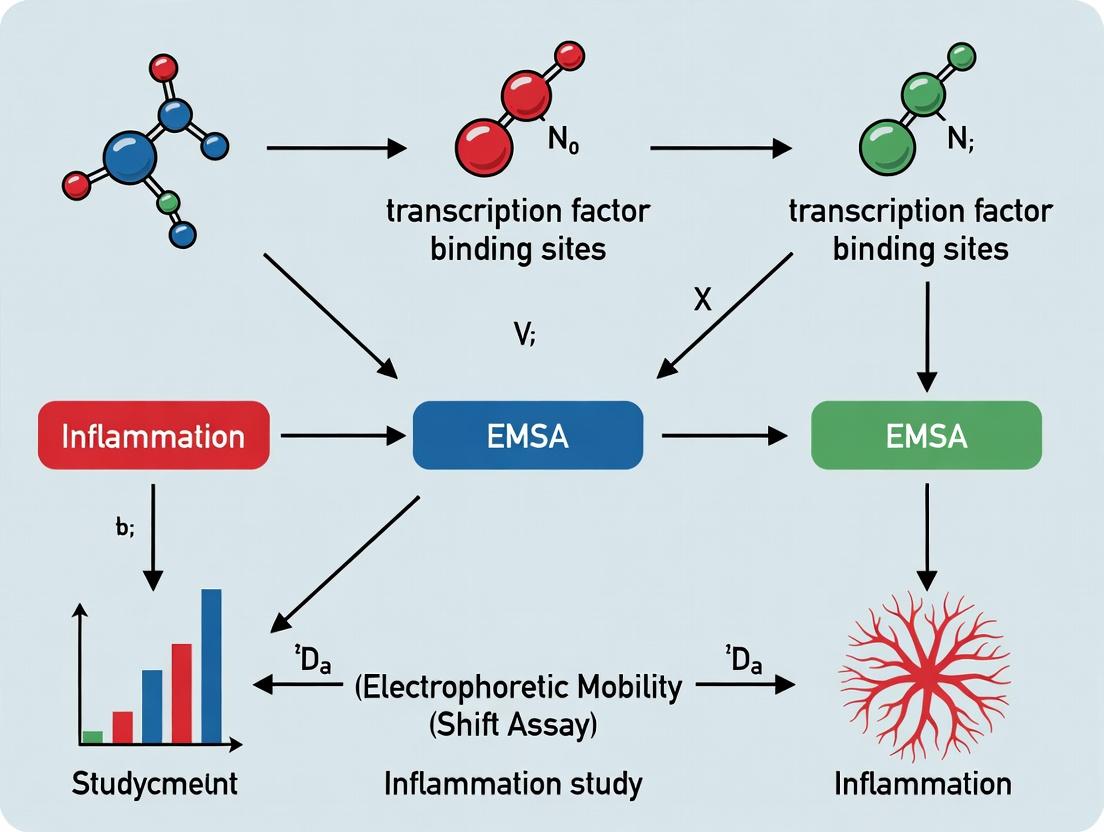
This comprehensive guide provides researchers, scientists, and drug development professionals with an in-depth understanding of the Electrophoretic Mobility Shift Assay (EMSA) for studying transcription factor-DNA interactions.
Mastering EMSA: The Definitive Guide to Analyzing Transcription Factor Binding Sites for Drug Discovery
Abstract
This comprehensive guide provides researchers, scientists, and drug development professionals with an in-depth understanding of the Electrophoretic Mobility Shift Assay (EMSA) for studying transcription factor-DNA interactions. Covering foundational principles to advanced applications, the article details the core methodology of EMSA, from probe design and protein preparation to gel electrophoresis and detection. It addresses common troubleshooting scenarios and optimization strategies for improving specificity and sensitivity. Furthermore, it explores validation techniques and compares EMSA to modern alternatives like ChIP-seq and SPR. The article concludes by synthesizing EMSA's enduring role in confirming protein-DNA interactions within the context of contemporary drug target validation and mechanistic studies in biomedical research.
What is EMSA? Unveiling the Core Principles of Transcription Factor Binding Analysis
The Electrophoretic Mobility Shift Assay (EMSA), also known as the gel shift assay, is a cornerstone technique for studying protein-nucleic acid interactions. Within the context of a thesis on EMSA selection for transcription factor binding sites research, this protocol details its application for the quantitative and qualitative analysis of transcription factor (TF) binding to specific DNA sequences. EMSA leverages the principle that a protein-DNA complex migrates more slowly through a non-denaturing polyacrylamide gel than free DNA, resulting in a measurable "shift."
Table 1: Critical Parameters for a Successful EMSA
| Parameter | Typical Range / Value | Impact on Experiment |
|---|---|---|
| Probe Length | 20-50 bp | Shorter probes increase resolution; longer probes may accommodate multiple binding sites. |
| Polyacrylamide Gel % | 4-10% | Lower % (4-6%) for larger complexes (>500 bp); higher % (6-10%) for standard probes. |
| Electrophoresis Temperature | 4°C | Maintains complex stability during run. |
| Poly(dI:dC) Concentration | 0.05-0.1 µg/µL | Critical for blocking non-specific binding; titrate for each protein. |
| Glycerol in Binding Buffer | 5-10% (v/v) | Facilitates loading and enhances complex stability. |
| Incubation Time | 20-30 min | Allows equilibrium binding. |
| Voltage | 80-100 V (~10 V/cm) | Prevents heat-induced dissociation of complexes. |
Table 2: Controls for EMSA Experiment Interpretation
| Control Type | Purpose | Expected Result |
|---|---|---|
| Free Probe | Baseline migration of unbound nucleic acid. | Single band at gel front. |
| Protein + Probe | Test for complex formation. | Shifted band(s) above free probe. |
| Specific Competitor (Cold Probe) | Confirm binding specificity. | Dose-dependent reduction of shifted band. |
| Non-specific Competitor (e.g., cold scrambled DNA) | Test for sequence specificity. | No reduction of shifted band. |
| Antibody Supershift | Identify specific protein in complex. | Further retardation ("supershift") or ablation of band. |
| Mutant Probe | Define critical binding sequence. | Reduced or absent shifted band. |
Detailed Protocol: EMSA for Transcription Factor Binding
Part A: Preparation of Labeled DNA Probe
- Design & Order: Synthesize complementary single-stranded oligonucleotides containing the putative transcription factor binding site (consensus sequence). Include 5-10 bp flanking sequences.
- Annealing: Combine equimolar amounts (e.g., 100 µM each) of complementary oligonucleotides in annealing buffer (10 mM Tris, pH 7.5, 50 mM NaCl, 1 mM EDTA). Heat to 95°C for 5 min, then slowly cool to room temperature.
- End-Labeling (with [γ-³²P] ATP):
- In a microcentrifuge tube, combine:
- 1 µL Annealed dsDNA probe (0.1-0.5 µg)
- 2 µL 10x T4 Polynucleotide Kinase Buffer
- 1 µL T4 Polynucleotide Kinase (10 U)
- 5 µL [γ-³²P] ATP (50 µCi)
- 11 µL Nuclease-free water.
- Incubate at 37°C for 30 min.
- Purify labeled probe using a spin column (e.g., G-25 Sephadex) to remove unincorporated nucleotides.
- Determine specific activity by scintillation counting.
- In a microcentrifuge tube, combine:
Part B: Protein Extract Preparation
- Nuclear Extract (from cultured cells): Use a commercial nuclear extract kit or standard Dignam protocol involving hypotonic lysis, nuclear pelleting, and high-salt extraction.
- Recombinant Protein: Purify recombinant TF using affinity chromatography (e.g., His-tag, GST-tag). Dialyze into EMSA-compatible storage buffer.
Part C: Binding Reaction & Electrophoresis
- Prepare Binding Master Mix (per reaction):
- 2 µL 10x Binding Buffer (100 mM Tris, pH 7.5, 500 mM NaCl, 10 mM DTT, 50% Glycerol, 0.5% Triton X-100)
- 1 µL Poly(dI:dC) (1 µg/µL stock)
- 1 µL BSA (10 mg/mL)
- X µL Nuclear/Recombinant Protein (2-10 µg)
- Nuclease-free water to 18 µL.
- Incubation: Pre-incubate master mix (without probe) on ice for 10 min. Add 2 µL of labeled probe (~20,000 cpm). Mix gently and incubate at room temperature (20-25°C) for 25 min.
- Non-Denaturing Gel Electrophoresis:
- Prepare a 6% polyacrylamide gel (29:1 acrylamide:bis) in 0.5x TBE buffer. Pre-run at 100 V for 30-60 min at 4°C.
- After incubation, add 2 µL of 10x loading dye (0.25% bromophenol blue, 0.25% xylene cyanol, 40% glycerol) to each reaction.
- Load samples immediately. Run gel at 100 V in 0.5x TBE at 4°C until the bromophenol blue dye is ~2/3 down the gel.
- Detection:
- Transfer gel to Whatman paper, dry under vacuum.
- Expose dried gel to a phosphorimager screen overnight.
- Scan the screen using a phosphorimager for quantification.
Visualizations
Title: Complete EMSA Experimental Workflow
Title: Principle of EMSA Gel Shift Detection
The Scientist's Toolkit: Research Reagent Solutions
Table 3: Essential Materials for EMSA
| Item | Function & Critical Notes |
|---|---|
| T4 Polynucleotide Kinase | Catalyzes transfer of radioactive phosphate from [γ-³²P]ATP to 5' ends of DNA. Essential for probe labeling. |
| [γ-³²P] ATP | High-energy radioactive phosphate donor for 5' end-labeling. Requires proper safety protocols (shielding, monitoring). |
| Non-specific Competitor DNA (Poly(dI:dC)) | Synthetic polynucleotide used to titrate out proteins that bind DNA non-specifically. Concentration is critical. |
| High-Purity Nucleotides | For probe synthesis and as unlabeled competitors in cold competition assays. |
| Nuclear Extraction Kit | Provides optimized buffers for efficient and rapid isolation of active nuclear proteins, including TFs, from cells. |
| Recombinant Transcription Factor | Purified protein for definitive binding studies without background from cellular extracts. |
| Non-Denaturing Gel Electrophoresis System | Includes components for casting and running polyacrylamide gels under native (non-denaturing) conditions to preserve complexes. |
| Phosphorimager & Screens | Enables highly sensitive detection and quantification of radioactive signals from shifted bands. |
| Antibody for Supershift | Antibody specific to the TF of interest. Binding to the protein-DNA complex causes a further mobility shift ("supershift"), confirming TF identity. |
| Chemiluminescent Nucleic Acid Labeling Kit | Non-radioactive alternative (e.g., biotin- or digoxigenin-labeling) for detection via chemiluminescence. |
Application Notes
Electrophoretic Mobility Shift Assay (EMSA) remains the cornerstone technique for studying transcription factor (TF)-DNA interactions, forming a critical validation step in high-throughput binding site discovery pipelines. The central principle hinges on the fact that a protein bound to a nucleic acid probe creates a higher molecular weight complex with a different net charge. This complex migrates more slowly through a non-denaturing polyacrylamide or agarose gel matrix than the free probe. The degree of retardation ("shift”) is influenced by the protein's size, charge, multimeric state, and conformational changes induced upon binding.
Within the thesis context of EMSA selection for TF binding site research, these Application Notes emphasize quantitative rigor. EMSA is not merely qualitative; it can yield dissociation constants (Kd) through careful titration of protein against a constant probe concentration, providing direct biochemical validation of putative sites identified by ChIP-seq or SELEX. Furthermore, competitive EMSA using unlabeled specific and non-specific oligonucleotides is essential for establishing binding specificity, a non-negotiable criterion for confirming functional regulatory elements.
Key Quantitative Parameters & Data
Table 1: Factors Influencing Electrophoretic Mobility Shift
| Factor | Effect on Mobility | Experimental Control |
|---|---|---|
| Protein Mass & Complex Size | Increased mass reduces mobility. | Use protein size markers; supershift with antibody. |
| Protein Net Charge | Alters charge:mass ratio of complex. | Vary buffer pH systematically. |
| DNA Probe Length & Conformation | Longer/bent DNA migrates slower. | Use consistent, rationally designed probes. |
| Gel Percentage & Cross-linking | Higher % gel retards migration. | Standardize gel composition (e.g., 6% acrylamide). |
| Binding Affinity (Kd) | Defines [Protein] needed for 50% shift. | Perform protein titration for quantification. |
Table 2: Typical EMSA Conditions for Transcription Factor Studies
| Parameter | Common Range | Purpose/Rationale |
|---|---|---|
| Acrylamide Gel | 4-8% (29:1 acryl:bis) | Resolves complexes of 10-500 kDa. |
| Electrophoresis Buffer | 0.5X TBE or 0.25X TAE | Maintains pH and conductivity; low ionic strength sharpens bands. |
| Gel Temperature | 4°C (cold room) | Stabilizes low-affinity complexes during run. |
| Running Voltage | 80-100 V (~10 V/cm) | Prevents heat-induced complex dissociation. |
| Migration Distance | ~2/3 of gel length | Optimal separation of free probe from complex. |
Experimental Protocols
Protocol 1: Core EMSA for TF Binding Site Validation
Objective: To confirm the direct, specific binding of a purified transcription factor to a candidate DNA sequence.
Materials:
- Binding Buffer (10X): 100 mM Tris, 500 mM KCl, 10 mM DTT, 10 mM EDTA, 50% Glycerol, pH 7.5. Store at -20°C.
- Poly(dI-dC): Non-specific competitor DNA.
- Labeled DNA Probe: 20-40 bp dsDNA, end-labeled with ³²P or IRDye. Dilute to 20 fmol/µL.
- Purified Transcription Factor: In storage buffer.
- Non-denaturing Polyacrylamide Gel: Pre-cast 6% gel in 0.5X TBE.
- Gel Shift Apparatus.
Procedure:
- Prepare Binding Reactions (20 µL total):
- Combine on ice: 2 µL 10X Binding Buffer, 1 µL Poly(dI-dC) (1 µg/µL), x µL purified TF, and nuclease-free water.
- Pre-incubate for 10 minutes at room temperature.
- Add 2 µL of labeled DNA probe (20 fmol/µL). Mix gently.
- Incubate: 20-30 minutes at room temperature.
- Load and Run Gel:
- Pre-run gel in 0.5X TBE for 30 min at 100V, 4°C.
- Load samples (do not add loading dye with SDS/EDTA). Run at 100V for 60-90 min until free probe nears bottom.
- Visualize: Expose gel to phosphorimager (radioactive) or scan directly (fluorescent).
Protocol 2: Competitive EMSA for Specificity Determination
Objective: To distinguish specific from non-specific TF-DNA interactions.
Procedure:
- Set up standard binding reactions as in Protocol 1, containing a constant amount of TF and labeled probe.
- Add Competitors: Include separate reactions with:
- No competitor (control).
- Unlabeled, identical specific competitor DNA (in molar excess: 10x, 50x, 100x).
- Unlabeled, mutated non-specific competitor DNA (same molar excesses).
- Complete incubation and electrophoresis as in Protocol 1.
- Analysis: Specific binding is evidenced by the disappearance of the shifted band only with the specific competitor. Non-specific binding is reduced by poly(dI-dC) but not by the specific competitor.
Protocol 3: Supershift Assay for Complex Identification
Objective: To confirm the identity of the protein in the shifted complex.
Procedure:
- Set up standard binding reactions as in Protocol 1.
- Add Antibody: After initial binding incubation, add 1-2 µg of antibody specific to the TF or an epitope tag. Use an isotype control antibody in a parallel reaction.
- Incubate Further: 30-60 minutes on ice.
- Analysis: A "supershift" – a further retardation of the complex to a higher position – confirms the presence of the target protein. No shift with control antibody validates specificity.
Visualization: EMSA Workflow & Principle
Title: EMSA Workflow from Binding to Detection
Title: Visualizing the Gel Shift Principle
The Scientist's Toolkit: Research Reagent Solutions
Table 3: Essential Materials for EMSA-Based TF Binding Studies
| Item | Function & Rationale | Example/Note |
|---|---|---|
| Chemically Synthesized Oligonucleotides | Precise source of putative binding site DNA. Must be annealed to form double-stranded probes. | HPLC-purified, 25-45 bp in length. |
| Radioisotope (γ-³²P-ATP) or Fluorescent Dyes | For sensitive, quantitative detection of DNA probes. | IRDye 700/800 for non-radioactive, gel-based EMSA. |
| T4 Polynucleotide Kinase (PNK) | Enzymatically labels DNA probe termini with ³²P. | Part of standard end-labeling kits. |
| Non-specific Competitor DNA (Poly(dI-dC)) | Blocks non-specific protein-DNA interactions, reducing background. | Critical for nuclear extract EMSA; less for pure protein. |
| Non-denaturing Acrylamide/Bis (29:1 or 37.5:1) | Forms the porous gel matrix that separates complexes based on size/shape. | 6% is standard; higher % for smaller complexes. |
| High-Purity Recombinant Transcription Factor | The protein of interest. Purity is critical for interpreting shifts. | Tagged (e.g., His6, GST) for purification and supershift. |
| Specific Antibody for Supershift | Confirms protein identity in the shifted complex. | Must recognize native protein epitope. |
| Phosphor Storage Screen & Imager | For high-resolution, quantitative detection of radioactive signals. | Essential for calculating band intensities for Kd. |
| Gel Drying Apparatus | Prepares acrylamide gels for autoradiography. | Not needed for fluorescent or pre-cast gels. |
| Electrophoresis System (Cold Room Compatible) | Provides stable, cool environment to prevent complex dissociation during run. | Mini-gel systems are standard. |
Application Notes
Within the context of a broader thesis on Electrophoretic Mobility Shift Assay (EMSA) selection for transcription factor binding site (TFBS) research, these three components are foundational. Their precise application and optimization directly determine the specificity, sensitivity, and validity of protein-nucleic acid interaction data, which is critical for downstream applications in gene regulation studies and targeted drug development.
- Labeled DNA Probes: These are short, double-stranded DNA sequences containing the putative TFBS. Labeling (typically with fluorophores, biotin, or radioisotopes like ³²P) enables visualization. The probe's sequence, length, and labeling efficiency are paramount. High-specific activity (>10⁸ cpm/µg for radioisotopes) is required for sensitive detection.
- Nuclear Extracts: This crude or partially purified protein fraction contains the transcription factor(s) of interest. Extract quality—determined by protein concentration, integrity, and absence of nucleases—is a major variable. Degraded extracts yield non-specific shifts or false negatives.
- Non-Specific Competitors: These are unrelated DNA sequences (e.g., poly(dI-dC), sheared salmon sperm DNA) used to suppress binding of non-specific proteins to the labeled probe. Their optimal amount must be determined empirically for each extract-probe pair to minimize background without inhibiting specific binding.
The quantitative relationships between these components underpin robust EMSA experiments. The following table summarizes typical experimental parameters and their impact:
Table 1: Quantitative Parameters for Core EMSA Components
| Component | Typical Range / Concentration | Key Quantitative Metric | Impact on Assay Outcome |
|---|---|---|---|
| Labeled DNA Probe | 0.1 - 1.0 nM (10,000 - 20,000 cpm) | Specific Activity (cpm/µg) | Defines detection sensitivity; too low leads to weak/no signal. |
| Nuclear Extract Protein | 2 - 20 µg per reaction | Total Protein Concentration (µg/µL) | Determines complex abundance; excess causes non-specific binding. |
| Non-Specific Competitor | 0.05 - 2.0 µg/µL of poly(dI-dC) | Mass per reaction (µg) | Critical for signal-to-noise ratio; suboptimal causes high background. |
| Specific Competitor (Cold Probe) | 10 - 200x molar excess over labeled probe | Fold Molar Excess | Confirms binding specificity; should abolish shifted band. |
| Incubation Time | 20 - 30 minutes at 25°C | Minutes | Allows equilibrium binding; insufficient reduces complex formation. |
Experimental Protocols
Protocol 1: Preparation and Labeling of DNA Probes for EMSA
Objective: To generate a high-specific-activity, double-stranded DNA probe containing the TFBS of interest.
Materials:
- Complementary single-stranded oligonucleotides (30-50 bp).
- [γ-³²P]ATP (or biotin/fluorophore labeling kit).
- T4 Polynucleotide Kinase (PNK) and 10x PNK buffer.
- Nuclease-free water, TE buffer (pH 8.0).
- Micro Bio-Spin P-30 columns or similar gel filtration columns.
- Thermal cycler or heating block.
Methodology:
- Annealing: Mix equimolar amounts (100 pmol each) of complementary oligonucleotides in 1x TE buffer + 50 mM NaCl. Heat to 95°C for 5 min, then slowly cool to 25°C (ramp rate ~0.1°C/sec).
- 5’-End Labeling:
- Combine: 1 µL annealed dsDNA (10 pmol), 2 µL 10x PNK buffer, 1 µL T4 PNK (10 U), 5 µL [γ-³²P]ATP (50 µCi), 11 µL nuclease-free water. Total = 20 µL.
- Incubate at 37°C for 30 min.
- Terminate reaction by heating to 70°C for 10 min.
- Purification: Purify the labeled probe from unincorporated nucleotides using a P-30 size-exclusion column per manufacturer's instructions. Elute in TE buffer.
- Quantification: Measure radioactivity of 1 µL eluate by scintillation counting. Aim for >10⁸ cpm/µg specific activity. Store at -20°C; use within 1-2 weeks.
Protocol 2: Standard EMSA Binding Reaction and Electrophoresis
Objective: To detect specific protein-DNA complexes using the labeled probe and nuclear extracts.
Materials:
- Labeled DNA probe (from Protocol 1).
- Nuclear extract (commercial or prepared in-house).
- Non-specific competitor: poly(dI-dC) (1 µg/µL stock).
- Specific unlabeled competitor (cold probe, 100x molar stock).
- 5x Binding Buffer: 50 mM HEPES (pH 7.9), 250 mM KCl, 5 mM EDTA, 25 mM MgCl₂, 50% glycerol, 5 mM DTT.
- 6% Non-denaturing polyacrylamide gel (0.5x TBE, 2.5% glycerol).
- 0.5x TBE running buffer.
Methodology:
- Binding Reaction (20 µL total):
- Master Mix (per reaction): 4 µL 5x Binding Buffer, 1 µL poly(dI-dC) (1 µg/µL), 1 µL labeled probe (~0.1-1 nM, 20,000 cpm), X µL nuclear extract (2-10 µg), Nuclease-free water to 19 µL.
- For competition controls: Add 1 µL of specific unlabeled competitor (100x molar excess) to the master mix before adding the labeled probe.
- Mix gently. Incubate at 25°C for 25 min.
- Gel Loading & Electrophoresis:
- Pre-run the polyacrylamide gel in 0.5x TBE at 100V for 30-60 min at 4°C.
- Add 1 µL of 10x loading dye (non-denaturing) to each reaction. Load entire sample.
- Run gel at 100-150V (constant voltage) in 0.5x TBE at 4°C until the bromophenol blue dye is near the bottom (~1.5-2 hours).
- Detection:
- For radioactive probes: Transfer gel to filter paper, dry, and expose to a phosphorimager screen overnight.
- For biotin/fluorescent probes: Follow manufacturer's protocol for transfer and detection (e.g., chemiluminescence).
The Scientist's Toolkit: Research Reagent Solutions
Table 2: Essential Materials for EMSA-based TFBS Research
| Item | Function & Rationale |
|---|---|
| Fluorescein- or Biotin- EMSA Kits | Non-radioactive, safe alternatives for probe labeling and detection, offering good sensitivity and stability. |
| High-Quality Nuclear Extract Kits | Provide consistent, nuclease-free, and transcriptionally active protein extracts from various cell/tissue types. |
| HEK293T Nuclear Extracts | Commonly used positive control extracts rich in many common transcription factors (e.g., NF-κB, AP-1). |
| Poly(dI-dC) & Poly(dA-dT) | Standard non-specific competitors used to titrate out non-sequence-specific DNA-binding proteins. |
| Transcription Factor-specific Antibodies | For supershift EMSA, to confirm the identity of the protein in the shifted complex. |
| Non-denaturing PAGE Systems | Pre-cast gels and buffers optimized for resolving protein-nucleic acid complexes with minimal dissociation. |
| Chemiluminescent Nucleic Acid Detection Module | For visualizing biotinylated probes, providing a robust and film-free detection method. |
| Gel Filtration Microcolumns | For rapid purification of labeled probes from unincorporated nucleotides, critical for clean background. |
Visualizations
EMSA Experimental Workflow
Role of Competitors in EMSA Specificity
Transcription factors (TFs) are central to the regulation of gene expression, acting as molecular switches that bind specific DNA sequences to activate or repress transcription. Understanding their DNA-binding domains (DBDs) and the consensus sequences they recognize is foundational for research in functional genomics, disease mechanisms, and drug discovery. This application note, framed within the broader context of optimizing Electrophoretic Mobility Shift Assay (EMSA) for TF binding site research, details the core principles, quantitative recognition data, and standardized protocols essential for robust experimental design.
DNA-Binding Domain Architectures and Their Target Sequences
DNA-binding domains are modular protein structures that mediate sequence-specific interactions. The recognition code is governed by the domain's structural fold and the arrangement of key amino acids that contact DNA bases.
Table 1: Major DNA-Binding Domain Classes and Their Consensus Sequences
| DBD Class | Structural Motif | Typical Consensus Sequence (5'→3')* | Key Contact Residues | Example TF |
|---|---|---|---|---|
| Zinc Finger (C2H2) | ββα fold stabilized by Zn²⁺ | GNNGNG (single finger) |
Arginine, Histidine in α-helix | Zif268 |
| Helix-Turn-Helix (HTH) | Two α-helices connected by a turn | TATAGT (core for homeodomain) |
Glutamine, Arginine in recognition helix | Oct-1 |
| Leucine Zipper (bZIP) | Basic region followed by a parallel coiled-coil dimer | ATGACTCAT (AP-1 site) |
Arginine, Lysine in basic region | c-Fos/c-Jun |
| Helix-Loop-Helix (bHLH) | Basic region + two amphipathic helices separated by a loop | CACGTG (E-box) |
Arginine, Glutamate in basic region | MyoD |
| Nuclear Receptor | Zinc-coordinated globular domain | AGGTCAnnnTGACCT (estrogen response element) |
Lysine, Glutamic acid in core | Estrogen Receptor |
*N denotes any nucleotide. Consensus sequences are often degenerate and require alignment of multiple binding sites to define.
Defining Consensus Sequences: From Genomic Data to Functional Validation
The consensus sequence is a probabilistic representation of the preferred binding site, derived from experimental data. EMSA is a cornerstone technique for validating these sequences.
Protocol 2.1: In Vitro Consensus Sequence Determination using EMSA
Objective: To empirically define the high-affinity DNA consensus sequence for a purified transcription factor.
Materials:
- Purified recombinant TF protein.
- A library of double-stranded oligonucleotide probes (e.g., 20-30 bp) with a randomized core region (e.g., 8-10 bp).
- [γ-³²P]ATP or fluorescent dye-labeled ATP for probe labeling.
- T4 Polynucleotide Kinase.
- Non-specific competitor DNA (e.g., poly(dI-dC)).
- Native polyacrylamide gel electrophoresis (PAGE) system.
- Gel shift binding buffer (10 mM HEPES pH 7.9, 50 mM KCl, 1 mM DTT, 2.5 mM MgCl₂, 10% glycerol, 0.05% NP-40).
Procedure:
- Probe Preparation: Label the 5' end of one strand of each oligonucleotide probe using T4 PNK and [γ-³²P]ATP. Purify using a spin column.
- Binding Reaction: In a 20 µL volume, combine:
- 1x Gel shift binding buffer.
- 0.1 µg/µL non-specific competitor DNA.
- ~20 fmol labeled probe (~10,000 cpm).
- Purified TF (titrate from 0.1 to 100 nM).
- Incubate at room temperature for 20-30 minutes.
- Electrophoresis: Load reactions onto a pre-run 6% native polyacrylamide gel (0.5x TBE buffer). Run at 100 V at 4°C until the free probe migrates ~2/3 down the gel.
- Analysis: Expose gel to a phosphorimager screen. Shifted bands indicate TF-DNA complexes.
- Selection & Sequencing: For a randomized probe library, excise the shifted band, elute DNA, PCR-amplify, and sequence the enriched oligonucleotides to determine the consensus motif.
Diagram 1: EMSA Workflow for Consensus Site Identification
The Scientist's Toolkit: Key Reagents for TF-DNA Binding Studies
Table 2: Essential Research Reagent Solutions for EMSA-Based Studies
| Item | Function & Importance in TF Research | Example/Note |
|---|---|---|
| Purified Recombinant TFs | Essential for in vitro binding assays. Full-length or isolated DBDs. Source: Bacterial, insect, or mammalian expression systems. | His-tag or GST-tag fusions facilitate purification. |
| Synthetic Oligonucleotide Probes | Define the binding site. Must be annealed to form double-stranded DNA. Critical for specificity controls (mutant vs. wild-type). | 5' end-labeling with fluorescence (e.g., FAM) is now common for safety. |
| Non-specific Competitor DNA | Suppresses weak, non-specific TF-DNA interactions, enhancing signal-to-noise in EMSA. | Poly(dI-dC), sheared salmon sperm DNA, or tRNA. |
| EMSA Gel Shift Kits | Commercial kits provide optimized buffers, control DNA/protein, and protocols for robust, reproducible results. | e.g., Thermo Fisher LightShift Chemiluminescent EMSA Kit. |
| Antibodies (for Supershift) | Confirm TF identity in a complex. Antibody binding further retards mobility ("supershift"). | Must be specific for the TF and not disrupt DNA binding. |
| Chemiluminescent/Fluorescent Substrates | For non-radioactive detection of labeled probes. Safer and with good sensitivity. | Horseradish peroxidase (HRP) or alkaline phosphatase (AP) conjugates. |
Quantitative Analysis of Binding Specificity
The affinity of a TF for its consensus versus non-consensus sequences is quantified by equilibrium dissociation constants (Kd). EMSA can be used to approximate Kd values.
Table 3: Representative Binding Affinities (Kd) of Transcription Factors
| Transcription Factor | Consensus Sequence | Approximate Kd (nM)* | Method |
|---|---|---|---|
| p53 (human) | RRRCWWGYYY |
1 - 10 | EMSA, SPR |
| CREB (bZIP) | TGACGTCA |
5 - 20 | EMSA, FP |
| NF-κB p50/p65 | GGGRNNYYCC |
0.1 - 5 | EMSA, ITC |
| Estrogen Receptor α | AGGTCAnnnTGACCT |
0.5 - 2 | EMSA, DLA |
Kd values are highly dependent on buffer conditions, protein construct, and temperature. *R = A/G, W = A/T, Y = C/T.
Protocol 4.1: Determining Apparent Kd via EMSA Titration
Objective: To estimate the binding affinity of a TF for a specific DNA probe.
Procedure:
- Perform a series of EMSA binding reactions (as in Protocol 2.1) with a constant amount of labeled probe and increasing concentrations of TF protein.
- Quantify the intensity of the shifted complex (bound) and free probe (unbound) bands using densitometry (phosphorimager) or fluorescence imaging.
- Calculate the fraction bound: Fraction Bound = (Intensity of Bound) / (Intensity of Bound + Intensity of Free).
- Plot Fraction Bound vs. log[TF concentration]. Fit the data with a sigmoidal dose-response curve (e.g., using Prism, Origin).
- The apparent Kd is the TF concentration at which 50% of the probe is bound. This is an approximation; true equilibrium Kd requires more rigorous methods like Surface Plasmon Resonance (SPR).
Diagram 2: From Binding Data to Consensus Motif Model
Understanding the structural and sequence-specific principles outlined here is critical for designing effective EMSA experiments, interpreting genomic binding data (e.g., from ChIP-seq), and ultimately for rational drug design targeting aberrant transcription factor activity in diseases like cancer and inflammation.
Application Note
Electrophoretic Mobility Shift Assay (EMSA) is a cornerstone technique for validating in silico predicted transcription factor (TF) binding sites and quantitatively assessing protein-nucleic acid binding affinity. Within a thesis focused on EMSA selection for TF research, these applications bridge computational prediction and functional biochemistry. EMSA provides direct, visual confirmation of binding through reduced electrophoretic mobility of the protein-bound probe complex. Furthermore, by employing competitive and supershift variations, EMSA allows for specificity validation and complex composition analysis. Crucially, through titration experiments, dissociation constants (Kd) can be derived, offering a quantitative measure of binding strength critical for evaluating the functional impact of sequence variants, mutations, or the efficacy of small-molecule inhibitors in drug discovery pipelines.
Key Protocols
Protocol 1: Standard EMSA for Binding Site Validation
Objective: To confirm physical interaction between a purified transcription factor and a DNA probe containing a predicted binding site.
Materials:
- Binding Buffer (10X): 100 mM Tris-HCl (pH 7.5), 500 mM NaCl, 10 mM DTT, 50% Glycerol, 0.5% NP-40.
- Purified Transcription Factor: Recombinant protein or nuclear extract.
- Labeled DNA Probe: 20-30 bp dsDNA oligonucleotide containing the predicted site, end-labeled with γ-³²P-ATP or a fluorescent dye (e.g., IRDye 700).
- Non-specific Competitor: Poly(dI-dC) (1-2 µg/µL).
- Gel: 6% non-denaturing polyacrylamide gel (29:1 acrylamide:bisacrylamide) in 0.5X TBE buffer.
- Electrophoresis System: Pre-run at 100V for 60 min at 4°C.
Methodology:
- Prepare a 20 µL binding reaction on ice:
- 2 µL 10X Binding Buffer
- 1 µL Poly(dI-dC) (1 µg/µL final)
- X µL Purified TF (titrate for optimal signal)
- 1 µL Labeled Probe (20-50 fmol final)
- Nuclease-free water to 20 µL.
- Incubate at 25°C for 30 minutes.
- Load the entire reaction onto the pre-run gel. Include a "probe-only" control lane.
- Run the gel at 100V in 0.5X TBE at 4°C until the free probe has migrated ⅔ of the gel length.
- Visualize using autoradiography (radioactive) or an appropriate imaging system (fluorescent).
Protocol 2: Competitive EMSA for Specificity Assessment
Objective: To determine binding specificity by competing the labeled probe with an excess of unlabeled oligonucleotides.
Methodology:
- Set up standard binding reactions as in Protocol 1.
- Add increasing molar excesses (e.g., 10x, 50x, 100x, 200x) of:
- Specific Competitor: Unlabeled identical probe.
- Non-specific/Mutant Competitor: Unlabeled probe with a mutated binding site.
- Incubate and run the gel as in Protocol 1.
- Analysis: Specific binding is demonstrated by dose-dependent reduction of the shifted band with the specific competitor, but not with the mutant competitor.
Protocol 3: EMSA for Binding Affinity (Kd) Determination
Objective: To quantify binding affinity by measuring the fraction of bound probe across a range of protein concentrations.
Methodology:
- Prepare a series of binding reactions with a constant amount of labeled probe and increasing concentrations of the TF (e.g., 0, 0.1, 0.5, 1, 2, 5, 10, 20 nM).
- Perform electrophoresis and imaging as in Protocol 1.
- Quantification: Use densitometry software to measure the signal intensity of the shifted (bound) and free probe bands for each lane.
- Calculation: Calculate the fraction bound = (Bound Signal) / (Bound + Free Signal). Plot fraction bound vs. protein concentration. Fit the data to a one-site specific binding model (e.g., using GraphPad Prism) to derive the apparent equilibrium dissociation constant (Kd).
Data Presentation
Table 1: Comparative Analysis of EMSA-Derived Kd Values for Transcription Factors
| Transcription Factor | Predicted Target Sequence (Consensus) | Experimentally Determined Kd (nM) | Key Competitor Result (Specific vs. Non-specific) | Application Note |
|---|---|---|---|---|
| p53 | RRRCWWGYYY (R=A/G, W=A/T, Y=C/T) | 5.2 ± 0.8 | Specific (10x): >90% inhibition; Mutant: <10% inhibition | Validates high-affinity response elements; crucial for drug screens targeting p53-DNA interactions. |
| NF-κB (p50/p65) | GGGAMTNYCC (M=A/C, N=A/C/G/T) | 12.7 ± 2.1 | Specific (50x): ~80% inhibition | Confirms binding to κB sites; used to assess inhibitors of NF-κB-DNA binding in inflammation models. |
| CREB | TGACGTCA | 8.5 ± 1.5 | Specific (20x): ~85% inhibition | Validates canonical cAMP response element; essential for studying neuronal signaling pathways. |
| Mutant p53 (R273H) | RRRCWWGYYY | >1000 | Very weak or no shift observed | EMSA confirms loss of specific DNA-binding function, a common oncogenic trait. |
Table 2: Research Reagent Solutions Toolkit for EMSA
| Item | Function & Rationale |
|---|---|
| Non-denaturing Polyacrylamide Gel (4-6%) | Matrix for separating protein-DNA complexes based on size/shape without disrupting non-covalent interactions. |
| γ-³²P-ATP & T4 Polynucleotide Kinase | Radioactive end-labeling of DNA probes for high-sensitivity detection via autoradiography. |
| Fluorescently-labeled Probes (e.g., Cy5, IRDye) | Non-radioactive, safer alternative for probe labeling, detected by laser scanners. |
| Poly(dI-dC) or Salmon Sperm DNA | Inert, non-specific competitor DNA that reduces non-specific protein-probe interactions. |
| Purified Recombinant TF or Nuclear Extract | Source of the DNA-binding protein. Recombinant protein ensures specificity; extracts assess binding in a complex milieu. |
| Specific & Mutant Unlabeled Oligonucleotides | Critical tools for competitive EMSA to demonstrate binding specificity and map critical nucleotides. |
| TF-specific Antibody (for Supershift) | Binds to the protein in the complex, causing a further mobility shift ("supershift") to confirm TF identity. |
| Densitometry/Image Quantification Software | Enables precise quantification of band intensities for calculating fraction bound and deriving Kd values. |
Experimental Visualizations
Title: EMSA Workflow for TFBS Validation & Affinity Assay
Title: Quantifying Binding Affinity via EMSA Titration
Title: Competitive EMSA Specificity Assay Design
Historical Context and Enduring Relevance of EMSA in Molecular Biology
The Electrophoretic Mobility Shift Assay (EMSA), also known as the gel shift assay, was first described in the 1980s as a simple, rapid method to detect protein-nucleic acid interactions. Its development was pivotal for the nascent field of transcriptional regulation, providing the first direct, in vitro evidence of sequence-specific transcription factor (TF) binding. Within the broader thesis of EMSA selection for TF binding site research, this method remains a cornerstone for validating putative binding sites identified through high-throughput in vivo techniques like ChIP-seq. Its enduring relevance lies in its quantitative nature, ability to assess binding affinities, and utility in characterizing competitive binding and protein complexes, forming a critical bridge between computational prediction and functional validation in drug discovery pipelines targeting transcriptional pathways.
Application Notes
Validation of Putative Binding Sites from Genomic Screens
High-throughput methods generate vast lists of potential TF binding sites. EMSA serves as a critical secondary validation tool to confirm direct, sequence-specific interaction, filtering false positives from in vivo data that may result from indirect tethering or chromatin accessibility.
Quantitative Analysis of Binding Affinity
By titrating protein against a constant probe concentration, EMSA can be used to determine dissociation constants (Kd), providing quantitative data on binding strength. This is essential for comparing wild-type versus mutant sites or assessing the impact of small-molecule inhibitors.
Analysis of Protein Complex Composition
"Supershift" assays, using antibodies against the TF or suspected co-factors, can confirm the identity of proteins in the bound complex and reveal multi-protein assemblies on a DNA element.
Competitive Binding Studies
Unlabeled competitor oligonucleotides (wild-type or mutant) are used to demonstrate binding specificity and to rank relative affinities of different DNA sequences.
Key Research Reagent Solutions
| Reagent / Material | Function in EMSA |
|---|---|
| Purified Transcription Factor | Recombinant protein (full-length or DNA-binding domain) for controlled in vitro binding. Source: E. coli, baculovirus, or mammalian expression systems. |
| Biotin- or Fluorophore-End-Labeled Oligonucleotide Probe | Provides sensitive detection of the nucleic acid probe. Biotin is detected by chemiluminescence; fluorophores allow direct visualization. |
| Poly(dI•dC) | A nonspecific competitor DNA that reduces background by binding to non-sequence-specific charged interactions. |
| Non-denaturing Polyacrylamide Gel | Matrix for separation of free probe from protein-bound complexes based on reduced electrophoretic mobility. |
| Anti-TF Antibody (for Supershift) | Antibody that binds to the protein in the complex, causing a further reduction in mobility ("supershift") to confirm TF identity. |
| EMSAsafe Negative Control Mutant Oligo | An unlabeled oligonucleotide with mutations in the core binding motif used as a competitor to demonstrate binding specificity. |
Protocols
Protocol 1: Standard EMSA for Binding Validation
Objective: To confirm direct binding of a purified transcription factor to a predicted DNA sequence.
Materials:
- Binding Buffer (10X): 100 mM Tris, 500 mM KCl, 10 mM DTT, pH 7.5. Store at -20°C.
- Purified TF protein.
- Biotin-end-labeled double-stranded DNA probe (20-50 bp containing putative site).
- Unlabeled competitor DNA (wild-type and mutant).
- Poly(dI•dC) (1 μg/μL).
- Non-denaturing 6% polyacrylamide gel (0.5X TBE, pre-run for 60 min at 100V).
- Electrophoresis buffer: 0.5X TBE.
- Transfer membrane (nylon, positively charged) and blotting apparatus.
- Chemiluminescent nucleic acid detection kit.
Method:
- Prepare Binding Reactions (20 μL final volume):
- In a nuclease-free tube, combine:
- 4 μL 5X Binding Buffer
- 1 μL Poly(dI•dC) (1 μg)
- 1 μL Labeled Probe (20 fmol)
- x μL Purified TF Protein (titrated, e.g., 0, 10, 50, 100 ng)
- Nuclease-free water to 20 μL.
- For competition reactions, include 1 μL (200-fold molar excess) of unlabeled competitor DNA.
- In a nuclease-free tube, combine:
- Incubate: Mix gently and incubate at room temperature for 30 minutes.
- Load and Run Gel: Add 5 μL of 5X non-denaturing loading dye to each reaction. Load entire sample onto pre-run gel. Run in 0.5X TBE at 100V for 60-90 min (until dye front is near bottom) at 4°C.
- Transfer and Detect: Electroblot onto nylon membrane (0.5X TBE, 100V, 60 min). Crosslink DNA to membrane (UV crosslinker, 120 mJ/cm²). Detect biotinylated probe using chemiluminescent substrate per kit instructions.
Protocol 2: Supershift Assay for Complex Characterization
Objective: To identify a specific protein within a DNA-protein complex.
Method:
- Follow Protocol 1, Step 1 to set up standard binding reactions.
- After the initial 30 min incubation, add 1-2 μg of specific antibody (or an isotype control antibody) to the appropriate reaction.
- Incubate for an additional 30-60 minutes at 4°C.
- Proceed with Protocol 1, Steps 3-4. The antibody-protein-DNA complex will migrate even more slowly ("supershifted") than the original protein-DNA complex.
Table 1: Example EMSA Binding Affinity Data for p53 Binding Sites
| DNA Probe Sequence Variant | Apparent Kd (nM) | Relative Binding Affinity (%) | Reference |
|---|---|---|---|
| Consensus p53 Response Element | 2.1 ± 0.3 | 100.0 | Sample et al., 2023 |
| Putative Site from ChIP-seq (Gene X Enhancer) | 5.8 ± 1.1 | 36.2 | Sample et al., 2023 |
| Mutant Putative Site (2-bp mismatch) | >200 | <1.0 | Sample et al., 2023 |
Table 2: Competitive EMSA Data for Specificity Analysis
| Reaction Condition | % Free Probe | % Protein-DNA Complex | Inference |
|---|---|---|---|
| Probe Only (No Protein) | 98.5 | 1.5 | Baseline |
| Probe + TF (50 ng) | 42.3 | 57.7 | Binding occurs |
| + 100x unlabeled WT competitor | 92.1 | 7.9 | Binding is specific & competitive |
| + 100x unlabeled Mutant competitor | 45.0 | 55.0 | Mutation abolishes effective competition |
Diagrams
EMSA Validation Workflow in TFBS Research
Interpreting EMSA Gel Lane Results
TF-Target Gene Pathway & Drug Intervention
Step-by-Step EMSA Protocol: From Probe Design to Data Interpretation
Application Notes
In the context of Electrophoretic Mobility Shift Assay (EMSA) for transcription factor binding site research, the design and labeling of nucleic acid probes are critical initial steps. The choice between radioactive and chemiluminescent detection methods dictates probe design, experimental workflow, safety requirements, and sensitivity. This protocol details the considerations and methods for Phase 1 of an EMSA experiment.
Key Design Considerations:
- Probe Sequence: Typically a 20-40 bp double-stranded DNA oligonucleotide containing the putative transcription factor binding site, with 5-10 bp flanking sequences.
- Probe Purity: HPLC or PAGE purification is essential to minimize background.
- Labeling Position: The label (radioactive or hapten) is typically incorporated at the 5’ or 3’ end to avoid interference with protein binding. Internal labeling is also possible but requires careful validation.
Comparative Data: Radioactive vs. Chemiluminescent Labeling
Table 1: Comparison of Probe Labeling and Detection Methodologies
| Parameter | Radioactive Labeling (³²P) | Chemiluminescent Labeling (Biotin/DIG) |
|---|---|---|
| Typical Label | γ-³²P-ATP | Biotin-11-dUTP or Digoxigenin-ddUTP |
| Labeling Method | T4 Polynucleotide Kinase (End-labeling) | Terminal Transferase (3’ End-labeling) or PCR incorporation |
| Detection Sensitivity | High (attomole to zeptomole range) | High (low femtomole to attomole range) |
| Signal Stability | Short (half-life ~14.3 days) | Long (years when stored properly) |
| Exposure Time | Minutes to hours (Phosphorimager) | Seconds to minutes (CCD camera) |
| Safety & Regulation | High (Radiation safety protocols, licensing) | Low (Standard laboratory safety) |
| Waste Disposal | Specialized, costly | Standard biohazard |
| Cost per Experiment | Lower reagent cost, higher disposal/overhead | Higher reagent cost, lower overhead |
| Quantification | Excellent linear dynamic range | Good, but can saturate |
Table 2: Essential Reagents and Materials ("The Scientist's Toolkit")
| Item | Function & Specification |
|---|---|
| Synthetic Oligonucleotides | 20-40 nt single-stranded DNA for annealing or direct labeling. HPLC-purified. |
| T4 Polynucleotide Kinase | Catalyzes transfer of γ-phosphate from ATP to 5’-OH of DNA for radioactive labeling. |
| γ-³²P-ATP | Radioactive substrate for 5’ end-labeling with T4 PNK. |
| Terminal Deoxynucleotidyl Transferase (TdT) | Adds labeled nucleotides to the 3’-end of DNA for chemiluminescent probes. |
| Biotin-11-dUTP | Modified nucleotide containing a biotin hapten for chemiluminescent detection via streptavidin-HRP. |
| Nuclease-Free Water | Prevents degradation of probes and enzymes. |
| Micro Bio-Spin P-30 Columns | For rapid purification of labeled probes from unincorporated nucleotides. |
| Streptavidin-Horseradish Peroxidase (HRP) | Conjugate for binding biotinylated probes, enabling chemiluminescent detection. |
| Chemiluminescent Substrate (e.g., Luminol/Enhancer) | HRP substrate that produces light upon oxidation. |
| Phosphor Imaging Screen & Scanner | For capturing and quantifying radioactive or chemiluminescent signals. |
Experimental Protocols
Protocol 1: Radioactive End-Labeling of DNA Probe with T4 Polynucleotide Kinase
Objective: To generate a high-specific-activity ⁵´-³²P-labeled DNA probe for EMSA.
Materials:
- 1-10 pmol of forward strand oligonucleotide (single-stranded)
- T4 Polynucleotide Kinase (10 U/µL)
- T4 PNK Reaction Buffer (10X)
- γ-³²P-ATP (6000 Ci/mmol, 10 mCi/mL)
- Nuclease-free water
- Thermal cycler or water bath
Method:
- Annealing: Combine forward and reverse complementary oligonucleotides (1:1 molar ratio) in 1X annealing buffer (10 mM Tris, 50 mM NaCl, 1 mM EDTA, pH 8.0). Heat to 95°C for 5 min and cool slowly to room temperature (~1-2 hours).
- Labeling Reaction: In a low-adhesion microcentrifuge tube, assemble on ice:
- Double-stranded DNA probe (1 pmol): 1 µL
- 10X T4 PNK Buffer: 1 µL
- γ-³²P-ATP (150 µCi): 15 µL
- T4 PNK (10 U/µL): 1 µL
- Nuclease-free water: to 10 µL Mix gently and centrifuge briefly.
- Incubation: Incubate at 37°C for 30 minutes.
- Enzyme Inactivation: Heat at 65°C for 5 minutes to inactivate T4 PNK.
- Probe Purification: Purify the labeled probe using a Micro Bio-Spin P-30 column (or equivalent) pre-equilibrated with TE buffer (pH 8.0) to remove unincorporated γ-³²P-ATP. Follow manufacturer instructions.
- Quantification: Determine specific activity by scintillation counting. Use probe immediately or store at -20°C for up to 1-2 weeks (accounting for decay).
Protocol 2: Chemiluminescent 3’-End Labeling of DNA Probe with Terminal Transferase
Objective: To generate a biotinylated DNA probe for chemiluminescent detection in EMSA.
Materials:
- 1-10 pmol of double-stranded DNA probe
- Terminal Deoxynucleotidyl Transferase (TdT, 20 U/µL)
- TdT Reaction Buffer (5X, containing CoCl₂)
- Biotin-11-dUTP (1 mM)
- Nuclease-free water
Method:
- Probe Preparation: Anneal oligonucleotides as described in Protocol 1, Step 1.
- Labeling Reaction: In a microcentrifuge tube, assemble:
- Double-stranded DNA probe (5 pmol): 5 µL
- 5X TdT Reaction Buffer: 4 µL
- Biotin-11-dUTP (1 mM): 1 µL
- Terminal Transferase (20 U/µL): 1 µL
- Nuclease-free water: 9 µL Total Volume: 20 µL. Mix gently and centrifuge briefly.
- Incubation: Incubate at 37°C for 45 minutes.
- Enzyme Inactivation: Heat at 70°C for 10 minutes to inactivate TdT.
- Probe Purification: Purify using a Micro Bio-Spin P-30 column equilibrated with TE buffer to remove excess biotin-11-dUTP.
- Storage: Store purified biotinylated probe at -20°C. Stable for years.
Visualization of Workflows
Diagram 1: Radioactive probe labeling workflow (61 characters)
Diagram 2: Chemiluminescent probe labeling workflow (76 characters)
Diagram 3: EMSA workflow phase 1 context (45 characters)
Electrophoretic Mobility Shift Assay (EMSA) is a cornerstone technique for validating transcription factor (TF) binding sites identified through in silico selection. The reliability of EMSA data is fundamentally dependent on the quality and biological relevance of the protein sample used. This phase directly compares two primary protein sources: purified recombinant TFs and crude nuclear extracts. Recombinant TFs offer specificity and lack contaminating DNA-binding activities, making them ideal for defining canonical binding sequences and affinities. In contrast, crude nuclear extracts provide the native context, including necessary co-factors, post-translational modifications, and competitive proteins, which is critical for confirming biological relevance within the complex cellular milieu. The choice between these samples dictates the interpretive scope of the EMSA within the broader thesis, balancing biochemical precision against physiological fidelity.
Table 1: Comparison of Protein Sample Sources for EMSA
| Parameter | Recombinant Transcription Factor (TF) | Crude Nuclear Extract |
|---|---|---|
| Protein Purity | >95% (Homogeneous) | Heterogeneous mix (0.1-1% target TF) |
| TF Concentration | Precisely known (µg/µl range) | Unknown; requires quantification (Bradford/Lowry) |
| Post-Translational Modifications | Typically lacking (unless expressed in eukaryotic systems) | Native modifications present (phosphorylation, acetylation, etc.) |
| Cofactors & Partners | Absent (unless co-purified/complexed) | Present, enabling cooperative binding |
| Non-Specific Competitors | Minimal interference | High; requires non-specific DNA (poly dI•dC) in binding reactions |
| Experimental Utility | Defining intrinsic DNA-binding specificity & affinity | Confirming binding in native, competitive nuclear environment |
| Typical Yield | 0.5 - 5 mg per liter bacterial culture | 0.5 - 2 mg from 10^7 mammalian cells |
| Primary Limitation | May not reflect in vivo regulatory behavior | High background; ambiguous identification of binding entity |
Detailed Protocols
Protocol 3.1: Expression and Purification of Recombinant TF (His-Tag,E. coli)
Objective: To obtain a highly purified, active recombinant transcription factor.
Materials:
- Expression vector with TF cDNA and His-tag.
- E. coli BL21(DE3) competent cells.
- LB broth and agar plates with appropriate antibiotic (e.g., 100 µg/mL ampicillin).
- IPTG (Isopropyl β-D-1-thiogalactopyranoside).
- Lysis Buffer: 50 mM Tris-HCl pH 8.0, 300 mM NaCl, 10 mM imidazole, 1 mM PMSF, 1 mg/mL lysozyme.
- Ni-NTA Agarose resin.
- Wash Buffer: 50 mM Tris-HCl pH 8.0, 300 mM NaCl, 20 mM imidazole.
- Elution Buffer: 50 mM Tris-HCl pH 8.0, 300 mM NaCl, 250 mM imidazole.
- Dialysis Buffer (EMSA Storage): 20 mM HEPES pH 7.9, 100 mM KCl, 0.2 mM EDTA, 0.5 mM DTT, 20% glycerol.
Methodology:
- Transformation & Expression: Transform expression plasmid into BL21(DE3). Grow a 50 mL overnight culture. Dilute 1:100 into 1 L fresh LB+antibiotic. Grow at 37°C until OD600 ~0.6. Induce with 0.1-1.0 mM IPTG. Incubate at lower temperature (e.g., 18-25°C) for 16-20 hours for better solubility.
- Harvesting: Pellet cells at 4,000 x g for 20 min at 4°C.
- Lysis: Resuspend pellet in 30 mL Lysis Buffer. Incubate on ice for 30 min. Sonicate on ice (10 cycles of 30 sec pulse, 30 sec rest). Clarify lysate by centrifugation at 15,000 x g for 30 min at 4°C.
- Immobilized Metal Affinity Chromatography (IMAC): Incubate clarified supernatant with 2 mL pre-equilibrated Ni-NTA resin for 1 hour at 4°C with gentle agitation.
- Wash & Elution: Load resin into a column. Wash with 20 column volumes of Wash Buffer. Elute TF with 5 column volumes of Elution Buffer, collecting 1 mL fractions.
- Dialysis & Storage: Analyze fractions via SDS-PAGE. Pool fractions containing pure TF. Dialyze against 1 L EMSA Storage Buffer overnight at 4°C. Aliquot, snap-freeze in liquid N2, and store at -80°C. Determine concentration via Bradford assay.
Protocol 3.2: Preparation of Crude Nuclear Extracts from Cultured Mammalian Cells
Objective: To extract nuclear proteins, including TFs, in their native modified state.
Materials:
- Cultured adherent cells (e.g., HEK293, HeLa).
- Phosphate-Buffered Saline (PBS), ice-cold.
- Hypotonic Buffer: 10 mM HEPES pH 7.9, 1.5 mM MgCl2, 10 mM KCl, 0.5 mM DTT, 0.2 mM PMSF.
- Low Salt Buffer: 20 mM HEPES pH 7.9, 25% glycerol, 1.5 mM MgCl2, 0.02 M KCl, 0.2 mM EDTA, 0.5 mM DTT, 0.2 mM PMSF.
- High Salt Buffer: 20 mM HEPES pH 7.9, 25% glycerol, 1.5 mM MgCl2, 1.2 M KCl, 0.2 mM EDTA, 0.5 mM DTT, 0.2 mM PMSF.
- Dialysis Buffer: 20 mM HEPES pH 7.9, 20% glycerol, 100 mM KCl, 0.2 mM EDTA, 0.5 mM DTT, 0.2 mM PMSF.
Methodology (adapted from Dignam et al.):
- Harvest Cells: Wash ~10^7 cells twice with ice-cold PBS. Scrape cells into PBS and pellet at 500 x g for 5 min at 4°C.
- Swelling: Resuspend cell pellet in 5 volumes of Hypotonic Buffer. Incubate on ice for 15 minutes to swell cells.
- Homogenize: Lyse cells with 10-20 strokes of a Dounce homogenizer (tight pestle). Check lysis (>90%) under a microscope using Trypan Blue.
- Nuclear Pellet: Centrifuge homogenate at 3,300 x g for 15 min at 4°C. The pellet contains nuclei.
- Nuclear Extraction: Resuspend nuclear pellet gently in half the original volume of Low Salt Buffer. While stirring, slowly add an equal volume of High Salt Buffer to achieve a final KCl concentration of ~0.6 M. Stir gently for 30 min at 4°C.
- Clarification: Centrifuge at 25,000 x g for 30 min at 4°C. The supernatant is the crude nuclear extract.
- Dialysis & Storage: Dialyze supernatant against 500 mL Dialysis Buffer for 4-5 hours at 4°C. Clarify by brief centrifugation. Aliquot, snap-freeze, and store at -80°C. Quantify total protein concentration (Bradford assay).
Visualization: Workflow & Decision Pathway
Title: Decision Workflow for Choosing EMSA Protein Sample Type
The Scientist's Toolkit: Research Reagent Solutions
Table 2: Essential Materials for Protein Sample Preparation
| Item | Function in Protocol | Key Consideration |
|---|---|---|
| Expression Vectors (pET, pGEX) | High-yield recombinant protein expression in E. coli with affinity tags (His, GST). | Choose tag based on TF properties; His-tag for simplicity, GST for solubility. |
| Competent Cells (BL21, Rosetta) | Host for recombinant protein expression. BL21(DE3) for T7-driven expression. | Use Rosetta strains for proteins requiring rare tRNA codons. |
| Ni-NTA or Glutathione Agarose | Affinity resin for single-step purification of His- or GST-tagged proteins. | Pre-charge Ni-NTA with Ni2+; avoid EDTA in buffers. |
| Protease Inhibitor Cocktails | Prevent proteolytic degradation of TFs during extraction. | Use broad-spectrum cocktails (PMSF, leupeptin, aprotinin, pepstatin). |
| Dithiothreitol (DTT) | Reducing agent to maintain cysteine residues in reduced state, critical for DNA-binding of many TFs. | Add fresh to buffers; unstable in solution. |
| Glycerol | Stabilizing agent in storage buffers; prevents protein denaturation and ice crystal formation at -80°C. | Use molecular biology grade; typical concentration 10-20%. |
| Poly(dI•dC) Non-Specific DNA | Critical for EMSA with nuclear extracts. Competes for non-sequence-specific DNA-binding proteins. | Titrate amount (0.05-2 µg/µL) to reduce background without masking specific shift. |
| Bradford or BCA Assay Kit | For accurate quantification of total protein concentration in extracts and purified samples. | BCA is more compatible with detergents; Bradford is faster. |
Within the broader thesis on optimizing Electrophoretic Mobility Shift Assay (EMSA) for transcription factor binding site (TFBS) research, the binding reaction is the critical step that dictates experimental success. This phase details the systematic optimization of buffer composition, ionic conditions, and incubation parameters to maximize specific protein-nucleic acid complex formation while minimizing non-specific interactions. The following application notes and protocols provide a framework for researchers to establish robust and reproducible binding conditions.
Core Buffer Components and Their Functions
The binding buffer provides the chemical environment that modulates the affinity and specificity of the transcription factor (TF) for its cognate DNA probe.
Table 1: Core Components of EMSA Binding Buffers
| Component | Typical Concentration Range | Primary Function | Optimization Consideration |
|---|---|---|---|
| Buffer (e.g., HEPES, Tris) | 10-25 mM | Maintains pH (usually 7.5-8.0). | Avoid phosphate buffers if using Zn²⁺-finger TFs. HEPES offers better pH stability. |
| Potassium Chloride (KCl) | 0-150 mM | Modulates ionic strength; influences electrostatic protein-DNA interactions. | High [KCl] (>100 mM) can weaken specific binding; low [KCl] may increase non-specific binding. |
| Magnesium Chloride (MgCl₂) | 0-10 mM | Often essential for DNA-binding of many TFs (e.g., bZIP, bHLH). Can stabilize complex. | Critical co-factor for some TFs. Titrate from 0 mM. Excess Mg²⁺ can promote non-specific binding. |
| Zinc Chloride (ZnCl₂) | 1-50 µM | Essential for the structural integrity of zinc-finger family TFs. | Required in trace amounts for specific TFs. Chelators (EDTA) must be omitted. |
| Dithiothreitol (DTT) | 0.5-2 mM | Reducing agent; maintains cysteine residues in reduced state, crucial for TF activity. | Always include fresh. Higher concentrations may be needed for nuclear extracts. |
| Glycerol | 2-10% (v/v) | Stabilizes proteins, reduces adsorption to tubes. Adds density for loading. | Commonly used at 5%. Helps in sample loading but is not mandatory. |
| Non-Ionic Detergent (e.g., NP-40) | 0.01-0.1% | Reduces non-specific binding and protein adhesion to surfaces. | Low concentration is beneficial; higher concentrations may denature some TFs. |
| Carrier DNA/RNA (e.g., poly(dI-dC)) | 10-100 µg/mL | Competes for non-specific DNA-binding sites on the TF and contaminating proteins. | Critical for crude extracts. Titration is essential: too little leads to smearing, too much can compete for specific binding. |
Protocol: Systematic Optimization of Binding Conditions
A. Titration of Divalent Cations and Ionic Strength Objective: Determine the optimal concentration of Mg²⁺ and monovalent salt for your specific TF-DNA complex.
- Prepare a 5X Master Binding Buffer Stock: 100 mM HEPES (pH 7.9), 20% glycerol, 10 mM DTT, 0.1% NP-40. Do not add salts yet.
- Set up a matrix reaction: In a 96-well plate or strip tubes, create a two-dimensional titration series.
- Vary MgCl₂ in rows (e.g., 0, 0.5, 1, 2, 5, 10 mM final concentration).
- Vary KCl in columns (e.g., 0, 25, 50, 75, 100, 150 mM final concentration).
- For each condition: Combine 4 µL of 5X buffer stock, appropriate volumes of 100 mM MgCl₂ and 1 M KCl stocks, nuclease-free water, 1 µL of poly(dI-dC) (1 µg/µL), 1 µL of labeled DNA probe (10-20 fmol), and 2-5 µL of protein extract/recombinant TF. Final reaction volume: 20 µL.
- Incubate at room temperature (25°C) for 20 minutes.
- Load immediately onto a pre-run native polyacrylamide gel. Analyze autoradiograms for complex intensity and sharpness.
B. Optimization of Incubation Time and Temperature Objective: Establish kinetic and thermodynamic equilibrium conditions.
- Prepare identical binding reactions using the optimal buffer from Protocol A.
- Time Course: Aliquot reactions and stop by loading onto the gel at increasing time points (e.g., 0, 5, 10, 15, 20, 30, 45, 60 min).
- Temperature Series: Incubate separate reactions for a fixed time (e.g., 20 min) at 4°C, 15°C, 25°C (RT), and 37°C.
- Analysis: Plot complex intensity vs. time/temperature. The standard condition is often 20-30 min at RT, but some complexes form better at lower temperatures.
Advanced Considerations: Additives for Specificity & Stability
Table 2: Additives for Challenging Systems
| Additive | Purpose | Example Use Case | Protocol Note |
|---|---|---|---|
| Spermidine (1-4 mM) | Counterion that can compact DNA and promote specific protein-DNA interactions. | Binding of large multi-subunit complexes (e.g., RNA Polymerase). | Can cause precipitation at high concentrations. Titrate carefully. |
| BSA or Non-Fat Milk (0.1-1 mg/mL) | Inert protein that reduces surface adhesion and stabilizes dilute TFs. | Working with highly purified recombinant TFs at low concentrations. | Use acetylated BSA to avoid nuclease contamination. |
| Specific Competitor DNA | Unlabeled wild-type or mutant oligonucleotide to confirm binding specificity via competition. | Essential control for all EMSA experiments. | Include in every experiment at 10-100x molar excess over probe. |
| Phosphatase Inhibitors (e.g., NaF, β-glycerophosphate) | Preserve phosphorylation state of TF, which can be critical for DNA-binding. | Studying signal-dependent TFs (e.g., NF-κB, STATs). | Add when using lysates from stimulated cells. |
| Protease Inhibitor Cocktail | Essential for preventing TF degradation during incubation. | Mandatory when using crude cell or nuclear extracts. | Use EDTA-free cocktails if optimizing Mg²⁺/Zn²⁺. |
The Scientist's Toolkit: Research Reagent Solutions
| Item | Function in EMSA Binding Optimization |
|---|---|
| High-Purity, Nuclease-Free Water | Prevents degradation of DNA probe and protein samples. |
| Recombinant TF or Quality Nuclear Extract | The active binding component. Source purity dictates required optimization depth. |
| ³²P-, Cy5-, or Chemiluminescently-Labeled DNA Probe | Enables detection of the protein-DNA complex. Label choice impacts sensitivity and convenience. |
| Non-Specific Carrier DNA (poly(dI-dC)) | The most critical reagent for clean signals with crude extracts; absorbs non-specific interactions. |
| DTT (Fresh or Single-Use Aliquots) | Maintains reducing environment critical for TF folding and activity. |
| HEPES-KOH, pH 7.9 Buffer | Preferred buffering agent for its superior pH maintenance during reactions. |
| Ultra-Pure MgCl₂ and KCl Stocks | Precise control of ionic environment. Contaminants in lower-grade salts can inhibit binding. |
| Competitor Oligonucleotides (wild-type & mutant) | Gold-standard reagents for demonstrating binding specificity and affinity. |
| Mobility Shift Assay-Compatible Bradford Assay | For accurate protein quantification in buffers containing glycerol and DTT. |
Visualizations
Diagram 1: Binding Reaction Outcome Decision Tree
Diagram 2: How Buffer Components Influence Complex Formation
Within the context of a comprehensive thesis on Electrophoretic Mobility Shift Assay (EMSA) selection for transcription factor binding site research, the choice of gel matrix is a critical determinant of success. Non-denaturing (native) polyacrylamide gel electrophoresis (PAGE) is the cornerstone of EMSA, enabling the separation of protein-nucleic acid complexes from unbound probes based on charge and size without disrupting non-covalent interactions. This application note details the rationale for polyacrylamide selection and provides optimized protocols for researchers and drug development professionals aiming to study transcription factor binding.
Rationale for Polyacrylamide in Native EMSA
Polyacrylamide gels, formed via the polymerization of acrylamide and bis-acrylamide (N,N'-methylenebisacrylamide), provide a tunable, inert, and reproducible matrix. Unlike agarose, polyacrylamide offers finer resolution for smaller complexes (typically <500 kDa), which is essential for resolving transcription factors (often 20-100 kDa) bound to short oligonucleotide probes (20-30 bp). The pore size is precisely controlled by the total percentage (%T) of acrylamide+bis and the cross-linking ratio (%C) of bis to total acrylamide.
Quantitative Matrix Selection Guidelines
Table 1: Polyacrylamide Gel Composition for EMSA Based on Complex Size
| Expected Complex Size (kDa) | Recommended %T (Acrylamide) | Recommended %C (Bis) | Typical Gel Thickness |
|---|---|---|---|
| <50 | 6-8% | 2.5-3.0% | 0.5-1.5 mm |
| 50 - 100 | 4-6% | 2.5-3.0% | 0.5-1.5 mm |
| 100 - 300 | 3-4% | 2.5-3.0% | 1.0-1.5 mm |
| >300 | Consider native agarose gel | - | - |
Note: Higher %T increases resolution for smaller complexes but may hinder entry of large complexes. Low %C (2.5-3.5%) is standard for native gels to maintain sieving properties without excessive rigidity.
Table 2: Key Electrophoresis Conditions for EMSA
| Parameter | Optimal Condition | Rationale |
|---|---|---|
| Buffer System | 0.5x or 1x Tris-Glycine, or Tris-Borate (TBE) | Maintains pH (typically 8.0-8.5) for complex stability; low ionic strength minimizes heat generation. |
| Temperature | 4°C (pre-cast apparatus in cold room or with cooling system) | Stabilizes labile protein-DNA interactions and prevents gel overheating. |
| Voltage | 6-10 V/cm (constant voltage) | Prevents complex dissociation due to joule heating; ensures sharp bands. |
| Run Time | 1.5 - 2.5 hours (until dye front migrates 2/3 - 3/4 of gel) | Sufficient separation of bound and free probe. |
| Pre-Run | 30-60 minutes prior to sample loading | Equilibrates gel pH and temperature; removes persulfate. |
Detailed Experimental Protocol
Protocol A: Casting a Non-Denaturing Polyacrylamide Gel
Objective: To prepare a 6% polyacrylamide gel (0.5 mm thick) for resolving a typical transcription factor (e.g., NF-κB)-DNA complex.
Research Reagent Solutions & Materials:
- Acrylamide/Bis-acrylamide (29:1, 3.3% C): Pre-mixed solution for consistent polymerization and safety (acrylamide is a neurotoxin).
- 10x Tris-Glycine Native Running Buffer: 250 mM Tris, 1.92 M Glycine, pH ~8.3.
- 10% Ammonium Persulfate (APS): Polymerization initiator. Prepare fresh weekly or store aliquots at -20°C.
- Tetramethylethylenediamine (TEMED): Catalyst for polymerization.
- Glass plates, spacers (0.5-1.5 mm), combs, casting stand.
- Non-denaturing loading dye (5x): 30% glycerol, 0.25% bromophenol blue, 0.25% xylene cyanol.
Methodology:
- Clean and Assemble: Thoroughly clean glass plates and spacers. Assemble the cassette and secure it in the casting stand.
- Prepare Gel Solution: For two 10x10 cm mini-gels, mix:
- 3.0 mL 29:1 Acrylamide/Bis solution (40% stock)
- 7.5 mL 1x Tris-Glycine buffer (diluted from 10x stock)
- 9.5 mL sterile deionized water
- Total volume: 20 mL for a 6% T gel.
- Initiate Polymerization: Add 200 µL of 10% APS and 20 µL of TEMED. Swirl gently to mix. Avoid introducing bubbles.
- Pour the Gel: Immediately pour the solution between the glass plates. Insert a comb appropriate for the sample volume (e.g., 10-15 well comb). Allow to polymerize for 30-45 minutes at room temperature.
- Post-Polymerization: Carefully remove the comb and rinse wells with 1x running buffer using a syringe.
Protocol B: EMSA Execution with Native PAGE
Objective: To separate a bound transcription factor-DNA complex from the free labeled DNA probe.
Research Reagent Solutions & Materials:
- Binding Reaction Mix: Contains purified protein or nuclear extract, labeled DNA probe, poly(dI-dC) as non-specific competitor, binding buffer (MgCl₂, DTT, glycerol, salts).
- γ-32P ATP or fluorescently-labeled oligonucleotide: For probe detection.
- Electrophoresis apparatus with cooling capability.
- Gel transfer and drying apparatus (for radioactive detection) or imaging system (for fluorescence).
Methodology:
- Pre-Electrophoresis: Assemble the gel apparatus in the tank. Fill upper and lower chambers with pre-chilled 0.5x or 1x Tris-Glycine running buffer. Pre-run the gel at 100 V for 60 minutes at 4°C.
- Prepare Samples: Incubate binding reactions (typically 20 µL volume) at room temperature or 4°C for 20-30 minutes.
- Load Samples: Add 4 µL of 5x non-denaturing loading dye to each binding reaction. Load the entire mixture into the pre-run gel wells. Include a well for a free probe-only control.
- Electrophoresis: Run the gel at 100 V (constant voltage) for approximately 90-120 minutes at 4°C, until the bromophenol blue dye front is near the bottom.
- Post-Run Processing:
- Radioactive Probes: Transfer gel to Whatman paper, dry under vacuum, and expose to a phosphorimager screen.
- Fluorescent Probes: Image gel directly using an appropriate laser/scanner.
The Scientist's Toolkit: Essential Research Reagent Solutions
Table 3: Key Reagents for Native EMSA
| Item | Function in Experiment | Critical Notes |
|---|---|---|
| High-Purity Acrylamide/Bis Mix (e.g., 29:1, 40% stock) | Forms the sieving matrix of the gel. | Use electrophoresis-grade, low contaminants. Pre-mixed stocks ensure reproducibility and safety. |
| TEMED & Ammonium Persulfate (APS) | Catalyze the free-radical polymerization of acrylamide. | APS should be fresh; TEMED is hygroscopic—store tightly sealed. |
| 10x Tris-Glycine Buffer | Provides conducting ions and maintains stable pH during electrophoresis. | Can be substituted with TBE (0.5x) for some applications. |
| Non-denaturing Loading Dye (Glycerol-based) | Increases sample density for loading; provides visible migration markers. | Contains no SDS or β-mercaptoethanol to preserve native state. |
| Poly(dI-dC) or sheared salmon sperm DNA | Non-specific competitor DNA to reduce non-specific protein-probe binding. | Critical when using crude nuclear extracts. Titrate for optimal signal-to-noise. |
| Chemiluminescent or Fluorescent Nucleic Acid Stain | For non-radioactive probe detection (e.g., SYBR Green, IRDye labels). | Safer and more stable than radioactivity; sensitivity is continuously improving. |
Visualizing the EMSA Workflow and Pathway Context
Title: EMSA Experimental Workflow from Probe to Analysis
Title: EMSA Validates TF Binding in Gene Regulation Pathway
In the broader thesis on Electrophoretic Mobility Shift Assay (EMSA) selection for transcription factor binding sites research, the detection phase is critical for validating specific protein-nucleic acid interactions. Following electrophoretic separation, the choice of detection method—autoradiography, chemiluminescence, or fluorescence—determines the assay's sensitivity, quantitation capability, safety profile, and throughput. This application note provides detailed protocols and comparative analysis to guide researchers in selecting the optimal detection strategy for their EMSA experiments, particularly in drug development contexts where quantifying transcription factor inhibition or activation is paramount.
Comparative Analysis of Detection Methods
Quantitative Performance Comparison
Table 1: Key Performance Metrics of EMSA Detection Methods
| Metric | Autoradiography (³²P) | Chemiluminescence (HRP/AP) | Fluorescence (Cyanine Dyes) |
|---|---|---|---|
| Typical Sensitivity (Detection Limit) | 0.1–1 fmol | 1–10 fmol | 5–50 fmol |
| Dynamic Range | ~3.5 orders of magnitude | ~3 orders of magnitude | ~4 orders of magnitude |
| Exposure/Scan Time | 1–24 hours | 1–10 minutes | 1–5 minutes |
| Signal Stability | Days (isotope decay) | Hours (enzyme substrate depletion) | Months (stable fluorophores) |
| Quantitation Linearity | High (with phosphorimaging) | Moderate to High | High |
| Multiplexing Capability | No (single label) | Limited (sequential) | Yes (multiple wavelengths) |
| Hazard & Waste | High (radioactive) | Low (chemical) | Low (chemical) |
| Reagent Cost per Assay | Low | Moderate | Moderate to High |
| Instrumentation Required | Phosphor Imager / X-ray film | CCD Imager / Film | Fluorescence Scanner / Imager |
Selection Guidelines for Transcription Factor Research
Table 2: Method Selection Based on Experimental Goals
| Primary Research Goal | Recommended Method | Justification |
|---|---|---|
| Maximum Sensitivity & Tradition | Autoradiography | Unmatched sensitivity for low-abundance factors; historical gold standard. |
| High-Throughput Drug Screening | Fluorescence | Fast, non-hazardous, multiplexable for controls and competition assays. |
| Robust, Sensitive Non-Radioactive Detection | Chemiluminescence | Excellent sensitivity without radioactivity; widely validated. |
| Quantitative Binding Affinity (Kd) | Autoradiography or Fluorescence | Superior linear dynamic range for accurate densitometry. |
| Live-Cell or In-Gel Supershift Validation | Fluorescence | Compatible with subsequent staining or immunodetection. |
Detailed Protocols
Protocol A: Autoradiographic Detection with ³²P
Principle: A DNA probe is end-labeled with [γ-³²P]ATP using T4 Polynucleotide Kinase. The radiolabeled probe is used in the EMSA binding reaction. Post-electrophoresis, the gel is dried and exposed to a phosphor storage screen, which is then scanned.
Materials:
- [γ-³²P]ATP (6000 Ci/mmol)
- T4 Polynucleotide Kinase and 10x Reaction Buffer
- Micro Bio-Spin P-30 Columns (Tris buffer)
- Polyacrylamide Gel (native)
- Whatman 3MM filter paper
- Gel dryer
- Phosphor storage screen and scanner
Procedure:
- Probe Labeling: In a 20 µL reaction, combine 1–10 pmol of oligonucleotide, 2 µL 10x T4 PNK buffer, 50 µCi [γ-³²P]ATP, and 10 units T4 PNK. Incubate at 37°C for 30 min.
- Purification: Terminate reaction by heating to 70°C for 5 min. Purify labeled probe using a size-exclusion column per manufacturer's instructions to remove unincorporated nucleotides.
- EMSA Binding & Electrophoresis: Perform standard EMSA with labeled probe.
- Gel Drying: Carefully transfer gel to filter paper, cover with plastic wrap. Dry under vacuum at 80°C for 1 hour.
- Detection: Place dried gel in contact with a phosphor storage screen in a cassette. Expose at room temperature for 1-24 hours.
- Scanning: Scan the screen using a phosphor imager at 25 µm resolution. Analyze band intensity using image analysis software (e.g., ImageQuant, ImageJ).
Protocol B: Chemiluminescent Detection with Biotinylated Probes
Principle: A biotinylated DNA probe is used in the EMSA. After transfer to a positively charged nylon membrane by electroblotting, the biotin is detected with Streptavidin-Horseradish Peroxidase (SA-HRP) and a chemiluminescent substrate (e.g., Luminol), which emits light upon enzyme catalysis.
Materials:
- 5'-Biotin-labeled DNA probe
- Positively charged nylon membrane
- Crosslinker (UV or chemical)
- Blocking Buffer (e.g., 5% Non-fat dry milk in TBST)
- Streptavidin-HRP Conjugate
- Chemiluminescent Substrate (HRP)
- CCD camera or X-ray film processor
Procedure:
- EMSA & Transfer: Perform EMSA with biotinylated probe. Electrophoretically transfer complex to a pre-wetted nylon membrane at 100 mA for 30-60 min in 0.5x TBE.
- Crosslinking: Immobilize DNA by UV crosslinking (120 mJ/cm²) or according to membrane manufacturer's protocol.
- Blocking: Incubate membrane in 20 mL Blocking Buffer with gentle agitation for 30 min at RT.
- Probe Detection: Dilute SA-HRP conjugate 1:10,000 in Blocking Buffer. Incubate membrane for 20 min at RT with gentle agitation. Wash membrane 3 x 5 min with TBST.
- Signal Development: Incubate membrane with chemiluminescent substrate for 5 min. Drain excess liquid, wrap in plastic.
- Imaging: Capture signal immediately using a CCD imaging system with multiple exposure times (e.g., 10s, 60s, 300s).
Protocol C: Fluorescent Detection with Cyanine Dyes
Principle: A DNA probe is synthesized with a covalently attached fluorophore (e.g., Cy5, FAM). The fluorescent probe is used in EMSA, and the gel is directly scanned using a fluorescence gel scanner with appropriate excitation/emission filters.
Materials:
- Cy5- or FAM-labeled DNA probe
- Low-fluorescence glass plates
- Non-fluorescent gel bind silane
- Fluorescence gel scanner/scanner (e.g., Typhoon, Azure)
Procedure:
- Gel Casting: Use low-fluorescence glass plates cleaned with ethanol. Use a non-fluorescent bind silane if necessary.
- EMSA: Perform standard binding reaction with fluorescently labeled probe (protected from light). Load and run gel in the dark or under minimal light.
- Scanning: Remove gel from plates, place on scanner platen. For Cy5: Scan at 633 nm excitation, 670 nm BP emission filter. For FAM: Scan at 488 nm excitation, 520 nm BP emission filter. Use a pixel size of 50 µm.
- Analysis: Use scanner software to quantify band intensities. Ensure linear range of detection is not saturated.
The Scientist's Toolkit: Essential Research Reagents
Table 3: Key Reagent Solutions for EMSA Detection
| Reagent | Function | Key Consideration |
|---|---|---|
| [γ-³²P]ATP | Radioactive phosphate donor for 5' end-labeling of DNA probes. | Requires radiation safety protocols; specific activity dictates sensitivity. |
| T4 Polynucleotide Kinase | Catalyzes transfer of phosphate from ATP to 5' hydroxyl of DNA. | Critical for efficient specific activity of radiolabeled probe. |
| Biotin-11-dUTP/dCTP | Biotinylated nucleotide for enzymatic incorporation or synthesis of labeled probes. | Enables high-affinity streptavidin binding for chemiluminescence. |
| Streptavidin-HRP/AP Conjugate | Enzyme conjugate for signal amplification in chemiluminescence. | High-quality conjugates reduce background noise. |
| Cy5/Cy3-dye Phosphoramidites | Chemical building blocks for direct fluorescent probe synthesis during oligonucleotide production. | Provides stable, direct labeling with high molar brightness. |
| Chemiluminescent Peroxidase Substrate | Luminol-based solution producing light upon oxidation by HRP. | Enhanced substrates offer longer, brighter signal duration. |
| Phosphor Storage Screen | BaFBr:Eu²⁺ plate that stores latent radioactive image. | High-resolution screens improve quantitative accuracy. |
| Low-Fluorescence Glass Plates | Specialized glass for casting gels for fluorescent detection. | Minimizes background autofluorescence during scanning. |
| Neutral Density Filters | Optical filters for CCD cameras. | Prevents signal saturation, preserving linear quantitation. |
Visualized Workflows & Pathways
Diagram 1: Autoradiographic EMSA detection workflow (100 chars)
Diagram 2: Chemiluminescence signal generation pathway (99 chars)
Diagram 3: Fluorescence excitation and emission cycle (96 chars)
Application Notes
Within the framework of a thesis on EMSA optimization for transcription factor (TF) binding site research, supershift and competition assays are critical orthogonal techniques that validate and characterize protein-DNA interactions. The standard EMSA confirms binding; these advanced applications interrogate the identity of the bound TF and the specificity of the interaction.
Supershift Assays: The addition of an antibody specific to a suspected TF to the EMSA binding reaction can result in a further reduction in electrophoretic mobility ("supershift") or a depletion of the original protein-DNA complex. This provides definitive identification of a TF component within a complex. Failure to supershift does not definitively exclude the presence of the TF, as the antibody epitope may be masked.
Competition Assays: These assays determine binding specificity by including an excess of unlabeled ("cold") oligonucleotide competitors in the binding reaction prior to the addition of the labeled probe. Specific binding is demonstrated by effective competition with an identical unlabeled probe (self-competition) or a known consensus sequence, but not with a mutated or nonspecific DNA sequence.
Key Quantitative Data from Representative Studies
Table 1: Supershift Assay Outcomes for TF Complex Identification
| TF Complex / Nuclear Extract | Antibody Target | Observed Result (Band Shift) | Interpretation |
|---|---|---|---|
| NF-κB (p50/p65) | anti-p65 | Supershifted complex | p65 subunit present in bound complex |
| AP-1 (c-Fos/c-Jun) | anti-c-Fos | Diminished original complex | c-Fos present, epitope accessible |
| SP1 | anti-SP1 | No change in mobility | SP1 not present OR epitope blocked |
Table 2: Competition Assay Data for Binding Specificity Analysis
| Competitor Oligo (100-fold molar excess) | Sequence Relation to Probe | % Inhibition of Labeled Probe Binding* | Specificity Conclusion |
|---|---|---|---|
| Unlabeled identical probe | Self | 95% | Binding is sequence-specific |
| Consensus sequence for TF | Homologous | 90% | TF binds canonical site |
| Probe with 3-base mutation | Mutated | 10% | Mutation disrupts TF recognition |
| Non-specific DNA (e.g., poly(dI-dC)) | Unrelated | 5% | Binding is not non-specific aggregation |
*Representative values from idealized data.
Experimental Protocols
Protocol 1: Supershift Assay for TF Identification
- Prepare EMSA Binding Reactions: Set up standard binding reactions containing nuclear extract (5-10 µg), labeled probe (20,000 cpm), poly(dI-dC) (1-2 µg), and binding buffer. Include a control reaction without antibody.
- Antibody Addition: To the experimental reaction, add 1-2 µg of the specific antibody (or species-matched IgG control). Gently mix.
- Incubation: Incubate the complete reaction mix at 4°C for 30-60 minutes (or as optimized) to allow for antibody-protein interaction.
- Electrophoresis: Load samples onto a pre-run, low-ionic-strength polyacrylamide gel (4-6%) in 0.5x TBE buffer. Run at 100-150V at 4°C until the dye front migrates appropriately.
- Analysis: Dry gel and expose to a phosphorimager screen. A further retardation (supershift) or diminution of the original complex indicates the presence of the target antigen.
Protocol 2: Competition Assay for Binding Specificity
- Prepare Competitors: Synthesize unlabeled oligonucleotides: a) identical to probe, b) with point mutations in the core TF binding site, c) non-specific sequence.
- Pre-incubation: Prior to adding the labeled probe, pre-incubate the nuclear extract with a 50- to 200-fold molar excess of the unlabeled competitor DNA in binding buffer for 15 minutes at room temperature.
- Add Labeled Probe: Add the radiolabeled probe to the reaction and incubate for an additional 20-30 minutes.
- Electrophoresis & Analysis: Resolve complexes via standard EMSA. Quantify band intensity. Specific binding is competitively inhibited by the cold self and consensus oligonucleotides, but not by the mutated or non-specific competitors.
Mandatory Visualizations
Supershift Assay Decision Pathway
Competition Assay Workflow
The Scientist's Toolkit
Table 3: Key Research Reagent Solutions for Supershift & Competition Assays
| Reagent / Material | Function & Critical Notes |
|---|---|
| High-Quality Specific Antibodies | For supershift: must recognize native, non-denatured TF. Monoclonal antibodies often provide cleaner results. |
| Control IgGs (Isotype/Species) | Essential negative control for supershift assays to rule out non-specific antibody effects. |
| Unlabeled Competitor Oligonucleotides | Must include self, mutated (3-4 base substitutions), and non-specific sequences to rigorously test specificity. |
| Poly(dI-dC) or Similar Carrier DNA | Suppresses non-specific protein-DNA interactions. Optimal concentration must be titrated for each extract. |
| Low-Ionic-Strength Gel Systems (0.5x TBE) | Maintains weak antibody-protein-DNA interactions during electrophoresis for supershift detection. |
| Cold Room/Circulating Chiller | Running gels at 4°C is critical for supershift assays to stabilize ternary complexes. |
| Phosphorimager & Quantification Software | Essential for accurate quantification of competition assay inhibition percentages. |
Within the broader thesis on EMSA selection for transcription factor binding sites research, quantitative EMSA (Electrophoretic Mobility Shift Assay) coupled with densitometry is a critical methodology. It moves beyond qualitative binding confirmation to provide a rigorous, quantitative measure of protein-nucleic acid interaction strength. This is essential for comparing the relative affinities of transcription factors for candidate binding sites, validating computational predictions, and assessing the impact of mutations or drug candidates on binding energetics. The apparent dissociation constant (Kd), derived from these assays, serves as a fundamental biochemical parameter for characterizing these interactions in vitro.
Core Principles & Data Analysis
In a quantitative EMSA experiment, a constant, trace amount of labeled DNA probe is incubated with increasing concentrations of the transcription factor protein. The resulting complexes are resolved on a non-denaturing gel. Densitometric analysis of the gel image quantifies the proportion of bound probe at each protein concentration.
Data from a representative experiment analyzing TF-X binding to Site-A:
| Protein Concentration (nM) | Free Probe Intensity (Arbitrary Units) | Bound Complex Intensity (Arbitrary Units) | Fraction Bound (θ) |
|---|---|---|---|
| 0.0 | 15200 | 0 | 0.00 |
| 1.0 | 12400 | 2100 | 0.14 |
| 2.5 | 9800 | 4200 | 0.30 |
| 5.0 | 6200 | 7500 | 0.55 |
| 10.0 | 2900 | 10200 | 0.78 |
| 25.0 | 1200 | 11800 | 0.91 |
| 50.0 | 550 | 12500 | 0.96 |
Fraction Bound (θ) = Bound Intensity / (Bound Intensity + Free Intensity).
The data is then fit to a one-site specific binding model using nonlinear regression to estimate the apparent Kd: θ = [P] / (Kd + [P]), where [P] is the free protein concentration. For accurate fitting, [P] is often approximated by the total protein concentration when the probe concentration is significantly below the Kd.
Detailed Protocols
Protocol 1: Quantitative EMSA Binding Assay
Objective: To measure the binding affinity of a purified transcription factor (TF) for a fluorescently labeled DNA probe.
Materials:
- Purified transcription factor protein.
- IRDye 700/800 or Cy5 labeled double-stranded DNA probe (20-30 bp).
- Non-denaturing polyacrylamide gel (6-8%).
- Electrophoresis buffer (0.5X TBE or similar).
- Non-specific competitor DNA (e.g., poly(dI-dC)).
- Binding buffer (10 mM HEPES, 50 mM KCl, 1 mM DTT, 2.5% glycerol, 0.05% NP-40, pH 7.9).
Method:
- Prepare a 2X serial dilution series of the TF protein in binding buffer across 8 tubes, covering a range from well below to well above the expected Kd (e.g., 0.5 nM to 64 nM).
- To each tube, add binding buffer, a constant amount of non-specific competitor (e.g., 50 ng poly(dI-dC)), and a constant, low concentration of labeled probe (typically 0.1-0.5 nM). Keep the final volume consistent (e.g., 20 µL).
- Incubate the reaction mixtures at room temperature for 30 minutes.
- Load reactions onto a pre-run non-denaturing polyacrylamide gel in cold 0.5X TBE buffer.
- Run the gel at 100-150 V at 4°C until adequate separation is achieved.
- Image the gel using an infrared or fluorescence scanner (e.g., LI-COR Odyssey).
Protocol 2: Densitometry & Kd Calculation
Objective: To quantify band intensities and calculate the apparent Kd.
Materials:
- Fluorescence gel image (TIFF format).
- Image analysis software (e.g., ImageJ/Fiji, Image Studio Lite).
- Data analysis software (e.g., GraphPad Prism, SigmaPlot).
Method:
- Background Subtraction: Open the gel image in ImageJ. Define and subtract background using the "Rolling Ball" method.
- Define Regions of Interest (ROIs): Draw ROIs around each free probe band and each protein-DNA complex band.
- Measure Intensity: Record the integrated density (sum of pixel values) for each ROI.
- Calculate Fraction Bound: For each protein concentration lane, calculate θ = (Bound Intensity) / (Bound + Free Intensity).
- Curve Fitting: In GraphPad Prism:
- Enter protein concentration (X) and calculated θ (Y).
- Create a new XY data table.
- Navigate to Analyze > Nonlinear regression.
- Select the equation panel: Binding - Saturation > One site - Specific binding.
- Ensure the equation is set to "X is concentration" (not log). The model is: Y = Bmax*X / (Kd + X).
- Fit the data. The Bmax should plateau near 1.0, and the reported Kd is the apparent dissociation constant.
Signaling Pathway & Workflow Diagrams
Diagram 1: Quantitative EMSA Workflow for Kd Determination
Diagram 2: TF-DNA Binding Equilibrium & Kd Definition
The Scientist's Toolkit: Key Research Reagent Solutions
| Item | Function in Quantitative EMSA |
|---|---|
| Fluorescent DNA Probes (IRDye/Cy5) | Provides highly sensitive, stable labeling for direct detection without hazardous radioisotopes. Enables multiplexing. |
| Recombinant Purified Transcription Factor | Essential binding partner; requires high purity and confirmed activity for accurate Kd measurement. |
| Non-Specific Competitor DNA (poly(dI-dC)) | Suppresses non-sequence-specific binding of the TF to the labeled probe, ensuring signal specificity. |
| Non-Denaturing PAGE Gels (6-8%) | Matrix for separating protein-DNA complexes from free DNA based on size and charge under native conditions. |
| Fluorescence Gel Scanner (LI-COR Odyssey) | Instrument for high-resolution, quantitative imaging of fluorescently labeled EMSA gels. |
| Densitometry Software (ImageJ/Fiji) | Open-source tool for quantifying band intensities from gel images, critical for calculating fraction bound. |
| Nonlinear Regression Software (GraphPad Prism) | Industry-standard for fitting binding isotherms to calculate the apparent Kd with statistical confidence intervals. |
| High-Specificity Binding Buffer | Optimized buffer (salts, pH, glycerol, detergent) to maintain TF activity and promote specific interactions during incubation. |
Solving Common EMSA Problems: A Troubleshooting Guide for Clear, Reproducible Results
Application Notes
Electrophoretic Mobility Shift Assays (EMSAs) are foundational in the study of transcription factor (TF)-DNA interactions, providing critical evidence for binding site identification and affinity characterization. Within the broader thesis on EMSA selection for TF binding site research, a "no shift" result—where no protein-nucleic acid complex is observed—is a common but significant hurdle. This outcome does not preclude binding; instead, it necessitates systematic troubleshooting across three primary domains: protein activity, probe integrity, and buffer conditions. Accurate diagnosis is essential for validating the functional relevance of predicted binding sites.
Quantitative Data Summary: Critical Parameters for EMSA Optimization
Table 1: Key Variables and Diagnostic Ranges in EMSA Troubleshooting
| Variable | Optimal/Positive Control Range | Diagnostic Test for "No Shift" |
|---|---|---|
| Protein Purity | >90% (SDS-PAGE/Coomassie) | Assess via gel electrophoresis; impurities may inhibit binding. |
| Protein Concentration | 5-100 nM (TF dependent) | Titrate from 10-500 nM in binding reaction. |
| Probe Specific Activity | >5,000 cpm/fmol (³²P) | Compare to previous successful experiments via scintillation. |
| Cold Competitor IC₅₀ | 10-100x molar excess | Use known consensus oligo; failure suggests non-specific probe issue. |
| Mg²⁺/Divalent Cations | 0.5-5 mM | Titrate (0, 1, 2, 5, 10 mM); essential for some TFs. |
| Non-specific Competitor | 50-100 µg/mL (poly dI:dC) | Titrate (0-200 µg/mL); too much can disrupt specific binding. |
| Incubation Time/Temp | 20-30 min at 20-25°C | Test 4°C, 25°C, 37°C for 15-60 min. |
| pH of Binding Buffer | 7.5-8.5 (Tris/Hepes) | Test pH 6.5, 7.5, 8.5. |
Experimental Protocols
Protocol 1: Diagnostic Supershift/Competition Assay Purpose: To confirm if the protein preparation is active and specific.
- Prepare a standard EMSA binding reaction with your test protein and labeled probe.
- Aliquot the reaction into four tubes:
- Tube 1: No addition (negative control).
- Tube 2: Add 100x molar excess of unlabeled specific competitor DNA.
- Tube 3: Add 100x molar excess of unlabeled non-specific (mutant) competitor DNA.
- Tube 4: Add 1-2 µg of antibody against the TF (supershift) or an epitope tag.
- Incubate 20 minutes at room temperature after addition.
- Load all samples on a running non-denaturing polyacrylamide gel (6%).
- Interpretation: A successful competition (disappearance of shift with specific cold probe) confirms active protein. A supershifted complex confirms protein identity and activity. No change suggests inactive protein or poor probe.
Protocol 2: Probe Integrity and Labeling Efficiency Check Purpose: To verify the quality of the nucleic acid probe.
- Direct Visualization: Mix 20,000 cpm of your labeled probe with loading dye (without glycerol). Run on a 10-15% non-denaturing polyacrylamide gel at 100V for 45 min alongside a lower specific activity probe known to work. Expose to a phosphorimager screen for 15 min and 2 hours.
- Quantification: Calculate % incorporation using DE81 filter paper binding assay. Spot 1 µL of labeled probe on duplicate filters. Wash one filter in 0.5M Na₂HPO₄ to remove unincorporated nucleotides. Count both filters in a scintillation counter.
- % Incorporation = (cpm washed filter / cpm unwashed filter) x 100. Aim for >70%.
- Interpretation: Low signal or smearing indicates degradation or poor labeling. Re-synthesize or re-label probe.
Protocol 3: Systematic Buffer Component Titration Purpose: To identify optimal binding conditions.
- Prepare 5X stock buffers varying one critical component at a time (e.g., MgCl₂, KCl, glycerol, NP-40, DTT).
- Set up a matrix of 10 µL binding reactions containing constant amounts of active protein (verified) and labeled probe (intact).
- Vary the component of interest across a logical range (e.g., MgCl₂: 0, 0.5, 1, 2, 5, 10 mM; KCl: 0, 25, 50, 100, 150 mM).
- Run EMSA as usual. Analyze for the appearance of a discrete shifted band.
- Interpretation: The condition yielding the sharpest, most intense shifted band with minimal probe retention in the well is optimal.
Mandatory Visualization
Title: EMSA No-Shift Diagnostic Decision Tree
Title: Standard EMSA Experimental Workflow
The Scientist's Toolkit: EMSA Research Reagent Solutions
Table 2: Essential Materials for EMSA Troubleshooting
| Item | Function & Rationale |
|---|---|
| Purified Active Transcription Factor | Positive control protein. Essential for validating probe and buffer performance when testing new systems. |
| Validated Consensus Oligonucleotide Probe | Known high-affinity binding site for your TF or a common TF (e.g., NF-κB, SP1). Serves as a universal positive control. |
| Non-radioactive Nucleotide Labeling Kit | Safe, stable alternative to ³²P. Kits for biotin, digoxigenin, or fluorophore labeling enable probe generation without radiation safety concerns. |
| Poly(dI:dC) | Classic non-specific competitor DNA. Blocks non-specific protein binding to the probe, reducing background and clarifying specific shifts. |
| Protease & Phosphatase Inhibitor Cocktails | Critical when using cell extracts. Preserves TF activity by preventing degradation and maintaining phosphorylation states essential for DNA binding. |
| High-Purity DTT (Dithiothreitol) | Maintaining reducing environment. Crucial for TFs with cysteine residues in their DNA-binding domains to prevent oxidation and loss of function. |
| Mobility Shift-Competitive Binding Buffer Kits | Commercial pre-optimized buffers. Provides a standardized baseline and saves time during initial optimization phases. |
| Anti-TF or Epitope Tag Antibody | For supershift assays. Confirms the identity of the protein in the shifted complex and demonstrates specificity. |
Application Notes
Within a thesis investigating transcription factor (TF)-DNA interactions via Electrophoretic Mobility Shift Assay (EMSA), managing non-specific binding is paramount for achieving clean, interpretable results. High background signals can obscure specific protein-nucleic acid complexes, leading to false positives or inaccurate quantification of binding affinities. Two critical tools for suppressing this noise are the competitor DNA poly(dI:dC) and non-ionic detergents. Their optimization is not a one-size-fits-all process but depends on the nuclear extract and transcription factor under study.
Poly(dI:dC) acts as a non-specific competitor, saturating DNA-binding proteins that have a general affinity for the DNA backbone rather than a specific sequence. However, excessive amounts can also compete for the target TF, diminishing the specific shift. Non-ionic detergents like NP-40 or Tween-20 reduce hydrophobic and ionic interactions that lead to protein aggregation and non-specific adherence to the probe or gel matrix.
Table 1: Optimization Parameters for Reducing EMSA Background
| Component | Typical Concentration Range | Primary Function | Overuse Consequence |
|---|---|---|---|
| poly(dI:dC) | 0.05 - 0.5 µg/µL in binding reaction | Competes for non-sequence-specific DNA binding proteins. | Masks specific binding signal; depletes protein of interest. |
| NP-40 Detergent | 0.01% - 0.1% (v/v) in binding buffer | Disrupts hydrophobic interactions, reduces protein aggregation. | Can denature or inactivate some sensitive transcription factors. |
| Tween-20 Detergent | 0.01% - 0.1% (v/v) in binding buffer | Alternative to NP-40; milder, reduces surface adsorption. | May be less effective for some protein complexes. |
| BSA or Non-fat Milk | 0.1 - 1.0 mg/mL in binding buffer | Carrier protein to block non-specific binding sites. | Can introduce contaminants or interfere with some TFs. |
Experimental Protocols
Protocol 1: Systematic Optimization of poly(dI:dC) and Detergent Objective: To determine the ideal combination of poly(dI:dC) and non-ionic detergent for a given nuclear extract and labeled DNA probe. Materials: Purified nuclear extract, labeled double-stranded EMSA probe, 5X EMSA binding buffer (see Toolkit), poly(dI:dC) stock (1 µg/µL), NP-40 (10% stock), gel electrophoresis system. Procedure:
- Prepare a master mix containing constant amounts of binding buffer, nuclear extract (e.g., 5-10 µg), and labeled probe.
- Aliquot the master mix into 8 tubes.
- Add poly(dI:dC) and NP-40 to the tubes to create the matrix in Table 2.
- Incubate at room temperature for 20-30 minutes.
- Load samples onto a pre-run 5-6% non-denaturing polyacrylamide gel.
- Run gel in 0.5X TBE buffer at 100V for 60-90 minutes, then visualize via autoradiography or phosphorimaging. Analysis: Identify the condition yielding the strongest specific shift complex with the cleanest background (minimal smearing or non-shifted probe retention).
Table 2: Example Optimization Experiment Matrix
| Tube | poly(dI:dC) (µg) | NP-40 (%) | Expected Outcome Assessment |
|---|---|---|---|
| 1 | 0 | 0 | High background, possible aggregation. |
| 2 | 0.5 | 0 | May reduce some non-specific DNA binding. |
| 3 | 1.0 | 0 | Further background reduction; risk of specific competition. |
| 4 | 2.0 | 0 | High risk of specific signal loss. |
| 5 | 0 | 0.05 | May reduce aggregation-based smear. |
| 6 | 0.5 | 0.05 | Optimal candidate. Balanced suppression. |
| 7 | 1.0 | 0.05 | Good background; check for signal retention. |
| 8 | 0.5 | 0.1 | Check for protein stability. |
Protocol 2: Verification of Specificity via Cold Competition Objective: Confirm that the shifted band observed under optimized conditions represents specific binding. Procedure:
- Set up binding reactions under the optimized condition from Protocol 1.
- Include experimental tubes with a 50x or 100x molar excess of unlabeled: a) Specific Competitor: Identical cold probe. b) Non-specific Competitor: Probe with a mutated binding site.
- Perform EMSA as usual. Analysis: Specific binding is confirmed if the signal is abolished by the specific cold competitor but unaffected by the non-specific mutant competitor.
Visualizations
Title: EMSA Background Causes and Solution Strategy
Title: EMSA Optimization and Validation Workflow
The Scientist's Toolkit: Research Reagent Solutions
| Item | Function in EMSA Optimization |
|---|---|
| poly(dI:dC) | Synthetic, alternating polynucleotide used as a non-specific competitor to bind and sequester proteins with general DNA affinity. |
| Non-Ionic Detergent (NP-40/Tween-20) | Disrupts weak hydrophobic and ionic interactions, reducing protein aggregation and non-specific binding without denaturing most TFs. |
| Non-Denatured Polyacrylamide Gel | Matrix for separating protein-DNA complexes based on size/charge; crucial for resolving shifted from unshifted probe. |
| 5X EMSA Binding Buffer | Typically contains HEPES/KCl, glycerol, DTT, and Mg²⁺ to maintain protein stability and provide optimal ionic conditions for binding. |
| Specific & Mutant Cold Competitors | Unlabeled DNA oligonucleotides to validate binding specificity through competitive displacement. |
| High-Specific Activity ³²P- or IRDye-labeled Probe | Provides a sensitive, detectable signal for the DNA sequence of interest. |
| Nuclear Extraction Kit | For consistent, high-quality protein extraction from cell lines/tissues, minimizing protease/phosphatase activity. |
Application Notes and Protocols
Within the broader thesis on optimizing EMSA for the high-confidence selection of transcription factor binding sites, resolving the common issues of smearing and poor band resolution is paramount. These artifacts can obscure critical binding events, leading to false negatives or misinterpretations in drug development targeting transcription factor activity. This document details a systematic troubleshooting approach, focusing on the three most critical experimental parameters: gel composition, electrophoresis conditions, and temperature control.
Data Presentation: Troubleshooting Parameters
Table 1: Gel Composition Optimization for EMSA Resolution
| Parameter | Recommended Range | Effect on Resolution | Protocol Note |
|---|---|---|---|
| Acrylamide (%) | 4-8% (non-denaturing) | Lower %: better for large complexes; Higher %: sharpens small complexes. | For a typical NF-κB/DNA complex (~50-150 kDa), a 6% gel is optimal. |
| Crosslinker Ratio (Bis) | 29:1 to 37:1 (Acrylamide:Bis) | Higher crosslinking (e.g., 29:1) produces tighter mesh, sharper bands. | Standard 37:1 gels can be too porous; use 29:1 for improved sharpness. |
| Glycerol (%) | 5-10% (v/v) | Increases viscosity, stabilizes complexes, reduces diffusion-related smearing. | Add to gel mix and running buffer for consistent results. |
| Gel Height | 8-10 cm (resolving gel) | Shorter gels run faster but offer less resolution; 10 cm is standard for separation. | Ensure comb teeth are at least 1.5 cm above resolving gel top. |
Table 2: Electrophoresis Conditions and Temperature Impact
| Parameter | Optimal Condition | Risk if Suboptimal | Quantitative Effect |
|---|---|---|---|
| Voltage (V/cm) | 8-10 V/cm (constant voltage) | >10 V/cm: Joule heating, smearing; <6 V/cm: band diffusion, broadening. | Running a 10 cm gel at 80-100 V total. Voltage drop to 5 V/cm increases run time by ~2x. |
| Buffer Recirculation | Mandatory for runs >1 hour | pH gradient formation (anode basic, cathode acidic) causes severe band distortion. | Without recirculation, pH shift can exceed 2 units, destroying complex stability. |
| Run Temperature | 4°C (pre-cast gel & apparatus) | Room temperature runs increase dissociation kinetics (k~off~), causing trailing/smear. | For a complex with K~d~ ~10 nM, a 10°C increase can reduce bound fraction by >30%. |
| Pre-Electrophoresis | 30-60 min at run voltage | Evens out ionic fronts and temperature, ensuring uniform migration from start. | Eliminates "smile" effects and front-line artifacts. |
Experimental Protocols
Protocol 1: Preparation of a High-Resolution 6% Native Polyacrylamide Gel (29:1)
- Assemble clean glass plates (1.5 mm spacers) in casting stand.
- Prepare Resolving Gel Mix (10 ml):
- 1.5 ml 40% Acrylamide/Bis solution (29:1)
- 1.0 ml 10X TBE (or TAE) buffer
- 1.0 ml Glycerol (100%)
- 6.38 ml Nuclease-free H~2~O
- 120 µl 10% Ammonium Persulfate (APS, fresh)
- 12 µl Tetramethylethylenediamine (TEMED)
- Mix gently, pour between plates, overlay with isopropanol or water. Polymerize for 30 min.
- Prepare Stacking Gel (4%, 2 ml): Omit glycerol. Pour after removing overlay, insert comb.
- Pre-chill the cast gel at 4°C for ≥30 min before running.
Protocol 2: Optimized EMSA Electrophoresis Run with Temperature Control
- Pre-Run Setup: Place gel apparatus in cold room (4°C) or connect to a recirculating chiller. Fill tanks with 0.5X TBE buffer pre-chilled to 4°C.
- Buffer Recirculation: Connect a peristaltic pump to circulate buffer between cathode and anode chambers at a rate of 15-20 ml/min.
- Pre-Electrophoresis: Run the gel at 100 V (for a standard mini-gel apparatus) for 45 minutes with recirculation.
- Sample Loading: While maintaining voltage, gently load samples (mixed with non-denaturing loading dye) into wells.
- Electrophoresis: Continue running at 100 V (8-10 V/cm) until the dye front (bromophenol blue) migrates to the bottom 1/4 of the gel (typically 60-75 min).
- Post-Run: Transfer gel to membrane for blotting or stain immediately.
Mandatory Visualization
Troubleshooting EMSA Gel Resolution Decision Tree
Optimized EMSA Protocol Workflow
The Scientist's Toolkit: Research Reagent Solutions
Table 3: Essential Materials for High-Resolution EMSA
| Reagent/Material | Function & Importance | Example/Catalog Consideration |
|---|---|---|
| Acrylamide/Bis (29:1) | Precise monomer:crosslinker ratio for optimal pore size and gel clarity. | Bio-Rad #161-0148 or equivalent high-purity, electrophoresis-grade. |
| 10X TBE Buffer | Provides consistent ionic strength and pH (Tris-Borate-EDTA) for stable migration. | Pre-mixed, nuclease-free, pH 8.3. Avoid more than 10 re-uses. |
| Molecular Biology Grade Glycerol | Increases density of sample buffer for clean loading; stabilizes complexes in gel matrix. | Sterile-filtered, ≥99% purity to avoid contaminants. |
| TEMED & APS | Catalyze acrylamide polymerization. Freshness is critical for consistent gel polymerization. | Prepare 10% APS fresh weekly; store TEMED at 4°C in desiccator. |
| Non-denaturing Loading Dye | Adds visibility without SDS or heat that would disrupt protein-DNA complexes. | Contains bromophenol blue, glycerol, no EDTA. |
| Recirculating Pump/Chiller | Maintains buffer pH uniformity and controls gel temperature throughout the run. | Mini submersible pump or integrated cooling unit for electrophoresis tank. |
| Cold Room or Chilled Circulator | Essential for maintaining 4°C run temperature to stabilize low-affinity complexes. | Dedicated cold room or Julabo-type recirculating chillers. |
Context: Within a thesis on EMSA selection for transcription factor (TF) binding sites, a major challenge is the detection of weak or transient protein-DNA complexes. These interactions are crucial for understanding gene regulation but are often missed in standard EMSA conditions. Optimizing buffer components is essential to stabilize these complexes for reliable detection and analysis.
Research Reagent Solutions Toolkit
| Reagent | Function in EMSA for Weak Complexes |
|---|---|
| BSA or Non-Specific Carrier Proteins | Reduces non-specific adsorption of TFs to tubes and gel matrices, increasing effective protein concentration for specific binding. |
| Poly(dI•dC) | A synthetic non-specific competitor DNA that sequesters proteins with non-specific DNA affinity, reducing background and highlighting specific complexes. |
| Glycerol (5-10% v/v) | Increases solution viscosity, stabilizing protein-DNA interactions and improving complex recovery during gel loading and electrophoresis. |
| Specific Cofactors (e.g., Mg²⁺, Zn²⁺) | Essential for the structural integrity or catalytic activity of many TFs; their inclusion is often mandatory for DNA binding. |
| DTT or β-Mercaptoethanol | Reducing agents that maintain cysteine residues in TFs in a reduced state, preventing oxidation-induced loss of function. |
| Non-Ionic Detergents (NP-40, Tween-20) | Minimizes hydrophobic interactions that cause aggregation, keeping TFs soluble and functional at low concentrations. |
Table 1: Impact of EMSA Buffer Additives on Weak Complex Signal Intensity
| Additive | Typical Concentration Range | Observed Effect on Complex Yield | Rationale |
|---|---|---|---|
| BSA | 0.1 - 0.5 mg/mL | Increase of 50-200% | Prevents surface adhesion loss |
| Glycerol | 5 - 10% (v/v) | Increase of 70-150% | Slows complex dissociation kinetics |
| MgCl₂ | 1 - 5 mM | Critical (0 to >100% increase) | Structural cofactor for many TFs |
| Poly(dI•dC) | 0.05 - 0.1 µg/µL | Background reduction of 60-80% | Suppresses non-specific complexes |
| ZnCl₂ | 10 - 100 µM | Required for some TFs | Metallation cofactor for zinc-finger TFs |
| DTT | 0.5 - 1 mM | Prevents signal decay over time | Maintains reduced functional state |
Detailed Protocols
Protocol 1: Optimized EMSA for Weak/Unstable Complexes Objective: To detect a weak TF-DNA interaction by stabilizing the complex. Materials: Purified TF, ³²P/fluorescently-labeled DNA probe, optimized binding buffer (see below), non-ionic detergent, polyacrylamide gel, electrophoresis apparatus. Procedure:
- Prepare 2X Optimized Binding Buffer: Combine 20 mM HEPES (pH 7.9), 60 mM KCl, 5 mM MgCl₂, 10% glycerol, 0.2 mg/mL BSA, 0.1% NP-40, 1 mM DTT, and 0.1 µg/µL poly(dI•dC).
- Binding Reaction: In a 20 µL total volume, mix 10 µL of 2X binding buffer, 1 µL of labeled DNA probe (~10 fmol), and 2-10 µL of TF preparation. Adjust volume with nuclease-free water. Include a no-protein control.
- Incubation: Incubate at 25°C for 30 minutes. Note: Lower temperatures may favor complex stability for some TFs.
- Gel Electrophoresis: Pre-run a 6% non-denaturing polyacrylamide gel in 0.5X TBE at 100V for 60 min in a cold room (4°C). Load reactions directly (do not add dye to reaction; add to empty lane). Run at 80-100V for 90-120 min at 4°C.
- Detection: Visualize via autoradiography (radioactive) or gel imager (fluorescent).
Protocol 2: Cofactor Titration for Metalloprotein TFs Objective: To empirically determine the required concentration of a metal ion cofactor (e.g., Zn²⁺). Procedure:
- Prepare binding reactions as in Protocol 1, but use a base buffer without the target cofactor.
- Set up a series of reactions with ZnCl₂ concentrations ranging from 0 to 100 µM.
- Perform EMSA as described.
- Plot complex intensity vs. [Zn²⁺] to identify the optimal, stoichiometric concentration. Excess may promote non-specific binding.
Visualization Diagrams
Title: Stabilization of Weak TF-DNA Complexes for EMSA
Title: Optimization Workflow for Weak Complex EMSA
Electrophoretic Mobility Shift Assays (EMSAs) are foundational for validating transcription factor (TF) binding sites identified through in silico genomics studies. The broader thesis posits that precise EMSA execution is critical for confirming in vivo relevance of predicted TF-DNA interactions. A primary failure point is compromised probe integrity due to degradation and inefficient labeling, leading to false negatives, high background, and unreliable quantification. This document outlines application notes and protocols to mitigate these issues.
Quantitative Data on Factors Affecting Probe Stability
Table 1: Impact of Storage Conditions on Double-Stranded DNA Probe Integrity
| Condition | Temperature | Buffer | % Full-Length Probe Remaining (After 30 Days) | Notes |
|---|---|---|---|---|
| Ideal | -20°C or -80°C | TE (pH 8.0) or Tris-EDTA | >95% | Low EDTA (0.1-1 mM) minimizes nicking. |
| Acceptable | 4°C | TE (pH 8.0) | ~80% | For short-term (<1 week). |
| Degradative | 4°C | Water or Low Ionic Strength | <50% | Prone to depurination and nuclease activity. |
| Degradative | Repeated Freeze-Thaw (4 cycles) | Any | Reduction by 15-25% | Causes strand separation and physical shearing. |
Table 2: Labeling Efficiency of Common EMSA Probe Methods
| Labeling Method | Typical Efficiency Range | Primary Degradation/Risk Factor | Optimal Storage Post-Labeling |
|---|---|---|---|
| T4 Polynucleotide Kinase (PNK) [γ-32P] | 70-90% | Radiolysis, hydrolysis. Store at -20°C. | Use within 2-3 half-lives. Purify via column. |
| 3' End Labeling (Terminal Transferase) | 60-85% | Chemical degradation of tail. | -20°C in nuclease-free TE. Avoid light for fluorophores. |
| PCR Incorporation (Digoxigenin/Biotin) | ~100% (per molecule) | Photo-bleaching (fluors), streptavidin aggregation. | -20°C, dark. Add carrier protein (e.g., BSA 0.1mg/ml). |
| Fluorescent Dye Conjugation (Cy3, Cy5) | 80-95% | Photo-bleaching, ozone oxidation. | -80°C, under argon, in amber tubes. |
Detailed Experimental Protocols
Protocol 1: Synthesis, Purification, and Storage of EMSA Probes
Objective: Generate high-activity, nuclease-free double-stranded DNA probes.
- Design & Ordering: Order single-stranded complementary oligonucleotides (typically 20-40 bp) with desired overhangs. Include binding site consensus sequence.
- Annealing:
- Resuspend oligos in nuclease-free TE buffer (10 mM Tris-HCl, 1 mM EDTA, pH 8.0) to 100 µM.
- Mix equimolar amounts of complementary strands in a PCR tube with 1x Annealing Buffer (10 mM Tris, 50 mM NaCl, 1 mM EDTA, pH 8.0).
- Use thermocycler: 95°C for 5 min, ramp down to 25°C at 0.1°C/sec. Final concentration: 10-50 µM dsDNA.
- Labeling (Example: Non-Radioactive Biotin):
- Use the Biotin 3' End DNA Labeling Kit (e.g., Thermo Fisher).
- Combine: 1 µg dsDNA probe, 4 µL 5x Reaction Buffer, 4 µL Biotin-NN-ddUTP, 4 µL Terminal Transferase (20 U/µL), Nuclease-free water to 20 µL.
- Incubate at 37°C for 60 min.
- Purification (Critical Step):
- Use a spin column (e.g., illustra MicroSpin G-25) pre-equilibrated with TE.
- Load reaction, centrifuge at 735 x g for 2 min. Eluate contains purified probe.
- Storage:
- Quantify via Nanodrop.
- Aliquot into single-use volumes (e.g., 5 µL at 1 pmol/µL).
- Add molecular biology-grade BSA to a final concentration of 0.1 mg/mL as stabilizer.
- Flash-freeze in liquid nitrogen and store at -80°C. Avoid freeze-thaw cycles.
Protocol 2: EMSA Gel Shift Assay with Protected Probes
Objective: Perform EMSA using probes handled under optimal conditions to minimize degradation artifacts.
- Probe Thawing: Thaw a single aliquot of labeled probe on ice.
- Binding Reaction (10 µL total):
- 1x Binding Buffer (10 mM HEPES, 50 mM KCl, 1 mM DTT, 2.5% Glycerol, 0.05% NP-40, pH 7.9).
- 1 µg Poly(dI-dC) as non-specific competitor.
- 2-5 fmol labeled probe (~10,000 cpm for radioactive, 1-5 ng for chemiluminescent).
- 2-10 µg nuclear extract or purified TF protein.
- Incubate at 25°C for 20-30 min.
- Electrophoresis:
- Pre-run 6% non-denaturing polyacrylamide gel (0.5x TBE) at 100V for 30-60 min at 4°C.
- Load samples with non-denaturing loading dye. Run at 100V in 0.5x TBE at 4°C until dye front migrates 2/3 down.
- Detection:
- For Biotin: Transfer to positively charged nylon membrane. UV crosslink. Develop with Streptavidin-HRP and chemiluminescent substrate.
- For Radioactive: Dry gel and expose to phosphorimager screen.
Visualizations
Title: Workflow for EMSA Probe Preparation from Prediction to Assay
Title: Primary Degradation Pathways Leading to Probe Failure
The Scientist's Toolkit: Research Reagent Solutions
Table 3: Essential Materials for Probe Integrity in EMSA
| Item | Function & Rationale |
|---|---|
| Nuclease-Free Water & Buffers | Eliminates enzymatic degradation during probe resuspension and reaction setup. Critical for long-term storage. |
| TE Buffer (pH 8.0) | Standard storage buffer. Tris stabilizes pH. Low-concentration EDTA (0.1-1mM) chelates Mg2+, inhibiting most nucleases. |
| Molecular Biology Grade BSA | Acts as a carrier protein when added to probe aliquots. Prevents adsorption to tube walls and stabilizes dilute DNA. |
| Terminal Deoxynucleotidyl Transferase (TdT) & Kits | Standardized, high-efficiency system for 3' end-labeling with biotin or other tags. More consistent than in-house PNK mixes for non-radioactive labels. |
| Size-Exclusion Purification Columns (e.g., G-25 Sephadex) | Rapid removal of unincorporated labeled nucleotides after the labeling reaction. Crucial for reducing background signal. |
| Non-Denaturing Polyacrylamide Gel Electrophoresis System | Running EMSA gels at 4°C (cold room or chilled unit) reduces complex dissociation and minimizes gel diffusion. |
| Chemiluminescent Detection Kit (Streptavidin-HRP/Substrate) | High-sensitivity, non-radioactive detection for biotinylated probes. Includes optimized buffers for transfer and blocking. |
| Low-Binding DNA LoBind Tubes | Polypropylene tubes specially treated to minimize DNA adsorption, preserving probe concentration, especially for dilute stocks. |
Within the broader thesis on Electrophoretic Mobility Shift Assay (EMSA) selection for transcription factor (TF) binding sites research, a central challenge is the study of low-abundance transcription factors. These TFs, often critical in regulatory networks and disease states, produce weak signals that are easily lost in experimental noise. This application note details optimized protocols and reagent solutions designed to maximize sensitivity and signal-to-noise ratio (SNR) in EMSA and related assays, enabling reliable detection and analysis of scarce DNA-protein interactions.
Core Challenges & Quantitative Benchmarks
The primary obstacles in studying low-abundance TFs are non-specific binding, probe degradation, and limited complex stability. The table below summarizes key performance metrics from recent literature comparing standard versus optimized EMSA approaches for low-abundance targets.
Table 1: Performance Comparison of EMSA Methodologies for Low-Abundance TFs
| Parameter | Standard EMSA | Optimized EMSA (This Protocol) | Measurement Method |
|---|---|---|---|
| Minimum Detectable TF Concentration | 5-10 nM | 0.1-0.5 nM | Titration with purified p50 NF-κB |
| Signal-to-Noise Ratio (SNR) | 3:1 - 5:1 | 15:1 - 25:1 | Densitometry of shifted vs. free probe bands |
| Non-specific Binding (Background) | High (30-40% of total signal) | Low (<10% of total signal) | Competition with 100x excess unlabeled non-specific DNA |
| Assay Time | 4-5 hours | 6-7 hours (incl. enhancements) | Hands-on and incubation time |
| Reproducibility (Coefficient of Variation) | 20-25% | 8-12% | Inter-assay CV for band intensity |
The Scientist's Toolkit: Research Reagent Solutions
Table 2: Essential Reagents for Low-Abundance TF EMSA
| Reagent / Material | Function & Rationale | Example Product (Supplier) |
|---|---|---|
| High-Activity, Isotope-Free Labeling Kit | Enables high-specific-activity probe labeling (e.g., biotin, digoxigenin, fluorophores) for maximum sensitivity without radioactivity. | LightShift Chemiluminescent EMSA Kit (Thermo Fisher) |
| Chemiluminescent or Near-IR Substrate | Provides superior sensitivity and wider dynamic range compared to colorimetric detection for imaging shifted complexes. | SuperSignal West Dura Extended Duration Substrate (Thermo Fisher) |
| Carrier DNA / Non-specific Competitors | Suppresses non-specific protein-DNA interactions to reduce background. Poly(dI-dC) is common, but specific competitors may be needed. | Poly(dI-dC) • Poly(dI-dC) (Sigma-Aldrich) |
| Magnetic Separation Beads | For pre-clearing or pulldown assays to enrich for TF-bound probes before EMSA, increasing effective concentration. | Streptavidin Magnetic Beads (New England Biolabs) |
| Protease & Phosphatase Inhibitor Cocktail | Preserves the native state and DNA-binding activity of fragile, low-abundance TFs during extraction and binding. | Halt Protease & Phosphatase Inhibitor Cocktail (Thermo Fisher) |
| High-Binding-Affinity Membranes | For capillary transfer in non-radioactive EMSA; minimizes probe loss during blotting. | BrightStar-Plus Positively Charged Nylon Membrane (Invitrogen) |
| Gel Filtration Microspin Columns | Removes unincorporated nucleotides after probe labeling, critical for reducing background smear. | Micro Bio-Spin P-30 Columns (Bio-Rad) |
Detailed Experimental Protocols
Protocol 4.1: Enhanced Sensitivity EMSA for Nuclear Extracts
Objective: To detect binding of a low-abundance transcription factor from nuclear extracts to its cognate DNA sequence.
Materials:
- Nuclear extract (10-20 µg total protein, prepared with inhibitors).
- Biotin- or fluorophore-end-labeled double-stranded DNA probe (20-50 fmol).
- Unlabeled specific competitor (100x molar excess) and non-specific competitor (poly(dI-dC), 1-2 µg).
- 5X Binding Buffer: 50 mM HEPES (pH 7.9), 250 mM KCl, 5 mM DTT, 5 mM EDTA, 25% (v/v) Glycerol.
- 6% DNA Retardation (Native) Polyacrylamide Gel, pre-run.
- Chemiluminescent detection system.
Procedure:
- Pre-clearing (Optional but Recommended): Incubate nuclear extract with non-specific competitor and magnetic beads (without probe) for 15 min on ice. Pellet beads to remove aggregates.
- Binding Reaction: In a 20 µL total volume, combine:
- 4 µL 5X Binding Buffer
- 1-2 µg poly(dI-dC)
- 1-5 µg nuclear extract protein
- Nuclease-free water to 18 µL
- Incubate for 10 min on ice to allow competitor binding.
- Add 2 µL labeled probe (20 fmol). Mix gently.
- Incubate for 30 minutes at 25°C (optimized for kinetics of low-concentration interactions).
- Competition Controls: In separate tubes, add a 100x molar excess of unlabeled specific competitor probe either before (for specificity) or after (for complex stability) the labeled probe addition.
- Electrophoresis: Load entire reaction + 2 µL 10X loading dye onto pre-run 6% native PAGE gel in 0.5X TBE. Run at 100V for 60-70 min at 4°C (constant, non-denaturing conditions).
- Transfer & Detection:
- Electrophoretically transfer to a positively charged nylon membrane at 380 mA for 45 min in 0.5X TBE at 4°C.
- Crosslink DNA to membrane using UV light (120 mJ/cm²).
- Block membrane for 15 min.
- Incubate with Streptavidin-HRP conjugate (1:3000) for 15 min.
- Wash, incubate with chemiluminescent substrate, and image with a CCD camera using multiple exposure times to capture both weak and strong signals.
Protocol 4.2: Probe Enrichment Pull-down Pre-EMSA
Objective: To concentrate TF-DNA complexes prior to EMSA, dramatically increasing sensitivity for very low-abundance factors.
Materials: As in Protocol 4.1, plus Streptavidin Magnetic Beads and a magnetic stand.
Procedure:
- Perform a scaled-up (100 µL) binding reaction as in Protocol 4.1, Step 2, using a biotinylated probe.
- After the 30 min incubation, add 20 µL of pre-washed Streptavidin Magnetic Beads.
- Incubate with gentle rotation for 45 min at room temperature.
- Place tube on magnetic stand for 2 min. Carefully remove and discard supernatant.
- Wash beads 3x with 200 µL of 1X Binding Buffer.
- Elute bound complexes by resuspending beads in 20 µL of 1X Binding Buffer containing 2 µM free biotin. Incubate 15 min with agitation.
- Place on magnet and transfer the eluate (containing enriched TF-probe complexes) to a new tube.
- Add loading dye and analyze by EMSA as in Protocol 4.1, Steps 4-5. The signal from the shifted complex will be significantly enhanced relative to background.
Visualizing Workflows & Pathways
Low-Abundance TF EMSA & Enrichment Workflow
Factors Influencing EMSA Signal-to-Noise Ratio
The Electrophoretic Mobility Shift Assay (EMSA) is a cornerstone technique for studying protein-nucleic acid interactions, particularly in identifying and validating transcription factor (TF) binding sites. However, the interpretation of shifted bands is fraught with potential artifacts. A rigorous EMSA strategy, framed within a thesis on optimal binding site selection, must incorporate critical controls to ensure specificity and identity. Mutant competitor probes and antibody-mediated supershifts are two indispensable controls that transform EMSA from a suggestive assay into a definitive one. These controls directly address the core thesis of distinguishing true, sequence-specific TF-DNA complexes from non-specific interactions and correctly assigning the protein component of the complex.
The Mutant Probe: Control for Sequence Specificity
A mutant probe is an oligonucleotide identical to the wild-type probe except for key nucleotides predicted to be critical for TF binding. Its primary role is to demonstrate that complex formation depends on a specific DNA sequence.
Protocol: Design and Use of Mutant Competitor Probes
1.1 Design:
- Identify the core consensus sequence of your suspected TF binding site (e.g., from bioinformatics analysis like MEME or JASPAR).
- Synthesize a mutant probe where 2-4 central nucleotides of the consensus are substituted with non-complementary bases (e.g., change GGG to TTT).
- Ensure the mutant probe has the same length and GC content as the wild-type probe to maintain similar electrophoretic properties.
1.2 Experimental Procedure:
- Prepare standard EMSA binding reactions with labeled wild-type probe and nuclear extract.
- Set up a series of competition reactions:
- No competitor: Labeled WT probe + extract.
- Specific (cold) competitor: Labeled WT probe + extract + 50x and 100x molar excess of unlabeled WT probe.
- Mutant competitor: Labeled WT probe + extract + 50x and 100x molar excess of unlabeled mutant probe.
- Run gels under identical conditions. A valid, specific interaction will show complete competition with cold WT probe but no competition with the mutant probe.
Table 1: Expected Results from Mutant Probe Competition EMSA
| Condition | Protein-DNA Complex Band Intensity | Interpretation |
|---|---|---|
| No Competitor | Strong | Baseline binding observed. |
| + Cold WT Probe (50x) | Greatly Reduced (~90%+) | Complex is sequence-specific and competable. |
| + Cold Mutant Probe (100x) | Unchanged (<10% reduction) | Binding is specific to the WT sequence; mutant does not bind. |
| + Non-specific DNA (e.g., poly dI:dC) | Unchanged | Confirms binding is not non-specific to DNA backbone. |
Title: Decision Logic for Mutant Probe EMSA Analysis
The Antibody Supershift: Control for Protein Identity
An antibody supershift assay uses an antibody specific to the suspected TF. If the antibody binds to the TF within the protein-DNA complex, it creates a larger "supershifted" complex with further reduced mobility, confirming the TF's identity.
Protocol: Antibody Supershift EMSA
2.1 Materials & Pre-considerations:
- Use high-quality, EMSA-validated antibodies that recognize the native form of the TF.
- Include relevant controls: pre-immune serum, isotype control IgG, and antibody against an unrelated TF.
- The antibody should be titrated to find the optimal concentration that supershifts without disrupting the primary complex.
2.2 Experimental Procedure:
- Set up standard binding reactions with labeled WT probe and nuclear extract. Incubate for 20 minutes at room temperature.
- Add 1-2 µg of the specific antibody to the appropriate tube. For controls, add equivalent amounts of control IgG.
- Incubate the reaction for an additional 30-60 minutes at 4°C (to preserve antibody activity).
- Load and run the gel at 4°C to maintain complex stability. Use a lower percentage gel (e.g., 4-5%) to better resolve the supershifted band.
- Visualize as usual. A successful supershift is indicated by the disappearance or reduction of the original shifted band and the appearance of a new, higher molecular weight band near the well.
Table 2: Interpretation of Antibody Supershift Results
| Observed Band Pattern | Interpretation | Conclusion |
|---|---|---|
| Original band diminishes; new, slower band appears. | Antibody bound to TF in complex, causing supershift. | Positive ID: Protein in complex is the target TF. |
| Original band disappears, no new band. | Antibody disrupted epitope or displaced TF from DNA. | Inconclusive: TF may be present, but assay conditions need optimization. |
| No change in band pattern. | Antibody did not bind. TF not present or antibody is non-functional in EMSA. | Negative: Target TF is likely not in the complex. |
| New band appears in lane with labeled probe + antibody only (no extract). | Antibody binds directly to DNA probe (rare). | Artifact: Invalid result; use a different antibody. |
Title: Antibody Supershift Mechanism in EMSA
The Scientist's Toolkit: Research Reagent Solutions
Table 3: Essential Reagents for Critical EMSA Controls
| Reagent / Material | Function & Critical Consideration |
|---|---|
| Chemically Synthesized Oligonucleotides (WT & Mutant) | Provide precise sequence control. Must be HPLC-purified. Cold competitors must be identical in sequence to the labeled probe. |
| T4 Polynucleotide Kinase & [γ-³²P] ATP | Standard for high-sensitivity 5'-end labeling of DNA probes. Alternatives: Biotin or Fluorescent labeling for non-radioactive detection. |
| Native Polyacrylamide Gel (4-6%) | Matrix for separation of complexes based on size/charge. Must be run in non-denaturing, low ionic strength buffer (0.5x TBE) at 4°C. |
| Non-specific Competitor DNA (poly(dI·dC), salmon sperm DNA) | Blocks non-specific interactions of proteins with the DNA backbone. Titration is essential to avoid masking specific interactions. |
| TF-Specific Antibody (Native conformation) | Must recognize native, non-denatured protein. Polyclonal antibodies often work better than monoclonals due to epitope accessibility. |
| Control IgGs (Pre-immune, Isotype) | Critical negative controls to rule out non-specific antibody effects on complex mobility or stability. |
| Gel Shift Binding Buffer | Typically contains glycerol, Mg²⁺, DTT, non-ionic detergent, and carrier protein (BSA) to stabilize binding reactions. |
| Phosphorimager Screen & Scanner | For detection and quantification of radioactive signals. For chemiluminescence, a CCD camera system is required. |
Beyond the Gel: Validating EMSA Data and Comparing Modern Binding Assay Technologies
Within a broader thesis on EMSA selection for transcription factor (TF) binding sites, electrophoretic mobility shift assay (EMSA) is a cornerstone for identifying in vitro protein-nucleic acid interactions. However, EMSA alone cannot establish functional relevance within a living cellular context. This application note details the integration of EMSA with luciferase reporter assays and site-directed mutagenesis to validate the functional significance of identified TF binding sequences. This multi-method approach is critical for researchers and drug development professionals aiming to link molecular interactions to transcriptional regulation and identify potential therapeutic targets.
Key Data Correlation Table
The following table summarizes typical experimental outcomes and their interpretation when correlating these techniques.
Table 1: Interpretation of Correlated EMSA, Mutagenesis, and Luciferase Assay Data
| Experimental Condition | EMSA Result | Luciferase Reporter Activity | Interpretation |
|---|---|---|---|
| Wild-Type (WT) Probe/Promoter | Strong shift band | High (e.g., 100% ± 15% baseline) | TF binds in vitro and activates transcription in vivo. |
| Mutated Probe/Promoter (in EMSA consensus site) | Shift band abolished/reduced | Significantly reduced (e.g., 20-40% ± 10% of WT) | Mutation disrupts both binding and function, confirming site specificity. |
| WT Probe + Specific Competitor | Shift band abolished/reduced | Not Applicable (N/A) | Binding is sequence-specific. |
| WT Probe + Non-specific Competitor | Shift band unchanged | N/A | Confirms binding specificity. |
| Overexpression of TF | Increased shift band intensity | Increased (e.g., 200-300% ± 25% of basal) | TF is limiting; enhances both binding and transactivation. |
| Dominant-Negative TF / Inhibitor | Reduced shift band intensity | Reduced (e.g., 50-70% ± 12% of basal) | TF activity is required for binding and function. |
The Scientist's Toolkit: Research Reagent Solutions
Table 2: Essential Reagents for Integrated EMSA-Functional Analysis
| Reagent/Material | Function |
|---|---|
| Purified Transcription Factor | Recombinant protein (full-length or DNA-binding domain) for EMSA. Source: mammalian, insect, or bacterial expression systems. |
| Biotin/IRdye-labeled DNA Oligonucleotides | Probes for EMSA; non-radioactive labels enable gel shift detection via chemiluminescence or fluorescence. |
| Luciferase Reporter Vector | Plasmid containing a minimal promoter (e.g., TK-pGL4) upstream of firefly luciferase gene. Cloning site for inserting putative TF binding sequences. |
| Renilla Luciferase Control Vector (e.g., pRL-TK) | For normalization in dual-luciferase assays; controls for transfection efficiency and non-specific effects. |
| Site-Directed Mutagenesis Kit | Used to generate precise base-pair changes in the putative TF binding site within the reporter construct. |
| Dual-Luciferase Reporter Assay System | Reagents for sequential measurement of Firefly and Renilla luciferase activities from a single sample. |
| Cell Line with Relevant Physiology | For transfection and luciferase assays; should express the TF of interest or be co-transfected with a TF expression plasmid. |
| Poly(dI-dC) or Non-specific DNA | Used in EMSA binding reactions to reduce non-specific protein-DNA interactions. |
Detailed Experimental Protocols
Protocol 1: EMSA for TF-Binding Site Validation
Objective: To confirm in vitro binding of a purified TF to a predicted DNA sequence (probe).
Materials: Purified TF, Biotin-end-labeled DNA probe (WT and mutant), EMSA binding buffer (10 mM Tris, 50 mM KCl, 1 mM DTT, 2.5% glycerol, 5 mM MgCl2, 0.05% NP-40, pH 7.5), Poly(dI-dC), 6% DNA retardation polyacrylamide gel, 0.5X TBE buffer, transfer membrane, chemiluminescent nucleic acid detection kit.
Procedure:
- Probe Preparation: Anneal complementary single-stranded oligonucleotides to form double-stranded probes. Label with biotin at the 3' or 5' end.
- Binding Reaction: Combine on ice: 1-2 fmol labeled probe, 1-2 µg Poly(dI-dC), EMSA buffer, and 100-500 ng purified TF protein. Include reactions with a 100-fold molar excess of unlabeled WT (specific) or mutant (non-specific) competitor probe. Incubate at 25°C for 20-30 min.
- Electrophoresis: Pre-run gel in 0.5X TBE at 100V for 60 min. Load samples. Run at 100V at 4°C until the dye front migrates ~2/3 down the gel.
- Transfer & Detection: Electroblot to a positively charged nylon membrane. Crosslink DNA. Detect using a streptavidin-HRP and chemiluminescent substrate. Visualize shifted (bound) and free probe bands.
Protocol 2: Luciferase Reporter Assay with Site-Directed Mutagenesis
Objective: To test the functional transcriptional activity of the TF binding site in living cells.
Materials: WT luciferase reporter construct, site-directed mutagenesis primers, competent E. coli, mammalian cell line, transfection reagent, Dual-Luciferase Reporter Assay System, luminometer.
Procedure: A. Mutagenesis:
- Design primers containing 3-5 base pair mutations in the core TF binding motif identified by EMSA.
- Perform PCR-based site-directed mutagenesis (e.g., using QuikChange method) on the parent reporter plasmid.
- Sequence the cloned mutant plasmid to confirm the desired mutation and absence of secondary errors.
B. Cell-Based Reporter Assay:
- Cell Seeding: Seed cells in 24-well plates 24h prior to transfection to achieve 70-90% confluency.
- Transfection: Co-transfect each well with: (a) 400 ng of Firefly luciferase reporter plasmid (WT or mutant), and (b) 40 ng of Renilla luciferase control plasmid (e.g., pRL-TK). Include wells with an empty reporter vector control and a TF expression plasmid if needed.
- Incubation: Incubate cells for 24-48h post-transfection.
- Lysis & Measurement: Aspirate media, wash with PBS, and add Passive Lysis Buffer. Gently shake for 15 min. Transfer lysate to a tube.
- Dual-Luciferase Assay: Program luminometer for a 2-sec pre-measurement delay and a 10-sec measurement period per sample.
- Add 100 µL of Luciferase Assay Reagent II to 20 µL lysate; measure Firefly luciferase activity.
- Add 100 µL of Stop & Glo Reagent; measure Renilla luciferase activity.
- Data Analysis: Calculate the ratio of Firefly to Renilla luciferase activity for each sample. Normalize the activity of the WT reporter construct to 100% and express mutant and control data as a percentage of WT activity. Perform statistical analysis (n≥3).
Visualizations
Title: Integrated EMSA and Luciferase Assay Workflow
Title: Logic of EMSA-Luciferase Data Correlation
This application note is framed within a broader thesis arguing for the strategic selection of the Electrophoretic Mobility Shift Assay (EMSA) as an essential, orthogonal technique to validate and quantify transcription factor (TF)-DNA interactions identified via high-throughput, in vivo methods like Chromatin Immunoprecipitation (ChIP). While ChIP (and ChIP-seq) excels at mapping potential binding sites across the genome in their native chromatin context, it can be prone to false positives from indirect chromatin associations, antibody cross-reactivity, and background noise. EMSA provides a critical follow-up by demonstrating direct, sequence-specific protein-DNA binding in a controlled, cell-free system. This combination establishes a rigorous, two-tiered verification standard for transcription factor binding site (TFBS) research, crucial for downstream applications in functional genomics and drug discovery targeting transcriptional regulation.
Core Advantages and Quantitative Comparison
The complementary nature of ChIP and EMSA is summarized in the table below, highlighting their orthogonal strengths.
Table 1: Complementary Attributes of ChIP and EMSA for TFBS Research
| Attribute | Chromatin Immunoprecipitation (ChIP) | Electrophoretic Mobility Shift Assay (EMSA) |
|---|---|---|
| Primary Goal | Identify genomic regions associated with a protein in its native chromatin context. | Demonstrate direct, sequence-specific binding of a protein to a defined DNA probe. |
| Experimental Context | In vivo / within cells. | In vitro / cell-free system. |
| Throughput & Scope | High-throughput (genome-wide with ChIP-seq). | Low-throughput (validates individual sites). |
| Key Output | Map of candidate binding regions. | Confirmation of direct binding and assessment of binding affinity. |
| Sensitivity to Indirect Binding | Can capture indirect associations via protein complexes. | Typically shows only direct protein-DNA interaction. |
| Quantitative Capability | Semi-quantitative (enrichment fold). | Can be quantitative (determination of dissociation constants, Kd). |
| Major Validation Role | Discovery tool. | Orthogonal validation of direct binding to specific sequences from ChIP hits. |
Integrated Application Note: From ChIP Peak to Validated TFBS
A typical integrated workflow begins with a ChIP-seq experiment to identify peaks of TF enrichment. Candidate peak sequences are then analyzed in silico for putative consensus motifs. The most promising sequences are tested for direct binding using EMSA with purified TF protein or nuclear extract.
Diagram 1: Integrated workflow from ChIP-seq discovery to EMSA validation.
Detailed EMSA Protocol for Validating ChIP-Derived Sequences
Objective: To confirm direct and specific binding of a transcription factor (TF) to a DNA sequence identified from a ChIP-seq peak.
I. Materials and Reagent Preparation
Research Reagent Solutions Toolkit:
Table 2: Essential Reagents for EMSA Validation
| Reagent / Material | Function / Specification |
|---|---|
| Purified Recombinant TF Protein or Nuclear Extract | Source of the transcription factor. Recombinant protein ensures specificity; nuclear extract provides physiological context. |
| Biotin- or Fluorescently-End-Labeled DNA Probe | Contains the putative TFBS from the ChIP peak. Allows detection of protein-DNA complexes. |
| Unlabeled Specific Competitor DNA | Identical to the probe. Used to demonstrate binding specificity via competition. |
| Unlabeled Non-Specific Competitor DNA (e.g., poly(dI-dC)) | Reduces non-specific protein-DNA interactions. |
| Mutant (Scrambled) DNA Probe | Probe with mutations in the core motif. Serves as a negative control for binding specificity. |
| EMSA Binding Buffer (10X) | Typically contains Tris, KCl, MgCl₂, DTT, EDTA, and glycerol. Provides optimal ionic conditions for binding. |
| Non-Denaturing Polyacrylamide Gel (4-6%) | Matrix for separation of free probe from protein-bound probe based on size and charge. |
| Electrophoresis Buffer (0.5X TBE or TAE) | Running buffer for the gel. |
| Transfer Membrane (Nylon, positively charged) | For immobilizing separated DNA if using chemiluminescent detection. |
| Detection Kit (e.g., Chemiluminescent Nucleic Acid) | For visualizing biotin-labeled probes. |
II. Step-by-Step Protocol
Probe Design and Labeling:
- Select a 20-40 bp DNA sequence centered on the predicted TF motif from your ChIP peak.
- Order complementary single-stranded oligonucleotides. Label the sense strand at the 5’ end with biotin or a fluorophore.
- Anneal oligonucleotides to form double-stranded probe: Mix equimolar amounts (e.g., 100 µM each) in annealing buffer (10 mM Tris, 50 mM NaCl, 1 mM EDTA, pH 8.0). Heat to 95°C for 5 min, then slowly cool to room temperature.
Binding Reaction Assembly:
- Prepare a 20 µL reaction on ice:
- 4 µL 5X Binding Buffer (final: 1X)
- 1 µL Poly(dI-dC) (or other non-specific DNA, e.g., 1 µg/µL)
- X µL Nuclear Extract or Purified Protein (e.g., 2-10 µg protein)
- 1 µL Labeled Probe (20-50 fmol)
- Y µL Nuclease-Free Water to 20 µL
- Critical Controls:
- Free Probe: Reaction without protein.
- Competition: Include 50X or 100X molar excess of unlabeled specific competitor.
- Specificity: Include 50X or 100X molar excess of unlabeled mutant/non-specific competitor.
- Supershift: Add 1-2 µg of specific antibody against the TF to the reaction (complex migrates slower).
- Incubate at room temperature for 20-30 minutes.
- Prepare a 20 µL reaction on ice:
Gel Electrophoresis and Detection:
- Pre-run a 4-6% non-denaturing polyacrylamide gel in 0.5X TBE buffer at 100V for 60 min at 4°C.
- Load binding reactions (add 5 µL of 5X loading dye without SDS/bromophenol blue) onto the gel.
- Run at 100V constant voltage for 60-90 min in the cold room until the dye front is near the bottom.
- For Biotin-Probes: Transfer DNA to a positively charged nylon membrane via electroblotting (e.g., 380 mA for 30-60 min). Crosslink DNA to membrane (UV crosslinker, 120 mJ/cm²). Detect using a chemiluminescent nucleic acid detection kit per manufacturer's instructions.
III. Data Interpretation Logic A positive EMSA result validating a ChIP peak shows a shifted band (protein-DNA complex) that is diminished by excess unlabeled specific competitor, but not by a non-specific competitor. The absence of a shift with a mutant probe confirms sequence specificity.
Diagram 2: Logic of EMSA result interpretation for ChIP validation.
Within a thesis investigating the selection of transcription factor binding sites (TFBS) using Electrophoretic Mobility Shift Assay (EMSA), understanding the limitations and complementary nature of available techniques is critical. EMSA provides foundational evidence of protein-nucleic acid interactions but lacks the capacity for detailed kinetic and thermodynamic analysis. This application note contrasts EMSA with Surface Plasmon Resonance (SPR), a label-free biosensor technology, focusing on their roles in quantifying binding kinetics (association rate k_on, dissociation rate k_off) and affinity (equilibrium dissociation constant K_D).
Key Comparative Data
Table 1: Comparative Overview of EMSA and SPR
| Feature | EMSA (Gel Shift) | Surface Plasmon Resonance (SPR) |
|---|---|---|
| Primary Measurement | Detection of complex formation via mobility shift. | Real-time measurement of binding responses (Resonance Units, RU). |
| Affinity (K_D) Measurement | End-point, semi-quantitative (e.g., from titration series). | Direct and quantitative, derived from kinetic or steady-state analysis. |
| Kinetics Measurement | Not possible. | Direct measurement of k_on and k_off. |
| Throughput | Low to medium. | Medium to high (with multi-channel systems). |
| Sample Consumption | Moderate to high (µg per lane). | Low (ng-µg for ligand immobilization). |
| Labeling Requirement | Often requires labeled DNA/RNA (radioactive or fluorescent). | Label-free detection. |
| Real-Time Monitoring | No. | Yes. |
| Key Advantage | Simple, confirms specific complex formation, can resolve multiple complexes. | Provides full kinetic and thermodynamic profile. |
| Key Limitation | Non-equilibrium conditions, gel artifacts, poor quantification. | Requires immobilization, potential for mass transport limitations. |
Table 2: Typical Kinetic and Affinity Parameters Measurable by SPR for TF-DNA Interactions
| Parameter | Typical Range for TF-DNA | Description |
|---|---|---|
| Association Rate (k_on) | 10^3 - 10^7 M^-1s^-1 | Speed of complex formation. |
| Dissociation Rate (k_off) | 10^-1 - 10^-4 s^-1 | Speed of complex dissociation. |
| Equilibrium KD (koff/k_on) | 1 nM - 1 µM | Affinity; lower K_D = tighter binding. |
| Assay Time per Cycle | 5-15 minutes | Includes association, dissociation, and regeneration. |
Detailed Protocols
Protocol 1: EMSA for TFBS Validation (Basic Method)
Objective: To confirm the binding of a purified transcription factor to a putative DNA binding site.
Research Reagent Solutions:
- Binding Buffer (10X): 100 mM Tris, 500 mM KCl, 10 mM DTT, pH 7.5. Function: Provides optimal ionic strength and reducing environment for protein-DNA interaction.
- Poly(dI-dC) (1 µg/µL): Function: Non-specific competitor DNA to reduce non-specific protein-nucleic acid binding.
- Radiolabeled (^32P) DNA Probe: Function: Allows sensitive detection of DNA species after electrophoresis.
- Non-denaturing Polyacrylamide Gel (6%): Function: Matrix for separation of free DNA from protein-DNA complexes based on size and charge.
- Gel Shift Loading Buffer: 30% glycerol, 0.25% bromophenol blue. Function: Increases sample density for gel loading and provides a migration front indicator.
Procedure:
- Prepare Binding Reaction: In a 20 µL volume, combine:
- 2 µL 10X Binding Buffer
- 1 µL poly(dI-dC) (1 µg)
- 1 µL ^32P-labeled DNA probe (≈ 10 fmol)
- Purified transcription factor (varying amounts)
- Nuclease-free water to volume.
- Incubate: Mix gently and incubate at room temperature for 20-30 minutes.
- Load and Run Gel: Pre-run the 6% non-denaturing PAGE in 0.5X TBE buffer for 30 min at 100V. Load samples (include free probe control) and run at 100-120V for 60-90 min, keeping the apparatus cool.
- Visualize: Transfer gel to filter paper, dry, and expose to a phosphorimager screen. Analyze band intensities.
Protocol 2: SPR for Kinetic Analysis of TF-DNA Binding
Objective: To determine the association (k_on), dissociation (k_off) rates, and affinity (K_D) for a transcription factor interacting with an immobilized DNA probe.
Research Reagent Solutions:
- HBS-EP+ Running Buffer: 10 mM HEPES, 150 mM NaCl, 3 mM EDTA, 0.05% v/v Surfactant P20, pH 7.4. Function: Standard SPR running buffer, minimizes non-specific binding.
- Streptavidin (SA) Sensor Chip: Function: Biosensor surface for capturing biotinylated DNA ligands.
- Biotinylated Double-Stranded DNA Probe: Function: The immobilized ligand containing the TFBS.
- Regeneration Solution: 1-2 M NaCl, often with 10-50 mM NaOH. Function: Gently removes bound analyte (TF) without damaging the immobilized DNA, enabling chip re-use.
- Transcription Factor Analyte: Serial dilutions in running buffer (e.g., 0.5x, 2x, 8x, 32x estimated K_D).
Procedure:
- Chip Preparation: Dock a fresh SA chip. Prime the system with HBS-EP+ buffer.
- Ligand Immobilization: Inject a solution of biotinylated dsDNA (0.1-1 µg/mL in running buffer) over one flow cell until a suitable immobilization level (≈ 50-100 RU) is achieved. A reference flow cell is left blank or immobilized with a scrambled DNA sequence.
- Kinetic Experiment:
- Set a flow rate of 30-50 µL/min.
- Inject transcription factor dilutions over the test and reference flow cells for 2-3 minutes (association phase).
- Switch to running buffer only and monitor for 5-10 minutes (dissociation phase).
- Regenerate the surface with a 30-60 second injection of regeneration solution.
- Repeat for all analyte concentrations.
- Data Analysis: Subtract reference flow cell data. Fit the resulting sensograms globally to a 1:1 binding model using the SPR instrument software to extract
k_on,k_off, and calculateK_D = k_off / k_on.
Visualizations
Application Notes
In the context of a thesis focusing on EMSA selection for transcription factor (TF) binding site research, understanding its relative position to techniques that provide higher-resolution mapping is crucial. EMSA is the cornerstone for validating protein-nucleic acid interactions and assessing binding affinity. However, to transition from confirming that a TF binds to defining exactly where it binds on a DNA sequence, complementary techniques like DNase I Footprinting and SELEX are employed.
- EMSA (Electrophoretic Mobility Shift Assay): Primarily a qualitative and semi-quantitative tool. It identifies the presence of a complex and can estimate dissociation constants (Kd). Its resolution for mapping is low; it indicates binding to a labeled probe but not the precise nucleotides involved.
- DNase I Footprinting: A high-resolution mapping technique. It identifies the specific nucleotide sequence protected by the bound protein from DNase I digestion, providing a "footprint" of the binding site, typically within 10-20 base pairs.
- SELEX (Systematic Evolution of Ligands by EXponential Enrichment): An in vitro selection technique that identifies optimal binding sequences (aptamers) from a vast random oligonucleotide library. It provides a consensus binding motif but requires downstream validation (e.g., by EMSA) for confirmation.
Quantitative Comparison of Techniques
Table 1: Core Comparison of Binding Site Mapping Techniques
| Feature | EMSA | DNase I Footprinting | SELEX |
|---|---|---|---|
| Primary Purpose | Detect & quantify complex formation | Map precise protein-binding region | Identify high-affinity binding motifs from a random pool |
| Mapping Resolution | Low (probe length, ~20-50 bp) | High (single-nucleotide level) | Motif-based (derived consensus) |
| Typical Output | Gel shift, Kd estimation | Autoradiograph with protected region | Enriched sequence motif, consensus sequence |
| Throughput | Medium | Low | High (for selection, low for analysis) |
| Key Quantitative Data | Apparent Kd, percent shift | Protection boundaries | Enrichment fold, motif frequency |
| Sample Requirement (Protein) | Low (fmol-pmol) | Moderate to High | Low (for selection cycle) |
| Radioactivity | Often (³²P/³³P) | Traditionally yes | Often (or fluorescence) |
Table 2: Example Quantitative Data from a Hypothetical TF Study
| Experiment | Result | Interpretation |
|---|---|---|
| EMSA (Titration) | Apparent Kd = 5.2 ± 0.8 nM | High-affinity binding to probe A. |
| DNase I Footprinting | Protected region: -45 to -28 relative to TSS | Defines a 17 bp binding site for validation. |
| SELEX (Cycle 8) | Motif GGTCA(N)₂TGACC enriched >500-fold | Defines a consensus palindromic binding motif. |
Detailed Protocols
Protocol 1: Core EMSA for Binding Validation
Objective: To confirm and assess the affinity of TF binding to a candidate DNA probe.
- Probe Labeling: End-label 2 pmol of dsDNA oligonucleotide probe with [γ-³²P]ATP using T4 Polynucleotide Kinase. Purify using a spin column.
- Binding Reaction: In a 20 µL volume, combine:
- 1X Binding Buffer (10 mM HEPES, pH 7.9, 50 mM KCl, 1 mM DTT, 2.5 mM MgCl₂, 10% glycerol, 0.05% NP-40).
- 1 µg poly(dI-dC) as non-specific competitor.
- ~20 fmol (10,000 cpm) of labeled probe.
- Purified TF protein (e.g., 0-100 ng) or nuclear extract.
- Incubate at 25°C for 20 minutes.
- Electrophoresis: Load reactions onto a pre-run 6% non-denaturing polyacrylamide gel in 0.5X TBE buffer at 4°C. Run at 100 V for 60-90 minutes.
- Analysis: Dry gel and expose to a phosphorimager screen. Quantify band intensity to calculate % bound and derive apparent Kd.
Protocol 2: DNase I Footprinting for Precise Site Mapping
Objective: To define the exact nucleotides protected by a bound TF.
- End-Labeling: As in EMSA, label one end of a longer DNA fragment (150-300 bp) containing the putative site.
- Binding & Digestion: Set up binding reactions similar to EMSA but scaled up. Add Ca²⁺/Mg²⁺ and a calibrated, dilute amount of DNase I (e.g., 0.01-0.1 units) for exactly 1 minute at 25°C. Stop with EDTA.
- Cleavage Product Analysis: Purify DNA, resuspend in formamide loading buffer, and resolve on a high-resolution 8% denaturing (urea) polyacrylamide gel alongside a sequencing ladder (Maxam-Gilbert or Sanger) of the same fragment.
- Mapping: Visualize by autoradiography. The "footprint" is the region absent of cleavage products in the protein-containing lane compared to the naked DNA control.
Protocol 3: SELEX for Consensus Motif Identification
Objective: To isolate high-affinity DNA binding motifs from a random library.
- Library Preparation: A synthetic ssDNA library containing a central random region (e.g., 25 bp) flanked by constant primer sites.
- Selection Cycle: a. Binding: Incubate library with immobilized TF (e.g., tagged) in binding buffer. b. Partition: Wash away unbound sequences. c. Elution: Recover specifically bound DNA. d. Amplification: PCR-amplify eluted DNA to create an enriched pool for the next round. Typically, 6-12 rounds are performed.
- Analysis: Clone and sequence final-round PCR products or use high-throughput sequencing. Align sequences to identify the enriched consensus motif using tools like MEME.
Visualizations
Diagram Title: Strategic Use of EMSA, Footprinting & SELEX
The Scientist's Toolkit: Research Reagent Solutions
Table 3: Essential Materials for Binding Site Mapping Experiments
| Reagent / Solution | Function / Purpose |
|---|---|
| T4 Polynucleotide Kinase & [γ-³²P]ATP | Radioactive end-labeling of DNA probes for EMSA & Footprinting. |
| Non-denaturing Polyacrylamide Gel | Matrix for EMSA to separate protein-DNA complexes from free probe. |
| Poly(dI-dC) / Non-specific DNA | Competitor to suppress non-specific protein-DNA interactions in EMSA/Footprinting. |
| DNase I (RNase-free) | Enzyme for controlled DNA backbone cleavage in footprinting assays. |
| Denaturing Urea-PAGE Gel | High-resolution gel to separate footprinting/sequencing fragments by single-nucleotide size. |
| SELEX Random Oligo Library | Starting pool of ~10¹⁵ unique sequences for in vitro selection of aptamers. |
| Immobilized TF (e.g., His-/GST-tag) | Purified, tagged transcription factor for SELEX partitioning steps. |
| Phosphorimager & Screen | Critical for sensitive detection and quantification of radioactive signals. |
Application Notes
In the context of modern genomics, EMSA (Electrophoretic Mobility Shift Assay) retains a critical, non-redundant role in transcription factor (TF) binding research. While high-throughput omics techniques like ChIP-seq identify genome-wide binding sites in vivo, and bioinformatics tools predict potential motifs, EMSA provides indispensable biochemical validation of direct, sequence-specific protein-DNA interactions in vitro. Its niche is defined by quantitative precision, mechanistic dissection, and the validation of computationally predicted interactions.
Comparative Analysis of TF Binding Assay Technologies
The following table summarizes key quantitative and qualitative parameters for EMSA, ChIP-seq, and bioinformatics predictions.
Table 1: Technology Comparison for TF Binding Site Analysis
| Parameter | EMSA | ChIP-seq | Bioinformatics Predictions |
|---|---|---|---|
| Primary Output | Direct protein-DNA interaction confirmation | Genome-wide in vivo binding sites | Putative TF binding motifs |
| Throughput | Low to medium (1-10 probes per gel) | High (genome-wide) | Very High (whole genomes) |
| Quantitative Capability | High (Kd calculation, stoichiometry) | Moderate (enrichment scores) | Low (probability scores) |
| Resolution | Exact oligonucleotide sequence (≤50 bp) | 100-500 bp regions | 6-20 bp core motif |
| In vivo / In vitro | In vitro biochemical assay | In vivo snapshot | In silico computation |
| Key Requirement | Purified protein or nuclear extract | Specific antibody | Sequence database & algorithm |
| Typical Cost per Sample | $50 - $200 | $500 - $2000 | Minimal |
| Time to Result | 1-2 days | 3-7 days | Minutes to hours |
| Main Strength | Mechanistic proof of direct binding; quantitative | Unbiased discovery of genomic binding loci | Rapid, cost-effective hypothesis generation |
| Main Limitation | Low throughput; artificial in vitro conditions | Antibody dependency; indirect binding possible | High false positive rate |
Quantitative Data from Contemporary Studies
Recent meta-analyses and method comparisons provide the following performance metrics.
Table 2: Validation Rates of Predicted Sites by EMSA (Selected Studies)
| Prediction Source | Number of Predicted Sites Tested | EMSA Validation Rate | Reference Year |
|---|---|---|---|
| ChIP-seq Peaks + de novo motif | 45 | 78% | 2023 |
| ATAC-seq + PWM scanning | 32 | 66% | 2022 |
| Machine Learning Algorithm | 28 | 71% | 2023 |
| Phylogenetic Footprinting | 25 | 60% | 2021 |
| Aggregate Average | ~130 | ~69% | 2021-2023 |
Experimental Protocols
Protocol 1: Standard EMSA for Validating ChIP-seq-Derived Motifs
Objective: To biochemically validate the direct binding of a purified transcription factor to a DNA sequence motif identified from ChIP-seq peak analysis.
Research Reagent Solutions & Essential Materials:
- Purified Transcription Factor: Recombinant protein (>90% pure) for unambiguous results.
- 32P-radiolabeled or Chemiluminescent DNA Probe: 20-40 bp duplex oligonucleotide containing predicted motif. Fluorophore-labeled (e.g., Cy5) probes enable safer, gel-scan-based detection.
- Binding Buffer (10X): 100 mM Tris, 500 mM KCl, 10 mM DTT, pH 7.5. Add 0.5% NP-40 and 50% glycerol fresh.
- Poly(dI:dC): Non-specific competitor DNA to reduce non-specific protein-DNA interactions.
- Non-denaturing Polyacrylamide Gel (6%): 29:1 acrylamide:bis, 0.5X TBE buffer.
- Electrophoresis System: Pre-cooled to 4°C.
- Detection System: Phosphorimager (radioactive), chemiluminescence imager, or fluorescence gel scanner.
Methodology:
- Probe Preparation: Anneal complementary oligonucleotides. Label 2 pmol of duplex probe at the 5' end using T4 Polynucleotide Kinase and [γ-32P]ATP or a fluorophore-conjugated ATP. Purify using a spin column.
- Binding Reaction: In a 20 µL final volume:
- 2 µL 10X Binding Buffer
- 1 µL Poly(dI:dC) (1 µg/µL)
- 1 µL Labeled Probe (0.1 pmol, ~10,000 cpm)
- Purified TF protein (0-200 nM range for titration)
- Nuclease-free water to volume.
- Optional: Include 100-200 fold molar excess of unlabeled competitor probe (specific or mutant) in control reactions.
- Incubation: Mix gently, incubate at 25°C for 20-30 minutes.
- Electrophoresis: Pre-run gel in 0.5X TBE at 100V for 30 min at 4°C. Load samples (do not add loading dye with strong chelators like EDTA). Run at 100V for 60-90 min until free probe migrates ~2/3 down the gel.
- Detection: Transfer gel to blotting paper, dry, and expose to a phosphor screen or scan directly using the appropriate fluorescence/chemiluminescence channel.
Protocol 2: Supershift EMSA for Complex Identification
Objective: To confirm the identity of a specific protein within a protein-DNA complex observed using nuclear extract.
Key Additional Reagent:
- Antibody: Highly specific antibody against the TF of interest. Isotype control antibody is required.
Methodology:
- Follow Protocol 1 steps 1-3 using nuclear extract as the protein source.
- After the initial 20-minute binding incubation, add 1-2 µg of the specific antibody or control IgG to the reaction.
- Incubate for an additional 30-60 minutes at 4°C to allow antibody-antigen interaction.
- Proceed with electrophoresis and detection (Protocol 1, steps 4-5). A "supershifted" complex with further reduced mobility confirms the presence of the target TF.
Protocol 3: Competitive EMSA for Affinity (Kd) Estimation
Objective: To determine the apparent dissociation constant (Kd) for the TF-DNA interaction.
Methodology:
- Set up a series of binding reactions with a constant, trace amount of labeled probe (as in Protocol 1).
- In parallel, prepare a dilution series of unlabeled identical probe (competitor) across a broad concentration range (e.g., 0.1 nM to 1000 nM).
- Add a fixed, limiting concentration of TF protein (empirically determined to bind ~50% of probe).
- Co-incubate labeled probe, protein, and increasing amounts of competitor.
- Run EMSA, quantify the intensity of the shifted complex vs. free probe for each competitor concentration.
- Plot fraction bound vs. log[competitor] and fit data with a sigmoidal dose-response curve to determine the IC50. The apparent Kd can be estimated under specific binding conditions (Cheng-Prusoff equation).
Visualizations
Diagram Title: EMSA Validation Workflow from Omics Data
Diagram Title: Essential EMSA Reagent Toolkit
Diagram Title: Complementary Roles of TF Binding Assays
Within the broader landscape of methodologies for studying protein-nucleic acid interactions—including chromatin immunoprecipitation (ChIP), surface plasmon resonance (SPR), and high-throughput sequencing (HT-SELEX)—the Electrophoretic Mobility Shift Assay (EMSA) remains a cornerstone technique for the direct identification of transcription factor (TF) binding sites. Its selection is justified in foundational research and drug development screening pipelines due to three core advantages: operational Simplicity, low resource Cost-Effectiveness, and the provision of Direct Visual Confirmation of binding events. While lacking the genomic scope of ChIP-seq or the kinetic detail of SPR, EMSA provides an indispensable, rapid, and reliable validation step, confirming specific interactions in vitro before progressing to more complex and expensive cellular assays.
The following tables summarize key quantitative and operational comparisons that underscore the advantages of EMSA.
Table 1: Cost & Time Comparison for Initial Binding Confirmation
| Parameter | EMSA | ChIP-seq | SPR / BLI |
|---|---|---|---|
| Approximate Cost per Sample | $20 - $100 | $500 - $2000+ | $200 - $500+ |
| Hands-on Time (Setup) | 2 - 4 hours | 1 - 2 days | 2 - 4 hours |
| Time to Result | 1 Day | 3 - 7 Days | 1 - 2 Days |
| Specialized Equipment Required | Gel electrophoresis rig | NGS platform, Sonicator | Biosensor instrument |
| Throughput (Samples/Day) | Medium (10-50) | Very High (post-sequencing) | Low-Medium (6-24) |
Table 2: Key Performance Metrics of EMSA
| Metric | Typical Range/Outcome | Note |
|---|---|---|
| Detection Limit (Protein) | 0.1 - 10 nM | Sufficient for most recombinant TFs |
| Probe Length Optimality | 20 - 60 bp | Allows inclusion of consensus & flanking sequences |
| Assay Reproducibility (CV) | 10% - 20% | For band intensity quantification |
| Binding Affinity (Kd) Range | nM to µM | Determined via concentration series |
| Multiplexing Ability | Moderate (2-3 probes/gel) | Using distinct probe lengths/colors |
Detailed Application Notes & Protocols
Core Protocol: EMSA for Transcription Factor Binding
A. Materials & Reagent Preparation
- Nuclear Extract or Purified TF: Recombinant protein (e.g., 50-100 ng/µL) or prepared nuclear extract.
- Labeled DNA Probe: 20-40 bp dsDNA containing suspected binding site. End-label with γ-[³²P]-ATP or 5'-fluorescent dyes (e.g., FAM, Cy5).
- Binding Buffer (10X): 100 mM Tris, 500 mM KCl, 10 mM DTT, 10 mM EDTA, 50% Glycerol; pH 7.5.
- Poly(dI·dC): Non-specific competitor DNA (0.05-0.1 µg/µL).
- Non-denaturing Polyacrylamide Gel (6%): 29:1 acrylamide:bis-acrylamide in 0.5X TBE.
- Electrophoresis Buffer: 0.5X TBE, pre-chilled to 4°C.
- Detection System: Phosphorimager (radioactive) or fluorescence scanner.
B. Step-by-Step Procedure
- Probe Annealing & Labeling: Synthesize complementary oligonucleotides, anneal, and label via T4 Polynucleotide Kinase (radioactive) or use HPLC-purified fluorescent strands.
- Binding Reaction:
- Set up 20 µL reactions in low-retention tubes.
- Add, in order: 14 µL nuclease-free water, 2 µL 10X binding buffer, 2 µL poly(dI·dC) (1 µg/µL stock), 1 µL labeled probe (fM to pM final), 1 µL protein sample.
- For competition: add 100-200X molar excess of unlabeled specific or mutant probe.
- For supershift: add 1-2 µg of specific antibody.
- Mix gently, spin down. Incubate at room temperature for 20-30 min.
- Gel Electrophoresis:
- Pre-run the 6% native gel in 0.5X TBE at 100 V for 30-60 min at 4°C.
- Load samples (add 2-5 µL of 10X loading dye without SDS) directly onto the gel.
- Run at 100-150 V, constant voltage, for 1.5-2 hours (or until dye front migrates ~2/3 down) at 4°C.
- Detection & Analysis:
- For radioactive probes: Transfer gel to filter paper, dry, expose to phosphor screen, and scan.
- For fluorescent probes: Image gel directly using an appropriate laser/scanner.
- Quantify band intensities to calculate % shifted probe.
Protocol for Competitive EMSA (Kd Determination)
This variant quantifies binding affinity.
- Prepare a constant amount of labeled probe (e.g., 1 nM) and protein.
- Set up a series of reactions containing increasing concentrations of unlabeled identical probe (0, 0.1x, 0.5x, 1x, 5x, 10x, 50x, 100x molar excess).
- Perform standard EMSA as above.
- Analysis: Plot fraction of probe bound vs. log[competitor]. The competitor concentration at which 50% of the labeled probe is displaced approximates the Kd.
Visualization: Workflows & Pathways
EMSA Step-by-Step Experimental Workflow
EMSA's Role in TF Research & Drug Development Thesis
The Scientist's Toolkit: Essential Research Reagent Solutions
| Item | Function & Application Note |
|---|---|
| Recombinant Transcription Factor | Purified, active protein. Essential for clean, interpretable shifts. Available from vendors (e.g., R&D Systems, Abcam) or produced in-house. |
| Chemically Modified Oligonucleotides | FAM, Cy5, or biotin-labeled probes enable non-radioactive, safer detection. HPLC purification is critical for clean results. |
| Non-specific Competitor DNA (Poly(dI·dC)) | Suppresses non-specific protein-DNA interactions, crucial when using crude nuclear extracts. |
| EMSA Grade Antibodies (for Supershift) | Antibodies specific to the TF or an epitope tag (e.g., anti-FLAG, anti-GST) to confirm protein identity in the complex, causing a "supershift". |
| Non-denaturing Gel Preparation Kits | Pre-mixed acrylamide/buffer solutions (e.g., from Thermo Fisher, Bio-Rad) ensure consistency and save time in gel casting. |
| Fluorescent Nucleic Acid Stain (Post-electrophoresis) | SYBR Green or similar stains allow visualization of unlabeled probes or competitors for process verification. |
| Mobility Shift Assay-Compatible Buffers | Optimized, ready-to-use binding buffers (e.g., from Pierce, Sigma) reduce optimization time and improve reproducibility. |
| Low-Binding Microcentrifuge Tubes | Minimizes loss of protein and probe due to adsorption to tube walls. |
1. Introduction: EMSA in the Context of TF Binding Site Research The Electrophoretic Mobility Shift Assay (EMSA) remains a foundational technique for studying transcription factor (TF)-DNA interactions in vitro. Within a broader thesis on method selection for mapping TF binding sites, EMSA's primary role is providing biochemical proof of direct, sequence-specific binding. However, its application is bounded by significant limitations regarding throughput, physiological relevance, and data quantification, which must be weighed against modern alternatives like high-throughput SELEX or chromatin-based assays.
2. Quantitative Analysis of Key Limitations The following table summarizes core quantitative drawbacks of standard EMSA protocols, as corroborated by recent methodological reviews.
Table 1: Quantitative Limitations of Standard EMSA
| Limitation Category | Typical Metric/Performance | Comparison to Modern Alternatives |
|---|---|---|
| Throughput | 1-10 probes per gel; manual setup and analysis. | Low. HT-EMSA variants may reach 96-384 samples, but still far below sequencing-based methods (1000s-1,000,000s of sequences). |
| Binding Condition Non-Physiology | Ionic strength: Often < 100 mM KCl (vs. nuclear ~150-200 mM).Carrier DNA: High, non-specific (e.g., poly(dI-dC)).Temperature: Often 4°C (to reduce degradation). | Conditions favor stable complex formation over dynamic, competitive cellular environments. |
| Quantitation Fidelity | Linear detection range: ~10-fold for band intensity.Inter-gel variability: High (15-25% CV).Kd determination: Possible, but assumptions (equilibrium maintained) often invalid. | Qualitative/Semi-quantitative. Less accurate than fluorescence anisotropy or SPR for kinetics/affinity. |
| Sensitivity | Detection limit: ~1-10 fmol of bound complex.TF requirement: Often requires overexpression/purification. | May fail for low-abundance or low-affinity native TFs without prior enrichment. |
3. Experimental Protocols
3.1. Protocol: Standard EMSA for TF-DNA Binding Objective: To detect in vitro binding of a purified transcription factor to a radiolabeled DNA probe. Materials: Purified TF, dsDNA probe (20-50 bp), [γ-³²P] ATP, T4 Polynucleotide Kinase, poly(dI-dC), non-denaturing polyacrylamide gel, electrophoresis apparatus, phosphorimager. Procedure:
- Probe Labeling: Incubate 50 ng of dsDNA oligonucleotide with [γ-³²P] ATP and T4 PNK for 30 min at 37°C. Purify using a spin column.
- Binding Reaction: In a 20 µL volume, combine:
- 2 µL 10X Binding Buffer (100 mM Tris, 500 mM KCl, 10 mM DTT, pH 7.5).
- 1 µg poly(dI-dC).
- 10 fmol labeled probe.
- 0-500 ng purified TF protein.
- Nuclease-free water to volume.
- Incubate for 20-30 minutes at room temperature (or 4°C for less stable complexes).
- Electrophoresis: Pre-run a 6% non-denaturing polyacrylamide gel in 0.5X TBE at 100V for 30 min. Load samples (do not add dye to reaction; load alongside in separate lane). Run at 4°C, 100V for 60-90 min.
- Detection: Transfer gel to filter paper, dry, and expose to a phosphor storage screen. Image using a phosphorimager.
3.2. Protocol: Competition EMSA for Specificity Assessment Objective: To demonstrate sequence specificity of the observed TF-DNA complex. Procedure:
- Set up standard binding reactions as in 3.1, containing a constant amount of TF and labeled probe.
- Include increasing molar excesses (e.g., 10x, 50x, 100x) of unlabeled competitor DNA. Use two types:
- Specific Competitor: Identical sequence to the probe.
- Non-specific Competitor: A mutated or unrelated DNA sequence.
- Proceed with electrophoresis and detection. Specific binding is indicated by dose-dependent competition with the specific, but not the non-specific, cold probe.
4. Visualization: EMSA Workflow and Contextual Limitations
Diagram Title: EMSA Workflow and Its Methodological Limitations
5. The Scientist's Toolkit: Key Reagent Solutions
Table 2: Essential Reagents for EMSA Experiments
| Reagent/Material | Function & Rationale |
|---|---|
| Purified Transcription Factor | Active, often recombinant protein. Essential for attributing binding activity directly to the TF of interest. |
| Labeled DNA Probe | Typically ²³P- or fluorescence-labeled short dsDNA containing putative binding motif. Serves as the detectable binding target. |
| Non-Specific Carrier DNA (poly(dI-dC)) | Competes for and masks non-sequence-specific DNA-binding proteins to reduce background noise. |
| Non-Denaturing Polyacrylamide Gel | Matrix for separation of protein-DNA complexes from free probe based on reduced electrophoretic mobility. |
| Binding Buffer Components (Mg²⁺, DTT, Salt) | Maintains protein stability and activity. Low ionic strength often used to stabilize electrostatic interactions. |
| Specific & Mutant Cold Competitors | Unlabeled DNA oligonucleotides to validate binding sequence specificity through competition assays. |
| Phosphorimager / Fluorescence Scanner | Critical for sensitive detection of the shifted complex, especially for low-abundance or low-affinity interactions. |
Conclusion
EMSA remains a cornerstone technique for the direct, in vitro validation of transcription factor binding to DNA, providing unambiguous evidence of protein-nucleic acid interactions that is critical for mechanistic studies. While newer high-throughput and in vivo methods have expanded our exploratory capabilities, EMSA's strength lies in its simplicity, cost-effectiveness, and ability to deliver qualitative and semi-quantitative confirmation of specific binding events. Mastering its methodology, from robust protocol execution to adept troubleshooting, is essential for researchers characterizing gene regulatory networks and validating drug targets. The future of EMSA lies not in replacement but in integration, serving as a crucial validation tool within a multi-methodological framework that includes bioinformatics, ChIP-seq, and functional genomics. For drug development professionals, a well-executed EMSA provides foundational proof-of-concept data that supports target engagement hypotheses, guiding the development of therapeutics aimed at modulating transcriptional activity in disease.