Metabolic Reprogramming of Macrophages: Strategies to Enhance Response to PAMPs in Immunotherapy
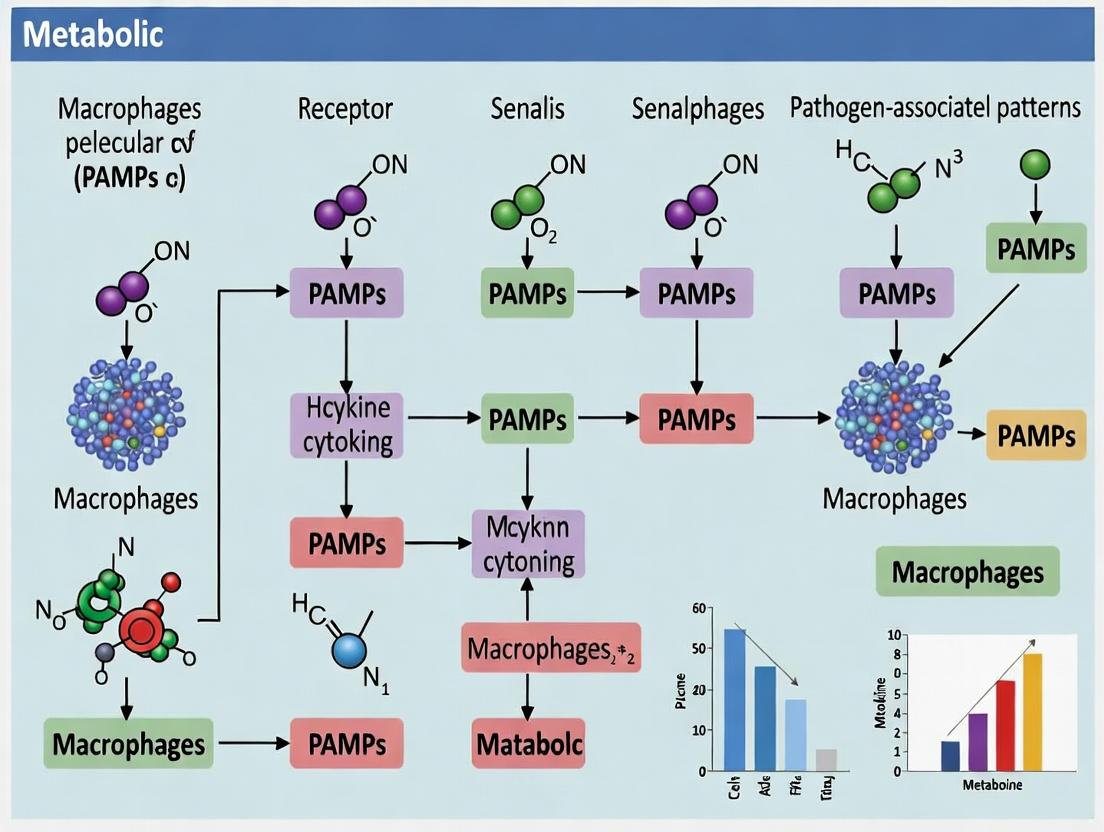
This article provides a comprehensive resource for researchers and drug development professionals on modulating macrophage metabolism to potentiate immune responses to pathogen-associated molecular patterns (PAMPs).
Metabolic Reprogramming of Macrophages: Strategies to Enhance Response to PAMPs in Immunotherapy
Abstract
This article provides a comprehensive resource for researchers and drug development professionals on modulating macrophage metabolism to potentiate immune responses to pathogen-associated molecular patterns (PAMPs). We first establish the foundational link between metabolic pathways (glycolysis, OXPHOS, fatty acid oxidation/synthesis) and macrophage functional polarization (M1/M2) upon PAMP sensing. The core of the guide details current methodological approaches for *in vitro* and *ex vivo* metabolic enhancement, including pharmacological agents, genetic engineering, and biomaterial-based delivery systems. We address common experimental pitfalls, optimization strategies for assay specificity and cell viability, and protocols for standardizing PAMP challenges. Finally, we present frameworks for validating enhanced functional outputs—such as cytokine profiling, phagocytosis assays, and metabolic flux analyses—and compare these strategies against existing immunomodulatory approaches. The goal is to equip scientists with a practical toolkit to design more effective macrophage-centric therapies against infection, cancer, and inflammatory diseases.
Macrophage Metabolism 101: How PAMP Sensing Fuels Immune Activation
Troubleshooting Guide & FAQs
Q1: My macrophages are not exhibiting the expected pro-inflammatory cytokine profile (e.g., IL-1β, TNF-α) after PAMP stimulation. What could be wrong? A: This is often a sign of metabolic insufficiency. Check the following:
- Energy Substrates: Ensure your culture medium contains sufficient glucose and glutamine. Pro-inflammatory polarization is highly glycolytic. Depletion leads to an attenuated response.
- Priming Signal: For cytokines like IL-1β, a second signal (e.g., ATP for NLRP3 inflammasome activation) is often required post-PAMP priming. Verify your protocol includes this step if applicable.
- PRR Specificity: Confirm the PAMP (e.g., LPS, Poly(I:C)) matches the PRR (TLR4, TLR3) expressed by your macrophage model. Use a positive control ligand.
Q2: I observe variable OCR (Oxidative Phosphorylation) and ECAR (Glycolysis) readings in my Seahorse assay upon TLR4 activation. What are the key controls? A: Metabolic flux is sensitive. Standardize these conditions:
- Cell Number: Seed an exact, consistent number of cells per well. Use a cell counter, not confluence estimates.
- Serum Starvation: Follow the manufacturer's recommended starvation protocol in substrate-limited media prior to the assay to establish a stable baseline.
- Injection Controls: Always include control wells with:
- Vehicle (e.g., PBS) instead of PAMP.
- Metabolic inhibitors (e.g., 2-DG for glycolysis, Oligomycin for ATP synthase) to confirm instrument and cell response.
- PAMP Preparation: Avoid LPS contamination in your control solutions. Use dedicated, endotoxin-free labware.
Q3: My siRNA knockdown of a metabolic enzyme (e.g., HK2, IDH1) does not affect the cytokine response to PAMPs as expected. How should I troubleshoot? A:
- Verify Knockdown Efficiency: Always confirm protein-level knockdown via western blot, not just mRNA. Compensatory mechanisms can occur.
- Check Metabolic Redundancy: Many metabolic pathways have isoenzymes (e.g., HK1 can compensate for HK2 loss). Consider double knockdowns or pharmacological inhibition alongside genetic knockdown.
- Timing: Metabolic reprogramming evolves. Analyze cytokine output at multiple time points (e.g., 6, 12, 24h) post-stimulation.
Q4: How can I distinguish between direct metabolic signaling and indirect metabolic substrate availability effects in PAMP responses? A: Employ a combination of experimental approaches:
- Use Non-Metabolizable Analogs: e.g., Replace glucose with 2-Deoxy-D-glucose (2-DG) to inhibit glycolysis without providing fuel.
- Stabilize Metabolic Intermediates: Use cell-permeable metabolites (e.g., dimethyl-α-ketoglutarate) to bypass enzymatic steps.
- Genetic Manipulation: Express constitutively active or dominant-negative forms of metabolic enzymes or transporters (e.g., GLUT1).
- Simultaneous Measurement: Couple real-time metabolic flux analysis (Seahorse) with phospho-flow cytometry for signaling proteins (p-STAT, p-mTOR) from the same cell population.
Key Experimental Protocols
Protocol 1: Assessing Macrophage Metabolic Reprogramming in Response to LPS (TLR4 Agonist)
- Objective: To profile the shift from oxidative phosphorylation to glycolysis in primary human macrophages upon TLR4 activation.
- Materials: Primary human monocyte-derived macrophages (MDMs), LPS (Ultrapure), Seahorse XF Cell Culture Medium, Seahorse XF Glycolysis Stress Test Kit.
- Method:
- Differentiate monocytes in 6-well plates with M-CSF (50 ng/mL) for 6 days.
- On day 6, seed MDMs in a Seahorse XF96 cell culture microplate at 80,000 cells/well. Culture overnight.
- Stimulate cells with LPS (100 ng/mL) for 6 hours. Include vehicle control wells.
- One hour before assay, replace medium with unbuffered Seahorse XF RPMI medium (pH 7.4) supplemented with 2 mM L-glutamine and 10 mM glucose. Incubate at 37°C, non-CO₂.
- Load compounds into the Seahorse cartridge: Port A - Glucose (10mM final), Port B - Oligomycin (1μM final), Port C - 2-DG (50mM final).
- Run the Seahorse XF Glycolysis Stress Test protocol.
Protocol 2: Validating PRR-Mediated Signaling via Immunoblot
- Objective: To confirm activation of key signaling nodes downstream of PAMP-PRR engagement.
- Materials: Macrophage lysates, RIPA buffer, antibodies for p-IκBα, total IκBα, p-p38, total p38, β-actin.
- Method:
- Stimulate macrophages with relevant PAMP (e.g., 1μg/mL Poly(I:C) for TLR3, 100ng/mL LPS for TLR4) for 0, 15, 30, 60 minutes.
- Lyse cells in ice-cold RIPA buffer with protease and phosphatase inhibitors.
- Resolve 20-30μg of protein by SDS-PAGE and transfer to PVDF membrane.
- Block membrane and probe with primary antibodies (1:1000 dilution) overnight at 4°C.
- Incubate with HRP-conjugated secondary antibody (1:5000) for 1 hour at RT.
- Develop using chemiluminescent substrate and visualize.
Data Presentation
Table 1: Key PAMPs, Their Corresponding PRRs, and Associated Metabolic Shifts
| PAMP (Pathogen-Associated Molecular Pattern) | Target PRR (Pattern Recognition Receptor) | Primary Metabolic Pathway Induced | Key Signaling Node | Example Cytokine Output |
|---|---|---|---|---|
| LPS (Gram-negative bacteria) | TLR4 | Glycolysis, PPP | MyD88/TRIF → NF-κB, mTORC1 | TNF-α, IL-6, IL-1β |
| Poly(I:C) (Viral dsRNA) | TLR3 | Glycolysis, OXPHOS | TRIF → IRF3, NF-κB | Type I Interferons, TNF-α |
| CpG DNA (Bacteria/Viruses) | TLR9 | Glycolysis | MyD88 → NF-κB, mTOR | IL-12, TNF-α |
| Mannoprotein (Fungi) | TLR2/6 | Glycolysis, FAS | MyD88 → NF-κB | IL-23, IL-6 |
| cGAMP (Cyclic di-nucleotides) | STING | Glycolysis, FAO | TBK1 → IRF3 | Type I Interferons |
Table 2: Essential Metabolic Substrates & Inhibitors for Macrophage Immunometabolism Research
| Substrate/Inhibitor | Target Pathway/Process | Typical Working Concentration | Primary Research Use |
|---|---|---|---|
| 2-Deoxy-D-glucose (2-DG) | Glycolysis (Hexokinase) | 10-50 mM | Inhibits glycolysis to assess dependence. |
| Oligomycin | ATP Synthase (OXPHOS) | 1-5 μM | Inhibits mitochondrial ATP production. |
| UK-5099 | Mitochondrial Pyruvate Carrier (MPC) | 1-10 μM | Blocks pyruvate entry into mitochondria. |
| BPTES | Glutaminase (GLS1) | 5-20 μM | Inhibits glutaminolysis. |
| Etomoxir | Carnitine Palmitoyltransferase 1A (CPT1A) | 40-100 μM | Inhibits long-chain fatty acid oxidation (FAO). |
| DMSO (Vehicle Control) | N/A | Equal volume to inhibitor | Critical negative control for solvent effects. |
Pathway & Workflow Diagrams
Diagram 1: TLR4 Signaling and Metabolic Crosstalk
Diagram 2: Metabolic Flux Analysis Workflow
The Scientist's Toolkit: Key Research Reagent Solutions
| Reagent/Category | Specific Example(s) | Function in PAMP-Metabolism Research |
|---|---|---|
| Ultrapure PAMP Agonists | LPS-EB Ultrapure (TLR4), Poly(I:C) HMW (TLR3), ODN 2395 (TLR9) | High-purity ligands to specifically activate target PRRs without confounding contaminants. |
| Metabolic Flux Assay Kits | Seahorse XF Glycolysis Stress Test Kit, Mito Stress Test Kit | Standardized, validated reagents for real-time measurement of OCR and ECAR in live cells. |
| Metabolic Inhibitors | 2-DG, Oligomycin, BPTES, Etomoxir (see Table 2) | Pharmacological tools to dissect the contribution of specific metabolic pathways to immune responses. |
| Cytokine Detection | ELISA Kits, LEGENDplex Multi-Analyte Flow Assay | Quantify secreted cytokine profiles resulting from PAMP-induced metabolic reprogramming. |
| Metabolite Analysis | LC-MS/MS Kits for TCA intermediates, nucleotides, amino acids | Directly measure intracellular metabolite pool changes following PAMP stimulation. |
| Phospho-Specific Antibodies | Anti-phospho-S6 (Ser235/236), Anti-phospho-IκBα (Ser32) | Detect activation status of key signaling pathways (mTOR, NF-κB) linking PRRs to metabolism. |
Technical Support Center: Troubleshooting Metabolic Profiling in Macrophage Activation Studies
Frequently Asked Questions (FAQs) & Troubleshooting
Q1: During metabolic flux analysis of LPS-stimulated macrophages, we observe a less pronounced glycolytic shift than expected. What could be the cause? A: Common issues include:
- Cell Density: Macrophages seeded too densely can become contact-inhibited, masking the metabolic shift. Optimize seeding density (typically 1-2x10^5 cells/cm² for BMDMs).
- LPS Potency/Concentration: Verify LPS source (e.g., E. coli O111:B4) and use a titration (10-100 ng/mL) to find the optimal dose for your model.
- Serum Starvation: Avoid prolonged serum starvation (>2 hours) prior to assay, as it depletes basal metabolic reserves.
- Assay Media: Ensure your assay medium for Seahorse or similar contains 2mM Glutamine and 10mM Glucose. Omitting these skews results.
Q2: Our attempts to polarize macrophages to a sustained M1 state using only high glucose (25 mM) are inconsistent. Why? A: High glucose alone is insufficient. The M1 polarization is signal-dependent (e.g., IFN-γ + LPS). High glucose is a permissive factor, not a driver. Ensure proper priming (20 ng/mL IFN-γ, 1 hour) followed by LPS (100 ng/mL) challenge.
Q3: When inhibiting glycolysis with 2-DG to test its role in M1 polarization, we see high cell death. How can we mitigate this? A: 2-Deoxy-D-glucose (2-DG) is cytotoxic at high doses or long exposures. Use a low-dose titration (0.5-5 mM) for shorter durations (e.g., 4-6 hours post-activation). Always include a viability assay (e.g., propidium iodide staining) concurrently. Consider alternative inhibitors like UK-5099 (pyruvate dehydrogenase inhibitor) to target mitochondrial pyruvate entry.
Q4: We are struggling to detect IL-1β secretion in our M1 macrophage models despite clear glycolytic upregulation. What are we missing? A: IL-1β secretion requires two signals:
- Priming Signal (NF-κB): From TLR4/LPS, leading to pro-IL-1β synthesis.
- Activation Signal (NLRP3 Inflammasome): Often triggered by glycolytic ATP output or mitochondrial ROS. Ensure you provide a second trigger like ATP (1-5 mM) or nigericin. Also, use a sensitive detection method (e.g., ELISA on concentrated supernatant).
Key Experimental Protocols
Protocol 1: Real-Time Metabolic Profiling of Activated Macrophages using a Seahorse XF Analyzer Objective: To measure the Extracellular Acidification Rate (ECAR, proxy for glycolysis) and Oxygen Consumption Rate (OCR, proxy for oxidative phosphorylation) in real-time upon M1 activation.
- Cell Preparation: Differentiate Bone Marrow-Derived Macrophages (BMDMs) for 7 days. Seed in Seahorse XF cell culture microplates at 1.5x10^5 cells/well in growth medium. Incubate overnight.
- Assay Medium Preparation: Prepare XF base medium supplemented with 2 mM L-glutamine, 10 mM glucose, and 1 mM sodium pyruvate. Adjust pH to 7.4. Warm to 37°C.
- Compound Loading: Prepare drug ports. Port A: 1µg/mL LPS (final). Port B: 20µM Oligomycin. Port C: 50mM 2-DG (final).
- Run Setup: Wash cells twice with assay medium. Add 180 µL/well of assay medium. Incubate for 1 hour at 37°C, non-CO2. Calibrate the Seahorse XFe/XF Analyzer.
- Assay Run: Use the "Mito Stress Test" or a custom glycolytic rate program. Basal measurements are taken first, followed by automated injections from the loaded ports.
Protocol 2: Validating the Glycolytic Switch via Metabolite Measurement Objective: To quantify intracellular and extracellular lactate production as a readout of aerobic glycolysis.
- Stimulation: Seed BMDMs in 12-well plates (5x10^5 cells/well). Stimulate with LPS (100 ng/mL) + IFN-γ (20 ng/mL) for 12-24 hours.
- Metabolite Extraction: For intracellular lactate, quickly wash cells with cold PBS, then add 80% methanol (pre-chilled to -80°C). Scrape cells, transfer to a tube, vortex, and centrifuge at 16,000g for 15 min at 4°C. Dry supernatant in a speed vacuum.
- Measurement: Reconstitute dried extracts in assay buffer. Use a commercial Lactate Assay Kit (colorimetric/fluorometric) per manufacturer's instructions. Measure absorbance/fluorescence.
- Normalization: Determine protein concentration from a parallel well using a BCA assay. Express lactate levels as nmol/µg protein.
Table 1: Key Metabolic Parameters in Naïve vs. M1-Polarized Macrophages
| Parameter | Naïve (M0) Macrophage | LPS/IFN-γ (M1) Macrophage | Assay Method | Reference Range |
|---|---|---|---|---|
| ECAR (mpH/min) | 15-25 | 45-70 | Seahorse XF Glycolytic Rate Assay | (Dependent on cell line) |
| OCR (pmol/min) | 80-150 | 40-90 | Seahorse XF Mito Stress Test | (Dependent on cell line) |
| Intracellular Lactate (nmol/µg protein) | 2-5 | 10-25 | Commercial Lactate Assay Kit | 12-24h post-stimulation |
| ATP Production Rate (% from glycolysis) | ~30% | ~70% | Seahorse XF ATP Rate Assay | 6h post-stimulation |
| HIF-1α Protein Level (fold change) | 1 | 3-5 | Western Blot | 4-6h post-stimulation |
Table 2: Troubleshooting Common Metabolic Assay Issues
| Symptom | Potential Cause | Recommended Solution |
|---|---|---|
| Low basal OCR/ECAR | Overly confluent cells; poor cell health | Optimize seeding density; check differentiation protocol. |
| No response to Oligomycin | Incorrect port concentration; inhibitor degradation | Titrate Oligomycin (1-3 µM); prepare fresh stocks in EtOH. |
| High assay variability | Inconsistent cell seeding; temperature fluctuations | Use a multichannel pipette for seeding; pre-warm all reagents. |
| Low lactate detection | Metabolites degraded during extraction | Perform extraction steps quickly on dry ice; use ice-cold methanol. |
Signaling & Metabolic Pathways
Title: TLR4 Signaling Drives Glycolytic Switch via HIF-1α
Title: Key Enzymatic Regulation in M1 Macrophage Glycolysis
Title: Experimental Workflow for Macrophage Metabolic Profiling
The Scientist's Toolkit: Key Research Reagent Solutions
| Item | Function in Research | Example/Catalog # (Note: For illustration) |
|---|---|---|
| Ultra-Pure LPS | Canonical TLR4 agonist for M1 polarization. Purity is critical to avoid off-target signaling. | InvivoGen, tlrl-3pelps (E. coli O111:B4) |
| Recombinant Murine IFN-γ | Primes macrophages for robust M1 polarization, enhancing glycolytic and inflammatory responses. | PeproTech, 315-05 |
| 2-Deoxy-D-Glucose (2-DG) | Competitive hexokinase inhibitor used to block glycolysis and probe its necessity for M1 functions. | Sigma-Aldrich, D8375 |
| Seahorse XF Glycolytic Rate Assay Kit | Provides optimized media and protocols for directly measuring glycolytic proton efflux rate (glycoPER). | Agilent, 103344-100 |
| Lactate Assay Kit (Colorimetric/Fluorometric) | Quantifies lactate concentration in cell culture supernatants or lysates to confirm glycolytic flux. | Cayman Chemical, 600450 |
| Anti-HIF-1α Antibody | Detects stabilized HIF-1α protein, a key transcription factor linking TLR signaling to glycolytic genes. | Cell Signaling Technology, 36169 |
| Oligomycin | ATP synthase inhibitor used in Seahorse Mito Stress Tests to probe mitochondrial ATP-linked respiration. | Sigma-Aldrich, 75351 |
| Rotenone & Antimycin A | Complex I and III inhibitors used to shut down mitochondrial respiration in Seahorse assays. | Sigma-Aldrich, R8875 & A8674 |
| UK-5099 | Inhibits mitochondrial pyruvate carrier (MPC), an alternative to 2-DG for blocking glycolytic input to TCA. | Cayman Chemical, 11954 |
| Extracellular ATP | Used as a canonical NLRP3 inflammasome activator (Signal 2) to trigger IL-1β maturation/secretion. | Sigma-Aldrich, A2383 |
Mitochondrial Respiration and TCA Cycle Intermediates in Immunomodulation
Technical Support Center: Troubleshooting Immunometabolism Experiments
FAQs & Troubleshooting Guides
Q1: In my LPS-stimulated macrophage model, I am not observing the expected shift from oxidative phosphorylation (OXPHOS) to glycolysis. Seahorse data shows persistently high OCR. What could be the cause? A: This can occur due to several factors. First, verify the LPS source, concentration (typically 100 ng/mL for E. coli LPS), and stimulation time (often 24h). Check cell density; over-confluent cells may have compromised metabolic plasticity. Confirm media composition: Seahorse assay medium must be bicarbonate-free and serum-free during the run, but pre-incubation with appropriate serum (e.g., 10% FBS) is crucial. Consider testing a known glycolysis-inducing stimulus like IFN-γ as a positive control. Mitochondrial stress test reagent concentrations (Oligomycin, FCCP, Rotenone/Antimycin A) should be titrated for your specific macrophage type.
Q2: When supplementing TCA intermediates (e.g., succinate, itaconate) to cell culture, I see highly variable immunomodulatory readouts (IL-1β, TNF-α). How can I standardize this? A: Variability often stems from compound preparation and cell state.
- Preparation: Always prepare fresh solutions in the assay medium, pH-adjusted to 7.4. For membrane-impermeable intermediates like succinate, use cell-permeable esters (e.g., diethyl succinate) at precisely calibrated concentrations.
- Cell State: Ensure consistent polarization state (M0, M1). Quiescent cells respond differently. Pre-incubate cells in substrate-limited medium (e.g., low glucose/galactose media) for 2-4 hours prior to supplementation to increase dependence on added metabolites.
- Control: Include a vehicle control (e.g., DMSO) matched to your highest ester concentration.
Q3: My measurements of intracellular TCA intermediate levels (via LC-MS) are inconsistent after PAMP challenge. What are critical steps in sample preparation? A: Rapid quenching of metabolism is essential.
- Protocol: Aspirate media and immediately add ice-cold 80% methanol (in water, -80°C). Scrape cells on dry ice.
- Centrifuge at 16,000 x g, 15 min, -4°C.
- Dry supernatant under nitrogen or vacuum.
- Reconstitute in LC-MS compatible solvent (e.g., water:acetonitrile, 95:5) with internal standards (e.g., ( ^{13}C )-labeled TCA intermediates).
- Key: Perform entire quenching/harvest process within 60 seconds. Use pre-chilled tools and keep plates on dry ice during multi-well harvesting.
Q4: When using inhibitors of complex I (e.g., rotenone) or complex II (e.g., malonate), how do I differentiate metabolic effects from direct impacts on inflammatory signaling? A: Design a multi-layered control experiment.
- Viability: Always measure ATP levels and cytotoxicity (e.g., LDH release) concurrently.
- Rescue Experiments: Attempt to rescue the phenotype by providing a downstream metabolite that bypasses the inhibition (e.g., for complex I inhibition, supplement with α-ketoglutarate/ascorbate/TMPD to support electron flow via complex IV).
- Time-Course: Treat with inhibitor after PAMP stimulation (e.g., 1-hour post-LPS) to dissect its role in the sustained phase of signaling versus initial activation.
- Genetic Corroboration: Use siRNA against subunits of the target complex (e.g., NDUFS3 for complex I) to compare with pharmacological inhibition.
Q5: How can I specifically modulate mitochondrial membrane potential (ΔΨm) without globally disrupting respiration to study its signaling role? A: Use low-dose, titrated uncouplers or specific ionophores.
- Titrated FCCP: Use a low dose (e.g., 0.5-1 µM) to mildly uncouple respiration and reduce ΔΨm without collapsing it. Validate with a ΔΨm-sensitive dye (e.g., TMRE, JC-1).
- Alternative: Use a potassium ionophore like Valinomycin (nM range) to selectively dissipate the mitochondrial potential component of the proton motive force.
- Control: Compare to Oligomycin (ATP synthase inhibitor), which increases ΔΨm by blocking proton flow, and CCCP (a more potent uncoupler than FCCP) for full dissipation.
Data Presentation
Table 1: Common TCA Intermediates & Their Immunomodulatory Roles in Macrophages
| Metabolite | Primary Immunomodulatory Effect | Key Signaling/Mechanistic Link | Typical Supplementation Range (in vitro) |
|---|---|---|---|
| Succinate | Stabilizes HIF-1α; promotes IL-1β production. | Inhibits Prolyl Hydroxylases (PHDs); succinylation of proteins. | 1-5 mM (sodium salt) |
| Itaconate | Anti-inflammatory; induces Nrf2; inhibits IL-6, IL-1β. | Alkylates KEAP1; inhibits SDH; modifies NLRP3. | 0.1-1 mM (cell-permeable derivative, e.g., 4-OI) |
| Fumarate | Anti-inflammatory; induces Nrf2. | Succination of KEAP1 (alkylation). | 0.5-2 mM (dimethyl ester) |
| α-Ketoglutarate (αKG) | Regulates epigenetics; can be pro- or anti-inflammatory. | Co-factor for JmjC-domain histone demethylases & TET DNA demethylases. | 1-5 mM (cell-permeable ester) |
| Citrate | Precursor for NO, FAS, and itaconate synthesis. | Exported to cytosol via mitochondrial citrate carrier (CIC). | Endogenously regulated; difficult to supplement. |
Table 2: Troubleshooting Guide for Seahorse XF Macrophage Experiments
| Symptom | Potential Cause | Solution |
|---|---|---|
| Low Basal OCR | Cells unhealthy, over-trypsinized, or seeded too sparsely. | Optimize seeding density; use gentle detachment methods; check viability. |
| No Response to FCCP | FCCP concentration is sub-optimal or toxic; cells lack respiratory reserve. | Titrate FCCP (0.5-2.5 µM) in a separate plate. Ensure cells are not in glycolytic state only. |
| High ECAR but no glycolytic shift expected | Media acidification from lactate production in assay medium without buffer. | This is normal. The Seahorse medium is weakly buffered to detect acidification. Use glycolytic rate assay for direct measure. |
| Excessive Data Variability | Inconsistent cell number per well; temperature fluctuations during assay. | Normalize OCR/ECAR to DNA or protein content post-assay; calibrate instrument overnight; allow sufficient cell equilibration in Seahorse medium. |
Experimental Protocols
Protocol 1: Mitochondrial Stress Test on BMDMs Post-PAMP Stimulation Objective: To assess mitochondrial respiratory function in Bone Marrow-Derived Macrophages (BMDMs) after LPS challenge.
- Differentiate BMDMs from C57BL/6 mice in DMEM + 10% FBS + 20% L929-conditioned media for 7 days.
- Seed XF96 cell culture plate at 1.5 x 10^5 cells/well in growth medium. Incubate overnight.
- Stimulate with 100 ng/mL LPS or vehicle for 24 hours.
- Day of Assay: Replace medium with Seahorse XF DMEM (pH 7.4) supplemented with 10 mM glucose, 1 mM pyruvate, and 2 mM glutamine. Incubate at 37°C, non-CO2 for 1 hr.
- Load inhibitors into sensor cartridge: Port A - 1.5 µM Oligomycin; Port B - 1.5 µM FCCP; Port C - 100 nM Rotenone + 1 µM Antimycin A.
- Run the mitochondrial stress test on the Seahorse XFe Analyzer.
Protocol 2: Intracellular Succinate Measurement via LC-MS/MS Objective: To quantify changes in intracellular succinate in macrophages upon LPS stimulation.
- Seed macrophages in 6-well plates (2x10^6 cells/well). Stimulate with LPS (100 ng/mL) for desired time (e.g., 0, 3, 6, 12h).
- Rapid Quenching: At time point, aspirate media, quickly wash with 2 mL ice-cold PBS, and add 1 mL of -80°C 80% methanol. Immediately place plate on dry ice.
- Scrape cells, transfer to pre-chilled microcentrifuge tube. Vortex, incubate at -80°C for 1 hour.
- Centrifuge at 16,000 x g, 15 min, -4°C. Transfer supernatant to a new tube.
- Dry under a gentle stream of nitrogen gas at room temperature.
- Reconstitute in 100 µL of 95:5 water:acetonitrile with 0.1% formic acid and internal standard (e.g., ( ^{13}C_4 )-succinate).
- Analyze by LC-MS/MS using a HILIC column (e.g., BEH Amide) and negative ion mode MRM.
Mandatory Visualization
The Scientist's Toolkit
Table 3: Key Research Reagent Solutions for Macrophage Immunometabolism
| Reagent/Category | Specific Example(s) | Primary Function in Experiments |
|---|---|---|
| PAMPs/Stimuli | Ultrapure LPS (E. coli O111:B4), Poly(I:C), CpG ODN | To activate specific TLRs (TLR4, TLR3, TLR9) and induce metabolic reprogramming. |
| Metabolite Analogs/Donors | Dimethyl Succinate, 4-Octyl Itaconate (4-OI), Dimethyl Fumarate (DMF) | Cell-permeable forms of TCA intermediates to study their exogenous effects on signaling. |
| Metabolic Inhibitors | Oligomycin (ATP synthase), Rotenone (Complex I), Malonate (Complex II/SDH), UK-5099 (MPC) | To dissect the contribution of specific metabolic pathways to immune responses. |
| Seahorse XF Assay Kits | XF Mito Stress Test Kit, XF Glycolysis Stress Test Kit, XF Glycolytic Rate Assay | To real-time measure OXPHOS and glycolytic function in live cells. |
| Metabolite Extraction Solvents | 80% Methanol (-80°C), Acetonitrile:MeOH:H2O (40:40:20) | For rapid quenching of metabolism and extraction of intracellular metabolites for LC-MS. |
| LC-MS Internal Standards | ( ^{13}C ), ( ^{15}N )-labeled TCA cycle intermediates (e.g., ( ^{13}C_6 )-citrate) | For accurate absolute or relative quantification of endogenous metabolites. |
| ΔΨm-Sensitive Dyes | TMRE, JC-1, MitoTracker Red CMXRos | To measure mitochondrial membrane potential by flow cytometry or fluorescence microscopy. |
| Cytokine Detection | ELISA kits for murine IL-1β, TNF-α, IL-6; LEGENDplex bead-based arrays | To quantify secreted inflammatory mediators as key functional readouts. |
Technical Support & Troubleshooting Hub
This support center provides guidance for researchers investigating macrophage metabolic reprogramming in response to PAMPs, within the broader thesis aim of Enhancing macrophage metabolic response to PAMPs.
Frequently Asked Questions (FAQs) & Troubleshooting
Q1: In our LPS-stimulated macrophage model, we observe inconsistent upregulation of FAS genes (e.g., Acly, Acc, Fasn). What are potential causes and solutions?
- A: Inconsistency often stems from serum batch variability or nutrient concentration in media.
- Troubleshooting Steps:
- Standardize Serum: Use charcoal-striped FBS to reduce exogenous lipid influence. Pre-test batches for low background FA levels.
- Control Nutrients: Ensure high glucose (e.g., 25mM) and glutamine availability to support FAS precursors. Consider using a defined, serum-free medium for critical experiments.
- Timing: Perform a time-course (e.g., 0, 2, 4, 8, 16h post-LPS). Peak Fasn expression typically occurs between 8-16h.
- Inhibitor Check: Verify the activity of your FAS inhibitor (e.g., C75) by running a parallel assay for lipid droplet accumulation (Oil Red O stain).
- Troubleshooting Steps:
Q2: When inducing FAO for resolution studies with IL-4, we get poor oxidative phosphorylation (OCR) readings in our Seahorse assay. How can we optimize this?
- A: Poor OCR often indicates inadequate FAO substrate priming or mitochondrial stress.
- Troubleshooting Steps:
- Substrate Priming: Prior to assay, prime cells for 1-2 hours in substrate-limited medium supplemented with your chosen FAO substrate (e.g., 100-200 µM palmitate conjugated to BSA at a 5:1 molar ratio). Ensure proper BSA control.
- Carnitine Supply: Confirm your assay medium contains L-carnitine (1-2 mM), essential for fatty acid import into mitochondria.
- Polarization Confirmation: Validate IL-4 polarization success via qPCR for Arg1 and Chil3 (Ym1) before proceeding to metabolic assays.
- Cell Density Optimization: Over- or under-confluency affects OCR. Titrate cell seeding density (e.g., 40,000-80,000 cells/well for a XF96 plate) to find the optimal range.
- Troubleshooting Steps:
Q3: Our flow cytometry data for intracellular lipid staining (e.g., BODIPY) in inflammatory macrophages shows high variability. What is the best fixation/permeabilization method?
- A: Standard aldehyde fixation can cause lipid leaching. Use a gentle, lipid-preserving protocol.
- Optimized Protocol:
- Stain Live First: Incubate live, stimulated cells with BODIPY 493/503 (1 µg/mL) or similar lipophilic dye in serum-free medium for 15-30 min at 37°C.
- Wash & Fix: Wash with PBS, then fix gently with 4% PFA for 15 min at room temperature.
- Avoid Permeabilization: If only staining neutral lipids, permeabilization is not required and can distort signal. If co-staining for proteins, use mild detergents like saponin (0.1%) and include the dye in all steps to prevent lipid washout.
- Image Immediately: Acquire data within 24 hours of fixation.
- Optimized Protocol:
Q4: We are unable to detect increased itaconate levels via LC-MS in our M1 macrophages despite strong Irg1 gene expression. What could be wrong?
- A: Itaconate is unstable and its synthesis depends on intact TCA cycle function.
- Troubleshooting Guide:
- Sample Preparation: Quench metabolism instantly using dry ice/ethanol or liquid nitrogen. Use an extraction solvent with an acid (e.g., 80% methanol/water with 0.5% formic acid) to stabilize itaconate. Process samples on ice.
- LC-MS Method: Use a hydrophilic interaction liquid chromatography (HILIC) column for proper retention of this polar metabolite. Ensure your MS is tuned for negative ion mode detection ([M-H]- for itaconate is 129.019).
- Metabolic Context: Inhibiting SDH (with dimethyl malonate) can increase itaconate pool size by reducing its conversion to succinate, serving as a positive control.
- Troubleshooting Guide:
Table 1: Key Metabolic Parameters in PAMP-Activated vs. Resolving Macrophages
| Metabolic Parameter | M1 (LPS/IFN-γ) | M2 (IL-4/IL-13) | Measurement Technique |
|---|---|---|---|
| Glycolytic Rate (ECAR) | High (>150% of baseline) | Moderate (~100-120% of baseline) | Seahorse XF Glycolysis Stress Test |
| Oxidative Phosphorylation (OCR) | Low/Suppressed | Elevated, FAO-dependent | Seahorse XF Mito Stress Test |
| Fatty Acid Synthesis (FAS) | Upregulated (e.g., Fasn ↑ 10-50 fold) | Downregulated | qPCR, Radioisotope ([14C]-glucose) incorporation |
| Fatty Acid Oxidation (FAO) | Inhibited | Upregulated (e.g., CPT1A ↑ 5-20 fold) | qPCR, Seahorse with FAO substrates, [3H]-palmitate oxidation |
| Key Metabolite: Itaconate | High (µM range in supernatant) | Low/Not detected | LC-MS, Colorimetric assays |
| Key Metabolite: Succinate | Accumulates (mM range intracellularly) | No accumulation | LC-MS, Enzymatic assays |
Table 2: Common Reagent Concentrations for Metabolic Modulation
| Reagent/Target | Typical Working Concentration | Purpose in Context |
|---|---|---|
| LPS (TLR4 agonist) | 10-100 ng/mL | Induces pro-inflammatory (M1) polarization, stimulates FAS and glycolysis. |
| IL-4 | 10-20 ng/mL | Induces alternative (M2) polarization, stimulates FAO and OXPHOS. |
| C75 (FAS inhibitor) | 10-30 µM | Inhibits de novo lipogenesis; validates FAS role in inflammatory signaling. |
| Etomoxir (CPT1A inhibitor) | 40-100 µM | Inhibits mitochondrial FAO; validates FAO requirement for resolution phenotypes. |
| 2-Deoxy-D-Glucose (2-DG) | 10-50 mM | Glycolysis inhibitor; tests glycolytic dependency of inflammatory response. |
| BPTES (GLS1 inhibitor) | 5-20 µM | Inhibits glutaminolysis; tests role in supporting FAS and inflammatory cytokine production. |
| Dimethyl Malonate (SDH inhibitor) | 5-20 mM | Inhibits TCA cycle at succinate dehydrogenase; can be used to manipulate succinate/itaconate levels. |
Experimental Protocols
Protocol 1: Measuring Real-Time FAO using a Seahorse XF Analyzer Objective: Quantify mitochondrial FAO in IL-4 polarized macrophages.
- Cell Preparation: Seed macrophages (e.g., BMDMs) in XF cell culture microplates. Polarize with IL-4 (20 ng/mL) for 18-24h.
- Assay Medium Preparation: Prepare FAO substrate medium: XF Base Medium (pH 7.4) supplemented with 1-2 mM L-carnitine, 5.5 mM glucose, 0.5 mM carnitine-palmitoyl transferase I (CPT-I)-independent substrate pyruvate, and 0.5% fatty acid-free BSA.
- Substrate Loading: Prior to assay, replace culture medium with FAO substrate medium containing 100-200 µM palmitate (conjugated to BSA) or BSA-only control. Incubate for 1 hour at 37°C, non-CO2.
- Sensor Cartridge Loading: Load ports with compounds for mitochondrial stress test: Port A: Oligomycin (1.5 µM), Port B: FCCP (1-2 µM, titrated), Port C: Rotenone/Antimycin A (0.5 µM each).
- Run Assay: Calibrate cartridge and run the standard Mito Stress Test program. Calculate basal and maximal OCR linked to FAO by subtracting values from BSA-control wells.
Protocol 2: Tracing [U-13C]-Glucose into Fatty Acids for FAS Activity Objective: Measure de novo lipogenesis flux in inflammatory macrophages.
- Stimulation & Labeling: Stimulate macrophages with LPS (100 ng/mL) for 6h. Replace medium with glucose-free RPMI containing 10 mM [U-13C]-Glucose and LPS. Incubate for an additional 18h.
- Lipid Extraction: Wash cells with cold PBS. Scrape in 1 mL of 80:20 methanol:water on dry ice. Sonicate. Add 1 mL chloroform and vortex. Centrifuge at 14,000g for 15 min at 4°C.
- Phase Separation: Transfer lower organic phase to a new tube. Dry under a gentle stream of nitrogen.
- Derivatization & Analysis: Resuspend lipids in 50 µL of methoxyamine hydrochloride (20 mg/mL in pyridine) for 1h at 37°C, then add 50 µL MSTFA (N-Methyl-N-(trimethylsilyl)trifluoroacetamide) for 30 min. Analyze by GC-MS.
- Data Interpretation: Quantify 13C enrichment in palmitate (m+16 peak indicates full incorporation from glucose). Compare M+0 (unlabeled) to M+16 abundance between control and LPS-treated samples.
The Scientist's Toolkit: Research Reagent Solutions
| Item | Function/Application | Example Product/Catalog # |
|---|---|---|
| Charcoal-Stripped FBS | Removes endogenous hormones and lipids; essential for standardizing FAS/FAO studies. | Gibco A3382101 |
| Fatty Acid-Free BSA | Carrier for solubilizing and delivering free fatty acids (e.g., palmitate) to cells in culture. | Sigma-Aldrich A7030 |
| L-Carnitine | Cofactor required for transporting long-chain fatty acids into mitochondria for β-oxidation. | Sigma-Aldrich C0158 |
| Etomoxir (sodium salt) | Irreversible inhibitor of CPT1A, the rate-limiting enzyme of mitochondrial FAO. Positive control for FAO inhibition. | Cayman Chemical 11969 |
| C75 (trans-) | Synthetic inhibitor of fatty acid synthase (FASN); used to block de novo lipogenesis. | Tocris Bioscience 2645 |
| BODIPY 493/503 | Neutral lipid stain for visualizing lipid droplets via fluorescence microscopy or flow cytometry. | Invitrogen D3922 |
| Seahorse XF Palmitate-BSA FAO Substrate | Optimized, ready-to-use conjugate for FAO assays in Seahorse XF Analyzers. | Agilent 102720-100 |
| [U-13C]-Glucose | Stable isotope tracer for metabolic flux analysis (MFA) of glycolytic and FAS pathways. | Cambridge Isotope Labs CLM-1396 |
Visualizations
Diagram: Inflammatory Signaling Drives Pro-Metabolic Shifts
Diagram: IL-4 Signaling Drives Pro-Resolving FAO
Diagram: Core Workflow for Macrophage Metabolic Phenotyping
Troubleshooting Guide & FAQs for Macrophage Metabolic Response to PAMPs Research
FAQ 1: My qPCR data shows no significant increase in HIF-1α target genes (like Glut1 or Ldha) upon TLR4 stimulation with LPS, despite strong cytokine response. What could be wrong?
- Answer: This is a common issue. First, confirm the metabolic state of your cells. HIF-1α stabilization is highly oxygen-dependent. Standard incubator conditions (20% O₂) suppress HIF-1α. Perform experiments in a hypoxic workstation (1-2% O₂) or use chemical HIF stabilizers (e.g., CoCl₂, DMOG) as a positive control. Second, check the timing. TLR-induced HIF-1α signaling can be transient. Perform a time course (e.g., 2h, 4h, 8h, 16h post-LPS). Third, ensure your macrophages are appropriately polarized—M1 polarization favors glycolytic metabolism and HIF-1α activity.
FAQ 2: Western blot shows constitutive phosphorylation of AMPK in my bone marrow-derived macrophages (BMDMs), masking TLR-induced changes. How can I resolve this?
- Answer: Constitutive AMPK phosphorylation often results from nutrient stress in culture. To establish a baseline, starve cells in low-glucose (e.g., 1 mM) and serum-free media for 1-2 hours before PAMP stimulation. Refeed with complete media containing the PAMP (e.g., LPS) at time zero. This synchronized metabolic "restart" makes AMPK dephosphorylation and subsequent re-phosphorylation events clearer. Always include a no-starvation control.
- Answer: TLR2-induced mTOR activation can be rapid and context-dependent. Verify these points: 1) Stimulation Time: Check early time points (15, 30, 45 minutes). 2) Amino Acid Availability: mTORC1 is exquisitely sensitive to amino acids. Use consistent, full-amino acid media and avoid prolonged starvation. 3) Inhibitor Controls: Pre-treat cells with a known mTOR inhibitor (Torin 1, 250 nM, 1h pre-treatment) to confirm the specificity of your phospho-antibody signal. The band should disappear.
Table 1: Common Issues in Metabolic Sensor Detection Downstream of TLRs
| Issue | Likely Cause | Suggested Solution |
|---|---|---|
| Weak HIF-1α protein signal | Normoxic degradation; wrong timepoint. | Use hypoxia (1-2% O₂); try timepoints 4-8h post-PAMP. |
| High basal p-AMPK | Nutrient deprivation in culture. | Short-term refeeding protocol before stimulus. |
| No p-mTOR/S6K signal | Insufficient activation window; amino acid starvation. | Use early timepoints (<60 min); ensure full media. |
| Inconsistent responses between BMDM batches | Donor/genetic variability; differentiation protocol. | Pool cells from multiple mice; standardize M-CSF concentration and differentiation time (7 days). |
| TLR agonist causes cell death | Excessive glycolytic shift or inflammasome activation. | Titrate agonist dose (e.g., test LPS from 10-100 ng/mL); measure lactate and ATP. |
Detailed Experimental Protocols
Protocol 1: Assessing mTORC1 and AMPK Activity Dynamics in TLR-Stimulated Macrophages
- Cell Preparation: Differentiate BMDMs in complete RPMI with 20 ng/mL M-CSF for 7 days.
- Metabolic Synchronization: On day 7, wash cells and incubate in low-glucose (1 mM), serum-free DMEM for 2 hours.
- Stimulation: Replace medium with pre-warmed, full-glucose (10 mM) complete DMEM containing the TLR agonist (e.g., 100 ng/mL Ultrapure LPS for TLR4, 1 µg/mL Pam3CSK4 for TLR2/1). Prepare plates for time series (e.g., 0, 15, 30, 60, 120 min).
- Lysis & Analysis: At each time point, lyse cells directly in RIPA buffer with protease/phosphatase inhibitors. Perform Western blotting for p-AMPKα (Thr172), total AMPK, p-S6 Ribosomal Protein (Ser235/236), total S6, and a loading control (β-Actin). Include a Torin 1 (250 nM, 1h pre-treatment) control lane.
Protocol 2: Measuring HIF-1α Stabilization and Transcriptional Activity under TLR Activation
- Hypoxic Stimulation: Seed BMDMs in specialized dishes. Place in a hypoxia chamber equilibrated to 1% O₂, 5% CO₂, balance N₂. Allow cells to acclimate for 1 hour.
- Agonist Addition: Inside the chamber, add LPS (100 ng/mL) or vehicle control directly to the medium. Incubate for 4-6 hours under continuous hypoxia.
- Sample Collection:
- For Protein (HIF-1α stabilization): Lyse cells inside the chamber using anaerobic buffers. Perform Western blot for HIF-1α. Normoxic cells treated with 200 µM CoCl₂ for 4h serve as a positive control.
- For RNA (Transcriptional activity): Extract RNA and run qPCR for HIF-1α target genes (Vegfa, Glut1, Ldha). Normalize to Hprt or Gapdh.
- Note: Work rapidly to prevent re-oxygenation during processing.
Signaling Pathway Visualizations
The Scientist's Toolkit: Research Reagent Solutions
Table 2: Essential Reagents for Investigating Metabolic Sensors in TLR Signaling
| Reagent | Supplier Examples | Function & Application |
|---|---|---|
| Ultrapure LPS (TLR4 agonist) | InvivoGen (tlrl-3pelps), Sigma | Specific TLR4 activation without confounding contaminants. Standard for inducing metabolic reprogramming. |
| Pam3CSK4 (TLR2/1 agonist) | InvivoGen (tlrl-pms), EMC Microcollections | Activates TLR2/1 heterodimer, useful for comparing TLR-specific metabolic effects. |
| Torin 1 | Tocris, Cayman Chemical | Potent and specific ATP-competitive mTORC1/mTORC2 inhibitor. Key control for mTOR-dependent effects. |
| Compound C / Dorsomorphin | Sigma, MedChemExpress | AMPK inhibitor. Use with caution due to off-target effects; include genetic controls (siRNA). |
| DMOG (Dimethyloxalylglycine) | Frontier Scientific, Cayman | Prolyl hydroxylase (PHD) inhibitor. Stabilizes HIF-1α under normoxia as a positive control. |
| 2-Deoxy-D-Glucose (2-DG) | Sigma, Thermo Fisher | Glycolysis inhibitor. Used to dissect the contribution of glycolysis to TLR responses. |
| Recombinant Murine M-CSF | PeproTech, BioLegend | Essential for differentiation of bone marrow progenitors into macrophages. Batch consistency is key. |
| Phospho-Specific Antibodies | Cell Signaling Technology | Critical for: p-AMPKα (Thr172), p-S6 (Ser235/236), p-4E-BP1 (Thr37/46). Validate with inhibitor controls. |
| Seahorse XF Glycolysis Stress Test Kit | Agilent Technologies | Standardized kit to measure extracellular acidification rate (ECAR), directly profiling glycolytic function in live cells. |
| Hypoxia Chamber/Workstation | Billups-Rothenberg, Coy Labs | Enables precise low-oxygen (1-2% O₂) environments required for studying physiologic HIF-1α biology. |
Metabolic Hallmarks of Tolerant vs. Trained Macrophage Phenotypes
Troubleshooting Guide & FAQs
Q1: My macrophages are not displaying a clear trained immunity phenotype (e.g., enhanced TNF-α production upon re-stimulation) after β-glucan priming. What could be wrong? A: Common issues involve the priming agent or cell viability.
- Solution: Verify the concentration and purity of your β-glucan (e.g., from Saccharomyces cerevisiae). A typical working concentration is 1-10 μg/mL for 24 hours. Ensure complete solubilization. Check cell health post-priming; tolerance can occur if the initial stimulus is too severe. Include a positive control like LPS (10 ng/mL) and measure IL-6/TNF-α after 24h to confirm baseline responsiveness.
Q2: How do I properly distinguish metabolic flux in tolerant vs. trained macrophages using a Seahorse XF Analyzer? A: Key parameters to compare are Glycolytic Proton Efflux Rate (glycoPER) and Oxygen Consumption Rate (OCR).
- Solution: For a standard Mito Stress Test:
- Seed cells in XF plates at 1.5-2.0 x 10^5 cells/well.
- Prime cells for tolerance (e.g., 100 ng/mL LPS for 24h) or training (e.g., 5 μg/mL β-glucan for 24h), followed by a 24h rest in complete medium.
- Replace medium with Seahorse XF DMEM (pH 7.4) 1 hour before assay.
- Inject (final concentrations): Oligomycin (1.5 μM), FCCP (2 μM), and Rotenone/Antimycin A (0.5 μM).
- Expected Signature:
- Trained: Enhanced glycolysis (higher basal glycoPER) and elevated mitochondrial respiration (higher basal and maximal OCR).
- Tolerant: Suppressed mitochondrial respiration (low basal/maximal OCR) and reliance on glycolysis may be variable.
Q3: My metabolomics data shows inconsistent changes in TCA cycle intermediates (e.g., succinate, fumarate) between experimental replicates. A: Inconsistency often stems from quenching and extraction protocols.
- Solution: Use a rapid, cold methanol/water extraction for intracellular metabolites.
- Protocol: Aspirate medium, immediately add 80% -20°C methanol (with internal standards). Scrape cells, vortex, and centrifuge at 15,000g for 15 min at 4°C. Dry supernatant and reconstitute in LC-MS compatible solvent. Keep samples at -80°C and minimize freeze-thaw cycles.
Q4: When inhibiting glycolysis with 2-DG to test its necessity for trained immunity, my cells become overly cytotoxic. A: 2-Deoxy-D-glucose (2-DG) can be toxic with prolonged exposure.
- Solution: Titrate 2-DG concentration (common range 1-10 mM) and reduce treatment time. Apply 2-DG only during the resting phase after β-glucan priming, not during the priming itself. Monitor cytotoxicity with a parallel LDH release assay. Consider using a milder inhibitor like UK-5099 (mitochondrial pyruvate carrier inhibitor) to target metabolism upstream.
Q5: How can I confirm an epigenetic rewiring event in my trained macrophage model? A: Assess histone methylation marks at promoters of immune genes (e.g., TNF, IL6).
- Solution: Chromatin Immunoprecipitation (ChIP) Protocol Outline:
- Cross-link cells with 1% formaldehyde for 10 min.
- Lyse cells and sonicate chromatin to 200-500 bp fragments.
- Immunoprecipitate with antibodies against H3K4me3 (activation mark) or H3K27me3 (repression mark).
- Purify DNA and analyze by qPCR at target gene promoters.
- Expected Result: Trained macrophages should show increased H3K4me3 at key cytokine gene promoters compared to naive or tolerant cells.
Table 1: Core Metabolic and Functional Signatures of Macrophage Phenotypes
| Parameter | Naive Macrophage | Trained Macrophage | Tolerant (Endotoxin) Macrophage |
|---|---|---|---|
| Glycolytic Rate | Baseline | ↑↑ (Enhanced) | ↑ or → (Sustained/Variable) |
| Oxidative Phosphorylation (OXPHOS) | Baseline | ↑ (Elevated) | ↓↓ (Repressed) |
| TCA Cycle Activity | Baseline | Rewired (Itaconate ↓, Succinate ↑) | Broken (Accumulated Succinate) |
| ATP Production | Baseline | High | Low |
| Cytokine Output (Re-challenge) | Normal | Hyper-responsive | Hypo-responsive |
| Key Epigenetic Mark | – | H3K4me3 at promoters | H3K27me3 / Reduced H3K4me3 |
| Central Signaling Node | – | mTOR-HIF-1α dependent | AMPK induced; mTOR inhibited |
Table 2: Common Experimental Agents for Phenotype Induction
| Agent | Target/Pathway | Concentration/Duration | Induced Phenotype |
|---|---|---|---|
| β-glucan (S. cerevisiae) | Dectin-1 / mTOR-HIF-1α | 1-10 μg/mL, 24h priming + 24-72h rest | Trained Immunity |
| Bacillus Calmette-Guérin (BCG) | Various PRRs | 1-10 MOI, 24h priming + 5-7d rest | Trained Immunity |
| LPS (Low Dose) | TLR4 / Mild Akt-mTOR | 1-10 ng/mL, 24h | Priming (Pro-inflammatory) |
| LPS (High Dose) | TLR4 / Immunosuppressive | 100 ng/mL, 24h priming + 24h rest | Endotoxin Tolerance |
| 2-Deoxy-D-Glucose (2-DG) | Hexokinase / Glycolysis | 1-10 mM (during rest phase) | Glycolysis Inhibition |
Experimental Protocols
Protocol 1: Inducing and Validating Trained vs. Tolerant Phenotypes in Human Monocyte-Derived Macrophages (MDMs)
Objective: Generate and functionally characterize trained and tolerant macrophages. Steps:
- Isolate and differentiate: Isolate CD14+ monocytes from PBMCs using magnetic beads. Differentiate in RPMI-1640 with 10% FBS and 50 ng/mL M-CSF for 6 days.
- Priming for Phenotypes:
- Trained: Stimulate MDMs with 5 μg/mL β-glucan in complete medium for 24 hours.
- Tolerant: Stimulate MDMs with 100 ng/mL ultrapure LPS for 24 hours.
- Control: Use medium only.
- Resting Phase: Wash all cells thoroughly and culture in fresh complete medium for an additional 24 hours (tolerance) or 3-6 days (training).
- Re-challenge: Re-stimulate all groups with 10 ng/mL LPS for 24 hours.
- Validation: Collect supernatant and measure TNF-α/IL-6 by ELISA. Expected: Trained > Control > Tolerant.
Protocol 2: Measuring Real-Time Metabolic Flux via Seahorse XF Analyzer
Objective: Compare glycolytic and mitochondrial metabolic profiles. Steps:
- Plate Cells: Seed primed/rested macrophages in Seahorse XF96 cell culture plates.
- Prepare Assay Media: For Mito Stress Test, use XF DMEM (pH 7.4) + 10 mM glucose + 2 mM L-glutamine + 1 mM pyruvate. For Glycolysis Stress Test, use XF DMEM + 2 mM L-glutamine.
- Run Assay:
- Mito Stress Test: Measure basal OCR, then inject Oligomycin (ATP synthase inhibitor), FCCP (uncoupler), and Rotenone/Antimycin A (Complex I/III inhibitors).
- Glycolysis Stress Test: Measure basal PER, then inject Glucose, Oligomycin, and 2-DG.
- Analysis: Normalize data to protein content (μg/well). Calculate key parameters: Basal OCR, Maximal OCR, Spare Respiratory Capacity, Basal Glycolysis, Glycolytic Capacity.
Pathway & Workflow Diagrams
Title: Experimental Workflow for Training vs. Tolerance
Title: Metabolic Signaling in Trained vs. Tolerant Macrophages
The Scientist's Toolkit: Research Reagent Solutions
| Reagent / Material | Function & Application | Example Vendor/Product |
|---|---|---|
| Ultrapure LPS | Induces precise TLR4 signaling for tolerance models or rechallenge. Minimizes confounding non-TLR4 activation. | InvivoGen (tlrl-3pelps) |
| S. cerevisiae β-glucan | Canonical ligand for Dectin-1 to induce trained immunity in vitro. | Sigma-Aldrich (G5011) |
| Seahorse XFp/XFe96 Analyzer Kits | Measure real-time glycolytic rate (PER) and mitochondrial respiration (OCR) in live cells. | Agilent Technologies (Mito/Glyco Stress Test Kits) |
| 2-Deoxy-D-Glucose (2-DG) | Competitive inhibitor of hexokinase to block glycolysis and test its metabolic necessity. | Cayman Chemical (14325) |
| UK-5099 | Mitochondrial pyruvate carrier (MPC) inhibitor; blocks pyruvate entry into mitochondria. | Tocris Bioscience (4652) |
| Anti-H3K4me3 Antibody | Validated antibody for ChIP-qPCR to detect active histone marks in trained cells. | Cell Signaling Technology (9751S) |
| Recombinant Human M-CSF | Differentiates human monocytes into macrophages for consistent baseline phenotype. | PeproTech (300-25) |
| CD14+ MicroBeads | Isolate high-purity human monocytes from PBMCs for MDM generation. | Miltenyi Biotec (130-050-201) |
| LC-MS Grade Solvents | Essential for reproducible metabolomics sample preparation and analysis. | Fisher Chemical (Optima LC/MS) |
A Step-by-Step Guide to Potentiating Macrophage Metabolic Responses In Vitro
Technical Support Center
Troubleshooting Guides & FAQs
Q1: In the context of enhancing metabolic response to PAMPs, which model is more physiologically relevant for studying immunometabolic flux? A: Primary Bone Marrow-Derived Macrophages (BMDMs) are generally more physiologically relevant. They are derived from bone marrow precursors and differentiate into macrophages that closely mimic tissue-resident macrophages in their metabolic and functional responses. Immortalized lines like RAW 264.7 (mouse) and THP-1 (human) have adapted to long-term culture, often resulting in altered metabolic baselines (e.g., heightened glycolytic flux) and muted or dysregulated responses to certain PAMPs like LPS. For studies aiming to map precise metabolic shifts (OXPHOS to glycolysis) upon PAMP recognition, BMDMs provide more reliable and translatable data.
Q2: My RAW 264.7 cells show a weak metabolic (e.g., OCR/ECAR) response to LPS stimulation compared to literature. What could be wrong? A: This is a common issue. Troubleshoot using this guide:
- Cell Passage Number: High passage numbers (>30) can lead to diminished responsiveness. Use low-passage stocks (ideally <20).
- Serum Starvation: Avoid full serum starvation prior to LPS stimulation, as it can stress cells and deplete energy reserves, blunting response. Use low-serum (0.5-1% FBS) media for 4-6 hours if synchronization is needed.
- LPS Source and Potency: Use ultrapure LPS from a reputable supplier. Check concentration and activity via a positive control (e.g., TNF-α secretion assay). Recommended range: 10-100 ng/mL.
- Assay Media: Ensure your Seahorse XF or other metabolic assay media is correctly formulated (pH 7.4, with appropriate substrates like glucose/glutamine) and pre-warmed.
Q3: How do I ensure consistent differentiation of THP-1 monocytes into macrophages for metabolic studies? A: Inconsistent PMA differentiation is a major source of variability.
- Protocol: Use a low concentration of PMA (e.g., 10-20 ng/mL) for 24-48 hours, followed by a 24-hour rest period in PMA-free complete media. This reduces residual PMA toxicity and allows cells to return to a more quiescent state, making metabolic responses to subsequent PAMP stimulation clearer.
- QC Check: Always validate differentiation by checking adherence and surface marker expression (e.g., CD11b increase, CD14 decrease) via flow cytometry before proceeding with PAMP stimulation experiments.
Q4: My BMDM preparations have high variability in metabolic readings between isolations. How can I improve consistency? A: BMDM variability stems from donor/mouse genetics, age, and technique.
- Standardize Animals: Use age- and sex-matched mice from the same genetic background, housed under identical conditions.
- Differentiation Media: Use the same batch of L929-conditioned media (source of M-CSF) or recombinant M-CSF at a consistent concentration (20-40 ng/mL) for the standard 7-day differentiation.
- QC Harvest: Gently scrape cells (avoid trypsin) and replate for experiments at a uniform density. Assess purity (F4/80+ CD11b+ via flow cytometry) for each preparation.
Q5: For a drug screening assay targeting PAMP-induced metabolic reprogramming, which model offers the best balance of throughput and relevance? A: This depends on the screening phase.
- Initial High-Throughput Screening: Use THP-1 cells. They are scalable, grow in suspension, and can be differentiated in 96- or 384-well plates for PMA/PAMP stimulation and downstream metabolic assays (e.g., fluorescent glucose uptake).
- Secondary Validation: Hits from the primary screen must be validated in primary BMDMs to confirm the effect is not an artifact of the immortalized line's altered biology. This two-tiered approach balances throughput with physiological confidence.
Key Comparative Data
Table 1: Model System Comparison for PAMP-Metabolic Research
| Feature | Primary BMDMs | RAW 264.7 | THP-1 (PMA-differentiated) |
|---|---|---|---|
| Physiological Relevance | High (primary, murine) | Moderate (immortalized, murine) | Moderate (immortalized, human) |
| Genetic Stability | High (fresh each time) | Low (drifts with passage) | Low (drifts with passage) |
| Metabolic Baseline | Physiological, quiescent | Often hyper-glycolytic | Dependent on PMA differentiation |
| Response to LPS/TLR4 | Robust, reproducible | Can be muted/variable | Robust, but PMA history affects it |
| Response to other PAMPs (e.g., CpG/TLR9) | Robust | May require priming | Standard |
| Throughput & Cost | Low throughput, high cost | High throughput, low cost | High throughput, low cost |
| Ease of Genetic Manipulation | Difficult (requires viral transduction) | Easy (readily transfected) | Moderate (can be transfected) |
| Key Advantage | Gold standard for relevance | Ease of use, scalability | Human origin, scalability |
| Best For | Mechanistic, final validation studies | Pilot studies, knockdown/overexpression screens | Human-focused pilot studies & initial drug screens |
Table 2: Example Metabolic Parameters (Basal)*
| Parameter | BMDM (M-CSF derived) | RAW 264.7 | THP-1 (Mφ) | Measurement Method |
|---|---|---|---|---|
| Basal OCR (pmol/min) | ~50-100 | ~100-200 | ~80-150 | Seahorse XF Analyzer |
| Basal ECAR (mpH/min) | ~20-40 | ~60-100 | ~40-70 | Seahorse XF Analyzer |
| Glycolytic Capacity | Moderate | High | Moderate-High | Seahorse XF Glycolysis Test |
| Key Fuel Preference | Fatty Acids, Glucose | Glucose | Glucose | Metabolic Flux Analysis |
Note: Values are approximate and highly dependent on culture conditions, seeding density, and assay media.
Experimental Protocols
Protocol 1: Generating and Stimulating BMDMs for Metabolic Analysis
- Day 0: Flush bone marrow from femurs and tibias of 6-12 week old C57BL/6 mice. Lyse RBCs. Plate cells in BMDM media (RPMI-1640, 10% FBS, 1% Pen/Strep, 20-30% L929-conditioned media or 20 ng/mL recombinant M-CSF).
- Day 3: Add fresh BMDM media.
- Day 6-7: Cells are fully differentiated. Gently scrape and replate for experiments at desired density (e.g., 1.5x10^5/well for Seahorse XF96).
- Day 7 (Assay Day): Stimulate with PAMP (e.g., 100 ng/mL Ultrapure LPS) for desired time (e.g., 6-24h for metabolic reprogramming). Perform metabolic assay (e.g., Seahorse XF Mito Stress Test) or harvest for metabolomics.
Protocol 2: Differentiating and Stimulating THP-1 Cells for Metabolic Flux Assays
- Day 0: Plate THP-1 monocytes in RPMI-1640 + 10% FBS at 5x10^4 cells/well (96-well plate). Add PMA to 20 ng/mL.
- Day 1-2: Cells adhere and differentiate. After 24-48h, replace media with fresh, PMA-free complete media.
- Day 3: Cells are rested. Stimulate with PAMP (e.g., 100 ng/mL LPS) in low-serum (1% FBS) assay media for 4-18 hours.
- Perform Assay: Run Seahorse XF Glycolytic Rate Assay or measure 2-NBDG glucose uptake via fluorescence.
Signaling Pathway Diagram
Title: PAMP-Induced Signaling Drives Macrophage Metabolic Shift
Experimental Workflow Diagram
Title: Workflow for Studying PAMP-Driven Metabolic Responses
The Scientist's Toolkit: Research Reagent Solutions
| Reagent / Material | Function in PAMP-Metabolic Research |
|---|---|
| Ultrapure LPS (E. coli K12) | Standard PAMP for TLR4 activation. Purity is critical to avoid confounding signals from other bacterial components. |
| PMA (Phorbol 12-myristate 13-acetate) | Differentiates THP-1 monocytes into macrophage-like adherent cells. Must be used at optimized, low concentrations. |
| Recombinant M-CSF | Drives differentiation of bone marrow precursors into BMDMs. More consistent than L929-conditioned media. |
| Seahorse XF Assay Kits (e.g., Mito Stress Test, Glycolytic Rate Assay) | Gold-standard for real-time measurement of OCR (OXPHOS) and ECAR (glycolysis) in live cells. |
| 2-NBDG (Fluorescent Glucose Analog) | Measures glucose uptake via flow cytometry or fluorescence microscopy, a key early step in glycolytic shift. |
| Oligomycin, FCCP, Rotenone/Antimycin A | Pharmacological inhibitors/uncouplers used in the Seahorse Mito Stress Test to dissect specific parameters of mitochondrial function. |
| LC-MS/MS Metabolomics Platforms | For comprehensive, untargeted profiling of polar metabolites (e.g., TCA cycle intermediates, amino acids) to map global metabolic changes. |
| Mitochondrial Dyes (e.g., MitoTracker Deep Red) | Stain live-cell mitochondria to assess mass and membrane potential changes post-PAMP stimulation via imaging or flow cytometry. |
Troubleshooting & FAQ Center
Q1: Our baseline OCR measurements in unprimed macrophages are highly variable. What are the likely causes and solutions?
- A: High variability often stems from inconsistent cell seeding density or mitochondrial stress during harvest. Ensure:
- Consistent Seeding: Count cells meticulously. Use the same passage number (P3-P8 recommended).
- Gentle Harvesting: Avoid trypsin; use gentle cell scrapers in chilled, serum-free assay medium.
- Assay Plate Equilibration: Equilibrate the assay plate at 37°C, non-CO2 for 30-45 minutes before the run.
Q2: Following IFN-γ/LPS priming, we observe a suppressed ECAR. Is this expected?
- A: Yes, this is characteristic of a classical (M1) polarization. The metabolic shift is from glycolysis towards oxidative metabolism and nitric oxide production. Verify with a positive control like IL-4 (for M2a) which should show increased ECAR. Check your LPS potency via endotoxin testing.
Q3: Our IL-4-induced M2a polarization fails to show increased OXPHOS. What could be wrong?
- A: This often indicates insufficient fatty acid availability for the expected FAO increase. Supplement culture and assay media with 50-100 µM palmitate conjugated to BSA (at a 5:1 molar ratio). Also, confirm IL-4 receptor expression on your macrophage cell line.
Q4: How do we differentiate between priming effects and polarization effects on metabolic phenotype?
- A: You must establish a clear experimental timeline and controls. Measure the metabolic baseline (unstimulated), then measure after priming agent alone (e.g., low-dose IFN-γ), and finally after the full polarizing signal (e.g., IFN-γ + high-dose LPS). Use the table below as a guide.
Table 1: Characteristic Metabolic Parameters of Macrophage States (Seahorse XFp Analyzer)
| Macrophage State | Key Inducer | Baseline OCR (pmol/min) | Max OCR (pmol/min) | Baseline ECAR (mpH/min) | Key Metabolic Pathways |
|---|---|---|---|---|---|
| M0 (Naive) | None | 25-45 | 55-85 | 20-35 | Oxidative Phosphorylation (OXPHOS), Low Glycolysis |
| Primed (M1-like) | IFN-γ (20 ng/mL, 6h) | 35-55 | 75-110 | 25-40 | Enhanced OXPHOS, PPP |
| Classical (M1) | IFN-γ + LPS (100 ng/mL) | 60-100 | 110-160 | 15-30 | High NO, Succinate, OXPHOS |
| Alternative (M2a) | IL-4 (20 ng/mL, 24h) | 50-80 | 90-130 | 40-70 | Fatty Acid Oxidation (FAO), Glycolysis |
| M2a + FAO Support | IL-4 + BSA-Palmitate | 75-120 | 130-190 | 45-75 | Enhanced FAO, Glycolysis |
Detailed Experimental Protocols
Protocol 1: Establishing a Metabolic Baseline for M0 Macrophages
- Differentiation: Differentiate human monocytic THP-1 cells with 100 nM PMA for 48 hours in RPMI-1640 + 10% FBS.
- Resting: Replace medium with PMA-free complete medium for an additional 24 hours.
- Seeding for Seahorse: Gently scrape, count, and seed 2.0 x 10^4 cells/well into a Seahorse XFp Cell Culture Miniplate. Centrifuge at 200 x g for 1 minute.
- Incubation: Incubate overnight (37°C, 5% CO2).
- Assay Day: Replace medium with 180 µL/well of pre-warmed, pH-adjusted XF Assay Medium (supplemented with 10 mM glucose, 1 mM pyruvate, 2 mM L-glutamine). Incubate at 37°C, non-CO2 for 45 minutes.
- Run Assay: Load cartridge and run a standard Mito Stress Test (1.5 µM Oligomycin, 1 µM FCCP, 0.5 µM Rot/AA).
Protocol 2: Priming & M1 Polarization for Metabolic Analysis
- Follow Protocol 1, steps 1-3.
- Priming: After overnight seeding, treat cells with 20 ng/mL recombinant human IFN-γ for 6 hours.
- Polarization: Add ultrapure LPS (from E. coli K12) to a final concentration of 100 ng/mL. Incubate for an additional 18 hours.
- Metabolic Assay: On assay day, use XF assay medium without glucose or pyruvate to unmask OXPHOS dependency. Follow the remainder of Protocol 1, steps 5-6.
Signaling Pathway & Workflow Visualizations
M1 Polarization Metabolic Signaling
Priming Protocol Workflow
The Scientist's Toolkit: Research Reagent Solutions
Table 2: Essential Reagents for Macrophage Metabolic Studies
| Reagent / Material | Function & Rationale | Example Product (Catalogue) |
|---|---|---|
| Phorbol 12-myristate 13-acetate (PMA) | Differentiates monocytic cell lines (e.g., THP-1) into adherent macrophage-like cells. | Sigma-Aldrich, P8139 |
| Ultrapure LPS (K12 or 0111:B4) | TLR4 agonist for M1 polarization. Ultrapure grade minimizes confounding TLR2 signals. | InvivoGen, tlrl-3pelps or tlrl-peklps |
| Recombinant Human IFN-γ | Priming agent that upregulates TLRs and antigen presentation machinery (e.g., MHC-II). | PeproTech, 300-02 |
| Recombinant Human IL-4 | Induces alternative (M2a) polarization, shifting metabolism towards FAO and glycolysis. | PeproTech, 200-04 |
| Palmitate-BSA Conjugate | Provides exogenous fatty acid substrate to support and reveal IL-4-induced FAO. | Sigma-Aldrich, P9767 (make conjugate) |
| Seahorse XFp Mito Stress Test Kit | Contains optimized concentrations of oligomycin, FCCP, and rotenone/antimycin A to probe mitochondrial function. | Agilent, 103010-100 |
| XF Assay Medium (DMEM, pH 7.4) | Base medium for Seahorse assays. Must be supplemented with energy substrates (Glucose, Glutamine, Pyruvate) as required by the experiment. | Agilent, 103575-100 |
| Cell Recovery Solution (non-enzymatic) | Gently detaches adherent macrophages for counting and reseeding without damaging surface receptors. | Corning, 354253 |
| Anti-CD86 & Anti-CD206 Antibodies | Surface markers for flow cytometry validation of M1 (CD86) and M2 (CD206) phenotypes. | BioLegend, 305405 & 321103 |
Troubleshooting & FAQs for Enhancing Macrophage Metabolic Response to PAMPs
FAQ 1: My Metformin treatment fails to induce the expected increase in AMPK phosphorylation in BMDMs stimulated with LPS. What could be wrong?
- A: This is a common issue. First, verify the activity and preparation of your Metformin stock. Ensure it is dissolved in sterile PBS or culture medium (not DMSO) at a neutral pH. Check the concentration range (typical: 1-10 mM) and exposure time (often 1-2 hr pre-treatment before PAMPs). Confirm that your LPS is bioactive and that your phospho-AMPK (Thr172) antibody is validated for immunoblotting in your cell type. Include a positive control, like AICAR, to confirm your AMPK assay is functional.
FAQ 2: When using 2-Deoxy-D-Glucose (2-DG) to inhibit glycolysis, I observe excessive cell death in my macrophage cultures. How can I titrate this effect?
- A: 2-DG can be cytotoxic with prolonged exposure or at high doses. For metabolic modulation in macrophages, start with lower concentrations (0.5 - 2.5 mM) and shorter treatment windows (2-6 hours). Always include a viability assay (e.g., Trypan Blue, Live/Dead stain) parallel to your metabolic readouts. Consider using a more specific glycolytic inhibitor like UK-5099 (pyruvate transporter inhibitor) for longer-term experiments.
FAQ 3: Oligomycin treatment for OCR measurements in my Seahorse assay shows a lower-than-expected reduction. What should I check?
- A: This indicates potential issues with Oligomycin potency or mitochondrial health. Ensure proper preparation and storage of Oligomycin (make fresh stock in ethanol, store at -20°C, avoid freeze-thaw cycles). Verify the final working concentration (typically 1-2 µM). Assess the basal mitochondrial function of your macrophages; if cells are metabolically quiescent or damaged, the fold change will be low. Run a mitochondrial stress test with a control cell line to validate the reagent kit performance.
FAQ 4: I'm using a PPAR-γ agonist (e.g., Rosiglitazone) to polarize macrophages, but my cytokine profile (IL-10, Arg1) isn't shifting as expected. How can I troubleshoot?
- A: PPAR-γ-induced polarization is highly context-dependent. Confirm you are using an appropriate macrophage source (primary BMDMs are preferred over some cell lines). Optimize the timing: agonist pre-treatment (12-24 hr) before PAMP stimulation is often required. Validate the agonist's efficacy with a known target gene (e.g., CD36) via qPCR. Ensure your culture conditions (e.g., serum type, glucose availability) support the alternative activation program.
Experimental Protocols
Protocol 1: Assessing Glycolytic Flux in LPS-stimulated Macrophages using 2-DG Objective: To measure the dependency of LPS-induced cytokine production on glycolysis.
- Seed primary Bone Marrow-Derived Macrophages (BMDMs) in Seahorse XF96 or culture plates.
- Pre-treat cells with 2.5 mM 2-DG or vehicle control (PBS) in glucose-free media for 1 hour.
- Stimulate with LPS (e.g., 100 ng/mL) in the continued presence of 2-DG/vehicle.
- For ECAR: Run a Seahorse Glycolytic Stress Test per manufacturer's protocol at 2-6 hours post-LPS.
- For Cytokines: Harvest supernatant at 18-24 hours for ELISA (e.g., TNF-α, IL-1β).
- Normalize all data to cell count or total protein.
Protocol 2: Modulating Mitochondrial Function with Metformin and Oligomycin for OCR Profiling Objective: To dissect the contributions of complex I and ATP synthase to macrophage oxidative metabolism.
- Differentiate and seed BMDMs in a Seahorse XF96 plate.
- Pre-incubate cells with 5 mM Metformin (in PBS) or vehicle for 2 hours in complete media.
- Prepare Seahorse XF Analyzer for a Mitochondrial Stress Test.
- Injections: Port A: 1.5 µM Oligomycin; Port B: 1 µM FCCP; Port C: 0.5 µM Rotenone/Antimycin A.
- Run the assay. Compare basal OCR, ATP-linked respiration (drop after Oligomycin), and maximal respiration (after FCCP) between Metformin-treated and control cells.
Table 1: Characteristic Effects of Pharmacological Enhancers on Macrophage Metabolism
| Agent | Primary Target | Metabolic Effect in Macrophages | Typical Working Concentration | Key Readout in PAMP Response |
|---|---|---|---|---|
| Metformin | Mitochondrial Complex I | ↓ Oxidative Phosphorylation, ↑ AMPK activity | 1 - 10 mM | ↓ Pro-inflammatory cytokines (TNF-α), ↑ AMPK phosphorylation |
| 2-DG | Hexokinase / Glycolysis | ↓ Glycolytic flux, ↑ ER stress | 0.5 - 5.0 mM | ↓ LPS-induced ECAR, ↓ HIF-1α stabilization |
| Oligomycin | ATP Synthase (Complex V) | ↓ ATP production, ↑ Mitochondrial membrane potential | 1 - 2 µM (Seahorse) | ↓ ATP-linked OCR, ↑ Glycolytic compensation (ECAR) |
| Rosiglitazone | PPAR-γ receptor | ↑ Fatty Acid Oxidation, ↑ Oxidative Metabolism | 1 - 10 µM | ↑ Alternative activation markers (Arg1, IL-10) |
| AICAR | AMPK agonist | ↑ AMPK signaling, ↑ Catabolic pathways | 0.5 - 2 mM | ↑ p-AMPK, ↓ mTORC1 activity, modulates inflammation |
Table 2: Example Experimental Outcomes: LPS-Induced TNF-α Secretion Post-Treatment
| Pre-Treatment (1h) | LPS (100 ng/ml, 18h) | Mean TNF-α (pg/mL) ± SD (Hypothetical Data) | % Change vs. LPS Ctrl | Interpretation |
|---|---|---|---|---|
| Vehicle (PBS) | - | 50 ± 15 | - | Basal secretion |
| Vehicle (PBS) | + | 2250 ± 320 | 0% | LPS control response |
| Metformin (5 mM) | + | 1100 ± 210 | -51% | AMPK activation attenuates production |
| 2-DG (2.5 mM) | + | 850 ± 190 | -62% | Glycolytic inhibition blunts response |
| Oligomycin (1 µM)* | + | 2600 ± 410 | +16% | Mitochondrial inhibition may potentiate via ROS |
*Note: Oligomycin effect can vary based on timing and cell state.
Diagrams
Title: Pharmacological Modulation of Macrophage Metabolism Post-LPS
Title: Metabolic Flux Assay Workflow for Macrophages
The Scientist's Toolkit: Research Reagent Solutions
| Item | Function/Description | Example Product/Catalog # |
|---|---|---|
| Primary Bone Marrow Cells | Source for generating Bone Marrow-Derived Macrophages (BMDMs), providing physiologically relevant responses. | Isolated from C57BL/6 mice; cultured with M-CSF (20-40 ng/mL). |
| Ultra-Pure LPS | Pathogen-Associated Molecular Pattern (PAMP) to trigger canonical inflammatory and metabolic reprogramming in macrophages. | InvivoGen tlrl-3pelps (E. coli K12). |
| Seahorse XF Glycolytic Rate Assay Kit | For directly measuring extracellular acidification rate (ECAR) and calculating glycolytic proton efflux in live cells. | Agilent 103344-100. |
| Seahorse XF Mito Stress Test Kit | For assessing mitochondrial function by measuring oxygen consumption rate (OCR) after serial drug injections. | Agilent 103015-100. |
| Phospho-AMPKα (Thr172) Antibody | Key antibody to validate activation of the AMPK metabolic checkpoint via immunoblotting. | Cell Signaling Technology #2535. |
| Metformin Hydrochloride | A biguanide used to inhibit mitochondrial complex I and activate AMPK in cell culture models. | Sigma-Aldrift D150959. |
| 2-Deoxy-D-Glucose (2-DG) | Glucose analog that competitively inhibits hexokinase and early glycolysis. | Cayman Chemical 14325. |
| Oligomycin A | ATP synthase inhibitor used in mitochondrial stress tests to measure ATP-linked respiration. | Sigma-Aldrift 75351. |
| Rosiglitazone | High-affinity PPAR-γ agonist used to promote oxidative metabolism and alternative macrophage activation. | Cayman Chemical 71740. |
Technical Support Center: Troubleshooting Guides and FAQs
This support center is designed for researchers within the thesis framework "Enhancing macrophage metabolic response to PAMPs" who are employing CRISPR and siRNA screens to manipulate metabolic enzyme expression.
FAQs and Troubleshooting
Q1: In our CRISPR-Cas9 screen targeting Hk2 in primary macrophages, we observe very low knockout efficiency despite high transfection/transduction rates. What could be the cause?
- A: Primary macrophages are notoriously difficult to edit. Key troubleshooting steps include:
- Viral Titer: Ensure a high multiplicity of infection (MOI > 50) for lentiviral delivery. Check titer with a functional assay.
- gRNA Design: Validate gRNA efficiency using a surrogate reporter system (e.g., GFP disruption) prior to use. Target exons near the 5' end of the gene.
- Macrophage State: Activated macrophages (e.g., via IFN-γ) may be more refractory to transduction. Consider transducing progenitor cells (like bone marrow) before differentiation into macrophages.
- Selection: Apply appropriate antibiotic selection (e.g., puromycin) for at least 96-120 hours post-transduction to eliminate unedited cells.
- A: Primary macrophages are notoriously difficult to edit. Key troubleshooting steps include:
Q2: Our siRNA screen for regulators of LPS-induced glycolysis shows high inter-well variability and a poor Z'-factor (>0.5). How can we improve assay robustness?
- A: This is common in metabolic assays. Implement these controls:
- Normalization: Use a housekeeping gene siRNA (e.g., GAPDH, PPIA) as a negative control, not just non-targeting siRNA. Include a positive control siRNA known to drastically alter glycolysis (e.g., targeting Pfkp or Slc2a1).
- Cell Number: Seed cells using a precise electronic counter. Variability often stems from inconsistent cell numbers.
- Timing: Standardize the time between siRNA transfection, LPS stimulation, and metabolic readout (e.g., ECAR measurement). A 72-hour transfection followed by a 6-hour LPS pulse is typical.
- Reagent: Use a validated reverse transfection protocol optimized for macrophages (e.g., using lipid-based reagents in serum-free media).
- A: This is common in metabolic assays. Implement these controls:
Q3: After successful CRISPRi-mediated epigenetic silencing of the Pdk1 promoter, we see the expected metabolic shift from glycolysis, but the inflammatory cytokine response to PAMPs is also attenuated. Is this an off-target effect?
- A: Not necessarily. This likely indicates a successful on-target phenotype, highlighting metabolic-epigenetic crosstalk. PDK1 inhibition reduces lactate and acetyl-CoA production, which can impact histone acetylation and thereby gene expression.
- Validation Step: Perform rescue experiments by adding cell-permeable metabolites (e.g., sodium acetate for acetyl-CoA) and measuring if cytokine production is restored. This confirms the phenotype is metabolically driven.
- A: Not necessarily. This likely indicates a successful on-target phenotype, highlighting metabolic-epigenetic crosstalk. PDK1 inhibition reduces lactate and acetyl-CoA production, which can impact histone acetylation and thereby gene expression.
Q4: For a pooled CRISPR screen readout by single-cell RNA-seq, how do we distinguish true metabolic regulatory hits from general effects on macrophage viability or identity?
- A: Integrate bioinformatic filtering.
- Viability Markers: Filter out gRNAs enriched in cells expressing high levels of apoptosis markers (Fas, Casp3).
- Identity Markers: Confirm that cells in all clusters retain core macrophage markers (e.g., Adgre1, Csf1r expression).
- Pathway Analysis: Focus on gRNAs that are differentially enriched in clusters defined by metabolic pathway gene sets (e.g., "Glycolysis," "Oxidative Phosphorylation") rather than broad clusters.
- A: Integrate bioinformatic filtering.
Experimental Protocol: CRISPR-Cas9 Knockout in iMAC Cell Line
- Objective: Generate a clonal knockout of a metabolic enzyme (e.g., Idh1) in an immortalized macrophage (iMAC) line to study its role in LPS-induced succinate production.
- Materials: See "Research Reagent Solutions" table.
- Method:
- Design & Cloning: Design two gRNAs targeting early exons of Idh1. Clone into lentiCRISPRv2 (Addgene #52961) via BsmBI site.
- Virus Production: Co-transfect Lenti-X 293T cells with lentiCRISPRv2-gRNA, psPAX2, and pMD2.G using PEI transfection reagent. Collect virus supernatant at 48 and 72 hours.
- Transduction: Spinoculate iMACs (MOI ~10) in the presence of 8 µg/mL polybrene.
- Selection & Cloning: 48 hours post-transduction, add 2 µg/mL puromycin. Maintain selection for 5-7 days. Single-cell sort surviving cells into 96-well plates.
- Screening: Expand clones and screen for INDELs via T7 Endonuclease I assay or Sanger sequencing tracking of indels by decomposition (TIDE).
- Validation: Validate knockout by western blot (anti-IDH1) and functional assay (measure α-KG and succinate levels by LC-MS post-LPS stimulation).
Data Presentation
Table 1: Common Metabolic Targets for Manipulation in Macrophage Immunometabolism
| Target Gene | Metabolic Pathway | Manipulation Tool | Expected Phenotype Post-LPS | Key Readout Assay |
|---|---|---|---|---|
| Hk2 | Glycolysis | CRISPR-KO | ↓ Glycolysis, ↓ Lactate, ↓ IL-1β | Extracellular Acidification Rate (ECAR) |
| Idh1 | TCA Cycle | CRISPRi / KO | ↑ Succinate, ↑ HIF-1α, ↑ IL-1β | LC-MS for Metabolites |
| Pdk1 | Pyruvate Metabolism | CRISPRi | ↑ Pyruvate entry into TCA, ↓ Lactate | ECAR & OCR Ratio |
| Slc2a1 (GLUT1) | Glucose Uptake | siRNA | ↓ Glucose uptake, ↓ Glycolysis | 2-NBDG Flow Cytometry |
| Cpt1a | Fatty Acid Oxidation (FAO) | siRNA | ↓ FAO, ↓ Anti-inflammatory response | Seahorse FAO Assay |
Mandatory Visualizations
Title: Metabolic Manipulation in Macrophage Response to PAMPs
Title: Workflow for CRISPR/siRNA Screens in Macrophage Metabolism
The Scientist's Toolkit: Research Reagent Solutions
| Item | Function | Example Product/Catalog # |
|---|---|---|
| LentiCRISPRv2 Vector | All-in-one lentiviral vector for gRNA expression and Cas9 delivery. | Addgene #52961 |
| MISSION siRNA Library | Pre-designed, arrayed siRNA libraries targeting metabolic genes. | Sigma-Aldrich (e.g., MCPP) |
| Lipofectamine RNAiMAX | Transfection reagent optimized for high-efficiency siRNA delivery. | Thermo Fisher #13778075 |
| Polybrene | Cationic polymer to enhance viral transduction efficiency. | Sigma-Aldrich #TR-1003 |
| Puromycin Dihydrochloride | Selection antibiotic for cells stably expressing resistance genes. | Thermo Fisher #A1113803 |
| Seahorse XF Glycolysis Stress Test Kit | Measures glycolytic function (ECAR) in live cells. | Agilent #103020-100 |
| T7 Endonuclease I | Enzyme for detecting CRISPR-induced INDELs via mismatch cleavage. | NEB #M0302S |
| CellTrace Violet | Fluorescent dye for tracking cell proliferation post-manipulation. | Thermo Fisher #C34557 |
| Recombinant Murine M-CSF | For differentiation and maintenance of primary bone marrow-derived macrophages. | PeproTech #315-02 |
Technical Support Center
Troubleshooting Guides & FAQs
Q1: My nanoparticle formulation exhibits low encapsulation efficiency for hydrophilic metabolites. What could be the cause and how can I resolve this? A: Low encapsulation efficiency for hydrophilic compounds is common in hydrophobic polymer matrices like PLGA.
- Cause: Rapid diffusion of the hydrophilic metabolite into the aqueous phase during the emulsion/solvent evaporation process.
- Solution:
- Use a double emulsion technique (W/O/W) to create an inner aqueous compartment.
- Complex the metabolite with a counter-ion to increase its lipophilicity.
- Consider using alternative polymers with more hydrophilic blocks (e.g., PEG-PLGA) or switch to hydrogel-based carriers for this component.
Q2: I observe premature leakage of the PAMP (e.g., LPS) from my hydrogel before the intended time point. How can I improve retention? A: Premature leakage indicates insufficient binding or entrapment within the hydrogel network.
- Cause: Weak electrostatic or physical interactions between the PAMP and the hydrogel matrix.
- Solution:
- Increase Crosslinking Density: Optimize crosslinker concentration or UV/ionic crosslinking time to create a denser mesh.
- Utilize Affinity-Based Binding: Modify your hydrogel backbone (e.g., chitosan, hyaluronic acid) to include functional groups (e.g., sulfates, maleimides) that have higher affinity for your specific PAMP.
- Employ a Nanoparticle-in-Hydrogel System: First encapsulate the PAMP in nanoparticles, then disperse these within the hydrogel. The nanoparticles act as a primary diffusion barrier.
Q3: My co-delivery system fails to elicit a synergistic metabolic response (e.g., glycolysis, OXPHOS) in macrophages in vitro. What should I check? A: This is a critical failure point for the thesis objective of enhancing metabolic response.
- Cause 1: The metabolites are being degraded or are inactive upon release.
- Check: Perform HPLC or a functional assay on the release medium to confirm metabolite stability and bioactivity post-release.
- Cause 2: Incorrect temporal release kinetics. The metabolite and PAMP must be present in the cell concurrently to act synergistically.
- Check: Perform detailed, separate release kinetics studies for each payload from your formulation. The release profiles should overlap significantly.
- Cause 3: The chosen metabolite does not target the intended pathway relevant to the PAMP used.
- Check: Revisit literature to confirm the metabolic pathway crosstalk. For LPS (TLR4), ensure your metabolite (e.g., succinate, itaconate) is known to modulate the associated metabolic rewiring.
Q4: How do I characterize the co-localization of dual payloads within a single carrier using microscopy? A: This confirms successful co-encapsulation.
- Protocol: For fluorescently labeled PAMPs and metabolites.
- Prepare your nanoparticle/hydrogel sample on a glass slide or imaging chamber.
- Use a confocal microscope with appropriate laser lines and emission filters for your two fluorophores (e.g., Cy5 for PAMP, FITC for metabolite).
- Acquire Z-stack images to visualize the entire carrier.
- Use image analysis software (e.g., ImageJ, Imaris) to perform a Pearson's correlation coefficient or Mander's overlap coefficient analysis on the two fluorescence channels. A high coefficient indicates strong co-localization.
Q5: My hydrogel-nanoparticle composite has inconsistent rheological properties (too liquid or too rigid). How can I standardize it? A: Inconsistent gelation leads to variable delivery rates.
- Cause: Fluctuations in polymer concentration, crosslinker amount, pH, or temperature during synthesis.
- Solution:
- Standardize Protocol: Precisely control all reagent weights, volumes, mixing speeds, and environmental conditions.
- Rheology QC: Implement a quick rheological test (e.g., measuring storage modulus G' with a simple viscometer) as a quality control step for each batch. Establish an acceptable range for your application (e.g., injectability requires a specific G').
Table 1: Common Nanoparticle Systems for PAMP/Metabolite Co-Delivery
| Polymer System | Avg. Size (nm) | PAMP EE% Range | Metabolite EE% Range | Key Advantage | Primary Challenge |
|---|---|---|---|---|---|
| PLGA | 100-250 | 60-80% (LPS) | 10-40% (Succinate) | Well-established, tunable release | Low hydrophilic EE |
| PEG-PLGA | 80-200 | 50-75% | 20-50% | Stealth properties, better hydrophilic EE | More complex synthesis |
| Chitosan | 150-300 | 70-90% (CpG) | 30-60% (Itaconate) | Mucoadhesive, positive charge | pH-sensitive stability |
| Liposomes | 80-150 | 40-70% (Lipopeptides) | 15-35% (Glutamine) | Biocompatible, fusogenic | Stability, sterilization |
Table 2: In Vitro Macrophage Response to Co-Delivery Systems (Representative Data)
| Delivery System | PAMP | Metabolite | Result (vs. PAMP Alone) | Key Metabolic Readout |
|---|---|---|---|---|
| PLGA NPs in HA Hydrogel | LPS | Succinate | 2.5x increase in IL-1β | Increased glycolytic rate (ECAR) |
| Chitosan NPs | CpG ODN | Itaconate | 80% reduction in TNF-α | Suppression of OXPHOS (OCR) |
| PEG-PLGA NPs | MPLA | Alpha-Ketoglutarate | Synergistic M2 marker increase (Arg1) | Promotion of FAO and OXPHOS |
Experimental Protocols
Protocol 1: Formulation of PLGA Nanoparticles for Co-Encapsulation of LPS (PAMP) and Succinate (Metabolite) using Double Emulsion (W/O/W) Objective: To prepare nanoparticles with high encapsulation efficiency for both a hydrophilic metabolite and an amphiphilic PAMP. Materials: PLGA (50:50), Dichloromethane (DCM), Polyvinyl Alcohol (PVA, 1% w/v), LPS-FITC, Disodium Succinate, Probe Sonicator, Centrifuge. Steps:
- Primary Emulsion (W1/O): Dissolve 50 mg PLGA in 2 mL DCM. Add 100 µL of an aqueous solution containing 10 mg succinate to the PLGA solution. Sonicate on ice for 60 seconds at 30% amplitude to form a water-in-oil emulsion.
- Secondary Emulsion (W1/O/W2): Pour the primary emulsion into 4 mL of 1% PVA solution under vigorous stirring. Sonicate again for 90 seconds to form the double emulsion.
- Solvent Evaporation: Stir the double emulsion at room temperature for 4 hours to allow DCM to evaporate and nanoparticles to harden.
- Collection: Centrifuge the nanoparticle suspension at 18,000 rpm for 20 minutes at 4°C. Wash the pellet twice with distilled water to remove residual PVA and unencapsulated materials. Lyophilize for storage.
Protocol 2: Assessing Metabolic Response in Macrophages via Seahorse Analyzer Objective: To measure the synergistic effect of co-delivery on macrophage glycolysis and oxidative phosphorylation. Materials: Bone marrow-derived macrophages (BMDMs), Seahorse XF96 Analyzer, XF Base Medium, Co-delivery formulation, LPS-only control, Glucose, Oligomycin, 2-DG, FCCP, Rotenone/Antimycin A. Steps:
- Cell Seeding: Seed BMDMs at 50,000 cells/well in a Seahorse XF96 cell culture plate. Incubate overnight.
- Treatment: Treat cells with your co-delivery formulation, a PAMP-only control, metabolite-only control, and blank carrier for 6 hours.
- Assay Medium Preparation: On the day of assay, prepare XF Base Medium supplemented with 10 mM glucose, 1 mM pyruvate, and 2 mM glutamine. Adjust pH to 7.4.
- Metabolic Probe Injection: Load the Seahorse reagent ports with:
- Port A: 1.5 µM Oligomycin (inhibits ATP synthase).
- Port B: 1.0 µM FCCP (uncoupler, measures maximal respiration).
- Port C: 100 mM 2-Deoxyglucose (2-DG, inhibits glycolysis).
- (Optional Port D: 0.5 µM Rotenone/Antimycin A).
- Run Assay: Replace cell medium with assay medium. Run the Seahorse XF Cell Mito Stress Test or Glycolysis Stress Test program according to manufacturer instructions. Analyze the Extracellular Acidification Rate (ECAR) and Oxygen Consumption Rate (OCR).
Visualizations
Title: Synergistic Macrophage Activation by Co-Delivery
Title: Experimental Workflow for Co-Delivery Testing
The Scientist's Toolkit: Research Reagent Solutions
Table 3: Essential Materials for Co-Delivery Experiments
| Item | Function/Application | Example Product/Catalog |
|---|---|---|
| PLGA (50:50, acid-terminated) | Biodegradable polymer core for nanoparticle formation; tunable degradation. | Sigma-Aldrich 719900 |
| Hyaluronic Acid (MW ~100 kDa) | Hydrogel-forming polymer; injectable, biocompatible, CD44-targeting. | Lifecore Biomedica HA-100K |
| DSPE-PEG(2000)-Maleimide | Functional lipid for surface modification; enables conjugation to thiolated PAMPs. | Avanti Polar Lipids 880126 |
| Fluorescent LPS (LPS-FITC) | Toll-like receptor 4 (TLR4) agonist; allows tracking of PAMP delivery and uptake. | InvivoGen tlrl-pslps |
| Cell Metabolism Test Kits | Quantify key metabolites (succinate, itaconate, lactate) from cell lysates or media. | Abcam ab197011 (Succinate) |
| Seahorse XFp FluxPak | Complete kit for measuring real-time ECAR and OCR in macrophages. | Agilent 103025-100 |
| Mouse M1/M2 Macrophage Polarization Primer Array | qPCR array to profile a comprehensive panel of inflammatory and metabolic genes. | Qiagen PAMM-038Z |
| Recombinant Mouse IFN-γ | Used to prime macrophages (e.g., to M0) prior to treatment for consistent baseline. | PeproTech 315-05 |
Technical Support Center: Troubleshooting & FAQs
Thesis Context: This support center is designed to assist researchers within the broader thesis aim of "Enhancing macrophage metabolic response to PAMPs." It addresses common experimental challenges in metabolic preconditioning protocols using succinate and itaconate.
Frequently Asked Questions (FAQs)
Q1: During preconditioning, what is the optimal concentration and exposure time for succinate to prime macrophages without inducing toxicity or an overt inflammatory response pre-challenge? A: Based on current literature, a common and effective protocol uses sodium succinate at a concentration of 5-10 mM for a pretreatment period of 4-6 hours prior to PAMP challenge (e.g., LPS). Prolonged exposure (>12 hours) at high concentrations (>20 mM) can lead to metabolic exhaustion or induce unwanted HIF-1α stabilization, mimicking hypoxia. Always perform a viability assay (e.g., MTT, Trypan Blue) alongside initial experiments to establish a non-toxic window for your specific cell type.
Q2: My itaconate treatment is failing to show the expected anti-inflammatory effect upon subsequent LPS challenge. What could be going wrong? A: Key troubleshooting steps:
- Compound Stability: Itaconate derivatives (e.g., 4-octyl itaconate, dimethyl itaconate) are more cell-permeable than itaconic acid. Ensure proper storage as per manufacturer guidelines (often at -20°C or -80°C, desiccated). Prepare fresh stock solutions in an appropriate solvent (e.g., DMSO) immediately before use.
- Solvent Control: The final concentration of DMSO in your culture media should not exceed 0.1% (v/v). Include a vehicle control (media + matching DMSO concentration) in all experiments.
- Mechanism Check: Itaconate acts partly by alkylating KEAP1, activating Nrf2. Verify preconditioning efficacy by measuring Nrf2 target genes (e.g., HMOX1, NQO1) via qPCR before LPS challenge. Absence of this signature suggests the compound is inactive or your treatment protocol is ineffective.
Q3: After preconditioning with succinate, I'm not detecting the expected increase in pro-inflammatory cytokines (e.g., IL-1β, TNF-α) post-LPS challenge. Why? A: This may indicate over-priming leading to a "tolerant" or exhausted state.
- Check Metabolic Fuel: Succinate preconditioning should enhance glycolysis and OXPHOS capacity. Measure extracellular acidification rate (ECAR) and oxygen consumption rate (OCR) after preconditioning. An insufficient boost may mean your cells are metabolically fatigued.
- Assess Timing: The "primed" state is transient. If the window between preconditioning end and PAMP challenge is too long (e.g., >16 hours), the priming effect may be lost. Optimize the timing (a 1-hour washout/rest period is common before adding LPS).
- Measure Succinate Accumulation: Use LC-MS/MS or a commercial succinate assay kit to confirm intracellular succinate accumulation after preconditioning. Lack of accumulation suggests uptake or transport issues.
Q4: How do I distinguish the direct effects of metabolite preconditioning from changes induced by the PAMP challenge itself in my omics data? A: Essential experimental controls are required. Your experimental groups must include:
- Untreated control (media only).
- Metabolite-only control (e.g., succinate, no LPS).
- Vehicle-only control (e.g., DMSO, no LPS).
- PAMP-only control (e.g., LPS, no preconditioning).
- Preconditioning + PAMP group. Only changes in group 5 that are significantly different from both groups 3/4 and group 2 can be confidently attributed to the preconditioning effect on the PAMP response.
Q5: What are the best methods to validate that my preconditioning protocol is altering mitochondrial function as intended? A:
- Seahorse XF Analyzer: Perform a Mitochondrial Stress Test (using oligomycin, FCCP, rotenone/antimycin A) on cells after preconditioning but before LPS challenge. Look for increased basal respiration, ATP production, and maximal respiratory capacity, especially with succinate.
- Flow Cytometry: Use potentiometric dyes (e.g., TMRE, JC-1) to measure mitochondrial membrane potential (ΔΨm). Succinate preconditioning may hyperpolarize ΔΨm.
- Immunoblotting: Analyze proteins like phosphorylated pyruvate dehydrogenase (p-PDH) or SDH subunit expression to confirm metabolic rewiring.
Key Experimental Protocols
Protocol 1: Standard Macrophage Metabolic Preconditioning for LPS Challenge Materials:
- Primary bone marrow-derived macrophages (BMDMs) or cell line (e.g., RAW 264.7, THP-1 differentiated).
- Sodium succinate (e.g., 500 mM stock in PBS, sterile filtered) or 4-Octyl itaconate (e.g., 100 mM stock in DMSO).
- Ultrapure LPS from E. coli.
- Complete cell culture media.
Procedure:
- Seed macrophages at desired density and allow to adhere/equilibrate overnight.
- Preconditioning: Replace media with fresh media containing preconditioning agent or vehicle control.
- Succinate: 5-10 mM final concentration.
- 4-Octyl itaconate: 50-250 µM final concentration (ensure DMSO ≤0.1%).
- Incubate for 4-6 hours in a standard cell culture incubator (37°C, 5% CO₂).
- Washout (Optional but recommended): Gently wash cells 1-2 times with warm PBS. Add fresh, metabolite-free complete media. Incubate for 1 hour.
- PAMP Challenge: Add LPS to the media at your working concentration (e.g., 10-100 ng/mL). For controls, add an equal volume of PBS or media.
- Harvest cells or supernatants at the appropriate post-challenge timepoint (e.g., 6h for mRNA, 18-24h for protein/cytokines) for downstream analysis.
Protocol 2: Intracellular Succinate Measurement via Colorimetric Assay Kit Note: This protocol validates successful succinate uptake.
- After preconditioning (Step 3 above), wash cells 2x with cold PBS.
- Lyse 1-2 x 10⁶ cells in 100 µL of the kit's assay buffer on ice.
- Centrifuge at 13,000 x g for 10 min at 4°C to remove insoluble material.
- Transfer supernatant to a new tube. Keep on ice.
- Follow manufacturer instructions for deproteinization (if required).
- Perform the enzymatic reaction in a 96-well plate. Measure absorbance at 450 nm (or as specified).
- Calculate concentration from a standard curve and normalize to total protein content.
Table 1: Common Metabolite Preconditioning Parameters & Outcomes
| Metabolite | Typical Conc. Range | Pre-treatment Time | Key Molecular Target | Expected Pre-challenge Effect | Post-LPS Challenge Outcome (vs. LPS-only) |
|---|---|---|---|---|---|
| Succinate | 5-10 mM | 4-6 h | SDH, HIF-1α, PHDs | ↑ Succinate pool, ΔΨm hyperpolarization, HIF-1α stabilization (mild) | Enhanced: IL-1β, TNF-α, Glycolysis, ROS. Potentiated Inflammasome. |
| 4-Octyl Itaconate (4-OI) | 50-250 µM | 4-6 h | KEAP1 (Nrf2 pathway), ATF3, IκBζ | Nrf2 activation, ARE gene induction (HMOX1, NQO1) | Attenuated: IL-6, IL-1β, TNF-α, NO. Enhanced: Antioxidant defense. |
Table 2: Troubleshooting Guide for Common Assays Post-Preconditioning
| Problem | Possible Cause | Suggested Solution |
|---|---|---|
| Low Cell Viability post-preconditioning | Metabolite concentration too high; Osmotic stress; pH shift. | Titrate metabolite dose; Use sodium salt controls; Check media pH after adding metabolite. |
| High Inflammatory Baseline (no LPS) | Preconditioning agent is contaminated (e.g., with endotoxin). | Use ultra-pure, cell culture-grade metabolites. Include a "metabolite-only" control always. |
| No change in OCR/ECAR (Seahorse) | Preconditioning duration too short; Metabolite not cell-permeable. | Extend preconditioning time (up to 8h); For succinate, confirm use of diethyl ester derivative for better uptake if needed. |
| Variable results between BMDM batches | Donor/genetic variability; Differentiation efficiency. | Pool cells from multiple mice; Strictly standardize BMDM differentiation protocol (e.g., days, CSF-1 concentration). |
Visualizations
Succinate Preconditioning Signaling Pathway
Macrophage Metabolic Preconditioning Protocol Steps
The Scientist's Toolkit: Key Research Reagent Solutions
| Item | Function & Role in Preconditioning Research | Example/Note |
|---|---|---|
| Sodium Succinate (cell culture grade) | Primary preconditioning agent. Provides extracellular succinate pool for import, driving mitochondrial priming and HIF-1α stabilization. | Ensure endotoxin-free. Prepare fresh PBS stock, pH-adjusted. |
| 4-Octyl Itaconate (4-OI) | Cell-permeable itaconate derivative. Alkylates KEAP1 to activate Nrf2 antioxidant pathway, inducing a tolerant state pre-challenge. | Reconstitute in DMSO. Aliquot and store at -80°C. Light sensitive. |
| Diethyl Succinate | More cell-permeable ester form of succinate. Useful for ensuring robust intracellular delivery, especially in stubborn cell types. | Hydrolyzed intracellularly to release succinate. |
| Ultrapure LPS (E. coli, S. minnesota) | Standardized PAMP for challenge post-preconditioning. Essential for reproducibility in studying enhanced/attenuated responses. | Use a single batch/source for a thesis project. |
| Seahorse XF Glycolysis/OXPHOS Kits | Gold-standard for real-time measurement of metabolic flux (ECAR & OCR) before and after challenge to quantify priming. | Requires specialized instrument (Seahorse XFe Analyzer). |
| Commercial Succinate/Itaconate Assay Kit (Colorimetric) | Validates intracellular metabolite accumulation after preconditioning, confirming treatment efficacy. | Normalize results to total protein or cell count. |
| Nrf2 & HIF-1α Pathway Antibodies | For western blot/IF to confirm upstream pathway activation during preconditioning (e.g., Nrf2 nuclear accumulation). | Critical mechanistic validation step. |
| Potentiometric Dyes (TMRE, JC-1) | Flow cytometry/fluorescence assays to measure mitochondrial membrane potential (ΔΨm) shifts post-succinate. | Indicator of mitochondrial priming state. |
Solving Common Challenges in Macrophage Metabolic Assays and PAMP Studies
Technical Support Center: Troubleshooting Guides and FAQs
This support center is designed within the context of research aimed at Enhancing macrophage metabolic response to PAMPs. It addresses common experimental hurdles when using metabolic modulators to study immunometabolism.
FAQ & Troubleshooting Guide
Q1: In my BMDM experiments with 2-DG, I observe significant cell death at 24 hours, confounding my PAMP-induced cytokine readouts. What could be the cause and how can I mitigate this? A: This is a classic issue of concentration-dependent cytotoxicity. 2-Deoxy-D-glucose (2-DG) is a hexokinase inhibitor that, at high doses or prolonged exposure, severely depletes ATP and induces apoptosis, especially in highly glycolytic cells like activated macrophages.
- Troubleshooting Steps:
- Perform a Dose-Response Curve: Always titrate 2-DG (e.g., 0.5 mM to 20 mM) in your specific macrophage model (BMDM, PMA-differentiated THP-1, etc.) with a PAMP challenge (e.g., LPS). Use a viability assay (MTT, CellTiter-Glo) at 6, 12, and 24h.
- Shorten Exposure Time: For acute metabolic inhibition studies, reduce treatment time with the modulator to 1-3 hours pre- and during PAMP stimulation, followed by washout.
- Combine with Viability Normalization: Measure cytokine output (e.g., IL-1β, TNF-α via ELISA) and normalize it to the cell viability at the time of supernatant collection.
- Consider Alternatives: For longer experiments, consider genetic approaches (shRNA, CRISPR) targeting key glycolytic enzymes (e.g., HK2, PFKFB3) instead of pharmacological inhibition.
Q2: I'm using oligomycin to inhibit OXPHOS in my Seahorse assays on TLR-primed macrophages. However, the OCR drop is less than expected, and the cells appear unhealthy. Are there off-target effects? A: Yes. Oligomycin is an ATP synthase inhibitor, but at higher concentrations (>1 µM), it can inhibit other mitochondrial complexes and cause rapid mitochondrial membrane potential (ΔΨm) hyperpolarization, leading to ROS bursts and necrotic cell death.
- Troubleshooting Steps:
- Optimize Concentration: For primary macrophages, use oligomycin in the 0.5-2 µM range in the Seahorse assay. Titrate carefully.
- Validate with Complementary Assays: Confirm mitochondrial stress using a JC-1 or TMRM stain for ΔΨm alongside the Seahorse run.
- Use a Stacked Inhibitor Approach: Ensure subsequent injections of FCCP and rotenone/antimycin A work correctly to validate the oligomycin response. A low FCCP response post-oligomycin can indicate off-target damage.
- Pre-treat Briefly: Avoid prolonged pre-incubation with oligomycin (>30 min) before assay start.
Q3: Metformin is causing unexpected anti-inflammatory effects in my PAMP-challenged macrophages at low, presumably non-cytotoxic doses. Is this a confounder? A: This is a known off-target, "therapeutic" effect independent of gross cytotoxicity. Metformin, beyond complex I inhibition, activates AMPK which can directly inhibit NF-κB signaling and mTORC1, leading to reduced pro-inflammatory cytokine production.
- Troubleshooting Steps:
- Disentangle Mechanisms: Include control experiments with a more specific AMPK activator (e.g., A-769662) to see if effects are recapitulated.
- Measure Intended Target: Directly assess mitochondrial complex I activity (e.g., NADH oxidase assay) to confirm your dose range is effective for the primary metabolic target.
- Design Appropriate Controls: Your experiment must include a condition with metformin without PAMP to establish a baseline. The "enhanced metabolic response" thesis may need to account for this direct immunomodulation.
Q4: When using the fatty acid oxidation inhibitor etomoxir, I see effects on glycolysis in my macrophages. Is this expected? A: Yes, this is a critical off-target effect. Recent studies have shown that etomoxir at concentrations commonly used (40-100 µM) inhibits not only CPT1a but also mitochondrial complex I and other targets, affecting overall bioenergetics.
- Troubleshooting Steps:
- Use Lower Concentrations: Employ doses ≤ 10 µM for more specific CPT1a inhibition in immune cells.
- Employ Genetic Validation: Use siRNA against CPT1a to confirm phenotypes observed with low-dose etomoxir.
- Seahorse Specifics: In a Mito Stress Test, etomoxir can lower basal OCR and ECAR, indicating a broad disturbance. Report both metrics.
Table 1: Common Metabolic Modulators: Typical Doses, Off-Target Effects & Mitigation Strategies
| Modulator | Primary Target | Typical Dose in Macrophages | Key Off-Target/Cytotoxic Issues | Recommended Mitigation Strategy |
|---|---|---|---|---|
| 2-Deoxy-D-Glucose | Hexokinase / Glycolysis | 1-10 mM (acute) | Global ATP depletion, apoptosis >12h. | Titrate (0.5-20 mM), shorten exposure (<6h), use viability assays. |
| Oligomycin | ATP Synthase (Complex V) | 0.5-2 µM (Seahorse) | ΔΨm hyperpolarization, ROS, necrosis at >2 µM. | Use in Seahorse cocktail only; avoid pre-treatment; validate with ΔΨm probes. |
| Metformin | Mitochondrial Complex I | 0.5-5 mM | AMPK activation alters inflammation independently. | Use AMPK activator control; measure complex I activity directly. |
| Etomoxir | CPT1a (FAO) | ≤ 10 µM (new rec.) | Inhibits complex I & others at high dose (40-100 µM). | Use low dose (1-10 µM); validate with CPT1a siRNA. |
| Dichloroacetate | PDK inhibitor (Promotes OXPHOS) | 1-10 mM | Can induce oxidative stress & apoptosis. | Titrate carefully; co-monitor with antioxidants (NAC control). |
Table 2: Key Assays for Deconvoluting Cytotoxicity from Metabolic Effects
| Assay | What it Measures | Use Case in This Context | Typical Protocol Point |
|---|---|---|---|
| CellTiter-Glo / MTT | Cellular ATP / Metabolic activity | Viability normalization for cytokine/Seahorse data. | Endpoint, parallel to experimental readout. |
| LDG Release | Membrane integrity (necrosis) | Assessing acute cytotoxicity from modulators. | 2-6h after modulator addition. |
| Annexin V/PI Flow Cytometry | Apoptosis vs. Necrosis | Mechanism of cell death from prolonged inhibitor use. | 12-24h after treatment. |
| Seahorse XF Analyzer | Real-time OCR & ECAR | Direct metabolic profiling; drug injection ports. | After 1h modulator pre-incubation. |
| Mitochondrial ROS (MitoSOX) | Superoxide production | Detecting off-target oxidative stress from inhibitors. | 30-60 min after treatment. |
Experimental Protocol: Validating Modulator Specificity in PAMP-Stimulated Macrophages
Title: Protocol for Dose Optimization and Cytotoxicity Profiling of Metabolic Modulators in BMDMs. Objective: To determine the non-cytotoxic, biologically active concentration range of a metabolic modulator for studies on LPS-induced metabolic reprogramming.
Materials:
- Bone Marrow-Derived Macrophages (BMDMs), day 7-8.
- Metabolic modulator of interest (e.g., 2-DG, etomoxir) in sterile PBS or DMSO.
- Ultra-pure LPS (E. coli O111:B4).
- CellTiter-Glo 2.0 Assay kit.
- ELISA kits for TNF-α and IL-6.
- Seahorse XF96 Cell Culture Microplates.
Method:
- Plate BMDMs at 5x10^4 cells/well in a 96-well plate (for viability/ELISA) and 2x10^5 cells/well in a Seahorse XF96 plate. Culture overnight.
- Dose-Response Matrix: Prepare a 2x concentration matrix of the modulator in complete media (no antibiotics). Include a vehicle control (e.g., 0.1% DMSO). Use a range spanning literature doses (e.g., 0.1, 1, 5, 10, 20 mM for 2-DG).
- Pre-treatment & Stimulation: Replace media with modulator-containing media. Pre-treat cells for 1 hour. Then add LPS (e.g., 10 ng/mL) directly to wells. Maintain modulator throughout.
- Viability Assessment (24h): For the 96-well plate, add CellTiter-Glo reagent at 24h post-LPS, measure luminescence. Calculate viability as % of vehicle-only control.
- Functional Readout (6h/24h): Collect supernatant at 6h (for early cytokine, e.g., TNF-α) and 24h (for late cytokine, e.g., IL-6). Perform ELISA. Normalize cytokine concentration to the viability luminescence value from the same treatment condition.
- Seahorse Assay (24h): On the XF96 plate, run a Mito Stress Test (oligomycin, FCCP, rotenone/antimycin A) 24h post-LPS+modulator treatment. Normalize OCR/ECAR to protein content (BCA assay) post-run.
- Analysis: Identify the highest modulator dose that does not reduce viability below 85% and still shows a significant metabolic shift (e.g., reduced ECAR for glycolysis inhibitor) and a consistent effect on the cytokine profile.
Signaling Pathways & Workflows
Diagram Title: PAMP Signaling, Metabolic Shift, and Modulator Targets.
Diagram Title: Workflow for Validating Metabolic Modulator Doses.
The Scientist's Toolkit: Key Research Reagent Solutions
| Item | Function in This Research Context | Key Consideration |
|---|---|---|
| Seahorse XF Analyzer | Real-time, live-cell measurement of Oxygen Consumption Rate (OCR) and Extracellular Acidification Rate (ECAR) to map metabolic phenotype (glycolysis vs. OXPHOS). | Requires optimized cell seeding density; use XF RPMI medium (pH 7.4) for assays. |
| Ultra-Pure LPS | Canonical PAMP to stimulate TLR4 signaling, inducing a strong glycolytic shift in macrophages (the "Warburg effect"). | Avoid standard LPS; use ultrapure to minimize confounding signals from other TLRs. |
| CellTiter-Glo 2.0 | Luminescent assay quantifying cellular ATP levels as a proxy for viability/metabolic activity. Critical for normalizing cytokine data. | Add reagent directly to culture well; measure immediately after plate agitation. |
| Mitochondrial Stress Test Kit | Contains oligomycin, FCCP, and rotenone/antimycin A for standardized Seahorse assays to probe mitochondrial function. | Aliquot and freeze at -20°C after reconstitution to avoid degradation. |
| Etoximir (Sodium Salt) | Inhibitor of CPT1a, the rate-limiting enzyme for fatty acid oxidation (FAO). Used to dissect the role of FAO in macrophage activation. | Critical: Use at low concentration (≤10 µM) to minimize off-target effects on complex I. |
| BMDM Differentiation Media (M-CSF) | To differentiate bone marrow progenitors into naive M0 macrophages over 7 days, providing a primary, non-transformed cell model. | Use recombinant M-CSF at 20 ng/mL; refresh media on day 4 of differentiation. |
| Cytokine ELISA Kits | Quantify secreted pro-inflammatory (TNF-α, IL-6, IL-1β) and anti-inflammatory (IL-10) cytokines as functional outputs of metabolic modulation. | Always run a standard curve on the same plate; use supernatant diluted if necessary. |
Heterogeneous Cell Responses and Achieving Metabolic Synchronicity
Troubleshooting Guides & FAQs
Q1: Why do I observe significant variation in OCR and ECAR measurements between individual macrophages within the same treatment group when stimulated with LPS? A: Heterogeneous metabolic responses are common and stem from pre-existing phenotypic states (e.g., M0, M2-like), cell cycle stage, mitochondrial content variability, and subtle differences in receptor expression (e.g., TLR4). To mitigate, ensure consistent differentiation protocols, use cell synchronization methods if appropriate for your question, and increase replicate numbers for Seahorse assays. Data should be presented as mean ± SEM from a minimum of 3-5 independent biological replicates.
Q2: What are the primary technical causes of failed metabolic synchronicity in a macrophage population post-PAMP challenge? A: Key failure points include:
- Inconsistent PAMP Preparation: Lipopolysaccharide (LPS) aggregates in aqueous solutions. Always sonicate and vortex LPS stocks before dilution.
- Serum Starvation Inconsistency: For metabolic assays, varying periods of serum/glutamine starvation prior to assay create baseline variability.
- Seeding Density Fluctuations: Uneven cell density dramatically alters pericellular metabolite concentrations and paracrine signaling.
- Hypoxic Conditions: Unintended hypoxia in the core of cell aggregates can induce HIF-1α, skewing metabolism.
Q3: How can I experimentally determine if metabolic heterogeneity is driven by stochastic noise versus deterministic subpopulations? A: Implement single-cell metabolic profiling. Techniques include:
- Seahorse XFp Single-Cell Analysis: Direct measurement.
- Flow Cytometry with Metabolic Probes: Use fluorescent dyes like TMRE (mitochondrial membrane potential) and 2-NBDG (glucose uptake).
- SCENITH (Single Cell Energetic metabolism by profiling Translation inhibition): A flow-cytometry based method to assess metabolic dependencies at single-cell resolution.
Q4: Which key signaling nodes should be assayed to link PAMP recognition to observed metabolic heterogeneity? A: Focus on the early signaling cascade from TLR4 to mTOR and AMPK. Assess phosphorylation states via western blot or phospho-flow cytometry of: TLR4-MyD88 axis, PI3K/Akt, AMPKα (Thr172), mTOR (Ser2448), and S6K. Heterogeneity in these signals often prefigures metabolic outcomes.
Experimental Protocols
Protocol 1: Standardized Macrophage Differentiation & LPS Stimulation for Metabolic Assays
- Isolate PBMCs from human buffy coats using Ficoll density gradient centrifugation.
- Differentiate Monocytes: Seed monocytes (CD14+ selected) at 2.5x10^5 cells/cm² in RPMI-1640 + 10% FBS + 50 ng/mL recombinant human M-CSF for 6 days.
- Polarize & Stimulate: On day 6, replace medium with fresh medium containing 100 ng/mL ultrapure LPS (E. coli O111:B4). Incubate for the required timeframe (e.g., 24h for phenotypic shift, 1-4h for signaling studies).
- Critical Step: For metabolic assays, after LPS stimulation, gently detach cells, count, and seed at a precisely uniform density (e.g., 1.5x10^5 cells/well for a Seahorse XF96 plate) in assay medium. Allow 45-60 min for adhesion in a CO₂-free incubator before running the assay.
Protocol 2: Assessing Metabolic Synchronicity via Single-Cell Glucose Uptake Assay
- Stimulate Cells: Stimulate M-CSF-derived macrophages (as per Protocol 1) with LPS for 18-24h.
- Stain with 2-NBDG: Wash cells with PBS. Incubate with 100 µM 2-NBDG in glucose-free medium for 30 min at 37°C.
- Quench & Harvest: Wash cells three times with ice-cold PBS containing 0.5% BSA. Detach cells using gentle enzyme-free dissociation buffer.
- Analyze by Flow Cytometry: Resuspend cells in cold FACS buffer and analyze immediately. Use a FITC channel. Calculate the coefficient of variation (CV) of the 2-NBDG fluorescence intensity as a metric of synchronicity (lower CV = higher synchronicity).
Data Presentation
Table 1: Impact of Pre-Stimulation Synchronization on Metabolic Parameter Heterogeneity
| Synchronization Method | Mean OCR (pmol/min) | OCR CV (%) | Mean ECAR (mpH/min) | ECAR CV (%) | Recommended for PAMP Response Studies? |
|---|---|---|---|---|---|
| None (Standard Culture) | 185.2 ± 35.6 | 19.2 | 48.3 ± 12.1 | 25.0 | No - High baseline noise. |
| Serum/Glutamine Starvation (2h) | 160.5 ± 18.9 | 11.8 | 45.2 ± 6.8 | 15.0 | Yes - Reduces variability effectively. |
| Cell Cycle Arrest (G0/G1) | 155.1 ± 22.4 | 14.4 | 42.1 ± 9.5 | 22.5 | Limited - Can alter metabolic priming. |
| Uniform Preculturing at Low Density | 178.8 ± 15.2 | 8.5 | 47.5 ± 5.1 | 10.7 | Yes - Highly effective for synchronicity. |
Table 2: Key Metabolic Regulators and Their Probes for Heterogeneity Analysis
| Target Process | Key Protein/Metabolite | Assay/Reagent | Function in PAMP Response | Readout of Heterogeneity |
|---|---|---|---|---|
| Glycolysis | Glucose Uptake | 2-NBDG, [18F]FDG | Early increase post-TLR4 activation. | Flow cytometry CV or PET imaging variance. |
| Mitochondrial Function | Membrane Potential | TMRE, JC-1 | Couples to OXPHOS; can depolarize. | Shift in TMRE median fluorescence intensity. |
| Metabolic Sensing | p-AMPKα (Thr172) | Phospho-specific Ab (Flow) | Activated by energetic stress (low ATP). | Percentage of p-AMPK+ cells via phospho-flow. |
| Anabolic Signaling | p-mTOR (Ser2448) | Phospho-specific Ab (IF) | Promotes glycolytic shift and translation. | Subcellular localization and intensity variance. |
Diagrams
Title: Signaling Nodes Driving Metabolic Heterogeneity Post-PAMP
Title: Workflow to Analyze Metabolic Synchronicity
The Scientist's Toolkit: Research Reagent Solutions
| Item | Function & Rationale |
|---|---|
| Ultrapure LPS (E. coli O111:B4) | Minimizes confounding signaling from other bacterial components; ensures TLR4-specific activation. |
| Recombinant Human M-CSF | For consistent differentiation of monocytes into a uniform baseline M0 macrophage population. |
| XF Cell Mito Stress Test Kit (Agilent) | Standardized assay to measure OCR and identify heterogeneity in mitochondrial function. |
| 2-NBDG (Fluorescent Glucose Analog) | Enables single-cell quantification of glucose uptake via flow cytometry to assess glycolytic heterogeneity. |
| TMRE (Tetramethylrhodamine, ethyl ester) | Cationic dye used to measure mitochondrial membrane potential (ΔΨm) at single-cell level. |
| Phospho-Specific Antibodies (p-AMPK, p-mTOR, p-S6) | Critical for assessing activation states of key metabolic regulators across a cell population. |
| Cell Recovery Solution (Corning) | Enzyme-free detachment buffer to preserve cell surface markers for post-assay flow cytometry. |
| SCENITH Kit | All-in-one solution for single-cell analysis of metabolic dependencies via flow cytometry. |
Troubleshooting Guides & FAQs
Q1: My macrophages show no pro-inflammatory cytokine response (e.g., TNF-α, IL-6) to LPS stimulation. What could be wrong?
A: This indicates potential PAMP recognition failure or an exhaustive/tolerant state.
- Check 1: PAMP/LPS Viability. Verify your LPS stock is not degraded. Use a new aliquot from a trusted supplier (e.g., Sigma, InvivoGen). LPS can form aggregates; brief sonication before use may help.
- Check 2: TLR4 Receptor Status. Confirm expression of TLR4 and its co-receptor MD2 via flow cytometry. Consider using a positive control ligand like PMA/Ionomycin to test general cellular responsiveness.
- Check 3: Pre-Exhaustion. Ensure cells have not been previously exposed to stimulants. Use fresh, low-passage cells. Test for baseline exhaustion markers (e.g., PD-L1, IL-10).
- Protocol: Testing LPS Responsiveness.
- Seed primary human or murine macrophages in a 96-well plate (1x10^5 cells/well).
- Stimulate with a titration of ultrapure LPS (0.1, 1, 10, 100 ng/mL) for 6 hours.
- Collect supernatant and analyze TNF-α by ELISA.
- Expected response curve should show dose-dependent increase. A flat line suggests an issue with the LPS or cells.
Q2: My cells respond initially but cytokine production crashes rapidly, suggesting exhaustion. How can I adjust dosing?
A: This is classic activation-induced exhaustion, often from sustained, high-dose signaling.
- Solution: Pulsatile Stimulation. Replace constant high-dose exposure with intermittent pulses.
- Protocol: Pulsatile LPS Dosing.
- Stimulate macrophages with 10 ng/mL LPS for 2 hours.
- Wash cells twice with warm PBS to remove all LPS.
- Re-culture in fresh, stimulant-free medium for 22 hours.
- Re-stimulate with a second pulse (same dose) and measure cytokine output at 2h post-second pulse.
- Compare to cells under continuous 24h LPS exposure. Pulsing often preserves metabolic flexibility (e.g., glycolysis vs. OXPHOS) and prevents sustained NF-κB-driven inhibitory feedback.
Q3: How do I determine the optimal timing to measure metabolic switch (glycolysis to OXPHOS) after PAMP exposure?
A: The metabolic shift is critical for sustaining effector functions.
- Solution: Multi-Timepoint Metabolic Profiling.
- Protocol: ECAR/OCR Time-Course.
- Using a Seahorse XF Analyzer, seed macrophages in an assay plate.
- Stimulate with your optimized PAMP dose (e.g., 1 ng/mL LPS).
- Measure Extracellular Acidification Rate (ECAR, glycolysis) and Oxygen Consumption Rate (OCR, OXPHOS) at key timepoints: Baseline (0h), Early (2-4h), Peak (6-8h), and Late (18-24h).
- Expected Trend: An early glycolytic burst (↑ECAR) should transition to increased OXPHOS (↑OCR) by the peak activation period for a balanced, non-exhaustive response.
Q4: How can I distinguish between suboptimal activation and the early stages of exhaustion?
A: Use a multi-parameter assay combining surface markers, cytokines, and metabolic readouts.
- Diagnostic Marker Table:
| Parameter | Suboptimal Activation | Early Exhaustion |
|---|---|---|
| Surface Marker | Low CD80, Low MHC-II | High PD-L1, High TIM-3 |
| Cytokine Profile | Low TNF-α, Low IL-12 | Persistent IL-10, High TGF-β |
| Metabolic Phenotype | Low ECAR & OCR (Quiescent) | High ECAR, Low OCR (Warburg-like, disrupted) |
| Key Signaling | Weak p-STAT1, p-p65 | Sustained p-p65, High SOCS3 expression |
- Protocol: Integrated Analysis.
- Stimulate cells under test conditions.
- At 6h and 24h, harvest cells.
- Perform intracellular staining for p-p65 and p-STAT1 for flow cytometry.
- Analyze supernatant with a multiplex cytokine panel.
- Correlate signaling strength with metabolic data from a parallel Seahorse assay.
Experimental Protocols & Data
Core Protocol: Metabolic Profiling of PAMP-Activated Macrophages
Objective: To assess the glycolytic and mitochondrial responses to LPS dosing regimens.
- Cell Preparation: Differentiate THP-1 cells with PMA (100 nM, 48h) or isolate primary BMDMs.
- Stimulation Regimens:
- Group A: Continuous LPS (10 ng/mL for 24h)
- Group B: Pulsatile LPS (2h pulse, 22h rest, 2h re-pulse)
- Group C: Low-dose LPS (0.5 ng/mL for 24h)
- Group D: Untreated control.
- Seahorse XF Cell Mito Stress Test (at 18h):
- Seed 2x10^4 cells/well in a Seahorse plate.
- Equilibrate in XF DMEM (pH 7.4) at 37°C, non-CO2.
- Sequential injection: Oligomycin (1.5 µM), FCCP (1 µM), Rotenone/Antimycin A (0.5 µM).
- Calculate: Basal OCR, Maximal OCR, ATP Production, Spare Respiratory Capacity.
- Seahorse XF Glycolysis Stress Test (at 6h):
- Perform on parallel plates.
- Sequential injection: Glucose (10 mM), Oligomycin (1.5 µM), 2-DG (50 mM).
- Calculate: Glycolysis, Glycolytic Capacity, Glycolytic Reserve.
- Data Correlation: Normalize all metabolic rates to protein content (BCA assay). Correlate with cytokine data (ELISA from supernatant collected at 6h and 24h).
Quantitative Data Summary: Example LPS Dosing Outcomes
| Dosing Regimen | TNF-α at 6h (pg/mL) | IL-10 at 24h (pg/mL) | Glycolytic Rate (mpH/min) | Spare Resp. Capacity | Phenotype Classification |
|---|---|---|---|---|---|
| Untreated Control | 15 ± 5 | 20 ± 8 | 1.2 ± 0.3 | 18 ± 4 | Resting |
| Low-dose (0.5 ng/mL) | 350 ± 45 | 150 ± 25 | 3.8 ± 0.6 | 32 ± 5 | Suboptimal Activation |
| High-dose (100 ng/mL) | 1200 ± 180 (6h) / 50 ± 15 (24h) | 850 ± 95 | 8.5 ± 1.2 | 8 ± 2 | Exhaustion |
| Pulsatile (10 ng/mL) | 950 ± 110 (per pulse) | 200 ± 30 | 5.5 ± 0.8 | 45 ± 6 | Sustainable Activation |
Data is illustrative. Actual values depend on cell type and specific assay conditions.
Diagrams
Title: PAMP Signaling Outcomes: Exhaustion, Suboptimal, or Optimal Activation
Title: Integrated Workflow for Macrophage PAMP Response Profiling
The Scientist's Toolkit: Research Reagent Solutions
| Reagent / Material | Supplier Examples | Key Function in PAMP Optimization Research |
|---|---|---|
| Ultrapure LPS (E. coli K12) | InvivoGen, Sigma | Standard TLR4 agonist; purity critical to avoid non-TLR4 confounding signals. |
| Seahorse XFp/XFe96 Analyzer | Agilent Technologies | Measures real-time ECAR and OCR to define glycolytic and mitochondrial metabolic phenotypes. |
| PMA (Phorbol 12-myristate 13-acetate) | Tocris | Differentiates monocytic cell lines (e.g., THP-1) into macrophage-like states for consistent experiments. |
| Cell Activation Cocktail (w/ Brefeldin A) | BioLegend | Positive control for maximal cytokine production; used to test cell health and staining protocols. |
| Anti-human/mouse Phospho-STAT1/p65 Antibodies | Cell Signaling Tech | For flow cytometry to quantify early signaling pathway activation strength. |
| Mouse/Rule Cytokine Multiplex Assay | LEGENDplex (BioLegend), ProcartaPlex (Thermo) | Simultaneously quantifies panels of pro- and anti-inflammatory cytokines from small sample volumes. |
| OCR/ECAR Modulators (Oligomycin, FCCP, 2-DG) | Cayman Chemical, Sigma | Essential compounds for Seahorse Stress Tests to dissect specific metabolic parameters. |
| TLR4 Inhibitor (TAK-242) | MedChemExpress | Confirm specificity of LPS responses by blocking TLR4 signaling. |
This technical support center addresses common challenges in interpreting Seahorse XF Analyzer data from immune cells, specifically macrophages, during activation by Pathogen-Associated Molecular Patterns (PAMPs). The guidance is framed within the thesis research on Enhancing macrophage metabolic response to PAMPs.
FAQs & Troubleshooting Guides
Q1: Why do I see a sharp decrease in OCR after LPS treatment in my macrophage assay, contrary to the expected metabolic shift to glycolysis? A: This is a common pitfall. LPS (a common PAMP) can induce a rapid, transient burst of ROS production, which consumes oxygen in the extracellular flux assay medium, leading to an artifactual, non-mitochondrial drop in the Oxygen Consumption Rate (OCR) measurement. This occurs before the genuine increase in glycolytic rate (ECAR) is fully established.
- Solution: Include a control well with a ROS scavenger (e.g., N-acetylcysteine) in the assay. Alternatively, allow a longer equilibration period post-LPS injection (15-20 minutes) before starting measurements to let the acute ROS burst subside.
Q2: My ECAR data is highly variable after PAMP stimulation. What could be causing this? A: Inconsistent cell seeding density is the most frequent cause. Macrophage activation and the subsequent glycolytic shift are highly cell-density dependent due to autocrine/paracrine signaling.
- Solution: Optimize and strictly standardize seeding density. Perform a cell titration experiment (e.g., 20k-100k cells/well for primary BMDMs) for each new cell type or activation condition. Ensure cells are adherent and evenly distributed before the assay.
Q3: How do I distinguish between glycolysis and mitochondrial respiration contributions when using both LPS and a second signal like ATP? A: Complex activation cocktails can engage multiple signaling nodes simultaneously, blurring metabolic phenotypes.
- Solution: Implement a phased inhibitor injection protocol during the Seahorse assay. After establishing a baseline, sequentially inject: 1) LPS, 2) a specific glycolysis inhibitor (e.g., 2-DG), and 3) mitochondrial inhibitors (Oligomycin & Rotenone/Antimycin A). This allows dissection of the real-time contribution of each pathway to the total metabolic output.
Q4: Why do my ATP-linked OCR calculations from the mito-stress test seem unreliable after PAMP activation? A: PAMP activation can alter proton leak and non-mitochondrial oxygen consumption. The standard calculation (Basal OCR - Oligomycin-induced OCR) assumes a stable baseline, which may not hold true in activated immune cells.
- Solution: Always report non-mitochondrial OCR (post-Rotenone/Antimycin A) and subtract it from all prior OCR measurements to calculate mitochondrial OCR. Present ATP-linked OCR as a proportion of this mitochondrial OCR, not total OCR.
Key Experimental Protocols
Protocol 1: Standardized Macrophage Seahorse Assay for PAMP Response
- Cell Preparation: Differentiate bone marrow-derived macrophages (BMDMs) for 7 days. Seed in Seahorse XF cell culture microplates at a density optimized for your lab (e.g., 80,000 cells/well for murine BMDMs). Confirm >95% adherence and homogeneity.
- Assay Medium Preparation: Prepare XF assay medium (pH 7.4) as per manufacturer instructions, supplemented with 2mM Glutamine, 1mM Pyruvate, and 10mM Glucose. Omit serum and bicarbonate.
- Sensor Cartridge Hydration: Hydrate the Seahorse XF sensor cartridge in calibration buffer at 37°C in a non-CO2 incubator overnight.
- Cell Washes & Equilibration: On assay day, gently wash cell monolayers 2x with pre-warmed assay medium. Add 180 µL of assay medium per well. Equilibrate the microplate in the non-CO2 incubator for 45-60 minutes.
- Compound Loading: Load port A with your PAMP (e.g., 100 ng/mL ultrapure LPS in 20 µL). Load ports B, C, and D with metabolic inhibitors (e.g., Oligomycin, FCCP, Rotenone/Antimycin A) for a subsequent mito-stress test.
- Run Assay: Calibrate cartridge and run the assay program (e.g., 3 min mix, 2 min wait, 3 min measure). Inject PAMP at the specified cycle. Allow sufficient measurement cycles post-injection (≥6 cycles) to capture the metabolic transition.
Table 1: Common PAMPs and Their Expected Early (1-4 hr) Metabolic Impact in Macrophages
| PAMP / Agonist | Target Receptor | Primary Expected Metabolic Shift | Key Seahorse Artifact to Monitor |
|---|---|---|---|
| LPS (E. coli) | TLR4 | Glycolysis (↑ ECAR), decreased OXPHOS | Acute ROS burst causing false OCR drop |
| Poly(I:C) | TLR3 | Moderate Glycolysis, sustained OXPHOS | Variable response; high cell-density dependence |
| CpG DNA | TLR9 | Mild Glycolysis, minimal OCR change | Low signal-to-noise ratio in ECAR |
| Pam3CSK4 | TLR1/2 | Strong Glycolysis, moderate OXPHOS | Potential for excessive acidification (ECAR saturation) |
Table 2: Troubleshooting Matrix for Seahorse Assay Variables
| Problem | Possible Cause | Recommended Solution | Expected Outcome |
|---|---|---|---|
| Low basal OCR/ECAR | Low cell seeding, low viability | Perform cell count/viability check; optimize seeding density. | Higher, more consistent baseline rates. |
| No response to Oligomycin | Compromised inhibitor, faulty injection | Prepare fresh inhibitor stocks; check cartridge loading. | Clear drop in OCR post-injection. |
| High assay background | Contaminated assay medium, cell debris | Filter-sterilize assay medium; gently wash wells. | Lower non-mitochondrial OCR. |
| Inconsistent PAMP response | Degraded PAMP, cell state variability | Use fresh, aliquoted PAMPs; synchronize cell differentiation. | More reproducible ECAR/OCR trajectories. |
Visualizations
Title: PAMP Signaling to Metabolism with Assay Pitfall
Title: Seahorse Assay Workflow for PAMP Response
The Scientist's Toolkit: Key Research Reagent Solutions
| Item | Function in Context | Key Consideration |
|---|---|---|
| Ultrapure LPS | TLR4-specific PAMP; induces canonical metabolic reprogramming. | Use ultrapure grade (e.g., from E. coli O111:B4) to minimize confounding signals from other TLRs. |
| Seahorse XF Glycolytic Rate Assay Kit | Directly measures proton efflux rate (PER) linked to glycolysis, mitigating acidification artifacts. | Essential for distinguishing glycolytic from non-glycolytic acidification post-activation. |
| Oligomycin, Rotenone, Antimycin A | Mitochondrial inhibitors for the Mito Stress Test. | Use fresh DMSO stocks and validate potency with each new batch. |
| N-Acetylcysteine (NAC) | ROS scavenger; diagnostic tool for identifying ROS-mediated OCR artifacts. | Include control wells with 10-20mM NAC to control for acute oxidative burst. |
| Cell Counting Solution (with Viability Dye) | Accurate determination of seeding density and viability. | Automated cell counters are preferred over hemocytometers for reproducibility. |
| XF Assay Medium Modifiers (Glucose, Glutamine, Pyruvate) | Substrates that define the metabolic potential of the cell. | Concentration must be reported and kept consistent across experiments; omission is a key experimental lever. |
Technical Support Center: Macrophage Metabolic Assay Troubleshooting
This support center addresses common issues in experiments aimed at enhancing macrophage metabolic response to Pathogen-Associated Molecular Patterns (PAMPs), with a focus on controlling the critical variables of glucose and glutamine in culture media.
FAQs & Troubleshooting Guides
Q1: My macrophages show highly variable glycolytic flux (ECAR) in response to LPS, even within the same experiment. What could be the cause? A: This is typically caused by inconsistent nutrient depletion. Glucose concentration directly powers glycolysis.
- Primary Cause: Uncontrolled starting glucose levels in the medium. Standard DMEM contains 25 mM glucose, which can lead to substantial acidification and metabolic drift over time.
- Solution:
- Standardize: Pre-condition cells for 2 hours in a defined assay medium (e.g., XF Base Medium) supplemented with a consistent, physiologically relevant glucose level (e.g., 5.5 mM or 10 mM) and 2 mM glutamine.
- Measure: Always verify the starting pH and lactate levels of your custom media batches.
- Protocol: Seed macrophages at equal density. Replace growth medium with the standardized assay medium 2 hours pre-stimulation with LPS (e.g., 100 ng/mL). Measure ECAR in real-time using a Seahorse XF Analyzer or similar.
Q2: Upon PAMP stimulation, I expect an increase in oxidative phosphorylation (OCR), but I observe a decrease or no change. Why? A: This often indicates glutamine limitation or a failure to induce the necessary metabolic reprogramming.
- Primary Cause: Insufficient glutamine, a crucial anaplerotic substrate for the TCA cycle. Standard media glutamine (2 mM) can be rapidly consumed.
- Solution:
- Supplement: Increase glutamine to 4 mM in your assay medium or supplement with 1-2 mM dimethyl-α-ketoglutarate (DMK) to directly support TCA cycle anaplerosis.
- Control: Include an inhibitor control. Pre-treat cells with the ATP synthase inhibitor oligomycin (1-2 µM). A sharp OCR drop confirms functional oxidative phosphorylation capacity.
- Protocol: In an OCR assay, after baseline measurements, inject LPS. Follow with sequential injections of oligomycin, FCCP (1-2 µM), and rotenone/antimycin A (0.5 µM) to assess mitochondrial function.
Q3: How do I determine if my media formulation is creating a confounding hypoxic or hyperglycemic stress signal? A: Monitor key metabolites and stress markers.
- Primary Cause: High initial glucose (>10 mM) and high cell density can create a pseudohypoxic environment via HIF-1α stabilization, even under normoxia.
- Solution:
- Quantify: Use assay kits to measure final supernatant concentrations of glucose, lactate, and ammonium (from glutamine metabolism).
- Validate: Perform Western blot for HIF-1α or phospho-AMPK in cells cultured in your exact experimental media conditions.
- Protocol: Collect cell culture supernatant pre- and 24h post-LPS stimulation. Use colorimetric/fluorometric kits (e.g., from Sigma-Aldrich or Cayman Chemical) according to manufacturer protocols. Parallel cell lysates should be analyzed by SDS-PAGE for stress markers.
Table 1: Impact of Basal Media Formulation on Macrophage Metabolic Parameters (24h Post-LPS Stimulation)
| Media Condition (Base) | Starting [Glucose] | Starting [Gln] | Final [Lactate] (mM) | OCR/ECAR Ratio | IL-1β Secretion (pg/mL) |
|---|---|---|---|---|---|
| Standard High-Glucose DMEM | 25 mM | 4 mM | 18.5 ± 2.1 | 0.8 ± 0.2 | 1200 ± 150 |
| Physiological-Like (PL) Medium | 5.5 mM | 2 mM | 6.2 ± 1.0 | 2.5 ± 0.4 | 850 ± 95 |
| PL Medium + 4 mM Gln | 5.5 mM | 4 mM | 6.8 ± 0.9 | 3.8 ± 0.5 | 1100 ± 120 |
| PL Medium, No Glucose | 0 mM | 2 mM | 1.5 ± 0.3 | 0.3 ± 0.1 | 250 ± 50 |
Table 2: Key Metabolic Inhibitors for Mechanistic Validation
| Inhibitor | Target Process | Typical Working Concentration | Expected Effect on LPS Response |
|---|---|---|---|
| 2-Deoxy-D-Glucose (2-DG) | Glycolysis (Hexokinase) | 10-50 mM | Blunts early ECAR burst; reduces ATP for NLRP3 activation. |
| UK-5099 | Mitochondrial Pyruvate Import | 1-10 µM | Reduces OCR, impairs OXPHOS; attenuates IL-10 production. |
| BPTES | Glutaminase (GLS1) | 5-10 µM | Reduces OCR spare capacity; can limit M2-like polarization. |
| Rotenone + Antimycin A | Mitochondrial ETC Complex I & III | 0.5 µM each | Abolishes mitochondrial OCR; increases reliance on glycolysis. |
Experimental Protocol: Standardized Macrophage Metabolic Profiling Assay
Objective: To measure the acute glycolytic and mitochondrial responses to PAMP stimulation under controlled nutrient conditions.
Key Reagents:
- Primary or immortalized macrophages (e.g., BMDMs, THP-1 derived)
- XF Base Medium (Agilent, 103334)
- D-Glucose (Sigma, G8769)
- L-Glutamine (Sigma, G8540)
- Ultrapure LPS (Invivogen, tlrl-3pelps)
- Seahorse XF Glycolysis Stress Test Kit (Agilent, 103020)
- Seahorse XF Mito Stress Test Kit (Agilent, 103015)
Procedure:
- Cell Preparation: Seed cells in a Seahorse XF cell culture microplate at 150,000-200,000 cells/well in complete growth medium. Incubate overnight.
- Media Exchange & Conditioning: Aspirate growth medium. Wash 2x with 1X PBS. Add 180 µL/well of pre-warmed, standardized assay medium (XF Base Medium, 10 mM glucose, 2 mM glutamine, 1 mM pyruvate, pH 7.4). Incubate for 1 hour at 37°C, no CO₂.
- Sensor Cartridge Loading: Hydrate the Seahorse sensor cartridge in calibrant overnight at 37°C. Load ports with compounds:
- Port A: LPS (1.1 µg in 20 µL to achieve 100 ng/mL final).
- Port B: 10X Glucose (for Glycolysis Test) or 10X Oligomycin (for Mito Test).
- Port C: 10X Oligomycin (for Glycolysis Test) or 10X FCCP.
- Port D: 10X 2-DG/Rotenone+Antimycin A.
- Run Assay: Calibrate cartridge. Place microplate in analyzer and initiate the programmed assay (3x baseline measurement, inject Port A, 3-6 measurement cycles, inject Port B, etc.).
- Data Normalization: Run a parallel plate for DNA or protein quantification. Normalize OCR/ECAR rates to ng/µL DNA or µg protein.
Pathway & Workflow Diagrams
Title: Media Nutrients Drive Metabolic Reprogramming Post-PAMP Sensing
Title: Standardized Workflow for Macrophage Metabolic Profiling
The Scientist's Toolkit: Key Research Reagent Solutions
Table 3: Essential Materials for Macrophage Metabolic Studies
| Item / Reagent | Function / Rationale | Example Product (Supplier) |
|---|---|---|
| XF Base Medium | Phenol-red free, bicarbonate-free medium for stable pH during real-time extracellular flux assays. | Seahorse XF Base Medium (Agilent, 103334) |
| Extracellular Flux Analyzer | Instrument for real-time, simultaneous measurement of OCR and ECAR in live cells. | Seahorse XFe96 Analyzer (Agilent) |
| Ultrapure PAMPs | High-purity ligands to ensure specific TLR activation without confounding contaminants. | Ultrapure LPS-EK (Invivogen, tlrl-3pelps) |
| Glutamine Assay Kit | Quantifies glutamine depletion in spent media, a key variable. | Glutamine/Glutamate-Glo Assay (Promega, J8021) |
| Lactate Assay Kit | Quantifies glycolytic output (lactate) in spent media. | Lactate-Glo Assay (Promega, J5021) |
| Mitochondrial Inhibitors | Pharmacological toolkit for dissecting metabolic pathways. | Oligomycin, FCCP, Rotenone (Sigma, M, C, R) |
| Metabolite Standards (13C-labeled) | For tracing glucose or glutamine fate via GC/MS or LC-MS. | [U-13C]-Glucose (Cambridge Isotopes, CLM-1396) |
Technical Support Center
FAQs & Troubleshooting Guides
Q1: In our Seahorse XF assays, we observe high variability in baseline OCR between replicate wells of primary BMDMs, even from the same mouse. What are the primary sources of this variability and how can we mitigate it? A: High inter-well variability in baseline Oxygen Consumption Rate (OCR) often stems from preparation inconsistencies. Key mitigations include:
- Cell Seeding & Adherence: Standardize seeding density using an automated cell counter, not hemocytometer estimates. Allow a full 24-hour adherence period post-seeding in complete medium before assay.
- Differentiation Quality: Rigorously QC differentiation. For BMDMs, confirm >95% purity via flow cytometry for F4/80⁺CD11b⁺ cells. Use lot-matched, endotoxin-tested M-CSF.
- Assay Medium: Prepare fresh Seahorse XF RPMI medium (pH 7.4) supplemented with 10 mM glucose, 1 mM pyruvate, and 2 mM glutamate on the day of the experiment. Pre-warm to 37°C.
- QC Benchmark: For C57BL/6 BMDMs (Day 7, 2×10⁵ cells/well), expect a baseline OCR range of 80-150 pmol/min. Data outside this range suggests a preparation issue.
Q2: When stimulating macrophages with LPS, what are the expected quantitative shifts in ECAR and OCR, and what does an attenuated response indicate? A: LPS (a model PAMP) triggers a robust metabolic reprogramming from oxidative phosphorylation towards glycolysis. The expected response in BMDMs 1-2 hours post-LPS (100 ng/mL) is:
- Extracellular Acidification Rate (ECAR): A 150-300% increase, indicating glycolytic flux upregulation.
- OCR: An initial increase (0-30%), followed by a decrease to ~80% of baseline by 24 hours, indicative of a metabolic shift. An attenuated response suggests:
- LPS Desensitization/Tolerance: Check pre-exposure to endotoxins.
- Cell Health/Polarization State: Ensure cells are not over-differentiated, exhausted, or alternatively activated.
- Inhibitor Contamination: Verify that no metabolic inhibitors (e.g., 2-DG, oligomycin) are present in media.
Q3: Our ATP-rate assay shows inconsistent results when comparing PAMP-stimulated cells. What are the critical control points for this assay? A: The ATP-rate assay (e.g., using Agilent Seahorse XF Real-Time ATP Rate Assay) is sensitive to baseline metabolic state. Follow this protocol:
- Pre-Assay: Seed cells 24h prior. On assay day, replace medium with Seahorse XF DMEM medium (pH 7.4) with 10 mM glucose, 1 mM pyruvate, 2 mM glutamate. Incubate 1h in a non-CO₂ incubator.
- Injection Strategy:
- Port A: Oligomycin (1.5 µM final) to inhibit ATP-linked respiration.
- Port B: Rotenone & Antimycin A (0.5 µM each final) to inhibit all mitochondrial respiration.
- Key Controls: Include wells with 2-Deoxy-D-glucose (50 mM) to confirm glycolytic ATP production. Normalize all results to baseline OCR/ECAR rates established in a parallel assay before inhibitor injections.
Q4: How do we establish a valid baseline metabolic rate for a new macrophage preparation (e.g., iPSC-derived macrophages)? A: Follow this standardized benchmarking protocol:
- Characterization: First, confirm macrophage identity (phagocytosis assay, surface marker profiling via flow cytometry).
- Metabolic Phenotyping Suite: Run a combined assay panel and compare to a known standard (e.g., BMDMs).
- Data Normalization: Use both cell number (via nuclear stain) and total protein (via post-assay Bradford assay) for dual normalization.
Table 1: Benchmark Ranges for Common Macrophage Preparations (Basal State)
| Preparation | Cell Density (per well) | Basal OCR (pmol/min) | Basal ECAR (mpH/min) | Key QC Checkpoint |
|---|---|---|---|---|
| Bone Marrow-Derived Macrophages (BMDM) | 2.0 x 10⁵ | 80 - 150 | 20 - 40 | F4/80⁺CD11b⁺ >95% |
| Peritoneal Macrophages (Resident) | 1.5 x 10⁵ | 60 - 120 | 15 - 30 | Adherence >90% after 2h |
| THP-1 (PMA Differentiated) | 1.5 x 10⁵ | 100 - 200 | 25 - 60 | CD11b expression post-PMA |
| iPSC-Derived Macrophages | 2.0 x 10⁵ | 70 - 130 | 18 - 35 | Phagocytosis >70% pHrodo beads |
Table 2: Expected Metabolic Response to LPS (100 ng/mL, 2h)
| Metabolic Parameter | Expected Change vs. Baseline | Underlying Pathway |
|---|---|---|
| Glycolytic Capacity (Max ECAR) | +150% to +300% | Upregulation of HIF-1α & glycolytic enzymes |
| Glycolytic Reserve | Decreases | Glycolysis operating near capacity |
| ATP Production Rate | Shifts to >70% from glycolysis | mTOR/Akt signaling activation |
| Spare Respiratory Capacity | Sharply Decreases | Commitment to glycolysis over OXPHOS |
| Proton Leak | May Increase | UCP2 regulation & mitochondrial stress |
The Scientist's Toolkit: Research Reagent Solutions
| Item | Function & Rationale |
|---|---|
| Ultra-pure LPS (K12 strain) | Standardized PAMP for TLR4 activation; minimizes confounding signals from other bacterial components. |
| Recombinant M-CSF (Endotoxin-tested) | Essential for BMDM differentiation; lot-to-lot consistency is critical for reproducible baseline metabolism. |
| Seahorse XF RPMI/Phenol Red-Free Medium | Assay-specific medium for accurate pH and O₂ measurement. |
| Oligomycin, Rotenone, Antimycin A (MRC kit) | Pharmacologic inhibitors for dissecting mitochondrial function in ATP-rate and Mito Stress Tests. |
| 2-Deoxy-D-Glucose (2-DG) | Competitive inhibitor of glycolysis; essential control for confirming glycolytic ATP production. |
| CellTiter-Glo 2.0 Assay | Luminescent assay for post-experiment normalization via ATP/cell number correlation. |
| pHrodo Red E. coli Bioparticles | Fluorescent phagocytosis probe; validates functional macrophage state pre-assay. |
| Extracellular Flux Test Kit Calibrant | Mandatory for instrument calibration to ensure inter-assay comparability. |
Experimental Protocol: Baseline Metabolic Profiling for QC Title: Standardized Macrophage Metabolic QC Protocol
- Cell Preparation: Differentiate BMDMs for 7 days with M-CSF. On Day 6, seed cells in Seahorse XF cell culture microplates at 2.0 x 10⁵ cells/well in complete medium. Incubate 24h.
- Assay Day Medium Exchange: Prepare Seahorse XF RPMI medium (supplemented with 10mM glucose, 1mM pyruvate, 2mM glutamine). Warm to 37°C. Remove cell culture medium and wash cells once with assay medium. Add 180 µL/well of assay medium.
- Incubation: Place cell plate in a non-CO₂ 37°C incubator for 45-60 minutes.
- Instrument Calibration: Load sensor cartridge into Seahorse XF Analyzer for calibration during cell incubation.
- Assay Run: Load cell plate. Run the pre-programmed "Baseline Metabolic Rate" assay (3 measurement cycles: mix 3min, wait 2min, measure 3min).
- Post-Assay Normalization: Perform nuclear stain (Hoechst) or Bradford protein assay on the same plate. Normalize all OCR/ECAR data to cell count or µg protein.
Diagram Title: Macrophage Metabolic QC Workflow
Diagram Title: LPS Signaling to Metabolic Shift Pathway
Measuring Success: How to Validate and Compare Enhanced Metabolic Immunotherapy
Technical Support Center: Troubleshooting Guides & FAQs
FAQ: General Experimental Setup & Context
- Q1: Why is it important to link metabolic assays to functional readouts like phagocytosis in macrophage research?
- A: In the context of Enhancing macrophage metabolic response to PAMPs, a metabolic shift (e.g., from oxidative phosphorylation to glycolysis) is not an endpoint. It provides the necessary ATP, biosynthetic precursors, and redox balance to fuel effector functions. Directly correlating metabolic flux with functional outputs like phagocytosis or ROS production is crucial to establish causative links and identify specific metabolic nodes that can be therapeutically targeted to modulate immunity.
- Q2: What are the critical controls for these integrated assays?
- A: Essential controls include: 1) Unstimulated macrophages (baseline), 2) Macrophages stimulated with an irrelevant or non-metabolically active stimulus, 3) Pharmacological inhibitors of key metabolic pathways (e.g., 2-DG for glycolysis, Oligomycin for OXPHOS) to confirm dependency, and 4) Genetic controls (e.g., siRNA for specific metabolic enzymes).
Troubleshooting Guide: Phagocytosis Assays
- Q3: Issue: Low or inconsistent phagocytosis scores using pHrodo or fluorescent bioparticles.
- A: Possible Causes & Solutions:
- Particle Opsonization: Ensure bioparticles are properly opsonized with fresh complement serum or specific IgG. Use a validated protocol.
- Cell Health & Activation State: Confirm macrophage viability >95%. The basal phagocytic rate is highly dependent on differentiation and polarization state (M0, M1, M2). Characterize your population.
- Incorrect Quenching: For assays not using pH-sensitive dyes, include an appropriate external quencher (e.g., Trypan Blue) to distinguish surface-bound from internalized particles. Optimize quenching concentration and time.
- Incubation Time/Temperature: Phagocytosis is temperature and energy-dependent. Perform the assay at 37°C with 5% CO₂, and kinetically optimize the incubation period (typically 30-120 min).
- A: Possible Causes & Solutions:
- Q4: Issue: High background fluorescence in phagocytosis assays.
- A: Possible Causes & Solutions:
- Inadequate Washes: Increase number of cold PBS washes post-incubation to remove uningested particles.
- Cell Autofluorescence: Include an unlabeled particle control to measure and subtract autofluorescence, especially in polarized macrophages.
- Particle Aggregation: Sonicate or vortex particles before use to ensure a single-cell suspension. Filter particles if necessary.
- A: Possible Causes & Solutions:
Troubleshooting Guide: ROS Production
- Q5: Issue: Weak or no DCFDA (or DHE) signal upon PAMP stimulation.
- A: Possible Causes & Solutions:
- Probe Loading: Ensure adequate loading concentration and time. DCFDA requires intracellular esterase cleavage; avoid using serum during loading as it contains esterases.
- Antioxidant Systems: Cells may rapidly neutralize ROS. Include a positive control (e.g., PMA, a potent NOX2 activator) to confirm assay functionality.
- Kinetics: ROS bursts can be rapid (peaking within 30 min). Perform a time-course experiment. For mitochondrial ROS (mtROS), use MitoSOX Red and validate with a mtROS inducer (antimycin A) and inhibitor (MitoTEMPO).
- Instrument Sensitivity: Ensure your flow cytometer or plate reader is calibrated for the detection of fluorescent oxidation products.
- A: Possible Causes & Solutions:
- Q6: Issue: Excessive ROS signal even in unstimulated controls.
- A: Possible Causes & Solutions:
- Probe Oxidation: DCFDA is light-sensitive. Prepare stock solutions fresh in anhydrous DMSO and protect all steps from light.
- Cell Stress: Serum starvation, over-confluency, or harsh handling can induce stress-related ROS. Maintain optimal cell culture conditions.
- Media Components: Some media (e.g., containing phenol red) can interfere. Use clear, serum-free media during the assay period.
- A: Possible Causes & Solutions:
Troubleshooting Guide: Bacterial Killing Assays
- Q7: Issue: High variability in colony-forming unit (CFU) counts from bactericidal assays.
- A: Possible Causes & Solutions:
- Synchronization of Infection: Use centrifugation (e.g., 300 x g, 5 min) to synchronize bacterium-macrophage contact. Optimize Multiplicity of Infection (MOI).
- Inadequate Lysing: Ensure complete macrophage lysis (using sterile H₂O or 0.1% Triton X-100) to release intracellular bacteria. Vortex thoroughly.
- Antibiotic Carryover: During the "killing phase," use gentamicin or similar to kill extracellular bacteria. Wash cells extensively before lysis to prevent antibiotic carryover to the agar plate.
- Dilution Errors: Perform serial dilutions in triplicate for plating. Plate a range of dilutions to obtain countable colonies (30-300).
- A: Possible Causes & Solutions:
Table 1: Metabolic Modulation Impact on Macrophage Function
| Metabolic Modulator (Example) | Target Pathway | Effect on Glycolysis (ECAR) | Effect on OXPHOS (OCR) | Impact on Phagocytosis | Impact on ROS Burst | Impact on Bacterial Killing (CFU Reduction) |
|---|---|---|---|---|---|---|
| LPS (PAMP) | TLR4 | ↑↑↑ (50-150% increase) | ↑ then ↓ (Variable) | ↑ (1.5-3 fold) | ↑↑↑ (5-20 fold) | ↑↑ (60-90% killing) |
| 2-Deoxy-D-Glucose (2-DG) | Glycolysis (Hexokinase) | ↓↓↓ (>80% inhibition) | Minimal or compensatory ↑ | ↓ (40-70% reduction) | ↓↓ (60-80% reduction) | ↓ (50% reduction in killing efficacy) |
| Oligomycin | ATP Synthase (OXPHOS) | ↑ (Compensatory) | ↓↓↓ (>70% inhibition) | Mild ↓ or no change | Variable / Context-dependent | Mild to moderate ↓ |
| Metformin | Complex I (OXPHOS) / AMPK | Mild ↓ | ↓↓ | ↑ in some models | Can ↓ (via reduced mtROS) | Context-dependent (↑ or ↓) |
| DMOG (HIF-1α stabilizer) | Promotes Glycolysis | ↑↑ | ↓ | ↑↑ | ↑↑ (via NOX) | ↑↑ (in intracellular models) |
Detailed Experimental Protocols
Protocol 1: Integrated Metabolic & Phagocytosis Assay Title: Simultaneous Measurement of Extracellular Acidification Rate (ECAR) and pHrodo-based Phagocytosis.
- Seed & Differentiate: Seed primary human or murine macrophages in a Seahorse XF96 cell culture microplate (for metabolic analysis) and a matching 96-well imaging plate. Differentiate fully.
- PAMP Stimulation: Stimulate cells with LPS (e.g., 100 ng/mL) or other PAMPs for the desired time (e.g., 6-24h) to induce metabolic reprogramming.
- Metabolic Analysis: Perform a Seahorse XF Glycolysis Stress Test per manufacturer's instructions on the microplate. Record basal ECAR and OCR.
- Parallel Phagocytosis: On the imaging plate, replace medium with assay buffer containing pHrodo Green E. coli Bioparticles (opsonized). Centrifuge plates briefly (300 x g, 1 min) to synchronize phagocytosis.
- Incubate & Measure: Incubate at 37°C for 30-60 min. Wash cells and immediately image using a fluorescence microscope or plate reader (Ex/Em ~509/533 nm). Quantify integrated fluorescence per cell.
- Correlate Data: Plot phagocytosis signal against corresponding basal ECAR values from the Seahorse assay for each treatment condition.
Protocol 2: NOX-derived ROS Burst Measurement by Flow Cytometry Title: Flow Cytometric Detection of PMA- or PAMP-induced ROS using DCFDA.
- Harvest & Load: Harvest macrophages (primary or cell line), wash, and resuspend at 1x10⁶ cells/mL in serum-free, phenol red-free media. Load with 10 µM DCFDA for 30 min at 37°C in the dark.
- Wash & Stimulate: Wash cells twice with warm PBS to remove excess probe. Resuspend in pre-warmed assay buffer. Aliquot cells into flow cytometry tubes.
- Acquire Baseline: Run an unstimulated sample on the flow cytometer for 30-60 seconds to establish baseline fluorescence in the FITC channel.
- Trigger Burst: Briefly pause the acquisition. Add the stimulant (e.g., 100 nM PMA or 1 µg/mL LPS) directly to the tube, mix gently, and immediately resume data acquisition for 15-20 minutes.
- Analyze: Use the median fluorescence intensity (MFI) in the FITC channel over time. The slope of the initial increase (first 5 min) and peak MFI are key metrics. Include inhibitors (e.g., DPI for NOX) as controls.
Diagrams
Title: Signaling & Metabolic Pathways Linking PAMPs to Macrophage Functions
Title: Integrated Experimental Workflow for Metabolic-Functional Analysis
The Scientist's Toolkit: Research Reagent Solutions
Table 2: Essential Reagents for Metabolic-Immune Functional Studies
| Item / Reagent | Function / Purpose | Key Consideration |
|---|---|---|
| Seahorse XF Analyzer | Measures real-time Oxygen Consumption Rate (OCR) and Extracellular Acidification Rate (ECAR) in live cells. | Gold standard for metabolic phenotyping. Requires specialized microplates and cartridges. |
| pHrodo Bioparticles (E. coli, S. aureus, Zymosan) | pH-sensitive fluorescent particles; fluorescence increases dramatically upon phagocytosis and acidification in phagolysosomes. | Allows quantitative, kinetic measurement of phagocytosis without need for quenching. |
| CellROX / DCFDA / DHE | Fluorogenic probes for detecting general cellular, cytosolic, or mitochondrial superoxide radicals, respectively. | Choice depends on ROS source of interest. Require careful handling to avoid oxidation artifacts. |
| PAMPs (Ultrapure LPS, Pam3CSK4, cGAMP) | Well-defined pathogen-associated molecular patterns to trigger specific PRR signaling (TLR4, TLR2/1, STING). | Use ultrapure, validated preparations to avoid confounding responses from contaminants. |
| Metabolic Inhibitors (2-DG, Oligomycin, Rotenone, UK-5099) | Pharmacological tools to inhibit glycolysis, OXPHOS, mitochondrial complexes, or the mitochondrial pyruvate carrier. | Determine optimal, non-toxic concentrations in your system. Use in combination for stress tests. |
| PMA (Phorbol 12-myristate 13-acetate) | Direct protein kinase C (PKC) activator; potent inducer of NOX-mediated oxidative burst. | Used as a positive control for ROS assays. Handle with care as it is a hazardous compound. |
| Gentamicin Protection Assay Reagents | Antibiotic (gentamicin) to kill extracellular bacteria; detergents (Triton X-100) for host cell lysis to assess intracellular bacterial survival (CFU). | Critical for distinguishing adhered from internalized and killed bacteria. |
Technical Support Center
Troubleshooting Guides & FAQs
Q1: Our multiplex assay shows high background signal across multiple cytokine targets. What could be the cause and how can we resolve it? A: High background is often due to plate washing inefficiency or non-specific binding. First, ensure your wash buffer contains 0.05% Tween-20. Increase wash cycles to 5 times with a 30-second soak step. Pre-wet wells with wash buffer before adding samples. If the issue persists, consider using a commercial assay buffer designed for blocking non-specific binding in complex samples like macrophage supernatants. Re-centrifuge your samples at 16,000 x g for 10 minutes at 4°C to remove microparticles.
Q2: We observe poor reproducibility between technical replicates when analyzing LPS-stimulated macrophage supernatants. A: Macrophage secretomes contain viscous components. Always vortex samples thoroughly before loading and use reverse pipetting for accuracy. Ensure cells are seeded at a consistent density (we recommend 5x10^5 cells/well for a 24-well plate) and stimulated at the same confluence. Include a homogenization step by passing the supernatant through a 27-gauge needle 3-5 times. Validate your pipettes quarterly.
Q3: Some cytokines (e.g., IL-1β, TNF-α) are detected below the expected range despite strong macrophage activation visual cues. A: This may indicate protease degradation or adsorption loss. Add a protease inhibitor cocktail to collection tubes before supernatant harvest. Use low-protein-binding tubes (e.g., polypropylene). For TNF-α, analyze immediately or aliquot and store at -80°C; avoid freeze-thaw cycles. Consider validating with a spike-and-recovery experiment (85-115% recovery is acceptable).
Q4: How do we handle data normalization when comparing PAMP-stimulated macrophages under different metabolic conditions (e.g., glucose vs. galactose media)? A: Do not normalize to total protein if metabolic perturbations alter protein secretion rates. Instead, use cell count normalization (cytokine amount/10^6 cells) or a housekeeping secreted protein spike-in control (e.g., 10 ng/mL luciferase). Include a viability assay (MTT, ATP-based) to correlate secretion with metabolic activity.
Q5: The standard curve for our chemokine multiplex has poor linearity (R² < 0.98). A: Prepare fresh serial dilutions in the same matrix as your samples (e.g., base culture media with 2% FBS). Do not use assay diluent if it differs significantly from your sample matrix. Vortex each dilution for 15 seconds. Use a 5-parameter logistic (5PL) curve fit instead of 4PL for broader dynamic range. Check that stock standard concentration is accurate via absorbance (A280).
Table 1: Expected Cytokine Ranges from Murine Macrophages (BMDMs) Stimulated with Common PAMPs
| Cytokine/Chemokine | Unstimulated (pg/mL) | LPS (100 ng/mL, 24h) | Poly(I:C) (10 µg/mL, 24h) | CpG ODN (1 µM, 24h) |
|---|---|---|---|---|
| TNF-α | 10-50 | 2000-8000 | 200-600 | 100-400 |
| IL-6 | 20-100 | 5000-20000 | 1000-4000 | 300-1200 |
| IL-1β | 5-20 | 500-2000 | 50-200 | 30-150 |
| IL-10 | 15-60 | 800-3000 | 100-500 | 200-800 |
| CXCL1 (KC/GRO) | 20-80 | 1000-5000 | 300-1500 | 150-700 |
| CCL2 (MCP-1) | 50-200 | 3000-12000 | 800-3500 | 500-2500 |
| IFN-β | 5-25 | 100-400 | 800-3200 | 50-200 |
Table 2: Multiplex Assay Performance Metrics (Typical Validation)
| Parameter | Acceptance Criterion | Troubleshooting Action if Failed |
|---|---|---|
| Intra-assay CV | < 10% | Check reagent homogeneity, pipetting technique. |
| Inter-assay CV | < 15% | Calibrate instruments, use fresh batch of standards. |
| Lower Limit of Quant. | Signal > Blank + 5*SD | Concentrate sample 2-5x using centrifugal filters. |
| Spike Recovery | 80-120% | Validate sample matrix, use matrix-matched standard. |
| Linearity of Dilution | R² > 0.98 | Re-dilute samples, check for analyte aggregation. |
Experimental Protocols
Protocol 1: Macrophage Stimulation & Secretome Collection for Metabolic-PAMP Studies
- Differentiate BMDMs: Isolate bone marrow from C57BL/6 mice. Culture in RPMI-1640 + 10% FBS + 20% L929-conditioned media (or 20 ng/mL M-CSF) for 7 days.
- Metabolic Pre-conditioning: Replace medium with either: a) High-glucose (25 mM) DMEM, or b) Galactose (10 mM)/Glutamine (2 mM) DMEM + 10% dialyzed FBS. Incubate for 24h.
- PAMP Stimulation: Add purified LPS (100 ng/mL), Poly(I:C) (1-10 µg/mL), or other PAMP in fresh metabolic media. Incubate 6-24h based on kinetics.
- Collection: Harvest supernatant. Centrifuge at 500 x g for 5 min, then 16,000 x g for 10 min at 4°C. Add protease inhibitor. Aliquot and store at -80°C. Avoid freeze-thaw.
Protocol 2: Magnetic Bead-Based Multiplex Assay (Luminex/LEGENDplex)
- Thaw: Bring all reagents and samples to room temp (20-25°C) for 30 min.
- Prepare Beads: Vortex bead suspension 30 sec. Add 25 µL of mixed beads to each well of a 96-well filter plate.
- Wash: Apply vacuum. Wash 2x with 200 µL wash buffer.
- Add Standards & Samples: Add 50 µL of standard or sample in duplicate. Incubate 2h on plate shaker (500 rpm) protected from light.
- Detection Antibodies: Add 25 µL detection antibody cocktail. Incubate 1h on shaker.
- Streptavidin-PE: Add 25 µL Streptavidin-PE. Incubate 30 min on shaker.
- Wash & Resuspend: Wash 3x, resuspend beads in 150 µL wash buffer. Read on multiplex analyzer within 1h.
- Analysis: Use instrument software with 5PL curve fit.
Diagrams
Title: PAMP Signaling to Secretion & Detection
Title: Secretome Analysis Workflow
The Scientist's Toolkit: Research Reagent Solutions
| Item | Function & Key Consideration |
|---|---|
| Luminex/Legendplex Assay Kits | Pre-optimized bead-based panels for simultaneous quantitation of up to 45 targets. Validate for your species (human/mouse/rat). |
| Ultra-Sensitive ELISA Kits | For low-abundance targets (e.g., IL-10, IFN-γ) not in multiplex or for validation. Look for kits with <2 pg/mL sensitivity. |
| Protease Inhibitor Cocktail | Added during sample collection to prevent cytokine degradation. Use broad-spectrum, EDTA-free for metal-dependent assays. |
| Low-Protein-Binding Tubes | Minimizes adsorption of proteins to tube walls. Polypropylene is preferred over polystyrene. |
| Recombinant Cytokine Standards | For generating custom standard curves or spike-in controls. Must match the species and isoform of your assay. |
| Multiplex Assay Buffer | Matrix for diluting standards/samples. Using the kit's recommended buffer is critical for accurate recovery. |
| Magnetic Plate Washer | For consistent bead washing in filter plates. Manual washing leads to high variability. |
| Cell Viability Assay Reagent | (e.g., MTT, ATP-based) To normalize secretome data to viable cell count, not just total protein. |
| High-Binding Filter Plates | 1.2 µm hydrophobic PVDF membrane plates are standard for most magnetic bead multiplex assays. |
Metabolic Flux Analysis (Seahorse) vs. Stable Isotope Tracing (Metabolomics)
Technical Support & Troubleshooting Center
FAQs & Troubleshooting Guides
Q1: In my Seahorse assay on PAMP-stimulated macrophages, I observe a low OCR/ECAR signal with high variability. What could be the cause? A: This is commonly due to suboptimal cell seeding density or poor cell adhesion/viability.
- Troubleshooting Steps:
- Optimize Seeding: For primary macrophages or cell lines like RAW 264.7, perform a density titration (e.g., 20,000 to 80,000 cells/well) 24 hours pre-assay. Cells should be 70-90% confluent.
- Check Coating: For non-adherent primary cells, use poly-D-lysine or cell-specific attachment factor-coated Seahorse microplates.
- Verify Stimulation: Ensure PAMPs (e.g., LPS, 100 ng/mL) are prepared correctly in sterile, endotoxin-free buffers. Include a positive control (e.g., 1 µM Oligomycin for OCR drop).
- Assay Medium: Use substrate-limited DMEM (pH 7.4) supplemented with 10 mM Glucose, 1 mM Pyruvate, and 2 mM Glutamine. Pre-warm to 37°C.
Q2: My stable isotope tracing data from [U-¹³C]-glucose in LPS-activated macrophages shows low ¹³C enrichment in TCA cycle intermediates. How can I improve labeling? A: Low enrichment often stems from insufficient tracing time or competing carbon sources.
- Troubleshooting Steps:
- Extend Tracing Duration: Macrophages can have slow metabolite turnover. Perform a time course (1, 4, 8, 24 hours) in tracing medium after LPS activation.
- Use Defined Medium: Prior to tracing, wash cells and switch to custom medium containing only the labeled substrate (e.g., 10 mM [U-¹³C]-Glucose) in a physiological salt base (e.g., PBS-based or Hanks' buffer). Remove all other carbon sources (e.g., serum, pyruvate).
- Quench Effectively: Rapidly aspirate medium and quench metabolism with cold 80% methanol (in water, -80°C). Scrape cells on dry ice. Perform metabolite extraction in liquid nitrogen.
Q3: How do I reconcile discrepant data between Seahorse (showing glycolysis) and metabolomics (showing low lactate labeling)? A: This is a key integration point. Seahorse measures extracellular acidification rates (ECAR) primarily from lactate export, while metabolomics measures intracellular pool labeling.
- Interpretation Guide:
- Compartmentalization: The lactate you measure intracellularly may be rapidly exported. Consider measuring extracellular lactate in spent medium via a separate assay.
- Anaplerotic Flux: In activated macrophages, glucose carbon may enter the TCA cycle via anaplerosis (e.g., via pyruvate carboxylase) more than via acetyl-CoA, reducing lactate yield but not ECAR from other acids.
- Substrate Switching: PAMPs can induce utilization of glutamine. Perform parallel tracing with [U-¹³C]-Glutamine to get a complete picture.
Q4: What are critical controls for integrating these assays in my PAMP-macrophage thesis? A: Essential experimental controls include:
- For Seahorse: (1) Unstimulated macrophages. (2) Vehicle control for PAMP solvent. (3) Injection port controls (e.g., medium-only wells with inhibitors).
- For Isotope Tracing: (1) "Natural abundance" control (cells with same concentration of unlabeled substrate). (2) Mass spectrometry instrument blanks. (3) An internal standard mix (e.g., ¹³C/¹⁵N-labeled amino acids) added at extraction for quantification.
Table 1: Core Comparison of Techniques for Macrophage Metabolic Phenotyping
| Feature | Metabolic Flux Analysis (Seahorse XF) | Stable Isotope Tracing Metabolomics |
|---|---|---|
| Primary Measurement | Real-time extracellular acidification rate (ECAR) and oxygen consumption rate (OCR). | Incorporation of heavy atoms (¹³C, ¹⁵N) into intracellular metabolite pools. |
| Key Parameters | Glycolytic rate, glycolytic capacity, glycolytic reserve, basal/maximal respiration, ATP-linked respiration, proton leak. | Isotopologue distribution (M+0, M+1, M+2...), fractional enrichment, pathway flux directionality & relative rates. |
| Temporal Resolution | High (minutes). Real-time kinetics. | Low to medium (hours). Snapshot of integrated flux over the tracing period. |
| Throughput | High (96-well plate). | Medium (typically 24-96 samples per run). |
| Cost per Sample | Moderate. | High (instrument time, labeled substrates). |
| Information Gained | Functional Phenotype - Net metabolic output and plasticity. | Mechanistic Pathway Insight - Mapping of carbon/nitrogen fate through specific biochemical reactions. |
| Best Paired Use Case | Rapid screening of metabolic phenotypes pre- and post-PAMP stimulation; drug dose response. | Determining the origin of TCA intermediates, validating specific metabolic node engagement (e.g., succinate accumulation in LPS-activated macrophages). |
Detailed Experimental Protocols
Protocol 1: Seahorse XF96 Assay for Glycolytic and Mitochondrial Function in BMDMs. Context: Assess metabolic shift upon LPS (PAMP) challenge.
- Cell Preparation: Differentiate bone marrow-derived macrophages (BMDMs) for 7 days. Seed 150,000 cells/well in Seahorse cell culture plate. Rest overnight.
- Stimulation: Treat cells with 100 ng/mL ultrapure LPS or vehicle for 6-24 hours.
- Assay Day: Replace medium with 180 µL/well Seahorse XF Base Medium (supplemented with 10 mM glucose, 1 mM pyruvate, 2 mM L-glutamine, pH 7.4). Incubate at 37°C, CO₂-free for 1 hour.
- Injector Loading: Load ports with modulators.
- Port A: 20 µL of 1.5 µM Oligomycin (Final: 150 nM).
- Port B: 22 µL of 1 M Glucose (Final: 10 mM) - For Glycolytic Rate Assay only.
- Port C: 25 µL of 0.5 µM FCCP (Final: 500 nM).
- Port D: 28 µL of 0.5 M 2-DG/0.5 µM Rotenone & Antimycin A (Final: 50 mM/0.5 µM each).
- Run Assay: Use the "Cell Mito Stress Test" or "Glycolytic Rate Assay" template on the Seahorse XFe Analyzer.
Protocol 2: [U-¹³C]-Glucose Tracing in Macrophages for LPS-Induced Succinate Accumulation. Context: Trace the source of inflammatory succinate.
- Stimulation & Labeling: Stimulate seeded BMDMs (1x10⁶/well, 6-well) with LPS (100 ng/mL) for 6 hours.
- Medium Exchange: Aspirate, wash twice with warm PBS. Add 2 mL/well of pre-warmed tracing medium: glucose- and glutamine-free RPMI, 10 mM [U-¹³C]-Glucose, 2 mM unlabeled Glutamine.
- Quench & Extract: Incubate for 1 hour. Quickly aspirate medium, wash with ice-cold 0.9% NaCl, and add 1 mL of -80°C 80% methanol. Scrape cells, transfer to tube, vortex. Add 0.5 mL ice-cold water, vortex. Add 1 mL chloroform, vortex 10 min at 4°C.
- Phase Separation: Centrifuge at 15,000g, 20 min, 4°C. Collect upper aqueous phase for polar metabolites (e.g., succinate, itaconate, lactate). Dry under nitrogen or vacuum.
- LC-MS Analysis: Reconstitute in 100 µL water. Use HILIC chromatography (e.g., SeQuant ZIC-pHILIC column) coupled to high-resolution MS (e.g., Q-Exactive). Analyze isotopologue distributions (M+0 to M+4 for succinate from [U-¹³C]-glucose).
Visualizations
The Scientist's Toolkit: Research Reagent Solutions
Table 2: Essential Materials for Integrated Metabolic Studies in Macrophages
| Item | Function & Application in PAMP Research | Example (Vendor-Neutral) |
|---|---|---|
| XF Assay Kits | Complete reagent kits for specific Seahorse assays (Mito Stress, Glyco Stress). Contain optimized modulators and medium. | Cell Mito Stress Test Kit, Glycolytic Rate Assay Kit |
| Stable Isotope Substrates | Labeled metabolic fuels to trace carbon/nitrogen fate via LC-MS. Critical for flux determination. | [U-¹³C]-Glucose, [U-¹³C]-Glutamine, [¹³C₆]-L-Arginine |
| Ultrapure PAMPs | High-purity, low-endotoxin ligands to ensure specific TLR activation without confounding metabolic effects. | Ultrapure LPS (TLR4 agonist), Pam3CSK4 (TLR1/2 agonist) |
| Polar Metabolite Extraction Solvents | Cold, aqueous methanol-based solutions for rapid metabolism quenching and metabolite preservation. | 80% Methanol (in H₂O, -80°C) with internal standards |
| HILIC LC Columns | Chromatography columns for separation of polar, hydrophilic metabolites prior to mass spectrometry. | Polymeric amino (NH2) or zwitterionic (ZIC-pHILIC) columns |
| Metabolomics Internal Standards | Stable isotope-labeled metabolite mix added at extraction for absolute quantification and correction. | ¹³C/¹⁵N-labeled amino acid mix, ¹³C-labeled TCA cycle intermediate mix |
Technical Support Center
This support center provides troubleshooting guidance for experiments related to the comparative analysis of metabolic enhancement strategies (e.g., via OXPHOS/glycolysis modulators) against checkpoint inhibitors (e.g., anti-PD-1) or cytokine therapy (e.g., IL-2) within the context of enhancing macrophage metabolic response to PAMPs.
FAQs & Troubleshooting Guides
Q1: In our in vitro co-culture assay, metabolic enhancement (2-DG) is failing to show superior tumoricidal activity compared to anti-PD-1. What could be the issue? A: This is a common integration point failure.
- Primary Check: Confirm the macrophage polarization state. Metabolic enhancers like 2-DG (glycolysis inhibitor) are typically most effective in pro-inflammatory (M1) macrophages primed with IFN-γ and LPS. If your macrophages are alternatively activated (M2), the metabolic context is wrong.
- Troubleshooting Steps:
- Validate Polarization: Measure classic M1 markers (iNOS, TNF-α, IL-12) via qPCR or ELISA post-PAMP priming.
- Check Metabolic Phenotype: Simultaneously assay ECAR (glycolysis) and OCR (OXPHOS) using a Seahorse Analyzer. Successful priming should show elevated ECAR. 2-DG should suppress this.
- Timing of Intervention: Administer the metabolic modulator after PAMP priming but before or during co-culture with tumor cells. Adding it too early may prevent necessary activation.
- Protocol Reference: See Protocol 1: Macrophage Metabolic Priming & Effector Function Assay below.
Q2: When combining a mitochondrial enhancer (e.g., NAD+ booster) with IL-2 therapy in our murine model, we observe severe toxicity. How can we adjust the dosing? A: This indicates a cytokine release syndrome (CRS)-like amplification.
- Primary Check: Monitor serum levels of IL-6, TNF-α, and IFN-γ 6-24 hours post-combination therapy. Severe spikes confirm hyperactivation.
- Troubleshooting Steps:
- Staggered Dosing: Administer the metabolic enhancer 24-48 hours before IL-2. This may "prime" the macrophage population without causing concurrent hyperactivation.
- Dose Reduction: Implement a 50-75% reduced dose of IL-2 when used in combination. Re-establish a maximum tolerated dose (MTD) for the combination regimen.
- Tissue-Specific Targeting: Consider using macrophage-targeted nanoparticle delivery for the metabolic agent to limit systemic effects.
- Protocol Reference: See Protocol 2: In Vivo Combination Therapy Efficacy & Toxicity Evaluation.
Q3: Our flow cytometry data shows that checkpoint inhibitor therapy increases CD8+ T cell infiltration, but our metabolic intervention does not. Does this mean it's ineffective? A: Not necessarily. The mechanisms of action are fundamentally different.
- Primary Check: You are measuring the wrong primary endpoint for metabolic therapy. Its efficacy may not be via lymphocyte recruitment.
- Troubleshooting Steps:
- Shift Focus: Analyze the tumor-associated macrophage (TAM) compartment. Look for a re-polarization from CD206+ (M2-like) to iNOS+ (M1-like) macrophages within the tumor microenvironment (TME).
- Measure Phagocytosis: Use a fluorescently-labeled tumor cell co-culture assay ex vivo to measure direct macrophage phagocytic capacity, which is a key metric for metabolic enhancement.
- Analyze Metabolites: Perform LC-MS on TAMs to confirm intended metabolic shifts (e.g., increased TCA cycle intermediates).
- Protocol Reference: See Protocol 3: Tumor Microenvironment Immune Cell Metabolomic Profiling.
Experimental Protocols
Protocol 1: Macrophage Metabolic Priming & Effector Function Assay Objective: To assess the direct anti-tumor effector function of metabolically enhanced macrophages.
- Isolate primary bone marrow-derived macrophages (BMDMs) from C57BL/6 mice.
- Differentiate with M-CSF (20 ng/mL) for 7 days.
- Prime: Stimulate with LPS (100 ng/mL) + IFN-γ (20 ng/mL) for 6 hours to induce M1 polarization.
- Treat: Add metabolic modulator (e.g., 2-DG at 10mM, or Oligomycin A at 1 μM) or control for 18 hours.
- Co-culture: Seed target tumor cells (e.g., B16-F10 melanoma, fluorescently labeled) at a 5:1 effector:target ratio.
- Assay: After 48 hours, measure tumor cell viability via luminescence (ATP content) or flow cytometry (via Annexin V/PI staining).
Protocol 2: In Vivo Combination Therapy Efficacy & Toxicity Evaluation Objective: To evaluate synergistic efficacy and systemic toxicity of combination therapies.
- Implant syngeneic tumor cells (e.g., MC38 colon carcinoma) subcutaneously in mice.
- Randomize mice into groups: Vehicle, Metabolic Enhancer alone (e.g., Metformin 200 mg/kg, oral), Checkpoint Inhibitor alone (e.g., anti-PD-1, 200 μg, i.p.), Combination.
- Administer therapies bi-weekly. Weigh mice daily and measure tumors with calipers every 2-3 days.
- Toxicity Endpoints: Serum cytokine analysis (IL-6, TNF-α) on day 7; histopathology of liver and lungs at endpoint.
- Efficacy Endpoints: Tumor growth kinetics; terminal analysis of TILs by flow cytometry.
Protocol 3: Tumor Microenvironment Immune Cell Metabolomic Profiling Objective: To validate on-target metabolic effects of interventions in sorted immune cells.
- Harvest tumors from Protocol 2 mice at mid-study (day 10-12).
- Generate single-cell suspension using a tumor dissociation kit.
- Sort specific immune populations (e.g., CD11b+F4/80+ TAMs, CD3+ T cells) using FACS.
- Perform metabolite extraction on sorted cells using 80% methanol/water.
- Analyze samples via Liquid Chromatography-Mass Spectrometry (LC-MS) in negative and positive ion modes.
- Normalize data to cell count and analyze key pathways (glycolysis, TCA cycle, pentose phosphate pathway) using software like MetaboAnalyst.
Table 1: Comparative Efficacy Metrics of Therapeutic Modalities in Syngeneic Tumor Models
| Therapeutic Modality | Example Agent | Typical Tumor Growth Inhibition (TGI) | Key Immune Correlate | Major Reported Toxicity |
|---|---|---|---|---|
| Checkpoint Inhibitor | Anti-PD-1 mAb | 40-60% (monotherapy) | Increased CD8+ T cell:Treg ratio, IFN-γ signature | Immune-related adverse events (irAEs) in ~20% |
| Cytokine Therapy | High-dose IL-2 | 15-20% (in melanoma/RCC) | Expansion of NK and CD8+ T cells | Vascular leak syndrome, severe in >30% |
| Metabolic Enhancement | OXPHOS Promoter (e.g., NAD+ booster) | 25-40% (as monotherapy) | M1 macrophage re-polarization, increased phagocytosis | Limited systemic toxicity at efficacious doses |
| Combination: Metabolic + CPI | NAD+ booster + Anti-PD-1 | 70-85% (synergistic) | Enhanced T cell memory formation, reduced TAM suppressive activity | Potential for exacerbated irAEs |
Table 2: Key Metabolic Parameters in PAMP-Primed Macrophages Post-Intervention (Seahorse Data)
| Intervention (Post LPS/IFN-γ) | Glycolytic Rate (ECAR; mpH/min) | Mitochondrial Respiration (OCR; pmol/min) | ATP Production Rate | Phagocytic Score (Flow) |
|---|---|---|---|---|
| Vehicle Control | 85 ± 10 | 120 ± 15 | 110 ± 12 | 1.0 (baseline) |
| 2-DG (Glycolysis Inhibitor) | 25 ± 5 | 115 ± 10 | 95 ± 8 | 0.4 ± 0.1 |
| Metformin (Complex I Modulator) | 70 ± 8 | 90 ± 10 | 80 ± 9 | 1.8 ± 0.3 |
| Oligomycin (ATP Synthase Inhib.) | 90 ± 12 | 40 ± 6 | 15 ± 5 | 0.3 ± 0.1 |
The Scientist's Toolkit: Research Reagent Solutions
| Item | Function in Context | Example Product/Catalog # |
|---|---|---|
| PAMP Priming Cocktail | Activates TLR signaling to induce pro-inflammatory (M1) macrophage polarization for metabolic studies. | Ultra-pure LPS (tlrl-3pelps) + recombinant murine IFN-γ (315-05). |
| Seahorse XFp Analyzer Kits | Real-time, live-cell measurement of glycolytic rate (ECAR) and mitochondrial respiration (OCR). | XFp Glycolysis Stress Test Kit (103020-100); XFp Cell Mito Stress Test Kit (103010-100). |
| Metabolic Modulators (Tool Compounds) | Pharmacologically manipulate key metabolic pathways to validate targets. | 2-Deoxy-D-glucose (2-DG, D8375), Oligomycin A (75351), Metformin (D150959). |
| Foxp3 / Transcription Factor Staining Buffer Set | For intracellular staining of metabolic enzymes (e.g., iNOS) and polarization markers in macrophages post-treatment. | eBioscience (00-5523-00). |
| pHrodo Bioparticles | Labeled particles whose fluorescence increases with acidification; quantitative phagocytosis assay for macrophages. | pHrodo Red E. coli BioParticles (P35361). |
| NAD/NADH Quantitation Kit | Colorimetric or fluorometric assay to measure the critical NAD+/NADH ratio, a key metabolic readout. | Colorimetric NAD/NADH Assay Kit (ab65348). |
| Tumor Dissociation Kit, Mouse | Generate single-cell suspensions from solid tumors for downstream flow cytometry or cell sorting. | Miltenyi Biotec (130-096-730). |
Visualizations
Diagram 1: Core Thesis Workflow: Macrophage Metabolic Enhancement
Diagram 2: Key Metabolic vs. Immunologic Signaling Pathways
Technical Support Center
Frequently Asked Questions (FAQs) & Troubleshooting
Q1: During nuclei isolation from PAMP-stimulated macrophages for ATAC-seq, my sample viscosity is high and I get low nuclei yield. What is the cause and solution? A: High viscosity is typically caused by genomic DNA release from lysed nuclei due to excessive mechanical force or inadequate lysis buffer. This is critical when working with activated macrophages as their cytoskeleton and membrane properties change.
- Solution: Optimize homogenization. Use a loose-fitting Dounce homogenizer (e.g., 15-20 strokes with pestle A) instead of vortexing or pipetting. Immediately filter through a 40µm flow-through strainer. Increase the concentration of Nonidet P-40 substitute (IGEPAL CA-630) in your lysis buffer to 0.2-0.3% and strictly perform lysis on ice for 3-5 minutes. Validate nuclei integrity and count using trypan blue staining under a microscope before proceeding.
Q2: My RNA-seq from PAMP-treated macrophages shows poor correlation between replicates, especially in key metabolic genes like Slc2a1 (Glut1) and Hif1a. How can I improve consistency? A: Poor inter-replicate correlation often stems from inconsistent cell state due to variable PAMP stimulation or RNA degradation.
- Solution:
- Stimulation Protocol: Use a calibrated LPS batch (e.g., Ultrapure LPS from Invivogen) at a defined concentration (e.g., 100 ng/mL). Pre-warm media. Add LPS to cell culture media before applying to cells to ensure uniform exposure timing.
- RNA Integrity: Use a dedicated RNA stabilization reagent immediately upon lysing cells. Check RNA Integrity Number (RIN) on a Bioanalyzer; all samples should have RIN > 9.0. Use ribosomal RNA depletion kits instead of poly-A selection to capture non-coding and bacterial RNA relevant in PAMP responses.
Q3: When integrating ATAC-seq and RNA-seq data from my time-course experiment, I find that chromatin accessibility at a promoter increases (ATAC-seq peak) but the corresponding gene expression (RNA-seq) does not. How should I interpret this? A: This is a common and biologically meaningful observation in immune cell activation. An open chromatin region is necessary but not sufficient for transcription. The discrepancy can be due to:
- Lack of necessary transcription factor (TF) activation: The accessible region may require a TF that is not yet activated or is sequestered.
- Repressive histone marks: The region may be open but marked by H3K27me3, silencing transcription.
- Enhancer vs. Promoter Activity: The ATAC-seq peak may mark an enhancer region rather than the promoter itself.
- Technical Lag: Chromatin remodeling often precedes stable mRNA accumulation.
- Troubleshooting Action: Perform motif analysis (using HOMER or MEME) on the accessible region to identify potential TFs. Cross-reference with your RNA-seq data to see if that TF is expressed. Consider adding a ChIP-seq experiment for histone marks (H3K4me3, H3K27ac) or the putative TF to resolve the ambiguity.
Q4: My ATAC-seq library has excessive adapter dimer contamination (~100bp peak) after PCR. How do I prevent this? A: Adapter dimer results from self-ligation of adapters, often due to an excess of adapter or an insufficient amount of input tagmented DNA.
- Solution: Precisely quantify DNA after tagmentation using a fluorescent assay (e.g., Qubit). The ideal input for the Nextera PCR step is 50-1000 pg. Use a lower adapter concentration (e.g., 1:10 dilution of stock) and implement a dual-size selection cleanup (e.g., with SPRI beads) both before and after PCR amplification. For libraries already contaminated, re-clean with a higher bead-to-sample ratio (e.g., 1.8X) to preferentially remove short fragments.
Q5: How do I normalize between ATAC-seq and RNA-seq datasets to make valid correlations? A: Direct normalization between these assay types is invalid due to fundamentally different units (reads in accessible peaks vs. reads per gene). Correlation is performed on derived values.
- Standardized Workflow:
- Process each dataset independently through its own standard pipeline (alignment, quality control, quantification).
- Generate comparable genomic features: For a gene i, define an RNA-seq value as the normalized expression count (e.g., TPM or DESeq2 variance-stabilized count). Define an ATAC-seq value as the normalized read count (e.g., counts per million, CPM) in the gene's promoter region (e.g., TSS ± 2 kb).
- Perform correlation analysis: Calculate the non-parametric Spearman's correlation coefficient (ρ) across all genes or a subset (e.g., differentially expressed genes).
- Example Output Table:
Experimental Protocols
Protocol 1: Integrated RNA-seq and ATAC-seq from Bone Marrow-Derived Macrophages (BMDMs) Stimulated with PAMPs
1. BMDM Differentiation & Stimulation:
- Isolate bone marrow from C57BL/6 mice.
- Differentiate in RPMI-1640 + 10% FBS + 20% L929-conditioned media (source of M-CSF) for 7 days.
- Seed cells at 1x10^6 cells/well in a 12-well plate. Stimulate with Ultrapure LPS (100 ng/mL) or other PAMP (e.g., Pam3CSK4, 300 ng/mL) for a defined period (e.g., 0, 1, 4, 12 hours). Include unstimulated controls.
2. Parallel Sample Harvesting:
- For RNA-seq: Lyse cells directly in TRIzol. Isolate total RNA following manufacturer's protocol. Perform DNase I treatment. Assess purity (A260/A280 > 2.0) and integrity (RIN > 9.0).
- For ATAC-seq: Wash cells with cold PBS. Gently scrape in cold PBS. Pellet 50,000 cells. Lyse in 50 µL of cold lysis buffer (10 mM Tris-HCl pH 7.4, 10 mM NaCl, 3 mM MgCl2, 0.1% IGEPAL CA-630). Immediately pellet nuclei and proceed with tagmentation using the Nextera DNA Library Prep Kit (Illumina).
3. Library Preparation & Sequencing:
- RNA-seq: Use 500 ng total RNA with a ribosomal depletion kit (e.g., NEBNext rRNA Depletion Kit). Prepare library with NEBNext Ultra II Directional RNA Library Prep Kit. Sequence on Illumina NovaSeq, 150bp Paired-End, aiming for 30-40 million reads/sample.
- ATAC-seq: Perform tagmentation on nuclei using Tn5 transposase. Purify DNA, then amplify with indexed primers for 8-12 PCR cycles. Clean up with double-sided SPRI bead selection. Sequence on Illumina NovaSeq, 50bp Paired-End, aiming for 50-70 million reads/sample.
Protocol 2: Computational Pipeline for Correlation Analysis
1. RNA-seq Analysis:
- Align reads to the reference genome (mm10) using STAR.
- Quantify gene-level counts with featureCounts.
- Perform differential expression analysis with DESeq2.
2. ATAC-seq Analysis:
- Trim adapters with Trim Galore!.
- Align to mm10 using Bowtie2 with
-X 2000parameter. - Remove mitochondrial reads, duplicate reads, and filter for alignment quality (MAPQ > 30).
- Call peaks using MACS2.
- Generate counts in promoter regions using bedtools multicov.
3. Integration:
- In R, merge RNA-seq (TPM) and ATAC-seq (CPM in promoter) data tables by gene symbol.
- Perform correlation analysis (e.g.,
cor.test(method="spearman")) and visualization (scatter plots).
Visualizations
Title: Integrated RNA-seq & ATAC-seq Experimental Workflow
Title: PAMP Signaling to Chromatin & Transcription Validation
The Scientist's Toolkit: Research Reagent Solutions
Table 2: Essential Reagents for Macrophage Transcriptomic/Epigenetic Studies
| Item | Function / Role in the Context of PAMP Research | Example Product |
|---|---|---|
| Ultrapure LPS | Standardized PAMP to stimulate TLR4 signaling without confounding contaminants (e.g., lipoproteins). Ensures reproducible macrophage activation. | Invivogen tlrl-3pelps |
| M-CSF (L929-conditioned media) | Required for the differentiation of bone marrow progenitors into naïve, resting macrophages. Critical for consistent baseline cell state. | Prepared in-lab or commercial (e.g., PeproTech 315-02) |
| Tn5 Transposase | Engineered enzyme for tagmentation in ATAC-seq. Simultaneously fragments DNA and adds sequencing adapters in open chromatin regions. | Illumina Nextera Kit (20034197) or homemade |
| Ribosomal Depletion Kit | Removes abundant rRNA, allowing sequencing of bacterial RNA (from PAMP preparations) and non-polyadenylated host transcripts. | NEBNext rRNA Depletion Kit (E6310) |
| DNase I, RNase-free | Critical for removing genomic DNA contamination from RNA-seq samples. Prevents false-positive RNA signals. | Thermo Scientific EN0521 |
| SPRI Beads | Magnetic beads for size selection and cleanup of ATAC-seq & RNA-seq libraries. Essential for removing adapter dimers and selecting optimal fragment sizes. | Beckman Coulter AMPure XP (A63880) |
| Nuclei Lysis Buffer (IGEPAL CA-630) | Mild non-ionic detergent for lysing the plasma membrane while keeping nuclei intact during ATAC-seq sample prep. Concentration is critical. | Sigma-Aldrich I8896 |
Technical Support Center: Troubleshooting & FAQs
FAQ 1: Inconsistent Macrophage Metabolic Profiling in TAM Models
- Q: When performing metabolic flux analysis on Tumor-Associated Macrophages (TAMs) isolated from our in vivo syngeneic tumor model, we observe high variability in OCR/ECAR readings between replicates. What could be the cause?
- A: Inconsistent isolation and purification are common culprits. Ensure rapid processing of harvested tumors (<15 minutes on ice). Use a validated, gentle dissociation kit (e.g., Miltenyi Biotec's Tumor Dissociation Kit) and implement a stringent magnetic or fluorescence-activated cell sorting (FACS) gating strategy. Always include viability and lineage markers (e.g., CD45, CD11b, F4/80, Ly-6C/G) to exclude neutrophils and monocytes. Pre-treat animals with clodronate liposomes 24h before harvest to deplete phagocytes that may have ingested tumor debris, which alters their metabolic readout.
FAQ 2: Poor Bacterial Clearance in PAMP Challenge Model
- Q: In our model of bacterial infection (e.g., Listeria monocytogenes), mice with macrophage-specific metabolic perturbations show no defect in early cytokine response but fail to clear bacteria at 72 hours. Where should we focus troubleshooting?
- A: This phenotype suggests a deficit in sustained immunometabolic adaptation. Focus on late-stage effector functions.
- Check Tissue Nutrient Levels: Depletion of key metabolites (e.g., glucose, arginine) in the TME by day 3 can paralyze macrophages. Measure intratumoral/infection site levels via LC-MS or commercial assay kits.
- Assess Mitochondrial Fitness: Isolate TAMs/infiltrating macrophages at 48-72h and stain for MitoTracker Deep Red and MitoSOX. Impaired mitochondrial membrane potential and elevated mtROS indicate failed metabolic adaptation.
- Protocol for Intratumoral Metabolite Measurement:
- Step 1: Flash-freeze harvested tumor tissue in liquid N₂.
- Step 2: Homogenize in 80% methanol (pre-chilled to -80°C) at a 20mg tissue: 1mL solvent ratio.
- Step 3: Centrifuge at 15,000g for 15min at 4°C.
- Step 4: Dry supernatant under a gentle N₂ stream and reconstitute in MS-compatible solvent.
- Step 5: Analyze via targeted LC-MS/MS using a central carbon metabolism panel.
FAQ 3: Low Chimeric Engraftment in Humanized Mouse Models for Oncology Studies
- Q: We are using NSG mice engrafted with human hematopoietic stem cells (hu-NSG) to study human macrophage responses to tumors. Human immune cell (hCD45+) engraftment in the bone marrow is >70%, but infiltration into subcutaneously implanted human tumor xenografts is very low (<5% of TME).
- A: This is a known limitation. The human cytokines required for myeloid cell trafficking and survival are often missing. Utilize next-generation humanized models:
- Switch to NSG-SGM3 Mice: These mice express human SCF, GM-CSF, and IL-3, which drastically improve human myeloid cell development and mobilization.
- Co-implant Tumor Cells with Engineered Stroma: Mix your tumor cell line with genetically engineered fibroblasts expressing key human chemokines (e.g., CCL2, CCL5) prior to implantation to create a humanized chemokine gradient.
- Intratumoral Injection of Polarizing Agents: Directly inject human M-CSF/IFN-γ into the established xenograft to recruit and differentiate the human myeloid progenitors present in circulation.
Table 1: Metabolic Parameters of Bone Marrow-Derived Macrophages (BMDMs) Stimulated with PAMPs
| PAMP Stimulus | Basal OCR (pmol/min) | Max OCR (pmol/min) | Glycolytic ECAR (mpH/min) | ATP Production Rate (pmol/min) | Citation (Example) |
|---|---|---|---|---|---|
| LPS (100ng/ml) | 85 ± 12 | 210 ± 25 | 45 ± 6 | 155 ± 18 | O'Neill Lab, 2021 |
| Poly(I:C) (1μg/ml) | 78 ± 10 | 185 ± 20 | 38 ± 5 | 140 ± 15 | Journal of Immunology, 2023 |
| CpG ODN (1μM) | 80 ± 8 | 175 ± 18 | 35 ± 4 | 130 ± 12 | Cell Reports, 2022 |
| Untreated Control | 65 ± 5 | 95 ± 8 | 20 ± 3 | 60 ± 7 |
Table 2: Efficacy Metrics in Orthotopic Tumor Models with Metabolic Intervention
| Intervention Model | Tumor Volume (Δ Day 14) | TAM Density (% of TME) | M1/M2 Ratio (CD86/CD206) | Intratumoral Lactate (mM) | Key Finding |
|---|---|---|---|---|---|
| Control (PBS) | +450% | 35% | 0.3 | 12.5 | Baseline immunosuppression |
| Anti-PD-1 Alone | +220% | 32% | 0.5 | 11.8 | Limited efficacy |
| Macrophage Glycolysis Inhibitor (I) | +180% | 25% | 1.2 | 8.2 | Reduced TAMs, shifted polarity |
| I + Anti-PD-1 | -15% | 20% | 2.8 | 7.5 | Synergistic tumor regression |
Experimental Protocol: Assessing Macrophage Metabolic Response to PAMPs In Vivo
Title: In Vivo Metabolic Phenotyping of Peritoneal Macrophages Post-PAMP Challenge.
Objective: To measure the real-time immunometabolic shift in macrophages following an intraperitoneal PAMP challenge.
Materials: C57BL/6 mice, LPS (E. coli O111:B4), Seahorse XFp Analyzer, Seahorse XFp Cell Culture Miniplates, XF DMEM Medium (pH 7.4), Oligomycin, FCCP, Rotenone/Antimycin A, Cell Recovery Solution.
Procedure:
- In Vivo Challenge: Inject mice intraperitoneally (i.p.) with 1mg/kg LPS in sterile PBS. Control group receives PBS alone.
- Cell Harvest: At 6 hours post-injection, euthanize mice and lavage the peritoneal cavity with 10 mL of ice-cold, sterile PBS containing 2% FBS.
- Macrophage Enrichment: Pellet cells (300g, 5min). Resuspend in complete RPMI. Plate cells directly onto poly-D-lysine coated Seahorse XFp miniplates at 2x10⁵ cells/well. Allow to adhere for 45 min at 37°C, 5% CO₂.
- Metabolic Flux Assay: Replace media with Seahorse XF DMEM (supplemented with 10mM glucose, 1mM pyruvate, 2mM glutamine, pH 7.4). Run the Seahorse XFp Cell Mito Stress Test program (Oligomycin: 1.5µM, FCCP: 2µM, Rotenone/Antimycin A: 0.5µM).
- Post-Run Analysis: Normalize data to post-experiment DNA content via Picogreen assay.
Visualizations
Diagram Title: LPS-Induced Metabolic Reprogramming in Macrophages
Diagram Title: In Vivo TAM Isolation & Metabolic Analysis Workflow
The Scientist's Toolkit: Research Reagent Solutions
| Item / Reagent | Function in Context | Example Product/Catalog # |
|---|---|---|
| Clodronate Liposomes | Selective depletion of phagocytic cells (e.g., TAMs) in vivo to study functional absence or repopulation. | Liposoma BV - ClodronateLiposomes.org |
| Seahorse XF Glycolytic Rate Assay Kit | Directly measures glycolysis and glycolytic capacity in live macrophages via proton efflux rate (PER). | Agilent Technologies - 103344-100 |
| MitoTracker Deep Red FM | A far-red fluorescent dye that stains mitochondria based on membrane potential, for flow cytometry or imaging. | Thermo Fisher Scientific - M22426 |
| Cell Recovery Solution (Corning) | Detaches cells from poly-D-lysine or extracellular matrix-coated plates without trypsin, preserving surface markers. | Corning - 354253 |
| Mouse/Robot Tumor Dissociation Kit | Optimized enzyme blend for gentle, rapid dissociation of solid tumors to obtain viable single-cell suspensions. | Miltenyi Biotec - 130-096-730 |
| L-Arginine Assay Kit (Colorimetric) | Measures arginine depletion in tumor homogenates or cell media, a key metabolic immune checkpoint. | BioVision - K2347 |
| NSG-SGM3 (NOD.Cg-Prkdcscid Il2rgtm1Wjl Tg(CMV-IL3,CSF2,KITLG)1Eav/MloySzJ) | Immunodeficient mouse strain expressing human cytokines that enhance human myeloid cell engraftment for humanized studies. | The Jackson Laboratory - 013062 |
Conclusion
Enhancing the macrophage metabolic response to PAMPs represents a frontier in precise immunomodulation, moving beyond mere receptor activation to fundamentally reshape immune cell function. As detailed, success hinges on a deep foundational understanding of metabolic pathways, meticulous application of pharmacological, genetic, and biomaterial tools, and rigorous troubleshooting to ensure specific and potent effects. The validation strategies outlined demonstrate that true enhancement is measured not just by metabolic flux changes, but by superior functional outputs like pathogen clearance and anti-tumor activity. Future directions must focus on achieving spatiotemporal control of metabolic reprogramming in vivo, understanding long-term epigenetic consequences, and developing combination therapies that synergize metabolic enhancers with existing immunotherapies. For researchers and drug developers, mastering this metabolic dimension is key to unlocking next-generation macrophage therapies for resistant infections, cancer, and dysregulated inflammation.