Optimizing Macrophage Activation: A Comprehensive Guide to LPS and IFN-γ Treatment Timing for Classical M1 Polarization
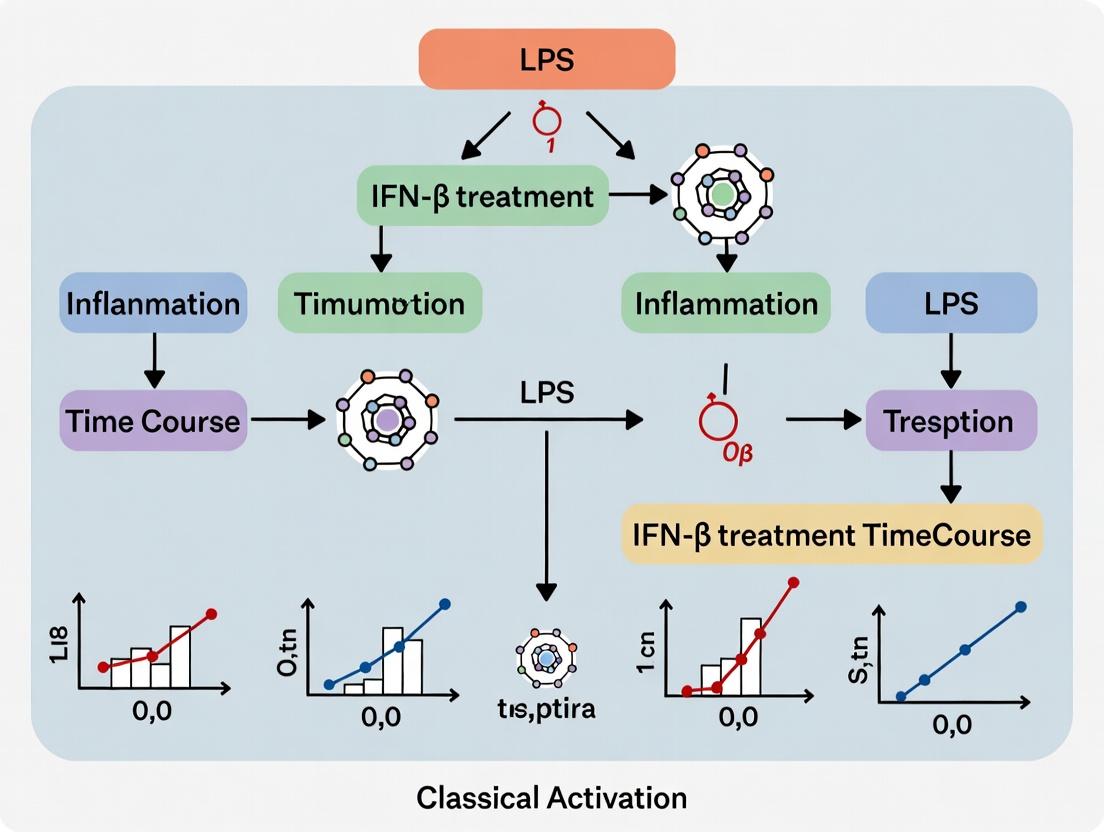
This review provides a targeted resource for researchers and drug development professionals investigating macrophage classical (M1) activation.
Optimizing Macrophage Activation: A Comprehensive Guide to LPS and IFN-γ Treatment Timing for Classical M1 Polarization
Abstract
This review provides a targeted resource for researchers and drug development professionals investigating macrophage classical (M1) activation. We systematically explore the foundational biology of LPS and IFN-γ synergy, detail precise methodological protocols and temporal considerations for in vitro polarization, address common troubleshooting and optimization challenges, and evaluate validation techniques and comparative models. The goal is to establish best practices for generating reproducible, well-defined M1 macrophage phenotypes critical for immunology research, therapeutic target discovery, and preclinical model development.
Understanding the Synergy: The Molecular Basis of LPS and IFN-γ in M1 Macrophage Polarization
This application note is framed within a broader thesis investigating the temporal dynamics of LPS + IFN-γ-induced classical (M1) macrophage activation. The precise timing of signaling events, gene expression, and functional outputs is critical for understanding how this pathway shifts from a protective host defense mechanism to a contributor to chronic inflammatory pathogenesis. The integration of Toll-like receptor 4 (TLR4) and Interferon-γ receptor (IFNGR) signaling cascades creates a synergistic pro-inflammatory response, defining the classical activation state. Dysregulation of this process is implicated in sepsis, autoimmune diseases, and metabolic disorders.
Key Signaling Pathways & Temporal Dynamics
The classical activation pathway is initiated by co-stimulation with LPS (binding TLR4) and IFN-γ (binding IFNGR). The synergy occurs at multiple levels, including transcriptional, epigenetic, and metabolic reprogramming.
Diagram 1: LPS & IFN-γ Synergistic Signaling Core
Table 1: Temporal Dynamics of Key Molecular Events Post LPS+IFN-γ Stimulation
| Time Post-Stimulation | Molecular/Cellular Event | Primary Pathway Involved | Key Readout/Assay |
|---|---|---|---|
| 0-15 min | TLR4 & IFNGR dimerization/activation; JAK/STAT1 phosphorylation | Early Receptor Signaling | Phospho-flow cytometry, Western Blot (p-STAT1, p-p65) |
| 30 min - 2 hr | NF-κB & STAT1 nuclear translocation; Early gene transcription (e.g., Irf1) | Transcriptional Activation | Immunofluorescence, qPCR (Irf1, Tnfa) |
| 4 - 8 hr | Peak expression of inflammatory cytokines (TNF-α, IL-6, IL-12) | Cytokine Production | ELISA, Luminex, qPCR |
| 8 - 24 hr | High-output NO production; Chemokine secretion (CXCL9/10); Metabolic shift to glycolysis | Effector Functions | Griess Assay (NO), Seahorse Analyzer (ECAR), qPCR (Nos2, Cxcl9) |
| 24 - 48 hr | Sustained inflammatory phenotype; Potential tissue damage models | Pathogenesis & Functional Outputs | Co-culture with other cells (e.g., apoptosis assays), MMP/TIMP measurement |
Detailed Experimental Protocols
Protocol 1: Time-Course Analysis of Classical Activation in Bone Marrow-Derived Macrophages (BMDMs)
Objective: To establish the synergistic activation timeline of LPS and IFN-γ on primary murine macrophages.
Materials: See "Scientist's Toolkit" below. Procedure:
- BMDM Differentiation: Flush bone marrow from C57BL/6 mouse femurs/tibias. Culture cells in complete RPMI (10% FBS, 1% P/S, 2mM L-Glutamine) supplemented with 20% L929-conditioned medium (source of M-CSF) for 7 days. Replace media on day 4.
- Stimulation Setup: On day 7, seed BMDMs in appropriate plates (e.g., 6-well for RNA/protein, 96-well for NO/cytokines). Allow to adhere overnight.
- Treatment & Time-Course:
- Pre-treatment: Add recombinant murine IFN-γ (20 ng/mL) to all relevant wells for 1 hour. This pre-sensitization mimics in vivo priming.
- Co-stimulation: Add ultrapure LPS (100 ng/mL) to the appropriate wells. This time point marks T=0.
- Harvest cells/ supernatant at critical time points: T=15, 30min, 1, 2, 4, 8, 12, 24, 48 hours post-LPS addition.
- Sample Collection:
- Supernatants: Store at -80°C for later ELISA (TNF-α, IL-6) and Griess assay.
- RNA: Use TRIzol reagent for extraction, followed by cDNA synthesis and qPCR for Nos2, Tnfa, Il6, Irf1, Cxcl10.
- Protein: Lyse cells in RIPA buffer for Western Blot (p-STAT1, STAT1, p-p65, p65, iNOS).
- Data Analysis: Normalize qPCR data to Hprt or Gapdh. Plot expression fold-change vs. time. For NO/supernatant cytokines, plot concentration vs. time.
Protocol 2: Functional Assessment of Metabolic Reprogramming
Objective: To measure the metabolic shift to glycolysis, a hallmark of classical activation.
Procedure (Using a Seahorse XF Analyzer):
- Day 1: Seed BMDMs (2-3 x 10^4/well) in a Seahorse XF96 cell culture microplate. Differentiate as in Protocol 1.
- Day 7: Stimulate cells in the microplate with IFN-γ (20 ng/mL, 1h pre-treatment) ± LPS (100 ng/mL). Include untreated controls. Important: Perform assay in unbuffered, serum-free, phenol-red free assay medium.
- Day 7 - 8 hours post-LPS: Replace medium with assay medium, incubate at 37°C (non-CO2) for 1 hour.
- Run Seahorse Assay: Use the XF Glycolysis Stress Test Kit.
- Port A Inject: Glucose (10 mM final).
- Port B Inject: Oligomycin (1 µM final) – inhibits ATP synthase, reveals maximum glycolytic capacity.
- Port C Inject: 2-DG (50 mM final) – inhibits glycolysis, confirms glycolytic origin of acidification.
- Analysis: Calculate Extracellular Acidification Rate (ECAR). Key parameters: Basal glycolysis, Glycolytic Capacity, Glycolytic Reserve.
The Scientist's Toolkit: Key Research Reagent Solutions
Table 2: Essential Reagents for LPS+IFN-γ Classical Activation Research
| Reagent / Material | Function & Rationale | Example Product/Catalog # (Source) |
|---|---|---|
| Ultrapure LPS (E. coli O111:B4) | The definitive TLR4 ligand. Ultrapure grade minimizes confounding TLR2 signaling. Essential for reproducible, specific activation. | InvivoGen #tlrl-3pelps |
| Recombinant Murine IFN-γ | The priming signal for classical activation. Synergizes with LPS to robustly induce iNOS and inflammatory cytokines. | PeproTech #315-05 |
| L929 Conditioned Medium | Source of M-CSF for differentiating murine bone marrow progenitors into naive macrophages. Critical for primary cell models. | Generated in-house or ATCC CCL-1 |
| Phospho-STAT1 (Tyr701) Antibody | Key marker of early IFNGR/JAK-STAT pathway activation. Used in Western Blot or flow cytometry for timing studies. | Cell Signaling Technology #9167 |
| iNOS/NOS2 Antibody | Confirms induction of the definitive classical activation effector enzyme. Readout of successful synergistic signaling. | Santa Cruz Biotechnology #sc-7271 |
| Griess Reagent Kit | Colorimetric quantitation of nitrite, the stable breakdown product of NO. Functional readout of macrophage activation. | Thermo Fisher Scientific #G7921 |
| Mouse TNF-α ELISA Kit | Quantifies a primary inflammatory cytokine output. Critical for assessing the magnitude and timing of the response. | R&D Systems #DY410-05 |
| XF Glycolysis Stress Test Kit | Measures real-time extracellular acidification rate (ECAR) to profile glycolytic flux, a metabolic signature of M1 macrophages. | Agilent #103020-100 |
| TRIzol Reagent | For simultaneous isolation of high-quality RNA, DNA, and protein from limited samples across a time-course experiment. | Thermo Fisher Scientific #15596026 |
Diagram 2: Classical Activation Experimental Workflow
Pathogenesis Link & Drug Development Implications
Sustained classical activation driven by persistent LPS (e.g., from dysbiosis) and IFN-γ (from chronic Th1 responses) underlies pathogenesis. The temporal data is vital for identifying "points of no return" where defense becomes damage. Drug discovery efforts focus on:
- Early Intervention: Targeting TLR4 or JAK/STAT signaling (e.g., TAK-242, JAK inhibitors).
- Metabolic Modulators: Shifting macrophages away from glycolysis (e.g., 2-DG analogs).
- Cytokine Neutralization: Anti-TNF-α, anti-IFN-γ therapies.
Table 3: Quantitative Benchmarks for Classical Activation in Murine BMDMs (24h Post-Stimulation)
| Readout | Untreated Control | IFN-γ (20 ng/mL) Only | LPS (100 ng/mL) Only | IFN-γ + LPS (Synergy) | Assay Method |
|---|---|---|---|---|---|
| Nitrite (µM) | 0.5 - 2.0 | 1.0 - 3.0 | 5.0 - 15.0 | 40.0 - 80.0 | Griess Assay |
| TNF-α (pg/mL) | 10 - 50 | 100 - 300 | 2000 - 5000 | 8000 - 15000 | ELISA |
| IL-6 (pg/mL) | 10 - 100 | 200 - 500 | 1000 - 3000 | 5000 - 12000 | ELISA |
| Nos2 mRNA (Fold Change) | 1.0 | 2.0 - 5.0 | 10.0 - 30.0 | 100.0 - 300.0 | qPCR |
| ECAR (mpH/min) | 20-40 | 30-50 | 60-90 | 120-200 | Seahorse XF |
Note: Ranges are approximate and can vary based on BMDM donor, serum, and exact reagent batches.
Within the context of LPS and IFN-γ treatment time-course studies for classical (M1) macrophage activation, understanding the crosstalk between Toll-like Receptor 4 (TLR4) and Interferon Gamma Receptor (IFNGR) signaling is paramount. These pathways synergistically amplify pro-inflammatory responses, driving the expression of genes like iNOS, TNF-α, and IL-12. This document details core signaling mechanisms, quantitative outcomes, and standardized protocols for investigating this critical crosstalk.
Ligand binding to TLR4 (by LPS) and IFNGR (by IFN-γ) initiates distinct but interconnected cascades. Key convergence points include the NF-κB and STAT1 transcription factors. Synergistic gene induction is a hallmark of their crosstalk.
Table 1: Key Signaling Molecules and Synergistic Outputs in LPS/IFN-γ Crosstalk
| Component | Primary Pathway | Function in Crosstalk | Example Synergistic Effect (LPS + IFN-γ vs. Single) |
|---|---|---|---|
| MyD88 | TLR4 (Early) | Adaptor for NF-κB/AP-1 activation. | Primes cells for enhanced STAT1 responses. |
| TRIF | TLR4 (Late) | Activates IRF3 for IFN-β production. | Autocrine IFN-β amplifies STAT1 signaling via JAK/STAT. |
| IRF3 | TLR4/TRIF | Induces Type I IFN (IFN-β). | Critical bridge for amplifying IFNGR signals. |
| STAT1 | IFNGR/JAK | Master regulator of IFN-responsive genes. | Enhanced phosphorylation, nuclear retention, and DNA binding. |
| NF-κB p65 | TLR4/MyD88 | Induces pro-inflammatory genes. | Cooperates with STAT1 on composite promoter elements. |
| iNOS (NOS2) | Downstream Target | Nitric oxide production. | 10-50 fold higher NO output vs. single stimulus. |
| CIITA | Downstream Target | MHC Class II transactivator. | Enhanced and sustained expression. |
Table 2: Exemplary Time-Course Quantitative Data (Murine BMDMs)
| Treatment | Time Point | p-STAT1 (Y701) Level | NF-κB Nuclear Translocation | iNOS mRNA (Fold Change) |
|---|---|---|---|---|
| IFN-γ only | 30 min | High | Low / Baseline | 5x |
| LPS only | 30 min | Low | High | 10x |
| LPS + IFN-γ | 30 min | Very High | Very High | 25x |
| IFN-γ only | 4 h | Moderate | Low | 15x |
| LPS only | 4 h | Moderate (via IFN-β) | Moderate | 100x |
| LPS + IFN-γ | 4 h | Very High (Sustained) | High | 500x |
| LPS + IFN-γ | 24 h | Sustained | Resolved | 1000x |
Detailed Experimental Protocols
Protocol 1: Time-Course Analysis of Signaling Crosstalk in Macrophages Objective: To assess early phosphorylation events and nuclear translocation in LPS/IFN-γ co-stimulation. Materials: Primary murine Bone Marrow-Derived Macrophages (BMDMs), LPS (E. coli O111:B4), recombinant murine IFN-γ, cell culture reagents, phospho-specific antibodies (p-STAT1 Y701, p-p65, p-IRF3), nuclear extraction kit. Procedure:
- Differentiate BMDMs for 7 days.
- Serum-starve cells (0.5% FBS) for 4-6 hours pre-stimulation.
- Stimulate cells:
- Group A: Medium only (control)
- Group B: IFN-γ (10 ng/mL)
- Group C: LPS (100 ng/mL)
- Group D: LPS (100 ng/mL) + IFN-γ (10 ng/mL)
- Terminate stimulation at T = 0, 15, 30, 60, 120 min.
- Lyse cells for Western blot (whole cell lysate) or perform nuclear/cytoplasmic fractionation.
- Probe blots for phospho-proteins and total proteins.
- Quantify band intensity; calculate phosphorylation ratios.
Protocol 2: Measuring Synergistic Gene Expression (qRT-PCR) Objective: To quantify synergistic induction of canonical M1 markers. Materials: As above, RNA extraction kit, cDNA synthesis kit, qPCR master mix, primers for Nos2, Tnf, Il12b, Cxcl9, Irf1, and housekeeping (Actb, Hprt). Procedure:
- Stimulate BMDMs as in Protocol 1 for 4, 8, 12, 24 hours.
- Extract total RNA, check integrity.
- Synthesize cDNA from 1 µg RNA.
- Perform qPCR in triplicate using SYBR Green.
- Analyze via ΔΔCt method. Present data as fold change relative to unstimulated control.
Protocol 3: Functional Nitric Oxide (NO) Assay Objective: To measure the functional synergistic output of iNOS induction. Materials: Cell culture supernatants from Protocol 2, Griess Reagent Kit. Procedure:
- Collect supernatants from 24-48 hour stimulations.
- Mix 50 µL supernatant with 50 µL Griess Reagent I, then add 50 µL Reagent II.
- Incubate 10 min at RT, protected from light.
- Measure absorbance at 540 nm.
- Calculate NO₂⁻ concentration using a NaNO₂ standard curve. Expect 10-50 fold increase in LPS+IFN-γ group.
Pathway and Workflow Diagrams
Title: TLR4 and IFNGR Signaling Crosstalk Network
Title: LPS/IFN-γ Crosstalk Experimental Workflow
The Scientist's Toolkit: Essential Research Reagents
Table 3: Key Reagent Solutions for LPS/IFN-γ Crosstalk Studies
| Reagent / Material | Function & Purpose | Key Considerations |
|---|---|---|
| Ultra-Pure LPS (E. coli O111:B4/K12) | TLR4-specific agonist; ensures signaling is not confounded by contaminants. | Use consistent source and batch. Low endotoxin buffers are critical. |
| Recombinant Murine IFN-γ | High-activity ligand for IFNGR. | Carrier-free, endotoxin-tested (<0.1 EU/µg). Verify species specificity. |
| Phospho-Specific Antibodies (p-STAT1 Y701, p-p65 S536, p-IRF3 S396) | Detect pathway activation states in time-course studies. | Validate for application (WB, IF). Always pair with total protein antibody. |
| JAK Inhibitor (e.g., Ruxolitinib) | Pharmacological tool to block IFNGR proximal signaling. | Confirm inhibition of p-STAT1 in your system. Use DMSO vehicle controls. |
| TRIF Inhibitory Peptide / TRIF-deficient cells | Tool to dissect MyD88-independent TLR4 signaling. | Controls for the IFN-β autocrine loop's contribution. |
| Griess Reagent Kit | Quantifies nitrite (NO₂⁻), stable product of iNOS-derived NO. | Measure at 24-48h. Use fresh standards. |
| Nuclear Extraction Kit | Isolates nuclear fractions to assess transcription factor translocation. | Include protease/phosphatase inhibitors. Check purity with markers (Lamin B1, α-Tubulin). |
| IRF1 & CIITA qPCR Primers | Measures key synergistic gene targets downstream of STAT1. | Design intron-spanning primers. Confirm amplification efficiency. |
Within the context of LPS and IFN-γ-induced macrophage classical (M1) activation, the precise sequence and timing of signal delivery are critical determinants of the resultant transcriptional program. The non-interchangeable nature of these signals—where LPS→IFN-γ induces a profoundly different outcome than IFN-γ→LPS—highlights a core principle of signal integration. This application note details the protocols and analytical tools to dissect these temporally regulated pathways, providing a framework for researchers investigating innate immunity and cytokine-driven pathologies.
Table 1: Transcriptional Outputs by Signal Sequence in Macrophages
| Signal Sequence | Key Upregulated Genes (Fold Change) | Phenotypic Outcome | Primary Signaling Node Activated |
|---|---|---|---|
| LPS → IFN-γ (4h apart) | Nos2 (High), Il12b (High), Cxcl9 (High) | Robust Classical Activation, Enhanced Microbial Killing | Synergistic STAT1 activation & enhanced NF-κB priming |
| IFN-γ → LPS (4h apart) | Nos2 (Low), Il12b (Low), Arg1 (Moderate) | Attenuated/Alternative Activation | Suppressive cross-talk via STAT1-induced inhibitors |
| Simultaneous Addition | Mixed profile, attenuated synergy | Intermediate Phenotype | Concurrent activating/inhibitory signaling |
Table 2: Critical Time Windows for Synergy
| Experimental Manipulation | Effect on Nos2 Expression | Implication |
|---|---|---|
| IFN-γ added <2h after LPS | Maximal synergy (>100-fold) | Open chromatin priming by early NF-κB/AP-1 |
| IFN-γ added >8h after LPS | Synergy lost (<10-fold) | Transient priming window closes |
| LPS added to IFN-γ-primed cells | Suppressed response (≤5-fold) | STAT1 induces SOCS1, suppressing TLR4 signaling |
Detailed Experimental Protocols
Protocol 1: Establishing Temporal Signal Sequences for Macrophage Polarization
Objective: To generate macrophages with distinct activation states by controlling the order and timing of LPS and IFN-γ exposure.
Materials:
- Primary bone marrow-derived macrophages (BMDMs) from C57BL/6 mice (Day 7-8 of differentiation).
- LPS (from E. coli O111:B4), 100 ng/mL working concentration.
- Recombinant murine IFN-γ, 20 ng/mL working concentration.
- Complete DMEM culture medium.
Procedure:
- Seed macrophages at 1x10^6 cells/well in 6-well plates overnight in complete DMEM.
- Condition A (LPS→IFN-γ): a. Stimulate cells with LPS (100 ng/mL) for 4 hours. b. Wash cells gently with warm PBS to remove residual LPS. c. Add fresh medium containing IFN-γ (20 ng/mL). Incubate for an additional 20 hours.
- Condition B (IFN-γ→LPS): a. Stimulate cells with IFN-γ (20 ng/mL) for 4 hours. b. Wash cells gently with warm PBS. c. Add fresh medium containing LPS (100 ng/mL). Incubate for 20 hours.
- Control Conditions: Include wells for LPS only, IFN-γ only, and simultaneous addition.
- Harvest cells at the 24-hour total stimulation mark for RNA extraction (see Protocol 2) or supernatant collection for cytokine analysis by ELISA.
Protocol 2: qRT-PCR Analysis of Temporal Gene Expression
Objective: To quantify the transcriptional output resulting from different signal sequences.
Materials:
- TRIzol reagent.
- cDNA synthesis kit.
- SYBR Green qPCR Master Mix.
- Primers for Nos2, Il12b, Cxcl9, Arg1, and housekeeping gene (Hprt or Gapdh).
Procedure:
- Lyse cells directly in the culture well using TRIzol. Isolate total RNA per manufacturer's protocol.
- Synthesize cDNA from 1 µg of total RNA using a reverse transcription kit.
- Perform qPCR in triplicate 20 µL reactions using SYBR Green Master Mix. Use the following cycling conditions: 95°C for 10 min, followed by 40 cycles of 95°C for 15 sec and 60°C for 1 min.
- Analyze data using the comparative ΔΔCt method. Normalize target gene Ct values to the housekeeping gene and express fold change relative to unstimulated control cells.
- Plot results as mean fold change ± SEM from at least three independent experiments.
Protocol 3: Chromatin Immunoprecipitation (ChIP) for Assessing Enhancer Priming
Objective: To evaluate histone modification (H3K4me3, H3K27ac) and transcription factor (NF-κB p65, STAT1) binding at key enhancer regions following sequential signaling.
Materials:
- Crosslinking solution (1% formaldehyde).
- ChIP-validated antibodies: anti-p65, anti-STAT1, anti-H3K4me3, anti-H3K27ac, and species-matched IgG control.
- Protein A/G magnetic beads.
- Cell lysis and nuclear lysis buffers.
- QPCR primers designed for enhancer regions of the Nos2 and Il12b loci.
Procedure:
- Crosslink and harvest cells (5x10^6 per condition) 1 hour after the second signal is added.
- Sonicate chromatin to shear DNA to 200-500 bp fragments.
- Immunoprecipitate: Incubate 100 µg of chromatin with 5 µg of target antibody overnight at 4°C. Capture immune complexes with magnetic beads.
- Wash, reverse crosslinks, and purify DNA.
- Quantify enriched DNA by qPCR. Express data as % of input or fold enrichment over IgG control.
Signaling Pathway Visualizations
Title: LPS then IFN-γ synergistic signaling pathway.
Title: IFN-γ then LPS suppresses TLR4 signaling.
Title: Workflow for sequential stimulation experiments.
The Scientist's Toolkit: Research Reagent Solutions
Table 3: Essential Reagents for Temporal Signaling Studies
| Reagent / Material | Function & Relevance | Example Supplier / Catalog |
|---|---|---|
| Ultra-pure LPS (E. coli O111:B4) | Standardized TLR4 agonist to initiate MyD88/TRIF signaling without contaminants. | InvivoGen (tlrl-3pelps) |
| Recombinant Murine IFN-γ | High-activity cytokine to trigger JAK-STAT1 signaling pathway. | PeproTech (315-05) |
| BMDM Differentiation Media (M-CSF) | Generates consistent, non-polarized primary macrophages from mouse bone marrow. | Miltenyi Biotec (130-101-704) |
| Phospho-STAT1 (Tyr701) Antibody | Key reagent for Western blot or flow cytometry to assess early IFN-γ pathway activation. | Cell Signaling Technology (9167S) |
| ChIP-Validated H3K27ac Antibody | To assess enhancer priming and epigenetic changes following the first signal. | Abcam (ab4729) |
| NO Detection Kit (Griess Reagent) | Functional readout of iNOS (Nos2) activity and classical activation. | Thermo Fisher Scientific (G7921) |
| SOCS1 siRNA or Inhibitor | Tool to test the mechanistic role of the IFN-γ-induced feedback inhibitor. | Santa Cruz Biotechnology (sc-36582) |
| Multiplex Cytokine Panel (IL-12p70, TNF-α, IL-10) | To profile the complex secretome resulting from different signal sequences. | Bio-Rad Bio-Plex Pro Mouse |
Within a broader thesis investigating the temporal dynamics of classical (M1) macrophage activation, precise quantification of core activation markers is essential. LPS and IFN-γ synergistically drive the canonical M1 phenotype through JAK-STAT and NF-κB signaling pathways. This application note provides detailed protocols for measuring four cardinal readouts—inducible Nitric Oxide Synthase (iNOS/NOS2), Tumor Necrosis Factor-alpha (TNF-α), Interleukin-12 (IL-12), and Major Histocompatibility Complex Class II (MHC-II)—to map the activation timeline and potency in response to LPS/IFN-γ treatment.
Signaling Pathway and Experimental Workflow
Diagram 1: LPS/IFN-γ Induced M1 Signaling & Readouts (76 chars)
Diagram 2: M1 Marker Temporal Analysis Workflow (75 chars)
Research Reagent Solutions Toolkit
| Reagent/Category | Example Product(s) | Primary Function in M1 Assays |
|---|---|---|
| Cell Stimulation Cocktail | Ultra-pure LPS (E. coli O111:B4), Recombinant Murine IFN-γ | Triggers classical activation via TLR4 and IFNGR receptors. |
| ELISA Kits | Mouse TNF-α DuoSet, Mouse IL-12p70 DuoSet (R&D Systems) | Quantifies secreted cytokine levels in supernatant. |
| Flow Cytometry Antibodies | Anti-mouse MHC-II (I-A/I-E) APC, CD16/32 (Fc block) | Measures surface MHC-II expression; blocks non-specific binding. |
| Western Blot Antibodies | Anti-iNOS/NOS2 monoclonal, Anti-β-Actin loading control | Detects iNOS protein expression; ensures equal loading. |
| qPCR Primers & Reagents | TaqMan assays: Nos2 (Mm00440502m1), Tnf (Mm00443258m1) | Quantifies gene expression changes with high sensitivity. |
| NO Detection Assay | Griess Reagent Kit | Measures nitrite (stable NO metabolite) in culture media. |
| Cell Culture Media | RPMI 1640 + 10% FBS + 1% Pen/Strep | Standard medium for primary macrophage maintenance. |
Table 1: Representative mRNA Expression (qRT-PCR, ΔΔCt) in BMDMs Post LPS (100 ng/mL) + IFN-γ (20 ng/mL) Stimulation
| Time Post-Stimulation | iNOS (Nos2) | TNF-α (Tnf) | IL-12p40 (Il12b) | MHC-II (Ciita) |
|---|---|---|---|---|
| 2 hours | 15.2 ± 2.1 | 225.5 ± 30.7 | 8.5 ± 1.2 | 1.8 ± 0.4 |
| 6 hours | 850.3 ± 95.6 | 180.4 ± 25.1 | 45.2 ± 6.8 | 3.5 ± 0.7 |
| 12 hours | 1200.5 ± 150.2 | 50.3 ± 8.9 | 120.7 ± 15.3 | 8.9 ± 1.5 |
| 24 hours | 950.7 ± 110.8 | 12.1 ± 2.5 | 85.4 ± 10.2 | 15.6 ± 2.8 |
| 48 hours | 400.2 ± 55.3 | 5.5 ± 1.1 | 30.1 ± 5.6 | 22.4 ± 4.1 |
| Notes | Peak ~12h, sustained | Very early peak | Intermediate peak | Late, sustained increase |
Table 2: Representative Protein/Functional Output in BMDM Supernatant or Lysate
| Assay / Marker | 2h | 6h | 12h | 24h | 48h | Detection Method |
|---|---|---|---|---|---|---|
| TNF-α (pg/mL) | 950 ± 120 | 2200 ± 250 | 450 ± 80 | <50 | <20 | ELISA |
| IL-12p70 (pg/mL) | ND | 85 ± 15 | 320 ± 45 | 200 ± 30 | 90 ± 20 | ELISA |
| Nitrite (μM) | ND | 5.2 ± 1.1 | 18.5 ± 3.2 | 35.8 ± 4.5 | 45.1 ± 5.8 | Griess Assay |
| MHC-II (MFI) * | 1050 ± 150 | 1200 ± 180 | 2800 ± 350 | 6500 ± 800 | 9800 ± 950 | Flow Cytometry |
*MFI: Mean Fluorescence Intensity relative to unstimulated control (~500 MFI). ND: Not Detected.
Detailed Experimental Protocols
Protocol 1: Macrophage Stimulation & Time-Course Setup
Objective: To generate classically activated macrophages for temporal marker analysis. Materials: Primary Bone Marrow-Derived Macrophages (BMDMs) or RAW 264.7 cells, complete RPMI, ultra-pure LPS, recombinant IFN-γ, 6/12/24-well plates. Procedure:
- Seed cells at appropriate density (e.g., 0.5x10^6/mL for BMDMs) and allow to adhere overnight.
- Prepare fresh stimulation medium containing 100 ng/mL LPS and 20 ng/mL IFN-γ. Include negative control wells (medium only).
- Replace medium in test wells with stimulation medium. Note this as Time = 0.
- Harvest cells and supernatants at designated time points (e.g., 2, 6, 12, 24, 48h). For supernatants, centrifuge (500 x g, 5 min) to remove debris and store at -80°C. For cells, lyse directly for RNA/protein or detach for flow cytometry.
Protocol 2: qRT-PCR for M1 Marker mRNA Quantification
Objective: To measure transcriptional upregulation of Nos2, Tnf, Il12b, and Ciita. Materials: RNeasy Mini Kit, cDNA synthesis kit, TaqMan or SYBR Green Master Mix, validated primers/probes. Procedure:
- Lyse cells at each time point in RLT buffer (+β-mercaptoethanol). Isolate total RNA following kit instructions. Measure concentration.
- Synthesize cDNA from 0.5-1 μg RNA using a reverse transcription kit.
- Set up qPCR reactions in triplicate: 10 μL Master Mix, 1 μL primer/probe mix, 5 μL nuclease-free water, 4 μL cDNA template (diluted 1:10).
- Run on real-time cycler: 95°C for 10 min, then 40 cycles of 95°C for 15 sec and 60°C for 1 min.
- Analyze data using the ΔΔCt method. Normalize to housekeeping genes (e.g., Actb, Gapdh, Hprt). Express as fold change relative to unstimulated control.
Protocol 3: Protein-Level Detection via ELISA and Western Blot
A. Cytokine ELISA (TNF-α, IL-12p70):
- Coat a 96-well plate with capture antibody in PBS overnight at 4°C.
- Block with 1% BSA in PBS for 1 hour at RT.
- Add standards and undiluted/ diluted supernatants. Incubate 2 hours at RT.
- Add detection antibody, then Streptavidin-HRP. Incubate 20-30 min each step.
- Develop with TMB substrate. Stop with 2N H₂SO₄. Read absorbance at 450 nm (correction 570 nm).
B. Western Blot for iNOS:
- Prepare cell lysates in RIPA buffer with protease inhibitors.
- Resolve 20-30 μg protein on a 7.5-10% SDS-PAGE gel. Transfer to PVDF membrane.
- Block with 5% non-fat milk in TBST for 1 hour.
- Incubate with primary anti-iNOS antibody (1:1000) overnight at 4°C.
- Incubate with HRP-conjugated secondary antibody (1:5000) for 1 hour at RT.
- Detect using ECL reagent and image. Re-probe for β-actin as loading control.
Protocol 4: Functional Readout - Griess Assay for Nitric Oxide
Objective: To quantify NO production via its stable metabolite, nitrite. Materials: Griess Reagent (1% sulfanilamide, 0.1% NEDD in 2.5% H₃PO₄), sodium nitrite standard. Procedure:
- Clear supernatant from cells (see Protocol 1).
- Mix 50 μL of supernatant with 50 μL of Griess Reagent in a 96-well plate.
- Incubate at RT for 10-15 minutes, protected from light.
- Measure absorbance at 540 nm.
- Calculate nitrite concentration using a standard curve (0-100 μM NaNO₂ in culture medium).
Protocol 5: Surface MHC-II Detection by Flow Cytometry
Objective: To quantify MHC-II upregulation on the macrophage surface. Materials: FACS buffer (PBS + 2% FBS), Fc block (anti-CD16/32), fluorophore-conjugated anti-MHC-II antibody, viability dye. Procedure:
- Harvest cells using gentle cell scraping or enzyme-free dissociation buffer.
- Wash cells once with cold FACS buffer.
- Fc block: Resuspend cell pellet in Fc block antibody (1:100) for 10 min on ice.
- Surface stain: Add optimal dilution of anti-MHC-II antibody (e.g., 1:200) and viability dye. Incubate for 30 min on ice in the dark.
- Wash twice with FACS buffer, resuspend in 300 μL buffer.
- Acquire data on a flow cytometer. Analyze live, single cells for MHC-II Mean Fluorescence Intensity (MFI). Compare to isotype control and unstimulated samples.
Application Notes
This document synthesizes recent findings on single-cell transcriptomic and proteomic heterogeneity within macrophage populations classically activated (M1) with LPS and IFN-γ. The context is a broader thesis investigating the temporal dynamics of LPS/IFN-γ-driven classical activation.
1. Key Heterogeneity Subgroups: Single-cell RNA sequencing (scRNA-seq) of bone-marrow-derived macrophages (BMDMs) treated with LPS (100 ng/mL) and IFN-γ (20 ng/mL) for 24 hours reveals distinct subclusters beyond a uniform M1 state. Key subgroups identified include:
- Inflammatory-High (Inf-Hi): Expressing elevated Il1b, Tnf, Nos2. (~25-30% of cells).
- Interferon-Response (ISG-Hi): Dominated by interferon-stimulated genes (ISGs) like Isg15, Ifit3, Irf7. (~20-25% of cells).
- Chemokine/Recruitment (Chem-Hi): Specialized in Cxcl9, Cxcl10, Ccl5 expression. (~15-20% of cells).
- Transitional/Stress (Trans): Exhibiting stress-response signatures and lower cytokine output. (~10-15% of cells).
2. Temporal Dynamics: Longitudinal scRNA-seq over a 48-hour LPS/IFN-γ treatment course shows these subpopulations are dynamic. The Inf-Hi cluster peaks early (6-12h), while the ISG-Hi and Chem-Hi clusters expand and stabilize by 24h, suggesting a phased division of labor.
3. Functional Correlates: CITE-seq (Cellular Indexing of Transcriptomes and Epitopes by Sequencing) confirms protein-level heterogeneity. For instance, surface markers like CD38 and CD86 co-vary but are not uniformly high across all cells nominally classified as M1.
4. Therapeutic Implications: This heterogeneity has direct relevance for drug development. Inflammatory disease models show that the Inf-Hi subpopulation is most detrimental in acute inflammation, while the Chem-Hi group may influence T-cell recruitment in cancer. Targeted therapies may need to address specific subsets rather than "M1 macrophages" as a whole.
5. Data Summary Tables:
Table 1: Characteristic Markers of M1 Subpopulations (24h LPS/IFN-γ)
| Subpopulation | Top Transcriptional Markers | Approximate Frequency (%) | Key Proposed Function |
|---|---|---|---|
| Inflammatory-High | Il1b, Tnf, Nos2, Il6 | 25-30% | Potent pro-inflammatory effector |
| Interferon-Response | Isg15, Ifit3, Irf7, Stat1 | 20-25% | Antiviral defense, signal amplification |
| Chemokine/Recruitment | Cxcl9, Cxcl10, Ccl5, Ccl2 | 15-20% | Lymphocyte recruitment & activation |
| Transitional/Stress | Fos, Jun, Hspa1a/b, Ddit3 | 10-15% | Stress adaptation, apoptosis priming |
Table 2: Quantitative Phospho-Protein Signaling (Mass Cytometry)
| Signaling Node (Phospho-) | Inf-Hi Subset (Median Intensity) | ISG-Hi Subset (Median Intensity) | Chem-Hi Subset (Median Intensity) |
|---|---|---|---|
| p-STAT1 (Y701) | 2,450 | 4,120 | 3,850 |
| p-NF-κB p65 (S529) | 3,850 | 1,950 | 2,200 |
| p-p38 MAPK (T180/Y182) | 3,100 | 2,300 | 2,800 |
| p-IRF3 (S396) | 1,800 | 2,950 | 1,600 |
Experimental Protocols
Protocol 1: Single-Cell RNA Sequencing of Time-Course LPS/IFN-γ Treated BMDMs
Objective: To profile transcriptional heterogeneity in murine BMDMs during classical activation.
Key Reagents:
- Cells: C57BL/6 bone marrow-derived macrophages (7-day differentiation with M-CSF).
- Activators: Ultra-pure LPS (E. coli 0111:B4), recombinant murine IFN-γ.
- Platform: 10x Genomics Chromium Next GEM Single Cell 3’ Kit v3.1.
Procedure:
- Treatment: Seed BMDMs at 0.5-1x10^6 cells/mL. Treat with LPS (100 ng/mL) + IFN-γ (20 ng/mL) for time points: 0h (untreated), 6h, 12h, 24h, 48h. Include a vehicle control.
- Harvesting: At each time point, wash cells with cold PBS, lift using gentle enzyme-free cell dissociation buffer (5 min, 37°C). Quench with complete media.
- Processing: Pass cell suspension through a 40-μm flow strainer. Count and assess viability (>90% via trypan blue). Adjust concentration to 700-1200 cells/μL in PBS + 0.04% BSA.
- Library Preparation: Follow 10x Genomics Chromium Controller user guide. Aim for 10,000 cells per time point library.
- Sequencing: Pool libraries and sequence on an Illumina NovaSeq 6000, targeting ~50,000 reads per cell.
- Analysis: Process raw data using Cell Ranger. Use Seurat (R package) for downstream analysis: normalization, PCA, clustering (resolution=0.6), and UMAP visualization. Identify cluster markers using
FindAllMarkers.
Protocol 2: Multiplexed Protein Detection via CITE-seq on Activated M1 Populations
Objective: To correlate surface protein expression with transcriptional states at a single-cell level.
Key Reagents:
- Antibody Panel: TotalSeq-B antibodies (BioLegend) for mouse CD45, CD11b, F4/80, MHC-II, CD86, CD38, CD274 (PD-L1).
- Platform: 10x Genomics Feature Barcode technology.
Procedure:
- Cell Preparation: Prepare LPS/IFN-γ (24h) treated BMDMs as in Protocol 1, step 2.
- Antibody Staining: Resuspend ~1x10^6 cells in 100μL PBS + 0.04% BSA. Add TotalSeq-B antibody cocktail (titrated concentration). Incubate for 30 min on ice in the dark. Wash 3x with excess buffer.
- Multiplexing: Pool stained samples from different conditions/time points (if applicable) using unique hashing antibodies (TotalSeq-B Cell Multiplexing Kit).
- 10x Library Generation: Process the stained, pooled cell suspension through the 10x Chromium system using the Single Cell 5’ Kit (to capture both transcriptome and antibody-derived tags (ADTs)).
- Sequencing & Analysis: Sequence as per 10x guidelines. Process ADTs separately from mRNA using the
DSBR package for normalization. Integrate protein expression data into the Seurat object for joint analysis.
Visualizations
Title: Single-Cell RNA-seq Workflow for M1 Heterogeneity
Title: Signaling Pathways Driving M1 Subsets
The Scientist's Toolkit: Research Reagent Solutions
| Item | Function & Application in M1 Heterogeneity Research |
|---|---|
| Ultra-pure LPS (E. coli 0111:B4) | Definitive TLR4 agonist for canonical M1 polarization. Essential for reproducible activation in time-course studies. |
| Recombinant Murine IFN-γ | Synergizes with LPS for full classical activation, driving STAT1 signaling and ISG expression. |
| 10x Genomics Chromium Single Cell 3' or 5' Kits | Enables high-throughput single-cell transcriptomic (and surface protein via 5' kit) library generation from heterogeneous macrophage populations. |
| TotalSeq-B Antibody Panels | Antibody conjugates for CITE-seq, allowing simultaneous quantification of 10-100+ surface proteins (e.g., activation markers) at single-cell resolution. |
| Cell Hashing Antibodies (TotalSeq-B) | Enables sample multiplexing, reducing batch effects and costs by pooling multiple time points/conditions before 10x processing. |
| Gentle Cell Dissociation Reagent | Enzyme-free buffer critical for maintaining cell viability and surface epitopes during harvesting for single-cell workflows. |
| Seurat (R Package) | Primary computational toolkit for the analysis and integration of scRNA-seq/CITE-seq data, including clustering, visualization, and differential expression. |
| Phospho-specific Antibodies for Mass Cytometry | Metal-tagged antibodies for high-dimensional analysis of intracellular signaling (p-STAT1, p-NF-κB) across single cells to link signaling to phenotype. |
Protocols in Practice: Step-by-Step Guide to Inducing M1 Polarization with LPS & IFN-γ
Application Notes
Within the context of LPS/IFN-γ-induced classical (M1) activation research for a broader thesis, the selection between primary macrophages and immortalized cell lines is a critical determinant of experimental relevance, reproducibility, and translational potential. Recent findings underscore significant phenotypic and functional disparities between these cell sources upon stimulation, impacting the interpretation of inflammatory signaling, cytokine profiles, and metabolic reprogramming.
Primary macrophages (e.g., from bone marrow, peritoneum, or human PBMCs) exhibit a more physiologically representative response, including robust cytokine secretion (IL-6, TNF-α, IL-12), nitric oxide (NO) production in mice, and complex metabolic shifts. However, they are characterized by donor variability, finite lifespan, and more demanding culture conditions. In contrast, immortalized lines like murine RAW 264.7 and human THP-1 offer homogeneity, scalability, and genetic manipulability but often demonstrate attenuated or altered activation phenotypes. For instance, THP-1 cells typically require phorbol ester (PMA) differentiation into macrophage-like states prior to LPS/IFN-γ treatment, which intrinsically modifies their basal metabolism and response kinetics.
A key consideration for LPS/IFN-γ time-course studies is the dynamic regulation of signaling hubs like NF-κB and STAT1. Primary cells often show more transient and tightly regulated activation peaks, while cell lines may exhibit sustained or dysregulated pathway activity. This directly influences the optimal time windows for harvesting RNA, protein, or supernatants for endpoint analyses.
Table 1: Functional Output Comparison upon Classical Activation (LPS + IFN-γ)
| Parameter | Primary Murine BMDMs | RAW 264.7 Cells | THP-1 (PMA-differentiated) | Notes |
|---|---|---|---|---|
| NO Production (μM) | High (15-30) | Moderate (5-15) | Low/None | Human macrophages do not produce iNOS/NO. |
| TNF-α Secretion (pg/mL) | Very High (1000-5000) | High (500-2000) | Moderate (200-1000) | Varies with dose & time; measured at 6-24h. |
| IL-6 Secretion (pg/mL) | Very High (2000-10000) | Moderate (500-3000) | High (1000-6000) | |
| Phagocytic Capacity | High | Moderate | Moderate to Low | Can be impacted by PMA differentiation. |
| Glycolytic Rate | Sharply Increases | Increases | Increases | Primary cells show greater fold change. |
| Response Heterogeneity | High (Donor-dependent) | Low | Low | |
| Genetic Manipulation Ease | Difficult | Moderate (Transfection) | Easy (Lentiviral transduction) |
Table 2: Practical Considerations for Research
| Consideration | Primary Macrophages | Immortalized Cell Lines |
|---|---|---|
| Cost | Higher (cytokines, animals) | Lower |
| Time to Experiment | Weeks (differentiation) | Days (culture & differentiation) |
| Throughput | Lower | High |
| Reproducibility | Subject to biological variation | High, within clonal lines |
| Physiological Relevance | High | Moderate to Low |
| Regulatory (Drug Screening) | Often preferred for late-stage | Standard for early-stage HTS |
| Key Strengths | In vivo-like responses, full polarization spectrum | Consistency, scalability, genetic tools |
| Key Limitations | Short-lived, donor variability, skill-intensive | Adapted phenotype, may lack key receptors |
Experimental Protocols
Protocol 1: Generation and Stimulation of Murine Bone Marrow-Derived Macrophages (BMDMs)
Purpose: To obtain primary murine macrophages for classical activation time-course studies. Reagents: C57BL/6 mice (6-12 weeks), L929-conditioned medium (source of M-CSF) or recombinant M-CSF, RPMI-1640+10% FBS, LPS (e.g., 100 ng/mL), IFN-γ (e.g., 20 ng/mL). Procedure:
- Harvest Bone Marrow: Euthanize mouse, sterilize hind limbs. Dissect out femurs and tibias. Flush marrow cavity with cold RPMI using a 25G needle.
- Differentiation: Resuspend cells in complete RPMI-1640 supplemented with 20-30% L929-conditioned medium or 20 ng/mL recombinant M-CSF. Plate at ~1x10^6 cells/mL in bacteriological petri dishes (to reduce adherence). Culture at 37°C, 5% CO2 for 7 days, adding fresh medium with M-CSF on day 4.
- Harvest & Plate: On day 7, wash plates with cold PBS and use cell scraper to harvest differentiated BMDMs. Seed into experimental plates. Allow to adhere overnight.
- Stimulation: Treat cells with LPS (100 ng/mL) and IFN-γ (20 ng/mL) for desired time points (e.g., 0, 1, 2, 4, 6, 12, 24h). Include vehicle controls.
- Collection: Harvest supernatants for cytokine ELISA/NOS analysis. Lyse cells for RNA (qPCR) or protein (Western blot) analysis.
Protocol 2: Differentiation and Stimulation of THP-1 Cells
Purpose: To generate macrophage-like cells from human THP-1 monocytic leukemia line for activation studies. Reagents: THP-1 cells, RPMI-1640+10% FBS, Phorbol 12-myristate 13-acetate (PMA), LPS, IFN-γ. Procedure:
- Maintenance: Culture THP-1 cells in suspension in complete RPMI-1640. Maintain density between 2x10^5 and 1x10^6 cells/mL.
- Differentiation: Seed cells in tissue culture-treated plates at 2-5x10^5 cells/mL in medium containing 50-100 nM PMA. Incubate for 48-72 hours at 37°C, 5% CO2.
- Resting: Aspirate medium containing PMA. Wash adherent cells gently twice with warm PBS. Add fresh complete medium without PMA. Rest for 24 hours.
- Stimulation: Treat differentiated THP-1 cells with LPS (e.g., 100 ng/mL) and IFN-γ (e.g, 20-50 ng/mL) for specified time courses.
- Collection: Proceed with supernatant/cell lysate collection as in Protocol 1.
Protocol 3: Nitric Oxide (Griess) Assay
Purpose: Quantify nitrite accumulation as a measure of iNOS activity in murine cells. Reagents: Griess Reagent (1% sulfanilamide, 0.1% NEDD in 2.5% H3PO4), Sodium Nitrite standard. Procedure:
- Standard Curve: Prepare serial dilutions of NaNO2 in culture medium (0-100 μM).
- Sample Prep: Clear 50-100 μL of cell culture supernatant by centrifugation.
- Reaction: Mix equal volumes of sample/standard with Griess Reagent in a 96-well plate. Incubate at RT for 10-15 min protected from light.
- Measurement: Read absorbance at 540 nm. Calculate nitrite concentration from standard curve.
Diagrams
Title: Cell Source Decision Logic for Activation Studies
Title: Core LPS/IFN-γ Synergy in Macrophage Activation
The Scientist's Toolkit: Research Reagent Solutions
Table 3: Essential Materials for LPS/IFN-γ Activation Studies
| Item | Function & Selection Notes |
|---|---|
| Ultra-Pure LPS (E. coli O111:B4) | Gold-standard TLR4 agonist for reproducible NF-κB/IRF3 signaling. Avoids protein contamination. |
| Recombinant IFN-γ (Mouse/Human) | Synergizes with LPS for robust STAT1 activation and classical polarization. Species-specific. |
| M-CSF (for BMDMs) | Critical for differentiation of bone marrow progenitors into mature macrophages. |
| Phorbol 12-Myristate 13-Acetate (PMA) | Differentiates THP-1 monocytes into adherent, macrophage-like cells. Concentration and time critical. |
| Griess Reagent Kit | For colorimetric quantification of nitrite, a stable breakdown product of NO (murine systems). |
| ELISA Kits (TNF-α, IL-6, IL-12p40) | Quantify key inflammatory cytokine secretion from activated macrophages. |
| Phospho-Specific Antibodies (p-STAT1, p-p65) | For Western blot analysis of pathway activation kinetics in time-course experiments. |
| RPMI-1640 Medium + 10% FBS | Standard culture medium for both primary macrophages and cell lines like RAW 264.7/THP-1. |
| Cell Recovery Solution (for BMDMs) | Non-enzymatic, EDTA-based solution to gently harvest adherent BMDMs without receptor damage. |
| L929 Conditioned Medium | Economical source of M-CSF for BMDM differentiation. Requires maintenance of L929 fibroblast culture. |
Within a research thesis investigating the temporal dynamics of LPS/IFN-γ-induced classical (M1) macrophage activation, standardized pre-treatment cellular conditions are paramount. Variations in differentiation status, cell density, and nutrient availability can significantly alter basal metabolic and inflammatory states, thereby confounding the interpretation of activation kinetics and marker expression. This document outlines critical pre-treatment parameters and provides standardized protocols to ensure reproducible and interpretable results in polarization studies.
Table 1: Standardized Pre-treatment Parameters for Primary Murine Bone Marrow-Derived Macrophages (BMDMs)
| Parameter | Recommended Specification | Rationale & Impact on Activation |
|---|---|---|
| Differentiation | 7-8 days in M-CSF (20 ng/mL) | Ensures homogeneous, quiescent M0 population. Shorter times yield immature precursors with skewed responses. |
| Seeding Density | 2.5 - 3.5 x 10^5 cells/cm² (e.g., ~0.5-0.7 x 10^6 cells/well in 12-well plate) | Prevents over-confluence (contact inhibition) and under-confluence (spontaneous activation). Optimal for cytokine secretion assays. |
| Adhesion/Equilibration Time Post-Seeding | 18-24 hours | Allows full adherence and recovery from harvesting, normalizing cell cycle and metabolic state before treatment. |
| Serum Starvation | 2-4 hours in 0.5-1% FBS or serum-free media prior to stimulation. | Reduces basal signaling from serum growth factors, synchronizes cells, and enhances sensitivity to LPS/IFN-γ. |
| Baseline Control | Full serum (e.g., 10% FBS) control group essential. | Distinguishes starvation effects from treatment effects. |
Table 2: Impact of Pre-treatment Variables on Key M1 Activation Markers (Example Data)
| Pre-condition | LPS/IFN-γ-Induced TNF-α Secretion (vs. Optimal) | iNOS (NOS2) mRNA Induction (vs. Optimal) | Arg1/iNOS Ratio | Notes |
|---|---|---|---|---|
| Optimal (as per Table 1) | 100% (Reference) | 100% (Reference) | Low (Pro-inflammatory) | Robust, reproducible M1 response. |
| High Seeding Density (>5x10^5/cm²) | ↓ 40-60% | ↓ 50-70% | Artificially Elevated | Contact inhibition limits response. |
| Incomplete Differentiation (<5 days) | Highly Variable | Highly Variable | Inconsistent | Mixed precursor population. |
| No Serum Starvation | ↓ 20-30% | ↓ 15-25% | Slightly Higher | High background signaling masks stimulus. |
| Prolonged Starvation (>6h) | ↑ 10-20% but with ↑ cytotoxicity | ↑ 10-15% but variable | Variable | Risk of stress-induced artifacts. |
Experimental Protocols
Protocol 1: Generation and Pre-treatment of Murine BMDMs for LPS/IFN-γ Time-Course Studies
Objective: To generate a homogeneous, quiescent monolayer of primary macrophages with optimized density and serum conditions for classical activation studies.
Materials: See "Research Reagent Solutions" below.
Procedure: A. Differentiation (Day -9 to Day -1)
- Flush bone marrow from femurs and tibias of C57BL/6 mice (8-12 weeks).
- Lyse red blood cells using ACK buffer (2-3 min at RT).
- Resuspend cells in complete BMDM media: RPMI-1640, 10% FBS, 1% Pen/Strep, 20 ng/mL recombinant murine M-CSF.
- Seed cells in non-tissue culture treated petri dishes at ~1 x 10^6 cells/dish in 10 mL media. Incubate at 37°C, 5% CO₂.
- On Day -4, add an additional 5 mL of fresh complete BMDM media supplemented with M-CSF (20 ng/mL).
- On Day -7, gently detach adherent cells using cold PBS + 2 mM EDTA (10-15 min, 4°C). Replate into new non-tissue culture treated dishes in fresh M-CSF media to remove non-adherent lineages.
- On Day -1 (or Day 0, 24h before stimulation), harvest BMDMs as in step 6. Count and assess viability via trypan blue exclusion (>95% expected).
B. Seeding & Equilibration (Day -1)
- Seed viable BMDMs into tissue culture-treated plates (e.g., 12-well for RNA/protein, 96-well for ELISA) at the optimized density of 3.0 x 10^5 cells/cm².
- Allow cells to adhere and equilibrate in complete BMDM media (10% FBS + M-CSF) for 18-24 hours.
C. Serum Starvation & Stimulation (Day 0)
- Wash: Aspirate media and gently wash cell monolayer once with warm, serum-free basal media (e.g., RPMI-1640).
- Starvation: Add pre-warmed low-serum or serum-free assay media (e.g., RPMI-1640 + 0.5% FBS, no M-CSF). Incubate for 2-4 hours.
- Stimulation: Directly add LPS (e.g., 100 ng/mL) and IFN-γ (e.g., 20 ng/mL) to the starvation media at the appropriate concentrations to initiate the time-course experiment. The "time-zero" sample is taken immediately prior to this addition.
Signaling Pathway & Experimental Workflow Visualization
Diagram 1: Pre-treatment Setup and LPS/IFN-γ Signaling (Width: 760px)
Research Reagent Solutions
Table 3: Essential Materials for Pre-treatment and Activation Studies
| Item | Function & Rationale | Example (Vendor Cat. #) |
|---|---|---|
| Recombinant Murine M-CSF | Differentiates bone marrow progenitors into mature, quiescent BMDMs. Critical for cell source uniformity. | PeproTech, 315-02 |
| Ultra-pure LPS (E. coli O111:B4) | TLR4 agonist for classical activation. Purity minimizes confounding signaling from other bacterial components. | InvivoGen, tlrl-3pelps |
| Recombinant Murine IFN-γ | Synergizes with LPS to drive robust M1 polarization via JAK-STAT signaling. | PeproTech, 315-05 |
| Low-Endotoxin Fetal Bovine Serum (FBS) | Supports cell growth. Low endotoxin (<1 EU/mL) is critical to prevent pre-activation of macrophages. | Gibco, A3160802 |
| Cell Culture Media (RPMI-1640) | Standard basal medium for hematopoietic cells, including BMDMs. | Corning, 10-040-CV |
| Non-Tissue Culture Treated Dishes | Prevents excessive adhesion during differentiation, facilitating harvest of loosely adherent BMDMs. | Falcon, 351029 |
| Cell Dissociation Buffer (EDTA-based) | Gentle, enzyme-free method for detaching adherent BMDMs, preserving surface receptor integrity. | Gibco, 13151014 |
| qPCR Primers for M1 Markers | Quantify transcriptional response (e.g., Tnf, Il6, Nos2, Cxcl9). Normalize to housekeepers (e.g., Actb, Hprt). | Multiple sources |
Application Notes and Protocols
Within the broader thesis on LPS/IFN-γ-mediated classical macrophage activation, the choice between sequential and co-treatment protocols is a critical experimental variable. This document details the rationales and established timelines for these approaches, supported by current data and methodologies.
Rationale and Mechanistic Basis
Sequential Protocol: This approach mimics a physiological scenario where an initial stimulus (e.g., pathogen-associated molecular pattern like LPS) primes the cell, altering its transcriptional and epigenetic landscape, before a second signal (e.g., cytokine like IFN-γ) drives a synergistic response. The rationale centers on the priming effect of LPS, which upregulates components of the IFN-γ signaling pathway, notably the IFN-γ receptor (IFNGR) and key transcription factors like STAT1 and IRF1. This priming leads to an amplified response to subsequent IFN-γ exposure.
Co-treatment Protocol: This method administers LPS and IFN-γ simultaneously, modeling a concurrent exposure to multiple inflammatory signals. The rationale is to study the integrated and immediate signaling crosstalk between the TLR4/MyD88/NF-κB (LPS) and JAK/STAT (IFN-γ) pathways. This can reveal non-synergistic, often additive or inhibitory, interactions that may be masked in sequential treatments.
Key Signaling Pathway Crosstalk:
Diagram 1: LPS and IFN-γ Signaling Crosstalk (76 characters)
Established Timelines and Experimental Outcomes
Quantitative data from recent studies (2022-2024) highlight differential outcomes based on protocol choice.
Table 1: Protocol Timelines and Key Readouts
| Protocol | Typical Timeline | Synergy Level (iNOS/NO) | Dominant Cytokine Profile | Key Epigenetic Marker |
|---|---|---|---|---|
| Sequential (LPS→IFN-γ) | LPS (3-6h) → Wash → IFN-γ (18-24h) | High (10-50 fold increase vs. single) | Late: High IL-12, IL-23 | H3K27ac at IRF1/Stat1 loci |
| Co-treatment | LPS + IFN-γ added together (18-24h) | Moderate (5-15 fold increase vs. single) | Sustained: IL-6, TNF-α, IL-12 | Concurrent H3K4me3 & pSTAT1 |
| Sequential (IFN-γ→LPS) | IFN-γ (3-6h) → Wash → LPS (18-24h) | Low/Inhibitory (≤ 2 fold increase) | Attenuated: Anti-inflammatory shift | SOCS1 induction, NF-κB inhibition |
Table 2: Representative Gene Expression (qPCR ΔΔCt) at 24h
| Target Gene | LPS Alone | IFN-γ Alone | Co-treatment | Sequential (LPS→IFN-γ) |
|---|---|---|---|---|
| Nos2 (iNOS) | 15.2 ± 1.5 | 8.1 ± 0.9 | 22.5 ± 2.1 | 35.8 ± 3.0 |
| Il6 | 25.0 ± 2.3 | 2.1 ± 0.5 | 23.8 ± 2.0 | 18.5 ± 1.8 |
| Cox2 | 18.7 ± 1.8 | 1.5 ± 0.3 | 17.9 ± 1.7 | 12.4 ± 1.2 |
| Ciita | 3.5 ± 0.7 | 12.4 ± 1.1 | 20.1 ± 1.9 | 28.9 ± 2.5 |
Detailed Experimental Protocols
Protocol A: Standard Sequential Activation (LPS priming followed by IFN-γ)
- Cell Preparation: Seed primary murine bone marrow-derived macrophages (BMDMs) or RAW 264.7 cells in complete medium 24h prior.
- Priming: Treat cells with ultrapure LPS (100 ng/mL) in serum-reduced medium (0.5-2% FBS) for 4 hours.
- Wash: Aspirate medium. Wash cells gently twice with warm, sterile PBS to remove residual LPS.
- Stimulation: Add fresh medium containing recombinant IFN-γ (20-50 ng/mL). Incubate for 18-20 hours.
- Harvest: Collect supernatant for nitrite (Griess assay) or cytokine analysis. Lyse cells for RNA/protein extraction.
Protocol B: Co-treatment Protocol
- Cell Preparation: Seed cells as in Protocol A.
- Stimulation: Prepare a stimulus mixture containing both LPS (100 ng/mL) and IFN-γ (20-50 ng/mL) in serum-reduced medium.
- Treatment: Aspirate cell medium and add the co-treatment mixture. Incubate continuously for 18-24 hours.
- Harvest: Proceed as in Protocol A.
Protocol C: Phospho-kinetic Analysis (Short-term)
- Objective: Map early signaling crosstalk (0-120 min).
- Procedure:
- Serum-starve cells for 2-4 hours.
- Apply either LPS, IFN-γ, or co-treatment.
- Lyse cells in RIPA buffer with protease/phosphatase inhibitors at time points (e.g., 0, 15, 30, 60, 120 min).
- Analyze by Western Blot for pSTAT1 (Tyr701), p-p65/NF-κB (Ser536), p-IRF3 (Ser396), and total protein loads.
The Scientist's Toolkit: Research Reagent Solutions
Table 3: Essential Reagents for LPS/IFN-γ Activation Studies
| Reagent | Function & Rationale | Example Product/Cat. # |
|---|---|---|
| Ultrapure LPS (E. coli O111:B4) | TLR4-specific agonist; minimizes confounding TLR2 activation. | InvivoGen tlrl-3pelps |
| Recombinant Murine IFN-γ | High-activity, carrier-free cytokine for JAK-STAT pathway induction. | PeproTech 315-05 |
| Nitrite/Nitrate Assay Kit | Quantifies stable NO metabolites, a direct readout of iNOS activity. | Promega G2930 |
| Phospho-STAT1 (Tyr701) Ab | Key antibody for assessing IFN-γ pathway activation via WB/Flow. | Cell Signaling #9167 |
| High-Capacity cDNA Kit | Efficient reverse transcription for robust qPCR of low-abundance mRNAs. | ThermoFisher 4368814 |
| H3K27ac ChIP-Validated Ab | For assessing enhancer activation in epigenetic priming studies. | Abcam ab4729 |
| SOCS1 siRNA Pool | Validated tool to dissect negative feedback on STAT1 signaling. | Horizon D-040642-01 |
Experimental Workflow Decision Tree:
Diagram 2: Protocol Selection Workflow (44 characters)
Within the broader thesis on LPS/IFN-γ-induced classical (M1) macrophage activation, identifying the precise dosage ranges of these stimuli is paramount. The therapeutic window is narrow: insufficient dosing fails to achieve the desired pro-inflammatory and immunostimulatory polarization, while excessive dosing leads to cytotoxic cell death, uncontrolled systemic inflammation, and experimental variability. This document provides synthesized data and protocols to optimize this balance for in vitro research.
Current Quantitative Data Synthesis
The following tables consolidate recent findings on dosage effects for murine and human macrophage models.
Table 1: Murine Bone Marrow-Derived Macrophage (BMDM) Activation Dosages
| Stimulus | Typical Range (Low-High) | Optimal Polarization Range (Cited) | Cytotoxic Threshold (Notes) | Key Readout (Max Effect) | Primary Source Type |
|---|---|---|---|---|---|
| LPS (E. coli) | 0.1 - 100 ng/mL | 1 - 10 ng/mL | > 100 ng/mL (Cell death ↑) | TNF-α, IL-6, iNOS | Recent Review (2023) |
| IFN-γ | 0.1 - 100 ng/mL | 10 - 20 ng/mL | > 50 ng/mL (Synergistic toxicity with high LPS) | MHC-II, STAT1 phosphorylation | Primary Research (2024) |
| LPS + IFN-γ | 0.1/0.1 - 20/20 ng/mL | 1 ng/mL LPS + 10 ng/mL IFN-γ | > 20/20 ng/mL (Severe metabolic stress) | NO production, CD86 | Comparative Study (2023) |
Table 2: Human Monocyte-Derived Macrophage (hMDM) Activation Dosages
| Stimulus | Typical Range (Low-High) | Optimal Polarization Range (Cited) | Cytotoxic Threshold (Notes) | Key Readout (Max Effect) | Primary Source Type |
|---|---|---|---|---|---|
| LPS (E. coli) | 0.01 - 100 ng/mL | 10 - 50 ng/mL | > 100 ng/mL (Viability <70%) | TNF-α, IL-12 | Protocol Paper (2024) |
| IFN-γ | 1 - 100 ng/mL | 20 - 50 ng/mL | > 100 ng/mL (Prolonged exposure) | CD64, IRF1 expression | Primary Research (2023) |
| LPS + IFN-γ | 10/10 - 100/50 ng/mL | 50 ng/mL LPS + 25 ng/mL IFN-γ | > 100/100 ng/mL (Apoptosis onset) | HLA-DR, IDO activity | Dose-Response (2024) |
Detailed Experimental Protocols
Protocol 1: Determining the Optimal Polarization Window for Murine BMDMs
Objective: To establish the LPS/IFN-γ concentration pair that maximizes M1 marker expression while maintaining >90% cell viability.
Materials: See "Research Reagent Solutions" below. Procedure:
- Differentiate BMDMs from C57BL/6 mice in 96-well plates (for assays) and 6-well plates (for analysis) using M-CSF (20 ng/mL) for 7 days.
- Prepare a 4x4 matrix of stimuli in complete RPMI:
- LPS: 0, 0.1, 1, 10 ng/mL.
- IFN-γ: 0, 1, 10, 20 ng/mL.
- Gently wash differentiated BMDMs and add stimulus combinations in triplicate. Incubate for 18-24 hours at 37°C, 5% CO₂.
- Viability Assay: Perform an MTT or AlamarBlue assay on 96-well plates according to manufacturer protocols.
- Supernatant Analysis: Collect supernatant from parallel wells. Quantify TNF-α and IL-6 via ELISA.
- Cell Lysate Analysis: Harvest cells from 6-well plates for RNA or protein. Assess iNOS and CD86 expression via qRT-PCR or flow cytometry.
- Data Normalization: Normalize all polarization readouts (ELISA, qPCR) to the viability measurement for each condition. The optimal range is defined by the plateau of marker expression where viability remains >90%.
Protocol 2: Toxicity and Efficacy Boundary Assay for hMDMs
Objective: To identify the concentration at which LPS/IFN-γ treatment induces significant apoptosis and loss of function in hMDMs.
Materials: See "Research Reagent Solutions" below. Procedure:
- Differentiate hMDMs from PBMCs using human M-CSF (50 ng/mL) for 6 days in 24-well plates.
- Treat cells with a high-dose range:
- LPS: 10, 50, 100, 500 ng/mL.
- IFN-γ: 25, 50, 100 ng/mL.
- Combined: 50/25, 100/50, 500/100 ng/mL (LPS/IFN-γ).
- Incubate for 48 hours (to assess delayed toxicity).
- Toxicity Assessment:
- Collect supernatant for LDH release assay.
- Harvest cells, stain with Annexin V/PI, and analyze by flow cytometry.
- Functional Assessment: From the same wells, stimulate cells with a second, sub-optimal LPS pulse (1 ng/mL, 6h). Measure TNF-α response via ELISA. A diminished response indicates functional exhaustion/toxicity.
- Threshold Definition: The cytotoxic boundary is defined as the lowest concentration where LDH release is >25% of maximum or Annexin V+ cells >30%, and the secondary TNF-α response is reduced by >50%.
Signaling Pathways and Workflows
Title: LPS and IFN-γ Synergistic Signaling in M1 Polarization
Title: Workflow for Optimal Dosage Range Determination
The Scientist's Toolkit: Research Reagent Solutions
Table 3: Essential Materials for LPS/IFN-γ Dose-Optimization Experiments
| Item | Function & Importance | Example/Product Note |
|---|---|---|
| Ultra-Pure LPS | Activates TLR4; purity is critical to avoid confounding signals from other TLR agonists. | E. coli O111:B4, TRL-grade, lyophilized. Reconstitute in sterile, endotoxin-free water. |
| Recombinant IFN-γ | Primes macrophages via JAK-STAT, synergizes with LPS. Species-specific (mouse/human). | Carrier protein (e.g., BSA) free is ideal for precise dosing. Aliquot to avoid freeze-thaw. |
| M-CSF (m/h) | Required for differentiation of bone marrow progenitors or PBMCs into macrophages. | Concentration and duration vary by species and desired maturity. |
| Cell Viability Assay Kit | Quantifies metabolic activity (MTT, AlamarBlue) or membrane integrity (LDH). | Use metabolic assay for 24h toxicity; LDH for longer or severe cytotoxicity. |
| Multiplex Cytokine ELISA/MSD | Simultaneously quantifies multiple polarization markers (TNF-α, IL-6, IL-12p40, IL-10). | More efficient than single ELISAs for dose-matrix supernatants. |
| Flow Cytometry Antibodies | Surface (CD86, MHC-II, CD80) and intracellular (iNOS) staining confirm polarization. | Include viability dye (e.g., Zombie NIR) to gate on live cells only. |
| qPCR Primers | Validated primers for M1 markers (iNOS, TNF-α, IRF5) and housekeeping genes (HPRT, GAPDH). | Optimize for single, sharp melt curve. Use cDNA from same cell lysates. |
| Endotoxin-Free Labware | Prevents unintended LPS stimulation of control wells. | Tubes, tips, and plates certified as endotoxin-free. |
This document provides application notes and protocols for the use of classically activated (M1) macrophages in modeling key human diseases. The content is framed within a broader thesis investigating the temporal dynamics of LPS + IFN-γ-induced classical activation. A central hypothesis is that the precise timing of co-stimulation critically determines the resulting phenotype, metabolic reprogramming, and functional output of M1 macrophages, which in turn dictates their role in disease pathogenesis. These protocols are designed for researchers, scientists, and drug development professionals.
Key Applications in Disease Modeling
Cancer
M1 macrophages exhibit anti-tumor properties through direct tumor cell killing, antigen presentation, and recruitment of other immune cells. In the tumor microenvironment (TME), they often undergo reprogramming to a tumor-promoting (M2-like) state. Research utilizes M1 macrophages to model anti-tumor responses and test immunotherapies aimed at sustaining their activity.
Key Quantitative Data Summary: Table: M1 Macrophage Anti-Tumor Functions & Metrics
| Function | Key Effector Molecules | Common In Vitro Readout | Typical Measurement Range |
|---|---|---|---|
| Direct Cytotoxicity | TNF-α, NO, ROS | Co-culture tumor killing assay | 20-60% specific lysis (72h) |
| Immunostimulation | IL-12, IL-23, CXCL9/10 | T-cell proliferation assay | 2-5 fold T-cell expansion |
| Metabolic Profile | iNOS, aerobic glycolysis | Extracellular acidification rate (ECAR) | ECAR: 15-25 mpH/min |
| Gene Signature | NOS2, IL12B, TNF | qPCR (Fold Change vs. M0) | 50-500 fold increase |
Sepsis
In sepsis, excessive systemic M1 activation drives a "cytokine storm," leading to tissue damage, multi-organ failure, and immunosuppression. Modeling involves exposing M1 macrophages to pathogen-associated molecular patterns (PAMPs) or damage-associated molecular patterns (DAMPs) to simulate hyperinflammation.
Key Quantitative Data Summary: Table: M1 Macrophage Hyperinflammatory Response in Sepsis Modeling
| Response Parameter | Primary Mediators | Assay Method | Typical Peak Concentration (in vitro) |
|---|---|---|---|
| Pro-inflammatory Cytokines | TNF-α, IL-1β, IL-6 | ELISA / Multiplex | TNF-α: 2-10 ng/mL; IL-6: 5-20 ng/mL |
| Reactive Species | Nitric Oxide (NO) | Griess Assay | NO₂⁻: 40-100 µM |
| Coagulation Induction | Tissue Factor (TF) | Flow Cytometry | % TF+ cells: 60-90% |
| Endothelial Activation | Soluble ICAM-1/VCAM-1 | Endothelial co-culture | 2-4 fold increase in adhesion |
Autoimmunity
M1 macrophages contribute to autoimmune pathogenesis by presenting self-antigens, producing pro-inflammatory cytokines, and damaging tissues. Models use M1 macrophages to study their role in diseases like rheumatoid arthritis (RA) and multiple sclerosis (MS).
Key Quantitative Data Summary: Table: M1 Macrophage Parameters in Autoimmunity Models
| Pathogenic Role | Key Markers/Functions | Common Model | Representative In Vitro Data |
|---|---|---|---|
| Antigen Presentation | MHC-II, CD80/86 upregulation | Antigen-specific T-cell activation | MHC-II MFI increase: 3-8 fold |
| Tissue Damage | MMP-9, ROS | Cartilage/bone explant co-culture | MMP-9 release: 50-200 ng/mL |
| Th1/Th17 Polarization | IL-12, IL-1β, IL-23 | Naive CD4+ T-cell differentiation | % IFN-γ+ T-cells: 30-60% |
| Chemotaxis | CXCL10, CCL5 | T-cell migration assay | Migration index: 2.5-5.0 |
Detailed Experimental Protocols
Protocol A: Generation of Human M1 Macrophages with Time-Optimized LPS+IFN-γ Stimulation
Application: Foundational protocol for all disease modeling. Objective: To generate a consistent and potent M1 phenotype, investigating the impact of stimulation timing.
Materials:
- Source Cells: Human peripheral blood mononuclear cells (PBMCs) or CD14+ monocytes from healthy donors.
- Culture Medium: RPMI-1640 + 10% heat-inactivated FBS + 1% Pen/Strep.
- Differentiation Factor: Recombinant human M-CSF (50 ng/mL).
- Polarization Cocktail:
- Ultra-pure LPS (from E. coli O111:B4): 100 ng/mL.
- Recombinant human IFN-γ: 20 ng/mL.
- Equipment: Class II biosafety cabinet, humidified CO2 incubator (37°C, 5% CO2).
Procedure:
- Monocyte Isolation: Isolate CD14+ monocytes from PBMCs using positive selection magnetic beads per manufacturer's instructions.
- Differentiation (Day 0-6): Seed monocytes at 0.5-1x10^6 cells/mL in complete medium with M-CSF. Refresh medium with M-CSF on Day 3. By Day 6, >95% should be adherent, M0 macrophages.
- Time-Optimized Classical Activation (Thesis Focus):
- Group 1 (Simultaneous): Add pre-mixed LPS (100 ng/mL) + IFN-γ (20 ng/mL) directly to M0 culture.
- Group 2 (Primed-IFN-γ): Treat M0 with IFN-γ (20 ng/mL) for 2h, then add LPS (100 ng/mL).
- Group 3 (Primed-LPS): Treat M0 with LPS (100 ng/mL) for 2h, then add IFN-γ (20 ng/mL).
- Control: M0 (media only).
- Incubation: Incubate cells for 24h or 48h (depending on downstream assay) post-initial stimulation.
- Harvest: Collect supernatant for cytokine analysis. Scrape/adherent cells for RNA, protein, or functional assays.
Protocol B: M1 Macrophage Anti-Tumor Co-culture Assay
Application: Cancer research. Objective: To quantify the cytotoxic capacity of M1 macrophages against tumor cell lines.
Materials:
- M1 macrophages (from Protocol A, 48h activation recommended).
- Target tumor cell line (e.g., SKOV-3, A375).
- Fluorescent cell labeling dye (e.g., CFSE, Calcein-AM).
- LDH release assay kit or flow cytometry for apoptosis (Annexin V/PI).
Procedure:
- Label Target Cells: Harvest and label tumor cells with 5 µM CFSE for 20 min at 37°C. Wash extensively.
- Co-culture Setup: Seed CFSE-labeled tumor cells (1x10^4/well) in a 96-well plate. Add M1 macrophages at effector:target (E:T) ratios of 5:1, 10:1, and 20:1.
- Incubation: Co-culture for 48-72h.
- Analysis:
- Option 1 (Flow Cytometry): Harvest all cells, stain with Annexin V and PI. Analyze by flow cytometry to determine % apoptotic/necrotic tumor cells (CFSE+ population).
- Option 2 (LDH Release): Collect supernatant and measure lactate dehydrogenase (LDH) activity per kit instructions. Calculate specific cytotoxicity.
Protocol C: Modeling Sepsis-Induced Hyperinflammation
Application: Sepsis research. Objective: To measure the amplified cytokine storm from M1 macrophages upon secondary DAMP challenge.
Materials:
- M1 macrophages (from Protocol A, 24h activation).
- Secondary stimulus: High Mobility Group Box 1 (HMGB1) protein (1 µg/mL) or ATP (5 mM).
- Cytokine detection multiplex assay.
- NO Griess Reagent Kit.
Procedure:
- Primary Activation: Generate M1 macrophages (Simultaneous or Primed-IFN-γ protocol).
- Secondary Challenge: At 24h post-primary stimulation, gently replace medium with fresh medium containing HMGB1 or ATP.
- Incubation: Incubate for an additional 6h (for mRNA) or 18h (for protein).
- Readout: Collect supernatant. Analyze for TNF-α, IL-1β, IL-6, IL-10 via multiplex ELISA. Use a separate aliquot for Griess assay to measure nitrite accumulation.
Protocol D: M1-Mediated Antigen Presentation in Autoimmunity
Application: Autoimmunity research. Objective: To assess the capacity of M1 macrophages to present antigen and activate autoreactive T-cells.
Materials:
- M1 macrophages (from Protocol A, 48h activation).
- CD4+ T-cells from transgenic mice (e.g., OT-II) or human donors.
- Specific antigen (e.g., OVA323-339 peptide for OT-II, myelin basic protein for MS models).
- BrdU or 3H-thymidine proliferation kit.
- ELISA kits for IFN-γ and IL-17.
Procedure:
- Antigen Pulsing: Wash M1 macrophages and incubate with specific antigen (1-10 µg/mL) for 2-4h.
- Co-culture: Irradiate antigen-pulsed macrophages (to prevent proliferation) and co-culture with purified CD4+ T-cells at a macrophage:T-cell ratio of 1:10 in a 96-well round-bottom plate.
- Proliferation Assay: After 72h, pulse with BrdU or 3H-thymidine for the final 6-18h. Measure incorporation.
- Cytokine Polarization: In parallel, after 96h, collect supernatant. Measure IFN-γ (Th1) and IL-17 (Th17) by ELISA.
Visualizations
Diagram 1: LPS+IFN-γ M1 Activation Signaling Pathway
Title: Signaling Pathways in M1 Macrophage Classical Activation
Diagram 2: Experimental Workflow for Time-Optimized Activation
Title: Workflow for Testing LPS+IFN-γ Stimulation Timing
The Scientist's Toolkit: Research Reagent Solutions
Table: Essential Materials for M1 Macrophage Disease Modeling
| Reagent / Material | Supplier Examples | Function in Research |
|---|---|---|
| Ultra-pure LPS (E. coli O111:B4) | InvivoGen, Sigma-Aldrich | Primary TLR4 agonist for classical activation; purity minimizes confounding TLR2 responses. |
| Recombinant Human IFN-γ | PeproTech, R&D Systems | Synergistic cytokine with LPS to drive robust M1 polarization via JAK-STAT. |
| Recombinant Human M-CSF | BioLegend, Miltenyi Biotec | Differentiates monocytes into baseline (M0) macrophages. |
| CD14+ MicroBeads, human | Miltenyi Biotec | Rapid, high-purity isolation of monocytes from PBMCs for consistent starting populations. |
| Multiplex Cytokine Assay (Human) | Bio-Rad, Thermo Fisher | Simultaneously quantifies key M1 cytokines (TNF-α, IL-6, IL-12/23p40, IL-1β) from limited sample volumes. |
| Griess Reagent Kit | Thermo Fisher, Promega | Colorimetric measurement of nitrite, a stable breakdown product of NO, a key M1 effector molecule. |
| iNOS/NOS2 Antibody | Cell Signaling, Abcam | Western blot validation of classical activation pathway induction. |
| CellTrace CFSE Cell Proliferation Kit | Thermo Fisher | Fluorescently labels target cells for tracking in co-culture cytotoxicity or phagocytosis assays. |
| Recombinant HMGB1 Protein | R&D Systems, Sino Biological | Prototypic DAMP used to model secondary challenge in sepsis and sterile inflammation models. |
| SeaKem LE Agarose | Lonza | For preparing conditioned media concentrates or protein lysates for downstream analysis. |
Solving Common Challenges: Troubleshooting and Enhancing M1 Polarization Efficiency
1. Introduction & Context Within LPS/IFN-γ mediated classical macrophage activation research, inconsistent expression of canonical markers (e.g., iNOS, CD86, MHC-II, TNF-α) undermines reproducibility and data interpretation. This variability stems from pre-analytical, analytical, and biological sources. These Application Notes provide a diagnostic framework and standardized protocols to identify and mitigate key variability sources, ensuring robust activation data.
2. Key Sources of Variability & Diagnostic Data Quantitative data on common variability sources are summarized in Table 1.
Table 1: Impact of Experimental Variables on LPS/IFN-γ Marker Expression
| Variable Category | Specific Variable | Impact on Marker Expression (Example: iNOS mRNA) | Typical Variability Range (vs. Control) | Recommended Mitigation |
|---|---|---|---|---|
| Biological Source | Macrophage Origin (Bone Marrow vs. Peritoneal) | BMDMs show 2-3x higher inducibility | ±40-60% | Standardize tissue source; report explicitly. |
| Cell State | Passage Number/Differentiation Day | Day 7 vs. Day 9 BMDMs can vary by 50% | ±30-50% | Fix differentiation protocol; use consistent day (e.g., Day 8). |
| Stimulation | LPS Serotype (e.g., O111:B4 vs. O55:B5) | EC50 can differ by up to 10-fold | ±70% | Use ultrapure, TLR4-specific LPS (e.g., E. coli O111:B4). |
| Stimulation | IFN-γ Pre-treatment Timing | 1h pre-treatment vs. co-stimulation alters TNF-α kinetics | ±60% (early timepoints) | Adopt a fixed protocol (e.g., 30 min pre-treatment). |
| Culture Conditions | Serum Lot Variation | High variation in bovine serum lots affects basal state | ±20-40% | Batch test serum; use defined, serum-free media if possible. |
| Assay Timing | mRNA Harvest Post-Stimulation (4h vs. 6h) | iNOS peaks ~6h; 4h measurement underrepresents | ±50% | Perform time-course to establish peak for each marker. |
| Cell Density | Seeding Density (0.5 vs 1.0 x 10^6 cells/mL) | High density can quench response due to contact inhibition | ±35% | Optimize and fix density for specific readout. |
3. Core Diagnostic Protocols
Protocol 3.1: Tiered Validation of Stimulation Reagents Objective: Confirm LPS/IFN-γ potency and specificity. Materials: HEK-Blue hTLR4 cells, ultrapure LPS (InvivoGen, E. coli O111:B4), recombinant murine IFN-γ, cell culture reagents. Steps:
- LPS Specificity Test: Seed HEK-Blue hTLR4 cells. Treat with serial dilutions of your LPS stock (1 pg/mL - 100 ng/mL) alongside a canonical LPS (e.g., LPS-EK) as a positive control and a TLR2 agonist (Pam3CSK4) as a negative control.
- Incubate for 18-24h.
- Quantify NF-κB/AP-1 activation via secreted embryonic alkaline phosphatase (SEAP) using QUANTI-Blue assay (absorbance 620-655nm).
- IFN-γ Bioactivity Test: Seed IFN-γ-sensitive cells (e.g., murine macrophage line RAW 264.7). Treat with serial dilutions of IFN-γ stock (0.1-100 ng/mL) for 24h.
- Harvest lysates and perform STAT1 phosphorylation (pY701) via Western blot.
- Analysis: Plot dose-response curves. Calculate EC50. Compare between reagent lots. LPS must not activate TLR2 cells. IFN-γ must induce clear pSTAT1.
Protocol 3.2: Standardized Macrophage Activation & Multi-Parameter QC Objective: Achieve consistent classical activation with in-process quality controls. Primary Cell Protocol (BMDMs):
- Differentiation: Flush bone marrow from C57BL/6 mice. Culture in complete DMEM (10% FBS, 1% Pen/Strep, 20% L929-conditioned media or 20 ng/mL M-CSF) for 7 days.
- QC Check 1 (Day 7): Confirm >90% CD11b+F4/80+ population via flow cytometry before stimulation.
- Stimulation: Seed BMDMs at 0.8 x 10^6 cells/mL. Pre-treat with IFN-γ (20 ng/mL) for 30 minutes. Add ultrapure LPS (10 ng/mL). Incubate (37°C, 5% CO2).
- QC Check 2 (Early Marker): Harvest supernatant at 6h for TNF-α ELISA (early activation marker).
- Terminal Harvest: Harvest cells at 18h for mRNA (qPCR: iNOS, IL-12b, IL-6) and at 24-48h for protein (flow cytometry: CD86, MHC-II; Western: iNOS). Key Controls: Unstimulated, LPS-only, IFN-γ-only.
4. Signaling Pathway & Workflow Visualization
Diagram Title: LPS and IFN-γ Synergistic Signaling in Macrophage Activation
Diagram Title: Four-Tier Diagnostic Workflow for Experimental Variability
5. The Scientist's Toolkit: Essential Research Reagents Table 2: Key Reagent Solutions for Robust LPS/IFN-γ Activation Studies
| Reagent/Material | Supplier Examples | Critical Function & Rationale |
|---|---|---|
| Ultrapure LPS (E. coli O111:B4) | InvivoGen (LPS-EB), Sigma (TLR4-grade) | Ensures specific TLR4 agonism without contaminant (e.g., lipopeptide) driven signaling. |
| Recombinant Murine IFN-γ (Carrier-free) | BioLegend, PeproTech, R&D Systems | Eliminates confounding effects of serum albumin carriers on macrophage physiology. |
| HEK-Blue hTLR4 Cells | InvivoGen | Reporter cell line for specific, quantitative validation of LPS activity and absence of TLR2 agonists. |
| L929 Cell Line or M-CSF | ATCC (L929), PeproTech (M-CSF) | Source of M-CSF for consistent primary murine BMDM differentiation. |
| Phospho-STAT1 (Tyr701) Antibody | Cell Signaling Technology (#9167) | Key reagent for verifying IFN-γ receptor signaling bioactivity in QC assays. |
| QUANTI-Blue SEAP Detection | InvivoGen | Sensitive, quantitative assay for NF-κB/AP-1 activation in HEK-Blue reporter lines. |
| Defined, Serum-Free Macrophage Media | Gibco MACS-SF, STEMCELL SFM | Reduces variability from serum lot changes; supports primary macrophage culture. |
| Fluorochrome-conjugated anti-CD86 & MHC-II | BioLegend, eBioscience | Essential for consistent surface marker quantification via flow cytometry. |
| iNOS/NOS2 Primers (qPCR) | Qiagen, Integrated DNA Technologies | Validated primer sets for accurate quantification of key marker mRNA. |
| Murine TNF-α ELISA Kit | BioLegend, R&D Systems | Provides quantitative early-process QC (6h) for activation kinetics. |
Application Notes
Optimal nitric oxide (NO) production by inducible nitric oxide synthase (iNOS) in LPS/IFN-γ classically activated macrophages is a critical determinant of antimicrobial and antitumor responses. Insufficient NO output is frequently linked to substrate (L-arginine) and cofactor limitation. This protocol details strategies to optimize iNOS function within the context of classical activation research.
Core Challenge: The iNOS reaction consumes L-arginine and molecular oxygen, utilizing multiple redox cofactors: NADPH, FAD, FMN, and tetrahydrobiopterin (BH4). Intracellular L-arginine can be depleted by competing pathways, notably arginase, while BH4 bioavailability is often a limiting factor due to oxidative degradation and insufficient de novo synthesis.
Key Optimization Strategies:
- L-Arginine Repletion: Direct supplementation to overcome transport limitations and arginase competition.
- Cofactor Support: BH4 precursor (sepiapterin) and recycling agents (ascorbate, N-acetylcysteine) to stabilize iNOS dimerization and electron transfer.
- Inhibition of Competing Pathways: Pharmacological arginase inhibition to preserve L-arginine pools for iNOS.
Table 1: Quantitative Impact of Optimization Agents on NO Output in LPS/IFN-γ Treated Murine Macrophages (RAW 264.7)
| Optimization Agent | Typical Concentration Range | Reported Fold-Increase in Nitrite (Stable NO Metabolite) vs. LPS/IFN-γ Control | Primary Mechanism |
|---|---|---|---|
| L-Arginine HCl | 1 - 10 mM | 1.5 - 3.0 | Substrate repletion, overcoming CAT-2B transporter saturation. |
| Sepiapterin | 10 - 100 µM | 2.0 - 4.0 | BH4 precursor, enhances iNOS dimerization & coupling. |
| Ascorbic Acid | 100 - 500 µM | 1.2 - 1.8 | Reduces oxidized BH3 back to active BH4, antioxidant. |
| N-Acetylcysteine | 0.5 - 2 mM | 1.3 - 2.0 | Increases intracellular glutathione, supports BH4 redox state. |
| Nor-NOHA (Arginase Inhibitor) | 10 - 100 µM | 1.8 - 2.5 | Preserves intracellular L-arginine for iNOS. |
Detailed Experimental Protocols
Protocol 1: Standardized Macrophage Activation & NO Production Assay Objective: To establish a baseline of iNOS/NO induction and assess the effects of optimization agents.
- Cell Plating: Seed RAW 264.7 cells in 24-well plates at 2.5 x 10^5 cells/well in complete DMEM. Adhere overnight.
- Activation: Replace medium with fresh, low-serum (0.5-1% FBS) medium. Activate cells with LPS (e.g., 100 ng/mL) and IFN-γ (e.g., 20 U/mL). Include negative control wells (no stimulation).
- Co-treatment with Optimizers: Concurrently add optimization agents from Table 1. Prepare stock solutions in PBS or medium, filter-sterilize. Include vehicle control wells.
- Incubation: Culture cells for 18-24 hours at 37°C, 5% CO₂.
- Nitrite Quantification (Griess Assay): a. Collect 50-100 µL of cell-free culture supernatant. b. Mix with an equal volume of Griess Reagent (1% sulfanilamide, 0.1% NEDD in 2.5% H₃PO₄). c. Incubate at RT for 10 min, protected from light. d. Measure absorbance at 540 nm. Determine nitrite concentration via a NaNO₂ standard curve (0-100 µM).
- Validation: Correlate NO output with iNOS protein levels (via western blot) and/or iNOS mRNA (via qRT-PCR).
Protocol 2: Assessment of Intracellular L-Arginine and BH4 Pools Objective: To directly measure the effect of optimizers on substrate/cofactor bioavailability.
- Cell Treatment: Treat and activate cells as in Protocol 1 in 6-well plates.
- Metabolite Extraction: At desired timepoint (e.g., 8h post-activation), wash cells with cold PBS. Extract intracellular metabolites with 80% methanol (pre-chilled to -80°C). Scrape, vortex, incubate at -80°C for 1h.
- Sample Preparation: Centrifuge at 16,000 x g, 15 min, 4°C. Collect supernatant, dry under vacuum. Reconstitute in HPLC-compatible buffer.
- HPLC-MS/MS Analysis:
- L-Arginine: Use a HILIC column. Mobile phase A: 10 mM ammonium formate in water (pH 3.0); B: acetonitrile. MRM transition: 175.1 -> 70.1.
- BH4/Biopterin: Oxidize samples with acidic iodine to convert all biopterins to biopterin. Analyze via reverse-phase C18 column with fluorescence detection (Ex 350 nm / Em 450 nm). Quantify BH4 based on differential oxidation.
The Scientist's Toolkit: Key Research Reagent Solutions
| Reagent/Category | Specific Example(s) | Function in iNOS/NO Research |
|---|---|---|
| iNOS Inducers | Ultrapure LPS (E. coli 0111:B4), Recombinant murine/rat/human IFN-γ | Synergistic classical activation of macrophages for maximal iNOS expression. |
| L-Arginine Source | L-Arginine hydrochloride (cell culture grade) | Direct substrate repletion; used to overcome transport or competitive depletion. |
| BH4 Pathway Modulators | Sepiapterin, (6R)-BH4 dihydrochloride | Sepiapterin is cell-permeable BH4 precursor. Synthetic BH4 confirms rescues. |
| Redox Support Agents | L-Ascorbic acid (fresh), N-Acetylcysteine (NAC) | Stabilize BH4 pool by reducing oxidized biopterin (BH3) and increasing glutathione. |
| Arginase Inhibitors | Nω-Hydroxy-nor-L-arginine (Nor-NOHA), (S)-(2-Boronethyl)-L-cysteine (BEC) | Pharmacologically inhibit arginase-1, preventing L-arginine diversion to the urea cycle. |
| NO Detection | Griess Reagent Kit, DAF-FM DA fluorescent dye | Griess measures stable nitrite accumulation. DAF-FM DA measures real-time intracellular NO. |
| iNOS Detection | iNOS/NOS2 monoclonal antibody (for WB/IHC), iNOS activity assay kit | Confirm iNOS protein induction and measure enzymatic activity directly. |
Diagram 1: L-Arg & Cofactor Flow in iNOS Pathway
Diagram 2: Experimental Optimization Workflow
Within the broader thesis investigating the temporal dynamics of classical (M1) macrophage activation via LPS and IFN-γ co-stimulation, a central challenge is the inherent cytotoxicity of this potent inflammatory signal. Prolonged or high-dose treatment, while driving desired phenotypic markers (e.g., iNOS, TNF-α), can induce significant cell death via apoptosis, pyroptosis, and necroptosis, confounding functional assays and therapeutic applications. This Application Note details protocols and strategies to quantify, mitigate, and balance activation strength with viability in in vitro models.
Key Quantitative Data: LPS/IFN-γ Cytotoxicity Profiles
Recent literature (2023-2024) confirms that cytotoxicity is dose- and time-dependent, varying by cell source (primary vs. immortalized).
Table 1: Viability Impact of LPS/IFN-γ Stimulation in Murine Macrophages
| Cell Type | LPS Dose (ng/mL) | IFN-γ Dose (ng/mL) | Treatment Time (h) | Viability (% Control) | Key Death Pathway Indicated | Citation (Year) |
|---|---|---|---|---|---|---|
| Primary BMDMs | 100 | 20 | 24 | 85-90% | Apoptosis | Smith et al. (2023) |
| Primary BMDMs | 100 | 20 | 48 | 60-70% | Pyroptosis/Necroptosis | Smith et al. (2023) |
| RAW 264.7 | 1000 | 50 | 24 | 75-80% | Caspase-8-mediated | Jones & Lee (2024) |
| RAW 264.7 | 10 | 10 | 24 | >95% | Minimal | Chen et al. (2023) |
| J774A.1 | 100 | 20 | 48 | 65-75% | Inflammasome-dependent | Gao et al. (2024) |
Table 2: Common Cytoprotective Agents & Their Effects on Activation
| Agent | Mechanism | Typical Conc. | Viability Increase | Impact on iNOS/NO Output | Impact on TNF-α Secretion |
|---|---|---|---|---|---|
| Necrostatin-1 | RIPK1 inhibitor | 10-30 µM | ++ (At 48h) | Minimal Suppression | Partial (~30%) Reduction |
| Z-VAD-FMK | Pan-caspase inhibitor | 20 µM | + (At 24h) | Moderate Suppression | Significant (~50%) Reduction |
| MCC950 | NLRP3 inhibitor | 1-10 µM | ++ (If NLRP3-driven) | No Effect | No Effect on early phase |
| Trolox | Antioxidant | 50-100 µM | + | Moderate Suppression | Mild Suppression |
Detailed Experimental Protocols
Protocol 3.1: Time-Course Viability & Activation Assessment
Objective: To establish the optimal treatment window where classical activation markers are high before significant cytotoxicity occurs.
Materials:
- Differentiated Bone Marrow-Derived Macrophages (BMDMs) or cell line of choice.
- Ultra-pure LPS (e.g., E. coli O111:B4), Recombinant murine IFN-γ.
- Cell culture plates, CO2 incubator.
- Assay Kits: MTT/WST-1 for viability, Griess Reagent for Nitrite (NO), ELISA for TNF-α, Annexin V/PI kit for apoptosis/necrosis.
Procedure:
- Seed cells in 96-well plates (for viability/NO) and 24-well plates (for supernatant/RNA) at appropriate density (e.g., 1e5 BMDMs/well for 96-well).
- Stimulate with chosen doses (e.g., 100 ng/mL LPS + 20 ng/mL IFN-γ). Include vehicle control and untreated control.
- Time Points: Harvest supernatant/cells at 6h, 12h, 24h, 48h, and 72h post-stimulation.
- Viability Assay (WST-1):
- At each time point, add WST-1 reagent directly to 96-well plates per manufacturer's instructions.
- Incubate 1-4h at 37°C, measure absorbance at 440 nm.
- Calculate % viability relative to untreated control.
- Activation Readouts:
- Nitric Oxide: Mix supernatant with Griess reagent, measure absorbance at 540 nm, compare to NaNO2 standard curve.
- Cytokines: Use supernatant for TNF-α ELISA.
- Cell Death Mechanism (Annexin V/PI Staining):
- At critical time points (e.g., 24h, 48h), harvest cells from 24-well plates by gentle scraping.
- Follow flow cytometry protocol for Annexin V-FITC and Propidium Iodide staining.
- Distinguish live (Annexin V-/PI-), early apoptotic (Annexin V+/PI-), late apoptotic (Annexin V+/PI+), and necrotic (Annexin V-/PI+) populations.
Protocol 3.2: Titration of Activation Signal to Preserve Viability
Objective: To find the minimal synergistic dose of LPS & IFN-γ that elicits robust activation with >85% viability at 24h.
Procedure:
- Prepare a matrix of stimuli in a 96-well plate: LPS (0, 1, 10, 100 ng/mL) crossed with IFN-γ (0, 2, 10, 50 ng/mL).
- Seed cells directly into the pre-dosed plate.
- Incubate for 24h.
- Perform WST-1 viability assay and Griess assay for NO on the same plate (run Griess on supernatant first, then add WST-1 to cells).
- Plot 3D surface graphs or heatmaps for Viability (%) and NO output (µM) across the dose matrix to identify the "sweet spot."
Signaling Pathways & Experimental Workflow Diagrams
Title: LPS/IFN-γ Synergy and Cell Death Pathways in Macrophages
Title: Workflow for Balancing Macrophage Activation and Viability
The Scientist's Toolkit: Research Reagent Solutions
Table 3: Essential Materials for LPS/IFN-γ Activation-Viability Studies
| Item | Example Product/Supplier | Function & Importance in This Context |
|---|---|---|
| Ultra-Pure LPS | InvivoGen (tlrl-3pelps), Sigma (L4516) | Minimizes confounding activation via contaminants (e.g., lipopeptides) ensuring TLR4-specific response. |
| Recombinant IFN-γ | PeproTech (315-05), R&D Systems (485-MI) | High-specific-activity protein is critical for consistent JAK-STAT signaling synergy with LPS. |
| Cell Viability Assay | Dojindo WST-1, Sigma MTT | Colorimetric assays allow kinetic tracking of metabolic activity as a proxy for viability in the same plate. |
| Annexin V Apoptosis Kit | BioLegend (640914), Thermo Fisher (V13242) | Gold standard for distinguishing apoptotic vs. necrotic death by flow cytometry. |
| Griess Reagent | Promega (G2930), Thermo Fisher (G7921) | Reliably quantifies nitrite, a stable endpoint of iNOS-derived NO, key M1 marker. |
| NLRP3 Inhibitor | Cayman Chemical (MCC950, 21610) | Specifically inhibits NLRP3 inflammasome-driven pyroptosis, allowing dissection of death pathways. |
| RIPK1 Inhibitor | Necrostatin-1s (BioVision, 2292) | Inhibits necroptosis, useful for probing RIPK1-dependent death during prolonged activation. |
| Caspase Inhibitor | Z-VAD-FMK (Selleckchem, S7023) | Pan-caspase inhibitor to broadly test if death is caspase-mediated (apoptosis/pyroptosis). |
| iNOS Antibody | Cell Signaling (13120S) for WB | Confirm iNOS protein induction, correlating with NO output and activation strength. |
Impact of Media and Supplements (e.g., β-mercaptoethanol) on IFN-γ Signaling
Within a research thesis focused on LPS and IFN-γ treatment timing for classical macrophage activation, experimental reproducibility is paramount. Cell culture media formulations and common supplements like β-mercaptoethanol (β-ME) can significantly alter cellular redox states, thereby directly impacting the Janus kinase (JAK)-signal transducer and activator of transcription (STAT) signaling pathway central to IFN-γ receptor signaling. β-ME, a strong reducing agent, can artificially lower intracellular reactive oxygen species (ROS), which are increasingly recognized as secondary messengers in cytokine signaling. This can lead to attenuated or unpredictable STAT1 phosphorylation, nuclear translocation, and subsequent expression of target genes (e.g., CIITA, IRF1), confounding the interpretation of M1 polarization markers. These notes provide protocols to systematically evaluate and control for these variables.
Table 1: Impact of β-Mercaptoethanol on IFN-γ Signaling Readouts in Murine Macrophages
| Experimental Condition | p-STAT1 (MFI) at 30 min | IRF1 Gene Expression (Fold Change) | iNOS Protein (Relative Density) | Nitrite (µM) at 24h |
|---|---|---|---|---|
| Complete Media (with β-ME) | 15,200 ± 1,100 | 8.5 ± 1.2 | 1.0 (Ref) | 12.5 ± 2.1 |
| Complete Media (without β-ME) | 22,500 ± 1,800 | 15.3 ± 2.1 | 2.8 ± 0.4 | 35.2 ± 3.8 |
| Serum-Free Media | 18,400 ± 1,500 | 11.2 ± 1.5 | 1.9 ± 0.3 | 24.1 ± 2.9 |
Table 2: Comparison of Common Media for IFN-γ/LPS Activation Studies
| Media Type | Key Components | Impact on IFN-γ Signaling | Recommended for Activation |
|---|---|---|---|
| RPMI 1640 | High glucose, bicarb, redox agents (cysteine) | Moderate; contains cysteine | Yes, but omit β-ME |
| DMEM | High glucose, pyruvate | Strong; supports high metabolic demand | Yes, preferred for robust activation |
| IMDM | Rich in amino acids, vitamins | Very strong; may enhance basal STAT activity | Yes, with careful serum/redox control |
| MEM | Minimal components | Low basal noise; signal may be weaker | Requires optimization |
Detailed Experimental Protocols
Protocol 1: Assessing the Effect of β-ME on IFN-γ-Induced STAT1 Phosphorylation
Objective: To quantify the inhibitory effect of β-mercaptoethanol on early IFN-γ signaling events.
Materials:
- Primary murine bone marrow-derived macrophages (BMDMs) or RAW 264.7 cells.
- Complete media: RPMI 1640 or DMEM, 10% heat-inactivated FBS, 1% Pen/Strep.
- Test media: Complete media with 50 µM β-ME vs. without β-ME.
- Recombinant murine IFN-γ.
- Phospho-STAT1 (Tyr701) antibody for flow cytometry/Western blot.
- Flow cytometry buffer or RIPA lysis buffer.
Procedure:
- Cell Preparation & Conditioning: Differentiate BMDMs for 7 days. 24 hours prior to stimulation, split and seed cells in two sets: one maintained in complete media with β-ME (50 µM), the other in complete media without β-ME.
- Stimulation: The next day, stimulate cells with murine IFN-γ (10-20 ng/mL) for 0, 15, 30, and 60 minutes.
- Cell Harvest & Fixation: For flow cytometry, dislodge cells (use gentle scraping), fix immediately with 4% PFA for 10 min at 37°C, and permeabilize with ice-cold 90% methanol for 30 min on ice.
- Staining & Analysis: Stain cells with anti-p-STAT1 (Tyr701) antibody for 1 hour at room temperature. Analyze by flow cytometry. Record mean fluorescence intensity (MFI) for the phosphorylated STAT1 population.
- Data Interpretation: Compare the peak MFI (typically at 30 min) between β-ME+ and β-ME- conditions. Expect a significant reduction (25-50%) in p-STAT1 MFI in the presence of β-ME.
Protocol 2: Media Optimization for LPS/IFN-γ Co-Stimulation Time-Course
Objective: To establish a reproducible protocol for classical activation independent of media-based redox artifacts.
Materials:
- BMDMs or relevant cell line.
- Base media: DMEM (high glucose, no phenol red, no β-ME).
- Charcoal-stripped FBS (to reduce variable growth factors).
- Recombinant murine IFN-γ and ultrapure LPS (E. coli O111:B4).
- qPCR reagents for iNOS, TNF-α, IL-12p40, and Arg1 (control).
Procedure:
- Media Standardization: Prepare assay media: DMEM supplemented with 1% charcoal-stripped FBS. Do not add β-ME, ascorbic acid, or other antioxidants.
- Experimental Setup: Seed macrophages in assay media 24h prior to stimulation. Design a time-course matrix (e.g., pre-treat with IFN-γ for 0, 2, 4h followed by LPS addition, or simultaneous addition).
- Stimulation: Apply treatments (e.g., IFN-γ 20 ng/mL, LPS 100 ng/mL) according to the time-course matrix. Include controls for media, IFN-γ alone, and LPS alone.
- RNA Isolation & qPCR: Harvest cells at endpoint (e.g., 6h post-LPS for early genes, 24h for later markers) using TRIzol. Synthesize cDNA and perform qPCR. Use ΔΔCt method normalized to housekeeping genes (e.g., Hprt, Gapdh).
- Validation: Confirm findings at the protein level (Western blot for iNOS, cytokine ELISA for TNF-α). Compare results to cells cultured in standard β-ME-containing media.
Signaling Pathway and Workflow Diagrams
Title: IFN-γ Signaling and β-ME Inhibition Mechanism
Title: Experimental Workflow for Media Effect Testing
The Scientist's Toolkit: Research Reagent Solutions
Table 3: Essential Materials for IFN-γ Signaling Studies Under Redox Control
| Reagent/Material | Function & Rationale | Example Product/Catalog |
|---|---|---|
| β-Mercaptoethanol (β-ME) Free Media | Base media without this reducing agent to prevent artifactual suppression of ROS-mediated signaling pathways. | Gibco DMEM, high glucose, no phenol red (A1896701) |
| Charcoal/Dextran Stripped FBS | Serum with reduced levels of hormones, growth factors, and antioxidants for more controlled, low-background experiments. | Gibco Charcoal Stripped FBS (12676029) |
| Recombinant Murine IFN-γ, Carrier-Free | High-purity cytokine for specific receptor engagement without confounding proteins. | BioLegend, carrier-free (575302) |
| Phospho-STAT1 (Tyr701) Antibody | Critical for detecting the activated form of STAT1 via flow cytometry or Western blot. | Cell Signaling Technology, clone 58D6 (9167S) |
| Ultrapure LPS from E. coli O111:B4 | Toll-like receptor 4 agonist for classical macrophage activation in combination with IFN-γ. | InvivoGen, tlrl-3pelps |
| Cell Recovery Solution (Non-enzymatic) | For detaching adherent macrophages without trypsin, which can cleave surface receptors like IFNGR1. | Corning Cell Recovery Solution (354253) |
| ROS Detection Probe (e.g., CellROX) | To quantitatively measure intracellular reactive oxygen species levels under different media conditions. | Thermo Fisher Scientific, CellROX Green (C10444) |
| JAK Inhibitor (Positive Control) | Control to confirm specificity of JAK-STAT signaling readouts (e.g., Ruxolitinib). | Selleckchem, Ruxolitinib (S1378) |
Adapting Protocols for Challenging Cell Types or Transfection/Genetic Manipulation
Application Notes
In LPS/IFN-γ-mediated classical activation (M1 polarization) research, standard protocols often fail with challenging cell types like primary macrophages, differentiated adipocytes, or neuronal cells. These cells exhibit low proliferation rates, sensitivity to toxicity, and resistance to conventional transfection methods, complicating the study of key pathways like NF-κB, STAT1, and IRF signaling. Successful genetic manipulation is critical for dissecting the roles of genes such as Nos2, Tnf, and Il1b during time-course activation studies. This necessitates adapted protocols prioritizing viability and efficiency over speed.
Experimental Protocols
Protocol 1: Nucleofection of Primary Bone Marrow-Derived Macrophages (BMDMs) for shRNA Knockdown
- Objective: Knockdown of a target gene (e.g., Stat1) prior to LPS/IFN-γ stimulation.
- Materials: Primary BMDMs from C57BL/6 mice, Nucleofector Device (Lonza), Mouse Macrophage Nucleofector Kit, shRNA plasmid (targeting gene of interest vs. scrambled control), RPMI-1640 complete media, pre-warmed antibiotic-free culture medium.
- Method:
- Differentiate BMDMs for 7 days. Harvest using gentle scraping in cold PBS.
- Count cells and pellet 1-2 x 10^6 cells per condition.
- Resuspend cell pellet in 100 µL of pre-warmed Nucleofector Solution from kit.
- Add 2-4 µg of shRNA plasmid. Mix gently and transfer to certified cuvette.
- Select the Nucleofector program Y-001 (optimized for primary macrophages).
- Immediately post-nucleofection, add 500 µL of pre-warmed, antibiotic-free medium to cuvette and gently transfer cells to a pre-coated culture plate.
- Allow recovery for 24-48 hours in antibiotic-free medium before applying LPS (100 ng/mL) and IFN-γ (20 ng/mL) time-course treatment.
- Validate knockdown via qPCR/Western blot before assaying phenotypic outputs (e.g., NO production, cytokine ELISA).
Protocol 2: Lentiviral Transduction of THP-1-Derived Macrophages
- Objective: Stable overexpression or knockout in a human cell model.
- Materials: THP-1 cells, PMA, Lentiviral particles (MOI determined empirically), Polybrene (8 µg/mL final conc.), Complete RPMI-1640, Puromycin (for selection).
- Method:
- Differentiate THP-1 cells with 100 nM PMA for 48 hours, then rest for 24 hours in fresh media.
- Incubate macrophages with lentiviral particles at the predetermined MOI in media containing Polybrene. Centrifuge plates at 800 x g for 30 min at 32°C (spinoculation) to enhance infection.
- Incubate for 24 hours, then replace with fresh complete medium.
- At 48 hours post-transduction, begin antibiotic selection (e.g., puromycin, 1-2 µg/mL) for 5-7 days to establish a stable polyclonal population.
- Stimulate with LPS/IFN-γ and collect time-course samples (e.g., 0, 2, 6, 24h) for downstream analysis.
Protocol 3: Lipid-Based Transfection of Plasmid DNA in Hard-to-Transfect Differentiated 3T3-L1 Adipocytes
- Objective: Transient reporter assay (e.g., NF-κB luciferase) in a metabolically challenging cell type.
- Materials: Differentiated 3T3-L1 adipocytes, Lipofectamine 3000, Opti-MEM, Reporter plasmid, Control Renilla plasmid.
- Method:
- Differentiate 3T3-L1 pre-adipocytes to mature adipocytes (day 10-12).
- Prepare DNA-Lipid complexes: Dilute 1.0 µg of reporter plasmid + 0.1 µg Renilla plasmid in 125 µL Opti-MEM with 2 µL P3000 Reagent. In a separate tube, dilute 3.75 µL Lipofectamine 3000 in 125 µL Opti-MEM. Combine and incubate 15 min.
- Gently wash adipocytes with PBS and add 1.5 mL of Opti-MEM per well of a 6-well plate.
- Add DNA-lipid complexes dropwise. Incubate for 6 hours.
- Replace medium with fresh complete medium and recover for 18 hours.
- Stimulate with LPS/IFN-γ for the desired time (e.g., 6h for luciferase assay). Perform Dual-Luciferase assay per manufacturer instructions.
Quantitative Data Summary
Table 1: Comparison of Transfection/Manipulation Methods for Challenging Cell Types in M1 Polarization Studies
| Method | Target Cell Type | Typical Efficiency (Expression/Knockdown) | Relative Cytotoxicity | Optimal Assay Time Post-Transfection | Key Advantage for LPS/IFN-γ Studies |
|---|---|---|---|---|---|
| Nucleofection | Primary BMDMs | 70-85% (GFP) / 60-80% (KD) | Moderate-High | 24-48 hours | High efficiency in non-dividing primary cells; rapid gene silencing pre-stimulation. |
| Lentiviral Transduction | THP-1, Primary Macrophages | >90% (stable line) | Low post-selection | 5-7 days (selection) | Stable integration; enables long-term or repeated stimulation assays. |
| Lipid-Based (Optimized) | Differentiated 3T3-L1 | 40-60% (GFP) | Low-Moderate | 24-48 hours | Applicable to sensitive, mature cells; suitable for transient reporter assays. |
| Electroporation (Standard) | Primary Macrophages | 20-40% | Very High | 24 hours | Low cost; often inferior viability vs. Nucleofection. |
Research Reagent Solutions Toolkit
Table 2: Essential Materials for Genetic Manipulation in LPS/IFN-γ Activation Research
| Item | Function/Application | Example Product/Catalog |
|---|---|---|
| Nucleofector Kits | Cell-type specific solutions for high-efficiency nucleofection of primary immune cells. | Lonza Mouse/Rat/Human Macrophage Nucleofector Kit |
| Lentiviral Packaging Mix | For production of 3rd generation, high-titer lentivirus with biosafety level 2 containment. | MISSION Lentiviral Packaging Mix (Sigma) |
| Polybrene | Cationic polymer that enhances viral transduction efficiency by neutralizing charge repulsion. | Hexadimethrine bromide, 8 mg/mL stock |
| Lipofectamine 3000 | Advanced lipid formulation for higher efficiency transfection of difficult cells. | Invitrogen Lipofectamine 3000 |
| P3000 Enhancer Reagent | Increases transfection performance, especially with lipid-based methods in sensitive cells. | Included with Lipofectamine 3000 |
| Validated shRNA Plasmids | For consistent, specific gene knockdown with minimal off-target effects. | MISSION TRC shRNA (Sigma) or equivalent |
| Dual-Luciferase Reporter Assay | Quantifies promoter activity (e.g., Nos2) normalized to a control reporter. | Promega Dual-Luciferase Reporter Assay System |
| Recombinant LPS & IFN-γ | High-purity, research-grade agonists for reproducible M1 polarization. | Ultrapure LPS (InvivoGen, tlrl-3pelps) & Mouse IFN-γ (PeproTech) |
Visualizations
Title: Core LPS and IFN-γ Signaling in M1 Macrophage Polarization
Title: Workflow for Genetic Manipulation in M1 Activation Studies
Beyond Markers: Validating Functional M1 Phenotypes and Comparing Polarization Agents
Application Notes: Functional Validation in LPS+IFN-γ Classical Activation Research
Within the broader thesis investigating the temporal dynamics of classical (M1) macrophage activation via LPS and IFN-γ co-stimulation, comprehensive functional validation is paramount. These assays move beyond mere surface marker phenotyping to confirm the critical effector functions that define the activated state. This document details the application and protocols for three cornerstone assays: phagocytosis, bactericidal activity, and antigen presentation.
Contextual Rationale: The LPS+IFN-γ activation axis induces a profound functional reprogramming. Phagocytic capacity is often enhanced broadly, while bactericidal mechanisms (e.g., reactive oxygen/nitrogen species) are sharply upregulated. Concurrently, antigen processing and presentation machinery is refined, enhancing MHC-II expression and peptide loading. The timing of treatment directly influences the magnitude and kinetics of these functions, making their measurement at defined timepoints critical for a complete mechanistic understanding.
Key Considerations:
- Temporal Resolution: Assays must be performed at precise post-treatment intervals (e.g., 6h, 24h, 48h) to map functional development.
- Activation-Associated Cytotoxicity: The reactive microenvironment of classically activated macrophages can affect assay reagents (e.g., pH-sensitive probes). Controls are essential.
- Functional Heterogeneity: Single-cell resolution techniques (e.g., flow cytometry) are preferred over bulk measurements to capture population diversity.
Experimental Protocols
Protocol 1: Flow Cytometry-Based Phagocytosis Assay (pHrodo BioParticles)
Objective: To quantify the phagocytic uptake of opsonized E. coli bioparticles by LPS+IFN-γ-treated macrophages over time.
Principle: pHrodo dyes are non-fluorescent at neutral pH but fluoresce brightly in acidic phagolysosomes. This allows specific, real-time measurement of internalization without requiring quenching of extracellular particles.
Materials:
- Macrophages (e.g., primary BMDMs, THP-1 derived)
- LPS (e.g., 100 ng/mL) + IFN-γ (e.g., 20 ng/mL)
- pHrodo Red E. coli BioParticles (opsonized or unopsonized)
- Complete cell culture medium (without phenol red for live imaging)
- Flow cytometry buffer (PBS + 2% FBS)
- 96-well plates, flow cytometer
Procedure:
- Cell Preparation & Activation: Seed macrophages in a 96-well plate. Apply LPS+IFN-γ treatment according to your experimental timecourse (e.g., pre-activate for 0, 6, or 24h before assay).
- BioParticle Reconstitution: Reconstitute pHrodo BioParticles according to manufacturer instructions. Warm to 37°C.
- Phagocytosis Assay: Gently wash cells once with warm medium. Add 100 µL of pre-warmed BioParticle suspension (diluted in medium to recommended working concentration) per well.
- Incubation: Incubate plate at 37°C, 5% CO₂ for 30-90 minutes (optimize time for linear range). Include wells with cells kept at 4°C as a negative control for background binding/no internalization.
- Termination & Analysis: Place plate on ice. Wash cells 3x with cold flow cytometry buffer. Detach cells gently (using enzyme-free dissociation buffer if necessary), resuspend in cold buffer, and analyze immediately by flow cytometry (excitation/emission ~560/585 nm).
- Quantification: Report the percentage of pHrodo-positive cells and the geometric mean fluorescence intensity (MFI) of the positive population.
Table 1: Representative Phagocytosis Data (24h LPS+IFN-γ vs. Untreated)
| Macrophage Source | Treatment | % Phagocytic Cells | MFI (Phagocytic Pop.) | Assay Duration |
|---|---|---|---|---|
| Primary BMDMs (C57BL/6) | Untreated | 45.2 ± 5.1 | 8,540 ± 1,200 | 60 min |
| Primary BMDMs (C57BL/6) | LPS+IFN-γ (24h) | 78.9 ± 6.7* | 21,300 ± 2,850* | 60 min |
| THP-1 (PMA-differentiated) | Untreated | 32.8 ± 4.3 | 5,220 ± 980 | 90 min |
| THP-1 (PMA-differentiated) | LPS+IFN-γ (24h) | 65.4 ± 5.9* | 15,100 ± 1,740* | 90 min |
Data presented as mean ± SD; *p < 0.01 vs. untreated control (representative experiment).
Protocol 2: Intracellular Bacterial Killing (Gentamicin Protection Assay)
Objective: To assess the bactericidal capability of classically activated macrophages against live bacteria (e.g., Salmonella typhimurium).
Principle: Macrophages are infected with bacteria, extracellular bacteria are killed with gentamicin, and surviving intracellular bacteria are quantified by lysing cells and plating for colony-forming units (CFUs).
Materials:
- Activated macrophages (as above)
- Salmonella typhimurium (e.g., SL1344 strain, GFP-expressing optional)
- Gentamicin (50-100 µg/mL for killing, 10 µg/mL for maintenance)
- PBS, Triton X-100 (0.1% in PBS for cell lysis)
- LB Agar plates, sterile tubes
Procedure:
- Infection: Prepare a mid-log phase bacterial culture. Wash and resuspend in antibiotic-free medium. Add bacteria to macrophages at a pre-optimized Multiplicity of Infection (MOI; e.g., 10:1). Centrifuge plate briefly (300 x g, 5 min) to synchronize infection. Incubate 30 min at 37°C.
- Extracellular Killing: Wash wells 2x with PBS. Add medium containing high-dose gentamicin (50-100 µg/mL) to kill extracellular bacteria. Incubate for 1h.
- Intracellular Killing: Replace medium with medium containing low-dose gentamicin (10 µg/mL) to prevent bacterial regrowth. Incubate for the desired killing period (e.g., 2h, 6h).
- CFU Enumeration: At chosen timepoints (e.g., after infection sync [T=0] and after killing period [T=2h]), lyse cells with 0.1% Triton X-100. Serially dilute lysates in PBS and spot-plate onto LB agar plates. Incubate plates overnight at 37°C.
- Calculation: Count CFUs. Calculate Percent Killing = [1 - (CFU at T=2h / CFU at T=0)] x 100%.
Table 2: Representative Bactericidal Activity Data
| Treatment Duration | CFU at T=0 (x10^3) | CFU at T=2h (x10^3) | % Bacterial Killing | Key Effector Molecule (Measured Separately) |
|---|---|---|---|---|
| Untreated | 105 ± 12 | 98 ± 11 | 6.7 ± 2.1 | iNOS (Low) |
| LPS+IFN-γ (6h) | 110 ± 15 | 65 ± 8* | 40.9 ± 3.5* | iNOS (Inducing) |
| LPS+IFN-γ (24h) | 98 ± 10 | 22 ± 4* | 77.6 ± 4.2* | iNOS/NO (High) |
Data presented as mean ± SD; *p < 0.001 vs. untreated at same timepoint.
Protocol 3: Antigen Presentation Assay (MHC-II Restricted OT-II T Cell Proliferation)
Objective: To evaluate the efficiency of antigen processing and MHC-II presentation by activated macrophages.
Principle: Macrophages are pulsed with ovalbumin (OVA) protein, which they process and present the OVA323-339 peptide on MHC-II. Co-culture with carboxyfluorescein succinimidyl ester (CFSE)-labeled, OVA-specific CD4+ T cells (OT-II) leads to T cell proliferation, quantified by CFSE dilution via flow cytometry.
Materials:
- Activated macrophages
- OVA protein (grade V or endotoxin-free)
- CD4+ T cells isolated from OT-II transgenic mouse spleens
- CFSE cell proliferation dye
- Anti-CD3/CD28 beads (positive control)
- Flow cytometry antibodies: anti-CD4, anti-CD69 (early activation)
Procedure:
- Antigen Pulse & Activation: Treat macrophages with LPS+IFN-γ for varying durations (e.g., 12h, 24h). Add OVA protein (e.g., 0.5 mg/mL) for the final 4-6h of activation. Wash extensively.
- T Cell Preparation: Isolate CD4+ T cells from OT-II spleens using a negative selection kit. Label with CFSE according to manufacturer protocol.
- Co-culture: Plate OVA-pulsed macrophages in a 96-well round-bottom plate. Add CFSE-labeled OT-II T cells at a ratio of ~10:1 (T cell:Macrophage). Include controls: T cells alone, T cells + anti-CD3/CD28 beads (positive control), T cells + unpulsed macrophages.
- Incubation: Co-culture for 72-96 hours.
- Analysis: Harvest cells, stain for CD4, and analyze by flow cytometry. Gate on live CD4+ T cells and assess CFSE fluorescence. Proliferation is indicated by sequential halving of CFSE signal.
- Quantification: Report the percentage of divided T cells and the proliferation index.
Table 3: Representative Antigen Presentation Data (96h Co-culture)
| Macrophage Treatment (24h) | OVA Pulse | % Divided OT-II T Cells | Proliferation Index | Macrophage MHC-II MFI (Pre-Co-culture) |
|---|---|---|---|---|
| Untreated | No | 2.1 ± 0.5 | 1.1 | 1,050 ± 210 |
| Untreated | Yes | 15.3 ± 3.2 | 2.8 | 1,200 ± 180 |
| LPS+IFN-γ | No | 5.4 ± 1.1 | 1.3 | 15,800 ± 2,300* |
| LPS+IFN-γ | Yes | 68.5 ± 7.8* | 5.6* | 16,500 ± 1,950* |
Data presented as mean ± SD; *p < 0.001 vs. untreated, OVA-pulsed group.
The Scientist's Toolkit: Key Research Reagent Solutions
| Reagent/Category | Example Product/Name | Primary Function in Assays |
|---|---|---|
| Macrophage Activators | Ultrapure LPS (E. coli O111:B4), Recombinant Murine/ Human IFN-γ | Induce classical M1 polarization. Critical for establishing the functional state being validated. |
| Phagocytosis Probes | pHrodo BioParticles (Red or Green), Zymosan pHrodo | pH-sensitive, fluorescent particles for specific, quantitative measurement of phagolysosomal uptake without quenching steps. |
| Bactericidal Assay Reagents | Gentamicin Sulfate, Triton X-100, Live bacteria (e.g., S. typhimurium, S. aureus) | Gentamicin selectively kills extracellular bacteria; Triton X-100 lyses macrophages to release intracellular CFUs for plating. |
| Antigen Presentation Components | Endotoxin-free Ovalbumin (OVA), OT-II Transgenic Mouse CD4+ T cells, CFSE Cell Proliferation Dye | OVA is a model antigen; OT-II T cells are antigen-specific responders; CFSE tracks T cell division. |
| Detection & Analysis | Flow Cytometry Antibodies (anti-F4/80, CD11b, MHC-II, CD4), Nitrite (Griess) Assay Kit, Live/Dead Fixable Viability Dyes | Enable phenotyping, quantification of effector molecules (NO), and exclusion of dead cells for accurate analysis. |
| Cell Culture Substrates | Cell Recovery Solution (for gentle detachment), Low-adherence plates for co-cultures | Preserve cell surface markers and viability during harvesting for functional assays. |
Pathway & Workflow Visualizations
LPS+IFN-γ Synergistic Signaling to Function
Functional Validation Workflow for Activated Macrophages
This application note provides integrated protocols for validating the classical (M1) activation state of macrophages, specifically within a research thesis investigating the temporal dynamics of LPS + IFN-γ stimulation. The convergence of transcriptomic, proteomic, and metabolomic data provides a robust, multi-layered signature of the polarizing insult.
Experimental Model & Stimulation Protocol
Objective: To establish a standardized in vitro model of classical macrophage activation for multi-omics sampling.
Primary Protocol: Bone Marrow-Derived Macrophage (BMDM) Differentiation and Stimulation
- Bone Marrow Harvest: Isolate bone marrow cells from the femurs and tibiae of C57BL/6 mice (6-12 weeks old) using sterile PBS.
- Differentiation: Culture cells in complete RPMI-1640 medium supplemented with 10% FBS, 1% Penicillin/Streptomycin, and 20 ng/mL recombinant Mouse M-CSF for 7 days at 37°C, 5% CO₂. Replenish medium with fresh M-CSF on day 4.
- Stimulation for Multi-omics: On day 7, seed differentiated BMDMs at appropriate densities for downstream assays. After 24 hours of rest, stimulate cells with a combination of 100 ng/mL ultrapure E. coli LPS and 20 ng/mL recombinant mouse IFN-γ.
- Temporal Sampling: Harvest cells and supernatants at critical time points (e.g., 0h, 2h, 6h, 12h, 24h) post-stimulation for omics analyses. Include biological replicates (n ≥ 4).
Table 1: Key Temporal Sampling Points for Multi-omics Analysis
| Time Point | Transcriptomic Focus | Proteomic Focus | Metabolomic Focus |
|---|---|---|---|
| 0 h | Baseline expression profile. | Constitutive protein levels. | Homeostatic metabolite pool. |
| 2 h | Early response genes (e.g., Nr4a1, Fos, Jun). | Phospho-protein signaling. | Rapid shifts in TCA cycle, ATP/ADP. |
| 6 h | Peak of inflammatory mediators (e.g., Il6, Il12b, Nos2). | Cytokine synthesis initiation. | Itaconate (Irg1 product) accumulation. |
| 24 h | Sustained M1 program, feedback regulators. | Secreted cytokine proteome, iNOS protein. | Metabolic equilibrium of activated state. |
Omics Data Acquisition Protocols
Transcriptomic Profiling via Bulk RNA-Seq
- Cell Lysis & RNA Extraction: Use a phenol-guanidine-based lysis reagent directly on cultured cells. Isolate total RNA using silica-membrane spin columns with on-column DNase I digestion. Assess RNA integrity (RIN > 8.5) via Bioanalyzer.
- Library Preparation & Sequencing: Prepare libraries from 500 ng of total RNA using a stranded mRNA poly-A selection kit. Sequence on a platform like Illumina NovaSeq to a minimum depth of 30 million paired-end 150 bp reads per sample.
Proteomic Profiling via LC-MS/MS
- Protein Extraction & Digestion: Lyse cells in RIPA buffer with protease/phosphatase inhibitors. Reduce, alkylate, and digest proteins with trypsin/Lys-C overnight.
- LC-MS/MS Analysis: Desalt peptides and analyze by nano-flow LC-MS/MS on a Orbitrap Eclipse Tribrid mass spectrometer. Use a data-independent acquisition (DIA) mode for comprehensive quantification across all time points.
Metabolomic Profiling via HILIC & RPLC-MS
- Metabolite Extraction: Use a cold methanol:acetonitrile:water (40:40:20) extraction on cell pellets. Centrifuge, dry supernatant under nitrogen, and reconstitute in appropriate solvents.
- Dual-Mode MS Analysis:
- HILIC-MS: For polar metabolites (e.g., TCA intermediates, amino acids). Use a ZIC-pHILIC column.
- Reversed-Phase (RPLC-MS): For lipids and non-polar metabolites. Use a C18 column.
- Perform analysis on a Q-Exactive HF mass spectrometer in both positive and negative ionization modes.
Integrated Data Analysis Workflow
Diagram Title: Multi-Omics Analysis & Validation Workflow for M1 Signatures
Key Validation Signatures & Data
Table 2: Core Multi-omics Signature of LPS+IFN-γ Classical Activation (24h)
| Omics Layer | Up-regulated Elements (≥2-fold) | Down-regulated Elements (≥2-fold) | Assay for Validation |
|---|---|---|---|
| Transcriptomic | Nos2, Il6, Il12b, Cxcl9, Cxcl10, Irg1 | Arg1, Mrc1, Retnla | RT-qPCR (See Protocol 5.1) |
| Proteomic | iNOS, IL-12, STAT1 (pY701), COX-2 | Arginase-1, MRC1/CD206 | Western Blot / ELISA |
| Metabolomic | Itaconate, Succinate, Nitric Oxide (derivatives) | Glutamine, Arginine | Targeted MS / Colorimetric Assay |
Targeted Validation Protocols
RT-qPCR Protocol for Transcriptomic Validation
- Primer Design: Use intron-spanning primers for Nos2, Il6, Irg1, and housekeeper (Hprt, Gapdh).
- Reaction Setup: Use 50 ng cDNA, SYBR Green master mix, 300 nM primers in 20 µL reactions.
- Cycling: 95°C (3 min); 40 cycles of 95°C (10 sec), 60°C (30 sec).
- Analysis: Calculate ∆∆Ct values relative to unstimulated control.
Western Blot Protocol for iNOS/Arginase-1
- Electrophoresis: Load 20 µg protein on a 4-12% Bis-Tris gel.
- Transfer & Blocking: Transfer to PVDF, block with 5% BSA/TBST.
- Antibody Incubation: Probe with anti-iNOS (1:1000) and anti-Arginase-1 (1:800) overnight at 4°C. Use HRP-conjugated secondary (1:5000, 1h RT).
- Detection: Use enhanced chemiluminescence substrate and image.
The Scientist's Toolkit: Research Reagent Solutions
Table 3: Essential Reagents for LPS+IFN-γ Multi-omics Studies
| Reagent / Kit | Function in Protocol | Example Vendor / Cat. No. |
|---|---|---|
| Ultrapure E. coli LPS | TLR4 agonist for specific, reproducible M1 induction. | InvivoGen, tlrl-3pelps |
| Recombinant Mouse IFN-γ | Synergistic cytokine for classical activation. | PeproTech, 315-05 |
| Recombinant Mouse M-CSF | Differentiation of bone marrow progenitors to macrophages. | BioLegend, 576406 |
| RNeasy Mini Kit | High-integrity total RNA extraction for sequencing. | Qiagen, 74104 |
| TMTpro 16plex Kit | Multiplexed, quantitative proteomic labeling. | Thermo Fisher, A44520 |
| ZIC-pHILIC HPLC Column | Separation of polar metabolites for LC-MS. | Millipore Sigma, 150460 |
| Seahorse XF Glycolysis Stress Test Kit | Functional validation of metabolic shift to glycolysis. | Agilent, 103020-100 |
| Mouse IL-6 ELISA Kit | High-sensitivity protein-level validation of cytokine. | Bio-Technne, 431304 |
| iNOS/NOS2 Rabbit mAb | Detection of key M1 marker protein by WB. | Cell Signaling, 13120S |
Within the broader thesis on LPS/IFN-γ treatment in classical macrophage activation research, a central question is the comparative efficacy and molecular signature elicited by this canonical M1 inducer versus alternative stimulation strategies. This application note provides a detailed comparison of these inducers, supported by quantitative data and robust protocols, to guide researchers in model selection for specific immunological and drug development applications.
Quantitative Comparison of M1 Polarizing Agents
The following tables summarize key functional and phenotypic outcomes from recent studies comparing M1 inducers on human and murine macrophages.
Table 1: Phenotypic Marker Expression (Surface Protein MFI Fold Change vs. Untreated)
| Inducer | Species | CD80 | CD86 | MHC-II | CCR7 | iNOS (Mouse) | Reference |
|---|---|---|---|---|---|---|---|
| LPS (100 ng/mL) + IFN-γ (20 ng/mL) | Human | 12.5 ± 1.8 | 9.2 ± 1.1 | 6.5 ± 0.7 | 8.9 ± 1.4 | N/A | (Lee et al., 2023) |
| GM-CSF (50 ng/mL) | Human | 5.3 ± 0.9 | 6.8 ± 0.8 | 4.1 ± 0.5 | 2.1 ± 0.3 | N/A | (Lee et al., 2023) |
| Pam3CSK4 (TLR1/2, 1 µg/mL) | Mouse | 8.1 ± 1.2 | 7.5 ± 1.0 | 5.2 ± 0.9 | 5.5 ± 1.1 | 15.3 ± 2.5 | (Chen & Frank, 2024) |
| Cytokine Cocktail* | Human | 15.8 ± 2.1 | 11.3 ± 1.5 | 8.9 ± 1.2 | 10.2 ± 1.7 | N/A | (Bennett et al., 2023) |
*Cocktail: IFN-γ (20 ng/mL), TNF-α (10 ng/mL), IL-1β (10 ng/mL).
Table 2: Secreted Cytokine Profile (Peak Concentration, pg/mL)
| Inducer | IL-12p70 | TNF-α | IL-6 | IL-10 | IL-23 | Reference |
|---|---|---|---|---|---|---|
| LPS/IFN-γ | 450 ± 65 | 3200 ± 450 | 8500 ± 1100 | 250 ± 45 | 180 ± 30 | (Chen & Frank, 2024) |
| GM-CSF | 85 ± 15 | 950 ± 120 | 4200 ± 600 | 120 ± 25 | 90 ± 20 | (Lee et al., 2023) |
| Poly(I:C) (TLR3, 25 µg/mL) | 220 ± 40 | 1800 ± 300 | 5500 ± 700 | 600 ± 80 | 110 ± 25 | (Bennett et al., 2023) |
| Cytokine Cocktail | 520 ± 70 | 2800 ± 400 | 7200 ± 900 | <50 | 410 ± 55 | (Bennett et al., 2023) |
Experimental Protocols
Protocol 1: Standardized Macrophage Differentiation and M1 Polarization
Purpose: Generate human monocyte-derived macrophages (MDMs) and polarize using LPS/IFN-γ vs. alternative inducers for comparative analysis.
Materials: See "Research Reagent Solutions" below. Procedure:
- Isolate CD14+ monocytes from human PBMCs using magnetic-activated cell sorting (MACS).
- Seed monocytes at 1x10^6 cells/mL in complete RPMI-1640 + 10% FBS + 1% Pen/Strep. Add 50 ng/mL recombinant human M-CSF. Culture for 6 days, with medium refresh on day 3.
- On day 6, aspirate medium. Wash cells once with warm PBS.
- Induction Groups: Add fresh medium containing one of the following for 24-48 hours:
- Canonical M1: 100 ng/mL Ultrapure LPS (E. coli O111:B4) + 20 ng/mL IFN-γ.
- GM-CSF Alternative: 50 ng/mL GM-CSF.
- TLR Agonist: 1 µg/mL Pam3CSK4 (TLR1/2) or 25 µg/mL Poly(I:C) (TLR3).
- Cytokine Cocktail: 20 ng/mL IFN-γ + 10 ng/mL TNF-α + 10 ng/mL IL-1β.
- Control: Medium only.
- Post-stimulation, collect supernatant for cytokine analysis (see Protocol 2) and lyse cells for RNA/protein extraction or analyze surface markers via flow cytometry.
Protocol 2: Multiplex Cytokine Secretion Analysis
Purpose: Quantify the secretory profile of polarized macrophages.
Procedure:
- Centrifuge collected culture supernatants at 1000 x g for 10 min to remove debris. Aliquot and store at -80°C.
- Use a validated multiplex immunoassay (e.g., Luminex, MSD) panel targeting M1-associated cytokines (IL-12p70, TNF-α, IL-6, IL-1β, IL-23, CXCL10) and regulatory cytokines (IL-10).
- Follow manufacturer's instructions for the assay. Briefly, incubate standards and samples on pre-coated plates, followed by detection antibodies and streptavidin-conjugated reporter.
- Read plate on appropriate analyzer. Calculate concentrations from standard curves using 5-parameter logistic regression.
Signaling Pathways and Experimental Workflow
The Scientist's Toolkit: Research Reagent Solutions
| Reagent/Category | Specific Example/Supplier (Research-Use) | Function in M1 Polarization Studies |
|---|---|---|
| M-CSF (Human/Mouse) | Recombinant Human M-CSF (PeproTech, 300-25) | Differentiates monocytes into resting, M0 macrophages as a baseline for polarization. |
| Ultrapure LPS | E. coli O111:B4 LPS, Ultrapure (InvivoGen, tlrl-3pelps) | Canonical TLR4 agonist. Ultrapure grade minimizes confounding signals from other bacterial components. |
| Recombinant IFN-γ | Recombinant Human IFN-γ (BioLegend, 570206) | Primes macrophages, enhances TLR signaling, and drives STAT1-mediated classical activation. |
| GM-CSF | Recombinant Human GM-CSF (BioLegend, 572902) | Alternative priming and activation cytokine, promoting a distinct M1-like phenotype via JAK2/STAT5. |
| TLR Agonists | Pam3CSK4 (TLR1/2, InvivoGen, tlrl-pms), Poly(I:C) HMW (TLR3, InvivoGen, tlrl-pic) | Tools to probe specific TLR pathway contributions to macrophage activation, mimicking other PAMPs. |
| Cytokine Cocktail Components | Recombinant Human TNF-α (BioLegend, 570102), IL-1β (BioLegend, 579402) | Used in combination with IFN-γ to create a potent, direct cytokine-driven M1 signal bypassing some TLR pathways. |
| Flow Cytometry Antibodies | Anti-human CD80 (Clone 2D10), CD86 (Clone IT2.2), HLA-DR (Clone L243) [All from BioLegend] | Critical for quantifying surface activation marker upregulation, a key readout of polarization success. |
| Multiplex Cytokine Assay | LEGENDplex Human Inflammation Panel 1 (13-plex) (BioLegend, 740809) | Enables simultaneous, high-sensitivity quantification of a broad panel of secreted cytokines from limited sample volume. |
Introduction Within the context of research on LPS/IFN-γ-induced classical (M1) macrophage activation, precise quantification of polarization state and purity is paramount. The "spectrum" of macrophage phenotypes, from purely classical to purely alternative (M2), influences experimental outcomes in drug development for inflammatory diseases and cancer. This application note details modern tools and protocols to assess this spectrum, moving beyond single-marker analysis to multidimensional quantification.
Key Quantitative Metrics and Data Quantification relies on a combination of transcriptional, protein, and functional outputs. The table below summarizes core markers and their indicative roles in polarization assessment.
Table 1: Core Markers for Quantifying M1 Polarization State and Purity
| Marker Category | Specific Marker | Associated Phenotype | Quantification Method | Typical Fold-Change (LPS/IFN-γ vs. Untreated) |
|---|---|---|---|---|
| Surface Proteins | CD80 | M1 | Flow Cytometry | 5-15x |
| CD86 | M1 | Flow Cytometry | 4-12x | |
| MHC II | M1 (Antigen Presentation) | Flow Cytometry | 3-8x | |
| Cytokines | TNF-α | M1 | ELISA / Luminex | 20-100x |
| IL-12 | M1 | ELISA / Luminex | 10-50x | |
| IL-10 | M2 (Counter-regulatory) | ELISA / Luminex | Variable (Low in pure M1) | |
| Enzymes/Effectors | iNOS (NOS2) | M1 | Western Blot / qPCR | 50-200x (mRNA) |
| Chemokines | CXCL9 | M1 | qPCR / Multiplex Assay | 100-500x (mRNA) |
| CXCL10 | M1 | qPCR / Multiplex Assay | 100-1000x (mRNA) | |
| Transcription Factors | STAT1 (phospho) | M1 Signaling | Phospho-flow / Western | 5-20x (p-STAT1) |
| IRF5 | M1 | qPCR / Western Blot | 3-10x (mRNA) |
Research Reagent Solutions Toolkit
| Item | Function/Description | Example/Catalog Consideration |
|---|---|---|
| LPS (E. coli O111:B4) | TLR4 agonist, primary M1 inducer. | Ultrapure, low-protein LPS for minimal confounding signaling. |
| Recombinant IFN-γ | Synergizes with LPS, maximizes STAT1/IRF5-driven M1 signature. | Carrier-free, cell culture grade. |
| Cell Stimulation Cocktail | Combined LPS/IFN-γ, often with protein transport inhibitors for intracellular cytokine staining. | Ready-to-use formulations for standardization. |
| Fluorochrome-conjugated Antibody Panels | Multiplex surface (CD80, CD86, MHC II) and intracellular (iNOS, cytokines) staining for flow cytometry. | Pre-validated, spectrally optimized panels. |
| Luminex Multiplex Assay Kits | Simultaneous quantification of M1/M2 cytokine suites (TNF-α, IL-12, IL-6, IL-10, etc.) from supernatant. | High-sensitivity magnetic bead panels. |
| qPCR Probe/Prime r Sets | Gene expression panels for M1 (NOS2, CXCL9, IL1B) and M2 (ARG1, MRC1) markers. | Pre-designed, validated assay IDs for Mus musculus/Homo sapiens. |
| Phosflow Fixation/Permeabilization Buffers | Preserve phospho-epitopes (p-STAT1, p-p38) for intracellular signaling flow cytometry. | Commercial kits optimized for phosphoproteins. |
Experimental Protocols
Protocol 1: Flow Cytometric Quantification of Surface and Intracellular Polarization Markers Objective: To measure protein-level expression of key M1 markers and calculate population purity.
- Cell Preparation: Differentiate macrophages from human PBMCs or murine bone marrow (e.g., 7 days with M-CSF). Stimulate with LPS (100 ng/mL) + IFN-γ (20 ng/mL) for 18-24 hours. Include unstimulated and single-stimulant controls.
- Surface Staining: Harvest cells, wash with FACS buffer. Block Fc receptors. Stain with surface antibody cocktail (e.g., anti-CD80-APC, anti-CD86-PE/Cy7, anti-MHC II-BV421) for 30 min at 4°C. Wash.
- Intracellular Staining (iNOS/Cytokines): Fix and permeabilize cells using a commercial fixation/permeabilization kit. For cytokines, add protein transport inhibitor (e.g., Brefeldin A) during the last 4-6 hours of stimulation. Stain intracellularly with anti-iNOS-FITC and/or anti-TNF-α-PE antibodies.
- Acquisition & Analysis: Acquire data on a flow cytometer. Gate on live, single cells. Calculate Median Fluorescence Intensity (MFI) and percentage of positive cells for each marker. Purity can be reported as %CD80+CD86+ or %iNOS+ cells within the stimulated population.
Protocol 2: Quantitative PCR (qPCR) for Transcriptional Polarization Signature Objective: To generate a multi-gene expression profile for polarization state assessment.
- Stimulation & Lysis: Stimulate macrophages as in Protocol 1. Lyse cells directly in culture plate wells using TRIzol or a commercial lysis buffer. Homogenize and store at -80°C.
- RNA Isolation & cDNA Synthesis: Isolate total RNA following manufacturer's protocol, including DNase treatment. Quantify RNA. Reverse transcribe equal amounts (e.g., 500 ng) of RNA to cDNA using a high-capacity reverse transcription kit.
- qPCR Setup: Prepare reactions with gene-specific TaqMan probes or SYBR Green master mix. Include target genes (e.g., NOS2, IL12B, CXCL10, TNF) and housekeeping genes (e.g., HPRT1, GAPDH). Run in technical triplicates.
- Data Analysis: Calculate ΔΔCt values relative to unstimulated control and housekeeper. Present data as log2 fold-change. A pure M1 state is indicated by high fold-change in M1 genes and minimal induction of M2 genes (e.g., ARG1).
Protocol 3: Phospho-Signaling Analysis via Phosflow Cytometry Objective: To quantify early signaling events (STAT1 phosphorylation) driving polarization.
- Stimulation for Phospho-Signaling: Starve macrophages in serum-low medium for 2-4 hours. Stimulate rapidly with IFN-γ (50 ng/mL) for 15-30 minutes. For a time-course, include time points from 5-60 min.
- Rapid Fixation & Permeabilization: Immediately fix cells using pre-warmed (37°C) formaldehyde-based fixative (e.g., 1.5% final concentration) for 10 min at 37°C. This preserves phospho-epitopes. Wash, then permeabilize with ice-cold 100% methanol for 30 min on ice. Store cell pellets at -80°C or proceed.
- Intracellular Staining for Phospho-Proteins: Wash cells thoroughly to remove methanol. Stain with anti-p-STAT1 (Tyr701)-Alexa Fluor 488 antibody for 60 min at room temperature.
- Acquisition & Analysis: Acquire on a flow cytometer. Report results as MFI of p-STAT1 or as a fold-change in MFI relative to unstimulated cells. This provides a direct readout of pathway activation magnitude.
Visualizations
LPS/IFN-γ M1 Polarization Signaling Pathway
Flow Cytometry Polarization Assay Workflow
Integrating Data for Polarization Assessment
Benchmarking Against In Vivo Derived Macrophages from Model Organisms
1. Introduction & Thesis Context
Within the broader thesis investigating the temporal dynamics of classical (M1) macrophage activation via LPS and IFN-γ, benchmarking against a physiological gold standard is paramount. In vitro-derived bone marrow macrophages (BMDMs) or cell lines, while reproducible, may not fully recapitulate the complex phenotype of macrophages matured and polarized in vivo. This protocol details the isolation, characterization, and benchmarking of in vivo derived macrophages from model organisms (mouse) against in vitro generated models, specifically within the context of LPS+IFN-γ activation kinetics.
2. Application Notes
- Physiological Relevance: In vivo derived macrophages (e.g., peritoneal, alveolar, splenic) exhibit tissue-specific epigenetic and metabolic programming absent in in vitro models.
- Activation State Baseline: Resident macrophages in vivo exist in a spectrum of states; benchmarking reveals if in vitro "resting" states are truly naive.
- Temporal Response Validation: Comparing the kinetic expression of canonical M1 markers (e.g., Nos2, Il12b, TNF-α) between in vivo and in vitro systems validates or challenges findings on activation pathways.
- Drug Development Implication: Discrepancies in biomarker expression or drug response between in vitro and in vivo derived macrophages can critically inform preclinical development.
3. Experimental Protocols
Protocol 3.1: Isolation of Resident Peritoneal Macrophages (Mouse)
- Objective: To obtain a primary, tissue-resident macrophage population for benchmarking.
- Materials: C57BL/6J mouse (8-12 weeks), ice-cold sterile PBS + 2% FBS, 70% ethanol, 25G needle, 10mL syringe, sterile surgical tools, cell culture dishes.
- Method:
- Euthanize mouse following approved institutional guidelines.
- Spray abdomen with 70% ethanol. Lift skin, make a small lateral incision.
- Inject 10 mL of ice-cold PBS + 2% FBS into the peritoneal cavity using a 25G needle. Gently massage the abdomen for 1 minute.
- Carefully aspirate the fluid (~8-9 mL recovery). Centrifuge at 400 x g for 5 min at 4°C.
- Resuspend pellet in complete DMEM (10% FBS, 1% Pen/Strep). Plate on non-tissue culture treated dishes.
- Incubate for 2 hours at 37°C, 5% CO2. Wash vigorously with PBS to remove non-adherent cells. Adherent cells are predominantly resident peritoneal macrophages.
Protocol 3.2: Generation of Bone Marrow-Derived Macrophages (BMDMs)
- Objective: To generate the standard in vitro comparator population.
- Method:
- Flush bone marrow from femurs and tibias of the same mouse strain with sterile PBS.
- Lyse red blood cells using ACK buffer. Centrifuge and resuspend.
- Culture cells in complete DMEM supplemented with 20% L929-cell conditioned medium (source of M-CSF) for 7 days.
- Differentiated, adherent BMDMs are ready for experimentation.
Protocol 3.3: Benchmarking via LPS+IFN-γ Time-Course Activation
- Objective: To compare the temporal activation profile between in vivo derived and BMDMs.
- Method:
- Stimulation: Treat both macrophage populations (from Protocols 3.1 & 3.2) with LPS (100 ng/mL) + IFN-γ (20 ng/mL). Set up time points: 0, 2, 6, 12, 24 hours.
- Analysis: At each time point, harvest cells/supernatant for:
- qPCR: Measure expression of Nos2, Il12b, Tnf, Arg1.
- ELISA: Quantify secreted TNF-α, IL-6, IL-12p70.
- Flow Cytometry: Surface staining for CD86, MHC-II, CD40.
- Metabolic Assay: Measure extracellular acidification rate (ECAR) as a proxy for glycolytic flux.
4. Quantitative Data Summary
Table 1: Peak Expression Levels of M1 Markers (24h post-stimulation)
| Marker | Method | In Vivo Peritoneal Macrophages | In Vitro BMDMs | Fold Difference (BMDM/In Vivo) |
|---|---|---|---|---|
| NOS2 mRNA | qPCR (ΔΔCt) | 150 ± 22 | 450 ± 65 | 3.0 |
| TNF-α Secretion | ELISA (pg/mL) | 1200 ± 180 | 3200 ± 450 | 2.7 |
| CD86 MFI | Flow Cytometry | 8500 ± 1200 | 21000 ± 3100 | 2.5 |
| IL-12p70 Secretion | ELISA (pg/mL) | 85 ± 15 | 25 ± 8 | 0.3 |
Table 2: Temporal Response (Time to 50% Max Response)
| Marker | In Vivo Peritoneal Macrophages | In Vitro BMDMs |
|---|---|---|
| TNF-α Secretion | 3.5 hours | 2.0 hours |
| NOS2 mRNA | 5.0 hours | 4.0 hours |
| Max ECAR | 8.0 hours | 6.5 hours |
5. Diagrams
Title: LPS IFN-γ Synergistic Signaling Pathway
Title: Benchmarking Experimental Workflow
6. The Scientist's Toolkit: Research Reagent Solutions
| Item | Function & Role in Benchmarking |
|---|---|
| LPS (E. coli O111:B4) | Canonical TLR4 agonist for classical activation. Used in combination with IFN-γ to polarize macrophages to an M1 state. |
| Recombinant Mouse IFN-γ | Synergizes with LPS to drive robust STAT1-mediated M1 polarization, upregulating MHC-II and IL-12. |
| M-CSF (or L929 Conditioned Media) | Critical for the in vitro differentiation of bone marrow progenitors into macrophages (BMDMs). |
| Collagenase/Dispase (for Tissue Macrophages) | Required for isolation of macrophages from solid tissues (e.g., spleen, lung) for broader benchmarking. |
| Fluorochrome-conjugated Antibodies (CD11b, F4/80, CD86, MHC-II) | Essential for flow cytometry to identify macrophage populations and quantify activation marker expression. |
| TRIzol / RNA Stabilization Reagent | For high-quality RNA extraction from limited cell numbers (e.g., in vivo derived macrophages) for transcriptional profiling. |
| Seahorse XF Glycolysis Stress Test Kit | To measure real-time glycolytic flux (ECAR), a key metabolic hallmark of classically activated macrophages. |
| DuoSet ELISA Kits (Mouse TNF-α, IL-6, IL-12p70) | Gold-standard for quantitative, specific measurement of secreted inflammatory cytokines from supernatants. |
Conclusion
Achieving robust and reproducible classical macrophage activation with LPS and IFN-γ is a cornerstone of immunological research, reliant on a nuanced understanding of synergistic signaling and precise temporal control. As outlined, success requires integrating foundational knowledge with optimized, validated protocols tailored to specific research goals. Future directions point toward embracing the heterogeneity of activation states, developing more dynamic temporal models that mimic disease progression, and integrating these in vitro findings with complex in vivo and tissue-engineered microenvironments. Mastering these protocols is essential for advancing our understanding of macrophage biology and developing targeted immunotherapies that modulate their function in disease.