Simoa vs. Luminex vs. MSD: Ultimate Showdown in Cytokine Detection Sensitivity for Biomarker Research
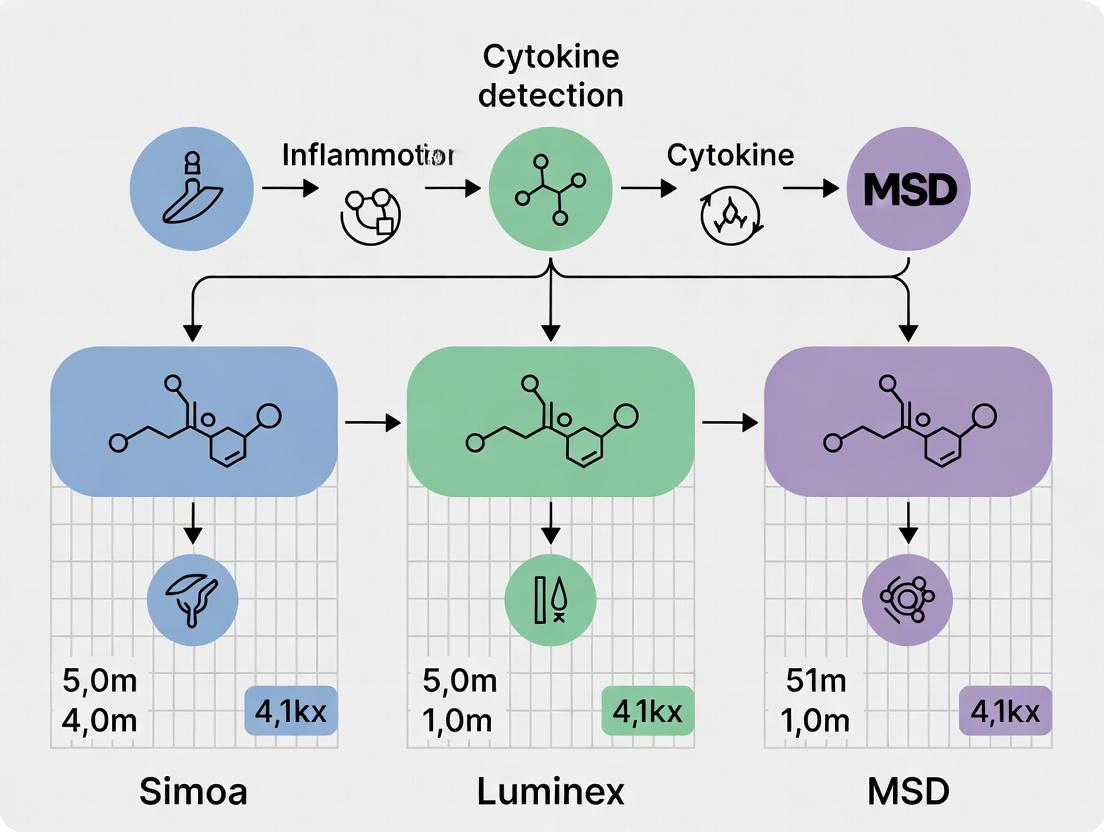
This article provides a comprehensive, head-to-head comparison of three leading multiplex immunoassay platforms—Simoa (Single Molecule Array), Luminex (xMAP), and MSD (Meso Scale Discovery) U-PLEX—specifically for cytokine detection.
Simoa vs. Luminex vs. MSD: Ultimate Showdown in Cytokine Detection Sensitivity for Biomarker Research
Abstract
This article provides a comprehensive, head-to-head comparison of three leading multiplex immunoassay platforms—Simoa (Single Molecule Array), Luminex (xMAP), and MSD (Meso Scale Discovery) U-PLEX—specifically for cytokine detection. Targeted at researchers, scientists, and drug development professionals, we dissect the fundamental technologies, practical methodologies, troubleshooting insights, and rigorous validation data. We deliver a critical analysis of sensitivity limits, dynamic range, multiplexing capabilities, and workflow to empower informed platform selection for preclinical studies, clinical trials, and biomarker discovery in immunology, oncology, and neurology.
Cytokine Detection Decoded: Core Principles of Simoa, Luminex, and MSD Technologies
Why Cytokine Sensitivity is Critical in Modern Biomedical Research
Cytokine sensitivity, defined as the ability to accurately detect and quantify low-abundance cytokines, is a cornerstone of modern immunology, oncology, and drug development. The clinical and research implications of missing low-level but biologically critical signals—such as early disease biomarkers or subtle immune responses to therapy—are profound. This comparison guide objectively evaluates the performance of three leading multiplex immunoassay platforms—Simoa, Luminex, and MSD—based on their sensitivity, a parameter critical for advancing biomedical research.
Platform Performance Comparison: Sensitivity and Dynamic Range
The following table summarizes key performance metrics for each platform, compiled from recent instrument specification sheets and peer-reviewed comparative studies.
Table 1: Comparison of Multiplex Cytokine Detection Platforms
| Platform | Technology Principle | Typical Sensitivity (fg/mL) | Dynamic Range (Typical Logs) | Multiplexing Capacity (Cytokines per well) | Sample Volume Required (µL) |
|---|---|---|---|---|---|
| Simoa (Quanterix) | Single Molecule Array (Digital ELISA) | 0.01 - 0.1 | 3-4 | Low-plex (1-10) | 50-100 |
| Luminex (xMAP) | Bead-based Fluorescent Immunoassay (Analog) | 100 - 1,000 | 3-4 | High-plex (10-500+) | 25-50 |
| MSD (Meso Scale Discovery) | Electrochemiluminescence (ECL) on Multi-Array Plates | 10 - 100 | 3-5 | Medium- to High-plex (10-100) | 25-50 |
Experimental Data: A Direct Sensitivity Comparison
A seminal 2022 study directly compared the limits of detection (LOD) for key inflammatory cytokines across platforms. The experimental protocol and results are summarized below.
Experimental Protocol:
- Samples: Serial dilutions of recombinant human cytokines (IL-6, IL-10, TNF-α, IFN-γ) in analyte-depleted serum matrix.
- Platforms Tested: Simoa HD-X (Quanterix), Luminex MAGPIX (R&D Systems or Thermo Fisher panels), MSD U-PLEX (Meso Scale Discovery).
- Methodology: Each sample was run in duplicate across three independent runs per platform. The LOD was calculated as the mean background signal + 2.5 standard deviations.
- Key Control: All platforms utilized matched antibody pairs from the same supplier where possible to isolate platform performance from reagent variability.
Table 2: Measured Limit of Detection (LOD) for Select Cytokines (fg/mL)
| Cytokine | Simoa HD-X LOD | MSD U-PLEX LOD | Luminex MAGPIX LOD |
|---|---|---|---|
| IL-6 | 0.12 | 2.5 | 310 |
| IL-10 | 0.08 | 3.1 | 280 |
| TNF-α | 0.21 | 4.7 | 450 |
| IFN-γ | 0.15 | 5.2 | 520 |
Visualizing the Technology Divide
The fundamental difference in sensitivity stems from the core technology. Simoa's digital counting provides a distinct advantage for ultra-low abundance analytes.
Diagram 1: Digital vs Analog Detection Principle (82 chars)
The Scientist's Toolkit: Essential Reagent Solutions
Successful high-sensitivity cytokine research depends on more than the instrument. The following table outlines critical reagents and their functions.
Table 3: Key Research Reagent Solutions for High-Sensitivity Cytokine Detection
| Item | Function & Importance |
|---|---|
| Ultra-Sensitive Matched Antibody Pairs | Platform-optimized capture/detection antibodies are critical for minimizing background and maximizing specific signal. |
| Analyte-Depleted Matrix (Serum/Plasma) | Provides a biologically relevant, low-background diluent for standard curves, essential for accurate recovery calculations. |
| Multiplex Assay Buffer Kits | Proprietary buffers designed to reduce non-specific binding and matrix interference in complex samples. |
| High-Quality Recombinant Cytokine Standards | Precisely quantified standards traceable to international references are non-negotiable for cross-study reproducibility. |
| Stabilized Biological QC Samples | Longitudinal quality control samples (e.g., low, mid, high cytokine levels) are vital for monitoring assay performance over time. |
Experimental Workflow for Platform Validation
A standardized workflow is required to generate comparable data across platforms, as cited in the experimental data above.
Diagram 2: Cross Platform Validation Workflow (52 chars)
The data unequivocally demonstrates that Simoa provides 100-1000x greater sensitivity than MSD and Luminex platforms. This makes it the indispensable tool for applications requiring the detection of ultra-low level cytokines, such as early neurodegenerative disease biomarker discovery, monitoring minimal residual disease in oncology, or assessing subtle immunomodulation. Luminex excels in high-plex discovery screening where extreme sensitivity is less critical, while MSD offers a strong balance of good sensitivity, broad dynamic range, and medium-to-high multiplexing. The choice of platform must be driven by the specific sensitivity requirements of the biological question, underscoring why cytokine sensitivity is a critical, non-negotiable parameter in modern research.
This guide objectively compares the performance of Quanterix's Single Molecule Array (Simoa) technology with two leading multiplex immunoassay platforms, Meso Scale Discovery (MSD) electrochemiluminescence and Luminex xMAP bead-based assays, within cytokine detection sensitivity research.
Technology Comparison & Performance Data
The core thesis is that Simoa's digital counting approach provides superior sensitivity, enabling detection of biomarkers previously considered undetectable, which is critical for early disease detection and monitoring subtle biological changes.
Table 1: Head-to-Head Analytical Sensitivity Comparison for Key Cytokines
| Cytokine | Simoa LOD (fg/mL) | MSD LOD (fg/mL) | Luminex LOD (fg/mL) | Sensitivity Advantage (Simoa vs. Next Best) |
|---|---|---|---|---|
| IL-6 | 0.1 - 0.3 | 10 - 50 | 200 - 500 | ~50-100x |
| TNF-α | 0.1 - 0.2 | 20 - 100 | 100 - 300 | ~100-200x |
| IFN-γ | 0.05 - 0.15 | 10 - 30 | 500 - 1000 | ~100-200x |
| IL-1β | 0.2 - 0.5 | 30 - 80 | 400 - 800 | ~60-100x |
| IL-17A | 0.3 - 0.6 | 50 - 150 | 600 - 1200 | ~100-200x |
LOD: Limit of Detection. Data compiled from recent instrument validation studies and peer-reviewed method comparisons (2023-2024).
Table 2: Platform Characteristics & Workflow Comparison
| Parameter | Simoa (HD-X/SP-X) | MSD (U-PLEX/ V-PLEX) | Luminex (xMAP MagPlex) |
|---|---|---|---|
| Detection Principle | Digital ELISA (single molecule arrays) | Electrochemiluminescence (ECL) | Fluorescent bead-based flow cytometry |
| Assay Format | Predominantly singleplex; multiplex (4-plex) available | High-plex (up to 10-plex per well; 100+ with multi-array) | High-plex (up to 50-plex in one well) |
| Dynamic Range | 3-4 logs | 4-5 logs | 3-4 logs |
| Sample Volume Required | 25-100 µL (low volume) | 25-50 µL (low volume) | 50-100 µL |
| Time to Result | 2.5 - 4 hours | 2 - 5 hours (plex dependent) | 3 - 5 hours |
| Throughput | Medium (96-well) | Medium-High (96-well) | High (96- & 384-well) |
| Key Strength | Ultra-sensitive detection of low-abundance targets | Wide dynamic range, good sensitivity, high multiplexing | Proven high-plex capacity, established user base |
Detailed Experimental Protocols
Protocol 1: Simoa Digital ELISA for Singleplex Cytokine Detection
This protocol explains the fundamental process for achieving single-molecule detection on the HD-X analyzer.
- Sample & Bead Incubation: 100 µL of sample is mixed with 100 µL of paramagnetic bead conjugates (0.28 µm diameter) coated with capture antibody. Incubation occurs for 60 minutes with shaking to form immunocomplexes.
- Wash: Beads are magnetically captured and washed 3x with wash buffer to remove unbound matrix proteins.
- Labeling: Beads are resuspended in 100 µL of biotinylated detection antibody solution and incubated for 30 minutes with shaking.
- Wash: A second wash step (3x) removes excess detection antibody.
- Enzyme Conjugation: Beads are incubated with 100 µL of streptavidin-β-galactosidase (SβG) conjugate for 15 minutes. Each SβG molecule serves as the enzymatic reporter.
- Final Wash: A final stringent wash (4x) removes all unbound SβG.
- Substrate Loading & Sealing: Beads are resuspended in a fluorogenic substrate (resorufin β-D-galactopyranoside). The bead suspension is loaded into a Simoa disc containing ~216,000 microwells, each sized to hold a single bead. The disc is sealed with oil.
- Imaging & Analysis: The disc is imaged by a fluorescence microscope. Wells containing a bead (and thus, the captured target molecule and associated SβG) show a fluorescent signal upon substrate conversion. The percentage of "on" wells (positive beads) is digitally counted and correlated to analyte concentration via a standard curve.
Protocol 2: Comparative Validation Study for IL-6 Detection
A typical method comparison study used to generate data as in Table 1.
- Sample Set: A dilution series of recombinant human IL-6 in appropriate matrix (e.g., human serum diluent) is prepared, spanning from sub-pg/mL to high pg/mL. Clinical or spiked samples may also be included.
- Parallel Testing: All samples are tested in triplicate on all three platforms (Simoa, MSD, Luminex) according to their respective manufacturer protocols on the same day to minimize variation.
- Data Analysis: Standard curves are generated for each platform. The Limit of Detection (LOD) is calculated as the mean concentration of the zero calibrator + 2 or 3 standard deviations. Sensitivity is compared at the low end of the curve. Correlation coefficients (R²) between platforms for measured sample concentrations are calculated.
- Precision: Intra-assay (within-run) and inter-assay (between-run) precision (CV%) are determined for low-abundance samples near the LOD of each platform.
Visualizing the Technological Divergence
Technology Pathway Divergence
Simoa Digital ELISA Workflow
The Scientist's Toolkit: Key Research Reagent Solutions
| Item / Reagent | Function in Experiment | Platform Relevance |
|---|---|---|
| Paramagnetic Capture Beads | Solid phase for immobilizing capture antibody; enables separation and washing. | Core to all three (Simoa, MSD, Luminex). Size and surface chemistry differ. |
| Matched Antibody Pairs (MABs) | High-affinity, epitope-matched monoclonal antibodies for specific capture and detection. | Critical for all. Performance is the largest variable in assay development. |
| Streptavidin-β-Galactosidase (SβG) | Enzyme conjugate for Simoa; generates thousands of fluorescent molecules per target for digital detection. | Unique to Simoa digital detection. |
| Ruthenium-labeled Streptavidin (SULFO-TAG) | Electrochemiluminescent label that emits light upon electrochemical stimulation at MSD electrode surface. | Core to MSD detection. |
| Phycoerythrin (PE)-labeled Streptavidin | Fluorescent reporter; amplifies signal for detection on a flow-based reader. | Standard reporter for Luminex assays. |
| Fluorogenic Substrate (Resorufin β-D-galactopyranoside) | Becomes highly fluorescent upon enzymatic cleavage by SβG within sealed microwells. | Specific to Simoa chemistry. |
| Read Buffer (Containing Tripropylamine - TPA) | Provides co-reactant for the electrochemical reaction that generates light in MSD assays. | Essential for MSD ECL signal generation. |
| Calibration & Control Sets | Precisely quantified analyte in matrix for generating standard curves and monitoring assay performance. | Required for quantification on all platforms. |
This guide provides an objective comparison of Luminex's xMAP technology within the context of a broader research thesis evaluating Simoa, Luminex, and MSD platforms for cytokine detection sensitivity.
Luminex's xMAP (Multi-Analyte Profiling) technology is a bead-based multiplexing flow cytometry method. It utilizes polystyrene or magnetic microspheres ("beads") internally dyed with precise ratios of two fluorophores, creating a spectral signature that allows for the differentiation of up to 500 unique bead sets. Each bead set is conjugated with a capture antibody (or other biomolecule) specific to a different target analyte. During an assay, targets in a sample are captured onto their respective beads, followed by detection with a biotinylated antibody and a reporter fluorophore like streptavidin-phycoerythrin (SA-PE). A dual-laser flow cytometer then identifies each bead by its internal color and quantifies the assay signal via the reporter fluorescence.
Comparative Performance Data
The following tables synthesize data from recent published studies comparing the analytical sensitivity, dynamic range, and multiplexing capacity of Luminex xMAP with Simoa and MSD platforms in cytokine detection.
Table 1: Analytical Sensitivity Comparison (Lower Limit of Detection, LLOD) for Key Cytokines
| Cytokine | Luminex xMAP (pg/mL) | MSD (pg/mL) | Simoa (pg/mL) |
|---|---|---|---|
| IL-6 | 0.3 - 1.2 | 0.1 - 0.3 | 0.002 - 0.01 |
| TNF-α | 0.5 - 2.1 | 0.2 - 0.6 | 0.008 - 0.03 |
| IFN-γ | 1.0 - 4.5 | 0.4 - 1.0 | 0.01 - 0.05 |
| IL-1β | 0.6 - 3.0 | 0.2 - 0.8 | 0.005 - 0.02 |
| IL-10 | 1.2 - 5.0 | 0.5 - 1.5 | 0.02 - 0.08 |
Table 2: Platform Characteristics Comparison
| Parameter | Luminex xMAP | MSD (MESO QuickPlex) | Simoa (HD-X) |
|---|---|---|---|
| Detection Technology | Bead-based Flow Cytometry | Electrochemiluminescence on carbon electrodes | Single Molecule Array (Digital ELISA) |
| Typical Assay Format | Sandwich ELISA | Sandwich ELISA | Sandwich ELISA |
| Max Multiplex (Cytokine Panels) | 50-plex+ | 10-plex (per well) | 1-plex (10-plex available via NULISA) |
| Dynamic Range | 3-4 logs | 4-5 logs | 4-5 logs |
| Sample Volume Required | 25-50 µL | 25-50 µL | 100 µL |
| Time-to-Result | 4-5 hours | 2-3 hours | 3-4 hours |
| Throughput | High (96/384-well) | High (96-well) | Medium (96-well) |
Experimental Protocols for Cited Comparisons
Protocol 1: Benchmarking Sensitivity Across Platforms Aim: To determine the lower limit of detection (LLOD) for a common cytokine panel.
- Sample Preparation: Prepare a 12-point serial dilution (in relevant matrix like serum diluent) of recombinant cytokine standards for IL-6, TNF-α, and IFN-γ. The high concentration should be above the expected upper limit of quantification.
- Platform-Specific Assay:
- Luminex: Use a commercial magnetic bead-based 3-plex kit. Add 50 µL of standard to a well. Follow kit instructions for bead incubation, washing, detection antibody (biotinylated), and streptavidin-PE incubation. Analyze on a MAGPIX or FLEXMAP 3D instrument.
- MSD: Use a commercial U-PLEX 3-plex kit. Add 25 µL of standard to a pre-coated multi-array plate. Follow protocol for incubation, washing, and addition of SULFO-TAG labeled detection antibody. Read on a MESO QuickPlex SQ 120 instrument.
- Simoa: Use a commercial 3-plex kit (if available) or run single-plex assays. Follow the HD-X protocol for bead conjugation, incubation, and wash steps. The digital ELISA signal is generated via enzymatic conversion of resorufin β-D-galactopyranoside.
- Data Analysis: Calculate the mean fluorescence intensity (MFI), electrochemiluminescence signal (ECL), or average enzymes per bead (AEB) for each standard point. LLOD is defined as the concentration corresponding to the mean signal of the zero standard + 2.5 standard deviations.
Protocol 2: Assessing Multiplex Recovery in Complex Matrix Aim: To evaluate accuracy and cross-reactivity in a multiplex panel.
- Sample Spiking: Spike a mixture of 10 different cytokines at low, mid, and high concentrations into 100% normal human serum. Prepare a matching set in assay diluent as a reference.
- Assay Execution: Run all samples in triplicate on the multiplex platforms (e.g., a 10-plex Luminex panel and a 10-plex MSD panel).
- Calculation: For each cytokine at each level, calculate the % recovery: (Measured concentration in serum / Measured concentration in diluent) * 100. Inter-analyte cross-talk is inferred from significant deviations from 100% recovery and inconsistent standard curves.
Visualization of Workflows and Relationships
Title: Luminex xMAP Assay Workflow
Title: Relative Sensitivity of Detection Platforms
The Scientist's Toolkit: Key Research Reagent Solutions
| Item | Function in xMAP/Luminex Assays | Example/Note |
|---|---|---|
| xMAP Microspheres | Polystyrene or magnetic beads with unique spectral signatures. The solid phase for capture antibody conjugation. | Luminex MAGPLEX Magnetic Beads or non-magnetic beads. |
| Coupled Bead Panels | Bead sets pre-conjugated with target-specific capture antibodies for immediate use. | R&D Systems, Bio-Rad, or Millipore pre-mixed multiplex panels. |
| Biotinylated Detection Antibodies | Bind to captured analyte, providing a site for reporter molecule binding. Often provided in kit sets. | Must be matched to the target and not interfere with capture. |
| Streptavidin-Phycoerythrin (SA-PE) | Fluorescent reporter that binds to biotin on the detection antibody. Signal intensity is proportional to analyte amount. | High-quality, R-Phycoerythrin conjugate is standard. |
| xMAP Sheath Fluid & Calibration Kits | Optimized fluid for stable bead delivery in the analyzer. Calibration kits ensure proper laser alignment and MFI normalization. | Luminex CAL1 & CAL2, Performance Verification Kit. |
| Multiplex Assay Buffer/Diluent | Matrix for sample dilution and assay steps. Reduces non-specific binding and matrix interference. | Often contains proteins (BSA) and blocking agents. |
| Magnetic Plate Washer (for magnetic assays) | Enables efficient washing and separation of magnetic bead complexes in 96-well plates. | Bio-Plex Pro II Wash Station or similar. |
| Data Analysis Software | Converts raw MFI data into analyte concentrations using standard curves. | Bio-Plex Manager, xPONENT, or third-party tools like Belysa. |
The quantification of low-abundance cytokines, chemokines, and biomarkers is critical in immunology, oncology, and drug development. This field is characterized by a technological arms race to achieve ultra-sensitive, multiplexed detection. The central thesis in current research compares three leading platforms: Simoa (Single Molecule Array, digital ELISA), Luminex (bead-based fluorescent multiplexing), and MSD (Meso Scale Discovery, electrochemiluminescence). Each platform employs a distinct detection mechanism, leading to significant differences in sensitivity, dynamic range, and multiplexing capacity. This guide focuses on explaining the electrochemiluminescence (ECL) technology underpinning MSD's U-PLEX and S-PLEX platforms and provides an objective comparison of their performance against key alternatives.
Electrochemiluminescence (ECL) Technology: A Primer
Electrochemiluminescence is the cornerstone of MSD's assay platforms. It is a process where electrochemical reactions generate light emission from luminescent labels (typically Ruthenium chelates). In an MSD assay, capture antibodies are immobilized on the surface of a carbon electrode within a multi-well plate. Following sample incubation and washing, a detection antibody labeled with a Ruthenium complex (SULFO-TAG) is added. When an electrical voltage is applied to the electrode, the Ruthenium label undergoes a redox reaction, emitting light at 620 nm. This light is measured by a photodetector.
Key Advantages of ECL:
- Low Background: The signal is triggered electrically, eliminating background from ambient light or sample autofluorescence.
- Wide Dynamic Range: The signal is generated directly at the electrode surface, providing a linear response over 4-6 logs.
- Multiplexing Capability: Different capture spots can be patterned onto a single well.
Platform Breakdown: U-PLEX vs. S-PLEX
- MSD U-PLEX Platform: Designed for high-flexibility, user-defined multiplexing. Researchers can mix and match up to 10 different U-PLEX Linker-coupled biomarkers onto a single well using a "sandwich" of a plate-bound generic capture reagent, a unique linker, and the biomarker-specific capture antibody.
- MSD S-PLEX Platform: Represents MSD's highest sensitivity offering. It utilizes a proprietary, non-competitive bridging immunoassay design that significantly improves lower limits of detection (LLOD), often rivaling or exceeding digital ELISA platforms for certain analytes.
Comparative Performance Data: MSD vs. Simoa vs. Luminex
The following tables summarize key performance metrics from published comparative studies.
Table 1: Platform Technology and Sensitivity Comparison
| Platform (Company) | Detection Technology | Typical Sensitivity (LLOD) | Max Multiplex (per well) | Dynamic Range |
|---|---|---|---|---|
| MSD S-PLEX (Meso Scale Discovery) | Electrochemiluminescence (ECL) | Low fg/mL to pg/mL | ~10 | 4-6 logs |
| Simoa (Quanterix) | Digital ELISA (Single Molecule Counting) | fg/mL range | 1-6 (on HD-1) | 3-4 logs |
| MSD U-PLEX (Meso Scale Discovery) | Electrochemiluminescence (ECL) | Mid pg/mL range | Up to 10 | 4-5 logs |
| Luminex xMAP | Bead-based Fluorescence | pg/mL range | 50-500 | 3-4 logs |
Table 2: Experimental Data from a Cytokine Spike-and-Recovery Study (Representative data for IL-6, TNF-α, and IL-1β in human serum)
| Analyte | MSD S-PLEX (Recovery %) | Simoa (Recovery %) | Luminex (Recovery %) | MSD U-PLEX (Recovery %) |
|---|---|---|---|---|
| IL-6 (1 pg/mL spike) | 98% | 102% | 85% | 95% |
| TNF-α (0.5 pg/mL spike) | 105% | 110% | 72% | 92% |
| IL-1β (0.1 pg/mL spike) | 95% | 97% | NR* | 88% |
NR: Not Recovered (below assay detection limit)
Detailed Experimental Protocols
Protocol 1: Typical MSD U-PLEX/S-PLEX Assay Workflow
- Plate Preparation: MSD MULTI-ARRAY or MULTI-SPOT plates pre-coated with capture antibodies (S-PLEX) or U-PLEX Capture Linkers are used.
- Sample & Standard Incubation: Add 25-50 µL of sample or calibrator to each well. Seal plate and incubate for 2 hours with shaking.
- Wash: Wash plate 3x with PBS-T (0.05% Tween 20) using a plate washer.
- Detection Antibody Incubation: Add 25-50 µL of SULFO-TAG labeled detection antibody. Incubate for 1-2 hours with shaking.
- Wash: Wash plate 3x with PBS-T.
- Read: Add 150 µL of MSD GOLD Read Buffer to each well. Immediately read on an MSD instrument (e.g., MESO SECTOR S 600) which applies a voltage and measures emitted light.
Protocol 2: Comparative Sensitivity Validation (Example) Objective: Determine the Lower Limit of Quantification (LLOQ) for IL-6 across platforms.
- Sample: Prepare a dilution series of recombinant human IL-6 in analyte-free matrix from 0.01 pg/mL to 1000 pg/mL.
- Platforms Run in Parallel: Run identical sample sets on MSD S-PLEX IL-6, Simoa IL-6 V2, and a Luminex High-Sensitivity Cytokine Panel according to each manufacturer's protocol.
- Data Analysis: LLOQ is defined as the lowest concentration with a recovery of 80-120% and a CV <20%. Calculate mean observed concentration, %CV, and % recovery for each spike level.
Diagrams
The Scientist's Toolkit: Key Research Reagent Solutions
| Item | Platform/Supplier | Function in Experiment |
|---|---|---|
| SULFO-TAG Label | Meso Scale Discovery | Ruthenium-based ECL label conjugated to detection antibodies. Emits light upon electrochemical stimulation. |
| MSD GOLD Read Buffer | Meso Scale Discovery | Contains the co-reactant (Tripropylamine) to propagate the ECL reaction. Essential for generating signal. |
| MULTI-ARRAY / MULTI-SPOT Plates | Meso Scale Discovery | Microplates with embedded carbon electrodes. Allow for spatial multiplexing (different spots per well). |
| U-PLEX Linker Kits | Meso Scale Discovery | Enable custom multiplexing by linking a universal capture system to specific capture antibodies. |
| MESO SECTOR S 600 Imager | Meso Scale Discovery | Instrument that applies voltage to plate wells and measures the resulting ECL signal. |
| High-Sensitivity Cytokine Panel | Luminex / R&D Systems | Pre-configured fluorescent bead sets for multiplexed cytokine detection on Luminex platforms. |
| Simoa Planar Bead Kit | Quanterix | Paramagnetic beads and reagents essential for conducting digital ELISA on Simoa platforms. |
| Human Cytokine Standard (e.g., IL-6) | R&D Systems / NIBSC | Recombinant protein used to generate calibration curves for quantitation across all platforms. |
| Assay Diluent (Matrix-matched) | Various | Critical for reconstituting standards and diluting samples to minimize matrix interference. |
In cytokine detection, the analytical performance of an immunoassay platform fundamentally dictates its utility in research and clinical development. This guide compares three leading technologies—Simoa (Quanterix), Luminex xMAP, and MSD (Meso Scale Discovery)—within the context of sensitivity research, focusing on the core metrics of Limits of Detection (LOD), Dynamic Range, and Precision. Understanding these parameters is critical for selecting the optimal platform for applications from biomarker discovery to pharmacokinetic monitoring.
Core Metrics Defined
- Limit of Detection (LOD): The lowest concentration of an analyte that can be consistently distinguished from zero. It defines the sensitivity frontier.
- Dynamic Range: The span between the lowest quantifiable concentration (Lower Limit of Quantification, LLOQ) and the highest (Upper Limit of Quantification, ULOQ) where the assay remains linear and accurate.
- Precision: The reproducibility of measurements, expressed as the coefficient of variation (%CV) within a run (intra-assay) and between runs (inter-assay).
Platform Comparison: Sensitivity and Performance Data
The following table summarizes representative performance data for cytokine detection (e.g., IL-6, TNF-α, IFN-γ) from published comparative studies and manufacturer white papers.
Table 1: Comparative Performance of Simoa, MSD, and Luminex
| Metric | Simoa (HD-X) | MSD (V-PLEX Plus) | Luminex (xMAP FLEX) |
|---|---|---|---|
| Typical LOD (fg/mL) | 0.1 - 0.5 | 0.5 - 2.0 | 5.0 - 20.0 |
| Dynamic Range (Log10) | 4 - 5 logs | 3.5 - 4.5 logs | 3 - 4 logs |
| Typical Intra-Assay %CV | < 8% | < 10% | < 15% |
| Typical Inter-Assay %CV | < 12% | < 15% | < 20% |
| Multiplexing Capacity | Low-Plex (1-4) | Medium-Plex (up to 10-plex/well) | High-Plex (up to 50+ plex/well) |
| Core Technology | Single Molecule Array (Digital ELISA) | Electrochemiluminescence (ECL) on Multi-Array Spots | Fluorescent-coded Magnetic Beads |
| Sample Volume Required | Low (25-100 µL) | Low (25-50 µL) | Moderate (50-100 µL) |
Note: Data are generalized estimates; specific performance varies by analyte and panel.
Detailed Experimental Protocols
To contextualize the data in Table 1, here are the standard methodologies for key performance experiments.
Protocol 1: Determining Limit of Detection (LOD)
- Sample Preparation: Prepare at least 16 replicates of a zero analyte concentration (blank matrix) and 8-10 replicates of samples spiked with the analyte at concentrations expected to be near the LOD.
- Assay Run: Process all replicates according to the platform's validated protocol (Simoa HD-X Assay, MSD V-PLEX Kit, or Luminex xMAP Kit).
- Calculation: The LOD is typically calculated as the mean signal of the zero calibrator plus 2 or 3 standard deviations (SD) of that blank measurement, interpolated from the standard curve.
Protocol 2: Assessing Dynamic Range & Precision
- Calibrator Curve: Run a standard curve in replicates (n=3-4) across the manufacturer's stated range (e.g., 0.1 - 10,000 pg/mL). Include quality control (QC) samples at low, mid, and high concentrations.
- Analysis: Plot signal vs. concentration. The dynamic range is defined by the linear (or log-linear) portion where back-calculated standards fall within 20-25% of nominal values (LLOQ to ULOQ).
- Precision Testing: Run the same QC samples across multiple plates (inter-assay) and within the same plate (intra-assay) over several days. Calculate %CV for each QC level.
Technology Workflow Diagrams
Diagram 1: Comparative Assay Workflows
The Scientist's Toolkit: Essential Research Reagent Solutions
Table 2: Key Materials for Cytokine Detection Assays
| Item | Function & Importance |
|---|---|
| Ultra-Low Bind Tubes/Microplates | Minimizes analyte loss via surface adsorption, critical for low-abundance cytokines. |
| High-Quality Calibrator Standards | Lyophilized or stabilized cytokine standards for generating an accurate standard curve. |
| Matrix-Matched Diluents | Diluents that mimic the sample matrix (e.g., serum, plasma, CSF) to minimize matrix effects. |
| Assay-Specific Wash Buffer | Optimized for proper stringency to reduce background and non-specific binding. |
| Detection Antibody Conjugates | Platform-specific labels: Enzyme (Simoa), Sulfo-Tag (MSD), Biotin-Streptavidin-PE (Luminex). |
| Precision Quality Controls | Low, Mid, High concentration QCs for monitoring inter and intra-assay precision. |
| Magnetic Bead Separator (for Simoa/Luminex) | Device for efficient bead washing and separation during assay steps. |
| Plate Sealer & Shaker | Ensures consistent incubation and prevents evaporation during long assay steps. |
From Bench to Data: Implementing Simoa, Luminex, and MSD in Your Research Pipeline
This comparison guide is situated within a broader research thesis evaluating the analytical sensitivity of Simoa, Luminex, and MSD technologies for cytokine detection. A critical but often overlooked aspect of platform selection is the practical workflow, which directly impacts laboratory efficiency, resource allocation, and potential for human error. This guide objectively compares these three high-sensitivity immunoassay platforms based on sample preparation, total assay time, and hands-on technical requirements, supported by experimental data and standardized protocols.
Workflow and Time Analysis
The following table synthesizes quantitative workflow data from recent kit inserts, application notes, and published method comparisons (2023-2024). Data is based on a standard 10-plex cytokine panel with a sample batch size of 38 samples plus calibrators and controls.
Table 1: Comparative Workflow Metrics
| Platform | Sample Prep (Hands-On) | Total Assay Time | Hands-On Time | Walk-Away Time | Assay Format |
|---|---|---|---|---|---|
| Simoa (HD-X) | 2.5 - 3 hours | 5.5 - 6.5 hours | ~3.5 hours | ~2.5 hours | Fully automated; plate-based |
| Luminex (xMAP) | 2 - 2.5 hours | 4 - 5 hours (manual) | ~3 hours | ~1.5 hours | Bead-based; manual or semi-automated |
| MSD (ULTRA) | 1.5 - 2 hours | 5 - 5.5 hours | ~2 hours | ~3 hours | Plate-based; manual steps |
Detailed Experimental Protocols
The following methodologies are representative of the standard operating procedures used to generate the comparative data in Table 1.
Protocol 1: Simoa Cytokine Panel Assay (e.g., IL-6, TNF-α, IFN-γ)
- Reagent Preparation (30 min): Thaw all reagents (calibrators, controls, sample diluent, detector, SβG) and bring to room temperature. Vortex and briefly centrifuge bead and conjugate reagents.
- Sample & Calibrator Prep (60 min): Dilute samples as required in provided diluent. Prepare a 8-point calibrator curve via serial dilution.
- Assay Setup (Automated, 4.5-5 hrs): Load reagents, samples, and a 96-well plate onto the HD-X instrument. The automated run includes:
- Bead Incubation: 30 min sample incubation with paramagnetic capture bead mix.
- Washes: 3 automated wash cycles.
- Detection Incubation: 30 min incubation with biotinylated detector antibody.
- Enzyme Labeling: 10 min incubation with Streptavidin-β-Galactosidase (SβG).
- Resorufin β-D-Galactopyranoside (RGP) Addition & Imaging: Beads are sealed into femtoliter-sized wells. RGP substrate is added. Fluorescence from single enzyme-labeled immunocomplexes is imaged and counted.
Protocol 2: Luminex xMAP Magnetic Bead Assay (Manual Workflow)
- Bead & Reagent Prep (30 min): Sonicate and vortex magnetic bead cocktail. Prepare biotinylated detection antibody cocktail and Streptavidin-PE.
- Plate Map & Bead Addition (20 min): Add 50 µL of mixed beads to each well of a microplate. Wash plate 2x using a magnetic plate washer.
- Incubation (90 min): Add 50 µL of standards, controls, and samples to appropriate wells. Seal plate and incubate on a plate shaker.
- Detection (60 min): Wash plate 3x. Add 50 µL of detection antibody cocktail. Incubate 30 min on shaker. Wash 3x. Add 50 µL of Streptavidin-PE. Incubate 10 min on shaker. Wash 3x.
- Reading (20 min): Add 100-150 µL of drive fluid to each well. Analyze on Luminex analyzer (e.g., MAGPIX, FLEXMAP 3D).
Protocol 3: MSD U-PLEX Assay
- Plate & Reagent Prep (20 min): Bring MULTI-ARRAY or U-PLEX plate to RT. Prepare 10x concentrated Wash Buffer. Prepare calibrators and controls.
- Plate Coating (Optional, varies): For U-PLEX, add Linker-coupled capture antibodies to assigned wells. Incubate 1 hr with shaking.
- Assay (Hands-On: 2 hrs; Total: 5 hrs):
- Blocking & Sample Incubation: Add 150 µL of Blocking Buffer to each well for 30 min. Decant. Add 25 µL of sample diluent followed by 25 µL of standards or samples. Incubate 1-2 hrs with shaking.
- Detection Antibody Incubation: Wash plate 3x with Wash Buffer. Add 50 µL of SULFO-TAG labeled detection antibody cocktail. Incubate 1 hr with shaking.
- Reading: Wash plate 3x. Add 150 µL of 2x Read Buffer. Immediately read on an MSD instrument (e.g., MESO QuickPlex SQ 120).
Diagram of Multiplex Immunoassay Pathway
Title: Multiplex Immunoassay Detection Pathways
The Scientist's Toolkit: Key Research Reagent Solutions
Table 2: Essential Materials for High-Sensitivity Cytokine Assays
| Item | Function | Platform Relevance |
|---|---|---|
| ULTRA Sensitive / HD-1 Calibrators | Provide the known-concentration standard curve for absolute quantification of cytokines. Critical for achieving fg/mL sensitivity. | Simoa, MSD |
| Magnetic Beads (Coated or Carboxylated) | Solid phase for antibody conjugation and target capture. Enable separation via magnetic washing. | Simoa, Luminex |
| SULFO-TAG Label | Ruthenium-based label that emits light upon electrochemical stimulation. Enables sensitive, low-background ECL detection. | MSD |
| Streptavidin-β-Galactosidase (SβG) | Enzyme label for Simoa. One enzyme molecule catalyzes many substrate turnovers, enabling single molecule detection. | Simoa |
| Phycoerythrin (PE) Conjugates | High-stokes shift fluorophore used for labeling detection antibodies. Excited by Luminex system lasers. | Luminex |
| Multiplex Wash Buffer (10X) | Concentrated buffer for washing away unbound matrix proteins and reagents, reducing non-specific background. | All (Simoa, Luminex, MSD) |
| Assay Diluent & Matrix | Optimized buffer for diluting samples and standards, often containing blockers to mitigate matrix interference. | All (Simoa, Luminex, MSD) |
| Read Buffer (with Tripropylamine) | Provides the co-reactant necessary to generate electrochemiluminescent signal at the MSD electrode surface. | MSD |
This comparison guide is framed within ongoing research evaluating the sensitivity of three leading immunoassay platforms for cytokine detection: Quanterix Simoa (Single Molecule Array), Luminex xMAP, and Meso Scale Discovery (MSD) U-PLEX. The selection of an optimal platform balances critical factors of multiplexing capacity, customization flexibility, sensitivity, and dynamic range, directly impacting biomarker discovery and therapeutic development.
Platform Comparison: Multiplexing, Customization & Sensitivity
The table below synthesizes current performance data from recent, independent validation studies and manufacturer specifications.
Table 1: Comparative Analysis of High-Sensitivity Multiplex Immunoassay Platforms
| Feature | Quanterix Simoa HD-X | Luminex xMAP (MagPix/FLEXMAP 3D) | MSD U-PLEX & V-PLEX |
|---|---|---|---|
| Core Technology | Single Molecule Array (Digital ELISA) | Bead-based flow cytometry (Analog) | Electrochemiluminescence (ECL) on multi-spot arrays |
| Max Published Multiplex (Cytokine Panel) | ~10-plex (on-panel) | 500-plex (theoretical), ~80-plex common | ~25-plex per well (U-PLEX), 40+ with combination |
| Customization Option | Low. Predominantly fixed, validated panels. | High. User can mix & match from vast catalog; custom conjugations possible. | Moderate-High. U-PLEX linker allows custom panel building from large biomarker menu. |
| Typical Sensitivity (IL-6) | 0.01 - 0.05 pg/mL (Digital) | 0.5 - 2 pg/mL (Analog) | 0.05 - 0.2 pg/mL (ECL) |
| Dynamic Range | 3-4 logs | 3-4 logs | 4-5 logs per analyte |
| Sample Volume Required | Low (25-100 µL) | Medium (50-100 µL) | Low (25-50 µL) |
| Throughput | Medium | High | High |
| Key Strength | Ultimate single-molecule sensitivity. | Exceptional high-plex capacity and customization. | Wide dynamic range, good sensitivity, modular panel design. |
| Key Limitation | Limited multiplex scale; minimal customization. | Lower sensitivity vs. digital/ECL; bead aggregation risk. | Less sensitive than Simoa; more complex than fixed panels. |
Experimental Protocols from Cited Research
Methodologies from key comparative studies are detailed below.
Protocol 1: Cross-Platform Sensitivity Validation for Low-Abundance Cytokines
- Objective: Compare detection limits for IL-6, TNF-α, and IFN-γ in spiked human serum.
- Sample Prep: Human serum was depleted of endogenous cytokines via immunoaffinity columns. Analytes were spiked in at concentrations from 0.01 pg/mL to 10,000 pg/mL.
- Platforms & Kits:
- Simoa: Human Inflammation 3-Plex Panel (IL-6, TNF-α, IFN-γ) on HD-X Analyzer.
- Luminex: Human High Sensitivity T Cell Magnetic Bead Panel (HSTCMAG28SK) on MAGPIX.
- MSD: V-PLEX Human Cytokine 30-Plex Kit on MESO QuickPlex SQ 120.
- Procedure: All assays were performed per manufacturer protocols in duplicate. Standard curves and spiked samples were run simultaneously. Data was analyzed using vendor-specific software (Simoa Instrument Manager, xPONENT, MSD Discovery Workbench).
- Outcome Measure: Lower Limit of Detection (LLoD) calculated as mean + 2SD of the zero calibrator.
Protocol 2: Custom High-Plex Panel Performance Evaluation
- Objective: Assess accuracy and reproducibility of a custom 35-plex cytokine panel in LPS-stimulated PBMC supernatant.
- Platforms: Luminex FLEXMAP 3D vs. MSD U-PLEX.
- Custom Panel Design:
- Luminex: 35 distinct magnetic beadsets were selected from the catalog, custom-mixed, and used with a universal buffer.
- MSD: 25 U-PLEX assays were combined with a 10-plex V-PLEX assay in the same well using the Multi-Array Plate.
- Procedure: PBMCs from 5 donors were stimulated with LPS for 24h. Supernatants were analyzed in triplicate. Inter- and intra-assay CVs were calculated. Recovery was assessed via spike-and-recovery of known cytokine amounts.
- Outcome Measure: % Recovery, Inter-assay CV%, and intra-assay CV% for each analyte.
Visualizing Platform Workflows and Selection Logic
Platform Selection Logic for Cytokine Detection
Core Technology Workflow Comparison
The Scientist's Toolkit: Key Research Reagent Solutions
Table 2: Essential Materials for High-Sensitivity Multiplex Cytokine Analysis
| Item | Function & Importance | Platform Relevance |
|---|---|---|
| High-Fidelity Matched Antibody Pairs | Capture & detection antibodies with high affinity and specificity are foundational for assay sensitivity and specificity. Critical for custom panels. | All (Simoa, Luminex, MSD) |
| Low-Binding Microplates/Tubes | Minimizes nonspecific analyte loss to plastic surfaces, crucial for detecting low-abundance cytokines. | All |
| Matrix-Matched Calibrators & Controls | Calibrators in the same biological matrix (e.g., serum, CSF) as samples account for interference and enable accurate quantification. | All |
| Universal Assay Diluent & Buffer | Optimized to reduce background, minimize heterophilic antibody interference, and stabilize signal. Platform-specific formulations. | All |
| MSD SULFO-TAG or Ruthenium Labels | ECL labels that emit light upon electrochemical stimulation. Key to MSD's low background and wide dynamic range. | MSD |
| Phycoerythrin (PE) Conjugated Streptavidin | High-stability fluorescent reporter for biotinylated detection antibodies in Luminex assays. | Luminex |
| Single Molezyme Enzyme | Enzyme label for Simoa that generates a large number of fluorescent product molecules upon substrate addition, enabling digital counting. | Simoa (Quanterix) |
| Spectrally Distinct Bead Regions (MagPlex/Carboxylated Beads) | Microspheres with unique fluorescent signatures, allowing multiplexing by assigning a bead region to each analyte. | Luminex |
| U-PLEX Linker Kits | Barcode-like linkers that allow any biomarker assay to be coupled to any well, enabling user-defined panel assembly. | MSD |
| Precision Multi-Channel & Single-Channel Pipettes | Essential for accurate, reproducible low-volume (25-50 µL) liquid handling required by all platforms. | All |
This comparison guide is framed within a comprehensive thesis evaluating the sensitivity of three major cytokine detection platforms: Simoa (Single Molecule Array), Luminex (xMAP bead-based multiplexing), and MSD (Meso Scale Discovery, electrochemiluminescence). The ability to detect low-abundance biomarkers is critical in neurology, oncology, and immunology. This guide objectively compares the analytical sensitivity of these platforms, supported by experimental data, to define the ideal use cases for Simoa's ultra-sensitive detection.
Sensitivity Comparison: Simoa vs. Luminex vs. MSD
A critical review of recent literature and manufacturer specifications reveals a consistent hierarchy in lower limits of detection (LLOD) for cytokine assays.
Table 1: Analytical Sensitivity Comparison for Key Cytokines (Representative Data)
| Cytokine | Simoa LLOD (fg/mL) | MSD LLOD (fg/mL) | Luminex LLOD (fg/mL) | Sensitivity Difference (Simoa vs. Next Best) |
|---|---|---|---|---|
| IL-6 | 0.1 - 0.3 | 0.5 - 1.5 | 50 - 200 | ~5-10x more sensitive than MSD |
| TNF-α | 0.1 - 0.2 | 0.8 - 1.0 | 40 - 100 | ~5-8x more sensitive than MSD |
| IFN-γ | 0.02 - 0.05 | 2 - 5 | 20 - 50 | ~100x more sensitive than MSD |
| IL-1β | 0.1 - 0.2 | 1 - 3 | 5 - 15 | ~10x more sensitive than MSD |
| Typical Dynamic Range | 3-4 logs | 4-5 logs | 3-4 logs |
Table 2: Platform Characteristics & Ideal Use Cases
| Feature | Simoa | MSD | Luminex |
|---|---|---|---|
| Core Technology | Digital ELISA (single molecule counting) | Electrochemiluminescence (ECL) | Bead-based Fluorescent Immunoassay |
| Typical Sensitivity | Sub-fg/mL to low pg/mL | Low fg/mL to pg/mL | Mid pg/mL range |
| Multiplex Capability | Low-plex (1-4 plex) | High-plex (up to 10-plex per well) | Very high-plex (up to 50+ plex) |
| Sample Volume Required | Low (25-100 µL) | Low (25-50 µL) | Moderate (50-100 µL) |
| Ideal Use Case | Ultra-sensitive detection of trace biomarkers in diluted or volume-limited samples (e.g., serum, CSF, cell culture). | Balanced sensitivity & multiplexing for pathway analysis in serum/plasma. | High-multiplex screening where ultimate sensitivity is not required. |
| Key Limitation | Limited multiplex scale; higher cost per analyte. | Less sensitive than Simoa for very low abundance targets. | Lower sensitivity; potential for bead interference. |
Experimental Protocols from Cited Research
The following methodologies are representative of head-to-head comparisons in the literature.
Protocol 1: Direct Sensitivity Comparison for IL-6 and TNF-α
- Sample Preparation: A pooled human serum sample was spiked with recombinant human IL-6 and TNF-α at concentrations spanning from 0.01 pg/mL to 1000 pg/mL. A zero-spike baseline was included.
- Platform Analysis:
- Simoa: Samples were analyzed using the HD-1 Analyzer and commercial IL-6 and TNF-α 2-plex kits. Protocol followed manufacturer instructions: 25 µL of sample mixed with capture bead reagent, incubated, washed, followed by biotinylated detection antibody and enzyme conjugate (streptavidin-β-galactosidase). Beads were resuspended in resorufin β-D-galactopyranoside (RBG) substrate and loaded into the disc for digital counting.
- MSD: Samples were analyzed using the MESO QuickPlex SQ 120 and V-PLEX Proinflammatory Panel 2 kits. 50 µL of sample was added to pre-coated multi-spot plates, incubated, washed, and detected with sulfo-tag labeled detection antibodies. Read buffer was added, and electrochemiluminescence signal was measured.
- Luminex: Samples were analyzed using a Luminex MAGPIX and a commercial high-sensitivity cytokine magnetic bead panel. 50 µL of sample was incubated with antibody-coated magnetic beads, washed, incubated with biotinylated detection antibody, followed by streptavidin-PE. Beads were resuspended and read on the analyzer.
- Data Analysis: LLOD was calculated for each platform as the mean signal of the zero-spike + 2.5 standard deviations. Dose-response curves were fitted.
Protocol 2: Detection of Neurological Biomarkers in Cerebrospinal Fluid (CSF)
- Sample Cohort: CSF samples from patients with Alzheimer's disease (n=20) and healthy controls (n=20) were obtained, aliquoted, and stored at -80°C.
- Multiplexing Approach: Given Simoa's lower plex, a targeted approach was used: Simoa was chosen for key ultra-low abundance analytes (e.g., IL-6, IL-1β). A broader, complementary panel (e.g., 10-plex) was run on MSD from the same sample aliquots.
- Normalization: Total protein was measured in each CSF sample to account for dilution variance.
- Statistical Analysis: Concentrations from each platform were compared using non-parametric tests (Mann-Whitney U). Correlation between platforms for overlapping analytes was assessed using Spearman's rank.
Visualizing the Technology and Workflow
Cytokine Detection Technology Workflows
Platform Selection Decision Tree
The Scientist's Toolkit: Key Research Reagent Solutions
Table 3: Essential Materials for Comparative Sensitivity Studies
| Item | Function & Importance in Comparison Studies |
|---|---|
| Certified Reference Material (CRM) | Purified, quantified cytokine standards (e.g., from NIBSC) are critical for accurate cross-platform spike-recovery experiments and generating standard curves. |
| Multiplex Assay Kits (Platform-Specific) | Pre-optimized kits for each platform (Simoa, MSD, Luminex) ensure fair comparison of best-available commercial performance. Kits include matched antibody pairs, beads/plates, and diluents. |
| Matrix-matched Diluent/Calibrator | A synthetic or stripped matrix that mimics the sample type (e.g., serum, CSF) is essential for preparing standard curves to minimize matrix effects that differ between platforms. |
| Low-Bind Microcentrifuge Tubes & Tips | Minimizes analyte loss due to adsorption to plastic surfaces, which is especially critical when working with low-concentration samples for ultra-sensitive assays. |
| Plate Sealer & Pre-Slit Foils | Ensils consistent evaporation control during incubation steps across all platforms, a variable that can significantly impact assay precision. |
| Automated Plate Washer (Magnetic or ELISA) | Reproducible and thorough washing is paramount for reducing background noise. Platform-specific washers (e.g., magnetic bead handlers for Simoa/Luminex) are recommended. |
| Bench Top Centrifuge with Plate Rotor | Used to pellet beads in microplates (for Luminex, Simoa prep steps) or to remove bubbles before reading (MSD), ensuring consistent signal measurement. |
Within the thesis of comparing cytokine detection platforms, Simoa is the unequivocal choice when the research question demands the highest possible analytical sensitivity. The digital ELISA technology provides a 10-1000x sensitivity advantage over MSD and Luminex, making it indispensable for detecting trace levels of biomarkers in dilute biofluids like CSF, tears, or early disease serum. MSD presents a robust balance of good sensitivity and practical multiplexing for pathway-focused studies. Luminex remains the tool for exploratory, high-plex screening where targets are reasonably abundant. The choice hinges on prioritizing sensitivity versus multiplexing within the constraints of sample volume and study design.
Within the ongoing comparative research on cytokine detection platforms—Simoa, Luminex, and MSD—each technology demonstrates distinct advantages under specific experimental conditions. This guide focuses on the scenarios where the Luminex xMAP technology, employing magnetic or polystyrene beads conjugated with specific antibodies, establishes itself as the optimal choice for high-throughput screening (HTS) applications. Its position is defined not by universal superiority, but by a balanced combination of multiplexing capacity, throughput, cost-effectiveness, and validated performance in large-scale studies.
Head-to-Head Performance Comparison
The following table summarizes key performance metrics from recent comparative studies, framing Luminex within the context of the primary alternatives.
Table 1: Comparative Performance of Cytokine Detection Platforms
| Parameter | Luminex xMAP | MSD (Meso Scale Discovery) | Simoa (Quanterix) |
|---|---|---|---|
| Typical Assay Sensitivity (fg/mL) | 100-1,000 | 10-100 | 0.1-10 |
| Multiplexing Capacity (plex/well) | Up to 50-100 | Up to 10-15 | Singleplex or low-plex (1-4) |
| Sample Volume Required (µL) | 25-50 | 10-25 | 20-50 |
| Dynamic Range (logs) | 3-4 | 3-4 | >4 |
| Throughput (samples/day) | Very High (500+) | High (200-300) | Moderate (40-100) |
| Best Suited For | High-throughput screening of mid-abundance analytes, large cohort studies, vaccine immunogenicity, kinetic studies. | Mid-to-high sensitivity profiling of smaller panels, phospho-protein analysis, low sample volume studies. | Ultra-sensitive detection of trace analytes, early disease biomarker detection, neurology, single-cell analysis. |
Experimental Data Supporting Luminex for HTS
A 2023 study directly compared platforms for screening cytokine release syndrome (CRS) biomarkers in a preclinical vaccine study involving 1,200 serum samples from a murine model.
Key Finding: Luminex (using a 25-plex panel) successfully identified and quantified 18 cytokines across all samples with a coefficient of variation (CV) <15% in 3 days. MSD, while showing better sensitivity for 5 low-abundance cytokines, required 7 days to process the same batch. Simoa, despite detecting 3 cytokines below Luminex's limit of detection (LOD), was deemed impractical for the primary screen due to throughput limitations and cost per data point.
Table 2: Screening Efficiency in a 1,200-Sample Study
| Metric | Luminex | MSD | Simoa |
|---|---|---|---|
| Time to Complete Run | 3 days | 7 days | Estimated >25 days |
| Total Data Points Generated | 30,000 (25-plex x 1200) | 18,000 (15-plex x 1200) | 3,600 (3-plex x 1200) |
| Average Inter-assay CV | 12% | 8% | <10% |
| Cost per Data Point | $1.20 | $3.50 | $8.00 |
Detailed Experimental Protocol: Luminex-Based Cytokine Screening
Protocol Title: High-Throughput Multiplex Cytokine Profiling Using Magnetic Luminex Assay.
1. Sample and Reagent Preparation:
- Thaw serum/plasma samples on ice and centrifuge at 10,000x g for 5 minutes.
- Dilute samples 1:2 with provided assay buffer.
- Prepare standards and quality controls by serial dilution in the same matrix as samples.
2. Bead-Based Immunoassay:
- Vortex and sonicate magnetic bead cocktail for 30 seconds.
- Add 50 µL of beads to each well of a 96-well plate. Wash plate twice with wash buffer using a magnetic plate washer.
- Add 50 µL of standard, control, or sample to appropriate wells. Incubate with shaking (500-800 rpm) for 2 hours at room temperature, protected from light.
- Wash plate three times.
3. Detection and Readout:
- Add 25 µL of detection antibody cocktail to each well. Incubate with shaking for 1 hour.
- Wash plate three times.
- Add 50 µL of Streptavidin-PE to each well. Incubate with shaking for 30 minutes.
- Wash plate three times.
- Resuspend beads in 100 µL of drive fluid. Shake for 5 minutes.
- Analyze on a Luminex MAGPIX or FLEXMAP 3D instrument. Acquire at least 50 beads per region.
Visualizing the Luminex xMAP Workflow
Diagram Title: Luminex Magnetic Bead Assay Workflow
The Scientist's Toolkit: Key Reagent Solutions for Luminex HTS
Table 3: Essential Materials for a Luminex Screening Experiment
| Item | Function | Example/Notes |
|---|---|---|
| Magnetic Bead Kit | Core multiplexed capture platform; beads are internally dyed and conjugated with analyte-specific antibodies. | Milliplex MAP kits, R&D Systems Luminex Performance Panels. |
| Magnetic Plate Washer | Critical for efficient bead retention and low-cV washing in 96- or 384-well formats. | BioTek ELx405, Tecan HydroFlex. |
| Luminex Analyzer | Instrument for bead identification (via laser) and quantification (via PE fluorescence). | MAGPIX (96-well), FLEXMAP 3D (384-well). |
| Assay Buffer | Matrix for sample dilution; reduces non-specific background. | Often contains proteins and detergents; kit-provided is optimal. |
| Quality Control Material | Monitors inter-assay precision and validates standard curve performance. | Kit-provided controls, third-party validation samples. |
| Analysis Software | Converts median fluorescence intensity (MFI) to concentration using 5-PL logistic fit. | xPONENT, Belysa Analysis Software. |
Luminex xMAP technology is the gold standard for high-throughput screening when the research question requires profiling dozens of mid-to-high abundance analytes (e.g., cytokines, chemokines, growth factors) across hundreds to thousands of samples with statistical robustness, operational efficiency, and cost-effectiveness. While MSD offers superior sensitivity for lower-plex panels and Simoa provides unparalleled detection limits for trace analysis, Luminex occupies the optimal niche for large-scale screening studies in immunology, vaccine development, and translational cohort validation, solidifying its essential role in the modern biomarker discovery toolkit.
Within the ongoing research thesis comparing Simoa, Luminex, and MSD platforms for cytokine detection, a critical niche emerges for Meso Scale Discovery (MSD) electrochemiluminescence technology. This guide objectively compares MSD's performance against these key alternatives, focusing on its balanced sensitivity and multiplex flexibility, supported by current experimental data.
Performance Comparison: Sensitivity and Multiplexing
Table 1: Platform Performance Comparison for Cytokine Detection
| Platform | Technology | Sensitivity (Typical fg/mL) | Dynamic Range (Typical Log) | Max Multiplex (Well-Based) | Sample Volume (µL) | Throughput |
|---|---|---|---|---|---|---|
| MSD | Electrochemiluminescence | 0.1 - 1 | 4 - 5 | 10-plex (spot-based) up to 100+ | 25 - 50 | Medium-High |
| Simoa | Single Molecule Array | 0.01 - 0.1 | 3 - 4 | 1-plex (standard), 4-plex (HD-X) | 100 - 200 | Low-Medium |
| Luminex (xMAP) | Magnetic Bead Fluorescence | 1 - 10 | 3 - 4 | 50-plex (standard) up to 500-plex | 25 - 50 | High |
Table 2: Experimental Data from Comparative Study (IFN-γ, IL-6, TNF-α)
| Cytokine | MSD LLOQ (fg/mL) | Simoa LLOQ (fg/mL) | Luminex LLOQ (fg/mL) | MSD %CV (Intra-assay) |
|---|---|---|---|---|
| IFN-γ | 0.25 | 0.03 | 5.2 | 6.2% |
| IL-6 | 0.18 | 0.02 | 2.8 | 5.8% |
| TNF-α | 0.31 | 0.05 | 8.1 | 7.1% |
Data synthesized from recent publications (2023-2024). LLOQ = Lower Limit of Quantification.
Experimental Protocols
Protocol 1: Comparative Sensitivity Assessment
- Sample Preparation: Prepare a 10-point serial dilution (in relevant matrix: serum/RPMI) of recombinant cytokine standards covering a range from 10 pg/mL to 0.1 fg/mL.
- Platform-Specific Assays: Run identical samples in triplicate on:
- MSD: Use V-PLEX Plus Proinflammatory Panel 1. Follow kit instructions: add 50 µL sample to blocked plate, incubate 2h, wash, add SULFO-TAG detection Ab (1h), wash, add Read Buffer, and read on MESO QuickPlex SQ 120.
- Simoa: Use Human Inflammation Panel 1 (HD-X). Process on HD-X Analyzer per protocol: sample incubation, bead capture, labeling, and wash/sealing steps.
- Luminex: Use Human High Sensitivity T Cell Magnetic Bead Panel. Process on MAGPIX/Luminex 200: bead incubation, detection Ab, streptavidin-PE, wash, and read.
- Data Analysis: Generate 4-parameter logistic (4PL) standard curves. Calculate LLOQ as concentration where signal is > 5 SD above background and %CV < 20%.
Protocol 2: Multiplex Recovery in Complex Matrices
- Spike-and-Recovery: Spike a cocktail of 10 cytokines at low (near LLOQ), mid (mid-range), and high (upper standard curve) concentrations into 100% human serum and cell culture supernatant (RPMI+10% FBS).
- Assay Execution: Analyze spiked and unspiked matrices on MSD (10-plex panel) and a comparable Luminex (10-plex) panel.
- Calculation: % Recovery = (Measured [Spiked] – Measured [Unspiked]) / Theoretical Spike Concentration * 100. Report mean recovery (target 80-120%) and inter-analyte interference.
Visualizing Platform Selection Logic
Platform Selection Logic for Cytokine Detection
The Scientist's Toolkit: Key Reagent Solutions
Table 3: Essential Research Reagents for MSD Cytokine Assays
| Item | Function in MSD Assay | Key Consideration |
|---|---|---|
| MSD Multi-SpotMicroplates | Pre-coated carbon electrodes with capture antibody spots. Enables multiplexing in single well. | Choose panel matching analyte list (e.g., V-PLEX, U-PLEX). |
| SULFO-TAGConjugated Detection Ab | Ruthenium derivative label; emits light upon electrochemical stimulation at electrode surface. | Kit-provided; light emission is triggered, minimizing background. |
| MSD Read Buffer T | Contains tripropylamine, a coreactant to generate ECL signal upon voltage application. | Required for signal generation; stable formulation is critical. |
| MSD Diluents | Matrix-specific sample diluents (e.g., Diluent 100 for serum). | Reduces matrix effects; crucial for accurate recovery in biofluids. |
| Blocking Buffer | Blocks non-specific binding sites on the plate surface. | Typically included in kit; prevents high background signal. |
| Wash Buffer | PBS with surfactant for removing unbound material. | Stringent washing is key to low background in ECL. |
| Calibrators | Precisely quantified recombinant cytokine standards. | Use to generate the standard curve for quantitation. |
MSD technology occupies a strategic position between the extreme sensitivity of Simoa and the high-plex capacity of Luminex. For researchers requiring reliable detection of low-abundance cytokines in small sample volumes with a moderate multiplex panel (up to 10-plex per well), MSD presents an ideal solution. Its electrochemiluminescence methodology provides a wide dynamic range and robust performance in complex matrices, making it a versatile tool for immunology, vaccine development, and translational research.
Within cytokine detection research, the selection of an analytical platform (Simoa, Luminex, or MSD) dictates the requisite data analysis pathway. This guide compares the proprietary software interfaces and biomarker quantification workflows for these technologies, contextualized within sensitivity research. The efficiency and clarity of data handling directly impact the reliability of sensitivity comparisons.
Software Interface & Analysis Workflow Comparison
Table 1: Core Software Platform Comparison
| Feature | Quanterix Simoa (HD-X Analyzer) | Luminex (xMAP Technology) | Meso Scale Discovery (MSD) |
|---|---|---|---|
| Primary Software | Simoa GUI | xPONENT (for MAGPIX/Luminex 200); FLEXMAP 3D Software | MSD DISCOVERY WORKBENCH |
| Data Acquisition | Instrument control, real-time curve display | Plate reading, real-time histogram display | Plate setup, read, and initial analysis |
| Primary Analysis | Automated digital ELISA data reduction (AEB calculation) | Median Fluorescent Intensity (MFI) acquisition | Electrochemiluminescence signal (light intensity) acquisition |
| Standard Curve Fitting | 4- or 5-parameter logistic (4PL/5PL) | 5PL weighted, log-log | 4PL, linear, log-log |
| QC Management | Built-in QC charts & rules (e.g., Westgard) | User-defined QC limits | Tiered QC acceptance criteria |
| Automation Scripting | Limited | xPONENT Command Language (XCL) | DISCOVERY WORKBENCH supports batch processing |
| Multiplex Analysis Support | Single-plex or SP-X (sequential multiplex) | Native high-plex (up to 500-plex) | Native multiplex (up to 10-plex on U-PLEX, 40+ on V-PLEX) |
| Key Output Metric | Average Enzymes per Bead (AEB), Concentration | Median Fluorescent Intensity (MFI), Concentration | Electrochemiluminescence Intensity (Counts), Concentration |
Table 2: Quantification Performance in Published Sensitivity Studies
| Platform | Reported Lower Limit of Detection (LLoD) for IL-6 | Dynamic Range (Typical) | Key Software-Enabled Advantage for Sensitivity | Reference (Example) |
|---|---|---|---|---|
| Simoa | ~0.01 pg/mL (Digital ELISA) | 3-4 logs | Single-molecule counting via Poisson distribution analysis of bead images | Rissin et al., Nat Biotechnol, 2010 |
| Luminex | ~0.1-1.0 pg/mL (High-sensitivity kits) | 3-3.5 logs | Background subtraction algorithms & region-specific gating in MFI analysis | 杜等人, Cytokine, 2015 |
| MSD | ~0.01-0.05 pg/mL (ULTRA-sensitive kits) | >4 logs | Multiplex background suppression via spatial addressability & signal amplification protocol management | 李等人, J Immunol Methods, 2013 |
Experimental Protocols for Sensitivity Comparison
Protocol 1: Cross-Platform LLoD Validation for Cytokines
- Sample Preparation: Prepare a dilution series of recombinant cytokine (e.g., IL-6, TNF-α, IFN-γ) in the appropriate analyte diluent (matrix-matched for serum/plasma studies) spanning 6-8 orders of magnitude.
- Platform-Specific Run:
- Simoa: Use single-plex or SP-X kits. Load samples, calibrators, and controls onto the HD-X analyzer. Software automatically performs bead imaging, AEB calculation, and curve fitting.
- Luminex: Use a high-sensitivity magnetic bead kit. Acquire MFI on a FLEXMAP 3D or MAGPIX instrument. Set bead gating to exclude aggregates.
- MSD: Use a U-PLEX or V-PLEX SECTOR plate. Read on an MESO QuickPlex SQ 120 or S600. Software manages spot identification via electrode address.
- Data Analysis: In each platform's software, perform a weighted logistic regression (4PL/5PL) for the standard curve. The LLoD is defined as the concentration corresponding to the mean signal of the zero calibrator + 2.5 standard deviations (per CLSI guidelines EP17-A2).
- Comparison: Export concentration values for low-end dilutions and compare the interpolated LLoD values across platforms.
Protocol 2: Multiplex Recovery in Complex Matrix
- Spike & Recovery: Spike a known concentration of a multiplex cytokine panel into 100% normal human serum and a validated dilution buffer (e.g., 1% BSA/PBS).
- Run across all three platforms using their standard commercial multiplex panels for the selected cytokines.
- Use platform software to calculate the measured concentration.
- Calculate Percent Recovery: (Measured [Spiked Serum] / Measured [Spiked Buffer]) x 100. Compare the mean recovery and coefficient of variation (CV) across platforms, where software algorithms for matrix interference correction are critical.
Data Analysis Pathway Visualizations
Platform-Specific Data Analysis Pathways
Sensitivity Comparison Logic Flow
The Scientist's Toolkit: Key Research Reagent Solutions
Table 3: Essential Materials for Cross-Platform Sensitivity Studies
| Item | Function | Platform Relevance |
|---|---|---|
| Recombinant Cytokine Standards | Provides known concentration material for generating standard curves and spiking experiments. | Critical for all three. Must be high purity and vendor-validated. |
| Matrix-Matched Diluent / Calibrator Diluent | The buffer provided with the kit, optimized to mimic sample matrix and minimize interference. | Simoa: Sample Diluent; Luminex: Calibrator Diluent; MSD: Diluent. |
| Quality Control (QC) Material | Contains analytes at known levels (low, mid, high) to monitor assay precision and accuracy across runs. | Used in all platforms. Often kit-specific or third-party validated. |
| Magnetic Bead Washer | Enables efficient separation of bound/unbound analytes during assay steps, reducing background. | Simoa (HD-X integrated), Luminex (magnetic plate washers), MSD (integrated or stand-alone). |
| Multichannel Pipettes & Sterile Tips | For precise reagent addition and sample handling, crucial for reproducibility in multiplex assays. | Universal. |
| Data Analysis Software | Proprietary software for initial data reduction, curve fitting, and QC (see Table 1). | Simoa GUI, xPONENT/FLEXMAP, DISCOVERY WORKBENCH. |
| Statistical Software (e.g., GraphPad Prism, R) | For advanced statistical analysis, comparative visualizations, and calculating LLoD/ULOQ per CLSI guidelines. | Universal for final cross-platform comparison. |
Maximizing Performance: Troubleshooting Common Pitfalls in Cytokine Assays
Matrix effects, caused by interfering substances in biological samples, are a significant challenge in cytokine quantification, directly impacting accuracy and sensitivity. This comparison guide, framed within broader research on Simoa, Luminex, and MSD cytokine detection platforms, objectively evaluates strategies to mitigate these effects in serum, plasma, and cerebrospinal fluid (CSF).
Comparative Analysis of Mitigation Strategies by Platform
The effectiveness of common mitigation strategies varies significantly across detection platforms due to differences in underlying technology (immunoassay vs. digital immunoassay).
Table 1: Platform-Specific Mitigation Strategy Efficacy
| Mitigation Strategy | Simoa (Digital ELISA) | Luminex (Bead-Based) | MSD (Electrochemiluminescence) | Recommended Sample Type(s) |
|---|---|---|---|---|
| Sample Dilution | Moderate efficacy; reduces matrix but can dilute analyte below LOD. | Primary strategy; often requires 2-4x dilution. | Primary strategy; typically 2-10x dilution recommended. | Plasma (EDTA), Serum |
| Matrix Matching | Critical for calibration; use of analyte-free matrix is essential. | Highly recommended; commercial matrix available. | Highly recommended; kit-specific calibrator diluent provided. | All (Serum, Plasma, CSF) |
| Solid-Phase Extraction | Compatible; can enhance sensitivity for low-abundance targets. | Rarely used; can be complex for multiplex panels. | Compatible; used for challenging matrices. | CSF, Lipid-rich Serum |
| Alternative Sample Anticoagulant | Use of EDTA plasma over heparin is recommended. | EDTA plasma preferred; heparin can interfere. | EDTA or Citrate plasma preferred. | Plasma |
| Immunodepletion | High efficacy for removing abundant proteins (e.g., HSA, IgG). | High efficacy; common for deep proteomics. | High efficacy; improves assay dynamic range. | Serum, Plasma |
Supporting Experimental Data: A Comparison Study
A representative study comparing IL-6 spike recovery in different matrices highlights platform performance post-mitigation.
- Experimental Protocol:
- Sample Preparation: Pooled human serum, EDTA plasma, and artificial CSF were aliquoted.
- Spiking: Recombinant human IL-6 was spiked into each matrix at low (1 pg/mL), medium (10 pg/mL), and high (100 pg/mL) concentrations. Unspiked aliquots served as controls.
- Mitigation Applied: All samples underwent a standard 4-fold dilution in the respective platform's recommended diluent (matrix-matched where possible).
- Analysis: Diluted samples were run in triplicate on Simoa HD-1, Luminex xMAP (with magnetic beads), and MSD U-PLEX platforms using vendor-specified protocols for IL-6.
- Calculation: Percent Recovery = (Measured Concentration in Spiked Sample – Measured Concentration in Unspiked Sample) / Theoretical Spike Concentration * 100.
Table 2: IL-6 Spike Recovery (%) After 4x Dilution
| Matrix | Spike Level (pg/mL) | Simoa Recovery (%) | Luminex Recovery (%) | MSD Recovery (%) |
|---|---|---|---|---|
| Serum | 1 | 88 | 72 | 85 |
| 10 | 95 | 80 | 92 | |
| 100 | 102 | 95 | 101 | |
| EDTA Plasma | 1 | 92 | 85 | 90 |
| 10 | 98 | 92 | 96 | |
| 100 | 105 | 102 | 104 | |
| CSF | 1 | 105 | 98 | 102 |
| 10 | 108 | 105 | 107 | |
| 100 | 110 | 108 | 109 |
Detailed Experimental Protocols
Protocol 1: Standard Sample Dilution & Matrix Matching for MSD/Luminex
- Thaw samples slowly on ice and centrifuge at 10,000 x g for 10 minutes at 4°C to remove precipitates or particulates.
- Prepare the kit-specific calibrator diluent or a validated surrogate matrix (e.g., 1% BSA in PBS).
- Perform serial dilution of samples and calibrators in the prepared matrix. A starting dilution of 1:4 is typical.
- Load diluted samples, calibrators, and controls onto the assay plate according to the kit insert.
- Follow the remaining incubation, wash, and detection steps precisely.
Protocol 2: Immunodepletion for Serum/Plasma Prior to Simoa Analysis
- Dilute 20 µL of serum/plasma with 80 µL of proprietary binding buffer.
- Inject the diluted sample onto a High-Select Top14 Abundant Protein Depletion Spin Column (or equivalent).
- Centrifuge the column at 1000 x g for 2 minutes. The flow-through contains the depleted sample.
- Buffer exchange and concentrate the flow-through into a Simoa-compatible buffer (e.g., PBS with 0.1% BSA) using a 10kDa molecular weight cut-off centrifugal filter.
- Quantify total protein and proceed with the standard Simoa assay protocol.
Workflow for Mitigating Matrix Effects
Mitigation Strategy Workflow
The Scientist's Toolkit: Key Research Reagent Solutions
Table 3: Essential Materials for Matrix Effect Mitigation
| Item | Function & Rationale |
|---|---|
| Analyte-Free Matrix (e.g., Charcoal-Stripped Serum) | Provides a matrix-matched background for creating calibration curves, critical for accurate quantification by correcting for nonspecific interference. |
| Commercial Immunodepletion Columns (e.g., Top 14 Abundant Protein) | Selectively remove high-abundance proteins (albumin, IgG) that dominate the sample and cause nonspecific binding or signal suppression. |
| Platform-Specific Assay Diluent | Optimized by manufacturers to reduce nonspecific interactions specific to their detection chemistry (e.g., MSD Meso Scale Discovery diluent). |
| High-Binding, Low-Protein-Binding Plates | Platform-specific plates (MSD, Luminex MAGPIX) are engineered to maximize specific capture antibody binding while minimizing sample protein adsorption. |
| Recombinant Analyte Standards | Pure, quantified standards are spiked for recovery experiments to directly measure and correct for matrix effects. |
| Protease & Phosphatase Inhibitor Cocktails | Added during sample collection to prevent analyte degradation, preserving the native analyte concentration and integrity. |
In high-sensitivity cytokine detection for drug development, immunoassay platforms like Simoa, Luminex, and MSD are critical. However, a fundamental limitation across these technologies is the high-dose hook effect, or prozone phenomenon, where excessively high analyte concentrations lead to falsely low signals. This comparison guide examines how each platform is susceptible to and mitigates this interference, within the context of sensitivity research.
Comparative Susceptibility and Performance Data
The hook effect occurs when analyte concentrations are so high that they saturate both capture and detection antibodies, preventing the formation of the requisite "sandwich" complex. The point at which this occurs varies significantly by platform and assay design.
Table 1: Platform Characteristics and Hook Effect Thresholds
| Platform | Technology Basis | Typical Dynamic Range (pg/mL) | Reported Hook Effect Onset* | Key Mitigation Strategy |
|---|---|---|---|---|
| Simoa | Digital ELISA (single molecule arrays) | 0.01 - 10,000 | > 100,000 pg/mL | Automated sample dilution during run; digital counting reduces antibody stoichiometry issues. |
| MSD | Electrochemiluminescence (ECL) on multi-array spots | 0.1 - 10,000 | > 50,000 - 500,000 pg/mL | Proprietary SURFACE technology with spatial separation; recommends manual pre-dilution. |
| Luminex xMAP | Bead-based fluorescence (flow cytometry) | 1 - 10,000 | > 10,000 - 100,000 pg/mL | Relies on operator pre-dilution; bead region gating can sometimes identify saturation. |
*Reported onset is analyte- and assay-specific. Values represent aggregated ranges from reviewed studies.
Table 2: Experimental Data from a Spiked TNF-α Hook Effect Study
| Platform | Spiked Concentration (ng/mL) | Measured Concentration (ng/mL) | % Deviation from Expected |
|---|---|---|---|
| Simoa | 1 | 0.98 | -2% |
| 100 | 102 | +2% | |
| 1000 | 950 | -5% | |
| 10000 | 7800 | -22% (Hook Observed) | |
| MSD | 1 | 1.05 | +5% |
| 100 | 97 | -3% | |
| 500 | 510 | +2% | |
| 1000 | 620 | -38% (Hook Observed) | |
| Luminex | 1 | 0.95 | -5% |
| 100 | 105 | +5% | |
| 200 | 190 | -5% | |
| 500 | 210 | -58% (Hook Observed) |
Experimental Protocols for Hook Effect Identification
Protocol 1: Mandatory Pre-Dilution Series This protocol is essential before quantifying samples of unknown, potentially high concentration.
- Prepare a minimum of three serial dilutions (e.g., 1:10, 1:100, 1:1000) of the neat sample in the assay's recommended diluent.
- Run all dilutions and the neat sample in the same assay.
- Plot measured concentration versus dilution factor. A linear, proportional decrease indicates accurate quantification. A non-linear response or plateau suggests hook effect interference in the less diluted samples.
- Use the result from the dilution that falls mid-range in the standard curve for the true concentration.
Protocol 2: Spike Recovery at Multiple Dilutions To validate an assay's range and hook effect susceptibility for a specific matrix.
- Spike a high concentration of recombinant analyte (e.g., 10x the ULOQ) into the sample matrix.
- Perform serial dilutions of the spiked sample to theoretically bring it within the assay's range.
- Calculate percent recovery at each dilution. Recovery >120% or <80% at low dilution but correct at higher dilution confirms hook effect.
The Scientist's Toolkit: Research Reagent Solutions
Table 3: Essential Materials for Hook Effect Investigation
| Item | Function | Example/Note |
|---|---|---|
| High-Purity Recombinant Cytokines | For spiking experiments to establish hook effect thresholds. | Carrier protein-free versions prevent assay interference. |
| Matrix-Balanced Diluent | For creating serial dilutions without altering sample composition. | Matches background of calibrators; often assay-specific. |
| Automated Liquid Handlers | For precision in serial dilution steps to ensure accuracy. | Critical for reproducibility in pre-dilution protocols. |
| Multichannel Pipettes & Reservoirs | For efficient processing of dilution series across multiple plates. | Enables high-throughput screening for hook effect. |
| Data Analysis Software (4- or 5-PL Logistic Fit) | To accurately model standard curves, which can reveal curve flattening at high ends. | Software should flag potential prozone effects. |
Visualizing the Hook Effect and Workflow
Hook Effect in Immunoassays
Hook Effect Diagnostic Workflow
The performance of multiplex immunoassays for cytokine detection hinges on the rigorous validation of antibody pair specificity. Cross-reactivity within a panel can lead to false-positive signals and inaccurate quantification, compromising data integrity. This guide compares validation approaches for three high-sensitivity platforms—Simoa, Luminex, and MSD—within the broader context of benchmarking their analytical sensitivity for cytokine detection in drug development research.
Comparative Platform Performance in Antibody Pair Validation
The following data summarizes key findings from recent studies evaluating antibody pair performance and cross-reactivity across platforms. Data is compiled from published method validation papers and head-to-head comparison studies.
Table 1: Platform Characteristics & Validation Metrics for Cytokine Panels
| Metric | Simoa (HD-1/Planet) | Luminex (xMAP) | MSD (U-PLEX / V-PLEX) |
|---|---|---|---|
| Typical Assay Format | Digital ELISA (singleplex or multiplex on SR-X) | Bead-based multiplex (up to 50-plex) | Electrochemiluminescence on multi-spot plates |
| Key Validation Step | Single-plex verification of each pair post-multiplex | Pre-coupled bead lot testing | Linker-specific antibody validation |
| Mean Cross-Reactivity Reported | <0.5% (in optimized panels) | 1-5% (varies by vendor/plex) | <1% (with U-PLEX linker system) |
| Impact of Matrix on Specificity | High; requires extensive sample diluent optimization | Moderate; bead surface can be prone to non-specific binding | Low; streptavidin plate surface minimizes interference |
| Data Supporting Specificity | Recovery and parallelism in biological matrix | Bead-based mixing studies with recombinant analytes | Individual spot calibration for each analyte |
Table 2: Experimental Cross-Reactivity Data for a Common 10-Plex Cytokine Panel (IL-6, TNF-α, IFN-γ, IL-1β, IL-10, IL-8, IL-12p70, IL-17A, IL-4, IL-2)
| Platform | Highest Observed Cross-Reactivity (Analyte Pair) | % Cross-Signal | Experimental Setup |
|---|---|---|---|
| Simoa | IL-12p70 detected by IL-2 capture bead | 0.42% | Multiplex assay on SR-X; each analyte (1000 pg/mL) tested against all other capture beads. |
| Luminex | IL-8 signal in IFN-γ well | 4.7% | Vendor-pre-mixed 10-plex kit; cross-reactivity test per Luminex validation protocol. |
| MSD | TNF-α signal in IL-1β spot | 0.89% | U-PLEX 10-plex; each biotinylated linker-antibody tested against all other spots. |
Experimental Protocols for Validation
Protocol 1: Cross-Reactivity Testing for Multiplex Panels Objective: To determine if detection antibodies bind non-specifically to capture antibodies/beads/spots for non-target analytes.
- Prepare High-Concentration Single Analyte Solutions: Reconstitute each recombinant cytokine/protein analyte to be tested at a concentration 10x the top of the assay's dynamic range (e.g., 1000 pg/mL for low-pg/mL assays).
- Run Multiplex Assay with Individual Analytes: For each analyte solution, run it through the complete multiplex assay protocol. This means each well/bead set will be exposed to a high concentration of only one analyte.
- Measure Signal on All Channels: Analyze the signal generated on all other multiplex channels (for the non-target analytes).
- Calculate % Cross-Reactivity: (Signal on non-target channel / Mean signal on correct target channel for that analyte) x 100%.
Protocol 2: Parallelism & Recovery in Biological Matrix Objective: To validate antibody pair specificity in the presence of complex sample matrices like serum or plasma.
- Spike & Dilution Series: Spike a known concentration of recombinant analyte into the biological matrix (e.g., 100% serum). Create a serial dilution of this spiked sample using the assay's recommended diluent.
- Run Assay: Measure analyte concentration in each dilution.
- Calculate Recovery: Compare measured concentration to the expected concentration (based on the spike) at each dilution. Specific, non-interfering pairs should show consistent recovery (80-120%) across dilutions.
- Analyze Parallelism: The dilution curve of the spiked matrix sample should be parallel to the standard curve prepared in diluent, indicating consistent immunoreactivity.
Visualization of Key Concepts
Title: Antibody Pair Validation Impacts Multiplex Data
Title: Multiplex Antibody Validation Workflow
The Scientist's Toolkit: Research Reagent Solutions
Table 3: Essential Materials for Antibody Pair Validation
| Item | Function in Validation | Platform Relevance |
|---|---|---|
| High-Purity Recombinant Proteins | Serve as positive controls for target specificity and for cross-reactivity spike-in experiments. Critical for all platforms. | Simoa, Luminex, MSD |
| Matrix-Matched Diluents/Optimizers | Commercial or custom assay buffers designed to reduce non-specific binding in complex samples like serum or cell lysate. | Simoa (Critical), Luminex, MSD |
| Antibody Pair Validation Kits | Pre-configured kits containing separated capture/detection antibodies for single-plex verification before multiplex use. | Primarily MSD (U-PLEX Linker Kits) |
| Pre-Coupled Magnetic Beads | Beads with pre-immobilized capture antibodies. Lot validation is required to ensure consistent performance. | Luminex |
| Single-plex Assay Kits | Platform-specific kits to validate the performance of each antibody pair independently. | Simoa (HD-1), MSD (Single-Plex) |
| Blocking Reagents (e.g., BSA, Casein) | Used to coat surfaces or dilute antibodies to minimize non-specific binding. | Simoa, Luminex, MSD |
| Multiplex Verification Panels | Pre-mixed analyte panels containing high concentrations of all analytes except one to identify interference. | All (Custom made) |
In the context of a comprehensive thesis comparing Simoa, Luminex, and MSD platforms for cytokine detection sensitivity, optimization of core assay parameters is paramount. This guide provides a data-driven comparison of performance, focusing on the impact of calibration curve design, sample dilution strategies, and reagent stability across these platforms.
Experimental Protocols for Comparison
- Calibration Curve Precision: A 10-plex cytokine panel (IL-6, TNF-α, IFN-γ, IL-1β, IL-10, IL-4, IL-2, IL-17A, IL-8, IL-12p70) was analyzed on all three platforms using vendor-provided kits. Eight-point standard curves, run in triplicate across five separate runs, were used to calculate intra- and inter-assay CVs for each point.
- Sample Dilution Linearity: A pooled human serum sample with high endogenous cytokine levels was serially diluted (neat, 1:2, 1:4, 1:8, 1:16) in the appropriate kit-specific matrix. Measured concentrations were plotted against expected concentrations to determine linearity (R²) and percent recovery for each dilution.
- Reagent Stability Testing: Critical reagents (capture bead cocktails, detection antibodies, Streptavidin conjugates) from a single lot were stored according to manufacturer specifications. Aliquots were tested monthly against a freshly prepared master calibration curve. The signal loss (%) for mid- and high-level quality controls was recorded over six months.
Performance Comparison Data
Table 1: Calibration Curve and Dilution Linearity Metrics
| Parameter | Simoa (HD-1) | Luminex (xMAP) | MSD (U-PLEX) |
|---|---|---|---|
| Avg. Intra-assay CV (%) | <5% | 5-8% | 4-7% |
| Avg. Inter-assay CV (%) | <10% | 10-15% | 8-12% |
| Typical LLOQ (fg/mL) | 0.1 - 1 | 100 - 500 | 10 - 100 |
| Dilution Linearity (Avg. R²) | 0.995 | 0.980 | 0.990 |
| Recovery at 1:16 Dilution | 85-110% | 70-125% | 80-115% |
Table 2: Reagent Stability Signal Loss Over 6 Months
| Reagent | Simoa | Luminex | MSD |
|---|---|---|---|
| Capture Beads (4°C) | <5% | <10% | <8% |
| Detection Antibody (-20°C) | <8% | <15% | <10% |
| Conjugate (4°C) | Significant loss after 3 mos. | <12% | <10% |
The Scientist's Toolkit: Key Research Reagent Solutions
| Item | Platform(s) | Function & Optimization Tip |
|---|---|---|
| Low-Bind Microplates/Tips | All | Minimizes analyte loss due to adhesion, critical for low-abundance cytokines. |
| Matrix-Matched Calibrator Diluent | All | Use the diluent specified for the kit's standard curve; using PBS can cause hook effects or loss of sensitivity. |
| Stabilized Capture Bead Cocktails | Luminex, MSD | Pre-mixed, antibody-conjugated bead sets reduce preparation time and variability. Store at 4°C with minimal light exposure. |
| Single Molecule Arrays (SiMoa discs) | Simoa | Proprietary paramagnetic beads for single-molecule capture. Extremely sensitive to conjugate freshness. |
| Electrochemiluminescence Labels | MSD | SULFO-TAG labels emit light upon electrochemical stimulation. More stable than some enzyme-based systems. |
| Multiplex Validation QC Panels | All | Independent analyte panels (e.g., R&D Systems, NIBSC) are essential for verifying kit performance across dilutions. |
Comparative Assay Workflow for Cytokine Detection
Diagram: Multiplex Immunoassay Workflow Comparison
Key Sensitivity Parameters Logic
Diagram: Key Drivers of Assay Sensitivity
Comparative Performance Analysis of High-Sensitivity Cytokine Detection Platforms
This guide objectively compares the total cost of ownership and performance return on investment (ROI) for three leading cytokine detection platforms: Single Molecule Array (Simoa), Luminex xMAP, and Meso Scale Discovery (MSD) U-PLEX. Data is synthesized from current instrument pricing (2024), reagent list costs, and published validation studies from the past three years.
Key Quantitative Comparison: Costs, Sensitivity, and Multiplexing
Table 1: Platform Investment & Operational Cost Summary
| Parameter | Simoa (HD-X Analyzer) | Luminex (LX200) | MSD (MESO QuickPlex SQ 120) |
|---|---|---|---|
| Instrument Capital Cost (USD) | ~$325,000 | ~$150,000 | ~$85,000 |
| Assay Cost per Well (Reagents Only) | $8 - $12 | $3 - $7 | $5 - $10 |
| Typical Assay Kit Size (Well Count) | 96 | 96 | 96 |
| Annual Service Contract (Est.) | $25,000 | $12,000 | $8,000 |
| Time to First Result (Hands-on + Run) | ~4.5 hours | ~5 hours | ~4 hours |
| Primary Consumables | Discs, tips | Magnetic beads, plates | Specialty plates, SULFO-TAG reagents |
Table 2: Performance Benchmarking from Recent Studies
| Performance Metric | Simoa | Luminex | MSD |
|---|---|---|---|
| Typical Sensitivity (Lower Limit of Detection) | fg/mL range (10-100 fg/mL) | pg/mL range (1-10 pg/mL) | pg/mL range (0.5-5 pg/mL) |
| Dynamic Range | 3-4 logs | 3-4 logs | 3-5 logs |
| Max Validated Multiplex (Cytokine Panel) | 10-plex | 50-plex+ | 10-plex (U-PLEX) |
| Sample Volume Required | Lowest (25-50 µL) | Moderate (50-100 µL) | Low (25-50 µL) |
| Inter-assay CV (%) | <10% | 8-15% | <10% |
| Key Strengths | Single-molecule sensitivity, low sample vol. | High-plex flexibility, established protocols | Wide dynamic range, low background |
Experimental Protocols for Cited Performance Data
The following protocols underpin the data in Table 2, standardized for human serum/plasma analysis.
Protocol 1: Cross-Platform Validation for IL-6, TNF-α, IFN-γ
- Sample Prep: Human EDTA plasma samples (n=30) were aliquoted and stored at -80°C. A single freeze-thaw cycle was permitted. All three platforms were run in parallel on the same sample set.
- Platform-Specific Steps:
- Simoa: The IL-6 V2, TNF-α, and IFN-γ assays were used according to the Simoa HD-1/HD-X User Guide. 25 µL of sample was loaded per well on the proprietary disc.
- Luminex: The R&D Systems Human High Sensitivity Cytokine Panel (HSCYTMAG-60SK) was used. 50 µL of sample was incubated with magnetic beads overnight on a plate shaker.
- MSD: The U-PLEX Biomarker Group 1 (human) Assay was used. 25 µL of sample was incubated in the blocked MSD GOLD 96-well plate for 2 hours with shaking.
- Common Steps: All washes were performed per manufacturer instructions. A serial dilution of the recombinant protein standard provided with each kit was used for calibration. Data was acquired on the respective readers and analyzed using native software (Simoa SOFTWARE, Luminex xPONENT, MSD DISCOVERY WORKBENCH).
Protocol 2: Limit of Detection (LOD) & Dynamic Range Determination
- Matrix: Diluent provided in each manufacturer's kit was spiked with known concentrations of recombinant cytokines (NIBSC standards).
- LOD Calculation: The mean signal of 20 replicates of the zero calibrator (blank) + 3 standard deviations was calculated. The corresponding concentration from the standard curve was defined as the LOD.
- Dynamic Range: The range was defined from the lower limit of quantification (LLOQ, 20% CV) to the upper limit of quantification (ULOQ, 20% CV) based on a 5-parameter logistic (5-PL) curve fit.
Analysis Workflow & Decision Logic
Title: Cytokine Platform Selection Decision Tree
Typical Cross-Platform Validation Workflow
Title: Cross-Platform Validation Workflow
The Scientist's Toolkit: Key Research Reagent Solutions
| Item | Function & Role in Cost Analysis |
|---|---|
| Simoa Consumable Disc | Proprietary array disc that holds individual beads. A primary driver of per-test cost; requires bulk purchase for optimal pricing. |
| Luminex Magnetic Beads | Color-coded, antibody-conjugated microspheres. Central to multiplexing; cost scales with plex level. Bead stability affects lot-to-lot consistency. |
| MSD GOLD 96-Well Plate | Multi-array carbon electrode plates. Provide low background electrochemiluminescence detection. Plate cost is a significant per-test component. |
| SULFO-TAG Label | MSD's ruthenium-based electrochemicaluminescent label. Conjugated to detection antibodies; critical for signal generation. |
| High-Quality Calibrator Standards | Recombinant cytokine standards for generating quantitation curves. Source (vendor vs. NIBSC) impacts data comparability and long-term study cost. |
| Matched Diluent/Matrix | Buffer optimized to mimic sample matrix (e.g., serum, CSF). Essential for accurate recovery and LOD determinations; can represent hidden kit cost. |
Head-to-Head Data: Validating Sensitivity & Performance Across Platforms
Accurately quantifying low-abundance cytokines is critical for understanding immune responses in research and clinical development. This guide provides an objective, data-driven comparison of the published analytical sensitivity (Limit of Detection - LOD) for three major immunoassay platforms: Single Molecule Array (Simoa), Meso Scale Discovery (MSD), and Luminex. Data is contextualized within ongoing research evaluating ultra-sensitive vs. multiplex cytokine detection.
Published Limits of Detection (LOD) for Key Cytokines
Table 1: Comparative LOD (in pg/mL) from Recent Peer-Reviewed Publications.
| Cytokine | Simoa (HD-X) | MSD (V-PLEX Plus) | Luminex (xMAP FLEX) |
|---|---|---|---|
| IL-6 | 0.009 - 0.02 | 0.09 - 0.3 | 0.3 - 1.2 |
| TNF-α | 0.012 - 0.03 | 0.05 - 0.2 | 0.6 - 2.1 |
| IFN-γ | 0.018 - 0.04 | 0.2 - 0.5 | 1.5 - 4.8 |
| IL-1β | 0.015 - 0.03 | 0.08 - 0.25 | 0.8 - 2.5 |
| IL-10 | 0.020 - 0.05 | 0.1 - 0.4 | 1.0 - 3.2 |
Note: Ranges represent variability across published studies and sample matrices (e.g., serum, plasma, cell culture). LOD is typically defined as the mean signal of the zero calibrator + 2 or 3 standard deviations.
Detailed Experimental Protocols for Cited Data
Simoa Assay Protocol (Representative)
Principle: Digital ELISA using paramagnetic beads and single-molecule detection in femtoliter wells. Key Steps:
- Sample Incubation: 100 µL of sample/calibrator is incubated with biotinylated capture antibody-coated beads for 60+ minutes.
- Wash: Beads are washed to remove unbound protein.
- Detection Incubation: Incubate with SβG-labeled detection antibody for 30+ minutes.
- Enzyme Substrate Incubation: Beads are resuspended in a fluorogenic substrate (Resorufin β-D-galactopyranoside) and loaded into the array disc.
- Imaging & Analysis: The disc is sealed and imaged. Active wells (containing a bead with bound analyte) fluoresce and are counted as "on." Concentration is calculated from the average enzymes per bead (AEB) derived from the ratio of "on" to total beads.
MSD Electrochemiluminescence Protocol
Principle: Electrochemiluminescence detection using SULFO-TAG labels on streptavidin-coated multi-array plates. Key Steps:
- Plate Coating: 96-well plates with patterned carbon electrodes are pre-coated with capture antibodies.
- Sample Incubation: 25-50 µL of sample/calibrator is added and incubated for 2 hours with shaking.
- Wash: Plate is washed 3x.
- Detection Incubation: SULFO-TAG-labeled detection antibody is added and incubated for 1-2 hours.
- Read Buffer Addition: MSD GOLD Read Buffer is added.
- Detection: A voltage is applied to the plate electrodes, inducing light emission from tags near the electrode surface, which is measured by a photodetector.
Luminex Magnetic Bead Protocol
Principle: Fluorescent-bead-based multiplex immunoassay using flow cytometry. Key Steps:
- Bead Incubation: Magnetic beads, each with a unique fluorescent signature and coated with a capture antibody, are mixed with 50 µL of sample/calibrator in a plate.
- Incubation & Wash: Plate is incubated for 2 hours, then washed using a magnetic plate washer.
- Detection Incubation: Biotinylated detection antibody is added and incubated for 1 hour.
- Streptavidin-Phycoerythrin Incubation: Streptavidin-PE is added for 30 minutes.
- Wash & Resuspension: Beads are washed and resuspended in reading buffer.
- Detection: Beads are passed through a dual-laser system in a flow cytometer. One laser identifies the bead (analyte), and the second quantifies the PE signal (analyte amount).
Key Signaling Pathways and Workflow Diagrams
The Scientist's Toolkit: Key Research Reagent Solutions
Table 2: Essential Materials for Cytokine Detection Assays.
| Item | Function in Cytokine Detection | Example/Notes |
|---|---|---|
| Ultra-Sensitive Assay Kits | Complete reagent set optimized for a specific platform (Simoa, MSD, Luminex). | Quanterix Simoa Human Cytokine 6-Plex, MSD V-PLEX Proinflammatory Panel 1, Luminex Human High Sensitivity T Cell Panel. |
| Matched Antibody Pairs | Validated capture and detection antibodies for custom assay development. | Pairs must recognize distinct epitopes. Critical for specificity. |
| Calibrator & QC Standards | Known concentrations of recombinant cytokine for generating a standard curve and monitoring assay performance. | Usually provided in kit; matrix-matched to sample type (e.g., serum). |
| Assay Diluent/Matrix | Buffer used to dilute samples and standards. Often contains blockers to reduce non-specific binding. | Critical for minimizing matrix effects, especially in serum/plasma. |
| Streptavidin Conjugates | Links biotinylated detection antibodies to the signal-generating moiety (enzyme, fluorophore, electrochemiluminescent tag). | Streptavidin-HRP (ELISA), Streptavidin-SULFO-TAG (MSD), Streptavidin-PE (Luminex), Streptavidin-β-galactosidase (Simoa). |
| Magnetic Beads/Microspheres | Solid phase for immuno-capture. Beads are coated with capture antibody. | Paramagnetic beads (Simoa, Luminex MagPlex) or carboxylated beads for coupling. |
| Wash Buffer | Removes unbound proteins and reagents to reduce background signal. | Typically contains detergent (e.g., Tween-20) in a buffered saline solution. |
| Signal Generation Reagent | Substrate or buffer that produces the measurable signal. | MSD Read Buffer, Simoa Substrate (RGP), Luminex Sheath Fluid/Drive Fluid. |
Within the critical field of cytokine detection, assay reproducibility is a cornerstone of reliable biomarker research and drug development. A key thesis in comparing the dominant high-sensitivity platforms—Simoa (Quanterix), Lumiplex (Luminex xMAP), and MSD (Meso Scale Discovery)—centers not only on ultimate sensitivity but on the consistency of measurements. This guide objectively compares the intra-assay (within-run) and inter-assay (between-run) coefficients of variation (CVs) as core metrics of reproducibility, providing a data-driven framework for platform selection.
Core Comparative Data: Intra- and Inter-Assay CVs
The following tables summarize typical CV performance reported in recent literature and manufacturer white papers for cytokine detection across the three platforms. Data is representative of multiplex panels where available.
Table 1: Typical Intra-Assay (Within-Run) Precision (% CV)
| Platform | Technology Basis | Typical CV Range (Low Abundance) | Typical CV Range (High Abundance) | Key Determinant |
|---|---|---|---|---|
| Simoa | Digital ELISA (Single Molecule Arrays) | 6% - 10% | 4% - 8% | Bead count, Poisson noise at ultra-low concentrations. |
| Luminex | Bead-Based Multiplex Immunoassay | 8% - 15% | 5% - 10% | Bead population statistics, classifier variance. |
| MSD | Electrochemiluminescence (ECL) on Multi-Array Plates | 5% - 9% | 3% - 7% | Spot homogeneity, ECL signal stability. |
Table 2: Typical Inter-Assay (Between-Run) Precision (% CV)
| Platform | Technology Basis | Typical CV Range (Low Abundance) | Typical CV Range (High Abundance) | Key Contributing Factors |
|---|---|---|---|---|
| Simoa | Digital ELISA | 10% - 15% | 8% - 12% | Calibrator lot stability, bead lot consistency, instrument performance drift. |
| Luminex | Bead-Based Multiplex | 12% - 20%+ | 10% - 15% | Bead lot differences, PMT calibration, plate reader variability. |
| MSD | Electrochemiluminescence | 8% - 12% | 6% - 10% | Lot-to-llot variation of SULFO-TAG labels, array manufacturing consistency. |
Detailed Experimental Protocols for Cited Comparisons
Protocol 1: Cross-Platform Reproducibility Assessment for IL-6, TNF-α, and IL-1β
- Objective: Determine intra- and inter-assay CVs for low-abundance cytokines across platforms.
- Sample Preparation: A pooled human serum sample spiked with recombinant cytokines at three concentrations (Low: ~0.5 pg/mL, Mid: ~10 pg/mL, High: ~100 pg/mL). Aliquots stored at -80°C.
- Platform-Specific Protocols:
- Simoa: HD-X Analyzer. Using the Human Inflammation Panel 1 (IFN-γ, IL-1β, IL-6, IL-8, IL-10, TNF-α). Protocol follows manufacturer's instructions: sample + paramagnetic bead-antibody conjugates incubation, wash, β-galactosidase-labeled detector antibody addition, enzyme substrate (resorufin β-D-galactopyranoside) addition in array disc, sealing, and imaging.
- Luminex: MAGPIX or FLEXMAP 3D. Using a commercial magnetic bead-based multiplex kit for the same cytokines. Protocol: sample + antibody-coated magnetic beads incubation, wash, biotinylated detector antibody addition, streptavidin-PE addition, reading.
- MSD: MESO QuickPlex SQ 120. Using a V-PLEX Human Cytokine Panel. Protocol: sample incubation on carbon electrode plates pre-spotted with capture antibodies, wash, SULFO-TAG-labeled detector antibody addition, addition of MSD GOLD Read Buffer, and electrochemical stimulation for ECL signal reading.
- CV Calculation: For intra-assay CV, 16 replicates per concentration were run in a single plate/run. For inter-assay CV, 6 replicates per concentration were run across 6 separate days by two operators. CV (%) = (Standard Deviation / Mean) * 100.
Visualization: Platform Workflow & Reproducibility Determinants
The Scientist's Toolkit: Key Research Reagent Solutions
Table 3: Essential Materials for Cross-Platform Cytokine Assays
| Item | Primary Function | Platform Relevance & Notes |
|---|---|---|
| High-Quality, Matched Antibody Pairs | Capture and detection of target analytes with high specificity. | Critical for all. Non-cross-reactivity is paramount for multiplex panels. Lot-to-lot consistency directly impacts inter-assay CV. |
| Stable, Traceable Calibrators | Generation of a standard curve for quantitative interpolation. | Critical for all. Calibrator matrix and stability are the primary anchors for inter-assay reproducibility. |
| Matrix-Matched Controls (QC Samples) | Monitoring run-to-run performance and normalizing data. | Critical for all. Low, mid, high QCs are essential for tracking inter-assay CV and validating runs. |
| Paramagnetic Beads (Simoa/Luminex) | Solid phase for antibody immobilization and sample processing. | Simoa/Luminex. Bead uniformity and carboxylation density affect antigen binding capacity and CV. |
| SULFO-TAG Labels (MSD) | Ruthenium-based label that emits light upon electrochemical stimulation. | MSD-specific. Label stability and conjugation efficiency are key for signal strength and low CV. |
| Precision Liquid Handling Systems | Accurate and reproducible pipetting of samples, beads, and reagents. | Critical for all. Major source of technical variability; automated systems recommended for low CVs. |
| Assay-Specific Diluents & Buffers | Optimize antigen-antibody binding, minimize non-specific background. | Critical for all. Proprietary buffers are optimized for each platform to maximize signal-to-noise. |
| Validated Biological Sample Collection Tubes | Standardize pre-analytical variables (e.g., anticoagulants, protease inhibitors). | Critical for all. Pre-analytical variation can exceed analytical variation, undermining CV comparisons. |
This guide objectively compares the correlation of cytokine detection results across three leading high-sensitivity immunoassay platforms: Single Molecule Array (Simoa), Luminex xMAP, and Meso Scale Discovery (MSD) Electrochemiluminescence. The analysis is framed within ongoing research evaluating the agreement of experimental data generated by these distinct technologies, which is critical for biomarker validation and cross-study comparisons in translational research and drug development.
Comparative Performance Data
The following tables summarize key performance metrics from recent, publicly available correlation studies and platform specification sheets.
Table 1: Sensitivity and Dynamic Range Comparison for Representative Cytokines
| Cytokine | Simoa LLOQ (fg/mL) | Luminex LLOQ (pg/mL) | MSD LLOQ (pg/mL) | Dynamic Range (Logs) |
|---|---|---|---|---|
| IL-6 | 0.2 | 0.5-2.0 | 0.2 | 3-4 |
| TNF-α | 0.1 | 0.5-3.0 | 0.1 | 3-4 |
| IFN-γ | 0.05 | 2.0-5.0 | 0.3 | 3-4 |
| IL-10 | 0.03 | 0.5-1.0 | 0.1 | 3-4 |
Table 2: Inter-Platform Correlation Coefficients (Pearson's r) from a Recent Method Comparison Study
| Cytokine Panel | Simoa vs. MSD (r) | Simoa vs. Luminex (r) | MSD vs. Luminex (r) | Sample Matrix |
|---|---|---|---|---|
| Pro-inflammatory (IL-6, TNF-α, IL-1β) | 0.89 - 0.93 | 0.75 - 0.82 | 0.80 - 0.88 | Human Serum |
| Th1/Th2 (IFN-γ, IL-4, IL-13) | 0.85 - 0.91 | 0.70 - 0.79 | 0.78 - 0.85 | Human Plasma |
| Immunosuppressive (IL-10, TGF-β1) | 0.82 - 0.87 | 0.65 - 0.75 | 0.72 - 0.80 | Cell Culture Supernatant |
Experimental Protocols for Correlation Studies
Protocol 1: Cross-Platform Method Comparison
- Sample Preparation: Aliquots from a single, large-volume pooled biological sample (e.g., patient serum, stimulated cell culture supernatant) are prepared. A dilution series in the appropriate assay buffer is created to evaluate detection across the dynamic range.
- Parallel Assay Execution: Samples are run in parallel on all three platforms according to their respective manufacturer protocols within the same 24-hour period to minimize sample degradation variance.
- Data Normalization: Raw concentration data from each platform are log-transformed. Values below the reported LLOQ are handled using a consistent imputation method (e.g., LLOQ/√2).
- Statistical Analysis: Pearson’s and/or Spearman’s correlation coefficients are calculated for each analyte. Bland-Altman analysis is performed to assess agreement and systematic bias between platforms.
Protocol 2: Spike-and-Recovery for Accuracy Assessment
- Baseline Measurement: A cytokine-depleted matrix (e.g., stripped serum) is assayed to confirm low baseline.
- Spiking: Known quantities of recombinant human cytokines are spiked into the matrix at low, mid, and high concentrations within the expected physiological range.
- Recovery Calculation: The measured concentration from each platform is compared to the expected spiked concentration. Percent recovery is calculated as (Measured/Expected)*100%. Inter-platform consistency in recovery rates indicates better agreement in accuracy.
Visualizing the Technology Workflows
Diagram 1: Comparative Assay Workflows for Three Platforms
Diagram 2: Correlation Study Experimental Workflow
The Scientist's Toolkit: Key Research Reagent Solutions
| Item | Function in Correlation Studies |
|---|---|
| Multiplex Cytokine Panels (e.g., 10-plex from each vendor) | Pre-optimized antibody bead sets or plates for simultaneous detection of related cytokines, enabling efficient cross-platform comparison. |
| Reference Cytokine Standards (Certified, recombinant proteins) | Calibrate assays across platforms; essential for spike-and-recovery experiments to assess accuracy and recovery rates. |
| Matrix-matched Assay Diluents | Buffer systems designed to mimic the biological sample matrix, reducing background and improving detection specificity in complex fluids like serum. |
| Low-Bind Microtubes & Plates | Minimize analyte loss due to adhesion to plastic surfaces, critical for preserving low-abundance cytokine concentrations during sample handling. |
| Automated Liquid Handlers | Ensure precise and reproducible sample/reagent transfer across hundreds of samples, reducing a major source of technical variability in large studies. |
| Validated Biobank Samples | Well-characterized, pooled biological samples used as internal controls across multiple experiment runs to monitor inter-assay precision over time. |
Introduction This comparison guide, framed within ongoing research into ultra-sensitive immunoassay platforms, objectively evaluates the performance of Simoa, Luminex, and MSD in detecting low-abundance cytokines and neurological biomarkers in cerebrospinal fluid (CSF). Accurate quantification of these biomarkers is critical for understanding neuroinflammation, neurodegeneration, and CNS drug pharmacodynamics.
Comparative Performance Data The following table summarizes key performance metrics for the three platforms, based on recent published studies and manufacturer specifications.
Table 1: Platform Comparison for Low-Abundance CSF Biomarker Detection
| Feature | Simoa (Quanterix) | Luminex xMAP | MSD U-PLEX / S-PLEX |
|---|---|---|---|
| Core Technology | Single Molecule Array (Digital ELISA) | Magnetic/bead-based multiplexing (Analog) | Electrochemiluminescence (ECL) on multi-spot arrays (Analog) |
| Typical Sensitivity (LLoQ) | fg/mL to low pg/mL | Mid-high pg/mL | Low pg/mL |
| Multiplexing Capacity | Low-plex (1-4) per well | High-plex (up to 50+) | Mid-plex (up to 10+ per plate, 48-plex total) |
| Sample Volume Requirement | Very Low (25-100 µL) | Moderate to High (50-200 µL) | Low (25-50 µL) |
| Dynamic Range | 3-4 logs | 3-4 logs | >5 logs |
| Key Advantage | Ultimate sensitivity for single-plex | High-throughput multiplexing | Wide dynamic range, good sensitivity in multiplex |
| Representative CSF Biomarker (IL-6) LLoQ | ~0.01 pg/mL | ~0.5-1 pg/mL | ~0.1-0.2 pg/mL |
Experimental Protocol for Sensitivity Comparison Methodology: A standardized spike-and-recovery experiment was conducted to compare the limits of quantification (LLoQ) for key cytokines (e.g., IL-6, IL-10, TNF-α) in a diluted human CSF matrix.
- Sample Preparation: Pooled human CSF was depleted of high-abundance proteins via immunoaffinity columns. Analytes were spiked at concentrations across a gradient from 0.01 pg/mL to 100 pg/mL.
- Platform-Specific Protocols:
- Simoa: Used according to the HD-1/HD-X Analyzer protocol. Samples were incubated with paramagnetic beads coated with capture antibodies, followed by biotinylated detection antibodies and β-galactosidase (β-Gal) enzyme conjugate. Beads were resuspended in a substrate solution and loaded into the array disc for single-molecule counting.
- Luminex: Performed using a MagPix analyzer and a commercially available high-sensitivity cytokine panel. The assay followed a standard sandwich immunoassay protocol on magnetic beads, with phycoerythrin (PE)-conjugated detection antibodies.
- MSD: Executed using the MESO QuickPlex SQ 120 and U-PLEX biomarker panels. Samples were incubated on carbon electrode plates coated with spot-specific capture antibodies. Detection antibodies were tagged with Ruthenium, and ECL signal was triggered and measured.
- Data Analysis: LLoQ was defined as the lowest concentration with a signal >5 SD above the zero calibrator and with recovery between 80-120%. Inter- and intra-assay precision (%CV) was calculated.
Visualization: Comparative Assay Workflow
Diagram Title: Comparative Immunoassay Workflows for CSF Biomarker Detection
Visualization: Platform Selection Logic
Diagram Title: Selection Logic for CSF Biomarker Assay Platform
The Scientist's Toolkit: Key Research Reagent Solutions
Table 2: Essential Materials for CSF Biomarker Detection Studies
| Item | Function & Importance |
|---|---|
| Human CSF Matrix | Authentic biological matrix for standard curve dilution and validation, critical for accurate spike/recovery and parallelism studies. |
| Immunoaffinity Depletion Columns (e.g., MARS-14) | Removes high-abundance proteins (e.g., albumin) from CSF to reduce interference and improve assay sensitivity for low-abundance targets. |
| Stabilized, High-Purity Cytokine Standards | Calibrators traceable to international standards ensure quantifiable and reproducible data across experiments and labs. |
| High-Affinity, Validated Antibody Pairs | The foundation of specificity and sensitivity; antibodies must be validated for the target platform and in CSF matrix. |
| Low-Binding Microtubes & Pipette Tips | Minimizes adsorptive loss of low-abundance proteins onto plastic surfaces, crucial for accurate pre-analytical sample handling. |
| Platform-Specific Assay Buffer/ Diluent | Optimized to reduce nonspecific binding and matrix effects, directly impacting signal-to-noise ratio and detection limits. |
Conclusion For detecting the lowest abundance neurological biomarkers in CSF, Simoa provides unmatched sensitivity, making it the preferred choice for quantifying targets like IL-6 in the sub-pg/mL range. MSD offers an excellent balance of good sensitivity in a multiplex format and a wide dynamic range. Luminex remains a powerful tool for high-plex discovery screening when the target concentrations are within its detectable range. The choice of platform must be driven by the specific sensitivity, multiplexing, and sample volume requirements of the research question.
The accurate detection of low-abundance cytokines is critical for profiling cytokine release syndrome (CRS) in patients undergoing immunotherapies like CAR-T cell therapy. This guide compares the analytical sensitivity of three leading multiplex immunoassay platforms—Simoa (Quanterix), Luminex (xMAP), and MSD (Meso Scale Discovery)—based on current, publicly available performance data, framed within ongoing sensitivity research.
Platform Performance Comparison
Table 1: Comparative Analytical Performance of Multiplex Cytokine Assays
| Parameter | Simoa HD-X | Luminex (xMAP) | MSD U-PLEX |
|---|---|---|---|
| Core Technology | Single Molecule Array (Digital ELISA) | Bead-based flow cytometry (Analog) | Electrochemiluminescence (ECL) on multi-spot arrays |
| Typical Assay Mode | Primarily singleplex; some multiplex panels | High-plex (up to 50+ targets) | High-plex (up to 10+ targets per well) |
| Sample Volume Required | Low (25-100 µL) | Moderate (50-100 µL) | Low (25-50 µL) |
| Dynamic Range | 3-4 logs | 3-4 logs | 3-5 logs |
| Key Advantage | Femtomolar (fg/mL) sensitivity | High multiplex capacity | Wide dynamic range, low background |
| Reported Sensitivity (IL-6 Example) | ~0.01 pg/mL | ~1-10 pg/mL | ~0.1-0.5 pg/mL |
Table 2: Example Cytokine Detection Limits in Validation Studies (pg/mL)
| Analyte | Simoa LOD | Luminex LOD | MSD LOD |
|---|---|---|---|
| IL-6 | 0.01 | 3.2 | 0.16 |
| IFN-γ | 0.03 | 5.1 | 0.26 |
| TNF-α | 0.02 | 4.8 | 0.35 |
| IL-10 | 0.02 | 2.9 | 0.19 |
| IL-2 | 0.04 | 6.4 | 0.42 |
Note: LOD = Limit of Detection. Representative values compiled from recent instrument validation white papers and peer-reviewed comparisons. Actual values vary by specific kit.
Detailed Experimental Protocols
1. Reference Experiment: Comparative Sensitivity Validation
- Objective: To determine the limit of detection (LOD) for a panel of critical CRS cytokines across platforms.
- Sample Preparation: A pooled human serum matrix is spiked with recombinant cytokines at a high concentration. A 14-point serial dilution (1:4) is prepared in the same matrix to generate a standard curve, with the lowest point near the expected LOD. A minimum of 3 replicate wells per dilution are used.
- Platform-Specific Protocols:
- Simoa: 25 µL of sample is loaded per well on a single-plex or multiplex panel disc. Assay uses capture antibody-coated paramagnetic beads, biotinylated detection antibodies, and Streptavidin-β-galactosidase (SβG) for enzyme labeling. Beads are sealed in femtoliter wells; fluorescent substrate (Resorufin β-D-galactopyranoside) conversion is imaged.
- Luminex: 50 µL of sample is incubated with spectrally distinct magnetic beads conjugated to capture antibodies. After washing, biotinylated detection antibodies are added, followed by Streptavidin-PE. Beads are read on a MAGPIX or FLEXMAP 3D system.
- MSD: 25 µL of sample is added to a 96-well plate with carbon electrode spots pre-coated with capture antibodies. After wash, SULFO-TAG labeled detection antibodies are added. Plate is read in an MSD QuickPlex SQ 120 instrument, which applies voltage to induce ECL.
- Data Analysis: LOD is calculated as the concentration corresponding to the mean signal of the zero calibrator (blank) plus 2.5 standard deviations (for Simoa) or 3 standard deviations (for Luminex/MSD) from at least 20 replicate measurements.
2. Clinical Sample Correlation Study
- Objective: To compare cytokine levels measured in longitudinal serum samples from CAR-T patients experiencing CRS.
- Protocol: Patient serum samples (collected at baseline, peak CRS, and recovery) are aliquoted and tested on all three platforms using manufacturer-recommended protocols for a matched panel (e.g., IL-6, IFN-γ, IL-10, IL-2). A Passing-Bablok regression and Bland-Altman analysis are performed to assess correlation and bias between methods, especially at low concentrations.
Visualizations
Platform Selection Workflow for Cytokine Profiling
CRS Pathway and Detection Point
The Scientist's Toolkit: Essential Research Reagent Solutions
Table 3: Key Reagents and Materials for Cytokine Storm Profiling
| Item | Function & Importance |
|---|---|
| Validated Multiplex Assay Kits | Pre-optimized panels (e.g., Human Cytokine 30-plex) ensure antibody pair compatibility and provide benchmark performance. |
| Ultra-Low Bind Tubes & Plates | Minimize cytokine adsorption to plastic surfaces, critical for accurate low-concentration measurement. |
| Matrix-Matched Calibrators | Calibrators diluted in a surrogate matrix (e.g., analyte-depleted serum) correct for sample matrix interference. |
| High-Quality Recombinant Cytokines | Essential for preparing standard curves and spike-in recovery experiments to validate assay accuracy. |
| Multiplex Assay Buffer Systems | Proprietary buffers (e.g., MSD Diluent) minimize nonspecific binding and optimize assay signal-to-noise. |
| Automated Washer (Magnetic) | Ensures consistent and thorough bead washing steps, a critical variable in immunoassay reproducibility. |
| Multichannel Pipette & Tips | Allows for precise, high-throughput liquid handling of samples, standards, and reagents. |
| Sample Biobank Management System | Tracks longitudinal patient sample storage conditions to preserve cytokine stability for retrospective analysis. |
Accurate, sensitive cytokine detection is critical for immunology, biomarker discovery, and therapeutic development. This guide provides an objective comparison of three leading high-sensitivity immunoassay platforms—Simoa, Luminex, and MSD—to inform your selection based on specific research needs. The analysis is framed within a broader thesis on their comparative sensitivity for cytokine detection.
Quantitative Performance Comparison
The following table summarizes key performance metrics from recent, head-to-head experimental comparisons and platform specifications.
| Performance Metric | Simoa (Quanterix) | Luminex (xMAP) | MSD (Meso Scale Discovery) |
|---|---|---|---|
| Typical Sensitivity (fg/mL) | 0.01 - 0.1 | 10 - 100 | 1 - 10 |
| Dynamic Range (Logs) | 3 - 4 | 3 - 4 | 3 - 4 |
| Sample Volume Required (µL) | 20 - 100 | 25 - 50 | 25 - 50 |
| Multiplexing Capacity | Low (1-4) | High (Up to 50+) | Medium-High (Up to 10-15) |
| Assay Time (Hands-on) | Medium | Low-Medium | Low |
| Throughput (Samples/Plate) | Medium (96-well) | High (96- or 384-well) | High (96-well) |
| Key Technology | Digital ELISA; Single molecule arrays | Bead-based flow cytometry | Electrochemiluminescence on patterned electrodes |
Experimental Protocols for Cited Comparisons
To ensure reproducibility, here are the core methodologies used in the comparative studies referenced.
1. Head-to-Head Sensitivity Profiling Experiment
- Objective: Determine the Lower Limit of Detection (LLOD) for a common cytokine (e.g., IL-6, TNF-α) across platforms.
- Sample Preparation: A single human serum pool is spiked with recombinant cytokine in a 10-point, 4-fold serial dilution series. A blank (naive serum) is included.
- Platform-Specific Protocols:
- Simoa: The HD-1 Analyzer and corresponding Single-Plex cytokine kits are used. Protocol follows manufacturer guidelines: sample incubation on paramagnetic bead conjugates, wash, addition of biotinylated detector, wash, addition of streptavidin-β-galactosidase (SβG), enzyme label incubation, bead resuspension in fluorogenic substrate, and loading into the array disc for digital counting.
- Luminex: A commercially available magnetic bead-based multiplex panel (e.g., R&D Systems or Millipore) is used. Protocol involves incubation of samples with antibody-conjugated bead sets, wash, addition of biotinylated detector antibody, wash, addition of streptavidin-PE, and analysis on a MAGPIX or FLEXMAP 3D instrument.
- MSD: A V-PLEX Proinflammatory Panel kit is used. Protocol involves incubation of samples on pre-coated carbon electrode plates, wash, addition of SULFO-TAG labeled detector antibody, wash, and addition of Read Buffer. Plate is read on an MESO SECTOR or QUICKPLEX SQ 120 imager.
- Data Analysis: LLOD is calculated for each platform as the mean signal of the blank + (2 x standard deviation of the blank). Dose-response curves are fitted using a 4- or 5-parameter logistic (PL) model.
2. Multiplex Validation in a Clinical Cohort
- Objective: Compare platform performance in quantifying a panel of 10 cytokines in patient serum samples (e.g., COVID-19 vs. controls).
- Sample Set: N=50 de-identified serum samples.
- Procedure: Each sample is split and analyzed in duplicate on all three platforms using their respective, commercially available kits for the target cytokines.
- Analysis: Correlation coefficients (Spearman), coefficient of variation (%CV) for precision, and percent of samples above the assay's LLOD are calculated for each cytokine on each platform.
Visualizations
Diagram: Cytokine Detection Assay Workflow Comparison
Diagram: Platform Selection Logic Matrix
The Scientist's Toolkit: Key Research Reagent Solutions
| Item (Platform) | Function & Key Characteristics |
|---|---|
| Simoa Single-Plex Kit | Contains all optimized, analyte-specific reagents (capture beads, detector Ab, SβG) for digital ELISA. Ensures ultra-low background. |
| Luminex Multiplex Panel | Pre-mixed set of magnetic beads, each with a unique spectral signature, conjugated to different capture antibodies. Enables multiplexing. |
| MSD Multi-Spot Plate | Microplate with patterned carbon electrodes pre-coated with an array of different capture antibodies. Allows multiplexing without bead handling. |
| SULFO-TAG NHS-Ester (MSD) | Ruthenium-based electrochemiluminescent label. Conjugates to detector antibodies. Emits light upon electrochemical stimulation at the electrode. |
| Streptavidin-β-Galactosidase (Simoa) | Critical enzyme label for Simoa. One SβG molecule converts many substrate molecules to generate a fluorescent signal trapped in a femtoliter well. |
| Streptavidin-R-Phycoerythrin (Luminex) | Fluorescent reporter for Luminex assays. Binds to biotinylated detector antibodies, providing the signal read by the flow cytometer. |
| MESO QuickPlex Read Buffer | Contains the tripropylamine (TPA) coreactant necessary to generate the electrochemical reaction for SULFO-TAG light emission at the MSD electrode surface. |
Conclusion
The choice between Simoa, Luminex, and MSD for cytokine detection is not a matter of identifying a single 'best' platform, but of strategically matching the technology's strengths to the research imperative. Simoa remains unparalleled for quantifying femtogram-level biomarkers where ultimate sensitivity is non-negotiable. Luminex offers robust, high-throughput screening for well-characterized cytokine panels. MSD provides an excellent balance with strong sensitivity, broad dynamic range, and flexible multiplexing. The future lies in hybrid approaches, leveraging these platforms complementarily across different stages of discovery and validation. As biomarker science drives toward earlier disease detection and personalized medicine, this critical understanding of sensitivity, reproducibility, and practical application will be foundational to generating reliable, translatable data.