Transcription Factors as Inflammatory Markers: A Comparative Analysis of NF-κB, STAT, and IRF in Disease and Drug Development
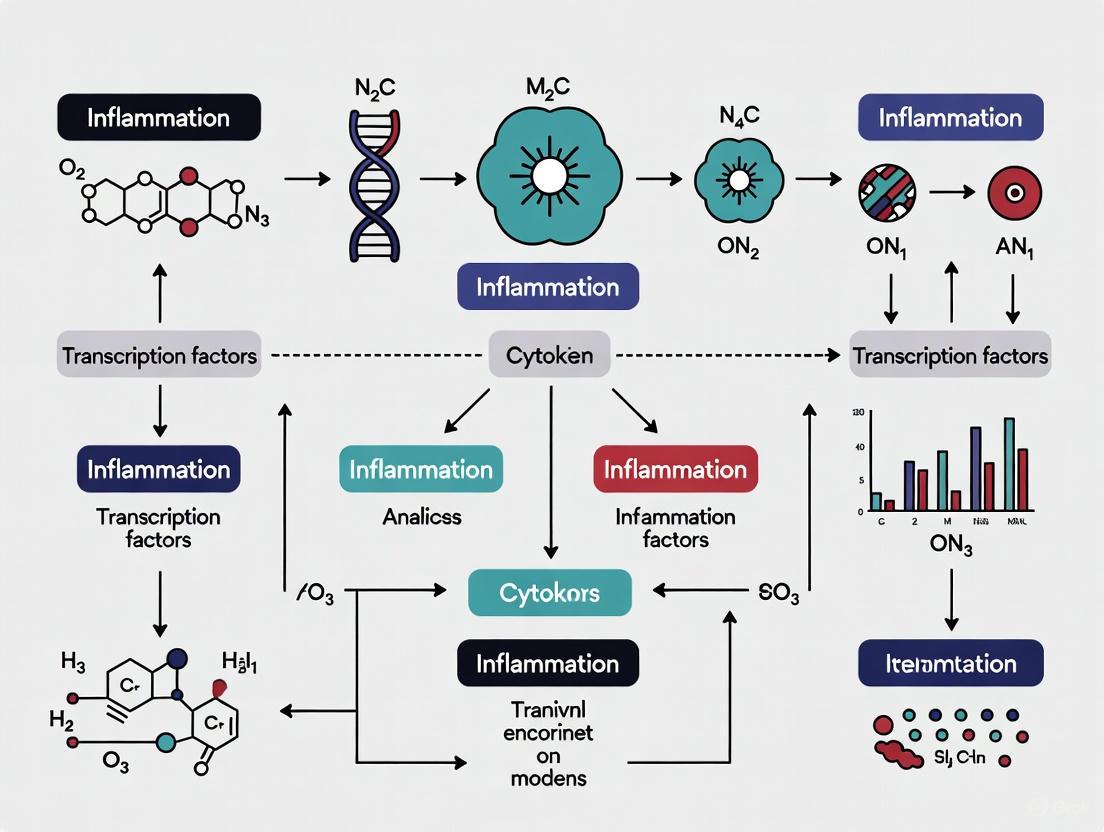
This article provides a comprehensive comparative analysis of key inflammatory transcription factors—NF-κB, STAT, and IRF—as biomarkers in biomedical research and therapeutic development.
Transcription Factors as Inflammatory Markers: A Comparative Analysis of NF-κB, STAT, and IRF in Disease and Drug Development
Abstract
This article provides a comprehensive comparative analysis of key inflammatory transcription factors—NF-κB, STAT, and IRF—as biomarkers in biomedical research and therapeutic development. Targeting researchers and drug development professionals, we explore the foundational biology, distinct activation pathways, and specific roles of these factors in chronic diseases, including metabolic syndrome, cancer, and renal aging. The content details state-of-the-art methodological approaches for their quantification in research and potential clinical settings, addressing common technical challenges and optimization strategies. A critical validation framework compares their specificity, predictive power, and clinical utility against traditional inflammatory markers like cytokines and acute-phase proteins. By synthesizing evidence across disease contexts, this review aims to guide the selection and application of these central regulatory molecules as biomarkers for diagnosis, prognosis, and monitoring therapeutic efficacy.
The Core Inflammatory Trio: Foundational Biology of NF-κB, STAT, and IRF Transcription Factors
The inflammatory response is a complex biological process that requires the rapid and coordinated activation of a specific transcriptional program, controlling the expression of hundreds of genes in a cell-type and stimulus-specific manner [1]. At the heart of this process are signal-regulated transcription factors (SRTFs), which sit at the receiving end of pathways originating from pattern recognition receptors (PRRs) and cytokine receptors [2]. These factors are activated by inflammatory stimuli and interact with a genome that has been pre-configured by lineage-determining transcription factors (LDTFs) to enable a tailored immune response [2]. The major SRTF families involved in inflammation include NF-κB, STATs, IRFs, and AP-1 [1] [3]. Their activity is essential for sensing environmental changes, mounting a defense against microbes, and initiating tissue repair, but their dysregulation can lead to chronic inflammatory diseases and cancer [1] [3].
Comparative Analysis of Major SRTF Families
The table below provides a detailed comparison of the primary SRTF families, highlighting their distinct activation mechanisms, DNA binding motifs, and key functions in inflammation.
| Transcription Factor Family | Key Members | Activation Mechanism & Signaling Pathways | DNA Binding Motif | Primary Roles in Inflammation | Associated Inflammatory Diseases |
|---|---|---|---|---|---|
| NF-κB [3] | p50, p52, p65 (RelA), RelB, c-Rel [3] | Activated via canonical (IKKβ/IκB degradation) or non-canonical (IKKα/p100 processing) pathways by PAMPs, DAMPs, and cytokines like TNF [3]. | 5'-GGGRNWYYCC-3' (κB site) [2] | Master regulator of pro-inflammatory gene expression; roles in innate & adaptive immunity [3]. | Inflammatory Bowel Disease (IBD), Rheumatoid Arthritis (RA), Multiple Sclerosis (MS) [3]. |
| STAT [3] | STAT1, STAT2, STAT3, STAT4, STAT5A, STAT5B, STAT6 [3] | Phosphorylated by JAK kinases upon cytokine receptor engagement (e.g., IFNs, ILs); form homo-/heterodimers [3]. | GAS (Gamma-activated site): TTCN3-4GAA [2] | IFN signaling (STAT1/2), innate immunity & cell metabolism (STAT3), T-cell differentiation (STAT4), immune cell development (STAT5), antibody production (STAT6) [3]. | Rheumatoid Arthritis, immuno-inflammatory conditions [3]. |
| IRF [2] [3] | IRF1 - IRF9 [2] | Activated downstream of PRRs (e.g., TLR3, TLR4); key inducers of type I interferon responses [1] [2]. | IRF-E: 5'-GAAA-3' / ISRE: 5'-PuPuAAANNGAAAPyPy-3' [2] | Regulation of type I IFN genes and IFN-stimulated genes (ISGs); antiviral defense [2]. | Systemic Lupus Erythematosus (SLE) [3]. |
| AP-1 [1] | Fos, Jun, ATF subunits [1] | Activated by a variety of inflammatory stimuli, including microbial products and cytokines [1]. | Information missing | Regulates genes involved in immune and inflammatory responses; often cooperates with other TFs [1]. | Information missing |
Experimental Protocols for Studying SRTFs
Genomic Profiling of Inflammatory Gene Expression (RNA-seq)
This protocol is used to define the gene expression cascade induced by inflammatory stimuli at high resolution [1].
- 1. Cell Stimulation: Treat primary immune cells (e.g., mouse macrophages or dendritic cells) with an inflammatory agonist such as lipopolysaccharide (LPS) for a time course (e.g., from 0 to 2 hours) [1].
- 2. RNA Extraction: Harvest cells at each time point and isolate total RNA.
- 3. Library Preparation and Sequencing: Prepare sequencing libraries from either mature, polyadenylated mRNA to assess translatable transcripts, or from nascent transcripts using metabolic labeling or genome-wide nuclear run-on (GRO-seq) to directly monitor transcriptional activity [1].
- 4. Data Analysis: Map sequencing reads to the genome and quantify gene expression. Cluster genes based on temporal kinetics and analyze overrepresented transcription-factor-binding motifs in promoters of co-regulated genes [1].
Mapping Transcription Factor Binding (ChIP-seq)
This protocol identifies genome-wide binding sites for SRTFs, helping to define their direct transcriptional targets [4].
- 1. Cross-Linking: Formaldehyde is used to crosslink proteins to DNA in cells following inflammatory stimulation.
- 2. Cell Lysis and Chromatin Shearing: Lyse cells and fragment chromatin via sonication into small pieces.
- 3. Immunoprecipitation: Use an antibody specific to the transcription factor of interest (e.g., against STAT1 or p65) to pull down the protein-DNA complexes.
- 4. Library Preparation and Sequencing: Reverse crosslinks, purify DNA, and prepare libraries for high-throughput sequencing [4].
- 5. Data Analysis: Sequence reads are aligned to the reference genome to identify peaks of TF enrichment. De novo motif discovery tools like MEME can be applied to the top 500 strongest peaks to identify the bound DNA motif [4].
Signaling Pathways and Regulatory Networks
The following diagrams illustrate the core signaling pathways and regulatory logic of major SRTFs in inflammation.
NF-κB and STAT Signaling Pathways
Integrative Regulatory Logic of SRTFs
The table below lists key reagents, datasets, and computational tools essential for experimental research on SRTFs in inflammation.
| Tool/Reagent | Type | Primary Function in SRTF Research | Example/Source |
|---|---|---|---|
| ChIP-seq | Experimental Protocol | Maps genome-wide binding sites for transcription factors to identify direct target genes [1] [4]. | ENCODE Project [4] |
| RNA-seq / GRO-seq | Experimental Protocol | Profiles transcriptome changes in response to inflammation; GRO-seq specifically captures nascent transcription for kinetic studies [1]. | - |
| Olink Target 96 Inflammation Panel | Proteomic Assay | Quantifies 92 immune-related proteins from plasma with high sensitivity, useful for identifying inflammatory signatures linked to SRTF activity [5]. | - |
| Factorbook | Computational Database | Catalogs TF motifs, binding sites, and annotations from ENCODE ChIP-seq and HT-SELEX data for motif analysis and binding site prediction [4]. | www.factorbook.org |
| scCube | Computational Tool (Python) | Simulates spatially resolved transcriptomics data, enabling benchmarking of computational methods for analyzing gene expression in a spatial context [6]. | GitHub: ZJUFanLab/scCube |
| HT-SELEX | Experimental Protocol | Systematically determines the in vitro DNA binding specificity of transcription factors [4]. | - |
Nuclear Factor Kappa B (NF-κB) represents a family of structurally related transcription factors that function as pivotal regulators of immune and inflammatory responses. Since its initial discovery in 1986 as a nuclear factor binding to the kappa enhancer in B cells, NF-κB has been established as a critical mediator in numerous cellular processes including immunity, inflammation, cell survival, and proliferation [7]. The NF-κB signaling system is a highly dynamic protein interaction network that integrates information from various environmental cues to determine appropriate cellular responses, particularly in immune cells such as T lymphocytes [8]. Dysregulation of NF-κB activation contributes to a diverse spectrum of diseases, including chronic inflammatory disorders, autoimmune diseases, and cancer, making it a significant therapeutic target in drug development [7] [9].
This comparative guide provides a structured analysis of the two principal NF-κB activation pathways—canonical and non-canonical—focusing on their structural components, activation mechanisms, kinetic profiles, and functional outputs. Within the broader context of transcription factor research as inflammatory markers, understanding the distinct and overlapping features of these pathways is essential for developing targeted therapeutic strategies that can modulate specific aspects of the immune response without completely abrogating host defense mechanisms.
Structural Composition of NF-κB System
NF-κB Transcription Factor Family
The mammalian NF-κB transcription factor family comprises five members that can form various homo- and heterodimers:
- RELA (p65): Contains a transactivation domain (TAD) and is a major component of the canonical pathway.
- c-REL (c-Rel): Also possesses a TAD and participates primarily in canonical signaling.
- RELB (RelB): Contains a TAD and functions mainly in the non-canonical pathway.
- NFKB1 (p105/p50): The p105 precursor is processed to p50, which lacks a TAD and functions as a transcriptional repressor when homodimerized.
- NFKB2 (p100/p52): The p100 precursor is processed to p52, which also lacks a TAD [7] [10].
All five members share a conserved N-terminal Rel homology domain (RHD) that mediates dimerization, nuclear localization, DNA binding, and interaction with inhibitory IκB proteins [8] [9]. The most prevalent NF-κB dimer activated through the canonical pathway is the p50-RelA heterodimer, while the non-canonical pathway typically generates p52-RelB heterodimers [10].
IκB Inhibitory Proteins
The IκB (Inhibitor of κB) family proteins maintain NF-κB in an inactive state in the cytoplasm by masking its nuclear localization signals. This family includes:
- Classical IκBs: IκBα, IκBβ, and IκBε, which are present in the cytoplasm of resting cells and undergo stimulus-induced degradation [7].
- Precursor proteins: p105 (processing yields p50) and p100 (processing yields p52), which also contain C-terminal ankyrin repeat domains that function as IκB-like inhibitory regions [10] [11].
- Atypical IκBs: IκBζ, BCL-3, and IκBNS, which are synthesized upon cell activation and primarily function in the nucleus to modulate transcriptional activity [7].
These inhibitory proteins characterize through 3-8 ankyrin repeats at their C-termini that mediate binding to the RHD of NF-κB dimers, while their N-terminal contain phosphorylation and ubiquitination sites that participate in signal-responsive degradation [7].
IKK Complex Components
The IκB kinase (IKK) complex serves as the central regulator of NF-κB activation and consists of:
- IKKα: A catalytic subunit involved in both canonical and non-canonical pathways, with predominant function in the non-canonical pathway.
- IKKβ: A catalytic subunit primarily responsible for canonical pathway activation.
- NEMO/IKKγ: A regulatory subunit essential for canonical signaling but not required for the non-canonical pathway [12] [13].
Both IKKα and IKKβ share approximately 50% sequence identity and contain an N-terminal kinase domain, a helix-loop-helix motif, and a leucine zipper domain that facilitates dimerization [12]. The interaction between the kinase subunits and NEMO occurs through a small peptide at the carboxyl terminus of IKKα and IKKβ [12].
Table 1: Structural Components of the NF-κB Signaling System
| Component Type | Member | Key Structural Features | Primary Function |
|---|---|---|---|
| NF-κB Subunits | RELA (p65) | RHD + TAD | Canonical pathway transactivation |
| c-REL (c-Rel) | RHD + TAD | Canonical pathway transactivation | |
| RELB (RelB) | RHD + TAD | Non-canonical pathway transactivation | |
| NFKB1 (p50) | RHD only (from p105 processing) | DNA binding, transcriptional repression/activation | |
| NFKB2 (p52) | RHD only (from p100 processing) | DNA binding, transcriptional repression/activation | |
| IκB Inhibitors | IκBα | 6 ankyrin repeats | Cytoplasmic sequestration of NF-κB |
| p100/p105 | RHD + ankyrin repeats | Precursor proteins with autoinhibitory function | |
| BCL-3 | Nuclear IκB with transactivation capability | Nuclear regulator of p50/p52 homodimers | |
| IKK Complex | IKKα | Kinase domain, LZ, HLH, NBD | Phosphorylates IκB and p100 |
| IKKβ | Kinase domain, LZ, HLH, NBD | Phosphorylates IκB in canonical pathway | |
| NEMO/IKKγ | Scaffold protein with coiled-coil domains | Regulatory subunit for canonical signaling |
Canonical NF-κB Pathway
Activation Mechanisms
The canonical NF-κB pathway is characterized by its rapid activation kinetics, typically occurring within minutes of cellular stimulation [10]. This pathway responds to a diverse array of stimuli including proinflammatory cytokines (e.g., TNF-α, IL-1), pathogen-associated molecular patterns (PAMPs), T-cell receptor (TCR) engagement, and other inflammatory mediators [8] [11]. The activation mechanism proceeds through a well-defined sequence of molecular events:
Receptor Proximal Signaling: Ligand binding to specific receptors (e.g., TNFR, TLR, TCR) initiates the recruitment of adapter proteins and signaling complexes. For instance, TCR engagement leads to the formation of the CBM complex (CARMA1, BCL10, MALT1), which recruits TRAF6 and TAK1, while TNFR signaling involves TRADD and RIP1 recruitment [8].
IKK Complex Activation: The multi-subunit IKK complex, composed of IKKα, IKKβ, and NEMO, becomes activated through phosphorylation events. TAK1 (TGF-β-activated kinase 1) has been identified as a key upstream kinase responsible for phosphorylating IKKβ at serine residues 177 and 181 within its activation loop [12] [13].
IκB Phosphorylation and Degradation: Activated IKK phosphorylates IκBα at two N-terminal serine residues (Ser32 and Ser36), targeting it for K48-linked polyubiquitination and subsequent degradation by the 26S proteasome [12] [13].
NF-κB Nuclear Translocation: Degradation of IκBα unmasks the nuclear localization sequences of NF-κB dimers (primarily p50-RelA and p50-c-Rel), enabling their translocation to the nucleus where they bind to specific κB enhancer elements and regulate target gene expression [10].
The canonical pathway is subject to tight negative feedback regulation, as NF-κB induces the transcription of IκBα, which subsequently re-accumulates in the nucleus, binds NF-κB, and exports it back to the cytoplasm to terminate the response [10].
Experimental Analysis of Canonical Pathway
Investigation of the canonical NF-κB pathway employs multiple experimental approaches:
- IKK Kinase Assays: Measurement of IKK activity through in vitro kinase assays using IκBα as substrate, often with immunoprecipitated IKK complex from stimulated cells [13].
- Electrophoretic Mobility Shift Assay (EMSA: Detection of NF-κB DNA binding activity in nuclear extracts using radiolabeled κB probes [7].
- Immunofluorescence Microscopy: Visualization of NF-κB nuclear translocation using antibodies specific for p65 or other subunits [10].
- Reporter Gene Assays: Monitoring NF-κB transcriptional activity using constructs with κB sites driving luciferase or other reporter genes [7].
- Western Blot Analysis: Assessment of IκBα degradation and phosphorylation, IKK phosphorylation, and processing of NF-κB precursors [13].
Computational models, including Petri nets and ordinary differential equation (ODE)-based approaches, have been developed to simulate the dynamic behavior of the canonical pathway and predict the effects of perturbations [14] [15].
Canonical NF-κB Activation Pathway
Non-canonical NF-κB Pathway
Activation Mechanisms
The non-canonical NF-κB pathway exhibits distinct characteristics compared to the canonical pathway, including slower activation kinetics (occurring over hours rather than minutes) and responsiveness to a more limited set of stimuli [10] [11]. Key activators include ligands for specific TNF receptor superfamily members such as CD40L, BAFF, RANKL, LTβ, and TWEAK [8] [11]. The activation mechanism proceeds through the following steps:
Receptor Engagement and TRAF Recruitment: Ligand binding to specific TNFR superfamily members leads to the recruitment of adapter proteins including TRAF2, TRAF3, and cellular inhibitors of apoptosis (cIAP1/2) [15].
NIK Stabilization: Under basal conditions, TRAF3 promotes constitutive degradation of NF-κB-inducing kinase (NIK) through the action of cIAP1/2. Receptor activation induces degradation of TRAF3, resulting in the stabilization and accumulation of NIK [9] [11].
IKKα Activation: Accumulated NIK phosphorylates and activates IKKα homodimers, which do not require NEMO for their activation in this pathway [12].
p100 Phosphorylation and Processing: Activated IKKα phosphorylates the NF-κB2 precursor p100, leading to its polyubiquitination and partial degradation by the proteasome. This processing event generates mature p52 and releases the inhibitory C-terminal domain [9] [11].
Nuclear Translocation: The processed p52 forms a transcriptionally active complex with RelB, which translocates to the nucleus to regulate specific target genes involved in lymphoid organ development, B cell survival, and adaptive immunity [8] [11].
The non-canonical pathway features a negative feedback mechanism wherein IKKα phosphorylates NIK, targeting it for degradation and thus limiting the duration of pathway activation [15].
Experimental Analysis of Non-canonical Pathway
Specific methodologies for investigating the non-canonical pathway include:
- NIK Stabilization Assays: Immunoblot analysis to detect NIK accumulation following receptor engagement, often using inhibitors to block protein synthesis (cycloheximide) to measure protein half-life [11].
- p100 Processing Assays: Western blot analysis to monitor the conversion of p100 to p52 using antibodies that distinguish between the precursor and processed forms [9].
- Gene Knockout Models: Utilization of genetically modified mice lacking specific non-canonical pathway components (NIK, IKKα, RelB, p100) to elucidate pathway functions in vivo [12].
- In Silico Knockout Analyses: Computational approaches, such as Petri net models, to simulate the effects of protein knockouts and identify critical regulatory nodes [14] [15].
Petri net modeling of the non-canonical pathway has revealed a more diverse regulatory capacity compared to the canonical pathway and has helped quantify the relevance of individual biochemical processes, such as the relationship between NIK synthesis and p100 processing [14].
Non-canonical NF-κB Activation Pathway
Comparative Analysis of Activation Pathways
Structural and Functional Differences
The canonical and non-canonical NF-κB pathways demonstrate distinct characteristics in their activation mechanisms, kinetic profiles, and biological functions. Table 2 provides a systematic comparison of these two pathways based on current experimental evidence.
Table 2: Comparative Analysis of Canonical and Non-canonical NF-κB Pathways
| Parameter | Canonical Pathway | Non-canonical Pathway |
|---|---|---|
| Key Stimuli | TNF-α, IL-1, LPS, TCR/CD28, TLR ligands | CD40L, BAFF, RANKL, LTβ, TWEAK |
| Primary Receptors | TNFR, IL-1R, TLR, TCR | Subset of TNFR superfamily (CD40, BAFF-R, RANK, LTβR) |
| Key Adaptor/Signaling Molecules | TRAF6, TAK1, CARMA1/BCL10/MALT1 (in lymphocytes) | TRAF2/TRAF3, cIAP1/2, NIK |
| IKK Complex Composition | IKKα, IKKβ, NEMO | IKKα homodimers |
| Central Regulatory Kinase | IKKβ | NIK and IKKα |
| Inhibitory Target | IκBα (phosphorylation/degradation) | p100 (phosphorylation/processing) |
| Primary NF-κB Dimers | p50-RelA, p50-c-Rel | p52-RelB |
| Activation Kinetics | Rapid (minutes) | Slow (hours) |
| Feedback Regulation | IκBα resynthesis | NIK degradation by IKKα |
| Primary Biological Functions | Innate immunity, inflammation, cell survival | Lymphoid organogenesis, B cell survival, adaptive immunity |
| Pathway Crosstalk | Regulates expression of p100 and RelB | NIK can enhance canonical IKK activation |
Pathway Crosstalk and Integration
Despite their distinct activation mechanisms, the canonical and non-canonical NF-κB pathways do not function in complete isolation but exhibit significant crosstalk that enables integrated cellular responses [14] [15]. Computational modeling using Petri nets has revealed several key mechanisms of pathway interaction in CD40L-stimulated B cells:
NIK-Mediated Crosstalk: Accumulated NIK in the non-canonical pathway can contribute to the phosphorylation of IKKα and enhance activation of the canonical IKK complex under specific conditions [15].
p100 as a Shared Regulator: The precursor protein p100 can function as an IκB-like molecule for canonical dimers, particularly p50-RelA. Processing of p100 in the non-canonical pathway therefore liberates not only p52-RelB but also canonical NF-κB dimers that may be sequestered by p100 [15].
Transcriptional Interdependence: The canonical pathway regulates the expression of key non-canonical components, including p100 and RelB, creating a hierarchical relationship where canonical signaling can prime cells for non-canonical responses [8].
Dimer Interference: At the level of NF-κB subunit interaction, RelA can bind to RelB and prevent its DNA binding, demonstrating another layer of potential regulation between the two pathways [8].
In silico knockout analyses based on Petri net models have demonstrated that the activation of transcription factors p50-RelA and p52-RelB is affected by most knockouts of pathway components, confirming the interconnected nature of these signaling cascades [14].
Experimental Data and Research Methodologies
Key Experimental Findings
Quantitative analysis of NF-κB pathway dynamics has yielded important insights into their regulatory mechanisms:
Computational Modeling: Petri net models of CD40 receptor signaling demonstrated that the non-canonical NF-κB pathway exhibits more diverse regulatory capabilities than the canonical pathway [14]. In silico knockout analyses quantified the relevance of individual biochemical processes and successfully predicted interrelationships between NIK synthesis and p100 processing [14] [15].
Kinetic Profiling: The canonical pathway activates within minutes following stimulation, while non-canonical pathway activation occurs over several hours, reflecting their different biological roles in rapid response versus sustained signaling [10] [11].
Stoichiometric Analysis: Structural studies have revealed that IκBα masks the nuclear localization sequence of p65 but not that of p50, explaining how importin proteins can facilitate nuclear import of p50-p65 dimers even when complexed with IκBα [10].
Table 3: Quantitative Properties of NF-κB Pathway Components
| Parameter | Canonical Pathway | Non-canonical Pathway | Experimental Evidence |
|---|---|---|---|
| Activation Time Course | 5-30 minutes | 2-8 hours | Live-cell imaging, western blot time course [10] [11] |
| NIK Stability (Half-life) | Not applicable | Basal: <30 minStimulated: >3 hours | Cycloheximide chase assays [11] |
| p100 Processing Efficiency | Minimal | Up to 40-60% of cellular p100 | Densitometric analysis of p100/p52 ratio [9] |
| Negative Feedback Time | 30-60 minutes (IκBα resynthesis) | 4-8 hours (NIK degradation) | Mathematical modeling, protein stability assays [10] [15] |
| Nuclear Translocation Efficiency | Up to 80% of cellular p65 | 20-40% of cellular RelB | Quantitative immunofluorescence, subcellular fractionation [10] |
Research Reagent Solutions
Table 4: Essential Research Reagents for NF-κB Pathway Investigation
| Reagent Category | Specific Examples | Research Application | Key Function |
|---|---|---|---|
| Kinase Inhibitors | IKK-16 (IKKβ inhibitor), BMS-345541 (IKK complex inhibitor), MLN120B (IKKβ inhibitor), ACHP (IKKα/β inhibitor) | Pathway-specific inhibition, therapeutic target validation | Selective blockade of canonical signaling |
| NIK Inhibitors (e.g., NIK SMI1), IKKα Allosteric Inhibitors | Non-canonical pathway dissection | Selective inhibition of non-canonical activation | |
| Antibodies for Detection | Anti-phospho-IκBα (Ser32/36), Anti-phospho-IKKα/β (Ser176/180) | Canonical pathway activation monitoring | Detection of key phosphorylation events |
| Anti-NIK, Anti-phospho-p100 (Ser866/870), Anti-p52 (non-canonical specific) | Non-canonical pathway activation assessment | Detection of NIK accumulation and p100 processing | |
| Anti-p65, Anti-p50, Anti-RelB, Anti-c-Rel | Subunit-specific analysis | Differentiation of NF-κB dimer composition | |
| Activity Assays | NF-κB Reporter Lentiviruses (κB-driven luciferase/GFP), EMSA Kits, NF-κB DNA Binding ELISA | Transcriptional activity measurement | Quantification of NF-κB functional output |
| Proteasome Inhibitors | MG-132, Bortezomib, Lactacystin | Mechanism investigation | Blockade of IκBα/p100 degradation to confirm pathway dependence |
| Cytokines/Ligands | Recombinant TNF-α, IL-1β, CD40L, BAFF, RANKL | Pathway-specific stimulation | Selective activation of canonical vs. non-canonical pathways |
| Genetic Tools | siRNA/shRNA Libraries, CRISPR/Cas9 KO Cells, Transgenic Mouse Models | Functional genomics studies | Loss-of-function analysis of pathway components |
The comparative analysis of canonical and non-canonical NF-κB activation pathways reveals a sophisticated regulatory network that enables cells to mount appropriately tailored responses to diverse immunological cues. While each pathway possesses distinct structural components, activation mechanisms, kinetic properties, and biological functions, their operational integration through multiple crosstalk mechanisms allows for coordinated regulation of inflammatory and immune processes.
From a translational perspective, the distinct molecular features of these pathways offer opportunities for selective therapeutic intervention. The development of pathway-specific inhibitors, particularly those targeting IKKβ for canonical signaling or NIK for non-canonical signaling, holds promise for treating inflammatory diseases, autoimmune conditions, and cancers with greater precision and reduced off-target effects. However, the interconnected nature of these pathways necessitates careful consideration of potential compensatory mechanisms and network adaptations when designing therapeutic strategies.
Future research directions should focus on further elucidating the context-specific crosstalk mechanisms between these pathways, developing more sophisticated computational models that can predict system-level responses to perturbations, and advancing the characterization of tissue-specific and cell-type-specific differences in NF-κB pathway regulation. Such efforts will enhance our understanding of NF-κB as a critical inflammatory marker and facilitate the development of targeted therapies for conditions driven by dysregulated NF-κB activation.
The Janus kinase-Signal Transducer and Activator of Transcription (JAK-STAT) signaling pathway is a principal mechanism by which cytokines, interferons, and growth factors convey signals from the cell membrane to the nucleus, directly influencing gene transcription [16] [17]. Discovered more than a quarter-century ago, this pathway acts as a fulcrum for vital cellular processes including hematopoiesis, immune fitness, inflammation, and apoptosis [16]. The pathway comprises three key components: cell surface receptors, Janus kinases (JAKs), and STAT proteins [17]. More than 50 cytokines and growth factors, such as interferons (IFN) and interleukins (ILs), utilize this pathway [16] [18].
The mammalian STAT family consists of seven members: STAT1, STAT2, STAT3, STAT4, STAT5A, STAT5B, and STAT6 [18] [19]. These proteins share a common domain structure that enables them to perform their dual roles: signal transduction in the cytoplasm and transcription activation in the nucleus [18] [20]. The canonical activation of STATs is triggered by the phosphorylation of a single tyrosine residue located near the carboxy terminus. This phosphorylation, typically mediated by JAKs, leads to STAT dimerization via reciprocal phosphotyrosine-SH2 domain interactions, revealing a nuclear localization signal. The STAT dimer then translocates to the nucleus, binds to specific DNA sequences (generally TTCN~3~GAA), and regulates the transcription of target genes [18].
This guide provides a comparative analysis of two key STAT family members, STAT1 and STAT3, which are often activated by common cytokines but frequently mediate opposing biological functions, particularly in the contexts of cancer and inflammation [18] [21]. We will objectively compare their roles, supported by experimental data, and provide detailed methodologies for key experiments in the field.
Comparative Analysis of STAT1 and STAT3
Structural Similarities and Activation Mechanisms
STAT1 and STAT3, like all STAT proteins, share conserved structural domains: an N-terminal domain, a coiled-coil domain, a DNA-binding domain, a linker region, an Src homology 2 (SH2) domain, and a C-terminal transactivation domain (TAD) containing a conserved tyrosine phosphorylation site [18] [17]. Despite these structural similarities, they are activated by distinct but overlapping sets of cytokines and exhibit differences in their nuclear import mechanisms. For instance, STAT1 and STAT2 bind to importin α5 for nuclear entry, whereas STAT3 can bind to importin α3 and importin α6 [17].
Table 1: Key Activators and Primary Functions of STAT1 and STAT3
| Feature | STAT1 | STAT3 |
|---|---|---|
| Primary Activators | IFN-γ, IFN-α/β [19] [21] | IL-6, IL-10, IL-23, IL-11, LIF, OSM [19] |
| Associated JAKs | JAK1, JAK2, TYK2 [16] [21] | JAK1, JAK2, TYK2 [16] |
| Dimer Form | Homodimers or heterodimers with STAT2 [19] | Homodimers [19] |
| Core Biological Functions | Anti-proliferative, pro-apoptotic, tumor-suppressive, TH1 immunity [18] [19] [21] | Pro-proliferative, pro-survival, oncogenic, TH17 immunity [18] [19] |
| Role in Tumorigenesis | Tumor suppressor [21] | Oncogene [21] |
Opposing Roles in Cancer and Immunity
STAT1 and STAT3 are generally viewed as mediating opposite roles in cancer development and immune responses [18].
- STAT1 as a Tumor Suppressor and Immunostimulator: STAT1 is a central mediator of interferon signaling and is crucial for anti-viral and anti-tumor immunity [19] [21]. It functions as a tumor suppressor by inducing genes that lead to cell cycle arrest (e.g., p21WAF1/CIP1), promote apoptosis (e.g., caspases, IRF-1), and inhibit angiogenesis [21]. It is also pivotal for tumor immunosurveillance by driving the induction of Major Histocompatibility Complex (MHC) Class I molecules, which are essential for antigen presentation to T-lymphocytes [21].
- STAT3 as an Oncogene and Immune Suppressor: STAT3 was originally identified as "Acute Phase Response Factor" (APRF) and is a key mediator of physiologic responses to tissue injury [18] [19]. However, its constitutive activation is a common feature in a wide spectrum of human cancers, found in nearly 70% of solid and hematological tumors [21]. STAT3 promotes oncogenesis by regulating genes that enhance cell proliferation (e.g., Cyclin D1, c-MYC), survival (e.g., BCL-2, BCL-XL), angiogenesis (e.g., VEGF), and invasion [18] [19]. Furthermore, it suppresses anti-tumor immunity by inducing immunosuppressive proteins like PD-L1 and inhibiting the expression of pro-inflammatory, anti-tumor cytokines such as IL-12 [19].
The Critical Balance: STAT1/STAT3 Ratio
Experimental and clinical evidence suggests that the relative expression and activation levels of STAT1 and STAT3—their ratio—is a critical determinant of cellular outcomes, particularly in cancer.
A study on colorectal cancer (CRC) patient samples found that the concomitant absence of nuclear STAT1 and STAT3 was associated with a significantly reduced median survival of at least 33 months [22]. Furthermore, patients with high nuclear STAT1 and low nuclear STAT3 activity had better overall survival compared to those with low STAT1 and low STAT3 activity [22].
To investigate this mechanistically, STAT3 was knocked down in four different CRC cell lines, which led to two distinct phenotypes [22]:
- In HCT116 and SW620 cells, STAT3 knockdown resulted in reduced STAT1 expression and accelerated tumor growth in mouse xenografts.
- In HT-29 and LS174T cells, STAT3 knockdown led to elevated STAT1 expression and reduced tumor growth.
This demonstrates that a low STAT1/high STAT3 expression ratio favors faster tumor growth, whereas a high STAT1/low STAT3 ratio correlates with slower tumor growth and better patient prognosis [22].
Table 2: Comparative Gene Regulation by STAT1 and STAT3 in Cancer
| Cellular Process | STAT1 Target Genes (Effect) | STAT3 Target Genes (Effect) |
|---|---|---|
| Proliferation & Cell Cycle | p21WAF1/CIP1 (Induces), c-MYC (Represses) [21] | Cyclin D1 (Induces), c-MYC (Induces) [18] [19] |
| Apoptosis & Survival | Caspases, IRF-1 (Pro-apoptotic) [21] | BCL-2, BCL-XL, MCL1 (Anti-apoptotic) [19] |
| Angiogenesis | Inhibits VEGF response [21] | VEGF, HIF1A (Induces) [19] |
| Imm Modulation | MHC Class I, IL-12 (Induces) [19] [21] | PD-L1, IL-10, IL-6 (Induces); IL-12 (Represses) [18] [19] |
Experimental Protocols for STAT Analysis
To generate robust, reproducible data on STAT signaling, standardized experimental protocols are essential. Below are detailed methodologies for key techniques used in the cited studies.
Protocol 1: Immunohistochemical (IHC) Analysis of STAT Expression and Localization in Patient Tissues
This protocol is used to correlate STAT protein levels and nuclear localization (an indicator of activation) with clinical outcomes, as performed on colorectal cancer tissue microarrays [22].
- Tissue Preparation: Formalin-fix and paraffin-embed (FFPE) patient tissue biopsies. Section into 4-5 µm thick slices and mount on slides.
- Deparaffinization and Rehydration: Deparaffinize slides in xylene and rehydrate through a graded ethanol series (100%, 95%, 70%) to water.
- Antigen Retrieval: Perform heat-induced epitope retrieval (HIER) by incubating slides in a citrate-based buffer (pH 6.0) or EDTA buffer (pH 9.0) using a pressure cooker or microwave.
- Blocking: Block endogenous peroxidase activity with 3% H2O2. Block non-specific binding with 2.5% normal horse or goat serum.
- Primary Antibody Incubation: Incubate sections overnight at 4°C with validated, specific primary antibodies.
- Anti-STAT1 and Anti-STAT3: To assess total protein expression.
- Anti-pY-STAT1 and Anti-pY-STAT3: To assess activated, tyrosine-phosphorylated protein.
- Detection: Use an avidin-biotin-peroxidase complex (ABC) system or a polymer-based detection kit with a chromogenic substrate like 3,3'-Diaminobenzidine (DAB).
- Counterstaining and Analysis: Counterstain with hematoxylin, dehydrate, and mount. Score staining intensity (e.g., 0, 1+, 2+, 3+) and percentage of positive cells separately for the cytoplasmic and nuclear compartments by a pathologist blinded to the clinical data.
Protocol 2: STAT Functional Analysis using Knockdown and Xenograft Models
This method is used to determine the functional consequences of altering STAT levels on tumor growth, as demonstrated in CRC cell lines [22].
- Cell Line Selection: Choose relevant cancer cell lines with known genetic backgrounds (e.g., HCT116, SW620, HT-29, LS174T for CRC).
- STAT3 Knockdown: Generate stable STAT3-knockdown cell lines using lentiviral transduction with short hairpin RNA (shRNA) targeting STAT3. Use a non-targeting shRNA as a negative control.
- Validation: Confirm knockdown efficiency at the mRNA level by quantitative real-time PCR (qRT-PCR) and at the protein level by western blot.
- Western Blot Analysis: Lyse cells in RIPA buffer. Resolve proteins by SDS-PAGE, transfer to a PVDF membrane, and probe with antibodies against STAT3, STAT1, and a loading control (e.g., GAPDH or β-Actin). Observe the reciprocal changes in STAT1 expression post-STAT3 knockdown.
- Xenograft Tumor Growth: Subcutaneously inject 1-5 x 10⁶ control and STAT3-knockdown cells into the flanks of immunocompromised mice (e.g., SCID mice).
- Monitoring: Measure tumor dimensions 2-3 times per week with calipers. Calculate tumor volume using the formula: Volume = (Length x Width2) / 2.
- Endpoint Analysis: Euthanize mice at a predetermined endpoint (e.g., when tumors in control group reach ~1500 mm³). Excise and weigh tumors for final comparison.
- IHC of Xenografts: Analyze the harvested xenograft tumors via IHC (as in Protocol 1) to confirm that the STAT1/STAT3 expression profile is maintained in vivo.
Visualization of Signaling Pathways and Regulatory Networks
The following diagrams, generated using Graphviz DOT language, illustrate the core JAK-STAT signaling module and the central antagonistic relationship between STAT1 and STAT3.
Diagram 1: Core JAK-STAT signaling pathway and the functional balance between STAT1 and STAT3. The pathway is activated by cytokines, leading to STAT phosphorylation, dimerization, and nuclear translocation to regulate transcription. The cellular outcome is determined by the balance between the opposing functions of STAT1 and STAT3.
Diagram 2: Regulatory mechanisms and pathologies of the JAK-STAT pathway. Signaling is tightly controlled by negative regulators like SOCS, PTPs, and PIAS. Dysregulation, such as gain-of-function mutations in STAT1 or STAT3, leads to distinct autoimmune and immunodeficiency syndromes.
The Scientist's Toolkit: Essential Research Reagents
Successful research into STAT biology relies on a suite of well-validated reagents and tools. The table below lists essential materials for key experimental approaches.
Table 3: Essential Research Reagents for STAT Pathway Analysis
| Reagent / Tool | Specific Examples | Primary Function in Research |
|---|---|---|
| Cytokines & Activators | Recombinant IFN-γ, IL-6 | To specifically activate STAT1 (IFN-γ) or STAT3 (IL-6) pathways in cell-based assays [22] [21]. |
| Validated Antibodies | Anti-STAT1, Anti-STAT3, Anti-pY-STAT1, Anti-pY-STAT3 | For detecting total and activated protein levels in techniques like Western blot, immunofluorescence, and IHC [22]. |
| Cell Lines | HCT116, HT-29, SW620, LS174T (CRC models) | Well-characterized models with known mutational backgrounds for in vitro and in vivo (xenograft) studies of STAT function [22]. |
| Knockdown Tools | Lentiviral shRNA constructs targeting STAT3 | For generating stable gene knockdown cell lines to study the functional consequences of protein loss-of-function [22]. |
| JAK Inhibitors | Tofacitinib, Ruxolitinib | Small molecule inhibitors used to broadly block JAK-STAT signaling; used both therapeutically and as a research tool to probe pathway necessity [23]. |
| Cytokine Blockers | Tocilizumab (anti-IL-6R) | Therapeutic monoclonal antibody used to block specific cytokine signals (e.g., IL-6) that activate STAT3; used in research and clinics [23]. |
STAT1 and STAT3 are pivotal transcription factors downstream of the JAK-STAT pathway that execute profoundly different, and often opposing, cellular programs. While STAT1 generally drives anti-proliferative, pro-apoptotic, and immunostimulatory responses, STAT3 promotes pro-survival, proliferative, and immunosuppressive outcomes. The critical finding from comparative studies is that the functional balance between STAT1 and STAT3, often quantified as their expression or activation ratio, is a key determinant in physiological and pathological processes like cancer and inflammation [22] [21].
This balance presents a compelling therapeutic paradigm. Rather than simply inhibiting the entire JAK-STAT pathway, future strategies could aim to therapeutically "rebalance" the STAT1/STAT3 ratio in favor of anti-tumor or anti-inflammatory responses. The use of JAK inhibitors in STAT gain-of-function diseases exemplifies the successful targeting of this pathway [23]. A deep understanding of the differential roles and intricate cross-regulation of STAT1 and STAT3 is therefore fundamental for developing novel, targeted therapies in oncology and immunology.
The Interferon Regulatory Factor (IRF) family represents a crucial class of transcription factors that serve as master regulators of the immune system, functioning at the critical interface between physiological defense mechanisms and pathological inflammatory processes. Comprising nine members in mammals (IRF1 through IRF9), these factors share a conserved evolutionary architecture while exhibiting remarkable functional diversity in regulating interferon responses, immune cell development, and inflammatory pathways [24]. Initially identified as regulators of type I interferon (IFN-I) and IFN-responsive genes, IRFs have since been recognized as pivotal players in a broad spectrum of biological processes, from antiviral defense to oncogenesis [24] [25]. Their dual nature as both protective factors and potential drivers of pathology makes them compelling subjects for comparative analysis in transcription factor research, particularly as biomarkers for inflammatory conditions and targets for therapeutic intervention [26]. This guide provides a comprehensive comparison of IRF family members, their regulatory mechanisms, and experimental approaches for their study, offering researchers a framework for understanding their complex roles in health and disease.
Comparative Analysis of IRF Family Members
Structural Organization and Functional Domains
All IRF family members share a conserved multi-domain structure that facilitates their function as transcription factors while allowing for functional specialization:
DNA-Binding Domain (DBD): A highly conserved N-terminal domain comprising approximately 120 amino acids that form a helix-turn-helix motif, enabling recognition of specific DNA sequence elements (A/GNGAAANNGAAACT) known as interferon-stimulated response elements (ISREs) in promoter regions [24] [25]. This domain contains five tryptophan repeats and is responsible for target gene specificity.
C-Terminal Regulatory Domains: The C-terminal regions contain either an IFN association domain 1 (IAD1 in IRF3, IRF4, IRF5, IRF6, IRF7, IRF8, and IRF9) or IAD2 (in IRF1 and IRF2) with low sequence homology, serving as association domains for interactions with other IRF members, transcription factors, and cofactors [24]. These domains confer functional specificity and regulate activation states.
Variable Regulatory Regions: Many IRF proteins contain regulatory regions between the DBD and IAD that include multiple phosphorylation sites and other post-translational modification motifs that control activity, stability, and subcellular localization [24].
Table 1: Structural and Functional Characteristics of IRF Family Members
| IRF Member | Gene Location | Protein Size (aa) | Key Domains | Primary Cellular Expression | Response to IFN |
|---|---|---|---|---|---|
| IRF1 | 5q31.1 | 325 | DBD, IAD2 | Ubiquitous, low basal | Induced by IFN, TNF, IL-1 [24] |
| IRF2 | 4q35.1 | 349 (isoform 1) | DBD, IAD2 | Multiple cell types | Induced by viruses and IFN [24] |
| IRF3 | 19q13.33 | ~427 (human) | DBD, IAD1 | Ubiquitous | Virus-induced [24] |
| IRF4 | 6p25.3 | 451 | DBD, IAD1 | Lymphoid cells | Not regulated by IFNs [24] |
| IRF5 | 7q32.1 | 504 | DBD, IAD1 | Myeloid cells, B cells | Induced by viral infection [24] |
| IRF6 | 1q32.2 | 467 | DBD, IAD1 | Epithelial cells, keratinocytes | Developmental focus [24] |
| IRF7 | 11p15.5 | 503 (IRF7A) | DBD, IAD1 | Spleen, thymus, PBLs, pDCs | Virus-induced, IFN-amplified [25] |
| IRF8 | 16q24.1 | 426 | DBD, IAD1 | Myeloid cells, dendritic cells | Regulated by IFN-γ [24] |
| IRF9 | 14q11.2 | 393 | DBD, IAD1 | Ubiquitous | Upregulated by IFN-γ [24] |
The structural organization of IRFs facilitates their function as transcriptional regulators while allowing for specialized roles in different immune contexts. The conserved DBD ensures recognition of similar DNA sequences, while the variable C-terminal regions and regulatory domains enable functional diversification and context-specific regulation.
Functional Specialization and Target Gene Specificity
IRF family members exhibit both redundant and specialized functions in immune regulation, with distinct roles in antiviral defense, immune cell development, and inflammatory responses:
Antiviral Defense Specialization: IRF3 and IRF7 serve as master regulators of the immediate-early and late phases of IFN-I production, respectively, with IRF7 playing a particularly crucial role in the amplification loop that generates robust IFN-α responses [25]. IRF1 contributes to antiviral responses through regulation of IFN-γ inducible genes, while IRF9 forms part of the ISGF3 complex that mediates signaling downstream of IFN-I receptors [24].
Immune Cell Development: IRF4 and IRF8 play critical roles in the development and differentiation of B cells, myeloid cells, and dendritic cells, while IRF1 and IRF2 are required for NK cell development [27]. IRF6 exhibits a unique developmental focus, with essential functions in epidermal and orofacial embryonic development rather than classical immune roles [24] [27].
Inflammatory Regulation: IRF5 has emerged as a key regulator of pro-inflammatory cytokine production in macrophages, contributing to the pathogenesis of autoimmune diseases, while IRF4 often exhibits anti-inflammatory properties in specific contexts [24]. IRF1 plays a role in pro-inflammatory responses in microglia in neurodegenerative diseases [26].
Table 2: Functional Specialization and Disease Associations of IRF Family Members
| IRF Member | Primary Immune Functions | Key Signaling Pathways | Disease Associations | Dual Roles in Pathology |
|---|---|---|---|---|
| IRF1 | NK cell development, antiviral response, pro-inflammatory responses | IFN-γ signaling, DNA damage response | Infectious diseases, autoimmune disorders, cancer | Tumor suppressor vs. promoter depending on context [24] [26] |
| IRF2 | Antagonizes IRF1, immune regulation | Competitive binding with IRF1 | Cancer, viral persistence | Mainly antagonistic to IRF1 [24] |
| IRF3 | Early-phase IFN-I production, antiviral defense | RIG-I/MDA5, TLR3, TLR4 (TRIF-dependent) | Severe viral infections, neuroinflammation | Protective antiviral vs. neuroinflammatory driver [24] [26] |
| IRF4 | B-cell differentiation, Th cell polarization, anti-inflammatory effects | TLR (MyD88-dependent), BCR signaling | Lymphoma, autoimmune disease, inflammation | Oncogenic in lymphoma, anti-inflammatory in specific contexts [24] |
| IRF5 | Pro-inflammatory cytokine production, M1 macrophage polarization | TLR (MyD88-dependent) | SLE, RA, inflammatory diseases | Pro-inflammatory driver [24] |
| IRF6 | Epithelial development, keratinocyte differentiation, TLR regulation | TLR2, TLR4, NF-κB | Van der Woude syndrome, popliteal pterygium syndrome, endotoxic shock | Developmental defects, protective in endotoxic shock [24] [27] |
| IRF7 | Late-phase IFN-I amplification, IFN-α production, antiviral defense | TLR7/8/9 (MyD88-dependent), RIG-I/MDA5 | Severe viral infection, SLE, COVID-19 severity | Master antiviral regulator vs. driver of autoimmunity [25] |
| IRF8 | Myeloid and dendritic cell development, IL-12 production | IFN-γ signaling, GM-CSF signaling | Immunodeficiency, myeloid malignancies | Tumor suppressor in myeloid cancers [24] |
| IRF9 | ISGF3 complex formation, IFN signaling mediation | JAK-STAT signaling | Viral susceptibility, interferonopathies | Essential for IFN-I signaling [24] |
The functional specialization of IRF family members enables precise regulation of immune responses while creating vulnerabilities when specific members are dysregulated. Their dual roles in different disease contexts highlight the importance of context-specific analysis when evaluating their potential as therapeutic targets.
Experimental Analysis of IRF Function
Methodologies for Investigating IRF Regulation and Function
Research into IRF family functions employs a diverse array of experimental approaches designed to elucidate their complex roles in immune regulation:
Genetic Manipulation Models: Conditional knockout mice, such as the LysM-Cre;Irf6fl/fl model used to study myeloid-specific IRF6 functions, enable cell-type-specific analysis of IRF functions [27]. Global knockout models (e.g., Irf7-/- mice) have revealed essential roles in IFN-I amplification, with IRF7-deficient plasmacytoid dendritic cells (pDCs) showing almost complete loss of IFN-α production capacity [25].
Stimulus-Response Assays: Treatment with pathogen-associated molecular patterns (PAMPs) such as LPS (TLR4 agonist), PolyIC (TLR3/RIG-I agonist), or CpG DNA (TLR9 agonist) in wild-type versus knockout cells reveals IRF-specific contributions to downstream responses [28]. For example, IRF3/5/7 triple knockout cells show no IFN-β production upon PolyIC stimulation, while IRF3/7 double knockout cells produce minimal IFN-β [28].
Signal Transduction Analysis: Western blotting for phosphorylation events (e.g., phospho-IκBα, phospho-IRF7) and nuclear translocation assays provide insights into activation mechanisms [27]. For instance, IRF6-deficient macrophages show increased phosphorylated IκBα levels following LPS stimulation, suggesting enhanced NF-κB activation [27].
Gene Expression Profiling: Quantitative PCR and RNA sequencing of IRF-regulated genes (IFN-α, IFN-β, ISGs, pro-inflammatory cytokines) in stimulated wild-type versus knockout cells reveal transcriptional networks [27] [28]. Chromatin immunoprecipitation (ChIP) assays further identify direct transcriptional targets.
Protein Interaction Studies: Co-immunoprecipitation and yeast two-hybrid systems identify interacting partners, such as the interaction between IRF4 and PU.1 or the formation of IRF3-IRF7 heterodimers [24] [25].
Experimental Workflow for IRF Characterization
Quantitative Analysis of IRF-Mediated Responses
The regulatory logic of IRF-mediated responses can be quantitatively analyzed using enhancer state models that account for combinatorial binding and synergistic interactions:
Combinatorial State Ensemble Modeling: Mathematical modeling of IFN-β enhancer regulation reveals multiple synergy modes between transcription factors. A three-site model incorporating NF-κB, proximal IRE1, and distal IRE2 binding sites accurately predicts stimulus-specific dependence patterns, with different synergy modes accessed in response to different immune threats [28].
Stimulus-Specific Activation Patterns: Viral stimuli (PolyIC) induce maximal IRF activation and can drive IFN-β expression through IRF synergy alone, while bacterial stimuli (LPS) induce maximal NF-κB with low IRF activation and require NF-κB for IFN-β expression [28]. This stimulus-specific regulation enables precise immune responses tailored to specific pathogens.
Kinetic Analysis of Signaling Pathways: Time-course studies reveal sequential activation of IRF members, with initial IRF3 activation followed by IRF7-mediated amplification. Phosphorylation events typically occur within minutes to hours post-stimulation, with nuclear translocation and gene expression changes following specific temporal patterns [25].
Table 3: Experimental Data from Key IRF Studies
| Experimental Context | Key Findings | Methodology | Quantitative Results |
|---|---|---|---|
| IRF6 in endotoxic shock [27] | IRF6 deficiency increases susceptibility to LPS-induced lethality | Conditional knockout (LysM-Cre), LPS challenge (15 mg/kg), cytokine measurement | 100% mortality in Irf6 cKO vs. ~40% in WT; 2-3 fold increase in KC and IL-6 in macrophages |
| IRF7 in IFN-I amplification [25] | IRF7 essential for late-phase IFN-I production | IRF7-/- mice, viral infection, IFN-α measurement | >90% reduction in IFN-α in pDCs; complete loss of IFN-α subtypes in some contexts |
| IFN-β enhancer logic [28] | Stimulus-specific TF requirements for IFN-β expression | TF knockout models, stimulus response, mathematical modeling | PolyIC: NF-κB-independent; LPS: NF-κB-dependent; IRF3/5/7ko: complete ablation |
| IRF1 in neuroinflammation [26] | IRF1 drives pro-inflammatory microglial state | Microglial cultures, transcriptional profiling, IRF1 manipulation | Significant upregulation of pro-inflammatory cytokines (2-5 fold) in AD models |
Quantitative analysis of IRF-mediated responses reveals complex regulatory logic that enables precise control of immune outcomes. The stimulus-specific and cell-type-specific nature of these responses highlights the importance of context in interpreting experimental results.
IRF Signaling Pathways and Regulatory Networks
Key Signaling Pathways in IRF Activation
IRF family members are activated through distinct signaling pathways that translate pathogen recognition into specific transcriptional responses:
RIG-I-like Receptor (RLR) Pathway: Cytosolic viral RNA sensors RIG-I and MDA5 signal through the mitochondrial antiviral-signaling protein (MAVS) to activate TBK1 and IKKε kinases, which phosphorylate IRF3 and IRF7, leading to their dimerization and nuclear translocation [25] [29].
Toll-like Receptor (TLR) Pathways: Endosomal TLRs (TLR3, TLR7/8, TLR9) activate distinct pathways; TLR3 signals through TRIF to activate TBK1/IKKε and IRF3/7, while TLR7/8/9 signal through MyD88-IRAK4-IRAK1-TRAF6 to directly activate IRF7 [25]. TLR4 signals through both MyD88 (primarily NF-κB) and TRIF (IRF3/7) pathways [29].
cGAS-STING Pathway: Cytosolic DNA sensors like cGAS generate cyclic GAMP (cGAMP) that activates STING, leading to TBK1-mediated phosphorylation of IRF3 and induction of IFN-I responses [26] [29].
JAK-STAT Signaling Pathway: IFNR engagement activates JAK1 and TYK2, leading to phosphorylation of STAT1 and STAT2, which form the ISGF3 complex with IRF9. This complex translocates to the nucleus and binds ISRE elements to induce interferon-stimulated genes (ISGs) [29].
IRF Activation Signaling Cascade
Regulatory Mechanisms Controlling IRF Activity
IRF family members are subject to multiple layers of regulation that ensure appropriate activation dynamics and prevent excessive inflammation:
Post-Translational Modifications: Phosphorylation, ubiquitination, acetylation, and SUMOylation precisely control IRF activation, stability, and subcellular localization [24]. For example, phosphorylation of IRF7 at Ser477 and Ser479 is essential for its nuclear translocation and activation [25].
Negative Feedback Loops: Several IRF-induced proteins, including SOCS1, USP18, and TRIM proteins, provide negative feedback to limit IRF signaling duration and intensity, preventing excessive inflammation [30].
Competitive Interactions: Some IRF members act as antagonists; IRF2 competes with IRF1 for the same promoter elements, while IRF4 can antagonize other IRFs in certain contexts [24].
Tissue-Specific Expression Patterns: Restricted expression of certain IRFs (e.g., IRF4 in lymphoid cells, IRF5 in myeloid cells) creates cell-type-specific regulatory networks [24] [27].
The complex regulatory networks controlling IRF activity ensure balanced immune responses that effectively combat pathogens while minimizing collateral damage to host tissues. Dysregulation of these control mechanisms contributes to the pathogenesis of autoimmune, inflammatory, and neoplastic diseases.
Table 4: Key Research Reagents for IRF Family Investigation
| Reagent Category | Specific Examples | Research Applications | Key Considerations |
|---|---|---|---|
| Genetic Models | Irf6fl/fl mice [27], LysM-Cre [27], Irf7-/- mice [25] | Cell-type-specific function analysis, whole-organism physiology | Conditional vs. global knockout strategies; background strain effects |
| Stimuli & Agonists | LPS (TLR4) [27], PolyIC (TLR3/RIG-I) [28], CpG DNA (TLR9) [28] | Pathway-specific activation, stimulus-response profiling | Dose optimization, kinetics, endotoxin contamination controls |
| Antibodies | Anti-IRF6 [27], Phospho-IκBα [27], CD11b [27], Ly-6G [27] | Protein detection, phosphorylation status, cell isolation | Validation in knockout systems, species cross-reactivity |
| Cell Isolation | Bone marrow-derived macrophages [27], neutrophils [27], dendritic cells [27] | Primary cell studies, cell-type-specific mechanisms | Differentiation protocols, purity assessment (flow cytometry) |
| Assay Systems | EZ-TAXIScan [27], Cytokine ELISA/Luminex [27], qPCR [27] | Functional assays, cytokine measurement, gene expression | Multiplexing capabilities, dynamic range, normalization controls |
| Pathway Modulators | EPZ-6438 (IRF1 modulator) [26], H-151 (cGAS-STING inhibitor) [26] | Mechanistic studies, therapeutic potential exploration | Specificity validation, off-target effects assessment |
This toolkit provides the essential resources for investigating IRF family functions across experimental contexts. Appropriate selection and validation of these reagents is crucial for generating reliable, reproducible data in IRF research.
The IRF family represents a class of transcription factors with master regulatory roles in interferon responses and immune regulation, functioning as critical nodes in the interface between innate immunity and inflammatory pathology. Their structural conservation coupled with functional specialization enables precise control of immune responses while creating vulnerabilities when dysregulated. The dual nature of many IRF members—acting as both protective factors and potential drivers of pathology—highlights the importance of context-specific understanding for therapeutic targeting. Current research continues to elucidate the complex regulatory networks controlling IRF activity and the potential for targeting specific IRF members in autoimmune diseases, cancer, and chronic inflammatory conditions. As our understanding of IRF biology advances, these transcription factors continue to offer promising avenues for therapeutic intervention in a wide range of inflammatory diseases.
In the realm of innate immunity and inflammatory responses, the transcriptome of immune cells undergoes drastic changes, a process tightly regulated by signal-regulated transcription factors (SRTFs) [31] [32]. Among these, three families stand out for their pivotal roles: Nuclear Factor κB (NF-κB), Signal Transducers and Activators of Transcription (STATs), and Interferon Regulatory Factors (IRFs). These factors do not operate in isolation; they form intricate, collaborative networks that integrate environmental cues to tailor inflammatory gene expression programs [31] [32]. This comparative analysis dissects the mechanisms of cross-talk between NF-κB, STATs, and IRFs, examining their unique and shared roles as inflammatory markers. Understanding these interactions is paramount for researchers and drug development professionals aiming to modulate immune responses in diseases ranging from chronic inflammation to cancer and COVID-19 [33] [7].
Structural Foundations and Activation Mechanisms
The distinct structures of NF-κB, STATs, and IRFs underpin their specific functions and their potential for molecular cross-talk.
NF-κB Family
The mammalian NF-κB transcription factor family comprises five members: NF-κB1 (p105/p50), NF-κB2 (p100/p52), p65 (RELA), RELB, and c-REL [7]. The most common dimer, the p65/p50 heterodimer, is sequestered in the cytoplasm by inhibitors of κB (IκB) proteins. Activation via the I-kappaB kinase (IKK) complex—composed of IKKα, IKKβ, and IKKγ/NEMO—triggers IκB phosphorylation, ubiquitination, and degradation, freeing NF-κB to translocate to the nucleus [32] [7]. The Rel homology domain (RHD) facilitates DNA binding and dimerization, while RELA, RELB, and c-REL possess C-terminal transactivation domains (TADs) essential for driving transcription [7].
STAT Family
The seven STAT family members (STATs 1-4, 5a, 5b, and 6) are primarily activated by Janus kinase (JAK)-mediated tyrosine phosphorylation in response to cytokines [32] [2]. This phosphorylation induces STAT dimerization, stabilized by reciprocal phosphotyrosine-SH2 domain interactions, and exposes a nuclear localization signal. STAT dimers recognize gamma-interferon-activated sequences (GAS, TTCN3-4GAA) [2]. A key complex, ISGF3, formed by phosphorylated STAT1, STAT2, and IRF9, binds to interferon-stimulated response elements (ISREs) to activate a broad antiviral transcriptome [32] [2].
IRF Family
The nine IRF family members (IRF1-9) share a conserved N-terminal DNA-binding domain with a characteristic tryptophan cluster that recognizes IRF-element (IRF-E) sequences (5′-GAAA-3′), a core part of the ISRE [2]. Their C-terminal IRF association domain (IAD) mediates homo- and heterodimerization. Key IRFs like IRF3 and IRF7 are activated through phosphorylation by IKK-related kinases (TBK1 and IKKε), leading to dimerization and nuclear translocation, where they are master regulators of type I interferon genes [32] [2].
Table 1: Comparative Structural and Activation Features of NF-κB, STAT, and IRF Families
| Feature | NF-κB | STATs | IRFs |
|---|---|---|---|
| Key Members | p65, p50, RELB, c-REL | STAT1, STAT2, STAT3 | IRF1, IRF3, IRF5, IRF7, IRF9 |
| DNA-Binding Domain | Rel Homology Domain (RHD) | - | Helix-turn-helix (tryptophan cluster) |
| Dimerization Domain | RHD | SH2 domain (pY-mediated) | IRF Association Domain (IAD) |
| Primary Activation Trigger | PRRs, TNF receptor, IL-1R | Cytokine receptors (JAK-STAT) | PRRs (TLRs, cytosolic sensors) |
| Key Activation Kinase | IKKα/IKKβ (canonical) | JAKs | TBK1/IKKε (IRF3/7), IKKβ (IRF5) |
| Cytoplasmic Retention | IκB proteins | Latent, unphosphorylated | Latent, inactive conformations |
| Consensus DNA Sequence | 5′-GGGRNWYYCC-3′ | GAS: TTCN3-4GAA | ISRE/IREF: 5′-PuPuAAANNGAAAPyPy-3′ |
Figure 1: Simplified Overview of NF-κB, STAT, and IRF Activation and Nuclear Cross-Talk. External stimuli (e.g., LPS, TNF, IFNs, viral RNA) activate distinct cytoplasmic signaling pathways, leading to the phosphorylation, activation, and nuclear translocation of these transcription factors. In the nucleus, they collaborate to drive the expression of inflammatory, antiviral, and interferon genes [31] [32] [7].
Modes of Transcriptional Cross-Talk
The interplay between NF-κB, STATs, and IRFs is not merely parallel but involves direct and functional integration, creating a sophisticated regulatory network.
Direct Complex Formation and Synergistic Gene Activation
A prime example of direct collaboration is the formation of the ISGF3 complex, which consists of phosphorylated STAT1, STAT2, and IRF9. This complex binds to ISREs to potently induce interferon-stimulated genes (ISGs), demonstrating how STAT and IRF families physically interact for a common transcriptional goal [32] [2]. Furthermore, STAT3 can interact directly with the NF-κB subunit p65 at the promoters of specific genes, such as fascin. Chromatin immunoprecipitation (ChIP) assays have revealed that IL-6 and TNF-α stimulation induces transcriptional synergy between STAT3 and NF-κB, amplifying the inflammatory response [33].
Mutual Regulation of Expression and Activity
Transcription factors within this network often regulate each other's expression or activation. For instance, NF-κB is a key regulator of TNF-α expression, while STAT1 and IRF1 are induced by IFN-γ signaling, creating a cytokine-mediated feedback loop [33]. This mutual regulation can create oscillatory dynamics, as seen with NF-κB, which induces its own inhibitor IκBα, leading to pulsatile activation [34]. In severe COVID-19, a delayed type I IFN response (governed by IRFs) compromises early antiviral defense and intensifies downstream NF-κB-driven inflammation, illustrating how temporal dysregulation in one arm disrupts the entire network [33].
Chromatin-Level Cooperation
The genome's landscape, pre-configured by pioneer and lineage-determining transcription factors (LDTFs), profoundly influences SRTF activity. For example, in macrophages, IRF1 functions as a pioneer factor that regulates chromatin accessibility at interferon-stimulated gene loci. This priming of the chromatin state determines whether TLR4 or TLR8 stimulation will lead to a robust ISG response, showcasing how an IRF sets the stage for subsequent inflammatory gene expression [35]. The collaborative interplay between LDTFs and SRTFs like STATs, IRFs, and NF-κB ensures a cell-type and stimulus-specific transcriptional output [31] [32].
Table 2: Documented Functional Interactions Between NF-κB, STATs, and IRFs
| Interaction Type | Specific Example | Functional Outcome | Experimental Evidence |
|---|---|---|---|
| Direct Complex Formation | STAT1-STAT2-IRF9 (ISGF3) | Activation of antiviral ISGs | Biochemical complex purification, ISRE-luciferase reporter assays [32] [2] |
| Promoter-Level Cooperation | STAT3 and p65 (RelA) at fascin promoter | Enhanced cell migration and invasion | ChIP assays showing co-occupancy after IL-6/TNF-α stimulation [33] |
| Expression Regulation | NF-κB drives TNFα; TNFα activates NF-κB | Positive feedback loop amplifying inflammation | Knockdown/knockout models, cytokine measurements (ELISA) [33] [34] |
| Synergistic Antagonism | IRF5 and NF-κB p65 | Cooperative pro-inflammatory gene induction | Gene expression profiling in IRF5-deficient macrophages [32] |
| Chromatin Remodeling | IRF1 pioneer activity | Sets chromatin accessibility for ISG response | ATAC-seq, ChIP-seq in human monocytes/macrophages [35] |
Experimental Analysis of Cross-Talk: Methodologies and Reagents
Deciphering these complex networks requires a multi-faceted experimental approach, combining molecular, biochemical, and genomic techniques.
Key Experimental Protocols
- Chromatin Immunoprecipitation (ChIP): This is a cornerstone method for mapping the physical interactions between transcription factors and DNA. The protocol involves cross-linking proteins to DNA in living cells, lysing and shearing chromatin, immunoprecipitating the protein-DNA complex with a specific antibody (e.g., anti-p65, anti-STAT3, anti-IRF1), and then quantifying the associated DNA sequences by PCR or sequencing (ChIP-seq) [33]. ChIP-seq allows for genome-wide identification of binding sites and can reveal co-occupancy of different factors on the same genomic region.
- Electrophoretic Mobility Shift Assay (EMSA): Used to study protein-DNA interactions in vitro. Nuclear extracts are incubated with a labeled DNA probe containing a specific binding site (e.g., a GAS or κB site). If a transcription factor binds the probe, the complex migrates more slowly in a gel, causing a "shift." Supershifts with specific antibodies can confirm the identity of the binding protein [7].
- Luciferase Reporter Gene Assay: This functional assay measures transcriptional activity. A promoter or enhancer region containing a putative binding site (e.g., an ISRE or κB site) is cloned upstream of a luciferase gene. This construct is transfected into cells, which are then stimulated. The resulting luminescence, measured with a luminometer, directly reports the level of transcriptional activation driven by that element.
- Cytokine/Chemokine Profiling: The functional output of transcription factor cross-talk is often the secretion of inflammatory mediators. Techniques like Enzyme-Linked Immunosorbent Assay (ELISA) or multiplex bead-based arrays (e.g., Luminex) are used to quantitatively measure concentrations of proteins like TNF-α, IL-6, and IFNs in cell culture supernatants or patient serum [34].
The Scientist's Toolkit: Essential Research Reagents
Table 3: Key Reagents for Studying NF-κB, STAT, and IRF Pathways
| Reagent / Solution | Primary Function | Example Application |
|---|---|---|
| Recombinant Cytokines (TNFα, IL-1β, IFNs) | Specific pathway activation. | Stimulating cells to activate NF-κB (TNFα), STAT (IFNs), or IRF (IFNs) pathways [34]. |
| TLR Agonists (e.g., LPS) | Activate PRR signaling upstream of NF-κB and IRFs. | Inducing a broad inflammatory response in macrophages [34] [35]. |
| Pathway-Specific Inhibitors | Chemically inhibit key kinases. | BAY 11-7082 (IKK inhibitor); JAK inhibitors (Ruxolitinib); TBK1/IKKε inhibitors (MRT67307) [7]. |
| Phospho-Specific Antibodies | Detect activated (phosphorylated) forms of TFs. | Western blot or Flow Cytometry to monitor p65 (Ser536), STAT1 (Tyr701), STAT3 (Tyr705), IRF3 (Ser386) [34]. |
| siRNA/shRNA & CRISPR-Cas9 Systems | Knockdown or knockout specific transcription factors. | Validating the specific role of IRF5 vs. IRF7 in gene regulation [32] [35]. |
| Neutralizing Antibodies | Block the activity of specific extracellular ligands. | Isolating the contribution of TNFα in a complex cytokine mixture (e.g., macrophage supernatant) [34]. |
Figure 2: A Generalized Experimental Workflow for Investigating Transcription Factor (TF) Cross-Talk. Research typically begins with selecting an appropriate cellular model, followed by genetic or chemical perturbations and specific stimulation. Analysis proceeds through multiple, often complementary, readouts—biochemical, genomic, and functional—the results of which are integrated to build a coherent model of the interactions [33] [34] [35].
Pathophysiological and Therapeutic Implications
Dysregulation of the NF-κB/STAT/IRF network is a hallmark of numerous diseases, making its components attractive therapeutic targets.
Role in Infectious and Inflammatory Diseases
In COVID-19, SARS-CoV-2 manipulates this transcriptional network to evade immunity. The virus promotes NRF2 degradation, dampening the oxidative stress response, and modulates NF-κB activity through viral proteins like NSP6 and ORF7a, contributing to the hyperinflammation and cytokine storm seen in severe cases [33]. The delayed IFN-I response (involving IRF3/IRF7) is a critical factor that allows unchecked viral replication and exacerbates NF-κB-driven pathology [33]. In the liver, the differential activation of NF-κB by IL-1β versus TNFα influences life/death decisions in hepatocytes during inflammatory stress, with TNFα promoting FasL-induced apoptosis while IL-1β favors survival through distinct NF-κB target gene expression [34].
Role in Cancer and Atherosclerosis
Within the tumor microenvironment, persistent NF-κB and STAT3 activation sustains chronic inflammation that promotes cancer cell proliferation and survival [33] [7]. In atherosclerosis, the interplay between KLF4, STATs, IRFs, and NF-κB drives vascular smooth muscle cell (VSMC) phenotypic switching and macrophage polarization, key processes in plaque formation and instability [36]. Pro-inflammatory M1 macrophages, induced by IFNγ and TLR ligands via STAT1 and IRF5, contribute to tissue damage, whereas STAT6-driven M2 macrophages promote resolution [36].
Therapeutic Targeting Strategies
Several strategies to therapeutically modulate this network are under development:
- IKK Inhibitors: Target the canonical NF-κB pathway but require careful management of side effects [7].
- JAK Inhibitors: Already in clinical use for autoimmune diseases, these drugs indirectly impact STAT activity [7].
- Proteasome Inhibitors: Block the degradation of IκB, thereby inhibiting NF-κB nuclear translocation. Bortezomib is an example used in multiple myeloma [7].
- Nuclear Translocation Inhibitors: Small molecules like SN50 can block the nuclear import of NF-κB [7].
- Immunotherapy: Checkpoint inhibitors and CAR-T cell therapies can alter the cytokine milieu, subsequently reshaping the activity of the NF-κB/STAT/IRF network in the tumor microenvironment [7].
The cross-talk between NF-κB, STATs, and IRFs represents a central regulatory module in inflammation and immunity. Their interactions—through direct complex formation, mutual regulation, and chromatin-level cooperation—create a robust yet flexible network that integrates diverse signals to mount precise transcriptional responses. Comparative analysis reveals that while each family has unique structural features and activation triggers, their functional synergy is what ultimately dictates immunological outcomes. The continued elucidation of these networks, powered by the sophisticated experimental methodologies detailed herein, is crucial for understanding complex diseases and developing the next generation of immunomodulatory therapeutics. Future research, particularly single-cell and multi-omics approaches, will further illuminate the contextual dynamics of this critical transcriptional interplay.
From Bench to Bedside: Methods for Quantifying Transcription Factor Activity in Research and Clinical Practice
DNA-Binding Assays (EMSA, ELISA) for Direct Activity Measurement
Transcription factors (TFs) are pivotal proteins that bind specific DNA sequences to regulate gene expression, serving as crucial mediators in inflammatory pathways. In the context of inflammatory marker research, accurately measuring the DNA-binding activity of TFs such as NF-κB, STAT family members, and NLRP3 provides critical functional insights into immune responses and disease mechanisms [37] [38]. Direct assessment of TF-DNA interactions enables researchers to understand how these factors orchestrate inflammation in conditions ranging from autoimmune disorders to cancer. Among the various techniques available, the Electrophoretic Mobility Shift Assay (EMSA) and DNA-Protein-Interaction Enzyme-Linked Immunosorbent Assay (DPI-ELISA) have emerged as foundational methods for characterizing these molecular interactions in vitro. This guide provides a comparative analysis of these key methodologies, supporting informed selection for specific research applications in transcription factor studies.
Electrophoretic Mobility Shift Assay (EMSA), also known as gel shift or gel retardation assay, is based on the principle that protein-DNA complexes migrate more slowly than free DNA fragments during non-denaturing gel electrophoresis [39] [40]. This technique provides a direct qualitative and quantitative means to detect sequence-specific DNA-binding proteins, with the retardation effect increasing with the number of proteins bound to the DNA [39]. EMSA can resolve complexes of different stoichiometry or conformation, and the protein source may be a crude nuclear or whole cell extract, in vitro transcription product, or purified preparation [40].
DNA-Protein-Interaction ELISA (DPI-ELISA) utilizes an ELISA-based platform where biotinylated DNA probes containing the TF binding site are immobilized on streptavidin-coated plates [41]. The binding of transcription factors to these immobilized probes is then detected using protein-specific antibodies conjugated to enzymes, producing a colorimetric, chemiluminescent, or fluorescent signal [41]. This method offers significant advantages in throughput and safety compared to radioactive EMSA protocols.
Table 1: Core Characteristics of EMSA and DPI-ELISA
| Feature | EMSA | DPI-ELISA |
|---|---|---|
| Principle | Separation based on size/charge in gel | Solid-phase immobilization and antibody detection |
| Throughput | Lower (limited by gel capacity) | Higher (96-well plate format) |
| Detection Method | Radioactive, fluorescent, or chemiluminescent labeling | Colorimetric, chemiluminescent, or fluorescent detection |
| Sensitivity | High (can detect fmol amounts) | Very high (10-fold increased sensitivity vs EMSA) |
| Quantification | Quantitative (phosphorimaging) | Highly quantitative (spectrophotometry/fluorometry) |
| Sample Requirements | Crude extracts to purified proteins | Best with purified proteins or defined extracts |
| Key Applications | Identification of sequence-specific binding, complex stoichiometry, binding affinity | High-throughput screening, quantitative binding studies, characterization of binding specificity |
Table 2: Performance Comparison in Transcription Factor Binding Studies
| Performance Metric | EMSA | DPI-ELISA | Experimental Support |
|---|---|---|---|
| Detection Specificity | High (with appropriate controls) | High (with antibody confirmation) | Comparable specificity for AtbZIP63 and AtWRKY11 binding [41] |
| Reproducibility | Moderate (gel-to-gel variation) | High (plate-based consistency) | DPI-ELISA provides reproducible qualitative and quantitative readout [41] |
| Multiplexing Capacity | Low (single probe per gel) | Moderate (multiple plates) | Not directly addressed in studies |
| Technical Complexity | Moderate | Low to Moderate | DPI-ELISA considered "easy to use" and "versatile" [41] |
| Time Requirement | 6-8 hours (typical) | 3-5 hours (typical) | DPI-ELISA described as "less time-consuming" [41] |
| Cost Efficiency | Moderate (reagents) | High (non-radioactive) | DPI-ELISA described as "cost efficient" [41] |
Research comparing both methods directly has demonstrated that they produce comparable and reproducible data. For instance, qualitative analyses with His-epitope tagged plant transcription factors expressed in E. coli revealed that EMSA and DPI-ELISA yield similar results for transcription factors such as AtbZIP63 binding to C-box and AtWRKY11 binding to W2-box [41]. The DPI-ELISA protocol has been successfully applied to investigate DNA-binding specificities of various transcription factor classes from Arabidopsis thaliana, including basic Pentacysteine factors, demonstrating its versatility across different protein families [41].
Experimental Protocols for Core Methodologies
EMSA Protocol
Probe Preparation and Labeling: Double-stranded DNA fragments (typically 20-50bp) containing the binding sequence of interest are prepared. For detection, DNA probes are traditionally radiolabeled with ³²P by incorporating an [γ-³²P]dNTP during a 3' fill-in reaction using Klenow fragment or by 5' end labeling using [γ-³²P]ATP and T4 polynucleotide kinase [40]. Non-radioactive alternatives include labeling with haptens (biotin, digoxigenin) or fluorescent dyes, with biotin-streptavidin systems achieving detection limits comparable to radioactive methods [40].
Binding Reaction: Nuclear extracts containing the transcription factor (e.g., 100pg of p53 protein) are incubated with labeled DNA (e.g., 20pmole), 1μg of non-specific DNA competitor (poly-dIdC or sonicated salmon sperm DNA), and binding buffer (typically containing Hepes pH 7.5, EDTA, DTT, KCl, and Tween-20) in a total volume of 20μl [42] [40]. The order of addition is critical: nonspecific competitor DNA should be added along with the extract before adding the labeled DNA target to maximize effectiveness [40].
Electrophoresis and Detection: The reaction mixture is loaded onto a non-denaturing polyacrylamide gel (typically 5-6%) and electrophoresed in TBE or similar buffer at 200V for 2-3 hours [42] [40]. Protein-DNA complexes are separated from free probes under conditions that maintain complex stability. Following electrophoresis, results are visualized by autoradiography (radioactive probes), fluorescence imaging, or chromogenic/chemiluminescent detection after transfer to positively charged membranes [40].
DPI-ELISA Protocol
DNA Immobilization: Biotinylated double-stranded DNA probes are immobilized on streptavidin-coated microtiter plates. For short sequences, biotinylated and non-biotinylated complementary oligonucleotides are annealed in annealing buffer (40mM Tris-HCl pH 7.5-8, 20mM MgCl₂, 50mM NaCl) [41]. For longer sequences, PCR products with 5' biotinylated primers can be used [41].
Protein Binding: Transcription factor samples (either purified recombinant proteins or nuclear extracts in appropriate binding buffers) are added to the DNA-coated wells. For recombinant plant transcription factors expressed in E. coli, proteins are typically extracted in buffer containing HEPES pH 7.5, KCl, glycerol, biotin-free BSA, and DTT [41]. The plate is incubated to allow specific DNA-protein interactions to occur.
Detection and Quantification: Transcription factor binding is detected using epitope-specific primary antibodies (if recombinant tagged proteins are used) or transcription factor-specific antibodies, followed by horseradish peroxidase (HRP)-conjugated secondary antibodies [41]. After adding appropriate enzyme substrates, the signal is quantified using a microplate reader, providing a quantitative measure of DNA-binding activity.
Research Reagent Solutions for DNA-Binding Assays
Table 3: Essential Reagents for DNA-Binding Studies
| Reagent Category | Specific Examples | Function | Application Notes |
|---|---|---|---|
| DNA Probes | Biotinylated oligonucleotides, ³²P-labeled DNA fragments | Target for protein binding | Standard desalting sufficient for most EMSA; gel/HPLC purification for structured sequences [40] |
| Non-specific Competitors | Poly(dI•dC), sonicated salmon sperm DNA | Block nonspecific protein-DNA interactions | Must be added before labeled DNA target [40] |
| Specific Competitors | Unlabeled target DNA, mutant sequences | Verify binding specificity | 200-fold molar excess typically sufficient for competition [40] |
| Binding Buffers | HEPES/Tris buffers with KCl/NaCl, DTT, glycerol, BSA | Maintain optimal binding conditions | Ion requirements vary by transcription factor (e.g., Zn²⁺ for zinc-finger proteins) [40] |
| Detection Systems | HRP-conjugated antibodies, chemiluminescent substrates, streptavidin-AP | Signal generation | DPI-ELISA provides 10-fold increased sensitivity over EMSA [41] |
| Separation Matrices | Non-denaturing polyacrylamide gels, streptavidin-coated plates | Separate complexes or immobilize components | 5-6% gels typical for EMSA; high-binding plates for DPI-ELISA [42] [41] |
Contextualizing DNA-Binding Assays in Transcription Factor Research
The selection between EMSA and DPI-ELISA should be guided by specific research objectives and practical considerations. EMSA remains invaluable for initial characterization of DNA-protein interactions, analysis of complex stoichiometry, and when studying conformational changes or DNA bending [39] [40]. Its ability to resolve different protein-DNA complexes simultaneously provides information about binding kinetics and affinities that is difficult to obtain with other methods [39].
In contrast, DPI-ELISA offers significant advantages for high-throughput applications, quantitative comparative studies, and when avoiding radioactive materials is preferable [41]. The method's adaptability to screening multiple DNA sequences against a single transcription factor, or multiple protein samples against a specific DNA target, makes it particularly useful for comprehensive characterization of binding specificities.
Within inflammation research, these techniques have been applied to study critical transcription factors such as NF-κB, STAT family members, and others involved in macrophage polarization and neutrophil responses [37] [43]. For instance, EMSA has been used to demonstrate increased p53 binding to DNA sequences from mdm2, p21, and cyclin G genes in response to hydrogen peroxide treatment in MCF-7 cells [42]. Similarly, DPI-ELISA has enabled the characterization of binding specificities within transcription factor families, such as distinguishing the DNA-binding properties of highly conserved WRKY DNA-binding domains [41].
When interpreting results from either method, appropriate controls are essential. For EMSA, these include competition experiments with specific and nonspecific DNA, antibody supershift assays to verify protein identity, and mutation analysis to confirm sequence specificity [40]. For DPI-ELISA, controls should include wells without protein, competition with unlabeled DNA, and mutation analysis to establish binding specificity [41].
Both techniques provide complementary approaches to studying transcription factor function in inflammatory processes, offering researchers flexible tools to investigate the molecular mechanisms underlying gene regulation in immune responses, with selection dependent on the specific questions being addressed and available resources.
Luciferase Reporter Assays for Functional Pathway Analysis
In the study of transcription factors as inflammatory markers, luciferase reporter assays stand as a cornerstone technology for functional pathway analysis. These assays provide researchers with a sensitive, quantitative means to monitor transcriptional activity and intracellular signaling pathways in real-time. The fundamental principle involves cloning regulatory DNA sequences—such as promoters, enhancers, or untranslated regions—upstream of a luciferase gene, creating a reporter construct [44] [45]. When these regulatory elements are activated by specific transcription factors in response to cellular stimuli, they drive the expression of the luciferase enzyme. The subsequent addition of a luciferin substrate generates a bioluminescent signal proportional to the transcriptional activity, allowing researchers to quantify pathway activation or repression with exceptional sensitivity and broad dynamic range [46] [47]. This methodology has proven particularly valuable for investigating inflammatory pathways controlled by central transcription factors like NF-κB and AP-1, as well as steroid hormone receptors with anti-inflammatory properties such as the glucocorticoid receptor (GR) [48] [44] [45]. The versatility of luciferase reporter systems enables direct comparison of pharmacological compounds, genetic manipulations, and natural products for their ability to modulate inflammatory signaling pathways, providing critical insights for drug development and mechanistic toxicology studies.
Comparative Performance of Luciferase Reporter Systems
Key Luciferase Enzymes and Their Characteristics
The selection of an appropriate luciferase enzyme is fundamental to assay design, with different luciferases offering distinct advantages based on their biochemical properties, substrate requirements, and emission characteristics. The table below compares the primary luciferase systems used in transcriptional reporter assays:
Table 1: Comparison of Key Luciferase Reporter Systems
| Luciferase | Origin | Substrate | Emission Peak | Key Features | Best Applications |
|---|---|---|---|---|---|
| Firefly (Fluc) | Photinus pyralis | D-Luciferin + ATP | 562 nm [47] | ATP-dependent, well-established, stable (3-hour half-life) and destabilized (1-hour half-life) variants [46] | Transcriptional reporter assays, miRNA/siRNA activity, high-throughput screens, primary reporter in dual assays [46] |
| NanoLuc (Nluc) | Oplophorus gracilirostris (engineered) | Furimazine | 462 nm [47] | ~100× brighter than Fluc/Rluc, stable (6-hour half-life) and destabilized (20-minute half-life) variants, small size (19 kDa) [46] | Low-abundance targets, real-time/live-cell assays, high-throughput screens, primary reporter or internal control in dual assays [46] |
| Renilla (Rluc) | Renilla reniformis | Coelenterazine | 481 nm [47] | ATP-independent, distinct substrate from Fluc [46] | Internal control in dual-reporter setups [46] |
| Red Firefly Luciferase (RedF) | Luciola curciata (mutant) | D-Luciferin | 614 nm [47] | Red-shifted variant of firefly luciferase | Multiplexing with green-emitting reporters, reduced background in biological samples |
| Green Renilla (GrRenilla) | Renilla reniformis (engineered) | Coelenterazine | 532 nm [47] | Green-emitting variant of Renilla luciferase | Spectral multiplexing with red-emitting luciferases |
The exceptional brightness and small size of NanoLuc luciferase have made it particularly valuable for detecting weak promoters or rare transcriptional events, while firefly luciferase remains the most widely used option for general purpose reporter assays due to its well-characterized properties and extensive validation in the literature [46].
Advanced Multiplexing Capabilities
Traditional dual-luciferase assays have recently been superseded by more advanced multiplex systems capable of simultaneously monitoring multiple signaling pathways. Researchers have developed a hextuple luciferase assay system that can measure six distinct transcriptional parameters within a single experiment [47]. This remarkable multiplexing capability is achieved through a combination of distinct substrates and emission spectrum deconvolution, with all six reporter units stitched together into a single plasmid to minimize experimental variability through "solo-transfection" [47]. The expanded multiplex system enables researchers to monitor effects of siRNA, ligands, and chemical compounds on their target pathways along with multiple other cellular pathways simultaneously, providing a comprehensive view of pathway crosstalk and specificity [47].
Table 2: Performance Metrics of Luciferase Assay Formats
| Assay Format | Maximum Number of Reporters | Key Advantages | Limitations | Reference |
|---|---|---|---|---|
| Single-Reporter | 1 | Simple implementation, minimal optimization | No normalization for variability | [46] |
| Dual-Luciferase (DLR) | 2 | Internal control normalizes for transfection efficiency, cell viability | Sequential measurement requires quenching | [46] [47] |
| Dual-Color DART | 2 (simultaneous) | Simultaneous detection with minimal spectral overlap (~4%) | Requires specialized luciferase variants | [49] |
| Hextuple Luciferase | 6 | Comprehensive pathway profiling, single-plasmid delivery | Complex deconvolution, specialized equipment | [47] |
Experimental Design and Methodologies
Core Signaling Pathways in Inflammation Research
Luciferase reporter assays have been extensively applied to study inflammatory signaling pathways. The following diagram illustrates key pathways frequently investigated using these systems:
Figure 1: Key inflammatory signaling pathways investigated using luciferase reporter assays. External stimuli (TNFα, LPS, PMA/ionomycin) and hormonal ligands (DEX, E2) activate specific receptors and signaling cascades, leading to transcription factor activation and subsequent reporter gene expression. PMA/ionomycin directly activates PKC and calcium signaling to stimulate AP-1 factors [45], while TNFα and LPS trigger NF-κB activation through IKK-mediated IκB degradation [48]. Steroid receptors like GR and ER translocate to the nucleus upon ligand binding to regulate transcription from their respective response elements [48].
Standard Experimental Workflow
The following diagram outlines a generalized workflow for luciferase reporter experiments in pathway analysis:
Figure 2: Generalized workflow for luciferase reporter assays. The process begins with careful reporter construct design incorporating specific response elements, followed by cell line selection and delivery of the construct. For consistent results, generation of stable cell lines is preferred over transient transfection. Experimental treatments are applied based on the pathway under investigation, followed by luciferase measurement and data normalization using constitutive control reporters [46] [45].
Detailed Protocol for NF-κB and Glucocorticoid Receptor Reporter Assays
The following protocol exemplifies a comprehensive approach to investigating anti-inflammatory compounds using luciferase reporter systems, based on methodologies from recent literature [48]:
1. Reporter Construct Design and Cell Culture:
- Utilize NF-κB response element (κB-RE) driving firefly luciferase expression (e.g., pGL4.32 plasmid from Promega) [50].
- For glucocorticoid receptor assays, employ a reporter construct containing glucocorticoid response elements (GREs) upstream of a minimal promoter and luciferase gene [48] [51].
- Culture HEK-293 cells in Dulbecco's Modified Eagle Medium (DMEM) supplemented with 10% fetal bovine serum (FBS), 2 mM L-glutamine, and penicillin-streptomycin at 37°C with 5% CO₂ [48] [50].
- For hormone sensitivity studies, culture cells in phenol-red free DMEM with 10% charcoal-dextran stripped FBS for 48 hours before treatment to deplete endogenous steroids [48].
2. Transfection and Stable Cell Line Generation:
- Transfect cells at 70-80% confluence using appropriate transfection reagents. For stable cell lines, include selection markers (e.g., neomycin resistance) and select with antibiotics (e.g., G418) for 2-3 weeks [45].
- Validate stable clones for inducibility and low background activity before experimental use.
3. Experimental Treatment:
- Pre-treat cells with test compounds (e.g., essential oils, synthetic inhibitors) at varying concentrations for 2-6 hours [48].
- Activate NF-κB signaling by adding 10-20 ng/mL TNF-α [48] [50] or activate AP-1 signaling using 50 ng/mL PMA plus 1 μM ionomycin [45].
- For GR activation, use 100 nM dexamethasone (DEX) or other glucocorticoid receptor ligands [48] [51].
- Include appropriate controls: vehicle control (DMSO), positive controls (e.g., dexamethasone for GR assays), and negative controls (unstimulated cells).
4. Luciferase Activity Measurement:
- Lyse cells using passive lysis buffer 16-24 hours post-treatment.
- For dual-luciferase assays, first add firefly luciferase substrate (D-Luciferin with ATP), measure luminescence, then quench firefly signal and activate Renilla luciferase with coelenterazine [46] [47].
- Measure luminescence using a plate-reading luminometer with sensitivity across 4-6 orders of magnitude.
- Normalize experimental reporter values (NF-κB, GRE) to constitutive control reporter values (e.g., CMV-Renilla or TK-Renilla) to account for variability in cell number, viability, and transfection efficiency [46].
5. Data Analysis:
- Calculate fold induction relative to unstimulated controls.
- Perform dose-response analysis for IC₅₀/EC₅₀ determination using non-linear regression.
- Conduct statistical analyses (ANOVA with post-hoc tests) to compare treatment effects.
This protocol has been successfully applied to characterize the anti-inflammatory properties of various compounds, including essential oils from Greek oregano, Melissa officinalis, and Chios Mastic, which demonstrated significant suppression of NF-κB activity and modulation of glucocorticoid receptor signaling [48].
Applications in Inflammation Research and Drug Discovery
Investigating Natural Products with Anti-inflammatory Properties
Luciferase reporter assays have proven invaluable for screening and characterizing natural products with potential anti-inflammatory activity. A recent comparative study investigated four Greek essential oils—Oregano, Melissa officinalis, Lavender, and Chios Mastic—for their anti-inflammatory activities using NF-κB and steroid receptor reporter systems in HEK-293 cells [48]. The study revealed that Chios Mastic and oregano essential oils exhibited the highest anti-inflammatory activities, with Chios Mastic showing reduction in both NF-κB activity and protein levels [48]. Interestingly, Melissa officinalis essential oil demonstrated the strongest effect on suppressing GR transcriptional activation while also reducing protein levels of both GR and the gluconeogenic enzyme PEPCK, uncovering potential anti-hyperglycemic activities alongside its anti-inflammatory properties [48]. These findings highlight how luciferase reporter assays can reveal multifaceted biological activities of natural compounds, providing insights for their potential application in inflammatory disorders, cancer, and metabolic diseases.
Monitoring Transcription Factor Dynamics in Immune Signaling
The contextual regulation of transcription factors in immune cells represents another major application of luciferase reporter technology. Researchers have developed stable cell-based bioluminescence assays to investigate the dose-dependent and contextual repression of AP-1-driven gene expression by BACH2, a key transcriptional regulator in immune cells [45]. Using a luciferase reporter containing BACH2/AP-1 target sequences from the mouse Ifng +18k enhancer, researchers demonstrated that BACH2 expression repressed PMA/ionomycin-driven luciferase signal in a dose-dependent manner, but this repressive activity was abolished at high levels of AP-1 signaling [45]. This contextual regulation likely reflects the biological scenario in which strong T-cell receptor signaling can overcome BACH2-mediated repression during effector T-cell differentiation, despite high BACH2 expression in naïve T cells [45]. Such findings illustrate how luciferase reporter assays can reveal nuanced aspects of transcription factor function that might be missed in conventional gene expression analyses.
Essential Research Reagent Solutions
Successful implementation of luciferase reporter assays requires specific research reagents and tools. The following table catalogizes essential solutions for establishing these assays in inflammation research:
Table 3: Essential Research Reagent Solutions for Luciferase Reporter Assays
| Reagent Category | Specific Examples | Function & Application | Key Suppliers |
|---|---|---|---|
| Reporter Vectors | pGL4.32[luc2P/NF-κB-RE/Hygro], pGL4.35[luc2P/SRE/Hygro], pNL1.1 [50] [46] | Backbone vectors with optimized response elements and luciferase genes | Promega, Addgene |
| Control Reporters | pRL-TK, pRL-CMV, pGL4.70[hRluc] [50] [46] | Constitutively expressed Renilla or firefly luciferase for normalization | Promega |
| Luciferase Substrates | D-Luciferin, Coelenterazine, Furimazine [46] [47] | Enzyme substrates for specific luciferases; determine sensitivity and kinetics | Promega, System Biosciences |
| Assay Systems | Dual-Luciferase Reporter (DLR) Assay, Nano-Glo Dual-Luciferase (NanoDLR) Assay [46] | Optimized reagent systems for sequential or simultaneous luciferase detection | Promega |
| Cell Lines | HEK-293, Jurkat, BEAS-2B [48] [50] [45] | Well-characterized models for inflammation and immune signaling research | ATCC |
| Pathway Activators | TNF-α, PMA/Ionomycin, LPS, Dexamethasone [48] [50] [45] | Positive controls for specific inflammatory pathways | PeproTech, Sigma-Aldrich |
| Specialized Substrates | Endurazine, Vivazine [46] | Cell-permeable substrates for live-cell, non-lytic assays | Promega |
Technical Considerations and Limitations
While luciferase reporter assays provide powerful tools for pathway analysis, several technical considerations merit attention. Signal specificity can be challenging, particularly when using single-reporter systems without proper normalization for cell viability and transfection efficiency [46]. The dynamic range of detection varies significantly between luciferase systems, with NanoLuc offering approximately 100-fold greater brightness than traditional firefly or Renilla luciferases [46]. Substrate permeability represents another consideration, as some luciferase substrates (e.g., D-Luciferin) require cell lysis for optimal detection, while others (e.g., Endurazine for NanoLuc) enable live-cell monitoring [46].
Potential artifacts and confounding factors must be carefully controlled. A recent controversy regarding stop codon readthrough assays highlighted how specific sequence elements (e.g., "stop-go" sequences) can significantly impact reporter performance, potentially leading to false negative results [52]. Similarly, the presence of intrinsic luciferase activity in certain reporter constructs must be ruled out through appropriate negative controls [52]. These limitations underscore the importance of corroborating reporter assay findings with complementary methodologies such as western blotting, mass spectrometry, and ribosome profiling when investigating novel regulatory mechanisms [52].
Luciferase reporter assays continue to evolve as indispensable tools for functional pathway analysis in inflammation research and drug discovery. The development of increasingly sophisticated multiplex systems, brighter and more stable luciferase enzymes, and specialized substrates for live-cell imaging has significantly expanded the applications of this technology. When properly designed and controlled with appropriate normalization and validation, these assays provide unparalleled sensitivity and quantitative power for investigating transcription factor dynamics, pathway crosstalk, and compound screening. The continuing refinement of luciferase reporter methodologies promises to further illuminate the complex regulatory networks underlying inflammatory processes, accelerating the development of targeted therapeutic interventions.
Assessing Nuclear Translocation via Immunofluorescence and Cell Fractionation
The Scientist's Toolkit: Essential Research Reagents
| Category | Reagent | Function in Nuclear Translocation Studies |
|---|---|---|
| Cell Fractionation | NP-40 Detergent (0.1%) | Gently lyses plasma membrane while keeping nuclear membrane intact. [53] |
| Buffers | Laemmli Sample Buffer | Denatures proteins for subsequent SDS-PAGE and western blotting. [53] |
| Antibodies (Cytoplasmic Markers) | α-Tubulin AntibodyPyruvate Kinase Antibody | Labels cytoskeleton; validates purity of cytoplasmic fraction. [53] |
| Antibodies (Nuclear Markers) | Lamin A AntibodyNucleoporin Antibody | Labels nuclear envelope; validates purity of nuclear fraction. [53] |
| Nuclear Transport | KPNB1 Antibody | Detects key importin involved in protein nuclear import. [54] |
| Visualization | Fluorochrome-conjugated Secondary Antibodies (e.g., Alexa Fluor 488, 594) | Enables detection of primary antibody binding in immunofluorescence. [55] |
| Nuclear Stain | DAPI (4',6-diamidino-2-phenylindole) | Fluorescent DNA dye for visualizing nucleus in immunofluorescence. [55] |
The nucleocytoplasmic shuttling of transcription factors is a critical regulatory mechanism in cellular signaling, particularly in inflammatory responses. The ability to accurately measure this translocation is foundational for research into immune activation, disease mechanisms, and drug development. Two methodologies stand as pillars for this assessment: immunofluorescence (IF), which provides single-cell resolution and spatial context, and cell fractionation with western blotting, which offers population-averaged, quantitative data. Framed within the broader thesis of comparing transcription factors as inflammatory markers, this guide provides a comparative analysis of these two core techniques. We objectively evaluate their performance, supported by experimental data and detailed protocols, to equip researchers with the information necessary to select the optimal approach for their specific investigative goals.
Methodological Comparison
The choice between immunofluorescence and cell fractionation hinges on the research question, as each method provides distinct types of information with inherent strengths and limitations.
Quantitative Performance Data
The following table summarizes objective performance data for the two techniques, providing a basis for direct comparison.
Table 1: Performance Comparison of Nuclear Translocation Assessment Methods
| Feature | Immunofluorescence (IF) | Cell Fractionation (REAP Protocol) |
|---|---|---|
| Temporal Resolution | Excellent (Can track dynamics in live cells) | Good (Rapid snapshots, but endpoint) |
| Handling Time | ~1-2 days (including staining) | ~2 minutes (for fractionation step) [53] |
| Quantitative Nature | Semi-quantitative (Intensity-based) | Fully quantitative (Western blot densitometry) |
| Sample Throughput | Medium (Microscope time-limiting) | High (Can process multiple samples in parallel) |
| Spatial Context | Excellent (Subcellular localization) | Lost (Fractions are homogenized) |
| Single-Cell Resolution | Yes (Heterogeneity detectable) | No (Population average) |
| Cross-Contamination Risk | N/A (Visual validation) | Low (No detectable marker crossover) [53] |
| Downstream Analysis | Imaging only | Western blot, IP, MS (Uses fractionated proteins) [53] |
| Key Advantage | Visualizes heterogeneity and complex morphology | Speed, quantitative rigor, and protein utility |
Experimental Protocols in Practice
The REAP Cell Fractionation Method
The Rapid, Efficient, and Practical (REAP) method is a detergent-based fractionation protocol that drastically reduces processing time to approximately two minutes, minimizing protein degradation and leakage. [53]
Detailed Protocol:
- Cell Harvesting: Grow cells as a monolayer. Wash with ice-cold PBS (pH 7.4) and scrape cells into a microcentrifuge tube on ice. Pellet cells with a quick ("pop") centrifugation (10 seconds). [53]
- Cell Lysis: Resuspend the cell pellet in 900 µL of ice-cold 0.1% NP-40 in PBS. Triturate (pipette up and down) exactly 5 times using a p1000 micropipette to lyse the cells. Critical Note: A 0.1% NP-40 concentration is crucial; higher concentrations (e.g., 0.5%) permeabilize the nuclear membrane and cause cross-contamination. [53]
- Fraction Separation: Centrifuge the lysate for 10 seconds. The supernatant now represents the Cytosolic Fraction. Transfer 300 µL of this supernatant to a new tube and add 100 µL of 4X Laemmli buffer. Boil for 1 minute. [53]
- Nuclear Wash and Lysis: Remove the remaining supernatant. Wash the pellet (the crude nuclear fraction) with 1 mL of ice-cold 0.1% NP-40 in PBS and centrifuge for 10 seconds. Discard the wash supernatant. Resuspend the final pellet in 180 µL of 1X Laemmli buffer; this is the Nuclear Fraction. [53]
- DNA Shearing: Sonicate the nuclear fraction and whole-cell lysate (if saved) using a microprobe at a low setting (e.g., level 2) for two 5-second pulses to shear genomic DNA. Boil for 1 minute. [53]
- Analysis: Analyze fractions by SDS-PAGE and western blotting using validated markers (see Table 2).
Validation & Quality Control: A successful REAP fractionation shows no cross-contamination. Table 2 lists essential markers to validate fraction purity in every experiment.
Table 2: Essential Markers for Validating Subcellular Fractions
| Fraction | Marker Protein | Function | Expected Result |
|---|---|---|---|
| Cytoplasmic | α-Tubulin | Cytoskeleton | Exclusively in cytosolic fraction |
| Cytoplasmic | Pyruvate Kinase | Glycolytic enzyme | Exclusively in cytosolic fraction |
| Nuclear | Lamin A/C | Nuclear lamina | Exclusively in nuclear fraction |
| Nuclear | Nucleoporin | Nuclear pore complex | Exclusively in nuclear fraction |
Immunofluorescence for Nuclear Translocation
IF allows for the direct visualization of transcription factor localization within the fixed cellular architecture.
Detailed Protocol (Indirect IF):
- Cell Culture and Stimulation: Plate cells on glass coverslips. Perform experimental treatments (e.g., with 1 ng/mL TNFα for 15 minutes to induce NF-κB translocation). [53]
- Fixation: Aspirate media and fix cells with 4% paraformaldehyde for 15 minutes at room temperature. Permeabilize with 0.3% Triton X-100 for 10 minutes. [55] [56]
- Blocking and Staining: Block non-specific binding with 10% Bovine Serum Albumin (BSA) for 1 hour at 37°C. Incubate with primary antibody (e.g., anti-NF-κB p65) diluted in blocking buffer overnight at 4°C. [53] [55]
- Visualization: Wash and incubate with fluorochrome-conjugated secondary antibody (e.g., Alexa Fluor 488) and a nuclear counterstain (Hoechst or DAPI) for 1 hour at 37°C. [53] [55]
- Imaging and Analysis: Mount coverslips and image using a fluorescence or confocal microscope. Analyze the images by measuring the fluorescence intensity of the transcription factor in the nucleus versus the cytoplasm or by scoring cells based on predominant localization (cytoplasmic, even, or nuclear).
Signaling Pathways and Nuclear Transport Mechanisms
Understanding the molecular mechanisms of nuclear transport is essential for interpreting data from both IF and fractionation. The following diagram illustrates a generalized pathway for inducible transcription factor nuclear translocation, incorporating key regulatory elements.
As shown, the process often begins with an extracellular stimulus leading to transcription factor activation. The importin complex, such as KPNB1, recognizes the activated transcription factor and facilitates its transport through the nuclear pore complex. [54] Notably, researchers sometimes use inhibitors like leptomycin B to block nuclear export, thereby "trapping" the transcription factor in the nucleus to make translocation easier to detect and quantify. [53]
Gene Expression Profiling of Downstream Target Genes
Gene expression profiling of downstream target genes is a fundamental methodology for deciphering the regulatory networks controlled by transcription factors (TFs), particularly in the context of inflammation and immune responses. Transcription factors such as NF-κB, STAT family members, and GLI1 act as critical signaling hubs, interpreting extracellular signals and orchestrating complex transcriptional programs that dictate cellular fate and inflammatory outcomes [57] [37]. The identification of their precise binding sites and target genes provides crucial insights into disease mechanisms, from cancer to autoimmune disorders, and offers potential avenues for therapeutic intervention. This guide objectively compares the performance of established and emerging technologies used to profile these downstream targets, providing researchers with a framework for selecting appropriate methodologies based on their specific experimental needs. The comparative analysis is situated within the broader thesis of identifying and validating transcription factors as inflammatory markers, a field that relies heavily on accurately mapping TF-target gene relationships.
Comparative Analysis of Profiling Technologies
Technology Performance Metrics
The table below summarizes the core characteristics, advantages, and limitations of major technologies used for profiling transcription factor target genes.
Table 1: Comparison of Key Technologies for Gene Expression Profiling of Downstream Targets
| Technology | Core Principle | Key Strengths | Primary Limitations | Typical Application in TF Research |
|---|---|---|---|---|
| ChIP-Seq [58] | Immunoprecipitation of TF-bound DNA followed by sequencing | - Gold standard for direct, genome-wide mapping of in vivo TF binding sites- High resolution for positional information | - Requires high-quality, specific antibodies- Does not directly measure functional transcriptional outcomes | Identifying direct physical binding sites of TFs like NF-κB and STATs in inflammatory models |
| Bulk RNA-Seq [57] | Sequencing of total mRNA from a cell population | - Captures the net effect of TF activity on the entire transcriptome- Well-established and cost-effective for global expression changes | - Measures steady-state RNA, conflating transcription and degradation- Obscures cellular heterogeneity | Profiling global expression changes induced by TF overexpression/knockdown (e.g., GLI1-induced transformation) |
| Nascent Transcription Assays (e.g., PRO-Seq) [59] | Measurement of newly synthesized RNA by labeling or run-on assays | - Directly measures RNA polymerase initiation/elongation; bona fide transcription- Circumvents the "assignment problem" by linking TFs to proximal initiation sites- High temporal fidelity | - Technically challenging protocols- Lower throughput and higher input requirements than RNA-seq | Identifying immediate, direct downstream targets and inferring causal TF activity from rapid transcription changes |
| Spatial Transcriptomics [60] | Multiplexed in situ detection of gene expression preserving tissue architecture | - Retains spatial context of expression, critical for complex tissues- Can localize TF target expression to specific niches (e.g., inflammatory foci) | - Lower sensitivity and specificity compared to bulk/segregated methods- Challenging data analysis and resolution limits | Mapping the spatial distribution of TF target genes in diseased tissues (e.g., tumor microenvironment) |
| Computational Prediction (Enformer) [61] | Deep learning model predicting gene expression from DNA sequence | - Can predict the effect of any genetic variant (natural or engineered) on expression- Integrates long-range regulatory interactions (up to 100 kb) | - A predictive model; requires experimental validation- Performance is dependent on the quality and breadth of training data | Prioritizing functional non-coding variants in GWAS loci that may alter TF binding and target gene expression |
Comparison of Computational Tools for TF Binding Prediction
For researchers analyzing sequencing data, a critical step is predicting the impact of genetic variants on TF binding or identifying which TFs are active in a given experiment. The performance of these tools varies significantly.
Table 2: Benchmarking of Computational Models for Predicting TF-DNA Binding Variations
| Model Class | Representative Tools | Best Application Context | Reported Performance Notes | Key Input Requirements |
|---|---|---|---|---|
| PWM-based | atSNP, motifbreakR, tRap [62] | Basic, rapid screening of SNP effects on motif sequences | Simpler but generally lower accuracy than machine learning models; tRap showed relatively better performance in benchmarks [62] | DNA sequence, PWM databases |
| Kmer/gkm-SVM | deltaSVM_HT-SELEX, QBiC-Pred [62] | In vitro TF binding prediction (e.g., SNP-SELEX data) | Demonstrated superior performance for predicting in vitro variant impact [62] | Genomic sequences and TF binding data for model training |
| Deep Neural Networks (DNNs) | DeepSEA, Sei, Enformer [62] [61] | In vivo prediction (e.g., ASB from ChIP-seq) and variant effect | DNN-based multitask models trained on ChIP-seq showed relatively superior in vivo predictive performance [62]. Enformer integrates long-range interactions [61]. | Large-scale epigenomic and genomic datasets for training |
Experimental Protocols for Key Methodologies
Integrated ChIP-Seq and Expression Profiling for Target Validation
This protocol is designed to move beyond simple binding site identification to confidently identify functional, direct target genes, as employed in studies of oncogenic TFs like GLI1 [57].
- Cell Stimulation and Cross-Linking: Culture cells under relevant inflammatory conditions (e.g., LPS treatment for NF-κB activation). Fix cells with formaldehyde to cross-link TFs to their DNA binding sites.
- Chromatin Immunoprecipitation (ChIP):
- Lyse cells and shear chromatin by sonication to fragment sizes of 200–500 bp.
- Immunoprecipitate the DNA-protein complexes using a validated, high-specificity antibody against the TF of interest (e.g., anti-GLI1). Include an isotype control antibody for a negative control.
- Reverse cross-links, purify DNA, and prepare libraries for sequencing.
- Parallel Gene Expression Profiling:
- Isolve total RNA from replicate cultures under identical stimulation conditions.
- Prepare RNA-seq libraries to generate genome-wide expression data. Alternatively, for nascent transcription, perform PRO-Seq or similar assays [59].
- Bioinformatic Integration:
- ChIP-Seq Analysis: Map sequencing reads to the reference genome. Call significant peaks using tools like MACS2. Identify high-confidence binding sites by focusing on regions with high
signalValueif integrating data from sources like ENCODE and Cistrome [58]. - Motif Analysis: Scan the peak sequences for known TF motifs (e.g., using JASPAR) to confirm direct binding and identify co-occurring TFs.
- Target Gene Assignment: Link TF binding sites to potential target genes based on proximity to the transcription start site (TSS), considering enhancer-promoter interactions can occur up to 100 kb away [61].
- Integration with Expression Data: Overlap the set of genes with nearby TF binding sites with the set of genes differentially expressed in the RNA-seq/PRO-seq data. Genes that are both bound by the TF and show significant expression changes are high-confidence direct targets.
- ChIP-Seq Analysis: Map sequencing reads to the reference genome. Call significant peaks using tools like MACS2. Identify high-confidence binding sites by focusing on regions with high
Transcription Factor Enrichment Analysis (TFEA) from Nascent Transcription Data
TFEA is a robust method to quantify the activity of multiple TFs from a single experiment using data that informs on transcriptional initiation, such as PRO-seq or CAGE [59].
- Data Generation and ROI Definition:
- Perform a nascent transcription assay (e.g., PRO-Seq) on treated and control cells.
- Identify Regions of Interest (ROIs) representing RNA polymerase initiation sites. Use the
muMergealgorithm to combine ROIs from multiple replicates and conditions into a single, statistically principled consensus set, which improves positional precision over simple merging or intersecting [59].
- ROI Ranking:
- Calculate a differential signal (e.g., log2 fold-change) for each consensus ROI between treatment and control.
- Rank all ROIs based on this differential signal.
- Motif Enrichment Calculation:
- For a given TF motif, calculate an enrichment score that incorporates both the rank of the ROI (magnitude of transcriptional change) and the precise distance from the ROI midpoint to the nearest motif instance. This avoids arbitrary distance cutoffs.
- Statistical Inference:
- Compare the observed enrichment score to an empirical null distribution generated by repeating the calculation on randomly shuffled motif positions.
- A statistically significant enrichment indicates that the TF is a causal regulator responsible for the observed changes in transcription.
Visualization of Signaling Pathways and Workflows
Transcription Factor Orchestration of Macrophage Polarization
The following diagram illustrates key transcription factors and their roles in polarizing macrophages to M1 (pro-inflammatory) or M2 (anti-inflammatory) states, a central process in inflammation.
Integrated Workflow for Identifying Functional TF Targets
This diagram outlines a logical workflow for combining experimental and computational approaches to identify and validate functional downstream targets of a transcription factor.
Table 3: Key Reagent Solutions for Gene Expression Profiling of TF Targets
| Reagent / Resource | Function in Profiling Experiments | Examples & Key Considerations |
|---|---|---|
| High-Quality TF Antibodies | Critical for ChIP-seq experiments to specifically immunoprecipitate the TF-DNA complex. | Validate for specificity in ChIP. Sources include commercial vendors and repositories like ENCODE. |
| ChIP-Seq Grade Magnetic Beads | Efficient capture of antibody-bound complexes for washing and elution. | Protein A/G beads; ensure low non-specific DNA binding background. |
| Library Prep Kits for Low Input | Preparation of sequencing libraries from ChIP DNA or low-quality RNA (e.g., from FFPE). | Select kits optimized for low-input or degraded material to maximize data yield. |
| TF Motif Databases | Computational identification of binding motifs in genomic sequences. | JASPAR, CIS-BP; use for in silico prediction of binding sites. |
| Curated TFBS Datasets | Benchmarking and validating experimentally derived binding sites. | ENCODE (strictly processed) and Cistrome (broader inclusion) [58]; prioritize peaks with high signalValue for consensus. |
| Nascent Transcription Assay Kits | Direct measurement of RNA polymerase activity to identify immediate TF targets. | PRO-Seq, NET-Seq, or CAGE kits; choose based on need for precision vs. protocol ease [59]. |
| Spatial Transcriptomics Platforms | In situ profiling of gene expression retaining tissue architecture. | Commercial (e.g., 10x Genomics Visium) or academic (MERFISH) platforms; balance resolution with sensitivity [60]. |
| Specialized Software & Containers | Reproducible analysis of complex genomic data. | TFEA [59] for motif enrichment from nascent data; use provided Docker/Singularity containers for consistency. |
Transcription factors (TFs) are pivotal regulators of gene expression that have emerged as critical players in the pathogenesis of complex multisystem diseases. These molecular regulators achieve specificity through diverse DNA-binding domains that recognize particular nucleotide sequences, influencing cellular fate and responses to pathological conditions. With approximately 1,600 TFs encoded in the human genome, this protein family represents one of the largest within an intricate regulatory network that dictates the timing, location, and manner of gene expression. Over 19% of TFs have been linked to at least one disease phenotype, making them attractive targets for mechanistic studies and therapeutic development [63].
In the context of inflammatory diseases, TFs such as Nuclear Factor-kappa B (NF-κB), Signal Transducer and Activator of Transcription 3 (STAT3), and Interferon Regulatory Factors (IRFs) serve as master regulators of cytokine production, immune cell behavior, and inflammatory responses. Their activity is frequently modulated by post-translational modifications including phosphorylation, SUMOylation, and ubiquitination, which shape disease progression across various conditions. The dysregulation of these TFs can lead to inappropriate immune responses, increasing susceptibility to severe inflammatory states characterized by cytokine storms and tissue damage [33]. This comparative guide examines the application of TF research in metabolic syndrome, coronary artery disease, and aging kidney studies, providing experimental data and methodological insights for research professionals.
Comparative Analysis of TF Profiles Across Disease Models
Metabolic Syndrome Models
Metabolic syndrome (MetS) represents a cluster of conditions that increase the risk of cardiovascular disease and diabetes. Research has demonstrated that specific TFs play determining roles in the inflammatory pathways activated in MetS. A study examining 178 male patients, including 53 with MetS, revealed distinctive TF expression patterns associated with this condition [64].
Key Findings:
- NF-κB expression levels were significantly elevated in MetS patients compared to controls
- IL-10 levels were observed to be low in MetS patients, indicating compromised anti-inflammatory responses
- A linear association was observed between NF-κB and Vascular Endothelial Growth Factor A (VEGFA) expression with increasing MetS components
- The study identified a distinct gene expression pattern in MetS implying a well-orchestrated inflammatory and immune activity
Table 1: Transcription Factor Expression in Metabolic Syndrome Patients
| Transcription Factor | Expression Pattern in MetS | Association with MetS Components |
|---|---|---|
| NF-κB | Significantly elevated | Linear association with increasing MetS components |
| IL-10 | Significantly reduced | Compromised anti-inflammatory response |
| VEGFA | Elevated | Linear association with NF-κB expression |
The methodological approach for these findings involved quantitative polymerase chain reaction (qPCR) assays on peripheral whole blood samples. Total RNA was isolated from fresh blood samples using the QIAamp RNA Blood Mini Kit, treated with DNase I, and reverse transcribed to cDNA using the cDNA archive kit. Quantitative real-time PCR was performed in duplicates on the 7900 HT Fast RT-PCR system using either TaqMan or SYBR green chemistry, with specific primer/probe pairs for each target gene [64].
Coronary Artery Disease Models
The transition from metabolic syndrome to overt coronary artery disease (CAD) involves significant changes in TF expression patterns. Comparative analysis of patients with CAD versus those with MetS alone has revealed a shift in inflammatory pathway dominance [64].
Key Findings:
- CAD patients showed significantly higher expression of leukotriene genes including arachidonate 5-lipoxygenase (ALOX5), arachidonate 5-lipoxygenase activating protein (ALOX5AP), leukotriene A4 hydrolase (LTA4H), and leukotriene C4 synthase (LTC4S)
- Compared to MetS, CAD patients exhibited lower expression of NF-κB, interleukin 1 beta (IL-1β), monocyte chemoattractant protein-1 (MCP-1/CCL2), and STAT3 genes
- There was a linear increase in expression of LTA4H, LTC4S, IL-8, and VEGFA genes across the spectrum from controls to non-MetS, MetS, and CAD patients
- The findings suggest that NF-κB may play an active role in MetS, allowing expansion of the inflammatory process, with resolution of inflammation in full-blown CAD where leukotriene genes may dominate
Table 2: Transcription Factor Comparison Between Metabolic Syndrome and Coronary Artery Disease
| Transcriptional Component | Expression in MetS | Expression in CAD | Change Direction |
|---|---|---|---|
| Leukotriene Pathway Genes | Moderate | Significantly elevated | Increased |
| NF-κB | Highly elevated | Reduced | Decreased |
| STAT3 | Moderate | Reduced | Decreased |
| IL-1β | Elevated | Reduced | Decreased |
| MCP-1/CCL2 | Elevated | Reduced | Decreased |
These findings illustrate a well-orchestrated inflammatory and immune activity that evolves along the disease spectrum from metabolic disturbances to overt cardiovascular disease. The research methodology employed a network approach to identify key inflammatory genes from a large panel involved in inflammatory processes, prioritizing 18 genes for detailed analysis based on bioinformatics analysis of the inflammatory bionetwork and selection of highly networked leukotriene-induced inflammatory genes [64].
Cardiovascular-Kidney-Metabolic Syndrome Models
Cardiovascular-kidney-metabolic (CKM) syndrome has recently been defined as a systemic disorder characterized by pathophysiological interactions between metabolic risk factors, the cardiovascular system, and chronic kidney disease (CKD). This complex multisystem disorder provides an ideal framework for studying TF involvement in interconnected disease processes [65] [66].
Advanced Glycation End Products (AGEs) as Biomarkers: A 3-year longitudinal cohort study (2019-2022) of 1,264 adults investigated the relationship of AGEs with CKM syndrome staging and transition patterns, with significant implications for TF activation [65].
Table 3: AGEs Association with CKM Syndrome Severity and Progression
| Parameter | Association with CKM Severity | Statistical Values | Longitudinal Progression (2019-2022) |
|---|---|---|---|
| AGEs (per 1-SD increase) | 30% greater likelihood of advanced staging | OR = 1.30, 95% CI: 1.10-1.54 | Baseline AGEs predicted 3-year CKM worsening |
| Quartile Analysis (Q4 vs Q1) | Strong dose-response relationship | OR = 1.92, 95% CI: 1.31-2.81 | Stable high-risk vs stable low-risk: OR = 2.03, 95% CI: 1.32-3.13 |
The experimental protocol for this study involved quantifying serum AGEs including carboxymethyllysine (CML), carboxyethyllysine (CEL), and methylglyoxal-hydroimidazolone isomer (MG-H1) using modified ultra-performance liquid chromatography-tandem mass spectrometry (UPLC-MS/MS). CKM syndrome staging was evaluated based on the American Heart Association's staging criteria, and statistical analyses included ordinal logistic regression with restricted cubic splines to evaluate associations between AGEs levels and CKM syndrome stages [65].
Animal Models of CKM Syndrome: A novel mouse model of CKM syndrome combining unilateral nephrectomy with a high-salt-sugar-fat diet has been developed to study the integrated pathophysiology of this condition [67].
Key Findings from the CKM Animal Model:
- Mice displayed significantly higher fasting and non-fasting plasma glucose and insulin levels
- Disturbed glucose handling was observed in both in vivo glucose tolerance tests and ex vivo skeletal muscle insulin-mediated glucose uptake
- Increased mean arterial pressure (over 10 mmHg elevation) was documented
- Cardiac dysfunction included reduced left ventricular fractional shortening, cardiac output, stroke volume, and ejection fraction
- Vascular endothelial dysfunction was evidenced by reduced endothelium-dependent vasorelaxation
- Elevated expression of atrial natriuretic peptide (ANP) indicated cardiac stress
The methodology for this model involved subjecting male C57BL/6J mice to unilateral nephrectomy at an early age (4 weeks old) followed by exposure to a customized Western diet rich in fat, sugar, and 4% salt. The animals were followed for 12 or 20 weeks, with comprehensive metabolic, cardiovascular, and renal assessments including echocardiography, vascular reactivity studies, histopathological analyses, and mitochondrial function assays [67].
Transcription Factor Regulatory Networks in Inflammatory Diseases
NF-κB Signaling Dynamics
The NF-κB family represents a central hub in inflammatory signaling across metabolic, cardiovascular, and renal diseases. Recent research has revealed complex regulatory interactions between different subunits of NF-κB, particularly the competitive relationship between RelA and RelB subunits [68].
Mechanistic Insights:
- RelB functions as a suppressor of pro-inflammatory gene expression by competing with RelA for binding to κB sites on target gene promoters
- In dendritic cells, loss of RelB leads to elevated RelA binding at genomic RelB-bound κB sites, resulting in enhanced pro-inflammatory gene expression
- Genetic ablation of the RelB DNA binding domain is sufficient to drive multi-organ inflammatory pathology, demonstrating its critical role in maintaining immune homeostasis
- This competitive binding mechanism represents a fundamental regulatory process controlling the intensity and duration of inflammatory responses
The experimental evidence for these mechanisms comes from chromatin immunoprecipitation sequencing (ChIP-seq) studies in bone marrow-derived dendritic cells from both RelB−/− and wild-type mice. These studies demonstrated that RelB is associated with pro-inflammatory genes prior to maturation stimulation, and upon stimulation, RelA recruitment to NF-κB response genes is potentiated in RelB−/− DCs at locations that were previously bound by RelB [68].
Figure 1: NF-κB Subunit Competition Model - RelB competes with RelA for binding to κB sites, serving as a critical regulatory mechanism for inflammatory gene expression.
SARS-CoV-2 Induced TF Modulation
Research on SARS-CoV-2 infection has provided valuable insights into how viral pathogens manipulate host TF networks, with implications for understanding inflammatory responses in metabolic and cardiovascular diseases. SARS-CoV-2 interferes with the host's transcriptional control systems, triggering widespread disruption of immune regulation and metabolic stability [33].
Key Transcription Factors in COVID-19 Pathogenesis:
- AHR, NRF2, NF-κB, IRFs, HIF-1α, PARP, STAT3, ATF3, and PPARγ play crucial roles in inflammation, oxidative stress defense, anti-viral responses, and immunometabolic adaptation
- SUMOylation of PPARγ suppresses NF-κB-driven inflammation, though impairment under severe disease amplifies macrophage activation and cytokine release
- NRF2 degradation via KEAP1–CUL3–mediated ubiquitination is manipulated by the virus to deregulate oxidative stress responses
- SARS-CoV-2 modulates NF-κB activity through ubiquitination of viral proteins (e.g., NSP6, ORF7A)
- Dynamic crosstalk between AHR and NRF2 further illustrates TF duality in detoxification and inflammation
These TFs can be classified into four functional categories: inflammatory regulators, antiviral response mediators, stress and pathogen response elements, and metabolic modulators. The post-translational modification-driven crosstalk between these factors contributes significantly to immune dysregulation patterns observed in severe COVID-19 cases, which share features with chronic inflammatory states in metabolic and cardiovascular diseases [33].
Methodological Framework for TF Research
Experimental Workflows for TF Analysis
The study of transcription factors in disease models requires integrated methodological approaches spanning molecular, cellular, and in vivo techniques. Based on the reviewed literature, a consensus workflow emerges for comprehensive TF analysis in disease models.
Figure 2: Experimental Workflow for Transcription Factor Research - Comprehensive pipeline from model development to data integration.
Research Reagent Solutions
The following table outlines essential research reagents and methodologies employed in contemporary transcription factor research based on the analyzed studies.
Table 4: Essential Research Reagent Solutions for Transcription Factor Studies
| Reagent/Methodology | Application in TF Research | Specific Examples | Experimental Function |
|---|---|---|---|
| UPLC-MS/MS | Quantification of metabolic biomarkers | Serum AGEs measurement in CKM syndrome [65] | Precise quantification of carboxymethyllysine (CML), carboxyethyllysine (CEL), MG-H1 |
| qRT-PCR | Gene expression profiling | Inflammatory gene expression in MetS/CAD [64] | Targeted quantification of specific TF and inflammatory gene expression |
| RNA-seq | Transcriptome-wide expression analysis | Zebrafish cep290 and bbs2 mutants [69] | Unbiased identification of differentially expressed genes and pathways |
| ChIP-seq | TF-DNA binding mapping | RelA/RelB binding dynamics [68] | Genome-wide assessment of transcription factor binding sites |
| Western Diet Animal Models | Multisystem disease modeling | CKM syndrome mouse model [67] | Induction of integrated metabolic, cardiovascular, renal pathology |
| Elastic Net Generalized Linear Model | Predictive model development | IBC-specific 79-signature classifier [70] | Development of accurate transcriptomic classifiers for disease states |
The comparative analysis of transcription factors as inflammatory markers across metabolic syndrome, CAD, and CKM models reveals both shared and distinct pathways of immune dysregulation. NF-κB emerges as a central player across these conditions, but with context-specific regulatory mechanisms and interactions with different transcriptional partners. The competitive relationship between NF-κB subunits RelA and RelB represents a sophisticated regulatory mechanism that maintains inflammatory homeostasis, with disruption leading to multi-organ pathology.
Future research directions should focus on developing more sophisticated multisystem disease models that better capture the complexity of human conditions like CKM syndrome, with particular attention to the interactions between metabolic, cardiovascular, and renal systems. The integration of single-cell technologies with spatial transcriptomics will provide unprecedented resolution in understanding cell-type-specific TF activities in complex tissues. Furthermore, the therapeutic targeting of specific TFs through novel approaches including PROTACs and selective modulators holds promise for interrupting pathogenic inflammatory circuits across multiple disease domains.
The methodological advances in transcriptomic profiling, combined with sophisticated animal models of human disease, have positioned the field to make significant progress in understanding and manipulating transcriptional networks in inflammatory diseases. As these tools continue to evolve, they will undoubtedly yield new insights into the complex interplay between transcription factors in multisystem diseases and identify novel therapeutic opportunities for conditions with significant inflammatory components.
Navigating Challenges: Optimization and Pitfalls in Measuring Transcription Factor Biomarkers
Addressing Specificity and Sensitivity in Complex Biological Samples
The accurate detection of transcription factors (TFs) and their activity is paramount in inflammatory marker research, as these proteins are master regulators of the immune response. However, achieving high specificity and sensitivity in this endeavor is particularly challenging when working with complex biological samples. These challenges stem from the low abundance of many transcription factors, sequence homology among family members, the transient nature of TF-DNA interactions, and the complex molecular background of clinical specimens [71]. This guide provides a comparative analysis of current experimental and computational methods for TF analysis, evaluating their performance specifically in the context of inflammatory signaling pathways such as NLRP3 inflammasome and NF-κB, which are critical mediators in conditions like psoriasis, atopic dermatitis, and rheumatoid arthritis [72] [38]. By objectively comparing the strengths and limitations of each approach, we aim to equip researchers with the knowledge to select optimal methodologies for their specific experimental needs in drug development and mechanistic studies.
Analysis of Transcription Factor Assays and Computational Tools
Experimental Methods for TF-DNA Interaction Analysis
A range of experimental methods exists to characterize TF interactions, each with distinct advantages and limitations pertaining to sensitivity, specificity, and applicability to complex samples.
Table 1: Comparison of In Vivo Methods for TF Profiling
| Method | Synonym | Throughput | Data Type | Resolution | Key Advantage | Key Limitation |
|---|---|---|---|---|---|---|
| ChIP-seq | Chromatin Immunoprecipitation coupled to sequencing | All genomic sites | Qualitative / Semi-quantitative | 100-500 bp | Identifies in vivo binding genome-wide | Requires high-quality specific antibody |
| PRO-seq | Precision Nuclear Run-on sequencing | All genomic sites | Quantitative | Single nucleotide | Maps active RNA polymerase; captures unstable transcripts | Technically challenging protocol |
| GRO-cap | Global Run-on coupled to cap-selection | All genomic sites | Quantitative | Single nucleotide | Highly sensitive for unstable enhancer RNAs | Complex experimental workflow |
| CAGE | Cap Analysis of Gene Expression | All genomic sites | Quantitative | Single nucleotide | Focuses on capped transcripts; good for stable transcripts | Underrepresents uncapped/ unstable transcripts |
| SELEX-seq | Systematic Evolution of Ligands by EXponential enrichment sequenced | >200,000 sites | Semi-quantitative | Nucleotide resolution feasible | Provides relative binding affinity; comprehensive sequence coverage | In vitro context lacks cellular environment |
Chromatin Immunoprecipitation (ChIP-seq) stands as a cornerstone technique for identifying in vivo TF binding sites genome-wide. The method involves cross-linking TFs to their genomic binding sites, shearing chromatin, immunoprecipitating with a TF-specific antibody, and sequencing the bound DNA [73]. While powerful, its specificity heavily depends on antibody quality, and sensitivity can be limited for low-abundance TFs or rare cell populations within heterogeneous samples.
Nascent Transcription Assays like PRO-seq and GRO-cap have emerged as highly sensitive alternatives for monitoring TF activity indirectly through their transcriptional outputs. These techniques are particularly valuable for capturing rapid inflammatory responses. GRO-cap has demonstrated exceptional sensitivity in detecting enhancer RNAs (eRNAs), covering 86.6% of CRISPR-validated enhancers in K562 cells, making it ideal for identifying active enhancers regulated by inflammatory TFs [74]. These methods bypass the antibody specificity issue but require specialized experimental expertise.
In Vitro Binding Assays such as SELEX-seq and Protein Binding Microarrays (PBMs) characterize DNA binding specificity in a controlled environment. High-throughput SELEX (HT-SELEX) can assay over 200,000 sites, providing comprehensive data on relative binding affinities [73]. While these offer excellent control for specificity determinations, they lack the cellular context, including epigenetic modifications and co-factors that influence TF binding in physiological conditions.
Computational Tools for TF Activity Inference
Computational methods leverage genomic data to infer TF activity, often providing complementary information to experimental approaches.
Table 2: Performance Comparison of Computational TF Prioritization Tools
| Tool | Method Type | Input Data | Performance Metric | Key Finding | Strengths |
|---|---|---|---|---|---|
| RcisTarget | Motif enrichment | Regulatory regions | Benchmark ranking | Frontrunner tool | Excellent regulatory potential prediction |
| MEIRLOP | Integrative analysis | Multiple genomic assays | Benchmark ranking | Frontrunner tool | Robust multi-assay integration |
| monaLisa | Motif enrichment | Genomic regions | Benchmark ranking | Frontrunner tool | Accurate motif-to-phenotype linking |
| TFEA (Transcription Factor Enrichment Analysis) | Differential motif enrichment | Nascent transcription data (PRO-seq) | Positional motif enrichment | Quantifies multiple TF activities from single experiment | Accounts for motif position and differential signal |
| PINTS (Peak Identifier for Nascent Transcript Starts) | Peak calling | TSS-assay data (e.g., GRO-cap) | Sensitivity/specificity for enhancer identification | Highest overall performance for enhancer detection | Robust across cell types; precise TSS mapping |
A benchmark study evaluating nine computational tools on 84 chromatin profiling experiments nominated three frontrunners: RcisTarget, MEIRLOP, and monaLisa for their performance in identifying perturbed TFs [75]. These tools vary in their algorithms and input requirements, but consistently perform well in realistic testing scenarios.
Transcription Factor Enrichment Analysis (TFEA) represents a specialized approach that detects positional motif enrichment associated with changes in transcription in response to perturbations. By leveraging nascent transcription data like PRO-seq, TFEA quantifies the activity of multiple TFs from a single experiment, accounting for both motif position and magnitude of transcription change [59]. This method is particularly valuable for time-series data where it can temporally unravel regulatory networks in inflammatory responses.
PINTS (Peak Identifier for Nascent Transcript Starts) excels in identifying active promoters and enhancers genome-wide with high sensitivity and specificity. In systematic evaluations, PINTS demonstrated the highest overall performance, particularly when analyzing data from TSS-focused assays like GRO-cap [74]. Its ability to precisely pinpoint transcription start sites makes it invaluable for connecting regulatory elements to inflammatory gene expression changes.
Detailed Experimental Protocols
PRO-seq for Nascent Transcript Mapping
Principle: PRO-seq maps the exact position of actively transcribing RNA polymerases genome-wide, providing a snapshot of transcriptional activity with single-nucleotide resolution. This is particularly useful for capturing rapid changes in TF activity during inflammatory responses [74].
Protocol:
- Cell Preparation and Permeabilization: Harvest approximately 10 million cells and wash with ice-cold PBS. Resuspend cells in permeabilization buffer (0.05% IGEPAL, 10 mM Tris-Cl pH 8.0, 10% glycerol, 5 mM MgCl₂, 1 mM EDTA, 150 mM KCl) and incubate on ice for 5 minutes.
- Nuclear Run-on Reaction: Isolate nuclei by centrifugation and resuspend in 100 μL of run-on reaction buffer (10 mM Tris-Cl pH 8.0, 5 mM MgCl₂, 1 mM DTT, 300 mM KCl, 20 μM biotin-11-NTPs, 0.4 U/μL SUPERase•In, 1% sarkosyl). Incubate at 37°C for 5 minutes.
- RNA Extraction and Fragmentation: Extract RNA using TRIzol reagent and fragment to approximately 200-300 nucleotides by alkaline fragmentation.
- Biotinylated RNA Capture: Bind biotinylated RNA to streptavidin magnetic beads and wash stringently to remove non-specific interactions.
- Library Preparation and Sequencing: Perform 3' adapter ligation while RNA is bound to beads, reverse transcribe, and PCR amplify to create sequencing libraries. Sequence using high-throughput platforms [74].
Integrated ChIP-seq Protocol for Inflammatory TFs
Principle: ChIP-seq identifies genome-wide binding sites for transcription factors by combining chromatin immunoprecipitation with high-throughput sequencing.
Protocol:
- Cross-linking and Cell Lysis: Cross-link proteins to DNA by adding 1% formaldehyde to cells for 10 minutes at room temperature. Quench with 125 mM glycine. Wash cells and resuspend in cell lysis buffer (10 mM Tris-Cl pH 8.0, 10 mM NaCl, 0.2% IGEPAL) to isolate nuclei.
- Chromatin Shearing: Resuspend nuclei in sonication buffer and shear chromatin to 200-500 bp fragments using a focused ultrasonicator. Confirm fragment size by agarose gel electrophoresis.
- Immunoprecipitation: Pre-clear chromatin with protein A/G beads for 1 hour. Incubate with 2-5 μg of TF-specific antibody (e.g., anti-NF-κB p65 for inflammatory studies) overnight at 4°C. Add protein A/G beads and incubate for 2 hours.
- Washing and Elution: Wash beads sequentially with low salt, high salt, LiCl wash buffers, and TE buffer. Elute ChIP DNA with elution buffer (1% SDS, 100 mM NaHCO₃).
- Library Preparation: Reverse cross-links by incubating at 65°C overnight. Treat with RNase A and proteinase K. Purify DNA and prepare sequencing libraries using commercial kits [73].
EDC-NGCE-LEDIF for miRNA Profiling
Principle: The Entropy-Driven Circuit coupled with Non-Gel Capillary Electrophoresis and LED-Induced Fluorescence detection enables highly sensitive and specific multiplex miRNA detection, which is valuable for monitoring miRNA regulators of inflammatory transcription factors.
Protocol:
- EDC Reaction Setup: For each miRNA target, prepare a three-stranded complex (S-DNA) by mixing R-DNA, I-DNA, and L-DNA at 1:1:1 molar ratio in TEM buffer (10 mM Tris-HCl, 1 mM EDTA, 12.5 mM MgCl₂, pH 8.0). Incubate at 95°C for 5 minutes and gradually cool to room temperature.
- Target Amplification: Add target miRNA to the S-DNA complex and incubate at 37°C for 2 hours to allow entropy-driven catalytic amplification.
- Magnetic Bead Purification: Add magnetic beads coated with capture probes complementary to unreacted probes. Separate using a magnetic stand and collect the supernatant containing purified EDC products.
- Capillary Electrophoresis Separation: Inject purified products into a capillary electrophoresis system with a non-gel sieving matrix. Apply separation voltage and detect using LED-induced fluorescence.
- Data Analysis: Identify miRNAs based on migration time and quantify based on fluorescence intensity [71].
Signaling Pathways and Methodological Workflows
Nrf2-Keap1 Signaling Pathway in Inflammation
Diagram Title: Nrf2-Keap1 Pathway in Inflammatory Regulation
The Nrf2-Keap1 pathway represents a critical regulatory mechanism controlling cellular redox homeostasis and inflammatory responses. Under basal conditions, Nrf2 is constitutively bound by Keap1, which targets it for proteasomal degradation. Upon oxidative stress from UV exposure or environmental pollutants, specific cysteine residues in Keap1 (particularly Cys-151) are modified, leading to Nrf2 release and stabilization. Nrf2 then translocates to the nucleus, binds to Antioxidant Response Elements (ARE), and activates transcription of cytoprotective genes including heme oxygenase-1 (HO-1) and NAD(P)H quinone oxidoreductase 1 (NQO1). This antioxidant response suppresses pro-inflammatory cytokine production and modulates inflammation in skin disorders such as psoriasis and atopic dermatitis [72].
NLRP3 Inflammasome and NF-κB Epigenetic Regulation
Diagram Title: Epigenetic Regulation of Inflammatory Transcription Factors
Epigenetic mechanisms form a crucial regulatory layer controlling inflammatory transcription factors in the NLRP3 inflammasome and NF-κB pathways. Inflammatory stimuli such as lipopolysaccharide (LPS) activate epigenetic regulators including DNA methyltransferases (DNMTs), histone-modifying enzymes (HDACs/HATs), and non-coding RNAs. These regulators modulate transcription factor gene expression through three primary mechanisms: (1) DNA methylation changes at promoter regions, (2) histone modifications (acetylation, methylation), and (3) non-coding RNA-mediated regulation. For instance, hypomethylation of pro-inflammatory cytokine genes (TNF, IL6) in rheumatoid arthritis leads to their overexpression, while histone acetylation at these promoters facilitates transcription factor access. This epigenetic regulation fine-tunes the inflammatory response and represents a promising therapeutic target for inflammatory diseases [38].
Transcription Factor Screening Workflow
Diagram Title: Iterative TF Screening for Cell Differentiation
This workflow illustrates an iterative transcription factor screening approach that successfully identified six TFs (SPI1, CEBPA, FLI1, MEF2C, CEBPB, and IRF8) sufficient to differentiate human induced pluripotent stem cells into microglia-like cells within four days. The process begins with a pooled TF library containing barcoded transcription factors, allowing simultaneous screening of multiple candidates. After transfection into iPSCs using the PiggyBac system and induction of differentiation, cells are sorted based on surface markers specific to the target cell type. Single-cell RNA sequencing then connects TF expression with successful differentiation outcomes. This method demonstrates high specificity in identifying functional TF combinations while maintaining sensitivity through barcoded detection, providing a robust framework for TF screening in complex biological systems [76].
Research Reagent Solutions
Table 3: Essential Research Reagents for Transcription Factor Analysis
| Reagent Category | Specific Examples | Function in TF Research | Application Notes |
|---|---|---|---|
| TF-Specific Antibodies | Anti-NF-κB p65, Anti-Nrf2, Anti-STAT3 | Immunoprecipitation for ChIP-seq; Western blot validation | Critical for method specificity; require validation for application |
| Epigenetic Chemical Modulators | HDAC inhibitors (Trichostatin A), DNMT inhibitors (5-Azacytidine) | Probe epigenetic regulation of TF expression and activity | Use at optimized concentrations to avoid pleiotropic effects |
| Nuclear Extraction Kits | Commercial nuclear extraction kits | Isolate nuclear fractions for TF activity assays | Maintain protease and phosphatase inhibitors during extraction |
| Biotinylated Nucleotides | Biotin-11-NTPs | Incorporate during nuclear run-on assays (PRO-seq) | Enable streptavidin-based capture of nascent transcripts |
| Pathway-Specific Agonists/Antagonists | LPS (NF-κB activator), SFN (Nrf2 activator), DMF (Nrf2 activator) | Modulate specific TF pathways in experimental models | Dose-response validation required for specific cell types |
| Tagged Expression Vectors | PiggyBac transposon system, Dox-inducible promoters | TF overexpression/screening studies | Barcoded vectors enable multiplexed screening approaches |
| Magnetic Separation Systems | Streptavidin magnetic beads, antibody-conjugated beads | Purify specific molecular complexes | Reduce background in sensitive detection applications |
The landscape of transcription factor analysis in complex biological samples continues to evolve with significant advancements in both experimental and computational methodologies. Optimal specificity and sensitivity are achieved through method selection aligned with research goals: nascent transcription assays like GRO-cap provide exceptional sensitivity for detecting active regulatory elements; ChIP-seq offers direct binding information when high-quality antibodies are available; and computational tools like TFEA and PINTS extract additional layers of information from existing datasets. The integration of multiple complementary approaches, such as combining epigenetic profiling with TF activity measurements, provides the most comprehensive understanding of inflammatory signaling networks. As drug development increasingly targets specific TF pathways in inflammatory diseases, these refined methodologies for specificity and sensitivity assessment will play a crucial role in validating target engagement and mechanism of action, ultimately accelerating the development of novel therapeutics for inflammatory conditions.
The study of transcription factors, such as NF-κB, STAT1, and STAT3, is paramount in inflammatory and metabolic disease research. These proteins act as master regulators of the immune response, controlling the expression of numerous genes involved in inflammation. Their activation profiles provide critical insights into the pathogenesis of conditions like metabolic syndrome (MetS), coronary artery disease (CAD), and age-related chronic inflammation [77] [78]. However, the accuracy of measuring these biomarkers is highly susceptible to variations in sample collection and processing. Pre-analytical variables—including sample type, handling time, and storage conditions—can significantly alter the stability and detectable levels of transcription factors and their associated gene transcripts, potentially compromising experimental results and their interpretation. This guide provides a comparative analysis of key methodologies and the impact of pre-analytical variables to support robust research in this field.
Comparative Analysis of Key Methodologies
The selection of an appropriate detection method is a critical first step in designing experiments for transcription factor analysis. The table below compares the core techniques used for protein and gene expression quantification.
Table 1: Comparison of Key Methodologies for Transcription Factor Analysis
| Method | Primary Use | Key Advantages | Key Limitations | Suitability for Transcription Factor Studies |
|---|---|---|---|---|
| Western Blot | Protein detection and characterization | High specificity; provides information on protein size, post-translational modifications, and presence in complex mixtures [79] [80] | Time-consuming, multi-step process; lower throughput; less sensitive than ELISA for absolute quantification [79] [80] | Excellent for confirming the identity of a specific transcription factor (e.g., NF-κB) and its modifications. |
| ELISA | Protein quantification | High sensitivity; excellent for precise quantification of protein concentration; high-throughput; rapid and simpler workflow [79] [80] | Limited multiplexing; cannot confirm protein size or identity, leading to higher risk of false positives/negatives [79] [80] | Ideal for rapidly quantifying the concentration of specific inflammatory cytokines or transcription factors in many samples. |
| qPCR | Gene expression quantification | High sensitivity for detecting low-abundance mRNA; provides quantitative data on gene expression levels [77] | Measures mRNA levels, not direct protein activity; requires careful RNA handling and optimized primer design [77] | Standard for quantifying expression of inflammatory genes (e.g., IL-1β, STAT3) from blood or tissue RNA [77]. |
Supporting Experimental Data: Impact of Method Selection
Research by Melamud et al. (2025) directly demonstrates how pre-analytical variables introduce measurement uncertainty. In a study assessing ten different variables, they found that factors like sampling method, tumor heterogeneity, and fixation delays caused an average of thousands of genes to exhibit a twofold change in expression values when measured by platforms like microarrays or RNA-seq [81]. This highlights the profound impact of pre-analytical conditions on gene expression data, which forms the basis for inferring transcription factor activity.
The Impact of Pre-Analytical Variables on Data Stability
Pre-analytical variables spanning from biospecimen collection to data generation can profoundly affect the stability of transcription factors and their downstream gene expression profiles. The following table summarizes the effects of key variables.
Table 2: Impact of Pre-Analytical Variables on Transcriptional Analyses
| Pre-Analytical Variable | Impact on Gene Expression/Protein Analysis | Recommended Mitigation Strategy |
|---|---|---|
| Sampling Method (e.g., surgical vs. biopsy) | On average, 3,286 genes show a twofold expression change in biopsy vs. surgical samples [81]. | Standardize sampling protocols across a study. Use the most representative sample type available. |
| Tumor Sample Heterogeneity (cell composition) | Low tumor cell proportion (14%-73%) causes ~5,707 genes to have a twofold expression change vs. high-proportion samples [81]. | Determine and document tumor cell content; use microdissection for high-purity analysis. |
| Fixation Time Delay (at room temp) | A 48-hour delay causes ~2,970 genes to have a twofold expression change vs. immediate fixation [81]. | Minimize ischemic time; process and preserve samples as quickly as possible (e.g., ≤12 hours for IHC) [82]. |
| Preservation Condition (FFPE vs. Fresh Frozen) | FFPE preservation introduces significant changes in gene expression measurements compared to fresh-frozen samples [81]. | Choose the appropriate preservation method for the intended analysis and validate the protocol for the target analyte. |
| RNA Degradation Level | Higher levels of RNA degradation correlate with increased numbers of genes showing twofold expression changes [81]. | Use RNA preservation reagents; ensure proper storage conditions; check RNA integrity number (RIN) before analysis. |
Robustness of Relative Expression Orderings (REOs)
While absolute expression values are highly vulnerable, the Relative Expression Ordering (REO) of gene pairs has been shown to be more robust. Despite thousands of genes showing twofold changes due to pre-analytical variables, the REOs of gene pairs remained highly consistent (76-82%) between paired case and control samples, even under multivariable stress [81]. This suggests that for signature-based biomarkers, REO-based approaches may offer more stable and reliable outcomes.
Detailed Experimental Protocols for Key Studies
Protocol 1: Gene Expression Profiling in Metabolic Syndrome and CAD
This protocol is adapted from a study investigating inflammatory gene expression in MetS and CAD [77].
- Sample Collection: Collect peripheral whole blood (e.g., 3 ml) from participants after an overnight fast. Use evacuated tubes containing EDTA as an anticoagulant.
- RNA Isolation: Isolate total RNA from fresh whole blood using a commercial kit (e.g., QIAamp RNA Blood Mini Kit, Qiagen). Treat the RNA with DNase I to remove genomic DNA contamination.
- RNA Quantification and Quality Control: Quantify RNA concentration and assess purity using a spectrophotometer (e.g., NanoDrop 1000). Acceptable samples should have A260/A280 and A260/A230 ratios ~2.0.
- cDNA Synthesis: Reverse transcribe purified RNA into complementary DNA (cDNA) using a cDNA archive kit (e.g., from Applied Biosystems) according to the manufacturer's instructions.
- Quantitative Real-Time PCR (qPCR):
- Perform qPCR in duplicates on a fast real-time PCR system (e.g., Applied Biosystems 7900 HT).
- Use a mix of TaqMan and SYBR green chemistry. For example, TaqMan assays with specific primer/probe sets can be used for genes like ALOX5 (Hs01095330m1) and LTA4H (Hs1075882m1).
- Design SYBR green primers using tools like PrimerQuest or select from validated sources like PrimerBank.
- Data Analysis: Analyze gene expression using the comparative Ct (ΔΔCt) method. Normalize target gene expression to appropriate housekeeping genes.
Protocol 2: Confirmatory Protein Analysis via Western Blot
This protocol is a generalized workflow for validating transcription factor or cytokine protein levels.
- Sample Preparation: Lyse cells or tissue in a suitable RIPA buffer containing protease and phosphatase inhibitors. Quantify total protein concentration.
- Gel Electrophoresis: Separate equal amounts of protein (20-40 µg) by molecular weight using SDS-polyacrylamide gel electrophoresis (SDS-PAGE).
- Protein Transfer: Transfer proteins from the gel onto a nitrocellulose or PVDF membrane using a transfer system (e.g., iBlot 3 Western Blot Transfer System).
- Blocking and Probing:
- Block the membrane with 5% non-fat milk or BSA in TBST for 1 hour.
- Incubate with a primary antibody specific to your target protein (e.g., anti-NF-κB p65, anti-SOCS1) diluted in blocking buffer, overnight at 4°C.
- Wash the membrane and incubate with an appropriate HRP-conjugated or fluorescently-labeled secondary antibody.
- Detection and Imaging: Detect the signal using a chemiluminescent substrate (e.g., ECL) and a digital imager (e.g., Azure 400) or via fluorescent imaging. The resulting bands confirm the presence and approximate molecular weight of the target protein [79] [80].
Signaling Pathways and Experimental Workflows
The following diagrams illustrate a core inflammatory signaling pathway relevant to transcription factor research and a generalized workflow for assessing pre-analytical variable impacts.
Inflammatory Signaling in Metabolic Syndrome and CAD
Inflammatory Gene Shift from MetS to CAD
Assessing Pre-analytical Variable Impact
Workflow for Pre-analytical Variable Analysis
The Scientist's Toolkit: Essential Research Reagents
Successful research on inflammatory transcription factors under variable pre-analytical conditions relies on key reagents and tools.
Table 3: Essential Research Reagents and Materials
| Reagent/Material | Function | Example Use Case |
|---|---|---|
| RNA Stabilization Tubes (e.g., PAXgene) | Stabilizes RNA profile in whole blood immediately upon drawing, preventing changes in gene expression. | Critical for multi-center studies with variable transport times to the lab. |
| DNase I Treatment Kit | Degrades contaminating genomic DNA during RNA purification, ensuring accurate qPCR results. | Essential step in RNA isolation protocol for gene expression studies [77]. |
| cDNA Synthesis Kit | Converts purified RNA into stable cDNA, which is used as a template for qPCR. | Required for reverse transcription prior to gene expression analysis by qPCR [77]. |
| TaqMan Assays | Sequence-specific primer and probe sets for highly sensitive and specific qPCR detection. | Used for quantifying expression of specific inflammatory genes like ALOX5 and LTA4H [77]. |
| Phospho-Specific Antibodies | Detect activated, phosphorylated forms of signaling proteins and transcription factors. | Used in Western blot to assess activation status of STAT1, STAT3, or NF-κB [78]. |
| Chemiluminescent Substrate (e.g., ECL) | Generates light signal upon reaction with HRP enzyme, enabling detection on Western blots. | Common detection method for Western blotting after probing with specific antibodies [80]. |
The accurate measurement of transcription factors and inflammatory markers is foundational to understanding disease mechanisms. This guide demonstrates that method selection and rigorous control of pre-analytical variables are not merely procedural details but are critical to data integrity. While techniques like qPCR and Western blot each have distinct strengths, their results are highly susceptible to variations in sample handling. Embracing robust practices—such as standardizing collection protocols, minimizing delays, and considering REO-based analysis where appropriate—is essential for generating reliable, reproducible data that can effectively inform drug development and translational research.
Differentiating Causative Drivers from Secondary Responses in Chronic Disease
A fundamental challenge in modern biomedical research is accurately distinguishing the root causative drivers of chronic diseases from the secondary responses the body mounts to these initial insults. Chronic diseases—defined as conditions lasting one year or more that require ongoing medical attention or limit activities of daily living—are the leading causes of death and disability globally [83]. While molecular signatures of inflammation are hallmarks of conditions ranging from metabolic syndrome to cancer, their interpretation is ambiguous: they can represent either pathogenic triggers or protective physiological attempts to restore homeostasis. This distinction is not merely academic; it directly determines the success or failure of therapeutic strategies, as targeting a protective secondary response may exacerbate disease pathology. This guide provides a comparative framework for differentiating these entities, with a specific focus on inflammatory transcription factors as central players in chronic disease pathogenesis.
The social determinants of health—the conditions in which people are born, grow, work, live, and age—are now recognized as fundamental causes of chronic disease, shaping exposure to causative drivers and modifying secondary physiological responses [84]. For example, smoking, a key social determinant, is causally associated with over 21 chronic diseases through learned social behaviors and socioeconomic factors that work against cessation [84]. This social context initiates pathological processes that subsequently manifest as dysregulated molecular pathways.
Theoretical Framework: Causative Drivers vs. Secondary Responses
Defining Characteristics
The table below outlines the core differentiating characteristics of causative drivers and secondary responses.
Table 1: Key Characteristics of Causative Drivers and Secondary Responses
| Feature | Causative Driver | Secondary Response |
|---|---|---|
| Temporal Onset | Precedes disease manifestation; initial trigger | Follows the primary insult or driver |
| Functional Impact | Disrupts homeostasis; directly pathogenic | Often adaptive or compensatory; can become maladaptive |
| Genetic Evidence | Causal mutations confer high disease risk | Genetic variants may modify severity, not cause disease |
| Therapeutic Targeting | Inhibition typically ameliorates disease | Inhibition can exacerbate or have unpredictable effects |
| Context Dependency | Drives pathology across multiple contexts | Function is highly context- and tissue-specific |
| Example | RelB loss leading to hyper-inflammation [68] | STAT3 activation in response to IL-10 [37] |
The Role of Transcription Factors in Disease Pathways
Transcription factors (TFs) sit at the nexus of causative drivers and secondary responses, integrating signals to regulate gene expression programs. Their activation can be either a primary defect or a reactive process.
Table 2: Transcription Factors as Causative vs. Secondary Players in Inflammation
| Transcription Factor | Causative Role | Secondary/Reactive Role |
|---|---|---|
| NF-κB (RelA/p50) | Sustained activation in TAMs promotes tumor survival [37] | Rapid activation by LPS for pathogen defense [37] |
| RelB | Loss causes lethal multi-organ inflammatory pathology [68] | - |
| STAT1 | Mediates M1 polarization driven by IFN-γ [37] | - |
| STAT3 | Constitutively active in many cancers, promoting growth [85] | Activated by IL-10 to resolve inflammation and promote repair [37] |
| STAT6 | Key TF for IL-4/IL-13 mediated M2 polarization [37] | - |
Figure 1: Causal Pathway Logic: Depicts the typical sequence from external stimulus to disease phenotype, wherein a causative driver initiates the process, often followed by a secondary response.
Comparative Analysis of Key Transcription Factors
NF-κB/Rel Family: A Paradigm of Dual Function
The NF-κB family exemplifies the complexity of assigning a purely causative or secondary role. Different subunits can act in opposition, creating a delicate balance between health and disease.
RelB as a Causative Driver of Autoinflammation: Strong genetic evidence positions RelB as a causative driver. Loss-of-function mutations in RelB in both mice and humans lead to a severe multi-organ inflammatory pathology termed a "relopathy" [68]. Mechanistically, RelB normally competes with the potent transcriptional activator RelA for binding to κB sites on pro-inflammatory gene promoters. In RelB's absence, RelA binding is substantially elevated, leading to hyper-expression of pro-inflammatory genes and disease [68]. This identifies RelB deficiency as a primary, causative defect.
RelA/p50 as a Context-Dependent Actor: In contrast, the canonical NF-κB pathway involving RelA/p50 is often a secondary responder to external stimuli like LPS. However, in the tumor microenvironment, sustained NF-κB activation becomes a causative driver maintaining the immunosuppressive phenotype of Tumor-Associated Macrophages (TAMs) [37].
Figure 2: RelB Competition Model: In the normal state, RelB and RelA compete for promoter binding. RelB loss causes RelA hyper-binding and hyper-inflammation.
STAT Family: Masters of Macrophage Polarization
The STAT family of TFs are pivotal in directing immune cell fate, particularly in macrophage polarization, which significantly influences chronic disease outcomes.
STAT1 as a Causative Driver of M1 Phenotype: STAT1 is a critical mediator of classically activated (M1) macrophage polarization. In response to IFN-γ, STAT1 activation leads to the expression of pro-inflammatory genes like NOS2 and IL-12, which are crucial for pathogen defense but can also contribute to chronic inflammatory tissue damage [37].
STAT6 as a Causative Driver of M2 Phenotype: Conversely, STAT6 is the key transcription factor for alternatively activated (M2) macrophage polarization mediated by IL-4 or IL-13. It initiates the transcription of genes such as Mrc1 and Retnlα that support tissue repair and immune regulation [37].
STAT3 as a Dual-Function TF: STAT3 demonstrates a dual role, acting as a secondary response in IL-10-induced anti-inflammatory and tissue-repair functions, but also serving as a causative driver when constitutively active in cancers, promoting angiogenesis and tumor progression [37] [85].
Table 3: Functional Roles of STAT Family in Macrophage Polarization
| STAT Member | Primary Inducer | Polarization Role | Key Target Genes | Classification |
|---|---|---|---|---|
| STAT1 | IFN-γ | Drives M1 Pro-inflammatory | NOS2, IL-12, MHC II | Causative Driver |
| STAT6 | IL-4, IL-13 | Drives M2 Anti-inflammatory/Tissue Repair | Mrc1, Retnlα, YM1/Chi3l3 | Causative Driver |
| STAT3 | IL-6, IL-10 | Context-dependent; M1/M2 fine-tuning | Varies by context | Dual (Causative & Secondary) |
| STAT4 | IL-12, IL-23 | Promotes M1/Th1 responses | - | Causative Driver |
Experimental Approaches for Differentiation
Methodologies for Establishing Causality
Genetic Loss-of-Function Models: These are the gold standard for identifying causative drivers. The generation of RelB DNA-binding domain mutant mice (RelBDB/DB) that recapitulated the inflammatory pathology of full RelB knockout mice provided conclusive evidence that RelB's DNA-binding function is causative in suppressing autoinflammation [68].
Protocol: Chromatin Immunoprecipitation Sequencing (ChIP-seq)
- Objective: To map the genomic binding sites of transcription factors and histone modifications.
- Procedure:
- Cross-link proteins to DNA in cells (e.g., dendritic cells) using formaldehyde.
- Lyse cells and shear chromatin by sonication into 200-600 bp fragments.
- Immunoprecipitate the protein-DNA complexes using a specific antibody against the target transcription factor (e.g., RelA or RelB).
- Reverse cross-links, purify DNA, and prepare sequencing libraries.
- Sequence libraries and align reads to a reference genome.
- Identify significant peaks of TF enrichment versus control (Input) samples.
- Application in Differentiation: Compare binding patterns in wild-type versus genetically modified cells (e.g., RelB-/-). Increased RelA binding at former RelB-bound sites in RelB-/- cells, as demonstrated in [68], indicates competitive binding and a causative role for RelB loss.
Gene Expression Profiling in Human Cohorts: Studies of metabolic syndrome (MetS) and coronary artery disease (CAD) reveal distinct inflammatory gene expression patterns. High NF-κB expression is characteristic of MetS, while full-blown CAD shows elevated leukotriene genes (ALOX5, LTA4H) and lower NF-κB, suggesting NF-κB activity may be an earlier, more causative driver, with other pathways dominating later-stage disease [64].
Protocol: Quantitative Real-Time PCR (qPCR) for Inflammatory Gene Expression
- Objective: To accurately quantify the expression levels of a panel of inflammatory genes.
- Procedure:
- Extract total RNA from whole blood or tissue samples using a kit (e.g., QIAamp RNA Blood Mini Kit).
- Treat RNA with DNase I to remove genomic DNA contamination.
- Reverse transcribe purified RNA into cDNA using a cDNA archive kit.
- Perform qPCR in duplicates using either TaqMan probes or SYBR Green chemistry on a real-time PCR system.
- Use primer/probe sets for target genes (e.g., ALOX5, LTA4H, NF-κB, IL-1β) and housekeeping genes for normalization.
- Calculate relative gene expression using the ΔΔCt method.
- Application in Differentiation: Tracking expression changes across disease stages (e.g., from control to MetS to CAD) helps identify which transcriptional programs are primary drivers versus secondary consequences [64].
The Scientist's Toolkit: Key Research Reagent Solutions
Table 4: Essential Reagents for Transcription Factor Research
| Research Reagent / Tool | Function/Application | Example Use Case |
|---|---|---|
| RelBDB/DB Mutant Mice | In vivo model with disrupted RelB DNA-binding | Testing causality of RelB DNA-binding in autoimmunity [68] |
| Phospho-Specific Antibodies | Detect activated (phosphorylated) TFs in Western Blot/IF | Measuring STAT1/STAT3 phosphorylation upon cytokine stimulation |
| JSH-23, BAY-11-7082 | Small molecule inhibitors of NF-κB nuclear translocation | Probing NF-κB function in macrophage polarization and disease models [37] |
| LPS (Lipopolysaccharide) | TLR4 agonist; induces classical NF-κB and M1 activation | Stimulating pro-inflammatory gene expression in innate immune cells [37] [68] |
| Recombinant Cytokines (IFN-γ, IL-4, IL-10) | Polarizing agents for macrophage/immune cell differentiation | Directing M1 (IFN-γ) vs. M2 (IL-4) polarization in vitro [37] |
| ChIP-Grade Antibodies | High-specificity antibodies for Chromatin Immunoprecipitation | Mapping genomic binding sites for RelA, RelB, and other TFs [68] |
Advanced Analytical and Future Directions
The Role of Machine Learning and Novel Methodologies
The pathophysiological processes of chronic diseases involve complex, nonlinear interactions between genetics, lifestyle, and environment that unfold over time [86]. Machine learning (ML) techniques are increasingly critical for analyzing large, multidimensional datasets (e.g., genomics, proteomics, clinical data) to identify patterns that distinguish causative drivers from secondary responses.
Combinatorial Analytics: Advanced AI platforms can now deconstruct complex chronic diseases into distinct subtypes driven by specific combinations of causal biological factors. This goes beyond single biomarkers to uncover networks of interacting genes and pathways, offering a more nuanced view of disease causation [87].
Integrating Social Determinants: ML models that incorporate data on social determinants of health—such as income, education, and neighborhood characteristics—with molecular data can provide a more holistic understanding of how extrinsic factors initiate causative molecular events [84] [86].
Distinguishing causative drivers from secondary responses is essential for developing effective chronic disease therapies. The distinction is often context-dependent, relying on a synthesis of genetic evidence, temporal data, and functional studies. Transcription factors like RelB, STAT1, and STAT6 can be clear causative drivers, while others like STAT3 play dual roles. The future of chronic disease research lies in leveraging combinatorial analytics and machine learning to integrate diverse data types, from social determinants to multi-omics, to build predictive models of disease causation and enable truly personalized, preventive medicine.
Strategies for Isolving Cell-Type Specific Activation in Heterogeneous Tissues
The accurate analysis of cell-type-specific activation, particularly in the context of inflammatory responses mediated by transcription factors, represents a fundamental challenge in modern biomedical research. Primary tissues and tumor biopsies consist of complex mixtures of multiple cell types, where conventional bulk analysis techniques fail to resolve cell-type-specific signaling events and gene regulatory programs. This limitation is particularly problematic when studying inflammatory processes, where transcription factors such as NF-κB and STAT1 activate distinct programs across different cell populations within the same tissue microenvironment. Current bulk chromatin organization assays cannot resolve specific chromatin organization patterns relevant to particular cell types, especially in tumors where cancer cells coexist with stromal and immune cells [88]. Similarly, bulk RNA-sequencing provides only averaged gene expression values for all cells present in a sample mixture, obscuring critical cell-type-specific responses to inflammatory stimuli [89]. This methodological gap significantly impedes our understanding of basic immune mechanisms and the development of targeted therapies for inflammatory diseases, autoimmune disorders, and cancer.
The emergence of sophisticated single-cell technologies has begun to address these challenges by enabling researchers to deconstruct tissue heterogeneity and analyze cell-type-specific responses at unprecedented resolution. This comparison guide provides an objective assessment of current methodologies for resolving cell-type-specific activation in heterogeneous tissues, with particular emphasis on their application to transcription factor analysis in inflammatory contexts. We evaluate competing technologies based on experimental performance, practical implementation requirements, and applicability to different research scenarios, providing researchers with the necessary framework to select optimal strategies for their specific investigative needs.
The field of single-cell analysis has evolved rapidly, yielding diverse methodological approaches for resolving cell-type-specific activation. These technologies can be broadly categorized into three conceptual classes: single-cell epigenomic profiling, multi-omic integration, and computational deconvolution methods. Each approach offers distinct advantages and limitations for analyzing transcription factor-mediated inflammatory responses in complex tissues.
Single-cell epigenomic technologies directly probe the molecular mechanisms governing gene regulation by assessing chromatin architecture and accessibility at single-cell resolution. Droplet Hi-C, for instance, combines in situ chromosomal conformation capture with commercially available droplet microfluidics to simultaneously capture three-dimensional genome structure from tens of thousands of individual cells [88]. This approach enables the mapping of chromatin architecture in heterogeneous tissues and can identify transcription factor binding patterns associated with inflammatory activation states. The methodology captures spatial proximity genome-wide between chromatin fibers in formaldehyde-cross-linked cells or nuclei through restriction digestion and ligation in situ, followed by SDS treatment to remove histone proteins, DNA fragmentation, and capture in a microfluidic platform where cell-specific DNA barcodes are added to DNA fragments [88].
Multi-omic approaches simultaneously capture multiple molecular modalities from the same cell, providing unprecedented insight into the relationship between chromatin organization, gene expression, and cellular function. Methods such as GAGE-seq (genome architecture and gene expression by sequencing) jointly profile chromatin interactions and gene expression in single cells to achieve high throughput, multimodality, and high coverage per cell [88]. The integrated nature of these datasets enables direct correlation between transcription factor binding events, chromatin conformational changes, and expression of inflammatory mediators within the same cellular context.
Computational deconvolution methods represent a complementary strategy that estimates cell-type abundance and activity from bulk transcriptomic data through mathematical modeling. These approaches can be classified into regression-based, marker-based, and reference-free methods depending on their use of prior knowledge [89]. Recent advances include Bayesian frameworks that leverage single-cell reference data to infer cell-type-specific expression patterns from bulk tissue samples, with methods such as BayesPrism and hybrid MuSiC/CIBERSORTx approaches demonstrating particularly strong performance in benchmarking studies [89].
Comparative Performance Analysis
The following tables provide objective performance comparisons between leading technologies for resolving cell-type-specific activation in heterogeneous tissues, with particular emphasis on capabilities relevant to transcription factor and inflammatory marker research.
Table 1: Methodological Capabilities for Transcription Factor Analysis
| Method Category | Specific Technology | TF Binding Detection | Chromatin Architecture | Multimodal Integration | Inflammatory Pathway Resolution |
|---|---|---|---|---|---|
| Single-cell Epigenomics | Droplet Hi-C | Indirect via chromatin conformation | Direct measurement | Compatible with transcriptome | Cell-type-specific NF-κB, STAT patterns |
| sn-m3C-seq | Indirect via methylation | Limited | Chromatin + methylation | Limited inflammatory specificity | |
| Multi-omic Approaches | GAGE-seq | Indirect via conformation + expression | Direct measurement | Built-in chromatin + transcriptome | Direct correlation of TF binding and expression |
| Methyl-HiC | Indirect via conformation + methylation | Direct measurement | Built-in chromatin + methylation | Epigenetic regulation of inflammation | |
| Computational Deconvolution | BayesPrism | Inferred from expression | Not applicable | Reference-based | Inferred TF activity from marker genes |
| CIBERSORTx | Inferred from expression | Not applicable | Reference-based | Immune cell activation states |
Table 2: Experimental Performance Metrics
| Method | Cells Profiled per Run | Hands-on Time | Cost per Cell | Cell-type Resolution | Information Content |
|---|---|---|---|---|---|
| Droplet Hi-C | 40,000+ | ~10 hours | Low | High (epigenomic) | 3D genome + compartments |
| sci-Hi-C | Few thousand | Lengthy (manual) | Moderate | Moderate | Chromatin interactions |
| GAGE-seq | High throughput | Lengthy | High | High | 3D genome + transcriptome |
| BayesPrism | N/A (computational) | Minimal | Very low | Variable (reference-dependent) | Expression-based inference |
Table 3: Applications in Inflammatory Disease Research
| Method | Autoimmune Disease | Cancer Inflammation | Neuroinflammation | Infection Models |
|---|---|---|---|---|
| Droplet Hi-C | RelB-deficient autoimmunity [68] | Glioblastoma ecDNA dynamics [88] | Mouse cortex mapping [88] | Not specifically reported |
| ChIP-seq | RelA/RelB competition [68] | Limited by heterogeneity | Limited by heterogeneity | Limited by heterogeneity |
| Computational Deconvolution | Immune cell infiltration | Tumor microenvironment | Glial activation states | Host response profiling |
Experimental Protocols
Droplet Hi-C for Chromatin Architecture Analysis
The Droplet Hi-C protocol enables scalable, single-cell profiling of chromatin architecture in heterogeneous tissues using a commercial microfluidic platform. The complete procedure lasts approximately 10 hours from fixed cells or nuclei to final sequencing libraries, with capacity to process 8 samples in parallel [88].
Key Steps:
- Cross-linking and Restriction Digestion: Formaldehyde-cross-linked cells or nuclei are subjected to restriction digestion in situ to capture spatial proximity between chromatin fibers.
- Ligation and Protein Removal: Spatial proximity ligation is performed followed by SDS treatment to remove histone proteins.
- DNA Fragmentation and Barcoding: DNA is fragmented and captured in a commercial microfluidic platform (10x Genomics single cell ATAC kit) where cell-specific DNA barcodes are added to fragments.
- Library Construction and Sequencing: Standard library construction followed by next-generation sequencing.
Performance Validation: When applied to a mixture of human HeLa S3 and mouse embryonic stem cell lines, Droplet Hi-C recovered 1,773 human and 3,489 mouse high-quality cells after shallow sequencing, with only 284 potential doublets [88]. In a more complex mixture of three human cell lines (K562, GM12878, HeLa S3), the method obtained 3,709 high-quality cells with a median of 108,439 unique read pairs per cell, successfully distinguishing cell-type-specific chromatin organization including distinct Hi-C patterns of chromosomal rearrangements [88].
Heterogeneous Pseudobulk Simulation for Method Benchmarking
Computational deconvolution methods require rigorous benchmarking using realistically simulated bulk data. The heterogeneous simulation strategy addresses limitations of traditional homogeneous simulation by preserving biological variance essential for accurate performance assessment.
Protocol Steps:
- Single-Cell Data Processing: Process single-cell RNA-sequencing data with biological sample annotations.
- Proportion Simulation: Simulate cell-type fractions using beta distribution-based strategy to match mean and variances observed in real data.
- Heterogeneous Aggregation: For each simulated bulk sample, constrain cells used to compose cell type components to originate from the same biological samples, preserving sample-level heterogeneity.
- Validation: Compare coefficient of variation and pairwise correlations of simulated data with real bulk expression profiles to ensure preservation of biological variance.
Performance Advantages: Heterogeneously simulated bulk samples exhibit variance closely aligned with actual bulk samples, while homogeneously simulated samples display generally lower variability. The heterogeneous approach maintains appropriate gene clusters and reasonable coefficient correlations similar to those seen in baseline bulk expression, whereas homogeneous simulation generates false-positive gene clustering structures and spuriously high gene correlations [89].
Signaling Pathways in Inflammatory Activation
The following diagrams illustrate key signaling pathways relevant to transcription factor activation in inflammatory processes, with particular emphasis on NF-κB regulation and its interplay with epigenetic mechanisms.
NF-κB and JAK/STAT Signaling in Inflammation
Transcription Factor Competition in Inflammation Regulation
Research Reagent Solutions
The following table details essential research reagents and materials for implementing the described methodologies in transcription factor and inflammatory activation studies.
Table 4: Essential Research Reagents and Applications
| Reagent/Material | Function | Application Examples | Considerations |
|---|---|---|---|
| 10x Genomics Single Cell ATAC Kit | Microfluidic platform for single-cell barcoding | Droplet Hi-C chromatin profiling [88] | Commercial availability increases accessibility |
| Cyanogen Bromide (CNBr)-Sepharose | Affinity chromatography matrix | Transcription factor complex purification [90] | Chemical activation required for coupling |
| Poly dI:dC | Non-specific competitor DNA | EMSA for TF-DNA binding assays [90] | Reduces non-specific protein binding |
| Heparin | Sulfated glycosaminoglycan | Oligonucleotide trapping chromatography [90] | Competes with DNA for basic residue binding |
| Lipopolysaccharides (LPS) | TLR4 agonist, potent inflammatory stimulus | Macrophage activation models [91] [92] | Concentration-dependent effects observed |
| Recombinant IFN-γ | Proinflammatory cytokine, JAK/STAT activator | Synergistic activation with LPS [91] | Priming timing affects response dynamics |
| Recombinant TNF-α | Proinflammatory cytokine, NF-κB activator | Synergistic activation with LPS [91] | Contributes to response rapidity |
| Dimethyl Fumarate (DMF) | Nrf2 activator, immunomodulator | Multiple sclerosis treatment research [92] | Differential effects on cytokine production |
| Position Weight Matrices (PWMs) | TF binding motif models | motifDiff variant effect prediction [93] | Dinucleotide models improve accuracy |
Research Applications and Case Studies
NF-κB Regulation in Dendritic Cells
Research investigating the competition between NF-κB subunits RelA and RelB provides a compelling case study in transcription factor dynamics within specific immune cell populations. Studies utilizing chromatin immunoprecipitation followed by sequencing (ChIP-seq) in bone marrow-derived dendritic cells (BMDCs) have revealed that RelB functions as a suppressor of pro-inflammatory gene expression by competing with RelA for binding to κB sites in target gene promoters [68]. In RelB-deficient conditions, stimulated BMDCs show substantially more RelA recruitment to pro-inflammatory genes, with elevated RelA binding correlated with elevated gene expression [68]. This mechanism was further confirmed through the generation of a RelB DNA binding mutant mouse strain (RelBDB/DB), where targeted mutation in the RelB DNA binding domain was sufficient to drive multi-organ inflammatory pathology, demonstrating the critical importance of this regulatory mechanism in preventing autoimmunity [68].
Cytokine Synergy in Macrophage Activation
Mathematical modeling of iNOS gene expression dynamics in LPS-stimulated macrophages has elucidated the synergistic relationship between TNF-α and IFN-γ in activating inflammatory responses. Systems biology approaches have demonstrated that although TNF-α contributes to more rapid response time, IFN-γ stimulation is significantly more impactful in terms of maximum iNOS expression and nitric oxide production [91]. This synergy emerges from the integration of MAPK and JAK/STAT pathways, with optimal iNOS gene expression observed in the presence of all four key transcription factors (NF-κB, AP1, STAT1, and IRF1) [91]. These findings highlight the importance of the local cytokine environment in shaping immune responses and demonstrate how computational approaches can complement experimental methods in deciphering complex regulatory networks in heterogeneous cell populations.
Epigenetic Regulation of Inflammatory Pathways
Emerging research has illuminated the critical role of epigenetic mechanisms in regulating transcription factor activity and inflammatory responses. Epigenetic modifications, including DNA methylation, histone modifications, and non-coding RNAs, significantly influence the activity of genes involved in NLRP3 inflammasome and NF-κB signaling pathways [94]. For instance, in rheumatoid arthritis, hypomethylation of pro-inflammatory cytokine genes such as TNF and IL6 leads to their overexpression and promotion of inflammatory responses [94]. Similarly, upon activation of macrophages by bacterial components such as LPS, rapid increases in histone acetylation at promoters of pro-inflammatory genes like TNF and IL6 facilitate their transcription and subsequent inflammatory response [94]. These epigenetic mechanisms provide a layer of control that allows immune cells to respond dynamically to environmental stimuli while maintaining immune homeostasis, with dysregulation contributing to chronic inflammatory and autoimmune diseases.
The comparative analysis presented in this guide demonstrates that method selection for resolving cell-type-specific activation in heterogeneous tissues must be guided by specific research questions and practical constraints. For high-resolution mapping of transcription factor-mediated chromatin architecture in inflammatory contexts, Droplet Hi-C offers unparalleled scalability and information content. When investigating the relationship between chromatin state and gene expression, multi-omic approaches such as GAGE-seq provide unique insights into regulatory mechanisms. Computational deconvolution methods, particularly BayesPrism and hybrid MuSiC/CIBERSORTx approaches, represent powerful alternatives when single-cell profiling is not feasible, though their performance is highly dependent on reference quality and appropriate benchmarking using heterogeneous simulation strategies.
The integration of these complementary methodologies, combined with continued technological innovation in single-cell analysis and computational approaches, will further advance our understanding of transcription factor dynamics in heterogeneous tissues. This progress will ultimately enable more targeted therapeutic interventions for inflammatory diseases, cancer, and autoimmune disorders by resolving cell-type-specific responses within complex tissue environments.
The Promise of Composite Indices and Multi-Omics Integration
The study of transcription factors (TFs) as inflammatory markers has entered a transformative era with the emergence of sophisticated multi-omics integration approaches. Inflammation, a complex biological response orchestrated by precise transcriptional programs, involves critical TFs such as NF-κB, STAT family members, and C/EBPβ that regulate genes encoding cytokines, chemokines, and other inflammatory mediators [37] [85]. Traditional single-omics approaches have provided valuable but fragmented insights into these processes, often failing to capture the full complexity of inflammatory signaling networks. Multi-omics integration simultaneously analyzes genomics, transcriptomics, epigenomics, proteomics, and metabolomics data to uncover deeper biological insights [95]. This paradigm shift enables researchers to move beyond correlation to causation in understanding inflammatory processes, with composite indices serving as powerful tools for stratifying patient populations, identifying novel biomarkers, and predicting treatment responses in inflammatory diseases.
The integration of heterogeneous omics data creates significant challenges due to variations in measurement units, sample numbers, and features across different data types [95]. However, recent computational advances have yielded innovative solutions that effectively address these challenges. For instance, the GAUDI method employs independent UMAP embeddings coupled with density-based clustering to uncover non-linear relationships among different omics layers [96]. Similarly, frameworks for Multi-Omics Study Design (MOSD) provide evidence-based recommendations for optimizing analytical approaches, suggesting that robust results require at least 26 samples per class, selection of less than 10% of omics features, and maintenance of sample balance under a 3:1 ratio [95]. These methodological refinements are particularly relevant for inflammation research, where transcriptional responses are often rapid, cell-type-specific, and influenced by complex epigenetic regulation [38].
Comparative Analysis of Multi-Omics Integration Methods
Performance Benchmarks Across Computational Methods
Multiple studies have systematically evaluated multi-omics integration methods using both artificial datasets and real-world cancer data from The Cancer Genome Atlas (TCGA). These benchmarks provide crucial insights for researchers studying inflammatory processes, as similar computational challenges exist in analyzing transcription factor networks in inflammation. A comprehensive comparison of seven leading integration methods revealed distinctive performance characteristics across multiple parameters (Table 1).
Table 1: Performance Comparison of Multi-Omics Integration Methods
| Method | Underlying Algorithm | Clustering Accuracy (JI) | Survival Prediction | Clinical Interpretability | Non-Linear Detection |
|---|---|---|---|---|---|
| GAUDI | UMAP + HDBSCAN | 1.00 (consistently perfect) | Excellent (identified high-risk AML group with 89-day median survival) | High (metagenes with SHAP explainability) | Excellent |
| intNMF | Non-negative Matrix Factorization | 0.60-0.95 (variable with cluster number) | Moderate (classified varying profiles into similar survival groups) | Moderate | Limited |
| MOFA+ | Bayesian Factor Analysis | 0.65-0.90 | Variable by cancer type | High | Limited |
| MCIA | Co-Inertia Analysis | 0.60-0.85 | Variable by cancer type | Moderate | Limited |
| RGCCA | Canonical Correlation Analysis | 0.55-0.80 | Variable by cancer type | Moderate | Limited |
| JIVE | Principal Components Analysis | 0.50-0.75 | Variable by cancer type | Moderate | Limited |
| tICA | Independent Components Analysis | 0.45-0.70 | Variable by cancer type | Moderate | Limited |
GAUDI demonstrated exceptional performance in clustering accuracy, achieving a perfect Jaccard Index (JI) of 1.0 across all tested scenarios regardless of cluster count or sample distribution heterogeneity [96]. This robustness is particularly valuable for inflammation research where patient subgroups may exhibit distinct transcriptional patterns. In survival analysis, GAUDI identified a high-risk acute myeloid leukemia (AML) group with a median survival of only 89 days—a threshold not reached by other methods [96]. This sensitivity for detecting extreme-risk populations has direct implications for identifying severe inflammatory disease endotypes.
Impact of Data Quality and Study Design Parameters
The performance of multi-omics integration methods is significantly influenced by data quality and study design parameters. Systematic analysis of these factors has led to specific, evidence-based recommendations for obtaining robust integration results (Table 2).
Table 2: Impact of Data Quality Parameters on Multi-Omics Integration Performance
| Parameter | Minimum Threshold | Optimal Range | Impact on Results | Experimental Considerations |
|---|---|---|---|---|
| Sample Size | 26 samples per class | 50+ samples per class | Prevents overfitting, ensures statistical power | Balance recruitment feasibility with analytical requirements |
| Feature Selection | Top 5% of features | Less than 10% of omics features | Improves clustering performance by 34% | Use biological relevance + statistical significance |
| Class Balance | 4:1 ratio | Under 3:1 ratio | Prevents bias toward majority class | Stratified sampling during patient recruitment |
| Noise Level | 40% | Below 30% | Maintains biological signal integrity | Rigorous quality control during data generation |
| Omic Layers | 2 complementary types | 3+ types (e.g., GE, ME, MI) | Increases mechanistic insights | Prioritize biologically relevant combinations |
Feature selection emerges as particularly critical, improving clustering performance by 34% according to benchmark tests on TCGA cancer datasets [95]. The recommendation to select less than 10% of omics features balances signal detection with noise reduction. For inflammation researchers studying transcription factors, this translates to focusing on known inflammatory pathways while allowing for novel discovery. Sample balance under a 3:1 ratio ensures that minority populations (e.g., rare inflammatory disease subtypes) remain represented without overwhelming the analysis [95]. The noise tolerance threshold of 30% emphasizes the importance of rigorous quality control in wet-lab procedures preceding computational analysis.
Experimental Frameworks for Multi-Omics Integration
Methodological Protocols for Robust Integration
Implementing successful multi-omics integration requires meticulous experimental design and execution. The MOSD guideline proposes a structured approach addressing nine critical factors spanning computational and biological domains [95]. For researchers investigating transcription factors in inflammation, the following protocols provide a roadmap for generating high-quality, integrable data:
Sample Preparation and QC Protocol: Process a minimum of 26 samples per experimental group (e.g., healthy controls, mild inflammation, severe inflammation) with balanced demographic characteristics. Implement rigorous quality control measures including RNA Integrity Number (RIN) >8.0 for transcriptomics, bisulfite conversion efficiency >99% for epigenomics, and protein concentration normalization for proteomics. Incorporate reference standards and technical replicates to quantify batch effects and technical variability [95].
Data Generation and Preprocessing: For transcriptomics, employ platform-specific normalization (e.g., DESeq2 for RNA-seq, RMA for microarrays). For DNA methylation analysis, perform background correction and probe filtering (>5% methylation difference). For proteomics, apply normalization based on total ion current. Register all data to common genomic coordinates and annotate using consistent gene identifiers (e.g., Ensembl IDs) [95] [97].
Multi-Omics Integration Using GAUDI: First, apply UMAP independently to each omics dataset using the following parameters: nneighbors=15, mindist=0.1, metric='euclidean'. Next, concatenate the individual UMAP embeddings into a unified dataset. Then, perform a second UMAP on the concatenated embeddings with nneighbors=10, mindist=0.05. Finally, apply HDBSCAN clustering with minclustersize=5, min_samples=3 to identify sample groups without pre-specifying cluster number [96].
Validation and Interpretation: Validate clusters through survival differences (log-rank test) or clinical label correlations (chi-square tests). Calculate feature importance scores using XGBoost to predict UMAP embedding coordinates from molecular features, then extract SHAP values to determine each feature's contribution. For inflammation studies, prioritize transcription factors with high SHAP values in clinically significant clusters [96].
Protocol for Transcription Factor-Target Gene Mapping
Understanding transcriptional networks in inflammation requires precise mapping of transcription factor-target gene relationships. The TF2TG resource provides a comprehensive protocol integrating multiple data types for identifying functional TF-target connections [98]:
Data Collection: Compile TF binding specificity data from HT-SELEX or CAP-SELEX experiments, chromatin accessibility data from ATAC-seq or DNase I hypersensitivity, protein-protein interaction data from co-immunoprecipitation, and tissue-specific transcriptomic data from RNA-seq [98].
Integration and Prioritization: Identify potential TF binding sites by scanning TF motifs against accessible chromatin regions. Annotate target genes based on genomic proximity (e.g., within 50kb of transcription start site). Prioritize functional targets by integrating tissue-specific expression correlation and protein-protein interaction data. For inflammation studies, focus on TF-target relationships in immune cell types [98].
Experimental Validation: Confirm prioritized TF-target relationships using chromatin immunoprecipitation followed by sequencing (ChIP-seq) in relevant cell types under inflammatory conditions (e.g., LPS stimulation). Validate functional consequences through siRNA-mediated TF knockdown and measurement of target gene expression changes [98].
Visualization of Multi-Omics Integration Workflows
GAUDI Method Workflow
The following diagram illustrates the GAUDI multi-omics integration process that enables robust identification of biologically significant patterns:
GAUDI Multi-Omics Integration Workflow
Transcription Factor Interaction Network
The following diagram illustrates the complex network of transcription factor interactions in inflammatory signaling, particularly highlighting DNA-guided TF-TF interactions:
Transcription Factor Network in Inflammation
Essential Research Reagent Solutions
Successful multi-omics integration in transcription factor research requires carefully selected research reagents and platforms. The following table details essential solutions for investigating transcription factors as inflammatory markers:
Table 3: Essential Research Reagent Solutions for Multi-Omics Inflammation Studies
| Reagent Category | Specific Examples | Research Application | Key Considerations |
|---|---|---|---|
| TF Binding Assay | CAP-SELEX, HT-SELEX, ChIP-seq | Mapping TF-DNA interactions and composite motifs | CAP-SELEX enables high-throughput screening of 58,000+ TF-TF pairs [99] |
| Epigenetic Profiling | ATAC-seq, DNase I hypersensitivity, bisulfite sequencing | Chromatin accessibility and DNA methylation analysis | Identifies accessible regions for pioneer TF binding [100] |
| Transcriptomics | RNA-seq, single-cell RNA-seq | Gene expression profiling in inflammatory conditions | Enables correlation of TF expression with target genes [97] |
| Bioinformatics | TF2TG, MSigDB, GAUDI | Data integration and target gene prioritization | TF2TG integrates multiple data types for TF-target mapping [98] |
| Cell Type-Specific Models | Primary macrophages, iPSC-derived microglia | Studying TF function in relevant cellular contexts | Primary cells maintain native epigenetic states [37] |
The integration of composite indices and multi-omics technologies represents a paradigm shift in the study of transcription factors as inflammatory markers. While individual methods show distinct strengths—with GAUDI demonstrating superior clustering accuracy and intNMF providing robust factorization—the choice of integration approach must align with specific research questions and data characteristics [96]. The benchmarked performance metrics and experimental protocols provided herein offer a roadmap for implementing these powerful approaches in inflammation research.
Critical to success is adherence to established quality thresholds, including appropriate sample sizes, rigorous feature selection, and maintenance of class balance [95]. These parameters ensure that identified patterns reflect biology rather than technical artifacts. As the field advances, the integration of novel methodologies for mapping transcription factor interactions—such as CAP-SELEX for identifying DNA-guided TF-TF complexes—will provide unprecedented resolution of inflammatory networks [99]. This multi-scale, integrated approach promises to accelerate the identification of novel therapeutic targets and biomarkers for inflammatory diseases, ultimately enabling more precise modulation of pathological inflammation while preserving protective immune responses.
Comparative Utility and Clinical Validation: TFs vs. Traditional Inflammatory Biomarkers
Inflammatory responses are coordinated by a complex cascade of cellular and molecular events. This process begins with the activation of cellular pattern-recognition receptors by damage or pathogen-associated molecular patterns, leading to the production of primary inflammatory cytokines such as Interleukin-1β (IL-1β) and Tumor Necrosis Factor-α (TNF-α) [101]. These cytokines activate key transcription factors including Nuclear Factor-κB (NF-κB), which in turn induces the expression of secondary mediators including Interleukin-6 (IL-6) [101]. IL-6 then activates the JAK-STAT pathway, resulting in phosphorylation of Signal Transducer and Activator of Transcription 3 (STAT3) [102]. STAT3 translocates to the nucleus and drives the expression of acute-phase proteins (APPs) such as C-Reactive Protein (CRP) in hepatocytes [101]. This hierarchical organization creates a temporal sequence where transcription factor activation precedes cytokine production, which subsequently precedes acute-phase protein synthesis, offering distinct advantages and limitations for each component as biomarker candidates.
Figure 1: Inflammatory Signaling Cascade from Initial Stimulus to Acute-Phase Protein Production
Comparative Analysis of Molecular Specificity
The specificity of inflammatory biomarkers varies significantly across transcription factors, cytokines, and acute-phase proteins, influencing their utility in research and clinical applications.
Source Specificity and Cellular Origin
Transcription factors exhibit the highest cellular specificity, with distinct patterns across different cell types. For instance, in intracerebral hemorrhage, single-nucleus RNA sequencing revealed that microglia express specific transcription factors including Stat2, Stat1, Irf7, Nfkb1, Etv6, Cebpb, Batf, and Bach1, while other neural cells show completely different TF profiles [103]. This cell-type specific expression enables precise tracking of inflammatory responses to particular cellular populations.
Cytokines demonstrate intermediate specificity, with production from multiple immune and non-immune cell types. IL-6 can be produced by macrophages, lymphocytes, adipocytes, and even muscle cells during critical illness [101]. TNF-α primarily originates from activated macrophages and lymphocytes but can also be produced by other cell types under inflammatory conditions [101].
Acute-phase proteins show the lowest source specificity, being produced predominantly by hepatocytes in response to inflammatory stimuli [101]. However, recent evidence indicates some APPs can also be produced in peripheral tissues by diverse cell types, including phagocytes and endothelial cells [101]. For example, pentraxin 3 (PTX3), a relative of CRP, is released mainly in peripheral tissues by diverse cell types in response to inflammatory cytokines [101].
Temporal Dynamics and Response Kinetics
The inflammatory biomarkers exhibit markedly different temporal profiles following an inflammatory stimulus:
Transcription factors are activated most rapidly, with NF-κB and STAT3 typically showing phosphorylation and nuclear translocation within minutes of stimulus exposure [102]. This immediate response makes them ideal for studying early inflammatory signaling events.
Cytokines show intermediate kinetics, with IL-6 and TNF-α typically reaching peak plasma concentrations within 90 to 120 minutes after an inflammatory trigger [104]. Their production requires transcription and translation following TF activation.
Acute-phase proteins demonstrate the slowest response kinetics, with CRP levels typically peaking 1-2 days after the initial inflammatory trigger [104]. This delayed response reflects the time required for gene expression, protein synthesis, and secretion by hepatocytes.
Specificity for Inflammatory Pathways and Contexts
Different inflammatory biomarkers show varying specificity for particular inflammatory pathways and clinical contexts:
Transcription factors can distinguish between different inflammatory signaling pathways, with STAT3 being specifically linked to IL-6 signaling [102], while NF-κB is activated by IL-1β and TNF-α pathways [102]. Research in intracerebral hemorrhage has identified specific transcription factor signatures associated with different microglial subpopulations and inflammatory states [103].
Cytokines provide more specific information about the nature of the immune response than acute-phase proteins but less than transcription factors. IL-6 specifically reflects IL-1β and Toll-like receptor signaling activity, while TNF-α is more specifically associated with macrophage activation and cellular stress responses [102].
Acute-phase proteins represent integrated downstream outputs of multiple inflammatory pathways, lacking specificity for upstream triggers. CRP synthesis can be stimulated by both IL-1β and IL-6 signaling pathways [102], making it a general marker of inflammation without indicating specific activated pathways.
Table 1: Comparative Specificity of Inflammatory Biomarkers Across Multiple Dimensions
| Specificity Dimension | Transcription Factors | Cytokines | Acute-Phase Proteins (CRP) |
|---|---|---|---|
| Source Specificity | High cell-type specificity (e.g., microglia-specific TF patterns) [103] | Moderate (multiple cellular sources) [101] | Low (primarily hepatocyte-derived) [101] |
| Temporal Resolution | Minutes (rapid activation) [102] | 90-120 minutes (peak concentration) [104] | 1-2 days (peak concentration) [104] |
| Pathway Specificity | High (specific to signaling pathways) [102] | Moderate (specific cytokine networks) [102] | Low (integrated output of multiple pathways) [102] |
| Regulatory Complexity | High (complex interactions, PTMs) [33] | Moderate (regulated production and clearance) | Low (mainly transcriptional regulation) |
| Clinical Utility | Limited (current technical challenges) | Moderate (established assays) | High (standardized clinical assays) |
Experimental Data and Comparative Performance
Direct Comparison Studies
A 2025 secondary analysis of the EFFORT randomized clinical trial directly compared the prognostic value of IL-6, TNF-α, and CRP in 996 medical patients at risk of malnutrition [104]. The study found that elevated IL-6 levels (>11.2 pg/mL) were associated with a more than 3-fold increase in 30-day mortality (adjusted HR 3.5, 95% CI 1.95-6.28, p < 0.001), while CRP and TNF-α showed no significant association with mortality after adjustment [104]. This suggests superior prognostic specificity of IL-6 compared to CRP and TNF-α in this clinical context.
In terms of predicting treatment response, the same study found that patients with high IL-6 levels showed a diminished mortality benefit from nutritional therapy compared to those with low IL-6 levels (HR 0.82 vs. 0.32) [104]. Similarly, patients with elevated CRP (>100 mg/dL) showed a trend toward reduced benefit from nutritional intervention (HR 1.25 vs. 0.47) [104]. TNF-α did not predict nutritional therapy response [104].
A study in the context of bariatric surgery demonstrated that CRP, but not TNF-α or IL-6, reflected the improvement in inflammation after weight loss surgery [105]. This highlights that different biomarkers may have varying clinical utility depending on the specific pathological context and intervention.
Transcription Factor Synergy and Cooperative Regulation
Research using primary mouse hepatocytes revealed sophisticated cooperative interactions between transcription factors during inflammatory responses. STAT3 and NF-κB demonstrate synergistic gene induction through a mechanism called "assisted loading," where NF-κB primes enhancer activity by increasing H3K27ac marks, facilitating STAT3 binding at specific genomic locations [102]. This enhancer-specific crosstalk enables precise regulatory control that surpasses the specificity of downstream cytokines or acute-phase proteins.
Approximately 20% of STAT3 binding sites require IL-1β-induced NF-κB activation for efficient STAT3 binding in the presence of IL-6 alone [102]. This transcription factor cooperation leads to synergistic induction of specific acute-phase protein genes, demonstrating the complex regulatory specificity achieved at the transcription factor level that is not apparent when measuring downstream proteins like CRP.
Table 2: Clinical Performance Comparison in Predicting Mortality and Treatment Response
| Biomarker | Association with 30-Day Mortality | Ability to Predict Nutritional Therapy Response | Context Dependencies |
|---|---|---|---|
| IL-6 | Strong association (adjusted HR 3.5 for high vs low) [104] | Predicts diminished benefit in high-inflammation patients [104] | Superior prognostic value in malnutrition risk patients [104] |
| CRP | Not significantly associated after adjustment [104] | Trend toward diminished benefit in high-CRP patients [104] | Reflects inflammation improvement after bariatric surgery [105] |
| TNF-α | Not significantly associated after adjustment [104] | No predictive value for nutritional therapy response [104] | Limited value in metabolic improvement assessment [105] |
| Transcription Factors | Not directly assessed in clinical studies | Not directly assessed in clinical studies | Exhibit synergistic interactions (STAT3-NF-κB) [102] |
Methodological Approaches and Experimental Protocols
Protocol for Transcriptional Regulation Studies
Genome-wide TF Binding Analysis (ChIP-seq):
- Isolate primary hepatocytes from model organisms or human samples
- Treat cells with individual cytokines (IL-1β, IL-6) or combinations for 2 hours
- Cross-link proteins to DNA with formaldehyde
- Sonicate chromatin to fragment DNA to 200-500 bp fragments
- Immunoprecipitate with antibodies specific to transcription factors (STAT3, NF-κB p65)
- Reverse cross-links, purify DNA, and prepare sequencing libraries
- Sequence using high-throughput platforms and map reads to reference genome
- Identify statistically significant peaks and binding sites using MACS2 or similar tools
- Integrate with RNA-seq data to correlate binding with gene expression changes [102]
Single-Nucleus RNA Sequencing for Cellular Heterogeneity:
- Collect perihematomal tissues from ICH models at multiple time points
- Isolate nuclei using sucrose gradient centrifugation
- Perform snRNA-seq using 10x Genomics platform
- Sequence to appropriate depth (≥50,000 reads per nucleus)
- Cluster cells using Seurat or similar packages
- Identify cell-type specific marker genes and transcription factor expression patterns
- Perform trajectory analysis to infer differentiation pathways [103]
Cytokine and Acute-Phase Protein Measurement
Multiplex Cytokine Assay:
- Collect blood samples in EDTA tubes and centrifuge to obtain plasma
- Use MSD Multi-Spot Assay System with U-PLEX Human IL-6 and TNF-α assays
- Dilute samples 1:1 with diluent provided in kit
- Incubate with detection antibodies according to manufacturer protocol
- Measure electrochemical luminescence and calculate concentrations from standard curves [104]
CRP Measurement:
- Utilize hospital routine laboratory analysis
- Employ immunoturbidimetric or ELISA methods
- Report values in mg/dL [104]
Signaling Pathways and Molecular Interactions
The inflammatory response involves sophisticated crosstalk between multiple signaling pathways and transcription factors. The diagram below illustrates key regulatory interactions and the central role of transcription factors in coordinating inflammatory gene expression.
Figure 2: Transcription Factor Coordination in Regulating Inflammatory Gene Expression
The Scientist's Toolkit: Essential Research Reagents
Table 3: Key Research Reagents for Investigating Inflammatory Biomarkers
| Reagent/Category | Specific Examples | Research Application | Considerations |
|---|---|---|---|
| TF Activation Assays | Phospho-specific antibodies (pSTAT3, pNF-κB p65), ChIP-seq kits, Electrophoretic Mobility Shift Assays | Measuring transcription factor activation, binding, and nuclear translocation | Requires rapid sample processing for phospho-epitopes; validation of antibody specificity critical |
| Cytokine Measurement | MSD U-PLEX Assays, Luminex xMAP, ELISA kits, Electrochemical luminescence detection | Multiplex quantification of cytokine profiles in biological fluids | Consider dynamic range and cross-reactivity; MSD offers high sensitivity for low-abundance cytokines [104] |
| APP Quantification | Immunoturbidimetric CRP, ELISA-based assays, Clinical chemistry analyzers | High-throughput measurement of acute-phase proteins | Automated platforms offer precision but limited multiplexing capability |
| Single-Cell Technologies | 10x Genomics Chromium, BD Rhapsody, Seq-Well, Cell hashing reagents | Resolving cellular heterogeneity in inflammatory responses | snRNA-seq preserves fragile cell types; compatibility with frozen samples [103] |
| Pathway Modulators | IL-6 receptor antagonists (tocilizumab), STAT3 inhibitors, NF-κB inhibitors, Kinase inhibitors | Functional validation of specific pathway involvement | Therapeutic blockers can demonstrate causal relationships beyond correlations |
| Animal Models | ICH mouse model (autologous blood injection), Genetic knockout models, Cytokine administration models | In vivo study of inflammatory pathways and biomarker dynamics | Model selection depends on research question; consider species-specific differences |
This comparative analysis demonstrates that transcription factors, cytokines, and acute-phase proteins each occupy distinct positions in the inflammatory hierarchy with corresponding trade-offs between specificity, clinical utility, and technical feasibility. Transcription factors offer the highest cellular and pathway specificity but present significant technical challenges for routine assessment. Cytokines provide a balance of specificity and measurability, with IL-6 showing particular promise for prognostic stratification in certain clinical contexts. Acute-phase proteins like CRP, while lacking in pathway specificity, remain valuable as integrated markers of inflammatory burden with well-established clinical assays.
Future research directions should focus on developing more accessible methods for transcription factor activity assessment, expanding multi-omics approaches to simultaneously capture multiple layers of the inflammatory response, and establishing context-specific biomarker panels that leverage the complementary strengths of each biomarker class. The emerging understanding of transcription factor cooperation and cell-type specific inflammatory responses provides a sophisticated framework for developing more precise diagnostic and therapeutic strategies in inflammatory diseases.
The pathogenesis of metabolic syndrome (MetSyn) and coronary artery disease (CAD) involves complex inflammatory processes orchestrated by specific transcription factors (TFs). While these conditions exist on a continuum, they exhibit distinct molecular signatures that reflect their underlying pathophysiology. MetSyn, characterized by abdominal obesity, dyslipidemia, hypertension, and insulin resistance, creates a proinflammatory state that often precedes the development of overt CAD [106]. CAD, the clinical manifestation of atherosclerosis, involves additional pathological processes including endothelial dysfunction, plaque formation, and vascular remodeling [107]. Understanding the unique TF profiles that drive these conditions is crucial for developing targeted diagnostic and therapeutic strategies. This review provides a comparative analysis of TF signatures in MetSyn versus established CAD, highlighting disease-specific patterns and their implications for research and clinical application.
Comparative TF Profiles: Distinct Signatures Across Disease States
Table 1: Key Transcription Factors in Metabolic Syndrome versus Coronary Artery Disease
| Transcription Factor | Primary Disease Association | Functional Role | Regulatory Networks | Expression Pattern |
|---|---|---|---|---|
| KLF14 | Metabolic Syndrome [106] | Master regulator of adipose tissue metabolism; trans-expression quantitative trait locus (trans-eQTL) for ~400 genes [106] | PI3K/Akt signaling, insulin sensitivity [106] | Imprinted (maternally expressed); higher in females; adipose-specific regulation [106] |
| NF-κB | Both (Central Inflammatory Pathway) [108] [109] [110] | Key mediator of nutrition-related hypothalamic inflammation in MetSyn; regulates proinflammatory cytokines in CAD [108] [110] | Controls IL-6, IL-1B, TNF in CAD; responds to oxidative stress, ER stress in MetSyn [108] [110] | Activated by intracellular stresses (oxidative, ER) in MetSyn; sustained activation in CAD [108] |
| STAT3 | Both (Hub Inflammatory Regulator) [109] [110] | Upstream regulator in subcutaneous adipose tissue of T2D/CAD patients; hub node in CAD inflammatory network [109] [110] | JAK-STAT signaling; adipocytokine signaling [109] [110] | Increased in CAD peripheral blood; regulates pathways in diabetic adipose tissue [109] [110] |
| HIF1A | Coronary Artery Disease [107] | Causal inflammatory biomarker for CAD; mediates hypoxic response [107] | NOD-like receptor signaling, T-cell receptor signaling [107] | Associated with CAD risk (OR=1.031, P=0.024) [107] |
| TNFAIP3 (A20) | Coronary Artery Disease [107] | Negative regulator of NF-κB signaling; causal factor in CAD pathogenesis [107] | NOD-like receptor signaling, T-cell receptor signaling [107] | Associated with CAD risk (OR=1.104, P=0.007); correlates with activated NK cells (r=0.52) [107] |
| SPI1/PU.1 | Metabolic Syndrome in CAD context [109] | Novel upstream regulator in subcutaneous adipose tissue of diabetics with CAD [109] | Inflammatory cascade, immune response regulation [109] | Involved in adipose tissue inflammation in T2D patients with CAD [109] |
Table 2: Characteristic Features of TF Networks in Metabolic Versus Cardiovascular Disease Contexts
| Feature | Metabolic Syndrome TF Signature | Coronary Artery Disease TF Signature |
|---|---|---|
| Primary Tissue Context | Adipose tissue, liver, hypothalamus [108] [106] | Vascular endothelium, atherosclerotic plaques, PBMCs [107] [111] [110] |
| Key Initiating Stimuli | Overnutrition, oxidative stress, ER stress, insulin resistance [108] [112] | Atherogenic lipids, endothelial damage, hypoxia, chronic inflammation [107] [111] |
| Dominant Pathways | Insulin signaling, lipid metabolism, stress response [108] [106] | Cytokine signaling, immune cell activation, extracellular matrix remodeling [107] [110] |
| Epigenetic Regulation | Maternal imprinting (KLF14), persistent chromatin accessibility changes from high-fat diet [112] [106] | Distinct chromatin accessibility patterns in PBMCs, promoter/enhancer modifications [111] |
| Metabolic Memory | Hyperglycemia memory, sustained inflammation after glycemic control [112] | Legacy effect of prior metabolic insults, persistent vascular inflammation [112] |
| Sex-Specificity | Strong female-specific effects (KLF14) [106] | Male predominance in advanced disease [111] |
Experimental Approaches for TF Signature Identification
Transcriptomic Profiling Methodologies
Bulk RNA Sequencing from Multiple Tissues: For MetSyn research, subcutaneous adipose tissue collection during surgery (e.g., CABG) followed by RNA extraction using kits such as QIAamp RNA Blood Mini Kit provides quality RNA (RIN ≥6) for transcriptomic analysis [109]. For CAD studies, peripheral blood mononuclear cells (PBMCs) are isolated from blood samples using density gradient centrifugation with Lymphoprep, followed by RNA extraction [111]. Whole transcriptome profiling typically employs platforms such as Illumina HumanHT-12 v4.0 expression beadchip or RNA-seq on platforms like Illumina HiScan System [113] [111]. Data processing includes quantile normalization, log-transformation, and batch effect correction using packages like limma and WGCNA in R [111].
Single-Cell RNA Sequencing: While not explicitly detailed in the provided studies, emerging approaches utilize single-cell transcriptomics to resolve TF expression patterns in specific cell subtypes within atherosclerotic plaques (e.g., endothelial cells, macrophages, smooth muscle cells) and adipose tissue depots (e.g., adipocytes, immune stromal cells) [109] [111].
Regulatory Network Analysis
Protein-Protein Interaction Networks: The STRING database (version 9.0 or higher) is used with high confidence scores (≥0.7) to identify direct and indirect interactions between transcription factors and their targets [110]. Networks are visualized and analyzed using Cytoscape (v2.8.3 or higher) with topological parameters like betweenness centrality and node degree calculated via the Network Analyzer plugin [110]. Hub nodes are identified based on high degree and betweenness centrality values [110].
Regulatory Network Construction: Transcription factor-target relationships are predicted using MatInspector or similar tools to identify binding sites in promoter regions [110]. For master regulators like KLF14, trans-eQTL analysis identifies downstream targets by associating genetic variants with gene expression across tissues [106].
Epigenomic Profiling
ATAC-Seq for Chromatin Accessibility: PBMCs or tissue samples are processed for Assay for Transposase-Accessible Chromatin using sequencing (ATAC-seq) to map open chromatin regions [111]. Data integration with chromatin state maps from the NIH Roadmap Epigenomics Project or ENCODE identifies regulatory elements associated with disease [111] [106]. The ChromHMM 18-state model is used to characterize the chromatin landscape around identified genes [111].
Functional Validation: Candidate TFs are validated using independent cohorts [111]. For example, CLDN18 expression was confirmed in a validation cohort of 17 controls, 13 non-obstructive CAD, and 10 obstructive CAD subjects [111]. In vitro models (e.g., human endothelial cell cultures) further test TF function under stimuli like fibroblast growth factor 2 [106].
Signaling Pathways: Visualizing TF Networks
Metabolic Syndrome TF Signaling Network
Coronary Artery Disease TF Signaling Network
Multi-Omics Integration Workflow for TF Signature Discovery
Research Reagent Solutions for TF Signature Analysis
Table 3: Essential Research Reagents for Transcription Factor Studies
| Reagent/Category | Specific Examples | Research Application | Functional Role |
|---|---|---|---|
| RNA Isolation Kits | QIAamp RNA Blood Mini Kit (Qiagen) [111] | Total RNA extraction from PBMCs and tissues | High-quality RNA preparation for transcriptomic studies; maintains RNA integrity (RIN ≥6) |
| Transcriptomic Platforms | Illumina HumanHT-12 v4.0 Expression Beadchip [111]; RNA-seq | Genome-wide expression profiling | Comprehensive TF and target gene expression quantification; enables differential expression analysis |
| Bioinformatics Tools | Limma R package [114]; WGCNA [114]; Cytoscape with Network Analyzer [110] | Differential expression; co-expression network analysis; PPI network visualization | Statistical analysis of expression data; identification of hub TFs; network topology analysis |
| Interaction Databases | STRING database (v9.0+) [110]; MSigDB [107] | Protein-protein interaction mapping; pathway analysis | High-confidence interaction networks (confidence score ≥0.7); functional enrichment of TF targets |
| Epigenomic Tools | ATAC-seq protocols [111]; ChromHMM 18-state model [111] | Chromatin accessibility profiling; chromatin state mapping | Identification of active regulatory elements; integration with transcriptomic data |
| Validation Reagents | qRT-PCR assays; cell culture models (e.g., human endothelial cells) [106] | Candidate TF validation; functional studies | Confirmation of expression patterns; mechanistic studies of TF function |
Discussion: Implications for Research and Therapeutic Development
The distinct transcription factor signatures characterizing metabolic syndrome versus established coronary artery disease reflect fundamental differences in their underlying pathophysiology. MetSyn is dominated by TFs regulating metabolic homeostasis in adipose tissue and liver, with KLF14 emerging as a master regulator [106]. In contrast, CAD involves TFs controlling immune cell activation, vascular inflammation, and hypoxia response, with HIF1A and TNFAIP3 as causal biomarkers [107]. These differences have important implications for both basic research and therapeutic development.
From a diagnostic perspective, the tissue specificity of these signatures is noteworthy. MetSyn TFs primarily operate in metabolic tissues, with KLF14 showing adipose-specific regulation despite widespread expression [106]. CAD TFs are active in vascular tissues and circulating immune cells, with recent multi-omics approaches identifying consistent signatures in PBMCs [111]. This suggests different sampling strategies may be required for monitoring these conditions - adipose biopsies for MetSyn progression versus blood-based tests for CAD assessment.
The phenomenon of "metabolic memory" observed in both conditions [112] suggests persistent epigenetic reprogramming mediated by these TFs creates long-term disease risk that persists even after risk factor control. This underscores the importance of early intervention targeting these regulatory networks before stable epigenetic changes are established.
Therapeutic approaches targeting these TFs face significant challenges given their pleiotropic effects, but network analysis reveals promising strategies. For MetSyn, enhancing KLF14 activity might improve insulin sensitivity [106], while for CAD, modulating the TNFAIP3-NF-κB axis could control vascular inflammation without causing immunosuppression [107]. The sex-specific effects observed for TFs like KLF14 [106] further suggest precision medicine approaches may be necessary for optimal targeting.
Future research directions should include longitudinal studies to determine how MetSyn TF networks evolve into CAD signatures, single-cell resolution of these networks in relevant tissues, and intervention studies testing whether modifying these TF activities can prevent disease progression. The integration of multi-omics data, as demonstrated in recent CAD studies [111], provides a powerful framework for identifying the key regulatory nodes that might serve as therapeutic targets for these interconnected conditions.
In the evolving landscape of precision medicine, the ability to accurately predict disease trajectory and therapeutic response remains a fundamental challenge. While traditional biomarkers like serum cytokines and cellular indices provide valuable snapshots of inflammatory status, they often reflect downstream consequences rather than upstream regulatory events. Transcription factors (TFs) represent the critical control nodes in disease pathogenesis, orchestrating complex gene expression programs that determine disease severity and clinical outcomes [33]. Unlike static biomarkers, TF activity dynamics offer a window into the underlying regulatory state of cells and tissues, potentially providing earlier and more mechanistic prognostic indicators.
The prognostic power of TFs stems from their position at the convergence of multiple signaling pathways and their role as direct executors of cellular responses to injury, infection, and stress. In conditions ranging from viral infections to chronic inflammatory disorders, specific TF ensembles become activated or suppressed, driving pathological processes and shaping disease phenotypes [33]. Recent technological advances now enable researchers to quantify TF activity through direct measurement of nuclear localization, post-translational modifications, DNA binding, and downstream transcriptional effects. This article provides a comparative analysis of TF activity as prognostic markers across disease contexts, examining the experimental evidence linking specific TFs to disease severity and clinical outcomes.
Comparative Analysis of Transcription Factor Prognostic Value Across Diseases
The prognostic utility of transcription factors has been demonstrated across diverse pathological conditions. The table below synthesizes evidence from recent studies correlating specific TF activities with disease severity and clinical outcomes.
Table 1: Correlation of Transcription Factor Activity with Disease Severity and Clinical Outcomes
| Disease Context | Transcription Factor | Prognostic Correlation | Clinical Outcome Association | Supporting Evidence |
|---|---|---|---|---|
| COVID-19 [33] | NF-κB | Drives hyperinflammation and cytokine storm | Increased disease severity and mortality | Persistent activation sustains TNF-α production |
| NRF2 | Impaired activity increases oxidative stress | Worse clinical outcomes | Viral manipulation enhances KEAP1-mediated degradation | |
| PPARγ | Suppression amplifies macrophage activation | Severe respiratory complications | SUMOylation normally suppresses NF-κB inflammation | |
| Inflammatory Bowel Disease [115] | GRHL2, KLF5 | Tissue-specific activity patterns | Disease subtype classification | Chromatin accessibility profiling in pituitary gland |
| GATA4/6, HAND2 | Tissue-specific activity patterns | Disease progression | Chromatin accessibility profiling in adrenal gland | |
| Diabetic Foot Infection [116] | STAT1 (downstream of IFN-γ) | Elevated serum IFN-γ correlates with severity | Poor wound healing and amputation risk | Combined AUC=0.855 for severity prediction |
| Oncogenic Viral Infections [100] | Pioneer TFs | Chromatin remodeling and epigenetic reprogramming | Cancer progression and treatment response | Viral subversion of host transcriptional machinery |
The comparative analysis reveals several important patterns. First, the prognostic significance of specific TFs varies considerably across disease contexts, highlighting the importance of disease-specific biomarker validation. Second, certain TFs like NF-κB emerge as common drivers of poor outcomes across multiple inflammatory conditions, suggesting conserved pathological mechanisms. Third, the combination of multiple TF activity markers frequently provides superior prognostic value compared to single TF measurements, as demonstrated by the enhanced predictive power of combined cytokine measurements in diabetic foot infection [116].
Molecular Mechanisms Linking TF Activity to Disease Pathogenesis
The association between TF activity and clinical outcomes is mechanistically grounded in the fundamental roles these proteins play in disease pathogenesis. In severe COVID-19, dysregulated TF networks create a self-amplifying inflammatory cycle. NF-κB serves as the primary regulator of TNF-α expression, activated by viral components through IKK-dependent degradation of its inhibitor IκB [33]. Simultaneously, virus-mediated manipulation of NRF2 degradation via KEAP1-CUL3-mediated ubiquitination deregulates oxidative stress responses, while impaired PPARγ SUMOylation removes a critical brake on NF-κB-driven inflammation [33]. This multilayered TF dysregulation creates the characteristic immunopathology of severe disease.
In viral oncogenesis, pioneer transcription factors are co-opted by viruses to remodel condensed chromatin and recruit additional transcriptional machinery, initiating epigenetic reprogramming that drives malignant transformation [100]. These PTFs can bind to closed, heterochromatic regions and initiate chromatin opening, making previously inaccessible genomic regions available for transcription. This process fundamentally alters cellular identity and function, with profound implications for disease progression and treatment response [100].
The JAK-STAT pathway exemplifies how TF signaling networks translate inflammatory signals into clinical outcomes. Multiple cytokines implicated in cytokine storm syndromes, including IL-6, TNF, and IFN-γ, activate JAK-STAT signaling [117]. This leads to STAT phosphorylation, nuclear translocation, and regulation of genes involved in immune activation and inflammation. In COVID-19, CAR-T cell therapy, and hemophagocytic lymphohistiocytosis, overactivation of this pathway correlates with disease severity and mortality [117].
Table 2: Key Signaling Pathways in Cytokine Storm Syndromes and Their Transcription Factor Effectors
| Signaling Pathway | Key Transcriptional Effectors | Role in Pathogenesis | Therapeutic Targeting |
|---|---|---|---|
| JAK-STAT [117] | STAT1, STAT3 | Hyperactivation drives cytokine release in CRS, HLH, and COVID-19 | JAK inhibitors (e.g., tofacitinib, ruxolitinib) |
| NF-κB [33] | NF-κB subunits (p65, p50) | Master regulator of pro-inflammatory cytokine production | Direct inhibitors in development |
| NRF2/KEAP1 [33] | NRF2 | Antioxidant response element activation counteracts oxidative stress | NRF2 activators (e.g., sulforaphane) |
| Hypoxia Response [33] | HIF-1α | Promotes glycolytic metabolism and enhances NF-κB-driven inflammation | HIF inhibitors in clinical trials |
Methodologies for Assessing Transcription Factor Activity in Clinical Specimens
Accurate quantification of TF activity requires sophisticated methodological approaches that move beyond simple protein quantification to assess functional status. The following experimental protocols represent state-of-the-art methodologies for correlating TF activity with clinical outcomes.
Chromatin Accessibility Profiling (ATAC-seq)
Assay for Transposase-Accessible Chromatin using sequencing (ATAC-seq) has emerged as a powerful method for mapping genome-wide regulatory landscapes and inferring TF activity. The protocol involves several key steps [115] [118]: (1) nuclei isolation from fresh or frozen tissue samples; (2) tagmentation using hyperactive Tn5 transposase, which simultaneously fragments and tags accessible genomic regions with sequencing adapters; (3) purification and amplification of tagmented DNA fragments; (4) high-throughput sequencing; and (5) computational analysis to identify open chromatin regions and enriched transcription factor binding motifs. This approach has successfully identified tissue-specific chromatin accessibility patterns in brain and endocrine tissues, revealing distinct TF activities across different anatomical regions [119].
Computational Inference of Cytokine Expression from Gene Regulatory Networks
An innovative deep learning approach, TSCytoPred, demonstrates how TF-cytokine interactions can be leveraged to infer inflammatory status from gene expression data [120]. The methodology involves: (1) identification of genes relevant for predicting target cytokines through TF-cytokine interaction relationships and high correlation; (2) training a neural network with interpolation capabilities on time-series gene expression data; (3) model validation using independent datasets; and (4) inference of cytokine expression trajectories. This approach successfully predicted COVID-19 severity risk based on inferred cytokine levels, demonstrating the clinical utility of computational methods that leverage transcriptional regulatory networks [120].
Transcription Factor Activation State Assessment
Direct assessment of TF activation states provides crucial information about functional status. Key methodologies include [33]: (1) subcellular fractionation followed by immunoblotting to quantify nuclear translocation; (2) electrophoretic mobility shift assays (EMSAs) to measure DNA-binding capacity; (3) proximity ligation assays to visualize protein-protein interactions in situ; (4) phospho-specific flow cytometry to assess post-translational modifications; and (5) chromatin immunoprecipitation sequencing (ChIP-seq) to map genome-wide binding sites. Each method offers distinct advantages in sensitivity, throughput, and resolution for correlating TF activation states with clinical parameters.
The Scientist's Toolkit: Essential Research Reagents and Solutions
Table 3: Essential Research Reagents for Transcription Factor Activity Analysis
| Reagent Category | Specific Examples | Research Applications | Technical Considerations |
|---|---|---|---|
| Chromatin Profiling Kits | Illumina Tagment DNA Enzyme & Buffer Kit [119] | ATAC-seq library preparation | Optimized for low cell inputs; includes Tn5 transposase |
| Epigenetic Assay Kits | Hyperactive Tn5 Transposase [118] | Chromatin accessibility mapping | Critical for ATAC-seq; commercial sources ensure batch consistency |
| Antibodies for TF Detection | Phospho-specific STAT antibodies [117] | Assessment of TF activation state | Validation for ChIP-seq and Western blotting essential |
| Cytokine Measurement Kits | ELISA kits for TNF-α, IL-6, IFN-γ [116] | Correlation of TF activity with cytokine levels | High sensitivity required for serum samples |
| Nuclei Isolation Reagents | Iodixanol density gradient solutions [119] | ATAC-seq sample preparation | Maintains nuclear integrity while removing mitochondria |
The accumulating evidence strongly supports the prognostic value of transcription factor activity assessment across diverse disease contexts. TF activity measurements provide unique insights into disease mechanisms and progression risk that complement conventional biomarkers. The integration of advanced methodologies like chromatin accessibility profiling, computational inference of regulatory networks, and direct assessment of TF activation states creates a powerful toolkit for stratifying patient risk and predicting treatment responses.
Several challenges remain in translating TF-based prognostic markers to routine clinical practice, including standardization of assays, establishment of validated reference ranges, and demonstration of clinical utility in prospective trials. However, the continued refinement of multi-omics approaches and single-cell technologies promises to further enhance our ability to correlate TF activity with clinical outcomes. As these methods become more accessible and standardized, assessment of transcription factor networks may evolve from a research tool to a clinical resource for personalizing therapeutic interventions and improving patient outcomes.
TF Activation as a Predictive Biomarker for Drug Response and Therapeutic Monitoring
Transcription factors (TFs) are pivotal regulatory proteins that control gene expression by binding to specific DNA sequences, thereby orchestrating cellular responses to environmental cues, including therapeutic interventions. In oncology and inflammatory diseases, the activation status of specific TFs has emerged as a powerful predictive biomarker for drug response and resistance, enabling more personalized treatment approaches. The dynamic regulation of TFs and their downstream gene signatures provides a window into cellular states and pathway activities that can be quantified for clinical decision-making. Technologies such as the ASTUTE framework (Association of SomaTic mUtaTions to gene Expression profiles) exemplify advanced computational approaches that link genetic alterations to TF-mediated transcriptional programs, creating robust biomarkers for patient stratification [121].
The predictive power of TF activation stems from its position at the convergence point of multiple signaling cascades. For instance, SMAD4 functions as central effector of TGF-β signaling, NRF2 regulates oxidative stress response, and PPARγ controls differentiation and metabolic processes. Alterations in these TFs and their pathways correlate significantly with treatment outcomes across various malignancies. As the field moves toward multi-omics integration, TF activation signatures are increasingly guiding therapeutic strategies from initial treatment selection through resistance monitoring, representing a paradigm shift in precision medicine [122] [121].
Comparative Analysis of Key Transcription Factor Biomarkers
Table 1: Comparative Analysis of Key Transcription Factor Biomarkers in Cancer
| Transcription Factor | Primary Pathway | Cancer Type | Predictive Value | Detection Method | Clinical Application |
|---|---|---|---|---|---|
| SMAD4 | TGF-β/SMAD signaling | Pancreatic ductal adenocarcinoma (PDAC) | Predictive of resistance to FOLFIRINOX; no impact on gemcitabine/nab-paclitaxel response | Targeted next-generation sequencing [123] | Guides first-line chemotherapy selection in localized PDAC [123] |
| NRF2 (NFE2L2) | KEAP1-NRF2 oxidative stress response | Non-small cell lung cancer (NSCLC) | Predictive of poor prognosis and therapy resistance; constitutive activation via KEAP1/NFE2L2 mutations | ASTUTE framework (genotype-phenotype mapping) [121] | Stratifies patients for prognosis; emerging for targeted therapy selection [121] |
| PPARγ | Nuclear receptor signaling | Hepatocellular carcinoma (HCC) | Agonists show therapeutic potential; predictive for differentiation therapy | Immunohistochemistry, agonist response assays [124] | Potential therapeutic target; modulates NECTIN4 for CAR-T efficacy in bladder cancer [125] |
Table 2: Technical Approaches for TF Biomarker Analysis
| Methodology | Key Features | Throughput | Primary Application | Limitations |
|---|---|---|---|---|
| Targeted Next-Generation Sequencing | Identifies mutations in TF genes (e.g., SMAD4) and pathway components | Medium | Genomic alteration detection in solid tumors | Does not directly measure TF activation status [123] |
| ASTUTE Computational Framework | Integrates genomic and transcriptomic data; uses LASSO regularization | High | Identifies TF-driven expression signatures from mutation data | Requires both genomic and transcriptomic data inputs [121] |
| Olink Proteomics | Multiplexed protein quantification (92 immune-related proteins) | High | Comprehensive inflammatory signaling profiling | Measures downstream proteins rather than direct TF activity [126] |
| Surface-Enhanced Raman Spectroscopy (SERS) | Ultra-sensitive biomarker detection using metal nanoparticles | Low to medium | Detection of specific cancer biomarkers in complex samples | Substrate stability and reproducibility challenges [122] |
SMAD4 Alterations in Pancreatic Cancer Chemotherapy Selection
Experimental Evidence and Clinical Validation
The predictive value of SMAD4 alterations for chemotherapy response in pancreatic ductal adenocarcinoma (PDAC) was established through a multicenter, retrospective cohort study involving 311 patients with localized PDAC receiving neoadjuvant chemotherapy (NAC). Researchers performed targeted next-generation sequencing on tumor samples to assess SMAD4 mutational status while collecting comprehensive clinical data on treatment outcomes. This approach allowed direct correlation between genetic alterations and therapeutic efficacy [123].
The study revealed that SMAD4 alterations, present in 27.3% (85/311) of patients, were specifically associated with treatment failure in those receiving FOLFIRINOX (FFX). Patients with SMAD4 alterations had significantly increased odds of metastatic progression (OR 1.89, 95% CI 1.01-3.55; P=0.047) and failure to complete surgical resection (OR 0.49, 95% CI 0.26-0.91; P=0.024) when treated with FFX. Importantly, these associations were absent in patients receiving gemcitabine plus nab-paclitaxel (gem/nab-p), where SMAD4 status showed no significant correlation with metastatic progression (P=0.804) or surgical resection rates (P=0.689) [123].
Molecular Mechanisms Underlying SMAD4-Mediated Resistance
SMAD4 functions as a central mediator of TGF-β signaling, acting as a tumor suppressor in early carcinogenesis but acquiring context-dependent roles in advanced disease. In PDAC, SMAD4 deficiency promotes a permissive environment for tumor progression through several mechanisms: enhanced epithelial-to-mesenchymal transition (EMT), increased metastatic potential, and altered tumor microenvironment interactions. The molecular basis for chemotherapy resistance in SMAD4-deficient tumors involves reprogramming of cellular survival pathways and metabolic adaptations that counteract genotoxic stress induced by FOLFIRINOX components [127].
SMAD4 loss activates compensatory signaling cascades, including non-canonical TGF-β pathways (e.g., PI3K/AKT and RAS/MAPK) that promote cell survival despite chemotherapy-induced damage. Additionally, SMAD4-deficient tumors exhibit upregulated expression of drug efflux transporters and enhanced DNA repair capacity, further limiting the efficacy of FOLFIRINOX. In contrast, gemcitabine/nab-paclitaxel appears to leverage different vulnerability mechanisms that remain effective regardless of SMAD4 status, explaining the differential predictive value of this biomarker [127].
Diagram Title: SMAD4 Signaling in Chemotherapy Response
Protocol for SMAD4 Biomarker Implementation
Sample Preparation and DNA Extraction:
- Obtain formalin-fixed, paraffin-embedded (FFPE) tumor tissue sections with ≥20% tumor cellularity
- Macro-dissect tumor-rich areas to enrich neoplastic content
- Extract DNA using validated kits (e.g., QIAamp DNA FFPE Tissue Kit) with quantification via fluorometry
Targeted Next-Generation Sequencing:
- Utilize comprehensive NGS panels covering SMAD4 (chromosome 18q21.2) including all exons and splice sites
- Library preparation using hybrid capture-based methods with minimum 100x coverage
- Include positive and negative controls in each sequencing run
Variant Analysis and Interpretation:
- Align sequences to reference genome (GRCh38) using optimized bioinformatics pipelines
- Identify SMAD4 alterations including nonsense, frameshift, and splice site mutations
- Classify alterations using AMP/ASCO/CAP guidelines for somatic variant interpretation
- Report SMAD4 status as "altered" (confirmed pathogenic/likely pathogenic variant) or "intact"
Clinical Correlation:
- Integrate SMAD4 status with clinical parameters including resectability status and tumor location
- For SMAD4-altered tumors, consider gemcitabine/nab-paclitaxel over FOLFIRINOX in neoadjuvant setting
- For SMAD4-intact tumors, both regimen options remain appropriate [123]
NRF2 Activation Signatures in Cancer Prognosis and Treatment Resistance
Computational Framework for NRF2 Pathway Activation Assessment
The ASTUTE (Association of SomaTic mUtaTions to gene Expression profiles) framework represents a novel computational approach for quantifying transcription factor activation by integrating genomic and transcriptomic data. This method employs regularized regression with LASSO penalty to identify genotype-phenotype associations, specifically linking mutations in KEAP1/NFE2L2 genes to NRF2-driven transcriptional programs. The algorithm incorporates a penalty term that mitigates overfitting while performing feature selection, resulting in interpretable models that emphasize the most significant expression variables associated with pathway activation [121].
When applied to over 3,600 tumor samples across diverse cancer types, ASTUTE identified a consistent NRF2 expression signature comprising genes involved in glutathione synthesis (GCLM, GCLC), cellular oxidative response, detoxification, and carbohydrate metabolism. This signature effectively stratified patients based on prognosis, with high NRF2 activity correlating with poorer outcomes across multiple cancer types. The robustness of this approach stems from its direct association of somatic mutations with expression changes rather than relying solely on expression-based clustering or pathway annotations [121].
Experimental Validation of NRF2 Activation Biomarkers
Validation of the NRF2 activation signature involved multiple experimental approaches spanning computational analyses and functional studies. Researchers performed quantitative PCR analysis of 10 NRF2 target genes in isogenic lung adenocarcinoma cell lines differing in NFE2L2 mutational status. The H2228 cell line harboring a gain-of-function NFE2L2 mutation (G31A) showed significant upregulation of NRF2 target genes compared to wild-type controls, confirming the functional impact of mutational activation on the transcriptional program [121].
The prognostic significance of the NRF2 signature was validated in independent cohorts, demonstrating consistent association with poor survival across NSCLC subtypes and other malignancies. The signature genes, functionally categorized into redox balance (SRXN1, TXNRD1), metabolite transport (SLC7A11), and iron metabolism (FTH1, FTL), reflect the multifaceted role of NRF2 in promoting tumor cell adaptation to oxidative stress and chemotherapeutic agents. This comprehensive validation establishes the NRF2 activation signature as a robust biomarker for cancer aggressiveness and therapy resistance [121].
Diagram Title: NRF2 Pathway Activation in Therapy Resistance
Protocol for NRF2 Activation Signature Analysis
Multi-Omics Data Collection:
- Obtain paired genomic (whole exome or targeted sequencing) and transcriptomic (RNA sequencing) data from tumor samples
- Process sequencing data through standardized pipelines for variant calling and gene expression quantification
- Curate clinical annotation including treatment history and outcomes data
ASTUTE Framework Implementation:
- Apply LASSO-regularized linear regression to identify genes whose expression associates with KEAP1/NFE2L2 mutation status
- Perform bootstrap resampling (recommended n=1000) to assess stability of selected features
- Calculate fold changes and statistical significance for each gene in the signature
- Generate NRF2 activation score based on expression of signature genes
Signature Validation:
- Confirm enrichment of known NRF2 target genes in the signature
- Validate prognostic significance in independent cohorts
- Correlate with functional measures of oxidative stress response
- Establish clinical cutpoints for stratification using outcome data
Clinical Application:
- Implement as prognostic biomarker for patient counseling and trial stratification
- Guide targeted therapy approaches as NRF2 inhibitors enter clinical development
- Monitor adaptive activation during treatment with oxidative stress-inducing therapies [121]
PPARγ as a Therapeutic Target and Response Biomarker
PPARγ Agonists in Cancer Therapy and Biomarker Modulation
PPARγ (peroxisome proliferator-activated receptor gamma) represents a unique transcription factor that serves both as a therapeutic target and response biomarker. In hepatocellular carcinoma, synthetic PPARγ agonists such as thiazolidinediones (rosiglitazone, pioglitazone) demonstrate significant antitumor effects by inducing G0/G1 cell cycle arrest through upregulation of p21, p27, and p18, while simultaneously promoting apoptosis via both intrinsic and extrinsic pathways. The activation of PPARγ also suppresses pro-inflammatory cytokine production (TNF-α, IL-1β, IL-6) by interfering with NF-κB signaling, addressing the inflammatory microenvironment that fuels cancer progression [124].
Beyond HCC, PPARγ activation has demonstrated striking biomarker modulation effects in bladder cancer, where it transcriptionally controls NECTIN4 expression - a validated therapeutic target for antibody-drug conjugates and cellular therapies. Treatment with PPARγ agonists significantly upregulates NECTIN4 expression in urothelial carcinoma cells, creating a therapeutically favorable environment for NECTIN4-targeting approaches. This mechanism illustrates how TF activation can be strategically modulated to enhance the efficacy of molecularly targeted therapies, representing a novel combinatorial approach [125].
Experimental Workflow for PPARγ Pathway Assessment
Cell-Based Agonist Response Assays:
- Culture relevant cancer cell lines (e.g., UC lines for NECTIN4 studies, HCC lines for therapeutic response)
- Treat with PPARγ agonists (rosiglitazone, pioglitazone) at clinically relevant concentrations (1-10 μM)
- Include inverse agonists (e.g., GW9662) as control conditions
- Harvest cells at multiple timepoints (24, 48, 72 hours) for downstream analyses
Transcriptional Response Quantification:
- Extract total RNA using silica membrane-based kits with DNase treatment
- Perform quantitative RT-PCR for PPARγ target genes (including NECTIN4 in UC models)
- Analyze expression of cell cycle regulators (p21, p27) and apoptotic markers
- Validate protein level changes by western blot or immunofluorescence
Functional Response Assessment:
- Measure cell viability using ATP-based assays (e.g., CellTiter-Glo)
- Quantify apoptosis via Annexin V/propidium iodide flow cytometry
- Assess cell cycle distribution by PI/RNase staining and flow cytometric analysis
- Evaluate combination effects with targeted therapies (e.g., CAR-T cells in NECTIN4 models)
Clinical Correlation:
- Analyze PPARγ expression in patient tumors by immunohistochemistry
- Correlate expression levels with treatment response and survival outcomes
- Assess potential for PPARγ agonist combinations to enhance targeted therapy efficacy [124] [125]
The Scientist's Toolkit: Essential Research Reagents and Platforms
Table 3: Essential Research Reagents and Platforms for TF Biomarker Studies
| Category | Specific Reagents/Platforms | Application | Key Features |
|---|---|---|---|
| Genomic Profiling | Targeted NGS panels (e.g., SMAD4); Whole exome sequencing | Mutation detection in TF genes and pathway components | High sensitivity for variant detection; established clinical validity |
| Transcriptomic Analysis | RNA sequencing; Olink Target 96 Inflammation panel | TF activation signature quantification; pathway activity assessment | Multiplexed capability; high sensitivity and reproducibility [126] |
| Computational Tools | ASTUTE framework; LASSO regularization | Genotype-phenotype mapping; signature identification | Direct association of mutations with expression changes [121] |
| Cell Line Models | Isogenic lines with TF mutations (e.g., NFE2L2 G31A); CRISPR-edited variants | Functional validation of TF alterations | Controlled genetic background; causal inference |
| Agonists/Antagonists | PPARγ agonists (rosiglitazone, pioglitazone); inverse agonists (GW9662) | TF pathway modulation; combination therapy testing | Pharmaceutical-grade compounds; known safety profiles [125] |
| Detection Reagents | Specific antibodies for TFs (PPARγ, NRF2); phospho-specific antibodies | Protein expression and localization analysis | Well-characterized specificity; multiple applications |
The comparative analysis of SMAD4, NRF2, and PPARγ demonstrates the powerful role of transcription factor activation status as predictive biomarkers in precision oncology. Each TF presents distinct advantages: SMAD4 alterations offer immediate clinical utility for chemotherapy selection in pancreatic cancer; NRF2 activation signatures provide robust prognostic information across malignancies; and PPARγ activity serves both as therapeutic target and biomarker for treatment response. The evolving toolkit for assessing TF activation—spanning genomic sequencing, multi-omics integration, and computational modeling—enables increasingly sophisticated clinical implementation.
Future directions will focus on longitudinal monitoring of TF activation during therapy, combination approaches that simultaneously target multiple TF pathways, and development of targeted therapies for currently "undruggable" TFs. As the field advances, TF activation biomarkers will likely become integrated into comprehensive diagnostic platforms that guide therapeutic sequencing across the cancer care continuum, ultimately improving outcomes through more precise targeting of critical regulatory pathways.
Transcription factors (TFs) represent a critical class of regulatory proteins that control the expression of genes involved in inflammatory processes, making them valuable markers and therapeutic targets in disease research. These proteins function as master regulators of cellular responses, binding to specific DNA sequences to activate or repress gene transcription in pathways central to inflammation, immunity, and disease progression. While historically considered "undruggable" due to challenging protein structures and complex pleiotropic effects, recent advances in siRNA, multi-omics technologies, and artificial intelligence are finally unlocking their potential for research and therapeutic development [128]. This guide provides a comparative analysis of transcription factor markers, offering researchers a practical framework for selecting appropriate markers based on specific experimental contexts and biological questions in inflammatory research.
The emerging recognition of transcription factors as powerful regulatory entities is underscored by their fundamental role in cellular reprogramming—as demonstrated by the Nobel Prize-winning work of Yamanaka, who showed that just four transcription factors (Oct3/4, Sox2, c-Myc, and Klf4) could revert differentiated cells to pluripotency [128]. In inflammatory contexts, transcription factors sit at the convergence point of multiple signaling cascades, integrating signals from cytokine receptors, pattern recognition receptors, and other inflammatory mediators to coordinate complex transcriptional responses. This positions them as particularly valuable markers for understanding inflammatory disease mechanisms and developing targeted interventions.
Comparative Analysis of Major Transcription Factor Markers
Key Inflammatory Transcription Factors and Their Applications
Table 1: Characteristics and Research Applications of Major Inflammatory Transcription Factors
| Transcription Factor | Primary Signaling Pathway | Inflammatory Context | Strengths as Marker | Research Applications |
|---|---|---|---|---|
| NF-κB | Canonical & Non-canonical | Acute & chronic inflammation, immune activation | Rapid activation, central to inflammation | Sepsis, autoimmune diseases, cancer inflammation |
| STAT3 | JAK-STAT | Cytokine signaling, chronic inflammation | Phosphorylation status indicates activity | Cancer-related inflammation, autoimmune disorders |
| AP-1 (Fos/Jun) | MAPK | Stress response, proliferation | Heterodimer combinations provide specificity | Cellular stress responses, proliferation studies |
| RELA (p65) | NF-κB | Pro-inflammatory gene regulation | Direct correlation with inflammatory output | NF-κB pathway activation studies |
| ARNT::HIF1A | Hypoxia response | Inflammatory hypoxia | Links hypoxia to inflammation | Cancer microenvironment, ischemic inflammation |
| SMARCA4 | Chromatin remodeling | Transcriptional coregulation | Epigenetic regulation insight | Chromatin dynamics in inflammation, drug response |
Performance Comparison with Conventional Inflammatory Biomarkers
Table 2: Transcription Factors vs. Conventional Protein Biomarkers in Inflammation Research
| Parameter | Transcription Factor Markers | Protein Biomarkers (CRP, IL-6) | Cell-free DNA |
|---|---|---|---|
| Early Detection Potential | Moderate (upstream regulators) | Delayed (IL-6: 90-120 min; CRP: 24-48h) [104] [129] | Excellent (minutes to hours) [129] |
| Mechanistic Insight | High (direct pathway information) | Moderate (downstream effectors) | Low (cellular damage marker) |
| Stability in Samples | Variable (requires stabilization) | High (stable in serum) | Moderate (DNase sensitive) |
| Technical Complexity | High (often requires nuclear extraction) | Low (standard immunoassays) | Moderate (PCR-based) |
| Cost Effectiveness | Moderate to High | High [129] | Moderate |
| Single-Cell Resolution | Yes (with advanced methods) [130] | No | No |
Methodological Approaches for Transcription Factor Analysis
Experimental Workflows for Transcription Factor Profiling
Epiregulon Methodology for Single-Cell TF Activity Inference
The Epiregulon approach represents a cutting-edge methodology for constructing gene regulatory networks (GRNs) from single-cell multiomics data to infer transcription factor activity, even when decoupled from mRNA expression levels [130]. This method addresses the critical challenge of detecting TF activity changes resulting from post-translational modifications, protein degradation, or neomorphic mutations that wouldn't be apparent from transcription factor expression data alone.
Key steps in the Epiregulon protocol include:
- Multiomics Data Integration: Process paired single-cell RNA-seq and ATAC-seq data to identify regulatory elements (REs) from regions of open chromatin
- TF Binding Site Identification: Filter REs to those overlapping transcription factor binding sites determined from external ChIP-seq data (Epiregulon provides a pre-compiled list from ENCODE and ChIP-Atlas spanning 1377 factors, 828 cell types/lines, and 20 tissues)
- Target Gene Assignment: Assign REs to genes within a defined distance threshold, retaining only those with strong correlation between ATAC-seq and RNA-seq counts across metacells
- Edge Weighting: Apply a "co-occurrence method" using Wilcoxon test statistic to compare target gene expression between "active" cells (expressing TF with open chromatin at RE) versus all other cells
- GRN Construction: Build a weighted tripartite graph connecting TFs, REs, and target genes for activity inference [130]
This methodology has demonstrated particular utility in predicting drug response, as validated in studies of AR-modulating drugs (enzalutamide and AR degraders) in prostate cancer cell lines, where it successfully detected activity changes despite minimal impact on AR mRNA levels [130].
Diagram 1: Epiregulon workflow for single-cell TF activity inference.
Transcription Factor Regulatory Network Signature Development
For prognostic applications, a robust methodology was demonstrated in lung adenocarcinoma research involving 2,740 patients across 23 cohorts [131]. This approach leveraged single-cell RNA sequencing to define epithelial-specific transcription factors significantly over-represented in epithelial-to-mesenchymal transition (EMT) gene sets (enrichment ratio = 5.80, Fisher's exact test p < 0.001) [131].
Key analytical steps include:
- scRNA-seq Data Processing: Identify cell-type specific transcription factors from epithelial cells
- Regulatory Network Construction: Define target genes of identified transcription factors
- Gene Pair Signature Development: Create single-cell gene pairs (scGPS) signature composed of 3,521 gene pairs derived from epithelial cell-specific TF regulatory networks
- Validation Across Platforms: Test prognostic performance across microarray and RNA-seq datasets, including early-stage patients
This signature significantly predicted overall survival (HR = 1.78, 95% CI: 1.29-2.46) and remained an independent prognostic factor after adjusting for clinical and pathologic variables [131].
Research Reagent Solutions for Transcription Factor Studies
Essential Tools for Transcription Factor Research
Table 3: Key Research Reagents and Platforms for Transcription Factor Analysis
| Reagent/Platform Category | Specific Examples | Research Application | Technical Considerations |
|---|---|---|---|
| TF Activity Inference Tools | Epiregulon [130], CellOracle [130], SCENIC+ [130] | GRN construction from multiomics data | Epiregulon excels when TF activity decoupled from expression |
| TF Binding Site Databases | JASPAR [132], ENCODE ChIP-seq, ChIP-Atlas [130] | Motif discovery and binding site prediction | JASPAR contains 675 human TFs with predicted targets [132] |
| Single-Cell Multiomics Platforms | 10x Genomics Multiome, SHARE-seq | Paired RNA+ATAC sequencing | Enables simultaneous TF expression and chromatin accessibility |
| TF-Target Gene Databases | TRRUST, RegNetwork, KnockTF [130] | Experimental validation of TF targets | KnockTF provides knockdown validation data [130] |
| Spatial Transcriptomics | 10x Visium, Nanostring GeoMx | Context-specific TF activity | Links TF function to tissue localization |
| TF-Modulating Reagents | siRNA, degrader molecules (e.g., ARV-110) [130] | Functional perturbation studies | siRNA effective for TFs difficult to drug with small molecules [128] |
Decision Framework for Transcription Factor Marker Selection
Context-Dependent Marker Selection Guidelines
For Dynamic Monitoring of inflammatory Responses: When researching acute inflammatory processes with rapid dynamics, consider combining transcription factor markers with faster-responding biomarkers like cell-free DNA (rising within minutes) [129] rather than relying solely on conventional protein markers like CRP, which demonstrates significantly delayed kinetics (peak at 24-48 hours post-stimulus) [129]. Transcription factors like NF-κB and AP-1 provide earlier mechanistic insight than downstream protein biomarkers but may require more complex stabilization protocols.
For Single-Cell Resolution Studies: When investigating heterogeneous cell populations in inflammation, employ methods like Epiregulon [130] that can infer transcription factor activity at single-cell resolution from multiomics data. This approach is particularly valuable for identifying rare cell states and lineage-specific regulatory programs in complex tissues like the tumor microenvironment.
For Prognostic Signature Development: In translational studies aimed at developing clinical prognostic tools, construct transcription factor regulatory network-based signatures from appropriately purified cell populations. The scGPS approach [131] demonstrates how epithelial-specific TF networks can provide more accurate prognostic stratification in cancer than bulk tissue signatures.
For Drug Mechanism Studies: When investigating mechanisms of transcriptional modulators (including protein degraders, allosteric inhibitors, and complex-disrupting compounds), employ TF activity inference methods that don't rely solely on expression changes [130]. These can detect functional changes despite stable mRNA levels, as demonstrated in AR degrader studies [130].
Diagram 2: Decision framework for transcription factor marker selection.
The evolving landscape of transcription factor analysis offers researchers powerful tools to dissect inflammatory mechanisms with unprecedented resolution. The strategic selection of transcription factor markers should be guided by specific research questions, technical constraints, and the biological context under investigation. While conventional inflammatory biomarkers like CRP and IL-6 retain value for certain applications, particularly in clinical monitoring [104], transcription factors provide superior mechanistic insight into inflammatory pathway regulation.
Emerging technologies are rapidly transforming transcription factor research: single-cell multiomics enables resolution of regulatory heterogeneity [130], advanced computational methods infer activity beyond expression levels [130], and network-based signatures improve prognostic stratification [131]. Furthermore, the growing toolkit for targeting transcription factors therapeutically—particularly through siRNA approaches [128]—creates new opportunities for functional validation of research findings.
As these technologies mature, researchers should consider hybrid approaches that combine transcription factor analysis with complementary biomarkers. For instance, integrating TF activity measurements with cell-free DNA [129] or protein biomarkers [104] can provide both mechanistic understanding and quantitative assessment of inflammatory burden. This multidimensional approach will advance our understanding of inflammatory diseases and accelerate the development of targeted interventions that modulate transcriptional programs at their root.
Conclusion
This analysis establishes NF-κB, STAT, and IRF families as superior, information-rich biomarkers that often provide earlier and more specific insights into inflammatory disease mechanisms compared to traditional markers like CRP. Their distinct expression patterns, evident in the transition from metabolic syndrome to coronary artery disease and their central role in age-related kidney decline, highlight their potential for precise disease stratification and monitoring. The future of inflammation biomarkers lies in integrated approaches that combine transcription factor activity with traditional markers and -omics data, creating powerful predictive models. For clinical translation, future research must prioritize standardizing robust assays for routine use and validating these markers in large-scale, prospective studies. Ultimately, targeting these master regulators offers a promising avenue for developing novel anti-inflammatory therapeutics and personalized medicine strategies in chronic inflammatory diseases and cancer.
References
- 1. Transcriptional Control of Inflammatory Responses - PMC [https://pmc.ncbi.nlm.nih.gov/articles/PMC4413233/]
- 2. Regulatory Networks Involving STATs, IRFs, and NFκB in ... [https://www.frontiersin.org/journals/immunology/articles/10.3389/fimmu.2018.02542/full]
- 3. Transcription factors in the development and treatment ... - PMC [https://pmc.ncbi.nlm.nih.gov/articles/PMC11970766/]
- 4. Factorbook: an updated catalog of transcription factor motifs ... [https://pmc.ncbi.nlm.nih.gov/articles/PMC8728199/]
- 5. Differential Baseline Expression of Inflammatory Markers in ... [https://www.medrxiv.org/content/10.1101/2025.07.16.25331663v2.full]
- 6. Simulating multiple variability in spatially resolved ... [https://pmc.ncbi.nlm.nih.gov/articles/PMC11169532/]
- 7. NF-κB in biology and targeted therapy - Nature [https://www.nature.com/articles/s41392-024-01757-9]
- 8. The NF-κB signaling network in the life of T cells [https://www.frontiersin.org/journals/immunology/articles/10.3389/fimmu.2025.1559494/full]
- 9. NF-κB in inflammation and cancer [https://www.nature.com/articles/s41423-025-01310-w]
- 10. Mechanisms of NF-κB p65 and strategies for therapeutic ... [https://pmc.ncbi.nlm.nih.gov/articles/PMC6217131/]
- 11. NF-κB signaling in inflammation - PMC - PubMed Central [https://pmc.ncbi.nlm.nih.gov/articles/PMC5661633/]
- 12. The IKK Complex, a Central Regulator of NF-κB Activation [https://pmc.ncbi.nlm.nih.gov/articles/PMC2829958/]
- 13. How NF-κB is activated: the role of the IκB kinase (IKK) ... [https://www.nature.com/articles/1203219]
- 14. The canonical and non-canonical NF-κB pathways ... [https://pubmed.ncbi.nlm.nih.gov/34688841/]
- 15. The canonical and non-canonical NF-κB pathways ... [https://www.sciencedirect.com/science/article/abs/pii/S0303264721002057]
- 16. The JAK/STAT signaling pathway: from bench to clinic [https://www.nature.com/articles/s41392-021-00791-1]
- 17. JAK-STAT signaling pathway [https://en.wikipedia.org/wiki/JAK-STAT_signaling_pathway]
- 18. The complementary roles of STAT3 and STAT1 in cancer ... [https://pmc.ncbi.nlm.nih.gov/articles/PMC10663227/]
- 19. STATs in cancer inflammation and immunity: a leading role for ... [https://pmc.ncbi.nlm.nih.gov/articles/PMC4856025/]
- 20. The role of JAK-STAT signaling pathway and its regulators in ... [https://biosignaling.biomedcentral.com/articles/10.1186/s12964-017-0177-y]
- 21. STAT1 and STAT3 in Tumorigenesis: Two Sides of the ... - NCBI [https://www.ncbi.nlm.nih.gov/books/NBK6568/]
- 22. The ratio of STAT1 to STAT3 expression is a determinant of ... [https://pmc.ncbi.nlm.nih.gov/articles/PMC5239461/]
- 23. STAT1 and STAT3 gain of function [https://primaryimmune.org/understanding-primary-immunodeficiency/types-of-pi/stat1-and-stat3-gain-function]
- 24. The multiple roles of interferon regulatory factor family in ... [https://www.nature.com/articles/s41392-024-01980-4]
- 25. IRF7: role and regulation in immunity and autoimmunity [https://pmc.ncbi.nlm.nih.gov/articles/PMC10449649/]
- 26. Interferon Regulatory Factors as a Potential Therapeutic ... [https://pmc.ncbi.nlm.nih.gov/articles/PMC11988619/]
- 27. Interferon Regulatory Factor 6 Has a Protective Role in the ... [https://pmc.ncbi.nlm.nih.gov/articles/PMC4817988/]
- 28. Gene regulatory logic of the interferon-β enhancer contains ... [https://pmc.ncbi.nlm.nih.gov/articles/PMC11838565/]
- 29. The crucial regulatory role of type I interferon in inflammatory ... [https://cellandbioscience.biomedcentral.com/articles/10.1186/s13578-023-01188-z]
- 30. The Dual Nature of Type I and Type II Interferons [https://www.frontiersin.org/journals/immunology/articles/10.3389/fimmu.2018.02061/full]
- 31. Regulatory Networks Involving STATs, IRFs, and NFκB in ... [https://pubmed.ncbi.nlm.nih.gov/30483250/]
- 32. Regulatory Networks Involving STATs, IRFs, and NFκB in ... [https://pmc.ncbi.nlm.nih.gov/articles/PMC6242948/]
- 33. Classification and regulatory interactions of key transcription ... [https://pmc.ncbi.nlm.nih.gov/articles/PMC12518327/]
- 34. IL-1β and TNFα Differentially Influence NF-κB Activity and ... [https://pmc.ncbi.nlm.nih.gov/articles/PMC6391654/]
- 35. IRF1 governs the differential interferon-stimulated gene ... [https://www.sciencedirect.com/science/article/pii/S2211124721002059]
- 36. Interplay Between KLF4, STAT, IRF, and NF-κB in VSMC ... [https://www.mdpi.com/1422-0067/26/20/10205]
- 37. The Regulatory Network of Transcription Factors in ... [https://pmc.ncbi.nlm.nih.gov/articles/PMC12151090/]
- 38. Epigenetic regulation of transcription factors involved in ... [https://www.frontiersin.org/journals/immunology/articles/10.3389/fimmu.2025.1529756/full]
- 39. DNA–protein interaction studies: a historical and comparative ... [https://plantmethods.biomedcentral.com/articles/10.1186/s13007-021-00780-z]
- 40. Gel Shift Assays (EMSA) | Thermo Fisher Scientific - ES [https://www.thermofisher.com/us/en/home/life-science/protein-biology/protein-biology-learning-center/protein-biology-resource-library/pierce-protein-methods/gel-shift-assays-emsa.html]
- 41. DPI-ELISA: a fast and versatile method to specify the binding ... [https://pmc.ncbi.nlm.nih.gov/articles/PMC3003642/]
- 42. Three assays show differences in binding of wild-type and ... [https://pmc.ncbi.nlm.nih.gov/articles/PMC2917581/]
- 43. Human and mouse neutrophils share core transcriptional ... [https://www.nature.com/articles/s41467-023-43573-9]
- 44. Tracking Early Autoimmune Disease by Bioluminescent ... [https://pmc.ncbi.nlm.nih.gov/articles/PMC2671367/]
- 45. A cell-based bioluminescence assay reveals dose- ... [https://www.nature.com/articles/s41598-020-75732-z]
- 46. Matching Luciferase Reporter Assays to Your Experimental ... [https://www.promegaconnections.com/matching-luciferase-reporter-assays-to-your-experimental-goals/]
- 47. Examining multiple cellular pathways at once using ... [https://pmc.ncbi.nlm.nih.gov/articles/PMC6911020/]
- 48. Comparative Studies on the Anti-Inflammatory and Apoptotic ... [https://pmc.ncbi.nlm.nih.gov/articles/PMC10381560/]
- 49. A Firefly Luciferase Dual Color Bioluminescence Reporter ... [https://www.nature.com/articles/s41598-018-24278-2]
- 50. Identification and Comparison of Anti-Inflammatory Ingredients ... [https://journals.plos.org/plosone/article?id=10.1371/journal.pone.0081971]
- 51. Novel assays monitoring direct glucocorticoid receptor ... [https://www.sciencedirect.com/science/article/pii/S0753332222006072]
- 52. Response to Suresh et al - PMC [https://pmc.ncbi.nlm.nih.gov/articles/PMC12264181/]
- 53. REAP: A two minute cell method | BMC Research Notes fractionation [https://bmcresnotes.biomedcentral.com/articles/10.1186/1756-0500-3-294]
- 54. KPNB1-mediated nuclear of PD-L1 promotes non-small... translocation [https://www.nature.com/articles/s41418-020-00651-5?error=cookies_not_supported&code=f449bfee-651a-42f9-9417-a8772d485fb5]
- 55. Regulation of nuclear transport of the transcriptional factor ... [https://www.spandidos-publications.com/10.3892/mmr.2025.13703?text=fulltext]
- 56. COPI-Mediated Nuclear of EGFRvIII Promotes... Translocation [https://www.ijbs.com/v15p0114.htm]
- 57. Gene expression profiling leads to identification of GLI1 ... [https://pubmed.ncbi.nlm.nih.gov/11719506/]
- 58. A comparative analysis of ENCODE and Cistrome in the ... [https://bmcgenomics.biomedcentral.com/articles/10.1186/s12864-024-10668-6]
- 59. Transcription factor enrichment analysis (TFEA) quantifies ... [https://www.nature.com/articles/s42003-021-02153-7]
- 60. Comparative analysis of multiplexed in situ gene ... [https://elifesciences.org/reviewed-preprints/96949/reviews]
- 61. Effective gene expression prediction from sequence by ... [https://www.nature.com/articles/s41592-021-01252-x]
- 62. Comparative analysis of models in predicting the effects ... [https://pmc.ncbi.nlm.nih.gov/articles/PMC10959158/]
- 63. The role of transcription factors in next-gen drug discovery [https://www.news-medical.net/whitepaper/20250826/The-role-of-transcription-factors-in-next-gen-drug-discovery.aspx]
- 64. Comparative analysis of inflammatory gene expression ... [https://pmc.ncbi.nlm.nih.gov/articles/PMC5674548/]
- 65. A 3‐Year Longitudinal Cohort Study (2019–2022) - PMC [https://pmc.ncbi.nlm.nih.gov/articles/PMC12370401/]
- 66. Cardiovascular–Kidney–Metabolic Syndrome [https://www.mdpi.com/2077-0383/14/8/2833]
- 67. A novel model of cardiovascular–kidney–metabolic ... [https://www.nature.com/articles/s41684-024-01457-5]
- 68. NF-κB RelB suppresses the inflammatory gene expression ... [https://www.nature.com/articles/s41421-024-00767-9]
- 69. Comparative analysis of transcriptional changes in ... [https://www.frontiersin.org/journals/molecular-neuroscience/articles/10.3389/fnmol.2023.1148840/full]
- 70. Comparative transcriptional analyses of preclinical models ... [https://www.nature.com/articles/s41523-021-00379-6]
- 71. High Sensitivity and Specificity Analysis of Multiple miRNAs [https://www.sciencedirect.com/science/article/abs/pii/S0003267025007354]
- 72. The role of NRF2 transcription factor in inflammatory skin ... [https://pmc.ncbi.nlm.nih.gov/articles/PMC11983367/]
- 73. Experimental strategies for studying transcription factor– ... [https://pmc.ncbi.nlm.nih.gov/articles/PMC3080775/]
- 74. A comparison of experimental assays and analytical ... [https://pmc.ncbi.nlm.nih.gov/articles/PMC9288987/]
- 75. Benchmarking tools for transcription factor prioritization [https://www.sciencedirect.com/science/article/pii/S2001037024001648]
- 76. Iterative transcription factor screening enables rapid ... [https://www.nature.com/articles/s41467-025-59596-3]
- 77. Comparative analysis of inflammatory gene expression levels in metabolic syndrome & coronary artery disease - PMC [https://www.ncbi.nlm.nih.gov/pmc/articles/PMC5674548/]
- 78. The Inflammatory Transcription Factors NFκB, STAT1 and STAT3 Drive Age-Associated Transcriptional Changes in the Human Kidney - PMC [https://www.ncbi.nlm.nih.gov/pmc/articles/PMC4682820/]
- 79. ELISA vs Western Blot: When to Use Each Immunoassay ... [https://www.thermofisher.com/blog/life-in-the-lab/western-blot-or-elisa/]
- 80. When to use ELISA vs Western blot [https://azurebiosystems.com/blog/elisa-vs-western-blot/]
- 81. Exploring the influence of pre-analytical variables on gene ... [https://www.nature.com/articles/s41598-025-88756-0]
- 82. Understanding Preanalytical Variables and their Effects on ... [https://pmc.ncbi.nlm.nih.gov/articles/PMC6004232/]
- 83. About Chronic Diseases [https://www.cdc.gov/chronic-disease/about/index.html]
- 84. The Social Determinants of Chronic Disease - PMC [https://pmc.ncbi.nlm.nih.gov/articles/PMC5328595/]
- 85. Inflammatory transcription factors as activation markers and ... [https://www.sciencedirect.com/science/article/abs/pii/S0889159115300118]
- 86. Pathways to chronic disease detection and prediction [https://pmc.ncbi.nlm.nih.gov/articles/PMC11880127/]
- 87. PrecisionLife | AI Driven Precision Medicine for Chronic ... [https://precisionlife.com/]
- 88. Droplet Hi-C enables scalable, single- cell ... | Nature Biotechnology [https://www.nature.com/articles/s41587-024-02447-1?error=cookies_not_supported&code=36bb41d8-8dea-4f2b-844f-aae35e175dc4]
- 89. pseudobulk simulation enables realistic benchmarking... Heterogeneous [https://genomebiology.biomedcentral.com/articles/10.1186/s13059-024-03292-w]
- 90. Proteomic methodologies to study transcription factor function [https://pmc.ncbi.nlm.nih.gov/articles/PMC3324945/]
- 91. Investigating the Role of TNF-α and IFN-γ Activation on the ... [https://journals.plos.org/plosone/article?id=10.1371/journal.pone.0153289]
- 92. Analysis of IL-6, IL-1β and TNF-α production in monocytes ... [https://pmc.ncbi.nlm.nih.gov/articles/PMC5621757/]
- 93. Ultra-fast variant effect prediction using biophysical ... [https://pmc.ncbi.nlm.nih.gov/articles/PMC12507518/]
- 94. Epigenetic regulation of transcription factors involved in ... [https://pmc.ncbi.nlm.nih.gov/articles/PMC11879833/]
- 95. A review on multi-omics integration for aiding study design ... [https://pmc.ncbi.nlm.nih.gov/articles/PMC12372284/]
- 96. GAUDI: interpretable multi-omics integration with UMAP ... [https://www.nature.com/articles/s41467-025-60822-1]
- 97. Machine learning identifies inflammation-related diagnostic ... [https://www.nature.com/articles/s41598-025-24756-4]
- 98. TF2TG: an online resource mining the potential gene targets ... [https://pubmed.ncbi.nlm.nih.gov/39990429/]
- 99. DNA-guided transcription factor interactions extend human ... [https://www.nature.com/articles/s41586-025-08844-z]
- 100. The role of pioneering transcription factors, chromatin ... [https://www.frontiersin.org/journals/microbiology/articles/10.3389/fmicb.2025.1602497/full]
- 101. Humoral Innate Immunity and Acute-Phase Proteins - PMC [https://pmc.ncbi.nlm.nih.gov/articles/PMC9912245/]
- 102. Synergistic gene expression during the acute phase ... [https://www.nature.com/articles/s41467-017-02055-5]
- 103. snRNA-seq reveals key transcription factors in the ... [https://www.nature.com/articles/s41598-025-24675-4]
- 104. Comparison of the inflammatory biomarkers IL- 6, TNF-α, and ... [https://journal-inflammation.biomedcentral.com/articles/10.1186/s12950-025-00442-0]
- 105. Only C-reactive Protein, but Not TNF-α or IL6, Reflects the ... [https://pubmed.ncbi.nlm.nih.gov/22038572/]
- 106. Transcription Factor KLF14 and Metabolic Syndrome [https://www.frontiersin.org/journals/cardiovascular-medicine/articles/10.3389/fcvm.2020.00091/full]
- 107. Inflammatory Biomarkers in Coronary Artery Disease [https://pmc.ncbi.nlm.nih.gov/articles/PMC11890003/]
- 108. Inflammatory cause of metabolic syndrome via brain stress ... [https://pmc.ncbi.nlm.nih.gov/articles/PMC3314172/]
- 109. Transcriptomic signatures of subcutaneous adipose tissue ... [https://pmc.ncbi.nlm.nih.gov/articles/PMC11836038/]
- 110. Network Analysis of Inflammatory Genes and Their ... [https://journals.plos.org/plosone/article?id=10.1371/journal.pone.0094328]
- 111. Integrative Transcriptomic and Epigenomic Profiling for ... [https://pmc.ncbi.nlm.nih.gov/articles/PMC12609696/]
- 112. Metabolic memory: mechanisms and diseases [https://www.nature.com/articles/s41392-024-01755-x]
- 113. Transcriptional profiles associated with coronary artery ... - PMC [https://pmc.ncbi.nlm.nih.gov/articles/PMC11066158/]
- 114. Metabolic syndrome-related gene signature for prognosis ... [https://www.nature.com/articles/s41598-025-26334-0]
- 115. Chromatin profiling to identify biomarkers in inflammatory ... [https://pmc.ncbi.nlm.nih.gov/articles/PMC12140863/]
- 116. The prognostic and diagnostic significance of inflammatory ... [https://www.frontiersin.org/journals/cellular-and-infection-microbiology/articles/10.3389/fcimb.2025.1606612/full]
- 117. Deep insight into cytokine storm: from pathogenesis to ... [https://www.nature.com/articles/s41392-025-02178-y]
- 118. Chromatin accessibility: biological functions, molecular ... [https://www.nature.com/articles/s41392-024-02030-9]
- 119. Tissue-Specific Chromatin Accessibility Regions and ... [https://link.springer.com/article/10.1007/s12035-025-05128-5]
- 120. TSCytoPred: a deep learning framework for inferring cytokine ... [https://pmc.ncbi.nlm.nih.gov/articles/PMC12614104/]
- 121. Integrative analysis of KEAP1/NFE2L2 alterations across ... [https://www.nature.com/articles/s41698-025-01088-0]
- 122. A Comprehensive Oncological Biomarker Framework Guiding ... [https://pmc.ncbi.nlm.nih.gov/articles/PMC12466961/]
- 123. SMAD4 Alterations are a Predictive Biomarker to Guide ... [https://pubmed.ncbi.nlm.nih.gov/41147557/]
- 124. Peroxisome proliferator-activated receptor gamma as a ... [https://pmc.ncbi.nlm.nih.gov/articles/PMC9372809/]
- 125. Modulating the PPARγ pathway upregulates NECTIN4 and ... [https://www.nature.com/articles/s41467-025-62710-0]
- 126. Differential Baseline Expression of Inflammatory Markers in ... [https://www.medrxiv.org/content/10.1101/2025.07.16.25331663v2.full-text]
- 127. New insight into the role of SMAD4 mutation/deficiency in ... [https://www.sciencedirect.com/science/article/abs/pii/S0304419X24001513]
- 128. Unlocking the Potential of Transcription Factors [https://www.genengnews.com/topics/drug-discovery/unlocking-the-potential-of-transcription-factors/]
- 129. Battle of the Biomarkers of Systemic Inflammation - PMC [https://pmc.ncbi.nlm.nih.gov/articles/PMC12024891/]
- 130. Epiregulon: Single-cell transcription factor activity inference ... [https://www.nature.com/articles/s41467-025-62252-5]
- 131. Development and validation of a transcription factor ... [https://pubmed.ncbi.nlm.nih.gov/39960662/]
- 132. JASPAR Predicted Human Transcription Factor Targets 2025 [https://maayanlab.cloud/Harmonizome/dataset/JASPAR+Predicted+Human+Transcription+Factor+Targets+2025]