Ultimate Guide to LC-MS/MS Sample Preparation for Isoprostanes: Optimized Protocols for Blood and Tissue Analysis
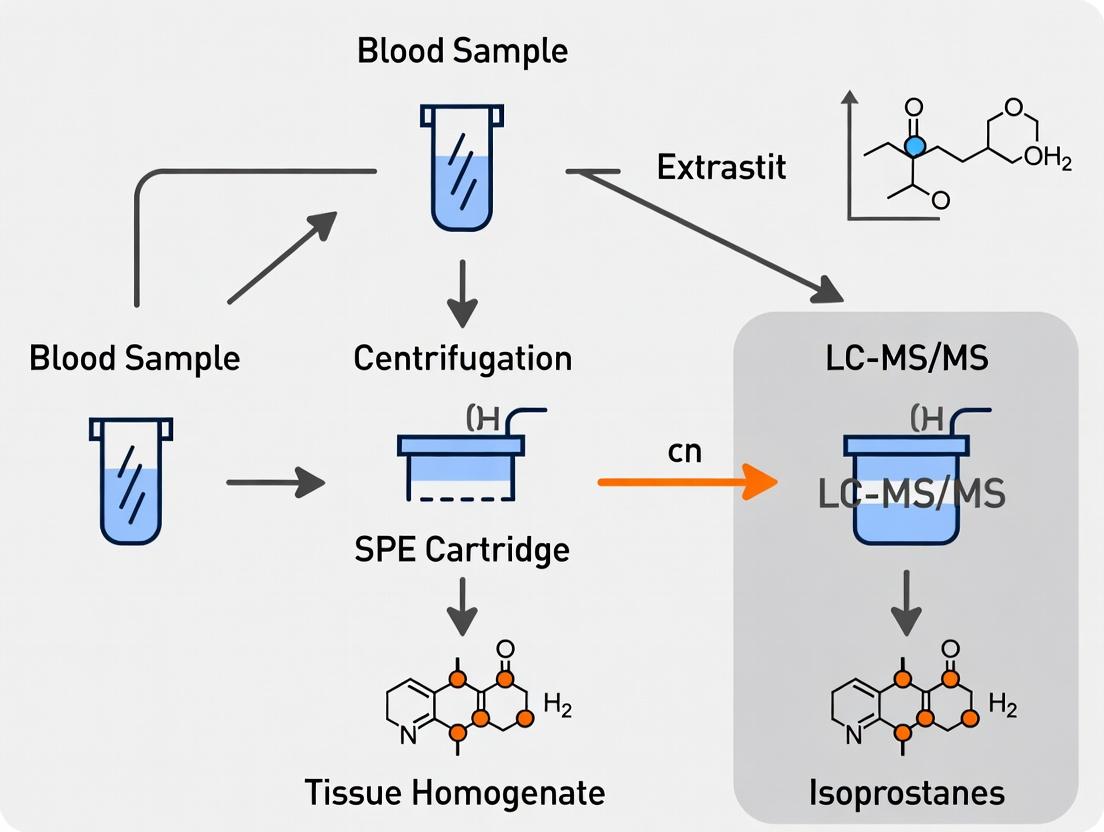
This comprehensive guide details optimized LC-MS/MS sample preparation workflows for the precise quantification of isoprostanes in biological matrices.
Ultimate Guide to LC-MS/MS Sample Preparation for Isoprostanes: Optimized Protocols for Blood and Tissue Analysis
Abstract
This comprehensive guide details optimized LC-MS/MS sample preparation workflows for the precise quantification of isoprostanes in biological matrices. Targeting researchers and drug development professionals, it covers the foundational role of isoprostanes as gold-standard oxidative stress biomarkers, provides step-by-step methodologies for plasma, serum, and tissue homogenates, addresses common troubleshooting and optimization challenges, and critically evaluates validation parameters and comparative analytical techniques. The article synthesizes current best practices to ensure accurate, reproducible results in preclinical and clinical research settings.
Isoprostanes as Biomarkers: Understanding the Why Behind the Measurement
Isoprostanes (IsoPs) are a group of prostaglandin-like compounds generated in vivo from the free radical-mediated peroxidation of polyunsaturated fatty acids (PUFAs), independent of the cyclooxygenase (COX) enzyme pathway. They serve as the gold-standard biomarkers of oxidative stress and lipid peroxidation. Within the context of LC-MS/MS-based bioanalysis for blood and tissue research, precise identification and quantification of specific IsoP classes are critical for elucidating their role in disease pathogenesis and therapy development. This application note details the key classes, their biological significance, and robust protocols for sample preparation.
Key Classes and Biological Significance
Isoprostanes are classified based on their parent fatty acid and ring structure.
Table 1: Key Isoprostane Classes: Origin, Significance, and Typical Basal Levels
| Class | Parent Fatty Acid | Primary Biological Significance | Typical Basal Level in Human Plasma (LC-MS/MS) |
|---|---|---|---|
| F2-IsoPs | Arachidonic Acid (C20:4, ω-6) | Gold-standard biomarker for systemic oxidative stress. Vasoconstrictive, pro-inflammatory, and modulate platelet aggregation. | 20-50 pg/mL (0.05-0.14 nM) |
| D2/E2-IsoPs | Arachidonic Acid (C20:4, ω-6) | Isomers of prostaglandins D2 and E2. Exhibit potent biological activity (e.g., bronchoconstriction, vasoactivity), often more potent than F2-IsoPs. | D2: 5-15 pg/mL; E2: 10-30 pg/mL |
| Neuroprostanes (F4-NeuroPs) | Docosahexaenoic Acid (DHA, C22:6, ω-3) | Specific biomarkers for oxidative neuronal injury. Elevated in neurodegenerative diseases (Alzheimer's, Parkinson's). Proposed to have unique bioactivity in the CNS. | 0.5-3.0 ng/mL (plasma); higher in brain tissue |
The Scientist's Toolkit: Essential Research Reagents & Materials
Table 2: Key Reagent Solutions for LC-MS/MS Isoprostane Analysis
| Item | Function in Protocol |
|---|---|
| Deuterated Internal Standards (e.g., 8-iso-PGF2α-d4, 15(R)-PGF2α-d4) | Correct for losses during sample prep, enable absolute quantification via stable isotope dilution. |
| Antioxidant Cocktail (e.g., BHT/EDTA in methanol) | Prevents ex vivo auto-oxidation of PUFAs during sample collection and processing. |
| Solid-Phase Extraction (SPE) Cartridges (C18 or Mixed-Mode) | Purify and concentrate analytes from complex biological matrices, removing phospholipids and salts. |
| PFB-Bromide (Pentafluorobenzyl Bromide) | Derivatization agent for electron capture negative chemical ionization (ECNI) methods; enhances MS sensitivity. |
| BSTFA + 1% TMCS (N,O-Bis(trimethylsilyl)trifluoroacetamide) | Silylation agent for derivatization, improves volatility and chromatographic behavior for GC-MS. |
| SPE Elution Solvent (Ethyl Acetate/Hexane mix) | Efficiently elutes isoprostanes from SPE cartridges with minimal co-elution of interferences. |
| LC-MS/MS Mobile Phase (e.g., 0.01% Acetic Acid in Water/Acetonitrile) | Provides optimal chromatographic separation and ionization efficiency for underivatized IsoPs. |
Detailed Experimental Protocols
Protocol 1: Solid-Phase Extraction (SPE) for Plasma Isoprostanes Prior to LC-MS/MS
Objective: To purify and concentrate F2-IsoPs and Neuroprostanes from human plasma.
- Sample Collection: Draw blood into EDTA vacutainers containing 1% (w/v) BHT. Immediately centrifuge (4°C, 2500 x g, 10 min). Aliquot plasma and store at -80°C.
- Internal Standard Addition: Thaw plasma on ice. Add 50-100 µL of antioxidant cocktail (0.2% BHT, 2% EDTA in methanol/water) and 50 pg of deuterated internal standard (e.g., 8-iso-PGF2α-d4) to 1 mL of plasma. Vortex vigorously.
- Protein Precipitation: Add 4 mL of ice-cold methanol. Vortex for 1 min, then incubate at -20°C for 1 hour. Centrifuge at 4000 x g (4°C, 15 min).
- SPE Conditioning & Loading: Condition a C18 SPE cartridge (500 mg) with 5 mL methanol, then 5 mL HPLC-grade water. Dilute the supernatant from step 3 with 20 mL water (pH 3, adjusted with HCl) and load onto the cartridge at ~1 mL/min.
- Washing & Elution: Wash sequentially with 10 mL water (pH 3) and 10 mL heptane. Dry cartridge under vacuum for 15 min. Elute isoprostanes with 10 mL ethyl acetate:hexane (50:50, v/v).
- Sample Reconstitution: Evaporate the eluate to dryness under a gentle stream of nitrogen. Reconstitute the residue in 50 µL of mobile phase (e.g., 60:40 water:acetonitrile) for LC-MS/MS analysis.
Protocol 2: Alkaline Hydrolysis for Total (Esterified + Free) Isoprostanes in Tissue
Objective: To measure total IsoP content (both free and esterified in phospholipids) from tissue homogenates.
- Tissue Homogenization: Weigh ~100 mg of snap-frozen tissue. Homogenize in 1 mL of ice-cold Folch solution (Chloroform:Methanol, 2:1, v/v) containing BHT (0.005%).
- Lipid Extraction: Add 0.5 mL of 0.9% KCl, vortex, and centrifuge (2000 x g, 10 min). Collect the lower organic layer. Evaporate under nitrogen.
- Alkaline Hydrolysis: Resuspend lipid extract in 1 mL of 15% KOH in methanol:water (50:50). Incubate at 37°C for 30 min under gentle agitation.
- Acidification & Extraction: Cool sample, acidify to pH 3 with 1M HCl. Extract released (free) IsoPs with 3 x 2 mL ethyl acetate. Combine organic layers.
- Purification: Dry combined extracts, reconstitute in 1 mL methanol/water, and proceed with SPE purification as described in Protocol 1 (Step 4 onwards).
Protocol 3: LC-MS/MS Analysis Parameters (Example)
- Column: C18 reverse-phase (2.1 x 100 mm, 1.8 µm)
- Mobile Phase A: 0.01% Acetic Acid in Water
- Mobile Phase B: Acetic Acid in Acetonitrile (0.01%)
- Gradient: 25% B to 95% B over 12 min, hold 2 min, re-equilibrate.
- MS Detection: Negative electrospray ionization (ESI-). Multiple Reaction Monitoring (MRM) transitions:
- 8-iso-PGF2α: 353 > 193 (Quantifier), 353 > 309 (Qualifier)
- 8-iso-PGF2α-d4: 357 > 197
- F4-Neuroprostane: 377 > 101 (example transition)
Visualization of Workflows and Pathways
Within the broader thesis on LC-MS/MS sample preparation for lipid peroxidation biomarkers, this application note positions F2-isoprostanes (F2-IsoPs), specifically 15-F2t-IsoP (8-iso-PGF2α), as the gold standard for in vivo oxidative stress assessment. We detail the sample preparation protocols and analytical superiority of LC-MS/MS for F2-IsoPs over other biomarkers, supported by current comparative data and standardized methodologies.
Oxidative stress is implicated in numerous pathologies, necessitating accurate quantification. While multiple biomarkers exist, F2-IsoPs derived from the free radical-catalyzed peroxidation of arachidonic acid are chemically stable, specific to oxidative injury, and detectable in all biological fluids and tissues, providing a robust in vivo measure.
Comparative Analysis of Oxidative Stress Biomarkers
Table 1: Quantitative Comparison of Primary Oxidative Stress Biomarkers
| Biomarker Class | Specific Example(s) | Analytical Method | Key Advantage | Key Limitation | Correlation with In Vivo Stress (Scale 1-5) |
|---|---|---|---|---|---|
| F2-Isoprostanes | 15-F2t-IsoP (8-iso-PGF2α) | LC-MS/MS (Gold Standard) | High specificity & sensitivity, in vivo formation, stable | Complex sample prep, costly instrumentation | 5 |
| MDA-TBA Adducts | Thiobarbituric Acid Reactive Substances (TBARS) | Spectrophotometry | Low cost, high throughput | Low specificity, artifactual formation | 2 |
| Protein Carbonyls | DNPH-derivatized carbonyls | ELISA/Immunoblot | Measures protein oxidation | Can be influenced by diet/metabolism | 3 |
| Reduced Glutathione (GSH) | GSH/GSSG Ratio | Colorimetric/LC-MS | Cellular redox status | Rapid oxidation ex vivo, requires immediate stabilization | 4 |
| mRNA Expression | Nrf2, HO-1, SOD | qRT-PCR | Mechanistic insight | Reflects response, not direct oxidative damage | 3 |
Advantages of F2-Isoprostanes as the Gold Standard
- Specificity: Formed in situ on phospholipids by free radical attack, then cleaved by phospholipases.
- Stability: Unlike reactive oxygen species (ROS) or labile antioxidants, they are stable molecules suitable for storage and analysis.
- Sensitivity: Basal levels are detectable in healthy individuals, increasing significantly with oxidative stress.
- Quantification: Amenable to precise, isotope-dilution LC-MS/MS quantification.
Experimental Protocols
Protocol 1: Solid-Phase Extraction (SPE) of F2-IsoPs from Plasma/Serum for LC-MS/MS
This protocol is central to the thesis on LC-MS/MS sample preparation.
I. Materials & Reagents:
- ISTD Solution: Deuterated 8-iso-PGF2α (e.g., d4-8-iso-PGF2α) in ethanol (e.g., 1 ng/µL).
- Antioxidant Solution: 0.005% BHT in methanol/water.
- Acidification Solution: 1M HCl.
- SPE Cartridges: C18 or mixed-mode (e.g., Waters Oasis HLB, 60 mg).
- Elution Solvent: Ethyl acetate with 1% methanol.
- Derivatization Agent: PFB bromide in acetonitrile (for electron capture negative ion chemical ionization MS; optional for ESI-LC-MS/MS).
- LC-MS/MS Mobile Phases: (A) 0.1% Formic acid in water; (B) 0.1% Formic acid in acetonitrile.
II. Procedure:
- Sample Collection & Stabilization: Draw blood into EDTA/vacutainers containing 0.005% BHT and 10 µM indomethacin. Immediately centrifuge (4°C, 1000 x g, 15 min). Aliquot plasma and store at -80°C.
- Internal Standard Addition: Thaw sample on ice. Add 50-100 pg of deuterated ISTD per mL of plasma/serum.
- Protein Precipitation & Hydrolysis: Add 4 volumes of cold methanol, vortex, incubate at -20°C for 1 hour, then centrifuge (4°C, 2000 x g, 20 min). Transfer supernatant.
- Acidification & SPE Conditioning:
- Dilute supernatant 1:1 with 1M HCl (pH~3).
- Condition SPE cartridge with 2 mL methanol, then 2 mL water (pH 3).
- Sample Loading & Washing:
- Load acidified supernatant onto cartridge slowly.
- Wash with 2 mL water (pH 3), followed by 2 mL heptane.
- Elution: Elute F2-IsoPs with 3 mL ethyl acetate with 1% methanol. Collect eluate in a silanized glass tube.
- Evaporation & Reconstitution:
- Evaporate eluate to dryness under a gentle stream of nitrogen.
- Reconstitute residue in 50 µL of mobile phase (e.g., 30:70 A/B). Vortex thoroughly.
- LC-MS/MS Analysis:
- Column: C18 reversed-phase (e.g., 2.1 x 100 mm, 1.7 µm).
- Gradient: 30-95% B over 10-12 min.
- MS: ESI-negative mode. MRM transition for 15-F2t-IsoP: m/z 353→193. For d4-ISTD: m/z 357→197.
Protocol 2: Extraction of F2-IsoPs from Tissue Homogenates
- Homogenization: Weigh tissue (50-100 mg). Homogenize in 1 mL cold methanol/water (50:50) containing BHT (0.005%) and ISTD using a bead mill or Potter-Elvehjem homogenizer.
- Hydrolysis: Incubate homogenate at 45°C for 60 min to hydrolyze esterified IsoPs from phospholipids.
- Centrifugation: Centrifuge at 10,000 x g for 20 min at 4°C.
- SPE: Follow steps 3-8 from Protocol 1, using the clear supernatant.
Visualizing Workflows and Relationships
F2-IsoP Analysis Workflow & Biomarker Context
In Vivo Formation Pathway of F2-Isoprostanes
The Scientist's Toolkit: Essential Reagents & Materials
Table 2: Key Research Reagent Solutions for F2-IsoP Analysis
| Item | Function & Critical Role in Protocol | Recommended Example / Specification |
|---|---|---|
| Deuterated Internal Standard (ISTD) | Corrects for losses during sample prep and ionization variance; essential for isotope-dilution quantitation. | d4-8-iso-PGF2α (or other multi-deuterated F2-IsoP). Purity >98%. |
| Antioxidant Cocktail | Prevents ex vivo autoxidation of lipids during blood draw and processing. | Butylated Hydroxytoluene (BHT, 0.005-0.01%) + Cyclooxygenase Inhibitor (e.g., Indomethacin, 10 µM). |
| Solid-Phase Extraction (SPE) Cartridges | Purifies and enriches F2-IsoPs from complex biological matrices, removing phospholipids and salts. | Mixed-mode hydrophilic-lipophilic balance (HLB) or C18. 60 mg bed weight. |
| Silanized Glassware | Minimizes adsorptive losses of low-level analytes to active glass surfaces during evaporation. | Reaction vials, collection tubes, and autosampler vials treated with dimethyldichlorosilane. |
| LC-MS/MS Mobile Phase Additives | Enhances ionization efficiency in negative ESI mode and improves chromatographic peak shape. | Optima LC-MS grade solvents with 0.1% formic or acetic acid. |
| Stable LC Column | Provides reproducible separation of isomers and resolution from matrix. | Reverse-phase C18 column (e.g., 2.1x100mm, 1.7-2.6µm particle size). |
Isoprostanes (IsoPs), primarily F2-isoprostanes generated from the non-enzymatic peroxidation of arachidonic acid, are established gold-standard biomarkers of oxidative stress in vivo. Their quantification, particularly via Liquid Chromatography-Tandem Mass Spectrometry (LC-MS/MS), provides a direct, sensitive, and specific measure of lipid peroxidation. Within the context of LC-MS/MS sample preparation for blood and tissue research, precise measurement of IsoPs is critical for linking oxidative damage to disease pathogenesis across numerous clinical and preclinical models.
Key Disease Linkages and Quantitative Data
Elevated IsoP levels are strongly correlated with the pathogenesis and progression of numerous diseases. The following table summarizes key associations from recent research.
Table 1: Association of F2-Isoprostanes with Disease Pathogenesis
| Disease Category | Specific Condition/Model | Sample Matrix | Reported IsoP Level (vs. Control) | Primary Pathogenic Implication |
|---|---|---|---|---|
| Neurodegenerative | Alzheimer's Disease | CSF, Brain Tissue | 2-3 fold increase | Correlates with tau pathology & cognitive decline; drives neuronal inflammation. |
| Neurodegenerative | Parkinson's Disease | Plasma, Substantia Nigra | 1.5-2.5 fold increase | Linked to dopaminergic neuron death; biomarker of disease progression. |
| Cardiovascular | Atherosclerosis | Plasma, Vascular Tissue | 2-4 fold increase | Promotes endothelial dysfunction, monocyte adhesion, and plaque instability. |
| Cardiovascular | Heart Failure (HFrEF) | Urine, Plasma | 1.8-3 fold increase | Correlates with disease severity (NYHA class) and predicts adverse events. |
| Pulmonary | COPD (Severe) | Exhaled Breath Condensate, Plasma | 3-5 fold increase | Drives airway inflammation, protease/anti-protease imbalance. |
| Metabolic | Type 2 Diabetes | Plasma, Urine | 2-2.5 fold increase | Contributes to insulin resistance and vascular complications. |
| Hepatic | NASH/NAFLD | Plasma, Liver Biopsy | 3-6 fold increase in steatohepatitis | Direct mediator of hepatocyte injury, inflammation, and fibrosis progression. |
| Renal | Chronic Kidney Disease | Plasma, Urine | 2-3 fold increase | Predicts CKD progression; contributes to renal tissue fibrosis. |
Detailed Experimental Protocols
Protocol 1: Solid-Phase Extraction (SPE) of F2-IsoPs from Plasma for LC-MS/MS
Principle: Isolate and purify F2-IsoPs from complex plasma matrix using C18 SPE prior to LC-MS/MS analysis. Materials:
- Acidified methanol (pH 3, with HCl)
- C18 SPE cartridges (100 mg/1 mL)
- SPE wash solution: Ultrapure water, acidified to pH 3
- SPE wash solution: HPLC-grade hexane
- Elution solvent: Ethyl acetate with 1% methanol
- Internal standard: Deuterated d4-8-iso-PGF2α (or similar)
- Nitrogen evaporator
- Reconstitution solvent: Mobile phase A (e.g., Water/Acetonitrile/Formic acid)
Procedure:
- Sample Preparation: Thaw plasma on ice. Spike 0.5-1 mL plasma with 50-100 pg of deuterated internal standard (d4-8-iso-PGF2α).
- Protein Precipitation & Acidification: Add 4 volumes of cold acidified methanol (pH 3). Vortex vigorously for 1 min. Incubate at -20°C for 10 min, then centrifuge at 10,000 x g for 10 min (4°C).
- SPE Conditioning: Condition C18 cartridge with 1 mL methanol, followed by 1 mL acidified water (pH 3).
- Sample Loading: Dilute supernatant with acidified water (pH 3) 1:5 (v/v) and load onto conditioned cartridge at ~1 mL/min.
- Washing: Wash cartridge sequentially with 2 mL acidified water (pH 3) and 2 mL hexane. Dry cartridge under full vacuum for 10 min.
- Elution: Elute IsoPs with 2 x 1 mL ethyl acetate with 1% methanol. Collect eluate in a glass tube.
- Solvent Evaporation & Reconstitution: Evaporate eluate to dryness under a gentle stream of nitrogen. Reconstitute dried extract in 50 µL of LC-MS/MS mobile phase A. Vortex for 30 sec and centrifuge briefly. Transfer to LC vial with insert.
Protocol 2: Homogenization and Extraction of F2-IsoPs from Tissue (e.g., Liver, Brain)
Principle: Mechanically homogenize tissue in antioxidant-containing buffer to prevent ex vivo oxidation, followed by base hydrolysis to release protein-bound IsoPs and solid-phase extraction. Materials:
- Homogenization buffer: 100 mM Phosphate buffer, pH 7.4, containing 0.005% BHT and 0.5 mM EDTA.
- Tissue homogenizer (e.g., bead mill or rotor-stator)
- KOH solution (1M)
- All materials from Protocol 1.
Procedure:
- Tissue Homogenization: Weigh 50-100 mg of snap-frozen tissue. Add 1 mL of cold homogenization buffer (with BHT/EDTA). Homogenize on ice using appropriate homogenizer. Keep samples on ice.
- Base Hydrolysis: Transfer homogenate to a glass tube. Add an equal volume of 1M KOH. Incubate at 40°C for 60 min to hydrolyze esterified IsoPs.
- Acidification and Extraction: Cool sample. Acidify to pH 3 using HCl. Spike with deuterated internal standard.
- Liquid-Liquid Extraction: Add 2 volumes of ethyl acetate. Vortex for 2 min. Centrifuge at 3,000 x g for 5 min to separate phases.
- SPE Clean-up: Carefully collect the organic (upper) layer. Combine multiple extracts if needed. Proceed with SPE Conditioning, Loading, Washing, and Elution as described in Protocol 1, Steps 3-7.
Visualization of Pathways and Workflows
Title: Isoprostane Formation and Pathogenic Signaling Pathway
Title: LC-MS/MS Sample Prep Workflow for Isoprostanes
The Scientist's Toolkit: Research Reagent Solutions
Table 2: Essential Materials for Isoprostane Analysis via LC-MS/MS
| Item | Function & Critical Notes |
|---|---|
| Deuterated Internal Standards (e.g., d4-8-iso-PGF2α) | Corrects for losses during sample prep and ionization variability in MS; essential for accurate quantification. |
| Antioxidant Cocktail (BHT & EDTA) | Added to collection tubes and homogenization buffers to prevent ex vivo lipid peroxidation, preserving in vivo IsoP levels. |
| C18 Solid-Phase Extraction (SPE) Cartridges | Provides critical cleanup of biological samples (plasma, tissue extracts), removing phospholipids and other interferents for robust LC-MS/MS. |
| LC-MS/MS Mobile Phases (Optima Grade) | High-purity solvents (Water, Acetonitrile, Methanol) and additives (Formic Acid, Ammonium Acetate) are vital for sensitive detection and stable chromatography. |
| Stable Analytical Column (C18, 2.1x100mm, <2µm) | Provides the necessary chromatographic resolution to separate IsoP isomers (e.g., 8-iso-PGF2α from PGF2α) and from matrix. |
| Mass Spectrometer (Triple Quadrupole) | Operated in Negative Ion MRM mode for selective and highly sensitive quantification of IsoPs and their internal standards. |
Within the framework of a thesis on LC-MS/MS sample preparation for isoprostanes (IsoPs) in blood and tissue research, rigorous control of pre-analytical variables is paramount. IsoPs, validated biomarkers of in vivo oxidative stress, are exquisitely sensitive to artifactual generation and biological influence. This document details application notes and protocols to mitigate pre-analytical confounders, ensuring analytical fidelity for research and drug development.
Table 1: Impact of Biological Variation and Diet on F₂-IsoPs (Plasma/Sera)
| Factor | Direction of Effect on Baseline Levels | Approximate Magnitude of Change | Key Notes & Citation Support |
|---|---|---|---|
| Age | Increase | +20-50% in elderly vs. young adults | Progressive increase correlated with age; a key covariate. |
| Gender | Variable | M ≈ F (some studies), M > F (others) | Inconclusive; study-specific. Menopause in females increases levels. |
| Smoking Status | Increase | +25-75% in smokers | Single most significant lifestyle elevator. |
| Hyperlipidemia | Increase | +30-100% | Strong correlation with LDL-cholesterol levels. |
| Diabetes Mellitus | Increase | +40-120% | Correlates with glycemic control (HbA1c). |
| High Omega-6 PUFA Diet | Increase | +50-150% | Precursor (arachidonic acid) availability drives formation. |
| Antioxidant Supplementation | Decrease | -20-40% | Vitamins C & E show modulating effects. |
| Circadian Rhythm | Fluctuation | ±15-25% peak-trough | Often highest in early afternoon. |
Table 2: Collection Tube Additives and Artefactual IsoP Generation
| Tube Type / Additive | Primary Purpose | Risk of Ex Vivo Oxidation | Recommended for IsoPs? | Protocol Mandate |
|---|---|---|---|---|
| Serum Clot Activator | Faster clot formation | HIGH | No | Avoid. Clotting process generates IsoPs. |
| EDTA (K₂ or K₃) | Chelates Ca²⁺, anticoagulant | LOW | Yes (Preferred) | Use pre-chilled tubes; fill completely. |
| Heparin (Li or Na) | Anticoagulant (activates antithrombin) | Moderate | Acceptable, not ideal | Can interfere with some MS ion pairing; use if validated. |
| Citrate | Anticoagulant (chelates Ca²⁺) | LOW | Yes | Dilution factor (9:1) must be accounted for in quantification. |
| GSH / BHT | Antioxidant preservatives | Very LOW | Gold Standard | Specialized tubes; essential for unstable matrices (e.g., tissue homogenates). |
Experimental Protocols
Protocol 1: Phlebotomy and Plasma Processing for LC-MS/MS IsoP Analysis Objective: To collect blood with minimal ex vivo oxidation for plasma IsoP profiling.
- Participant Preparation: Instruct participant to fast for 8-12 hours, avoid strenuous exercise and alcohol for 24 hours, and maintain normal hydration. Record time of day, recent diet/supplements, and medications.
- Materials: Pre-chilled (4°C) K₂EDTA vacuum tubes (e.g., 6 mL), tourniquet (minimized time <1 min), needles, cooler with wet ice, pre-labeled cryovials, refrigerated centrifuge.
- Collection: Perform venipuncture. Draw blood into chilled EDTA tube. Invert gently 8x. Immediately place tube in wet ice (dark) for ≤30 minutes.
- Centrifugation: Spin at 2,500 x g for 15 minutes at 4°C.
- Aliquoting: Within 30 minutes of centrifugation, carefully aspirate plasma (avoid buffy coat) into pre-chilled cryovials using a plastic pipette. Flash freeze in liquid nitrogen.
- Storage: Store at ≤ -70°C. Avoid freeze-thaw cycles. Analyze within 1 month for optimal results.
Protocol 2: Tissue Collection and Homogenization for IsoP Analysis Objective: To snap-freeze tissue and prepare a homogenate without artifactual lipid peroxidation.
- Materials: Liquid nitrogen, pre-cooled aluminum tongs, cryovials, homogenization buffer (50mM PBS, pH 7.4, with 0.005% BHT and 1mM EDTA), bead mill or mechanical homogenizer (pre-cooled).
- Collection: Excise tissue rapidly. Rinse briefly in ice-cold saline to remove blood. Blot dry. Submerge in liquid nitrogen within 30 seconds of excision.
- Storage: Store frozen tissue at ≤ -70°C until homogenization.
- Homogenization: Weigh frozen tissue on dry ice. Add to homogenizer with ice-cold buffer (10:1 v/w buffer:tissue). Homogenize on ice for 30-60 seconds.
- Processing: Aliquot homogenate into cryovials. Flash freeze in liquid nitrogen. Store at ≤ -70°C. Thaw on ice only once for analysis.
Diagrams and Visualizations
Title: Plasma IsoP Pre-Analytical Workflow
Title: Key Factors Influencing Measured IsoP Levels
The Scientist's Toolkit: Essential Research Reagents & Materials
| Item | Function & Rationale |
|---|---|
| K₂EDTA Vacutainers (Pre-chilled) | Preferred anticoagulant; chelates metal ions to inhibit Fenton chemistry ex vivo. Must be chilled. |
| Butylated Hydroxytoluene (BHT) | Lipophilic chain-breaking antioxidant. Added to buffers (0.005-0.01%) to halt lipid peroxidation during tissue homogenization. |
| Glutathione (GSH) | Aqueous-phase antioxidant. Often used in combination with BHT/EDTA in stabilization cocktails for sensitive matrices. |
| Indomethacin or Other COX Inhibitors | Added during tissue processing to inhibit enzymatic (cyclooxygenase) production of prostanoids, isolating non-enzymatic IsoPs. |
| Deuterated Internal Standards (e.g., d₄-8-iso-PGF₂α) | Critical for LC-MS/MS. Corrects for losses during sample prep and matrix effects during analysis. Must be added at the very beginning of extraction. |
| Solid-Phase Extraction (SPE) Cartridges (C18, NH2) | For selective purification and concentration of IsoPs from biological matrices prior to LC-MS/MS, removing major interferences. |
| LC-MS/MS Mobile Phase Additives (e.g., Acetic Acid) | Volatile acids improve chromatographic peak shape and ionization efficiency for IsoPs in negative electrospray mode. |
Accurate quantification of isoprostanes, sensitive biomarkers of oxidative stress, via LC-MS/MS is critically dependent on effective sample preparation tailored to the specific biological matrix. Plasma, serum, and tissue homogenates present fundamentally different complexities in terms of lipid content, protein composition, and interfering substances. These differences dictate the choice of purification strategy—Solid-Phase Extraction (SPE), Liquid-Liquid Extraction (LLE), or Hybrid methods—to achieve the required sensitivity and specificity, especially for low-abundance analytes like F2-isoprostanes. Failure to account for matrix-specific effects is a primary source of variability and inaccuracy in cross-tissue studies.
Quantitative Matrix Composition & Challenges
The table below summarizes key compositional differences that impact sample preparation and analytical results.
Table 1: Fundamental Composition and Challenges of Key Matrices for Isoprostane Analysis
| Matrix | Key Components & Complexity | Major Challenges for LC-MS/MS (Isoprostanes) | Recommended Cleanup Approach |
|---|---|---|---|
| Plasma (Anticoagulated) | Fibrinogen, clotting factors VII, IX, X, XIII; Anticoagulant salts (Heparin, Citrate, EDTA); Platelet-derived particles. | Phospholipid-induced matrix effects; Anticoagulant interference in ESI; Residual platelet activation altering isoprostane levels. | SPE (Reverse-Phase C18 or HLB) effectively removes phospholipids. |
| Serum (Clotted) | Fibrin, activated clotting factors, platelet-derived microvesicles; Higher relative concentration of proteins like albumin. | Highest phospholipid content post-clot; Clotting process can generate artifactual oxidative products; High protein load. | Hybrid (Protein Precipitation + SPE) essential for robust cleanup. |
| Tissue Homogenate (e.g., Liver, Heart) | Cellular debris, membrane lipids, organelles, cytosolic enzymes, structural proteins (collagen). | Extremely high lipid and protein load; Tissue-specific isoprostane adducts; Enzymatic degradation post-homogenization. | Dual LLE + SPE; Tissue weight normalization is critical. |
Detailed Experimental Protocols
Protocol 3.1: Standardized Sample Collection to Minimize Pre-Analytical Variability
Objective: To collect plasma, serum, and tissue samples with minimal ex vivo oxidation for isoprostane analysis.
- Plasma: Draw blood into pre-chilled vacutainers containing K2EDTA or lithium heparin. Invert gently 8 times. Centrifuge at 2,500 x g for 15 minutes at 4°C within 30 minutes of collection. Aliquot supernatant (plasma) into cryovials containing 0.005% BHT/0.1% TPP and flash freeze in liquid N2.
- Serum: Draw blood into serum-separator tubes. Allow to clot at room temperature for exactly 30 minutes. Centrifuge at 2,000 x g for 10 minutes at 4°C. Aliquot serum carefully, avoiding the clot pellet, add antioxidants (as above), and flash freeze.
- Tissue: Excise tissue, rinse in ice-cold PBS, blot dry, and weigh. Snap-freeze in liquid N2. Homogenize on ice (1:5 w/v) in PBS with antioxidants (BHT, TPP) using a bead mill or Potter-Elvehjem homogenizer. Centrifuge homogenate at 12,000 x g for 20 minutes at 4°C. Collect supernatant for analysis.
Protocol 3.2: Hybrid SPE Cleanup Protocol for Serum and Plasma
Reagents: Oasis HLB cartridges (60 mg, 3 cc), 100% methanol, 1% formic acid in water, elution solvent (ethyl acetate:methanol, 90:10 v/v).
- Conditioning: Load cartridge with 2 mL methanol, then 2 mL 1% formic acid. Do not let dry.
- Loading: Acidify 500 µL of plasma/serum with 1% formic acid (1:1 v/v). Load at ≤ 1 mL/min.
- Washing: Wash with 2 mL 5% methanol in 1% formic acid.
- Drying: Dry cartridge under full vacuum for 10 minutes.
- Elution: Elute isoprostanes with 2 x 1 mL of ethyl acetate:methanol (90:10). Evaporate eluent under gentle N2 stream at 30°C.
- Reconstitution: Reconstitute dried extract in 50 µL mobile phase A (water:acetonitrile:formic acid, 95:5:0.02) for LC-MS/MS injection.
Protocol 3.3: Comprehensive LLE/SPE Workflow for Lipid-Rich Tissue Homogenates
Reagents: Chloroform, methanol, potassium chloride (KCl, 0.9%), Oasis HLB cartridges.
- LLE: To 500 µL of tissue homogenate supernatant, add 2 mL methanol:chloroform (2:1 v/v) with 0.005% BHT. Vortex vigorously for 2 minutes. Add 0.5 mL 0.9% KCl, vortex, centrifuge at 2,000 x g for 5 mins.
- Phase Separation: Collect the lower organic layer. Evaporate to dryness under N2.
- SPE Reconstitution & Cleanup: Reconstitute dried lipid extract in 500 µL 1% formic acid. Proceed with Protocol 3.2 from Step 2.
Visualizing Workflows and Matrix Impacts
Title: Isoprostane Analysis Workflow from Collection to LC-MS/MS
Title: Matrix Effects on LC-MS/MS Isoprostane Quantification
The Scientist's Toolkit: Essential Research Reagent Solutions
Table 2: Key Reagents for Isoprostane Sample Preparation
| Reagent / Solution | Function & Rationale |
|---|---|
| Butylated Hydroxytoluene (BHT) / Triphenylphosphine (TPP) | Added during collection/homogenization to inhibit ex vivo autoxidation of lipids and formation of artifactual isoprostanes. |
| K2EDTA or Lithium Heparin Tubes | Preferred anticoagulants for plasma collection. Avoid citrate for MS as it causes significant ion suppression. |
| Oasis HLB SPE Cartridges | Hydrophilic-Lipophilic Balanced sorbent. Ideal for broad retention of isoprostanes from aqueous matrices while removing phospholipids and salts. |
| Stable Isotope-Labeled Internal Standards (e.g., d4-8-iso-PGF2α) | Essential for correcting matrix-induced recovery losses and ion suppression. Must be added at the initial step of sample processing. |
| Chloroform-Methanol (2:1 v/v) | Classic Folch solvent for LLE, efficiently extracting lipids and lipophilic isoprostanes from complex tissue homogenates. |
| Formic Acid (1% in Water) | Used to acidify samples prior to SPE, ensuring isoprostanes (carboxylic acids) are in protonated, neutral form for optimal retention on reverse-phase sorbents. |
| Ethyl Acetate: Methanol (90:10) | Effective elution solvent for isoprostanes from SPE cartridges, yielding high recovery and a clean, evaporable eluent. |
Step-by-Step Protocols: From Sample Collection to LC-MS/MS Ready Extract
The quantification of F2-isoprostanes (e.g., 8-iso-PGF2α), gold-standard biomarkers of in vivo oxidative stress, in biological matrices presents a significant analytical challenge due to their low endogenous concentrations (pg/mL to ng/mL range) and susceptibility to ex vivo autoxidation. The pre-analytical phase—encompassing sample collection, anticoagulant selection, and immediate processing—is the most critical determinant of data integrity, often surpassing the importance of the analytical method itself. This protocol is framed within a comprehensive thesis on LC-MS/MS sample preparation for isoprostanes, emphasizing that meticulous pre-analytical handling is non-negotiable for generating valid, reproducible data in both clinical research and drug development contexts.
Table 1: Impact of Anticoagulant and Processing Delay on Measured Plasma Isoprostane Levels
| Variable & Condition | Effect on 8-iso-PGF2α Concentration | Key Evidence from Recent Studies (2020-2023) |
|---|---|---|
| Anticoagulant: EDTA vs. Heparin | EDTA plasma yields significantly lower values (≈ 20-40%) compared to heparin plasma. | Heparin does not chelate metal ions, allowing Fenton chemistry to proceed ex vivo. EDTA's metal chelation inhibits this artifactual generation. |
| Processing Temperature | Room temperature processing leads to rapid, time-dependent increase. Chilling (4°C) slows but does not halt autoxidation. | Samples kept at 24°C for 2h showed a >200% increase vs. baseline. Immediate ice-water bath is mandatory. |
| Time to Centrifugation | Delays >1 hour cause significant artifactual elevation. | A linear increase of ~15% per hour at 4°C is observed; at RT, the rate exceeds 50% per hour. |
| Presence of Antioxidants | Addition to collection tube (e.g., BHT, glutathione) reduces but does not eliminate ex vivo formation. | Commercially available specialized tubes with antioxidant cocktails can reduce artifactual generation by up to 70% vs. plain tubes. |
| Sample Type: Plasma vs. Serum | Serum levels are consistently and markedly higher than plasma (often 2-3x). | Clot formation and platelet activation during coagulation are potent sources of isoprostane generation. Serum is not recommended. |
Table 2: Recommended Pre-analytical Conditions for Blood-Based Isoprostane Research
| Parameter | Optimal Protocol | Rationale |
|---|---|---|
| Anticoagulant | Potassium EDTA (1.5-2.0 mg/mL blood). | Superior chelation of transition metals (Fe2+, Cu+) that catalyze lipid peroxidation. |
| Collection Tube | Pre-chilled, evacuated tubes containing a defined antioxidant cocktail (e.g., BHT, Triphenylphosphine). | Minimizes initiation and propagation of lipid peroxidation during and after draw. |
| Patient Preparation | Fasting, avoidance of strenuous exercise and NSAIDs for 24h. | Reduces physiological and pharmacological confounding variables. |
| Post-collection Handling | Immediate inversion (8x), then immersion in ice-water slurry (≈0°C). | Ensures anticoagulant mixing and rapid cooling to slow enzymatic/chemical oxidation. |
| Centrifugation | ≤30 minutes post-draw. 4°C, 2500-3000 x g for 15 min. | Rapid separation of cells from plasma is critical. Cold centrifugation minimizes metabolic activity. |
| Plasma Aliquoting | Immediate transfer to pre-chilled, low-adsorption polypropylene tubes. | Prevents adherence to tube walls and allows for single-use aliquots. |
| Storage | Flash-freeze in liquid N2 or dry ice/isopropanol. Store at ≤ -80°C. | Long-term stability is ensured only at ultra-low temperatures; avoid frost-free freezers. |
Detailed Experimental Protocols
Protocol 3.1: Optimal Blood Collection & Plasma Processing for LC-MS/MS Isoprostane Analysis Materials: Pre-chilled EDTA tubes with antioxidants (e.g., Beckman Coulter Aprotnin/BHT tubes), tourniquet, ice-water slurry, cryovials, refrigerated centrifuge.
- Preparation: Pre-label all tubes. Prepare ice-water bath. Pre-cool centrifuge to 4°C.
- Collection: Apply tourniquet minimally (<1 min). Perform venipuncture and draw blood into pre-chilled anticoagulant tube. Release tourniquet promptly.
- Immediate Mixing & Cooling: Gently invert tube 8 times for complete mixing. Immediately submerge tube in ice-water slurry (0°C). Record time.
- Centrifugation: Within 30 minutes of draw, centrifuge at 4°C, 2500 x g for 15 minutes with brake OFF (to prevent disturbing the buffy coat).
- Plasma Harvesting: Using a cooled plastic pipette, carefully aspirate the plasma layer, avoiding the platelet-rich buffy coat and red blood cells. Transfer to a fresh, pre-chilled polypropylene tube on ice.
- Aliquoting & Storage: Rapidly aliquot plasma (e.g., 200 µL) into pre-labeled cryovials. Immediately snap-freeze aliquots by immersing in liquid nitrogen or a dry ice/isopropanol bath. Transfer to a -80°C freezer for long-term storage. Do not perform freeze-thaw cycles.
Protocol 3.2: Protocol for Comparative Anticoagulant Assessment Materials: Matched sets of blood collection tubes (K2EDTA, Lithium Heparin, Serum Separator), healthy volunteer cohort (n≥6).
- Study Design: Perform a randomized, cross-over draw from each participant on separate days to avoid carry-over effects.
- Parallel Processing: Draw blood simultaneously into each tube type. Process all tubes identically and in parallel following Protocol 3.1 steps 2-6.
- LC-MS/MS Analysis: Analyze all samples from a single participant in the same analytical batch to minimize inter-assay variability. Use a validated method with deuterated internal standards (e.g., d4-8-iso-PGF2α).
- Data Analysis: Compare mean concentrations between tube types using paired t-tests or ANOVA. Report % difference relative to the EDTA result.
Visualizations
Title: Workflow for High-Integrity Blood Sample Collection
Title: Pathways Leading to Ex Vivo Isoprostane Generation
The Scientist's Toolkit: Research Reagent Solutions
Table 3: Essential Materials for Isoprostane Blood Collection Research
| Item | Function & Rationale | Example Product/Catalog |
|---|---|---|
| K₂EDTA Tubes w/ Antioxidants | Primary collection device. EDTA chelates metals; antioxidants (BHT, TPP) block propagation of lipid peroxidation. | BD Vacutainer PPT (Plasma Preparation Tubes) with additives. Cayman Chemical Blood Collection Tubes (Item No. 400050). |
| Stabilized Deuterated Internal Standards | Added immediately upon thawing for analysis. Corrects for recovery losses and matrix effects during LC-MS/MS. | d₄-8-iso-PGF₂α, d₄-PGF₂α (Cayman Chemical, Cambridge Isotopes). |
| Solid-Phase Extraction (SPE) Cartridges | Essential for pre-LC-MS/MS cleanup. Enriches isoprostanes and removes interfering phospholipids and salts. | Waters Oasis HLB (60 mg, 3 cc). C18 or Immunoaffinity columns for higher specificity. |
| LC-MS/MS System with ESI Source | Analytical detection. Negative-mode Electrospray Ionization (ESI-) is most sensitive for isoprostanes. | Sciex Triple Quad 6500+, Agilent 6495C, Waters Xevo TQ-S. |
| UHPLC Column (C18) | Chromatographic separation of isomers. Critical to resolve 8-iso-PGF₂α from other PG isomers. | Waters ACQUITY UPLC BEH C18 (1.7 µm, 2.1 x 100 mm). |
| Sample Storage Cryovials | Long-term integrity. Low-adsorption, polypropylene, sterile, pre-labeled. | Corning Cryogenic Vials, Thermo Scientific Nunc. |
| Ice-Water Bath Container | Maintains true 0°C for immediate sample cooling, more effective than ice alone. | Polyethylene bath or dedicated chilled rack system. |
Solid-phase extraction is a critical sample preparation step for the quantitative analysis of isoprostanes (e.g., 8-iso-PGF2α) in complex biological matrices like blood (plasma/serum) and tissue homogenates. Isoprostanes are sensitive biomarkers of oxidative stress, present at low concentrations (pg/mL to ng/mL). SPE effectively removes phospholipids, salts, and proteins that cause ion suppression and interfere with LC-MS/MS analysis, while concentrating the analytes to achieve required detection limits.
Cartridge Selection
The selection of an SPE sorbent is governed by the chemical properties of isoprostanes: they are acidic, polar lipid mediators with carboxyl groups.
Table 1: SPE Sorbent Selection Guide for Isoprostanes
| Sorbent Type | Mechanism | Justification for Isoprostanes | Common Examples |
|---|---|---|---|
| Mixed-Mode Anion Exchange (MAX) | Hydrophobic (C8/C18) + Strong Anion Exchange (SAX) | Primary choice. SAX retains acidic analytes via ionic interaction at basic pH; C18 provides secondary hydrophobic retention. Excellent phospholipid removal. | Oasis MAX, Bond Elut Plexa PCX |
| Mixed-Mode Cation Exchange (MCX) | Hydrophobic + Strong Cation Exchange (SCX) | Not ideal for acids. Can be used if simultaneous extraction of other compound classes is needed. | Oasis MCX |
| Reversed-Phase (C18) | Hydrophobic interactions | Simple but less selective. Co-extracts more neutral lipids, leading to potential matrix effects. Requires optimized washes. | Sep-Pak C18, Strata-X |
| Pure Anion Exchange (SAX) | Ionic interaction | High selectivity for acids, but can be challenging for elution and may retain acidic phospholipids. | Silica-based SAX |
Current literature consensus (2023-2024) strongly recommends mixed-mode anion exchange (MAX) cartridges for targeted isoprostane profiling due to superior cleanliness of extracts.
Detailed Experimental Protocol: SPE for Plasma Isoprostanes
Research Reagent Solutions & Essential Materials
| Item | Function/Description |
|---|---|
| Mixed-Mode Anion Exchange (MAX) Cartridges (e.g., 60 mg, 3 mL) | Primary sorbent for selective retention of acidic isoprostanes. |
| Vacuum Manifold | Apparatus for processing multiple SPE columns under controlled pressure. |
| Positive Pressure Elution Station (Optional) | Provides cleaner elution with less channeling than vacuum. |
| Methanol (HPLC Grade) | Organic solvent for sorbent conditioning and elution. |
| Water (LC-MS Grade) | Aqueous solvent for conditioning and washing. |
| Ammonium Hydroxide (e.g., 2-5% v/v in water) | Wash solution to remove neutral interferents from MAX sorbent. |
| Formic Acid (e.g., 2% v/v in water) | Wash solution for MCX or to protonate silica-based sorbents. |
| Elution Solvent (e.g., 2% Formic Acid in Ethyl Acetate) | Acidic organic solvent disrupts ionic bonds for elution from MAX. |
| Internal Standard Solution | Stable-isotope labeled isoprostanes (e.g., d4-8-iso-PGF2α) added pre-extraction for quantification. |
| Nitrogen Evaporator | For gentle concentration of eluted samples prior to LC-MS/MS reconstitution. |
Protocol: SPE Using Oasis MAX Cartridges (60 mg/3 mL)
Pre-Sample Preparation:
- Internal Standard Addition: Add appropriate volume of stable isotope-labeled internal standard (IS) solution (e.g., 50 µL of 1 ng/mL in methanol) to 1 mL of acidified plasma (pre-treated with 1% formic acid) or tissue homogenate in a polypropylene tube.
- Protein Precipitation & Dilution: Add 2 mL of 5% methanol in 100 mM ammonium acetate buffer (pH ~7) to the sample. Vortex mix and centrifuge at 4,000 x g for 10 min at 4°C. Transfer the clear supernatant to a clean tube. Note: This step reduces protein load and adjusts pH for optimal ionic interaction.
SPE Procedure:
- Conditioning: Attach cartridge to manifold. Sequentially pass through:
- 3 mL Methanol (Wait 30 seconds for sorbent solvation).
- 3 mL LC-MS Grade Water. Do not allow sorbent to dry out.
- Loading: Load the entire prepared supernatant (~3 mL) onto the cartridge at a controlled flow rate of ~1-2 mL/min using low vacuum or gravity.
- Washing: Wash sequentially to remove interferents:
- Wash 1: 3 mL of 5% Ammonium Hydroxide solution.
- Wash 2: 3 mL of LC-MS Grade Water.
- Wash 3: 3 mL of Methanol:Water (50:50, v/v). *Apply full vacuum for 5 minutes after final wash to dry sorbent completely.
- Elution: Place a labeled collection tube under the cartridge. Elute analytes with 2 x 1.5 mL of Elution Solvent (2% Formic Acid in Ethyl Acetate). Allow solvent to soak the sorbent for 30 seconds before applying gentle vacuum or positive pressure. Collect entire eluate.
- Post-Elution Processing: Evaporate the eluate to dryness under a gentle stream of nitrogen at 30°C. Reconstitute the dry residue in 100 µL of LC-MS starting mobile phase (e.g., water:acetonitrile:formic acid, 95:5:0.1). Vortex thoroughly for 1 min and centrifuge at 14,000 x g for 5 min. Transfer supernatant to an LC-MS vial for analysis.
Critical Parameters & Optimization Data
Table 2: Impact of SPE Protocol Variations on Isoprostane Recovery (%) in Spiked Plasma
| Parameter Varied | Condition Tested | Approx. Recovery of 8-iso-PGF2α | Recommendation |
|---|---|---|---|
| Loading pH | pH 3 (acidic) | ~40% | Avoid. Analytes protonated, poor SAX retention. |
| pH 7-8 (neutral/basic) | >95% | Optimal. Analytes ionized, strong SAX retention. | |
| pH 10 (strong basic) | ~85% | Acceptable but may hydrolyze some lipids. | |
| Wash Stringency | 5% NH₄OH only | >95% | Good recovery but may leave more salts. |
| 5% NH₄OH → 50% MeOH | >90% | Optimal. Balances recovery and cleanliness. | |
| 5% NH₄OH → 100% MeOH | ~75% | Harsh, may cause premature elution. | |
| Elution Solvent | Methanol | <20% | Ineffective. Does not disrupt ionic bonds. |
| Ethyl Acetate | <30% | Poor ionic disruption. | |
| 2% Formic Acid in Ethyl Acetate | >95% | Optimal. Acid neutralizes SAX, EA elutes via hydrophobicity. | |
| 2% NH₄OH in MeOH | <10% | Counterproductive for anions. |
Workflow Visualization
Title: Solid-Phase Extraction Workflow for Isoprostane Analysis
Title: Retention and Elution Mechanism on Mixed-Mode Anion Exchange SPE
Within the thesis "Advanced LC-MS/MS Methodologies for the Quantification of Isoprostanes in Complex Biological Matrices: From Blood Plasma to Tissue Homogenates," the optimization of sample preparation is paramount. Isoprostanes, sensitive biomarkers of oxidative stress, are present at low (pg/mL to ng/mL) concentrations in blood and tissues, and are co-extracted with a plethora of interfering phospholipids, triglycerides, and proteins. Traditional LLE using ethyl acetate or methyl tert-butyl ether (MTBE) remains common but suffers from variability in phase separation, emulsion formation, and incomplete recovery of certain isoprostane isoforms. This necessitates a rigorous evaluation of alternative solvent systems and modern phase separation techniques to improve robustness, recovery, and throughput for high-sensitivity LC-MS/MS analysis.
Application Notes & Comparative Data
The following tables summarize key quantitative performance metrics for alternative LLE approaches relevant to eicosanoid and isoprostane analysis.
Table 1: Comparison of Alternative Biphasic Solvent Systems for Plasma Isoprostane Extraction
| Solvent System (Organic:Aqueous) | Typical Recovery (%) of 8-iso-PGF2α | Phospholipid Removal Efficiency (%) | Key Advantage for LC-MS/MS | Critical Note |
|---|---|---|---|---|
| MTBE/Methanol/Water (10:3:2.5, v/v) | 92-98 | >99 | Excellent lipid removal, clean extracts | Requires low temperature for optimal phase separation. |
| Butyl Chloride/Acetonitrile (1:1, v/v) | 88-94 | ~95 | Rapid phase separation, minimal emulsion | Slightly lower recovery for more polar metabolites. |
| Hexane/Ethyl Acetate (9:1, v/v) | 85-90 | ~85 | Selective for less polar analytes; good for tissues. | Poor for PGF2α and other polar isoprostanes. |
| Dichloromethane/Isopropanol (2:1, v/v) | 90-96 | >98 | High efficiency for broad polarity range. | DCM is more toxic; requires careful handling. |
Table 2: Advanced Phase Separation & Support-Assisted Techniques
| Technique | Principle | Typical Process Time | Recovery Consistency (CV%) | Suitability for Tissue Homogenates |
|---|---|---|---|---|
| Supported Liquid Extraction (SLE) | Partitioning on diatomaceous earth column. | 15-20 min | <8% | Excellent, provided homogenate is adequately centrifuged. |
| Salting-Out Assisted LLE (SALLE) | Phase separation induced by high salt concentration (e.g., MgSO₄). | 10-15 min | 5-10% | Good, but particulate can complicate pipetting. |
| Microextraction by Packed Sorbent (MEPS) | Miniaturized solid-phase extraction in syringe. | 5-10 min | 5-12% | Less ideal for particulate-rich samples without filtration. |
| Turbulent Flow Chromatography | Online extraction based on size exclusion/chemistry. | Fully automated | <15% | Requires extensive method development and specialized instrument. |
Detailed Experimental Protocols
Protocol 1: High-Recovery MTBE/MeOH/Water Extraction for Plasma Isoprostanes
This protocol is optimized for maximum phospholipid removal and high recovery of F2-isoprostanes from human plasma.
- Materials: 100 µL of acidified plasma sample (pH 3-4 with 1% formic acid), 300 µL of HPLC-grade methanol containing internal standard (e.g., d4-8-iso-PGF2α), 1 mL of methyl tert-butyl ether (MTBE).
- Procedure: a. In a 2 mL polypropylene microcentrifuge tube, add 100 µL of acidified plasma. b. Add 300 µL of chilled methanol (containing IS). Vortex vigorously for 30 seconds. A protein pellet should form. c. Add 1 mL of MTBE. Vortex mix for 10 minutes at room temperature. d. Add 250 µL of LC-MS grade water to induce phase separation. Vortex for 1 minute. e. Centrifuge at 14,000 × g for 10 minutes at 4°C. Three layers will form: a lower aqueous phase, a protein disk, and an upper organic phase. f. Carefully transfer the entire upper organic layer to a fresh tube. g. Evaporate to dryness under a gentle stream of nitrogen in a 37°C water bath. h. Reconstitute the dry extract in 50 µL of mobile phase B (e.g., acetonitrile:methanol, 50:50) for LC-MS/MS analysis.
Protocol 2: Salting-Out Assisted LLE (SALLE) for High-Throughput Processing
This method uses acetonitrile and a salt to induce rapid phase separation, minimizing emulsion issues.
- Materials: 50 µL of plasma, 150 µL of acetonitrile (with IS), 100 mg of anhydrous magnesium sulfate (MgSO₄), 50 µL of ethyl acetate.
- Procedure: a. To 50 µL of plasma in a 1.5 mL tube, add 150 µL of acetonitrile containing IS. Vortex for 30 sec. b. Add approximately 100 mg of anhydrous MgSO₄. Immediately vortex for 60 seconds until the salt is fully dissolved/dispersed. c. Centrifuge at 14,000 × g for 5 minutes. The acetonitrile will separate from the aqueous phase due to the salting-out effect. d. Transfer the upper organic (acetonitrile) layer to a new tube. e. Optional back-extraction: Add 50 µL of ethyl acetate to the remaining aqueous/salt pellet, vortex, centrifuge, and pool this with the acetonitrile fraction to enhance recovery of less polar species. f. Dry down the combined organic phases under nitrogen and reconstitute as in Protocol 1.
Visualizations
Workflow: LLE Alternatives for Isoprostane LC-MS/MS Prep
Isoprostane Analysis: Key Decision Pathway
The Scientist's Toolkit: Essential Reagents & Materials
| Item | Function in Isoprostane Prep | Critical Specification |
|---|---|---|
| Methyl tert-butyl ether (MTBE) | Primary organic solvent for high-recovery, clean LLE. | HPLC grade, low peroxide levels. Store under inert gas. |
| Acetonitrile (Optima LC/MS Grade) | Solvent for protein precipitation and SALLE. | Ultra-low UV absorbance, low inorganic impurities. |
| Anhydrous Magnesium Sulfate | Salt for inducing phase separation in SALLE. | Powder, ≥99.5% purity, stored desiccated. |
| Diatomaceous Earth SLE Plates/Cartridges | Inert support for aqueous sample dispersion in SLE. | High-purity, validated for phospholipid removal. |
| Stable Isotope Internal Standards | (e.g., d4-8-iso-PGF2α, d4-PGF2α) Correct for extraction losses and matrix effects. | Isotopic purity >98%, concentration traceable to CRM. |
| Formic Acid (LC-MS Grade) | Acidification of samples to protonate acids, improve organic extraction. | ≥99.0%, in glass ampules to avoid leachables. |
| Polypropylene Microtubes | Sample processing. Must be chemically resistant. | Low-binding, certified autosampler vial-compatible. |
Accurate quantification of isoprostanes—sensitive biomarkers of oxidative stress—in blood and tissue via LC-MS/MS necessitates rigorous sample preparation. The core challenges are preventing ex vivo oxidation during tissue disruption, effectively homogenizing diverse matrices, and removing interfering lipids without analyte loss. This protocol details optimized methods to address these challenges, ensuring analytical fidelity for research and drug development.
Homogenization Buffers: Composition and Rationale
The choice of homogenization buffer is critical for stabilizing labile isoprostanes. Key components and their functions are outlined below.
Table 1: Homogenization Buffer Compositions for Isoprostane Analysis
| Buffer Component | Concentration Range | Primary Function | Notes for Tissue Specificity |
|---|---|---|---|
| Potassium Phosphate | 10-100 mM, pH 7.4 | Maintains physiological pH, provides ionic strength. | Universal; heart, liver, kidney. |
| Butylated Hydroxytoluene (BHT) | 0.1-0.5 mM | Chain-breaking antioxidant, inhibits lipid peroxidation. | Mandatory for fatty tissues (brain, adipose). |
| Indomethacin | 10-50 µM | Cyclooxygenase (COX) inhibitor, blocks enzymatic PG synthesis. | Critical for tissues with high COX activity (lung, spleen). |
| Ethylenediaminetetraacetic Acid (EDTA) | 1-10 mM | Chelates divalent metals (Fe²⁺, Cu²⁺), inhibits Fenton reactions. | Use at higher concentration for tissues with high metal content (liver). |
| Reducing Agent (e.g., Trolox) | 50-200 µM | Water-soluble vitamin E analog, scavenges free radicals. | Add fresh; beneficial for neuronal tissues. |
| Glycerol | 10-20% (v/v) | Stabilizes protein structures, reduces mechanical shear. | Useful for fibrous tissues (muscle, heart). |
Protocol: Tissue Homogenization with Oxidation Inhibition
Title: Homogenization of Rodent Liver Tissue for F2-Isoprostane Analysis.
Principle: Mechanical disruption in a chilled, antioxidant-fortified buffer to rapidly inactivate enzymes and prevent ex vivo oxidation.
Materials:
- Pre-chilled homogenization buffer (e.g., 50 mM KPO₄, pH 7.4, 0.1 mM BHT, 10 µM indomethacin, 1 mM EDTA).
- Pre-cooled bead mill homogenizer or Potter-Elvehjem tissue grinder.
- Liquid N₂ for snap-freezing.
- Ice bath.
Procedure:
- Tissue Harvest & Freezing: Excise tissue (~100 mg), rinse in ice-cold saline, blot dry, snap-freeze in liquid N₂, and store at -80°C until use.
- Buffer Preparation: Prepare homogenization buffer fresh. Dissolve BHT and indomethacin in a minimal volume of ethanol before buffer addition. Keep on ice.
- Homogenization: Thaw tissue on ice. Add 10 volumes (w/v) of cold buffer. Homogenize on ice using a bead mill (2 cycles, 30 Hz, 45 sec) or a manual glass/Teflon grinder (10-15 strokes).
- Clarification: Centrifuge the homogenate at 10,000 x g for 10 minutes at 4°C.
- Aliquoting: Immediately transfer the clear supernatant to fresh, pre-chilled tubes. Aliquot to avoid freeze-thaw cycles. Flash-freeze in liquid N₂ and store at -80°C for subsequent solid-phase extraction (SPE).
Protocol: Lipid Removal via Solid-Phase Extraction (SPE)
Title: Mixed-Mode SPE for Isoprostane Purification and Lipid Depletion.
Principle: Use of mixed-mode cation-exchange (MCX) or polymeric reversed-phase sorbents to retain isoprostanes while washing away neutral lipids and other interferences.
Materials:
- Oasis MAX or HLB SPE cartridges (60 mg, 3 cc).
- Conditioning solvents: Methanol, water (LC-MS grade).
- Wash solutions: 1) Water, 2) 5-15% methanol in water, 3) For MAX: 2% formic acid in hexane/ethyl acetate (for severe phospholipid issues).
- Elution solvent: Ethyl acetate with 1% formic acid (for MCX) or Methanol/Ethyl Acetate (1:1, v/v) for HLB.
Procedure:
- Conditioning: Condition cartridge with 2 mL methanol, then equilibrate with 2 mL LC-MS grade water. Do not let sorbent dry.
- Loading: Acidify tissue supernatant (1:1 with 0.1% formic acid). Load sample onto cartridge at a slow, dropwise flow rate (<1 mL/min).
- Washing: Wash sequentially with:
- 2 mL water (removes salts, polar contaminants).
- 2 mL 5-15% methanol in water (removes more polar lipids).
- (Optional for phospholipid-heavy samples): 2 mL 2% formic acid in hexane/ethyl acetate.
- Drying: Centrifuge cartridge or apply vacuum (5 min) to dry bed completely.
- Elution: Elute isoprostanes into a glass tube with 2 x 1 mL of elution solvent.
- Evaporation & Reconstitution: Evaporate eluate under a gentle stream of N₂ at 37°C. Reconstitute dried extract in 50-100 µL of mobile phase (e.g., water/acetonitrile, 70:30) for LC-MS/MS injection.
The Scientist's Toolkit: Research Reagent Solutions
Table 2: Essential Materials for Isoprostane Sample Prep
| Item | Function & Rationale | Example Product/Catalog |
|---|---|---|
| Butylated Hydroxytoluene (BHT) | Primary antioxidant; quenches free radical chain reactions during homogenization. | Sigma-Aldrich, B1378 |
| Indomethacin | COX-1/2 inhibitor; blocks enzymatic prostaglandin formation that can confound isoprostane measures. | Cayman Chemical, 70270 |
| Oasis HLB SPE Cartridge | Hydrophilic-lipophilic balanced polymer; broad-spectrum retention of analytes, effective lipid removal. | Waters, WAT094225 |
| Oasis MAX SPE Cartridge | Mixed-mode Anion eXchange; useful for acidic analytes like isoprostanes, excellent phospholipid removal. | Waters, WAT094227 |
| Deuterated Internal Standard (e.g., 8-iso-PGF2α-d4) | Corrects for losses during prep, matrix effects during ionization; essential for quantification. | Cayman Chemical, 316351 |
| LC-MS Grade Ethyl Acetate | High-purity elution solvent; low UV absorbance and minimal non-volatile residues. | Fisher Chemical, E195-4 |
| Polypropylene Homogenizer Tubes with Ceramic Beads | Ensure efficient, rapid, and cold homogenization of tough tissues with minimal heat generation. | OMNI, 19-627 |
Visualized Workflows
Diagram 1: Tissue Prep Workflow for Isoprostane LC-MS/MS
Diagram 2: Key Oxidation Inhibition Pathways During Prep
Derivatization is a critical step in the LC-MS/MS analysis of low-concentration, poorly ionizing analytes like isoprostanes in blood and tissue matrices. This process enhances analyte volatility, detectability, and chromatographic performance. Pentafluorobenzyl bromide (PFB-Br) is a cornerstone reagent for this purpose, but alternative strategies exist. Within the broader thesis on optimizing LC-MS/MS sample preparation for isoprostanes, this note details when and how to employ PFB-Br and other derivatizing agents, providing current protocols and comparative data.
The Role of Derivatization in Isoprostane Analysis
Isoprostanes are prostaglandin-like compounds produced in vivo by free radical-induced peroxidation of arachidonic acid. They are sensitive biomarkers of oxidative stress. Their analysis is challenged by low endogenous concentrations (pg/mL to ng/g range), structural diversity, and poor ionization efficiency in electrospray ionization (ESI). Derivatization addresses these issues by:
- Introducing a highly ionizable or electronegative group to improve MS sensitivity.
- Altering hydrophobicity for better chromatographic separation.
- Shifting the mass away from a noisy low-mass region.
The choice of reagent depends on the target analyte, available instrumentation, and desired detection limits.
Table 1: Comparison of Derivatization Reagents for Isoprostane Analysis
| Reagent | Target Functional Group | Key Advantage(s) | Key Disadvantage(s) | Typical Application in Isoprostane Analysis |
|---|---|---|---|---|
| Pentafluorobenzyl Bromide (PFB-Br) | Carboxyl (-COOH) | Forms electron-capturing derivatives; excellent for NICI-MS; dramatic sensitivity gain (100-1000x). | Requires gas chromatography (GC) or GC-MS/MS; additional step of forming silyl ethers for hydroxyl groups. | Gold standard for 8-iso-PGF2α and other F2-isoprostanes when using GC-NICI-MS/MS. |
| Dansyl Hydrazine | Carbonyl (aldehyde/ketone) | Forms fluorescent and ESI-MS compatible derivatives; good for LC-ESI-MS/MS. | Specific to carbonyl groups; not directly applicable to native isoprostanes without oxidation. | Analysis of isoketals or isoprostanes after periodate oxidation to create carbonyls. |
| 2,4-Dinitrophenylhydrazine (DNPH) | Carbonyl (aldehyde/ketone) | Forms UV-absorbing derivatives; inexpensive. | Primarily for HPLC-UV; less sensitive than MS-based methods. | Historical method for carbonyl-containing oxidation products. |
| Girard Reagent P or T | Carbonyl (aldehyde/ketone) | Introduces a charged quaternary ammonium group; excellent for ESI+ and LC separation of polar compounds. | Specific to carbonyl groups. | Potential for LC-MS/MS analysis of specific isoprostane isoforms after derivatization of carbonyl groups. |
| Methylation (e.g., TMS-diazomethane) | Carboxyl (-COOH) | Simple, rapid; yields methyl esters for LC-MS. | Moderate sensitivity improvement compared to PFB; safety concerns with diazomethane. | Alternative for LC-MS/MS when GC is not available or for screening. |
Detailed Protocols
Protocol 1: Derivatization with Pentafluorobenzyl Bromide (PFB-Br) for GC-NICI-MS/MS
Application: Quantification of 8-iso-PGF2α in plasma. Principle: PFB-Br esters the analyte carboxyl group. The pentafluorobenzyl moiety has a high electron affinity, enabling superb sensitivity in Negative Ion Chemical Ionization (NICI) mass spectrometry.
Materials (Research Reagent Solutions Toolkit): Table 2: Essential Reagents and Materials for PFB-Br Derivatization
| Item | Function |
|---|---|
| Pentafluorobenzyl Bromide (PFB-Br) | Derivatizing agent for carboxyl groups. |
| N,N-Diisopropylethylamine (DIPEA) | Base catalyst, promotes esterification reaction. |
| Anhydrous Acetonitrile | Solvent for the derivatization reaction, must be dry to prevent hydrolysis. |
| N,O-Bis(trimethylsilyl)trifluoroacetamide (BSTFA) + 1% TMCS | Silylation agent for hydroxyl groups to improve volatility. |
| Solid Phase Extraction (SPE) Cartridges (C18) | Pre-derivatization cleanup to isolate isoprostanes from biological matrix. |
| Stable Isotope-Labeled Internal Standard (e.g., d4-8-iso-PGF2α) | Corrects for losses during sample preparation and derivatization variability. |
Procedure:
- Sample Purification: Extract 1 mL of acidified plasma using a C18 SPE column. Elute analytes with ethyl acetate containing 1% methanol. Dry eluent under a gentle stream of nitrogen.
- PFB Ester Formation: Reconstitute the dry residue in 50 µL of acetonitrile. Add 20 µL of 10% (v/v) DIPEA in acetonitrile and 20 µL of 10% (v/v) PFB-Br in acetonitrile.
- Incubation: Vortex thoroughly and incubate at 40°C for 45 minutes.
- Solvent Removal: Cool the reaction mixture and evaporate to dryness under nitrogen.
- Silylation (for hydroxyl groups): Reconstitute the PFB ester derivative in 20 µL of pyridine and 30 µL of BSTFA (with 1% TMCS). Incubate at 60°C for 30 minutes.
- Analysis: Cool, dilute with hexane, and analyze by GC-NICI-MS/MS. The derivatized analyte will have significantly enhanced signal intensity.
Protocol 2: Derivatization with Dansyl Hydrazine for LC-ESI-MS/MS
Application: Analysis of isoprostanes after oxidation to corresponding prostaglandin dialdehydes. Principle: Dansyl hydrazine reacts with aldehydes/ketones to form a highly fluorescent and readily ionizable hydrazone, shifting detection to positive ESI mode with improved sensitivity.
Procedure:
- Oxidation: Purify tissue homogenate (e.g., 100 mg liver) via SPE. Oxinate the purified isoprostane fraction with 100 µL of 0.1% periodic acid at room temperature for 1 hour to generate carbonyl derivatives.
- Derivatization: Add 100 µL of dansyl hydrazine solution (0.5 mg/mL in acetonitrile) and 10 µL of trifluoroacetic acid as a catalyst.
- Incubation: Vortex and incubate at 60°C for 30 minutes.
- Analysis: Cool, dilute with mobile phase, and analyze by reversed-phase LC-ESI(+)-MS/MS.
Workflow and Decision Pathway
The following diagram outlines the logical decision process for selecting a derivatization strategy within an isoprostane LC-MS/MS sample preparation workflow.
Diagram Title: Isoprostane Derivatization Strategy Decision Pathway
PFB-Br derivatization remains the benchmark for ultra-sensitive, quantitative analysis of isoprostanes when coupled with GC-NICI-MS/MS. For LC-ESI-MS/MS workflows, carbonyl-targeting reagents like dansyl hydrazine offer a powerful alternative, especially for specific isoform profiling. The choice must be integrated into the broader sample preparation thesis, considering matrix effects, required throughput, and available instrumentation, to achieve optimal accuracy and precision in oxidative stress biomarker research.
Within LC-MS/MS quantification of oxidative stress biomarkers like 8-iso-prostaglandin F2α (8-iso-PGF2α) in complex biological matrices (blood, tissue), the use of a stable isotope-labeled internal standard (IS) is a foundational requirement. This application note details the critical role, selection criteria, and deployment protocols for deuterated d4-8-iso-PGF2α, emphasizing its non-negotiable status for ensuring data accuracy, precision, and reproducibility in isoprostane research.
The Imperative for Deuterated Internal Standards
Quantitative LC-MS/MS is susceptible to matrix effects (ion suppression/enhancement) and variable extraction recoveries. An internal standard corrects for these losses and inconsistencies. A deuterated analogue (e.g., d4-8-iso-PGF2α) is ideal because it mimics the chemical and physical properties of the native analyte but is distinguishable by mass spectrometry due to its +4 Da mass shift.
Key Selection Criteria for d4-8-iso-PGF2α:
- Structural Homology: Identical to the analyte except for stable isotopic labels.
- Co-elution: Behaves identically in chromatography, ensuring exposure to the same matrix effects at the same time.
- Early Addition: Must be added at the very beginning of sample preparation to correct for losses throughout the entire protocol.
- Purity & Certification: Must be of high chemical and isotopic purity, with certificated concentration.
Table 1: Method Performance With and Without Deuterated Internal Standard (d4-8-iso-PGF2α)
| Performance Parameter | Without Internal Standard | With d4-8-iso-PGF2α Internal Standard |
|---|---|---|
| Accuracy (% Nominal) | 52-145% (variable) | 95-105% |
| Precision (% RSD) | >25% | <10% |
| Matrix Effect (Ion Suppression) | Uncorrected; up to -60% | Fully corrected |
| Extraction Recovery | Not quantifiable; assumed 100% | Measured and corrected (typically 70-85%) |
| Calibration Curve Linear Range | Poor (R² <0.98) | Excellent (R² >0.999) |
| Result Reproducibility | Low | High |
Table 2: Recommended Research Reagent Solutions
| Item | Function/Benefit in Analysis |
|---|---|
| d4-8-iso-PGF2α (e.g., 1 µg/mL in ethanol) | Deuterated internal standard for accurate quantification. |
| Solid-Phase Extraction (SPE) Cartridges (C18) | Purify and concentrate isoprostanes from biological matrices. |
| Derivatization Reagent (e.g., PFB-Br) | Enhances MS ionization efficiency and sensitivity for prostaglandins. |
| LC-MS/MS Mobile Phase Additives | Optimize chromatographic separation (e.g., acidic modifiers like formic acid). |
| Antioxidant Cocktail (e.g., BHT/EDTA) | Added during tissue homogenization to prevent ex vivo oxidation. |
| Stable Isotope Calibrators | For standard curve generation, distinct from the IS. |
Detailed Experimental Protocols
Protocol 1: Sample Preparation for Plasma/Serum Analysis
Principle: Protein precipitation followed by solid-phase extraction (SPE) for clean-up and pre-concentration.
Workflow:
- IS Addition: Spike 50 µL of plasma/serum with 10-50 pg of d4-8-iso-PGF2α (volume from stock solution).
- Protein Precipitation: Add 200 µL of ice-cold methanol containing 0.1% BHT. Vortex vigorously for 60 sec.
- Centrifugation: Centrifuge at 14,000 x g for 10 min at 4°C.
- Supernatant Dilution: Transfer supernatant to a new tube and dilute with 1 mL of acidified water (pH 3.5).
- SPE (C18):
- Condition cartridge with 3 mL methanol, then 3 mL water.
- Load diluted sample.
- Wash with 3 mL water, then 3 mL hexane (or hexane:ethyl acetate, 85:15).
- Elute analytes with 3 mL ethyl acetate:methanol (90:10, v/v).
- Evaporation & Reconstitution: Evaporate eluent under gentle nitrogen stream. Reconstitute dry extract in 50 µL mobile phase for LC-MS/MS injection.
Protocol 2: Tissue Homogenization and Extraction
Principle: Mechanical disruption in antioxidant-rich medium, followed by alkaline hydrolysis to release total (esterified) isoprostanes, then SPE.
Workflow:
- Weigh & Homogenize: Weigh ~50 mg tissue. Add to 1 mL of homogenization buffer (methanol:water, 50:50, containing 0.1% BHT and 1 mM EDTA) and the d4-8-iso-PGF2α IS. Homogenize on ice using a bead mill or rotor-stator homogenizer.
- Alkaline Hydrolysis (for Total IsoPs): Add 1 mL of 15% KOH to homogenate. Incubate at 45°C for 60 min with gentle shaking.
- Acidification & Extraction: Cool sample. Acidify to pH ~3 with HCl. Add 2 mL of ethyl acetate, vortex, and centrifuge to separate layers.
- Organic Phase Collection: Collect the upper organic layer. Repeat extraction with another 2 mL ethyl acetate. Combine organic phases.
- SPE Clean-up: Evaporate combined organic extracts to near dryness. Reconstitute in 1 mL acidified water (pH 3.5) and proceed with SPE steps as in Protocol 1 (Step 5).
Protocol 3: LC-MS/MS Analysis Parameters (Example)
- Column: C18 reversed-phase (e.g., 2.1 x 100 mm, 1.7 µm).
- Mobile Phase: A: Water with 0.1% formic acid; B: Acetonitrile with 0.1% formic acid.
- Gradient: 20% B to 95% B over 8 min, hold 2 min, re-equilibrate.
- MS/MS Detection (Negative ESI, MRM):
- 8-iso-PGF2α: Q1: 353.2 → Q3: 193.0 (quantifier), 353.2 → 273.2 (qualifier)
- d4-8-iso-PGF2α: Q1: 357.2 → Q3: 197.0 (for IS quantification)
Quantification: Use the ratio of the native analyte peak area to the d4-IS peak area. Construct a calibration curve using known concentrations of native analyte with a constant amount of d4-IS.
Visualized Workflows and Pathways
Title: LC-MS/MS Workflow for IsoPs with d4-IS
Title: How d4-IS Corrects for Matrix Effects
Solving Common LC-MS/MS Pitfalls in Isoprostane Analysis
Within LC-MS/MS analysis of isoprostanes—key biomarkers of oxidative stress in blood and tissue research—sample preparation is the critical foundation. Solid-phase extraction (SPE) and liquid-liquid extraction (LLE) are predominant techniques for isolating these low-abundance analytes from complex biological matrices. Failures in these steps, manifesting as low recovery and poor sensitivity, directly compromise data integrity and translational value. This application note, framed within a broader thesis on robust LC-MS/MS methodologies for lipid mediator profiling, details a systematic diagnostic approach and optimized protocols to identify and rectify SPE/LLE failures.
Diagnosing Common SPE/LLE Failures
The following table categorizes primary failure modes, their root causes, and observable effects on LC-MS/MS data.
Table 1: Diagnostic Guide for SPE/LLE Failures in Isoprostane Analysis
| Failure Mode | Root Cause | Impact on Yield/Sensitivity | Key Diagnostic Check |
|---|---|---|---|
| Poor Retention | Incorrect sorbent chemistry (e.g., using C18 for very polar isomers). | Low recovery (<50%). | Analyze flow-through and wash fractions via LC-MS/MS. |
| Inadequate sample loading conditions (pH, solvent strength). | Poor inter-analyte consistency. | Measure pH of pre-conditioned cartridge and loaded sample. | |
| Inefficient Washing | Wash solvent too strong, eluting target analytes. | Low recovery, high matrix background. | Analyze wash fraction for analyte loss. |
| Wash solvent too weak, failing to remove interferents. | High matrix suppression, poor sensitivity. | Compare ion suppression in neat solvent vs. final extract. | |
| Incomplete Elution | Elution solvent strength/volume is insufficient. | Low recovery, carryover. | Perform a second, stronger elution step and analyze. |
| Analyte-sorbent interactions too strong (e.g., ionic). | Low recovery, degraded chromatography. | Evaluate alternative elution solvents (e.g., with acid/base). | |
| Matrix Effects | Co-eluting phospholipids (SPE) or lipids (LLE). | Severe ion suppression/enhancement, poor precision. | Perform post-column infusion or monitor phospholipid MRMs. |
| Incomplete protein precipitation or cell debris removal. | Column fouling, signal instability. | Inspect sample post-pre-treatment for clarity/particulates. | |
| LLE-Specific: Emulsion Formation | Vigorous shaking, saturated organic solvents. | Unrecoverable sample loss, poor reproducibility. | Visual inspection; switch to gentle vortexing or rotation. |
| Matrix composition (rich in phospholipids/proteins). | Inconsistent phase separation, low recovery. | Alter organic solvent (e.g., MTBE) or add salt (e.g., NaCl). |
Optimized Experimental Protocols
Protocol 1: Hybrid SPE-LLE for Plasma Isoprostanes (Optimized)
Objective: Isolate F2-isoprostanes (e.g., 8-iso-PGF2α) from human plasma with high recovery and low matrix effects. Materials: See "Research Reagent Solutions" below. Procedure:
- Protein Precipitation & Hydrolysis: Thaw plasma on ice. Aliquot 500 µL into a microtube. Add 1 mL of ice-cold methanol:acetonitrile (1:1, v/v) containing 0.1% acetic acid and internal standard (e.g., d4-8-iso-PGF2α). Vortex vigorously for 1 min. Incubate at -20°C for 20 min. Centrifuge at 14,000 × g, 4°C for 15 min.
- Dilution & SPE Conditioning: Transfer supernatant to a tube containing 2 mL of 5% methanol in water (acidified to pH 3 with formic acid). Mix. Condition a mixed-mode C8-SPE cartridge (60 mg) with 2 mL methanol, then 2 mL water (pH 3).
- SPE Loading & Washing: Load the diluted supernatant at ~1 mL/min. Wash sequentially with: 2 mL water (pH 3), 2 mL 25% methanol in water, and 2 mL n-hexane. Dry cartridge under vacuum for 10 min.
- Elution & LLE Clean-up: Elute analytes with 2 × 1 mL of ethyl acetate. Combine eluates in a glass tube. Add 1 mL of saturated NaCl solution. Cap and vortex gently for 2 min. Centrifuge at 2,000 × g for 5 min for clear phase separation.
- Evaporation & Reconstitution: Transfer the upper organic layer to a clean tube. Evaporate to dryness under a gentle nitrogen stream at 30°C. Reconstitute the dry residue in 50 µL of mobile phase A (0.01% acetic acid in water:acetonitrile, 95:5). Vortex for 30 sec, sonicate for 1 min, and centrifuge. Transfer to an LC vial for MS analysis.
Protocol 2: Tissue Isoprostane Extraction via Modified LLE
Objective: Extract total (esterified and free) isoprostanes from tissue homogenates. Procedure:
- Homogenization: Homogenize ~50 mg of snap-frozen tissue in 1 mL of ice-cold PBS containing 0.1% butylated hydroxytoluene (BHT) as antioxidant.
- Hydrolysis & Protein Precipitation: Add 2 mL of methanol containing 0.1% acetic acid and internal standard. Add 100 µL of 10 M KOH. Incubate at 40°C for 30 min for basic hydrolysis. Cool, then acidify to pH ~3 with concentrated HCl. Add 4 mL of ice-cold chloroform. Vortex gently for 5 min.
- Phase Separation: Centrifuge at 3,000 × g for 10 min at 4°C. Carefully aspirate the upper aqueous layer. Transfer the lower organic layer to a clean glass tube using a Pasteur pipette, avoiding the protein interphase.
- Washing & Evaporation: Add 1 mL of 0.1 M HCl to the organic extract, vortex gently for 1 min, and centrifuge. Transfer the organic layer and evaporate under nitrogen.
- SPE Clean-up (Optional but Recommended): Reconstitute dried extract in 0.5 mL of methanol. Dilute with 1.5 mL of water (pH 3). Load onto a pre-conditioned C18 SPE cartridge. Wash with 2 mL water (pH 3) and 2 mL n-hexane. Elute with 2 mL ethyl acetate. Dry and reconstitute for LC-MS/MS.
Visualizations: Workflow & Diagnostic Logic
Title: Diagnostic Flowchart for SPE Failure Analysis
Title: Optimized Hybrid SPE-LLE Workflow for Isoprostanes
The Scientist's Toolkit: Research Reagent Solutions
Table 2: Essential Materials for Isoprostane SPE/LLE
| Item | Function & Rationale |
|---|---|
| Mixed-Mode SPE Cartridges (e.g., C8/SCX, C18/COOH) | Combines reversed-phase and ion-exchange mechanisms for superior retention of acidic isoprostanes over simple C18. |
| Deuterated Internal Standards (e.g., d4-8-iso-PGF2α) | Essential for correcting losses during extraction, matrix effects, and instrument variability. Must be added pre-extraction. |
| Antioxidants (e.g., BHT, Triphenylphosphine) | Added to homogenization buffers to prevent ex vivo oxidation and artificial generation of isoprostanes during processing. |
| Acidified Organic Solvents (MeOH/ACN with 0.1% Acetic) | Enhances protein precipitation efficiency and maintains analytes in protonated form for optimal SPE retention. |
| Mass Spectrometry Grade Water & Solvents | Minimizes background contamination that can interfere with the detection of trace-level analytes. |
| Saturated Sodium Chloride (NaCl) Solution | Used in LLE to "salt out" organic solvents, break emulsions, and improve phase separation. |
| Methyl tert-butyl ether (MTBE) | An effective LLE solvent for lipids, often yielding cleaner extracts with lower phospholipid content compared to chloroform. |
| pH Adjustment Solutions (e.g., Formic Acid, Ammonium Hydroxide) | Critical for controlling the ionization state of analytes and optimizing their interaction with SPE sorbents. |
Within the framework of a thesis on LC-MS/MS sample preparation for isoprostane analysis in blood and tissue, managing matrix effects is paramount. Isoprostanes, sensitive biomarkers of oxidative stress, are quantified at low pg/mL levels in complex biological matrices where phospholipids and endogenous compounds commonly cause ion suppression. This application note details the systematic identification of these effects via post-column infusion and outlines practical mitigation strategies to ensure assay accuracy and robustness for preclinical and clinical research.
Liquid chromatography-tandem mass spectrometry (LC-MS/MS) is the gold standard for quantifying isoprostanes (e.g., 8-iso-PGF2α) due to its high specificity and sensitivity. However, the electrospray ionization (ESI) process is highly susceptible to matrix effects—alterations in ionization efficiency caused by co-eluting matrix components. Ion suppression leads to inaccurate quantification, reduced sensitivity, and poor reproducibility. For longitudinal studies in disease models or drug development, reliable data hinges on identifying and mitigating these effects.
Identification of Matrix Effects: Post-Column Infusion Protocol
Post-column infusion is a diagnostic technique to visualize the chromatographic regions where ion suppression or enhancement occurs.
Experimental Protocol
Materials & Equipment:
- LC-MS/MS system with a post-column infusion tee.
- Syringe pump capable of precise, low-flow-rate delivery.
- Analytical column suitable for isoprostane separation (e.g., C18, 2.1 x 100 mm, 1.7-1.8 µm).
- Mobile phases (A: 0.1% Formic acid in water; B: 0.1% Formic acid in acetonitrile).
- Standard solution of target isoprostane (e.g., 8-iso-PGF2α) in methanol/water (50:50, v/v).
- Blank matrix extracts (plasma, serum, tissue homogenate supernatant) and solvent blank.
- Syringe and connecting tubing (minimal dead volume).
Procedure:
- System Setup: Connect the syringe pump outlet to the post-column infusion tee installed between the column outlet and the MS ion source. Use minimal length PEEK tubing (e.g., 0.005" i.d.).
- Infusion Solution: Prepare a solution of the target isoprostane (e.g., 100 ng/mL) in a solvent compatible with the mobile phase (e.g., methanol/water with 0.1% formic acid, 50:50).
- Chromatographic Run: a. Load the blank matrix extract (from a 50 µL plasma sample processed via protein precipitation or solid-phase extraction) onto the LC system. b. Start the chromatographic gradient specific for isoprostane separation. c. Simultaneously, start the syringe pump to infuse the isoprostane standard at a constant rate (e.g., 5-10 µL/min) into the post-column effluent.
- MS Detection: Operate the MS/MS in MRM mode, monitoring the specific transition for the infused isoprostane. Acquire data continuously throughout the LC run.
- Data Analysis: Plot the MRM response versus time. A stable signal indicates no matrix effect. A dip in the signal indicates ion suppression; a peak indicates ion enhancement. Compare the trace from the matrix injection to one from a solvent blank injection.
Data Interpretation
The output is a chromatogram of constant analyte infusion. Deviations from the baseline signal correspond to co-eluting matrix components.
Table 1: Interpretation of Post-Column Infusion Results
| Signal Profile | Region (Retention Time) | Indication | Common Causative Agents in Isoprostane Analysis |
|---|---|---|---|
| Stable Baseline | Entire Run | Minimal Matrix Effects | N/A |
| Sharp Signal Dip | Early-Elluting (< 2 min) | Severe Ion Suppression | Phospholipids (lysophosphatidylcholines), salts, polar endogenous compounds |
| Broad Signal Dip | Mid-Run (~2-5 min) | Moderate Suppression | Fatty acids, glycerides, less polar matrix components |
| Signal Peak | Any Region | Ion Enhancement | Less common, may involve adduct formation or altered droplet surface tension |
Mitigation Strategies for Isoprostane Analysis
Based on the identification, implement one or more of the following strategies.
Enhanced Sample Cleanup
Protein precipitation (PPT) alone is insufficient. Optimized sample preparation is critical.
Protocol: Solid-Phase Extraction (SPE) for Plasma Isoprostanes
- Conditioning: Condition a reverse-phase C18 or mixed-mode SPE cartridge with 3 mL methanol, followed by 3 mL water.
- Loading: Acidify 500 µL of plasma with 20 µL of 1M HCl. Load the sample onto the cartridge at a slow drip (~1 mL/min).
- Washing: Wash sequentially with 3 mL of water, 3 mL of 10% methanol in water, and 3 mL of hexane (to remove neutral lipids).
- Elution: Elute isoprostanes with 3 mL of methyl formate or ethyl acetate. Collect the eluate.
- Reconstitution: Evaporate the eluate to dryness under a gentle stream of nitrogen. Reconstitute in 100 µL of starting mobile phase (e.g., 20% B) for LC-MS/MS analysis.
Chromatographic Resolution
Improve separation of the analyte from matrix interferences.
- Use a Longer or Different Column: Shift the isoprostane retention time away from major suppression zones (often early eluting).
- Optimize the Gradient: Employ a shallower initial gradient to better resolve early-eluting phospholipids from the target analyte.
- Utilize LC Columns for Phospholipid Removal: Install a dedicated guard column (e.g., immobilized enzyme column) or use columns designed to trap phospholipids (e.g., hybrid surface technology).
Internal Standard Correction
The use of stable isotope-labeled internal standards (SIL-IS) is non-negotiable.
- Requirement: Use a deuterated or ¹³C-labeled analog of the exact target isoprostane (e.g., 8-iso-PGF2α-d₄).
- Function: The SIL-IS experiences nearly identical matrix effects as the native analyte. The response ratio (analyte/IS) corrects for suppression/enhancement, provided the IS is added at the beginning of sample preparation and co-elutes perfectly with the analyte.
Method Validation: Assessment of Matrix Effects
Quantify the absolute matrix effect as per EMA/FDA guidelines.
Protocol: Determination of Matrix Factor (MF)
- Prepare Post-Extraction Spiked Samples (n=6 different matrix lots): Process blank matrix from 6 individual sources through the entire sample preparation protocol. After extraction and reconstitution, spike in a known concentration of isoprostane and SIL-IS.
- Prepare Neat Solutions (n=6): Prepare the same concentration of isoprostane and SIL-IS in reconstitution solvent (no matrix).
- Analysis & Calculation: Analyze all samples. Calculate the peak area for the analyte (A) and IS in each.
- Matrix Factor (MF) = (Peak Area in Post-Extract Spike) / (Peak Area in Neat Solution)
- IS-Normalized MF = MF (Analyte) / MF (IS)
- Acceptance Criteria: The precision (CV%) of the IS-normalized MF across the 6 matrix lots should be ≤ 15%. This confirms that the SIL-IS adequately compensates for inter-subject matrix variability.
Table 2: Summary of Mitigation Strategies and Efficacy
| Strategy | Mechanism | Key Benefit for Isoprostane Analysis | Practical Consideration |
|---|---|---|---|
| SPE Cleanup | Selective removal of phospholipids & lipids | Reduces early-eluting ion suppression by >80% compared to PPT | Increases sample preparation time; cost per sample increases. |
| Gradient Optimization | Temporal separation of analyte from interferents | Can shift isoprostane RT to a "quiet" window; 20-40% signal recovery. | May increase run time; requires re-validation of separation. |
| SIL Internal Standard | Co-elution and identical chemical behavior | Corrects for residual matrix effects; essential for accuracy. | High cost of labeled standards; must verify lack of cross-talk. |
| Reduced Injection Volume | Lowers absolute amount of matrix on-column | Simple first step to reduce overload. | May compromise sensitivity for low-abundance isoprostanes. |
The Scientist's Toolkit: Research Reagent Solutions
Table 3: Essential Materials for Isoprostane LC-MS/MS Analysis
| Item | Function/Description | Example/Catalog Consideration |
|---|---|---|
| Stable Isotope-Labeled Isoprostanes | Perfect internal standard for each target analyte; corrects for matrix effects and recovery losses. | Cayman Chemical, 8-iso-PGF2α-d₄; 15-F2t-IsoP-d₄. |
| Mixed-Mode SPE Cartridges | Combined reverse-phase and weak anion exchange; superior cleanup of acidic isoprostanes from complex matrices. | Waters Oasis MAX, Agilent Bond Elut Plexa PCX. |
| Phospholipid Removal Plates/Cartridges | Selectively binds phospholipids during sample cleanup to minimize primary cause of ion suppression. | Phenomenex Phree, Waters Ostro. |
| LC Column for Lipids | Stationary phases designed to retain and separate lipids, preventing their co-elution with analytes. | Waters Acquity UPLC CSH C18, Thermo Accucore C30. |
| Mass Spectrometry Grade Solvents | High-purity solvents minimize chemical noise and background ions that can interfere with detection. | Optima LC/MS Grade (Fisher), CHROMASOLV LC-MS Grade (Honeywell). |
| Post-Column Infusion Tee | Low-dead-volume union for connecting the infusion pump to the column effluent. | IDEX Health & Science, P-888, 0.25mm bore. |
| Precision Syringe Pump | Provides stable, pulseless flow for post-column infusion experiments. | Cole-Parmer 78-0100C, or similar. |
Visualization of Workflows and Relationships
Diagram 1: Workflow for Diagnosing and Mitigating Matrix Effects
Diagram 2: Post-Column Infusion Setup Schematic
Isoprostanes (IsoPs), particularly F2-IsoPs, are gold-standard biomarkers of in vivo oxidative stress. Accurate quantification via LC-MS/MS is paramount in cardiovascular, neurodegenerative, and metabolic disease research. However, the very oxidative processes we aim to measure in vivo can continue unabated ex vivo during sample collection, processing, and storage. This generates artifactual IsoP formation, leading to gross overestimation of true physiological levels. This document details the application notes and protocols, framed within a thesis on LC-MS/MS sample preparation, to mitigate these artifacts through a dual strategy: chemical inhibition via antioxidants and rigorous physical cold chain management.
The Role of Antioxidants: BHT and TPP
Butylated hydroxytoluene (BHT) and triphenylphosphine (TPP) are the cornerstone antioxidants for preventing ex vivo lipid peroxidation. They operate via complementary mechanisms.
- BHT (A Chain-Breaking Phenolic Antioxidant): Donates a hydrogen atom to peroxyl radicals (ROO•), interrupting the propagation phase of the lipid peroxidation chain reaction. It prevents the formation of new peroxides.
- TPP (A Reducing Agent): Chemically reduces preformed lipid hydroperoxides to stable alcohols. This is critical because hydroperoxides can decompose via metal-catalyzed reactions (e.g., Fenton) to generate alkoxyl radicals, propagating further peroxidation.
Protocol 1.1: Preparation and Addition of Antioxidant Cocktail for Plasma/Serum Reagents: BHT, TPP, HPLC-grade ethanol. Procedure:
- Prepare a concentrated antioxidant stock solution: Dissolve 0.2 g BHT and 0.5 g TPP in 10 mL of absolute ethanol. This yields a 20 mg/mL BHT and 50 mg/mL TPP stock. Store at -20°C for up to 1 month.
- Immediately upon blood draw, add the antioxidant cocktail to the collection tube (e.g., EDTA/K3 tube). For 1 mL of whole blood, add 10 µL of the stock solution. Final concentrations: 200 µg/mL BHT and 500 µg/mL TPP.
- Mix by gentle inversion 5-7 times.
- Proceed with plasma separation without delay (see Cold Chain Protocol).
Protocol 1.2: Homogenization of Tissue with Antioxidants Reagents: BHT, TPP, Homogenization buffer (e.g., 100 mM Potassium phosphate, 1 mM EDTA, pH 7.4), HPLC-grade ethanol or methanol. Procedure:
- Pre-chill homogenization buffer on ice. Spike the required volume of buffer with the antioxidant stock solution (from 1.1) to achieve final concentrations of 50 µg/mL BHT and 125 µg/mL TPP in the total homogenate.
- Weigh tissue sample (e.g., 50-100 mg) and place in pre-chilled homogenizer tube.
- Add ice-cold, antioxidant-spiked buffer at a 1:9 (w/v) tissue-to-buffer ratio.
- Homogenize on ice using a mechanical homogenizer (e.g., Polytron) for 15-20 seconds.
- Aliquot homogenate immediately and store at -80°C.
Cold Chain Management Protocol
Temperature control is non-negotiable. Enzymatic (e.g., phospholipases) and non-enzymatic peroxidation rates approximately double for every 10°C increase in temperature.
Protocol 2.1: Integrated Blood Collection to Storage Workflow
- Pre-Chill: Keep all collection tubes (with antioxidants added), centrifuges (rotors), pipettes, and aliquot tubes at 4°C prior to use.
- Draw & Mix: Draw blood and mix with antioxidants as per Protocol 1.1.
- Immediate Ice Bath: Place the filled blood tube immediately into a slurry ice bath (0°C) for no more than 30 minutes before centrifugation.
- Cold Centrifugation: Centrifuge at 4°C, 2500 x g for 15 minutes.
- Prompt Aliquotting: On ice, promptly transfer the plasma layer to pre-chilled polypropylene cryovials.
- Rapid Freezing: Flash-freeze aliquots in a dry-ice/ethanol bath or liquid nitrogen for ≥5 minutes.
- Ultra-Cold Storage: Transfer tubes to a -80°C freezer. Avoid frost-free freezers. Document storage location.
- Thawing: Thaw samples on an ice bath (4°C) or in a refrigerator. Never use a warm water bath or bench-top thaw. Vortex briefly after thawing and centrifuge (4°C) before analysis.
The following table summarizes key experimental findings on the efficacy of combined BHT, TPP, and cold chain management in suppressing ex vivo IsoP formation.
Table 1: Efficacy of Artifact Prevention Strategies on Reported F2-IsoP Levels
| Sample Type | Prevention Method | Reported F2-IsoP Concentration (pg/mL or pg/g) | Artifact Reduction vs. Control | Key Reference |
|---|---|---|---|---|
| Human Plasma | No additives, room temp processing | 450 ± 120 pg/mL | Baseline (0%) | Milne et al., 2015 |
| Human Plasma | BHT+TPP + processing on wet ice | 85 ± 15 pg/mL | ~81% reduction | |
| Rat Liver Tissue | Homogenization without antioxidants | 125 ± 35 ng/g tissue | Baseline (0%) | Song et al., 2018 |
| Rat Liver Tissue | Homogenization with BHT/TPP at 4°C | 28 ± 6 ng/g tissue | ~78% reduction | |
| Murine Brain | Snap-freeze in liquid N2, no additives | 12.5 ± 2.1 ng/g | Baseline (0%) | Greco et al., 2020 |
| Murine Brain | Snap-freeze, stored >6mo at -80°C | 12.8 ± 2.3 ng/g | No significant increase |
The Scientist's Toolkit: Essential Research Reagent Solutions
Table 2: Critical Reagents for Preventing Ex Vivo Artifacts in IsoP Research
| Item | Function & Rationale |
|---|---|
| BHT (Butylated Hydroxytoluene) | Chain-breaking antioxidant. Scavenges peroxyl radicals to halt propagation of lipid peroxidation in samples. |
| TPP (Triphenylphosphine) | Hydroperoxide reductant. Converts existing lipid hydroperoxides to stable alcohols, preventing their decomposition into radical species. |
| EDTA or DTPA | Metal chelator. Binds free Fe²⁺/Cu⁺ ions, inhibiting metal-catalyzed hydroperoxide decomposition (Fenton reaction). |
| Indomethacin or Other COX-inhibitors | Cyclooxygenase inhibitor. Blocks enzymatic (COX-1/2) production of prostanoids, which can interfere analytically and biologically. |
| HPLC/MS-Grade Solvents (MeOH, EtOH, Water) | High-purity solvents for antioxidant stock preparation and homogenization. Minimize introduction of contaminants that promote oxidation. |
| Polypropylene Cryovials | Preferred over polystyrene. Less permeable to oxygen and more resistant at ultra-low temperatures (-80°C). |
| Inert Gas (Argon/Nitrogen) | For purging sample vials prior to sealing to displace oxygen from the headspace, minimizing oxidation during storage. |
Visualizing the Strategy: Pathways and Workflows
Title: Mechanism of Ex Vivo Peroxidation & Antioxidant Intervention
Title: Optimal Cold Chain Workflow for Plasma Samples
Isoprostanes, a class of prostaglandin-like compounds generated in vivo by non-enzymatic free-radical peroxidation of arachidonic acid, are established biomarkers of oxidative stress. Their accurate quantification in complex biological matrices like blood and tissue is a cornerstone of research in neurodegenerative diseases, cardiovascular disorders, and drug toxicity studies. A thesis focusing on LC-MS/MS sample preparation for isoprostanes must address significant chromatographic challenges to achieve the requisite specificity and sensitivity. Key among these are peak tailing, which reduces sensitivity and precision, and co-elution, which compromises selectivity and accurate quantification. The strategic selection of mobile phase acids and buffers is paramount to overcoming these hurdles, influencing ionization efficiency in the MS source, peak shape, and chromatographic resolution.
Core Chromatographic Challenges & Mechanisms
Peak Tailing in Isoprostane Analysis
Isoprostanes are carboxylic acids with the potential for secondary interactions with residual silanol groups on the surface of even modern C18 stationary phases. This leads to tailing peaks, reducing the signal-to-noise ratio and quantitation accuracy.
Primary Causes:
- Silanol Interaction: Ionic interaction between the anionic carboxylate group of the isoprostane and acidic silanols (Si-OH).
- Metal Impurities: Trace metals in silica-based columns can chelate with analytes.
- Inappropriate Mobile Phase pH: A pH too far from the pKa of the analyte can exacerbate undesired ionic forms.
Co-elution in Complex Matrices
Biological extracts contain numerous isobaric and isomeric compounds (e.g., different isoprostane regioisomers, prostaglandins) that can co-elute, leading to ion suppression and inaccurate MS/MS quantification.
Primary Causes:
- Insufficient Chromatographic Resolution: Overloaded columns or suboptimal gradient conditions.
- Isomeric Complexity: The presence of multiple, structurally similar isoprostane isomers (e.g., 8-iso-PGF2α, 15-F2t-IsoP).
Mobile Phase Optimization: Acid and Buffer Selection
The choice of mobile phase additive is critical for controlling ionization state, suppressing silanol activity, and enhancing MS sensitivity.
Key Considerations for LC-MS/MS:
- Volatility: Must be compatible with MS detection (no non-volatile salts like phosphate).
- Ion-Pairing Potential: Should minimize analyte interaction with the stationary phase.
- Ion-Suppression Effect: Should not cause significant signal suppression in the ESI source.
- Optimal pH Range: Typically 1-2 units below the analyte pKa for weak acids to promote protonation and minimize silanol interaction.
Common Additives for Acidic Analytics (Isoprostanes):
Table 1: Comparison of Common Mobile Phase Additives for Isoprostane LC-MS/MS
| Additive | Typical Conc. | Mechanism of Action | Advantages | Disadvantages for Isoprostanes |
|---|---|---|---|---|
| Formic Acid (FA) | 0.05-0.1% (v/v) | Proton donor, reduces pH to ~2.7. | Excellent MS compatibility, simple. | May provide insufficient ion suppression for severe tailing. |
| Acetic Acid (AA) | 0.1-0.5% (v/v) | Proton donor, reduces pH to ~2.9. | Slightly less acidic than FA; good for some applications. | Similar limitations as FA for difficult separations. |
| Ammonium Formate | 5-10 mM, pH ~3.0 | Buffer capacity near pKa of FA (~3.75), controls ionic state. | Provides buffering, improves retention time reproducibility. | Can be less effective at eliminating tailing compared to stronger acids. |
| Trifluoroacetic Acid (TFA) | 0.01-0.05% (v/v) | Strong ion-pairing agent, effectively masks silanols. | Superior for eliminating peak tailing. | Can cause significant ion suppression in ESI-MS ("TFA Anion Effect"). |
| TFA with Post-Column Infusion | 0.01% TFA in MP | Ion-pairing for chromatography. | Eliminates tailing and counteracts MS signal suppression. | Requires additional pump hardware and optimization. |
Detailed Experimental Protocols
Protocol 1: Systematic Screening of Mobile Phase Additives for Peak Shape
Objective: To identify the optimal mobile phase additive for minimizing peak tailing of 8-iso-PGF2α.
Materials:
- LC-MS/MS system (e.g., Waters ACQUITY UPLC coupled to a Triple Quadrupole MS)
- Column: BEH C18, 1.7 µm, 2.1 x 100 mm
- Mobile Phase A (MPA): Water with additive.
- Mobile Phase B (MPB): Acetonitrile with same additive as MPA.
- Additives to test: 0.1% FA, 0.1% AA, 10 mM Ammonium Formate (pH 3.0), 0.02% TFA.
- Standard: 100 pg/µL 8-iso-PGF2α in water:ACN (95:5).
Procedure:
- Prepare four separate sets of MPA and MPB, one for each additive.
- For the TFA set, also prepare a "make-up" solution of 50% propionic acid in isopropanol for post-column infusion (if available).
- Set column temperature to 45°C. Flow rate: 0.4 mL/min.
- Use a linear gradient: 15% B to 40% B over 6 minutes, then to 95% B in 0.5 min, hold for 1.5 min, re-equilibrate at 15% B for 2 min.
- Inject 5 µL of the standard using each mobile phase condition.
- MS Parameters: ESI negative mode. Capillary voltage: 2.8 kV. Source temp: 150°C. Desolvation temp: 500°C. Monitor MRM transition for 8-iso-PGF2α (353 > 193).
- Calculate the Asymmetry Factor (As) at 10% peak height for each chromatogram. As = B/A, where A is the distance from the peak front to the peak center, and B is the distance from the peak center to the tailing edge. Target: 0.9 < As < 1.2.
Protocol 2: Overcoming Co-elution via Gradient Optimization
Objective: To resolve 8-iso-PGF2α from a closely eluting isomer (e.g., 15-F2t-IsoP).
Materials: As per Protocol 1, using the optimal additive identified.
Procedure:
- Prepare a mixed standard containing 100 pg/µL each of 8-iso-PGF2α and 15-F2t-IsoP.
- Start with a shallow gradient: 20% B to 35% B over 12 minutes.
- Inject 5 µL and note the retention times and baseline separation (resolution, Rs > 1.5).
- If co-elution persists, adjust the starting %B or the gradient slope. A decrease in starting %B (e.g., to 15%) often improves early elution resolution.
- If resolution is adequate but the peak is too broad, steepen the gradient (e.g., 20% B to 35% B over 8 min).
- Validate the final method with a matrix-matched sample (extracted blank matrix spiked with analytes) to check for matrix-induced retention time shifts.
Visual Summaries
Title: Mobile Phase Additive Selection Workflow
Title: Isoprostane Analysis from Sample to Data
The Scientist's Toolkit
Table 2: Essential Research Reagents & Materials for Isoprostane LC-MS/MS
| Item | Function/Description | Key Consideration |
|---|---|---|
| C18 Solid-Phase Extraction (SPE) Cartridges | Pre-concentration and purification of isoprostanes from biological matrices. Removes phospholipids (major source of ion suppression). | Choose plates/cartridges validated for eicosanoid analysis. |
| d4-8-iso-PGF2α (Deuterated Internal Standard) | Isotopically labeled analog of the target analyte. Corrects for losses during sample prep and matrix effects during ionization. | Essential for accurate quantification. Must be added at the beginning of extraction. |
| Antioxidant Cocktail (e.g., BHT/EDTA) | Added immediately upon sample collection to prevent ex vivo oxidation and generation of artificial isoprostanes. | Critical for pre-analytical phase integrity. |
| Ultra-Pure MS-Grade Acids & Solvents | Formic acid, acetic acid, TFA, water, acetonitrile, methanol. Minimize chemical noise and background in MS detection. | Always use the highest purity available. |
| UPLC BEH C18 Column (1.7 µm) | High-efficiency, low-bled column material providing the necessary resolution for isomer separation. | Superior peak shape vs. traditional silica. |
| Post-Column Infusion Kit (T-infusion Tee & Syringe Pump) | For delivering a modifier (e.g., propionic acid in IPA) post-column to counteract the ion-suppressive effect of TFA in the MS source. | Enables use of TFA for superior chromatography without signal loss. |
| Quality Control Materials (Pooled Plasma, Certified Reference Material) | For monitoring assay performance, precision, and accuracy over time. | Necessary for method validation and longitudinal studies. |
Within the broader thesis on LC-MS/MS sample preparation for isoprostane analysis in blood and tissue research, the accurate quantification of these oxidative stress biomarkers in lipid-rich matrices like adipose tissue and atherosclerotic plaques presents a significant challenge. High concentrations of triacylglycerols, cholesterol, and phospholipids interfere with analyte isolation, cause ion suppression during mass spectrometry, and compromise column longevity. This document details specific cleanup techniques essential for reliable isoprostane profiling in these complex tissues.
Challenges in Lipid-Rich Sample Preparation
The high lipid content necessitates robust pre-analytical cleanup to achieve the sensitivity and specificity required for LC-MS/MS.
Table 1: Key Interfering Lipids in Target Tissues and Their Impact on LC-MS/MS Analysis
| Lipid Class | Typical Concentration in Tissue | Primary Interference in LC-MS/MS |
|---|---|---|
| Triacylglycerols (TGs) | 50-85% of adipose tissue dry weight | Severe ion suppression, column fouling |
| Cholesterol Esters (CEs) | High in atherosclerotic plaques | Co-elution, matrix effects |
| Phospholipids (PLs) | 1-2% in adipose; higher in plaques | Persistent ion suppression |
| Free Fatty Acids (FFAs) | Variable, increases with hydrolysis | Background noise, affect chromatography |
Core Cleanup Techniques: Protocols & Data
Solid-Phase Extraction (SPE) with Dual-Mode Phases
This protocol combines non-polar and ion-exchange mechanisms to selectively retain isoprostanes while removing neutral and polar lipids.
Detailed Protocol:
- Homogenization: Homogenize 50-100 mg of frozen tissue in 1 mL of ice-cold homogenization buffer (20 mM phosphate buffer, pH 7.4, containing 0.1% BHT and 0.01% EDTA) using a bead mill homogenizer (4°C, 60 sec).
- Lipid Extraction: Add 4 mL of a chilled chloroform:methanol (2:1, v/v) mixture containing internal standards (e.g., d4-8-iso-PGF2α). Shake vigorously for 10 min, then centrifuge at 3000 x g for 15 min at 4°C.
- Collect Lower Organic Layer: Evaporate under a gentle stream of nitrogen at 37°C.
- Reconstitution & SPE: Reconstitute the dried lipid extract in 500 µL of methanol:water:acetic acid (10:90:0.02, v/v/v). Condition a mixed-mode SPE cartridge (e.g., Waters Oasis MAX, 60 mg) with 2 mL methanol followed by 2 mL of the reconstitution solvent. Load sample.
- Washes:
- Wash 1: 2 mL of methanol:water (10:90, v/v) to remove polar contaminants.
- Wash 2: 2 mL of hexane:ethyl acetate (90:10, v/v) to remove neutral lipids (TGs, CEs).
- Elution: Elute isoprostanes with 2 mL of ethyl acetate:methanol:acetic acid (94:5:1, v/v/v).
- Final Prep: Evaporate eluent, reconstitute in 50 µL of mobile phase A for LC-MS/MS analysis.
Table 2: SPE Recovery and Cleanup Efficiency for Isoprostanes from Porcine Adipose Tissue (n=6)
| Analyte | Spiked Concentration (pg/mg) | Mean Recovery (%) | RSD (%) | Phospholipid Removal (%) |
|---|---|---|---|---|
| 8-iso-PGF2α | 100 | 92.5 | 5.2 | >99.8 |
| 5-iso-PGF2α-VI | 100 | 88.7 | 6.8 | >99.7 |
| 8,12-iso-iPF2α-VI | 100 | 85.4 | 7.1 | >99.5 |
Hybrid Technique: In-Saponification with Liquid-Liquid Extraction (LLE)
Hydrolyzes esterified lipids and simultaneously extracts isoprostanes, useful for measuring total (free + esterified) pools.
Detailed Protocol:
- Saponification: To 50 mg of tissue in a Teflon-lined tube, add 1 mL of methanolic KOH (15% w/v) containing BHT (0.1%). Incubate at 45°C for 30 min with occasional vortexing.
- Acidification & Extraction: Cool sample, add 1 mL of 10% formic acid in water (v/v). Add 4 mL of ethyl acetate:hexane (50:50, v/v). Cap and shake vigorously for 5 min.
- Phase Separation: Centrifuge at 2000 x g for 10 min. Transfer the top organic layer to a clean tube.
- Back-Extraction (Cleanup): Add 2 mL of 100 mM pH 3.0 phosphate buffer to the organic layer. Shake for 2 min and centrifuge. Discard the lower aqueous layer. This step removes residual acidic interferents.
- Drying & Reconstitution: Evaporate the organic layer, reconstitute in an appropriate solvent for LC-MS/MS.
Visualized Workflows
SPE vs. Saponification for Lipid Cleanup
The Scientist's Toolkit: Research Reagent Solutions
Table 3: Essential Materials for Lipid-Rich Sample Cleanup
| Item | Function & Critical Feature |
|---|---|
| Mixed-Mode SPE Cartridges (e.g., Oasis MAX, WAX) | Combines reverse-phase and anion-exchange; selectively retains acidic isoprostanes while washing away neutral/polar lipids. |
| Stable Isotope-Labeled Internal Standards (e.g., d4-8-iso-PGF2α) | Corrects for variable recovery during multi-step cleanup and matrix effects in MS. Essential for quantification. |
| Antioxidant/Antihydrolysis Cocktail (BHT/EDTA/Triphenylphosphine) | Added during homogenization to prevent ex vivo autoxidation and hydrolysis of lipid esters, ensuring accurate baseline measurement. |
| Chloroform-Methanol (2:1 v/v) | Classic Folch lipid extraction solvent; efficiently recovers total lipids (including esterified isoprostanes) from tissue matrices. |
| Potassium Hydroxide in Methanol (15% w/v) | Saponification reagent; hydrolyzes triacylglycerols and cholesteryl esters to release esterified isoprostanes for "total" measurement. |
| pH-Controlled Buffer for Back-Extraction (e.g., 100 mM phosphate, pH 3.0) | Selectively partitions protonated isoprostanes into organic phase while leaving more polar acidic interferents in aqueous phase. |
| Nitrogen Evaporation System | Provides gentle, oxygen-free solvent removal to prevent degradation of oxidatively sensitive isoprostanes post-cleanup. |
Implementing these targeted cleanup protocols—particularly dual-mode SPE and in-situ saponification/LLE—significantly reduces lipid-induced interferences, enabling precise and accurate quantification of isoprostanes in challenging lipid-rich tissues. This is a critical step for valid biomarker assessment in studies of oxidative stress within metabolic and cardiovascular research frameworks.
1. Introduction Within the context of a broader thesis on LC-MS/MS sample preparation for isoprostanes in blood and tissue, the stability of prepared extracts is a critical validation parameter. Isoprostanes, sensitive oxidative stress biomarkers, are prone to degradation and artifactual formation. This document details application notes and experimental protocols to assess extract stability under auto-sampler conditions and evaluate re-injection reproducibility, ensuring data integrity in long analytical sequences.
2. Experimental Protocols
2.1. Protocol for Auto-sampler Stability Assessment Objective: To evaluate the stability of processed isoprostane (e.g., 8-iso-PGF2α) extracts stored in the LC-MS/MS auto-sampler at controlled temperatures. Materials: Prepared plasma/tissue extract aliquots, LC-MS/MS system with temperature-controlled auto-sampler (4°C, 10°C, 15°C), analytical column, mobile phases. Procedure:
- Prepare a large batch of quality control (QC) samples (Low, Mid, High concentration) from a pooled biological matrix.
- Process the QC batch through solid-phase extraction (SPE) or liquid-liquid extraction (LLE) as per the main thesis method.
- Reconstitute the dried extracts in initial mobile phase or a defined reconstitution solvent.
- Combine all reconstituted QC extracts into a single homogenous pool. Aliquot into multiple auto-sampler vials.
- Place vials in the auto-sampler set to the test temperature (e.g., 4°C).
- Inject the same vial repeatedly at predefined time points (T=0, 2, 6, 12, 24, 48 hours).
- Repeat the experiment for other relevant temperatures (e.g., 10°C, 15°C).
- Analyze data by comparing the peak area/height and internal standard normalized response at each time point to the T=0 response.
2.2. Protocol for Re-injection Reproducibility Objective: To determine if a single prepared extract vial can be re-injected over a sequence without significant analyte response loss. Materials: Single vial of prepared extract (QC Mid), LC-MS/MS system. Procedure:
- Prepare a single vial of reconstituted Mid-level QC extract.
- Place it in the auto-sampler (at the recommended stable temperature, e.g., 4°C).
- Program a sequence to inject this same vial multiple times (n≥5) interspersed with other samples over the intended maximum run time (e.g., 24-48 hours).
- For each injection, record the analyte and internal standard peak areas.
- Calculate the % relative standard deviation (%RSD) of the analyte/IS response ratio across all injections.
3. Data Presentation
Table 1: Auto-sampler Stability of 8-iso-PGF2α in Processed Plasma Extracts
| Storage Temp (°C) | Time Point (h) | Mean Response (% of T=0) | %RSD (n=3) | Acceptability (85-115%) |
|---|---|---|---|---|
| 4 | 0 | 100.0 | 1.2 | Yes |
| 4 | 24 | 98.7 | 2.1 | Yes |
| 4 | 48 | 96.5 | 2.8 | Yes |
| 10 | 0 | 100.0 | 1.5 | Yes |
| 10 | 24 | 94.2 | 3.3 | Yes |
| 10 | 48 | 88.1 | 4.5 | No |
| 15 | 0 | 100.0 | 1.8 | Yes |
| 15 | 24 | 85.4 | 5.1 | No |
Table 2: Re-injection Reproducibility from a Single Vial (4°C)
| Analytic | Injection # | Area Ratio (Analyte/IS) | % of Mean | Overall Mean Ratio | Overall %RSD |
|---|---|---|---|---|---|
| 8-iso-PGF2α | 1 | 0.245 | 99.2 | 0.247 | 1.8 |
| 8-iso-PGF2α | 2 | 0.248 | 100.4 | ||
| 8-iso-PGF2α | 3 | 0.250 | 101.2 | ||
| 8-iso-PGF2α | 4 | 0.246 | 99.6 | ||
| 8-iso-PGF2α | 5 | 0.246 | 99.6 |
4. Visualizations
Stability Assessment Workflow
Stability Factors and Impact on Data
5. The Scientist's Toolkit: Key Research Reagent Solutions
| Item | Function in Isoprostane Extract Stability |
|---|---|
| Stable-Labeled Internal Standards (e.g., d4-8-iso-PGF2α) | Corrects for variability during injection and minor ion suppression; essential for accurate normalization. |
| Antioxidant Cocktails (e.g., BHT/EDTA in reconstitution solvent) | Inhibits ex vivo oxidation of isoprostanes in the prepared extract during auto-sampler storage. |
| Low-Adsorption/Autosampler Vials with Polymer Inserts | Minimizes analyte loss due to adsorption to glass surfaces, critical for low-abundance isoprostanes. |
| Pre-cooled (4°C) Temperature-Controlled Autosampler | The single most important hardware feature to slow chemical degradation and solvent evaporation in extracts. |
| Acidified/Aqueous Reconstitution Solvents | Enhances solubility of isoprostanes, can improve stability compared to pure organic solvents, and matches initial LC conditions. |
| Sealed/Vial Mats with PTFE/Silicone Septa | Prevents evaporation and sample concentration changes during repeated punctures in re-injection tests. |
Ensuring Data Credibility: Method Validation and Technique Comparison
Within the context of developing a robust LC-MS/MS method for the quantification of isoprostanes (e.g., 8-iso-PGF2α, 15-F2t-IsoP) in human plasma and tissue homogenates for oxidative stress research, the validation of the bioanalytical assay is paramount. This document outlines detailed application notes and protocols for establishing key validation parameters, ensuring data reliability for preclinical and clinical research in drug development.
Validation Parameters: Protocols & Data
Specificity and Selectivity
Objective: To demonstrate that the method can unequivocally differentiate and quantify the target isoprostane(s) in the presence of endogenous matrix components, isomers, and potential metabolites.
Protocol:
- Sample Preparation: Prepare six individual lots of control biological matrix (K2EDTA human plasma, rat liver homogenate). Each lot should be from a unique donor/animal.
- Test Samples:
- Double Blank: Control matrix without internal standard (IS) or analyte.
- Blank: Control matrix with IS only.
- LLOQ Sample: Control matrix spiked with analyte at the Lower Limit of Quantification and IS.
- LC-MS/MS Analysis: Inject and analyze all samples using the proposed chromatographic conditions (e.g., Reverse-phase C18 column, mobile phase of water/acetonitrile with 0.1% formic acid).
- Data Analysis: Inspect chromatograms for interference peaks at the retention times of the analyte and IS. Interference should be <20% of the analyte response at LLOQ and <5% for the IS response.
Acceptance Criterion: Chromatograms from blank matrices should show no significant interfering peaks (>95% of lots meet criteria).
Lower and Upper Limits of Quantification (LLOQ/ULOQ)
Objective: To establish the lowest and highest concentration of analyte that can be measured with acceptable accuracy and precision.
Protocol:
- Calibration Curve: Prepare a minimum of 6 non-zero calibration standards in matrix across the expected range (e.g., 5–1000 pg/mL for plasma isoprostanes).
- LLOQ Determination: Prepare and analyze 6 replicates of the lowest concentration. The signal-to-noise ratio (S/N) should be ≥ 5.
- ULOQ Determination: The highest standard defines the ULOQ. No significant carryover (>20% of LLOQ, >5% of IS) should be observed in a blank sample injected after the ULOQ.
- Modeling: Fit the data using a weighted (1/x or 1/x²) linear or quadratic regression. The mean accuracy and precision (CV%) for calibration standards should be within ±15% (±20% for LLOQ).
Data Summary (Example for 8-iso-PGF2α in Plasma): Table 1: LLOQ/ULOQ Performance Data
| Parameter | Target Conc. (pg/mL) | Mean Back-calculated Conc. (pg/mL) | Accuracy (%) | Precision (CV%) | S/N |
|---|---|---|---|---|---|
| LLOQ | 5.0 | 5.2 | 104.0 | 8.5 | 12 |
| ULOQ | 1000.0 | 985.3 | 98.5 | 4.2 | N/A |
Accuracy and Precision
Objective: To assess the closeness of measured values to the true value (accuracy) and the degree of scatter in the data (precision) within-run and between-run.
Protocol:
- QC Sample Preparation: Prepare Quality Control (QC) samples at four concentration levels in the same biological matrix: LLOQ, Low QC (3x LLOQ), Mid QC (~50% of range), High QC (~80% of ULOQ).
- Analysis: Analyze each QC level in replicates (n=6) in three separate analytical runs on different days.
- Calculations:
- Intra-run (Within-run) Precision/Accuracy: Calculate mean, accuracy (% nominal), and coefficient of variation (CV%) for the 6 replicates within a single run.
- Inter-run (Between-run) Precision/Accuracy: Pool all data from the three runs (n=18 per level) and calculate overall mean, accuracy, and CV%.
Acceptance Criterion: Accuracy within ±15% of nominal, CV ≤15% for all QCs except LLOQ (±20%).
Data Summary: Table 2: Intra- and Inter-run Accuracy & Precision for 8-iso-PGF2α QC Samples
| QC Level | Nominal Conc. (pg/mL) | Intra-run (n=6) | Inter-run (n=18) | ||
|---|---|---|---|---|---|
| Accuracy (%) | CV% | Accuracy (%) | CV% | ||
| LLOQ | 5.0 | 102.3 | 9.1 | 103.5 | 10.2 |
| Low | 15.0 | 97.8 | 6.5 | 98.2 | 7.4 |
| Mid | 500.0 | 101.2 | 4.3 | 100.6 | 5.1 |
| High | 800.0 | 99.5 | 3.8 | 99.8 | 4.5 |
Dilution Integrity
Objective: To validate that study samples with concentrations above the ULOQ can be accurately quantified following dilution with blank matrix.
Protocol:
- Preparation: Prepare a sample at a concentration exceeding the ULOQ (e.g., 2x ULOQ = 2000 pg/mL).
- Dilution: Dilute this sample with blank matrix at predefined dilution factors (e.g., 2-fold, 5-fold, 10-fold). Perform dilution in replicates (n=6).
- Analysis: Analyze the diluted samples alongside a standard calibration curve.
- Calculation: Multiply the measured concentration by the dilution factor and compare to the nominal (pre-dilution) concentration.
Acceptance Criterion: Mean accuracy and precision of the back-calculated original concentration should be within ±15%.
Data Summary: Table 3: Dilution Integrity for a High-Concentration Isoprostane Sample (Nominal: 2000 pg/mL)
| Dilution Factor | Mean Measured Conc. After Dilution (pg/mL) | Back-calculated Original Conc. (pg/mL) | Accuracy (%) | Precision (CV%) |
|---|---|---|---|---|
| 2 | 950.1 | 1900.2 | 95.0 | 5.2 |
| 5 | 385.4 | 1927.0 | 96.4 | 4.8 |
| 10 | 196.8 | 1968.0 | 98.4 | 3.9 |
The Scientist's Toolkit
Table 4: Key Research Reagent Solutions for LC-MS/MS Isoprostane Analysis
| Item | Function in Assay |
|---|---|
| Stable Isotope-Labeled Internal Standard (e.g., d4-8-iso-PGF2α) | Corrects for analyte loss during sample preparation and matrix effects during ionization. Essential for accuracy. |
| Solid-Phase Extraction (SPE) Cartridges (C18 or Mixed-Mode) | Purifies and concentrates isoprostanes from complex biological matrices, removing phospholipids and other interferences. |
| Derivatization Reagent (e.g., Pentafluorobenzyl Bromide) | Enhances ionization efficiency and fragmentation for improved MS/MS sensitivity and specificity for certain isoprostanes. |
| Antioxidant Cocktail (e.g., BHT/EDTA in extraction solvent) | Prevents ex vivo auto-oxidation of lipids during sample processing, ensuring measurement reflects true in vivo levels. |
| LC-MS/MS Mobile Phase Additives (HPLC-grade Formic Acid, Ammonium Acetate) | Modifies pH and ionic strength to optimize chromatographic separation (peak shape, retention) and ESI ionization. |
Experimental Workflow & Relationships
Diagram Title: Biomarker Assay Validation Sequential Workflow
Diagram Title: QC Sample Acceptance Criteria Decision Tree
Within the broader thesis on optimizing LC-MS/MS sample preparation for isoprostane quantification in blood (plasma/serum) and tissue (e.g., heart, liver) homogenates, establishing comprehensive stability profiles is paramount. Isoprostanes, sensitive biomarkers of oxidative stress, are prone to ex vivo generation and degradation. Rigorous stability assessments—bench-top (autosampler), freeze-thaw cycles, and long-term storage—are non-negotiable for validating any robust analytical method, ensuring that measured concentrations reflect true in vivo levels and not artifactual changes during sample handling.
Application Notes: The Criticality of Stability for Isoprostanes
Isoprostanes, particularly F2-isoprostanes like 8-iso-PGF2α, are chemically reactive, susceptible to isomerization, and influenced by matrix enzymes. Blood collection protocols must include immediate antioxidant additives (e.g., butylated hydroxytoluene, BHT). Stability data informs the entire workflow: maximum allowable processing time at room temperature, optimal storage conditions, and permissible number of freeze-thaw events before re-analysis. This is especially critical for longitudinal clinical studies or animal experiments where batch analysis is performed.
Protocol 1: Bench-Top (Autosampler) Stability Assessment
Objective: To determine the stability of processed samples (post-extraction) in the LC-MS/MS autosampler (typically 4-10°C).
Detailed Methodology:
- Sample Preparation: Prepare a minimum of 18 aliquots of pooled quality control (QC) samples in the biological matrix of interest (e.g., human plasma with BHT). Use three concentration levels: Low QC (near LLOQ), Mid QC (mid-range), and High QC (near ULOQ).
- Immediate Analysis (T=0): Extract and analyze 3 aliquots at each QC level immediately after preparation.
- Autosampler Storage: Place the remaining extracted samples in the autosampler, set to the intended temperature (e.g., 4°C).
- Time-Point Analysis: Analyze 3 aliquots at each QC level at predetermined time points post-extraction (e.g., 6, 12, 24, 48, and 72 hours).
- Data Analysis: Calculate the mean concentration at each time point. Stability is confirmed if the mean measured concentration at each time point is within ±15% of the nominal concentration (T=0).
Protocol 2: Freeze-Thaw Cycle Stability Assessment
Objective: To evaluate the stability of analytes after repeated freezing and thawing of the unprocessed biological matrix.
Detailed Methodology:
- QC Sample Pooling: Prepare large pools of Low, Mid, and High QC samples (matrix with analyte) as per Protocol 1.
- Aliquot: Divide each QC pool into at least 12 aliquots.
- Baseline (Cycle 0): Thaw 3 aliquots at each level at room temperature for 1 hour. Process and analyze immediately.
- Cycle Implementation: Subject the remaining aliquots to sequential freeze-thaw cycles.
- Freeze: Store at the intended long-term storage temperature (e.g., -80°C) for a minimum of 12 hours.
- Thaw: Unprotected thaw at room temperature for 1-2 hours.
- Refreeze: Return to storage for 12 hours.
- Analysis Points: After 1, 2, and 3 complete cycles, remove and analyze 3 aliquots at each QC level following complete thawing.
- Data Analysis: Compare mean concentrations after each cycle to the baseline (Cycle 0) mean. Analyte is considered stable if results are within ±15% of the baseline value.
Protocol 3: Long-Term Storage Stability Assessment
Objective: To establish the allowable storage duration for unprocessed matrix samples at the designated storage temperature(s).
Detailed Methodology:
- QC Sample Preparation: As in Protocols 1 & 2.
- Initial Analysis: Analyze 5 aliquots at each QC level immediately after preparation to establish the Day 0 concentration.
- Storage: Store the remaining aliquots under the exact intended conditions (e.g., -80°C ± 10°C).
- Periodic Analysis: At predefined intervals (e.g., 1, 3, 6, 9, 12 months), remove and analyze 5 aliquots at each QC level in a single batch alongside freshly prepared calibration standards and QCs.
- Data Analysis: Calculate the mean measured concentration at each time interval. Stability is confirmed if the mean is within ±15% of the Day 0 mean concentration. The longest duration for which stability is demonstrated defines the shelf-life.
Summarized Quantitative Stability Data
Table 1: Example Stability Data for 8-iso-PGF2α in Human Plasma (Stability claimed if mean accuracy within 85-115%)
| Stability Type | QC Level | Nominal Conc. (pg/mL) | Test Condition | Mean Accuracy (%) | Conclusion |
|---|---|---|---|---|---|
| Bench-Top (4°C) | Low | 25 | 72 hours | 94.2 | Stable |
| High | 400 | 72 hours | 106.8 | Stable | |
| Freeze-Thaw (-80°C) | Low | 25 | 3 Cycles | 92.1 | Stable |
| High | 400 | 3 Cycles | 108.5 | Stable | |
| Long-Term (-80°C) | Low | 25 | 12 Months | 97.5 | Stable |
| High | 400 | 12 Months | 103.3 | Stable |
Experimental Workflow for Comprehensive Stability Assessment
Diagram Title: Workflow for LC-MS/MS Method Stability Assessments
The Scientist's Toolkit: Key Reagent Solutions for Isoprostane Stability Studies
Table 2: Essential Materials for Isoprostane Stability & Analysis
| Item | Function in Stability Context |
|---|---|
| Butylated Hydroxytoluene (BHT) / Triphenylphosphine (TPP) | Antioxidant Additive. Added immediately upon blood collection or tissue homogenization to inhibit ex vivo formation of isoprostanes during sample processing and storage. |
| Deuterated Internal Standards (e.g., d4-8-iso-PGF2α) | Mass Spectrometry Normalization. Corrects for analyte loss during extraction, matrix effects during ionization, and instrumental variability, ensuring accuracy in stability measurements. |
| Stable, Lot-Consistent Matrix (e.g., Charcoal-Stripped Plasma) | QC & Calibration Matrix. Provides an analyte-free background for preparing calibration standards and QC samples, essential for generating reproducible stability data over long study periods. |
| Mass Spectrometry-Grade Organic Solvents (MeOH, ACN, FA) | Extraction & Chromatography. High-purity solvents minimize background interference, ensure consistent recovery during solid-phase extraction (SPE), and maintain LC column performance. |
| Stable Isotope-Labeled Antioxidant (e.g., d6-BHT) | Process Control. Can be added as an internal standard for the antioxidant itself, monitoring its efficiency and stability throughout the sample handling process. |
| Certified Stable Storage Vials/Tubes (Pre-silanized Glass) | Sample Integrity. Prevents analyte adsorption to tube walls, a critical factor for accurate low-level quantification during repeated freeze-thaw and long-term storage studies. |
Within the context of a thesis focused on LC-MS/MS sample preparation for isoprostanes in blood and tissue research, the choice of analytical platform is paramount. Isoprostanes, sensitive biomarkers of oxidative stress, require highly specific and sensitive quantification. This application note critically compares Liquid Chromatography-Tandem Mass Spectrometry (LC-MS/MS) and Immunoassays (ELISA/EIA) across three core parameters: specificity, sensitivity, and multiplexing capability. The decision between these platforms directly influences data accuracy, experimental workflow, and the biological conclusions drawn in oxidative stress and drug development research.
Critical Comparison: Quantitative Data
Table 1: Platform Comparison for Biomarker Analysis (e.g., Isoprostanes)
| Parameter | LC-MS/MS | Immunoassay (ELISA/EIA) | Implications for Isoprostane Research |
|---|---|---|---|
| Specificity | High. Direct physical measurement of analyte mass/charge. Distinguishes structural isomers (e.g., 8-iso-PGF2α vs. 15-epi-PGF2α). | Moderate to Low. Relies on antibody recognition. High cross-reactivity with structurally similar prostaglandins and isomers. | LC-MS/MS is essential for definitive identification of specific isoprostane regioisomers, avoiding immunological cross-reactivity. |
| Sensitivity | Typically 0.1-10 pg/mL (with derivatization). Can reach low pg/mL to fg/mL with advanced instrumentation. | Typically 1-50 pg/mL. Highly dependent on antibody affinity. | Both can measure physiological levels. LC-MS/MS offers superior sensitivity for low-abundance isomers or limited sample volumes (e.g., tissue biopsies). |
| Multiplexing | High (Multiplexed MRM). Can quantify 10-100+ analytes in a single run without antibody cross-talk. | Limited. Typically 1-10 analytes per well. Multiplex kits suffer from antibody interference and reduced dynamic range. | LC-MS/MS enables a comprehensive oxidative stress panel (isoprostanes, prostaglandins, other oxylipins) from a single sample aliquot. |
| Sample Throughput | Moderate (minutes per sample). Faster with modern UHPLC and automation. | High (many samples in parallel). Ideal for large batch screening. | ELISA suits high-volume preliminary screening; LC-MS/MS is preferred for definitive, multiplexed quantification. |
| Development Time/Cost | High initial setup cost and method development time. | Lower startup cost. Commercial kits offer rapid deployment. | Commercial ELISA kits provide accessibility; in-house LC-MS/MS methods offer long-term flexibility and specificity. |
| Sample Prep Complexity | High. Requires extraction (SPE, LLE), possible derivatization, and chromatography. | Low to Moderate. Often involves simple dilution. | LC-MS/MS sample prep (e.g., SPE) effectively removes matrix interferences, crucial for complex blood/tissue samples. |
Detailed Experimental Protocols
Protocol 1: LC-MS/MS Analysis of F2-Isoprostanes in Plasma
Title: Solid-Phase Extraction and LC-MS/MS Quantification of Plasma Isoprostanes. Principle: Isoprostanes are extracted from biological matrix, separated via reversed-phase chromatography, and detected using electrospray ionization in negative multiple reaction monitoring (MRM) mode. Materials: See "The Scientist's Toolkit" below. Procedure:
- Sample Preparation: Thaw EDTA plasma on ice. Add antioxidant (e.g., 0.005% BHT) and internal standard (e.g., d4-8-iso-PGF2α, 1 ng).
- Solid-Phase Extraction (SPE): a. Condition a C18 SPE column with 5 mL methanol followed by 5 mL water (pH 3, with formic acid). b. Load acidified plasma sample (1 mL). c. Wash with 5 mL water (pH 3) followed by 5 mL heptane. d. Elute analytes with 5 mL ethyl acetate with 1% methanol. e. Evaporate eluent to dryness under a gentle stream of nitrogen.
- Derivatization (Optional for Sensitivity): Reconstitute dry extract in 40 µL of 12% PFB-Br in acetonitrile and 20 µL of N,N-diisopropylethylamine. Incubate at 60°C for 30 min. Dry under nitrogen.
- LC-MS/MS Analysis: a. Reconstitute in 50 µL mobile phase A. b. Chromatography: Inject 10-20 µL onto a C18 column (2.1 x 100 mm, 1.8 µm). Use gradient: Water (0.1% acetic acid) and Acetonitrile (0.1% acetic acid). Flow: 0.3 mL/min. c. MS Detection: ESI-negative mode. Key MRM transitions: 8-iso-PGF2α [M-H]⁻ m/z 353→193; d4-8-iso-PGF2α m/z 357→197.
- Quantification: Use analyte-to-internal standard peak area ratio against a calibration curve prepared in synthetic matrix.
Diagram 1: LC-MS/MS workflow for isoprostane analysis.
Protocol 2: Competitive ELISA for 8-iso-PGF2α in Serum
Title: Competitive Enzyme-Linked Immunosorbent Assay for Serum Isoprostanes. Principle: Native analyte in the sample competes with a fixed amount of analyte conjugate for binding to a limited number of specific antibody binding sites. The signal is inversely proportional to analyte concentration. Materials: Commercial 8-iso-PGF2α EIA Kit (typically includes pre-coated plate, standards, conjugate, antibody, wash buffer, substrate, stop solution). Procedure:
- Sample Preparation: Dilute serum sample 1:5-1:20 in the provided assay buffer. Add antioxidant.
- Plate Setup: Add 50 µL of standard or prepared sample to appropriate wells. Add 50 µL of conjugate (enzyme-linked isoprostane) to each well. Add 50 µL of primary antibody to each well. Mix gently.
- Incubation: Cover plate and incubate for 18 hours at 4°C.
- Washing: Aspirate and wash plate 4-5 times with provided wash buffer.
- Detection: Add 150 µL of enzyme substrate (e.g., TMB) to each well. Incubate for 30-60 minutes at room temperature in the dark.
- Stop & Read: Add 100 µL stop solution (e.g., sulfuric acid). Read absorbance immediately at 450 nm (reference 570-620 nm).
- Quantification: Generate a standard curve (log concentration vs. logit B/B0 or similar) and interpolate sample concentrations.
Diagram 2: Competitive ELISA workflow for isoprostane analysis.
The Scientist's Toolkit: Key Research Reagent Solutions
Table 2: Essential Materials for Isoprostane Analysis
| Item | Function in LC-MS/MS | Function in Immunoassay |
|---|---|---|
| Internal Standard (IS) | Deuterated Isoprostane (e.g., d4-8-iso-PGF2α). Corrects for losses during sample prep and ion suppression in MS. | Not typically used. Some kits may include a proprietary IS. |
| Solid-Phase Extraction (SPE) Columns | C18 or Mixed-Mode Sorbents. Critical for purifying and concentrating analytes from complex matrices (plasma, tissue homogenate). | Not required for most kit-based protocols. |
| Derivatization Reagent | Pentafluorobenzyl Bromide (PFB-Br). Enhances ionization efficiency and sensitivity in ESI-negative mode. | Not applicable. |
| Chromatography Column | Reversed-Phase C18 Column (1.8-2.1 mm ID). Separates isoprostanes from interferences and isomer pairs. | Not applicable. |
| Specific Antibody | Not applicable. | Polyclonal/Monoclonal anti-Isoprostane. Core recognition element determining assay specificity and cross-reactivity. |
| Analyte-Conjugate | Not applicable. | Enzyme-linked Isoprostane (e.g., AChE tracer). Competes with native analyte for antibody binding; generates signal. |
| Antioxidants (BHT, TPP) | Butylated Hydroxytoluene (BHT). Added during collection and prep to prevent ex vivo oxidation and artifact formation. | Added to collection tubes and buffers for the same reason as in LC-MS/MS. |
| Matrix-Matched Calibrators | Calibrators in stripped serum/plasma. Essential for accurate quantification to account for matrix effects. | Calibrators in assay buffer provided with the kit. |
Isoprostanes, oxidative stress biomarkers derived from arachidonic acid, are analyzed at low pg/mL to ng/mL levels in complex biological matrices like blood plasma and tissue homogenates. Effective sample preparation is critical for the specificity and sensitivity of subsequent LC-MS/MS quantification. This application note, framed within a thesis on optimizing LC-MS/MS workflows, provides a comparative analysis of three core extraction methodologies: Solid-Phase Extraction (SPE), Liquid-Liquid Extraction (LLE), and Hybrid Techniques.
Comparison of Methodologies: Pros, Cons, and Quantitative Recovery Data
Table 1: Qualitative Comparison of SPE, LLE, and Hybrid Techniques for Isoprostanes
| Aspect | Solid-Phase Extraction (SPE) | Liquid-Liquid Extraction (LLE) | Hybrid Techniques (e.g., SLE, LLE-SPE Clean-up) |
|---|---|---|---|
| Principle | Analyte adsorption/desorption on a solid sorbent (e.g., C18, HLB, Mixed-mode). | Partitioning of analytes between two immiscible liquids based on solubility. | Combines principles, often using supported liquid extraction (SLE) or sequential LLE and SPE. |
| Key Advantages | High selectivity, good cleanup, amenable to automation, handles small sample volumes. | Simple, low cost, no sorbent variability, excellent for non-polar analytes, high capacity. | Balances cleanup and recovery; can handle complex/lipid-rich samples better than SPE or LLE alone. |
| Key Disadvantages | Sorbent lot variability, potential for channeling, can be expensive, may require optimization. | Emulsion formation, requires large solvent volumes, poor for very polar analytes, less selective. | Can be more complex and time-consuming; combines costs of both methods. |
| Best For | High-throughput labs, plasma samples, methods requiring high reproducibility and low matrix effect. | Labs with budget constraints, tissue homogenates with high lipid content (with careful solvent choice). | Challenging matrices (e.g., adipose tissue), when both high recovery and superior cleanup are mandatory. |
Table 2: Reported Quantitative Recovery Data for F2-Isoprostanes (e.g., 8-iso-PGF2α)
| Method | Matrix | Sample Volume | Key Conditions | Mean Recovery % (± RSD) | Reference Matrix Effect % |
|---|---|---|---|---|---|
| SPE (C18) | Human Plasma | 500 µL | Condition: MeOH; Wash: 5% MeOH; Elute: Ethyl Acetate | 85% (± 8) | -15% (Ion Suppression) |
| SPE (Mixed-Mode, C18/SAX) | Plasma/Serum | 1 mL | Acidic load; Wash: MeOH/H2O; Elute: MeOH with 2% FA | 92% (± 5) | +5% (Minimal) |
| LLE (Ethyl Acetate) | Tissue Homogenate | 1 mL homogenate | Acidify with FA; Extract 2x with 3 mL EtOAc; Evaporate | 78% (± 12) | -25% (Significant Suppression) |
| LLE (Chloroform:MeOH) | Liver Tissue | 500 mg tissue | Folch method (2:1 CHCl3:MeOH); partition with water | 95% (± 7) | +30% (Ion Enhancement) |
| Hybrid (SLE+SPE) | Whole Blood | 200 µL | Load to SLE cartridge; elute with MTBE; dry; reconstitute; clean-up via micro-SPE (HLB) | 89% (± 4) | -8% |
Detailed Experimental Protocols
Protocol A: Mixed-Mode Anion-Exchange SPE for Plasma Isoprostanes Objective: Selective extraction of acidic isoprostanes from plasma.
- Sorbent: 60 mg Oasis MAX (Mixed-Mode Anion-Exchange) cartridges.
- Conditioning: Sequentially with 2 mL methanol, then 2 mL deionized water.
- Sample Load: Acidify 1 mL of plasma with 50 µL of 1M HCl. Load at a steady flow (< 1 mL/min).
- Wash: 2 mL of 5% ammonium hydroxide in water, followed by 2 mL methanol.
- Elution: 2 mL of 2% formic acid in methanol. Collect eluate.
- Post-Processing: Evaporate to dryness under nitrogen at 40°C. Reconstitute in 100 µL LC-MS starting mobile phase (e.g., 70:30 Water:Acetonitrile with 0.1% FA). Vortex, centrifuge, and inject.
Protocol B: Modified Folch LLE for Lipid-Rich Tissue Homogenates Objective: High-yield extraction of isoprostanes from tissues while co-extracting lipids.
- Homogenization: Homogenize 50-100 mg tissue in 1 mL ice-cold PBS containing 0.005% BHT (antioxidant).
- Extraction: Transfer homogenate to a glass tube. Add 4 mL of chloroform:methanol (2:1, v/v). Vortex vigorously for 2 minutes.
- Partitioning: Add 1 mL of 0.9% KCl solution. Vortex, then centrifuge at 3000 x g for 10 min (4°C).
- Collection: Carefully aspirate and discard the upper aqueous layer. Transfer the lower organic layer to a clean tube.
- Post-Processing: Evaporate organic layer under nitrogen. For LC-MS, reconstitute in a suitable solvent. Note: Further SPE clean-up is often required post-LLE to reduce matrix effects.
Protocol C: Hybrid Supported Liquid Extraction (SLE) Protocol Objective: Efficient extraction from small volumes of whole blood or plasma with reduced emulsion risk.
- Preparation: Precipitate proteins from 200 µL of sample with 400 µL of acetonitrile containing internal standard. Vortex, centrifuge.
- SLE Load: Apply the entire supernatant to a pre-conditioned (with water) Isolute SLE+ 400 µL plate cartridge. Allow 5 minutes for absorption.
- Elution from SLE: Elute analytes with 2 x 1.5 mL of methyl tert-butyl ether (MTBE). Collect eluate into a deep-well plate.
- Concentration: Evaporate the combined MTBE eluate to complete dryness.
- Reconstitution & Micro-SPE: Reconstitute in 200 µL of 10% methanol in water. Pass through a preconditioned Oasis HLB µElution plate (10 mg sorbent).
- Final Elution: Wash with 200 µL 5% MeOH, then elute with 2 x 25 µL of 80:20 Acetonitrile:MeOH. Collect for direct LC-MS/MS injection.
Visualization: Workflow Diagrams
Title: SPE Protocol Workflow for Isoprostanes
Title: Method Selection Logic: SPE, LLE, or Hybrid?
The Scientist's Toolkit: Key Research Reagent Solutions
Table 3: Essential Materials for Isoprostane Extraction
| Item | Function / Reason for Use |
|---|---|
| Oasis HLB SPE Cartridges | Hydrophilic-Lipophilic Balanced sorbent for broad retention of acidic isoprostanes; good for plasma. |
| Oasis MAX (WAX) SPE Cartridges | Mixed-mode weak anion exchange; selective for acidic analytes; excellent cleanup from biological matrices. |
| Isolute SLE+ Supported Liquid Extraction Plates | Provides LLE benefits on a solid support; minimizes emulsions; high recovery. |
| Butylated Hydroxytoluene (BHT) | Antioxidant added to homogenization buffers to prevent ex vivo oxidation and formation of isoprostanes. |
| Deuterated Internal Standards (e.g., d4-8-iso-PGF2α) | Essential for accurate quantification by LC-MS/MS; corrects for recovery losses and matrix effects. |
| Methyl tert-butyl ether (MTBE) | Preferred organic solvent for LLE/SLE; lower toxicity than chloroform, good recovery for isoprostanes. |
| Phosphoric Acid / Formic Acid | Used for acidification of samples to ensure isoprostanes are in protonated, neutral form for extraction. |
| Nitrogen Evaporation System | For gentle, rapid concentration of extracts without excessive heat that could degrade analytes. |
1. Introduction & Rationale
The quantitative analysis of isoprostanes (IsoPs) in blood and tissue via liquid chromatography-tandem mass spectrometry (LC-MS/MS) is a gold standard for assessing oxidative stress in vivo. Within the context of a broader thesis on LC-MS/MS sample preparation, this document establishes harmonized Application Notes and Protocols for multi-center trials. Variability in pre-analytical handling, extraction, and analysis severely compromises data comparability. Standardization is critical for generating robust, pooled data to validate IsoPs as biomarkers in drug development for conditions like atherosclerosis, neurodegeneration, and metabolic diseases.
2. Key Quantitative Data Summary: Sources of Variability in IsoP Analysis
Table 1: Impact of Pre-analytical Variables on IsoP Levels in Plasma
| Variable | Condition Tested | Mean % Change in 8-iso-PGF2α vs. Standard Protocol | Key Finding |
|---|---|---|---|
| Anticoagulant | Heparin vs. EDTA | +15% (Heparin) | EDTA is preferred; heparin can induce artifactual oxidation. |
| Antioxidant | Without vs. With BHT/EDTA in collection tube | +220% (Without) | Antioxidants (e.g., BHT) are mandatory to block ex vivo generation. |
| Processing Delay | 4hrs at RT vs. Immediate | +185% (4hr delay) | Plasma must be separated and frozen within 1 hour at 4°C. |
| Freeze-Thaw | 3 cycles vs. Fresh | +12% (3 cycles) | Limit to ≤2 freeze-thaw cycles; aliquot samples. |
| Storage | -80°C for 1 year | +5% (1 year) | Stable at ≤-80°C for >2 years; avoid -20°C for long term. |
Table 2: Comparison of Common Solid-Phase Extraction (SPE) Methods
| SPE Sorbent Type | Typical Recovery (%) of d4-8-iso-PGF2α | Major Co-extracted Interferences | Suitability for Tissue Homogenate |
|---|---|---|---|
| C18 (Reversed-Phase) | 65-75% | Phospholipids, neutral lipids | Poor (high lipid load) |
| Mixed-Mode C8/Anion Exchange | 85-95% | Fatty acids, anionic compounds | Good (requires careful conditioning) |
| Immunoaffinity | >95% | Minimal (high specificity) | Excellent (cost-prohibitive for large trials) |
3. Experimental Protocols
Protocol 3.1: Standardized Plasma Collection & Processing for Multi-Center Trials
- Objective: Minimize ex vivo oxidation and pre-analytical variability.
- Materials: Pre-chilled EDTA vacutainers containing 1 µM BHT and 10 µM EDTA (in methanol), cold centrifuge, pipettes, polypropylene cryovials.
- Procedure:
- Draw blood into pre-chilled, antioxidant-containing EDTA tubes.
- Invert gently 5-8 times. Immediately place tube on wet ice (0-4°C).
- Centrifuge at 1600 x g for 15 minutes at 4°C within 1 hour of collection.
- Carefully aliquot plasma (avoiding buffy coat) into pre-labeled polypropylene cryovials on ice.
- Snap-freeze aliquots in a mixture of dry ice and ethanol or a pre-cooled (-80°C) freezer.
- Transfer to ≤-80°C storage for long-term. Ship on dry ice.
Protocol 3.2: Harmonized Solid-Phase Extraction (SPE) for Plasma IsoPs
- Objective: Purify and concentrate IsoPs from biological matrices reproducibly.
- Materials: Mixed-mode C8/Anion Exchange SPE cartridges (e.g., 50 mg/3 mL), vacuum manifold, LC-MS grade methanol, ethyl acetate, hexane, water, formic acid, internal standard working solution (e.g., 1 ng/µL d4-8-iso-PGF2α in methanol).
- Procedure:
- Thaw plasma sample on ice. Vortex. Pipette 1 mL into a tube. Spike with 50 µL internal standard working solution. Acidify with 100 µL 1M formic acid (pH~3). Vortex.
- Condition SPE cartridge with 2 mL methanol, then 2 mL water (pH 3 with formic acid). Do not let sorbent dry.
- Load acidified sample slowly (~1 mL/min). Wash sequentially with: 5 mL water (pH 3), 5 mL methanol/water (50:50, v/v), and 5 mL hexane. Dry cartridge under full vacuum for 10 min.
- Elute IsoPs with 5 mL ethyl acetate/methanol (90:10, v/v) into a silanized glass tube.
- Evaporate eluent to dryness under a gentle stream of nitrogen at 30°C.
- Reconstitute dried extract in 100 µL mobile phase (e.g., acetonitrile/water/formic acid, 60:40:0.02, v/v/v). Vortex thoroughly for 1 min, sonicate for 5 min. Transfer to LC vial with insert.
Protocol 3.3: LC-MS/MS Analysis Parameters for 8-iso-PGF2α
- Objective: Quantify target IsoP with high selectivity and sensitivity.
- LC Conditions:
- Column: C18 column (100 x 2.1 mm, 1.7-1.8 µm).
- Mobile Phase A: Water with 0.02% formic acid.
- Mobile Phase B: Acetonitrile with 0.02% formic acid.
- Gradient: 15% B to 55% B over 8 min, ramp to 98% B in 2 min, hold 2 min, re-equilibrate for 4 min.
- Flow Rate: 0.3 mL/min. Column Temp: 40°C. Injection Volume: 10 µL.
- MS/MS Conditions (Negative ESI):
- Ionization Mode: Electrospray Ionization (ESI-). Source Temp: 150°C. Desolvation Temp: 500°C.
- Cone/Desolvation Gas Flow: Optimize per instrument.
- MRM Transitions:
- 8-iso-PGF2α: 353.2 → 193.1 (quantifier), 353.2 → 309.2 (qualifier). Collision energy: -18 eV, -14 eV.
- d4-8-iso-PGF2α (IS): 357.2 → 197.1. Collision energy: -18 eV.
4. Mandatory Visualizations
IsoP Analysis Workflow for Multi-Center Trials
Isoprostane Formation & Measurement Pathway
5. The Scientist's Toolkit: Key Research Reagent Solutions
Table 3: Essential Materials for Harmonized IsoP Analysis
| Item | Function & Rationale | Example/ Specification |
|---|---|---|
| EDTA Tubes with BHT/EDTA | Prevents ex vivo lipid peroxidation during/after blood draw. Critical for accuracy. | Pre-filled with methanol solution of BHT (1 µM final) and EDTA (10 µM final). |
| Deuterated Internal Standards (ISTD) | Corrects for losses during sample prep and matrix effects during MS analysis. Enables absolute quantification. | d4-8-iso-PGF2α, d4-15-F2t-IsoP. Purity >98%, concentration verified. |
| Mixed-Mode SPE Cartridges | Selective cleanup removing phospholipids and fatty acids, which cause ion suppression in MS. | Mixed-mode C8/Anion Exchange (50 mg/3 mL). Provides high recovery (>85%). |
| LC-MS Grade Solvents | Minimizes background noise, contamination, and artifact peaks in sensitive MRM assays. | Water, Acetonitrile, Methanol, Ethyl Acetate with low organic residue. |
| Stable C18 LC Column | Provides reproducible retention times and peak shape across thousands of injections. | 100-150 mm x 2.1 mm, 1.7-1.8 µm particle size. Rugged, end-capped. |
| Certified Reference Standard | For creating calibration curves to assign accurate concentration values to unknowns. | Unlabeled 8-iso-PGF2α, certified concentration and purity (e.g., from NIST or Cayman Chem). |
Conclusion
Robust LC-MS/MS analysis of isoprostanes hinges on meticulous, matrix-specific sample preparation. This guide has underscored that understanding the foundational biology is prerequisite to selecting an appropriate protocol. The methodological core demands strict adherence to techniques that minimize ex vivo oxidation and maximize analyte recovery, with SPE often being the gold-standard extraction. Proactive troubleshooting of matrix effects and chromatographic issues is essential for reliable data. Finally, rigorous validation against established guidelines is non-negotiable for translating research findings into credible biomarkers. Future directions point toward increased automation, the development of high-throughput multiplexed panels combining isoprostanes with other oxylipins, and the application of these refined methods in large-scale clinical studies to fully realize the diagnostic and therapeutic monitoring potential of isoprostanes in oxidative stress-related diseases.