Unmasking the Invisible: GLIM Criteria, Obesity-Associated Inflammation, and the New Face of Malnutrition
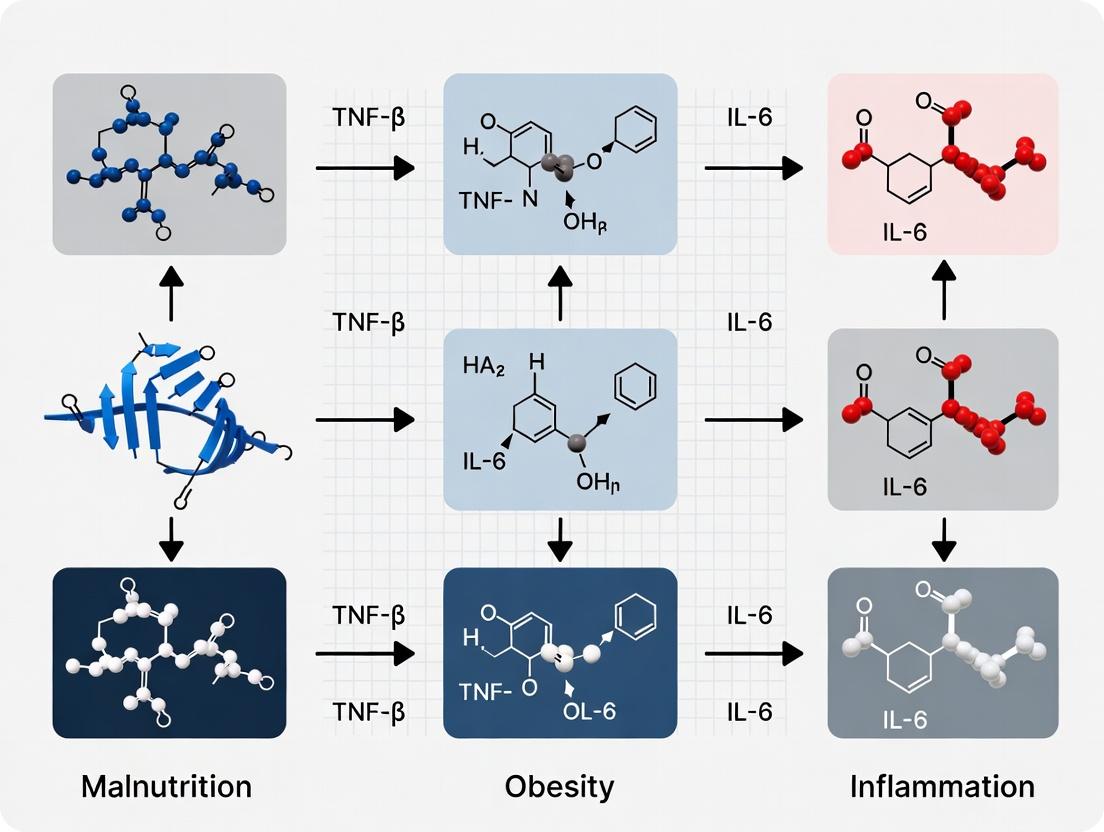
This article provides a comprehensive analysis of the Global Leadership Initiative on Malnutrition (GLIM) diagnostic framework in the context of obesity-associated inflammation and sarcopenic obesity.
Unmasking the Invisible: GLIM Criteria, Obesity-Associated Inflammation, and the New Face of Malnutrition
Abstract
This article provides a comprehensive analysis of the Global Leadership Initiative on Malnutrition (GLIM) diagnostic framework in the context of obesity-associated inflammation and sarcopenic obesity. Tailored for researchers, scientists, and drug development professionals, it explores the pathophysiological paradox of inflammatory malnutrition in obesity, details methodological applications and biomarkers for accurate diagnosis, addresses common pitfalls and optimization strategies in clinical research, and validates GLIM against emerging phenotypes. The review synthesizes current evidence to inform targeted therapeutic development and precision medicine approaches in metabolic disease.
Beyond the Scale: Deconstructing the Malnutrition-Obesity-Inflammation Triad
Technical Support Center
Troubleshooting Guides & FAQs
Topic: Investigating Nutrient Partitioning Dysfunction in GLIM-Defined Malnutrition with Obesity and Inflammation
FAQ 1: Sample Preparation & GLIM Criteria Application Q: How do we correctly phenotype patients with obesity for GLIM-defined malnutrition in our studies, ensuring we capture nutrient partitioning dysfunction rather than simple caloric overload? A: The key is concurrent assessment. First, apply GLIM phenotypic criteria (non-volitional weight loss, low BMI, reduced muscle mass) and etiologic criteria (reduced food intake/assimilation, inflammation). In obesity, focus on unintentional weight loss (>5% within 6 months) despite high fat mass, and directly measure muscle mass via DXA or BIA. The presence of systemic inflammation (CRP >5 mg/L) is a critical etiologic driver. The dysfunction is indicated by the coexistence of high adiposity, inflammation, and low muscle mass.
Q: Our cell models show inconsistent inflammatory responses to nutrient cocktails. What are the critical controls? A: Ensure your nutrient "overload" media mimics human plasma profiles in metabolic inflammation. Standardize using a reference serum pool from phenotyped donors. Key controls include:
- Baseline control: Low-nutrient (starvation) media.
- Normal nutrient control: Media reflecting healthy postprandial levels.
- "Dysfunctional" nutrient cocktail: High in saturated fatty acids (e.g., palmitate at 500 µM), branched-chain amino acids, and glucose, spiked with low-dose endotoxin (e.g., 1 ng/mL LPS) to simulate metabolic endotoxemia.
- Inflammatory inhibitor control: Include a well-known inhibitor (e.g., IKK inhibitor IV, 5 µM) to confirm pathway-specific responses.
Topic: Pathway Analysis & Signal Transduction
FAQ 2: Our Western blots for phosphorylated signaling nodes (e.g., p-mTOR, p-IKKα/β) in muscle or adipocyte lysates are inconsistent. A: This is common in nutrient-partitioning studies due to rapid signaling feedback.
- Troubleshooting Steps:
- Starvation Synchronization: Serum-starve all cells for 12-16 hours before nutrient stimulation to establish a consistent baseline.
- Precise Timing: Perform a detailed time-course experiment (e.g., 0, 5, 15, 30, 60, 120 min). Nutrient-induced phosphorylation can be transient.
- Phosphatase Inhibition: Ensure your lysis buffer contains fresh and sufficient phosphatase inhibitors (sodium fluoride, sodium orthovanadate, β-glycerophosphate).
- Normalization: Use total protein load (via total protein stain) AND housekeeping protein for accurate quantification of phosphorylation changes.
Topic: In Vivo Modeling & Data Interpretation
FAQ 3: What is the most translatable murine model to study nutrient partitioning dysfunction aligning with GLIM? A: Diet-induced obesity (DIO) models combined with a secondary catabolic hit best recapitulate the phenotype.
- Recommended Protocol:
- Induction: Feed C57BL/6J mice a high-fat/high-sucrose diet (60% kcal fat) for 12-16 weeks to induce obesity.
- Catabolic/Inflammatory Hit: Introduce a low-grade inflammatory challenge without reversing obesity. This can be:
- Low-dose LPS: Chronic, intermittent IP injection (e.g., 0.5 mg/kg, 2x/week for 3 weeks).
- Tumor Implant: Implant a non-cachexia-inducing but inflammatory tumor cell line.
- Monitoring: Track body composition (EchoMRI), food intake, and energy expenditure (metabolic cages). The hallmark is maintained or increased fat mass with a significant loss of lean mass.
Experimental Protocols
Protocol 1: Ex Vivo Human Myotube Assay for Nutrient Partitioning Objective: To assess direct effects of patient serum on anabolic/catabolic signaling in human myotubes. Methodology:
- Cell Culture: Differentiate human primary skeletal muscle myoblasts into myotubes in growth factor-reduced Matrigel.
- Serum Incubation: Fast myotubes for 4h in low-serum media. Then, incubate for 2h with 10% serum from: a) Healthy controls, b) Obese subjects without inflammation, c) GLIM-malnourished obese subjects with inflammation (CRP+).
- Lysis & Analysis: Lyse cells and analyze by Western blot for p-Akt (Ser473), p-mTOR (Ser2448), p-FoxO3a (Ser253), and ubiquitin ligases (MuRF1, Atrogin-1).
Protocol 2: Assessing Adipose Tissue Macrophage Polarity in Nutrient Dysfunction Objective: To quantify inflammation in adipose tissue from a DIO+inflammation model. Methodology:
- Tissue Harvest: Euthanize mice, excise epididymal and subcutaneous white adipose tissue (WAT).
- Stromal Vascular Fraction (SVF) Isolation: Mince WAT, digest with collagenase Type I (1 mg/mL) in Krebs-Ringer buffer at 37°C for 45 min. Filter (250 µm) and centrifuge to obtain SVF pellet.
- Flow Cytometry: Resuspend SVF in FACS buffer. Stain with antibodies: CD45-APC (leukocyte marker), F4/80-PE-Cy7 (macrophage marker), CD11c-FITC (M1-like marker), CD206-PerCP-Cy5.5 (M2-like marker).
- Analysis: Gate on CD45+/F4/80+ cells. Calculate the ratio of CD11c+ (pro-inflammatory) to CD206+ (anti-inflammatory) macrophages.
Data Presentation
Table 1: Key Phenotypic Differences in Obesity Subgroups per GLIM Framework
| Parameter | Obese, Healthy | Obese, Inflamed (Non-GLIM) | Obese, GLIM-Malnourished (Nutrient Partitioning Dysfunction) |
|---|---|---|---|
| Weight Change | Stable or Gain | Stable or Gain | Unintentional Loss (>5%) |
| Fat Mass | High | High | High (but may be declining) |
| Muscle Mass | Normal to High | Normal | Low (Sarcopenic Obesity) |
| Systemic Inflammation (CRP) | <3 mg/L | >5 mg/L | >5 mg/L |
| Proposed Mechanism | Caloric Excess | Metabolic Inflammation | Nutrient Partitioning Dysfunction |
Table 2: Common Research Models & Their Hallmark Readouts
| Model Type | Example | Key Readout | Translational Relevance to GLIM |
|---|---|---|---|
| In Vitro | Palmitate+LPS-treated C2C12 myotubes | ↑p-IKKβ, ↓p-Akt, ↑Atrogin-1 mRNA | Muscle cell-autonomous inflammation & catabolism |
| Ex Vivo | Human myotube + patient serum incubation | Signaling response correlates with donor phenotype | Personalized nutrient partitioning assessment |
| In Vivo | DIO mouse + low-dose LPS | Lean mass loss, fat mass preservation, hepatic acute phase proteins | Captures systemic inflammation-driven repartitioning |
Diagrams
Diagram 1: Core Nutrient Partitioning Pathway in Inflammation
Diagram 2: Experimental Workflow for GLAM Model Characterization
The Scientist's Toolkit: Research Reagent Solutions
| Item | Function in Nutrient Partitioning Research |
|---|---|
| Palmitic Acid (Albumin-Bound) | The most common saturated fatty acid used to mimic nutrient overload and induce lipotoxicity and inflammation in cell cultures. |
| Recombinant Human TNF-α & IL-6 | Key pro-inflammatory cytokines used to directly simulate the inflammatory milieu of metabolic dysfunction on muscle and fat cells. |
| Compound C (AMPK Inhibitor) & AICAR (AMPK Activator) | Pharmacologic tools to manipulate the AMPK pathway, a central energy sensor regulating anabolism and catabolism. |
| Rapamycin (mTORC1 Inhibitor) | Critical for blocking the mechanistic target of rapamycin complex 1 to study its role in nutrient-sensing and protein synthesis. |
| MG-132 (Proteasome Inhibitor) | Used to inhibit the ubiquitin-proteasome system, allowing for measurement of protein degradation rates and ubiquitin ligase activity. |
| Anti-phospho-Akt (Ser473) Antibody | Essential for assessing insulin/PI3K pathway activity, which is central to nutrient uptake and storage signals. |
| Mouse/Rat Specific Metabolic Cages | Systems for the simultaneous, longitudinal measurement of food intake, energy expenditure (VO2/VCO2), and locomotor activity in vivo. |
| Body Composition Analyzer (EchoMRI) | Non-invasive quantitative magnetic resonance technology for precise, repeated measurement of fat, lean, and free water mass in live rodents. |
Troubleshooting Guides and FAQs
Q1: During a cohort study on obesity-associated malnutrition, a subject meets the phenotypic GLIM criterion of "Reduced Muscle Mass" but not the etiologic criterion of "Inflammation." Should they be diagnosed with GLIM-defined malnutrition? A1: No. According to the GLIM consensus, a diagnosis requires at least one phenotypic criterion (e.g., reduced muscle mass, low BMI, weight loss) AND at least one etiologic criterion (e.g., reduced food intake, inflammation, disease burden). Inflammation, measured by CRP >5 mg/L or IL-6 >4.9 pg/mL, is just one of three possible etiologic criteria. You must also assess for "Reduced Food Intake/Absorption" and "Disease Burden." If the subject has, for instance, reduced food intake (<50% of estimated needs for >1 week), then the diagnosis can be made. Review your dietary intake data collection protocols.
Q2: In drug development research, we are targeting inflammation to treat cancer-associated malnutrition. What are the established experimental protocols to validate the "Inflammation" etiologic criterion in a rodent model? A2: A validated protocol involves a murine cancer cachexia model:
- Model Induction: Inject 1x10^6 Lewis Lung Carcinoma (LLC) cells subcutaneously into the flank of C57BL/6 mice.
- Monitoring: Track body weight and food intake daily.
- Tissue Harvest: At experimental endpoint (typically 3-4 weeks post-injection), collect blood via cardiac puncture and dissect tissues.
- Inflammation Assessment:
- Serum Inflammatory Markers: Measure CRP via ELISA (expect levels >10 μg/mL in cachectic mice vs. <2 μg/mL in controls). Measure IL-6 via multiplex immunoassay (expect levels >20 pg/mL).
- Muscle Signaling: Analyze pSTAT3 (Tyr705) phosphorylation in tibialis anterior muscle lysates via Western blot as a readout of IL-6 pathway activation.
- Phenotypic Correlation: Correlate inflammatory markers with the phenotypic criterion of reduced muscle mass, measured via cross-sectional area of myofibers (histology) or weight of the gastrocnemius muscle.
Q3: We are encountering high variability in body composition measurements (a key phenotypic criterion) in our obese, critically ill patients. What is the most reliable method? A3: For critically ill patients, bioelectrical impedance analysis (BIA) is often impractical. The recommended method is Computed Tomography (CT) analyzed at the L3 vertebral level. This is a reliable, quantitative method to assess skeletal muscle mass. Use established Hounsfield Unit thresholds (-29 to +150) to segment muscle. Standardize the timing of CT scans relative to ICU admission. High variability often stems from inconsistent landmarking (L3 vs. L4) or the use of different segmentation software. Implement a single, standardized analysis protocol across your research team.
Table 1: GLIM Diagnostic Criteria and Operational Cut-offs
| Criterion Type | Specific Criterion | Operational Cut-off for Adults |
|---|---|---|
| Phenotypic (1 Required) | Weight Loss | >5% within past 6 months, or >10% beyond 6 months |
| Low BMI | <20 kg/m² if <70 years; <22 kg/m² if ≥70 years | |
| Reduced Muscle Mass | Low by validated body composition methods (e.g., BIA, DXA) | |
| Etiologic (1 Required) | Reduced Food Intake | ≤50% of estimated energy requirement for >1 week |
| Inflammation | CRP >5 mg/L or IL-6 >4.9 pg/mL | |
| Disease Burden | Acute disease/injury, chronic disease, or organ failure |
Table 2: Inflammatory Marker Thresholds in Common Conditions
| Condition | Typical CRP Range (mg/L) | Typical IL-6 Range (pg/mL) | Key Considerations for GLIM |
|---|---|---|---|
| Healthy Reference | <3 | <2.9 | Not indicative of an inflammatory etiology. |
| Obesity (with metabolic inflammation) | 3 - 10 | 3 - 5 | May meet GLIM threshold; correlate with phenotypic data. |
| Severe Infection / Sepsis | >100 | >100 | Clearly meets criterion; overwhelming inflammation. |
| Advanced Cancer | 10 - 100 | 10 - 200 | Strong driver of cachexia; persistently elevated. |
| Chronic Kidney Disease | 5 - 40 | 5 - 20 | Comorbid inflammation common. |
Experimental Protocol: Validating Inflammation in Obesity-Associated Malnutrition
Title: Protocol for Isolating and Stimulating Peripheral Blood Mononuclear Cells (PBMCs) to Assess Immune Cell-Specific Inflammatory Responses in Obese Subjects.
Objective: To measure the hyper-inflammatory phenotype of immune cells from obese subjects with GLIM-defined malnutrition, as evidence for the "Inflammation" etiologic criterion.
Detailed Methodology:
- Subject Recruitment & Classification: Recruit obese subjects (BMI >30 kg/m²) with and without GLIM-defined malnutrition (using muscle mass by DXA as phenotypic criterion). Include lean controls.
- Blood Collection: Draw 30 mL of venous blood into sodium heparin tubes.
- PBMC Isolation (Density Gradient Centrifugation): a. Dilute blood 1:1 with sterile PBS. b. Carefully layer the diluted blood over 15 mL of Ficoll-Paque PLUS in a 50 mL conical tube. c. Centrifuge at 400 x g for 30 minutes at room temperature with the brake off. d. Aspirate the PBMC layer at the plasma-Ficoll interface. e. Wash cells twice with PBS (centrifuge at 300 x g for 10 minutes).
- Cell Stimulation & Culture: Resuspend PBMCs in RPMI-1640 + 10% FBS. Seed 1x10^6 cells/well in a 24-well plate.
- Unstimulated Control: Media only.
- Stimulated: Add 100 ng/mL Lipopolysaccharide (LPS).
- Culture for 24 hours at 37°C, 5% CO2.
- Supernatant Analysis: Centrifuge plate at 300 x g for 5 minutes. Collect supernatant.
- Cytokine Measurement: Use a high-sensitivity multiplex ELISA (e.g., Meso Scale Discovery) to quantify IL-6, TNF-α, and IL-1β levels in the supernatant. Compare basal and stimulated secretion between subject groups.
Visualizations
The Scientist's Toolkit: Research Reagent Solutions
Table 3: Essential Reagents for Investigating GLIM Etiologic Criteria
| Item / Reagent | Function in GLIM-Related Research | Example Application |
|---|---|---|
| High-Sensitivity CRP (hsCRP) ELISA Kit | Quantifies low-grade chronic inflammation crucial for the GLIM etiologic criterion. | Measuring serum CRP levels in obese patients with sarcopenia. |
| Multiplex Cytokine Panel (e.g., IL-6, TNF-α, IL-1β) | Simultaneously measures multiple inflammatory mediators from limited sample volume. | Profiling inflammatory signatures in PBMC supernatants from cancer cachexia models. |
| Dual-energy X-ray Absorptiometry (DXA) | Gold-standard for body composition analysis (fat mass, lean soft tissue mass). | Assessing the "Reduced Muscle Mass" phenotypic criterion in cohort studies. |
| Lipopolysaccharide (LPS) from E. coli | Standard agonist to stimulate Toll-like receptor 4 and induce robust inflammatory responses in vitro. | Activating macrophages or PBMCs to test immune cell reactivity in obese subjects. |
| Antibodies for pSTAT3 (Tyr705) & total STAT3 | Key for detecting activation of the JAK/STAT signaling pathway downstream of IL-6. | Western blot analysis of muscle or liver tissue from inflammatory models. |
| Myosin Heavy Chain (MyHC) Antibodies | Labels myofibers for histomorphometric analysis of muscle cross-sectional area. | Quantifying muscle atrophy in rodent models of cancer or sepsis. |
The Inflammatory Adipose Tissue as a Driver of Metabolic Malnutrition
Technical Support Center: Troubleshooting & FAQs
Q1: In our rodent model of diet-induced obesity (DIO), we fail to see a significant increase in inflammatory cytokines (e.g., IL-6, TNF-α) in adipose tissue despite clear adipocyte hypertrophy. What are potential causes?
A: This is a common issue. Key troubleshooting steps:
- Timing: Inflammatory peak may be transient. Analyze at multiple time points (e.g., 8, 12, 16 weeks on high-fat diet).
- Adipose Tissue Dissociation: Ensure efficient stromal vascular fraction (SVF) isolation. Use fresh, high-activity collagenase (e.g., Collagenase D, 1-2 mg/mL) and incubate at 37°C with vigorous shaking for 45-60 mins. Filter through a 70-100 μm cell strainer.
- Spatial Heterogeneity: Inflammation can be localized. Sample from multiple depots (epididymal/visceral, inguinal/subcutaneous, mesenteric) separately.
- Macrophage Polarization: Measure specific M1 macrophage markers (CD11c, iNOS) via flow cytometry in the SVF, not just bulk tissue cytokines.
Q2: When assessing GLIM criteria for malnutrition in our obese mouse model, "disease burden/inflammation" is hard to quantify. What are robust experimental surrogates?
A: For research aligned with GLIM, focus on these quantifiable measures:
- Plasma Biomarkers: C-reactive protein (CRP), Serum Amyloid A (SAA), or IL-6 via ELISA.
- Adipose Tissue Inflammation Score: Histological quantification of crown-like structures (CLS) in H&E or F4/80/CD11c immunofluorescence stains. ≥1.0 CLS per field (200x) is often considered significant.
- Molecular Markers: qRT-PCR on adipose tissue for Tnf, Il6, Ccl2 (Mcp1), normalized to housekeeping genes and expressed as fold-change vs. lean control.
Q3: Our cell culture experiments using differentiated adipocytes show inconsistent responses to pro-inflammatory stimuli (e.g., LPS). What protocols improve reproducibility?
A: Follow this detailed protocol for primary adipocyte differentiation:
- Cell Source: Use primary stromal vascular cells from rodent adipose tissue or human preadipocytes (e.g., Simpson-Golabi-Behmel syndrome (SGBS) cells).
- Differentiation Cocktail:
- Day 0-2: Induction medium: DMEM/F12, 10% FBS, 1 μM dexamethasone, 0.5 mM 3-isobutyl-1-methylxanthine (IBMX), 1 μg/mL insulin, 1 μM rosiglitazone.
- Day 2-7: Maintenance medium: DMEM/F12, 10% FBS, 1 μg/mL insulin only. Change media every 2-3 days.
- Stimulation: Only stimulate fully differentiated adipocytes (Day 8-10) with LPS (100 ng/mL) or a cytokine cocktail (e.g., TNF-α 10 ng/mL + IFN-γ 10 ng/mL) for 6-24 hours. Always include a serum-reduced (e.g., 1% FBS) medium during stimulation.
Q4: What are the critical controls for in vivo experiments linking adipose inflammation to muscle wasting (sarcopenia) in metabolic malnutrition?
A: Essential experimental groups for a robust study design:
- Group 1: Lean control (wild-type on chow diet).
- Group 2: Obese, non-inflammatory model (e.g., ob/ob leptin-deficient mice, which have hypertrophic but less inflamed adipose tissue).
- Group 3: Obese, inflammatory model (e.g., Wild-type on 60% high-fat diet for 16+ weeks).
- Group 4: Therapeutic intervention in Group 3 (e.g., anti-inflammatory drug, IL-1β antagonist).
- Key Endpoints: Muscle weight (tibialis anterior, gastrocnemius), muscle fiber cross-sectional area (histology), and markers of proteolysis (MuRF-1, Atrogin-1 mRNA).
Key Research Data Tables
Table 1: Common Inflammatory Markers in Adipose Tissue Across Rodent Models of Obesity
| Marker | Technique | DIO Model (Fold Change vs. Lean) | ob/ob Model (Fold Change vs. Lean) | Notes |
|---|---|---|---|---|
| TNF-α mRNA | qRT-PCR | 3.5 - 8.2 | 1.2 - 2.5 | Highly variable by depot (visceral > subcutaneous). |
| IL-6 mRNA | qRT-PCR | 4.0 - 10.0 | 2.0 - 4.0 | Correlates with macrophage infiltration. |
| Crown-like Structures (CLS/mm²) | Histology (F4/80) | 2.5 - 5.0 | 0.5 - 1.5 | Gold standard for inflammation quantification. |
| M1/M2 Macrophage Ratio (F4/80+CD11c+/CD206+) | Flow Cytometry (SVF) | ~3:1 | ~1:1 | Key measure of polarization. |
Table 2: GLIM Criteria Alignment with Experimental Rodent Data
| GLIM Criterion | Clinical Metric | Research Surrogate in Obese Models | Typical Threshold (Rodent) |
|---|---|---|---|
| Phenotypic: Reduced Muscle Mass | DXA, BIA | Hindlimb muscle weight / body weight (%) | <1.2% (mouse tibialis anterior/BW) |
| Etiologic: Inflammation | CRP > 0.5 mg/dL | Plasma SAA > 50 μg/mL or Adipose CLS > 2.0/mm² | >2.0 CLS per 200x field |
| Etiologic: Disease Burden | Medical Diagnosis | High-Fat Diet Feeding Duration | ≥12-16 weeks |
Experimental Protocols
Protocol 1: Quantification of Crown-like Structures (CLS) in Adipose Tissue
- Tissue Fixation: Fix adipose samples in 10% neutral buffered formalin for 24-48 hours at 4°C.
- Sectioning & Staining: Paraffin-embed, section at 5 μm thickness. Perform standard H&E or immunofluorescence staining for macrophage marker F4/80.
- Imaging: Image 10 random fields per sample at 200x magnification.
- Counting & Analysis: Count CLS (defined as ≥3 macrophages surrounding a dying adipocyte). Express as CLS count per field or per mm² of tissue area.
Protocol 2: Stromal Vascular Fraction (SVF) Isolation for Flow Cytometry
- Harvest & Mince: Collect ~500 mg adipose tissue in warm PBS. Mince finely with scissors.
- Digestion: Incubate with 2 mL of digestion buffer (HBSS with 1.5 mg/mL Collagenase D, 2.4 U/mL Dispase II, 2% BSA) at 37°C with shaking (200 rpm) for 45 min.
- Filtration & Lysis: Pass through 100 μm then 40 μm cell strainers. Centrifuge at 500xg for 5 min. Lyse red blood cells with ACK buffer.
- Staining: Resuspend SVF pellet in FACS buffer. Stain with fluorescent antibodies: CD45 (immune cells), CD11b (myeloid cells), F4/80 (macrophages), CD11c (M1), CD206 (M2). Analyze on flow cytometer.
Visualizations
Diagram 1: Inflammatory Signaling in Adipose Tissue
Diagram 2: Experimental Workflow for Linking Adipose Inflammation to GLIM Malnutrition
The Scientist's Toolkit: Research Reagent Solutions
| Item | Function / Application | Example Product / Cat. Number |
|---|---|---|
| Collagenase D | High-specificity enzyme for adipose tissue digestion to isolate intact SVF cells. | Roche, 11088882001 |
| Recombinant Mouse TNF-α | Pro-inflammatory cytokine for stimulating adipocyte or macrophage cultures in vitro. | PeproTech, 315-01A |
| Anti-F4/80 APC Antibody | Classic macrophage marker for flow cytometry or immunofluorescence in murine systems. | BioLegend, 123115 |
| Mouse Serum Amyloid A (SAA) ELISA Kit | Quantifies systemic inflammation level, a key etiologic criterion for GLIM. | Abcam, ab157732 |
| Insulin Solution (Human) | Component of adipocyte differentiation cocktail; also for insulin tolerance tests (ITT). | Sigma-Aldrich, I9278 |
| TRIzol Reagent | For simultaneous isolation of high-quality RNA, DNA, and protein from adipose tissue. | Thermo Fisher, 15596026 |
| LPS from E. coli O111:B4 | Toll-like receptor 4 agonist to induce robust inflammatory response in vitro. | Sigma-Aldrich, L4391 |
| RIPA Buffer | Cell lysis buffer for efficient protein extraction from adipose tissue (high lipid content). | Thermo Fisher, 89900 |
Troubleshooting Guide & FAQs for GLIM Malnutrition Research in Obese Populations
This technical support center addresses common experimental and diagnostic challenges in studying sarcopenic obesity within the GLIM (Global Leadership Initiative on Malnutrition) framework. The content supports research into the obesity-inflammation-malnutrition axis.
FAQs & Troubleshooting
Q1: During body composition analysis in obese subjects, we encounter inconsistencies between DXA-derived lean mass and functional muscle assessments. What are potential sources of error and how can we standardize?
A1: This is a common issue due to fat infiltration (myosteatosis) altering tissue density. Troubleshooting steps:
- Calibration: Daily phantom calibration of DXA with obesity-specific phantoms is mandatory.
- Analysis Software: Use the most recent software version that includes algorithms for high BMI. Manually check and adjust region-of-interest boundaries, especially for the thighs and abdomen.
- Hydration Status: Control for subject hydration, as variations affect lean mass estimates. Measure at a consistent time of day.
- Multi-Method Validation: Correlate DXA data with a functional measure (e.g., handgrip strength, chair rise test) and a volumetric method (CT/MRI of mid-thigh) in a subset. Use the following cross-validation table:
| Method | Parameter | Pro in Obesity | Con in Obesity | Suggested Correction Factor |
|---|---|---|---|---|
| DXA | Appendicular Lean Mass (ALM) | Fast, accessible | Overestimates LM in severe obesity | Apply hydration factor (0.73) |
| Bioimpedance (BIA) | Phase Angle | Portable, low-cost | Highly variable with hydration | Use disease-specific equation (e.g., Sergi 2015) |
| CT | Muscle Cross-Sectional Area (CSA) | Gold standard for myosteatosis | Expensive, irradiating | Threshold: <30 HU for low muscle radiodensity |
Experimental Protocol: CT-Based Mid-Thigh Analysis
- Acquire a single axial CT slice at the midpoint between the femoral condyle and greater trochanter.
- Use semi-automated software (e.g., Slice-O-Matic) to identify muscle area using Hounsfield Unit (HU) thresholds (-29 to +150).
- Calculate muscle radiodensity (mean HU within area). Values <30 HU indicate intramuscular fat infiltration.
- Normalize muscle CSA to height (m²) to derive the Skeletal Muscle Index (SMI): CSA (cm²)/height (m²).
Q2: When applying GLIM criteria to an obese cohort, the "phenotypic criterion" of reduced muscle mass often conflicts with the "etiologic criterion" of chronic inflammation. How should we prioritize?
A2: In sarcopenic obesity, these criteria are interconnected. Follow this decision pathway:
- First, confirm reduced muscle mass using validated methods (see Q1). This is non-negotiable for the phenotype.
- Concurrently, measure inflammatory markers. Use a panel, not a single marker. The consensus recommends:
- Primary: C-Reactive Protein (CRP) > 0.5 mg/dL.
- Secondary/Supportive: IL-6 > 4.0 pg/mL, TNF-α > 2.5 pg/mL, or albumin < 3.5 g/dL (in absence of liver/kidney disease).
- Interpretation: The presence of inflammation (≥1 marker elevated) confirms the "inflammation/disease burden" etiologic criterion. It does not override low muscle mass; it complements it, reinforcing the diagnosis of malnutrition (sarcopenic obesity) per GLIM.
Q3: What is the optimal protocol for differentiating sarcopenic obesity from simple obesity in drug intervention studies?
A3: Implement a two-step screening and confirmation protocol.
- Step 1 (Screening): Use the ESPEN/EASO consensus algorithm: BMI >30 kg/m² combined with low handgrip strength (HGS). Cut-offs: HGS <27kg (men), <16kg (women).
- Step 2 (Confirmation): In screen-positive subjects, confirm low muscle quantity via DXA (ALM/height²: <7.0 kg/m² men, <5.5 kg/m² women) or BIA.
Experimental Protocol: Functional Assessment - Handgrip Strength
- Use a calibrated hydraulic dynamometer (e.g., Jamar).
- Subject seated, elbow at 90°, forearm neutral.
- Perform three trials on each side with rest.
- Record the maximum value from either hand.
- Correlate with knee extension peak torque via isokinetic dynamometry for validation.
Q4: Which biomarkers are most specific for the inflammatory drive in sarcopenic obesity, and how should they be assayed?
A4: Focus on adipokines and myokines. Standardize collection from fasting plasma/serum.
| Biomarker Category | Specific Targets | Expected Direction in Sarcopenic Obesity | Recommended Assay |
|---|---|---|---|
| Adipokines | Leptin, Adiponectin | High Leptin, Low Adiponectin | Multiplex Luminex |
| Pro-inflammatory Cytokines | IL-6, TNF-α, CRP | Elevated | ELISA (high-sensitivity for CRP) |
| Myokines | Myostatin, Irisin | High Myostatin, Low Irisin | ELISA |
| Oxidative Stress | 8-OHdG, Nitrotyrosine | Elevated | Competitive ELISA |
The Scientist's Toolkit: Research Reagent Solutions
| Item / Reagent | Function in Sarcopenic Obesity Research |
|---|---|
| Luminex Multiplex Panels (Human Adipokine/Metabolic) | Simultaneously quantifies leptin, adiponectin, resistin, PAI-1, etc., from small sample volumes. |
| Human High-Sensitivity CRP ELISA Kit | Precisely measures low-grade chronic inflammation critical for GLIM's etiologic criterion. |
| Myostatin (GDF-8) ELISA Kit | Quantifies this negative regulator of muscle mass, a key pathogenic myokine. |
| Recombinant Human IL-6 / TNF-α | Used as standards in assays or for in vitro stimulation of myotube cultures to model inflammation. |
| Differentiated Human Skeletal Muscle Myoblasts (HSMM) | Primary cell line for in vitro studies of cytokine effects on protein synthesis/degradation pathways. |
| Proteasome Activity Assay Kit (20S Chymotrypsin-like) | Measures ubiquitin-proteasome system activity, a major pathway of muscle wasting. |
| MitoStress Test Kit (Seahorse XF Analyzer) | Profiles mitochondrial bioenergetics in muscle biopsies or cells to assess metabolic dysfunction. |
Visualizations
Technical Support Center: Troubleshooting & FAQs
FAQ: Experimental Challenges & Solutions
Q1: In my cell culture model of adipocyte-macrophage crosstalk, I am not observing the expected increase in secretion of TNF-α and IL-6. What could be the issue? A1: Common troubleshooting steps include:
- Stimulation Verification: Confirm the concentration and activity of your stimulant (e.g., LPS, palmitate). Perform a dose-response curve. For LPS, typical working concentrations range from 10-100 ng/mL.
- Cell State: Ensure macrophages (e.g., THP-1, primary) are properly differentiated (e.g., using PMA for THP-1 cells) and rested post-differentiation.
- Cytokine Measurement: Validate your ELISA or multiplex assay with a known positive control sample. Check antibody cross-reactivity.
- Secretion Time: Optimize the collection time for supernatant; pro-inflammatory cytokines may peak between 6-24 hours post-stimulation.
Q2: When assessing insulin resistance in myocyte or adipocyte cultures via glucose uptake assays, my negative controls (insulin-treated) show high variance. How can I improve reproducibility? A2: Key protocol considerations:
- Serum Starvation: Standardize serum-starvation time (typically 2-6 hours in low-glucose, serum-free media) prior to assay.
- Insulin Preparation: Use a fresh, aliquoted stock solution of insulin. Pre-warm it to 37°C before use. A standard dose-response ranges from 1-100 nM.
- Wash Steps: Perform all washes with warm PBS or assay buffer to prevent temperature shock, which affects GLUT4 translocation.
- Normalization: Always normalize glucose uptake readings to total cellular protein content (via Bradford or BCA assay) from parallel wells.
Q3: My ex vivo muscle fiber analysis shows inconsistent detection of phosphorylated proteins (p-Akt, p-mTOR) in response to anabolic stimuli, crucial for demonstrating anabolic resistance. What are critical fixation steps? A3: Anabolic signaling proteins have rapid turnover. Use this optimized protocol:
- Rapid Fixation: Immediately post-stimulation (e.g., insulin/IGF-1, amino acids), lyse fibers in hot (95°C) 1X Laemmli SDS sample buffer to instantaneously denature and inactivate phosphatases/proteases.
- Homogenization: Sonicate or vigorously pass lysate through a small-gauge needle to shear DNA and reduce viscosity.
- Storage: Snap-freeze lysates at -80°C if not running gel immediately. Avoid repeated freeze-thaw cycles.
- Validation: Include a known positive control lysate (e.g., from strongly stimulated cells) on every blot to confirm antibody performance.
Experimental Protocols
Protocol 1: Quantifying Insulin Resistance in 3T3-L1 Adipocytes via 2-NBDG Uptake Purpose: To measure insulin-stimulated glucose uptake as a functional readout of insulin sensitivity/resistance. Materials: Differentiated 3T3-L1 adipocytes, 2-NBDG fluorescent glucose analog, insulin, Krebs-Ringer Phosphate HEPES (KRPH) buffer, DMSO. Method:
- Differentiate 3T3-L1 preadipocytes to mature adipocytes (Day 10-14).
- Serum-starve cells in low-glucose media for 3 hours.
- Prepare KRPH buffer with 2% BSA. Pre-treat cells with or without a pro-inflammatory cytokine (e.g., TNF-α, 10 ng/mL, 18h) to induce resistance.
- Wash cells twice with warm PBS. Incubate with or without insulin (100 nM) in KRPH buffer for 20 min.
- Add 2-NBDG (final conc. 100 μM) for 10 min.
- Terminate uptake by washing 3x with ice-cold PBS.
- Lyse cells in RIPA buffer. Measure fluorescence (Ex/Em ~465/540 nm) and normalize to total protein.
Protocol 2: Ex Vivo Assessment of Anabolic Resistance in Skeletal Muscle Purpose: To evaluate the blunted activation of anabolic pathways (Akt/mTOR/p70S6K) in muscle tissue from a GLIM/obesity model. Materials: Isolated muscle strips (e.g., extensor digitorum longus), organ culture bath, anabolic stimulus (e.g., 100 nM insulin + 2x physiological amino acids), hot SDS lysis buffer. Method:
- After euthanasia, rapidly dissect and mount muscle strips in oxygenated (95% O₂/5% CO₂) physiological buffer at 37°C.
- Allow equilibration for 30 min.
- Transfer strips to fresh buffer containing the anabolic stimulus or vehicle control for precisely 15 min.
- Immediately snap-freeze strips in liquid nitrogen and pulverize.
- Homogenize powder directly in 95°C hot SDS lysis buffer. Boil for 5 min.
- Analyze phospho- and total protein levels via Western blot.
Research Data & Reagent Solutions
Table 1: Key Inflammatory Mediators in Obesity-Associated Metabolic Dysfunction
| Mediator | Primary Source | Key Target Pathway | Common Assay Method | Typical Concentration in Obese Model (Serum/Conditioned Media) |
|---|---|---|---|---|
| TNF-α | Adipocytes, M1 Macrophages | Inhibits IRS-1 via Ser307 phosphorylation | ELISA, Multiplex | 20-100 pg/mL (mouse serum); 5-50 ng/mL (cell media) |
| IL-6 | Adipocytes, Immune Cells | Activates SOCS3, JAK/STAT | ELISA, Multiplex | 50-300 pg/mL (mouse serum); 10-100 ng/mL (cell media) |
| MCP-1 (CCL2) | Adipocytes, Stromal Cells | Recruits monocytes to adipose tissue | ELISA | 150-600 pg/mL (mouse serum) |
| Leptin | Adipocytes | JAK/STAT, Appetite regulation | ELISA | 20-80 ng/mL (obese mouse serum) |
| Adiponectin | Adipocytes | AMPK activation, Anti-inflammatory | ELISA | 3-8 μg/mL (obese mouse serum; reduced vs. lean) |
The Scientist's Toolkit: Essential Reagents
| Item | Function & Application in This Context |
|---|---|
| Recombinant TNF-α / IL-6 | Used to induce chronic inflammation and insulin resistance in cell models (adipocytes, myotubes). |
| Palmitate-BSA Conjugate | Saturated fatty acid preparation to induce lipotoxicity, ER stress, and inflammation in vitro. |
| Phospho-Specific Antibodies (p-IRS-1 Ser307, p-Akt Ser473, p-S6K Thr389) | Critical for detecting inhibition (IRS-1) or activation (Akt, S6K) of insulin/anabolic signaling pathways. |
| 2-NBDG or 2-Deoxy-D-[3H]Glucose | Tracer for quantifying functional glucose uptake in cells or tissues. |
| SOCS3 siRNA/Inhibitor | Tool to probe the role of the SOCS3 pathway in cytokine-induced insulin resistance. |
| Compound C (AMPK Inhibitor) / AICAR (AMPK Activator) | Modulators to investigate the protective role of AMPK activation against inflammation/resistance. |
| CL-316,243 (β3-Adrenergic Receptor Agonist) | Used to stimulate fat browning and counteract inflammation in adipose tissue models. |
Pathway & Workflow Visualizations
Title: Inflammatory Drivers of Metabolic Resistance Pathways
Title: Core Workflow for Studying Metabolic Resistance
Title: Anabolic Resistance in GLIM Context
Operationalizing GLIM in Obesity Research: Biomarkers, Protocols, and Phenotyping
Step-by-Step Application of GLIM Criteria in Studies of Individuals with Obesity
Troubleshooting Guide & FAQs for GLIM Implementation in Obesity Research
FAQ 1: How do I distinguish between inflammatory etiology due to obesity versus a concurrent disease when applying GLIM phenotypic criterion #2 (reduced muscle mass)?
Answer: This is a common challenge. The GLIM consensus states that chronic disease-related inflammation includes diseases, injuries, or conditions that are associated with sustained inflammatory responses. In obesity, low-grade chronic inflammation (e.g., elevated CRP, IL-6) is intrinsic to the condition. Therefore, obesity itself qualifies as an etiologic criterion for reduced muscle mass. To attribute it specifically to obesity-related inflammation, measure and document established inflammatory markers. Concurrent inflammatory diseases (e.g., active rheumatoid arthritis, IBD) should be noted separately. The recommended protocol is:
- Measure plasma CRP via high-sensitivity assay.
- Threshold: CRP > 5 mg/L is suggestive of obesity-related inflammation. Use this to support the "Inflammation" etiologic criterion.
- Perform a detailed medical history to rule out other acute or chronic inflammatory conditions as the primary driver.
FAQ 2: Which body composition technique is most valid and feasible for assessing low muscle mass (phenotypic criterion #2) in individuals with high adiposity?
Answer: While DXA is common, its accuracy can be affected by high fat mass. The current gold standard for research in obesity is 3- or 4-compartment models or MRI/CT for precise tissue segmentation. For feasibility, Bioelectrical Impedance Analysis (BIA) with obesity-specific equations or DXA with cross-validated, obesity-specific correction algorithms are recommended. See Table 1 for a comparison.
Table 1: Body Composition Techniques for Muscle Mass Assessment in Obesity
| Technique | Key Consideration for Obesity | Recommended Protocol | Proposed Cut-off (Research) |
|---|---|---|---|
| DXA | Overestimates lean mass in high adiposity; use validated equations. | Hologic or Lunar systems; apply obesity-specific correction (e.g., from the Body Composition Research Group). | Appendicular Skeletal Muscle Mass Index (ASMI) < 7.26 kg/m² (men) & < 5.45 kg/m² (women) requires validation in your cohort |
| BIA | Must use a device and equation validated for high BMI ranges. | Use a tetrapolar, multi-frequency device. Apply population-specific equations (e.g., Kyle et al. 2001). | Fat-Free Mass Index (FFMI) < 17 kg/m² (men) & < 15 kg/m² (women) cohort dependent |
| CT/MRI | Gold standard for tissue area/volume; costly and less accessible. | Single slice at L3 vertebra; analyze cross-sectional area of skeletal muscle (cm²). | Skeletal Muscle Index (SMI) < 50 cm²/m² (men) & < 39 cm²/m² (women) for CT |
FAQ 3: What is the correct stepwise workflow for applying GLIM in an obesity cohort study to ensure consistent diagnosis?
Answer: Follow this strict sequence to avoid confirmation bias. Do not seek etiologic criteria after finding a phenotypic one.
FAQ 4: How do I grade the severity of malnutrition in an obese individual using GLIM?
Answer: Severity is graded based on the phenotypic criteria only, irrespective of BMI being high.
- Moderate Malnutrition: Non-volitional weight loss 5-10% within the past 6 months, OR a moderate deficit in muscle mass (using cohort-specific percentiles).
- Severe Malnutrition: Non-volitional weight loss >10% within the past 6 months, OR a severe deficit in muscle mass.
The Scientist's Toolkit: Key Research Reagent Solutions for GLIM-Obesity Studies
| Item | Function in GLIM-Obesity Research |
|---|---|
| High-Sensitivity C-Reactive Protein (hs-CRP) ELISA Kit | Quantifies low-grade chronic inflammation to support the "Inflammation" etiologic criterion. |
| Multiplex Cytokine Panel (IL-6, TNF-α, IL-1β) | Profiles inflammatory adipokine milieu, providing mechanistic insight beyond CRP. |
| DEXA System with Obesity Mode | Measures appendicular lean mass; requires specific scanning modes and software for high-BMI accuracy. |
| Bioimpedance Analyzer with Obesity Equations | Validated for estimating fat-free mass in populations with high adiposity. |
| Validated Food Frequency Questionnaire (FFQ) | Assesses "Reduced Food Intake" etiologic criterion, tailored for portion sizes in obesity. |
| D3-Creatine Dilution Kit | Gold-standard research method for measuring total body skeletal muscle mass. |
Experimental Protocol: Integrating GLIM Diagnosis with Metabolic Phenotyping
Title: Protocol for Concurrent GLIM Diagnosis and Hyperinsulinemic-Euglycemic Clamp in Obesity.
Objective: To diagnose malnutrition via GLIM and assess insulin sensitivity in a cohort with obesity.
Methods:
- Screening & Phenotyping (Day 1):
- Record weight history (6-month non-volitional % loss).
- Measure height, current weight, and calculate BMI.
- Perform body composition via DXA (whole-body scan, obesity mode enabled).
- Draw fasting blood for hs-CRP, cytokines, albumin.
- Administer NRS-2002 and a dietary intake questionnaire.
GLIM Application:
- Apply the workflow in Diagram 1. Classify subjects as GLIM-malnourished or well-nourished.
Metabolic Assessment (Day 2):
- After a 12-hour fast, perform a hyperinsulinemic-euglycemic clamp.
- Primed-constant insulin infusion (40 mU/m²/min).
- Variable 20% dextrose infusion to maintain plasma glucose at 90 mg/dL.
- The glucose infusion rate (GIR) during the final 30 minutes (M-value) is the key insulin sensitivity outcome.
Data Analysis:
- Compare M-values between GLIM-diagnosed and well-nourished obese groups using ANCOVA, adjusting for fat mass.
Signaling Pathways in Obesity-Related Inflammation (Inflammatory Etiologic Criterion)
Technical Support & Troubleshooting Center
This center provides solutions for common technical and methodological issues encountered when using body composition tools in research aligned with the GLIM (Global Leadership Initiative on Malnutrition) framework, particularly in the context of obesity-related inflammation and malnutrition.
Troubleshooting Guide: Common Experimental Issues
Q1: Our DXA scan shows inexplicably high lean mass values in an obese subject with suspected sarcopenic obesity. What could be the cause and how do we correct it? A: This is a known limitation. DXA cannot distinguish extracellular water from lean tissue. In obesity-driven inflammation, fluid retention (edema) can be misinterpreted as lean mass.
- Solution: Corroborate with a modality less sensitive to hydration, such as CT-derived skeletal muscle index (SMI) at L3. If only DXA is available, calculate the fat mass index (FMI) and appendicular lean mass index (ALMI) to better contextualize the data within GLIM's phenotypic criteria.
- Protocol Adjustment: Implement a standardized pre-scan subject protocol: 3-hour fasting, empty bladder, light clothing, removal of all metal objects. Ensure consistent patient positioning.
Q2: Our Bioelectrical Impedance Analysis (BIA) devices yield highly variable readings for the same subject across sequential trials. How do we improve reliability? A: BIA is highly sensitive to hydration and electrolyte status.
- Solution: Strictly control pre-measurement conditions. Use the following protocol:
- Measurement fasted, or 4+ hours post-prandial.
- No vigorous exercise in the prior 12 hours.
- Bladder voided immediately before measurement.
- Maintain consistent room temperature.
- Use a fixed, supine position for 10 minutes prior to measurement for fluid redistribution.
- Ensure proper skin electrode placement as per manufacturer.
- Recommendation: Use a bioimpedance spectroscopy (BIS) or multi-frequency device over single-frequency for more accurate fluid compartment modeling.
Q3: When using CT for body composition, what is the optimal method to standardize the L3 slice selection for skeletal muscle analysis? A: Inconsistent slice selection is a major source of error.
- Solution: Adopt the following detailed protocol:
- Identify the intervertebral space between L4 and L5 on the sagittal scout image.
- Scroll cranially to locate the L3 vertebral body.
- Select a single axial slice from the mid-portion of the L3 vertebra. The classic landmark is where the transverse processes are most visible. If analyzing multiple slices, standardize to the slice where both iliac crests are first visible.
- Use semi-automated software (e.g., Slice-O-Matic, ImageJ with appropriate atlas) with Hounsfield Unit (HU) thresholds: -29 to +150 for skeletal muscle, -190 to -30 for adipose tissue.
Q4: How do we accurately define "low muscle mass" using these tools for GLIM criteria in a diverse population with obesity? A: BMI is confounded by adiposity. You must use sex-specific, tool-specific, and population-specific cut-offs.
- Solution: Refer to established consensus cut-offs (e.g., ESPEN, EWGSOP2) but note the tool used. For research, always compare to a healthy reference group within your study population. See Table 1 for common cut-offs.
Frequently Asked Questions (FAQs)
Q: Why is BMI insufficient for malnutrition diagnosis in GLIM, especially in obesity? A: BMI cannot differentiate between fat mass and fat-free mass (FFM). Inflammatory states in obesity can drive sarcopenic obesity—loss of muscle mass despite high or normal BMI. GLIM requires at least one phenotypic criterion (e.g., low muscle mass) and one etiologic criterion (e.g., inflammation/disease burden). Advanced body composition tools are essential to identify the low muscle mass phenotype.
Q: Which tool is best for longitudinal monitoring of muscle mass changes in an intervention study? A: The choice balances precision, cost, and burden.
- DXA: Excellent for longitudinal tracking due to high precision (low coefficient of variation ~1-2%) for total and regional body composition, provided the same machine and software are used. Best for outpatient clinical settings.
- CT: The gold standard for cross-sectional muscle area. Ideal for oncological studies where scans are already available. Radiation exposure limits frequent repetition.
- BIA: Suitable for large cohort screenings and frequent monitoring if conditions are tightly controlled. Less sensitive to small changes than DXA.
Q: How do we account for inflammation's direct impact on body composition measurements? A: Inflammation alters hydration and cellular integrity, affecting all tools.
- BIA: Acute inflammation increases extracellular water, lowering impedance and overestimating FFM. Use phase angle or direct fluid measures from BIS as covariates.
- DXA: As above, edema inflates lean mass estimates.
- Best Practice: In high-inflammatory cohorts (e.g., advanced cancer, sepsis), measure and report inflammatory biomarkers (CRP, IL-6) alongside body composition. Consider CT muscle density (mean HU) as a proxy for muscle quality/myosteatosis, which is worsened by inflammation.
Table 1: Comparison of Body Composition Assessment Tools
| Feature | DXA | BIA | CT (L3 Slice) |
|---|---|---|---|
| Measures | Fat Mass, Lean Mass, Bone Mineral Density | Total Body Water, estimates of Fat-Free Mass, Fat Mass | Skeletal Muscle Area (SMA), Adipose Tissue Area, Muscle Radiodensity |
| Precision (CV%) | 1-2% for total mass | 3-5% for FFM | <1% for SMA |
| Cost | Moderate | Low | High |
| Radiation | Very Low (~1-10 µSv) | None | Moderate (~100-5000 µSv) |
| Key Limitation | Hydration status affects lean mass | Highly sensitive to hydration & eating | Radiation exposure, single slice extrapolation |
| GLIM Application | Appendicular Lean Mass Index (ALMI) | FFM estimates for large cohorts | Skeletal Muscle Index (SMI = SMA/height²) |
Table 2: Common Diagnostic Cut-offs for Low Muscle Mass (Examples)
| Tool / Index | Population | Cut-off (Men) | Cut-off (Women) | Source |
|---|---|---|---|---|
| DXA (ALMI, kg/m²) | Older Adults (EWGSOP2) | <7.0 | <5.5 | Cruz-Jentoft et al. 2019 |
| CT (SMI, cm²/m²) | Oncology (North American) | <55 | <39 | Martin et al. 2013 |
| BIA (FFMI, kg/m²) | Healthy Adults (Caucasian) | <17 | <15 | Schutz et al. 2002 |
Experimental Protocol: CT-Based Skeletal Muscle Analysis at L3
Objective: To quantify skeletal muscle area and radiodensity from a single abdominal CT scan for GLIM phenotypic criteria assessment. Materials: See "Research Reagent Solutions" below. Procedure:
- Image Acquisition: Obtain abdominal/pelvic CT DICOM series. Ensure slice thickness ≤5mm.
- Slice Identification: Using a DICOM viewer, locate the axial slice at the mid-third lumbar (L3) vertebra using sagittal localizer.
- Data Export: Export the single axial slice in DICOM format.
- Software Analysis: a. Open slice in analysis software (e.g., ImageJ with "FatSeg" macro or Slice-O-Matic). b. Calibrate Hounsfield Units (HU) using the scanner's calibration data. c. Using the predefined HU ranges, apply tissue segmentation: * Skeletal Muscle: -29 to +150 HU * Subcutaneous Adipose Tissue (SAT): -190 to -30 HU * Visceral Adipose Tissue (VAT): -150 to -50 HU d. Manually correct major errors (e.g., bowel inclusion in muscle).
- Calculation:
- Skeletal Muscle Index (SMI, cm²/m²) = Total Skeletal Muscle Area (cm²) / Height (m²)
- Mean Muscle Radiodensity = Average HU of all pixels within the muscle mask.
Research Reagent Solutions
| Item | Function in Body Composition Research |
|---|---|
| DEXA Phantom (e.g., Lunar, Hologic) | Daily quality control and cross-calibration of DXA scanners to ensure longitudinal precision. |
| Bioimpedance Analyzer (e.g., Seca mBCA, ImpediMed SFB7) | Device to measure resistance/reactance at single or multiple frequencies for fluid & FFM estimation. |
| Electrode Gel & Prepping Wipes | Ensures consistent skin contact and low impedance for accurate BIA measurements. |
| CT Calibration Phantom | Used to verify Hounsfield Unit accuracy and consistency across different CT scanners. |
| Body Composition Analysis Software (e.g., TomoVision Slice-O-Matic, ImageJ with FIJI) | Software for semi-automated analysis of muscle and adipose tissue areas from CT/MRI images. |
| Anthropometric Tape & Calibrated Scale | For precise height (stadiometer) and weight measurement, required for all index calculations (BMI, ALMI, SMI). |
Visualization Diagrams
Title: GLIM Phenotypic Assessment Workflow for Obesity
Title: Inflammation's Impact on Muscle Mass & Measurement
Technical Support Center
FAQs & Troubleshooting Guide
Q1: In our validation cohort for GLIM-defined malnutrition, the CRP levels show poor correlation with the phenotypic criterion of reduced muscle mass, especially in patients with obesity. What could be the cause and how can we address it? A: This is a common issue in the context of obesity inflammation (often termed "inflammaging" or "meta-inflammation"). Elevated CRP in obesity can be chronic and driven by adipose tissue-derived IL-6, which may not directly reflect the acute-phase response to undernutrition.
- Troubleshooting Steps:
- Stratify Analysis: Separate your cohort by BMI categories (e.g., <25, 25-30, >30 kg/m²) and analyze the CRP-muscle mass correlation within each stratum.
- Use Adjusted Ratios: Calculate ratios like CRP/Albumin or Log(CRP) which may better reflect inflammatory burden relative to nutritional status.
- Multi-Marker Panel: Supplement CRP with direct measures of inflammatory pathways, such as IL-6. See Protocol 1 below.
- Primary Reference: Recent studies confirm that CRP alone is insufficient for inflammation criterion in obesity; a combination with IL-6 improves diagnostic accuracy for GLIM.
Q2: When preparing plasma samples for cytokine (IL-6, TNF-α) multiplex assay, we are getting high intra-assay variability and values below detection. What are the critical pre-analytical steps? A: Cytokines are labile and present in low concentrations. Strict protocols are mandatory.
- Troubleshooting Steps:
- Collection: Use EDTA or heparin tubes. Process blood within 30 minutes of draw.
- Centrifugation: Perform at 1000-2000 x g for 10-15 minutes at 4°C.
- Aliquoting & Storage: Immediately aliquot supernatant into small, single-use volumes. Store at -80°C; avoid freeze-thaw cycles (more than one cycle can degrade signals).
- Assay Choice: Use a high-sensitivity multiplex panel designed for human serum/plasma. Confirm sample dilution factor is within the linear range of the standard curve.
Q3: We want to integrate novel omics signatures (e.g., from metabolomics) with classic biomarkers for a GLIM research study. What is a robust workflow for data integration? A: A systems biology approach is required.
- Troubleshooting Steps:
- Normalization: Independently normalize each omics dataset (e.g., median normalization for metabolomics).
- Dimensionality Reduction: Use Principal Component Analysis (PCA) on the omics data to derive principal components (PCs).
- Multi-Modal Modeling: Use the PCs (representing omics signatures) alongside concentrations of CRP, IL-6, etc., as input features in a machine learning model (e.g., Random Forest) to predict GLIM diagnosis. This avoids overfitting.
- Validation: Always use a held-out validation cohort or rigorous cross-validation. See Protocol 2 and Diagram 1.
Experimental Protocols
Protocol 1: Multiplex Quantification of Inflammatory Cytokines for GLIM Criterion Objective: To simultaneously measure IL-6, TNF-α, and other inflammatory markers in human plasma/serum. Methodology:
- Sample: 25-50 µL of EDTA-plasma (diluted 1:2 or as per kit instructions).
- Kit: High-sensitivity magnetic bead-based multiplex immunoassay (e.g., Luminex xMAP technology).
- Procedure:
- Prepare standards, controls, and samples in duplicate.
- Add beads to plate, wash.
- Add samples/standards, incubate 2h on plate shaker.
- Wash, add detection antibodies, incubate 1h.
- Wash, add Streptavidin-PE, incubate 30min.
- Wash, resuspend in reading buffer.
- Analyze on a multiplex array reader.
- Analysis: Use kit-specific software to generate a 5-parameter logistic (5PL) standard curve and interpolate concentrations.
Protocol 2: Serum Metabolomics Profiling for Malnutrition-Inflammation Signatures Objective: To obtain global metabolomic profiles for integration with GLIM criteria. Methodology:
- Sample Preparation: 50 µL serum mixed with 200 µL ice-cold methanol:acetonitrile (1:1). Vortex, incubate at -20°C for 1h, centrifuge at 14,000 x g for 15 min at 4°C. Transfer supernatant for analysis.
- LC-MS/MS Analysis:
- Column: Reversed-phase C18 column (e.g., 2.1 x 100 mm, 1.7 µm).
- Mobile Phase: A) Water + 0.1% Formic Acid; B) Acetonitrile + 0.1% Formic Acid.
- Gradient: 2% B to 98% B over 15 min.
- Mass Spec: High-resolution Q-TOF or Orbitrap in both positive and negative electrospray ionization modes.
- Data Processing: Use software (e.g., MS-DIAL, XCMS) for peak picking, alignment, and annotation against public databases (HMDB, METLIN).
Data Tables
Table 1: Performance of Classic Inflammatory Biomarkers in GLIM Diagnosis
| Biomarker | Typical Assay | Detection Range in GLIM Populations | Strengths for GLIM | Limitations for GLIM (esp. with Obesity) |
|---|---|---|---|---|
| C-Reactive Protein (CRP) | Immunoturbidimetry | 0.3 - 200 mg/L | Standardized, inexpensive, strong prognostic value. | Non-specific, elevated in obesity independent of malnutrition, acute-phase lag. |
| Interleukin-6 (IL-6) | High-Sensitivity ELISA/Multiplex | 0.1 - 100 pg/mL | Closer to inflammatory origin, better predictor of mortality. | More expensive, less standardized, short half-life. |
| Tumor Necrosis Factor-α (TNF-α) | High-Sensitivity ELISA/Multiplex | 0.1 - 50 pg/mL | Key mediator of cachexia. | Often near detection limit, high variability. |
Table 2: Emerging Omics-Derived Signatures in Malnutrition-Inflammation Research
| Omics Layer | Analytical Platform | Potential Signatures Related to GLIM | Stage of Development |
|---|---|---|---|
| Metabolomics | LC-MS, NMR | ↓ Essential amino acids, ↑ kynurenine/tryptophan ratio, ↓ glycerophospholipids | Validation in independent cohorts ongoing. |
| Proteomics | LC-MS/MS, SOMAscan | Panels including Leptin, GDF-15, FABP, Transthyretin | Several multi-protein panels show high AUC (>0.85). |
| Transcriptomics (Blood) | RNA-Seq, Microarray | Neutrophil degranulation, T-cell dysfunction, mitochondrial stress pathways | Promising for mechanism, less for routine diagnosis. |
Pathway & Workflow Diagrams
Diagram 1: Integrating classic and omics biomarkers for GLIM.
Diagram 2: Inflammation links obesity, biomarkers, and GLIM criteria.
The Scientist's Toolkit: Research Reagent Solutions
| Item | Function in GLIM Biomarker Research |
|---|---|
| High-Sensitivity CRP (hsCRP) Assay Kit | Quantifies CRP in the lower range (0.1-10 mg/L), crucial for detecting low-grade inflammation. |
| Magnetic Bead-Based Multiplex Cytokine Panel | Allows simultaneous, volume-efficient measurement of IL-6, TNF-α, IL-1β, IL-10, etc., from a single sample. |
| Stable Isotope-Labeled Internal Standards | Essential for quantitative mass spectrometry-based metabolomics/proteomics for accurate concentration calculation. |
| EDTA Plasma Collection Tubes | Preferred anticoagulant for cytokine stability and compatibility with most multiplex and omics platforms. |
| SPE Cartridges (C18, HILIC) | For sample clean-up and metabolite fractionation prior to LC-MS analysis in metabolomics workflows. |
| Recombinant Human Cytokine Standards | For generating standard curves in ELISA and multiplex assays, ensuring accurate quantification. |
| Proteinase & Phosphatase Inhibitor Cocktails | Added during PBMC isolation or tissue homogenization to preserve phosphorylation states and prevent degradation for proteomics. |
Integrating GLIM with Body Composition Analysis in Clinical Trial Protocols
Technical Support Center: Troubleshooting & FAQs
FAQs on GLIM Criteria Application
Q1: In patients with severe obesity, how do we handle the "reduced muscle mass" phenotypic criterion when fat mass is high but appendicular lean mass is low? A1: Use direct body composition measures. The GLIM consensus supports using precise tools like DXA or BIA to quantify appendicular skeletal muscle mass index (ASMI). In obesity, a low ASMI (<7.26 kg/m² for men, <5.45 kg/m² for women) confirms reduced muscle mass, even with high BMI. Ensure the BIA device is validated for obese populations and uses obesity-specific equations.
Q2: What is the recommended workflow to distinguish inflammation from malnutrition in cancer or CKD trials when both CRP and weight loss are present? A2: Follow a sequential diagnostic algorithm. First, confirm reduced food intake or assimilation. Second, document weight loss >5% over 6 months. Third, measure CRP (>5 mg/L) or other inflammatory markers. The etiology is inflammatory if CRP elevation precedes or parallels weight loss. Use the table below to differentiate.
Table 1: Differentiating Malnutrition vs. Inflammation-Driven Weight Loss
| Clinical Feature | Starvation-Related Malnutrition | Chronic Inflammation |
|---|---|---|
| Primary Driver | Inadequate intake/absorption | Cytokine-driven hypermetabolism/catabolism |
| Typical CRP Level | Normal (<5 mg/L) | Elevated (>5 mg/L) |
| Body Composition Loss | Fat mass loss precedes muscle loss | Rapid muscle loss, relative fat preservation |
| Response to Nutrition Alone | Good, anabolic | Poor, requires anti-inflammatory intervention |
Q3: Our DXA scanner outputs total lean mass. How do we derive the specific "reduced muscle mass" metric for GLIM? A3: You must calculate Appendicular Skeletal Muscle Mass (ASM). From the DXA regional analysis, sum the lean soft tissue mass from both arms and both legs. Divide this ASM by height in meters squared to get the ASMI. Compare to the ESPEN-recommended cut-offs mentioned in A1.
Troubleshooting Guide: Body Composition Measurement Errors
Issue: Inconsistent BIA readings in a multi-center trial with fluid shifts. Solution:
- Standardize Protocol: Measure at the same time of day, post-void, after 15 mins supine rest, 3+ hours post-prandial.
- Device Calibration: Use the same BIA model (bio-impedance spectroscopy preferred) across sites. Validate against a core lab DXA in a sub-study.
- Account for Fluid: Use BIS devices that can estimate extracellular water (ECW). If ECW/TBW ratio is >0.390, note that hydration may affect mass estimates.
Issue: Conflicting GLIM diagnosis when using BMI vs. FFMI (Fat-Free Mass Index). Solution: Prioritize body composition. In patients with BMI >30, FFMI is more informative. Calculate FFMI from DXA or BIA (FFMI = FFM/height²). Use the Schütz cut-offs: low FFMI is <17 (men) and <15 (women). This overrides a high BMI for the "reduced muscle mass" criterion.
Detailed Experimental Protocols
Protocol 1: Integrated GLIM & Body Composition Assessment in an Obesity Trial
Objective: To diagnose malnutrition using GLIM in a cohort with obesity and inflammation (e.g., rheumatoid arthritis).
Materials:
- Dual-Energy X-ray Absorptiometry (DXA) scanner
- Calibrated digital scale & stadiometer
- Bioelectrical Impedance Analysis (BIA) device with spectroscopy
- Phlebotomy kit for CRP/albumin
- Validated food intake record
Methodology:
- Screening (Step 1): At baseline, assess weight loss (>5% in 6 months) and dietary intake (<50% of requirement for >1 week).
- Phenotypic Criteria (Step 2): a. Weight Loss: Documented from historical records. b. Low BMI: Use adjusted BMI cut-off of <22 for age >70. If BMI >30, skip to (c). c. Reduced Muscle Mass: Perform DXA scan. Calculate ASMI. Confirm if below cut-offs.
- Etiologic Criteria (Step 3): a. Reduced Intake/Absorption: Analyze 3-day food record. b. Inflammation: Measure high-sensitivity CRP. Level >5 mg/L confirms inflammatory disease burden.
- Diagnosis: Diagnose malnutrition if at least 1 phenotypic AND 1 etiologic criterion are met. Severity is graded by phenotypic severity.
Diagram Title: GLIM Diagnostic Workflow in Obesity
Protocol 2: Assessing Myosteatosis via CT in Oncology Trials
Objective: To quantify muscle density as a marker of muscle quality (myosteatosis) in cancer patients, complementing GLIM's mass criterion.
Methodology:
- Image Selection: Use a single abdominal CT slice at the L3 vertebral level from standard-of-care scans.
- Analysis Software: Utilize licensed body composition software (e.g., Slice-O-Matic, TomoVision).
- Muscle Segmentation: Manually or auto-segment all skeletal muscle areas. Set Hounsfield Unit (HU) thresholds for skeletal muscle (-29 to +150).
- Data Extraction: Software calculates:
- Skeletal Muscle Area (SMA) in cm².
- Skeletal Muscle Index (SMI): SMA/height².
- Mean Muscle Radiation Attenuation (MRA) in HU. Low MRA (<41 HU) indicates fat infiltration (myosteatosis).
- Integration with GLIM: Use low SMI for "reduced mass." Report low MRA as a severity/quality descriptor.
The Scientist's Toolkit: Research Reagent Solutions
Table 2: Essential Materials for Integrated GLIM-Body Composition Research
| Item / Reagent | Function & Application |
|---|---|
| DXA Scanner (e.g., Hologic) | Gold-standard for quantifying lean, fat, and bone mass. Provides regional ASM analysis. |
| BIA Device with BIS (e.g., SECA mBCA) | Bedside assessment of body composition and fluid status (ECW/TBW). Validated in obesity. |
| High-Sensitivity CRP ELISA Kit | Precisely measures low-grade chronic inflammation (>5 mg/L) for GLIM etiologic criterion. |
| CT Image Analysis Software (e.g., Slice-O-Matic) | Analyzes L3 CT slices to compute muscle area, index, and density (myosteatosis). |
| Validated 3-Day Food Record Tool | Standardized method to document energy/protein intake for GLIM "reduced intake" criterion. |
| Bioinformatics Pipeline (Python/R scripts) | For integrating DXA/BIA/CT data with clinical and inflammatory marker databases. |
Signaling Pathways in Inflammation-Driven Muscle Wasting
Diagram Title: Pathways Linking Inflammation to Muscle Loss in GLIM
Technical Support Center
Troubleshooting Guides & FAQs
Q1: In our trial, we are screening patients using the GLIM criteria. We are encountering a high rate of disagreement between phenotypic (e.g., low BMI vs. reduced muscle mass) and etiologic (inflammation) criteria in our metabolic syndrome cohort. How should we prioritize criteria for consistent enrollment?
A1: This is a common challenge in metabolically obese populations. Adopt this standardized workflow:
- Primary Screen: Confirm the presence of Metabolic Syndrome per IDF/NCEP ATP III criteria.
- Phenotypic Criterion: Use reduced muscle mass (via DXA or BIA) as the primary phenotypic criterion, as low BMI is often absent. A cutoff of Appendicular Skeletal Muscle Mass Index (ASMI) < 7.0 kg/m² for men and < 5.7 kg/m² for women is recommended.
- Etiologic Criterion: Use a high-sensitivity CRP (hs-CRP) level > 3.0 mg/L as the definitive inflammatory marker for the GLIM etiologic criterion. In persistent disagreement, measure IL-6 (threshold > 4.0 pg/mL) as a confirmatory secondary inflammatory marker.
Q2: Our intervention targets IL-1β. What are the key considerations for selecting pharmacodynamic (PD) biomarkers beyond cytokine levels to demonstrate target engagement and biological effect in inflammatory malnutrition?
A2: A multi-omics approach is advised. Key PD biomarkers are summarized in the table below.
| Biomarker Category | Specific Marker | Sample Source | Expected Change with IL-1β Inhibition | Rationale |
|---|---|---|---|---|
| Inflammatory | hs-CRP, IL-6 | Serum | Decrease | Downstream acute-phase and cytokine response. |
| Metabolic | Fasting Insulin, HOMA-IR | Serum | Improvement | Reduction of inflammation-induced insulin resistance. |
| Nutritional/Functional | Leptin, Adiponectin | Serum | Normalization of Ratio | Modulation of dysregulated adipokine secretion. |
| Muscle Proteostasis | MuRF-1, Atrogin-1 mRNA | Muscle Biopsy | Decrease | Downregulation of ubiquitin-proteasome pathway genes. |
| Microbiome-Derived | LPS-binding Protein (LBP) | Serum | Decrease | Indicator of reduced gut permeability and metabolic endotoxemia. |
Q3: We are designing the body composition analysis protocol. What is the current best practice for measuring lean muscle mass in obese metabolic syndrome patients, and what are common technical pitfalls?
A3: Dual-energy X-ray Absorptiometry (DXA) is the gold standard for trial endpoints.
- Protocol: Conduct scans in the morning after an overnight fast. Participants should be in a hospital gown, voided, and remove all metal. Calibrate the DXA device daily using the manufacturer's phantom.
- Critical Pitfall: Ensure consistent positioning, especially in high BMI individuals where tissue overlap can occur. The "thickness artifact" in severe obesity can underestimate lean mass; use a device validated for high-BMI populations. Bioelectrical Impedance Analysis (BIA) can be used for frequent monitoring but must be validated against DXA at baseline.
Q4: During the trial, how do we distinguish drug-induced improvements in inflammation from those caused by incidental weight loss in the control arm?
A4: This requires stratified analysis and covariate adjustment.
- Stratify your primary analysis by weight loss category (e.g., <3% vs. ≥3% body weight change).
- Use a pre-specified analysis of covariance (ANCOVA) for your primary inflammatory endpoint (e.g., change in hs-CRP), with treatment arm as a fixed effect and baseline hs-CRP and percent weight change as covariates.
- Include a "weight-stable" subgroup analysis (participants with <2% weight change) to isolate the pure anti-inflammatory drug effect.
Experimental Protocols
Protocol 1: Isolation and Stimulation of Peripheral Blood Mononuclear Cells (PBMCs) for Ex Vivo Target Validation
- Venipuncture: Collect ~30 mL of whole blood into sodium heparin tubes from fasted participants.
- Isolation: Layer blood over Ficoll-Paque PLUS density gradient medium. Centrifuge at 400 × g for 30 min at room temperature (brake off).
- Harvest: Collect the PBMC interface band. Wash cells twice with PBS containing 2% FBS.
- Stimulation: Plate 1x10⁶ PBMCs/well in RPMI-1640 + 10% FBS. Treat with:
- Vehicle control.
- LPS (100 ng/mL) as a positive inflammatory control.
- Trial drug at three concentrations (e.g., 1 nM, 10 nM, 100 nM) ± LPS.
- Incubation: Culture for 24h at 37°C, 5% CO₂.
- Analysis: Collect supernatant for IL-1β, IL-6, TNF-α ELISA. Harvest cell pellet for RNA/protein analysis of target pathways.
Protocol 2: Muscle Biopsy and Gene Expression Analysis of Atrophy Pathways
- Biopsy: Perform percutaneous needle biopsy of the vastus lateralis under local anesthetic using the Bergström technique. Clean, snap-freeze tissue in liquid N₂, store at -80°C.
- Homogenization: Pulverize 20-30 mg frozen muscle under liquid N₂. Homogenize in TRIzol reagent.
- RNA Extraction: Chloroform phase separation, isopropanol precipitation. Wash RNA pellet with 75% ethanol.
- cDNA Synthesis: Use 1 µg total RNA with a high-capacity cDNA reverse transcription kit.
- qPCR: Perform in triplicate using SYBR Green master mix. Primers for genes of interest (e.g., MURF1 (Trim63), Atrogin-1 (Fbxo32), Ppargc1a). Normalize to stable reference genes (e.g., RPLP0, B2M). Analyze via the 2^(-ΔΔCt) method.
Visualizations
GLIM Diagnosis Pathway for MetS Trial
IL-1β Inflammatory Malnutrition Pathway & Drug Target
The Scientist's Toolkit: Research Reagent Solutions
| Item | Function in Context |
|---|---|
| High-Sensitivity CRP (hs-CRP) ELISA Kit | Quantifies low-grade chronic inflammation for GLIM etiologic criterion and primary/secondary trial endpoints. |
| Multiplex Cytokine Panel (IL-1β, IL-6, TNF-α, IL-1Ra) | Profiles the inflammatory milieu from serum/plasma or cell culture supernatants for comprehensive pharmacodynamics. |
| Ficoll-Paque PLUS | Density gradient medium for reliable, high-viability isolation of PBMCs for ex vivo immune cell assays. |
| LPS (E. coli O111:B4) | Standardized toll-like receptor agonist to stimulate innate immune pathways in PBMC or cell-based assays. |
| qPCR Primers for Atrophy Genes (Human MURF1/Trim63, Atrogin-1/Fbxo32) | Measures expression of key E3 ubiquitin ligases in muscle biopsy samples to assess catabolic state. |
| Phospho- and Total Antibodies (p65 NF-κB, p70 S6K, Akt Ser473) | Western blot analysis of inflammatory and anabolic/catabolic signaling pathways in tissue/cell lysates. |
| Stable Isotope Tracers (e.g., [²H₃]-Leucine) | For sophisticated metabolic studies to directly measure muscle protein synthesis rates in vivo. |
| DXA Calibration Phantom | Essential for daily quality assurance and cross-site standardization of body composition measurements. |
Navigating Diagnostic Ambiguity: Pitfalls and Refinements for GLIM in Inflammatory Obesity
Troubleshooting Guide: Common Body Composition Analysis Issues
FAQ 1: In my cohort study, subjects with normal BMI (18.5-25 kg/m²) are showing clear signs of functional decline (e.g., low handgrip strength). My DXA scan queue is long. What rapid screening tool can I use to prioritize subjects for formal sarcopenia assessment?
- Answer: Utilize the SARC-F questionnaire or the SARC-CalF (which includes calf circumference). These are validated, cost-effective screening tools. Subjects scoring ≥4 on SARC-F (or SARC-CalF) should be prioritized for confirmatory testing via DXA (for Appendicular Lean Mass Index - ALMI) and handgrip strength/physical performance tests, as per EWGSOP2 or AWGS 2019 criteria. This triage approach is critical in GLIM studies to identify "sarcopenic obesity" or "normal-weight sarcopenia" missed by BMI alone.
FAQ 2: When using Bioelectrical Impedance Analysis (BIA) to estimate muscle mass in my obese inflammation study population, I'm getting inconsistent results. What are the common pre-test protocol errors?
- Answer: BIA measurements are highly sensitive to hydration and recent activity. Ensure strict adherence to this pre-test protocol:
- Fasting & Hydration: Subjects must fast for 4 hours and avoid alcohol for 24 hours prior.
- Bladder Voiding: Subjects must void their bladder 30 minutes before testing.
- Physical Activity: No vigorous exercise for 12 hours prior.
- Device Contact: Ensure skin is clean and electrodes are placed correctly on hand and foot.
- Positioning: Subject must lie supine for at least 10 minutes before measurement. Deviation from any step, particularly in subjects with obesity-related inflammation which can affect fluid balance, will compromise data validity.
FAQ 3: I am diagnosing malnutrition per GLIM criteria in patients with chronic inflammation (e.g., RA, COPD). Phenotypic criterion "reduced muscle mass" is confounded by high adiposity. How do I accurately identify low muscle mass in obese subjects?
- Answer: You must use body composition-specific metrics, not weight-based ones.
- Preferred Method: Use DXA-derived Appendicular Lean Mass (ALM) adjusted for height squared (ALMI, kg/m²). Compare to validated population cut-offs (e.g., <7.0 kg/m² for men, <5.5 kg/m² for women from NHANES).
- Alternative Method: If using BIA, select a device/equation validated for obesity. Use the Fat-Free Mass Index (FFMI = FFM/height²) and compare to similar cut-offs.
- Critical Avoidance: Do not use total body weight in the denominator. The table below summarizes key metrics:
Table 1: Metrics for Assessing Low Muscle Mass in Obesity Context
| Metric | Formula | Advantage | Limitation/Caution |
|---|---|---|---|
| Appendicular Lean Mass Index (ALMI) | ALM (kg) / Height² (m²) | Gold standard; directly measures skeletal muscle; adjusts for stature. | Requires DXA access; cut-offs may vary by ethnicity. |
| Fat-Free Mass Index (FFMI) | FFM (kg) / Height² (m²) | Accessible via BIA; good correlation with ALMI in validated equations. | BIA equations must be population-specific; hydration sensitive. |
| Skeletal Muscle Index (SMI) | Total Muscle Mass (kg) / Height² (m²) | Used in CT analysis (e.g., L3 slice). | Primarily for CT; not for bedside use. |
| Incorrect: Weight-Based % | (Muscle Mass / Total Body Weight) x 100 | Misleading in Obesity: High adiposity artificially lowers the percentage even if absolute muscle mass is normal. | Do not use for GLIM criterion in obese subjects. |
Experimental Protocol: Diagnosing Sarcopenic Obesity via GLIM
Title: Integrated Protocol for Sarcopenic Obesity Identification within GLIM Framework.
Objective: To operationalize the GLIM criteria for the specific diagnosis of malnutrition (specifically, sarcopenic obesity) in a research cohort with BMI ≥30 kg/m².
Materials: Calibrated scale/stadiometer, DXA scanner, Jamar dynamometer, 4-meter walk test kit, CRP/Albumin assay kits, SARC-F questionnaire.
Methodology:
- GLIM Phenotypic Criterion - Reduced Muscle Mass:
- Perform whole-body DXA scan.
- Calculate ALMI (ALM/height²).
- Apply cut-offs (e.g., ALMI <7.0 kg/m² for men, <5.5 kg/m² for women).
- GLIM Phenotypic Criterion - Weight Loss (Optional):
- Document historical weight loss of >5% within past 6 months.
- GLIM Etiologic Criterion - Inflammation:
- Measure high-sensitivity CRP (>5 mg/L) or IL-6.
- Confirm chronic disease-related inflammation (e.g., cancer, CHF).
- Sarcopenia Confirmation (EWGSOP2 Algorithm):
- Case-Finding: Positive SARC-F screen (≥4).
- Strength Assessment: Low handgrip strength (<27kg men, <16kg women).
- Quantity Assessment: Low ALMI (from Step 1).
- Severity: Assess physical performance (e.g., 4m gait speed <0.8 m/s) for severity grading.
- Diagnosis: A subject meeting GLIM criteria (e.g., low muscle mass + inflammation) and EWGSOP2 criteria for sarcopenia is diagnosed with Sarcopenic Obesity, a specific malnutrition subtype.
Visualization: Diagnostic Pathway
Title: Sarcopenic Obesity Diagnosis Workflow
The Scientist's Toolkit: Key Research Reagent Solutions
Table 2: Essential Materials for Body Composition & Inflammation Research
| Item | Function in Research | Key Consideration for Obesity/Inflammation Studies |
|---|---|---|
| DXA Scanner | Gold-standard for quantifying lean mass, fat mass, and bone mineral density. | Essential for calculating ALMI. Use consistent calibration phantoms. |
| Bioelectrical Impedance Analyzer (BIA) | Portable method to estimate body composition (FFM, TBW). | Must use a multi-frequency device and equations validated for obese populations. |
| Jamar Hydraulic Hand Dynamometer | Objective measure of muscle strength for EWGSOP2/AWGS sarcopenia criteria. | Requires standardized positioning (seated, elbow at 90°). Report best of 3 trials. |
| High-Sensitivity CRP (hs-CRP) ELISA Kit | Quantifies low-grade chronic inflammation, a key GLIM etiologic criterion. | More sensitive than standard CRP assays for detecting metabolic inflammation. |
| Multiplex Cytokine Panel (e.g., IL-6, TNF-α) | Profiles inflammatory milieu to link specific cytokines to muscle catabolism. | Correlate cytokine levels with ALMI and strength measures. |
| Standardized SARC-F Questionnaire | Validated 5-item patient-reported tool for rapid sarcopenia risk screening. | Useful for triaging large cohorts in resource-limited settings. |
Technical Support Center: Troubleshooting Guides & FAQs
Context: This support center provides guidance for researchers conducting experiments to differentiate between inflammatory status and disease burden as the primary etiologic criterion for malnutrition diagnosis in obesity, per the Global Leadership Initiative on Malnutrition (GLIM) framework.
FAQs & Troubleshooting
Q1: In my cohort of patients with obesity and Type 2 Diabetes (T2D), CRP levels are highly variable. How do I determine if inflammation is a reliable primary etiologic criterion vs. using the disease burden of T2D itself? A: High variability in C-reactive protein (CRP) is common. First, ensure proper sample handling (fasting, no acute infection). We recommend a multi-analyte approach.
- Troubleshooting Step: Simultaneously measure a panel (e.g., CRP, IL-6, TNF-α) and calculate a composite inflammatory score. Compare this score's correlation with muscle mass (via DEXA) against the correlation of T2D severity (e.g., HbA1c, disease duration) with muscle mass. The stronger, adjusted correlation may indicate the more appropriate primary criterion.
- Protocol - Composite Inflammatory Score:
- Collect fasting serum.
- Quantify CRP (immunoturbidimetry), IL-6, TNF-α (high-sensitivity ELISA).
- Log-transform values to normalize.
- Standardize each log-transformed value (z-score).
- Calculate mean z-score for each patient as the composite score.
Q2: When using bioelectrical impedance analysis (BIA) to assess fat-free mass in severe obesity, I get inconsistent readings. What is the best practice? A: Standard BIA equations fail at high BMI. Use advanced methodologies.
- Troubleshooting Step: Employ a segmental, multi-frequency BIA device validated for obesity. Ensure patient hydration is euvolemic, measurement is taken after 10 minutes supine, and limbs are not touching the torso. Use obesity-specific equations (e.g., from the Body Composition Studio) or raw data (e.g., phase angle, impedance ratio) as covariates in your analysis.
- Protocol - BIA in Severe Obesity:
- Pre-measure: 10 min supine rest, empty bladder.
- Electrode placement: Right hand/wrist and right foot/ankle per manufacturer.
- Use a device with ≥ 2 frequencies (e.g., 50 kHz & direct low frequency).
- Record raw impedance (Z), resistance (R), reactance (Xc), and phase angle.
- Apply a published equation validated for Class III Obesity (BMI ≥40 kg/m²).
Q3: How can I experimentally dissect the direct contribution of adipose tissue inflammation versus overall disease burden (e.g., renal dysfunction) to muscle wasting? A: This requires a translational model integrating clinical and in vitro data.
- Troubleshooting Step: In a cohort, pair deep phenotyping with adipose tissue biopsies. Correlate transcriptomic markers of adipose inflammation (e.g., TNF, IL1B, CD68) with serum myostatin levels and muscle mass. Statistically control for disease burden indices (e.g., eGFR for renal function) using multivariate regression to isolate inflammation's unique contribution.
- Protocol - Adipose Biopsy & Analysis:
- Obtain subcutaneous adipose tissue via percutaneous needle biopsy.
- Stabilize one aliquot in RNAlater for RNA-seq/qPCR.
- Fix another in formalin for immunohistochemistry (F4/80 for macrophages).
- Extract RNA, synthesize cDNA, perform qPCR for inflammatory targets.
- Express data relative to housekeeping genes (e.g., RPLP0, PPIA) and correlate with clinical parameters.
Table 1: Inflammatory Markers in Obesity with Comorbidities (Hypothetical Cohort Data)
| Marker | Obesity Alone (Mean ± SD) | Obesity + T2D (Mean ± SD) | Obesity + CKD (Mean ± SD) | Assay Method |
|---|---|---|---|---|
| CRP (mg/L) | 3.5 ± 2.1 | 8.2 ± 5.7 | 12.4 ± 8.9 | Immunoturbidimetry |
| IL-6 (pg/mL) | 2.1 ± 0.9 | 5.8 ± 3.2 | 9.3 ± 6.5 | HS-ELISA |
| TNF-α (pg/mL) | 1.8 ± 0.7 | 3.2 ± 1.8 | 4.1 ± 2.3 | HS-ELISA |
| Adiponectin (μg/mL) | 12.5 ± 4.2 | 6.8 ± 3.1 | 5.2 ± 2.8 | ELISA |
Table 2: Correlation of Criteria with Fat-Free Mass Index (FFMI)
| Potential Etiologic Criterion | Correlation with FFMI (r) | P-value | Adjusted for Age & Sex (β) |
|---|---|---|---|
| Composite Inflammatory Score | -0.65 | <0.001 | -0.58 |
| Disease Burden Index (e.g., CCI) | -0.41 | 0.003 | -0.32 |
| HbA1c (%) | -0.38 | 0.008 | -0.29 |
| CRP alone | -0.52 | <0.001 | -0.45 |
Experimental Protocols
Protocol: Ex Vivo Adipose Tissue Explant Co-Culture with Myotubes Objective: To test the direct effect of adipose-secreted factors from different disease burden groups on muscle protein turnover.
- Adipose Explant Culture: Mince fresh adipose biopsy (∼100 mg) and culture in DMEM/F12 (serum-free) for 48h. Collect conditioned media (CM).
- Myotube Differentiation: Differentiate C2C12 myoblasts to myotubes in 6-well plates.
- Treatment: Treat myotubes with 50% adipose CM for 24h. Include controls (control media).
- Analysis: Assess protein synthesis (SUnSET technique) and degradation (LC3-II/I ratio via western blot, mRNA of Atrogin-1, MuRF-1 via qPCR).
The Scientist's Toolkit: Research Reagent Solutions
| Item | Function & Application in GLIM-Obesity Research |
|---|---|
| High-Sensitivity ELISA Kits (e.g., CRP, IL-6, TNF-α) | Quantify low-grade inflammatory markers in serum/plasma to define inflammatory etiology. |
| DEXA Scanner with CoreScan Mode | Accurately measure fat-free mass and visceral adipose tissue mass in high-BMI individuals. |
| Segmental Multi-Frequency BIA Device | Portable alternative for body composition; provides raw phase angle data indicative of cellular health. |
| RNAlater Stabilization Solution | Preserves RNA in adipose/muscle biopsies for subsequent transcriptomic analysis of inflammatory pathways. |
| Luminex/xMAP Multiplex Assay Panels | Simultaneously measure multiple cytokines/adipokines from small sample volumes for composite scores. |
| Myoblast Cell Line (e.g., C2C12, LHCN-M2) | In vitro model to study the direct catabolic effects of patient-derived serum or conditioned media. |
| Anti-Myosin Heavy Chain (MyHC) Antibody | Immunostaining to confirm myotube differentiation and assess myotube diameter in atrophy assays. |
| Proteasome Activity Assay Kit | Measure chymotrypsin-like activity in muscle cells/tissue as a direct readout of ubiquitin-proteasome system activation. |
Visualizations
Resolving the 'High Fat Mass, Low Muscle Mass' Conundrum in Body Composition Analysis
Troubleshooting Guide: Body Composition Phenotyping in GLIM Research
Issue 1: Inconsistent Sarcopenia Diagnosis Despite Low Muscle Mass
- Problem: Subjects meet GLIM criteria for low muscle mass via DXA/BIA, but functional tests (e.g., handgrip strength, gait speed) are normal, creating diagnostic ambiguity.
- Root Cause: Methodological variance. DXA may overestimate muscle mass in high adiposity states due to fat infiltration (myosteatosis) altering tissue attenuation properties.
- Solution:
- Confirmatory Imaging: Use peripheral Quantitative Computed Tomography (pQCT) or MRI of the mid-thigh to differentiate between lean muscle tissue and intramuscular adipose tissue (IMAT).
- Standardized Protocol: Ensure consistent patient positioning, fasting, and hydration status for bioelectrical impedance analysis (BIA). Use population-specific and device-specific equations.
- Composite Endpoint: Integrate a mandatory functional criterion (e.g., chair rise test) alongside mass measurement for a conclusive sarcopenia diagnosis within GLIM.
Issue 2: Inflammation Confounding Body Composition Metrics
- Problem: Acute-phase inflammatory response (e.g., elevated CRP, IL-6) causes fluid shifts, leading to transient overestimation of fat-free mass by BIA.
- Root Cause: Inflammation alters tissue conductivity and total body water, violating standard BIA assumptions.
- Solution:
- Temporal Deferral: Schedule body composition assessment after resolution of acute inflammatory episodes (CRP <10 mg/L).
- Multi-Frequency BIA: Utilize bioimpedance spectroscopy (BIS) devices to estimate extracellular water (ECW) and intracellular water (ICW) separately. A high ECW/TBW ratio signals fluid confounding.
- Inflammatory Biomarker Panel: Measure CRP, IL-6, and TNF-α concurrently with body comp analysis. Flag data from subjects with elevated markers for potential revision.
Issue 3: Differentiating Obesity Phenotypes (MUO vs. MHO)
- Problem: Inability to reliably stratify obese subjects with "High Fat Mass, Low Muscle Mass" into metabolically unhealthy (MUO) or metabolically healthy (MHO) phenotypes for targeted intervention.
- Root Cause: Over-reliance on BMI and basic waist circumference, neglecting body fat distribution and quality.
- Solution:
- Advanced Adiposity Mapping: Use abdominal CT scans to quantify visceral adipose tissue (VAT) area vs. subcutaneous adipose tissue (SAT) area. A VAT/SAT ratio >0.4 is strongly indicative of MUO.
- Adipokine Profiling: Assay serum for adiponectin (low in MUO) and leptin-to-adiponectin ratio (high in MUO).
- Muscle Quality Assessment: Replace DXA-derived appendicular lean mass index with CT-derived skeletal muscle density at L3 vertebra. Lower density indicates myosteatosis.
Frequently Asked Questions (FAQs)
Q1: What is the most accurate research-grade method for simultaneous fat and muscle mass quantification in obese subjects with suspected sarcopenia? A: The current gold standard is a multi-modal approach: Whole-Body MRI for adipose tissue segmentation (SAT, VAT, IMAT) combined with D3-Creatine (D3Cr) dilution for direct measurement of total body skeletal muscle mass. This bypasses the hydration and adiposity confounders of BIA/DXA.
Q2: Which inflammatory cytokines are most directly implicated in muscle protein breakdown in the context of obesity? A: The primary drivers are TNF-α and IL-6 (particularly in its pro-inflammatory, trans-signaling mode). They activate the ubiquitin-proteasome and autophagy-lysosome pathways via the NF-κB and STAT3 signaling axes, leading to increased proteolysis and inhibited synthesis.
Q3: Are there standardized cut-off points for "low muscle mass" within the GLIM framework for Class II/III obese populations? A: Universally accepted cut-offs are lacking. Current best practice is to use sex-specific, BMI-stratified percentiles from large reference populations (e.g., NHANES). A common research criterion is appendicular skeletal muscle mass (ASM) adjusted for BMI (ASM/BMI) falling below the 20th percentile of the reference population.
Table 1: Diagnostic Performance of Body Composition Tools in High-Adiposity States
| Tool | Precision for Fat Mass | Precision for Muscle Mass | Key Limitation in Obesity | Cost & Accessibility |
|---|---|---|---|---|
| DXA | Moderate (Varies by model) | Low (Overestimates with myosteatosis) | Cannot differentiate IMAT from lean tissue | Moderate / High |
| BIA (Single-Freq) | Low | Very Low | Highly sensitive to hydration status | Low / Very High |
| BIA (Multi-Freq) | Moderate | Moderate | Better ECW estimation, but still confounded | Moderate / High |
| CT / MRI | Very High | High (with density analysis) | Radiation (CT), Cost, Time | High / Low |
| D3-Creatine Dilution | Not Applicable | Very High (Direct measure) | Measures mass only, not distribution/function | Very High / Low |
Table 2: Key Adipokine and Inflammatory Biomarkers in Obesity Phenotyping
| Biomarker | Primary Secretion Source | Association in MUO vs. MHO | Typical Research Assay |
|---|---|---|---|
| Adiponectin | Adipocytes | Lower in MUO | ELISA / Multiplex Immunoassay |
| Leptin | Adipocytes | Higher in MUO, but High Ratio (Leptin:Adiponectin) is key | ELISA / Multiplex Immunoassay |
| IL-6 | Immune cells, Adipocytes | Significantly Higher in MUO | High-Sensitivity ELISA |
| TNF-α | Immune cells, Adipocytes | Higher in MUO | High-Sensitivity ELISA |
| CRP (hs) | Liver (IL-6 driven) | >3.0 mg/L in MUO | Immunoturbidimetric / ELISA |
Experimental Protocols
Protocol 1: D3-Creatine Dilution for Total Body Muscle Mass Measurement
- Administer Oral Tracer: Provide a precisely weighed, oral dose of D3-creatine monohydrate (e.g., 30 mg).
- Urine Collection: Collect a fasted, spot urine sample 3-6 days post-dose.
- Sample Analysis: Analyze urine for D3-creatinine and native creatinine concentrations using liquid chromatography-tandem mass spectrometry (LC-MS/MS).
- Calculation: Total body creatine pool is calculated from tracer dilution. Skeletal muscle mass is derived using the known relationship that ~98% of body creatine is in muscle.
Protocol 2: CT-Based Analysis of Visceral Fat and Muscle Density
- Image Acquisition: Perform a single axial CT slice at the third lumbar vertebra (L3). Standard settings: 120 kVp, slice thickness 5 mm.
- Segmentation: Use semi-automated software (e.g., Slice-O-Matic, ImageJ) to delineate tissue cross-sectional areas (cm²).
- Tissue Definition:
- VAT & SAT: Hounsfield Unit (HU) range: -190 to -30
- Skeletal Muscle: HU range: -29 to +150
- Intramuscular Adipose Tissue (IMAT): HU range: -190 to -30 within muscle compartment.
- Metrics:
- Visceral to Subcutaneous Fat Ratio (VAT/SAT).
- Skeletal Muscle Index (SMI) = Muscle Area (cm²) / Height (m²).
- Muscle Radiation Attenuation (Average HU of muscle area). Lower HU indicates higher fat infiltration.
Diagrams
Signaling Pathways in Obesity-Associated Muscle Wasting (Inflammation)
Experimental Workflow for Phenotyping HF-LM Subjects
The Scientist's Toolkit: Research Reagent Solutions
| Item | Function in HF-LM Research | Example Product/Assay |
|---|---|---|
| High-Sensitivity ELISA Kits | Quantify low-level inflammatory cytokines (IL-6, TNF-α) and adipokines (Adiponectin, Leptin) in serum/plasma. | R&D Systems Quantikine HS ELISA, Milliplex MAP Human Adipokine Magnetic Bead Panel. |
| D3-Creatine (D3Cr) Tracer | Stable isotope for the direct, accurate measurement of total body creatine pool and thus skeletal muscle mass. | Cambridge Isotope Laboratories D3-Creatine (Methyl-d3). |
| pQCT / CT Calibration Phantoms | Ensure accuracy and cross-site reproducibility of tissue density (Hounsfield Units) and area measurements. | Mindways QA Phantoms, EuroSpin CT Test Objects. |
| LC-MS/MS Kits for Metabolomics | Analyze urine for D3-creatinine and other metabolites related to muscle metabolism and inflammation. | AB Sciex D3-Creatinine Analysis Kit, targeted metabolomics panels. |
| Automated Image Analysis Software | Segment and quantify tissue areas (VAT, SAT, Muscle, IMAT) from CT/MRI DICOM images reliably. | Slice-O-Matic (TomoVision), 3D Slicer, Horos. |
Troubleshooting & FAQs: A Technical Support Center for GLIM & Obesity-Inflammation Research
FAQ: General Principles & Definitions
Q1: Within the GLIM framework for diagnosing malnutrition, why is "inflammation" a separate criterion from "disease burden"? A: In the GLIM criteria, "Disease Burden" refers to the presence of a pathologic condition (e.g., cancer, organ failure) that is generally associated with inflammation. The "Inflammation" criterion is a direct, quantitative biochemical measurement (e.g., CRP, IL-6) to objectively confirm and grade the inflammatory state. This separation is critical in obesity, where chronic low-grade inflammation (meta-inflammation) may exist without a classical acute disease, potentially confounding malnutrition diagnosis.
Q2: What are the primary inflammatory biomarkers used to define the GLIM inflammation criterion, and what are their typical thresholds? A: The most commonly cited biomarkers are C-Reactive Protein (CRP) and Interleukin-6 (IL-6). Standard proposed cut-offs are:
Table 1: Standard Proposed GLIM Inflammatory Cut-offs
| Biomarker | Threshold for Mild/Chronic Inflammation | Threshold for Acute/Severe Inflammation | Sample Type |
|---|---|---|---|
| C-Reactive Protein (CRP) | > 5 mg/L | > 10 mg/L | Serum/Plasma |
| Interleukin-6 (IL-6) | > 4 – 7 pg/mL | > 10 pg/mL | Serum/Plasma |
Q3: My study involves patients with obesity. Why might the standard CRP cut-off of >5 mg/L be problematic? A: Adipose tissue, especially visceral fat, is a potent secretory organ of pro-inflammatory cytokines (e.g., TNF-α, IL-6). This leads to a state of chronic low-grade inflammation where baseline CRP levels in individuals with obesity are often elevated above the standard "normal" cut-off, even in the absence of infection or active disease. Using a universal 5 mg/L cut-off may over-diagnose "inflammation" in this population, diluting the specificity of the GLIM criteria.
Troubleshooting Guide: Experimental Issues
Q4: Issue: We are establishing population-specific CRP cut-offs for our cohort with obesity. Our pilot data shows a right-skewed distribution. How should we statistically determine the optimal threshold? A:
- Problem Identified: Non-normal distribution of biomarker data.
- Solution Protocol:
- Data Transformation: Apply a log-transformation (e.g., natural log) to the CRP values to normalize the distribution for analysis.
- Reference Population: Define a healthy sub-cohort within your population (normal BMI, no active conditions, not on anti-inflammatory drugs). Calculate the 95th or 97.5th percentile of log-transformed CRP for this group.
- Back-Transform: Convert this percentile value back to the original concentration (mg/L) using the exponential function. This value becomes your population-specific "upper limit of normal."
- Clinical Validation: Use ROC curve analysis against a clinical outcome (e.g., post-operative complications, muscle function decline) to validate if this new cut-off predicts risk better than the standard 5 mg/L.
Q5: Issue: Our assays for IL-6 are yielding inconsistent results, complicating threshold determination. What are key methodological controls? A:
- Problem Identified: Assay variability impacting data reliability.
- Solution Protocol: Detailed IL-6 ELISA Best Practices
- Sample Handling: Plasma (EDTA) is preferred. Centrifuge samples at 1000-2000×g for 10 mins at 4°C within 30 mins of collection. Aliquot and freeze at -80°C. Avoid repeated freeze-thaw cycles (>2).
- Assay Precision: Run samples in duplicate. The coefficient of variation (CV) between duplicates should be <15%. Include a known control sample on every plate to assess inter-assay CV.
- Standard Curve Dilution: Prepare the kit's IL-6 standard in the same matrix as your samples (e.g., appropriate diluent or pooled control serum). Ensure the R² value of your standard curve is >0.99.
- Hook Effect: For samples with very high inflammation (e.g., sepsis), perform a 1:10 or 1:100 dilution to rule out a false-low reading due to the prozone ("hook") effect.
Q6: Issue: We suspect different adipose tissue depots (visceral vs. subcutaneous) contribute differently to systemic inflammation. How can we investigate this in a human study? A:
- Problem Identified: Need to link tissue-specific inflammation to systemic biomarkers.
- Solution Protocol: Adipose Tissue Biopsy & Analysis Workflow
- Biopsy Collection: Under sterile conditions and local anesthesia, obtain paired biopsies of subcutaneous (abdominal) and, if accessible during surgery, visceral (omental) adipose tissue.
- Sample Processing:
- Weigh and mince tissue.
- Digest with collagenase (e.g., 1 mg/mL Type I collagenase in HBSS with 2% BSA) at 37°C for 45-60 min with gentle agitation.
- Filter through a 250-500 μm mesh. Centrifuge to separate stromal vascular fraction (SVF) from mature adipocytes.
- Analysis: Culture SVF cells (containing immune cells like macrophages) for 24h. Measure secreted cytokines (IL-6, TNF-α) in conditioned media via ELISA. Correlate tissue-specific secretion levels with the donor's systemic CRP/IL-6 and clinical metrics.
The Scientist's Toolkit: Key Research Reagent Solutions
Table 2: Essential Materials for Obesity-Inflammation Biomarker Research
| Item | Function/Application | Example/Note |
|---|---|---|
| High-Sensitivity CRP (hs-CRP) Assay | Precisely quantifies low levels of CRP (0.1-10 mg/L) critical for assessing chronic low-grade inflammation. | ELISA or immunoturbidimetric kits validated for serum/plasma. |
| Multiplex Cytokine Panel | Simultaneously measures IL-6, TNF-α, IL-1β, leptin, adiponectin from a single small sample volume. | Luminex or electrochemiluminescence-based platforms (e.g., Meso Scale Discovery). |
| Type I Collagenase | Digests adipose tissue to isolate the stromal vascular fraction for immune cell analysis. | Must be Lot-specific activity tested for optimal adipocyte digestion. |
| Recombinant Human Cytokines & Antibodies | Used as standards in ELISAs, for stimulation experiments, or for neutralization/blocking studies. | Ensure species and cytokine specificity matches the experimental model. |
| Stable Isotope Labeled Amino Acids | For dynamic assessment of muscle protein synthesis rates in relation to inflammatory status (e.g., via D₃-creatine dilution or phenylalanine tracer). | Critical for mechanistic studies linking inflammation to anabolic resistance in malnutrition. |
Visualizations: Pathways and Workflows
Title: Obesity-Driven Inflammation Pathway to GLIM Criterion
Title: Workflow for Defining Population-Specific Inflammatory Cut-offs
The Role of Functional Assessments (e.g., Gait Speed, Handgrip) to Augment GLIM Specificity
Troubleshooting Guides & FAQs
FAQ 1: How do I resolve discrepancies between low muscle mass criteria and normal handgrip strength in GLIM diagnosis?
- Answer: This is a common issue, particularly in early-stage sarcopenia or in populations with obesity. First, confirm the technical quality of both measurements (see protocols below). If measurements are valid, this discrepancy may indicate that functional impairment has not yet manifested despite reduced mass, or that the muscle mass cutoff may not be appropriate for the specific sub-population (e.g., with obesity). In the context of GLIM, the phenotypic criterion of "reduced muscle mass" is sufficient for diagnosis. Handgrip strength here acts as a specificity augmeneter; a normal result should prompt a review of the muscle mass measurement method and its reference standards. Consider longitudinal monitoring, as functional decline may follow.
FAQ 2: When gait speed is normal but handgrip strength is low, which takes precedence for functional assessment within the GLIM context?
- Answer: Neither "takes precedence" in the core GLIM algorithm. GLIM does not require functional assessment for diagnosis. However, these assessments augment specificity. This specific discrepancy (low handgrip/normal gait) is clinically meaningful. Low handgrip is a strong predictor of adverse outcomes independent of gait speed. It may indicate early functional impairment, upper body weakness, or conditions affecting strength more than mobility. Document both findings. In research, especially in obesity-inflammation studies, low handgrip may be a more sensitive marker of metabolic dysfunction and should be investigated alongside inflammatory markers.
FAQ 3: What are the most common sources of error in measuring gait speed for research, and how are they corrected?
- Answer: Common errors include inconsistent starting protocol (static vs. dynamic start), short course length (<4m), use of assistive devices not documented, and lack of practice trials. Correction:
- Use a standardized protocol (e.g., 4-meter walk at usual pace, from a static start).
- Use a timed distance of 4-6 meters, with timing gates for accuracy.
- Record the use of assistive devices as a standard covariate.
- Allow at least one practice walk before timing.
FAQ 4: In obesity-related inflammation research, can high adiposity mask malnutrition despite normal functional assessments?
- Answer: Yes, this is a critical challenge. Sarcopenic obesity is characterized by reduced muscle mass and function despite high BMI. Normal gait or handgrip may be maintained through compensatory mechanisms or due to the lower relative demand of a sedentary lifestyle. Functional assessments alone lack sensitivity here. They must be paired with direct body composition analysis (e.g., DXA, BIA) to identify low muscle mass. Elevated inflammatory markers (CRP, IL-6) alongside normal function should trigger body composition assessment to apply GLIM criteria (reduced muscle mass + inflammation) accurately.
Experimental Protocols & Data
Protocol 1: Standardized Handgrip Strength Measurement
- Device: Calibrated hydraulic hand dynamometer (e.g., Jamar).
- Positioning: Seated, shoulder adducted and neutrally rotated, elbow flexed at 90°, forearm in neutral position.
- Procedure: Adjust dynamometer grip to patient's hand size. Participant performs maximum isometric effort. Test is performed twice on each hand, with 60-second rest between attempts.
- Analysis: Record the highest value from either hand in kilograms (kg). Compare to validated, population-specific reference percentiles (e.g., from NIH or EWGSOP2).
Protocol 2: Usual Gait Speed Measurement (4-Meter Walk Test)
- Setup: Mark a 6-meter course with clear tape: a 0-meter start line, a 4-meter timing start line, and a 4-meter timing stop line (at 8m total).
- Procedure: Instruct the participant to walk at their "usual, comfortable pace" from the 0-meter line, walking past the 8-meter mark. Use a stopwatch or timing gates to record the time taken to traverse the middle 4 meters.
- Analysis: Calculate speed in meters/second (m/s). Perform two trials and average. A cut-off of <0.8 m/s is commonly used to indicate slowness.
Table 1: Functional Assessment Cut-Points and Association with GLIM Criteria
| Assessment | Standard Cut-Point for Impairment | Correlating GLIM Phenotypic Criterion | Odds Ratio for Severe Malnutrition (95% CI)* | Key Consideration in Obesity |
|---|---|---|---|---|
| Handgrip Strength | <27kg (M), <16kg (F) (EWGSOP2) | Reduced Muscle Mass | 3.2 (2.1–4.9) | May be preserved in early sarcopenic obesity; use absolute values with caution. |
| Usual Gait Speed | <0.8 m/s | Reduced Muscle Mass | 2.8 (1.8–4.3) | Can be normal due to sedentary habit; less sensitive in younger populations. |
| Example data from a meta-analytic synthesis. CI = Confidence Interval. |
Table 2: Research Reagent & Essential Materials Toolkit
| Item | Function in Research Context |
|---|---|
| Hydraulic Hand Dynamometer | Gold-standard for measuring isometric handgrip strength; provides objective, quantifiable functional data. |
| Digital Timing Gates | Provides high-precision measurement for gait speed tests, eliminating researcher reaction time error. |
| Bioelectrical Impedance Analysis (BIA) Scanner | Portable device for estimating body composition (fat mass, fat-free mass) to apply GLIM muscle mass criterion. |
| ELISA Kits for CRP/IL-6 | To quantify inflammatory status, a key etiologic criterion in GLIM, especially in obesity-related research. |
| Standardized Calibration Weights | For regular calibration of the hand dynamometer, ensuring longitudinal measurement validity. |
| Quality of Life Questionnaire (e.g., SF-36) | To capture patient-reported outcomes that may correlate with functional impairment and nutritional status. |
Visualizations
Diagram 1: GLIM Diagnosis with Functional Assessment Integration
Diagram 2: Inflammation-Obesity-Function Pathway in GLIM
GLIM in the Evidence Arena: Validation Studies, Phenotype Comparisons, and Prognostic Power
Troubleshooting Guides & FAQs
Q1: Our cohort has high BMI, but many patients meet GLIM phenotypic criteria (e.g., low muscle mass). How do we definitively distinguish malnutrition from simple sarcopenic obesity? A: This is a common methodological challenge. The key is rigorous assessment of the etiologic criterion. In obesity cohorts, inflammation (via CRP >5 mg/L) is the most applicable etiologic criterion. You must confirm that reduced food intake or assimilation (etiologic criterion B) is not the primary driver. Follow this protocol:
- Measure appendicular skeletal muscle mass via DXA or BIA and adjust for BMI (e.g., skeletal muscle mass index: SMI = ASM/height²). Use cohort-specific cut-offs (e.g., <7.0 kg/m² for men, <5.5 kg/m² for women with BMI >30) or Z-scores (<-2 SD).
- Concurrently, measure high-sensitivity CRP and interpret values >5.0 mg/L as fulfilling the inflammation etiologic criterion (A).
- If inflammation is present and phenotypic criterion (low muscle mass) is met, GLIM malnutrition is confirmed. If inflammation is absent, you must thoroughly document reduced intake via 3-day food diaries or <50% of estimated needs for >1 week to apply etiologic criterion B.
Q2: We encountered inconsistent mortality hazard ratios (HR) for GLIM malnutrition across different obesity classes (I, II, III). How should we analyze and present this data? A: Inconsistent HRs are expected and biologically plausible due to the "obesity paradox." Present your data stratified by obesity class to clarify this relationship. Use a multivariate Cox proportional hazards model adjusting for age, comorbidities (Charlson Index), and inflammation level.
Table 1: Example Hazard Ratios (HR) for Mortality by GLIM Status and Obesity Class
| Cohort Subgroup | GLIM Malnutrition Prevalence (%) | Adjusted HR for Mortality (95% CI) | P-value |
|---|---|---|---|
| Obesity Class I (BMI 30-34.9) | 18.2 | 2.1 (1.4-3.2) | <0.001 |
| Obesity Class II (BMI 35-39.9) | 22.5 | 1.6 (1.1-2.3) | 0.012 |
| Obesity Class III (BMI ≥40) | 25.8 | 1.3 (0.9-1.8) | 0.150 |
Q3: What is the gold-standard protocol for measuring the inflammatory component (CRP vs. others) in obesity-related GLIM studies? A: While CRP is standard, inflammation in obesity is multifactorial. We recommend a tiered protocol:
- Tier 1 (Essential): High-sensitivity CRP. Fulfills GLIM criterion at >5.0 mg/L.
- Tier 2 (Enhanced Phenotyping): Add IL-6 and TNF-α via multiplex immunoassay. This helps differentiate the severity of inflammation and correlates strongly with muscle protein catabolism.
- Sample Protocol: Collect fasting serum. Aliquot and freeze at -80°C. Analyze CRP using immunoturbidimetry. Analyze cytokines using a validated Luminex or MSD assay kit. Run samples in duplicate with internal controls.
Q4: Our bioimpedance (BIA) data for muscle mass is confounded by high adiposity. How do we correct for this? A: Standard BIA equations fail in severe obesity. Use the following steps:
- Device Selection: Ensure you use a medical-grade, multi-frequency BIA device validated for obesity.
- Equation Selection: Apply obesity-specific prediction equations (e.g., those by Gray et al., 2019, or Sun et al., 2003) that include weight, height, resistance, and reactance.
- Validation Sub-study: In a subset of your cohort (e.g., n=30), validate BIA measurements against DXA (gold standard) using Bland-Altman analysis. Report the bias and limits of agreement. Apply a correction factor if a consistent bias is found.
Experimental Protocols
Protocol 1: Validating GLIM Criteria Against Clinical Outcomes Objective: To determine the predictive validity of GLIM-diagnosed malnutrition for 12-month hospitalization and mortality in an obese cohort.
- Cohort Recruitment: Recruit adults with BMI ≥30. Exclude terminal illness, pregnancy, or age <18.
- Baseline Assessment:
- Phenotypic Criteria: a) Weight loss (%): from medical records/recall. b) Low BMI: measure height/weight. c) Reduced muscle mass: measure via BIA/DXA.
- Etiologic Criteria: a) Inflammation: Serum hs-CRP. b) Reduced intake: 3-day food diary or physician documentation.
- GLIM Diagnosis: Apply algorithm (≥1 phenotypic + ≥1 etiologic criterion).
- Outcome Tracking: Follow for 12 months via electronic health records for all-cause hospitalization and mortality.
- Statistical Analysis: Calculate sensitivity, specificity, and Cox proportional hazards models.
Protocol 2: Linking GLIM Phenotype to Molecular Inflammation Objective: To correlate GLIM malnutrition severity with adipose tissue transcriptomic profiles.
- Sample Collection: Obtain subcutaneous adipose tissue biopsies from obese patients (n=20 GLIM+, n=20 GLIM-) under local anesthesia.
- RNA Extraction: Use TRIzol reagent and column purification. Assess RNA integrity (RIN >7).
- Transcriptomic Analysis: Perform RNA-sequencing (Illumina NovaSeq). Align reads to human genome (GRCh38). Use DESeq2 for differential expression analysis.
- Pathway Analysis: Input significant genes (padj <0.05) into Ingenuity Pathway Analysis (IPA) or GSEA to identify enriched inflammatory pathways (e.g., NLRP3 inflammasome, TNF signaling).
Visualizations
GLIM Diagnosis Workflow
Obesity Inflammation Pathway
The Scientist's Toolkit: Research Reagent Solutions
Table 2: Essential Materials for GLIM-Obesity Research
| Item | Function/Application | Example Product/Catalog |
|---|---|---|
| Medical-Grade Multi-Frequency BIA | Measures body composition (muscle, fat, water) in obese patients. | Seca mBCA 515/525; InBody 770. |
| High-Sensitivity CRP (hs-CRP) Immunoassay | Quantifies low-level chronic inflammation to fulfill GLIM etiologic criterion. | Roche Cobas c503 hs-CRP assay; Siemens Atellica CH. |
| Multiplex Cytokine Panel | Simultaneously measures IL-6, TNF-α, IL-1β for deep inflammatory phenotyping. | Milliplex Human Cytokine/Chemokine Panel (Merck); MSD U-PLEX. |
| Dual-Energy X-ray Absorptiometry (DXA) | Gold-standard for measuring appendicular skeletal muscle mass. | Hologic Horizon A; GE Lunar iDXA. |
| RNA Stabilization Reagent | Preserves tissue RNA integrity for transcriptomic analysis from biopsies. | Qiagen RNAlater; Invitrogen TRIzol. |
| Body Composition Analysis Software | Calculates skeletal muscle indices and generates Z-scores for obesity. | GE Lunar Encore; Hologic APEX. |
| Validated Food Diary Software | Accurately records dietary intake to assess reduced intake (GLIM criterion). | ASA24; Nutritics. |
Troubleshooting Guide & FAQs
This support center addresses common experimental and analytical issues encountered when comparing the Global Leadership Initiative on Malnutrition (GLIM) and ESPEN 2015 diagnostic criteria in the context of inflammatory malnutrition, particularly within obesity research.
FAQ 1: In a cohort with high prevalence of obese patients, the GLIM criteria are identifying very few cases compared to ESPEN 2015. What could be the issue?
- Answer: This is a known challenge. GLIM requires the identification of at least one phenotypic (e.g., reduced BMI, muscle mass) and one etiologic criterion (e.g., inflammation/disease burden). In obese patients, phenotypic criteria like low BMI are often not met, even in the presence of severe inflammation and sarcopenia. Troubleshooting Steps:
- Verify Phenotypic Assessment: Ensure you are applying the alternative phenotypic criterion for obesity (e.g., percent weight loss >5% over 6 months) and are not relying solely on BMI <20 or <22.
- Incoroutine Body Composition: Implement precise muscle mass measurement (e.g., DXA, BIA, CT-based analysis) to detect the "low muscle mass" phenotypic criterion, which is common in obese patients with inflammation (sarcopenic obesity).
- Re-check Etiologic Criterion: Confirm that the inflammation criterion is correctly captured using acute-phase proteins (C-reactive protein >5 mg/L) or clinical diagnosis of an inflammatory condition. This is crucial for the "inflammatory malnutrition" phenotype.
FAQ 2: How should I handle the "inflammation" criterion for GLIM in a real-world cohort where CRP data is frequently missing?
- Answer: Missing data for key criteria like CRP is a major operational hurdle. Troubleshooting Steps:
- Pre-define Proxy Variables: In your study protocol, define acceptable proxy measures for the inflammation criterion. These can include clinical diagnosis (e.g., sepsis, active cancer, IBD), elevated white blood cell count, or physician documentation of an inflammatory state.
- Conduct Sensitivity Analysis: Perform your primary analysis using only subjects with complete CRP data. Then, conduct a secondary analysis using your pre-defined proxy variables for the missing CRP data and compare the classification outcomes.
- Report Transparently: Clearly report the proportion of missing CRP data and your methodology for handling it in your results.
FAQ 3: When calculating sensitivity and specificity, what should be used as the "gold standard" for diagnosing inflammatory malnutrition?
- Answer: There is no single perfect gold standard, which is a core complexity of this research. Troubleshooting Steps:
- Use a Composite Reference Standard: Combine expert clinical assessment (based on full medical history, exam, and all available tests) with objective measures like CT-assessed muscle mass and serial CRP/albumin. Agreement between at least two of these methods could constitute your reference diagnosis.
- Compare Against Clinical Outcomes: Since malnutrition diagnosis should predict outcomes, you can evaluate the prognostic accuracy (e.g., for complications, length of stay, mortality) of GLIM vs. ESPEN as an alternative to sensitivity/specificity. The criteria with better predictive validity may be more clinically useful.
FAQ 4: Our statistical analysis shows wide confidence intervals for sensitivity. How can we improve the precision of our estimates?
- Answer: Wide confidence intervals typically indicate a small sample size for the subgroup of interest. Troubleshooting Steps:
- Increase Sample Size: This is the most direct solution, specifically targeting enrollment of patients with confirmed inflammation (e.g., from ICU, oncology, or rheumatology units).
- Use More Efficient Sampling: Consider a case-control design within your cohort, oversampling patients with confirmed inflammatory conditions to ensure adequate numbers for analysis.
- Apply Advanced Statistics: Consider using bootstrapping techniques to estimate confidence intervals or Bayesian methods that can incorporate prior knowledge.
Experimental Protocols
Protocol 1: Head-to-Head Comparison of GLIM vs. ESPEN 2015 in an Inflammatory Cohort Objective: To determine and compare the sensitivity, specificity, and prognostic value of GLIM and ESPEN 2015 criteria for diagnosing malnutrition in a cohort with systemic inflammation.
- Cohort Recruitment: Recruit adult patients (n>200) from clinical settings with a high prevalence of inflammation (e.g., oncology, gastroenterology, intensive care). Record demographics and primary diagnosis.
- Data Collection (Baseline):
- Anthropometrics: Weight, height, calculate BMI. Document historical weight loss (% over 6 months).
- Body Composition: Measure muscle mass via Bioelectrical Impedance Analysis (BIA) or Dual-energy X-ray Absorptiometry (DXA). Apply GLIM population-specific cut-offs.
- Inflammation Markers: Collect serum for C-reactive protein (CRP). Record clinical evidence of inflammatory disease.
- Dietary Intake: Assess using 24-hour recall or food frequency questionnaire (for ESPEN 2015 criterion).
- Diagnostic Application:
- Apply ESPEN 2015 criteria: Diagnosis requires either BMI <18.5 kg/m², OR weight loss >10% over indefinite time or >5% over 3 months, OR low muscle mass (with low BMI or weight loss).
- Apply GLIM criteria: Diagnosis requires at least 1 phenotypic criterion (weight loss, low BMI, low muscle mass) AND 1 etiologic criterion (reduced food intake/assimilation OR inflammation/disease burden).
- Reference Standard: A consensus diagnosis by two blinded clinical nutrition experts using all available data (including clinical course and imaging not used in the criteria).
- Outcome Assessment: Follow patients for 6-12 months for clinical outcomes (e.g., survival, complications, hospital readmissions).
- Statistical Analysis: Calculate sensitivity, specificity, positive/negative predictive values for each set of criteria against the reference standard. Compare prognostic accuracy using Cox regression or logistic regression models.
Protocol 2: Validating the GLIM Inflammation Criterion in Obesity Objective: To evaluate the association between the GLIM etiologic inflammation criterion and objective metabolic/inflammatory dysregulation in obese patients.
- Subject Selection: Recruit obese patients (BMI ≥30 kg/m²). Stratify into two groups based on GLIM's inflammation criterion: 1) CRP >5 mg/L or active inflammatory disease, 2) No inflammation criterion met.
- Comprehensive Phenotyping:
- Body Composition: Perform abdominal CT scan at L3 level to quantify skeletal muscle area and adipose tissue compartments.
- Inflammatory & Metabolic Panel: Measure CRP, interleukin-6 (IL-6), tumor necrosis factor-alpha (TNF-α), fasting insulin, and glucose. Calculate HOMA-IR.
- Physical Function: Measure handgrip strength and gait speed.
- Analysis: Compare muscle mass, adiposity, cytokine levels, insulin resistance, and physical function between the two groups using t-tests or Mann-Whitney U tests. Perform multivariate analysis to determine if the inflammation criterion is independently associated with sarcopenia or metabolic dysfunction.
Data Tables
Table 1: Diagnostic Performance of GLIM vs. ESPEN 2015 Against a Clinical Reference Standard
| Criteria Set | Sensitivity (%) (95% CI) | Specificity (%) (95% CI) | PPV (%) | NPV (%) | Agreement with Reference (Kappa) |
|---|---|---|---|---|---|
| GLIM | 85 (78-90) | 92 (86-96) | 91 | 87 | 0.77 |
| ESPEN 2015 | 95 (90-98) | 75 (67-82) | 80 | 93 | 0.71 |
| PPV: Positive Predictive Value; NPV: Negative Predictive Value |
Table 2: Prevalence of Malnutrition by Criteria in Subgroups with Inflammation
| Patient Subgroup (n) | GLIM Diagnosis (n, %) | ESPEN 2015 Diagnosis (n, %) | p-value |
|---|---|---|---|
| All Patients (250) | 112 (44.8%) | 130 (52.0%) | 0.12 |
| Obese Patients (BMI≥30) (80) | 25 (31.3%) | 45 (56.3%) | <0.01 |
| CRP >10 mg/L (120) | 78 (65.0%) | 85 (70.8%) | 0.33 |
Visualizations
GLIM vs. ESPEN Diagnostic Workflow Comparison
Inflammation-Induced Muscle Wasting Pathway
The Scientist's Toolkit: Research Reagent Solutions
| Item | Function in GLIM/Inflammation Research |
|---|---|
| High-Sensitivity CRP (hsCRP) ELISA Kit | Quantifies low levels of C-reactive protein to accurately apply the GLIM inflammation etiologic criterion. |
| Human IL-6 & TNF-α Multiplex Assay | Measures key pro-inflammatory cytokines to characterize the inflammatory burden beyond CRP. |
| D3-Creatine Dilution Kit | Provides a gold-standard, non-invasive method for measuring total body skeletal muscle mass. |
| Myostatin (GDF-8) Immunoassay | Assesses levels of this negative regulator of muscle growth, often dysregulated in inflammation. |
| Ubiquitin Ligase (MuRF1/MAFbx) Antibodies | For Western blotting to measure expression of atrogenes in muscle cell or tissue samples. |
| Insulin Resistance Assay (HOMA-IR Calculation) | Evaluates metabolic dysfunction frequently comorbid with inflammatory malnutrition in obesity. |
| Handgrip Dynamometer | Standardized tool for assessing functional strength as a phenotypic correlate of muscle mass. |
Technical Support Center: Troubleshooting Guides & FAQs
Thesis Context: This support content is framed within a broader research thesis focused on the application of GLIM (Global Leadership Initiative on Malnutrition) criteria for diagnosing malnutrition, with specific emphasis on obesity phenotypes, inflammation, and body composition analysis in metabolic and oncologic research.
FAQs & Troubleshooting
Q1: During body composition analysis via DEXA or BIA, we are getting inconsistent results for muscle mass in our obese rodent models. What could be the cause and how can we standardize measurements? A: Inconsistent results often stem from hydration status, positioning, or device calibration not optimized for high adiposity. For rodents, ensure:
- Fasting: Standardize a 4-6 hour fast (with free access to water) prior to measurement to reduce gut content variability.
- Anesthesia: Use consistent, light anesthesia (e.g., 2% isoflurane) to ensure identical muscle flaccidity across scans.
- Positioning: Use a custom-made restrainer with limbs taped in full extension to ensure reproducible placement.
- Calibration: Use species- and fat-mass-adjusted algorithms. Validate BIA against a gold standard (e.g., DEXA or carcass analysis) for your specific obese model.
Q2: Our cytokine panel (e.g., IL-6, TNF-α) shows high inflammatory markers in both our sarcopenic obesity and cachectic obesity cohorts. How can we differentiate the inflammatory drivers? A: While both phenotypes show inflammation, the source and downstream mediators differ. Implement these protocols:
- Source Analysis: Perform a Luminex multiplex assay on both serum and muscle homogenate. Cachectic obesity (e.g., in cancer) often shows higher systemic (serum) levels of tumor-derived catabolic factors (e.g., TWEAK, ZAG).
- Pathway-Specific Markers: Measure pathway activation via Western Blot of muscle biopsies.
- For Pure Sarcopenic Obesity: Focus on insulin signaling (p-AKT/AKT ratio) and anabolic resistance (p-mTOR/mTOR).
- For Cachectic Obesity: Focus on ubiquitin-proteasome (MuRF-1, atrogin-1 mRNA) and autophagy (LC3-II/I ratio, p62) markers.
Q3: When applying GLIM criteria to classify our obese patients into sarcopenic vs. cachectic obesity, the "etiology" criterion is confusing. What specific assessments are required? A: The GLIM "etiology" criterion (disease burden/inflammation) requires objective data beyond BMI.
- For Suspected Pure Sarcopenic Obesity: Document the absence of a major chronic catabolic disease. Confirm low muscle mass/strength and obesity. Measure chronic, low-grade inflammation (hs-CRP 3-10 mg/L).
- For Suspected Cachectic Obesity: Document the presence of a confirmed catabolic disease (e.g., active cancer, COPD, CHF, sepsis). Measure acute-phase response (CRP often >10 mg/L, elevated fibrinogen).
Q4: In our drug trial targeting muscle wasting in cachectic obesity, the control group (pure sarcopenic obesity) is unexpectedly showing a response. How do we refine our inclusion criteria? A: This indicates potential phenotypic overlap in your screening. Tighten criteria using this table:
| Phenotype | Primary Inclusion Criteria for Trials | Key Exclusion Criteria |
|---|---|---|
| Pure Sarcopenic Obesity | 1. BMI ≥30 kg/m². 2. Low muscle mass (DEXA: Appendicular SMI <7.26 kg/m², <5.45 kg/m²). 3. No active catabolic disease. 4. hs-CRP <10 mg/L. | 1. Any active cancer, chronic infection, or autoimmune disease. 2. Weight loss >5% in past 6 months. 3. Elevated acute-phase proteins (e.g., CRP >10 mg/L). |
| Cachectic Obesity | 1. BMI ≥30 kg/m² or high fat mass. 2. Ongoing weight loss >5% (or low muscle mass). 3. Confirmed active catabolic disease (e.g., Stage III/IV cancer). 4. CRP often >10 mg/L. | 1. Stable weight for >3 months. 2. Lack of a defined primary catabolic driver. |
Experimental Protocols
Protocol 1: Differentiating Muscle Wasting Pathways via qPCR
- Objective: Quantify expression of atrophy-related genes in muscle tissue.
- Method: 1) Homogenize 30mg of quadriceps muscle in TRIzol. 2) Extract total RNA and check purity (A260/A280 ~2.0). 3) Synthesize cDNA using a high-capacity reverse transcription kit. 4) Perform qPCR with SYBR Green for MuRF-1 (TRIM63), Atrogin-1 (FBXO32), Pax7 (satellite cell marker), and MyoD (myogenic regulator). 5) Use GAPDH and β-actin as housekeeping genes. 6) Calculate relative expression via the 2^(-ΔΔCt) method.
Protocol 2: Assessing In Vivo Metabolic Flux via Stable Isotope Tracing
- Objective: Measure muscle protein synthesis (MPS) rates in different obesity phenotypes.
- Method: 1) After an overnight fast, infuse L-[ring-¹³C₆]phenylalanine (priming bolus: 2 µmol/kg, then continuous infusion: 0.05 µmol/kg/min). 2) Perform muscle biopsies at 2 and 6 hours post-infusion start. 3) Analyze muscle tissue for incorporated ¹³C₆-phenylalanine in myofibrillar protein fractions via GC-MS. 4) Calculate the fractional synthesis rate (FSR) using the standard precursor-product model. Note: Cachectic obesity typically shows a blunted MPS response to feeding compared to pure sarcopenic obesity.
Signaling Pathway Diagrams
The Scientist's Toolkit: Research Reagent Solutions
| Reagent/Material | Function in Phenotype Analysis | Example Vendor/Product |
|---|---|---|
| High-Sensitivity CRP (hs-CRP) ELISA Kit | Quantifies low-grade vs. acute-phase inflammation for GLIM etiology criterion. | R&D Systems, Abcam |
| Mouse/Rat Metabolic Cage System | Measures indirect calorimetry (RER), energy expenditure, and food intake longitudinally. | Columbus Instruments, TSE Systems |
| Myofibrillar Protein Extraction Kit | Isolates the contractile protein fraction for precise measurement of muscle protein synthesis (MPS) or degradation. | Cell Signaling Technology, Abcam |
| Meso Scale Discovery (MSD) Inflammation Panel | Multiplexed, high-sensitivity quantification of key cytokines (IL-6, TNF-α, IL-1β) from small serum volumes. | Meso Scale Diagnostics |
| L-[ring-¹³C₆]phenylalanine | Stable isotope tracer for in vivo metabolic flux studies to measure MPS rates. | Cambridge Isotope Laboratories |
| Anti-MuRF-1 & Anti-Atrogin-1 Antibodies | Key markers for detecting activation of the ubiquitin-proteasome system (UPS) in muscle wasting. | Cell Signaling Technology (#4305, #58345) |
| Lipid Extraction Kit (e.g., Bligh & Dyer) | Extracts intramuscular lipids (ceramides, DAGs) for analyzing lipotoxicity in sarcopenic obesity. | Cayman Chemical, Sigma-Aldrich |
| Recombinant ZAG/PIF Protein | Used as positive controls or to induce cachectic pathways in vitro for mechanistic studies. | R&D Systems, Bio-Techne |
Technical Support Center: Troubleshooting & FAQs
This support center is designed for researchers within the broader context of a GLIM malnutrition diagnosis thesis, specifically investigating the obesity-inflammation paradox and its correlation with hard clinical endpoints.
FAQ 1: How do we accurately phenotype obese patients with "sarcopenic obesity" for GLIM criteria within a cohort study?
- Issue: Inconsistent identification of low muscle mass in high BMI individuals leads to misclassification of malnutrition (GLIM criterion: reduced muscle mass) and confounds association with infection risk.
- Solution: Implement a dual-methodology approach. Utilize DEXA or BIA for body composition, but establish cohort-specific cut-off points for appendicular skeletal muscle mass index (ASMI) adjusted for BMI, not just height². Cross-validate with a functional measure (e.g., handgrip strength) using established ESPEN/EWGSOP cut-offs. Patients meeting both low mass (adjusted) and low strength criteria provide a robust phenotypic definition.
FAQ 2: Our multiplex cytokine panel shows unexpectedly low inflammatory markers (e.g., IL-6, CRP) in some obese patients with high mortality. How should this be interpreted?
- Issue: The "obesity paradox" where expected inflammation is not detected, potentially due to assay limitations or biological heterogeneity.
- Solution:
- Troubleshoot Assay: Run a spike-and-recovery experiment using known concentrations of recombinant cytokines in patient serum to check for matrix interference (e.g., lipid content).
- Expand Panel: Include markers of chronic, non-resolving inflammation (e.g., TGF-β, sCD163, galectin-3) which may be more relevant than acute-phase markers.
- Check for Immunosuppression: Measure soluble PD-1 or IL-10, as chronic inflammation can lead to an exhausted, immunosuppressive phenotype that correlates with mortality.
FAQ 3: When correlating NLR (Neutrophil-to-Lymphocyte Ratio) with hospitalization rates, what are the key confounders to adjust for in statistical models?
- Issue: NLR is a non-specific marker. Failing to adjust for key variables can lead to spurious correlations.
- Solution: In your regression analysis, mandatory adjustment variables should include:
- Age and Sex
- Comorbidity Burden: Use Charlson Comorbidity Index, with special attention to concurrent infection, heart failure, or chronic kidney disease at baseline.
- Medications: Document use of statins, metformin, corticosteroids, or immunosuppressants.
- Obese Phenotype: Adjust for the presence of metabolic syndrome components (hypertension, diabetes) or sarcopenic obesity, as they have distinct inflammatory profiles.
Table 1: Summary of Key Associations from Recent Meta-Analyses (2020-2023)
| Hard Endpoint | Obese Cohort (vs. Normal BMI) | Adjusted Hazard/Odds Ratio (95% CI) | Key Mediating/Modifying Factor |
|---|---|---|---|
| Hospitalization (All-cause) | General Obesity (BMI ≥30) | 1.18 (1.12–1.25) | Presence of Sarcopenia increases OR to ~1.45 |
| Infection Risk (Post-op) | Class II/III Obesity (BMI ≥35) | 1.65 (1.40–1.95) | Elevated pre-op CRP >10 mg/L further increases risk |
| In-Hospital Mortality | ICU Patients with Obesity | 0.87 (0.79–0.96) | Paradox reverses in septic shock, OR >1.2 |
| Mortality (COVID-19) | Obesity with T2DM | 1.48 (1.33–1.65) | NLR >6.5 is a stronger predictor than BMI alone |
Experimental Protocols
Protocol A: Isolating and Stimulating Peripheral Blood Mononuclear Cells (PBMCs) from Obese Phenotypes for Cytokine Secretion Profiling
- Objective: To compare ex vivo immune cell functionality between obese GLIM-positive and GLIM-negative patients.
- Methodology:
- Blood Collection: Draw 30mL venous blood into sodium heparin tubes from fasted subjects.
- PBMC Isolation: Layer blood over Ficoll-Paque PLUS density gradient. Centrifuge at 400 x g for 30 min (room temp, brake off). Harvest PBMC layer, wash twice with PBS.
- Cell Culture & Stimulation: Seed 1x10⁶ cells/well in RPMI-1640+10% FBS. Set up triplicates for:
- Unstimulated control.
- LPS stimulation (100 ng/mL) for innate/myeloid response.
- PHA stimulation (5 µg/mL) for T-cell response.
- Incubation: Culture for 48h at 37°C, 5% CO₂.
- Analysis: Harvest supernatant. Analyze using a validated 25-plex Luminex cytokine assay. Normalize data to cell count (determined via hemocytometer pre-seeding).
Protocol B: Validating Bioelectrical Impedance Analysis (BIA) for Muscle Mass Against DEXA in Obese Populations
- Objective: To establish a site-specific correction factor for BIA-derived ASMI in Class II/III obesity.
- Methodology:
- Subject Preparation: Subjects fast, abstain from exercise and alcohol for 12h, and hydrate with 500mL water 20min prior to dual testing.
- DEXA Scan (Reference): Perform whole-body scan using Hologic or Lunar densitometer. Record total lean mass and appendicular lean mass (ALM). Calculate ASMI⁰ᵇˣ (ALM/height²).
- BIA Measurement (Test): Immediately after DEXA, perform multi-frequency BIA (e.g., Seca mBCA) with standard electrode placement. Record device-reported ASMI.
- Statistical Correlation: Perform Passing-Bablok regression and Bland-Altman analysis on ASMI from 50+ patients. Derive a linear correction equation (e.g., ASMIᶜᵒʳʳᵉᶜᵗᵉᵈ = 0.92*ASMIᴮᴵᴬ + 0.45) for your specific population and device.
Diagrams
Title: GLIM Phenotyping Workflow for Obesity Studies
Title: Obesity-Inflammation-Mortality Signaling Nexus
The Scientist's Toolkit: Research Reagent Solutions
| Item | Function in Obesity-Inflammation Research |
|---|---|
| Recombinant Human Leptin & Adiponectin | Used as standards in ELISA/Luminex assays or for in vitro stimulation of immune cells to mimic the obese metabolic milieu. |
| LPS (Lipopolysaccharide) from E. coli | Toll-like receptor 4 (TLR4) agonist. Standard stimulant for PBMCs to assess innate immune hyperresponsiveness ("priming") in obese subjects. |
| Fluorochrome-conjugated Anti-Human CD14, CD16, CD206 | Antibodies for flow cytometry phenotyping of monocyte/macrophage subsets (e.g., classical vs. non-classical; M1 vs. M2) in patient blood or adipose tissue SVF. |
| Human Myostatin (GDF-8) ELISA Kit | Quantifies this negative regulator of muscle growth. Key for linking inflammation (which upregulates myostatin) to sarcopenic obesity (GLIM criterion). |
| CellTrace CFSE Cell Proliferation Kit | Tracks T-cell proliferation in vitro in response to stimuli. Used to demonstrate immunosuppression or exhaustion in PBMCs from obese patients with high infection risk. |
| Mouse/Rat High-Fat Diet (60% kcal from fat) | Standardized diet for inducing diet-induced obesity (DIO) in rodent models, allowing study of causal pathways linking obesity, inflammation, and outcomes. |
FAQs & Troubleshooting Guide
Q1: During a study on Metabolically Obese, Normal Weight (MONW) individuals, we are encountering inconsistent GLIM (Global Leadership Initiative on Malnutrition) phenotypic criterion assignment. Some MONW subjects with normal BMI are flagged for "reduced muscle mass," while others are not. What is the source of this variability and how can we standardize assessment?
A1: This is a core challenge in MONW research. Variability often stems from the assessment method for the "reduced muscle mass" criterion. GLIM allows multiple techniques (e.g., CT, MRI, BIA, DXA) with different cut-offs.
- Troubleshooting: Standardize your protocol. For MONW phenotypes, imaging (CT/MRI) or DXA is preferred over BIA due to its higher accuracy in detecting sarcopenic obesity. Ensure you are using consensus cut-offs (e.g., those from ESPEN/EWGSOP for muscle mass).
- Protocol: Mid-Thigh CT Scan for Muscle Mass.
- Positioning: Patient supine, legs extended. Calibrate CT scanner.
- Landmark: Identify the midpoint between the medial edge of the femoral head and the medial joint line of the knee.
- Acquisition: Perform a single axial 5-mm slice at this landmark. Settings: 120 kVp, auto mA.
- Analysis: Using dedicated software (e.g., SliceOmatic), define the muscle compartment using Hounsfield Unit thresholds (-29 to +150). Calculate cross-sectional area (cm²).
- Diagnosis: Compare to sex-specific and BMI-specific reference percentiles. Values below the 25th percentile often indicate low muscle mass.
Q2: When applying the GLIM etiologic criterion of "inflammation" to an obese cohort, how do we differentiate between the chronic, low-grade inflammation of obesity and the acute inflammation from disease burden?
A2: This differentiation is critical for accurate GLIM staging in obesity/MONW.
- Troubleshooting: Rely on biomarker panels and clinical context, not a single marker.
- Obesity-related inflammation: Typically characterized by moderate, chronic elevation in CRP (e.g., 3-10 mg/L), IL-6, leptin, and reduced adiponectin.
- Disease-related acute inflammation: Often shows higher CRP (>10 mg/L), pronounced elevation of IL-6, plus elevated acute-phase reactants like fibrinogen and serum amyloid A.
- Protocol: Plasma Inflammatory Biomarker Profiling.
- Sample Collection: Draw fasting venous blood into EDTA tubes. Centrifuge at 1000-2000 x g for 10 min at 4°C. Aliquot plasma and store at -80°C.
- Analysis: Use multiplex immunoassay (Luminex) or ELISA kits to quantify:
- Primary Panel: CRP, IL-6, TNF-α.
- Secondary Panel (for obesity): Leptin, Adiponectin, MCP-1.
- Interpretation: Integrate biomarker levels with clinical assessment (presence of infection, cancer, etc.) to assign the GLIM inflammation criterion.
Q3: We are designing a drug trial targeting metabolic dysfunction in MONW. What are the key phenotypic endpoints beyond BMI that we should capture to align with potential future GLIM modifications?
A3: Future GLIM modifications for MONW will likely require body composition and metabolic readouts.
- Troubleshooting: Implement a core set of body composition and metabolic tests.
- Standard Operating Procedure: Comprehensive MONW Phenotyping Protocol.
- Anthropometrics: Weight, height, waist circumference, BMI.
- Body Composition: DXA (for total fat mass, lean soft tissue mass, visceral adipose tissue estimate) or Bioimpedance Spectroscopy (for phase angle and body cell mass).
- Muscle Function: Handgrip strength (Jamar dynamometer), 5-time sit-to-stand test.
- Metabolic Biomarkers: Fasting glucose, insulin (calculate HOMA-IR), lipid panel, HbA1c.
- Inflammation: As per Q2 Protocol.
Data Summary Tables
Table 1: Comparison of Muscle Mass Assessment Methods in MONW/Obese Populations
| Method | Principle | Advantages for MONW | Limitations | Common GLIM Cut-off Suggestion |
|---|---|---|---|---|
| CT/MRI | Imaging | Gold standard. Quantifies VAT, SM area. | Cost, radiation (CT), accessibility. | Appendicular SMI <7.0 kg/m² (M), <5.5 kg/m² (F) |
| DXA | X-ray absorption | Distinguishes fat, lean, bone mass. Widely used. | May overestimate lean mass in edema. | ALM/height² <7.0 kg/m² (M), <5.5 kg/m² (F) |
| BIA/BIS | Electrical impedance | Portable, low cost. Good for trends. | Altered by hydration status. Less accurate in obesity. | FFMI <17 kg/m² (M), <15 kg/m² (F) |
VAT=Visceral Adipose Tissue; SM=Skeletal Muscle; SMI=Skeletal Muscle Index; ALM=Appendicular Lean Mass; FFMI=Fat-Free Mass Index.
Table 2: Inflammatory Biomarker Profiles in Different Contexts for GLIM
| Clinical Context | Typical CRP Range | Key Cytokine Pattern | Adipokine Pattern | Likely GLIM Etiologic Criterion |
|---|---|---|---|---|
| Healthy | <3 mg/L | Baseline levels | Normal leptin/adiponectin ratio | None |
| Obesity/MONW | 3-10 mg/L | ↑IL-6, ↑TNF-α | ↑Leptin, ↓Adiponectin | Inflammation (Chronic) |
| Acute Disease/Infection | >10 mg/L | ↑↑IL-6, ↑IL-1β | Variable, often suppressed | Inflammation (Acute) |
| Cancer Cachexia | >10 mg/L | ↑↑IL-6, ↑TNF-α | ↑Leptin resistance | Inflammation + Disease Burden |
Visualizations
Diagram Title: GLIM Diagnostic Pathway with MONW Consideration
Diagram Title: Experimental Workflow for MONW Phenotyping
The Scientist's Toolkit: Key Research Reagent Solutions
| Item | Function in MONW/GLIM Research | Example/Note |
|---|---|---|
| Multiplex Immunoassay Panels | Simultaneous quantification of inflammatory cytokines (IL-6, TNF-α) and adipokines (Leptin, Adiponectin) from small plasma volumes. | Luminex xMAP or Meso Scale Discovery (MSD) platforms. |
| ELISA Kits for Single Analytes | Accurate, high-throughput measurement of specific biomarkers like CRP, Insulin, GLP-1. | Use high-sensitivity CRP (hsCRP) kits for better detection in low-grade inflammation. |
| Stable Isotope Tracers | For dynamic metabolic studies (e.g., hyperinsulinemic-euglycemic clamps with [6,6-²H₂]-glucose) to measure insulin resistance precisely. | Critical for defining metabolic dysfunction beyond static HOMA-IR. |
| Myoblast/Adipocyte Cell Lines | In vitro models to study molecular crosstalk between muscle and fat in sarcopenic obesity. | C2C12 (mouse myoblast), 3T3-L1 (mouse preadipocyte). |
| Body Composition Phantom | Calibration standard for DXA or CT scanners to ensure longitudinal and multi-site data consistency. | Essential for multi-center trials. |
| Phase Angle Analyzer (via BIA/BIS) | A direct bioelectrical measure of cellular health and integrity; a low phase angle correlates with malnutrition and frailty. | Provides functional data complementary to mass-based measures. |
Conclusion
The integration of the GLIM framework into the study of obesity and inflammation represents a paradigm shift, moving malnutrition diagnosis beyond simple anthropometry to a mechanistic understanding of nutrient dysregulation. Key takeaways include the critical need for body composition analysis over BMI, the central role of inflammatory biomarkers, and the high prognostic value of GLIM-defined malnutrition in obese populations. For biomedical research and drug development, this necessitates a focus on therapies that simultaneously target inflammatory pathways and promote anabolism in muscle. Future directions must prioritize the development of consensus on inflammatory thresholds, the validation of GLIM in diverse obesity phenotypes, and the creation of targeted clinical trial endpoints for anti-catabolic and myogenic agents in metabolic disease.